Over the past months, ASOR Cultural Heritage Initiatives (CHI) and its partners have developed a series of tutorials and training modules aimed to help cultural heritage specialists perform surveys and condition assessments through open source tools and software, including QGIS, KoboToolbox, LibreCAD, and MetaShape. These tutorials are now available on the ASOR website in English, French, and Arabic. Work on these resources has been made possible by a grant from an anonymous donor. While the goal of this project is to assist heritage professionals in documenting and mapping sites, these tutorials are also an excellent resource for anyone in the ASOR community who is looking to learn new skills and take advantage of open source software. ASOR remains committed to providing open-access online resources such as these for the benefit of the entire ASOR community.
KoBoToolbox and KoBoCollect Application: open source software package for location and descriptive data collection in the field can then be synched up with GIS software
Mapping Activities
QGIS: free and open source Geographic Information System (GIS)
LibreCAD: free open source computer-aided design (CAD) application for 2D design
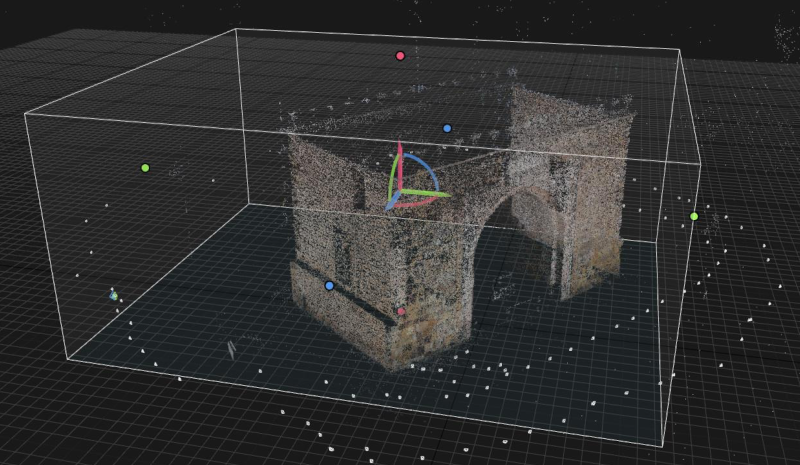
Photogrammetry using Agisoft Metashape: software that performs photogrammetric processing of digital images and generates 3D spatial data
ASOR Director for North African Cultural Heritage Projects
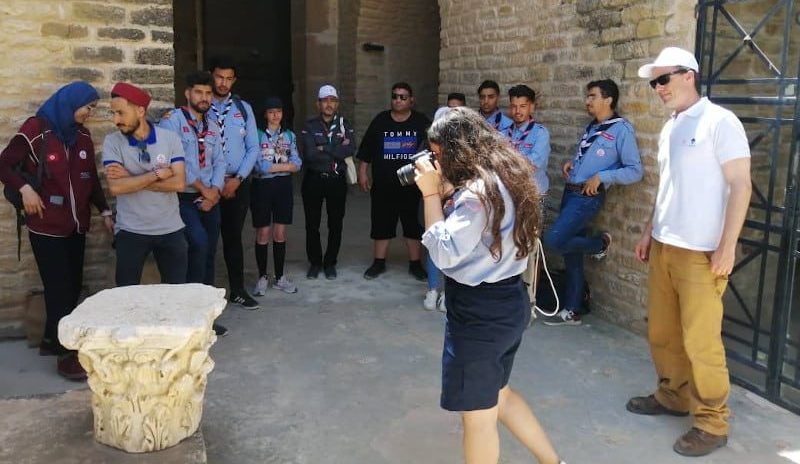
Dr. Hanan Charaf conducting KoboToolbox training with members of the High Atlas Foundation (HAF) in Morocco.
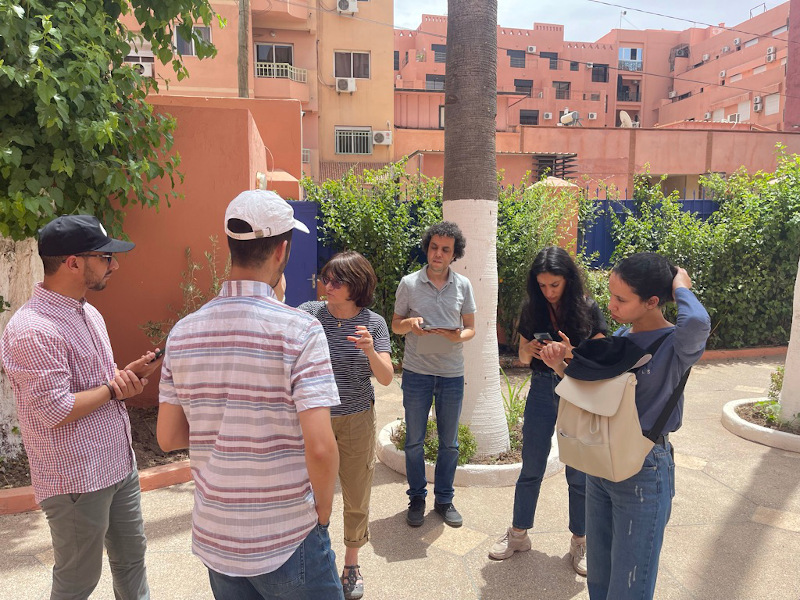
Dr. Charaf leading on-site training with the HAF team at a synagogue in Marrakesh, Morocco.
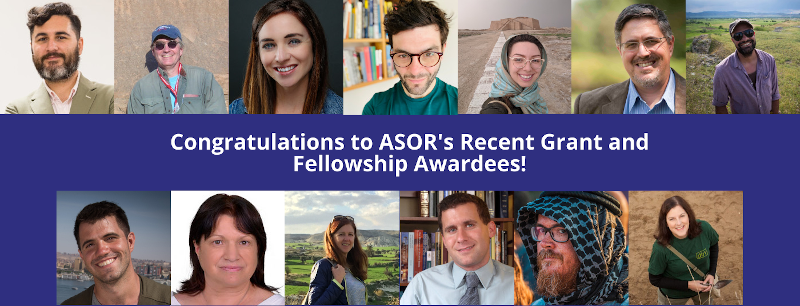
Joseph A. Greene, Harvard Museum of the Ancient Near East: Kelsey Museum Archives-Michigan Excavations in the Carthage Sanctuary of Tanit (US)
James D. Moore, Humboldt-Universität zu Berlin: Cabinet du Corpus Inscriptionum Semiticarum in the Académie des Inscriptions et Belles-Lettres-Semitic Artifacts Database (France)
Michael Press, University of Agder: The Antiquities Market in Late Ottoman Palestine (London, Paris, and Jerusalem)
Matthew J. Suriano, University of Maryland: Cabinet du Corpus Inscriptionum Semiticarum in the Académie des Inscriptions et Belles-Lettres-Clermont-Ganneau Collection (France)
William G. Dever Fellowship
Krysta Fauria, University of Southern California: Legio (Israel)
Herbert Warren Mason Fellowship
Maria Rita Corticelli: The Kakais of Iraq: Culture, Religion and Society (Iraq)
Mesopotamian Fellowship
A Khaled Abu Jayyab, University of Toronto: The Tepe Gawra Lower Town Survey, Ninawa (Iraq)
Petra M. Creamer, Dartmouth College: Rural Landscapes of Imperial Iron Age Mesopotamia (Iraqi Kurdistan)
Support ASOR’s Fellowships, Scholarships, and Grants!
ASOR is fortunate to have a growing number of named endowments that support membership research, excavation grants, and scholarships for fieldwork participation and scholarships for Membership and the Annual Meeting. However, we also need support from individual donors who make annual gifts or consider establishing endowments to support these programs in perpetuity. Support of ASOR’s Annual (Unrestricted) Fund enables us to support the operations of the ever-growing scholarship and grant programs. Please contact ASOR’s executive director, Andy Vaughn, for more information about ASOR’s grants, scholarship, and fellowship programs. Gifts of all amounts are needed and greatly appreciated.
ACADEMIC GENEALOGIES OF NEAR EASTERN SCHOLARS (AGNES) PROJECT
This is a request from Rachel Hallote and Eric Cline:
Because of our shared interest in the history of archaeology and related disciplines, we are initiating this “Academic Genealogies of Near Eastern Scholars” (AGNES) project. Our goal is to find connections between scholars and mentors stretching back as far as we can, to reveal the interwoven web of our disciplines. For instance, some of us can trace ourselves back as academic great-great-grand-students of William F. Albright. Others of us are academic descendants of W.M.F. Petrie, Kathleen Kenyon, Frank Moore Cross, Emily Vermeule, Trude Dothan, Yigael Yadin, and so on. Still others (such as Eric) have a different lineage altogether. We are also interested in whether specific field projects have had more of an impact or influence than others, in terms of training the next generation(s) of archaeologists and/or passing along tried and true or new/innovative field techniques.
The survey questions won’t take you long and are concerned primarily with whether you are able to remember the name of your primary thesis advisor and their advisor (i.e., when you talk about your “Doktorvater” or “Doktormutter,” whose name do you give?) and where you have excavated or surveyed (if anywhere). We stress that we have no ulterior motive other than curiosity as to the extent of the influence of the founding generation of scholars in our field(s) and the possible influence of specific field projects. If there any interesting findings or results that come out of this, we hope to present the preliminary results in an ASOR session in Boston this coming November. But to make this project a reality, we need to hear from YOU as soon as possible!
It doesn’t matter if you are still completing graduate work or never completed it.
It doesn’t matter if you are early or later in your career.
It doesn’t matter if you are retired.
It doesn’t matter if you have an academic appointment or are currently an independent researcher or are out of the field entirely.
It doesn’t matter what your nationality is.
It doesn’t matter what your gender is.
It doesn’t matter where your graduate institution was/is.
We want to hear from everyone! So, please take the time to fill out this survey, which should take only a few minutes to complete. Thank you so much for participating!
Pp. 252–261: “New Evidence of Two Transitions in the Neolithic Sequence of Northeastern Iran,” by Kourosh Roustaei and Hasan Rezvani
As early as the 1950s the Zagros range in western Iran has been one of the main arenas for seeking the earliest villages and domestication of plants and animals in the eastern wing of the Fertile Crescent. Pioneering works of Robert Braidwood during the 1950s and early 1960s at a number of sites in Iraqi Kurdestan and the central Zagros region of western Iran, such as Karim Shahir, Jarmo, Asiab, Sarab, not only produced the first information on the Neolithic of this region, but also motivated a series of fieldworks targeting the Neolithic period in western Iran during the 1960s–1970s (e.g., Braidwood). Excavations at the early Neolithic sites of Guran, Ganj Darreh, Abdul Hosein, Ali Kosh, and Chogha Sefid during these two decades contributed significantly to a clearer picture of the Neolithic of the Zagros region and suggested this region as one possible center of early domestication in the Near East (e.g., Hole, Flannery, and Neely). Although this status of the Zagros was partly eclipsed because of both a two-decade hiatus in Neolithic research during 1980s–1990s and the concurrent, increasing investigations on the early Neolithic in the Levant and southeastern Anatolia, it seems that the Zagros is regaining its position regarding early domestication and the initial stages of the Neolithic way of life in the Fertile Crescent through the crucial information obtained from recent excavations at some early Holocene sites, such as Chogha Golan and Sheikhi Abad (e.g., Matthews, Matthews, and Homamadifar; Riehl et al.).
ASOR Members with online access: navigate to the token link email sent to you (search for “token link” in inbox) before attempting to read this article. Once you have activated your member token, click here to access the above article on The University of Chicago Press Journals’ website.
Pp. 262–271: “Umm an-Nar Ritual Building in Dahwa 1 (DH1), Northern Al-Batinah, Oman,” by Nasser S. Al-Jahwari and Khaled A. Douglas
The Umm an-Nar Culture was identified after the first scientific archaeological excavations took place in the Oman Peninsula (modern-day Oman and United Arab Emirates) during the late 1950s by the Danish team at the Umm an-Nar Island in Abu-Dhabi (Frifelt 1991, 1995). Since then, several sites have been excavated by different teams in the region, such as Hili (Cleuziou 1980, 1982), Ras al-Jinz (Cleuziou and Tosi 2000), Bat (Thornton, Cable, and Possehl 2016), Meyaser (Weisgerber 1978, 1981), Bisya/Salut (Orchard and Stanger 1999; Orchard and Orchard 2002), Tell Abraq (Potts 1989, 1990, 1991, 2000), and Asimah (Vogt 1994). These excavations have revealed abundant material about the culture of these third-millennium BCE (2700–2000 BCE) communities. The inhabitants of this region had developed an intensive and complex long-distance trade network with societies in Mesopotamia and the Indus Valley (Cleuziou 2003).
ASOR Members with online access: navigate to the token link email sent to you (search for “token link” in inbox) before attempting to read this article. Once you have activated your member token, click here to access the above article on The University of Chicago Press Journals’ website.
Pp. 272–280: “Gender, Deities, and the Public Image of Sobekneferu,” by Kelly-Anne Diamond
Beginning as early as the Twelfth Dynasty, female masculinity was an alternative for Egyptian royal women seeking to legitimize their claim to the throne, communicate their power, and exercise their authority. The Eighteenth Dynasty female king Hatshepsut (ca. 1473–1458 BCE) attracted the most attention for not conforming to traditional western gender norms. However, three hundred years before Hatshepsut, a lesser-known female king—Sobekneferu (ca. 1777–1773 BCE)—embodied power through her performance of masculinity (Halberstam 1998: 1–5). She promoted herself as king of Egypt by assuming a full royal titulary, employing kingly accoutrements, appropriating masculine garb, portraying herself in strong masculine poses, and adopting male prerogatives. Some of Sobekneferu’s preserved imagery illustrates clearly a woman in masculine poses with royal insignia, but her statue in the Louvre (E 27135) shows her with the addition of male dress items (fig. 1; Berman and Letellier 1996: 47; Grajetzki 2006, 63; Callender 1998a: 233–35). With the creation of this statue, Sobekneferu intentionally modified her attire and intensified her expression of female masculinity.
ASOR Members with online access: navigate to the token link email sent to you search for “token link” in inbox) before attempting to read this article. Once you have activated your member token, click here to access the above article on The University of Chicago Press Journals’ website.
Pp. 282–292: “Discovering Early Syrian Magic: New Aramaic Sources for a Long-Lost Art,” by Jessie DeGrado and Madadh Richey
Few magical texts have been recovered from the Levant dating to the first millennium BCE. Three recently published early Aramaic inscriptions help fill this lacuna: an inscribed cosmetic container from Zincirli, a Lamaštu amulet from the same site, and an Aramaic-inscribed Pazuzu statuette. These texts, dated paleographically to the ninth and eighth centuries BCE, afford a window onto local traditions in the Levant and their interactions with Mesopotamian magic. They also provide an impetus for a reanalysis of the infamous Arslan Tash amulets, offering further context for their texts and iconography.
ASOR Members with online access: navigate to the token link email sent to you (search for “token link” in inbox) before attempting to read this article. Once you have activated your member token, click here to access the above article on The University of Chicago Press Journals’ website.
Pp. 293–305: “The Temple of the Winged Lions, Petra: Reassessing a Nabataean Ritual Complex,” by Pauline Piraud-Fournet, John D. M. Green, Noreen Doyle, and Pearce Paul Creasman
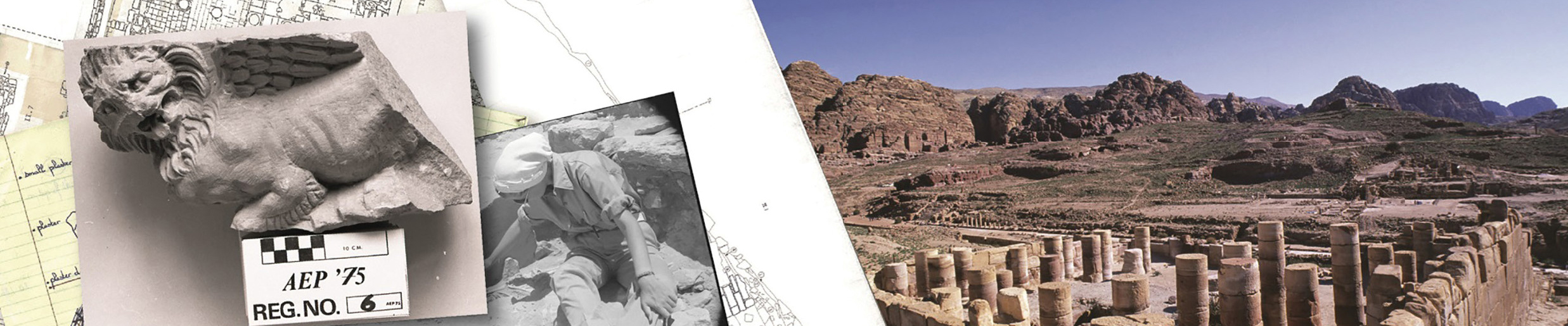
The Temple of the Winged Lions (TWL) in Petra is a Nabataean- and Roman-era ritual complex thought to have been founded in the early first century CE (banner photograph and fig. 1). It fell out of use following a major earthquake in 363 CE. This is a contextually rich site for the study of ancient ritual, economy, and society in the Nabataean and Greco-Roman world and part of a larger complex including workshops and domestic spaces. The deity (or deities) once worshiped there remains unknown. The most common suggestion is that the temple was dedicated to Al-‘Uzza, the Arabian divinity whose Greek equivalent was Aphrodite.
ASOR Members with online access: navigate to the token link email sent to you (search for “token link” in inbox) before attempting to read this article. Once you have activated your member token, click here to access the above article on The University of Chicago Press Journals’ website.
Pp. 306–315: “A Sasanian Triumphal Arch in Bishapur,” by Alireza Shahmohammadpour
The Sasanian Kingdom (224–651 CE) was the last dynasty before the Muslim-Arab invasion of Iran (Pourshariati 2008: 1–2). Sasanian-era architectural remains—mostly including palaces, castles, temples, bridges, and dams—are scattered throughout ancient Iran. However, the density of monuments in the southwestern regions of the country and in Mesopotamia is higher than anywhere else. Many of the Sasanian buildings excavated and exposed to the elements in the nineteenth and early twentieth centuries were incorrectly or insufficiently identified by their excavators and have not been subjected to systematic analysis since their initial publication. In the years that have elapsed, erosion and human activity have damaged or erased architectural features that might be useful for understanding Sasanian architecture. One such site is the city of Bishapur in the southwest of Iran. This city was established by Shapur I, the second king of the dynasty, in the middle of the third century and was occupied until the eleventh century, more than four centuries after the fall of the Sasanian Empire (Mehryar 1999: 33). Even at present the surface of the site is covered by apparently random piles of stones, at first glance making recognition of the buildings difficult (fig. 1).
ASOR Members with online access: navigate to the token link email sent to you (search for “token link” in inbox) before attempting to read this article. Once you have activated your member token, click here to access the above article on The University of Chicago Press Journals’ website.
Pp. 172–181: “An Early Bronze Age Incense Burner from Dahwa (DH1), Northern al-Batinah, Oman,” by Nasser Said Al-Jahwari and Khaled Ahmed Douglas
The Early Bronze Age in the Oman Peninsula is marked by two local cultures: Hafit (ca. 3400–2500 BCE), which is notable for thousands of burials (cairns and beehives) spread over large areas in northern Oman and the lack of settlement remains; and Umm an-Nar (2500–2000 BCE) marked by the first permanent settlements, intensive exploitation of copper, and international trade, mainly with Mesopotamia and the Indus Valley (Potts 1990a: 102–6; 1993: 423–27; Cleuziou 2003; Al-Jahwari 2009, 2013). Five Early Bronze Age sites (DH1, DH5, DH6, DH7, and DH8) have been found in the Dahwa region clustered within an area not longer than 1.7 km. They are distributed on both sides of Wadi al-Sukhun and in the bottom of the wadi itself (Al-Jahwari et al. 2018: 29–30).The location of the sites in the Dahwa region were chosen carefully for several reasons. Primary among these were the water sources: the Dahwa region is located where two major wadis converge. Copper resources were another factor. Also important was the presence of a trade route: Dahwa is a key region connecting the coastal plain to the inland region, such as Hili, Yanqul, and Dhank.
ASOR Members with online access: navigate to the token link email sent to you (search for “token link” in inbox) before attempting to read this article. Once you have activated your member token, click here to access the above article on The University of Chicago Press Journals’ website.
Pp. 182–191: “Two Great Households of Old Babylonian Ur,” by Elizabeth Stone, Adelheid Otto, Dominique Charpin, Berthold Einwag, and Paul Zimansky
Visitors to the ruins of Ur venturing into the residential area south of the ziggurat and royal cemetery are confronted with a reconstructed “House of Abraham” (fig. 1), named after the city’s most famous putative resident. It is not clear who decided that this particular structure was the ancestral home of the patriarch, but it was certainly not Sir Leonard Woolley, who closed his celebrated excavations here in 1934. While he was convinced that this city was indeed the Ur of the Chaldees of the Bible—a claim that has not gone unchallenged—and even wrote a book postulating that the Old Babylonian houses here shed light on the origins of Yahwistic religion (Woolley 1936), he doubted that archaeology could ever link Abraham to a specific artifact or building. The massive brick structure one sees today was actually erected only two decades ago to promote tourism in anticipation of a papal visit that was delayed until March 2021. It was built on the ruins of half a dozen individual houses that Woolley had excavated in the area he called AH, generally following their ground plans but connecting the units with doorways to create a single edifice many times larger than any private residence of the early second millennium BCE (fig. 2). If the idea of naming this new creation after Abraham was to promote tourism, it has been a success: Among the thousands who visit Ur every spring, some even come to pray in these rooms, ignoring all warnings that the association with the family of Abraham is suspect.
ASOR Members with online access: navigate to the token link email sent to you (search for “token link” in inbox) before attempting to read this article. Once you have activated your member token, click here to access the above article on The University of Chicago Press Journals’ website.
Pp. 192–199: “Grisly Trophies: Severed Hands and the Egyptian Military Reward System,” by Danielle Candelora
All visitors to the massive New Kingdom (ca. 1550–1069 BCE)1 temples in Thebes (modern Luxor; see fig. 1) are bombarded with images of the king smiting foreign enemies, expanding his imperial borders, and overseeing the spoils of war. The texts and reliefs tell us that this booty generally includes livestock, goods, weapons, and prisoners of war, but the grisliest element by far is the enormous mounds of severed hands being piled and counted before the seated king (fig. 2). Eighteenth Dynasty (ca. 1450 BCE) private tomb autobiographies of soldiers indicate that warriors would have presented these trophies as a record of their kills and were rewarded with the so-called gold of valor in a public ceremony (fig. 3).2 Indeed, we even have tomb reliefs and statues of individuals commemorating their receipt of this award. Yet this military custom seems to have appeared fully realized in Egypt during Ahmose’s war with the Hyksos, with few clues as to its origin (Candelora 2019c; Matić 2019: 41–42; Abdalla 2005; Stefanović 2003; Lorton 1974: 57–68). Beyond that, no archaeological evidence of this practice had been found—that is, until 2011 when the excavations at Tell el-Dab‘a uncovered four pits containing the remains of sixteen severed right hands just outside a Hyksos palace.
ASOR Members with online access: navigate to the token link email sent to you search for “token link” in inbox) before attempting to read this article. Once you have activated your member token, click here to access the above article on The University of Chicago Press Journals’ website.
Pp. 200–204: “The Bronze Mouse of Maresha,” by Ian Stern
Maresha was the main city in Idumea during the Hellenistic period. It is located in the Judean lowlands at the intersection of the lateral road from Hebron to Gaza and on the longitudinal road from Beersheba to the Ayalon Plain and then to Jerusalem or Jaffa (fig. 1). The city consisted of an upper city (the tel) and a lower city that surrounded it (fig. 2). Excavations over the past 30 years (Kloner 2003; Stern 2014, 2019) have shown that it was inhabited from the Iron Age through the end of the Hellenistic period with a terminus ante quem dated to ca. 107 BCE.
ASOR Members with online access: navigate to the token link email sent to you (search for “token link” in inbox) before attempting to read this article. Once you have activated your member token, click here to access the above article on The University of Chicago Press Journals’ website.
Pp. 206–215: “Pomegranate or Poppy What Lies between the Cornucopias on Hasmonaean Coins?,” by David M. Jacobson and David B. Hendin
The Hasmonaean rulers struck coins, exclusively in bronze, beginning with John Hyrcanus I (135–104 BCE; Hendin 2020). Their most common denomination was a coin with a diameter averaging 15 mm and close to 2 g in weight, which is widely identified with the prutah (PRWṬH) of rabbinic literature (Jacobson 2014: 141). In accordance with a strict interpretation of the Second Commandment, which was then the norm, Hasmonaean coins avoid human images (Hendin 2007–2008: 79–82). In place of a ruler portrait, usually found on east Greek coins of that period, there is a Paleo-Hebrew inscription naming the governing authority, the high priest and governing council (ḤBR), enclosed in an olive wreath alluding to their authority (Hendin 2007–2008: 85–86); see figure 1. The reverse of this coin displays a motif consisting of a splayed pair of cornucopias filled with agricultural produce astride a fruit or seedpod on a straight stalk. Filled cornucopias are commonplace on Hellenistic and Roman coins and their symbolic meaning was understood throughout the classical world as indicating fecundity and well-being. Accordingly, cornucopia motifs are rooted in classical Greek rather than Jewish tradition. Specifically, the cornucopia alludes to the horn of Amaltheia, the she-goat wet nurse of Zeus in Greek mythology, a symbol of prosperity and abundance generally associated with “good fortune” (agathê tychê; Jacobson 2013a: 139). It is worth noting that the coins of the Seleucid king Alexander II Zabinas, featuring a splayed and intertwined pair of filled cornucopias (SC II, nos. 2235, 2237), were struck in 125–122 BCE, at about the time that the comparable Hasmonaean motif made its debut.
ASOR Members with online access: navigate to the token link email sent to you (search for “token link” in inbox) before attempting to read this article. Once you have activated your member token, click here to access the above article on The University of Chicago Press Journals’ website.
Pp. 216–229: “Eau de Cleopatra: Mendesian Perfume and Tell Timai,” by Robert J. Littman, Jay Silverstein, Dora Goldsmith, Sean Coughlin, and Hamedy Mashaly
Cleopatra VII, the last of the Ptolemaic rulers of Egypt, reveled in perfume (Plutarch, Life of Marcus Antonius 26.2). She even used it in her seduction of the Roman general Marc Antony. Sailing up the river Cydnus to meet him, she reclined in a canopy spangled with gold, adorned like Venus in a painting. Boys dressed as cupids fanned her and wondrous scents from incense offerings wafted along the riverbanks. Not long after her death in August 30 BCE, a book circulated under her name called Cleopatra’s Cosmetic, full of recipes for fragrant oils and cleansers (Totelin 2017: 114–18).
ASOR Members with online access: navigate to the token link email sent to you (search for “token link” in inbox) before attempting to read this article. Once you have activated your member token, click here to access the above article on The University of Chicago Press Journals’ website.
Pp. 230–237: “A Roman Bronze Bull from the Floor of the Mashhad Pool in Sepphoris in the Galilee,” by Adi Erlich, Tsvika Tsuk, Iosi Bordowicz, and Dror Ben-Yosef
Sepphoris, located in the heart of Lower Galilee, was a main urban center in the Roman period. It is first mentioned by Flavius Josephus (Ant. 13.338) as a Jewish-Hasmonean town, and was later taken over by Herod the Great. During the Great Revolt, Sepphoris eventually took a pro-Roman side and received the name Eirenopolis, city of peace, as appears on its coins (Josephus, J.W. 3.30), and later in the second century it was renamed Diocaesarea (Strange 2015: 22–23). Throughout the Roman period Sepphoris was populated by Jews; it was the home of Jewish sages and of Rabbi Judah, the patriarch who compiled the Mishnah. Alongside the Jewish community of the city there was also a Roman-pagan population, as can be inferred from a Roman temple in the center of the city and a Roman-style mansion with a Dionysiac mosaic on the top of the hill (Weiss 2010, 2015). Furthermore, rabbinic sources attest to a Roman castra inhabited by gentiles in the city (Miller 1984: 31–45). The end of the Roman period in Sepphoris was marked by rapid Christianization of the city, which reached its peak in the fifth century CE; the Roman phase ended with a severe earthquake in 363 that damaged its buildings.
ASOR Members with online access: navigate to the token link email sent to you (search for “token link” in inbox) before attempting to read this article. Once you have activated your member token, click here to access the above article on The University of Chicago Press Journals’ website.
Pp. 238–245: “Corals in the Desert: Recent Discoveries of Red Sea Corals in Byzantine and Early Islamic Sites in the Negev Desert,” by Guy Bar-Oz, Yotam Tepper, and Roee Shafir
Corals have been commercially exploited for many centuries all over the world (Jiménez and Orejas 2017). Traditionally, they have been regarded as mystical objects and hybrid organisms. Their skeletons have commonly been used as remedies and as amulets or jewelry, and they have represented an exotic and valuable resource throughout human history. In the Greco-Roman literature a number of classical authors, such as Aristotle (fourth century BCE, History of Animals 5.16; Ogle 1882) and Pliny (first century CE), referred to the natural history of corals and classified them as enigmatic creatures. Since corals are animals that lack locomotion or perception, Theophrastus also classified them as hybrids of plants and stones (On Stones 53:38; Caley and Richards 1956).
ASOR Members with online access: navigate to the token link email sent to you (search for “token link” in inbox) before attempting to read this article. Once you have activated your member token, click here to access the above article on The University of Chicago Press Journals’ website.
[/vc_column_text][mk_divider][vc_wp_text]ASOR partnered with Archaeology in the Community (AITC), a local D.C.-based organization specializing in archaeological education, to produce a series of educational videos and lesson plans on Ancient Nubia. The videos are designed for 6th grade teachers to use in fulfillment of Social Studies, Civics, and Geography requirements. Funding for this project was provided by all of the donors to ASOR’s Diversity Initiatives Endowment and the Argosy Foundation.
The Resources
Ancient Nubia Videos
The videos feature interviews with scholars who study Ancient Nubia: Dr. Solange Ashby (Egyptology-Nubiology), Debora Heard (Archaeology), Jenail Marshall (Bioarchaeology), and Dr. Shayla Monroe (Zooarchaeology). They were produced by Sydney A. Pickens, Ali Bavugamenshi, and Dr. Alexandra Jones. Music was provided by 2 Nice Guys Music Production (Teddy Burgh and Teddy Thompson).
The first video introduces Ancient Nubia, its history, geography, and environment. The scholars discuss Nubian religion and cultural traditions such as burial practices, attire, and cattle pastoralism. The first video also covers interactions between Kerma, the first Kingdom of Kush, and Ancient Egypt.[/vc_wp_text][vc_column_text][/vc_column_text][vc_column_text]The second video beings with the second Kushite Kingdom at Napata and discusses a period of renaissance and revival of Egyptian customs and religion. The video covers royal cemeteries, pyramids, and burial customs as well as the role of the queen mother. It concludes with the final Kushite Kingdom of Meroe, including Meroitic writing systems, local religious traditions and animal deities, and powerful queens.
[/vc_column_text][mk_divider][vc_column_text]
Ancient Nubia Curriculum: Lesson Plans and Activities
The lesson plans and activities, created by AITC’s Sydney A. Pickens, meet social sciences requirements for Geography, Economics, Civics, and Historical Thinking and Inquiry. As a bonus, they also cover Cultural Identity and Expression. Activity sheets can be printed out and distributed to students. The Curriculum also includes a teacher kit with guidelines and answer keys for the various activities.
Video activity sheets include map quests, fill-in-the-blank sheets, word finds, diagram labelling, and word scrambles.
Learning to Look: Artifact Observation and Analysis. Curartorial Responsibilities.
33 Questions to Ask an Artifact
Loan Acquisition Pitch
Artifact Label Writing
Exhibition Tours
The Remix: Cultural Continuity, Change, and Comparison.
Pyramids
Shawabtis
Coffins & Sarcophagi
Ritual Smiting Scene
Who Tells Your Story: Primary Source Analysis and Uncovering Source Bias.
Kamose’s Second Stela at Karnak
Strabo’s Geography
Meroë Head/Head of Augustus
Kawa V: Taharqa’s Donation Stela
Temple of Apedemak at Naqa
Senworset III: The Semna Stela
Acts of the Apostles VII: 26-39, KJV
The Baptism of Chamberlain and Queen Candace of Ethiopia
[/vc_column_text][mk_divider][vc_wp_text]
The Process
Part 1: Research and Development
The team began by asking how to make a resource that will be useful for the greatest number of teachers. We wanted our Ancient Nubia resources to be easy to use for teachers and fit well within the requirements of what they need to teach. This involved a detailed examination of common core teaching standards across the U.S. Based on what we found, we chose to focus on educational resource for the 6th grade level.
It was important to the team to feature black scholars who study Ancient Nubia, so that students viewing the video could identify and see themselves in the scholars. We worked with members of the William Leo Hansberry Society as well as ASOR members to find our scholar partners for the videos.[/vc_wp_text][mk_divider][vc_wp_text]
Part 2: Filming and Editing
Solange Ashby and Debora Heard joined members of AITC’s team to film in July of 2021 at the James F. Strange Center in Alexandria, VA. Additional footage was shot by offsite by scholars in LA and Chicago and all editing was handled by AITC’s production team. All photos are courtesy of Dr. Alexandra Jones.[/vc_wp_text][vc_row_inner][vc_column_inner width=”1/2″][vc_single_image image=”76097″ img_size=”full” add_caption=”yes” alignment=”center” css=”.vc_custom_1661274765133{padding-right: 10px !important;padding-bottom: 10px !important;}”][/vc_column_inner][vc_column_inner width=”1/2″][vc_single_image image=”76098″ img_size=”full” add_caption=”yes” alignment=”center” css=”.vc_custom_1661450210742{padding-right: 10px !important;padding-bottom: 10px !important;}”][/vc_column_inner][/vc_row_inner][mk_padding_divider][vc_row_inner][vc_column_inner width=”1/2″][vc_single_image image=”76100″ img_size=”full” add_caption=”yes” alignment=”center” css=”.vc_custom_1661274967407{padding-right: 10px !important;padding-bottom: 10px !important;}”][/vc_column_inner][vc_column_inner width=”1/2″][vc_single_image image=”76101″ img_size=”full” add_caption=”yes” alignment=”center” css=”.vc_custom_1661274982636{padding-right: 10px !important;padding-bottom: 10px !important;}”][/vc_column_inner][/vc_row_inner][mk_padding_divider][mk_divider][vc_wp_text]
Part 3: What’s Next? Future Directions and Plans for More Resources
These videos and the accompanying lesson plans are freely-available on ASOR’s website in the Online Resources section and on AITC’s website. The videos are also available on both ASOR’s and AITC’s YouTube channels. Help us spread the word to teachers and educators you know and inspire others to create educational resources such as these![/vc_wp_text][mk_divider][/vc_column][vc_column border_color=”rgba(170,170,170,0.01)” width=”1/6″ css=”.vc_custom_1496684098866{margin-right: 5px !important;margin-bottom: 20px !important;border-right-width: 2px !important;border-bottom-width: 2px !important;padding-top: 30px !important;padding-right: 10px !important;padding-left: 10px !important;background-color: #ffffff !important;border-right-color: rgba(227,228,228,0.75) !important;border-bottom-color: rgba(227,228,228,0.75) !important;}”][vc_wp_posts title=”BROWSE THE NEWS ARCHIVE” number=”4″][/vc_column][vc_column border_color=”rgba(170,170,170,0.01)” width=”1/6″ css=”.vc_custom_1496684008271{margin-right: 10px !important;margin-bottom: 30px !important;border-right-width: 2px !important;border-bottom-width: 2px !important;padding-top: 30px !important;padding-right: 20px !important;padding-left: 20px !important;background-color: #ffffff !important;border-right-color: rgba(227,228,228,0.75) !important;border-bottom-color: rgba(227,228,228,0.75) !important;}”][vc_column_text]Tweets by ASOResearch [/vc_column_text][/vc_column][/vc_row]
Please e-mail the Membership office if you have any questions.
Pp. 3–8: “A Sargonic Learner’s Tablet with an Invocation of the Goddess Nisaba,” by Hanan A. Al-esawee and Abdulmukrem M. Alezzi
This paper derives from the study of confiscated texts in the Iraq Museum. Here we publish an Umma tablet with the accession number IM 205090, a square school text with three columns on one side and a single one on the other that lists the distribution of very large quantities of silver to various people; it concludes with an invocation to the goddess Nisaba by the learner, who describes himself as an apprentice scribe.
ASOR Members with online access: log into ASOR’s Online Portal here. Once logged in, click the JOURNALS tab in the top navigation bar. From here you may select which journal you would like to read. If you have online access, you will see your selected journal’s current issue Table of Contents. Click on the “Current Issue” button and you will then be redirected to the University of Chicago Press’s (UCP) platform to immediately start reading any issue of your choice. Tutorials for how to log in to the Online Portal as well as how to navigate to the Portal Journals page can be found here.
Pp. 9–70: “In Search of Dugurasu,” by Maria Giovanna Biga and Piotr Steinkeller
The identity of the toponym Dugurasu, which is mentioned some fifty times in the ED IIIb documentation from Ebla, is a highly contested issue. While M. G. Biga had proposed an identification with Egypt, A. Archi then argued that Dugurasu was situated in northwestern Iran. This study offers a systematic examination of all the attestations of Dugurasu, focusing on the types of materials traded between Dugurasu and Ebla. It also considers evidence bearing on Ebla’s commercial partner named DUlu. Characteristically, Ebla and DUlu exchanged the same types of goods as those traded between Ebla and Dugurasu. Our investigation strongly suggests that Dugurasu is either Egypt itself or some place in Palestine that served as an intermediary in exchanges between Egypt and Ebla, while DUlu denotes either Byblos or one of its immediate neighbors.
ASOR Members with online access: log into ASOR’s Online Portal here. Once logged in, click the JOURNALS tab in the top navigation bar. From here you may select which journal you would like to read. If you have online access, you will see your selected journal’s current issue Table of Contents. Click on the “Current Issue” button and you will then be redirected to the University of Chicago Press’s (UCP) platform to immediately start reading any issue of your choice. Tutorials for how to log in to the Online Portal as well as how to navigate to the Portal Journals page can be found here.
Pp. 71–87: “By Order of the King: Ammi-Ditana’s Letter on the Provision of Fodder Barley for the Sheep and Oxen of the Nakkamtum,” by Caroline Janssen
Di 1353 is a letter by King Ammi-ditana of Babylon to the chief lamentation priest of Annunītum. It contains a simple instruction to provide fodder for the oxen and the sheep of a temple storehouse, the nakkamtum. One wonders though what this direct intervention meant on a pragmatic level. The king does not explain himself. But this question can be approached from different angles. What do we know so far about the relation between the palace and the nakkamtum? Does this letter fit into a pattern of royal letter writing? Can we benefit from the fact that we have an archival context for this letter?
ASOR Members with online access: log into ASOR’s Online Portal here. Once logged in, click the JOURNALS tab in the top navigation bar. From here you may select which journal you would like to read. If you have online access, you will see your selected journal’s current issue Table of Contents. Click on the “Current Issue” button and you will then be redirected to the University of Chicago Press’s (UCP) platform to immediately start reading any issue of your choice. Tutorials for how to log in to the Online Portal as well as how to navigate to the Portal Journals page can be found here.
Pp. 89-102: “HS 200B: A Bridal Gift (Tuppu Bibli) from the First Sealand Dynasty,” by Jacob Jan de Ridder
An unusual tablet from the Hilprecht-Sammlung in Jena describes the biblu, “bridewealth,” paid for a girl at her betrothal. Paleographic features and onomastic arguments suggest that the text may be dated to the late Sealand I period, with similarities to documents from the reigns of the Kings Pešgaldarameš and Ayadaragalama. A first edition is offered together with a brief introduction detailing its legal context and historical setting.
ASOR Members with online access: log into ASOR’s Online Portal here. Once logged in, click the JOURNALS tab in the top navigation bar. From here you may select which journal you would like to read. If you have online access, you will see your selected journal’s current issue Table of Contents. Click on the “Current Issue” button and you will then be redirected to the University of Chicago Press’s (UCP) platform to immediately start reading any issue of your choice. Tutorials for how to log in to the Online Portal as well as how to navigate to the Portal Journals page can be found here.
Pp. 103-119: “A New Reading of the Middle Elamite Text Shun I 9,” by Jalil Bakhtiari
There are four complete or almost complete unprovenanced bricks and twenty-one brick fragments from the site of Toll-e Bard-e Karegar in Khuzestan belonging to the only Elamite inscription mentioning the god Kamul. All of them represent exemplars of the one and the same text (ShuN I 9), written in the name of the Elamite king Shutruk-Nahhunte I (ca. 1190–1155 BCE). The text describes a temple that the king had rebuilt and dedicated to the god Kamul. In this article, a new reading and translation of the last sentence of the text that is divided into four sections and compared with parallels in Old and Middle-Elamite texts, is suggested. In addition, the brick fragments TBK 16 and 28 are reread and classified and TBK 89, 114, 122, and 127 are published.
ASOR Members with online access: log into ASOR’s Online Portal here. Once logged in, click the JOURNALS tab in the top navigation bar. From here you may select which journal you would like to read. If you have online access, you will see your selected journal’s current issue Table of Contents. Click on the “Current Issue” button and you will then be redirected to the University of Chicago Press’s (UCP) platform to immediately start reading any issue of your choice. Tutorials for how to log in to the Online Portal as well as how to navigate to the Portal Journals page can be found here.
Pp. 121-134: “Elamite War Chariots and Military Equipment At Ancient Kabnak (ca. 1400 bce),” by Javier Álvarez-Mon and Yasmina Wicks
After entering the second millennium BCE as a military superpower, Elam faded into historical obscurity upon its withdrawal from the broader Near Eastern political scene in 1763 BCE and only reemerged much later as a major player with a sequence of incursions in Mesopotamia beginning in the thirteenth century and culminating in the 1155 BCE fall of the Kassites. During the intervening centuries, neither written nor archaeological sources offer clear signs that Elamite territory had come under the authority of any foreign power. Here the authors propose that a reexamination of evidence from the ancient settlement of Kabnak (modern Haft Tepe), approximately seventeen kilometers southeast of the Elamite lowland capital of Susa, discloses a mid-fifteenth to mid-fourteenth century BCE state-controlled arsenal of war chariots and weaponry that may hold a key to comprehending Elam’s apparent continued resistance to outside forces and its rise as a military superpower in the thirteenth century.
ASOR Members with online access: log into ASOR’s Online Portal here. Once logged in, click the JOURNALS tab in the top navigation bar. From here you may select which journal you would like to read. If you have online access, you will see your selected journal’s current issue Table of Contents. Click on the “Current Issue” button and you will then be redirected to the University of Chicago Press’s (UCP) platform to immediately start reading any issue of your choice. Tutorials for how to log in to the Online Portal as well as how to navigate to the Portal Journals page can be found here.
Pp. 135-178: “Keeping Alive Dead Knowledge: Middle Assyrian Glass Recipes in the Yale Babylonian Collection,” by Shiyanthi Thavapalan
Although they describe Bronze Age technologies and techniques, the Akkadian glassmaking texts are primarily known through later copies from Ashurbanipal’s libraries. The first portion of this paper provides editions of three fragments of previously unknown glass texts from the Middle Assyrian period and examines how and why they came to be written down. The second portion discusses metaphors concerning kinship and bodily experience that explain the relationship between the glassmaker in Mesopotamia, his tools, and his creative process. It is argued here that only by embracing the entire context of the craft process—this includes the behaviors chosen during manufacture as well as the allusions made to social relationships through language, performance, and materials—can we begin to appreciate how knowledge about technologies was transmitted.
ASOR Members with online access: log into ASOR’s Online Portal here. Once logged in, click the JOURNALS tab in the top navigation bar. From here you may select which journal you would like to read. If you have online access, you will see your selected journal’s current issue Table of Contents. Click on the “Current Issue” button and you will then be redirected to the University of Chicago Press’s (UCP) platform to immediately start reading any issue of your choice. Tutorials for how to log in to the Online Portal as well as how to navigate to the Portal Journals page can be found here.
Pp. 179-191: “Inscribed Bullae Found during Excavations on the Northern Slope of Ayanis Fortress in 2015 and a New Urartian Building Name, ÉTamali,” by Kenan Işık, Oğuz Aras, and Ayşegül Akın Aras
The 2014 season of excavations at the Ayanis Fortress of the Urartian Kingdom, located on the eastern shore of Lake Van, revealed a trash layer on the northern slope of the fortress that contained densely packed animal bone remains as well as several inscribed bullae. During the excavations carried out in the same area in 2015 four more inscribed bullae were recovered in the northern fortification wall. This article provides information on the 2015 excavations of the outer side of the northern fortifications and trash layer at Ayanis, with a first edition of the new bullae. These short inscriptions mention the names of people, cities, countries, and professions, as is common in such Urartian bullae. The inscription on a newly discovered bulla mentioning a construction named tamali is important as it informs us about a new building unit whose function is unknown at present.
ASOR Members with online access: log into ASOR’s Online Portal here. Once logged in, click the JOURNALS tab in the top navigation bar. From here you may select which journal you would like to read. If you have online access, you will see your selected journal’s current issue Table of Contents. Click on the “Current Issue” button and you will then be redirected to the University of Chicago Press’s (UCP) platform to immediately start reading any issue of your choice. Tutorials for how to log in to the Online Portal as well as how to navigate to the Portal Journals page can be found here.
Pp. 193-209: “Ancient Mesopotamian Divinatory Series from the British Museum: New Texts and Joins,” by Nicla De Zorzi
This paper contains editions of three previously unpublished omen texts and one commentary text from the collections of the British Museum. BM 36165 and BM 34999 are Late Babylonian manuscripts of Šumma ālu tablet 1 while K 6260 is a join to Šumma izbu tablet 4. BM 47684+ is part of a large Late Babylonian four-column tablet containing a new commentary on physiognomic omens. The edition of these tablets is accompanied by an extensive commentary that discusses the placement of the tablets within the divinatory series, as well as orthographic and interpretative issues.
ASOR Members with online access: log into ASOR’s Online Portal here. Once logged in, click the JOURNALS tab in the top navigation bar. From here you may select which journal you would like to read. If you have online access, you will see your selected journal’s current issue Table of Contents. Click on the “Current Issue” button and you will then be redirected to the University of Chicago Press’s (UCP) platform to immediately start reading any issue of your choice. Tutorials for how to log in to the Online Portal as well as how to navigate to the Portal Journals page can be found here.
Pp. 211-245: “Minor Archives from First-Millennium BCE Babylonia, Part II: The Balīḫû Archive,” by Ludovica Cecilia and Johannes Hackl
The article presents editions of all known texts belonging to the archive of the Sipparean prebendary Marduk-bēlšunu, son of Nabû-balāssu-iqbi, that is, the Balīḫû archive. It is the second part of a series of articles that aims to make available the so-called satellite archives of the Ṣāḫiṭ-ginê A archive (“Marduk-rēmanni archive”) and related and unrelated smaller archives from Sippar, all dating to the long sixth century BCE.
ASOR Members with online access: log into ASOR’s Online Portal here. Once logged in, click the JOURNALS tab in the top navigation bar. From here you may select which journal you would like to read. If you have online access, you will see your selected journal’s current issue Table of Contents. Click on the “Current Issue” button and you will then be redirected to the University of Chicago Press’s (UCP) platform to immediately start reading any issue of your choice. Tutorials for how to log in to the Online Portal as well as how to navigate to the Portal Journals page can be found here.
Studies on Ancient Environment, Technology, and Society in Honor of Stuart Swiny
edited by Zuzana Chovanec and Walter Crist
This volume is dedicated to Stuart Swiny who served as longtime Director of the Cyprus American Archaeological Research Institute, professor in Classics and Anthropology at the University at Albany, and archaeologist whose work on Cyprus now spans six decades. His research, mentorship as professor, and leadership as CAARI Director has had a profound effect on the development of the discipline on the island and benefited many archaeologists working there. This volume celebrates his contributions to Cypriot archaeology with papers from colleagues, friends, and former students, covering a wide range of topics that reflect his interests in the history and culture of Cyprus. Ranging from the Pre-Pottery Neolithic to ethnoarchaeology in the recent past, the papers cover archaeological landscapes, material culture, settlement studies, and regional interaction. The influence of Swiny’s contributions is a common thread tying topics together. Beginning chapters recount the personal and professional history of Stuart Swiny, and the focus moves to academic papers that document his methodological foresight in archaeological survey and excavation, build from his prior work with particular artifact classes, publish new information about his major excavation site Sotira Kaminoudhia, or take inspiration from his interest and encouragement in studying all things Cypriot. Specific chapter topics include: Bronze Age climate change, textile technology, evidence for use of the opium poppy, ancient board games, Roman to modern carob trade, Iron Age Cypriot coinage, ethnoarchaeology of pottery production, and intra-island interaction in the Neolithic. The volume is also forward-looking, taking stake of where Cypriot archaeology stands after roughly forty years since Swiny’s directorship began. It anticipates new projects, innovations, and approaches that the next generation of Cypriot scholars will use to build on his work.
ASOR Archaeological Reports, Volume 28, Series Editor Hanan Charaf, April 2021, 292 pages, 90 b/w figures, 3 tables, ISBN 978-0-89757-116-6, $79.95.
Special Offer for ASOR Members
ASOR members (with a mailing address in the USA) can purchase a copy of ARS 28 at the discounted price of $45.00 (50% discount + $5.00 US shipping) through December 31, 2021, while supplies last. Purchases are restricted to one volume per member. We are unable to offer this discount to members without a US mailing address due to international shipping costs, but you can purchase and ship a copy through the ISD link below. Please contact programs@asor.org with any questions. Click here to purchase your discounted copy in ASOR’s online store.
2021 Shepard Urgent Action Grant Report: Stabilisation and Refurbishment of a Chalcolithic Roundhouse Visitor Centre at the Archaeological Site of Kissonerga-Mosphilia, Paphos District, Cyprus
ASOR Editorial Note: The ASOR Team is pleased to share a report from a Shepard Urgent Action Grant awarded to the Cyprus American Archaeological Research Institute (CAARI) for repairs to a reconstructed Chalcolithic roundhouse at Kissonerga-Mosphilia, Cyprus. These grants are intended to provided emergency funds to carry out critical stabilization, excavation, or documentation projects. Because time of of the essence with these proposals, funds for the grants can be disbursed 4-6 weeks after an application is received. Heavy rains severely damaged the roundhouse reconstruction, an important part of the visitor experience, and repairs were necessary to make the structure ready for visitors to the site.
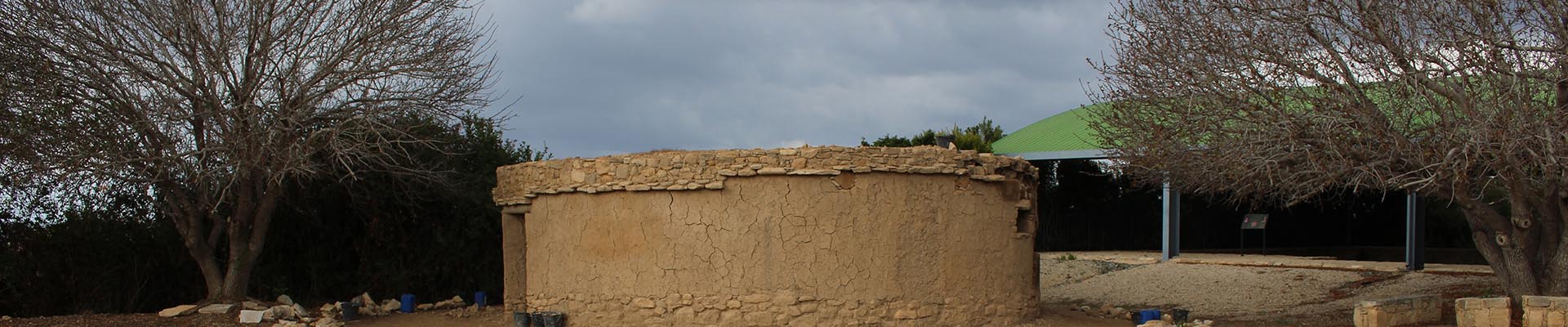
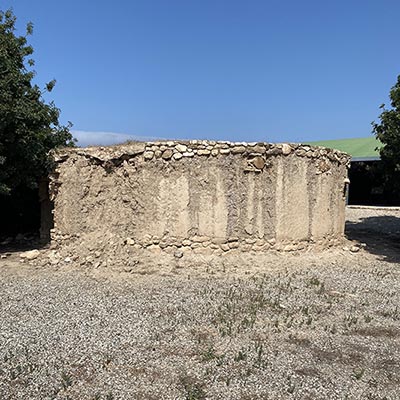
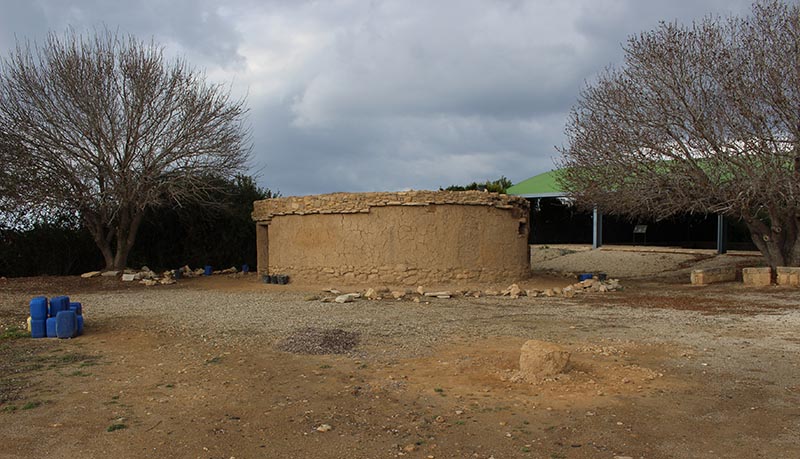
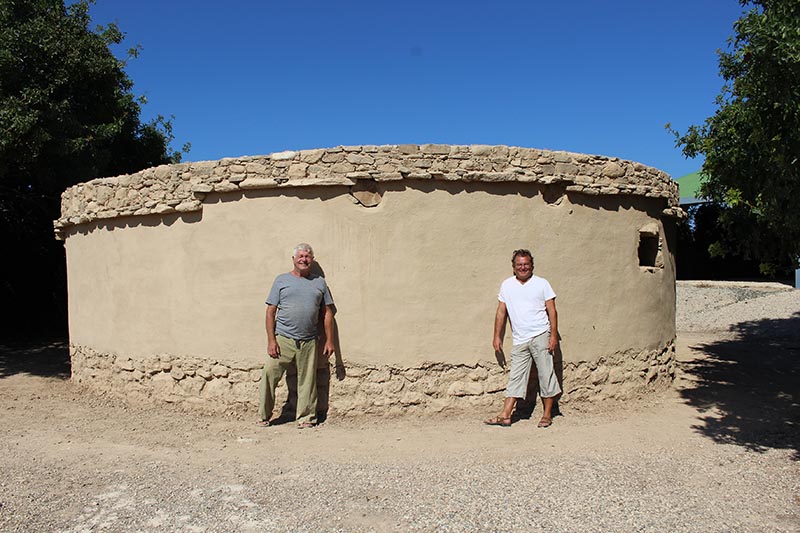
CAARI was grateful to receive a Shepard Urgent Action Grant from ASOR in January 2021 to undertake repairs to a replica Chalcolithic building at the important prehistoric site of Kissonerga-Mosphilia, near Paphos. The original reconstruction of the Late Chalcolithic (c. 2800–2400 BC) mud-built roundhouse took place in 2010 (funded by the A.G. Leventis Foundation and the Department of Antiquities, Cyprus) and was accompanied by a digital reconstruction (funded by the AIA) with infographic bilingual posters displayed within the building to enable visitors to appreciate the original stone foundations visible at the site. Heavy winter rains over recent years had damaged the structure to the point where major repairs or demolition were the only options.
The condition of the roundhouse in July 2020 prior to the project beginning. All photos courtesy of Lindy Crewe.
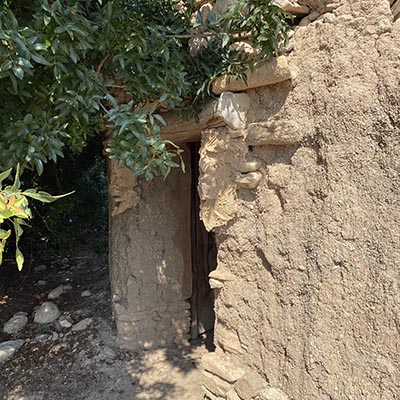
Encroaching vegetation and the collapse around the doorway of the roundhouse in July 2020.
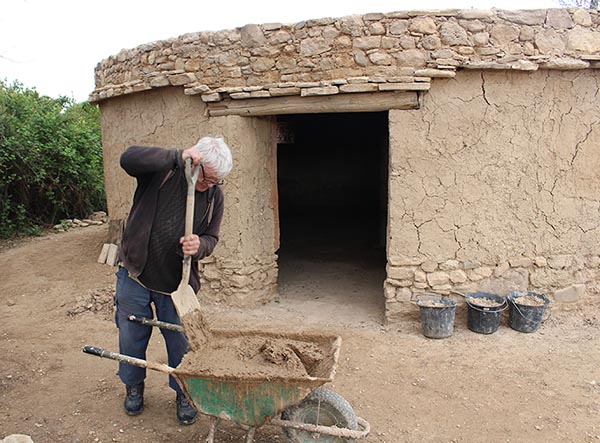
Dr. Paul Croft of the Edgar Peltenburg Archaeological Research Centre undertook the repairs with the assistance of local archaeologist Dean Wiltshire. Dr. Croft is an expert in mud architecture on Cyprus, responsible also for the upkeep of the Lemba Experimental village Chalcolithic roundhouses. Work has proceeded slowly between the lockdowns Cyprus has endured during the pandemic but now the refurbishment is complete.
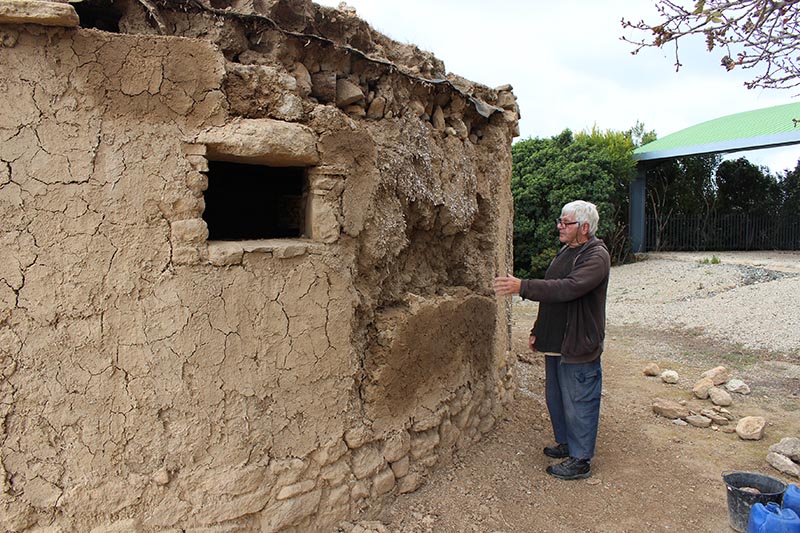
The timbers of the roof and the interior posts were still sound but it was a major undertaking to remove large sections of the walls, damaged not only by rains but also by birds and insects.
Dr. Paul Croft explaining the process of removing the decayed wall sections in order to stabilise the structure.
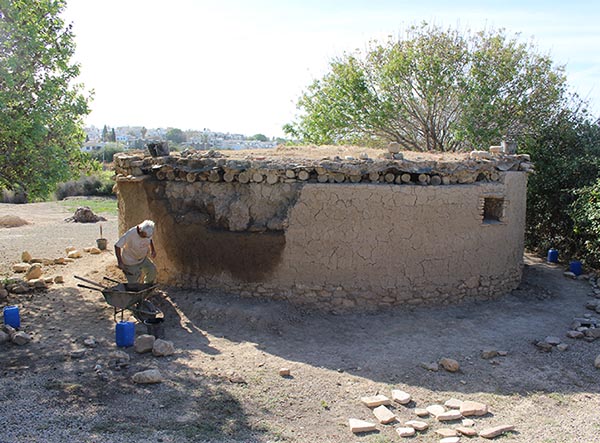
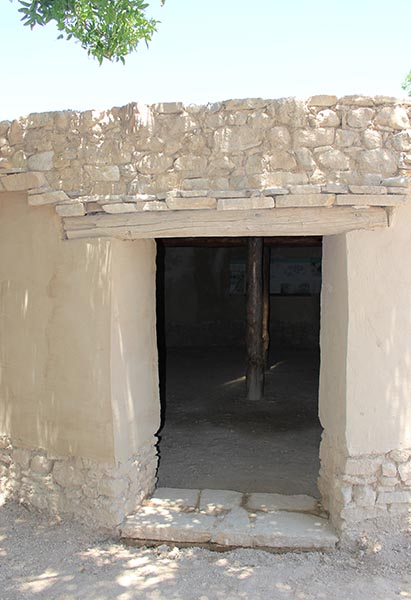
Lessons learnt from examining the damage have been applied to the repairs. The seaweed and soil mixture used for the walls was strengthened with the addition of local ‘white soil’, a lime-rich decayed bedrock from the source that the villagers of Kissonerga still use in traditional houses and ovens. Rain dripping from the stone facing of the flat, soil-covered roof had also caused severe erosion. In order to alleviate this, a protruding ‘drip course’ was constructed to direct runoff out beyond the wall face. A new raised stone threshold was placed in the entranceway to keep water out at ground level.
Dr. Paul Croft stirring the mud and seaweed mixture ready to apply to the walls in front of the refurbished entranceway with drip course.
Dr. Paul Croft adding mud mixture to the damaged walls and trowelling it smooth. Note the carefully selected flat stones in the bottom left used to create the eaves.
The digital rendering of the interior of the roundhouse with all objects in situ (created by Mat Dalton).
Whilst not all aspects of the reconstruction are entirely ‘authentic’ (note the layer of roofing felt beneath the soil of the roof seen in the image above), all work was done using traditional techniques. We do not know if Chalcolithic people also solved problems of rain runoff by installing a drip course nor whether these buildings had windows (as seen in the image above) as we only find the stone foundations preserved archaeologically. As the Pithos House was destroyed by fire, there was evidence of the interior beams preserved and all the objects were found in situ (as shown in the digital rendering).
The project was undertaken in collaboration with the Department of Antiquities, Cyprus, and the Kissonerga Community Council, who have agreed to contribute an annual sum so small repairs can be undertaken to ensure that the roundhouse remains in good repair for the future. When tourism on Cyprus can resume with the easing of the pandemic, we are prepared to welcome visitors to Kissonerga-Mosphilia and bring the story of Chalcolithic Cyprus to life.
Each year at the Annual Meeting, ASOR recognizes individuals who have performed outstanding service for the organization or who have published exceptional academic work or otherwise made significant contributions to our field. ASOR Honors and Awards Committee is seeking nominations for Book and Service Awards to be awarded at the 2021 Annual Meeting. An overview of awards can be found, below. Please note that the deadline for Service Award nominations is September 10 and Book Award nominations are due September 17.
Service Awards (nominations due September 10th)
The W. F. Albright Award. This award honors an individual who has shown special support or made outstanding service contributions to one of the overseas centers, ACOR, AIAR, CAARI, or to one of the overseas committees – the Baghdad Committee and the Damascus Committee. (This award is given when such an individual is identified.)
The Charles U. Harris Service Award. This award is given in recognition of long term and/or special service as an ASOR officer or Trustee. (One award is given annually.)
The P. E. MacAllister Field Archaeology Award. This award honors an archaeologist who, during their career, has made outstanding contributions to ancient Near Eastern and Eastern Mediterranean archaeology. (One award is given annually.)
ASOR Membership Service Award. This award recognizes individuals who have made special contributions on behalf of the ASOR membership, through committee, editorial, or office services. (Up to three awards are given annually.)
The Richard J. Scheuer Medal: This award honors an individual who has provided truly outstanding, long-term support and service contributions to ASOR. (This medal is awarded when such an individual is identified.)
The Frank Moore Cross Award. This award is presented to the author/editor of the most substantial volume(s) related to the history and/or religion of the ancient Near East and Eastern Mediterranean. Primary consideration will be given to historical, epigraphic, textual, and comparative literary studies; or to works that advance and/or evaluate new methodological approaches to the literary record(s). This work must be the result of original research published during the past two years. (One award is given annually.)
The Nancy Lapp Popular Book Award. This award is presented to the author/editor of a book published in the last two years that offers a new synthesis of archaeological or textual evidence from the Ancient Near East and Eastern Mediterranean intended to reach an audience of scholars as well as students and the broader public. (One award is given annually.)
The G. Ernest Wright Award. This award is given to the author/editor of the most substantial volume(s) dealing with archaeological material, excavation reports and material culture from the ancient Near East and Eastern Mediterranean. This work must be the result of original research published within the past two years. (One award is given annually.)

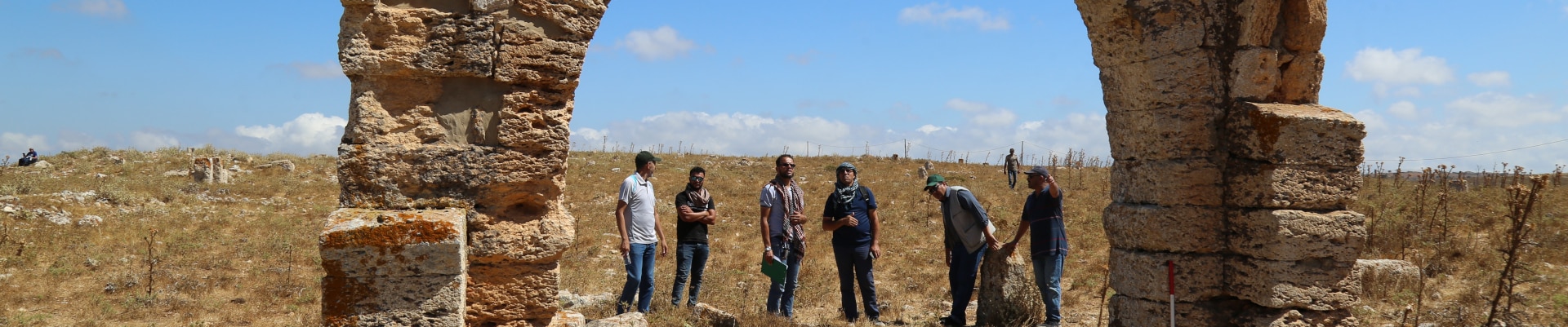

 Over the past months, ASOR Cultural Heritage Initiatives (CHI) and its partners have developed a series of tutorials and training modules aimed to help cultural heritage specialists perform surveys and condition assessments through open source tools and software, including QGIS, KoboToolbox, LibreCAD, and MetaShape. These tutorials are now available on the ASOR website in English, French, and Arabic. Work on these resources has been made possible by a grant from an anonymous donor. While the goal of this project is to assist heritage professionals in documenting and mapping sites, these tutorials are also an excellent resource for anyone in the ASOR community who is looking to learn new skills and take advantage of open source software. ASOR remains committed to providing open-access online resources such as these for the benefit of the entire ASOR community.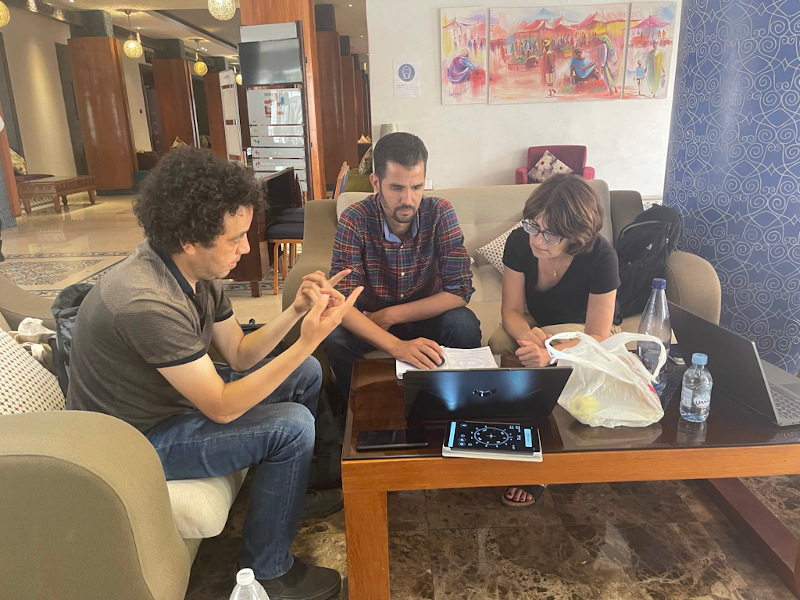







 Pp. 192–199: “Grisly Trophies: Severed Hands and the Egyptian Military Reward System,” by Danielle Candelora
 Pp. 200–204: “The Bronze Mouse of Maresha,” by Ian Stern
 Pp. 216–229: “Eau de Cleopatra: Mendesian Perfume and Tell Timai,” by Robert J. Littman, Jay Silverstein, Dora Goldsmith, Sean Coughlin, and Hamedy Mashaly



 All Things Cypriot