Pp. 1–32: “Late Prehistory of the Lower Galilee: Multi-Faceted Investigations of Wadi el-Ashert,” by Yorke M. Rowan, Morag M. Kersel, Austin Chad Hill, and Thomas M. Urban
In the southern Levant, fundamental changes in economic organization, mortuary practices, and  settlement patterns took place during the 5th to early 4th millennium b.c.e., or the Chalcolithic period (ca. 4500–3700/3600 b.c.e.). Our best evidence derives from sites in the Negev, and to a lesser degree, the Jordan Valley and Golan Heights, and the mortuary sites along the coast. The goal of the Galilee Prehistory Project is to examine this period based on information from a different environmental region, by undertaking survey and excavation in the Galilee, a region with virtually no radiocarbon dates or plans derived from Chalcolithic sites. The multi-faceted investigation of the Wadi el-Ashert included unpiloted aerial vehicle fly-overs during different seasons, geophysical and pedestrian survey, and methodical sub-surface test sampling. The comprehensive approach to this prehistoric landscape resulted in a more nuanced understanding of the site.
ASOR Members with online access: navigate to the token link email sent to you before attempting to read this article. Once you have activated your member token, click here to access the above article on The University of Chicago Press Journals’ website.
Pp. 33–51: “Middle Bronze Age Zincirli: The Date of “Hilani I” and the End of Middle Bronze II,” by Virginia R. Herrmann and David Schloen
Zincirli Höyük in southern Turkey is best known as the Iron Age city of Samʾal, but recent excavations by the Chicago-Tübingen Expedition have  discovered important remains of the Middle Bronze Age II, destroyed in a conflagration. This article presents two major interim results for Zincirli’s settlement history that also have implications for the architectural history and chronology of the Northern Levant. In addition to a wealth of material that gives new insight into local administration and production and interregional connections between Syria and Anatolia, the excavations have revealed that the monumental building Hilani I, though long assumed to be the earliest palace of the Iron Age, dates instead to the Middle Bronze Age. Contemporary parallels suggest that it was a broadroom temple rather than a bīt ḫilāni palace. Furthermore, radiocarbon analysis and ceramic evidence date the destruction to the mid- to late 17th century b.c.e. and thus suggest that the agent of the destruction was Ḫattušili I in his campaign against Zalwar (Zalpa), nearby Tilmen Höyük. Future research on the Middle Bronze Age at Zincirli promises to illuminate its connection to a little-known Syro-Anatolian exchange network, probably centered on Aleppo, which the rising Hittite kingdom may have hoped to disrupt or co-opt.
ASOR Members with online access: navigate to the token link email sent to you before attempting to read this article. Once you have activated your member token, click here to access the above article on The University of Chicago Press Journals’ website.
Pp. 53–86: “Middle Bronze Age Zincirli: An Interim Report on Architecture, Small Finds, and Ceramics from a Monumental Complex of the 17th Century b.c.e.,” by Kathryn R. Morgan and Sebastiano Soldi
Recent excavations at the site of Zincirli Höyük in southeastern Turkey have revealed significant remains of the Middle Bronze Age II period, with evidence for local food  (and probably wine) production and storage, textile production, and administrative activities. Certain cylinder seal and vessel types further indicate that the site was well-integrated into a contemporary exchange network linking the Euphrates, North Syria, and central Anatolia. The newly discovered complex includes the massive Hilani I, heretofore attributed to the Iron Age but now believed to be a Middle Bronze Age temple rather than a bīt ḫilāni palace. This preliminary report presents architecture, ceramics, and small finds associated with this complex, DD, which comprises, in addition to Hilani I, two well-provisioned buildings (DD/I and DD/II), a street, and exterior work spaces, and was destroyed in a conflagration in the mid-17th century b.c.e. Ongoing research by the Chicago-Tübingen Expedition seeks to illuminate the function of Complex DD and Hilani I, as well as the regional significance of the site, including its political relationship to nearby Tilmen Höyük/Zalwar, destroyed in the campaigns of Ḫattušili I, and its role in the trade of luxury commodities such as wine and textiles.
ASOR Members with online access: navigate to the token link email sent to you before attempting to read this article. Once you have activated your member token, click here to access the above article on The University of Chicago Press Journals’ website.
Pp. 87–97: “An Anatolian-Style Lead Figurine from the Assyrian Colony Period Found in the Middle Bronze Age Palace of Tel Kabri,” by Assaf Yasur-Landau, Eric H. Cline, Sturt W. Manning, and Gilberto Artioli
Excavations during the summer of 2017 in the earlier phases of the courtyard of the palace at Tel Kabri  turned up pieces of figurines as well as horn cores within a context of Phase 4 or 5 (late 19th to early 18th centuries b.c.e.). One figurine, portraying two deities, belongs to a type of Anatolian lead figurine known from the Assyrian Colony period. Initial results from Lead Isotope Analysis (LIA) suggest that an Anatolian provenance is indeed a plausible option. This is the first find of its type to be found in the southern Levant.
ASOR Members with online access: navigate to the token link email sent to you before attempting to read this article. Once you have activated your member token, click here to access the above article on The University of Chicago Press Journals’ website.
Pp. 99–117: “Phoenician Cedar Oil from Amphoriskoi at Tel Kedesh: Implications Concerning Its Production, Use, and Export during the Hellenistic Age,” by Andrew J. Koh, Andrea M. Berlin, and Sharon C. Herbert
Archaeologists and historians have routinely attributed “branded” goods to particular regions and cultural groups, often without rigorous analysis.  Phoenician cedar oil is perhaps one of the best-known examples from antiquity. Hellenistic Tel Kedesh in the Upper Galilee region of the Levant is particularly relevant for these discussions by virtue of its strategic role as a border settlement in Phoenicia during one of the most dynamic periods in ancient history. As a concise contribution to these discussions, we present here an interdisciplinary analysis of amphoriskoi found with ca. 2,000 impressed sealings from the archive complex of the Persian-Hellenistic Administrative Building. While the building was constructed under the Achaemenids and occupied in both the Ptolemaic and Seleucid eras, the archive was in use only under the Seleucids in the first half of the of the 2nd century b.c.e. Blending organic residue analysis with archaeological and textual data has allowed us to identify with certainty one of the value-added goods most closely attached to ancient Phoenicia, true cedar oil from Cedrus libani. This discovery not only empirically verifies this well-known association for the first time, but also provides a rich context in which to test our assumptions about culturally-branded goods, the role they played in participant societies, and the mechanisms and systems in place that facilitated their production, use, and export.
ASOR Members with online access: navigate to the token link email sent to you before attempting to read this article. Once you have activated your member token, click here to access the above article on The University of Chicago Press Journals’ website.
Pp. 119–130: “A Middle Bronze II Cylinder Seal of North Syrian Style from Tel Shimron (Jezreel Valley),” by Elisa Roßberger
The first excavation season at Tel Shimron brought to light a well-preserved hematite cylinder seal of outstanding  artistic quality dating to the Middle Bronze IIA–B. The depicted creatures belong to the Egyptian and Syro-Levantine art spheres, but their rendering and the integration of additional pictorial elements conforms more to the latter. Stylistically, the seal relates to the Northern Levantine coastal region, and in particular to a group characterized by its deep and fluid linear carvings and plastic modeling of animal bodies in motion. Together with an example from Tell el-ʿAjjul, its discovery in the Jezreel Plain marks the southern-most secured findspot for a seal of this style, and offers a welcome opportunity for a renewed discussion on processes of artistic interaction and hybridization in the Middle Bronze Age Levant.
ASOR Members with online access: navigate to the token link email sent to you before attempting to read this article. Once you have activated your member token, click here to access the above article on The University of Chicago Press Journals’ website.
Pp. 131–152: “The Space Syntax of Canaanite Cultic Spaces: A Unique Category of Spatial Configuration within the Bronze Age Southern Levant,” by Matthew Susnow
The existence of temples within urban, rural, and extramural settings in the Middle and Late Bronze Age southern Levant  is well documented. However, defining what qualifies these spaces as “cultic” is significantly less clear. Accordingly, in this paper I utilize access analysis to define sacred space as a unique category of spatial configuration within the region, one that contrasts with other types of public and domestic spaces. As such, the trajectory and evolution of Canaanite temples and cultic architecture diverge in a number of ways from other types of spaces. I demonstrate this visually by supplying justified gamma maps for cultic and non-cultic architecture, underscoring the contrasting nature between the access to, movement through, and control of Canaanite temples and that of their domestic and palatial counterparts. The implications of this are remarkable. What emerges from this study is that Canaanite temples were unique not only in terms of the role they played within their surrounding landscapes and region, but also in how they were differentiated from temples and temple institutions of the surrounding ancient Near East, with relation to the rise of urbanization, social complexity, and elite control of religious institutions.
ASOR Members with online access: navigate to the token link email sent to you before attempting to read this article. Once you have activated your member token, click here to access the above article on The University of Chicago Press Journals’ website.
Pp. 153–170: “Was a “Gate Shrine” Built at the Level III Inner City Gate of Lachish? A Response to Ganor and Kreimerman,” by David Ussishkin
The city gate of Level III at biblical Lachish dates to the Iron Age IIB period and was destroyed in the Assyrian conquest in 701  b.c.e. In 2015–2016, Saar Ganor and Igor Kreimerman excavated the southern wing of the inner gate. In a recent issue of this journal, Ganor and Kreimerman (2019) suggested that the innermost, southern chamber of the gatehouse was a “gate shrine,” that the “gate shrine” was desecrated during the reform of Hezekiah, that it was turned into a symbolic toilet, and then sealed. The present paper has four aims. First, it presents an integral picture of the inner gatehouse based on all the excavations which took place there. Second, it argues that there was no gate shrine in the gatehouse. Third, it argues that the assumed gate shrine was not desecrated during the time of Hezekiah’s reform. Fourth, it shows that the innermost, southern chamber contained an installation of secular nature that parallels that in the innermost northern side of the gatehouse.
ASOR Members with online access: navigate to the token link email sent to you before attempting to read this article. Once you have activated your member token, click here to access the above article on The University of Chicago Press Journals’ website.
Pp. 171–200: “The Sidon’s/Ṣaydā Northern Hinterland during the Early Byzantine–Early Islamic Transition,” by Mariusz Gwiazda, Joanna Piątkowska-Małecka, Urszula Wicenciak, Piotr Makowski, and Tomasz Barański
The paper focuses on the archaeological evidence for settlement, cultural, and economic change in the Sidon’s (Ṣaydā)  northern hinterland in the period of transition from early Byzantine to early Islamic times (7th–8th century c.e.). The changes were reconstructed based on the outcome of archaeological research at the sites of Porphyreon (modern Jiyeh) and Chhîm in the Sidon’s/Ṣaydā economic hinterland. The evidence confirms a continuity, although in reduced form, of occupation after the Arab conquest and a complete abandonment in the second half of the 7th or the beginning of the 8th century. The situation here bears similarity to other parts of Phoenicia, struck at the time with a settlement crisis that resulted in both a reduction of the population and a decline in the importance of cities, among others. These events were not sudden; they resulted from a process lasting several decades and impacting mainly the coastal area.
ASOR Members with online access: navigate to the token link email sent to you before attempting to read this article. Once you have activated your member token, click here to access the above article on The University of Chicago Press Journals’ website.
Pp. 201–218: “Ancient Pot-Bellows: A Review Forty Years On,” by Christopher John Davey
After a brief introduction to pot-bellows, their corpus is reviewed, identifying objects and evidence  that have emerged since the first paper about them was published by the author (Davey ). The propositions made in that paper are assessed and most are found to have stood the test of time. If anything, the new evidence has added complexity to this field of study, especially where the origin of the technology is concerned.
ASOR Members with online access: navigate to the token link email sent to you before attempting to read this article. Once you have activated your member token, click here to access the above article on The University of Chicago Press Journals’ website.
Pp. 219–243: “Intermediate Bronze Age Crescent-Headed Figures in the Negev Highlands,” by Lior Schwimer and Yuval Yekutieli
This paper presents the discovery of a unique and widespread type of petroglyphs in the Western Negev Highlands,  depicting human figures with crescent-shaped headgear, knee-high garments, and crescent pommel daggers. It proposes a methodology for dating this style and its historical context by: (1) analysis of presence or absence of specific animal species in the engraved scenes; (2) examination of the occurrence of particular attributes that appear in the scenes within dated contexts across the ancient Near East; and (3) study of the fit between the incised panels’ locations and the distribution of dated archaeological sites in the region and the routes connecting them. Based on this composite analysis, it is proposed that these petroglyphs are associated with groups participating in the copper trade that operated in the Sinai-Negev-Edom region during the Intermediate Bronze Age (ca. 2500–2000 b.c.e.).
ASOR Members with online access: navigate to the token link email sent to you before attempting to read this article. Once you have activated your member token, click here to access the above article on The University of Chicago Press Journals’ website.



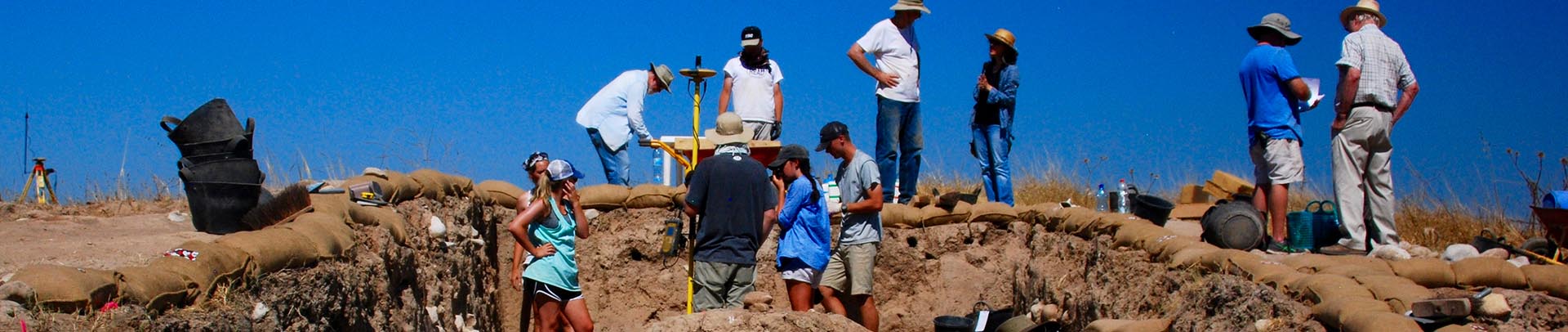
 Mentorship is a key component of the Summer Stipend Program. Over the course of the summer, stipend recipients will be taking part in monthly cohort meetings designed to assist with professional development. To continue support beyond the summer, we are also starting a mentorship program that pairs Summer Stipend students with ASOR members. The goal here is to encourage the next generation of ASOR scholars by connecting them with a supportive network that offers sound professional advice, and encourages participation on ASOR-affiliated excavation projects and in the Annual Meeting.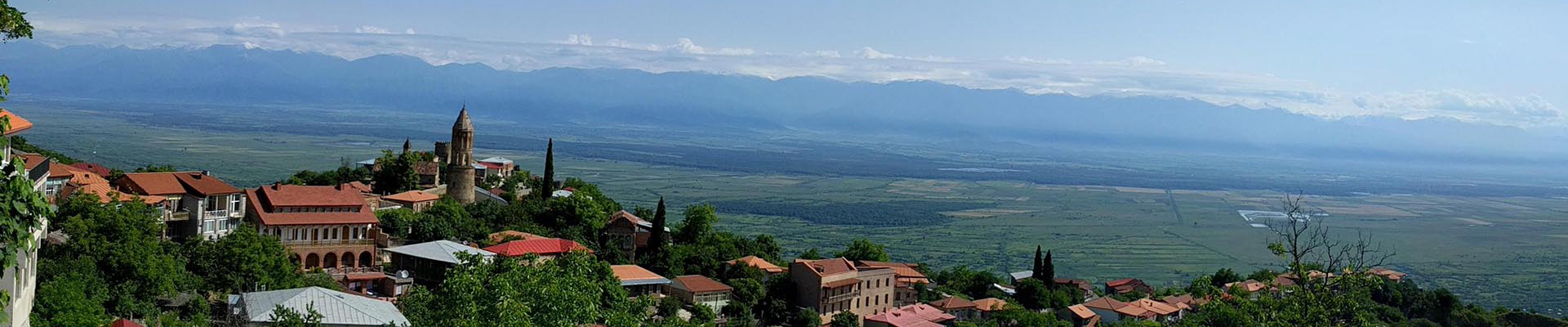











 Congratulations to ASOR member Rita Lucarelli on being awarded a




 To help students navigate what can be a deeply daunting experience, successful applicants will also be paired with Ph.D. students or early career scholars who will act as a mentor during the conference. This grant not only provides financial aid for conference attendance, but gives Black students the opportunity to start forming professional networks that are so crucial for developing an academic career.