
SHARE
[/vc_column_text][mk_image src=”http://www.asortest.org/wp-content/uploads/2017/01/social-fb-icon4.jpg” image_width=”42″ image_height=”42″ hover=”false” custom_url=”https://www.facebook.com/ASOResearch/” margin_bottom=”0″][mk_image src=”http://www.asortest.org/wp-content/uploads/2017/01/social-tw-icon4.jpg” image_width=”42″ image_height=”42″ hover=”false” custom_url=”https://twitter.com/ASOResearch?ref_src=twsrc%5Egoogle%7Ctwcamp%5Eserp%7Ctwgr%5Eauthor” margin_bottom=”0″][mk_image src=”http://www.asortest.org/wp-content/uploads/2017/01/social-in-icon4.jpg” image_width=”42″ image_height=”42″ hover=”false” custom_url=”https://www.linkedin.com/company/american-schools-of-oriental-research” margin_bottom=”0″][mk_image src=”http://www.asortest.org/wp-content/uploads/2017/01/social-ml-icon_7.jpg” image_width=”42″ image_height=”42″ hover=”false” custom_url=”mailto:asor@bu.edu” margin_bottom=”0″][mk_image src=”http://www.asortest.org/wp-content/uploads/2017/01/blog-icon3.jpg” image_width=”42″ image_height=”42″ hover=”false” custom_url=”http://asorblog.org/” margin_bottom=”0″][/vc_column][vc_column border_color=”rgba(255,255,255,0.01)” width=”1/6″ css=”.vc_custom_1496683923840{margin-right: 20px !important;border-left-width: 2px !important;padding-right: 20px !important;padding-left: 20px !important;border-left-color: #99422f !important;}”][mk_divider divider_color=”rgba(255,255,255,0.01)” thickness=”1″ margin_top=”3″ margin_bottom=”3″][vc_column_text] [/vc_column_text][/vc_column][vc_column border_color=”rgba(170,170,170,0.01)” width=”1/2″ css=”.vc_custom_1487276122024{margin-right: 10px !important;margin-bottom: 30px !important;border-right-width: 2px !important;border-bottom-width: 2px !important;padding-top: 30px !important;padding-right: 30px !important;padding-left: 20px !important;background-color: #ffffff !important;border-right-color: rgba(227,228,228,0.75) !important;border-bottom-color: rgba(227,228,228,0.75) !important;}”][vc_column_text responsive_align=”left”]Table of Contents for Near Eastern Archaeology 81.4 (December 2018)
You can receive NEA (and other ASOR publications) through an ASOR Membership. Please e-mail the Membership office if you have any questions.
Pp. 228–237: “Reuse and Recycling in the Temple of Millions of Years of Thutmosis III (Luxor, Egypt): Archaeological Evidence of a Pottery Workshop,” by Juan Jesús Padilla Fernández, Linda Chapon, and Francisco Contreras Cortés
Archaeological excavations carried out during seasons 2013 and 2014 in the Temple of Millions of  Years of Thutmosis III shed light on a set of material elements linked to the production process of ceramics. Among these elements are a kiln and possible decanting sink structures. Long after the sacred precinct had been abandoned, changes seem to have occurred in the ideological and ritual conceptions of the Theban Mountain situated on the west bank of Luxor. These changes led to the reutilization in more recent times of still-visible mud-brick structures, but with different functions and uses.
Click here to access the above article on The University of Chicago Press Journals (ASOR membership with online access and/or subscription to UCP Current Content required).
Pp. 239–243: “New Fragments of “Nectanebo the Falcon” from the Temple of Behbeit el-Hagar,” by Mahmoud A. Emam and Ehab Abd el-Zaher
Two new fragments (no. 456 and Hor.Behbeit.4) presenting the lower part of two unfinished Horus statues in the form of a falcon embracing the king between his claws were discovered recently during irrigation works in the western side of the temple of Behbeit el-Hagar in 2009. The authors present a full description of the two newly discovered fragments and propose their dating to the reign of King Nectanebo II (360–342 B.C.E.) by comparing them with two other statue bases of the falcon Horus dated to the same king that are apparently from Behbeit el-Hagar. The strong relations between King Nectanebo II and the god Horus in Behbeit are in evidence.
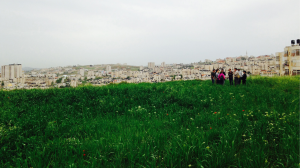
The author describes the recent, renewed vandalizing of the site of Khirbet el-Lauz in the West Bank. In doing so, he stresses the role of the general public in protecting the archaeological resources located in Area C, as well as the importance of raising awareness among the school students to engage them in safeguarding the archaeological sites, and offers some recommendations for reducing the looting of antiquities in the Palestinian Territories.
Click here to access the above article on The University of Chicago Press Journals (ASOR membership with online access and/or subscription to UCP Current Content required).
Pp. 244–249: “Khirbet el-Lauz Revisited: Lessons from the Renewed Destruction of a Vulnerable Heritage Site,” by Salah Hussein Al-Houdalieh
Click here to access the above article on The University of Chicago Press Journals (ASOR membership with online access and/or subscription to UCP Current Content required).
Pp. 250–258: “Archaeological Excavations at Khirbet Beit Bassa, Palestine,” by Ibrahim Mohammad Abu Aemar
Khirbet Beit Bassa is located about three kilometers southeast of Bethlehem city on a hilltop that in every direction overlooks other archaeological sites. The results of surveys and archaeological excavations conducted at the site indicate that it was inhabited during the Roman, Byzantine, and early Islamic periods, and for a time in the Ottoman period. The architectural remains that have been discovered during various archaeological activities at the site include a subterranean rock-cut tomb, ground graves, a wine press, residential structures, cisterns, and a khan. Over recent decades, many parts of the site have been exposed to destruction and vandalism resulting mainly from the looting of antiquities by local groups, by urban development such as the construction of new roads and houses, and through agricultural activities in which tractors were used for plowing. This study focuses on presenting the results of archaeological excavations that the author conducted at the site, mainly in 2009 and 2010.
Click here to access the above article on The University of Chicago Press Journals (ASOR membership with online access and/or subscription to UCP Current Content required).
Pp. 259–268: “Between Destruction and Diplomacy in Canaan: The Austrian-Israeli Expedition to Tel Lachish,” by Katharina Streit, Lyndelle Webster, Vanessa Becker, Ann-Kathrin Jeske, Hadas Misgav, and Felix Höflmayer
The transition from the Middle to the Late Bronze Age in the southern Levant is marked by violent destructions of most major cities. The prevalent historical narrative connects these events with the expulsion of the Hyksos, the reunification of Egypt, and the end of the Second Intermediate period. However, current radiocarbon evidence indicates that the destruction of the Middle Bronze Age cities began around 1600 B.C.E., about half a century before the defeat of the Hyksos under King Ahmose. Aiming to test this chronological question, which could again open up the discussion regarding the underlying cause for the Middle Bronze Age destruction layers, excavations have been renewed at Tel Lachish. In the course of the first two seasons by the Austrian-Israeli Expedition, substantial remains from the Middle and Late Bronze Age have been uncovered. This report highlights the potential of further excavations at Lachish and summarizes the preliminary results of the project and its excavation strategies.
Click here to access the above article on The University of Chicago Press Journals (ASOR membership with online access and/or subscription to UCP Current Content required).
Pp. 269–275: “A Second Cult Room at the Lachish Gate?,” by Elad Liraz
Recently, a cult room was excavated in the southern side of the Level III gate structure of Tel Lachish. Within it, a desecrated double four-horned altar was found together with a stone privy, which led the excavators to suggest that this cult room was canceled during the religious reforms of King Hezekiah. The author proposes that a second, twin cult room existed in a parallel location on the northern side of the gate structure, containing similar elements, and that this room underwent the same process of desecration, probably during King Hezekiah’s reforms.
Click here to access the above article on The University of Chicago Press Journals (ASOR membership with online access and/or subscription to UCP Current Content required).
Pp. 276–299: “Pigs in Space (and Time): Pork Consumption and Identity Negotiations in the Late Bronze and Iron Ages of Ancient Israel,” by Avraham Faust
Pork consumption and avoidance became a major issue in the study of ancient Israel in the 1980s.  Initial works associated massive consumption of pork with the Philistines and its avoidance with the Israelites, and despite the doubts cast by some later studies, the topic is still closely associated with the study of Iron Age ethnic identities. The extensive data that has accumulated over the years, however, show that the distribution of pork-consuming communities in space and time is not random and, when examined in tandem with the wider social background of this era, can reveal a great deal about Iron Age group interactions and boundary maintenance. It appears that the arrival of the Philistines was a watershed as far as pork consumption was concerned, and in subsequent centuries pork consumption and avoidance correlate closely with the changing strategies of boundary maintenance used by the different groups residing in the region.
Click here to access the above article on The University of Chicago Press Journals (ASOR membership with online access and/or subscription to UCP Current Content required).
[/vc_column_text][mk_divider][vc_column_text]To view the entire issue on The University of Chicago Press Journals, click here.[/vc_column_text][/vc_column][vc_column border_color=”rgba(170,170,170,0.01)” width=”1/6″ css=”.vc_custom_1496684098866{margin-right: 5px !important;margin-bottom: 20px !important;border-right-width: 2px !important;border-bottom-width: 2px !important;padding-top: 30px !important;padding-right: 10px !important;padding-left: 10px !important;background-color: #ffffff !important;border-right-color: rgba(227,228,228,0.75) !important;border-bottom-color: rgba(227,228,228,0.75) !important;}”][vc_wp_posts title=”BROWSE THE NEWS ARCHIVE” number=”4″][/vc_column][vc_column border_color=”rgba(170,170,170,0.01)” width=”1/6″ css=”.vc_custom_1496684008271{margin-right: 10px !important;margin-bottom: 30px !important;border-right-width: 2px !important;border-bottom-width: 2px !important;padding-top: 30px !important;padding-right: 20px !important;padding-left: 20px !important;background-color: #ffffff !important;border-right-color: rgba(227,228,228,0.75) !important;border-bottom-color: rgba(227,228,228,0.75) !important;}”][vc_column_text]Tweets by ASOResearch [/vc_column_text][/vc_column][/vc_row]


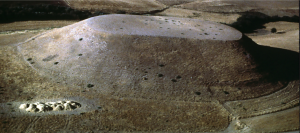
 By the Late Chalcolithic, adult burials have largely moved into extramural cemeteries, although there are some exceptions. Infants and small children, however, continue to be buried within the house and these interments are a common feature on the Anatolian plateau. At the site of Çadır Höyük in central Anatolia, well over one dozen Chalcolithic infant burials were placed in corners of existing rooms, in areas of possible ritual function, and incorporated in walls at the time of construction. This study investigates the relationship between the spatial context of these burials and their function in the domestic context, and considers the possibility that some infant burials served as foundation deposits in the architecture at Chalcolithic Çadır.
 Often these intramural tombs comprise stone-built cist chambers with adult or juvenile occupants and a range of funerary offerings. They are located within domestic residences and interpreted as family crypts. Less well explored are contemporary infant burials, which, in addition to poor preservation, are often located beneath the living floors of domestic houses but not within the cist tombs. This study reviews the evidence for the intramural burial of infants at mid-to late Early Bronze Age Titriş Höyük in southeastern Turkey in the context of broader funerary traditions at the site and in the region. The author suggests that the division between adult/juvenile and infant burial treatments might be more pragmatic than dogmatic; the implications of this observation for domestic funerary rituals and household cults are explored.
 One important component of these ceremonies is the foundation deposit, which is often placed under the corners of a temple or tomb and contain various items. Although foundation deposits are also attested in connection with profane architecture, such as storage buildings belonging to the royal household, they are uncommon in the nonelite sphere. The author discusses the evidence for this practice from a neighborhood of the ancient city of Avaris (Tell el-Dab’a) in the eastern Nile Delta. These finds are evaluated in light of comparative evidence from other parts of Egypt and the Near East. The author concludes that domestic foundation rituals are essentially poorer versions of royal ones, serving to sanctify, protect, commemorate, and elaborate. The evidence for this practice at Tell el-Dab’a furthermore hints at a mixture of Near Eastern and Egyptian elements at the site, opening up a new area of research in Egyptian domestic architecture.
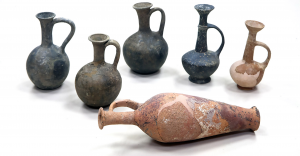 Residential burials provided permanent spatial connections between the living and the dead and served as loci of social memory for the intergenerational household. Drawing on archaeological evidence from Tel Megiddo, this article presents a model for residential burial and social memory focusing on the diversity of body disposal methods. Burials inside the settlement varied significantly in terms of type and architecture, body disposal methods, and grave goods. In several cases, burials were reopened periodically to reposition corpses while others were never disturbed. The author argues that the high degree of diversity within this mortuary corpus relates to differential social roles of the deceased after burial, and that mourners’ close encounters with deceased bodies transformed the status of the dead in a complex and protracted sequence of funerary rituals.
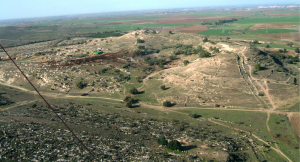 beneath the floor of an Early Bronze III house. Since then, three additional complete domestic donkey burials have been revealed beneath the floors of another house in the same Early Bronze neighborhood. These animals were buried within a nonelite domestic neighborhood at the edge of the city. The authors suggest that this urban space may have been the location of the homes and work spaces of merchants who relied upon donkeys as “beasts of burden” to transport their goods regionally and interregionally.
 The compound is made of five conjoined pillared houses that constitute the living space of one extended family. The author takes a gendered approach to the artifacts, which include female pillar figurines, animal figurines, horse-and-rider figurines, incense stands, and zoomorphic vessels. Ritualized utilitarian objects are also taken into account. This approach to ritual at the site adds to our understanding of the religious culture of women, men, children, families, and households at Naṣbeh. Most notably the author proposes that the concentration of ritual objects near the two kitchen spaces in the compound suggests that the female head of household who provided sustenance for the extended family and its dependents also presided over the religious health of the household.