

Friends of ASOR present the next webinar in the 2023-2024 season on April 18, 2024, at 3:00 pm EDT, presented by Dr. Aaron Burke.
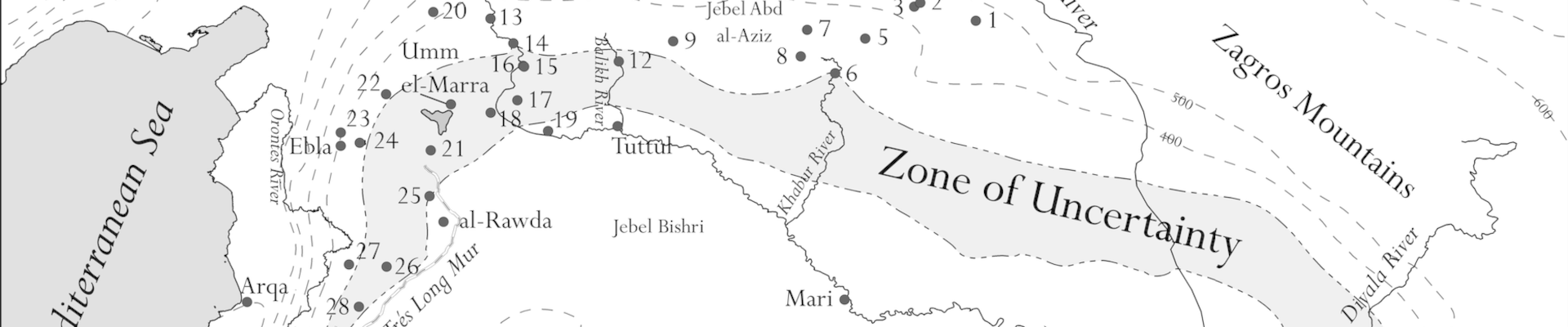
 The Amorites, an ancient Near Eastern group, are infamous in the Bible, where they are remembered among Canaan’s inhabitants at the time of its conquest by Israel. Yet, in Near Eastern studies the Amorite’s origins are only poorly understood. As a collective identity, they are best known for their encounters with the military establishments of Akkad and Ur in the late third millennium, and their alleged role as pastoralists par excellence. However, the shaping of this collective identity must be set against the backdrop of both Akkadian imperial intervention and the declining environmental conditions of this period in the marginal zones of the Fertile Crescent. Tracing the migration of Amorite refugees from agropastoral communities into nearby regions, mercenarism and militarism are seen to play a crucial role in the acquisition of economic and political power by Amorites between 2100 and 1900 BC. Members of this group became founders of well-known Amorite dynasties from Bahrain in the Persian Gulf to the Egyptian Delta. In the wake of the emergence of these dynasties in the early second millennium, traditional means of legitimation served to consolidate their power. Driven by a shared interest in the legitimation of their control, they patronized long-distance trade, construction projects, religious orders, the arts, warfare, fortification building, and standardizations of law. The extensive nature of these efforts have led some to refer to this as “the age of Amorites,” and it may be argued that the material effects of this contributed to the construction of an Amorite koine. This lecture explores the origins of Amorite identity, why it spread, and why it was remembered in later Near Eastern traditions.

 Aaron A. Burke received his Ph.D. in Near Eastern Archaeology from The University of Chicago. He is Professor of the Archaeology of Ancient Israel and the Levant, and the Kershaw Chair of the Ancient Eastern Mediterranean Studies in the Department of Near Eastern Languages and Cultures at The University of California, Los Angeles. He is also a member of UCLA’s Cotsen Institute of Archaeology, serving as its editor-in-chief since 2016.
Since 1994, he has excavated in Israel but also Egypt and Turkey, and travelled extensively throughout the Levant from Syria to Lebanon, Jordan, Cyprus, and in Greece, collaborating in field research at Jerusalem, Jaffa, and Tel Dan. He directs The Jaffa Cultural Heritage Project since 2007 and has co-edited three volumes resulting from research in Jaffa, Israel. Expanding upon this research, in 2017 he inaugurated Turning Points, an initiative aimed at exploring the context out of which ancient Israel emerged during the Early Iron Age in the southern Levant, ca. 1200–1000 B.C.
Burke’s research focuses on the social history of the Levant and Eastern Mediterranean during the Bronze and Iron Ages with a particular interest in identity transformations surrounding warfare, forced migration, and long-distance exchange. His first monograph, “Walled Up to Heaven”: The Evolution of Middle Bronze Age Fortification Strategies in the Levant, addressed warfare during a period of Amorite political hegemony. He is also author of The Amorites and the Bronze Age Near East (CUP 2021), which seeks to reconstruct a social history of the Amorites from 2500 to 1500 BC. Since 2021, he is also the series editor for Elements in the Archaeology of Ancient Israel (CUP).
This webinar will be recorded and all paid registrants will be sent a link to view the recording.

*Please log in to the Online Portal BEFORE registering for the webinar. Once you have logged in, you will be able to register under our Events page linked above.
ASOR Sustaining Members: $0 | ASOR Members: $6.50 | Public: $13
Season Pass: ASOR Sustaining Members: $0 | ASOR Members: $75 | Public: $155
Buy one here!
Please e-mail membership@asor.org with any questions or issues with registering.
All proceeds from this webinar are used to fund scholarships for members as well as increasing ASOR’s online resources, which are free to the public.
Buy a season pass for all the webinars* of the 2023-2024 FOA Webinar Season! With a season pass, you will automatically be registered for every webinar in the season, and you will receive the recording of each webinar automatically after the event.
If you have missed webinars earlier in the season and still want to buy the pass, you will receive the links to the recordings of the webinars you missed in your automatic confirmation email after you buy the pass.
*Special symposiums may be excluded from the season pass price.
No more registering for a year if you buy your pass today!
Pricing:
ASOR Sustaining Members: $0 (automatic registration for each webinar)
Members: $75
Public: $150
Not a member yet? Click here to join as a member and receive the 50% off a season pass!

Please e-mail membership@asor.org if you have any questions or issues.
[vc_row fullwidth=”true” attached=”true” css=”.vc_custom_1496247803139{padding-top: 0px !important;padding-right: 0px !important;padding-bottom: 0px !important;padding-left: 0px !important;}”][vc_column][vc_single_image image=”96103″ img_size=”full” alignment=”center”][/vc_column][/vc_row][vc_row fullwidth=”true” css=”.vc_custom_1496682730308{padding-top: 10px !important;padding-right: 0px !important;padding-bottom: 0px !important;padding-left: 0px !important;}”][vc_column width=”1/12″ css=”.vc_custom_1496683820796{margin-right: 10px !important;}” offset=”vc_hidden-md vc_hidden-sm vc_hidden-xs”][vc_column_text]
SHARE
[/vc_column_text][mk_image src=”http://www.asortest.org/wp-content/uploads/2017/01/social-fb-icon4.jpg” image_width=”42″ image_height=”42″ hover=”false” custom_url=”https://www.facebook.com/ASOResearch/” margin_bottom=”0″][mk_image src=”http://www.asortest.org/wp-content/uploads/2017/01/social-tw-icon4.jpg” image_width=”42″ image_height=”42″ hover=”false” custom_url=”https://twitter.com/ASOResearch?ref_src=twsrc%5Egoogle%7Ctwcamp%5Eserp%7Ctwgr%5Eauthor” margin_bottom=”0″][mk_image src=”http://www.asortest.org/wp-content/uploads/2017/01/social-in-icon4.jpg” image_width=”42″ image_height=”42″ hover=”false” custom_url=”https://www.linkedin.com/company/american-schools-of-oriental-research” margin_bottom=”0″][mk_image src=”http://www.asortest.org/wp-content/uploads/2017/01/social-ml-icon_7.jpg” image_width=”42″ image_height=”42″ hover=”false” custom_url=”mailto:info@asor.org” margin_bottom=”0″][mk_image src=”http://www.asortest.org/wp-content/uploads/2017/01/blog-icon3.jpg” image_width=”42″ image_height=”42″ hover=”false” custom_url=”http://asor.org/blog” margin_bottom=”0″][/vc_column][vc_column border_color=”rgba(255,255,255,0.01)” width=”1/6″ css=”.vc_custom_1496683923840{margin-right: 20px !important;border-left-width: 2px !important;padding-right: 20px !important;padding-left: 20px !important;border-left-color: #99422f !important;}”][mk_divider divider_color=”rgba(255,255,255,0.01)” thickness=”1″ margin_top=”3″ margin_bottom=”3″][vc_widget_sidebar sidebar_id=”ca-sidebar-39801″][/vc_column][vc_column border_color=”rgba(170,170,170,0.01)” width=”1/2″ css=”.vc_custom_1487276122024{margin-right: 10px !important;margin-bottom: 30px !important;border-right-width: 2px !important;border-bottom-width: 2px !important;padding-top: 30px !important;padding-right: 30px !important;padding-left: 20px !important;background-color: #ffffff !important;border-right-color: rgba(227,228,228,0.75) !important;border-bottom-color: rgba(227,228,228,0.75) !important;}”][vc_column_text responsive_align=”left”]
Noah Barton, Undergraduate University Student[/vc_column_text][mk_divider][vc_wp_text]This summer I had the pleasure of attending an archaeological field school in Cyprus with North Carolina State University. The program – Cyprus Archaeological Field School – is directed by two of my past professors and has been occurring yearly since 2017. I arrived in Cyprus on May 20, 2022. The island is beautiful; every turn has a clear blue ocean, incredible mountains and hillsides, or luscious forests. A pleasant surprise was that Cyprus is loaded with wild cats – there are more cats on the island than humans, in fact – and most of them are friendly. The only downside is that it was very humid, but that’s to be expected for an island near the Middle-East in June. The archaeological site I helped excavate is called Makounta-Voules, which appears to have been the home of a copper-mining group between 5000 and 7000 years ago. They used stone tools and had a large interest in picrolite – a bright green stone – which they sculpted into figurines and pendants. In addition to picrolite, our team also searched for evidence of stone tools and pieces of pottery (also known as sherds), bone (human and non-human), and shells that were used to create jewelry.
Every morning, I woke up at 4:20 am and got on a bus with all the other students. We went straight to the site and started working right away. The entire team was divided into groups of four, with three students and one supervisor. The archaeological method of digging is very systematic; each group dug a hole that was square-shaped and 4 meters wide, known as a trench. We usually dug five centimeters down at a time across the entire surface of the trench before digging any farther. In each group, the students worked together to break up the compact dirt with a pickaxe, shovel up all the newly-made piles of loose dirt, and sift through that dirt to find artifacts. We also straightened out the walls of the trench, known as balk walls. After the team got back to the hotel and ate lunch, we spent an hour or two washing the artifacts that we dug up. This was done by scrubbing them with a toothbrush and soaking them in water. About three nights per week, we also had a lecture that was given by one of the supervisors. The topics ranged from the entire history of Cyprus to different processes and ethics in archaeology.[/vc_wp_text][vc_row_inner][vc_column_inner][vc_single_image image=”95649″ img_size=”full” add_caption=”yes” alignment=”center” onclick=”img_link_large” img_link_target=”_blank” css=”.vc_custom_1710779963494{padding-right: 10px !important;}”][vc_single_image image=”95650″ img_size=”full” add_caption=”yes” alignment=”center” onclick=”img_link_large” img_link_target=”_blank” css=”.vc_custom_1710780038183{padding-right: 10px !important;}”][/vc_column_inner][/vc_row_inner][mk_padding_divider][vc_wp_text]
Every Friday we took a break from digging and went on field trips. During each trip, we visited at least one excavated archaeological site, one museum, and one local beach (except Nicosia). In Nea Paphos, we visited Kissonerga and Lemba, the Paphos museum, and Vardas beach. In Palaepaphos, we visited Prastio and Souskiou, Aphrodite’s temple, and Petra Tou Romeou beach, which is the legendary birthplace of Aphrodite. In Kourion we visited Kolossi, the Kourion museum, and Kourion beach. While in Nicosia we visited the Cyprus Museum, which was the most expansive museum of all.
Every Saturday was a free day for the students to do whatever they wanted. On the first free day, my friends and I went on a cruise, where we saw incredible views on the ocean and swam in the clear blue Mediterranean sea. On another free day, my friends and I hiked up Aphrodite’s trail, revealing the best views of the entire trip. I didn’t make any excursions on my fourth free day. Our fifth free day was spent in Nicosia, the country’s capital. My friends and I explored the city and later celebrated one friend’s birthday at bars and clubs.
On the final day, most students took a final exam; I did not as I didn’t need credit for an Anthropology major, and instead wrote two research essays to get credit for my History major. I left Cyprus on June 25, 2022, ending a wonderful five weeks of excavation and adventure.[/vc_wp_text][vc_single_image image=”95651″ img_size=”full” add_caption=”yes” alignment=”center” onclick=”img_link_large” img_link_target=”_blank” css=”.vc_custom_1710780131829{padding-right: 10px !important;}”][vc_single_image image=”95652″ img_size=”full” add_caption=”yes” alignment=”center” onclick=”img_link_large” img_link_target=”_blank” css=”.vc_custom_1710780182039{padding-right: 10px !important;}”][mk_padding_divider][vc_wp_text]Noah Barton is a senior at North Carolina State University, double-majoring in International Studies and History and minoring in Latin. He lives in Raleigh, North Carolina and enjoys history, music, and traveling.
The Archaeological Project’s Website: https://makountavoules.com/
The Archaeological Project’s Facebook Page: https://www.facebook.com/makountavoules/[/vc_wp_text][mk_divider][vc_wp_text]Want to help more students and early career archaeologists get into the field? Donate to the cause today by selecting “Excavation Scholarships” as your gift purpose!
 [/vc_wp_text][mk_padding_divider][/vc_column][vc_column border_color=”rgba(170,170,170,0.01)” width=”1/6″ css=”.vc_custom_1496684098866{margin-right: 5px !important;margin-bottom: 20px !important;border-right-width: 2px !important;border-bottom-width: 2px !important;padding-top: 30px !important;padding-right: 10px !important;padding-left: 10px !important;background-color: #ffffff !important;border-right-color: rgba(227,228,228,0.75) !important;border-bottom-color: rgba(227,228,228,0.75) !important;}”][vc_wp_posts title=”BROWSE THE NEWS ARCHIVE” number=”4″][/vc_column][vc_column border_color=”rgba(170,170,170,0.01)” width=”1/6″ css=”.vc_custom_1496684008271{margin-right: 10px !important;margin-bottom: 30px !important;border-right-width: 2px !important;border-bottom-width: 2px !important;padding-top: 30px !important;padding-right: 20px !important;padding-left: 20px !important;background-color: #ffffff !important;border-right-color: rgba(227,228,228,0.75) !important;border-bottom-color: rgba(227,228,228,0.75) !important;}”][vc_column_text]Tweets by ASOResearch [/vc_column_text][/vc_column][/vc_row]
[vc_row fullwidth=”true” attached=”true” css=”.vc_custom_1496247803139{padding-top: 0px !important;padding-right: 0px !important;padding-bottom: 0px !important;padding-left: 0px !important;}”][vc_column][vc_single_image image=”95640″ img_size=”full” alignment=”center”][/vc_column][/vc_row][vc_row fullwidth=”true” css=”.vc_custom_1496682730308{padding-top: 10px !important;padding-right: 0px !important;padding-bottom: 0px !important;padding-left: 0px !important;}”][vc_column width=”1/12″ css=”.vc_custom_1496683820796{margin-right: 10px !important;}” offset=”vc_hidden-md vc_hidden-sm vc_hidden-xs”][vc_column_text]
SHARE
[/vc_column_text][mk_image src=”http://www.asortest.org/wp-content/uploads/2017/01/social-fb-icon4.jpg” image_width=”42″ image_height=”42″ hover=”false” custom_url=”https://www.facebook.com/ASOResearch/” margin_bottom=”0″][mk_image src=”http://www.asortest.org/wp-content/uploads/2017/01/social-tw-icon4.jpg” image_width=”42″ image_height=”42″ hover=”false” custom_url=”https://twitter.com/ASOResearch?ref_src=twsrc%5Egoogle%7Ctwcamp%5Eserp%7Ctwgr%5Eauthor” margin_bottom=”0″][mk_image src=”http://www.asortest.org/wp-content/uploads/2017/01/social-in-icon4.jpg” image_width=”42″ image_height=”42″ hover=”false” custom_url=”https://www.linkedin.com/company/american-schools-of-oriental-research” margin_bottom=”0″][mk_image src=”http://www.asortest.org/wp-content/uploads/2017/01/social-ml-icon_7.jpg” image_width=”42″ image_height=”42″ hover=”false” custom_url=”mailto:info@asor.org” margin_bottom=”0″][mk_image src=”http://www.asortest.org/wp-content/uploads/2017/01/blog-icon3.jpg” image_width=”42″ image_height=”42″ hover=”false” custom_url=”http://asor.org/blog” margin_bottom=”0″][/vc_column][vc_column border_color=”rgba(255,255,255,0.01)” width=”1/6″ css=”.vc_custom_1496683923840{margin-right: 20px !important;border-left-width: 2px !important;padding-right: 20px !important;padding-left: 20px !important;border-left-color: #99422f !important;}”][mk_divider divider_color=”rgba(255,255,255,0.01)” thickness=”1″ margin_top=”3″ margin_bottom=”3″][vc_widget_sidebar sidebar_id=”ca-sidebar-39801″][/vc_column][vc_column border_color=”rgba(170,170,170,0.01)” width=”1/2″ css=”.vc_custom_1487276122024{margin-right: 10px !important;margin-bottom: 30px !important;border-right-width: 2px !important;border-bottom-width: 2px !important;padding-top: 30px !important;padding-right: 30px !important;padding-left: 20px !important;background-color: #ffffff !important;border-right-color: rgba(227,228,228,0.75) !important;border-bottom-color: rgba(227,228,228,0.75) !important;}”][vc_column_text responsive_align=”left”]
Pauline Allaire, 2022 Stevan B. Dana Scholarship for Fieldwork Participation[/vc_column_text][mk_divider][vc_wp_text]Archaeological excavations are always a significant step in the training of an archaeologist. I already had the opportunity to participate in several excavation campaigns but only in France, that’s why I was very elated to be able to participate in this excavation campaign in Israel, on the famous site of Hazor. This experience was rich and exotic in many ways.
At the beginning of the trip, the first step was to take the plane. It was the first time I had to make a trip with a stopover, it was stressful, but once this step was over, the adventure could really begin. As soon as I arrived in Israel, I chose to observe as much of my surroundings as possible to make the most of my memories. The airport was full of people looking for their loved ones, with huge welcome balloons and various posters of all kinds. The last step of my journey was to get to the kibbutz, the place where we were staying during the search. I had to take the train and the bus for almost three hours. Despite some difficulties in finding my way around, I finally arrived at the place thanks to the help of some very nice Israelis, who really did their best to help me. It was so nice![/vc_wp_text][vc_row_inner][vc_column_inner][vc_single_image image=”95641″ img_size=”full” add_caption=”yes” alignment=”center” onclick=”img_link_large” img_link_target=”_blank” css=”.vc_custom_1710776738379{padding-right: 10px !important;}”][mk_divider][/vc_column_inner][/vc_row_inner][mk_padding_divider][vc_wp_text]
Once I arrived at the port, I discovered my living space for the next three weeks. It’s quite different from what you can find in France. The kibbutz is Israeli farming communities where mutual aid is at the heart of life. For example, people who work in the community are housed and fed. The residents can eat together in a large hall. The landscape also surprised me. There are innumerable small hills with evenly spaced trees. Many fruit trees are present, as well as prickly pears. The overall atmosphere is rather desert-like, and it is very hot. Being from the north of France, this was completely different from what I was used to seeing. The animals were also surprising. If I was lucky enough to meet few scorpions and snakes, the countless lizards never ceased to make me smile, climbing trees, running around and sometimes even fighting.
Finally, of course, the archaeological site of Hazor filled my eyes with stars. This is a very special archaeological site. It is one of the largest sites in Israel. It is located north of Lake Tiberias. It can be divided into an “upper city” which is on a tell, a kind of hill, and a “lower city” which is much larger, as is often the case in the Near East, with a total area of about 80 hectares. There are temples, palaces, and administrative buildings. It is an important site essentially for the Bronze and Iron Ages, from 2600 BC to its destruction by the Assyrians in 732 BC. It was identified in 1875. It has been inscribed on the UNESCO World Heritage List since 2005. And today it is also a national park.[/vc_wp_text][vc_single_image image=”95642″ img_size=”full” add_caption=”yes” alignment=”center” onclick=”img_link_large” img_link_target=”_blank” css=”.vc_custom_1710776429463{padding-right: 10px !important;}”][mk_divider][vc_single_image image=”95643″ img_size=”full” add_caption=”yes” alignment=”center” onclick=”img_link_large” img_link_target=”_blank” css=”.vc_custom_1710776465463{padding-right: 10px !important;}”][mk_divider][vc_row_inner][vc_column_inner][vc_wp_text]It is also a biblical site and is mentioned several times (eighteen times). One of the strata is said to have been built during the reign of Solomon, the prophet and king of Israel in the Bible. The excavation campaign was led by Professor Amnon Ben-Tor, assisted by Igor Kreimerman and Deborah (Deby) Sandhaus. The focus this year was on Area M, which was the supposed entrance to the Bronze Age palace and storage areas. The aim was also to find the stairs of the palace. Although I was used to digging and already knew some of the excavation methods, it was still a learning session. I learned to understand the layering of stratigraphic layers. For example, learning which pavement above which pavement or which walls are from the same period. The best moment to teach my eye to recognise archaeological remains was certainly the reading of ceramics. In the evening, at about 5 p.m., we would meet up with the other excavators from our area, M69 for me, to analyse the ceramics that we had washed in the morning. We had to understand the damaged fragments of pottery to find the type of container and to give a date. The pieces that interested us were the characteristic pieces such as the lips and the hooves if they had seals or marks. The next step was to define the orientation of the lip to find the opening of the container and thus to define its type: jar, crater, cooking pot, etc. Finally, it was necessary to establish a dating, essentially Bronze Age or Iron Age depending on the decoration or the material. This is something that I found very interesting because it allowed us to use our knowledge concretely, and we had to adapt to each little piece that was in front of us. This site was impressive because of the size of the archaeological site, but also because of the discoveries, each one more interesting than the other. I can’t wait for all this to be published.[/vc_wp_text][vc_single_image image=”95644″ img_size=”full” add_caption=”yes” alignment=”center” onclick=”img_link_large” img_link_target=”_blank” css=”.vc_custom_1710776634696{padding-right: 10px !important;}”][mk_divider][vc_wp_text]Finally, one of the last elements that makes this workcamp a rich experience is its international aspect. Indeed, although the workcamp is under the supervision of the Hebrew University of Jerusalem, there are students and volunteers of all nationalities. For example, this year I was able to meet American, Swedish, Spanish, and of course Israeli students. This great diversity of cultures is for me one of the strong points of this workcamp. It allows us to compare points of view, to understand each other’s visions and ways of learning. But also, to laugh at each other’s clichés and to learn about new cultures.
It is for all this that I am very grateful to have been able to participate in this experience thanks to the ASOR association and my benefactor Mr. Stevan B. Dana. I would also like to thank my various colleagues on the dig for their good atmosphere and their motivation, as well as the people in charge of the dig for their transmission of knowledge and their patience.[/vc_wp_text][/vc_column_inner][/vc_row_inner][mk_divider][vc_wp_text]Pauline Allaire completed her undergraduate degree at the Ecole du Louvre in Paris and is currently studying for a master’s degree in the history and archaeology of the ancient worlds, specialising in Egyptology, at the Université Paul Valery Montpellier 3 (France).
Archaeological excavation network links:
Instagram: @hazor.excavations https://www.instagram.com/hazor.excavations/?hl=fr
Website: http://www.hazor-excavations.org/[/vc_wp_text][mk_divider][vc_wp_text]Want to help more students and early career archaeologists get into the field? Donate to the cause today by selecting “Excavation Scholarships” as your gift purpose!
[/vc_wp_text][mk_padding_divider][/vc_column][vc_column border_color=”rgba(170,170,170,0.01)” width=”1/6″ css=”.vc_custom_1496684098866{margin-right: 5px !important;margin-bottom: 20px !important;border-right-width: 2px !important;border-bottom-width: 2px !important;padding-top: 30px !important;padding-right: 10px !important;padding-left: 10px !important;background-color: #ffffff !important;border-right-color: rgba(227,228,228,0.75) !important;border-bottom-color: rgba(227,228,228,0.75) !important;}”][vc_wp_posts title=”BROWSE THE NEWS ARCHIVE” number=”4″][/vc_column][vc_column border_color=”rgba(170,170,170,0.01)” width=”1/6″ css=”.vc_custom_1496684008271{margin-right: 10px !important;margin-bottom: 30px !important;border-right-width: 2px !important;border-bottom-width: 2px !important;padding-top: 30px !important;padding-right: 20px !important;padding-left: 20px !important;background-color: #ffffff !important;border-right-color: rgba(227,228,228,0.75) !important;border-bottom-color: rgba(227,228,228,0.75) !important;}”][vc_column_text]Tweets by ASOResearch [/vc_column_text][/vc_column][/vc_row]
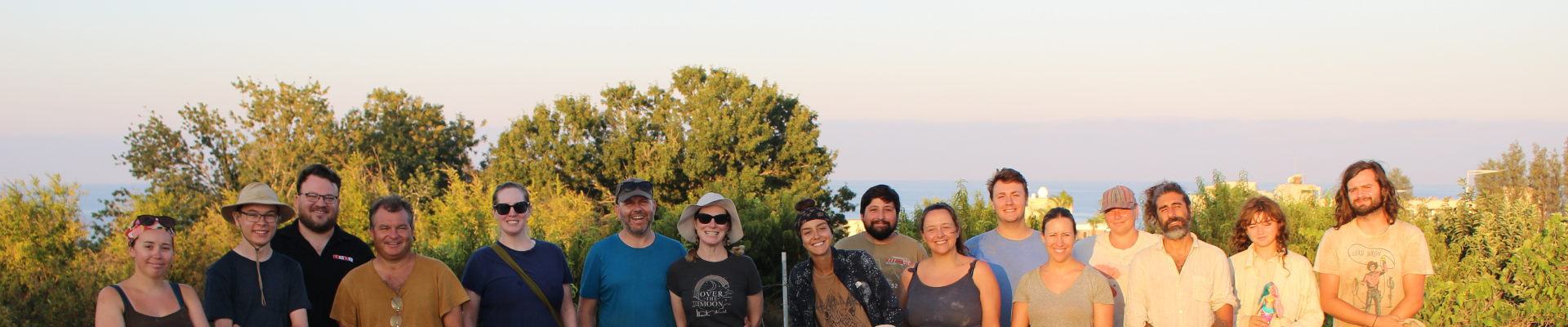
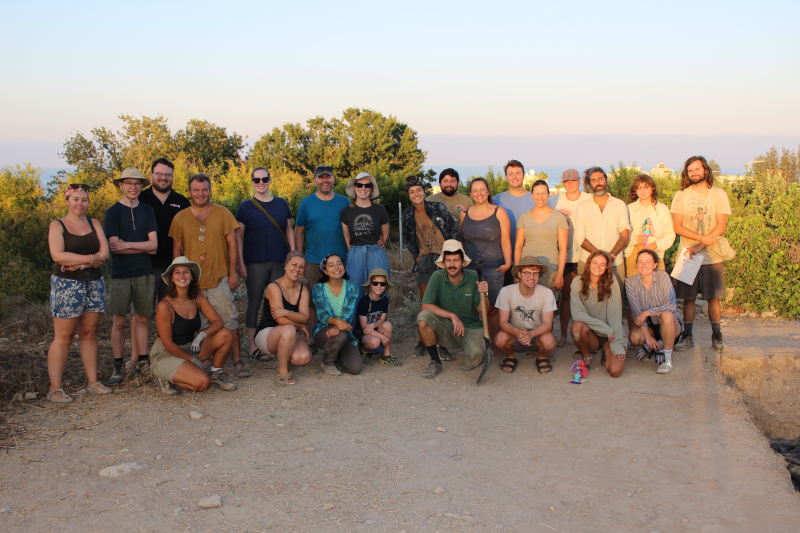
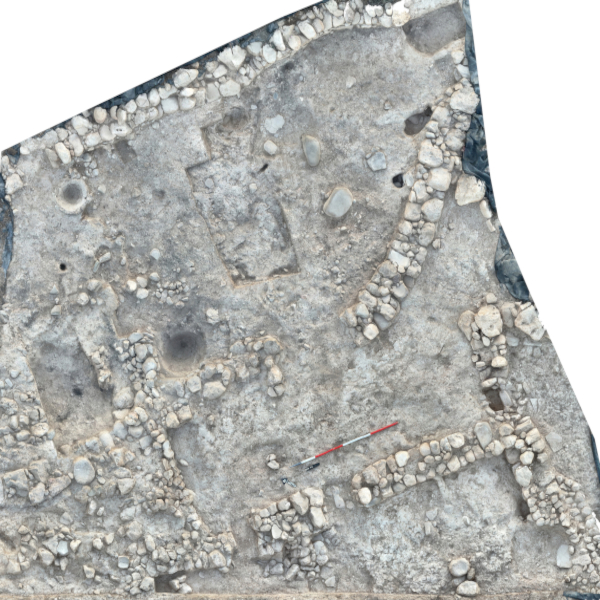
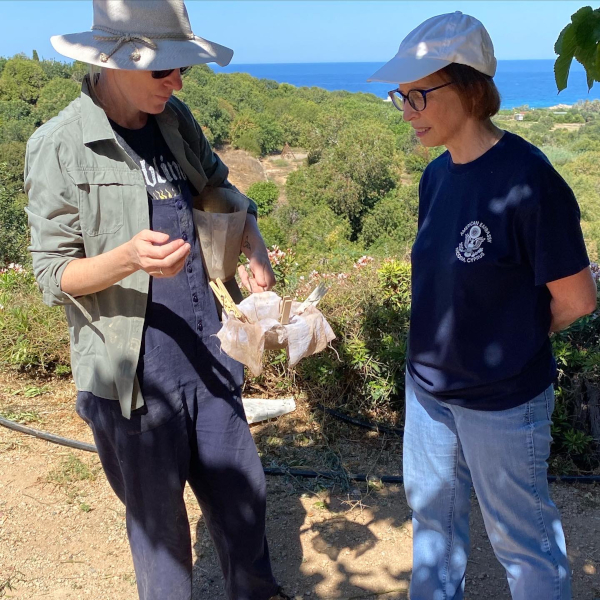





Nathan holding the fragmentary bronze bowl.
My work this year focused on continued excavations in a Late Iron Age room (ca. 7th-6th c. BCE), which I began to expose in 2017. This entailed excavating a Late Hellenistic occupation layer and Achaemenid period deposits – about two meters of earth – before secure Iron Age contexts were reached. While most of these intervening layers lack a well-defined context, they did produce several interesting finds. One such discovery was a crushed and fragmentary, but mostly complete, bronze bowl found resting on a loosely structured external surface of beaten earth. The bowl awaits restoration to allow for further analysis, but we were quite happy for the discovery in the field.
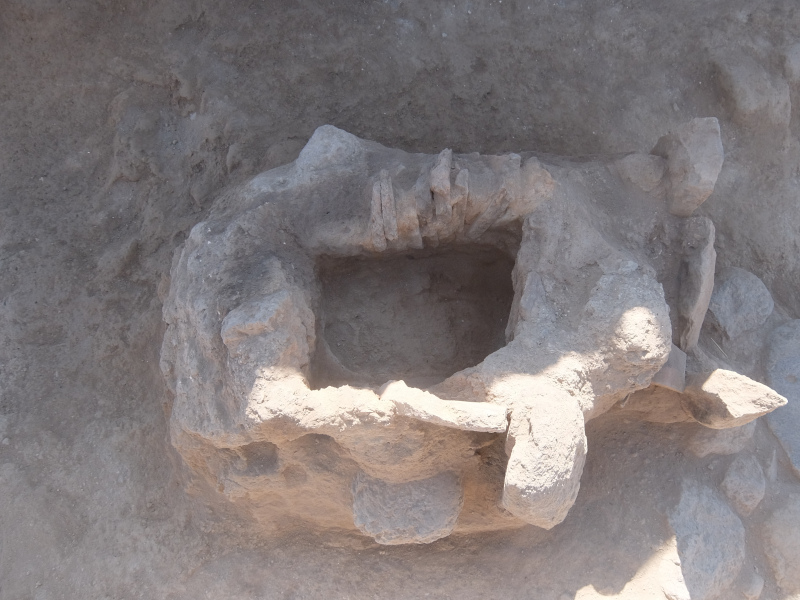
As for the Late Iron Age room itself, we opened a southern extension of the previously excavated space hoping to better understand its connection with adjacent rooms. The space is particularly interesting in its final phase of use (or perhaps disuse?), when it served as the locus for a midden heap rich in anthropic materials – the collection of these materials has become even more urgent in the last year, as the robust ceramic assemblage is now the focus of PhD research of a colleague at the University of Pavia, Italy. Additionally noteworthy are the peculiar faunal assemblage suggestive of ritual activity in the vicinity – presented at ASOR 2021 – and the recent identification of bone horse bridles, of which we have three – so at least definitely more than a single pair! The new materials collected this year require further analysis before any conclusions can be made, but from impressions made in the field, they appear consistent with past discoveries. One entirely new discovery from the room in the same period as the midden heap was a well-structured oven composed of stones, mud-bricks, and large ceramic sherds – apparently debris collected for reuse. The chamber of the oven sloped downwards to allow for heating without direct exposure to the fire, and the innermost part of the chamber was entirely full of burnt ashy remains of the fuel used for cooking.
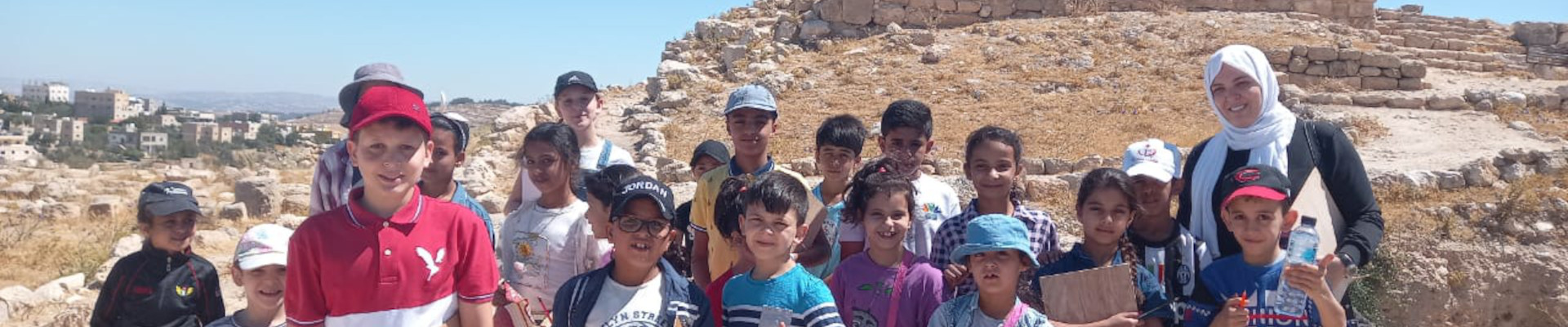
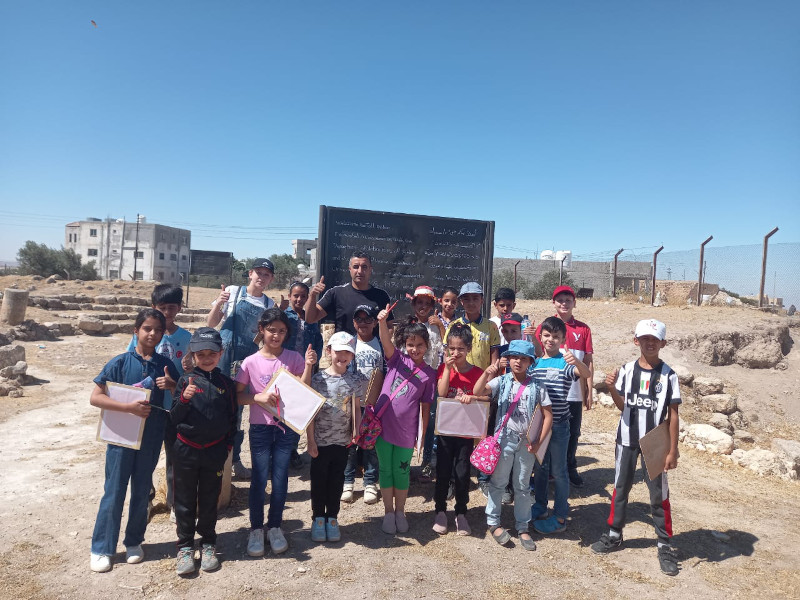
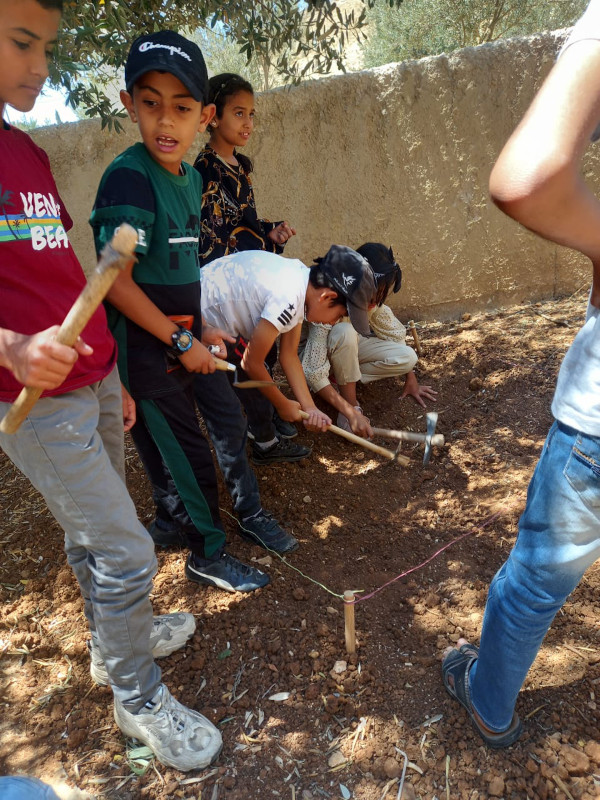
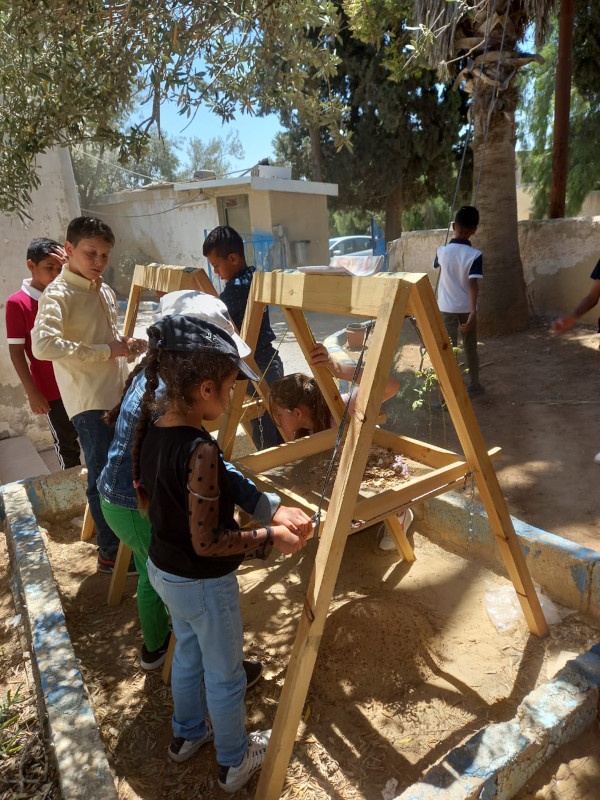
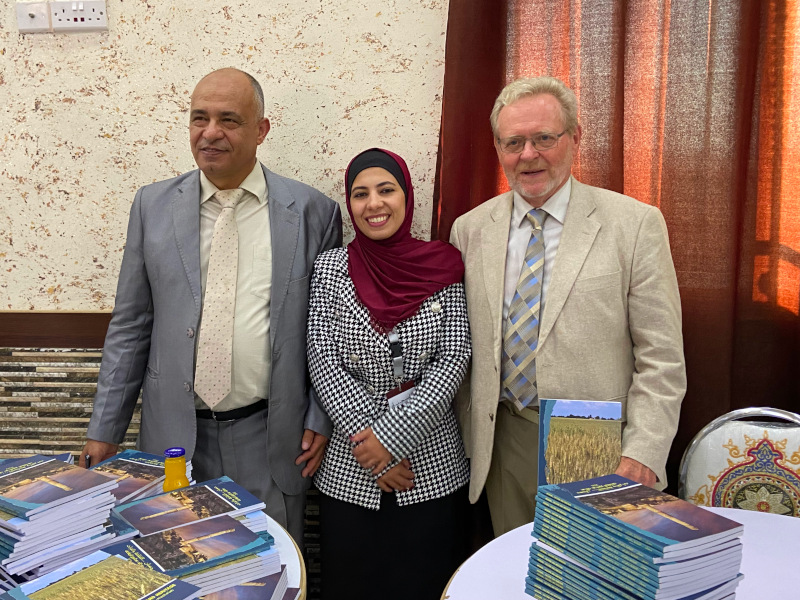
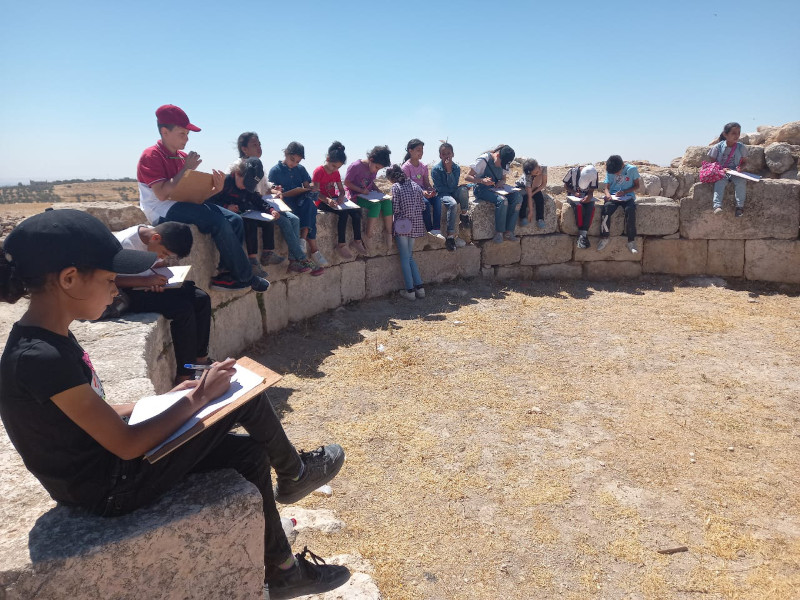
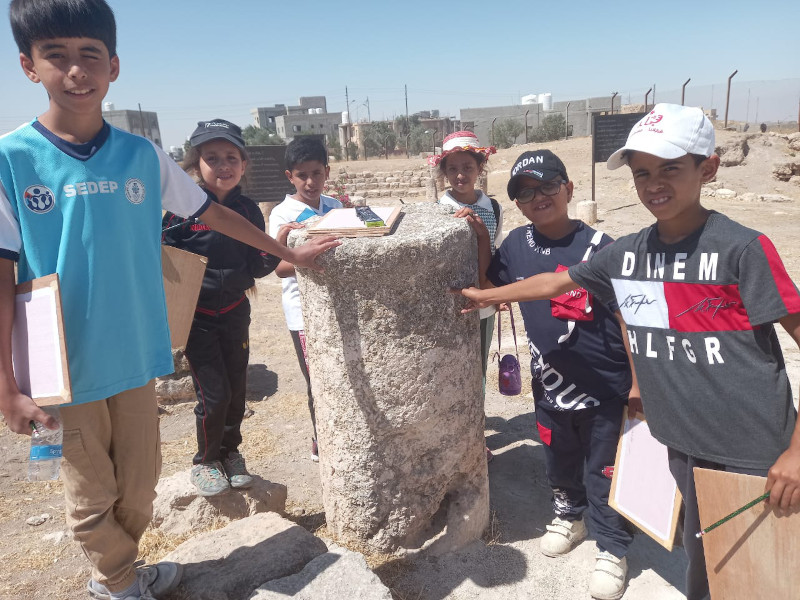
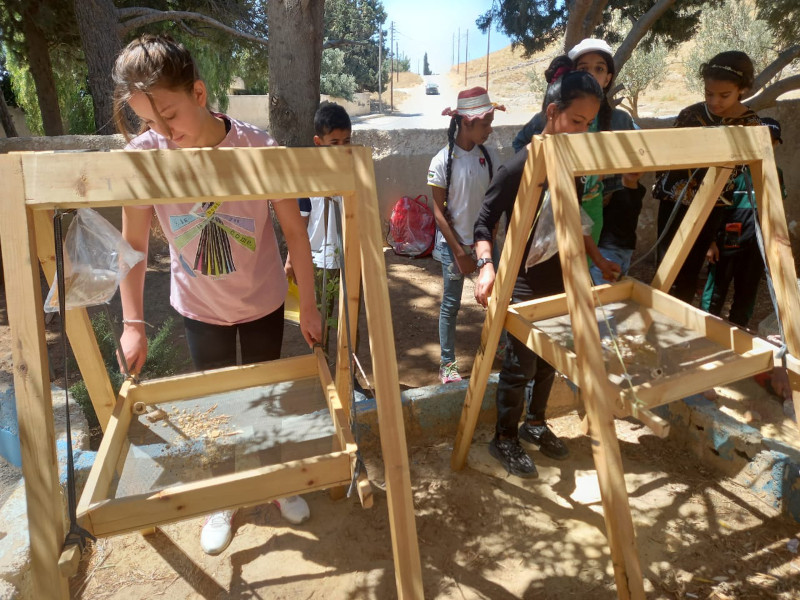
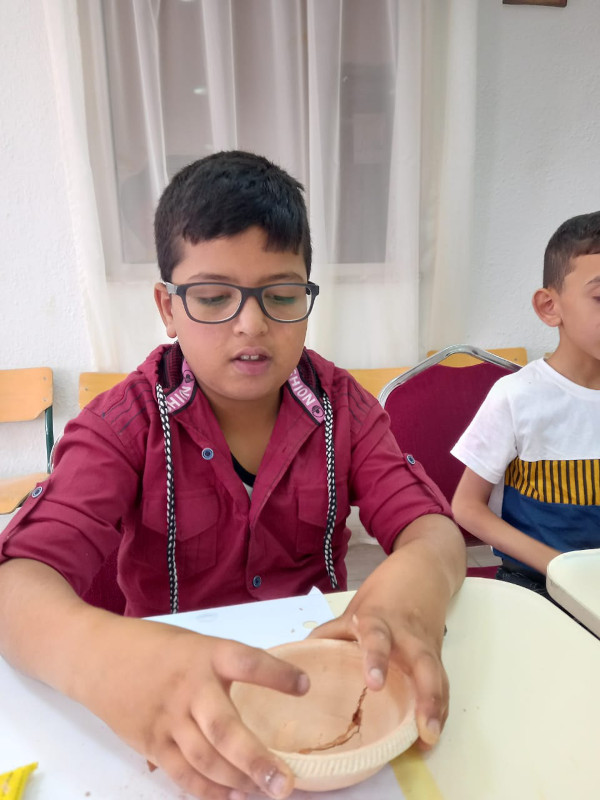
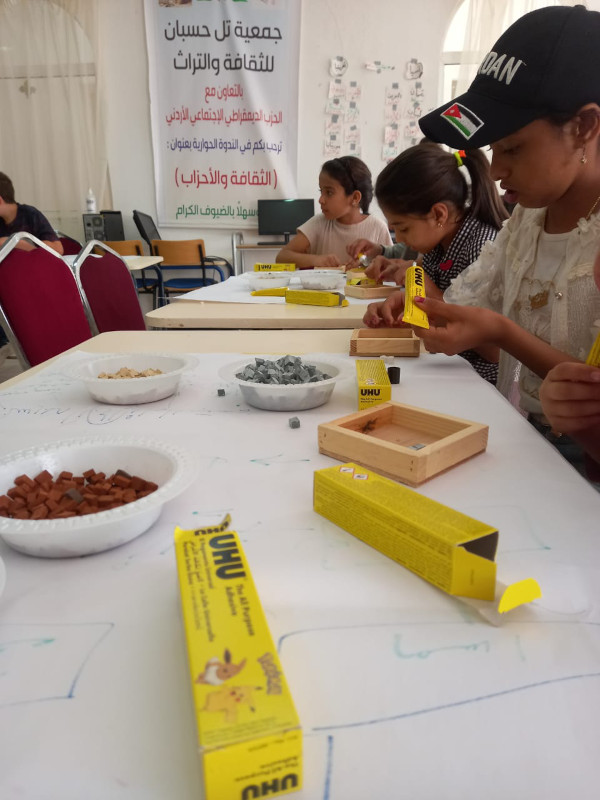
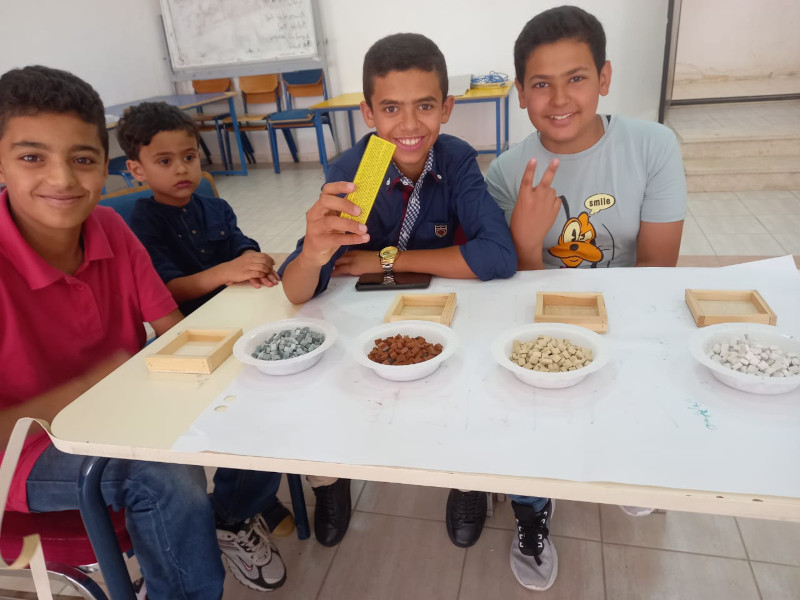
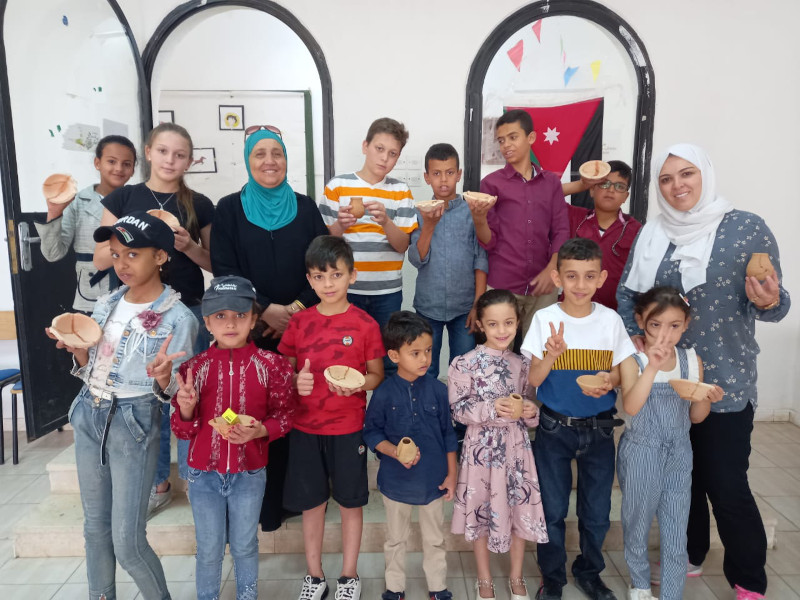
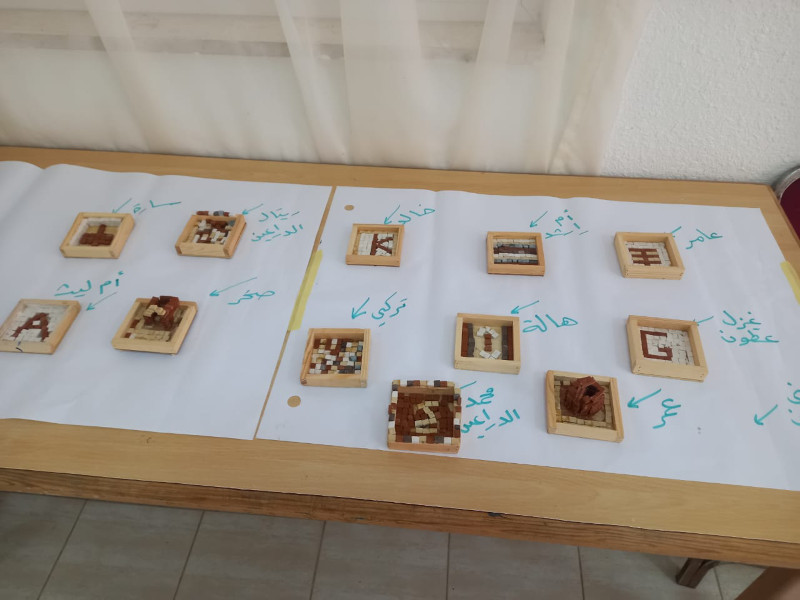
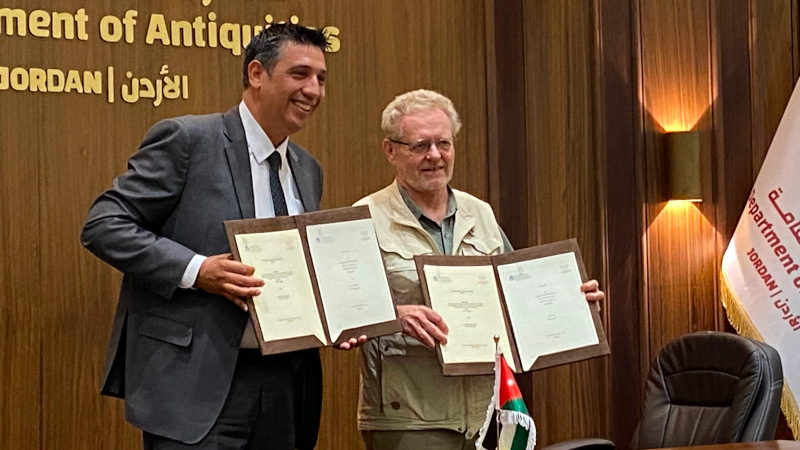
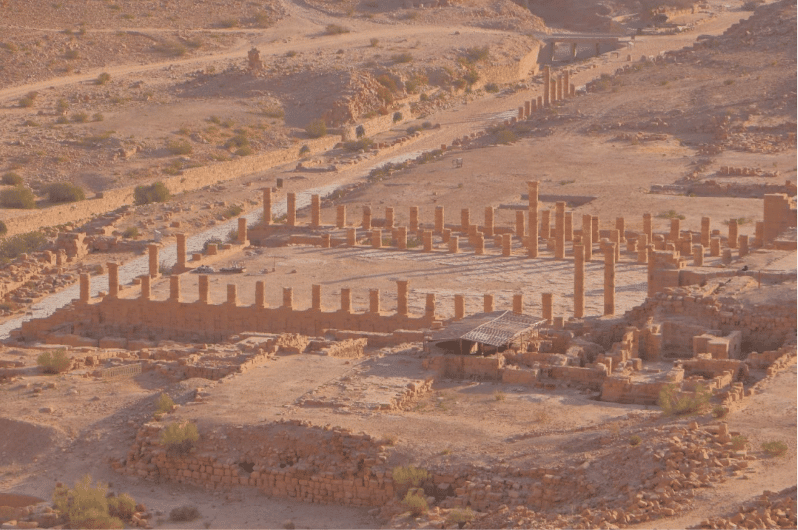
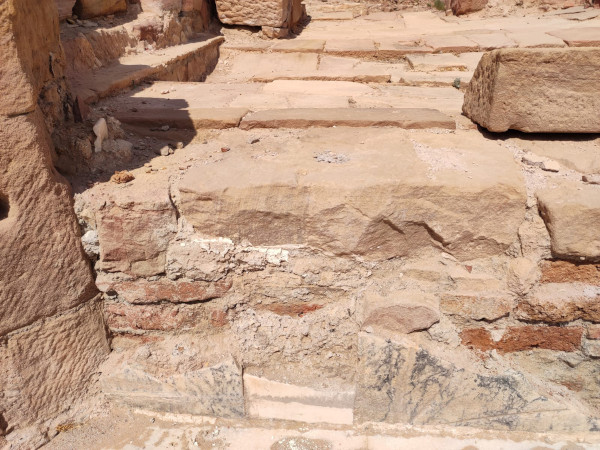
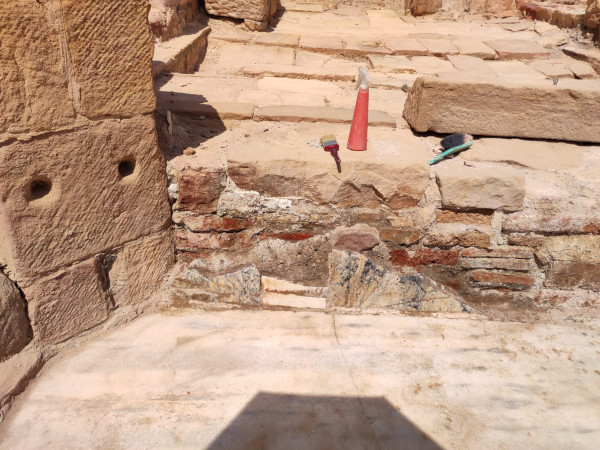
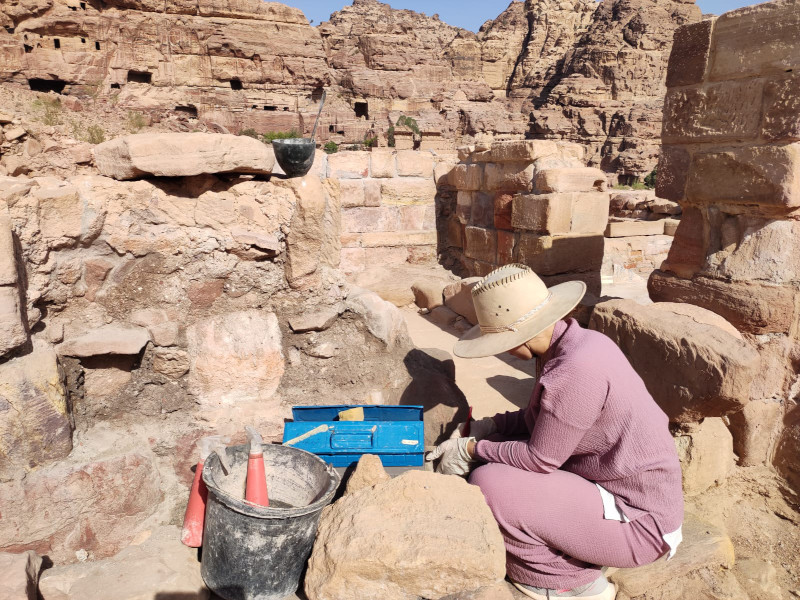
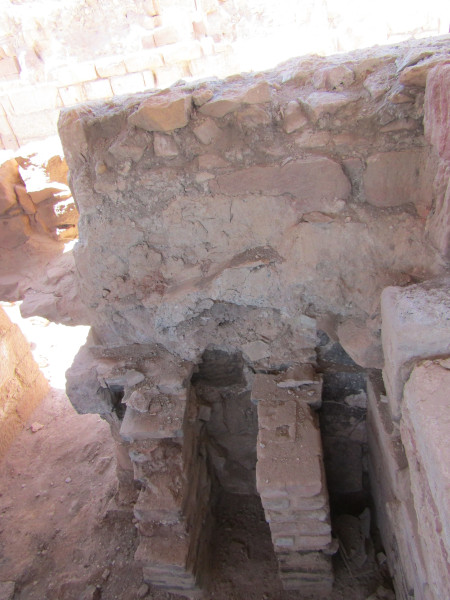
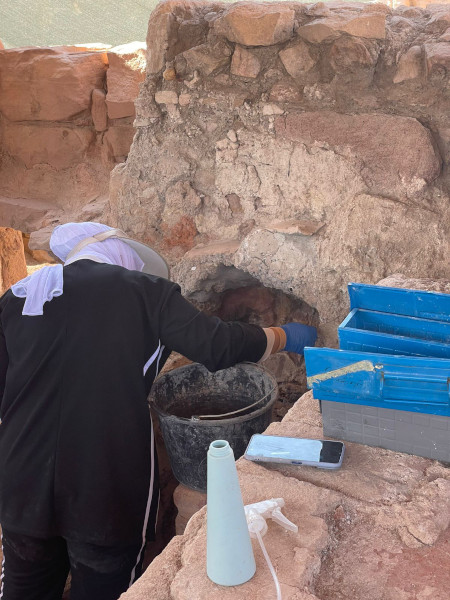
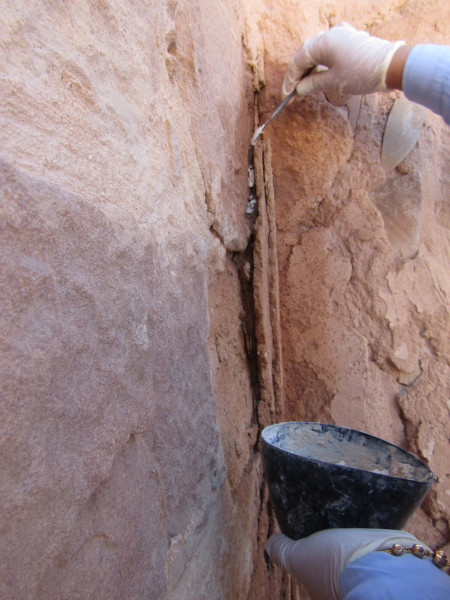
The grant supported the work of a senior conservator, Dr. Fatma Marii, and a conservation technician, Ms. Nesreen Albdoul and involved interventions aiming at: (a) the emergency conservation of the standing structures (Cleaning – Salt removal – Mortar repair); (b) the consolidation of the wall plaster and the stone pavements (repair of detached plaster from the walls and stone slabs from the pavements); (c) anastylosis of the vandalized structures of the calidarium.

Map of the Roman Bath house (Source: Joukousky, M. (2009) – Surprises at the Great Temple: A retrospective in Studies on the History and Archaeology of Jordan X, 2009 – pp. 291-311)
The monument was documented in 2021 and a preliminary assessment was conducted in November 2021 and again in February 2022. In May 2022 after the awarding of the Shepard Grant a new assessment was conducted to determine the emergency interventions to prioritize for the preservation of the monument. The following interventions were identified:
Vestibule (B): This room presents bricks in a fragile state of conservation in need of consolidation. The mortar presented several horizontal and vertical cracks and required consolidation and repair.
Caldarium (C): This room presents several extremely deteriorated bricks. Walls needed salt removal and mortar consolidation and repair. After the assessment, it was concluded that anastylosis of vandalized structures was not appropriate since most of the collapsed structures were the result of previous interventions of reconstruction occurred in the 90s. All fragments from the original structure were numbered, removed, cleaned, consolidated and arranged in Room F for future interventions.
Loutron (D): The floor mortar of this room is made of lime-based mortar and required cleaning.
Vestibule (E): The mortar of the Eastern wall was extremely fragile and needed cleaning and consolidation.
Praefurnium (F): Mortar on the doorway between Room F and Room C required consolidation.
Service Passage (G): This small corridor on the eastern side of the bath presents plaster remains on the Eastern wall that needed consolidation and reinforcement.
Vestibule (H): The room presented several plaster remains in need of cleaning, consolidation and reinforcement.
Caldarium (I): The caldarium presented mortar in extremely fragile conditions that needed consolidation and repair.
Tepidarium (J): The Southern wall presents some plaster fragments and mortar relatively stable condition. The plaster needed cleaning and surface consolidation.
Ornamental Pool (L): The room presented plaster fragments on the Southern wall in need of reinforcement and consolidation. There are traces of copper alloy hangers on the Northern and Southern walls.
Vestibule (M): Plaster and mortar remains in the niches needed cleaning, reinforcement, consolidation, and repair.