Find One — Fund One: 2023 ASOR Scholarships and Grants
ASOR plans to celebrate our 123rd year (2023) by awarding more than $223,000 in fellowships, scholarships, and grants! This extraordinary commitment to our members has been made possible by you, our members and donors, who have established endowments or made annual contributions to these programs.
2022 William G. Dever Fellow, Krysta Fauria, at Legio, Israel.
We invite you to FIND ONE (a scholarship, fellowship, or grant) or to help FUND ONE (designated gifts to enable us to award even more, or unrestricted gifts to help with the costs of administering and distributing the awards).
The deadline to apply for fieldwork scholarships and grants is a little over a month away (February 15 for scholarships, February 28 for grants). We invite you to apply and to share the word through your social media and other networks (please share this post).
Scholarship recipient Kathleen Forste teaches Menorca Archaeological Project (Spain) team members how to recover plant remains and microartifacts through flotation.
ASOR is able to provide these scholarships with the partnership of you, our many members and donors. You are enabling ASOR to establish new scholarships and grants through endowed funds, but your annual support (i.e., gifts this year) will allow ASOR to send more eager students and early-career scholars into the field. Please support archaeology’s next generation by making a gift today.
Because of the ongoing pandemic, your gifts are especially needed this year (2023) to fund membership and annual meeting scholarships. Your gifts to the Annual Fund (unrestricted) help defray the costs of administering and distributing the growing number of scholarships and grants. You may also make a designated gift by choosing any category from the drop-down menu on the donations module.
Please spread the word and don’t hesitate to contact us if you have any questions (e-mail or call [703-789-9233]).
In the fall of 2021 ASOR President Sharon Herbert formed an Ad Hoc Committee on the Climate Impact of ASOR activities with particular attention to the Annual Meeting. That committee presented its report to the Board of Trustees at its 2022 November meeting in Boston. The committee outlined various alternatives for reducing ASOR’s carbon footprint. ASOR’s standing committees will be studying the report over next three months and recommending actions to the Board at its April 2023 meeting. We would welcome comments from our members. Please email your comments to info@asor.org.
Kissonerga-Skalia: Denise L. Gold Grant Report 2022
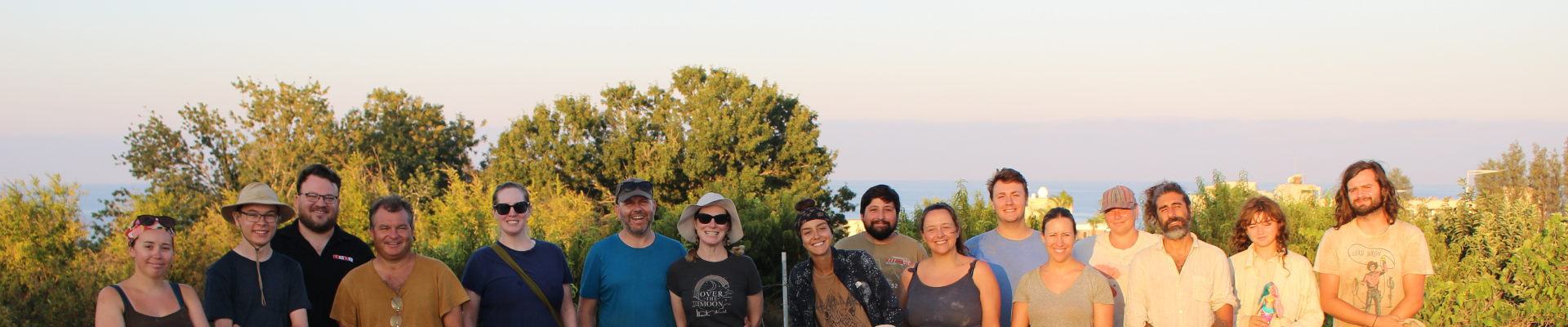
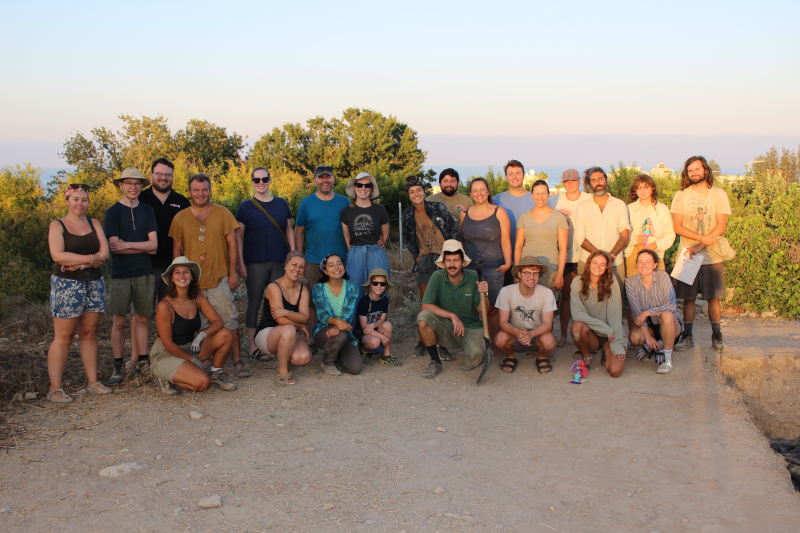
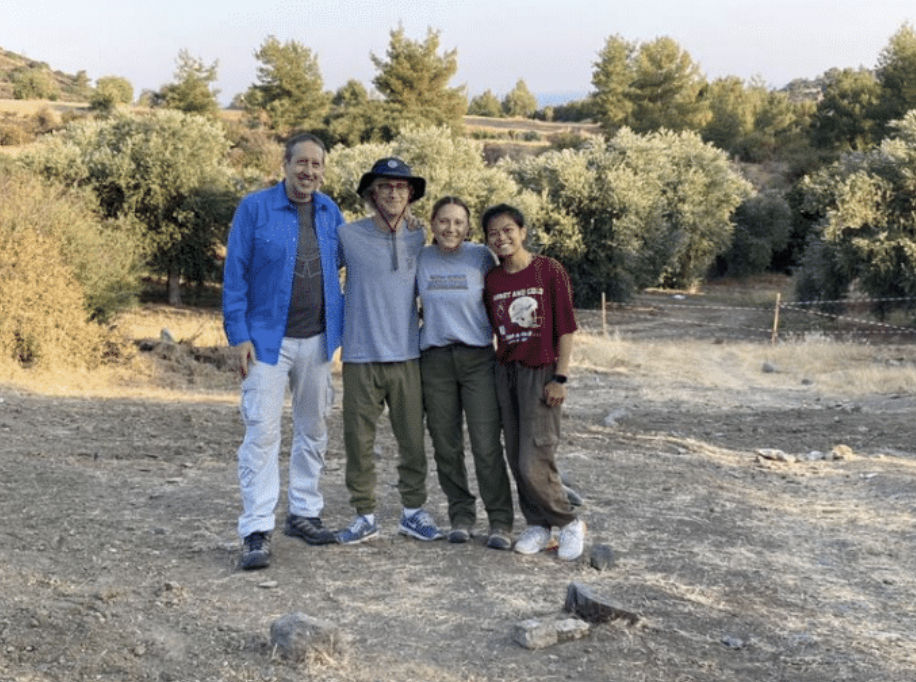
2022 marked a return to excavation at Kissonerga-Skalia in western Cyprus after a hiatus of three years due to the pandemic. As you can see in the team photo (figure 1), we were all extremely excited to be back in the field. Many of our student excavators had gone through nearly their entire degrees without having the opportunity to gain practical experience in the field and were keen to learn and take part. We are very grateful to have received a 2022 Denise L. Gold Project Grant to assist with the expenses in the field and to put towards the costs of obtaining radiocarbon dates.
Figure 1: The end of season photo of the Kissonerga-Skalia team.
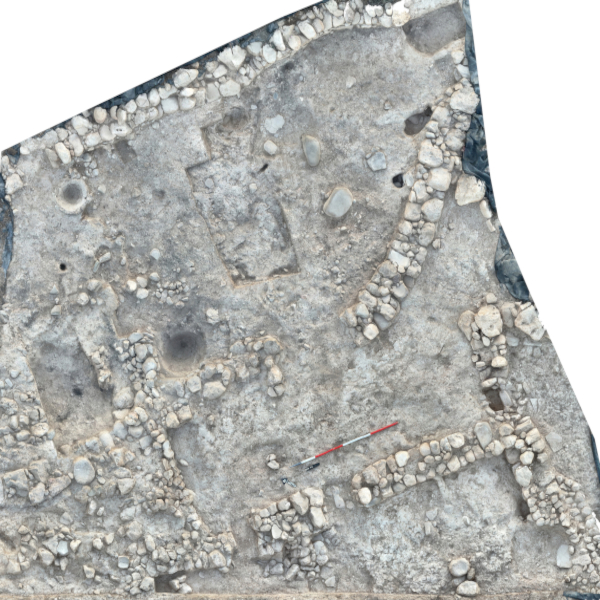
Kissonerga-Skalia is a Bronze Age settlement located near the coast 10km north of Paphos. It lies adjacent to the Neolithic–Chalcolithic settlement of Kissonerga-Mosphilia, excavated and published by Prof. Eddie Peltenburg in the 1980s–1990s. It appears that during a key period of social transformation between the Chalcolithic and Early Cypriot Bronze Age (c. 2500 BC) the people of Kissonerga abandoned their roundhouses and moved 500m down towards the sea, to establish their village in new fields, along with a new style of rectilinear architecture. The settlement prospered for around 800 years until around the end of the Middle Cypriot Bronze Age (c. 1750 BC) when the domestic structures were built over with a large industrial complex that comprises working areas for grinding, processing and heating materials (including the production of beer), along with wide open spaces with trampled mud plaster floors, partially enclosed by a large curvilinear wall. One area of these industrial facilities is shown in Figure 2, where you can see large grinding stones for processing material and circular pits for holding large storage vessels. This final phase was only in use for a short time before the site was completely abandoned, around 1650 BC, at another key period, the transition to the Late Bronze Age. At this time Cyprus saw another islandwide settlement shift connected to the rise of seaborne trade in the Mediterranean, with new sites established that would eventually become the Late Cypriot towns. This abandonment gives us the opportunity to examine the time during which Cypriot settlements begin to diversify and the first ‘monumental’ structures were created.
Figure 2: View of industrial area P/B2 with grinding installations in top right.
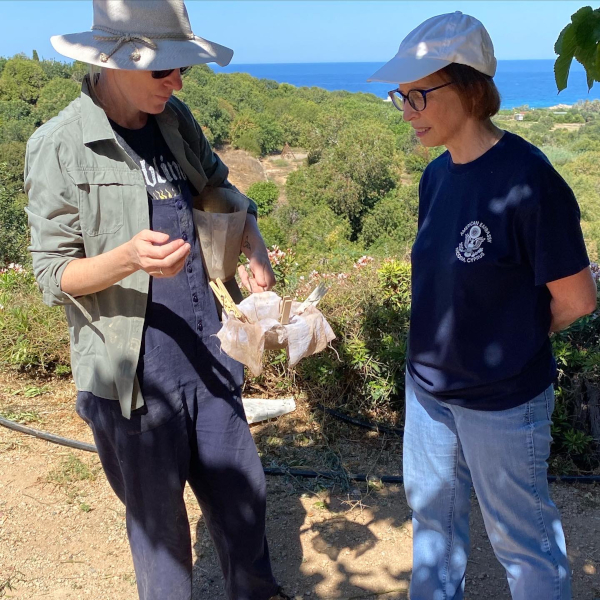
Figure 3: Project archaeobotanist Dr Leilani Lucas showing US Ambassador to Cyprus, Judith Garber, the flotation process during a visit to the site.
Cypriot archaeological sites are notoriously poor in archaeobotanical material, leading to the situation where the transition from the Middle–Late Cypriot Bronze Age is still dated only through relative chronologies. Therefore, one of our aims this season was to retrieve short-lived carbonised remains such as nuts and seeds from secure contexts for radiocarbon dating. We were fortunate that our archaeobotanist, Dr Leillani Lucas (shown in Figure 3), was able to retrieve a lentil and a grape seed! Part of the Denise L. Gold grant funds will be used to date these finds, along with samples retrieved in previous seasons, to help us to pin down the timing of this exciting and dynamic period.
Emily Yankura, P.E. MacAllister Scholarship for Fieldwork Participation[/vc_column_text][mk_divider][vc_wp_text]My field experience in Jordan this past summer was one which was both long awaited and highly anticipated. I was originally scheduled to participate in the 2020 field season but, for obvious reasons, was unable to go until this past summer. It was an experience that was well worth the wait!
To be honest, I was initially very nervous to be finally leaving for Jordan. This trip had already been delayed so many times that a part of me thought I would graduate before I could go, and the prospect of now actually having to face the challenges I knew were coming was daunting, to say the least. I would be surrounded by a new language and culture, working outdoors in a desert climate, and hiking to site every day in said climate. There would be new food, new physical challenges, new customs – and that wasn’t even touching on the new tools and strategies I was going to have to learn for archaeological field work.
Now, though, I am so glad I went, and so glad I was able to go! I was able to acclimate relatively quickly and soon found myself appreciating the language and culture of Jordan. There were so many differences, large and small, as well as similarities, that had me thinking twice about my own cultural biases. And, once we began excavations, I was relieved to find myself up to the challenge.[/vc_wp_text][vc_row_inner][vc_column_inner][vc_single_image image=”96195″ img_size=”full” add_caption=”yes” alignment=”center” onclick=”img_link_large” img_link_target=”_blank” css=”.vc_custom_1711999521877{padding-right: 10px !important;}”][/vc_column_inner][/vc_row_inner][mk_padding_divider][vc_wp_text]I spent the first three weeks of my time in Jordan excavating in Wadi Mataha with Dr. David Johnson, and then an additional two weeks excavating on the Ad Deir Plateau with Dr. Cynthia Finlayson, under the direction of Dr. Allison Lee as crew chief. Throughout our two months in Jordan our group also had the opportunity to visit various historical and cultural sites. All of these experiences together were an invaluable learning opportunity and opened my eyes to the incredible nature and value of Middle Eastern culture. I gained an appreciation for both the ancient and modern inhabitants of this area by visiting the sites, and through daily interactions with local residents and workers.[/vc_wp_text][vc_single_image image=”96196″ img_size=”full” add_caption=”yes” alignment=”center” onclick=”img_link_large” img_link_target=”_blank” css=”.vc_custom_1711999639735{padding-right: 10px !important;}”][mk_padding_divider][vc_wp_text]My favorite aspect of archaeology is the connection it allows me to feel with the past. I have experienced this before with written reports and theory, but I was thrilled to experience it in actual hands-on fieldwork as well. While excavating, Dr. Lee would often ‘quiz’ us on what we were seeing in the soil – ashy lenses, certain types of artifacts, soil composition – and challenge us to connect those smaller details with a larger picture. These brainstorming sessions were meant as field theories and first impressions, to be checked against further research and site reports later on, but it helped me personally to see how several sherds of coarseware pottery could connect me to the lived experience of ancient Nabataeans at a specific moment in time. It also helped me to better understand how archaeologists transition from digging and uncovering artifacts to using them for analysis. These artifacts we were uncovering would help us to build a picture of the ancient civilization that had left them behind. Archaeologists are actively reconstructing ancient cultures in an attempt to better understand them – and, by extension, ourselves.
At Ad Deir, I learned the value of archaeological context. The area I was assigned to work in was a portion of the Great Circle, which was a water feature/pool on the plateau. In ancient times it would have been filled by seasonal rains; this meant that many of the artifacts we were recovering there had been washed in by water and erosion. Before beginning, I did not fully understand how context could still be derived from objects which had been so clearly taken out of theirs. Now, I know that even these types of objects have value: the different stratigraphic units (SUs) of the Great Circle provide a relative chronology, and within that the types of pottery we find (coarseware, fineware, painted wares, etc.) can help us to know what was being used when. For example, one of our SUs showed a large concentration of pottery and burned bone, along with multiple ashy lenses. This could be an indicator of a cooking and/or eating space, which would mean that the Great Circle was already out of use as a water collector at that time.
The trips we went on were also very educational. They exposed us to other parts of Nabataean culture that were either not present at either of our sites or else still under excavation. Dr. Johnson took us on a tour of Wadi Mataha that showed us the broader context of the tomb complex that we had been excavating. We saw a sprawling network of dozens of other tombs, cisterns, and water channels, most of which remain unexcavated. On a later trip to Little Petra and a High Place we saw what Nabataean worship may have looked like. These glimpses into the broader scope of Nabataean society helped me to better understand the objects and features we were finding back on site.[/vc_wp_text][vc_single_image image=”96200″ img_size=”full” add_caption=”yes” alignment=”center” onclick=”img_link_large” img_link_target=”_blank” css=”.vc_custom_1711999979902{padding-right: 10px !important;}”][mk_divider][vc_wp_text]The most exciting moment of the entire two months, for me, was finding an amethyst bead at the Wadi Mataha site. My Master’s thesis research has been on jewelry found in burial contexts, so when I saw an amethyst bead in the screen it felt almost unreal – I had spent so much time reading about objects like these and looking at small, black-and-white photos of them, that it was hard to believe I now had one right in front of me! There was an inexplicable feeling of connection as I dusted it off to reveal the carefully drilled holes on either side. Someone, a long time ago, had taken the time to take a beautiful stone and shape it into something that could be worn. A human being had created beauty for the sake of beauty (and possibly profit), and it had survived two thousand years to end up in my hand.
My experiences in Jordan are ones which I will never forget. It is a country rich in history and culture, and I hope that one day I will be able to work there as an archaeologist once again![/vc_wp_text][vc_single_image image=”96202″ img_size=”full” add_caption=”yes” alignment=”center” onclick=”img_link_large” img_link_target=”_blank” css=”.vc_custom_1712000520030{padding-right: 10px !important;}”][mk_divider][vc_wp_text]Emily Yankura is a Master’s student at Brigham Young University studying archaeology and museum studies. Her main areas of interest are the history of the ancient Near East and the portrayal of archaeology in popular media.[/vc_wp_text][mk_divider][vc_wp_text]Want to help more students and early career archaeologists get into the field? Donate to the cause today by selecting “Excavation Scholarships” as your gift purpose!
Something Old, Something New, Something Borrowed, Something Blue
Alice Kligerman
Something Old
Landing in Larnaca, Cyprus this summer was the final exhale from the inhale I took leaving in 2019. My undergraduate field school had come to an end, but I knew I was going to see Makounta – Voules again. Participating in the Makounta – Voules Archaeological Project run by Dr. Grossman and Dr. Paulette, both professors at North Carolina State University, was my first experience with archaeological excavation. As the weeks went on, I found myself falling in love with all aspects of Polis Crysochous. Coming back in 2022 felt like the most natural decision. The museums, exhibits, and sites we had visited in 2019 made their appearances this time too, but I had new questions and observations. I still had the same awe filled reaction to all the sites, however. It was almost comforting to walk through the sites flooded with memories of previous photos backdrops, the best views, and the cool spots around the island. Learning from the first time I was here, I made sure to get gelato as often as possible. The biggest full circle moment occurred when I first saw the open trenches. Being a bit more comfortable with moving fast but delicately, I was reacquainted with the architecture I uncovered and detailed in 2019. However, this time I was removing the buckets of dirt we had put back in at the end of the season on the top of the tarp. I could not merely sit back and watch as they pulled the tarp back and revealed “my” archaeology baby: an in-situ pot smash. I am beyond grateful that the directors let me continue to work on it again. As a young archaeologist, it is beyond thrilling to feel the excitement of finding something new and later being able to work intimately with it again.
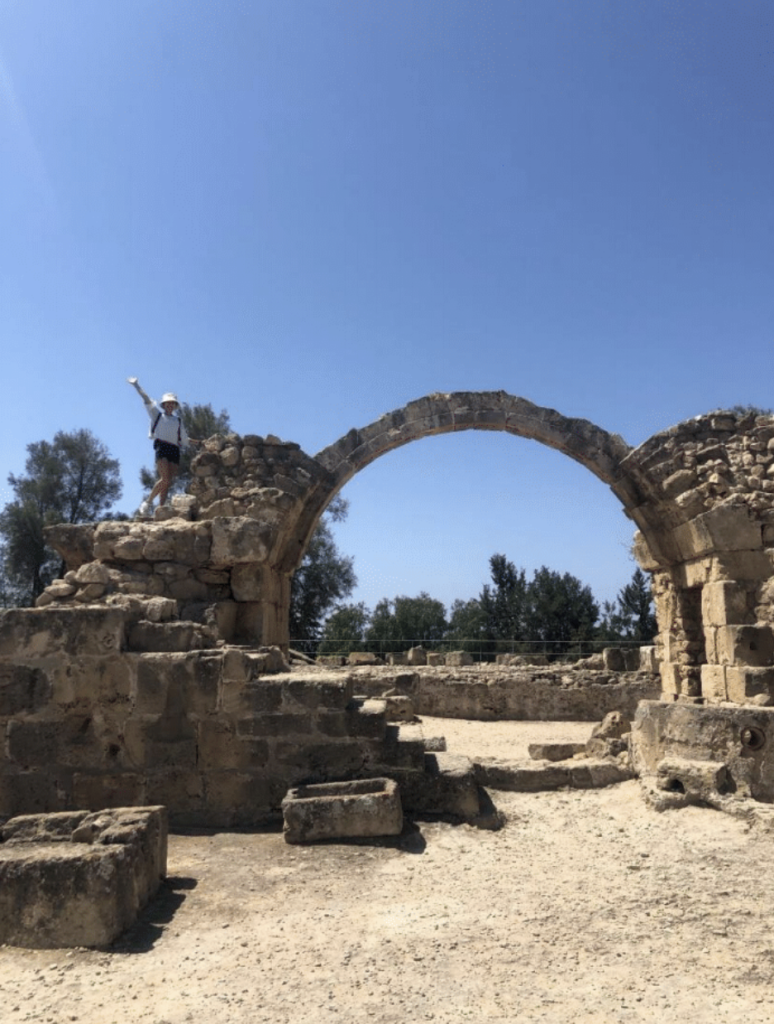
Me at Nea Paphos
Something New
While I was coming back to familiar land, I was entering a whole new chapter in my career. I was bestowed a supervisory position, rather than a field student. A big learning curve came when I had to learn how to sit back and let someone else dig ‘your’ trench, one I was strongly attached to from 2019 as it was the trench I had worked in. It was a new perspective of field notes and final reports. Additionally, I had to let new archaeologists do the tasks that were my favorite (i.e. balk walk cleaning, articulating, and detailing). Being confronted with this invisible expectation I had, that field excavation roles would be the same as 2019, was something I would never have predicted to be difficult to navigate. Also, since this is a field school, I had to learn to be okay with there being accidents, mistakes, and archaeological contexts fudged on accident. These new perspectives on leading a dig only added to the knowledge and experience basket this summer.
Me and my trenchmates! (left to right) Trench supervisor Eric, Students Shane and Olivia, and me!
Something Borrowed
This year, one of my main emphases was gathering background research for my upcoming master’s thesis. This included traveling around the island to find people to talk to, specific documentation, and other minutia of research. Additionally, some days in the field I had to step out to make sure I was writing and reading. I am very luck to have gotten to know, very well, the directors of the field school. Dr. Grossman and Dr. Paulette are from my undergraduate institution of North Carolina State University (Go Pack!). I owe my love of anthropology and drive for field excavation to these two. Simultaneously, Dr. McCarthy and Dr. Graham (assistant directors of MVAP and primary directors of the Prastio Mesorotsos Archaeological Expedition) are a wealth of information and kindness. What I consider borrowed here is their time, expertise, and mentorship. In addition to the sheer number of credit hours I dedicated to Dr. Grossman and Dr. Paulette, they have always been the source of advice regarding steps towards my professional career. This summer, I was watching how they ran the field school more than last. Not only did this expose me to the process of excavations, but I also listened to the methodological reasons behind specific decisions in the field. MVAP 2019 was my first archaeological field school experience, and I was more interested in excavation and hitting the beach. This year, I found it more interesting to understand more about the archaeology of the site we are excavating and history of the island, specifically in archaeological context to the site. Additionally, they directed me towards the best resources for my thesis research. They helped us get permission to go to the CAARI library, and I gathered a wealth of information. Starting my master’s thesis has been infinitely helped because of the archaeological knowledge I was gaining from them. I consider this borrowed because I will always have the intention to return the favor by learning and using what they taught me in my future as an archaeologist.
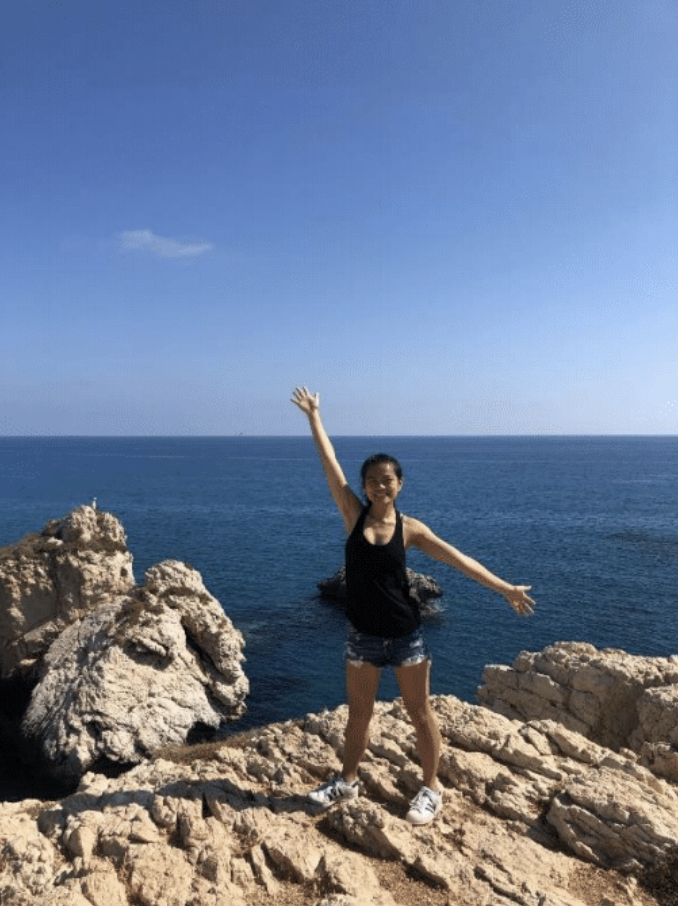
Alice Kligerman on top of Aphrodite's Rock, Cyprus.
Something Blue
Now let’s not forget . . . the site is located on Cyprus, an island in the Mediterranean. Aside from the work that went into the archaeological aspect of this trip, I was fully intending on enjoying the island while I could. Trips to the beach were a must. Many times, I would end up doing my work in settings near the water for the pure relaxation. Fridays were field trip days and, on top of seeing the sites around the island and learning about their significance, there was always a beach stop before heading home. Being reacquainted with the clear, blue gradient waters of the Mediterranean was some of my favorite moments from the trip. I swam to different parts of the beaches than last time, even adventuring into the water-carved caves of Aphrodite’s Rock. I felt like I could breathe clearer than above water while swimming. In conjunction with the blue of the sea, there was the clear blue of the sky. There were a few days of overcast, but the blue sky was present for most of the day, creating an almost ‘light’ feeling. The weather on the island throughout this summer, specifically in the area of Polis Crysochous, was ideal for both fieldwork and leisure.
My summer was filled with new and old experiences in the beloved location of Polis Crysochous, Cyprus. After a COVID-19 break of 2 summer excavations, I was finally able to witness excavation continuity. Seeing the opening of the trenches was very exciting, and the closing of the trenches just as heartbreaking. I was also researching for my thesis, so I was gaining more knowledge about the island’s pre-history, culture, and social dynamics throughout the years. Thus, while I was prepared for there to be new experiences, and expected there to be, I would never have predicted what type. While not in a nuptial setting, I believe this popular saying was appropriate when describing the moving parts of the summer and the many memories made.
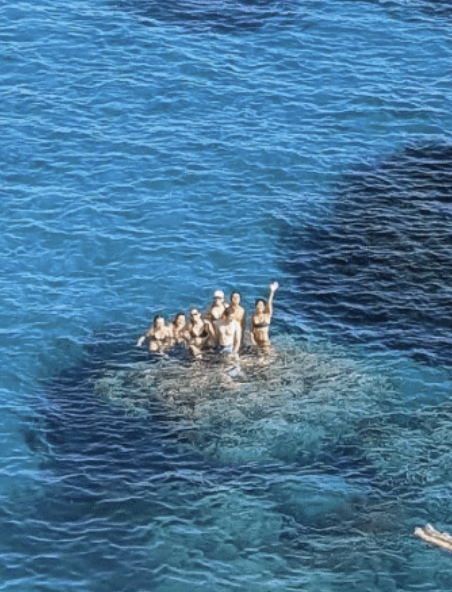
Very pixelated, but taken from the top of Aphrodite's Rock to us below
Alice Kligerman is a second-year master’s student at Florida State University. She received her B.A. in Anthropology in 2018 from North Carolina State University. Currently, she is working on her master’s thesis to defend in the spring of 2023. Her interests lie in the prehistory of Cyprus (7000 BC – ~2500 BC, specifically). She is interested in emergent complex societies and the archaeological evidence of increased social differentiation.
Instagram: @alvkh
Email: ak21y@fsu.edu
Want to help more students and early career archaeologists get into the field? Donate to the cause today by selecting “Excavation Scholarships” as your gift purpose!