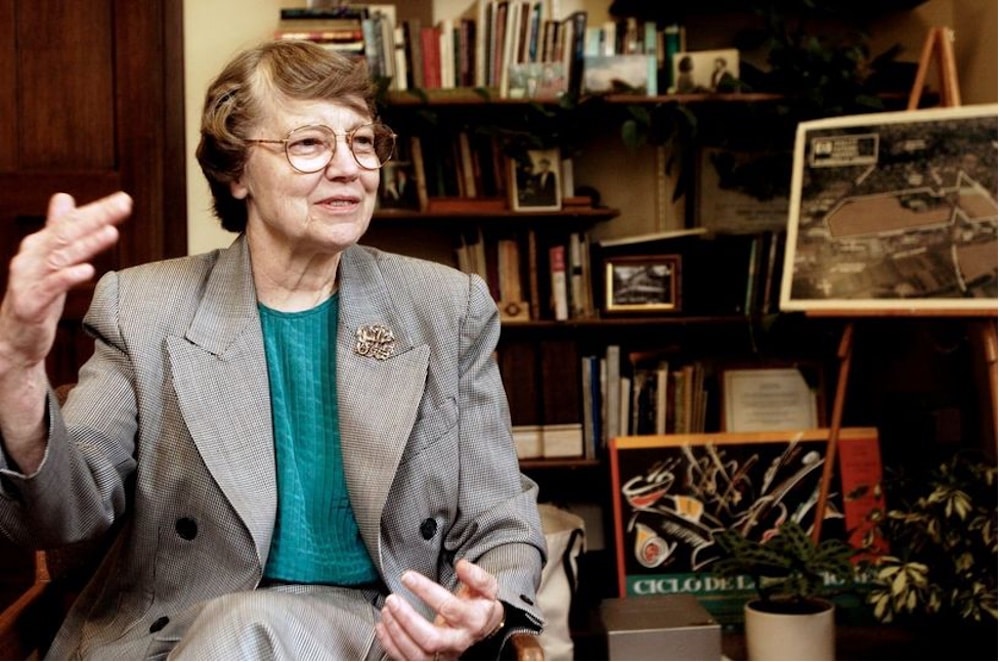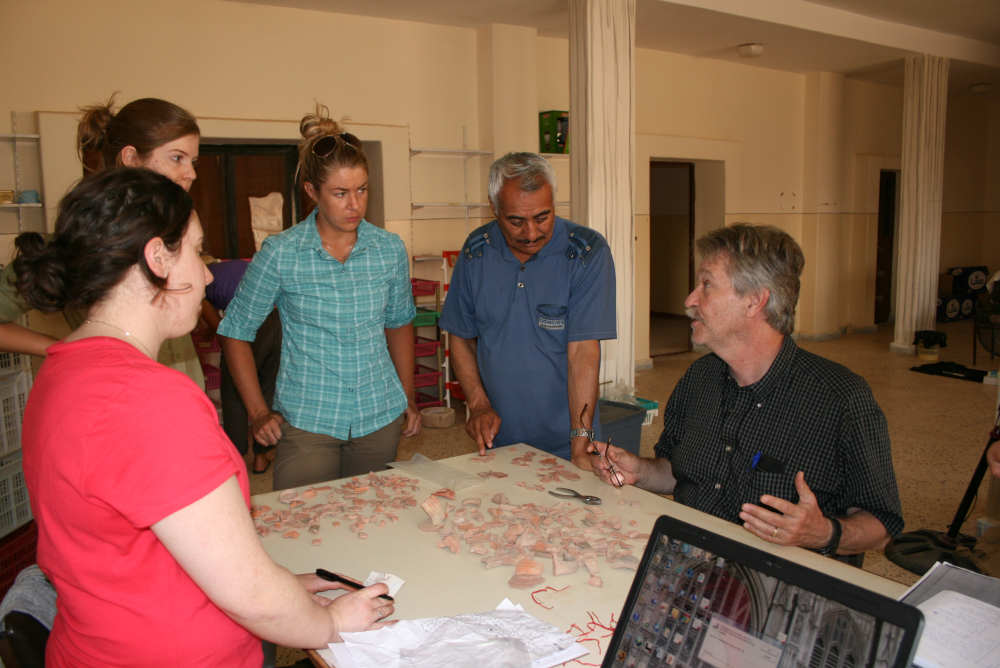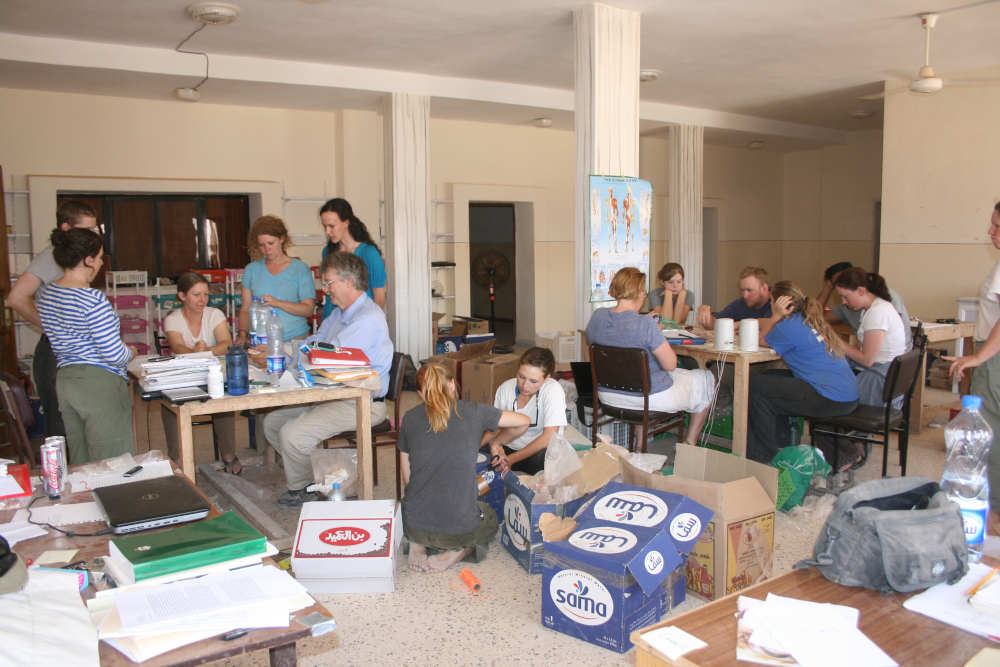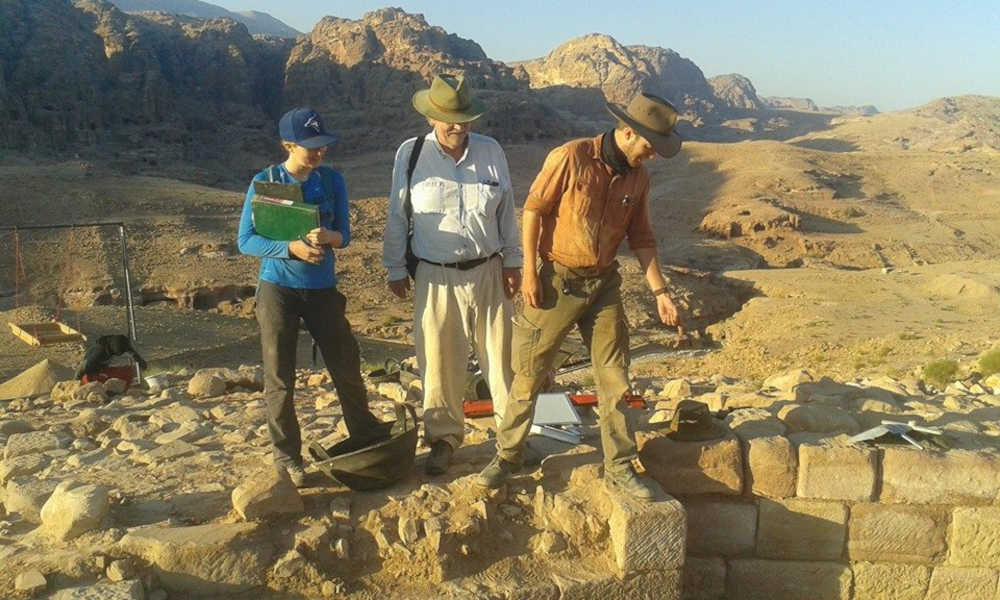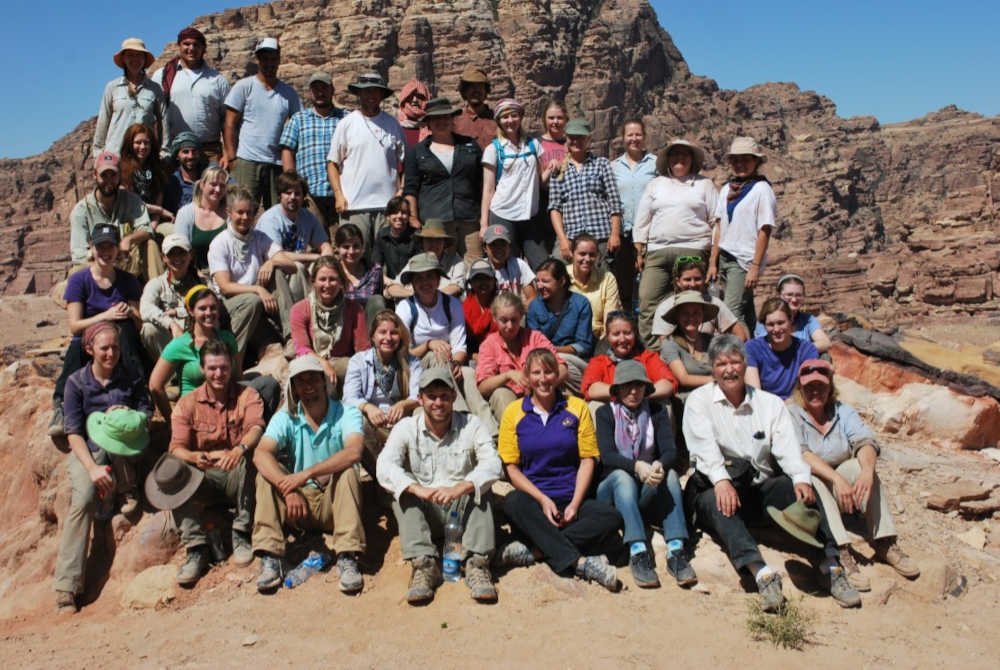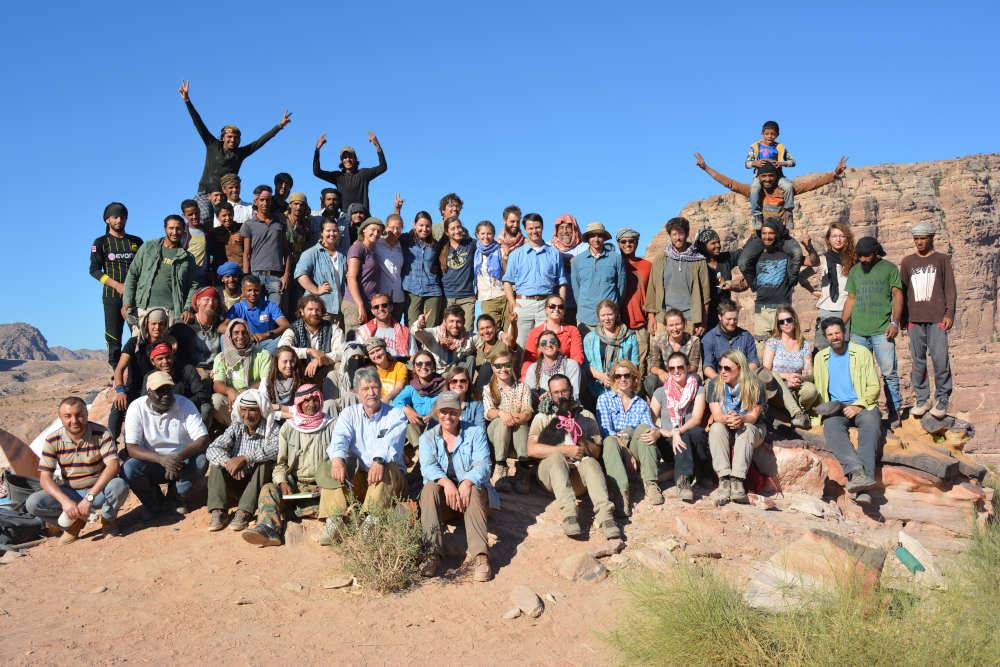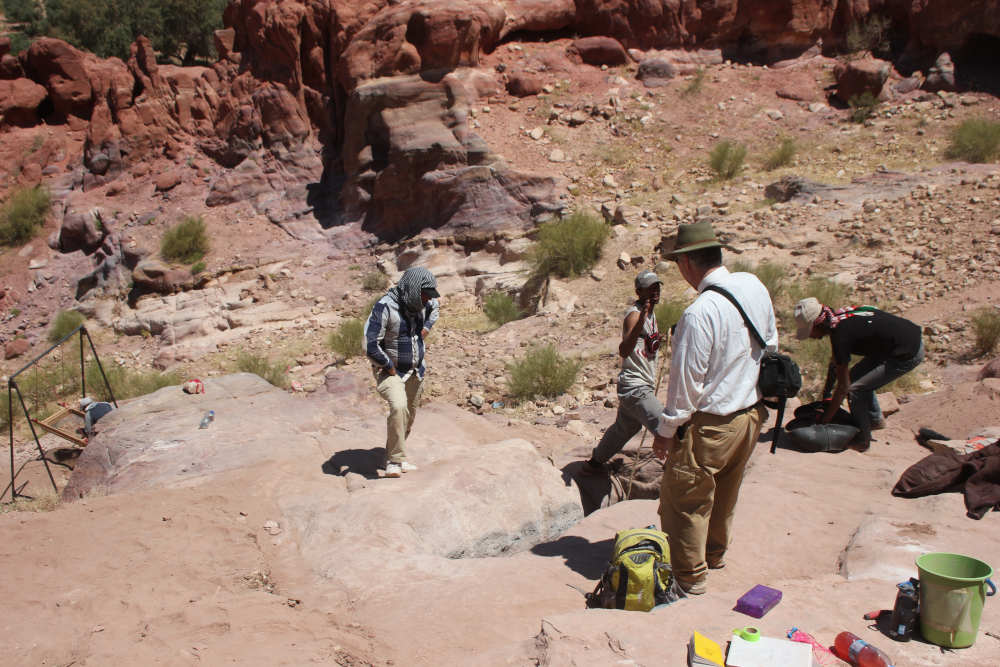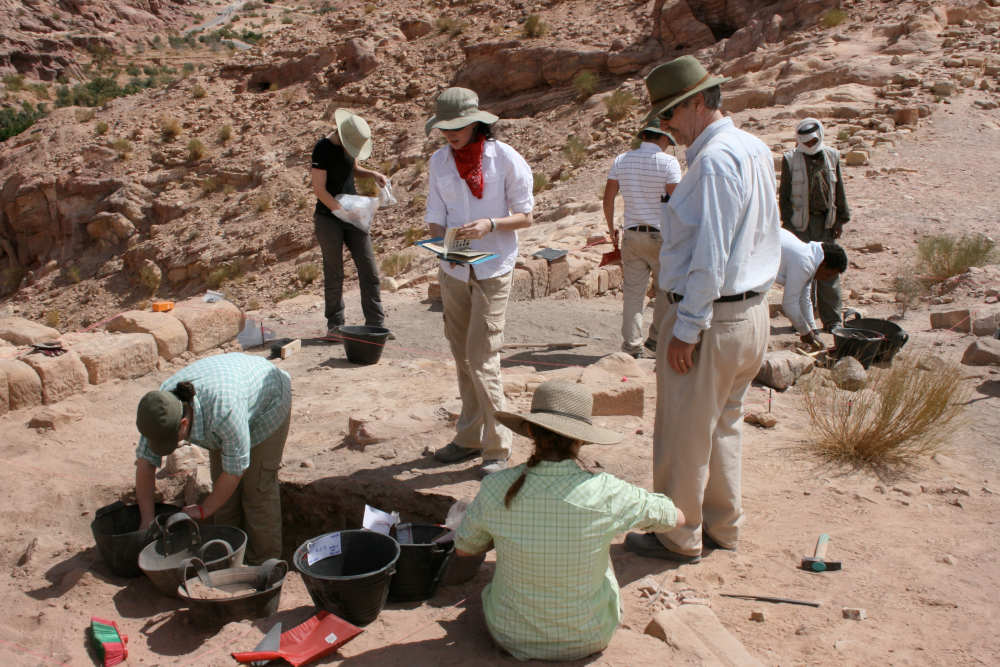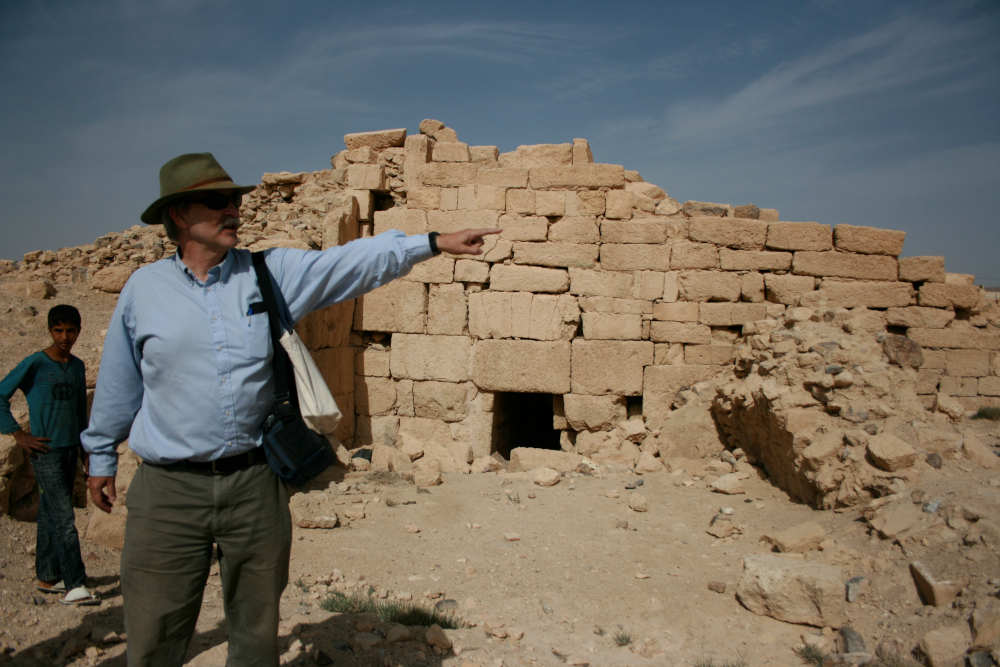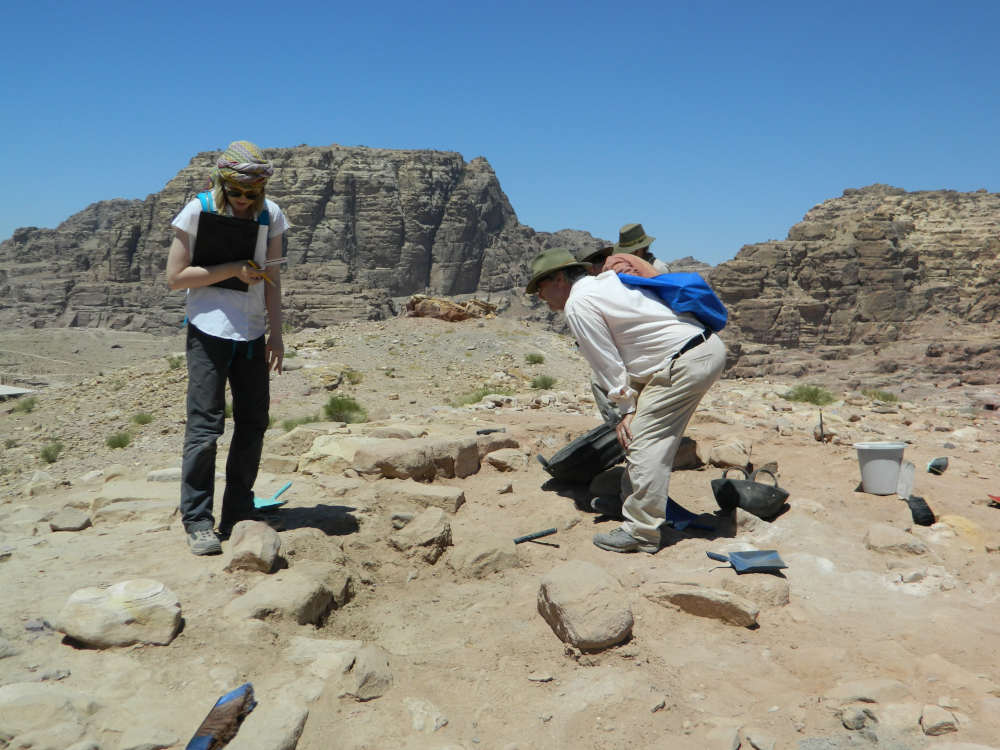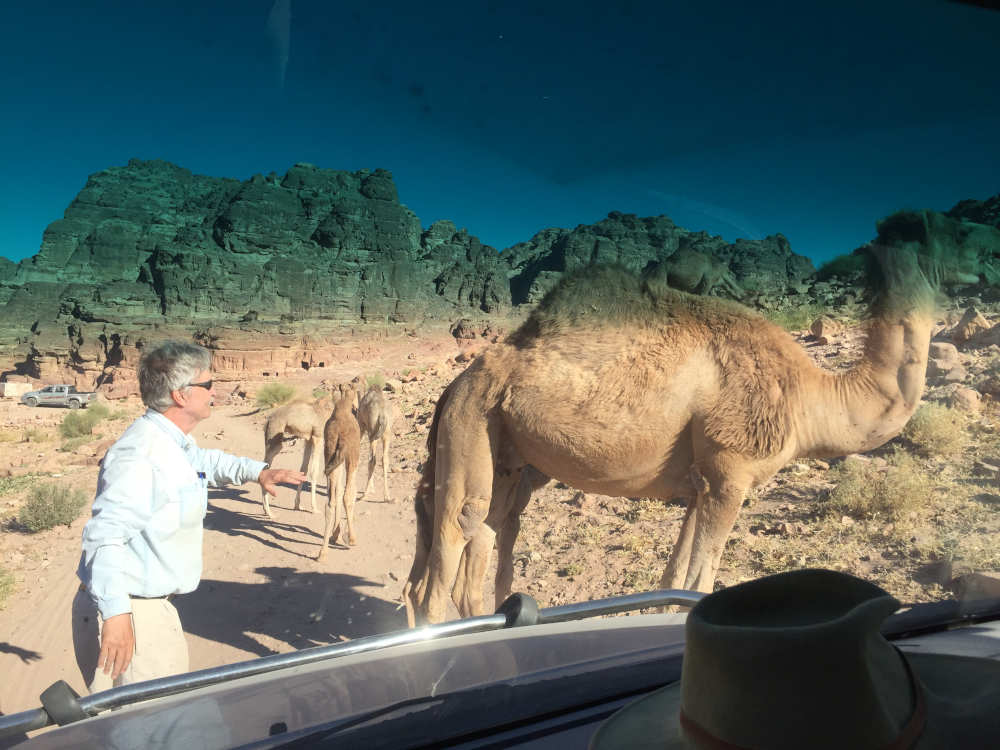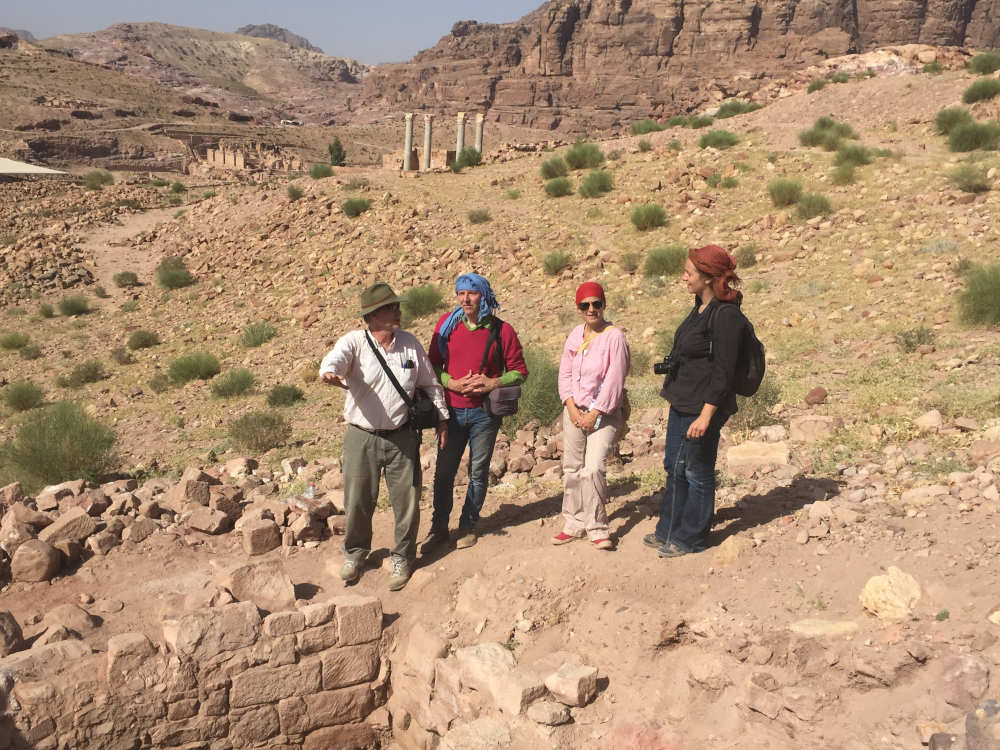
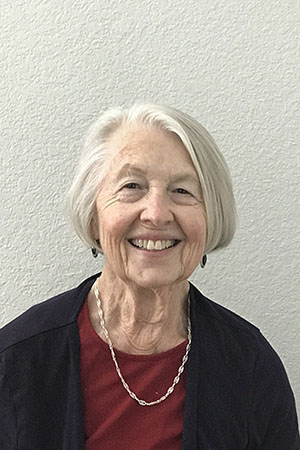
Carolyn Midkiff Strange Remembrances

IN MEMORIAM:
CAROLYN MIDKIFF STRANGE (1937–2024)

ASOR mourns the passing of long-time member and trustee, Carolyn Midkiff Strange. Below is an excerpt from Carolyn’s obituary. The full obituary is available here.

Lillian Carolyn Midkiff was the youngest of four children, born on April 16, 1937, in Midland, Texas, to Naomi (née Mabry) and Tyson Midkiff. She spent her childhood in Midland, Rankin, and Kerrville, graduating from Kerrville’s Tivy High School in 1955. She especially enjoyed weekends on the family ranch with her father as a young girl, where she helped with the animals and swam with her cousins in the water tanks fed by windmill-operated pumps. Midkiff family reunions attended by seemingly hundreds of cousins were events that—years later—Carolyn, her husband, and children would greatly enjoy.
Carolyn attended one year at Hardin Simmons University, then transferred to Rice University in Houston, graduating with a B.A. in English in 1960. She met the love of her life, Jimmy Francis (Jim) Strange, at Rice, and, after some fitful starts, the two dated, became engaged, and married in Rankin on August 19, 1960.

Carolyn’s and Jim’s eldest children, Mary Elizabeth and James Riley, were born in Kerrville, while Jim taught at Shriner Institute and Carolyn taught high school geometry, her very favorite subject. The family then moved to New Haven, Connecticut, and on to various towns in New Jersey as Jim did graduate work. In these early years Carolyn worked at Esso Research and taught at a Montessori kindergarten. Katherine Alexandra and Joanna Carissa were born after the family moved to Tampa, Florida in 1972.

Andy Vaughn, ASOR Executive Director

Carolyn used to describe herself merely as someone who read a book and decided to do something. She sometimes joked that she should stop reading books.

Well, I can tell you that I read books too, but I don’t change the world after I read a book. Carolyn did.

One example is Ibram X. Kendi’s book, How to be an Antiracist. A key point in this book was that antiracists must make structural change—and Carolyn did just that, and she inspired everyone else to do the same. She was not a person to scream, make demands, or protest. She acted and she inspired others to act.

As one speaker at her memorial service put it, instead of being “All hat and no cattle,” Carolyn was “All cattle and no hat.” Indeed, Carolyn was a woman of action—and that was contagious.

So how did Carolyn make structural change in ASOR that will live on? I’ll share just a partial list of things that Carolyn did of which many ASOR members may not be aware because she did them without fanfare or asking for recognition. She desired action, progress, and change and not praise:
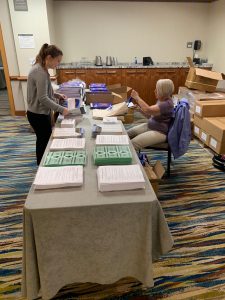
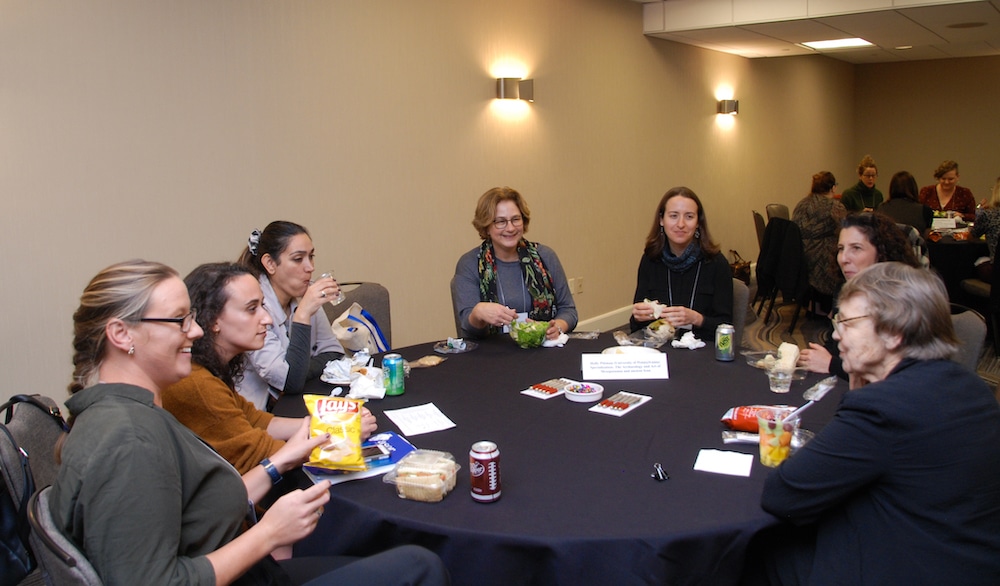
Meagan Shirley and Carolyn Strange

stuffing tote bags at the

2019 Annual Meeting.

  • BIPOC Endowment: Carolyn made a challenge gift to establish an endowment in ASOR for black and indigenous students to participate in excavations. ASOR currently awards about $100,000 per year in fieldwork participation scholarships (50 scholarships of $2,000 each). Carolyn wanted to ensure that ASOR would enable the participation of black and indigenous students on digs, so she made a $100,000 challenge gift to encourage the wider ASOR community to create an endowment to fund annual awards of at least five (5) scholarships at the $2,000 level. That endowment now has a market value of $292,000. Thus, ASOR will continue to fund at least five dig scholarships plus five (5) travel scholarships to the Annual Meeting for black and indigenous students.
  • Strange / Midkiff Families Endowment: Carolyn and Jim Strange made a challenge gift to establish one of ASOR’s first endowments for dig scholarships for any ASOR member. Not only has this fund grown to almost $260,000, but its establishment also encouraged other members to make challenge gifts for named endowments to support fieldwork participation scholarships, excavation grants, and member research fellowships.
  • ASOR’s permanent home in Old Town Alexandria—what is now named the James F. Strange Center. In 2016 when ASOR was evicted from its free office space at Boston University, Carolyn quietly (yet forcefully) told the ASOR Development Committee that we couldn’t fail, and we couldn’t set our sights too low. She argued that ASOR must be bold. She made an extraordinary challenge gift of $750,000 so that ASOR could buy an office building in Alexandria, Virginia and create a board-designated endowment to ensure that we had funds to continue the operations of the physical space. Once more, Carolyn’s leadership inspired others. ASOR purchased our office home, paid off the mortgage, and created a board-designated building endowment that now has a market value of $485,000 (just $15,000 short of our goal). As noted above, this structural change permits ASOR to continue being a flagship organization in archaeology, history, and cultural heritage by operating out of the Washington, DC area without paying rent.
  • Creating video and training resources for fieldwork safety and cultural competency training.Because ASOR now awards more than $250,000 annually in dig scholarships, excavation grants, and membership research fellowships, Carolyn had the vision that ASOR should also create structural change by increasing cultural competency and awareness by requiring fellowship recipients and project directors to view and read resources that were created ASOR’s DEI committee and other volunteer partners (including Archaeology in the Community and Society of Black Archaeologists). These resources are still being created with money donated by Carolyn, and their impact will be another way that her legacy lives on.
  • Initiating volunteer participation at the ASOR Annual Meeting and emboldening committees to do their work. Carolyn liked to work behind the scenes. A prime example was her arrival at the Annual Meeting on Monday so that she could assist the ASOR staff with setup. Like her work on excavation projects, Carolyn was at home behind the scenes, and all of the ASOR staff considered her “one of us.” Similarly, Carolyn was inspirational for the DEI Committee and the Membership Committees (see the remembrance by the DEI Committee Co-Chairs). She quietly insisted that committees had to be positive and couldn’t aim low. It was difficult, if not impossible, to tell Carolyn “no” or that it couldn’t be done.
  • Mary Elizabeth Strange Endowment and renovations of the first floor of the Strange Center: Carolyn made a gift of $200,000 to renovate the first floor of the Strange Center so that ASOR can host heritage educational events in Old Town Alexandria. She also made a $800,000 pledge for an endowment that will distribute about $40,000 annually for programs to bring cultural property protection of the cultures from the Middle East and North Africa to the Strange Center. This endowment will be critical in changing how ASOR views itself as partnering with local community members from the countries where we work. The diaspora members, who now live in the United State, will partner with ASOR to protect heritage at risk both in the U.S. and in the countries of origin. This is another initiative that will make institutional change in ASOR, and it was near to Carolyn’s heart in part because of her two of her grandchildren (Mary Elizabeth’s adopted sons) are from Ethiopia and Thailand.


Carolyn was an ASOR member almost her entire adult life. She was a trustee since 2018. She worked behind the scenes, and was a counselor, friend, and prayer warrior. Saying that Carolyn was a friend to many is an understatement. She made time to talk to so many in her ASOR family. For me, this was also personal. When I was going through a hard time this past year, we spoke at least weekly. I knew that she prayed for me daily, and she sent encouraging texts multiple times a week. I’m certain that I’m not the only one who experienced this type of love and support. She cannot be replaced in ASOR, nor in our world. Yet, her love and her projects will live on because she did indeed create structural change in ASOR, in her church, in her community, and in her family and friends. May her memory be a blessing.

B.W. Ruffner, Honorary ASOR Trustee

It’s a little awkward for a volunteer archaeologist to be honoring someone like Carolyn, but I guess she was a volunteer too. The difference is that my contribution to the discipline is trivial compared to hers. Putting these thoughts on paper has given me an opportunity to remember her unassuming intelligence, her quiet service to ASOR and her family, and how much fun she was to be around.
I have seen only a fraction of Carolyn’s gifts to us. We met briefly at Sepphoris in 1994, then shared some meals at a kibbutz somewhere in Galilee when Jim was documenting some artifacts that were stored in a container there.  That was when I discovered how much fun she was to be around. A review of ASOR’s remembrances after Jim’s passing and of Carolyn’s recollections of her time with Vivian Bull at various digs over the years make it clear that she was an invaluable presence on Jim’s excavations, and gave her children their  first experience with archaeology.

We got more acquainted over the years at ASOR annual meetings. I always hoped to be at her table for Legacy Dinners. She usually arrived early so she could help the staff get set up and organized and was always available to “back up” when the staff was needed elsewhere.  She was a problem solver. A review of her obituary makes it clear that her gifts to the world, both in time and resources, extended far beyond us.  She clearly was committed to her church and to racial justice.  For the University of South Florida, she supported a chair in Racial Justice, the Department of Religious Studies and the UCF Botanical Gardens.

I got a more complete view of her intelligence, her quiet thoughtful effective unassuming personality –  and her sense of humor  – at Shikhin. By this time I wasn’t useful with a gufah and wheelbarrow so I slept late and went to the field with her when she served ”second breakfast.” My task was to deal with fever, diarrhea, nausea, dehydration and minor trauma. She took care of everything else.  If a tool or some unexpected supply was needed, she went looking for some way to solve the problem.  She knew who was sick, and who was homesick.  She knew where the volunteers could shop and dealt with financial or travel problems. She was an effective grandmother to them all.
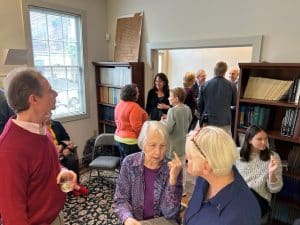
Carolyn and other trustees

at a reception at the

James F. Strange Center in 2024

She kept things organized at the hotel. If there were problems with meals or facilities she resolved them.  She made sure things were set up for pottery reading and helped James register data and arrange lectures. I feel sure she helped James arrange our weekend tours too.  I suspect that what I saw was just a fraction of her contributions to Jim’s digs over the years.

She and I were a “senior generation” on the team.  We had time to share thoughts on the challenges of getting older, and the joys of being grandparents. We talked about our travels over the years, and the values and challenges of our religious denominations and our spiritual lives.

My last time with her was a painful reminder of her quiet self-effacing personality. When she collapsed at an ASOR Board dinner in May at Alexandria, she lay on the floor with us crowded around and said “Get back to your dinner.  I will be fine.  I’ve done this before.  Just leave me here on the floor”.  After several hours and IV fluids in the emergency room she recovered and returned to the hotel.  I have second guessed myself – and the emergency room – wondering if we missed some clues to the eminent disaster.  If she had any early symptoms, she probably ignored them.  I’m sure she told the ER “I don’t really need to be here.”

Susan Ackerman, ASOR Past President

Carolyn Midkiff Strange was an inspiration and brought a surge of passionate energy to every part of ASOR she touched. There was nothing that she thought ASOR could not do, or at least could not do better, if we threw out hearts and souls into it—and she used her huge heart and generous soul to lead by example. When we were evicted from our long-time office space at Boston University in 2017, she made the lead gift that we needed to buy a building that would become ASOR’s permanent home, and she inspired the rest of us to raise the funds to cover the rest of the purchase price, even when there were many (myself included) thought it could not be done. Indeed, I will never forget the aftermath of one Development Committee meeting, when the building funding looked grim, and Carolyn (short, sweet, diminutive Carolyn!) took me by the shoulders, shook me, and said, graciously but forcefully, “We can do this.” Well, she did, and the James F. Strange Center in Alexandria, VA— named in honor of her late husband and life partner, Jim  Strange—is a lasting tribute to her grit and determination. 
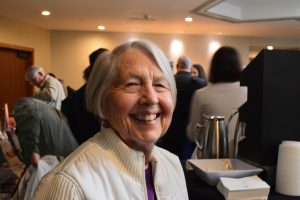
And she didn’t stop. She inspired our diversity, inclusion, and equity work, especially when the need became urgent in 2020, once again through her determination that “we can do this” and through her commitment to put her money where her heart and soul demanded: and so she established an endowment to fund excavation scholarships for BIPOC students and gave contributions to support other diversity initiatives. Her fund-raising passion also led her to be an enthusiastic member of the ASOR Development Committee and a moving force when it came to raising monies from others, especially donations to “ASOR 2025 – Strengthening our Foundation | Expanding Horizons – A Call to Action,” an initiative celebrating our 125th year as an organization.

Most recently, Carolyn has donated funding to establish the Mary Elizabeth Strange Endowment for Diaspora Heritage Educational Programming. Moreover, in 2014, Jim and Carolyn Strange jointly established ASOR’s Strange and Midkiff Familes Excavation Fellowships, designated to support the participation of ASOR members as volunteers or staff on excavation projects. The fund has now awarded 24 excavation fellowships, with a total of $46,500 disbursed to grantees.

Carolyn and Jim, each members of ASOR for over fifty years, each members of the ASOR Board of Trustees, and each generous donors, are testaments to what is best in ASOR—and an inspiration to us all.
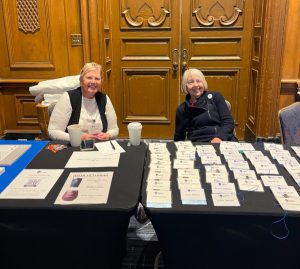
Teddy Burgh, chair of the Membership and Outreach Committee and ASOR Trustee

My time with Carolyn goes far beyond obligatory cliches and customary superlatives. We didn’t spend a lot of one-on-one time together, but our brief conversations and interactions are memorable. It wasn’t that she said anything profound. There were no remarkable quotes. What resonated with me was Carolyn’s passion and sincerity. Both were palpable. After some of my previous experiences and interactions at ASOR conferences, as well as with various people on excavations, I am extremely sensitive when it comes to trust and sincerity. Many people know what to say and how to say it to present a specific persona or image. Yet, their true feelings can be just the opposite. When I met Carolyn, I will admit that I was guarded and cautious. However, I began to realize that she was for real. Her actions echoed her words. What was also impressive was Carolyn’s desire to learn and see change in the organization. She was extremely candid about what she didn’t understand and wanted to comprehend other points of view. She was open to having difficult conversations. Carolyn not only listened, but she heard what was being said and worked to bring about overdue changes in the organization.

Debora Heard, member of the DEI Committee and the William Leo Hansberry Society

Carolyn Strange was not only a highly-valued member of the DEI Committee, she modeled the self-journey each of us should be undertaking to make this world a better place for all of us.  She demonstrated that one could learn what one could not comprehend.  In the wake of the protests over the murders of George Floyd, Breonna Taylor, and Ahmaud Arbery, Carolyn found that she could not comprehend the racism, discrimination, privilege, social injustice, and inequality that the protesters were claiming was embedded in US society, but she wanted to know.  She was open to learning what she did not understand.  She would tell anyone who would listen that reading Ibram X. Kendi’s How to Be an Antiracist opened her eyes and changed her life.  Yet, one book could not teach her all that was to know, so every month at our DEI meetings, she would show us what new book she was reading dealing with topics like the perpetuation of racism within the church, social inequality, and systemic forms of racism and discrimination.  Carolyn also understood that knowledge alone does not produce change.  She took that next step that many neglect.  She asked, “What can I do?” and she spent the rest of her life committed to ways to answer that question.
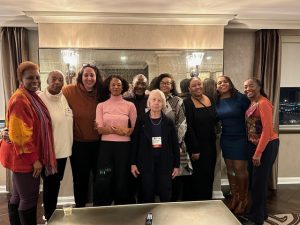
Carolyn hosted a reception for 

members of the William Leo 

Hansberry Society at the 

Annual Meeting in Chicago in 2023.

The first part of her action plan was education.  While Carolyn always downplayed her role in archaeology, often saying, “I’m not a scholar,” her modesty did not extend to giving her opinion.  In fact, one of Carolyn’s best qualities was her direct, straightforwardness; she was a “truth teller.”  As a result, exposing others to the belief-shattering knowledge that she was acquiring was not always easy for her listeners to receive, so she bought books to give in the hopes that the recipients would receive a similar revelation and join her in the work of changing minds and, more importantly, changing society, which leads to the second part of her action plan which was “action.”

Carolyn believed that it was a responsibility as a person, and also as a Christian, to DO all that she could to effect positive change for all people.  As a member of ASOR’s Board of Trustees and DEI Committee, she actively worked to ASOR toward greater diversity and inclusivity in its values, its membership, and its impact on the research and disciplines under its purview.  She also funded initiatives that would help ASOR begin its own journey of transformation and evolution.

Carolyn Strange was a person who gave her whole heart to what she believed, and she truly believed in diversity, equity, inclusion, accessibility, fairness, and justice.  The DEI Committee will sorely miss her, but her contributions to the committee and on ASOR, at large, are a part of her legacy that must be continued.  As long as we continue in the work to which she dedicated the last years of her life and as long as we commit ourselves to our own uncomfortable journeys of seeking to understand the lived lives of people of different backgrounds than ourselves and doing the work to improve the lives for all of humanity in whatever small way that we can, we will keep Carolyn Strange and her legacy alive.

Kate Larson and Julia Troche, co-chairs of ASOR’s Diversity, Equity, and Inclusion Committee.
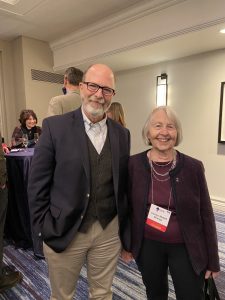
Carolyn and her son,

James R. Strange at the

2021 Annual Meeting.

Among Carolyn’s many legacies to ASOR is her unwavering commitment to building a more inclusive and equitable field of archaeology and study of the ancient world. She pushed herself and others to confront uncomfortable histories through self-education and intentional reflection. She also didn’t hesitate to step forward as a lead donor on numerous diversity initiatives, among them ASOR’s BIPOC fieldwork scholarships that have enabled 13 black, indigenous, and people of color to participate in archaeological excavations since 2022. This sort of financial and institutional support helps ensure those from a wider range of backgrounds, lived experiences, and perspectives can continue to broaden and invigorate our field.

Carolyn was an inaugural member of ASOR’s DEI Committee when it was established as a standing committee by the Board of Trustees in 2021. She provided moral accountability and clarity to the committee from day one, entering all conversations with humility and grace. Her encouragement, calm but strong presence, unwavering support of the work of the committee, and commitment to inclusion permeated our work. She never hesitated to recommend a book, share her own journey, and embrace humility. She is missed profoundly.

Eric and Carol Meyers, ASOR Trustees

Carolyn Strange was a dear friend over the course of more than fifty years. From the early 1970’s to the early 1980’s, she and her family sank deep roots with the Meyerses in the Upper Galilee, and later in the Lower Galilee at Sepphoris near Nazareth.

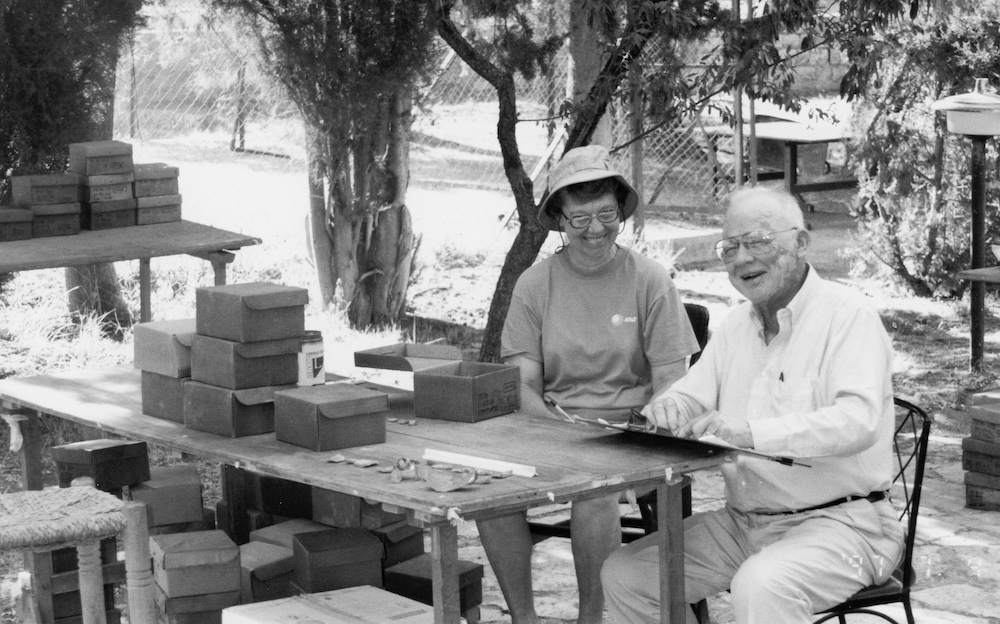
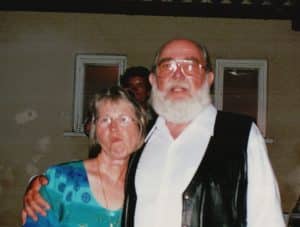
Jim and Carolyn Strange at Sepphoris.

Carolyn never took the label of being a Galilean lightly: it was her heritage and one that fueled her dedication to inclusivity, tolerance, and commitment to those in need. In recent years she especially devoted time and attention to ASOR and the Albright where she had spent so many  years. Her efforts and contributions have enabled both to prosper and grow in a time of great challenge for the Middle East.

In many ways these past years she has enjoyed new friends and new ties that have bound her to the lives of all sorts of individuals, not only to us Galileans but to ASOR and AIAR types from all over the US and globe. And she won their hearts through her charm and straightforward talk.

She has left a legacy, and we all celebrate it.  She will always  be in our hearts and memories.

Yehi shema mevorekhet, may her name be for a blessing,
Vivan Bull Remembrances

IN MEMORIAM:
VIVIAN BULL‎ (1934 – 2022)

Vivian Bull before her retirement as president of Linfield University in 2005. (Oregonian file photo by Roger Jensen)

ASOR mourns the passing of long-time member, former Albright & ASOR Trustee, Vivian Ann Bull (1934-2022), who passed away on August 12, 2022 at age 87. We share our condolences with Vivian’s sons (Robert “Camper” Bull and W. Carlson Bull).

While we will miss Vivian dearly, we remember and celebrate her life and many accomplishments. We have included detailed remembrances by Jane DeRose Evans and by J. Edward Wright, a personal memorial letter to Vivian by Carolyn Midkiff Strange, and additional tributes and brief remembrances by ASOR officers and others in the ASOR family who were close to Vivian. Please e-mail ASOR if you would like to add a tribute to this webpage.

Please click here for the official obituary and memorial service information (October 8, 2022).

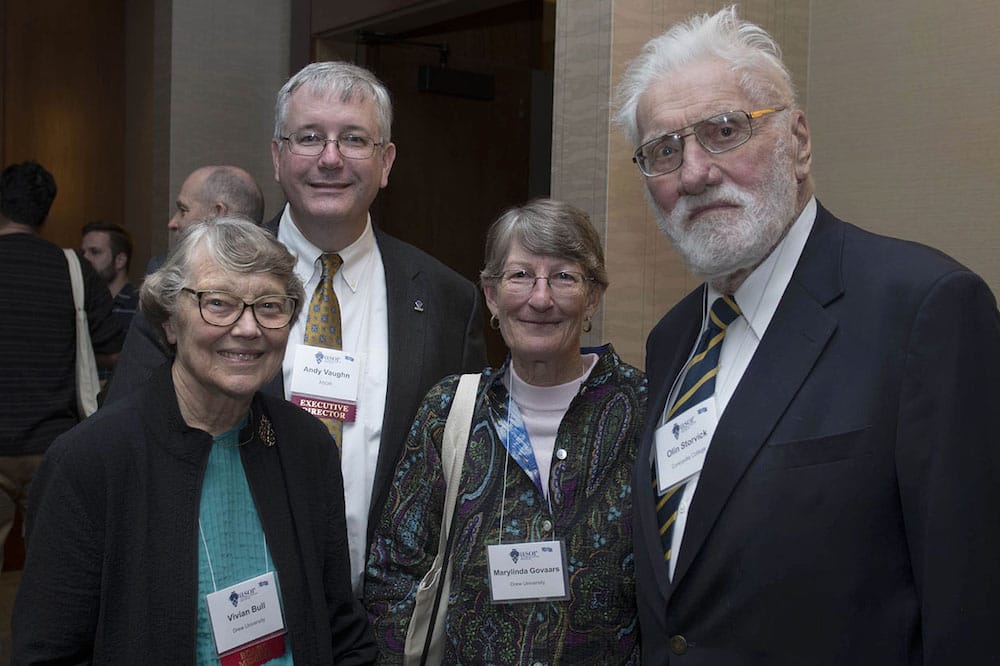
Vivian Bull, Andy Vaughn, Marylinda Govaars, and Olin Storvick at the 2017 ASOR meeting.

In Remembrance: Vivian Ann Bull (1934 – 2022)

Jane DeRose Evans, Professor of Roman Art and Archaeology and Chair of Art History, Temple University

Vivian, a long-time and staunch supporter of the Albright Institute and ASOR, was a trailblazer throughout her life. She was the first student from Albion College (where she earned her undergraduate degree in economics) to receive a Fulbright. Heading to the London School of Economics, she also completed graduate work in Norway and the Netherlands. After graduation, she was one of the few women working in the field of banking and finance – and had to appeal directly to her company’s vice president when she got her notice, which she convinced him was only due to her gender. Her curiosity about international economics brought her to Jerusalem, where she met Robert J. Bull, who was working at Tell er Ras (Shechem). Vivian went with Bob in 1955 to Madison NJ when he was offered the position of instructor of church history in 1955. Five years later, she became a part-time instructor of accounting, and only took on a fulltime position on the condition that she be allowed to complete the work for a PhD in Economics, which she did through NYU (her first choice, Princeton, was not accepting women). Vivian taught at Drew for thirty years, while also serving as Associate Dean of the College of Liberal Arts for much of that time. But summers were spent as registrar on the excavations that Bob directed – her meticulous organization of the records is still apparent from the field notes of those excavations.

In 1992, Vivian left Drew as Emeritus Professor to serve a 13-year term as president of Linfield College (OR). It was her background in international education, business, and academic leadership that attracted the attention of the search committee. She became known as a builder, doubling the size of the College’s campus and advocate for diversity and inclusion. When she retired from that position, she awarded the title of President Emeritus and is still remembered on that campus by the dedication of the Vivian A. Bull Music Center.

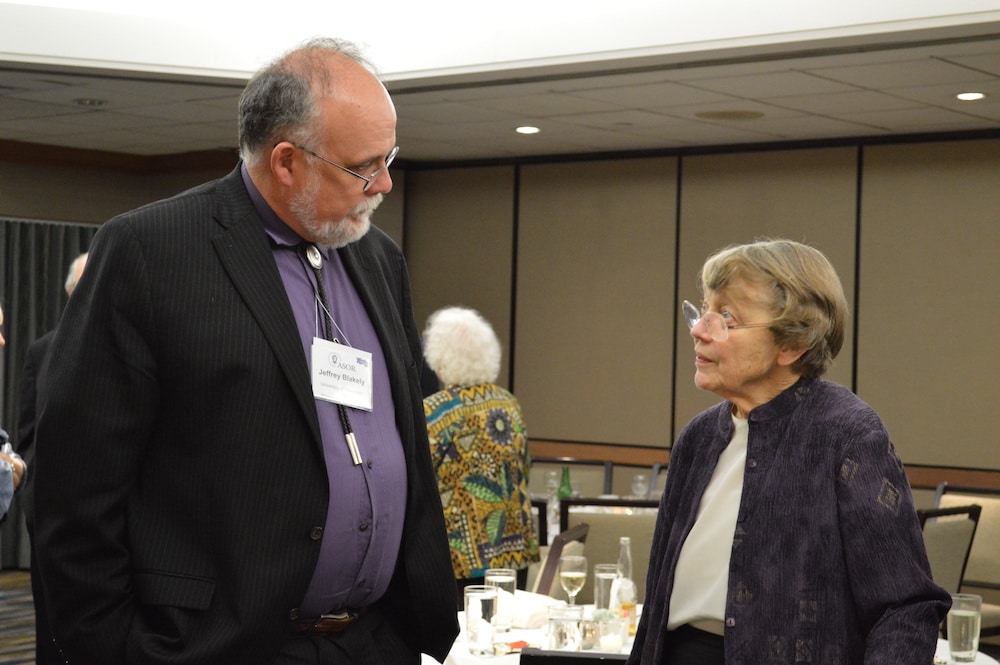
Vivian and Jeff Blakley converse at the 2014 Legacy Dinner.

In 2012, she came out of retirement at the request of the Drew trustees to serve as an interim president of the University. Upon her retirement in 2014, she was named President Emeritus and can be remembered on that campus by the dedication of the Vivian A. Bull Academic Commons in the University Library.

Through her archaeological work, Vivian became an advocate for the Albright Institute, where she became a Trustee of the Albright, first serving as Treasurer and then, in 2006, becoming the Chair of the Board. In 2012 she became a Honorary Trustee, a lifetime appointment. At the same time, she supported the work of ASOR, becoming a member of the Board and a vital voice on the Finance Committee and the Development Committee. In 2016, she received the Charles U. Harris Service Award from ASOR in acknowledgement of her work for the organization. Up until her death, she was deeply involved in the efforts to publish the results of Bob’s excavations in Caesarea and Tell er Ras.

Vivian’s strong faith was evident from an early age and remained an important part of her life’s work and philosophy. Although she would have liked to have been a Methodist minister, the denomination was not accepting women when she was making decisions about graduate school. She remained devoted to Methodist causes, working with committees to foster the growth of educational services in Africa and singing in the choir of her local church as one of the few tenors for many years.

Vivian is survived by two sons, Robert “Camper” Bull and W. Carlson Bull, both of whom grew up on the Caesarea excavations and remain supporters of ASOR.

A Life Well Lived: Vivian Ann Bull (1934 – 2022)

J. Edward Wright, Professor of Hebrew Bible and Early Judaism & Director of the Arizona Center for Judaic Studies, The University of Arizona

It was with deep sadness that we received the news of the passing of our esteemed colleague and longtime ASOR member Dr. Vivian Bull on 12 August 2022. Among her many admirable attributes were her wisdom, administrative acumen, compassionate spirit, piety, patience, humility, and commitment to service and doing what is right.

After graduating from Albion College, Vivian received a Fulbright Scholarship to study at the London School of Economics. She received a PhD from New York University and undertook additional studies in Norway, Great Britain, and the Netherlands. Her dissertation and subsequent work focused on the economic conditions and prospects in the West Bank. Her work was influential not only among scholars but also among policy experts in the United States’ government. She met archaeologist and prominent ASOR leader Robert J. Bull (1920-2013) in Jerusalem in 1955. Vivian and Bob married in 1959 and had two fine sons, Camper and Carlson, who now carry on their parents admirable legacy.

Vivian spent decades in the field alongside Bob, mostly serving as a camp administrator at several excavations, including Shechem, Pella, Tel er-Ras, Caesarea Maritima. After Bob’s death, Vivian continued to work on the Caesarea Maritima excavations and its publication series until her death. It is clearly due to her extensive overseas experience that Vivian was always a vocal advocate for the liberal arts.

Vivian served Drew University a private, liberal arts university located in Madison, New Jersey for forty-four years, moving through the academic and administrative ranks while serving as professor of economics (1960-1992) and associate dean of the College of Liberal Arts (1978-86). After two decades away from Drew, Vivian returned when she was named president in 2012, the first woman to lead Drew University as president. She retired once again in 2014. Obviously, Vivian really was not very good at “retiring.” In recognition of her many years of service and her outstanding leadership of the university, in 2014 the university bestowed on her the honor of president emerita and named the Academic Commons in the main library in her honor.

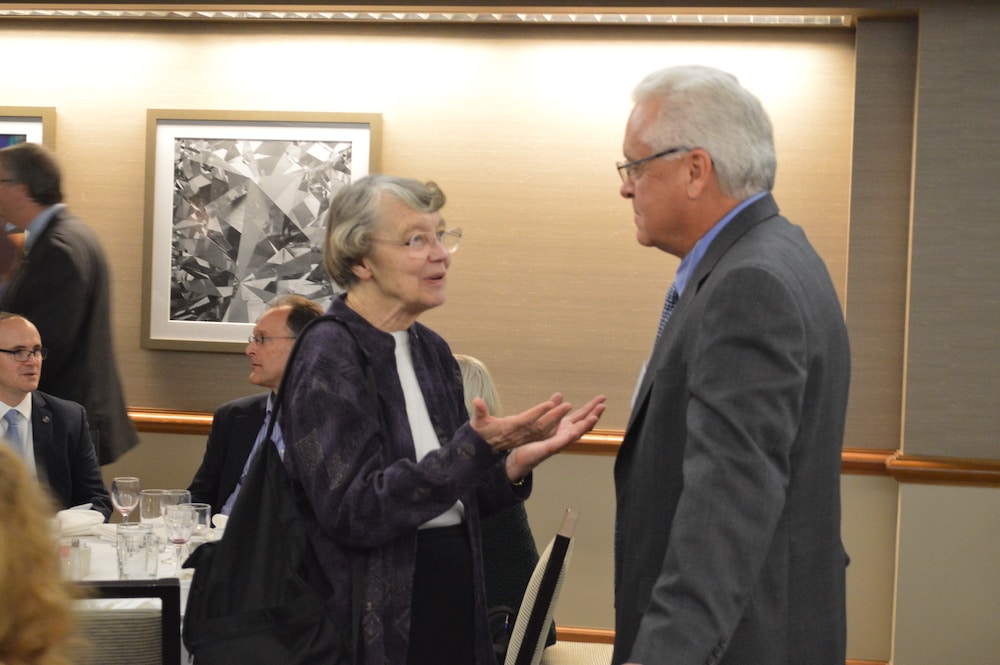
Vivian conversing with Ed Wright at the 2014 Legacy Dinner.

Vivian served as the 18th president of Linfield University, a private liberal arts university located in McMinnville, Oregon from 1992 to 2005. During her tenure, the university was consistently listed among the best liberal arts colleges in the western region. Vivian was the first woman to serve as Linfield’s president, and under her leadership the university experienced a period of growth in terms of its enrollments and academic standing. Scott Chambers, a Linfield faculty member and one of Vivian’s trusted advisors and a dear friend recently said, “Vivian was a transformational president. She led Linfield from a small college to a sizable university. She doubled Linfield’s acreage and had an impact on every aspect of the school—technology, curriculum, buildings, endowment, athletics, and international and professional programs. From the beginning Vivian was deeply engaged with students, faculty, staff, and the local community.” Marvin Henberg, former academic vice president at Linfield and president emeritus of The College of Idaho noted that “Vivian was the best boss, the one everyone deserves to have at least once in a lifetime.” In recognition of all her accomplishments, in 2006 the university named its new, state-of-the-art music center in her honor—The Vivian A. Bull Music Center. Upon her retirement, the university honored her with president-emerita status. Vivian also received honorary doctorates from the University of Portland, Drew University, and Albion College.

Vivian served on many boards during her long and distinguished career, and due to her decades of work in the field with Bob, it was only natural that she would be a leader in ASOR. She was a board member from 1982 to 1990 and again from 2014 to 2019. She was also named an honorary trustee. ASOR benefited from her professional expertise and wise leadership. She served on the Development, Finance, Officers Nominations, and Strategic Planning committees. In recognition of her decades of distinguished service, ASOR honored her with The Charles U. Harris Service Award in 2016. Former ASOR president Prof. Susan Ackerman admired Vivian and once told me that Vivian was a model to her as a scholar, administrator, and mentor.

I treasure the six-years (2006-2012) I served alongside Vivian on the W. F. Albright Institute’s Board of Trustees, Vivian as board chair and I as president. I learned so much from her during those years. Whenever the Board had to deal with a difficult issue, at some point in the back-and-forth discussions Vivian would say, firmly but respectfully, “Hope is not a business plan.” That challenge quickly led to more substantive planning. To this day I remain in awe of Vivian’s wisdom, patience, compassion, humility, and grace. We are all better people for having had Vivian as a colleague, mentor, and friend.

Vivian had an amazing life, and she had a deep impact on the lives of countless people—family, friends, faculty, staff, students, volunteers, and the people of her local community in both McMinnville and Madison. Vivian deserves all the accolades that have been bestowed on her during her life and now in her memory. I think we can best honor her life and memory by following her deep personal commitment to excellence, honor, diversity, justice, and service. Vivian set a high bar in all these areas.

Drew University will hold a memorial service honoring Vivian on October 8, 2022 in Madison, New Jersey. Linfield University will hold its memorial service for her on November 12, 2022 in McMinnville, Oregon.

May the memory of Vivian A. Bull forever be a blessing.

Vivian Bull hosting a table at the Initiative on the Status of Women: Mentoring Lunch at the 2018 Annual Meeting in Denver.

In Memoriam: Vivian Ann Bull (1934 – 2022)

Carolyn Midkiff Strange, Tampa, Florida

Dear Vivian,

In August of 1970, the Stranges, Jim, Carolyn, Mary Elizabeth, and James Riley, began a year filled more than we could have ever imagined. It first started with meeting you, Bob, and Camper in his OshKosh B’gosh and having his b’anna. You, the “First Lady of the Albright” that year, gave us months of memories which we will never forget.

As I look back on that time, I am amazed at all we did. You took us to a place where we watched knitters, and I was able to get sweaters for the children. James even remembers the one I bought for him. Another outing took us to a place where ceramics were being made. The gentleman there gave James and Elizabeth clay so they could fashion their own creations. We took their work back to be fired. I have those objects to this day. There were the cooking classes at the YWCA, during the time the men were galavanting around Turkey. You took me to Miss Halaby’s basement which was full of very fine cross stitch embroidered by Palestine women. I still have some of the pieces from there. If I remember correctly, her sister, an artist, served us a refreshing drink made of green grapes from her own vines. There was coffee in the morning with Omar in the kitchen and tea in the afternoon in the garden. At Christmas, a tree from the Jerusalem forest, which we decorated with ornaments called ‘God’s eyes.’ We had turkey dinner prepared by Omar; however, no cranberries were available, but you found lingonberries as a very nice substitute. You introduced us to the observance of Advent, not at all familiar to us Baptists. In the spring, there were birthday parties. One weekend with James and Elizabeth safely at the Albright, Jim and I were given the VW tender so we could go to Masada, the Roman ramp side. It is hard to believe we actually walked up that incline. The walk to Jericho is especially memorable. Then we all celebrated the birth of Carlson.

All of this and more orchestrated by you.

And yet, it did not end there. Back in Florham Park and Madison we continued to cherish our long friendship, even after I moved to Florida, mainly keeping in touch at breakfasts, lunches, or dinners during ASOR conferences. I always liked hearing about the grandchildren, especially Carlson’s one son and four daughters.

You were a tour guide, teacher, and friend through it all. It seems that we have come to the end of an era.

Thank you for many memorable experiences.

I must not forget to recognize you for your important contributions to the Albright over the years. It has become a place of great significance to all of my children and grandchildren.

I will miss you at our ASOR gatherings.

Carolyn

Comments in Remembrance of Vivian Bull

“I first met Vivian Bull, as so many of us did, at the Albright in the 1970s, where she wrangled two rambunctious kids, the Albright staff, fellows, and quarter mastered complex excavation projects with calm efficiency and good humor, all the while pursuing a career in high-powered economics. When Vivian was around, things got done. She was on the both the Albright and ASOR Boards in the years I was president and vice-president. She always had wise words for us and could calm fractious tempers with a few wise quiet words and a glance. Above all, she was kind. We will miss her.” – Sharon Herbert

“Vivian Bull was an incredible mentor to me when I became ASOR President, as she, with extraordinary patience and kindness, used the knowledge she had gained as President Emerita at both Linfield and Drew Universities to nurture in me at least some small measure of her formidable leadership skills.” – Susan Ackerman

“While working in field KK at Caesarea, Vivian would bring me a flower each morning. A discarded bottle became a vase, placed on my worktable. Before leaving the field, I’d place the flower on the ground. Such a fine way to greet and bid farewell to each day. Ave atque vale, Sophissima Magistra.” – Kate Sheeler

“Since I began my work as ASOR Executive Director in 2007, it was invaluable to have a college dean and university president who had strong ASOR ties going back to the 1950s serve as counselor—and just as importantly, Vivian was an encouraging friend. Her love and loyalty to Bob and to her family was inspiring. She and Bob were an amazing team. My condolences to Camper, Carson, and the entire Bull family.” – Andy Vaughn

“Vivian embodied wisdom and discernment, and she provided invaluable guidance to ASOR and the Albright over a lifetime, and in a generation when there were very few women in leadership in our field. I will always remember her quiet assurance and encouragement during the difficult early days of my presidency, when there was considerable doubt about the new leadership and ASOR’s viability as an organization. Vivian was a steady and trusted counsel over the ensuing years, and a source of much wisdom. May she rest in peace.” – Timothy Harrison

“Like the Stranges, my family first met Vivian Bull in 1970 when we arrived for our Fulbright year at the Albright. We learned that she and Bob Bull met around the corner at a noted Palestinian restaurant which is now the Adventist Study Center—just down the street from Orient House! The Bulls were superb hosts to the Albright appointees that year. Since we had a son, Brent, the same age as Camper, we bonded over our boys as well as archaeology. May she rest in peace!” – Lawrence Geraty

“Vivian Bull joined our 1970 dig at Khirbet Shema, for Bob Bull served as senior advisor that year. Going from years based at Nablus to our base camp at Meiron, an orthodox Jewish moshav, was a huge change of settings and cultures for both of them. The kashrut, the closing of the village on Shabbat, and the fact that the locals spoke Hebrew and Yiddish were all challenging, to say the least. Vivian found ways to work around all of that, as only she could, and helped enormously, especially in registry. Carol and I and our daughter, Julie, especially enjoyed our trips back to Jerusalem with them, in the Albright’s 404 Peugeot wagon, for weekends. RIP.” – Eric Meyers

“Vivian and Bob Bull had different personalities and individual different strengths, but over the fifty years I knew them they always seemed the perfect couple. At those times I headed committees for ASOR. I always wanted Vivian to be appointed to the committee because I knew our committee would receive thoughtful and insightful advice. My family will miss Vivian.” – Jeffrey Blakely

“A stalwart, serving as camp manager for the 1962 season at Shechem was where I first met Vivian Bull. Tough, but congenial and in all ways impressive she was our “Mama Bull” (though of course not to her face). Down the years she remained a warm and vitally supportive ally in the work of ASOR and the Albright Institute. And with all a special family friend. RIP Dear Vivian!” – Joe Seger

“I will always remember with a smile one of the most eyebrow-raising moments of a meeting of the W. F. Albright Institute’s Board of Trustees. Our beloved Vivian Bull—seemingly buttoned-up and quiet in appearance—proudly told the board with enthusiasm that one of her children was conceived at the Albright in Jerusalem. I loved her from that moment on. She was Chair of the Board (2006-2012) while I was Albright Vice-President and Chair of Fellowships. Today, as Chair of the Board myself, I realize how much I learned from her wisdom, guidance, and leadership during those years” – Joan Branham

“Vivian Bull was a quiet but powerful presence at the Albright Institute for as long as I can remember. As board chair, she was responsible for regularizing the Albright’s finances and safeguarding our endowment, services for which we continue to reap the benefit. I will cherish the memory of her loyalty to the Albright as well as her sense of humor.” – Sidnie White Crawford

“Vivian Bull will long be remembered for her dedication and loyalty to ASOR/Albright. What impressed me most about Vivian was her consistent and realistic approach to the development of the two institutions reflected in her often-heard response to Trustee proposals, ‘Hope is not a plan’. She will also be remembered for her unfailing support of Bob’s archaeological excavations represented by this photo [see below] of their working together on the Caesarea pottery at the Albright. May her memory be for a blessing.” – Sy Gitin

Vivian and Bob Bull working together on the Caesarea pottery at the Albright Institute in Jerusalem. (Photo credit: Sy Gitin)

Artemis Joukowsky Remembrance

[vc_row fullwidth=”true” attached=”true” css=”.vc_custom_1496247803139{padding-top: 0px !important;padding-right: 0px !important;padding-bottom: 0px !important;padding-left: 0px !important;}”][vc_column][vc_single_image image=”36766″ img_size=”full” alignment=”center”][/vc_column][/vc_row][vc_row fullwidth=”true” css=”.vc_custom_1496682730308{padding-top: 10px !important;padding-right: 0px !important;padding-bottom: 0px !important;padding-left: 0px !important;}”][vc_column width=”1/12″ css=”.vc_custom_1496683820796{margin-right: 10px !important;}” offset=”vc_hidden-md vc_hidden-sm vc_hidden-xs”][vc_column_text]

 SHARE

[/vc_column_text][mk_image src=”http://www.asortest.org/wp-content/uploads/2017/01/social-fb-icon4.jpg” image_width=”42″ image_height=”42″ hover=”false” custom_url=”https://www.facebook.com/ASOResearch/” margin_bottom=”0″][mk_image src=”http://www.asortest.org/wp-content/uploads/2017/01/social-tw-icon4.jpg” image_width=”42″ image_height=”42″ hover=”false” custom_url=”https://twitter.com/ASOResearch?ref_src=twsrc%5Egoogle%7Ctwcamp%5Eserp%7Ctwgr%5Eauthor” margin_bottom=”0″][mk_image src=”http://www.asortest.org/wp-content/uploads/2017/01/social-in-icon4.jpg” image_width=”42″ image_height=”42″ hover=”false” custom_url=”https://www.linkedin.com/company/american-schools-of-oriental-research” margin_bottom=”0″][mk_image src=”http://www.asortest.org/wp-content/uploads/2017/01/social-ml-icon_7.jpg” image_width=”42″ image_height=”42″ hover=”false” custom_url=”mailto:info@asor.org” margin_bottom=”0″][mk_image src=”http://www.asortest.org/wp-content/uploads/2017/01/blog-icon3.jpg” image_width=”42″ image_height=”42″ hover=”false” custom_url=”http://asor.org/blog” margin_bottom=”0″][/vc_column][vc_column border_color=”rgba(255,255,255,0.01)” width=”1/6″ css=”.vc_custom_1496683923840{margin-right: 20px !important;border-left-width: 2px !important;padding-right: 20px !important;padding-left: 20px !important;border-left-color: #99422f !important;}”][mk_divider divider_color=”rgba(255,255,255,0.01)” thickness=”1″ margin_top=”3″ margin_bottom=”3″][vc_widget_sidebar sidebar_id=”ca-sidebar-39801″][/vc_column][vc_column border_color=”rgba(170,170,170,0.01)” width=”1/2″ css=”.vc_custom_1487276122024{margin-right: 10px !important;margin-bottom: 30px !important;border-right-width: 2px !important;border-bottom-width: 2px !important;padding-top: 30px !important;padding-right: 30px !important;padding-left: 20px !important;background-color: #ffffff !important;border-right-color: rgba(227,228,228,0.75) !important;border-bottom-color: rgba(227,228,228,0.75) !important;}”][vc_column_text responsive_align=”left”]

ASOR REMEMBERS ARTEMIS JOUKOWSKY

by Megan Perry, with tribute quotations by ASOR presidents and other leaders

[/vc_column_text][mk_divider][vc_wp_text]

Arte and Martha Joukowsky in 2006.
(Photo credit Barbara A. Porter)

Artemis A.W. Joukowsky, a long-time friend and supporter of ASOR, passed away on December 11, 2020 at the age of 89 due to complications of COVID-19. Arte had strong ties to Near Eastern archaeology, serving as President of the ACOR Board of Trustees for almost 20 years and assisting his wife Dr. Martha Sharp Joukowsky in her archaeological research and fieldwork in Jordan. Arte was born in Shanghai, China and immigrated as a child to New York with his family. He attended Brown University as part of the class of 1955, and later worked for American International Group (AIG), which took him and his family to many parts of the world, including Turkey and Lebanon. He maintained a strong and meaningful relationship with his alma mater, eventually serving as a Trustee, then Vice Chancellor and Chancellor, and finally as Chancellor Emeritus, along with other honorary positions.

Probably the most meaningful outcome of his time at Brown was meeting his beloved wife, Martha Sharp when they were both undergraduate students. Martha introduced Arte to the world of archaeology during their overseas stints and since 1982, as an archaeology faculty member at Brown University. After fieldwork in Lebanon, Hong Kong, Turkey, Italy, and Greece, Martha directed the Petra Great Temple Excavations in Jordan from 1993 to 2009. Arte joined Martha and her excavation team, which sometimes included other members of their family, in the field almost every summer and served as the official dig photographer. In 2004, Arte and Martha’s dedication to archaeological research culminated in the establishment at Brown of the Artemis A.W. and Martha Sharp Joukowsky Institute for Archaeology and the Ancient World, which has served as the home institution for many ASOR members. Arte and his family’s foundation also supported archaeological research and conservation projects and assisted local communities Jordan.

Arte presents ACOR Board member Mohammad Asfour the Distinguished Service Award in 1993. (Photo credit Bill Lyons)

Arte was involved with ASOR largely through his role as President of ACOR’s Board from 1992 until 2011. Dr. Pierre Bikai, then Director of ACOR, knew Arte and Martha from their days in Lebanon in the 1960s and 1970s and felt the institution could benefit from his executive experience and connections. As president, Arte ensured ACOR’s financial survival during the difficult years after the First Gulf War and provided stalwart leadership as the institution grew both in size and scope in the 1990s and 2000s. Arte and his close friend Professor Jim Wiseman were both financially and administratively instrumental in securing ASOR’s long-time Boston home in Kenmore Square. His accomplishments were recognized in 2007 with a W.F. Albright Service Award presented at the ASOR Annual Meeting in San Diego. ASOR’s past president Tim Harrison noted that Arte provided support and wise counsel in his early years serving as ASOR president. Arte’s advice was sought and given to many.

Arte had a generous spirit, welcoming visitors with open arms at both the Great Temple excavation and at his and Martha’s home in Providence. He took great pride in showing off the work of Martha and her team while serving as the unofficial site steward. Arte quickly grew to love Jordan and its inhabitants and worked to give back to ACOR’s host country. In addition to his service to ACOR, Arte was a trustee of the King Hussein Foundation and received the Order of Independence medal from Jordan in 1996.

Arte is survived by his wife Martha Sharp Joukowsky, their three children, Nina Joukowsky Koprülü, Artemis Joukowsky III, and Michael Joukowsky, and eight grandchildren.

-Megan Perry

[/vc_wp_text][mk_divider][vc_wp_text]

Arte was a true gentleman whether in the field or in a Board room. Always nattily attired and full of warmth and vigor, it was always a pleasure to engage with him one way or another. He and Martha were a pair to be admired in so many ways. His efforts in behalf of ASOR in getting space at BU for so many years was only one of the many ways he was helpful to the ASOR family, especially ACOR. He will be sorely missed.
Eric Meyers
Past ASOR President, 1990–1996 and 2006–2007

[/vc_wp_text][mk_divider][vc_wp_text]

As President of the Albright Institute and later of ASOR I had the great pleasure of working for many years with Arte Joukowsky, ACOR’s long term Board Chair. While a determined promoter of ACOR,  Arte took full view of the big picture of American archaeological work in the Middle East and provided formative support for ASOR and all of its overseas affiliates. This was featured specially in his initiative which gave the ASOR family a rent-free home at BU for two decades and led to the formation of the “656 Beacon Street Affiliates” group where the leadership of ASOR and the centers met annually for discussion on issues of mutual support. Arte was a thoughtful and most constructive participant in these meetings. He was also in all situations a most congenial host. I recall especially how warmly he received and accommodated me (and assuredly also other visitors) on a visit to Petra while Martha was excavating there. His formative support and leadership will be sincerely missed by ACOR and the whole ASOR family.
Joe Seger
Past ASOR President, 1996–2003

[/vc_wp_text][mk_divider][vc_wp_text]

From the start, I felt a special affinity for Arte Joukowsky because we both grew up in China during World War II. I came to know him, though, through Martha and her enviable archaeological reputation. As vice-president for ACOR, and chair of its search for a president, it fell my lot to travel to Brown and talk Arte into filling that role—and what an amazing transformation in ACOR he was responsible for! Working with Pierre and Patricia Bikai, and later, with Barbara Porter, they put ACOR on a sound financial footing that has enabled its unparalleled success. Arte’s enthusiastic support for Martha’s work at Petra’s Great Temple, in and out of the field, was inspiring to behold. When I became ASOR president, I looked to Arte for counsel and advice—something I could always count on. In addition to his generous financial support for both ACOR and ASOR, he was ever ready and available to share his considerable administrative and business acumen with me during ASOR’s consolidation in Boston. Both ASOR and I have lost one of our most avid and dependable supporters but his heritage and influence live on to make us a stronger society.
Lawrence T. Geraty 
Past ASOR President, 2003–2006

[/vc_wp_text][mk_divider][vc_wp_text]

Arte was a tenacious champion for ASOR, as he was for so many other institutions and organizations dedicated to the study of the ancient world. This included timely interventions at critical moments in ASOR’s history, and it took on a very personal focus for me during the rocky early months of my first term, when he provided a steadying hand and wise counsel to a woefully inexperienced and unsure president. I will never forget our quiet conversations at the annual meetings, usually with a favorite drink in hand, and I will be forever grateful of his unwavering support and encouragement during that turbulent time. His calming influence helped instill confidence we could work through the seemingly insurmountable challenges we confronted, especially the deep structural deficits and organizational problems we faced, when so many others doubted ASOR’s future. Arte will be dearly missed. We have lost a true champion and friend. Thankfully, Martha and he have left a rich legacy that will live on, ensuring their shared passion for the study of the ancient world will continue to thrive and flourish.
Tim Harrison
Past ASOR President, 2007–2013

[/vc_wp_text][mk_divider][vc_wp_text]

Together with his wife Martha, Arte Joukowsky was one of ASOR’s most generous lifetime donors, and he was always generous with his time and wisdom as well. ASOR counted him as a dear and forever friend.
Susan Ackerman
Past ASOR President, 2014–2019

[/vc_wp_text][mk_divider][vc_wp_text]

ASOR has been truly blessed since its inception by a cadre of generous benefactors from the “real” world who have provided sage advice, organizational acumen, and financial resources that greatly enhance our wide-reaching endeavors. Arte Joukowsky was legendary among these for his energy, wisdom, and good will. We will miss him.
Sharon C. Herbert
ASOR President, 2020–present

[/vc_wp_text][mk_divider][vc_wp_text]

I became director of ACOR in May of 1991 when the effects of the first Gulf War had seriously impacted the institution. It was, in effect, closed and I needed help. So I called my friend of twenty years, Arte, and asked him if he would be willing to become the chair. He said yes and over the next fifteen years we worked together and laughed together and made ACOR the strong institution that it is now.
Pierre Michel Bikai
Past Director of ACOR

[/vc_wp_text][mk_divider][vc_wp_text]

I was fortunate to know Arte and his family since the late 1960s in Lebanon, and in the late 1970s in New York City. However it was the years working with him as ACOR Board President after I became the ACOR Director in 2006 that provided the chance to get to know him even better, and also benefit from his guidance and profound care for Jordan and ACOR. Special trips to Petra when he was there with Martha and the Brown team afforded me a chance to spend special time with them and so too visits to their wonderful home in Providence. He helped and influenced many individuals, including myself, and that is part of his legacy.
Barbara A. Porter
Past Director of ACOR

[/vc_wp_text][mk_divider][vc_wp_text]

Artemis Joukowsky was a person of great intelligence and an extraordinary leader. When assuming the presidency of the ACOR Board of Trustees in 1992 he demanded a thorough and long overdue review of ACOR’s mission, bylaws, and reorganization of its board. He then led a major fund-raising drive, funded in large part from his own resources, that literally saved ACOR from a precarious financial predicament in the aftermath of the First Gulf War. His leadership and personal generosity continued in the following years as ACOR paid off the mortgage on its permanent headquarters, expanded its physical plant and programs, and began building a significant endowment. He effectively delegated responsibility among the officers and other members of the ACOR board in order to fulfill its role while trusting in the administrative leadership of the ACOR Directors, initially Pierre and Patricia Bikai and then Barbara Porter. During Arte’s two decades (1992-2011) as President of the Board of Trustees, ACOR was literally transformed into one of the leading research centers of the Middle East.
S. Thomas Parker
ACOR Second Vice President, 2001–present

[/vc_wp_text][mk_divider][/vc_column][vc_column border_color=”rgba(170,170,170,0.01)” width=”1/6″ css=”.vc_custom_1496684098866{margin-right: 5px !important;margin-bottom: 20px !important;border-right-width: 2px !important;border-bottom-width: 2px !important;padding-top: 30px !important;padding-right: 10px !important;padding-left: 10px !important;background-color: #ffffff !important;border-right-color: rgba(227,228,228,0.75) !important;border-bottom-color: rgba(227,228,228,0.75) !important;}”][vc_wp_posts title=”BROWSE THE NEWS ARCHIVE” number=”4″][/vc_column][vc_column border_color=”rgba(170,170,170,0.01)” width=”1/6″ css=”.vc_custom_1496684008271{margin-right: 10px !important;margin-bottom: 30px !important;border-right-width: 2px !important;border-bottom-width: 2px !important;padding-top: 30px !important;padding-right: 20px !important;padding-left: 20px !important;background-color: #ffffff !important;border-right-color: rgba(227,228,228,0.75) !important;border-bottom-color: rgba(227,228,228,0.75) !important;}”][vc_column_text] [/vc_column_text][/vc_column][/vc_row]

Norma Kershaw Remembrances

[vc_row fullwidth=”true” css=”.vc_custom_1602013120679{padding-top: 0px !important;padding-right: 0px !important;padding-bottom: 0px !important;padding-left: 0px !important;}”][vc_column][vc_single_image image=”66433″ img_size=”full” alignment=”center”][/vc_column][/vc_row][vc_row fullwidth=”true” css=”.vc_custom_1496682730308{padding-top: 10px !important;padding-right: 0px !important;padding-bottom: 0px !important;padding-left: 0px !important;}”][vc_column width=”1/12″ css=”.vc_custom_1496683820796{margin-right: 10px !important;}” offset=”vc_hidden-md vc_hidden-sm vc_hidden-xs”][vc_column_text]

 SHARE

[/vc_column_text][mk_image src=”http://www.asortest.org/wp-content/uploads/2017/01/social-fb-icon4.jpg” image_width=”42″ image_height=”42″ hover=”false” custom_url=”https://www.facebook.com/ASOResearch/” margin_bottom=”0″][mk_image src=”http://www.asortest.org/wp-content/uploads/2017/01/social-tw-icon4.jpg” image_width=”42″ image_height=”42″ hover=”false” custom_url=”https://twitter.com/ASOResearch?ref_src=twsrc%5Egoogle%7Ctwcamp%5Eserp%7Ctwgr%5Eauthor” margin_bottom=”0″][mk_image src=”http://www.asortest.org/wp-content/uploads/2017/01/social-in-icon4.jpg” image_width=”42″ image_height=”42″ hover=”false” custom_url=”https://www.linkedin.com/company/american-schools-of-oriental-research” margin_bottom=”0″][mk_image src=”http://www.asortest.org/wp-content/uploads/2017/01/social-ml-icon_7.jpg” image_width=”42″ image_height=”42″ hover=”false” custom_url=”mailto:info@asor.org” margin_bottom=”0″][mk_image src=”http://www.asortest.org/wp-content/uploads/2017/01/blog-icon3.jpg” image_width=”42″ image_height=”42″ hover=”false” custom_url=”http://asor.org/blog” margin_bottom=”0″][/vc_column][vc_column border_color=”rgba(255,255,255,0.01)” width=”1/6″ css=”.vc_custom_1496683923840{margin-right: 20px !important;border-left-width: 2px !important;padding-right: 20px !important;padding-left: 20px !important;border-left-color: #99422f !important;}”][mk_divider divider_color=”rgba(255,255,255,0.01)” thickness=”1″ margin_top=”3″ margin_bottom=”3″][vc_column_text]

NEWS@ASOR E-NEWSLETTER

ANCIENT NEAR EAST TODAY E-NEWSLETTER

PAST ASOR NEWS, MONTH BY MONTH

LIFETIME HONOR ROLL OF DONORS

FY20 HONOR ROLL OF DONORS

ASOR VIRTUAL ANNUAL MEETING

[/vc_column_text][/vc_column][vc_column border_color=”rgba(170,170,170,0.01)” width=”1/2″ css=”.vc_custom_1487276122024{margin-right: 10px !important;margin-bottom: 30px !important;border-right-width: 2px !important;border-bottom-width: 2px !important;padding-top: 30px !important;padding-right: 30px !important;padding-left: 20px !important;background-color: #ffffff !important;border-right-color: rgba(227,228,228,0.75) !important;border-bottom-color: rgba(227,228,228,0.75) !important;}”][vc_column_text responsive_align=”left”]

IN MEMORIAM:
NORMA KERSHAW ז״ל‎ (1924 – 2020)

[/vc_column_text][mk_divider][vc_wp_text]

Photo courtesy of the Bowers Museum

ASOR mourns the passing of long-time member and trustee, Norma Kershaw, ז״ל‎ (1924 – 2020), who passed away peacefully at her home in Mission Viejo, CA on September 14, at age 95. We share our condolences with Norma’s two daughters (Barbara Tiferet Rosenthal and Janet Kershaw McClennan), her son-in-law (Jeffrey Rosenthal), her four grandchildren, and her two great grandchildren.

Norma was born in New York City on New Year’s Eve in 1924. After helping her husband Reuben grow his real estate development business in Great Neck, and after rearing their children (Barbara and Janet), she went back to school. She completed the B.A. degree (Phi Beta Kappa) in anthropology and art history at Queens College in 1972. Two years later, she earned the M.A. degree in art history and archaeology from Columbia University.

Jim Sauer, Norma Kershaw, and Joan Scheuer visiting Tell Qarqar, Syria

Norma was an ASOR member for more than 50 years, and a trustee or honorary trustee for 40 years. She began excavating in 1971 at Gezer in Israel, and she also participated in excavations at Aphek (Israel) and Salamis (Cyprus). She was elected to the ASOR Board of Trustees in 1979, and was elected an Honorary Trustee in 1988. She was the founding President of CAARI—The Cyprus American Archaeological Research Institute, and she later served as its Treasurer. Among leadership positions in ASOR, she served as chair of ASOR Tours, and later as chair of ASOR Outreach and Lectures. She was passionate and well-loved teacher of archaeology and the ancient world, and she converted many of the students in her classes into supporters of archaeology and archaeological societies. She was the recipient of ASOR’s most prestigious award—The Richard Jonas Scheuer Medal. Not only was Norma a learned scholar and teacher, but she and Reuben were generous supporters of archaeological societies and academic institutions. She was the primary supporter of News@ASOR since its inception.

While we will miss Norma dearly, we remember and celebrate her life and many accomplishments. We have included three remembrances below: a detailed and complete remembrance by Thomas Levy, and two additional remembrances by William Schniedewind, and Andrew Vaughn.[/vc_wp_text][mk_divider][vc_wp_text]Remembering Norma Kershaw ז״ל‎ (1924 – 2020)

Thomas E. Levy, Distinguished Professor and Norma Kershaw Chair in the Archaeology of Ancient Israel and Neighboring Lands, University of California San Diego.

Norma loved the archaeology of Israel and the Middle East and she expressed this through a life-time of study, teaching, service and philanthropy. In Norma’s adult life journey, she was supported by her loving husband Rueben, known affectionately as Rube.

Tom and Alina Levy with Norma Kershaw

They were married in 1951 and celebrated their 61st anniversary before Rube passed away. After raising their children Barbara and Janet, in Great Neck, NY, Norma decided at the age of 43, to pursue her dreams of higher education. In an interview with the LA Times in 1996 Norma said that Rube asked, “Why do you want to go to school? You’re doing fine.”

And she said it was true—“I had a lot of friends; I was on the New York state higher education committee; I was active in the League of Women Voters; I was legislative chair for the school district. Things were OK, but I told [Rube], ‘I just have to do this. I feel very incomplete.’ I wanted to go when I was younger, but we didn’t have the money.” Norma went on to Queens College for her B.A. degree and graduated Phi Beta Kappa and then earned a Master’s degree in Archaeology and Art History from Columbia University, where she studied with the eminent art historian and archaeologist Edith Porada, graduating at the age of 49.

In 1970 while working on her B.A. degree, Norma met archaeologist William G. Dever at that American Institute of Archaeology (AIA) annual meetings that took place in Cincinnati, Ohio. Dever would go on to become one of the most prominent Biblical Archaeologists. At the time, Dever was working with the great American archaeologist, Nelson Glueck, at the Hebrew Union College excavations at the famous Biblical site of Tel Gezer in Israel. Dever insisted that if Norma was serious about archaeology, she should join the expedition and ‘get her hands dirty’ exposing the past. The following summer of 1971, Norma traveled to Israel and joined the excavation.

Norma at Tel Aphek, 1975

It was at Tel Gezer that summer, when I was 17 years old, that I had the good fortune to meet Norma down in the trenches. I was impressed that an “older woman”, in her early 40s was doing archaeology. Norma went on to join other excavations in Israel, Cyprus and Egypt, traveling extensively around the world, and often bringing her daughters to experience the excitement of archaeology and the world’s best museums. In the early 1980s, when I served as the Assistant Director of the W.F. Albright Institute of Archaeological Research in Jerusalem, Norma made one of her many visits to Israel and the Albright Institute. Norma loved the ‘Albright’ because of its unique mission and ability to bring together Israeli and researchers working in the Palestinian territories and neighboring Arab lands together in dialogue.

Norma enjoyed being at the center of cutting-edge archaeology in the United States. In 1968, she helped establish the Archaeological Institute of America (AIA) Long Island Society, where she served as president from 1977 to 1981. In 1976, she became a life-member of the AIA and received their distinguished Martha and Artemis Joukowsky Distinguished Service Award in 1989. From 1980 to 1985 Norma served as the travel editor of the AIA’s ARCHAEOLOGY magazine. She also served as a founding editorial board member of Biblical Archaeology Review until she passed away. Shortly after moving to southern California, Norma founded the AIA’s Orange County Society in 1991, serving as its first president, and in 1992 joined the AIA Governing Board. In 1996, she was named the first female (and up until now, the only) Trustee Emerita of the AIA. It was her desire to share the significance of archaeology for world culture that infused Norma’s drive to play a role in so many of these scholarly institutions and museums.

In 1990, Rube and Norma retired to Mission Viejo, California, to be closer to their daughters and grandchildren. Norma accelerated her archaeological and museum service in SoCal, becoming a founding member and devoted supporter of the American Research Center in Egypt, Orange County (ARCE-OC) and a member of the Board of Directors of the Bowers Museum in Santa Ana. In 2007, the museum named their new 300-seat auditorium the Norma Kershaw Auditorium. Norma loved to attend lectures there and always took studious notes on how each speaker could improve their future presentations. Following their lecture, Norma would button-hole the distinguished speaker and explain how they could reach the public more effectively. These suggestions were made not as a critic, but rather as a partner.

Norma was a devoted member of ASOR because it is the oldest, most distinguished and flagship organization for archaeological researchers from the United States and Canada working in the Middle East. Norma gave generously to the Albright Institute in east Jerusalem, where she became an honorary trustee. There is a garden in the back of the Albright Institute that bears her name and provides sanctuary for scholars from all religions and backgrounds meeting in the Holy City. Love for the archaeology of the island of Cyprus led Norma to become a 1978 founder and first president of CAARI—the Cyprus American Archaeological Research Center in Nicosia. She was elected as an ASOR Trustee in 1979, and she became an honorary trustee of ASOR in 1988, earning the Richard J. Scheuer Medal in 1997 and the Charles U. Harris Service Award in 2014.

When Norma and Rube first moved to Southern California, they thought about purchasing a palatial home near a golf course. However, as Norma reflected some years later, they decided they didn’t need a big house. Instead, they would rather use much of their wealth to support the institutions named above and local universities. It is in this context that I reconnected with Norma, and she and the Kershaw family became very close to my wife Alina and me, as they attended events at UC San Diego.

Sitting: Reuben and Norma Kershaw, D. N. Freedman Top: R. Friedman, J. Katzin, L. Stager, B. Halpern, T. Levy

In January of 2006, the UC San Diego Judaic (now Jewish) Studies Program (JSP) hosted an impressive evening around the topic of the Hebrew Bible and Archaeology at the campus Faculty Club for the JSP Board of Visitors, faculty and graduate students. Norma and Rube traveled down from Orange County to attend the celebratory event marking several decades since the founding of the program. Former University of California President and Former UC San Diego Chancellor Richard Atkinson welcomed the guests; the moderator was Jerome Katzin, an important philanthropist to our university, a founder of JSP, and an old Great Neck friend of Norma. At this time, JSP focused on the Hebrew Bible and Archaeology and our program was considered one of the finest in the United States. The faculty included Hebrew Bible scholars Professors David Noel Freedman ז״ל, Richard (Dick) Elliott Friedman, William H.C. Propp, Second Temple Period scholar David Goodblatt ז״ל, and me—Levantine and Biblical archaeology. Norma knew and highly respected Noel Freedman who she had meet when he served as Director of the Albright Institute in 1976–1977. Archaeology and Biblical Studies were the topics dearest to Norma, and by the end of the evening, she approached Dick. Later that evening, he called me at home to say, “Norma wants to endow a Chair for you.” I had to ask Dick to repeat this incredible news three times.

Top: W. Dever, W. Propp, T. Levy, D. Goodblatt, J. Magness
Sitting: Reuben and Norma Kershaw

Later that year, in the spring quarter, the Jewish Studies Program hosted a public event to celebrate the inauguration of the UC San Diego Norma Kershaw Chair in the Archaeology of Ancient Israel and Neighboring Lands at the university’s beautiful Institute of the Americas with a symposium on Biblical Archaeology. Over 250 people attended the event that included lectures by leading scholars including William G. Dever, David Noel Freedman ז״ל, Richard Elliott Friedman, William Propp, David Goodblatt ז״ל, Jodi Magness, Lawrence Stager ז״ל, Ron Hendel, and Baruch Halpern. Norma played an important part in organizing the event, the program, table layout, menu, and protocols, even insisting on having a team of belly-dancers. It was important for her to use an event such as the establishment of the Chair to build positive relationships between scholars, the administration, and the public to strengthen archaeology in American society.

Tom Levy, Norma Kershaw, James Cameron, and Suzy Amis

Following the conference, I was privileged to edit a book to honor Norma entitled Historical Biblical Archaeology and the Future—The New Pragmatism (Equinox, UK) that included papers by the speakers and more friends, colleagues, and students including: Shlomo Bunimovitz, Avraham Faust, David Ilan, Aaron Burke, Miroslav Barta, Aaron Brody, Assaf Yasur-Landau, Ann Killebrew, Eveline van der Steen, Daniel Frese, Tara Carter, William Schniedewind, Aren Meir and Alex Joffe. Around the same time that Norma established the Norma Kershaw Chair at UC San Diego, she also generously endowed a chair at UCLA, where Hebrew Bible scholar William Schniedewind became the inaugural holder of the Kershaw Chair of Ancient Mediterranean Studies. Today, this chair is held by UCLA archaeologist Aaron Burke. Thanks to the Norma Kershaw Chair at UC San Diego and its research mission, my students, colleagues and I have been able to carry out field work in Israel, Jordan, Cyprus, Greece, Saudi Arabia, Morocco, and India, all leading to a variety of published works. Norma took great pleasure in lending a hand to these expeditions and was always excited to hear about the results of the latest project when we returned from the field.

Norma and Rube Kershaw were part of what Tom Brokaw calls ‘The Greatest Generation;’ people who grew up in the Depression. Rube was part of the American forces who fought the Nazis in North Africa during World War II. As a Jewish family who prospered in post-war United States, the Kershaw’s deeply believed in the American university system and professional institutions and wanted to contribute to strengthening them for the future. As the ASOR community and the UC San Diego Jewish Studies Program reflects on Norma’s unique contribution to the study of Levantine archaeology in the United States, we can only hope that the UC San Diego will live up to Norma’s gift and fill the Norma Kershaw Chair in the Archaeology of Ancient Israel and Neighboring Lands with a new archaeology hire when the current holder of this esteemed position retires. To Norma’s family – May the Omnipresent comfort you among the rest of the mourners of Zion and Jerusalem –

המקום ינחם אתכם בתוך שאר אבלי ציון וירושלים[/vc_wp_text][mk_divider][vc_wp_text]William M. Schniedewind, Professor of Biblical Studies & NWS Languages, Inaugural Kershaw Chair in Ancient Mediterranean Studies, Director of Graduate & Undergraduate Studies, Near Eastern Languages & Cultures Department, UCLA.

Reuben and Norma Kershaw with William Schniedewind

I am profoundly saddened by the passing of Norma Kershaw. Norma passed away on September 14, 2020, at her home in Mission Viejo. She was a visionary, benefactor, and my friend.

I met Norma just twenty-five years ago while giving a public lecture in Riverside, CA. I was a young scholar, but she was a force of nature even at 70 years old. Norma started her academic pursuits later in life, completing a B.A. at Queens College and then an M.A. in Art History and Archaeology from Columbia University at the age of 49. She worked on the excavation at Gezer with the Hebrew Union College and traveled extensively doing excavations and research in Israel, Cyprus, and Egypt. She taught at various colleges as a lecturer and won a distinguished teaching award from Hofstra University.

Her husband, Rube, and Norma retired to Mission Viejo in 1990, and she had a vision to build the study of archaeology and ancient Israel in Southern California. She was a founding member and avid supporter of various institutions like the Orange County chapters of the American Schools of Oriental Research, the Archaeological Institute of America, the Biblical Archaeology Society, and the Bowers Museum. She was there for every lecture at the Bowers Museum (where she donated the Kershaw Auditorium). Norma was always steering and advising the advancement of archaeology, Egyptology, and particularly the archaeology of Israel.

She was also an avid supporter of the Albright Institute of Archaeology in Jerusalem. Indeed, one of the things that I admired about Norma was the practicality of her vision. At the Albright, for example, she endowed the “Kershaw Garden,” a courtyard where scholars would meet every afternoon to discuss their work, enjoy some tea or beer, and develop lifelong relationships. And she wanted to make sure scholarship was accessible through sponsoring lectures at the Bowers or her synagogue.

I was honored in 2007 to be the first holder of the Kershaw Term Chair in Ancient Eastern Mediterranean Studies at UCLA. Norma also endowed a Chair in the Archaeology of Israel at UCSD (see above). These Chairs were a vehicle to support Norma’s vision for the archaeology of Israel. The UCLA Chair, in particular, supports graduate students, as well as the excavations at Jaffa, and now at Tel Dan.

Norma’s legacy will live on in her daughters, Janet and Barbara, as well as in all the people and institutions that she touched and supported. Her memory is indeed a blessing.[/vc_wp_text][mk_divider][vc_wp_text]Andrew G. Vaughn, ASOR Executive Director

I received my first letter from Norma in December 2006, a few weeks before I officially started my position as ASOR Executive Director. Of course I had heard of Norma and her involvement in ASOR and other institutions, but I had never had a conversation with her. Her warm, yet direct letter would be the first of several dozen notes and cards, countless phone calls, and many visits in her home and elsewhere in southern California. Within a few weeks, Norma volunteered to be a counselor and adviser. She was talented scholar, gifted teacher, and one of ASOR’s most generous supporters. I am truly thankful for all of those things, but I will remember her most as a loyal, dear friend and encouraging mentor.

Norma at Tel Aphek, 1987

Norma became involved with ASOR more 50 years ago—she first visited the AIAR in 1968—yet it seems that she has always been a part of the ASOR family. Indeed, when then ASOR President Joe Seger presented Norma with the Richard J. Scheuer Medal (ASOR’s highest honor) in 1997, he observed as much. As noted above, Norma became involved in archaeology in her early 40s at Gezer, and she continued through the 80s at Salamis (Cyprus) and at Tel Aphek (see photo to the right above).

C. Meyers, A. Vaughn, E. Meyers, N. Kershaw

The first reference to Norma in the minutes of the ASOR Board (link) was in 1979, when she was elected as a trustee. The minutes and everyone’s memories reflect that Norma played a critical role in the governance and support of ASOR for the next 40 years. In 1983, she was instrumental in starting ASOR Tours, and she included a fundraising component in those trips (see the photo above from one of those trips to Syria). As recently as February of 2020, she counseled me on ways to reactivate and re-enliven ASOR Tours—unfortunately those plans are now on hold because of COVID-19.

Norma and U.S. Ambassador Thomas Pickering at the Albright in Jerusalem

Later in the 80s, Norma became head of ASOR’s lecture series, and she yearned for ASOR to have a broader outreach program. More recently, she was an important adviser for the Friends of ASOR initiative. As ASOR was envisioning virtual outreach this past spring, Norma offered sage advice and asked excellent (but hard) questions. Her physical strength may have been slipping over the last year, but her mind and wit were as sharp as ever. Bill Schniedewind shared that even during a phone call the week before she passed, Norma was eager to participate in the discussion of ASOR’s name. She wanted to help us tell the story of “What is an ASOR?”

Concurrent with exhausting and important board service in many societies, Norma became an stimulating and motivating teacher in the Great Neck and New York areas. She was meticulous in her research, and she inspired countless other adults. She became something of an archaeological evangelist who converted many of the students in her classes into participants and supporters of archaeology and archaeological societies. Her love for the ancient world was magnetic.

It is rare to found one organization that continues beyond a person’s life, and yet Norma helped organize and establish three—CAARI, AIA Long Island Chapter, and AIA Orange County Chapter. All three organizations continue to thrive today. It is impressive just how many organizations Norma impacted. As you can see in the photos to the left and below, her name is found in organizations from Cairo, to Jerusalem, to California.

Norma’s philanthropic support extended even further. Norma knew that member communication was critical, and so she gave funds to support the newsletters of AIA and of ASOR. She also endowed a lecture series with the AIA. The support for News@ASOR was annual, and she indicated that she had made a legacy gift so that this vital membership communication tool would receive support in perpetuity. It is fitting that Norma’s legacy and support of archaeology will continue. Norma is certainly someone who advanced tikun olam with her life, wisdom, and wealth.
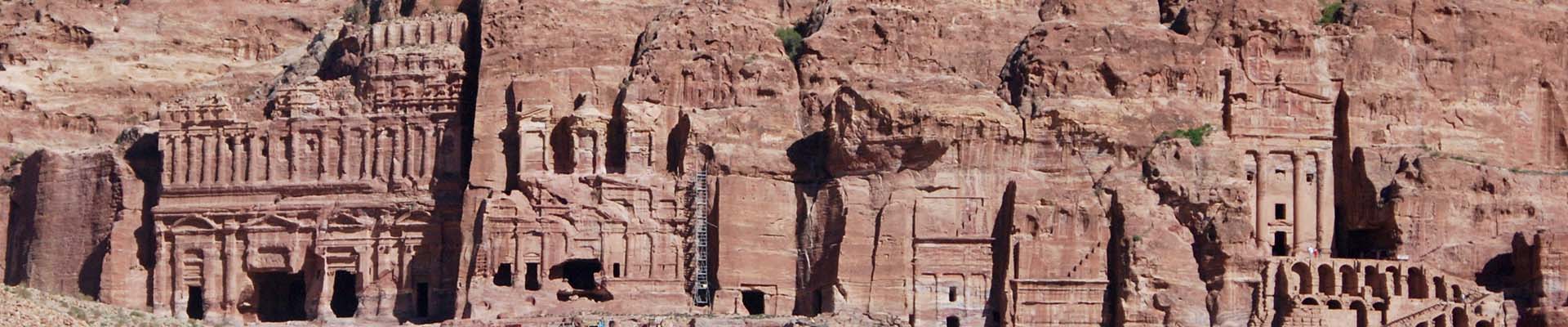
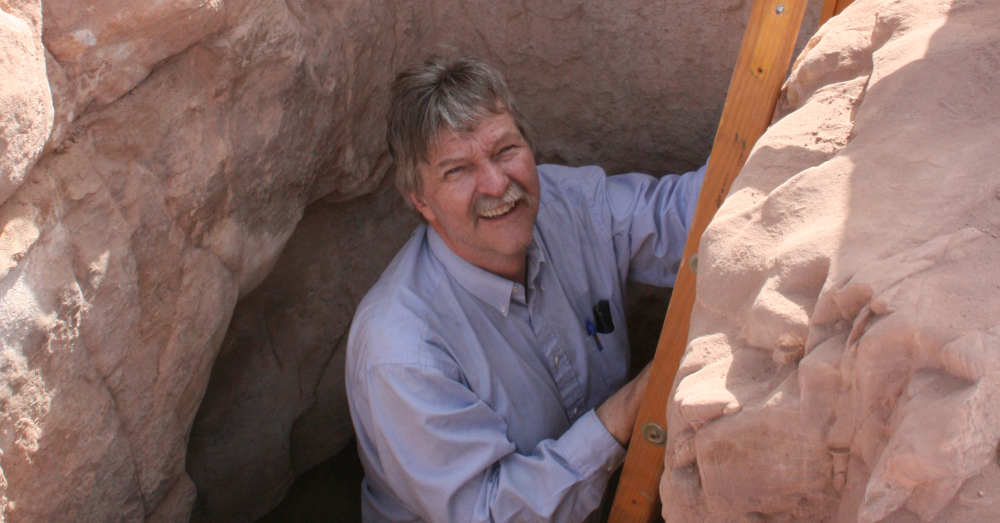
As stated in my beginning paragraph, I appreciated Norma’s friendship, encouragement, and sage counsel more than any type of financial support. She was an astute businesswoman and an accomplished scholar of the ancient world. We had numerous multi-day strategy sessions when I was a house guest in her home in Mission Viejo. She helped write development and outreach materials, and she continued to provide feedback and strategy through May of this year.

Norma Kershaw and Susan Ackerman

I will miss our frequent phone calls and the notes / letters that congratulated and encouraged. I knew that whenever a major announcement of a success went out electronically that I would receive a hand-written card or letter within 10-12 days. Even though only one of my children was able to meet Norma, she knew my children’s and parents’ names—she was truly interested to hear how they were doing.

I know that my experiences are shared by many. Norma was the same loyal friend to countless colleagues that she met during her involvement with AIA and ARCE chapters in New York and Orange County, or during her board service at the Bowers, AIA, and ASOR. She continued life-long relationships with students and colleagues from her teaching days. Her life was and will continue to be a blessing.

Janet, Barbara, and the entire Kershaw family: we offer our heartfelt condolences. In the (slightly adapted) words of Ruth (3:11), כי יודע כל–שער עמי כי אשת חיל היא “All the gate of my people know that she is a woman of worth.”[/vc_wp_text][mk_divider][/vc_column][vc_column border_color=”rgba(170,170,170,0.01)” width=”1/6″ css=”.vc_custom_1496684098866{margin-right: 5px !important;margin-bottom: 20px !important;border-right-width: 2px !important;border-bottom-width: 2px !important;padding-top: 30px !important;padding-right: 10px !important;padding-left: 10px !important;background-color: #ffffff !important;border-right-color: rgba(227,228,228,0.75) !important;border-bottom-color: rgba(227,228,228,0.75) !important;}”][vc_wp_posts title=”BROWSE THE NEWS ARCHIVE” number=”4″][/vc_column][vc_column border_color=”rgba(170,170,170,0.01)” width=”1/6″ css=”.vc_custom_1496684008271{margin-right: 10px !important;margin-bottom: 30px !important;border-right-width: 2px !important;border-bottom-width: 2px !important;padding-top: 30px !important;padding-right: 20px !important;padding-left: 20px !important;background-color: #ffffff !important;border-right-color: rgba(227,228,228,0.75) !important;border-bottom-color: rgba(227,228,228,0.75) !important;}”][vc_column_text] [/vc_column_text][/vc_column][/vc_row]

S. Thomas Parker Remembrances

IN MEMORIAM:
S. THOMAS PARKER‎ (1950 – 2021)

Tom emerging from a Petra North Ridge tomb during the 2012 season. (Photograph by Jennifer Ramsay)

ASOR mourns the passing of long-time member, S. Thomas Parker (1950-2021), who passed away at Duke Hospital in Durham, NC after a brief illness on September 12, at age 71. We share our condolences with Tom’s wife and daughter (Mary Mattocks and Grace Parker), and his siblings.

While we will miss Tom dearly, we remember and celebrate his life and many accomplishments. We have included two remembrances below: a detailed and complete remembrance by Megan Perry, and an additional remembrance by Jeffrey Blakely with additional comments from others.

John Oleson, Grace Parker, Tom, Jenna Morton, and Bert deVries after Tom’s Festscrhift session at the 2017 ASOR meeting. (Photograph by Megan Perry)

In Memoriam: S. Thomas Parker (1950 – 2021)

Megan Perry, Professor of Biological Anthropology, East Carolina University

Thomas (Tom) Parker, well-known archaeologist of Roman Jordan and longtime ASOR supporter, passed away suddenly on September 12, 2021. Tom spent most of his childhood in the Chicago area and graduated with his bachelor’s degree in history and religion from Trinity University in 1972. He went on to doctoral studies in history at the University of California, Los Angeles, completing his dissertation in 1979 on his survey of Roman and Byzantine fortifications along the limes Arabicus in Jordan. He joined the History faculty at North Carolina State University in 1980, where he remained throughout his academic career. Tom had almost 50 years of archaeological experience in Jordan, Israel, and Cyprus, having excavated at Tell el-Hesi, Ashkelon, Idalion, Tell Hesban, and the Petra Household Excavations before directing his own field projects. The Tell el-Hesi excavation was a seminal moment for Tom, who not only met many future fellow archaeologists but also began intensively studying ceramic typology that would serve as a major focus for the rest of his career.

Tom directed or co-directed three multi-season excavation projects in Jordan: the Limes Arabicus Project, which expanded his PhD survey to include excavation the legionary fortress of Leijjun, the Roman Aqaba Project, recovering evidence of Nabataean, Roman, and Byzantine Aila, and the Petra North Ridge Project, which I co-directed with Tom. He served as the ceramics specialist on all of his projects, but always with the goal of mentoring students or younger scholars in the field and in the laboratory. His kindness and patience fostered many budding scholars, and he always, always “knew what was best” for them. While many of his students eventually developed careers outside of history and archaeology, their experiences and his unwavering support and pride in their accomplishments profoundly shaped their lives. In turn, many of these former students contributed to a Festscrhift in his honor, published in 2017.

I first met Tom in 1993, when he visited Tell Nimrin to, among other things, meet me as that year’s Groot fellowship recipient. Tom helped established this ACOR fellowship in honor of his dear friend and Leijjun staff member, Jennifer Groot, who sadly died in 1987 at only 36 years of age. Creating this fellowship, which serves to support first-time excavators in Jordan, exemplifies not only Tom’s generosity but also his role as a mentor to young archaeologists. In the weeks since his death, many archaeologists in the region have commented on his support of beginning and even seasoned scholars. Suzanne Richard, director of the Khirbet Iskander project, recalls, “…as a field supervisor at el-Lejjun, I was so impressed with Tom’s expertise in the field, good leadership skills, calm dealings with staff and students, yet he was always vibrant, jolly, and personable.” Tim Harrison, former ASOR director “will always remember the interest he took in what I was doing … His interest and attention, coming from a senior colleague, was a real encouragement…” Monique Roddy, co-director of the Balu’a Regional Archaeological Project, remarks that “Tom was a wonderful mentoring archaeologist, even for those of us who were never his students!”

Tom faithfully supported ACOR and ASOR throughout his career. He served on ACOR’s board since 1987 and had been Second Vice President of the board from 2002 until his death. He also was an ASOR Trustee from 1989-1992 and served on ASOR’s Committee on Archaeological Policy (1986-1987) and on the Editorial Board of BASOR (1995-1998). Tom was someone always “a great person to have on an ASOR Committee,” according to Tom Levy. I first attended the ASOR Annual Meeting in 1995, and I don’t recall a year since then without Tom’s presence at the conference. Deb Foran, director of the Khirbet al-Mukhayyat Project, commented that this is where he will most be missed, for he “always sat in the front row, listened attentively, and asked insightful questions, no matter how senior or junior the speaker was.” This was often preceded by “his characteristic head turn and raise of the hand” once the Q&A period started, followed by “the gentle laughter because everyone knew he was going to have [a question] ready,” recalls his former student Tiffany Key.

Tom receiving the NC State’s Alumni Association Outstanding Faculty Research Award in 2017. (Photograph by NC State)

Tom will be remembered for his warmth, his conviviality, his support, his mentorship, his friendship, his scholarship, his collaborations, his laughter, and of course, his singing and guitar playing. You know wherever he is, he’s encouraging those around him to join in: “On a dark desert highway, cool wind in my hair…”

Tom is survived by his wife, Mary Mattocks, and their beloved daughter Grace Parker.

Tom entertaining his fellow Hesi crew. (Photograph by Jeff Blakely)

In Memoriam: S. Thomas Parker (1950 – 2021)

Jeffrey A. Blakely, University of Wisconsin-Madison

Tom and I were friends for just over 50 years, not close friends but good friends who shared a formative experience. In our field, half a century is simply a rounding error, but to friends it is much of our individual lifespans. The day we truly met is as clear to me as yesterday since it was the start of a life altering experience.

Tom and I each decided to participate in the archaeological field school at Tell el-Hesi in the summer of 1971. Soon after the end of the spring semester in early June 1971 we each made our way to the charter flight terminal at Kennedy Airport and boarded a Capital Airways flight for Le Bourget Airport in Paris. A bus tour of Paris and a night in a hotel saw us at Orly the next morning for a flight to Tel Aviv. It was dark when we arrived, boarding busses to our hotels in Jerusalem. After three days of orientation and extensive walking tours of the Holy City we got up and boarded the chartered busses for Hesi. We almost made it, but the drivers refused to cross a wadi so we had to shlep all of our luggage about a half a mile to Hesi’s new tent village. After finding our tents and throwing our luggage in we had to line up for work details since the camp was still a “work in progress.” Sue, the camp manager (and Larry Stager’s wife), “randomly” assigned jobs. Somehow if you were a large or muscular male you were put into one group, twelve guys. I happened to be standing next to Tom and we were paired as a work team. The new camp had not yet dug its outhouses. So we were taken down to six 1.5 x 1.5 meter probes outlined in string and told to keep straight sides and to go down 2.00 meters with picks and hoes. Yella, yella in case they were needed! So at precisely the same time Tom and I began our archaeological experience, digging a modern s****er. We had a number of hours in the hot sun to get to know each other, he from Trinity and me from Oberlin, he just having finished his Junior year and me my Freshman year. He was in history and looking at a potential career in archaeology. I was looking for a once in a lifetime experience. When we reached 2.00m one of the staff came over and noted that our balks were rather overcut … but don’t dare undercut them lest someone sitting on the throne experience a sad and memorable plunge. Once they were straight Larry Toombs hopped in and checked our balks. Below 50 cm of debris/wash we had gone through nothing but loess … no EB city here. Tom and I were friends from that point.

At Camp Hesi the chore details were daily experiences. Soon the botanist had me sorting things and others were pulled off for other recurring duties, but a core four remained unassigned, “Pope, Parker, Woodruff, and Zipris.” Somehow “randomly” Camp Manager Sue always assigned them to the crappiest jobs every day. It became a running joke around camp. In later years when Tom told the story he tended to exaggerate a bit, to wit: “the urinal is filthy, oh, we have no brushes so lick it clean”, or “the outhouses are mounding in the middle, so jump in and push the pile to the sides as you distribute the lime”, or, “I can’t think of a task so dig a big hole and then refill it.” Tom certainly got the short end here, but it was not quite as extreme as his story. Good story, though!

In 1971 Tom was assigned to a square in Field III, while I was in Field I. We both learned a lot and at the end of the season we headed back to college. By 1973 Tom was in Grad school in History and Archaeology at UCLA and I was a Junior at Oberlin. He had successfully applied to be an Area Supervisor while I had wanted to come back and dig again, but I received a field promotion so I, too, became an Area Supervisor. Tom remained in Field III digging the Iron Age fortification system and I remained in Field I digging Persian-Period pits and floors, both in 1973 and 1975. We learned how to dig and how to supervise. It served us well. Tom was also the co-writer and lead performer of the classic Hesi song “Big Mama Sift Some More” and the “permanent” host of the end of the dig parties. By 1977 he was doing his own research in Jordan. But, forever, he was a Hesi-ite at heart. He always came to the Hesi sessions at ASOR and he always would find time to sit and talk with me. His advice was always thoughtful and valued. He was a true friend of mine and of the project.

In 1996 my family and I were to spend a year in Jerusalem, and I came over early to set up school and other things for our son. In advance of this I contacted Tom. We had been friends for 25 years and in the summer of 1996 I was not doing my own research. So, I asked, can I pay my own way and come and simply dig and once again experience what drew me to the field? Tom was the only person I would ever want to work with in such a way … afterall, we were the only Hesi-ites running projects. Tom said, sure, but wouldn’t I rather supervise? No, no responsibilities, let me relive the joys of fieldwork again. Okay.

In late May 1996 after a day in the hot sun crossing the border from Elat to Aqaba I arrived at the project headquarters and I found the proper floor. I saw Tom down the hall and he motioned to me to come and talk in his room as soon as I dropped my bags in my room. I joined him and he had a grim face and he told me he had a big problem. One of his supervisors cancelled at the last minute and even though we had agreed I was to be a digger, could I supervise instead? Damn, I said sure I can do an Area, on a dig you do what is needed. But then he said, “No, you misunderstand” … it was one of the Field Supervisors and I would be overseeing six Areas; remember you just said you do what is needed. Somehow I think I fell into a well orchestrated plan, and a few years later when I actually asked if that was the case, all I got was a typical Tom Parker smile and a helpless shrug. I will always see that smile and shrug when I think of Tom.

Jeff Blakely

Comments in Remembrance of Tom Parker

“I will always remember the interest he took in what I was doing, even if it involved cultural periods much earlier than his own research focus… His interest and attention, coming from a senior colleague, was a real encouragement, and modelled a wonderful collegiality that continued over many years.” – Tim Harrison


“Even in 1980, as a field supervisor at el-Lejjun, I was so impressed with Tom’s expertise in the field, good leaderships skills, calm dealings with staff and students, yet he was always vibrant, jolly, and personable.  He became a leader in the field but was still the same wonderful Tom.” – Suzanne Richard


“From the first time we met and worked together (1976 at Tall Hisban), I could see in him a rising star in the field. From my point of view, his star has set much too soon. We will miss him.” – Doug Clark


“The study of the archaeology of Jordan and the Roman Near East will not be the same without Tom Parker, nor will ACOR. Those of us in the field have lost such a warm, gregarious, vivacious, and endlessly supportive colleague.” – Elise Friedland


“Tom was the first ‘real’ archeologist that I met in Jordan (35 years ago) – he was so unpretentious, humble, full of humor – in one word: a ‘Kumpel’! – and yet: a world class scholar.” – Friedbert Ninow


“Thomas Parker was to me Sir Thomas Parker, a world-class scholar, an enthusiastic and charismatic field archaeologist, a great teacher and mentor, and a loyal and most enjoyable companion, fellow camper and friend… His scholarly achievements as an archaeologist of the Roman Frontier in the Southern Levant will be re-visited over and over again by future generations for decades to come.” – Øystein LaBianca


“Working in Jordan will never be the same without them both [Tom and Bert deVries, who passed away in March of this year]. We will miss their presence at every ASOR Conference and at every group meal at ACOR. They were both such amazing mentors and willing to help scholars of all ages and backgrounds. God grant comfort to Tom’s family and may his legacy live on in every young scholar and colleague that we each can assist and encourage just like Tom did.” – Cynthia Finlayson


“From my first interaction with Tom in the late 1980’s I was thankful of his presence, his humanity and his love of archaeology.  Really, this is a major loss.” – Ian Kuijt


“Tom was the friendliest, most supportive colleague, and a great mentor. We will all miss him.” – Jonathan Ferguson


“Tom and I cross over more than 4 decades as active members of the Jordanian archaeological community, our mutual interest in Roman Frontier Studies, and our excavations at Petra.  A great personal loss for me and for everyone. The epitome of an ambassador for our profession.” – David Graf


“I’ll never forget when we gave him his start in Jordanian archaeology as a field supervisor at Hisban in 1974…. For the last fifty years he’s been at the forefront of Jordanian archaeology and has touched the lives for good of all of us.” – Larry Geraty


“This is indeed a tremendous loss for us all. My deepest sympathies to his family. I will miss him greatly.” – Lisa Maher


“Tom was the biggest advocate of junior archaeologists and always had a smile on his face. He will be missed.” – Leigh-Ann Bedal


“A tremendous loss to his family, his friends, his students, and to archaeology in Jordan. It’s difficult to imagine Jordan without the presence and contributions of Tom Parker.” – Gary Rollefson


“He was such a nice person and a good scholar… It is difficult to think on works and not having him somwehere in the back as advisor and friendly colleague.” – Robert Wenning


“Tom, a gentleman and collaborator in support of ACOR’s vision, supported the institution by serving on many of the board’s committees, and always calmly responded to its challenges. Tom also nurtured camaraderie with everyone he met. Always thoughtful and encouraging. Tom threw great parties. Tom’s scholarship was impeccable.” – Martha Joukowsky via her daughter Nina Köprülü


“The flood of recollections and condolences reflect the place Tom held in the ASOR/ACOR community.  STP was one of a kind, and we’ve suffered a great loss at many levels.” – Jerry & Pam Mattingly


“Everyone who knew Tom will miss him. He was a great scholar and a friend of many Jordanians. May his soul Rest In Peace.” – Moawiyah Ibrahim


“…he was a friend and colleague going back to 1975 when we first went to Jordan, and one of my daughters was a member on his digs…a strong supporter of ACOR both in his financial support and the time and effort he put into the fellowship program. We will miss him significantly and condolences to his family.” – Randy Old


“Tom was such a kind, funny, and supportive figure, and I have long admired his dedication to good and careful scholarship, his encouragement to younger scholars, and his commitment to Jordan.  I’m grateful that I had the chance to get to know him.” – Björn Anderson


“Tom was a unique individual, a good friend to just about everyone he met, and he leaves a big gap in all sorts of places, most of all in our hearts.” – John Oleson


“It is a big loss to ACOR and to the field in Jordan. I also feel lucky to have got to know him over the 4+ years I have been on the ACOR board and I am grateful for that.” – David Nichols


“Tom was not only a wonderful mentor and colleague but also a true friend, working in Jordan and attending ASOR meetings will not be the same. I count myself lucky to have had the opportunity to have learned from him and worked with him in the field. He will be truly missed by everyone who knew him and my heart goes out to his family.” – Jennifer Ramsay


“In our years at ACOR, Tom was very helpful to us in many ways. His work on the fellowship committee always led to ACOR having interesting and committed scholars. Tom was also a good colleague, ever generous with his expertise. We will miss him.” – Pierre and Patricia Bikai


“Tom Parker was a special person, and not just an amazing scholar, teacher, and leader. I will always be grateful for the ways that he supported me in my work and encouraged me a person. Neither ACOR nor ASOR would be the strong organizations that they are today without him..” – Andy Vaughn

Image Gallery

An ACOR Fellowship – the “S. Thomas Parker ACOR Memorial Fellowship” – is being established in Tom’s memory. The link below will direct you to his page. This fellowship will support students participating on archaeological projects and doing research in Jordan, continuing the tradition of mentorship so important to Tom.

https://acorjordan.org/contributions-in-honor-of-s-thomas-parker/