Fieldwork Report: Rubar Yavuz

Tell Tayinat 2024: A Season in the Shadow of an Earthquake

Rubar Yavuz, 2024 Eric and Carol Meyers Fieldwork Scholarship Recipient

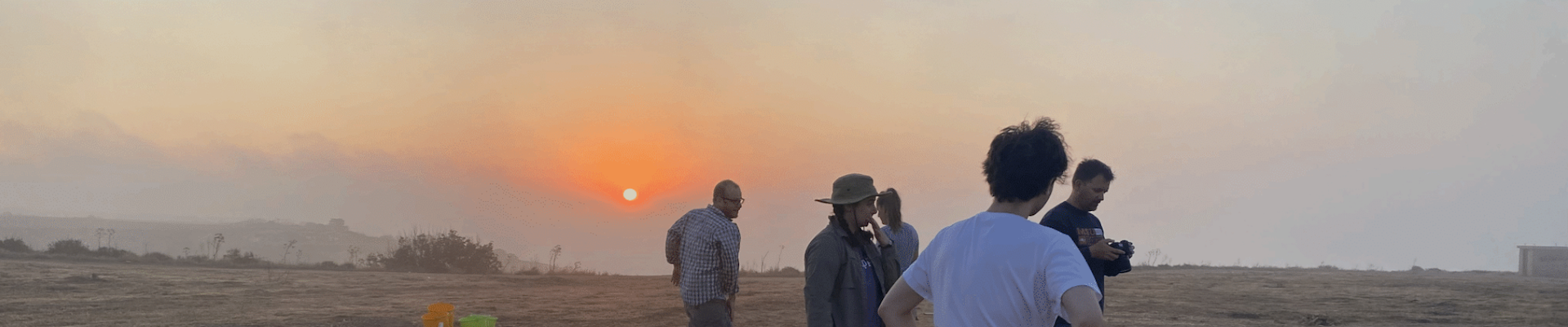
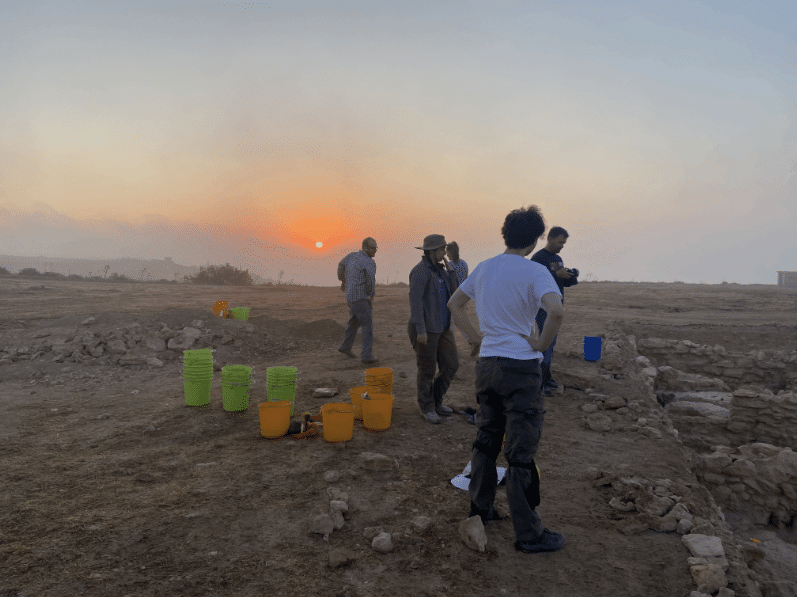
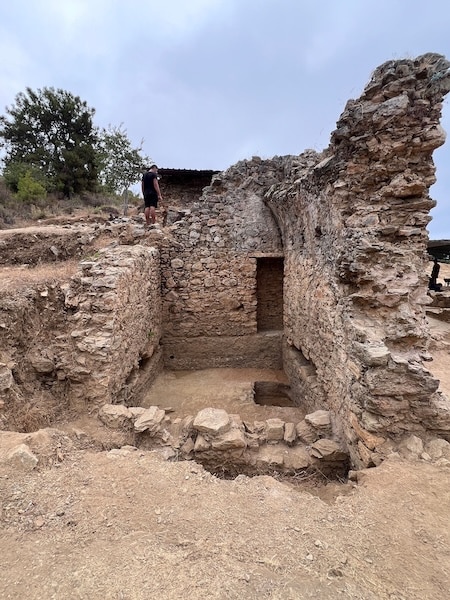
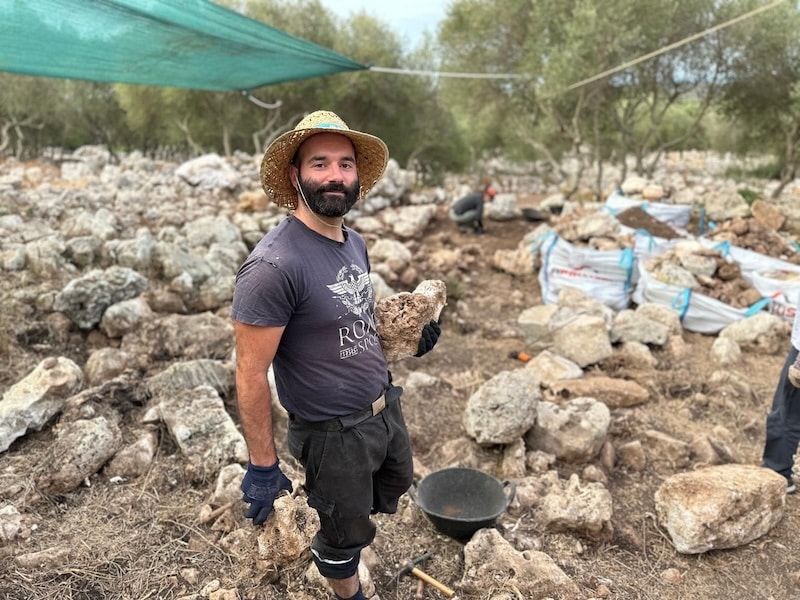
Tell Tayinat is a mound located 18 km west of Reyhanlı district in Hatay and 1.5 km east of the Orontes River. Southeastern Turkey experienced a major earthquake in 2023, which significantly impacted and damaged the Hatay province. Our excavation house was also severely damaged by the earthquake. This is why our excavation house consisted of containers and portables for the 2024 season.

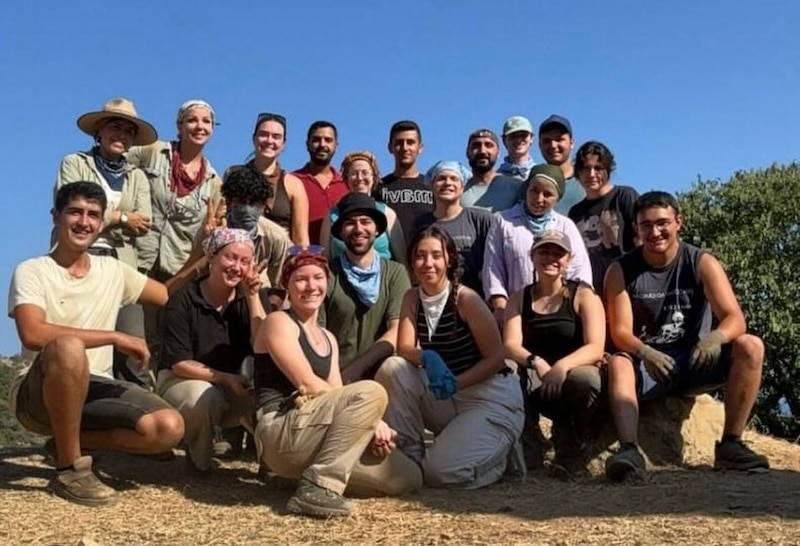
Archaeology is not just about digging the soil. It is a space where human relationships are strengthened, where people come together to work towards a common research goal, and where individuals from different cultures meet. Even though this earthquake has caused major losses for people we know from the region, I still feel that we were able to reconnect, help each other while having a productive season.

The Iron Age layers have always fascinated me and have been an important focus of my thesis research. I would like to thank our excavation director for allowing me to excavate and study the Iron Age layers.
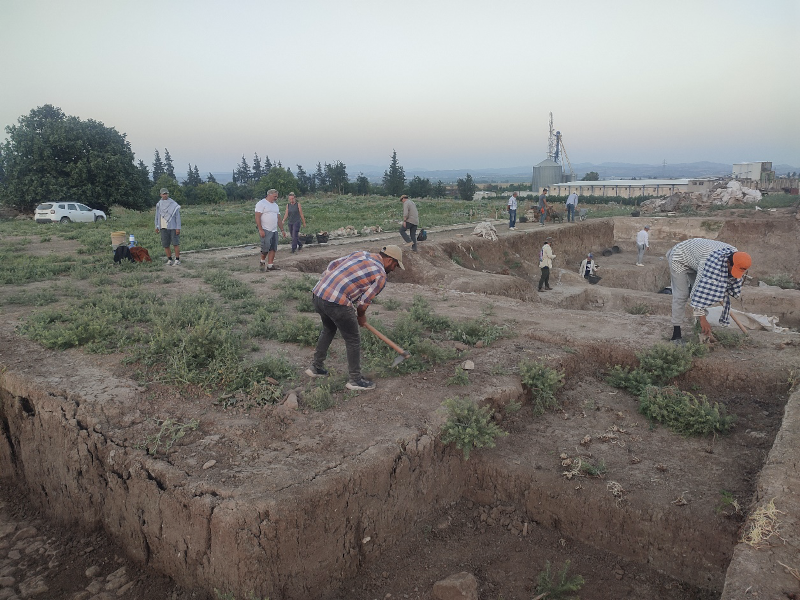
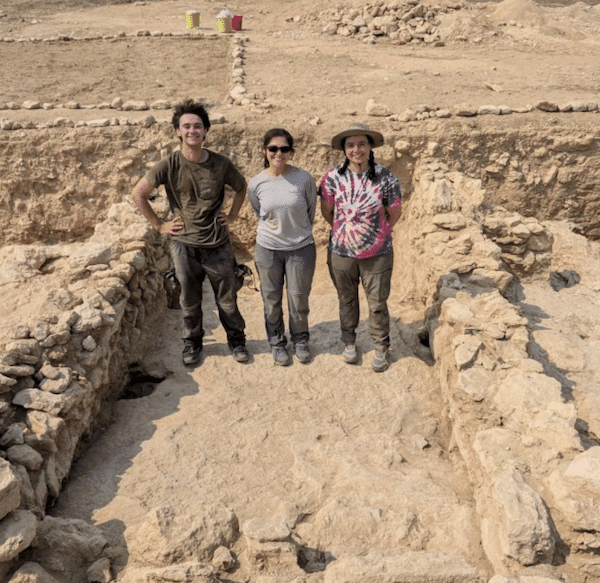
First day of excavations

The Tell Tayinat excavation site was identified in 1933 by a team from the Oriental Institute of the University of Chicago, led by Robert J. Braidwood. In 1999, the mound was re-examined by a team led by Timothy P. Harrison, and excavation began in 2004. During these excavations, Early Bronze Age and Iron Age layers were identified.

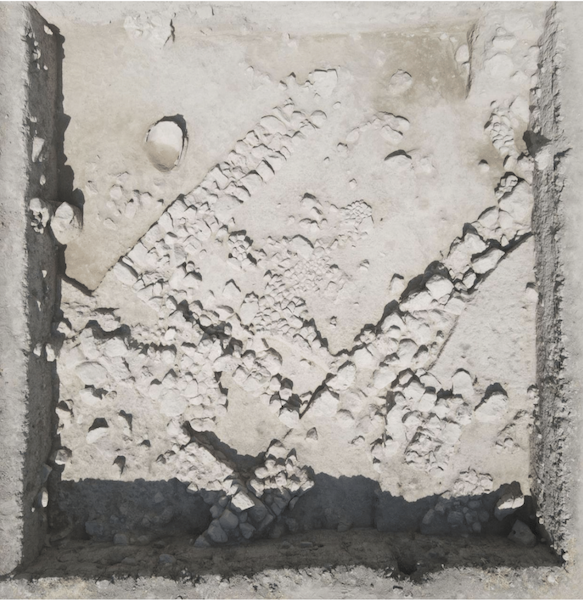
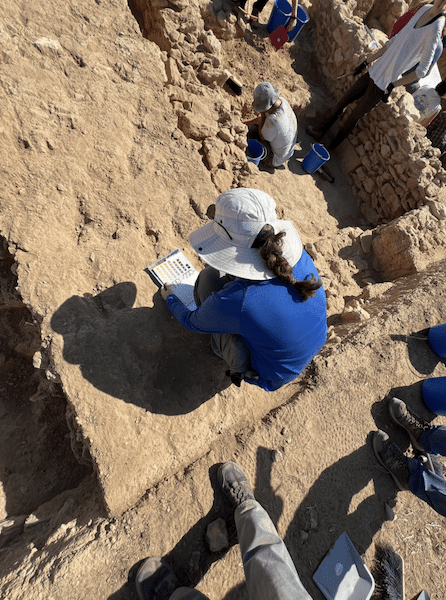
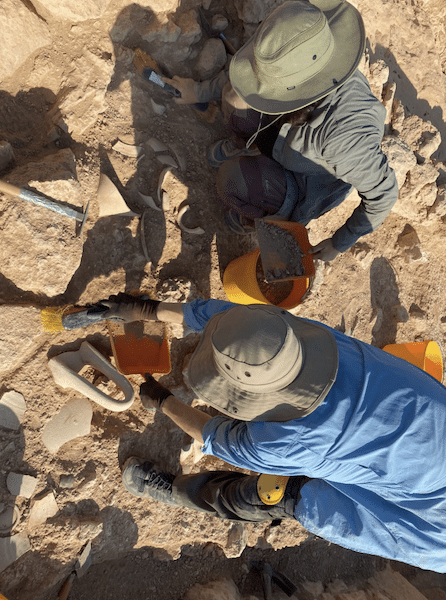
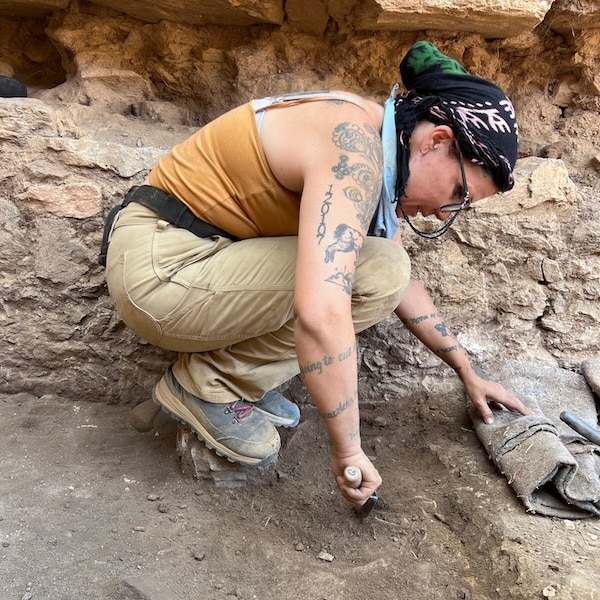
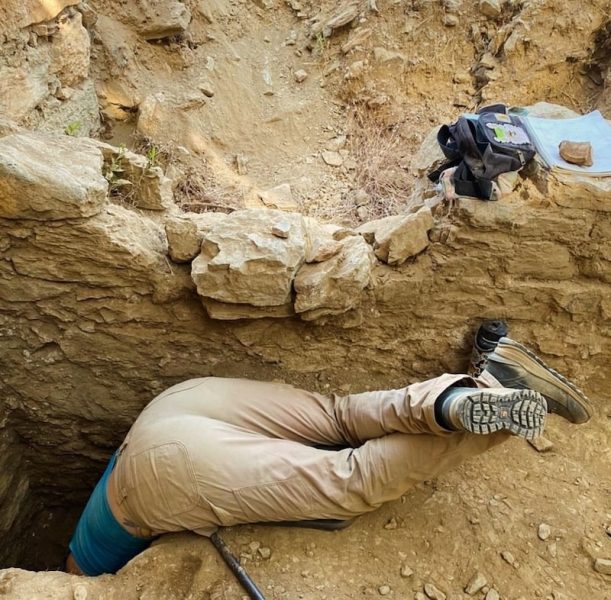
During the 2024 season, we woke up at 4:00 a.m., and the vehicle departed at 4:30. Of course, these times shifted based on the sunrise. I was excavating a square in the Iron Age layers, following a stone pavement that had already been exposed in the 2022 season. From the moment it was uncovered, this stone layer indicated the extent of its damage. The surface soil extended to a depth of approximately 0.35 m. I was aware that I was conducting an excavation of surface soil, yet I was still careful not to miss any artifacts. Over the course of about a month, ceramic and basalt fragments were uncovered.
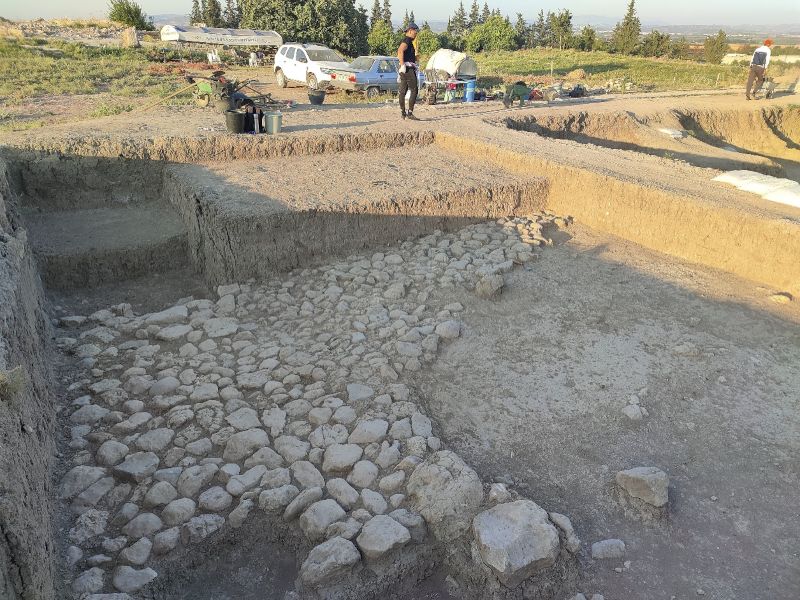
Iron Age Stone Pavement that has been disturbed

Our excavation used the locus-lot system, which meant we divided the area into square sections and excavated piece by piece. The main objective in the area I was working on was to follow a specific pavement. The most striking aspect for me was the artifacts located just above the floor. One seal, dated to the Assyrian period, was found directly on this stone pavement. After documenting the artifact, it was removed. Archaeology, in a sense, is about concealing all emotions, I managed to calm the excitement I felt inside though I was very happy that it was uncovered. After cleaning in the dig house it was confirmed to be an Assyrian seal with the image of a quadruped. There was some discussion of what animal it could be; many thought it was a lion, though some thought it was a type of composite animal. After this find, it was decided that expanding the excavation area further would be beneficial. While doing so, a bulla was found on this stone floor. This artifact was also dated to the Assyrian period.
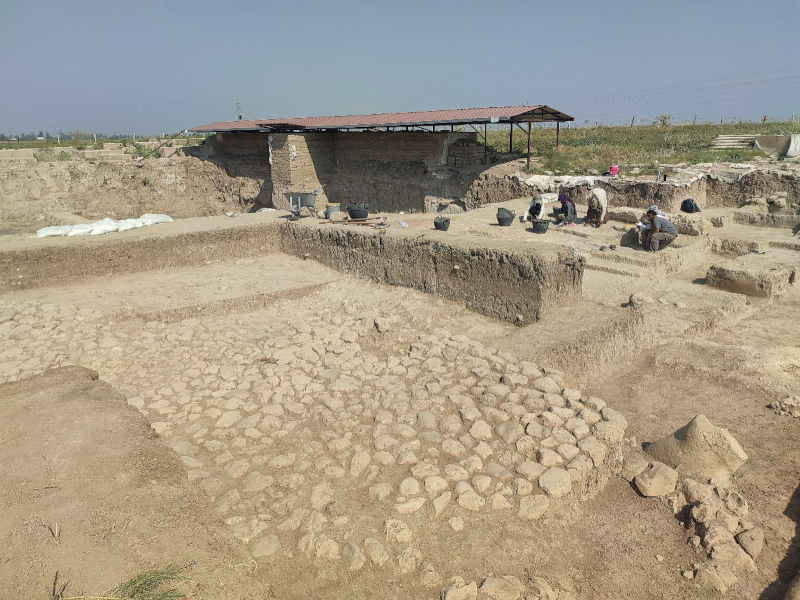
End of season photo of my square

So, this floor was either built during the Assyrian period, or it predates them, with the Assyrians having walked on it. Despite the damage in the area I was excavating, this layer belonged to the Assyrians.

A gravelly layer made of hard soil and nari was encountered in the north of the area. This layer indicated that we had transitioned to a second phase. This gravelly layer extended beneath the stone floor. After documenting two stones from the stone pavement, they were removed, and a bronze armor scale was found beneath the stone floor. The Neo-Assyrian artifacts and related late Iron Age ceramics suggest that this layer was part of the Neo-Assyrian settlement in Tayinat, which was incredibly exciting to excavated and reveal.
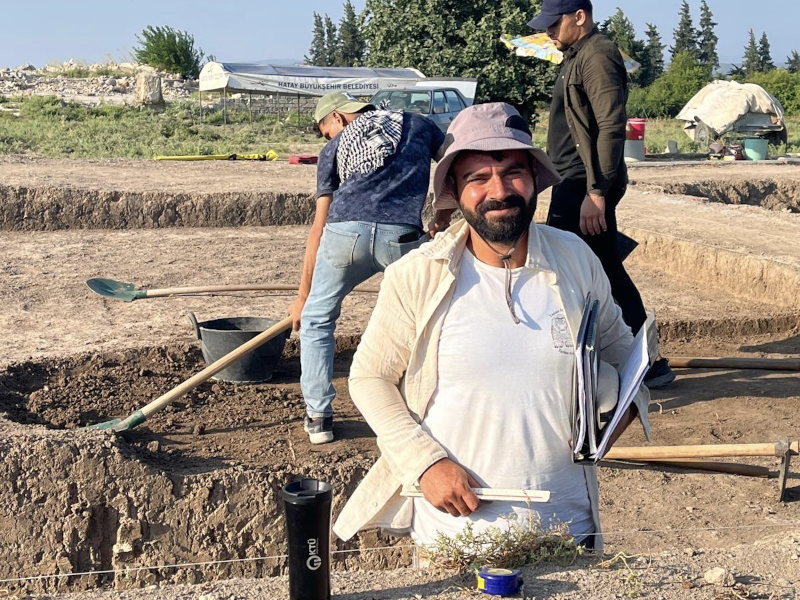
Me while doing a section drawing

n conclusion, this season’s excavations were both enjoyable and tiring, but that is archaeology! I would like to express my gratitude to ASOR and Eric and Carol Meyers for providing this fellowship. Thanks to this fellowship, I was able to attend Tell Tayinat excavations, expand my research on the Iron Age, and make new friends.

For more information about the Tayinat Archaeological Field School visit here.
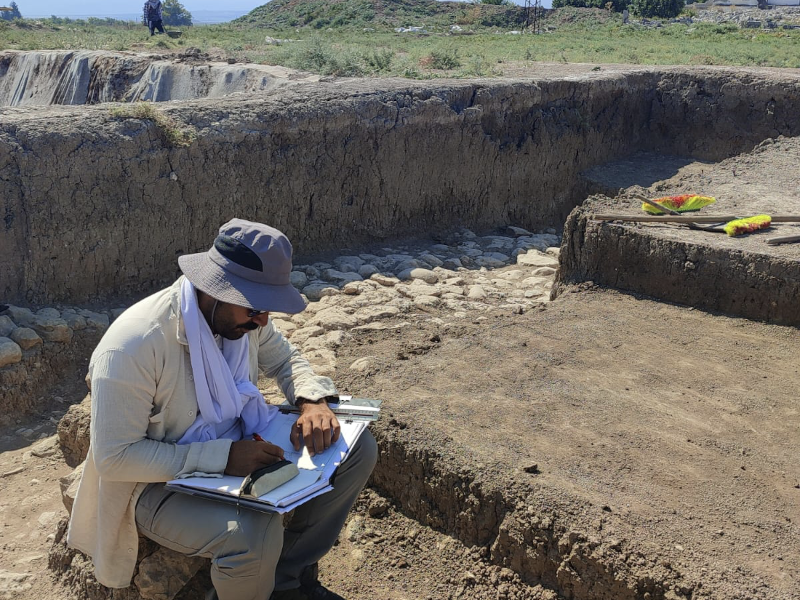
Working on a square plan

Rubar was born in 1995 in the province of Mersin. He completed his primary, secondary, and high school education in Mersin. In 2017, he enrolled in the Archaeology department at Van Yüzüncü Yıl University. He graduated with honors in 2021. He was accepted into a master’s program at the same university, where he is currently continuing his studies. He participated in 17 different excavations focused on the Iron Age. He has conducted research on burial traditions of the Iron Age and is writing his master’s thesis on these burial practices.

Want to help more students and early career archaeologists get into the field? Donate to the cause today by selecting “Fieldwork Scholarships” as your gift purpose!

Fieldwork Report: Brady Hill

Summer Days in Bazyan – My Involvement in the Kani Shaie Archaeological Project

Brady Hill, 2024 G. Ernest Wright Fieldwork Scholarship Recipient 

As a budding archaeologist researching ancient Mesopotamia, saying my opportunity to excavate in Iraqi Kurdistan was a ‘big deal’ is an understatement. Indeed, after being accepted for a Masters in Archaeology at Cambridge, I contacted my to-be supervisor Dr. Steve Renette to enquire about the university’s archaeology department and my potential dissertation topic. After discussing the discovery of Parthian period (2nd century BC – 2nd/3rd century AD) remains during his summer of 2023 excavations at Kani Shaie, Dr. Renette offered me the chance to work on this material during the project’s 2024 field work season. This was an offer I could not refuse given my strong interests in Parthian period Mesopotamia, so I quickly began applying for grants to enable my participation in the Kani Shaie Archaeological Project.

Fortunately, ASOR generously awarded me the G. Ernest Wright Fieldwork Scholarship, securing my opportunity to go to Iraqi Kurdistan. Their assistance supported my living expenses on the dig, allowing me to work at the site for the entirety of the 5-week season running from late August to late September.

After 4 months of eagerly waiting for the fieldwork season to begin, my daily fantasies of visiting and working in Iraqi Kurdistan were finally brought to fruition once we exited Erbil International Airport and were greeted by the blistering heat of the region’s morning sun. It felt as if my countless hours of studying and researching had led up to this moment, and as we began strolling to the project driver’s car and I heard the Kurdish people speaking their beautiful language, it hit me that I was finally in this fascinating land.

Given Kani Shaie is located in Sulaymaniyah Province in the eastern half of Iraqi Kurdistan, we had a 3-hour drive from Erbil to the village of Bazyan where our accommodation was located. Once we arrived, we had to prepare the house for the next 5 weeks and the rest of the project team joining us over the coming days. After completing our preliminary tasks, it was time to begin excavating.

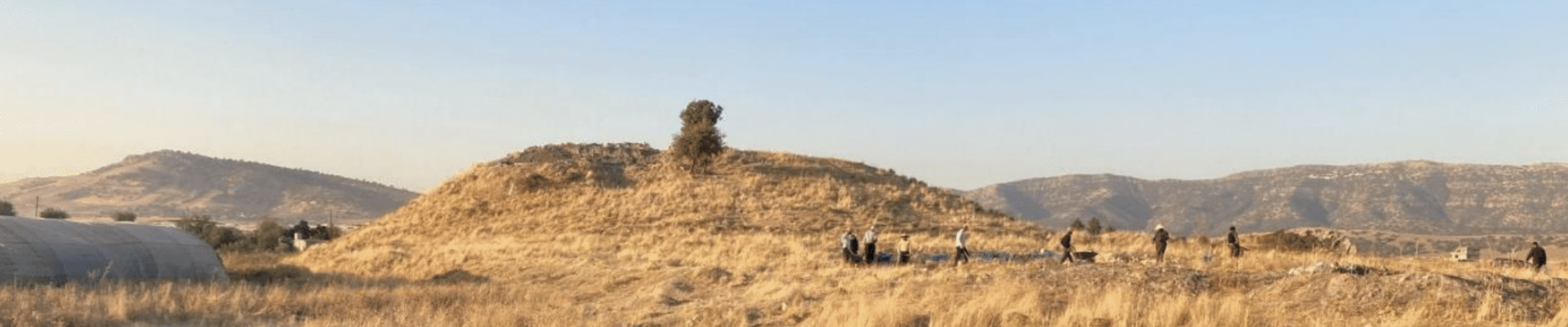
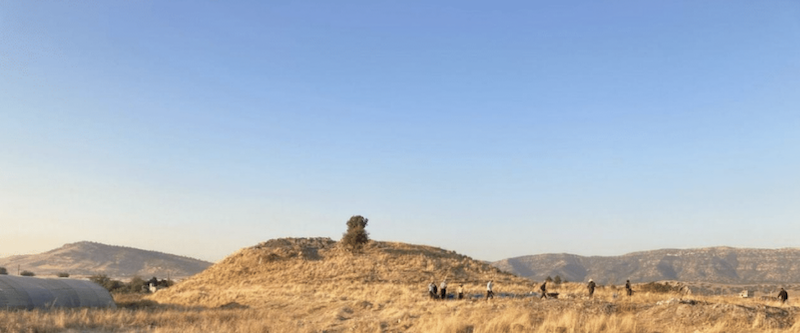
Looking south towards Kani Shaie. The Lower Town trench can be seen in the foreground in front of the main settlement mound.

Now, despite its small size, Kani Shaie is no ordinary one or two period site but possesses a settlement history ranging from the 6th millennium BC to the Ottoman period. Therefore, the project team worked in two excavation trenches this season, one on the main settlement mound which focused upon the site’s Chalcolithic and Early Bronze Age (4th and 3rd millennium BC) occupations, and one in the ‘Lower Town’ focused on Kani Shaie’s later occupations (the Hellenistic, Parthian, and Islamic periods). With my aforementioned interests, I worked in the Lower Town and was given the task of processing and recording the plethora of ceramic finds from the trench.

Our schedule was intense but manageable, digging from 5 am to half past noon 6 days a week, and doing post – excavation processing for the rest of the day. This consisted of pottery washing, drawing and photography, recording the daily small finds (glass bracelets and sherds, grinding stones, miscellaneous metal pieces, etc.), making sure the contexts sheets were up to date, and a whole plethora of other tasks carried out by the project’s team members. I was very fortunate to learn many new skills related to pottery recording and analysis thanks to the patience of Dr. Renette and our ceramics specialist Dr. Mike Lewis (University of Coimbra). This included my introduction to drawing pottery profiles by hand, a necessary task for archaeological publications. Though quite difficult for me at first, this work was eventually highly rewarding once I gained sufficiency in the skill, transforming me into a proper ‘pot nerd’ by the end of the season.

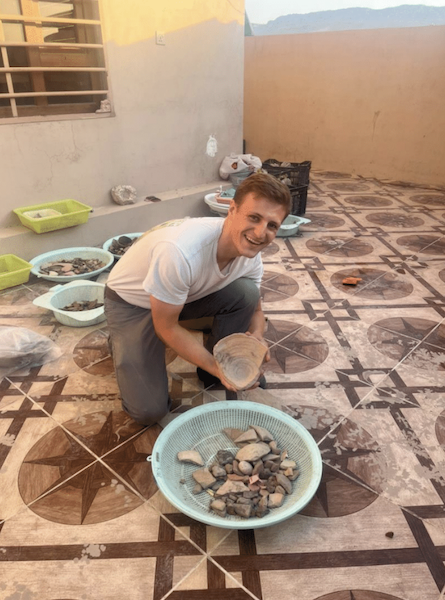
Posing with one of the washed pottery baskets. After being cleaned by the Kurdish students on the project team, it was my daily task to sort through these baskets of pottery, counting each sherd and keeping those that were diagnostic.

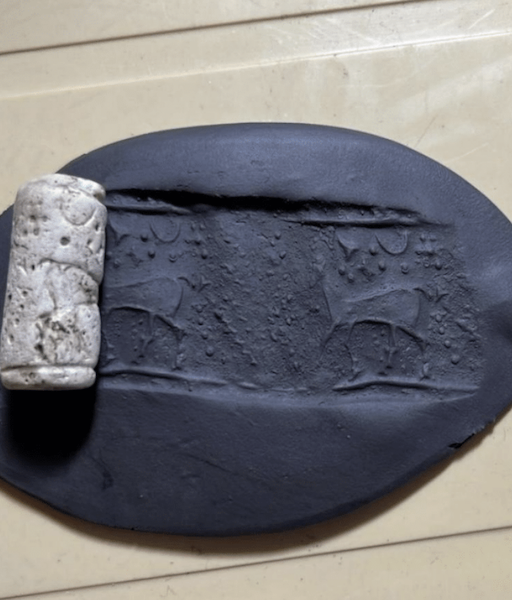
Nevertheless, some interest ing small finds emerged from these levels, including a Neo-Assyrian period (10th – 7th centuries BC) cylinder seal! Though its location within a Parthian and Islamic period context further attests to these occupation layers’ highly disturbed nature, the seal’s presence at Kani Shaie suggests a Neo-Assyrian period occupation remains to be discovered. Despite this amazing find, these initial weeks of our excavation were still rather disappointing due to the poor preservation of our trench’s archaeology, leading us to push onwards with the hope of finding more preserved Parthian period remains.

The Neo-Assyrian period cylinder seal found during our excavations in the Lower Town. It was spotted by Hawre, one of our dedicated Kurdish workmen helping us in the trench.

Eventually, we found something to write home about. Indeed, two linear parallel stone walls running southeast to northwest within the trench began to poke out of the ground as we dug downwards. With curiosity and great excitement, we meticulously exposed the walls, eventually revealing a substantial rectangular stone building. We had found a well-preserved pre-Islamic period level! However, there was something different about the pottery styles and shapes from the building’s associated layers, and after studying the finds in the afternoon it became apparent that this was likely not Parthian, but a Hellenistic period construction.

For those readers who are unaware, the Hellenistic period precedes the Parthian period and is characterized by the conquests of Alexander the Great between 333 BC and his death in 323 BC, and the subsequent establishment of the Seleucid Empire in Mesopotamia by one of the deceased king’s companions, Seleucus I Nicator. Along with the Parthian era, I have a great interest in Hellenistic period Mesopotamia and the Seleucid Empire, so you can imagine my excitement once we realized the building’s (rough) dating!

As typical with all field seasons, we had only a few days to excavate the structure before wrapping up the project for the year. Consequently, we were unable to fully excavate the building, but its discovery indicates a substantial Hellenistic period occupation remains to be uncovered in the coming seasons at Kani Shaie.

Drone photo of the Lower Town’s Hellenistic period stone building. Taken towards the end of the excavation season.

Outside of the excavation, we took team trips to archaeological sites and scenic areas of Sulaymaniyah Province during our days off, which for the most part was always a Friday. These included the Achaemenid rock cut tombs of Qizqapan and the beautiful Lake Dokan, the Paleolithic caves of Hazar Merd, and the Parthian period mountain fortress of Rabana-Merquly. Our visits served as an excellent way for the project team to relax and appreciate the lands in which we worked, finishing the afternoon with a wonderful Kurdish lunch consisting of a kebab, warm bread, and the fermented yogurt drink ‘dogh’. I particularly enjoyed the opportunities we had to immerse ourselves in Kurdish culture and their hospitality, learning new words through conversation and exploring their ways of living.

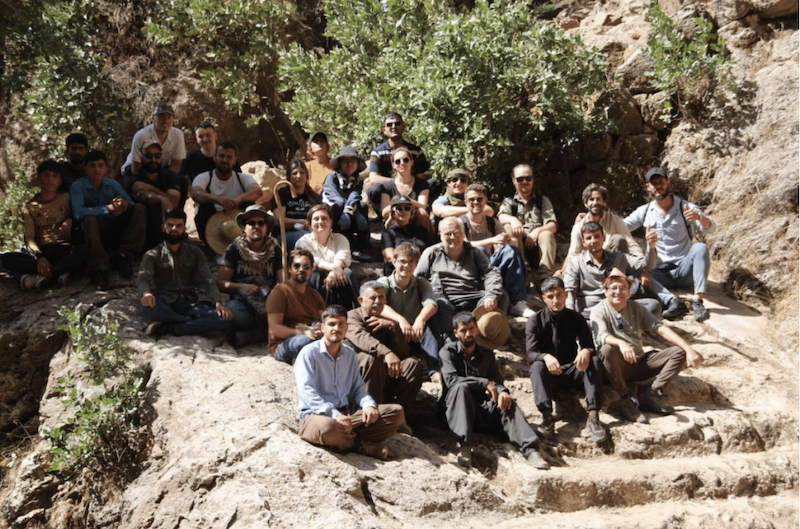
Group photo of the project team visiting the University of Heidelberg’s excavations at Rabana-Merquly. Led by Dr. Micheal Brown, the excavations focus upon the large-scale military fortifications at the site and its religious sanctuary.

Beyond this being a fantastic field work and learning experience for myself, the plethora of Hellenistic and Parthian period pottery recovered from Kani Shaie this year has provided me with a dissertation topic for my ongoing studies at Cambridge. These periods are historically under-researched within Mesopotamian studies, in particular their ceramic forms and styles. Therefore, with all of this material and the discovery of the stone building, the 2024 season presents an excellent case study for Hellenistic and Parthian period archaeology in Iraqi Kurdistan. My original intention when applying for the Ernest G. Wright fieldwork scholarship was to use the material found at Kani Shaie for my dissertation research, however archaeology is always full of surprises and therefore nothing is guaranteed once the trowel hits the dirt. So, I am beyond elated to research a dataset that I myself was involved in uncovering.

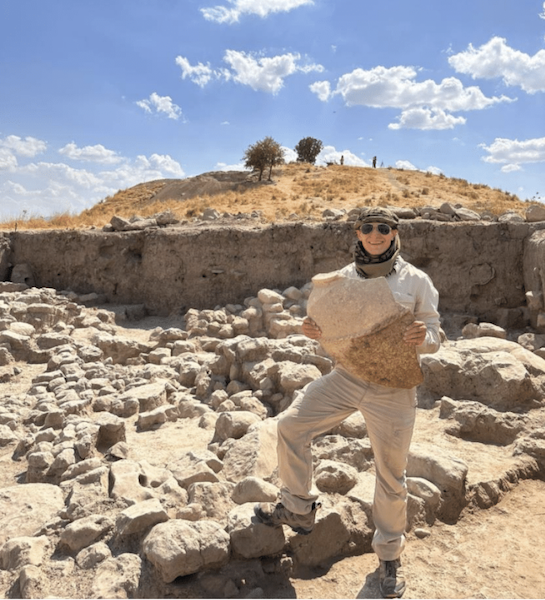
Posing with the largest pottery sherd I have yet to encounter on the last day of excavations. It came from a sunk storage jar in the northwest corner of the trench.

In conclusion, I would like to thank Dr. Steve Renette and the Kani Shaie Archaeological Project’s co-director André Tomé (University of Coimbra) for their generosity and leadership over the course of the 2024 excavation season, as well as Dr. Mike Lewis for his insights and encouragement as I stumbled through pottery recording, and Dr. Glynnis Maynard for her excellent supervision of the Lower Town trench. I would also like to thank the Slemani Antiquities and Heritage Directorate and the devoted service of our Kurdish supervisor Zana Abdullkarim Qadir. Lastly, I must emphasize again that it is with ASOR’s generosity that I was able to participate in this excavation without worrying about financial barriers, and it is through them that I and many other emerging archaeologists have been empowered to take those precious fieldwork opportunities offered to them.


Brady Hill is currently studying for a master’s degree in archaeology at the University of Cambridge. Born and raised in Dallas, Texas, his research interests have taken him ‘across the pond’ to study the archaeology of ancient Mesopotamia during both his undergraduate degree at Durham University and now in Cambridge. Alongside the region’s ancient past, he possesses a strong interest in modern Middle Eastern cultures, studying Arabic and Sorani Kurdish in his free time alongside his archaeology coursework.

Learn more about the Kani Shaie Archaeological Project through their instagram: @kani_shaie_arch_project 

Want to help more students and early career archaeologists get into the field? Donate to the cause today by selecting “Fieldwork Scholarships” as your gift purpose!
AASOR 78: Ethics in Archaeological Practice

Annual of ASOR 78: Ethics in Archaeological Practice

Ethics in Archaeological Practice

ed. by Sarah Kielt Costello and Sarah Lepinski

with articles from  Sarah Kielt Costello, Sarah Lepinski, Beth Alpert Nakhai, Laura E. Heath-Stout, Grace Erny, Dimitri Nakassis, Debby Sneed, Mason Shrader, Nadhira Hill, Maggie Beeler, Tuğba Tanyeri-Erdemir, Christopher Thornton, Annelies Van de Ven, Louise A. Hitchcock, and Benjamin W. Porter.

Ethics in Archaeological Practice explores urgent topics and issues in archaeology as currently practiced in the classroom, the field, the museum, and the public sphere. While addressed primarily to archaeologists working in western Asia, the eastern Mediterranean, and North Africa, the volume raises contemporary ethical questions around race, gender, disability, climate change, and cultural heritage that are pressing and relevant to archaeology students and professionals worldwide. The fifteen contributors offer fundamental case studies and practical guidance for best practices and models of high standards of ethical practice in professional conduct. Together, they offer new approaches to advocacy and the responsible stewardship of heritage sites, collections, and the environment. These compelling and generative discussions make the case for a 21st century archaeology that is proactive and engaged with discourses addressing equity, social justice, anti-colonialism, and climate change.

Annual of ASOR, Volume 78, Series Editor William Caraher, December 2024, 208 pages (7 b/w figs & 2 tbls.). ISBN 9780897571227, $74.95.

Special Offer for ASOR Members

ASOR members (with a mailing address in the USA) can purchase a copy of AASOR 78 at the discounted price of $30.00 (60% discount + $5.00 US shipping) while supplies last. Purchases are restricted to one volume per member. We are unable to offer this discount to members without a US mailing address due to international shipping costs, but you can purchase and ship a copy through the ISD link below. Please contact programs@asor.org with any questions. Click here to purchase your discounted copy in ASOR’s online store.

Available from ISD — Distributor of Scholarly Books
www.isdistribution.com

Fieldwork Report: Riley Stockton

Digging Dirt in Cyprus

Riley Stockton, 2024 P.E. MacAllister Fieldwork Scholarship Recipient

This summer, I had the opportunity to participate in the Vigla Archaeological Field School, a sub-project of the Pyla-Koutsopetria Archaeological Project, based in Pyla, Cyprus. These excavations help to gain information about the history and exchange between Cyprus and the Eastern Mediterranean. The site was a military fortification from the Hellenistic period. The main purpose of excavation in this site is to better understand the purpose of this fortification site and its structures during this period. From the previous findings, it has been determined as a fortification site, but more information is still to be found on the daily life and activities of Vigla, as well as the previous structures that existed there. This experience was my first archaeological dig which was a truly unforgettable experience that deepened my understanding of the field.

Before this dig, my mental image of archaeology was somewhat stereotypical, but now, pottery sherds and layers of soil are what immediately come to mind. I never imagined I’d find myself sweeping dirt off of dirt or using a Munsell book to precisely match shades of soil, yet these became daily routines.

Me using the Munsell book for the first time.

At the dig, along with two other students, I excavated a trench from start to finish, which gave me a comprehensive understanding of the archaeological process. This included the paperwork, the specific excavation techniques applied at different stages, and the importance of understanding the context of artifacts and their surrounding environment.

One of the techniques I learned was photogrammetry, a process that involves taking a series of photographs to create a detailed 3D model of the area. In the trench where I worked, we uncovered two distinct pottery deposits on separate floor surfaces. After carefully excavating around the artifacts, my peers and I meticulously cleared the surrounding area to ensure the best possible images could be captured. One of our project directors, Dr. Brandon Olson, then photographed the trench from every angle to build the 3D model.

My two trench mates, Mason Ross and Laila Maidenberg, cleaning up around the pottery deposit.

Photogrammetry presented its own set of challenges, particularly with lighting. We could only take the necessary photos early in the morning when we arrived at 5:30 a.m. or when the sun was directly overhead. On one occasion, we had to rush to complete the process before the British military began their exercises at 7:30 a.m., as the site is located within a British military base. With the clock ticking, we managed to finish just in time, pack up, and evacuate the area.

Another time, as we prepared for photogrammetry, we noticed a thick wall of fog rolling in. We scrambled to clean the trench and take the necessary photos before the fog obscured the area. It was a race against nature so we could keep on digging.

Very foggy morning, Dr. Brandon Olson getting the pictures done for the photogrammetry just in time.

All in all, we managed to capture the necessary photographs despite the challenges we faced along the way. My trench mates and I, all first-time diggers, began and completed our trench together in just one month. The early mornings and relentless heat were tough, but I’m incredibly proud of the work we accomplished and deeply grateful for the unforgettable experience. A special thanks to ASOR and its donors for providing me with the opportunity to participate in this dig—I couldn’t have done it without their support.

For more information about the Vigla Archaeological Field School visit here.

Me, Mason Ross, and Laila Maidenberg on the last day in our completed trench!

Riley Stockton is a junior at Reed College where she majors in Greek, Latin, and Ancient Mediterranean studies with a concentration in history and archaeology.

Read about other student experiences on the Vigla Archaeological Project here.

Want to help more students and early career archaeologists get into the field? Donate to the cause today by selecting “Fieldwork Scholarships” as your gift purpose!
March Fellowship Madness 2025 — In Our 125th Year!

[vc_row fullwidth=”true” attached=”true” css=”.vc_custom_1496247803139{padding-top: 0px !important;padding-right: 0px !important;padding-bottom: 0px !important;padding-left: 0px !important;}”][vc_column][vc_single_image image=”94401″ img_size=”full” alignment=”center”][/vc_column][/vc_row][vc_row fullwidth=”true” css=”.vc_custom_1496682730308{padding-top: 10px !important;padding-right: 0px !important;padding-bottom: 0px !important;padding-left: 0px !important;}”][vc_column width=”1/12″ css=”.vc_custom_1496683820796{margin-right: 10px !important;}” offset=”vc_hidden-md vc_hidden-sm vc_hidden-xs”][vc_column_text]

 SHARE

[/vc_column_text][mk_image src=”http://www.asortest.org/wp-content/uploads/2017/01/social-fb-icon4.jpg” image_width=”42″ image_height=”42″ hover=”false” custom_url=”https://www.facebook.com/ASOResearch/” margin_bottom=”0″][mk_image src=”http://www.asortest.org/wp-content/uploads/2017/01/social-tw-icon4.jpg” image_width=”42″ image_height=”42″ hover=”false” custom_url=”https://twitter.com/ASOResearch?ref_src=twsrc%5Egoogle%7Ctwcamp%5Eserp%7Ctwgr%5Eauthor” margin_bottom=”0″][mk_image src=”http://www.asortest.org/wp-content/uploads/2017/01/social-in-icon4.jpg” image_width=”42″ image_height=”42″ hover=”false” custom_url=”https://www.linkedin.com/company/american-schools-of-oriental-research” margin_bottom=”0″][mk_image src=”http://www.asortest.org/wp-content/uploads/2017/01/social-ml-icon_7.jpg” image_width=”42″ image_height=”42″ hover=”false” custom_url=”mailto:info@asor.org” margin_bottom=”0″][mk_image src=”http://www.asortest.org/wp-content/uploads/2017/01/blog-icon3.jpg” image_width=”42″ image_height=”42″ hover=”false” custom_url=”http://asor.org/blog” margin_bottom=”0″][/vc_column][vc_column border_color=”rgba(255,255,255,0.01)” width=”1/6″ css=”.vc_custom_1496683923840{margin-right: 20px !important;border-left-width: 2px !important;padding-right: 20px !important;padding-left: 20px !important;border-left-color: #99422f !important;}”][mk_divider divider_color=”rgba(255,255,255,0.01)” thickness=”1″ margin_top=”3″ margin_bottom=”3″][vc_widget_sidebar sidebar_id=”ca-sidebar-39801″][/vc_column][vc_column border_color=”rgba(170,170,170,0.01)” width=”1/2″ css=”.vc_custom_1487276122024{margin-right: 10px !important;margin-bottom: 30px !important;border-right-width: 2px !important;border-bottom-width: 2px !important;padding-top: 30px !important;padding-right: 30px !important;padding-left: 20px !important;background-color: #ffffff !important;border-right-color: rgba(227,228,228,0.75) !important;border-bottom-color: rgba(227,228,228,0.75) !important;}”][vc_column_text responsive_align=”left”]

March Fellowship Madness 2025 — In Our 125th Year!

[/vc_column_text][mk_divider margin_top=”10″][vc_row_inner][vc_column_inner css=”.vc_custom_1706024108985{padding-right: 10px !important;}”][vc_column_text]

Thank you to everyone who was part of ASOR’s 2025 March Fellowship Madness. Your generous donations raised $4,725 this year and ASOR can now fund 2 additional fieldwork scholarships.

Each year, ASOR sponsors many Fieldwork Scholarships for students and volunteers to take part in ASOR-affiliated projects. With your help, we aim to raise $6,000 to send three more students into the field during Summer 2025. Right now, ASOR is able to award 47 fieldwork scholarships in 2025 and with your help, we’ll make it to 50!

We’re looking forward to celebrating our 125th anniversary with you and planning the future (hopefully another 125 years at least!) to provide a bright future for the next generations of archaeologists.

[/vc_column_text][/vc_column_inner][/vc_row_inner][mk_gallery images=”101677,101477,101413,101344,101284,101069″ column=”6″ enable_title=”false” item_id=”1740691625-67c0d8a942a8f”][vc_row_inner][vc_column_inner][vc_column_text]

ASOR provides these scholarships with your partnership. You are enabling ASOR to establish new scholarships and grants through endowed funds, but your annual support (i.e., gifts this year) will allow ASOR to send more eager students and early career scholars into the field. Please support archaeology’s next generation by making a gift today and selecting “Fieldwork Scholarships” as the designation for your gift. You may also make a designated gift by choosing any category from the drop-down menu on the donations module.

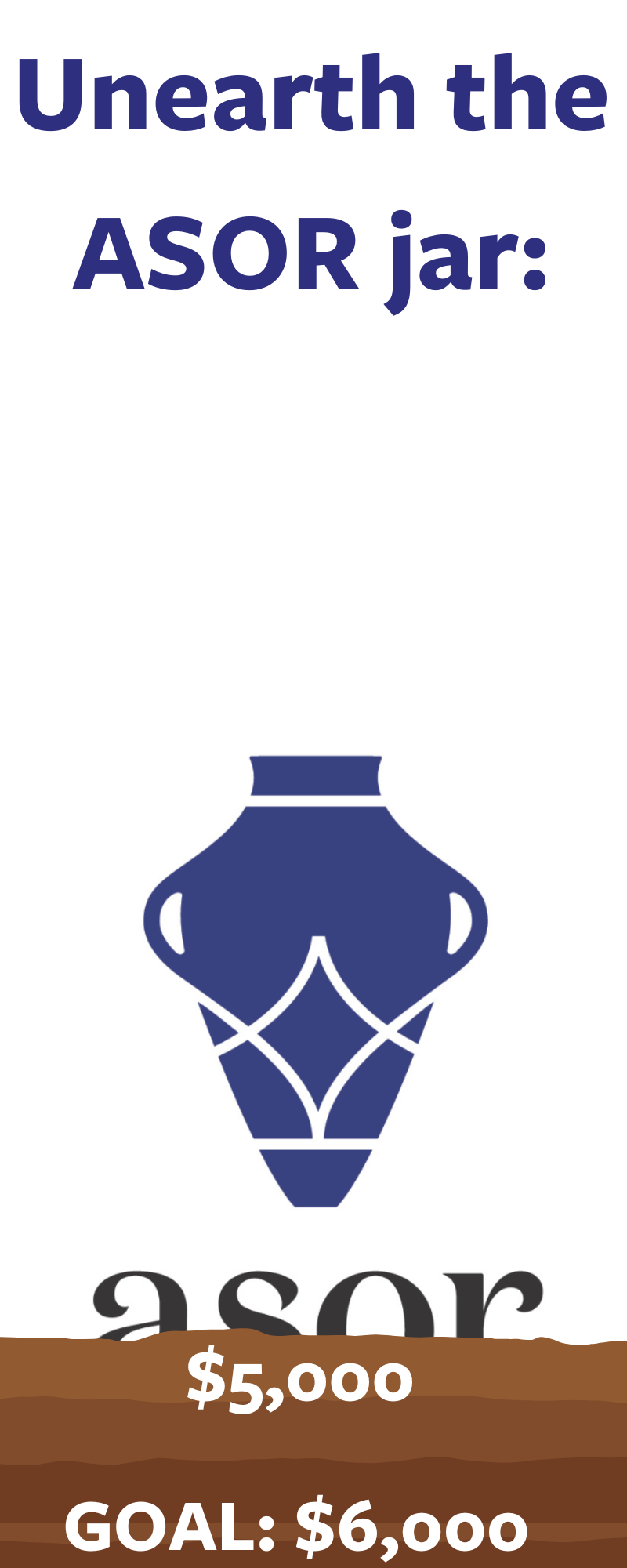
[/vc_column_text][/vc_column_inner][/vc_row_inner][vc_row_inner][vc_column_inner css=”.vc_custom_1706024108985{padding-right: 10px !important;}”][vc_column_text]The past 125 years owe so much to our generous members; even a small donation of just $10 adds up to make a big difference. 100% of your gift will go toward Fieldwork Scholarships for students. Keep track of our March Fellowship Madness 2025 donation progress here — with each $1,000 donated, we’ll excavate more of the ASOR jar![/vc_column_text][vc_wp_text][/vc_wp_text][/vc_column_inner][/vc_row_inner][/vc_column][vc_column border_color=”rgba(170,170,170,0.01)” width=”1/6″ css=”.vc_custom_1496684098866{margin-right: 5px !important;margin-bottom: 20px !important;border-right-width: 2px !important;border-bottom-width: 2px !important;padding-top: 30px !important;padding-right: 10px !important;padding-left: 10px !important;background-color: #ffffff !important;border-right-color: rgba(227,228,228,0.75) !important;border-bottom-color: rgba(227,228,228,0.75) !important;}”][vc_wp_posts title=”BROWSE THE NEWS ARCHIVE” number=”4″][vc_widget_sidebar sidebar_id=”ca-sidebar-99363″][/vc_column][/vc_row]

Fieldwork Report: Sarah “Gigi” Konecki-Brazeal

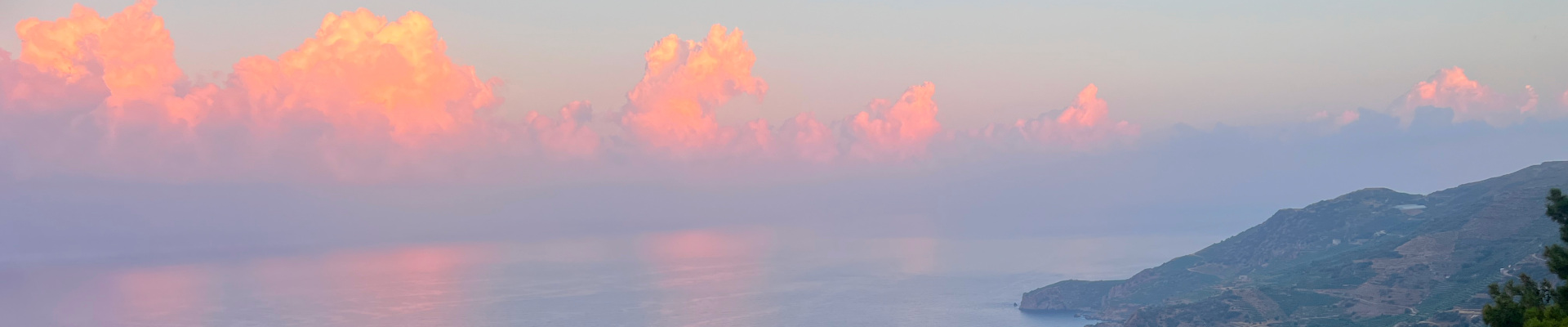
Clouds and the landscapes of Antiochia ad Cragum in Turkey

Archaeology: A Deeply Human Endeavor

Sarah “Gigi” Konecki-Brazeal, 2024 P.E. MacAllister Fieldwork Scholarship Recipient 

First surveyed in the 60s and left untouched for decades, Antiochia ad Cragum is a first-century Roman city founded by Antiochus IV of Commagene around 44 CE. Perched on the “cragus” roughly 300M above the Mediterranean, the city has yielded many great finds over the past 20 years, including two bathing complexes and a plethora of questions about the evolution of this city from a bustling polis to a site of extensive industry. At some point in this city’s lifespan, many of the buildings, including both bath complexes, were converted to industry. Evidence of wine and oil production, as well as ceramic, glass, and metal production, have been found throughout the site.

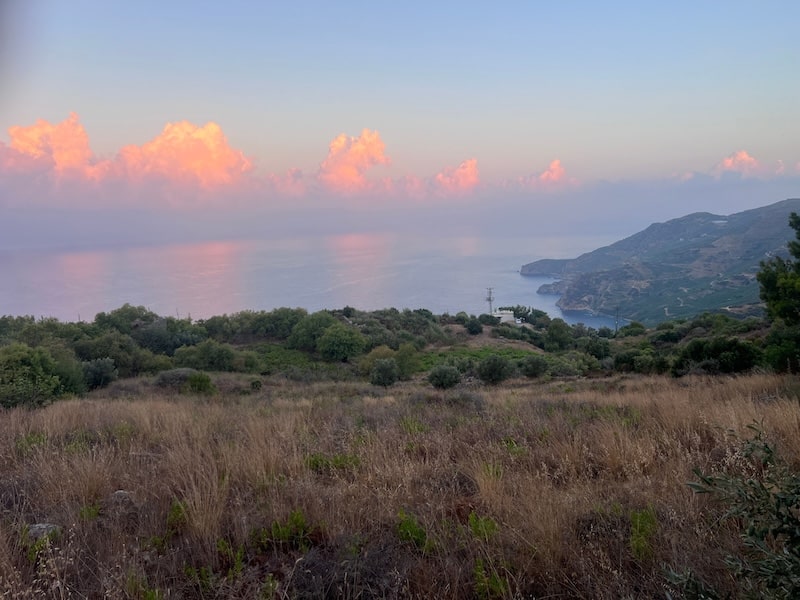
A view of the Mediterranean from Antiochia ad Cragum.

Excavations began on the Small Bath in 2018 and will continue for the foreseeable future. This type of bath is known as a hall bath and might be a bit unfamiliar to those already versed in Roman bathing complexes. The architecture of the bath situates a great hall with mosaiced floors through the center of the building with tepidaria (cold rooms) and caldaria (hot rooms) on either side. The hall leads to a large wading pool on the west end of the complex, and the building itself has one main entrance on the east end. To date, three frigidaria and one caldarium have been excavated. In addition, the cistern for the bathing complex was uncovered entirely during the 2023 and 2024 seasons. It is suspected that two more caldaria exist along the southern side of the complex, and there is the hope of locating the praefurnium there as well.

Me, perched on a rock digging in an area precariously peppered with finds. A great way to avoid artifact breakage!

In the summer of 2022, I came to Antiochia ad Cragum as an undergrad, looking to fulfill my field school requirement and find out if I had what it took to work in the field of archaeology. I was sent to the small bath to work under the direction of Dr. Leticia Rodriguez, and I had no idea what to expect. It was A LOT of digging, and A LOT of giant rocks, and A LOT of wheelbarrows. In the second week Dr. Rodriguez decided to open up Frigidarium 4 on the westside of the Small Bath and asked for volunteers. Frigidarium 4 was almost entirely full of fill that had washed down the mountainside and into the now roofless room. It looked like an impossible task, and nobody really wanted to start at the beginning again, especially when the trenches that had been opened the previous week were starting to look like something. So naturally, I volunteered. Again, it was nothing but dirt and large rocks which had fallen from the wall or ceiling. It was hot, it was dirty, my legs and arms felt like noodles at the end of the day…and I couldn’t wait to go back.

Frigidarium 4 at the end of the 2024 season

What should have taken a couple of weeks to clear and document has now taken us three seasons to uncover, with no sign of a floor at the end of the 2024 season. Since removing surface fill, Frigidarium 4 has yielded many spectacular finds owing to its conversion to a trash pit sometime (we think) in the fifth century. They say you can learn much about a man by going through his trash, and I agree. Everything these people were doing, using, making, participating in, and ultimately discarding have been found in my trench. We have learned so much about what these people were doing and what they found valuable by examining the findings from Frigidarium 4. Detritus from industry, personal items, evidence of what people ate, and the animals they raised – not only for food but for textile production – have all been found in Frigidarium 4, which still has more to tell us.

Digging a sondage in a last-ditch effort to locate the floor before covering Frigidarium 4 up for the off season.

The connection one feels to the people of the past when finding and carefully preserving their once-lost history isn’t easy to put into words, but it keeps me coming back year after year. Every season, we get a little closer to uncovering these peoples’ stories and piecing together the lives of those who were, up until now, forgotten. There is a beauty in unearthing something that once sat in the hands of a person over 1500 years ago, a strange intimacy with someone whose name you can never know and whose face you will never see. Additionally, there is an overwhelming sense of civic duty that comes with uncovering these items and sending them home to a conservation lab or museum where they will find new life. These things belonged to people once, and those people have been forgotten. But with our work in Antiochia ad Cragum, they live again, and the Turkish people reclaim a piece of their heritage that they may not have realized they’d lost.

Ultimately, archaeology is a profoundly human endeavor that contributes to a sense of connection: connection to our past and to each other. A connection that bridges borders, cultures, and time. A connection that I hope, brings us all closer to one another on the most fundamental of levels.

The humans of the Small Bath 2024.

Sarah “Gigi” Konecki-Brazeal is a graduate student at Arizona State University studying Art History, Archaeology, and Studio Art. She is a practicing artist who merges her artistic work with her academic research. In addition to being a trench supervisor and field assistant and Antiochia ad Cragum, Gigi also works as an illustrator and lithic analyst for the Bandafassi Regional Archeological Project. She plans to write her dissertation on ancient tattooing practices and go on to teach at the university level while continuing her fieldwork in Turkey and beyond.

Learn more about the Antiochia ad Cragum Archaeological Research Project here. 

Want to help more students and early career archaeologists get into the field? Donate to the cause today by selecting “Fieldwork Scholarships” as your gift purpose!
ECS Research in Action: Rennan Lemos

ECS_Rennan_Lemos-1920x400

Early Career Scholars Research in Action: Rennan Lemos

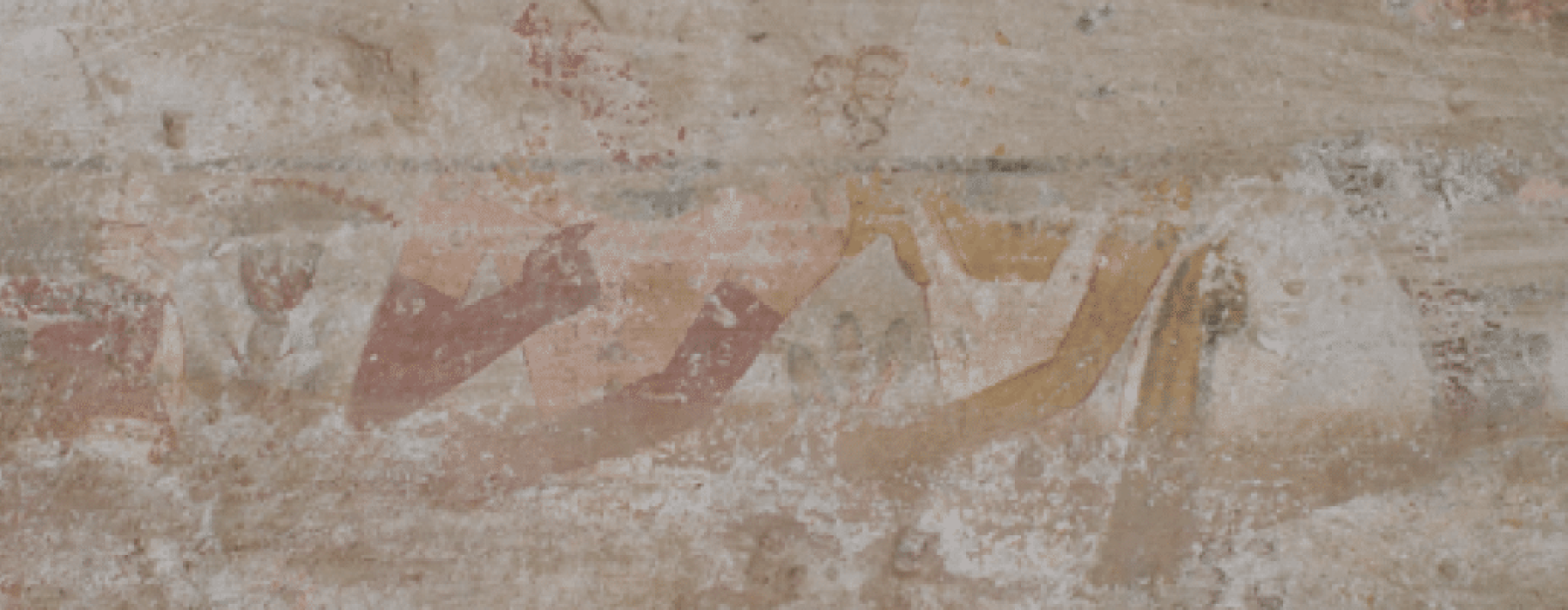
Archaeology Under Fire: The History of Sudan Between Water and War

Join ASOR’s Early Career Scholars on April 4, 2025 at 12:00pm ET via Zoom for a virtual Research in Action talk from Dr. Rennan Lemos about cultural heritage in Sudan.

Abstract: The history of archaeology in northern Sudan is, to a large extent, a history of salvage excavations. Successive dam projects in Lower Nubia have posed a tremendous threat to the region’s archaeology, resulting in significant losses but also producing one of the most comprehensive records of archaeological heritage in a single area. Drawing on archival materials and recent fieldwork, this talk will explore how Sudan’s archaeological heritage has been endangered—first by the flooding of Lower Nubia and now by war—and how a history of major threats has shaped the region’s heritage.

Presenter: Rennan Lemos teaches Egyptian and Sudanese archaeology at the University of Cambridge. He co-directs the Djehutyhotep Project and is assistant director of the Sanam Temple Project in Sudan. In 2024, he was a recipient of the Annual Prize “à la mémoire de Jean Leclant”, awarded by the Michela Schiff Giorgini Foundation.

The event, a part of our “Research in Action” series, is FREE for the ASOR community, but registration is required.

Harris Grant Report: Menorca Archaeological Project

2024 Harris Grant Report: Menorca Archaeological Project (MAP), Spain

Alexander Smith, SUNY-Brockport

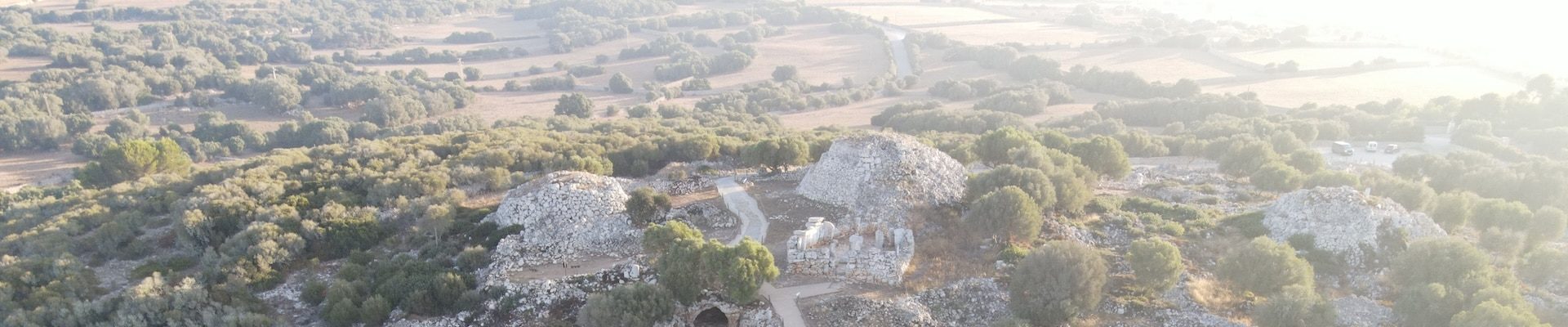
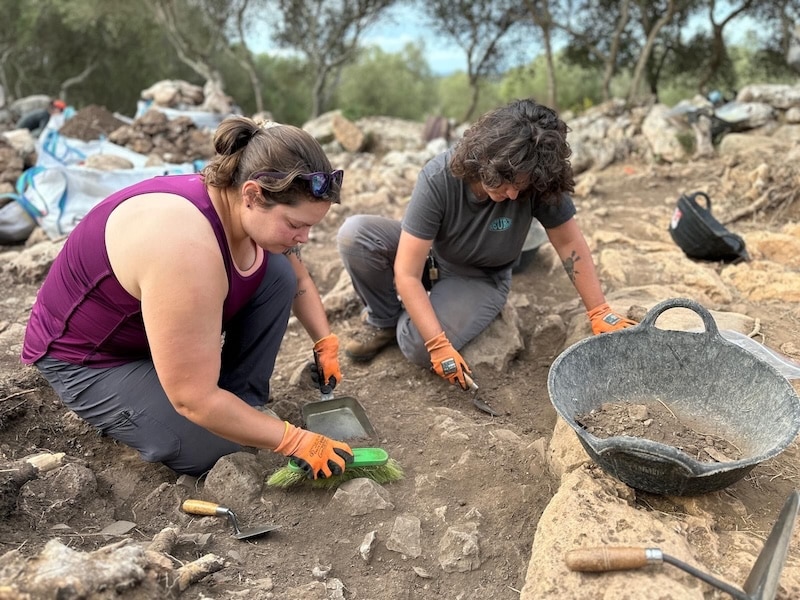
The Menorca Archaeological Project (MAP) received the 2024 Charles Harris Project Grant for their ongoing work at the site of Torre d’en Galmés in Menorca, Spain. MAP was established in 2020 as a project dedicated to the lesser-known histories of the island of Menorca, including the medieval Islamic period from the 10th to 13th centuries C.E. Since 2020, MAP’s team has been excavating a series of medieval houses at the site of Torre d’en Galmés. Although known for megalithic Iron Age houses, monuments, and ceremonial centers, the site was also settled from the 11th to 13th centuries as part of an influx of Muslim groups from Mallorca and mainland Iberia. These people set up an alquería or rural farming village at the site until their forced removal by the Kingdom of Aragon in 1287 C.E.

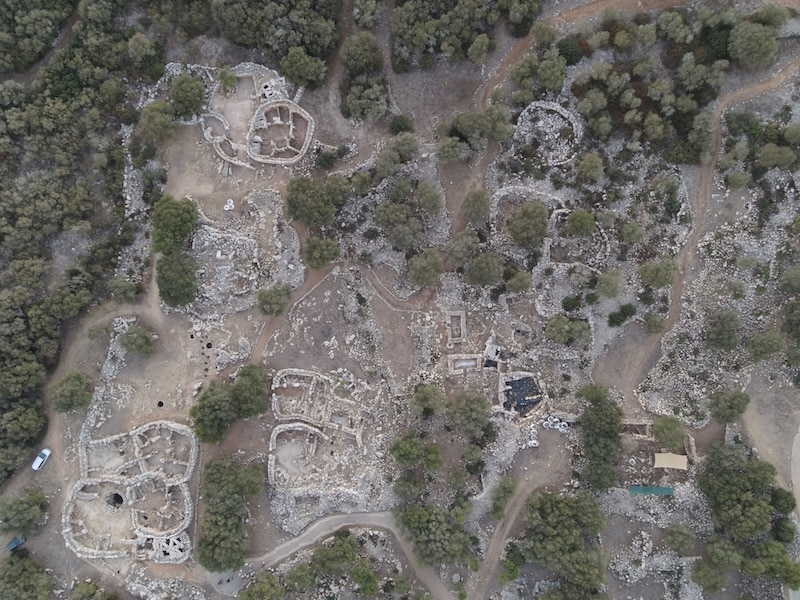
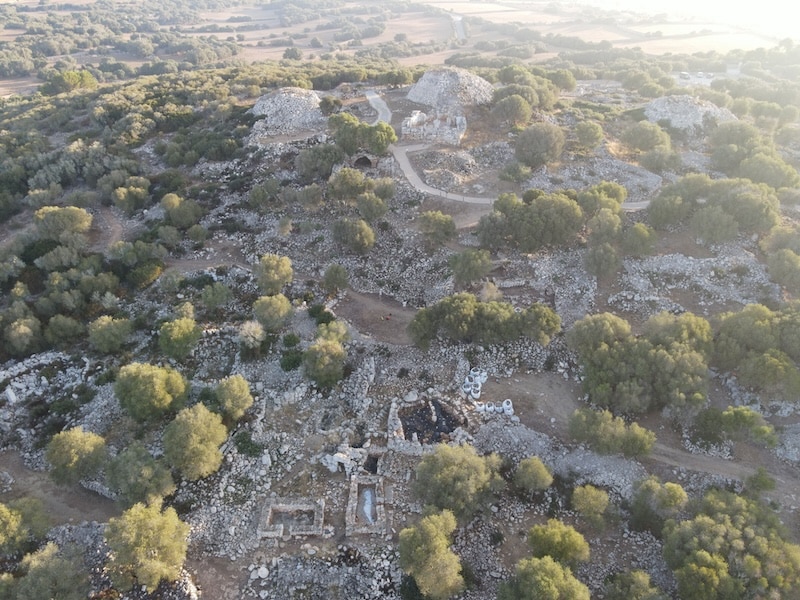
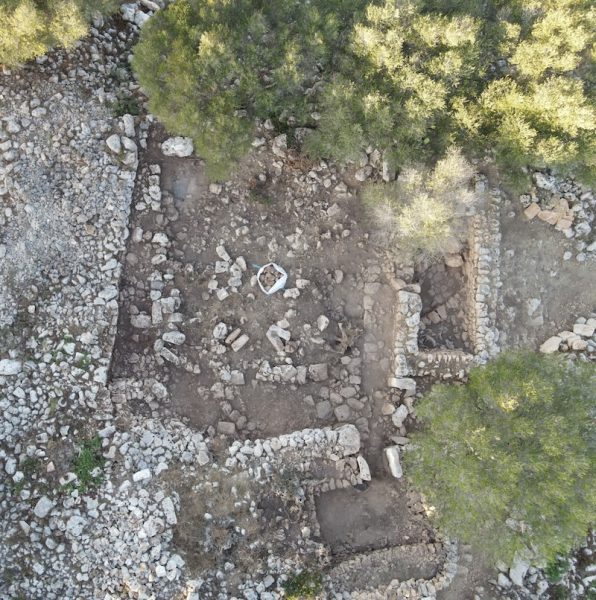
Drone footage of Galmés. Excavation of SPU 7 in the bottom right corner, north is to the right. Photo credit J. Deya
Torre d'en Galmés facing north. Photo credit J. Deya

In 2024 with the generous support of ASOR and the Harris Grant, the MAP team focused on the excavation of SPU or Spatial Unit 7, which is a large medieval house complex. Measuring at over 200 square meters with at least four distinctive rooms and a central patio, the house has proven to be one of the largest rural examples yet encountered on Menorca. As part of our excavation campaign, the team discovered a wealth of information on the daily life of the Muslim medieval residents of Torre d’en Galmés, including consumptive patterns and spatial arrangements of the house that reflect trends seen on Mallorca and the mainland.

Drone photo of SPU 7 at the end of excavation. Photo credit J. Deya
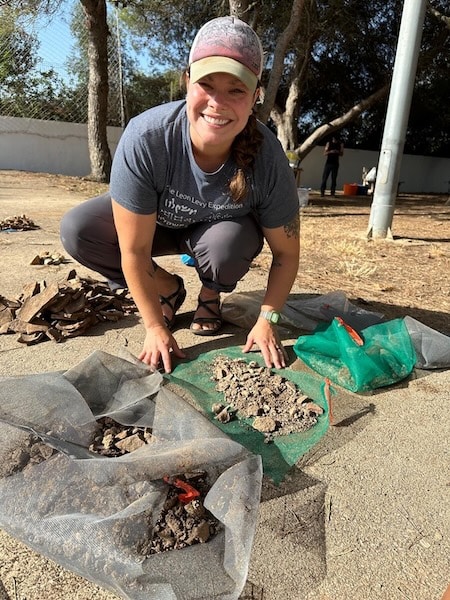
Kathleen Forste managing flotation samples in lab. Photo credit A. Smith
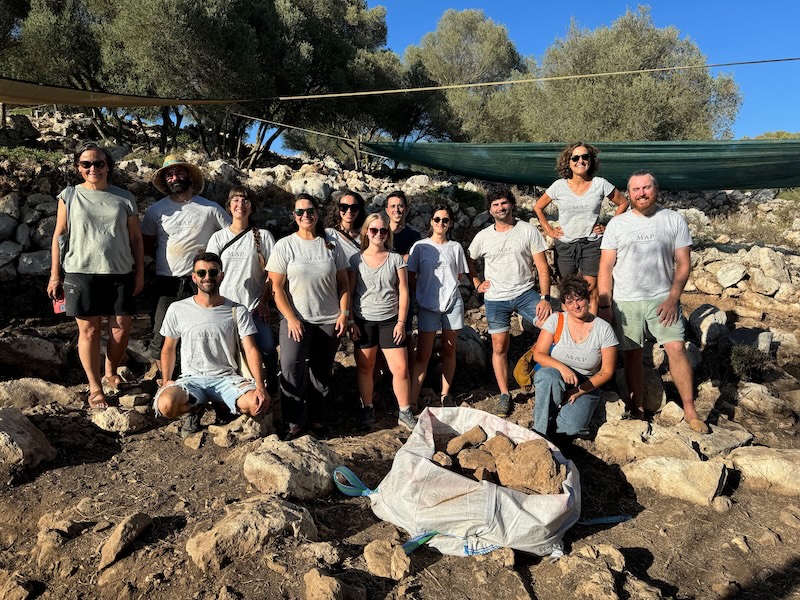
The team midway through the season. Photo credit A. Smith

Over the course of four weeks, our team cleared the SPU 7 area of over 30 metric tons of stone, outlined architectural features and room boundaries to further our understanding of the complex’s shape, and excavated areas of the central patio for micro-environmental sampling. The team took paleobotanical and phytolith samples through out the complex to reconstruct work and cooking spaces of the house.

Jose Maria Moreno Narganes moving stones in SPU 7. Photo credit A. Pérez-Juez
Kathleen Forste and Marta Blanco Noel excavating in the patio of SPU 7. Photo credit A. Pérez-Juez
The crew taking a break next to SPU 7. Photo credit A. Pérez-Juez

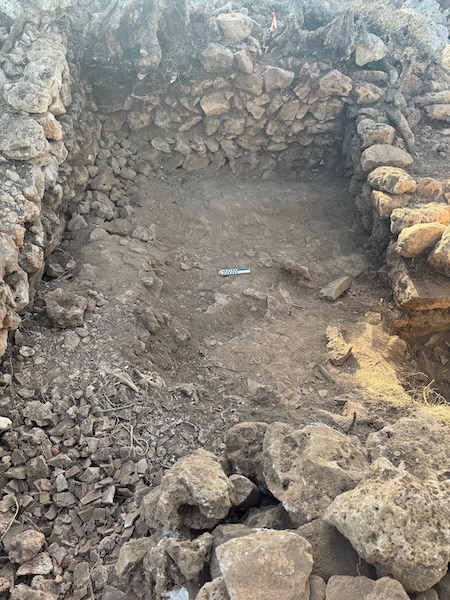
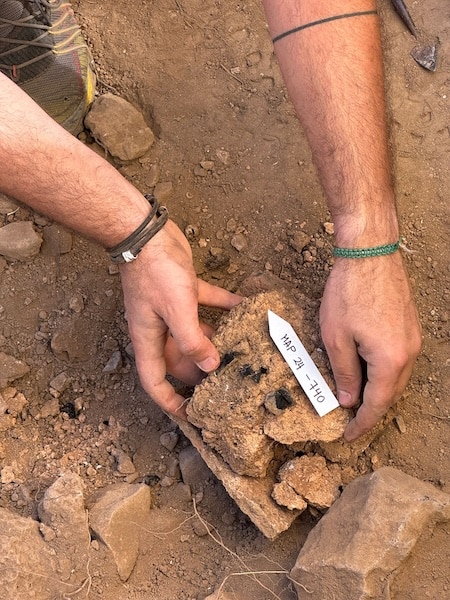
The highlight of the 2024 season came in the last days of excavation with the discovery of a preserved room in the northern section of the house structure. In 2023, the entrance to the area was thought to be the threshold of an outer door, but upon further excavation this past summer, we discovered a room with a clear roof collapse deposit and what we hope will be well-preserved stratigraphy underneath. We were able to recover intact roof tiles with mortar attached, as well as promising indications of material culture beneath. We will return to the space in 2025 to excavate and sample the space thoroughly.

Newly found room with roof collapse. Photo credit A. Smith
Roof tile and mortar excavated in the newly found room. Photo credit A. Smith

The future of MAP is currently centered on the completion of the SPU 7 complex excavation, which is changing our understanding of Torre d’en Galmés, as well as medieval settlement and domestic complexity in the rural spaces of Menorca more generally. What we once thought were relatively simple, standalone dwellings repurposed from a long-abandoned Iron Age site, have turned into a complex arrangement of interrelated structures that showcase a large agricultural village with indications of urban planning and impressive family compounds. In 2025, we will return to complete our analyses of SPU 7 and will move to publication and museum exhibition of our findings on Menorca in subsequent years.

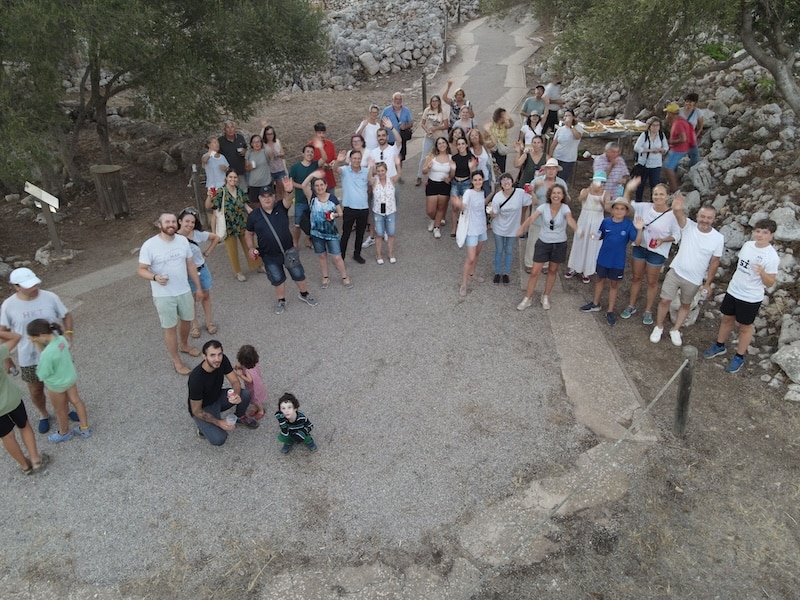
The team during our Open Doors Day for the public. Photo credit A. Smith
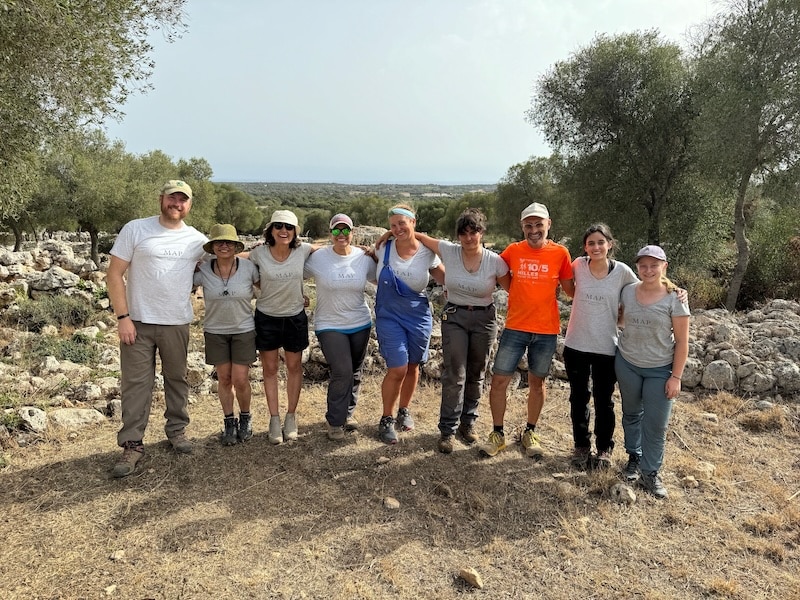
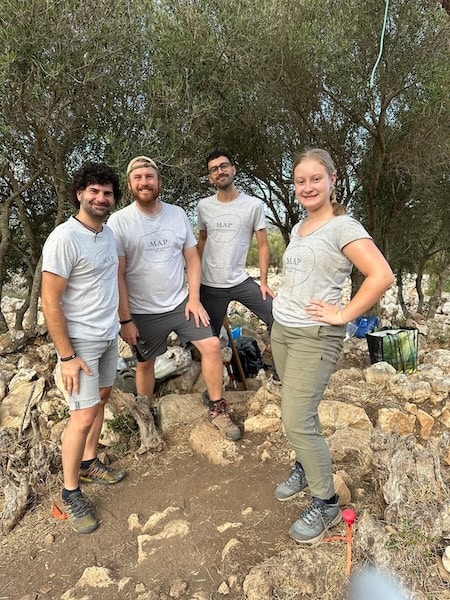
Menorca Archaeological Project team at Torre d'en Galmes in 2024. Photo credit A. Smith
Our Open Doors Day for the Public celebration. Photo credit J. Deya

Learn more about the Menorca Archaeological Project (MAP) on their website or their Instagram!

ARS 31: Humayma Excavation Project 3

Archaeological Reports Series 31: Humayma Excavation Project, 3

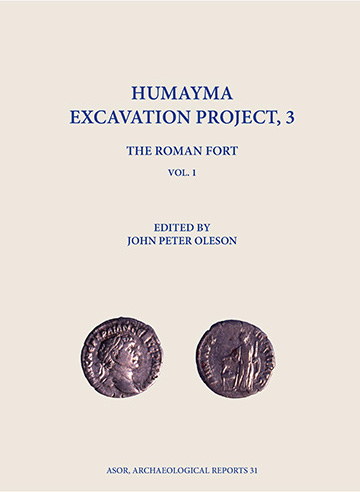
Humayma Excavation Project, 3: The Roman Fort

ed. by John Peter Oleson

Authors:  John Peter Oleson, Erik De Bruijn, M. Barbara Reeves, Andrew N. Sherwood, Craig A. Harvey, Yvonne Gerber, and Milorad Nikolic with contributions from Gregory S. Baker, Emily Deeb, Lindsay Holman, Janet Jones, Derek Klapecki, Kelsey Koon, Jennifer Ramsay, Tiffany Rawlings, and David S. Reese.

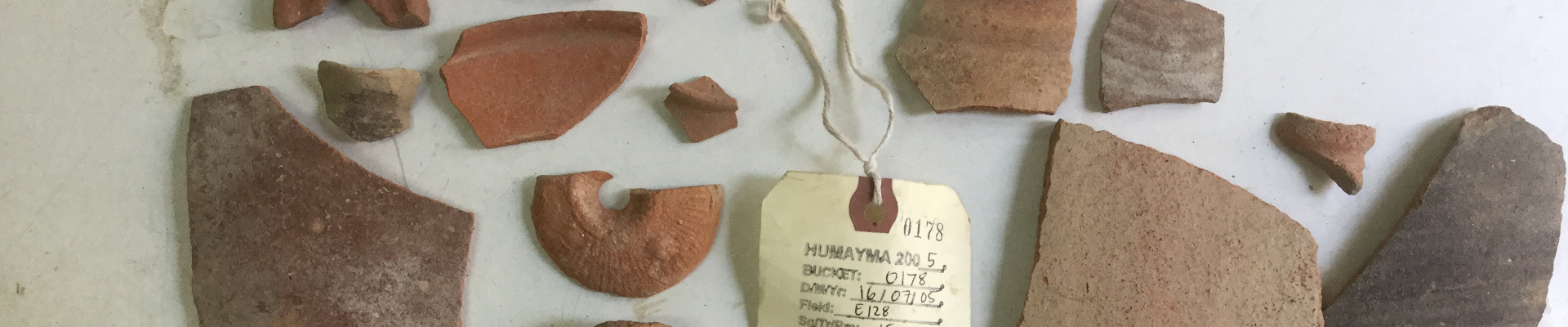
This two-volume set of the third publication in the Humayma Excavation Project presents the most thorough excavation report and analysis of a Roman frontier fort yet published. Humayma, ancient Hawar or Hawara, began life as a small Nabataean settlement in the Hisma desert of Southern Jordan, 80 km south of Petra. Soon after the Roman conquest of the Nabataean kingdom in 106 CE, the town was incorporated into the new Provincia Arabia as Hauarra, and a fort was built on the slope above the original settlement. Hauarra flourished through the Byzantine period and in the late seventh century was purchased by the Abbasid family, which built an elaborately frescoed manor house and mosque. Henceforth known as al-Humayma, the town withered away after the Abbasids moved to Iraq in 749 and led the revolt against the Umayyad caliphate.

Oleson began excavation in the fort with a small probe in 1987, followed by 10 seasons of extensive excavation and geophysical survey between 1993 and 2005, and a follow-up campaign by Reeves in 2012. The excavations provided important new information about the process of the Trajanic conquest of the Nabataean kingdom, the development of Roman military fortification design, the organization of the southern portion of the Provincia Arabia and adjacent frontier of the empire, and relations between Nabataean town dwellers and their Roman occupiers from the second through the fifth centuries. 

ASOR Archaeological Reports, Volume 31, Series Editor Jennie Ebeling, December 2024, 2 volumes, 1080 pages (468 b/w figs, 16 tbls & 24 col pls.), ISBN 9780897571241, $169.95.

Special Offer for ASOR Members

ASOR members (with a mailing address in the USA) can purchase the 2-volume set of ARS 31 at the discounted price of $60.00 (70% discount + $10.00 US media mail shipping)while supplies last. Purchases are restricted to one volume per member. We are unable to offer this discount to members without a US mailing address due to international shipping costs, but you can purchase and ship a copy through the ISD link below. Please contact programs@asor.org with any questions. Click here to purchase your discounted copy in ASOR’s online store.

Available from ISD — Distributor of Scholarly Books
www.isdistribution.com

Fieldwork Report: Daniele Moscone

Studying Chipped Stones and Sampling Knappable Rocks Along the Zagros Hilly Flanks

Daniele Moscone, 2024 P.E. MacAllister Fieldwork Scholarship Recipient

The piedmont of northern Iraq’s Zagros Mountains has long fascinated scholars due to its remarkable archaeological potential and favorable conditions for ancient human settlement. Pioneering research by D. Garrod in 1928 and R.J. Braidwood in 1947 uncovered traces of the last hunther-gatherer societies and among the earliest evidence of sedentism and food production strategies in southwest Asia, through the excavation of sites of great importance, including Palegawra, Zarzi Cave, and Charmo.

Given the historical background, I was deeply excited when Prof. S. Renette invited me to join his team to study the chipped stone assemblages from previous excavation seasons in Kani Shaie (Sulaymaniyah, Kurdistan Region of Iraq). Since 2012, the Kani Shaie Archaeological Project (KSAP) has been investigating the well-preserved archaeological sequence at the homonymous mound which spans from the Late Neolithic (ca. 7000 BCE) to the Early Islamic (ca. 1200 CE). The ultimate goal is to understand the ancient inhabitants’ lifestyles, mobility, and sociocultural connections with both the Mesopotamian plain and mountains of this vast and diverse area across millennia. The current stage of this interdisciplinary research focuses on the 4th and 3rd millennia BCE, which were transformative periods distinguished by the establishment of social inequality, bureaucracy, monumental architecture, complex settlement patterns, long-distance trade and exchange, and ultimately the rise of the first urban societies.

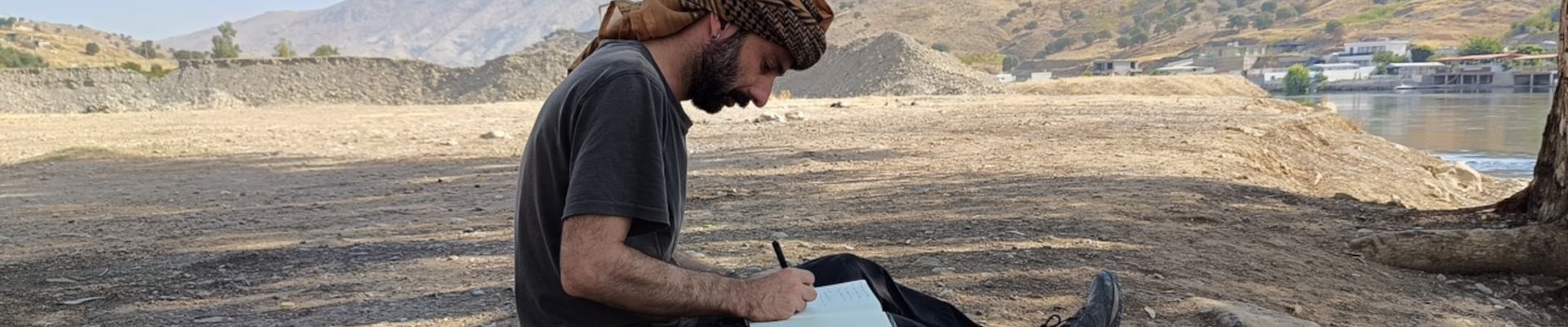
The survey team while standing on the right bank of the Lesser Zab River.

With the generous support of the P.E. MacAllister Fieldwork Scholarship, I was finally able to engage in an archaeological project in the Sulaymaniyah Region for the first time, although having long worked in the macro-region. One of the most enriching aspects of working within the KSAP team was the chance to interact with a diverse and open-minded group composed by both experienced and young researchers. Through these interactions, I was able to exchange knowledge, ideas, and perspectives. Additionally, amidst the exciting discoveries and intensive work, I had the pleasure of forming new friendships.

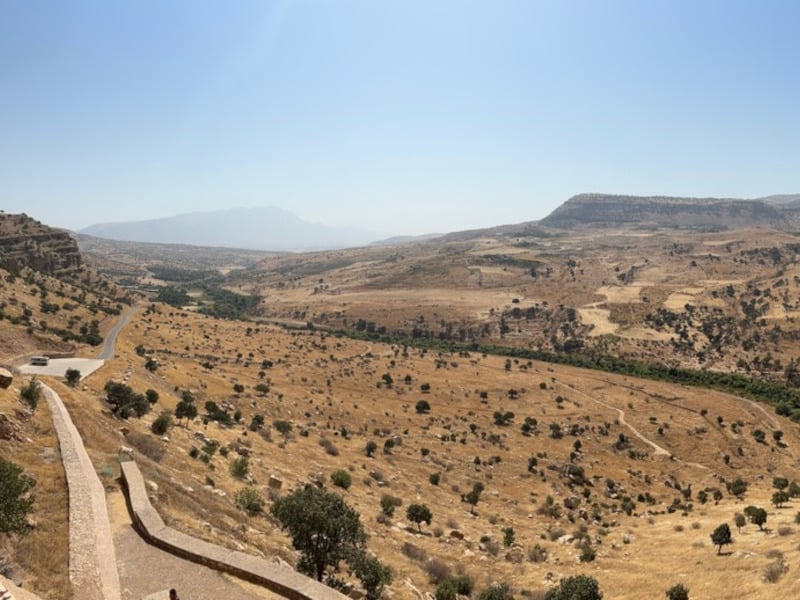
An example of intermontane rocky landscape cut by a river.
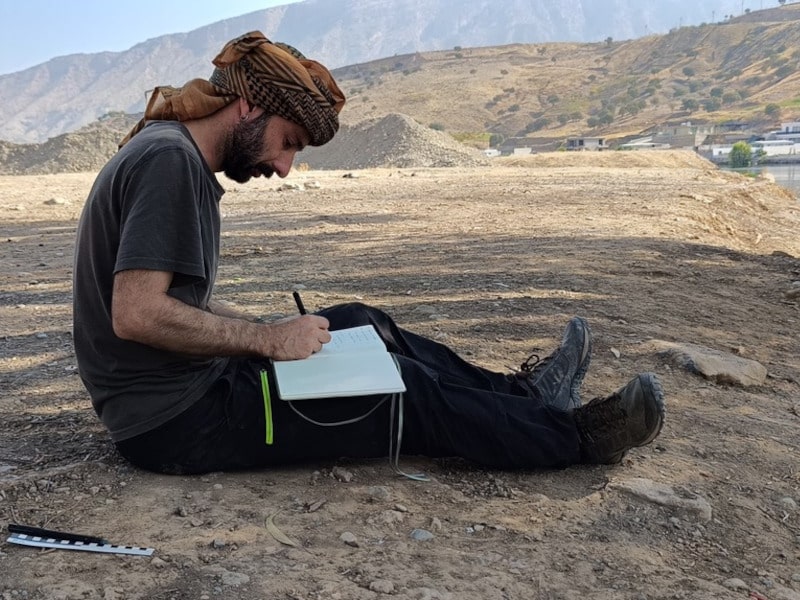
Recording observations on the collected geological samples and drawing sketch profiles of the geological formations interested by the sampling.

The first part of my work took place at the expedition house and was focused on the analysis of the chipped stone collections from key periods, including Ubaid, Late Chalcolithic, and Early Bronze Age. I conducted a technological analysis of the artifacts, addressing crucial questions: how the artifacts were produced? What techniques and methods were used? Which raw materials were chosen? Do we observe significant changes in these practices throughout different settlement phases?

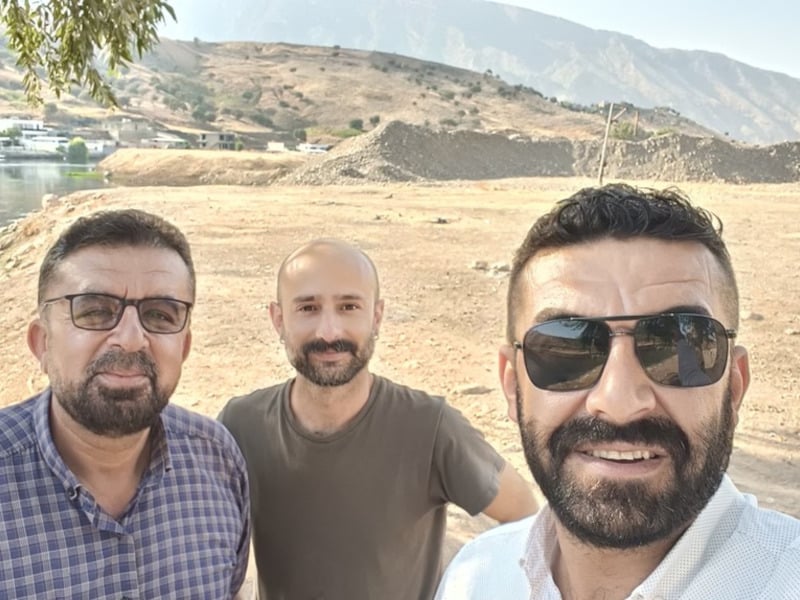
Thanks to the Fieldwork Scholarship, the completion of the second phase of the intended work was also made possible. A small team was assembled for the purpose of conducting extensive surveys aimed at comprehending, for the first time, the regional availability of raw materials suitable for crafting stone tools. During a four-day survey, our team – consisting of an expert archaeologist from the Directorate of Antiquities of Sulaymaniyah and a driver – explored a diverse and fascinating landscape: this included the Bazyan plain with its alluvial and rocky hills, steep mountainsides with narrow valleys carved by small rivers, and limestone walls with many caves and rock shelters. Significant stretches of the two major river courses, the Lesser Zab and Tanjero River, potential sources of raw materials, were also explored. This stage resulted in the identification of multiple candidate geosites, which were then systematically sampled. The most significant sampled raw material was chert, a siliceous sedimentary rock extensively available on earth and
selected since early prehistory to produce stone tools due to its very good fracture qualities.

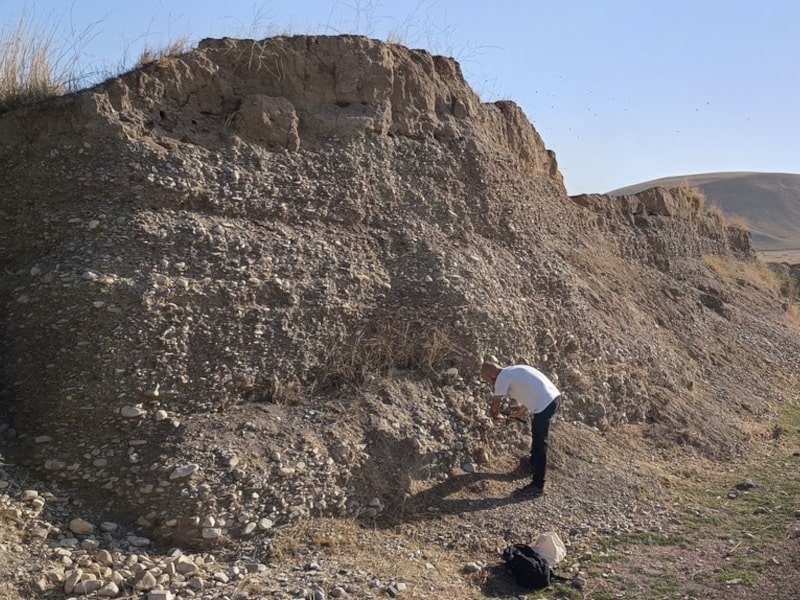
Sampling fluvial-transported chert pebbles along the ancient terraces of the Tanjero River. In the background it is possible to note the hilly morphology of the Tanjero Formation, from which the river erodes and transports part of the fragments.

Our field prospections preliminary results are exciting since we encountered many distinct varieties of chert, well mirroring the variability observed at the archaeological site of Kani Shaie. Future studies using scientific methods (e.g., macroscopic, petrographic, and geochemical analyses) will compare selected archaeological artifacts and geological samples to identify sources or procurement areas exploited by the prehistoric communities settled at Kani Shaie. As a result, I hope that my beneficial collaboration with the KSAP team will continue over time and contribute to their broader research questions. Another long-term goal is to create an open-access repository of these findings and welcome participation and inputs from colleagues and scholars interested in prehistoric lithic raw material procurement in the region.

For more information about the Kani Shaie Archaeological Project (KSAP) visit here.

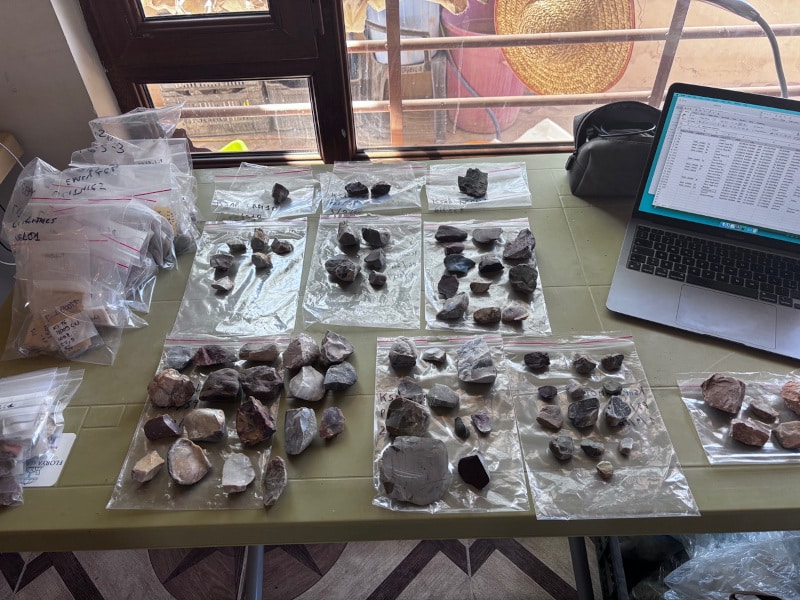
Work in the KSAP expedition house: field data are stored in a database and the geological samples are cleaned, counted, labelled and packed.

Daniele Moscone is currently a postdoctoral researcher at the Institute of Prehistoric and Protohistoric Archaeology and ROOTS Cluster of Excellence (CAU Kiel), where he focuses on the prehistory of southwest Asia, in particular the Zagros Mountains. Previously a postdoctoral fellow at the Research Center for Anatolian Civilizations (ANAMED) of Koç University, he earned his PhD at Sapienza University of Rome, specializing on chipped stone artifacts and raw material analyses. You can find Daniele Moscone on Bluesky @mosdann.bsky.social

ASOR is now accepting applications for 2025 Fieldwork Participation Scholarships. Learn how to apply here.

Want to help more students and early career archaeologists get into the field? Donate to the cause today by selecting “Fieldwork Scholarships” as your gift purpose!