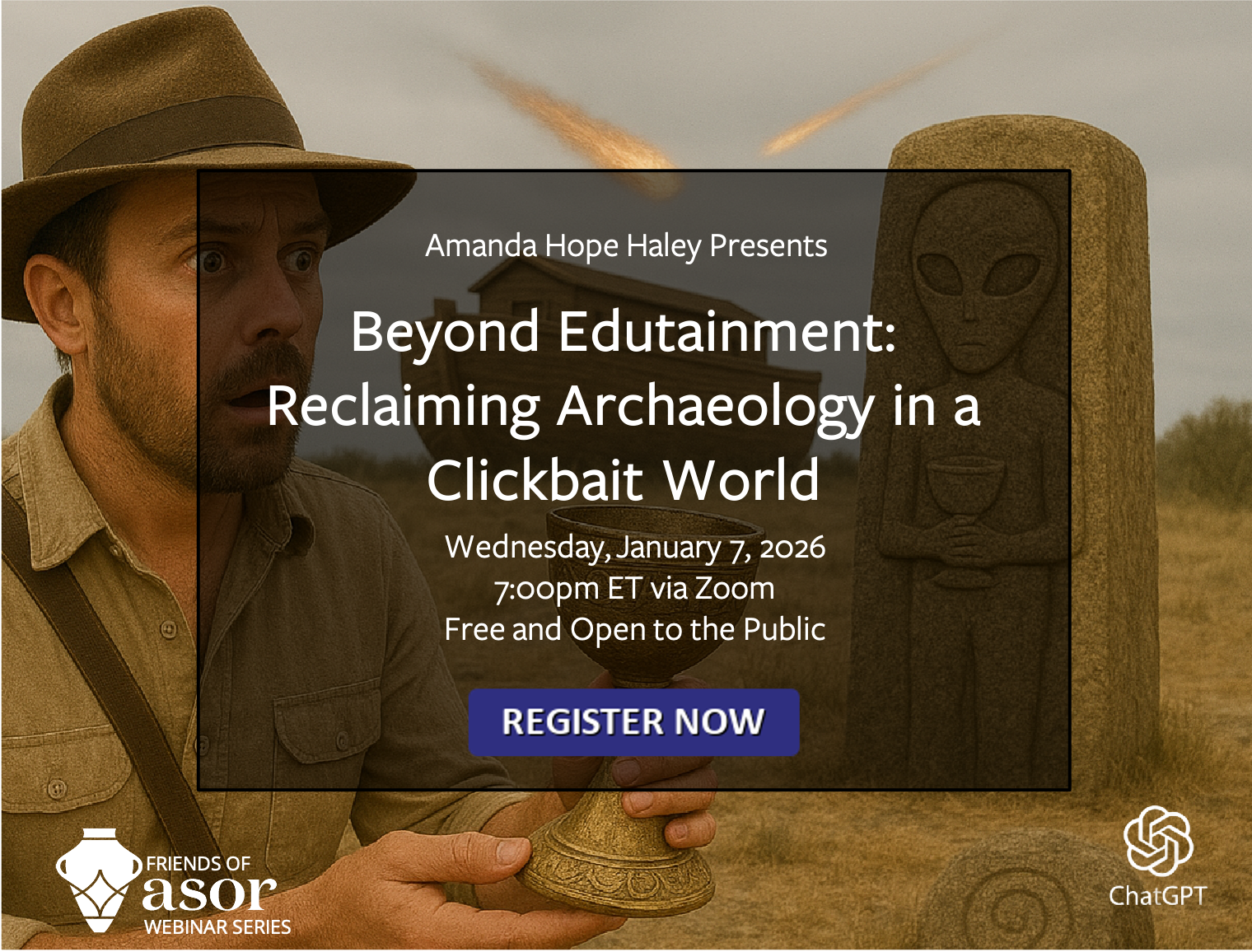
 We all remember a time when the History Channel was about history, documentaries bored us with facts and black-and-white footage, and everyone knew Indiana Jones, Daniel Jackson, and River Song were swashbuckling adventurers (not serious scientists). When did the lines between fiction and fact blur? Did it start when thorough public history education was reduced to merely one year during middle school, when the Socratic method gave way to teaching-to-the-test? Although many of us are still fascinated by our ancestors and the empires they built and destroyed, the field of archaeology is shrinking when we need more access to the lessons of the past, not less.
 Both researchers and readers must understand the problem before us: troll farms are creating and multiplying fake content that crowd out real news, profit-trained algorithms are pushing what we learn, and AI is making falsehood harder to detect.
Even if archaeologists were well funded and better resourced, they could not compete with the truly fake news pushed by entertainment companies and “adventurers,” whom we might call pseudoarchaeologists. Social media’s lack of conscience and sensationalists’ focus on fame and wealth make the fight with slow science and thoughtful debate an unfair one. Through publications such as ASOR’s ANE Today and BAS’s Biblical Archaeology Review, scholars have shared their findings with the public in less-technical language for many years. However, as reading rates drop among students and adults, authors are now competing with filmmakers for eyeballs, hearts, and minds. Increases in forgeries and thefts make us all wonder what is real.
The quest to recover our ancient history is not yet lost to Skynet. But it is going to take all of us—the real archaeologists in the field and the curious readers behind their screens—to reinvigorate real exploration.
 Amanda Hope Haley has a bachelor of arts in Religious Studies from Rhodes College and a master of theological studies in Hebrew Scripture and Interpretation from Harvard University. She entered the publishing industry in 2005, first contributing to The Voice Bible as a translator, commentary writer, and editor. She then began working with popular nonfiction titles as a content editor, theological reviewer, and ghostwriter before her first book was published by Thomas Nelson in 2014. Amanda’s most recent book, Stones Still Speak: How Biblical Archaeology Illuminates the Stories You Thought You Knew, was released by Revell in September and encourages readers to distinguish between popular traditions and historical facts. Between writing manuscripts, she podcasts as The Red-Haired Archaeologist® and introduces sound archaeological insights to readers overwhelmed and misdirected by cinematic or culturally inherited images of the ancient world.
SUPPORT THE WEBINAR PROGRAM!
Friends of ASOR is pleased to announce that the first webinars of the 2025-2026 season will once again be free and open to the public with a goal to raise $10,000 so that the entire webinar season will be free. Will you support this outreach effort with a tax-deductible contribution? All donors/sponsors with gifts of $100 or more will be recognized in subsequent webinars. Make your gift today and select “webinars” from the dropdown menu.

Designate your gift for “Webinars” in the drop-down menu.
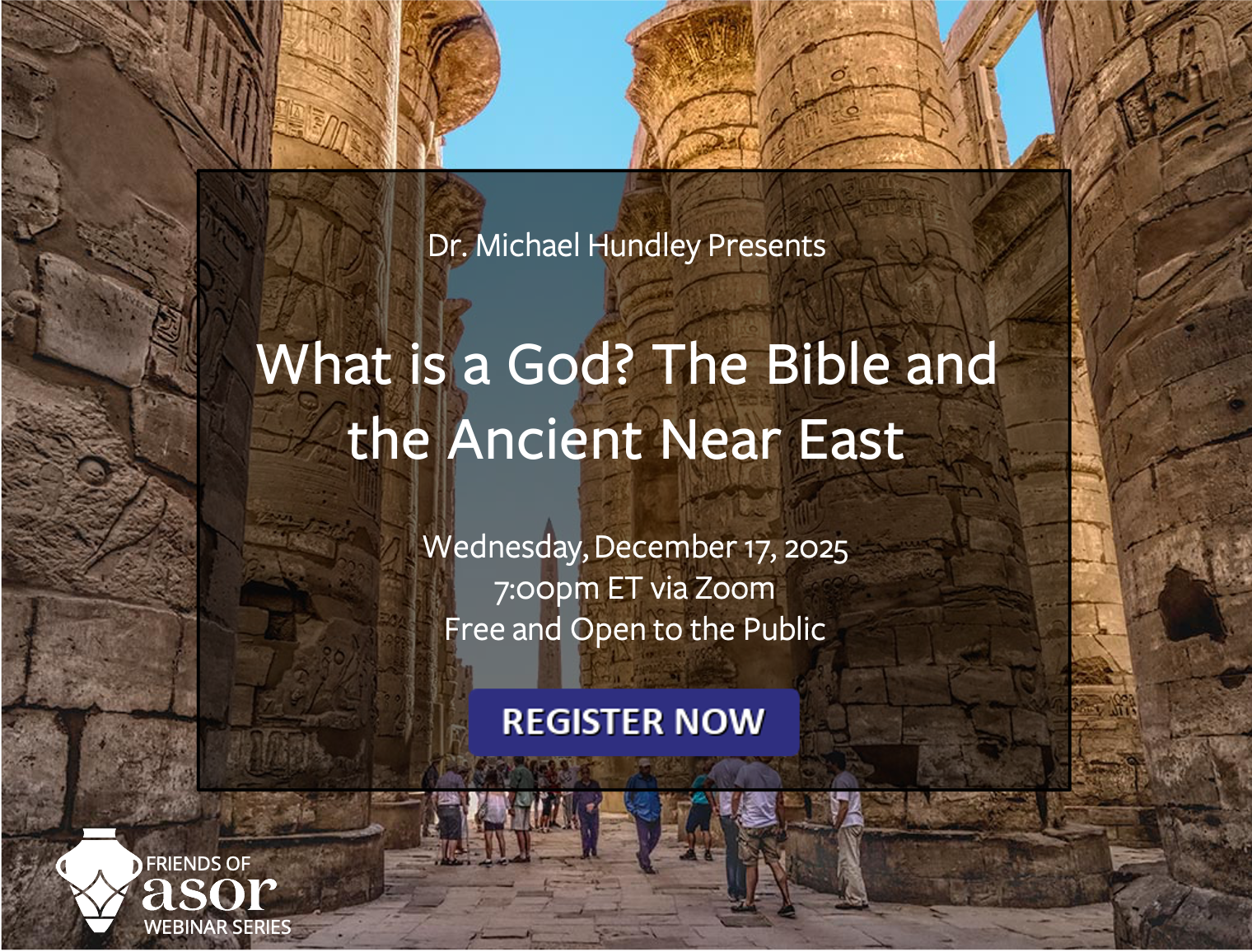
 What is a god? While the question is simple enough, our answer often depends on our cultural context, and we tend to expect other cultures to have the same ideas we do. We also project our modern ideas backward onto ancient texts, overlooking native classifications in the process. However, rather than being a fixed category, the definition of a “god” is culturally conditioned. With an assist from the Cognitive Science of Religion, this presentation attempts to reconstruct ancient perceptions of gods in the Ancient Near East and the Bible. It draws from and expands upon Dr. Hundley’s
  We begin by surveying the various beings who may qualify as gods in the Bible and the wider Ancient Near East, including Egypt, Mesopotamia, the Levant, and Hittite Anatolia. With the data in place, we consider the qualities that all deities share. While gods come in all shapes and sizes, all possess power and agency. To make the divine world more comprehensible, we then sort the divine sphere into categories: high gods (e.g., Egyptian Amun, Mesopotamian Marduk and Assur, Ugaritic El, and biblical YHWH), major gods, minor gods, and peripheral gods. High gods rule, and in the case of Amun, Marduk, Assur, and YHWH, possess a complement of divine powers, like a one-stop shop. Major gods often are specialists (e.g., weather, sun, moon), whereas minor gods serve the high and major gods. Peripheral gods include deified natural phenomena like rivers and mountains, monsters and demons, foreign gods, as well as seemingly inanimate objects like beds and doorposts. Although all gods possess humanlike agency, those closer to the top tend to be the most humanlike internally, making them immediately more understandable and relatable. By contrast, peripheral gods tend to be less humanlike and, as such, more menacing.
 Dr. Michael Hundley (B.A. Amherst College; Ph.D. University of Cambridge) is Assistant Professor of Teaching at the University of Memphis. He works at the intersection of human and divine in the Hebrew Bible/Old Testament and the Ancient Near East and has published multiple books and articles, including Keeping Heaven on Earth: Safeguarding the Divine Presence in the Priestly Tabernacle (2011), Gods in Dwellings: Temples and Divine Presence in the Ancient Near East (2013), and Yahweh among the Gods: The Divine in Genesis, Exodus, and the Ancient Near East (2022). He is currently finishing Ancient Gods and Monsters: The Bible, the Ancient Near East, and Beyond and is beginning Temples and Divine Presence in the Bible and Ancient Near East for the Cambridge Elements series. Future projects include a comparison of temples and divine presence in the Bible, Ancient Near East, and Hinduism and an exploration of gendering gods.
 ASOR is gearing up for our

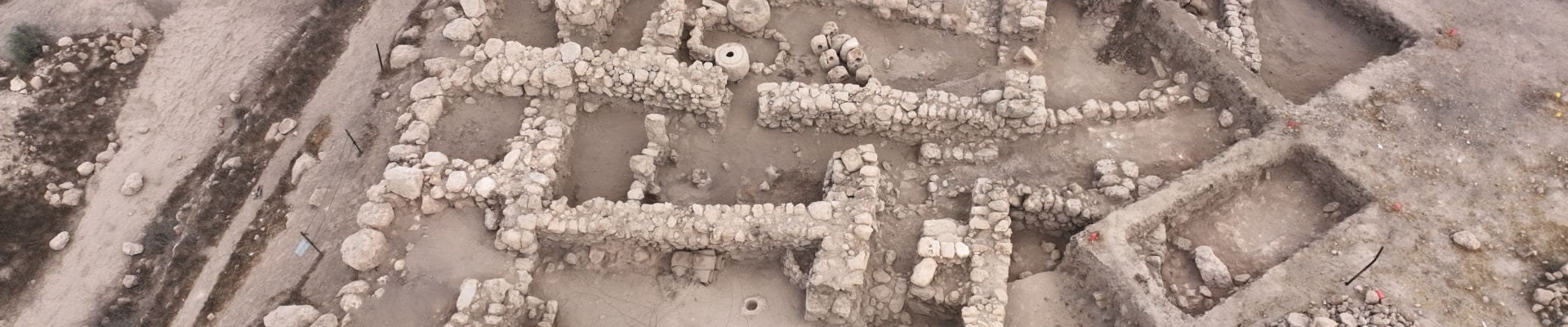
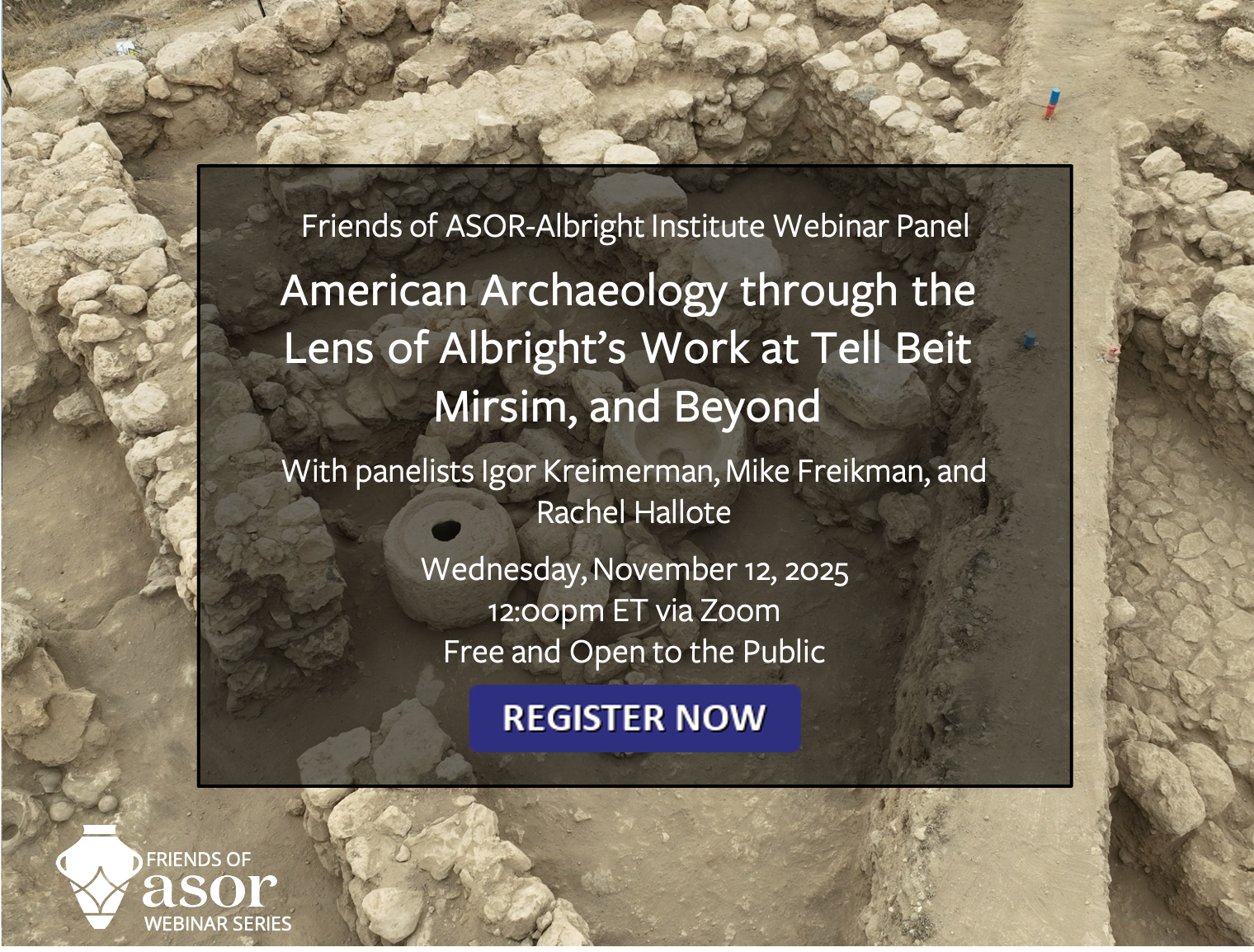
 Albright’s excavations at Tell Beit Mirsim marked a turning point in the development of Biblical Archaeology, establishing the site as a key type-site for the discipline. The innovative methods applied in both excavation and publication resonated for decades and provided the foundation for Albright’s wide-ranging synthetic studies. Over time, however, many of his conclusions and theories have been challenged and re-evaluated. The renewed excavations at Tell Beit Mirsim invite a fresh assessment of Albright’s work, comparing his insights with new evidence from the field. This presentation will reconsider the validity of his reports in light of modern scholarship and reflect on the enduring impact of his excavations.
 Dr. Igor Kreimerman is a Senior Lecturer in Archaeology and Ancient Near Eastern Studies at the Hebrew University of Jerusalem. He directs the Selz Foundation Hazor Excavations in Memory of Yigael Yadin and serves as scientific
  advisor to the Renewed Excavations at Tell Beit Mirsim. His research focuses on the social and economic structures of Bronze and Iron Age Levantine societies, as well as on human-induced site formation processes, particularly those related to construction and destruction.
 Rachel Hallote is Professor of History at Purchase College SUNY. Her research involves British and American archaeologists who excavated in Ottoman-controlled Palestine in the 19th century. She has worked at numerous archaeological sites in Israel, including Tell Miqne and Megiddo. Her publications include Bible, Map, and Spade: The American Exploration Society, Frederick Jones Bliss, and the Forgotten Story of Early American Biblical Archaeology and the co-authored volume, The Photographs of the American Palestine Exploration Society as well as many articles about archaeology and the history of the discipline. She currently co-hosts an archaeology podcast called This Week in the Ancient Near East.
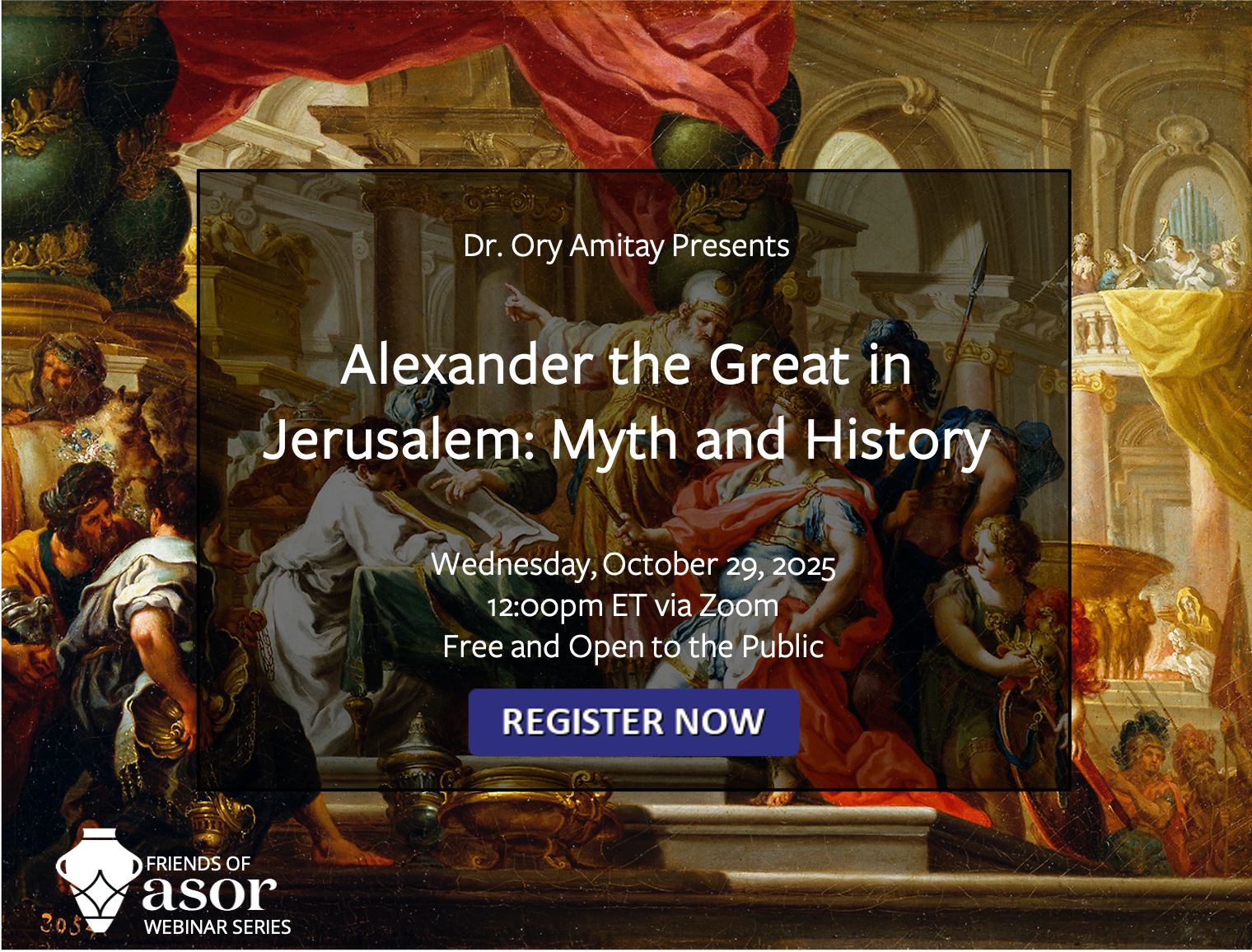
 The episode of Alexander’s visit to Jerusalem is familiar mostly through the story of Flavius Josephus. This version of the story dominates not only the public imagination but also scholarly discussion. It is generally assumed that Josephus’ story is derived from the earliest source(s) relating the story; it is consequently also the most often discussed in scholarship, mostly at the expense of any discussion of the other versions of the story. A main conclusion of Dr. Amitay’s recent book, Alexander the Great in Jerusalem: Myth and History (2025, Oxford UP), is that among the four different versions of the Alexander in Jerusalem story – which are quite different from one another – Josephus’ version is not the earliest but rather the latest, and clearly relies on two earlier versions. A second conclusion, which conforms with the consensus of previous scholarship, is that the story, in all its versions, cannot be regarded as history; it is a political myth. Therefore, rather than look in the stories for clues that might reveal some details about the history of Alexander, Dr. Amitay analyzed each of the stories for indicators that would reveal the respective contexts of their creation.
 All these contexts taken together bring us to the third major conclusion, a common denominator that dominates the tradition as a whole: new stories of Alexander in Jerusalem (at least the ones that reached us) were born as a result of a major change in the relationship between the people of Judea and their foreign rulers. These major changes include the Seleukid takeover of the southern Levant, the first arrival of Roman arms in Judea, the abolishment of Judean kingship and the institution of provincia Judaea, and the rearrangement of Judea as an independent province after the destruction of the temple. Given the continued status of Judea as a province of some empire or other during the second temple period (Hasmonean period excluded), and the suddenness and totality of the change brought about by Alexander, it is small wonder that his arrival in Jerusalem became the subject of political myths dealing with major shifts in the relationship of Judea with its foreign rulers.
 For the last twenty odd years, Ory Amitay has been teaching and conducting research in the University of Haifa. His research is situated at the intersection of two crossroads: one between myth and history, the other between various peoples of the ancient west. The topic of his new book, and of this lecture, is a clear example. Amitay’s main research strategy in analyzing historical (or rather pseudo-historical) myths is locating the obvious false factoids – parts of the story that are in blatant contradiction to known historical facts – and interpreting them not as the products of carelessness or ignorance, but rather as intentional fabrications. As such, they have both a context, where they make sense historically, and an agenda. The underlying assumption is that false factoids are fabricated with a purpose in mind. The goal is to identify both context and agenda.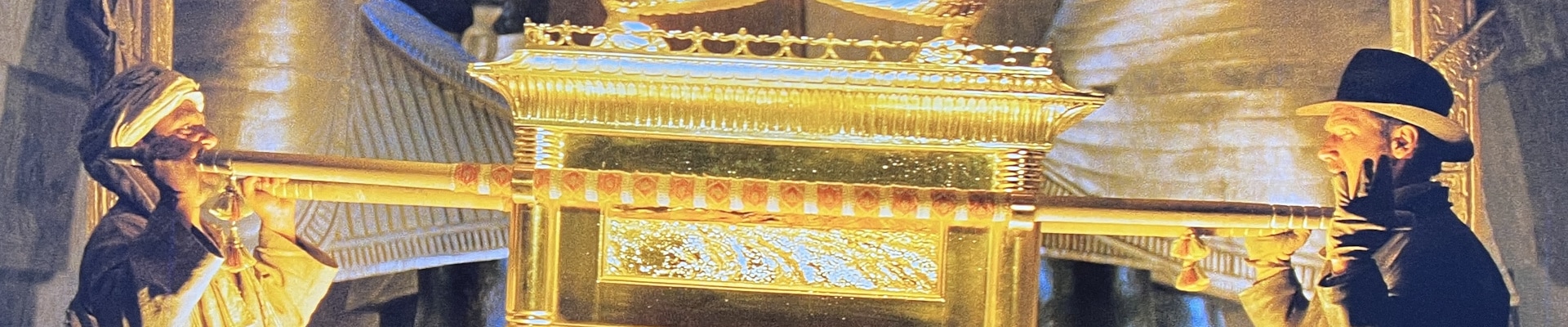
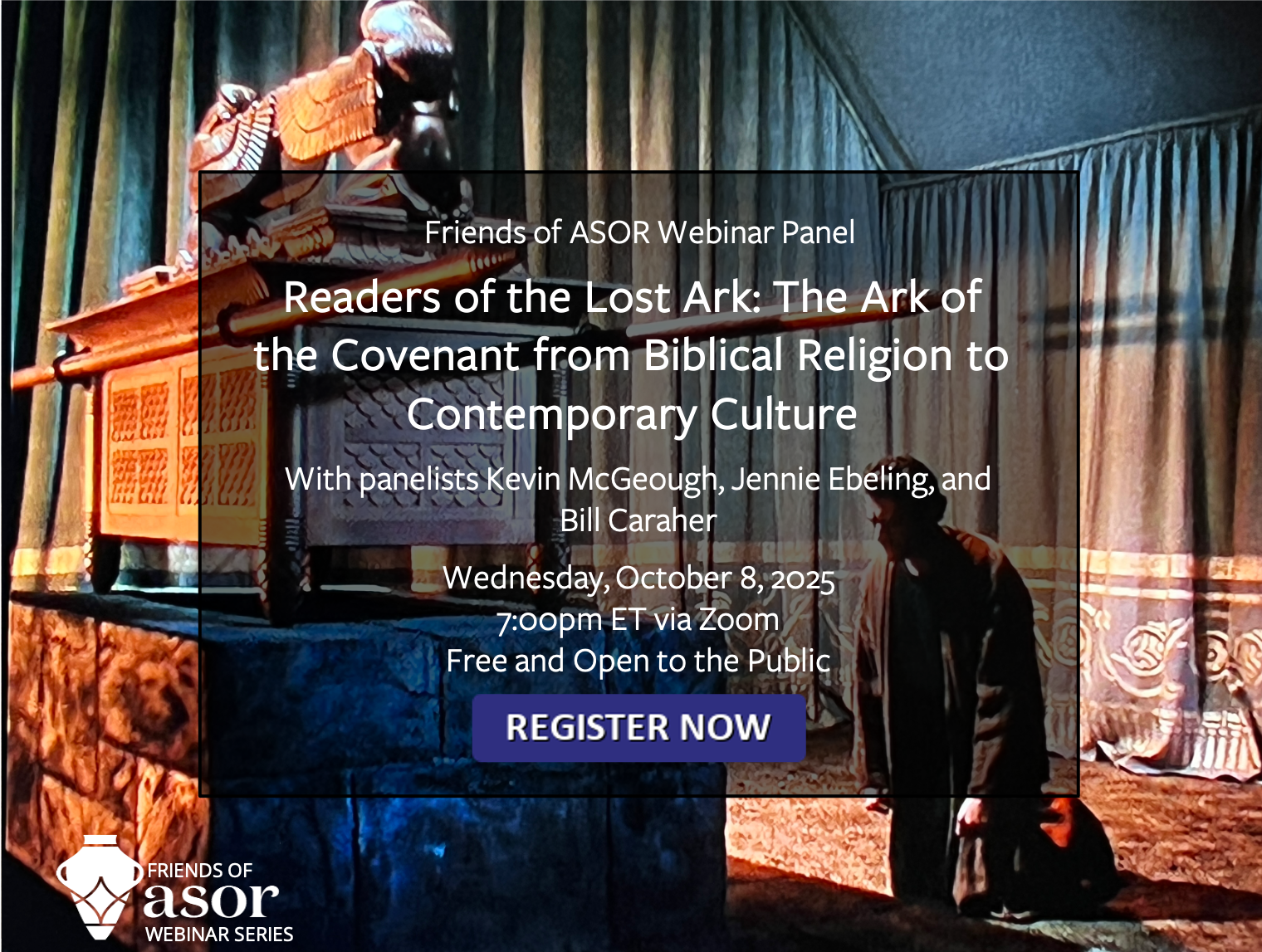
 Since the release of Raiders of the Lost Ark, the Ark of the Covenant has become one of, if not the most famous biblical “artifact,” despite the fact that scholars don’t agree on what might have happened to it or if it even really existed. Described in the Bible as a wooden chest plated with gold, adorned by cherubim, the Ark is said to have carried the tablets of the Ten Commandments and was one of the locations where God manifested His presence amongst the Israelites. The description may be straightforward and simple, but the Ark has proven to be the subject of a diverse variety of interpretations since biblical times, ranging from an imitation of an ancient Egyptian religious object to an advanced radioactive energy source capable of mass destruction. Ethiopian Christians believe the Ark resides in a church in Africa, while some have looked for it in the ancient Irish city of Tara. Early religious interpreters looked for coded messages in the biblical instructions on how to build the Ark, and modern faith communities build their own replica Arks for use in faith healing services and in Old Testament themed wax museums. All of these communities generally agree on what the Ark looked like, but what the Ark is or was, and why it matters is a different story. Join Kevin McGeough, in a lecture and conversation moderated by Jennie Ebeling and William Caraher, as he
  explores the interpretation of the Ark of the Covenant from the past two thousand years. Introducing his new book, Readers of the Lost Ark, Kevin will discuss how the Ark has been understood in different communities, from ancient Jewish and Christian commentators, through Medieval theologians, to modern ancient aliens theorists, misguided explorers, and Indiana Jones fan communities. There will be something for any “friend of ASOR” interest in this wide-ranging talk!
 Kevin M. McGeough is Professor of Archaeology in the Department of Geography & Environment at the University of Lethbridge and holds a Board of Governor’s Research Chair in Archaeological Theory and Reception. McGeough is currently co-director of excavations at Busayra in Jordan and Head-Smashed-In Buffalo Jump UNESCO World Heritage Site in Canada. He is co-editor of the journal Alberta Archaeological Review, and author of The Ancient Near East in the Nineteenth Century, and Representations of Antiquity in Film: From Griffith to Grindhouse. His most recent book, Readers of the Lost Ark: Imagining the Ark of the Covenant from Ancient Times to the Present is available from Oxford University Press.
 Jennie Ebeling is a Professor of Archaeology in the Department of Archaeology and Anthropology at the University of Evansville. Ebeling co-directed the Jezreel Expedition in Israel and is a ground stone artifact specialist with a particular interest in women’s contributions to food and drink technologies in ancient southwest Asia. She edits ASOR’s Archaeological Reports Series and is an editor-at-large for Eisenbrauns, an imprint of Penn State University Press. The co-editor of five volumes, she is the author of Women’s Lives in Biblical Times (T&T Clark, Int’l) and is currently completing a monograph on ethnography, household archaeology, and representations of life in biblical Israel.
 Bill Caraher teaches in the Department of History and American Indian Studies at the University of North Dakota. He is the editor of the Annual of ASOR and co-edited the Oxford Handbook of Early Christian Archaeology (2019) and recently published The Archaeology of Contemporary America (2025). He is an archaeologist who has worked in Greece, Cyprus, and the United States.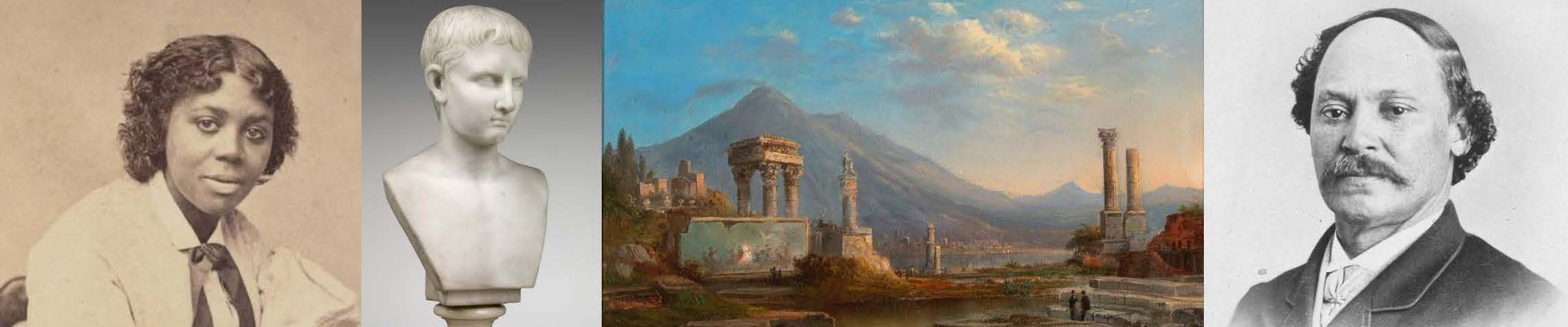
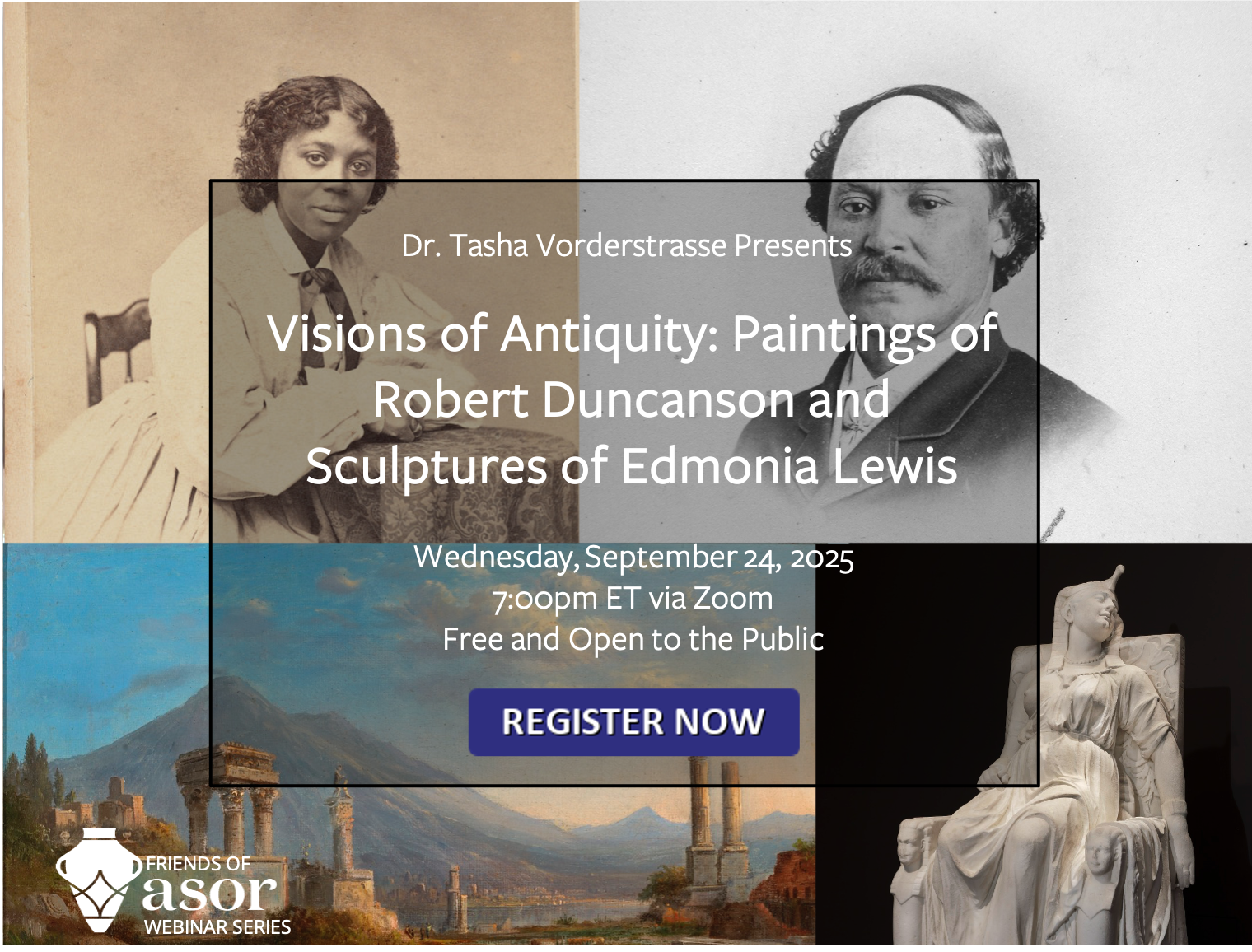
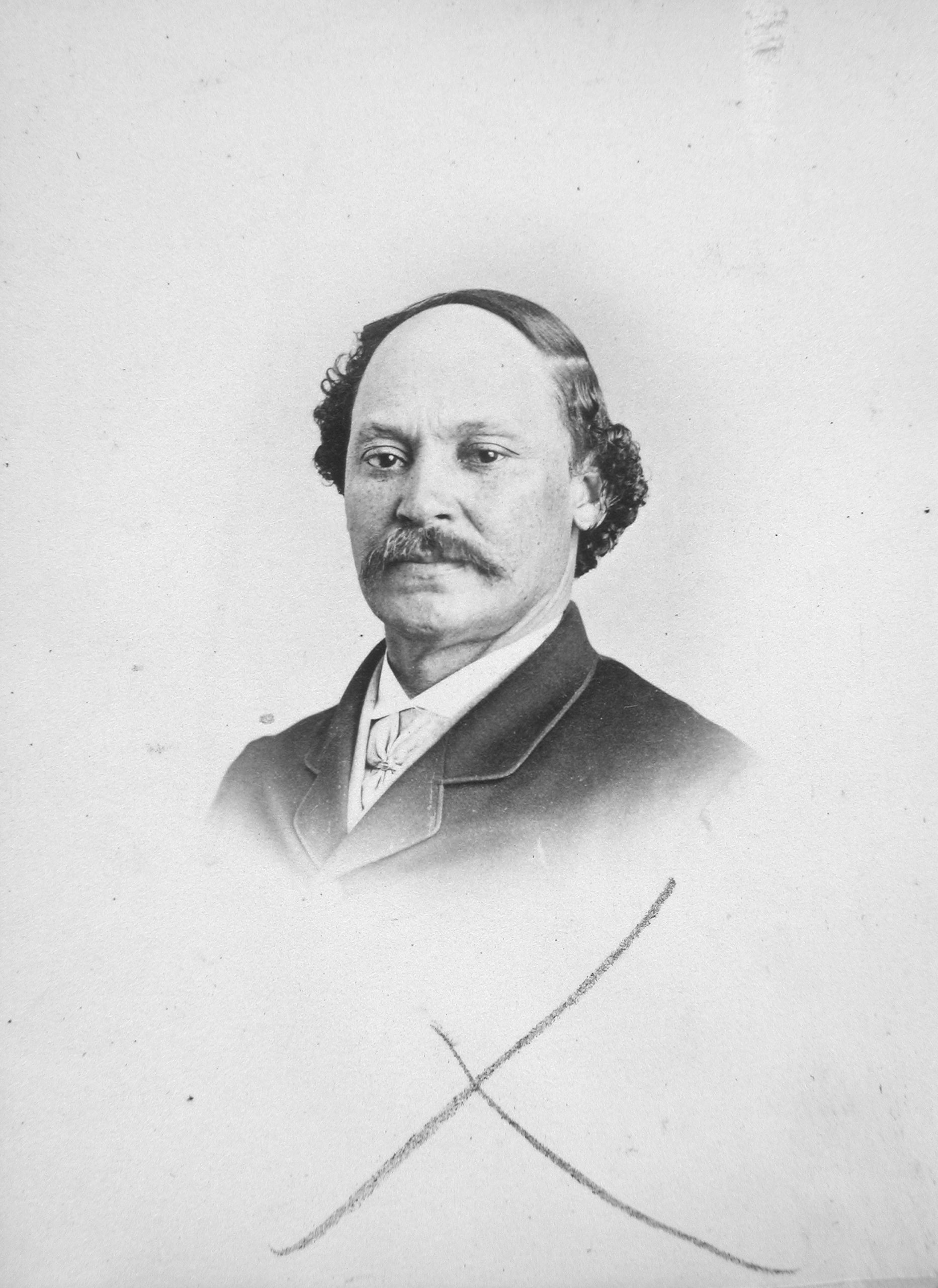
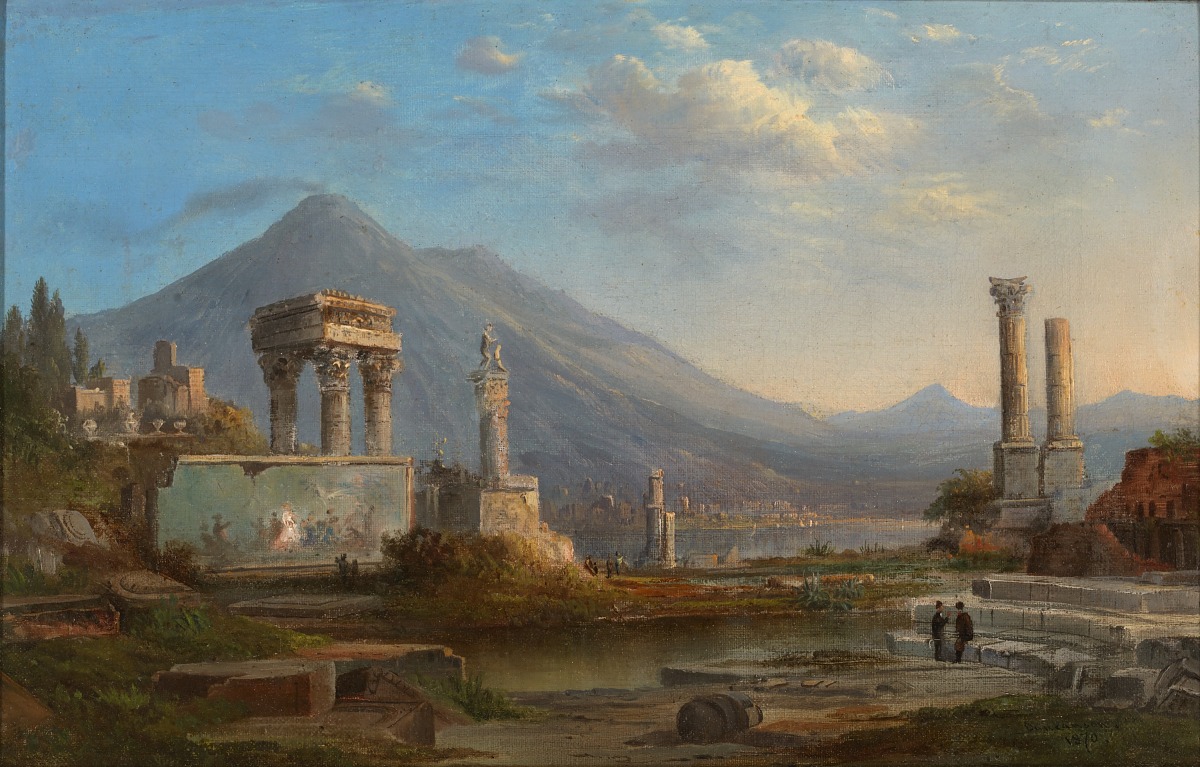
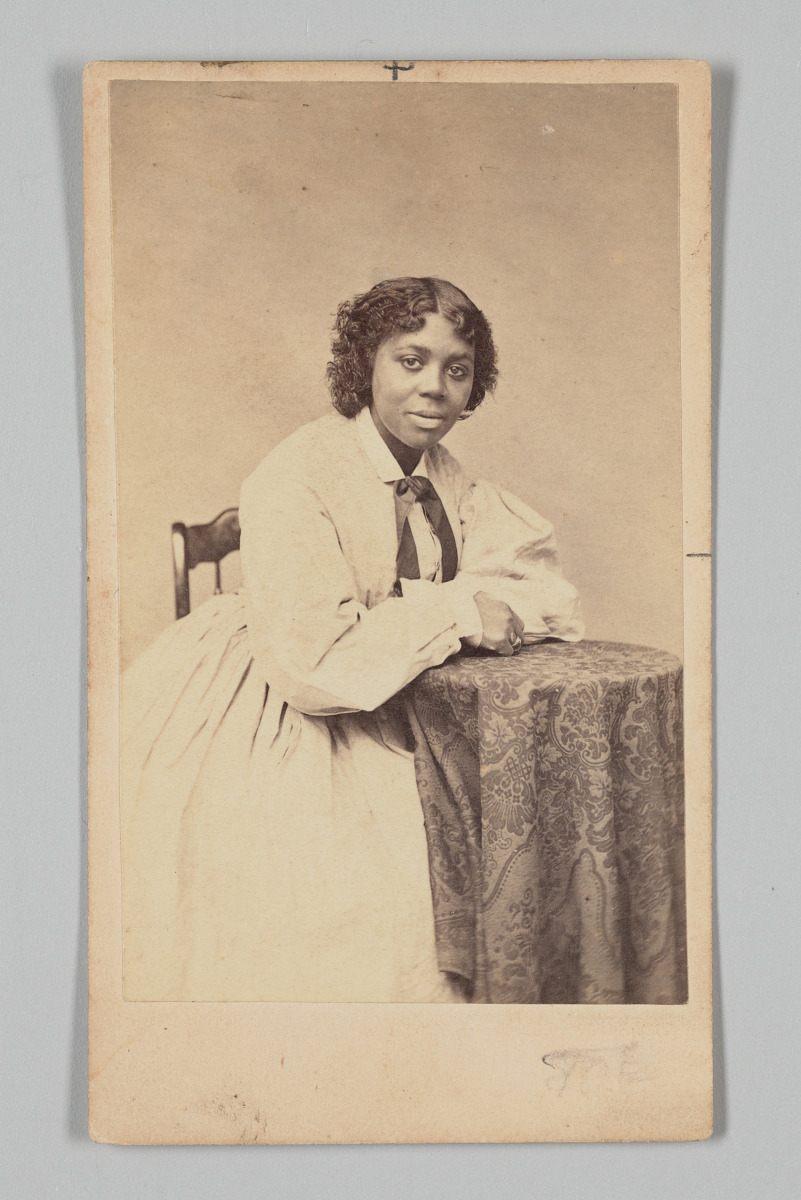
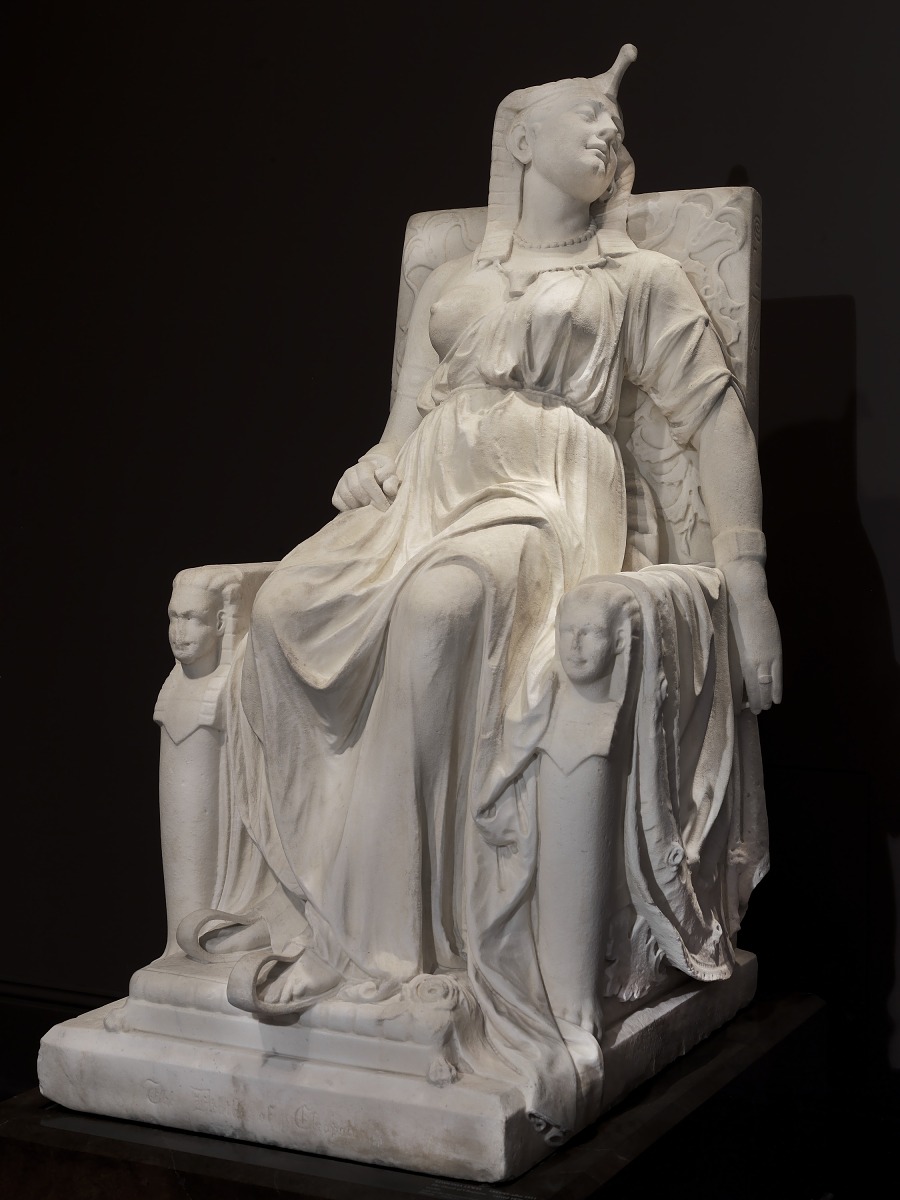
 Tasha Vorderstrasse is the Manager of the Continuing Education program at the Institute for the Study of Ancient Cultures, West Asia and North Africa (ISAC) at the University of Chicago. In her job, she coordinates the ISAC’s adult education program, in which she also teaches, in addition to giving ISAC Museum tours and providing other programming to University of Chicago students. She is also responsible for the ISAC social media pages. She received her PhD in Near Eastern Archaeology from the University of Chicago in 2004 and is interested in questions of how different forms of material culture can help us better understand how individuals constructed their identities over time. Her work on the reception of ancient and medieval West Asia and North Africa focuses on different ways in which various individuals understood and experienced the region, specifically looking at the collecting of antiquities, 19th-century photography, and how Black artists, historians, and intellectuals examined the ancient world.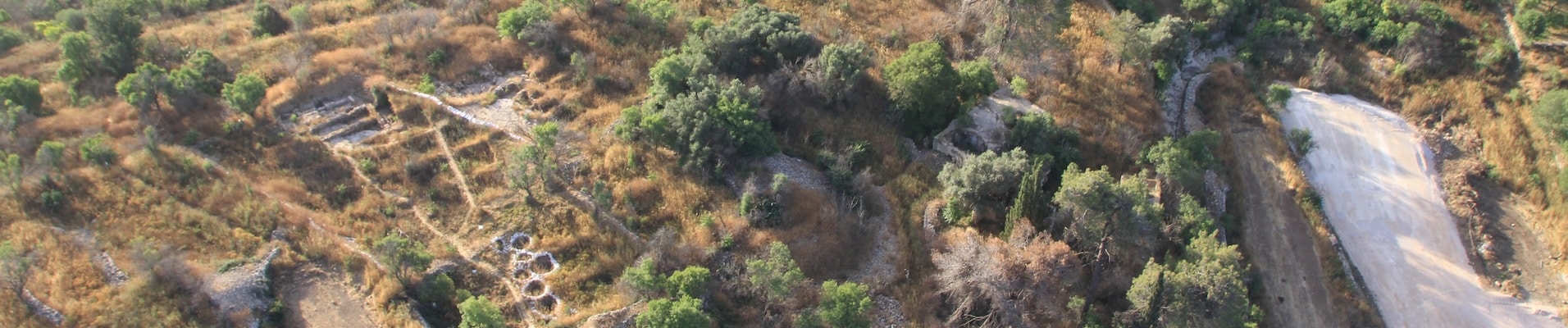
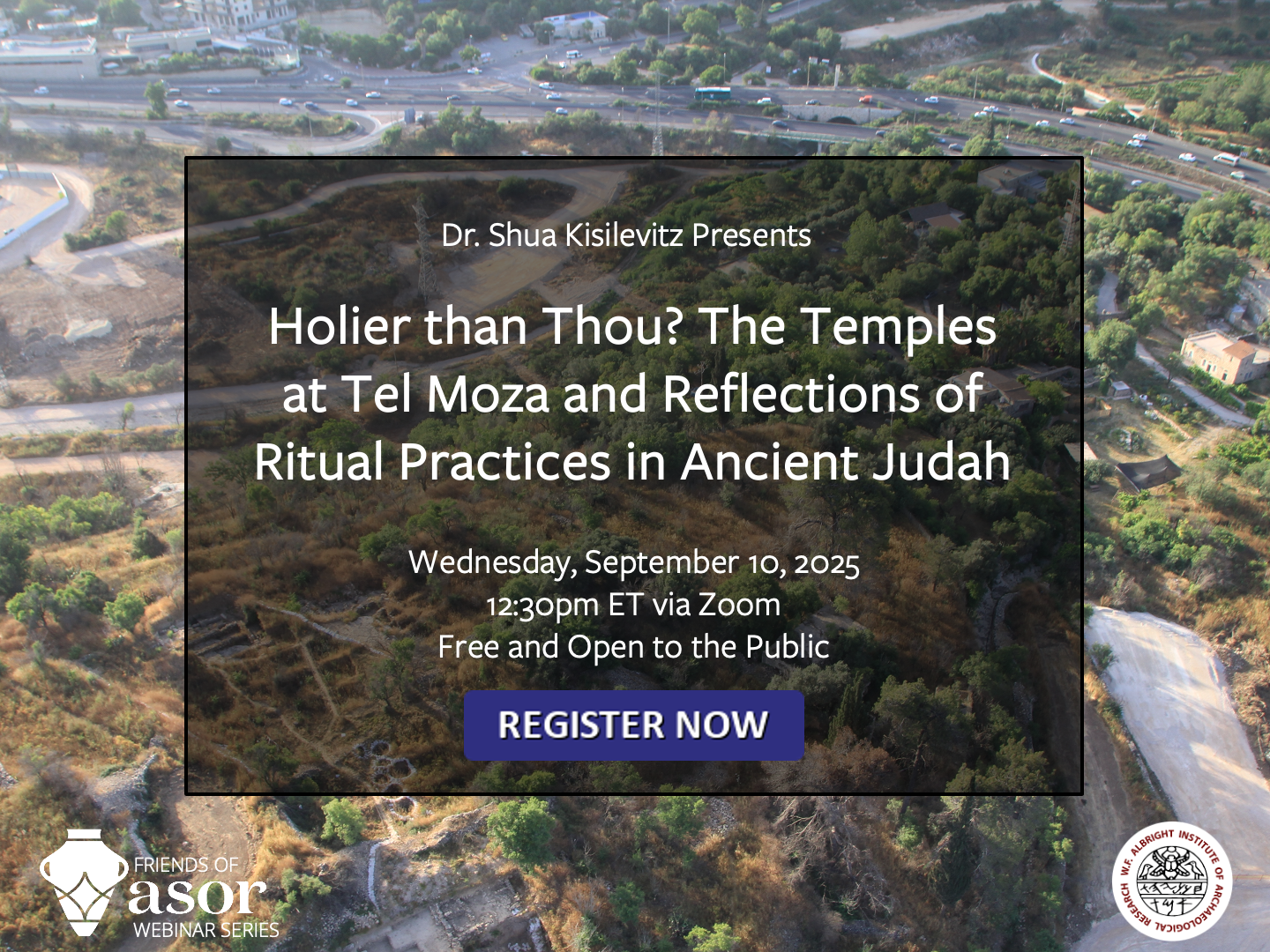
 The recent discovery of not one, but a succession of two temples from the First Temple period at Tel Moza—just 7 km from Jerusalem—has reignited debate about how religion took shape in ancient Judah and the wider region. The revelations at Tel Moza are especially intriguing when set against the backdrop of traditional scholarship, which was both heavily guided by biblical texts and paradigms and hampered by the rarity of confirmed temple remains in Judah.
 Shua Kisilevitz is Assistant Director of the Albright Institute and a research fellow at Tel Aviv University.