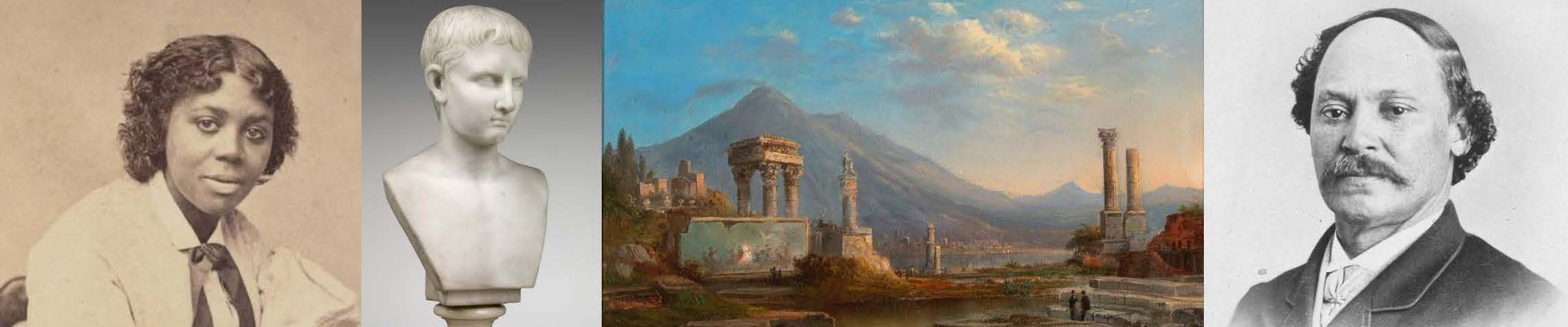
FOA Webinar: Tasha Vorderstrasse

FRIENDS OF ASOR WEBINARS

Visions of Antiquity: Paintings of Robert Duncanson and Sculptures of Edmonia Lewis

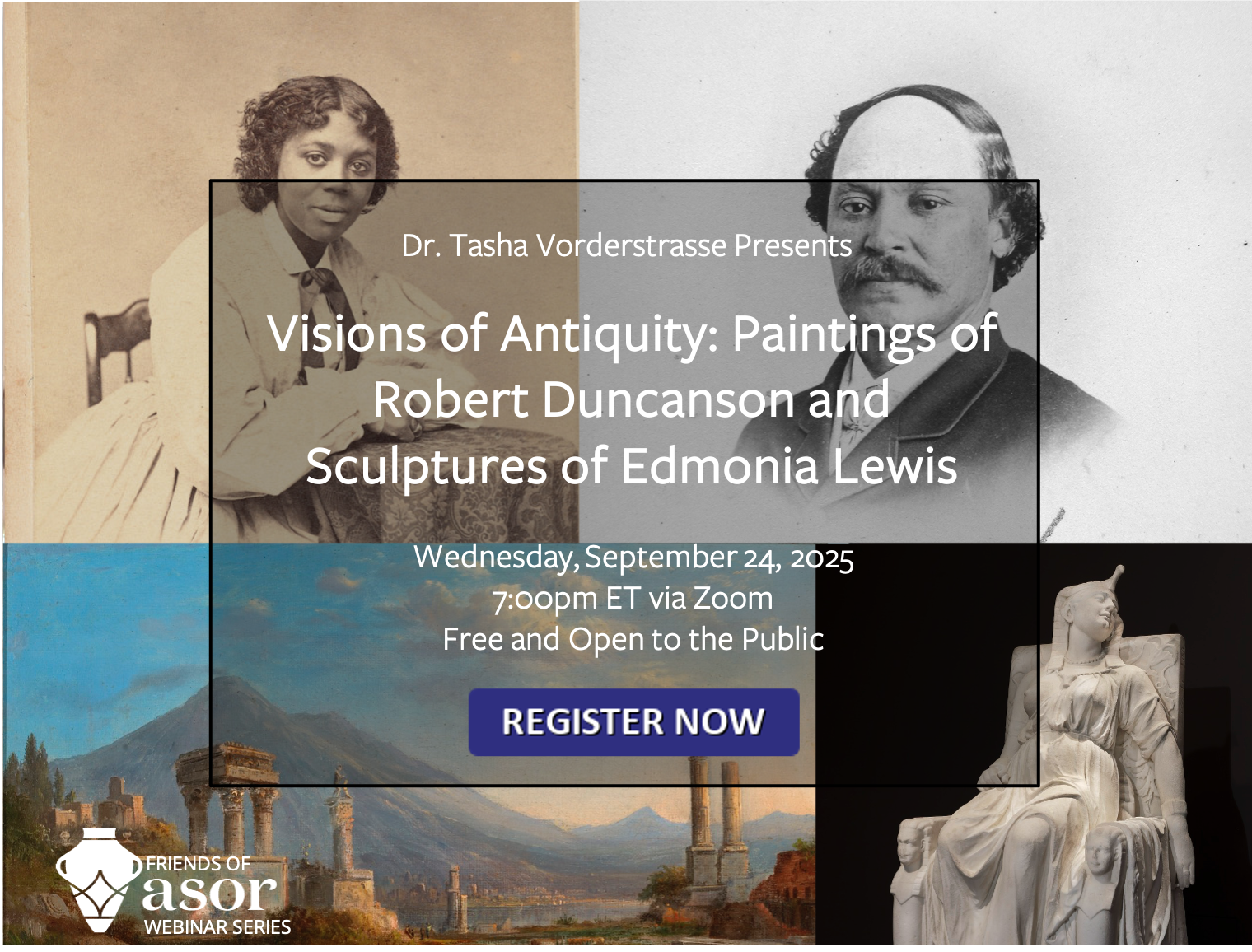
Friends of ASOR present the next webinar of the 2025-2026 season on September 24, 2025, at 7:00 pm EDT, presented by Dr. Tasha Vorderstrasse. This webinar will be free and open to the public. Registration through Zoom (with a valid email address) is required. This webinar will be recorded and all registrants will be sent a recording link in the days following the webinar.

In the middle of the 19th century, Robert Duncanson (1821-1872) and Edmonia Lewis (ca. 1844-1907) created their unique visions for the ancient world, its ruins, and the people who lived in it. As successful Black American artists, their work reflected current trends in American art at the time, but at the same time was also innovative in its approach. As a landscape painter primarily based in Ohio, Robert Duncanson painted Italian ruins that he viewed during his visits to Italy on the Grand Tour. He represented Classical and Biblical stories in his paintings, but at the same time combined them with American imagery. In one of his most well-known works, Land of the Lotus-Eaters, he re-imagined the famous encounter between Odysseus and his men with the Lotus-Eaters from the Odyssey, moving the setting from the Mediterranean to North America and changing the Greeks and the Lotus-Eaters to European and Indigenous peoples respectively. He created imagined ancient landscapes and depicted modern landscapes with ruined buildings, but these landscapes themselves were also often at least partly imagined.

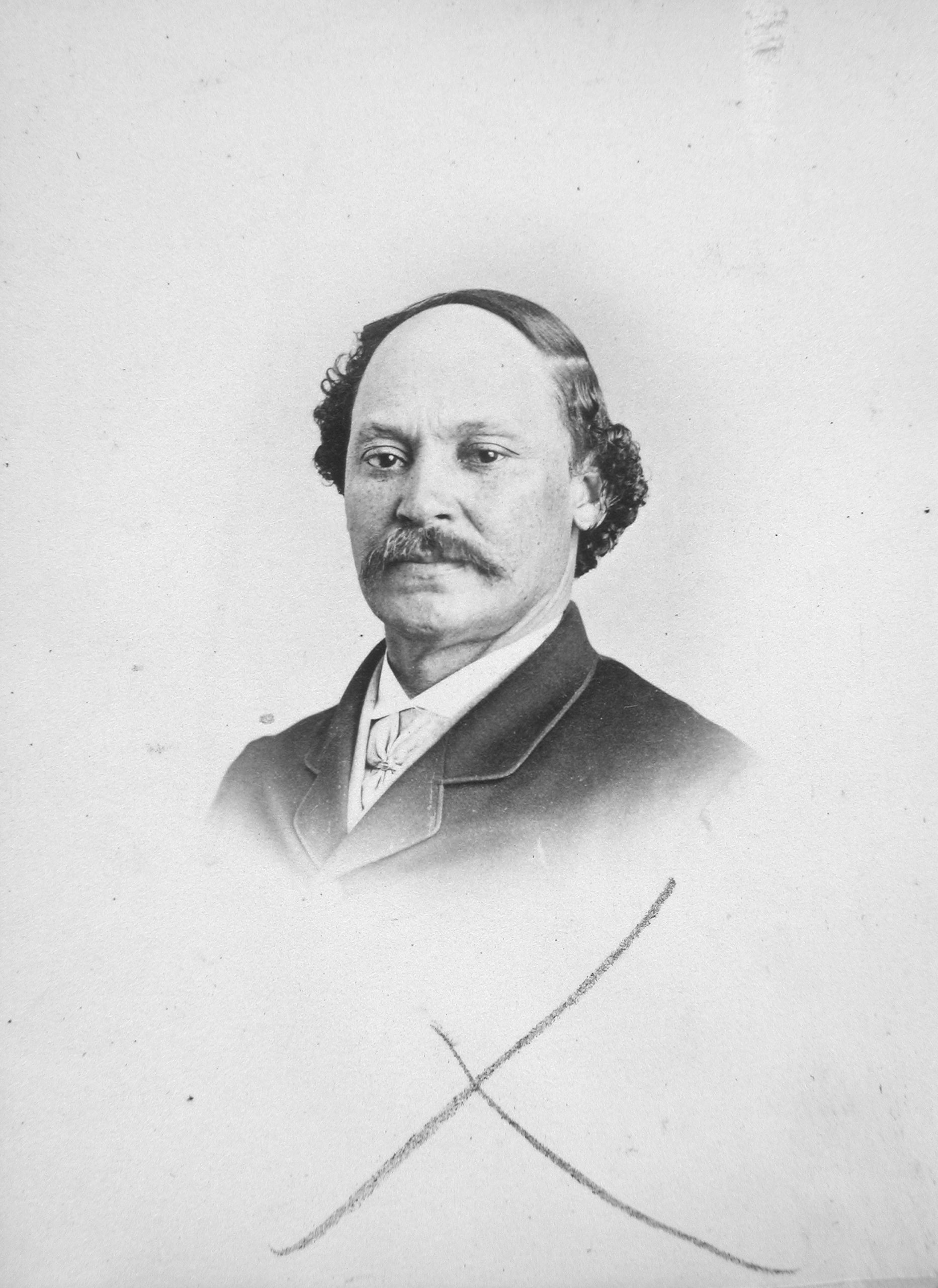
Albumen print of Robert S. Duncanson, artist, Montreal, QC, 1864 by William Notman, I-11979.1, Purchase, funds graciously donated by Maclean’s magazine, the Maxwell Cummings Family Foundation and Empire-Universal Films Ltd., McCord Stewart Museum.
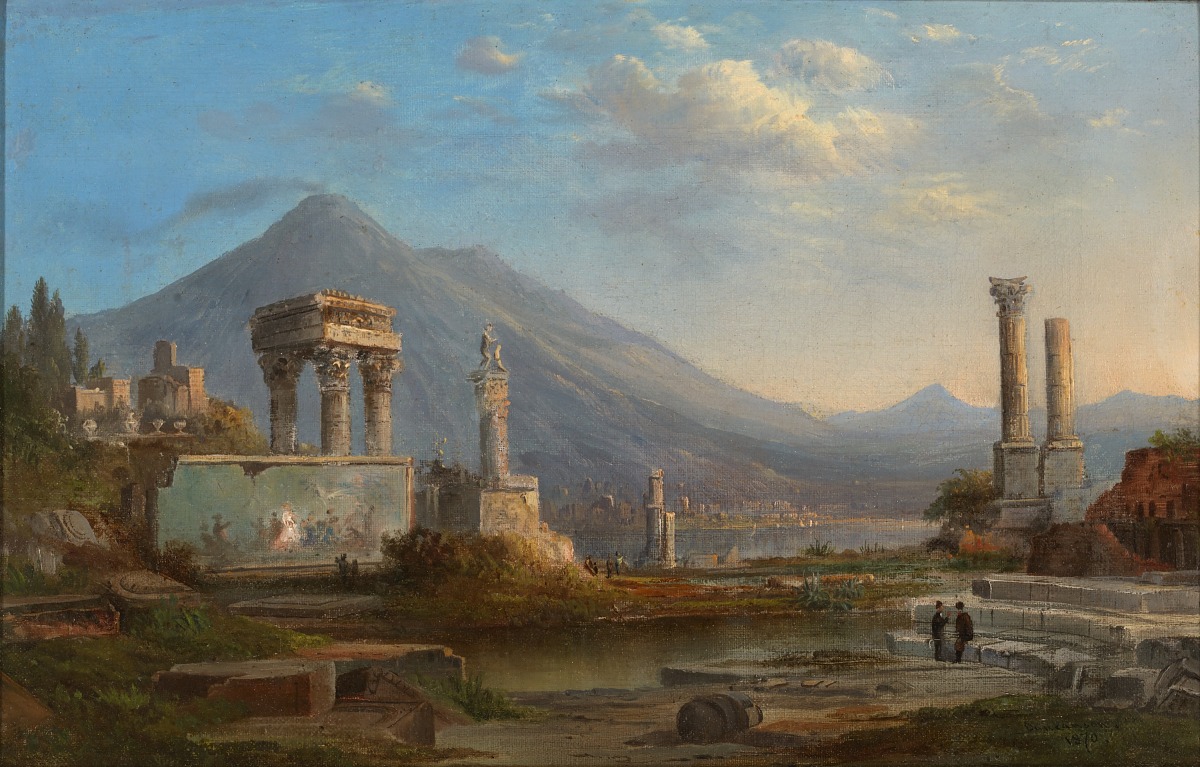
Robert S. Duncanson, Vesuvius and Pompeii, 1870, oil on canvas, 10 x 15 5/8 in. (25.4 x 39.7 cm.), Smithsonian American Art Museum, Gift of Joseph Agostinelli, 1983.95.177.
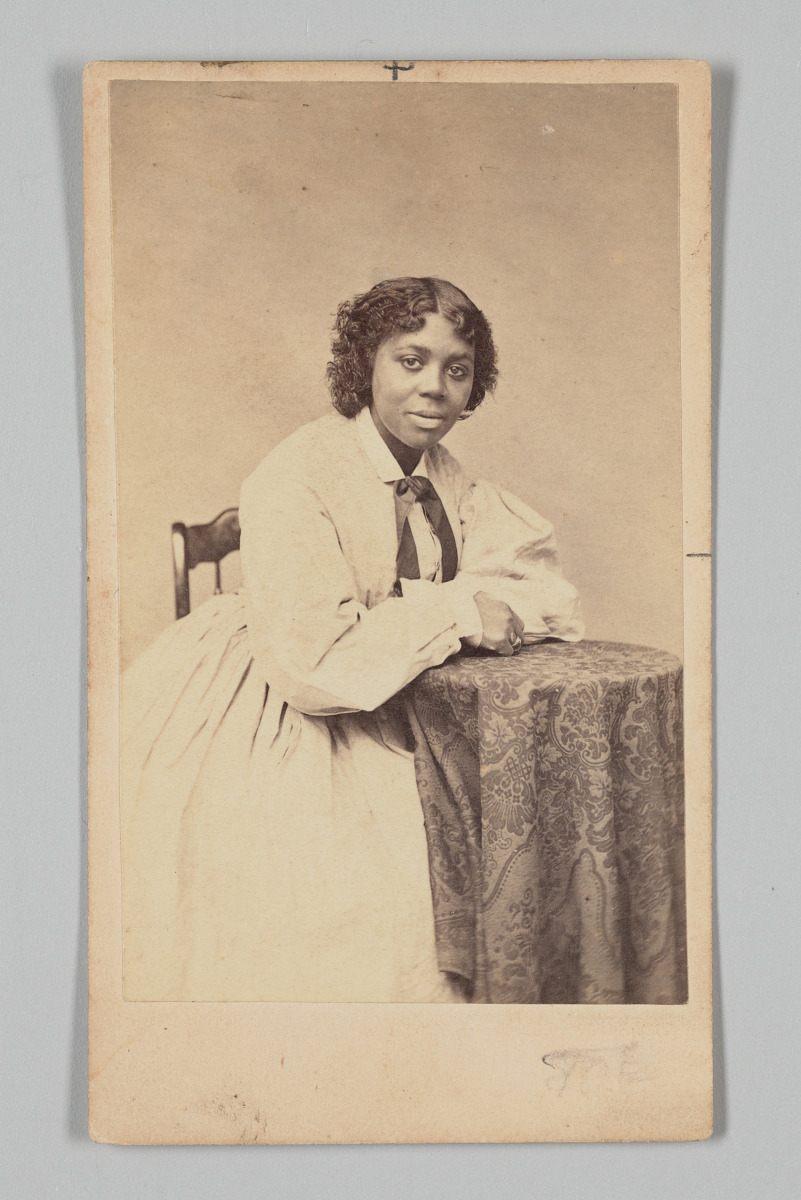
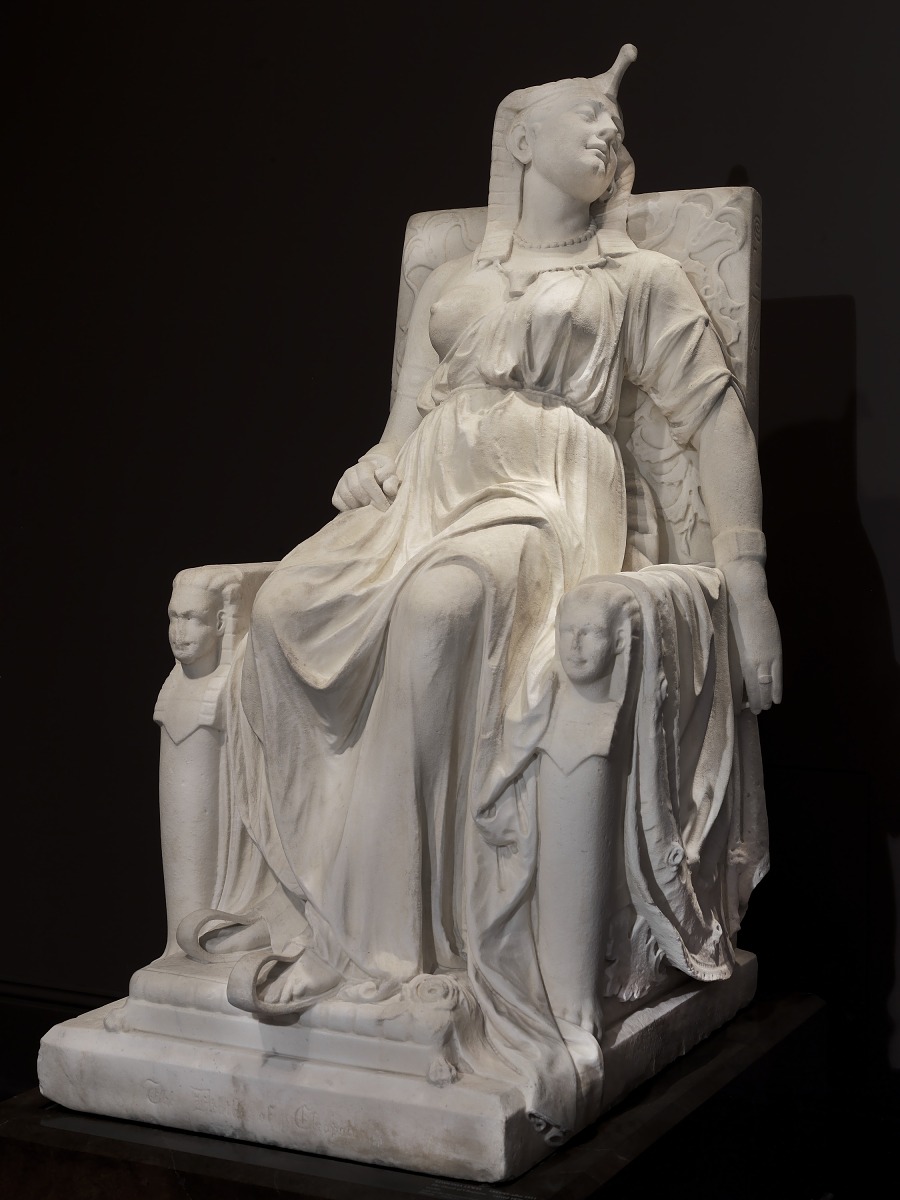
Edmonia Lewis, who started sculpting a generation later, permanently lived outside of the United States, working in Italy. Her Neo-Classical sculpture also presented Classical and Biblical material, again notable for the distinctive approach to her subjects. Her celebrated work, The Death of Cleopatra, was (at the time of its display in 1876) praised for its historically accurate depiction of the queen; but at the same time, it was different from other depictions in that it showed Cleopatra VII as dead. Her work concentrated on the individuals who were living in the ancient world, rather than the ancient world itself. This presentation will examine the way in which both artists conceptualized the ancient world through different artistic media and the historical context in which they lived, specifically against the backdrop of the Abolitionist movement, the Civil War, and the racism that both experienced in the course of their careers. Both artists have received considerable attention recently, with Edmonia Lewis featuring on a United States postage stamp and receiving a Google doodle, and Robert Duncanson’s Landscape with Rainbow being selected by Dr. Jill Biden as the inaugural painting for President Joe Biden in 2021, showing that their artistic visions still speak to us today.
Photograph of Edmonia Lewis by Augustus Marshall, Collection of the Smithsonian National Museum of African American History and Culture, 2020.10.5.
Edmonia Lewis, The Death of Cleopatra, carved 1876, marble, 63 x 31 1/4 x 46 in. (160.0 x 79.4 x 116.8 cm.), Smithsonian American Art Museum, Gift of the Historical Society of Forest Park, Illinois, 1994.17.

Tasha Vorderstrasse is the Manager of the Continuing Education program at the Institute for the Study of Ancient Cultures, West Asia and North Africa (ISAC) at the University of Chicago. In her job, she coordinates the ISAC’s adult education program, in which she also teaches, in addition to giving ISAC Museum tours and providing other programming to University of Chicago students. She is also responsible for the ISAC social media pages. She received her PhD in Near Eastern Archaeology from the University of Chicago in 2004 and is interested in questions of how different forms of material culture can help us better understand how individuals constructed their identities over time. Her work on the reception of ancient and medieval West Asia and North Africa focuses on different ways in which various individuals understood and experienced the region, specifically looking at the collecting of antiquities, 19th-century photography, and how Black artists, historians, and intellectuals examined the ancient world.

Friends of ASOR present the next webinar of the 2025-2026 season on September 24, 2025, at 7:00 pm EDT, presented by Dr. Tasha Vorderstrasse. This webinar will be free and open to the public. Registration through Zoom (with a valid email address) is required. This webinar will be recorded and all registrants will be sent a recording link in the days following the webinar.

SUPPORT THE WEBINAR PROGRAM!

Friends of ASOR is pleased to announce that the first webinars of the 2025-2026 season will once again be free and open to the public with a goal to raise $10,000 so that the entire webinar season will be free. Will you support this outreach effort with a tax-deductible contribution? All donors/sponsors with gifts of $100 or more will be recognized in subsequent webinars. Help ensure these webinars stay free and available to all by donating today!

Designate your gift for “Webinars” in the drop-down menu.
Table of Contents for Near Eastern Archaeology 88.3 (2025)

Table of Contents for Near Eastern Archaeology 88.3 (September 2025)

nea.88.3.cover
You can receive NEA(and other ASOR publications) through an ASOR Membership.
Please e-mail the Membership office if you have any questions.
Pp. 176–185: “From Armageddon to Chicago: The Legacy of the University of Chicago’s Megiddo Expedition” by Kiersten Neumann

The Megiddo excavation of the University of Chicago’s Institute for the Study of Ancient Cultures (previously the Oriental Institute; hereafter ISAC) was the first of many multiyear archaeological expeditions initiated by the burgeoning institute in the early twentieth century. The discovery, recording, and interpretation that took place over the fourteen seasons of fieldwork (1925–1939) under three successive field directors—Clarence S. Fisher (1925–1927), P. L. O. Guy (1927–1934), and Gordon Loud (1935–1939)—would come to lay the foundations for archaeology in the southern Levant. Accessible through ISAC’s seminal publications, museum collections (including both archaeological objects and archival records), and public exhibitions, the wealth of information and materials acquired as a result of the Megiddo Expedition are still rigorously consulted and built upon today, making it one of the most impactful and lasting endeavors in ISAC’s history.

ASOR Members with online access: log into ASOR’s Online Portal here. Once logged in, click the JOURNALS tab in the top navigation bar. Tutorials for how to log in to the Online Portal as well as how to navigate to the Portal Journals page can be found here.

Pp. 186-193: “The Last Canaanites: Megiddo during the Iron Age I” by Eran Arie

This article explores the final stages of Canaanite Megiddo during Iron I, focusing on Strata VIB and VIA. Stratum VIB presents evidence for a modest village lacking monumental structures, while Stratum VIA marks the peak of urban development before its catastrophic destruction. The article argues for the architectural and social continuity between the Late Bronze and Iron Age I, highlighting Megiddo’s role as an independent citystate, and emphasizing its economic self-sufficiency, localized production, and Canaanite heritage. The destruction of Stratum VIA was unexpected, rapid, and complete, as there are no signs of crisis behavior.

ASOR Members with online access: log into ASOR’s Online Portal here. Once logged in, click the JOURNALS tab in the top navigation bar. Tutorials for how to log in to the Online Portal as well as how to navigate to the Portal Journals page can be found here.

Pp. 194-203: “Before the Omrides: The Early Days of Israelite Megiddo” by Assaf Kleiman and Israel Finkelstein

Excavations in the southeastern sector of Megiddo revealed important finds that illuminate the material culture and history of the site in particular and northern Israel in general during the early days of the Northern Kingdom (Israel). This includes the appearance of public architecture and the revival of the commercial networks in the eastern Mediterranean.

SIDEBAR P. 197: Sheshonq I (Biblical Shishak) at Megiddo, byShirly Ben-Dor Evian

SIDEBAR P. 198: From Bronze to Iron, by Naama Yahalom-Mack

ASOR Members with online access: log into ASOR’s Online Portal here. Once logged in, click the JOURNALS tab in the top navigation bar. Tutorials for how to log in to the Online Portal as well as how to navigate to the Portal Journals page can be found here.

Pp. 204-211: “Megiddo of the Omride Dynasty” by Israel Finkelstein

This article deals with the remains of Stratum VA-IVB at Megiddo. From the perspective of relative chronology (i.e., ceramic typology), it dates to the late Iron IIA. Monuments belonging to this stratum, especially two ashlar-built palaces and the six-chambered gate, had previously been associated with the construction activities of King Solomon in the tenth century BCE. Traditional archaeology considerations and radiocarbon dating now put it in the first half of the ninth century—the period of the Omride dynasty of the Northern Kingdom (Israel). First, the history of research of Stratum VA-IVB is described, followed by the presentation of new evidence from the field on two of its monuments: Palace 6000, first excavated by Yigael Yadin, and the gate, unearthed by the University of Chicago team. Finally, general issues, such as the layout of the city and its cult, are discussed.

ASOR Members with online access: log into ASOR’s Online Portal here. Once logged in, click the JOURNALS tab in the top navigation bar. Tutorials for how to log in to the Online Portal as well as how to navigate to the Portal Journals page can be found here.

Pp. 212-220: “Horse Industry City: Eighth-Century BCE Megiddo” by Israel Finkelstein

The article deals with Stratum IVA at Megiddo, dated to the early Iron IIB, in the first half of the eighth century BCE. This layer yielded the biggest concentration of monuments in a city belonging to the Northern Kingdom. First, its construction and destruction dates are dealt with, and then the main monuments: the four-entry gate, water system, administration building with a sector devoted to cult, and the two systems of three-aisle longitudinal pillared building. The construction date and the function of the latter structures had been disputed. It is now clear that they belong to Stratum IVA and that they indeed served as stables, as first suggested in the 1920s. The number of units at Megiddo points to a developed industry, which probably specialized in breading horses and training them as war animals. This was among the most important economic ventures of the kingdom.

ASOR Members with online access: log into ASOR’s Online Portal here. Once logged in, click the JOURNALS tab in the top navigation bar. Tutorials for how to log in to the Online Portal as well as how to navigate to the Portal Journals page can be found here.

Pp. 222-230: “Megiddo in the Age of Empires: Assyria, Egypt, and Babylonia” by Assaf Kleiman

Following the collapse of the Northern Kingdom in the late eighth century BCE, Megiddo became the capital of the Neo-Assyrian province of Magiddû. The University of Chicago excavations exposed the settlement’s distinct orthogonal layout and administrative quarter. And yet, many questions concerning its chronology, material culture, and population remained unsolved. In this article, the unique contributions of recent fieldwork conducted in the mound’s northwestern sector to the understanding of Megiddo under Assyrian, Egyptian, and Babylonian rule are highlighted

ASOR Members with online access: log into ASOR’s Online Portal here. Once logged in, click the JOURNALS tab in the top navigation bar. Tutorials for how to log in to the Online Portal as well as how to navigate to the Portal Journals page can be found here.

Pp. 232-239: “Protecting and Presenting Armageddon: The Conservation and Public Interpretation of Tel Megiddo” by Shirly Ben-Dor Evian and Neil A. Silberman

The vital behind-the-scenes work of conservation and site presentation at Tel Megiddo is essential to preserving the site for visitation and raising public awareness about its archaeological and historical significance. Protecting the site’s extensive archaeological remains from deterioration requires ongoing conservation efforts at every scale from small finds to large excavation areas. And as Megiddo evolves from a strictly archaeological site to a cultural icon and tourism destination, the challenge of interpreting its monuments for diverse audiences has become more complex. This article explores Megiddo’s management history, conservation strategies, and interpretive approaches focused on deepening public understandings of Megiddo’s urban evolution and cultural significance.

ASOR Members with online access: log into ASOR’s Online Portal here. Once logged in, click the JOURNALS tab in the top navigation bar. Tutorials for how to log in to the Online Portal as well as how to navigate to the Portal Journals page can be found here.

Pp. 240-247: “The Contribution of the Megiddo Expedition to the Archaeology of the Levant and Beyond” by Israel Finkelstein and Matthew J. Adams

The article summarizes the results of three decades of excavations at Megiddo, emphasizing the initial goals of the Tel Aviv University Expedition and their fulfillment. It discusses the reinvestigation of main monuments uncovered in the past, and the main archaeological and historical contributions of the dig by period.

ASOR Members with online access: log into ASOR’s Online Portal here. Once logged in, click the JOURNALS tab in the top navigation bar. Tutorials for how to log in to the Online Portal as well as how to navigate to the Portal Journals page can be found here.

PREVIOUS RECIPIENTS OF ASOR AWARDS

Nimrod Fortress photographed by Emily Gray in 2017

PREVIOUS RECIPIENTS OF ASOR AWARDS

ASOR Service Awards

W.F. Albright Award
2025
  • Matthew J. Adams (AIAR)
2024
  • Nadia Bandak (AIAR)
  • Hisham M’Farreh (AIAR)
  • Photoulla Christodoulou (CAARI)
2022
  • John P. Oleson
2021
  • Oystein LaBianca (ACOR)
  • Susan Cohen (AIAR)
  • Bryan Wilkins (CAARI)
2020
  • Nisreen Abu al-Shaikh (ACOR)
  • Achilleas Demetriades (CAARI)
  • Lisa Cooper (Damascus Committee)
2019
  • Randolph B. Old (ACOR)
  • Birgitta Lindros Wohl (CAARI)
2018
  • Barbara A. Porter (ACOR)
  • Sidnie White Crawford (AIAR)
2017
  • H.R.H. Prince Raad Zeid Al-Hussein (ACOR)
  • Sharon Herbert (AIAR)
  • Andrew P. McCarthy (CAARI)
2016
  • Humi Ayoubi (ACOR)
  • John Spencer (AIAR)
2015
  • Mohammed Adawi (ACOR)
  • J.P. Dessel (AIAR)
  • Marian Feldman (Baghdad Committee)
  • Annemarie Weyl-Carr (CAARI)
2014
  • Piotr Michalowski (Baghdad Committee)
  • Raymond C. Ewing (CAARI)
  • Christopher A Tuttle (ACOR)
2013
  • Joan Branham
2012
  • J. Edward Wright
2010
  • Nan Fredrick (CAARI)
2009
  • Gus Feissel (CAARI)
2008
  • Stuart Swiny (CAARI)
  • Lydie Shufro (AIAR)
2007
  • Bert DeVries (ACOR)
2006
  • Sidnie White Crawford (AIAR)
2005
  • David Detrich (CAARI)
  • Daniel Wolk (AIAR)
2004
  • Vathoulla Moustokki (CAARI)
  • S. Thomas Parker (ACOR)
2003
  • Norma Dever (AIAR)
  • Ellen Herscher (CAARI)
  • David McCreery (ACOR)
2002
  • Robert Haak (AIAR)
  • Andrew Oliver (CAARI)
2001
  • Patricia Bikai (ACOR)
  • John Spencer (AIAR)
  • Nancy Serwint (CAARI)
2000
  • Pierre Bikai (ACOR)
  • Sy Gitin (AIAR)
1999
  • Patty Gerstenblith (AIAR)
1998
  • Nancy L. Lapp (ACOR)
  • Giraud V. Foster (CAARI)
  • James F. Ross (AIAR)
1997
  • Artemis A. W. Joukowsky (ACOR)
  • Stuart Swiny (CAARI)
2025
  • Charles E. Jones
2024
  • Ann-Marie Knoblauch
2023
  • Paul Flesher
2022
  • Richard L. Coffman
2021
  • Sheila Bishop
2019
  • Lawrence T. Geraty
2018
  • Lynn Swartz Dodd
2017
  • Carol Meyers
2016
  • Vivian Bull
2015
  • Stevan Dana
2014
  • Norma Kershaw
2013
  • Jennie Ebeling
2011
  • Sheldon Fox
2009
  • Orlyn Nelson
2008
  • Robert J. Bull
2007
  • B. W. Ruffner
2006
  • James Strange
2005
  • David Rosenstein
2001
  • William G. Denver
2000
  • Philip J. King
1999
  • Robert Hohlfelder
1998
  • Walter E. Rast
1997
  • Ernest S. Frerichs
2025
  • Yorke Rowan
2024
  • Sturt W. Manning
2023
  • Bethany Walker
2022
  • Glenn Schwartz
2021
  • Andrea Berlin
2020
  • Mary M. Voigt
2019
  • Amnon Ben-Tor
2018
  • Aren M. Maeir
2017
  • Israel Finkelstein
2016
  • Larry Herr
2015
  • Michele Daviau
2014
  • Carol L. Meyers
2013
  • Amihai Mazar
2010
  • Edgar Peltenberg
2009
  • Seymour Gitin
2007
  • Alan H. Simmons
2006
  • Kenneth Holum
2005
  • Roger Boraas
2004
  • Gary Rollefson
2003
  • Thomas Levy
2002
  • Elizabeth C. Stone
2000
  • Lawrence Geraty
1999
  • Martha Sharp Joukowsky
1998
  • Lawrence E. Toombs
1997
  • William G. Dever
2025
2024
  • Matthew D. Howland, Brady Liss, Ian W.N. Jones, Anthony Tamberino, Mohammad Najjar, Thomas E. Levy, ELRAP Jordan Sketchfab Team
2023
  • Marilyn Lundberg Melzian
2022
2025
  • Sharon Herbert
2024
  • Carolyn Midkiff Strange
  • James F. Strange
2019
  • Susan Ackerman
2017
  • William G. Denver
2014
  • Timothy P. Harrison
2013
  • Seymour Gitin
2011
  • Lydie Shufro
2007
  • Eric M. Meyers
2006
  • Joe Seger
2005
  • Pierre and Patricia Bikai
2002
  • Walter Rast
1997
  • Norma Kershaw
1996
  • P.E. MacAllister
1994
  • Charles Harris and Joy Ungerleider Mayerson
1989
  • Richard J. Scheuer
2025
  • Theodore W. Burgh
  • Allison Thomason
  • Vanessa Workman
2024
  • Kevin McGeough
  • Jane DeRose Evans
  • Tiffany Earley-Spadoni
2023
  • Leigh Anne Lieberman, Tiffany Earley-Spadoni, and Melissa Cradic, Digging Up Data
  • Piotr Michalowski
  • Beth Alpert Nakhai
2022
  • Helen Dixon
  • Ann-Marie Knoblauch
2021
  • Hanan Charaf
  • Kate Grossman
  • Heather McKee
2020
  • Laura Mazow
  • Emily Miller Bonney
  • Christopher Rollston and Eric H. Cline
2019
  • Gary Arbino
  • Geoff Emberling
  • Randall (Randy) Younker
2018
  • Charles E. Jones
  • Jonathan Rosenbaum
  • Thomas Schneider
2017
  • Rachel Hallote
  • Lawrence “Larry” Geraty
  • Erin and Robert Darby
2016
  • Sheila Bishop
  • Doug Clark
  • Eric Cline
2015
  • Orlyn Nelson
  • Joseph Greene
  • Lynn Swartz Dodd
2014
  • Gary P. Arbino
  • Oystein LaBianca
2013
  • Elise Friedland and Andrew M. Smith II
  • Beth Alpert Nakhai
2010
  • Michael Homan
2009
  • Tammi Schneider and Ann Killebrew
2007
  • Morag Kersel
2006
  • Albert Leonard, Jr.
2005
  • Piotr Michalowski
  • Sharon Steadman
  • Gloria London
2004
  • Jonathan Tubb
  • Albert Leonard, Jr.
2003
  • Rudolph Dornemann
  • Ann E. Killebrew
  • Victor Matthews
2002
  • Harold O. Forshey
2001
  • Nancy Frederick
  • Jodi Magness
2000
  • Billie Jean Collins
  • Lydie Shufro
  • Robert J. Bull
1999
  • James Weinstein
  • Norma Dever
1998
  • Anne Ogilvy
  • David C. Hopkins
  • Jonathan N. Tubb
1997
  • Carolyn Draper Rivers
  • R. Thomas Schaub
2017
  • James “Jim” Eisenbraun
2013
  • Jim Weinstein
2006
  • James P. Joseph, Esq.
  • Arnold & Porter, LLP
2011
  • Selma Omerefendic

ASOR Book Awards

Frank Moore Cross Award
2025
2024
2023
  • Megan Nutzman, Contested Cures: Identity and Ritual Healing in Roman and Late Antique Palestine (Edinburgh University Press) 2022
2022
  • Carolina López Ruíz, Phoenicians and the Making of the Mediterranean (Harvard University Press) 2022
2021
  • Geoffrey Khan, The Tiberian Pronunciation Tradition of Biblical Hebrew (Open Book Publishers) 2020
2020
  • Theodore J. Lewis, The Origin and Character of God: Ancient Israelite Religion Through the Lens of Divinity (Oxford University Press) 2020
2019
  • Sidnie White Crawford,  Scribes and Scrolls at Qumran (Wm. B. Eerdmans Publishing Co.) 2019
2018
  • Matthew J. Suriano,  A History of Death in the Hebrew Bible (Oxford University Press) 2018
2017
  •  Sara J. Milstein, Tracking the Master Scribe: Revision through Introduction in Biblical and Mesopotamian Literature (Oxford University Press) 2016
2016
  • Mark Smith, Where the God Are, Spatial Dimensions of Anthropomorphism in the Biblical World (Yale University Press) 2016
2015
  • Eugene Ulrich,  The Dead Sea Scrolls and the Developmental Composition of the Bible (Brill) 2015
2014
  • Nicholas Postgate, Bronze Age Bureaucracy: Writing and the Practice of Government in Assyria (Cambridge University Press) 2013
2013
  • Frederick J. Murphy, Apocalypticism in the Bible and Its World: A Comprehensive Introduction (Baker Academic) 2012
2012
  • James C. VanderKam, The Dead Sea Scrolls and the Bible (Wm. B. Eerdmans Publishing Co.) 2012
2011
  • Christopher Rollston, Writing and Literacy in Ancient Israel: Epigraphic Evidence from the Iron Age (SBL Press) 2010
2010
  • Seth Sanders, The Invention of Hebrew (University of Illinois Press) 2009
2009
  • Ron E. Tappy and P. Kyle McCarter, Jr., Editors,
    Literate Culture and Tenth-Century Canaan, The Tel Zayit Abecedary in Context (Eisenbrauns)
2007
  • Bruce Lincoln, Religion, Empire and Torture: The Case of Achaemenian Persia, with a Postscript on Abu Ghraib (The University of Chicago Press) 2007
2006
  • Gordon Hamilton, The Origins of the West Semitic Alphabet in Egyptian Scripts (Wipf and Stock Publishers) 2006
2005
  • Mark Smith, The Memoirs of God: History, Memory, and the Experience of the Divine (Fortress Press) 2004
2004
  • Ziony Zevit, The Religions of Ancient Israel: A Synthesis of Parallactic Approaches (Bloomsbury Academic) 2001
2003
  • Michael Homan, To Your Tents, O Israel! The Terminology, Function, Form, and Symbolism of Tents in the Hebrew Bible and the Ancient Near East (Brill) 2002
2002
  • Ehud Netzer, Hasmonean and Herodian Palaces at Jericho, Volume 1: Stratigraphy and Architecture (Israel Exploration Society) 2001 & The Palaces of the Hasmoneans and Herod the Great (Israel Exploration Society) 2001
2001
  • Baruch Halpern, David’s Secret Demons: Messiah, Murderer, Traitor, King (Grand Rapids: Eerdmans) 2001
1998
  • Ronald S. Hendel, The Text of Genesis 1-11: Textual Studies and Critical Edition (Oxford University Press) 1998
1997
  • James H. Charlesworth, Volume 1 of the Dead Sea Scrolls series Rule of the Community and Related Documents (Westminster) 1995
2025
2024
2023
  • Amanda H. Podany, Weavers, Scribes, and Kings: A New History of the Ancient Near East (Oxford University Press) 2022
2022
  •  Paul Collins, The Sumerians (Reaktion Books) 2021
2021
  • Max Price, Evolution of a Taboo: Pigs and People in the Ancient Near East (Oxford University Press) 2020
2020
  • D. Fairchild Ruggles, Tree of Pearls: The Extraordinary Architectural Patronage of the 13th-Century Egyptian Slave-Queen Shajar al-Durr (Oxford University Press) 2020
2019
  •  Kara Cooney, When Women Ruled the World: Six Queens of Egypt (National Geographic) 2018
2018
  • Eric H. Cline, Three Stones Make a Wall (Princeton University Press) 2017
2017
  • Patrick E. McGovern, Ancient Brews: Rediscovered and Re-created (National Geographic Books) 2017
2016
  • Reinhard Pummer, The Samaritans, A Profile (Wm. B. Eerdmans Publishing Co.) 2016
2015
  • Jacob L. Wright, David, King of Israel, and Caleb in Biblical Memory (Cambridge University Press) 2013
2014
  • Eric H. Cline, 1177 B.C.: The Year Civilization Collapsed (Princeton University Press) 2014
2025
2024
2023
  • James Osborne, The Syro-Anatolian City States: An Iron Age Culture (Oxford University Press) 2020
2022
  • Andrea De Giorgi and A. Asa Eger, Antioch: A History (Taylor & Francis) 2021
2021
  • Allison Mickel, Why Those Who Shovel Are Silent: A History of Local Archaeological Knowledge and Labor (University Press of Colorado) 2021
2020
  • Raphael Greenberg, The Archaeology of the Bronze Age Levant: From Urban Origins to the Demise of City-States, 3700-1000 BCE (Cambridge University Press) 2019
2019
  • Assaf Yasur-Landau, Eric H. Cline, and Yorke M. Rowan, The Social Archaeology of the Levant (Cambridge University Press) 2018
2018
  • James A. Fraser, Dolmens in the Levant (Routledge) 2018
2017
  • Glenn Schwartz, Rural Archaeology in Early Urban Northern Mesopotamia: Excavations at Tell al-Raqa’i (Cotsen Institute of Archaeology) 2015
2016
  • Seymour Gitin (ed.), The Ancient Pottery of Israel and its Neighbors from the Iron Age through the Hellenistic Period (Israel Exploration Society) 2015
2015
  • A. Asa Eger, The Islamic-Byzantine Frontier: Interaction and Exchange Among Muslim and Christian Communities (I.B. Tauris Publishers) 2014
2014
  • Benjamin W. Porter, Complex Communities: The Archaeology of Early Iron Age West-Central Jordan (University of Arizona Press) 2013
2013
  • Phillip C. Edwards, Wadi Hammeh 27, an Early Natufian Settlement at Pella in Jordan (Brill) 2013
2012
  • Oded Lipshitz & David Vanderhooft, The Yehud Stamp Impressions: A Corpus of Inscribed Impressions from the Persian and Hellenistic Periods in Judah (Penn State Press) 2011
2011
  • Aaron Burke, Martin Peilstöker & Aren Maeir, The History and Archaeology of Jaffa 1 (Cotsen Institute of Archaeoology Press) 2011
2010
  • Aharon Sasson, Animal Husbandry in Ancient Israel: A Zooarchaeological Perspective on Livestock Exploitation, Herd Management and Economic Strategies (Equinox Publishing) 2010
2009
  • Alan Simmons, The Neolithic Revolution in the Near East: Transforming the Human Landscape (University of Arizona Press) 2007
2008
  • Avraham Faust, Israel’s Ethnogenesis (Routledge) 2006
2007
  • Amihai Mazar, Tel Beth Shean Excavation Reports (Israel Exploration Society and the Hebrew University of Jerusalem) 2007
2006
  • Ann E. Killebrew, Biblical Peoples and Ethnicity (Society of Biblical Lit.) 2005
2005
  • Burton MacDonald, The Tafila-Busavra Archaeological Survey 1999-2001, West-Central Jordan (American Schools of Oriental Research) 2004
2004
  • Larry Herr, Madaba Plains Project: The 1994 Season at Tall Al’Umavri and Subsequent Studies (Andrews University Press) 2002
2003
  • Beth Alpert Nakhai, Archaeology and the Religions of Canaan And Israel (American Schools of Oriental Research) 2001
2002
  • Edward F. Campbell, Jr., Shechem III: The Stratigraphy and Architecture of Shechem/Tell Baltah (American Schools of Oriental Research) 2002
2001
  • Michel Fortin, Recherches canadiennes, sur la Syrie, antique (Muse de la Civilisation) 2000
1998
  • Steven A. Rosen, Lithics After the Stone Age (AltaMira Press) 1997
1997
  • Eric M. Meyers, Oxford Encyclopedia of Archaeology in the Near East (Oxford University Press) 1997
2020
  • Pınar Durgun, An Educator’s Handbook for Teaching About the Ancient World (Archaeopress) 2020

Annual Meeting Awards

Joy Ungerleider Poster Award
2025
2024
  • Helen C. Wong and Erin M. Brantmayer, “The Boundaries of Death: Outlining Mortuary Landscapes at Jebel Khalid.”
2023
2022
2021
2020
  • Rachel Banks, Cassandra DeGaglia, Amy Dixon, Kara Larson, and James Hardin, “The Spaces Between: Spatial Reconstruction of a Proposed Iron Age IIB”
2019
  • Christopher J. Davey, Luis R. Siddall, Carla A. Raymond, and Joseph J. Bevitt for “Hidden Text: Imaging and reading an ancient tablet in an envelope”
2018
  • Morag Kersel, Marly Prom, and Students in ANT256 (DePaul University) for “Where Are They Now? Following Pots into Archives, Educational Institutions, and Museum Vitrines”
2017
  •  Rebecca Seifried and Chelsea A. M. Gardner for The Value of Travelers’ “Itineraries in Archaeological Research: A GIS Analysis of Pathways through the Mani Peninsula, Greece”
2016
  • Robert S. Homsher, Adam B. Prins, Melissa S. Cradic and Matthew J. Adams, for “New Dimensions in Digital Documentation: Tomb 50 of Megiddo”
2015
  • Petra Creamer (University of Pennsylvania) for “The Apotropaic Nature of Old Babylonian Terracotta Plaques”
2014
  • Blair Heidkamp, Gabrielle Borenstein, and Joyce Fountain for the poster “The Final Season: Marj Rabba 2014”
2025
  • Aaren (Zhengfang) Zhou, “Cooking Pots and Negotiating Identity: Material Culture and Adaptive Agency During the Egyptian Occupation of Beth She’an.”
2024
  • Nicole Constantine, “Materializing Ptolemaic Power: Ruler Cult and Festival in the Hellenistic Mediterranean”
2023
  • Morganne Ottobre, “Between Two Cultures: Translation and Multimodality in the Tell Fekheriyeh Inscription”
2022
  • Alia Fares, “Archaeology at Your Doorstep-Building Heritage Awareness on the Lebanon Mountain Trail and for Beirut’s Traumatized Youth.”
2021
  • Gretchen Emma Zoeller,  “A Paleopathological Investigation of Amputation in Ancient Nubia”
2020
  • Noam Cohen, “How to Talk about Domestic Abuse in Old Babylonian”
2004
  • Elizabeth Stone
  • Dick Ballou

Tunisia Tour Reservation Form

Friends of ASOR Tours: Tunisia Reservation Form

LCP HANDBOOKS SERIES

THE LCP HANDBOOKS SERIES

The Levantine Ceramics Project (LCP) Handbooks Series (LCPH) is a comprehensive series consisting of peer-reviewed ceramic guides built from data on the LCP’s open access digital platform. The series is a user-friendly resource providing up-to-date, comprehensive overviews and quick identification of a range of wares common on Mediterranean sites. Each volume focuses on a class of pottery, a particular region and/or era, or a particular ceramic phenomenon.

Titles in This Series
Order Information

William Caraher, Andrea Berlin, and Matthew J. Adams; Series Editors

Most Recent Publication

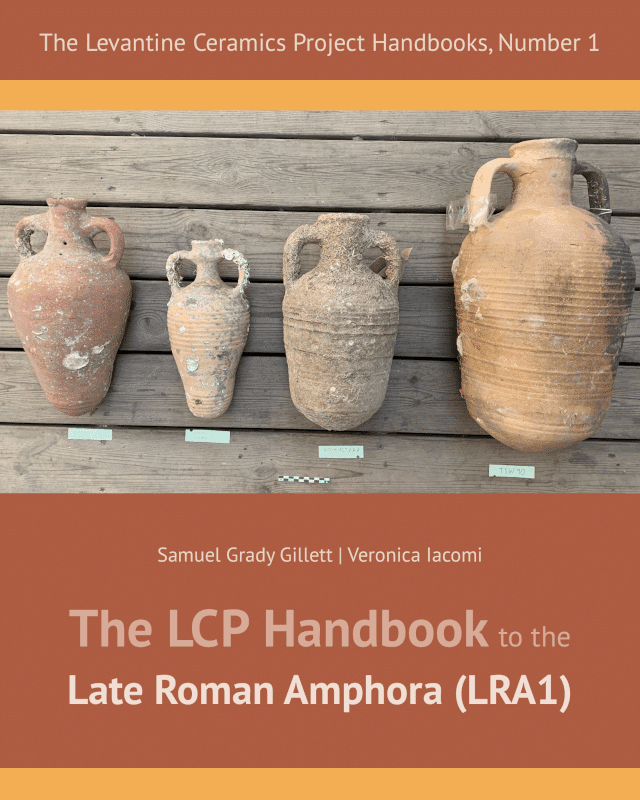
The LCP Handbook to the Late Roman Amphora (LRA1)

by Samuel Grady Gillett and Veronica Iacomi

This handbook to the Late Roman Amphora 1 (LRA1) is a publication of the Levantine Ceramics Project, an open-access resource for the study of Levantine pottery, its societies, cultures, and economies, from the Neolithic era (ca. 5500 BCE) until today. For four hundred years (fourth–seventh centuries), the LRA1 served as both agent and symbol of the deeply entwined, far-flung economic network of the later Roman and Byzantine worlds. The handbook offers an up-to-date overview and user-friendly identification guide to known production sites, petrographic data, and current information on distribution, which stretches from Scotland and Wales to Yemen and India.

Read more…

Titles

1. Samuel Grady Gillett and Veronica Iacomi. The LCP Handbook to the Late Roman Amphora. Columbus, GA: August 2025. Paperback available from ISD. Open access eBook available from Lockwood Press.

How to Order

The LCP Handbooks Series is available for purchase by individual volume or by subscription via a standing order. To set up a standing order or an individual order, please contact ISD.

Customers in North America:
ISD
70 Enterprise Drive, Suite 2
Bristol, CT 06010
1-800-584-6546

Customers in Europe and the Middle East:
ISD International
PO Box 270
South Brent, TQ9 9FX
United Kingdom
Tel: +44 1364 255364

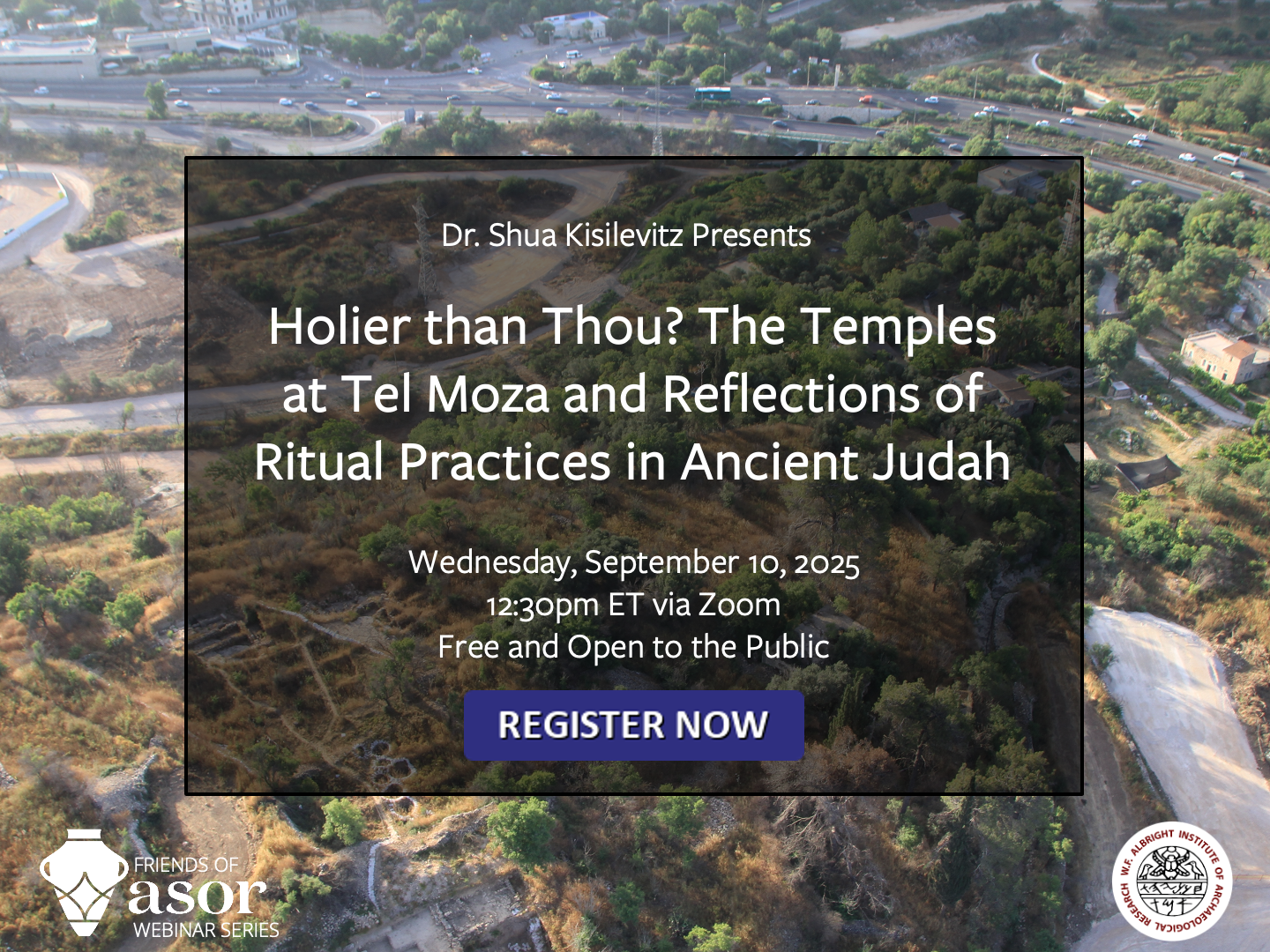
FOA Webinar: Shua Kisilevitz

FRIENDS OF ASOR WEBINARS

Holier than Thou? The Temples at Tel Moza and Reflections of Ritual Practices in Ancient Judah

Friends of ASOR present the first webinar of the 2025-2026 season on September 10, 2025, at 12:30 pm EDT, presented by Dr. Shua Kisilevitz. This webinar will be free and open to the public. Registration through Zoom (with a valid email address) is required. This webinar will be recorded and all registrants will be sent a recording link in the days following the webinar.

The recent discovery of not one, but a succession of two temples from the First Temple period at Tel Moza—just 7 km from Jerusalem—has reignited debate about how religion took shape in ancient Judah and the wider region. The revelations at Tel Moza are especially intriguing when set against the backdrop of traditional scholarship, which was both heavily guided by biblical texts and paradigms and hampered by the rarity of confirmed temple remains in Judah.

3D Reconstruction: Roy Albag

3D reconstruction © Roy Albag. Reproduced with permission. This image is not included under the website’s general Creative Commons license and may not be reproduced or distributed without express permission of the copyright holder.


At Tel Moza, excavations revealed a cultic precinct containing a modest early shrine that was later replaced by a monumental “long-room” temple whose plan, scale, and decoration closely echo the Bible’s description of Solomon’s Temple. Indeed, the similarities between the temples at Tel Moza and Jerusalem, and the proximity between the two, sharpen questions of cultic centralization, reform, and practice, and they suggest that Jerusalem’s temple was neither the only one in Judah nor necessarily the “first.”

Because such temple evidence is so scarce in Judah, the Tel Moza finds are unusually revealing. They include altars, offering tables, standing stones, sacrificial remains, and cultic paraphernalia that were found in sealed, well-documented contexts that reflect continuous rebuilding and refurbishing of the temples. Altogether, these discoveries provide a rare glimpse into how worship was actually practiced and how traditions formed over centuries. In this lecture, Dr. Kisilevitz will trace the development of the two Tel Moza temples and the rituals practiced there, setting them alongside biblical descriptions and regional parallels. Through plans, objects, and visual reconstructions, she will show how the patterns at Tel Moza likely reflect broader traditions that shaped religious life in Jerusalem and across the southern Levant.

Shua Kisilevitz is Assistant Director of the Albright Institute and a research fellow at Tel Aviv University.
She received her B.A.and M.A. in Archaeology from the Hebrew University of Jerusalem, and her PhD from Tel Aviv University. She has participated in excavations across Israel and has directed excavations at 15 sites in the region of Jerusalem and Judea. Since 2012, she has spearheaded the research and publication of the Iron Age site at Tel Moza, and she is co-director of the Tel Moza Expedition Project. Dr. Kisilevitz specializes in the archaeology of religion and ritual of the southern Levant in the Iron Age.

SUPPORT THE WEBINAR PROGRAM!

Friends of ASOR is pleased to announce that the first webinars of the 2025-2026 season will once again be free and open to the public with a goal to raise $10,000 so that the entire webinar season will be free. Will you support this outreach effort with a tax-deductible contribution? All donors/sponsors with gifts of $100 or more will be recognized in subsequent webinars. Help ensure these webinars stay free and available to all by donating today!

Designate your gift for “Webinars” in the drop-down menu.

Join ASOR’s Board of Trustees

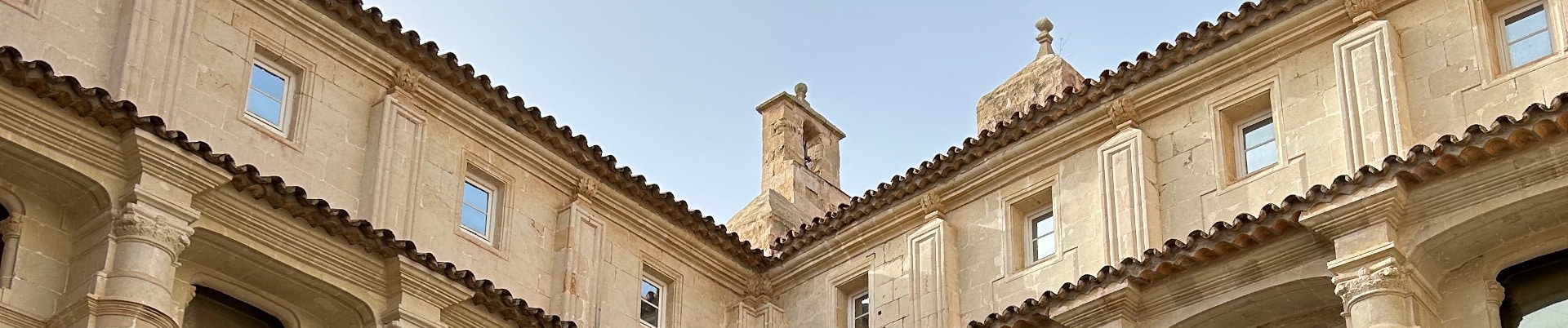
Interior courtyard of the Museum of Menorca, Spain.

CALL FOR TRUSTEE NOMINATIONS

The Trustee Nominations Committee announces an open call for (self) nominations for the ASOR Board of Trustees (Class of 2028). Trustees will serve a three-year term, starting January 1, 2026. There are three primary responsibilities of the members of the Board of Trustees:

  • Governance: Being aware of issues brought forward to the Board, attending two meetings per year (at your own expense), and bringing issues of concern to the Board.
  • Fundraising and financial management: Leading in development by thinking of new opportunities, leading in giving, and providing oversight on the audited financial statements. We ask that individual trustees aspire to contribute $500 or more annually.
  • Strategic planning and policy development: Leading especially in measures that accord with ASOR’s mission.


We anticipate two openings for Membership-Elected Trustees. Any full ASOR member may be considered for nomination as an Membership-Elected Trustee. If there is someone that you would like the committee to consider—including yourself—please send the person’s name and email address to Marta Ostovich in the ASOR office. Please check with the nominee as to whether they are interested in serving on the ASOR Board of Trustees before sending in their name. If you have any questions about the responsibilities and satisfactions of being a board member, please email Kathryn Grossman, Chair of the Trustee Nominations Committee.

The ASOR office, or a representative from the Nominations Committee, will contact all nominees to describe the responsibilities in greater detail, and to make sure that the nominee is willing to have his or her name discussed by the Trustee Nominations Committee. Please note that nominees will need to submit a brief biography and a mission (or vision) statement for what they would like to accomplish as a trustee to be considered by the Nominations Committee. A sample of these statements can be found in last year’s “Meet Your Board Nominees” webpage. Brief biographies and mission statements should be ca. 200 words each and submitted via e-mail to Marta Ostovich by noon EDT on Monday, September 22, 2025.

After the Committee selects individuals for nomination, the election will take place by electronic ballot during October. ASOR is once again conducting online voting to ensure that more of our members are able to participate in this important process. The ASOR office will work with any person who is not able to complete an electronic ballot to ensure that everyone is included.

In order to receive full consideration by the committee, nominations (including supporting documents) should be submitted to programs@asor.org by noon EDT on September 22, 2025.

Friends of ASOR Tours: Archaeological Tour of Cyprus 2026

FRIENDS OF ASOR TOURS

Archaeological Tour of Cyprus 2026


Next summer, join 15+ ASOR archaeologists* for an unforgettable journey through Cyprus, where archaeology meets breathtaking Mediterranean beauty. Immerse yourself in behind-the-scenes tours with scholars, archaeologists, excavators, and museum curators who will personally guide the group through a curated itinerary of sites and museums, including:

  • Kourion
  • Idalion
  • Koukila
  • Cyprus Archaeological Museum
  • The Cyprus American Archaeological Research Institute (CAARI), among many other sites.


Friends of ASOR is excited to announce the launch of our first archaeological tour of Cyprus from arrival on June 14 to departure on June 23, 2026. Some of the ASOR archaeologists are pictured below. Tour leaders will be ASOR’s own Dr. Rachel Bernstein and Dr. Andy Vaughn. Tour highlights include exploring Idalion with Dr. Pamela Gaber, investigating the new excavation areas around Kalavasos with Dr. Kevin Fisher, conversing with Dr. William Dever over dinner, and touring and dining at the Cyprus American Archaeological Research Institute with Dr. Lindy Crewe.*

Space is limited to 28 people—reserve your place now to travel with fellow archaeology enthusiasts and ASOR experts!

Double occupancy: $5,750 (includes a $1,000 tax-deductible gift) | Single room supplement: +$900

What’s Included

The tour price covers:

  • Accommodation
  • Guided site visits
  • Ground transportation
  • Breakfasts and dinners
  • Entrance fees

In addition, a $1,000 tax-deductible contribution supports Friends of ASOR’s outreach initiatives, archaeological engagement, and education programs.


Registration Rates

Early Bird (through September 30, 2025): $4,750 + $1,000 tax-deductible gift to Friends of ASOR
Super Saver (October 1 – November 4, 2025): $4,850 + $1,000 tax-deductible gift to Friends of ASOR
Advance (November 5 – December 15, 2025): $4,950 + $1,000 tax-deductible gift to Friends of ASOR
Regular (December 16, 2025 until space is full): $5,050 + $1,000 tax-deductible gift to Friends of ASOR

Payment Schedule:

To reserve your place: $250 gift to Friends of ASOR Tours (applied toward your total $1,000 contribution). When making your gift, please select the “Friends of ASOR Tours Cyprus” category from the drop-down menu.
Half of the tour cost (excl. remainder of Friends of ASOR contribution): Due by December 15, 2025 (or at registration if after this date.)
Remaining tour cost (excl. remainder of Friends of ASOR contribution): Due by March 31, 2026.
Remainder of $1,000 contribution ($750): Due by May 1, 2026.

Example of Total Cost:

If you register during the Regular period:
$5,050 (tour rate) + $1,000 (tax-deductible gift) = $6,050 total


Please e-mail us or call +1 (703) 789-9234 with any questions.

Cancellation Policy

ASOR strongly recommends that all participants purchase travel insurance because ASOR is required to make non-refundable deposits. ASOR cannot be responsible for refunds except as noted below.

All tax-deductible gifts to ASOR’s Friends of ASOR outreach initiatives are irrevocable and thus not refundable.

Schedule of refunds for trip cost and single supplement (if any):

  • From time of payment until January 15, 2026: $600 cancellation fee
  • From January 16, 2026 until March 31, 2026: $1,800 cancellation fee
  • From April 1, 2026 until May 1, 2026: $2,750 cancellation fee
  • From May 2 onward: full amount / no refund

*Speakers and full itinerary are subject to change.

2025 Call for Vice President

ASOR SEEKS NOMINATIONS FOR VICE PRESIDENT

The Officers Nominations Committee of ASOR announces a general call for nominations and applications for individuals to be considered for the position of Vice President of the Corporation. This is a three-year term of office beginning on January 1, 2026 and ending on December 31, 2028. A general description of the Office of Vice President and its responsibilities is in the ASOR Bylaws, available on the ASOR website (see Article IV, Section 4.7). Nominating an officer is an important way for members to participate in the governance of their organization, and we encourage you to self-nominate or nominate others. All ASOR Members in good standing are eligible for nomination as Vice President.

The Vice President’s primary responsibilities are to chair the Chairs Coordinating Council and serve on ASOR’s Executive Committee. The Vice President will also perform additional duties as the Board of Trustees, the Executive Committee, the President, or the Board Chair may prescribe from time to time. In the event that both the President and Chair of the Board are unable to be present to discharge the duties of the President, the Vice President shall perform the duties of the President until a new President can be elected. The Vice President agrees to attend three meetings each year at his/her own expense: the ASOR Board of Trustees meetings in November and May, and the Executive Committee retreat in January or February. General information on ASOR’s mission statement, bylaws, and strategic plan can be found on the ASOR website.

Submit inquiries and nominations via Google Form to Bob Mullins (ramullins@apu.edu), Chair of the Officers Nominations Committee. Review of applications and nominations will begin on August 15, 2025 and continue until the position is filled. The Officers Nominations Committee expects to present a nominee for Vice President to the ASOR Board of Trustees for a vote during the November 23, 2025 Board meeting in Boston, MA. Nominations should include the candidate’s name, a one-paragraph academic biography – including membership and activities in ASOR, a brief statement as to why the candidate would be appropriate for the position, and the candidate’s contact information. Self-nominations including the same information are encouraged. The Officers Nominations Committee will ask semi-finalists to submit a CV and vision statement.

ASOR is an Equal Opportunity Employer. ASOR affirms its commitment to equality of opportunity and pledges that it will not practice or permit discrimination in employment on the basis of race, color, gender, national origin, age, religion, creed, disability, veteran’s status, sexual orientation, or gender identity. The Board actively seeks candidates who represent the diversity within its membership for positions of leadership.

Virtual Archaeology Initiative: 2025 Dig Diaries

Virtual Archaeology Initiative: 2025 Dig Diaries

As you embark on fieldwork and research this summer, ASOR invites you to make Dig Diaries and submit them to our Virtual Archaeology Initiative.

Dig Diaries can be any of the following (coordinate with your project director(s) to ensure their permission):

1) a short teaching video that explains a specific process or element of an excavation/survey, how that element fits within the overall objective of the project, and/or how it fulfills some responsibility that we as archaeologists have to study, preserve, document, and make accessible the materials we excavate;

2) a video field diary recording in which you discuss research questions for your given project/season along with progress reports throughout the season to show how those research questions are met and/or how they change;
3) a digital image with explanation of the pictured stratigraphy/object/etc.

Check out our current submissions on YouTube or TikTok for examples. We are also open to other kinds of virtual assets, so if you have a great idea, please feel free to share it with us. We hope that you choose to join us in developing Virtual Archaeology at ASOR. Submissions and any questions can be directed to info@asor.org.

Developed by ASOR’s Membership & Outreach Committee, the Virtual Archaeology Initiative is a growing collection of digital resources that illustrate or teach various steps involved in the archaeological process. In addition to creating teaching tools that will benefit students/educators and generate interest in archaeology, this will allow people who cannot or would not participate in actual excavations to feel as if they still can. Read more about the Virtual Archaeology Initiative here.