Man-Hunting in the Desert: The Ill-Fated Palmer Sinai Expedition of 1882
Friends of ASOR present the next webinar of the 2024-2025 season on October 9, 2024, at 2:00 pm EDT, presented by Dr. James Fraser. This webinar will be free and open to the public. Registration through Zoom (with a valid email address) is required.
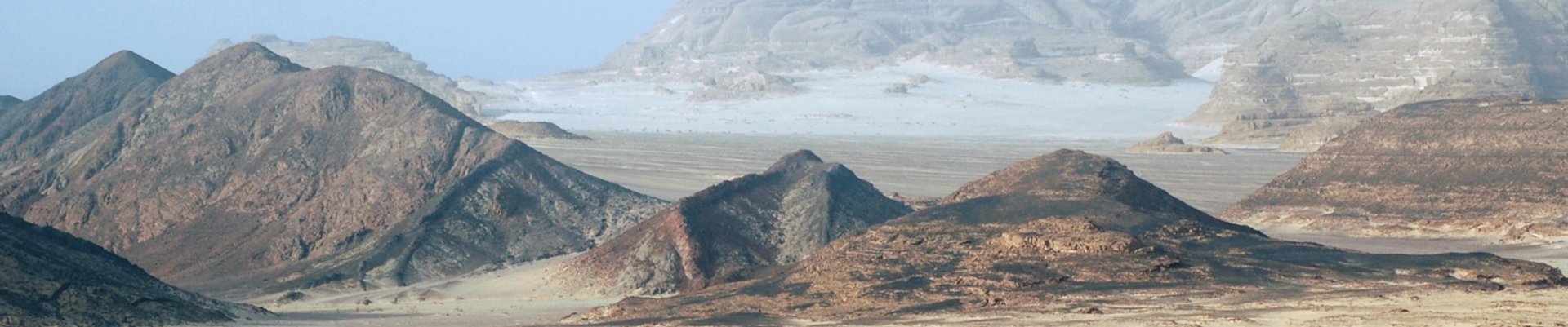
In August 1882, Prof. Edward Palmer of Cambridge University disguised himself as a Bedouin and set out into the Sinai desert carrying £3000 of gold. Prof. Palmer, his colleagues, their servants and the gold were never seen again. While the fate of this expedition—and that of Charles Warren’s celebrated rescue mission—has long captured scholarly imagination, they have recently come into sharper focus with the publication of two books: These Chivalrous Brothers: The Mysterious Disappearance of the 1882 Palmer Sinai Expedition (David Sunderland, 2016) and Captain Gill’s Walking Stick: The True Story of the Sinai Murders (Saul Kelly, 2019). This presentation considers the nature, motivations and failures of this early intelligence operation in light of this new research, including unpublished documents in the archives of the Palestine Exploration Fund in London.
Jamie Fraser is Director of the W. F. Albright Institute of Archaeological Research in East Jerusalem. He received his PhD from the University of Sydney in 2016, which was published as the monograph Dolmens in the Levant in 2018 and awarded ASOR’s G. Ernest Wright Award for Best Archaeological Publication. Jamie previously served as Curator for the Ancient Levant and Anatolia at the British Museum, where he curated the 2023 exhibition Luxury and Power: Persia to Greece. He directs an excavation project in Jordan investigating a Bronze Age olive oil factory at Khirbet Um al-Ghozlan, and has archaeological experience in Jordan, Syria, Israel, Iraq, Afghanistan, Uzbekistan, Kashmir, Greece, Cambodia, Australia and the Solomon Islands.
SPONSOR A WEBINAR!
Several levels of support from $50-$1,000 are available. Proceeds go towards membership scholarships and towards increasing ASOR’s virtual resources. Each sponsorship is tax-deductible and includes benefits! Sponsor a webinar here.
Please e-mail the Membership office if you have any questions.
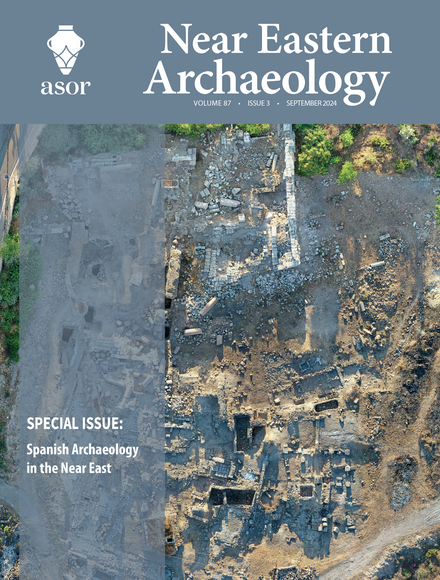
Pp. 144–149: “Spanish Archaeology in the Near East in the Twentieth Century,” by Jordi Vidal
The Spanish archaeological presence in the Near East was very scarce during most of the twentieth century. The excavations carried out at Shechem, Mogaret Dalal, El-Khiam, or Khirbet Arair were made possible by isolated efforts from outside the academic sphere. It was not until the 1980s that universities began to organize excavations and consolidate the Spanish presence in the region. The arrival of democracy, the reorganization of university research, and the availability of greater economic resources were the main elements that allowed this consolidation.
ASOR Members with online access: log into ASOR’s Online Portal here. Once logged in, click the JOURNALS tab in the top navigation bar. Tutorials for how to log in to the Online Portal as well as how to navigate to the Portal Journals page can be found here.
Pp. 150-157: “The Current Study of the Ancient Near East in Spain: Trends and Context,” by Agnès Garcia-Ventura and Josué J. Justel
In the nineteenth century in Spain there was a growing interest in the civilizations of the East—those located to the east of the Mediterranean. However, in Spain this interest did not translate into a consolidation of cuneiform studies in academia as it had done in other countries. In this article we offer some clues to help understand these two circumstances by providing an overview of the study of the ancient Near East in the Iberian Peninsula. In our analysis we shall pay special attention to Spain, and also highlight the connections with its neighbor Portugal and with the Spanish- and Portuguese-speaking countries of Latin America, where this field of studies has expanded notably in recent decades.
ASOR Members with online access: log into ASOR’s Online Portal here. Once logged in, click the JOURNALS tab in the top navigation bar. Tutorials for how to log in to the Online Portal as well as how to navigate to the Portal Journals page can be found here.
Pp. 158-167: “Tell el-Farʿah: New Archaeological Research on the Iron Age IIA in the Central Mountains of Palestine,” by Juan Luis Montero Fenollós
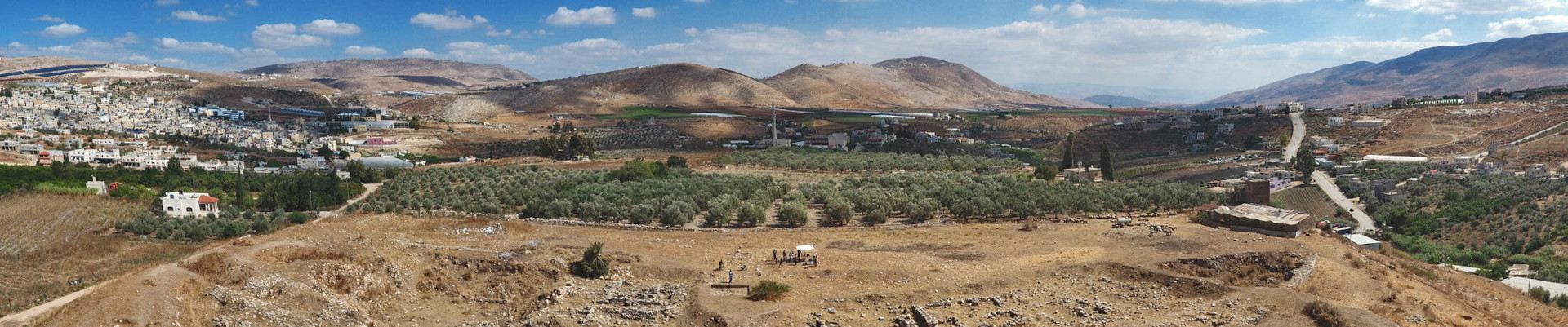
Building upon research conducted by Father Roland de Vaux, former director of the Ecole biblique in Jerusalem, between 1946 and 1960 at Tell el-Farʿah northeast of Nablus (Palestine), a new international and collaborative archaeological project began in 2017. This project is led by the University of A Coruña, the Nova University of Lisbon, and the Ministry of Tourism and Antiquities of Palestine. Tell el-Farʿah, perhaps the ancient biblical city of Tirzah, is a crucial site for the history of the Northern Kingdom. Currently, three excavation seasons (2017–2019) have revealed new, preliminary data concerning Iron Age IIA. These data, particularly the absolute dating related to a house of period VIIb, is of notable significance. A survey was conducted in the Wadi el-Farʿah to gain a better understanding of Tell el-Farʿah in its regional context. Additionally, a pilot project focusing on restoration and enhancement completed the overall work.
ASOR Members with online access: log into ASOR’s Online Portal here. Once logged in, click the JOURNALS tab in the top navigation bar. Tutorials for how to log in to the Online Portal as well as how to navigate to the Portal Journals page can be found here.
Pp. 168-177: “The Archaeology of Tyre: The Joint Lebanese, Spanish, and Polish Excavations in the Phoenician Homeland,” by María Eugenia Aubet, Francisco J. Núñez, and Ali Badawi
Archaeological activities in Tyre have been carried out for more than twenty-five years thanks to the collaboration between Lebanon, Spain, and, for the last three years, Poland. This has made this project the longest running of all those active in the country. Two sites have been the focus of attention: the Iron Age cemetery of al-Bass and the acropolis of the ancient island, each with its particular characteristics and difficulties. The project not only analyzes two different sites, but also covers the city’s history from its foundation in the third millennium BCE to today. Although still under development, the results have enabled Tyre to regain its position in the Levant and the Mediterranean. This project is also a haven for side projects that have opened new avenues of research.
ASOR Members with online access: log into ASOR’s Online Portal here. Once logged in, click the JOURNALS tab in the top navigation bar. Tutorials for how to log in to the Online Portal as well as how to navigate to the Portal Journals page can be found here.
Pp. 178-187: “The Spanish Archaeological and Archaeobiological Mission at Sharjah (SAAMS): Al Madam–al Khudairah Project; Life in the Oasis–Death on the Hills,” by Carmen del Cerro-Linares
The Universidad Autónoma de Madrid has been working since the mid-1990s at the Iron Age village of al Madam located in the interior of the Oman peninsula, in the Emirate of Sharjah (UAE). In 2019 we received permission to excavate a necropolis in the municipality of al Khudairah (Sharjah), opening a new potential for the study of the funerary world of ancient Magan, as this area was called in the Mesopotamian texts. With the permission of the local authorities, and so as to balance study of the village with that of the necropolis, our team expanded and added a permanent contingent of archaeobiologists to our roster. Thus in February 2020 began the Spanish Archaeological and Archaeobiological Mission at Sharjah (SAAMS) and a new project: the “Al Madam–al Khudairah Project: Life in the Oasis–Death on the Hills.”
ASOR Members with online access: log into ASOR’s Online Portal here. Once logged in, click the JOURNALS tab in the top navigation bar. Tutorials for how to log in to the Online Portal as well as how to navigate to the Portal Journals page can be found here.
Pp. 188-193: “Archaeological Excavations in Iraqi Kurdistan: Unveiling New Evidence on the Development of Complex Societies in Northern Mesopotamia at Gird Lashkir (Erbil),” by Miquel Molist, Aziz Zebari, and Anna Bach
This article presents the development and main results of a project underway in present-day Iraqi Kurdistan. The excavations and studies carried out at the Gird Lashkir site, on the plain near the course of the Tigris River, make it possible to contribute significantly to our understanding of the historical evolution of the period from the fourth to the second millennium in northern Mesopotamia. At the chronological level, it focuses on the stratigraphic data and the characterization of the habitat in the complex societies of the third millennium cal BCE. As required by the current development of the discipline, the studies are interdisciplinary and with broad cooperation among researchers from institutions of different nationalities, particularly from Iraqi Kurdistan itself.
ASOR Members with online access: log into ASOR’s Online Portal here. Once logged in, click the JOURNALS tab in the top navigation bar. Tutorials for how to log in to the Online Portal as well as how to navigate to the Portal Journals page can be found here.
Pp. 194-208: “Wild and Domesticated Fauna in Desert Regions of the Near East: The Case of Saruq al-Hadid (UAE),” by Eloísa Bernáldez-Sánchez, Esteban García-Viñas, Myriam Seco-Álvarez, José Luis Ramos-Soldado, Mansour Boraik, Ya’aqub Youssef, Javier Dantas-Cayuela, and Eduardo Ferrer-Albelda
The authors present the results of the archaeozoological studies of the 2019–2020 archaeological field seasons conducted in Saruq al-Hadid (Dubai, UAE) by the University of Seville and the Andalusian Institute of Historic Heritage (Instituto Andaluz del Patrimonio Histórico, IAPH). We analyzed two large assemblages of animal bone remains and, through the archaeozoological analysis, observed differences between two cultural and taphonomical contexts at the site. In the oldest levels—dated between the Bronze Age and Iron Age I—hunted animals predominate, while data from the Iron II period show a higher frequency of domesticated species. These differences suggest a change in the use of the environment, related to changes in the culture and/or the climate, as well as the human activity that originated each deposit.
ASOR Members with online access: log into ASOR’s Online Portal here. Once logged in, click the JOURNALS tab in the top navigation bar. Tutorials for how to log in to the Online Portal as well as how to navigate to the Portal Journals page can be found here.
Pp. 209-210: “Mundo Antigo em Resenha (MAR): Bringing Spanish-Portuguese Scholarship in Egyptology and Ancient Near Eastern Studies to the Greater Academic Community,” by Thais Rocha da Silva
This article discusses the trajectory of studies about the ancient Near East and Egyptology within the Spanish and Portuguese-speaking world. It argues that linguistic barriers also contributed to their remaining peripheral. Scholars in these regions have produced significant work in their fields, yet their contributions often remain isolated and underrecognized. The journal Mundo Antigo em Resenha (MAR) addresses this gap by publishing reviews of recent works in Spanish and Portuguese on topics related to antiquity. MAR aims to promote visibility and inclusivity and help researchers to develop connections. By fostering dialogue and collaboration, MAR seeks to enrich the scholarship about ancient Egypt and the Near East from Luso-Hispanic and Latin American communities, making it more accessible and impactful.
ASOR Members with online access: log into ASOR’s Online Portal here. Once logged in, click the JOURNALS tab in the top navigation bar. Tutorials for how to log in to the Online Portal as well as how to navigate to the Portal Journals page can be found here.
Friends of ASOR present the next webinar of the 2024-2025 season on September 18, 2024, at 7:00 pm EDT, presented by Prof. Petra Creamer. This webinar will be free and open to the public. Registration through Zoom (with a valid email address) is required.
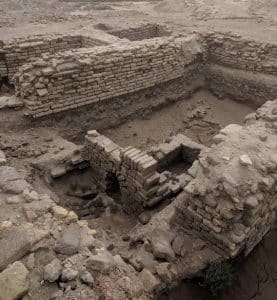
Have you ever wondered what the afterlife was like in ancient Mesopotamia? The complicated world of death has a long and nuanced history throughout various civilizations in the Land Between Rivers. Community identity, family, status, gender, and many more variables played into how one would be buried and what they could expect to encounter in the afterlife awaiting them. During the Assyrian Empire (c. 1350-612 BCE) some funerary traditions were kept from previous periods, while others were newly introduced. New imperial pressures, migration patterns, and forced resettlement during the Assyrian Empire beget a new set of mortuary norms. At the same time, some groups struggled to maintain their traditions in the face of a changing social and political landscape. This talk explores the variety of funerary traditions present in the Assyrian Empire and how they changed over time – telling us just as much about those alive as those deceased.
Petra Creamer is an Assistant Professor of Ancient Near Eastern Studies at Emory University, studying the genesis and growth of empires and the impact of empires on the non-elite populations under their hegemony. She is director of the excavation project Rural Landscapes of Iron Age Imperial Mesopotamia, where her ongoing fieldwork addresses long-term settlement patterns and lifeways in the ancient Assyrian imperial core (c. 1350-600 BCE). She has conducted fieldwork in Iraqi Kurdistan, Iraq, Turkey, Oman, Italy, Azerbaijan, Greece, and the U.S.A. Her current book project ties together multiple levels of looking at Assyrian imperial power – from broad landscape management down to individual burials – to understand the degree of control Assyrian elites held over those under imperial hegemony.
SPONSOR A WEBINAR!
Several levels of support from $50-$1,000 are available. Proceeds go towards membership scholarships and towards increasing ASOR’s virtual resources. Each sponsorship is tax-deductible and includes benefits! Sponsor a webinar here.
Friends of ASOR present the first webinar of the 2024-2025 season on September 4, 2024, at 7:00 pm EDT, presented by Prof. Jodi Magness and moderated by Prof. Eric Cline. This webinar will be free and open to the public thanks to partial sponsorship by Oxford University Press. Registration through Zoom (with a valid email address) is required.
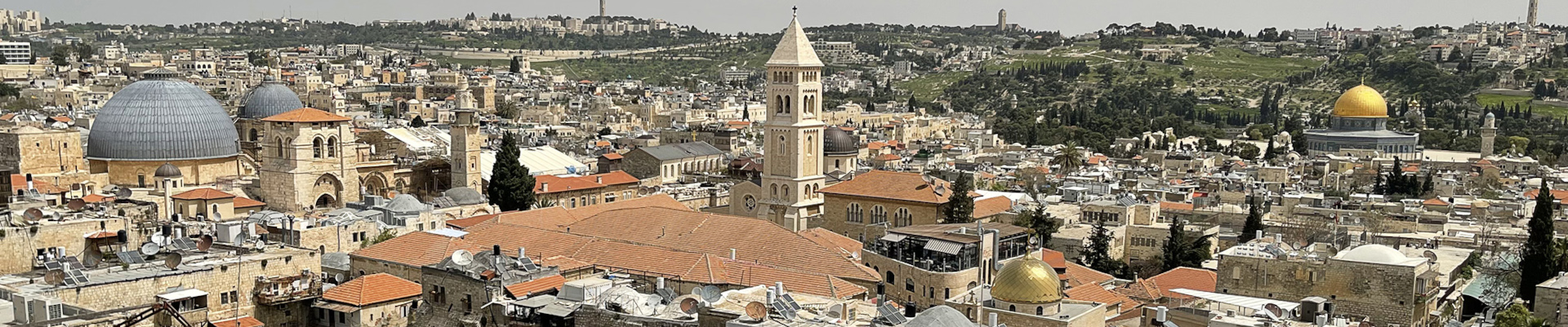
“Holy City of God, Jerusalem, how I long to stand even now at your gates, and go in, rejoicing!” Around 600 CE, Sophronius, a monk from a monastery near Jerusalem who had been posted to Egypt, Sinai, and North Africa, composed a poem expressing his longing to return to the holy city – a wish that was fulfilled thirty years later when he was appointed patriarch. For Sophronius, not even Alexandria, the cosmopolitan cultural capital of the Mediterranean, could compete with Jerusalem. Sophronius’ words echo Psalm 122:1-3, which was written hundreds of years earlier and attributed to King David: “I was glad when they said to me, ‘Let us go to the house of the Lord!’ Our feet are standing within your gates, O Jerusalem. Jerusalem – built as a city that is bound firmly together.”
Throughout the ages, pilgrims have shared Sophronius’ desire to stand in the gates of Jerusalem. Why has this poor and isolated mountain town exerted such a powerful hold on billions of people worldwide over the course of millennia? The simple answer is that for followers of the three Abrahamic faiths, Jerusalem is the place where the presence of the God of Israel dwells, and the Last Judgement will take place. It is the meeting point of heaven and earth – the locus of divine and human interaction. In this talk, Prof. Magness explores how these beliefs came to be associated with Jerusalem.
This webinar will be recorded and all registrants will be sent a link to view the recording.
Jodi Magness (www.JodiMagness.org) is a member of the American Academy of Arts and Sciences. Since 2002, she has been the Kenan Distinguished Professor for Teaching Excellence in Early Judaism in the Department of Religious Studies at the University of North Carolina at Chapel Hill. She received her B.A. in Archaeology and History from the Hebrew University of Jerusalem, and her Ph.D. in Classical Archaeology from the University of Pennsylvania. Magness’ research interests focus on Palestine in the Roman, Byzantine, and early Islamic periods, and Diaspora Judaism in the Roman world. Her most recent books are Jerusalem Through the Ages: From Its Beginnings to the Crusades (New York: Oxford University, March 2024); and Ancient Synagogues in Palestine: A Reevaluation Nearly a Century After Sukenik’s Schweich Lectures. The Schweich Lectures of the British Academy 2022 (London: The British Academy/Oxford University Press, anticipated publication July 2024). Three of Magness’ books have won awards: Masada: From Jewish Revolt to Modern Myth (Princeton: Princeton University, 2019); The Archaeology of Qumran and the Dead Sea Scrolls (Grand Rapids, MI: Eerdmans, 2002; revised edition 2021); and The Archaeology of the Early Islamic Settlement in Palestine (Winona Lake, IN: Eisenbrauns, 2003). Magness has participated on 20 different excavations in Israel and Greece, including co-directing the 1995 excavations in the Roman siege works at Masada. Since 2011, she has directed excavations at Huqoq in Galilee (www.huqoq.org). Magness is an Honorary President of the Archaeological Institute of America (AIA), having served as President from 2017-2020), a member of the Managing Committee of the American School of Classical Studies at Athens, and a member of the Board of Trustees of the W.F. Albright Institute of Archaeological Research in Jerusalem.
SPONSOR A WEBINAR!
Several levels of support from $50-$1,000 are available. Proceeds go towards membership scholarships and towards increasing ASOR’s virtual resources. Each sponsorship is tax-deductible and includes benefits! Sponsor a webinar here.
Please e-mail the Membership office if you have any questions.
Pp. 3–26: “A Campaign of Southern City-States against Kiš as Documented in the ED IIIa Sources from Šuruppak (Fara),” by Piotr Steinkeller
A group of ED IIIa texts from Šuruppak (Fara) describes a mobilization of troops from Uruk, Adab, Nippur, Lagaš, Umma, and Šuruppak, clearly in anticipation of a major military operation. It is argued that the target of that campaign, which was led by Uruk, was the city-state of Kiš. The analysis of various other sources further suggests that, during the ED IIIa period, Uruk was able to bring significant portions of southern Babylonia under its control. This development was a reversal of the situation existing in ED I and II, when much of that region remained under the hegemony of Kiš.
ASOR Members with online access: log into ASOR’s Online Portal here. Once logged in, click the JOURNALS tab in the top navigation bar. From here you may select which journal you would like to read. If you have online access, you will see your selected journal’s current issue Table of Contents. Click on the “Current Issue” button and you will then be redirected to the University of Chicago Press’s (UCP) platform to immediately start reading any issue of your choice. Tutorials for how to log in to the Online Portal as well as how to navigate to the Portal Journals page can be found here.
Pp. 27-52: “A Sargonic Exercise Tablet Listing ‘Places of Inanna’ and Personal Names,” by Jana Matuszak and Hanan Abd Alhamza Alessawe
This article publishes a remarkable school tablet, probably from Sargonic Umma, which contains two lexical exercises. While the reverse appears to be an ad hoc list of personal names, many of which start with or contain the sign a, the obverse compiles “places” (ki) where certain mythological events involving the goddess Inanna had occurred. Unusually for lexical lists, each of these places is described in a complete sentence following a loosely alternating structure, which gives the list almost literary qualities. After discussing the list-like vs. literary features and comparing the compilation of places to a similar lexical fragment of Ur III date and the Early Dynastic Word List F, we analyze the mythological allusions and potential ritual associations.
ASOR Members with online access: log into ASOR’s Online Portal here. Once logged in, click the JOURNALS tab in the top navigation bar. From here you may select which journal you would like to read. If you have online access, you will see your selected journal’s current issue Table of Contents. Click on the “Current Issue” button and you will then be redirected to the University of Chicago Press’s (UCP) platform to immediately start reading any issue of your choice. Tutorials for how to log in to the Online Portal as well as how to navigate to the Portal Journals page can be found here.
Pp. 53-101: “Sumerian Model Contracts from the Old Babylonian Period in the Arkeoloji Müzeleri of Istanbul,” by Gabriella Spada and William W. Hallo
This article presents twenty fragmentary multicolumn tablets containing Sumerian model contracts from Old Babylonian Nippur, which are currently kept at the Arkeoloji Müzeleri in Istanbul, Turkey. Initial work on these was initiated by the late William W. Hallo in 1971 but he was unable to complete the project so it was taken over and completed by Gabriella Spada. Their content is limited to loan contracts of silver or barley, sometimes with the presence of antichretic pledges (slaves, fields, gardens, and lumps of silver).
ASOR Members with online access: log into ASOR’s Online Portal here. Once logged in, click the JOURNALS tab in the top navigation bar. From here you may select which journal you would like to read. If you have online access, you will see your selected journal’s current issue Table of Contents. Click on the “Current Issue” button and you will then be redirected to the University of Chicago Press’s (UCP) platform to immediately start reading any issue of your choice. Tutorials for how to log in to the Online Portal as well as how to navigate to the Portal Journals page can be found here.
Pp. 103-126: “The Manchester Tammuz,” by Dylan Guerra and Niek Veldhuis
This contribution provides a new edition of the Manchester Tammuz, a sequence of Emesal love songs concerning Inana and Dumuzi. The text offers many irregular spellings, some of which may be resolved by means of a fragmentary duplicate from Nippur. The relationship between the Manchester text and several other Old Babylonian Emesal liturgies that share characteristics of orthography, paleography, and layout is discussed briefly. A line-drawing of the object by Theophilus G. Pinches, published in 1904, is added to the end of the article.
ASOR Members with online access: log into ASOR’s Online Portal here. Once logged in, click the JOURNALS tab in the top navigation bar. From here you may select which journal you would like to read. If you have online access, you will see your selected journal’s current issue Table of Contents. Click on the “Current Issue” button and you will then be redirected to the University of Chicago Press’s (UCP) platform to immediately start reading any issue of your choice. Tutorials for how to log in to the Online Portal as well as how to navigate to the Portal Journals page can be found here.
Pp. 127-161: “Old Babylonian Lunar-Eclipse Omen Tablets in the British Museum,” by Andrew George and Junko Taniguchi
This article presents a first edition of four clay tablets inscribed with omens arising from eclipses of the moon. As products of the middle and late Old Babylonian periods they represent the oldest examples of compendia of lunar-eclipse omens yet discovered and thus provide important new information about celestial divination among the peoples of southern Mesopotamia in the early second millennium BCE. The tablets are edited with appended philological apparatus. They are all found to bear witness to a single text, which organizes the omens of lunar eclipse by time of night, movement of shadow, duration, and date. A composite translation also takes account of two other early versions of the text published eleven years ago. The article is concluded by discussions of variants and scribal annotations in the text. The cuneiform texts are illustrated by scale drawings of the tablets.
ASOR Members with online access: log into ASOR’s Online Portal here. Once logged in, click the JOURNALS tab in the top navigation bar. From here you may select which journal you would like to read. If you have online access, you will see your selected journal’s current issue Table of Contents. Click on the “Current Issue” button and you will then be redirected to the University of Chicago Press’s (UCP) platform to immediately start reading any issue of your choice. Tutorials for how to log in to the Online Portal as well as how to navigate to the Portal Journals page can be found here.
Pp. 163-183: “30 − 1 = 30: Old Babylonian Month Lengths, the Finale?,” by Michel Tanret
The Old Babylonian administrative calendar always consisted of thirty days, regardless of early moon sightings. The ud.da.gíd.da days, viewed by some as days to be excluded due to an early moon sighting, were not used to shorten the month; rather, they denoted the number of days when no rations were distributed. This is demonstrated on the basis of Old Babylonian documentary texts.
ASOR Members with online access: log into ASOR’s Online Portal here. Once logged in, click the JOURNALS tab in the top navigation bar. From here you may select which journal you would like to read. If you have online access, you will see your selected journal’s current issue Table of Contents. Click on the “Current Issue” button and you will then be redirected to the University of Chicago Press’s (UCP) platform to immediately start reading any issue of your choice. Tutorials for how to log in to the Online Portal as well as how to navigate to the Portal Journals page can be found here.
Pp. 185-190: “Hittite UZUmu/aḫḫ(a)r(a)i– ‘Flesh of the Thigh, Ham,’” by H. Craig Melchert
Hittite UZUmu/aḫḫ(a)r(a)i– is a body part belonging to various mammals, including humans, but almost exclusively attested as a component of cooked meat offerings to deities. New evidence supports its identification as the fleshy part of the thigh, thus English “ham” in the anatomical sense, but when served as food in Hittite removed from the thigh bone. A recent text join furnishes not only a further instance of juxtaposition with the expression for “thigh bone,” but also the crucial detail that the m. is skewered before being cooked.
ASOR Members with online access: log into ASOR’s Online Portal here. Once logged in, click the JOURNALS tab in the top navigation bar. From here you may select which journal you would like to read. If you have online access, you will see your selected journal’s current issue Table of Contents. Click on the “Current Issue” button and you will then be redirected to the University of Chicago Press’s (UCP) platform to immediately start reading any issue of your choice. Tutorials for how to log in to the Online Portal as well as how to navigate to the Portal Journals page can be found here.
Pp. 191-197: “Once Again on the Distribution of Cuneiform Luwian =ša/za,” by Zsolt Simon
This article argues that the Cuneiform Luwian nominal particle =ša/za was not assigned on a word-by-word basis in the -r-, -r/n-, -l-stem classes but followed a regular pattern, thus Jasanoff’s rule of the distribution of this particle can be extended and confirmed.
ASOR Members with online access: log into ASOR’s Online Portal here. Once logged in, click the JOURNALS tab in the top navigation bar. From here you may select which journal you would like to read. If you have online access, you will see your selected journal’s current issue Table of Contents. Click on the “Current Issue” button and you will then be redirected to the University of Chicago Press’s (UCP) platform to immediately start reading any issue of your choice. Tutorials for how to log in to the Online Portal as well as how to navigate to the Portal Journals page can be found here.
Pp. 199-220: “The Middle Assyrian Funerary Inscriptions,” by Jacob Jan de Ridder
This article presents revised editions of a group of four similar funerary inscription from Assyria, dating to about the thirteenth century BCE. The paleography of these texts is unusual, characterized by similarities with the writing from Tell Taban and the kingdom of Ḫana. However, the invocation of the Hurrian deity Šuriḫa, the patron of the town of Šūru, suggests this ancient settlement as its provenance. These funerary inscriptions would be among the earliest texts from the Middle Assyrian settlement that existed at this location.
ASOR Members with online access: log into ASOR’s Online Portal here. Once logged in, click the JOURNALS tab in the top navigation bar. From here you may select which journal you would like to read. If you have online access, you will see your selected journal’s current issue Table of Contents. Click on the “Current Issue” button and you will then be redirected to the University of Chicago Press’s (UCP) platform to immediately start reading any issue of your choice. Tutorials for how to log in to the Online Portal as well as how to navigate to the Portal Journals page can be found here.
Pp. 221-227: “Zanua, the Carpet-Maker: Urartian CTU 4 CB An-1 Revisited,” by Yervand Grekyan
Evidence of Urartian textiles is mostly limited to pictorial representations, along with a few textual references and finds of fragments of textiles in archaeological contexts. The study of an Urartian royal letter gives some new idea on craftsmen who wove textiles in Urartu.
ASOR Members with online access: log into ASOR’s Online Portal here. Once logged in, click the JOURNALS tab in the top navigation bar. From here you may select which journal you would like to read. If you have online access, you will see your selected journal’s current issue Table of Contents. Click on the “Current Issue” button and you will then be redirected to the University of Chicago Press’s (UCP) platform to immediately start reading any issue of your choice. Tutorials for how to log in to the Online Portal as well as how to navigate to the Portal Journals page can be found here.
Please e-mail the Membership office if you have any questions.
Pp. 1-23: “Conspicuous Construction: New Light on Funerary Monuments in Rural Early Roman Judea from Horvat Midras,” by Gregg E. Gardner and Orit Peleg-Barkat
This paper discusses the growing trend in Late Hellenistic- and Early Roman-era Judea (ca. 200 b.c.e.–70 c.e.) for constructing “display tombs”—funerary architecture designed to achieve maximum visibility and project the status of the individual or family who financed the construction, not just in the cities, but also in the countryside. It uses the case study of the recently excavated pyramidal tomb marker at Horvat Midras (Israel), an affluent village, located on the border of Idumea and Judea about 30 km southwest of Jerusalem in the Judean Foothills. After a detailed discussion of the new finds, it is placed within the material and broader socioeconomic contexts of rural Judea in these periods. As will be shown, this monument’s architectural style, location, and other attributes enhance our understanding of monumental funerary architecture in rural settings, adds new archaeological data to often-overlooked rural areas, and contributes to a better understanding of socioeconomic elites in rural Judea at this time.
ASOR Members with online access: log into ASOR’s Online Portal here. Once logged in, click the JOURNALS tab in the top navigation bar. Tutorials for how to log in to the Online Portal as well as how to navigate to the Portal Journals page can be found here.
Pp. 25-45: “A Study of a Unique Roman Funerary Monument and Its Population at Dara in Upper Mesopotamia: A Collective Rock Burial ‘Tower,’” by Charlotte Labedan-Kodas, Ayse Acar, and Nihat Erdoğan
This article provides an in-depth study of a singular funerary monument located in the ancient city of Dara (southeastern Turkey). Its features relate to various influences, some of them outside the Roman world, and present a unique insight into the ritual practices of the inhabitants of Dara. This paper brings together archaeological and taphonomic evidence provided by recent excavations to offer perspectives for the dating of the building and the identification of the people buried there.
ASOR Members with online access: log into ASOR’s Online Portal here. Once logged in, click the JOURNALS tab in the top navigation bar. Tutorials for how to log in to the Online Portal as well as how to navigate to the Portal Journals page can be found here.
Pp. 47-75: “Domestic Waste as a Window into Crusader-Period Le Lyon (Kibbutz Megiddo/Lajjun, Israel): Insights from a Household Midden and Its Ceramic Assemblage,” by Edna J. Stern, Anastasia Shapiro, Matthew J. Adams, Nimrod Marom, Inbar Ktalav, and Yotam Tepper
The 2017 salvage excavation conducted at the site of Lajjun within Kibbutz Megiddo, Israel, revealed layers of refuse, primarily ceramics, constituting a household midden with finds indicating a 12th-century date and a Frankish cultural affinity. The midden can be associated with the occupation of the ancient settlement of Lajjun by Frankish settlers intermittently in the 12th and 13th centuries c.e., representing a first archaeological window into the Frankish activity at the site and complementing the historical data on the village known from Crusader sources as Le Lyon (Lajjun).
ASOR Members with online access: log into ASOR’s Online Portal here. Once logged in, click the JOURNALS tab in the top navigation bar. Tutorials for how to log in to the Online Portal as well as how to navigate to the Portal Journals page can be found here.
Pp. 77-92: “The Proximity Principle and the Egyptian Levant in the Late 18th Dynasty,” by Francesco Ignazio De Magistris
It has been known for decades that the Egyptians of the 18th Dynasty took direct control of a number of centers across the Levant, that each center was governed by an Egyptian commissioner, and that every commissioner interacted with the rulers of the local city-states. However, the precise number of Egyptian centers and their respective areas of control remains debated to this day. This article revisits these issues by analyzing the relationships between centers, commissioners, and rulers as they appear within the Amarna corpus, with a focus on the proposed proximity principle. This principle posits that Levantine rulers would have primarily engaged with the closest Egyptian center and the closest Egyptian commissioner, rather than a farther one. Through this analysis, the article aims to shed new light on the number of the Egyptian centers in the Levant and the extent of land that they controlled.
ASOR Members with online access: log into ASOR’s Online Portal here. Once logged in, click the JOURNALS tab in the top navigation bar. Tutorials for how to log in to the Online Portal as well as how to navigate to the Portal Journals page can be found here.
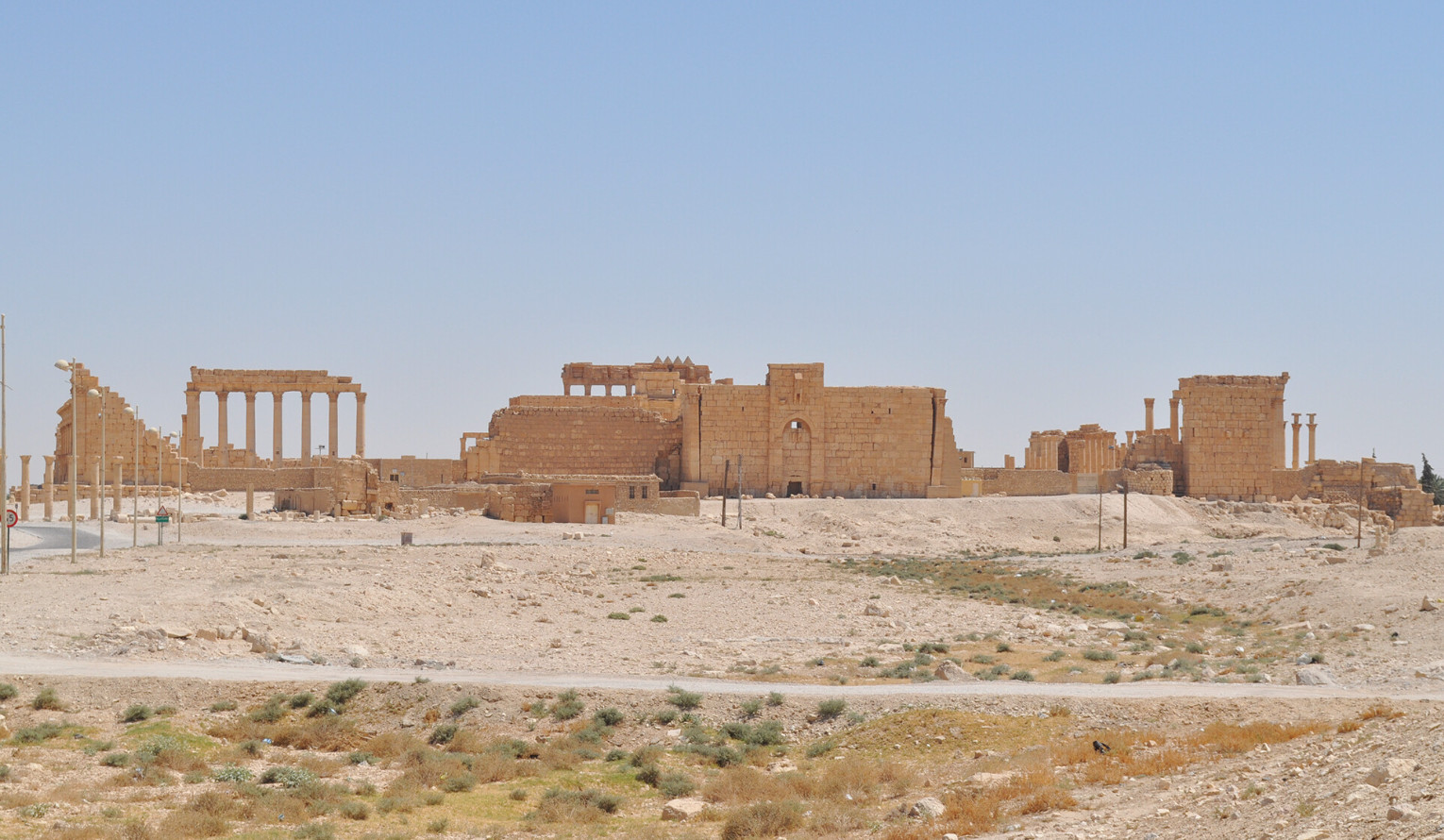
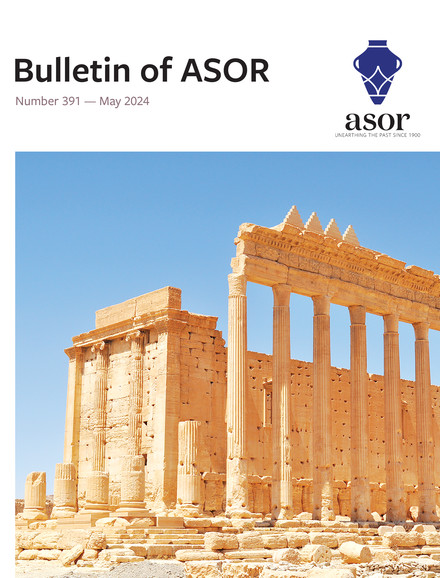
Pp. 93-106: “The Future of the Temple of Bel in Palmyra after Its Destruction,” by Maamoun Abdulkarim and Jacques Seigne
This article explores the significance of the Temple of Bel in the history of Palmyra, highlighting key aspects of its design and development. It reviews the measures taken by the archaeological authorities during the French Mandate (1920–1946) to manage and conserve the monument, such as relocating the local community outside the archaeological site far from the sanctuary and the implementation of repairs to the cella. Finally, it discusses the damage wrought by ISIS in 2015 to Palmyra, which included the partial destruction of the temple using explosives, and revisits the work of the specialists who examined this structure after it was destroyed. In order to preserve Palmyra’s cultural legacy, the relevance of the cella’s future conservation needs as a priority are underscored, not simply for the World Heritage Site, but within the wider context of Syria and the region.
ASOR Members with online access: log into ASOR’s Online Portal here. Once logged in, click the JOURNALS tab in the top navigation bar. Tutorials for how to log in to the Online Portal as well as how to navigate to the Portal Journals page can be found here.
Pp. 107-133: “Solving the Starry Symbols of Sargon II,” by Martin Worthington
The city of Khorsabad (ancient Dūr-Šarrukīn), the newly built capital of Sargon II of Assyria, contained multiple instances of a sequence of five images or symbols (lion, bird, bull, tree, plow) which also appeared shortened to three (lion, tree, plow). What did they mean? There is currently no consensus. This paper proposes a new solution, suggesting that the images a) symbolize specific constellations and b) represent Babylonian/Assyrian words whose sounds “spell out” Sargon’s name (this works for both the long and the short version). Combining these two traits, the effect of the symbols was to assert that Sargon’s name was written in the heavens, for all eternity, and also to associate him with the gods Anu and Enlil, to whom the constellations in question were linked. It is further suggested that Sargon’s name was elsewhere symbolized by a lion passant (pacing lion), through a bilingual pun.
ASOR Members with online access: log into ASOR’s Online Portal here. Once logged in, click the JOURNALS tab in the top navigation bar. Tutorials for how to log in to the Online Portal as well as how to navigate to the Portal Journals page can be found here.
Pp. 135-161: “Tel Dor in the Middle Bronze Age and Maritime Adaptation along the Carmel Coast,” by Assaf Yasur-Landau, Chandler Houghtalin, Marko Runjajić, Zachary Dunseth, and Ruth Shahack-Gross
A newly excavated, well-built, Middle Bronze (MB) II–III coastal structure at Tel Dor provides a fresh glimpse into the turbulent settlement history of the Carmel Coast in the first half of the 2nd millennium b.c.e. The structure, incorporating a massive ashlar orthostat, was built in the MB I–II transition or MB II and existed for more than a century before its collapse during the MB III. A tight cluster of radiocarbon data indicates its destruction ca. 1600–1550 b.c.e. As the first Middle Bronze Age structure extensively excavated at Dor, it fills a lacuna in the site’s history. Other Middle Bronze Age finds enable a reconstruction of Dor’s anchorages and create a narrative of settlement patterns on the Carmel Coast, tightly connected with contemporary maritime activities, and reflecting a resilient settlement system devoid of urban centers.
ASOR Members with online access: log into ASOR’s Online Portal here. Once logged in, click the JOURNALS tab in the top navigation bar. Tutorials for how to log in to the Online Portal as well as how to navigate to the Portal Journals page can be found here.
Pp. 163-189: “Reconstructing the Urban Fabric of Nea Paphos by Comparison with Regularly Planned Mediterranean Cities, Using 3D Procedural Modeling and Spatial Analysis,” by Anna Kubicka-Sowińska, Łukasz Miszk, Paulina Zachar, Anna Fijałkowska, Wojciech Ostrowski, Jakub Modrzewski, and Ewdoksia Papuci-Władyka
Nea Paphos, the Hellenistic-Roman capital of Cyprus, was established according to a regular Hippodamian street grid in the Hellenistic period. The city has been subjected to continuous archaeological research since the 1960s. Despite this, the possibilities for reconstructing its fabric were severely limited. This paper aims to gain a more in-depth understanding of the ways in which computational methods can be used in the analysis of ancient urban planning and the reconstruction of its elements, using the similarity of urban processes and social behavior in ancient Greek cities as its main premise. Therefore, a study based on Network and Space Syntax analysis was conducted for cities with a well-recognized urban layout of the Late Classical and Hellenistic periods, namely Olynthus and Priene, and other, less archaeologically explored harbor towns of the Hellenistic period, such as Piraeus and Ptolemais. The results of these studies were then extrapolated to hypothetical reconstructions of Nea Paphos in the Hellenistic period, mainly to propose the location of the main public buildings and to model the urban traffic. This methodology is experimental in its nature. The aim of this paper is to try to assess to what extent the adopted workflow can be useful in reconstructing the landscape of ancient cities.
ASOR Members with online access: log into ASOR’s Online Portal here. Once logged in, click the JOURNALS tab in the top navigation bar. Tutorials for how to log in to the Online Portal as well as how to navigate to the Portal Journals page can be found here.
Pp. 191–225: “The Early Dynastic ‘Maison des Fruits’ at Tell K in Tello (Ĝirsu),” by Christina Tsouparopoulou
Taking as a point of departure a foundation figurine of the 3rd-millennium Early Dynastic Lagashite ruler Ur-Nanše, housed in the National Archaeological Museum of Athens, Greece, this article presents a revised understanding of the “Maison des Fruits” and Tell K at Tello/Ĝirsu. It is centered on the objects and their inscriptions unearthed in and associated with the Maison, includes relevant parallel structures and objects, and concludes with a discussion of the function of the Maison. It is suggested that this was a sacred building closely related to water and fish and leaves open the discussion regarding to whom this structure was dedicated.
ASOR Members with online access: log into ASOR’s Online Portal here. Once logged in, click the JOURNALS tab in the top navigation bar. Tutorials for how to log in to the Online Portal as well as how to navigate to the Portal Journals page can be found here.
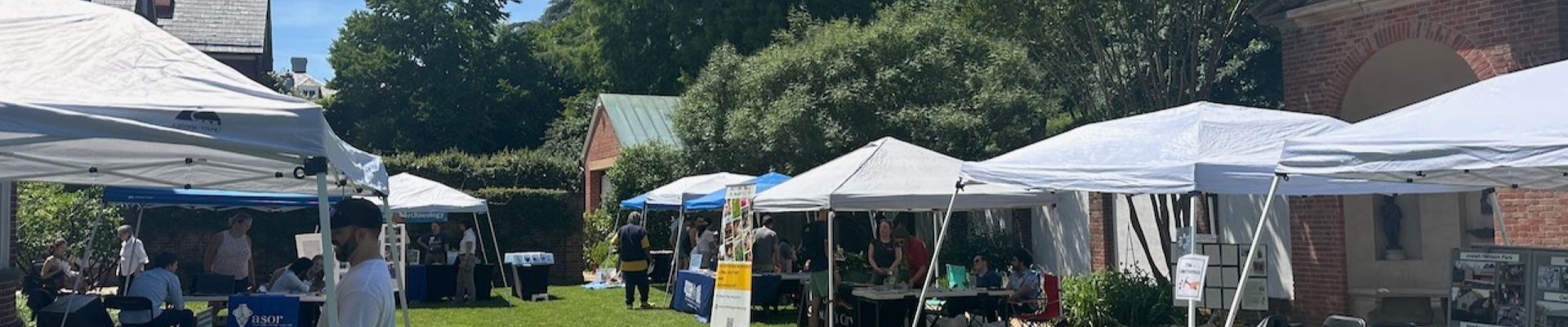
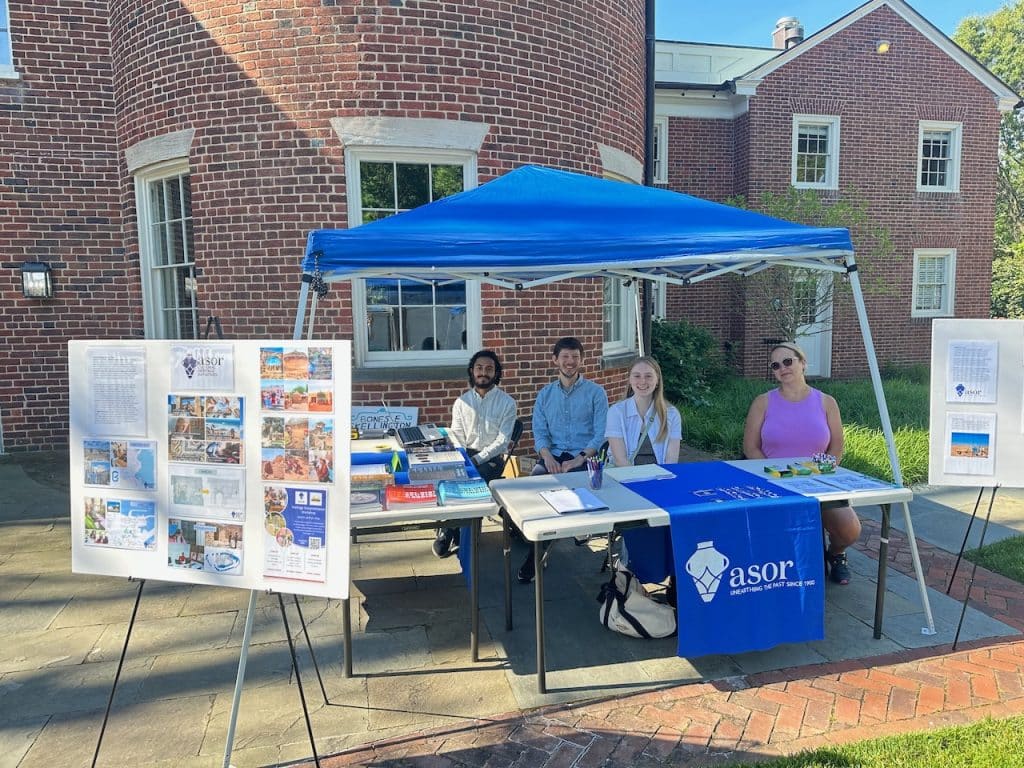
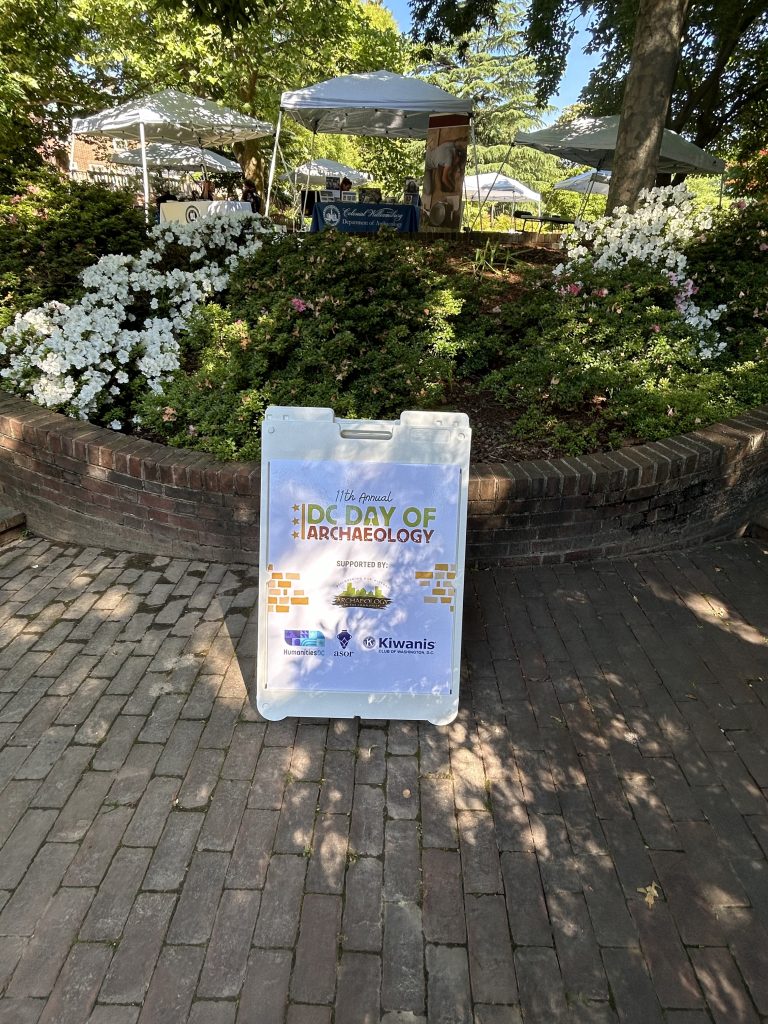
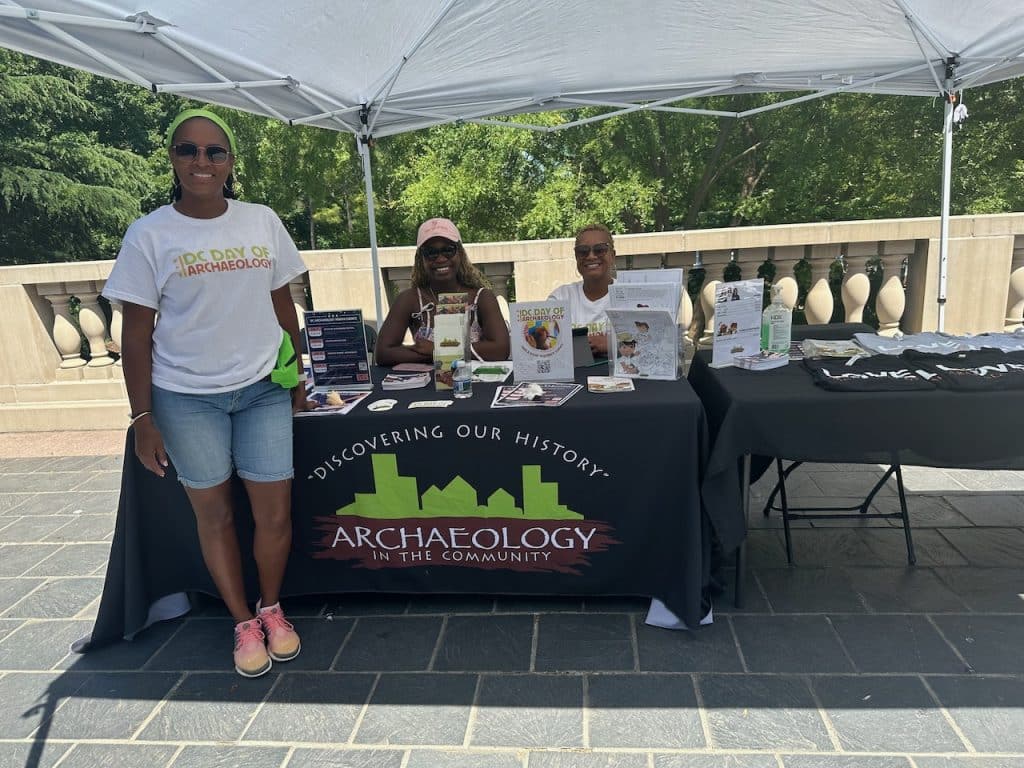
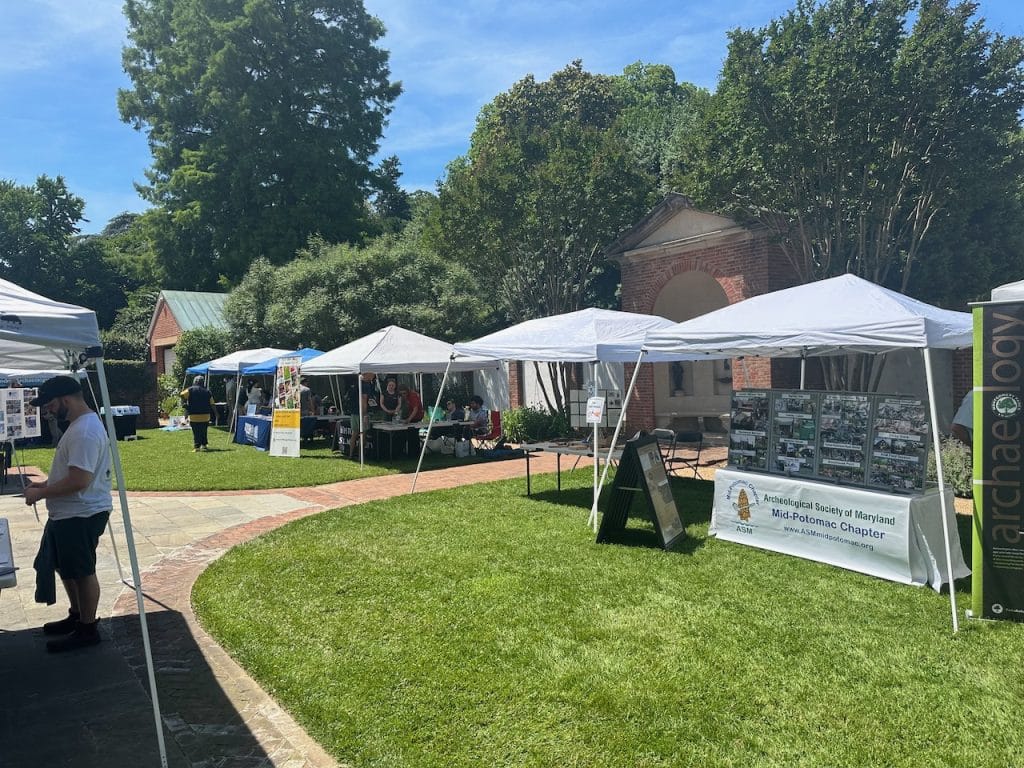
On Saturday, June 1, ASOR was pleased to sponsor and participate in the annual DC Day of Archaeology Festival organized by Archaeology in the Community (AITC). With 22 organizations and over 400 participants, the event gathered archaeological organizations around the DMV at Dumbarton House for a day of community outreach and sharing of local resources. Participants were able to visit the tables of local organizations to learn about a wide variety of archaeological topics, from dendrochronology to cultural heritage to ceramic reconstruction.
ASOR staff with the ASOR table
Entrance to the event
Alex Jones and AITC staff with their table at the DC Day of Archaeology Festival
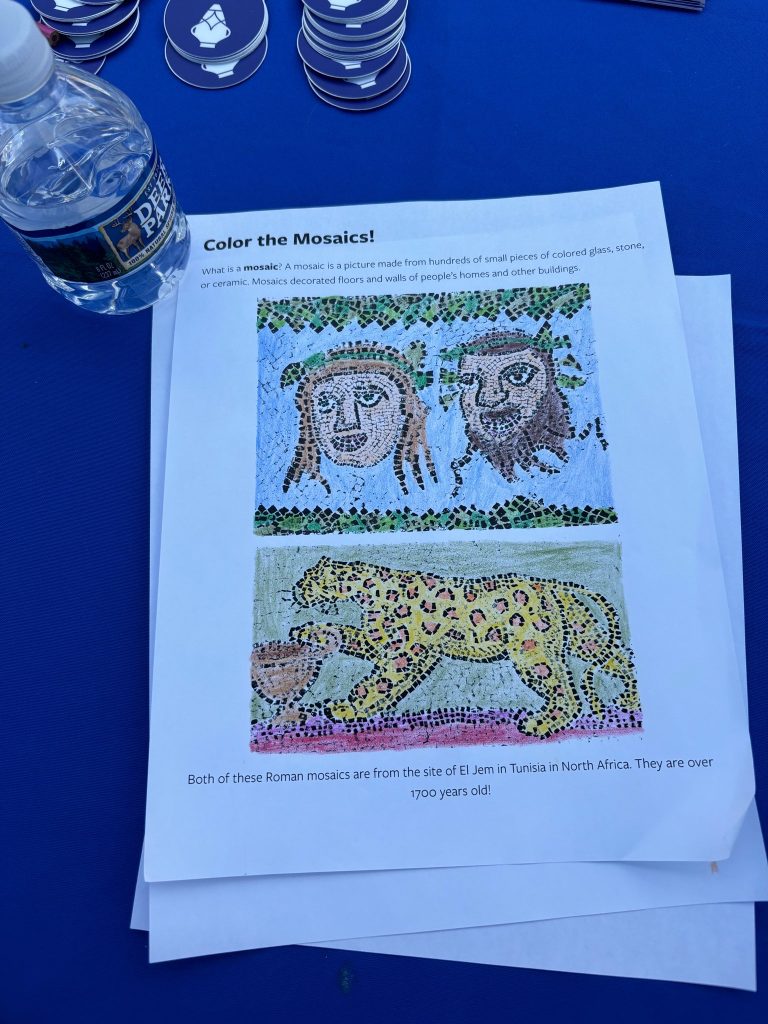
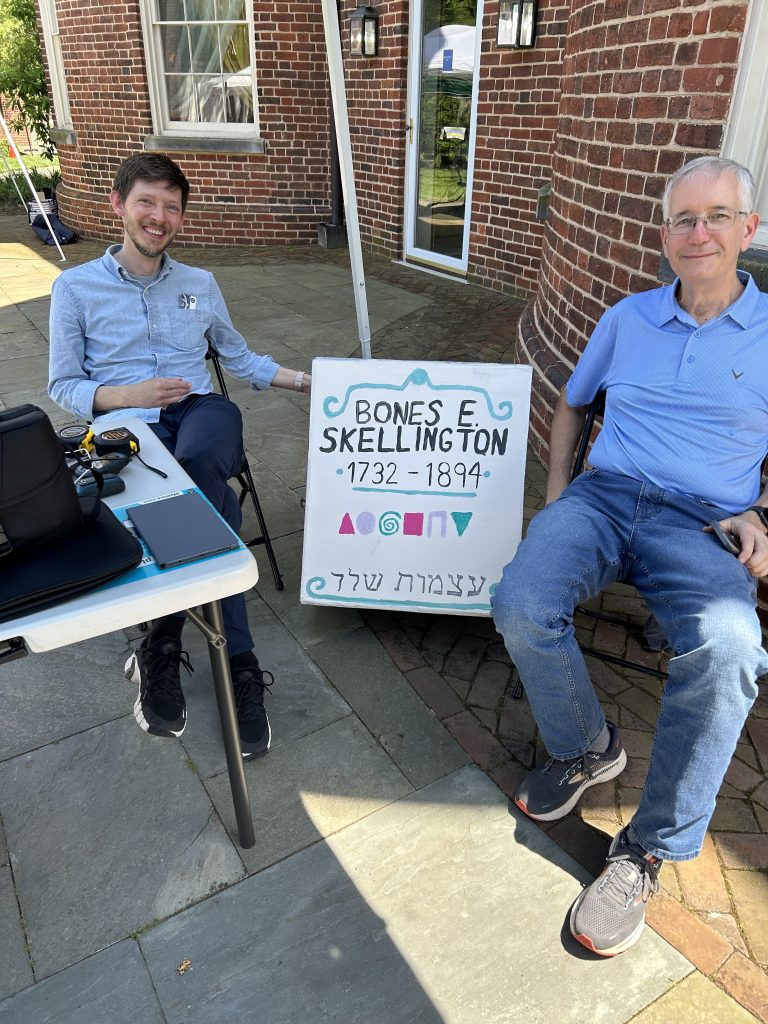
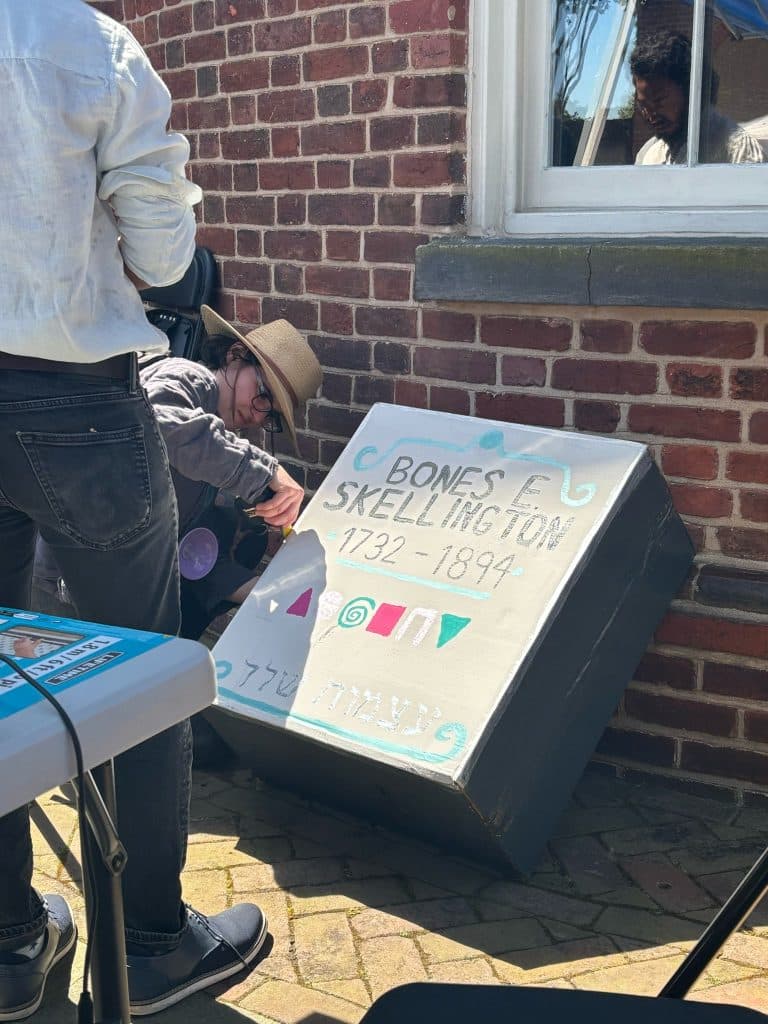
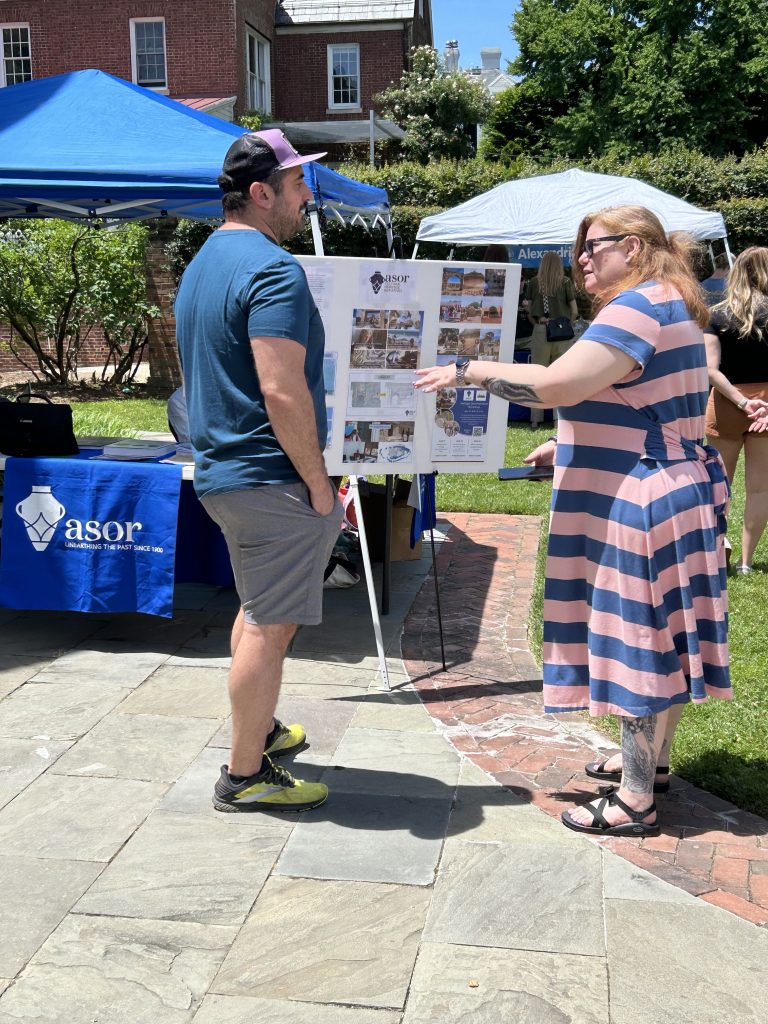
The ASOR table included several activities for a variety of ages and knowledge levels, as well as informative posters about our organization and Cultural Heritage Initiatives. For children, we provided coloring sheets of two mosaics from the El Jem Archaeological Museum in Tunisia. Additionally, we had trivia sheets for participants to fill out that covered the basics of archaeology (If an archaeologist is a lithic specialist, what material do they study?) as well as more focused questions about our areas of research (Located in modern-day Iraq, what is the central feature of the ancient city of Ur?). Our most interactive activity showcased our cultural heritage work, as participants used GPS technology and KoboToolbox to collect data and document a “tomb” that we built.
A snapshot of several tables at the event
Mosaic coloring activity
ASOR staff with the tomb of Bones E. Skellington
A participant measures the tomb for documentation
Explaining CHI documentation training
ASOR is proud to have supported a successful DC Day of Archaeology. Part of our core mission is to develop engaging programs of outreach for the general public, and we are pleased to have participated in this community outreach event. Thank you to everyone who attended, and we will see you next year!
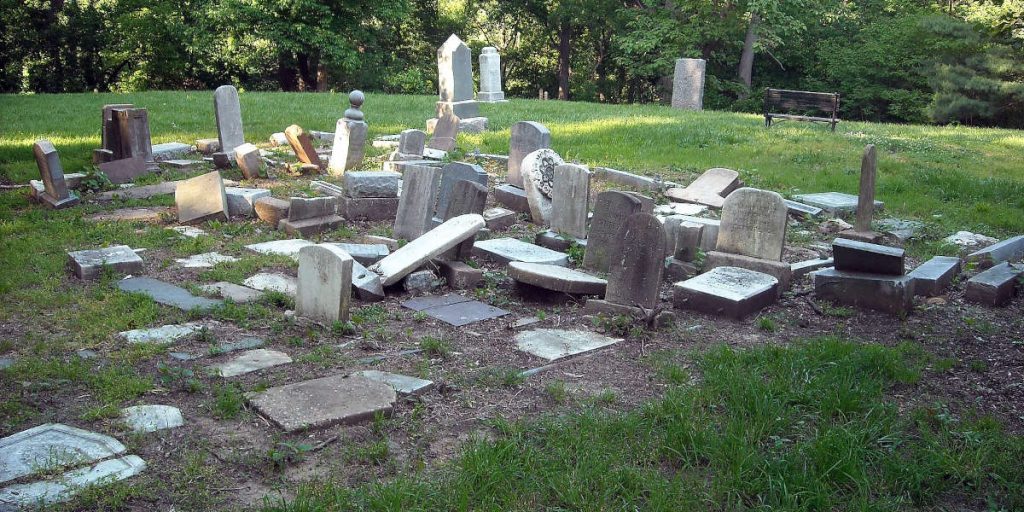
Want to get involved with more local archaeology efforts? ASOR is proud to partner with Archaeology in the Community (AITC) to host a free 3-day hybrid workshop on cemetery documentation at the Mount Zion Cemetery, a historic African American cemetery in Washington, D.C. For more information, view the event page here.
Please e-mail the Membership office if you have any questions.
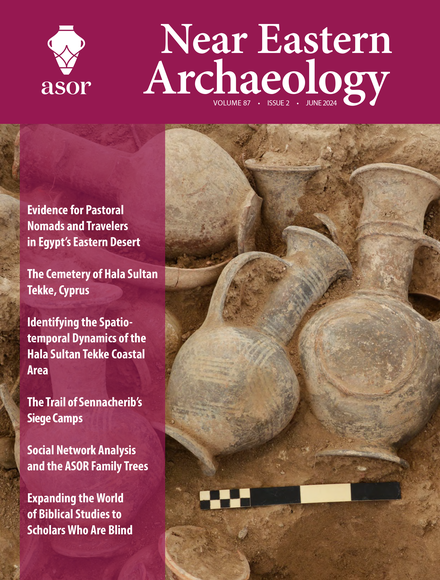
Pp. 64–72: “Evidence for Pastoral Nomads and Travelers in the Eastern Desert: Site 51 and Beyond at Wadi el-Hudi, Egypt,” by Kate Liszka
In the Egyptian Eastern Desert, southeast of Aswan, the Wadi el-Hudi Archaeological Expedition discovered extensive evidence of pastoral nomads living, working, and grazing animals at several archaeological sites. Site 51, newly discovered in January 2023, is a short-term domestic shelter with natural alcoves used by pastoral nomads for millennia. It includes over fifty newly discovered rock inscriptions of cows, ibexes, tally marks, and graffiti. Several grinding stones and nearly a hundred cupules demonstrate the nomads’ collection and processing of local plants while they tended their animals. Additionally, other travelers also sheltered at Site 51 throughout the millennia. This discovery adds to the increasing evidence that, in addition to being an ancient Egyptian site for the mining of amethyst and gold, Wadi el-Hudi was an important zone for pastoral nomads.
ASOR Members with online access: log into ASOR’s Online Portal here. Once logged in, click the JOURNALS tab in the top navigation bar. Tutorials for how to log in to the Online Portal as well as how to navigate to the Portal Journals page can be found here.
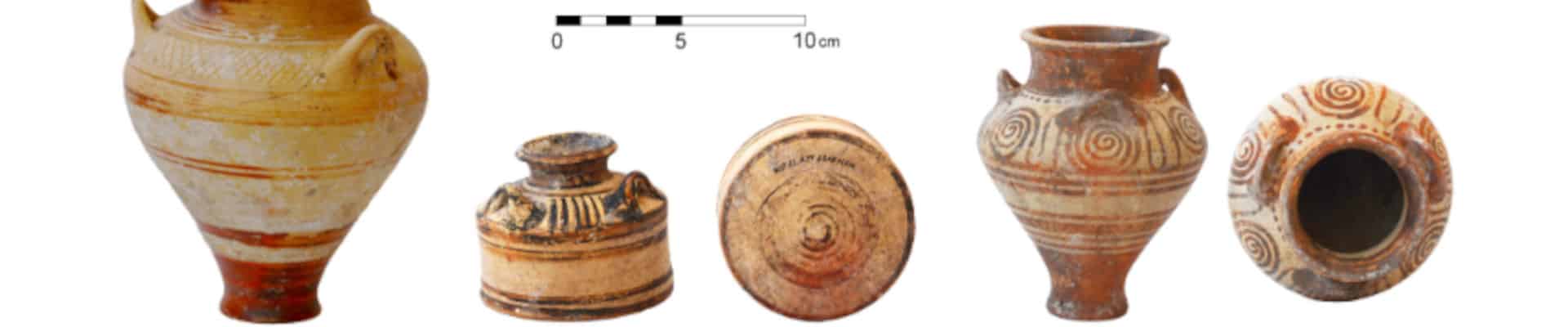
Pp. 74-99: “The Cemetery of Hala Sultan Tekke, Cyprus: Further Evidence of Interculturality and Burial Customs in the Late Bronze Age,” by Peter M. Fischer
This study deals with the results from the 2018–2023 fieldwork at the cemetery of Hala Sultan Tekke. The aim of the project is the safeguarding, excavation, recording, and study of tombs exposed to farming, erosion, and looting. The stratigraphy of the tombs that were used over generations represents an excellent complement to the sequence of occupation in the city. The mortuary gifts and personal belongings date mainly to the fifteenth to thirteenth centuries BCE and confirm far-reaching trade, further underlining the role of the city as a trading center in the Mediterranean economic system. The material evidence corroborates connections with societies of the Mycenaean, Minoan, Hittite, Levantine, and Egyptian spheres of culture as well as networks with regions as far away as Sardinia, the Baltic Sea, Mesopotamia, Afghanistan, and India. In addition, several find contexts provide valuable information about the complex mortuary customs of the Late Cypriot period.
ASOR Members with online access: log into ASOR’s Online Portal here. Once logged in, click the JOURNALS tab in the top navigation bar. Tutorials for how to log in to the Online Portal as well as how to navigate to the Portal Journals page can be found here.
Pp. 100-109: “As Time Goes by: Identifying the Spatiotemporal Dynamics of the Hala Sultan Tekke Coastal Area (Cyprus) by Means of Surface Surveying,” by Polte De Weirdt, Ralf Vandam, Jan Coenaerts, and Karin Nys
Contrary to the idiosyncratic “tell-type�? urban settlements that epitomize Late Bronze Age societies in the eastern Mediterranean and the Near East, a handful of major urban settlements on Cyprus, such as Hala Sultan Tekke and Maroni, embodied a completely different notion of urban engineering. Instead of dense urban city centers where numerous residents resided close to each other, these “atypical�? settlements were apparently organized with broad areas of open space between smaller occupational “clusters.�? By means of archaeological survey combined with a landscape archaeological approach, the Hala Sultan Tekke Hinterland Survey Project (HST-HASP) aims to (re)evaluate this unique type of spatial organization at the Late Bronze Age settlement at Dromolaxia-Vyzakia, as well as to reconstruct the long-term, multiperiod lifecycle of the settlement and its surrounding landscape. The project by the Vrije Universiteit Brussel aims to investigate the site’s hinterland and its relation and position within the broader Tremithos Valley region.
ASOR Members with online access: log into ASOR’s Online Portal here. Once logged in, click the JOURNALS tab in the top navigation bar. Tutorials for how to log in to the Online Portal as well as how to navigate to the Portal Journals page can be found here.
Pp. 110-120: “The Trail of Sennacherib’s Siege Camps,” by Stephen C. Compton
Images of military conquest on Sennacherib’s palace walls often featured his siege camps. By comparing the visual and textual references to these camps with the surroundings of the cities he besieged (on site and via aerial and satellite imagery, archaeological and historical data, and early maps and surveys), likely locations are proposed for Sennacherib’s royal camps. These sites are found to have all had the same name on early maps, Mudawwara, which, in Arabic in the Middle Ages, denoted the enormous tent that housed the sultan on military expeditions. (At times, this name was prefaced with Khirbet al, indicating the ancient stone ruins thereof.) Examining all occurrences of this toponym within Judah and Philistia reveals a distribution consistent with what is known of Sennacherib’s invasion route and of the cities besieged. It also resolves some long-standing questions and contributes to identifying the locations of the cities of Libnah and Nob.
ASOR Members with online access: log into ASOR’s Online Portal here. Once logged in, click the JOURNALS tab in the top navigation bar. Tutorials for how to log in to the Online Portal as well as how to navigate to the Portal Journals page can be found here.
Pp. 122-131: “Dawn and Descent: Social Network Analysis and the ASOR Family Trees,” by Diane Harris Cline, Eric H. Cline, and Rachel Hallote
The development of ancient Near Eastern archaeology, especially that of the southern Levant, is usually presented through several standard narratives. For American scholars it frequently begins with William F. Albright, who is often referred to as “the father of biblical archaeology.�? We undertook to test this narrative by surveying current scholars and using three separate metrics of social network analysis (SNA) on the resulting academic genealogies. Our preliminary results indicate that while a portion of active American archaeologists and biblicists do indeed trace their academic lineage back to Albright, an even larger portion, including Israeli archaeologists and various American Egyptologists and Assyriologists, are scholarly descendants of Albright’s academic cousins, all of whom can trace themselves back to the German Assyriologist Friedrich Delitzsch, who seems to have been the real father of the discipline, genealogically speaking. We also determined that academic lineage does not inhibit intellectual diversification.
ASOR Members with online access: log into ASOR’s Online Portal here. Once logged in, click the JOURNALS tab in the top navigation bar. Tutorials for how to log in to the Online Portal as well as how to navigate to the Portal Journals page can be found here.
Pp. 132-136: “Expanding the World of Biblical Studies to Scholars Who Are Blind: Creation and Implementation of a Coptic Braille System,” by Daniel Charles Smith and Sarah Blake LaRose
Until 2016, braille readers had little or no access to ancient languages beyond Hebrew, Greek, and Latin. Thus access to the study of ancient languages was difficult for blind students who needed braille texts. This article describes the history that led to the development of a braille system to represent the Coptic language. It also discusses the process of implementing the Coptic braille system in the translation of a textbook from print to braille and what was learned from the use of this braille system in the translation process. The information can provide guidance to other universities wishing to ensure access to ancient language texts for students who are blind and possible new directions for the study of this corpus.
ASOR Members with online access: log into ASOR’s Online Portal here. Once logged in, click the JOURNALS tab in the top navigation bar. Tutorials for how to log in to the Online Portal as well as how to navigate to the Portal Journals page can be found here.
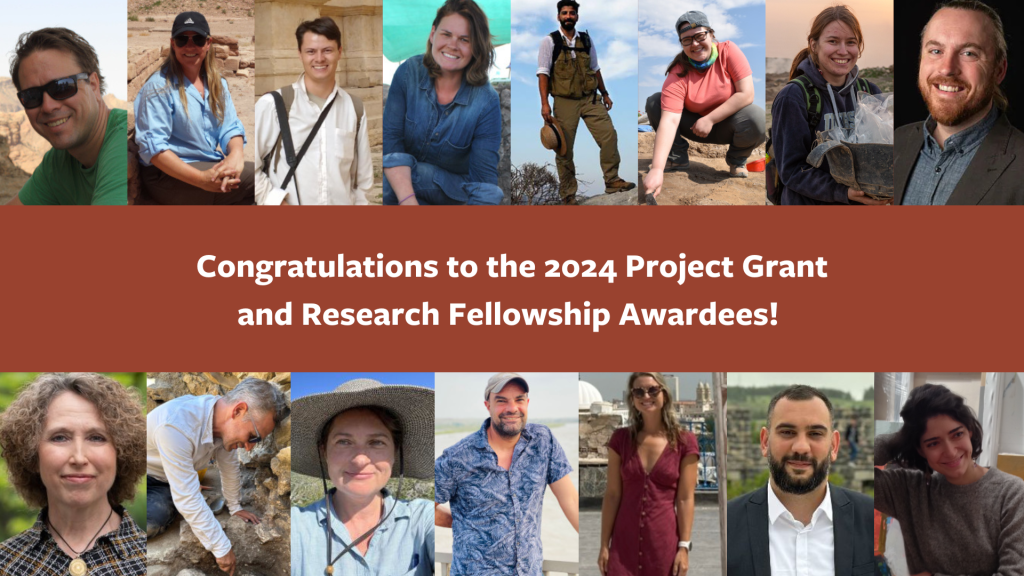
Jason T. Herrmann, University of Pennsylvania: Phoenician Roots in a Punic City (Sicily, Italy)
Sarah A. James, University of Colorado Boulder: The Brač Island Project (Croatia)
Jennifer Ramsay, SUNY-Brockport, Björn Anderson,University of Iowa, and Craig Harvey, University of Alberta: Exploring Continuity and Transition in Southern Jordan
Stevan B. Dana Project Grant for Israel
Bethany J. Walker, University of Bonn: Study of Cultivation Strategies at Khirbet Beit Loya (Israel)
Charles Harris Project Grants
Alexander J. Smith, SUNY-Brockport: Menorca Archaeological Project (Spain)
Joe D. Seger Project Grant
Khaled Abu Jayyab, University of Toronto: Paths to Urban Growth in the Nineveh Plain (Iraq)
Asil Yaman, University of Pennsylvania: Phoenix Archaeological Project (Turkey)
Shepard Urgent Action Grants
Gia Chilingarashvili, Ivane Javakhishvili Tbilisi State University: Rescue Excavation of a Chalcolithic Settlement in South-West Georgia
Caroline Angle Maguire, University of Maryland: Decolonizing Knowledge: Reclaiming Colonial Museums in Francophone North and West Africa (Tunisia)
Study of Collections Fellowships
Jennie Ebeling, University of Evansville: Analysis of Ground Stone Artifacts from Tell en-Nasbeh, Palestine at the Badè Museum of Biblical Archaeology
Holly Winter, University of Sydney: The Land Behind Aleppo: Urban Life and State Formation in Bronze Age Syria at the Harvard Museum of the Ancient Near East
Mesopotamian Fellowship
Elizabeth Gibbon, University of Toronto: The Halaf-Ubaid Transition at Tepe Gawra (Iraq)
Jeiran Jahani, Columbia University: Animal Art: Domesticating Wild Ecologies of the First Cities (Iraq)
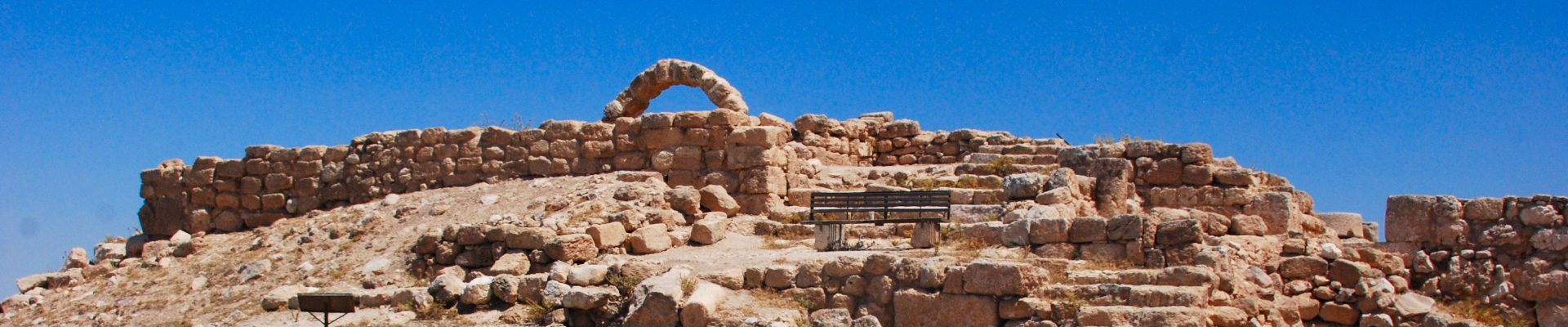
This past summer afforded me the extraordinary privilege of participating in fieldwork at Tell el-Hesi, collaborating with University of Michigan PhD candidate Kara Larson in her research for her doctoral dissertation, as well as joining the Mississippi State University Field School to conclude excavations at Khirbet Summeily. During the initial phase of the field season, we broke ground with the first excavations at Tell el-Hesi since the 1970s, with plans for continued excavation over multiple seasons. This archaeological site had undergone extensive previous excavations, with projects dating back to 1890-1892 and another in 1970-1977 conducted by the Joint Archaeological Expedition to Tell el-Hesi with these prior endeavors primarily concentrated on the Tell and the upper city of the site; however, the 1970 expedition conducted a probe off the Tell in field IV, delving into the site’s broader stratigraphy to achieve a holistic understanding of the ancient city. It was the findings from this probe that influenced our selection of the excavation site for our work.
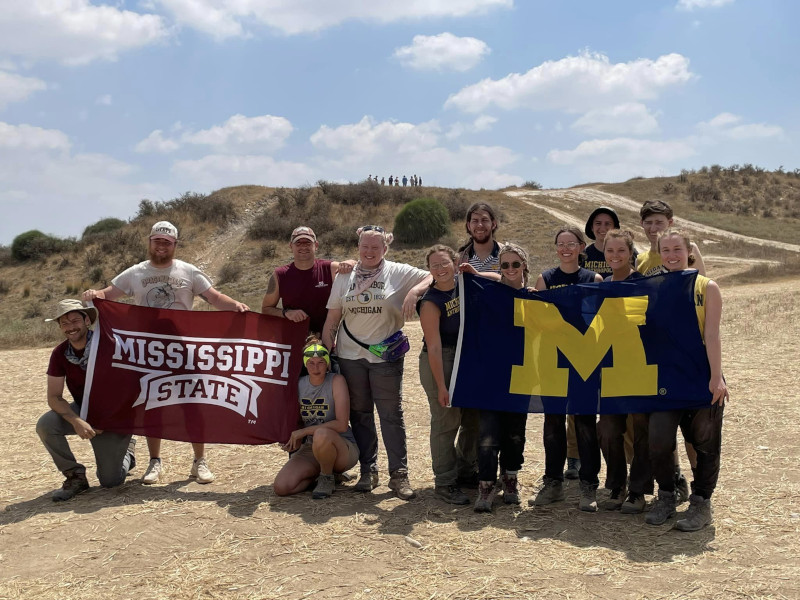
The Tell el-Hesi team!
In the latter part of my field season, I participated in excavations at Khirbet Summeily, an Iron Age administrative and trade outpost. Collaborating with the Mississippi State University crew provided not only invaluable archaeological experience but also the opportunity to establish meaningful connections within our shared field of study and a collective camaraderie forged beneath the blazing sun.
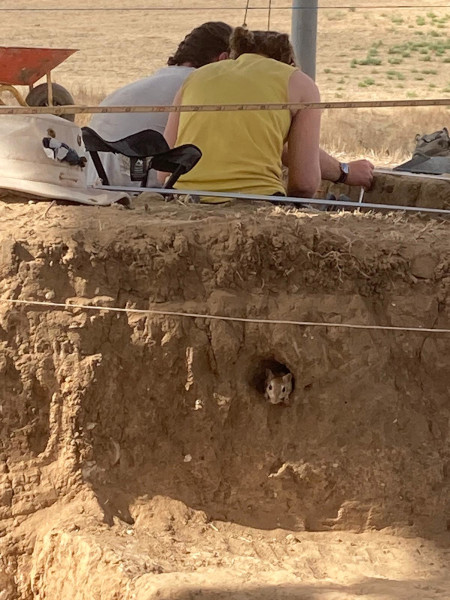
An unexpected excavation volunteer.
A typical field day began by aiming to beat the scorching heat. Ideally, we woke at 4 a.m., prepared breakfast, and ensured we had enough water before heading to the site by 5 a.m. More often than not, the allure of the snooze button prevailed, leading to a rush to get ready and make it to the vehicles on time. Upon arrival at the site, our initial tasks included setting up shade cloths, unloading tools, and beginning excavation. Throughout the day, we took short breaks for morning coffee, a mid-morning breakfast, and a refreshing fruit break toward the end, vital after long hours when it was beginning to heat up. Around 12:15 p.m., as the temperature climbed, we finished our excavation activities, cleaned up, and left the site by 12:30 p.m., eagerly returning for lunch and a much-needed shower. The midday break allowed for short naps which many of our crew took frequent advantage of. After this afternoon break, while most other students washed pottery, I had the privilege of illustrating notable sherds found during excavation. As an interdisciplinary art and archaeology student, this role allowed me to refine my skills and define my niche.
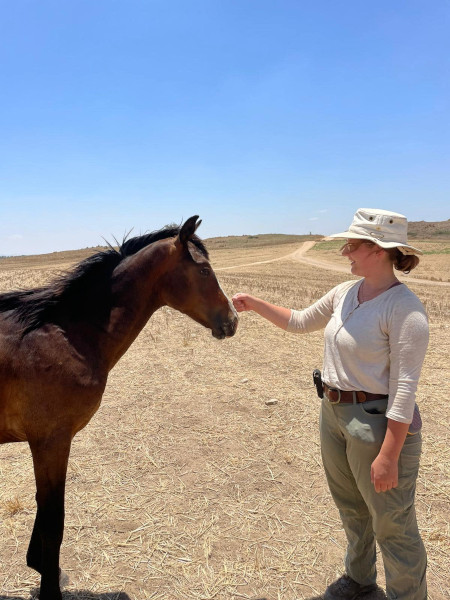
Saying hello to a visitor to the site.
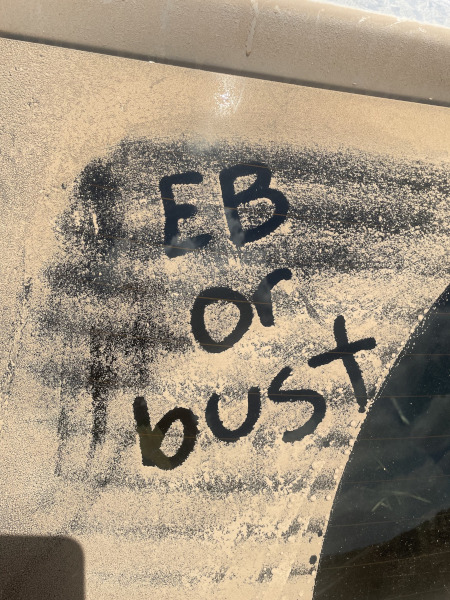
Words of motivation!
Weekends provided a welcome respite with trips to explore renowned archaeological sites, culturally significant locations, and the region’s must-see attractions. Among the memorable highlights were the experience of floating in the Dead Sea (a word of caution – avoid getting the water in your eyes, trust me, it’s not pleasant), visiting Masada, where some of our team braved climbing the snake path while others took in views from the gondola, swimming in the Mediterranean Sea, and my personal favorite was the opportunity to explore Jerusalem’s Old City.
In summary, my journey of working and learning at Tell el-Hesi and Khirbet Summeily during the summer has been profoundly transformative. The experiences, knowledge, and friendships I acquired have enriched both my academic and personal growth. As I reflect upon the early mornings, sweltering days, and the discoveries we unearthed together, I am deeply moved by the generosity of ASOR and the donors to the Katherine Barton Platt Fellowships for making this journey possible. The opportunity to collaborate with fellow scholars and engage in interdisciplinary research that fuses art and archaeology has solidified my love for this field. I am unwavering in my commitment to carry forward the knowledge and experiences from this fieldwork season in my academic pursuits, aspiring to make meaningful contributions to the field of archaeology. I extend my heartfelt gratitude once more for this extraordinary opportunity, which has unquestionably shaped my future aspirations and goals.
Danielle (Dani) Tutak is a senior pursuing dual degrees in art and design and anthropological archaeology at the University of Michigan. She is passionate about the potential of interdisciplinary research using insights and methods from diverse fields of study and experimenting with unexpected methods of science communication and documentation. Her upcoming projects and goals include finishing her anthropology honors thesis in archaeological research, completing her senior art thesis exploring historical and modern approaches to understanding the past, and graduating and moving on to the next adventure.
Want to help more students and early career archaeologists get into the field? Donate to the cause today by selecting “Excavation Scholarships” as your gift purpose!






 migration patterns, and forced resettlement during the Assyrian Empire beget a new set of mortuary norms. At the same time, some groups struggled to maintain their traditions in the face of a changing social and political landscape. This talk explores the variety of funerary traditions present in the Assyrian Empire and how they changed over time – telling us just as much about those alive as those deceased.

 “Holy City of God, Jerusalem, how I long to stand even now at your gates, and go in, rejoicing!” Around 600 CE, Sophronius, a monk from a monastery near Jerusalem who had been posted to Egypt, Sinai, and North Africa, composed a poem expressing his longing to return to the holy city – a wish that was fulfilled thirty years later when he was appointed patriarch. For Sophronius, not even Alexandria, the cosmopolitan cultural capital of the Mediterranean, could compete with Jerusalem. Sophronius’ words echo Psalm 122:1-3, which was written hundreds of years earlier and attributed to King David: “I was glad when they said to me, ‘Let us go to the house of the Lord!’ Our feet are standing within your gates, O Jerusalem. Jerusalem – built as a city that is bound firmly together.”
 Throughout the ages, pilgrims have shared Sophronius’ desire to stand in the gates of Jerusalem. Why has this poor and isolated mountain town exerted such a powerful hold on billions of people worldwide over the course of millennia? The simple answer is that for followers of the three Abrahamic faiths, Jerusalem is the place where the presence of the God of Israel dwells, and the Last Judgement will take place. It is the meeting point of heaven and earth – the locus of divine and human interaction. In this talk, Prof. Magness explores how these beliefs came to be associated with Jerusalem.
 Her most recent books are Jerusalem Through the Ages: From Its Beginnings to the Crusades (New York: Oxford University, March 2024); and Ancient Synagogues in Palestine: A Reevaluation Nearly a Century After Sukenik’s Schweich Lectures. The Schweich Lectures of the British Academy 2022 (London: The British Academy/Oxford University Press, anticipated publication July 2024). Three of Magness’ books have won awards: Masada: From Jewish Revolt to Modern Myth (Princeton: Princeton University, 2019); The Archaeology of Qumran and the Dead Sea Scrolls (Grand Rapids, MI: Eerdmans, 2002; revised edition 2021); and The Archaeology of the Early Islamic Settlement in Palestine (Winona Lake, IN: Eisenbrauns, 2003). Magness has participated on 20 different excavations in Israel and Greece, including co-directing the 1995 excavations in the Roman siege works at Masada. Since 2011, she has directed excavations at Huqoq in Galilee (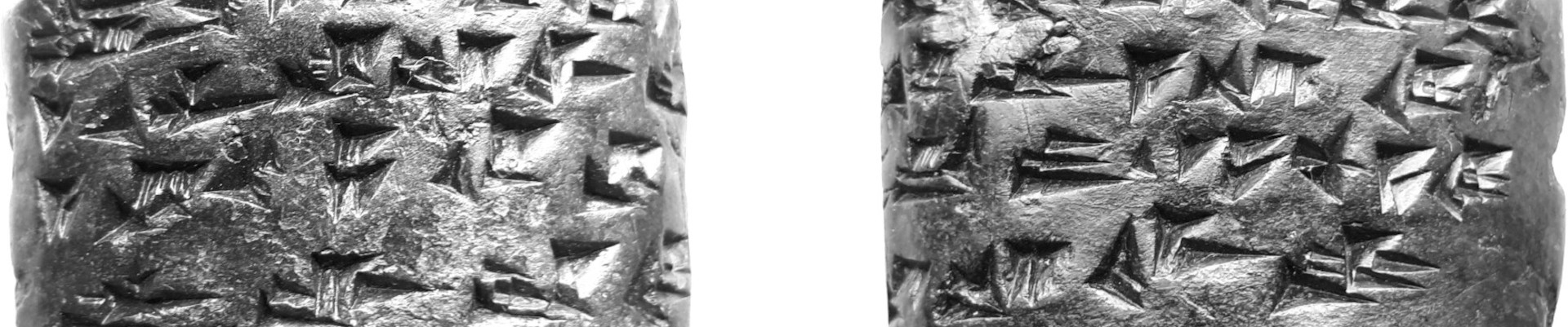









 Danielle (Dani) Tutak is a senior pursuing dual degrees in art and design and anthropological archaeology at the University of Michigan. She is passionate about the potential of interdisciplinary research using insights and methods from diverse fields of study and experimenting with unexpected methods of science communication and documentation. Her upcoming projects and goals include finishing her anthropology honors thesis in archaeological research, completing her senior art thesis exploring historical and modern approaches to understanding the past, and graduating and moving on to the next adventure.