Sarah Jarmer Scott was elected as ASOR’s next Secretary by the Board of Trustees during the Annual Meeting in November 2024. Sarah will serve a three-year term as Secretary until December 31, 2027. Below is her vision statement for ASOR:
ASOR has been a foundationally important organization for me, and I know it has been for others. It would be an honor to give back by serving on the Board, and in doing so I would hope to support and grow its programming and membership. Not only has it provided academic, intellectual, and networking opportunities for my work, it has also provided a community for pedagogical support. My area of scholarship is fundamentally interdisciplinary, while also being inter-regional. As a specialist in Mesopotamian glyptic and visual culture, I engage in dialogue with art historians, archaeologists, philologists, anthropologists, and museum professionals. My own experience in presenting papers and chairing sessions has opened paths for research and publications, as it has for others. The networking and social component – particularly through the annual meetings – has also been important in my own growth and confidence as a scholar. The diversity of attendees and members, as well as the commitment to social justice in the many disciplines represented by ASOR, is an essential component of the organization, and one that is key to its success.
As one of many members who teach at a small college where I am the only person in my area of specialty, ASOR is an important community, as it provides a venue to talk to like-minded researchers and teachers, collaborate, and bring back ideas. While my main role at Wagner is as professor of Art History (where I teach Mesopotamian, Egyptian, Greek, and Islamic Art, Museum Studies, as well as writing seminars), I have also served as Dean and directed a number of grants. Having seen some of the challenges facing higher ed, and sought to empower colleagues and students to find success in their work, I know that organizations like ASOR are essential in bringing deep knowledge and resources to such endeavors; I see opportunity in deeper collaborations between and amongst ASOR, its membership, and higher education institutions and museums.
My experience with ASOR (conference attendee, presenter, session chair, and utilizer of multiple ASOR resources and publications) has given me insight and knowledge of the organization and will serve to make me an excellent Secretary. I’d also like to call attention to my 20 years of experience on the board of the local Staten Island AIA chapter. I am proud of the work I did with them and the amazing programming I developed for that community (lectures, trips, archaeology fairs).
In the years ahead I know ASOR will face many challenges. Surely the organization will rise to those challenges. Continued and emphatic devotion to development of scholarship, diversity, social justice, community-based collaboration, and creative partnership development will enable ASOR to succeed and thrive. I look forward to serving the Board of ASOR.
ASOR would also like to welcome three new trustees to the Class of 2027:
Andrea Berlin (Institutionally-Elected Trustee) Helen Dixon (Membership-Elected Trustee) Emily Hammer (Membership-Elected Trustee)
Women’s Work in Abydos: Margaret Murray, Amice Calverley, and Myrtle Broome
Friends of ASOR present the next webinar of the 2024-2025 season on February 5, 2025, at 7:00 pm EST, presented by Dr. Kathleen Sheppard. This webinar will be free and open to the public. Registration through Zoom (with a valid email address) is required. This webinar will be recorded and all registrants will be sent a recording link in the days following the webinar.
In 1902, Margaret Alice Murray got invited to work in the field—finally. Training with Flinders Petrie for the last eight years, she had taught plenty of students in London, but had never been to Egypt to work herself. She spent only one season at Abydos, working in the Osireion, a special temple that no one had yet fully understood. Two years later, Murray’s publication, The Osireion at Abydos, upended all previous theories about the site. By 1938, Amice Calverley and Myrtle Broome were leaving Abydos, having spent almost a decade copying the art in the Temple of Seti I. Their own publications, The Temple of Sethos I at Abydos, were four volumes of brilliantly painted art from the temple walls in exacting detail. This talk will detail the ways in which the work women did on site at Abydos in the early 20th century impacted our understanding and reception of one of the most important sites in all of ancient Egypt.
Dr. Kathleen Sheppard is Professor in the History and Political Science department at Missouri S&T. Her focus of study is the history of Egyptology. Her most recent book, Women in the Valley of the Kings, tells a history of Egyptology through the perspective of women’s work in the field. Her 2022 book, Tea on the Terrace: Hotels and Egyptologists’ Social Networks, investigates the role of hotels as hubs in the professional and friendship networks of Egyptologists in the late 19th and early 20th century. She received her MA in Egyptian Archaeology from UCL in 2002 and her PhD in History of Science from University of Oklahoma in 2010.
SPONSOR A WEBINAR!
Several levels of support from $50-$1,000 are available. Proceeds go towards membership scholarships and towards increasing ASOR’s virtual resources. Each sponsorship is tax-deductible and includes benefits! Sponsor a webinar here.
Thirsty Work: Building and Brewing on Bronze Age Cyprus
Friends of ASOR present the next webinar of the 2024-2025 season on January 22, 2025, at 2:00 pm EST, presented by Dr. Lindy Crewe. This webinar will be free and open to the public. Registration through Zoom (with a valid email address) is required. This webinar will be recorded and all registrants will be sent a recording link in the days following the webinar.
The last phase of the Middle Bronze Age on Cyprus (c. 1750–1650 BC) saw a number of dramatic changes, both in settlement patterns and structure, with many sites abandoned and new sites founded near the coast. At the exceptional long-lived coastal Bronze Age site of Kissonerga-Skalia near Paphos, a settlement established at the transition to the Early Bronze Age (c. 2400 BC), the site was completely restructured during this time and earlier domestic buildings were built over with an industrial architectural array installed in their place. This was only occupied for one or two generations before Kissonerga-Skalia was abandoned for good. Ongoing excavations are revealing a number of large pyrotechnical features and associated finds within this ‘monumental’ complex dating to the transition from the Middle–Late Bronze Age, a period during which we see the first moves towards urbanism and the integration of Cyprus into eastern Mediterranean trading networks. One of these features, contained within a finely built courtyard, has been interpreted as a ‘drying kiln’ used in the production of beer. The function of the others remains ambiguous, but they may have been used for production of an organic compound or for cooking communally. This lecture will explore how we can interpret this evidence for large-scale production and construction and consider how these features may relate to the desire of all or part of the community at Kissonerga-Skalia to take part in wider Mediterranean social interactions and trade.
Dr Lindy Crewe has been the Director of CAARI since 2017. Prior to this, she was Lecturer in Archaeology at the University of Manchester, UK. Her research focuses on Cypriot prehistory and international interconnections, with a particular interest in the Chalcolithic and the Bronze Age. She is currently directing excavations at the Early–Middle Bronze Age settlement of Kissonerga-Skalia near Paphos. She is the author of two monographs, three edited volumes and over 30 articles, on topics including settlement at Late Bronze Age Enkomi and the Chalcolithic cemeteries at Souskiou. Her most recent work is a volume resulting from a conference organised by CAARI and the British Museum (with co-editors T. Kiely and A. Reeve) entitled ‘Empire and Excavation: Critical Perspectives on Archaeology in British-period Cyprus, 1878–1960’, which will be published in early 2025. She first came to Cyprus and CAARI 30 years ago as an undergraduate student from Australia to excavate at Marki-Alonia and became passionate about the archaeology of the island, spending considerable time staying at CAARI for her doctoral research and beyond.
SPONSOR A WEBINAR!
Several levels of support from $50-$1,000 are available. Proceeds go towards membership scholarships and towards increasing ASOR’s virtual resources. Each sponsorship is tax-deductible and includes benefits! Sponsor a webinar here.
Archaeology and Heritage During the Civil War in Sudan: What Can We Do?
Friends of ASOR present the next webinar of the 2024-2025 season on January 8, 2025, at 7:00 pm EST, presented by Dr. Geoff Emberling. This webinar will be free and open to the public. Registration through Zoom (with a valid email address) is required. This webinar will be recorded and all registrants will be sent a recording link in the days following the webinar.
Archaeologists are moving away from the colonial past of the discipline and are increasingly finding ways of engaging and collaborating with the communities where we work. Since 2016, the University of Michigan archaeological project in northern Sudan that Dr. Emberling co-directs has been conducting research at important sites of the ancient empire of Kush, first at the royal pyramid cemetery of Kushite kings and queens at El-Kurru (ca. 850-350 BCE) and more recently at the major urban center at Jebel Barkal (ancient Napata). Their work has come to be highly collaborative and engages extensively with local communities.
This talk is not primarily about those excavations. Rather, it will discuss what has happened in Sudan since the outbreak of war in the country in April 2023 with a particular focus on heritage. It will provide an overview of the conflict, discuss real (and imagined) threats to museums, sites, and monuments, and discuss the wide range of responses by the Sudanese government, Sudanese scholars, international institutions, and foreign-based archaeologists. It will also focus on the work done with communities and colleagues at El-Kurru and Jebel Barkal.
Collaborative relationships developed by the teams and others working in Sudan have made it possible in some cases to continue to work together on on-site management and protection and community engagement, even at a time of unimaginable struggle and hardship in the country. This work has raised the question of whether it is unethical to be focusing on heritage when people are suffering. However, Dr. Emberling and his team have found that through collaborative work (and flexible and generous funding), they are able to provide direct support to a large number of people to continue their archaeological work. This provides meaning and purpose for their archaeological colleagues, while their community engagement activities offer opportunities for local residents and refugees to relax, connect, and even have some fun in the midst of a dire situation. It turns out that heritage is always about people.
Geoff Emberling is an archaeologist and museum curator at the Kelsey Museum of Archaeology, University of Michigan whose work has focused on the ancient Middle East and Northeast Africa. He is also a longtime ASOR member. He directed excavations at Tell Brak in northeastern Syria until 2004 and then took a position as Museum Director and Chief Curator at what is now the Institute for the Study of Ancient Civilizations (ISAC) at the University of Chicago. While there, he supervised an exhibit on the looting of museums and sites in Iraq around the 2003 US-led invasion.
At that time, he also began his work in northern Sudan (ancient Nubia), first supervising a permanent gallery on ancient Nubia at ISAC and then co-directing a University of Chicago project that contributed to archaeological salvage of the Merowe Dam at the 4th Cataract of the Nile. Since 2013, he has co-directed University of Michigan projects in Sudan, first at the royal pyramid cemetery of ancient Kush known as El-Kurru, and most recently at the Kushite urban center of Jebel Barkal (ancient Napata).
His more recent work has prioritized collaborative and community-engaged work with local professional colleagues and community members in Sudan, including site protection, conservation of monuments, and community education. This approach has prepared him and his team to continue to contribute to work at these sites as well as their protection during the current war in Sudan, which started in April 2023.
SPONSOR A WEBINAR!
Several levels of support from $50-$1,000 are available. Proceeds go towards membership scholarships and towards increasing ASOR’s virtual resources. Each sponsorship is tax-deductible and includes benefits! Sponsor a webinar here.
Please e-mail the Membership office if you have any questions.
Pp. 1-56: “The First Tablet of the Ugaritic KrtText, Column II, Lines 4–5: Reading and Reconstruction” by Tommaso Bacci, Tyler J. Harris, Jaeseok Heo, Dennis Pardee, and Alexis Wolf
This article introduces a new reconstruction and critical reading of two partially-damaged lines (4–5), from Tablet I, Column II of the Ugaritic Krt Text (RS 2.[003]+). The first section of this article outlines the lengthy history of previously-offered readings and restorations of these lines. The second section provides a detailed epigraphic analysis and reconstruction, based on new photos of the tablet. Following the proposed reconstruction, the third section offers a philological analysis, including vocalization and translation of relevant portions. The fourth and final section of the article explores pertinent literary considerations around the proposed reconstruction, demonstrating how these lines fit lexically and thematically within the immediate passage and the broader story. This article’s new proposal underscores the significance of Krt’s first refusal of an offer of wealth and precious items after the loss of his household (I 52–II 3)—a key motif that recurs twice more within the KrtEpic (III 33–37; VI 22–27). The holistic approach to reconstruction utilized herein centers around the distribution of terms related to the concepts of “house(hold)” and “progeny/family,” illuminating the poetic techniques used in Krt’s request for a bride, as instructed by the god ʾIlu, and its pivotal role in the unfolding narrative.
ASOR Members with online access: log into ASOR’s Online Portal here. Once logged in, click the JOURNALS tab in the top navigation bar. From here you may select which journal you would like to read. If you have online access, you will see your selected journal’s current issue Table of Contents. Click on the “Current Issue” button and you will then be redirected to the University of Chicago Press’s (UCP) platform to immediately start reading any issue of your choice. Tutorials for how to log in to the Online Portal as well as how to navigate to the Portal Journals page can be found here.
Pp. 57-88: “‘And I Deported ʾAriʾēl, Its Leader, from There’: Line 12 of the Mesha Inscription in Light of Shared Scribal Practices in Moab and Ancient South Arabia,” by Mario Tafferner
Translating the phrase wʾšb . mšm . ʾt . ʾrʾl . dwdh in line 12 of the Mesha Inscription remains problematic. This essay goes beyond previous approaches to interpreting this clause by comparing it to related instances of formulaic language usage in the Old Sabaic royal summary inscription RES 3945/3946. The resulting anaylsis illuminates several aspects of the Moabite phrase: the verbal root underlying the form wʾšb, the type of object represented by ʾrʾl . dwdh, and the identity with which it is associated within the framework of the inscription’s rhetoric. The essay concludes that wʾšb . mšm . ʾt . ʾrʾl . dwdh likely communicates the deportation of a human being that the writers of the account presented as either Israelite or closely associated therewith.
ASOR Members with online access: log into ASOR’s Online Portal here. Once logged in, click the JOURNALS tab in the top navigation bar. From here you may select which journal you would like to read. If you have online access, you will see your selected journal’s current issue Table of Contents. Click on the “Current Issue” button and you will then be redirected to the University of Chicago Press’s (UCP) platform to immediately start reading any issue of your choice. Tutorials for how to log in to the Online Portal as well as how to navigate to the Portal Journals page can be found here.
Pp. 89-95: “Beth-Shemesh East and the lmlkStamped Jar handles: A Rejoinder,” by Lily Singer-Avitz and Yehuda Govrin
The present rejoinder discusses the article published recently in this journal by Gross, Wrathall, Koch, and Lipschits and its conclusions. Their article reviews the lmlk stamped handles found in a limited area of the large-scale salvage excavations conducted during the years 2018–2020 to the east of Tel Beth-Shemesh. According to these partial data they reconstruct the chronology and history of the site. In this rejoinder we present a different set of chronological data as obtained from all the excavation areas which requires another historical reconstruction.
ASOR Members with online access: log into ASOR’s Online Portal here. Once logged in, click the JOURNALS tab in the top navigation bar. From here you may select which journal you would like to read. If you have online access, you will see your selected journal’s current issue Table of Contents. Click on the “Current Issue” button and you will then be redirected to the University of Chicago Press’s (UCP) platform to immediately start reading any issue of your choice. Tutorials for how to log in to the Online Portal as well as how to navigate to the Portal Journals page can be found here.
Pp. 97-142: “A Reedition of Three Palmyrene Funerary Busts at the Barracco Museum in Rome (PAT 1064, 1065, 1759),” by Ali Kesserwani, Jeremy M. Hutton, and Konstantin M. Klein
The Museo Barracco di scultura antica (Barracco Museum of Ancient Sculpture, Rome, Italy) houses three Palmyrene funerary busts (PAT 1064, 1065, 1759). In this study, we analyze all three reliefs, providing discussions of their iconographic features, onomastics and prosopography, and script-styles, with particularly detailed descriptions attending the latter. We confirm prior readings and make additional observations regarding the subjects’ professional and social identities.
ASOR Members with online access: log into ASOR’s Online Portal here. Once logged in, click the JOURNALS tab in the top navigation bar. From here you may select which journal you would like to read. If you have online access, you will see your selected journal’s current issue Table of Contents. Click on the “Current Issue” button and you will then be redirected to the University of Chicago Press’s (UCP) platform to immediately start reading any issue of your choice. Tutorials for how to log in to the Online Portal as well as how to navigate to the Portal Journals page can be found here.
Pp. 143-172: “A Scroll of One’s Own? Scribal, Philological, and Literary Aspects of 4QIsak (4Q64),” by Noam Mizrahi
The paper offers a new investigation of a fragmentary Isaiahscroll from Qumran Cave 4, 4QIsak (4Q64), which contains Isa 28:26–29:9. A new material reconstruction of the surviving fragments leads to a detailed evaluation of the scribal properties of the manuscript. The philological analysis of its text vis-à-vis the MT and the other textual witnesses takes into consideration the literary structure and rhetorical design of the prophetic units, leading to some conclusions concerning the nature of this specific scribal artifact and its place within the textual history of Isaiah.
ASOR Members with online access: log into ASOR’s Online Portal here. Once logged in, click the JOURNALS tab in the top navigation bar. From here you may select which journal you would like to read. If you have online access, you will see your selected journal’s current issue Table of Contents. Click on the “Current Issue” button and you will then be redirected to the University of Chicago Press’s (UCP) platform to immediately start reading any issue of your choice. Tutorials for how to log in to the Online Portal as well as how to navigate to the Portal Journals page can be found here.
Pp. 173-218: “A Tale Twice Told—Between Variants and Versions in the Transmission of Mandaic Spells,” by Matthew Morgenstern
In contrast to Mandaic magic spells that have survived in epigraphic sources dating from the fifth to seventh centuries which show considerable literary variation, those attested in manuscript sources—the earliest surviving example of which was copied in the seventeenth century—mostly preserve only a single recension of each spell. One rare exception is a spell that has been incorporated in a longer and shorter recension into two different collections of formulae, Šap̄ta ḏ-Pašar Haršia “The Scroll of the Exorcism of Sorceries” and Šap̄ta ḏ-Mihla ḏ-Sidma ḏ-Sahria u-Kibša ḏ-Daiuia (Pašar Mihla) “The Scroll of Salt, the Restraint of Sahirs and the Subduing of Devs(The Exorcism of Salt).” This article presents an editio princeps of both recensions of this spell with a translation and brief philological notes and emphasizes the importance of examining all available textual witnesses and establishing the relationship between them when such an edition is produced. It is shown that where the two traditions of transmission of this spell are parallel, some of the textual variants appear to reflect slightly different versions of the text that were incorporated into the two collections, while others have probably arisen at a later stage in the transmission of each collection.
ASOR Members with online access: log into ASOR’s Online Portal here. Once logged in, click the JOURNALS tab in the top navigation bar. From here you may select which journal you would like to read. If you have online access, you will see your selected journal’s current issue Table of Contents. Click on the “Current Issue” button and you will then be redirected to the University of Chicago Press’s (UCP) platform to immediately start reading any issue of your choice. Tutorials for how to log in to the Online Portal as well as how to navigate to the Portal Journals page can be found here.
Please e-mail the Membership office if you have any questions.
Pp. 220–230: “Dealing with and Analyzing Legacy Data: An Interdisciplinary, GIS-based Approach to Study the French Excavations at Enkomi (Cyprus),” by Enrico De Benedictis and Francesca Meneghetti
This article focuses on using GIS to analyze legacy data from the French excavations at the Late Bronze Age site of Enkomi (Cyprus). Despite being a major site for the protohistory of the island, its excavations were never fully published, while the only available publications are partial and nonorganic. Given their unreliable nature, scholarship can only partially use the results of the French mission. However, our multidisciplinary approach that uses GIS, archival data, and museum archaeology may contribute to bringing back these data again by removing the reasons that caused their dismissal. We tackle the issues of legacy data related to the site, its archaeological documentation and study, followed by the interdisciplinary methodology adopted and a case study from Quarter 3 East of Enkomi that confirms the validity of the method proposed.
ASOR Members with online access: log into ASOR’s Online Portal here. Once logged in, click the JOURNALS tab in the top navigation bar. Tutorials for how to log in to the Online Portal as well as how to navigate to the Portal Journals page can be found here.
Pp. 232-242: “A Reconstruction of the Niche in Building 7050 at Hazor,” by Jennie Ebeling and Laura Mazow
In this article we offer new evidence in support of the function of Building 7050 at Tel Hazor as a temple. One criterion the excavators use to argue its function as a palace is a clay installation they describe as a “bathtub” or “bathtub-like structure” built into the rear niche of the building. Our analysis, however, suggests a storage function is more likely. We then offer a new reconstruction of Building 7050 and the features in the rear niche, including the storage bin, a previously ignored stone base, and a bench, proposing their ritual significance. We further demonstrate the architectural parallels between Building 7050 and Hazor’s Orthostat Temple in Stratum 1B, with which Building 7050 is contemporary. This new analysis of Building 7050 contributes to our understanding of the religious landscape of the Late Bronze Age Levant.
ASOR Members with online access: log into ASOR’s Online Portal here. Once logged in, click the JOURNALS tab in the top navigation bar. Tutorials for how to log in to the Online Portal as well as how to navigate to the Portal Journals page can be found here.
Pp. 244-250: “Two Unpublished Pot Marks of Dynasty 3 from the Necropolis of Beit Khallaf (Abydos, Egypt),” by Ilaria Incordino
This article introduces two previously unknown pot marks on ceramics from the Third Dynasty (ca. 2686–2613 BCE) necropolis of Beit Khallaf (Abydos, Egypt). The analysis and publication of the funerary equipment of the five burials from this site is the main objective of a wider project that dealt more generally with the chronological problems of this period. The documentation of the funerary equipment of the tombs from Beit Khallaf, (mostly unpublished) focuses on a better understanding of the characteristics of grave goods of mastabas from the Early Dynastic period, and on the possibility that the main burial of the site, tomb K1, may be considered a royal tomb.
ASOR Members with online access: log into ASOR’s Online Portal here. Once logged in, click the JOURNALS tab in the top navigation bar. Tutorials for how to log in to the Online Portal as well as how to navigate to the Portal Journals page can be found here.
Pp. 252-263: “The Petroglyphs of Qeydu Valley in Teymare, Central Iran: New Findings, Stylistic Analysis, and Relative Dating,” by Ebrahim Karimi and Hassan Gharagouzloo
Situated within the Teymare region, Qeydu Valley comprises one of the largest concentrations of petroglyphs in central Iran. The fieldwork conducted by the authors resulted in the identification of a large number of petroglyphs that had not been previously identified. The previously reported sites were also reidentified and systematically recorded. Some abstract markings in Qeydu resemble those known as Tamgas in Central Asian and Mongolian rock art. Stylistic features of the petroglyphs are analyzed, and relative dating approaches suggest that some engravings were made during the Islamic and historical periods.
ASOR Members with online access: log into ASOR’s Online Portal here. Once logged in, click the JOURNALS tab in the top navigation bar. Tutorials for how to log in to the Online Portal as well as how to navigate to the Portal Journals page can be found here.
Pp. 264-275: “Ancient Cave Habitation of Kuy-e Keyvan, Azna, East Central Zagros, Iran,” by Behzad Hoseyni Sarbisheh, Samer Nazari, and Fatemeh Zeynali Khaledabadi
In 2018, parts of an underground building were unearthed during excavations at Kuy-e Keyvan, located in the city of Azna, Lorestan province, Iran. The site was destroyed and leveled in considerable portions as part of the city’s urban development plan. Work commenced on an archaeological rescue project to identify the architectural spaces, prepare a plan, and investigate the site function in June 2019. It covered an area larger than one and a half hectares and yielded twenty-five spaces—containing rooms and communication pathways—with pottery sherds, bones, and metal artifacts dating to the Parthian, Sassanid, and early–mid Islamic periods. The use of these underground structures is unknown, but the location of underground structures beneath the Kuy-e Keyvan site, along with the existence of rooms and corridors where pottery has been discovered, suggest that they served as a residential and shelter area. However, it is possible that some underground structures served a (temporary?) religious purpose.
ASOR Members with online access: log into ASOR’s Online Portal here. Once logged in, click the JOURNALS tab in the top navigation bar. Tutorials for how to log in to the Online Portal as well as how to navigate to the Portal Journals page can be found here.
Pp. 276-285: “An Incised Decorated Bone Inlay from the Hittite Empire Period Found at Boğazköy/Hattusa,” by Andreas Schachner
During new excavations carried out since 2022 on the B¨y¨kkale Northwest Slope, which connects the two poles of the Hittite capital Hattusa—the palace area on B¨y¨kkale and the Lower Town—a unique ivory inlay was found in 2023. The antithetical depiction shows a sphinx and a lion in front of a tree of life. Per numerous iconographic details, this find provides unprecedented first-hand insights into the cultural relations between the states in the eastern Mediterranean, Anatolia, the Aegean, and Mycenae in the Late Bronze Age. As this piece can be well dated to the late phase of the Hittite Empire, both iconographically and through radiocarbon dating, it provides unexpected evidence for the integration of the Hittite heartland into this network of relationships as well as to the end of the Late Bronze Age international network of states.
ASOR Members with online access: log into ASOR’s Online Portal here. Once logged in, click the JOURNALS tab in the top navigation bar. Tutorials for how to log in to the Online Portal as well as how to navigate to the Portal Journals page can be found here.
Pp. 286-292: “Shared Motifs among Neighbors: Small-Scale Objects, Hegemony, and Cultural Influence in the Late Bronze and Iron Age Levant,” by Shane M. Thompson
This article examines the presence of small-scale objects (i.e., pottery, scarabs, seals, etc.) in the Late Bronze and Iron Age Levant as a means by which to measure the impact of foreign rule on the nonelites. It concludes that these objects are not useful to discussions of Assyrian, Egyptian, or Hittite hegemony, but rather that they are additional support for the interconnectivity of the Late Bronze and Iron Ages. In fact, these objects are expected to appear in the archaeological record of neighbors. This article, then, cautions against using material culture, especially small-scale material culture, as a means by which to draw large conclusions.
ASOR Members with online access: log into ASOR’s Online Portal here. Once logged in, click the JOURNALS tab in the top navigation bar. Tutorials for how to log in to the Online Portal as well as how to navigate to the Portal Journals page can be found here.
Pp. 294-299: “A Late Period Model Block Headrest from the Northeastern Nile Delta,” by Nicky Nielsen
Headrests made from various materials and in a variety of shapes were used throughout the pharaonic civilisation and across social classes. Aside from their functionality in life, headrests formed a core component of funerary assemblages. During the Late period, the full-size functional headrests were replaced (or augmented) in private tombs assemblages by smaller amuletic and model headrests. This article presents a newly discovered rare type of model block headrest carved from limestone and found at the site of Tell Nabasha in the northeastern Nile Delta. The argument is made that the model headrest was carved during the fourth century BCE from limestone gathered from a disused temple structure at the site, and that the artifact was intended for deposition within the large Late period necropolis also associated with Tell Nabasha.
ASOR Members with online access: log into ASOR’s Online Portal here. Once logged in, click the JOURNALS tab in the top navigation bar. Tutorials for how to log in to the Online Portal as well as how to navigate to the Portal Journals page can be found here.
Who Were the Thracians? Exploring an Enigmatic Ancient Culture at the Getty Villa Museum
Friends of ASOR present the next webinar of the 2024-2025 season on December 4, 2024, at 7:00 pm EST, presented by Dr. Sara E. Cole. This webinar will be free and open to the public. Registration through Zoom (with a valid email address) is required. Please note that this webinar will not be recorded.
The land of ancient Thrace comprised present-day Bulgaria, much of Romania, and parts of Greece and Turkey, and the tribal peoples who inhabited these territories of the North Aegean region were the Thracians. They were renowned for their skill as warriors and horsemen, as well as for their wealth in precious metals, but they left few written records, and knowledge of their history and customs has long been dependent on brief accounts from ancient Greek authors, particularly Herodotus and Thucydides. Thracians appeared in Greek myth as formidable adversaries in the Trojan War, cruel kings, and followers of the god of spiritual ecstasy, Dionysos. Spectacular archaeological discoveries made in Thracian lands during modern times, however, have provided firsthand evidence of this remarkable culture, illuminating Thrace’s interactions with Greece, Persia, and Rome.
This rich history is the subject of the current special exhibition at the Getty Villa Museum in Los Angeles, Ancient Thrace and the Classical World: Treasures from Bulgaria, Romania, and Greece (on view November 4, 2024 – March 3, 2025). The exhibition, which is organized by the J. Paul Getty Museum in collaboration with the Ministry of Culture, Republic of Bulgaria, and the National Archaeological Institute with Museum at the Bulgarian Academy of Sciences (NAIM-BAS), is part of the Getty’s ongoing series The Classical World in Context, which includes major international loan exhibitions, related publications, and programming that feature the diverse cultures and civilizations that interacted with and influenced Greece and Rome. In this lecture, Sara E. Cole, associate curator of antiquities at the J. Paul Getty Museum and one of the exhibition’s co-curators, will discuss the Getty’s presentation of Thracian history, culture, and art.
Dr. Sara E. Cole holds a PhD in Ancient History from Yale University and is an associate curator of antiquities at the Getty Villa Museum in Los Angeles, CA. Before joining the Getty in 2016, she served as the graduate curatorial intern in the antiquities department of the Yale University Art Gallery, where she worked with the YUAG’s collection of ancient glass and curated the 2017 exhibition “Drink That You May Live”: Ancient Glass from the Yale University Art Gallery.
Sara is managing curator of the Getty’s ongoing initiative The Classical World in Context and she has curated or co-curated multiple Getty exhibitions exploring the ancient cultures of Egypt, Mesopotamia, Nubia, Persia, and Thrace. She co-edited the 2022 Getty exhibition catalogue Persia: Ancient Iran and the Classical World, which won the Association of American Publishers PROSE Award in the category “Art Exhibitions.” The 2018 Getty exhibition catalogue Beyond the Nile: Egypt and the Classical World, which she also co-edited, was a finalist for the College Art Association Alfred H. Barr Jr. Award and the Association of American Publishers PROSE award in the category “Art Exhibitions.”
SPONSOR A WEBINAR!
Several levels of support from $50-$1,000 are available. Proceeds go towards membership scholarships and towards increasing ASOR’s virtual resources. Each sponsorship is tax-deductible and includes benefits! Sponsor a webinar here.
Beyond the Museum Walls: Engaging with Archaeology and New Media
Friends of ASOR present a panel webinar on November 6, 2024, at 7:00 pm EST, with panelists Michael Zimmerman, Sarah Beckmann, Deidre Brin, and Adam Aja. This webinar will be free and open to the public. Registration through Zoom (with a valid email address) is required. This webinar will be recorded and all registrants will be sent a recording link in the days following the webinar.
In the past three decades, curators, educators, and scholars have been actively moving archaeological materials and data beyond the physical limitations of sites and museums into the virtual space. These transitions to new media have allowed archaeologists, researchers, and students unprecedented access to the archaeological record, particularly with regard to far away, at-risk, or vanished heritage. Each of the presenters in this webinar has been successful in implementing VR and other digital media in innovative ways in order to bridge the gap between physical and virtual and to educate the public. The first presentation (Dr. Michael Zimmerman, Associate Professor of Anthropology, Bridgewater State University) focuses on the creation of two virtual environments—the Virtual Museum of Archaeology of South Caucasus (VMASC) and a virtual reconstruction of a Late Bronze Age archaeological site from the Shiraki Plain in the country of Georgia. The second presentation (Dr. Sarah Beckmann, Assistant Professor of Classics, UCLA and Deidre Brin, Director of the Digital Archaeology Lab, Cotsen Institute of Archaeology) presents a digital escape room based on Homer’s Odyssey that was created by university students for a K-12 audience. The third presentation (Dr. Adam Aja, Chief Curator, Harvard Museum of the Ancient Near East) will introduce guests to some of HMANE’s freely accessed digital assets, including its virtual gallery tours, 3D artifact scans, and the most recent addition, a Snapchat app-experience that allows the visitor to “step back in time” in a journey to the Assyrian palace of Ashurbanipal. To unite these three presentations, speakers will demonstrate how they creatively used their archaeological knowledge to develop digital tools and educate the public, including how these tools are making real-world impacts in museums, classrooms, and other settings. This webinar will be moderated by Dr. Tine Rassalle (Independent Scholar) and Dr. Debra Trusty (Associate Professor of Instruction, University of Iowa), both of whom strive to facilitate the implementation of new technologies in the study of the ancient world.
Presentation 1: “Virtual Reality Environments for Archaeological Pedagogy, Research, and Outreach from the Shiraki Plain of Georgia in the South Caucasus” with Michael Zimmerman
In 2019, an NSF IRES grant (#1854153) was awarded to Bridgewater State University, Ilia State University, and the Cyberarchaeology Lab at UC San Diego to engage students in interdisciplinary research of human-environmental interactions in the Shiraki Plateau in the country of Georgia. One of the key elements in this project was the creation of two virtual environments by Misha Elashvili and Giorgi Datenashvili—the Virtual Museum of Archaeology of South Caucasus (VMASC), an interactive virtual collection of artifacts from archaeological sites in Shiraki; and a virtual reconstruction of Late Bronze Age Didnauri. We hope to demonstrate future applications of this and other VR environments for archaeology.
Michael Zimmerman is an archaeologist with a PhD from the Joukowsky Institute for Archaeology and the Ancient World at Brown University, and a member of the Archaeogaming Collective, Archaeological Institute of America, American Society of Overseas Research, Northeastern Anthropological Association, Council for Northeast Historical Archaeology, the Save Ancient Studies Alliance, and the Society of Historical Archaeology. He holds an MA in Classical Languages from the University of Florida. He has worked extensively on archaeological surveys and excavations in public archaeology in Massachusetts, as well as in Israel, Jordan, and Georgia, where he is a co-principal investigator for the NSF-funded Shiraki International Multidisciplinary Research project and the U.S. Embassy Democracy Commission grant funded Crossroads Virtual Museum Project. He also serves on the Executive Board of the Northeastern Anthropological Association and the Curation and Collections Committee of the Society for Historical Archaeology. His research interests include archaeogaming and virtual technology in pedagogical contexts, antiquities trafficking, cultural heritage law and public policy, and collections-based research, and he has published extensively in these areas.
Presentation 2: “Tell the Old Story for our Modern Times: Building a Digital Escape Room for Homer’s Odyssey” with Deidre Brin and Sarah Beckmann
In winter 2024, UCLA students, faculty, and the Digital Archaeology Lab worked to create a digital escape room based on Homer’s Odyssey. The obstacles faced by Odysseus and his crew, we decided, were excellent fodder for an immersive web-based application: an escape room brings the vividness of the text to life and introduces contemporary students to ancient Greek culture using modern technologies. Despite facing many obstacles in the course of this work (the Cyclops room in particular!), our project offers a model for how other archaeologists and educators might leverage digital applications in the classroom. Thus our talk will survey development of this project and our future goals: 1) outreach beyond the University classroom using this escape room; and 2) the development of a reusable platform so that those without programming experience can design their own escape room.
Deidre Brin is the director of the Digital Archaeology Lab at the Cotsen Institute of Archaeology and leads the development of DIG, an archaeological data publishing initiative at the Cotsen Institute of Archaeology Press. Her experience managing data while working on archaeological projects coupled with the foundation in information science and technology, support her current research on the preservation, dissemination, and reuse of cultural heritage datasets.
Sarah Beckmann is a Roman archaeologist and Assistant Professor of Classics at UCLA. Her research interests include domestic art and archaeology broadly in the early Roman empire and the late antique period. She is currently at work on her first monograph, which examines the Roman villa in late antiquity (mid-3rd – 5th c. CE). Other interests represented by recent publications include statuary collecting in late antiquity, Roman portraiture in provincial contexts, and representations of subaltern groups (e.g. women, enslaved children) in luxury domestic arts.
Presentation 3: “Digital Augmentation of an Archaeological Museum” with Adam Aja
While physical exhibition space remains limited within the walls of the Harvard Museum of the Ancient Near East (HMANE), the digital realm provides virtually unlimited opportunities to display and explore its rich archaeological collections. Chief Curator Adam J. Aja will introduce guests to some of the museum’s freely accessed digital assets, including its virtual gallery tours, 3D artifact scans, and the most recent addition, a Snapchat app-experience that allows the visitor to “step back in time” in a journey to the Assyrian palace of Ashurbanipal.
Adam J. Aja is an archaeologist and museum curator with a background in the creative arts. Since 2009, he has managed the collection of the Harvard Museum of the Ancient Near East (formerly the Harvard Semitic Museum), where he redesigned the storage facilities, implemented new exhibits, and created replicas for display. Dr. Aja started working on archaeological field projects in 1992 and has enjoyed numerous discoveries in the years since, including the Iron Age cemetery of the Philistines at Ashkelon. He is currently the Chief Stratigrapher at the Tel Shimron Excavations. Dr. Aja’s creative projects, combining his love of archaeology and art, have included a full-scale reproduction of the monument discovered between the paws of the Great Sphinx and the creation of an augmented reality app that animates Neo-Assyrian palace reliefs.
SPONSOR A WEBINAR!
Several levels of support from $50-$1,000 are available. Proceeds go towards membership scholarships and towards increasing ASOR’s virtual resources. Each sponsorship is tax-deductible and includes benefits! Sponsor a webinar here.
“And the shaft of his spear was like a weaver’s beam” (I Sam 17:6-7): Weaponry, Weaving, and Broken Similes in the Duel between David and Goliath
Friends of ASOR present the next webinar of the 2024-2025 season on October 23, 2024, at 7:00 pm EDT, presented by Prof. Laura Mazow. This webinar will be free and open to the public. Registration through Zoom (with a valid email address) is required. This webinar will be recorded and all registrants will be sent a recording link in the days following the webinar.
“You come to me with sword and spear and javelin; but I come to you in the name of the LORD of hosts, the God of the armies of Israel…” declares David. Having previously rebuffed the loan of King Saul’s armor, David advances against Goliath armed only with a sling shot and five smooth stones. Goliath, on the other hand, is in full battle gear. His armament is described in meticulous detail: bronze helmet, coat of mail and greaves, a javelin between his shoulders, and a spear, whose “shaft… was like a weaver’s beam” and whose head “weighed six hundred shekels of iron…” (I Sam 17:7).
There are two questions that arise, however, when examining Goliath’s weaponry, especially within the context of the rest of the story. The first is, where is the sword in this description—the one that David will use to behead Goliath and which is later given to David by the priest Ahimelech that is “like no other” (I Sam 21: 9)? The second asks, what is a weaver’s beam and what is the meaning of the simile comparing it to a spear? Yadin’s suggestion that the simile referenced a thonged javelin is awkward and doesn’t provide an answer to the missing sword.
Alternatively, Prof. Mazow proposes that Goliath’s sword was an Aegean or Anatolian long sword, a “cut-and-thrust” tool that could be used to both pierce Goliath’s armor and cut off his head. The narrator, describing an instrument unknown in the Israelite weapons inventory, compared Goliath’s sword to a weaver’s sword: a blade-shaped tool used to beat in the weft. Eventually neither the weaver’s tool nor the Philistine’s weapon could be conceived, and the description comes down to us as a spear-like weapon with a shaft that resembled a type of weaving tool, a broken simile that no longer described the shape and size of the foreign object.
Reconstructing Goliath’s martial outfitting has raised issues about the historicity of the textual narrative and the veracity of its details that have been engaged in debates on Goliath’s ethnicity and the dating of this text. Rather than reading Goliath’s weaponry as either historically inaccurate or so eclectic that it is unrepresentative of time and place, this proposal contextualizes the narrative details within an historical framework and reveals the dynamism of the textual transmission process.
Laura Mazow is an Associate Professor and Undergraduate Program Director in the Department of Anthropology at East Carolina University. She received her BA in History from Georgetown University, and her MA and PhD in Near Eastern Studies from the University of Arizona with a dissertation based on data from the Iron Age Philistine site of Tel Miqne-Ekron.
Laura has excavated at sites in Israel and Jordan, including Beth-Shean, Ashkelon, Gilat, Khirbet Iskander, Megiddo and Tel Miqne-Ekron. Her professional research interests include the Bronze and Iron Ages in the Middle East, Eastern Mediterranean, and North Africa, with a particular focus on the study of ancient weaving and wool processing tools and technologies. Laura’s recent publications include: “Why all Tubs are not Bathtubs,” Biblical Archaeological Review, Spring 2023: 16–18 and (forthcoming), “Ill-weav’d ambition, how much art thou shrunk! Re-examining ‘At the Fullers’ UET 6/2, 414 (Old Babylonian) as a Dialogue Between Weaver and Fuller.” She leads an ongoing collaborative project to investigate the function of ancient “bathtubs.” Were they used for bathing, burial, or textile production?
SPONSOR A WEBINAR!
Several levels of support from $50-$1,000 are available. Proceeds go towards membership scholarships and towards increasing ASOR’s virtual resources. Each sponsorship is tax-deductible and includes benefits! Sponsor a webinar here.
Membership and Outreach Committee Seeks New Members
The Membership and Outreach Committee seeks nominations (including self-nominations) from ASOR members who are interested in serving on the committee. Committee members will serve a three-year term (January 1, 2025 – December 31, 2027) with the option to renew for a second term. Committee members are expected to attend monthly meetings via Zoom and an in-person meeting at the ASOR Annual Meeting each year. Nominees must fill out the online form by November 1, 2024.
The Committee on Membership and Outreach takes responsibility for discussing matters regarding ASOR institutional and individual memberships, including (but not limited to) strategies for membership growth, appropriate membership benefits, the most fitting way to categorize individual memberships (student, recent graduate, etc.), greater enfranchisement of ASOR’s international members, and resources that members might like ASOR to provide. The committee also oversees ASOR’s outreach efforts. These include, preeminently, the Friends of ASOR program (a program for individuals who share ASOR members’ interest in the archaeology and history of the Near East and wider Mediterranean but who are not themselves members). In addition, it advises the ASOR staff about the presentation and content of several of ASOR’s digital platforms, including ASOR social media, the ASOR LinkedIn page, ASORTv, and ASOR’s e-magazine News@ASOR.
In order to receive full consideration by the committee, the online form must be submitted by noon EST on November 1, 2024. For questions and concerns, please contact Regan Baker (membership@asor.org).


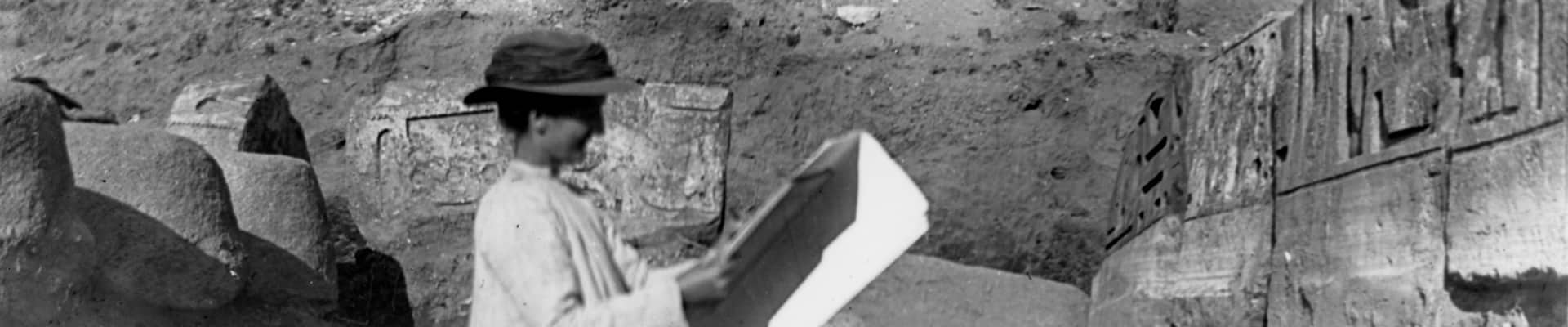
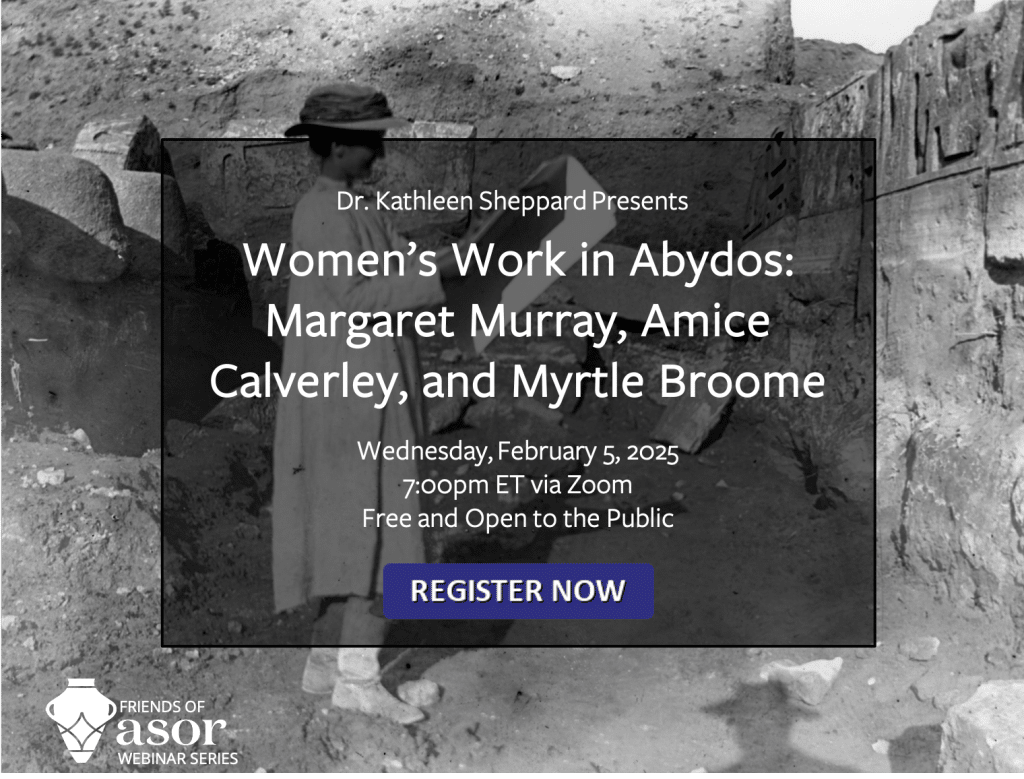
 In 1902, Margaret Alice Murray got invited to work in the field—finally. Training with Flinders Petrie for the last eight years, she had taught plenty of students in London, but had never been to Egypt to work herself. She spent only one season at Abydos, working in the Osireion, a special temple that no one had yet fully understood. Two years later, Murray’s publication, The Osireion at Abydos, upended all previous theories about the site. By 1938, Amice Calverley and Myrtle Broome were leaving Abydos, having spent almost a decade copying the art in the Temple of Seti I. Their own publications, The Temple of Sethos I at Abydos, were four volumes of brilliantly painted art from the temple walls in exacting detail. This talk will detail the ways in which the work women did on site at Abydos in the early 20th century impacted our understanding and reception of one of the most important sites in all of ancient Egypt.
 Dr. Kathleen Sheppard is Professor in the History and Political Science department at Missouri S&T. Her focus of study is the history of Egyptology. Her most recent book, Women in the Valley of the Kings, tells a history of Egyptology through the perspective of women’s work in the field. Her 2022 book, Tea on the Terrace: Hotels and Egyptologists’ Social Networks, investigates the role of hotels as hubs in the professional and friendship networks of Egyptologists in the late 19th and early 20th century. She received her MA in Egyptian Archaeology from UCL in 2002 and her PhD in History of Science from University of Oklahoma in 2010.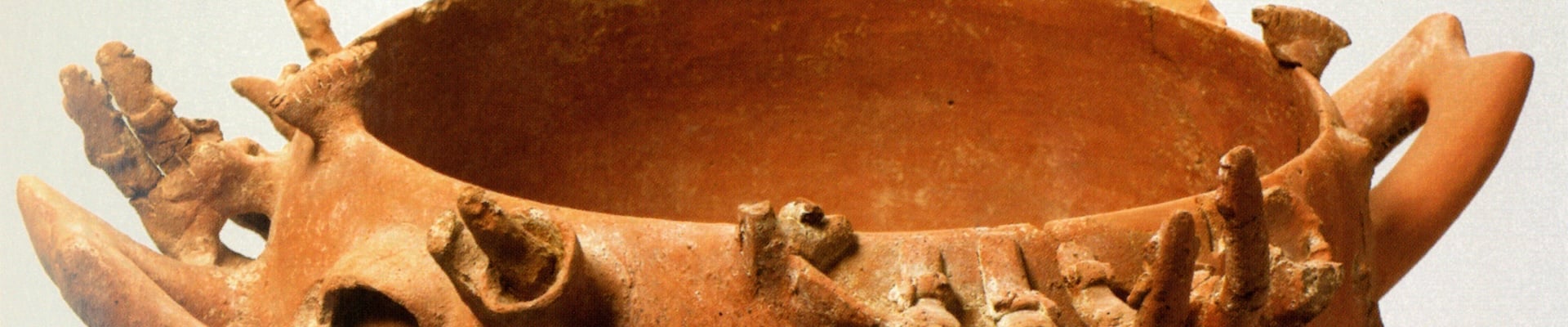

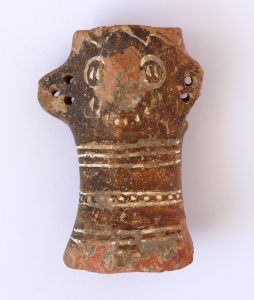 The last phase of the Middle Bronze Age on Cyprus (c. 1750–1650 BC) saw a number of dramatic changes, both in settlement patterns and structure, with many sites abandoned and new sites founded near the coast. At the exceptional long-lived coastal Bronze Age site of Kissonerga-Skalia near Paphos, a settlement established at the transition to the Early Bronze Age (c. 2400 BC), the site was completely restructured during this time and earlier domestic buildings were built over with an industrial architectural array installed in their place. This was only occupied for one or two generations before Kissonerga-Skalia was abandoned for good. Ongoing excavations are revealing a number of large pyrotechnical features and associated finds within this ‘monumental’ complex dating to the transition from the Middle–Late Bronze Age, a period during which we see the first moves towards urbanism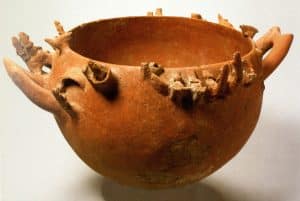
 Dr Lindy Crewe has been the Director of CAARI since 2017. Prior to this, she was Lecturer in Archaeology at the University of Manchester, UK. Her research focuses on Cypriot prehistory and international interconnections, with a particular interest in the Chalcolithic and the Bronze Age. She is currently directing excavations at the Early–Middle Bronze Age settlement of Kissonerga-Skalia near Paphos. She is the author of two monographs, three edited volumes and over 30 articles, on topics including settlement at Late Bronze Age Enkomi and the Chalcolithic cemeteries at Souskiou. Her most recent work is a volume resulting from a conference organised by CAARI and the British Museum (with co-editors T. Kiely and A. Reeve) entitled ‘Empire and Excavation: Critical Perspectives on Archaeology in British-period Cyprus, 1878–1960’, which will be published in early 2025. She first came to Cyprus and CAARI 30 years ago as an undergraduate student from Australia to excavate at Marki-Alonia and became passionate about the archaeology of the island, spending considerable time staying at CAARI for her doctoral research and beyond.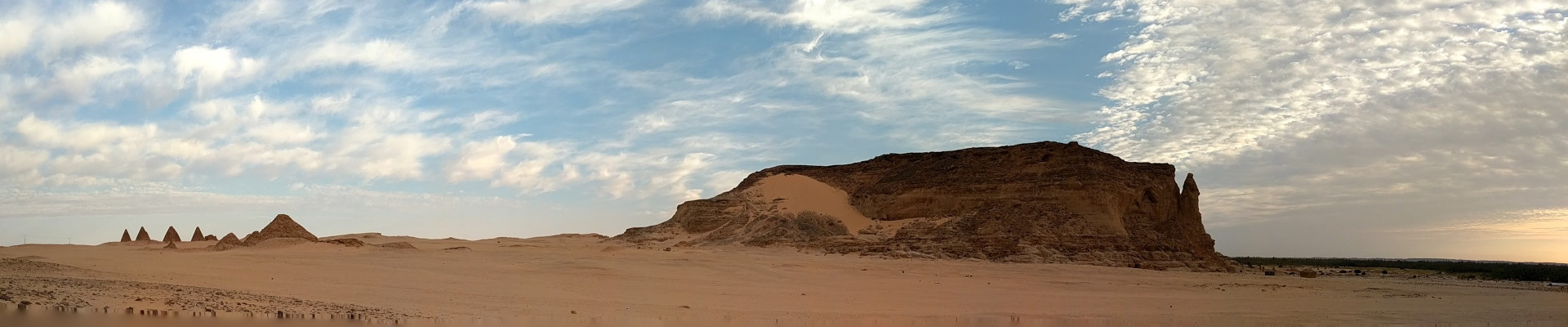
 Archaeologists are moving away from the colonial past of the discipline and are increasingly finding ways of engaging and collaborating with the communities where we work. Since 2016, the University of Michigan archaeological project in northern Sudan that Dr. Emberling co-directs has been conducting research at important sites of the ancient empire of Kush, first at the royal pyramid cemetery of Kushite kings and queens at El-Kurru (ca. 850-350 BCE) and more recently at the major urban center at Jebel Barkal (ancient Napata). Their work has come to be highly collaborative and engages extensively with local communities.
 This talk is not primarily about those excavations. Rather, it will discuss what has happened in Sudan since the outbreak of war in the country in April 2023 with a particular focus on heritage. It will provide an overview of the conflict, discuss real (and imagined) threats to museums, sites, and monuments, and discuss the wide range of responses by the Sudanese government, Sudanese scholars, international institutions, and foreign-based archaeologists. It will also focus on the work done with communities and colleagues at El-Kurru and Jebel Barkal.
 Collaborative relationships developed by the teams and others working in Sudan have made it possible in some cases to continue to work together on on-site management and protection and community engagement, even at a time of unimaginable struggle and hardship in the country. This work has raised the question of whether it is unethical to be focusing on heritage when people are suffering. However, Dr. Emberling and his team have found that through collaborative work (and flexible and generous funding), they are able to provide direct support to a large number of people to continue their archaeological work. This provides meaning and purpose for their archaeological colleagues, while their community engagement activities offer opportunities for local residents and refugees to relax, connect, and even have some fun in the midst of a dire situation. It turns out that heritage is always about people.
 Geoff Emberling is an archaeologist and museum curator at the Kelsey Museum of Archaeology, University of Michigan whose work has focused on the ancient Middle East and Northeast Africa. He is also a longtime ASOR member. He directed excavations at Tell Brak in northeastern Syria until 2004 and then took a position as Museum Director and Chief Curator at what is now the Institute for the Study of Ancient Civilizations (ISAC) at the University of Chicago. While there, he supervised an exhibit on the looting of museums and sites in Iraq around the 2003 US-led invasion.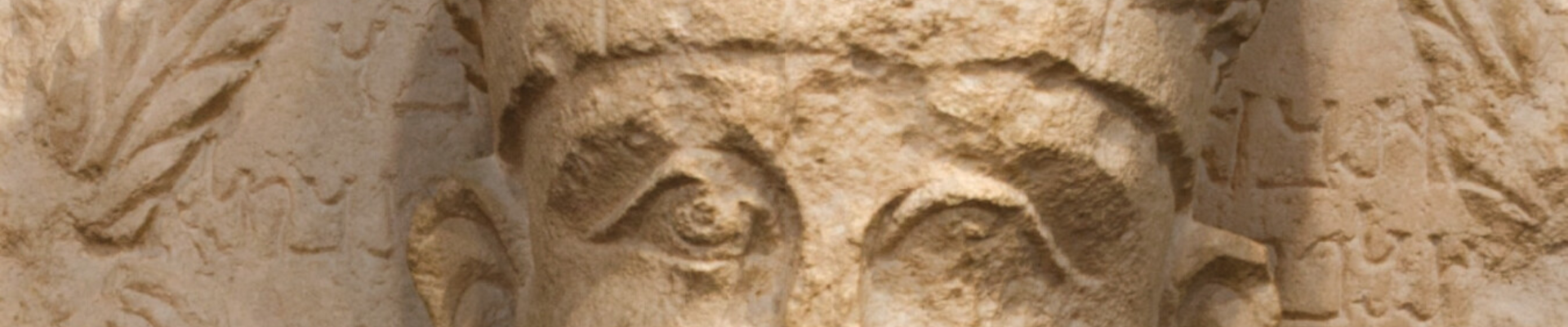





 The land of ancient Thrace comprised present-day Bulgaria, much of Romania, and parts of Greece and Turkey, and the tribal peoples who inhabited these territories of the North Aegean region were the Thracians. They were renowned for their skill as warriors and horsemen, as well as for their wealth in precious metals, but they left few written records, and knowledge of their history and customs has long been dependent on brief accounts from ancient Greek authors, particularly Herodotus and Thucydides. Thracians appeared in Greek myth as formidable adversaries in the Trojan War, cruel kings, and followers of the god of spiritual ecstasy, Dionysos. Spectacular archaeological discoveries made in Thracian lands during modern times, however, have provided firsthand evidence of this remarkable culture, illuminating Thrace’s interactions with Greece, Persia, and Rome.
 Dr. Sara E. Cole holds a PhD in Ancient History from Yale University and is an associate curator of antiquities at the Getty Villa Museum in Los Angeles, CA. Before joining the Getty in 2016, she served as the graduate curatorial intern in the antiquities department of the Yale University Art Gallery, where she worked with the YUAG’s collection of ancient glass and curated the 2017 exhibition “Drink That You May Live”: Ancient Glass from the Yale University Art Gallery.

 In the past three decades, curators, educators, and scholars have been actively moving archaeological materials and data beyond the physical limitations of sites and museums into the virtual space. These transitions to new media have allowed archaeologists, researchers, and students unprecedented access to the archaeological record, particularly with regard to far away, at-risk, or vanished heritage. Each of the presenters in this webinar has been successful in implementing VR and other digital media in innovative ways in order to bridge the gap between physical and virtual and to educate the public. The first presentation (Dr. Michael Zimmerman, Associate Professor of Anthropology, Bridgewater State University) focuses on the creation of two virtual environments—the Virtual Museum of Archaeology of South Caucasus (VMASC) and a virtual reconstruction of a Late Bronze Age archaeological site from the Shiraki Plain in the country of Georgia. The second presentation (Dr. Sarah Beckmann, Assistant Professor of Classics, UCLA and Deidre Brin, Director of the Digital Archaeology Lab, Cotsen Institute of Archaeology) presents a digital escape room based on Homer’s Odyssey that was created by university students for a K-12 audience. The third presentation (Dr. Adam Aja, Chief Curator, Harvard Museum of the Ancient Near East) will introduce guests to some of HMANE’s freely accessed digital assets, including its virtual gallery tours, 3D artifact scans, and the most recent addition, a Snapchat app-experience that allows the visitor to “step back in time” in a journey to the Assyrian palace of Ashurbanipal. To unite these three presentations, speakers will demonstrate how they creatively used their archaeological knowledge to develop digital tools and educate the public, including how these tools are making real-world impacts in museums, classrooms, and other settings. This webinar will be moderated by Dr. Tine Rassalle (Independent Scholar) and Dr. Debra Trusty (Associate Professor of Instruction, University of Iowa), both of whom strive to facilitate the implementation of new technologies in the study of the ancient world.
 In 2019, an NSF IRES grant (#1854153) was awarded to Bridgewater State University, Ilia State University, and the Cyberarchaeology Lab at UC San Diego to engage students in interdisciplinary research of human-environmental interactions in the Shiraki Plateau in the country of Georgia. One of the key elements in this project was the creation of two virtual environments by Misha Elashvili and Giorgi Datenashvili—the Virtual Museum of Archaeology of South Caucasus (VMASC), an interactive virtual collection of artifacts from archaeological sites in Shiraki; and a virtual reconstruction of Late Bronze Age Didnauri. We hope to demonstrate future applications of this and other VR environments for archaeology.
 Michael Zimmerman is an archaeologist with a PhD from the Joukowsky Institute for Archaeology and the Ancient World at Brown University, and a member of the Archaeogaming Collective, Archaeological Institute of America, American Society of Overseas Research, Northeastern Anthropological Association, Council for Northeast Historical Archaeology, the Save Ancient Studies Alliance, and the Society of Historical Archaeology. He holds an MA in Classical Languages from the University of Florida. He has worked extensively on archaeological surveys and excavations in public archaeology in Massachusetts, as well as in Israel, Jordan, and Georgia, where he is a co-principal investigator for the NSF-funded Shiraki International Multidisciplinary Research project and the U.S. Embassy Democracy Commission grant funded Crossroads Virtual Museum Project. He also serves on the Executive Board of the Northeastern Anthropological Association and the Curation and Collections Committee of the Society for Historical Archaeology. His research interests include archaeogaming and virtual technology in pedagogical contexts, antiquities trafficking, cultural heritage law and public policy, and collections-based research, and he
  In winter 2024, UCLA students, faculty, and the Digital Archaeology Lab worked to create a digital escape room based on Homer’s Odyssey. The obstacles faced by Odysseus and his crew, we decided, were excellent fodder for an immersive web-based application: an escape room brings the vividness of the text to life and introduces contemporary students to ancient Greek culture using modern technologies. Despite facing many obstacles in the course of this work (the Cyclops room in particular!), our project offers a model for how other archaeologists and educators might leverage digital applications in the classroom. Thus our talk will survey development of this project and our future goals: 1) outreach beyond the University classroom using this escape room; and 2) the development of a reusable platform so that those without programming experience can design their own escape room.
 Deidre Brin is the director of the Digital Archaeology Lab at the Cotsen Institute of Archaeology and leads the development of DIG, an archaeological data publishing initiative at the Cotsen Institute of Archaeology Press. Her experience managing data while working on archaeological projects coupled with the foundation in information science and technology, support her current research on the preservation, dissemination, and reuse of cultural heritage datasets.
 Sarah Beckmann is a Roman archaeologist and Assistant Professor of Classics at UCLA. Her research interests include domestic art and archaeology broadly in the early Roman empire and the late antique period. She is currently at work on her first monograph, which examines the Roman villa in late antiquity (mid-3rd – 5th c. CE). Other interests represented by recent publications include statuary collecting in late antiquity, Roman portraiture in provincial contexts, and representations of subaltern groups (e.g. women, enslaved children) in luxury domestic arts.
 While physical exhibition space remains limited within the walls of the Harvard Museum of the Ancient Near East (HMANE), the digital realm provides virtually unlimited opportunities to display and explore its rich archaeological collections. Chief Curator Adam J. Aja will introduce guests to some of the museum’s freely accessed digital assets, including its virtual gallery tours, 3D artifact scans, and the most recent addition, a Snapchat app-experience that allows the visitor to “step back in time” in a journey to the Assyrian palace of Ashurbanipal.
 Adam J. Aja is an archaeologist and museum curator with a background in the creative arts. Since 2009, he has managed the collection of the Harvard Museum of the Ancient Near East (formerly the Harvard Semitic Museum), where he redesigned the storage facilities, implemented new exhibits, and created replicas for display. Dr. Aja started working on archaeological field projects in 1992 and has enjoyed numerous discoveries in the years since, including the Iron Age cemetery of the Philistines at Ashkelon. He is currently the Chief Stratigrapher at the Tel Shimron Excavations. Dr. Aja’s creative projects, combining his love of archaeology and art, have included a full-scale reproduction of the monument discovered between the paws of the Great Sphinx and the creation of an augmented reality app that animates Neo-Assyrian palace reliefs.

 “You come to me with sword and spear and javelin; but I come to you in the name of the LORD of hosts, the God of the armies of Israel…” declares David. Having previously rebuffed the loan of King Saul’s armor, David advances against Goliath armed only with a sling shot and five smooth stones. Goliath, on the other hand, is in full battle gear. His armament is described in meticulous detail: bronze helmet, coat of mail and greaves, a javelin between his shoulders, and a spear, whose “shaft… was like a weaver’s beam” and whose head “weighed six hundred shekels of iron…” (I Sam 17:7).
 Alternatively, Prof. Mazow proposes that Goliath’s sword was an Aegean or Anatolian long sword, a “cut-and-thrust” tool that could be used to both pierce Goliath’s armor and cut off his head. The narrator, describing an instrument unknown in the Israelite weapons inventory, compared Goliath’s sword to a weaver’s sword: a blade-shaped tool used to beat in the weft. Eventually neither the weaver’s tool nor the Philistine’s weapon could be conceived, and the description comes down to us as a spear-like weapon with a shaft that resembled a type of weaving tool, a broken simile that no longer described the shape and size of the foreign object.