Fieldwork Report: Veronica Morriss

CCAP 2023: Searching for the Islamic History of Herod’s Great City

Veronica Morriss, 2023 Eric and Carol Meyers Fieldwork Scholarship Recipient

Caesarea is one of the best known and most researched sites in Israel. It’s famous for Herod the Great’s imposing harbor, the Roman hippodrome and theater, the grand Byzantine octagonal church, and its massive Crusader walls. Caesarea has an extensive history of groundbreaking archaeological research, and numerous excavation teams are usually working at the site at once, uncovering the ancient city, one meter at a time.

While the extensive Roman, Byzantine, and Crusader remains at the site have captured popular imagination and been the primary target for most excavations, the city’s role during the early Islamic era is not well understood—and the port played a more important role in Islamic history than it is given credit for.

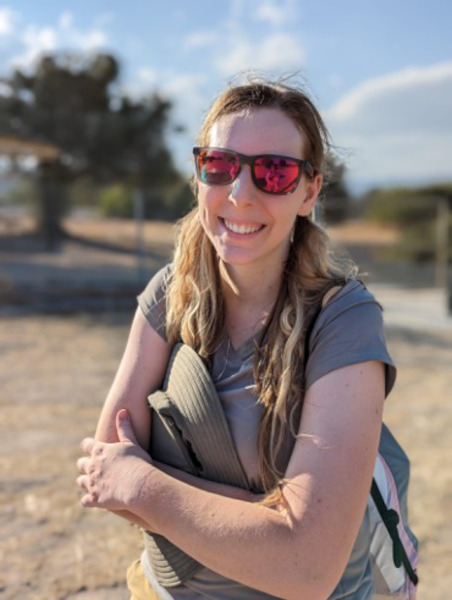
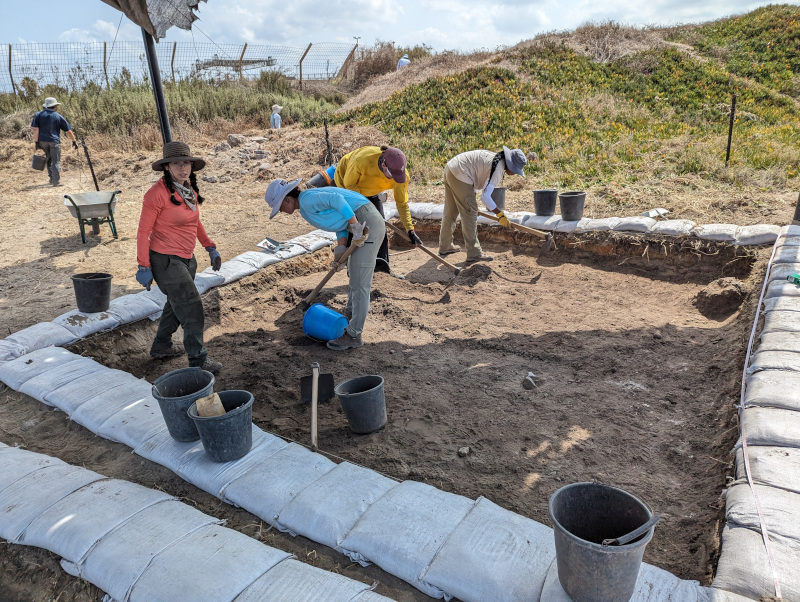
First day on site.
First day on site.

The situation at Caesarea mirrors that of research throughout the Levantine coast. The archaeology of the early Islamic period is often neglected due to a combination of factors, including a bias in site selection and a predilection for Classical sites. These biases and gaps in the data have led to debates about the nature of settlement and trade along the coastal region and whether they declined following the Islamic conquest in the 7th century CE. However, over the last several decades, scholars working throughout the region have begun to question the evidence underlying decline narratives and have produced new evidence that creates a more nuanced and dynamic picture of the era.

In part, this reimagining of the Byzantine-Islamic tradition has inspired our research at Caesarea. According to historical sources, Caesarea played an important role during the Islamic conquest and was targeted by the early caliphs and their forces due to the city’s port and its prominent role in Byzantine trade and logistics. Though Caesarea lost its role as capital of the Byzantine province Palaestina Prima after its capture in 640/1 CE, it continued to be inhabited and was tied into the eastern Mediterranean trade networks and the defense of the coast.

First day of digging.

As part of the Caesarea Coastal Archaeology Project, our team has been exploring several regions of the ancient city, with a primary focus on those that might have Islamic-era remains. My work has been focused on the area south of the Roman theater, just outside of the park. We chose this area (Area FZ) to get a stratigraphic record of the southernmost end of the city near the Byzantine wall. We were also hoping to find traces of the Byzantine-Islamic fortress that was identified during the mid-20th century Italian excavation in the defunct theater.

Gaming dice.


Gaming dice.

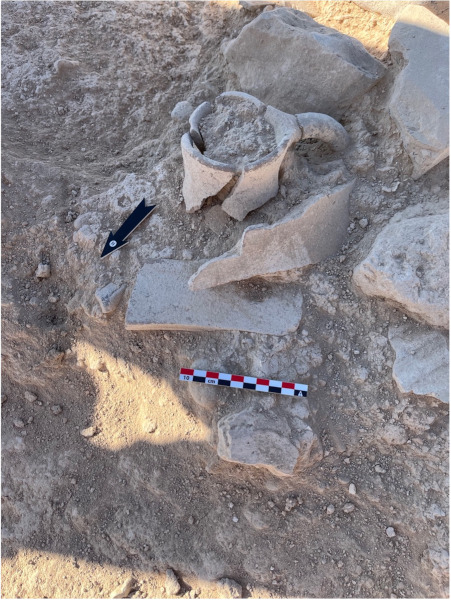
Last year, we uncovered structural remains and material culture that attest to a complex history of mixed use for the area. While we cannot discuss everything that we discovered prior to publication and reporting to the Israel Antiquities Authority, the finds this year point to significant Crusader-era use of this section of the city, as well as Byzantine-Islamic transitional layers, and a thick deposit of amphorae and storage jars. Tantalizing finds from earlier periods include six-sided gaming dice, carved bone hair pins, spindle whorls, dozens of coins, and even a horse skeleton—which many of the students were excited to uncover, having taken zooarchaeology courses at their universities.
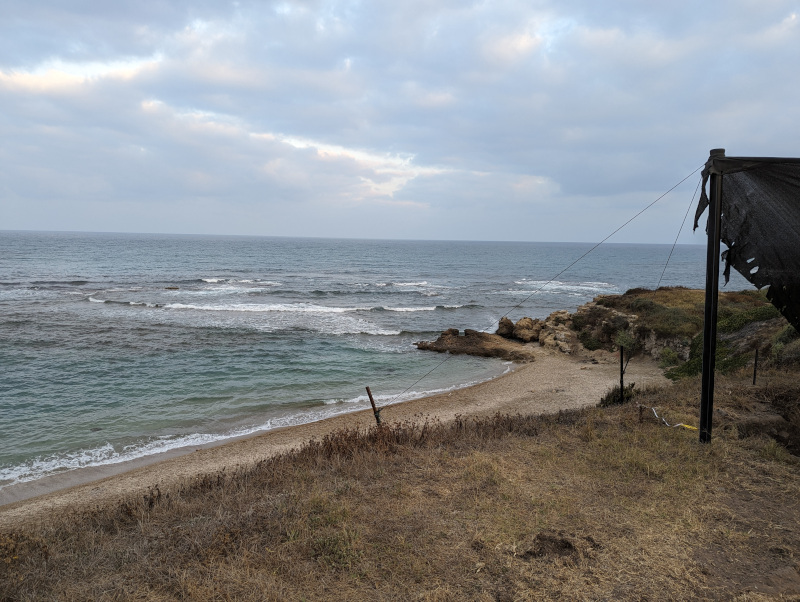
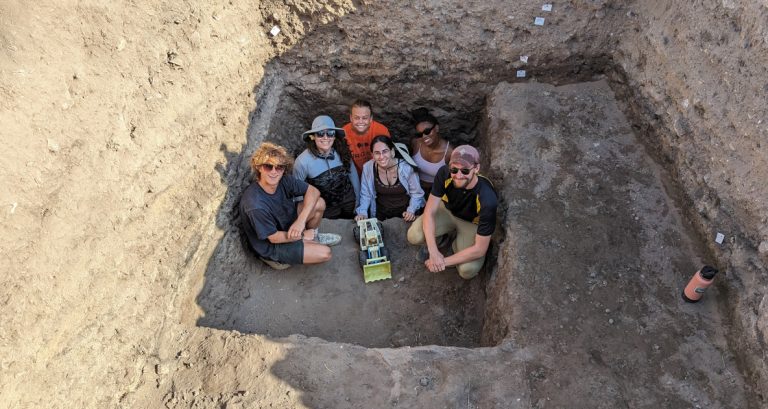
In addition to searching for evidence of an under-represented portion of Israel’s history, our project is focused on training the next generation of archaeologists. Students had a chance to practice careful excavation methods in the field, tagging and recording artifacts, making section drawings, creating 3D models using photogrammetry, and conducting off-shore underwater surveys—which for many of the students was the highlight of the season. Considering it was hot and humid, it was a luxury to be digging a stone’s throw from the Mediterranean!

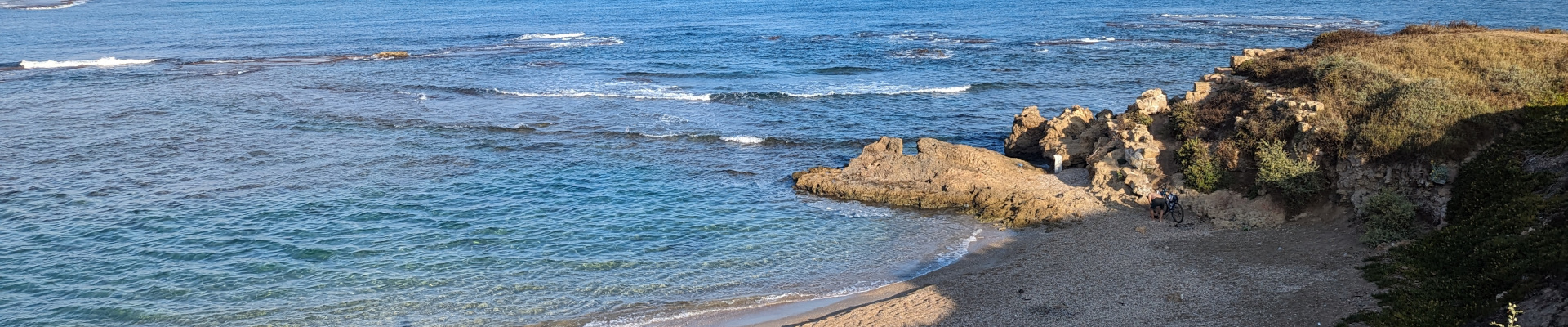
View from the trenches.
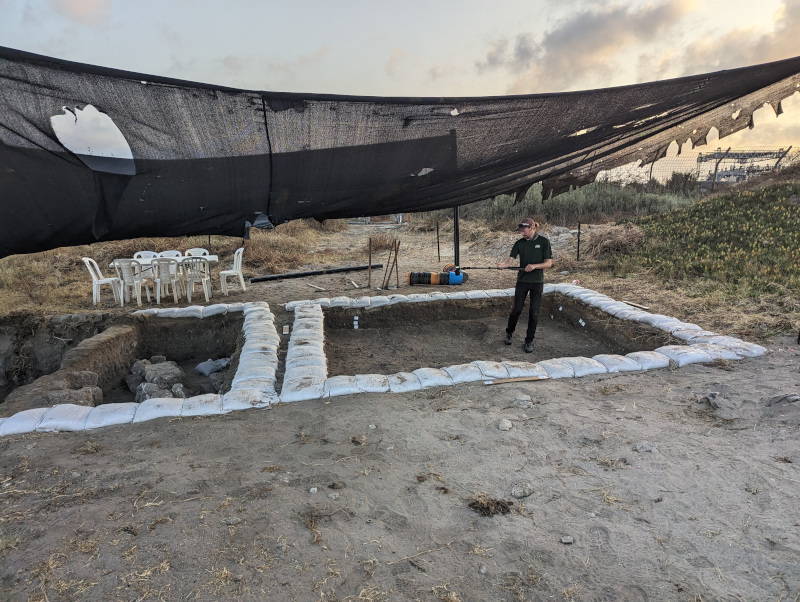
End of field shot.

It was a great season, and we look forward to returning with our team next year to further explore Caesarea’s lost history.


Veronica Morriss.Veronica Morriss earned a PhD in Islamic Archaeology from the Department of Near Eastern Studies at the University of Chicago. She is a maritime archaeologist, and her research focuses on the development of the Islamic/Byzantine maritime frontier of Syria-Palestine and the cross-cultural interactions that characterized the Eastern Mediterranean and its shores during the Early Islamic Period. She co-manages a digital archaeology company with her husband in Hawaii, and when she is not in the field, she writes fantasy romance novels.
Want to help more students and early career archaeologists get into the field? Donate to the cause today by selecting “Excavation Scholarships�? as your gift purpose!

Digital Humanities Internship

DIGITAL HUMANITIES INTERNSHIP AT ASOR

*This internship has been filled. Thank you for your interest.*

The American Society of Overseas Research (ASOR) seeks candidates for a part-time internship position to begin in May. This compensated internship is for the summer (May-August) with start and end dates negotiable. The intern is expected to work 20–25 hours per week. This position is primarily remote, but the successful applicant will need to come into ASOR’s headquarters—The James F. Strange Center, 209 Commerce St., in historic Old Town Alexandria, VA—occasionally to meet with other ASOR staff.

Founded in 1900, the ASOR is a 501(c)(3) non-profit whose mission is to initiate, encourage, and support research into, and public understanding of, the history and cultures of the Near East and wider Mediterranean world, from the earliest times. Please visit www.asor.org for more information.

Primary Responsibilities:

  • Assist with updating and reconfiguring the ASOR website
  • Migration and back-up of data
  • Other projects as assigned by the Information and Website Manager

Qualifications / Skills Desired:

  • Knowledge of WordPress is a must
  • Microsoft Office
  • Database management
  • Graphic and image design and editing (Adobe Photoshop, Canva, etc.)
  • Website management (WordPress or similar)
  • Excellent communication and interpersonal skills
  • Attention to detail; ability to multitask and to prioritize

Compensation: $15-$20/hr based on experience

How To Apply: E-mail your resume and a brief statement of interest to Jared Koller at jaredkoller@asor.org. Please include your name and “ASOR Digital Humanities Internship” in the subject line.

Review of applications will begin immediately and continue until the position is filled.

ASOR is an equal opportunity employer and all qualified applicants will receive consideration for employment without regard to race, color, gender, religion, national origin, disability, veteran status, age, marital status, sexual orientation, gender identity, genetic information, or any other class protected by federal or state law (EEO/AA).

Fieldwork Report: Isabelle Sauvé

Wall Brackets, Deer Bones, and Sling Bullets Oh My! Excavating the Built Environment of Kalavasos-Ayios Dhimitrios

Isabelle Sauvé, 2023 Eric and Carol Meyers Fieldwork Scholarship Recipient

This report describes my participation in the fieldwork led by Dr. Kevin Fisher at the site of Kalavasos-Ayios Dhimitrios on the island of Cyprus during the 2023 summer season. Kalavasos-Ayios Dhimitrios is an urban center dating to the Late Cypriot (LC) II period (c. 1450-1200 BCE), reaching its peak in the Late Cypriot IIC before being abandoned. Previous investigations by Alison South from 1979-1998 revealed that this urban center was used for a multitude of both ritual and economic activities. The fieldwork undertaken this past summer was a continuation of excavations conducted by Dr. Kevin Fisher to the south-west of South’s original site.

A view of the Neolithic site of Tenta from our dig site.

A view of the Neolithic site of Tenta from our dig site.

Kalavasos-Ayios Dhimitrios is one of the two main sites that are part of the Kalavasos and Maroni Built Environment Project (KAMBE). This project is an interdisciplinary investigation of the relationships between urban landscapes, social interaction, and social change on Cyprus during the Late Bronze Age. As a collaboration between the University of British Columbia, Cornell University, the University of Chicago, and the University of Southhampton, I had the opportunity to meet a number of scholars and students from these different institutions and make meaningful connections.

I was very grateful for the opportunity to join Dr. Kevin Fisher on this project since my research interests include the study of built environments in the Mediterranean Bronze Age. I was also especially thankful to join this dig as it was my first time excavating in the Mediterranean. Needless to say, I was super excited to start this new adventure!


During the field season, we stayed in the beautiful village of Kalavasos. Only a 10-minute drive away from the site, this little town was nestled in the hills and had amazing views of the surrounding scenery. Our team was fortunate enough to stay in tourist apartments that were so cozy and comfortable. Each night we would have dinner together at one of the local tavernas and get to try a variety of authentic Greek-Cypriot dishes. Everyone in Kalavasos was so friendly and welcoming, making my stay that much more special. It definitely helped me settle into my new surroundings for the month and ease my anxieties about being in a foreign place.

A picture from the streets of Kalavasos.


A picture from the streets of Kalavasos.

Even though we got to stay in luxurious accommodations, working in the field was not always so luxurious. We worked long hours in the dust and heat. A typical day included a 6:30 a.m. start, working until 9:30-10:00 a.m. and then having a 30-minute breakfast break. We then continued working until lunch time which was around 12:45-1:00 p.m. Luckily, we were spoiled by our directors and were given a 3-hour siesta period in the afternoon. Many of us would nap and lounge by the pool before going back into the field around 3:00 p.m. The day ended around 6:00-6:30 p.m. and we would come back to the village and have a nice dinner in the plateia.

Despite the long hours in the heat, I loved working in the field and had a chance to uncover so many interesting artifacts. I was working in Unit 7, which was a trench that had been opened in previous seasons. Here, another structure was uncovered and seemed to have been used for ritual activities. This trench yielded elite fine-ware pottery, large pithoi, and inscribed pottery. However, the most interesting finds this season were a wall bracket, deer bones, and hundreds of sling bullets. According to Dr. Fisher and colleagues, all these artifacts suggest ritual activity. Wall brackets are objects that consist of a long vertical shaft with a rounded top that is pierced by a suspension hole and a bowl at the bottom. These objects were likely used for lighting or burning incense and are found in cult, mortuary, and domestic contexts (Fisher et al. 2019). Likewise, the large deposit of deer bones points to ritual feasting as deer is rare in Late Cypriot diets and therefore points to a “luxury commodity” (Fisher et al. 2019: 487). The sling bullet deposit was the most interesting find in my opinion, where I spent hours carefully extracting hundreds of these ovoid, unfired clay objects from the ground. It is still unclear what their purpose in this context was, but they may have been deposited in this building as part of a ritual practice. Although I was tired, dirty, and hot at the end of the day, I was so happy to have gotten to dig and feel accomplished after each bucket of dirt that I filled.

Isabelle Sauvé.
Isabelle Sauvé.
Artifacts from the field: A juglet and a wall bracket.
Aphrodite’s Rock.


Aphrodite’s Rock.

Yet, my time in Cyprus did not just involve dirt and trowels. I had the chance to see so many parts of the island thanks to the field trips that the directors organized. I got to lounge by the Mediterranean on the beach, go shopping in Nicosia, see Taming of the Shrew in the ancient amphitheatre at Kourion, and tour so many ancient and historic sites. My favorite memory is picnicking with new friends at Aphrodite’s Rock and listening to waves hit the shore.

Overall, this was an unforgettable experience where I got to learn new skills in the field, make meaningful connections, and see new things. I am grateful to Dr. Kevin Fisher and Sheri Pak for organizing this trip and to Dr. Eric and Dr. Carol Meyers for their generous scholarship. Without all your support, my participation in this project would not have been possible!


Isabelle Sauvé is a graduate of the M.A. Classical and Near Eastern Archaeology program from the University of British Columbia, Canada. Her research focuses on architectural analysis and gender theory in the European and Mediterranean Bronze Age. Isabelle has previously excavated at Horvat Midras in Israel, making this her second archaeological excavation during her graduate studies. She hopes to get her PhD and continue conducting excavations of Bronze Age built environments.

For more information about the Kalavasos and Maroni Built Environment Project visit the project website: https://kambe.cnrs.ubc.ca/

Bibliography:

Fisher, K.D., S.W. Manning and T.F. Urban. 2019. New approaches to Late Bronze Age urban landscapes on Cyprus: Investigations at Kalavasos-Ayios Dhimitrios, 2012–2016. American Journal of Archaeology 123(3): 473-507.

Want to help more students and early career archaeologists get into the field? Donate to the cause today by selecting “Excavation Scholarships” as your gift purpose!