Fulfilling a Freshman’s Dream: Digital Archaeology at Idalion, Cyprus.
David Rhys Sharpe, Southern Adventist University, 2026 Eric & Carol Meyers Scholarship Recipient
“You’re majoring in archaeology and computer science? Are you planning to try and combine those?”
I hear that question almost every time I tell someone my undergraduate major. I usually smile politely and respond that yes, I’m looking at how to combine my two majors. There’s just been one problem.
I haven’t known how.
Certainly, I can read research papers, but knowing how to use technology in the field is a different skill entirely. As far back as my freshman year, I wanted to learn the practical side of digital archaeology, but I didn’t have much chance to do so. Eventually, I moved away from pursuing archaeology directly and refocused on biblical studies.
I was one of nine students from Southern Adventist University who joined the American Expedition to Idalion, Cyprus for three weeks of the 2026 season. It was my last class before graduation. Even before the dig started, the scholarship was already a godsend—with graduate school approaching financial pressure on my family had been pronounced. But I wouldn’t realize how much of a godsend it would be until after the dig. One simple opportunity changed my interests and goals in a way I’d never expected. One of the associate directors, Andrew Wright, managed a variety of technological tools for the dig, including positioning sensors, 3D scanners, and a database system. Early on, he started showing interested volunteers how to use these tools. For the first time, I got to see how digital archaeology worked in the field.
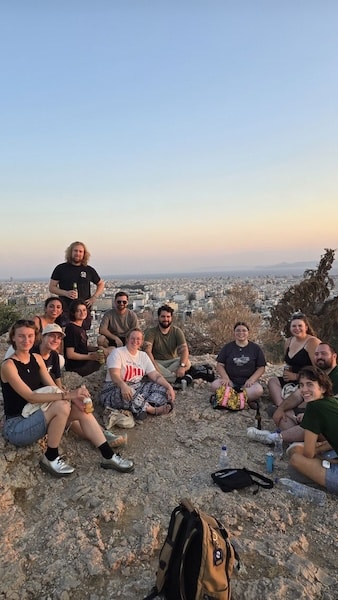
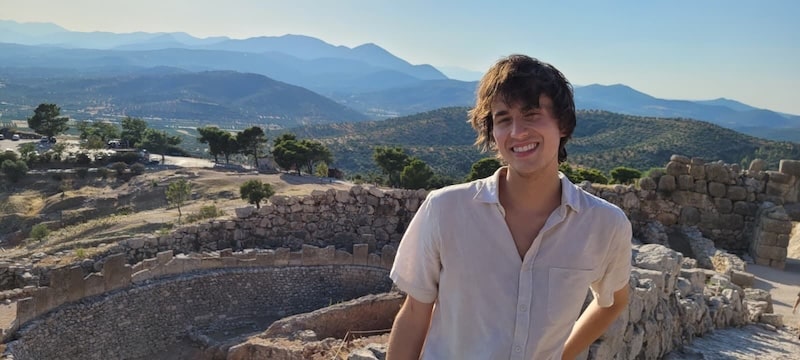
A view from the area of Idalion looking down at the modern village of Dali.
The first of these systems was the real-time kinematic (RTK) positioning sensors. Capable of calculating centimeter-level accurate points, the RTK system used a base station that had to be set up and taken down every day. Andrew Wright put another student and I in charge of setting up the RTK sensors each day, making sure they were level and ready to take elevations. This was one of my first practical lessons in using technology in the field—often the most difficult part is not the technology itself. Leveling the tripod and tribrach was by far the most time-consuming and tricky part of the setup process.
Later on, Andrew Wright showed the volunteers how to use an Artec Spider II 3D scanner to create a 3D model of artifacts. A few of us, myself included, had the opportunity to take a scan of an object ourselves. I digitized a small statue fragment found near the beginning of the season. The scanner was both incredibly easy to use and incredibly powerful, creating a detailed model in minutes.
Another incredible opportunity was getting a basic introduction to OCHRE, a database application developed by the University of Chicago. A massive, incredibly sophisticated system, OCHRE provided a powerful, flexible way to keep track of all the data turned up during an excavation. It let us keep track of loci, pottery buckets, features, and special finds with ease. Above any other tool, OCHRE helped me get a feel of how data recording works in the field.
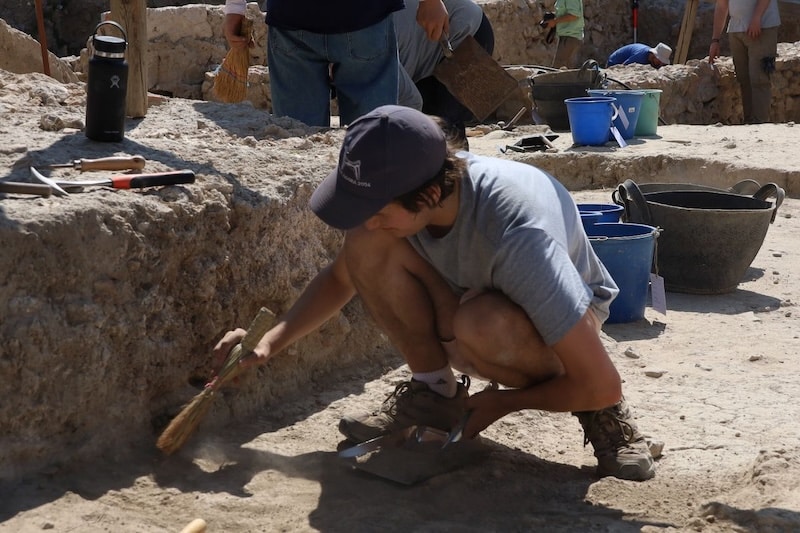
Me during the first week of excavation, cleaning rainwash from a square in the Lower
City. Photo Credit: Karis McConnell.
Learning about positioning sensors, 3D scanners, and OCHRE reawakened my dormant interest in digital archaeology. Just as influential, however, was a conversation with another associate director, Valerie Woelfel, about the power GIS can bring to excavations. She had worked on a startling variety of sites, able to contribute her GIS skills to projects spanning different archaeological contexts. That conversation reshaped my research interests. My goal now is to develop skills in digital archaeology in order to be able to contribute in a similar fashion to a variety of archaeological projects.
Although my focus is still biblical studies, my first real taste of digital archaeology demonstrated the power archaeological excavation can bring to textual studies—and the power technology can bring to an excavation. It gave me a reason to continue pursuing archaeology and a way to put it into practice. And that would have been significantly more difficult without this scholarship’s sponsors and their generosity. Receiving a scholarship for Idalion relieved a great deal of financial pressure and opened the door to putting my freshman-year dream into action.
A sunrise from the dig house uphill from the site.
David Rhys Sharpe is a recent graduate of Southern Adventist University with a B.A. in Archaeology and Computer Science. His passion is studying the world of the Bible and integrating linguistics and archaeological context into textual studies. He is preparing for an M.A. program in the Bible and the Ancient Near East at the Hebrew University of Jerusalem.
Want to help more students and early career archaeologists get into the field? Donate to the cause today by selecting “Fieldwork Scholarships” as your gift purpose!
Trustee Nominations Committee has selected six highly qualified members to stand for election for four open positions on the Board of Trustees. The Board sets the direction for ASOR and provides oversight for our organization. Among other responsibilities, members of the Board agree to attend two meetings each year, to participate thoughtfully in the governance process, and to contribute financially to ASOR.
There are four candidates running for two openings as Membership-elected Trustees for 3-year terms (Sarah Kielt Costello, Ido Koch, Nadine Panayot, and Yorke Rowan). There are two candidates for two openings as Institutionally-elected Trustees for 3-year terms (Kathryn Grossman and Michael Hasel). All ASOR members are eligible to vote in the Membership-elected Trustee Election, while only Institutional Representatives of the 60 ASOR-member schools may vote in the Institutionally-elected Trustee Election. Missions and brief biographies of the nominees will be available in the ballot.
ASOR will conduct the elections by online ballot, and all members and Institutional Representatives will receive the appropriate ballot(s) via email on or around October 16, 2025. We will send out two reminders, and all ballots must be completed by 12:00 PM Eastern Time on Monday, November 17. If you have difficulties completing the online ballot (once they are distributed), please contact Marta Ostovich at programs@asor.org.
Nominees for Membership-elected Trustees (two to be elected)
Sarah Kielt Costello
Sarah Kielt Costello (MA Classical and Near Eastern Archaeology, Bryn Mawr College; Ph.D. Anthropology, Binghamton University) is Professor of Art History at the University of Houston – Clear Lake, a Hispanic-serving regional university dedicated to educating a broad community of scholars, including first-generation, working-class and incarcerated students. She has won two University-wide teaching awards and a University Faculty Fellowship in recognition of exemplary teaching, research and service. At UHCL, she has served in leadership roles including Department Chair and Faculty Senate Executive Committee, in which she oversaw the creation of an equitable workload policy for faculty. She has been active in archaeological fieldwork since 1995, working in Israel, Turkey, Greece, and Cyprus. In her research, Costello specializes in seals and related artifacts; ethics and museum practices; Neolithic imagery; and archaeological theory. Her recent publications include Ethics in Archaeological Practice (AASOR 2024) and Object Biographies, Selections from the Art of the Ancient World in the Menil Collection (Menil/Yale 2021), a volume that takes on the ethical challenges of unprovenienced museum collections.
Mission Statement: In the nearly 30 years that I’ve been involved with ASOR, I’ve seen its membership grow significantly and its members develop far-ranging research agendas. In recent years, ASOR members have forged research pathways into areas such as cultural heritage, sensorial archaeology, climate, bioarchaeology, and ancient dress, and have been on the forefront of developing cutting edge digital and technological approaches to archaeology. Geographically, ASOR has had the opportunity to expand beyond its traditional emphasis on the archaeology of the Bible Lands as its members have engaged in projects in Central Asia, Kurdistan, Egypt, and the Gulf states. It is vital that ASOR continue to embrace new areas of research, and at the same time, confront the ethical challenges of our time by setting agendas and policies that support best practices. Challenging political times put ASOR members in the middle of contentious issues; as a Trustee, I would help maintain our focus on our shared interests in research and stewardship of the past, and the important relationships that sustain that work.
Ido Koch
Ido Koch is Associate Professor in the Department of Archaeology and Ancient Near Eastern Cultures at Tel Aviv University. A field archaeologist of the southern Levant, his research explores interregional connectivity, colonial encounters, visual language, craft, and material religion. He is the author of several monographs, dozens of articles, and co-editor of ten volumes. Koch co-directs the Tel Hadid Archaeological Project, the renewed excavations at Tel Qasile, and the final publication of the Tel Arad excavations—all of which place strong emphasis on innovative documentation strategies, community outreach, and the dissemination of archaeological knowledge to diverse audiences. He is co-PI of several collaborative ventures, including the historical–archaeological study of the depopulated Palestinian village of al-Haditha (one of the few academic archaeological projects addressing the recent past of Israel/Palestine), and the Stamp Seals from the Southern Levant Project together with its comprehensive open-access online companion database. Koch also serves as Editor-in-Chief of Tel Aviv: Journal of the Institute of Archaeology of Tel Aviv Universityand sits on several international editorial boards. Through his research and teaching, he integrates advanced digital tools with inclusive, community-based approaches, engaging both Jewish and Arab students, to help build inclusive and forward-looking connections between academic, archaeological, and wider communities in the study of the southern Levant.
Mission Statement: I have been a member of ASOR since 2009, have attended nearly all annual meetings since then, and have interacted with scores of ASOR members of all ages and backgrounds. ASOR has been my professional cradle and the place where I learned to appreciate the value of an international network, a value I hope my students will inherit.
As a scholar based in the Middle East, I believe ASOR must strengthen the representation of voices from the regions it studies. The societies who live in the lands whose pasts we uncover deserve a place in shaping how that past is researched, understood, and represented. As an Israeli archaeologist working on the remote and recent past of the southern Levant, I am acutely aware of the region’s diversity and complexity. Based on my experience, ASOR and its sister institutions (such as the W.F. Albright Institute) are uniquely positioned to foster dialogue between Israeli and Palestinian scholars, a dialogue urgently needed now more than ever. I see my role as a bridge: between ASOR and local scholarly and cultural communities, and between those communities themselves. In times of deepening divisions, we must hold fast to both our professional and human ties. In my fieldwork and collaborations, I strive to create spaces where Jewish and Arab students, alongside colleagues from different backgrounds and perspectives, can work together toward shared understanding. Archaeology can and should serve as a medium of dialogue, and as a reminder of our intertwined pasts and shared humanity.
Drawing on my experience directing and co-directing field projects, I recognize the need for ASOR to advance ethical, inclusive, and community-oriented archaeology. I propose developing a collaboratively produced “fieldwork toolkit,” drawing on the collective knowledge of ASOR-affiliated projects. This toolkit would guide projects that prioritize community engagement, the dissemination of results to local institutions, and accessible digital platforms for sharing data. Through such initiatives, I hope to help ASOR lead by example—making archaeology both academically rigorous and socially meaningful.
Nadine Panayot
Nadine Panayot is an archaeologist currently serving as Curator of the Archaeological Museum and Associate Professor of Practice at the American University of Beirut. A graduate of Paris 1 Panthéon-Sorbonne, she specializes in the heritage of the Classical Mediterranean, with over three decades of fieldwork across Lebanon and Southwest Asia. Her work focuses on the intersection of archaeology, cultural preservation with a growing emphasis on digital technologies, and community engagement.
Previously, she chaired the Archaeology and Museology Department at the University of Balamand, where she established a Master’s program in Museum Studies and Cultural Heritage Management and co-founded the Ethnographic Museum. She has curated numerous exhibitions and interdisciplinary events, both locally and internationally, emphasizing inclusive practices, accessibility, and cross-cultural dialogue. Following the 2020 Beirut port explosion, she led the restoration of AUB’s shattered glass collection, recognized with the 2023 Nigel Williams Conservation Award (Runner-Up).
A committed advocate for community-led conservation, she directs the Hima Anfehreserve and serves on several scientific and advisory boards. A member of ICOM since 1992, she has held leadership roles in national and regional committees and currently presides over the working committee of the UNESCO National Commission while also serving on the Scientific Committee of ALIPH. In 2023, she was named Chevalier des Arts et Lettres by the French Ministry of Culture. Through her teaching, curating, and policy work, she positions museums and heritage sites as agents of resilience, healing, and social cohesion.
Mission Statement: I am committed to advancing ASOR’s mission of promoting inclusive and rigorous scholarship, safeguarding cultural heritage, and sustaining open, evidence-based inquiry that transcends political and ideological boundaries.
The protection and study of cultural heritage is not only an academic responsibility but an essential ethical imperative. The recent and ongoing destruction of heritage, represents an irreparable loss to humanity, erasing material witnesses to identity, history, and memory. Acknowledging such losses, and working collectively to prevent them, aligns with ASOR’s foundational mission to document, preserve, and interpret the human past. Upholding this principle reaffirms our shared commitment to dignity, justice, and cultural continuity, and reminds us that heritage protection is inseparable from the recognition of our common humanity.
Equally vital is ASOR’s dedication to intellectual integrity and freedom of thought. Scholarship reaches its highest potential when guided by evidence, methodological rigor, and openness to diverse perspectives. When inquiry becomes constrained by ideology, it compromises its ability to engage with complexity and nurture genuine understanding. ASOR’s continued vitality will depend on its capacity to sustain spaces where thoughtful analysis and open dialogue can thrive, uniting scholars and institutions across diverse traditions.
As a Membership-Elected Trustee, I would work to broaden equitable participation, re-engage scholars from Southwest Asia, and Africa and strengthen collaborative and digital initiatives that enhance accessibility, exchange, and trust; ensuring that ASOR remains a beacon of principled, inclusive, and forward-looking scholarship.
Yorke Rowan
Yorke Rowan is an anthropological archaeologist and Research Professor at the Institute for the Study of Ancient Cultures (formerly the Oriental Institute) at the University of Chicago. He focuses on later prehistory (Late Neolithic, Chalcolithic, and Early Bronze), with thematic research interests in death, prehistoric ritual performance, and material objects mediating these human actions. He is a Fulbright Scholar to Jordan and a NEH Fellow at the W.F. Albright Institute for Archaeological Research in Jerusalem and the American Center of Research in Amman. His most recent publications include The Social Archaeology of the Levant: From Prehistory to Present (2019, Cambridge Press, co-edited with A. Yasur-Landau and E. Cline), “Desert Kites: Neolithic Infrastructure in the Margins” in Infrastructure in Archaeological Discourse: Framing Society in the Past (2024, Routledge, co-authored with A. C. Hill) and “The Black Desert Drone Survey: New Perspectives on an Ancient Landscape” in the journal Remote Sensing (2022) with A.C. Hill. He co-directs the NSF funded Kites in Context and Eastern Badia Archaeological Projects, two projects in the Black Desert of Jordan.
Mission Statement: Since the 1990s, ASOR has been fundamental to my development as a professional scholar and field archaeologist. The first grant I received for field research was an ASOR travel scholarship, and the first national professional paper I delivered was at ASOR in New Orleans. I have a long dedication to the success of ASOR, serving on the editorial boards of Bulletin of the American Schools of Overseas Research and Near Eastern Archaeology, co-chairing the Program Committee after for two previous terms on the committee, serving on the Honors and Awards Committee, and the Committee on Archaeological Policy. In addition, I co-chaired and co-organized various sessions such as the standing session “Prehistoric Archaeology” (2015, 2019-2021) and the member organized “Archaeology of Religion and Ritual” (2005-2006). My involvement with ASOR is complemented by extensive engagement with communities on the ground in different countries, emphasizing my commitment to creating more collaborative opportunities with colleagues based abroad.
The organization has grown tremendously since I joined as a graduate student, with a welcome expansion to include a broader range of topics, geographic regions, and chronological periods. This growth is not limited to scholarly interests but includes increased worldwide accessibility through a hybrid meeting format. I believe it is important to sustain and build on this positive trend to build membership, engage with members at different career stages, and seek to find new collaborative partnerships that will only strengthen ASOR. As ASOR faces new challenges like complicated funding realities, regional civil unrest, and climate change, the organization must mount new initiatives and endeavors to respond to member needs. As a member of ASOR’s Board of Trustees, my goal will be to promote its mission to disseminate knowledge of western Asia and Mediterranean ancient societies, and to make that scholarship more accessible to the public. Finding creative ways to promote our research, particularly those of our research partners, to a variety of audiences is a challenge that will strengthen our organization and continue to interest future generations of students, the public, and scholars.
Nominees for Institutionally-elected Trustees (two to be elected):
Kathryn Grossman
Kathryn Grossman is Assistant Professor of Anthropology in the Department of Sociology and Anthropology at North Carolina State University. She is an archaeologist with expertise in the Chalcolithic and Bronze Age cultures of Cyprus and Mesopotamia and a methodological specialty in zooarchaeology. She is Director of the ASOR-affiliated Makounta-Voules Archaeological Project (Cyprus), as well as zooarchaeologist for the Kani Shaie Archaeological Project (Iraqi Kurdistan), the Wadi el-Hudi Expedition (Egypt), and the Petra North Ridge Project (Jordan). She is currently co-editing, with Jesse Casana and Eric Jensen, the final report on the excavations at Tell Qarqur, Syria.
Mission Statement: I have been involved with ASOR for seventeen years. I began attending and presenting at the annual meeting as a graduate student, and my engagement has deepened over time. I served on the Committee on Archaeological Policy for two terms, and during that time I also chaired the CAP Fellowships Subcommittee. In 2018, I presented the work of the Fellowships Subcommittee at that year’s Legacy Dinner, and in 2023 I received an ASOR Service award for my work on the CAP Fellowships Subcommittee. I chair the Archaeology of Syria sessions at the Annual Meeting, am a member of the Damascus Committee, a member of the Executive committee, the chair of the Trustees Nominations Committee, and I serve as the institutional representative for ASOR at North Carolina State University. In my time as an ASOR member, I have watched the organization grow dramatically in its geographic scope and evolve to meet the demands of 21st-century scholarship. In serving as an Institutionally-elected member on the ASOR Board of Trustees, I look forward to helping ASOR move forward with the issues that loom before us, including increasing our outreach to diverse audiences at home and abroad, and promoting the preservation of tangible and intangible cultural heritage.
Michael Hasel
Michael G. Hasel is Director of the Institute of Archaeology and Lynn H. Wood Archaeological Museum at Southern Adventist University, where he also serves as Professor of Near Eastern Studies and Archaeology since 1998.
Hasel has participated and served in administrative capacities on eleven different excavations in the Middle East, including Gezer, Ashkelon, Dor, Miqne-Ekron, Masada, and Hazor, in Israel; Idalion, Cyprus; and Jalul in Jordan. He has directed excavations and surveys at Khirbet Qeiyafa and Socoh and currently is co-director of The Fourth Expedition to Lachish. As curator of the Lynn H. Wood Archaeological Museum, Hasel was responsible for planning and displaying art and objects from the ancient Near East in a state-of-the-art exhibit entitled “Vessels in Time: A Journey into the Biblical World” and several temporary exhibits including “Peace and War: The Assyrian Conquest of Lachish” (2023-2025) and “The Ivory Comb: Lice and Literacy at Lachish” (2025).
Hasel, an ASOR member since 1989, has chaired several ASOR sessions and served on the Agenda Committee. He held the Samuel H. Kress Fellowship at the W. F. Albright Institute for Archaeological Research (AIAR) in 1995-96 and a Fulbright at the Cyprus American Archaeological Research Institute (CAARI) in 2005 and the NEH Fellowship at the Albright Institute in 2025-26. He is also a fellow of the Institute for Biblical Research and Tyndale House, Cambridge.
Hasel joined the ASOR Board in January 2014.
Mission Statement: Over the past 36 years of my involvement with ASOR, I have watched ASOR grow into a strong society representing a wide variety of interests and research foci in the ancient Near Eastern and Mediterranean worlds. During that same period, I have been actively involved in excavations in Israel, Jordan, and Cyprus while also engaged in Egyptological research. As an excavator I am interested in encouraging the archaeological interplay between text and material culture. This integration has been one of the historic strengths of ASOR and I believe it remains vital as ASOR continues to position itself as an important and relevant voice to a large segment of North America. As a museum director part of my vision is to make our field relevant for future generations through popularizing archaeological discoveries and making it accessible to a larger segment of society. This would include encouraging young scholars who are searching for direction and belonging to get involved in ASOR while fostering connections in the regions it serves. To accomplish these goals, I would welcome the opportunity to continue to support and serve as a member of the Board of Trustees for another term.
Join the Carolyn Midkiff Strange Committee on Growth, Innovation, and Visibility
The Carolyn Midkiff Strange Committee on Growth, Innovation, and Visibility (GIV) serves as a resource for and leader in engaging and broadening the professional community of ASOR, in order to expand access to the history and cultures served by ASOR. For more information about the committee, click here.
GIV Committee members volunteer to serve a three-year term (January 1, 2026—December 31, 2028) with the possibility to renew for a second term. Committee members are expected to attend monthly hour-long Zoom meetings during the academic year and to contribute to ongoing committee initiatives. If the time is not right for you now, this open call will be held every year.
Please fill out the committee application form,by Saturday, November 1, 2025 to be considered for the GIV Committee Class of 2028. Your responses and materials will be reviewed and considered by the current members of the GIV Committee, the Chairs Coordinating Council, and select ASOR Staff.
2025 Shepard Urgent Action Grant: Emergency Stabilization of Cuneiform Tablets and Sealings at Kurd Qaburstan: a Conservation Partnership
Tiffany Earley-Spadoni (University of Central Florida)
Unfired clay objects are incredibly fragile and begin to deteriorate rapidly as soon as they are exposed during excavation. Without prompt conservation, newly discovered Middle Bronze Age cuneiform tablets and sealings from Kurd Qaburstan risk permanent damage. This ASOR-affiliated project is led by grantee Tiffany Earley-Spadoni of the University of Central Florida, working in the Kurdistan Region of Iraq.
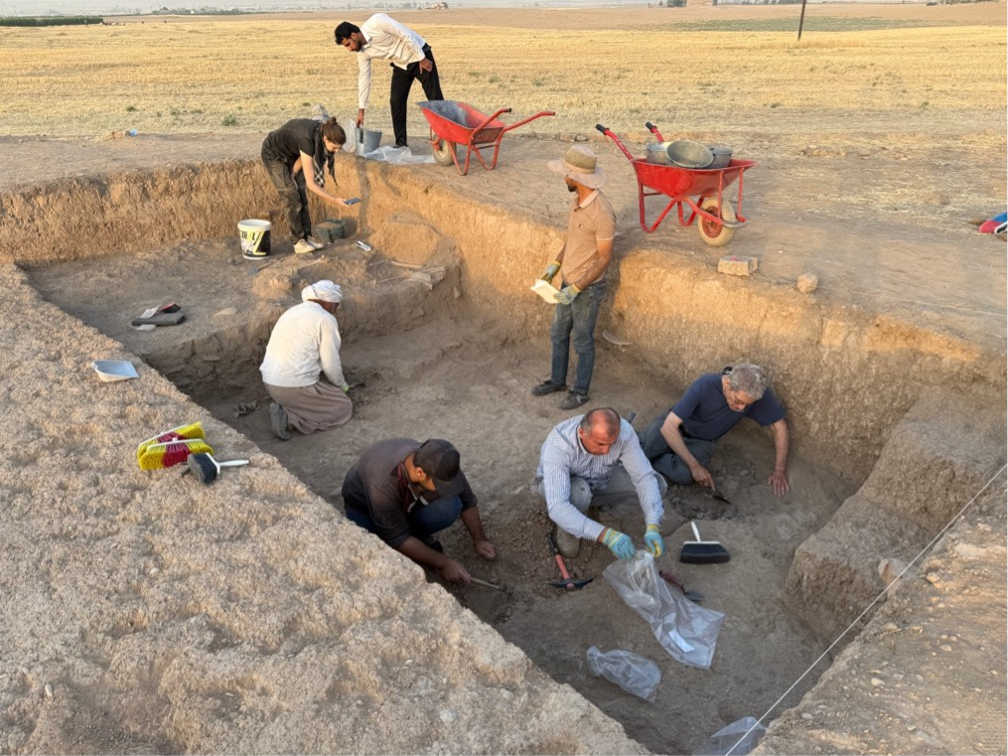
2025 excavations in the lower-town east
In summer 2024 and 2025, archaeologists excavating the lower-town palace complex at Kurd Qaburstan, ancient Qabra, uncovered a remarkable group of air-dried cuneiform tablets and sealings dating to the early second millennium BCE. ASOR’s Shepard Urgent Action Grant made it possible to respond immediately, addressing ancient objects in need of immediate care.
Conservator Carmen Gütschow, one of the most experienced professionals working in Iraq today, joined the team in Erbil to lead the conservation efforts. Using scalpels, soft brushes, and magnification, she gently cleaned each object and stabilized its surface with adhesives suited to Iraq’s climate. More than 80 sealings and a group of tablets were successfully treated. In several cases, broken fragments were rejoined with impressive results: inscriptions that had been illegible became clear again. These objects are now being studied by the team’s lead epigrapher, Paul Delnero, and its art historian, Marian Feldman, both of Johns Hopkins University.
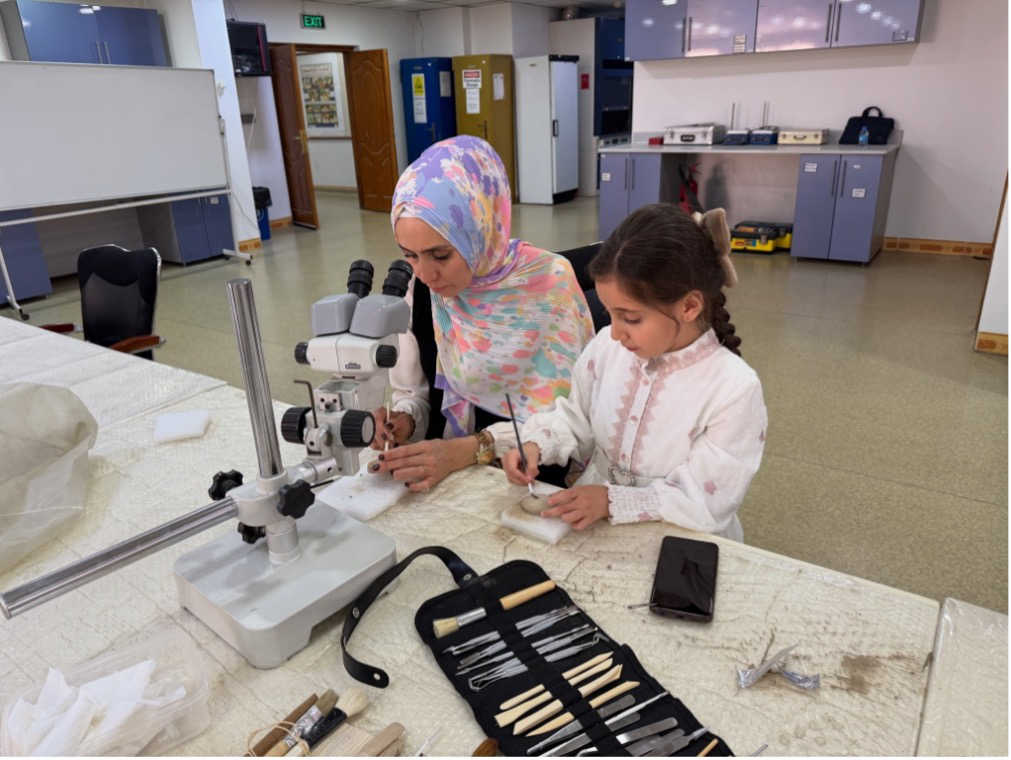
A young visitor joins the conservation team at IICAH
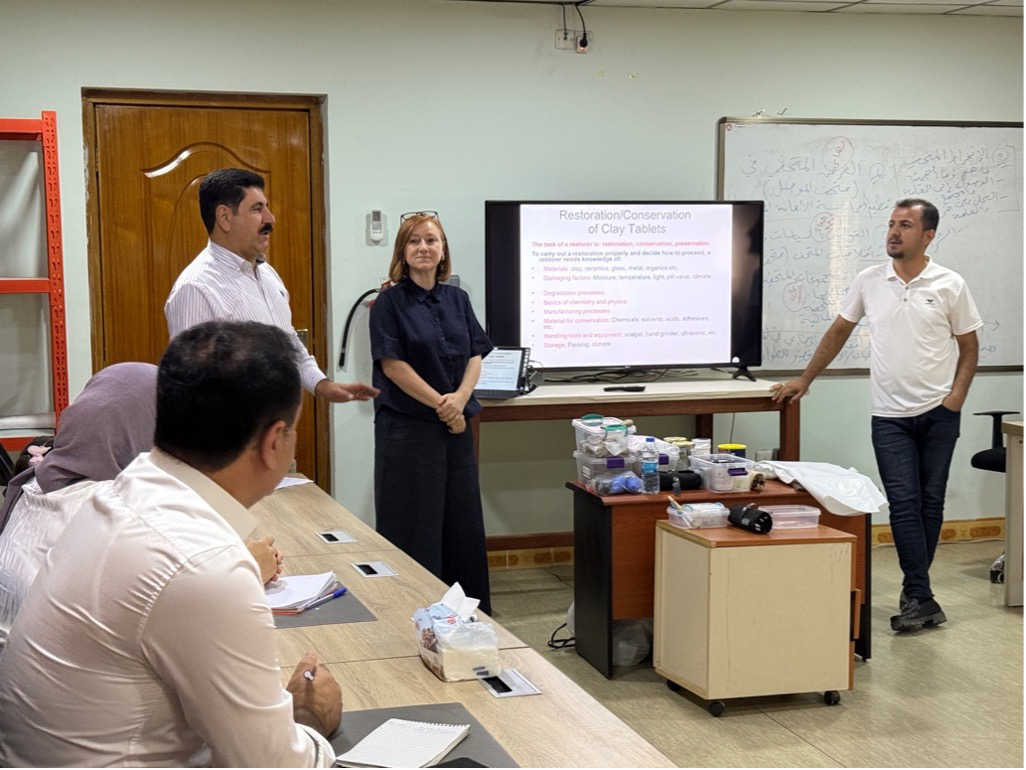
The project also prioritized collaboration and training. ASOR funding allowed the Kurd Qaburstan Project to organize a two-day workshop at the Iraqi Institute for the Conservation of Antiquities and Heritage (IICAH), where Gütschow shared her methods with local museum professionals. One memorable moment came when a young visitor, accompanying her parent, was invited to try a simple restoration technique on a practice tablet. Her quiet concentration captured the spirit of the work: careful, hands-on engagement with the past.
Dr. Abdullah Khorsheed, director of the IICAH, greets workshop participants with Carmen Gütschow. Pictured right in the photo is Muhammad Hamakharib Muhammed, simultaneous translator.
Thanks to ASOR’s support, cultural heritage was preserved, conservation skills were shared, and the story of ancient Kurd Qaburstan became a little clearer. The excavators also thank the University of Central Florida College of Arts and Humanities for co-funding the conservation endeavor, and the National Science Foundation for supporting broader research at Kurd Qaburstan.
Gabrielle Puckett, 2025 Eric and Carol Meyers Fieldwork Scholarship Recipient [/vc_column_text][mk_divider margin_top=”10″][vc_column_text]It’s 4:00am in the sleepy town of Polis Chrysochous, Cyprus. The sun isn’t up yet, but the alley cats are finding their morning snacks. I’m on breakfast duty, so in addition to the egg boiling and tomato cutting of the night before, it’s my team’s job to go fill the coolers and water jugs for the field day ahead. We pile Landy, the beloved but ancient Land Rover of one of our co-directors, with the equipment and food for the day.[/vc_column_text][vc_single_image image=”105749″ img_size=”full” add_caption=”yes” alignment=”center”][mk_padding_divider size=”10″][vc_column_text]After our work for this morning’s breakfast is complete, we take a rest in the seats at the bottom of the apartment building and wait for the bus to arrive. I find it vital in these moments to remind myself to take in every single detail of this amazing experience so that I have things to look back on when I make the inevitable journey home. My favorite thing about these dark and tiresome mornings is the way the sun looks as it starts to rise just barely over the peaks of the mountains while the moon still shines bright above.[/vc_column_text][vc_single_image image=”105754″ img_size=”full” add_caption=”yes” alignment=”center”][mk_padding_divider size=”10″][vc_wp_text]Making our way to the bus at 5:00am and climbing in, I find my favorite seat right next to the door on the window side. A ritual I have developed for these short bus rides is to take in the view of the sea as we drive past. Of course, I am also covering myself in more sunscreen than has ever been deemed necessary because you can never be too careful.[/vc_wp_text][vc_single_image image=”105750″ img_size=”full” add_caption=”yes” alignment=”center”][mk_padding_divider size=”10″][vc_column_text]Arriving at the site of Makounta-Voules, we have the first hill climb of the day, a beautiful path (if I do say so myself) we landscaped the first day being here that only steals some breath on the journey up. I remember before this trip how worried I was that I wouldn’t like this enough to be happy with the early mornings and heat, but I can safely say that’s not an issue as I now know I need to do this for the rest of my life. I leave the trench fifteen minutes before breakfast to help with my roommate and the rest of our breakfast crew setting out the tarp on which we will feast and nap while we set out the food. At around 8:30am we can hear the call of “BREAKFAST” shout down the mountain and prepare for the incoming team ready to fuel themselves for the rest of the day.[/vc_column_text][vc_single_image image=”105751″ img_size=”full” add_caption=”yes” alignment=”center”][mk_padding_divider size=”10″][vc_column_text]We spend the day digging and taking elevations, pictures when necessary, and reminding ourselves to trust our guts while we sift. It’s Thursday, which means at the end of the day it’s time for everyone’s favorite segment: Trench Tours. We show off the work we’ve done for the week, being sure to take a look at the trenches we aren’t a part of in order to learn more about the site as a whole.[/vc_column_text][vc_single_image image=”105752″ img_size=”full” add_caption=”yes” alignment=”center”][mk_padding_divider size=”10″][vc_column_text]After the bus ride home, we have some lunch and begin pot washing, but I have a special task. I am working on a project to clean up our faunal remains from past seasons and remove their thick calcium accretions through various methods. After an hour or two of this lab work, we have some lovely free time which is always best spent at the beach. A view that I strongly believe can’t be beat is the Mediterranean Sea after a long day of digging. With a fifteen-minute walk, we arrive ready to take in the wonderfully clear water. The hours spent on this beach are some that I would be hard pressed to ever give up, let alone the friends I get to spend it with. Throughout this project I have had so many experiences that I hope aren’t limited to being once-in-a-lifetime. We are back at it bright and early tomorrow, and I just can’t stop taking in every detail knowing that there are only so many days left here—but I’ll be back.[/vc_column_text][mk_padding_divider size=”20″][vc_single_image image=”105753″ img_size=”450×600″ alignment=”center”][vc_row_inner][vc_column_inner][mk_padding_divider size=”30″ visibility=”visible-dt”][vc_wp_text]Gabrielle Puckett is an undergraduate student in her third year at the University of Tennessee Knoxville. She is a double major in Anthropology and Religious Studies and minors in both Classical Civilizations and Judaic Studies. She has a strong interest in zooarchaeology in the Near East and the applications for isotopic analysis in the area.[/vc_wp_text][/vc_column_inner][/vc_row_inner][mk_divider][vc_wp_text]
Want to help more students and early career archaeologists get into the field? Donate to the cause today by selecting “Fieldwork Scholarships” as your gift purpose!
2025 Harris Grant Report: CraftLand Project, Kurdistan Region of Iraq
Dr. Claire Padovani, CNRS Archéorient
The launch of the Crafting Landscape Project (CraftLand) in May 2025 in the Chamchamal region was made possible through the generous support of ASOR’s Charles Harris Project Grant. This pilot mission enabled the finalization and validation of a survey contract with the General Directorate of Antiquities in Erbil and the Directorate of Antiquities in Slimani, as well as the establishment of a partnership with Ashur Brick, a Kurdish company producing clay bricks in the region. In addition, we were able to test several methodological components of the project and to initiate the work in our three fields of investigation.
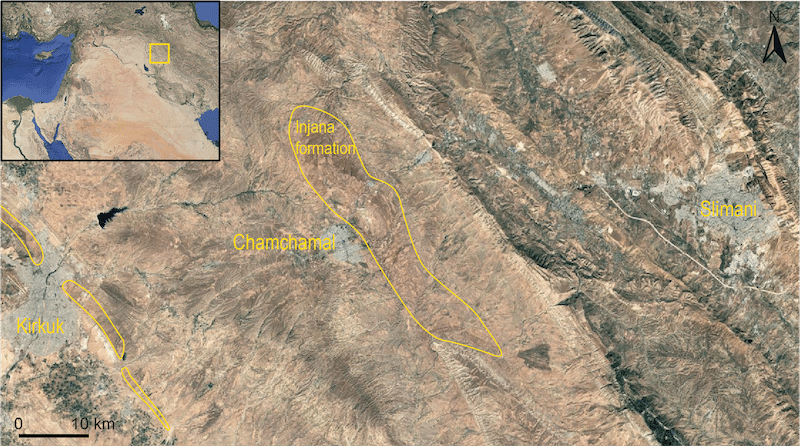
The objective of CraftLand is to investigate the strategies of natural resources exploitation and organisation of pottery manufacture–in relation to other economic productions–in a clay-rich environment in the Chamchamal region. This geological context, known as the Injana formation, extends over approximately 380 km² (figure 1). It is composed of sandstone, siltstone, and high quality claystone, a favourable combination for ceramic production. In Iraq, outcrops of this formation are also found near Kirkuk and the Mosul lake. The study spans from the beginnings of ceramic production to the present day, with particular emphasis on periods of major economic transformations, such as urbanisation and state formation.
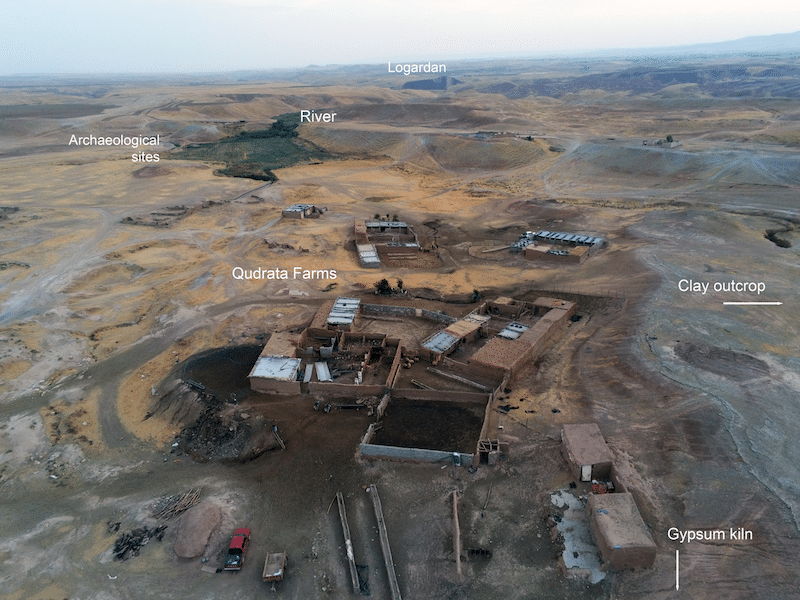
A distinctive feature of the Chamchamal’s Injana formation is its location within a zone close to cultivable lands, mineral and organic resources, formerly adjacent to woodlands, and easily connected to the Bazian Pass, a strategic route through the Qara Dagh piedmonts of the Zagros mountains. The establishment of large-scale ceramic workshops comprising dozens of kilns in the region–such as Logardan in the Early and Middle Bronze Age and Girdi Qala during the Chalcolithic and the Islamic period–suggests that the high quality of these clay resources was already recognised. Today, the Chamchamal region hosts four major brick factories supplying construction materials across Iraq, alongside traditional potters, as well as numerous farmers and pastoralists (figure 2). However, it is unlikely that raw material quality alone accounts for the recurrent and sustainable development of large-scale production in this area.
Pottery was one of the most widely used materials in ancient societies. Its production required raw materials, fuel, workforce, and access routes. CraftLand examines pottery production in its landscape and seeks to reconstruct spatial relationships between production facilities and the natural environment (raw material sources; water; topography), as well as the social and economic contexts (settlement pattern; roads; agricultural, pastoral, and other artisanal activities). Reconstructing these networks provides a valuable framework for understanding the evolution of the production organisation on a regional scale and assessing its impact on the landscape depending on the period.
To address its research questions, CraftLand employs an integrated, interdisciplinary approach organised into three complementary fields of research, with all data consolidated within a single Geographic Information System (GIS). This pilot season has already seen significant progress in the three research areas:
a) Archaeological survey
A GIS with a standardized recording protocol was implemented in collaboration with Jonathan Lisein (Gembloux Agro-Bio Tech Liege University). Thirty sites were identified through satellite imagery and have begun to be surveyed by pedestrian prospection.
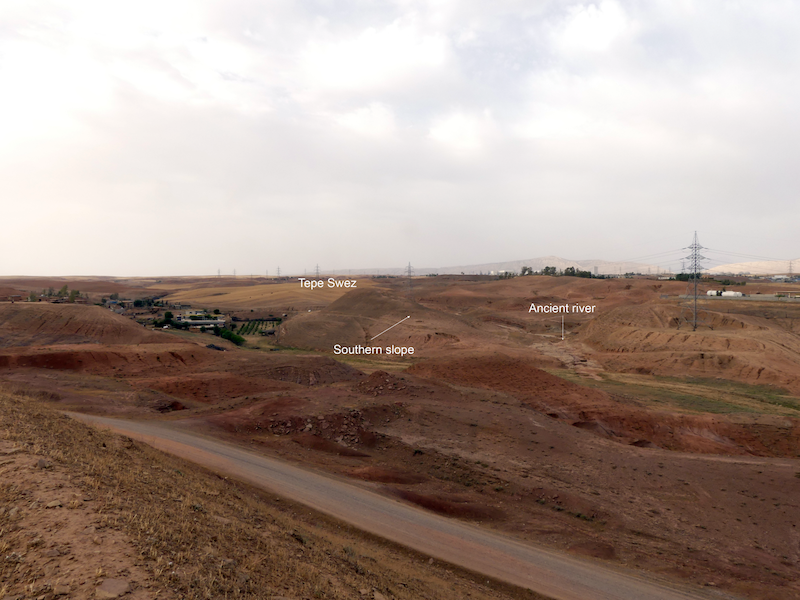
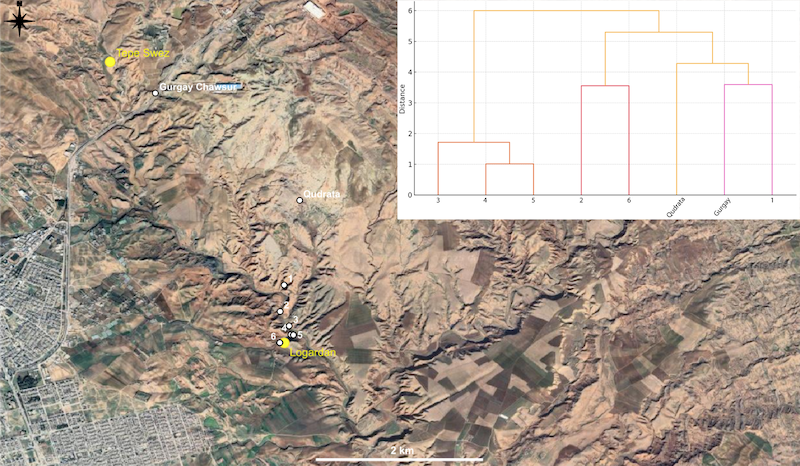
The initial priority was to test a hypothesis regarding the location of large-scale ceramic workshops in order to assess the potential for predicting their spatial distribution. Based on the conditions documented at Logardan, we hypothesized that the establishment of major pottery workshops was contingent upon specific criteria: proximity of less than 5 kilometres to a large settlement occupied at the same period, direct access to a river, and the availability of nearby clay sources. Using the GIS, Tepe Swez, a site meeting these conditions was identified and subsequently surveyed. The site is situated 3.3 kilometers from Chamchamal (ancient Azuhinum), with a river flowing at its base, and in proximity to a clay source (Gurgay Chawsur) that is used by present-day potters. On the gentler southern slope, numerous greenish fragments of large ceramic vessels were documented, together with circular alignments of burned stones organised in terraces interpreted as kiln bottoms (figure 3). Based on the pottery typology, the possible pottery production area most likely functioned during the Middle Bronze Age.
The project’s landscape analyses integrate geomorphology, geology, and vegetation reconstruction to identify natural raw material sources (clay, stone, and bitumen), as well as anthropogenic features (such as basins, clay pits, roads, and field terraces).
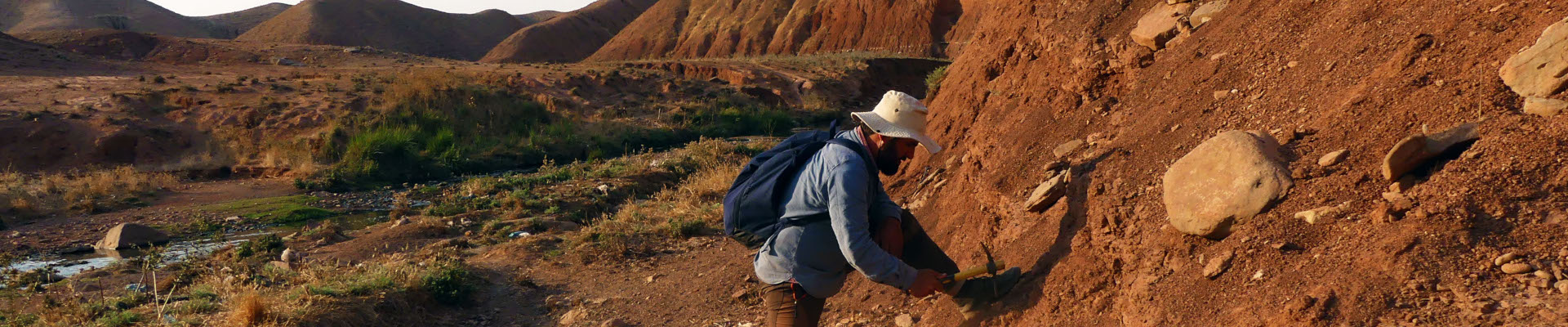
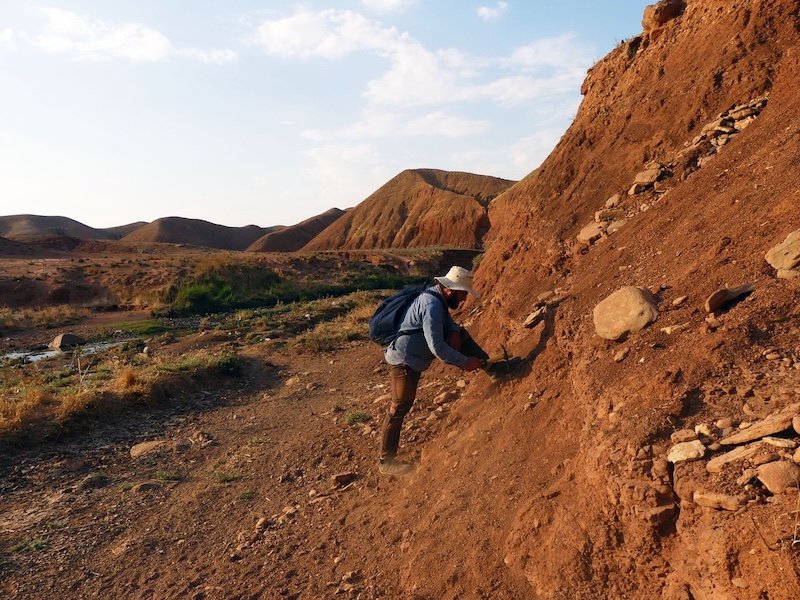
Part of this work began with the investigation of ancient clay extraction sites in the region. During the ethnographic survey (see below), we identified clay outcrops that are currently exploited by traditional potters. These extraction sites are located in close proximity to archaeological sites with important pottery production facilities (Gurgay Chawsur close to Tepe Swez and Qudrata close to Logardan). Samples were collected from these sources. A geological survey was conducted between Qudrata and Logardan in collaboration with Zirak T. Yaseen, geologist at Salahaddin University, in order to to assess whether the clay composition varies or is homogeneous within the Injana formation (figure 4).
The survey documented the accessibility between sites and included sampling of multiple clay outcrops along the way. XRF analyses, conducted by Zirak T. Yaseen at the Salahaddin University in Erbil, provided preliminary results indicating that clay outcrops within the Injana Formation present various geochemical signatures. This suggests the potential to discriminate clay sources (figure 5). In collaboration with the French Archaeological Mission in the Qara Dagh directed by Johnny S. Baldi, ongoing analyses are comparing the composition of a selection of sherds from different stratigraphic levels of Logardan workshop with sampled clays. Ultimately, the possible extraction sites identified through geomorphological analyses by Luca Forti (University of Milan) will be systematically surveyed and sampled to characterize their geochemical composition. The overarching goal is to provide an open-access map of ancient clay extraction sites, including their geochemical profile, to support clay provenance studies in the region.
Documentation of the actual clay production system (traditional and industrial) started with interviews using structured questionnaires and observations of practice. The survey seeks to assess the vitality of traditional pottery in relation to local industry, and to investigate sensory-based clay selection and the mechanisms of clay craft knowledge transmission.
Clay products are currently in demand (tannurs, water jars, and even living-rooms faced with unfired bricks) as people want to ‘live as in ancient times’ and maintain cultural traditions. However, local clay products remain relatively expensive–with a tannur costing around 20 dollars–and most pottery sold in local shops is imported from Iran by truck. Despite the renewed interest in ceramics, traditional potters are at risk of disappearing, as many are old and no longer pass on their craft.
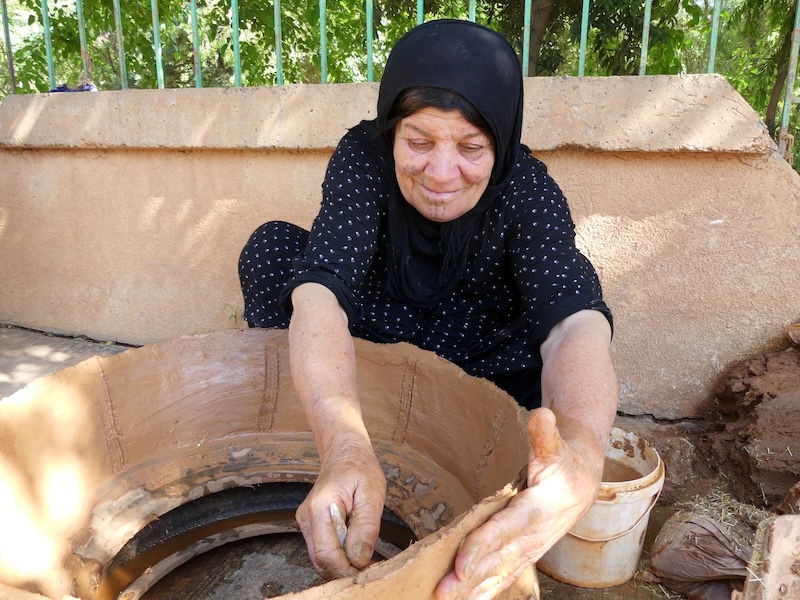
The survey enabled the identification of a network of traditional clay artisans. Interviews were conducted in collaboration with Rawa Karim (Directorate of Antiquities of Slimani) and Brwa Raza (Charmo University). Preliminary results suggest that pottery and brick making may have been transmitted vertically, from one generation to the next within the same family, whereas tannur making may be more commonly transmitted horizontally, between neighbours (figure 6).
The decline of traditional pottery production is not only related to economic changes but might also be linked to the region’s recent history of political violence, notably the Anfal campaigns of the late 1980s that killed and displaced thousands of people. Although a potter’s clay source may change–often based on the reputation of the source–potters remain closely tied to their place of birth and initial apprenticeship. Beyond family ties, this connection is probably based on access to other essential ingredients for the clay matrix, such as straw used as a temper, as well as to spaces suitable for firing. Consequently, it is not uncommon for potters to return to their birthplaces to collect straw from family fields, or to stop producing pottery when these fields or firing areas are no longer accessible in their new village. This practice illustrates the deep interconnection between clay production and other economic activities, such as agriculture, as well as the critical role of spatial organisation in sustaining craft traditions. Therefore, the violent disruption of these socio-spatial networks during the Anfal probably contributed to the decline of traditional craft practices.
The results obtained in each research area are highly promising for the regional development of the project. This pilot mission strengthened ties with local communities and enterprises and initiated the survey of archaeological sites. The preliminary results also pointed to possible ways of reconstructing and interpreting production networks through spatial analysis and the recurrence of patterns, as well as through the socio-economic logics observed among present-day potter communities. The backbone of the project is to consider the social ecology of pottery production in its spatial dimension in order to understand long-term transformations in regional organisation. Subsequently, the production patterns documented in the Chamchamal region will provide points of comparison with those of other regions, helping to determine the processes and impacts of social transformations (like urbanisation and state emergence) in contrasting environments. In addition, by emphasizing the long-standing tradition of clay crafts and their influence on the landscape and the regional identity, CraftLand will leverage heritage to foster community empowerment and reinforce connections to the environment.
Joshua Micallef, 2025 P.E. MacAllister Fieldwork Scholarship Recipient. [/vc_column_text][mk_divider margin_top=”10″ margin_bottom=”10″][vc_wp_text]I was part of the TERRSOC ‘Reading’ Ancient Landscapes: Peasant Decision-Making and Terraced Agriculture in Central Palestine over la Longue Duree project. This year’s excavation took place in Jordan, specifically at Tell Hesban and the nearby wadi. Seeing my interest in landscape archaeology, I was assigned to the Wadi Hesban team.
The first week started with a survey of a section of the south side of Wadi Hesban. To say the vistas were breathtaking is an understatement. The landscape is dramatic, with agricultural terraces, both in use and relict, dotting the landscape. The barking of dogs and bleating of sheep and goats is an ever constant companion, and the trickle of fresh water from the local spring is a refreshing contrast to the Jordanian sun. The locals were truly friendly, as is to be expected in this region of the world. We would continue to make local connections, and be offered copious amounts of tea, throughout our time at the wadi.[/vc_wp_text][vc_single_image image=”105402″ img_size=”large” add_caption=”yes” alignment=”center” onclick=”img_link_large” img_link_target=”_blank” css=”.vc_custom_1757089224675{padding-right: 10px !important;}”][mk_padding_divider size=”20″][vc_wp_text]Shunat Dhiab, mentioned in the 1889 traveller’s account of Major C. R. Connor, was identified atop the high grounds, with two water-driven mills of possible Ottoman date located further down the slope of the wadi. During the survey, a number of possible terrace sites for excavation and sampling were identified. After the day’s trek, preliminary Optically Stimulated Luminescence (OSL) dates from the 2024 campaign awaited us at the hotel, and these supported what is known of the occupation of the area.
The second day commenced early, as would all subsequent days. Two trenches, S3 and S4, were opened behind a terrace wall located close to Shunat Dhiab. The work was hard, but always rewarding, and the vistas made the daily trek up to the site worth the effort. The trenches would continue to be excavated in the next three days, reaching depths of around two metres. Sampling commenced on trench S3 on day four. Samples for various analyses, such as soil biomarkers, OSL dating, soil texture, and microbotanical analysis, were collected. On day five, due to the absence of two of the team members, it was decided to postpone sampling of trench S4 to the second week of excavations. Thus, day five saw the opening of trench S5 lower down the slope of the wadi, below a terrace wall located close to the presumed older of the two water-driven mills. By the end of the day, the trench had reached over a meter in depth.[/vc_wp_text][vc_single_image image=”105403″ img_size=”large” add_caption=”yes” alignment=”center”][mk_padding_divider size=”20″][vc_wp_text]Week two continued in much the same vein. The first day commenced with the sampling of trench S4, with another OSL sample being taken from trench S3. At trench S5, the first OSL sample was taken from under the terraced wall. Day two saw the continuation of sampling in trench S5. One of the team members also commenced a survey of the high ground of the wadi around Shunat Dhiab. Several other structural remains, architectural fragments, and rock cut features had been observed in the area during the first week, and these were mapped via GPS points. The day ended with a search for a possible location for trench S6. Two potential sites were identified further down the wadi slope in an area that is actively cultivated. Day three commenced with photogrammetry of trench S5, which was eventually followed by drone flights to photograph the area of the wadi under investigation, creating an orthophotograph. Trench S6 was also opened after discussions with the landowner, who was more than willing to allow us to investigate and dig along the terraced walls of his field. On day 4, the final day at the wadi, trench S6 was completed, documented, and sampled.
It was undoubtedly a rewarding two weeks, though the rugged terrain and steep slopes did make the going quite tough at times. The views at the wadi were a reward in themselves, and few things could beat the sight of the sun still rising over the wadi at 6 am. The hospitable and helpful nature of the locals was also without measure, and in part, the successful completion of these two weeks could not have been possible without the Jordanian locals.[/vc_wp_text][vc_single_image image=”105270″ img_size=”large” add_caption=”yes” alignment=”center” onclick=”img_link_large” img_link_target=”_blank” css=”.vc_custom_1756908305317{padding-right: 10px !important;}”][mk_padding_divider size=”20″][vc_wp_text]The experience was undoubtedly illuminating and fulfilling. It gave me the opportunity to work closely with individuals from different countries and experience Jordanian culture and hospitality. The multi-cultural aspect of the team was truly an experience I will hold dear to me. I have also gained further hands-on experience, and especially important to me was the landscape element and the sampling of soil for various scientific tests. Sampling for OSL was particularly illuminating, with the need to ensure the sample was not exposed to light.[/vc_wp_text][mk_padding_divider size=”20″][vc_single_image image=”105404″ img_size=”medium” add_caption=”yes” alignment=”center” onclick=”img_link_large” img_link_target=”_blank” css=”.vc_custom_1757089432627{padding-right: 10px !important;}”][mk_padding_divider size=”20″][vc_wp_text]
Joshua Micallef has pursued various careers, including in the financial services sector and software testing. As of 2020, he studied at the University of Malta, attaining a BA in Archaeology (Hons) with Geography, and is currently reading for an MA Asian Studies: Islamic Archaeology at the University of Bonn. His main area of interest lies in the Medieval period of the Central Mediterranean.
[/vc_wp_text][mk_divider][vc_wp_text]
Want to help more students and early career archaeologists get into the field? Donate to the cause today by selecting “Fieldwork Scholarships” as your gift purpose!
In the bustling center of metropolitan Athens, the sounds of city life blend with those of pickaxes striking the earth, brushes revealing beautiful artifacts, and—of course—ceaseless debate as to whether the soil is indeed greyish-brown or brownish-grey. For nearly 100 years, the American School of Classical Studies at Athens has helmed the excavations of the Athenian Agora. Each year, students and professionals from across the world flock to Athens to excavate one of the most important sites in the Greek world. This year, I had the opportunity to work at the Agora as an assistant supervisor and take an important step in my career as an archaeologist.
The most important part of excavation is sweeping... though perhaps not the most exciting. Photo by Luis Rodriguez-Perez (UCLA).
I excavated at the Agora for the first time as a volunteer in the summer of 2024, just before beginning the final year of my undergraduate education. While I had prior excavation experience, I could never imagine how impactful it would be on my development as an archaeologist. As a site that practices total collection of material—even plastic—I gained a breadth of archaeological experience. In addition to dry sieving all of the excavated material, we took samples for archaeobotanical flotation. We placed the soil we collected in a basin of water, so we can keep even the smallest seeds. The emphasis on professional skill development and intellectual growth at the Agora made me fall in love with the site, the project, and the people. But the most important lesson came this year, when I learned to be a leader.
My supervisor, Katrina Kuxhausen-DeRose (UCLA), and I excavate in a pit deep beneath the surface. Photo by Luis Rodriguez-Perez.
When I was invited to return to the Athenian Agora as an assistant supervisor, I knew there was nothing I would rather do with my summer. As excited as I was, I was also quite nervous to enter a leadership position like this for the first time. I was younger and had less field experience than many of the volunteers. For the first few weeks, I maintained a perpetual state of anxiety about making a mistake or revealing to others that I was unsure of myself. In the field, we have to pay close attention to changes in the soil to determine whether the deposit we are excavating has changed. In the particular Ottoman context we were excavating, we battled these soil changes ferociously, having to remain eagle-eyed for even the slightest change in color or texture—not an easy task. For the first time, I found myself in a position where people around me asked what I thought was happening; often, I had no clue. As a born perfectionist and someone deeply invested in the work I do, this was frequently anxiety-inducing—as I’m sure anyone starting a new job has experienced. But, as is often the case, this discomfort provided an outlet for growth.
Katrina shows me the logistics of processing finds at the end of the season. Photo by Luis Rodriguez-Perez.
Perhaps the most important thing I learned was to be comfortable being wrong, not knowing the answers, and owning mistakes. In turn, letting go of the need to be right and the fear of making a mistake allowed others at every level of experience and every age the space to be wrong too; it allowed us all to be able to learn from each other. At the Agora, our field director, Dr. Debby Sneed, consistently emphasized to us that mistakes are an opportunity to grow, not a source of shame. This summer, learning to be wrong made me more confident in myself, more able to learn from others, and a better archaeologist altogether.
My friends and I celebrate our last night in Athens atop Philopappos Hill, or the Hill of the Muses. Photo by Daisy Wang.
Anyone who has participated in archaeological fieldwork knows that it is an opportunity for personal discovery just as much as it is for professional growth. Over two short months, I grew like a wild herb nurtured by the Greek sun, soil, and incredible archaeologists around me. I am forever grateful for my time at the Athenian Agora, and look forward to what comes next.
Next to Grave Circle A at Mycenae, I am reminded of why I love what I do so much. Photo by Luis Rodriguez-Perez.
Aidan Gregg is a first-year PhD student in Classical Archaeology at the University of California, Berkeley, and a graduate of Butler University. He is interested in the archaeology of burial, gender, and archaeological theory in the Aegean Bronze Age. He has participated in excavations at Ancient Nemea and the Athenian Agora and worked on material from Petsas House at Mycenae, the Bronze Age cemetery at Aidonia, and the Northeastern cemetery of Thebes.
Want to help more students and early career archaeologists get into the field? Donate to the cause today by selecting “Fieldwork Scholarships” as your gift purpose!
2025 Shepard Urgent Action Grant: The Al Haniyah Emergency Documentation Project
Julia Nikolaus (Ulster University), Nick Ray (Ulster University), Ahmad Emrage (University of Benghazi)
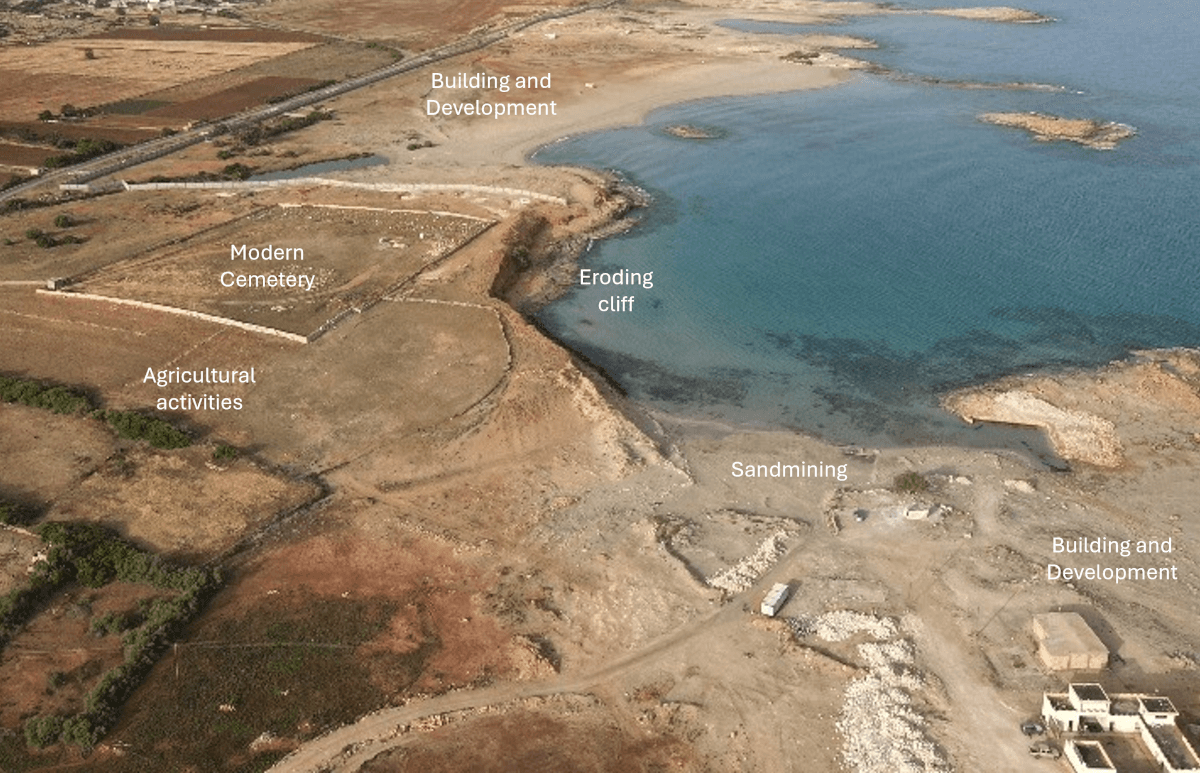
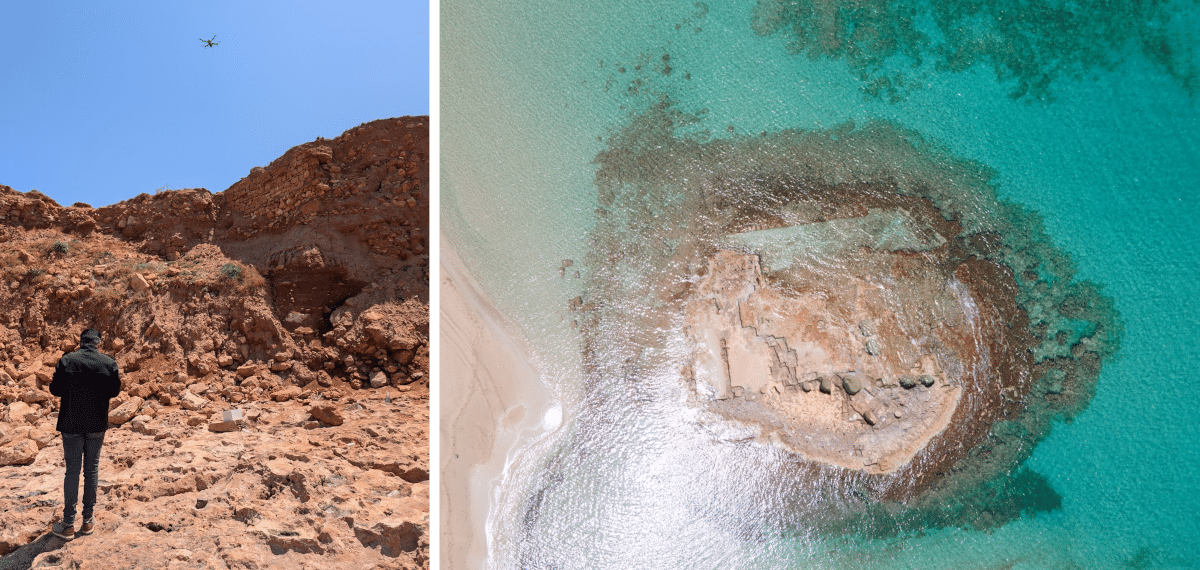
In 2025, with the support of the Shepard Urgent Action Grant, an international team of archaeologists completed a critical emergency documentation project at the endangered site of Al Haniyah (ancient Aptouchus), on the Cyrenaican coast of Libya. This urgent initiative responded to escalating threats from coastal erosion, unregulated agricultural development, and expanding infrastructure—pressures that have already caused widespread and irreversible damage to the site(Figure 1).
Figure 1: Drone image of Aptouchus showing threats and damages to the site.
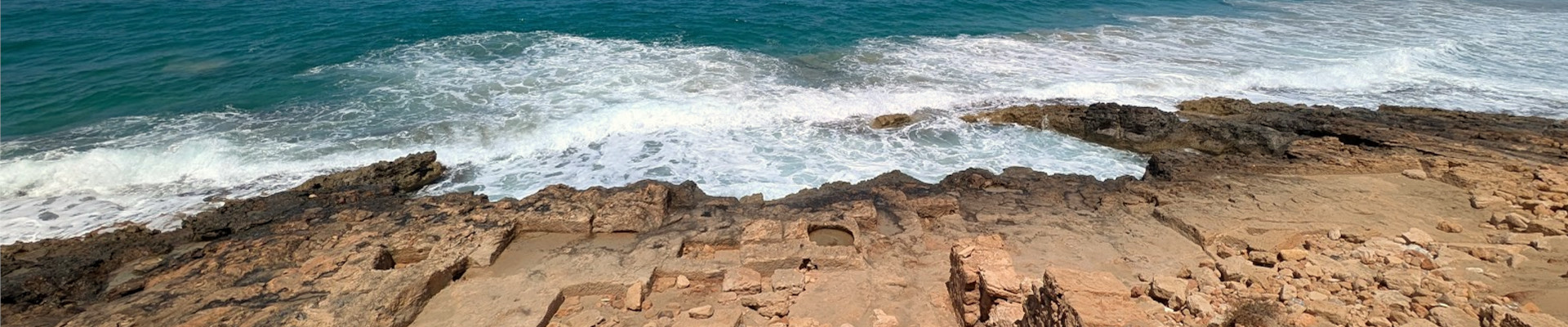
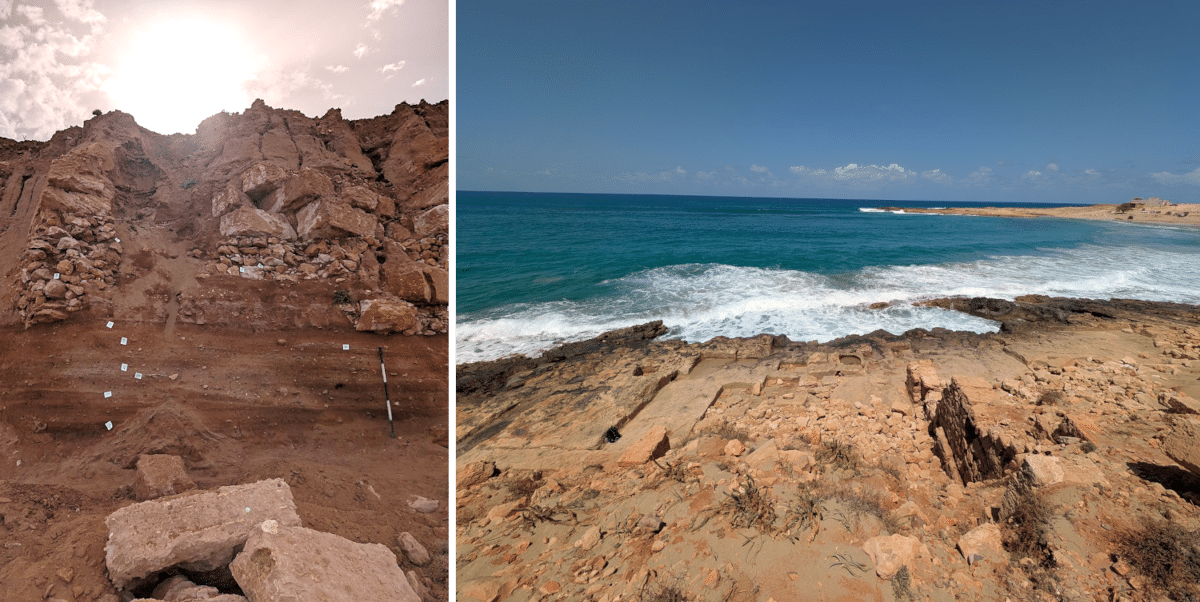
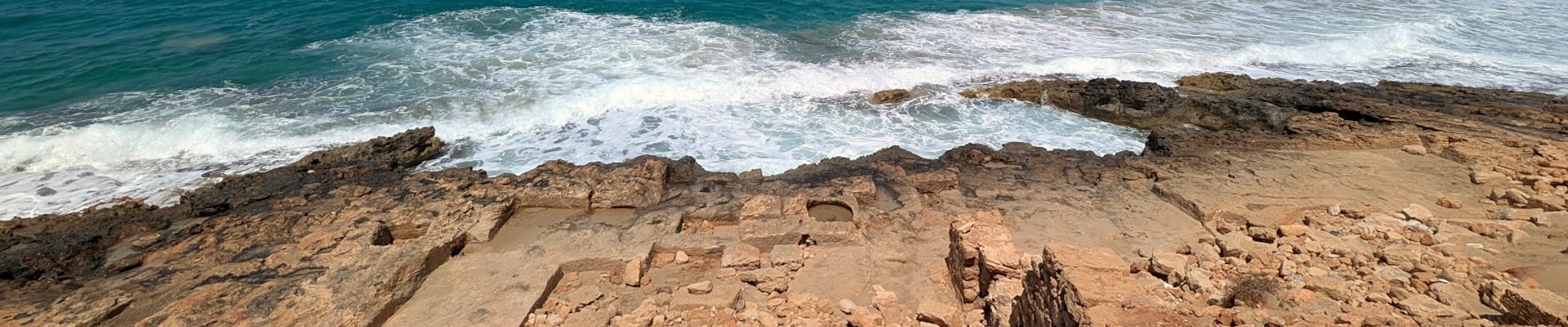
Aptouchus is a coastal harboursettlement dating to the Greek,Roman, and Late Antique periods. Though modest in size, covering approximately four hectares, the site played an important role in regional maritime activity and trade. Archaeological remains include Roman-period industrial features such as vats, tanks, and large building foundations, as well as domestic structures with plastered walls and finely worked stone masonry. These are now visible along an actively eroding cliff edge (Figure 2). Ceramic finds, including fragments of black-glazed pottery, point to activity as early as the Archaic period. In antiquity, the harbour was naturally sheltered by a rocky outcrop connected to a central islet, creating a protected anchorage for vessels. Today, parts of the ancient settlement lie beneath modern buildings and an Islamic cemetery, adding further complexity to the site’s preservation.
Figure 2: Left - walls protruding from the eroding cliff face; Right - industrial installations and buildings.
During the 2025 field season, a team of specialists from Ulster University (UK), the University of Benghazi (Libya), the Libyan Department of Antiquities, and the Alexandria Centre for Maritime Archaeology & Underwater Cultural Heritage (Egypt),undertook a multi-faceted programme of recording and documentation. The team began with a detailed site survey, identifying and mapping architectural features as well as recently disturbedareas. High-resolution drone photography was used to create 3D digital models of the site and surrounding terrain, including the vulnerable cliff face (Figure 3). These models will serve both as an archival record and as a baseline for monitoring ongoing change.
Figure 3: Left - our drone pilot at work; Right: drone shot of one of the islets with industrial features that formed part of the harbour.
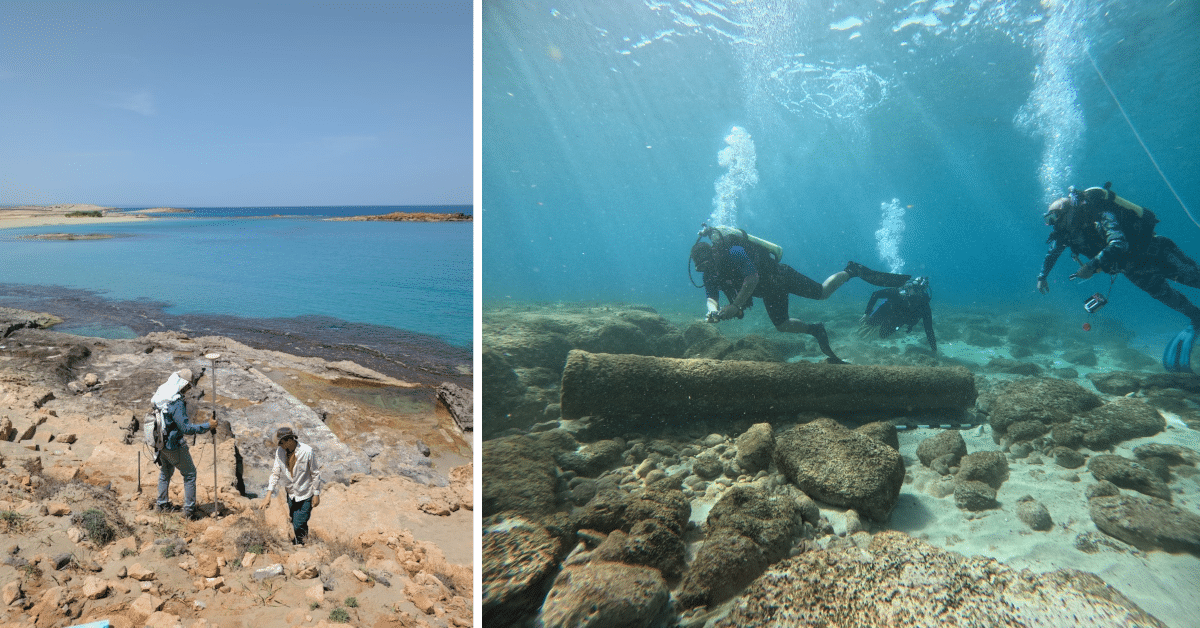
Terrestrial documentationfocused on areas under the most immediate threat, especially where bulldozing had exposed ancient structures. These were recorded using differential GPS and photogrammetry, ensuring accurate spatial documentation. In parallel, a preliminary underwater survey examined submerged archaeological features of the harbour(Figure 4). Several stone blocks and cut features were identified, consistent with ancient maritime use.
Figure 4: Left - DGPS recording of visible architectural features; Right - Underwater survey of harbour area with submerged broken granite column.
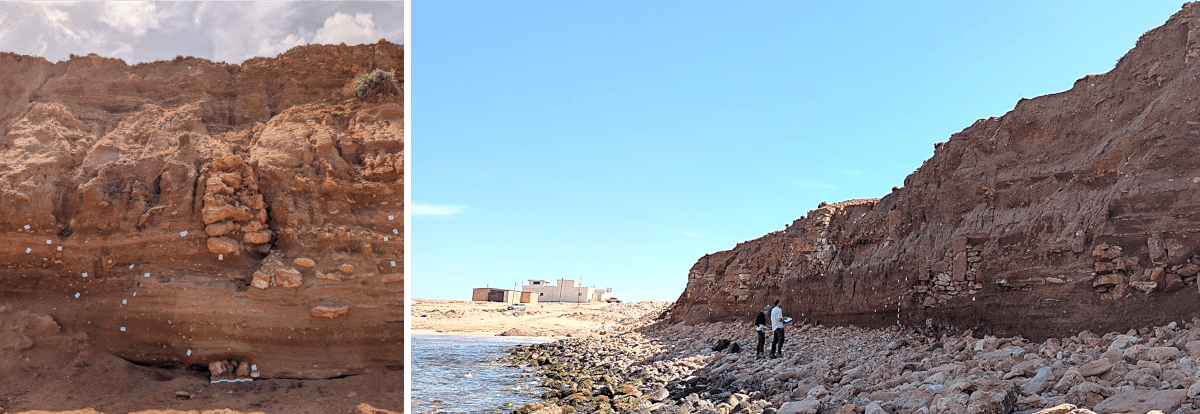
A key component of the work involved recording the exposed stratigraphy of the eroding cliff. Here, archaeological layers are visibly collapsing into the sea at an alarming rate. Detailed photographic and written records were made of these sections before they are lost (Figure 5). Pottery recovered from these layers will contribute to establishinga more precise understanding of the site’s chronology.
Figure 5: Recording the visible stratigraphic layer of the 120 m long cliff face.
This emergency project represents a crucial step in preserving the cultural heritage of Aptouchus. It has produced a lasting record of a site under immediate threat and drawn attention to the broader challenges facing Libya’s coastal archaeology. The documentation gathered will not only support future research into the economic and social dynamics of smaller ancient harbours but also underline the importance of protecting vulnerable heritage landscapes across the region.
Aayush Umesh, 2025 Eric and Carol Meyers Fieldwork Scholarship Recipient
A year ago today, I had no idea that I would become an Islamic archaeologist. My path has been full of twists and turns. In the last four years at the University of Georgia, I have completed a bachelor’s degree with double majors in theatre and communication studies and a minor in Arabic. I entered college with ambitions to attend law school. Eventually, however, I found archaeology, and tried my hand at excavation last summer at Antiochia ad Cragum, Türkiye. I fell in love and attended both the ASOR and AIA Annual Meetings in 2024 and 2025, respectively. At the ASOR Annual Meeting, I met Professor Bethany Walker, the head of the Islamic Archaeology Research Unit at the University of Bonn. Upon meeting her and listening to the work of her graduate students, the next segment of my path had been illuminated. I decided to pursue the MA in Islamic Archaeology at the University of Bonn and to accompany the university for fieldwork at Tall Hisban, Jordan, from May 18-29, 2025.
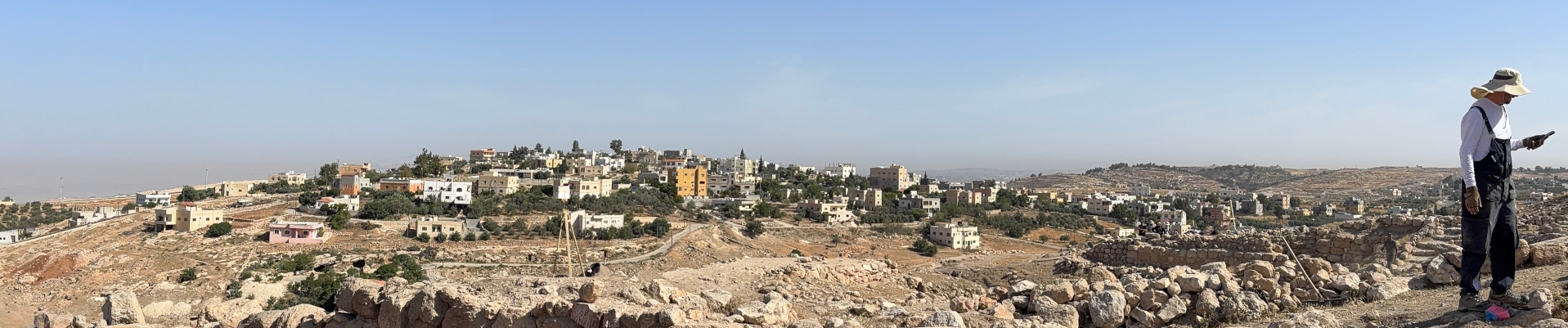
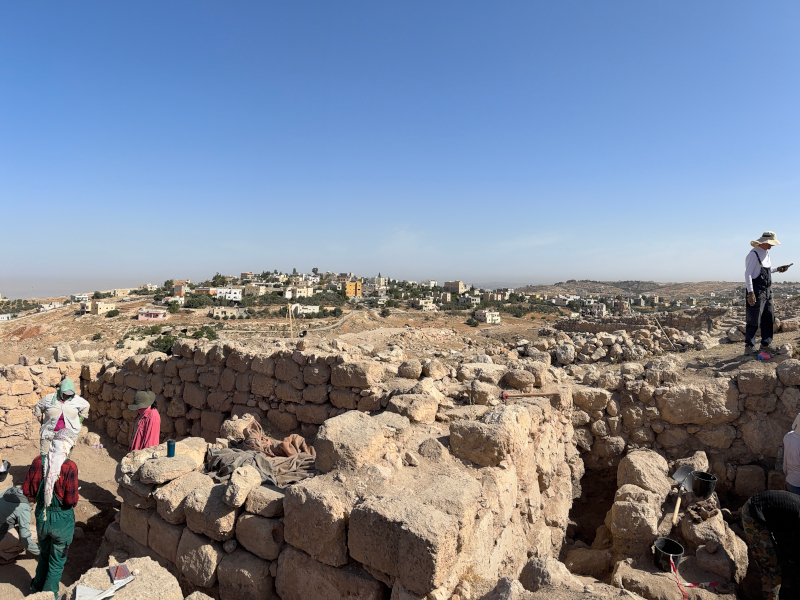
A panoramic view from Tall Hisban.
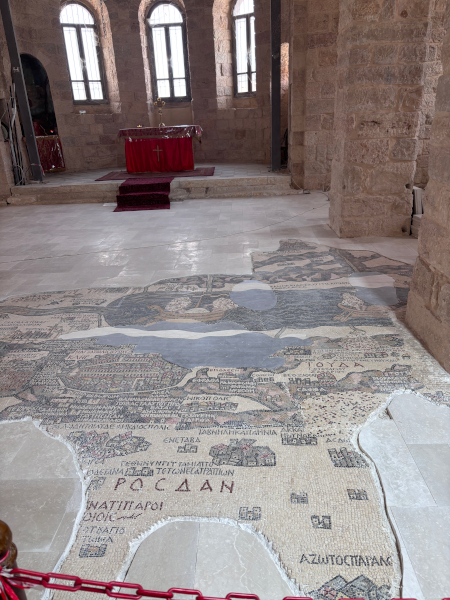
Madaba Map on the floor of the St. George Greek Orthodox Church.
Tall Hisban is around a 30-minute drive from Madaba, the “City of Mosaics” that houses the Madaba Map (the oldest surviving cartographic depiction of the Holy Land as a large floor mosaic on the floor of the St. George Greek Orthodox Church). Madaba today is a vibrant city boasting harmonious Christian and Muslim communities, spectacular archaeology, delicious Jordanian cuisine, talented mosaic artisans, and proximity to the capital city of Amman (which is less than an hour’s drive). Our team stayed at Salome Hotel, a gorgeous accommodation for guests in Madaba with simple yet beautiful amenities and a kind, hospitable staff.
Tall Hisban is a breathtaking site with millennia of occupation, with excavated material culture representing periods from Paleolithic to Late Islamic. A stroll through the site takes one up Roman stairs to Byzantine houses, through Islamic bathhouses reusing Christian baptismal basins to the entrances of previously settled underground cave systems. Old and new are engaged in a remarkable dance at Tall Hisban, best captured by the abundant spolia utilized in its diverse features’ constructions as well as in the tell’s modern residential surroundings.
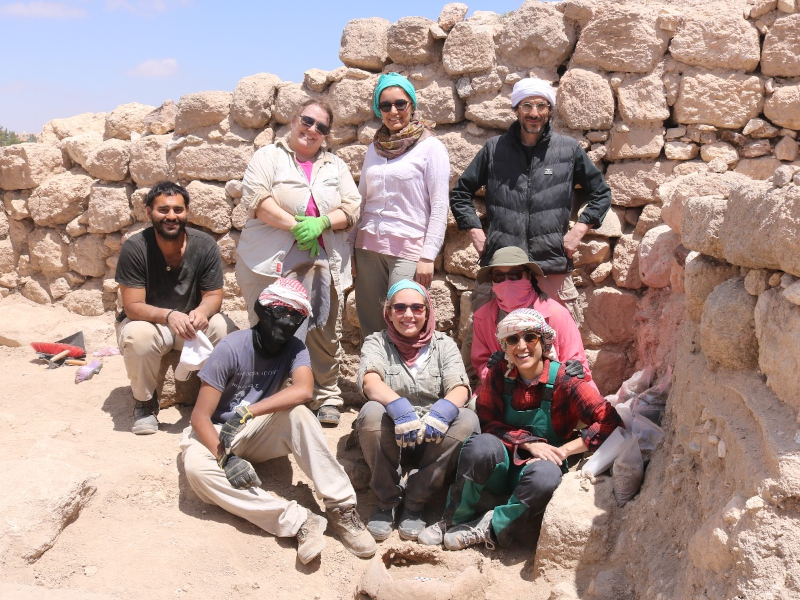
Me and some teammates in our square.
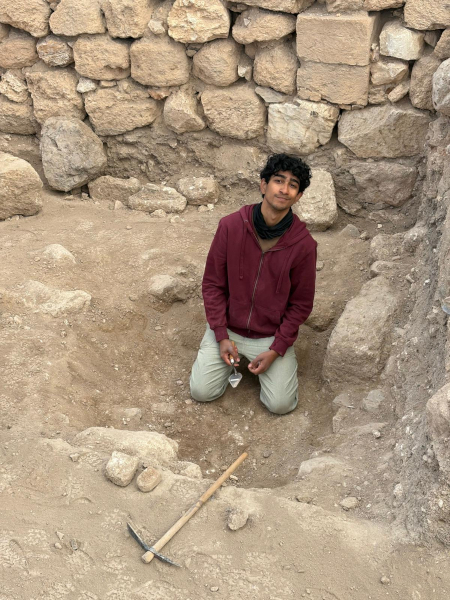
I was assigned to a square which had been identified in a previous season as an Ayyubid-era kitchen. Our goal was to continue excavating this square, passing the Ayyubid layer and investigating those beneath to determine the usage of the space in earlier Islamic eras. Our objective this excavation season was to gain a better understanding of the dietary practices of the inhabitants of Tall Hisban by comparing data procured at the tell to data procured at a nearby wadi (valley) that had been historically used for agricultural purposes. As such, many soil samples were taken during excavation for botanical analysis, particularly in areas high in charcoal or surrounding excavated cookwares. Some of the most outstanding discoveries were tabuns, or traditional clay ovens, which contain a multitude of data.
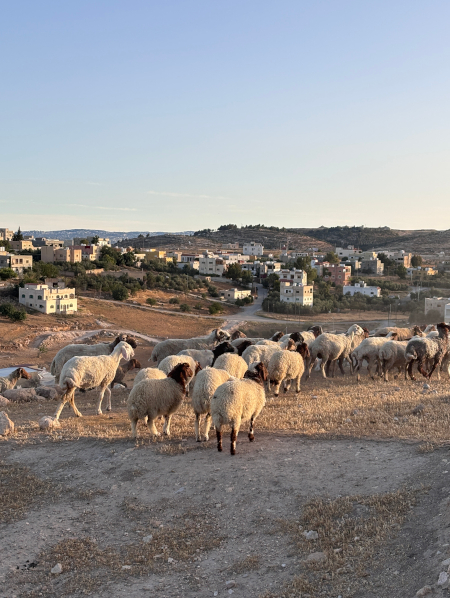
Sheep would greet us each morning at the site.
Upon returning to the hotel each afternoon, the group would reconvene for pottery washing and counting after a nap. It was inspiring watching Prof. Walker identify the period or region of any given sherd in seconds! Pottery washing was a great educational experience because I was able to acquaint myself with many types and periods of wares including Byzantine, Umayyad, Abbasid, Ayyubid, Mamluk, and Fatimid.
Having completed a minor in Arabic at UGA, I was thrilled to have this opportunity to develop my skills in spoken Arabic, particularly in the Jordanian dialect. I learned many helpful field vocabulary words from Jordanian workmen onsite including the words for trowel, pottery, shovel, dustpan, glass, pickaxe, and more! The team had one free weekend, and while most used this time to visit Petra, I decided to visit Amman instead with Prof. Walker and another teammate. We spent some time at the Jordan Museum, where I was able to stand just inches away from both the Dead Sea Scrolls and the Ain Ghazal statues. We then visited the Amman Citadel as well. The Jordan Archaeological Museum is located on the citadel, and features excavated artefacts from Tall Hisban and many other sites in Jordan.
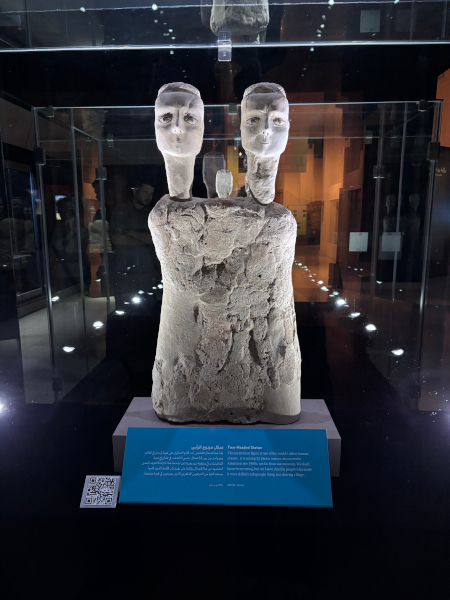
The Ain Ghazal statues at the Jordan Museum.
My time at Tall Hisban was nothing short of life-changing. Through this experience, I made over a dozen friends at the University of Bonn, which will make my transition far easier as I relocate to Germany this fall. I am thrilled that I have found my path—Islamic archaeology—and have been given the opportunity to study with one of the world’s leading Islamic archaeologists. I look forward to returning to Tall Hisban in future excavation seasons and continuing the work that we did this summer.
Me in the field!
Aayush Umesh is a recent graduate of the University of Georgia with a Bachelor of Arts in Theatre and Communication Studies. He hopes to become a professor in Islamic archaeology at a major research university, focusing in the Levant and/or South Asia. He will soon begin a Master of Arts degree in Islamic Archaeology at the University of Bonn, supervised by Prof. Bethany Walker.
Want to help more students and early career archaeologists get into the field? Donate to the cause today by selecting “Fieldwork Scholarships” as your gift purpose!




 Trustee Nominations Committee has selected six highly qualified members to stand for election for four open positions on the Board of Trustees. The Board sets the direction for ASOR and provides oversight for our organization. Among other responsibilities, members of the Board agree to attend two meetings each year, to participate thoughtfully in the governance process, and to contribute financially to ASOR.


 The Carolyn Midkiff Strange Committee on Growth, Innovation, and Visibility (GIV) serves as a resource for and leader in engaging and broadening the professional community of ASOR, in order to expand access to the history and cultures served by ASOR. For more information about the committee, click