New ASOR-Affiliated Projects 2025

New ASOR-Affiliated Projects: May 2025

Currently, 152 projects are affiliated with ASOR. This includes 122 field projects and 30 publication projects. Twelve new projects have received ASOR affiliation since last summer. Read more about these new ASOR-affiliated projects below!

ASOR-affiliated projects adhere to ASOR policies, most notably the Non-Discrimination Policy, Policy on Professional Conduct, and Code of Conduct for the ASOR Annual Meeting and Other ASOR Sponsored Events. These policies affirm ASOR’s commitment to high standards for research integrity, academic mentoring and ethical professional behavior. Project Principal Investigators may apply for ASOR affiliation for their projects through the Committee for Archaeological Research and Policy (CAP).  Principal Investigators of ASOR-affiliated projects are eligible to apply for ASOR Project Grants and Shepard Urgent Action Grants. Students working on ASOR-affiliated projects are eligible to apply for Scholarships for Fieldwork Participation.

Fieldwork at S'Urachi in 2017

Fieldwork at S’Urachi in 2017

The S’Urachi Project investigates how the Indigenous Nuragic inhabitants of Iron Age Sardinia coped with Phoenician and subsequent Carthaginian influence, trade and colonization across the first millennium BCE. Long-term excavation at nuraghe S’Urachi on the central west coast of Sardinia offers detailed insights into how Indigenous communities and local households coped with these changes and adapted innovations to their own preferences.

The S’Urachi Project operates with a renewable three-year permit of the Italian Ministry of Culture and in close coordination with its regional office (Soprintendenza archeologica) in Cagliari (Sardinia, Italy). The project works closely with the town of San Vero Milis, who hold the project’s permit and appoint the project’s co-directors, Dr. Alfonso Stiglitz (director of the local Museo Civico) and Prof. Peter van Dommelen as the academic directors (direttori scientifici). The project is committed to prompt publication and public dissemination in multiple languages. The project website is bi-lingual and hosts (under ‘reports’) both yearly annual reports in Italian and a full list of its publications since 2012; the latter are mostly in Italian and Spanish and open access.

Crafting Landscape: Resources Exploitation and Production Strategies in Iraqi Kurdistan during Urbanisation and State Formation (CraftLand), Iraq (Claire Padovani)

Landscape of the Qara Dagh foothills (Iraqi Kurdistan) © CraftLand

Landscape of the Qara Dagh foothills (Iraqi Kurdistan) © CraftLand

The CraftLand project investigates resource exploitation and production networks in the Kurdistan Region of Iraq, focusing on a clay-rich area between Sulaymaniyah, Chamchamal and Sangaw. Recent excavations in this area revealed large-scale pottery workshops dating to the 4th and 3rd millennia BCE. Moreover, the region has witnessed recurrent developments of intensive ceramic productions up to the present day, suggesting the presence of natural and social conditions favorable to the establishment and sustainability of a pottery-based economy.

The project adopts a bottom-up approach to the study of early economies in a “rural” region, offering a fresh perspective on local impacts of Mesopotamian urbanisation and State formation. It will reconstruct production networks and resource exploitation strategies, in order to assess patterns of landscape use that supported the operation of extensive pottery production. Craftland integrates multiple disciplinary perspectives, combining environmental, archaeological, and ethnographic studies. The research methodology includes geomorphological and geological surveys, satellite imagery, targeted field interventions (micro-surveys and test excavations), archaeometric analyses, and interviews with local potters. In addition, CraftLand contributes to cultural heritage preservation by documenting endangered artisanal traditions and fostering local engagement in the study and conservation of ancient craftsmanship.

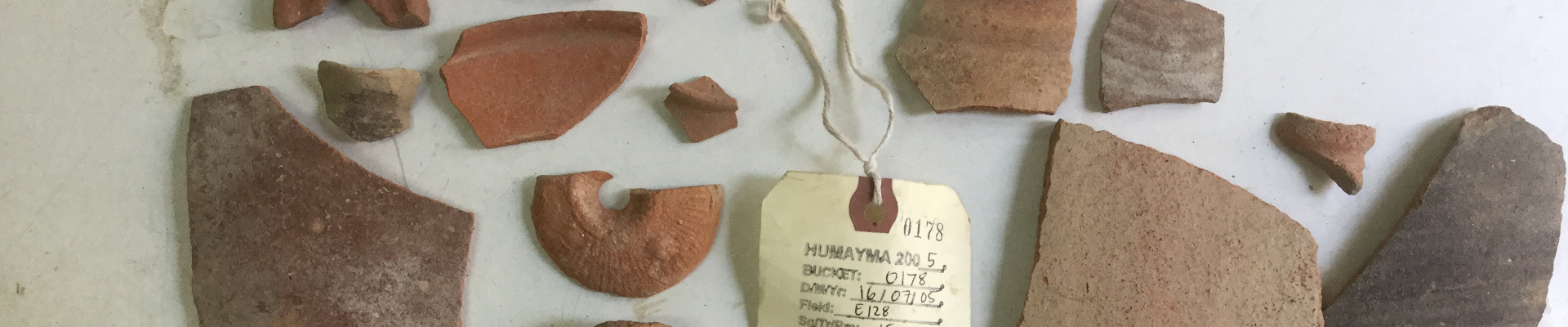
Humayma Excavation Project, Jordan (Craig A. Harvey, Sarah E. Wenner)

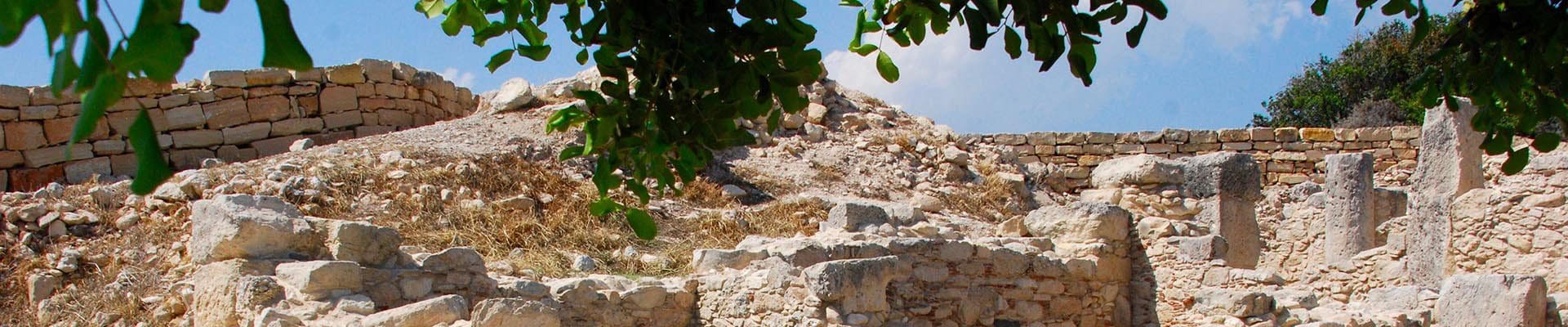
Aerial view of Humayma. Photo by Jane Taylor.

Aerial view of Humayma. Photo by Jane Taylor

The archaeological site of Humayma is located in southern Jordan, approximately equidistant between Petra and Aqaba. Founded by the Nabataean peoples in the 1st century BCE to control communication and trade in the heartland of the Nabataean Kingdom, Humayma became home to the earliest Roman fort in the region following the kingdom’s annexation in 106 CE. The site thrived economically throughout the Roman and early Byzantine periods, as demonstrated by the presence of no less than five churches from this time. In the early Islamic period, Humayma rose to global significance as home to the Abbasid dynasty before its overthrow of the Umayyad Caliphate in the 8th century. The sustained prosperity of this site throughout its occupation demonstrates the proficiency of local inhabitants to effectively exploit their surrounding landscape and leverage the strategic location of Humayma as a nexus of regional and long-distance trade and communication.

This project represents a renewal of archaeological investigation at Humayma, which will build on the success of previous work at the site. Preliminary goals of the first three seasons will be the creation of a high-resolution map of the site and investigation of its economic development from the Nabataean to Islamic periods, particularly regarding local resource extraction and use at the site.

Bioarchaeology of Syedra: Reconstructing lived experiences through human skeletal remains at Syedra Antik Kenti (Syedra Archaeological Site), Alanya Province, Turkey (Kathryn Marklein, Ertug Ergurer)

An overview of Syedra

An overview of Syedra

What happens to people and communities when empires “fall”? The “Bioarchaeology of Syedra” project seeks to understand how the political transition from the Roman to Byzantine Empires impacted the sociobiological, cultural, and epidemiological landscape of ancient Syedra, Turkiye. A vital coastal economy in the Roman period (2nd-4th c. CE), this city transformed during the Byzantine period (11th-12th c. CE). Current excavations of the site have revealed multiple Byzantine burial grounds as well as extramural Roman tombs. Implementing methods and datasets from ancient DNA, paleopathology, and mortuary archaeology, the broader bioarchaeological research project aims to identify: 1) (dis)continuity in population structure between periods, as assessed through genetic diversity and kinship; 2) analyze transitions in cultural beliefs, as assessed spatially and materially in Roman and Byzantine period cemeteries; and 3) contextualize biological stress and resilience, as assessed through demographic and paleopathological data. Bioarchaeological fieldwork will include the excavation of Roman and Byzantine graves, processing of human skeletal remains post-excavation, and preliminary osteobiographical analyses of skeletons. The “Bioarchaeology of Syedra” is part of the larger Syedra Antik Kenti Archaeological Site, under the auspices of the Turkish Ministry of Culture and Tourism. This excavation seeks to 1) uncover the Roman period city to better understand its place in the Roman and later Byzantine Empires; 2) increase local and international interest in archaeology and history; and 3) preserve the site for local and global cultural heritage.

Athenian Agora Excavations, Greece (John Papadopoulos)


Overview of the current excavation area in the northern section of the Agora


Students excavating in the field

The Agora of Athens, located immediately north of the Athenian Acropolis, was the central marketplace of the ancient city. In addition to its commercial activities, the Agora was also a major religious, political, administrative, and legal center for Athens, and the site of the world’s first democracy. Excavations at the site have been conducted by the American School of Classical Studies at Athens (ASCSA) since 1931. Since then, workmen and volunteers have uncovered a history that spans from the Late Neolithic period (ca. 4000 BCE) to the modern period.

Most recently, the Agora excavations are focused in the northern area of the site, directly above part of a Middle Byzantine neighborhood, as well as the central portion of the Classical Stoa Poikile, or Painted Stoa. In addition to continuing the traditional program of field excavations, we have implemented new collection strategies related to material artifacts and faunal and archaeobotanical remains, as well as programs of geophysical survey, LiDAR modeling, and photogrammetry. Work in the field is conducted by a team of volunteers that are selected annually after an open call for applications, as well as supervisors and specialists who typically return for multiple seasons. Volunteers are typically undergraduate or graduate students of archaeology and while many have experience already, for some this is their first experience in the field.

Nineveh East Project, Iraq (Timothy Harrison, Khaled Abu Jayyab)

An overview of eastern Nineveh


An overview of eastern Nineveh

The Nineveh East Project, a collaboration between the Iraqi State Board of Antiquities and Heritage (SBAH) and the Institute for the Study of Ancient Cultures (ISAC), University of Chicago, focuses on assessing damage, restoration, and scientific excavations at Nineveh following extensive destruction during ISIS’s occupation of Mosul (2014-2017). Efforts are centered on eastern Nineveh, which includes the city’s expansion under King Sennacherib (705-681 BCE). The project began work at the Shamash Gate in 2020 under the Joint Iraqi-Italian Expedition to Nineveh. One of the largest gates along Nineveh’s eastern wall, the Shamash Gate sustained severe damage due to tunneling by ISIS, which destabilized its structure. While the core structure of the gate remained largely intact, ISIS tunneling within the gate has led to its destabilization.

Between 2021-2024, operations that encompassed stabilization, excavation, and restoration took placed led by Dr. Timothy Harrison and field director Dr. Khaled Abu Jayyab. The primary objectives included stabilizing the gate by reinforcing and filling the tunnels, the systematic removal of debris from the 612 BCE destruction of Nineveh, and the delineation of tower chambers within the gate. Starting in 2025, work will expand across eastern Nineveh to investigate post-Sennacherib urban development while continuing restoration efforts. This new phase includes collaboration with the local municipality to develop public spaces, reinforcing Nineveh’s significance as a landmark in East Mosul. Additionally, these efforts aim to support tourism infrastructure by integrating archaeological heritage into the city’s cultural and economic future.

The Promontory Palace Project at Caesarea Maritima, Israel (Barbara Burrell, Kathryn Gleason)

The Promontory Palace. Photo by Barbara Burrell

The Promontory Palace. Photo by Barbara Burrell

The Promontory Palace, first identified by Ehud Netzer as that of Herod the Great, is built out into the Mediterranean Sea, just west of the theater in the SE area of Caesarea Maritima. Initially, the lower palace was constructed for Herod to plan and supervise the great harbor, and the palace was extended later in his reign to provide reception space for guests at spectacles and official functions. On his death, the palace served as the official praetorium of his heirs and subsequent Roman officials for centuries. Lower Promontory Excavations in the 1970s by Netzer and Lee I. Levine in the lower area of the palace revealed a series of luxurious reception rooms and heated chambers centering on a large (35 x 18 m.) rock-cut swimming pool enclosed by a colonnade. Cuttings in the bedrock between the columns suggested to Netzer that planters had been built between the columns, offering a pluteus around the pool, as well as the effect of a garden for swimmers in the pool. The Upper Palace Excavations were undertaken by K. Gleason and B. Burrell for the University of Pennsylvania Museum (1990-1996), in collaboration with Netzer and Hebrew University.

The project is now in the final stages of publication by Burrell and Gleason for the University of Cincinnati and Cornell University, respectively, together with Lisa Kahn, co-editing the Finds Volume. Although the building was thoroughly looted over the centuries, the project is providing an exceptional insight into the transition of an official residence from Hellenistic basilaea to Roman praetorium in terms of architecture and material culture. The project has also made contributions to the environmental archaeology of maritime villas, to the study of ceramic building materials, to the corpus of defixiones (curse tablets). The publication will comprise two volumes and an open access database of the excavation’s stratigraphy and finds.

American Expedition to Idalion, Cyprus (Pamela Gaber)

Fieldwork in the Lower City of ancient Idalion

Fieldwork in the Lower City of ancient Idalion

Idalion was the first in the ancient Assyrian lists of Copper trading cities in Cyprus. Help us apply the latest digital methods to piece together the history of this fascinating and important ancient metropolis. The 2025 season of the American Expedition to Idalion will be a short season focused on removing baulks in two of the previously excavated fields not dug since Covid. There will be much orientation, and strict stratigraphic attention to aligning visible soil changes with legacy data, while employing digital recording techniques in the field using OCHRE, the University of Chicago’s platform for digital research. Associate Director Andrew Wright will oversee this aspect of the work. Associate Director Valerie Woelfel will conduct the GIS aspects of the project. All volunteers and students will be introduced to all techniques. Director Pamela Gaber will be overall excavation coordinator and presenter of Idalion’s place in history.
The Casa della Regina Carolina (CRC) Project, Pompeii, Italy (Caitie Barrett, Kathryn Gleason, Annalisa Marzano)

This excavation and survey of a large house and garden at Pompeii investigates relationships between domestic material culture, social performance, and historical change. Pompeii is central to any account of Roman daily life, but much of its archaeological record results from early excavations conducted before modern field practices. This project combines innovative archaeological and environmental field methods with a rigorous approach to legacy data, applying new detection and recording techniques while also salvaging and synthesizing information from early excavations to investigate the relationship between the “macro-scale” of ancient historical change and the “micro-scale” of daily domestic experience. Scholars have historically treated changes in household material culture as a reaction to developments that “really” took place in other spheres, such as the political or military events that dominate traditional historical narratives. However, recent research questions such assumptions, suggesting that domestic material culture wielded an agency of its own. The Casa della Regina Carolina site spans multiple periods of occupation, with at least two pre-Roman (2nd/1st century BCE) houses underlying the Roman-period standing architecture. By investigating change over time in the material conditions of life at this site, we explore relationships between domestic material culture, social performance, and historical change.

Tall al-Handaquq South Archaeological Project, Jordan (Hanna Erftenbeck, Natalia M. Handziuk)

Tall al-Handaquq South Archaeological Project (HAP) is investigating the earliest cities in Jordan, dating to the Early Bronze Age (EBA, 3800–2000 BCE). As one of the larger EBA sites in the Levant, Tall al-Handaquq South (THS) offers significant insights into the earliest urban phenomenon in the Near East and Eastern Mediterranean. Our research project engages with key transformations brought on by the first cities, including how people fed, organized, and housed a rapidly growing community.

Understanding the visibility of archaeological sites in satellite imagery through the analysis of soils and their reflectance, Jordan Valley (Sayantani Neogi)

The potential of satellite imagery as a technique of archaeological site prospection, particularly in the Middle East, has been widely recognised since the beginning of the 21st century (e.g., Donoghue, 2001; Donoghue et al., 2002; Philip, Donoghue, et al., 2002; Pournelle, 2003). However, while traditional extensive desk-based survey methods have proved effective in locating the morphologically distinctive nucleated tell sites characteristic of settlement in the Bronze and Iron Ages, they have been less successful in recognising the smaller, dispersed settlements common during prehistoric and Graeco-Roman and Medieval occupation – especially in landscapes where mudbrick was the main building material and/or where topographic features have been reduced by ploughing. Many such sites can only be distinguished from background soils by differences in soil reflectance (colour, texture). While multispectral satellite imagery can reveal areas of differential reflectance, not all such features are sites, and the relationship between surface reflectance and the composition of archaeological deposits indifferent environments is poorly understood.

This project seeks to address this gap by investigating and comparing the field-observed and image-derived reflectance properties of the soils/sediments from a sample of archaeological sites, of different types, located in several geomorphological units within Jordan, thus increasing the ability of researchers to identify anthropogenic despots when reliant upon satellite imagery.

Türkmen-Karahöyük Archaeological Project (TKAP), Turkey (Michele Massa, James Osborne)

The Türkmen-Karahöyük Archaeological Project excavates a Bronze Age, Iron Age, and Hellenistic urban center in the Konya Plain, Türkiye.

AASOR 78: Ethics in Archaeological Practice

Annual of ASOR 78: Ethics in Archaeological Practice

Ethics in Archaeological Practice

ed. by Sarah Kielt Costello and Sarah Lepinski

with articles from  Sarah Kielt Costello, Sarah Lepinski, Beth Alpert Nakhai, Laura E. Heath-Stout, Grace Erny, Dimitri Nakassis, Debby Sneed, Mason Shrader, Nadhira Hill, Maggie Beeler, Tuğba Tanyeri-Erdemir, Christopher Thornton, Annelies Van de Ven, Louise A. Hitchcock, and Benjamin W. Porter.

Ethics in Archaeological Practice explores urgent topics and issues in archaeology as currently practiced in the classroom, the field, the museum, and the public sphere. While addressed primarily to archaeologists working in western Asia, the eastern Mediterranean, and North Africa, the volume raises contemporary ethical questions around race, gender, disability, climate change, and cultural heritage that are pressing and relevant to archaeology students and professionals worldwide. The fifteen contributors offer fundamental case studies and practical guidance for best practices and models of high standards of ethical practice in professional conduct. Together, they offer new approaches to advocacy and the responsible stewardship of heritage sites, collections, and the environment. These compelling and generative discussions make the case for a 21st century archaeology that is proactive and engaged with discourses addressing equity, social justice, anti-colonialism, and climate change.
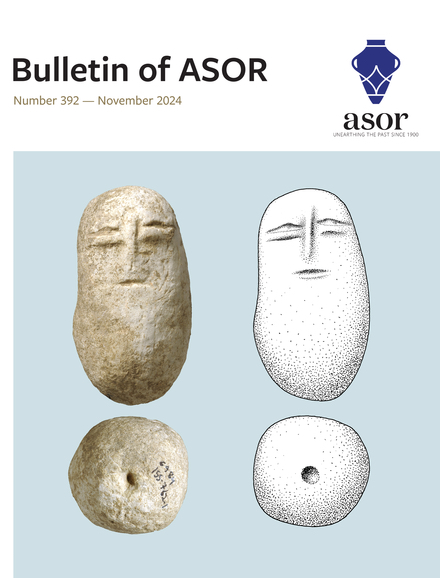
Annual of ASOR, Volume 78, Series Editor William Caraher, December 2024, 208 pages (7 b/w figs & 2 tbls.). ISBN 9780897571227, $74.95.

Special Offer for ASOR Members

ASOR members (with a mailing address in the USA) can purchase a copy of AASOR 78 at the discounted price of $30.00 (60% discount + $5.00 US shipping) while supplies last. Purchases are restricted to one volume per member. We are unable to offer this discount to members without a US mailing address due to international shipping costs, but you can purchase and ship a copy through the ISD link below. Please contact programs@asor.org with any questions. Click here to purchase your discounted copy in ASOR’s online store.

Available from ISD — Distributor of Scholarly Books
www.isdistribution.com

ECS Research in Action: Rennan Lemos

ECS_Rennan_Lemos-1920x400

Early Career Scholars Research in Action: Rennan Lemos

Archaeology Under Fire: The History of Sudan Between Water and War

Join ASOR’s Early Career Scholars on April 4, 2025 at 12:00pm ET via Zoom for a virtual Research in Action talk from Dr. Rennan Lemos about cultural heritage in Sudan.

Abstract: The history of archaeology in northern Sudan is, to a large extent, a history of salvage excavations. Successive dam projects in Lower Nubia have posed a tremendous threat to the region’s archaeology, resulting in significant losses but also producing one of the most comprehensive records of archaeological heritage in a single area. Drawing on archival materials and recent fieldwork, this talk will explore how Sudan’s archaeological heritage has been endangered—first by the flooding of Lower Nubia and now by war—and how a history of major threats has shaped the region’s heritage.

Presenter: Rennan Lemos teaches Egyptian and Sudanese archaeology at the University of Cambridge. He co-directs the Djehutyhotep Project and is assistant director of the Sanam Temple Project in Sudan. In 2024, he was a recipient of the Annual Prize “à la mémoire de Jean Leclant”, awarded by the Michela Schiff Giorgini Foundation.

The event, a part of our “Research in Action” series, is FREE for the ASOR community, but registration is required.

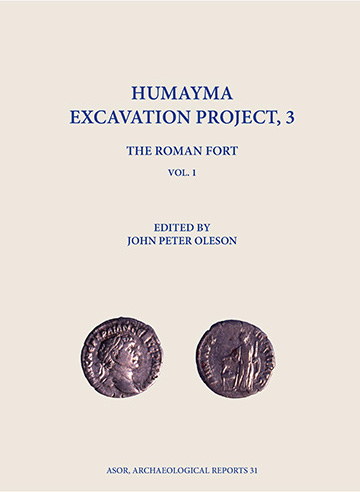
ARS 31: Humayma Excavation Project 3

Archaeological Reports Series 31: Humayma Excavation Project, 3

Humayma Excavation Project, 3: The Roman Fort

ed. by John Peter Oleson

Authors:  John Peter Oleson, Erik De Bruijn, M. Barbara Reeves, Andrew N. Sherwood, Craig A. Harvey, Yvonne Gerber, and Milorad Nikolic with contributions from Gregory S. Baker, Emily Deeb, Lindsay Holman, Janet Jones, Derek Klapecki, Kelsey Koon, Jennifer Ramsay, Tiffany Rawlings, and David S. Reese.

This two-volume set of the third publication in the Humayma Excavation Project presents the most thorough excavation report and analysis of a Roman frontier fort yet published. Humayma, ancient Hawar or Hawara, began life as a small Nabataean settlement in the Hisma desert of Southern Jordan, 80 km south of Petra. Soon after the Roman conquest of the Nabataean kingdom in 106 CE, the town was incorporated into the new Provincia Arabia as Hauarra, and a fort was built on the slope above the original settlement. Hauarra flourished through the Byzantine period and in the late seventh century was purchased by the Abbasid family, which built an elaborately frescoed manor house and mosque. Henceforth known as al-Humayma, the town withered away after the Abbasids moved to Iraq in 749 and led the revolt against the Umayyad caliphate.

Oleson began excavation in the fort with a small probe in 1987, followed by 10 seasons of extensive excavation and geophysical survey between 1993 and 2005, and a follow-up campaign by Reeves in 2012. The excavations provided important new information about the process of the Trajanic conquest of the Nabataean kingdom, the development of Roman military fortification design, the organization of the southern portion of the Provincia Arabia and adjacent frontier of the empire, and relations between Nabataean town dwellers and their Roman occupiers from the second through the fifth centuries. 

ASOR Archaeological Reports, Volume 31, Series Editor Jennie Ebeling, December 2024, 2 volumes, 1080 pages (468 b/w figs, 16 tbls & 24 col pls.), ISBN 9780897571241, $169.95.

Special Offer for ASOR Members

ASOR members (with a mailing address in the USA) can purchase the 2-volume set of ARS 31 at the discounted price of $60.00 (70% discount + $10.00 US media mail shipping)while supplies last. Purchases are restricted to one volume per member. We are unable to offer this discount to members without a US mailing address due to international shipping costs, but you can purchase and ship a copy through the ISD link below. Please contact programs@asor.org with any questions. Click here to purchase your discounted copy in ASOR’s online store.

Available from ISD — Distributor of Scholarly Books
www.isdistribution.com

Meet the New NEA Editor

MEET THE NEW EDITOR OF NEA

ASOR is excited to announce the appointment of the new editor of Near Eastern Archaeology (NEA)—Christina Tsouparopoulou. Christina started her term in January 2025. The new editor succeeded the previous editor, Stephanie Budin, who held the position of NEA editor from 2018-2024. ASOR appreciates the tremendous amount of work that Stephanie has put in over the past six years and acknowledges her unwavering dedication to the journal.

The editor was nominated by the NEA Editorial Search Committee after an extensive public search process. The nomination was unanimously endorsed by ASOR’s Publications Committee, and the editor was unanimously approved by the ASOR Board of Trustees. NEA editors are appointed for a three-year term, with the possibility of being re-appointed for a second term. Her initial term will run from 2025–2027.

Christina Tsouparopoulou (Institute of Archaeology, UKSW) is an Assistant Professor at Cardinal Stefan Wyszyński University in Warsaw and an Honorary Fellow at Durham University working on Near Eastern popular religious practices, identities, cylinder seals, human-animal/environment relations, and digital humanities. She received her PhD from the University of Cambridge with a thesis on Ancient Near Eastern cylinder seals and sealing practice, and has held teaching and research positions at (among others) Heidelberg, Durham, and Cambridge.

Christina is thrilled to join Near Eastern Archaeology as its new editor. She is passionate about advancing research on the ancient Near East and Eastern Mediterranean. As the new editor of Near Eastern Archaeology, she looks forward to working closely with early-career researchers and drawing on her experience in public engagement, including documentary projects like Discovery’s Ancient Armageddon and Lands of the Bible, to make the journal more accessible and engaging, opening up the fascinating world of the ancient Near East to both specialists and a wider audience, while upholding its scholarly excellence.

Archaeological discoveries continually enrich our understanding of the people, culture, history, and literature of the Middle East. The heritage of its peoples – from urban civilization to the Bible – both inspires and fascinates. Near Eastern Archaeology brings to life the ancient world from Mesopotamia to the wider Mediterranean with vibrant images and authoritative analyses. NEA (ISSN 1094-2076) is published four times each year (quarterly): March, June, September, and December.

All manuscripts submitted to Near Eastern Archaeology are subject to a peer review by independent scholars. All articles are sent to two external specialists in the field who are asked to evaluate the manuscripts for their academic quality. The time assigned for the review is normally 30 days; the peer-review process and (if required) the resubmission of revised manuscripts is handled through NEA’s Editorial Management system. NEA’s Editorial Board assists the editor in the peer-review process, e.g., through the recommendation of external reviewers, acceptance decisions, and the revision of manuscripts. All articles must be submitted via NEA‘s electronic manuscript submission portal. Questions, comments, or suggestions for the new editor? You can now contact them at nea-editor@asor.org.

Shepard Urgent Action Grant Report: Umm Al-Qurun on the Darb Zubaydah

2024 Shepard Urgent Action Grant: The Rest-stop and Minara of Umm Al-Qurun on the Darb Zubaydah

Rajwan Al-Maiyali (University of Al-Qadisiyah), Richard Wilding (Eye on Heritage)

The Darb Zubaydah

For centuries before the advent of modern air travel, pilgrims travelled long distances by land and sea. In addition to their religious function, pilgrimage routes also served as important arteries for commercial and cultural exchange. The hajj (the annual Islamic pilgrimage) routes followed pre-Islamic trade pathways but gradually evolved to accommodate the specific needs of Islamic pilgrimage. Various routes emerged and flourished during different historical eras, adapting to the rise and fall of successive Islamic empires

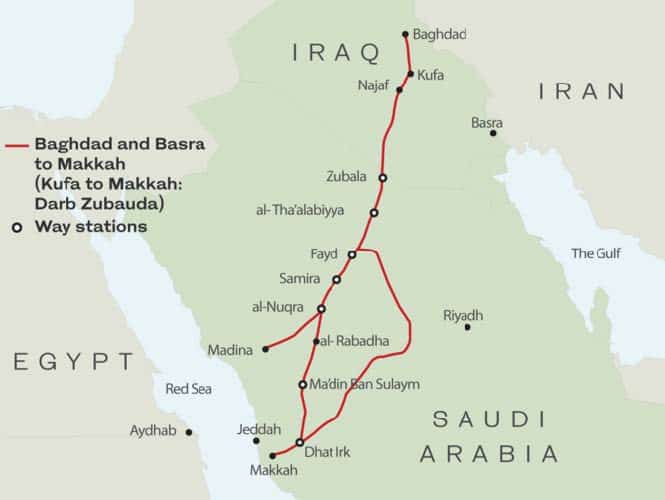
The route connecting the Iraqi cities of Kufa and Baghdad to Makkah was known as the Darb Zubaydah. It grew in importance during the first hundred years of the Abbasid Caliphate from 750 to 850 CE, a period renowned as a golden age of Muslim civilisation. The flourishing Abbasid economy greatly increased the numbers of pilgrims able to undertake the journey to Makkah, exerting greater pressure on the limited water and food resources available in a 1,300 km stretch of desert with no permanent lakes or rivers.

The Darb Zubaydah was named in honour of Zubaydah bint Jafar, wife of the Abbasid Caliph Harun Al-Rashid, recognising enhancements made to infrastructure along the route under her patronage. Zubaydah had witnessed the hardships endured by pilgrims when undertaking the hajj in 792 CE and dedicated her considerable power and resources to improving pilgrims’ safety and comfort.

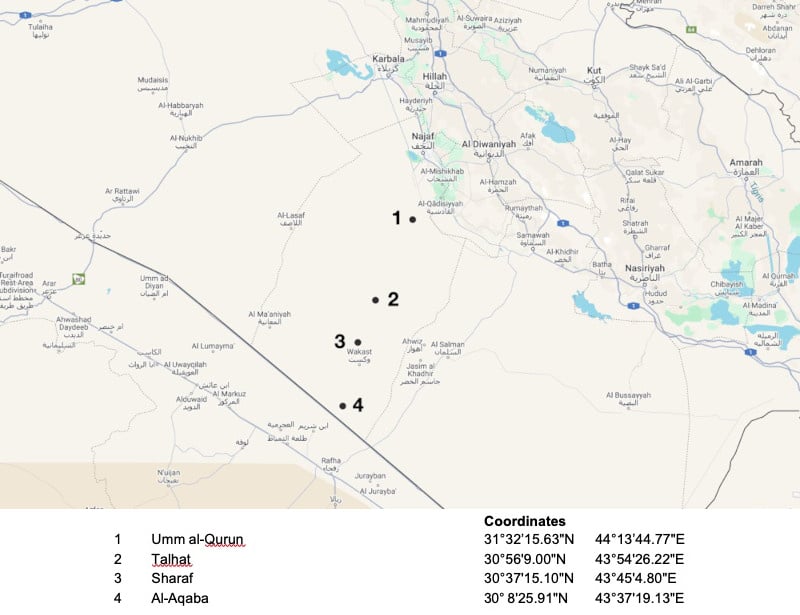
The route of Darb Zubaydah and its waystations.

The Abbasids originally constructed a series of 27 stations between Kufa and Makkah at intervals suited to the travelling speed of donkeys, horses and camels. They were built at regular distances calculated in barid, a unit of measurement also meaning “postal service”, reflecting the postal and intelligence network that developed alongside the pilgrimage trail to help the Abbasid Caliphs maintain communication and control across their wide empire.

An additional 27 intermediate stations were later added to cater for the increasing number of pedestrian pilgrims, while improvements were also made to the original 27 main stations. The new and enhanced infrastructure included a system of wells, cisterns and dams to provide water for travellers and their animals. Caravanserais, palaces and forts were constructed to improve the pilgrims’ safety and comfort, and some stretches of the route were paved. A series of milestones and markers were installed, with the addition of lighthouses to guide pilgrims who often travelled at night to avoid the daytime heat.

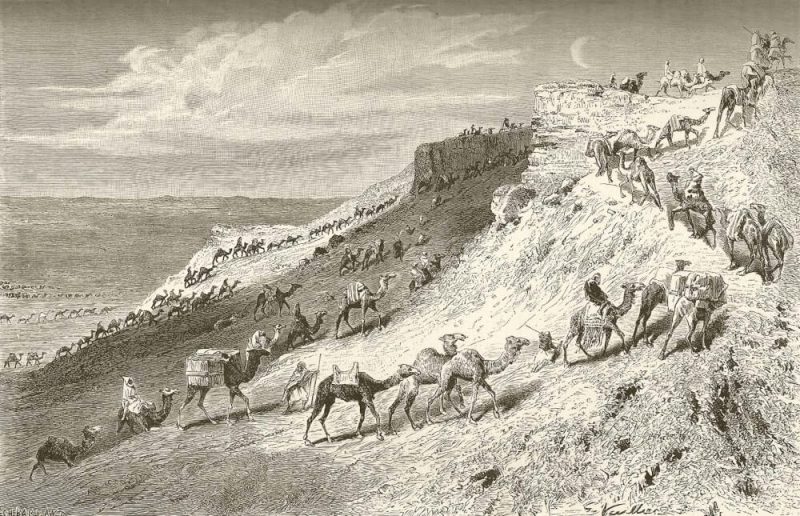
Camel caravan travelling at night, depicted in an engraving by Gaston Vuillier to illustrate the story “A Pilgrimage to Nejd, the Cradle of the Arab Race”, by Lady Anna Blunt, 1878-1879.

In the 10th century, a break in relations between Iraq and Makkah affected the ability of Iraqi and Persian Muslims to undertake the pilgrimage, leading to the progressive decline of the Darb Zubaydah. It was partially revitalised in the 11th century, but never recovered the status of its heyday in the 8th century.

The final organized pilgrimage was carried out in 1243 CE during the reign of Al-Musta’sim, the 37th and last Abbasid caliph ruling from Baghdad. In the following centuries, the trail was almost completely abandoned by pilgrims who forged new routes to Makkah. The last two centuries have seen even more dramatic changes to hajj travel, with the emergence of European maritime companies, the opening of the Suez Canal, the Ottoman Hijaz railway, and finally the arrival of air transport from the mid-20th century.

UNESCO Nomination

The Darb Zubaydah is a transnational nomination for UNESCO World Heritage Site status, jointly submitted by the Republic of Iraq and the Kingdom of Saudi Arabia. It comprises a series of key stations dating from the Abbasid period on the route between Kufa and Makkah. This nomination is part of a long-term programme that also aims to inscribe other hajj pilgrimage routes including the Egyptian and Syrian hajj roads.

The section of the Darb Zubaydah located in present-day Iraq covers approximately 1/5th of the total length of the route, while the other 4/5th is located in present-day Saudi Arabia. The nomination includes 13 sites, four in Iraq and nine in Saudi Arabia. The four sites in Iraq, from north to south, are the stations at Umm al-Qurun, Talhat, Sharaf and Al-Aqaba.

Umm Al-Qurun

The pilgrim station of Umm Al-Qurun lies 56 km south of Kufa in the Wadi Al-Seba’. It is the first surviving rest-stop on the Darb Zubaydah heading south from Kufa towards Makkah, and the northernmost site of the UNESCO transnational nomination.

The site comprises a pilgrim station complex equipped with water and residential facilities, and a unique surviving example of a manara, or lighthouse, built to guide pilgrims travelling by night.

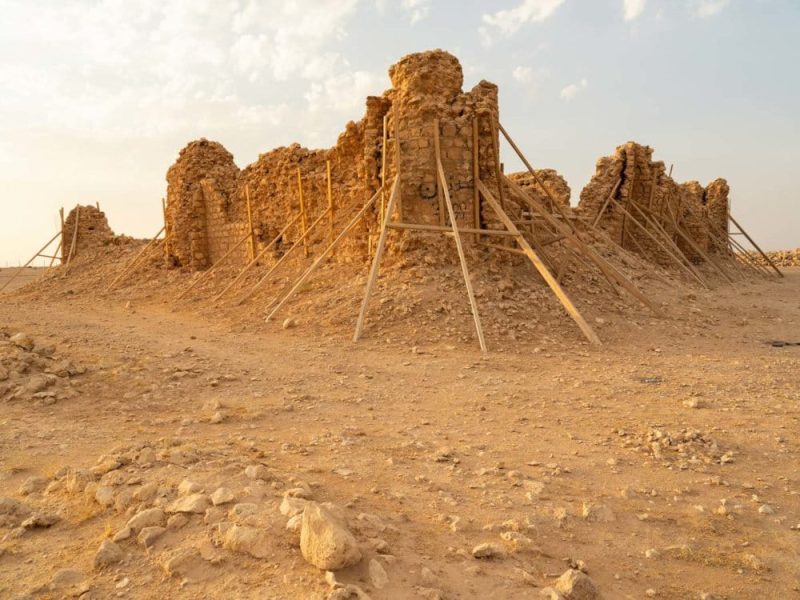
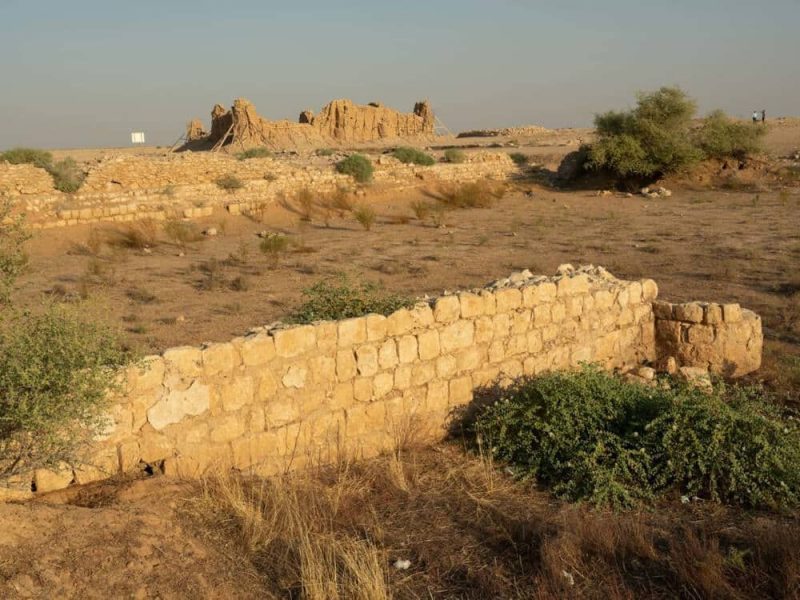
South and East sides of rest house (qsar), September 2024.

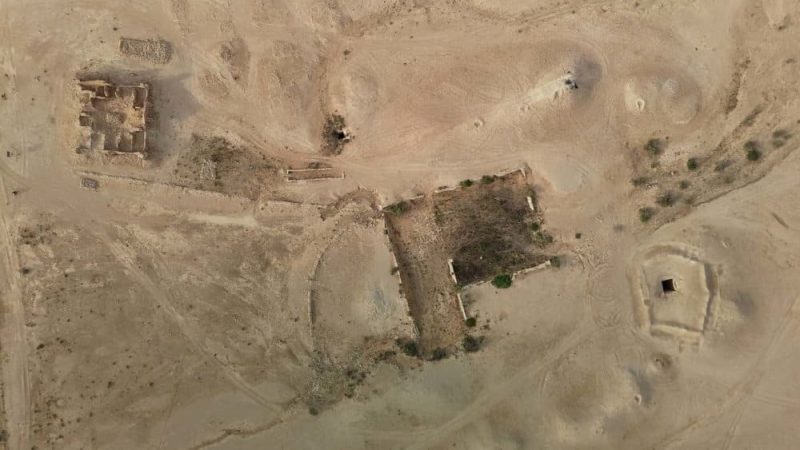
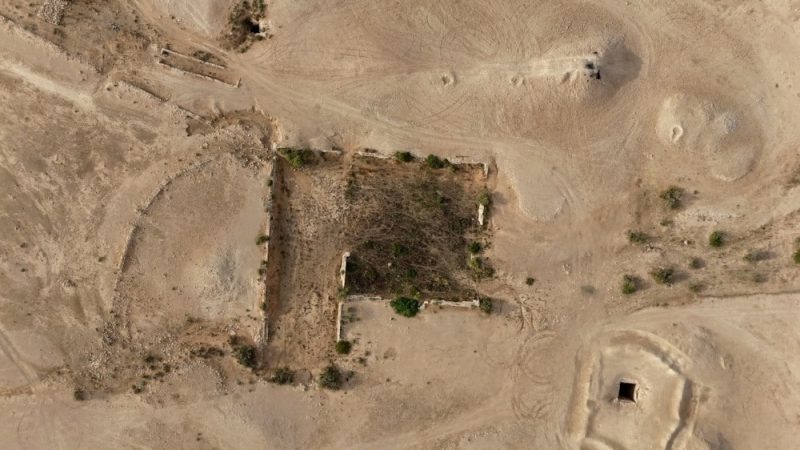
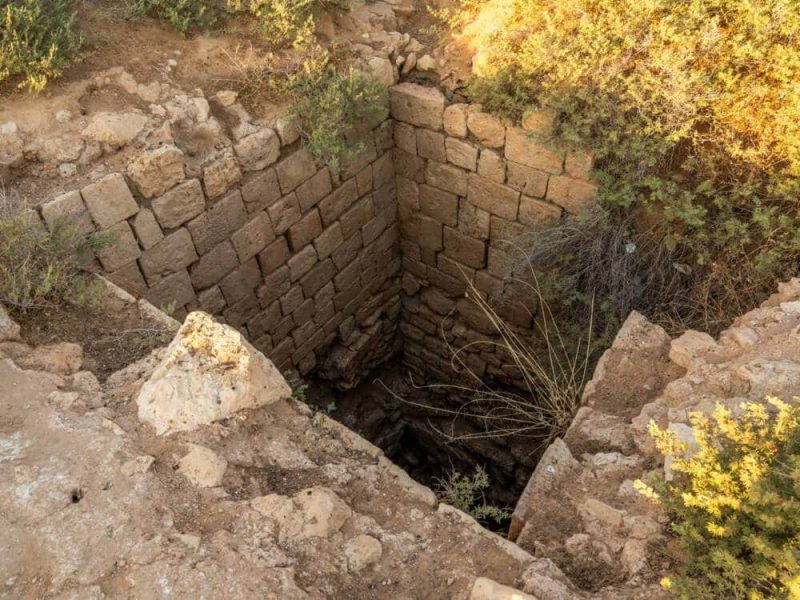
The station complex includes a square-shaped rest house (qsar), two basins (birkat) and two square wells. Although largely filled with sand, the basins are covered with a sparse wild vegetation that indicates more humid soil in contrast to the surrounding desert.

Aerial view of station complex showing rest house (top left), basins (centre) and wells (right and upper centre), September 2024.

The lighthouse of Umm Al-Qurun stands alone in the desert 1.35 km from the station. Its separate location was possibly due to the need for siting on higher ground, whereas the station complex needed to be located at a lower elevation for water collection and wells.

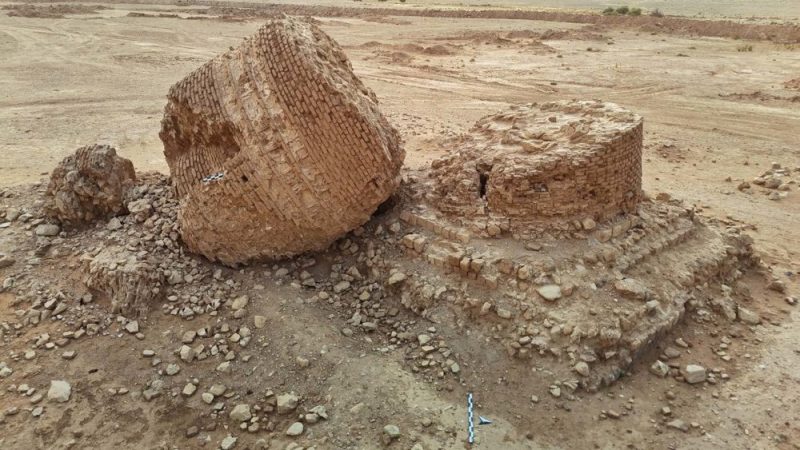
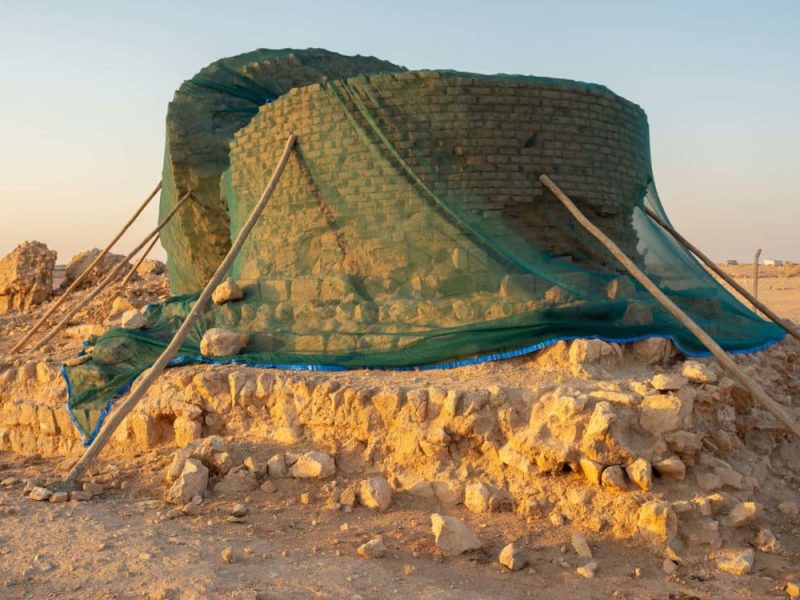
The lighthouse tower has collapsed at an undefined date. The remains of the fallen tower reveal an interior made of fired bricks that likely contained a staircase to access the roof. The cylindrical tower, decorated externally with geometrical patterns, was built over a two-meter- high stone square substructure, and probably reached a total height of 12 metres.

View of manara showing the collapsed cylindrical section and the foundation section, September 2024.

Contemporary developments

Being the closest surviving station on the Darb Zubaydah to the city of Najaf, the surviving architecture at Umm Al-Qurun, especially the lighthouse (manara) and rest house (qsar), has been vulnerable to intentional and unintentional damage. Both structures are now in an extremely vulnerable state and in need of greater protection and stabilisation.

One particularly concerning development is the construction of a modern tarmacked road from Najaf along the route of the Darb Zubaydah. In addition to potentially disrupting important archaeology relating to the hajj route, the road passes extremely close to the site of Umm Al- Qurun, even passing between the station complex and manara.

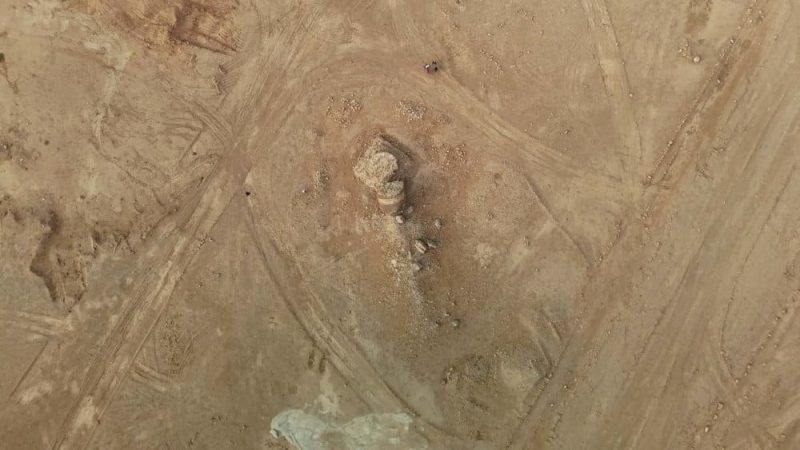
Groundworks associated with the road building have resulted in the digging of numerous ditches close to the manara, and tracks left by bulldozers demonstrate how easily damage could be inflected, even unintentionally, to this unique historical structure. The road will also improve access to the site by private and commercial traffic from Najaf, increasing the risk to these unprotected sites.

Aerial view of collapsed manara at Umm Al-Qurun showing tracks and ditches, September 2024.

Project Outcomes

Funding from ASOR has allowed the project team led by Rajwan Al-Maiyali from the University of Al-Qadisiyah and heritage consultant and photographer Richard Wilding to complete the following measures:

    1. Emergency protection measures around the manara including the erection of a protective fence and covering of the manara
    2. Documentation through photography and drone filming of all structures at Umm Al- Qurun in their current state of preservation.
    3. Community engagement with local stakeholders to increase awareness of the site’s importance and need for greater protection
 

Emergency protection measures

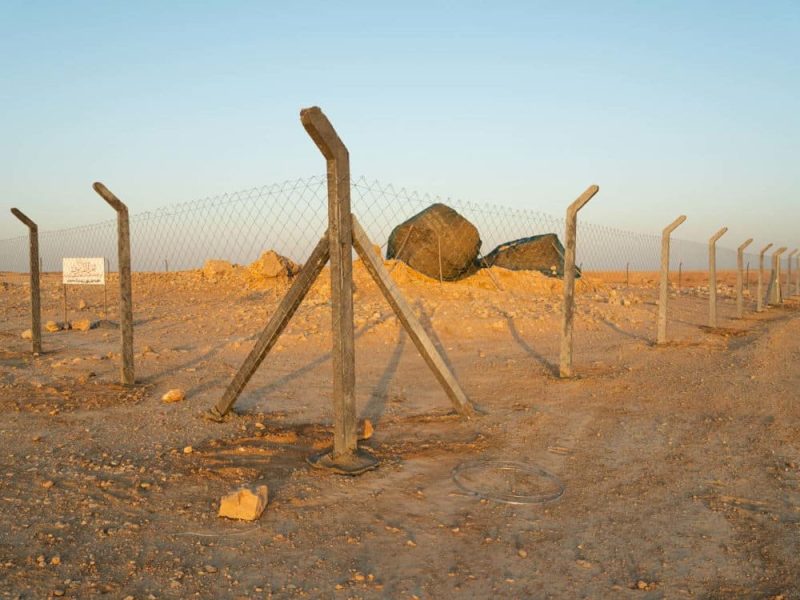
The most urgent undertaking has been to erect a fence around the manara, which was undertaken in early September. This emphasizes the historical importance of the structure and prevents any unintentional damage to the site through bulldozing or other groundworks.

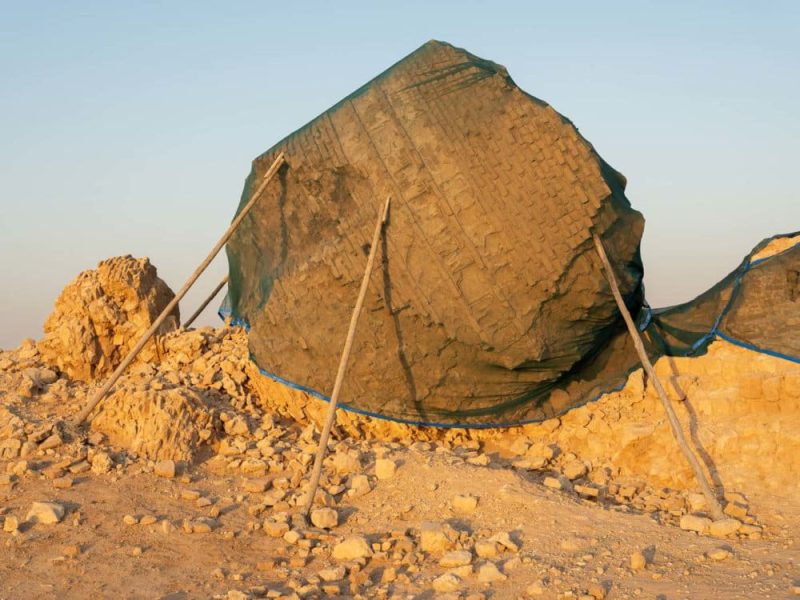
Additionally, the two main sections of the collapsed manara have been covered with protective netting to prevent erosion.

Fencing installed around manara site, September 2024.
Protective netting installed over cylindrical section of manara, September 2024.
Protective netting installed over foundation section of manara, September 2024.

Photographic Documentation

In addition to photographing the manara before and after the emergency protection measures, the team has also undertaken photography and drone filming of the other structures at Umm Al-Qurun, including the rest house (qsar), basins (birkat) and wells.

Aerial view of cisterns showing vegetation, September 2024.
Cistern walls with qsar in distance, September 2024.
Small well, September 2024.

Community Engagement

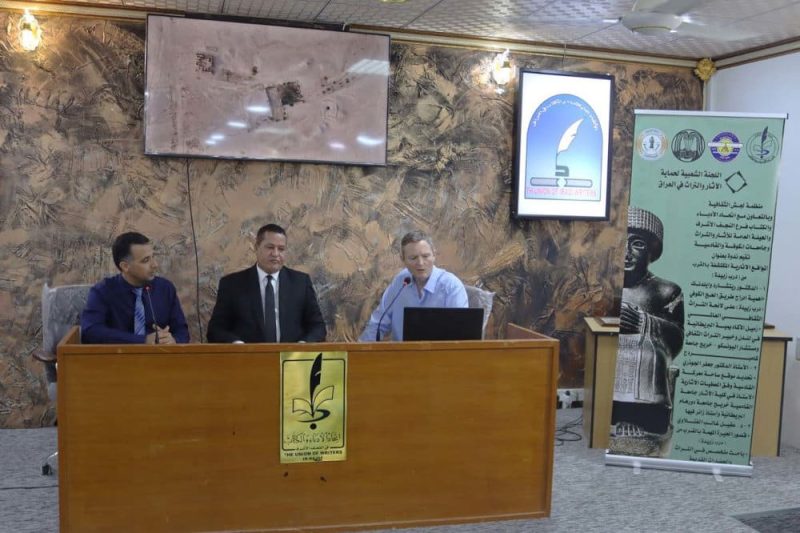
On 14 September 2024, as part of the project’s public outreach and engagement efforts, Rajwan Al-Maiyali and Richard Wilding gave presentations about Umm Al-Qurun and the Darb Zubaydah in a seminar hosted by the Association of Literature and Writers in Najaf. Following the presentations, the team answered questions posed by the audience. The event was subsequently broadcast by two national television stations in Iraq.

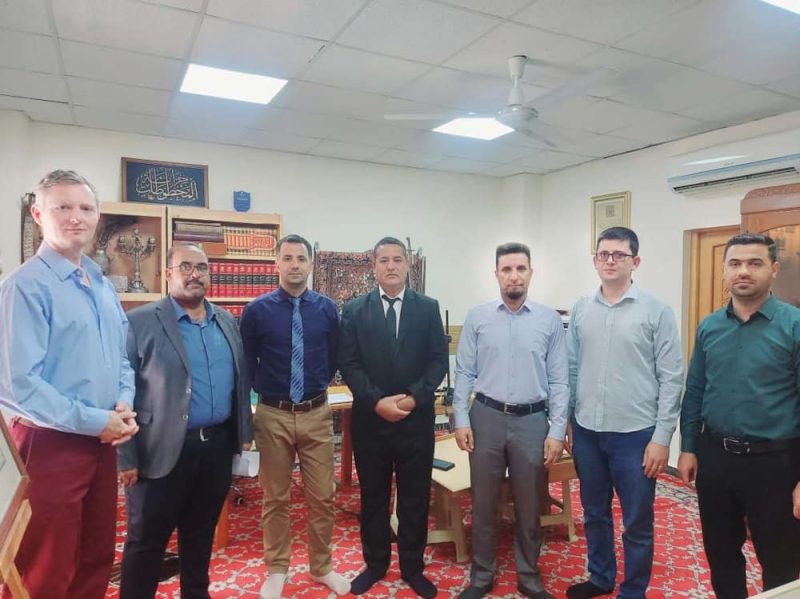
Further outreach work is being undertaken through visits to elders at the Great Mosque of Kufa and a forthcoming workshop being organised with the Karbala Holy Shrines Endowment.

Seminar hosted by the Association of Literature and Writers in Najaf, 14 September 2024.
Team visit to the Great Mosque of Kufa, 14 September 2024.

2024 ASOR Honors & Awards

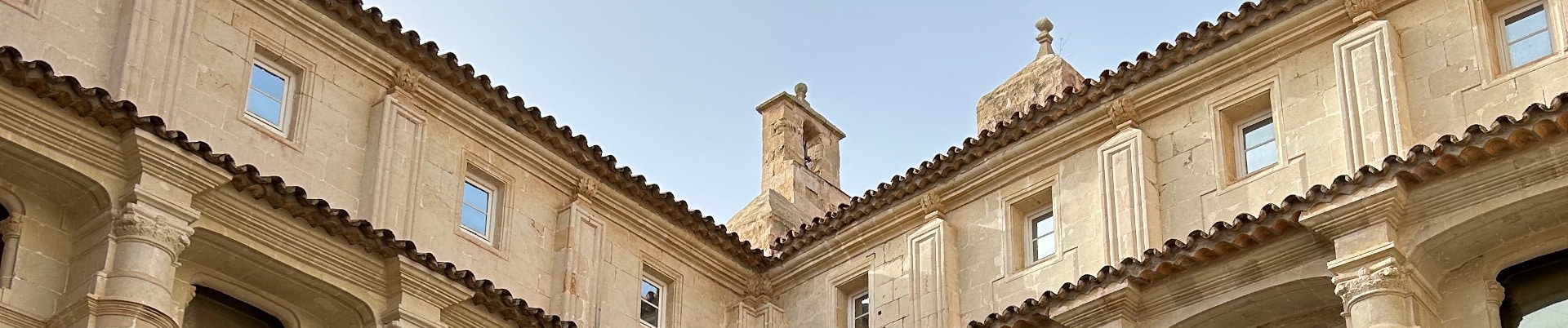
Interior courtyard of the Museum of Menorca, Spain.

2024 ASOR HONORS & AWARDS

Each year at the Annual Meeting, ASOR recognizes individuals who have performed outstanding service for the organization, those who have published exceptional academic work, and those who made significant contributions to our field. The following award recipients were honored at the 2024 Annual Meeting in Boston and during the Members’ Meeting on November 22nd. Awards were presented by Lynn Welton, co-chair of ASOR’s Honors and Awards Committee.

The Richard J. Scheuer Medal. This award honors an individual who has provided truly outstanding, long-term support and service contributions to ASOR (this medal is awarded when such an individual is identified).

Awarded posthumously to Carolyn Midkiff Strange and James F. Strange, for their exceptional contributions and service to ASOR over many decades (presented to James R. Strange).

The Charles U. Harris Service Award. This award is given in recognition of long-term and/or special service as an ASOR officer or Trustee (one award is given annually).

Awarded to Ann-Marie Knoblauch, Associate Professor of Art History and Director of the School of Visual Arts, Virginia Tech, for her work as ASOR Secretary, as well as her previous years of Board service.

The P. E. MacAllister Field Archaeology Award. This award honors an archaeologist who, during his/her/their career, has made outstanding contributions to ancient Near Eastern and eastern Mediterranean archaeology (one award is given annually).

Awarded to Sturt W. Manning, Distinguished Professor of Arts and Sciences in Classics, Cornell University, for his impactful contributions to the archaeology of Cyprus and the wider Near East and Eastern Mediterranean.

Community Engagement and Public Outreach Award. This award recognizes individuals, teams, and organizations who have initiated outstanding educational, informational, or practical projects (including but not limited to classes, programs, exhibits, resources, events, and platforms) with the goal of making subjects and information about the ancient world accessible to wider (particularly non-academic) audiences.

Awarded to the ELRAP (Edom Lowlands Regional Archaeology Project) Jordan Sketchfab Team, including Matthew D. Howland, Brady Liss, Ian W.N. Jones, Anthony Tamberino, Mohammad Najjar, and Thomas E. Levy, for their development of pioneering digital resources and platforms intended to present the archaeology of the Faynan region of Jordan to the general public.

ASOR Membership Service Award. This award recognizes individuals who have made special contributions on behalf of the ASOR membership, through committee, editorial, or office services.

Awarded to: Kevin McGeough, Professor of Archaeology, University of Lethbridge, for his work as Chair of the Publications Committee.


Awarded to Jane DeRose Evans, Professor of Roman Art and Archaeology and Chair of Art History, Temple University, for her work as Chair of the Cultural Heritage Committee.


Awarded to Tiffany Earley-Spadoni, Associate Professor of History, University of Central Florida, for her work as co-chair of the Early Career Scholars Committee.

The W. F. Albright Service Award. This award honors an individual who has shown special support or made outstanding service contributions to one of the overseas centers (AIAR, CAARI), or to one of the overseas committees – the Baghdad Committee and the Damascus Committee. This award is given when such an individual is identified.

Awarded to Nadia Bandak, Finance Manager at AIAR, Hisham M’Farreh, Chef and Kitchen Manager at AIAR, and Photoulla Christodoulou, Housekeeper at CAARI. Nadia and Hisham are celebrating 30 years of service at AIAR, and Photoulla is retiring next year after nearly 40 years of service at CAARI.

The G. Ernest Wright Award. This award is given to the editor/author of the most substantial volume(s) dealing with archaeological material, excavation reports and material culture from the ancient Near East and eastern Mediterranean. This work must be the result of original research published within the past two years (one award is given annually).

Awarded to Glenn M. Schwartz, Whiting Professor of Archaeology, Johns Hopkins University, for Animals, Ancestors, and Ritual in Early Bronze Age Syria: An Elite Mortuary Complex from Umm el-Marra, from Cotsen Institute of Archaeology Press.

The Frank Moore Cross Award. This award is presented to the author/editor of the most substantial volume(s) related to the history and/or religion of the ancient Near East and Eastern Mediterranean. Primary consideration will be given to historical, epigraphic, textual, and comparative literary studies; or to works that advance and/or evaluate new methodological approaches to the literary record(s). This work must be the result of original research published during the past two years (one award is given annually).

Awarded to Karen Radner (Alexander von Humboldt Chair of Ancient History of the Near and Middle East, Ludwig-Maximilians-Universität München), Nadine Moeller (Professor of Egyptian Archaeology, Yale University), and D.T. Potts (Professor of Ancient Near Eastern Archaeology and History, ISAW, New York University), for editing the five-volume The Oxford History of the Ancient Near East, from Oxford University Press.

The Nancy Lapp Popular Book Award. This award is presented to the author/editor of a book published in the last two years that offers a new synthesis of archaeological or textual evidence intended to reach an audience of scholars as well as students and the broader public (one award is given annually).

Awarded to Eckart Frahm, John M. Musser Professor of Assyriology, Yale University, for Assyria: The Rise and Fall of the World’s First Empire, from Basic Books.

The Joy Ungerleider Poster Award. This award is conferred upon the author(s) of the poster presenting the results of a study about ancient Near Eastern societies in a clear, legible fashion using original graphic content. Subject matter may be based in archaeological sciences, history, anthropology, epigraphy, ethnography, heritage or other scholarly approaches to understanding ancient people in the areas covered by ASOR (one award is given annually).

Awarded to Helen C. Wong, University of Pennsylvania, and Erin M. Brantmayer, University of Texas, Austin, for the poster: “The Boundaries of Death: Outlining Mortuary Landscapes at Jebel Khalid.”

Student Paper Award. This award is conferred upon the author(s) of a paper presented during the Annual Meeting that conveys the results of a study about ancient Near Eastern and wider Mediterranean societies in a clear, understandable, and convincing fashion. The first author and presenter of the paper must be a registered student at the time of presentation in order to be eligible for consideration for this award.
Awarded to Nicole Constantine, Stanford University, for her paper “Materializing Ptolemaic Power: Ruler Cult and Festival in the Hellenistic Mediterranean”.

Table of Contents for BASOR 392 (November 2024)

Table of Contents for Bulletin of ASOR 392 (November 2024)

You can receive BASOR (and other ASOR publications) through an ASOR Membership.
Please e-mail the Membership office if you have any questions.

BASOR-392-article-1-banner

Pp. 1-20: “Terra-cotta Roof Tiles in the Ancient Synagogues of Judaea/Palaestina,” by Mechael Osband

Terra-cotta roof tiles are some of the most common and volume-intensive finds in the excavation of ancient synagogues, but their significance has received only minor consideration. This article reviews the evidence for terra-cotta roof tiles, which were the preferred roofing used in ancient synagogues in the Late Roman and Byzantine periods. A change took place from non-tiled roofs in Early Roman synagogues to the common use of terra-cotta roof tiles in the later synagogues. It will be suggested that this shift in roofing style was not merely a functional one, but part of the broader developments in synagogue-building, from a place of gathering in the Early Roman period, with an unassuming flat roof, to a more ornate and monumental structure (both internally and externally) with a prominent high tiled roof in plain view.

ASOR Members with online access: log into ASOR’s Online Portal here. Once logged in, click the JOURNALS tab in the top navigation bar. Tutorials for how to log in to the Online Portal as well as how to navigate to the Portal Journals page can be found here.

BASOR-392-article-2-banner

Pp. 21-54: “Reconstructing Late Prehistoric Occupation in the Southern Levant: Irbid as a Case Study for Settlements and Funerary Patterns,” by Antoine Caminada, Tara Steimer-Herbet, Lamia Al-Khoury, and Marie Besse

The region of Irbid (Jordan) in the southern Levant has been known for its megalithic structures since the end of the 19th century. But despite hundreds of dolmens inventoried, it has never been the subject of an in-depth study. This article contributes to a better understanding of human occupation in the area during the 4th and 3rd millennium B.C.E., based on unpublished data collected in September 2005 by a co-directed Jordanian and French mission (University of Yarmouk and the French Institute of the Middle East–Institut français du Proche-Orient Damascus). Data acquisition analysis was realized thanks to a Geographic Information System (GIS) allowing the authors to map and study the spatial relationships between the various elements, with an emphasis on the relationship between the funerary and domestic spheres. By placing the dolmen necropoleis and settlement sites (both double-apsed and rectangular houses) of the north Jordanian Plateau within the general context of the southern Levant, the authors question the “classic” model linking nomadism and megalithism, and bring forward a more sedentary perspective.

ASOR Members with online access: log into ASOR’s Online Portal here. Once logged in, click the JOURNALS tab in the top navigation bar. Tutorials for how to log in to the Online Portal as well as how to navigate to the Portal Journals page can be found here.

BASOR-392-article-3-banner

Pp. 55-82: “The Tepe Gawra Lower Town Survey 2022,” by Khaled Abu Jayyab, Ira Schwartz, Abbas Al-Hussainy, Stephen Batiuk, Arno Glasser, and Hossam Hadi

Tepe Gawra has long been seen as an essential site for late prehistoric and early historic periods, not only in Iraq but for the entirety of northern Mesopotamia. This importance stems from its long sequence, and its implications for understanding the development of societal complexity. Despite its small size, Tepe Gawra has produced evidence of highly specialized practices that overshadowed farming. This has led to the suggestion that the site was a “center” at the top of an administered network. Some scholars have challenged this assertion and suggested that the site had a lower town, which acted as the source of agriculture goods for the site. Since the area had been closed off to archaeological work this debate has not been resolved. Through recent survey work around Tepe Gawra, the authors show that there was an extensive lower town dating to the Late Chalcolithic and Early Bronze Age stages of occupation. These findings show that Tepe Gawra was a large self-sustaining settlement exploiting its own agricultural hinterland.

ASOR Members with online access: log into ASOR’s Online Portal here. Once logged in, click the JOURNALS tab in the top navigation bar. Tutorials for how to log in to the Online Portal as well as how to navigate to the Portal Journals page can be found here.

BASOR-392-article-4-banner

Pp. 83-110: “Biography of a Neo-Assyrian Relief Fragment from Nineveh,” by Irene Bald Romano, Kelly Ann Moss, and Gina Watkinson

This article presents the biography of a Neo-Assyrian gypsum relief fragment from Ashurbanipal’s 7th century b.c.e. North Palace at Nineveh, now in the Arizona State Museum, University of Arizona. Its discovery by British explorers in late 1853 or early 1854, its journey to the United States, probably in the mid-19th century through missionaries in Ottoman Mesopotamia, its connection with the circus impresario P. T. Barnum and Tufts College, and its acquisition in 1959 by the Arizona State Museum are discussed, along with the changing uses and meaning of the object in its various contexts. The fragment depicts fat-tailed sheep being led in procession by a royal eunuch. It is related to a larger relief fragment in the British Museum that was positioned to the right of this fragment, allowing some conclusions about its probable location within the North Palace and interpretations concerning its iconography.

ASOR Members with online access: log into ASOR’s Online Portal here. Once logged in, click the JOURNALS tab in the top navigation bar. Tutorials for how to log in to the Online Portal as well as how to navigate to the Portal Journals page can be found here.

BASOR-392-article-5-banner

Pp. 111-137: “The Parthian Manor House of Sarab-e Murt in the Context of the Iranian Architectural Tradition,” by Yousef Moradi

This article presents the results of archaeological field excavations at the site of Sarab-e Murt, located on the outskirts of the town of Gilan-e Gharb in the Kermanshah province of Iran. The investigations, conducted in 2007 and 2008, brought to light an extraordinary royal residence dating back to the Late Parthian period. The aim of this article is to contextualize the architectural design and layout of the Sarab-e Murt building within the broader landscape of palatial architecture in the Iranian world, with historical roots extending as far back as the Achaemenid period. By examining the development of the plans of palatial houses, we gain valuable insights into the dynamics of change across both time and space. Furthermore, this article seeks to advance hypotheses concerning the origins of Parthian ayvan-style houses plans within the larger context of the Iranian cultural sphere.

ASOR Members with online access: log into ASOR’s Online Portal here. Once logged in, click the JOURNALS tab in the top navigation bar. Tutorials for how to log in to the Online Portal as well as how to navigate to the Portal Journals page can be found here.

BASOR-392-article-6-banner

Pp. 139-149: “The Lost Look: A Human Neolithic Figurine from Horbat Sasay (Israel),” by Ianir Milevski and Alla Nagorsky

A human figurine carved on a large limestone cobble was found in the excavations of Horbat Sasay, conducted on behalf of the Israel Antiquities Authority. It schematically portrays eyes and a mouth and, like other types of human head representations found in the region, it is suggested that it belongs to the southern Levantine Neolithic period. Together with the description of the figurine, comparisons are presented to other known figurines depicting the human face from the Levant and other nearby regions, as well as an interpretation of these human faces and their expressions in relation to the drastic changes that occurred in these regions during the so-called Neolithic revolution and the social organization of the late prehistoric communities of the Levant.

ASOR Members with online access: log into ASOR’s Online Portal here. Once logged in, click the JOURNALS tab in the top navigation bar. Tutorials for how to log in to the Online Portal as well as how to navigate to the Portal Journals page can be found here.

BASOR-392-article-7-banner

Pp. 151-177: “Defending the Vedi River Valley of Armenia: The Fortification and Refortification of a Flatland-Mountain Interface,” by Peter J. Cobb, Elvan Cobb, Hayk Azizbekyan, Artur Petrosyan, and Boris Gasparyan

The mountainous topography of the Armenian Highlands and the South Caucasus accentuates the importance of valleys as areas of habitation and as conduits among these interspersed settlement areas. The Vedi River Valley of Armenia, located along the southeastern edge of the Ararat Plateau (Plain), serves as one such important transportation route in and through these highland areas. At the center of the mouth of this valley sits the prominent Vedi Fortress, ideally situated for defense of this route and landscape. The site was first fortified during the Late Bronze Age, perhaps during the centralization of power by a local polity contained within the valley. Burned down and abandoned at the end of the Iron Age I, the fortress would then see varied reuse through several later periods given its prominent location and proximity to other local power centers. Of particular importance is its refortification during the Early Medieval (Late Antique) period, when Armenia was under Sasanian Persian suzerainty. This article presents the results of archaeological fieldwork in this valley and at the fortress, followed by a discussion of the landscape’s fortification and refortification during these two periods. The Vedi River Valley provides a case study for examining control, mobility, and the negotiation of local and remote power within the specific contained landscape of a river valley in mountainous terrain.

ASOR Members with online access: log into ASOR’s Online Portal here. Once logged in, click the JOURNALS tab in the top navigation bar. Tutorials for how to log in to the Online Portal as well as how to navigate to the Portal Journals page can be found here.

BASOR-392-article-8-banner.

Pp. 179-205: “Revisiting Late Iron Age En-Gedi: A Stratigraphic Reassessment of Stratum V at Tel Goren,” by Avraham Mashiach and Uri Davidovich

The oasis of En-Gedi, on the western shore of the Dead Sea, served during the late Iron Age as a regional hub for the Judahite activity in the Judean Desert. The main Iron Age site in En-Gedi is Tel Goren, a small mound in the oasis plain, excavated in the 1960s by Benjamin Mazar and Immanuel Dunayevsky. The exposed Iron Age remains, attributed to the lowermost occupation (Stratum V), yielded substantial material assemblages associated with a thick destruction layer dated to the early 6th century b.c.e. The excavators interpreted the site as an unfortified, short-lived agricultural estate dedicated to the production of high-valued commodities. Drawing on a critical reassessment of past excavations, coupled with new evidence gathered in small-scale excavations conducted in 2020, it is suggested that the development of late Iron Age Tel Goren was a gradual process that involved at least two major phases, as well as the construction of a fortified compound on the summit of the hill. The implications of this suggestion are further examined within the broader regional and historical context, shedding new light on the multiphase trajectory of Judah’s expansion into its eastern fringe during the late monarchic period.

ASOR Members with online access: log into ASOR’s Online Portal here. Once logged in, click the JOURNALS tab in the top navigation bar. Tutorials for how to log in to the Online Portal as well as how to navigate to the Portal Journals page can be found here.

BASOR-392-article-9-banner

Pp. 207-237: “Dine and Worship: The Roman Complex in Front of the Pan Grotto in Paneas/Caesarea Philippi,” by Adi Erlich and Ron Lavi

Paneas, situated at the foot of mount Hermon, is where the Hermon River emerges from a spring at the foot of a cliff with a natural cave. In the Hellenistic and Roman periods, the cave and nearby terrace served mainly for the cult of Pan. Herod the Great built in Paneas a temple to Augustus, and his son erected there his capital, Caesarea Philippi. A salvage excavation was recently conducted in front of the cave in the area that formerly was identified as Herod’s Augusteum. The new excavations have proven that during the Roman period, the place was unroofed and open to the cave, which was full of water. The water flowed out through a large aqueduct, water installations were constructed in the courtyard, and niches flanked on the west and east. The complex is dated to the last third of the 1st century c.e. and is attributed to Agrippa II, who built there a nymphaeum-triclinium facing a grotto in Italian style. Afterward, the courtyard was used as a cult place to Pan, and hydromantic rituals were performed in the cave. The sources for this complex will be discussed, as well as the changes that took place there through time.

ASOR Members with online access: log into ASOR’s Online Portal here. Once logged in, click the JOURNALS tab in the top navigation bar. Tutorials for how to log in to the Online Portal as well as how to navigate to the Portal Journals page can be found here.

Virginia Archaeology Month: Arc-tober Fest

Virginia Archaeology Month: Arc-tober Fest

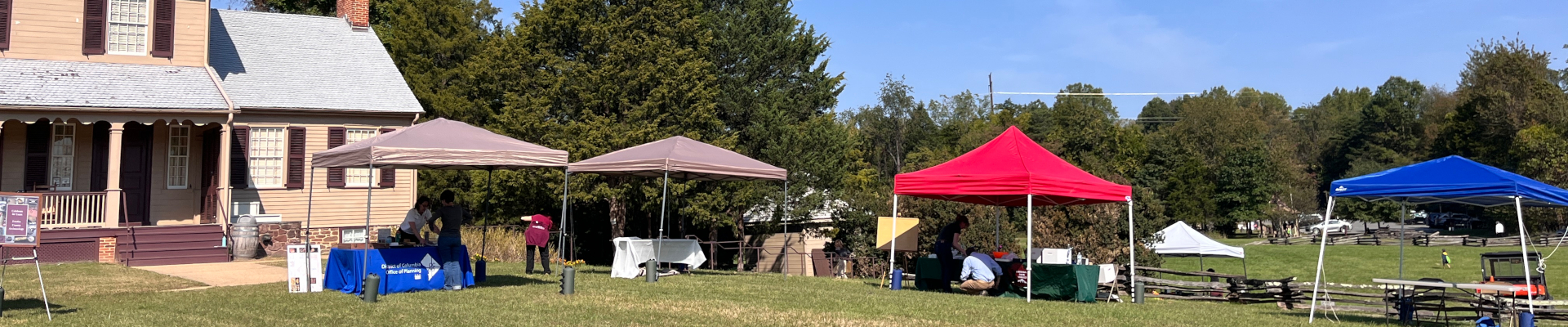
On Saturday, October 12, ASOR was pleased to participate in the inaugural Arc-tober Fest organized by Fairfax County Park Authority’s County Archaeological Research Team in celebration of Virginia Archaeology Month. With more than a dozen organizations, the event gathered archaeological organizations & departments around the DMV area at Sully Historic Site in Chantilly, VA for a day of public outreach and learning of the profession and the archaeological resources found in Fairfax County. Visitors were able to learn about a wide variety of archaeological organizations, career opportunities in the field, the history of Sully Historic Site, and engage in interactive, hands-on activities led by real archaeologists. Tours of the Sully House were offered as well as a presentation about the archaeology of the reconstructed Quarter Cabin, believed to be the quarters of enslaved people of the Lee family.

ASOR staff with the ASOR table.
Sully House, a nationally registered historic place in Chantilly, VA.

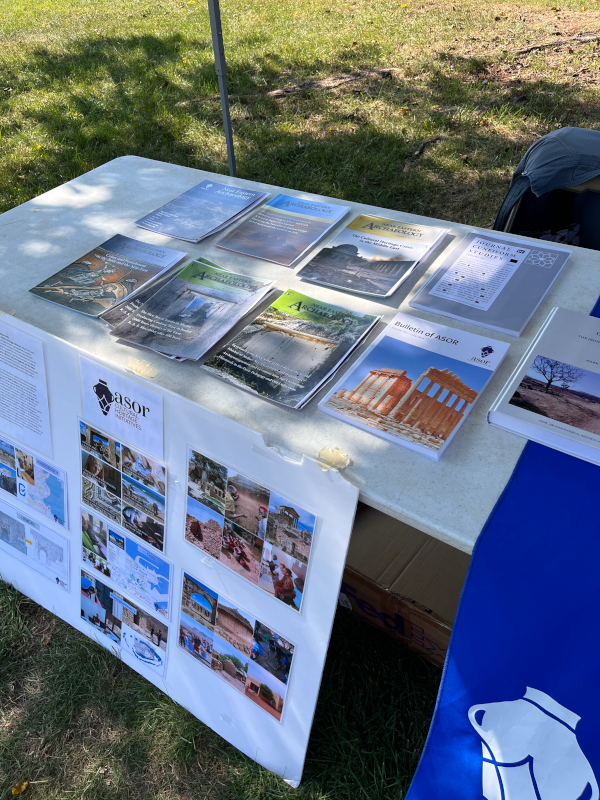
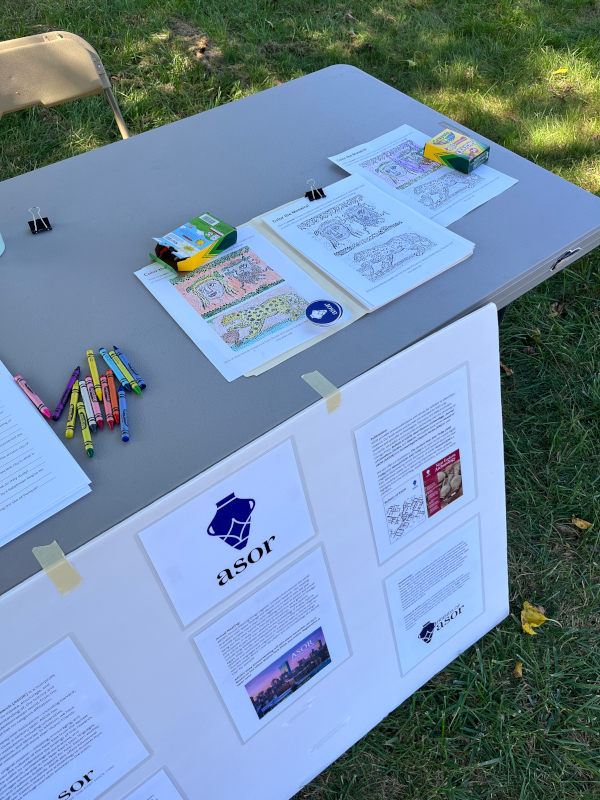
ASOR’s table included informative posters about our organization and Cultural Heritage Initiatives, plus a few activities for children and adults. For children, we provided coloring sheets of mosaics from the El Jem Archaeological Museum in Tunisia as well as ASOR stickers. Additionally, we had trivia sheets geared towards adults with questions that covered the basics of archaeology (“What archaeological dating method uses tree rings to determine the age of wooden artifacts?”) as well as specialized questions about the Near East (“In the 9th century BCE, the Phoenicians founded what ancient city in what is now modern-day Tunisia?”). We also had a selection of our publications, including several Near Eastern Archaeology journals that we gave away for free to visitors.

The various ASOR publications available for visitors to look at.
A mosaic coloring activity for kids.

ASOR is proud to have supported Arc-tober Fest as part of Virginia Archaeology Month. Thank you to Fairfax County Park Authority for hosting this event and we look forward to participating in future Arc-tober Fests!

ASOR Receives AFCP Grant for Ksar Douiret, Tunisia from U.S. Department of State


ASOR Receives AFCP Grant for Ksar Douiret, Tunisia from U.S. Department of State

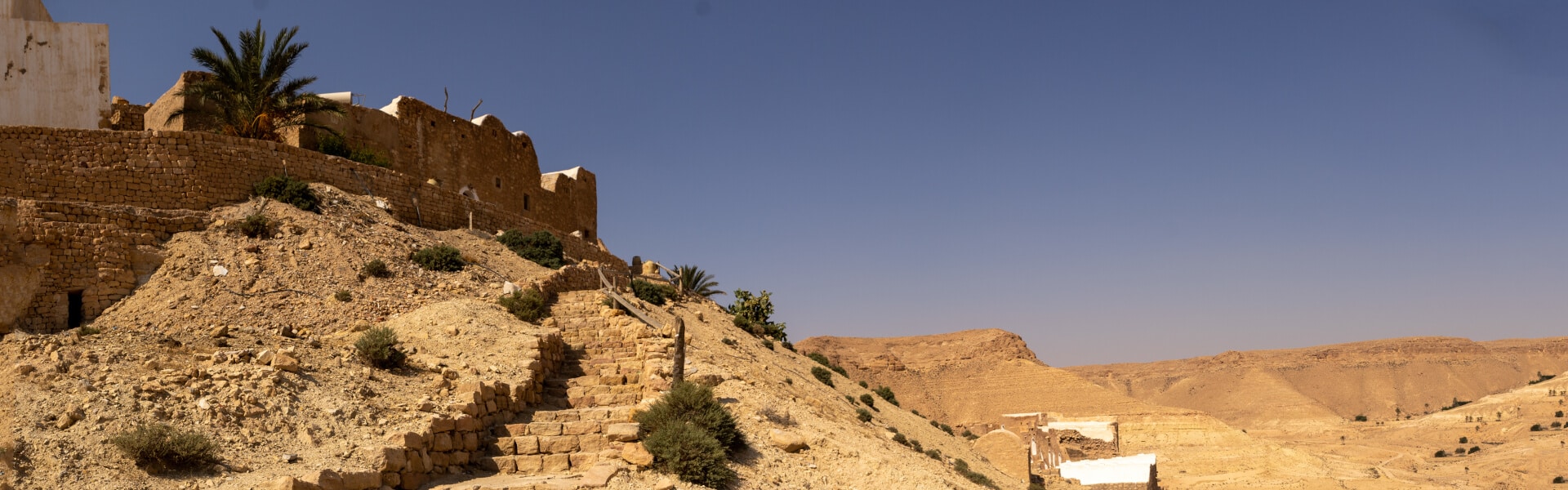
We are pleased to announce that ASOR has received a $245,000 grant from the U.S. Department of State’s Ambassador’s Fund for Cultural Preservation (AFCP) for a heritage restoration and outreach project at the site of Ksar Douiret in Tataouine Governorate, Tunisia. Ksar Douiret is one of the most iconic fortified ksour of southern Tunisia. For at least a thousand years, it was a critical stopping point on a trans-Saharan trade route stretching from the Mediterranean to the Niger River valley. Compared to other ksar communities nearby, Douiret is characterized by an exceptionally large concentration of troglodyte homes and public structures carved into a particularly thick horizontal band of high-quality limestone. The ksar and village are in the Tataouine Governorate, and this iconic heritage is known to much of the world through the Star Wars movies. However, the importance of Amazigh culture and heritage has also been obscured by the Star Wars brand.

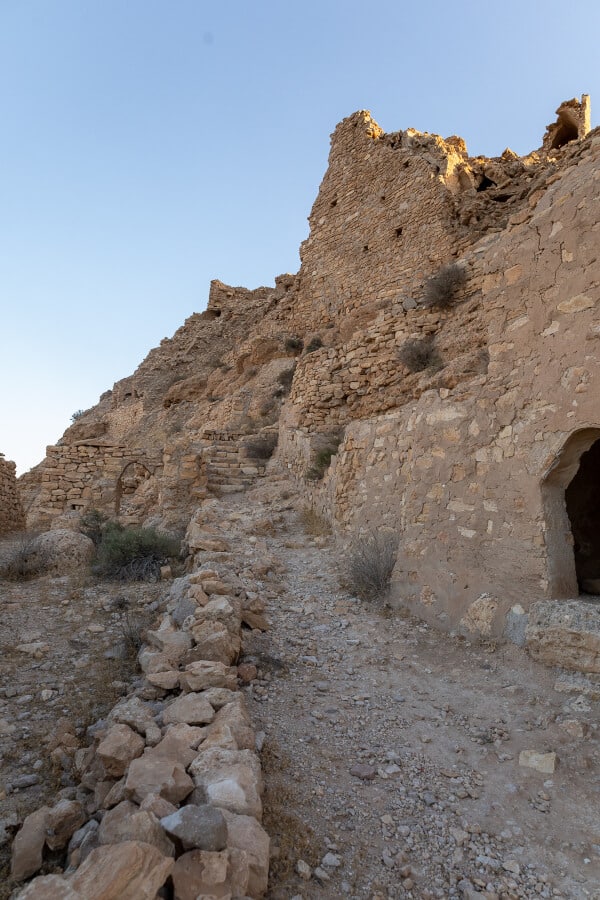
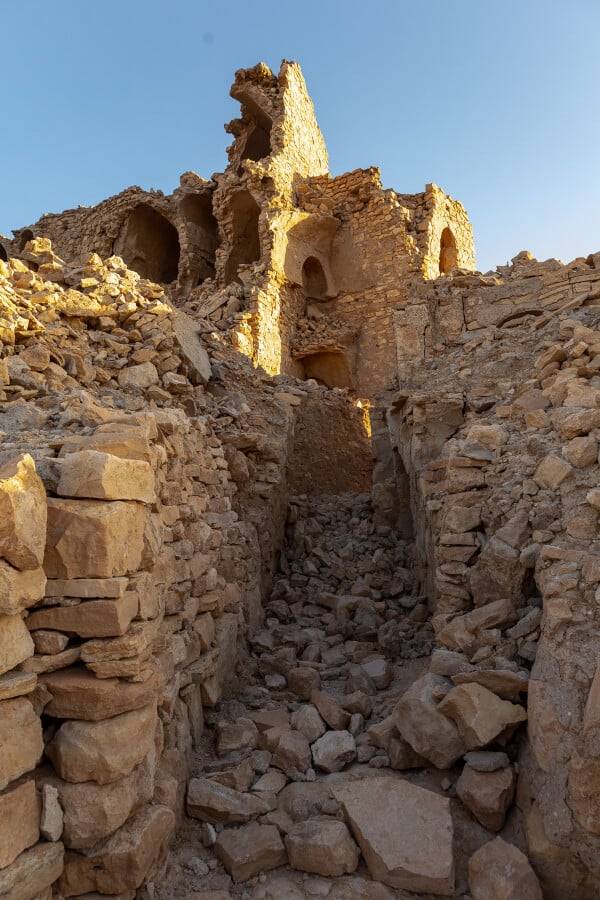
The condition of the access path and architecture on the upper level of the ksar. Photo Credit: ASOR.

Since the movement of the local community from the ancient ksar to the modern-day village of Douiret nearby, the important built heritage in the ksar has deteriorated due to lack of regular maintenance. As part of a previous grant, ASOR worked with the Douiret Women’s Collective in developing heritage awareness and documentation programs. This AFCP grant is a follow-on activity that will build upon and expand the previous work. As part of this award, ASOR will partner with members of the Douiret Women’s Collective and the Tunisian Scouts to stabilize historic architecture, improve site access, and promote Amazigh (Berber) cultural heritage to Tunisian and international audiences. The project will run from October 1, 2024, to September 30, 2026.

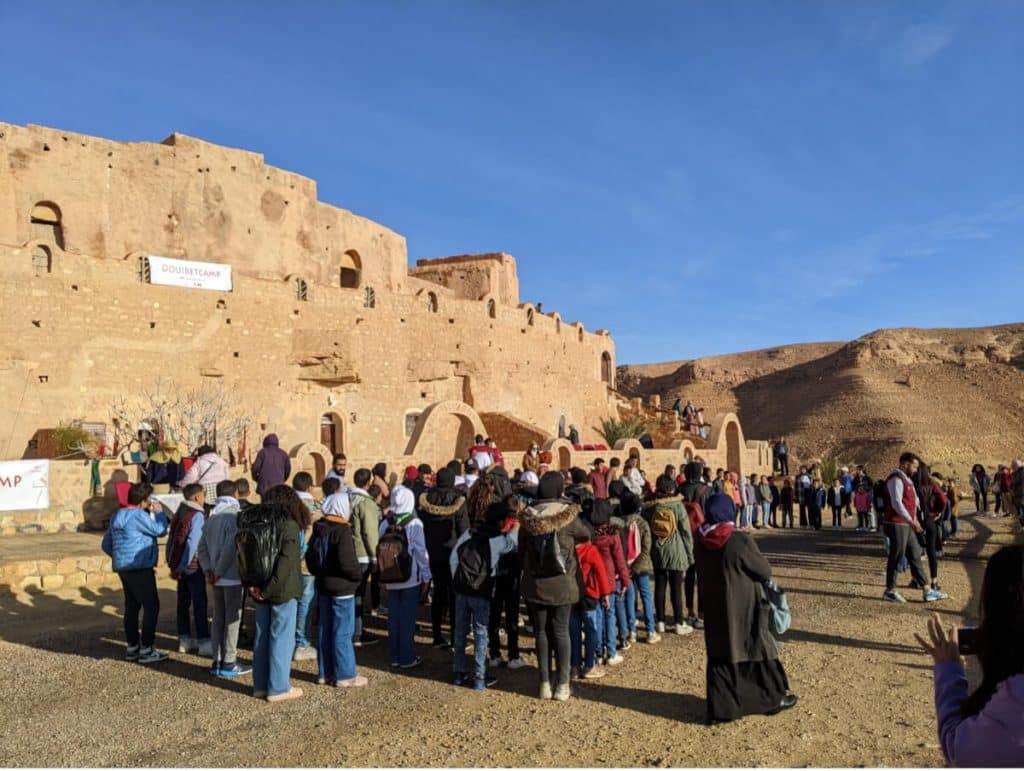
Members of the Tunisian Scouts visit Douiret. Photo Credit: ASOR.