[/vc_column_text][mk_divider][vc_wp_text]Just as 2020 will be a year for the history books, this year’s ASOR Annual Meeting will be unlike any other. Not only will attendees be able to participate live from the comfort of their homes, they will be be able to log in as often as they wish through June 2021 to view 450+ presenters and play-back the live discussions of the 2020 meeting. In contrast to an in-person meeting, you won’t have to make difficult decisions about which papers and sessions to attend – view them all! Here is a break-down of ASOR’s Virtual Annual Meeting offerings and what to expect during the online meeting dates of November 12-15 & November 19-22:
PLENARY ADDRESS & MEMBERS’ MEETING: Thursday, November 12, 11am-1:30pm EST. This 2.5-hour segment will be played LIVE. Watch Dr. Monica Hanna’s plenary address on “Does the Future of the Past Lie in the Hands of the Living?” about the different stakeholders of heritage with a focus on the Middle East and Africa and the relationship with the West. Then participate in a live virtual Members’ Meeting to receive updates on ASOR’s finances, membership initiatives, and new Trustees, as well as to hear the 2020 ASOR Honors & Awards announcements.
WORKSHOPS: Primarily scheduled on Thursday, November 12 (2pm-4pm EST) & Friday, November 13 (11am-1pm EST), with two on Sunday afternoon, November 22. These 2-hour online workshops are LIVE. Enjoy presentations, panels, and discussions featuring a number of different topics, ranging from “Ethics in Archaeological Practice” to “Archaeology and Climate Change.”
Example of a Workshop on ASOR’s Online Schedule. You can also view the abstracts of all the live presenters from this page. Attendees will click on the green button to join the online workshop.
POSTERS: Friday, November 13 (2pm-3pm EST) & Saturday, November 14 (11am-12pm EST). Explore the Poster Gallery before the online meeting dates to view digital versions of the posters. Posters have been grouped thematically and assigned to 1-hour LIVE sessions. Poster presenters will be available during this time to discuss their projects and answer questions. There will be 40+ posters available focusing on broad topics such as “Digital Archaeology” and “Tombs and Burial.”
PAPERS: So far more than 300 paper presentations have been uploaded to the Online Schedule of ASOR’s Virtual Annual Meeting, and they will continue to be added as they are received. VIEW THE PAPER PRESENTATIONS BEFORE attending the online meetings in order to fully participate in the live discussions. Paper presentations will not be given live or played-back during the online sessions scheduled for:[/vc_wp_text][vc_column_text]
First week: Saturday, November 14 (12:30pm-3pm EST) & Sunday, November 15 (11am-3pm EST)
Second week: Thursday, November 19-Sunday, November 22 (11am-3pm EST)
[/vc_column_text][vc_wp_text]These 1-hour long sessions are designed for LIVE DISCUSSION and Q&A with presenters and will not include paper presentations.
Example of a paper presentation recording on the ASOR Virtual Annual Meeting Platform hosted by OpenWater.
ENGAGE: The Networking & Chat lounge is already open! ASOR Virtual Annual Meeting participants can connect via 1-to-1 messaging and group chat. Open the Networking & Chat link from the main menu and set up a basic profile (Name, Photo, Affiliation, and Interests) to start connecting with attendees from around the world. Visit the Networking & Chat lounge frequently to see who has joined and read group conversations started by Session and Workshop organizers.[/vc_wp_text][mk_divider][vc_column_text]IMPORTANT LINKS FOR REGISTRANTS:
Printable versions of ASOR’s Virtual Annual Meeting Schedule Online Schedule for ASOR’s Virtual Annual Meeting (login required; begin viewing paper presentations recordings and submissions) Presenter Information Page (tutorials) ASOR Virtual Poster Gallery ASOR Virtual Annual Meeting Exhibitor/Sponsor Gallery ASOR Networking & Chat Lounge hosted by OpenWater (login required; create your attendee profile) ASOR Website Annual Meeting Page Register for the Virtual Annual Meeting[/vc_column_text][/vc_column][vc_column border_color=”rgba(170,170,170,0.01)” width=”1/6″ css=”.vc_custom_1496684098866{margin-right: 5px !important;margin-bottom: 20px !important;border-right-width: 2px !important;border-bottom-width: 2px !important;padding-top: 30px !important;padding-right: 10px !important;padding-left: 10px !important;background-color: #ffffff !important;border-right-color: rgba(227,228,228,0.75) !important;border-bottom-color: rgba(227,228,228,0.75) !important;}”][vc_wp_posts title=”BROWSE THE NEWS ARCHIVE” number=”4″][/vc_column][vc_column border_color=”rgba(170,170,170,0.01)” width=”1/6″ css=”.vc_custom_1496684008271{margin-right: 10px !important;margin-bottom: 30px !important;border-right-width: 2px !important;border-bottom-width: 2px !important;padding-top: 30px !important;padding-right: 20px !important;padding-left: 20px !important;background-color: #ffffff !important;border-right-color: rgba(227,228,228,0.75) !important;border-bottom-color: rgba(227,228,228,0.75) !important;}”][vc_column_text]Tweets by ASOResearch [/vc_column_text][/vc_column][/vc_row]
[/vc_column_text][mk_divider][vc_wp_text]At the 2019 Annual Meeting, Amnon Ben-Tor was awarded The P. E. MacAllister Field Archaeology Award. This award honors an archaeologist who, during their career, has made outstanding contributions to ancient Near Eastern and Eastern Mediterranean archaeology.
Amnon Ben-Tor, Professor Emeritus, Institute of Archaeology, The Hebrew University, has been at the forefront of both research and field archaeology in Israel for over 50 years. Throughout his career, he participated in several important excavations, such as Masada, and directed excavations at numerous sites, among them Atheniou, Tel Yarmuth, Tel Yoqne’am, Tel Qashish, Tel Qiri and, most notably, Tel Hazor. At Hazor, he worked with Yigael Yadin beginning in the 1950s and has directed the “Selz Foundation Hazor Excavations in Memory of Yigael Yadin” since the 1990s, and is currently still working in the field at the age of 84. His research interests and expertise span the Early Bronze to the Iron Ages, with particular focus on the Late Bronze Age in Canaan and its relationship to Egypt and Syro-Mesopotamia. His excavations have cumulatively served as a foundation for understanding the chronology, history, and developmental patterns of material culture for the Bronze and Iron Ages in the Southern Levant. Furthermore, he has trained and mentored a generation of Israeli and foreign archaeologists and the results of his fieldwork have proved to be an inspiration and an exemplar for both his colleagues and his students.[/vc_wp_text][/vc_column][vc_column border_color=”rgba(170,170,170,0.01)” width=”1/6″ css=”.vc_custom_1496684098866{margin-right: 5px !important;margin-bottom: 20px !important;border-right-width: 2px !important;border-bottom-width: 2px !important;padding-top: 30px !important;padding-right: 10px !important;padding-left: 10px !important;background-color: #ffffff !important;border-right-color: rgba(227,228,228,0.75) !important;border-bottom-color: rgba(227,228,228,0.75) !important;}”][vc_wp_posts title=”BROWSE THE NEWS ARCHIVE” number=”4″][/vc_column][vc_column border_color=”rgba(170,170,170,0.01)” width=”1/6″ css=”.vc_custom_1496684008271{margin-right: 10px !important;margin-bottom: 30px !important;border-right-width: 2px !important;border-bottom-width: 2px !important;padding-top: 30px !important;padding-right: 20px !important;padding-left: 20px !important;background-color: #ffffff !important;border-right-color: rgba(227,228,228,0.75) !important;border-bottom-color: rgba(227,228,228,0.75) !important;}”][vc_column_text]Tweets by ASOResearch [/vc_column_text][/vc_column][/vc_row]
[/vc_column_text][mk_divider thickness=”1″ margin_bottom=”30″][vc_single_image image=”68068″ img_size=”full” alignment=”center”][mk_padding_divider][vc_row_inner][vc_column_inner][vc_column_text]Concerned about the impact of war on at-risk sites in Syria, Iraq and Libya? Excited about new methodologies changing how we explore the ancient world? Want the latest about sites from the Mediterranean to the Indus Valley at a time when physical travel is impossible – all without leaving the comfort of your home, school or office?
ASOR’s first-ever Virtual Annual Meeting in November 2020, will bring together over 1000 historians, archaeologists, cultural heritage experts and others who just love to learn from around the world.
Register nowfor this premiere gathering to access over 450 papers, workshops, and poster presentations by scholars from 25 countries for less than 25¢ a presentation.
You will have access to the material through June 2021.
Non-member registrations include a complimentary, one-year ASOR Associate Membership with a subscription to Near Eastern Archaeology.
Live sessions will take place on Thursday–Sunday, November 12–15, & November 19–22. The schedule includes both live and pre-recorded presentations to encourage discussion, collaboration and Q&A. Register here.
[/vc_wp_text][/vc_column_inner][vc_column_inner width=”1/3″ css=”.vc_custom_1602184830259{padding-right: 20px !important;}”][vc_single_image image=”67471″ img_size=”full”][vc_wp_text]
Lynn Welton
Durham University
Changing Animal Herding Strategies in the 4th – 3rd millennia BCE in the Upper Orontes Valley: Preliminary Isotopic Data (δ18O, δ13C, 87Sr/86Sr) from Tell Nebi Mend
The 2020 ASOR Annual Meeting, originally scheduled for November 18-21 in Boston, will be a virtual event taking place Thursday–Sunday, November 12–15 & November 19–22. The above list of speakers and abstracts is only a selection of more than 450 scholars from more than 25 countries around the globe who will be sharing their research. Click here for the entire schedule (not a complete list of speakers).
The virtual academic program will incorporate asynchronous (pre-recorded presentations) that can be viewed “on demand” ahead of (and after) the meeting, and synchronous/live sessions to allow for discussion, collaboration, and Q&A. We are partnering with OpenWater (a virtual platform provider) to ensure the professional delivery and thus the success of the conference. Registered attendees will have access to more than 450 paper, poster, and workshop presentations, as well as a Virtual Exhibit Gallery and networking opportunities to connect with scholars from around the world at your fingertips.
Due to COVID-19, and thanks to ASOR’s generous members, we are committed to funding 100% of requests from current ASOR members for scholarships for the ASOR VAM. If you are a current member (or student at an ASOR member school) and have been negatively impacted (directly or indirectly) by the pandemic, please e-mail asor2020@asor.org with a brief explanation for a registration scholarship. No lengthy application is required.
2020 HARRIS GRANT AWARDEE: THE WADI EL-HUDI EXPEDITION
Since 2014, the Wadi el-Hudi Expedition has been working in Egypt’s Eastern Desert to document exceptionally well preserved ancient fortified settlements attached to gold and amethyst mines from the Middle Kingdom (c. 2000-1700 BCE) and the Early Roman Period (c. 50 BCE to 200 CE).
Prior to the Wadi el-Hudi Expedition’s work, all previous studies of Wadi el-Hudi focused solely on the inscriptions. Yet the inscriptions provide only one perspective, that of the ancient administrators. What about the laborers who worked there? The archaeological record can address their lived experience. Questions regarding what the miners ate, how they prepared or stored their food, who supplied the expedition with food and water are primarily answered through the intensive study of ceramics. Daily life of these workers in the settlements as seen through pottery will complement the perspective of the administrators recorded in the inscriptions.
This coming season, we will focus on ceramic analysis and finalize our pottery corpus in order to complete our monograph on the Middle Kingdom pottery at Wadi el-Hudi that incorporates multi-disciplinary perspectives, including scientific analysis of clay. We are also excited to bring a stone conservator to write an initial report to facilitate the conservation and reassembling of important stelae and statues from Wadi el-Hudi.
The Wadi el-Hudi Expedition collaborates with PhD students and early career specialists to give them opportunities upon which they can build their careers. The ASOR Harris Grant will facilitate this.
-Kate Liszka, California State University, San Bernardino
Made possible by a generous endowment given by the late Rev. Charles Harris, Harris Grants are awarded to CAP-affiliated field projects, particularly to newer and smaller projects, to help them get started, and to discrete components of larger projects that can be completed with an award. The Endowment also provides support for off-season research, analysis, and publications. Read more about ASOR Grants for Excavation Projects.
[/vc_column_text][mk_divider][vc_column_text]The ASOR Trustee Nominations Committee has selected five highly qualified members to stand for election for four open positions on the Board of Trustees. The Board sets the direction for ASOR and provides oversight for our organization. Among other responsibilities, members of the Board agree to attend two meetings each year, to participate thoughtfully in the governance process, and to contribute financially to ASOR.
There are three candidates running for two openings as Member-elected Trustees for 3-year terms (Melissa Bailey Kutner, Theodore Burgh, and Margaret Cohen). There are two candidates (running unopposed) for two openings as Institutionally-elected Trustees for 3-year terms (Carol Meyers and Jason Ur). All ASOR members are eligible to vote in the Member-elected Trustee Election, while only Institutional Representatives of the 70 ASOR-member schools may vote in the Institutionally-elected Trustee Election.
ASOR will conduct the elections by online ballot, and all members and Institutional Representatives will receive the appropriate ballot(s) via email on or about October 21, 2020. We will send out two reminders, and all ballots must be completed by 12:00 PM Eastern Time on Monday, November 9. If you have difficulties completing the online ballot (once they are distributed), please contact Marta Ostovich at programs@asor.org.[/vc_column_text][mk_divider][vc_column_text]
Nominees for Membership-elected Trustees
(two to be elected)
Melissa Bailey Kutner is Assistant Professor in the department of Ancient Studies at the University of Maryland, Baltimore County. Her research focuses on the late Byzantine economy of Jordan and on the Roman economy more broadly, including issues of standardization and cognitive approaches to value. She has excavated at a variety of sites in Jordan since 2008, and since 2017 has acted as a co-director of the Dhiban Excavation and Development Project. This project investigates long-term occupation at the site of Dhiban in west-central Jordan: how such occupation has waxed and waned in relation to broader regional and political developments and how inhabitants of the site reused and repurposed architecture and features of the landscape. Dr. Kutner focuses especially on the late Byzantine prosperity of the site and its early Islamic transition. She also served as chair of the Archaeology of the Byzantine Near East session at ASOR for six years.
Mission Statement: Throughout my career as an archaeologist, ASOR has played a central role in supporting my own and my colleagues’ research. I am excited to see ASOR continue to grow in ways that increase its diversity, vibrancy, accessibility, and relevance, and I look forward to supporting the goals of ASOR’s mission statement, including excavation, outreach, education, and raising awareness of heritage issues. Since threats to heritage often coincide with intense humanitarian crises, I am especially interested in spreading awareness of the dangers to heritage in ways that also forefront the needs of local communities, and that see archaeological heritage as inextricably linked to human needs and not in opposition to them. I am also interested in promoting best practices in field schools, including ongoing reflection on teaching methods, curricula, and inclusive policies, and encouraging more diversity among field school participants. While my university classes are full of a wide and diverse range of students, those who actually come to Jordan tend to be less so, often because of economic challenges. I hope to increase opportunities for them to excavate and conduct research, and to explore additional ways that ASOR-related research can be made relevant to their lives.[/vc_column_text][/vc_column_inner][/vc_row_inner][mk_divider][vc_row_inner][vc_column_inner width=”1/4″][mk_image src=”http://www.asor.org/wp-content/uploads/2017/10/burgh-e1511882918316.jpg” image_width=”200″ image_height=”250″ hover=”false”][/vc_column_inner][vc_column_inner width=”3/4″][vc_column_text]
Theodore Burgh
Theodore Burgh is Professor and Chair of the Department of Philosophy and Religion at the University of North Carolina Wilmington. He holds his degrees from the University of Arizona (M.A./Ph.D.), Howard University (M.A.), and Hampton University (B.A.). His research interests are the archaeology of ancient Israel and the Near East, the Hebrew Bible, archaeomusicology (the study of ancient music culture), the reconstruction of Syro-Palestinian and Near Eastern music culture and cataloging musical artifacts, utilization analysis of Syro-Palestinian sacred and secular space, and ethnomusicology.
Mission Statement: I have been an active ASOR member since 1996 and a part of the membership committee for nearly 20 years. I now serve as Chair of this incredible group.
As a trustee, I will continue to bring commitment and experience. Building on existing success, ASOR can expand its services to the Academy generally and to members specifically. For example, as a result of the pandemic, we have demonstrated that we can work and thrive virtually. We should continue these efforts to develop virtual archaeology as a sustained part of our organization. Moreover, we should continue implementing technology (e.g, live streaming, recorded Zoom lectures and papers). The popularity and inclusiveness of Zoom lectures displays the desire and need for this approach in the 21st century. These kinds of venues share the fabulous work of our field with new people and those who previously had little to no access to these invaluable sources.
Lastly, I would like to see continued energy with the membership and outreach committee. Efforts with the Friends of ASOR will be essential to maintaining the organization’s future membership and developing inclusivity.[/vc_column_text][/vc_column_inner][/vc_row_inner][mk_divider][vc_row_inner][vc_column_inner width=”1/4″][mk_image src=”https://www.asor.org/wp-content/uploads/2021/03/Cohen-200×300-1.jpg” image_width=”200″ image_height=”250″ hover=”false”][/vc_column_inner][vc_column_inner width=”3/4″][vc_column_text]
Margaret Cohen
Margaret Cohen’s academic training is in Hebrew Bible, and her archaeological training comes from more than twenty years of excavations in Israel, Jordan, and Egypt. She currently lives on the campus of The Albright Institute in Jerusalem where, in pre-COVID times, she was an active participant in the local scholarly community exchange. Prior to her time in Jerusalem, Margaret taught in both large research and small liberal arts settings and has a deep appreciation for and interest in the many forms of the student experience. Her current research focuses on foodways, how food power was wielded in the biblical world, and how some modern-day food movements are informed by ancient texts and practices.
Mission Statement: In a time when uncertainty pervades everything from healthcare to higher education, both steadiness and agility are required for ASOR to flourish, to contribute its expertise to the discipline, and to promote its relevancy in an ever-faster changing world. This may mean altering old models that can feel comfortable, but are not necessarily as productive as they once were, such as imagining future possibilities for scholarly meetings, developing new kinds of venues for publication and exchange of ideas, and embracing innovative programs appearing elsewhere in academia: small, virtual workshops; opportunities reserved for non-TT scholars; social and educational opportunities for members of the general public; the use of virtual tools to connect with future scholars, such as high-school seniors thinking about college or college students considering majors. Driven by its membership, ASOR must constantly adapt to the, at times, divergent needs of those members. Those working to make their mark, those navigating life within their academic positions as well as outside the workplace, and those with hard-won experience that can better the journey for others, all must succeed for the organization to succeed. I am honored to be asked to stand for election to the dedicated group already doing this work, striving to make future-ASOR meaningful for us all.[/vc_column_text][/vc_column_inner][/vc_row_inner][mk_divider][vc_wp_text]
Nominees for Institutionally-elected Trustees
(two to be elected)
A native Pennsylvanian, Meyers earned her A.B. with honors at Wellesley College and her M.A. and Ph.D. in Near Eastern Studies at Brandeis. She began archaeological field work as an undergraduate; subsequently she worked for decades at numerous sites in Israel and co-directed several projects in Galilee. She is currently Mary Grace Wilson Professor Emerita at Duke University.
Meyers specializes in biblical studies, archaeology, and the study of women in the biblical world. A prolific scholar, she is the author of more than 450 articles, reports, reference-book entries, and reviews; and she has authored, co-authored, or edited twenty-two books. Her 2013 book, Rediscovering Eve: Ancient Israelite Women in Context is a landmark multidisciplinary study of women in ancient Israel. Meyers has also written several biblical commentaries; two of them were co-authored with her spouse Eric Meyers, as have been the final excavation reports of several excavations. She is now co-editing a book on food and foodways in ancient Israel (Bloomsbury) and another on households in the biblical world (Oxford).
Meyers has served ASOR in many capacities, including multiple terms on the publications and archaeological-policy committees, since the 1970s. She is currently vice-president of the AIAR, and in 2013 she was president of the Society of Biblical Literature.
Mission Statement: As a member for many decades, I have seen ASOR respond repeatedly to numerous challenges—including economic, political, ideological, and technological ones—and come out stronger. At present, the constraints of a pandemic have added to the ongoing challenges. I’m especially concerned about what the curtailment of field work means for our many archaeological projects, and I believe the board must help those projects remain vital with or without a consistent presence in the field. Similarly, the issue of diversity has emerged recently and requires ASOR’s compassion and action. I hope that the new strategic plan now being developed will help our organization find appropriate ways to address these and other issues and to insure that all members, both junior and senior ones, have a voice.
The energy and wisdom that ASOR’s management team has brought to the task of creating the 2021 virtual annual meeting have been exemplary and inspiring. Also, the concern about the appropriateness of the ASOR name has been addressed with great care, and the outcome of the surveys and deliberations signal a spirit of sensitivity as we move further into this decade. My hopes for the future are that our organization will continue to meet the challenges of these difficult times.[/vc_column_text][/vc_column_inner][/vc_row_inner][mk_divider][vc_row_inner][vc_column_inner width=”1/4″][mk_image src=”https://www.asor.org/wp-content/uploads/2020/10/Ur-Photo-Square.jpg” image_width=”200″ image_height=”250″ hover=”false”][/vc_column_inner][vc_column_inner width=”3/4″][vc_column_text]
Jason Ur
Jason Ur is Stephen Phillips Professor of Archaeology and Ethnology in the Department of Anthropology at Harvard University. He specializes in early urbanism, landscape archaeology, and remote sensing, particularly the use of declassified US intelligence imagery. He was trained in Anthropology at the University of Pennsylvania (BA 1994) and in Near Eastern Languages and Civilizations at the University of Chicago (PhD 2004). He has directed field surveys in Syria, Iraq, Turkey, and Iran. He is the author of Urbanism and Cultural Landscapes in Northeastern Syria: The Tell Hamoukar Survey, 1999-2001 (2010). Since 2012, he has directed the CAP-affiliated Erbil Plain Archaeological Survey, an archaeological survey in the Kurdistan Region of northern Iraq. He is also preparing a history of Mesopotamian cities.
Ur joined ASOR as a student member in the late 1990s. He held the ASOR Mesopotamian Fellowship in 2000-2001 and served on the Committee on Mesopotamian Civilization from 2009-2013. He was the plenary speaker at the 2014 ASOR annual meeting. He organized and chaired the Settlement and Society in the Ancient Near East session from 2008-2010. The Archaeology of the Kurdistan Region of Iraq session, which he founded and chaired from 2017-2019, has now been accepted as a Standing Session.
Mission Statement: As a member of ASOR’s Board of Trustees, I will promote its mission to create and disseminate knowledge of the history and culture of the societies of the Near East, past and present. I intend to champion a geographically-inclusive ASOR that involves broader areas of West Asia beyond ASOR’s traditional areas of strength, and a comparative anthropological perspective to complement its culture-historical emphases. I’m particularly interested to amplify new voices in ASOR: those of our research partners in the Middle East, and those of the next generation of scholars in our graduate and undergraduate classrooms. Finally, I hope to advocate for digital methods of research and outreach, with the goal of making ASOR members’ scholarship more accessible to our colleagues, to the public, and to future generations.[/vc_column_text][/vc_column_inner][/vc_row_inner][/vc_column][vc_column border_color=”rgba(170,170,170,0.01)” width=”1/6″ css=”.vc_custom_1496684098866{margin-right: 5px !important;margin-bottom: 20px !important;border-right-width: 2px !important;border-bottom-width: 2px !important;padding-top: 30px !important;padding-right: 10px !important;padding-left: 10px !important;background-color: #ffffff !important;border-right-color: rgba(227,228,228,0.75) !important;border-bottom-color: rgba(227,228,228,0.75) !important;}”][vc_wp_posts title=”BROWSE THE NEWS ARCHIVE” number=”4″][/vc_column][vc_column border_color=”rgba(170,170,170,0.01)” width=”1/6″ css=”.vc_custom_1496684008271{margin-right: 10px !important;margin-bottom: 30px !important;border-right-width: 2px !important;border-bottom-width: 2px !important;padding-top: 30px !important;padding-right: 20px !important;padding-left: 20px !important;background-color: #ffffff !important;border-right-color: rgba(227,228,228,0.75) !important;border-bottom-color: rgba(227,228,228,0.75) !important;}”][vc_column_text]Tweets by ASOResearch [/vc_column_text][/vc_column][/vc_row]
[/vc_column_text][mk_divider][vc_wp_text]As mentioned in the earlier “Call to Action on ASOR’s Name,” ASOR President Sharon Herbert will convene two Virtual Town Hall Meetings to discuss ASOR’s name and the next steps in our process to remove “Oriental.” The two virtual meetings will take place over Zoom Webinar. We have chosen times that will enable members living in different time zones to attend; the discussion sessions will be held at the following dates and times:[/vc_wp_text][vc_column_text]
[/vc_column_text][vc_wp_text]In addition to President Herbert, the panelists will include Randy Helm (Trustee and Chair, Ad Hoc Committee on ASOR’s Name [AHC]), Susan Ackerman (Trustee and Past President, 2014-2019), Lisa Ackerman (Trustee and AHC member), Eric H. Cline (AHC Member), Geoff Emberling (Past Program Committee Co-chair), Emily Hammer (AHC member), Carol Meyers (Trustee, Sunday only), and Andy Vaughn (Executive Director). We plan to have short presentations or statements by some of the panelists, followed by questions from attendees, and conversation between panelists.
As a reminder, the ASOR Board of Trustees voted unanimously on August 19, 2020 to start a process to remove “Oriental” from our organization’s name. Because ASOR is an incorporated non-profit in the District of Columbia, the Board cannot legally change our name without an amendment to ASOR’s Articles of Incorporation. Amending the articles involves several legal steps including a ratification vote by the whole membership.
As we go through the name discernment process, the ASOR Board has taken steps to remove “Oriental” wherever possible. To that end, you may have noticed that “ASOR” replaced the complete name in the most recent issue of Near Eastern Archaeology, and the November issue of BASOR will contain a cover with Bulletin of ASOR rather than the complete name. These are small but important steps until we can complete the legal amendment to the Articles of Incorporation.
Please mark your calendars so that you can attend one of both of the meetings on October 22 and 25.[/vc_wp_text][mk_divider][vc_wp_text]The following is a copy of the previously posted (Oct. 6) letter from ASOR President Sharon Herbert: [/vc_wp_text][mk_divider][vc_wp_text]Dear Fellow ASOR Members:
I wrote you all in late August with the exciting news that ASOR’s Board of Trustees had voted to remove the word “Oriental” from ASOR’s name. Now I write with an update and a timeline for the next steps, which will include town halls with the membership and two votes over the next month.
All organizations have moments in their history when a transformative change needs to be made. Recognizing ASOR’s 120-year history of leadership, ASOR’s Board of Trustees voted unanimously to remove the word “Oriental” from our name as the first step to ensure that we took a stand against culturally offensive language. Words matter.
The next step requires a ratification of this change and the Board’s recommendation on ASOR’s new name by a majority of the ASOR membership. You will be asked to choose between two ASOR acronyms: the American Schools of Overseas Research or the American Society of Overseas Research. After the choice is made between “society” and “schools,” we will need a final ratification vote by the membership in order to legally amend ASOR’s Articles of Incorporation.
Below is a summary of how the Board arrived at this decision.
The Ad Hoc Committee on the name change (AHC) has been working since January to consider all alternatives, including new acronyms, descriptive language, and a myriad of other options. Their work included two polls of the membership.
After a great deal of discussion and endless hours of trying to find the best answers, AHC recommended that two names be considered: AARCHE, Association for Archaeological Research, Cultural Heritage, and Education and one of two names using the ASOR acronym, either the American Schools of Overseas Research or the American Society of Overseas Research.
After the AHC submitted its final report, the discussion of the full Board in consultation with the AHC focused on whether the new name should retain the ASOR acronym or be completely different, which opened up the opportunity to solve some of the inherent constraints of the ASOR acronym. In AARCHE’s favor were its freshness and the fact that it reflects better the breadth of ASOR’s current work, particularly in cultural heritage. Against it are its somewhat unwieldy length, unfortunate acronym for a renamed BASOR—”BAARCHE”—and its lack of popularity in the July poll of the membership.
With the lack of a membership mandate for AARCHE or any wholesale change in name, the Board turned to the costs of abandoning the ASOR acronym, both tangible and intangible. Our Executive Director estimates that the necessary changes in our now large website presence would cost between $50,000 and $100,000, amounts which do not include a new branding program. Library subscriptions to the renamed “BAARCHE” would undoubtedly drop. The value of the well-known brand would be lost, which our Development Committee believes would have significant adverse effects on fundraising.
In the Board discussion of the AHC recommendations, various members noted that neither of the choices satisfied the desire of 70.3% of the membership in the March poll that the name reflect the geographical scope of ASOR’s work. Accepting that ASOR’s scope will always change and grow, it seemed prudent to keep the name as simple as possible given all that is required legally to change it, but include a yet to be determined geographical tag line below the name as a descriptor.
After lengthy discussion with the AHC, the Board voted 20-3 to put only the two ASOR acronyms, the American Schools of Overseas Research or the American Society of Overseas Research, up for a membership vote.
What’s next? A membership vote on the name change.
[/vc_wp_text][vc_column_text]
Two Zoom town hall meetings with the membership in October.
A vote on the two names in late October.
A vote on ratification of the winning name in November.
[/vc_column_text][vc_wp_text]As always, you can contact me directly at president@asor.org with questions or concerns. Thank you for helping our organization take this vital step into a brighter future for us all.
Best regards,
Sharon Herbert
ASOR President[/vc_wp_text][/vc_column][vc_column border_color=”rgba(170,170,170,0.01)” width=”1/6″ css=”.vc_custom_1496684098866{margin-right: 5px !important;margin-bottom: 20px !important;border-right-width: 2px !important;border-bottom-width: 2px !important;padding-top: 30px !important;padding-right: 10px !important;padding-left: 10px !important;background-color: #ffffff !important;border-right-color: rgba(227,228,228,0.75) !important;border-bottom-color: rgba(227,228,228,0.75) !important;}”][vc_wp_posts title=”BROWSE THE NEWS ARCHIVE” number=”4″][/vc_column][vc_column border_color=”rgba(170,170,170,0.01)” width=”1/6″ css=”.vc_custom_1496684008271{margin-right: 10px !important;margin-bottom: 30px !important;border-right-width: 2px !important;border-bottom-width: 2px !important;padding-top: 30px !important;padding-right: 20px !important;padding-left: 20px !important;background-color: #ffffff !important;border-right-color: rgba(227,228,228,0.75) !important;border-bottom-color: rgba(227,228,228,0.75) !important;}”][vc_column_text]Tweets by ASOResearch [/vc_column_text][/vc_column][/vc_row][vc_row][vc_column][vc_column_text]
ASOR mourns the passing of long-time member and trustee, Norma Kershaw, ז״ל (1924 – 2020), who passed away peacefully at her home in Mission Viejo, CA on September 14, at age 95. We share our condolences with Norma’s two daughters (Barbara Tiferet Rosenthal and Janet Kershaw McClennan), her son-in-law (Jeffrey Rosenthal), her four grandchildren, and her two great grandchildren.
Norma was born in New York City on New Year’s Eve in 1924. After helping her husband Reuben grow his real estate development business in Great Neck, and after rearing their children (Barbara and Janet), she went back to school. She completed the B.A. degree (Phi Beta Kappa) in anthropology and art history at Queens College in 1972. Two years later, she earned the M.A. degree in art history and archaeology from Columbia University.
Jim Sauer, Norma Kershaw, and Joan Scheuer visiting Tell Qarqar, Syria
Norma was an ASOR member for more than 50 years, and a trustee or honorary trustee for 40 years. She began excavating in 1971 at Gezer in Israel, and she also participated in excavations at Aphek (Israel) and Salamis (Cyprus). She was elected to the ASOR Board of Trustees in 1979, and was elected an Honorary Trustee in 1988. She was the founding President of CAARI—The Cyprus American Archaeological Research Institute, and she later served as its Treasurer. Among leadership positions in ASOR, she served as chair of ASOR Tours, and later as chair of ASOR Outreach and Lectures. She was passionate and well-loved teacher of archaeology and the ancient world, and she converted many of the students in her classes into supporters of archaeology and archaeological societies. She was the recipient of ASOR’s most prestigious award—The Richard Jonas Scheuer Medal. Not only was Norma a learned scholar and teacher, but she and Reuben were generous supporters of archaeological societies and academic institutions. She was the primary supporter of News@ASOR since its inception.
While we will miss Norma dearly, we remember and celebrate her life and many accomplishments. We have included three remembrances below: a detailed and complete remembrance by Thomas Levy, and two additional remembrances by William Schniedewind, and Andrew Vaughn.[/vc_wp_text][mk_divider][vc_wp_text]Remembering Norma Kershaw ז״ל (1924 – 2020)
Thomas E. Levy, Distinguished Professor and Norma Kershaw Chair in the Archaeology of Ancient Israel and Neighboring Lands, University of California San Diego.
Norma loved the archaeology of Israel and the Middle East and she expressed this through a life-time of study, teaching, service and philanthropy. In Norma’s adult life journey, she was supported by her loving husband Rueben, known affectionately as Rube.
Tom and Alina Levy with Norma Kershaw
They were married in 1951 and celebrated their 61st anniversary before Rube passed away. After raising their children Barbara and Janet, in Great Neck, NY, Norma decided at the age of 43, to pursue her dreams of higher education. In an interview with the LA Times in 1996 Norma said that Rube asked, “Why do you want to go to school? You’re doing fine.”
And she said it was true—“I had a lot of friends; I was on the New York state higher education committee; I was active in the League of Women Voters; I was legislative chair for the school district. Things were OK, but I told [Rube], ‘I just have to do this. I feel very incomplete.’ I wanted to go when I was younger, but we didn’t have the money.” Norma went on to Queens College for her B.A. degree and graduated Phi Beta Kappa and then earned a Master’s degree in Archaeology and Art History from Columbia University, where she studied with the eminent art historian and archaeologist Edith Porada, graduating at the age of 49.
In 1970 while working on her B.A. degree, Norma met archaeologist William G. Dever at that American Institute of Archaeology (AIA) annual meetings that took place in Cincinnati, Ohio. Dever would go on to become one of the most prominent Biblical Archaeologists. At the time, Dever was working with the great American archaeologist, Nelson Glueck, at the Hebrew Union College excavations at the famous Biblical site of Tel Gezer in Israel. Dever insisted that if Norma was serious about archaeology, she should join the expedition and ‘get her hands dirty’ exposing the past. The following summer of 1971, Norma traveled to Israel and joined the excavation.
Norma at Tel Aphek, 1975
It was at Tel Gezer that summer, when I was 17 years old, that I had the good fortune to meet Norma down in the trenches. I was impressed that an “older woman”, in her early 40s was doing archaeology. Norma went on to join other excavations in Israel, Cyprus and Egypt, traveling extensively around the world, and often bringing her daughters to experience the excitement of archaeology and the world’s best museums. In the early 1980s, when I served as the Assistant Director of the W.F. Albright Institute of Archaeological Research in Jerusalem, Norma made one of her many visits to Israel and the Albright Institute. Norma loved the ‘Albright’ because of its unique mission and ability to bring together Israeli and researchers working in the Palestinian territories and neighboring Arab lands together in dialogue.
Norma enjoyed being at the center of cutting-edge archaeology in the United States. In 1968, she helped establish the Archaeological Institute of America (AIA) Long Island Society, where she served as president from 1977 to 1981. In 1976, she became a life-member of the AIA and received their distinguished Martha and Artemis Joukowsky Distinguished Service Award in 1989. From 1980 to 1985 Norma served as the travel editor of the AIA’s ARCHAEOLOGY magazine. She also served as a founding editorial board member of Biblical Archaeology Review until she passed away. Shortly after moving to southern California, Norma founded the AIA’s Orange County Society in 1991, serving as its first president, and in 1992 joined the AIA Governing Board. In 1996, she was named the first female (and up until now, the only) Trustee Emerita of the AIA. It was her desire to share the significance of archaeology for world culture that infused Norma’s drive to play a role in so many of these scholarly institutions and museums.
In 1990, Rube and Norma retired to Mission Viejo, California, to be closer to their daughters and grandchildren. Norma accelerated her archaeological and museum service in SoCal, becoming a founding member and devoted supporter of the American Research Center in Egypt, Orange County (ARCE-OC) and a member of the Board of Directors of the Bowers Museum in Santa Ana. In 2007, the museum named their new 300-seat auditorium the Norma Kershaw Auditorium. Norma loved to attend lectures there and always took studious notes on how each speaker could improve their future presentations. Following their lecture, Norma would button-hole the distinguished speaker and explain how they could reach the public more effectively. These suggestions were made not as a critic, but rather as a partner.
Norma was a devoted member of ASOR because it is the oldest, most distinguished and flagship organization for archaeological researchers from the United States and Canada working in the Middle East. Norma gave generously to the Albright Institute in east Jerusalem, where she became an honorary trustee. There is a garden in the back of the Albright Institute that bears her name and provides sanctuary for scholars from all religions and backgrounds meeting in the Holy City. Love for the archaeology of the island of Cyprus led Norma to become a 1978 founder and first president of CAARI—the Cyprus American Archaeological Research Center in Nicosia. She was elected as an ASOR Trustee in 1979, and she became an honorary trustee of ASOR in 1988, earning the Richard J. Scheuer Medal in 1997 and the Charles U. Harris Service Award in 2014.
When Norma and Rube first moved to Southern California, they thought about purchasing a palatial home near a golf course. However, as Norma reflected some years later, they decided they didn’t need a big house. Instead, they would rather use much of their wealth to support the institutions named above and local universities. It is in this context that I reconnected with Norma, and she and the Kershaw family became very close to my wife Alina and me, as they attended events at UC San Diego.
Sitting: Reuben and Norma Kershaw, D. N. Freedman Top: R. Friedman, J. Katzin, L. Stager, B. Halpern, T. Levy
In January of 2006, the UC San Diego Judaic (now Jewish) Studies Program (JSP) hosted an impressive evening around the topic of the Hebrew Bible and Archaeology at the campus Faculty Club for the JSP Board of Visitors, faculty and graduate students. Norma and Rube traveled down from Orange County to attend the celebratory event marking several decades since the founding of the program. Former University of California President and Former UC San Diego Chancellor Richard Atkinson welcomed the guests; the moderator was Jerome Katzin, an important philanthropist to our university, a founder of JSP, and an old Great Neck friend of Norma. At this time, JSP focused on the Hebrew Bible and Archaeology and our program was considered one of the finest in the United States. The faculty included Hebrew Bible scholars Professors David Noel Freedman ז״ל, Richard (Dick) Elliott Friedman, William H.C. Propp, Second Temple Period scholar David Goodblatt ז״ל, and me—Levantine and Biblical archaeology. Norma knew and highly respected Noel Freedman who she had meet when he served as Director of the Albright Institute in 1976–1977. Archaeology and Biblical Studies were the topics dearest to Norma, and by the end of the evening, she approached Dick. Later that evening, he called me at home to say, “Norma wants to endow a Chair for you.” I had to ask Dick to repeat this incredible news three times.
Top: W. Dever, W. Propp, T. Levy, D. Goodblatt, J. Magness Sitting: Reuben and Norma Kershaw
Later that year, in the spring quarter, the Jewish Studies Program hosted a public event to celebrate the inauguration of the UC San Diego Norma Kershaw Chair in the Archaeology of Ancient Israel and Neighboring Lands at the university’s beautiful Institute of the Americas with a symposium on Biblical Archaeology. Over 250 people attended the event that included lectures by leading scholars including William G. Dever, David Noel Freedman ז״ל, Richard Elliott Friedman, William Propp, David Goodblatt ז״ל, Jodi Magness, Lawrence Stager ז״ל, Ron Hendel, and Baruch Halpern. Norma played an important part in organizing the event, the program, table layout, menu, and protocols, even insisting on having a team of belly-dancers. It was important for her to use an event such as the establishment of the Chair to build positive relationships between scholars, the administration, and the public to strengthen archaeology in American society.
Tom Levy, Norma Kershaw, James Cameron, and Suzy Amis
Following the conference, I was privileged to edit a book to honor Norma entitled Historical Biblical Archaeology and the Future—The New Pragmatism (Equinox, UK) that included papers by the speakers and more friends, colleagues, and students including: Shlomo Bunimovitz, Avraham Faust, David Ilan, Aaron Burke, Miroslav Barta, Aaron Brody, Assaf Yasur-Landau, Ann Killebrew, Eveline van der Steen, Daniel Frese, Tara Carter, William Schniedewind, Aren Meir and Alex Joffe. Around the same time that Norma established the Norma Kershaw Chair at UC San Diego, she also generously endowed a chair at UCLA, where Hebrew Bible scholar William Schniedewind became the inaugural holder of the Kershaw Chair of Ancient Mediterranean Studies. Today, this chair is held by UCLA archaeologist Aaron Burke. Thanks to the Norma Kershaw Chair at UC San Diego and its research mission, my students, colleagues and I have been able to carry out field work in Israel, Jordan, Cyprus, Greece, Saudi Arabia, Morocco, and India, all leading to a variety of published works. Norma took great pleasure in lending a hand to these expeditions and was always excited to hear about the results of the latest project when we returned from the field.
Norma and Rube Kershaw were part of what Tom Brokaw calls ‘The Greatest Generation;’ people who grew up in the Depression. Rube was part of the American forces who fought the Nazis in North Africa during World War II. As a Jewish family who prospered in post-war United States, the Kershaw’s deeply believed in the American university system and professional institutions and wanted to contribute to strengthening them for the future. As the ASOR community and the UC San Diego Jewish Studies Program reflects on Norma’s unique contribution to the study of Levantine archaeology in the United States, we can only hope that the UC San Diego will live up to Norma’s gift and fill the Norma Kershaw Chair in the Archaeology of Ancient Israel and Neighboring Lands with a new archaeology hire when the current holder of this esteemed position retires. To Norma’s family – May the Omnipresent comfort you among the rest of the mourners of Zion and Jerusalem –
המקום ינחם אתכם בתוך שאר אבלי ציון וירושלים[/vc_wp_text][mk_divider][vc_wp_text]William M. Schniedewind, Professor of Biblical Studies & NWS Languages, Inaugural Kershaw Chair in Ancient Mediterranean Studies, Director of Graduate & Undergraduate Studies, Near Eastern Languages & Cultures Department, UCLA.
Reuben and Norma Kershaw with William Schniedewind
I am profoundly saddened by the passing of Norma Kershaw. Norma passed away on September 14, 2020, at her home in Mission Viejo. She was a visionary, benefactor, and my friend.
I met Norma just twenty-five years ago while giving a public lecture in Riverside, CA. I was a young scholar, but she was a force of nature even at 70 years old. Norma started her academic pursuits later in life, completing a B.A. at Queens College and then an M.A. in Art History and Archaeology from Columbia University at the age of 49. She worked on the excavation at Gezer with the Hebrew Union College and traveled extensively doing excavations and research in Israel, Cyprus, and Egypt. She taught at various colleges as a lecturer and won a distinguished teaching award from Hofstra University.
Her husband, Rube, and Norma retired to Mission Viejo in 1990, and she had a vision to build the study of archaeology and ancient Israel in Southern California. She was a founding member and avid supporter of various institutions like the Orange County chapters of the American Schools of Oriental Research, the Archaeological Institute of America, the Biblical Archaeology Society, and the Bowers Museum. She was there for every lecture at the Bowers Museum (where she donated the Kershaw Auditorium). Norma was always steering and advising the advancement of archaeology, Egyptology, and particularly the archaeology of Israel.
She was also an avid supporter of the Albright Institute of Archaeology in Jerusalem. Indeed, one of the things that I admired about Norma was the practicality of her vision. At the Albright, for example, she endowed the “Kershaw Garden,” a courtyard where scholars would meet every afternoon to discuss their work, enjoy some tea or beer, and develop lifelong relationships. And she wanted to make sure scholarship was accessible through sponsoring lectures at the Bowers or her synagogue.
I was honored in 2007 to be the first holder of the Kershaw Term Chair in Ancient Eastern Mediterranean Studies at UCLA. Norma also endowed a Chair in the Archaeology of Israel at UCSD (see above). These Chairs were a vehicle to support Norma’s vision for the archaeology of Israel. The UCLA Chair, in particular, supports graduate students, as well as the excavations at Jaffa, and now at Tel Dan.
Norma’s legacy will live on in her daughters, Janet and Barbara, as well as in all the people and institutions that she touched and supported. Her memory is indeed a blessing.[/vc_wp_text][mk_divider][vc_wp_text]Andrew G. Vaughn, ASOR Executive Director
I received my first letter from Norma in December 2006, a few weeks before I officially started my position as ASOR Executive Director. Of course I had heard of Norma and her involvement in ASOR and other institutions, but I had never had a conversation with her. Her warm, yet direct letter would be the first of several dozen notes and cards, countless phone calls, and many visits in her home and elsewhere in southern California. Within a few weeks, Norma volunteered to be a counselor and adviser. She was talented scholar, gifted teacher, and one of ASOR’s most generous supporters. I am truly thankful for all of those things, but I will remember her most as a loyal, dear friend and encouraging mentor.
Norma at Tel Aphek, 1987
Norma became involved with ASOR more 50 years ago—she first visited the AIAR in 1968—yet it seems that she has always been a part of the ASOR family. Indeed, when then ASOR President Joe Seger presented Norma with the Richard J. Scheuer Medal (ASOR’s highest honor) in 1997, he observed as much. As noted above, Norma became involved in archaeology in her early 40s at Gezer, and she continued through the 80s at Salamis (Cyprus) and at Tel Aphek (see photo to the right above).
C. Meyers, A. Vaughn, E. Meyers, N. Kershaw
The first reference to Norma in the minutes of the ASOR Board (link) was in 1979, when she was elected as a trustee. The minutes and everyone’s memories reflect that Norma played a critical role in the governance and support of ASOR for the next 40 years. In 1983, she was instrumental in starting ASOR Tours, and she included a fundraising component in those trips (see the photo above from one of those trips to Syria). As recently as February of 2020, she counseled me on ways to reactivate and re-enliven ASOR Tours—unfortunately those plans are now on hold because of COVID-19.
Norma and U.S. Ambassador Thomas Pickering at the Albright in Jerusalem
Later in the 80s, Norma became head of ASOR’s lecture series, and she yearned for ASOR to have a broader outreach program. More recently, she was an important adviser for the Friends of ASOR initiative. As ASOR was envisioning virtual outreach this past spring, Norma offered sage advice and asked excellent (but hard) questions. Her physical strength may have been slipping over the last year, but her mind and wit were as sharp as ever. Bill Schniedewind shared that even during a phone call the week before she passed, Norma was eager to participate in the discussion of ASOR’s name. She wanted to help us tell the story of “What is an ASOR?”
Concurrent with exhausting and important board service in many societies, Norma became an stimulating and motivating teacher in the Great Neck and New York areas. She was meticulous in her research, and she inspired countless other adults. She became something of an archaeological evangelist who converted many of the students in her classes into participants and supporters of archaeology and archaeological societies. Her love for the ancient world was magnetic.
It is rare to found one organization that continues beyond a person’s life, and yet Norma helped organize and establish three—CAARI, AIA Long Island Chapter, and AIA Orange County Chapter. All three organizations continue to thrive today. It is impressive just how many organizations Norma impacted. As you can see in the photos to the left and below, her name is found in organizations from Cairo, to Jerusalem, to California.
Norma’s philanthropic support extended even further. Norma knew that member communication was critical, and so she gave funds to support the newsletters of AIA and of ASOR. She also endowed a lecture series with the AIA. The support for News@ASOR was annual, and she indicated that she had made a legacy gift so that this vital membership communication tool would receive support in perpetuity. It is fitting that Norma’s legacy and support of archaeology will continue. Norma is certainly someone who advanced tikun olam with her life, wisdom, and wealth.
As stated in my beginning paragraph, I appreciated Norma’s friendship, encouragement, and sage counsel more than any type of financial support. She was an astute businesswoman and an accomplished scholar of the ancient world. We had numerous multi-day strategy sessions when I was a house guest in her home in Mission Viejo. She helped write development and outreach materials, and she continued to provide feedback and strategy through May of this year.
Norma Kershaw and Susan Ackerman
I will miss our frequent phone calls and the notes / letters that congratulated and encouraged. I knew that whenever a major announcement of a success went out electronically that I would receive a hand-written card or letter within 10-12 days. Even though only one of my children was able to meet Norma, she knew my children’s and parents’ names—she was truly interested to hear how they were doing.
I know that my experiences are shared by many. Norma was the same loyal friend to countless colleagues that she met during her involvement with AIA and ARCE chapters in New York and Orange County, or during her board service at the Bowers, AIA, and ASOR. She continued life-long relationships with students and colleagues from her teaching days. Her life was and will continue to be a blessing.
Janet, Barbara, and the entire Kershaw family: we offer our heartfelt condolences. In the (slightly adapted) words of Ruth (3:11), כי יודע כל–שער עמי כי אשת חיל היא “All the gate of my people know that she is a woman of worth.”[/vc_wp_text][mk_divider][/vc_column][vc_column border_color=”rgba(170,170,170,0.01)” width=”1/6″ css=”.vc_custom_1496684098866{margin-right: 5px !important;margin-bottom: 20px !important;border-right-width: 2px !important;border-bottom-width: 2px !important;padding-top: 30px !important;padding-right: 10px !important;padding-left: 10px !important;background-color: #ffffff !important;border-right-color: rgba(227,228,228,0.75) !important;border-bottom-color: rgba(227,228,228,0.75) !important;}”][vc_wp_posts title=”BROWSE THE NEWS ARCHIVE” number=”4″][/vc_column][vc_column border_color=”rgba(170,170,170,0.01)” width=”1/6″ css=”.vc_custom_1496684008271{margin-right: 10px !important;margin-bottom: 30px !important;border-right-width: 2px !important;border-bottom-width: 2px !important;padding-top: 30px !important;padding-right: 20px !important;padding-left: 20px !important;background-color: #ffffff !important;border-right-color: rgba(227,228,228,0.75) !important;border-bottom-color: rgba(227,228,228,0.75) !important;}”][vc_column_text]Tweets by ASOResearch [/vc_column_text][/vc_column][/vc_row]
[/vc_column_text][mk_divider][vc_wp_text]ASOR is pleased to announce the Student Paper Award. This award is conferred upon the author(s) of a paper presented during the Annual Meeting that conveys the results of a study about ancient Near Eastern and wider Mediterranean societies in a clear, understandable and convincing fashion. The first author and presenter of the paper must be a registered student at the time of presentation in order to be eligible for consideration for this award. Students will need to complete the following steps to be considered for the award. Applications are due October 23.
Students and Early Career Scholars at the 2019 Annual Meeting
1. Please complete Google Form in order to apply for the Student Paper Award.
2. Submit your pre-recorded paper by October 23 via the Presentation Submission Form on ASOR’s Virtual Annual Meeting website.
Applications and Papers are both due by October 23.
Please note that this award is independent of the Sean Dever Memorial Prize, which is conferred by the W.F. Albright Institute of Archaeological Research. To learn more about Awards presented at the Annual Meeting, please visit the Honors and Awards page. For questions and inquiries please email info@asor.org.[/vc_wp_text][/vc_column][vc_column border_color=”rgba(170,170,170,0.01)” width=”1/6″ css=”.vc_custom_1496684098866{margin-right: 5px !important;margin-bottom: 20px !important;border-right-width: 2px !important;border-bottom-width: 2px !important;padding-top: 30px !important;padding-right: 10px !important;padding-left: 10px !important;background-color: #ffffff !important;border-right-color: rgba(227,228,228,0.75) !important;border-bottom-color: rgba(227,228,228,0.75) !important;}”][vc_wp_posts title=”BROWSE THE NEWS ARCHIVE” number=”4″][/vc_column][vc_column border_color=”rgba(170,170,170,0.01)” width=”1/6″ css=”.vc_custom_1496684008271{margin-right: 10px !important;margin-bottom: 30px !important;border-right-width: 2px !important;border-bottom-width: 2px !important;padding-top: 30px !important;padding-right: 20px !important;padding-left: 20px !important;background-color: #ffffff !important;border-right-color: rgba(227,228,228,0.75) !important;border-bottom-color: rgba(227,228,228,0.75) !important;}”][vc_column_text]Tweets by ASOResearch [/vc_column_text][/vc_column][/vc_row]
[/vc_column_text][mk_divider][vc_column_text]The Trustee Nominations Committee announces an open call for (self) nominations for the ASOR Board of Trustees (Class of 2023). There are three primary responsibilities of the members of the Board of Trustees:
Governance: Being aware of issues brought forward to the Board, attending two meetings per year (at your own expense), and bringing issues of concern to the Board.
Fundraising and financial management: Leading in development by thinking of new opportunities, leading in giving, and providing oversight on the audited financial statements. We ask that individual trustees aspire to contribute $500 or more annually.
Strategic planning and policy development: Leading especially in measures that accord with ASOR’s mission.
We anticipate two openings for Membership-Elected Trustees. Any regular ASOR member may be considered for nomination as an Membership-Elected Trustee. If there is someone that you would like the committee to consider—including yourself—please send the person’s name and email address to Marta Ostovich in the ASOR office. If you have any questions about the responsibilities and satisfactions of being a board member, please email Jane DeRose Evans (Chair of the Nominations Committee).
The ASOR office, or a representative from the Nominations Committee, will contact all nominees to describe the responsibilities in greater detail, and to make sure that the nominee is willing to have his or her name discussed by the Trustee Nominations Committee. Please note that nominees will need to submit a brief biography and a mission (or vision) statement for what they would like to accomplish as a trustee to be considered by the Nominations Committee. A sample of these statements can be found in last year’s “Meet Your Board Nominees” webpage. Brief biographies and mission statements should be ca. 200 words each and submitted via e-mail to Marta Ostovich by noon EDT on October 12, 2020.
After the Committee selects individuals for nomination, the election will take place by electronic ballot during October. ASOR is once again conducting online voting to ensure that more of our members are able to participate in this important process. The ASOR office will work with any person who is not able to complete an electronic ballot to ensure that everyone is included.
In order to receive full consideration by the committee, nominations (including supporting documents) should be submitted to programs@asor.org by noon EDT on October 12, 2020.[/vc_column_text][/vc_column][vc_column border_color=”rgba(170,170,170,0.01)” width=”1/6″ css=”.vc_custom_1496684098866{margin-right: 5px !important;margin-bottom: 20px !important;border-right-width: 2px !important;border-bottom-width: 2px !important;padding-top: 30px !important;padding-right: 10px !important;padding-left: 10px !important;background-color: #ffffff !important;border-right-color: rgba(227,228,228,0.75) !important;border-bottom-color: rgba(227,228,228,0.75) !important;}”][vc_wp_posts title=”BROWSE THE NEWS ARCHIVE” number=”4″][/vc_column][vc_column border_color=”rgba(170,170,170,0.01)” width=”1/6″ css=”.vc_custom_1496684008271{margin-right: 10px !important;margin-bottom: 30px !important;border-right-width: 2px !important;border-bottom-width: 2px !important;padding-top: 30px !important;padding-right: 20px !important;padding-left: 20px !important;background-color: #ffffff !important;border-right-color: rgba(227,228,228,0.75) !important;border-bottom-color: rgba(227,228,228,0.75) !important;}”][vc_column_text]Tweets by ASOResearch [/vc_column_text][/vc_column][/vc_row]
EARLY CAREER SCHOLARS BROWN BAG PANEL ON PUBLISHING
[/vc_column_text][mk_divider][vc_column_text]The Early Career Scholars of ASOR will hold a virtual panel discussion on academic journal publishing on October 8, 2020 at 12pm EDT via Zoom. Speakers will include: Dr. Stephanie Budin (Near Eastern Archaeology), Dr. Seth Richardson (Journal of Near Eastern Studies), and Dr. Christopher Rollston (Bulletin of ASOR). The event, a part of our brown bag lunch series, is a *FREE* benefit for ASOR members.
The informational seminar will address key questions such as:
How much should you publish at various stages of your academic career?
What makes a good concept for a journal article?
What factors influence acceptance versus rejection of articles?
What time management strategies will help authors be successful?
Registration is limited to ASOR members and students at ASOR member schools on a first come, first serve basis. Registrants will receive an email with Zoom access information prior to the event
Panelist information:
Stephanie Lynn Budin is an ancient historian who focuses on gender, religion, sexuality, and iconography in ancient Greece and the Near East. Her published works include Women in Antiquity: Real Women Across the Ancient World (Routledge 2016), Artemis (Routledge, 2015), Images of Woman and Child from the Bronze Age (Cambridge University Press, 2011), The Myth of Sacred Prostitution in Antiquity (Cambridge University Press, 2008), and The Origin of Aphrodite (CDL Press, 2003), as well as numerous articles on ancient religion, gender, and iconography. She is the current editor of ASOR’s journal, Near Eastern Archaeology. She has also lectured throughout North America, Europe, the Near East, and Japan.
Seth Richardson is a historian of the ancient Near East whose research engages multiple thematic domains and time periods as a generalist-comparativist. He is the Managing Editor of the Journal of Near Eastern Studies and an Associate at the Oriental Institute since 2011. Prior to this, he was Assistant Professor of Ancient Near Eastern History at the University of Chicago since 2003, having earned his Ph.D. at Columbia University in 2002.
Christopher Rollston is Chair of the Dept. of Near Eastern Languages and Civilizations at The George Washington University. He holds a Ph.D. in Near Eastern Studies from Johns Hopkins University. His research focuses on Biblical and Ancient Near Eastern Studies, especially subjects revolving around ancient languages, Northwest Semitic epigraphy, scribal education, wisdom literature, prophetic literature, as well as ancient and modern textual forgeries. He has published widely in the field and is currently a co-editor (with Eric Cline) of BASOR as well as the editor of MAARAV.
Tiffany Earley-Spadoni will preside. She is Assistant Professor of Digital History at the University of Central Florida and received her Ph.D. in Near Eastern Studies from the Johns Hopkins University. Her research focuses primarily upon historical and archaeological investigations of heavily fortified landscapes. She directs the Vayots Dzor Fortress Landscapes Project in Armenia and co-chairs the Early Career Scholars Committee of ASOR. She has published articles in leading journals and is writing a book, “Landscapes of Warfare: Urartu in Ancient Near Eastern Context,” under advance contract with the University Press of Colorado.[/vc_column_text][/vc_column][vc_column border_color=”rgba(170,170,170,0.01)” width=”1/6″ css=”.vc_custom_1496684098866{margin-right: 5px !important;margin-bottom: 20px !important;border-right-width: 2px !important;border-bottom-width: 2px !important;padding-top: 30px !important;padding-right: 10px !important;padding-left: 10px !important;background-color: #ffffff !important;border-right-color: rgba(227,228,228,0.75) !important;border-bottom-color: rgba(227,228,228,0.75) !important;}”][vc_wp_posts title=”BROWSE THE NEWS ARCHIVE” number=”4″][/vc_column][vc_column border_color=”rgba(170,170,170,0.01)” width=”1/6″ css=”.vc_custom_1496684008271{margin-right: 10px !important;margin-bottom: 30px !important;border-right-width: 2px !important;border-bottom-width: 2px !important;padding-top: 30px !important;padding-right: 20px !important;padding-left: 20px !important;background-color: #ffffff !important;border-right-color: rgba(227,228,228,0.75) !important;border-bottom-color: rgba(227,228,228,0.75) !important;}”][vc_column_text]Tweets by ASOResearch [/vc_column_text][/vc_column][/vc_row]




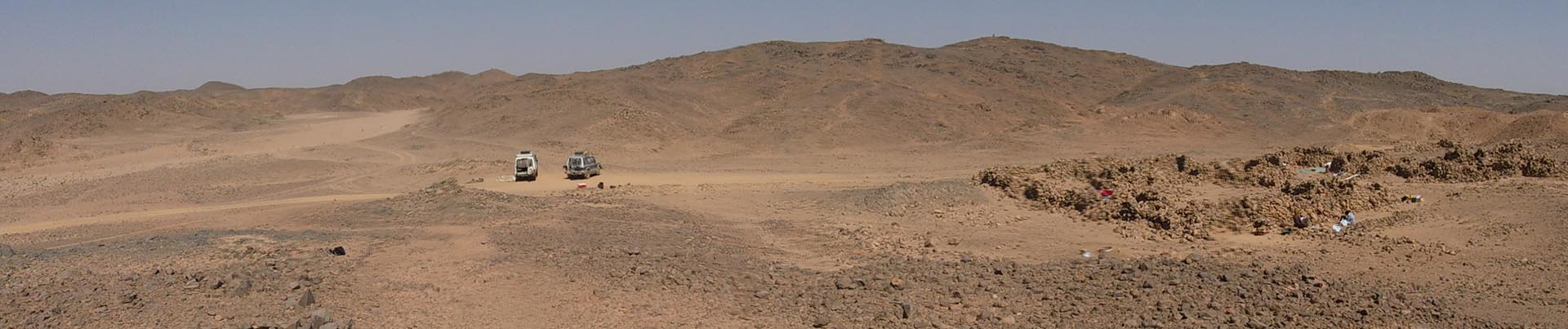
 Prior to the Wadi el-Hudi Expedition’s work, all previous studies of Wadi el-Hudi focused solely on the inscriptions. Yet the inscriptions provide only one perspective, that of the ancient administrators. What about the laborers who worked there? The archaeological record can address their lived experience. Questions regarding what the miners ate, how they prepared or stored their food, who supplied the expedition with food and water are primarily answered through the intensive study of ceramics. Daily life of these workers in the settlements as seen through pottery will complement the perspective of the administrators recorded in the inscriptions.
 Trustee Nominations Committee has selected five highly qualified members to stand for election for four open positions on the Board of Trustees. The Board sets the direction for ASOR and provides oversight for our organization. Among other responsibilities, members of the Board agree to attend two meetings each year, to participate thoughtfully in the governance process, and to contribute financially to ASOR.
 I wrote you all in late August with the exciting news that ASOR’s Board of Trustees had voted to remove the word “Oriental” from ASOR’s name. Now I write with an update and a timeline for the next steps, which will include town halls with the membership and two votes over the next month.


 Norma enjoyed being at the center of cutting-edge archaeology in the United States. In 1968, she helped establish the Archaeological Institute of America (AIA) Long Island Society, where she served as president from 1977 to 1981. In 1976, she became a life-member of the AIA and received their distinguished Martha and Artemis Joukowsky Distinguished Service Award in 1989. From 1980 to 1985 Norma served as the travel editor of the AIA’s ARCHAEOLOGY magazine. She also served as a founding editorial board member of Biblical Archaeology Review until she passed away. Shortly after moving to southern California, Norma founded the AIA’s Orange County Society in 1991, serving as its first president, and in 1992 joined the AIA Governing Board. In 1996, she was named the first female (and up until now, the only) Trustee Emerita of the AIA. It was her desire to share the significance of archaeology for world culture that infused Norma’s drive to play a role in so many of these scholarly institutions and museums.


 I received my first letter from Norma in December 2006, a few weeks before I officially started my position as ASOR Executive Director. Of course I had heard of Norma and her involvement in ASOR and other institutions, but I had never had a conversation with her. Her warm, yet direct letter would be the first of several dozen notes and cards, countless phone calls, and many visits in her home and elsewhere in southern California. Within a few weeks, Norma volunteered to be a counselor and adviser. She was talented scholar, gifted teacher, and one of ASOR’s most generous supporters. I am truly thankful for all of those things, but I will remember her most as a loyal, dear friend and encouraging mentor.


 It is rare to found one organization that continues beyond a person’s life, and yet Norma helped organize and establish three—CAARI, AIA Long Island Chapter, and AIA Orange County Chapter. All three organizations continue to thrive today. It is impressive just how many organizations Norma impacted. As you can see in the photos to the left and below, her name is found in organizations from Cairo, to Jerusalem, to California.
 The support for News@ASOR was annual, and she indicated that she had made a legacy gift so that this vital membership communication tool would receive support in perpetuity. It is fitting that Norma’s legacy and support of archaeology will continue. Norma is certainly someone who advanced tikun olam with her life, wisdom, and wealth.

 The Trustee Nominations Committee announces an open call for (self) nominations for the ASOR Board of Trustees (Class of 2023). There are three primary responsibilities of the members of the Board of Trustees: