Call for Nominations: DEI Committee

Call for DEI Committee Nominations

At its November 21, 2021, meeting, the ASOR Board of Trustees established a standing committee to work on fostering Diversity, Equity and Inclusion in our organization. The Board appointed Erin Darby of the University of Tennessee as the chair of the newly formed DEI Committee. This committee grew out of DEI Task Force established by President Sharon Herbert in the fall of 2020, and several members of that Task Force will serve on the Committee. We are now seeking volunteers and nominations for additional members of the Committee. Its responsibilities as envisioned by the Board are described briefly in section 5.21 of ASOR’s by-laws as advising ASOR leaders “regarding initiatives ASOR might undertake either individually or jointly with other bodies to reach out to and include diverse communities in ASOR activities in meaningful and sustainable ways. In North America, these communities include, but are not limited to, BIPOC, LGBTQ+, and other underserved groups. Overseas, ASOR will focus on serving its international membership and working with local archaeological communities to promote public engagement in ASOR activities.” Further information on ASOR’s DEI initiatives can be found in section 3 of the 2021-2025 Strategic Plan. Once its full membership is determined, the DEI Committee will work on an expanded charge. Nominations and applications should be sent to Erin Darby and Marta Ostovich.

Stipend Report: Sebastian Millien

Mapping it Out: Geo-Referencing Data from the Erbil Plain

Sebastian Millien, 2021 Strange/Midkiff Families Summer Stipend Recipient

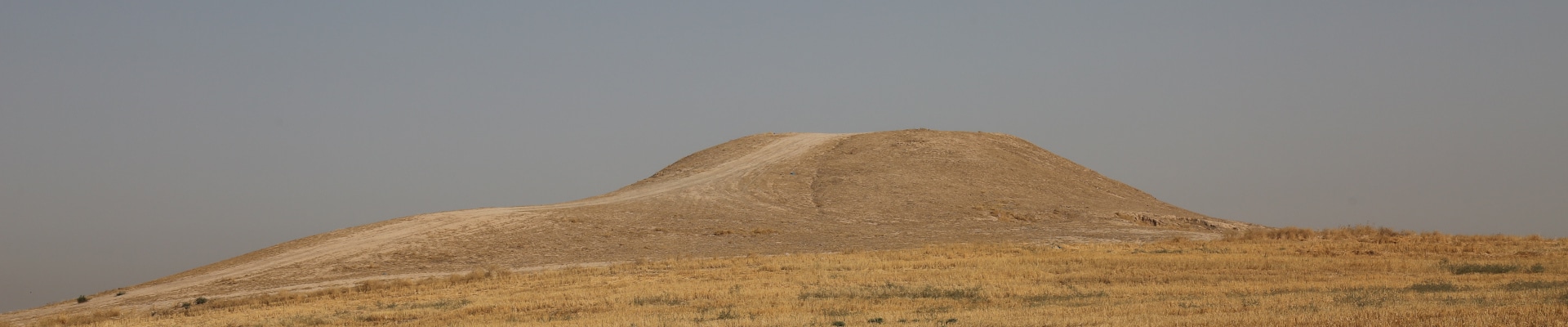
Aliawa (Site 246). Photo courtesy of the Erbil Plain Archaeological Survey.

This summer, I worked with Dr. Jason Ur on the Erbil Plain Archaeological Survey Project. The project was focused on the Kurdistan region of Iraq, particularly the Erbil Plain. An archaeological survey was done on large mounds and the surrounding environment, and the landscape was captured was drone and satellite imaging. As a result of the surveys, a large amount of data has been collected thus far. These include images of different artifacts collected from the location (mainly pottery shards from the mounds) as well as drone images of the various sites and lots surveyed in the region. Dr. Ur’s goal following this large collection of data was to build an interactive and collaborative web dashboard where the drone and satellite images could be geo-referenced on a GIS map. These images would be linked to the sites they came from, as well as the photos of the pottery shards from that respective site. In other words, the objective was a massive processing of the archaeological finds to make the data more accessible to everyone involved in the project and correlate the data to physical location on the site.

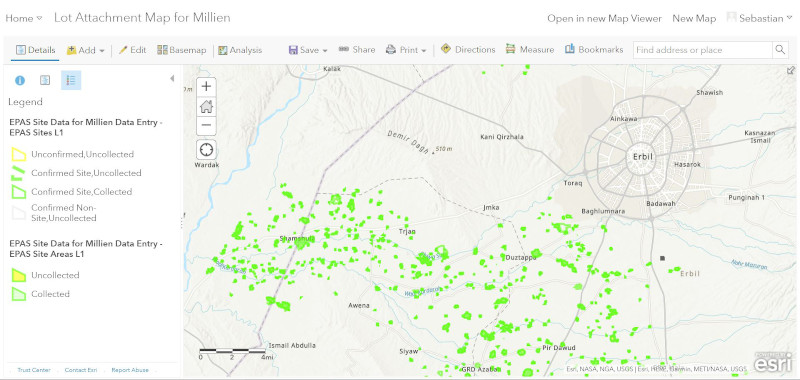
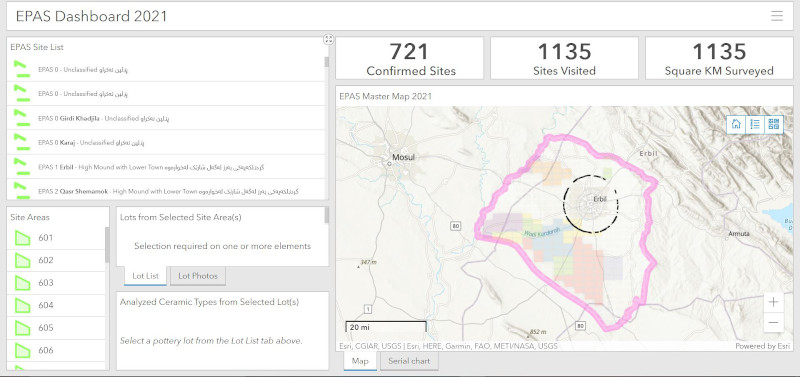
My role in the project was to categorize and label the different data so that I could then input it into the dashboard. The images of the pottery shards had to be re-named to correspond with the site and lot they were collected from. Additionally, the images of the sites from the drones needed to be matched with the locations on the GIS map. Once I had all the renamed and categorized, I then uploaded them into the lot attachment map. This data would then appear on the interactive dashboard. On the dashboard, the different sites are labeled, and selecting a particular site would make all the data correlating for that site immediately available.

Shown above is the lot attachment map dashboard that I used to georeference the data for the interactive dashboard.
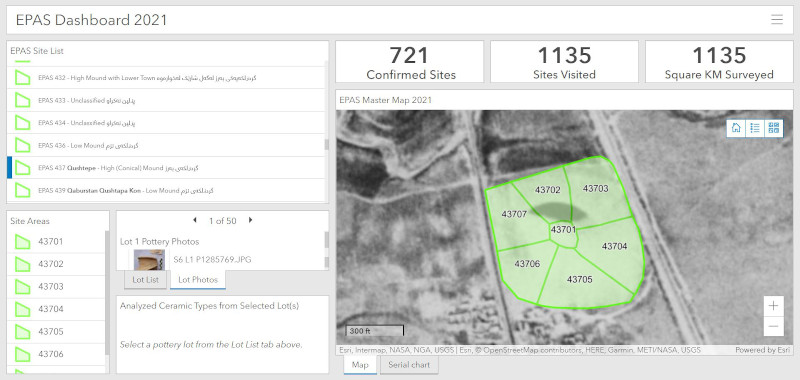
Shown above is the interactive dashboard when first opened. The options for all the sites are shown and the map of the general survey region is also shown.
Shown above is the interactive map in action- a site (437) was selected. The map immediately zooms in onto the site and the different lots associated with the site are highlighted. The images of the different artifacts (pottery, bones, etc.) are made available in the bottom left as well as a description of the type of artifact.

My name is Sebastian Millien, and I am currently and undergraduate at Harvard university studying Chemical and Physical Biology and Archaeology. I was born and raised in Brooklyn, but my family is from Haiti. In the future, I hope to combine biochemistry and archaeology to discover even more about the past.

Read more about the Erbil Plain Archaeological Survey.

During the summer of 2021, ASOR supported 27 undergraduate and graduate students through the Summer Stipend Program. These students undertook non-fieldwork archaeological research projects led by ASOR-affiliated project directors. They also took part in monthly cohort group meetings hosted via zoom. Read a summary of these cohort meetings here.

Stay tuned for more updates from the 2021 Summer Stipend recipients!

2021-2025 Strategic Plan

ASOR BOARD OF TRUSTEES APPROVES NEW 2021-2025 STRAGETIC PLAN

At its November 21, 2021 meeting in Chicago the ASOR Board of Trustees unanimously approved the adoption of a strategic plan for 2021-2025. Periodic strategic planning is a valuable exercise that promotes reflection on and reevaluation of an organization’s goals and priorities. Until this year ASOR had been working successfully under a 2016-2020 strategic plan crafted in a committee led by former President Susan Ackerman.  The new plan represents a revision of that plan and a rebalance of our priorities in light of changing circumstances. At its center is a recommitment to ASOR’s core missions “to initiate, encourage, and support research into, and public understanding of, the history and cultures of the Near East and wider Mediterranean from the earliest times…”, with an expansion of our areas of research to “Western Asia and the wider Mediterranean”.

The plan has been under development since January of 2020 under the supervision of the current President, Sharon Herbert. All ASOR’s standing committees contributed to the new plan, and it was discussed and revised by the Chairs Coordinating Committee under the leadership of Vice President Chuck Jones from the summer of 2020 through fall 2021, when it was approved by them in October. The version voted on by the Board also profited from discussion in the Executive Committee.

This new plan focuses on six areas of ASOR’s activities: Area 1: The Annual Meeting; Area 2: Cultural Heritage; Area 3: Diversity, Equity, and Inclusion; Area 4: Publications; Area 5: Public Outreach; Area 6: Supporting the Work of Our Members. It also considers how ASOR’s new offices at the James Strange Center in Alexandria, VA can be best used to to facilitate the sorts of community engagements and interactions with governmental agencies and other relevant agencies and organizations that we foresaw at the time we purchased the building.

This plan is the result of careful thought and input from all areas of the ASOR community. Although we will certainly face unpredictable changes, challenges, and opportunities in the coming years, we are confident that it will prove an inspiring road map for progress.

Read the full text of the 2021-2025 Strategic Plan.

Geraty Grant Report

Doing unto others as we would have others do unto ourselves: A Report on ASOR’s Lawrence T. Geraty Endowment for Community Archaeology

An inconvenient truth about most archaeological excavations is that more often than not, they do serious damage to the landscape and scenery in the areas where they work. In their wake, archaeological expeditions leave not only wall-sections of houses, barnyards, streets and fortifications, but also unsafe and unsightly excavation trenches and scatters of stones and spolia. This raises the question: Do organizers and sponsors of archaeological excavations have a duty to restore the landscape and scenery they impact with their excavations?

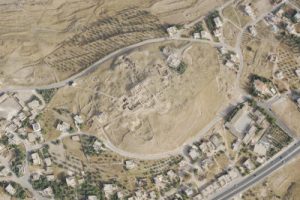
Summit of Tall Hisban. APAAME_20191024_DS-0007. (Photographer: Dana Salameen, courtesy of APAAME)

Back in the day, under the old expeditionary model, the default answer to this question—as it was rarely asked–was no. Under this, now obsolete orientalist mindset, the excavator’s duty was to dig and record well and publish results in peer-reviewed venues in a timely manner. This is where her responsibility ended. How things were left in the field was not a concern as the prevailing assumption was that responsibility for maintenance and preservation of abandoned sites was in the hands of local authorities[1]. After all, in many cases, funds were collected by local permitting authorities ostensibly for precisely this purpose. Such funds, collected at the end of each excavation season, are not a sustainable solution to long-term maintenance of archaeological sites (especially minor sites not associated to ticket-generated income).

As the previous century came to an end, a prominent casualty of this situation was Tall Hisban, located in Jordan along the road linking Amman and Madaba and widely assumed to be biblical Heshbon [2]. Visitors to the site would have found an ascent to its summit to be a most arduous undertaking, as it required stepping warily through clusters of camel shock, tumbled stones and spolia of all shapes and sizes. For all but the most persistent, an ascent to its summit was not an appealing prospect.

A major reason why a team from Andrews University decided to return to work at Tall Hisban in 1996 under my leadership was to find a remedy for this situation. By then, the site had been abandoned for over two decades, the original Heshbon Expedition having ran its course from 1968 to 1976. A second reason was my desire to deepen understanding of already well documented long-term cycles of food system intensification and abatement at the site. A third reason was a consensus among the original Heshbon Expedition leaders that the site’s Islamic archaeology and history deserved to be re-visited with someone on-board with state-of-the-art qualifications for the task at hand. To this end, Bethany Walker was recruited to join our team, and her studies and publications since have proven to be ground-breaking on many levels where Islamic archaeology in Jordan and beyond is concerned. I would note, for example, her editorship of the Oxford Handbook of Islamic Archaeology and a new Journal of Islamic Archaeology (Equinox Publishing).

Group photograph from 2018 field season at Tall Hisban including international team (20 different nationalities) and local workmen.

In the course of over two decades of the second phase of excavations at Tall Hisban—now renamed the Hisban Cultural Heritage Project–a new vision and model of archaeological fieldwork crystallized that today is becoming standard archaeological practice in Jordan and beyond, namely community archaeology. What led to this model emerging in our particular case were three factors: first, the already mentioned situation of neglect at the site; second, a long tradition of ethnographic inquiries in the local community; and last but not least, the friendships and sentiments of mutual trust and understanding already fostered during the original Heshbon Expedition that could be built on as our team returned.

The goal of community archaeology at Tall Hisban since its onset in 1996 has been to partner with the local community in transforming the site and the town into a place of pride and economic opportunity for its residents even as it also would develop into a destination for visitors from elsewhere in Jordan and beyond. Construction of footpaths and viewing platforms was begun in 1997, followed in subsequent seasons with over three dozen in-situ exhibits, each accompanied by explanatory signage. Partners in these endeavors included workmen and their families from the village, the office of the local mayor and his staff; and personnel from the local and national headquarters of the Department of Antiquities.

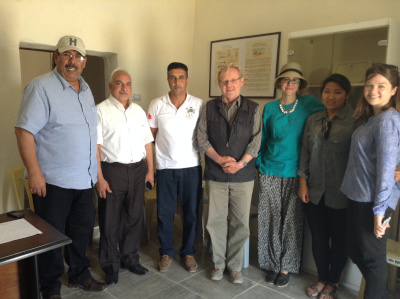
From the left to the right, Mansour Sheehan (Tall Hisban Cultural Association), Saoud Albarari (Tall Hisban Cultural Association), Amer Awawdeh (Tall Hisban Tourist Development Project), Øystein LaBianca (Andrews University), Maria Trogolo (USAID-SCHEP), Anna Kim and Noel Harris (Andrews University interns).
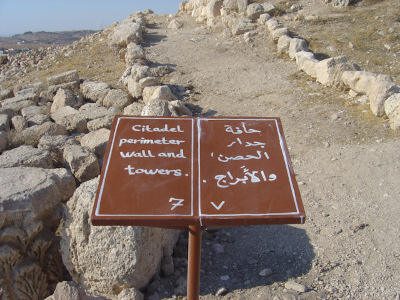
One of the signs painted by Amer Awawdeh, local school teacher.

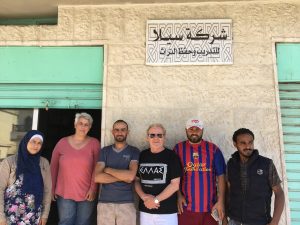
Sela’s founders with Øystein LaBianca. From left to right, Eman Abdassalam, Maria Elena Ronza, Ahmad Almousah, Øystein LaBianca, Shaker Alfuqara and Bassam Alfaqeer.

Maria Elena Ronza, a young archaeology student from Italy who joined our team in 2001, has been particularly responsible for the success of these undertakings. Having taken up residence in Jordan, she was in a good position to follow up on projects that could not be completed during our short field season. A good example is her work with local stakeholders to establish the Hisban Cultural Association as an official non-governmental organization, thus giving agency to local entrepreneurs from Hisban to develop Hisban into a touristic destination. Elena was subsequently hired by ACOR to assist with the Temple of the Winged Lion project [3]  to which she brought the community archaeology experience acquired at Hisban. She has since gone on to incubate together with Ahmad Almousah two all-Jordanian organizations aimed at building local capacity to benefit from protecting nearby cultural heritage sites. They are Sela for Vocational Training and Protection of Heritage (Sela Facebook Page) and Al Raqeem for Logistics & Training (Al Raqeem Facebook Page).

Ahmad Almousah at work in Hisban applying lime mortar.

The Lawrence T. Geraty Community Archaeology Endowment was launched in 2020, in cooperation with the American Society of Overseas Research (ASOR) as a fitting capstone to almost three decades of community outreach by our project. The purpose of this endowment is to support innovation and experimentation by archaeology teams such as ours to build toward sustainable local solutions for preserving and caring for archaeological sites. At the present writing, the fund stands at about $110,000, which has allowed a first distribution of interest earned to occur [4]. That first award was used this summer to leverage funds from antiquities authorities in Jordan to undertake a site-wide cleaning operation that has resulted in the site itself and all of its primary exhibits, signage and paths looking better than I have ever found on my many returns to Jordan. As important was discovering Yasmeen Al Ajarmah, an archaeology graduate from University of Jordan, who led this entire operation and whom I could offer a part-time job as a team-leader for site maintenance operations on an on-goingh basis. She, and a team of three local workmen, will also be assisted by Al Raqeem for Logistics and Training in working with the local community to develop various micro-enterprise activities that can generate income not only to pay for their own salaries, but also for other community entrepreneurs.

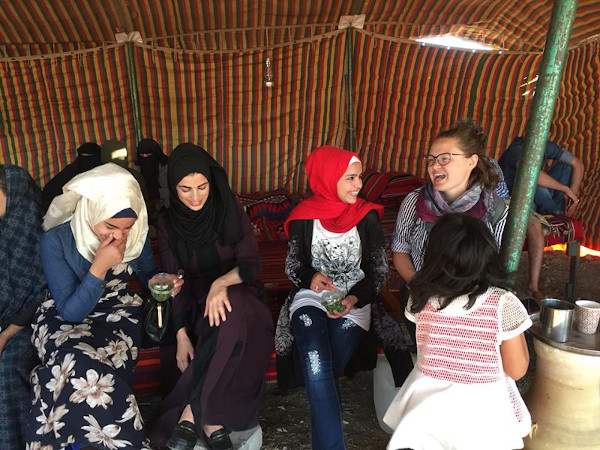
Among the micro-enterprises already underway that also generate funds to support protection of the site are a women’s cooperative providing locally made meals for our excavation teams, tour groups and other visitors; a program of educational activities for local school children that includes sale of a children’s book about Hisban in Arabic. Efforts are also underway to provide visitors with an on-line guided tour of the site which will include announcements of various micro-enterprises and an invitation to donate toward maintenance of the site.

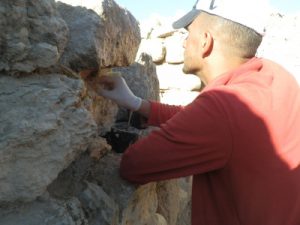
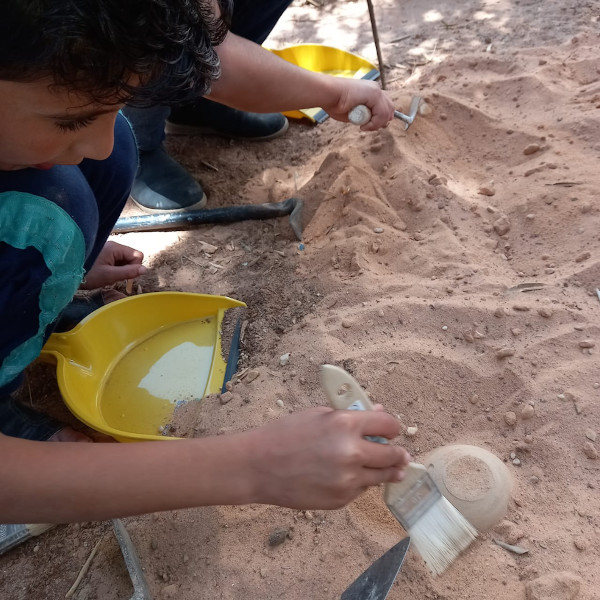
Sela implemented 4 archaeological themed days with hands-on activities for children thanks to support of the Geraty Fund and in cooperation with Princess Basma Center in Hisban.
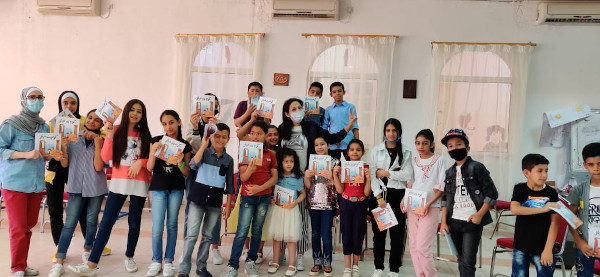
Book reading at Princess Basma Center in Hisban. In preparation for the launch of a children book about Hisban, the writer, Rasha Dababneh, standing in the middle wearing a mask, hosted a book reading for the children from the community. Children were invited to suggest ideas for the forthcoming children’s book.
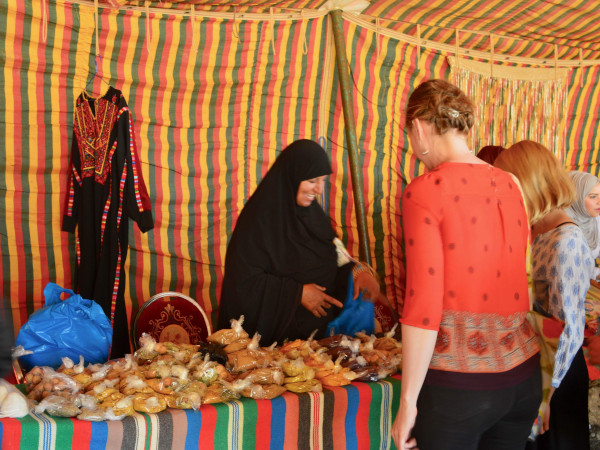
On the occasion of the 50th anniversary of the project, Princess Basma Center in Hisban organized an on-site bazaar so women from the local community could showcase and sell their products.
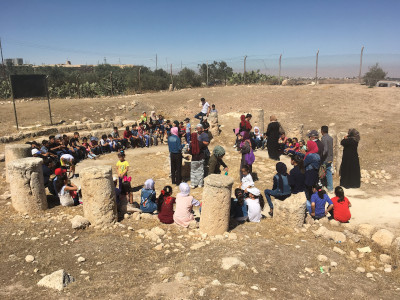
On the occasion of the 50th anniversary of the Hisban digs, school children and their teachers visited the site and participated in hands-on archaeology-themed activities.

Stanley Beikmann, a professor landscape design from Andrews University who served as a faculty member on our project, shared a vision of a botanical garden at Hisban with me some years ago. The Al Raqeem team, Yasmeen Ajarmah and her co-workers are helping this vision to be realized. Such a place includes well-tended and signed exhibits, interpretive paths and platforms, and places for groups of visitors to gather for purposes of orientation and education. An aspirational addition to this vision is a visitor center complete with rest-room facilities, a small shop/cafe, a physical model of the site and a small theatre for screening a short film about the site in different languages.[5]

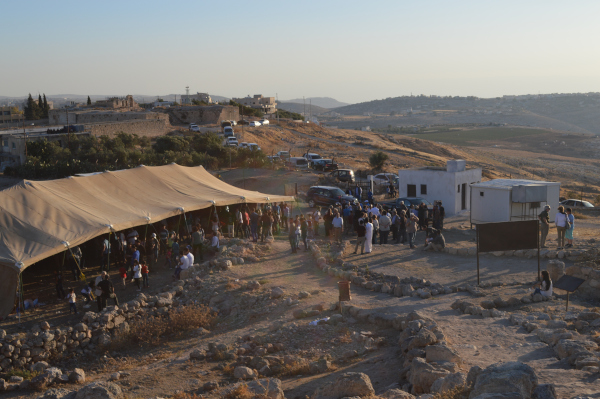
Welcome event in the amphitheater at the entrance to Hisban.

My answer to the question posed about archaeologists’ responsibility at the beginning of this article is: We can no longer avoid responsibility for how sites are left once our fieldwork is ended. The community archaeology model developed at Hisban is obviously not appropriate for all excavations, but for larger projects involving multi-period tell sites, I believe our experience and approach has relevance [6] . For smaller projects involving only a few trenches or probes, the responsible solution is to simply fill in the excavated areas at the conclusion of the project. The days of the old expeditionary model are over. As archaeologists, we have a responsibility to do unto others as we would have others do unto ourselves.

-Øystein LaBianca, Andrews University

Women's Association Tent Bazaar.
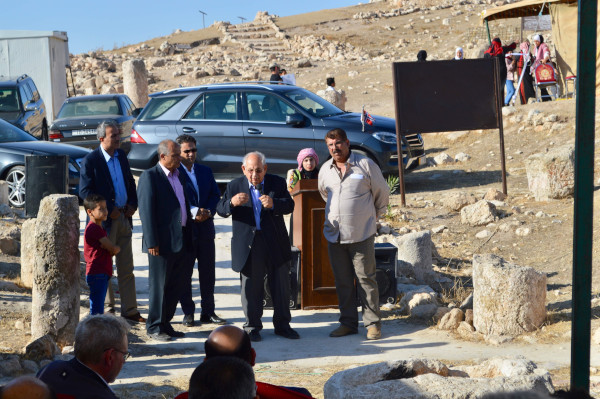
Speech by H.R.H. Prince Raad bin Zeid at the Hisban 50th Anniversary event.

[1] For local communities abandoned excavation sites often leave unanswered questions and expectations: Does this mean the team will be back to ‘look after’ their site? Does leaving it open mean they can expect tourism? Furthermore, abandoned sites mean no ‘closure’ for communities and are often unsatisfactory from their point of view – ugly scars in their landscapes which fill with trash and slowly decay, potentially souring positive relationships established with dig teams originally.
[2] For the record, it should be noted that when the first phase of excavation was finished in 1976, the expedition leadership did not altogether neglect the concerns addressed here. Larry Geraty, then director of the project, and Bert de Vries, project architect, teamed up to prepare a plan for visitors to the site, including viewing platforms along the path that circled the site, etc. Detailed maps and plans were left at the Department of Antiquities along with the portion of the dig fees that were to go to the implementation of the plan. What did not happen was the sort of follow-up with the local community and with the department that became an integral part of the second phase of work at the site.
[3] https://www.jordantimes.com/news/local/italian-jordanian-architect-pushes-community-archaeology
[4] Seed funding for the endowment was provided by Ronald and Sheila Geraty. Andrews University and La Sierra University each contributed $10,000. Other major contributors ($1000+) to the endowment fund include Lawrence and Gillian Geraty, Oystein and Asta LaBianca, Carolyn Waldron, Joy Fehr, Doug and Carmen Clark, Susan Ackerman, Tim Harrison and Andy Vaughn. Help the Grant grow by selecting “Geraty Endowment Fund” from the drop-down menu in the link.
[5] See for example https://www.youtube.com/watch?v=u2kUMkjmRF8\
[6] For more about the Hisban Community Archaeology model, see https://digitalcommons.andrews.edu/auss/vol55/iss1/4/

Digging Up Data Workshops

Digging Up Data Workshop Series

Organized by Open Context and ASOR’s Early Career Scholars Committee, the Digging Up Data Workshop Series aims to introduce ASOR members to data literacy and how to work with the archaeological data. Moderated by Tiffany Earley-Spadoni (ASOR’s Early Career Scholars Committee) and Leigh Anne Lieberman (Open Context), these workshops are free, but registration is required. Click here to register for the next workshop, “Telling Stories with Archaeological Data,” on November 10, 12:00-1:15 PM eastern time.

For those who were unable to attend the first two workshops, recordings are available on ASOR’s YouTube channel.

Data Literacy for Archaeologists (September 15)

  • What is data literacy and why is it important for archaeologists to be data literate? Participants in this workshop will examine these questions and learn about some useful tools and resources to help them hone these important skills.

Working with Archaeological Data (October 20)

  • How do we find, produce, curate, and analyze data? What sorts of questions can we ask of our data, and where can we go for data support? In this workshop, participants will consider the fundamentals of archaeological data analysis.

Telling Stories with Archaeological Data (November 10)

  • How do we share data-driven narratives of our research with diverse, public audiences? Participants in this workshop will think critically about the role of public scholarship in our discipline and begin to develop a plan for their own public-facing projects.

Digging Up Data at ASOR 2022

More to come on a proposed session for the 2022 Annual Meeting.

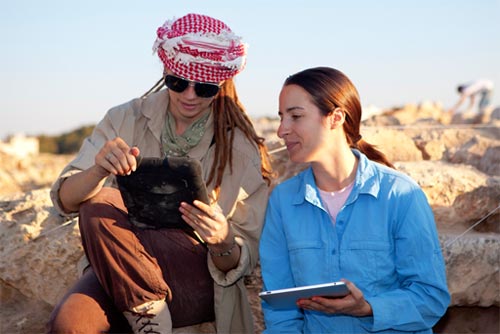
Digital data retrieval with tablets at Tall al-'Umayri, Jordan (photo credit Jillian Logee in D. Clark and K. Bramlett, "Tall al-Umayri" ASOR Blog 2012).
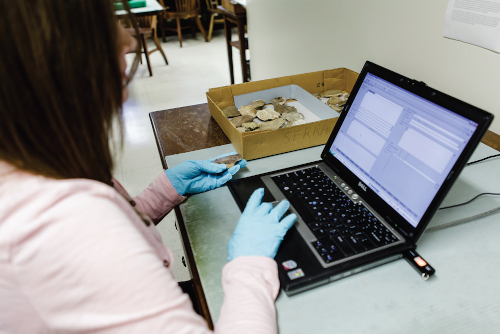
Assistant Registrar Susan Allison enters data on recently registered objects from the Oriental Institute’s collections directly into the new Integrated Database (photo by Anna Ressman in S. Branting, J. Green, and S. Foy "Digging through Data at the Oriental Institute" ANE Today 2013.)
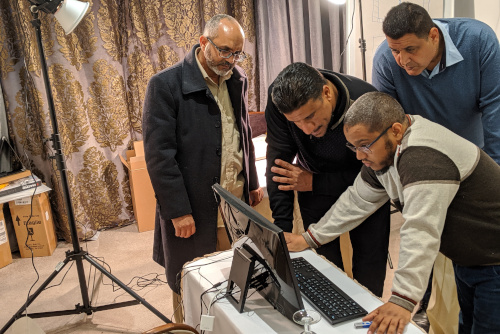
The team from Ghadames, Libya trains on the digitization system developed by the Hill Museum & Manuscript Library (T. Bariun and W. Raynolds, "Digitizing Manuscripts of the Trans-Saharan Trade" 2020).

Nominees for ASOR Board Elections

2021 Nominees for ASOR Board Elections

The ASOR Trustee Nominations Committee has selected four highly qualified members to stand for election for four open positions on the Board of Trustees. The Board sets the direction for ASOR and provides oversight for our organization. Among other responsibilities, members of the Board agree to attend two meetings each year, to participate thoughtfully in the governance process, and to contribute financially to ASOR.

There are two candidates running for two openings as Member-elected Trustees for 3-year terms (Margaret Cohen and Jane DeRose Evans). There are two candidates for two openings as Institutionally-elected Trustees for 3-year terms (Erin Darby and Lynn Swartz Dodd). All candidates are running unopposed. All ASOR members are eligible to vote in the Member-elected Trustee Election, while only Institutional Representatives of the 60 ASOR-member schools may vote in the Institutionally-elected Trustee Election.

ASOR will conduct the elections by online ballot, and all members and Institutional Representatives will receive the appropriate ballot(s) via email on October 20, 2021. We will send out two reminders, and all ballots must be completed by 12:00 PM Eastern Time on Friday, November 12. If you have difficulties completing the online ballot (once they are distributed), please contact Marta Ostovich at programs@asor.org.

Nominees for Membership-elected Trustees
(two to be elected)

 
Margaret Cohen

Margaret Cohen’s academic training is in Hebrew Bible, and her archaeological training comes from more than twenty years of excavations in Israel, Jordan, and Egypt. She is now wrapping up nearly eight years living on the campus of The Albright Institute in Jerusalem where, in pre-COVID times, she was an active participant in the local scholarly community exchange. Prior to her time in Jerusalem, Margaret taught in both large research and small liberal arts settings and has a deep appreciation for and interest in the many forms of the student experience. Her current research focuses on foodways, how food power was wielded in the biblical world, and how some modern-day food movements are informed by ancient texts and practices.

Mission Statement: As we continue to experience uncertainty and change on a global scale, both steadiness and agility are required for ASOR to flourish, to contribute its expertise to the discipline, and to promote its relevancy both in academic and non-academic communities. This may mean altering old models that can feel comfortable, but are not necessarily as productive as they once were, such as imagining future possibilities for scholarly meetings, developing new kinds of venues for publication and exchange of ideas, and embracing innovative programs appearing elsewhere in academia: small, virtual workshops; opportunities reserved for non-TT scholars; social and educational opportunities for members of the general public; the use of virtual tools to connect with future scholars, such as high-school seniors thinking about college or college students considering majors. Driven by its membership, ASOR must constantly adapt to the, at times, divergent needs of those members. Those working to make their mark, those navigating life within their academic positions as well as outside the workplace, and those with hard-won experience that can better the journey for others, all must succeed for the organization to succeed. I am honored to be asked to stand for election to the dedicated group already doing this work, striving to make future-ASOR meaningful for us all.


Jane DeRose Evans

Jane DeRose Evans is Professor and Chair of Art History at Temple University. She specializes in the archaeology of the Roman provinces and especially in ancient numismatics. She is a Fellow of the American Numismatic Society and a member of the Royal Numismatic Society. After excavating for many years in France, she is now project numismatist for the Harvard/Cornell Excavations in Sardis and the George Washington University excavations at Bir Madhkur (Jordan). Recently, she brought to publication The Mithraeum at Caesarea Maritima (ASOR Press) and is completing the final publication on the U-Shaped Building at Caesarea.

Mission Statement: ASOR has been an important part of my scholarly life since graduate school, as a place to find out about excavations and new ways of thinking about the cultural history of the southern Levant and Anatolia. More recently, I have been an active member with the women of ASOR, Chair of the Cultural Heritage Committee, and member of the Executive Committee. I am proud to see ASOR tackle important questions of cultural heritage and ethical responses to threats to the region’s archaeological heritage, as well as undertaking initiatives to extend our diversity and equity footprint. We must retain our valuable mission to bring a greater understanding of our past to a wider audience while we continue to focus our attention on the ethical issues that arise as we seek partnerships with diverse audiences here in North America and overseas.

Nominees for Institutionally-elected Trustees
(two to be elected)

 
Erin Darby

Erin Darby is an associate professor of Religious Studies at the University of Tennessee and the UT Faculty Director of Undergraduate Research and Fellowships. She is an expert in the Hebrew Bible, archaeology, and ancient Near Eastern history and literature. At the University of Tennessee, she is one of the founding members of the Partnership for the Academic Study of Early Judaism, the Knoxville ArabFest cultural festival, the UT Archaeology Day outreach event, and the Tennessee Initiative for Middle East Studies. She leads the Department of Religious Studies diversity action committee, coordinates religious diversity professional development opportunities on the UT campus, and is the outgoing chair of the Chancellor’s Council for Diversity and Inclusion. Darby is also the co-director of the ASOR-affiliated ‘Ayn Gharandal Archaeological Project in southern Jordan, where she is excavating a Nabataean-Islamic period site and leading the UT Dig Jordan study abroad program.

Mission Statement: I have been an active ASOR member since 2008 and have had the privilege of serving in a variety of ways. I was the co-chair of the Junior Scholars Committee (now ‘Early Career Scholars’) for seven years, overseeing its transition to a standing committee and representing the committee on the Chairs Coordinating Council. In this capacity, I also collaborated with the Ethics Working Group and the Initiative on the Status of Women. I have served as the program chair for the Archaeology of the Near East: Bronze and Iron Ages and as co-chair for a number of member-organized sessions. Most recently, I served on the ASOR Ad Hoc Committee for the Location of the Annual Meeting and have served as the chair of the ASOR Diversity, Equity, and Inclusion Taskforce. I was honored to receive an ASOR Membership Service Award in 2017. I have been the ASOR institutional representative for the University of Tennessee since encouraging the university to join ASOR in 2014.

Serving on the Board of Trustees is a way for me to demonstrate my gratitude for how central ASOR has been in my professional life and in the lives of my students. My work with ASOR and with university administration has impressed upon me the importance of supporting ASOR in this time of transition in higher education. Alongside all of our current initiatives, I am particularly interested in thinking creatively about the value we bring to institutional members, ways we can articulate that value to institutions, and how we can maximize our connection to students in their classrooms and through ASOR-affiliated field schools. The challenges that are affecting higher education will certainly have an impact on scholarly societies like ASOR, but I believe that the type of learning encouraged through our programs is unique in the field of higher education and has the potential to yield new development initiatives.


Lynn Swartz Dodd

Lynn Swartz Dodd is Associate Professor of the Practice of Religion at the University of Southern California Dornsife College of Letters, Arts and Sciences. There, she has served as the Director of the Interdisciplinary Archaeology Undergraduate Major and the Director of Undergraduate Studies in Religion. She was also designated a USC Dornsife Distinguished Faculty Fellow.

Dodd’s research centers on archaeology and politics and ancient innovation and social change, particularly the ways that beliefs about the world figure in social change. As Curator of USC’s Archaeology Research Center, she is also engaged in technical material studies, excavation publication projects, and research involving the use of lasers and new imaging techniques in archaeological research and conservation. She is a staff member of the Amuq Valley Research Project Survey (Turkey), the Kenan Tepe Excavations (Tigris River, Turkey), and the Tell al-Judaidah Publication Project (Turkey), as well as the Native American Sacred Landscapes Project (California). Dodd is in addition the co-organizer of the Israeli Palestinian Archaeology Working Group.

Mission Statement: During my term serving as Secretary of the Board of Trustees and Chair of the Ad Hoc Ethics Working Group, I came to understand the critical importance of ASOR members’ perspectives about professional responsibility in all areas of research, publication, and teaching. I support ASOR’s on-going efforts to specify best practices that support safety and respect for all participants in every environment.

I applaud ASOR’s recent decision to open all benefits of membership, including scholarships, to all members regardless of their home location. As an Institutional Representative to the ASOR Board of Trustees, I will work to increase the visible, reciprocal benefits both for institutional members and for ASOR. Also, I will contribute to reimagining institutional membership in ways that enable diverse forms of support for ASOR and its members worldwide. I will encourage ASOR to pursue initiatives that support relevance, diversity, and expanded professional opportunities for ASOR members, including new partnerships with non-profits and other organizations. I affirm ASOR’s tangible efforts to support heritage preservation, documentation and rebuilding in the regions where ASOR members work as reflections of our broad vision of scholarly responsibility and relevance. I will continue to support ASOR personally, and as Chair of the Development Committee, am working to identify others who will support ASOR, both financially and in other ways, so that additional resources can be offered to members who participate in research into, and public understanding of, the history and cultures of the Near East and wider Mediterranean, from the earliest times.

Stipend Report: Loren Clark

7000 Miles Away: Geoarchaeology and Landscape Research in the Middle of a Pandemic

Loren Clark,  2021 Eric & Carol Meyers Summer Stipend Recipient

It has been no small feat, as all of us in archaeology know, to continue archaeological research and collaboration during the COVID-19 pandemic. With the aim of keeping everyone safe and healthy, most fieldwork and travel has come to a halt. For those of us who work outside of our home countries, it has been even more difficult to plan for the future of our research. For those of us conducting research as part of the UC San Diego and the University of Haifa collaboration, this has meant shifting our focus to the archive of sediment cores that were shipped to our lab in San Diego from the other half of our team in Haifa. In-field collection and meetings became Zoom calls, and planning sessions were discussed with maps on a shared screen. The 10hr time difference had our breakfast coffees in San Diego shared with Israeli dinner. Through the hard work of our directors and each team member, we were able to continue a portion of the research that we were conducting pre-pandemic.

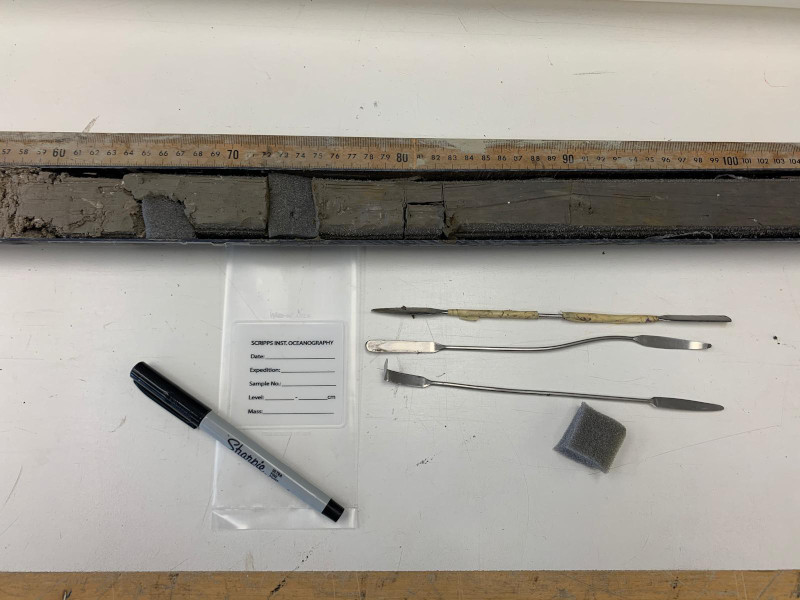
Fellow graduate researcher on this core, Kendall Mahoney, works in the lab amid COVID safety protocols to collect samples for Carbon-14 dating and stable isotope analysis.

These sediment cores contain a high-resolution dataset of depositional processes and environmental change along the Carmel Coast during the Holocene. The specific core that was funded through this stipend is located in the northern part of the Kebara marsh in NW Israel. The analysis of the core in 2020 allowed for preliminary conclusions to be made about cycles of drying and wetting throughout the life of the wetland. Laminations of organic-rich layers juxtaposed against paleosol and sandy layers are present throughout the core, which have allowed us to posit questions related to regional and local climate change.

Core sections were sampled and labeled to be washed and sorted for various analyses.


Once washed and sieved, samples are picked and separated under a microscope to identify the makeup of each coarse fraction.

The goal this summer was to isolate specific proxies that serve as indicators of climate, environmental, and landscape change for the area between the Carmel Ridge and the coast. Specifically, we decided to focus on pyrite as it can be an indicator of changing salinity in waterlogged areas. Understanding the environmental change in the area is crucial in tracking the wetland as a resource for communities from the Neolithic – Iron Age. The Carmel Coast is known for the intense concentration of archaeological sites from various periods of prehistory, and the data that we have compiled will only add to the ever-growing picture of life along this critical landscape. The data from this project is still being analyzed by multiple researchers, including myself, and will be presented at the ASOR 2021 Virtual Annual Meeting in December. It has been an honor to work under this funding from ASOR to continue our research in this remote world. As safe travel opens up for international research, we plan to continue adding to and analyzing the existing datasets along the Carmel Coast.

Loren Clark is a 3rd year PhD student at the University of California, San Diego in the Levantine Archaeology Lab, directed by Dr. Thomas Levy. She is also a scientific diver for the Scripps Center for Marine Archaeology which focuses on submerged archaeology in the Eastern Mediterranean.
To keep up with this project (and many more) being conducted through the collaboration between UCSD and the University of Haifa and being funded by the Koret Foundation, please see our Facebook page: https://www.facebook.com/SCMAKoretProject

During the summer of 2021, ASOR supported 27 undergraduate and graduate students through the Summer Stipend Program. These students undertook non-fieldwork archaeological research projects led by ASOR-affiliated project directors. They also took part in monthly cohort group meetings hosted via zoom. Read a summary of these cohort meetings here.

Stay tuned for more updates from the 2021 Summer Stipend recipients!

Summer Stipend Cohort Meetings

Summer Stipend Cohort Meetings

And just like that, Summer is a wrap and Fall is well underway! But before the first leaves fall, let’s take a look back at what happened during ASOR’s inaugural Summer Stipend program cohort meetings, hosted by Marta Ostovich (ASOR) and Sydney Pickens (ASOR/AITC). The monthly cohort meetings were designed to encourage student connections and promote professional development. Participants from Lebanon to California joined us over the course of the summer to participate in these lively, informative conversations via Zoom: 

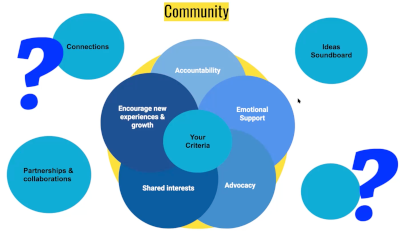
  • Community, Mentorship, and Social Capital. Our first cohort meeting centered around cultivating intentional relationships, both professional and personal. We asked, who are you currently in a community with? We encouraged participants to evaluate their present communities, identify need gaps, and develop a criteria for building relationships that help push them into purpose. We prioritized community over network to encourage genuine, human to human connections that foster more sustainable relationships. This is particularly relevant for the fields of Anthropology and Archaeology, where the work is first and foremost situated within the human experience.
  • Self Advocacy. Our second gathering featured a discussion on finding, making space for, and using your voice in academia. The conversation focused on two phenomena particularly prominent among women and people of color: imposter syndrome and code switching. Imposter syndrome causes people to question their abilities, instilling a fear that they will be exposed as a fraud. Code switching is a strategic shift between language and/or vernacular to communicate more effectively with a given audience. However, the switch is often unidirectional and perpetuates a culture of assimilation to dominant power structures. We explored how these phenomena are fueled and perpetuated by systemic bias, and discussed how more inclusive practices and supportive academic environments can reduce their prevalence. Throughout the conversation, facilitators and participants exchanged tips and tricks for showing up in academia (and elsewhere) both authentically and confidently.
  • Academia Reimagined/Alternative Futures. Our third meeting featured a panel of speakers who shared their experiences and advice on the academic world: Sarah Kielt Costello (University of Houston-Clear Lake), Jay Crisostomo (University of Michigan), Kate Sheeler (Cathedral High School), and Julia Troche (Missouri State University). Many of the Summer Stipend cohort members are interested in pursuing futures in education and all of our guests work in education, though in a variety of settings. They spoke about the experiences that shaped their careers/career paths: from graduate school to navigating the job market. We discussed what an alternative future in archaeology looks like, how to balance research and professional goals with personal well-being, and how the culture of academia is changing.
  • Future Fieldwork. For this meeting, our cohort group was joined by Debra Foran (Wilfrid Laurier University), Rachel Hallotte (SUNY-Purchase), Morag Kersel (DePaul University), and Tom Roby (Getty Conservation Institute) for a conversation on the ins and outs of archaeological fieldwork. This was an interesting conversation since fieldwork has been on hold due to the COVID-19 pandemic, and the Summer Stipend program was focused on non-fieldwork research. This pause in fieldwork offers time to reflect and be thoughtful about getting (or staying) involved with projects in the future. Our guest speakers offered perspectives from their own field projects and experiences, and the cohort students shared what they were looking for in fieldwork. Through this exchange, we identified important considerations for deciding what projects to join. Topics ranged from the professional (how to pick your first field project, how to stay involved long-term with a project, skills that you can gain from fieldwork, etc.) to the very practical (level of support, physical/mental effort required, school credit, project infrastructure, cost, living situations, etc.). 

A huge thank you to all of our guest speakers who joined us for these meetings to share their experiences and chat with the cohort!

As part of their Summer Stipends, each cohort member submitted a report on their research and the first report is now available on the ASOR website. Read Shannon Burton’s report on preparing photographs for exhibits in a planned Community Heritage Center in El-Kurru, Sudan here. Stay tuned for more reports from our Summer Stipend recipients on their research in News@ASOR this fall!

To close out the Summer Stipend program, students are being paired with an ASOR mentor. The goal is to give students a chance to connect with someone in their field who can encourage, support, and guide them along their career paths, and/or provide advice in a specific area (publishing, applying to grad school, etc.). Mentoring is also a major part of ASOR’s Diversity, Equity, and Inclusion initiatives. If you’re interested in mentoring students, please take a moment to fill out our mentor survey. Thank you to everyone who has already signed up to be a mentor! You’ll be hearing from us with more information about the mentorship program in the upcoming weeks.

Stipend Report: Shannon Burton

Stop, Collaborate and Listen!

Shannon Burton, 2021 Platt Summer Stipend Recipient


Drone shot of El-Kurru, showing both the archaeological site in the foreground and the village in the background. El-Kurru was the site of the royal pyramid cemetery of the kings and queens of ancient Kush, ca. 850-350 BCE. Image taken by Kate Rose, 2019.

Receiving a summer stipend from ASOR gave me the opportunity to work with Dr. Geoff Emberling on “Living in Nubia,” a community archaeology project centered around the Sudanese village of El-Kurru. Our project focuses on the ways in which we as archaeologists can work collaboratively with community members and Sudan as a whole to present El-Kurru and its heritage to audiences in both Arabic and English.

This work with El-Kurru village takes many forms, including a set of educational materials and worksheets for teachers that were completed earlier this year and will be workshopped in Sudanese schools this fall. Most of the work I did this summer, however, was on exhibit materials for the planned Community Heritage Center in El-Kurru. This heritage center will focus not only on the archaeological work done at El-Kurru, but also on the village’s local heritage and culture. Part of the materials I helped work through this summer were hundreds of photographs taken by El-Kurru residents. During the 2017, 2018, and 2019 seasons, the archaeological team ran a photo contest for the residents of El-Kurru, in which hundreds of photographs were submitted showcasing all aspects of life in the village. Part of our work this summer involved sorting through these photographs, choosing broader themes and categories for the exhibit, and then meeting virtually with our partners in El-Kurru, particularly our main contacts, Anwar Mahajoub and Sami Elamin, to decide which photos should be on display. These photos will be accompanied by captions written by the local photographers themselves. In addition to work on the heritage center, we also continued working on our plans for a children’s book and a short film about El-Kurru. We made significant progress this summer, and work will continue on all of these projects in the fall.

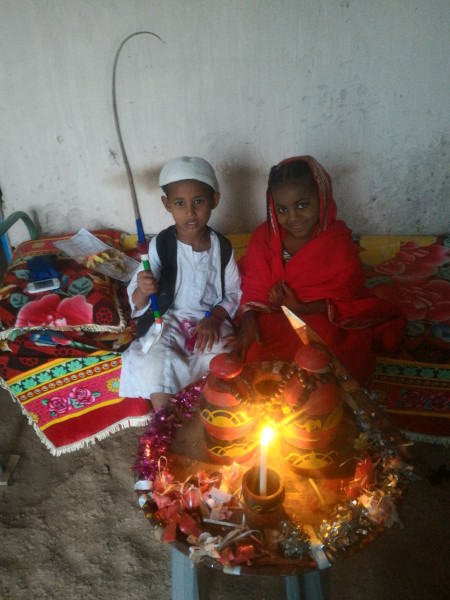
Two children at a wedding, taken by El-Kurru resident Marwa Mahajoob. One of the winning photos from the 2017 Photo Contest.

This deeply collaborative approach between archaeologists and El-Kurru residents is one of my favorite things about our project. All of the materials we are creating, from the heritage center to the children’s book, are things that the residents of El-Kurru themselves have requested, and we make sure that our local partners are consulted in every decision we make. My work with the “Living in Nubia” project has really shown me that archaeological research can and should be done in collaboration with, not just at the expense of, local communities, and this is something I will carry with me throughout the rest of my academic career.

Anwar Mahajoub (left), one of our main collaborators on the project, and Bakri Abdelmoneim, both from El-Kurru village, during filming of a short video at El-Kurru, 2019.

Shannon Burton is a recent graduate from the Classical Archaeology program at the University of Michigan. Her research interests include women in antiquity, archaeobotany, food production and cultivation practices, and community archaeology. She hopes to continue working with the “Living in Nubia” team, as well as go on her first excavation in Sudan in early 2022.

Project website link: https://sites.lsa.umich.edu/nubia/

During the summer of 2021, ASOR supported 27 undergraduate and graduate students through the Summer Stipend Program. These students undertook non-fieldwork archaeological research projects led by ASOR-affiliated project directors. They also took part in monthly cohort group meetings hosted via zoom. Read a summary of these cohort meetings here.

Stay tuned for more updates from the 2021 Summer Stipend recipients!

Back-To-School ASOR Book Sale

Back-To-School ASOR Book Sale

Fall Special

Back-to-school season means shopping for books, and ASOR is here to help you stock your library. ASOR members (with a mailing address in the USA) can purchase copies of recent ASOR books at the discounted price of $25.00 (ca. 70% discount + $5.00 US media mail shipping) through October 31, 2021, while supplies last. All prices listed below include US media mail shipping. Purchases are restricted to one copy of each volume per member. Due to ASOR’s licensing agreement with ISD, this offer is only available to ASOR members. We are unable to offer this discount to members without a US mailing address due to international shipping costs. Please contact programsasor.org with any questions.

Not an ASOR member? Join as an Associate Member ($40) first in order to take advantage of these great deals on books. More information on membership and its benefits can be found here.

ARS 28: All Things Cypriot. Studies on Ancient Environment, Technology, and Society in Honor of Stuart Swiny. Edited by Zuzana Chovanec and Walter Crist. Original price $79.95. Sale price $25.00 (includes US media mail shipping)

Click here to purchase ARS 28 in ASOR’s online store.

ARS 27: Caesarea Maritima: Excavations in the Old City 1989-2003. Volume 1: The Temple Platform (Area TP), Neighboring Quarters (Area TPS and Z), and the Inner Harbor Quays (Area I): Hellenistic Evidence, King Herods Harbor Temple, Intermediate Occupation, and the Octagonal Harbor Church. Edited by Kenneth G. Holum. Original price $89.95. Sale price $25.00 (includes US media mail shipping).

Click here to purchase ARS 27 in ASOR’s online store.

ARS 26: The Archaeological Survey of the Desert Roads between Berenike and the Nile Valley. Expeditions by the University of Michigan and the University of Delaware to the Eastern Desert of Egypt, 1987-2015. Edited by Steven E. Sidebotham and Jennifer E. Gates-Foster. Original price $84.95. Sale price $25.00 (includes US media mail shipping).

Click here to purchase ARS 26 in ASOR’s online store.

AASOR 74: The Excavations of ‘Iraq al-Amir, Volume II. Edited by Nancy L. Lapp, with contributions by Michael S. Zimmerman, Daniel Ulvoczky, Nicholas Hudson, Adam Hartman, and Nancy L. Lapp. Original price $84.95. Sale price $25.00 (includes US media mail shipping).

Click here to purchase AASOR 74 in ASOR’s online store.