Fieldwork Report: Luke Poutre

Heat Builds Character

Luke Poutre, 2024 Charles Steinmetz Fellowship Recipient 

It is 2:45 A.M. and a cascade of phone alarms begins to sound throughout the dig house. Members of the team get up from their floor mats and quickly prepare for the day. For those of us on the Geophysics team, this means that all of our cumbersome equipment must be staged in front of the house to be loaded onto the bus that takes us to the dig site. We find time to eat a handful of nuts or a banana before loading begins, and by 3:45 the bus is en route to Kurd Qaburstan. It is still dark as we drive to the site, and we see the fires from oil refineries lighting up the horizon as we drive along the highway to the village of Yedi Kizlar, the modern village where our project is located. Before we leave the outskirts of the city of Erbil, the bus stops at a bakery where we pick up a bag of Samoon bread, one of the most important components of our on-site meal which we referred to as ‘second breakfast’. After making the half-hour drive from our house in Erbil to Kurd Qaburstan, we finally arrive just before sunrise and meet up with our Kurdish dig team.

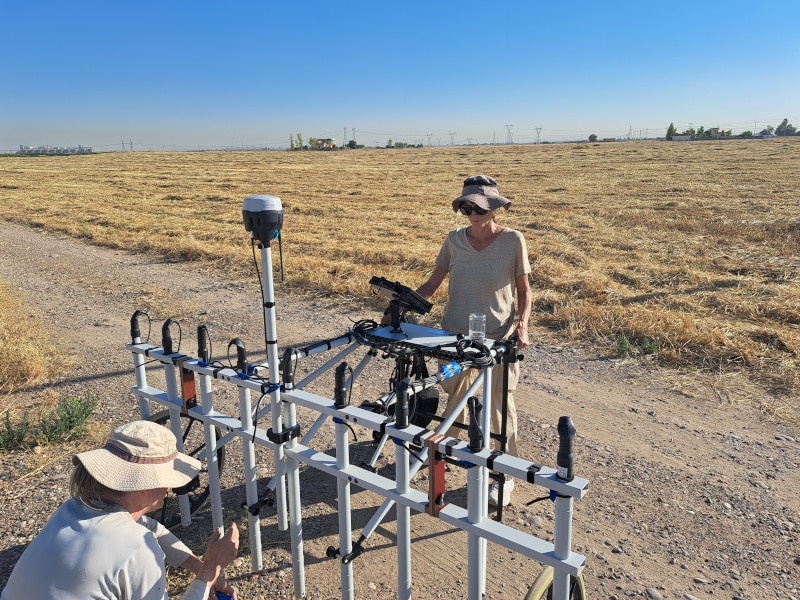
The geophysics team with the magnetometer. Andy Creekmore (L) and Nicole Temple (R).

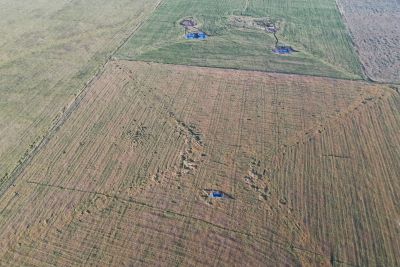
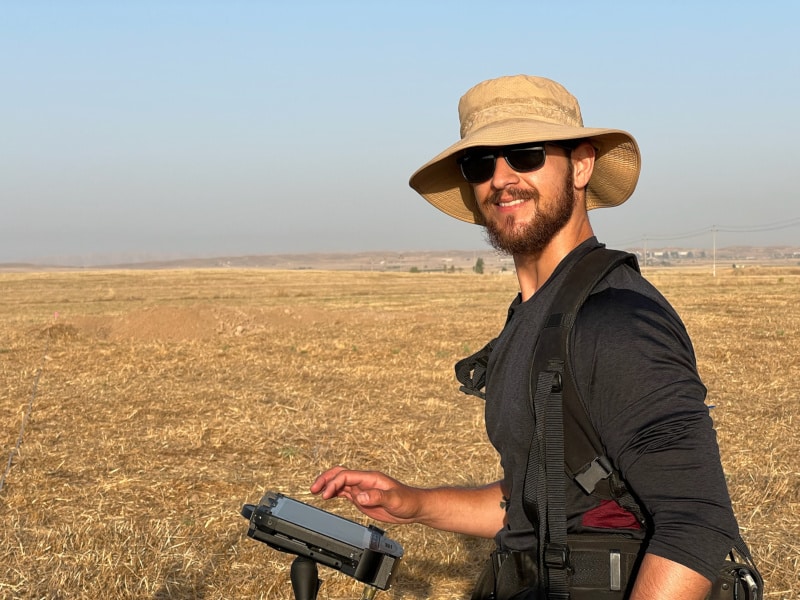
At this point, the excavation team breaks off to their trenches while the members of the geophysics team begin setting up our equipment. This process involved putting together a SENSYS Multi-Channel Carrier Type F pushcart with MAGNETO MXV4 magnetometer system and setting up hectare or half hectare grids using GPS and tape measures throughout the center and periphery of the site. This piece of equipment is comprised of a GRP frame, a mounted EMLID GPS system, nine individual sensors set 0.25m apart, and a processing unit. The pushcart is used to take magnetometry readings of an area so as to gain an understanding of the potential architecture and economic activities of that location (i.e. ceramic or baked brick kilns). Once the equipment is set up, one of the members of the team straps on the battery-pack and begins collecting data. This is done by pushing the cart in straight lines back-and-forth within the pre-marked hectare, guided by other members of the team holding flags at each end of the grid. The terrain, however, made this process a bit more difficult. The site itself is located on a modern farm, with the main tell falling within the barley fields and one of our chief focuses of excavation being within the tomato patch. As such, the soil was rife with plow-furrows which were baked solid by the 116 °F heat, resulting in a tremendous effort not only to push the cart, but also to keep it straight. The resulting data consists of magnetometer readings that we process to compile into a two-dimensional map or magnetogram that can be viewed and interpreted by the entire team.

Luke operating the magnetometer.
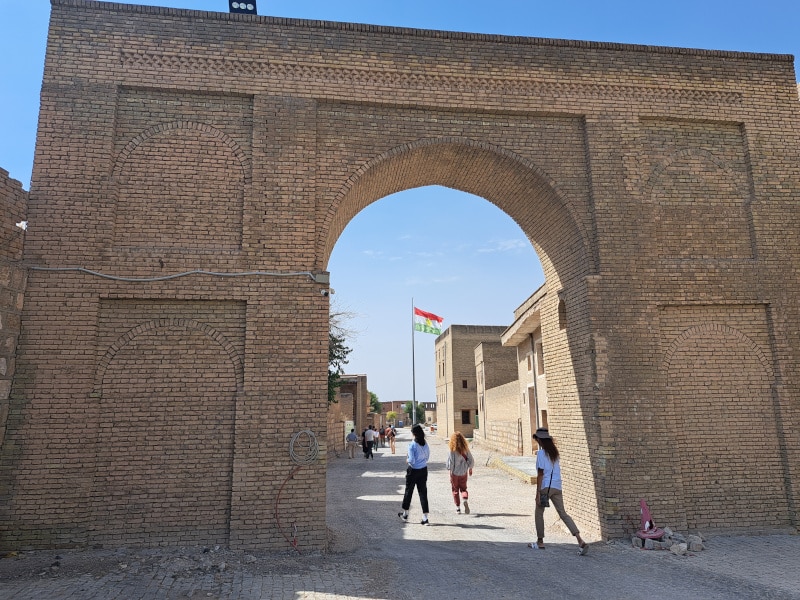
Photo by Luke Poutre of an archway
The citadel archway.
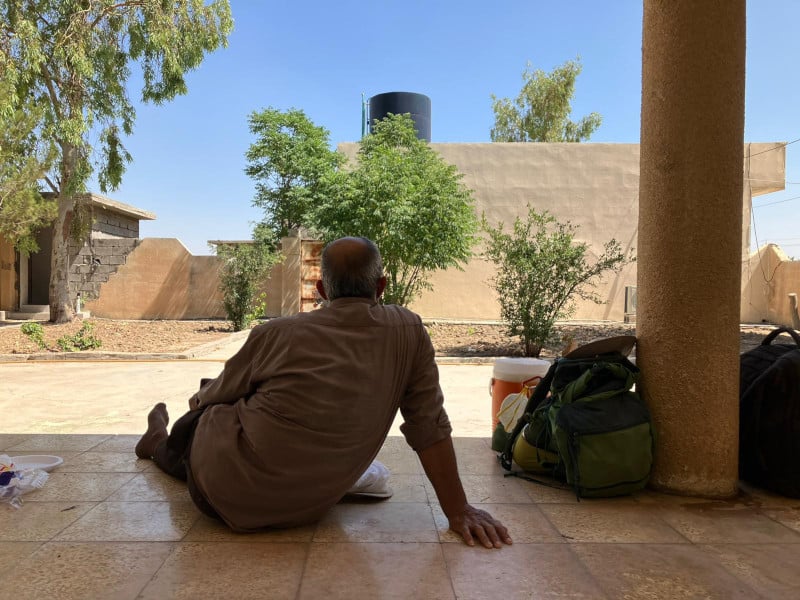
Daoud, a Syrian archaeologist who is part of the team.

Luke Poutre is a current student working towards his Masters degree in Near Eastern Archaeology at La Sierra University. Prior to his entrance into the field, Luke served in the U.S. Army before working in civil litigation and tort law. He hopes to continue his involvement with projects in the Near East, and eventually pursue a doctoral degree in archaeology.

Learn more about the Kurd Qaburstan Project here. 

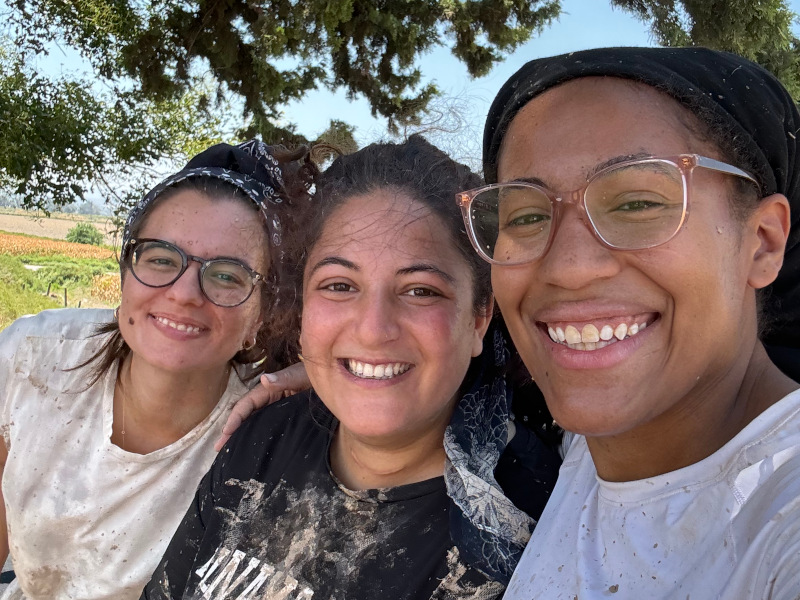
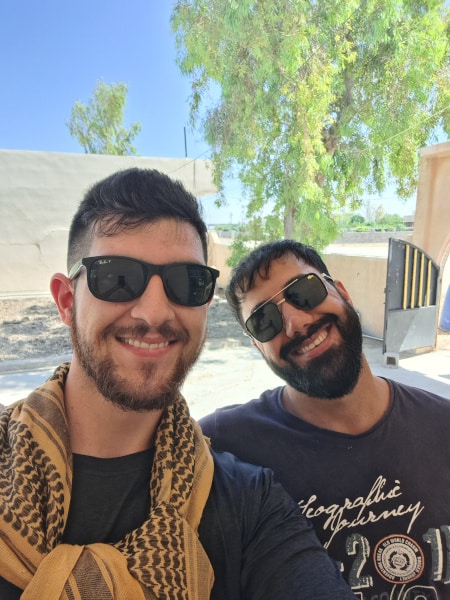
Luke with Didar, a Kurdish member of the team.

ASOR is now accepting applications for 2025 Fieldwork Participation Scholarships. Learn how to apply here. 

Want to help more students and early career archaeologists get into the field? Donate to the cause today by selecting “Fieldwork Scholarships” as your gift purpose!

Fieldwork Report: Lauren Cook

Construction: The Ancient Anatolian Way

Lauren Cook, 2024 BIPOC Scholarship Fieldwork Recipient

This summer, I had the opportunity to excavate for the first time at the site of Alalakh (Tell Atchana) in Hatay, Türkiye. Although I had obtained my masters in Archaeology back in 2021, I had not had the chance to participate in archaeological fieldwork at that time because of the COVID-19 pandemic. When I was accepted to excavate at Alalakh this July I could not wait for the project to begin, however, I was surprised by the unique and interesting work I got to be a part of there. Apart from our normal excavation project, my fellow colleagues and I got to be a part of an exciting and groundbreaking experimental archaeological initiative where we worked to reconstruct the site’s mudbrick walls and protect its ancient foundations.

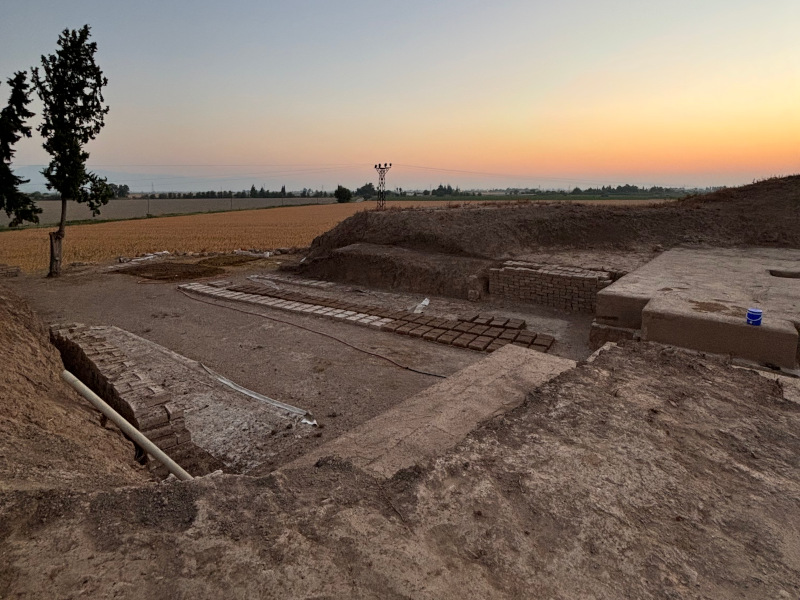
Elevated view of completed and finished mudbricks

On my first day at the site Dr. Akar, our site director, stated that although one of our goals was to uncover the site’s mudbrick architecture; exposing the ancient mudbrick to the elements causes it to rapidly deteriorate. In order to preserve the site’s ancient foundation and to give visitors a better sense of what the site would have looked like in antiquity we would spend part of the summer’s excavation season creating mudbricks and reinforcing the site’s mudbrick walls using ancient building techniques.

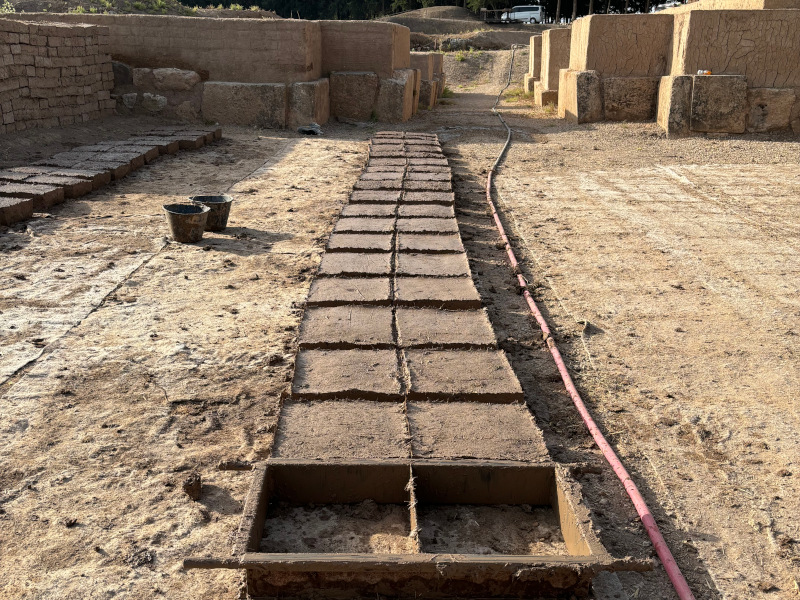
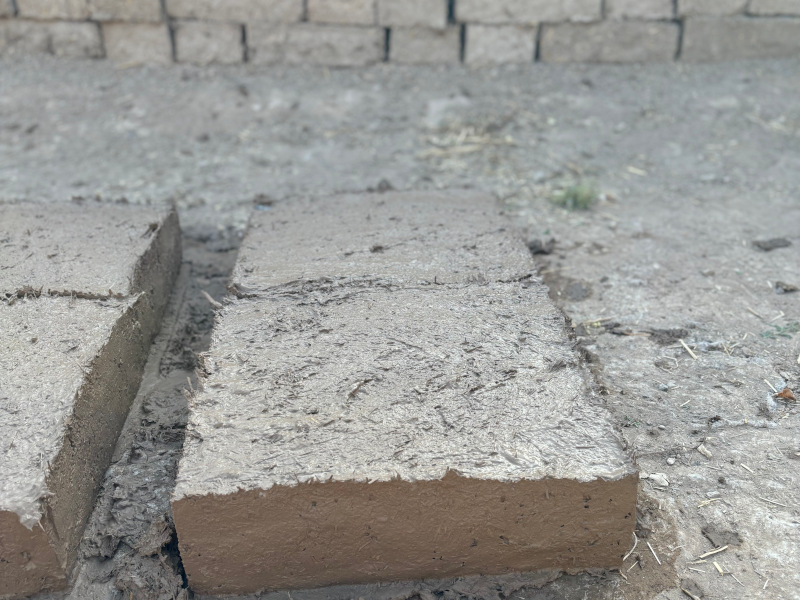
To begin making a mudbrick wall you first need to create the mud bricks. Dr. Akar consulted with members of the local community on mud brick recipes, as up until relatively recently in the adjoining village of Tayfursökmen and the surrounding areas people where still building with mudbrick. However, the practice had sharply fallen out of favor, being replaced by more modern building techniques. The mud that we used was a mixture of soil, straw, and water which we would mix until it was wet and could hold shape. Working in pairs we would then throw the mud into brick shaped molds; the trick was to make sure that copious mud was packed into the corners as this gives the brick its stability. Once the molds were filled, my workmate and I, would remove the mold with one swift, fluid movement – leaving a mud cube behind. Then we would re-set and start the process all over again.

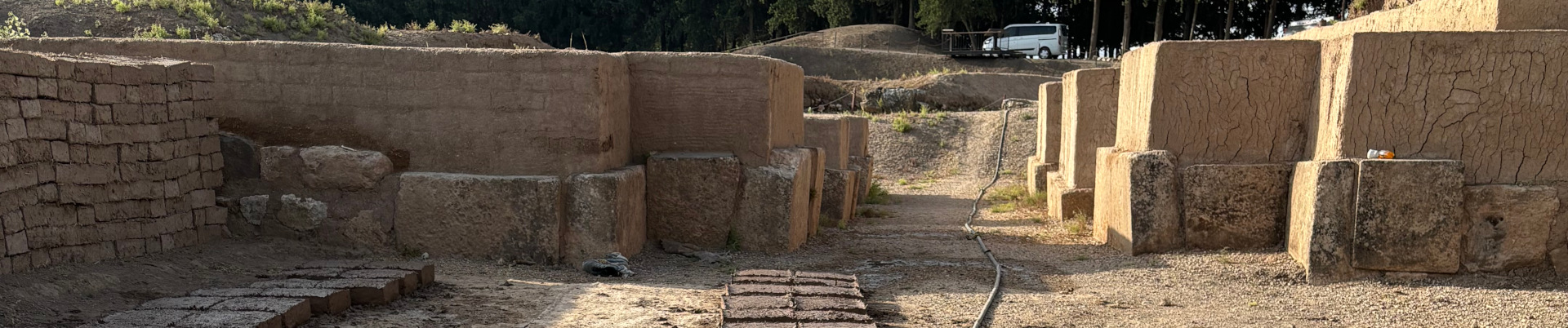
Line of mudbricks and mold
Pair of mudbricks

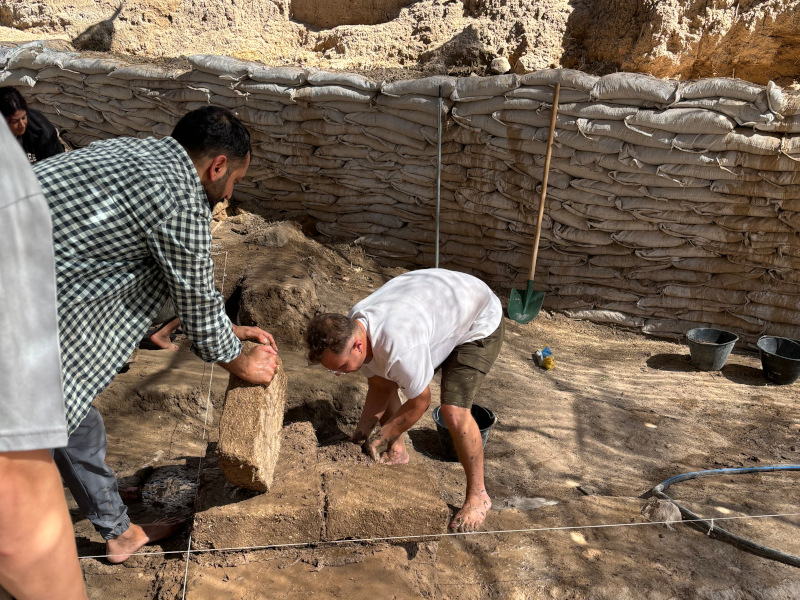
These bricks would be set aside to dry for at least a week before they would be utilized in the next stage of the process, construction. Water was the key ingredient in this step as it allowed us to adhere and secure the bricks to the foundations and to each other. We would wet the surface on which the bricks were to be set and add a substantial, but flattened layer of mud to act as an adhesive. We would then wet the bricks and carefully place them in the mud, adding layers of mud between them so that they would adhere. Finally, we would cover the newly created wall with a final layer of mud and leave it to dry. Once the wall had dried over several days, we would go back and add a final layer of mud in order to smooth and plaster the wall.

Building the wall

This was a messy and labor-intensive process to be sure and we would always end these days covered in mud from head-to-toe, but the days where we made mudbricks and built walls were also the most fun. Some of my best memories from Alalakh were when we would plaster the mudbrick walls while dancing to YMCA, or when the team would get into an inevitable mud fight! There was also something magical about the process of building as working with the mud would often transport us back to the Middle Bronze Age where we could see in real time the problems that ancient builders would have encountered, and following in their footsteps often used stones, ceramic fragments, water, mud, and straw as solutions. Once we were done with our work looking down at the freshly made walls from the top of the tell, I was often filled with a strong sense of pride knowing that these efforts would help to preserve the site for years to come.

Covered in mud but still having fun

Lauren Cook is a Baltimore-based doctoral student studying Art History at Johns Hopkins University. She is interested in imperialism and alterity in Ancient West Asia. Lauren received a dual BA in Art History and Archaeology from Pitzer College as well as a MPHIL in Mesopotamian Archaeology from the University of Cambridge.

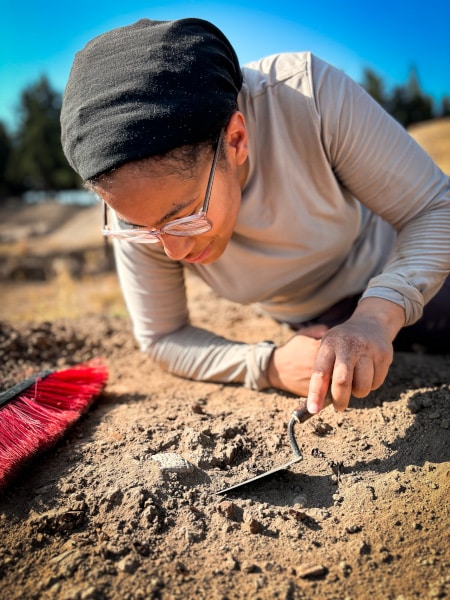
Lauren excavating a Late Bronze Age tablet. Photo courtesy of Murat Akar.

ASOR is now accepting applications for 2025 Fieldwork Participation Scholarships. Learn how to apply here.

Want to help more students and early career archaeologists get into the field? Donate to the cause today by selecting “Fieldwork Scholarships” as your gift purpose!
Fieldwork Report: Kiley Stoj

A Day in the Life at Çadır Höyük

Kiley Stoj, 2024 Eric and Carol Meyers Fieldwork Scholarship Recipient

A typical day living in the small village of Peynir Yemez started about an hour earlier than needed with the adhan informing us that it was 4:30am. This was never really an issue as it was a much more melodic wakeup than the typical jarring buzz of an alarm. Although uncharacteristic for the time of year, there were several mornings we were also greeted with thunderstorms. I can remember a huge clap of thunder waking almost everyone up; we all came out of our rooms and just admired the rain and lightning together while sipping tea and coffee. Unfortunately, after this storm we lost internet connection for almost the remainder of the season, and it was believed the thunder and lightning may have been to blame. Most of the time it was easy enough to fall back asleep until the official wakeup around 5:30; giving most people just enough time to put on their least dusty pieces of clothing, brush their teeth, and grab a cup of coffee and a slice of jellied bread before packing up the van to make the 15-minute drive to the site. The drive over was actually livelier than one might expect for such an early wakeup. We would chat about the games we liked to play, movies we had strong opinions on, and funny anecdotes from prior years or previous digs.

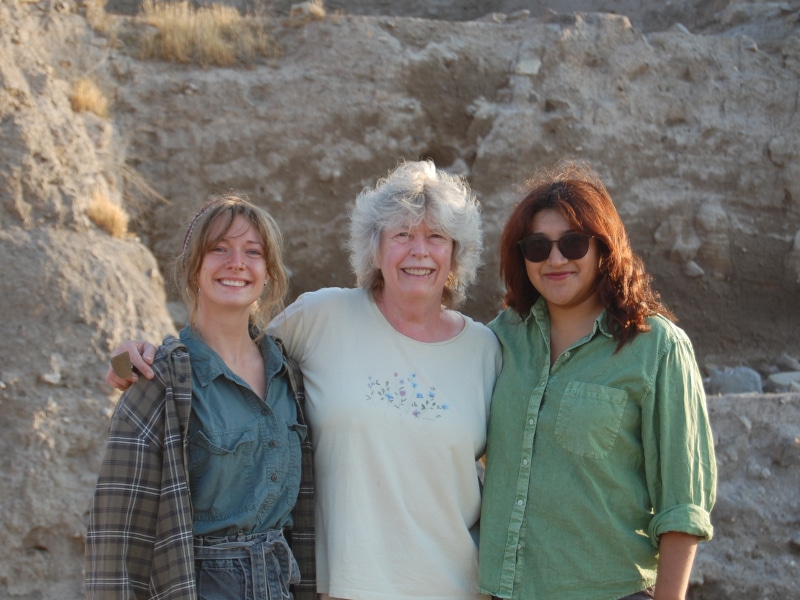
The State University of New Yort at Cortland members of the team. From left to right, me (Cortland alum), Dr. Sharon Steadman (Distinguished Professor at SUNY Cortland, and director of the Çadır Höyük project), and Janet (current archaeology student of Dr. Steadman).

The site of Çadır Höyük is located in the Yozgat province in north central Anatolia, Türkiye. Excavations began in 1994 and continue today. Over this time period the team has documented six millennia of occupation at the site; from at least as early as 5200 BCE to final abandonment in the 13th century CE. The Turkish workers assisting with the project came from the next closest city of Sorgun and were usually waiting for us. Without hesitation they would begin the journey up the mound soon after we arrived; it was a good mix of younger and older workers, some with prior experience and some brand new. The new workers were especially eager to learn the ropes often asking many questions and excited to practice some English with us. It was fun getting to learn a bit about the workers that were a part of our team, their day jobs ranged from farmers, cartographers, and engineers to medical and veterinary students.

The morning started with most supervisors looking over the stratigraphy of their trenches and deciding what task to tackle first. Many times I could look out from my trench and see a group of supervisors huddled around an area delicately, and with the most amazing precision, excavating bones or reading an especially interesting piece of pottery. Many of the foreign members of the team (US, Canada, Europe) would do our best with the little Turkish we knew to delegate tasks; the workers were very patient with us, and I learned pretty quickly that hand signs are an amazing tool. Some of the women I became friends with while there loved to flash me a heart from across the dig to let me know they missed me. We would work until 8am, at which time there was a break for water and some small goodies that the workers always seemed to magically produce, including cookies and fruits. Work in the mornings was always the nicest; it was pleasant to dig before the sun became too intense and wind picked up, as was typical for the afternoon.

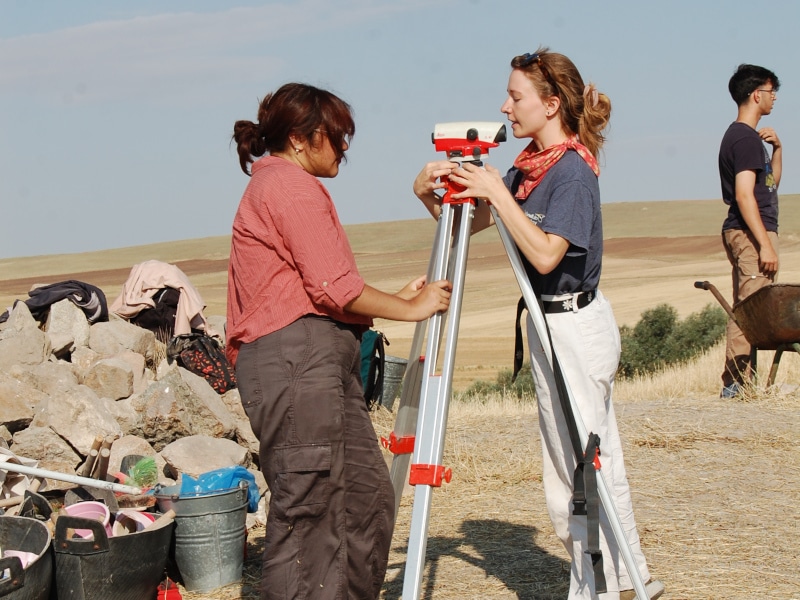
Janet and I are learning a new skill of how to take elevation.

At 9am we called “paydos” or “break” which meant it was time to head down to second breakfast; everyone’s favorite part of the day. We would sit under a tent forming what we called a sandwich circle, passing around the various fixings, everyone either with their preference of many olives or absolutely none. We also always had fresh fruit and small cookies to dunk in our tea – you had to be quick with it or risk ending up with a tea-cookie soup as half your biscuit crumbled off into your cup. This was also a time for the entire team to share their thoughts about their trenches with the group as well as a time to get to know everyone better. Second breakfast was a real pick-me-up, giving everyone their second wind to work through the afternoon.

In the afternoons it was typical for supervisors to hop around from trench to trench seeing how others’ work was going and assist if they needed help troubleshooting a difficult locus or feature. The trenches differed immensely! Some had countless hearths found one on top of the other as they excavated down, others had beautiful stone walls and huge expanses of rooms, one was a marbled masterpiece of mudbrick red, and charcoal black (beautiful but hard to understand), while yet another had walls with huge piles of rocks in between (again amazing to see, less amazing to meticulously draw). When work ended around 12:30-1 we had the option to take the bus back, but many of us would opt to simply drop our bags there and walk. It was peaceful strolling through the village, a great way to wind down and clear your head after a hard day of work. The walk took us past golden fields, and through the village where we would wave to some of the local workers, and occasionally have to skirt around territorial geese.

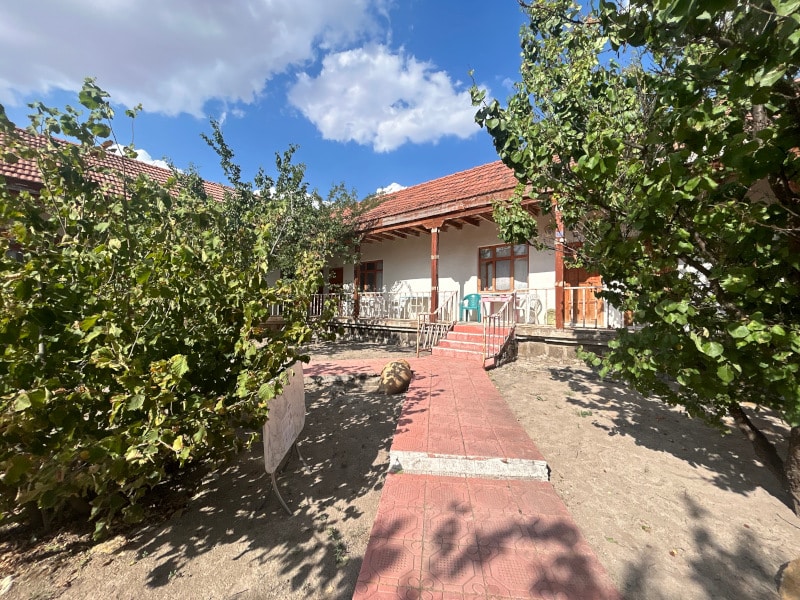
Our living quarters in Peynir Yemez. Filled with fruit and nut trees/shrubs we often snacked from.

Back at the dig house we had down-time until lunch; however, downtime usually meant either cleaning or helping bag artifacts; our director called them “evil jobs” and would always give us a warning on the days we could expect to return to more work. Thankfully many hands made light work, and the jobs were never really as “evil” as we were made to believe. We would all sit down to lunch at 2pm; everyone would take pretty large helpings of food after digging all day and almost always we would make Turkish coffee after so that we had a little kick to keep on going. After lunch people went their separate ways to shower, take naps, or do some reading before our lab hours, which started at 5pm. Many days before lab I would spend time with my new friends picking apricots and plums from the trees, trying my best to learn some Turkish words, and sitting in the sun with a cup of tea as a cool breeze blew by.

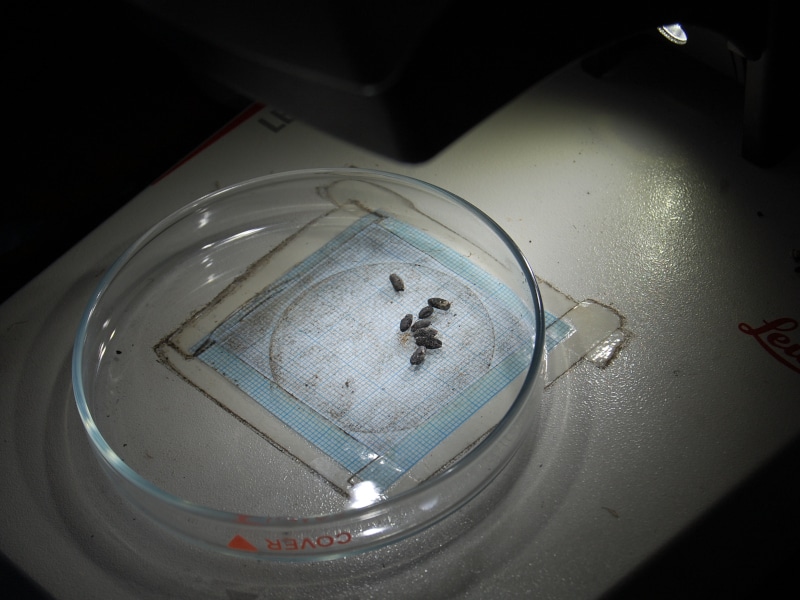
The lab hours were a time to write in our notebooks, fill out feature and locus sheets, or do additional work – such as sorting through soil samples to look for seeds, like the project I was assisting with. It was exciting when someone had uncovered a particularly interesting artifact from that day, and everyone gathered around to see what we could learn. Dinner came shortly after 7pm; everyone would hangout for a bit after dinner ended, but no one stayed up too late after the long workday. Usually at sunset small groups would leave the dig house to walk around the village, it was beautiful to see the reds and pinks of the sunset melt into the expansive landscape of gold and yellow. The village was always very quiet and peaceful; mostly being broken by the bells and bleats from the large herds of sheep and cows on their way home for the night. There were special occasions throughout the season where we would go watch meteor showers; finding a dark hill and lying on the ground all betting on which direction the next one would come from. And on Wednesdays we would have a movie night, projecting a film onto the wall of the lab. Card games also became a very popular past time toward the end of the season, and they would get quite lively and competitive; not only for the ones playing but even drawing in small audiences that would root for different players. Eventually, when the fun had been had, everyone would collapse into bed, ready to start work again the next morning.

Close-up of ancient seeds we found in a soil sample.

I am so fortunate to have had the opportunity to be part of the amazing team at Çadır Höyük. Life and research with limited internet helped slow me down and appreciate the knowledge I had as well as the insights of those around me. Time on this dig has left me with new experiences in archaeological methods and teamwork, provided insight into rural Turkish life, and enriched my life through the many sincere and interesting people I had the pleasure of working with.

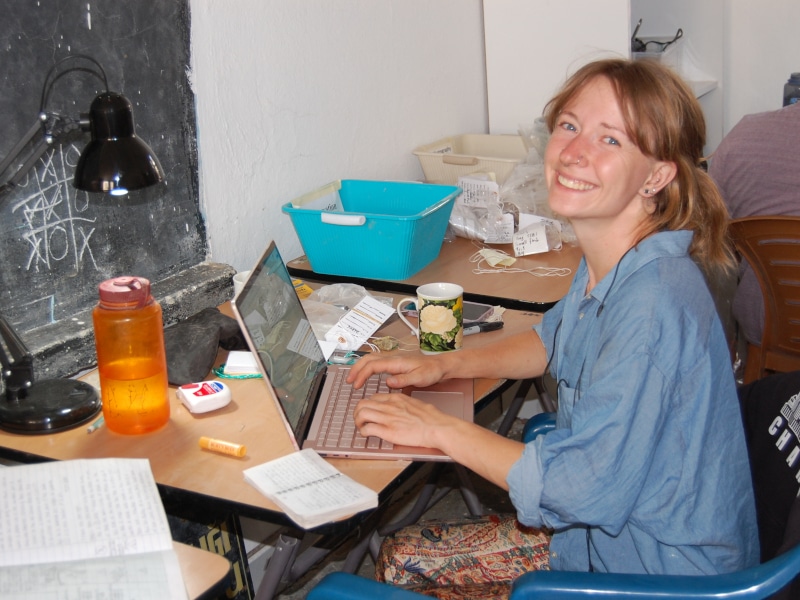
Me during lab hours filling out feature and locus sheets and recording the details of that day's excavations in my trench.

Kiley loves travel, experiencing new things, and meeting people. After graduating from SUNY Cortland, she spent time in India researching medicinal Ayruvedic plants found in the archaeological record from the Iron Age, supported by a Fulbright-Nehru Student Researcher Fellowship.  She is interested in the cross-roads of biology and archaeology and extremely thankful that the ASOR scholarship provided an opportunity to explore this further. Currently Kiley is working on her PhD at the University of South Carolina, investigating nocturnal plant-insect interactions and how anthropogenic stressors impact these relationships. 

ASOR is now accepting applications for 2025 Fieldwork Participation Scholarships. Learn how to apply here. 

Want to help more students and early career archaeologists get into the field? Donate to the cause today by selecting “Fieldwork Scholarships” as your gift purpose!
Fieldwork Report: Nate Welch

A Short Month in Iraq

Nate Welch, 2024 Steinmetz Fellowship Recipient

The project I was able to join this season is titled “Rural Landscapes of Iron Age Imperial Mesopotamia” or RLIIM for short. The project was spearheaded and directed by Dr. Petra Creamer with the assistant director and my professor being Dr. Kyra Kaercher. These very talented women have been on this project for several seasons prior to my arrival and have an impressive systematic approach to excavating the several trenches held within the site.

I am not an archaeologist but a biologist, however I did learn the importance of proper technique. An example that comes to mind is the pickaxe. The pointed end is preferred as damage will be minimal compared to the blunt crushing end. Archaeology is destructive in nature and cannot easily be undone. That statement rung in my ears the entire time I was in Iraq and knowing that helped me cope with the meticulous digging taking place day in and day out.

What broke up the monotony of digging was the discovery of ceramic sherds, bone, spindle whorls and various other items. The ceramics were coming up by the bucketful with over 10,000 pieces by the end of the short season. These sherds were then painstakingly cleaned, analyzed and categorized by the team. This was how the majority of the days were spent however my true calling came when the farmers harvested their grain. With the fields cut down we were now able to collect magnetometry data.

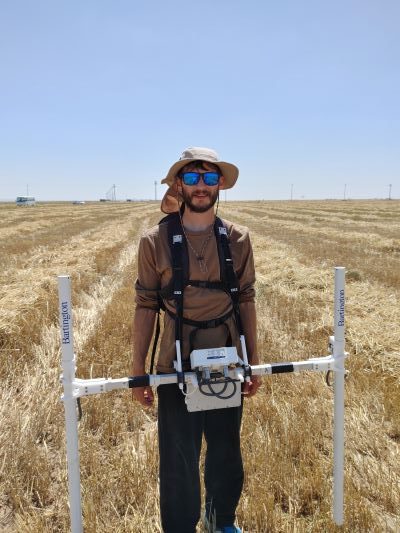
I had learned of the process from my professor in my first archaeology course, however I had no hands-on experience until now. Walking with the contraption strapped to a backpack felt almost natural after the first day however I know those who were able to watch from a distance would argue otherwise. The idea was simple, walk back and forth in 20-meter increments for hours while keeping the instrument as steady as possible. The practice was a little more difficult with uneven terrain and spiky vegetation stabbing into your feet and legs all while trying to stay in step with the timer which beeped every time you should have gone one meter exactly. I haven’t even mentioned the fact that there was no shade, and temperatures would be near the 100-degree Fahrenheit mark. With all this in mind the director did an excellent job ensuring nobody would become a casualty of heat illness.

It is appropriate now to confess that I loved every day I got to spend there and all the work that went into the project. My back and knees aching were small prices to pay, and I would gladly do it again. I personally love the busy work that the ceramics and tedious digging provided because physical labor is what I do best. By nature, I am somewhat of an introvert and this opportunity allowed me to step out of my comfort zone and interact with people from all over the world.

I have done this before when I joined the Marines, however I had never been to Iraq, and I can say that my presumptions of the area were entirely incorrect. The people were very friendly, the food was great and there was so much to do and explore such as Shanidar Cave which we were able to tour. I understand I kept this report rather vague, but it sums up the journey quite well and I am the type of person that doesn’t like to disclose too much because it is not my project, and the truly exciting things should come from the director when she publishes her reports.

I’ve always been interested in history and tied in with that is archeology which made this experience all the better. I hope more opportunities like this will arise for me, but I fear my dog won’t let me leave so easily next time.

Want to help more students and early career archaeologists get into the field? Donate to the cause today by selecting “Fieldwork Scholarships” as your gift purpose!
Collections Fellowship Report: Jennie Ebeling

2024 Study of Collections Fellowship Report

Jennie Ebeling, University of Evansville

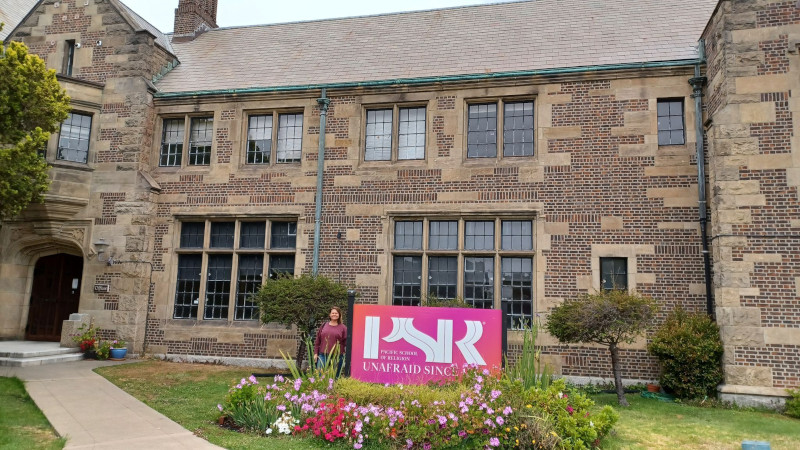
Fig 1: Outside the Pacific School of Religion in Berkeley, CA.

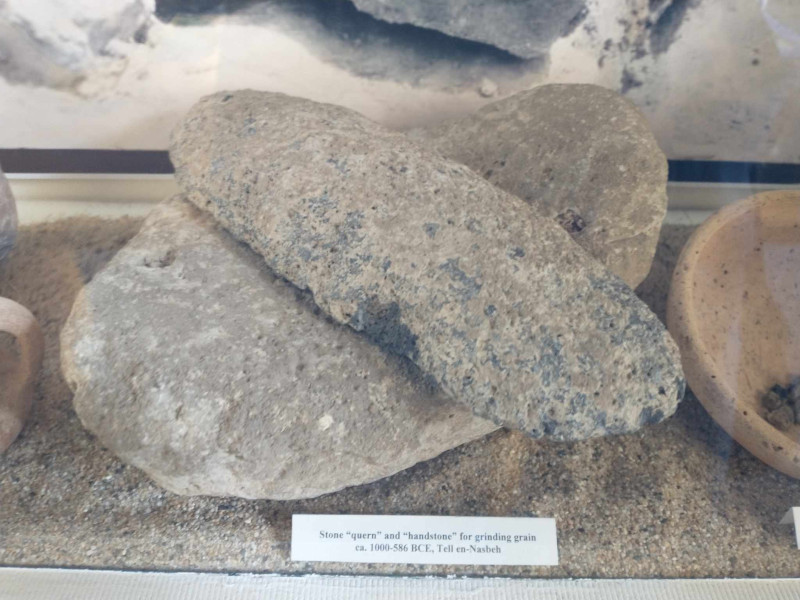
In recent decades, many archaeologists who research Bronze and Iron Age sites in the southern Levant have shifted their focus from investigating historical questions to asking more anthropological ones. Household archaeology approaches can be applied not only to ongoing excavation projects, but also to legacy collections, as has been demonstrated by studies that have utilized the rich artifact assemblages from Iron Age Tell en-Nasbeh (biblical Mizpah). William Frederic Badè of the Pacific School of Religion (PSR) in Berkeley, CA directed excavations at Tell en-Nasbeh, Palestine for five seasons between 1926 and 1935 on behalf of PSR and ASOR and brought some of the excavated artifacts to Berkeley through partage in the 1930s. While many of the artifacts in the collection have been published or made available through Open Context, some 150 ground stone artifacts in the Badè Museum of Biblical Archaeology at PSR have never been assessed by a stone artifact specialist and published. In summer 2024, I was awarded an ASOR Collections Fellowship to study the mortars, stone vessels, handstones, pestles, grinders, scrapers, weights, sling stones, and other stone artifacts in the collection to learn how this these artifacts can contribute to our understanding of daily life activities at Tell en-Nasbeh in the first half of the first millennium BCE.

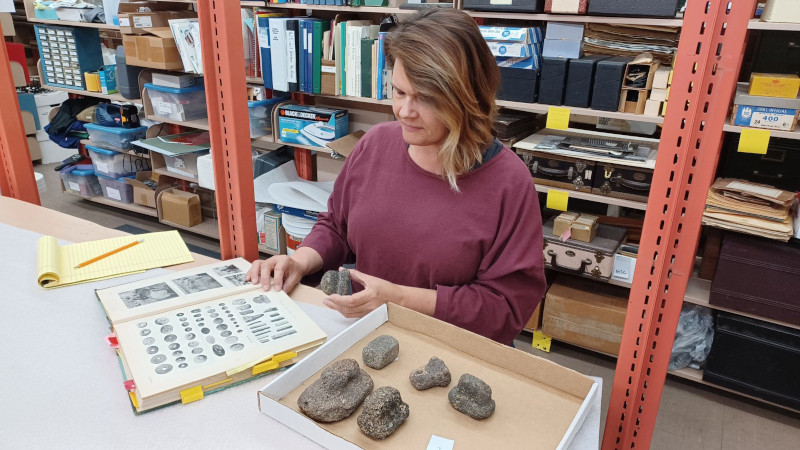
Fig 2: Studying the collection of scoria scrapers in the storeroom.

During a ten-day research period in June 2024, I examined all of the ground stone artifacts kept in the Badè Museum storeroom. In addition to assessing, measuring, sketching,and photographing each object, I searched the publications, photographs, and original field ledgers and artifact cards for all available documentation of them. While the collection primarily comprises small, complete objects –most of them handheld processors made of limestone, flint, and other materials available locally –several fragments of large and more specialized objects are among the assemblage along with artifacts made of basalt that were probably brought from Galilee or farther north. Particularly interesting is a small collection of tools made of scoria, a highly vesicular volcanic rock. While similar artifacts are known from other Iron Age sites in the region, their functions are not completely understood. One object was described as a “foot scraper” in McCown’s Tell en-Nasbeh I apparently on the basis of ethnographic information: they “are supposed to have been used to rub the thick and sometimes painful callouses from the soles of the peasant’s feet” (1947: 250). Other artifacts were likely used in food processing and other activities. Ongoing research of this material will offer more insights into the function of household spaces at Tell en-Nasbeh during the Iron Age. I would like to thank Aaron Brody, Director of the Badè Museum of Biblical Archaeology, for his help and encouragement and ASOR for making this research possible.

Fig 3: A handstone and grinding slab set on display in the Badè Museum of Biblical Archaeology.

Fieldwork Report: Evelyn Patterson

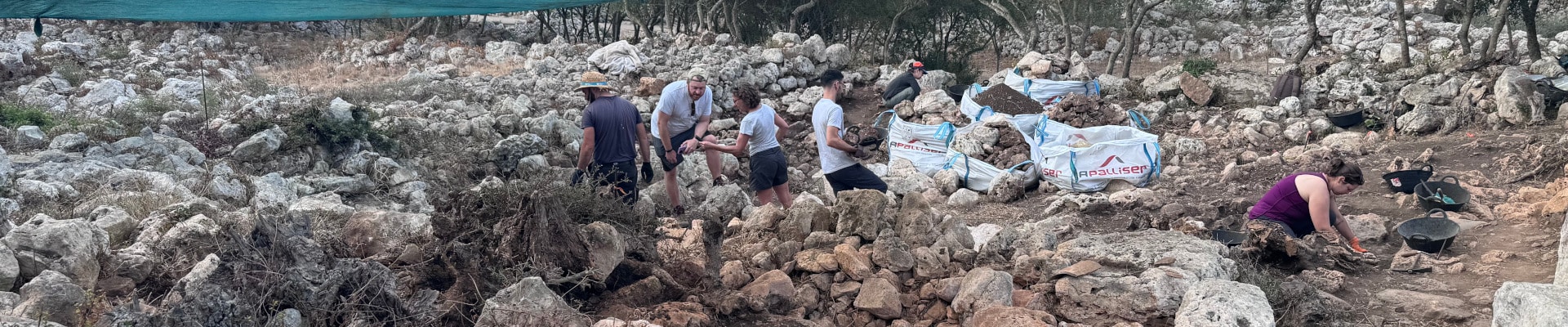
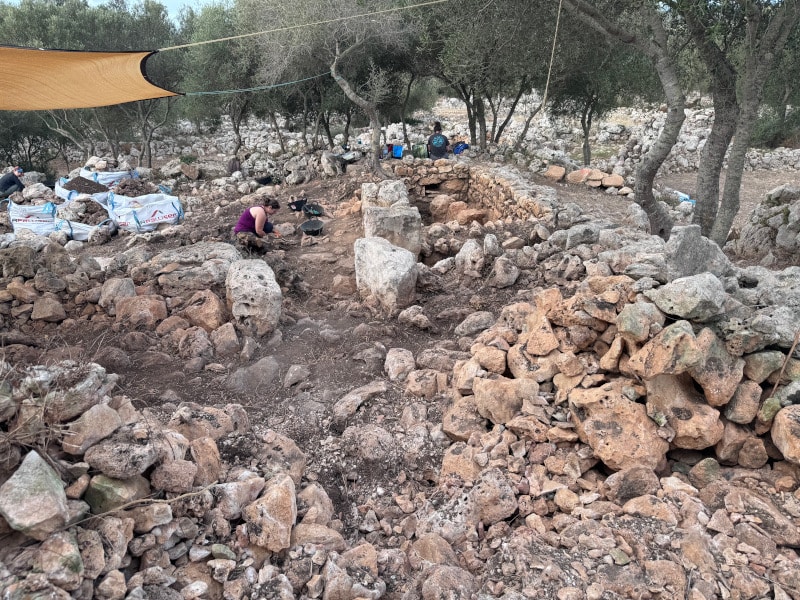
MAP team members excavating in SPU 7. Looking to the south.

Multi-Temporal Excavation with the Menorca Archaeological Project at the Site of Torre d’en Galmés, Menorca, Spain

Evelyn Patterson, 2024 Strange-Midkiff Scholarship Recipient

With the generous award of the Strange–Midkiff Fieldwork Scholarship from ASOR this summer, I was able to return for a second year of excavation with the Menorca Archaeological Project (MAP) at Torre d’en Galmés, Menorca, Spain. The MAP project is directed by Dr. Amalia Pérez-Juez (Boston University), Dr. Alexander Smith (SUNY Brockport), and Dr. Kathleen Forste (Boston University), and involves the work of a team of truly spectacular people. Last summer, I received a Summer Undergraduate Research grant from SUNY Brockport to travel to Menorca and work with the MAP team for one month from June 15th to July 15th. During the following fall and spring semesters, I did independent research for an Honors College thesis based on an object found by the MAP team in 2021. I was thrilled to be invited back to excavate for another month this summer, and this fieldwork scholarship made that possible.

Image 1: Evelyn excavating in the patio of SPU 7. Photo by A. Smith.

The Menorca Archaeological Project is primarily concerned with the investigation of the multi-temporal remains of Torre d’en Galmés, the largest preserved prehistoric site in the Spanish Balearic Islands. This site displays evidence of multiple periods of occupation and interaction, with an array of megalithic indigenous domestic structures dating to the Post-Talayotic or Late Iron Age (550-123 B.C.E.) and a series of later structures built during the Medieval Islamic period of occupation in the 12th and 13th centuries C.E. The stark contrast and interactions of the structures is fascinating and raises an interest in understanding the use and re-use of spaces and materials over time, and the shifting social structures of the populations that used them, both within the communities of Menorca itself and within the greater Mediterranean context.

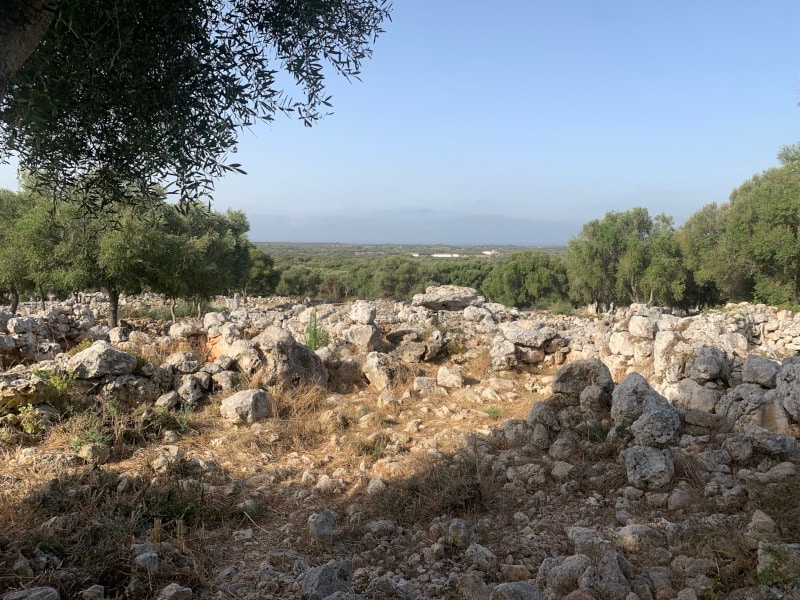
Image 2: View of the site of Torre d’en Galmés. Looking to the south of SPU 7.

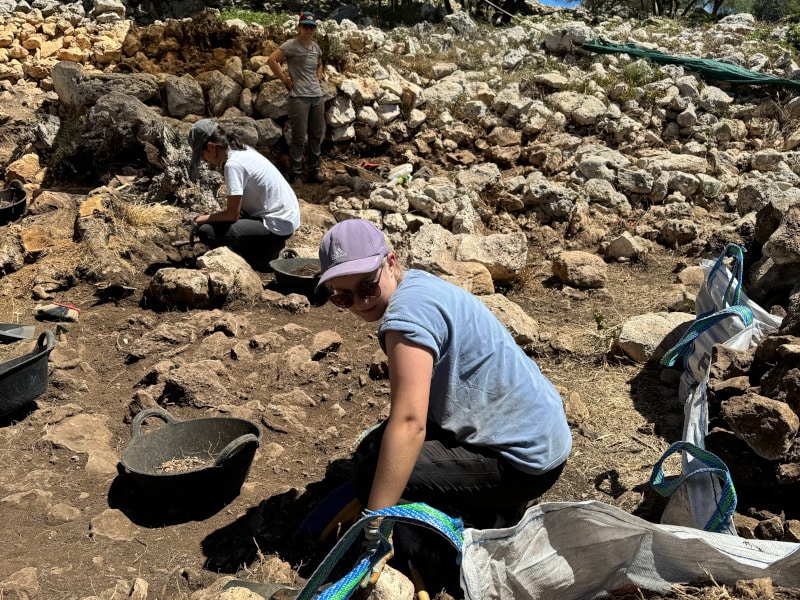
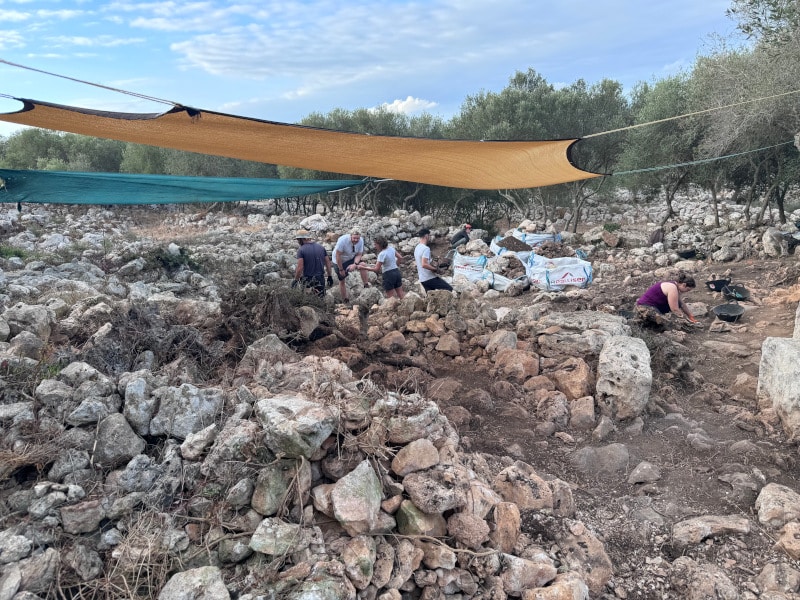
Torre d’en Galmés, along with other sites around Menorca, is absolutely covered with the remains of limestone rubble from collapsed structures. This was the primary building material of the megalithic domestic and ritual spaces of the Bronze and Iron Age, and in the Medieval Period. The presence of all this stone means that excavation involves an incredible amount of rock-moving and trained eyes to see the remains of walls or features. This summer, the MAP team focused heavily on the task of clearing up the central patio and surrounding walls of Spatial Unit 7, a series of later Medieval period rooms which were constructed with the incorporation of rubble and remaining megalithic limestone rocks used in an earlier Post-Talayotic structure.

Image 3A
MAP team members excavating in SPU 7. Looking to the south.

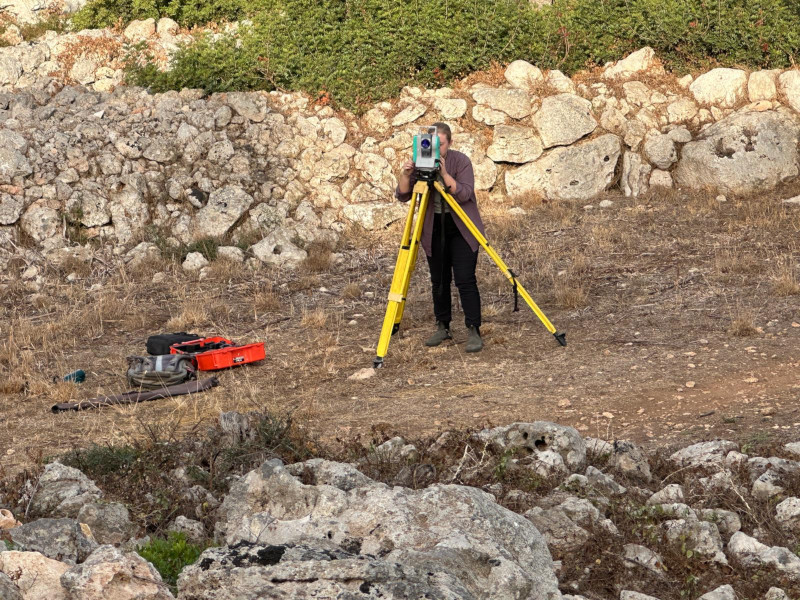
Even with a focus on defining the architecture, plenty of ceramic sherds were found as well, a substantial portion of which consisted of the remains of ceramic roof tiles, with some areas of preserved tile-falls and mortar. Other ceramic sherds appeared as repio, the fill used in the construction of the stone walls, and consisted of a mix of Post-Talayotic, Roman, Punic, Islamic, and other typologies of ceramics. In addition to excavation, our work this summer was concerned with lab work and data collection. I practiced taking spatial data points using a total station to outline features and interesting in situ finds, mark spots for phytolith and archaeobotanical sampling, set up new areas to excavate, and track the depth of our excavations. This is a skill I continued to use at another project, the Frost Town Archaeology field school, later in the summer, where I got to supervise students and teach them about archaeological techniques and collecting data. We also used this season to organize all the old finds from past seasons and input the information into an updated database. This was an insight into the reality of the meticulous process of documenting and photographing the collection to decide what needs to be kept physically, and what only needs to be kept digitally.

Image 4: Evelyn taking points of SPU 7 at the total station.

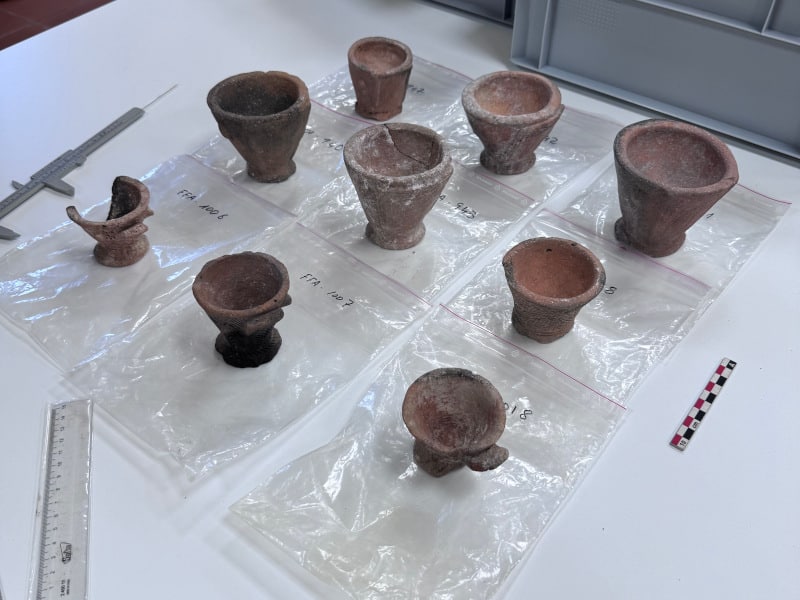
Returning to Menorca this summer also gave me a chance to revisit the basis of my thesis that I wrote for the SUNY Brockport Honors College, which was advised by Dr. Alexander Smith. Last summer in 2023, I was incredibly lucky to have left Menorca with an idea for my thesis, investigating interpretations of indigenous Post-Talayotic ritual objects. I spent both semesters of my senior year preparing my research and I was proudly able to present it at SUNY Brockport’s’ Scholars Day on April 15th and at the Summer Undergraduate Research Conference at Suffolk Community College on April 26th. This summer I went back to the Museu de Menorca with clearer goals in mind of what objects and documents I wanted to see in order to further expand on my research in the future.

Image 5: Array of Post-Talayotic ceramic “high-bottomed cups” from the Museu de Menorca.

My involvement with the MAP team these past two summers has given me numerous insights and hands-on opportunities to explore my interests in the field. I am so grateful to the team for welcoming me and helping me to build my professional network in the field. I look forward to continuing my work with the team in future excavation seasons, and to exploring other projects. I extend my thanks to Mrs. Carolyn Midkiff-Strange and the Midkiff-Strange Fieldwork Scholarship, ASOR, the entire Menorca Archaeological Project team, the Museu de Menorca, and SUNY Brockport.


Evelyn Patterson graduated in May of 2024 from SUNY Brockport with a BS in Anthropology and a minor in Museum Studies and Public History. In addition to working with the Menorca Archaeological Project in Spain, Evelyn has also excavated with the Frost Town Archaeology Project in the Finger Lakes region of New York. She has assisted in laboratory research internships, created project signage and academic posters, and has presented a completed independent research thesis.

Want to help more students and early career archaeologists get into the field? Donate to the cause today by selecting “Fieldwork Scholarships” as your gift purpose!
Fieldwork Report: Liza Davis

A Day in the Life at the East Church, Antiochia ad Cragum

Liza Davis, 2024 Member-Supported Fellowship Recipient

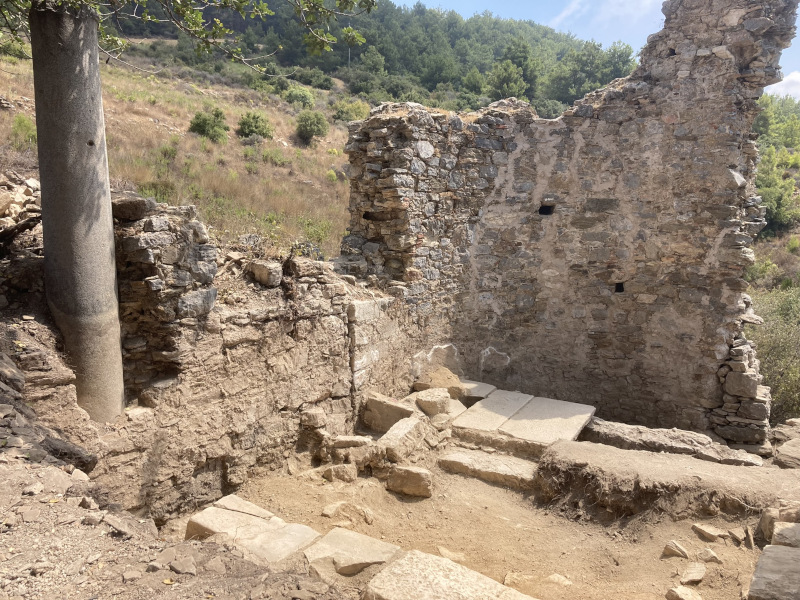
This summer, I had the privilege of working as a trench supervisor at Antiochia ad Cragum, a Roman city located outside of Gazipaşa, Türkiye. Antiochia was an important regional hub and boasted a large colonnaded street lined with shops, multiple baths, areas for the production of olive oil and wine, monumental tombs, and several early Christian churches. In the 2024 season, excavation began on an east-facing apsidal building located on the road approaching the city’s Main Gate from the east. This building has been described as a church by earlier researchers, and so we decided to creatively title this new area of excavation the East Church.

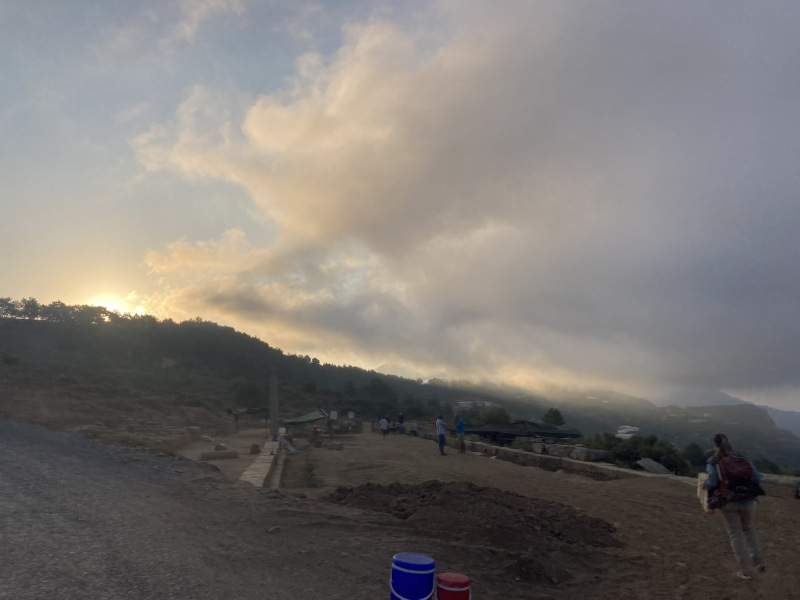
Daily life as an excavator at Antiochia quickly fell into a pleasant routine. We left Gazipaşa around 5:30 and arrived at site by 6:00 AM, early enough to see the sun rising and watch flocks of swallows soaring high overhead. Breakfast is served on site by Ayşe, a woman from the nearby village of Güney and the wife of Rahmi the site guard. For the uninitiated, Turkish breakfast is quite the spread: tomatoes, cucumbers, olives, a variety of cheeses, jams and jellies, and bottomless ekmek (bread). Sometimes there would be hard-boiled eggs, borek (a savory pastry made from phyllo dough, cheese, and parsley), or potatoes with scrambled eggs. And, of course, strong Turkish çay (tea) served in the ubiquitous glass cups and sweetened with as many cubes of sugar as you desire.

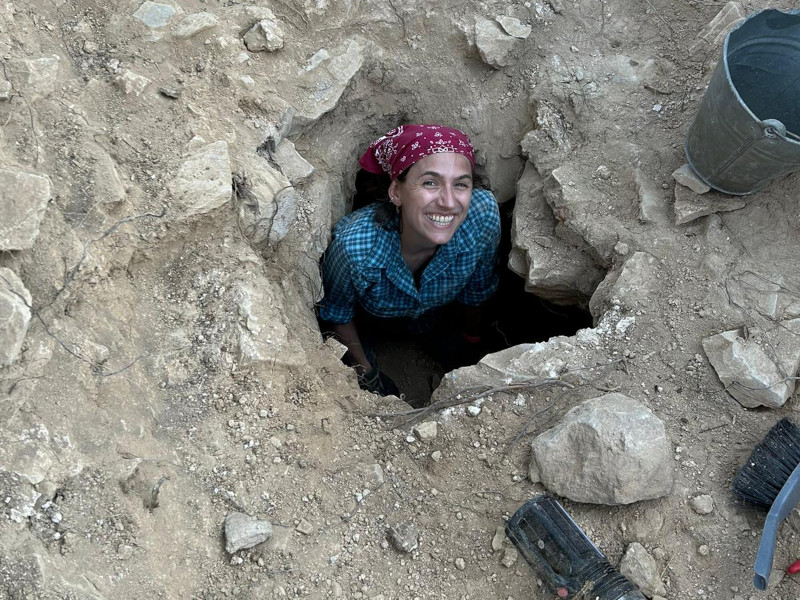
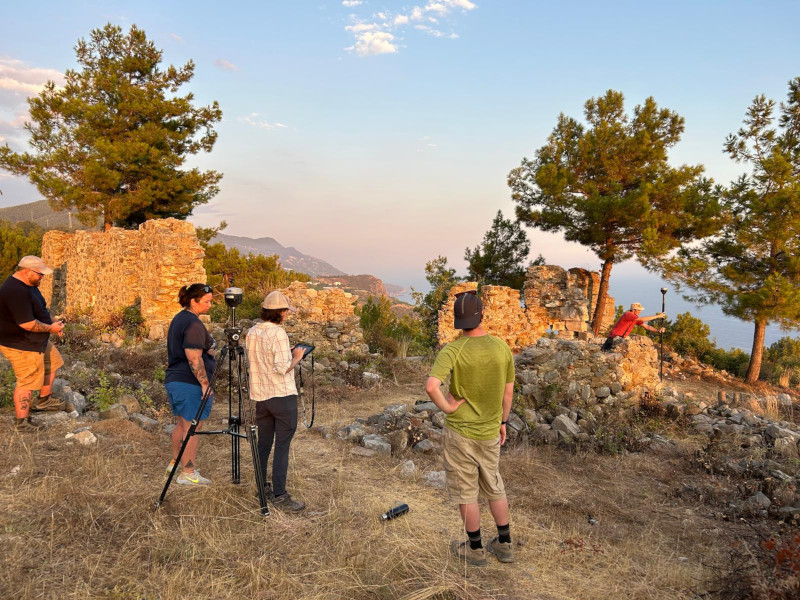
After such a feast, it could be difficult to get motivated to go to work, but the sun rose quickly and the relative cool of the morning soon dissipated. It was about a ten-minute trek to the East Church, laden with our field packs, cameras, iPads for digital trench recording, and RTKs (Real-Time Kinematic devices, a kind of super-powered GPS that allows for centimeter-level accuracy). We divided into our two trenches and got to work. One trench was just outside of the building, in what has been deemed the church’s narthex, and the other (my trench) was in the apse of the building. We began each day by going over our daily goals and cueing up the all-important dig playlist. Somehow, our trench anthem ended up being “Paradise by the Dashboard Light” by Meat Loaf… do not ask me why, because I don’t know. But I can tell you that those opening chords will forever remind me of dusty days in the East Church.

We took a çay break at 10:00, huddling in the shade cast by some standing walls south of the church. Twice a week, there would be pişi, fluffy discs of fried bread—delicious and filling. After the break, we would return to work for a few more hours, reassessing our progress toward our daily goals and adjusting as necessary. At the end of the day, my trench mates would clean up our tools as I took some final notes in our iPad-based recording software (called Kiosk) and took closing photos of the trench for the day. Around 12:50, we would begin the walk out, which always felt much longer in the heat of the afternoon than it did at 6:45 AM. Lunch was served at 1:00 and was a veritable feast of Turkish home cooking: stuffed peppers, eggplant and potatoes stewed in a spicy tomato sauce, cacık (a cold yogurt and cucumber soup—very refreshing), bulgur and rice pilaf, and once a week a delicious semolina and peanut cake soaked in honey. Lunch was always a fun, social time, spent discussing the day’s progress with people working in other areas at site.

The four weeks I spent at Antiochia this summer were such an incredible opportunity for me. My dissertation research focuses on early Christian experience in the eastern Mediterranean, so the chance to excavate an early Christian church was so important for me. This fall back at Brown, I will be working on my dissertation, greatly enriched and informed by the days spent at Antiochia this summer.

Liza Davis is a sixth-year doctoral candidate at the Joukowsky Institute for Archaeology and the Ancient World at Brown University. Her research focuses on the lived religious experience of non-elite and rural people in Late Antique Asia Minor.

Want to help more students and early career archaeologists get into the field? Donate to the cause today by selecting “Fieldwork Scholarships” as your gift purpose!
Fieldwork Report: Victoria Wilson

On the Street Where You Lived: Household Archaeology at Kurd Qaburstan

Victoria Wilson, 2024 Strange-Midkiff Fieldwork Scholarship Recipient

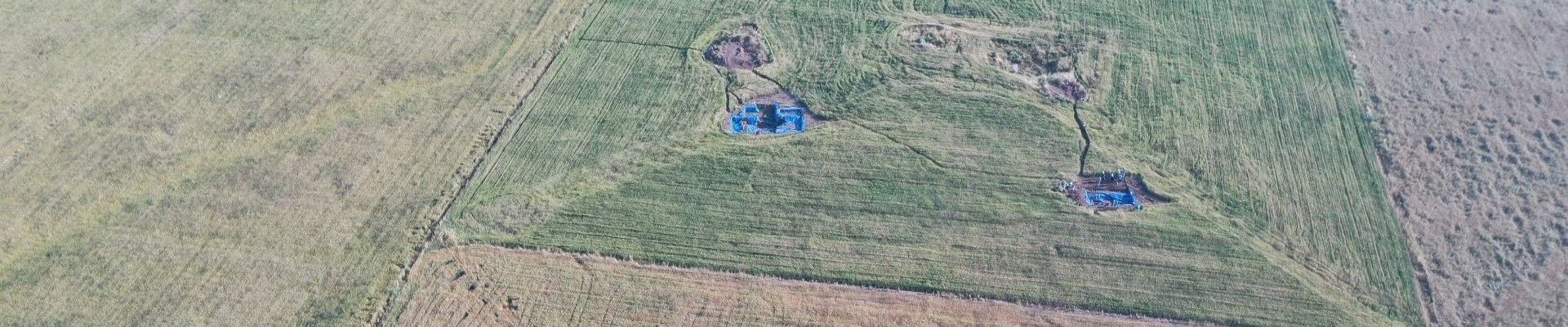
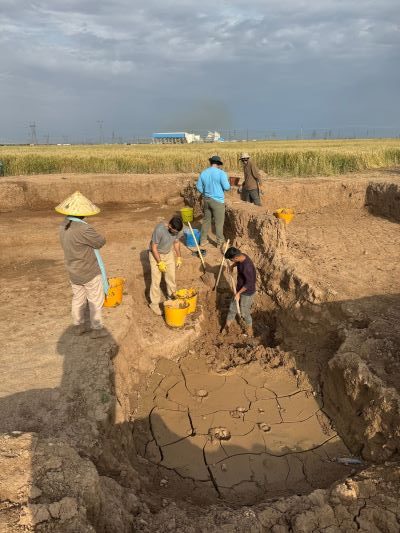
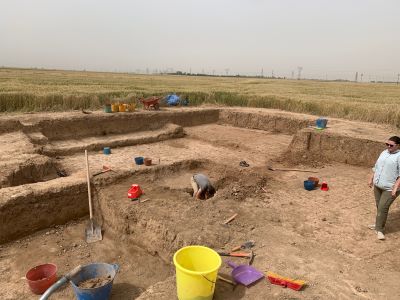
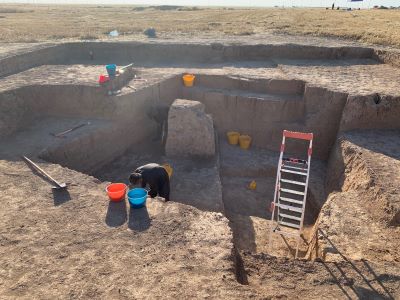
I spent my summer in a hole in a barley field in Iraq.

First, some background on the project that brought me to said field: Kurd Qaburstan is a fortified urban site located in the Kurdistan Region of Iraq and suspected of being the ancient site of Qabra, a regional capital on the Erbil Plain during the Middle Bronze Age.

Excavations began in 2013 and as the project progressed multiple monumental buildings have been detected through magnetometry and explored through excavation: most notably being a temple and palace. In 2014, magnetometry identified a concentration of agglutinated architecture in the northwest sector of the site.

With the layout displaying similarities to other domestic areas in the ancient Near East, this sector became known as the Northwest Neighborhoods. Magnetometry data could further show the streets that divided the blocks of architecture, and one of these city blocks has become the focus of my dissertation.

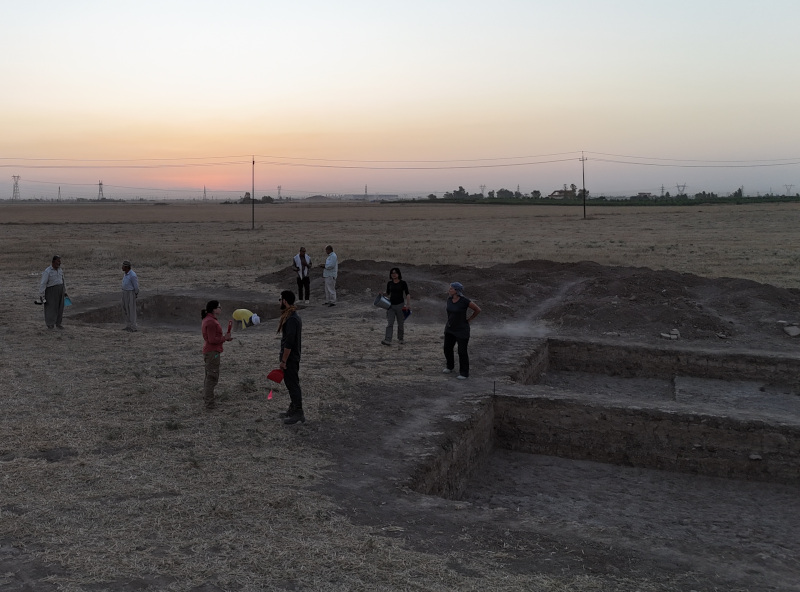
Northwest Neighborhood at sunrise

Now we can go back to the holes in the barley field. Or to describe my scholarly efforts less glibly: I spent this field season supervising three trenches in the Northwest Neighborhoods, investigating domestic contexts to better our understanding of the lifeways of these ancient urbanites. While my goal for the season had been to practice household archaeology in the most literal sense –peering into the interior of a house –two of the trenches missed the mark slightly and had us examining a domestic exterior space: a expansive pebble surface that was likely part of a courtyard.

Near the tail-end of the season we reexamined the magnetometry data and opened a new trench just north of the initial two trenches that would place us within the walls of the structure. Right at the end of the season one of those walls was found and so the 2025 season will see us explore the structure further.

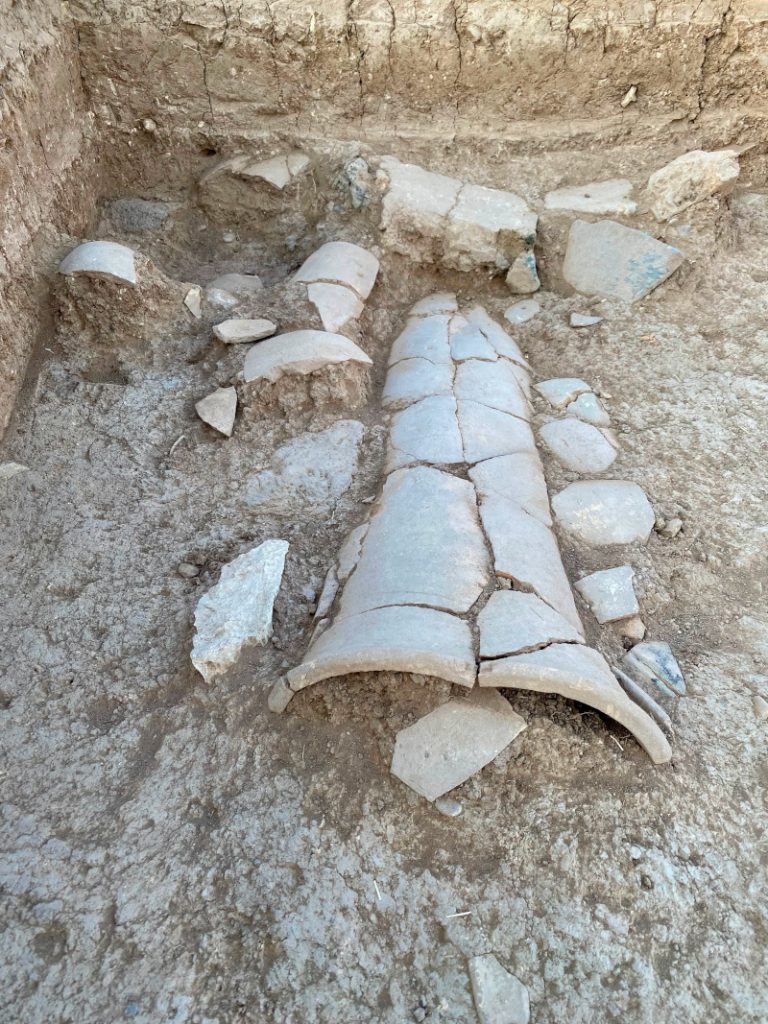
Ceramic drain - view facing south

While in the trenches one can easily lose sight of the larger goals of a project: in the blazing Middle Eastern heat, the stress of juggling paperwork and strategizing data collection, the macro goals of investigating neighborhood dynamics and city planning can melt away. But as they say: it’s the little things in life –and in this case it was a little ceramic fish that helped me refocus on the human aspect of my investigations.

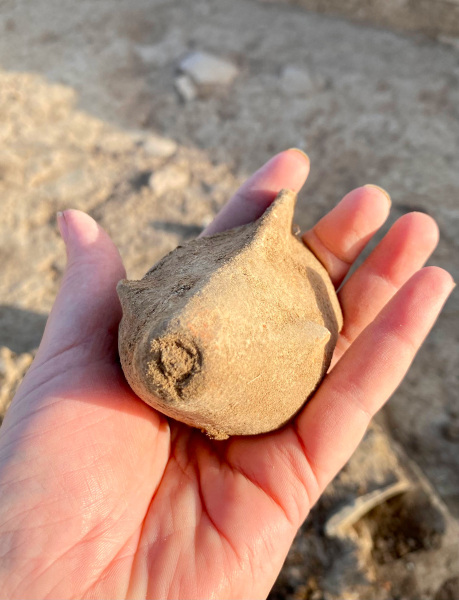
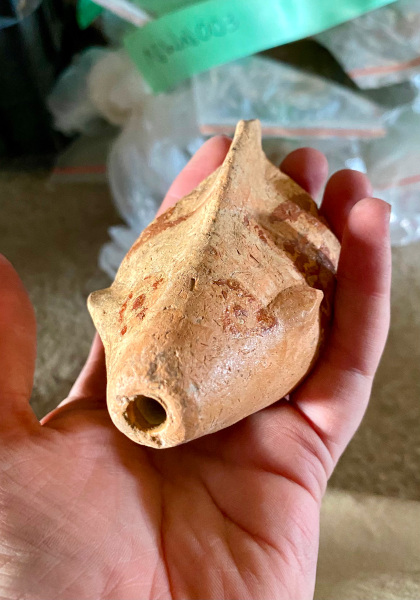
When it was pulled from what was known informally as the “pottery volcano” (which could be an upper floor collapse or trash deposition – the jury is still out on the most likely interpretation) it was just an oddly shaped hollow ceramic object. Personally, I thought it might be a pig when I first held it due to the “snout.” The local museum conservator, Nihayat, could immediately tell there was paint underneath the encrusted dirt. After the object was cleaned and conserved it was revealed to be part of a fish-shaped juglet.

This is an object that had been created with a personal touch over 3,000 years ago. Found among a large utilitarian domestic assemblage that needed to be recorded and quantified, the fish juglet reminded me that this collection had once been more than a data point for a dissertation buthad once belonged to people who had crafteditand kept it in their homes until its eventual deposition. Where now there were holes in a modern barley field, there had once been a courtyard nestled in a neighborhood, which was itself part of the urban landscape that was ancient Qabra.

Ceramic fish at moment of discovery
Ceramic fish after cleaning and conservation
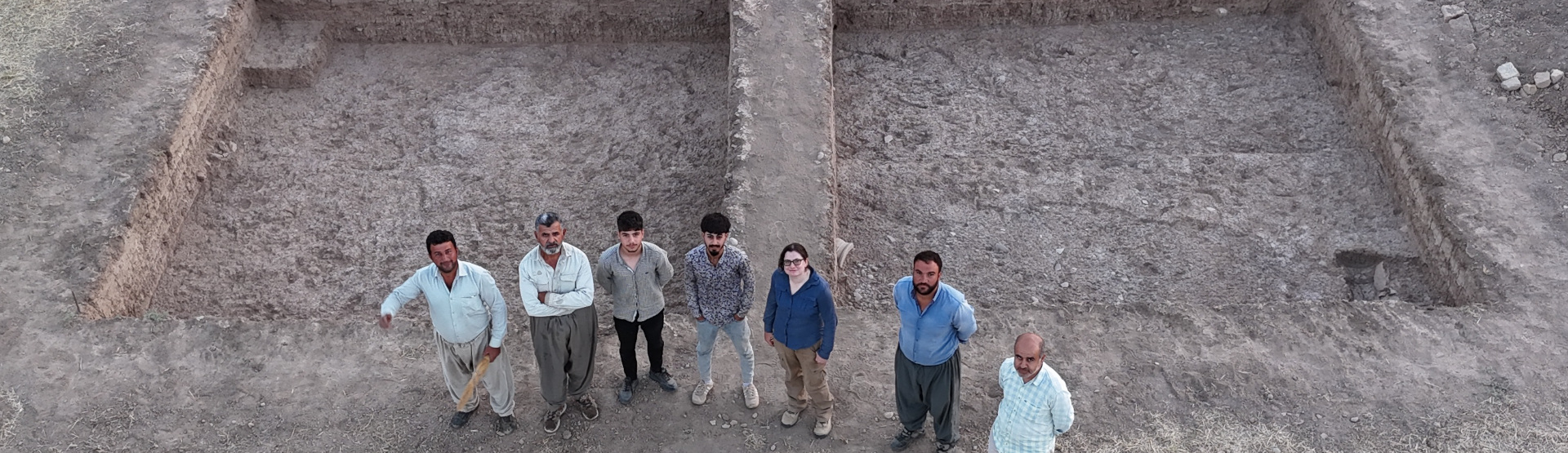
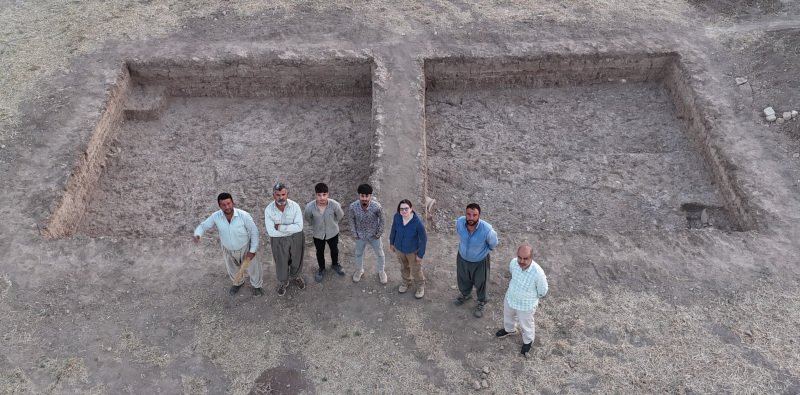
Group photo by the trenches. (Photo courtesy of The Kurd Qaburstan Project).

Victoria Wilson is a PhD candidate in the Department Near Eastern Studies at the Johns Hopkins University studying Mesopotamian Archaeology. Victoria’s research interests include urbanism and household archaeology.

To learn more, see the Kurd Qaburstan Project (KQP) website. The KQP thanks the Directorate-General of Antiquities of the Kurdistan Regional Government, Director-General Kak Kaify Mustafa Ali, and our colleagues in the Erbil Department of Antiquities, Director Kak Nader Babakr.

Want to help more students and early career archaeologists get into the field? Donate to the cause today by selecting “Fieldwork Scholarships” as your gift purpose!

Fieldwork Report: Lorenzo Guardiano

Between River and Desert: September in Aswan

Lorenzo Guardiano, 2024 Katherine Barton Platt Fieldwork Scholarship Recipient

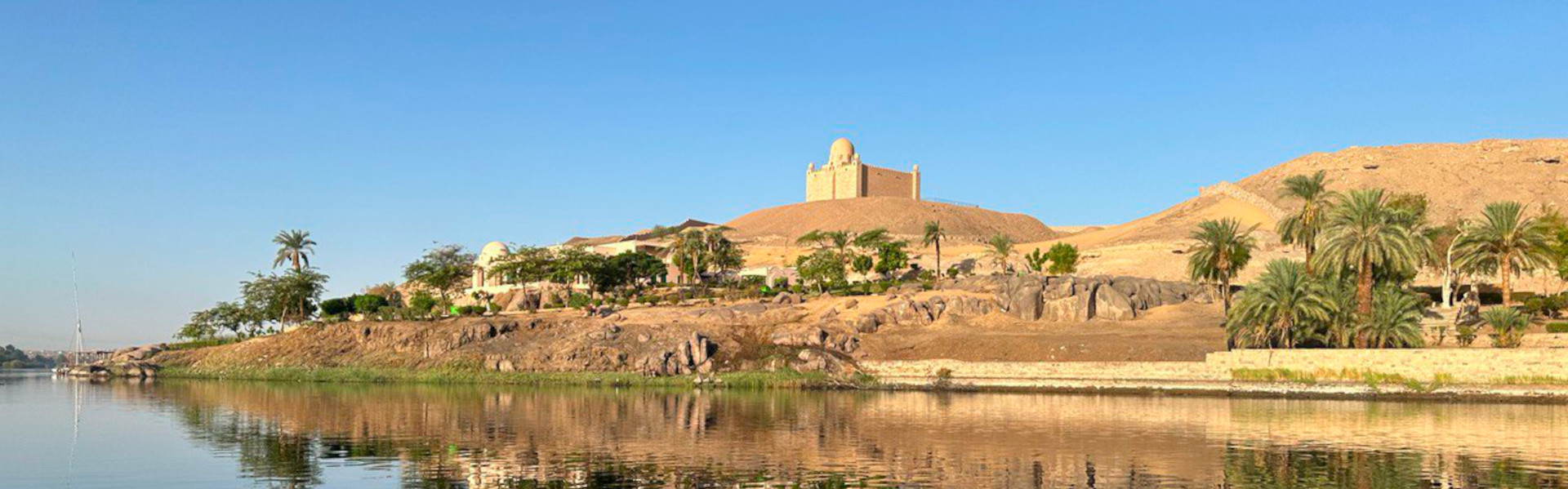
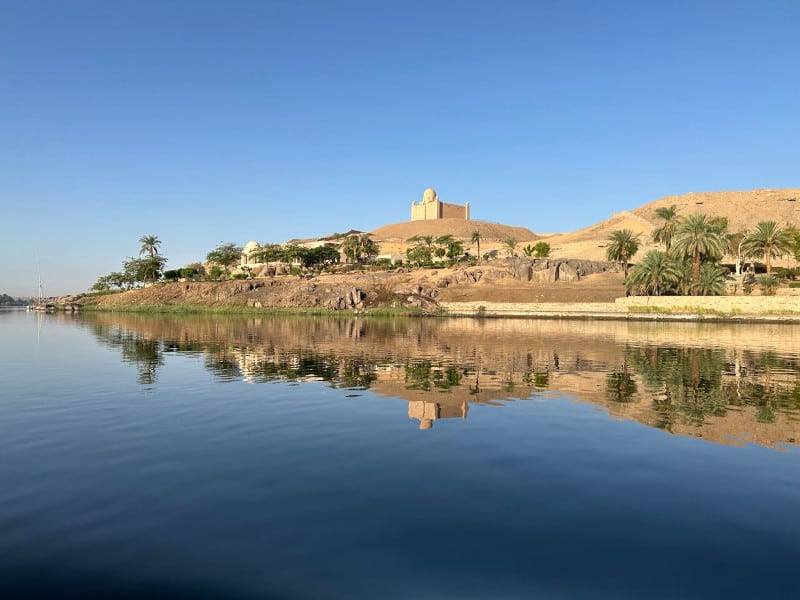
Since 2022, I have been part of the EIMAWA (Egyptian-Italian Mission at West Aswan) archaeological mission, directed by Prof. Patrizia Piacentini and Prof. Fahmy el-Amin, which sees cooperation between the University of Milan and the Egyptian Ministry of Tourism and Antiquities. The mission operates in the necropolis surrounding the Mausoleum of the Aga Khan on the western bank of Aswan and started in 2017 as an archaeological preservation and excavation mission in an area affected by looting. The necropolis contains more than 400 tombs dating from the 7th century BC to 2nd century AD.

Figure 1: The mausoleum of Aga Khan, next to the necropolis excavated by EIMAWA
The mausoleum of Aga Khan, next to the necropolis excavated by EIMAWA.

I specialized in Egyptian epigraphy of the New Kingdom and Graeco-Roman Period by working initially on the critical edition of all astronomical ceilings of New Kingdom temples and tombs in Egypt during my Ph.D. years. During my research fellowship at University of Milan, I worked on the preparation of a volume of the Cairo Museum’s Catalogue Général on private statuary of the Late and Graeco-Roman Period – the core of which is a manuscript by Bernard V. Bothmer, housed in the Archives of Egyptology at the University of Milan, which I revised, updated and supplemented with the edition of texts that Prof. Bothmer had left out. Participating therefore in the EIMAWA Mission as epigraphist of the team is a most valuable opportunity for me to work in the field with Egyptian epigraphy, particularly from the Graeco-Roman Period.

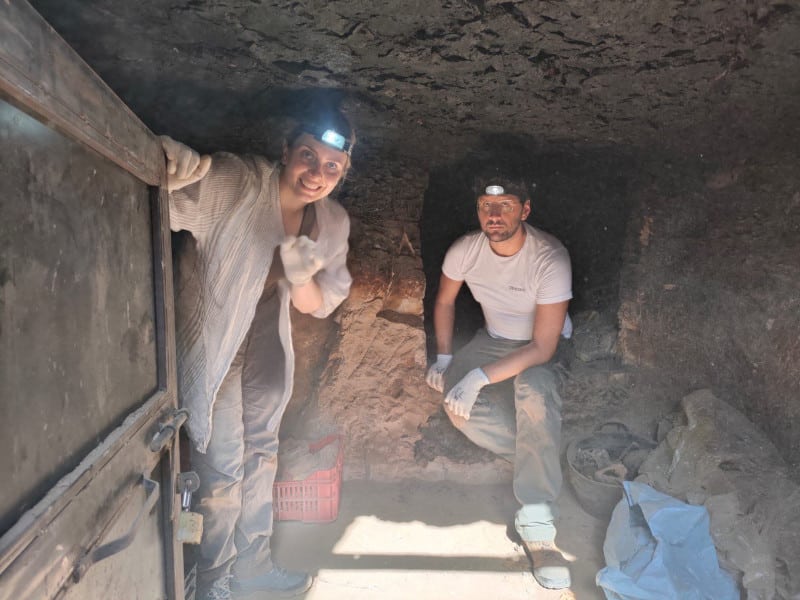
My unquiet face as I help anthropologist Alice study mummies
My unquiet face as I help anthropologist Alice study mummies.

That is why I decided to send in my application for a Scholarship for Fieldwork Participation from ASOR in order to join the EIMAWA mission of September. When, on May 3, 2024, I received an email from ASOR with the news that I had won a Katherine Barton Platt Fieldwork Scholarship I literally jumped for joy! Indeed, this scholarship gave me the opportunity to continue and complete, together with Prof. Piacentini, the epigraphic study of all the inscriptions found on the site from 2019 to the present.

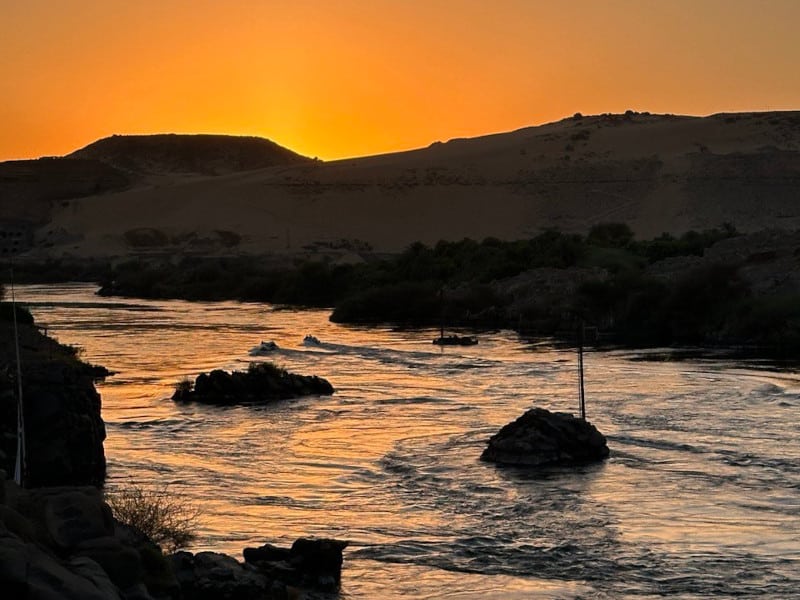
Figure 4: The setting of the sun from our house in Sehel Island
The setting of the sun from our house in Sehel Island.

So, on September 10 I left for Aswan with a team of scholars from various disciplines: Egyptologists, anthropologists, radiologists, chemists, restorers, engineers, etc. The first few days challenged us with extreme weather conditions (temperatures of about 44 degrees!) and the site being in the middle of the desert! But even these temperatures failed to discourage us from doing our work and so, from our home on Sehel Island, we took the boat each morning to the site where, together with the Egyptian team, we discovered and excavated a tomb between two previously excavated ones. Back home, we would spend the afternoon working on the collected data, which we presented each day at the 6:30 p.m. meeting.

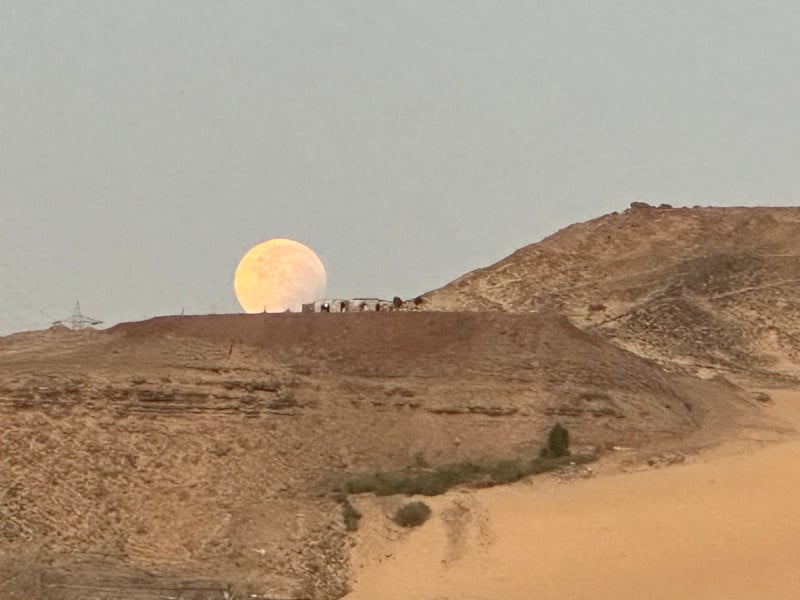
This very afternoon meeting was the most awaited moment of the day since it took place in the veranda of our house in Sehel Island. Before our eyes (and our data-filled computers), the sky was ablaze with the setting sun that descended just behind two knolls drawing the perfect hieroglyph of akhet (“horizon”). There was no fatigue or worry that did not fade away as we walked out of our rooms and were dazzled by the setting sun or moon between the river and the desert, smiling at the song of the ibis that perched on the cliff in front of the house or admiring the elegant flight of the hawk Horus that often passed over our heads. The poignant beauty of Egypt is shown in all its moving power on the first cataract of the Nile, the natural boundary of ancient Egypt.

Figure 5: And to make sure we don’t miss anything...the setting of the moon!
And to make sure we don’t miss anything...the setting of the moon!

Beyond the beauty that filled our eyes, taking part in the September mission gave me the opportunity to complete together with Prof. Piacentini the study and edition of all the hieroglyphic texts unearthed in recent years. The resulting paper has been sent to an international Egyptological journal (Aegyptus 104) and has already been accepted for publication in December. But this mission not only allowed me to refine my epigraphic field studies – working with experts from other disciplines allowed me to enrich my cultural background. I was able to follow every step of the excavation of a new tomb and learn a lot about archaeological methodologies (especially in extreme environmental conditions such as those of the Aswan Desert), I lent a hand to anthropologists in their reconnaissance of human remains, learning a lot from their discipline, and I listened to the timely reports of the restorer and chemist on the treatment of materials.

But the main enrichment was the human one. Working and living side by side with many people for three weeks was a really good experience. I made new friendships and consolidated existing ones. I interacted with the local community and became, along with the other mission members, a resident of Aswan! And for all this, I have to thank the mission director Prof. Piacentini, ASOR who gave me the opportunity to join the team, and, finally, Egypt for the beauty with which it continues to fill our lives every day.

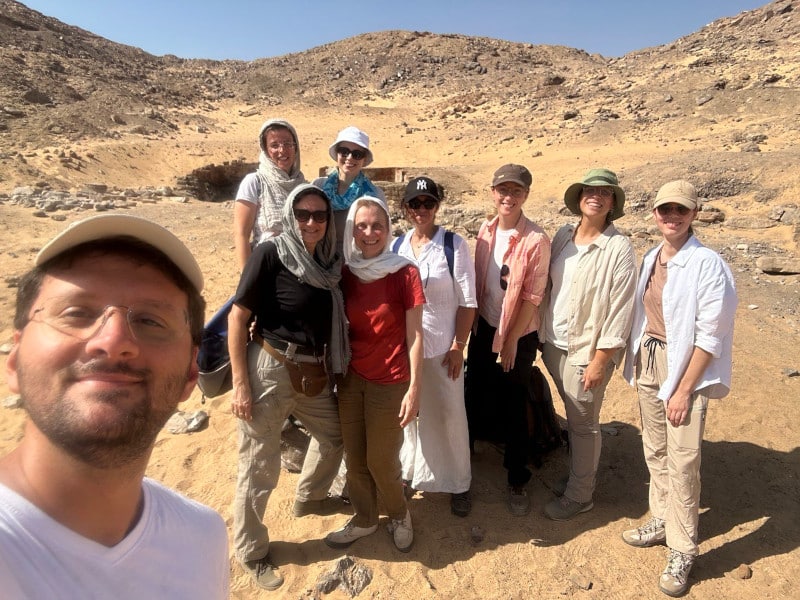
Figure 2: The EIMAWA team
Lorenzo Guardiano and the 2024 Egyptian Italian Mission at West Aswan team.

Lorenzo Guardiano is a research fellow in Egyptology at the University of Milan where he obtained his PhD in 2022. His areas of research are Egyptian astronomy and cosmology and the hieroglyphic epigraphy of the New Kingdom and the Ptolemaic Period. His book “Il Cielo dei Faraoni. I soffitti astronomici nell’Egitto del Nuovo Regno” was published in 2024 by Milano University Press.

Want to help more students and early career archaeologists get into the field? Donate to the cause today by selecting “Fieldwork Scholarships” as your gift purpose!
Fieldwork Report: Louis Mainwaring Foster

Stumbling Over Rocks

Louis Mainwaring Foster, 2024 BIPOC Fieldwork Scholarship Recipient

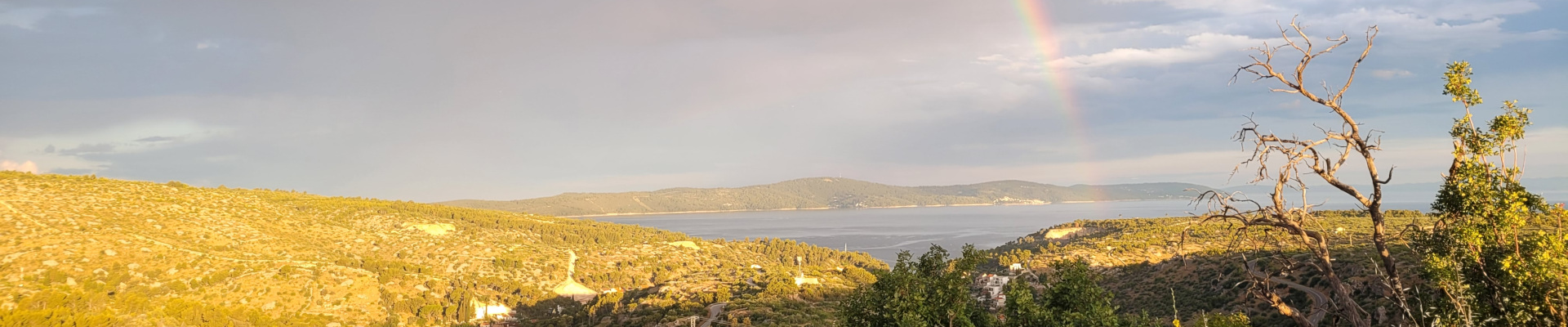
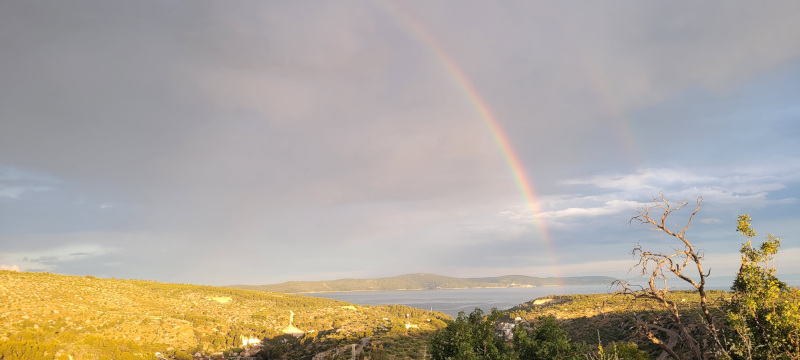
Thanks to this scholarship, I spent part of my summer working on the Brač Island Project along with a mixed team of students from University of Colorado Boulder, England, and Croatia. This summer was the last full season of excavation before a study season in 2025, thus there were a lot of objectives.

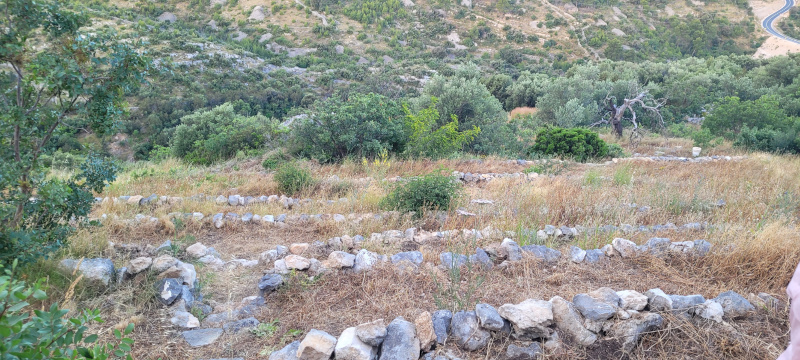
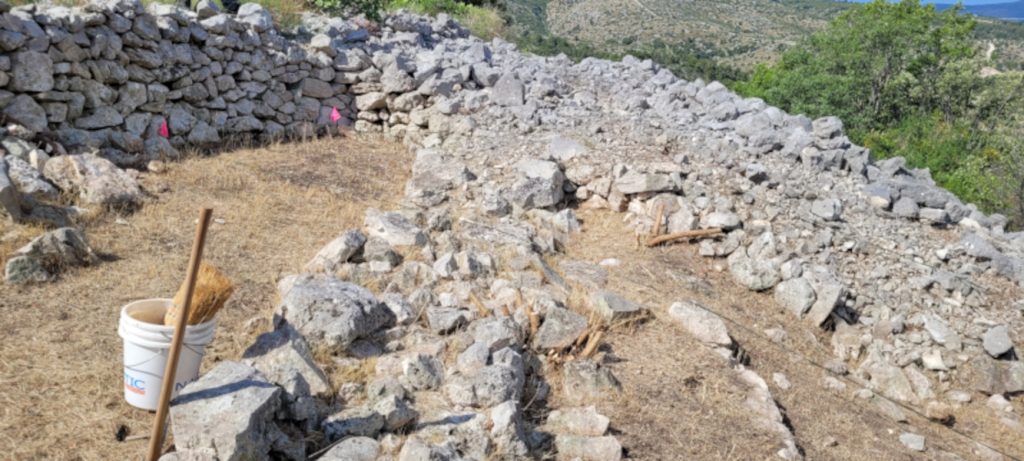
For the sake of the brevity of this report, my discussion of my time on the project will focus on Areas 1: the new terrace trench on the steep southern slope of Gradina Rat. This terrace trench’s aim was twofold, the first being to give a greater context to activity on the site during the Iron age and second to analyze the variety of finds from the large-pottery rich erosional deposit down this slope. After spending some time clearing away plants and other debris, a 3×5 meter trench was laid out across 3 terraces, with focus being placed on the fifth and sixth trenches from the top 19th century terrace walls. The excavation proceeded smoothly despite the islands attempts to impede us, Brač being known for being covered in lots and lots of rocks. The terrace trench produced material and soil ranging from the topsoil that accumulated above the 19th century terrace fill all the way down to fill from around the late 9th to 6th century BCE.

The methodology of our excavation process involved adapting the details and instructions from the Corinth Excavations Archaeological Manual by Alicia Carter Johnson, Guy D. R. Sanders, and Sarah A. James. This manual really aided me when I was trying to make sense of the material we were excavating. Details in the manual helped delineate soil layers based on composition, finds, and color change. We were often rotating between excavating, filling forms, and sieving in order to give us a big picture perspective all the while being guided by our trench supervisors. Being part of filling in the detailed forms for each layer helped me understand ways to break down the process of appraising the information that was being uncovered on site. Many of the details present in the Corinth manual along with the guidance of my trench supervisors will be crucial tools for helping me on future excavations.

The layer of the deposit in the terrace trench that I really enjoyed excavating was the 1st century BCE Erosional Deposit 2. This stratum was distinguishable by the compact, light yellowish brown, sandy/clayey silt. As is usual on Brač, about half of the inclusions were small boulders and cobbles, but there was also a large sample of pottery. There were also other types of inclusions along with this soil, namely charcoal, animal bones, shell, and a few chunks of building materials (clay and daub).  I have never seen daub in person, so the presence of white and yellow clay might indicate a large presence of a decomposing wattle and daub construction. In my experience, these sorts of finds are the best since the information and building techniques that we learn about in class come to life in the field.

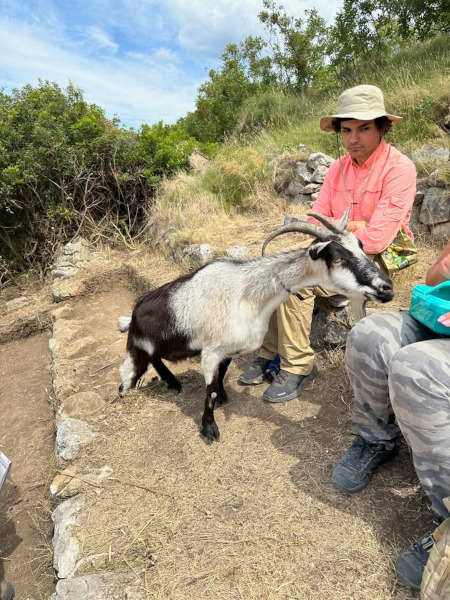
A variety of interesting finds, learning new excavation methodology, and enjoying the Mediterranean sun are some of the reasons I love to excavate. Every couple of days, a local visitor, in the form of a playful goat, Lola, dropped by the trenches to say hello and remind us to stay hydrated. Other fauna visitors included a snake that was trapped beneath one of the backfill tarps, which I luckily managed to extract without any bites.

After a hard days work on site and afternoon duties like pottery wash or pottery sorting, one could find me either in a local pub watching the pre-tournament matches for the 2024 Euros, relaxing at the beach, or eating lots of bakery items. I really enjoyed getting the opportunity to sort pottery since I find it very challenging and I always marvel at how easily experts can distinguish types of pottery that looks completely the same to my eye. It was also interesting to notice the presence of pottery from local sources, Rome, and Greece from a variety of periods all in one site and wonder how and why that might occur. I learned so much during this season of the Brač Island Project and I am grateful to ASOR for aiding me with this experience.

Louis Mainwaring Foster is currently a Master’s student in the Classical Art and Archaeology track of the Classics department at the University of Colorado Boulder. His thesis is focused on questions of identity and cross cultural influence in Hellenistic Bactria. When he is not buried in the books, one can often find him dancing to Afrobeats and reggaeton music or training for a marathon. Louis is always eager for the opportunity to travel to other countries and immerse himself in other cultures and make more international friends.

For more information about the Brač Island Archaeological Project, visit their website: https://bracislandproject.com/

Want to help more students and early career archaeologists get into the field? Donate to the cause today by selecting “Fieldwork Scholarships” as your gift purpose!