Table of Contents for NEA 86.3 (2023)

[vc_row fullwidth=”true” attached=”true” css=”.vc_custom_1496247803139{padding-top: 0px !important;padding-right: 0px !important;padding-bottom: 0px !important;padding-left: 0px !important;}”][vc_column][vc_single_image image=”91698″ img_size=”full” alignment=”center”][/vc_column][/vc_row][vc_row fullwidth=”true” css=”.vc_custom_1496682730308{padding-top: 10px !important;padding-right: 0px !important;padding-bottom: 0px !important;padding-left: 0px !important;}”][vc_column width=”1/12″ css=”.vc_custom_1496683820796{margin-right: 10px !important;}” offset=”vc_hidden-md vc_hidden-sm vc_hidden-xs”][vc_column_text]

 SHARE

[/vc_column_text][mk_image src=”http://www.asortest.org/wp-content/uploads/2017/01/social-fb-icon4.jpg” image_width=”42″ image_height=”42″ hover=”false” custom_url=”https://www.facebook.com/ASOResearch/” margin_bottom=”0″][mk_image src=”http://www.asortest.org/wp-content/uploads/2017/01/social-tw-icon4.jpg” image_width=”42″ image_height=”42″ hover=”false” custom_url=”https://twitter.com/ASOResearch?ref_src=twsrc%5Egoogle%7Ctwcamp%5Eserp%7Ctwgr%5Eauthor” margin_bottom=”0″][mk_image src=”http://www.asortest.org/wp-content/uploads/2017/01/social-in-icon4.jpg” image_width=”42″ image_height=”42″ hover=”false” custom_url=”https://www.linkedin.com/company/american-schools-of-oriental-research” margin_bottom=”0″][mk_image src=”http://www.asortest.org/wp-content/uploads/2017/01/social-ml-icon_7.jpg” image_width=”42″ image_height=”42″ hover=”false” custom_url=”mailto:asor@bu.edu” margin_bottom=”0″][mk_image src=”http://www.asortest.org/wp-content/uploads/2017/01/blog-icon3.jpg” image_width=”42″ image_height=”42″ hover=”false” custom_url=”http://asorblog.org/” margin_bottom=”0″][/vc_column][vc_column border_color=”rgba(255,255,255,0.01)” width=”1/6″ css=”.vc_custom_1496683923840{margin-right: 20px !important;border-left-width: 2px !important;padding-right: 20px !important;padding-left: 20px !important;border-left-color: #99422f !important;}”][mk_divider divider_color=”rgba(255,255,255,0.01)” thickness=”1″ margin_top=”3″ margin_bottom=”3″][vc_widget_sidebar sidebar_id=”ca-sidebar-39801″][/vc_column][vc_column border_color=”rgba(170,170,170,0.01)” width=”1/2″ css=”.vc_custom_1487276122024{margin-right: 10px !important;margin-bottom: 30px !important;border-right-width: 2px !important;border-bottom-width: 2px !important;padding-top: 30px !important;padding-right: 30px !important;padding-left: 20px !important;background-color: #ffffff !important;border-right-color: rgba(227,228,228,0.75) !important;border-bottom-color: rgba(227,228,228,0.75) !important;}”][vc_row_inner][vc_column_inner css=”.vc_custom_1570040186774{padding-right: 10px !important;}”][vc_column_text]

Table of Contents for Near Eastern Archaeology 86.3 (September 2023)

[/vc_column_text][/vc_column_inner][/vc_row_inner][mk_divider thickness=”1″ margin_top=”10″ margin_bottom=”30″][vc_row_inner][vc_column_inner width=”1/2″ css=”.vc_custom_1651246129117{padding-right: 10px !important;padding-bottom: 15px !important;}”][vc_single_image image=”91686″ img_size=”medium” alignment=”center” onclick=”custom_link” img_link_target=”_blank” link=”https://www.journals.uchicago.edu/toc/nea/current”][/vc_column_inner][vc_column_inner width=”1/2″][vc_wp_text]
You can receive NEA (and other ASOR publications) through an ASOR Membership.
Please e-mail the Membership office if you have any questions.
[/vc_wp_text][/vc_column_inner][/vc_row_inner][mk_divider thickness=”1″ margin_top=”30″ margin_bottom=”30″][vc_row_inner][vc_column_inner css=”.vc_custom_1570041002103{padding-right: 10px !important;}”][vc_single_image image=”91688″ img_size=”full” alignment=”center” onclick=”custom_link” img_link_target=”_blank” link=”https://www.journals.uchicago.edu/doi/10.1086/725773″][mk_padding_divider size=”10″][vc_column_text]

Pp. 176-184: “Domestic Material Culture and Wealth Equality: Bronze Age Houses and Intramural Tombs at Titriş Höyük, Turkey,” by Yoko Nishimura

This article measures differential accumulation of material wealth between houses at the intrasite level. The dwellings measured are located in two separate residential neighborhoods at the urban settlement of Titriş Höyük in southeastern Turkey. As proxies of the measurement, the author employed various architectural spaces, built-in features, and portable artifacts exposed from primary floor contexts, as well as grave inclusions from burials within the houses that were completely or partially excavated. Gini values are calculated for thirteen variables derived from the material culture. The results show that occupants of the houses shared a similar economic status from about 2300 to 2100 BCE. It is thought that a centrally planned construction of this settlement around 2300 BCE played a role in the more or less equal wealth distribution. This type of comparative research necessitates a fine-grained excavation record of domestic floors and intramural tombs, both of which are available at Titriş.

ASOR Members with online access: log into ASOR’s Online Portal here. Once logged in, click the JOURNALS tab in the top navigation bar. From here you may select which journal you would like to read. If you have online access, you will see your selected journal’s current issue Table of Contents. Click on the “Current Issue” button and you will then be redirected to the University of Chicago Press’s (UCP) platform to immediately start reading any issue of your choice. Tutorials for how to log in to the Online Portal as well as how to navigate to the Portal Journals page can be found here. [/vc_column_text][/vc_column_inner][/vc_row_inner][mk_divider thickness=”1″ margin_top=”10″ margin_bottom=”30″][vc_row_inner][vc_column_inner css=”.vc_custom_1570041002103{padding-right: 10px !important;}”][vc_single_image image=”91689″ img_size=”full” alignment=”center” onclick=”custom_link” img_link_target=”_blank” link=”https://www.journals.uchicago.edu/doi/10.1086/725772″][mk_padding_divider size=”10″][vc_column_text]

Pp. 186-195: “Exploring the Biography of Gaming Stones at Aredhiou, Cyprus during the Late Bronze Age,” by Louise Steel

This article explores the social lives of gaming stones, a significant number of which have been found at the Late Bronze Age farming settlement of Aredhiou Vouppes, Cyprus. The number of gaming stones found at the site is unprecedented within a Late Cypriot context. Comparatively few are found in the contemporary urban centers, and in general they appear to be more typical of the Middle Cypriot social world. The purpose of this article is to investigate the agency of these gaming stones, and to consider them as social mediators within the community of Aredhiou. It explores the social and cognitive lives of these objects, examining how they might be transformed and reimagined as they moved through myriad states of existence throughout their object-life, and thus the various ways in which they were entangled in the social life of the settlement.

ASOR Members with online access: log into ASOR’s Online Portal here. Once logged in, click the JOURNALS tab in the top navigation bar. From here you may select which journal you would like to read. If you have online access, you will see your selected journal’s current issue Table of Contents. Click on the “Current Issue” button and you will then be redirected to the University of Chicago Press’s (UCP) platform to immediately start reading any issue of your choice. Tutorials for how to log in to the Online Portal as well as how to navigate to the Portal Journals page can be found here. [/vc_column_text][/vc_column_inner][/vc_row_inner][mk_divider thickness=”1″ margin_top=”10″ margin_bottom=”30″][vc_row_inner][vc_column_inner css=”.vc_custom_1570041002103{padding-right: 10px !important;}”][vc_single_image image=”91690″ img_size=”full” alignment=”center” onclick=”custom_link” img_link_target=”_blank” link=”https://www.journals.uchicago.edu/doi/10.1086/725771″][mk_padding_divider size=”10″][vc_column_text]Pp. 196-206: “A Triangular Amulet from Zincirli: The Moon God’s Magical Power in Childbirth,” by K. Lawson Younger

In this article, the author interprets a triangular amulet from the original period of Zincirli’s excavations. He argues that the schematic, linear decoration covering the piece related to astral imagery, most likely the lunar deity Su’en with specifically bovine imagery. The pseudo-script “inscription” covering one of the sides of the amulet was understood to be a magical spell. Based on this hypothesis and in combination with comparative figurine iconography, the author further suggests that the amulet was specifically worn by a woman as a protective aid in childbirth.

ASOR Members with online access: log into ASOR’s Online Portal here. Once logged in, click the JOURNALS tab in the top navigation bar. From here you may select which journal you would like to read. If you have online access, you will see your selected journal’s current issue Table of Contents. Click on the “Current Issue” button and you will then be redirected to the University of Chicago Press’s (UCP) platform to immediately start reading any issue of your choice. Tutorials for how to log in to the Online Portal as well as how to navigate to the Portal Journals page can be found here. [/vc_column_text][/vc_column_inner][/vc_row_inner][mk_divider thickness=”1″ margin_top=”10″ margin_bottom=”30″][vc_row_inner][vc_column_inner css=”.vc_custom_1570041002103{padding-right: 10px !important;}”][vc_single_image image=”91691″ img_size=”full” alignment=”center” onclick=”custom_link” img_link_target=”_blank” link=”https://www.journals.uchicago.edu/doi/10.1086/725774″][mk_padding_divider size=”10″][vc_column_text]

Pp. 208-216: “A Survey on the Geological Origin of the Stele of the Assyrian King Sargon II from Quwakh Tapeh, Kermanshah, Western Iran,” by Sajjad Alibaigi,John MacGinnis, and Iraj Rezaei

In the recent excavations of Quwakh Tapeh, located forty-five kilometers west of Kermanshah in the Mahidasht Plain in western Iran, two fragments were discovered of an Assyrian royal stele belonging to the end of the eighth century BCE and erected on the site following the attack of the Assyrian king Sargon II (722–705 BCE). Considering the high quality of the material, a dolostone, as well as the high quality of the carving of both the relief and the cuneiform inscription, an important question arises as to where the stele was manufactured. In this article we present the results of petrographic and ICP analysis carried out in order to identify the origin of the raw material used for the Quwakh Tapeh stele. The results of our investigations indicate that the stone used to make the stele was probably extracted from the Shahbazan Formation, which outcrops across the Chahar Zabar-Hasanabad Pass to the west and southwest of Quwakh Tapeh.

ASOR Members with online access: log into ASOR’s Online Portal here. Once logged in, click the JOURNALS tab in the top navigation bar. From here you may select which journal you would like to read. If you have online access, you will see your selected journal’s current issue Table of Contents. Click on the “Current Issue” button and you will then be redirected to the University of Chicago Press’s (UCP) platform to immediately start reading any issue of your choice. Tutorials for how to log in to the Online Portal as well as how to navigate to the Portal Journals page can be found here. [/vc_column_text][/vc_column_inner][/vc_row_inner][mk_divider thickness=”1″ margin_top=”10″ margin_bottom=”30″][vc_row_inner][vc_column_inner css=”.vc_custom_1570041002103{padding-right: 10px !important;}”][vc_single_image image=”91692″ img_size=”full” alignment=”center” onclick=”custom_link” img_link_target=”_blank” link=”https://www.journals.uchicago.edu/doi/10.1086/725770″][mk_padding_divider size=”10″][vc_column_text]

Pp. 218–229: “Robebus Chapel Crypt Burials: Commingled, Broken, and Processed,” by Margaret Ann Judd

The Robebus Chapel at Mount Nebo was revealed in 1981 and its crypts excavated from 2007 to 2011. The earliest interments were supine and articulated, while the bones of later depositions were disarticulated, commingled, and frequently broken. Postdepositional tool modification occurred on seven crania and on the ribs of one of the estimated seventy-three adult males interred. The accessibility to the crypts provided a means for monastics to view the decomposition sequence and anatomy, which provided useful knowledge in their capacity as physical as well as spiritual healers. Decomposition, reintegration, recombination, removal, and modification with tools were part of the funerary cycle that produced increased fragmentation over time. This fragmentation corresponded to increased competitive relic acquisition, international pilgrimage, and Mount Nebo’s role as a physical and spiritual healing center. N.B.: Images of human bones.

ASOR Members with online access: log into ASOR’s Online Portal here. Once logged in, click the JOURNALS tab in the top navigation bar. From here you may select which journal you would like to read. If you have online access, you will see your selected journal’s current issue Table of Contents. Click on the “Current Issue” button and you will then be redirected to the University of Chicago Press’s (UCP) platform to immediately start reading any issue of your choice. Tutorials for how to log in to the Online Portal as well as how to navigate to the Portal Journals page can be found here. [/vc_column_text][/vc_column_inner][/vc_row_inner][mk_divider thickness=”1″ margin_top=”10″ margin_bottom=”30″][vc_row_inner][vc_column_inner css=”.vc_custom_1570041002103{padding-right: 10px !important;}”][vc_single_image image=”91693″ img_size=”full” alignment=”center” onclick=”custom_link” img_link_target=”_blank” link=”https://www.journals.uchicago.edu/doi/10.1086/725769″][mk_padding_divider size=”10″][vc_column_text]

Pp. 230–239: “Coastal Archaeology and Climate Change in the Middle East and North Africa: Contextualizing Global Projections,” by Kieran Westley and Georgia Andreou

Recent global projections of climate change highlight alarming rates of flooding and erosion on the coastlines of the Middle East and North Africa (MENA). Though there are indisputable links between climate change and the deterioration of maritime cultural heritage (particularly coastal archaeology), deterioration is often the result of multiple compounding factors, central among which are anthropogenic landscape alterations. In this article the authors attempt to disentangle these factors at a small scale, using the Gaza Strip, Libya, and Oman as case studies. They examine the impact of accelerating coastal erosion, flooding, and increasing frequency of tropical cyclones to question predominant discussions on the impact of climate change on heritage. They emphasize methods and practices for the identification of sites that can expand and refine climate change research (often reliant on data from the twentieth and twenty-first centuries) through the long-term perspective archaeology is uniquely placed to offer.

ASOR Members with online access: log into ASOR’s Online Portal here. Once logged in, click the JOURNALS tab in the top navigation bar. From here you may select which journal you would like to read. If you have online access, you will see your selected journal’s current issue Table of Contents. Click on the “Current Issue” button and you will then be redirected to the University of Chicago Press’s (UCP) platform to immediately start reading any issue of your choice. Tutorials for how to log in to the Online Portal as well as how to navigate to the Portal Journals page can be found here. [/vc_column_text][mk_divider thickness=”1″ margin_top=”10″ margin_bottom=”30″][vc_single_image image=”91694″ img_size=”full” alignment=”center” onclick=”custom_link” img_link_target=”_blank” link=”https://www.journals.uchicago.edu/doi/10.1086/725775″][vc_column_text]

Pp. 240–249: “Immersing in Mesopotamia: Virtual Reality Site Tours in the Remote Classroom,” by Peter J. Cobb and Juuso H. Nieminen

Immersive technologies and 3D modeling hold the potential for improving how we teach students about archaeological topics, especially the spatial and visual aspects of the past. This article presents a rapid exploratory pilot experiment that deployed virtual reality (VR) devices for remote group tours of sites within an introductory Mesopotamian archaeology university course. Creating the 3D models of the sites took the most time, so it is hoped that future publication norms will encourage the direct sharing of models for reuse. Through student interviews, the authors found that students could remember and explain the spatial layouts of the sites presented in VR better than those presented by traditional means. Students also informed about challenges with using the technology and their enjoyment of interacting with the sites and other students in this new way. Future archaeological teaching with VR will build upon the practical knowledge gained from this initial pilot.

ASOR Members with online access: log into ASOR’s Online Portal here. Once logged in, click the JOURNALS tab in the top navigation bar. From here you may select which journal you would like to read. If you have online access, you will see your selected journal’s current issue Table of Contents. Click on the “Current Issue” button and you will then be redirected to the University of Chicago Press’s (UCP) platform to immediately start reading any issue of your choice. Tutorials for how to log in to the Online Portal as well as how to navigate to the Portal Journals page can be found here. [/vc_column_text][/vc_column_inner][/vc_row_inner][mk_divider thickness=”1″ margin_top=”10″ margin_bottom=”30″][/vc_column][vc_column border_color=”rgba(170,170,170,0.01)” width=”1/6″ css=”.vc_custom_1496684098866{margin-right: 5px !important;margin-bottom: 20px !important;border-right-width: 2px !important;border-bottom-width: 2px !important;padding-top: 30px !important;padding-right: 10px !important;padding-left: 10px !important;background-color: #ffffff !important;border-right-color: rgba(227,228,228,0.75) !important;border-bottom-color: rgba(227,228,228,0.75) !important;}”][vc_wp_posts title=”BROWSE THE NEWS ARCHIVE” number=”4″][/vc_column][vc_column border_color=”rgba(170,170,170,0.01)” width=”1/6″ css=”.vc_custom_1496684008271{margin-right: 10px !important;margin-bottom: 30px !important;border-right-width: 2px !important;border-bottom-width: 2px !important;padding-top: 30px !important;padding-right: 20px !important;padding-left: 20px !important;background-color: #ffffff !important;border-right-color: rgba(227,228,228,0.75) !important;border-bottom-color: rgba(227,228,228,0.75) !important;}”][vc_column_text] [/vc_column_text][/vc_column][/vc_row]

FOA Webinar: Sharon Herbert on September 21

FRIENDS OF ASOR WEBINARS

The Hellenistic Archive at Tel Kedesh: The Long and Serendipitous Road to Publication-1999-2023


Friends of ASOR present the next webinar in the 2023-2024 season on September 21 2023, at 3:00 pm EDT, presented by ASOR’s President Sharon Herbert moderated by Dr. Jennifer Gates-Foster.  In July of 1999 a University of Michigan/University of Minnesota team excavating at Tel Kedesh of the Upper Galilee uncovered a cache of over 1,200 small highly fired clay pellets carrying impressions of Greek gods and other subjects on their obverse and marks of papyrus records on the reverse.

In the 2000 season another 800 came to light. Impressed pellets such as these were used to witness and seal papyrus documents throughout the Near East in the Hellenistic and Roman eras. Subsequent study proved the sealings found at Kedesh to date to the first ½ of the 2nd c BCE, years in which the Seleucid dynasty controlled the region.Excavation over succeeding years clarified the find spot of the sealings. They and the records they sealed were stored in an archive complex deep within a large administrative building of Achaemenid and Hellenistic date. The archive burned in the mid 2nd c BCE at the end of the Seleucid control of the region or shortly thereafter. The presence of such a relatively large archive at Kedesh indicates significant and unexpected administrative activity at the site in the waning years of the Seleucid Empire. The images chosen for the seal rings impressed on the sealings from Kedesh reflect choices made by individuals living in a mixed Greek and Phoenician environment in times of shifting identities and political affiliations.


The Kedesh archive contained the seventh largest number of Hellenistic sealings (2,043+) excavated in or clearly near their storage place, and is the only provincial archive known within the areas controlled by the Seleucids. The seals identified as impressing these sealings number 1,293. This is the 3rd largest number of seals known from any Hellenistic archive, coming in behind only the enormous archives from Seleucia and Delos. Although we cannot determine with any precision the numbers or subjects of the documents in the archive, the presence of such a relatively large body of material at Kedesh points to significant and unexpected administrative activity at the site in the waning years of the Seleucid Empire. In addition, the images chosen for the seal rings impressed on the sealings from Kedesh reflect choices made by individuals living in a mixed Greek and Phoenician environment in times of shifting identities and political affiliations. The existence of the archive itself and the function(s) it might have served in this remote Seleucid outpost shed light on the administrative practices of the Seleucid dynasts and their relations with local inhabitants of their vast and diffuse territories. The webinar will conclude with a live Q&A session led by Dr. Jennifer Gates-Foster of University of  North Carolina Chapel Hill. 

Sharon Herbert with co-director Andrea Berlin at Kedesh

Sharon Herbert, the current President of ASOR, is the Charles K. Williams II Distinguished University Professor of Classical Archaeology Emerita and Research Associate at the Kelsey Museum of Archaeology at the University of Michigan(2019). Formerly, she served as the chair of the Department of Classical Studies and Director of the Interdepartmental Program in Classical Art and Archaeology at Michigan, where she has enjoyed a remarkable career as a field archaeologist, teacher, and academic administrator since she joined the Michigan faculty in 1973. She is also the former Curator of Greek and Hellenistic Collections and Director Emerita (1997-2013) of the University of Michigan’s Kelsey Museum. Herbert’s research specialties include Hellenistic Egypt and the Near East and ancient ceramics. She is best known for her contributions to the archaeology of Israel, as director of the Tel Anafa excavations from 1978 to 1981 and as co-director of the Tel Kedesh excavations from 1997 to 2012. She has also conducted archaeological fieldwork in Greece, Italy, and Egypt. Her latest book (ARS 30) is on the Hellenistic archive at Kedesh.

This webinar will be recorded and all paid registrants will be sent a link to view the recording.


*Please log in to the Online Portal BEFORE registering for the webinar. Once you have logged in, you will be able to register under our Events page linked above.


ASOR Sustaining Members: $0 | ASOR Members: $6 | Public: $12
Season Pass: ASOR Sustaining Members: $0 | ASOR Members: $75 | Public: $150
Buy one here!

Please e-mail membership@asor.org with any questions or issues with registering.

All proceeds from this webinar are used to fund scholarships for members as well as increasing ASOR’s online resources, which are free to the public.

READY FOR A WEBINAR SEASON PASS?

Buy a season pass for all the webinars* of the 2023-2024 FOA Webinar Season! With a season pass, you will automatically be registered for every webinar in the season, and you will receive the recording of each webinar automatically after the event.

If you have missed webinars earlier in the season and still want to buy the pass, you will receive the links to the recordings of the webinars you missed in your automatic confirmation email after you buy the pass.

*Special symposiums may be excluded from the season pass price.

No more registering for a year if you buy your pass today!

Pricing:

ASOR Sustaining Members: $0 (automatic registration for each webinar)
Members: $75
Public: $150

Not a member yet? Click here to join as a member and receive the 50% off a season pass!

Please e-mail membership@asor.org if you have any questions or issues.

SPONSOR A WEBINAR!

Several levels of support from $50-$1,000 are available. Proceeds go towards membership scholarships and towards increasing ASOR’s virtual resources. Each sponsorship is tax-deductible and you can give your friends free registrations to a webinar! Sponsor a webinar here. 

Bronze Level ($50): up to 2 guest registrations
Silver Level ($100): up to 5 guest registrations
Gold Level ($500): up to 20 guest registrations
Platinum Level ($1,000): up to 50 guest registrations

WHY SPONSOR ONLY ONE?

Season Sponsorships are also available from the ASOR Online Store here! 

Bronze level: $750
Silver level: $1,500
Gold level: $2,500
Platinum level: $5,000
Diamond level: $10,000

Click here for more information on the benefits of becoming a season sponsor or sponsoring a single webinar.

After you sign up for a sponsorship online or over the phone, email the names and email addresses of your guests to Katherine Schmitt at membership@asor.org, who will send your guests a confirmation and the Zoom link before the webinar.

WANT TO SAVE $6.00 ON THE NEXT WEBINAR?

Join ASOR as a member! Click here for more details about discounts for events and other benefits of membership. Memberships start at $40 for the year as an Associate Member.

Not ready to join yet? Become a Friend of ASOR for FREE!

Click here for more details about our online resources.

PAST WEBINARS

You can now purchase the link to the recording of any webinar. You can also purchase the bundle packages of all webinars from the 2020-2022 seasons. Please e-mail membership@asor.org for purchase details.

To see a printable pdf of the webinar titles from the 2020-2021 season, please click here. To see a printable pdf of the webinar titles from the 2021-2022 season, please click here.

Pricing:

Members: $6.00 per recording
Non-Members: $12.00 per recording
Bundle of 2020-2021 Webinars: $75.00
Bundle of 2021-2022 Webinars: $75.00
Bundle of 2020-2022 Webinars: $125.00

2021-2022 Season

A World at War: Protecting Cultural Heritage in Times of Conflict
Patty Gerstenblith (DePaul University), Lisa Ackerman (Columbus Citizens Foundation), Andrew Cohen (Government Professional and Cultural Heritage Expert) | May 12, 2022

Preserving Cultural Heritage in Hisban and Umm al-Jimal, Jordan
Øystein LaBianca (Andrews University), Elizabeth Osinga (Umm al-Jimal Archaeological Project), Darrell Rohl (Calvin University) | April 24, 2022

Back to the Field: Recent Discoveries & Summer Plans 2022
Lorenzo d’Alfonso (ISAW), Kathryn Grossman (NC State University), James R. Strange (Samford University) | April 3, 2022

Uncovering What is Nubian Beneath the Veneer of Egyptianness: Excavating the Archives
Debora Heard (University of Chicago) | March 20, 2022

Where Are They Now?: A Preview of 2022 ASOR-Affiliated Fieldwork Projects
Michael Given (University of Glasgow), Xenia-Paula Kyriakou (Florida Gulf Coast University), Stephen Batiuk (University of Toronto), Monique Roddy (Walla Walla University), Kent Bramlett (La Sierra University), Friedbert Ninow (La Sierra University), and Michael Hoff (University of Nebraska-Lincoln) | March 8, 2022

Excavations at Tel Gezer: A Personal Story
Sam Wolff (Tel Gezer Laboratory) | February 20, 2022

Tel Rehov: A Major Bronze and Iron Age City in the Jordan Valley
Amihai Mazar (Hebrew University of Jerusalem), Nava Panitz-Cohen ( Hebrew University of Jerusalem), Nota Kourou (Athens University), Naama Yahalom-Mack (Hebrew University of Jerusalem), Robert Mullins (Azusa Pacific University) | February 10, 2022

The Not-So-Innocents Abroad: The Beginnings of American Biblical Archaeology
Rachel Hallote (Samford University) | January 20, 2022

Synagogues as Jesus Knew Them
James R. Strange (Samford University) | December 2, 2021

Under Jerusalem: The Buried History of the World’s Most Contested City
Andrew Lawler | November 4, 2021

Jesus and Jerusalem on TV: How Do Bible Documentaries Get Made?
Robert Cargill (University of Iowa) | October 17, 2021

Digging the Divine?: Judahite Pillar Figurines and the Archaeology of Israelite Religion
Erin Darby (University of Tennessee) | October 7, 2021

David, Solomon, and Rehoboam’s Kingdom—The Archaeological Evidence
Yosef Garfinkel (Hebrew University of Jerusalem) | September 19, 2021

From Standing Stones to Sacred Emptiness: Textual and Visual Portrayals of Israel’s God
Theodore Lewis (Johns Hopkins University) | August 29, 2021

2020-2021 Season

Making May Matter: Webinarathon to Endow Diversity
Multiple Speakers | May 21-23, 2021

Archaeogaming: Why Video Games Deserve Their Own Archaeology
Tine Rassalle (University of North Carolina at Chapel Hill), Shannon Martino (Morton College), Matthew Winter (University of Arizona), Michael Zimmerman (Rhode Island) | April 18, 2021

How the Bible Became a Book
William Schniedewind (UCLA) | March 21, 2021

The Mysteries of Mithras in Caesarea: Exploring the Cult’s Rites and Remains
Jane DeRose Evans (Temple University), Alexandra Ratzlaff (Brandeis University) | March 11, 2021

Archaeology and the Hidden Religious Culture of Israelite Women
Carol Meyers (Duke University) | February 21, 2021

Meet the Directors—Fundraiser to Support ASOR’s Affiliated Overseas Research Centers
Matthew J. Adams (AIAR), Pearce Paul Creasman (ACOR), Lindy Crewe (CAARI) | February 11, 2021

Early Synagogues, Jesus, and Galilee—A Jewish Perspective
Eric Meyers (Duke University) | December 13, 2020

Home Sweet Home: Ancient Israelite Households in Context
Cynthia Shafer-Elliott (William Jessup University) | October 18, 2020

Priestesses in the Days of Solomon and Ahab
Susan Ackerman (Dartmouth College) | September 13, 2020

Digging Deeper: How Archaeology Works
Eric H. Cline (The George Washington University) | August 9, 2020

2023 FOA Seminar in Raleigh-Durham

2023 FRIENDS OF ASOR SEMINAR

October 20-22, Raleigh-Durham, NC

Register today for “Archaeology in the Mediterranean and Ancient Near East: Recent Discoveries and Retrospectives” a Friends of ASOR Weekend Seminar in Raleigh-Durham, NC at the Sheraton Imperial Hotel Raleigh-Durham Airport at Research Triangle Park.

Join us in Raleigh this October for a weekend full of interactive lectures, or register for a One-Day pass! Registration includes admission to presentations on Friday evening, all-day Saturday, and Sunday morning. There will be ample opportunities to engage informally with speakers and panelists. Registration also includes a discount on hotel room rates, dinner on 10/20, lunch on 10/21.

This FOA Seminar will include presentations from Eric Meyers, Carol Meyers, Jennie Ebeling, Kate Grossman, Tate Paulette, and Jack Sasson. Sharon Herbert and Andrew Vaughn will participate as panelists.


Register Now Button


Pricing

(Full weekend seminar with all events included is $200, individual events priced below)

 Friday Oct. 20Saturday Oct. 21Sunday Oct. 22
 Dinner and a private conversation with the seminar’s academic speakers: $75One-day Registration (includes 4 presentations, lunch, and dinner): $100One-day Registration: $50
  Saturday night dinner: $75
*Free for the first 30 local registrants
 
Full Weekend Registration ($200)All of the above includedAll of the above includedAll of the above included


Presentation Schedule

FRIDAY, OCTOBER 20


Dinner

Private conversation with the seminar’s academic speakers

SATURDAY, OCTOBER 21

Morning

Naboth’s Vineyard in Context: Excavating an Iron Age Winery at Jezreel
Jennie Ebeling

The beverage described most frequently in the Hebrew Bible/Old Testament, wine played a major role in the diet, economy, religion, and culture of ancient Israel. A well-preserved winery complex excavated at Jezreel in Israel’s Galilee offers insights into the technology of wine production during the Iron Age (ca. 1200-586 BCE) and provides context for the dramatic story of Naboth’s vineyard in 1 Kings 21.

Food, Gender, and Power in Israelite Households
Carol Meyers

Nothing is more fundamental to human existence than food, and in traditional societies like ancient Israel, growing crops and raising animals and then transforming them into edible form occupied a significant part of the daily life of most people. The latter step–the production of edible products, that is, food­­–was largely the task of women in biblical antiquity. This presentation will look at some of the archaeological materials that women used in making food. Then it will go a step further and look at the social, religious, and other aspects of women’s food-production tasks. In so doing, it will reveal otherwise unnoticed aspects, such as personal and social power, of women’s lives in Israelite households.

Lunch


Afternoon


Tales the Animals Tell: Zooarchaeology and the Multispecies Communities of the Ancient Near East
Kate Grossman

The cities, towns, and countryside of the Near East were populated not just by humans, but also by the animals that lived, worked, and died alongside them. While we tend to think of animals primarily as a source of food and labor, new approaches to the study of human-animal interactions are foregrounding the ways that animals influenced human action and contributed to social life in the ancient world. Drawing on 15+ years of studying animal bones from archaeological sites in Syria, Iraq, Jordan, Egypt, and Cyprus, I will show how the zooarchaeological record provides surprising new insights into the multispecies communities of the ancient Near East.

Beer and Brewing in Ancient Mesopotamia
Tate Paulette

In ancient Mesopotamia, beer was produced on a massive scale and was consumed on a daily basis by people across the socio-economic spectrum. Beer was a gift from the gods, a marker of civilization, a dietary staple, a social lubricant, a ritual necessity, and a reason for celebration. It was consumed at feasts, festivals, and ritual ceremonies, but also at home, on the job, and in neighborhood taverns. It was produced by brewers working for the powerful palace and temple institutions and also by local tavern keepers and homebrewers. This lecture explores the archaeological, artistic, and written evidence for beer and brewing in Mesopotamia, as well as recent efforts to recreate Mesopotamian beer.

Dinner

Plenary Panel


Cultural Heritage in the Age of Conflict: ASOR in North Africa – Andrew Vaughn, Sharon Herbert, Carol Meyers, Eric Meyers, Jack Sasson

SUNDAY, OCTOBER 22

Morning

Of Tombstones and Atlantis: Searching for a Lost Past in Tunis and Djerba
Jack Sasson

In Tunis and Djerba, Jack M. Sasson, a retired (UNC and Vanderbilt) Assyriologist and Biblical scholar, had glimpses of remnant communities that parallel those of his native Syria and Lebanon, alas now as submerged as Atlantis. In this informal talk, he will reflect on his personal experience of that world as evoked by his visit: Arab in culture, Jewish in religion, and French in outlook. Sasson will also report on a striking difference among those communities in their biographic use of tombstones.

Jesus in Galilee: An Archaeological Perspective
Eric Meyers

Recent archaeological discoveries in Galilee have shown beyond any shadow of a doubt that the region was overwhelmingly Jewish in the time of Jesus. There are only a handful of sites that may be identified as gentile or non-Jewish. In addition, the identification of many early synagogues from this period has allowed us to better understand that the multiple references in Josephus and the New Testament are to actually purpose-built structures, chief among them being Magdala. Together with the many stones vessels and ritual baths found, we may today conclude that most of these Jewish sites, which date to the early Roman period, indicate that Jews were practicing purity laws based on the Torah. Also, with little to no Greek attested in the epigraphic finds from this time, therefore, a much more nuanced and accurate picture of Jewish Galilee may be drawn in the most recent quest for the historical Jesus.

Questions about registration? Please contact membership@asor.org or call 703-789-9230.

FOA Webinar: Seth Sanders on August 31

[vc_row fullwidth=”true” attached=”true” css=”.vc_custom_1496247803139{padding-top: 0px !important;padding-right: 0px !important;padding-bottom: 0px !important;padding-left: 0px !important;}”][vc_column][vc_single_image image=”91217″ img_size=”full” alignment=”center”][/vc_column][/vc_row][vc_row fullwidth=”true” css=”.vc_custom_1496682730308{padding-top: 10px !important;padding-right: 0px !important;padding-bottom: 0px !important;padding-left: 0px !important;}”][vc_column width=”1/12″ css=”.vc_custom_1496683820796{margin-right: 10px !important;}” offset=”vc_hidden-md vc_hidden-sm vc_hidden-xs”][vc_column_text]

 SHARE

[/vc_column_text][mk_image src=”http://www.asortest.org/wp-content/uploads/2017/01/social-fb-icon4.jpg” image_width=”42″ image_height=”42″ hover=”false” custom_url=”https://www.facebook.com/ASOResearch/” margin_bottom=”0″][mk_image src=”http://www.asortest.org/wp-content/uploads/2017/01/social-tw-icon4.jpg” image_width=”42″ image_height=”42″ hover=”false” custom_url=”https://twitter.com/ASOResearch?ref_src=twsrc%5Egoogle%7Ctwcamp%5Eserp%7Ctwgr%5Eauthor” margin_bottom=”0″][mk_image src=”http://www.asortest.org/wp-content/uploads/2017/01/social-in-icon4.jpg” image_width=”42″ image_height=”42″ hover=”false” custom_url=”https://www.linkedin.com/company/american-schools-of-oriental-research” margin_bottom=”0″][mk_image src=”http://www.asortest.org/wp-content/uploads/2017/01/social-ml-icon_7.jpg” image_width=”42″ image_height=”42″ hover=”false” custom_url=”mailto:info@asor.org” margin_bottom=”0″][mk_image src=”http://www.asortest.org/wp-content/uploads/2017/01/blog-icon3.jpg” image_width=”42″ image_height=”42″ hover=”false” custom_url=”http://asor.org/blog” margin_bottom=”0″][/vc_column][vc_column border_color=”rgba(255,255,255,0.01)” width=”1/6″ css=”.vc_custom_1496683923840{margin-right: 20px !important;border-left-width: 2px !important;padding-right: 20px !important;padding-left: 20px !important;border-left-color: #99422f !important;}”][mk_divider divider_color=”rgba(255,255,255,0.01)” thickness=”1″ margin_top=”3″ margin_bottom=”3″][vc_widget_sidebar sidebar_id=”ca-sidebar-39801″][/vc_column][vc_column border_color=”rgba(170,170,170,0.01)” width=”1/2″ css=”.vc_custom_1487276122024{margin-right: 10px !important;margin-bottom: 30px !important;border-right-width: 2px !important;border-bottom-width: 2px !important;padding-top: 30px !important;padding-right: 30px !important;padding-left: 20px !important;background-color: #ffffff !important;border-right-color: rgba(227,228,228,0.75) !important;border-bottom-color: rgba(227,228,228,0.75) !important;}”][vc_column_text responsive_align=”left”]

FRIENDS OF ASOR WEBINARS

Who Really Invented the Alphabet?

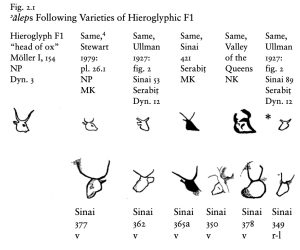
[/vc_column_text][mk_divider][vc_single_image image=”91381″ img_size=”full” alignment=”center” onclick=”custom_link” img_link_target=”_blank” link=”https://members.asor.org/commerce/store?productId=ASOR-SETH-SANDERS-WEBINAR-AUGUST-31-2023-MEMBERS”][mk_padding_divider size=”20″][vc_wp_text]Friends of ASOR present the first webinar in the 2023-2024 season on August 31 2023, at 3:00 pm EDT, featuring Prof. Seth Sanders moderated by Prof. Samuel Boyd.  Who really invented the alphabet? Despite its vast influence, we are still uncertain about precisely where the world’s most influential communication system came from. One reason for this uncertainty is that debate about the alphabet’s origins has tended to focus on questions for which there is no clear evidence–the personal identity, social status, and educational background of the inventor/s, on the one hand, and the exact date of its invention on the other. What we do know for sure about the early alphabet’s background is linguistic and material: it is widely agreed that it was created by speakers of West Semitic language ancestral to Hebrew, Arabic, and Aramaic. And as you can see from the illustration, its letters were closely based on what Egyptian hieroglyphic signs looked like.

But there is another—basically unexplored—avenue that can reveal surprisingly precise information about what the early alphabet’s creators drew on and how they were trained. Because in fact there is ample evidence about what knowledge the earliest alphabetic writers did and did not draw on. First, if the alphabet’s inventors drew on what Egyptian signs looked like, did they know, or care, what they sounded like? That is, is there any evidence that they knew how the Egyptian writing system actually worked? Second is whether anyone was professionally trained in the early alphabet: was it systematized and taught carefully, the way a scribe would, or casually and unevenly transmitted, like a game or informal craft tradition?

This talk will present new evidence for a strictly visual, rather than Egyptian-scribal-based linguistic basis for the alphabet’s origins, and for its informal use by non-scribal—and perhaps also scribal–users during its first 500 years. This evidence for the success of a new sort of non-scribal writing system outside of bureaucratic centers has historical analogies in the spread and development of the Greek alphabet and can help us reflect on the role of play and craft traditions in the invention and spread of new cultural phenomena. The webinar will conclude with a live Q&A session moderated by Prof. Samuel Boyd of the University of Colorado Boulder. 

Seth L. Sanders is an expert in the languages and cultures of the ancient Levant, from Ugaritic and Amorite to Hebrew and Aramaic. He has edited or coedited studies of the cuneiform texts from Israel and Palestine, writing in the ancient Near East, and ancient Jewish sciences, as well as writing two books, The Invention of Hebrew and From Adapa to Enoch: Scribal Culture and Religious Vision in Judea and Babylon. His current work, which has been supported by the NEH and the Guggenheim Foundation, is on a new approach to the composition of the Hebrew Bible, including the first open-access presentation of the sources of the Pentateuch beginning with the Priestly Work at pentateuch.digital. He is also interested in ancient and modern poetic and liturgical performance of religious texts from The Songs of the Sabbath Sacrifice to Black Sabbath. He currently teaches at UC Davis and will join Dalhousie University as McLeod Professor of Classics in Fall 2024.

To purchase a recording of this webinar please visit the ASOR Online Store here.


ASOR Sustaining Members: $0 | ASOR Members: $6 | Public: $12
Season Pass: ASOR Sustaining Members: $0 | ASOR Members: $75 | Public: $150
Buy one here!

Please e-mail membership@asor.org with any questions or issues with registering.

All proceeds from this webinar are used to fund scholarships for members as well as increasing ASOR’s online resources, which are free to the public.

[/vc_wp_text][mk_divider][vc_wp_text]

READY FOR A WEBINAR SEASON PASS?

Buy a season pass for all the webinars* of the 2023-2024 FOA Webinar Season! With a season pass, you will automatically be registered for every webinar in the season, and you will receive the recording of each webinar automatically after the event.

If you have missed webinars earlier in the season and still want to buy the pass, you will receive the links to the recordings of the webinars you missed in your automatic confirmation email after you buy the pass.

*Special symposiums may be excluded from the season pass price.

No more registering for a year if you buy your pass today!

Pricing:

ASOR Sustaining Members: $0 (automatic registration for each webinar)
Members: $75
Public: $150

Not a member yet? Click here to join as a member and receive the 50% off a season pass!

Please e-mail membership@asor.org if you have any questions or issues.

[/vc_wp_text][mk_divider][vc_wp_text]

SPONSOR A WEBINAR!

Several levels of support from $50-$1,000 are available. Proceeds go towards membership scholarships and towards increasing ASOR’s virtual resources. Each sponsorship is tax-deductible and you can give your friends free registrations to a webinar! Sponsor a webinar here. 

Bronze Level ($50): up to 2 guest registrations
Silver Level ($100): up to 5 guest registrations
Gold Level ($500): up to 20 guest registrations
Platinum Level ($1,000): up to 50 guest registrations

WHY SPONSOR ONLY ONE?

Season Sponsorships are also available from the ASOR Online Store here! 

Bronze level: $750
Silver level: $1,500
Gold level: $2,500
Platinum level: $5,000
Diamond level: $10,000

Click here for more information on the benefits of becoming a season sponsor or sponsoring a single webinar.

After you sign up for a sponsorship online or over the phone, email the names and email addresses of your guests to Katherine Schmitt at membership@asor.org, who will send your guests a confirmation and the Zoom link before the webinar.[/vc_wp_text][mk_divider][vc_wp_text]

WANT TO SAVE $6.00 ON THE NEXT WEBINAR?

Join ASOR as a member! Click here for more details about discounts for events and other benefits of membership. Memberships start at $40 for the year as an Associate Member.

Not ready to join yet? Become a Friend of ASOR for FREE!

Click here for more details about our online resources.[/vc_wp_text][mk_divider][vc_widget_sidebar sidebar_id=”ca-sidebar-76362″][/vc_column][vc_column border_color=”rgba(170,170,170,0.01)” width=”1/6″ css=”.vc_custom_1496684098866{margin-right: 5px !important;margin-bottom: 20px !important;border-right-width: 2px !important;border-bottom-width: 2px !important;padding-top: 30px !important;padding-right: 10px !important;padding-left: 10px !important;background-color: #ffffff !important;border-right-color: rgba(227,228,228,0.75) !important;border-bottom-color: rgba(227,228,228,0.75) !important;}”][vc_wp_posts title=”BROWSE THE NEWS ARCHIVE” number=”4″][/vc_column][vc_column border_color=”rgba(170,170,170,0.01)” width=”1/6″ css=”.vc_custom_1496684008271{margin-right: 10px !important;margin-bottom: 30px !important;border-right-width: 2px !important;border-bottom-width: 2px !important;padding-top: 30px !important;padding-right: 20px !important;padding-left: 20px !important;background-color: #ffffff !important;border-right-color: rgba(227,228,228,0.75) !important;border-bottom-color: rgba(227,228,228,0.75) !important;}”][vc_column_text] [/vc_column_text][/vc_column][/vc_row]
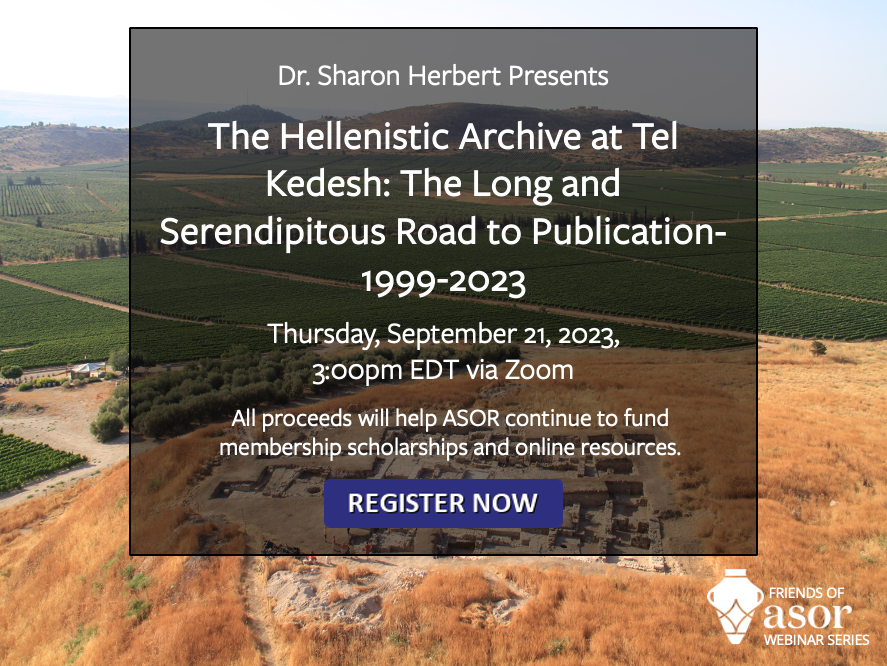
Table of Contents for JCS 75 (2023)

[vc_row fullwidth=”true” attached=”true” css=”.vc_custom_1496247803139{padding-top: 0px !important;padding-right: 0px !important;padding-bottom: 0px !important;padding-left: 0px !important;}”][vc_column][mk_image src=”https://www.asor.org/wp-content/uploads/2022/07/images_large_fg1.jpeg” image_width=”1920″ image_height=”400″ hover=”false” align=”center” margin_bottom=”0″][/vc_column][/vc_row][vc_row fullwidth=”true” attached=”true” css=”.vc_custom_1651165194378{margin-top: 0px !important;padding-right: 0px !important;padding-bottom: 0px !important;padding-left: 0px !important;}”][vc_column width=”1/12″ css=”.vc_custom_1496683820796{margin-right: 10px !important;}” offset=”vc_hidden-md vc_hidden-sm vc_hidden-xs”][vc_column_text]

 SHARE

[/vc_column_text][mk_image src=”http://www.asortest.org/wp-content/uploads/2017/01/social-fb-icon4.jpg” image_width=”42″ image_height=”42″ hover=”false” custom_url=”https://www.facebook.com/ASOResearch/” margin_bottom=”0″][mk_image src=”http://www.asortest.org/wp-content/uploads/2017/01/social-tw-icon4.jpg” image_width=”42″ image_height=”42″ hover=”false” custom_url=”https://twitter.com/ASOResearch?ref_src=twsrc%5Egoogle%7Ctwcamp%5Eserp%7Ctwgr%5Eauthor” margin_bottom=”0″][mk_image src=”http://www.asortest.org/wp-content/uploads/2017/01/social-in-icon4.jpg” image_width=”42″ image_height=”42″ hover=”false” custom_url=”https://www.linkedin.com/company/american-schools-of-oriental-research” margin_bottom=”0″][mk_image src=”http://www.asortest.org/wp-content/uploads/2017/01/social-ml-icon_7.jpg” image_width=”42″ image_height=”42″ hover=”false” custom_url=”mailto:asor@bu.edu” margin_bottom=”0″][mk_image src=”http://www.asortest.org/wp-content/uploads/2017/01/blog-icon3.jpg” image_width=”42″ image_height=”42″ hover=”false” custom_url=”http://asorblog.org/” margin_bottom=”0″][/vc_column][vc_column border_color=”rgba(255,255,255,0.01)” width=”1/6″ css=”.vc_custom_1496683923840{margin-right: 20px !important;border-left-width: 2px !important;padding-right: 20px !important;padding-left: 20px !important;border-left-color: #99422f !important;}”][mk_divider divider_color=”rgba(255,255,255,0.01)” thickness=”1″ margin_top=”3″ margin_bottom=”3″][vc_column_text]

NEWS@ASOR

PAST ASOR NEWS, MONTH BY MONTH

WAYS TO DONATE TO ASOR

FY20 HONOR ROLL OF DONORS (DRAFT)

ASOR LEGACY CIRCLE MEMBERS

DONATE NOW

[/vc_column_text][/vc_column][vc_column border_color=”rgba(170,170,170,0.01)” width=”1/2″ css=”.vc_custom_1651165173114{margin-right: 10px !important;margin-bottom: 30px !important;border-right-width: 2px !important;border-bottom-width: 2px !important;padding-top: 30px !important;padding-right: 30px !important;padding-left: 20px !important;background-color: #ffffff !important;border-right-color: rgba(227,228,228,0.75) !important;border-bottom-color: rgba(227,228,228,0.75) !important;}”][vc_row_inner][vc_column_inner][vc_column_text]

Table of Contents for Journal of Cuneiform Studies 75 (2023)

[/vc_column_text][mk_divider thickness=”1″ margin_top=”10″ margin_bottom=”30″][/vc_column_inner][/vc_row_inner][vc_row_inner][vc_column_inner width=”1/2″ css=”.vc_custom_1651246586407{padding-right: 10px !important;padding-bottom: 15px !important;}”][vc_single_image image=”90988″ img_size=”medium” alignment=”center” onclick=”custom_link” img_link_target=”_blank” link=”https://www.journals.uchicago.edu/toc/jcs/2022/74/1″][/vc_column_inner][vc_column_inner width=”1/2″][vc_wp_text]

You can receive JCS (and other ASOR publications) through an ASOR Membership.
Please e-mail the Membership office if you have any questions.

[/vc_wp_text][/vc_column_inner][/vc_row_inner][mk_divider thickness=”1″ margin_top=”30″ margin_bottom=”30″][vc_row_inner][vc_column_inner css=”.vc_custom_1651156050549{padding-right: 10px !important;}”][vc_single_image image=”90990″ img_size=”1920×400″ alignment=”center” onclick=”custom_link” img_link_target=”_blank” link=”https://www.journals.uchicago.edu/doi/10.1086/725193″][mk_padding_divider size=”10″][vc_column_text]

Pp. 3–12: “A New Old Babylonian Date List with Year Names of Hammurabi,” by Ardalan Khwshnaw

This article contains the publication of a previously unknown date list of the Babylonian king Hammurabi, kept in the Sulaymaniyah Museum in Iraq. The tablet originally contained the year formulas for forty-two years of Hammurabi’s forty-three-year reign. The obverse is better preserved than the reverse and the beginnings of lines on the reverse are mostly broken.

ASOR Members with online access: log into ASOR’s Online Portal here. Once logged in, click the JOURNALS tab in the top navigation bar. From here you may select which journal you would like to read. If you have online access, you will see your selected journal’s current issue Table of Contents. Click on the “Current Issue” button and you will then be redirected to the University of Chicago Press’s (UCP) platform to immediately start reading any issue of your choice. Tutorials for how to log in to the Online Portal as well as how to navigate to the Portal Journals page can be found here. [/vc_column_text][/vc_column_inner][/vc_row_inner][mk_divider thickness=”1″ margin_top=”10″ margin_bottom=”30″][vc_row_inner][vc_column_inner css=”.vc_custom_1651156050549{padding-right: 10px !important;}”][mk_padding_divider size=”10″][vc_column_text]

Pp. 13-26: “Malgum, A Synthesis,” by Rients de Boer

This article collects the new information recently made available concerning the town of Malgum and provides a synthesis of its political history, with a focus on the Old Babylonian period when it was the seat of a small kingdom between ca. 2025 and 1761 BCE. It was eventually conquered by Hammurabi of Babylon in 1761 BCE and large parts of its population were deported. We can trace the whereabouts of these deportees for another ca. forty years in the military province of Lower Yaḫrūrum. In the subsequent Middle Babylonian period, Malgu was the name of a province, but after this time the site appears to have been abandoned, only used much later as a cemetery in Parthian and Sassanian times.

ASOR Members with online access: log into ASOR’s Online Portal here. Once logged in, click the JOURNALS tab in the top navigation bar. From here you may select which journal you would like to read. If you have online access, you will see your selected journal’s current issue Table of Contents. Click on the “Current Issue” button and you will then be redirected to the University of Chicago Press’s (UCP) platform to immediately start reading any issue of your choice. Tutorials for how to log in to the Online Portal as well as how to navigate to the Portal Journals page can be found here. [/vc_column_text][/vc_column_inner][/vc_row_inner][mk_divider thickness=”1″ margin_top=”10″ margin_bottom=”30″][vc_row_inner][vc_column_inner css=”.vc_custom_1651156050549{padding-right: 10px !important;}”][vc_single_image image=”90991″ img_size=”1920×400″ alignment=”center” onclick=”custom_link” img_link_target=”_blank” link=”https://www.journals.uchicago.edu/doi/10.1086/725217″][mk_padding_divider size=”10″][vc_column_text]

Pp. 27-47: “Dur-Abi-ešuh and the Abandonment of Nippur During the Late Old Babylonian Period: A Historical Survey,” by Marine Béranger

This article provides an account of the history of the fortress Dur-Abi-ešuh and offers a survey of the political and military situation of central Babylonia during the Late Old Babylonian period (ca. 1740–1600 BCE). Making use of a long-known but completely overlooked source, it also suggests a date for the complete abandonment of Nippur, the main cult center of the land, between 1631 and 1629 BCE.

ASOR Members with online access: log into ASOR’s Online Portal here. Once logged in, click the JOURNALS tab in the top navigation bar. From here you may select which journal you would like to read. If you have online access, you will see your selected journal’s current issue Table of Contents. Click on the “Current Issue” button and you will then be redirected to the University of Chicago Press’s (UCP) platform to immediately start reading any issue of your choice. Tutorials for how to log in to the Online Portal as well as how to navigate to the Portal Journals page can be found here. [/vc_column_text][/vc_column_inner][/vc_row_inner][mk_divider thickness=”1″ margin_top=”10″ margin_bottom=”30″][vc_row_inner][vc_column_inner css=”.vc_custom_1651156050549{padding-right: 10px !important;}”][vc_single_image image=”90993″ img_size=”1920×400″ alignment=”center” onclick=”custom_link” img_link_target=”_blank” link=”https://www.journals.uchicago.edu/doi/10.1086/725408″][mk_padding_divider size=”10″][vc_column_text]

Pp. 49-59: “A Kassite Exercise Tablet with Omens Concerning the “Yoke” of the Liver,” by Nils P. Heeßel and Elyze Zomer

This paper offers an editio princeps of HS 1898, a Kassite exercise tablet containing an extract with ten liver omens followed by numeric tallies with the 10u-sign. The omens duplicate the fragmentary obverse of a Neo-Babylonian nīru-compendium, the reverse of which in turn replicated omens known from the fifteenth tablet of the bārûtu-series Pān tākalti and the unedited fragment from Nineveh. The student used complicated lexical and graphical variations in writing the technical term nīru, “the Yoke.”

ASOR Members with online access: log into ASOR’s Online Portal here. Once logged in, click the JOURNALS tab in the top navigation bar. From here you may select which journal you would like to read. If you have online access, you will see your selected journal’s current issue Table of Contents. Click on the “Current Issue” button and you will then be redirected to the University of Chicago Press’s (UCP) platform to immediately start reading any issue of your choice. Tutorials for how to log in to the Online Portal as well as how to navigate to the Portal Journals page can be found here. [/vc_column_text][/vc_column_inner][/vc_row_inner][mk_divider thickness=”1″ margin_top=”10″ margin_bottom=”30″][vc_row_inner][vc_column_inner css=”.vc_custom_1651156050549{padding-right: 10px !important;}”][vc_single_image image=”90994″ img_size=”1920×400″ alignment=”center” onclick=”custom_link” img_link_target=”_blank” link=”https://www.journals.uchicago.edu/doi/10.1086/725218″][mk_padding_divider size=”10″][vc_column_text]

Pp. 61-73: “The Taphonomy of Middle Assyrian Cuneiform Tablet Clusters: Archives or Refuse?,” by Victor Klinkenberg and Bleda S. Düring

In this article we report on the taphonomic analysis of several Middle Assyrian tablet clusters to identify the way these objects ended up in the ground. Rather than in-situ archives that were left behind during some catastrophe, we argue that these tablets were often deliberately discarded. Specifically for the tablet clusters we examined, we propose that they were first temporarily discarded in “office bins.” We claim that the occurrence of clustered, homogenous tablet groups at our sites are the result of the occasional emptying of such bins. The methodology we present could be of value for the analysis of other similar tablet-bearing contexts.

ASOR Members with online access: log into ASOR’s Online Portal here. Once logged in, click the JOURNALS tab in the top navigation bar. From here you may select which journal you would like to read. If you have online access, you will see your selected journal’s current issue Table of Contents. Click on the “Current Issue” button and you will then be redirected to the University of Chicago Press’s (UCP) platform to immediately start reading any issue of your choice. Tutorials for how to log in to the Online Portal as well as how to navigate to the Portal Journals page can be found here. [/vc_column_text][/vc_column_inner][/vc_row_inner][mk_divider thickness=”1″ margin_top=”10″ margin_bottom=”30″][vc_row_inner][vc_column_inner css=”.vc_custom_1651156050549{padding-right: 10px !important;}”][vc_single_image image=”90995″ img_size=”1920×400″ alignment=”center” onclick=”custom_link” img_link_target=”_blank” link=”https://www.journals.uchicago.edu/doi/10.1086/725219″][mk_padding_divider size=”10″][vc_column_text]

Pp. 75-92: “The Third Column of Šimâ Milka: A New Attempt,” by Maurizio Viano

Šimâ milka is a wisdom composition known from Late Bronze Age sources found at Hattusa, Emar, and Ugarit. Many studies have been dedicated to this composition, but the fragmentary nature of sources prevented the understanding of several passages, and large portions of the text remain unpreserved or incomplete. The present article attempts a new reconstruction of the third column of the Emar manuscript by placing two fragments at the end of the column, rather than in the middle as in previous editions. This placement results in the restoration of the same line order in the Emar, Ugarit, and Hattusa manuscripts.

ASOR Members with online access: log into ASOR’s Online Portal here. Once logged in, click the JOURNALS tab in the top navigation bar. From here you may select which journal you would like to read. If you have online access, you will see your selected journal’s current issue Table of Contents. Click on the “Current Issue” button and you will then be redirected to the University of Chicago Press’s (UCP) platform to immediately start reading any issue of your choice. Tutorials for how to log in to the Online Portal as well as how to navigate to the Portal Journals page can be found here. [/vc_column_text][/vc_column_inner][/vc_row_inner][mk_divider thickness=”1″ margin_top=”10″ margin_bottom=”30″][vc_row_inner][vc_column_inner css=”.vc_custom_1651156050549{padding-right: 10px !important;}”][vc_single_image image=”90996″ img_size=”1920×400″ alignment=”center” onclick=”custom_link” img_link_target=”_blank” link=”https://www.journals.uchicago.edu/doi/10.1086/725220″][mk_padding_divider size=”10″][vc_column_text]

Pp. 93-107: “The Return of the Text: On Self-Reference in Cuneiform Literature,” by Sophus Helle

The article proposes the existence of a recurrent motif in cuneiform literature, the self-referential climax, in which literary works end by describing how they came into being: In the narrative equivalent of a snake biting its own tail, the poems that employ this motif culminate in their own creation. The article argues that the motif can yield a glimpse into the “implicit poetics” of cuneiform literature, that is, the conception of literature that circulated among cuneiform scholars and composers. It examines three case studies—Inana and Shukaletuda, The Cuthean Legend of Naram-Sîn, and Gilgamesh—arguing that they evince in their self-referential climaxes a distinctly bittersweet notion of textuality, since their creation relies on the tragedy of their main character, in a clear counterposing of content and form.

ASOR Members with online access: log into ASOR’s Online Portal here. Once logged in, click the JOURNALS tab in the top navigation bar. From here you may select which journal you would like to read. If you have online access, you will see your selected journal’s current issue Table of Contents. Click on the “Current Issue” button and you will then be redirected to the University of Chicago Press’s (UCP) platform to immediately start reading any issue of your choice. Tutorials for how to log in to the Online Portal as well as how to navigate to the Portal Journals page can be found here. [/vc_column_text][/vc_column_inner][/vc_row_inner][mk_divider thickness=”1″ margin_top=”10″ margin_bottom=”30″][vc_row_inner][vc_column_inner css=”.vc_custom_1651156050549{padding-right: 10px !important;}”][vc_single_image image=”90997″ img_size=”full” alignment=”center” onclick=”custom_link” img_link_target=”_blank” link=”https://www.journals.uchicago.edu/doi/10.1086/725221″][mk_padding_divider size=”10″][vc_column_text]

Pp. 109-122: “The Battle of Til-Tuba (653 BCE) and its Background Revisited,” by Saeideh Sharifi and Kolsoum Ghazanfari

Most of the information on the Battle of Til-Tuba derives from the narratives found in Assurbanipal’s annals, which are both brief and vague. Even though no Elamite documentation of the event is available, this study attempts to provide a clearer picture of this historical episode by comparing the annals with information preserved in a variety of other media. The results indicate that contrary to the report of the annals, Teumman did not initiate the war with Assyria. Rather, internal circumstances in Elam, including unrest and disorder, provided a good opportunity for Assyria to invade that land. Ultimately, the revolts and the betrayal of high-ranking government officials through the surrender of Hidalu laid the grounds for Teumman’s defeat at the Battle of Til-Tuba.

<ASOR Members with online access: log into ASOR’s Online Portal here. Once logged in, click the JOURNALS tab in the top navigation bar. From here you may select which journal you would like to read. If you have online access, you will see your selected journal’s current issue Table of Contents. Click on the “Current Issue” button and you will then be redirected to the University of Chicago Press’s (UCP) platform to immediately start reading any issue of your choice. Tutorials for how to log in to the Online Portal as well as how to navigate to the Portal Journals page can be found here. [/vc_column_text][/vc_column_inner][/vc_row_inner][mk_divider thickness=”1″ margin_top=”10″ margin_bottom=”30″][vc_row_inner][vc_column_inner css=”.vc_custom_1651156050549{padding-right: 10px !important;}”][vc_single_image image=”90998″ img_size=”full” alignment=”center” onclick=”custom_link” img_link_target=”_blank” link=”https://www.journals.uchicago.edu/doi/10.1086/725222″][mk_padding_divider size=”10″][vc_column_text]

Pp. 123-154: “Age and Masculinities During the Neo-Assyrian Period,” by Ellie Bennett

The age of an individual changes how other elements of identity, like masculinity, are expressed. For example, the modern expectations of “old men” and “young men” are very different. Here, I explore the differences between “young” and “old” men as expressed in the Neo-Assyrian textual corpus on the Open Richly Annotated Cuneiform Corpus (Oracc). This corpus offers a unique opportunity to incorporate recently developed word co-occurrence methods alongside a traditional close reading approach in order to explore the differences between old and young men in Neo-Assyrian texts. I demonstrate that young men were conceptually different from old men, and both were key to the construction of Neo-Assyrian hegemonic masculinities.

ASOR Members with online access: log into ASOR’s Online Portal here. Once logged in, click the JOURNALS tab in the top navigation bar. From here you may select which journal you would like to read. If you have online access, you will see your selected journal’s current issue Table of Contents. Click on the “Current Issue” button and you will then be redirected to the University of Chicago Press’s (UCP) platform to immediately start reading any issue of your choice. Tutorials for how to log in to the Online Portal as well as how to navigate to the Portal Journals page can be found here. [/vc_column_text][/vc_column_inner][/vc_row_inner][mk_divider thickness=”1″ margin_top=”10″][vc_row_inner][vc_column_inner css=”.vc_custom_1651156050549{padding-right: 10px !important;}”][vc_single_image image=”90999″ img_size=”full” alignment=”center” onclick=”custom_link” img_link_target=”_blank” link=”https://www.journals.uchicago.edu/doi/10.1086/725223″][mk_padding_divider size=”10″][vc_column_text]

Pp. 155-169: “Therapeutic Prescriptions and Magical-Medical Rituals Against Fever: An Edition of a Late Babylonian Tablet BM 55516 + BM 55577+1882,0704.188,” by András Bácskay

The tablet BM 55516+ contains therapeutic prescriptions (ointments and fumigations) and magical-medical rituals including incantations against fever (ummu) and “persistent fever” (ummu lazzu). I know of no duplicate, but the prescriptions and the incantations have several parallels on medical tablets from Assur, Nineveh, Kalhu, and Babylon. I first provide an edition of the tablet, including all parallels followed by a discussion of the two magical-medical rituals against fever mentioned in the text.

ASOR Members with online access: log into ASOR’s Online Portal here. Once logged in, click the JOURNALS tab in the top navigation bar. From here you may select which journal you would like to read. If you have online access, you will see your selected journal’s current issue Table of Contents. Click on the “Current Issue” button and you will then be redirected to the University of Chicago Press’s (UCP) platform to immediately start reading any issue of your choice. Tutorials for how to log in to the Online Portal as well as how to navigate to the Portal Journals page can be found here. [/vc_column_text][/vc_column_inner][/vc_row_inner][mk_divider thickness=”1″ margin_top=”10″][vc_row_inner][vc_column_inner css=”.vc_custom_1651156050549{padding-right: 10px !important;}”][vc_single_image image=”91000″ img_size=”full” alignment=”center” onclick=”custom_link” img_link_target=”_blank” link=”https://www.journals.uchicago.edu/doi/10.1086/725224″][mk_padding_divider size=”10″][vc_column_text]

Pp. 171-188: “Nebuchadnezzar II’s Palace Overseer (Ša Pān Ekalli) and The Canal of Abundance Building Projects,” by Małgorzata Sandowicz and Stefan Zawadzki

A document published in this article documents the involvement of one of Nebuchadnezzar II’s top court officials, the palace overseer (ša pān ekalli), in a building project managed by the authorities of the Ebabbar temple of the city of Sippar. To place the project in its chronological and geographic context, five additional legal and administrative texts from the Ebabbar are published for the first time as well.

ASOR Members with online access: log into ASOR’s Online Portal here. Once logged in, click the JOURNALS tab in the top navigation bar. From here you may select which journal you would like to read. If you have online access, you will see your selected journal’s current issue Table of Contents. Click on the “Current Issue” button and you will then be redirected to the University of Chicago Press’s (UCP) platform to immediately start reading any issue of your choice. Tutorials for how to log in to the Online Portal as well as how to navigate to the Portal Journals page can be found here. [/vc_column_text][mk_divider thickness=”1″ margin_top=”10″][vc_single_image image=”91001″ img_size=”full” alignment=”center” onclick=”custom_link” img_link_target=”_blank” link=”https://www.journals.uchicago.edu/doi/10.1086/725225″][mk_padding_divider size=”10″][vc_column_text]

Pp. 189-195: “BM 33878: A Uranology Fragment from Babylon,” by Aino Hätinen

This article presents an edition of a new uranology fragment (BM 33878) from the Babylon Collection of the British Museum. Although small, this fragment offers further information about the social context of the uranology texts in late-period Babylonia.

ASOR Members with online access: log into ASOR’s Online Portal here. Once logged in, click the JOURNALS tab in the top navigation bar. From here you may select which journal you would like to read. If you have online access, you will see your selected journal’s current issue Table of Contents. Click on the “Current Issue” button and you will then be redirected to the University of Chicago Press’s (UCP) platform to immediately start reading any issue of your choice. Tutorials for how to log in to the Online Portal as well as how to navigate to the Portal Journals page can be found here. [/vc_column_text][mk_divider thickness=”1″ margin_top=”10″][vc_single_image image=”91002″ img_size=”full” alignment=”center” onclick=”custom_link” img_link_target=”_blank” link=”https://www.journals.uchicago.edu/doi/10.1086/725226″][mk_padding_divider size=”10″][vc_column_text]

Pp. 197-206: “The Reedition of the Persepolis Treasury Tablet Pt 1963-8,” by Jalil Bakhtiari

Twenty tablets or fragments from the Persepolis Treasury Archive were published by George Cameron in 1965. One of them, the fragment PT 1963-8, which belongs to a group of texts concerning sheep rations, is broken at the bottom. A reconsideration of the text leads to proposed restorations of parts of the missing sections, according to mathematical calculations of rations and comparisons with the other PT tablets.

ASOR Members with online access: log into ASOR’s Online Portal here. Once logged in, click the JOURNALS tab in the top navigation bar. From here you may select which journal you would like to read. If you have online access, you will see your selected journal’s current issue Table of Contents. Click on the “Current Issue” button and you will then be redirected to the University of Chicago Press’s (UCP) platform to immediately start reading any issue of your choice. Tutorials for how to log in to the Online Portal as well as how to navigate to the Portal Journals page can be found here. [/vc_column_text][/vc_column_inner][/vc_row_inner][mk_divider thickness=”1″ margin_top=”10″][/vc_column][vc_column border_color=”rgba(170,170,170,0.01)” width=”1/6″ css=”.vc_custom_1567019974102{margin-right: 5px !important;margin-bottom: 20px !important;border-right-width: 2px !important;border-bottom-width: 2px !important;padding-top: 30px !important;padding-right: 10px !important;padding-left: 10px !important;background-color: #ffffff !important;border-right-color: rgba(227,228,228,0.75) !important;border-bottom-color: rgba(227,228,228,0.75) !important;}”][vc_wp_posts title=”BROWSE THE NEWS ARCHIVE” number=”4″][/vc_column][vc_column border_color=”rgba(170,170,170,0.01)” width=”1/6″ css=”.vc_custom_1496684008271{margin-right: 10px !important;margin-bottom: 30px !important;border-right-width: 2px !important;border-bottom-width: 2px !important;padding-top: 30px !important;padding-right: 20px !important;padding-left: 20px !important;background-color: #ffffff !important;border-right-color: rgba(227,228,228,0.75) !important;border-bottom-color: rgba(227,228,228,0.75) !important;}”][vc_column_text] [/vc_column_text][/vc_column][/vc_row]

Table of Contents for NEA 86.2 (2023)

[vc_row fullwidth=”true” attached=”true” css=”.vc_custom_1496247803139{padding-top: 0px !important;padding-right: 0px !important;padding-bottom: 0px !important;padding-left: 0px !important;}”][vc_column][vc_single_image image=”90291″ img_size=”full” alignment=”center”][/vc_column][/vc_row][vc_row fullwidth=”true” css=”.vc_custom_1496682730308{padding-top: 10px !important;padding-right: 0px !important;padding-bottom: 0px !important;padding-left: 0px !important;}”][vc_column width=”1/12″ css=”.vc_custom_1496683820796{margin-right: 10px !important;}” offset=”vc_hidden-md vc_hidden-sm vc_hidden-xs”][vc_column_text]

 SHARE

[/vc_column_text][mk_image src=”http://www.asortest.org/wp-content/uploads/2017/01/social-fb-icon4.jpg” image_width=”42″ image_height=”42″ hover=”false” custom_url=”https://www.facebook.com/ASOResearch/” margin_bottom=”0″][mk_image src=”http://www.asortest.org/wp-content/uploads/2017/01/social-tw-icon4.jpg” image_width=”42″ image_height=”42″ hover=”false” custom_url=”https://twitter.com/ASOResearch?ref_src=twsrc%5Egoogle%7Ctwcamp%5Eserp%7Ctwgr%5Eauthor” margin_bottom=”0″][mk_image src=”http://www.asortest.org/wp-content/uploads/2017/01/social-in-icon4.jpg” image_width=”42″ image_height=”42″ hover=”false” custom_url=”https://www.linkedin.com/company/american-schools-of-oriental-research” margin_bottom=”0″][mk_image src=”http://www.asortest.org/wp-content/uploads/2017/01/social-ml-icon_7.jpg” image_width=”42″ image_height=”42″ hover=”false” custom_url=”mailto:asor@bu.edu” margin_bottom=”0″][mk_image src=”http://www.asortest.org/wp-content/uploads/2017/01/blog-icon3.jpg” image_width=”42″ image_height=”42″ hover=”false” custom_url=”http://asorblog.org/” margin_bottom=”0″][/vc_column][vc_column border_color=”rgba(255,255,255,0.01)” width=”1/6″ css=”.vc_custom_1496683923840{margin-right: 20px !important;border-left-width: 2px !important;padding-right: 20px !important;padding-left: 20px !important;border-left-color: #99422f !important;}”][mk_divider divider_color=”rgba(255,255,255,0.01)” thickness=”1″ margin_top=”3″ margin_bottom=”3″][vc_widget_sidebar sidebar_id=”ca-sidebar-39801″][/vc_column][vc_column border_color=”rgba(170,170,170,0.01)” width=”1/2″ css=”.vc_custom_1487276122024{margin-right: 10px !important;margin-bottom: 30px !important;border-right-width: 2px !important;border-bottom-width: 2px !important;padding-top: 30px !important;padding-right: 30px !important;padding-left: 20px !important;background-color: #ffffff !important;border-right-color: rgba(227,228,228,0.75) !important;border-bottom-color: rgba(227,228,228,0.75) !important;}”][vc_row_inner][vc_column_inner css=”.vc_custom_1570040186774{padding-right: 10px !important;}”][vc_column_text]

Table of Contents for Near Eastern Archaeology 86.2 (June 2023)

[/vc_column_text][/vc_column_inner][/vc_row_inner][mk_divider thickness=”1″ margin_top=”10″ margin_bottom=”30″][vc_row_inner][vc_column_inner width=”1/2″ css=”.vc_custom_1651246129117{padding-right: 10px !important;padding-bottom: 15px !important;}”][vc_single_image image=”89453″ img_size=”medium” alignment=”center” onclick=”custom_link” img_link_target=”_blank” link=”https://www.journals.uchicago.edu/toc/nea/2023/86/2″][/vc_column_inner][vc_column_inner width=”1/2″][vc_wp_text]

You can receive NEA (and other ASOR publications) through an ASOR Membership.
Please e-mail the Membership office if you have any questions.

[/vc_wp_text][/vc_column_inner][/vc_row_inner][mk_divider thickness=”1″ margin_top=”30″ margin_bottom=”30″][vc_row_inner][vc_column_inner css=”.vc_custom_1570041002103{padding-right: 10px !important;}”][vc_single_image image=”90275″ img_size=”full” alignment=”center” onclick=”custom_link” img_link_target=”_blank” link=”https://www.journals.uchicago.edu/doi/10.1086/724779″][mk_padding_divider size=”10″][vc_column_text]

Pp. 80–91: “A Review of Nemrik Culture Following Findings in the Southeast Area at Boncuklu Tarla during the 2020 Excavation Season: (Upper Tigris Valley, Mardin, Turkey)

Boncuklu Tarla, located in the upper Tigris Valley, has been inhabited continuously from the Proto-Neolithic until the end of the Pre-Pottery Neolithic. This uninterrupted sequence is not the result of a constant mounding process, but can be seen as the presence of a single occupation layer in large areas during different periods. One of these single-layered areas is located in the southeastern part of the settlement and is dated to the Pre-Pottery Neolithic A (PPNA). The finds unearthed during excavations in this section, in particular the architecture and chipped stones, display similar characteristics to Nemrik Culture, which is thought to be unique to the East Jezirah. These similarities are visible in the architecture and in regular find assemblages. This study considers newly recovered data from southeastern Boncuklu Tarla in regard to their apparent rapport with Nemrik Culture, as well as to outline different cultural aspects of the upper Mesopotamian PPNA.

ASOR Members with online access: log into ASOR’s Online Portal here. Once logged in, click the JOURNALS tab in the top navigation bar. From here you may select which journal you would like to read. If you have online access, you will see your selected journal’s current issue Table of Contents. Click on the “Current Issue” button and you will then be redirected to the University of Chicago Press’s (UCP) platform to immediately start reading any issue of your choice. Tutorials for how to log in to the Online Portal as well as how to navigate to the Portal Journals page can be found here. [/vc_column_text][/vc_column_inner][/vc_row_inner][mk_divider thickness=”1″ margin_top=”10″ margin_bottom=”30″][vc_row_inner][vc_column_inner css=”.vc_custom_1570041002103{padding-right: 10px !important;}”][vc_single_image image=”90276″ img_size=”full” alignment=”center” onclick=”custom_link” img_link_target=”_blank” link=”https://www.journals.uchicago.edu/doi/10.1086/724784″][mk_padding_divider size=”10″][vc_column_text]

Pp. 92-101: “A Unique Painted Sherd from the Mid-Sixth Millennium BCE Neolithic Context of Northeastern Iran,” by Kourosh Roustaei

Depicting animal motifs on pottery vessels of prehistoric cultures of the Iranian Plateau was begun as early as the turn of the seventh millennium BCE in the lowland Susiana Plain of southwestern Iran. Such motifs appeared in the Neolithic of northeastern Iran, known as Chakhmaq Culture, as early as the early sixth millennium BCE. During a stratigraphic excavation at a Neolithic site, dated to ca. 7000–5000 BCE, in the Shahroud Plain of northeastern Iran, a body sherd was found depicting a scene of mating goats rotating around the vessel. Regarding its early date, ca. 5650–5550 cal BCE, and its naturalistic way of representing the animal motifs, this sherd is unique among the contemporaneous Neolithic sites of the Iranian Plateau.

ASOR Members with online access: log into ASOR’s Online Portal here. Once logged in, click the JOURNALS tab in the top navigation bar. From here you may select which journal you would like to read. If you have online access, you will see your selected journal’s current issue Table of Contents. Click on the “Current Issue” button and you will then be redirected to the University of Chicago Press’s (UCP) platform to immediately start reading any issue of your choice. Tutorials for how to log in to the Online Portal as well as how to navigate to the Portal Journals page can be found here. [/vc_column_text][/vc_column_inner][/vc_row_inner][mk_divider thickness=”1″ margin_top=”10″ margin_bottom=”30″][vc_row_inner][vc_column_inner css=”.vc_custom_1570041002103{padding-right: 10px !important;}”][vc_single_image image=”90277″ img_size=”full” alignment=”center” onclick=”custom_link” img_link_target=”_blank” link=”https://www.journals.uchicago.edu/doi/10.1086/724781″][mk_padding_divider size=”10″][vc_column_text]Pp. 102-111: “attīma nannarat šamê u erṣetim—“You Are the Light of Heaven and Earth”: A Study of Two Cylinder Seals with the Goddess in a Nimbus from the Bible Lands Museum, Jerusalem,” by Takayoshi Oshima

In the hypothesis presented by the authors, stratified, nonmonumental inscriptions and their radiometric datings take center stage for the first time. It is in the living script of these texts rather than in the artificial alphabet of monuments that the evolution of the alphabet in Iron IIA can be studied properly. A key take-home lesson of the work is the significant ninth-century transformations of the alphabet from precursive Proto-Canaanite to supraregional cursive, thence to the well-known regional variants. Under the Omrides, the alphabet in Israel is attested minimally. No Omride texts were recognized at Samaria, nor Baashide texts at Tirzah. The newly founded West Semitic kingdoms since ca. 900 BCE will have constituted the cradle of the cursive, while papyrus or parchment and ink were the cursive’s likeliest vehicle. Alphabetic inscriptions on monuments, including Byblos, all cursive-inspired, will only have emerged in the last third of the ninth century.

ASOR Members with online access: log into ASOR’s Online Portal here. Once logged in, click the JOURNALS tab in the top navigation bar. From here you may select which journal you would like to read. If you have online access, you will see your selected journal’s current issue Table of Contents. Click on the “Current Issue” button and you will then be redirected to the University of Chicago Press’s (UCP) platform to immediately start reading any issue of your choice. Tutorials for how to log in to the Online Portal as well as how to navigate to the Portal Journals page can be found here. [/vc_column_text][/vc_column_inner][/vc_row_inner][mk_divider thickness=”1″ margin_top=”10″ margin_bottom=”30″][vc_row_inner][vc_column_inner css=”.vc_custom_1570041002103{padding-right: 10px !important;}”][vc_single_image image=”90281″ img_size=”full” alignment=”center” onclick=”custom_link” img_link_target=”_blank” link=”https://www.journals.uchicago.edu/doi/10.1086/724782″][mk_padding_divider size=”10″][vc_column_text]

Pp. 111-121: “Networks of Specialized Knowledge: Cult and Its Imagery in Early Iron Age Malizi and Palastina,” by Nathan Lovejoy

Recent research focused on the regions of Malatya and the northern Levant has allowed scholars to improve our understanding of the political history of the polities of Malizi and Palastina. The present article examines recent archaeological evidence from Arslantepe and several northern Levantine sites alongside a corpus of textual and iconographic data from the upper Euphrates and the northern Levant in an attempt to identify Early Iron Age networks of cultural exchange that resulted in shared specialized cultic and artistic knowledge. While networks of interaction between these regions may have begun as a product of persistent sociopolitical ties following the fragmentation of the Hittite Empire, this article proposes that it is due to the resilience of major cult centers that Malizi and Palastina were able to exchange specialized cultic knowledge and artistic traditions and employ them in the definition of their new Iron Age cultic and political communities.

ASOR Members with online access: log into ASOR’s Online Portal here. Once logged in, click the JOURNALS tab in the top navigation bar. From here you may select which journal you would like to read. If you have online access, you will see your selected journal’s current issue Table of Contents. Click on the “Current Issue” button and you will then be redirected to the University of Chicago Press’s (UCP) platform to immediately start reading any issue of your choice. Tutorials for how to log in to the Online Portal as well as how to navigate to the Portal Journals page can be found here. [/vc_column_text][/vc_column_inner][/vc_row_inner][mk_divider thickness=”1″ margin_top=”10″ margin_bottom=”30″][vc_row_inner][vc_column_inner css=”.vc_custom_1570041002103{padding-right: 10px !important;}”][vc_single_image image=”90282″ img_size=”full” alignment=”center” onclick=”custom_link” img_link_target=”_blank” link=”https://www.journals.uchicago.edu/doi/10.1086/724787″][mk_padding_divider size=”10″][vc_column_text]

Pp. 122-131: “Excavations of Parthian Human Bone Remains at Liyarsangbon Cemetery, Amlash District, Guilan Province, Iran: with Special Reference to Sexed Patterns of Burial and Gender Discrimination,” by Mohammad Reza Eghdami, Vali Jahani, Majid Gholamzadeh Roudbordeh, and Seyed Hashem Mousavi

[NB: This article deals with human remains]
Forty-nine graves were excavated at Liyarsangbon cemetery during two working seasons. The area is covered with thin layers of lime, rocky, and calcareous materials, with a relatively neutral to alkaline soil pH, good for the preservation of human skeletal remains. The remains discovered in excavation were dated to the Parthian and Sasanid periods per the grave goods. With the exception of one adolescent girl killed by knife and some bones of both sexes with cut marks, disease was determined to be the standard cause of death in the population. Furthermore, statistical analysis indicates that neither social status nor sex bias influenced burial types in the Parthian period in the region under study.

ASOR Members with online access: log into ASOR’s Online Portal here. Once logged in, click the JOURNALS tab in the top navigation bar. From here you may select which journal you would like to read. If you have online access, you will see your selected journal’s current issue Table of Contents. Click on the “Current Issue” button and you will then be redirected to the University of Chicago Press’s (UCP) platform to immediately start reading any issue of your choice. Tutorials for how to log in to the Online Portal as well as how to navigate to the Portal Journals page can be found here. [/vc_column_text][/vc_column_inner][/vc_row_inner][mk_divider thickness=”1″ margin_top=”10″ margin_bottom=”30″][vc_row_inner][vc_column_inner css=”.vc_custom_1570041002103{padding-right: 10px !important;}”][vc_single_image image=”90283″ img_size=”full” alignment=”center” onclick=”custom_link” img_link_target=”_blank” link=”https://www.journals.uchicago.edu/doi/10.1086/724783″][mk_padding_divider size=”10″][vc_column_text]

Pp. 132-148: “Manufacturing Technology and Usage of Glass Fragments in Jahangir Dome and Goriye, Sasanid Sites in Western Iran,” by Bita Sodaei, Davoud Agha Aligol, and Leila Khosravi

This article introduces the Sasanid glass found during excavations at the western Iranian sites of Jahangir Dome and Goriye in Ilam province. In addition to architectural remains, different types of Sasanid pottery, glass, and metal vessels were found at these sites. Considering the importance of the glass industry in this period, the purpose of this article is to study the typological styles and chemical compositions of the glass fragments excavated at Jahangir Dome and Goriye to identify the origin of the vitreous materials. Glass fragments from these sites are divided into four groups based on the form and typology and include: vessel fragments, cosmetic containers, bracelets, and beads. According to the elemental analysis, silicon dioxide, sodium oxide, and calcium oxide are the main chemical components in the studied samples, and analyzed glass materials are of a plant-ash silica-soda-lime glass-type.

ASOR Members with online access: log into ASOR’s Online Portal here. Once logged in, click the JOURNALS tab in the top navigation bar. From here you may select which journal you would like to read. If you have online access, you will see your selected journal’s current issue Table of Contents. Click on the “Current Issue” button and you will then be redirected to the University of Chicago Press’s (UCP) platform to immediately start reading any issue of your choice. Tutorials for how to log in to the Online Portal as well as how to navigate to the Portal Journals page can be found here. [/vc_column_text][mk_divider thickness=”1″ margin_top=”10″ margin_bottom=”30″][vc_single_image image=”90284″ img_size=”full” alignment=”center” onclick=”custom_link” img_link_target=”_blank” link=”https://www.journals.uchicago.edu/doi/10.1086/724780″][vc_column_text]

Pp. 146-156: “The Climate Crisis and Archaeological Practice in the Middle East and North Africa: Mitigating the Climate Impact of the ASOR Annual Meeting,” by Virginia Herrmann and Lucas Stephens

The practice of archaeologists of the Middle East and North Africa (MENA) urgently needs decarbonization in the context of a climate crisis disproportionately affecting this region’s people and cultural heritage. Academic conferences are both an invaluable forum for research exchange and networking and a carbon-intensive practice presenting barriers to diversity, equity, and inclusion. This article summarizes a study by the authors and the ASOR Ad Hoc Climate Impact Committee on the carbon footprint of the American Society of Overseas Research Annual Meeting and potential strategies for making the meeting carbon neutral and accessible while retaining engagement. We find that the best strategies for significantly reducing the about 1266 t CO2e produced by the traditional meeting format are: (1) alternation of in-person and virtual meetings; (2) hybrid in-person and virtual meeting; (3) dual-component in-person/virtual meeting; or (4) distributed meeting with US and MENA hubs. Carefully vetted carbon offsets should be purchased for remaining emissions.

ASOR Members with online access: log into ASOR’s Online Portal here. Once logged in, click the JOURNALS tab in the top navigation bar. From here you may select which journal you would like to read. If you have online access, you will see your selected journal’s current issue Table of Contents. Click on the “Current Issue” button and you will then be redirected to the University of Chicago Press’s (UCP) platform to immediately start reading any issue of your choice. Tutorials for how to log in to the Online Portal as well as how to navigate to the Portal Journals page can be found here. [/vc_column_text][/vc_column_inner][/vc_row_inner][mk_divider thickness=”1″ margin_top=”10″ margin_bottom=”30″][vc_single_image image=”90285″ img_size=”full” alignment=”center” onclick=”custom_link” img_link_target=”_blank” link=”https://www.journals.uchicago.edu/doi/10.1086/724786″][vc_column_text]

Pp. 158-165: “Revitalizing Legacy Biblical Archaeology Collections: The Case of the Oberlin Near East Study Collection,” by Julian Hirsch and Amy V. Margaris

Biblical archaeology collections at colleges and universities are typically remnants of an earlier era of collecting and teaching. These collections nonetheless still hunker, dusty and underused, in many university closets today. What larger stories do their histories reveal, and what good are legacy teaching collections now? In this article a recent Oberlin College graduate and one of his college faculty mentors team up to address these questions and offer practical advice for revitalizing legacy biblical archaeology collections, using the Oberlin Near East Study Collection (ONESC) as a case study.

ASOR Members with online access: log into ASOR’s Online Portal here. Once logged in, click the JOURNALS tab in the top navigation bar. From here you may select which journal you would like to read. If you have online access, you will see your selected journal’s current issue Table of Contents. Click on the “Current Issue” button and you will then be redirected to the University of Chicago Press’s (UCP) platform to immediately start reading any issue of your choice. Tutorials for how to log in to the Online Portal as well as how to navigate to the Portal Journals page can be found here. [/vc_column_text][/vc_column][vc_column border_color=”rgba(170,170,170,0.01)” width=”1/6″ css=”.vc_custom_1496684098866{margin-right: 5px !important;margin-bottom: 20px !important;border-right-width: 2px !important;border-bottom-width: 2px !important;padding-top: 30px !important;padding-right: 10px !important;padding-left: 10px !important;background-color: #ffffff !important;border-right-color: rgba(227,228,228,0.75) !important;border-bottom-color: rgba(227,228,228,0.75) !important;}”][vc_wp_posts title=”BROWSE THE NEWS ARCHIVE” number=”4″][/vc_column][vc_column border_color=”rgba(170,170,170,0.01)” width=”1/6″ css=”.vc_custom_1496684008271{margin-right: 10px !important;margin-bottom: 30px !important;border-right-width: 2px !important;border-bottom-width: 2px !important;padding-top: 30px !important;padding-right: 20px !important;padding-left: 20px !important;background-color: #ffffff !important;border-right-color: rgba(227,228,228,0.75) !important;border-bottom-color: rgba(227,228,228,0.75) !important;}”][vc_column_text] [/vc_column_text][/vc_column][/vc_row]

Table of Contents for BASOR 389 (May 2023)

[vc_row fullwidth=”true” attached=”true” css=”.vc_custom_1496247803139{padding-top: 0px !important;padding-right: 0px !important;padding-bottom: 0px !important;padding-left: 0px !important;}”][vc_column][vc_single_image image=”85308″ img_size=”full” alignment=”center”][/vc_column][/vc_row][vc_row fullwidth=”true” css=”.vc_custom_1496682730308{padding-top: 10px !important;padding-right: 0px !important;padding-bottom: 0px !important;padding-left: 0px !important;}”][vc_column width=”1/12″ css=”.vc_custom_1496683820796{margin-right: 10px !important;}” offset=”vc_hidden-md vc_hidden-sm vc_hidden-xs”][vc_column_text]

 SHARE

[/vc_column_text][mk_image src=”http://www.asortest.org/wp-content/uploads/2017/01/social-fb-icon4.jpg” image_width=”42″ image_height=”42″ hover=”false” custom_url=”https://www.facebook.com/ASOResearch/” margin_bottom=”0″][mk_image src=”http://www.asortest.org/wp-content/uploads/2017/01/social-tw-icon4.jpg” image_width=”42″ image_height=”42″ hover=”false” custom_url=”https://twitter.com/ASOResearch?ref_src=twsrc%5Egoogle%7Ctwcamp%5Eserp%7Ctwgr%5Eauthor” margin_bottom=”0″][mk_image src=”http://www.asortest.org/wp-content/uploads/2017/01/social-in-icon4.jpg” image_width=”42″ image_height=”42″ hover=”false” custom_url=”https://www.linkedin.com/company/american-schools-of-oriental-research” margin_bottom=”0″][mk_image src=”http://www.asortest.org/wp-content/uploads/2017/01/social-ml-icon_7.jpg” image_width=”42″ image_height=”42″ hover=”false” custom_url=”mailto:asor@bu.edu” margin_bottom=”0″][mk_image src=”http://www.asortest.org/wp-content/uploads/2017/01/blog-icon3.jpg” image_width=”42″ image_height=”42″ hover=”false” custom_url=”http://asorblog.org/” margin_bottom=”0″][/vc_column][vc_column border_color=”rgba(255,255,255,0.01)” width=”1/6″ css=”.vc_custom_1496683923840{margin-right: 20px !important;border-left-width: 2px !important;padding-right: 20px !important;padding-left: 20px !important;border-left-color: #99422f !important;}”][mk_divider divider_color=”rgba(255,255,255,0.01)” thickness=”1″ margin_top=”3″ margin_bottom=”3″][vc_widget_sidebar sidebar_id=”ca-sidebar-39801″][/vc_column][vc_column border_color=”rgba(170,170,170,0.01)” width=”1/2″ css=”.vc_custom_1487276122024{margin-right: 10px !important;margin-bottom: 30px !important;border-right-width: 2px !important;border-bottom-width: 2px !important;padding-top: 30px !important;padding-right: 30px !important;padding-left: 20px !important;background-color: #ffffff !important;border-right-color: rgba(227,228,228,0.75) !important;border-bottom-color: rgba(227,228,228,0.75) !important;}”][vc_row_inner][vc_column_inner css=”.vc_custom_1651159200767{padding-right: 15px !important;}”][vc_column_text]

Table of Contents for Bulletin of ASOR 389 (May 2023)

[/vc_column_text][/vc_column_inner][/vc_row_inner][mk_divider thickness=”1″ margin_top=”10″ margin_bottom=”30″][vc_row_inner][vc_column_inner width=”1/2″ css=”.vc_custom_1651245957391{padding-right: 10px !important;padding-bottom: 15px !important;}”][vc_single_image image=”89446″ img_size=”medium” alignment=”center” onclick=”custom_link” img_link_target=”_blank” link=”https://www.journals.uchicago.edu/toc/basr/current”][/vc_column_inner][vc_column_inner width=”1/2″][vc_wp_text]

You can receive BASOR (and other ASOR publications) through an ASOR Membership.
Please e-mail the Membership office if you have any questions.

[/vc_wp_text][/vc_column_inner][/vc_row_inner][mk_divider thickness=”1″ margin_top=”30″ margin_bottom=”30″][vc_row_inner][vc_column_inner css=”.vc_custom_1651155052143{padding-right: 10px !important;}”][vc_single_image image=”90311″ img_size=”full” alignment=”center” onclick=”custom_link” img_link_target=”_blank” link=”https://www.journals.uchicago.edu/doi/10.1086/724060″][mk_padding_divider size=”10″][vc_column_text]

Pp. 1-19: “When “the Sweet Gifts of Bacchus” Ended—New Archaeological Evidence for Settlement Changes and the Decline of Wine Production in Late Antique Southern Palestine,” by Gideon Avni, Guy Bar-Oz, and Gil Gambash

Based on the accumulated data from numerous excavations in the hinterland of Gaza and Ashkelon and the results of the comprehensive bioarchaeological research on Late Antique settlement and economy of the Negev Highlands, this article addresses the decline of the flourishing wine industry of southern Palestine, dating it to the second half of the 6th century c.e. The decline in wine production in the region had a direct effect on the rapid abatement of Elusa, the main city of the Negev, and Shivta, a wealthy large village in the western Negev Highlands. Consequently, the extensive system of industrial farms that formed the hub of the flourishing wine industry declined at the same time. This article suggests connecting these events with changes in the patterns of demand, supply, and production of the “sweet gift of Bacchus,” taking into consideration regional aspects, environmental fluctuations, economic transformations, and the decline of consumption markets.

ASOR Members with online access: log into ASOR’s Online Portal here. Once logged in, click the JOURNALS tab in the top navigation bar. From here you may select which journal you would like to read. If you have online access, you will see your selected journal’s current issue Table of Contents. Click on the “Current Issue” button and you will then be redirected to the University of Chicago Press’s (UCP) platform to immediately start reading any issue of your choice. Tutorials for how to log in to the Online Portal as well as how to navigate to the Portal Journals page can be found here.[/vc_column_text][/vc_column_inner][/vc_row_inner][mk_divider thickness=”1″ margin_top=”10″ margin_bottom=”30″][vc_row_inner][vc_column_inner css=”.vc_custom_1651155064988{padding-right: 10px !important;}”][vc_single_image image=”90312″ img_size=”full” alignment=”center” onclick=”custom_link” img_link_target=”_blank” link=”https://www.journals.uchicago.edu/doi/10.1086/724049″][mk_padding_divider size=”10″][vc_column_text]

Pp. 21-33: “Grain Mills from the Late Roman Legionary Camp in Palmyra,” by Grzegorz Majcherek

The Late Antique grain mills from the Roman army camp in Palmyra (Syria) are the first archaeologically documented examples of Roman geared mills in the Levant. Their discovery in the 1980s by the Polish Expedition excavating the Camp of Diocletian provided a body of data that has proved to be of significance for students of both military architecture in Late Antiquity and ancient milling technology. This paper presents the evidence for an advanced type of geared mill and discusses its implications in reference to the existing theoretical reconstruction of the Vitruvian mill.

ASOR Members with online access: log into ASOR’s Online Portal here. Once logged in, click the JOURNALS tab in the top navigation bar. From here you may select which journal you would like to read. If you have online access, you will see your selected journal’s current issue Table of Contents. Click on the “Current Issue” button and you will then be redirected to the University of Chicago Press’s (UCP) platform to immediately start reading any issue of your choice. Tutorials for how to log in to the Online Portal as well as how to navigate to the Portal Journals page can be found here.[/vc_column_text][/vc_column_inner][/vc_row_inner][mk_divider thickness=”1″ margin_top=”10″ margin_bottom=”30″][vc_row_inner][vc_column_inner css=”.vc_custom_1651155073486{padding-right: 10px !important;}”][vc_single_image image=”90313″ img_size=”full” alignment=”center” onclick=”custom_link” img_link_target=”_blank” link=”https://www.journals.uchicago.edu/doi/10.1086/724059″][mk_padding_divider size=”10″][vc_column_text]

Pp. 35-64: “Middle Islamic Rural Occupation at Kani Shaie in Iraqi Kurdistan,” by Mustafa Ahmad and Steve Renette

A wave of new fieldwork in Iraqi Kurdistan during the past decade offers the opportunity to study societies of the Islamic periods from an archaeological perspective. Unfortunately, our current understanding of ceramic typology and chronology in the region still hinges overwhelmingly on datasets from major urban centers and the long-standing analysis of the technological development of glazed wares. The material culture of rural communities, on the other hand, is poorly understood. This causes problems for the reconstruction of the social and economic history of Islamic-era societies, and for survey projects that aim to assess longue durée changes in settlement patterns based on chronological assessments of surface collections. This article presents a coherent corpus of Middle Islamic pottery retrieved from a series of large pits from the site of Kani Shaie in Sulaymaniyah Governorate, Iraqi Kurdistan. Given the small size of the site, the lack of contemporary settlement remains, and the nature of the ceramic assemblage, it is proposed that these pits were used to dump refuse by a small nomadic community or household that returned to the site for a number of years in the 11th–13th century c.e. This small dataset offers glimpses into the lifeways of people who inhabited the border zone between the urbanized lowlands of Mesopotamia and the Zagros Highlands.

ASOR Members with online access: log into ASOR’s Online Portal here. Once logged in, click the JOURNALS tab in the top navigation bar. From here you may select which journal you would like to read. If you have online access, you will see your selected journal’s current issue Table of Contents. Click on the “Current Issue” button and you will then be redirected to the University of Chicago Press’s (UCP) platform to immediately start reading any issue of your choice. Tutorials for how to log in to the Online Portal as well as how to navigate to the Portal Journals page can be found here.[/vc_column_text][/vc_column_inner][/vc_row_inner][mk_divider thickness=”1″ margin_top=”10″ margin_bottom=”30″][vc_row_inner][vc_column_inner css=”.vc_custom_1651155081236{padding-right: 10px !important;}”][vc_single_image image=”90338″ img_size=”full” alignment=”center” onclick=”custom_link” img_link_target=”_blank” link=”https://www.journals.uchicago.edu/doi/10.1086/724269″][mk_padding_divider size=”10″][vc_column_text]

Pp. 65-73: “Grain Tribute in Hittite Syria and the Fall of Ugarit,” by Yoram Cohen and Eduardo Torrecilla

This paper examines the term mānaḫātu in the letters from Hittite officials found at the House of Urtenu from Ugarit and recently published in the Ras Shamra-Ougarit 23 volume (RSO 23, Lackenbacher and Malbran-Labat 2016). This paper proposes that the exact meaning of mānaḫātu—in Ugaritic mnḥ(t)—depends on the context, since it was both a vassal tribute due to the empire by the Ugarit palace (consisting of vast amounts of grain staples) and a form of taxation imposed by the Ugarit palace on merchants and citizens of the kingdom at a local level. In addition, the letters concerning mānaḫātu reveal that the Hittite pressure on its vassal to meet its requirements likely contributed much to exacerbate the food shortage suffered by the kingdom of Ugarit, not long before its fall in the early 12th century b.c.

ASOR Members with online access: log into ASOR’s Online Portal here. Once logged in, click the JOURNALS tab in the top navigation bar. From here you may select which journal you would like to read. If you have online access, you will see your selected journal’s current issue Table of Contents. Click on the “Current Issue” button and you will then be redirected to the University of Chicago Press’s (UCP) platform to immediately start reading any issue of your choice. Tutorials for how to log in to the Online Portal as well as how to navigate to the Portal Journals page can be found here.[/vc_column_text][/vc_column_inner][/vc_row_inner][mk_divider thickness=”1″ margin_top=”10″ margin_bottom=”30″][vc_row_inner][vc_column_inner css=”.vc_custom_1651155088757{padding-right: 10px !important;}”][vc_single_image image=”90314″ img_size=”full” alignment=”center” onclick=”custom_link” img_link_target=”_blank” link=”https://www.journals.uchicago.edu/doi/10.1086/724363″][mk_padding_divider size=”10″][vc_column_text]

Pp. 75-97: “Honoring the Elite Deceased: A Re-Examination of the Shechem Courtyard Complexes,” by Holly A. Winter

The function of the enigmatic Middle Bronze Age Courtyard Complexes at Shechem has remained at the forefront of debate concerning the courtyard palace form. Shechem’s excavators have been unable to agree on the function of the Courtyard Complexes, with some viewing them as palaces and others as temples. Since the only detailed analysis of the Shechem Courtyard Complexes occurred almost four decades ago (Toombs 1985), a reassessment of the material is overdue. An analysis of the Phase 902 Courtyard Complex, the best preserved of the five sequential complexes, supports its architectural association with the courtyard palace form (Oren 1992), while also highlighting a commemorative function, centered around housing and honoring the deceased elite and administering the ancestral funerary cult. Moreover, a functional link with the later Migdol temple and standing stones suggests at least a partial transference of function to this new, and possibly introduced, temple form in the later Middle Bronze Age. Therefore, the Shechem Courtyard Complexes are to be associated with the courtyard palace form, along with a primarily funerary/commemorative function and are perhaps better viewed as elite funerary complexes.

ASOR Members with online access: log into ASOR’s Online Portal here. Once logged in, click the JOURNALS tab in the top navigation bar. From here you may select which journal you would like to read. If you have online access, you will see your selected journal’s current issue Table of Contents. Click on the “Current Issue” button and you will then be redirected to the University of Chicago Press’s (UCP) platform to immediately start reading any issue of your choice. Tutorials for how to log in to the Online Portal as well as how to navigate to the Portal Journals page can be found here.[/vc_column_text][/vc_column_inner][/vc_row_inner][mk_divider thickness=”1″ margin_top=”10″ margin_bottom=”30″][vc_row_inner][vc_column_inner css=”.vc_custom_1651155096100{padding-right: 10px !important;}”][vc_single_image image=”90315″ img_size=”full” alignment=”center” onclick=”custom_link” img_link_target=”_blank” link=”https://www.journals.uchicago.edu/doi/10.1086/724058″][mk_padding_divider size=”10″][vc_column_text]

Pp. 99-119: “The Bamu Stela, Shahr-i Fadak, and Tapeh Shaho: Why Were so Many Monuments Erected around Mount Bamu?” by Sajjad Alibaigi and John MacGinnis

The reliefs and stelae created in the area stretching from Rania in Iraqi Kurdistan to Sar Pol-e Zahab in Iran are among the outstanding cultural materials of the late 3rd and early 2nd millennium b.c., supplementing the information in cuneiform texts for telling the story of important political and military events in the region. Based on the concentration of these reliefs on the northern side of the present-day city of Sar Pol-e Zahab and the picture presented in the cuneiform texts, it appears that the region along the Great Khorasan Road—and especially the area surrounding Sar Pol-e Zahab (ancient Halman)—was the center of major political and military events of that time. The recent discovery of a new stela at Sarab-e Sey Khan and two new rock reliefs at Darvan-e Duhol, coming in addition to the long-known relief at Shaikhan and the stela discovered on Mount Bamu in 1955, requires us to re-evaluate our understanding of this sector of the western Zagros in the late 3rd and early 2nd millennium b.c. This article addresses the question as to why no less than five important monuments were erected in the vicinity of Mount Bamu. The results suggest that these monuments commemorate victories by rulers over the indigenous Bronze Age populations from the mountain kingdoms that lay between Mesopotamia and the high Zagros. Furthermore, study of the archaeological landscape leads to some proposals for the identifications of the polities that were the objects of these attacks. Specifically, sites on the western slopes of Mount Bamu such as Tapeh Shaho, Tapeh Ama-Husein, and Tapeh Qalandari, all three of which appear to have been occupied at this time, lead us to surmise that the main purpose of the attacks on this area was to conquer these settlements, and that these monuments were erected to commemorate these victories.

ASOR Members with online access: log into ASOR’s Online Portal here. Once logged in, click the JOURNALS tab in the top navigation bar. From here you may select which journal you would like to read. If you have online access, you will see your selected journal’s current issue Table of Contents. Click on the “Current Issue” button and you will then be redirected to the University of Chicago Press’s (UCP) platform to immediately start reading any issue of your choice. Tutorials for how to log in to the Online Portal as well as how to navigate to the Portal Journals page can be found here.[/vc_column_text][/vc_column_inner][/vc_row_inner][mk_divider thickness=”1″ margin_top=”10″ margin_bottom=”30″][vc_row_inner][vc_column_inner css=”.vc_custom_1651155102141{padding-right: 10px !important;}”][vc_single_image image=”90316″ img_size=”full” alignment=”center” onclick=”custom_link” img_link_target=”_blank” link=”https://www.journals.uchicago.edu/doi/10.1086/724418″][mk_padding_divider size=”10″][vc_column_text]

Pp. 121-163: “Towards a Better Understanding of the Chronological and Geographical Distribution Patterns of Plain and Painted Handmade Wares in Bilād al-Shām,” by Piotr Makowski

Though it has now been more than 90 years since the phenomenon of plain and painted handmade wares first became apparent to field archaeologists working at historical sites in the territory of Bilād al-Shām, so far relatively little effort has been made to explain it sufficiently. The current paper provides an introductory survey of the available literature and attempts to organize the overall discussion regarding the patterns of their chronological and geographical distribution. Particular attention has been paid to the dating of the appearance of handmade wares and the first phase of their development. Illustrating the occurrence of handmade wares in the form of maps and charts, this article also intends to assess the regional differences in their status as well as the mutual relationship between plain and painted wares.

ASOR Members with online access: log into ASOR’s Online Portal here. Once logged in, click the JOURNALS tab in the top navigation bar. From here you may select which journal you would like to read. If you have online access, you will see your selected journal’s current issue Table of Contents. Click on the “Current Issue” button and you will then be redirected to the University of Chicago Press’s (UCP) platform to immediately start reading any issue of your choice. Tutorials for how to log in to the Online Portal as well as how to navigate to the Portal Journals page can be found here.[/vc_column_text][/vc_column_inner][/vc_row_inner][mk_divider thickness=”1″ margin_top=”10″ margin_bottom=”30″][vc_row_inner][vc_column_inner css=”.vc_custom_1651155108357{padding-right: 10px !important;}”][vc_single_image image=”90317″ img_size=”full” alignment=”center” onclick=”custom_link” img_link_target=”_blank” link=”https://www.journals.uchicago.edu/doi/10.1086/724419″][mk_padding_divider size=”10″][vc_column_text]

Pp. 165-189: “Drowned Landscapes: The Rediscovered Archaeological Heritage of the Mosul Dam Reservoir,” by Paola Sconzo, Francesca Simi, and Andrea Titolo

Like natural catastrophes or armed conflicts, resource extraction projects herald the alteration or destruction of natural and cultural landscapes alike. Dam construction is a major threat to cultural heritage in Western Asian archaeology. One event may result in obliterating hundreds of sites, most of which never reappear or do so only sporadically following cyclical water fluctuation. Destruction of sites remains ongoing, necessitating constant assessment of damage and the establishment of strategies of documentation and maintenance. This paper proposes a new paradigm for future safeguarding and, more widely, a new tool for managing contiguous terrestrial and lacustrine cultural zones. It outlines a new set of cost-efficient tools for observing these archaeological localities’ “emergence patterns” and quickly assessing damage timescales and site areas. As a case study, Iraq’s largest hydroelectric basin, the Mosul Dam reservoir on the upper Tigris, is discussed, as it offers several insights into tackling endemic issues of site recording, monitoring, and threat assessment in a constantly shifting environment. The research has profited from an unexpected drought in 2018 yielding archaeological sites and villages thought forever lost and is informed by new archaeological projects recently undertaken on the eastern bank of the lake.

ASOR Members with online access: log into ASOR’s Online Portal here. Once logged in, click the JOURNALS tab in the top navigation bar. From here you may select which journal you would like to read. If you have online access, you will see your selected journal’s current issue Table of Contents. Click on the “Current Issue” button and you will then be redirected to the University of Chicago Press’s (UCP) platform to immediately start reading any issue of your choice. Tutorials for how to log in to the Online Portal as well as how to navigate to the Portal Journals page can be found here.[/vc_column_text][/vc_column_inner][/vc_row_inner][mk_divider thickness=”1″ margin_top=”10″ margin_bottom=”30″][vc_row_inner][vc_column_inner css=”.vc_custom_1651155116429{padding-right: 10px !important;}”][vc_single_image image=”90318″ img_size=”full” alignment=”center” onclick=”custom_link” img_link_target=”_blank” link=”https://www.journals.uchicago.edu/doi/10.1086/724457″][mk_padding_divider size=”10″][vc_column_text]

Pp. 191–216: “The Archaeology and History of Rock-cut Cisterns and Open Water Reservoirs in the Negev Highlands,” by Andrea Junge, Zachary C. Dunseth, Ruth Shahack-Gross, Israel Finkelstein, and Markus Fuchs

This article provides the final assessment of a large-scale optically stimulated luminescence (OSL) dating project of water installations in the arid Negev Highlands, southern Israel. Results from five open reservoirs and five rock-cut cisterns are reported. By sampling spoil piles, feeding channels, and accumulation of sediments within reservoirs and cisterns, their construction and phases of maintenance and abandonment are dated. Conventional wisdom argued for progress from simpler open reservoirs in the Bronze or Iron Ages to the more sophisticated rock-cut cisterns of the Nabatean–Byzantine periods. It is shown that open reservoirs were dug throughout the history of the region, likely from the Early or Intermediate Bronze Ages until the medieval period, including periods with no stone-built remains in the region. The construction of subterranean cisterns, which calls for more resources and skill, characterize the Late Roman/Byzantine to Early Islamic period. The significance of these results for reconstructing the history of human activity in the region is also discussed.

ASOR Members with online access: log into ASOR’s Online Portal here. Once logged in, click the JOURNALS tab in the top navigation bar. From here you may select which journal you would like to read. If you have online access, you will see your selected journal’s current issue Table of Contents. Click on the “Current Issue” button and you will then be redirected to the University of Chicago Press’s (UCP) platform to immediately start reading any issue of your choice. Tutorials for how to log in to the Online Portal as well as how to navigate to the Portal Journals page can be found here.[/vc_column_text][/vc_column_inner][/vc_row_inner][vc_row_inner][vc_column_inner css=”.vc_custom_1651155116429{padding-right: 10px !important;}”][vc_single_image image=”90319″ img_size=”full” alignment=”center” onclick=”custom_link” img_link_target=”_blank” link=”https://www.journals.uchicago.edu/doi/10.1086/724364″][mk_padding_divider size=”10″][vc_column_text]

Pp. 217-234: “The Identification of the Deity Aramiš/s and the Locations of Qarnē/Qarnīna and Azaʾi/Aṣî in the Tell Taʿyinat Treaty,” by K. Lawson Younger Jr.

For many years not much was known about a deity Aramiš/Aramis, being only mentioned in a few personal names. His identity remained a mystery. But with the discovery of the Esarhaddon Succession Treaty from Tell Taʿyinat, an association with the city and land of Qarnē/Qarnīna, the city and land of ˹azaʾi˺, came to light. Based on the available data found in the personal names, toponymy, and iconography, this article explores the possible identification of this deity and the two toponyms associated with it.

ASOR Members with online access: log into ASOR’s Online Portal here. Once logged in, click the JOURNALS tab in the top navigation bar. From here you may select which journal you would like to read. If you have online access, you will see your selected journal’s current issue Table of Contents. Click on the “Current Issue” button and you will then be redirected to the University of Chicago Press’s (UCP) platform to immediately start reading any issue of your choice. Tutorials for how to log in to the Online Portal as well as how to navigate to the Portal Journals page can be found here.[/vc_column_text][/vc_column_inner][/vc_row_inner][mk_divider thickness=”1″ margin_top=”10″ margin_bottom=”30″][/vc_column][vc_column border_color=”rgba(170,170,170,0.01)” width=”1/6″ css=”.vc_custom_1496684098866{margin-right: 5px !important;margin-bottom: 20px !important;border-right-width: 2px !important;border-bottom-width: 2px !important;padding-top: 30px !important;padding-right: 10px !important;padding-left: 10px !important;background-color: #ffffff !important;border-right-color: rgba(227,228,228,0.75) !important;border-bottom-color: rgba(227,228,228,0.75) !important;}”][vc_wp_posts title=”BROWSE THE NEWS ARCHIVE” number=”4″][/vc_column][vc_column border_color=”rgba(170,170,170,0.01)” width=”1/6″ css=”.vc_custom_1496684008271{margin-right: 10px !important;margin-bottom: 30px !important;border-right-width: 2px !important;border-bottom-width: 2px !important;padding-top: 30px !important;padding-right: 20px !important;padding-left: 20px !important;background-color: #ffffff !important;border-right-color: rgba(227,228,228,0.75) !important;border-bottom-color: rgba(227,228,228,0.75) !important;}”][vc_widget_sidebar sidebar_id=”ca-sidebar-99363″][/vc_column][/vc_row]

ASOR Welcomes Katherine Schmitt as New Membership Coordinator

ASOR WELCOMES KATHERINE SCHMITT AS NEW MEMBERSHIP COORDINATOR

Katherine Schmitt began working for ASOR as an intern in September 2022. In May 2023, she graduated from The George Washington University with a Bachelor’s of Science in Biological Anthropology and Archaeology. Her professors at The George Washington University (members of ASOR) first encouraged her to apply for the ASOR internship. As an intern, she contributed to ASOR’s social media presence, website maintenance, and created the Annual Meeting Welcome Packet.
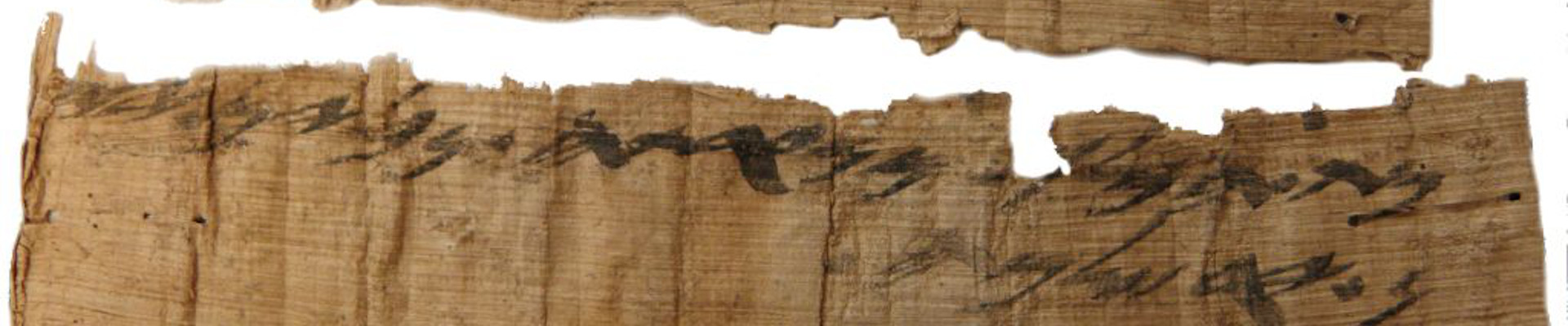
Katherine completed her first archaeological field school in 2021 at George Washington’s Mount Vernon estate in Fairfax County, Virginia. While participating in this field school, she had the opportunity to participate in excavations taking place on the South Lawn as well as in the Archaeology of the Slave Cemetery. This latter project used both ground penetrating radar and excavation techniques to locate graves and identify the bounds of the cemetery. Katherine was also an intern for The George Washington Museum and The Textile Museums’ Cotsen Textile Traces Study Center in 2021. In Spring of 2022, Katherine was able to continue her studies in Archaeology for a semester abroad at the University College of London, UK.

ASOR is pleased to welcome Katherine as she continues working for ASOR in her new role of Membership Coordinator. As Membership Coordinator, she will be responsible for the growth of both the membership and Friends of ASOR programs, handling membership processing and fulfillment, supporting the Annual Meeting, and website maintenance. Katherine looks forward to continuing working with ASOR’s members and donors!

This announcement also comes with news of Felice Herman’s departure from ASOR. Felice has accepted an offer to assume the position of Deputy Director of the President Woodrow Wilson House, a historic site of the National Trust for Historic Preservation, and located in Washington, DC. Katherine will be replacing Felice as the new contact for all ASOR membership inquiries on June 15, 2023.

ASOR Announces the Addition of Maarav

ASOR ANNOUNCES THE ADDITION OF THE JOURNAL, MAARAV

ASOR is pleased to announce that Maarav is now part of the ASOR journal family and is available to ASOR members with online access to all of our journals (NEA, BASOR, and JCS) through the University of Chicago Press platform. Maarav is a journal for the Study of the Northwest Semitic Languages and Literatures with an emphasis on linguistics, philology, and literary studies. This journal is devoted to the texts and verbal objects of the ancient Levant featuring Aramaic, Hebrew, Phoenician, and related languages. In addition to research on their verbal features, Maarav welcomes inquiry into their material, visual, and social aspects, their cultural horizons and relationships, and contemporary interests like the technological developments in decipherment, storage, representation, and analysis and the history and current practices of acquiring and interpreting ancient objects.

Please read the letter from the editor, Simeon Chavel (University of Chicago), below.

Dear Members,

It is an honor to follow Bruce Zuckerman (founder, 1978–2002) and Christopher Rollston (2002–2022) and serve as the third Editor of Maarav. The journal will continue to center on the inscriptions found in the Levant (Syro-Palestine) of the Late Bronze Age, the Iron Age, and the Persian period written in the languages characteristic of the region. At its core will be study of the inscriptions’ material, linguistic, and literary aspects. Around the core will be studies comparing earlier and later inscriptions and literature; comparing literature in Mesopotamia, Anatolia, and the Mediterranean; and reconstructing Levantine societies, culture, and history. Anchored in distinct objects (verbal ones) defined by period and place rather than in tradition (biblical), Maarav sees itself as representing a crucial node and nexus of several overlapping fields of study of the ancient world, and it aims to serve robustly in that capacity.

Select topics illustrating the range are:

  • the origins and spread of the alphabetic writing system and its comparison with other systems
  • the varied uses of writing
  • the genres of writing in general and of literature in particular
  • the relationship of writing to art and to place, in immediate, broader, static, and dynamic contexts
  • the wealth of religious, mythical, and other speculative lore
  • the place of magic in society and in thought
  • the significant role of writers (“scribes”)
  • regimes of administration and power
  • the reach of concepts and practices across many regions and down through time.


Wide-ranging developments make this a promising time for Maarav to thrive—developments in the technologies of deciphering images and of presenting them; in approaches to the material and social worlds of verbal objects; in the analysis of gender and of humanness; in the reconstruction of Levantine societies and ethnicity in their imperial contexts; in the understanding of cultural interaction from Mesopotamia across the Mediterranean; and in the ethics—the politics and the economics—of imperially enabled scholarship today.

Maarav looks to fit in wonderfully at ASOR alongside BASOR, JCS, and NEA, and and is excited to be available to you, their inquisitive and learned readers. It plans to be published semiannually. The board of editors draws on three pools of colleagues: continuing editors, faculty at the University of Chicago, and additional scholars who represent desired areas of expertise and emerging trends. You can see the board, keep up with new issues, and access back-issues here.

Yours,

Simeon Chavel

This journal is only available to active members including Regular with online only access, Regular with both online and print delivery, Retired with online only access, Retired with both online access and print delivery, Sustaining, Early Career, Graduate, and Undergraduate levels. Associate and Contributing members do not have access to Maarav.

Please take a look at the ASOR Maarav publication page here or look at the selection of back issues on the UCP Maarav page here. If you are an ASOR member with access, you will need to be logged into the ASOR Portal here to access this journal. Contact membership@asor.org if you have questions on how to access Maarav.

ASOR 2025—Strengthening Our Foundation | Expanding Horizons—A Call to Action

ASOR 2025—Strengthening Our Foundation | Expanding Horizons—A Call to Action

In 2025, ASOR will be hitting its 125 year mark. Yes, fellow ASOR members and friends, our quasquicentennial is nearly upon us, and we have cause to celebrate!

A first cause for celebration is that ASOR members continue to be engines of research, education, publication, and engagement about the history and cultures of the Near East and the wider Mediterranean world.

This work has never been more needed. So, amid celebration, we confront challenges. Worldwide threats to cultural heritage are a great concern, because we know that targeting people’s cultural heritage is a first step toward violence and extremism. Also, such losses cannot be undone. The humanities bring this into focus, yet dollars to fund these departments and this research are being siphoned off elsewhere. Some professional organizations focused on past human experience are shrinking. Not so for ASOR!

This is a second cause for celebration. Our membership is expanding. ASOR is in solid financial shape. You have created a foundation for positive change and action.

To continue this momentum, ASOR has embarked on a grand challenge, a $5 million dollar—$5,000,000—fundraising initiative. Our third cause for celebration is that generous ASOR members already have pledged or given $2.7 million dollars, with more coming.

This is a call to action, asking you to help shape the future through the discovery, documenting, and protecting of cultural heritage in innovative ways. I ask you to think how you can join in this effort to equip ASOR to meet the challenges of this moment.

Your gift of support to ASOR makes a real difference. With your participation, ASOR can:

  1. Increase membership support: You can strengthen and widen ASOR’s geographic impact throughout the Middle East and North Africa with scholarships, research fellowships and excavation project grants including citizens from countries that lack resources.
    2. Widen and expand ASOR’s publications: You can ensure that ASOR continues to disseminate knowledge and educate the public in an economic climate where support for scholarship is shrinking.
    3. Make ASOR more accessible to everyone: You can address financial need for access in North America, North Africa, the Middle East, and around the world. With you, ASOR can set an example with diversity, equity and inclusion initiatives that span language and cultural divides.
    4. Grow Cultural Heritage Initiatives: You can support cultural heritage stabilization, documentation, and mitigation efforts. You can guarantee that ASOR continues to be seen as a world leader in protecting heritage and ensure the continuation of education and stewardship programs that combat violent extremism and misuse of heritage by authoritarian rulers.
    5. Develop Greater Online Access: You can fund innovations in the rapidly growing field of online and virtual resources to make research accessible to everyone with a computer, tablet, or phone.
    6. Expand the Friends of ASOR Programs: You can help underwrite education and outreach programs that will broaden ASOR’s membership and bring non-academic supporters with an interest in the ancient world to our organization.
    7. Strengthen the Foundation of ASOR’s Operations: You can safeguard ASOR’s work to 2050 and beyond through the Annual Fund, or with endowment gifts to sustain operational staffing and capital needs at the James F. Strange Center, or through efforts to make ASOR more sustainable.


These are but a few ideas. Studies of the human past have never faced greater obstacles, but ASOR has the financial stability and talent to find innovative solutions. Each of us is a critical part of this effort. If you and I do not respond to this call to action to shape the future of our profession and document and protect cultural heritage in innovative ways, who will? YOU CAN BE PART OF THIS HISTORIC MOMENT, CREATING CHANGE & MAKING A LEGACY. ORGANIZATIONS THRIVE BECAUSE OF PEOPLE LIKE YOU. Please join in celebrating our 125th year with “ASOR 2025— Strengthening Our Foundation | Expanding Horizons—A Call to Action.”