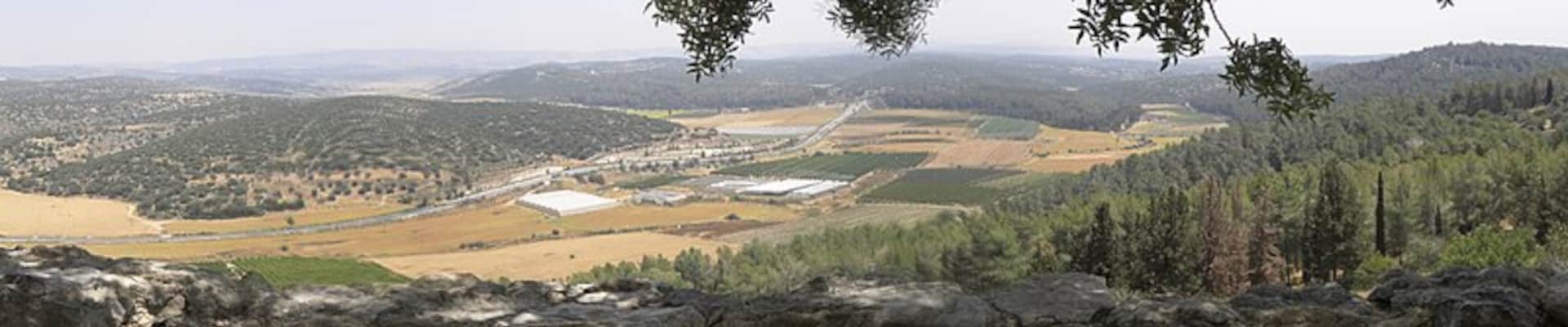
FOA Webinar: Laura Mazow

FRIENDS OF ASOR WEBINARS

“And the shaft of his spear was like a weaver’s beam” (I Sam 17:6-7): Weaponry, Weaving, and Broken Similes in the Duel between David and Goliath

Friends of ASOR present the next webinar of the 2024-2025 season on October 23, 2024, at 7:00 pm EDT, presented by Prof. Laura Mazow. This webinar will be free and open to the public. Registration through Zoom (with a valid email address) is required. This webinar will be recorded and all registrants will be sent a recording link in the days following the webinar.

“You come to me with sword and spear and javelin; but I come to you in the name of the LORD of hosts, the God of the armies of Israel…” declares David. Having previously rebuffed the loan of King Saul’s armor, David advances against Goliath armed only with a sling shot and five smooth stones. Goliath, on the other hand, is in full battle gear. His armament is described in meticulous detail: bronze helmet, coat of mail and greaves, a javelin between his shoulders, and a spear, whose “shaft… was like a weaver’s beam” and whose head “weighed six hundred shekels of iron…” (I Sam 17:7).

There are two questions that arise, however, when examining Goliath’s weaponry, especially within the context of the rest of the story. The first is, where is the sword in this description—the one that David will use to behead Goliath and which is later given to David by the priest Ahimelech that is “like no other” (I Sam 21: 9)? The second asks, what is a weaver’s beam and what is the meaning of the simile comparing it to a spear? Yadin’s suggestion that the simile referenced a thonged javelin is awkward and doesn’t provide an answer to the missing sword.

Alternatively, Prof. Mazow proposes that Goliath’s sword was an Aegean or Anatolian long sword, a “cut-and-thrust” tool that could be used to both pierce Goliath’s armor and cut off his head. The narrator, describing an instrument unknown in the Israelite weapons inventory, compared Goliath’s sword to a weaver’s sword: a blade-shaped tool used to beat in the weft. Eventually neither the weaver’s tool nor the Philistine’s weapon could be conceived, and the description comes down to us as a spear-like weapon with a shaft that resembled a type of weaving tool, a broken simile that no longer described the shape and size of the foreign object.

Reconstructing Goliath’s martial outfitting has raised issues about the historicity of the textual narrative and the veracity of its details that have been engaged in debates on Goliath’s ethnicity and the dating of this text. Rather than reading Goliath’s weaponry as either historically inaccurate or so eclectic that it is unrepresentative of time and place, this proposal contextualizes the narrative details within an historical framework and reveals the dynamism of the textual transmission process.

Laura Mazow is an Associate Professor and Undergraduate Program Director in the Department of Anthropology at East Carolina University. She received her BA in History from Georgetown University, and her MA and PhD in Near Eastern Studies from the University of Arizona with a dissertation based on data from the Iron Age Philistine site of Tel Miqne-Ekron.

Laura has excavated at sites in Israel and Jordan, including Beth-Shean, Ashkelon, Gilat, Khirbet Iskander, Megiddo and Tel Miqne-Ekron. Her professional research interests include the Bronze and Iron Ages in the Middle East, Eastern Mediterranean, and North Africa, with a particular focus on the study of ancient weaving and wool processing tools and technologies. Laura’s recent publications include: “Why all Tubs are not Bathtubs,” Biblical Archaeological Review, Spring 2023: 16–18 and (forthcoming), “Ill-weav’d ambition, how much art thou shrunk! Re-examining ‘At the Fullers’ UET 6/2, 414 (Old Babylonian) as a Dialogue Between Weaver and Fuller.” She leads an ongoing collaborative project to investigate the function of ancient “bathtubs.” Were they used for bathing, burial, or textile production?
SPONSOR A WEBINAR!

Several levels of support from $50-$1,000 are available. Proceeds go towards membership scholarships and towards increasing ASOR’s virtual resources. Each sponsorship is tax-deductible and includes benefits! Sponsor a webinar here. 

WHY SPONSOR ONLY ONE?

Season Sponsorships are also available from the ASOR Online Store here!

Click here for more information on the benefits of becoming a season sponsor or sponsoring a single webinar.


Fieldwork Report: Lorenzo Guardiano

Between River and Desert: September in Aswan

Lorenzo Guardiano, 2024 Katherine Barton Platt Fieldwork Scholarship Recipient

Since 2022, I have been part of the EIMAWA (Egyptian-Italian Mission at West Aswan) archaeological mission, directed by Prof. Patrizia Piacentini and Prof. Fahmy el-Amin, which sees cooperation between the University of Milan and the Egyptian Ministry of Tourism and Antiquities. The mission operates in the necropolis surrounding the Mausoleum of the Aga Khan on the western bank of Aswan and started in 2017 as an archaeological preservation and excavation mission in an area affected by looting. The necropolis contains more than 400 tombs dating from the 7th century BC to 2nd century AD.

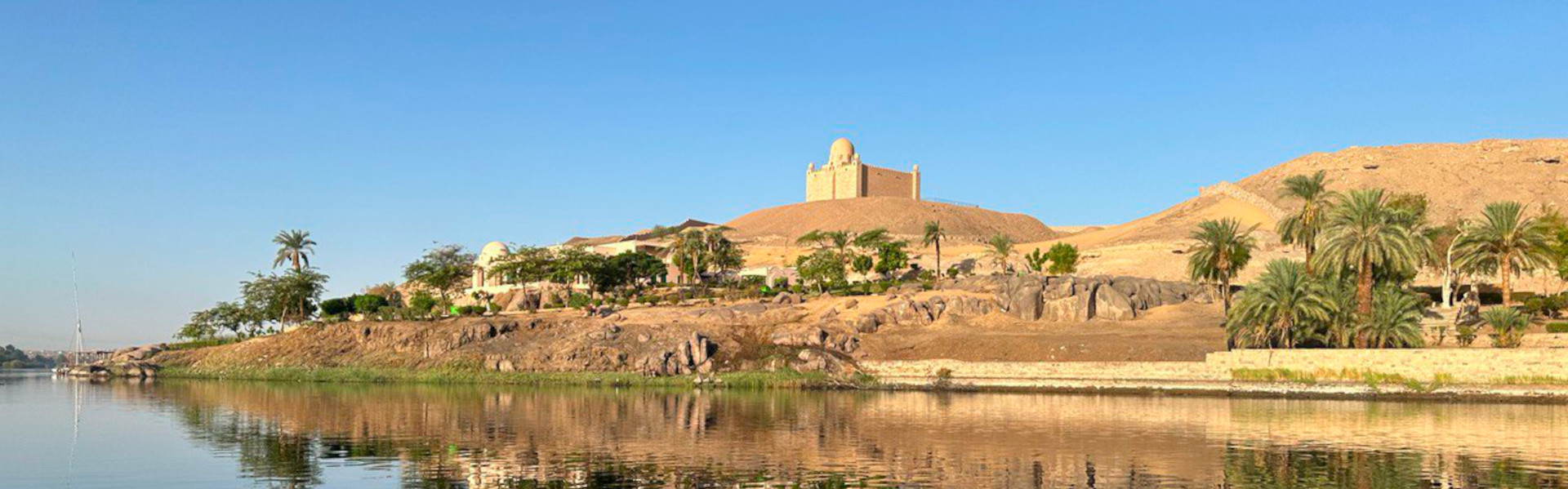
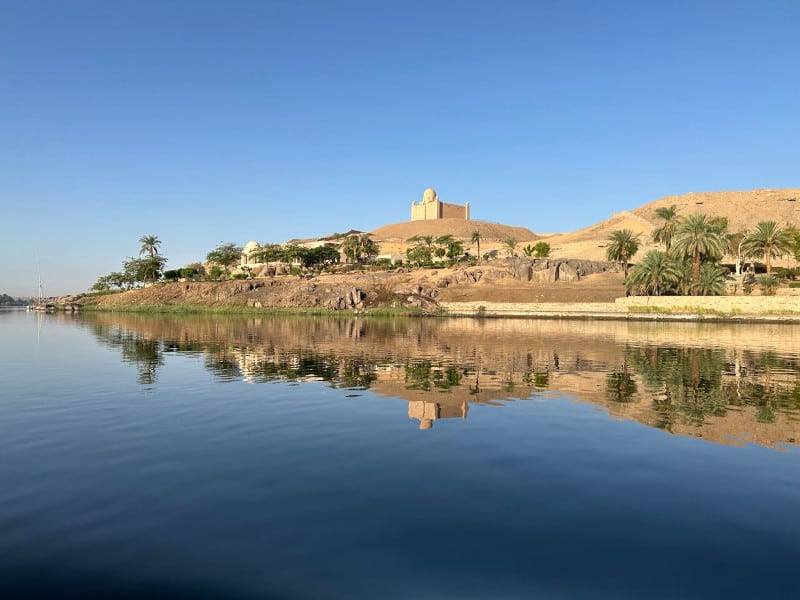
Figure 1: The mausoleum of Aga Khan, next to the necropolis excavated by EIMAWA
The mausoleum of Aga Khan, next to the necropolis excavated by EIMAWA.

I specialized in Egyptian epigraphy of the New Kingdom and Graeco-Roman Period by working initially on the critical edition of all astronomical ceilings of New Kingdom temples and tombs in Egypt during my Ph.D. years. During my research fellowship at University of Milan, I worked on the preparation of a volume of the Cairo Museum’s Catalogue Général on private statuary of the Late and Graeco-Roman Period – the core of which is a manuscript by Bernard V. Bothmer, housed in the Archives of Egyptology at the University of Milan, which I revised, updated and supplemented with the edition of texts that Prof. Bothmer had left out. Participating therefore in the EIMAWA Mission as epigraphist of the team is a most valuable opportunity for me to work in the field with Egyptian epigraphy, particularly from the Graeco-Roman Period.

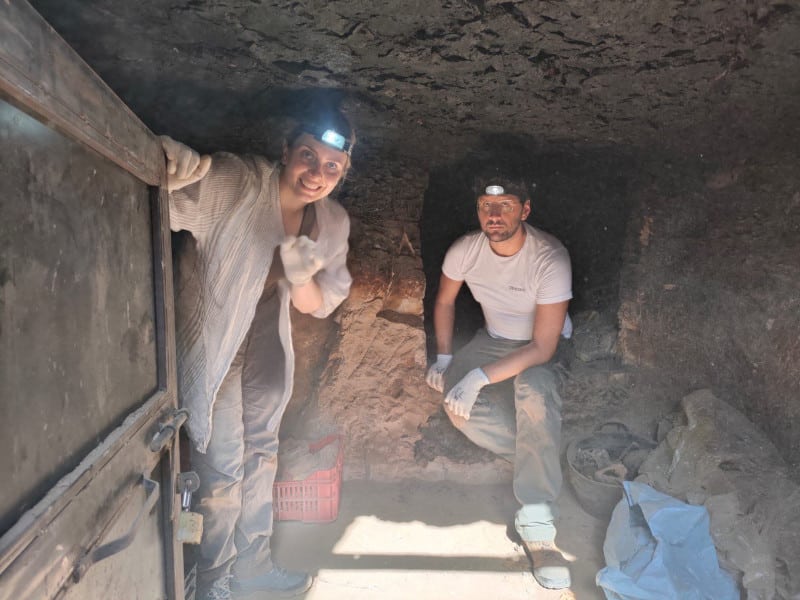
My unquiet face as I help anthropologist Alice study mummies
My unquiet face as I help anthropologist Alice study mummies.

That is why I decided to send in my application for a Scholarship for Fieldwork Participation from ASOR in order to join the EIMAWA mission of September. When, on May 3, 2024, I received an email from ASOR with the news that I had won a Katherine Barton Platt Fieldwork Scholarship I literally jumped for joy! Indeed, this scholarship gave me the opportunity to continue and complete, together with Prof. Piacentini, the epigraphic study of all the inscriptions found on the site from 2019 to the present.

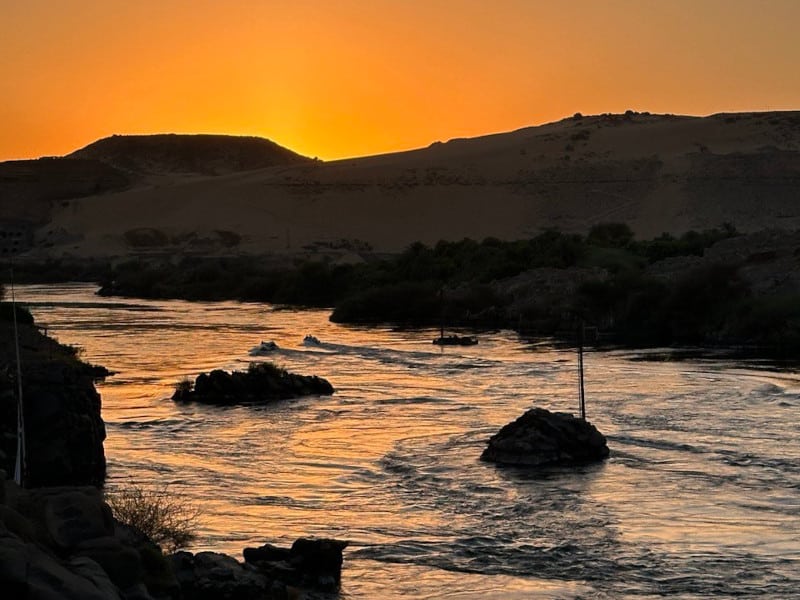
Figure 4: The setting of the sun from our house in Sehel Island
The setting of the sun from our house in Sehel Island.

So, on September 10 I left for Aswan with a team of scholars from various disciplines: Egyptologists, anthropologists, radiologists, chemists, restorers, engineers, etc. The first few days challenged us with extreme weather conditions (temperatures of about 44 degrees!) and the site being in the middle of the desert! But even these temperatures failed to discourage us from doing our work and so, from our home on Sehel Island, we took the boat each morning to the site where, together with the Egyptian team, we discovered and excavated a tomb between two previously excavated ones. Back home, we would spend the afternoon working on the collected data, which we presented each day at the 6:30 p.m. meeting.

This very afternoon meeting was the most awaited moment of the day since it took place in the veranda of our house in Sehel Island. Before our eyes (and our data-filled computers), the sky was ablaze with the setting sun that descended just behind two knolls drawing the perfect hieroglyph of akhet (“horizon”). There was no fatigue or worry that did not fade away as we walked out of our rooms and were dazzled by the setting sun or moon between the river and the desert, smiling at the song of the ibis that perched on the cliff in front of the house or admiring the elegant flight of the hawk Horus that often passed over our heads. The poignant beauty of Egypt is shown in all its moving power on the first cataract of the Nile, the natural boundary of ancient Egypt.

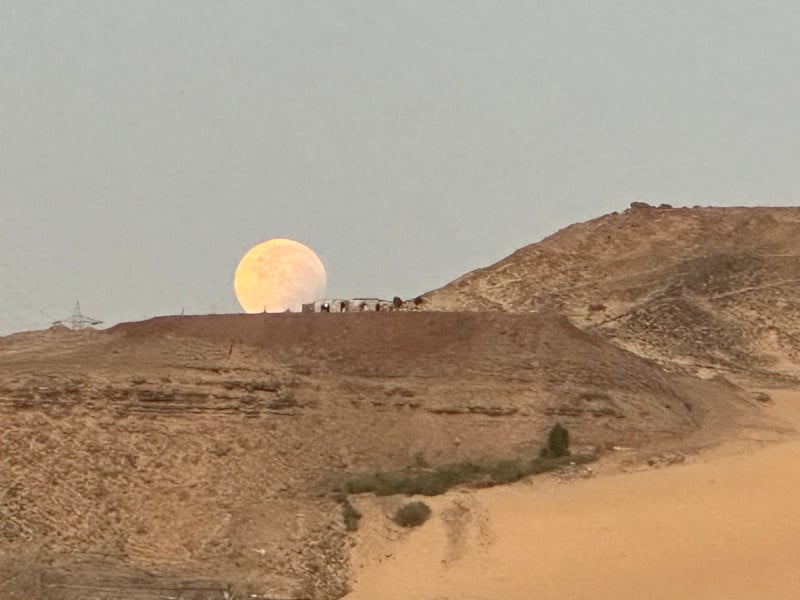
Figure 5: And to make sure we don’t miss anything...the setting of the moon!
And to make sure we don’t miss anything...the setting of the moon!

Beyond the beauty that filled our eyes, taking part in the September mission gave me the opportunity to complete together with Prof. Piacentini the study and edition of all the hieroglyphic texts unearthed in recent years. The resulting paper has been sent to an international Egyptological journal (Aegyptus 104) and has already been accepted for publication in December. But this mission not only allowed me to refine my epigraphic field studies – working with experts from other disciplines allowed me to enrich my cultural background. I was able to follow every step of the excavation of a new tomb and learn a lot about archaeological methodologies (especially in extreme environmental conditions such as those of the Aswan Desert), I lent a hand to anthropologists in their reconnaissance of human remains, learning a lot from their discipline, and I listened to the timely reports of the restorer and chemist on the treatment of materials.

But the main enrichment was the human one. Working and living side by side with many people for three weeks was a really good experience. I made new friendships and consolidated existing ones. I interacted with the local community and became, along with the other mission members, a resident of Aswan! And for all this, I have to thank the mission director Prof. Piacentini, ASOR who gave me the opportunity to join the team, and, finally, Egypt for the beauty with which it continues to fill our lives every day.

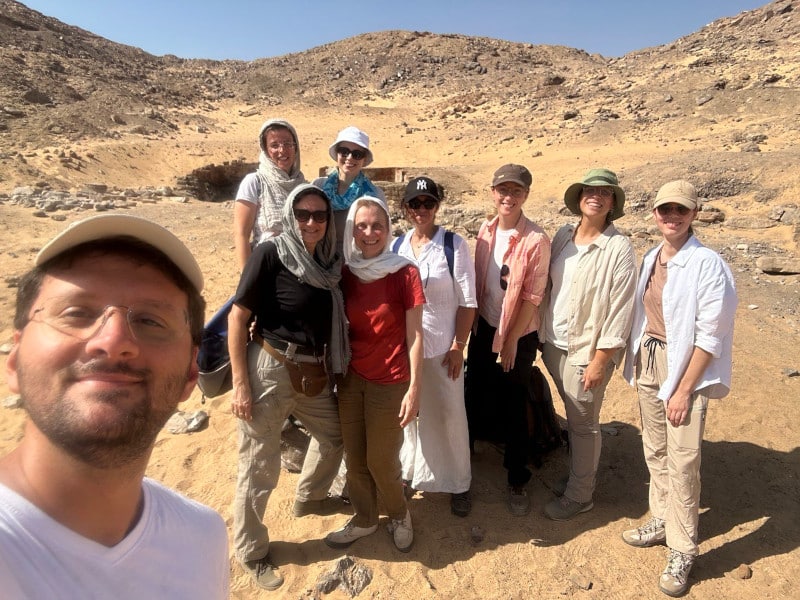
Figure 2: The EIMAWA team
Lorenzo Guardiano and the 2024 Egyptian Italian Mission at West Aswan team.

Lorenzo Guardiano is a research fellow in Egyptology at the University of Milan where he obtained his PhD in 2022. His areas of research are Egyptian astronomy and cosmology and the hieroglyphic epigraphy of the New Kingdom and the Ptolemaic Period. His book “Il Cielo dei Faraoni. I soffitti astronomici nell’Egitto del Nuovo Regno” was published in 2024 by Milano University Press.

Want to help more students and early career archaeologists get into the field? Donate to the cause today by selecting “Fieldwork Scholarships” as your gift purpose!