ASOR Urges Continued U.S. Engagement in UNESCO

[vc_row fullwidth=”true” attached=”true” css=”.vc_custom_1496247803139{padding-top: 0px !important;padding-right: 0px !important;padding-bottom: 0px !important;padding-left: 0px !important;}”][vc_column][mk_image src=”http://www.asor.org/wp-content/uploads/2017/04/100CrusderSeaCastleSaide-Sidon-–-1920×600-–-REVISED-1.jpg” image_width=”1920″ image_height=”600″ crop=”false” hover=”false” margin_bottom=”0″][/vc_column][/vc_row][vc_row fullwidth=”true” css=”.vc_custom_1496682730308{padding-top: 10px !important;padding-right: 0px !important;padding-bottom: 0px !important;padding-left: 0px !important;}”][vc_column width=”1/12″ css=”.vc_custom_1496683820796{margin-right: 10px !important;}” offset=”vc_hidden-md vc_hidden-sm vc_hidden-xs”][vc_column_text]

 SHARE

[/vc_column_text][mk_image src=”http://www.asortest.org/wp-content/uploads/2017/01/social-fb-icon4.jpg” image_width=”42″ image_height=”42″ hover=”false” custom_url=”https://www.facebook.com/ASOResearch/” margin_bottom=”0″][mk_image src=”http://www.asortest.org/wp-content/uploads/2017/01/social-tw-icon4.jpg” image_width=”42″ image_height=”42″ hover=”false” custom_url=”https://twitter.com/ASOResearch?ref_src=twsrc%5Egoogle%7Ctwcamp%5Eserp%7Ctwgr%5Eauthor” margin_bottom=”0″][mk_image src=”http://www.asortest.org/wp-content/uploads/2017/01/social-in-icon4.jpg” image_width=”42″ image_height=”42″ hover=”false” custom_url=”https://www.linkedin.com/company/american-schools-of-oriental-research” margin_bottom=”0″][mk_image src=”http://www.asortest.org/wp-content/uploads/2017/01/social-ml-icon_7.jpg” image_width=”42″ image_height=”42″ hover=”false” custom_url=”mailto:asor@bu.edu” margin_bottom=”0″][mk_image src=”http://www.asortest.org/wp-content/uploads/2017/01/blog-icon3.jpg” image_width=”42″ image_height=”42″ hover=”false” custom_url=”http://asorblog.org/” margin_bottom=”0″][/vc_column][vc_column border_color=”rgba(255,255,255,0.01)” width=”1/6″ css=”.vc_custom_1496683923840{margin-right: 20px !important;border-left-width: 2px !important;padding-right: 20px !important;padding-left: 20px !important;border-left-color: #99422f !important;}”][mk_divider divider_color=”rgba(255,255,255,0.01)” thickness=”1″ margin_top=”3″ margin_bottom=”3″][vc_column_text]

ASOR BLOG

NEWS@ASOR E-NEWSLETTER

ANCIENT NEAR EAST TODAY E-NEWSLETTER

PAST ASOR NEWS, MONTH BY MONTH

FY17 HONOR ROLL OF DONORS

ASOR ANNUAL MEETING

[/vc_column_text][/vc_column][vc_column border_color=”rgba(170,170,170,0.01)” width=”1/2″ css=”.vc_custom_1487276122024{margin-right: 10px !important;margin-bottom: 30px !important;border-right-width: 2px !important;border-bottom-width: 2px !important;padding-top: 30px !important;padding-right: 30px !important;padding-left: 20px !important;background-color: #ffffff !important;border-right-color: rgba(227,228,228,0.75) !important;border-bottom-color: rgba(227,228,228,0.75) !important;}”][vc_column_text responsive_align=”left”]

ASOR AND OTHER LEARNED SOCIETIES ISSUE A STATEMENT REGARDING THE UNITED STATES’ INTENTION TO WITHDRAW FROM UNESCO

[/vc_column_text][vc_column_text]Statement from the Archaeological Institute of America (AIA), American Alliance of Museums (AAM), American Anthropological Association (AAA), American Schools of Oriental Research (ASOR), Association of Art Museum Directors (AAMD), Society for Classical Studies (SCS), U.S. Committee of the Blue Shield (USCBS), and the U.S. National Committee of ICOMOS (US/ICOMOS) regarding the United States of America’s Intention to Withdraw from UNESCO.

On October 12, 2017, the United States announced its decision to withdraw from the United Nations Educational, Scientific, and Cultural Organization (UNESCO) in 2018. A founding member of the Organization in 1945, the United States has benefited from UNESCO’s guiding precepts and principles in its efforts to preserve humanity’s shared heritage.

The United States was the first State to ratify UNESCO’s 1972 World Heritage Convention. The 23 U.S. World Heritage sites reflect the universal values of our natural and cultural heritage. These sites include Philadelphia’s Independence Hall, where the Declaration of Independence and the Constitution were signed, the Statue of Liberty, which stands at the entrance to New York Harbor as an international symbol of freedom, and sites that reflect our country’s multicultural past from the dwellings and ceremonial buildings of the Pueblo Indians, to the defensive architecture of San Juan, to Jefferson’s plantation at Monticello. The United States’ unique contribution was recognition that natural wonders from Glacier Bay to the volcanoes of Mauna Loa and Kilauea and from the redwood forests to the Smoky Mountains serve as a bridge among generations and peoples in America and around the world.

Provisions of the 1970 UNESCO Convention on the Means of Prohibiting and Preventing the Illicit Import, Export and Transfer of Ownership of Cultural Property and the 1954 Hague Convention on the Protection of Cultural Property in the Event of Armed Conflict serve to protect archaeological sites, historic structures, and repositories of cultural material from looting and destruction both during armed conflict and transfer through the international market. The 1970 Convention also facilitates loans of cultural objects from museums around the world in order to inform American audiences about the heritage of those outside our borders. Throughout the world, UNESCO supports the protection of culture in the face of terrorist attacks, armed conflict, and natural disasters, recognizing its symbolic power to link communities and strengthen their resilience in the face of war and hardship.

The United States has long strived to protect heritage around the world. Through participation in UNESCO the United States has signaled the importance of international cooperation in education, science, cultural awareness and communication, all of which serve to strengthen ties among nations and societies. These messages stand at the heart of American democracy and underlie the activities of our organizations. Despite its regrettable decision, we call upon the United States to continue to work with UNESCO and the broader international community to promote appreciation of the outstanding value of our shared cultural heritage.

The Archaeological Institute of America promotes archaeological inquiry and public understanding of the material record of the human past to foster an appreciation of diverse cultures and our shared humanity. Founded in the AIA has nearly 220,000 Members and more than 100 local societies in the United States, Canada, and overseas. 

The American Alliance of Museums has been bringing museums together since 1906, helping to develop standards and best practices, gathering and sharing knowledge, and providing advocacy on issues of concern to the entire museum community. Representing more than 35,000 individual museum professionals and volunteers, institutions, and corporate partners serving the museum field, the Alliance stands for the broad scope of the museum community.

Founded in 1902, the American Anthropological Association, with 10,000 members, is dedicated to advancing human understanding and applying this understanding to the world’s most pressing problems. 

The American Schools of Oriental Research, founded in 1900, is an international organization of archaeologists, historians, linguists, and cultural heritage professionals who initiate, encourage, and support research into, and public understanding of, the cultures and history of the Near East and wider Mediterranean.

The Association of Art Museum Directors advances the profession by cultivating leadership capabilities of directors, advocating for the field, and fostering excellence in art museums. An agile, issues-driven organization, AAMD has three desired outcomes: engagement, leadership, and shared learning. Further information about AAMD’s professional practice guidelines and position papers is available at www.aamd.org.

The Society for Classical Studies, founded in 1869 as the American Philological Association, is the largest scholarly society in the field of Classics in North America. Its mission is to advance knowledge, understanding, and appreciation of the Greek and Roman world and its enduring legacy.

The U.S. Committee of the Blue Shield is dedicated to preventing destruction and theft of cultural property during armed conflict and natural disasters worldwide. The name, Blue Shield, comes from the 1954 Hague Convention for the Protection of Cultural Property in the Event of Armed Conflict, which specifies a blue shield as the symbol for marking protected cultural property. USCBS is an affiliated national committee of Blue Shield (International).

The U.S. National Committee of ICOMOS is part of the worldwide ICOMOS network of people, institutions, government agencies and private entities who support the conservation of the World’s heritage. Since 1965 US/ICOMOS has worked to deliver the best of international historic preservation and heritage conservation work to the U.S. domestic preservation dialogue, while sharing and interpreting for the world the unique American historic preservation system. [/vc_column_text][/vc_column][vc_column border_color=”rgba(170,170,170,0.01)” width=”1/6″ css=”.vc_custom_1496684098866{margin-right: 5px !important;margin-bottom: 20px !important;border-right-width: 2px !important;border-bottom-width: 2px !important;padding-top: 30px !important;padding-right: 10px !important;padding-left: 10px !important;background-color: #ffffff !important;border-right-color: rgba(227,228,228,0.75) !important;border-bottom-color: rgba(227,228,228,0.75) !important;}”][vc_wp_posts title=”BROWSE THE NEWS ARCHIVE” number=”4″][/vc_column][vc_column border_color=”rgba(170,170,170,0.01)” width=”1/6″ css=”.vc_custom_1496684008271{margin-right: 10px !important;margin-bottom: 30px !important;border-right-width: 2px !important;border-bottom-width: 2px !important;padding-top: 30px !important;padding-right: 20px !important;padding-left: 20px !important;background-color: #ffffff !important;border-right-color: rgba(227,228,228,0.75) !important;border-bottom-color: rgba(227,228,228,0.75) !important;}”][vc_column_text] [/vc_column_text][/vc_column][/vc_row]
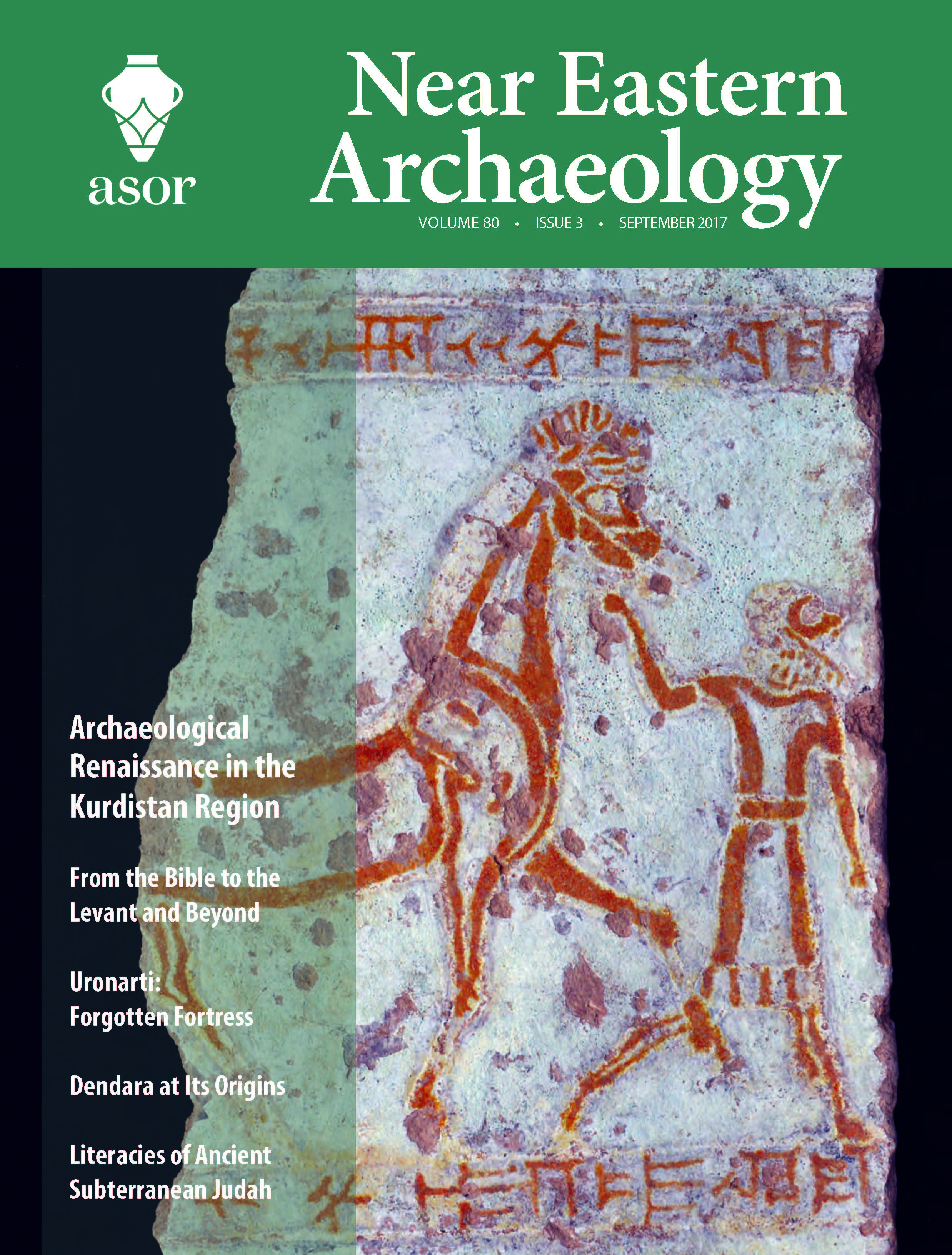
Table of Contents for NEA 80.3 (September 2017)

[vc_row fullwidth=”true” attached=”true” css=”.vc_custom_1496247803139{padding-top: 0px !important;padding-right: 0px !important;padding-bottom: 0px !important;padding-left: 0px !important;}”][vc_column][mk_image src=”http://www.asor.org/wp-content/uploads/2017/07/nea-banner-80-2.jpg” image_width=”1920″ image_height=”400″ hover=”false” margin_bottom=”0″][/vc_column][/vc_row][vc_row fullwidth=”true” css=”.vc_custom_1496682730308{padding-top: 10px !important;padding-right: 0px !important;padding-bottom: 0px !important;padding-left: 0px !important;}”][vc_column width=”1/12″ css=”.vc_custom_1496683820796{margin-right: 10px !important;}” offset=”vc_hidden-md vc_hidden-sm vc_hidden-xs”][vc_column_text]

 SHARE

[/vc_column_text][mk_image src=”http://www.asortest.org/wp-content/uploads/2017/01/social-fb-icon4.jpg” image_width=”42″ image_height=”42″ hover=”false” custom_url=”https://www.facebook.com/ASOResearch/” margin_bottom=”0″][mk_image src=”http://www.asortest.org/wp-content/uploads/2017/01/social-tw-icon4.jpg” image_width=”42″ image_height=”42″ hover=”false” custom_url=”https://twitter.com/ASOResearch?ref_src=twsrc%5Egoogle%7Ctwcamp%5Eserp%7Ctwgr%5Eauthor” margin_bottom=”0″][mk_image src=”http://www.asortest.org/wp-content/uploads/2017/01/social-in-icon4.jpg” image_width=”42″ image_height=”42″ hover=”false” custom_url=”https://www.linkedin.com/company/american-schools-of-oriental-research” margin_bottom=”0″][mk_image src=”http://www.asortest.org/wp-content/uploads/2017/01/social-ml-icon_7.jpg” image_width=”42″ image_height=”42″ hover=”false” custom_url=”mailto:asor@bu.edu” margin_bottom=”0″][mk_image src=”http://www.asortest.org/wp-content/uploads/2017/01/blog-icon3.jpg” image_width=”42″ image_height=”42″ hover=”false” custom_url=”http://asorblog.org/” margin_bottom=”0″][/vc_column][vc_column border_color=”rgba(255,255,255,0.01)” width=”1/6″ css=”.vc_custom_1496683923840{margin-right: 20px !important;border-left-width: 2px !important;padding-right: 20px !important;padding-left: 20px !important;border-left-color: #99422f !important;}”][mk_divider divider_color=”rgba(255,255,255,0.01)” thickness=”1″ margin_top=”3″ margin_bottom=”3″][vc_column_text]

ASOR BLOG

NEWS@ASOR

ANCIENT NEAR EAST TODAY

PAST ASOR NEWS, MONTH BY MONTH

FY16 HONOR ROLL OF DONORS

ASOR ANNUAL MEETING

[/vc_column_text][/vc_column][vc_column border_color=”rgba(170,170,170,0.01)” width=”1/2″ css=”.vc_custom_1487276122024{margin-right: 10px !important;margin-bottom: 30px !important;border-right-width: 2px !important;border-bottom-width: 2px !important;padding-top: 30px !important;padding-right: 30px !important;padding-left: 20px !important;background-color: #ffffff !important;border-right-color: rgba(227,228,228,0.75) !important;border-bottom-color: rgba(227,228,228,0.75) !important;}”][vc_column_text responsive_align=”left”]

Table of Contents for Near Eastern Archaeology 80.3 (September 2017)

Subscription Options
You can receive NEA (and other ASOR publications) through an ASOR Membership or through an Individual Subscription. Single issues (subject to availability) are available for purchase, with ASOR members receiving a discount. Please email us if you have any questions.

Pp. 148-153: “From the Bible to the Levant and Beyond,” by William G. Dever

Professor Dever reflects on eighty years of Near Eastern Archaeology within the changing disciplinary landscape of biblical and Near Eastern archaeology.

Click here to access the above article on JSTOR (ASOR membership with online access and/or subscription to JSTOR Current Content required).

Pp. 154-165: “Forgotten Fortress: Returning to Uronarti,” by Laurel Bestock

The kings of the ancient Egyptian Middle Kingdom (ca. 2055–1650 B.C.E.) conquered and subsequently administered a large territory in Lower Nubia, south of the First Cataract. Monumental fortresses that were built along the banks of the Nile were excavated in the early twentieth century, but largely destroyed by the floodwaters from the damming of the Nile in the 1960s. Recent discovery that two of these fortresses have survived has led to new archaeological work, including survey and excavation at the site of Uronarti. Preliminary work there shows the complexity of lifestyle and cultural interaction at this ancient colonial outpost.

Click here to access the above article on JSTOR (ASOR membership with online access and/or subscription to JSTOR Current Content required).

Pp. 166-175: “Dendara at Its Origins: New Evidence for a Pre- and Early Dynastic Settlement Site in Upper Egypt,” by Gregory Marouard

The archaeology of Pre- and Early Dynastic Egypt has been one of the most active area in Egyptology in the past few decades, but despite the intensification of the fieldwork research in the Nile Delta or Middle Egypt, our knowledge of early Egyptian settlements in Upper Egypt is still limited to several prominent sites, some under excavation since the late nineteenth century. The work undertaken by a team from The Oriental Institute—on the concession of the French Archaeological Institute (IFAO)—in the intramural area of the Hathor and Isis sanctuaries at Dendara has uncovered the earliest archaeological levels discovered to date, with several strata from the Naqada IIC–D and Early Dynastic periods. These discoveries push back the date of a first permanent community at this site by more than five hundred years and add an important point on the map of the predynastic occupation of Upper Egypt, all the more significant since the site became one of the main provincial centers, the capital of the 6th Nome of Upper Egypt, in the following centuries.

Click here to access the above article on JSTOR (ASOR membership with online access and/or subscription to JSTOR Current Content required).

Pp. 176-187: “The Archaeological Renaissance in the Kurdistan Region of Iraq,” by Jason Ur

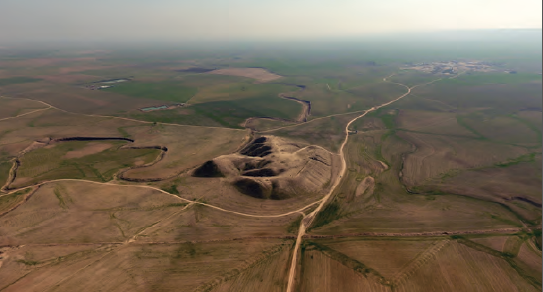
After an absence of over two decades, foreign archaeology has returned in earnest to one of the “cradles of civilization” in the Kurdistan Region of Iraq. Two wars, international sanctions, and internal unrest had together brought archaeological research nearly to a standstill; only a few under-funded Iraqi teams and a handful of intrepid Europeans attempted fieldwork following the first Gulf War of 1991. Following a decline in political violence that began in 2008, archaeologists have returned to the Republic of Iraq. The resumption of fieldwork in the southern “heartland of cities” has been significant but slow, and hampered by internal politics. In the autonomous Kurdistan Region, however, foreign research has expanded rapidly and continuously, in partnership with local archaeologists and institutes. This essay reviews these new developments, discusses how the new discoveries are challenging long-held ideas and filling blank spaces on the archaeological map, and suggests some new directions for the future of Mesopotamian studies.

Click here to access the above article on JSTOR (ASOR membership with online access and/or subscription to JSTOR Current Content required).

Pp. 188-195: “Reading and Writing in the Dark at Khirbet el-Qom: The Literacies of Ancient Subterranean Judah,” by Alice Mandell and Jeremy Smoak

How did ancient Israelites and Judeans interact with inscriptions located in subterranean contexts such as tombs, tunnels, and caves? What roles did writing hold in the darkness of such places? The present article argues that a multimodal approach to literacy needs to be applied to the study of such inscriptions in order to understand how they communicated to audiences underground in the dark. We challenge traditional approaches to the study of tomb inscriptions in ancient Judah, most of which have studied them for what they reveal about historical grammar and the development of orthography. We argue that a better understanding of how audiences interacted with such inscriptions proceeds from a consideration of the visual grammars of tomb aesthetics, architecture, and the funerary objects in these spaces. This context is what enabled ancient audiences to decode the meaning of inscriptions in tomb complexes.

Click here to access the above article on JSTOR (ASOR membership with online access and/or subscription to JSTOR Current Content required).

Pp. 196-201: “Cimmerian and Scythian Funerary Rituals in the South Caucasus,” by Garegin S. Tumanyan

The author presents the results of his investigation of sepulchers in the southern Caucasus that carry Cimmerian-Scythian features in the hopes of shedding light on the question of whether there was a Cimmerian-Scythian presence in the southern Caucasus in the late eighth to sixth centuries B.C.E. To identify eligible burial complexes, the author developed criteria based on a number of specific features: these included the presence of intrusive burials within the sepulchers, the presence of an anthropomorphic stone sculpture over the tomb or in the burial chamber, the skeleton’s position lying stretched on its back, the presence of human sacrifices, the practice of burying horsemen with their horse, and more. Specific burial goods, such as horse bits with stirrup-shaped ends, bronze mirrors, whetstones with holes for rings, javelins, acinac-type blades, and Scythian arrowheads, were also identified as indicating the presence of Cimmerian-Scythian burials. Based on a thorough exploration of available sources on sepulchers and burial complexes in the South Caucasus, the author identified 145 sepulchers and 63 burial grounds meeting his criteria and concluded that Cimmerian and Scythian cultures were present in the southern Caucasus of the seventh and sixth centuries B.C.E.

Click here to access the above article on JSTOR (ASOR membership with online access and/or subscription to JSTOR Current Content required).

Pp. 202-203: “‘There Is Nothing so Whole as a Broken Heart’: Reflections on ‘The Practice of Repairing Vessels in Ancient Egypt’ (NEA 79.4 [2016]) by Julia Hsieh,” by Aren M. Maeir

The author offers an additional perspective on the mending of ancient pottery, suggesting that breakage and repair are part of the normal life cycle of an object and that mending can in some cases lead to an enhancement of the original object and to a valuing of the repaired vessel.

Click here to access the above article on JSTOR (ASOR membership with online access and/or subscription to JSTOR Current Content required).

[/vc_column_text][/vc_column][vc_column border_color=”rgba(170,170,170,0.01)” width=”1/6″ css=”.vc_custom_1496684098866{margin-right: 5px !important;margin-bottom: 20px !important;border-right-width: 2px !important;border-bottom-width: 2px !important;padding-top: 30px !important;padding-right: 10px !important;padding-left: 10px !important;background-color: #ffffff !important;border-right-color: rgba(227,228,228,0.75) !important;border-bottom-color: rgba(227,228,228,0.75) !important;}”][vc_wp_posts title=”BROWSE THE NEWS ARCHIVE” number=”4″][/vc_column][vc_column border_color=”rgba(170,170,170,0.01)” width=”1/6″ css=”.vc_custom_1496684008271{margin-right: 10px !important;margin-bottom: 30px !important;border-right-width: 2px !important;border-bottom-width: 2px !important;padding-top: 30px !important;padding-right: 20px !important;padding-left: 20px !important;background-color: #ffffff !important;border-right-color: rgba(227,228,228,0.75) !important;border-bottom-color: rgba(227,228,228,0.75) !important;}”][vc_column_text] [/vc_column_text][/vc_column][/vc_row]
BASOR 378 Ahead of Print

[vc_row fullwidth=”true” attached=”true” css=”.vc_custom_1496247803139{padding-top: 0px !important;padding-right: 0px !important;padding-bottom: 0px !important;padding-left: 0px !important;}”][vc_column][mk_image src=”http://www.asor.org/wp-content/uploads/2017/04/100CrusderSeaCastleSaide-Sidon-–-1920×600-–-REVISED-1.jpg” image_width=”1920″ image_height=”400″ hover=”false” margin_bottom=”0″][/vc_column][/vc_row][vc_row fullwidth=”true” css=”.vc_custom_1496682730308{padding-top: 10px !important;padding-right: 0px !important;padding-bottom: 0px !important;padding-left: 0px !important;}”][vc_column width=”1/12″ css=”.vc_custom_1496683820796{margin-right: 10px !important;}” offset=”vc_hidden-md vc_hidden-sm vc_hidden-xs”][vc_column_text]

 SHARE

[/vc_column_text][mk_image src=”http://www.asortest.org/wp-content/uploads/2017/01/social-fb-icon4.jpg” image_width=”42″ image_height=”42″ hover=”false” custom_url=”https://www.facebook.com/ASOResearch/” margin_bottom=”0″][mk_image src=”http://www.asortest.org/wp-content/uploads/2017/01/social-tw-icon4.jpg” image_width=”42″ image_height=”42″ hover=”false” custom_url=”https://twitter.com/ASOResearch?ref_src=twsrc%5Egoogle%7Ctwcamp%5Eserp%7Ctwgr%5Eauthor” margin_bottom=”0″][mk_image src=”http://www.asortest.org/wp-content/uploads/2017/01/social-in-icon4.jpg” image_width=”42″ image_height=”42″ hover=”false” custom_url=”https://www.linkedin.com/company/american-schools-of-oriental-research” margin_bottom=”0″][mk_image src=”http://www.asortest.org/wp-content/uploads/2017/01/social-ml-icon_7.jpg” image_width=”42″ image_height=”42″ hover=”false” custom_url=”mailto:asor@bu.edu” margin_bottom=”0″][mk_image src=”http://www.asortest.org/wp-content/uploads/2017/01/blog-icon3.jpg” image_width=”42″ image_height=”42″ hover=”false” custom_url=”http://asorblog.org/” margin_bottom=”0″][/vc_column][vc_column border_color=”rgba(255,255,255,0.01)” width=”1/6″ css=”.vc_custom_1496683923840{margin-right: 20px !important;border-left-width: 2px !important;padding-right: 20px !important;padding-left: 20px !important;border-left-color: #99422f !important;}”][mk_divider divider_color=”rgba(255,255,255,0.01)” thickness=”1″ margin_top=”3″ margin_bottom=”3″][vc_column_text]

ASOR BLOG

NEWS@ASOR

ANCIENT NEAR EAST TODAY

PAST ASOR NEWS, MONTH BY MONTH

FY17 HONOR ROLL OF DONORS

ASOR ANNUAL MEETING

[/vc_column_text][/vc_column][vc_column border_color=”rgba(170,170,170,0.01)” width=”1/2″ css=”.vc_custom_1487276122024{margin-right: 10px !important;margin-bottom: 30px !important;border-right-width: 2px !important;border-bottom-width: 2px !important;padding-top: 30px !important;padding-right: 30px !important;padding-left: 20px !important;background-color: #ffffff !important;border-right-color: rgba(227,228,228,0.75) !important;border-bottom-color: rgba(227,228,228,0.75) !important;}”][vc_column_text responsive_align=”left”]

BASOR 378 AHEAD OF PRINT ARTICLES AVAILABLE

[/vc_column_text][vc_column_text]The first batch of Ahead of Print articles from BASOR 378 are available online now. Click here to be taken to the page on JSTOR to view any of the following articles:

You must have online access through your ASOR membership or institution to view the articles online. If you would like to upgrade your membership for an additional $25 to receive print and online access to our journals or have any questions, please contact asormemb@bu.edu.[/vc_column_text][/vc_column][vc_column border_color=”rgba(170,170,170,0.01)” width=”1/6″ css=”.vc_custom_1496684098866{margin-right: 5px !important;margin-bottom: 20px !important;border-right-width: 2px !important;border-bottom-width: 2px !important;padding-top: 30px !important;padding-right: 10px !important;padding-left: 10px !important;background-color: #ffffff !important;border-right-color: rgba(227,228,228,0.75) !important;border-bottom-color: rgba(227,228,228,0.75) !important;}”][vc_wp_posts title=”BROWSE THE NEWS ARCHIVE” number=”4″][/vc_column][vc_column border_color=”rgba(170,170,170,0.01)” width=”1/6″ css=”.vc_custom_1496684008271{margin-right: 10px !important;margin-bottom: 30px !important;border-right-width: 2px !important;border-bottom-width: 2px !important;padding-top: 30px !important;padding-right: 20px !important;padding-left: 20px !important;background-color: #ffffff !important;border-right-color: rgba(227,228,228,0.75) !important;border-bottom-color: rgba(227,228,228,0.75) !important;}”][vc_column_text] [/vc_column_text][/vc_column][/vc_row]
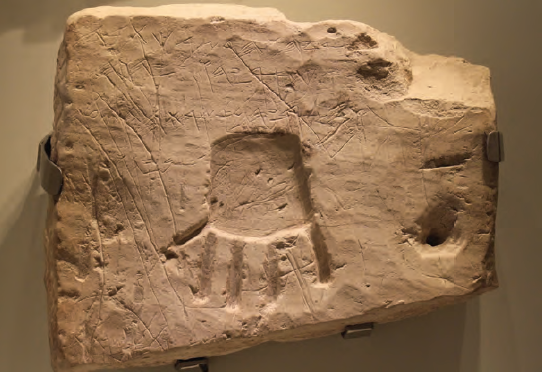
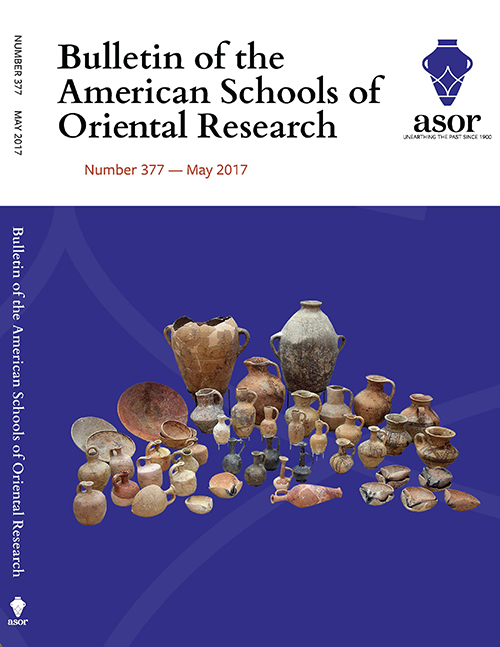
Table of Contents for BASOR 377 (May 2017)

[vc_row fullwidth=”true” attached=”true” css=”.vc_custom_1496247803139{padding-top: 0px !important;padding-right: 0px !important;padding-bottom: 0px !important;padding-left: 0px !important;}”][vc_column][mk_image src=”http://www.asor.org/wp-content/uploads/2017/07/pottery02-1920×600.jpg” image_width=”1920″ image_height=”400″ hover=”false” margin_bottom=”0″][/vc_column][/vc_row][vc_row fullwidth=”true” css=”.vc_custom_1496682730308{padding-top: 10px !important;padding-right: 0px !important;padding-bottom: 0px !important;padding-left: 0px !important;}”][vc_column width=”1/12″ css=”.vc_custom_1496683820796{margin-right: 10px !important;}” offset=”vc_hidden-md vc_hidden-sm vc_hidden-xs”][vc_column_text]

 SHARE

[/vc_column_text][mk_image src=”http://www.asortest.org/wp-content/uploads/2017/01/social-fb-icon4.jpg” image_width=”42″ image_height=”42″ hover=”false” custom_url=”https://www.facebook.com/ASOResearch/” margin_bottom=”0″][mk_image src=”http://www.asortest.org/wp-content/uploads/2017/01/social-tw-icon4.jpg” image_width=”42″ image_height=”42″ hover=”false” custom_url=”https://twitter.com/ASOResearch?ref_src=twsrc%5Egoogle%7Ctwcamp%5Eserp%7Ctwgr%5Eauthor” margin_bottom=”0″][mk_image src=”http://www.asortest.org/wp-content/uploads/2017/01/social-in-icon4.jpg” image_width=”42″ image_height=”42″ hover=”false” custom_url=”https://www.linkedin.com/company/american-schools-of-oriental-research” margin_bottom=”0″][mk_image src=”http://www.asortest.org/wp-content/uploads/2017/01/social-ml-icon_7.jpg” image_width=”42″ image_height=”42″ hover=”false” custom_url=”mailto:asor@bu.edu” margin_bottom=”0″][mk_image src=”http://www.asortest.org/wp-content/uploads/2017/01/blog-icon3.jpg” image_width=”42″ image_height=”42″ hover=”false” custom_url=”http://asorblog.org/” margin_bottom=”0″][/vc_column][vc_column border_color=”rgba(255,255,255,0.01)” width=”1/6″ css=”.vc_custom_1496683923840{margin-right: 20px !important;border-left-width: 2px !important;padding-right: 20px !important;padding-left: 20px !important;border-left-color: #99422f !important;}”][mk_divider divider_color=”rgba(255,255,255,0.01)” thickness=”1″ margin_top=”3″ margin_bottom=”3″][vc_column_text]

ASOR BLOG

NEWS@ASOR

ANCIENT NEAR EAST TODAY

PAST ASOR NEWS, MONTH BY MONTH

FY16 HONOR ROLL OF DONORS

ASOR ANNUAL MEETING

[/vc_column_text][/vc_column][vc_column border_color=”rgba(170,170,170,0.01)” width=”1/2″ css=”.vc_custom_1487276122024{margin-right: 10px !important;margin-bottom: 30px !important;border-right-width: 2px !important;border-bottom-width: 2px !important;padding-top: 30px !important;padding-right: 30px !important;padding-left: 20px !important;background-color: #ffffff !important;border-right-color: rgba(227,228,228,0.75) !important;border-bottom-color: rgba(227,228,228,0.75) !important;}”][vc_column_text responsive_align=”left”]

TABLE OF CONTENTS FOR BASOR 377 (MAY 2017)

Subscription Options
You can receive BASOR (and other ASOR publications) through an ASOR Membership or through an Individual Subscription. Single issues (subject to availability) are available for purchase, with ASOR members receiving a discount. Please email us if you have any questions.

Pp. 1-20: “Ethnofabrics: Petrographic Analysis as a Tool for Illuminating Cultural Interactions and Trade Relations between Judah and Philistia during the Iron Age II,” by Anat Cohen-Weinberger, Nahshon Szanton and Joe Uziel

Recent excavations along the lower eastern slopes of Jerusalem yielded a number of sherds attributed to Late Philistine Decorated Ware. As this family of vessels is generally thought to derive from Philistia, petrographic analysis was conducted on the sherds, as well as on other vessels assumed to be locally made, which served as a control group. Late Philistine Decorated Ware sherds were found to belong to three distinct petrographic groups, two of which seem to originate in Philistia (i.e., the southern coastal plain and Judaean Shephelah), while a third group was found to be local to Jerusalem. The results also indicate that some vessels considered local to the area of Jerusalem were actually produced farther west. This article discusses the results of the petrographic analysis and the implications they have on understanding Judaeo-Philistine relations.

Click here to access the above article on JSTOR (ASOR membership with online access and/or subscription to JSTOR Current Content required).

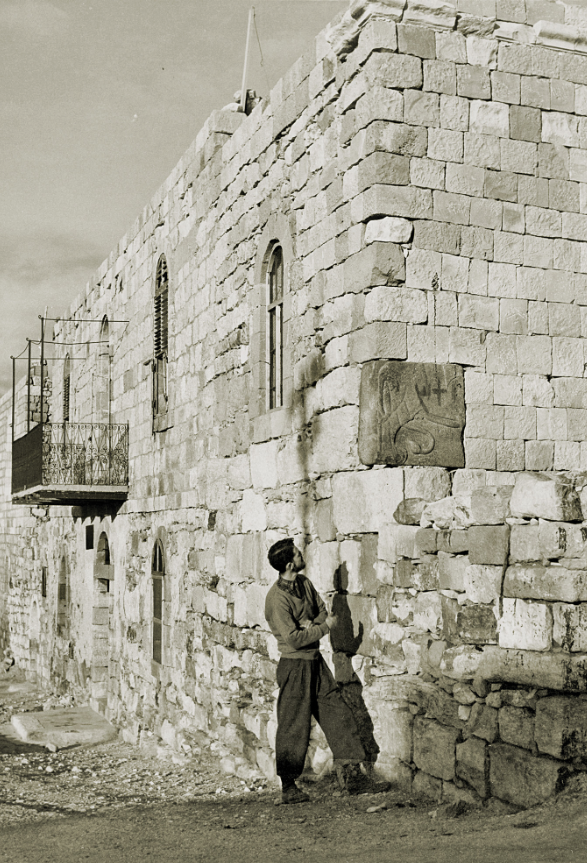
Pp. 21-38: “From Stadium to Harbor: Reinterpreting the Curved Ashlar Structure in Roman Tiberias,” by Rick Bonnie

A salvage excavation in the modern city of Tiberias in 2002 exposed the remnants of a wide, curved ashlar structure. Based on its curved shape, its construction date, and its location, various scholars have identified this structure as the foundation wall of the Roman stadium mentioned by Josephus in relation to the First Jewish Revolt (66–67 C.E.). However, neither Josephus nor the later rabbinic sources imply the presence of a stone-built monumental stadium at the location of this site, nor does all of the exposed evidence related to the structure fit with the stadium theory. Therefore, a different interpretation for this structure is proposed. Based on the presence of a mooring stone projecting outward from the structure’s waterside and the complex’s strong similarities in structural characteristics and in elevation to the nearby late Hellenistic to Roman harbor of Magdala, it is argued that the remains should be identified as those of a quay, a stone platform built along the lakeshore to accommodate the loading and unloading of boats. If this interpretation is correct, it suggests the existence of a harbor structure in the northeast area of Roman Tiberias.

Click here to access the above article on JSTOR (ASOR membership with online access and/or subscription to JSTOR Current Content required).

Pp. 39-47: “The Qubur al-Walaydah Bowl: New Images and Old Readings,” by Nathaniel E. Greene

Discovered in the late 1970s and first published in the Bulletin of the American Schools of Oriental Research by Frank Moore Cross in 1980, the Qubur al-Walaydah Bowl has become the object of more recent inspection by the current excavation team at the site. In 2010, Angelika Berlejung proposed new readings for parts of the inscription. This article seeks to analyze Berlejung’s proposed readings against Cross’s readings from his editio princeps. Furthermore, the present study utilizes reflectance transformation imaging in order to draw its conclusions. Ultimately, Berlejung’s proposed readings are not supported by reflectance transformation imaging.

Click here to access the above article on JSTOR (ASOR membership with online access and/or subscription to JSTOR Current Content required).

Pp. 49-67: “Local Production of a Small Rectangular Limestone Incense Altar at Tell Halif, Israel: Iconographic Considerations,” by Seung Ho Bang and Oded Borowski

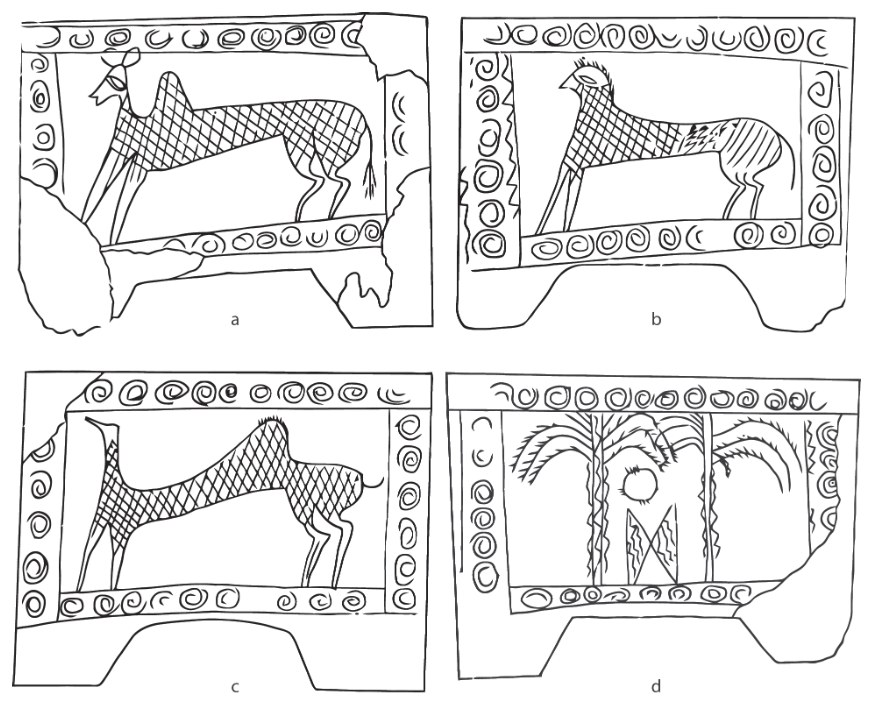
This article studies local production of an incense altar found at Tell Halif in 2007 through examining its iconography. The carvings depict hunting scenes consisting of a human and various animals. These animals are positively identified as zebu, wild boar, Saluki-type hounds, and Nubian ibexes. The distribution of these five animals indicates that the southern Levant might be the source of primary influence for incense altar production, while southern Arabia is also a visible influential factor. Established trade between the southern Levant and southern Arabia, as early as the 12th–11th centuries B.C.E., might support the idea of cultural ties between the two regions. The taxonomical identifications strongly support the hypothesis that the object was locally produced. And this hypothesis is also in accord with the petrographic provenance analyses of the raw material used for the Tell Halif incense altar.

Click here to access the above article on JSTOR (ASOR membership with online access and/or subscription to JSTOR Current Content required).

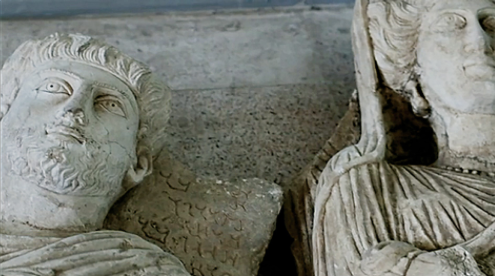
Pp. 71-84: “Six Palmyrene Portraits Destroyed in Manbij, Syria: A Salvage Reading,” by Jeremy M. Hutton

Operatives of the Islamic State reportedly destroyed six Palmyrene funerary busts and statue fragments in Manbij, Syria, on July 2, 2015. This article considers the ethical implications of publishing photographs of antiquities that have been destroyed, arguing that in such dramatic cases as destruction, it is justified to publish readings. Photographs of these antiquities are then analyzed, their physical and iconographic characteristics described, and readings for three of the inscriptions suggested. Finally, the loss of data caused by the items’ destruction is measured against the loss of data occasioned by looting.

Click here to access the above article on JSTOR (ASOR membership with online access and/or subscription to JSTOR Current Content required).

Pp. 85-106: “Two (?) Lion Reliefs from Iron Age Moab: Further Evidence for an Architectural and Intellectual Koiné in the Levant?,” by Martin Weber

The collection of the Karak Archaeological Museum contains two carved basalt slabs, both of which show the rear parts and hindquarters of a leonine figure. Although the two slabs differ vastly in their state of preservation, a comparison of their physical properties and iconographic features suggests that the two reliefs originally formed a matching pair and were part of a single architectural feature. Comparing the slabs to the well-known corpus of northern Levantine monumental sculpture, it is argued that the reliefs constitute the remains of two gateway figures, most plausibly dated to the Iron Age. The Karak slabs thus provide the first likely evidence for the use of architectural stone sculpture by Moabite elites, a practice most commonly associated with the Iron Age kingdoms of the northern Levant. Lion sculptures were often employed as gateways figures in public buildings, especially in the northern Levant and northern Mesopotamia, attesting to the close relationship between these images and the royal ideology they helped to project. Through their existence, the Karak slabs not only provide further evidence for cross-cultural artistic interaction in the Iron Age Levant but also suggest that ancient Karak played an important role in these exchanges.

Click here to access the above article on JSTOR (ASOR membership with online access and/or subscription to JSTOR Current Content required).

Pp. 107-133: “An Aramaic-Inscribed Lamaštu Amulet from Zincirli,” by Jessie DeGrado and Matthew Richey

In the final volume of excavation reports from the Felix von Luschan expedition to Zincirli, Turkey, the editor, Walter Andrae, provided a brief iconographic description and an imperfect photograph of an Aramaic-inscribed Lamaštu amulet from the site. The Old Aramaic inscription was, however, largely invisible in the photograph, and the epigraph went untranscribed and untranslated in this and all subsequent mentions. The present article represents a full edition and discussion of the amulet and its inscription on the basis of our examination of the object at the Vorderasiatisches Museum, Berlin. This artifact represents the only known instance of a local Aramaic script’s use on an amulet dominated by Mesopotamian iconographic motifs, notably including Lamaštu. It is an important witness to cultural contact and combination in an Aramaic/Neo-Hittite city-state of the 9th-8th centuries B.C.E. Due to the general paucity of Old Aramaic inscriptions, the epigraph also represents a significant addition to the broader extant corpus and contributes important data for understanding Old Aramaic palaeography, orthography, and onomastics.

Click here to access the above article on JSTOR (ASOR membership with online access and/or subscription to JSTOR Current Content required).

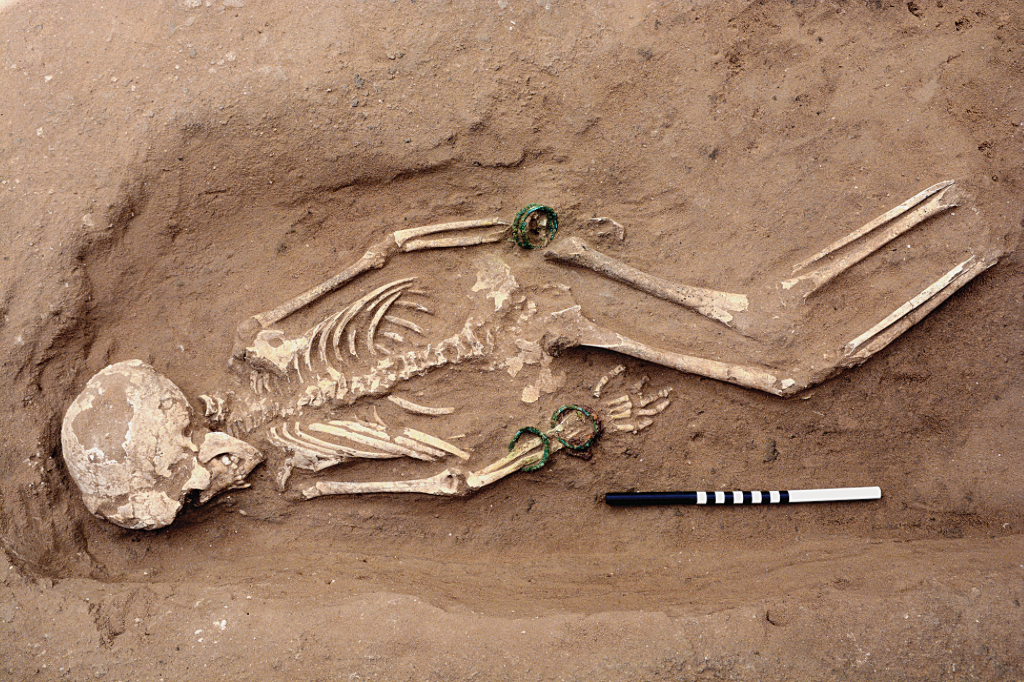
Pp. 135-159: “The Philistine Cemetery of Ashkelon,” by Daniel M. Master and Adam J. Aja

From 2013 to 2016, the Leon Levy Expedition to Ashkelon excavated an Iron Age IIA cemetery immediately adjacent to the ancient city. This research uncovered over 200 individuals buried in simple pits, built tombs, and cremation jars. The discovery represents a fundamental contribution to the history of the Philistines, as it demonstrates, for the first time, a typical burial practice for Philistine adults in the Iron Age. As such, it becomes a type-site against which other southern Levantine discoveries can be compared and provides new information about Iron Age death and burial in the eastern Mediterranean.

Click here to access the above article on JSTOR (ASOR membership with online access and/or subscription to JSTOR Current Content required).

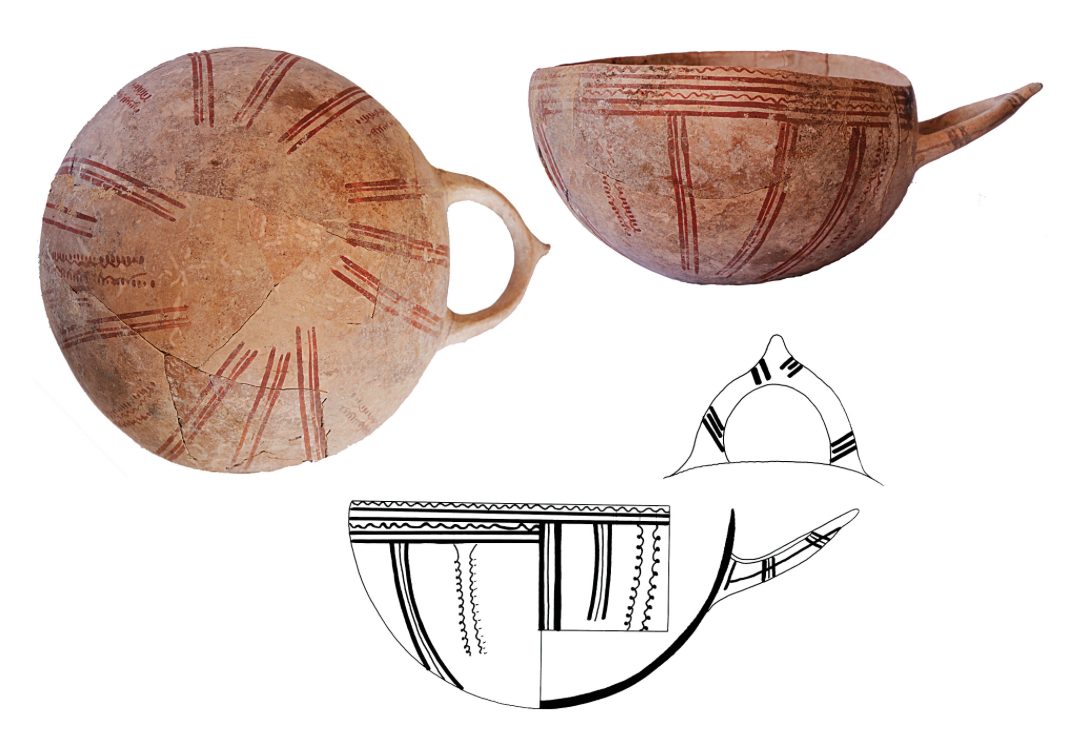
Pp. 161-218: “Tombs and Offering Pits at the Late Bronze Age Metropolis of Hala Sultan Tekke, Cyprus,” Peter M. Fischer and Teresa Bürge

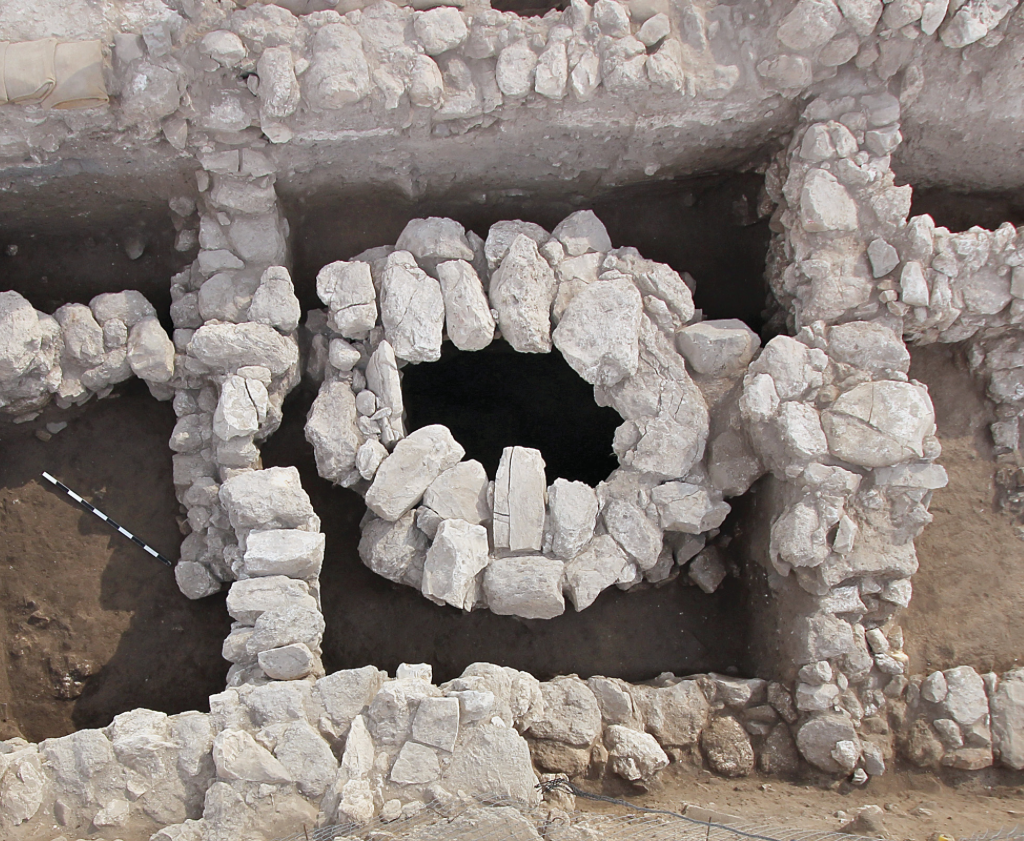
Hala Sultan Tekke is a large Bronze Age city close to the famous homonymous mosque near the international airport of Larnaca on the south coast of Cyprus. Previous research demonstrated that the city flourished mainly in the later part of the Late Bronze Age—viz., during the 13th and 12th centuries B.C.E.—but recent excavations confirmed that the city was occupied from as early as the Middle Cypriot III-Late Cypriot IA period around 1600 B.C.E. The current project, which started in 2010, exposed three new city quarters (CQ1–3) in the northern part of the city close to the ancient harbor—that is, today’s Larnaca Salt Lake. Geophysical surveys by georadar and magnetometer, which were carried out in Area A, a plateau approximately 600 m east of CQ1 and opposite the mosque, indicated more than 80 roughly circular anomalies. Among the seven anomalies excavated in 2016 are Tomb X and Offering Pit V, which are the main subjects of this article. Concentrated in these features were objects of high artistic value from a vast area of the eastern Mediterranean, including the Aegean, the Levant, Egypt, and possibly Anatolia. Both features antedate the occupation of the previously excavated city quarters.

Click here to access the above article on JSTOR (ASOR membership with online access and/or subscription to JSTOR Current Content required).

Pp. 219-248: “Embodiments of Death: The Funerary Sequence and Commemoration in the Bronze Age Levant,” by Melissa S. Cradic

This article presents an archaeological model for Levantine funerary rituals performed in the context of commingling inhumations. Using the case study of a masonry-constructed chamber tomb from Middle Bronze Age Tel Megiddo (Israel), the funerary sequence is reconstructed in three main phases: (1) pre-interment; (2) interment; and (3) post-interment. The sequential performance of funerary rituals in this shared burial space resulted in a high degree of skeletal fragmentation as previously interred corpses were moved aside to accommodate subsequent inhumations. However, rather than merely representing a functional aspect of burial, the repositioning of deceased bodies constituted a ritually meaningful practice that involved continuous physical interactions between the living and the dead. Drawing on theories of embodiment and methods of burial taphonomy, this article argues that mourners’ close encounters with deceased bodies played a major role in transforming the status of the dead after burial. Ritualized fragmentation and intermingling of human skeletal remains were integral components of becoming an ancestor.

Click here to access the above article on JSTOR (ASOR membership with online access and/or subscription to JSTOR Current Content required).

[/vc_column_text][mk_divider][vc_column_text]To view the entire article on JSTOR, click here.[/vc_column_text][/vc_column][vc_column border_color=”rgba(170,170,170,0.01)” width=”1/6″ css=”.vc_custom_1496684098866{margin-right: 5px !important;margin-bottom: 20px !important;border-right-width: 2px !important;border-bottom-width: 2px !important;padding-top: 30px !important;padding-right: 10px !important;padding-left: 10px !important;background-color: #ffffff !important;border-right-color: rgba(227,228,228,0.75) !important;border-bottom-color: rgba(227,228,228,0.75) !important;}”][vc_wp_posts title=”BROWSE THE NEWS ARCHIVE” number=”4″][/vc_column][vc_column border_color=”rgba(170,170,170,0.01)” width=”1/6″ css=”.vc_custom_1496684008271{margin-right: 10px !important;margin-bottom: 30px !important;border-right-width: 2px !important;border-bottom-width: 2px !important;padding-top: 30px !important;padding-right: 20px !important;padding-left: 20px !important;background-color: #ffffff !important;border-right-color: rgba(227,228,228,0.75) !important;border-bottom-color: rgba(227,228,228,0.75) !important;}”][vc_column_text] [/vc_column_text][/vc_column][/vc_row]
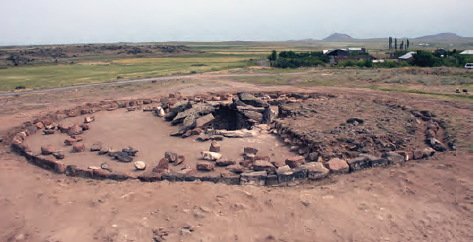
Table of Contents for JCS 69 (2017)

[vc_row fullwidth=”true” attached=”true” css=”.vc_custom_1496247803139{padding-top: 0px !important;padding-right: 0px !important;padding-bottom: 0px !important;padding-left: 0px !important;}”][vc_column][mk_image src=”http://www.asor.org/wp-content/uploads/2017/07/AshurnasirpalI-1920×600.jpg” image_width=”1920″ image_height=”400″ hover=”false” margin_bottom=”0″][/vc_column][/vc_row][vc_row fullwidth=”true” css=”.vc_custom_1496682730308{padding-top: 10px !important;padding-right: 0px !important;padding-bottom: 0px !important;padding-left: 0px !important;}”][vc_column width=”1/12″ css=”.vc_custom_1496683820796{margin-right: 10px !important;}” offset=”vc_hidden-md vc_hidden-sm vc_hidden-xs”][vc_column_text]

 SHARE

[/vc_column_text][mk_image src=”http://www.asortest.org/wp-content/uploads/2017/01/social-fb-icon4.jpg” image_width=”42″ image_height=”42″ hover=”false” custom_url=”https://www.facebook.com/ASOResearch/” margin_bottom=”0″][mk_image src=”http://www.asortest.org/wp-content/uploads/2017/01/social-tw-icon4.jpg” image_width=”42″ image_height=”42″ hover=”false” custom_url=”https://twitter.com/ASOResearch?ref_src=twsrc%5Egoogle%7Ctwcamp%5Eserp%7Ctwgr%5Eauthor” margin_bottom=”0″][mk_image src=”http://www.asortest.org/wp-content/uploads/2017/01/social-in-icon4.jpg” image_width=”42″ image_height=”42″ hover=”false” custom_url=”https://www.linkedin.com/company/american-schools-of-oriental-research” margin_bottom=”0″][mk_image src=”http://www.asortest.org/wp-content/uploads/2017/01/social-ml-icon_7.jpg” image_width=”42″ image_height=”42″ hover=”false” custom_url=”mailto:asor@bu.edu” margin_bottom=”0″][mk_image src=”http://www.asortest.org/wp-content/uploads/2017/01/blog-icon3.jpg” image_width=”42″ image_height=”42″ hover=”false” custom_url=”http://asorblog.org/” margin_bottom=”0″][/vc_column][vc_column border_color=”rgba(255,255,255,0.01)” width=”1/6″ css=”.vc_custom_1496683923840{margin-right: 20px !important;border-left-width: 2px !important;padding-right: 20px !important;padding-left: 20px !important;border-left-color: #99422f !important;}”][mk_divider divider_color=”rgba(255,255,255,0.01)” thickness=”1″ margin_top=”3″ margin_bottom=”3″][vc_column_text]

ASOR BLOG

NEWS@ASOR

ANCIENT NEAR EAST TODAY

PAST ASOR NEWS, MONTH BY MONTH

FY16 HONOR ROLL OF DONORS

ASOR ANNUAL MEETING

[/vc_column_text][/vc_column][vc_column border_color=”rgba(170,170,170,0.01)” width=”1/2″ css=”.vc_custom_1487276122024{margin-right: 10px !important;margin-bottom: 30px !important;border-right-width: 2px !important;border-bottom-width: 2px !important;padding-top: 30px !important;padding-right: 30px !important;padding-left: 20px !important;background-color: #ffffff !important;border-right-color: rgba(227,228,228,0.75) !important;border-bottom-color: rgba(227,228,228,0.75) !important;}”][vc_column_text responsive_align=”left”]

JCS 69 (2017) TABLE OF CONTENTS

You can receive JCS (and other ASOR publications) through an ASOR Membership. Please email the Membership office if you have any questions.

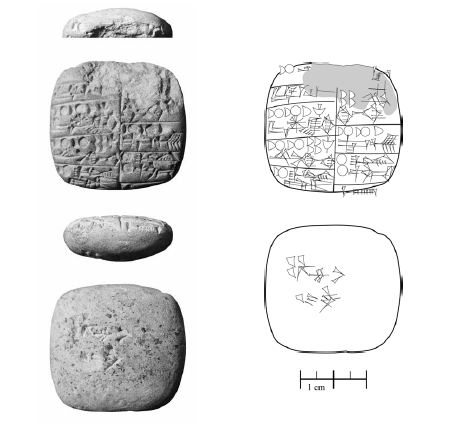
Pp. 3-31: “Nonadministrative Documents from Archaic Ur and from Early Dynastic I–II Mesopotamia: A New Textual and Archaeological Analysis,” by Camille Lecompte and Giacomo Benati

The present paper addresses a subgroup of cuneiform documents from the so-called Archaic Texts from Ur in Mesopotamia. The documents in this subgroup can be isolated within the bulk of the Archaic Texts due to their nonadministrative content. A fresh textual analysis of this dataset is combined with a discussion of the archaeological context of their provenance to highlight patterns in early Ur scribal training methods. The results of this integrated analysis are used to frame more precisely the significance of “Archaic Ur” scribal traditions, dating to the first part of the Early Dynastic period, within the cultural transition from the Late Uruk to the Early Dynastic III (“Fāra”) period in Mesopotamia.

Click here to access the above article on JSTOR (ASOR membership with online access and/or subscription to JSTOR Current Content required).

Pp. 33-47: “Three Administrative Texts from the Time of Me’annedu,” by Armando Bramanti

This article presents two land texts (allotments of field) and one grain text (barley loan) originating from Early Dynastic Zabala. The high year numbers allow for the attribution of these texts to the ensiship of Me’annedu. The edition is followed by a prosopographical study which, supported by paleographical considerations, provides some guidelines for the identification of more documents belonging to the same archive.

Click here to access the above article on JSTOR (ASOR membership with online access and/or subscription to JSTOR Current Content required).

Pp. 49-66: “The Sumerian Discourse Markers u4-ba and u4-bi-a,” by C. Jay Crisostomo

In Old Babylonian Sumerian literature, the temporal phrases u4-ba and u4-bi-a typically occur in complementary distribution. Previous analyses have focused on morphological disparity to differentiate the two. The present paper considers pragmatic functions within a larger discourse structure, analyzing them as discourse markers, specifically temporal connectives. In this study based on a corpus analysis of Old Babylonian literary compositions, I argue that in Sumerian discourse, u4-ba primarily marks perspectival shifts and refocusing, and u4-bi-a indexes sequential and consequential action.

Click here to access the above article on JSTOR (ASOR membership with online access and/or subscription to JSTOR Current Content required).

Pp. 67-108: “Goodbye, Princess: Iltani and the DUMU.MUNUS LUGAL,” by Seth Richardson

The Babylonian princess Iltani has been known to us since the 1899 copies of T. G. Pinches. Within fifty years, following a proliferation of published texts featuring the princess, it became probable there were at least two such persons by this name and title; by now, it can be shown there were at least three. But the problem hardly ends there: a close inspection of the disparate epistolary, administrative, and commercial evidence for these Iltani’s does little to clarify their activities or status, nor even their relation to the king. An analysis of that evidence leads me to propose a redefinition of the title DUMU.MUNUS LUGAL and a reinterpretation of the position and purpose of women bearing the name Iltani.

Click here to access the above article on JSTOR (ASOR membership with online access and/or subscription to JSTOR Current Content required).

Pp. 109-116: “Cultural Transformations from Mesopotamia to Hatti? The Case of the GALA,” by Ilan Peled

This article surveys the textual attestations of the cultic performer designated by the logogram GALA in Hittite texts. This logogram, which originated in Mesopotamia, was apparently used for the Hittite word šaḥtarili, but the nature of the activities performed by the Mesopotamian and Hittite cultic practitioners designated in this manner was not identical. This should be assessed against the background of the nature of Mesopotamian-Hittite connections and cultural transmissions and the multifaceted cultural influences that shaped Hittite cult.

Click here to access the above article on JSTOR (ASOR membership with online access and/or subscription to JSTOR Current Content required).

Pp. 117-124: “The Sumerogram KUR: Logogram or Determinative?,” by Maksim Kudrinski

The article deals with the problem of finding spoken correlates for combinations of the Sumerogram KUR and toponyms in Hittite texts. The discussion adds to our understanding of the relation between written and spoken language in the case of using foreign written templates by the Hittites.

Click here to access the above article on JSTOR (ASOR membership with online access and/or subscription to JSTOR Current Content required).

Pp. 125-150: “Teratomancy at Tigunānum: Structure, Hermeneutics, and Weltanschauung of a Northern Mesopotamian Omen Corpus,” by Nicla De Zorzi

This article examines the inner structure, building principles, and hermeneutic code of a group of late Middle Bronze age teratomantic tablets from Tigunānum in northern Mesopotamia. While in the final evaluation, the Tigunānum teratomantic corpus is of southern Babylonian inspiration, it represents a very specific local reworking of this tradition. This article posits as its distinctive feature the use of a strongly gendered imagery and language that reflect the worldview of an extremely androcentric and militarized society. It also demonstrates a connection between the cultural conceptions underlying the Tigunānum omen corpus and the Old Hittite sphere, the mid-second-millennium world of northern Mesopotamia, and later Assyria.

Click here to access the above article on JSTOR (ASOR membership with online access and/or subscription to JSTOR Current Content required).

Pp. 151-191: “The Nonintercalated Lunar Calendar of the Middle Assyrian Period,” by Joshua Jeffers

Scholars generally assume that Assyria employed a luni-solar calendrical system during the Middle Assyrian period—akin to the one used in Babylonia—that kept the months of its year synchronized with the seasons of the solar year through periodic intercalation. With this understanding, the regnal dates assigned to the Middle Assyrian kings have traditionally been expressed in terms of solar years. The present article, however, argues that the Assyrians did not use this type of system. The author draws upon a variety of administrative tablets—primarily from the reigns of Shalmaneser I, Tukultī-Ninurta I, and Tiglath-pileser I—to demonstrate that the months of the Assyrian year were in fact not permanently affixed to particular seasons of the solar year, revealing that its year was not intercalated and was thus perpetually rotating slowly through the solar year. This article also explores how such a calendrical system impacts the Middle Assyrian kings’ regnal dates, which would need to be lowered given that the unadjusted Assyrian lunar year was slightly shorter than its solar counterpart.

Click here to access the above article on JSTOR (ASOR membership with online access and/or subscription to JSTOR Current Content required).

Pp. 193-202: “The Case Marking of Sumerograms in Hittite,” Mojca Cajnko

The paper begins with a brief introduction to case and case marking and a description of the Hittite corpus and the corpus of the research. The main part is devoted to the case marking of Sumerograms, an as yet unresearched and undescribed topic in Hittitology. The paper examines different possibilities for the case marking of Sumerograms on the level of the sentence and the functional value of phonetic complements. It also attempts to discern whether competition between formally case-marked and case-unmarked Sumerograms in the grammatical roles of subject and direct object was driven by grammatical factors, economy of writing or by other reasons.

Click here to access the above article on JSTOR (ASOR membership with online access and/or subscription to JSTOR Current Content required).

Pp. 203-212: “Esarhaddon’s Prayer in the Inscription AsBbA as Related to the mīs pî Ritual,” by Amitai Baruchi-Unna

The prayer of Esarhaddon, incorporated in the inscription AsBbA, is the first prayer in an Assyrian royal inscription that is presented as a verbatim citation. The aim of this paper is to delineate the historiographical background for this innovation in a genre usually described as routine and formalistic. By examining descriptions of prayers said to have been recited by the king in Assyrian royal inscriptions, I analyze Esarhaddon’s prayer from the aspects of its content, context, and possible linkage to prayers external to the royal inscriptions. Specifically, I examine the possible relation between the prayer in this inscription and the mīs pî ritual performed during the last phases of the process of making a divine image. This comprehensive analysis suggests that the king’s prayer had been part of an early stage of such a ritual and was available to the authors of the Esarhaddon inscription.

Click here to access the above article on JSTOR (ASOR membership with online access and/or subscription to JSTOR Current Content required).

Pp. 213-220: “Comment Presentifier l’Invisible? Reflexions autour des termes ṣalmu, tamšīlu et uṣurtu,” by Jean-Jacques Glassner

Les Mésopotamiens créèrent des objets, des images et des signes qui avaient une fonction précise. À la suite d’une cristallisation de concepts produite par l’archéologie, on a pris l’habitude de parler à leur propos de « représentations ». Il est préférable d’y voir davantage des « présentification ». Tel fut le sens de šlm dans la Genèse, à propos du premier homme qui fut « à l’image de Dieu », entendons qu’il fut la manifestation de la puissance divine.

Click here to access the above article on JSTOR (ASOR membership with online access and/or subscription to JSTOR Current Content required).

Pp. 221-246: “From Text to Reading in Enūma Eliš,” by Johannes Haubold

This article makes two main points. First, the transmitted text of Enūma eliš can be more reliably construed than has hitherto been assumed, provided we take seriously the spelling of the manuscripts and the rules of Akkadian grammar. If we do this, and that is my second point, we can also make progress at the level of interpretation. To illustrate these claims, I look at two passages that have caused difficulties to modern readers. In Enūma eliš I.1–10 we encounter some forms that seem prima facie to defy the normal rules of Akkadian grammar. Through careful analysis of spelling, syntax, and poetic context I show that the text as it stands can in fact be securely construed. I then turn to a passage that the poet himself introduces as a masterpiece of verbal craft. In Enūma eliš II.61–70 the god Ea soothes the excited Anšar by reassuring him that he has the situation under control. I argue that existing translations misconstrue the personal pronoun šâši and consequently misinterpret the climactic final couplet of the speech. Clarifying the grammar of the passage enables us to establish not only what the text says, but also to appreciate it better.

Click here to access the above article on JSTOR (ASOR membership with online access and/or subscription to JSTOR Current Content required).

Pp. 247-260: “Additional MUL.APIN Fragments in the British Museum,” by Jeanette C. Fincke

The edition of the series MUL.APIN by Hermann Hunger and David Pingree (1989) granted modern scholars access to the rather objective descriptions of the stars, the intercalation scheme and the lengths of days and nights compiled by Mesopotamian astronomers in the first millennium BCE. This article provides the publication of three more Neo-Assyrian exemplars from Nineveh, and joins made by Enrique Jiménez, Irving Finkel, and me to two Late Babylonian fragments that have already been used in the edition.

Click here to access the above article on JSTOR (ASOR membership with online access and/or subscription to JSTOR Current Content required).

[/vc_column_text][mk_divider][vc_column_text]To view the entire article on JSTOR, click here.[/vc_column_text][/vc_column][vc_column border_color=”rgba(170,170,170,0.01)” width=”1/6″ css=”.vc_custom_1496684098866{margin-right: 5px !important;margin-bottom: 20px !important;border-right-width: 2px !important;border-bottom-width: 2px !important;padding-top: 30px !important;padding-right: 10px !important;padding-left: 10px !important;background-color: #ffffff !important;border-right-color: rgba(227,228,228,0.75) !important;border-bottom-color: rgba(227,228,228,0.75) !important;}”][vc_wp_posts title=”BROWSE THE NEWS ARCHIVE” number=”4″][/vc_column][vc_column border_color=”rgba(170,170,170,0.01)” width=”1/6″ css=”.vc_custom_1496684008271{margin-right: 10px !important;margin-bottom: 30px !important;border-right-width: 2px !important;border-bottom-width: 2px !important;padding-top: 30px !important;padding-right: 20px !important;padding-left: 20px !important;background-color: #ffffff !important;border-right-color: rgba(227,228,228,0.75) !important;border-bottom-color: rgba(227,228,228,0.75) !important;}”][vc_column_text] [/vc_column_text][/vc_column][/vc_row]