[/vc_column_text][vc_column_text]March Fellowship Madness at ASOR was (once again) a huge success. At the beginning of the month, we had funds from endowments and designated gifts to support 18 scholarships of $2,000. We set a goal of funding two more fellowships (or raising $4,000). Thanks to the support of our generous donors, we raised more then $6,000 and awarded 21 dig scholarships. A big THANK YOU to all of those who participated!
It’s never too soon to participate for next year. If you’d like to make a gift to help with scholarships for the summer of 2019, please use our online store at any time during the year and designate your gift for “Excavation Scholarships” in the drop-down menu.[/vc_column_text][mk_divider][mk_skill_meter title=”Money we have raised so far:” percent=”100″ title_color=”#777777″ progress_bar_color=”#dd3333″ track_bar_color=”#eeeeee”][vc_column_text]
We have raised $42,887 out of our $42,000 goal!
[/vc_column_text][mk_button style=”fill” corner_style=”rounded” size=”large” outline_skin=”#1e73be” outline_hover_skin=”#ffffff” url=”https://netforum.avectra.com/eweb/FND/DonateFund.aspx?Site=ASOR&WebCode=DonateNow&Action=Add&prd_key=ad537b8e-eff8-4f2b-8fd7-3f9de1c62edd&fun_key=80ac42fd-74f9-4fe9-ae70-b99051ea42f8&Name=2015%20Development%20Drive%20Donation%20″ align=”center”]Donate Now[/mk_button][mk_divider][vc_column_text]If you donate to March Fellowship Madness, you support archaeology in a very direct way. Every gift matters. ASOR does not charge any administrative fee for gifts made during March Fellowship Madness, so 100% of your contribution will support students who have a demonstrated need.
[/vc_column_text][vc_column_text]ASOR is pleased to welcome Heather J. McKee as ASOR’s new Treasurer. Heather was elected unanimously by the ASOR Board at its meeting in November 2017. She began her term as Treasurer on January 1, 2018, and the term will run through December 31, 2020.
A native of Charlotte, NC, McKee graduated from Davidson College in 1987 with a Bachelor of Arts in Psychology. In 1989, she earned a second undergraduate degree, a Bachelor of Arts in Accounting from Queens College.
Prior to pursuing a Masters of Divinity at Princeton Theological Seminary, Heather worked as an accountant with Arthur Andersen & Co. in Charlotte, NC. After graduating from Princeton Theological Seminary, she was named the Director of the Bonner Scholars Program and The Center for Service Learning at Mars Hill College. Upon moving to Milwaukee, WI, she worked as Grants Manager/Grant Writer with the Milwaukee Indian Health Board, and later took on the position of Program Director at the Medical College of Wisconsin Institute of Health Policy and Instructor in Medical Ethics. At MCW, she co-authored several papers on the economic determinants of US physician supply and the role of alternative medical providers in the US health care delivery system. Heather continued her work in health policy at Harvard Medical School focusing on finance and delivery system reform and large scale clinical outcome research
Seeking an opportunity to put policy into practice, Heather served as Executive Director of the Sublette Center, a Senior Health and Housing organization in Pinedale, WY. During her tenure, she was selected as a member of the Leadership Wyoming Class of 2012, served on the Governor’s Advisory Council on Health Finance Reform, and the National Education Committee for LeadingAge, a Washington DC based advocacy group for senior health and housing.
McKee currently serves on the Board of Directors of the Davidson Housing Coalition. She is an ordained Deacon and commissioned Stephen Minister, teaches Bible and Confirmation classes, and serves on the Governance, Planning, and the Finance Committees of Davidson College Presbyterian Church. She is a Red Boot Coalition Trailblazer and Guide and was tapped as a 2017-2018 Leadership Davidson Mentor. Heather’s affinity for ASOR began as a Seminarian studying Hebrew texts and continues as the organization strengthens and expands its mission. Heather enjoys cooking, reading, gardening, a variety of sports, and adventure travel. She and her spouse, Jane Campbell, reside in Davidson, NC.[/vc_column_text][/vc_column][vc_column border_color=”rgba(170,170,170,0.01)” width=”1/6″ css=”.vc_custom_1496684098866{margin-right: 5px !important;margin-bottom: 20px !important;border-right-width: 2px !important;border-bottom-width: 2px !important;padding-top: 30px !important;padding-right: 10px !important;padding-left: 10px !important;background-color: #ffffff !important;border-right-color: rgba(227,228,228,0.75) !important;border-bottom-color: rgba(227,228,228,0.75) !important;}”][vc_wp_posts title=”BROWSE THE NEWS ARCHIVE” number=”4″][/vc_column][vc_column border_color=”rgba(170,170,170,0.01)” width=”1/6″ css=”.vc_custom_1496684008271{margin-right: 10px !important;margin-bottom: 30px !important;border-right-width: 2px !important;border-bottom-width: 2px !important;padding-top: 30px !important;padding-right: 20px !important;padding-left: 20px !important;background-color: #ffffff !important;border-right-color: rgba(227,228,228,0.75) !important;border-bottom-color: rgba(227,228,228,0.75) !important;}”][vc_column_text]Tweets by ASOResearch [/vc_column_text][/vc_column][/vc_row]
[/vc_column_text][vc_column_text]UPDATE: We have surpassed our first goal of raising $4,000 to fund two additional fellowships! Thank you to all of our generous donors who responded to our call. Since it’s only mid-March, we’re updating our goal to raise an additional $600 so that we can fund three additional fellowships instead of two. Can you help us reach our new goal?
As an added incentive, during the first week of the women’s and men’s NCAA tournaments, an anonymous donor has agreed to match any gifts up to $50 one to one, for a total of $500. For example, if someone gives $25, the gift will be matched with $25. If someone gives $10, it will be matched with another $10. So if you can donate an amount up to $50, we hope you consider doing so today!
ASOR is fortunate to have many generous members and friends, and any gift—$10, $25, $100, $250, or more—will truly make a difference. To date, with generous support of endowed funds and other donors, we can now support 20 fellowships. Please join the Madness by making a tax-deductible gift that will help us reach our goal of funding (now) 21 fellowships! If you use our online store during March Fellowship Madness, please designate your gift for “Excavation Scholarships.”[/vc_column_text][mk_divider][mk_skill_meter title=”Money we have raised so far:” percent=”98.57″ title_color=”#777777″ progress_bar_color=”#dd3333″ track_bar_color=”#eeeeee”][vc_column_text]
We have raised $41,400 out of our $42,000 goal.
[/vc_column_text][mk_button style=”fill” corner_style=”rounded” size=”large” outline_skin=”#1e73be” outline_hover_skin=”#ffffff” url=”https://netforum.avectra.com/eweb/FND/DonateFund.aspx?Site=ASOR&WebCode=DonateNow&Action=Add&prd_key=ad537b8e-eff8-4f2b-8fd7-3f9de1c62edd&fun_key=80ac42fd-74f9-4fe9-ae70-b99051ea42f8&Name=2015%20Development%20Drive%20Donation%20″ align=”center”]Donate Now[/mk_button][mk_divider][vc_column_text]If you donate to March Fellowship Madness, you support archaeology in a very direct way. Every gift matters. ASOR does not charge any administrative fee for gifts made during March Fellowship Madness, so 100% of your contribution will support students who have a demonstrated need.
ASOR/EPHE EUROPEAN SYMPOSIUM: FIRST OVERSEAS SYMPOSIUM TO BE HELD IN PARIS, FRANCE IN SEPTEMBER
[/vc_column_text][vc_column_text]The ASOR Membership and Outreach Committee is pleased to announce its first overseas outreach initiative at the Sorbonne, in partnership with Ecole Pratique des Hautes Etudes – Paris Sciences et Lettres (EPHE-PSL), in Paris, September 4-6, 2018. The event will be a scholarly symposium with honorary chairs Susan Ackerman, President of ASOR, and Hubert Bost, President of EPHE-PSL. Over 45 scholars from Europe (including Russia), Brazil, Israel, and Turkey will make presentations on the themes of Violence in the Ancient Near East and on Digital Humanities (DH), including a forum-round table in order to set up an action plan regarding the growing inequalities between training in DH, among other discussed topics. Presentations will be video recorded and live broadcast. The symposium participants will also enjoy a guided-tour of the Louvre and a social cocktail in the Luxembourg Garden among other special activities. ASOR members who happen to be in Paris during that time are welcome to join the symposium to hear the presentations. We hope this event will be a first step in expanding European membership and involvement in ASOR. Randy Younker, chair Membership and Outreach Committee, Vanessa Juloux chair, Membership and Outreach Committee Sub-committee for Europe.
For weblinks on the Paris Symposium, see the following:
Table of Contents for Near Eastern Archaeology 80.4 (December 2017)
Subscription Options You can receive NEA (and other ASOR publications) through an ASOR Membership or through an Individual Subscription. Single issues (subject to availability) are available for purchase, with ASOR members receiving a discount. Please email us if you have any questions.
Pp. 212-231: “The Tell eṣ-Ṣâfi/Gath Archaeological Project: Overview,” by Aren M. Maeir
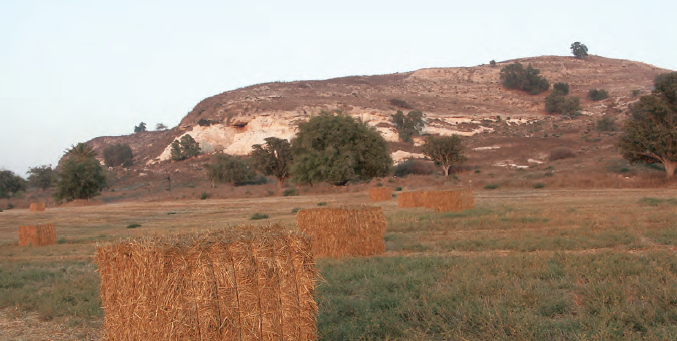
The Tell eṣ-Ṣâfi/Gath Archaeological Project commenced in 1996 and is one of the largest and longest continuously running archaeological projects in Israel. As the year 2017 marks twenty-two years of research and excavations, it is an apt opportunity to present an overview and reflection on the project in general, and various aspects of the research in particular. The opportunity to do this in two special issues of NEA is an excellent occasion, as this provides an expertly produced medium, read by many interested in the field of ancient Near Eastern history, archaeology, and culture.1 In this, first article of this special issue, I would like to provide an overview of the project and its primary accomplishments.
Click here to access the above article on JSTOR (ASOR membership with online access and/or subscription to JSTOR Current Content required).
Pp. 232-240: “Gath of the Philistines in the Bible and on the Ground: The Historical Geography of Tell eṣ-Ṣâfi/Gath,” by Yigal Levin
Archaeology is, for the most part, the study of material remains of the past. Archaeologists survey, excavate, analyze and construct a picture of past human life. They do their best to understand the daily life, the economy, the belief systems, the political and social structures, and so much else about long-gone civilizations. And, in many parts of the world and for long stretches of the human past, they do without recourse to written sources, simply because writing did not exist through most of that time. But if and when written records are available, they provide context, specific facts and dates, and much additional information that then give us a more complete picture of the history of the site or area that we are investigating.
Click here to access the above article on JSTOR (ASOR membership with online access and/or subscription to JSTOR Current Content required).
Pp. 241-243: “New Insights into Bliss and Macalister’s Excavations at Tell eṣ-Ṣâfi/Gath,” by Rona S. Avissar Lewis and Aren M. Maeir
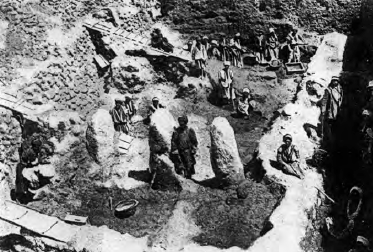
By 1899, Frederick J. Bliss was already a well-known archaeologist when he was asked by the Palestine Exploration Fund (PEF) to excavate the Shephelah mounds. Previously, he dug with William Flinders Petrie at Maidon and then replaced Petrie at Tell el-Hesi (1891–1893). Subsequently, Bliss excavated with Archibald Dickie in Jerusalem on behalf of the PEF (1894–1897). R. A. Stewart Macalister served as Bliss’s assistant field director. He had some experience in archaeological excavations in England, considered himself a photographer, and was “engaged with the architectural profession” as he claimed (Bliss 1894: 2; Albright 1956: 24; Moorey 1991: 26–27; Tubb 2015: 6–7). The site of Tell eṣ-Ṣâfi/Gath had been known to scholars for many years prior to the three seasons of excavations conducted by Bliss and Macalister from 1899 as part of the Shephelah mounds (Smith 1894: 142–43; Rey 1871: 123–25; Conder 1879: 153; Petrie 1891: 62; Waston 1915: 117).
Click here to access the above article on JSTOR (ASOR membership with online access and/or subscription to JSTOR Current Content required).
Pp. 244-246: “Ancient Environment and Human Interaction at Tell eṣ-Ṣâfi/Gath,” by Oren Ackermann, Noam Greenbaum, Hendrik Bruins, Avner Ayalon, Miryam Bar-Matthews, Dan Cabanes, Liora Kolska Horwitz, Frank H. Neumann, Mechael Osband, Naomi Porat, Ehud Weiss and Aren M. Maeir
An archaeological site is an integral part of its surrounding landscape. This is one of the main novel approaches in the long-term archaeological project of Tell eṣ-Ṣâfi/Gath. The site has interacted with its surrounding for more than three thousand years. It was impacted by the ancient environment, but also had an impact on both the ancient environment and current conditions. The following is a summary of environmental research that has been carried out at the Tell eṣ-Ṣâfi/Gath environs from 1999 through 2012. This case study provides important information regarding the ancient landscape and interactions between climate, the environment, and humans.
Click here to access the above article on JSTOR (ASOR membership with online access and/or subscription to JSTOR Current Content required).
Pp. 247-254: “The Early Bronze Age at Tell eṣ-Ṣâfi/Gath,” by Haskel J. Greenfield, Itzhaq Shai and Aren M. Maeir
In 1899, Bliss and Macalister launched a brief but intensive campaign of excavation at the site of Tell eṣ-Ṣâfi/Gath and uncovered evidence for a large-scale fortification system and thick deposits from various time periods. While they argued that the majority of remains, including the fortifications, were of Iron Age or later origin, some Early Bronze Age remains also appeared in their reports and collections.
Click here to access the above article on JSTOR (ASOR membership with online access and/or subscription to JSTOR Current Content required).
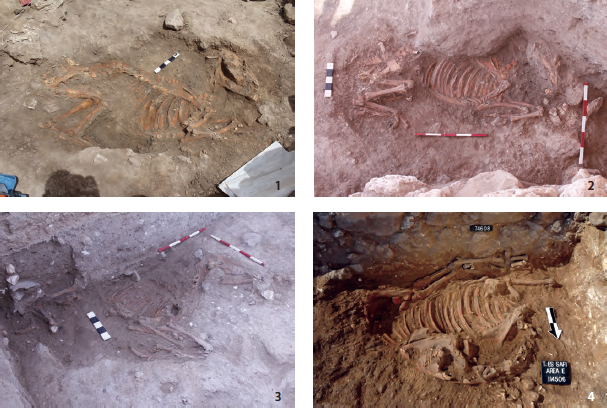
Pp. 255-258: “Animal Food Production and Consumption in Stratum E5 at Early Bronze Age Tell eṣ-Ṣâfi/Gath,” by Haskel J. Greenfield, Tina L. Greenfield and Annie Brown
Click here to access the above article on JSTOR (ASOR membership with online access and/or subscription to JSTOR Current Content required).
Pp. 259-260: “Microdebris Analysis from the Early Bronze Age Levels at Tell eṣ-Ṣâfi/Gath,” by Annie Brown and Haskel J. Greenfield
Microdebris are the tiny remnants of activities that are not cleaned up after an activity is completed (fig. 1). Such activities are often archaeologically invisible with standard macrolevel artifact collection and analysis techniques. If microdebris are systematically and spatially collected across surfaces and different depositional contexts, their analysis can help guide excavation strategies (identification where such debris is located, which deposits are worth floating), identify activity areas, pest distributions, when, and which, rooms were used or abandoned, missing food sources that cannot be recovered through hand collections (plants, fish, and smaller remains), and so on (Rainville 2012; Steadman 1996; Rosen 1989; Weiner 2010). The utility of this approach is demonstrated with data from the Early Bronze Age excavations in Area E at Tell eṣ-Ṣâfi/Gath.
Click here to access the above article on JSTOR (ASOR membership with online access and/or subscription to JSTOR Current Content required).
Pp. 261-263: “Isotope Analyses of Early Bronze Age Fauna at Tell eṣ-Ṣâfi/Gath,” by Elizabeth R. Arnold and Haskel J. Greenfield
Click here to access the above article on JSTOR (ASOR membership with online access and/or subscription to JSTOR Current Content required).
Pp. 264-267: “Interregional Trade and Exchange at Early Bronze Age Tell eṣ-Ṣâfi/Gath,” by Elizabeth Arnold, Jeremy Beller, Adi Behar, David Ben-Shlomo, Tina L. Greenfield and Haskel J. Greenfield
Click here to access the above article on JSTOR (ASOR membership with online access and/or subscription to JSTOR Current Content required).
Pp. 268-269: “Spatial Reconstruction of Selected Finds from the Early Bronze Age Neighborhood at Tell eṣ-Ṣâfi/Gath, Area E,” by Tina L. Greenfield and Andrea Squitieri
Click here to access the above article on JSTOR (ASOR membership with online access and/or subscription to JSTOR Current Content required).
Pp. 270-272: “Evidence for Administration and Leisure/Recreation at Early Bronze Age Tell eṣ-Ṣâfi/Gath,” by Shira Albaz, Haskel J. Greenfield, Tina L. Greenfield and Aren M. Maeir
Click here to access the above article on JSTOR (ASOR membership with online access and/or subscription to JSTOR Current Content required).
Pp. 273-275: “Ceramic Vessel Production and Use at Early Bronze Age Tell eṣ-Ṣâfi/Gath,” by Jon Ross and David Ben-Shlomo
Click here to access the above article on JSTOR (ASOR membership with online access and/or subscription to JSTOR Current Content required).
Pp. 276-278: “Archaeological Science in the Early Bronze Age Levels,” by Adi Eliyahu-Behar
Click here to access the above article on JSTOR (ASOR membership with online access and/or subscription to JSTOR Current Content required).
Pp. 279-281: “Early Bronze Age Basalt Vessel Remains from Tell eṣ-Ṣâfi/Gath,” by Jeremy A. Beller
Basalt is long thought to have been one of the more valued geological materials from which ground stone objects were manufactured (Ebeling and Rowan 2004: 108; Milevski 2008). Although it was readily available in some regions of the southern Levant, the widespread utilization of basaltic material was likely due to its physical and aesthetic properties. As a quick-cooling, extrusive igneous rock, basalt is dominated by mafic minerals and characterized by a high durability and hardness (Mohs’ scale 7), a fine-grained texture, and a green-black colored appearance (Le Maitre 2002). Furthermore, basalt sheens well and leaves less grit in processed food than other materials (Ebeling and Rowan 2004: 108).
Click here to access the above article on JSTOR (ASOR membership with online access and/or subscription to JSTOR Current Content required).
Pp. 282-284: “Building a City Wall: An Administrative Perspective,” by Jill C. Katz
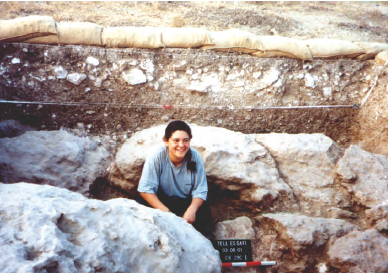
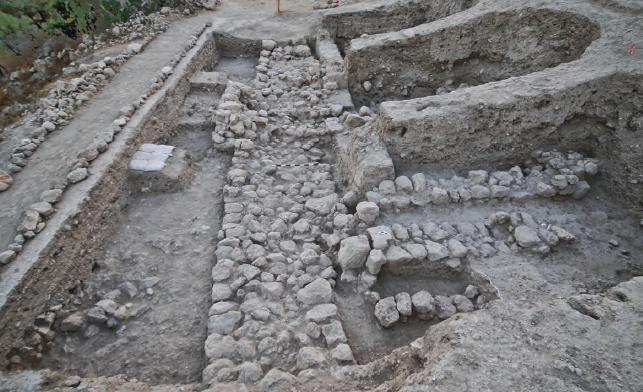
During the Early Bronze Age II/III, Tell eṣ-Ṣâfi/Gath was fortified by a city wall. This wall has been exposed now in several areas, stretching from the acropolis in the west (Area F), alongside the central part of the southern ridge (Area P; fig. 1) to the lower slopes in the east (Area J), just below a significant Early Bronze Age neighborhood in Area E. In general, the wall width is approximately 2.5 m, but varies along its length, including periodic offsets that protrude over 0.5 m. The longest stretch of contiguous wall currently visible is 21 m, and a portion of that was exposed all the way to its foundation. This probe revealed that the stone structure itself was comprised of large and medium-sized, roughly-cut, local fieldstones to a height of 10 courses, or 2.4 m (fig. 2). In addition, there was most likely an original mud-brick superstructure on top of the stones as implied by the thick decomposed mud-brick accumulation just outside the wall.
Click here to access the above article on JSTOR (ASOR membership with online access and/or subscription to JSTOR Current Content required).
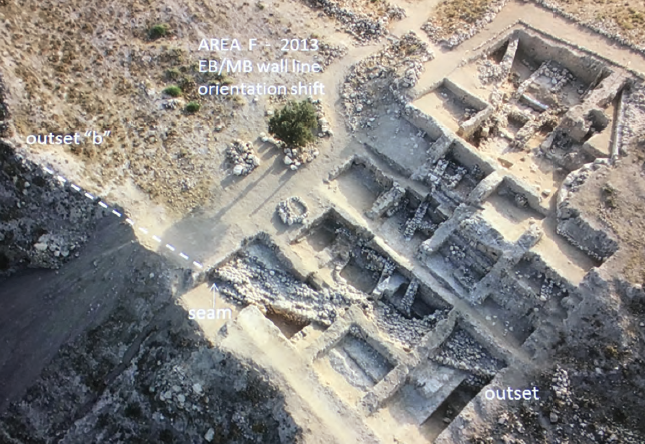
Pp. 285-291: “Walled Up To Heaven! Early and Middle Bronze Age Fortifications at Tell eṣ-Ṣâfi/Gath,” by Jeffrey R. Chadwick, Joe Uziel, Eric L. Welch and Aren M. Maeir
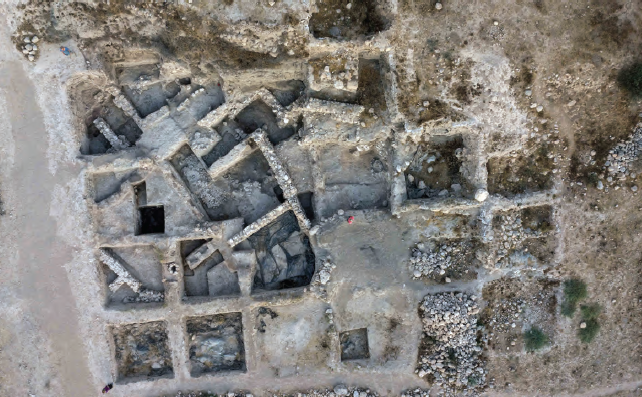
The Early Bronze Age city at Tell eṣ-Ṣâfi/Gath was among the largest urban centers in Canaan, or whatever they called their land at that time (Maeir 2012b: 13; Shai et al. 2016). The city and its people are still mostly a mystery to us. We do not know what they called themselves, or their city (but it was almost surely not “Gath”). They did not write, and we are not sure what language they spoke—perhaps an early Canaanite dialect. We do not know the names of any of their kings, as we do in most other periods at the site. But our excavations have taught us some things about them, their architecture, their pottery, and their diet. And we also know a good deal about the massive and extensive fortification wall that they built around their city, and that it must have taken a remarkable amount of organization and resources to accomplish it.
Click here to access the above article on JSTOR (ASOR membership with online access and/or subscription to JSTOR Current Content required).
Pp. 292-295: “The Late Bronze Age at Tell eṣ-Ṣâfi/Gath,” by Itzhaq Shai, Joe Uziel, Jeffrey R. Chadwick and Aren M. Maeir
The story of Canaanite Gath begins with the el-Amarna texts (Na’aman 1979; Rainey 2012; Levin, this issue), where it appears that the city was a major contender in the Shephelah power plays of the fourteenth century B.C.E. While some have contended the connection between Gath, Tell eṣ-Ṣâfi and the Amarna period ruler Šuwardatu (Moran 1992: 384), the petrographic examination conducted on the tablets create a strong link between them (Goren, Finkelstein, and Na’aman 2004: 280–86). In this light, the results of the surface survey prior to the onset of the excavations noted the existence of a large settlement at Tell eṣ-Ṣâfi/Gath (ca. 27 ha; see:Uziel and Maeir 2005: 56). Yet, the survey results did not allow identification of differences within the Late Bronze Age (LB) between the subphases of the period.
Click here to access the above article on JSTOR (ASOR membership with online access and/or subscription to JSTOR Current Content required).
Pp. 296-297: “Late Helladic Imported Pottery at Tell eṣ-Ṣâfi/Gath,” by Philipp W. Stockhammer
Fragments of thirty-six Aegean-type vessels were found at Tell eṣ-Ṣâfi/Gath in Areas A, E, F, and P between 1996 and 2014, some of which have already been published (Gadot, Yasur-Landau, and Uziel 2012; Shai et al., this issue) and then subsequently revaluated in a broader context (Stockhammer in press). The earliest import so far can be dated to the Mycenaean pottery phase Late Helladic (LH) IIIA1, which is the late fifteenth and early fourteenth centuries B.C.E. This closed vessel of unclear shape can be considered as one of the early Mycenaean imports to the southern Levant. It reached this region in a time when the spectrum of imports was still dominated by Aegean-type pottery from Crete.
Click here to access the above article on JSTOR (ASOR membership with online access and/or subscription to JSTOR Current Content required).
Pp. 298-299: “Fragments of Egyptian Writing from Tell eṣ-Ṣâfi/Gath,” by Stefan Jakob Wimmer
Some Egyptian inscriptions from Tell eṣ-Ṣâfi/Gath are found on amulets, such as a miniature figurine of the goddess Isis suckling the baby Horus and identified on the back pillar with a few hieroglyphs as 3s.t wr.t nb.t “Isis the Great, the Mistress” (Wimmer and Görg in press), and of course on scarabs (e.g., Münger, NEA forthcoming), such as abound on practically all sites in the Levant. Apart from these, traces of Egyptian writing are sparse at Tell eṣ-Ṣâfi/Gath.
Click here to access the above article on JSTOR (ASOR membership with online access and/or subscription to JSTOR Current Content required).
[/vc_column_text][mk_divider][vc_column_text]To view the entire issue on JSTOR, click here.[/vc_column_text][/vc_column][vc_column border_color=”rgba(170,170,170,0.01)” width=”1/6″ css=”.vc_custom_1496684098866{margin-right: 5px !important;margin-bottom: 20px !important;border-right-width: 2px !important;border-bottom-width: 2px !important;padding-top: 30px !important;padding-right: 10px !important;padding-left: 10px !important;background-color: #ffffff !important;border-right-color: rgba(227,228,228,0.75) !important;border-bottom-color: rgba(227,228,228,0.75) !important;}”][vc_wp_posts title=”BROWSE THE NEWS ARCHIVE” number=”4″][/vc_column][vc_column border_color=”rgba(170,170,170,0.01)” width=”1/6″ css=”.vc_custom_1496684008271{margin-right: 10px !important;margin-bottom: 30px !important;border-right-width: 2px !important;border-bottom-width: 2px !important;padding-top: 30px !important;padding-right: 20px !important;padding-left: 20px !important;background-color: #ffffff !important;border-right-color: rgba(227,228,228,0.75) !important;border-bottom-color: rgba(227,228,228,0.75) !important;}”][vc_column_text]Tweets by ASOResearch [/vc_column_text][/vc_column][/vc_row]
Subscription Options You can receive BASOR (and other ASOR publications) through an ASOR Membership or through an Individual Subscription. Single issues (subject to availability) are available for purchase, with ASOR members receiving a discount. Please email us if you have any questions.
Pp. 1-23: “Cup-Marks and Citadels: Evidence for Libation in 2nd-Millennium B.C.E. Western Anatolia,” by Christina Luke and Christopher H. Roosevelt
Shallow conical depressions hewn into bedrock, known as cup-marks, have been documented at and around 2nd-millennium B.C.E. citadels in the Marmara Lake basin of the Gediz Valley, western Anatolia. These rupestral features are among the best indications of the presence of libation ceremonies in the region and provide evidence that local communities shared in cultural traditions spread over western and central Anatolia. Libation rituals in the basin were probably intended to summon the divine for protection, stewardship of the dead, and/or assurance of agricultural prosperity through maintenance of stable environmental conditions. Periodic catastrophes, resulting from massive inundations and/or droughts typical to the region, weigh in favor of an environmental interpretation. We frame our discussion of the topography and archaeology of the Gediz Valley and the evidence for Middle to Late Bronze Age cup-marks within the context of historical geography and the archaeology of Anatolia.
Click here to access the above article on JSTOR (ASOR membership with online access and/or subscription to JSTOR Current Content required).
Pp. 25-53: “Early Ottoman Archaeology: Rediscovering the Finds of Ascalon (Ashkelon), 1847,” by Edhem Eldem
Very little is known about the acquisitions of the (Ottoman) Imperial Museum during the first decades of its existence. As a consequence of the haphazard way in which objects were collected and the absence of any form of institutionalization, the collections inherited from this early period generally lack the most basic contextual information concerning their provenance, date of entry, and mode of acquisition. Nevertheless, historical and archival research can offer a solution to this archaeological dead-end by tapping into other available sources to fill these lacunae. The following case study reconstructs the story of three marble reliefs in the collection utilizing such documentation. Although they were thought to be from Salonika (Thessaloniki) in northern Greece, they are in fact from Ascalon (Ashkelon) in modern Israel—the product of one of the earliest campaigns carried out by an Ottoman state official to fill the newly established museum in Constantinople with antiquities. Apart from correcting later attributions and guesses, this study also proposes a critical reassessment of the nature of early Ottoman archaeological ventures and a systematic analysis of the accumulation (or not) of knowledge and scholarship on the fringes of Europe.
Click here to access the above article on JSTOR (ASOR membership with online access and/or subscription to JSTOR Current Content required).
Pp. 55-69: “Seismic Environments of Prehistoric Settlements in Northern Mesopotamia: A Review of Current Knowledge,” by Eric R. Force
Historical archives, modern instruments, and archaeological excavations at plate-boundary sites have recorded an intricate—at times, seemingly relentless—recurrence of severe earthquakes related to the northward movement and convergence of the Arabian tectonic plate with neighboring plates. Based on such information, it is possible to contour average earthquake frequency and/or severity across the northern Mesopotamian region within about 200 km from the plate boundaries.
The environments of the Late Neolithic and Chalcolithic habitations of this area range seismically from very active to nearly quiescent; however, not a single excavation report from sites therein considers seismic hypotheses for recorded damage. Exceptionally detailed excavation reports of tells located in two contrasting seismic environments nevertheless show some evidence more consistent with seismic damage than with other causes. The record for Tepe Gawra in the more active area suggests severe earthquakes closely clustered in time. In both areas, there is evidence of some earthquake damage averaging every 500 years or less, and almost all Halaf sites and Halaf-to-Ubaid transitions in northern Mesopotamia plot in areas where such frequencies are expected. Expected seismicity derived from the voluminous historical and instrumental records should play a prominent part in the interpretation of archaeological evidence of this region, as in others near tectonic plate margins.
Click here to access the above article on JSTOR (ASOR membership with online access and/or subscription to JSTOR Current Content required).
Pp. 71-94: “Contexts and Repetitions of Cypro-Minoan Inscriptions: Function and Subject Matter of Clay Balls,” by Silvia Ferrara and Miguel Valério
This article follows the trail of previous suggestions that the so-called clay balls inscribed in the Cypro-Minoan script bear personal names and titles, possibly of high-ranking individuals responsible for industrial and cultic activities at Enkomi, in other Cypriot centers, and at Tiryns on the Greek mainland. We examine attestations of sign-sequences and single signs found on these spherical objects, which occur also in other inscriptions, and cross-check them with the available find contexts of the balls vis-à-vis the structure of their inscriptions. Beyond the likelihood that these objects bear designations of individuals, we suggest that the single signs that often follow a specific sign-sequence on the balls may represent an abbreviated version of the second “word” found on the balls that bear two sequences and no single sign. Furthermore, it is argued that these words in the second position represent a qualifying description of the individual designated by the first sequence. Finally, it is suggested that these objects were possibly used for lot-casting—specifically, for calling individuals to certain tasks.
Click here to access the above article on JSTOR (ASOR membership with online access and/or subscription to JSTOR Current Content required).
Pp. 95-111: “Administration, Interaction, and Identity in Lydia before the Persian Empire: A New Seal from Sardis,” by Elspeth R. M. Dusinberre
A stamp seal excavated at Sardis in 2011 is a local product dating to the period of the Lydian Kingdom. It was found in a churned-up deposit along with artifacts dating before the mid-6th century B.C.E., including a large proportion of high-status items: the seal itself and an ivory furniture inlay showing a female figure holding a lion upside down, as well as fine pottery, bronze arrowheads, a few scattered human bones, and other items. The deposit seems to be destruction debris from the Persian sack of the city in ca. 550 B.C.E. The seal is unique and is one of the only artifacts available to help us understand the administration of the Lydian Kingdom, to see what seal art looked like before the Persians arrived in Lydia, and to help us interpret the bureaucratic system and the cultural milieu of individual taste at Sardis in the Lydian period. A modest little seal thus has a great deal of importance in our analysis and interpretation of historical events, political developments, and society in general in Lydia during the years before 550 B.C.E.
Click here to access the above article on JSTOR (ASOR membership with online access and/or subscription to JSTOR Current Content required).
Pp. 113-125: “A Brand New Old Inscription: Arad Ostracon 16 Rediscovered via Multispectral Imaging,” by Anat Mendel-Geberovich, Arie Shaus, Shira Faigenbaum-Golovin, Barak Sober, Michael Cordonsky, Eli Piasetzky and Israel Finkelstein
Arad Ostracon 16 is part of the Elyashiv Archive, dated to ca. 600 B.C. It was published as bearing an inscription on the recto only. New multispectral images of the ostracon have enabled us to reveal a hitherto invisible inscription on the verso, as well as additional letters, words, and complete lines on the recto. We present here the new images and offer our new reading and reinterpretation of the ostracon.
Click here to access the above article on JSTOR (ASOR membership with online access and/or subscription to JSTOR Current Content required).
Pp. 127-143: “Population Contraction in Late Roman Galilee: Reconsidering the Evidence,” by Hayim Lapin
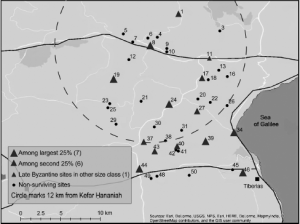
Based on detailed archaeological survey, Uzi Leibner argued that there was a substantial decline in population in late antique Galilee. This article reviews the evidence from the survey, making use of standard quantitative methods, and points to non-demographic factors that have shaped the evidence on which the conclusion depends.
A predominant proportion of the pottery was produced at a single site (Kefar Ḥananiah), and these forms generally have a higher sherd count than non–Kefar Ḥananiah forms. As sherd count is strongly correlated with the number of sites at which a form appears, assessments of the survival and population of sites based on proportions of pottery is distorted by the distribution of Kefar Ḥananiah pottery, which can be shown to decline with distance. Once we control for distance, site size also appears to be an important factor in the proportions of pottery from every period. Although these factors taken together do not necessarily negate Leibner’s conclusion, they do necessitate a reevaluation.
Click here to access the above article on JSTOR (ASOR membership with online access and/or subscription to JSTOR Current Content required).
Pp. 145-162: “RYT or HYT in Line 12 of the Mesha Inscription: A New Examination of the Stele and the Squeeze, and the Syntactic, Literary, and Cultic Implications of the Reading,” by Aaron Schade
This article presents arguments in favor of reading ryt in line 12 of the Mesha Inscription. A new examination of the stele and squeeze at the Musée du Louvre has yielded results that can offer, in my opinion, more evidence in favor of ryt over hyt. Within this article, I highlight the difficulties associated with the reading hyt on both the stele and the squeeze, and I provide new photographs that seem to more adequately support ryt. I also briefly discuss how ryt fits into the inscription from a syntactic, literary, and cultic perspective, thus eliminating some of the criticisms often attached to its elusive etymology. The conclusions reached in this study suggest that we should have more reservations about accepting hyt, as there is not a lot of evidence to support it.
Click here to access the above article on JSTOR (ASOR membership with online access and/or subscription to JSTOR Current Content required).
Pp. 163-202: “The Circles Building (Granary) at Tel Bet Yerah (Khirbet el-Kerak): A New Synthesis (Excavations of 1945–1946, 2003–2015),” by Raphael Greenberg, Hai Ashkenazi, Alice Berger, Mark Iserlis, Yitzhak Paz, Yael Rotem, Ron Shimelmitz, Melissa Tan and Sarit Paz
New excavations conducted in the Circles Building (Granary) at Tel Bet Yerah, first excavated in 1946, form the basis for a revised, detailed description of the construction and use of this unique structure. Stratigraphic soundings have established that the structure consisted of three platforms with seven circles sunk into them, enclosing a paved courtyard that was open toward the east. The structure was constructed in a single operation, at the transition between Early Bronze Age II and III, but it seems to have been abandoned before it was completed and given over to new tenants who changed the trajectory of its use. These new inhabitants are responsible for the bulk of the deposits excavated in and around the building, which are characterized by large quantities of Khirbet Kerak Ware and complementary lithic and other assemblages. We suggest that the building was conceived as part of the corporate urbanizing project of Early Bronze Age II, but was overtaken by a crisis that deflected the urban trajectory of Tel Bet Yerah in Early Bronze Age III and allowed the entry of migrant groups, such as those bearing the Khirbet Kerak Ware tradition.
Click here to access the above article on JSTOR (ASOR membership with online access and/or subscription to JSTOR Current Content required).
Pp. 203-222: “Phoenician Bathing in the Hellenistic East: Ashkelon and Beyond,” by Kathleen Birney
Excavations of a Hellenistic neighborhood at Ashkelon revealed a suite of heavily plastered rooms, one with a mosaic floor, decorated in Greek Masonry Style. These rooms resemble the bathing suite identified in an elite 2nd-century residence at Tel Anafa and likely reflect a Phoenician style of “cleansing bathing” documented at Phoenician sites from the 4th through 2nd centuries B.C. Such suites differ in character, bathing type, and placement from Greek public and private baths in the Mediterranean and Levant, as well as from ritual baths in the Judaean tradition. The bathing suites appear at Phoenician and Phoenician-influenced sites in Israel during the Persian and Hellenistic periods but are presently under-recognized. This article presents a set of criteria by which to understand and identify Phoenician bathing suites and argues that the preference for this bathing style may, in part, explain why immersion bathing—popular in the western Mediterranean—failed to catch on in the Hellenistic East until the era of Roman control.
Click here to access the above article on JSTOR (ASOR membership with online access and/or subscription to JSTOR Current Content required).
[/vc_column_text][mk_divider][vc_column_text]To view the entire issue on JSTOR, click here.[/vc_column_text][/vc_column][vc_column border_color=”rgba(170,170,170,0.01)” width=”1/6″ css=”.vc_custom_1496684098866{margin-right: 5px !important;margin-bottom: 20px !important;border-right-width: 2px !important;border-bottom-width: 2px !important;padding-top: 30px !important;padding-right: 10px !important;padding-left: 10px !important;background-color: #ffffff !important;border-right-color: rgba(227,228,228,0.75) !important;border-bottom-color: rgba(227,228,228,0.75) !important;}”][vc_wp_posts title=”BROWSE THE NEWS ARCHIVE” number=”4″][/vc_column][vc_column border_color=”rgba(170,170,170,0.01)” width=”1/6″ css=”.vc_custom_1496684008271{margin-right: 10px !important;margin-bottom: 30px !important;border-right-width: 2px !important;border-bottom-width: 2px !important;padding-top: 30px !important;padding-right: 20px !important;padding-left: 20px !important;background-color: #ffffff !important;border-right-color: rgba(227,228,228,0.75) !important;border-bottom-color: rgba(227,228,228,0.75) !important;}”][vc_column_text]Tweets by ASOResearch [/vc_column_text][/vc_column][/vc_row]
[/vc_column_text][vc_column_text]Lawrence (“Larry”) Stager was born January 5, 1943, on a farm near Dunkirk, Ohio. He was the first in his family to go to college. He chose Harvard College, graduating in archaeology and history of the Ancient Near East with a B.A. magna cum laude in 1965. He continued his studies there under the tutelage of G. Ernest Wright and Frank Moore Cross, among others, earning his M.A. in 1972 and his Ph.D. (‘with distinction”) in 1975, with a dissertation dealing with desert farming. He went on to teach Syro-Palestinian Archaeology at the Oriental Institute of the University of Chicago from 1973-1985, before returning to Harvard to an endowed chair, as the inaugural Dorot Professor of the Archaeology of Israel, and Director of the Semitic Museum. He retired in 2012, after 40 years of teaching, and serving as primary director of over fifty doctoral students and their dissertations.
Stager’s field research and writing focused on Canaanites, Phoenicians, Philistines, and Israelites. Since 1965 Stager was active in archaeological fieldwork in the the Levant and the Mediterranean: he was co-director with Anita Walker of the excavations at Idalion, Cyprus. He then turned his attention farther west, directing the Punic Project at Carthage from 1975-1980, with excavations at the Commercial Port and in the Tophet. And starting in 1985, he directed and recently co-directed with Daniel Master the Leon Levy Expedition to Ashkelon, Israel.
Among his popular works is the award-winning Life in Biblical Israel (co-authored with Philip King) and Ashkelon Discovered (from the Bronze Age through the Medieval Period). Ashkelon 3: The Seventh Century B.C. won the Levi-Sala Book Prize, for best final excavation report on a site in Israel. This is one of a projected twelve-volume series of technical reports.
In 1999 Stager teamed up with Robert Ballard on a seaborne excursion that discovered by remote sensing and robotics two Phoenician shipwrecks, swamped in the deep-sea ca. 750 B.C., carrying cargo of over 800 wine amphoras being shipped from Tyre to Egypt. This amazing discovery appears as a National Geographic Society video entitled “Lost Ships of the Mediterranean.”
Stager elaborated an economic model for commercial maritime kingdoms in contrast to the land-based agrarian ones in a paper entitled “Port Power in the Early and the Middle Bronze Age,” and has successfully applied it to later periods, including Phoenician ports in the Mediterranean and the Atlantic. In his synthesis of Israelite society, he studied this land-locked culture in its physical setting in the highlands, its livelihood as kin-based agro-pastoral villages, its houses and family structures, and its demographic features in a pioneering article entitled “The Archaeology of the Family in Ancient Israel,” the most frequently cited and downloaded article published by the Bulletin of the American Schools of Oriental Research.
Stager gave the Schweich Lectures; his subject, “Ashkelon: Seaport of the Canaanites and the Philistines.” He was named a Corresponding Member of the Austrian Academy of Sciences. In 2008 he was honored with a Festschrift of 50 essays, Exploring the Longue Durée (ed. J. David Schloen; Eisenbrauns, 2009). The essays cover an array of topics reflecting the wide range of Stager’s intellectual interests, especially ancient economies and societies.
This notice is adapted from here, posted in September 2014.[/vc_column_text][/vc_column][vc_column border_color=”rgba(170,170,170,0.01)” width=”1/6″ css=”.vc_custom_1496684098866{margin-right: 5px !important;margin-bottom: 20px !important;border-right-width: 2px !important;border-bottom-width: 2px !important;padding-top: 30px !important;padding-right: 10px !important;padding-left: 10px !important;background-color: #ffffff !important;border-right-color: rgba(227,228,228,0.75) !important;border-bottom-color: rgba(227,228,228,0.75) !important;}”][vc_wp_posts title=”BROWSE THE NEWS ARCHIVE” number=”4″][/vc_column][vc_column border_color=”rgba(170,170,170,0.01)” width=”1/6″ css=”.vc_custom_1496684008271{margin-right: 10px !important;margin-bottom: 30px !important;border-right-width: 2px !important;border-bottom-width: 2px !important;padding-top: 30px !important;padding-right: 20px !important;padding-left: 20px !important;background-color: #ffffff !important;border-right-color: rgba(227,228,228,0.75) !important;border-bottom-color: rgba(227,228,228,0.75) !important;}”][vc_column_text]Tweets by ASOResearch [/vc_column_text][/vc_column][/vc_row]
The Membership and Outreach Committee and the Publications Committee are both ASOR standing committees, and both committees have three-year openings for new members (two positions on Membership and Outreach and three positions on Publications). ASOR invites self-nominations from members who are interested in being considered by the committees for these openings.
The Membership and Outreach Committee is currently chaired by Randy Younker. The ASOR Bylaws state, “The Committee will be responsible for making recommendations to the Executive Committee and the Board regarding matters dealing with ASOR membership.” As the name suggests, this committee oversees ASOR’s efforts to engage and support our membership. In addition to considering ways that we can best support our members, the committee has recently undertaken several initiatives to recruit and engage members outside of North America. The committee also oversees ASOR’s outreach efforts and public engagement initiatives. The Friends of ASOR (FOA) Initiative is one of the primary outreach programs, and there is a sub-committee for FOA that is a part of the Membership and Outreach Committee.
The Publications Committee is currently chaired by Charles Jones. The ASOR Bylaws state, “the [Publications] Committee will be responsible for making recommendations to the Executive Committee and the Board regarding matters dealing with ASOR publications.” The committee makes recommendations regarding ASOR’s journals (ANE Today, BASOR, JCS, NEA) and ASOR books (AASOR and ASOR-ARS). The committee also makes recommendations regarding the Levantine Ceramics Project (LCP). There are nine elected members to the committee (serving three-year staggered terms), and all of the editors are also members of the Publications Committee.
[/vc_column_text][vc_column_text]Cyber-Monday is here! ASOR has some specials for 2018 Annual Meeting registration and any new membership or membership renewal! Discounts are available until December 15th.
$15 off any Annual Meeting 2018 registration – CyberAM-15off $5 off any new membership or membership renewal – CyberMemb-5off
To redeem your special offer, enter the code when reviewing your shopping cart before checking out.
Questions? Please feel free to email Inda Omerefendic at asorpubs@bu.edu or call (857) 277-0417.
SEXUAL ASSAULT AND HARASSMENT IN ARCHAEOLOGICAL FIELDWORK
[/vc_column_text][vc_column_text]ASOR is pleased to share links to two recent publications that discuss the issue of sexual assault and harassment in archaeological fieldwork. Francesca Levy and Rebecca Greenfield interviewed ASOR Member Beth Alpert Nakhai (Arizona Center for Judaic Studies at the University of Arizona; chair of ASOR’s Initiative on the Status of Women) about her work on these issues in an October 25, 2017, Bloomberg News podcast. And ASOR member Megan Perry sent a link to SAFE Study Part II, a follow-up to the important study published in PLoSONE in 2014 about the alarming rate of abuse and harassment in field situations.[/vc_column_text][mk_divider][vc_column_text]
INTERVIEW WITH BETH ALPERT NAKHAI
In the wake of the Harvey Weinstein scandal – and so many other scandals, as well – Beth Alpert Nakhai (Arizona Center for Judaic Studies at The University of Arizona; chair of ASOR’s Initiative on the Status of Women) is interviewed about the serious problem of safety from sexual assault and harassment in archaeological fieldwork settings.
The Harvey Weinstein in Your Industry
Sexual harassment scandals across a wide variety of fields share common themes. By Francesca Levy and Rebecca Greenfield
The scandal that unfolded after dozens of women accused Harvey Weinstein of sexual assault and harassment over decades has brought renewed attention to sexual misconduct and discrimination in the workplace. After the first wave of allegations against the producer and former studio head, some focused on how Hollywood tends to promote and protect abuses by powerful men. But singling out one industry is a mistake.
Click here to be directed to the podcast interview.[/vc_column_text][mk_divider][vc_column_text]
LINK TO SAFE STUDY PART II
In 2014 an important study was published in PLoSONE about the alarming rate of abuse and harassment in field situations. A recent follow-up article to the original SAFE study notes that having specific agendas in place to deal with harassment tends to alleviate the long-term effects of these behaviors on victims. We encourage every project in the field during this season to adopt a clear protocol regarding how recipients of such harassment can report these behaviors, and what steps the project will take in response to such reports.










 -demographic factors that have shaped the evidence on which the conclusion depends.