Ash the World Turns or How I Learned to Stop Worrying and Love the Heat in a Bronze Age Oven: Excavations at Kissonerga-Skalia, Cyprus
Christos Theodorou, 2024 Meyers/Wright Fieldwork Scholarship Recipient
When exploring areas around the coastal southwestern Cypriot village of Kissonerga, one is struck by the abundance of prehistoric settlements in the region amidst the hotels, tavernas, and banana fields. A cursory look at the academic literature or a quick online search reveals even more ancient activity, from the Neolithic to the Late Bronze Age periods, that are obscured by modern development. It is in this setting that I had the privilege of returning this summer to continue my studies of Cypriot archaeology — back to the Bronze Age site of Kissonerga-Skalia for my second non-consecutive season.
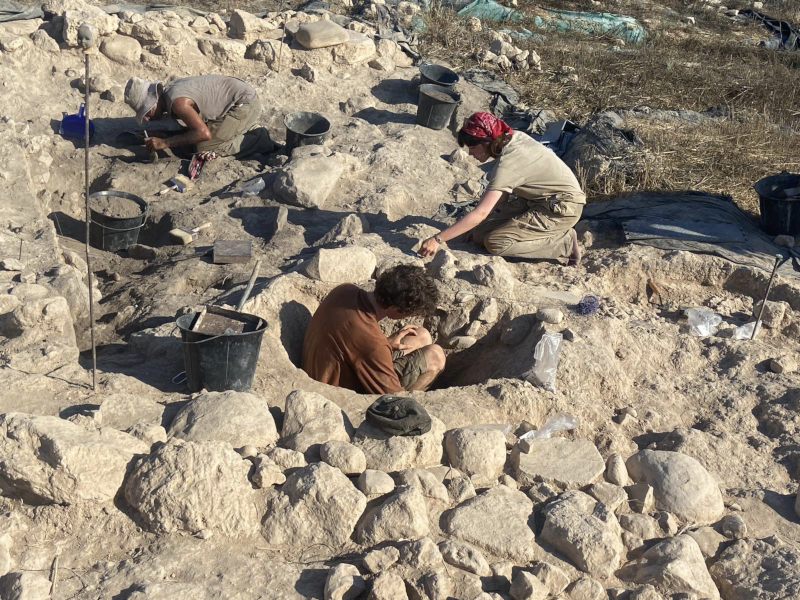
Skalia is wildly interesting, with Chalcolithic tombs and signs of settlement from the Early Cypriot period (c. 2400 BCE) to the beginning of the Late Cypriot period, after which the site was abandoned (c. 1600 BCE). About two generations before abandonment, a large complex was constructed over the older habitations. This features monumental walls (including a unique ‘S’ shaped wall), a considerable courtyard, numerous pyrotechnic installations, and areas with signs of intensive production. It is this complex from the final phase of occupation where the current excavations at Skalia are focused.
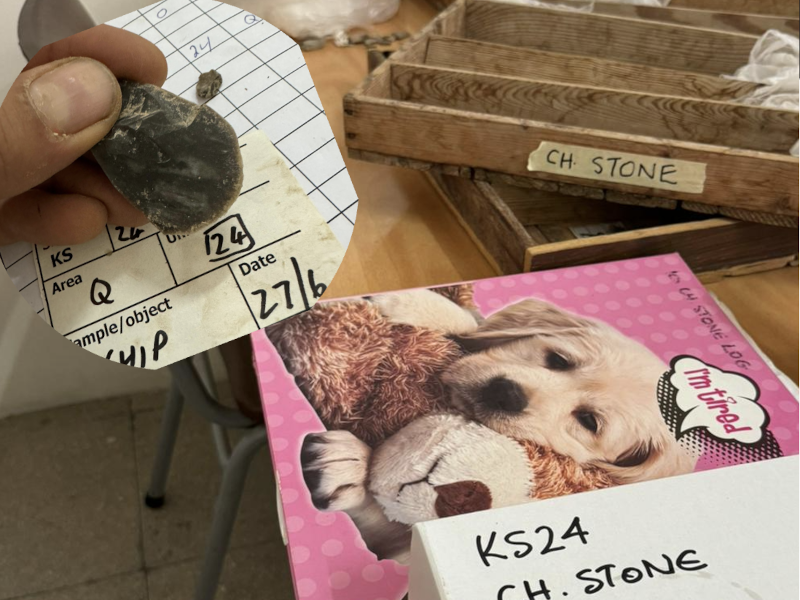
My tasks at Skalia in 2022 concentrated on excavating through the collapsed material of a plaster-lined oven (one of two in our trench), defining the extent of the oven and nearby basins, and identifying the surface level. Ultimately, it was discovered that the two pyrotechnic features were actually one massive four-meter-wide oven underlying the final phase floor. I would spend the 2024 excavation season on-site within this oven: hot, covered in ash, and contented. Additionally, I underwent supervisor training and managed the log of accumulated chipped stone on site.
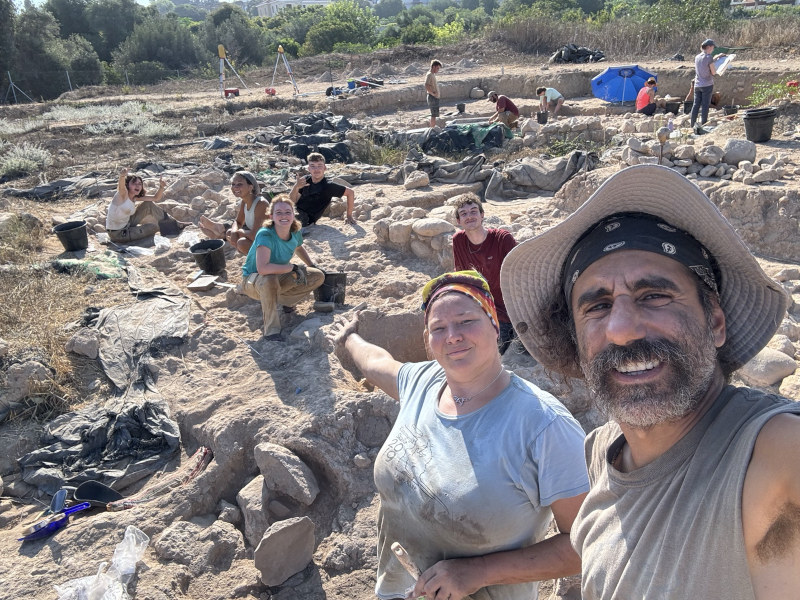
Work in the half-sectioned oven was relatively straightforward. The idea posited by our trench supervisor was that after the oven fell out of use, it was filled with debris during a dumping and leveling episode, and the final phase floor was constructed over the feature — placing the oven into a timeframe referred to as Early Final Phase. Amidst the infill of large stones, blocky chunks of oven material, crumbly orange and brown soil, thick layers of white lime plaster, and — ash, ash, ash — we found a bit of bronze (likely from tweezers), large chunks of really nice charcoal (a rarity on site, despite the number of pyrotechnic features. Also, significant for dating and identifying the type of fuel used in the oven), an abundance of discarded ground stone tools, and Skalia’s very first coprolite (!).

All the removed fill from the oven was collected for floatation, and I eagerly anticipate what archaeobotanical remains turn up. Keep an eye out for the final report from this season to the Cypriot Department of Antiquities, as some novel features associated with our giant oven will undoubtedly be revealed, as well as thoughts on its possible functionality. In the end, it will be interesting to see how this Early Final Phase feature relates to the larger context of the nearby Late Final Phase courtyard, oven (identified as a malting kiln for beer production), and the unique adjoining room recognized for its deposition of modified bovid skulls located under one of the many benches which lined the walls (a potential foundation deposit).
At its earliest levels, Kissonerga-Skalia will be integral in studying the changes on the island during the transition from the Chalcolithic into the Early Bronze Age. Additionally, current work in the commercial production complex that supplanted the older village settlement, investigations into its subsequent abandonment, and regional interconnectivity throughout Cyprus and abroad will bring many vexing questions to focus.
So, until next year…
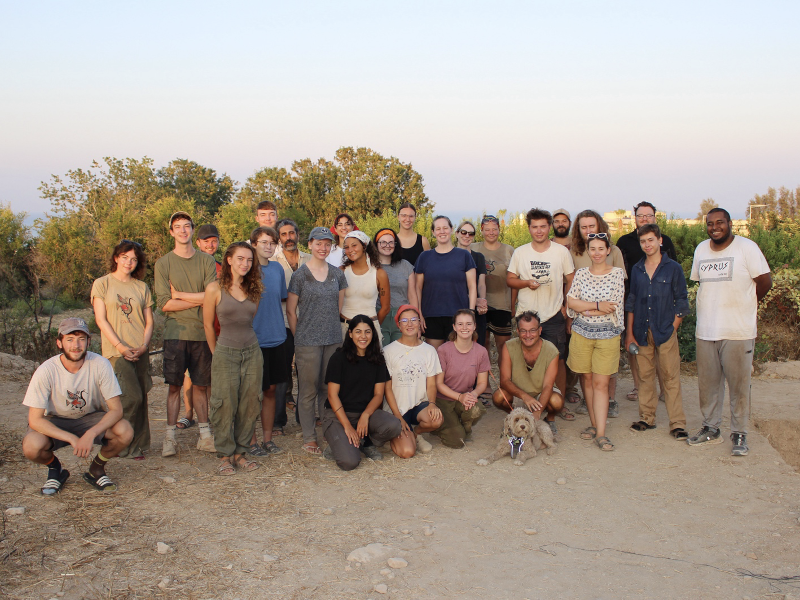
I am indebted to Skalia’s director, Dr. Lindy Crewe (Cyprus American Archaeological Research Institute), Ian Hill (Heritage Archaeological Research Practice), our trench supervisor, Dr. Ellon Souter (είμαστε ντισκοτέκ), and the rest of the staff for their invaluable guidance. My sincerest thanks and appreciation go out to Drs. Carol and Eric Meyers, for their generosity in providing the financial resources that have enabled me to return and continue my studies in prehistoric Cypriot archaeology, and ASOR for providing generations of archaeologists with incalculable scholarships, grants, fellowships, and support.
Christos Theodorou is a dual citizen from New York living in his family’s village in Cyprus. He splits his time between tending to his grandfather’s fields, exploring the island, and pursuing a postgraduate degree in archaeology at the University of Cyprus. Though his academic interests span the pre- and proto-historic Cypriot periods, the Bronze Age seems to live rent-free in his head. He has yet to cut himself too severely trying to knap chert.
Want to help more students and early career archaeologists get into the field? Donate to the cause today by selecting “Fieldwork Scholarships” as your gift purpose!