
Table of Contents for NEA 83.3 (2020)

[vc_row fullwidth=”true” attached=”true” css=”.vc_custom_1496247803139{padding-top: 0px !important;padding-right: 0px !important;padding-bottom: 0px !important;padding-left: 0px !important;}”][vc_column][vc_single_image image=”66996″ img_size=”full” alignment=”center”][/vc_column][/vc_row][vc_row fullwidth=”true” css=”.vc_custom_1496682730308{padding-top: 10px !important;padding-right: 0px !important;padding-bottom: 0px !important;padding-left: 0px !important;}”][vc_column width=”1/12″ css=”.vc_custom_1496683820796{margin-right: 10px !important;}” offset=”vc_hidden-md vc_hidden-sm vc_hidden-xs”][vc_column_text]

 SHARE

[/vc_column_text][mk_image src=”http://www.asortest.org/wp-content/uploads/2017/01/social-fb-icon4.jpg” image_width=”42″ image_height=”42″ hover=”false” custom_url=”https://www.facebook.com/ASOResearch/” margin_bottom=”0″][mk_image src=”http://www.asortest.org/wp-content/uploads/2017/01/social-tw-icon4.jpg” image_width=”42″ image_height=”42″ hover=”false” custom_url=”https://twitter.com/ASOResearch?ref_src=twsrc%5Egoogle%7Ctwcamp%5Eserp%7Ctwgr%5Eauthor” margin_bottom=”0″][mk_image src=”http://www.asortest.org/wp-content/uploads/2017/01/social-in-icon4.jpg” image_width=”42″ image_height=”42″ hover=”false” custom_url=”https://www.linkedin.com/company/american-schools-of-oriental-research” margin_bottom=”0″][mk_image src=”http://www.asortest.org/wp-content/uploads/2017/01/social-ml-icon_7.jpg” image_width=”42″ image_height=”42″ hover=”false” custom_url=”mailto:asor@bu.edu” margin_bottom=”0″][mk_image src=”http://www.asortest.org/wp-content/uploads/2017/01/blog-icon3.jpg” image_width=”42″ image_height=”42″ hover=”false” custom_url=”http://asorblog.org/” margin_bottom=”0″][/vc_column][vc_column border_color=”rgba(255,255,255,0.01)” width=”1/6″ css=”.vc_custom_1496683923840{margin-right: 20px !important;border-left-width: 2px !important;padding-right: 20px !important;padding-left: 20px !important;border-left-color: #99422f !important;}”][mk_divider divider_color=”rgba(255,255,255,0.01)” thickness=”1″ margin_top=”3″ margin_bottom=”3″][vc_column_text]

NEWS@ASOR

ANCIENT NEAR EAST TODAY

PAST ASOR NEWS, MONTH BY MONTH

LIFETIME HONOR ROLL OF DONORS

FY20 HONOR ROLL OF DONORS

ASOR VIRTUAL ANNUAL MEETING

[/vc_column_text][/vc_column][vc_column border_color=”rgba(170,170,170,0.01)” width=”1/2″ css=”.vc_custom_1487276122024{margin-right: 10px !important;margin-bottom: 30px !important;border-right-width: 2px !important;border-bottom-width: 2px !important;padding-top: 30px !important;padding-right: 30px !important;padding-left: 20px !important;background-color: #ffffff !important;border-right-color: rgba(227,228,228,0.75) !important;border-bottom-color: rgba(227,228,228,0.75) !important;}”][vc_row_inner][vc_column_inner width=”1/4″ css=”.vc_custom_1570040186774{padding-right: 10px !important;}”][mk_image src=”http://www.asor.org/wp-content/uploads/2020/10/NEA-83.3-Cover_150x199_JPEG.jpg” image_width=”151″ image_height=”200″ hover=”false” custom_url=”https://www.journals.uchicago.edu/toc/nea/2020/83/3″][/vc_column_inner][vc_column_inner width=”3/4″][vc_column_text]

Table of Contents for Near Eastern Archaeology 83.3 (September 2020)

[/vc_column_text][/vc_column_inner][/vc_row_inner][vc_row_inner][vc_column_inner css=”.vc_custom_1570040186774{padding-right: 10px !important;}”][vc_column_text]

You can receive NEA (and other ASOR publications) through an ASOR Membership. Please e-mail the Membership office if you have any questions.

[/vc_column_text][/vc_column_inner][/vc_row_inner][mk_divider][vc_row_inner][vc_column_inner width=”1/4″ css=”.vc_custom_1570041002103{padding-right: 10px !important;}”][mk_image src=”http://www.asor.org/wp-content/uploads/2020/10/Animal-Living-NEA-83.3-TOC.jpg” image_width=”200″ image_height=”500″ crop=”false” hover=”false” custom_url=”https://www.journals.uchicago.edu/doi/full/10.1086/710095″][/vc_column_inner][vc_column_inner width=”3/4″][vc_column_text]

Pp. 136-145: “Living with Animals: Human–Animal Relations and Society at Çatalhöyük,” by Lindsay Der

Neolithic Çatalhöyük (7100–5950 BCE) is infamous for its sensational and curious material culture. Although the so-called mother goddess figurines have always been a source of great media attention, the vast majority of the visual expressions at the site are not anthropomorphic, but instead centered on wild and dangerous creatures. Many studies have previously considered the Çatalhöyük animal iconography in the context of symbolism and/or religion (Hodder and Meskell ; Stordeur ; Cauvin and Watkins ; Mellaart ). Far fewer works have scrutinized how these materializations speak to the connections forged between people and animals. This article explores the way in which animals were embedded within the social bonds and ontologies of the site through ritual practice. Ritual is not a synonym for religion, but in this study is defined as repetitive, patterned, and symbolic activity that is socially sanctioned (Firth ). In doing so, we can gain new insights into the complexity of the relationship between humans and animals and how this relationship endured across more than a thousand years of continuous occupation.[/vc_column_text][/vc_column_inner][/vc_row_inner][vc_column_text responsive_align=”left”]ASOR Members with online access: navigate to the token link email sent to you (search for “token link” in inbox) before attempting to read this article. Once you have activated your member token, click here to access the above article on The University of Chicago Press Journals’ website.[/vc_column_text][mk_divider][vc_row_inner][vc_column_inner width=”1/4″ css=”.vc_custom_1570041002103{padding-right: 10px !important;}”][mk_image src=”http://www.asor.org/wp-content/uploads/2020/10/End-of-Catalhoyuk-Hole-NEA-83.3-TOC-1.jpg” image_width=”200″ image_height=”500″ crop=”false” hover=”false” custom_url=”https://www.journals.uchicago.edu/doi/10.1086/709999″][/vc_column_inner][vc_column_inner width=”3/4″][vc_column_text]

Pp. 146–154: “Towards the End of the Çatalhöyük East Settlement: A Faunal Approach,” by Kamilla Pawłowska

The Çatalhöyük site produced material from the Neolithic occupation (7100 cal BCE–5900 cal BCE) through the Muslim period, including Bronze Age, Iron Age (Phrygian period), and Hellenistic periods. Twenty-five years of research have allowed us to study various ecofacts and artifacts, including animal and plant remains, human bones, pottery, stamp seals, and figurines. Faunal remains, which are the focus here, have been the subject of intense multidisciplinary research, particularly during the last decade. This has led to a greater understanding of Neolithic farmers’ subsistence patterns in the Anatolian region; the domestication, health and disease in past animal populations; spread of livestock; daily practices of animal food-related activities and management of waste; and of the ecological conditions of the region in which this community operated. Animals were also involved in social practice (Russell, Martin, and Twiss ; Pawłowska ; Pawłowska and Marciszak ; Der this issue) and used as a source of raw material in manufacturing.[/vc_column_text][/vc_column_inner][/vc_row_inner][vc_column_text responsive_align=”left”]ASOR Members with online access: navigate to the token link email sent to you (search for “token link” in inbox) before attempting to read this article. Once you have activated your member token, click here to access the above article on The University of Chicago Press Journals’ website.[/vc_column_text][mk_divider][vc_row_inner][vc_column_inner width=”1/4″ css=”.vc_custom_1570041002103{padding-right: 10px !important;}”][mk_image src=”http://www.asor.org/wp-content/uploads/2020/10/Pigment-use-in-Catalhoyuk-NEA-TOC-83.3.jpg” image_width=”200″ image_height=”500″ crop=”false” hover=”false” custom_url=”https://www.journals.uchicago.edu/doi/10.1086/710212″][/vc_column_inner][vc_column_inner width=”3/4″][vc_column_text]

Pp. 156–167: “Pigment Use at Neolithic Çatalhöyük,” by Eline Schotsmans, Gesualdo Busacca, Lucy Bennison-Chapman, Ashley Lingle, Marco Milella, Belinda Tibbetts, Christina Tsoraki, Milena Vasić, and Rena Veropoulidou

From the Middle Paleolithic onwards, pigments have been used variably in different social and ritual activities as well as in the expression of symbolism through material culture (e.g., Brooks et al. ; D’Errico ). In the Levant and Anatolia, symbolic practices with pigments became increasingly common in the epipaleolithic and pre-pottery Neolithic periods (e.g., Bocquentin and Garrard ; Goring-Morris, Hovers, and Belfer-Cohen ; Richter et al. ; Baird ; Baird et al. ).[/vc_column_text][/vc_column_inner][/vc_row_inner][vc_column_text responsive_align=”left”]ASOR Members with online access: navigate to the token link email sent to you search for “token link” in inbox) before attempting to read this article. Once you have activated your member token, click here to access the above article on The University of Chicago Press Journals’ website.[/vc_column_text][mk_divider][vc_row_inner][vc_column_inner width=”1/4″ css=”.vc_custom_1570041002103{padding-right: 10px !important;}”][mk_image src=”http://www.asor.org/wp-content/uploads/2020/10/Middens-waste-at-Catalhoyuk-NEA-83.3-TOC.jpg” image_width=”200″ image_height=”500″ crop=”false” hover=”false” custom_url=”https://www.journals.uchicago.edu/doi/10.1086/710134″ align=”center”][/vc_column_inner][vc_column_inner width=”3/4″][vc_column_text]Pp. 168–174: “Middens, Waste Disposal, and Health at Çatalhöyük,” by Jesse Wolfhagen, Rena Veropoulidou, Gianna Ayala, Dragana Filipović, Ceren Kabukcu, Carla Lancelotti, Marco Madella, Kamilla Pawłowska, Carlos G. Santiago-Marrero, and John Wainwright

The transition from a mobile hunter-gatherer lifestyle to a settled way of living is one of the most significant processes in human history. There were undeniable benefits to this process, with increased food security and longer lifespans, but there were also negative consequences associated with an increased density of living. At Çatalhöyük we have over one thousand years of continuous occupation from the Pre-Pottery Neolithic to Chalcolithic period (7100–5700 BCE). The settlement changes from a dense agglomeration in its earliest phase, where individual buildings are constructed wall to wall with no gaps or streets between them, to a more open nucleated settlement towards the end of the occupation. Large numbers of people living in a fixed location inevitably leads to the production of large amounts of waste. One of the most significant consequences of these activities is the creation of “pollution,” both in the physical environment, and the decline in air quality.[/vc_column_text][/vc_column_inner][/vc_row_inner][vc_column_text responsive_align=”left”]ASOR Members with online access: navigate to the token link email sent to you (search for “token link” in inbox) before attempting to read this article. Once you have activated your member token, click here to access the above article on The University of Chicago Press Journals’ website.[/vc_column_text][mk_divider][vc_row_inner][vc_column_inner width=”1/4″ css=”.vc_custom_1570041002103{padding-right: 10px !important;}”][mk_image src=”http://www.asor.org/wp-content/uploads/2020/10/Catahoyuk-Database-NEA-83.3-TOC-vert.jpg” image_width=”200″ image_height=”500″ crop=”false” hover=”false” custom_url=”https://www.journals.uchicago.edu/doi/10.1086/710611″][/vc_column_inner][vc_column_inner width=”3/4″][vc_column_text]

Pp. 176–181: “Engaging with the Çatalhöyük Database: House at Çatalhöyük (HATCH) and Other Applications,” by Arkadiusz Marciniak, Jacek Marciniak, Patrycja Filipowicz, Katarzyna Harabasz, and Jędrzej Hordecki

Çatalhöyük remains one of the most intensively and meticulously excavated prehistoric sites in the history of archaeology. Two large excavation campaigns, carried out in the years 1961–1965 and 1993–2017, have generated considerable data. A particularly large body of data was accumulated over the twenty-five-year period of excavation and analyses carried out by the Çatalhöyük Research Project. One of the project’s major undertakings was to make all data collected accessible for wider audiences (Hodder ).[/vc_column_text][/vc_column_inner][/vc_row_inner][vc_column_text responsive_align=”left”]ASOR Members with online access: navigate to the token link email sent to you (search for “token link” in inbox) before attempting to read this article. Once you have activated your member token, click here to access the above article on The University of Chicago Press Journals’ website.[/vc_column_text][mk_divider][vc_row_inner][vc_column_inner width=”1/4″ css=”.vc_custom_1570041002103{padding-right: 10px !important;}”][mk_image src=”http://www.asor.org/wp-content/uploads/2020/10/Catalhoyuk-2004-Field-School-NEA-83.3-TOC-200×500-1.jpg” image_width=”200″ image_height=”500″ crop=”false” hover=”false” custom_url=”https://www.journals.uchicago.edu/doi/10.1086/710253″][/vc_column_inner][vc_column_inner width=”3/4″][vc_column_text]

Pp. 182–190: “Ethnography, Engagement, Evaluations, and Endings: The Achievements and Limitations of Community Outreach at Çatalhöyük,” by Allison Mickel, Patrycja Filipowicz, and Lucy Bennison-Chapman

Over the twenty-five years of community engagement at Çatalhöyük, local community members played integral roles in the production of knowledge about the site. As workers, as cooks and housekeepers, as ethnoarchaeological consultants, as museum exhibit collaborators, men and women living around Çatalhöyük supported the research team in creating the archaeological record of the site.[/vc_column_text][/vc_column_inner][/vc_row_inner][vc_column_text responsive_align=”left”]ASOR Members with online access: navigate to the token link email sent to you (search for “token link” in inbox)  before attempting to read this article. Once you have activated your member token, click here to access the above article on The University of Chicago Press Journals’ website.[/vc_column_text][/vc_column][vc_column border_color=”rgba(170,170,170,0.01)” width=”1/6″ css=”.vc_custom_1496684098866{margin-right: 5px !important;margin-bottom: 20px !important;border-right-width: 2px !important;border-bottom-width: 2px !important;padding-top: 30px !important;padding-right: 10px !important;padding-left: 10px !important;background-color: #ffffff !important;border-right-color: rgba(227,228,228,0.75) !important;border-bottom-color: rgba(227,228,228,0.75) !important;}”][vc_wp_posts title=”BROWSE THE NEWS ARCHIVE” number=”4″][/vc_column][vc_column border_color=”rgba(170,170,170,0.01)” width=”1/6″ css=”.vc_custom_1496684008271{margin-right: 10px !important;margin-bottom: 30px !important;border-right-width: 2px !important;border-bottom-width: 2px !important;padding-top: 30px !important;padding-right: 20px !important;padding-left: 20px !important;background-color: #ffffff !important;border-right-color: rgba(227,228,228,0.75) !important;border-bottom-color: rgba(227,228,228,0.75) !important;}”][vc_column_text] [/vc_column_text][/vc_column][/vc_row]
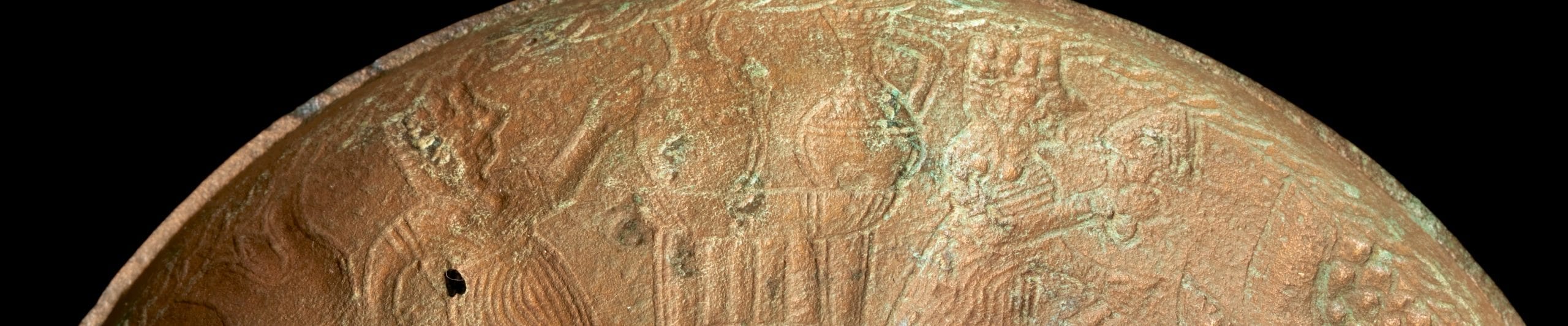
FOA Webinar: Susan Ackerman on Sept. 13

FRIENDS OF ASOR WEBINARS

Priestesses in the Days of Solomon and Ahab


(Image courtesy of the Metropolitan Museum of Art Open-Access Collection)

Friends of ASOR is excited to announce the second webinar in our monthly series on September 13, at 7:30pm EDT, featuring Dr. Susan Ackerman. An expert in the study of gender and religion in ancient Israel, Prof. Ackerman invites us to explore and question our own assumptions about gender roles in the ancient world. Priestesses abound in the religions of the Near East and the eastern Mediterranean — in Mesopotamia, Egypt, ancient Syrian tradition, and Greece. Priestesses are even attested in the records of some of ancient Israel’s closest neighbors (for example, from Phoenicia and the Transjordanian site of Deir Alla).

So why were there no priestesses in ancient Israel? In this lecture, Prof. Ackerman will propose an answer to that question, but also will propose—based on a survey of features commonly manifest by priestesses elsewhere in the biblical world—that there may be a few priestess-like women lurking in the pages of the Bible. The webinar will conclude with a live Q&A session.

Susan Ackerman is the Preston H. Kelsey Professor of Religion, Professor of Women’s, Gender, and Sexuality Studies, and the former Chair of both the Department of Religion and the Program in Women’s, Gender, and Sexuality Studies at Dartmouth College. She also earned her A.B. degree at Dartmouth, majoring in Religion, and then went on to earn a Masters of Theological Studies at Harvard Divinity School and a Ph.D. in Near Eastern Languages and Civilizations from the Harvard Graduate School of Arts and Sciences. Her research specialties include the religion of ancient Israel, women and gender in ancient Israel, myth and ritual studies in ancient Israel, and the Hebrew Bible.


Register and get 25% off Ackerman’s book from Yale University Press!

Her publications include several articles and three books, Under Every Green Tree: Popular Religion in Sixth-Century Judah; Warrior, Dancer, Seductress, Queen: Women in Judges and Biblical Israel; and When Heroes Love: The Ambiguity of Eros in the Stories of Gilgamesh and David. She has recently completed a draft of a new book, on women and the religion of ancient Israel, and is currently at work on another book manuscript on Israelite women’s life-cycle rituals, such as coming-of-age, marriage, motherhood, death.

Ackerman served as ASOR President from 2014-2019. Prior to that, Ackerman served as a member of the ASOR Board for seven years (2007-2013), during which time she was a member of the ASOR Capital Campaign Cabinet, the Task Force on the ASOR Strategic Plan for 2011-2015, and the Finance Committee. She has also served as President of the New England and Eastern Canada Region of the Society of Biblical Literature (2013-2014), as President of the Colloquium for Biblical Research (2008-2010), and as a member and then Secretary of the Board of Trustees of the W. F. Albright Institute for Archaeological Research (AIAR), from 2008-2013.

In November 2019, Ackerman received ASOR’s most prestigious award, the Richard J. Scheuer Medal, for lifetime achievement and professional service.

ASOR Sustaining Members: $0 | ASOR Members: $5 | Public: $10

To receive your ASOR member discount, log into the online store. If you are new to ASOR, please click on the “New Visitor Registration” link to enter your email and password for our online store. Then navigate to “Meeting and Event Registration” to register for the webinar and pay the fee. Each paid registrant will receive a confirmation email when you pay for the webinar. If you do not receive this email, then you are not registered. Please e-mail membership@asor.org with any questions or issues with registering.

You will be e-mailed the Zoom Webinar link prior to the lecture on September 13, 2020. All webinars are recorded and all paid registrants who cannot attend the webinar will be sent a link to download the recording.

All proceeds from this lecture are used to fund scholarships for members impacted by COVID-19 as well as increasing ASOR’s online resources, which are free to the public.

WHY SPONSOR A WEBINAR?

Several levels of support from $50-$1,000 are available. Proceeds go towards membership scholarships and towards increasing ASOR’s virtual resources. Each sponsorship is tax-deductible and you can give your friends free registrations to a webinar!

Bronze Level ($50): up to 2 guest registrations
Silver Level ($100): up to 5 guest registrations
Gold Level ($500): up to 20 guest registrations
Platinum Level ($1,000): up to 50 guest registrations

After you sign up for a sponsorship online or over the phone, email the names and email addresses of your guests to Felice Herman at membership@asor.org, who will send your guests a confirmation and the Zoom link before the webinar.

WANT TO SAVE $5.00 ON THE NEXT WEBINAR?

Join ASOR as a member! Click here for more details about discounts for events and other benefits of membership. Memberships start at $40 for the year as an Associate Member.

Not ready to join yet? Become a Friend of ASOR for FREE!

Click here for more details about our online resources.

PAST WEBINARS

You can now purchase the link to the recording of any webinar. You can also purchase the bundle packages of all webinars from the 2020-2022 seasons. Please e-mail membership@asor.org for purchase details.

To see a printable pdf of the webinar titles from the 2020-2021 season, please click here. To see a printable pdf of the webinar titles from the 2021-2022 season, please click here.

Pricing:

Members: $6.00 per recording
Non-Members: $12.00 per recording
Bundle of 2020-2021 Webinars: $75.00
Bundle of 2021-2022 Webinars: $75.00
Bundle of 2020-2022 Webinars: $125.00

2021-2022 Season

A World at War: Protecting Cultural Heritage in Times of Conflict
Patty Gerstenblith (DePaul University), Lisa Ackerman (Columbus Citizens Foundation), Andrew Cohen (Government Professional and Cultural Heritage Expert) | May 12, 2022

Preserving Cultural Heritage in Hisban and Umm al-Jimal, Jordan
Øystein LaBianca (Andrews University), Elizabeth Osinga (Umm al-Jimal Archaeological Project), Darrell Rohl (Calvin University) | April 24, 2022

Back to the Field: Recent Discoveries & Summer Plans 2022
Lorenzo d’Alfonso (ISAW), Kathryn Grossman (NC State University), James R. Strange (Samford University) | April 3, 2022

Uncovering What is Nubian Beneath the Veneer of Egyptianness: Excavating the Archives
Debora Heard (University of Chicago) | March 20, 2022

Where Are They Now?: A Preview of 2022 ASOR-Affiliated Fieldwork Projects
Michael Given (University of Glasgow), Xenia-Paula Kyriakou (Florida Gulf Coast University), Stephen Batiuk (University of Toronto), Monique Roddy (Walla Walla University), Kent Bramlett (La Sierra University), Friedbert Ninow (La Sierra University), and Michael Hoff (University of Nebraska-Lincoln) | March 8, 2022

Excavations at Tel Gezer: A Personal Story
Sam Wolff (Tel Gezer Laboratory) | February 20, 2022

Tel Rehov: A Major Bronze and Iron Age City in the Jordan Valley
Amihai Mazar (Hebrew University of Jerusalem), Nava Panitz-Cohen ( Hebrew University of Jerusalem), Nota Kourou (Athens University), Naama Yahalom-Mack (Hebrew University of Jerusalem), Robert Mullins (Azusa Pacific University) | February 10, 2022

The Not-So-Innocents Abroad: The Beginnings of American Biblical Archaeology
Rachel Hallote (Samford University) | January 20, 2022

Synagogues as Jesus Knew Them
James R. Strange (Samford University) | December 2, 2021

Under Jerusalem: The Buried History of the World’s Most Contested City
Andrew Lawler | November 4, 2021

Jesus and Jerusalem on TV: How Do Bible Documentaries Get Made?
Robert Cargill (University of Iowa) | October 17, 2021

Digging the Divine?: Judahite Pillar Figurines and the Archaeology of Israelite Religion
Erin Darby (University of Tennessee) | October 7, 2021

David, Solomon, and Rehoboam’s Kingdom—The Archaeological Evidence
Yosef Garfinkel (Hebrew University of Jerusalem) | September 19, 2021

From Standing Stones to Sacred Emptiness: Textual and Visual Portrayals of Israel’s God
Theodore Lewis (Johns Hopkins University) | August 29, 2021

2020-2021 Season

Making May Matter: Webinarathon to Endow Diversity
Multiple Speakers | May 21-23, 2021

Archaeogaming: Why Video Games Deserve Their Own Archaeology
Tine Rassalle (University of North Carolina at Chapel Hill), Shannon Martino (Morton College), Matthew Winter (University of Arizona), Michael Zimmerman (Rhode Island) | April 18, 2021

How the Bible Became a Book
William Schniedewind (UCLA) | March 21, 2021

The Mysteries of Mithras in Caesarea: Exploring the Cult’s Rites and Remains
Jane DeRose Evans (Temple University), Alexandra Ratzlaff (Brandeis University) | March 11, 2021

Archaeology and the Hidden Religious Culture of Israelite Women
Carol Meyers (Duke University) | February 21, 2021

Meet the Directors—Fundraiser to Support ASOR’s Affiliated Overseas Research Centers
Matthew J. Adams (AIAR), Pearce Paul Creasman (ACOR), Lindy Crewe (CAARI) | February 11, 2021

Early Synagogues, Jesus, and Galilee—A Jewish Perspective
Eric Meyers (Duke University) | December 13, 2020

Home Sweet Home: Ancient Israelite Households in Context
Cynthia Shafer-Elliott (William Jessup University) | October 18, 2020

Priestesses in the Days of Solomon and Ahab
Susan Ackerman (Dartmouth College) | September 13, 2020

Digging Deeper: How Archaeology Works
Eric H. Cline (The George Washington University) | August 9, 2020

New JCS Editorial Board Announced

[vc_row fullwidth=”true” attached=”true” css=”.vc_custom_1496247803139{padding-top: 0px !important;padding-right: 0px !important;padding-bottom: 0px !important;padding-left: 0px !important;}”][vc_column][vc_single_image image=”30764″ img_size=”1920×400″ alignment=”center”][/vc_column][/vc_row][vc_row fullwidth=”true” css=”.vc_custom_1496682730308{padding-top: 10px !important;padding-right: 0px !important;padding-bottom: 0px !important;padding-left: 0px !important;}”][vc_column width=”1/12″ css=”.vc_custom_1496683820796{margin-right: 10px !important;}” offset=”vc_hidden-md vc_hidden-sm vc_hidden-xs”][vc_column_text]

 SHARE

[/vc_column_text][mk_image src=”http://www.asortest.org/wp-content/uploads/2017/01/social-fb-icon4.jpg” image_width=”42″ image_height=”42″ hover=”false” custom_url=”https://www.facebook.com/ASOResearch/” margin_bottom=”0″][mk_image src=”http://www.asortest.org/wp-content/uploads/2017/01/social-tw-icon4.jpg” image_width=”42″ image_height=”42″ hover=”false” custom_url=”https://twitter.com/ASOResearch?ref_src=twsrc%5Egoogle%7Ctwcamp%5Eserp%7Ctwgr%5Eauthor” margin_bottom=”0″][mk_image src=”http://www.asortest.org/wp-content/uploads/2017/01/social-in-icon4.jpg” image_width=”42″ image_height=”42″ hover=”false” custom_url=”https://www.linkedin.com/company/american-schools-of-oriental-research” margin_bottom=”0″][mk_image src=”http://www.asortest.org/wp-content/uploads/2017/01/social-ml-icon_7.jpg” image_width=”42″ image_height=”42″ hover=”false” custom_url=”mailto:info@asor.org” margin_bottom=”0″][mk_image src=”http://www.asortest.org/wp-content/uploads/2017/01/blog-icon3.jpg” image_width=”42″ image_height=”42″ hover=”false” custom_url=”http://asor.org/blog” margin_bottom=”0″][/vc_column][vc_column border_color=”rgba(255,255,255,0.01)” width=”1/6″ css=”.vc_custom_1496683923840{margin-right: 20px !important;border-left-width: 2px !important;padding-right: 20px !important;padding-left: 20px !important;border-left-color: #99422f !important;}”][mk_divider divider_color=”rgba(255,255,255,0.01)” thickness=”1″ margin_top=”3″ margin_bottom=”3″][vc_column_text]

NEWS@ASOR E-NEWSLETTER

ANCIENT NEAR EAST TODAY E-NEWSLETTER

PAST ASOR NEWS, MONTH BY MONTH

FY20 HONOR ROLL OF DONORS

ASOR ANNUAL MEETING

[/vc_column_text][/vc_column][vc_column border_color=”rgba(170,170,170,0.01)” width=”1/2″ css=”.vc_custom_1487276122024{margin-right: 10px !important;margin-bottom: 30px !important;border-right-width: 2px !important;border-bottom-width: 2px !important;padding-top: 30px !important;padding-right: 30px !important;padding-left: 20px !important;background-color: #ffffff !important;border-right-color: rgba(227,228,228,0.75) !important;border-bottom-color: rgba(227,228,228,0.75) !important;}”][vc_column_text responsive_align=”left”]

THE JOURNAL OF CUNEIFORM STUDIES (JCS) EDITORIAL BOARD ANNOUNCED

[/vc_column_text][mk_divider][vc_wp_text]ASOR is pleased to announce the appointment of a new editorial board for the Journal of Cuneiform Studies (JCS). At the same time, ASOR and JCS editor Piotr Michalowski would like to offer sincere thanks to the outgoing editorial board team members—Gary Beckman (University of Michigan), Geoffrey Emberling (University of Michigan), and Matthew W. Stolper (The Oriental Institute of the University of Chicago)—for many years of dedicated service to ASOR and JCS.

The new editorial team is as follows:

Piotr Michalowski (University of Michigan), Editor

Billie-Jean Collins (Lockwood Press), Managing Editor

Associate editors:

Lisa Cooper (University of British Columbia)

C. Jay Crisostomo (University of Michigan)

Eckart Frahm (Yale University)

Petra M. Goedegebuure (The Oriental Institute of the University of Chicago)

Piotr Steinkeller (Harvard University)

Susanne Paulus (The Oriental Institute of the University of Chicago)

Niek Veldhuis (University of California, Berkeley)

Caroline Waerzeggers (Leiden University)

The new editorial board began their terms on July 1, 2020. Those interested in publishing in JCS should continue to contact Piotr Michalowski.[/vc_wp_text][/vc_column][vc_column border_color=”rgba(170,170,170,0.01)” width=”1/6″ css=”.vc_custom_1496684098866{margin-right: 5px !important;margin-bottom: 20px !important;border-right-width: 2px !important;border-bottom-width: 2px !important;padding-top: 30px !important;padding-right: 10px !important;padding-left: 10px !important;background-color: #ffffff !important;border-right-color: rgba(227,228,228,0.75) !important;border-bottom-color: rgba(227,228,228,0.75) !important;}”][vc_wp_posts title=”BROWSE THE NEWS ARCHIVE” number=”4″][/vc_column][vc_column border_color=”rgba(170,170,170,0.01)” width=”1/6″ css=”.vc_custom_1496684008271{margin-right: 10px !important;margin-bottom: 30px !important;border-right-width: 2px !important;border-bottom-width: 2px !important;padding-top: 30px !important;padding-right: 20px !important;padding-left: 20px !important;background-color: #ffffff !important;border-right-color: rgba(227,228,228,0.75) !important;border-bottom-color: rgba(227,228,228,0.75) !important;}”][vc_column_text] [/vc_column_text][/vc_column][/vc_row]
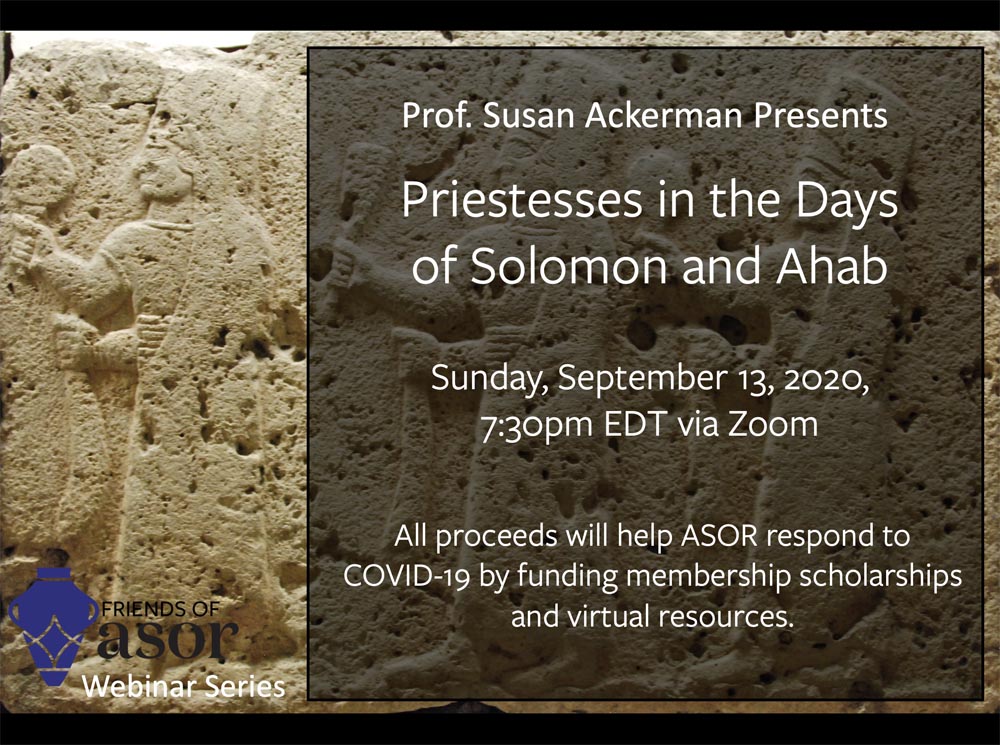
Table of Contents for JCS 72 (2020)

[vc_row fullwidth=”true” attached=”true” css=”.vc_custom_1496247803139{padding-top: 0px !important;padding-right: 0px !important;padding-bottom: 0px !important;padding-left: 0px !important;}”][vc_column][mk_image src=”http://www.asor.org/wp-content/uploads/2020/04/BASOR-383-Banner-3-1920×400.jpeg” image_width=”1920″ image_height=”400″ hover=”false” margin_bottom=”0″][/vc_column][/vc_row][vc_row fullwidth=”true” css=”.vc_custom_1567014300088{margin-top: 30px !important;padding-right: 0px !important;padding-bottom: 0px !important;padding-left: 0px !important;}”][vc_column width=”1/12″ css=”.vc_custom_1496683820796{margin-right: 10px !important;}” offset=”vc_hidden-md vc_hidden-sm vc_hidden-xs”][vc_column_text]

 SHARE

[/vc_column_text][mk_image src=”http://www.asortest.org/wp-content/uploads/2017/01/social-fb-icon4.jpg” image_width=”42″ image_height=”42″ hover=”false” custom_url=”https://www.facebook.com/ASOResearch/” margin_bottom=”0″][mk_image src=”http://www.asortest.org/wp-content/uploads/2017/01/social-tw-icon4.jpg” image_width=”42″ image_height=”42″ hover=”false” custom_url=”https://twitter.com/ASOResearch?ref_src=twsrc%5Egoogle%7Ctwcamp%5Eserp%7Ctwgr%5Eauthor” margin_bottom=”0″][mk_image src=”http://www.asortest.org/wp-content/uploads/2017/01/social-in-icon4.jpg” image_width=”42″ image_height=”42″ hover=”false” custom_url=”https://www.linkedin.com/company/american-schools-of-oriental-research” margin_bottom=”0″][mk_image src=”http://www.asortest.org/wp-content/uploads/2017/01/social-ml-icon_7.jpg” image_width=”42″ image_height=”42″ hover=”false” custom_url=”mailto:asor@bu.edu” margin_bottom=”0″][mk_image src=”http://www.asortest.org/wp-content/uploads/2017/01/blog-icon3.jpg” image_width=”42″ image_height=”42″ hover=”false” custom_url=”http://asorblog.org/” margin_bottom=”0″][/vc_column][vc_column border_color=”rgba(255,255,255,0.01)” width=”1/6″ css=”.vc_custom_1496683923840{margin-right: 20px !important;border-left-width: 2px !important;padding-right: 20px !important;padding-left: 20px !important;border-left-color: #99422f !important;}”][mk_divider divider_color=”rgba(255,255,255,0.01)” thickness=”1″ margin_top=”3″ margin_bottom=”3″][vc_column_text]

NEWS@ASOR

PAST ASOR NEWS, MONTH BY MONTH

WAYS TO DONATE TO ASOR

FY20 HONOR ROLL OF DONORS (DRAFT)

ASOR LEGACY CIRCLE MEMBERS

DONATE NOW

[/vc_column_text][/vc_column][vc_column border_color=”rgba(170,170,170,0.01)” width=”1/2″ css=”.vc_custom_1567019962887{margin-right: 10px !important;margin-bottom: 30px !important;border-right-width: 2px !important;border-bottom-width: 2px !important;padding-top: 30px !important;padding-right: 30px !important;padding-left: 20px !important;background-color: #ffffff !important;border-right-color: rgba(227,228,228,0.75) !important;border-bottom-color: rgba(227,228,228,0.75) !important;}”][vc_column_text responsive_align=”left”]

Table of Contents for Journal of Cuneiform Studies 72 (2020)

You can receive JCS (and other ASOR publications) through an ASOR Membership. Please e-mail the Membership office if you have any questions.

Pp. 3–21: “Der Beruf su-si-(ig) im 3. Jahrtausend,” by M. Such-Gutiérrez

The Sumerian professional designation su-si-(ig) has been usually translated as “animal handler” or “skinner” on the basis of texts from the Old Babylonian period. Written sources from the third millennium, however, indicate that these translations are not applicable in earlier times, since people so designated worked on the first steps of leather processing or with the preparation of the bare skins for tanning. Therefore, in such texts the translation Blößenvorbereiter, that is “preparer of cleaned animal skins” is a better fit. Moreover, third-millennium texts provide further information on the profession su-si-(ig), which was apparently practiced only by men who worked in the large temple and palace public institutions and in some cases could hold high social positions.

ASOR Members with online access: navigate to the token link email sent to you before attempting to read this article. Once you have activated your member token, click here to access the above article on The University of Chicago Press Journals’ website.

Pp. 23–33: “„Das Schilfrohr umherspringen lassen”: Bemerkungen zum Rohrflechten Babyloniens im dritten bzw. frühen zweiten Jahrtausend v. Chr.,” by Krisztián Simkó

In spite of extensive research conducted in the field, there are some areas of Babylonian reed industries that have eluded understanding since the first comprehensive overview was published on this topic in 1989. The aim of this communication is to provide some insights into one such area, the preparation of pliable reed strands. On the basis of partly overlooked philological evidence, it will be argued that phrases like gi gu4- ud, na4 ad-KID, and na4ša-ga-ra relate, one way or another, to this procedure.

ASOR Members with online access: navigate to the token link email sent to you before attempting to read this article. Once you have activated your member token, click here to access the above article on The University of Chicago Press Journals’ website.

Pp. 35–46: “Du nouveau chez les Šakkanakkus de Mari: nouvelles lectures des empreintes ME64, ME196, et ME14,” by L. Colonna d’Istria

Cylinder seal impressions rank highly among the epigraphic sources concerning the šakkanakkus (rulers) of Mari, especially those that reigned during the 20th and first part of 19th centuries BCE, that is the final phase of the šakkanakku period that preceded the reign of Yaḫdun-Lîm in Mari ca. 1820/1810 BC. New readings of the seal impressions ME64+ME196 and ME14 indicate that they all belong to the same cylinder seal belonging to a ruler named Tīnīn-Dagan, whose father was Iddin-Dagan. Both rulers were previously unknown.

ASOR Members with online access: navigate to the token link email sent to you before attempting to read this article. Once you have activated your member token, click here to access the above article on The University of Chicago Press Journals’ website.

Pp. 47-64: “The Royal Herdsmen of Ur: Compensation and Centralization in the Reign of Shulgi,” by Ryan Winters

Centralization functioned on multiple complementary levels during the Ur III period. On the one hand, the royal government controlled vast herds of livestock, which it distributed for tending to herdsmen located in various provinces throughout the entire empire. On the other, it exercised direct control over land located in these provinces, which it then used to compensate royal workers in charge of tending these animals. This article studies the evidence for the royal herdsmen, their organization and activities, and their compensation through royal grants of real estate.

ASOR Members with online access: navigate to the token link email sent to you before attempting to read this article. Once you have activated your member token, click here to access the above article on The University of Chicago Press Journals’ website.

Pp. 65-86: “The Discovery of the Location of Malgium (Tell Yassir),” by Ahmed Ali Jawad, Barhan Abd Al-Reza, Ali Jabarat Nasir, Ahmed Abbas As’id, and Rients de Boer

This article establishes that the ancient city of Malgium is located at modern Tell Yassir.The results of a survey of the site and its surroundings are given together with the publication of a number of new brick inscriptions belonging to early Old Babylonian kings of Malgium.

ASOR Members with online access: navigate to the token link email sent to you before attempting to read this article. Once you have activated your member token, click here to access the above article on The University of Chicago Press Journals’ website.

Pp. 87-99: “Perpendicular Lines and Diagonal Triples in Old Babylonian Surveying,” by Daniel F. Mansfield

The tablet Si. 427 demonstrates that diagonal triples, or Pythagorean triples as they are now known,were used by Old Babylonian surveyors to construct perpendicular field boundaries accurately. This is the only known application of diagonal triples from this time, and one of the most complete examples of applied geometry from the ancient world.

ASOR Members with online access: navigate to the token link email sent to you before attempting to read this article. Once you have activated your member token, click here to access the above article on The University of Chicago Press Journals’ website.

Pp. 101-116: “Three New Multiplication Tables From the Louvre: AO 8900, AO 8901, AND AO 8902,” by Carlos Gonçalves

AO 8900, AO 8901, and AO 8902 are three hitherto unpublished Old Babylonianmathematical cuneiform tablets containing multiplication tables. Their physical and textual characteristics suggest that they were produced in the same ancient context. What is remarkable about this small set of tablets is that, unlike most such tablets, two of them have colophons: in AO 8900 we find a month-and-day date, while in AO 8901 we find a damaged year name. These tablets are published here for the first time, together with a discussion of how the information about the year name in AO 8901 fits in what is known about the dating of Old Babylonian mathematics.

ASOR Members with online access: navigate to the token link email sent to you before attempting to read this article. Once you have activated your member token, click here to access the above article on The University of Chicago Press Journals’ website.

Pp. 117-128: “A Fragmentary Explanatory God List from Old Babylonian Nippur with a Thematic Connection to Lugale and An : Anum: A Glimpse into the Origins of Mesopotamian Hermeneutical Tradition,” by Jeremiah Peterson

This article provides an edition of the previously unpublished Old Babylonian tablet fragment that may be part of an explanatory god list. With all due caution, it is possible to suggest that it provides a rare example of a god list with extended commentary from the Old Babylonian period with each preserved entry seemingly eliciting an explanation. The format is unique in that it occurs as running text without columned entry or any other topical demarcation, arranged according to divine name and its respective explanation or equivalent. Likewise, although the fragmentary state of this piece rules out any definitive interpretation, it is possible that it may refer to certain lines in the Ninurta poem Lugale.

ASOR Members with online access: navigate to the token link email sent to you before attempting to read this article. Once you have activated your member token, click here to access the above article on The University of Chicago Press Journals’ website.

Pp. 129-142: “Sumerian Cultic Songs from Old Babylonian Nippur with a Connection to the Temple Hymns,” by Jeremiah Peterson

Several fragmentary Sumerian cultic songs from Old Babylonian Nippur, including one that seems to be for Ninurta (“Ninurta H”), contain enumerations of major cultic centers in southern Mesopotamia that are unmistakably reminiscent of the Sumerian Temple Hymns, as well as two hymns to King Shulgi. The following communication considers the potential parameters of intertexuality that may be involved with these texts. Such proximity to the corpus of cultic songs qualifies the Sitz im Leben of the Temple Hymns at Old Babylonian Nippur.

ASOR Members with online access: navigate to the token link email sent to you before attempting to read this article. Once you have activated your member token, click here to access the above article on The University of Chicago Press Journals’ website.

Pp. 143-155: “The Authorship of the Old Hittite Palace Chronicle (CTH 8): A Case for Anitta,” by Alwin Kloekhorst

It is generally thought that the Old Hittite Palace Chronicle was composed by Muršili I (reigned ca. 1620–1590 BCE) and that the anecdotes featuring in this composition thus took place during the reign of his predecessor Ḫattušili I (ca. 1650–1620 BCE). Recently, Forlanini proposed that the text’s author was not Muršili I but rather Ḫattušili I, who tells about the times of his predecessor Labarna I (ca. 1680(?)–1650 BCE). In the present article it will be argued that both views are difficult to maintain. Instead, six arguments will be presented that rather indicate that the Palace Chronicle may have been authored by Anitta, king of Nēša (reigned ca. 1740–1725 BCE), and that the composition recounts the reign of Anitta’s father Pitḫāna, with some anecdotes even dating back to the times before Pitḫāna’s conquest of the city of Nēša, i.e. before 1750 BCE.

ASOR Members with online access: navigate to the token link email sent to you before attempting to read this article. Once you have activated your member token, click here to access the above article on The University of Chicago Press Journals’ website.

Pp. 157-163: “The Personal Name in Ugaritic Script pǵm˹w˺ (RS 10.052 iv 1) = Luwian piḫamuwa,” by Dennis Pardee and Madadh Richey

The proposal is here offered to read the Ugaritic administrative text RS 10.052 iv 1 as containing the personal name pǵmw, the Ugaritic writing of the Luwian name Piḫamuwa.

ASOR Members with online access: navigate to the token link email sent to you before attempting to read this article. Once you have activated your member token, click here to access the above article on The University of Chicago Press Journals’ website.

Pp. 165–198: “Minor Archives from First-Millennium Bce Babylonia: The Archive of Iššar-Tarībi from Sippar,” by Reinhard Pirngruber

The present contribution provides full editions of all texts belonging to the archive of the Sipparean businessman Iššar-tarībi, who was active during the last years of the Neo-Babylonian kingdom and the early years of Achaemenid rule, as well as a brief discussion of its central features. It is part of a larger collaborative effort to make available the so-called “satellite archives” of the Ṣāḫiṭ-ginê A archive and related and unrelated smaller archives from Sippar. The results will be published in forthcoming volumes of this journal; archives in preparation include those of Adad-šamê, Mušēzib, Rēˀi-sisê, and Ša-nāšišu A (Y. Levavi), Balīhu, Aqūba, and Šamaš-iddin/Rēmūt (J. Hackl), as well as Šangû-Šamaš and Šangû-Ištar-Bābili (M. Gross). A companion volume containing copies of all tablets published in this series as well as a comprehensive prosopography is in preparation for the JCS Supplemental Series.

ASOR Members with online access: navigate to the token link email sent to you before attempting to read this article. Once you have activated your member token, click here to access the above article on The University of Chicago Press Journals’ website.

[/vc_column_text][mk_divider][vc_column_text]ASOR Members with online access: navigate to the token link email sent to you before attempting to read this issue. Once you have activated your member token, click here to access the the entire issue, including book reviews, on The University of Chicago Press Journals’ website.[/vc_column_text][/vc_column][vc_column border_color=”rgba(170,170,170,0.01)” width=”1/6″ css=”.vc_custom_1567019974102{margin-right: 5px !important;margin-bottom: 20px !important;border-right-width: 2px !important;border-bottom-width: 2px !important;padding-top: 30px !important;padding-right: 10px !important;padding-left: 10px !important;background-color: #ffffff !important;border-right-color: rgba(227,228,228,0.75) !important;border-bottom-color: rgba(227,228,228,0.75) !important;}”][vc_wp_posts title=”BROWSE THE NEWS ARCHIVE” number=”4″][/vc_column][vc_column border_color=”rgba(170,170,170,0.01)” width=”1/6″ css=”.vc_custom_1496684008271{margin-right: 10px !important;margin-bottom: 30px !important;border-right-width: 2px !important;border-bottom-width: 2px !important;padding-top: 30px !important;padding-right: 20px !important;padding-left: 20px !important;background-color: #ffffff !important;border-right-color: rgba(227,228,228,0.75) !important;border-bottom-color: rgba(227,228,228,0.75) !important;}”][vc_column_text] [/vc_column_text][/vc_column][/vc_row]

Table of Contents for NEA 83.2 (2020)

[vc_row fullwidth=”true” attached=”true” css=”.vc_custom_1496247803139{padding-top: 0px !important;padding-right: 0px !important;padding-bottom: 0px !important;padding-left: 0px !important;}”][vc_column][vc_single_image image=”62804″ img_size=”full” alignment=”center”][/vc_column][/vc_row][vc_row fullwidth=”true” css=”.vc_custom_1496682730308{padding-top: 10px !important;padding-right: 0px !important;padding-bottom: 0px !important;padding-left: 0px !important;}”][vc_column width=”1/12″ css=”.vc_custom_1496683820796{margin-right: 10px !important;}” offset=”vc_hidden-md vc_hidden-sm vc_hidden-xs”][vc_column_text]

 SHARE

[/vc_column_text][mk_image src=”http://www.asortest.org/wp-content/uploads/2017/01/social-fb-icon4.jpg” image_width=”42″ image_height=”42″ hover=”false” custom_url=”https://www.facebook.com/ASOResearch/” margin_bottom=”0″][mk_image src=”http://www.asortest.org/wp-content/uploads/2017/01/social-tw-icon4.jpg” image_width=”42″ image_height=”42″ hover=”false” custom_url=”https://twitter.com/ASOResearch?ref_src=twsrc%5Egoogle%7Ctwcamp%5Eserp%7Ctwgr%5Eauthor” margin_bottom=”0″][mk_image src=”http://www.asortest.org/wp-content/uploads/2017/01/social-in-icon4.jpg” image_width=”42″ image_height=”42″ hover=”false” custom_url=”https://www.linkedin.com/company/american-schools-of-oriental-research” margin_bottom=”0″][mk_image src=”http://www.asortest.org/wp-content/uploads/2017/01/social-ml-icon_7.jpg” image_width=”42″ image_height=”42″ hover=”false” custom_url=”mailto:asor@bu.edu” margin_bottom=”0″][mk_image src=”http://www.asortest.org/wp-content/uploads/2017/01/blog-icon3.jpg” image_width=”42″ image_height=”42″ hover=”false” custom_url=”http://asorblog.org/” margin_bottom=”0″][/vc_column][vc_column border_color=”rgba(255,255,255,0.01)” width=”1/6″ css=”.vc_custom_1496683923840{margin-right: 20px !important;border-left-width: 2px !important;padding-right: 20px !important;padding-left: 20px !important;border-left-color: #99422f !important;}”][mk_divider divider_color=”rgba(255,255,255,0.01)” thickness=”1″ margin_top=”3″ margin_bottom=”3″][vc_column_text]

NEWS@ASOR

ANCIENT NEAR EAST TODAY

PAST ASOR NEWS, MONTH BY MONTH

FY19 HONOR ROLL OF DONORS

ASOR ANNUAL MEETING

[/vc_column_text][/vc_column][vc_column border_color=”rgba(170,170,170,0.01)” width=”1/2″ css=”.vc_custom_1487276122024{margin-right: 10px !important;margin-bottom: 30px !important;border-right-width: 2px !important;border-bottom-width: 2px !important;padding-top: 30px !important;padding-right: 30px !important;padding-left: 20px !important;background-color: #ffffff !important;border-right-color: rgba(227,228,228,0.75) !important;border-bottom-color: rgba(227,228,228,0.75) !important;}”][vc_row_inner][vc_column_inner width=”1/4″ css=”.vc_custom_1570040186774{padding-right: 10px !important;}”][mk_image src=”http://www.asor.org/wp-content/uploads/2020/06/NEA-83.2-Cover.png” image_width=”151″ image_height=”200″ hover=”false”][/vc_column_inner][vc_column_inner width=”3/4″][vc_column_text]

Table of Contents for Near Eastern Archaeology 83.2 (June 2020)

[/vc_column_text][/vc_column_inner][/vc_row_inner][vc_row_inner][vc_column_inner css=”.vc_custom_1570040186774{padding-right: 10px !important;}”][vc_column_text]

You can receive NEA (and other ASOR publications) through an ASOR Membership. Please e-mail the Membership office if you have any questions.

[/vc_column_text][/vc_column_inner][/vc_row_inner][mk_divider][vc_row_inner][vc_column_inner width=”1/4″ css=”.vc_custom_1570041002103{padding-right: 10px !important;}”][mk_image src=”http://www.asor.org/wp-content/uploads/2020/06/25-Catalhuyuk-NEA-83.2-TOC.jpg” image_width=”200″ image_height=”500″ crop=”false” hover=”false”][/vc_column_inner][vc_column_inner width=”3/4″][vc_column_text]

Pp. 72-79: “Twenty-Five Years of Research at Çatalhöyük,” by Ian Hodder

Çatalhöyük is a 9,000 year-old tell site in central Turkey. First excavated by James Mellaart in the 1960s (e.g., 1967), a new project began in 1993 (Hodder 1996, 2000). At first the focus was on surface study and survey, and excavation began in 1995. Excavation ended in 2017 and there was a study season in Catania, Sicily, in 2018. This introduction summarizes the work over the last twenty-five years and describes some of the results outlined in the ensuing articles of this issue of NEA. An additional set of results will be published in the September 2020 issue.[/vc_column_text][/vc_column_inner][/vc_row_inner][vc_column_text responsive_align=”left”]ASOR Members with online access: navigate to the token link email sent to you before attempting to read this article. Once you have activated your member token, click here to access the above article on The University of Chicago Press Journals’ website.[/vc_column_text][mk_divider][vc_row_inner][vc_column_inner width=”1/4″ css=”.vc_custom_1570041002103{padding-right: 10px !important;}”][mk_image src=”http://www.asor.org/wp-content/uploads/2020/06/Magnetic-GPR-at-Catalhuyuk-NEA-83.2-TOC.jpg” image_width=”200″ image_height=”500″ crop=”false” hover=”false”][/vc_column_inner][vc_column_inner width=”3/4″][vc_column_text]

Pp. 80-87: “Integrating Magnetic and GPR Survey at Çatalhöyük,” by Kristian Strutt, Stefano Campana, Jessica Ogden, Gianluca Catanzariti, and Gianfranco Morelli

As part of the 2010 and 2012 field seasons at the site of Çatalhöyük, geophysical survey was conducted with the aim of mapping parts of the subsurface remains at the site. While extensive excavations have been conducted on the East Mound, a considerable part of the area of this mound is still largely unknown in terms of the presence of archaeological deposits and possible Neolithic structures.[/vc_column_text][/vc_column_inner][/vc_row_inner][vc_column_text responsive_align=”left”]ASOR Members with online access: navigate to the token link email sent to you before attempting to read this article. Once you have activated your member token, click here to access the above article on The University of Chicago Press Journals’ website.[/vc_column_text][mk_divider][vc_row_inner][vc_column_inner width=”1/4″ css=”.vc_custom_1570041002103{padding-right: 10px !important;}”][mk_image src=”http://www.asor.org/wp-content/uploads/2020/06/Catalhuyuk-Landscape-NEA-83.2-TOC.jpg” image_width=”200″ image_height=”500″ crop=”false” hover=”false”][/vc_column_inner][vc_column_inner width=”3/4″][vc_column_text]

Pp. 88-97: “Çatalhöyük and Its Landscapes,” by Gianna Ayala and John Wainwright

T he landscape surrounding the site of Çatalhöyük has been transformed by centuries of land use and agricultural improvements. The most recent transformations started in the early twentieth century aiming to improve agricultural productivity by carrying out extensive irrigation and land-reclamation programs (Roberts 1990). Irrigation water was brought via the Beyşehir-Sugla canal system which was completed around 1911 (Money 1919), bringing irrigation water from Lake Beyşehir to the south. Further regulation of water supplies in the 1950s and 1960s included the construction of the Apa Dam on the Çarşamba River (completed in 1962) and World Bank support for extending irrigation schemes. Unsurprisingly, archaeological and palaeoenvironmental evidence from Çatalhöyük suggests significantly different environments at the time of occupation from that of the modern landscape. Therefore, it is essential for archaeological interpretations to be underpinned by robust palaeoenvironmental reconstructions.[/vc_column_text][/vc_column_inner][/vc_row_inner][vc_column_text responsive_align=”left”]ASOR Members with online access: navigate to the token link email sent to you before attempting to read this article. Once you have activated your member token, click here to access the above article on The University of Chicago Press Journals’ website.[/vc_column_text][mk_divider][vc_row_inner][vc_column_inner width=”1/4″ css=”.vc_custom_1570041002103{padding-right: 10px !important;}”][mk_image src=”http://www.asor.org/wp-content/uploads/2020/06/Wetlands-at-Catalhuyuk-NEA-83.2-TOC.jpg” image_width=”200″ image_height=”500″ crop=”false” hover=”false”][/vc_column_inner][vc_column_inner width=”3/4″][vc_column_text]Pp. 98-109: “The Seasonality of Wetland and Riparian Taskscapes at Çatalhöyük,” by Jesse Wolfhagen, Rena Veropoulidou, Gianna Ayala, Dragana Filipović, Ceren Kabukcu, Carla Lancelotti, Marco Madella, Kamilla Pawłowska, Carlos G. Santiago-Marrero, and John Wainwright

Seasonal variation in the natural world of Neolithic Çatalhöyük shaped the organization of daily life and the social world of its residents. Seasonal cycles in climatic patterns, hydrology, growing seasons of wild and domestic plants, and seasonal behaviors of herded, hunted, and gathered animals would have affected the overall productivity of the landscape and consequently the rhythms of social life (e.g., Fairbain et al. 2005; Pels 2010). These created social conceptions of seasonal patterns and activities shaped the ways in which people interacted with their local environments and structured the timing and spatial requirements of everyday tasks.[/vc_column_text][/vc_column_inner][/vc_row_inner][vc_column_text responsive_align=”left”]ASOR Members with online access: navigate to the token link email sent to you before attempting to read this article. Once you have activated your member token, click here to access the above article on The University of Chicago Press Journals’ website.[/vc_column_text][mk_divider][vc_row_inner][vc_column_inner width=”1/4″ css=”.vc_custom_1570041002103{padding-right: 10px !important;}”][mk_image src=”http://www.asor.org/wp-content/uploads/2020/06/OPen-Spaces-at-Catalhuyuk-NEA-83.2-TOC.jpg” image_width=”200″ image_height=”500″ crop=”false” hover=”false”][/vc_column_inner][vc_column_inner width=”3/4″][vc_column_text]

Pp. 110-119: “Common Ground: Reevaluating Open Spaces at Çatalhöyük,” by Justine Issavi, Kamilla Pawłowska, Milena Vasić, and Rena Veropoulidou

Investigations of open spaces within the context of the Southwest Asian Neolithic are varied in approach and in how explicitly they center these spaces within the study. The term “open space,” for this article, refers to any space not covered by an architectural feature such as a roof or other permanent covering. Open spaces have variously been discussed as arenas of daily or utilitarian activities, shared property or communal space, places of ritual, public spaces, courtyards (yards), conduits for movement, or undifferentiated spaces.[/vc_column_text][/vc_column_inner][/vc_row_inner][vc_column_text responsive_align=”left”]ASOR Members with online access: navigate to the token link email sent to you before attempting to read this article. Once you have activated your member token, click here to access the above article on The University of Chicago Press Journals’ website.[/vc_column_text][mk_divider][vc_row_inner][vc_column_inner width=”1/4″ css=”.vc_custom_1570041002103{padding-right: 10px !important;}”][mk_image src=”http://www.asor.org/wp-content/uploads/2020/06/Thermal-Alterations-to-Human-Remains-at-Catalhuyuk-NEA-83.2-TOC.jpg” image_width=”200″ image_height=”500″ crop=”false” hover=”false”][/vc_column_inner][vc_column_inner width=”3/4″][vc_column_text]

Pp. 120-128: “Thermal Alterations to Human Remains in Çatalhöyük,” by Cassie E. Skipper, Scott D. Haddow, and Marin A. Pilloud

The Neolithic East Mound at Çatalhöyük, dating to 7100–5950 cal BCE (Bayliss et al. 2015), in central Anatolia is well known as a large, early agricultural village. Like other Neolithic sites in this region, the site had distinct mortuary practices, which at Çatalhöyük are dominated by primary interments beneath house floors, accounting for 83 percent of stratified individuals recovered to date (Haddow et al. in press). While commingling of skeletal elements due to repeated use of house platforms as burial locations is common (Boz and Hager 2013; Haddow, Sadvari et al. 2016), there is also evidence of secondary burial practices including post-interment cranial retrieval and the occurrence of loose and partially articulated skeletal elements moved from a previous location (Haddow and Knüsel 2017). Such observations suggest the practice of delayed burial for certain individuals, a pattern that appears to increase in frequency over time (Haddow et al. in press).[/vc_column_text][/vc_column_inner][/vc_row_inner][vc_column_text responsive_align=”left”]ASOR Members with online access: navigate to the token link email sent to you before attempting to read this article. Once you have activated your member token, click here to access the above article on The University of Chicago Press Journals’ website.[/vc_column_text][/vc_column][vc_column border_color=”rgba(170,170,170,0.01)” width=”1/6″ css=”.vc_custom_1496684098866{margin-right: 5px !important;margin-bottom: 20px !important;border-right-width: 2px !important;border-bottom-width: 2px !important;padding-top: 30px !important;padding-right: 10px !important;padding-left: 10px !important;background-color: #ffffff !important;border-right-color: rgba(227,228,228,0.75) !important;border-bottom-color: rgba(227,228,228,0.75) !important;}”][vc_wp_posts title=”BROWSE THE NEWS ARCHIVE” number=”4″][/vc_column][vc_column border_color=”rgba(170,170,170,0.01)” width=”1/6″ css=”.vc_custom_1496684008271{margin-right: 10px !important;margin-bottom: 30px !important;border-right-width: 2px !important;border-bottom-width: 2px !important;padding-top: 30px !important;padding-right: 20px !important;padding-left: 20px !important;background-color: #ffffff !important;border-right-color: rgba(227,228,228,0.75) !important;border-bottom-color: rgba(227,228,228,0.75) !important;}”][vc_column_text] [/vc_column_text][/vc_column][/vc_row]

Table of Contents for BASOR 383 (May 2020)

[vc_row fullwidth=”true” attached=”true” css=”.vc_custom_1496247803139{padding-top: 0px !important;padding-right: 0px !important;padding-bottom: 0px !important;padding-left: 0px !important;}”][vc_column][vc_single_image image=”59842″ img_size=”full” alignment=”center”][/vc_column][/vc_row][vc_row fullwidth=”true” css=”.vc_custom_1496682730308{padding-top: 10px !important;padding-right: 0px !important;padding-bottom: 0px !important;padding-left: 0px !important;}”][vc_column width=”1/12″ css=”.vc_custom_1496683820796{margin-right: 10px !important;}” offset=”vc_hidden-md vc_hidden-sm vc_hidden-xs”][vc_column_text]

 SHARE

[/vc_column_text][mk_image src=”http://www.asortest.org/wp-content/uploads/2017/01/social-fb-icon4.jpg” image_width=”42″ image_height=”42″ hover=”false” custom_url=”https://www.facebook.com/ASOResearch/” margin_bottom=”0″][mk_image src=”http://www.asortest.org/wp-content/uploads/2017/01/social-tw-icon4.jpg” image_width=”42″ image_height=”42″ hover=”false” custom_url=”https://twitter.com/ASOResearch?ref_src=twsrc%5Egoogle%7Ctwcamp%5Eserp%7Ctwgr%5Eauthor” margin_bottom=”0″][mk_image src=”http://www.asortest.org/wp-content/uploads/2017/01/social-in-icon4.jpg” image_width=”42″ image_height=”42″ hover=”false” custom_url=”https://www.linkedin.com/company/american-schools-of-oriental-research” margin_bottom=”0″][mk_image src=”http://www.asortest.org/wp-content/uploads/2017/01/social-ml-icon_7.jpg” image_width=”42″ image_height=”42″ hover=”false” custom_url=”mailto:asor@bu.edu” margin_bottom=”0″][mk_image src=”http://www.asortest.org/wp-content/uploads/2017/01/blog-icon3.jpg” image_width=”42″ image_height=”42″ hover=”false” custom_url=”http://asorblog.org/” margin_bottom=”0″][/vc_column][vc_column border_color=”rgba(255,255,255,0.01)” width=”1/6″ css=”.vc_custom_1496683923840{margin-right: 20px !important;border-left-width: 2px !important;padding-right: 20px !important;padding-left: 20px !important;border-left-color: #99422f !important;}”][mk_divider divider_color=”rgba(255,255,255,0.01)” thickness=”1″ margin_top=”3″ margin_bottom=”3″][vc_column_text]

NEWS@ASOR E-NEWSLETTER

ANCIENT NEAR EAST TODAY E-NEWSLETTER

PAST ASOR NEWS, MONTH BY MONTH

FY18 HONOR ROLL OF DONORS

ASOR ANNUAL MEETING

[/vc_column_text][/vc_column][vc_column border_color=”rgba(170,170,170,0.01)” width=”1/2″ css=”.vc_custom_1487276122024{margin-right: 10px !important;margin-bottom: 30px !important;border-right-width: 2px !important;border-bottom-width: 2px !important;padding-top: 30px !important;padding-right: 30px !important;padding-left: 20px !important;background-color: #ffffff !important;border-right-color: rgba(227,228,228,0.75) !important;border-bottom-color: rgba(227,228,228,0.75) !important;}”][vc_column_text]

Table of Contents for Bulletin of ASOR 383 (May 2020)

You can receive BASOR (and other ASOR publications) through an ASOR Membership. Please e-mail the Membership office if you have any questions.

[/vc_column_text][vc_column_text responsive_align=”left”]

Pp. 1–18: “Settlement Processes in the Meron Ridges During the Iron Age I,” by Hayah Katz

The aim of this study is to reconstruct the settlement processes in the Meron Ridges during the Iron Age I. Although Yoḥanan Aharoni’s pioneering survey in the Upper Galilee was the foundation for later studies on this subject, only a handful of excavations were carried out in the region. In 1976, the Israel Department of Antiquities conducted a salvage excavation at Mt. Adir and revealed a fortress consisting of three main construction strata dating to the period between the late 11th and 9th centuries b.c.e. The excavation results were never published, which has enabled assumptions regarding its date and geo-political status. In the framework of this study, I publish the hitherto unpublished Mt. Adir finds. In addition, I re-examine the previously published sites at Tel Harashim, Sasa, and Horbat ʿAvot. An analysis of these finds indicates that the fortress at Mt. Adir was built as a government center by a local leader who ruled over the Canaanite settlers of the Meron Ridges area during the Iron Age I period.

ASOR Members with online access: navigate to the token link email sent to you before attempting to read this article. Once you have activated your member token, click here to access the above article on The University of Chicago Press Journals’ website.

Pp. 19-32: “Much Ado About a Small Thing: An Iron-Age Stamp Seal from Late Roman Beth Sheʿarim in Galilee,” by Adi Erlich

A stamp seal of the Iron Age has been found in a Late Roman level at Beth Sheʿarim, in a room that collapsed in the beginning of the 5th century c.e. The seal is of the bifacial type, with two complex scenes of royal and divine imagery, and is dated ca. 1000 b.c.e., some 1400 years prior to the archaeological context in which it was found. Although there are Iron Age II finds at Beth Sheʿarim, the seal seems to have found its way to a later phase not by accident, but deliberately collected and reused in the Late Roman town. The paper will explore this unique seal and the phenomenon of readopting old seals as talisman antiques during the Hellenistic, Roman, and Byzantine periods in the region.

ASOR Members with online access: navigate to the token link email sent to you before attempting to read this article. Once you have activated your member token, click here to access the above article on The University of Chicago Press Journals’ website.

Pp. 33-59: “On the Raw Materials in the Ceramic Workshops of Jerusalem, Before and After 70 c.e.,” by Anat Cohen-Weinberger, Danit Levi, and Ron Beʾeri

A large area of pottery workshops was exposed west of the Old City of Jerusalem. This industrial area was operated by Jewish potters during the Hellenistic (Hasmonean) and Early Roman periods. After the destruction of Jerusalem in 70 c.e., the workshops were placed under the authority of the Xth Legion of the Roman military, who later established another workshop in close proximity to the previous ones. In this study, we examine whether and to what extent those historical and cultural changes are reflected in the production organization, manufacturing processes, and products. The research is based on new petrographic results of 129 ceramic products that were manufactured throughout the chronological sequence of this industrial area. The petrographic results indicate a significant change after 70 c.e. New pottery types (e.g., dolia, mortaria) and building materials (roof tiles, bricks, and tubuli) were produced in association with a new “recipe” and a different geological unit. This change in recipe included the intentional addition of quartz grains to the paste, in order to significantly increase the toughness of the products. We also discuss the reason for exploiting a different geological unit. This study may help in attributing vessels and building materials from other sites in the area to these workshops and provide insights into the nature of the workshops’ activity.

ASOR Members with online access: navigate to the token link email sent to you before attempting to read this article. Once you have activated your member token, click here to access the above article on The University of Chicago Press Journals’ website.

Pp. 61-78: “Birds in Transition: Bird Exploitation in the Southern Levant During the Late Bronze Age, Iron Age I, and Iron Age II,” by Abra Spiciarich

Birds and the exploitation of birds by humans are typically overlooked in archaeofaunal collections. While the frequency of avian remains does not rival those of domestic livestock, that does not render them insignificant in the overall animal economies of Levantine sites. Birds and humans have a long history in the southern Levant, from prehistoric food source to sacrificial offering. Avian remains have been identified, in all periods, at many sites throughout the southern Levant, allowing for an in-depth diachronic exploration to be conducted. This paper tracks the presence and frequency of major avian species—specifically geese, ducks, partridges, pigeons, and doves—in light of changes that occurred in climate, environment, agriculture, trade, and the geopolitical landscape, as well as processes of cultural emulation and cultic influence that took place in the southern Levant during the Late Bronze Age, Iron Age I, and Iron Age II. The key foci will be on the role of geese in cultural emulation, pigeons as sacrificial offerings, waterfowl affected by climate change, and the differences between local vs. import exploitation of birds.

ASOR Members with online access: navigate to the token link email sent to you before attempting to read this article. Once you have activated your member token, click here to access the above article on The University of Chicago Press Journals’ website.

Pp. 79-95: “Chalkstone Vessels from Sepphoris: Galilean Production in Roman Times,” Maya Sherman, Zeev Weiss, Tami Zilberman, and Gal Yasur

Stone vessels were used in Judaea and the Galilee from the second half of the 1st century b.c.e. until the 2nd century c.e., when it is widely accepted that they were phased out. This study focuses on the major types of chalkstone vessels uncovered in Roman Sepphoris, identifies the unique forms in the assemblage, and discusses the technological issues pertaining to their production. The findings presented in this study suggest that the stone vessels in the Galilee, unlike those in Judaea, did not disappear immediately but were found in layers associated with the Late Roman period (mid-2nd to 4th centuries), thus indicating their continual use. In tracing the sources of the chalkstone vessels, the geochemical analysis employed in this study shows that large numbers of vessels used by Sepphoreans were evidently produced in local quarries of the Lower Galilee.

ASOR Members with online access: navigate to the token link email sent to you before attempting to read this article. Once you have activated your member token, click here to access the above article on The University of Chicago Press Journals’ website.

Pp. 97-113: “The Color-Inlaid ‘Champlevé’ Reliefs of the Synagogue at Sardis*,” by Marcus Rautman

One of the notable features of the Sardis Synagogue was its extensive decoration with floor mosaics, wall paintings, marble revetment, and opus sectile, with an ornamental relief arcade also appearing in the forecourt. Reliefs carved in the distinctive “champlevé” technique presented a series of arches with spandrels featuring vases, vines, and birds set against a reddish ground. The sculptural approach is not well known in the region, although examples of similar work have been reported across Europe and the east Mediterranean, most notably at Aizanoi, Antioch, and Kourion. Other fragments of incised and color-inlaid relief at Sardis suggest that the Synagogue arcade was carved by sculptors who were both familiar with the site and aware of broader trends in architectural ornament in the 6th century c.e.

*Remembering Gene Kleinbauer (1937–2019)—teacher, mentor, and friend

ASOR Members with online access: navigate to the token link email sent to you before attempting to read this article. Once you have activated your member token, click here to access the above article on The University of Chicago Press Journals’ website.

Pp. 115-136: “Between the Highland Polity and Philistia: The United Monarchy and the Resettlement of the Shephelah in the Iron Age IIA, with a Special Focus on Tel ʿEton and Khirbet Qeiyafa,” by Avraham Faust

The Shephelah, one of Judah’s 8th century b.c.e. settlement hubs, was sparsely settled during the Iron Age I, when only a small Canaanite enclave survived in its eastern part. The resettlement of the Shephelah, beginning during the Iron Age I–II transition and lasting over 200 years, was a complex process that had two different facets. The first, better-known facet is the gradual establishment of dozens of new sites, the vast majority of which had clear connections to the highlands polity (e.g., Lachish, Tel Zayit, Tel Burna). The second, less-discussed facet is the transformations experienced by the few settlements that existed in the region in the Iron Age I, most notably Tell Beit Mirsim, Beth-Shemesh, Tel ʿEton, and Tel Halif. After presenting background data, the article will offer a detailed reconstruction of the processes through which the Shephelah became part of the highland polity, with a special focus on Tel ʿEton and on the enigmatic, earlier, and short-lived site of Khirbet Qeiyafa. The paper will conclude with a detailed refutation of the recent suggestion that the small Iron Age I Canaanite enclave that existed in the eastern Shephelah developed into a large Iron Age IIA Canaanite polity.

ASOR Members with online access: navigate to the token link email sent to you before attempting to read this article. Once you have activated your member token, click here to access the above article on The University of Chicago Press Journals’ website.

Pp. 137-140: “The Alphabetic ‘Scribe’ of the Lachish Jar Inscription and the Hieratic Tradition in the Early Iron Age,” by William M. Schniedewind

The recently published 12th century b.c.e. jar inscription from Lachish was described as “undecipherable.” This article offers a plausible interpretation suggesting a mixed inscription using linear alphabetic and an adaptation of the hieratic Egyptian accounting tradition. The inscription thus would stand at a transition point—namely, when linear alphabetic was beginning to be used administratively and when the Egyptian hieratic tradition was being adopted by alphabetic scribes.

ASOR Members with online access: navigate to the token link email sent to you before attempting to read this article. Once you have activated your member token, click here to access the above article on The University of Chicago Press Journals’ website.

Pp. 141-173: “An Archaeological Survey of the Arab Village of Bureir: Perspectives on the Late Ottoman and British Mandate Period in Southern Israel,” by Benjamin Saidel, Rachel Hallote, Tali Erickson-Gini, Bernard Schecter, and James W. Hardin

This report presents the results of an archaeological survey of Bureir, Israel—a village site of the Ottoman and British Mandate periods. Serious archaeological study of the 19th and 20th centuries c.e. in the Levant is still relatively new, and the intent of this survey was to provide archaeological data to use in tandem with the large amount of historical information available for this village. The survey materials yielded information about Bureir’s economy and mode of subsistence as it changed through time, giving a detailed picture of a village within both local and regional contexts.

ASOR Members with online access: navigate to the token link email sent to you before attempting to read this article. Once you have activated your member token, click here to access the above article on The University of Chicago Press Journals’ website.

[/vc_column_text][mk_divider][vc_column_text]

ASOR Members with online access: navigate to the token link email sent to you before attempting to read this issue. Once you have activated your member token, click here to access the the entire issue, including book reviews, on The University of Chicago Press Journals’ website.

[/vc_column_text][/vc_column][vc_column border_color=”rgba(170,170,170,0.01)” width=”1/6″ css=”.vc_custom_1496684098866{margin-right: 5px !important;margin-bottom: 20px !important;border-right-width: 2px !important;border-bottom-width: 2px !important;padding-top: 30px !important;padding-right: 10px !important;padding-left: 10px !important;background-color: #ffffff !important;border-right-color: rgba(227,228,228,0.75) !important;border-bottom-color: rgba(227,228,228,0.75) !important;}”][vc_wp_posts title=”BROWSE THE NEWS ARCHIVE” number=”4″][/vc_column][vc_column border_color=”rgba(170,170,170,0.01)” width=”1/6″ css=”.vc_custom_1496684008271{margin-right: 10px !important;margin-bottom: 30px !important;border-right-width: 2px !important;border-bottom-width: 2px !important;padding-top: 30px !important;padding-right: 20px !important;padding-left: 20px !important;background-color: #ffffff !important;border-right-color: rgba(227,228,228,0.75) !important;border-bottom-color: rgba(227,228,228,0.75) !important;}”][vc_column_text] [/vc_column_text][/vc_column][/vc_row]

In Memoriam: Thomas & Marilyn Schaub

[vc_row fullwidth=”true” attached=”true” css=”.vc_custom_1496247803139{padding-top: 0px !important;padding-right: 0px !important;padding-bottom: 0px !important;padding-left: 0px !important;}”][vc_column][vc_single_image image=”36769″ img_size=”full” alignment=”center”][/vc_column][/vc_row][vc_row fullwidth=”true” css=”.vc_custom_1496682730308{padding-top: 10px !important;padding-right: 0px !important;padding-bottom: 0px !important;padding-left: 0px !important;}”][vc_column width=”1/12″ css=”.vc_custom_1496683820796{margin-right: 10px !important;}” offset=”vc_hidden-md vc_hidden-sm vc_hidden-xs”][vc_column_text]

 SHARE

[/vc_column_text][mk_image src=”http://www.asortest.org/wp-content/uploads/2017/01/social-fb-icon4.jpg” image_width=”42″ image_height=”42″ hover=”false” custom_url=”https://www.facebook.com/ASOResearch/” margin_bottom=”0″][mk_image src=”http://www.asortest.org/wp-content/uploads/2017/01/social-tw-icon4.jpg” image_width=”42″ image_height=”42″ hover=”false” custom_url=”https://twitter.com/ASOResearch?ref_src=twsrc%5Egoogle%7Ctwcamp%5Eserp%7Ctwgr%5Eauthor” margin_bottom=”0″][mk_image src=”http://www.asortest.org/wp-content/uploads/2017/01/social-in-icon4.jpg” image_width=”42″ image_height=”42″ hover=”false” custom_url=”https://www.linkedin.com/company/american-schools-of-oriental-research” margin_bottom=”0″][mk_image src=”http://www.asortest.org/wp-content/uploads/2017/01/social-ml-icon_7.jpg” image_width=”42″ image_height=”42″ hover=”false” custom_url=”mailto:info@asor.org” margin_bottom=”0″][mk_image src=”http://www.asortest.org/wp-content/uploads/2017/01/blog-icon3.jpg” image_width=”42″ image_height=”42″ hover=”false” custom_url=”http://asor.org/blog” margin_bottom=”0″][/vc_column][vc_column border_color=”rgba(255,255,255,0.01)” width=”1/6″ css=”.vc_custom_1496683923840{margin-right: 20px !important;border-left-width: 2px !important;padding-right: 20px !important;padding-left: 20px !important;border-left-color: #99422f !important;}”][mk_divider divider_color=”rgba(255,255,255,0.01)” thickness=”1″ margin_top=”3″ margin_bottom=”3″][vc_column_text]

NEWS@ASOR E-NEWSLETTER

ANCIENT NEAR EAST TODAY E-NEWSLETTER

PAST ASOR NEWS, MONTH BY MONTH

ASOR LEGACY CIRCLE MEMBERS

FY19 HONOR ROLL OF DONORS

ASOR ANNUAL MEETING

[/vc_column_text][/vc_column][vc_column border_color=”rgba(170,170,170,0.01)” width=”1/2″ css=”.vc_custom_1487276122024{margin-right: 10px !important;margin-bottom: 30px !important;border-right-width: 2px !important;border-bottom-width: 2px !important;padding-top: 30px !important;padding-right: 30px !important;padding-left: 20px !important;background-color: #ffffff !important;border-right-color: rgba(227,228,228,0.75) !important;border-bottom-color: rgba(227,228,228,0.75) !important;}”][vc_column_text responsive_align=”left”]

IN MEMORIAM: DRS. R. THOMAS SCHAUB AND MARILYN MCNAMARA SCHAUB

Meredith S. Chesson and Morag M. Kersel

[/vc_column_text][vc_column_text]

Figure 1: Marilyn and Tom Schaub in Safi, Jordan in 2004 (Photograph by Meredith S. Chesson, EDSP Archives)

Editorial note: this post is the first in a series of essays honoring ASOR members who have made a legacy gift to ASOR.

The legacy of Tom and Marilyn Schaub’s substantial scholarly and deeply personal contributions to ASOR resonate strongly today, offering a promise of a healthy future for the organization. Their professional engagements with ASOR, such as their roles as Trustee members and service in other administrative capacities, are well known and can easily be traced through public and archival records. Instead of attempting to enumerate these profound accomplishments in such a short space, we prefer to dedicate our time to the less official but equally important contributions they made to ASOR and to the field of Early Bronze Age archaeology in the southern Levant as tremendous scholars and generous human beings (Figure 1).

We begin at the start of their professional and personal association: as young members of the Dominican Order, they met in Jerusalem at the École Biblique in a course taught by the archaeologist Roland De Vaux in the mid-1960s. Shortly thereafter, when Paul Lapp needed an architect for excavations at the Early Bronze Age site of Bab adh-Dhra` (Jordan), Marilyn McNamara (already a team member and holding a PhD from Freiburg) suggested that he invite Tom Schaub to fulfill that role. In 1967, they worked on Lapp’s team, and this professional foundation flourished over decades of their lifelong partnership (Figure 2). Fewer than 10 years after that initial season at Bab adh-Dhra`, they had left the order, married, become parents, Tom finished his PhD at the University of Pittsburgh, and they both accepted teaching positions: Marilyn at Duquesne University and Tom at Indiana University of Pennsylvania.

Figure 2: Tom and Marilyn carrying Bab adh-Dhra` tomb pottery back up to Karak in 1967 (Photograph by Paul Lapp, EDSP Archives)

In 1973, Tom and Marilyn collaborated with Walter and Susanna Rast to establish the Expedition to the Dead Sea Plain (EDSP). During that same year, they conducted their initial survey of the region, identifying several prehistoric and historic sites and establishing the professional groundwork for more than four decades of archaeological research. This survey season, and the subsequent archaeological excavations at the Early Bronze Age sites of Bab adh-Dhra`, Numayra, Ras an-Numayra, Fifa, and Khirbat Khanazir, represent a disciplinary watershed in prehistoric archaeology in the region. By adopting and demonstrating the power of the New Archaeology’s methods and theories, with a focus on environmental archaeology in the Levant, they changed the discipline. To investigate Early Bronze Age urban society, they built a research team encompassing a wide variety of specialties, including geology, palynology, ceramic technology, paleoethnobotany, and bioarchaeology.

Using this multidisciplinary research design, they planned their excavations with two key objectives:
(1) To investigate how the local environment shaped and influenced the emergence of fortified towns (small scale urbanism) in this region, and (2) To examine both the residential contexts as well as the cemeteries, temples, palaces, and fortification walls.

Figure 3: Marilyn excavating an EB IA cist tomb at Fifa, December 1989-January 1990 (EDSP Archives)

They adopted scientific and systematic ways to collect and to analyze the artifacts they found within settlement and cemetery sites while applying innovative research methods. For instance, together with Smithsonian Institution’s bioarchaeologists Don Ortner and Bruno Fröhlich, they used magnetometry to identify shaft tombs below the surface at Bab adh-Dhra` in 1981. Working closely with Bob Johnston, Tom investigated EBA ceramic technology, setting new scholarly standards by combining SEM and petrographic analyses of fabrics with ethnoarchaeological studies of traditional potters working with and without wheel technologies. No longer was pottery a simple chronological marker, function and technique were a focus.

Figure 4: Pottery Reading at Karak Castle, 1977. Marilyn (standing) and Tom (seated on left) reading pottery with the field supervisors (Photograph by Mark McConnaughy, EDSP Archives)

While Tom and Walt acted as the Co-Directors of the EDSP, Marilyn worked tirelessly as Administrative Director of this large and complicated project. In the field, she was a skilled excavator, whose field notebooks stand as exemplars of the genre, while also helping to manage the artifact registration, pottery readings, and any other daily challenges familiar to all excavation field directors (Figures 3 and 4). Throughout the years, Tom and Marilyn, together with Walt, Susanna, and Nancy Lapp, worked collectively to conduct this research.

Figure 5: Tom working with Helen in the Fifa excavations, with Walter Rast looking down from the trench edge in December 1989-January 1990 (EDSP Archives)

The success of this team over many decades emerged from the community that Marilyn, Tom, Walt, Susanna, and Nancy fostered. Often, fieldwork was not only a collective effort, but also a family affair. Helen Schaub grew up on the excavations, and in the 1989-90 season she excavated at Fifa along with her parents (Figure 5). Tom and Marilyn worked together with Walt, Susanna, and Nancy to nurture this scholarly community, weaving together their families and colleagues over many years to sustain a long-term research endeavor. This archaeological community was nourished by respect, friendship, compromise, and engaged listening.

In her eulogy for her mother, Helen celebrated Marilyn’s gift of friendship. In many ways, Tom’s and Marilyn’s largest contributions to ASOR and the field of southern Levantine archaeology emerge from the very humane and human way they approached research: through generosity, friendship, and community. The decades of work by Marilyn and Tom, together with Walt, Susanna, and Nancy, teach us more than how to excavate or how to understand the Early Bronze Age emergence of urbanism. Their legacy offers us crucial lessons about how to be good scholars, profoundly good people, and how to learn from and teach others about collective responsibility, not simply serving our academic selves. As the new Co-Directors of the EDSP, we hope that we can honor their legacy by creating such a vibrant community, offering support to young scholars, and fulfilling our obligations to the Jordanian people with whom we collaborate and for whom we ultimately work.[/vc_column_text][mk_divider][vc_column_text]Legacy gifts to ASOR: Tom and Marilyn Schaub not only devoted their lives to the service of our fields and institutions like ASOR, but they also had the foresight to think about how to continue that support in perpetuity. In the case of the Schaub’s, they decided to leave a percentage of an IRA held with TIAA/CREF. The ASOR Board voted unanimously to invest this gift in ASOR’s endowment for operations. Their gift will thus produce income to support the ongoing work of ASOR—and continue the Schaub legacy—in perpetuity. With the passage of new tax laws that took effect on January 1, 2020, the donation of an IRA, 401(k), or 403(b) to ASOR or another charity may be even more beneficial than ever in terms of estate taxes. Of course, you should consult your tax adviser. If you are interested in finding out more about ASOR’s Legacy Circle or how you might make a planned gift to ASOR, please contact ASOR Executive Director, Andy Vaughn.[/vc_column_text][/vc_column][vc_column border_color=”rgba(170,170,170,0.01)” width=”1/6″ css=”.vc_custom_1496684098866{margin-right: 5px !important;margin-bottom: 20px !important;border-right-width: 2px !important;border-bottom-width: 2px !important;padding-top: 30px !important;padding-right: 10px !important;padding-left: 10px !important;background-color: #ffffff !important;border-right-color: rgba(227,228,228,0.75) !important;border-bottom-color: rgba(227,228,228,0.75) !important;}”][vc_wp_posts title=”BROWSE THE NEWS ARCHIVE” number=”4″][/vc_column][vc_column border_color=”rgba(170,170,170,0.01)” width=”1/6″ css=”.vc_custom_1496684008271{margin-right: 10px !important;margin-bottom: 30px !important;border-right-width: 2px !important;border-bottom-width: 2px !important;padding-top: 30px !important;padding-right: 20px !important;padding-left: 20px !important;background-color: #ffffff !important;border-right-color: rgba(227,228,228,0.75) !important;border-bottom-color: rgba(227,228,228,0.75) !important;}”][vc_column_text] [/vc_column_text][/vc_column][/vc_row]

Update: March Fellowship Madness & Other Responses

[vc_row fullwidth=”true” attached=”true” css=”.vc_custom_1496247803139{padding-top: 0px !important;padding-right: 0px !important;padding-bottom: 0px !important;padding-left: 0px !important;}”][vc_column][vc_single_image image=”54379″ img_size=”full” alignment=”center”][/vc_column][/vc_row][vc_row fullwidth=”true” css=”.vc_custom_1496682730308{padding-top: 10px !important;padding-right: 0px !important;padding-bottom: 0px !important;padding-left: 0px !important;}”][vc_column width=”1/12″ css=”.vc_custom_1496683820796{margin-right: 10px !important;}” offset=”vc_hidden-md vc_hidden-sm vc_hidden-xs”][vc_column_text]

 SHARE

[/vc_column_text][mk_image src=”http://www.asortest.org/wp-content/uploads/2017/01/social-fb-icon4.jpg” image_width=”42″ image_height=”42″ hover=”false” custom_url=”https://www.facebook.com/ASOResearch/” margin_bottom=”0″][mk_image src=”http://www.asortest.org/wp-content/uploads/2017/01/social-tw-icon4.jpg” image_width=”42″ image_height=”42″ hover=”false” custom_url=”https://twitter.com/ASOResearch?ref_src=twsrc%5Egoogle%7Ctwcamp%5Eserp%7Ctwgr%5Eauthor” margin_bottom=”0″][mk_image src=”http://www.asortest.org/wp-content/uploads/2017/01/social-in-icon4.jpg” image_width=”42″ image_height=”42″ hover=”false” custom_url=”https://www.linkedin.com/company/american-schools-of-oriental-research” margin_bottom=”0″][mk_image src=”http://www.asortest.org/wp-content/uploads/2017/01/social-ml-icon_7.jpg” image_width=”42″ image_height=”42″ hover=”false” custom_url=”mailto:info@asor.org” margin_bottom=”0″][mk_image src=”http://www.asortest.org/wp-content/uploads/2017/01/blog-icon3.jpg” image_width=”42″ image_height=”42″ hover=”false” custom_url=”http://asor.org/blog” margin_bottom=”0″][/vc_column][vc_column border_color=”rgba(255,255,255,0.01)” width=”1/6″ css=”.vc_custom_1496683923840{margin-right: 20px !important;border-left-width: 2px !important;padding-right: 20px !important;padding-left: 20px !important;border-left-color: #99422f !important;}”][mk_divider divider_color=”rgba(255,255,255,0.01)” thickness=”1″ margin_top=”3″ margin_bottom=”3″][vc_column_text]

NEWS@ASOR E-NEWSLETTER

ANCIENT NEAR EAST TODAY E-NEWSLETTER

PAST ASOR NEWS, MONTH BY MONTH

FY19 HONOR ROLL OF DONORS

ASOR ANNUAL MEETING

[/vc_column_text][/vc_column][vc_column border_color=”rgba(170,170,170,0.01)” width=”1/2″ css=”.vc_custom_1487276122024{margin-right: 10px !important;margin-bottom: 30px !important;border-right-width: 2px !important;border-bottom-width: 2px !important;padding-top: 30px !important;padding-right: 30px !important;padding-left: 20px !important;background-color: #ffffff !important;border-right-color: rgba(227,228,228,0.75) !important;border-bottom-color: rgba(227,228,228,0.75) !important;}”][vc_column_text responsive_align=”left”]

LETTER FROM ASOR’S PRESIDENT: MARCH FELLOWSHIP MADNESS SUSPENDED & OTHER ASOR RESPONSES TO PANDEMIC

[/vc_column_text][vc_column_text]Dear Fellow ASOR community members,

First and foremost, I hope that you, your family and your friends remain safe and healthy. I am writing to update you about ASOR’s plans to move forward responsibly in these uncertain times, and about your success in funding scholarships for fieldwork.

First, to your success: As your President, I am proud and grateful to each of you who has contributed already. We have raised the most funds in our 120-year history toward dig scholarships. This is such good news!

Secondly: After consultation with our Executive Director, Chairs of the Development Committee and Committee on Archaeological Research and Policy and its sub-committee on fellowships, we have decided, in view of the concerns about the safety and wisdom of travel, that we are going to end our March Madness fundraising effort early. We will segregate the funds that already have been given, so that they remain available for the same purpose in the future—summer fieldwork.

If it proves infeasible to award dig scholarships in 2020, due to travel restrictions and the need for social distancing, we will make these funds available in 2021. If the situation changes, and field experiences are able to move forward, we will revisit this decision by April 15th. It seems unlikely that digs will go forward this year, however. Excavation does not lend itself to social distancing. The Universities that send students to our fieldwork projects are already restricting travel, and ASOR has a community responsibility to join in the efforts to be part of the solution in slowing the spread of the Coronavirus.

Our Overseas Research Centers in Amman, Jerusalem, and Nicosia are also suffering greatly from these travel restrictions and cutbacks in fieldwork. Much of their income derives from visits to and work on ASOR field projects for which they provide essential support and services. We will be providing reports from the directors in upcoming issues of News@ASOR and on our web page, but for now you can learn about their situations at ACOR, the Albright Institute, and CAARI.

Finally, instead, ASOR staff will work to serve our community now, this week, by launching a series of webpages devoted to bringing online resources to our many members who are required to teach online courses with very little notice. Also, these resources may be of great interest to Friends of ASOR and others for whom the past matters.

We will continue to look for other ways to actively support our members and their research as we all deal with the Coronavirus pandemic. I invite you to share ideas with me or Andy Vaughn, our Executive Director, or anyone on ASOR’s Executive Committee.

With wishes for your good health,

Sharon C. Herbert
President, American Schools of Oriental Research
Charles K. Williams, II Distinguished University Professor of Classical Archaeology Emerita
Department of Classical Studies
Research Associate, Kelsey Museum of Archaeology
University of Michigan
Ann Arbor, Michigan 48109
president@asor.org[/vc_column_text][/vc_column][vc_column border_color=”rgba(170,170,170,0.01)” width=”1/6″ css=”.vc_custom_1496684098866{margin-right: 5px !important;margin-bottom: 20px !important;border-right-width: 2px !important;border-bottom-width: 2px !important;padding-top: 30px !important;padding-right: 10px !important;padding-left: 10px !important;background-color: #ffffff !important;border-right-color: rgba(227,228,228,0.75) !important;border-bottom-color: rgba(227,228,228,0.75) !important;}”][vc_wp_posts title=”BROWSE THE NEWS ARCHIVE” number=”4″][/vc_column][vc_column border_color=”rgba(170,170,170,0.01)” width=”1/6″ css=”.vc_custom_1496684008271{margin-right: 10px !important;margin-bottom: 30px !important;border-right-width: 2px !important;border-bottom-width: 2px !important;padding-top: 30px !important;padding-right: 20px !important;padding-left: 20px !important;background-color: #ffffff !important;border-right-color: rgba(227,228,228,0.75) !important;border-bottom-color: rgba(227,228,228,0.75) !important;}”][vc_column_text] [/vc_column_text][/vc_column][/vc_row]

Table of Contents for NEA 83.1 (2020)

[vc_row fullwidth=”true” attached=”true” css=”.vc_custom_1496247803139{padding-top: 0px !important;padding-right: 0px !important;padding-bottom: 0px !important;padding-left: 0px !important;}”][vc_column][vc_single_image image=”58871″ img_size=”full” alignment=”center”][/vc_column][/vc_row][vc_row fullwidth=”true” css=”.vc_custom_1496682730308{padding-top: 10px !important;padding-right: 0px !important;padding-bottom: 0px !important;padding-left: 0px !important;}”][vc_column width=”1/12″ css=”.vc_custom_1496683820796{margin-right: 10px !important;}” offset=”vc_hidden-md vc_hidden-sm vc_hidden-xs”][vc_column_text]

 SHARE

[/vc_column_text][mk_image src=”http://www.asortest.org/wp-content/uploads/2017/01/social-fb-icon4.jpg” image_width=”42″ image_height=”42″ hover=”false” custom_url=”https://www.facebook.com/ASOResearch/” margin_bottom=”0″][mk_image src=”http://www.asortest.org/wp-content/uploads/2017/01/social-tw-icon4.jpg” image_width=”42″ image_height=”42″ hover=”false” custom_url=”https://twitter.com/ASOResearch?ref_src=twsrc%5Egoogle%7Ctwcamp%5Eserp%7Ctwgr%5Eauthor” margin_bottom=”0″][mk_image src=”http://www.asortest.org/wp-content/uploads/2017/01/social-in-icon4.jpg” image_width=”42″ image_height=”42″ hover=”false” custom_url=”https://www.linkedin.com/company/american-schools-of-oriental-research” margin_bottom=”0″][mk_image src=”http://www.asortest.org/wp-content/uploads/2017/01/social-ml-icon_7.jpg” image_width=”42″ image_height=”42″ hover=”false” custom_url=”mailto:asor@bu.edu” margin_bottom=”0″][mk_image src=”http://www.asortest.org/wp-content/uploads/2017/01/blog-icon3.jpg” image_width=”42″ image_height=”42″ hover=”false” custom_url=”http://asorblog.org/” margin_bottom=”0″][/vc_column][vc_column border_color=”rgba(255,255,255,0.01)” width=”1/6″ css=”.vc_custom_1496683923840{margin-right: 20px !important;border-left-width: 2px !important;padding-right: 20px !important;padding-left: 20px !important;border-left-color: #99422f !important;}”][mk_divider divider_color=”rgba(255,255,255,0.01)” thickness=”1″ margin_top=”3″ margin_bottom=”3″][vc_column_text]

NEWS@ASOR

ANCIENT NEAR EAST TODAY

PAST ASOR NEWS, MONTH BY MONTH

FY19 HONOR ROLL OF DONORS

ASOR ANNUAL MEETING

[/vc_column_text][/vc_column][vc_column border_color=”rgba(170,170,170,0.01)” width=”1/2″ css=”.vc_custom_1487276122024{margin-right: 10px !important;margin-bottom: 30px !important;border-right-width: 2px !important;border-bottom-width: 2px !important;padding-top: 30px !important;padding-right: 30px !important;padding-left: 20px !important;background-color: #ffffff !important;border-right-color: rgba(227,228,228,0.75) !important;border-bottom-color: rgba(227,228,228,0.75) !important;}”][vc_row_inner][vc_column_inner width=”1/4″ css=”.vc_custom_1570040186774{padding-right: 10px !important;}”][mk_image src=”http://www.asor.org/wp-content/uploads/2020/03/NEA83.1-Cover-1.jpg” image_width=”151″ image_height=”200″ hover=”false”][/vc_column_inner][vc_column_inner width=”3/4″][vc_column_text]

Table of Contents for Near Eastern Archaeology 83.1 (March 2020)

[/vc_column_text][/vc_column_inner][/vc_row_inner][vc_row_inner][vc_column_inner css=”.vc_custom_1570040186774{padding-right: 10px !important;}”][vc_column_text]

You can receive NEA (and other ASOR publications) through an ASOR Membership. Please e-mail the Membership office if you have any questions.

[/vc_column_text][/vc_column_inner][/vc_row_inner][mk_divider][vc_row_inner][vc_column_inner width=”1/4″ css=”.vc_custom_1570041002103{padding-right: 10px !important;}”][mk_image src=”http://www.asor.org/wp-content/uploads/2020/04/Tell-Burna-Worker-NEA-83.1-TOC.jpeg” image_width=”200″ image_height=”500″ crop=”false” hover=”false”][/vc_column_inner][vc_column_inner width=”3/4″][vc_column_text]

Pp. 4-15: “Tel Burna after a Decade of Work: The Late Bronze and Iron Ages,” by Chris McKinny, Aharon Tavger, Deborah Cassuto, Casey Sharp, Matthew J. Suriano, Steven M. Ortiz, and Itzhaq Shai

As our project at Tel Burna enters the tenth season of excavations, we have compiled a summary of the archaeological finds from 2009–2018. Tel Burna is located in the southern Shephelah in modern-day southern Israel. The Judean Shephelah is comprised of foothills above several east–west valleys that drain the Judean incline in the east to the coastal plain in the west. These valleys were strategic agricultural zones and trade routes throughout history, and in particular during the Late Bronze and Iron Ages. Tel Burna is situated on a natural hill in the middle of Nahal Guvrin, one of the main roads through the Judean Shephelah.[/vc_column_text][/vc_column_inner][/vc_row_inner][vc_column_text responsive_align=”left”]ASOR Members with online access: navigate to the token link email sent to you before attempting to read this article. Once you have activated your member token, click here to access the above article on The University of Chicago Press Journals’ website.[/vc_column_text][mk_divider][vc_row_inner][vc_column_inner width=”1/4″ css=”.vc_custom_1570041002103{padding-right: 10px !important;}”][mk_image src=”http://www.asor.org/wp-content/uploads/2020/04/Tarhunzas-and-grapes-Nigde-Kinik-Hoyuk-NEA-83.1-TOC.jpeg” image_width=”200″ image_height=”500″ crop=”false” hover=”false”][/vc_column_inner][vc_column_inner width=”3/4″][vc_column_text]

Pp. 16-29: “Niğde Kınık Höyük: New Evidence on Central Anatolia during the First Millennium BCE,” by Lorenzo d’Alfonso, Burak Yolaçan, Lorenzo Castellano, Nancy Highcock, Roberta Casagrande-Kim, Maria Elena Gorrini, and Andrea Trameri

The sudden fall of the Hittite Empire at the turn of the thirteenth century BCE is a major case study for political disruptions in the history of the Mediterranean, and it resulted in the profound transformation of central Anatolia, the former Hittite core territory.1 This disruption affected the whole eastern Mediterranean, but nowhere was hit as severely as Hittite Anatolia. Hittite political legacy survived only at the eastern borderlands of the empire—the Upper Euphrates, Malatya, and Karkemiš—and only to the tenth century in northern Syria and south of the Taurus Mountains (fig. 1; Weeden 2013). As for central Anatolia, scholars generally concur that a degree of political complexity was reintroduced only in the eighth century BCE. Famine, mass migrations, and conflicts have been considered the main driving factors behind the sudden decrease in settlement occupation after the fall of the empire.[/vc_column_text][/vc_column_inner][/vc_row_inner][vc_column_text responsive_align=”left”]ASOR Members with online access: navigate to the token link email sent to you before attempting to read this article. Once you have activated your member token, click here to access the above article on The University of Chicago Press Journals’ website.[/vc_column_text][mk_divider][vc_row_inner][vc_column_inner width=”1/4″ css=”.vc_custom_1570041002103{padding-right: 10px !important;}”][mk_image src=”http://www.asor.org/wp-content/uploads/2020/04/Diver-on-Maagan-Mikhael-Shipwreck-NEA-83.1-TOC.jpg” image_width=”200″ image_height=”500″ crop=”false” hover=”false”][/vc_column_inner][vc_column_inner width=”3/4″][vc_column_text]

Pp. 30-37: “The Late-Antique Ma‘agan Mikhael B Shipwreck, Israel,” by Deborah Cvikel

The Ma‘agan Mikhael B shipwreck, dated to the seventh–eighth centuries CE, is located about 70 meters off the Mediterranean coast of Israel, at a maximum water depth of 3 meters, buried under 1.5 meters of sand. The excavation of the shipwreck is in progress, and the hull has not yet been excavated completely. The exposed hull remains, comprising the keel, endposts, aprons, framing timbers, hull planks, stringers, bulkheads, and maststep assembly, are in a good state of preservation. The most significant finds are the ceramic sherds and complete amphorae. Other finds include rigging elements, wooden artifacts, organic finds, animal bones, glassware, coins, bricks, and rocks. The dating of this shipwreck makes it an exceptional source of information regarding various aspects of ship construction, seamanship and seafaring, regional economic activity, and daily life in the Levant in late antiquity.[/vc_column_text][/vc_column_inner][/vc_row_inner][vc_column_text responsive_align=”left”]ASOR Members with online access: navigate to the token link email sent to you before attempting to read this article. Once you have activated your member token, click here to access the above article on The University of Chicago Press Journals’ website.[/vc_column_text][mk_divider][vc_row_inner][vc_column_inner width=”1/4″ css=”.vc_custom_1570041002103{padding-right: 10px !important;}”][mk_image src=”http://www.asor.org/wp-content/uploads/2020/04/Digging-up-Cats-NEA-83.1-TOC.jpeg” image_width=”200″ image_height=”500″ crop=”false” hover=”false”][/vc_column_inner][vc_column_inner width=”3/4″][vc_column_text]Pp. 38-45: “The Dispersal of the Domestic Cat: Paleogenetic and Zooarcheological Evidence,” by Claudio Ottoni and Wim Van Neer

Domestication is one of the most interesting and challenging processes in human and animal evolution. The fundamental change in subsistence strategies from hunting and gathering to farming that took place for the first time in the Levant more than ten thousand years ago profoundly changed human culture and biology, and set the groundwork for population growth, migrations, the rise of civilizations, and wealth disparities (Bocquet-Appel 2011; Gignoux, Henn, and Mountain 2011; Kohler et al. 2017).[/vc_column_text][/vc_column_inner][/vc_row_inner][vc_column_text responsive_align=”left”]ASOR Members with online access: navigate to the token link email sent to you before attempting to read this article. Once you have activated your member token, click here to access the above article on The University of Chicago Press Journals’ website.[/vc_column_text][mk_divider][vc_row_inner][vc_column_inner width=”1/4″ css=”.vc_custom_1570041002103{padding-right: 10px !important;}”][mk_image src=”http://www.asor.org/wp-content/uploads/2020/04/Children-in-Lachish-Relief.jpeg” image_width=”200″ image_height=”500″ crop=”false” hover=”false”][/vc_column_inner][vc_column_inner width=”3/4″][vc_column_text]

Pp. 46-55: “(Un)Dressing Children in the Lachish Reliefs: Questions of Gender, Status, and Ethnicity,” by Kristine Garroway

The Lachish reliefs were once part of Room XXXVI in Sennacherib’s Southwest Palace at Nineveh. R. D. Barnett made the claim that the Lachish reliefs represented an actual event, the siege and destruction of Lachish by Sennacherib in 701 BCE, and was not some stock depiction of the defeat of an enemy city, an assertion that David Ussishkin (2014) has verified. Monumental palace reliefs functioned in a variety of ways, and these reliefs in particular were meant as royal propaganda. Those entering Sennacherib’s palace would see that to resist the power of the Assyrian army was futile (Uehlinger 2003). Since few people could read, it was important that the actions shown on the wall monuments were self-explanatory, and “the participants and location easily recognizable” (Franklin 2001: 261).1 It follows then that the depictions of the people on the reliefs also portray a general picture of the parties involved (Uehlinger 2003: 263).[/vc_column_text][/vc_column_inner][/vc_row_inner][vc_column_text responsive_align=”left”]ASOR Members with online access: navigate to the token link email sent to you before attempting to read this article. Once you have activated your member token, click here to access the above article on The University of Chicago Press Journals’ website.[/vc_column_text][mk_divider][vc_row_inner][vc_column_inner width=”1/4″ css=”.vc_custom_1570041002103{padding-right: 10px !important;}”][mk_image src=”http://www.asor.org/wp-content/uploads/2020/04/Wine-Crushers-in-the-Desert-NEA-83.1-TOC.jpeg” image_width=”200″ image_height=”500″ crop=”false” hover=”false”][/vc_column_inner][vc_column_inner width=”3/4″][vc_column_text]

Pp. 56-64: “Wine from the Desert : Late-Antique Negev Viniculture and the Famous Gaza Wine,” by Sára Lantos, Guy Bar-Oz, and Gil Gambash

One of the most prestigious wines of late antiquity was Gaza wine, which, like Ashkelon wine, became popular in the late fourth century and reached peak demand in the second half of the fifth–early seventh centuries CE. The appetite for this and other southern Levantine wines arose as a result of several influential processes, leading among them the growth of the new capital at Constantinople and its positive economic effect on the eastern Mediterranean (Ostrogorsky 2003: 59; van Dam 2010: 77). More specifically, the growing popularity of Christianity, and the rise of both the pilgrimage movement and the ascetic communities, served as efficient platforms for familiarizing the Mediterranean world with wines originating in the Holy Land. With the spread of the ritual of the Eucharist, wine from the Holy Land gained particular sanctity. While the western part of the Mediterranean may have been lost to the empire, the new kingdoms that now controlled the region adopted essential elements of Mediterranean routine and Roman culture, including Christianity, and the wine trade between the eastern and western parts of the Mediterranean continued to prosper regardless of political changes (Chrysos 1997: 18; Pohl 1997; Lebecq 1997; Halsall 2007: 19–22; Brown 1971: 144).[/vc_column_text][/vc_column_inner][/vc_row_inner][vc_column_text responsive_align=”left”]ASOR Members with online access: navigate to the token link email sent to you before attempting to read this article. Once you have activated your member token, click here to access the above article on The University of Chicago Press Journals’ website.[/vc_column_text][/vc_column][vc_column border_color=”rgba(170,170,170,0.01)” width=”1/6″ css=”.vc_custom_1496684098866{margin-right: 5px !important;margin-bottom: 20px !important;border-right-width: 2px !important;border-bottom-width: 2px !important;padding-top: 30px !important;padding-right: 10px !important;padding-left: 10px !important;background-color: #ffffff !important;border-right-color: rgba(227,228,228,0.75) !important;border-bottom-color: rgba(227,228,228,0.75) !important;}”][vc_wp_posts title=”BROWSE THE NEWS ARCHIVE” number=”4″][/vc_column][vc_column border_color=”rgba(170,170,170,0.01)” width=”1/6″ css=”.vc_custom_1496684008271{margin-right: 10px !important;margin-bottom: 30px !important;border-right-width: 2px !important;border-bottom-width: 2px !important;padding-top: 30px !important;padding-right: 20px !important;padding-left: 20px !important;background-color: #ffffff !important;border-right-color: rgba(227,228,228,0.75) !important;border-bottom-color: rgba(227,228,228,0.75) !important;}”][vc_column_text] [/vc_column_text][/vc_column][/vc_row]

Message from ASOR’s President & Executive Director

[vc_row fullwidth=”true” attached=”true” css=”.vc_custom_1496247803139{padding-top: 0px !important;padding-right: 0px !important;padding-bottom: 0px !important;padding-left: 0px !important;}”][vc_column][vc_single_image image=”30208″ img_size=”1920×400″ alignment=”center”][/vc_column][/vc_row][vc_row fullwidth=”true” css=”.vc_custom_1496682730308{padding-top: 10px !important;padding-right: 0px !important;padding-bottom: 0px !important;padding-left: 0px !important;}”][vc_column width=”1/12″ css=”.vc_custom_1496683820796{margin-right: 10px !important;}” offset=”vc_hidden-md vc_hidden-sm vc_hidden-xs”][vc_column_text]

 SHARE

[/vc_column_text][mk_image src=”http://www.asortest.org/wp-content/uploads/2017/01/social-fb-icon4.jpg” image_width=”42″ image_height=”42″ hover=”false” custom_url=”https://www.facebook.com/ASOResearch/” margin_bottom=”0″][mk_image src=”http://www.asortest.org/wp-content/uploads/2017/01/social-tw-icon4.jpg” image_width=”42″ image_height=”42″ hover=”false” custom_url=”https://twitter.com/ASOResearch?ref_src=twsrc%5Egoogle%7Ctwcamp%5Eserp%7Ctwgr%5Eauthor” margin_bottom=”0″][mk_image src=”http://www.asortest.org/wp-content/uploads/2017/01/social-in-icon4.jpg” image_width=”42″ image_height=”42″ hover=”false” custom_url=”https://www.linkedin.com/company/american-schools-of-oriental-research” margin_bottom=”0″][mk_image src=”http://www.asortest.org/wp-content/uploads/2017/01/social-ml-icon_7.jpg” image_width=”42″ image_height=”42″ hover=”false” custom_url=”mailto:info@asor.org” margin_bottom=”0″][mk_image src=”http://www.asortest.org/wp-content/uploads/2017/01/blog-icon3.jpg” image_width=”42″ image_height=”42″ hover=”false” custom_url=”http://asor.org/blog” margin_bottom=”0″][/vc_column][vc_column border_color=”rgba(255,255,255,0.01)” width=”1/6″ css=”.vc_custom_1496683923840{margin-right: 20px !important;border-left-width: 2px !important;padding-right: 20px !important;padding-left: 20px !important;border-left-color: #99422f !important;}”][mk_divider divider_color=”rgba(255,255,255,0.01)” thickness=”1″ margin_top=”3″ margin_bottom=”3″][vc_column_text]

NEWS@ASOR E-NEWSLETTER

ANCIENT NEAR EAST TODAY E-NEWSLETTER

PAST ASOR NEWS, MONTH BY MONTH

FY19 HONOR ROLL OF DONORS

ASOR ANNUAL MEETING

[/vc_column_text][/vc_column][vc_column border_color=”rgba(170,170,170,0.01)” width=”1/2″ css=”.vc_custom_1487276122024{margin-right: 10px !important;margin-bottom: 30px !important;border-right-width: 2px !important;border-bottom-width: 2px !important;padding-top: 30px !important;padding-right: 30px !important;padding-left: 20px !important;background-color: #ffffff !important;border-right-color: rgba(227,228,228,0.75) !important;border-bottom-color: rgba(227,228,228,0.75) !important;}”][vc_column_text responsive_align=”left”]

MESSAGE FROM ASOR’S PRESIDENT & EXECUTIVE DIRECTOR

[/vc_column_text][vc_column_text]March 20, 2020

Dear Fellow ASOR Members,

The ASOR family is a strong and close one, and that fact has never been more evident than in these challenging and stressful times.

Please know that we at ASOR are doing all that we can to continue serving our constituents, while keeping the safety and health of our members, volunteers, officers, and employees as our highest priority.

First, we want to share (and in some cases repeat) the things that we are doing to ensure that everyone is as safe as possible:

  • The ASOR Office—The James F. Strange Center—in Old Town Alexandria, is transitioning to a remote-only work schedule. Operations continue with all staff working remotely and staying in touch with frequent messaging and video conferencing. No layoffs have occurred, nor are any planned. Our dedicated staff has been, and continues to be, outstanding.
  • The ASOR Board Meeting (April 24-25) will be held as a virtual video meeting. ASOR has already started testing our new Zoom subscription, and we will continue to conduct tests so that the Board can carry out essential business.
  • Dig Scholarships, Excavation Grants, and Research Fellowships—We have postponed making decisions until at least April 15th in order to get a better idea about what activities can be conducted safely. We will segregate endowment distributions and gifts already received for awards in 2021, if necessary. 2020 has been our largest year ever for scholarships, grants, and fellowships, and we are so grateful to all of our supporters.

Second, we want to share some of the things that we are doing to support you, our members, while many are self-quarantining:

  • Online Resources—The ASOR office staff (led by Marta Ostovich [programs@asor.org]) has launched webpages to share resources that will support students, professors, and teachers at all levels who are participating in online education with little advance notice. These pages are expanding daily, and we invite you to participate so that we can help each other by sharing ideas and expertise.
  • Online access to ASOR journals—The full-text and enhanced online access to ASOR journals have never been more important. Members with online access to journals can not only view the full text of articles, but all illustrations and figures may be downloaded seamlessly into Powerpoint. Please e-mail Felice Herman (membership@asor.org) if you have questions.
  • Publications—Thanks to the excellent work of our editorial teams, the ASOR staff, and our partnerships with University of Chicago Press and with ISD, the production and distribution of ASOR journals and books continue without interruption. Everyone is working remotely as much as possible, and we do not anticipate any interruptions in fulfilling this vital member service.
  • Annual Meeting—We continue to prepare for our largest and best Annual Meeting in Boston in November. The Program Committee and ASOR staff are working remotely to ensure that the program will be the strongest ever. We, of course, will keep the health of all participants as our highest priority.
  • General Operations—The ASOR staff and our volunteers continue to respond to e-mails and phone calls. With our staff working remotely, answering phones and voicemail may be delayed. Please consider sending an e-mail if you are able.
  • Shepard Urgent Action Grants—In the midst of so many things being postponed, we are thrilled to announce a new initiative that we hope can take place in spite of social distancing and self-quarantining efforts. These new grants are designed to address urgent needs for site mitigation and stabilization. Please check out the webpage and announcement.

Third, we need to share some challenges. We will continue to update you on these items. If you are aware of other issues that we should communicate in subsequent member correspondence, please let us know.

  • The programs at our Overseas Research Centers in Amman, Jerusalem, and Nicosia are suffering from travel restrictions and cutbacks in fieldwork. Significant portions of their income derive from visits to and work on ASOR field projects and other research, for which they provide essential support and services. These projects for 2020 are being cancelled for the most part. We have been in touch with all the directors. They are coping effectively with the changing circumstances. The Albright in Jerusalem has been particularly hit hard.
  • ASOR’s Endowment Accounts—Like most institutions, ASOR has invested our endowment accounts using an 80/20 allocation—80% in equities and 20% in bonds and cash. We have thus experienced a significant correction over the past month. Because we maintain a 20% allocation in bonds and cash, we will rebalance our portfolios in April per our investment guidelines. We also make quarterly distributions based on averages from the last 12 quarters, so we will continue to be conservative in distributing funds from endowments.
  • ASOR’s Annual Fund (unrestricted giving)—While ASOR remains in sound financial shape, and while we have modest accumulated funds to see us through a challenging year, we need members to consider unrestricted contributions. To date in this fiscal year (ends June 30, 2020), we have received about half of our budgeted $125,000.

Finally, we want to conclude as we began—your health and well-being is our highest concern. We are grateful for your continued support of ASOR and of your fellow members. You are, and continue to be, amazing.

Best regards,

Sharon Herbert, ASOR President
Andy Vaughn, ASOR Executive Director[/vc_column_text][/vc_column][vc_column border_color=”rgba(170,170,170,0.01)” width=”1/6″ css=”.vc_custom_1496684098866{margin-right: 5px !important;margin-bottom: 20px !important;border-right-width: 2px !important;border-bottom-width: 2px !important;padding-top: 30px !important;padding-right: 10px !important;padding-left: 10px !important;background-color: #ffffff !important;border-right-color: rgba(227,228,228,0.75) !important;border-bottom-color: rgba(227,228,228,0.75) !important;}”][vc_wp_posts title=”BROWSE THE NEWS ARCHIVE” number=”4″][/vc_column][vc_column border_color=”rgba(170,170,170,0.01)” width=”1/6″ css=”.vc_custom_1496684008271{margin-right: 10px !important;margin-bottom: 30px !important;border-right-width: 2px !important;border-bottom-width: 2px !important;padding-top: 30px !important;padding-right: 20px !important;padding-left: 20px !important;background-color: #ffffff !important;border-right-color: rgba(227,228,228,0.75) !important;border-bottom-color: rgba(227,228,228,0.75) !important;}”][vc_column_text] [/vc_column_text][/vc_column][/vc_row]