Awardee Spotlight: Aren Maeir

[vc_row fullwidth=”true” attached=”true” css=”.vc_custom_1496247803139{padding-top: 0px !important;padding-right: 0px !important;padding-bottom: 0px !important;padding-left: 0px !important;}”][vc_column][mk_image src=”http://www.asor.org/wp-content/uploads/2018/04/pergamon-museum-lions-banner-for-post.jpg” image_width=”1920″ image_height=”400″ hover=”false” margin_bottom=”0″][/vc_column][/vc_row][vc_row fullwidth=”true” css=”.vc_custom_1496682730308{padding-top: 10px !important;padding-right: 0px !important;padding-bottom: 0px !important;padding-left: 0px !important;}”][vc_column width=”1/12″ css=”.vc_custom_1496683820796{margin-right: 10px !important;}” offset=”vc_hidden-md vc_hidden-sm vc_hidden-xs”][vc_column_text]

 SHARE

[/vc_column_text][mk_image src=”http://www.asortest.org/wp-content/uploads/2017/01/social-fb-icon4.jpg” image_width=”42″ image_height=”42″ hover=”false” custom_url=”https://www.facebook.com/ASOResearch/” margin_bottom=”0″][mk_image src=”http://www.asortest.org/wp-content/uploads/2017/01/social-tw-icon4.jpg” image_width=”42″ image_height=”42″ hover=”false” custom_url=”https://twitter.com/ASOResearch?ref_src=twsrc%5Egoogle%7Ctwcamp%5Eserp%7Ctwgr%5Eauthor” margin_bottom=”0″][mk_image src=”http://www.asortest.org/wp-content/uploads/2017/01/social-in-icon4.jpg” image_width=”42″ image_height=”42″ hover=”false” custom_url=”https://www.linkedin.com/company/american-schools-of-oriental-research” margin_bottom=”0″][mk_image src=”http://www.asortest.org/wp-content/uploads/2017/01/social-ml-icon_7.jpg” image_width=”42″ image_height=”42″ hover=”false” custom_url=”mailto:asor@bu.edu” margin_bottom=”0″][mk_image src=”http://www.asortest.org/wp-content/uploads/2017/01/blog-icon3.jpg” image_width=”42″ image_height=”42″ hover=”false” custom_url=”http://asorblog.org/” margin_bottom=”0″][/vc_column][vc_column border_color=”rgba(255,255,255,0.01)” width=”1/6″ css=”.vc_custom_1496683923840{margin-right: 20px !important;border-left-width: 2px !important;padding-right: 20px !important;padding-left: 20px !important;border-left-color: #99422f !important;}”][mk_divider divider_color=”rgba(255,255,255,0.01)” thickness=”1″ margin_top=”3″ margin_bottom=”3″][vc_column_text]

NEWS@ASOR E-NEWSLETTER

ANCIENT NEAR EAST TODAY E-NEWSLETTER

PAST ASOR NEWS, MONTH BY MONTH

FY18 HONOR ROLL OF DONORS

ASOR ANNUAL MEETING

[/vc_column_text][/vc_column][vc_column border_color=”rgba(170,170,170,0.01)” width=”1/2″ css=”.vc_custom_1487276122024{margin-right: 10px !important;margin-bottom: 30px !important;border-right-width: 2px !important;border-bottom-width: 2px !important;padding-top: 30px !important;padding-right: 30px !important;padding-left: 20px !important;background-color: #ffffff !important;border-right-color: rgba(227,228,228,0.75) !important;border-bottom-color: rgba(227,228,228,0.75) !important;}”][vc_column_text responsive_align=”left”]

AWARDEE SPOTLIGHT: AREN MAEIR

[/vc_column_text][vc_column_text]At the 2018 ASOR Annual Meeting, the P. E. MacAllister Field Archaeology Award was presented to Aren M. Maeir, Professor, The Martin (Szusz) Department of Land of Israel Studies and Archaeology, Bar-Ilan University, for his outstanding career contributions to both ancient Near Eastern and Eastern Mediterranean archaeology.

As Director of the Tell es-Safi/Gath Archaeological Project in Israel, one of the largest and longest-running archaeological field projects (1997-present), Aren brings together an international team of over 100 volunteers and has created a model “teaching dig” for instruction in modern field techniques and archaeological sciences. Philistine Gath bears the legacy of Eastern Mediterranean migration and cultural transfer to Canaan during the Iron Age I and embodies the entanglement of those many heritages into the Iron Age II. Aren’s long-time excavations at Gath have resulted in much broader understanding of many aspects of both ancient Near Eastern and Eastern Mediterranean archaeology. Aren also codirects the Minerva Center for the Relations between Israel and Aram in Biblical Times (RIAB; aramisrael.org) and is co-editor of the Israel Exploration Journal. He has over 100 publications, many co-authored with the students he has mentored. For his commitment to his role as teacher and mentor for generations of archaeology students, he is honored with the P. E. MacAllister Field Archaeology Award.

Learn more about ASOR Awards

Nominate someone for an award. The deadline for service award nominations is September 2, 2019. The deadline for book award nominations September 16, 2019.[/vc_column_text][/vc_column][vc_column border_color=”rgba(170,170,170,0.01)” width=”1/6″ css=”.vc_custom_1496684098866{margin-right: 5px !important;margin-bottom: 20px !important;border-right-width: 2px !important;border-bottom-width: 2px !important;padding-top: 30px !important;padding-right: 10px !important;padding-left: 10px !important;background-color: #ffffff !important;border-right-color: rgba(227,228,228,0.75) !important;border-bottom-color: rgba(227,228,228,0.75) !important;}”][vc_wp_posts title=”BROWSE THE NEWS ARCHIVE” number=”4″][/vc_column][vc_column border_color=”rgba(170,170,170,0.01)” width=”1/6″ css=”.vc_custom_1496684008271{margin-right: 10px !important;margin-bottom: 30px !important;border-right-width: 2px !important;border-bottom-width: 2px !important;padding-top: 30px !important;padding-right: 20px !important;padding-left: 20px !important;background-color: #ffffff !important;border-right-color: rgba(227,228,228,0.75) !important;border-bottom-color: rgba(227,228,228,0.75) !important;}”][vc_column_text] [/vc_column_text][/vc_column][/vc_row][vc_row][vc_column][vc_column_text] [/vc_column_text][/vc_column][/vc_row][vc_row][vc_column][vc_column_text] [/vc_column_text][/vc_column][/vc_row]

Fellowship Report: Austin Richards

EXPECTATIONS AND REALITY IN ARCHAEOLOGICAL FIELD WORK

Austin Richards, 2018 Platt Excavation Fellowship Recipient

Thanks to the generous funding provided by the ASOR Platt Excavation Fellowship, I had the opportunity to participate in an archaeological dig at a site called Khirbet el-‘Eika in Israel this summer. Directed by Uzi Leibner of the Hebrew University of Jerusalem, this was the final excavation season at Khirbet el-‘Eika, part of a larger study of the material culture of rural Galilean settlements in the Hebrew University’s Hellenistic Galilee Project. As this was my first experience with archaeological fieldwork, I had little idea of what to expect. But once I settled into the daily routine of excavating, washing pottery, and attending field trips and lectures, I soon learned that the life of an archaeologist was even more fascinating and enjoyable than I had anticipated.

Before this summer, I had never traveled outside the US; in fact, the longest flight I had ever endured was only from Phoenix to Seattle. In the months leading up to the dig, I was not only trying to learn more about the actual methods used in archaeology, but also mentally preparing myself for my first cross-cultural experience, and for the daunting 18 hours of flights from Phoenix to Tel Aviv (with a couple connections) ahead of me. Despite my concerns about culture shock and sleeping on a plane, my main misgivings about the trip related to my lack of prior archaeological training. My own research has, to this point, exclusively revolved around textual sources. Faced with this exciting new field of study, I had many questions: Would I clumsily destroy some priceless artifact? Or would I not find anything at all? Beyond my vague preconceptions about what an archaeologist actually does (which, I’ll admit, were largely derived from the Indiana Jones movies), I didn’t know quite what I was getting myself into.

Once I arrived in Israel and started the dig, I quickly came to realize that the reality of archaeological fieldwork far surpassed my expectations, particularly with respect to the frequency of finds. I was fortunate to have been assigned to excavate a storage room along with two other volunteers. After a couple days of clearing away a collapse, we began to uncover a variety of large vessels. Perhaps the most exciting moment for me at the dig was finding a small clay juglet that had remained completely intact. After showing it to Dr. Leibner and to my area supervisor, they set it aside for residue analysis. A week later, the juglet was featured in one of our evening lectures on pottery found at the site. In our square we also found numerous bones (primarily from sheep and goats), along with metal implements such as nails and a key. Fortunately, my poor coordination never resulted in destroyed artifacts, despite my fears.

At the risk of sounding cliché, the most memorable part of my experience at Khirbet el-‘Eika was the wonderful group of people I was able to work with. Dr. Leibner and the Hebrew University students not only provided volunteers with helpful guidance and information, but also created an amiable environment in which friendships could develop. I hope to stay in contact with some of my fellow volunteers, and a few of us are planning to coordinate in future summers and get some of the group back together at another excavation. Once the dust at Khirbet el-‘Eika settled, I found that what I missed most was not the thrill of a new find, but sitting at the breakfast table, listening to friends pitch outlandish ideas for science fiction movies.

As a student of early Jewish and Christian literature, one of the lasting effects of my experience this summer will be a vastly improved mental image of the world behind the text, both in terms of the physical landscape and geographical features of Israel, as well as the elements of material culture that shaped daily life in the ancient Mediterranean world. If one wants to gain a better understanding of the setting in which these writings were produced, there is no substitute for the kind of firsthand experience that comes with participating in an excavation.

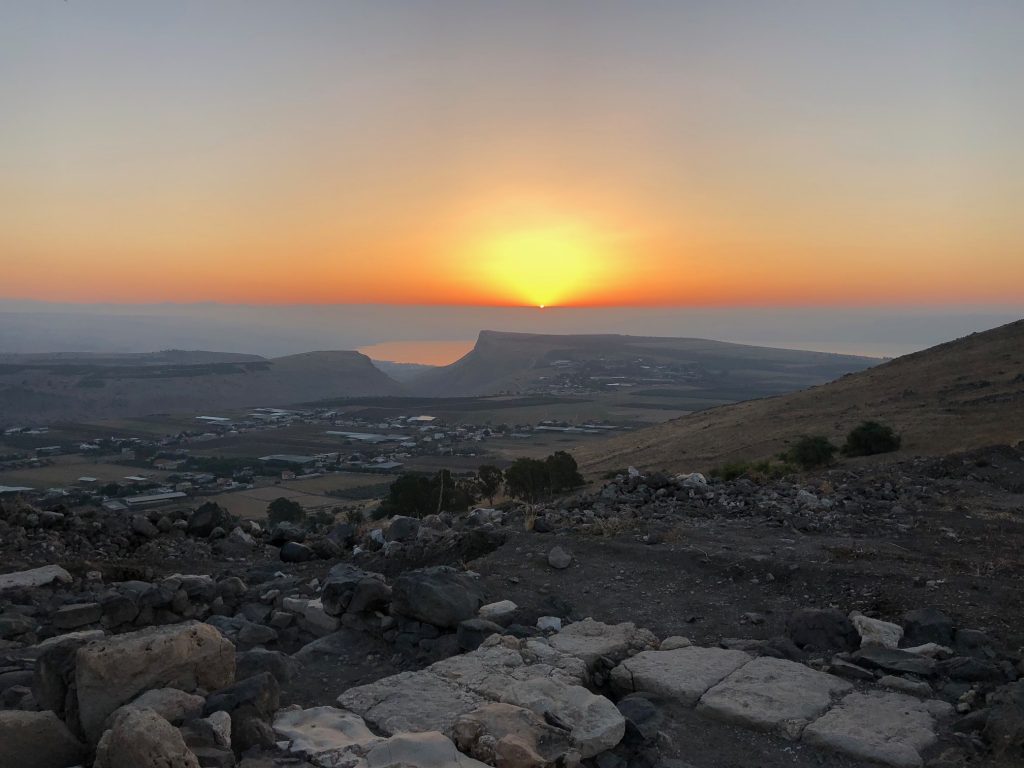
While excavation is hard work, it is exceedingly rewarding; from the beautiful sunrise over the Sea of Galilee and Mount Arbel and exciting discoveries throughout the day, to joking around with the other volunteers, there was never a dull moment digging at Khirbet el-‘Eika. My first archaeological excavation was an unforgettable experience, and I am enormously grateful to ASOR and its donors for making it possible.

Excavation Website

Excavation Facebook


Austin Richards is a senior undergraduate at Arizona Christian University in Phoenix, AZ. He is majoring in biblical studies with an emphasis in biblical languages and exegesis, and plans to apply to graduate programs in the upcoming application season. His research interests primarily relate to linguistic analysis of the Greek New Testament.

Want to help more students and young archaeologists get into the field? Donate to the cause today by selecting “Excavation Scholarships” as your gift purpose!

Committee for the Annual Meeting Code of Conduct

[vc_row fullwidth=”true” attached=”true” css=”.vc_custom_1496247803139{padding-top: 0px !important;padding-right: 0px !important;padding-bottom: 0px !important;padding-left: 0px !important;}”][vc_column][mk_image src=”http://www.asor.org/wp-content/uploads/2018/04/pergamon-museum-lions-banner-for-post.jpg” image_width=”1920″ image_height=”400″ hover=”false” margin_bottom=”0″][/vc_column][/vc_row][vc_row fullwidth=”true” css=”.vc_custom_1496682730308{padding-top: 10px !important;padding-right: 0px !important;padding-bottom: 0px !important;padding-left: 0px !important;}”][vc_column width=”1/12″ css=”.vc_custom_1496683820796{margin-right: 10px !important;}” offset=”vc_hidden-md vc_hidden-sm vc_hidden-xs”][vc_column_text]

 SHARE

[/vc_column_text][mk_image src=”http://www.asortest.org/wp-content/uploads/2017/01/social-fb-icon4.jpg” image_width=”42″ image_height=”42″ hover=”false” custom_url=”https://www.facebook.com/ASOResearch/” margin_bottom=”0″][mk_image src=”http://www.asortest.org/wp-content/uploads/2017/01/social-tw-icon4.jpg” image_width=”42″ image_height=”42″ hover=”false” custom_url=”https://twitter.com/ASOResearch?ref_src=twsrc%5Egoogle%7Ctwcamp%5Eserp%7Ctwgr%5Eauthor” margin_bottom=”0″][mk_image src=”http://www.asortest.org/wp-content/uploads/2017/01/social-in-icon4.jpg” image_width=”42″ image_height=”42″ hover=”false” custom_url=”https://www.linkedin.com/company/american-schools-of-oriental-research” margin_bottom=”0″][mk_image src=”http://www.asortest.org/wp-content/uploads/2017/01/social-ml-icon_7.jpg” image_width=”42″ image_height=”42″ hover=”false” custom_url=”mailto:asor@bu.edu” margin_bottom=”0″][mk_image src=”http://www.asortest.org/wp-content/uploads/2017/01/blog-icon3.jpg” image_width=”42″ image_height=”42″ hover=”false” custom_url=”http://asorblog.org/” margin_bottom=”0″][/vc_column][vc_column border_color=”rgba(255,255,255,0.01)” width=”1/6″ css=”.vc_custom_1496683923840{margin-right: 20px !important;border-left-width: 2px !important;padding-right: 20px !important;padding-left: 20px !important;border-left-color: #99422f !important;}”][mk_divider divider_color=”rgba(255,255,255,0.01)” thickness=”1″ margin_top=”3″ margin_bottom=”3″][vc_column_text]

NEWS@ASOR E-NEWSLETTER

ANCIENT NEAR EAST TODAY E-NEWSLETTER

PAST ASOR NEWS, MONTH BY MONTH

FY18 HONOR ROLL OF DONORS

ASOR ANNUAL MEETING

[/vc_column_text][/vc_column][vc_column border_color=”rgba(170,170,170,0.01)” width=”1/2″ css=”.vc_custom_1487276122024{margin-right: 10px !important;margin-bottom: 30px !important;border-right-width: 2px !important;border-bottom-width: 2px !important;padding-top: 30px !important;padding-right: 30px !important;padding-left: 20px !important;background-color: #ffffff !important;border-right-color: rgba(227,228,228,0.75) !important;border-bottom-color: rgba(227,228,228,0.75) !important;}”][vc_column_text responsive_align=”left”]

COMMITTEE FOR THE ANNUAL MEETING CODE OF CONDUCT

[/vc_column_text][vc_column_text]ASOR President Susan Ackerman and Vice-President Sharon Herbert are pleased to announce they have formed a committee to develop an ASOR Code of Conduct for the Annual Meeting. The committee members — drawn from the membership of ASOR’s six standing governance committees and the Initiative on the Status of Women — are Helen Dixon, Emily Hammer, Mara Horowitz, Ian Jones, R. Scott Moore, Tine Rassalle, Alison Thomason, Lynn Welton, and Vanessa Workman. ASOR Trustee Emily Miller Bonney serves as the committee chair.

We envision that this Code of Conduct will address multiple issues concerning the safety and well-being of participants at the ASOR Annual Meeting including but not limited to (1) discrimination based on sex, gender, gender identity, sexual orientation, race, ethnicity, age, and religion; (2) harassment, including (a) sexual harassment, (b) harassment that creates a hostile or intimidating environment, (c) harassment that demeans a person or group of persons and that the person responsible knew or reasonably ought to have known would cause the target to be humiliated, intimidated, or otherwise gratuitously harmed; and (d) harassment that functions implicitly or explicitly to limit others’ participation in the Annual Meeting’s program and associated activities; (3) assault, including sexual assault. The code should also include plans for emergency management of such incidents at the Annual Meeting.

At the same time the proposed Code of Conduct will recognize that conference participants have protected rights to free speech. The drafters will endeavor to achieve the appropriate balance between asserting ASOR’s commitment to the principle that conference attendees should be free from discrimination, harassment and assault while still able to exercise their academic freedom.

Overall, we hope an ASOR Code of Conduct for the Annual Meeting should set forward a series of principles for respectful and professional behavior to which every participant at the ASOR Annual Meeting should aspire, as well as a series of best practices that ASOR should strive to enact. We are grateful to Emily Miller Bonney and to the members of the Annual Meeting Code of Conduct Committee for their work on this issue, which began already last month. Their goal — and ours — is to have a policy in place for the November 2019 ASOR Annual Meeting in San Diego.[/vc_column_text][/vc_column][vc_column border_color=”rgba(170,170,170,0.01)” width=”1/6″ css=”.vc_custom_1496684098866{margin-right: 5px !important;margin-bottom: 20px !important;border-right-width: 2px !important;border-bottom-width: 2px !important;padding-top: 30px !important;padding-right: 10px !important;padding-left: 10px !important;background-color: #ffffff !important;border-right-color: rgba(227,228,228,0.75) !important;border-bottom-color: rgba(227,228,228,0.75) !important;}”][vc_wp_posts title=”BROWSE THE NEWS ARCHIVE” number=”4″][/vc_column][vc_column border_color=”rgba(170,170,170,0.01)” width=”1/6″ css=”.vc_custom_1496684008271{margin-right: 10px !important;margin-bottom: 30px !important;border-right-width: 2px !important;border-bottom-width: 2px !important;padding-top: 30px !important;padding-right: 20px !important;padding-left: 20px !important;background-color: #ffffff !important;border-right-color: rgba(227,228,228,0.75) !important;border-bottom-color: rgba(227,228,228,0.75) !important;}”][vc_column_text] [/vc_column_text][/vc_column][/vc_row][vc_row][vc_column][vc_column_text]

[/vc_column_text][/vc_column][/vc_row][vc_row][vc_column][vc_column_text]

[/vc_column_text][/vc_column][/vc_row]

ACOR Seeks Director

[vc_row fullwidth=”true” attached=”true” css=”.vc_custom_1496247803139{padding-top: 0px !important;padding-right: 0px !important;padding-bottom: 0px !important;padding-left: 0px !important;}”][vc_column][vc_single_image image=”41884″ img_size=”full” alignment=”center”][/vc_column][/vc_row][vc_row fullwidth=”true” css=”.vc_custom_1496682730308{padding-top: 10px !important;padding-right: 0px !important;padding-bottom: 0px !important;padding-left: 0px !important;}”][vc_column width=”1/12″ css=”.vc_custom_1496683820796{margin-right: 10px !important;}” offset=”vc_hidden-md vc_hidden-sm vc_hidden-xs”][vc_column_text]

 SHARE

[/vc_column_text][mk_image src=”http://www.asortest.org/wp-content/uploads/2017/01/social-fb-icon4.jpg” image_width=”42″ image_height=”42″ hover=”false” custom_url=”https://www.facebook.com/ASOResearch/” margin_bottom=”0″][mk_image src=”http://www.asortest.org/wp-content/uploads/2017/01/social-tw-icon4.jpg” image_width=”42″ image_height=”42″ hover=”false” custom_url=”https://twitter.com/ASOResearch?ref_src=twsrc%5Egoogle%7Ctwcamp%5Eserp%7Ctwgr%5Eauthor” margin_bottom=”0″][mk_image src=”http://www.asortest.org/wp-content/uploads/2017/01/social-in-icon4.jpg” image_width=”42″ image_height=”42″ hover=”false” custom_url=”https://www.linkedin.com/company/american-schools-of-oriental-research” margin_bottom=”0″][mk_image src=”http://www.asortest.org/wp-content/uploads/2017/01/social-ml-icon_7.jpg” image_width=”42″ image_height=”42″ hover=”false” custom_url=”mailto:info@asor.org” margin_bottom=”0″][mk_image src=”http://www.asortest.org/wp-content/uploads/2017/01/blog-icon3.jpg” image_width=”42″ image_height=”42″ hover=”false” custom_url=”http://www.asor.org/blog” margin_bottom=”0″][/vc_column][vc_column border_color=”rgba(255,255,255,0.01)” width=”1/6″ css=”.vc_custom_1496683923840{margin-right: 20px !important;border-left-width: 2px !important;padding-right: 20px !important;padding-left: 20px !important;border-left-color: #99422f !important;}”][mk_divider divider_color=”rgba(255,255,255,0.01)” thickness=”1″ margin_top=”3″ margin_bottom=”3″][vc_column_text]

NEWS@ASOR E-NEWSLETTER

ANCIENT NEAR EAST TODAY E-NEWSLETTER

PAST ASOR NEWS, MONTH BY MONTH

FY18 HONOR ROLL OF DONORS

ASOR ANNUAL MEETING

[/vc_column_text][/vc_column][vc_column border_color=”rgba(170,170,170,0.01)” width=”1/2″ css=”.vc_custom_1487276122024{margin-right: 10px !important;margin-bottom: 30px !important;border-right-width: 2px !important;border-bottom-width: 2px !important;padding-top: 30px !important;padding-right: 30px !important;padding-left: 20px !important;background-color: #ffffff !important;border-right-color: rgba(227,228,228,0.75) !important;border-bottom-color: rgba(227,228,228,0.75) !important;}”][vc_column_text responsive_align=”left”]

ACOR SEEKS DIRECTOR

[/vc_column_text][vc_column_text]Update: this is an archived job posting from 2019. The position has been filled; the new Director is Dr. Pearce Paul Creasman (press release link)

The American Center of Oriental Research (ACOR) seeks a Director to lead a wide-ranging research program that orchestrates extensive partnerships with U.S. and Jordanian government agencies, universities, and academics.

Founded in 1968, ACOR has worked at the forefront of international efforts to increase understanding of Jordan past and present and to make Jordan’s cultural heritage a source of economic development. In 2014, ACOR launched the Sustainable Cultural Heritage Through Engagement of Local Communities Project (USAID SCHEP), which helps communities around archaeological sites throughout Jordan to harness their own heritage to create educational and economic opportunities.

ACOR also holds the best library for archaeology and Middle Eastern studies in Jordan, the only place for scholars to access JSTOR, and hostel accommodations for fellows, researchers, and other visitors using its unique resources.

Today ACOR seeks to extend a period of growth that has fostered an atmosphere of openness and accessibility, joint community ventures, and a focus on close mentorship and practical training. ACOR’s planned leadership transition offers an opportunity for the organization to take a fresh look at these initiatives and to extend them in new directions.

The new Director will draw on considerable resources—including government relationships, support from the Board of Trustees, and an active Fellowships Committee–to set ACOR’s strategic course for a next generation of scholars and students devoted to Jordan’s cultural history and to understanding the social and economic issues Jordan faces in the modern world.

The ideal candidate will have:

-At least 10 years of distinguished work experience in: academia, cultural resources management, foreign affairs, business, or non-profit organization management.
-At least 5 years of experience managing staff.
-D. or equivalent in fields including but not limited to Middle Eastern studies, archaeology, history, art history sociology, political science, or anthropology.
-Familiarity with the principles of archaeological preservation and conservation.
-Demonstrated ability to lead, manage, and organize staff to achieve and exceed goals.
-Ability to maintain a positive, collegial, and collaborative work environment.
-Strong organizational abilities, including planning, delegating, and assessment.
-Strong written and oral communication skills.
-Sophisticated ability to navigate cross-cultural encounters and exchanges.
-Strong interest in making a home in Jordan and working with Jordanians.
-Arabic language skills are highly desirable.

Development Resources, inc. is conducting this search for the American Center of Oriental Research. Candidates can learn more and apply at http://driconsulting.com/available-positions/ or by emailing search@driconsulting.com. Applications must be received by July 8, 2019.[/vc_column_text][/vc_column][vc_column border_color=”rgba(170,170,170,0.01)” width=”1/6″ css=”.vc_custom_1496684098866{margin-right: 5px !important;margin-bottom: 20px !important;border-right-width: 2px !important;border-bottom-width: 2px !important;padding-top: 30px !important;padding-right: 10px !important;padding-left: 10px !important;background-color: #ffffff !important;border-right-color: rgba(227,228,228,0.75) !important;border-bottom-color: rgba(227,228,228,0.75) !important;}”][vc_wp_posts title=”BROWSE THE NEWS ARCHIVE” number=”4″][/vc_column][vc_column border_color=”rgba(170,170,170,0.01)” width=”1/6″ css=”.vc_custom_1496684008271{margin-right: 10px !important;margin-bottom: 30px !important;border-right-width: 2px !important;border-bottom-width: 2px !important;padding-top: 30px !important;padding-right: 20px !important;padding-left: 20px !important;background-color: #ffffff !important;border-right-color: rgba(227,228,228,0.75) !important;border-bottom-color: rgba(227,228,228,0.75) !important;}”][vc_column_text] [/vc_column_text][/vc_column][/vc_row][vc_row][vc_column][vc_column_text]

[/vc_column_text][/vc_column][/vc_row]

ASOR Member Elected to AAAS

[vc_row fullwidth=”true” attached=”true” css=”.vc_custom_1496247803139{padding-top: 0px !important;padding-right: 0px !important;padding-bottom: 0px !important;padding-left: 0px !important;}”][vc_column][vc_single_image image=”41884″ img_size=”full” alignment=”center”][/vc_column][/vc_row][vc_row fullwidth=”true” css=”.vc_custom_1496682730308{padding-top: 10px !important;padding-right: 0px !important;padding-bottom: 0px !important;padding-left: 0px !important;}”][vc_column width=”1/12″ css=”.vc_custom_1496683820796{margin-right: 10px !important;}” offset=”vc_hidden-md vc_hidden-sm vc_hidden-xs”][vc_column_text]

 SHARE

[/vc_column_text][mk_image src=”http://www.asortest.org/wp-content/uploads/2017/01/social-fb-icon4.jpg” image_width=”42″ image_height=”42″ hover=”false” custom_url=”https://www.facebook.com/ASOResearch/” margin_bottom=”0″][mk_image src=”http://www.asortest.org/wp-content/uploads/2017/01/social-tw-icon4.jpg” image_width=”42″ image_height=”42″ hover=”false” custom_url=”https://twitter.com/ASOResearch?ref_src=twsrc%5Egoogle%7Ctwcamp%5Eserp%7Ctwgr%5Eauthor” margin_bottom=”0″][mk_image src=”http://www.asortest.org/wp-content/uploads/2017/01/social-in-icon4.jpg” image_width=”42″ image_height=”42″ hover=”false” custom_url=”https://www.linkedin.com/company/american-schools-of-oriental-research” margin_bottom=”0″][mk_image src=”http://www.asortest.org/wp-content/uploads/2017/01/social-ml-icon_7.jpg” image_width=”42″ image_height=”42″ hover=”false” custom_url=”mailto:info@asor.org” margin_bottom=”0″][mk_image src=”http://www.asortest.org/wp-content/uploads/2017/01/blog-icon3.jpg” image_width=”42″ image_height=”42″ hover=”false” custom_url=”http://www.asor.org/blog” margin_bottom=”0″][/vc_column][vc_column border_color=”rgba(255,255,255,0.01)” width=”1/6″ css=”.vc_custom_1496683923840{margin-right: 20px !important;border-left-width: 2px !important;padding-right: 20px !important;padding-left: 20px !important;border-left-color: #99422f !important;}”][mk_divider divider_color=”rgba(255,255,255,0.01)” thickness=”1″ margin_top=”3″ margin_bottom=”3″][vc_column_text]

NEWS@ASOR E-NEWSLETTER

ANCIENT NEAR EAST TODAY E-NEWSLETTER

PAST ASOR NEWS, MONTH BY MONTH

FY18 HONOR ROLL OF DONORS

ASOR ANNUAL MEETING

[/vc_column_text][/vc_column][vc_column border_color=”rgba(170,170,170,0.01)” width=”1/2″ css=”.vc_custom_1487276122024{margin-right: 10px !important;margin-bottom: 30px !important;border-right-width: 2px !important;border-bottom-width: 2px !important;padding-top: 30px !important;padding-right: 30px !important;padding-left: 20px !important;background-color: #ffffff !important;border-right-color: rgba(227,228,228,0.75) !important;border-bottom-color: rgba(227,228,228,0.75) !important;}”][vc_column_text responsive_align=”left”]

ASOR MEMBER JODI MAGNESS ELECTED TO AMERICAN ACADEMY OF ARTS AND SCIENCES

[/vc_column_text][vc_column_text]ASOR congratulates longtime ASOR member, past Annual Meeting Plenary Speaker, and current president of the Archaeological Institute of America, Prof. Jodi Magness, on her election to the American Academy of Arts and Sciences. The Academy recognizes the outstanding achievements of individuals in academia, the arts, business, government, and public affairs. The Academy was founded in 1780 by John Adams, John Hancock, and others who believed the new republic should honor exceptionally accomplished individuals and engage them in advancing the public good. The Academy’s dual mission remains essentially the same 239 years later with honorees from increasingly diverse fields and with the work focused on the arts, democracy, education, global affairs, and science.

Prof. Magness holds a senior endowed chair in the Department of Religious Studies at the University of North Carolina at Chapel Hill: the Kenan Distinguished Professor for Teaching Excellence in Early Judaism. From 1992-2002, Magness was Associate/Assistant Professor of Classical and Near Eastern Archaeology in the Departments of Classics and Art History at Tufts University, Medford, MA. She received her B.A. in Archaeology and History from the Hebrew University of Jerusalem (1977), and her Ph.D. in Classical Archaeology from the University of Pennsylvania (1989).

Magness has participated on 20 different excavations in Israel and Greece, including co-directing the 1995 excavations in the Roman siege works at Masada. From 2003-2007 she co-directed excavations in the late Roman fort at Yotvata, Israel. Since 2011, Magness has directed excavations at Huqoq in Galilee (www.huqoq.org). She recently (Nov. 2018) published the amazing mosaics from Huqoq in the Bulletin of the American Schools of Oriental Research (BASOR) (link).

Read the official announcement from the American Academy of Arts and Sciences.

Read the announcement from the Archaeological Institute of America.

Read Prof. Magness’ report on excavations at Huqoq from the November 2018 issue of BASOR.[/vc_column_text][/vc_column][vc_column border_color=”rgba(170,170,170,0.01)” width=”1/6″ css=”.vc_custom_1496684098866{margin-right: 5px !important;margin-bottom: 20px !important;border-right-width: 2px !important;border-bottom-width: 2px !important;padding-top: 30px !important;padding-right: 10px !important;padding-left: 10px !important;background-color: #ffffff !important;border-right-color: rgba(227,228,228,0.75) !important;border-bottom-color: rgba(227,228,228,0.75) !important;}”][vc_wp_posts title=”BROWSE THE NEWS ARCHIVE” number=”4″][/vc_column][vc_column border_color=”rgba(170,170,170,0.01)” width=”1/6″ css=”.vc_custom_1496684008271{margin-right: 10px !important;margin-bottom: 30px !important;border-right-width: 2px !important;border-bottom-width: 2px !important;padding-top: 30px !important;padding-right: 20px !important;padding-left: 20px !important;background-color: #ffffff !important;border-right-color: rgba(227,228,228,0.75) !important;border-bottom-color: rgba(227,228,228,0.75) !important;}”][vc_column_text] [/vc_column_text][/vc_column][/vc_row][vc_row][vc_column][vc_column_text]

[/vc_column_text][/vc_column][/vc_row]

2019 Spring Executive and Board Meeting

[vc_row fullwidth=”true” attached=”true” css=”.vc_custom_1496247803139{padding-top: 0px !important;padding-right: 0px !important;padding-bottom: 0px !important;padding-left: 0px !important;}”][vc_column][mk_image src=”http://www.asor.org/wp-content/uploads/2018/04/pergamon-museum-lions-banner-for-post.jpg” image_width=”1920″ image_height=”400″ hover=”false” margin_bottom=”0″][/vc_column][/vc_row][vc_row fullwidth=”true” css=”.vc_custom_1496682730308{padding-top: 10px !important;padding-right: 0px !important;padding-bottom: 0px !important;padding-left: 0px !important;}”][vc_column width=”1/12″ css=”.vc_custom_1496683820796{margin-right: 10px !important;}” offset=”vc_hidden-md vc_hidden-sm vc_hidden-xs”][vc_column_text]

 SHARE

[/vc_column_text][mk_image src=”http://www.asortest.org/wp-content/uploads/2017/01/social-fb-icon4.jpg” image_width=”42″ image_height=”42″ hover=”false” custom_url=”https://www.facebook.com/ASOResearch/” margin_bottom=”0″][mk_image src=”http://www.asortest.org/wp-content/uploads/2017/01/social-tw-icon4.jpg” image_width=”42″ image_height=”42″ hover=”false” custom_url=”https://twitter.com/ASOResearch?ref_src=twsrc%5Egoogle%7Ctwcamp%5Eserp%7Ctwgr%5Eauthor” margin_bottom=”0″][mk_image src=”http://www.asortest.org/wp-content/uploads/2017/01/social-in-icon4.jpg” image_width=”42″ image_height=”42″ hover=”false” custom_url=”https://www.linkedin.com/company/american-schools-of-oriental-research” margin_bottom=”0″][mk_image src=”http://www.asortest.org/wp-content/uploads/2017/01/social-ml-icon_7.jpg” image_width=”42″ image_height=”42″ hover=”false” custom_url=”mailto:asor@bu.edu” margin_bottom=”0″][mk_image src=”http://www.asortest.org/wp-content/uploads/2017/01/blog-icon3.jpg” image_width=”42″ image_height=”42″ hover=”false” custom_url=”http://asorblog.org/” margin_bottom=”0″][/vc_column][vc_column border_color=”rgba(255,255,255,0.01)” width=”1/6″ css=”.vc_custom_1496683923840{margin-right: 20px !important;border-left-width: 2px !important;padding-right: 20px !important;padding-left: 20px !important;border-left-color: #99422f !important;}”][mk_divider divider_color=”rgba(255,255,255,0.01)” thickness=”1″ margin_top=”3″ margin_bottom=”3″][vc_column_text]

NEWS@ASOR E-NEWSLETTER

ANCIENT NEAR EAST TODAY E-NEWSLETTER

PAST ASOR NEWS, MONTH BY MONTH

FY18 HONOR ROLL OF DONORS

ASOR ANNUAL MEETING

[/vc_column_text][/vc_column][vc_column border_color=”rgba(170,170,170,0.01)” width=”1/2″ css=”.vc_custom_1487276122024{margin-right: 10px !important;margin-bottom: 30px !important;border-right-width: 2px !important;border-bottom-width: 2px !important;padding-top: 30px !important;padding-right: 30px !important;padding-left: 20px !important;background-color: #ffffff !important;border-right-color: rgba(227,228,228,0.75) !important;border-bottom-color: rgba(227,228,228,0.75) !important;}”][vc_column_text responsive_align=”left”]

EXECUTIVE COMMITTEE AND BOARD OF TRUSTEE MEETING REPORT

[/vc_column_text][vc_column_text]By Susan Ackerman, ASOR President


Every spring, the ASOR Board of Trustees and the Board’s Executive Committee meet to engage in discussions and undertake items of business that have come forward since the Executive Committee’s and Board’s gatherings at the November Annual Meeting. This year, the Executive Committee and the Board met during the weekend of April 5-6, in Alexandria, VA.

The meeting was an opportunity for the Board to see — at a gala housewarming reception on Friday, April 5th — ASOR’s fabulous new home in Alexandria, at 209 Commerce Street. At that reception, moreover, we were able to announce that at the request of the extremely generous anonymous donor who has taken the lead in contributing to our building fund, ASOR’s new home will be named in honor of our late ASOR colleague, James Francis Strange. I am writing this report on April 15th, a little more than a year after Jim’s death, on March 23, 2018, and it is deeply gratifying to me to know that ASOR is able to mark the anniversary of Jim’s passing with such a permanent and significant memorial.


The ASOR Annual Meeting

The major item on the agenda for this spring’s Executive Committee and Board of Trustees meetings was a discussion of the future location of the ASOR Annual Meeting. The Executive Committee and Board received a long and detailed report (82 data-packed pages!) from the Ad Hoc Committee on the Future of the Annual Meeting, which included recommendations about what ASOR might do going forward.

Most ASOR members know the problem. In 1997, when ASOR separated from the Society of Biblical Literature (SBL), ASOR committed to hold its annual meeting in the same city, or at least in reasonable geographical proximity, to SBL, and within the same general time frame (during the days immediately prior to the start of the SBL meeting). ASOR members, and the ASOR Executive Committee and Board, reaffirmed this decision at the ASOR Annual Meeting in 2007, and I think it is fair to say that this “meet independently, but in geographical and temporal conjunction with SBL” is a model that worked well for ASOR, and especially for joint SBL-ASOR members, through 2013.

But after SBL rejoined forces with the American Academy of Religion (AAR) in 2011, it became harder and harder for ASOR to secure meeting and hotel space proximate to the combined and very large AAR-SBL meeting. That meant we were in Buckhead in 2015, while AAR-SBL was in downtown Atlanta; we were in a suburban resort in San Antonio in 2016, while AAR-SBL was downtown; in 2017, we were at the waterfront Westin in Boston, while AAR-SBL was downtown at the Hynes Convention Center; and we were at the Denver Tech Park in 2018, while AAR-SBL was in downtown Denver.

Going forward, we continue to face challenges, especially when AAR-SBL is scheduled to meet in smaller cities such as San Antonio (2021, 2023, 2029) and Denver (2022, 2026). Already, then, in 2015, I appointed an Ad Hoc Committee on the Future of the Annual Meeting, charged with developing recommendations regarding a way forward. Many of you will remember that this committee conducted an all-member discussion on Thursday of the 2018 Annual Meeting, to allow ASOR’s members to present their views and discuss issues and options. The committee also conducted a member-wide survey on the future of the Annual Meeting in 2016 and again in February of this year. This 2019 survey was especially important: although it was long — 21 questions — about 580 people (more than 1/3 of the ASOR membership) responded. That’s an extraordinary response rate, and I invite ASOR members to review the results, published in both summary form and as a full data set here.

In its report that assimilated and analyzed all this (and other) data, the Ad Hoc Committee recommended that ASOR find a middle ground going forward: a way that could sustain ASOR’s historic ties to SBL and enable the many joint ASOR-SBL members to attend both meetings, yet could correct the issue that many ASOR members clearly find unsatisfactory: meeting in the outskirts of cities like San Antonio (as in 2016) and Denver (as in 2018) because we cannot secure hotel and meeting space downtown. In the end, the Board adopted what we are calling “the flexibility model,” to wit:

ASOR will make all reasonable efforts to meet in its current time frame (Wednesday to Saturday pattern) in the same city as SBL. In years in which it is not reasonable and economically feasible, ASOR will conduct its meeting in a city that best serves the greatest number of its constituencies.

The Board vote in favor of this decision was unanimous.

It remains only for me to thank the members of the Ad Hoc Committee on the Future of the Annual Meeting for their extremely hard work. They are Gary Arbino (Chair), Kent Bramlett, William Caraher, Sidnie White Crawford, Erin Darby, Karen Rubinson, and Eric Welch. I know (because I am on the e-mail chain) that they performed over and beyond the call of duty, and we in ASOR all owe them our deepest gratitude for everything they have done to make sure the Board could make the best informed decision possible.


The ASOR Budget

Another major item on the agenda for the ASOR Board’s spring meetings is always the budget, both a review of the budget for the current fiscal year (FY 19), which will come to an end on June 30, and approving the budget for the upcoming fiscal year (FY 20), which starts on July 1. The FY 19 budget is balanced – indeed, almost perfectly so, as we imagine ending the year with just a small surplus of $23! For FY 20, the Board approved a budget that also is projecting a small surplus, of $750, with projected revenues of $1,738,000 and projected expenses of $1,737,250.

In both FY 19 and FY 20, our budget — both on the income and expenses side — has a major new item: designated gifts for our new building and its furnishings and maintenance, In FY 19, we anticipate receiving $600,000 in revenue from these designated gifts, income that we will then apply to the purchase price of our building ($1.1 million) at closing (scheduled for April 24th!) and to paying down the balance we owe (financed through a short-term equity line of credit). In FY 20, we will likewise use the $400,000 in revenue we anticipate receiving as designated gifts to pay down our equity loan

We also received, in February, an additional and extraordinarily generous pledge of $450,000 that is conditional to a 2:1 match: i.e., for every $2 of the pledge, we need to raise $1 (or $225,000 total). So far, we have done exceptional work in meeting this challenge, as we have already raised $156,000 in the two-and-a-half months since the challenge was announced. Nevertheless, we need everyone’s help in raising the last $69,000. If we can raise this last $69,000, that will bring our total fund-raising up to $1.6 million, enough both to buy the building, pay financing, inspection, and closing costs, and to establish a $450,000 endowment (with a $22,500/year payout) to cover building maintenance and annual operating expenses.


ASOR Officers

My term as ASOR’s President and the terms of ASOR’s Board Chair, Richard Coffman, and ASOR’s Vice-President, Sharon Herbert, all expire at the end of December 2019, and the Officers Nominations Committee (ONC) worked hard before the Board meeting to identify how these positions should be filled going forward. The ONC continues, moreover, its hard work, as it is still deliberating regarding a new Vice-President.

But I am thrilled to announce that Sharon Herbert has been elected as ASOR’s new President, for an initial three-year term, and that Richard Coffman has been elected to serve for a second three-year term as Board Chair. Both terms will run from January 1, 2020, through December 31, 2022. Having worked with Sharon as ASOR Vice-President for the past six years, and with Richard as in his role as Board Chair for the past three-and-a-half years (and before that in his role as ASOR Treasurer), I can say unreservedly and with complete authority that ASOR going forward will be in the best possible hands. I join all the Board’s members in congratulating both Sharon and Richard on their appointments, and I know all of us offer them our gratitude and thanks for their willingness to serve ASOR in such important leadership roles.

In addition, the Board welcomed three new members: Emily Miller Bonney and Eric Welch (both Membership-elected Trustees) and Ann Sahlman (a Board-elected Trustee). We’re very happy to have these new colleagues on our Board.


Other Business

The Board finally considered several other matters of ASOR business. Probably most of note for ASOR members, the Board affirmed the President’s and Vice-President’s initiative regarding the creation of another Ad Hoc Committee, this one charged with developing a Code of Conduct for the ASOR Annual Meeting. Many other learned societies have developed such codes, and recent events at the meetings of organizations such as the Society of Classical Studies (see here and here) and the Society for American Archaeology (see here) demonstrate the need for ASOR to have a similar Code of Conduct in place. Relatedly, the Board was pleased to affirm the recently Developed Code of Conduct for Fieldwork Projects that had been put forward by the Committee on Archaeological Research and Policy (CAP).


* * *


Overall, the Board and Executive Committee had a busy set of meetings—but also a productive one, and I am thankful, as I always am, for all that ASOR’s Board members do to ensure that ASOR continues to thrive.[/vc_column_text][/vc_column][vc_column border_color=”rgba(170,170,170,0.01)” width=”1/6″ css=”.vc_custom_1496684098866{margin-right: 5px !important;margin-bottom: 20px !important;border-right-width: 2px !important;border-bottom-width: 2px !important;padding-top: 30px !important;padding-right: 10px !important;padding-left: 10px !important;background-color: #ffffff !important;border-right-color: rgba(227,228,228,0.75) !important;border-bottom-color: rgba(227,228,228,0.75) !important;}”][vc_wp_posts title=”BROWSE THE NEWS ARCHIVE” number=”4″][/vc_column][vc_column border_color=”rgba(170,170,170,0.01)” width=”1/6″ css=”.vc_custom_1496684008271{margin-right: 10px !important;margin-bottom: 30px !important;border-right-width: 2px !important;border-bottom-width: 2px !important;padding-top: 30px !important;padding-right: 20px !important;padding-left: 20px !important;background-color: #ffffff !important;border-right-color: rgba(227,228,228,0.75) !important;border-bottom-color: rgba(227,228,228,0.75) !important;}”][vc_column_text] [/vc_column_text][/vc_column][/vc_row][vc_row][vc_column][vc_column_text]

[/vc_column_text][/vc_column][/vc_row][vc_row][vc_column][vc_column_text]

[/vc_column_text][/vc_column][/vc_row]

Name of ASOR Office Announced at Board Reception

[vc_row fullwidth=”true” attached=”true” css=”.vc_custom_1496247803139{padding-top: 0px !important;padding-right: 0px !important;padding-bottom: 0px !important;padding-left: 0px !important;}”][vc_column][vc_single_image image=”42150″ img_size=”full” alignment=”center”][/vc_column][/vc_row][vc_row fullwidth=”true” css=”.vc_custom_1556814827898{padding-right: 0px !important;padding-bottom: 0px !important;padding-left: 0px !important;}”][vc_column width=”1/12″ css=”.vc_custom_1496683820796{margin-right: 10px !important;}” offset=”vc_hidden-md vc_hidden-sm vc_hidden-xs”][vc_column_text]

 SHARE

[/vc_column_text][mk_image src=”http://www.asortest.org/wp-content/uploads/2017/01/social-fb-icon4.jpg” image_width=”42″ image_height=”42″ hover=”false” custom_url=”https://www.facebook.com/ASOResearch/” margin_bottom=”0″][mk_image src=”http://www.asortest.org/wp-content/uploads/2017/01/social-tw-icon4.jpg” image_width=”42″ image_height=”42″ hover=”false” custom_url=”https://twitter.com/ASOResearch?ref_src=twsrc%5Egoogle%7Ctwcamp%5Eserp%7Ctwgr%5Eauthor” margin_bottom=”0″][mk_image src=”http://www.asortest.org/wp-content/uploads/2017/01/social-in-icon4.jpg” image_width=”42″ image_height=”42″ hover=”false” custom_url=”https://www.linkedin.com/company/american-schools-of-oriental-research” margin_bottom=”0″][mk_image src=”http://www.asortest.org/wp-content/uploads/2017/01/social-ml-icon_7.jpg” image_width=”42″ image_height=”42″ hover=”false” custom_url=”mailto:asor@bu.edu” margin_bottom=”0″][mk_image src=”http://www.asortest.org/wp-content/uploads/2017/01/blog-icon3.jpg” image_width=”42″ image_height=”42″ hover=”false” custom_url=”http://asorblog.org/” margin_bottom=”0″][/vc_column][vc_column border_color=”rgba(255,255,255,0.01)” width=”1/6″ css=”.vc_custom_1496683923840{margin-right: 20px !important;border-left-width: 2px !important;padding-right: 20px !important;padding-left: 20px !important;border-left-color: #99422f !important;}”][mk_divider divider_color=”rgba(255,255,255,0.01)” thickness=”1″ margin_top=”3″ margin_bottom=”3″][vc_column_text]

NEWS@ASOR E-NEWSLETTER

ANCIENT NEAR EAST TODAY E-NEWSLETTER

PAST ASOR NEWS, MONTH BY MONTH

FY18 HONOR ROLL OF DONORS

ASOR ANNUAL MEETING

[/vc_column_text][/vc_column][vc_column border_color=”rgba(170,170,170,0.01)” width=”1/2″ css=”.vc_custom_1556814847912{margin-right: 10px !important;margin-bottom: 30px !important;border-right-width: 2px !important;border-bottom-width: 2px !important;padding-right: 30px !important;padding-left: 20px !important;background-color: #ffffff !important;border-right-color: rgba(227,228,228,0.75) !important;border-bottom-color: rgba(227,228,228,0.75) !important;}”][vc_column_text responsive_align=”left”]

Naming of ASOR Office in Memory of Jim Strange Celebrated at Reception

[/vc_column_text][vc_column_text]

Painting of the new ASOR office. Building will be named in memory of Jim Strange.

One of the highlights of the ASOR Board Meeting was a celebratory, drop-in reception held at ASOR’s new home—209 Commerce Street in Alexandria, Virginia. Even though ASOR had not officially purchased the building—we close on April 24th—there was much to celebrate.

First and foremost, ASOR trustees and guests celebrated the announcement that the new building building will be named in memory of longtime ASOR member, trustee, secretary, and friend, James F. Strange. While the name of the building was unanimously approved by the ASOR Executive Committee at its meeting on February 3, 2019, and while the ASOR Board was informed of this vote in Susan Ackerman’s President’s Report, we made the first public announcement at the reception on April 5th. A more complete announcement will follow in a subsequent issue of News@ASOR, and a naming ceremony will take place next spring (2020).

We also celebrated the naming of the building by giving Jim’s beloved wife and current ASOR trustee, Carolyn Midkiff Strange, a painting of ASOR’s new home. Following a brief announcement and presentation of the painting by ASOR Executive Director Andy Vaughn, Carolyn thanked everyone in attendance and share how pleased Jim would have been. She said that a permanent ASOR office had been a dream for Jim, and she was confident that he would have thrilled at our success in raising the funds and finding such a wonderful location in Alexandria.

Last, but certainly not least, all of the attendees at the reception enjoyed fabulous food and beverages. The ASOR staff and family pitched in to prepare a feast—including tenderloin, fresh-baked rolls, and selected foods and beverages from Virginia.

We hope that all ASOR members will check future issues of News@ASOR for updates on ASOR’s New Home and our move. The previous owners just moved out of the building three days ago (April 13th). New internet will be installed today (April 16th), and new phones will arrive on Thursday (April 18th). We close on the purchase next Wednesday (April 24th).

For the time being, the ASOR staff is functioning well with folding tables and temporary furniture and filing cabinets. Our files, copier/printer, some furniture, and archived books and journals will arrive from Boston on May 4th. All of the staff look forward to welcoming all of our members to our new home and to sharing further updates as we get settled and furnish the building.

Attendees at the reception celebrating ASOR’s new home

Finally, we want to remind all ASOR members that we cannot celebrate too much until we meet our fundraising goals and “earn” an extraordinary challenge gift of $450,000. As announced a couple weeks ago, ASOR has received a new challenge gift of $450,000 that will ensure that ASOR meets and even exceeds our $1.5 million goal to purchase. We only need to meet two challenges to “earn” this additional $450,000:

  • First, we need to demonstrate that we are all behind the purchase of ASOR’s new home and ASOR’s other initiatives by securing “450 for $450,000”: that’s 450 donors donating $10 or more to ASOR in this fiscal year (July ’18-June ’19). As of April 15th, we are at 240 donors, so we need gifts from 210 more individuals, companies, or organizations.
  • Second, we need to match the challenge of $450,000 by raising $225,000 in new gifts and pledges (made after February 1st), or $1 for every $2 of the donor’s gift. And we are well on our way, as we have received pledges of $156,000 in the past month—so we only need $69,000 more.

How You Can Help. We are almost there! If you have not already made a gift, please consider joining the “450 for $450,000” campaign by donating to ASOR before June 30, 2019 (all gifts, including programs other than the building qualify). If you have already pledged or made a gift to support our new home, please think about increasing your gift or pledge to the building so that we can raise the last $69,000 needed to qualify for this $450,000 challenge.


To recognize your support, we offer naming opportunities at the following levels:

  • Naming of conference room or floor = $300,000
  • Naming of an individual office (sizes vary) = $100,000 – $250,000
  • Name recognition on smaller office spaces = $25,000 – $99,999
  • Name on plaque recognizing major donors = $10,000 or more
  • Name on a plaque recognizing all donors at “brick” level or higher = $250 or more

Please click here to give generously today![/vc_column_text][/vc_column][vc_column border_color=”rgba(170,170,170,0.01)” width=”1/6″ css=”.vc_custom_1556814859095{margin-right: 5px !important;margin-bottom: 20px !important;border-right-width: 2px !important;border-bottom-width: 2px !important;padding-right: 10px !important;padding-left: 10px !important;background-color: #ffffff !important;border-right-color: rgba(227,228,228,0.75) !important;border-bottom-color: rgba(227,228,228,0.75) !important;}”][vc_wp_posts title=”BROWSE THE NEWS ARCHIVE” number=”4″][/vc_column][vc_column border_color=”rgba(170,170,170,0.01)” width=”1/6″ css=”.vc_custom_1496684008271{margin-right: 10px !important;margin-bottom: 30px !important;border-right-width: 2px !important;border-bottom-width: 2px !important;padding-top: 30px !important;padding-right: 20px !important;padding-left: 20px !important;background-color: #ffffff !important;border-right-color: rgba(227,228,228,0.75) !important;border-bottom-color: rgba(227,228,228,0.75) !important;}”][vc_column_text] [/vc_column_text][/vc_column][/vc_row][vc_row][vc_column][vc_column_text]

[/vc_column_text][/vc_column][/vc_row][vc_row][vc_column][vc_column_text]

[/vc_column_text][/vc_column][/vc_row]

Fellowship Report: Amanda Bauer

THE ARCHAEOLOGY OF ARCHAEOLOGY

Amanda Bauer, 2018 Shirlee Meyers Excavation Fellowship Recipient

To begin, I would like to thank Eric and Carol Meyers for awarding me the 2018 Shirlee Meyers Excavation Fellowship. With their support, I had the great opportunity to excavate at Tel Dan for the


A Mamluk grave previously excavated in past season.

2018 dig season. I also give thanks to Professors Aaron Burke and David Ilan for being so patient with me as a first time staff member – your guidance and support this season was invaluable and immensely inspiring. Lastly, a huge thank you to all the volunteers I had the pleasure of working with this season; without you all, we would not have accomplished what we did. Thank you for your persistence, inquisitive minds, and allowing me to learn beside you.

The 2018 Excavation Season

From June 18 to July 12, UCLA joined Hebrew Union College (directed by Prof. David Ilan) to excavate at Tel Dan, as per the Turning Points Project beginning this year. Tel Dan is an archaeological site in northern Israel, most famous for the stele found referencing the House of David, דוד בית. This season, UCLA supervised excavations in Area B – a domestic context previously excavated by Prof. Avraham Biran. Our main research objective was to better date the transition from Late Bronze Age to early Iron Age (phases IVB, V, and VI). We are currently waiting for results from faunal and botanical remains.


Second day of season, first wall to be excavated in the 2018 season in square D19.

This season I had the role of square supervisor . As my previous experience in the field was as a volunteer, I have a new appreciation for the amount of paperwork and data sorting it takes to prepare for each season and publication – I never imagined I’d be excavating through files from previous seasons in order to physically excavate in the field (a whole new meaning of archaeology). And just as every archaeologist has their own field methods and habits, so do they in their database and organizational structures. The outcome of an excavation has just as much to do with the methodology and analysis as it does with the material culture presented. My participation as a square supervisor at Tel Dan this summer thus gave me great insight into how many seasons it can take to find that one locus you’ve been searching for (not in 2016, or in 2014, but maybe in 2012 .…)


End of season photo with all volunteers from square D19.

A second unmentioned aspect of supervising is that of people management. Not only am I required to excavate previous seasons’ data, as well as excavate current material in the field, but also guide the volunteers with whom I am working. Archaeology may be a social science studying material remains from antiquity, but we must also work with humans still holding onto their soft tissue (excluding the bog people, in this case) in order to achieve this. Therefore, an instructive supervisor must also have communication skills – this is not taught while researching burial practices for a senior thesis, unfortunately.

My last major takeaway from this summer is that the season is not over when the volunteers leave the site. When the physical labor ceases, is when the mental labor begins – the files have been


Excavating a storage jar in-situ at a potential destruction phase.

excavated, the site has been further excavated, and now my field journal and memory will be excavated to complete the final report of the season. At this point of the season, I found solace in knowing I was not the only supervisor frantically looking through their notes to figure out what that one stone was doing in that one locus… I could feel Van Gennep’s Rites de Passage as I slowly began the transition into the life of an archaeologist, and I could not be more ecstatic.

Amanda Bauer graduated summa cum laude from the University of Arizona in 2017 with a dual-major in Anthropology and Judaic Studies. She is beginning her PhD at the University of California, Los Angeles in the Department of Near Eastern Languages & Cultures this fall 2018. Amanda’s main interests include Levantine Archaeology, Late Bronze and early Iron Age, Hebrew Bible and cultural formation and identity.

Want to help more students and young archaeologists get into the field? Donate to the cause today by selecting “Excavation Scholarships” as your gift purpose!

2018 Annual Meeting Summary

[vc_row fullwidth=”true” attached=”true” css=”.vc_custom_1496247803139{padding-top: 0px !important;padding-right: 0px !important;padding-bottom: 0px !important;padding-left: 0px !important;}”][vc_column][mk_image src=”http://www.asor.org/wp-content/uploads/2017/06/JjQGRKV-e1548166184127.jpg” image_width=”1920″ image_height=”400″ hover=”false” margin_bottom=”0″][/vc_column][/vc_row][vc_row fullwidth=”true” css=”.vc_custom_1496682730308{padding-top: 10px !important;padding-right: 0px !important;padding-bottom: 0px !important;padding-left: 0px !important;}”][vc_column width=”1/12″ css=”.vc_custom_1496683820796{margin-right: 10px !important;}” offset=”vc_hidden-md vc_hidden-sm vc_hidden-xs”][vc_column_text]

 SHARE

[/vc_column_text][mk_image src=”http://www.asortest.org/wp-content/uploads/2017/01/social-fb-icon4.jpg” image_width=”42″ image_height=”42″ hover=”false” custom_url=”https://www.facebook.com/ASOResearch/” margin_bottom=”0″][mk_image src=”http://www.asortest.org/wp-content/uploads/2017/01/social-tw-icon4.jpg” image_width=”42″ image_height=”42″ hover=”false” custom_url=”https://twitter.com/ASOResearch?ref_src=twsrc%5Egoogle%7Ctwcamp%5Eserp%7Ctwgr%5Eauthor” margin_bottom=”0″][mk_image src=”http://www.asortest.org/wp-content/uploads/2017/01/social-in-icon4.jpg” image_width=”42″ image_height=”42″ hover=”false” custom_url=”https://www.linkedin.com/company/american-schools-of-oriental-research” margin_bottom=”0″][mk_image src=”http://www.asortest.org/wp-content/uploads/2017/01/social-ml-icon_7.jpg” image_width=”42″ image_height=”42″ hover=”false” custom_url=”mailto:asor@bu.edu” margin_bottom=”0″][mk_image src=”http://www.asortest.org/wp-content/uploads/2017/01/blog-icon3.jpg” image_width=”42″ image_height=”42″ hover=”false” custom_url=”http://asorblog.org/” margin_bottom=”0″][/vc_column][vc_column border_color=”rgba(255,255,255,0.01)” width=”1/6″ css=”.vc_custom_1496683923840{margin-right: 20px !important;border-left-width: 2px !important;padding-right: 20px !important;padding-left: 20px !important;border-left-color: #99422f !important;}”][mk_divider divider_color=”rgba(255,255,255,0.01)” thickness=”1″ margin_top=”3″ margin_bottom=”3″][vc_column_text]

NEWS@ASOR E-NEWSLETTER

ANCIENT NEAR EAST TODAY E-NEWSLETTER

PAST ASOR NEWS, MONTH BY MONTH

FY18 HONOR ROLL OF DONORS

ASOR ANNUAL MEETING

[/vc_column_text][/vc_column][vc_column border_color=”rgba(170,170,170,0.01)” width=”1/2″ css=”.vc_custom_1487276122024{margin-right: 10px !important;margin-bottom: 30px !important;border-right-width: 2px !important;border-bottom-width: 2px !important;padding-top: 30px !important;padding-right: 30px !important;padding-left: 20px !important;background-color: #ffffff !important;border-right-color: rgba(227,228,228,0.75) !important;border-bottom-color: rgba(227,228,228,0.75) !important;}”][vc_column_text responsive_align=”left”]

2018 ANNUAL MEETING SUMMARY

[/vc_column_text][vc_column_text]By Geoff Emberling, Helen Dixon, Arlene Press

The 2018 ASOR Annual Meeting was held November 14-17 at the Denver Marriott Tech Center in Denver, Colorado. Over the three days there were 100 sessions and workshops and more than 450 presentations given, as well as numerous meetings and social events.

ASOR’s Program Committee supervises the assembly of the academic program for the annual meeting. We have a framework of standing sessions chaired by ASOR members that covers the geographical, temporal, and disciplinary range of research supported by ASOR, and each year we also solicit proposals for more focused session proposals from ASOR members. The Program Committee also nominates a small slate of potential plenary speakers for consideration by the Chairs Coordinating Council each year.

The Program Committee (PC) in recent years has been interested in sustaining the traditional strength of ASOR in research on lands of the Bible but also expanding our scope to encompass research on neighboring cultures, earlier and later phases, and new theoretical and methodological approaches. The result has been a steady growth in the size of the annual meeting and an increasing feeling that the ASOR Annual Meeting is an exciting place to present and hear about research on the ancient and medieval Middle East and Eastern Mediterranean regions. We have also been mindful of the desire of many ASOR members to keep the conference to a manageable size, and have worked to find the right balance between those impulses.

We were very pleased to have our 2018 plenary address given by Hélène Sader of the American University of Beirut. The PC had been very interested in having a speaker from the Middle East as a plenary speaker, and Professor Sader’s presentation, “Between Looters, Private Collectors, and Warlords: Does Archaeology Stand a Chance?,” was a thought-provoking presentation of tensions surrounding excavation and site preservation in Lebanon. The presentation can be viewed online at ASOR’s website.

ASOR members who attended the meeting will all have their personal favorites among the sessions presented, but the most popular sessions based on reported attendance included a range of ASOR-sponsored sessions and member-organized sessions that demonstrated the traditional strengths of ASOR as well as some newer directions for research. And before listing those sessions, we hasten to add that the value of a session is not determined simply by the number of people in the room!

With that said, the best-attended session by far was, “The Megiddo Excavations: New Studies Reflecting on the Archaeology and History of Ancient Israel and Beyond,” followed by other sessions on archaeology of the Levant:

– “The Tenth Century B.C.E. Borderlands of the Greater Hesi Region: Implications”

-“The Huqoq Excavation Project”

-“Yerushalayim, Al Quds, Jerusalem”

A number of member-organized sessions drew large crowds and demonstrated the range of current interests of ASOR members:

-“Interrogating Cultural Change—Punctuated Equilibria Models in Near Eastern Archaeology and Egyptology”

-“What’s in a Name? Re-assessing the Oriental in the American Schools of Oriental Research”

-“Ambiguity in the Ancient Near East: In-Between Spaces and Otherworldly Encounters”

The session on “What’s in a Name?” was a workshop format with short presentations and more time for discussion and raised the question of whether ASOR needed to remove “Oriental” from its name. The consensus in the room was overwhelmingly in favor of making that change.

In addition, a number of ASOR-sponsored sessions drew particularly large audiences this year:

-Archaeology of Cyprus

-Approaches to Dress and the Body

-Bioarchaeology in the Near East

-History of Archaeology

It is also worth noting that ASOR has made particular efforts to keep our session on the Archaeology of Iran alive despite current political obstacles. The session this year included presentations by two Iranian Scholars who were able to attend the meeting only because of the support of the American Institute of Iranian Studies.

The Amman research center ACOR’s 50th Anniversary was recognized on the academic program with the session, ACOR at 50: A Retrospective and Prospective for the American Center of Oriental Research. ACOR and the Cyprus center CAARI held a joint celebration of their 50th and 40th anniversaries by sponsoring a reception for all attendees.

The Annual Meeting is a great place to present your research, learn about projects that might connect with yours in perhaps unexpected ways, to see old friends and make new connections. We look forward to working with you all in the coming year to create the program for the 2019 Annual Meeting in San Diego.[/vc_column_text][/vc_column][vc_column border_color=”rgba(170,170,170,0.01)” width=”1/6″ css=”.vc_custom_1496684098866{margin-right: 5px !important;margin-bottom: 20px !important;border-right-width: 2px !important;border-bottom-width: 2px !important;padding-top: 30px !important;padding-right: 10px !important;padding-left: 10px !important;background-color: #ffffff !important;border-right-color: rgba(227,228,228,0.75) !important;border-bottom-color: rgba(227,228,228,0.75) !important;}”][vc_wp_posts title=”BROWSE THE NEWS ARCHIVE” number=”4″][/vc_column][vc_column border_color=”rgba(170,170,170,0.01)” width=”1/6″ css=”.vc_custom_1496684008271{margin-right: 10px !important;margin-bottom: 30px !important;border-right-width: 2px !important;border-bottom-width: 2px !important;padding-top: 30px !important;padding-right: 20px !important;padding-left: 20px !important;background-color: #ffffff !important;border-right-color: rgba(227,228,228,0.75) !important;border-bottom-color: rgba(227,228,228,0.75) !important;}”][vc_column_text] [/vc_column_text][/vc_column][/vc_row][vc_row][vc_column][vc_column_text]

[/vc_column_text][/vc_column][/vc_row][vc_row][vc_column][vc_column_text]

[/vc_column_text][/vc_column][/vc_row]

Fellowship Report: Grant Ginson

THE STUDY SEASON: THE LESS EXCITING, BUT STILL IMPORTANT COUNTERPART OF THE FIELD SEASON

Grant Ginson, 2018 Strange and Midkiff Families Excavation Fellowship Recipient


The author at the Dome of the Rock in Jerusalem.

So you’ve dug, baulk trimmed, mapped, sectioned and backfilled. After a successful excavation season, you look back at all the objects, pottery and samples carefully removed and see that there is a lot of material to study. Sometimes, this material can be studied in the lab while being excavated. But an excavation produces lots of material and it cannot all be studied in a few weeks or even months. In these cases, it is necessary to have a season where you can study the material without having to deal with the necessities of a field season at the same time. This is where the study season comes in: it is an opportunity to engage and to expand the research for a project.

Through the generosity of the Strange and Midkiff Families Excavation Fellowship, I was able to participate for the first time on a study season this summer. The fellowship allowed me to travel to Jordan where I was a part of the Town of Nebo Archaeological Project. A young project, its inaugural season was in 2014, and 2018 was the second study season for the project. I took it as an opportunity to experiment and perform tasks that I never had time to do properly during a field season. This season, I expanded on something that has interested me since I had first seen it in action on a previous field season in 2016: photogrammetry. In 2016, I was shown the basics of photogrammetry and the program Agisoft Photoscan, which I used to create some preliminary models of objects, excavation squares and installations. That same year, I wrote a paper about mapping excavated objects in three-dimensional space using a GIS


Setup one where the object stays stationary and the camera moves around the object.

program. This bestowed on me a desire to create models of excavated objects that could then be used to show their location after excavation in three-dimensional space. With that in mind, I set out to use this study season to create some models of excavated objects.

To create these models, I tried two different methods. The first involved a stationary object that would stay in the same spot while the camera rotated around it at a set distance and different heights. The second used a rudimentary lightbox that would provide an even light around objects and provide a crisp background of white to contrast with the objects being photographed. A turntable was then placed inside the lightbox to rotate objects in front of a stationary camera on a tripod. The first method worked fairly well but it had issues in that it was difficult to get the bottoms of objects and it had a lot of background noise. The second method created very good images that could be used to make complete models that included the bottom and had almost no background noise. Based on these results, I went ahead using the second method, as it was more efficient. There were still some issues with this method, the rudimentary setup meant that the lighting was not entirely even around the objects and there were some issues with keeping shadows off of the objects. To process the images, I decided to try a program called “Capture Reality” that I had heard about at the 2017 AIA conference in Toronto. The results were quite good; and are good enough models for representation and measurement. I experimented with different types of objects, corroded metal, stone mortars, ceramic figurines, basalt grindstones and pots. Each of these had issues that had to be overcome, but each was able to be made into a model by the end of the season. With this opportunity, I started something that will continue with the project: digitizing objects into digital models. As this was my role for the season, my days would typically be spent taking photos, processing data, prepping data and waiting for data to process. This may seem quite unexciting compared to the field season but it is quite necessary. There is a saying often


Setup two where the camera is stationary and the object is rotated on a turntable inside A lightbox.

quoted during excavation that ‘for every hour in the field, three hours are spent in the lab.’ The routine of the day made it hard to believe that I was there for five weeks, as each day became very similar to the last. Not going into the field also meant a much later wakeup at 8am to begin work rather than the usual 4am, giving me considerably more sleep than I was used to while in the field.

The study season is not all work all the time though, and there were new opportunities that could be taken since we were not tied down as much as by an excavation season. For one, it allowed for the visiting of a few other archaeological projects in the area, as well as journeying to the neighbouring country of Israel which I had never gotten to visit during an excavation season. The visits to other excavations broadened my knowledge of other projects as I got to witness how other sites excavate to meet the needs of each project’s research goals. Some look for artifacts down to 4mm and painstakingly look through all material to find as much as possible from the site. Others required a bit of a hike up a wadi (valley) to get to and had architecture that was difficult to distinguish from surrounding material. Others had different ways of setting up equipment like sifts. This also gave me the opportunity to meet other archaeologists and get to know their research and interests.

Through my experience I can say that, while definitely not as exciting as a field season, the study season can be just as fulfilling and rewarding. It has been a time to learn and a time to expand my knowledge. I have ASOR and the Strange and Midkiff Families Excavation Fellowship to thank for that.


The results of a model of a ceramic vessel object.


Grant Ginson is a Wilfred Laurier University Archaeology grad who has worked in Jordan for three field seasons and in Canada for one field season. Grant hopes to use the experience he has gained through ASOR fellowships to continue his education at a graduate level by pursuing a Masters.


Project Links:
Facebook: https://www.facebook.com/townofneboarchaeologicalproject/?hc_ref=ARTOew_41MsjGWLGNYdyS9ywPGhcBYbTNFUH8mys7EOr-d1a2LyahAxujKbOKxD4fh0&_rdc=1&_rdr

Twitter: https://twitter.com/neboarchaeology?lang=en

Website: http://www.townofneboproject.com/

Want to help more students and young archaeologists get into the field? Donate to the cause today by selecting “Excavation Scholarships” as your gift purpose!