125 NEW DONORS HELP ASOR EXCEED GOAL FOR A $33,000 CHALLENGE GIFT
Update (July 5, 2017)
Thanks to the generosity of 125 new donors, ASOR exceeded our goal of gaining support from 100 new donors and qualified for a $33,000 challenge gift! Thank you to everyone who made a financial contribution to ASOR during our last fiscal year, which ended on June 30.
In early May, ASOR Development Chair Ed Wright announced in a letter to ASOR members that the ASOR Board had made a $33,000 challenge gift. Board members collectively pledged to contribute $33,000 to the ASOR Annual Fund if we could recruit 100 new donors who had not yet made a gift this fiscal year (July 1, 2016 – June 30, 2017). Not only did we meet that challenge, but we surpassed it by 25 people.
All of these donors showed that not only do modest gifts add up to create significant support, they helped ASOR qualify for $33,000 that was crucial to (once again) having a balance budget.
If you are one of the 395 people who made a gift to ASOR in Fiscal Year 2017, thank you so much for your support. You not only helped us meet this challenge, but you helped ASOR have one of the highest donor participation rates (if not the highest rate) of any learned society.
We will be publishing our Honor Roll of Donors in the next News@ASOR (July 21st), and we look forward to thanking each of you by name.
If you would like to get a head start on joining the list of donors to ASOR for Fiscal Year 2018 (ends June 30, 2018), please click on the “Donate Now” button below.
Other ways you can donate:
Donate by Phone
Call ASOR at 857-277-1174
Donate by Mail
Send a check to:
ASOR
P. O. Box 15729
Boston, MA 02215
Make a Pledge (Donate Later)
Send an e-mail to ASOR[/vc_column_text][/vc_column][vc_column border_color=”rgba(170,170,170,0.01)” width=”1/6″ css=”.vc_custom_1496684098866{margin-right: 5px !important;margin-bottom: 20px !important;border-right-width: 2px !important;border-bottom-width: 2px !important;padding-top: 30px !important;padding-right: 10px !important;padding-left: 10px !important;background-color: #ffffff !important;border-right-color: rgba(227,228,228,0.75) !important;border-bottom-color: rgba(227,228,228,0.75) !important;}”][vc_wp_posts title=”BROWSE THE NEWS ARCHIVE” number=”4″][/vc_column][vc_column border_color=”rgba(170,170,170,0.01)” width=”1/6″ css=”.vc_custom_1496684008271{margin-right: 10px !important;margin-bottom: 30px !important;border-right-width: 2px !important;border-bottom-width: 2px !important;padding-top: 30px !important;padding-right: 20px !important;padding-left: 20px !important;background-color: #ffffff !important;border-right-color: rgba(227,228,228,0.75) !important;border-bottom-color: rgba(227,228,228,0.75) !important;}”][vc_column_text]Tweets by ASOResearch [/vc_column_text][/vc_column][/vc_row]
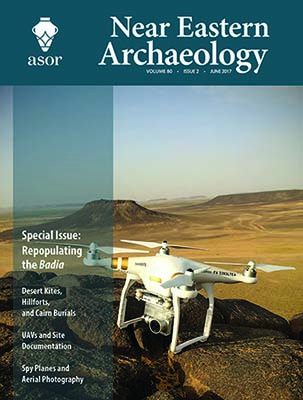
Table of Contents for Near Eastern Archaeology 80:2 (June 2017)
Subscription Options You can receive NEA (and other ASOR publications) through an ASOR Membership or through an Individual Subscription. Single issues (subject to availability) are available for purchase, with ASOR members receiving a discount. Please email us if you have any questions.
Pp. 48–72: “Exploring the Badia,” by Alison Betts
The east Jordan badia is a fascinating but difficult landscape, an attribute that has protected the record of its historic and prehistoric past to an extraordinary degree. It is rich in rock art, graves, hunting traps, seasonal settlements and fortified sites that have remained almost undisturbed for thousands of years. Archaeological exploration of this region has also been slow, primarily due to the challenges of work in this rocky, semiarid region. However, the past few decades have seen a surge in new research that continues to uncover unexpected and remarkable aspects of the history of the badia. This article outlines the history of exploration and research in the badia and its historical significance.
Click here to access the above article on JSTOR (ASOR membership with online access and/or subscription to JSTOR Current Content required).
Pp. 74–83: “Historical Imagery of Desert Kites in Eastern Jordan,” by Emily Hammer and Anthony Lauricella
Large mass-kill hunting traps known as desert kites are the badia’s most visually striking and long-studied archaeological features. Kites are best understood from a vertical perspective with help from aerial and satellite imagery, most commonly modern Google Earth imagery. The declassification of historical U2 spy-plane imagery from 1958–1960 provides a new dataset with which to reexamine kites and their spatial distribution. The distribution of desert kites as it appeared over fifty years ago has been mapped, allowing us to draw conclusions about the long-term preservation of kites and the relationship of kites to each other and to their environment.
Click here to access the above article on JSTOR (ASOR membership with online access and/or subscription to JSTOR Current Content required).
Pp. 84–93: “The Badia from Above: Successes, Limitations, and Potential,” by Robert Bewley and Rebecca Repper
Aerial photography and reconnaissance for archaeology was pioneered in the Middle East a century ago. This article highlights the work of the Aerial Archaeology Project in the northern and eastern badia of Jordan since 1997—the only aerial archaeology project outside Europe. The achievements of aerial reconnaissance in understanding the complex and concentrated archaeology of the badia as well as the importance of collaboration with other archaeologists are emphasized.
Click here to access the above article on JSTOR (ASOR membership with online access and/or subscription to JSTOR Current Content required).
Pp. 94–101: “The Late Epipalaeolithic and Early Neolithic in the Jordanian Badia: Recent Fieldwork around the Qa’ Shubayqa,” by Tobias Richter
Until recently the late Epipalaeolithic and early Neolithic occupation of Jordan’s eastern badia was poorly understood and developments in this region were considered as secondary to those in the Jordan Valley or elsewhere. Recent fieldwork in the Qa’ Shubayqa are has led to the discovery of a dense cluster of late Epipalaeolithic and Pre-Pottery Neolithic A (PPNA) sites, which shed a different light on this phase of human settlement in eastern Jordan. This evidence demonstrates that the eastern badia was not a peripheral region during the late Pleistocene and early Holocene, but an intensively settled region.
Click here to access the above article on JSTOR (ASOR membership with online access and/or subscription to JSTOR Current Content required).
Pp. 102–113: “The Late Neolithic Presence in the Black Desert,” by Yorke M. Rowan, Gary Rollefson, Alexander Wasse, Austin “Chad” Hill, and Morag M. Kersel
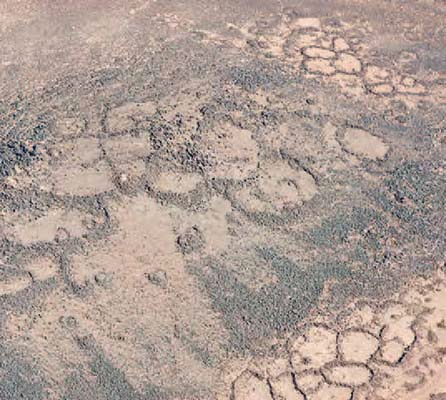
Major cultural transformations took place in the southern Levant during the late prehistoric periods (ca. mid-seventh through fourth millenna b.c.e.). General syntheses rarely include more than cursory mention of the more arid regions of the southern Levant (Negev, eastern and southern Jordan). The Eastern Badia Archaeological Project [EBAP] study area comprises a west–east transect across the southern part of the eastern badia, selected to include a variety of ecological zones. To date, this field research project has focused on two primary study areas in the Black Desert in Jordan’s panhandle: Wisad Pools and Wadi al-Qattafi. In both areas, excavation combined with pedestrian and aerial survey record an apparent florescence of building and intensive exploitation of the landscape that contradicts previous assumptions that the region was used only intermittently by late prehistoric people. The many substantial well-constructed Late Neolithic buildings, evidence for trees and marshy plants, and extensive systems of kites seem to suggest that, rather than a virtually empty region, the Black Desert was once rich in animals, plants and people.
Click here to access the above article on JSTOR (ASOR membership with online access and/or subscription to JSTOR Current Content required).
Pp. 114–123: “Droning on in the Badia: UAVs and Site Documentation at Wadi al-Qattafi,” by Austin “Chad” Hill and Yorke Rowan
Drones, or Unpiloted Aerial Vehicles (UAVs), are quickly changing approaches to archaeological mapping. They are effective tools for documenting smaller ancient features that might be missed by the resolution limitations of satellite imagery. As part of the Eastern Badia Archaeological Project, this article presents the preliminary results of a large-scale aerial survey of Wadi al-Qattafi, Jordan undertaken to map the kites and smaller features concentrated around and on top of the basalt mesas in the area. A combination of fixed and rotary wing aircraft was used to record approximately 20,000 images across 32 square kilometers of the survey area. The resulting orthophotographs and digital elevation models (DEMs) provide a high-resolution recording of the landscape. Ultimately this allows for mapping and identification of even the smallest anthropogenic features, as well as an analysis of how larger features were constructed to utilize local topography.
Click here to access this article on JSTOR (ASOR membership or subscription to JSTOR Current Content required).
Click here to access the above article on JSTOR (ASOR membership with online access and/or subscription to JSTOR Current Content required).
Pp. 124–131: “The Chalcolithic/Early Bronze Age Hillfort Phenomenon in the Northern Badia,” by Bernd Müller-Neuhof
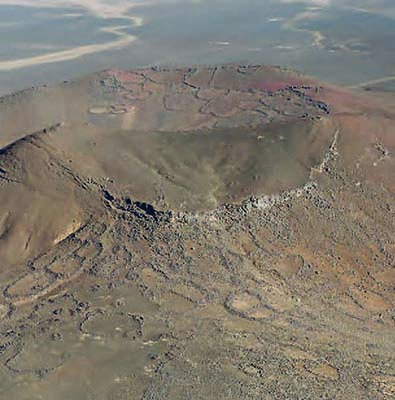
The basalt and limestone desert of the Jawa hinterland in NE Jordan has been the focus of intensive archaeological research for the past six years. Surveys revealed abundant evidence for Chalcolithic or Early Bronze Age activities in this region. The preliminary results of these investigations have already led to a change in the earlier perception of this region and especially the basalt desert. Among the major discoveries are the identification of several hillfort sites in the basalt desert, which suggest a permanent occupation in this arid region. In addition, evidence for artificial irrigation with rainwater harvesting in the vicinity of these settlements underscores the potential for agriculture in this region. Soundings and excavations recovered several 14C dates from these sites, which prove a Late Chalcolithic/Early Bronze Age I occupation.
Click here to access the above article on JSTOR (ASOR membership with online access and/or subscription to JSTOR Current Content required).
Pp. 132–139: “Nothing but Cold Ashes? The Cairn Burials of Jebel Qurma, Northeastern Jordan,” by Peter M.M.G. Akkermans and Merel L. Brüning
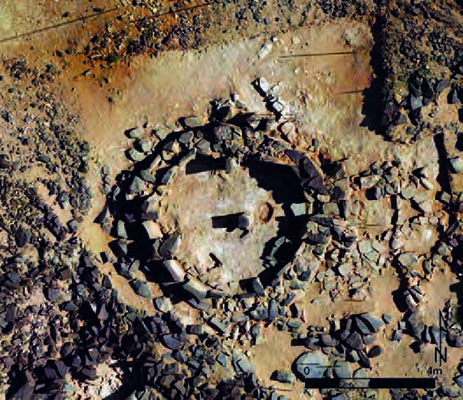
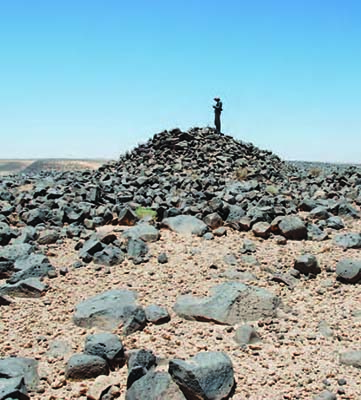
Throughout the basaltic uplands of northeastern Jordan, there are countless large and small mounds of stone (cairns), which are the burial places of people who roamed the desert many hundreds or thousands of years ago. These numerous graves have never been systematically investigated, and little is known about their construction, date, and variability, let alone about their deceased occupants. This picture is now changing owing to an ongoing program of survey and excavation in the Jebel Qurma region, close to the border of Jordan and Saudi Arabia. These investigations point towards complex and entangled arrangements of cairn use and mortuary practices over time, when Early Bronze Age cemeteries are replaced by singular, impressive tower tombs and conical ring cairns in the Hellenistic to Byzantine period. The reuse of these tombs is a recurrent feature, emphasizing the focal and enduring role of these monuments to both the dead and the living.
Click here to access the above article on JSTOR (ASOR membership with online access and/or subscription to JSTOR Current Content required).
FRIENDS OF ASOR FELLOWSHIP RECIPIENT: CECELIA CHISDOCK
Cecelia Chisdock is the very first recipient of the new Friends of ASOR Fellowship, a fellowship funded exclusively by gifts from our Friends of ASOR. Throughout the summer, Cecelia will update us on how her first dig is going.
“This summer with the help of the Friends of ASOR Fellowship, I will be going on my first dig. I’ll be headed to the site of Tel Kabri in Israel, a Canaanite palace which has not only Aegean-style floor paintings but is also home to the oldest palatial wine cellar in the Near East. This season is focused on continuing the excavation of the wine cellar and uncovering more storage rooms in the palace. I’m mostly looking forward to being able to apply and see firsthand everything I’ve learned in my studies. Aside from gaining this invaluable experience, I am excited to be able to explore not only the site but other historical areas of Israel in my free time. I’ll be using the funds I received from the generous Friends of ASOR Fellowship to help finance both my attendance to the field school and my plane fare. For this amazing opportunity to learn and experience archaeology I would like to thank all the Friends of ASOR for helping me to participate in this fantastic chance to further my education and, hopefully, my career!”[/vc_column_text][/vc_column][vc_column border_color=”rgba(170,170,170,0.01)” width=”1/6″ css=”.vc_custom_1496684098866{margin-right: 5px !important;margin-bottom: 20px !important;border-right-width: 2px !important;border-bottom-width: 2px !important;padding-top: 30px !important;padding-right: 10px !important;padding-left: 10px !important;background-color: #ffffff !important;border-right-color: rgba(227,228,228,0.75) !important;border-bottom-color: rgba(227,228,228,0.75) !important;}”][vc_wp_posts title=”BROWSE THE NEWS ARCHIVE” number=”4″][/vc_column][vc_column border_color=”rgba(170,170,170,0.01)” width=”1/6″ css=”.vc_custom_1496684008271{margin-right: 10px !important;margin-bottom: 30px !important;border-right-width: 2px !important;border-bottom-width: 2px !important;padding-top: 30px !important;padding-right: 20px !important;padding-left: 20px !important;background-color: #ffffff !important;border-right-color: rgba(227,228,228,0.75) !important;border-bottom-color: rgba(227,228,228,0.75) !important;}”][vc_column_text]Tweets by ASOResearch [/vc_column_text][/vc_column][/vc_row]
5 MORE DONORS NEEDED TO QUALIFY FOR A $33,000 CHALLENGE GIFT
Update (June 22)
Thanks to 95 new donors, ASOR is almost 90% of the way to qualifying for $33,000!
In early May, ASOR Development Chair Ed Wright announced in a letter to ASOR members that the ASOR Board had made a $33,000 Challenge Gift. Board members collectively pledged to contribute $33,000 to the ASOR Annual Fund if we could recruit 100 new donors who had not yet made a gift this fiscal year (July 1, 2016 – June 30, 2017). We are getting close, but we still need 5 more people to make a gift of $10 or more by June 30th.
Not only do modest gifts add up to create significant support, now they can help ASOR qualify for $33,000 and help us have a balanced budget for the fiscal year. Do you prefer to contribute to something other than the Annual Fund? No problem! Contributions for this challenge campaign need not be limited to the Annual Fund—they may be designated for student support, fellowships, cultural heritage, endowment, publications, or any other area of ASOR’s work.
If you are one of the 365 people who has already made a gift to ASOR this fiscal year, thank you so much for your support. If you have not year made a gift between July 1st and June 30, please consider joining the ranks for ASOR donors. We have almost one more month to reach our goal, so please make a gift today!
Other ways you can donate:
Donate by Phone
Call ASOR (number temporarily unavailable until June 29th)
Donate by Mail
Send a check to:
ASOR
P. O. Box 15729
Boston, MA 02215
Make a Pledge (Donate Later)
Send an e-mail to ASOR[/vc_column_text][/vc_column][vc_column border_color=”rgba(170,170,170,0.01)” width=”1/6″ css=”.vc_custom_1496684098866{margin-right: 5px !important;margin-bottom: 20px !important;border-right-width: 2px !important;border-bottom-width: 2px !important;padding-top: 30px !important;padding-right: 10px !important;padding-left: 10px !important;background-color: #ffffff !important;border-right-color: rgba(227,228,228,0.75) !important;border-bottom-color: rgba(227,228,228,0.75) !important;}”][vc_wp_posts title=”BROWSE THE NEWS ARCHIVE” number=”4″][/vc_column][vc_column border_color=”rgba(170,170,170,0.01)” width=”1/6″ css=”.vc_custom_1496684008271{margin-right: 10px !important;margin-bottom: 30px !important;border-right-width: 2px !important;border-bottom-width: 2px !important;padding-top: 30px !important;padding-right: 20px !important;padding-left: 20px !important;background-color: #ffffff !important;border-right-color: rgba(227,228,228,0.75) !important;border-bottom-color: rgba(227,228,228,0.75) !important;}”][vc_column_text]Tweets by ASOResearch [/vc_column_text][/vc_column][/vc_row]
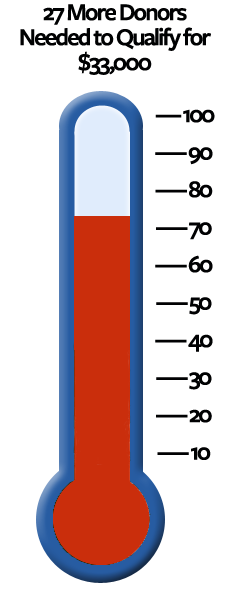
27 MORE DONORS NEEDED TO QUALIFY FOR A $33,000 CHALLENGE GIFT
Update (June 20)
Thanks to 70 new donors, ASOR is more than three-quarters of the way to qualifying for $33,000!
In early May, ASOR Development Chair Ed Wright announced in a letter to ASOR members that the ASOR Board had made a $33,000 Challenge Gift. Board members collectively pledged to contribute $33,000 to the ASOR Annual Fund if we could recruit 100 new donors who had not yet made a gift this fiscal year (July 1, 2016 – June 30, 2017). We are getting close, but we still need 27 more people to make a gift of $10 or more by June 30th.
Not only do modest gifts add up to create significant support, now they can help ASOR qualify for $33,000 and help us have a balanced budget for the fiscal year. Do you prefer to contribute to something other than the Annual Fund? No problem! Contributions for this challenge campaign need not be limited to the Annual Fund—they may be designated for student support, fellowships, cultural heritage, endowment, publications, or any other area of ASOR’s work.
If you are one of the 343 people who has already made a gift to ASOR this fiscal year, thank you so much for your support. If you have not year made a gift between July 1st and June 30, please consider joining the ranks for ASOR donors. We have almost one more month to reach our goal, so please make a gift today!
Other ways you can donate:
Donate by Phone
Call ASOR (number temporarily unavailable until June 29th)
Donate by Mail
Send a check to:
ASOR
P. O. Box 15729
Boston, MA 02215
Make a Pledge (Donate Later)
Send an e-mail to ASOR[/vc_column_text][/vc_column][vc_column border_color=”rgba(170,170,170,0.01)” width=”1/6″ css=”.vc_custom_1496684098866{margin-right: 5px !important;margin-bottom: 20px !important;border-right-width: 2px !important;border-bottom-width: 2px !important;padding-top: 30px !important;padding-right: 10px !important;padding-left: 10px !important;background-color: #ffffff !important;border-right-color: rgba(227,228,228,0.75) !important;border-bottom-color: rgba(227,228,228,0.75) !important;}”][vc_wp_posts title=”BROWSE THE NEWS ARCHIVE” number=”4″][/vc_column][vc_column border_color=”rgba(170,170,170,0.01)” width=”1/6″ css=”.vc_custom_1496684008271{margin-right: 10px !important;margin-bottom: 30px !important;border-right-width: 2px !important;border-bottom-width: 2px !important;padding-top: 30px !important;padding-right: 20px !important;padding-left: 20px !important;background-color: #ffffff !important;border-right-color: rgba(227,228,228,0.75) !important;border-bottom-color: rgba(227,228,228,0.75) !important;}”][vc_column_text]Tweets by ASOResearch [/vc_column_text][/vc_column][/vc_row]
50 MORE DONORS NEEDED TO QUALIFY FOR A $33,000 CHALLENGE GIFT
Update (June 12)
Thanks to 50 new donors, ASOR is halfway to qualifying for $33,000!
In early May, ASOR Development Chair Ed Wright announced in a letter to ASOR members that the ASOR Board had made a $33,000 Challenge Gift. Board members collectively pledged to contribute $33,000 to the ASOR Annual Fund if we could recruit 100 new donors who had not yet made a gift this fiscal year (July 1, 2016 – June 30, 2017). We are getting close, but we still need 50 more people to make a gift of $10 or more by June 30th.
Not only do modest gifts add up to create significant support, now they can help ASOR qualify for $33,000 and help us have a balanced budget for the fiscal year. Do you prefer to contribute to something other than the Annual Fund? No problem! Contributions for this challenge campaign need not be limited to the Annual Fund—they may be designated for student support, fellowships, cultural heritage, endowment, publications, or any other area of ASOR’s work.
If you are one of the 320 people who has already made a gift to ASOR this fiscal year, thank you so much for your support. If you have not year made a gift between July 1st and June 30, please consider joining the ranks for ASOR donors. We have almost one more month to reach our goal, so please make a gift today!
Other ways you can donate:
Donate by Phone
Call ASOR at 617-437-6570
Donate by Mail
Send a check to:
ASOR
P. O. Box 15729
Boston, MA 02215
Make a Pledge (Donate Later)
Send an e-mail to ASOR[/vc_column_text][/vc_column][vc_column border_color=”rgba(170,170,170,0.01)” width=”1/6″ css=”.vc_custom_1496684098866{margin-right: 5px !important;margin-bottom: 20px !important;border-right-width: 2px !important;border-bottom-width: 2px !important;padding-top: 30px !important;padding-right: 10px !important;padding-left: 10px !important;background-color: #ffffff !important;border-right-color: rgba(227,228,228,0.75) !important;border-bottom-color: rgba(227,228,228,0.75) !important;}”][vc_wp_posts title=”BROWSE THE NEWS ARCHIVE” number=”4″][/vc_column][vc_column border_color=”rgba(170,170,170,0.01)” width=”1/6″ css=”.vc_custom_1496684008271{margin-right: 10px !important;margin-bottom: 30px !important;border-right-width: 2px !important;border-bottom-width: 2px !important;padding-top: 30px !important;padding-right: 20px !important;padding-left: 20px !important;background-color: #ffffff !important;border-right-color: rgba(227,228,228,0.75) !important;border-bottom-color: rgba(227,228,228,0.75) !important;}”][vc_column_text]Tweets by ASOResearch [/vc_column_text][/vc_column][/vc_row]

 In early May, ASOR Development Chair Ed Wright announced in a letter to ASOR members that the ASOR Board had made a $33,000 challenge gift. Board members collectively pledged to contribute $33,000 to the ASOR Annual Fund if we could recruit 100 new donors who had not yet made a gift this fiscal year (July 1, 2016 – June 30, 2017). Not only did we meet that challenge, but we surpassed it by 25 people.

 style floor paintings but is also home to the oldest palatial wine cellar in the Near East. This season is focused on continuing the excavation of the wine cellar and uncovering more storage rooms in the palace. I’m mostly looking forward to being able to apply and see firsthand everything I’ve learned in my studies. Aside from gaining this invaluable experience, I am excited to be able to explore not only the site but other historical areas of Israel in my free time. I’ll be using the funds I received from the generous Friends of ASOR Fellowship to help finance both my attendance to the field school and my plane fare. For this amazing opportunity to learn and experience archaeology I would like to thank all the Friends of ASOR for helping me to participate in this fantastic chance to further my education and, hopefully, my career!”[/vc_column_text][/vc_column][vc_column border_color=”rgba(170,170,170,0.01)” width=”1/6″ css=”.vc_custom_1496684098866{margin-right: 5px !important;margin-bottom: 20px !important;border-right-width: 2px !important;border-bottom-width: 2px !important;padding-top: 30px !important;padding-right: 10px !important;padding-left: 10px !important;background-color: #ffffff !important;border-right-color: rgba(227,228,228,0.75) !important;border-bottom-color: rgba(227,228,228,0.75) !important;}”][vc_wp_posts title=”BROWSE THE NEWS ARCHIVE” number=”4″][/vc_column][vc_column border_color=”rgba(170,170,170,0.01)” width=”1/6″ css=”.vc_custom_1496684008271{margin-right: 10px !important;margin-bottom: 30px !important;border-right-width: 2px !important;border-bottom-width: 2px !important;padding-top: 30px !important;padding-right: 20px !important;padding-left: 20px !important;background-color: #ffffff !important;border-right-color: rgba(227,228,228,0.75) !important;border-bottom-color: rgba(227,228,228,0.75) !important;}”][vc_column_text]