ASOR-AFFILIATED RESEARCH CENTERS FELLOWSHIPS

ASOR-AFFILIATED RESEARCH CENTERS FELLOWSHIPS & RESEARCH COMMITTEE FELLOWSHIPS

There are two research centers affiliated with ASOR — the Albright Institute in Jerusalem and CAARI in Nicosia — and also the Baghdad Committee. Explore each center’s website for general information and for information about fellowships.

AIAR (Jerusalem) – The Albright Institute of Archaeological Research (AIAR) annually provides up to $252,000 in fellowships and awards to 28 recipients. In addition, 32 Associate Fellows including Senior, Post-Doctoral, and Research Fellows receive funding from other sources. Learn more about fellowships.

CAARI (Cyprus)– Located in Nicosia, Cyprus, The Cyprus American Archaeological Research Institute (CAARI) provides one of the most important centers for the scholarly study of archaeology, history, and culture in the Eastern Mediterranean. Scholars from these and other academic disciplines and all nationalities come together under our roof to share multidisciplinary approaches and research findings. Learn more about fellowships.

Baghdad Committee: This committee recommends recipients for the Mesopotamian Fellowship to the ASOR Board. This fellowship funds researchers studying the region, through the generosity of the James B. Nies Trust.

THE FOUNDATION FOR BIBLICAL ARCHAEOLOGY ANNUAL MEETING SCHOLARSHIPS

[vc_row fullwidth=”true” css=”.vc_custom_1490224714943{padding-top: 0px !important;padding-right: 0px !important;padding-bottom: 0px !important;padding-left: 0px !important;}”][vc_column][vc_single_image image=”75165″ img_size=”full” alignment=”center”][/vc_column][/vc_row][vc_row][vc_column][vc_column_text][/vc_column_text][/vc_column][/vc_row][vc_row fullwidth=”true” css=”.vc_custom_1490225468623{padding-top: 0px !important;padding-right: 0px !important;padding-bottom: 0px !important;padding-left: 0px !important;}”][vc_column width=”1/12″ css=”.vc_custom_1490225195470{margin-right: 10px !important;}” offset=”vc_hidden-sm vc_hidden-xs”][vc_column_text]

  SHARE

[/vc_column_text][mk_image src=”http://www.asortest.org/wp-content/uploads/2017/01/social-fb-icon4.jpg” image_width=”42″ image_height=”42″ hover=”false” custom_url=”https://www.facebook.com/ASOResearch/” margin_bottom=”0″][mk_image src=”http://www.asortest.org/wp-content/uploads/2017/01/social-tw-icon4.jpg” image_width=”42″ image_height=”42″ hover=”false” custom_url=”https://twitter.com/ASOResearch?ref_src=twsrc%5Egoogle%7Ctwcamp%5Eserp%7Ctwgr%5Eauthor” margin_bottom=”0″][mk_image src=”http://www.asortest.org/wp-content/uploads/2017/01/social-in-icon4.jpg” image_width=”42″ image_height=”42″ hover=”false” custom_url=”https://www.linkedin.com/company/american-schools-of-oriental-research” margin_bottom=”0″][mk_image src=”http://www.asortest.org/wp-content/uploads/2017/01/social-ml-icon_7.jpg” image_width=”42″ image_height=”42″ hover=”false” custom_url=”mailto:asor@bu.edu” margin_bottom=”0″][mk_image src=”http://www.asortest.org/wp-content/uploads/2017/01/blog-icon3.jpg” image_width=”42″ image_height=”42″ hover=”false” custom_url=”http://asorblog.org/” margin_bottom=”0″][/vc_column][vc_column border_color=”rgba(255,255,255,0.01)” width=”1/6″ css=”.vc_custom_1490365673198{margin-right: 20px !important;border-left-width: 2px !important;padding-right: 20px !important;padding-left: 20px !important;border-left-color: #99422f !important;}” el_class=”sticky-sidenav”][mk_divider divider_color=”rgba(255,255,255,0.01)” thickness=”1″ margin_top=”3″ margin_bottom=”3″][vc_widget_sidebar sidebar_id=”ca-sidebar-38739″ el_class=”.widget { overflow: hidden; margin-bottom: 0; }”][/vc_column][vc_column border_color=”rgba(170,170,170,0.01)” width=”1/2″ css=”.vc_custom_1490225606852{margin-right: 10px !important;margin-bottom: 30px !important;border-right-width: 2px !important;border-bottom-width: 2px !important;padding-top: 30px !important;padding-right: 30px !important;padding-left: 20px !important;background-color: #ffffff !important;border-right-color: rgba(227,228,228,0.75) !important;border-bottom-color: rgba(227,228,228,0.75) !important;}”][vc_column_text responsive_align=”left”]

THE FOUNDATION FOR BIBLICAL ARCHAEOLOGY ANNUAL MEETING SCHOLARSHIPS

ASOR is no longer offering The Foundation for Biblical Archaeology Annual Meeting Scholarship. Additional Annual Meeting travel support to cover hotel cost is available to those who are willing to serve as Session Assistants at the meeting. More information on serving as a Session Assistant can be found here. 

Made possible with generous support from The Foundation for Biblical Archaeology, up to six (6) Student Service Scholarships of $700 each will be offered for transportation and hotel costs incurred while attending ASOR’s 2021 Annual Meeting in Chicago, pending the receipt of funds.

Eligibility: Students must be members of ASOR (either undergraduates or graduate) or be enrolled at an institution that is an institutional member of ASOR (see list of Institutional Members). Scholarship recipients will provide up to 18 hours of service at the Annual Meeting, arranged to accommodate the sessions they would like to attend. Duties will involve assisting with registration, helping Session Chairs with audiovisual needs during the sessions, and aiding Program Committee members with other set-up and arrangement needs. There will be a required orientation session on Wednesday, November 17 at the conference hotel. Recipients of these scholarships must also stay at the conference hotel. As TFBA recipients will be interacting with many attendees during their volunteer hours, ASOR asks that all those who receive TFBA awards provide proof of vaccination. All ASOR staff working at the meeting will be vaccinated.

Application: Interested individuals should send a curriculum vitae and a letter of interest to Marta Ostovich in the ASOR office with “TFBA Application” in the subject heading. The letter should summarize how the applicant will benefit from attending the Annual Meeting. A budget of projected expenses should be included as well as one letter of recommendation. Applications will be accepted until noon ET on August 20, 2021, and notification of decisions on grant awards will be made by September 3, 2021. Questions should be directed to Marta Ostovich.

Previous Recipients[/vc_column_text][/vc_column][vc_column border_color=”rgba(170,170,170,0.01)” width=”1/6″ css=”.vc_custom_1490571214409{margin-right: 10px !important;margin-bottom: 30px !important;border-right-width: 2px !important;border-bottom-width: 2px !important;padding-top: 30px !important;padding-right: 20px !important;padding-left: 20px !important;background-color: #ffffff !important;border-right-color: rgba(227,228,228,0.75) !important;border-bottom-color: rgba(227,228,228,0.75) !important;}”][vc_wp_posts title=”BROWSE THE NEWS ARCHIVE” number=”4″][/vc_column][vc_column border_color=”rgba(170,170,170,0.01)” width=”1/6″ css=”.vc_custom_1490225688999{margin-right: 10px !important;margin-bottom: 30px !important;border-right-width: 2px !important;border-bottom-width: 2px !important;padding-top: 30px !important;padding-right: 30px !important;padding-left: 20px !important;background-color: #ffffff !important;border-right-color: rgba(227,228,228,0.75) !important;border-bottom-color: rgba(227,228,228,0.75) !important;}”][vc_column_text] [/vc_column_text][/vc_column][/vc_row][vc_row][vc_column][vc_column_text]

[/vc_column_text][/vc_column][/vc_row]

PREVIOUS RECIPIENTS OF ANNUAL MEETINGS TRAVEL GRANTS

PREVIOUS RECIPIENTS OF ANNUAL MEETING TRAVEL GRANTS

2026

Student Travel Grants

Eitan Cassway, University of Maryland
Alessandra Dominguez, University of Pennsylvania
Ece Erlat, University of North Carolina at Chapel Hill
Louis Mainwaring Foster, Bryn Mawr College
Ella Hattem, Yale University
Faizan Khan, Lipscomb University
JinRi Kim, Southern Methodist University
Viveka Smith, University of California, Davis
Madeline Topor, University of British Columbia
Hannah Xu, Emory University

2025

Student Travel Grants

Melani Dubon – Andrews University
Nimesh Fonseka – University of Maryland
Jane Gordon – University of Chicago
Emily Hale – Mississippi State University
Charlotte Howley – University of California, Los Angeles
Michael Leff – University of Texas-Austin
Mariah Miller – University of Toronto
Gary Myers – New Orleans Baptist Theological Seminary
Gabby Puckett – University of Tennessee-Knoxville

2024

Student Travel Grants

Zoe Bernier – Wilfrid Laurier University
Stephanie Cooper – Johns Hopkins University
Jake Hill – Baylor University
Heidi Hilliker – University of Michigan
Christopher Jenkins – Lipscomb University
Zeynep Kuşdil Sak – University of Toronto
Maryan Ragheb – University of California, Los Angeles
Kaitlyn Satelmayer – La Sierra University
Yuwei Zhou – University of Chicago

2023

Student Travel Grants

Anawar Mahagoub Ali Mohamed – University of Michigan
Graham Braun – University of Cincinnati
Bede Carpenter – Lipscomb University
Tucker Deady – University of Toronto
Maddy Green – Mississippi State University
Ellie Martin – Brigham Young University
Crystal Melara – University of California, Los Angeles
Keri Porter – University of Notre Dame
Karlene Shippelhoute – Johns Hopkins University
Marc Marin Webb – University of Pennsylvania

2022

Student Travel Grants

Matthew Bronson – Lipscomb University
Larra Diboyan – Mississippi State University
Natalia Handziuk – University of Toronto
Jake Hubbert – Brigham Young University
Luiza Osorio Da Silva – University of Chicago
Robyn Price – University of California, Los Angeles
India Pruette – University of Michigan
Sarajane Smith – Notre Dame
Isabel Srour – Andrews University
Sarah Wenner – University of Cincinnati

2021

The Foundation for Biblical Archaeology Grants

Jaime Bennett – La Sierra University
Adellina Cini – University of Haifa
Charles Everhardt – University of Haifa
Geoffrey Hedges-Knyrim – University of Connecticut
Bryton Smith – Oberlin College

Student Travel Grants

Kayla Dang – Yale University
Hanna Erftenbeck – University of Notre Dame
Bianca Hand – Johns Hopkins University
Nathan Lovejoy – New York University
Sara Mohr – Brown University
David Mulder – University of Pennsylvania
Iman Nagy – University of California, Los Angeles
Bruno Soltic – Lipscomb University
Emily Yankura – Brigham Young University

2020

Virtual Annual Meeting: No Travel Grants Offered.

2019

The Foundation for Biblical Archaeology Grants

Hend Elsayed – University of Bonn
Tzilla Eshel – University of Haifa
Jacob H. Finegan – University of Central Florida
Julian Hirsch – Oberlin College
Samantha Suppes – University of Chicago

Student Travel Grants

Jaime Bennett – La Sierra University
Cecelia Chisdock – University of Notre Dame
Quinn Daniels – New York University
Jordan Galczynski – University of California, Los Angeles
Craig Harvey – University of Michigan
Kara Larson – Mississippi State University
Sara Mohr – Brown University
Summer Shives – North Carolina State University
Bruno Soltic – Southwestern Baptist Theological Seminary
Cale Staley – Cornell University

2018

The Foundation for Biblical Archaeology Grants

Jaime Bennett – La Sierra University
Brigid Clark – University of Haifa
May Hajj – Lebanese University
Brady Liss – University of California, San Diego
Jennifer Markowitz – University of Central Florida
Gabrielle Sines – University of Michigan

Student Travel Grants

Andrew Burlingame – University of Chicago
Owen Chesnut – Andrews University
Eli Dolarhide – New York University
Jonathan Gardner – Trinity Evangelical Divinity School
Timothy Hogue – University of California, Los Angeles
Jake Hubbert – Brigham Young University
Megan Lewis – Johns Hopkins University
Golnaz Hossein Mardi – University of Toronto
Samuel Martin – University of Arkansas
Bruno Soltic – Southwestern Baptist Theological Seminary

2017

The Foundation for Biblical Archaeology Grants

Dawn Acevedo – La Sierra University
Florencia Fustinoni – University of British Columbia
Aimee Hanson – College of St. Benedict
Madaline Harris-Schober – University of Melbourne
Golan Shalvi – University of Haifa
Amanda Wissler – Arizona State University

Student Travel Grants

Kathleen Bennallack – University of California, San Diego
Brian Coussens – University of North Carolina at Chapel Hill
Jacob Damm – University of California, Los Angeles
Craig Harvey – University of Michigan
Golnaz Hossein Mardi – University of Toronto
Katherine Hudson – Southwestern Baptist Theological Seminary
Veronica Morriss – University of Chicago
Christina Olson – East Carolina University
Jessica Rentz – Yale Divinity School
Avary Taylor – Johns Hopkins University

2016

The Foundation for Biblical Archaeology Grants

Irene Chiramova – Yale Divinity School
Brandy Forrest – Trinity Southwest University
Stephanie Grant – University of North Carolina at Chapel Hill
Vanessa Juloux – Ecole Pratique des Hautes Etudes
Emma Kerr – University of Toronto
Nitsan Shalom – Tel Aviv University

Student Travel Grants

Dawn Acevedo – La Sierra University
Caroline Joan Arbuckle MacLeod – University of California, Los Angeles
Catherine Bonesho – University of Wisconsin
Petra Creamer – University of Pennsylvania
Kathleen Forste – Boston University
Amber Hutchinson – University of Toronto
Dylan Karges – Mississippi State University
Vivian Laughlin – Andrews University
Samantha Lindgren – Johns Hopkins University
Emily Wilson – University of Chicago

2015

The Foundation for Biblical Archaeology Scholarships

Shlomit Bechar – Hebrew University of Jerusalem
David Culclasure – North Carolina State University
Amanda Gaggioli – Cornell University
Andrew Johnson – Yale University
Justin Mann – East Carolina University
Nitsan Shalom – Tel Aviv University

Student Travel Grants

Melissa Cradic – University of California, Berkeley
Pinar Durgun – Brown University
Tiffany Earley-Spadoni – Johns Hopkins University
David Gurevich – Harvard University
Craig Harvey – University of Michigan
Brady Liss – University of California, San Diego
Thomas Middlebrook – Trinity Evangelical Divinity School
Kaitlyn Solberg – University of British Columbia
Brian Stachowski – Southwestern Baptist Theological Seminary
Jody Washburn – University of California, Los Angeles

2014

The Foundation for Biblical Archaeology Scholarships

Kevin Caldwell – University of North Carolina at Charlotte
Craig Harvey – University of Michigan
Sabine Metzer – Tel Aviv University
Barak Monnickdam-Givon – Hebrew University of Jerusalem
Tommas Pace – Southwestern Baptist Theological Seminary
Mehrnoush Soroush – New York University

Student Travel Grants

Adam Bean – Johns Hopkins University
Katherine Burge – University of Pennsylvania
Betty Hensellek – Cornell University
Amanda Lanham – Harvard University
Kristina Reed – La Sierra University
Abelardo Rivas – Andrews University
Akiva Sanders – University of Chicago
Sarah Wenner – North Carolina State University

2013

The Foundation for Biblical Archaeology Scholarships

Austin Glock Andrews – University of North Carolina, Chapel Hill
Jared Chatfield – Tandy Institute for Archaeology, Southwestern Baptist Theological Seminary
Bradley Erickson – Duke University
Christina Grobmeier – Houston, TX
Pamela Koulianos – North Carolina State University
Inbar Ktalav – University of Haifa
Jessica Walker – University of Pittsburgh
Eric Welch – The Pennsylvania State University

Student Travel Grants

Kathleen Bennallack – University of California, San Diego
Jennifer Carrington – Cornell University
Caitlin Chaves Yates – Boston University
Amy Cromartie – University of California, Los Angeles
Amanda Foley – The Ohio State University
Ian Jones – University of California, San Diego
Tiffany Key – North Carolina State University
Jesica Jayd Lewis – North Carolina State University
Mackenzie Litwin – Lycoming College

2012

The Foundation for Biblical Archaeology Scholarships

Tiffany Earley-Spadoni – Johns Hopkins University
Julia Fridman – Tel Aviv University
Harris Greenberg – Boston University
Thomas Hart – The University of Connecticut
Shulamit Miller – Hebrew University of Jerusalem
Brian Stachowski – Southwestern Baptist Theological Seminary
Sarah Wenner – North Carolina State University

Student Travel Grants

Lydia Dwyer – Lycoming College
Steven Edward – University of Toronto
Timotheus Frank – Mississippi State University
Kyra Kaercher – Boston University
Kyle Knabb – University of California, San Diego
Joseph Lehner – University of California, Los Angeles
Brita Lorentzen – Cornell University
Kiersten Neumann – University of California, Berkeley
Trey Thomas – Southwestern Baptist Theological Seminary
Julia Troche – Brown University

2011

The Foundation for Biblical Archaeology Scholarships

Michael Allen – Mount Royal University
Christina Carlson – Southern Illinois University, Edwardsville
Josh Cannon, University of Chicago
Mike Ellingsen – Trinity International University
Erica Hughes – University of Liverpool
Darren Joblonkay – University of Toronto
Pamela Koulianos – North Carolina State University
Josephine Verduci – University of Melbourne

Student Travel Grants

Shirly Ben-Dor Evian – Tel Aviv University
Carrie A. Fulton – Cornell University
Craig Harvey – The University of Victoria
Seung Ho Bang – Baylor University
Tiffany Key – North Carolina State University
Katherine Larson – University of Michigan
Robyn Le Blanc – The University of North Carolina, Chapel Hill
Heather Parker – Johns Hopkins University
George A. Pierce – University of California, Los Angeles
Tracy Spurrier – University of Toronto

2010

Student Travel Grants

Abigail Buffington – New York University
Evan Carlson – University of California, Los Angeles
Adam Dodd – Southwestern Baptist Theological Seminary
Ian Jones – University of California, San Diego
Alaina Kaiser – Cornell University
Veronica Morriss – Texas A&M University
Tate Paulette – University of Chicago
Steve Renette – University of Pennsylvania
Omer Sergi – Tel Aviv University
Anna Wieser – University of Arkansas

Platt Fellowships

Seung Ho Bang – Baylor University
Jody Michael Gordon – University of Cincinnati
Lesley Gregoricka – The Ohio State University
Jacob Moody – Andrews University
Amanda Rose – The University of Melbourne
Tracy Spurrier – University of Toronto

2009

Student Travel Grants

Seung Ho Bang – Baylor University
Andrea Creel – University of California, Berkeley
Helen Dixon – University of Michigan
Michael Ellingsen – Trinity International University
Andrea Gatzke – Pennsylvania State University
Russell Gentry – North Carolina State University
Jeffrey Hudon – Andrews University
Stephanie Selover – University of Chicago
Anna Wieser – University of Arkansas
William Zimmerle – University of Pennsylvania

Kress Fellowships

Abdel Latif Afandy – Cairo University
Moawiyah M. Ibrahim – Society of Friends of Archaeology and Heritage, Jordan
Mohamed Marouf – Sohag University

Lindstrom Foundation Scholarships

Melissa Cradic – The George Washington University
Austin (Chad) Hill – University of Connecticut
Andrea Kay – University College London
Linda Meiberg – University of Pennsylvania
Joshua Trampier – University of Chicago
Ian Wilson – University of Alberta

2008

Student Travel Grants

Erez Ben-Yosef – University of California, San Diego Chicago
Benjamin Bradshaw – Pennsylvania State University
Christopher Brinker – John Hopkins University
Robert Darby – University of Missouri, Columbia
Christopher Gohm – University of Toronto
Jody Michael Gordon – University of Cincinnati
Jason Herrmann – University of Arkansas
Stephanie Langin-Hooper – University of California, Berkeley
Justin Leidwanger – University of Pennsylvania
Adam Maskevich – Johns Hopkins University
Virginia Rimmer – University of Chicago
Steven Werlin – University of North Carolina

Kress Fellowships

Benjamin Arubas – Hebrew University
Stella Demesticha – University of Cyprus
Liora Freud – Tel Aviv University
Yuval Gadot – Hebrew Union College and Tel Aviv University
Duncan Howitt-Marshall – University of Cambridge
Hamed Salem – Birzeit University
Omer Sergi – Tel Aviv University
David Stacey – Independent Scholar
Joe Uziel – Bar Ilan University

Lindstrom Foundation Scholarships

Helen Dixon – University of Michigan
Sara Rich – University of Wisconsin, Milwaukee
Leigh Stork – University of Edinburgh
Benjamin Wiggershaus – Pittsburgh Theological Seminary
Jason E. Wilhelmi – Western Michigan University
Polly Yorioka – University of Washington

ANNUAL MEETING TRAVEL GRANTS AND SCHOLARSHIPS

ANNUAL MEETING TRAVEL SUPPORT

Student Travel Grants

Application Deadline: 5PM ET, August 24, 2026

ASOR is once again pleased to announce up to ten travel scholarships of $250 for students enrolled at an institution that is an institutional member of ASOR (see list of Institutional Members). Funding for these scholarships comes from the institutional membership fees. Applications must be submitted by email and are due by 5PM ET on August 24, 2026. In order to receive the funds, the institutional dues for the student’s school must be current for 2026-2027, and the student must stay at the ASOR hotel. Students need not present a paper in order to be eligible. Preference will be given to students from schools that did not receive an award recipient in the previous year. Recipients will be notified on or around September 7, 2026.

Eligibility: Students must be enrolled at at an institution that is an institutional member of ASOR (see list of Institutional Members).

Apply: Email Marta Ostovich with the following information with the subject heading “Student Travel Grants Application”:

  • A brief (200 words) statement explaining why you want to attend the Annual Meeting and how the experience will help your career goals.
  • Information about the degree program in which you are presently enrolled.

Previous Recipients

Tigris Travel Grants for Iraqi Scholars—Offered in 2026

ASOR is pleased to announce the creation of a travel grant program to support Annual Meeting participation for scholars from Iraq and its Kurdistan Region. The Tigris Travel Grants, made possible through the generosity of Kiersten Neumann, cover the cost of flights to the Annual Meeting as well as accommodation in the ASOR hotel. ASOR will also assist successful candidates with obtaining the relevant visas and permissions for travel.

Eligibility: Scholars must have an accepted paper on the ASOR Annual Meeting Academic Program. Preference is given to scholars who have not participated in an in-person Annual Meeting before. Scholars must be citizens of Iraq, traveling from Iraq to the Annual Meeting.

Apply: The deadline for applications is April 1, 2026. Please fill out this interest form to apply.

Thomas/Bishop Session and Workshop Assistants

ASOR is seeking Session/Workshop Assistants to help support the hybrid aspects of the 2026 Annual Meeting. In exchange for Session Assistant service, ASOR will cover a set number of nights at the Hilton Chicago-Michigan Avenue as well as Annual Meeting registration fees. Funding for Session Assistants is made possible through the Thomas/Bishop Annual Meeting Endowment. Session Assistants provide technical support to Session Chairs during sessions in Chicago and on Zoom.

Eligibility: Zoom proficiency and the ability to multi-task are required. Session Assistants will need to be present for all three days (Thursday-Saturday, November 19-21) of the Annual Meeting, and for a training session on Wednesday, November 18.

Apply: Please fill out this interest form.

Email Marta Ostovich at programs@asor.org with any questions. ASOR will contact those who have been selected as Session Assistant in August to work on scheduling.

Note: Selected Session Assistants are required to make their own reservations in ASOR’s block at the Hilton Chicago. A credit will be applied to their reservation based on their service hours.

Volunteers

If you would like to volunteer at the registration desk in Chicago this year, please contact Marta Ostovich at programs@asor.org.

MEMBERSHIP & ANNUAL MEETING SCHOLARSHIPS

MEMBERSHIP & ANNUAL MEETING SCHOLARSHIPS

ASOR offers a number of ways of supporting members through membership and Annual Meeting Scholarships.

  • Membership Scholarships: As part of ASOR’s ongoing efforts to support our members, we are pleased to announce membership scholarships that are available for any current or lapsed ASOR member. Thanks to several anonymous donors, we have received pledges to pay the membership fee for those who have experienced a financial hardship related to the COVID-19 pandemic. The application process is simple— please send a confidential e-mail to Regan Baker with a brief statement. Membership scholarships are available for  25%, 50%, or full scholarship.
 

Because the ASOR Annual Meeting is one of the most important ways to involve those in the field, ASOR, in cooperation with several foundations and generous donors, provides a number of different annual meeting scholarships.

  • Annual Meeting Registration Scholarships: Due to COVID-19, and thanks to ASOR’s generous members, current ASOR members with a need may request a 25%, 50%, or full scholarship for annual meeting registration. E-mail programs@asor.org with requests and a brief explanation before purchasing registration. We will strive to meet all requests from members, with a preference towards those who have not received a scholarship in the past two years. We will do our best to meet requests from non-members and past scholarship recipients.
  • Student Travel Grants: Up to ten (10) grants of $250 each are made available to students enrolled at an institution that is an institutional member of ASOR (see list of Institutional Members).
  • Tigris Travel Grants: Annual Meeting flight and hotel cost for scholars from Iraq and its Kurdistan Region, made possible through the generosity of Kiersten Neumann.
  • Thomas/Bishop Annual Meeting Session Assistants: Session Assistants help run the hybrid aspect of ASOR Annual Meeting in exchange for coverage of conference hotel costs. Funding is made possible through the Thomas/Bishop Annual Meeting Endowment.

MESOPOTAMIAN FELLOWSHIP: PREVIOUS RECIPIENTS

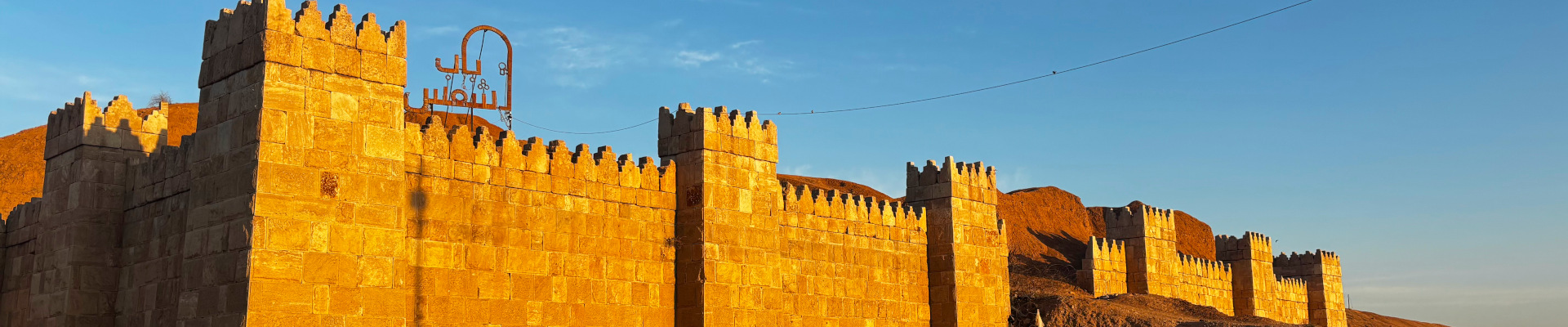
Shamash Gate at Nineveh, Iraq.

MESOPOTAMIAN FELLOWSHIP: PREVIOUS RECIPIENTS

2026/2027

Melania Zingarello (Postdoctoral Researcher, CNRS-CEPAM): “Sacred Waterscapes and Early Urbanism at Rejibah (southern Mesopotamia): Canals, cultic landscapes, and long-term urban memory.”

2025/2026

Ella Egberts  (Post-Doctoral Fellow, Vrije Universiteit Brussel): “The Iraqi Western Desert PLACES Project: Pleistocene Landscapes and Early human behavior in the Shbicha region.”

Anonymous

2024/2025

Elizabeth Gibbon (PhD Student, University of Toronto): “The Halaf-Ubaid Transition at Tepe Gawra”

Jeiran Jahani (PhD Student, Columbia University): “Animal Art: Domesticating Wild Ecologies of the First Cities”

2023/2024

Jaafar Jotheri (Post-Doctoral Scholar, University of Al-Qadisiyah): “An archaeological survey for the Western Iraqi desert”

Agnese Vacca (Post-Doctoral Scholar, University of Milan): “Crafting Complexity. Pottery Production and Consumption at Helawa (Erbil Plain) between the Ubaid and Late Chalcolithic Periods”

2022/2023

Khaled Abu Jayyab (Post-doctoral Research Fellow, University of Toronto): “The Tepe Gawra Lower Town Survey, Ninawa (Iraq)”

Petra M. Creamer (Post-doctoral Fellow, Dartmouth College): “Rural Landscapes of Imperial Iron Age Mesopotamia”

2021/2022

Christine Mikeska (PhD Student, University of North Carolina at Chapel Hill): “Feeding the City, Feeding the Gods: Animal Economies at Bronze Age Hattuša”

Yalda Razmahang (PhD Student, Maison d’Orient, Lyon): “Assessing Community Perspectives on Cultural Heritage in post-ISIS Iraq: The Case of Ashur”

2019/2020

Elise Jakoby Laugier (PhD Student, Dartmouth College): “Shakhi Kura: A 4th millennium BC site in the Upper Diyala (Iraqi Kurdistan)”

2018/2019

Sara Pizzimenti (post-doctoral, Sapienza University of Rome): “From the 4th Millennium to the 3rd Millennium BC in Southern Mesopotamia. The Late Uruk-Early Dynastic I Sequence of Area A at Tell Zurghul/Nigin”

2017/2018

Steven Renette (PhD Student, University of Pennsylvania): “Documenting Threatened Archaeological Heritage in the Bazyan Basin, Sulaimaniyah (Iraqi Kurdistan)”

2016/2017

Tiffany Earley-Spadoni (assistant professor, University of Central Florida): “New Foundations: a Comparative Study of the Creation of Neo-Assyrian and Urartian Landscapes”

Stephanie Rost (post-doctoral fellow, The Oriental Institute of the University of Chicago): “Ancient State Economies: The Case Study of the Umma Province of the Ur III State (2112-2004 B.C.)”

2015/2016

Agnete Wisti Lassen (post-doctoral, Yale University): “Glyptic Encounters: A Stylistic and Social Study of the Seal Impressions from the Šalim‐Aššur Archive”

2014/2015

Antonietta Catanzariti (PhD Student, University of California, Berkeley): “Landscape and Settlement Survey of the Qara Dagh Valley (Iraqi-Kurdistan)”

2013/2014

Abdulameer Al-Dafar (PhD Student, SUNY Stony Brook): “Integration between town, village and marsh: Settlement system and Socio-economic relationships between small and large sites in the Eridu Basin during the early second millennium BCE”

Dr. James Osborne (post-doctoral, Johns Hopkins University): “The Iron Age Diaspora: Forced Resettlement in the Near East, 900-600 B.C.E.”

2012/2013

C. Jay Crisostomo (University of California, Berkeley): “Bilingual Education at Nippur: The Exemplars at the Istanbul Archaeological Museum”

2011/2012

Gökçe Bike Yazicioglu (PhD Student, University of Chicago): “Tracing the Merchants’ Trail between Assur and Kanes”

2010/2011

Melissa Rosenzweig (PhD Student, University of Chicago): “The Politics of Late Assyria’s Agricultural Practices: An Archaeobotanical Case Study from Ziyaret Tepe”

2009/2010

Nicole Brisch (PhD, University of Michigan): “The King as God: Divine Kingship in Early Mesopotamia: Isin-Larsa Period Sacrifice Lists”

2006/2007

Aubrey Baadsgaard (PhD student, University of Pennsylvania): “The Social Social Dynamics of Dress in Early Dynastic Mesopotamia “

2005/2006

Jacob Lauinger (PhD student, University of Chicago): “Unpublished Old Babylonian/Middle Bronze Age Tablets from Alalakh (Level VII), their Archival Context, and their Chronological Implications”

2004/2005

Sevil Baltali (PhD student, University of Virginia): “Domestic Architecture, Use of Space and Social Organization in Uruk period Northern Mesopotamia”

2003/2004

Bekir Gürdil (PhD student, UCLA): “Degirmentepe Social Organization and the Ubaid Period of Greater Mesopotamia”

2002/2003

Sarah Graff (PhD student, University of Chicago): “Production and Distribution in Spatial and Historical Context: the Case of Northwestern Syria”

2001/2002

Jennifer Pournelle (PhD student, University of California – San Diego): “The Littoral Foundations of the Sumerian State: Southern Mesopotamian Alluvial Landscapes”

2000/2001

Jason Ur (PhD student, University of Chicago): “Upper Khabur Basin Archaeological Survey”

Britt Hartenberger (PhD student, Boston University), supplemental fellowship (declined)
“Analysis of the Organization of Household and Specialized Craft Production at Titris Höyük in the Context of Regional Chipped Stone Industries”

1999/2000

Seth Richardson (PhD student, Columbia University): “The Collapse of a Complex State: The End of the Old Babylonian Period at Sippar, 1641 – 1621 B.C.E.”

1998/1999

Christopher Edens (post-doctoral, University of Pennsylvania Museum): “Technological Style and Chipped Stone: Sickle Blades and the Uruk expansion in southeast Turkey”

Tonia Sharlach (PhD student, Harvard University), supplemental fellowship: “Bala: Economic Exchange between Center and Provinces in the Ur III State”

1997/1998

Cheryl Coursey (PhD student, SUNY Binghamton): “Pretty Pots for Hot Shots? Intrasite Variability in Ceramic Production and Consumption during the Halaf Period (c. 6000-5200 B.C.)”

1996/1997

Michael Danti (PhD student, University of Pennsylvania): “An Archaeological Survey of the Tell es-Sweyhat Region, Syria”

1995/1996

Kathryn Slanski (PhD student, Harvard University): “The Form and Function of the Babylonian kudurrus”

1994/1995

Bradley Parker (PhD student, UCLA): “Economics and Empire: The Role of Commercial Interaction in Imperial Expansion on the Northern Frontier of Assyria”

1993/1994

Eleonora Cussini (PhD, Johns Hopkins University): “A Paleographic Study of the Imperial Aramaic Argillary Script”

1992/1993

Stephen Lumsden (PhD, Bilkent University, Turkey): “Applications of Remote Sensing for the Study of Nineveh”

1991/1992

Melody Pope (PhD student, SUNY Binghamton): “The Economy and Organization of Chipped Stone Tool Production and use during the Uruk and Jemdet Nasr Periods in Alluvial Mesopotamia”

1990/1991

Asli Ozyar (PhD student, Bryn Mawr College): “The Program and Context of Southeast Anatolian Relief Orthostats”

1989/1990

John Russell (PhD, Columbia University): “Sennacherib’s Palace: An Archaeological Test of Cuneiform Sources”

1988/1989

(no fellow)

1987/1988

Dianna Bolt (Univ. of California, Berkeley): “Archaeological and Osteological Analysis of Tell Mohammed ‘Arab burials: A Study in Social, Occupational and Health Status”

1986/1987

Zainab Bahrani (PhD student, New York University): “The Pottery of al Hiba, Area C”

1985/1986

Edward M. Luby (PhD student, SUNY Stony Brook): “Social Class and Burial Data in Early Dynastic Mesopotamia”

1984/1985

Diana Stein (Harvard Semitic Museum / Oriental Inst., London): “An Archaeological and Sociological Study of the Cylinder Seal Impressions from Nuzi in Iraq”

1983/1984

Susan Pollock (University of Michigan): “Artifacts and Social Categories in the Royal Cemetery of Ur”

1982/1983

Glenn Schwartz (PhD, Yale University): “The Tell Leilan Sequence Applied: A Relative Chronology for Northern Mesopotamia and Syria-Palestine”

1981/1982

(no fellow)

1980/1981

Daniel Potts

1979/1980

Richard L. Zettler

1978/1979

Yoko Tomabechi

1976/1977

(no fellow)

1975/1976

(no fellow)

1974/1975

Elizabeth Jewell

1973/1974

Coreitha Qualls

1972/1974

Norman Yoffee

1971/1972

Elizabeth Carter

1970/1971

Stephen Lieberman

MESOPOTAMIAN FELLOWSHIP

MESOPOTAMIAN FELLOWSHIP

2026/2027 Application Guidelines
Figure 8: Jaafar Jotheri, Stefan Smith and Ella Egberts in one of the field trips in the Iraqi Western Desert in March 2024.

Jaafar Jotheri (recipient of a Mesopotamian Fellowship), Stefan Smith and Ella Egberts in the Iraqi Western Desert in March 2024.

ASOR plans to award two Mesopotamian Fellowships for 2026-2027; one for $9,000 and one for $4,000. The $9,000 fellowship provides support for a period of research lasting three months to a year. $1,000 of this Fellowship amount will be allocated for registration and travel support to the 2026 or 2027 ASOR Annual Meeting, where the successful applicant will be expected to present a paper on their research. The $4,000 fellowship is designed to support researchers from within the region of study, and it does not include Annual Meeting travel support.

This Fellowship is primarily intended to support field/research on ancient Mesopotamian culture carried out in the Middle East, but other projects such as travel to work on museum collections or archives related to ancient Mesopotamia will also be considered. Projects with a focused component on the involvement and acknowledgement of local public/scholars are particularly welcome. The award may only be used for allowable direct expenses. Indirect and/or overhead expenses are not permitted.

The Mesopotamian Fellowship is based on a July 1, 2026 to June 30, 2027 fiscal year. A recipient who does not use the fellowship for at least three months must forfeit part of the fellowship and return a prorated amount of the stipend. Fellowship time should be continuous, without frequent trips outside the Middle East.

Pre-doctoral students and post-doctoral scholars from any country are invited to apply. Scholars from the Middle East are especially encouraged to apply. Applicants must be ASOR members or be affiliated with an institution that is an institutional member of ASOR (see list of Institutional Members). Learn more about purchasing membership here.

Applications consist of a coversheet and a short proposal. Applicants should provide two recommendations.

  • Coversheet – (Download here.) The coversheet should include contact information, project title, a brief abstract, and ASOR membership information (or a statement that the candidate is enrolled at an ASOR-member school.)
  • Short proposal – The proposal should detail the research project to be pursued and outline plans for the fellowship period. It should also include appropriate documentation and a short bibliography. The proposal may include illustrations, if necessary. Illustrations or figures can be added to the end of the application. Please limit the number of high resolution images. The proposal should also include a statement explaining how the proposed activity is feasible and can be carried out safely in light of conditions currently in place in the project country, particularly in response to the Coronavirus pandemic. (No more than 1,500 words and a one page, single-spaced bibliography.)
  • Recommendations – All applicants should provide two recommendations endorsing their proposals.

Applicants should submit their proposals as a .docx or .pdf attachment to Marta Ostovich (programs@asor.org) and ask recommenders to do the same with their letters. Applicants or recommenders who are unable to submit proposals or letters by email may send them to the address given below.

Each recipient must submit a written report within two months of the conclusion of the award period, according to ASOR guidelines. A portion of the stipend will be withheld until the report is received. An acknowledgment of ASOR support must be included in the published reports of the project.

The deadline for applications is January 26, 2026. Successful applicants will be notified by March 15, 2026.

View our list of past recipients.

STUDY OF COLLECTIONS FELLOWSHIPS

STUDY OF COLLECTIONS FELLOWSHIPS

ASOR plans to offer two fellowships of $2,000 each to support the study of collections in 2026. Applicants must be current ASOR members. The collections covered by these fellowships include museum and archival collections, repositories, or collections of national authorities. The fellowship funds may be used to support travel and per diem expenses. Other direct expenses are permissible, but they may not exceed one-third of the funds received from ASOR. Indirect and/or overhead expenses are not allowable.

A committee comprised of ASOR members and staff will review the proposals. Applications must be received by February 23, 2026, in order to ensure full consideration. The committee hopes to announce its selections by the end of March. Fellowship funds should be used by September 1, 2026. Any unused funds must be returned to ASOR and will be used to fund fellowships in future years. Awards may not be postponed.

Application Deadline: February 23, 2026


How to Apply

Votive stelae removed from excavations at the “Precinct of Tanit” in Carthage, currently on view at the archaeological site (photo by H. Dixon).

Send applications and inquiries by e-mail only to the ASOR Collections Fellowship Committee, c/o Marta Ostovich, programs@asor.org. Please include the subject line “ASOR Collections Fellowship” in your e-mail. Applications must include the following in one single PDF document (using a standard 12 point font and one inch margins):

1. A cover letter (not to exceed one page) indicating your research interests and the suitability of the proposal.

2. A two-page proposal outlining the research, description of the collection(s), and the importance/scope of the proposed project.

3. A curriculum vitae (two pages maximum).

4. A budget (1 page maximum) that includes other grants or resources that will be used to support the proposed project.

5. Contact details (e-mail and phone) for one or two referees who have given permission to be contacted.


Eligibility

Applicants must be current ASOR members.

Preference will be given to ASOR members who work in the fields of the Near East and wider Mediterranean who hold the Ph.D. or equivalent terminal degree. Additional preference will be given to applicants who have not received another ASOR fellowship or grant in the past five years. These fellowships may be combined with other research funds, but this support must be described in the application. The selection process will take into account the quality of research, the scope and type of the material being studied, and the impact of the proposed research.

Fellowship recipients will be required to submit a brief report (ca. 500 words together with at least two high-resolution images) within 45 days of the conclusion of their research travel. Recipients will be required to sign a waiver indicating that ASOR is not responsible for any injuries they might sustain during their travel to the chosen collection(s). They will also be required to sign a release of rights to ASOR for the inclusion of their report and photographs in one of ASOR’s publications (including the ASOR website or other promotional materials). Publications resulting from this fellowship must acknowledge ASOR, and recipients must provide ASOR with a digital or hard-copy of any publications resulting from this research. Recipients grant ASOR permission to use any reports or publications in ASOR publications, the ASOR website, and/or promotional materials.

Study of Collections Fellowship Recipients: $38,000 awarded

2026: $4,000 awarded
  1. Sofia Kane, Fine Arts Museums of San Francisco, “Comparison of the Fustat Carpet with carpet fragments excavated from Ballana and Qustul,” Art Institute of Chicago/ISAC
  2. Irene Romano, University of Arizona, “Hellenistic sculpture from Qalatga Darband” Blegen Library, ASCSA
2025: $4,000 awarded
  1. Erin Darby, University of Tennessee, “Missing Ritual Objects from the Nelson Glueck excavations of Kheleifeh,” ASOR Archives at the American Heritage Center, Wyoming
  2. Laura Alvarez, University of Cambridge, “Me and We in the Mirror. A Study of Self and Other from Mesopotamia to the Levantine Coast during the Fourth and Second Millennia BCE,” Louvre and Iraq Museum
2024: $4,000 awarded
  1. Jennie Ebeling, University of Evansville, “Analysis of Ground Stone Artifacts from Tell en-Nasbeh, Palestine” Badè Museum of Biblical Archaeology”
  2. Holly Winter, University of Sydney, “The Land Behind Aleppo: Urban Life and State Formation in Bronze Age Syria” Harvard Museum of the Ancient Near East”
2023: $4,000 awarded
  1. Helen Dixon, East Carolina University, “Study of Punic inscribed stelae with maritime iconography in the collection of the Carthage National Museum, Tunisia”
  2. Jon Paul Heyne, University of Dallas, “Social Mobility of Religious Minorities in the Medieval Mediterranean: The Case of the Franciscans of the Holy Land Custody”
2022: $8,000 awarded
  1. Joseph A. Greene, Harvard Museum of the Ancient Near East, Kelsey Museum Archives-Michigan Excavations in the Carthage Sanctuary of Tanit (US)
  2. James D. Moore, Humboldt-Universität zu Berlin, Cabinet du Corpus Inscriptionum Semiticarum in the Académie des Inscriptions et Belles-Lettres-Semitic Artifacts Database (France)
  3. Michael Press, University of Agder, The Antiquities Market in Late Ottoman Palestine (London, Paris, and Jerusalem)
  4. Matthew J. Suriano, University of Maryland, Cabinet du Corpus Inscriptionum Semiticarum in the Académie des Inscriptions et Belles-Lettres-Clermont-Ganneau Collection (France)
2019: $4,000 awarded
  1. Katherine Larson, Corning Museum of Glass, “The Roman Glass Workshop at Jalame, Israel: A Traveling Exhibition”
  2. Joanna Smith, University of Pennsylvania, “Textile production in first millennium BCE Cyprus’”
2018: $4,000 awarded
  1. Melissa Cradic, University of California, Berkeley, “Decoding Death: The Investigation of Bronze Age Tombs in the Levant”
  2. Morag Kersel, DePaul University, “Follow the Pots – Locating Early Bronze Age Tomb Groups from Bab adh-Dhra’”
2017: $6,000 awarded
  1. Lesley Gregoricka, University of Notre Dame, “Identity and Place of Burial in Early Bronze Age Jordan: A Biogeochemical Comparison of Charnel House Human Remains”
  2. Samuel Wolff, Palestine Exploration Fund, London, “Alan Rowe’s 1934 Excavation at Tel Gezer”
  3. Gina Konstantopoulos, Iraq Museum, “Beyond the Frontier: the Construction of Distant and Imagined Lands in the Ancient Near East”

INSTITUTIONAL MEMBER LIST

ASOR INSTITUTIONAL MEMBERS

Andrews University, Randall W. Younker
Asbury Theological Seminary, Bill T. Arnold
Baylor University, Joel Burnett
Boston College, David Vanderhooft
Boston University, Andrea Berlin
Brigham Young University, Jeffrey R. Chadwick
Brown University, Matthew Rutz
Bryn Mawr College, Astrid Lindenlauf
Calvin University, Darrell J. Rohl
Center for Near Eastern Archaeology, La Sierra University, Kent Bramlett
Cobb Institute of Archaeology, Mississippi State University, James Hardin
Cornell University, Lauren Monroe
Cotsen Institute of Archaeology, UCLA, Jason de Léon
Dartmouth College, Jesse Casana
Duke University, Carol Meyers
Dumbarton Oaks, Leila Farrer
Emory University, Petra Creamer
Fuller Theological Seminary, Christopher B. Hays
Gannon University, Suzanne Richard
Gateway Seminary, Gary Arbino
George Washington University, Eric H. Cline
Harvard University, Harvard Museum of the Ancient Near East, Jason Ur
Hebrew Union College, Richard Sarason
Johns Hopkins University, Richard Jasnow
Lipscomb University, Steven Ortiz
Lycoming College, Julie Stackhouse
New Orleans Baptist Theological Seminary, R. Dennis Cole
North Carolina State University, Kathryn Grossman
Pepperdine University, Timothy Willis
Pittsburgh Theological Seminary, Michael Danti
Princeton Theological Seminary, F. W. Dobbs-Allsopp
Samford University, James R. Strange
Southern Adventist University, Michael G. Hasel
Southern Methodist University, Perkins School of Theology, Roy L. Heller
Trinity Evangelical Divinity School, K. Lawson Younger
University of Alberta, Craig Harvey
University of British Columbia, Deana Holmes
University of California, Davis, Bianca Hand
University of California, Irvine, Luiza Osorio G. Silva
University of California, Los Angeles (see Cotsen Institute above)
University of California, San Diego, Jewish Studies Program, Katherine Levy
University of Chicago, Kiersten Neumann
University of Cincinnati, Joe Katenkamp
University of Maryland, Matthew Suriano
University of Michigan, Kelsey Museum, Alex Zwinak
University of North Carolina at Chapel Hill, Jodi Magness
University of Pennsylvania, Museum of Archaeology and Anthropology, Stephen Tinney
University of Southern California, Lynn Swartz Dodd
University of Tennessee, Erin Darby
University of Texas at Austin, Bruce Wells
University of Toronto, Paul-Alain Beaulieu
Vanderbilt University Divinity School, Yolanda Pierce
Wake Forest University, Leann Pace
Wilfrid Laurier University, Debra Foran
Yale Divinity School, Joel Baden

7/14/26

MEMBER DIRECTORY

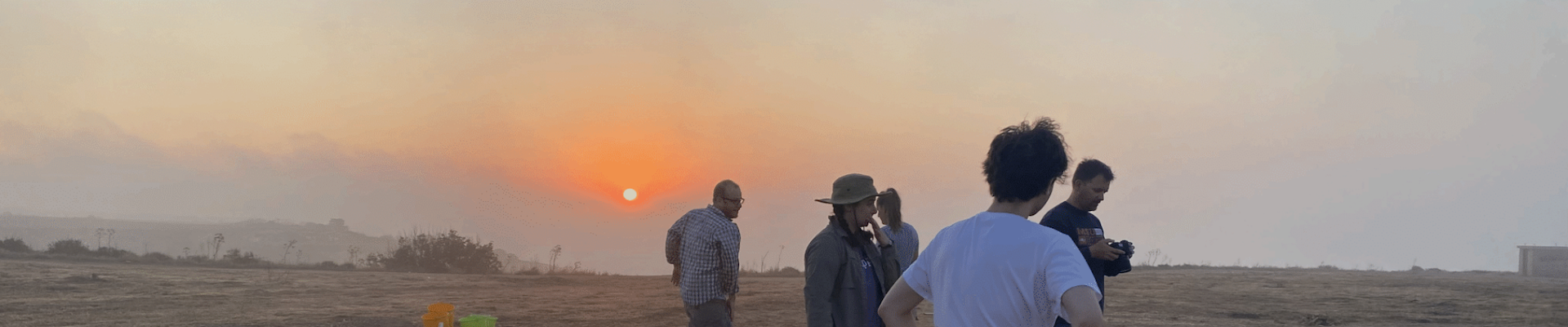
The view from our daily walk back from site at Wadi Mataha1920x400

ASOR MEMBER DIRECTORY

ASOR Members have access to the Individual Directory through the online store. The directory is password protected and only accessible by valid ASOR Members. To access the directory, click here and log into the ASOR Portal. Go to the Membership menu and find the directory from there.

Please email membership@asor.org if you would like to be removed from the directory, only have certain information available, or if you have any questions.