The Early Career Scholars Committee takes responsibility for championing the views and needs of ASOR’s early career scholars (a group defined as including all ASOR members who qualify for the Undergraduate, Graduate, and Early Career membership rates); hosting a luncheon and other programming as deemed appropriate for Early Career Scholars at the ASOR Annual Meeting; and working with the ASOR staff, ASOR leadership, and the ASOR Board of Trustees to further the goal articulated in the ASOR 2021-2025 Strategic Plan, to develop strategies to foster the next generation of scholars of the Near East and wider Mediterranean and promote their success. ASOR Early Career Scholars include all ASOR members who qualify for the following levels of membership: Early Career, Graduate, and Undergraduate.
Luiza Osorio G Silva, Co-Chair (until December 31, 2027)
Avary Taylor, Co-Chair (until December 31, 2028), Liaison to the Growth, Innovation, and Visibility Committee
Regan Baker, ASOR Staff Member (ex officio, non-voting)
Cecelia Chisdock, Graduate Student Member (until December 31, 2026)
Marta Doglio, Graduate Student Member (until December 31, 2028)
Brooke Norton, Early Career Scholar Member (until December 31, 2027)
Mandy Porter, Graduate Student Member (until December 31, 2027)
Savanna Henning Watson, Graduate Student Member (until December 31, 2027)
Domenico Benoci, Early Career Scholar Member (until December 31, 2028)
Natalia Handziuk, Early Career Scholar Member (until December 31, 2028), Liaison to the Program Committee
Kara Larson, Graduate Student Member (until December 31, 2028)
Lingxin Zhang, Early Career Scholar Member (until December 31, 2028)
The Personnel Committee is responsible for (a) conducting an annual review of the Executive Director and making recommendations to the Executive Committee pertaining to the employment of the Executive Director; (b) providing direct oversight of the hiring of staff, annual performance assessments, and terminations of employment; (c) serving in an advisory capacity to the Executive Director on personnel matters; and (d) serving as an independent, confidential arbiter of staff grievances.
Jane DeRose Evans, Chair
Sheldon Fox (Chair of the Board)
Kevin McGeough (Vice President)
Emily Miller Bonney (Treasurer)
Eric Kansa (co-chair, Publications Committee)
Sarah Kansa (co-chair, Publications Committee)
Frederick Winter (chair, Cultural Heritage Committee)
The Cultural Heritage Committee advises the President, the Executive Director, the Board, and other ASOR leaders regarding initiatives ASOR might undertake, either individually or jointly with other bodies in the field of cultural heritage, to help protect and preserve the cultural heritage of the Near East and the wider Mediterranean. Pre-eminently, the Cultural Heritage Committee advises the President, the Executive Director, the Board, and other ASOR leaders regarding the ASOR Cultural Heritage Initiatives program (ASOR CHI), regarding both current and prospective ASOR CHI projects. The Cultural Heritage Committee also advises the President, and ASOR’s leadership more generally, on cultural heritage issues affecting ASOR as well as maintains contact with cultural heritage committees in sister learned societies. This committee reserves one line of membership for an Early Career Scholar and three lines of membership for ASOR members from outside of North America, in countries where ASOR promotes Cultural Heritage Initiatives.
Frederick Winter, Chair Jane DeRose Evans, ASOR President (ex-officio, voting) Andy Vaughn, ASOR Executive Director (ex-officio, non-voting) Darren Ashby, ASOR CHI Programs Manager (ex-officio, non-voting)
Class of 2026
Barbara Anglisz (2nd term) Andrew Cohen (2nd term) Veronica Costarelli (1st term) Michele Stopera Freyhauf (2nd term) Sarah Graff (2nd term) Nancy Serwint (1st term)
Class of 2027
Mohammed Faroug Ali (1st term) Brian Facemire (1st term) Patty Gerstenblith (1st term) Edward M. Luby (1st term) Elizabeth Molacek (1st term) Jessica Robkin (1st term)
Class of 2028
Stephen Epstein (2nd term) Yaroub al-Obaidi (2nd term) Ann Sahlman (2nd term)
The Finance Committee (a) advises the Executive Committee on matters related to the financial management of ASOR and supervision of bids for the annual audit; (b) supervises the investments of ASOR’s funds; and (c) oversees the preparation of the annual budget and monitors compliance with the final budget approved by the Trustees to assure that expenditures do not exceed budgeted amounts.
Emily Miller Bonney, Chair (Treasurer, until December 31, 2026)
Jane DeRose Evans (President, until December 31, 2028)
Debra Foran (Co-Chair of the Program Committee, until December 31, 2028)
Kiersten Neumann (Co-Chair of the Program Committee, until December 31, 2028)
Eric Kansa (Co-Chair of Publications Committee, until December 31, 2027)
Sarah Kansa (Co-Chair of Publications Committee, until December 31, 2027)
At-large: Lisa Ackerman (until December 31, 2028)
At-large: Eric Cline (until December 31, 2026)
At-large: Lynn Swartz Dodd (until December 31, 2027)
The Publications Committee takes responsibility for overseeing ASOR publications, including ASOR’s four scholarly journals — the Bulletin of ASOR, the Journal of Cuneiform Studies, Maarav, and Near Eastern Archaeology — and ASOR’s three monograph series — the Annual of ASOR (AASOR), the ASOR Archaeological Reports Series (ASOR – ARS), and the Journal of Cuneiform Studies Supplement Series (JCCSS). The committee oversees as well as ASOR’s digital database, the Levantine Ceramics Project, and ASOR’s Friends of ASOR e-newsletter, The Ancient Near East Today. In addition, the Publications Committee conducts searches for and recommends to the ASOR Board of Trustees individuals to serve as editors or in some cases co-editors of ASOR’s scholarly journals and monograph series. Typically, editors serve for three-year terms and can be renewed for a second term. Finally, the committee discusses and advises ASOR regarding new publication initiatives, especially digital publishing initiatives and making ASOR publications available through open access.
Eric Kansa, Co-Chair (until December 31, 2027) Sarah Kansa, Co-Chair (until December 31, 2027)
Class of 2026
Jeff Howry Adam Miglio Alison Gruseke
Class of 2027
Paul Flesher Jennifer Singletary Alexia Smith
Class of 2028
Gary Arbino Jimmy Schryver
Editors of ASOR Journals and Monographs
Marwan Kilani (BASOR) Jason Ur (BASOR) Paul Delnero (JCS) Petra Goedegebuure (JCS) Seth Richardson (JCS) Simeon Chavel (Ma’arav) Christina Tsouparopoulou (NEA) Bill Caraher (AASOR) Jennie Ebeling (ASOR-ARS) Jessica Nitschke (ANE Today) Andrea Berlin (LCP)
Jane DeRose Evans (ex officio) Andrew G. Vaughn (ex officio, non-voting)
The Executive Committee of the ASOR Board of Trustees acts on behalf of the Board to manage the business and affairs of ASOR between the regular Board meetings is composed of the Board Chair, Vice Chair(s) of the Board (if any), President, Past President, President Elect, Vice President, Treasurer, Secretary, Chair of the Development Committee, and two (2) or three (3) other Trustees.
Sheldon Fox
Chair of the Board (until December 31, 2028)
Sheldon Fox graduated from Duke University in 1981 with an undergraduate degree in Management Science/Accounting. While at Duke, he worked with Carol and Eric Meyers at Nabratein.
Fox joined KPMG (formerly Peat, Marwick, Mitchell & Co.) in Raleigh in early 1982 and was admitted as a tax partner in 1993. During his 16 + year career at KPMG he served publicly-traded financial services corporations, privately-owned businesses in several industries, and high net worth individuals.
From 1998 until 2003, Fox was chief financial officer of CCB Financial in Durham and its successor by merger, NCF Financial in Memphis. He and his family returned to Raleigh in 2004.
In 2004, Fox joined KDI Capital Partners (formerly Maynard Capital Partners) and became a member of the firm in 2007. He served in varying roles, including portfolio manager, Chief Operating Officer, and financial planner through 2021.
Since January 2022, Fox has continued his financial planning focus with Curi Capital, a Raleigh, NC Registered Investment Adviser, that acquired the assets of KDI’s advisory business. Fox currently serves as Partner and Senior Wealth Advisor at Curi Capital, serving families and individual clients primarily in the Southeast.
Sheldon has been married to his wife, Debbie for over 40 years. They have two sons and five grandchildren. He is a CERTIFIED FINANCIAL PLANNER™.
Fox has been very active in the community in the Triangle and has served on several nonprofit boards.
Fox previously served as an ASOR trustee for nine years (2007-2015), and as treasurer for two terms (2007-2012). He took on the role of Board Chair in January 2023.
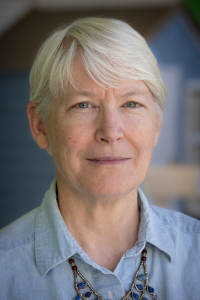
Jane DeRose Evans
President (until December 31, 2028)
Jane DeRose Evans is Professor and Chair of Art History at Temple University. She specializes in the archaeology of the Roman provinces and especially in ancient numismatics. She is a Fellow of the American Numismatic Society and a member of the Royal Numismatic Society. After excavating for many years in France, she is now project numismatist for the Harvard/Cornell Excavations in Sardis and the George Washington University excavations at Bir Madhkur (Jordan). Recently, she brought to publication The Mithraeum at Caesarea Maritima (ASOR Press) and is completing the final publication on the U-Shaped Building at Caesarea.
Evans has been a member of ASOR for many years, and from 2010-2015, she served on the Ad Hoc Ethics Working Group that authored the Policy on Professional Conduct adopted by the ASOR Board in April 2015. She served as Chair of the Cultural Heritage Committee and has testified on behalf of the Memoranda of Understanding that allow intercepting illegally obtained antiquities from Cyprus and Egypt at the US border.
Evans served on the ASOR Board from 2011-2013 and then rejoined the Board again in January 2016. She has also served as the Chair of the Trustee Nominations Committee. Evans became President in January 2026.
Sharon Herbert
Past President (until December 31, 2026)
Sharon Herbert is the Charles K. Williams II Distinguished University Professor of Classical Archaeology Emerita and Research Associate at the Kelsey Museum of Archaeology at the University of Michigan. Formerly, she served as the chair of the Department of Classical Studies and Director of the Interdepartmental Program in Classical Art and Archaeology at Michigan, where she has enjoyed a remarkable career as a field archaeologist, teacher, and academic administrator since she joined the Michigan faculty in 1973. She is also the former Curator of Greek and Hellenistic Collections and Director Emerita (1997-2013) of the University of Michigan’s Kelsey Museum.
Herbert’s research specialties include Hellenistic Egypt and the Near East and ancient ceramics. She is best known for her contributions to the archaeology of Israel, as director of the Tel Anafa excavations from 1978 to 1981 and as co-director of the Tel Kedesh excavations from 1997 to 2012. She has also conducted archaeological fieldwork in Greece, Italy, and Egypt.
Before assuming her position as ASOR’s President on January 1, 2020, Herbert served as ASOR Vice President from 2013-2019. Herbert also served as the President of the W. F. Albright Institute for Archaeological Research (AIAR) from 2013-2018. In November 2017, Herbert received ASOR’s W. F. Albright Service Award, in recognition of her work on behalf of the Albright. In 2025, she received the Richard J. Scheuer Medal for her service as ASOR President (2020-2025).
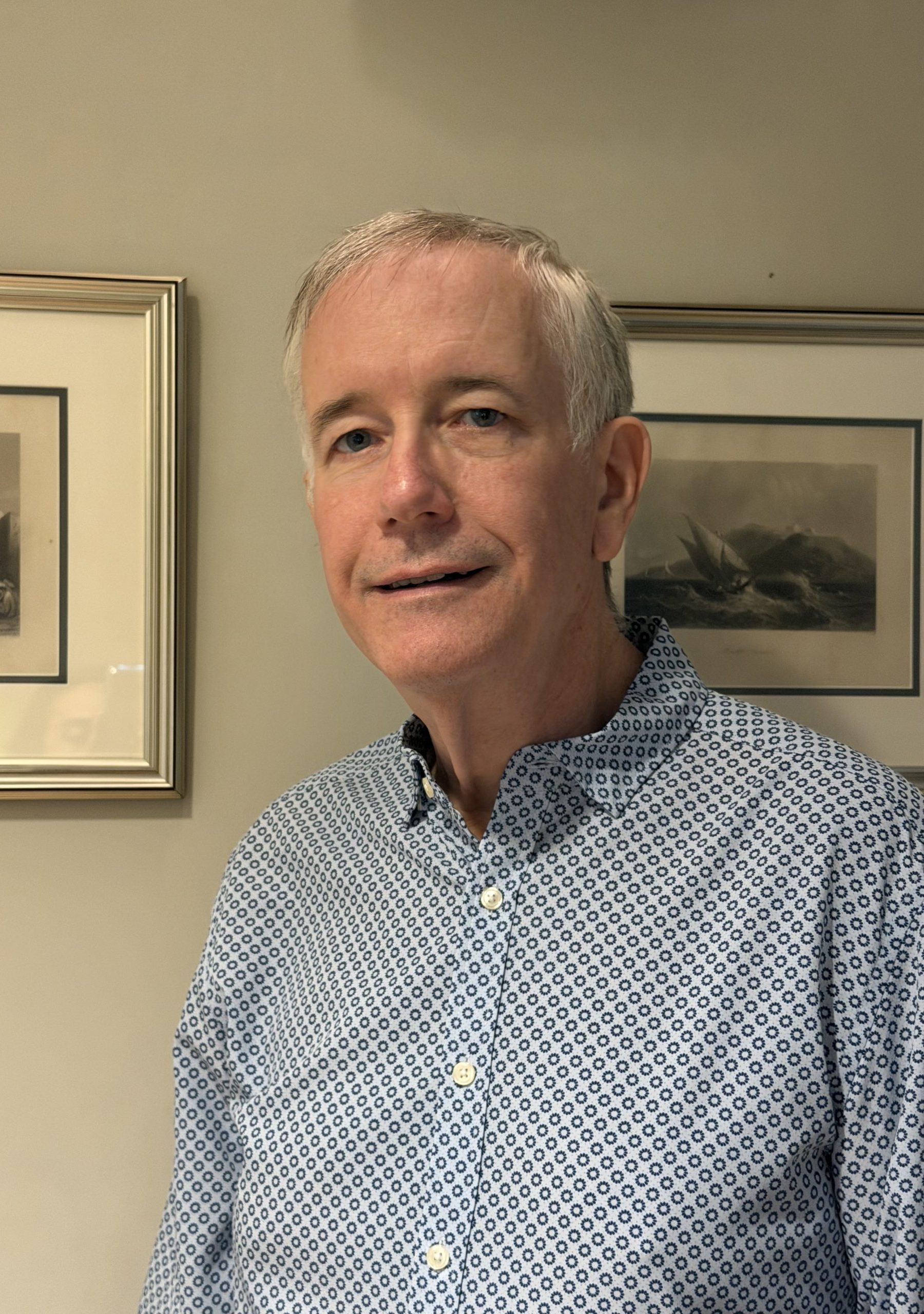
Andrew G. Vaughn
Executive Director (until June 30, 2028)
Andrew G. (Andy) Vaughn became ASOR’s Interim Executive Director on January 1, 2007, and he was appointed Executive Director on July 1, 2007. Prior to this appointment, Vaughn taught at Gustavus Adolphus College in St. Peter, MN. There, from 1997–2007, he was Assistant Professor and later Associate Professor of Hebrew Bible. He also served as Chair of Department of Religion. His teaching and research interests include cultural heritage, history, archaeology, Semitic languages, and Israelite religion. He is a past recipient of the Mitchell Dahood Prize for Biblical Scholarship, and he was a Fulbright Fellow at Tel Aviv University from 1993–94.
Prior to taking up his position as Executive Director of ASOR, Vaughn served on ASOR’s Publications Committee from 2001–2006, and he was elected as Chair of the Publications Committee in 2005. As Chair, he served on the ASOR Board and Executive Committee from 2005–2006, and he was on the ASOR Management Committee from 2006–2007. He was editor of the joint ASOR/SBL Archaeology and Biblical Studies Book Series from 2001–2007. He has also served as Vice President of the Upper Midwest Region of the Society of Biblical Literature (2006-2007) and on the SBL Development Committee (2004–2007).
Kevin McGeough
Vice President (until December 31, 2028)
Kevin McGeough is Professor of Archaeology and Co-Chair of the Department of Geography & Environment at the University of Lethbridge, where he holds a Board of Governor’s Research Chair in Archaeological Theory and Reception. Formerly the chair of ASOR’s Committee on Publications and Vice President of ASOR Canada, he was also the editor of ASOR’s Archaeological Report Series and the Annual of ASOR. Having excavated in Israel, Turkey, Jordan, Egypt, and Canada, McGeough is currently a co-director of the ULethbridge excavations at Head-Smashed-In Buffalo Jump UNESCO World Heritage Site and the ULethbridge excavations at Busayra, Jordan. McGeough has written extensively on economic issues at the Late Bronze Age site of Ugarit, including two books, Exchange Relationships at Ugarit and Ugaritic Economic Tablets: Text, Translations, and Notes. More recently, McGeough has concentrated on the reception history of the Near East. He is the author of a three-volume series on the history of the field, The Ancient Near East in the Nineteenth Century. Representations of Antiquity in Film: From Griffith to Grindhouse is a study of the ancient world in cinema, and his upcoming Representations of Archaeology in Film: X, Never, Ever, Marks is the Spot analyzes the treatment of the profession of ancient studies in film. McGeough’s most recent book, Readers of the Lost Ark: Imagining the Ark of the Covenant from Ancient Times to the Present, is intended for non-specialist audiences.
McGeough became Vice President in 2026.
Sarah Jarmer Scott
Secretary (until December 31, 2027)
Sarah J. Scott (Ph. D. History of Art, University of Pennsylvania) is Professor of Art History and Director of the Arts Administration Program at Wagner College. A small “practical Liberal Arts” institution, Wagner provides a Liberal Arts undergraduate education coupled with majors and professional programs that prepares students for global citizenship. Sarah teaches in and develops programming for various interdisciplinary curricula and student support initiatives. She has also served as the President for the Archaeology Society of Staten Island, Chair of Wagner’s Faculty Personnel Committee, and is the incumbent Chair of the Academic Policy Committee. Sarah’s passion for her field, interdisciplinary collaboration, and a curiosity about humans’ connections to objects are what fuel her dedication to teaching and higher education. She has enjoyed working with Wagner students through a challenging academic curriculum and guiding them in the application of their academics to real-world experience and problem solving.
Trained not only as an Art Historian but also as an Archaeologist, Sarah’s research bridges these disciplines as she investigates the relationships between art, writing, and material experience in pre- and early literate Mesopotamia and the Aegean. Her scholarship has focused on both small objects such as cylinder seals (Seals and Sealing in the Ancient World: Case Studies from the Near East, Egypt, the Aegean, and South Asia, Cambridge University Press, 2018), as well as monumental architecture and narrative (“Imagining Architectural Space: Methodological Approaches for Assyrian Palaces,” in How Do We Want the Past to Be? On Methods and Instruments of Visualizing the Ancient Reality, Gorgias Press, 2016). Her current publication project is a co-edited volume, The Routledge Companion to Seals and Seal Studies in Antiquity. She has also worked on projects for the Metropolitan Museum of Art and the Anderson Galleries (SUNY Buffalo).
Scott joined the ASOR Board in January 2025.
Emily Miller Bonney
Treasurer (until December 31, 2026)
Emily Miller Bonney is a professor of Liberal Studies at California State University Fullerton, where she currently serves as Dean of the Pollak University Library. She has also served as Interim Assistant Vice President for Academic Human Resources. Her research focuses on Bronze Age Crete and specifically on the application of extended mind and material agency theories to the relationship between the archaeological record and social/political/economic change. In addition, she examines the ways in which the specific disciplinary frameworks affect the conclusions scholars reach. Her recent work re-examines the mortuary evidence for social organization transitions in the Early Bronze Age on Crete, particularly the circular stone tombs, and for cross-crafting in pottery and other media.
Bonney began attending ASOR meetings in 1999, after fifteen years in the world of law school and legal practice. Since 2016, she has served as the session chair of “Career Options for ASOR Members: The Academy and Beyond.” She served as Chair of the ad hoc committee charged with developing a Code of Conduct for the ASOR Annual Meeting and is currently serves as a Chair of the Board’s Finance Committee. She received the ASOR Membership Service Award in November 2020.
Bonney joined the ASOR Board in January 2019.
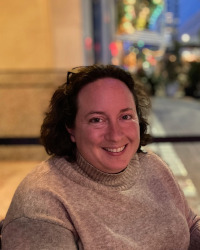
Kathryn Grossman
(until December 31, 2028)
Kathryn Grossman is Assistant Professor of Anthropology in the Department of Sociology and Anthropology at North Carolina State University. She is an archaeologist with expertise in the Chalcolithic and Bronze Age cultures of Cyprus and Mesopotamia and a methodological specialty in zooarchaeology. She is Director of the ASOR-affiliated Makounta-Voules Archaeological Project, as well as zooarchaeologist for the Kani Shaie Archaeological Project (Iraqi Kurdistan), the Wadi el-Hudi Expedition (Egypt), the Petra North Ridge Project (Jordan), and the Temple of the Winged Lions Cultural Resource Management Project (Jordan). She is currently co-editing, with Jesse Casana and Eric Jensen, the final report on the excavations at Tell Qarqur, Syria.
Grossman has been a member of ASOR’s Committee on Archaeological Research and Policy and served as Chair of the Fellowship Committee (2016-2021). She received ASOR’s Membership Service Award in 2021 in recognition of her work on the Fellowship Committee.
Eric M. Meyers
(until December 31, 2027)
Eric Meyers is the Bernice and Morton Lerner Emeritus Professor in Judaic Studies and Archaeology in the Department of Religious Studies of Trinity College of Arts and Sciences, Duke University. He served as Director of the Graduate Program in Religion at Duke from 1979-1985 and as Associate Director in 2000-2001. He became Director again in academic year 2001-2002, a position he held until 2007.
Meyers’s research interests include the Bible, Jewish history, and archaeology. Meyers has directed digs in Israel for forty years, including the Meiron Excavation Project, whose work included excavations of the nearby synagogues of Gush Ḥalav and Nabatrein, and the Sepphoris Regional Project.
Within ASOR, Meyers held the position of First Vice-President for Publications from 1982-1990, and from 1982-1992 he served as the editor of Biblical Archaeologist (BA). He served as well the associate editor of the Bulletin of ASOR (BASOR) from 1976-1993. Most notably, Meyers served as ASOR’s President from January 1, 1990, through July 1, 1996, and then again from May 2006 through December 2008.
In 2009, Meyers became Project Director of a major two-and-a-half year grant for archiving the history of American archaeology in the Middle East through ASOR. In addition, from 1975-1976, he served as Director of the W. F. Albright Institute of Archaeological Research (AIAR) in Jerusalem. Today, he is an Honorary Trustee of the Albright. He also currently serves as a member of the ASOR Board’s Development Committee.
In 1997, Meyers received ASOR’s G. Ernest Wright Publication Award, which is given to the editor/author of the most substantial volume(s) dealing with archaeological material, excavation reports, and material culture from the ancient Near East and eastern Mediterranean. A decade later, in November 2007, he received ASOR’s most prestigious award, the Richard J. Scheuer Medal, for lifetime achievement and professional service. The Eric and Carol Meyers Excavation Fellowships, established in 2014, also honor his long-standing service to ASOR.
Kiersten Neumann
(until December 31, 2026)
Kiersten Neumann specializes in the art and archaeology of West Asia, with a focus on Assyrian and Achaemenid material culture. She is Curator of the Institute for the Study of Ancient Cultures Museum (ISAC Museum [formerly Oriental Institute Museum]), Research Associate at ISAC, and Lecturer in the Department of Art History at the University of Chicago. In addition to co-editing The Routledge Handbook of the Senses in the Ancient Near East (2022), she has published numerous articles on sensory experience, ritualized practice, and visual culture, as well as on museum practice, collecting histories, and provenance research. At the ISAC Museum, she has curated such exhibitions as “Joseph Lindon Smith: The Persepolis Paintings” (2022), “Making Sense of Marbles: Roman Sculpture at the OI” (2022–2023), and “Artifacts Also Die” (2023), in addition to the museum’s permanent galleries as part of a complete renovation (2019). She has conducted fieldwork in Turkey (Tell Tayinat) and Greece (Athenian Agora), and collaborates on international museum, art, and cultural heritage projects and exhibitions. Originally from Vancouver, Canada, she received her B.A. and M.A. from the University of British Columbia and her Ph.D. from the University of California, Berkeley, during which time she also worked at the Badè Museum of Biblical Archaeology in Berkeley, ultimately as Associate Curator and Interim Director. Neumann serves as co-chair of ASOR’s Program Committee and as chair of the Development Committee.
Neumann joined the ASOR Board in January 2024 and the Executive Committee in January 2025.
Jason Ur
(until December 31, 2026)
Jason Ur is Stephen Phillips Professor of Archaeology and Ethnology in the Department of Anthropology at Harvard University. He specializes in early urbanism, landscape archaeology, and remote sensing, particularly the use of declassified US intelligence imagery. He was trained in Anthropology at the University of Pennsylvania (BA 1994) and in Near Eastern Languages and Civilizations at the University of Chicago (PhD 2004). He has directed field surveys in Syria, Iraq, Turkey, and Iran. He is the author of Urbanism and Cultural Landscapes in Northeastern Syria: The Tell Hamoukar Survey, 1999-2001 (2010). Since 2012, he has directed the CAP-affiliated Erbil Plain Archaeological Survey, an archaeological survey in the Kurdistan Region of northern Iraq. He is also preparing a history of Mesopotamian cities.
Ur joined ASOR as a student member in the late 1990s. He held the ASOR Mesopotamian Fellowship in 2000-2001 and served on the Committee on Mesopotamian Civilization from 2009-2013. He was the plenary speaker at the 2014 ASOR annual meeting. He organized and chaired the Settlement and Society in the Ancient Near East session from 2008-2010. The Archaeology of the Kurdistan Region of Iraq session, which he founded and chaired from 2017-2019, has now been accepted as a Standing Session.
Ur joined the ASOR Board in January 2021 and the Executive Committee in January 2025.
The Chairs Coordinating Council takes responsibility for (a) monitoring the activities of ASOR’s eight other standing committees, by receiving monthly reports about the committees’ discussions and business; (b) discussing and coordinating programs and policies that cut across the purview of two or more of the CCC’s constituent committees (e.g., policies regarding ethical issues or professional standards) and also adjudicating, if need be, between competing claims regarding jurisdiction or resource allocation among the CCC’s constituent committees; (c) annually receiving, from the Program Committee, recommendations regarding the plenary speaker for the ASOR Annual Meeting and then recommending to the ASOR President the name of an individual to invite; and (d) transmitting, through its chair (the ASOR Vice-President) reports regarding the work of the CCC, and its constituent committees, to the Board of Trustees, at the Board’s biannual meetings. Chairs of committees are expected to attend, in person, the CCC meeting at the Annual Meeting or designate a committee to serve as interim chair.
Kevin McGeough, ASOR Vice President and Chair
Jane DeRose Evans, ASOR President
Susan Ackerman, Co-Chair of the Honors and Awards Committee
Georgia Andreou, Chair of the Committee on Archaeological Research and Policy
Debra Foran, Co-Chair of the Program Committee
Eric Kansa, Co-Chair of the Publications Committee
Sarah Kansa, Co-Chair of the Publications Committee
Katherine Larson, Co-Chair of the Committee on Growth, Innovation, and Visibility
Laura Mazow, Chair of the Membership and Outreach Committee
Kiersten Neumann, Co-Chair of the Program Committee
Luiza Osorio G Silva, Co-Chair of the Early Career Scholars Committee
Rocco Palermo, Co-Chair of the Honors and Awards Committee
Avary Taylor, Co-Chair of the Early Career Scholars Committee
Julia Troche, Co-Chair of the Committee on Growth, Innovation, and Visibility
Andy Vaughn, ASOR Executive Director (ex officio, non-voting)
Frederick Winter, Chair of the Cultural Heritage Committee
Please e-mail the Membership office if you have any questions.
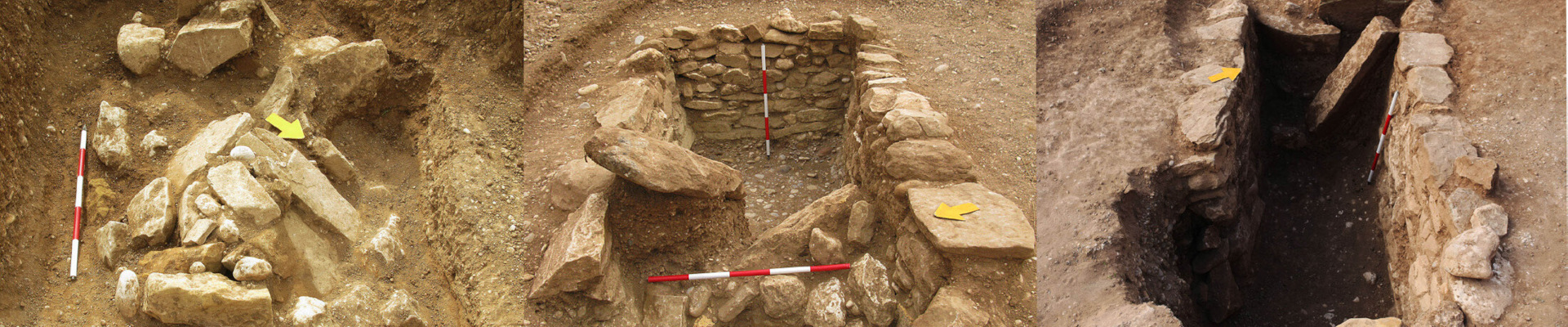
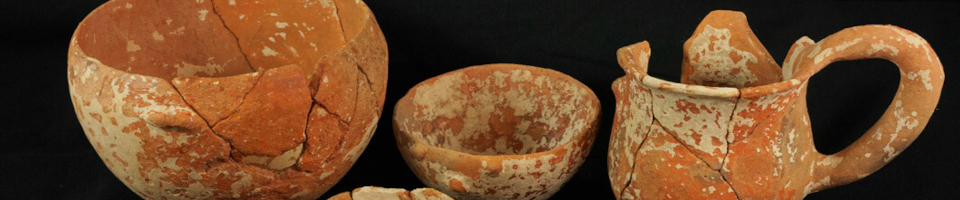
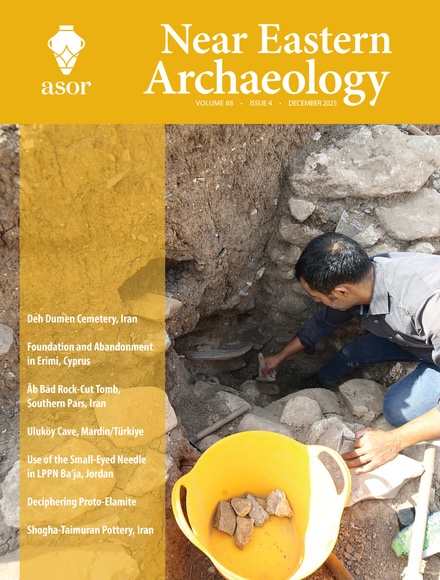
Pp. 260–271: “Burial Practices of the Bronze Age: An Archaeological Study of the Deh Dumen Cemetery in Southern Zagros, Iran” by Reza Naseri and Morteza Khanipour
Recent rescue excavations at the Deh Dumen cemetery near the Khersan III Dam in the southern Zagros identified 20 graves. This study, based on the first excavation season, sheds light on burial practices and cultural connections of local people in the Bronze Age. Likely within Elamite territory, the cemetery includes stone and jar graves for different social groups. The excavations yielded nearly 145 artifacts, including pottery, metal, and stones. The presence of imported items, such as lapis lazuli from Central Asia and metal artifacts from the Indus Valley, indicates extensive trade relations and cultural contacts with southeastern and northeastern Iran. These findings suggest that the Zagros region had access to a trade route connecting East and West and maintained strong connections with other Elamite communities during the Bronze Age. PLEASE NOTE: This article contains images of human skeletal remains.
ASOR Members with online access: log into ASOR’s Online Portal here. Once logged in, click the JOURNALS tab in the top navigation bar. Tutorials for how to log in to the Online Portal as well as how to navigate to the Portal Journals page can be found here.
Pp. 272-281: “Time Capsules: Evidence for Foundation and Abandonment Practices at Middle Bronze Age Erimi, Cyprus” by Luca Bombardieri and Marialucia Amadio
This article focuses on the analysis of settlement building and abandonment activities and their impact on the formation of community ideologies and ideas. Specifically, the evidence of social practices will be discussed for Prehistoric Cyprus, taking the example of the Middle Bronze Age community at Erimi in South coastal Cyprus. Through the discussion of specific evidence recovered from the workshop complex and domestic areas at this site, we aim to explore the possible connection of construction and abandonment activities with ritualized practices performed by the community to ensure and sustain long-term social cohesion and construct social memory and communal identity.
ASOR Members with online access: log into ASOR’s Online Portal here. Once logged in, click the JOURNALS tab in the top navigation bar. Tutorials for how to log in to the Online Portal as well as how to navigate to the Portal Journals page can be found here.
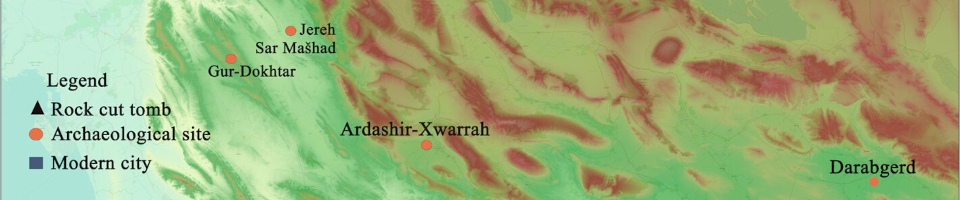
Pp. 282-291: “Āb Bād Rock-cut Tomb: Tracking Post-Achaemenid Burial Customs in Qir-o Karzin, Southern Pars, Iran” by Parsa Ghasemi, Leila Ghasemi, Alireza Mehrabi, and Aziz Rezaei
This article examines a newly discovered rock-cut tomb in Āb Bād village, Qir-o Karzin county, Iran. The tomb features a simple design with a single chamber and a burial cavity, or cist. Its facade is constructed with three overlapping rectangular registers in a stepped arrangement, devoid of decoration or relief. This reflects architectural continuity from Achaemenid rock tombs (550–330 BCE). Based on current survey evidence, it is highly probable that the construction of this tomb dates to the post-Achaemenid period (330 BCE–224 CE) and likely belonged to a high-ranking local ruler or noble of Pars under the Parthian Empire.
ASOR Members with online access: log into ASOR’s Online Portal here. Once logged in, click the JOURNALS tab in the top navigation bar. Tutorials for how to log in to the Online Portal as well as how to navigate to the Portal Journals page can be found here.
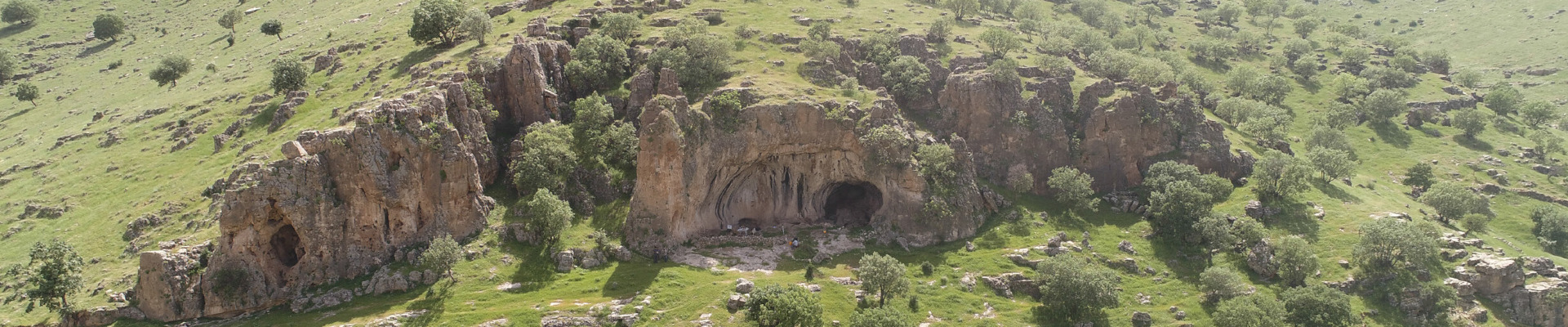
Pp. 292-303: “First Observations on the Excavations in the Terrace Area of Uluköy Cave, Mardin/Türkiye” by Ergül Kodaş, Eşref Erbil, Charlotte Labedan Kodaş, and Mehmet Şan
The emergence of sedentary societies in southeastern Anatolia has been the focus of numerous studies in recent years, particularly those concentrating on Early Neolithic mound settlements located along the riverbanks of the Euphrates Basin and the Tigris Valley. However, research on the Late Epipaleolithic communities in this region remains limited. Currently, our knowledge of the early phase of the transition to sedentary lifestyle in southeastern Anatolia is based on information gathered from only five archaeological sites, most of which are situated along the Tigris: Körtik Tepe, Çemka Höyük, Boncuklu Tarla, Biris Mezarlığı, and Söğüt Tarlası. Recently, the excavation of Ulukoy Cave in 2023 and 2024, located in the Mardin Range, led to the discovery of Epipaleolithic architectural features and lithic tools in its terrace. This article presents our initial observations from this archaeological site.
ASOR Members with online access: log into ASOR’s Online Portal here. Once logged in, click the JOURNALS tab in the top navigation bar. Tutorials for how to log in to the Online Portal as well as how to navigate to the Portal Journals page can be found here.
Pp. 304-312: “Potential Use of the Small-Eyed Needle from Late Pre-Pottery Neolithic Baʿja in Jordan” by Bellal Abuhelaleh, Hans G. K. Gebel, Carmela Vaccaro, and Ursula Thun Hohenstein
The Pre-Pottery Neolithic sites in Jordan represent important stages in the evolution of human social structures in the Middle East. These sites reveal a remarkably complex social differentiation, as well as cultural and technological advances that paved the way for stratified socioeconomic structures in the Transjordanian Highlands. One important Late Pre-Pottery Neolithic site is Baʿja (ca. 7200–6800 BCE). Dr. Hans K. Gebel and his team from the Free University of Berlin first excavated Baʿja in 1984. Excavations resumed in 1997 and continue today. This article examines a particular bone tool: a very thin, cylindrical eyed needle, recovered in the lowermost layer of Baʿja stratigraphy. The object is notable for its dimensional smallness. In order to gather more information about its possible production technique and use, the researchers conducted a scientific experiment to produce a replica similar to the original Baʿja eyed needle.
ASOR Members with online access: log into ASOR’s Online Portal here. Once logged in, click the JOURNALS tab in the top navigation bar. Tutorials for how to log in to the Online Portal as well as how to navigate to the Portal Journals page can be found here.
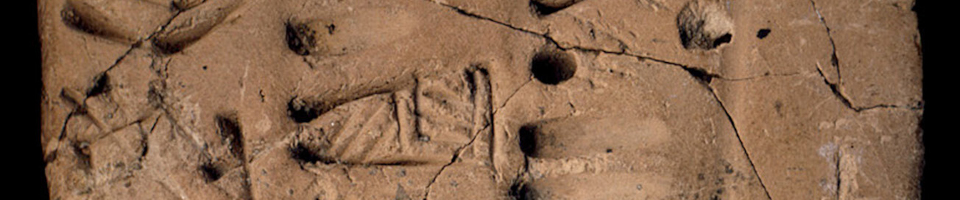
Pp. 314-323: “Recent Progress in Deciphering Proto-Elamite” by M. Willis Monroe, Kathryn Kelley, Logan Born, and Anoop Sarkar
Within about a century of the earliest inventions of writing in southern Iraq and Egypt at the end of the fourth millennium BCE, a third writing system was invented in southwestern Iran. This writing is called proto-Elamite, and it has remained undeciphered, even though a large number of tablets (now over 1,700) have been available for study since the early twentieth century. The name proto-Elamite is a conventional label, not meant to imply a known language, that was coined by V. Scheil. Proto- Elamite is a distinct corpus from the much later Linear Elamite writing system. With increasing digital documentation of this corpus, new avenues of research have opened, and over the past five years an interdisciplinary team of researchers has been making insights by combining traditional knowledge of the corpus with techniques developed in computational linguistics.
ASOR Members with online access: log into ASOR’s Online Portal here. Once logged in, click the JOURNALS tab in the top navigation bar. Tutorials for how to log in to the Online Portal as well as how to navigate to the Portal Journals page can be found here.
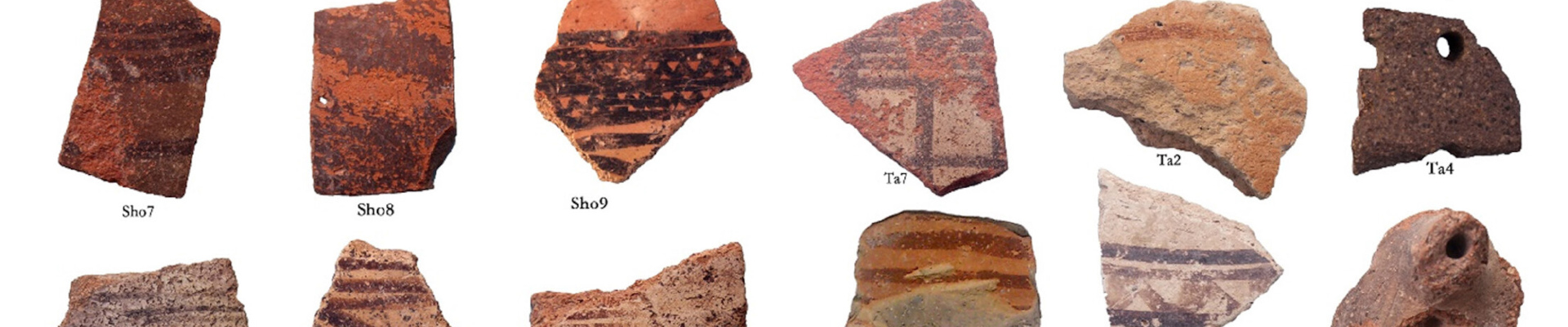
Pp. 324-337: “Insights into Shogha-Taimuran Pottery: Exploring Making Centers and Cultural Significance” by Habib Emadi and Ali Aarab
The Shogha-Taimuran period refers to the second half of the second millennium BCE in the Kur River Basin of southwestern Iran, characterized by two visually distinct yet contemporaneous pottery types. To elucidate the causes of these distinctions, Neutron Activation Analysis (NAA) and X-ray Fluorescence (XRF) were conducted on the samples. Previous researchers posited Tol-e Darwazeh as the production center for Shogha-Taimuran pottery. However, this study reveals that Tol-e Taimuran also served as a production center, indicating different origins for some Taimuran pottery types and reflecting two distinct pottery traditions in the mid-second millennium BCE (Middle Elam). Analyses of Taimuran pottery, alongside other site findings, indicate connections with other areas, positioning Tol-e Taimuran as a potential main center for Shogha-Taimuran culture following the abandonment of Tol-e Malyan.
ASOR Members with online access: log into ASOR’s Online Portal here. Once logged in, click the JOURNALS tab in the top navigation bar. Tutorials for how to log in to the Online Portal as well as how to navigate to the Portal Journals page can be found here.
The Honors and Awards Committeeseeks nominations to serve on the G. Ernest Wright Book Award sub-committee. ASOR invites nominations, including self-nominations, from ASOR members who are interested in being considered by the committee for these openings. Committee members will serve a three-year term with the possibility of two consecutive terms. Nominees must fill out the online form by January 30, 2026. The Honors and Awards Committee takes responsibility for determining the awardees for the three book awards, the field archaeology award, the “best poster” and “best student paper” awards, and the multiple membership service awards that ASOR gives annually; conducting the awards ceremony during the Members’ Meeting at the ASOR Annual Meeting; and discussing and advising the ASOR Board of Trustees about ASOR’s awards, including recommending to the Board the creation of new awards as deemed appropriate.
Three candidates are sought for the G. Ernest Wright Award sub-committee. This award is given to the author/editor of the most substantial volume(s) dealing with archaeological material, excavation reports and material culture from the ancient Near East and Eastern Mediterranean. This work must be the result of original research published within the past two years. (One award is given annually.) Candidates may also serve on the Joy Ungerleider Poster or Student Paper Award sub-committees.
In order to receive full consideration by the committee the online form must be submitted by noon EST on January 30, 2026. For questions and concerns, please contact Moni Islam (info@asor.org).





 Sheldon Fox
 Jane DeRose Evans

 Andrew G. Vaughn
 Kevin McGeough
 Sarah Jarmer Scott

 Kathryn Grossman

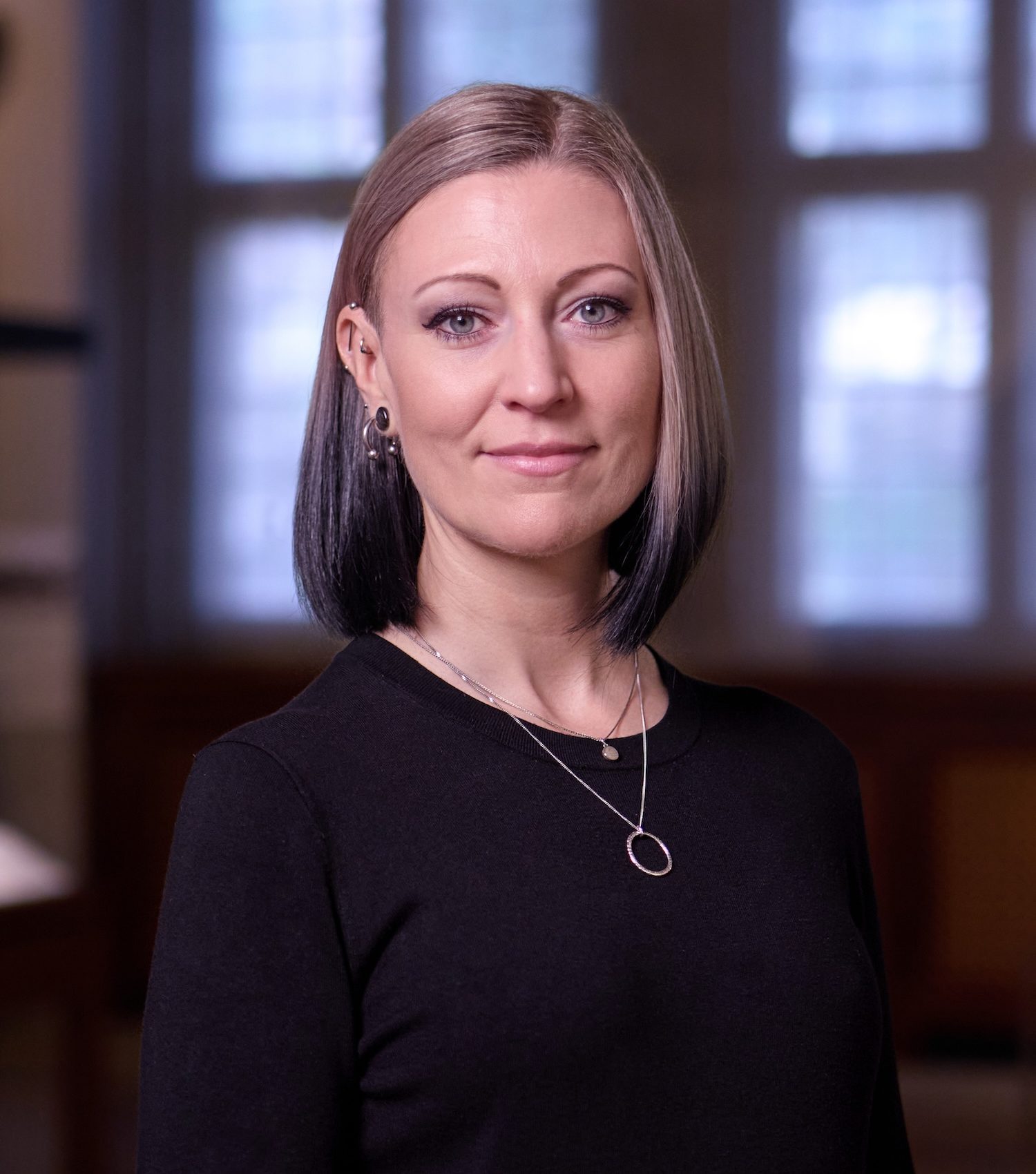 Kiersten Neumann


 You can receive