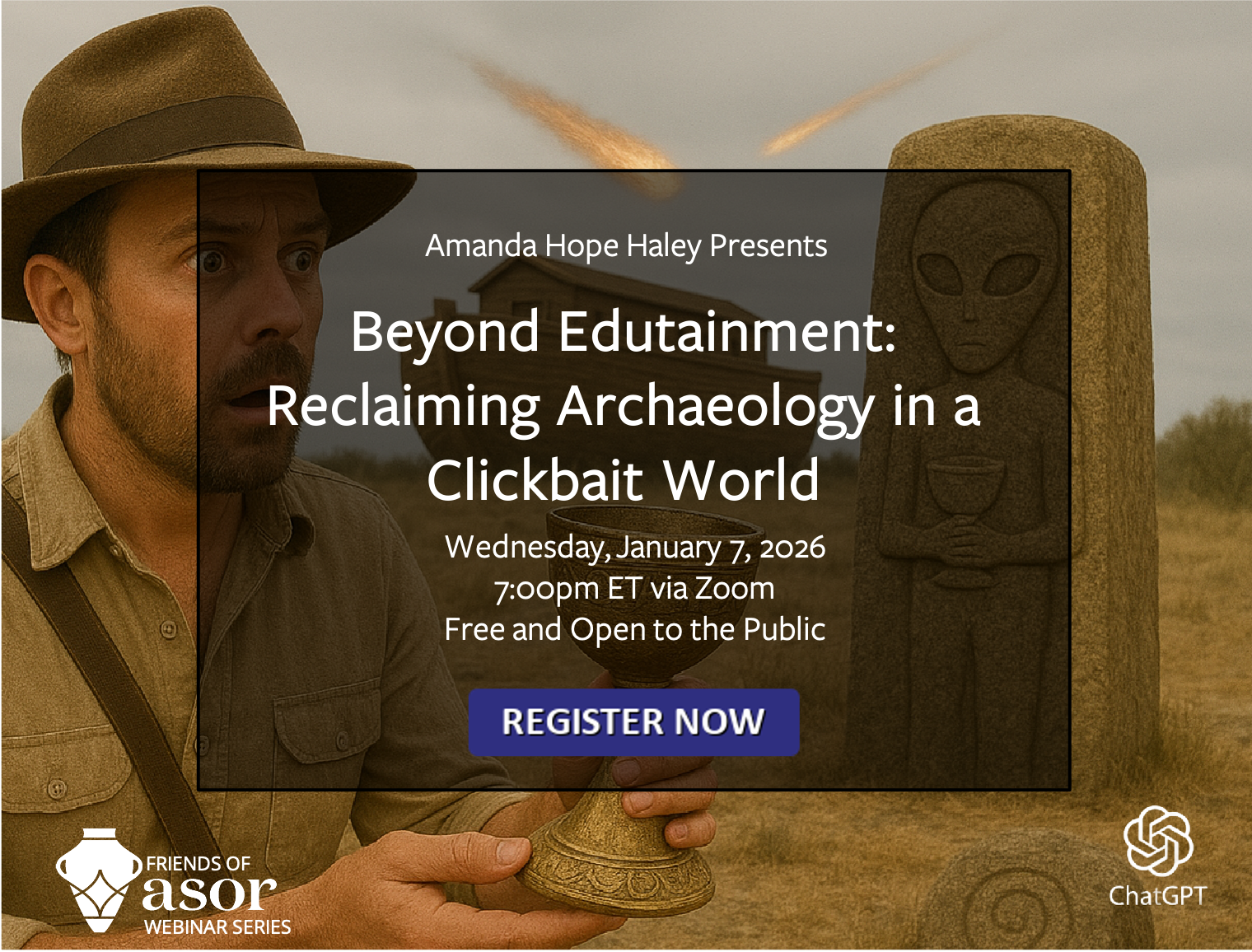
 We all remember a time when the History Channel was about history, documentaries bored us with facts and black-and-white footage, and everyone knew Indiana Jones, Daniel Jackson, and River Song were swashbuckling adventurers (not serious scientists). When did the lines between fiction and fact blur? Did it start when thorough public history education was reduced to merely one year during middle school, when the Socratic method gave way to teaching-to-the-test? Although many of us are still fascinated by our ancestors and the empires they built and destroyed, the field of archaeology is shrinking when we need more access to the lessons of the past, not less.
 Both researchers and readers must understand the problem before us: troll farms are creating and multiplying fake content that crowd out real news, profit-trained algorithms are pushing what we learn, and AI is making falsehood harder to detect.
Even if archaeologists were well funded and better resourced, they could not compete with the truly fake news pushed by entertainment companies and “adventurers,” whom we might call pseudoarchaeologists. Social media’s lack of conscience and sensationalists’ focus on fame and wealth make the fight with slow science and thoughtful debate an unfair one. Through publications such as ASOR’s ANE Today and BAS’s Biblical Archaeology Review, scholars have shared their findings with the public in less-technical language for many years. However, as reading rates drop among students and adults, authors are now competing with filmmakers for eyeballs, hearts, and minds. Increases in forgeries and thefts make us all wonder what is real.
The quest to recover our ancient history is not yet lost to Skynet. But it is going to take all of us—the real archaeologists in the field and the curious readers behind their screens—to reinvigorate real exploration.
 Amanda Hope Haley has a bachelor of arts in Religious Studies from Rhodes College and a master of theological studies in Hebrew Scripture and Interpretation from Harvard University. She entered the publishing industry in 2005, first contributing to The Voice Bible as a translator, commentary writer, and editor. She then began working with popular nonfiction titles as a content editor, theological reviewer, and ghostwriter before her first book was published by Thomas Nelson in 2014. Amanda’s most recent book, Stones Still Speak: How Biblical Archaeology Illuminates the Stories You Thought You Knew, was released by Revell in September and encourages readers to distinguish between popular traditions and historical facts. Between writing manuscripts, she podcasts as The Red-Haired Archaeologist® and introduces sound archaeological insights to readers overwhelmed and misdirected by cinematic or culturally inherited images of the ancient world.
SUPPORT THE WEBINAR PROGRAM!
Friends of ASOR is pleased to announce that the first webinars of the 2025-2026 season will once again be free and open to the public with a goal to raise $10,000 so that the entire webinar season will be free. Will you support this outreach effort with a tax-deductible contribution? All donors/sponsors with gifts of $100 or more will be recognized in subsequent webinars. Make your gift today and select “webinars” from the dropdown menu.

Designate your gift for “Webinars” in the drop-down menu.
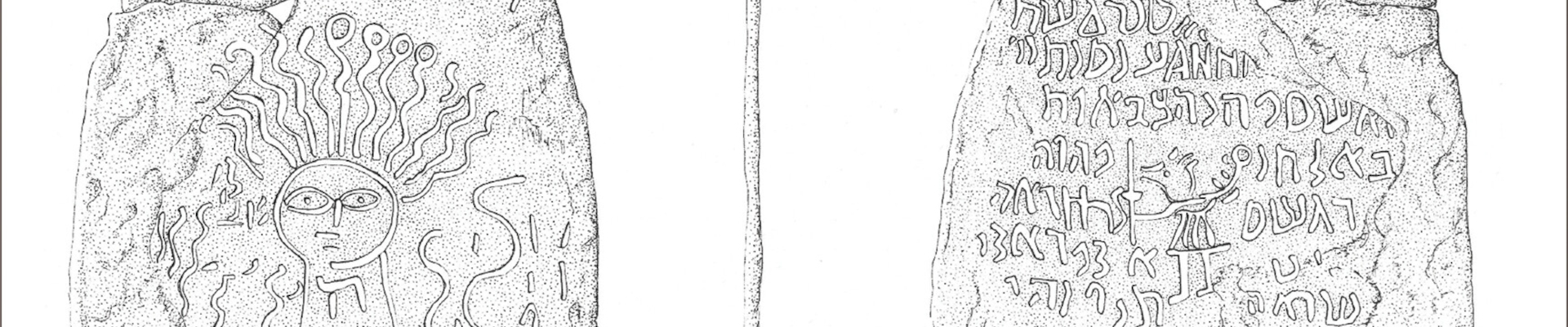
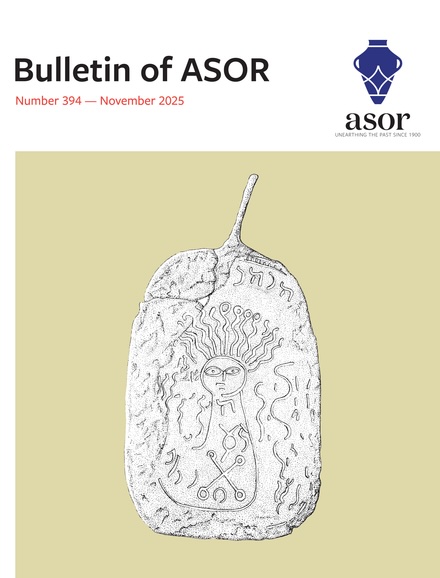





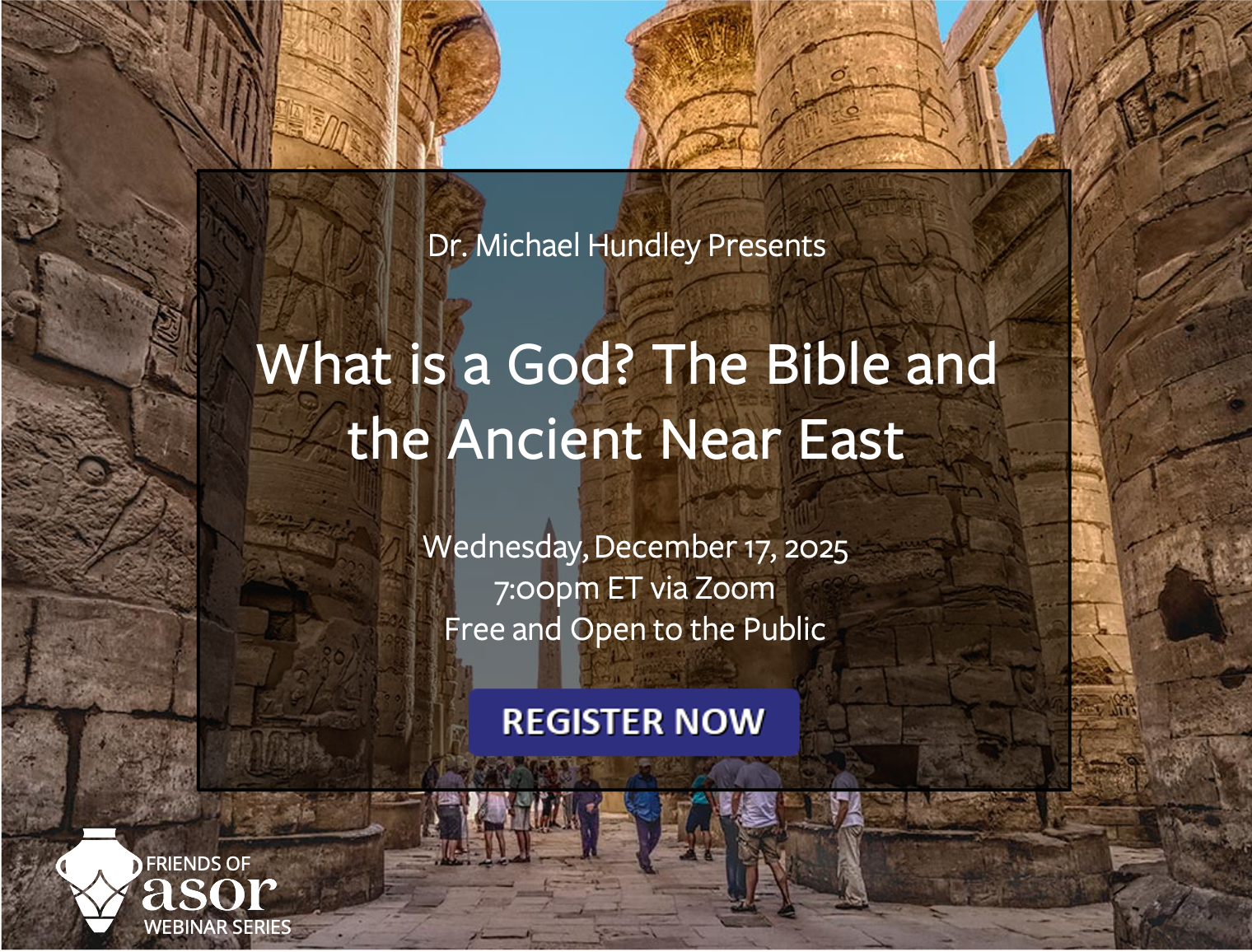
 What is a god? While the question is simple enough, our answer often depends on our cultural context, and we tend to expect other cultures to have the same ideas we do. We also project our modern ideas backward onto ancient texts, overlooking native classifications in the process. However, rather than being a fixed category, the definition of a “god” is culturally conditioned. With an assist from the Cognitive Science of Religion, this presentation attempts to reconstruct ancient perceptions of gods in the Ancient Near East and the Bible. It draws from and expands upon Dr. Hundley’s
 We begin by surveying the various beings who may qualify as gods in the Bible and the wider Ancient Near East, including Egypt, Mesopotamia, the Levant, and Hittite Anatolia. With the data in place, we consider the qualities that all deities share. While gods come in all shapes and sizes, all possess power and agency. To make the divine world more comprehensible, we then sort the divine sphere into categories: high gods (e.g., Egyptian Amun, Mesopotamian Marduk and Assur, Ugaritic El, and biblical YHWH), major gods, minor gods, and peripheral gods. High gods rule, and in the case of Amun, Marduk, Assur, and YHWH, possess a complement of divine powers, like a one-stop shop. Major gods often are specialists (e.g., weather, sun, moon), whereas minor gods serve the high and major gods. Peripheral gods include deified natural phenomena like rivers and mountains, monsters and demons, foreign gods, as well as seemingly inanimate objects like beds and doorposts. Although all gods possess humanlike agency, those closer to the top tend to be the most humanlike internally, making them immediately more understandable and relatable. By contrast, peripheral gods tend to be less humanlike and, as such, more menacing.
 Dr. Michael Hundley (B.A. Amherst College; Ph.D. University of Cambridge) is Assistant Professor of Teaching at the University of Memphis. He works at the intersection of human and divine in the Hebrew Bible/Old Testament and the Ancient Near East and has published multiple books and articles, including Keeping Heaven on Earth: Safeguarding the Divine Presence in the Priestly Tabernacle (2011), Gods in Dwellings: Temples and Divine Presence in the Ancient Near East (2013), and Yahweh among the Gods: The Divine in Genesis, Exodus, and the Ancient Near East (2022). He is currently finishing Ancient Gods and Monsters: The Bible, the Ancient Near East, and Beyond and is beginning Temples and Divine Presence in the Bible and Ancient Near East for the Cambridge Elements series. Future projects include a comparison of temples and divine presence in the Bible, Ancient Near East, and Hinduism and an exploration of gendering gods.

 ASOR is gearing up for our

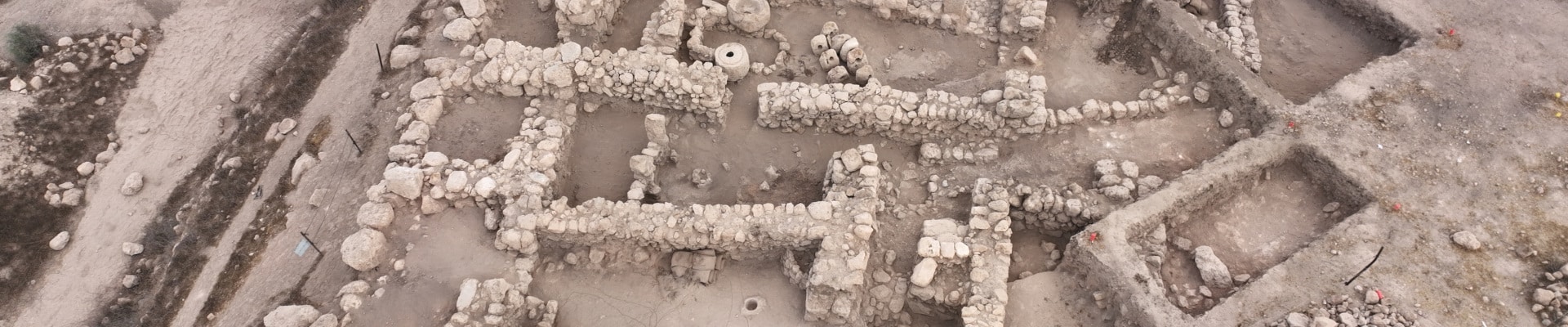
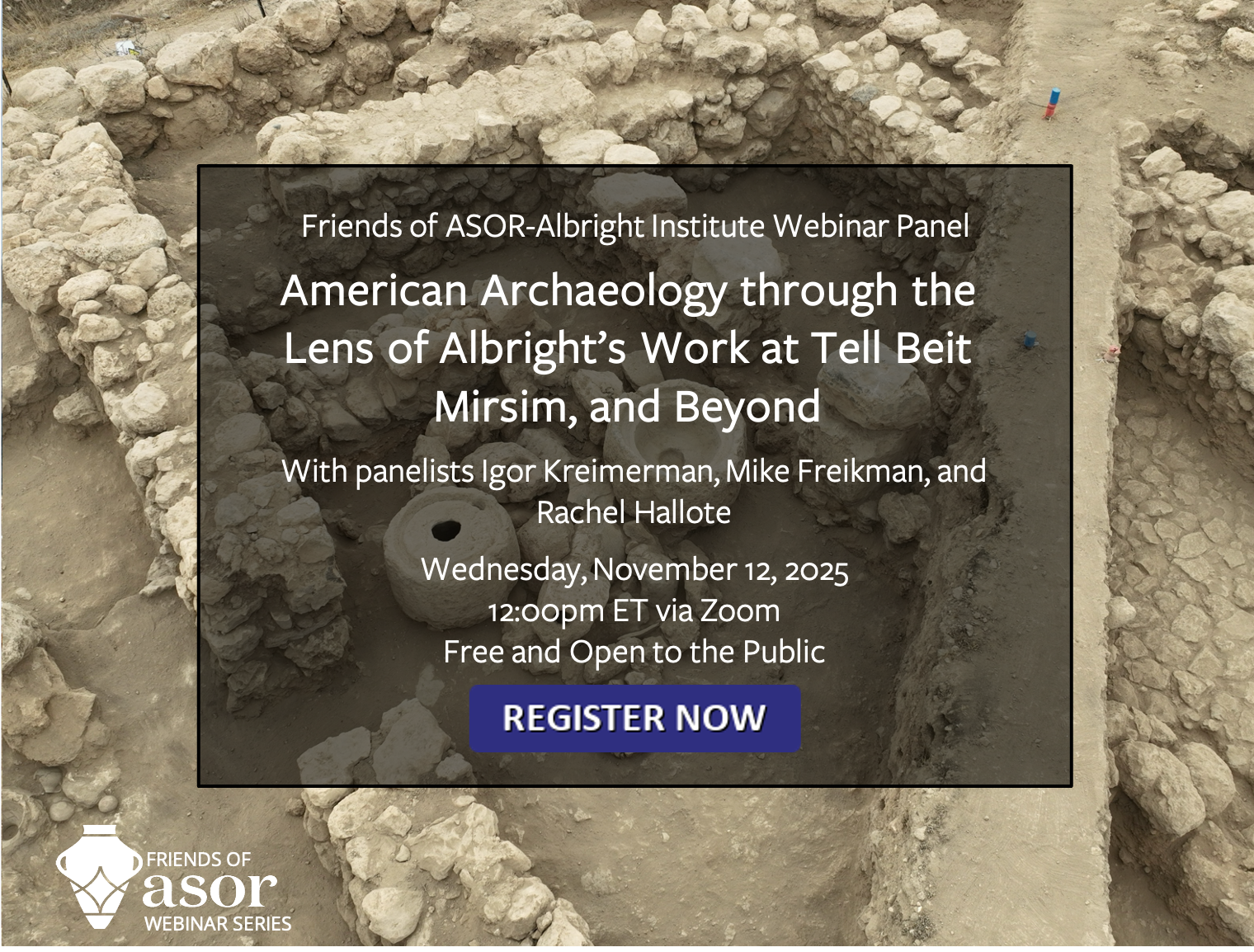
 Albright’s excavations at Tell Beit Mirsim marked a turning point in the development of Biblical Archaeology, establishing the site as a key type-site for the discipline. The innovative methods applied in both excavation and publication resonated for decades and provided the foundation for Albright’s wide-ranging synthetic studies. Over time, however, many of his conclusions and theories have been challenged and re-evaluated. The renewed excavations at Tell Beit Mirsim invite a fresh assessment of Albright’s work, comparing his insights with new evidence from the field. This presentation will reconsider the validity of his reports in light of modern scholarship and reflect on the enduring impact of his excavations.
 Dr. Igor Kreimerman is a Senior Lecturer in Archaeology and Ancient Near Eastern Studies at the Hebrew University of Jerusalem. He directs the Selz Foundation Hazor Excavations in Memory of Yigael Yadin and serves as scientific
 advisor to the Renewed Excavations at Tell Beit Mirsim. His research focuses on the social and economic structures of Bronze and Iron Age Levantine societies, as well as on human-induced site formation processes, particularly those related to construction and destruction.
 Rachel Hallote is Professor of History at Purchase College SUNY. Her research involves British and American archaeologists who excavated in Ottoman-controlled Palestine in the 19th century. She has worked at numerous archaeological sites in Israel, including Tell Miqne and Megiddo. Her publications include Bible, Map, and Spade: The American Exploration Society, Frederick Jones Bliss, and the Forgotten Story of Early American Biblical Archaeology and the co-authored volume, The Photographs of the American Palestine Exploration Society as well as many articles about archaeology and the history of the discipline. She currently co-hosts an archaeology podcast called This Week in the Ancient Near East.