ASOR Grant & Fellowship Awardees

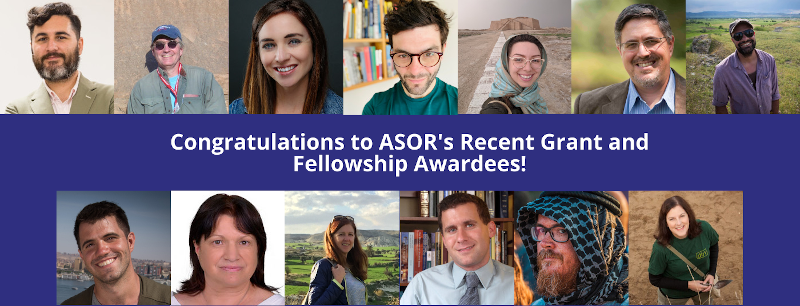
2022 PROJECT GRANT AND RESEARCH FELLOWSHIP AWARDEES

Grants for Archaeological Projects

Stevan B. Dana Project Grant
  • Sergio Alarcón Robledo, Harvard University: North Saqqara Archaeological Survey (Egypt)
Lawrence T. Geraty Community Archaeology Grant
  • Abdullah Abdulazeese Al-masha’lah, AlRaqeem for Logistic Services and Training: Tall Hisban (Jordan)
Denise L. Gold Project Grant
  • Lindy Crewe, CAARI: Kissonerga-Skalia Bronze Age Settlement Excavation (Cyprus)
Charles Harris Project Grant
  • Ian W. N. Jones, University of California-San Diego: Balu’a Regional Archaeology Project (Jordan)
  • Rocco Palermo, University of Pisa: Gird-i Matrab Archaeological Project (Iraqi Kurdistan)
Joe D. Seger Project Grant
  • Shawn Bubel, University of Lethbridge: Final Analysis of the Chipped Stone Tools Excavated from Tel Beth-Shemesh (Israel)
  • Darrell J. Rohl, Calvin University: Religion and Society at Umm al-Jimal (Jordan)
Shepard Urgent Action Grant
  • Maria Elena Ronza, SELA for Training and Protection of Heritage: Emergency Conservation of the Roman Bathhouse in Petra (Jordan)

Research Fellowships

Study of Collections Fellowships
  • Joseph A. Greene, Harvard Museum of the Ancient Near East: Kelsey Museum Archives-Michigan Excavations in the Carthage Sanctuary of Tanit (US)
  • James D. Moore, Humboldt-Universität zu Berlin: Cabinet du Corpus Inscriptionum Semiticarum in the Académie des Inscriptions et Belles-Lettres-Semitic Artifacts Database (France)
  • Michael Press, University of Agder: The Antiquities Market in Late Ottoman Palestine (London, Paris, and Jerusalem)
  • Matthew J. Suriano, University of Maryland: Cabinet du Corpus Inscriptionum Semiticarum in the Académie des Inscriptions et Belles-Lettres-Clermont-Ganneau Collection (France)
William G. Dever Fellowship
  • Krysta Fauria, University of Southern California: Legio (Israel)
Herbert Warren Mason Fellowship
  • Maria Rita Corticelli: The Kakais of Iraq: Culture, Religion and Society (Iraq)
Mesopotamian Fellowship
  •  A Khaled Abu Jayyab, University of Toronto: The Tepe Gawra Lower Town Survey, Ninawa (Iraq)
  • Petra M. Creamer, Dartmouth College: Rural Landscapes of Imperial Iron Age Mesopotamia (Iraqi Kurdistan)

Support ASOR’s Fellowships, Scholarships, and Grants!

ASOR is fortunate to have a growing number of named endowments that support membership research, excavation grants, and scholarships for fieldwork participation and scholarships for Membership and the Annual Meeting. However, we also need support from individual donors who make annual gifts or consider establishing endowments to support these programs in perpetuity. Support of ASOR’s Annual (Unrestricted) Fund enables us to support the operations of the ever-growing scholarship and grant programs. Please contact ASOR’s executive director, Andy Vaughn, for more information about ASOR’s grants, scholarship, and fellowship programs. Gifts of all amounts are needed and greatly appreciated.

Study of Collections Fellowship Report: Joseph A. Greene

2022 Study of Collections Fellowship Report: Kelsey Museum Archives

Joseph A. Greene, Harvard Museum of the Ancient Near East

An ASOR Study of Collections Fellowship funded my travel to the University of Michigan to complete work in archives related the 1925 Michigan excavations in the Carthage Sanctuary of Tanit (tophet). The excavator, Professor Francis Kelsey, died before completing a final report, but he left behind an extensive archives, held both at the Kelsey Museum and at the Bentley Historical Library.

The 1925 expedition directed by Kelsey was the forerunner to the 1975–1979 ASOR Punic Project, directed by the late Professor L.E. Stager (1943–2017). Dr. Brien Garnand and I have now taken responsibility for publication of the Punic Project, and we are using the opportunity to include Kelsey’s unpublished results with those of the ASOR Punic Project.

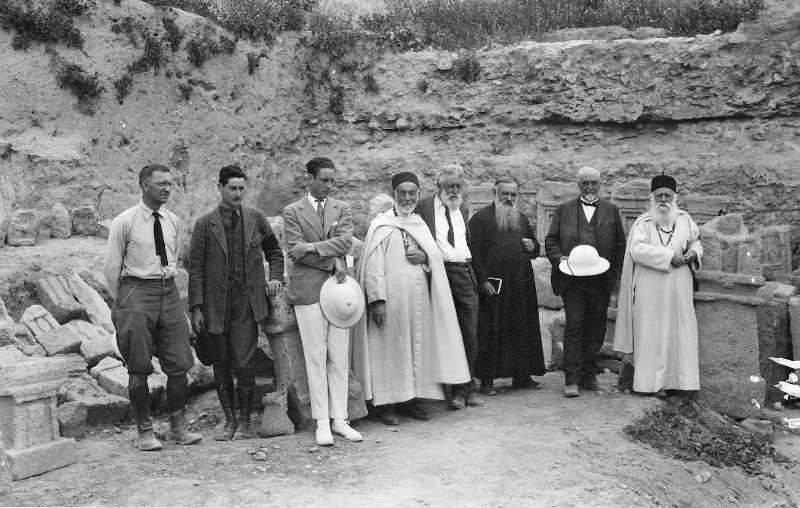
Francis Kelsey with his very smartly dressed Carthage excavation team. Kelsey is on the far right in dark three-piece suit holding white pith helmet. (University of Michigan, Kelsey Museum Archives)
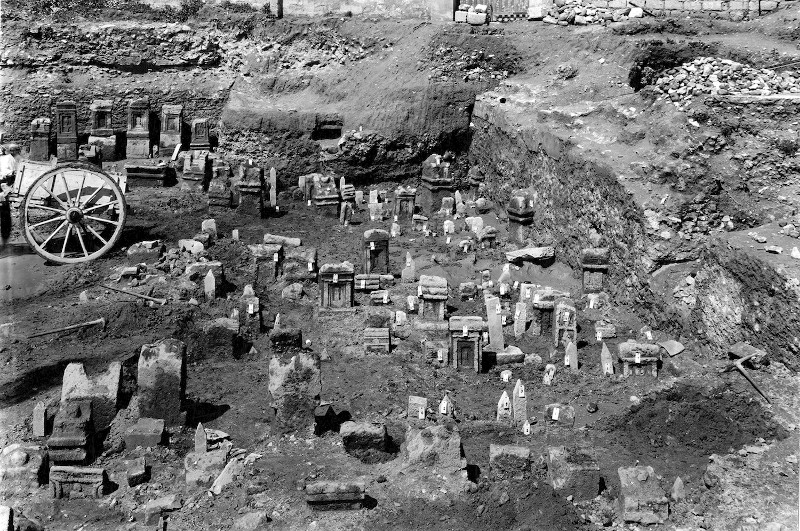
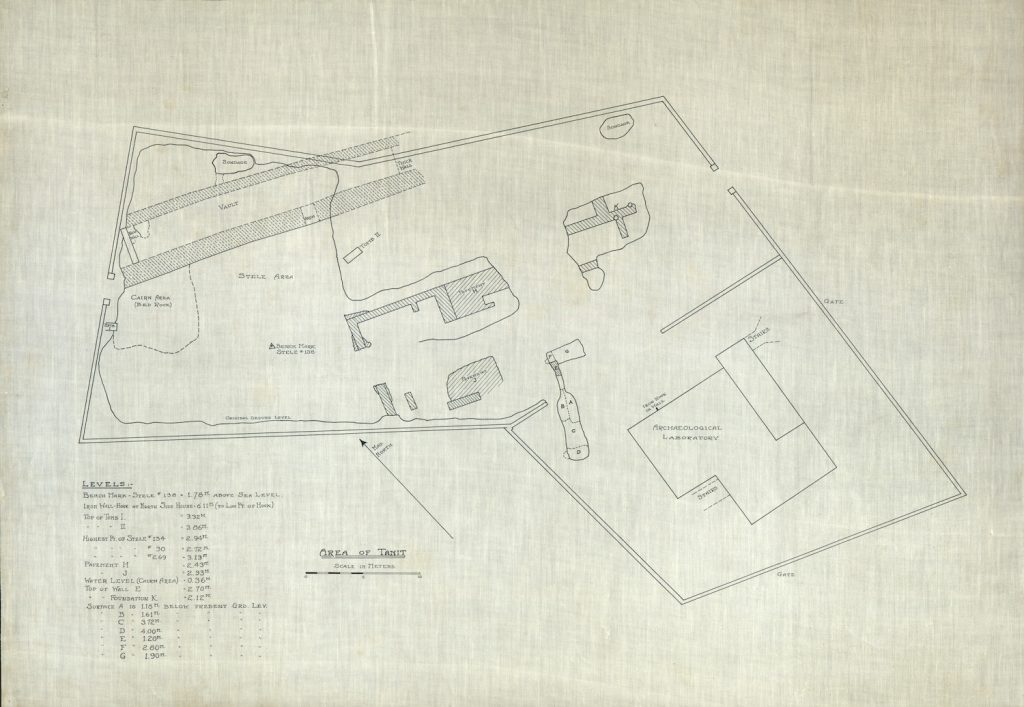
Carthage Tophet under excavation in 1925 with stelae and cippi exposed in situ, view northwest. The flat, vertical wall on righthand side is an intrusive 4th c. A.D. Roman vault (see also plan, Fig. 3). (University of Michigan, Kelsey Museum Archives)

Dr. Garnand completed much work in the Michigan archive before 2022. For example, Kelsey’s 1925 site plan had already been integrated into the ASOR 1979 site plan. Field notes and excavation diaries from 1925 have been scanned and edited, along with plans, sections, drawings, field photos and other documentation. The drawings and photographs have been edited and annotated so their format corresponds to that of the ASOR Punic Project records. All of the annotated 1925 field photos and plans will be included in the digital publication, while a selection will appear in the printed version of the final report.

Certain other tasks planned for 2022 have also already been completed. Photography of 78 paper squeezes of Tophet stele excavated by Kelsey was undertaken by the University of Michigan Imaging Services. Likewise prints of the 1925 expedition photographs (the negatives are lost) have also been digitized. Thus, we now have a detailed inventory of squeezes and photographs.

With help of Kelsey Museum Registrar Michelle Fontenot, I was able to identify and organize a residue of ASOR Punic Project large-format plans unaccountably co-mingled in the archives with those from Kelsey’s 1925 expedition and the 1975–1979 Carthage-Dermech Michigan excavations. The physical plans remain at Michigan, but digital copies will be deposited in the ASOR Punic Project archives at the Harvard Museum of the Ancient Near East (HMANE). Also digitized were 15 large-format plans and drawings from the 1925 and 1975–1979 Carthage Tophet and Harbor excavations. This was completed with assistance from Kelsey Museum Collections Manager Sebastian Encina and undergraduate intern, Isabella Blanton, who accompanied me to the Clark Library where we scanned the material using a large-format scanner under the guidance of map librarian Karl Longstreth.

Plan of 1925 Carthage Tophet excavation area. The “Vault” in upper lefthand side is an intrusive 4th c. A.D. Roman feature (also visible in the photo, Fig. 2). (University of Michigan, Kelsey Museum Archives)

Another unanticipated but helpful discovery was the archive of 1978 exhibit “Carthage Then and Now,” originated at the Kelsey Museum, which then traveled to the Oriental Institute Museum at the University of Chicago and to the Semitic Museum at Harvard (now HMANE).

Finally, in the Bentley Library I completed the review of the relevant Francis Kelsey papers held there. Garnand had begun review 165 boxes of Kelsey papers on a previous visit, and it was necessary only for me to verify the box numbers which contained the relevant documents previously scanned.

ASOR CHI TUTORIALS (All Lessons)

ASOR TUTORIALS

FOR CULTURAL HERITAGE SURVEY

KoboToolbox | QGIS | LibreCAD | Photogrammetry

ASOR and its partners have developed a series of tutorials and training modules aimed to help cultural heritage specialists perform surveys and condition assessments through open source tools and software, including QGIS, KoboToolbox, LibreCAD, and RealityCapture.

These modules provide step-by-step tutorials on how to download, install, and effectively use applications and software during data collection, analysis, and output.

SITE DOCUMENTATION

KoboToolbox & KoboCollect

KoBoToolbox is a free and open source software package for location and descriptive data collection. Information can be collected at heritage sites through tablets and phones using the KoBoCollect app or through the web browser interface, even when those devices are offline. Location and descriptive data recorded in the field can then be synched up with GIS software once an internet connection has been reestablished.

MAPPING ACTIVITIES

QGIS

QGIS is a free and open source Geographic Information System (GIS), or geodatabase, licensed under the GNU General Public License. QGIS runs on Linux, Unix, Mac OSX, Windows and Android and supports numerous vector, raster, and database formats and functionalities.  Download QGIS here: https://qgis.org/.

QGIS users can view, edit, and analyze spatial information through its free software toolkit.


Sample Datasets

UNESCO-Inscribed World Heritage Sites in Tunisia (use for Tutorials 02.08 through 02.21).

UNESCO-Inscribed World Heritage Sites in Niger (use for Tutorials 02.08 through 02.21).

Tunisian Administrative Boundaries courtesy of The Humanitarian Data Exchange (use for Tutorial 02.15).

United States of America – Populations Density courtesy of The Humanitarian Data Exchange (use for Tutorial 02.17).

02.01


Introduction to GIS and Its Uses in Cultural Heritage Surveys and Analysis

PDF: English | Français | عربى

02.02

Installing QGIS on Desktop

02.03

Adjusting Language Preferences

02.04

Overview of Toolbars, Panels, & Settings

02.05

Coordinate Reference System (CRS)

02.06

Downloading and Installing Plugins

02.07

Adding a Basemap

02.08

Layers

02.09

Rasters

02.10

Georeferencing Rasters

02.11

Vectors: Points, Lines, & Polygons

PDF: English

02.12

Drawing Shapefiles (Vectors)

PDF: English

02.13

Importing Shapefiles

PDF: English

02.14

Importing KoboToolbox Data

PDF: English

02.15

Edit Data Layers

PDF: English

02.16

Attribute Tables

PDF: English

02.17

Data Layer Classifications

PDF: English

02.21

Designing Final Maps for Print or Export

PDF: English

DETAILED DOCUMENTATION

LibreCAD

LibreCAD is a free Open Source computer-aided design (CAD) application for 2D design. LibreCAD works for Windows, Apple and Linux operating systems. Most of the interface and concepts are analogous to AutoCAD, making it easier to use for users with experience of this type of commercial CAD application. Support and documentation are free from a large, dedicated community of users, contributors and developers.

03.01

Introduction to LibreCAD and Its Uses in Cultural Heritage Documentation and Analysis

PDF: English | Français | عربى

03.02

Downloading and Installing LibreCAD on Desktop

PDF: English | Français | عربى

03.03

Using the Main Drawing Area

PDF: English | Français | عربى

03.04

Overview of the Top Menu Bar

PDF: English | Français | عربى

03.05

Understanding Layers

PDF: English | Français | عربى

03.06

Overview of Drawing Tools

PDF: English | Français | عربى

03.07

Assigning Scale and Adjusting Paper Size

PDF: English | Français | عربى

03.08

Importing an Image into LibreCAD

PDF: English | Français | عربى

03.09

Tracing an Imported Image

PDF: English | Français | عربى

03.10

Creating a Title Block Template

PDF: English | عربى

03.11

Importing a Drawing into an Existing Title Block Template and Printing a Drawing

PDF: English | عربى

3D MODELLING

Photogrammetry Using Agisoft Metashape

Agisoft Metashape is a stand-alone software product that performs photogrammetric processing of digital images and generates 3D spatial data to be used in GIS applications, cultural heritage documentation, and visual effects production as well as for indirect measurements of objects of various scales. This software provides a platform for cultural heritage specialists to create virtual reality scenes, textured 3D meshes, orthographic projections, geo-referenced maps and much more from images and/or laser scans completely automatically.

04.01

Introduction to Photogrammetry and Its Uses in Cultural Heritage Documentation and Analysis

PDF: English | Français | عربى

04.02

Preparing to Photograph: Camera Settings & Surrounding Conditions

PDF: English | Français | عربى

04.03

Downloading and Installing Agisoft Metashape on Desktop (Standard Edition)

PDF: English | Français | عربى

04.04

Downloading and Installing Agisoft Metashape on Desktop (Professional Edition)

PDF: English | Français | عربى

04.05

Overview of Tools and Menu Bars for Getting Started

PDF: English | Français | عربى

04.06

Adding & Editing Photos to a New Project

PDF: English | Français | عربى

04.07

Align Photos

PDF: English | Français | عربى

04.08

Dense Cloud Model

PDF: English | Français | عربى

04.09

Mesh Model

PDF: English | Français | عربى

04.10

Textured Model

PDF: English | Français | عربى

04.11

Tiled Models

PDF: English | Français | عربى

04.12

Exporting 3D (Surface) Models

PDF: English | Français | عربى

04.13

Creating & Exporting Orthomosaic Images

PDF: English | Français  | عربى

New ASOR-Affiliated Projects

NEW ASOR-AFFILIATED PROJECTS: MAY 2022

ASOR-affiliated projects adhere to ASOR policies, most notably the Non-Discrimination Policy, Policy on Professional Conduct, and Code of Conduct for the ASOR Annual Meeting and Other ASOR Sponsored Events. These policies affirm ASOR’s commitment to high standards for research integrity, academic mentoring and ethical professional behavior. Project Principal Investigators may apply for ASOR affiliation for their projects through the Committee for Archaeological Research and Policy (CAP).  Principal Investigators of ASOR-affiliated projects are eligible to apply for ASOR Project Grants and Shepard Urgent Action Grants. Students working on ASOR-affiliated projects are eligible to apply for Scholarships for Fieldwork Participation.

Currently, 98 projects are affiliated with ASOR. This includes 71 field projects and 27 publication projects. Nine field projects (seven new projects and two project renewals) have received ASOR affiliation so far in 2022. Read more about these new ASOR-affiliated projects below!

New ASOR-Affiliated Projects

Birsama Exploration Project, Israel (Alexandra Ratzlaff and Tali Erickson-Gini)

Birsama (Be’er Shema) is situated in the northwest quadrant of the northern Negev, approximately 21 km southeast of Gaza and 25 km northwest of Be’er Sheva. Interest in the site focuses on the presence of a Late Roman fort and associated structures, including the Byzantine church of St. Stephen, a Roman road, pottery kilns and a potential vicus (civilian camp adjacent to the fort). The site appears in the Notitia Dignitatum, distinguished as ‘Birsama’, a provincial military base for the garrison of the Equites Thamudeni Illyriciani. The aim of this project is two-fold 1.) Exploration of the fort and its environs to elucidate new information on this important military and administrative site in relation to the larger late Roman army network in the Negev, 2.) test new digital imaging and modeling methodologies and equipment at the site. The initial 2022 summer season will be an intensive terrestrial and aerial survey of the site to provide key information on the topography and extent of the site. A minimum of five successive excavation field seasons will be carried out beginning in the summer of 2023, followed but a study season for publication preparation. Technological testing of new equipment and methodologies in digital imaging will also form a core component to the recording and exploration of the site. The Brandeis Techne Group, a research team based out of the Autodesk Boston Technology Center, plans to test applications such as multi-drone imaging and use of the Boston Dynamics “Spot the Robot Dog” at the site for terrestrial survey imaging.

Gird-I Matrab Archaeological Project (gMAP), Iraq (Rocco Palermo)


Gird-I Matrab: picture of the main mound

The Gird-I Matrab Archaeological Project (gMAP) investigates the daily life of a small rural settlement in Northern Iraq, its economy, and the impact of climate transformation on the site and its inhabitants from the age of Assyrians to the heirs of Alexander the Great. Gird-I Matrab (“the dusty mound” in Kurdish) is located in the plain of Erbil, in North Iraq. It was already known by Iraqi archaeologists in the 1970s, but only systematically surveyed by the Erbil Plain Archaeological Survey team in 2012 and 2020. The site consists of a group of five low mounds orbiting around a central – slightly higher – one. Geophysical survey carried out in October 2020 have revealed a large and architecturally complex building, whose spatial extent and architectural features indicate a potential administrative function, most likely dated to the last centuries of the 1st millennium BC.


Visit of local representetives with Project Director Dr. Rocco Palermo

While the buried remains have not been physically uncovered yet, the presence of such an articulated building on a relatively small site in North Mesopotamia, might directly provide new dimensions to our understanding of the rural communities of the region in the Hellenistic and following periods.

gMAP plans to investigate the site through and integrated, multi-scalar approach that combines traditional techniques with the use of state-of-the-art technology and scientific analyses.

Hippos Excavations Project, Israel (Michael Eisenberg and Arleta Kowalewska)

Hippos Excavations Project is one of the main continuously running Classical archaeology research expeditions in Israel. Since the year 2000 our international team has excavated the site of Hippos (Sussita) and its environs. Hippos is located upon Mt. Sussita just east of the Sea of Galilee, overlooking the lake and Eastern Galilee.

Hippos’ remains present a continuous sequence from its foundation as Antiochia Hippos in the Hellenistic period (2nd cent. BCE) until the devastating earthquake at 749 CE at the end of the Umayyad rule. As the regional polis and one of the Decapolis it reached its peak during the Roman period. At least seven churches were built in the city during the Byzantine period when it was the see of a bishop.

The Kites in Context Project, Jordan (Chad Hill and Yorke Rowan)


Chad Hill and Yorke Rowan.

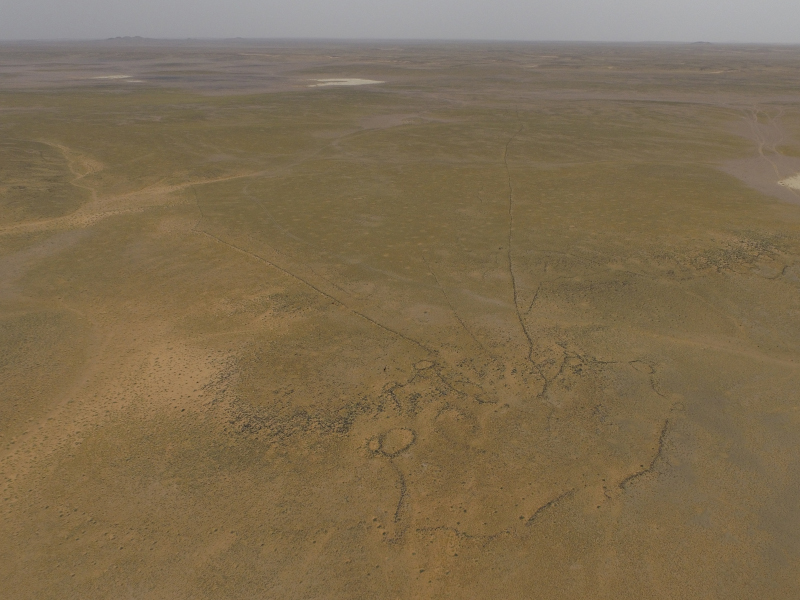
This project investigates the social and economic role of ancient animal hunting traps known as “desert kites” during a time of dramatic changing land use, human migrations, and shifting economies. Located in a hyper-arid, basaltic desert, these structures were built as mass-kill traps for ungulates in the later prehistory of the region.


Aerial view of a kite taken by a drone. Photo credit: Chad Hill.

Each chain includes dozens to hundreds of individual traps, spanning tens of kilometers, linked by intricate wall networks that functioned to create one enormous system. These represent a remarkable ancient infrastructural investment in labor, significant social organization, and the ability to generate subsistence surpluses in a marginal environment. This new study of desert kites, in context, focuses on the economy of this desert infrastructure and the social organization of largescale prey-manipulation strategies, to offer new insight into subsistence adaptations in marginal environments. The results from this research have the potential to transform knowledge of human responses and adaptations to arid environments in prehistory.

Menorca Archaeological Project, Torre d’en Galmés, Spain (Alexander Smith, Amalia Pérez-Juez, and Paul Goldberg)


MAP team.

The Menorca Archaeological Project (MAP) is an interdisciplinary group of Spanish and American collaborators that currently focuses on the diachronic investigation of the site of Torre d’en Galmés on the Balearic Island of Menorca. Torre d’en Galmés is one of the largest prehistoric sites on the Balearic Islands, having received international attention from archaeologists for decades. The site’s importance is due both its size and temporal scope. Within the remains of Torre d’en Galmés, one can see on display the early indigenous inhabitants of the island, the impressive remains of the Talayotic culture from the island’s Iron Age, and evidence of Carthaginian and Roman interactions well into the first centuries C.E.


Torre d’en Galmes, aerial view of SpU 9. Photo credit: Alexander Smith.

Long after the site was abandoned during the third or fourth centuries C.E., Torre d’en Galmés was settled once more by Islamic communities that made the island their home during the medieval period. In 1287 C.E., the Islamic settlers were forced to leave the island by King Alfonso III of Aragon, and the rapid depopulation saw the abandonment of sites across the island. Torre d’en Galmés never again saw significant occupation. What remains then is an incredible window into medieval Islamic life in this rural part of Menorca, with dozens of structures preserved, exhibiting the daily life of this group. MAP is dedicated to the archaeological study of the complex history of Torre d’en Galmés, in particular the Islamic medieval remains that have been largely overlooked on the site.

MiSAK, Missione Storico-Archeologica Italiana nel Kurdistan, Sarqala, Iraq (Luca Colliva, Serenella Mancini, Fabrizio Sinisi, Domenico Andreucci, Veronica Castignani, Mehrnaz Partow, and Paolo Severi)


https://misak.it/en/home-english/

MiSAK, the Italian Historical-Archaeological Mission in Kurdistan, was established in 2021 due to the common interest of ISMEO – the International Association for Mediterranean and Eastern Studies, and the International Institute of Kurdish Culture in Rome to contribute directly and effectively to the study, preservation, and enhancement of the Kurdish historical, archaeological and cultural heritage. MiSAK signed in December 2021 a three-year renewable agreement with the KRG General Directorate of Antiquities for the implementation of an archaeological project concerning the historical-archaeological study, protection and enhancement of the Sarqala site, which includes both the Parthian necropolis and the Qalla Kon tell, a multi-phase site probably part of the settlement connected to the nearby necropolis.

Seeking Sultan Abad-e Chamchamal: Archaeological Excavation at the Site of Tepe Hala Bag, Iran (Mohammad Eghbal Chehri)

According to historical texts, Sultanabad Chamchamal (Solṭānābād) is the most important settlement of the Ilkhanid period in the Bisotun region, which is mentioned in various contemporary historical books with the Ilkhanids due to its great importance. Historical texts show that Sultanabad Chamchamal was built at the foot of Bisotun Mountain and in the western part of Chamchamal plain. The construction of Sultanabad Chamchamal was on the side of the main Khorasan-Baghdad road and in the same area of Bisotun. In fact, despite the efforts of various researchers, the problem of locating and determining the exact location of Sultanabad Chamchamal has not been solved and can be considered as one of the problems in archaeology of the region, and this issue clearly justifies the need for excavation. Based on preliminary studies and archaeological survey, the location of Sultanabad Chamchamal can be considered the same as Halah Bag Tepe. The certainty of this issue, the ability to adapt Tepe Hala Bag with Sultanabad Chamchamal can be understood only by archeological excavation.

ASOR-Affiliated Project Renewals

Jezreel Valley Regional Project, Legio, Israel (Mark Letteney, Matthew J. Adams, Yotam Tepper, and Susan Cohen)

Legio is the site of the sprawling base of the Roman VIth Ferrata Legion. Established during the reign of the Emperor Hadrian (117–138 A.D.), the base controlled imperial roads, with direct access to the Galilee and inland valleys of northern Palestine—important centers of the local, occasionally uproarious, Jewish population. Excavations so far have demonstrated clear ties to major political and cultural events in the formative years of Rabbinic Judaism and Christianity and have provided an incredible new window into the Roman military occupation of the eastern provinces.

Tayinat Archaeological Project, Turkey (Tim Harrison and Elif Denel)


Tell Tayinat from above: Photo by Murat Akar, courtesy of the Tayinat Archaeological Project.

The Tayinat Archaeological Project (TAP) is investigating the archaeological history of the Bronze and Iron Age site of Tell Tayinat, which served as the capital of a succession of small territorial states centered in the Amuq Plain in the North Orontes Valley, Turkey. During the Iron Age, Tayinat was called Kunulua, royal city of the Neo-Hittite Kingdom of Palistin/Patina/Unqi, and Kinalia during the Neo-Assyrian imperial period.

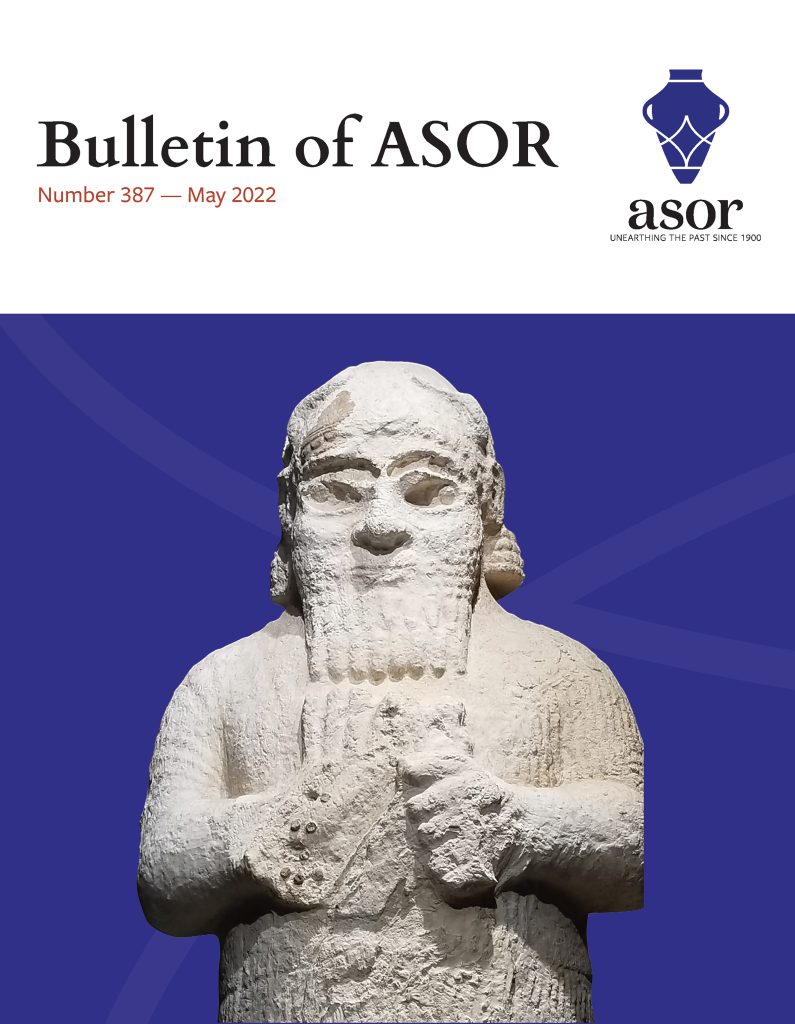
Table of Contents for BASOR 387 (May 2022)

Table of Contents for Bulletin of ASOR 387 (May 2022)

You can receive BASOR (and other ASOR publications) through an ASOR Membership.
Please e-mail the Membership office if you have any questions.

Pp. 1–30: “The Date of Appearance of Philistine Pottery at Megiddo: A Computational Approach” by Eythan Levy, Israel Finkelstein, Mario A. S. Martin, and Eli Piasetzky

This paper addresses the question of the date of appearance of Philistine Bichrome pottery at Megiddo through a new computational approach, using recently developed chronology software. Based on historical dates, we obtain a terminus post quem of 1183 b.c.e. for the start of Philistine Bichrome at Megiddo using a broad model, and a terminus post quem of 1124 b.c.e. under stronger chronological hypotheses. Adding radiocarbon results at 68.2% confidence level to the model yields a narrow range of 1111–1086 b.c.e. for the appearance of Bichrome (1128—1079 b.c.e. for 95.4%). The paper also presents results suggesting that Stratum VIIB ended during, or only slightly before, the reign of Ramesses III (1184–1153 b.c.e.).

ASOR Members with online access: navigate to the token link email sent to you before attempting to read this article. Once you have activated your member token, click here to access the above article on The University of Chicago Press Journals’ website.

Pp. 31–53: “The Southern Levantine Roots of the Phoenician Mercantile Phenomenon,” by Ayelet Gilboa

I propose here a new way to look at the process through which, following the Bronze Age collapse and culminating in the second half of the 9th century b.c.e., polities in south Lebanon became the most important Levantine commercial hubs in the Mediterranean and the main patrons of the so-called Phoenician expansion. My approach differs from others dealing with the Phoenician question in that its definitions are not projected from a yet-to-happen “Phoenician” phenomenon in the West. It is an archaeological bottom-up diachronic approach and considers the entire Levantine coast and not Lebanon only, which is traditionally considered the Phoenician homeland. I argue that what may be termed the earliest Phoenician mercantile maritime ventures, in the early Iron Age, were launched mainly from the Carmel Coast and were directed mainly toward Egypt. Gradually this phenomenon expanded geographically, a process that can be followed closely. It was stimulated and conditioned mainly by the effects of Egypt’s withdrawal from Canaan, by the Late Cypriot IIIA collapse, by the slow recovery of the Syrian coast in the early Iron Age, and by environmental factors. The paper synthesizes several decades of research on Mediterranean issues, mainly in connection to Tel Dor on Israel’s Carmel Coast.

ASOR Members with online access: navigate to the token link email sent to you before attempting to read this article. Once you have activated your member token, click here to access the above article on The University of Chicago Press Journals’ website.

Pp. 55–85: “Ḥorvat Tefen: A Hasmonean Fortress in the Hinterland of ʿAkko-Ptolemais,” by Roi Sabar

Ḥorvat Tefen is located on a prominent hilltop in the Western Galilee, overlooking ʿAkko-Ptolemais and its vicinity. The remains of several rectangular towers, curtain walls, a single gate, and reservoirs are well discernible and suggest it was a military post. This article describes the results of the first excavation undertaken at the site, conducted in 2019 on behalf of the Hebrew University of Jerusalem. The excavations in four of the towers uncovered accumulations above floors as well as the foundations of the walls. The finds indicate this was a short-lived military site that was apparently founded by Alexander Jannaeus in the last years of his reign and abandoned shortly thereafter. The finds are unique in their well-defined chronological range and shed important light on the material culture of the early 1st century b.c.e. Galilee—the heyday of the Hasmonean territorial expansion. Two appendices present the coins and the amphorae finds, both crucial for dating the foundation of the fortress and identifying it as a Hasmonean initiative. In this context, the location of Ḥorvat Tefen suggests it was built to defend a sensitive part of the northwestern border of the Hasmonean state facing ʿAkko-Ptolemais.

ASOR Members with online access: navigate to the token link email sent to you before attempting to read this article. Once you have activated your member token, click here to access the above article on The University of Chicago Press Journals’ website.

Pp. 87–112: “A Middle Bronze Age Assemblage of Bone Inlays from Lachish: Typological, Technological, and Functional Aspects,” by Noam Silverberg, Yosef Garfinkel, Michael G. Hasel, and Naama Yahalom-Mack

Decorated bone inlays are among the fossiles directeurs of Middle Bronze (MB) Age II and early Late Bronze Age assemblages, having been documented since the beginning of archaeological research in the Levant. During the Fourth Expedition to Lachish, an assemblage of 49 decorated bone inlays restored from ca. 200 fragments was found in the rooms of a late MB II monumental building. The inlays were apparently used to decorate wooden boxes. Although such inlays are usually recovered from mortuary contexts, here they were found among daily objects, indicating that the building played an administrative role. In this paper the typological, technological, and functional aspects of the inlays are examined. We reconstruct the use of these objects and discuss the social context in which they were produced and used, providing an additional perspective on such objects and their role in both life and death during the late MB II. Our technological approach included microscopic examination of the inlays, which provided new information on the variability of craft traditions, suggestive of a decentralized production mode.

ASOR Members with online access: navigate to the token link email sent to you before attempting to read this article. Once you have activated your member token, click here to access the above article on The University of Chicago Press Journals’ website.

Pp. 113–138: “Ambiguity of Divine and Royal Portraiture and the Hiyawan Image of Kingship: Political Identity through the Monuments of ÇİNEKÖY and KARATEPE,” by Nathan Lovejoy

This paper examines the content of the ÇİNEKÖY and KARATEPE Inscriptions, the selection of scripts on the monuments, and the choices of iconography on the two statues of the Storm God. These monuments represent a regionally and temporally specific practice of representation that ambiguously blends elements of divine and royal imagery into a new form, while taking a similar approach to the semiotics of rulership as the Neo-Assyrian kings. The combined elements of the monuments suggest a unique cultural strategy in which the agency of the ruler is blended with that of the Storm God, exemplifying the specific worldview of Iron Age Cilicia that informed their composition. The rulers who created these monuments sought to assert their political identity through the combination of the figural representations, the visuality of the scripts, and the content of the inscriptions; the two monuments illustrate a drastic change in the political agenda of the kingdom of Hiyawa, reflecting a shift in power among opposing political factions. These identities also contain a sense of intentional ambiguity, as the various elements do not immediately support the same message, but rather work together to propagate a multifaceted message of military prowess, commercial interconnectedness, and royal legitimacy and kingship.

ASOR Members with online access: navigate to the token link email sent to you before attempting to read this article. Once you have activated your member token, click here to access the above article on The University of Chicago Press Journals’ website.

Pp. 139–169: “Early Islamic Copper Coins from Excavations in the Central Levant: An Indicator for Ancient Economy,” by Hagit Nol

Legible copper coins from excavations of Early Islamic sites are scarcer than in other periods. They contain, however, valuable information for understanding economic operations. The focus of this paper is the mint-toponyms inscribed on coins that point to their production place. This identification enables network inquiries and economic interpretations on a level that is rarely possible with archaeological finds. The following study utilizes coins of the 7th–9th centuries from excavations in one area in Israel, Palestine, and Jordan. It looks at mint names and the exact location of the coin’s discovery, maps these data with GIS, cross-references characteristics in the data, and detects possible correlations. The paper emphasizes two results. The first is a calculation of the distance that copper coins traveled—locally, regionally, or farther. This result challenges the view that copper coins were only circulated locally. The second result is the identification of sites with coins from four or more mints as marketplaces. Some of these sites are located at the center of large sites, such as Ramla or Beth Shean, but others are their neighboring small sites that acted in parallel. This result disputes Central Place Theory and similar paradigms.

ASOR Members with online access: navigate to the token link email sent to you before attempting to read this article. Once you have activated your member token, click here to access the above article on The University of Chicago Press Journals’ website.

Pp. 171–180: Three Women from Elam: A Revision of the Haft Tappeh Metal Plaque,” by Babak Rafiei-Alavi, Faranak Bahrololoumi, and Sabine Klein

The metal plaque of Haft Tappeh was found more than 60 years ago, and except for a few scenes on terracotta plaques and cylinder seals from both Elam and Mesopotamia with similar but not identical settings, it still has no known parallels in metal and remains a unique example of Elamite art. The present article is a study of this object from the heartland of the Elamite kingdom in the Khuzestan Plain. It revisits the scenic plaque and attempts to correct some of the misunderstandings regarding the identification of its iconography and symbology based on new photos, X-ray images, and lab analysis. The article also tries to place the plaque in its proper spatial and temporal context, using comparative methods and chemical and isotope analysis.

ASOR Members with online access: navigate to the token link email sent to you before attempting to read this article. Once you have activated your member token, click here to access the above article on The University of Chicago Press Journals’ website.

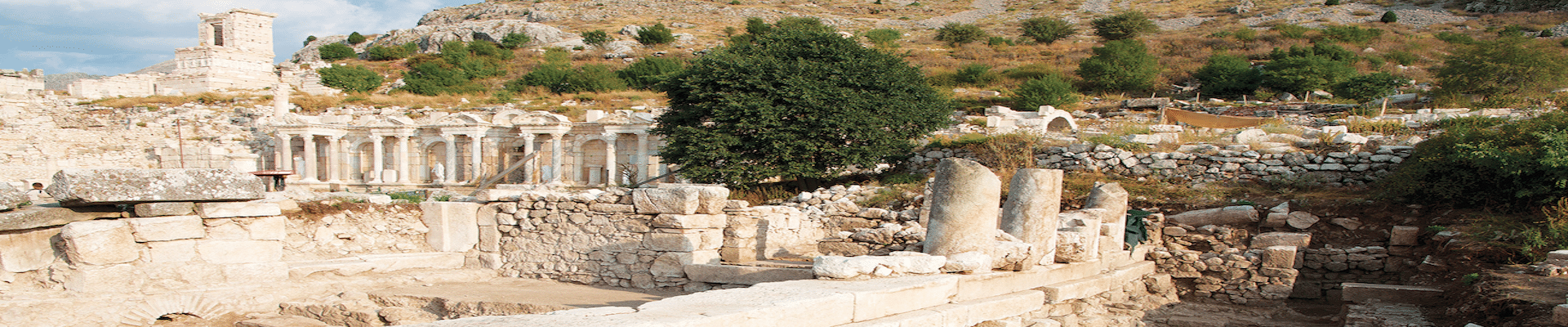
Pp. 181–205: “Moving in Together? Synoikismos and Polis Formation at Sagalassos and in Southwest Anatolia,” by Dries Daems and Peter Talloen

Topics such as polis formation and synoikismos have a rich background in classical studies, history, and archaeology. Such studies have mainly focused on the attestations of synoikismos events in literary sources and inscriptions. The archaeological side of such processes has not always been given equal weight. This paper presents a more encompassing view on patterns of synoikismos and polis formation by incorporating and assessing archaeological evidence in a model of push-pull interactions between local communities and the Hellenistic kingdoms in southwest Anatolia. This model will be applied on a case study of the origin of polis at Sagalassos and its relation with the nearby settlement at Düzen Tepe during its formative years in the Early to Middle Hellenistic period (3rd–2nd centuries b.c.). It will then situate this case in its wider context of settlement patterns and community formation in southwest Anatolia, focusing on the ancient regions of Pisidia, Lycia, and Pamphylia. The paper suggests that interactions between local communities and overarching central administrations offered suitable stimuli that resulted in local communities starting to participate in wider dynamics of economic and political importance. This ultimately resulted in observed patterns of polis formation and a potential synoikismos.

ASOR Members with online access: navigate to the token link email sent to you before attempting to read this article. Once you have activated your member token, click here to access the above article on The University of Chicago Press Journals’ website.

Pp. 207–220: “The Temple and the Town at Early Bronze Age I Megiddo: Faunal Evidence for the Emergence of Complexity,” by Lidar Sapir-Hen, Deirdre N. Fulton, Matthew J. Adams, and Israel Finkelstein

The Early Bronze Age is considered to be the period when complex and hierarchical societies first developed in the southern Levant. The appearance of specialization and social complexity is manifested through different aspects of the production stages of animal economy. In this paper, we examine faunal assemblages from two interconnected contemporaneous neighboring sites of differing characters in the Jezreel Valley, Israel: Megiddo, a cult site, and Tel Megiddo East, a town site. Both assemblages are dated to the Early Bronze Age IB (EB IB; 3090–2950 b.c.e.), at the dawn of urbanization in the Near East. The connection between sites, revealed in previous studies of other aspects, is supported by the analysis of faunal remains that reveals intriguing overlaps and divergences. The results of the current study show that the control of resources by the Great Temple in Megiddo also included access to animals and their products, and that it impacted the animal economy in settlements in its hinterland. The impact of this system demonstrates the Great Temple at the center of a larger regional economic organization in the late EB IB that would presage the urban developments of the EB II–III.

ASOR Members with online access: navigate to the token link email sent to you before attempting to read this article. Once you have activated your member token, click here to access the above article on The University of Chicago Press Journals’ website.

2022 Finance Committee

[vc_row fullwidth=”true” css=”.vc_custom_1490224714943{padding-top: 0px !important;padding-right: 0px !important;padding-bottom: 0px !important;padding-left: 0px !important;}”][vc_column][vc_single_image image=”65406″ img_size=”full” alignment=”center”][/vc_column][/vc_row][vc_row][vc_column][vc_column_text][/vc_column_text][/vc_column][/vc_row][vc_row fullwidth=”true” css=”.vc_custom_1490225468623{padding-top: 0px !important;padding-right: 0px !important;padding-bottom: 0px !important;padding-left: 0px !important;}”][vc_column width=”1/12″ css=”.vc_custom_1490225195470{margin-right: 10px !important;}” offset=”vc_hidden-sm vc_hidden-xs”][vc_column_text]

  SHARE

[/vc_column_text][mk_image src=”http://www.asortest.org/wp-content/uploads/2017/01/social-fb-icon4.jpg” image_width=”42″ image_height=”42″ hover=”false” custom_url=”https://www.facebook.com/ASOResearch/” margin_bottom=”0″][mk_image src=”http://www.asortest.org/wp-content/uploads/2017/01/social-tw-icon4.jpg” image_width=”42″ image_height=”42″ hover=”false” custom_url=”https://twitter.com/ASOResearch?ref_src=twsrc%5Egoogle%7Ctwcamp%5Eserp%7Ctwgr%5Eauthor” margin_bottom=”0″][mk_image src=”http://www.asortest.org/wp-content/uploads/2017/01/social-in-icon4.jpg” image_width=”42″ image_height=”42″ hover=”false” custom_url=”https://www.linkedin.com/company/american-schools-of-oriental-research” margin_bottom=”0″][mk_image src=”http://www.asortest.org/wp-content/uploads/2017/01/social-ml-icon_7.jpg” image_width=”42″ image_height=”42″ hover=”false” custom_url=”mailto:asor@bu.edu” margin_bottom=”0″][mk_image src=”http://www.asortest.org/wp-content/uploads/2017/01/blog-icon3.jpg” image_width=”42″ image_height=”42″ hover=”false” custom_url=”http://asorblog.org/” margin_bottom=”0″][/vc_column][vc_column border_color=”rgba(255,255,255,0.01)” width=”1/6″ css=”.vc_custom_1490365673198{margin-right: 20px !important;border-left-width: 2px !important;padding-right: 20px !important;padding-left: 20px !important;border-left-color: #99422f !important;}” el_class=”sticky-sidenav”][mk_divider divider_color=”rgba(255,255,255,0.01)” thickness=”1″ margin_top=”3″ margin_bottom=”3″][vc_widget_sidebar sidebar_id=”ca-sidebar-37292″ el_class=”.widget { overflow: hidden; margin-bottom: 0; }”][/vc_column][vc_column border_color=”rgba(170,170,170,0.01)” width=”1/2″ css=”.vc_custom_1490225606852{margin-right: 10px !important;margin-bottom: 30px !important;border-right-width: 2px !important;border-bottom-width: 2px !important;padding-top: 30px !important;padding-right: 30px !important;padding-left: 20px !important;background-color: #ffffff !important;border-right-color: rgba(227,228,228,0.75) !important;border-bottom-color: rgba(227,228,228,0.75) !important;}”][vc_column_text responsive_align=”left”]

2022 FINANCE COMMITTEE

Archived webpage for the 2022 Finance Committee Members; This page has been replaced.
The Finance Committee (a) advises the Executive Committee on matters related to the financial management of ASOR and supervision of bids for the annual audit; (b) supervises the investments of ASOR’s funds; and (c) oversees the preparation of the annual budget and monitors compliance with the final budget approved by the Trustees to assure that expenditures do not exceed budgeted amounts.

  • Emily Miller Bonney, Chair (Treasurer, until December 31, 2023)
  • Sharon Herbert (President, until December 31, 2022)
  • Alison Thomason (Co-chair of the Program Committee, until December 31, 2022)
  • Helen Dixon (Co-chair of the Program Committee, until December 31, 2022)
  • Kevin McGeough (Chair of Publications Committee, until December 31, 2024)
  • At-large: Lisa Ackerman (until December 31, 2022)
  • At-large: Susan Ackerman (until December 31, 2022)
  • At-large: Richard L. Coffman (until December 31, 2022)
  • At-large: Lynn Swartz Dodd (until December 31, 2024)
  • At-large: Tiffany Earley-Spadoni (until December 31, 2024)
  • Andrew G. Vaughn (ex officio, non-voting)

[/vc_column_text][vc_empty_space height=”300px”][/vc_column][vc_column border_color=”rgba(170,170,170,0.01)” width=”1/6″ css=”.vc_custom_1490571214409{margin-right: 10px !important;margin-bottom: 30px !important;border-right-width: 2px !important;border-bottom-width: 2px !important;padding-top: 30px !important;padding-right: 20px !important;padding-left: 20px !important;background-color: #ffffff !important;border-right-color: rgba(227,228,228,0.75) !important;border-bottom-color: rgba(227,228,228,0.75) !important;}”][vc_wp_posts title=”BROWSE THE NEWS ARCHIVE” number=”4″][/vc_column][vc_column border_color=”rgba(170,170,170,0.01)” width=”1/6″ css=”.vc_custom_1490225688999{margin-right: 10px !important;margin-bottom: 30px !important;border-right-width: 2px !important;border-bottom-width: 2px !important;padding-top: 30px !important;padding-right: 30px !important;padding-left: 20px !important;background-color: #ffffff !important;border-right-color: rgba(227,228,228,0.75) !important;border-bottom-color: rgba(227,228,228,0.75) !important;}”][vc_column_text] [/vc_column_text][/vc_column][/vc_row][vc_row][vc_column][vc_column_text]

[/vc_column_text][/vc_column][/vc_row]

Spring Book Sale

ASOR SUMMER BOOK SALE

Summer vacation is just around the corner and it’s time to put together your travel reading list. Take advantage of our ASOR book sale and include some of our recent publications on your list!

ASOR members (with a mailing address in the USA) can purchase copies of recent ASOR books at the discounted price of $25.00 (ca. 70% discount + $5.00 US media mail shipping) through June 30, 2022, while supplies last. All prices listed below include US media mail shipping. Due to ASOR’s licensing agreement with ISD, this offer is only available to ASOR members. We are unable to offer this discount to members without a US mailing address due to international shipping costs. Please contact programs@asor.org with any questions.

Not an ASOR member? Join as an Associate Member ($40) first in order to take advantage of these great deals on books. More information on membership and its benefits can be found here.

AASOR 73: An Examination of the Stratigraphy and Neolithic-Iron Age Pottery from Tel Jezreel, Area A. Edited by Charlotte Whiting and Gloria London. Original price $84.95. Sale price $25.00 (includes US media mail shipping)

Click here to purchase AASOR 73 in ASOR’s online store.

AASOR 74: The Excavations of ‘Iraq al-Amir, Volume II. Edited by Nancy L. Lapp, with contributions by Michael S. Zimmerman, Daniel Ulvoczky, Nicholas Hudson, Adam Hartman, and Nancy L. Lapp. Original price $84.95. Sale price $25.00 (includes US media mail shipping).

Click here to purchase AASOR 74 in ASOR’s online store.

AASOR 66: The Photographs of the American Palestine Exploration Society. by Rachel Hallote, Felicity Cobbing, and Jeffrey B. Spurr. Original price $84.95. Sale price $25.00 (includes US media mail shipping).

Click here to purchase AASOR 66 in ASOR’s online store.

ARS 28: All Things Cypriot. Studies on Ancient Environment, Technology, and Society in Honor of Stuart Swiny. Edited by Zuzana Chovanec and Walter Crist. Original price $79.95. Sale price $25.00 (includes US media mail shipping)

Click here to purchase ARS 28 in ASOR’s online store.

ARS 27: Caesarea Maritima: Excavations in the Old City 1989-2003. Volume 1: The Temple Platform (Area TP), Neighboring Quarters (Area TPS and Z), and the Inner Harbor Quays (Area I): Hellenistic Evidence, King Herods Harbor Temple, Intermediate Occupation, and the Octagonal Harbor Church. Edited by Kenneth G. Holum. Original price $89.95. Sale price $25.00 (includes US media mail shipping).

Click here to purchase ARS 27 in ASOR’s online store.

ARS 26: The Archaeological Survey of the Desert Roads between Berenike and the Nile Valley. Expeditions by the University of Michigan and the University of Delaware to the Eastern Desert of Egypt, 1987-2015. Edited by Steven E. Sidebotham and Jennifer E. Gates-Foster. Original price $84.95. Sale price $25.00 (includes US media mail shipping).

Click here to purchase ARS 26 in ASOR’s online store (SOLD OUT).

JCSSS 1: On the Third Dynasty of Ur: Studies in Honor of Marcel Sigrist. Edited by Piotr Michalowski. Original price $75.00. Sale price $25.00 (includes US media mail shipping).

Click here to purchase JCSSS 1 in ASOR’s online store (only 2 copies left!) 

FOA Webinar: A World at War—Protecting Cultural Heritage in Times of Conflict on May 12

FRIENDS OF ASOR WEBINAR

A World at War: Protecting Cultural Heritage in Times of Conflict

Friends of ASOR & the ASOR Cultural Heritage Committee present a free webinar on May 12, 2022 from 6:30pm to 8:00pm EDT, “A World at War: Protecting Cultural Heritage in Times of Conflict,” featuring Patty Gerstenblith and two discussants—Lisa Ackerman and Andrew Cohen. Jane DeRose Evans will moderate. Cultural heritage is often a victim during armed conflicts. Why is heritage contested in war, and why do some look beyond immediate humanitarian crises to safeguard heritage for the future? Our speaker, Patty Gerstenblith, will examine those questions, and how countries came together to create a body of international law meant to preserve sites and collections in times of armed conflict and its aftermath. Her presentation will be followed by a panel that will discuss ways that the panelists have been involved in helping communities recover their heritage after a war and how anyone with an interest can also get involved. The webinar will be recorded. This event is free for everyone.

ASOR Sustaining Members: $0 | ASOR Members: $0 | Public: $0

While this event is free and open to the public, we encourage participants to consider tax-deductible donations to ASOR’s Cultural Heritage Initiatives (ASOR CHI), which directly supports (i.e. excludes administrative fees) ASOR’s cultural heritage work in North Africa and the Middle East.


Program Schedule

THURSDAY, May 12, 2022

6:30pm – 7:15pm

Patty Gerstenblith

DePaul University

Cultural heritage is often a victim during armed conflicts. Why is heritage contested in war, and why do some look beyond immediate humanitarian crises to safeguard heritage for the future? Our speaker, Patty Gerstenblith, will examine those questions, and how countries came together to create a body of international law meant to preserve sites and collections in times of armed conflict and its aftermath.

7:15pm – 8:00pm

Panel Discussion and Audience Q&A

Patty Gerstenblith, DePaul University
Lisa Ackerman, Executive Director of the Columbus Citizens Foundation
Andrew Cohen, Government Professional and Expert on Cultural Heritage

Discussion moderated by Jane DeRose Evans, Temple University

ASOR Sustaining Members: $0 | ASOR Members: $0 | Public: $0

If you are new to ASOR, please click on the “New Visitor Registration” link to register your e-mail address and choose a password for our online store. Once logged in, navigate to “Meeting and Event Registration” to register for the webinar. Each registrant will receive a confirmation e-mail. If you do not receive this e-mail, then you are not registered. Please e-mail membership@asor.org with any questions or issues with registering.

You will be e-mailed the Zoom Webinar link in the week prior to the webinar on May 12. If you do not receive the link by the close of business on the Tuesday before the event, please e-mail membership@asor.org immediately. This event will be recorded and all paid registrants will be sent a link to view the recording.

Sponsors will be acknowledged during the event. Sponsorships are available at the following levels:

  • Bronze Sponsor: $50
  • Silver Sponsor: $100
  • Gold Sponsor: $500
  • Platinum Sponsor: $1,000

Each sponsor will receive a confirmation e-mail. If you do not receive this e-mail, then we did not receive your sponsorship online.  If you prefer to register or sponsor over the phone, please call 703-789-9230. Please e-mail membership@asor.org with any questions or issues.

Speaker / Presenter


Patty Gerstenblith is a Distinguished Research Professor of Law at DePaul University and director of its Center for Art, Museum and Cultural Heritage Law. She was appointed by President Obama to serve as Chair of the President’s Cultural Property Advisory Committee in the US Department of State on which had previously served as a Public Representative under President Clinton. Since 2020, she has served as President of the Board of Directors of the US Committee of the Blue Shield and Chair of the Blue Shield International Working Group on Illegal Trafficking of Cultural Objects. She was founding president of the Lawyers’ Committee for Cultural Heritage Preservation and editor of the International Journal of Cultural Property and is currently a Research Associate of the Cultural Heritage Center at the University of Pennsylvania Museum of Archaeology and Anthropology. The fourth edition of her casebook, Art, Cultural Heritage and the Law, was published in 2019. Gerstenblith lectures and publishes widely on the subjects of protection of cultural heritage during armed conflict and the international market in cultural objects. Gerstenblith received her AB from Bryn Mawr College, PhD in art history and anthropology from Harvard University, and JD from Northwestern University.

Panelists


Lisa Ackerman is the Executive Director of the Columbus Citizens Foundation, a non-profit organization in New York City committed to fostering an appreciation of Italian-American heritage and achievement through a broad range of philanthropic and cultural activities. Previously, Ackerman served as the Interim Chief Executive Officer, Executive Vice President, and Chief Operating Officer of the World Monuments Fund, an organization founded in 1965 that has assisted in the conservation and development of long-term stewardship strategies at more than 600 sites in 100 countries, and as Executive Vice President of the Samuel H. Kress Foundation. At WMF, where she worked from 2007 to 2019, Ackerman developed multiple international collaborative projects in conservation. In addition to general supervision over approximately 60 projects in 40 countries, she is the senior project manager for activities in Cambodia, Iraq, Libya, Thailand, and Tunisia.

Andrew Cohen is currently a government professional using his experience with the legislative process, congressional oversight, and executive-legislative branch relations to advise the Internal Revenue Service on Congressional affairs. In 2020-21, he was a Brookings Fellow at the U.S. Senate Homeland Security and Governmental Affairs Committee. Prior to that, he worked for over a decade advising the U.S. Department of State on international cultural heritage protection and preservation policy, and representing the United States government in bilateral, multilateral, and intergovernmental fora as an expert on cultural heritage. In 2018-2019, as Executive Director of the Cultural Property Advisory Committee at the State Department, Cohen managed the simultaneous negotiation, signing, and implementation of more than 20 cultural property agreements between the United States and partner countries around the world, including most of the countries in the Near East and wider Mediterranean world. Dr. Cohen holds a Ph.D. in Near Eastern Archaeology and M.A. in Classical Archaeology from Bryn Mawr College.

Moderator


Jane DeRose Evans is Professor and Chair of Art History at Temple University. She specializes in the archaeology of the Roman provinces and especially in ancient numismatics. She is a Fellow of the American Numismatic Society and a member of the Royal Numismatic Society. After excavating for many years in France, she is now project numismatist for the Harvard/Cornell Excavations in Sardis and the George Washington University excavations at Bir Madhkur (Jordan). Recently, she brought to publication The Mithraeum at Caesarea Maritima (ASOR Press.  Evans has been a member of ASOR for many years, and she currently serves on the Cultural Heritage Committee and has testified on behalf of the Memoranda of Understanding that allow intercepting illegally obtained antiquities from Cyprus and Egypt at the US border. Evans served on the ASOR Board from 2011-2013 and then rejoined the Board again in January 2016. She is currently serving as the Chair of the Trustee Nominations Committee and as the Chair of the Cultural Heritage Committee.

ASOR is grateful for your support. Each registrant will receive an automated confirmation e-mail. If you do not receive this e-mail, please check you Spam folder and then contact ASOR. If you prefer to register over the phone, please call 703-789-9230. Please e-mail membership@asor.org with any questions or issues.


While this event is free and open to the public, we encourage participants to consider tax-deductible donations to ASOR’s Cultural Heritage Initiatives (ASOR CHI), which directly supports (i.e. excludes administrative fees) ASOR’s cultural heritage work in North Africa and the Middle East.

PAST WEBINARS

You can now purchase the link to the recording of any webinar. You can also purchase the bundle packages of all webinars from the 2020-2022 seasons. Please e-mail membership@asor.org for purchase details.

To see a printable pdf of the webinar titles from the 2020-2021 season, please click here. To see a printable pdf of the webinar titles from the 2021-2022 season, please click here.

Pricing:

Members: $6.00 per recording
Non-Members: $12.00 per recording
Bundle of 2020-2021 Webinars: $75.00
Bundle of 2021-2022 Webinars: $75.00
Bundle of 2020-2022 Webinars: $125.00

2021-2022 Season

A World at War: Protecting Cultural Heritage in Times of Conflict
Patty Gerstenblith (DePaul University), Lisa Ackerman (Columbus Citizens Foundation), Andrew Cohen (Government Professional and Cultural Heritage Expert) | May 12, 2022

Preserving Cultural Heritage in Hisban and Umm al-Jimal, Jordan
Øystein LaBianca (Andrews University), Elizabeth Osinga (Umm al-Jimal Archaeological Project), Darrell Rohl (Calvin University) | April 24, 2022

Back to the Field: Recent Discoveries & Summer Plans 2022
Lorenzo d’Alfonso (ISAW), Kathryn Grossman (NC State University), James R. Strange (Samford University) | April 3, 2022

Uncovering What is Nubian Beneath the Veneer of Egyptianness: Excavating the Archives
Debora Heard (University of Chicago) | March 20, 2022

Where Are They Now?: A Preview of 2022 ASOR-Affiliated Fieldwork Projects
Michael Given (University of Glasgow), Xenia-Paula Kyriakou (Florida Gulf Coast University), Stephen Batiuk (University of Toronto), Monique Roddy (Walla Walla University), Kent Bramlett (La Sierra University), Friedbert Ninow (La Sierra University), and Michael Hoff (University of Nebraska-Lincoln) | March 8, 2022

Excavations at Tel Gezer: A Personal Story
Sam Wolff (Tel Gezer Laboratory) | February 20, 2022

Tel Rehov: A Major Bronze and Iron Age City in the Jordan Valley
Amihai Mazar (Hebrew University of Jerusalem), Nava Panitz-Cohen ( Hebrew University of Jerusalem), Nota Kourou (Athens University), Naama Yahalom-Mack (Hebrew University of Jerusalem), Robert Mullins (Azusa Pacific University) | February 10, 2022

The Not-So-Innocents Abroad: The Beginnings of American Biblical Archaeology
Rachel Hallote (Samford University) | January 20, 2022

Synagogues as Jesus Knew Them
James R. Strange (Samford University) | December 2, 2021

Under Jerusalem: The Buried History of the World’s Most Contested City
Andrew Lawler | November 4, 2021

Jesus and Jerusalem on TV: How Do Bible Documentaries Get Made?
Robert Cargill (University of Iowa) | October 17, 2021

Digging the Divine?: Judahite Pillar Figurines and the Archaeology of Israelite Religion
Erin Darby (University of Tennessee) | October 7, 2021

David, Solomon, and Rehoboam’s Kingdom—The Archaeological Evidence
Yosef Garfinkel (Hebrew University of Jerusalem) | September 19, 2021

From Standing Stones to Sacred Emptiness: Textual and Visual Portrayals of Israel’s God
Theodore Lewis (Johns Hopkins University) | August 29, 2021

2020-2021 Season

Making May Matter: Webinarathon to Endow Diversity
Multiple Speakers | May 21-23, 2021

Archaeogaming: Why Video Games Deserve Their Own Archaeology
Tine Rassalle (University of North Carolina at Chapel Hill), Shannon Martino (Morton College), Matthew Winter (University of Arizona), Michael Zimmerman (Rhode Island) | April 18, 2021

How the Bible Became a Book
William Schniedewind (UCLA) | March 21, 2021

The Mysteries of Mithras in Caesarea: Exploring the Cult’s Rites and Remains
Jane DeRose Evans (Temple University), Alexandra Ratzlaff (Brandeis University) | March 11, 2021

Archaeology and the Hidden Religious Culture of Israelite Women
Carol Meyers (Duke University) | February 21, 2021

Meet the Directors—Fundraiser to Support ASOR’s Affiliated Overseas Research Centers
Matthew J. Adams (AIAR), Pearce Paul Creasman (ACOR), Lindy Crewe (CAARI) | February 11, 2021

Early Synagogues, Jesus, and Galilee—A Jewish Perspective
Eric Meyers (Duke University) | December 13, 2020

Home Sweet Home: Ancient Israelite Households in Context
Cynthia Shafer-Elliott (William Jessup University) | October 18, 2020

Priestesses in the Days of Solomon and Ahab
Susan Ackerman (Dartmouth College) | September 13, 2020

Digging Deeper: How Archaeology Works
Eric H. Cline (The George Washington University) | August 9, 2020

FOA Webinar: Preserving Cultural Heritage in Hisban and Umm al-Jimal, Jordan on April 24

FRIENDS OF ASOR WEBINAR

Preserving Cultural Heritage in Hisban and Umm al-Jimal, Jordan

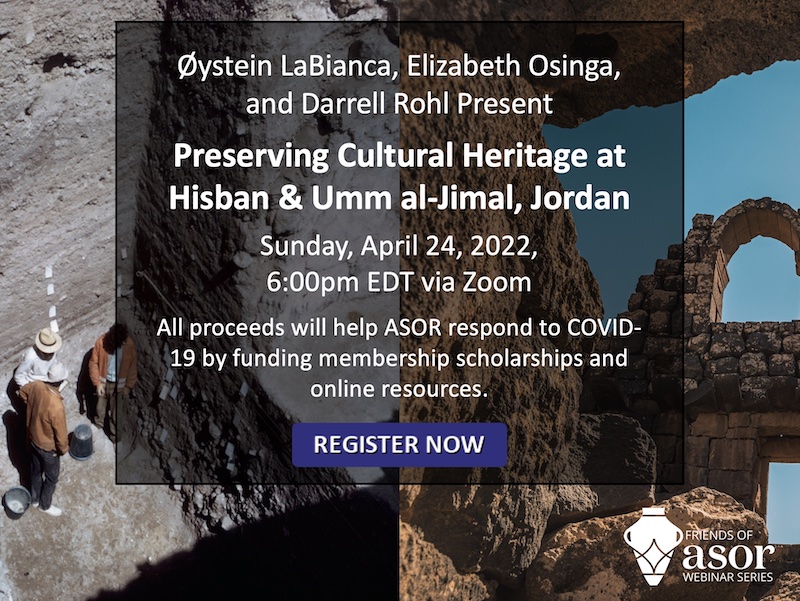
Friends of ASOR presents a webinar on April 24, 2022 from 6:00pm to 7:30pm EDT, ” Preserving Cultural Heritage in Hisban and Umm al-Jimal, Jordan,” featuring Øystein LaBianca, Elizabeth Osinga, and Darrell Rohl. This special event will focus on current work in Jordan through two projects—Hisban (part of the Madaba Plains Project) and the Umm al-Jimal Archaeological Project (UJAP). The program will include two presentations covering introductions to each site and the focus of the 2022 fieldwork season, in particular each project’s efforts to preserve cultural heritage through community engagement. Join us as we explore two of the exciting projects that ASOR members are currently participating in across Jordan. Barbara Porter, former ACOR Director and current ACOR Ambassador, will moderate the program and conclude the webinar with a live Q&A session with the audience and panelists. The full program is below. The event will be recorded.

ASOR Sustaining Members: $0 | ASOR Members: $6 | Public: $12

Program Schedule

SUNDAY, APRIL 24, 2022

6:00pm – 6:30pm

Øystein LaBianca

Andrews University

Jordan: Hisban (part of the Madaba Plains Project)

Read the Description

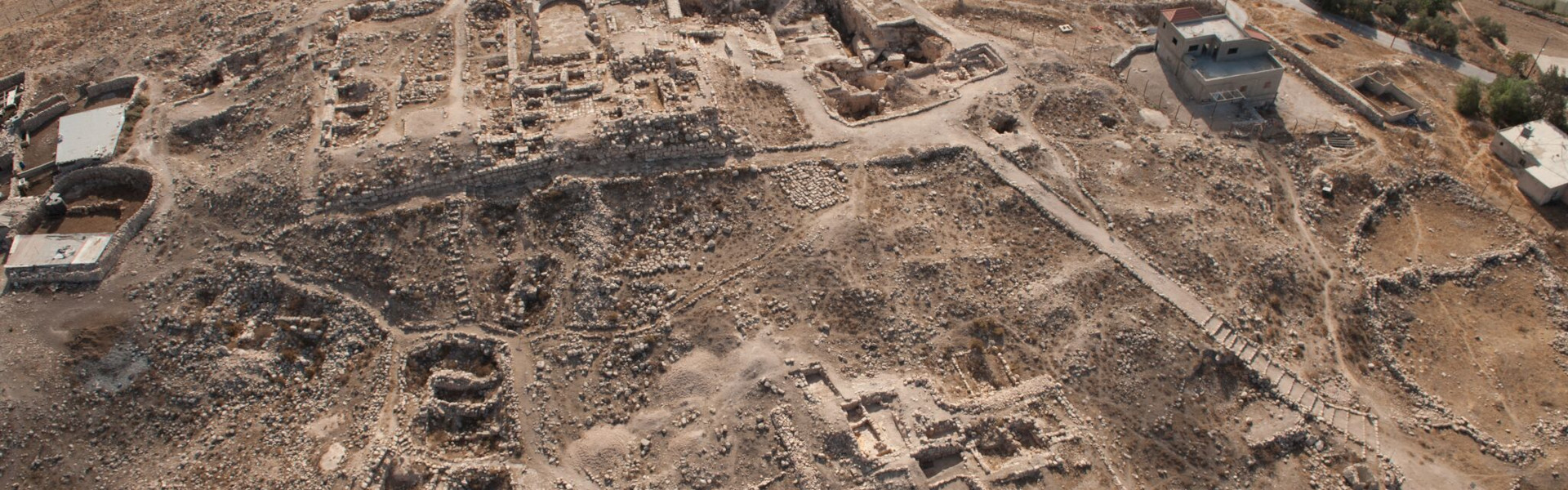
Tall Hisban stands as a witness to global history and a window on daily life in Jordan through the ages. Here excavators have unearthed traces of multiple civilizations and empires; a thriving market town from the time of the Assyrians, Babylonians, and Persians; large quantities of amphora jars containing tiny fish bones attesting to strong local demand for garum—a fermented fish sauce condiment that was an essential flavor in ancient Greek and Roman cooking; the expertly shaped masonry foundations of a Roman public building; the apse, pillar foundations and partial sections of several mosaic floor panels of two Byzantine basilica churches; and the private residence and bath (Hamam) of the Mamluk governor of this part of Jordan during the 14th century AD. Just as important are evidence of daily life through the ages attested in the large number of pots used for storing and preparing food; the thousands of skeletal fragments of sheep, goats, cattle, horses, mules, poultry, and even fish; and the use and re-use of domestic buildings, courtyards, water channels, and cisterns. A major focus of the 2022 field season will be to explore connections between Greco-Roman Hisban (Esbus) and the cities of the Decapolis. Click here for a short film about the history of the Madaba Plains and click here for a short film on the discoveries at Tall Hisban.

6:30pm – 7:00pm

Darrell Rohl

Calvin University

Elizabeth Osinga

Umm al-Jimal Archaeological Project (UJAP)

Jordan: Umm al-Jimal Archaeological Project (UJAP)

Read the Description

Umm al-Jimal is the best-preserved example of a Late Antique town within the southern Hauran region of Jordan and Syria, featuring the upstanding ruins of more than 150 individual houses, nearly twenty places of worship representing paganism, Christianity, and Islam, as well as large imperial military and administrative structures, and community infrastructure of roads and water management, all enclosed within an intact ancient town wall. Previous archaeological fieldwork has focused on documenting the upstanding remains with limited excavation in order to answer specific research questions. In recent years, the site’s churches have become a particular focus of excavation activity, seeking a better understanding of the relationship between religious practice and domestic life across the site. The 2022 field season will continue this research focus, with a new open-area excavation methodology centered on the enclosed temenos/churchyard of the site’s extramural West Church, including within ancillary rooms attached to the church’s east end. Further fieldwork activities at the site will include on-the-ground inspection and documentation of 30+ potential structural features that have been identified from recent aerial photographs. In addition to fieldwork, there are several ongoing heritage-focused projects: completion of the Interpretive and Hospitality Center and the archaeological park; training of local guides and excavators; continued partnership with the local non-profit, Hand By Hand Heritage; and the completion of Umm al-Jimal’s UNESCO World Heritage Nomination file.

7:00pm – 7:30pm

Audience Q&A with all Panelists

ASOR Sustaining Members: $0 | ASOR Members: $6 | Public: $12

To receive your ASOR member discount, log into the online store. If you are new to ASOR, please click on the “New Visitor Registration” link to register your e-mail address and choose a password for our online store. Once logged in, navigate to “Meeting and Event Registration” to register for the webinar and pay the fee. Each paid registrant will receive a confirmation e-mail when you pay for the webinar. If you do not receive this e-mail, then you are not registered. Please e-mail membership@asor.org with any questions or issues with registering.

You will be e-mailed the Zoom Webinar link in the week prior to the lecture on February 20, 2022. If you do not receive the link by the close of business on the Thursday before the webinar, please e-mail membership@asor.org immediately. This webinar will be recorded and all paid registrants will be sent a link to view the recording.

All proceeds from this lecture are used to fund scholarships for members impacted by COVID-19 as well as increasing ASOR’s online resources, which are free to the public.

Sponsors will be acknowledged during the event. Sponsorships are available at the following levels:

  • Bronze Sponsor: $50
  • Silver Sponsor: $100
  • Gold Sponsor: $500
  • Platinum Sponsor: $1,000

Each sponsor will receive a confirmation e-mail. If you do not receive this e-mail, then we did not receive your sponsorship online.  If you prefer to register or sponsor over the phone, please call 703-789-9230. Please e-mail membership@asor.org with any questions or issues.

Speakers / Presenters

Øystein LaBianca is a Professor of Anthropology in the Department of Behavioral Sciences and Associate Director of the Institute of Archaeology at Andrews University. He is the Senior Director of the Hisban Cultural Heritage Project, a community archaeology project centered at Tall Hisban in Jordan. He holds a Ph.D. in cultural anthropology and archaeology from Brandeis University. LaBianca’s research in Jordan began with studies of long-term human-animal-environment interactions as evidenced by changes over time in animal bone assemblages and related finds uncovered by his excavations and surveys at Tall Hisban. He has also been a leader in introducing community archaeology approaches to archaeological projects in Jordan. He is a long-time member of the boards of trustees of ASOR and ACOR in Amman, Jordan.


Elizabeth Osinga is currently working full-time as a co-director of the Umm al-Jimal Archaeological Project (UJAP). A former student of the late UJAP director Bert de Vries, she has worked with the project since 2012 and her graduate work focused on a socio-economic approach to ceramic analysis at the site (University of Southampton, MA, PhD). When not involved in excavations, grant writing, or other essential projects, she is immersed in Umm al-Jimal’s archive, analyzing the backlog of excavation reports and materials in preparation for long-overdue publication.


Darrell Rohl  is an Assistant Professor of Archaeology, History, and Digital Humanities at Calvin University and is a co-director of the Umm al-Jimal Archaeological Project. A graduate of Andrews University (BSc) and Durham University (MA, PhD), his research has primarily focused on Roman and Late Antique periods in England, Scotland, and Jordan, as well as the application of place theories in archaeological and heritage contexts. He has co-directed excavations with Dr. Elizabeth Osinga at the Hisban North Church (2018) and Umm al-Jimal (2019), and has further fieldwork and research experience in the UK, USA, and Italy.

ASOR is grateful for your support. Each registrant will receive an automated confirmation e-mail. If you do not receive this e-mail, please check you Spam folder and then contact ASOR. If you prefer to register over the phone, please call 703-789-9230. Please e-mail membership@asor.org with any questions or issues.

PAST WEBINARS

You can now purchase the link to the recording of any webinar. You can also purchase the bundle packages of all webinars from the 2020-2022 seasons. Please e-mail membership@asor.org for purchase details.

To see a printable pdf of the webinar titles from the 2020-2021 season, please click here. To see a printable pdf of the webinar titles from the 2021-2022 season, please click here.

Pricing:

Members: $6.00 per recording
Non-Members: $12.00 per recording
Bundle of 2020-2021 Webinars: $75.00
Bundle of 2021-2022 Webinars: $75.00
Bundle of 2020-2022 Webinars: $125.00

2021-2022 Season

A World at War: Protecting Cultural Heritage in Times of Conflict
Patty Gerstenblith (DePaul University), Lisa Ackerman (Columbus Citizens Foundation), Andrew Cohen (Government Professional and Cultural Heritage Expert) | May 12, 2022

Preserving Cultural Heritage in Hisban and Umm al-Jimal, Jordan
Øystein LaBianca (Andrews University), Elizabeth Osinga (Umm al-Jimal Archaeological Project), Darrell Rohl (Calvin University) | April 24, 2022

Back to the Field: Recent Discoveries & Summer Plans 2022
Lorenzo d’Alfonso (ISAW), Kathryn Grossman (NC State University), James R. Strange (Samford University) | April 3, 2022

Uncovering What is Nubian Beneath the Veneer of Egyptianness: Excavating the Archives
Debora Heard (University of Chicago) | March 20, 2022

Where Are They Now?: A Preview of 2022 ASOR-Affiliated Fieldwork Projects
Michael Given (University of Glasgow), Xenia-Paula Kyriakou (Florida Gulf Coast University), Stephen Batiuk (University of Toronto), Monique Roddy (Walla Walla University), Kent Bramlett (La Sierra University), Friedbert Ninow (La Sierra University), and Michael Hoff (University of Nebraska-Lincoln) | March 8, 2022

Excavations at Tel Gezer: A Personal Story
Sam Wolff (Tel Gezer Laboratory) | February 20, 2022

Tel Rehov: A Major Bronze and Iron Age City in the Jordan Valley
Amihai Mazar (Hebrew University of Jerusalem), Nava Panitz-Cohen ( Hebrew University of Jerusalem), Nota Kourou (Athens University), Naama Yahalom-Mack (Hebrew University of Jerusalem), Robert Mullins (Azusa Pacific University) | February 10, 2022

The Not-So-Innocents Abroad: The Beginnings of American Biblical Archaeology
Rachel Hallote (Samford University) | January 20, 2022

Synagogues as Jesus Knew Them
James R. Strange (Samford University) | December 2, 2021

Under Jerusalem: The Buried History of the World’s Most Contested City
Andrew Lawler | November 4, 2021

Jesus and Jerusalem on TV: How Do Bible Documentaries Get Made?
Robert Cargill (University of Iowa) | October 17, 2021

Digging the Divine?: Judahite Pillar Figurines and the Archaeology of Israelite Religion
Erin Darby (University of Tennessee) | October 7, 2021

David, Solomon, and Rehoboam’s Kingdom—The Archaeological Evidence
Yosef Garfinkel (Hebrew University of Jerusalem) | September 19, 2021

From Standing Stones to Sacred Emptiness: Textual and Visual Portrayals of Israel’s God
Theodore Lewis (Johns Hopkins University) | August 29, 2021

2020-2021 Season

Making May Matter: Webinarathon to Endow Diversity
Multiple Speakers | May 21-23, 2021

Archaeogaming: Why Video Games Deserve Their Own Archaeology
Tine Rassalle (University of North Carolina at Chapel Hill), Shannon Martino (Morton College), Matthew Winter (University of Arizona), Michael Zimmerman (Rhode Island) | April 18, 2021

How the Bible Became a Book
William Schniedewind (UCLA) | March 21, 2021

The Mysteries of Mithras in Caesarea: Exploring the Cult’s Rites and Remains
Jane DeRose Evans (Temple University), Alexandra Ratzlaff (Brandeis University) | March 11, 2021

Archaeology and the Hidden Religious Culture of Israelite Women
Carol Meyers (Duke University) | February 21, 2021

Meet the Directors—Fundraiser to Support ASOR’s Affiliated Overseas Research Centers
Matthew J. Adams (AIAR), Pearce Paul Creasman (ACOR), Lindy Crewe (CAARI) | February 11, 2021

Early Synagogues, Jesus, and Galilee—A Jewish Perspective
Eric Meyers (Duke University) | December 13, 2020

Home Sweet Home: Ancient Israelite Households in Context
Cynthia Shafer-Elliott (William Jessup University) | October 18, 2020

Priestesses in the Days of Solomon and Ahab
Susan Ackerman (Dartmouth College) | September 13, 2020

Digging Deeper: How Archaeology Works
Eric H. Cline (The George Washington University) | August 9, 2020

Stipend Report: Hanna Erftenbeck

Summer Research at the Carnegie Museum of Natural History

Hanna Erftenbeck, 2021 Strange/Midkiff Families Summer Stipend Recipient

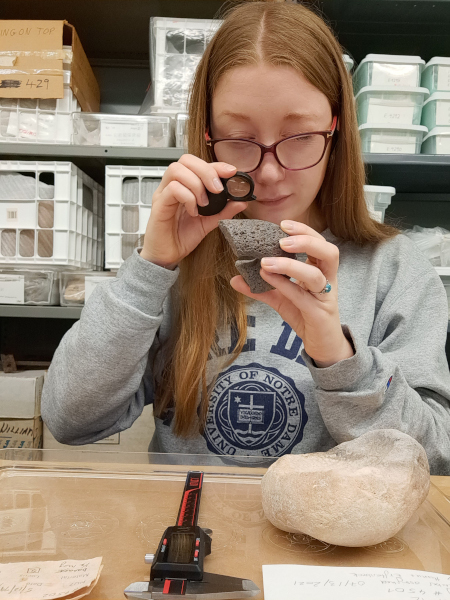
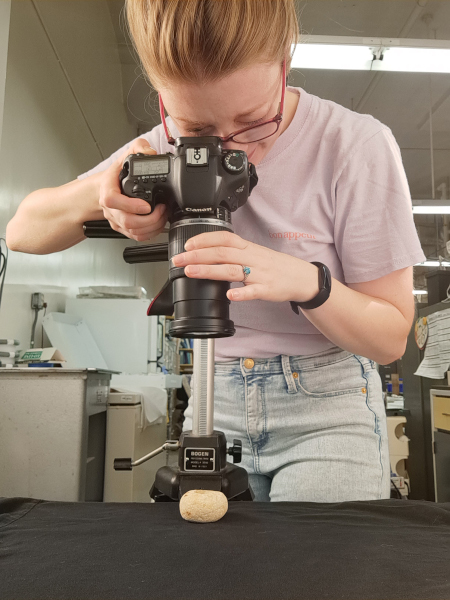
The term fieldwork is mostly associated with working on excavations, but this summer I spent three weeks conducting my fieldwork at the Carnegie Museum of Natural History in Pittsburgh, PA. There I worked with the groundstone tool assemblage from the Early Bronze Age (EBA) site of Numayra, located in modern day Jordan, which is one of the early proto-urban settlements in the region. Numayra was excavated as part of the Expedition to the Dead Sea Plain Project (EDSP) in the 1970s and 1980s. The goal of EDSP is to investigate how people lived and died during the EBA to study the emergence of the regions earliest small-scale urban society. As part of my dissertation project, I am investigating how the people at Numayra prepared their food in their day to day lives, and how their food practices connected them to their new urban community. This summer I was able to catalogue, describe, draw, and photograph the stone objects in the Numayra collection.

Measuring and describing groundstone objects before drawing them.
Taking detailed pictures of the groundstone objects.

Inspecting the groundstone objects under a microscope for possible use-wear.

While I did not get my hands dirty – at least not as dirty as I usually do when I excavate – I was able to learn so much about EBA daily life by working with the Numayra collection, almost fifty years after these objects were excavated. Legacy collections are often underutilized in our efforts to understand the past, but they are a treasure trove of information, and working with them is part of an ethical and sustainable archaeological practice. I would like to thank ASOR and the generous donors who supported the summer stipend program for making this research possible, and the project directors Meredith Chesson and Morag Kersel for their support and providing me with access to the material. I am deeply grateful to Deborah Harding, Amy Covell-Murthy, and Gretchen Anderson at the Carnegie Museum for Natural History for welcoming me this summer and providing me with the support and access I needed to successfully conduct my research.

Hanna is a PhD candidate at the Department of Anthropology at the University of Notre Dame. In her dissertation research she investigates the role of food related practices in the creation and transmission of early urban communities during the Early Bronze Age in the southern Levant. Hanna holds a BA and MA degree in Near Eastern Archaeology from Freie Universität Berlin and a MA degree in Anthropology from the University of Notre Dame. Since 2012 she have participated in archaeological projects in Germany, Greece, Turkey, Jordan, Israel, and the United States.

During the summer of 2021, ASOR supported 27 undergraduate and graduate students through the Summer Stipend Program. These students undertook non-fieldwork archaeological research projects led by ASOR-affiliated project directors. They also took part in monthly cohort group meetings hosted via zoom. Read a summary of these cohort meetings here.

Stay tuned for more updates from the 2021 Summer Stipend recipients!