SHARE
[/vc_column_text][mk_image src=”http://www.asortest.org/wp-content/uploads/2017/01/social-fb-icon4.jpg” image_width=”42″ image_height=”42″ hover=”false” custom_url=”https://www.facebook.com/ASOResearch/” margin_bottom=”0″][mk_image src=”http://www.asortest.org/wp-content/uploads/2017/01/social-tw-icon4.jpg” image_width=”42″ image_height=”42″ hover=”false” custom_url=”https://twitter.com/ASOResearch?ref_src=twsrc%5Egoogle%7Ctwcamp%5Eserp%7Ctwgr%5Eauthor” margin_bottom=”0″][mk_image src=”http://www.asortest.org/wp-content/uploads/2017/01/social-in-icon4.jpg” image_width=”42″ image_height=”42″ hover=”false” custom_url=”https://www.linkedin.com/company/american-schools-of-oriental-research” margin_bottom=”0″][mk_image src=”http://www.asortest.org/wp-content/uploads/2017/01/social-ml-icon_7.jpg” image_width=”42″ image_height=”42″ hover=”false” custom_url=”mailto:asor@bu.edu” margin_bottom=”0″][mk_image src=”http://www.asortest.org/wp-content/uploads/2017/01/blog-icon3.jpg” image_width=”42″ image_height=”42″ hover=”false” custom_url=”http://asorblog.org/” margin_bottom=”0″][/vc_column][vc_column border_color=”rgba(255,255,255,0.01)” width=”1/6″ css=”.vc_custom_1490365673198{margin-right: 20px !important;border-left-width: 2px !important;padding-right: 20px !important;padding-left: 20px !important;border-left-color: #99422f !important;}” el_class=”sticky-sidenav”][mk_divider divider_color=”rgba(255,255,255,0.01)” thickness=”1″ margin_top=”3″ margin_bottom=”3″][vc_widget_sidebar sidebar_id=”ca-sidebar-37292″ el_class=”.widget { overflow: hidden; margin-bottom: 0; }”][/vc_column][vc_column border_color=”rgba(170,170,170,0.01)” width=”1/2″ css=”.vc_custom_1490225606852{margin-right: 10px !important;margin-bottom: 30px !important;border-right-width: 2px !important;border-bottom-width: 2px !important;padding-top: 30px !important;padding-right: 30px !important;padding-left: 20px !important;background-color: #ffffff !important;border-right-color: rgba(227,228,228,0.75) !important;border-bottom-color: rgba(227,228,228,0.75) !important;}”][vc_column_text responsive_align=”left”]2024 PERSONNEL COMMITTEE
Archived webpage for the 2024 Committee Members. This page has been replaced.
The Personnel Committee is responsible for (a) conducting an annual review of the Executive Director and making recommendations to the Executive Committee pertaining to the employment of the Executive Director; (b) providing direct oversight of the hiring of staff, annual performance assessments, and terminations of employment; (c) serving in an advisory capacity to the Executive Director on personnel matters; and (d) serving as an independent, confidential arbiter of staff grievances.
- Sharon Herbert, Chair
- Sheldon Fox
- Charles Jones
- Emily Miller Bonney

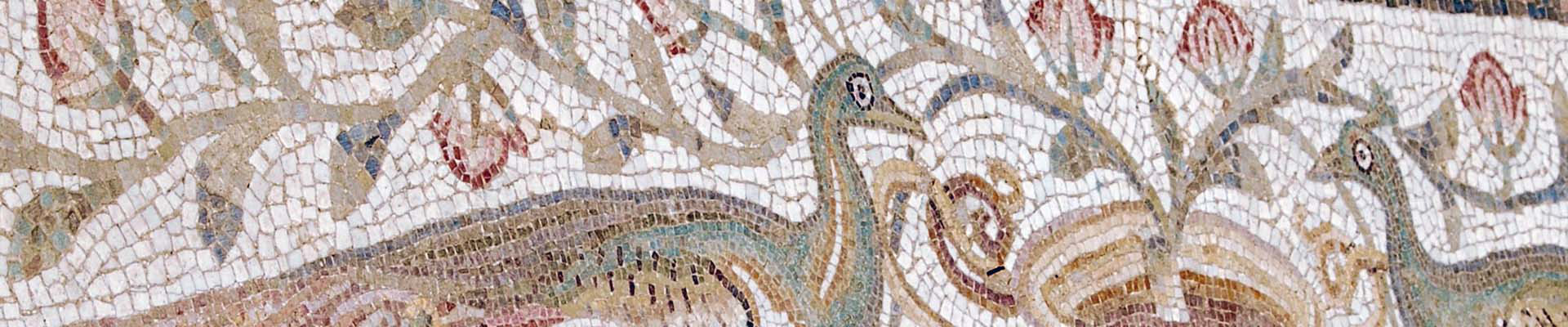

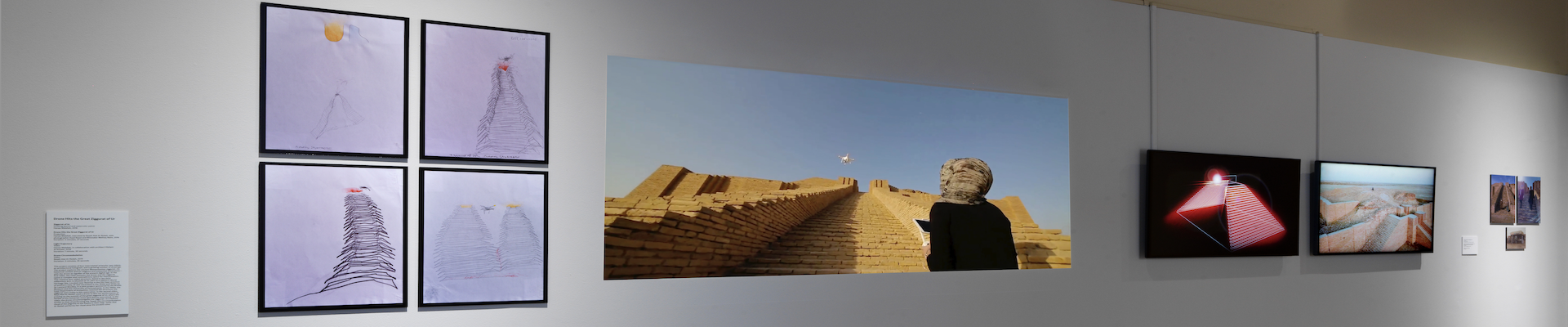
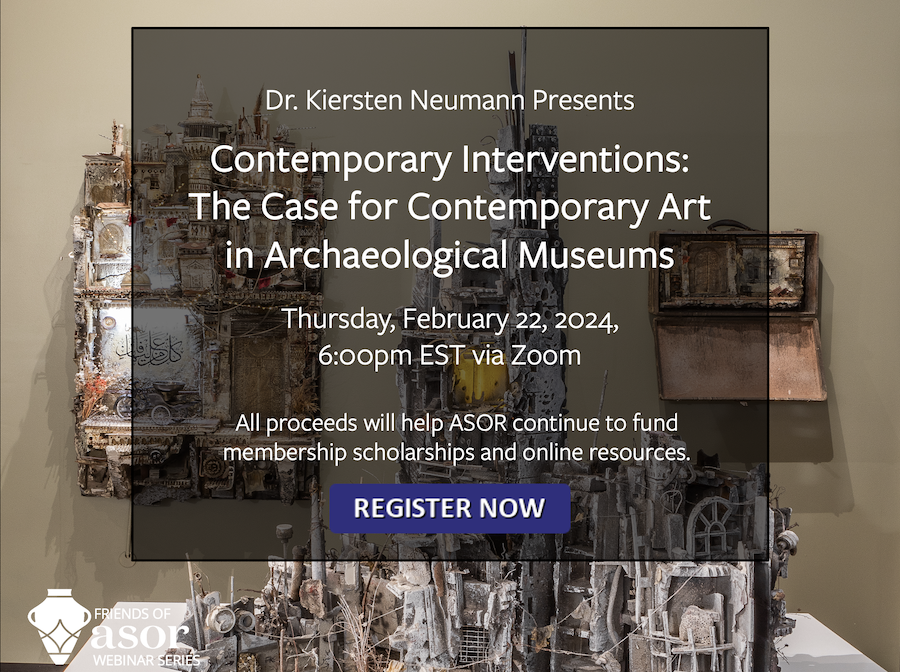
 Curating an exhibition of contemporary art comes with the incredible opportunity of collaborating with living artists to realize together how to give voice and vision to their work. Doing so in the space of an archaeological museum brings with it the added opportunity to revisit and reevaluate traditional object narratives and museological methods. For centuries Western cultural institutions and museum exhibitions have advanced historical narratives of ancient West Asia with a singular, authoritative voice, predominantly disconnected from the present. Contemporary installations have the power to forefront and celebrate the complexity and continuity of this rich cultural heritage, presenting postcolonial perspectives and thought-provoking artistic responses that draw on diverse lived experiences, memories, and imagination.
 In this webinar, Kiersten Neumann will discuss powerful examples of the pairing of contemporary art and archaeological objects from her own experience as an art historian, archaeologist, and curator, demonstrating some of the ways in which such contemporary interventions, including those by local and diaspora artists and communities, can bring a uniquely humanizing perspective to this history.


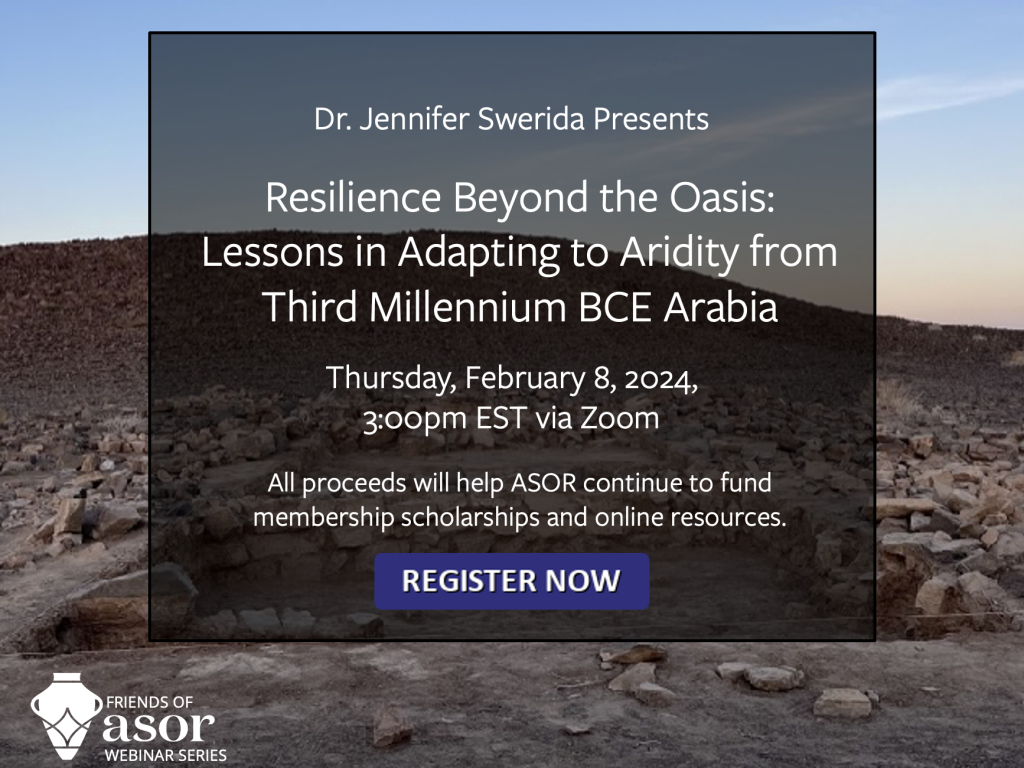
 The Bat landscape of northwestern Oman is one of dense archaeological remains and diverse ecological conditions. The site has been a centre for human activity since the Paleolithic, most famously attested by the Early Bronze Age tombs, towers, and settlement of the UNESCO World Heritage zone. With the support of the US National Endowment for the Humanities, ongoing work by the Bat Archaeological Project aims to reconstruct the site’s Umm an-Nar period (ca. 2700-2000 BC) cultural landscape and the human-environment interactions that led to its creation and resilience.
 The concept of resilience, or the ability of a system to persist and thrive even in the face of perturbations, can be applied to both natural ecosystems and human communities in ancient and modern times. A program of interdisciplinary collaborations integrating geomorphological, archaeobotanical, and phytolith analysis with remote sensing and traditional excavation of domestic spaces on the Bat landscape allows us to trace the arc of Umm an-Nar period activity at Bat alongside its changing environment. A parallel program of ecological survey assessing modern biological (floral and faunal) and hydrological resiliency provides a framework for understanding Bat’s history as a centre for human-environment interaction in the Umm an-Nar period. This lecture will discuss preliminary results of three seasons of resiliency studies at Bat and consider what lessons in adapting to aridity we, as a modern community, can learn from the people of third millennium BCE Arabia.
 Jennifer Swerida holds a PhD from the Department of Near Eastern Studies at Johns Hopkins University with a focus on the archaeology of Arabia. Her research reorients traditional disciplinary boundaries by using insights from the Environmental Humanities to investigate the impact of mobile peoples in the formation of the cultural landscape(s) that shaped the history and culture of West Asia in the third millennium BCE. Her work specifically addresses groups that are underrepresented in modern scholarship, particularly those that occupied areas traditionally considered marginal or peripheral to state-level societies. Working within the landscape-household continuum of social archaeology, Dr. Swerida studies how people in these areas developed cultural mechanisms and socioecological strategies that enabled them to thrive and interact as peers with neighboring states. As Director of the Bat Archaeological Project, she is investigating the emergence of social complexity and cultural adaptations to aridity at the UNESCO World Heritage Site of Bat in Oman. She is a Consulting Scholar for the University of Pennsylvania Museum and a Visiting Assistant Professor at Kennesaw State University.