The Chairs Coordinating Council takes responsibility for (a) monitoring the activities of ASOR’s eight other standing committees, by receiving monthly reports about the committees’ discussions and business; (b) discussing and coordinating programs and policies that cut across the purview of two or more of the CCC’s constituent committees (e.g., policies regarding ethical issues or professional standards) and also adjudicating, if need be, between competing claims regarding jurisdiction or resource allocation among the CCC’s constituent committees; (c) annually receiving, from the Program Committee, recommendations regarding the plenary speaker for the ASOR Annual Meeting and then recommending to the ASOR President the name of an individual to invite; and (d) transmitting, through its chair (the ASOR Vice-President) reports regarding the work of the CCC, and its constituent committees, to the Board of Trustees, at the Board’s biannual meetings.
Charles (Chuck) Jones, ASOR Vice President and Chair
Sharon Herbert, ASOR President
Georgia Andreou, Chair of the Committee on Archaeological Research and Policy
Theodore (Teddy) Burgh, Chair of the Membership and Outreach Committee
Tiffany Earley-Spadoni, Co-Chair of the Early Career Scholars Committee
Jane DeRose Evans, Chair of the Cultural Heritage Committee
Kevin McGeough, Chair of the Publications Committee
Katherine Larson, Co-Chair of the Diversity, Equity, and Inclusion Committee
Mahri Leonard-Fleckman, Co-Chair of the Honors and Awards Committee
Kiersten Neumann, Co-Chair of the Program Committee
Allison Thomason, Co-Chair of the Program Committee
Julia Troche, Co-Chair of the Diversity, Equity, and Inclusion Committee
Andy Vaughn, ASOR Executive Director (ex officio, non-voting)
Lynn Welton, Co-Chair of the Honors and Awards Committee
Vanessa Workman, Co-Chair of the Early Career Scholars Committee
The Executive Committee of the ASOR Board of Trustees acts on behalf of the Board to manage the business and affairs of ASOR between the regular Board meetings is composed of the Board Chair, Vice Chair(s) of the Board (if any), President, Past President, Vice President, Treasurer, Secretary, Chair of the Development Committee, and two (2) or three (3) other Trustees.[/vc_column_text][mk_divider thickness=”1″ margin_top=”10″][vc_column_text responsive_align=”left”]
Sheldon Fox
Chair of the Board (until December 31, 2025)
Sheldon Fox graduated from Duke University in 1981 with an undergraduate degree in Management Science/Accounting. While at Duke, he worked with Carol and Eric Meyers at Nabratein.
Fox joined KPMG (formerly Peat, Marwick, Mitchell & Co.) in Raleigh in early 1982 and was admitted as a tax partner in 1993. During his 16 + year career at KPMG he served publicly-traded financial services corporations, privately-owned businesses in several industries, and high net worth individuals.
From 1998 until 2003, Fox was chief financial officer of CCB Financial in Durham and its successor by merger, NCF Financial in Memphis. He and his family returned to Raleigh in 2004.
In 2004, Fox joined KDI Capital Partners (formerly Maynard Capital Partners) and became a member of the firm in 2007. He served in varying roles, including portfolio manager, Chief Operating Officer, and financial planner through 2021.
Since January 2022, Fox has continued his financial planning focus with Curi Capital, a Raleigh, NC Registered Investment Adviser, that acquired the assets of KDI’s advisory business. In January 2024, Curi Capital merged and became Curi RMB Capital. Fox currently serves as Partner and Senior Wealth Manager at Curi RMB Capital, leading the team of wealth advisers in the Southeast.
Sheldon has been married to his wife, Debbie for over 40 years. They have two sons and five grandchildren. He is a CPA and a CERTIFIED FINANCIAL PLANNER™.
Fox has been very active in the community in the Triangle and has served on several nonprofit boards.
Fox previously served as an ASOR trustee for nine years (2007-2015), and as treasurer for two terms (2007-2012). He took on the role of Board Chair in January 2023.[/vc_column_text][mk_divider thickness=”1″ margin_top=”10″][vc_column_text responsive_align=”left”]
Sharon Herbert
President (until December 31, 2025)
Sharon Herbert is the Charles K. Williams II Distinguished University Professor of Classical Archaeology Emerita and Research Associate at the Kelsey Museum of Archaeology at the University of Michigan. Formerly, she served as the chair of the Department of Classical Studies and Director of the Interdepartmental Program in Classical Art and Archaeology at Michigan, where she has enjoyed a remarkable career as a field archaeologist, teacher, and academic administrator since she joined the Michigan faculty in 1973. She is also the former Curator of Greek and Hellenistic Collections and Director Emerita (1997-2013) of the University of Michigan’s Kelsey Museum.
Herbert’s research specialties include Hellenistic Egypt and the Near East and ancient ceramics. She is best known for her contributions to the archaeology of Israel, as director of the Tel Anafa excavations from 1978 to 1981 and as co-director of the Tel Kedesh excavations from 1997 to 2012. She has also conducted archaeological fieldwork in Greece, Italy, and Egypt.
Before assuming her position as ASOR’s President on January 1, 2020, Herbert served as ASOR Vice President from 2013-2019. Herbert also served as the President of the W. F. Albright Institute for Archaeological Research (AIAR) from 2013-2018. In November 2017, Herbert received ASOR’s W. F. Albright Service Award, in recognition of her work on behalf of the Albright.[/vc_column_text][mk_divider thickness=”1″ margin_top=”10″][vc_column_text responsive_align=”left”]
Susan Ackerman
Past President (until December 31, 2025)
Susan Ackerman is the Preston H. Kelsey Professor of Religion and Professor of Women’s, Gender, and Sexuality Studies at Dartmouth College, where she has been on the faculty since 1990. At Dartmouth, she served as the Chair of the Religion Department from 2004-2012 and as the Chair of the Program in Women’s, Gender, and Sexuality Studies from 2002-2004 and 2015-2019. Her research specialties include the religion of ancient Israel, women and gender in ancient Israel, myth and ritual studies in ancient Israel, and the Hebrew Bible.
Ackerman served as ASOR President from 2014-2019. Prior to that, Ackerman served as a member of the ASOR Board for seven years (2007-2013), during which time she was a member of the ASOR Capital Campaign Cabinet, the Task Force on the ASOR Strategic Plan for 2011-2015, and the Finance Committee. She has also served as President of the New England and Eastern Canada Region of the Society of Biblical Literature (2013-2014), as President of the Colloquium for Biblical Research (2008-2010), and as a member and then Secretary of the Board of Trustees of the W. F. Albright Institute for Archaeological Research (AIAR), from 2008-2013.
In November 2019, Ackerman received ASOR’s most prestigious award, the Richard J. Scheuer Medal, for lifetime achievement and professional service.[/vc_column_text][mk_divider thickness=”1″ margin_top=”10″][vc_column_text responsive_align=”left”]
Andrew G. Vaughn
Executive Director (until June 30, 2025)
Andrew G. (Andy) Vaughn became ASOR’s Interim Executive Director on January 1, 2007, and he was appointed Executive Director on July 1, 2007. Prior to this appointment, Vaughn taught at Gustavus Adolphus College in St. Peter, MN. There, from 1997–2007, he was Assistant Professor and later Associate Professor of Hebrew Bible. He also served as Chair of Department of Religion. His teaching and research interests include cultural heritage, history, archaeology, Semitic languages, and Israelite religion. He is a past recipient of the Mitchell Dahood Prize for Biblical Scholarship, and he was a Fulbright Fellow at Tel Aviv University from 1993–94.
Prior to taking up his position as Executive Director of ASOR, Vaughn served on ASOR’s Publications Committee from 2001–2006, and he was elected as Chair of the Publications Committee in 2005. As Chair, he served on the ASOR Board and Executive Committee from 2005–2006, and he was on the ASOR Management Committee from 2006–2007. He was editor of the joint ASOR/SBL Archaeology and Biblical Studies Book Series from 2001–2007. He has also served as Vice President of the Upper Midwest Region of the Society of Biblical Literature (2006-2007) and on the SBL Development Committee (2004–2007).[/vc_column_text][mk_divider thickness=”1″ margin_top=”10″][vc_column_text responsive_align=”left”]
Charles Ellwood Jones
Vice President (until December 31, 2025)
Charles Ellwood (Chuck) Jones is the Tombros Librarian for Classics and Humanities at The Pennsylvania State University Library, a position he has held since August 2013. At Penn State, he also holds a faculty appointment in the Department of Classics and Ancient Mediterranean Studies. Previously, Jones served as the Head of the Library for the Institute for the Study of the Ancient World (ISAW), in New York, where he also held a position as Senior Fellow and was a faculty member of the Institute’s 2012-13 Linked Ancient World Institute. Prior to his time at ISAW, Jones was the Head Librarian for the Blegen Library at the American School of Classical Studies, in Athens, and was the Research Archivist-Bibliographer for the Oriental Institute at the University of Chicago.
Jones is particularly known for developing online resources for ancient Near Eastern scholars, including AWOL (the Ancient World Online). In 2008, he won the ASOR Open Archaeology Award, for the Abzu website, and in 2015-2016, he won an award for Outstanding Work in Digital Archaeology from The Archaeological Institute of America.
Within ASOR, Jones has served as a session chair for programs on cyberinfrastructure and digital scholarship and as a member and then, from 2012-2018, as chair of the Publications Committee. In November 2018, Jones received ASOR’s Membership Service Award in recognition of his work as Publications Chair.[/vc_column_text][mk_divider thickness=”1″ margin_top=”10″][vc_column_text responsive_align=”left”]
Ann-Marie Knoblauch
Secretary (until December 31, 2024)
Ann-Marie Knoblauch is Associate Professor of Art History and Associate Director of the School of Visual Arts at Virginia Tech. Her research interests bridge east and west, especially Cyprus and Greece during the archaic and classical periods. She is especially concerned with articulating the voices of underrepresented groups in the ancient Mediterranean world — non-Athenian and non-male — through the material culture left behind. This approach to the ancient world manifests itself in two main research endeavors, investigations into the visual iconography of Athenian women and active fieldwork on the island of Cyprus. Knoblauch has been involved in the excavations of Idalion, Cyprus, since 1998, and on Cyprus, she has also excavated at Yeronisos Island. She has also excavated in Israel and Greece.
Knoblauch has chaired several ASOR sessions on Cyprus at the ASOR Annual Meeting, and she also served as guest co-editor for a special double issue of Near Eastern Archaeology (NEA 71/1-2) whose focus was “Ancient Cyprus: American Research.” In addition, she served as a member of the Near Eastern Archaeology editorial board from 2008 through 2016.
Knoblauch joined the ASOR Board in January 2013. While on the Board, she has been a member of the Executive Committee, the Finance Committee, the Officers Nominations Committee, and the Task Force for Implementing the ASOR 2011-2015 Strategic Plan, and she served as the chair of the Trustee Nominations Committee. She has also been a member of the Board of Trustees of the Cyprus American Archaeological Research Institute (CAARI) since 2002.
Knoblauch has been ASOR Secretary since January 1, 2019. She received the ASOR Membership Service Award in recognition of her work as ASOR Secretary in 2022.[/vc_column_text][mk_divider thickness=”1″ margin_top=”10″][vc_column_text responsive_align=”left”]
Emily Miller Bonney
Treasurer (until December 31, 2026)
Emily Miller Bonney is a professor of Liberal Studies at California State University Fullerton, where she currently serves as Dean of the Pollak University Library. She has also served as Interim Assistant Vice President for Academic Human Resources. Her research focuses on Bronze Age Crete and specifically on the application of extended mind and material agency theories to the relationship between the archaeological record and social/political/economic change. In addition, she examines the ways in which the specific disciplinary frameworks affect the conclusions scholars reach. Her recent work re-examines the mortuary evidence for social organization transitions in the Early Bronze Age on Crete, particularly the circular stone tombs, and for cross-crafting in pottery and other media.
Bonney began attending ASOR meetings in 1999, after fifteen years in the world of law school and legal practice. Since 2016, she has served as the session chair of “Career Options for ASOR Members: The Academy and Beyond.” She served as Chair of the ad hoc committee charged with developing a Code of Conduct for the ASOR Annual Meeting and is currently serves as a Chair of the Board’s Finance Committee. She received the ASOR Membership Service Award in November 2020.
Bonney joined the ASOR Board in January 2019.[/vc_column_text][mk_divider thickness=”1″ margin_top=”10″][vc_column_text responsive_align=”left”]
Lynn Swartz Dodd
(until December 31, 2024)
Lynn Swartz Dodd is Associate Professor of the Practice of Religion at the University of Southern California Dornsife College of Letters, Arts and Sciences. There, she has served as the Director of the Interdisciplinary Archaeology Undergraduate Major and the Director of Undergraduate Studies in Religion. She was also designated a USC Dornsife Distinguished Faculty Fellow.
Dodd’s research centers on archaeology and politics and ancient innovation and social change, particularly the ways that beliefs about the world figure in social change. As Curator of USC’s Archaeology Research Center, she is also engaged in technical material studies, excavation publication projects, and research involving the use of lasers and new imaging techniques in archaeological research and conservation. She is a staff member of the Amuq Valley Research Project Survey (Turkey), the Kenan Tepe Excavations (Tigris River, Turkey), and the Tell al-Judaidah Publication Project (Turkey), as well as the Native American Sacred Landscapes Project (California). Dodd is in addition the co-organizer of the Israeli Palestinian Archaeology Working Group.
Dodd has served ASOR in many capacities: for example, as a member of the Publications Committee and of the Committee on Archaeological Research and Policy (and as Chair of that committee’s Fellowships Subcommittee). She was the Chair of the Ad Hoc Ethics Working Group that authored the Policy on Professional Conduct adopted by the ASOR Board in April 2015. She served as ASOR Secretary from 2013-2018 and currently serves as a member of the Board’s Finance Committee and as Chair of the Board’s Development Committee.
In November 2015, Dodd received the ASOR Membership Service Award, and in November 2018, she received the Charles U. Harris Service Award, which is given in recognition of long term and/or special service as an ASOR officer or Trustee.[/vc_column_text][mk_divider thickness=”1″ margin_top=”10″][vc_column_text responsive_align=”left”]
Jane DeRose Evans
(until December 31, 2024)
Jane DeRose Evans is Professor and Chair of Art History at Temple University. She specializes in the archaeology of the Roman provinces and especially in ancient numismatics. She is a Fellow of the American Numismatic Society and a member of the Royal Numismatic Society. After excavating for many years in France, she is now project numismatist for the Harvard/Cornell Excavations in Sardis and the George Washington University excavations at Bir Madhkur (Jordan). Recently, she brought to publication The Mithraeum at Caesarea Maritima (ASOR Press) and is completing the final publication on the U-Shaped Building at Caesarea.
Evans has been a member of ASOR for many years, and from 2010-2015, she served on the Ad Hoc Ethics Working Group that authored the Policy on Professional Conduct adopted by the ASOR Board in April 2015. She currently serves on the Cultural Heritage Committee and has testified on behalf of the Memoranda of Understanding that allow intercepting illegally obtained antiquities from Cyprus and Egypt at the US border.
Evans served on the ASOR Board from 2011-2013 and then rejoined the Board again in January 2016. She has served as the Chair of the Trustee Nominations Committee and is currently the Chair of the Cultural Heritage Committee.[/vc_column_text][mk_divider thickness=”1″ margin_top=”10″][vc_column_text responsive_align=”left”]
Kathryn Grossman
(until December 31, 2025)
Kathryn Grossman is Assistant Professor of Anthropology in the Department of Sociology and Anthropology at North Carolina State University. She is an archaeologist with expertise in the Chalcolithic and Bronze Age cultures of Cyprus and Mesopotamia and a methodological specialty in zooarchaeology. She is Director of the ASOR-affiliated Makounta-Voules Archaeological Project, as well as zooarchaeologist for the Kani Shaie Archaeological Project (Iraqi Kurdistan), the Wadi el-Hudi Expedition (Egypt), the Petra North Ridge Project (Jordan), and the Temple of the Winged Lions Cultural Resource Management Project (Jordan). She is currently co-editing, with Jesse Casana and Eric Jensen, the final report on the excavations at Tell Qarqur, Syria.
Grossman has been a member of ASOR’s Committee on Archaeological Research and Policy and served as Chair of the Fellowship Committee (2016-2021). She received ASOR’s Membership Service Award in 2021 in recognition of her work on the Fellowship Committee.[/vc_column_text][mk_divider thickness=”1″ margin_top=”10″][vc_column_text responsive_align=”left”]
Eric M. Meyers
(until December 31, 2024)
Eric Meyers is the Bernice and Morton Lerner Emeritus Professor in Judaic Studies and Archaeology in the Department of Religious Studies of Trinity College of Arts and Sciences, Duke University. He served as Director of the Graduate Program in Religion at Duke from 1979-1985 and as Associate Director in 2000-2001. He became Director again in academic year 2001-2002, a position he held until 2007.
Meyers’s research interests include the Bible, Jewish history, and archaeology. Meyers has directed digs in Israel for forty years, including the Meiron Excavation Project, whose work included excavations of the nearby synagogues of Gush Ḥalav and Nabatrein, and the Sepphoris Regional Project.
Within ASOR, Meyers held the position of First Vice-President for Publications from 1982-1990, and from 1982-1992 he served as the editor of Biblical Archaeologist (BA). He served as well the associate editor of the Bulletin of ASOR (BASOR) from 1976-1993. Most notably, Meyers served as ASOR’s President from January 1, 1990, through July 1, 1996, and then again from May 2006 through December 2008.
In 2009, Meyers became Project Director of a major two-and-a-half year grant for archiving the history of American archaeology in the Middle East through ASOR. In addition, from 1975-1976, he served as Director of the W. F. Albright Institute of Archaeological Research (AIAR) in Jerusalem. Today, he is an Honorary Trustee of the Albright. He also currently serves as a member of the ASOR Board’s Development Committee.
In 1997, Meyers received ASOR’s G. Ernest Wright Publication Award, which is given to the editor/author of the most substantial volume(s) dealing with archaeological material, excavation reports, and material culture from the ancient Near East and eastern Mediterranean. A decade later, in November 2007, he received ASOR’s most prestigious award, the Richard J. Scheuer Medal, for lifetime achievement and professional service. The Eric and Carol Meyers Excavation Fellowships, established in 2014, also honor his long-standing service to ASOR.[/vc_column_text][mk_divider thickness=”1″ margin_top=”10″][/vc_column][vc_column border_color=”rgba(170,170,170,0.01)” width=”1/6″ css=”.vc_custom_1490571214409{margin-right: 10px !important;margin-bottom: 30px !important;border-right-width: 2px !important;border-bottom-width: 2px !important;padding-top: 30px !important;padding-right: 20px !important;padding-left: 20px !important;background-color: #ffffff !important;border-right-color: rgba(227,228,228,0.75) !important;border-bottom-color: rgba(227,228,228,0.75) !important;}”][vc_wp_posts title=”BROWSE THE NEWS ARCHIVE” number=”4″][/vc_column][vc_column border_color=”rgba(170,170,170,0.01)” width=”1/6″ css=”.vc_custom_1490225688999{margin-right: 10px !important;margin-bottom: 30px !important;border-right-width: 2px !important;border-bottom-width: 2px !important;padding-top: 30px !important;padding-right: 30px !important;padding-left: 20px !important;background-color: #ffffff !important;border-right-color: rgba(227,228,228,0.75) !important;border-bottom-color: rgba(227,228,228,0.75) !important;}”][vc_widget_sidebar sidebar_id=”ca-sidebar-99363″][/vc_column][/vc_row][vc_row][vc_column][vc_column_text]
[/vc_column_text][/vc_column][/vc_row]
Drawing on History: Creating the Graphic Adaptation of 1177 BC.
Friends of ASOR present the next webinar in the 2023-2024 season on January 25, 2024, at 6:00 pm EST, presented by Dr. Eric Cline and Glynnis Fawkes. How does a cartoonist go about adapting a work of history, specifically Eric H. Cline’s 1177 BC The Year Civilization Collapsed? In this talk I will describe the process of interpreting Eric’s text in comics, an exercise where I repeatedly asked myself: how might I tell this story visually, and how can I put Eric’s words into the mouths of characters involved in the story? This meant making historical figures (such as Ramses III) speak, as well as imagining characters for whom we have no record offering commentary and opinions. To guide the narrative, I introduced two new young characters, Pel (of the Sea Peoples) and Shesha, (an Egyptian scribe) who ask the central question of the book: Why after three prosperous centuries did the civilizations of the Eastern Mediterranean Bronze Age suddenly come to an end? Pel and Sesha are young teenagers, perhaps the same age as a young audience for the book, and although the book is for all ages, I have not simplified the arguments and information Eric presents in the original 1177 BC. When these characters joined the book, (Eric and I came up with them about 50 pages in) their quest gained a personal dimension, and allowed for play with their interactions with the material. Pel, too young to remember the Sea Peoples battles himself, wants to know why his grandfather keeps talking about the glory days before collapse. So why did it happen?
My background as an archaeological illustrator, and the several years I lived in Cyprus and Lebanon allowed me to travel in the region and visit many of the places featured in the book, from Medinet Habu to Ugarit to Mycenae. My interest in comics stems from a fascination with Egyptian art when I was young; the combination of drawing, text, and page composition that creates an immersive world. Working on this book felt as if Eric had built the playground that was the original 1177 BC, and I brought the characters there to play– if possible at the end of civilization!
The webinar will conclude with a live Q&A session.
Glynnis Fawkes was the recipient of a Fulbright Fellowship to Cyprus where she published Archaeology Lives in Cyprus and Cartoons of Cyprus and has worked as an illustrator on archaeological projects in Greece, Cyprus, Israel, Lebanon, Syria, and Turkey. Her comics have appeared on The New Yorker.com, The Comics Journal, Popula.com, and MuthaMagazine.com (for which she was nominated for an Ignatz Award). She is author/illustrator Charlotte Bronte Before Jane Eyre, Persephone’s Garden, and the minicomics Allé Egó and Greek Diary, both of which won medals at the Society of Illustrators’ MoCCA fest in NYC. She lives in Vermont and teaches at the Center for Cartoon Studies.
Eric H. Cline is Professor of Classics and Anthropology, the former Chair of the Department of Classical and Near Eastern Languages and Civilizations, and the current Director of the Capitol Archaeological Institute at George Washington University, in Washington DC. A National Geographic Explorer, NEH Public Scholar, Getty Scholar, and Fulbright Scholar with degrees from Dartmouth, Yale, and the University of Pennsylvania, he is an active field archaeologist with more than 30 seasons of excavation and survey experience in Israel, Egypt, Jordan, Cyprus, Greece, Crete, and the United States, including ten seasons at Megiddo (1994-2014), where he served as co-director before retiring from the project in 2014, and another ten seasons at Tel Kabri, where he currently serves as Co-Director. He is the author or editor of twenty books and nearly one hundred articles; translations of his books have appeared in nineteen different languages.
This webinar will be recorded and all paid registrants will be sent a link to view the recording.
*Please log in to the Online Portal BEFORE registering for the webinar. Once you have logged in, you will be able to register under our Events page linked above.
Please e-mail membership@asor.org with any questions or issues with registering.
All proceeds from this webinar are used to fund scholarships for members as well as increasing ASOR’s online resources, which are free to the public.
READY FOR A WEBINAR SEASON PASS?
Buy a season pass for all the webinars* of the 2023-2024 FOA Webinar Season! With a season pass, you will automatically be registered for every webinar in the season, and you will receive the recording of each webinar automatically after the event.
If you have missed webinars earlier in the season and still want to buy the pass, you will receive the links to the recordings of the webinars you missed in your automatic confirmation email after you buy the pass.
*Special symposiums may be excluded from the season pass price.
No more registering for a year if you buy your pass today!
Pricing:
ASOR Sustaining Members: $0 (automatic registration for each webinar) Members: $75 Public: $150
Several levels of support from $50-$1,000 are available. Proceeds go towards membership scholarships and towards increasing ASOR’s virtual resources. Each sponsorship is tax-deductible and you can give your friends free registrations to a webinar! Sponsor a webinar here.
Bronze Level ($50): up to 2 guest registrations Silver Level ($100): up to 5 guest registrations Gold Level ($500): up to 20 guest registrations Platinum Level ($1,000): up to 50 guest registrations
After you sign up for a sponsorship online or over the phone, email the names and email addresses of your guests to Katherine Schmitt at membership@asor.org, who will send your guests a confirmation and the Zoom link before the webinar.
WANT TO SAVE $6.00 ON THE NEXT WEBINAR?
Join ASOR as a member! Click here for more details about discounts for events and other benefits of membership. Memberships start at $40 for the year as an Associate Member.
I am writing today to ask you to make a gift to ASOR before the end of the year. Our members’ and friends’ generosity with both money and time is what makes it possible for ASOR to accomplish its multiple missions of initiating, encouraging, supporting, and disseminating research on, and public understanding of, the history and cultures of the Near East and wider Mediterranean world.
One of our prime methods of getting the word out about this research is our Annual Meeting, held every November. Our 2023 AM was our first hybrid meeting. There were more than 1,000 registrants, with nearly 800 attendees in-person and over 200 more participating virtually. Due to the ongoing war in the Middle East, we needed to change numerous presenters from in-person to virtual at the last minute, and I am grateful to the hard-working ASOR staff who managed that. It was not an easy meeting, but it was successful, with excellent program presenters who represented 35 countries and 6 continents.
ASOR’s work increasingly includes expanding the understanding of the importance of cultural heritage and its preservation among peoples who are often in conflict. As one of our collaborators in Niger recently put it “We have an obligation to create awareness, to teach the local political figures and religious leaders, who would hopefully teach others, to pass the message, from village, to town, to city, therefore reducing destruction to our cultural heritage, helping locals understand the utility of their heritage and its importance for our history and identity.” A big part of this process is fostering collaborations and friendships across borders and between peoples.
In this time of war, which has ripped much of the world in which we work apart and fueled growing fires of Islamophobia and Antisemitism worldwide, ASOR’s work is more important than ever. Please give to ASOR today.
Pp. 1-19: “Close to Us or Far from Them? Unusual Funerary Spaces in Early and Middle Bronze Age Cyprus,” by Luca Bombardieri
A number of recent studies have devoted attention to the archaeology of burial and its implications in Bronze Age Cyprus (Keswani 2004, 2005; Knapp 2018; Webb 2018). This article analyzes some aspects of space negotiation between settlement and funerary areas during the Early and Middle Bronze Age. After briefly discussing current views on this subject, it will focus on specific cases of intramural burial from a set of contemporary contexts and then provide a possible interpretation of this unusual funerary practice. Our sources of evidence for unusual burials in Early and Middle Bronze Age Cyprus are three-fold: burial contexts and locations within inhabited spaces, associated assemblages, and human remains. Each of these will be discussed, before asking whether these data, and their anthropological and ethnographic counterparts, might suggest practices associated with necrophobia in prehistoric Cyprus.
ASOR Members with online access: log into ASOR’s Online Portal here. Once logged in, click the JOURNALS tab in the top navigation bar. Tutorials for how to log in to the Online Portal as well as how to navigate to the Portal Journals page can be found here.
Pp. 21-57: “Settlement Systems, Cultural Relationships, and Regional Economy during the Early Bronze Age III-IV in the Northern Shawbak and the Southern Dead Sea Valley: New Insights into the Copper Production System of Faynan,” by Masatoshi Yamafuji
Industrial copper production during the Early Bronze (EB) Age III–IV made the southern Dead SeaValley around Faynan attractive to southern Levantine society. Despite continuous investigations, no previous research has revealed the settlement system or the ceramic regionalism, including the hinter-lands. Forty-one recently confirmed sites from the Early Bronze Age in the northern Shawbak, located to the immediate east of Faynan, contained remarkable settlements in the late EB III and EB IV. A typo-chronological analysis of the ceramic assemblages provided evidence of occupation peaks in the late EB III and a continuation of the settlements in the early EB IV and the earlier phase of the late EB IV. The ceramic types indicate influence from the central southern Levant and the Negev High-lands in both periods. The settlements in the northern Shawbak are expected to have played key roles in the copper production system centered on Faynan. Exploitation of wood for smelting fuel, food provisioning, and circulation of copper were major economic activities. In the EB IV, these settlements co-existed with remnants of pastoral nomadism. Therefore, the economic interdependency between the northern Shawbak and Faynan likely intensified temporarily
ASOR Members with online access: log into ASOR’s Online Portal here. Once logged in, click the JOURNALS tab in the top navigation bar. Tutorials for how to log in to the Online Portal as well as how to navigate to the Portal Journals page can be found here.
Pp. 59-95: “Continuity and Change in the Local Production of Hellenistic and Early Roman Cooking Pottery from Nea Paphos (Cyprus),” by Kamila Nocoń and Edyta Marzec
This paper concerns the Hellenistic and Early Roman cooking pottery originating from the area of Nea Paphos, Cyprus. Macroscopic examinations conducted on a few thousand local vessels and their fragments provided the detailed characterization of this group of pottery in terms of the appearance of fabric, typology, and chronology. The integration of these data with the results of laboratory analysis of selected samples revealed that the local production of cooking pottery changed through time in terms of clay composition, shapes, surface treatment, and firing techniques. The transformations observed within the local cooking pottery manufacture seem to correlate with political and social changes as well as the development of Nea Paphos.
ASOR Members with online access: log into ASOR’s Online Portal here. Once logged in, click the JOURNALS tab in the top navigation bar. Tutorials for how to log in to the Online Portal as well as how to navigate to the Portal Journals page can be found here.
Pp. 97-111: “The Sheshonq Fragment from Megiddo: A New Interpretation,” by Shirly Ben-Dor Evian and Israel Finklestein
The limestone fragment inscribed with the royal names of king Sheshonq I was found at Tel Megiddo by the Oriental Institute team in 1925. Since its discovery, the piece has been interpreted as part of a large royal stela, erected by the monarch at the site as a sign of Egyptian hegemony. A recent re-examination of the original fragment reveals several anomalies in comparison to the known corpus ofEgyptian stelae. Among these is the fragment’s unusual thickness, more than 50 cm thick, and the absence of smoothed edges on either of its sides. A comparison with contemporaneous (early 22nd Dy-nasty) material from both Egypt and the Levant suggests that the fragment was part of an inscription embedded as an architectural element rather than a stela. The results of recent excavations at Megiddo allow for placing the Sheshonq block stratigraphically and perhaps to identify its original location at the site
ASOR Members with online access: log into ASOR’s Online Portal here. Once logged in, click the JOURNALS tab in the top navigation bar. Tutorials for how to log in to the Online Portal as well as how to navigate to the Portal Journals page can be found here.
Pp. 113-128: “Facial Decorations under the Microscope: Decentering Sex and Gender in Phoenician-Punic Coroplastic Art,” by Mireia López-Bertran and Agnès Garcia-Ventura
This paper focuses on a selection of Phoenician-Punic artifacts from the western Mediterranean dating from the 7th to 2nd centuries B.C. It examines some examples of coroplastic art (musician figurines, masks, and protomae) and ostrich eggshells bearing facial decorations, and discusses the different ways in which these decorative motifs have been interpreted in modern scholarship and highlights the centrality of sex and gender in most of these traditional conceptions. It also briefly presents some theoretical insights and shows how, if we decenter sex and gender and instead apply an intersectional approach to the analysis of these materials, some alternative interpretations may emerge.
ASOR Members with online access: log into ASOR’s Online Portal here. Once logged in, click the JOURNALS tab in the top navigation bar. Tutorials for how to log in to the Online Portal as well as how to navigate to the Portal Journals page can be found here.
Pp. 129-174: “In the Neighborhood of the Defeated: Urban Analysis of the Provincial Town at Neo-Assyrian Dan” by Yifat Thareani
Assyria’s desire for global domination was marked by the empire’s ideological conception of a“superior”center and an“inferior”periphery. The creation of the Neo-Assyrian provincial system during the 8th–7th centuries B.C.E. was intended to bring order and stability to a chaotic frontier and to create new realities for colonizers and colonized alike. Nevertheless, upon conquering new regions imperial ambitions were reined in by considerations of ecology, demographics, and politics. While the“colonial geography”of the Assyrian empire is often studied from textual, visual, and historical perspectives, it is also marked by distinct material culture expressions that are often explored from a technical point of view. Being one of the main foci of Assyrian imperial expansion, the southern Levant constitutes an ideal case study for investigating material culture manifestations of Assyrian imperial influence on conquered territories. An extensively explored site, the rich archaeological evidence from Tel Dan in the Hula Valley (Stratum Ib) provides a unique opportunity to explore imperial policies of deportation and resettlement in the face of geopolitical forces, as well as Assyrian impact on the everyday life of indigenous populations and recently arrived deportees
ASOR Members with online access: log into ASOR’s Online Portal here. Once logged in, click the JOURNALS tab in the top navigation bar. Tutorials for how to log in to the Online Portal as well as how to navigate to the Portal Journals page can be found here.
Pp. 175-187: “The Petrographic Study of the Pottery Assemblage from Naḥal Tsafit and Its Implications for Chalcolithic Copper Production Systems” by Yuval Goren and Steven A. Rosen
Petrographic analysis of ceramics from the Naḥal Tsafit (ca. 4000) campsite located in the Rotem Plain of the eastern Negev reflects pottery origins both in the Hebron Hills and environs, and most notably in the Faynan region. Attributed to the Chalcolithic Middle Timnian pastoral culture, mostly in deserts and contemporary with the Ghassulian culture, the analysis indicates connections to the copper source region in Faynan. Given the nomadic nature of the site, the absence of Ghassulian remains in Faynan, and the location of Naḥal Tsafit between Faynan and the Mediterranean subhumid climatic zone, the role of nomads as prime players in the Chalcolithic copper trade is suggested.
ASOR Members with online access: log into ASOR’s Online Portal here. Once logged in, click the JOURNALS tab in the top navigation bar. Tutorials for how to log in to the Online Portal as well as how to navigate to the Portal Journals page can be found here.[/vc_column_text][/vc_column_inner][/vc_row_inner][mk_divider thickness=”1″ margin_top=”10″ margin_bottom=”30″][vc_row_inner][vc_column_inner css=”.vc_custom_1651155108357{padding-right: 10px !important;}”][vc_single_image image=”93813″ img_size=”1000×300″ alignment=”center” onclick=”custom_link” img_link_target=”_blank” link=”https://www.journals.uchicago.edu/doi/10.1086/726142″][mk_padding_divider size=”10″][vc_column_text]
Pp. 189-207: “The Typology, Chronology, and Development of the Hiding Complexes of Judaea in Light of the New Discoveries at the Nesher-Ramla Quarry Site: A Reevaluation,” by Dvir Raviv
The recent reports of the excavations at el-Khirbe (Nesher-Ramla Quarry) published by Alexander Melamed have revealed, for the first time, the importance of the hiding complex phenomenon in the province of Judaea during the Second Temple period, both in number and with regard to a more sophisticated architecture than had previously been noted. These reports have made this site a key location for study of the topic. A closer study of the excavation reports and a fresh look at all of the data about hiding complexes throughout Judaea indicate some methodological issues. Accordingly, we must be cautious about using this site in order to draw conclusions about hiding complexes in general. This study is intended to highlight and sharpen the contribution of the recent discovery of the Nesher-Ramla systems to the study of the hiding complexes of Judaea, and to discuss the historical background of the circumstances surrounding the phenomenon.
ASOR Members with online access: log into ASOR’s Online Portal here. Once logged in, click the JOURNALS tab in the top navigation bar. Tutorials for how to log in to the Online Portal as well as how to navigate to the Portal Journals page can be found here.[/vc_column_text][/vc_column_inner][/vc_row_inner][mk_divider thickness=”1″ margin_top=”10″ margin_bottom=”30″][vc_row_inner][vc_column_inner css=”.vc_custom_1651155116429{padding-right: 10px !important;}”][vc_single_image image=”93814″ img_size=”1000×300″ alignment=”center” onclick=”custom_link” img_link_target=”_blank” link=”https://www.journals.uchicago.edu/doi/10.1086/727776″][mk_padding_divider size=”10″][vc_column_text]
Pp. 209–243: “Tools of the Trade: Accounting Tokens as an Alternative to Text in the Cuneiform World,” by Lucy Ebony Bennison-Chapman
Small, geometric-shaped clay objects are a common find at settlements across West Asia. They were often overlooked in the past, in favor of more enigmatic clay finds such as figurines, seals, and tablets. Denise Schmandt-Besserat’s seminal work (1992) brought clay objects to the fore, arguing they were mnemonic accounting tokens that evolved directly into the characters of cuneiform script and thus were replaced by writing at the end of the 4th millennium b.c. Evidence from excavations across West Asia increasingly demonstrates that the evolutionary narrative of writing as replacing tokens is too simplistic. Various pathways to complex administration were taken. A review of the evidence demonstrates that the advent of writing did not lead to the abandonment of prehistoric bureaucratic technologies. Tokens continue to be a crucial administrative aid at most sites—used along with clay tags, bullae, seals, sealings, and written texts—into the 1st millennium b.c. This article considers how and why nonliterate bureaucratic technologies remained useful tools of daily life in West Asia for as long as cuneiform was the dominant form of written script. It proves that the theorized trajectory of written texts replacing tokens in accounting is a gross oversimplification of the situation of administration in the early historic period.
ASOR Members with online access: log into ASOR’s Online Portal here. Once logged in, click the JOURNALS tab in the top navigation bar. Tutorials for how to log in to the Online Portal as well as how to navigate to the Portal Journals page can be found here.[/vc_column_text][/vc_column_inner][/vc_row_inner][mk_divider thickness=”1″ margin_top=”10″ margin_bottom=”30″][/vc_column][vc_column border_color=”rgba(170,170,170,0.01)” width=”1/6″ css=”.vc_custom_1496684098866{margin-right: 5px !important;margin-bottom: 20px !important;border-right-width: 2px !important;border-bottom-width: 2px !important;padding-top: 30px !important;padding-right: 10px !important;padding-left: 10px !important;background-color: #ffffff !important;border-right-color: rgba(227,228,228,0.75) !important;border-bottom-color: rgba(227,228,228,0.75) !important;}”][vc_wp_posts title=”BROWSE THE NEWS ARCHIVE” number=”4″][/vc_column][vc_column border_color=”rgba(170,170,170,0.01)” width=”1/6″ css=”.vc_custom_1496684008271{margin-right: 10px !important;margin-bottom: 30px !important;border-right-width: 2px !important;border-bottom-width: 2px !important;padding-top: 30px !important;padding-right: 20px !important;padding-left: 20px !important;background-color: #ffffff !important;border-right-color: rgba(227,228,228,0.75) !important;border-bottom-color: rgba(227,228,228,0.75) !important;}”][vc_column_text]Tweets by ASOResearch [/vc_column_text][/vc_column][/vc_row]
Please e-mail the Membership office if you have any questions.
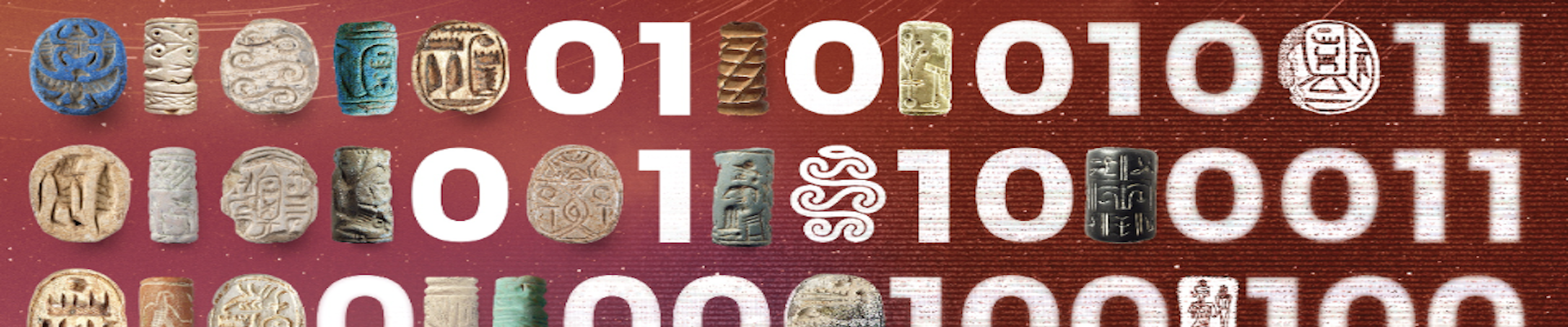
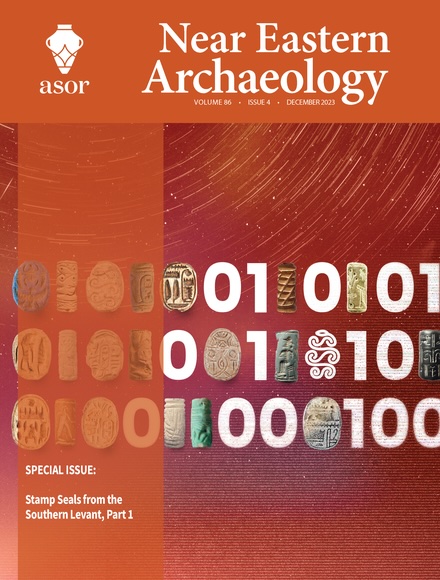
Pp. 256–265: “Honoring a Legacy, Inviting a New Generation: A Very Brief Introduction to the Stamp Seals from the Southern Levant Project,” by Christoph Uehlinger
The aim of this introductory article is threefold: (1) to situate the Stamp Seals from the Southern Levant (SSSL) project in the broader history of twentieth-century glyptic research, especially with regard to Othmar Keel’s multivolume Corpus of Stamp Seals from Palestine/Israel launched in the 1980s; (2) to explain the SSSL project’s research design as a strategic response to that unfinished initiative, the intrinsic potential of stamp seals research, and the demands of a specific funding opportunity that emphasizes interdisciplinarity; (3) to consider SSSL as a trans-generational project, attentive to both transmission and innovation. The digital humanities transition offers crucial opportunities and challenges regarding all three aspects.
ASOR Members with online access: log into ASOR’s Online Portal here. Once logged in, click the JOURNALS tab in the top navigation bar. Tutorials for how to log in to the Online Portal as well as how to navigate to the Portal Journals page can be found here.
Pp. 266–273: “A Tale of Twelve Thousand Cards: Stamp Seals’ Scholarship History with Social-Material Lenses,” by Silas Klein Cardoso
This article discusses the cognitive influence of cataloging tools in the stamp seals research project carried out between 1981–2013 at the Department of Biblical Studies of the University of Fribourg, Switzerland. As visual knowledge tools, the roughly twelve thousand index cards used by the Fribourg school helped to analyze, translate, and deconstruct visual artifacts into historical/archaeological data in the form of textual descriptions. In terms of media theory, the process entailed the translation of structural (nonlinear to linear), cognitive (synthetic to consecutive), and syntactical (dense to nondense) features. The semiotic analysis of the cards seen against the group’s socio-academic context shows that the cards were not only central methodologically but supported the group’s conceptual and methodological transition with direct outcomes in their historiography. The case study thus addresses an important issue in and for digital humanities, namely the conceptual role of knowledge tools in scholarship interpreting the past.
ASOR Members with online access: log into ASOR’s Online Portal here. Once logged in, click the JOURNALS tab in the top navigation bar. Tutorials for how to log in to the Online Portal as well as how to navigate to the Portal Journals page can be found here.
Pp. 274-283: “The Corpus of Stamp Seals from the Southern Levant Database: A New Research Tool for Glyptic Studies,” by Stefan Münger, Nadia Ben-Marzouk, Ben Greet, and Ido Koch
The Corpus of Stamp Seals from the Southern Levant (CSSL) database comprises some twelve thousand items from controlled excavations in Israel, Palestine, and Jordan, transforming and bringing to completion Othmar Keel’s pioneering vision to publish all seals and sealings from the region. The CSSL platform not only represents a newly available digital research tool for southern Levantine studies and related fields, but also aims at exploring innovative approaches to advance the digital study of glyptic more broadly. As the SNSF-funded Sinergia project Stamp Seals from the Southern Levant (SSSL) completes its goal, we ask: What comes next? This article provides an overview of the CSSL database; situates this new resource alongside other contemporary digital tools for the study of glyptic; and briefly reflects on the possibilities for more collaboration and integration across digital humanities projects.
ASOR Members with online access: log into ASOR’s Online Portal here. Once logged in, click the JOURNALS tab in the top navigation bar. Tutorials for how to log in to the Online Portal as well as how to navigate to the Portal Journals page can be found here.
Pp. 284–290: “New Precedents and Insights from Stamp Seal Photography,” by Ben Greet
As part of the Stamp Seals from the Southern Levant (SSSL) project, a program of photography of ca. 1150 stamp seals and seal impressions was undertaken over the course of 2022. Through the implementation of this large-scale photography program, two aspects came to the fore: (1) the necessity of publishing our photographic methodology to give context to the images of these stamp seals and seal impressions; and (2) several new insights into the seals were gained from this program concerning their material identification, perforation forms, and misalignment of base iconography. This article presents the publication of our photographic methodology, which we hope will not only serve to counteract potential misinterpretations of stamp seals and seal impressions from the region (e.g., color, orientation), but also set a precedent for the transparent discussion of these photographic processes in the future.
ASOR Members with online access: log into ASOR’s Online Portal here. Once logged in, click the JOURNALS tab in the top navigation bar. Tutorials for how to log in to the Online Portal as well as how to navigate to the Portal Journals page can be found here.
Pp. 292–301: “Some Highlights in Local versus Regional Glyptic Consumption in the Southern Levant during the Iron I,” by Nadia Ben-Marzouk
The southern Levant comprises a patchwork of diverse landscapes and communities whose connectivity fluctuated with the reorganization and termination of various economic, political, and social networks, at times expressing more similarity than difference among sites and regions. During the Iron I, communities in the southern Levant experienced the dissolution of Egypt’s colonial network, resulting in a range of responses. Building from previous research, this article utilizes the newly developed Corpus of Stamp Seals from the Southern Levant database to survey all stamp seals from excavated contexts dated to the Iron I to explore how the withdrawal of Egyptian power from the region affected the consumption of stamp seal amulets related to seal type, iconography, and stylistic date of production. Some highlights from that study are presented here to situate consumption practices within the broader landscape and to nuance our understanding of community response in the wake of political reorganization.
ASOR Members with online access: log into ASOR’s Online Portal here. Once logged in, click the JOURNALS tab in the top navigation bar. Tutorials for how to log in to the Online Portal as well as how to navigate to the Portal Journals page can be found here.
Pp. 302–310: “Hebrew Seals: Updated Corpus and Typology,” by Eythan Levy
The number of provenanced Iron Age Hebrew seals and seal impressions has seen a dramatic increase during the past decades. Avigad and Sass’s classical Corpus of West Semitic Stamp Seals, published in 1997, comprised 130 provenanced Iron Age Hebrew seals (including seals known only from impressions). Today, this number has risen to over 300 items, mostly owing to a wealth of new material from recent excavations in Jerusalem. The completion of the Stamp Seals of the Southern Levant (SSSL) project offers an opportunity to look back at the corpus of provenanced Hebrew seals and to reflect on the nature of the material. This article comprises a short introduction to Hebrew glyptics, a survey of the updated corpus, and a new typology of Hebrew seals.
ASOR Members with online access: log into ASOR’s Online Portal here. Once logged in, click the JOURNALS tab in the top navigation bar. Tutorials for how to log in to the Online Portal as well as how to navigate to the Portal Journals page can be found here.
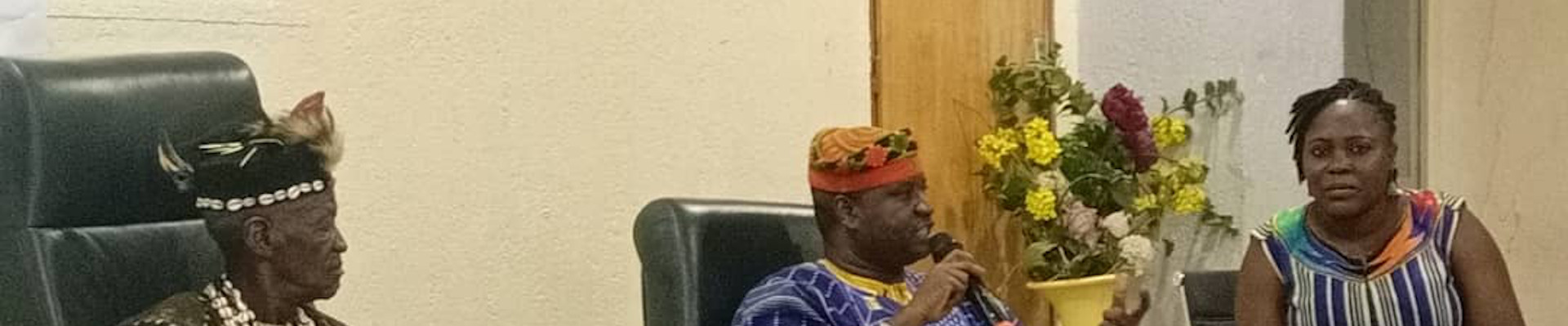
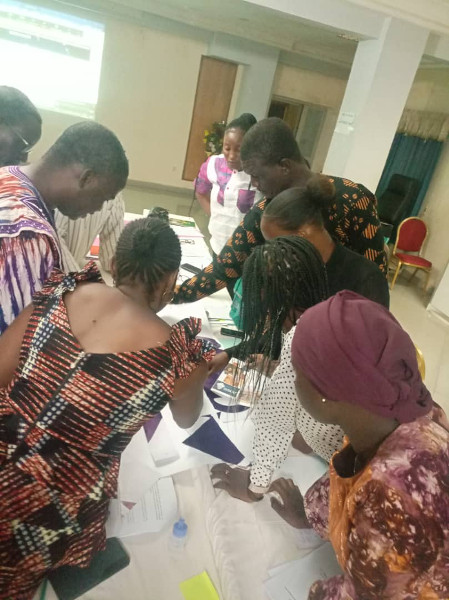
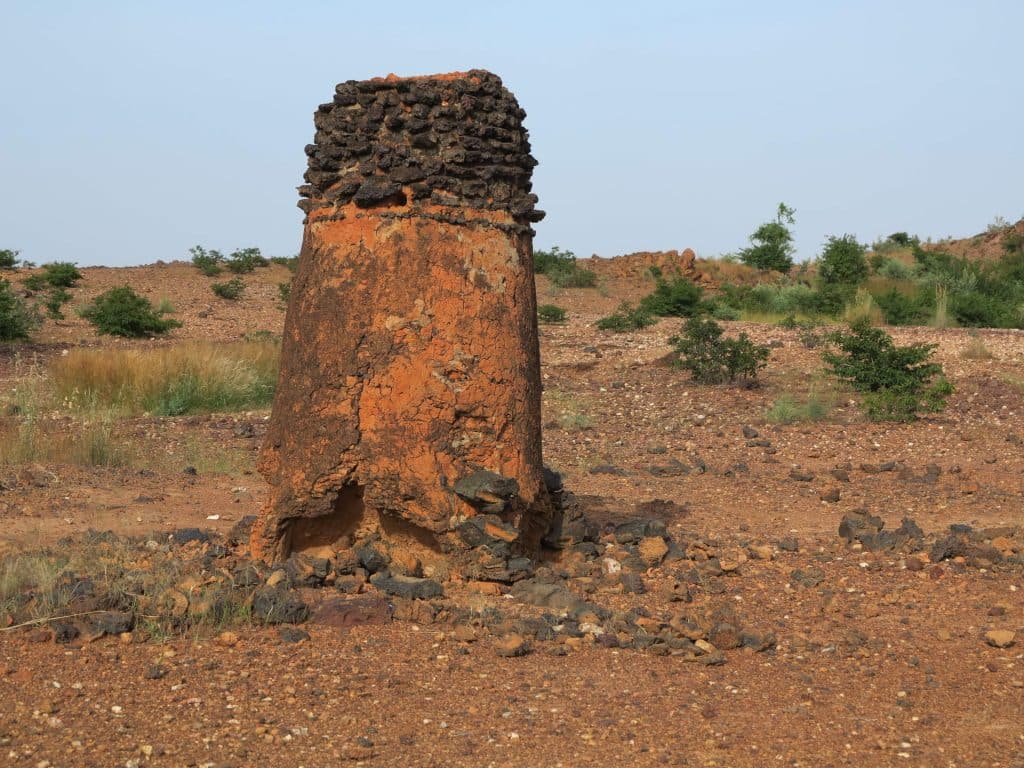
Heritage protection is most effective and rewarding as a collaborative pursuit. To help build connections between heritage advocates in Burkina Faso, ASOR and its partners organized a one-day workshop in the capital of Ouagadougou where attendees could discuss the past, present, and future of cultural and religious heritage protection in the country.
Heritage protection is most effective and rewarding as a collaborative pursuit. To help build connections between heritage advocates in Burkina Faso, ASOR and its partners organized a one-day workshop in the capital of Ouagadougou where attendees could discuss the past, present, and future of cultural and religious heritage protection in the country.
On April 11-13, ASOR CHI hosted a three-day symposium, Cultural Heritages Initiatives in Africa Today, which highlighted the work of local heritage professionals, academics, and civil society organizations to protect, preserve, and promote cultural heritage in North Africa and the Sahel. ASOR welcomes you to view the symposium recordings.
Alia Fares, Archaeologist and ASOR CHI Heritage Consultant/Manager, describes her experiences working with partners in Burkina Faso to undertake field training sessions and heritage documentation. While parts of the country are currently insecure, ASOR’s partners remain eager to continue their mission to document, preserve and perpetuate their nation’s diverse and pluralistic heritage.
Please e-mail the Membership office if you have any questions.
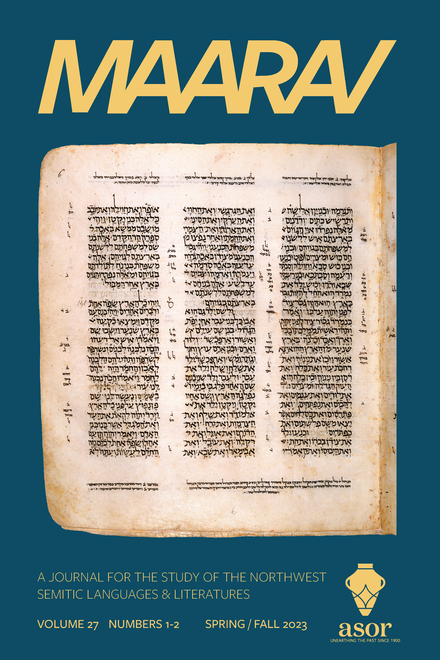
Pp. 1-38: “Syria, Mesopotamia, and the Origins of the Alphabet” by Madadh Richey
New potentially Early Alphabetic finds from Umm al-Marra (Syria) and Sealand (Mesopotamia) require a reanalysis of traditional out-of-Egypt hypotheses of alphabetic origins. The present article considers the problems new discoveries introduce for traditional understandings of alphabetic invention and proposes to overcome these problems by endorsing a northern Levantine context for the Early Alphabet’s initial adaptation from Egyptian hieroglyphs and its earliest usage. This proposal is contextualized among—and arguably supported by consideration of—other scribal experiments in the Levant during the Middle and Late Bronze Ages.
ASOR Members with online access: log into ASOR’s Online Portal here. Once logged in, click the JOURNALS tab in the top navigation bar. From here you may select which journal you would like to read. If you have online access, you will see your selected journal’s current issue Table of Contents. Click on the “Current Issue” button and you will then be redirected to the University of Chicago Press’s (UCP) platform to immediately start reading any issue of your choice. Tutorials for how to log in to the Online Portal as well as how to navigate to the Portal Journals page can be found here.
Pp. 39-73: “An Onomastic and Prosopographic Forest: ʿAbdīmilku in Texts from Ras Shamra–Ugarit and Ras Ibn Hani,” by Dennis Pardee
The Ugaritic personal name ʿAbdīmilku is presented in an attempt to lay out a working template for onomastic and prosopographic research on the corpus of texts from Ras Shamra–Ugarit and the nearby site of Ras Ibn Hani. Most of the names attested in these texts appear in various types of administrative documents (economic, epistolary, legal) inscribed in the local script, alphabetic cuneiform, or in the script used internationally in the Late Bronze Age, logo-syllabic cuneiform. That name was chosen because it is well attested in texts set down in the two scripts, and a good proportion of the texts include one or more of the features useful in prosopographic identification: patronym or other family relationships, geographical or professional affiliation, and textual or archaeological data permitting an approximate dating of the text itself.
ASOR Members with online access: log into ASOR’s Online Portal here. Once logged in, click the JOURNALS tab in the top navigation bar. From here you may select which journal you would like to read. If you have online access, you will see your selected journal’s current issue Table of Contents. Click on the “Current Issue” button and you will then be redirected to the University of Chicago Press’s (UCP) platform to immediately start reading any issue of your choice. Tutorials for how to log in to the Online Portal as well as how to navigate to the Portal Journals page can be found here.
Pp. 74-90: “A Text That Was but Isn’t: On the Contribution of Literary Evidence in the Assessment of Shapira Deuteronomy,” by Jeffrey Stackert
This article addresses the value of literary evidence in the assessment of putatively ancient texts, with special focus on Shapira Deuteronomy in the wake of its recent reconsideration. The article argues that, notwithstanding the challenges that attend them, all types of evidence—epigraphic, linguistic, literary—should be assessed, and that each can offer important evaluative insights, individually and in relation to each other. The article concludes with a few specific literary observations on Shapira Deuteronomy. These observations add to the case against this text’s status as an ancient work and, as such, demonstrate that literary analysis of the Shapira strips produces significant information regarding their putative antiquity, even apart from any epigraphic or linguistic assessment.
ASOR Members with online access: log into ASOR’s Online Portal here. Once logged in, click the JOURNALS tab in the top navigation bar. From here you may select which journal you would like to read. If you have online access, you will see your selected journal’s current issue Table of Contents. Click on the “Current Issue” button and you will then be redirected to the University of Chicago Press’s (UCP) platform to immediately start reading any issue of your choice. Tutorials for how to log in to the Online Portal as well as how to navigate to the Portal Journals page can be found here.
Pp. 91-191: “Word Craft in the Ancient Levant: Craft-Literacy as the Intersection of Specialized Knowledge,” by Alice Mandell
The scholarly history of the Levantine alphabet centers on scribal literacies. Yet there is compelling evidence that the script was used and taught in other communities of text-makers: the artisans involved in text-creation in stone, metal, ceramic, ivory, and other writing surfaces involving technical tools and specialized knowledge. The present essay explores the evidence for the intersection of craft and literacy practices in the inscriptional and archaeological record with a focus on the Bronze and Iron Ages. The proposed “craft-literacy” approach makes several suggestions about how scholars of alphabetic inscriptions might better theorize about the transmission of alphabetic literacies in the process of craft-production and the dissemination of inscribed objects. To this end, the present essay sets the study of Northwest Semitic epigraphy in conversation with material cultural approaches to the study of literacy, specifically “artifactual literacies,” an approach that evaluates the materiality of literacy and the ways in which textual-artifacts engage different audiences, and thereby participate in the transmission of knowledge.
ASOR Members with online access: log into ASOR’s Online Portal here. Once logged in, click the JOURNALS tab in the top navigation bar. From here you may select which journal you would like to read. If you have online access, you will see your selected journal’s current issue Table of Contents. Click on the “Current Issue” button and you will then be redirected to the University of Chicago Press’s (UCP) platform to immediately start reading any issue of your choice. Tutorials for how to log in to the Online Portal as well as how to navigate to the Portal Journals page can be found here.
ASOR Annual Meeting attendees will be treated to a full academic program with more than 130 sessions and more than 600 presentations on our first-ever hybrid program. The Program-at-Glance can be found on the 2023 Annual Meeting Schedules page.
There are a number of special events and meeting highlights for those of you who will be attending the meeting in Chicago. All meetings and functions will take place at the Hilton Chicago (720 South Michigan Avenue) except for those at the Field Museum and the ISAC Museum when noted.
Highlight: ASOR Annual Meeting attendees will receive complimentary general admission to the Field Museum with their ASOR name-badge from Wednesday, Nov. 15 – Tuesday, Nov. 21.
Wednesday, November 15
3:00pm CST Lecture and First Kings Exhibit Walk-through (Ward Hall, The Field Museum) Free for ASOR Annual Meeting attendees with your name-badge. Advance sign-up is required as space is limited in the lecture hall. Learn more and sign up here.
7:00pm CST ASOR Annual Meeting Plenary Address (Grand Ballroom, 2nd Floor) Dr. Rubina Raja (Aarhus University and director of the Danish National Research Foundation’s Centre of Excellence for Urban Network Evolutions) will present, “Death by Data? Or What Has a Decade of Research on Palmyrene Funerary Sculpture Taught Us about the Ancient World?” Also available online for virtual attendees. Learn more here.
8:30pm CST Welcome Reception (Grand Ballroom, 2nd Floor) Following the Plenary Address, ASOR Annual Meeting attendees are invited to network, socialize, and enjoy light refreshments as we get ready for a busy three days of sessions, workshops, posters, and fun.
Thursday, November 16
6:30pm CST Celebration in Honor of Thomas E. Levy’s Festschrift (Continental Ballroom A, Lobby Level) The event is sponsored by the Koret Foundation, the Murray Galinson San Diego-Israel Initiative (MGSDII), and the Lapidus, Levy, Meyer, and Rosenberg families. There is no cost to attend, but space is limited so please RSVP here.
9:00pm CST University of California, Los Angeles (UCLA) Reception (Grand Tradition, Lobby Level)
Friday, November 17
12:55pm CST ASOR Members’ Meeting, Sharon Herbert, Presiding (Waldorf, 3rd Floor) Bring your lunch and come for an update on the business of ASOR and the 2023 Honors & Awards.
6:30pm CST Cyprus American Archaeological Research Institute (CAARI) Reception (Grand Tradition, Lobby Level)
8:00pm CST Early Career Scholars’ Reception (720 Bar, Lobby Level) This event is for registered ASOR attendees who are Early Career Scholars. There is no cost to attend, but space is limited and ECS members must sign-up in advance here.
Saturday, November 18
10:25-10:40am CST ASOR Raffle Drawing (Hilton Chicago) A fun event to highlight ASOR Exhibitors during the morning coffee break on the last day of the meeting. Join us in the Exhibit Hall (Normandie Lounge, 2nd Floor) to see if your raffle ticket is a winner.
12:45-2:00pm CST ASOR Poster Session (Grand Ballroom Foyer, 2nd Floor) Visit the ASOR Poster Hall throughout the Annual Meeting to see all of the research projects being presented, and come to the Poster Session on Saturday to talk with the presenters and ask questions.
12:45-2:00pm CST Initiative on the Status of Women in ASOR: Mentoring Lunch (Boulevard, 2nd Floor) ISW is holding a Mentoring Lunch during the 2023 ASOR Annual Meeting. Come have lunch for discussions with 4 women in leadership roles at ASOR. There is no cost to attend, but space is limited and advanced sign-up is required. Learn more and sign-up here.
7:00-8:00pm or 8:15-9:15pm CST Private Reception for ASOR Attendees at the ISAC Museum After the Annual Meeting ends, head over to the Institute for the Study of Ancient Cultures to enjoy a beverage and explore the galleries. Advanced sign-up is required as space is limited. Learn more and sign-up here.
The Wheat from the Chaff: What we can Learn from Studying Plants in Antiquity
Friends of ASOR present the next webinar in the 2023-2024 season on December 14 2023, at 6:00 pm EST, presented by Dr. Jennifer Ramsay. In the summer of 1994 I embarked on my first archaeological excavation to King Herod’s Palace at the site of Caesarea Maritima in Israel, where I was thrilled to be bestowed with the title of assistant bone person! After excavating many bones that summer, the director took me aside and said, ‘everyone is doing bones, you should study plant remains’. And just like that, an archaeobotanist was born. Little did I know those many years ago that plant remains recovered from archaeological sites could tell us so much about the past.
I spent several summers as an archaeobotanist at Caesarea collecting plant remains. It was there that I discovered the importance of the neglected, but informative, ‘weed’. Many economic crops were recovered that illuminated aspects of the agricultural economy in the ancient city, but it was what the weeds could tell us about the environment, seasonality, and agricultural techniques that I found intriguing. I have since been fortunate to work on projects at sites like Petra, Jordan, where the data from the Petra Garden and Pool Complex addressed the questions of how plants functioned in the economy, and how the role of the garden changed through time.
Additionally, plant remains I analyzed from Nabatean-period tomb deposits in Petra highlighted the role plants played in funerary contexts and contributed to a broader understanding of how they functioned in these ritual events in the ancient world. I have also recovered archaeobotanical data that allowed for a better understanding of the scale and timing of local agricultural production at the ancient site of Bir Madhkur, which lies in the hyper-arid hinterland of Petra. At other sites, for example the Islamic period site of Kinet Höyük in Turkey, the plant remains I analyzed indicated cereal agriculture, but also documented the emergence of a cotton boom, which is attested to in ethnohistorical sources but had rarely been confirmed through archaeobotanical evidence. From examining Neolithic plant remains from the Black Desert in Jordan that indicate a much more verdant environment in the past, to discovering what plants can tell us about provisioning the Roman Army in the East, and even to understanding the role pigeons played in ancient agriculture, plant remains offer vital evidence to our understanding of the past.
The webinar will conclude with a live Q&A session.
Dr. Jennifer Ramsay (Ph.D. in 2008) is Professor and Chair of the Anthropology Department at SUNY Brockport (State University of New York). She is active on the Board of Trustees for the American Center of Research (ACOR) in Amman and chairs their Fellowship Committee. Jennifer received the Archaeological Institute of America’s Excellence in Undergraduate Teaching Award in 2019 and two State University of New York (SUNY) Chancellor’s Awards for Excellence in Teaching (2014) and Excellence in Faculty Service (2020). Her area of expertise centers on the use of archaeobotany for subsistence reconstruction, understanding trade patterns, recognizing environmental change, and interpreting land-use patterns to gain insight into lifeways of past societies. Although she specializes in the Roman and Late Antique world, Jennifer has also analyzed and published archaeobotanical data from the Neolithic, Bronze and Iron Ages, and Islamic periods. Over her career, she has participated in many archaeological projects in a variety of roles from project archaeobotanist and field school director, to assistant or associate director in Jordan, Israel and Italy at such sites such as Petra, Pompeii and Caesarea Marittima.
This webinar will be recorded and all paid registrants will be sent a link to view the recording.
*Please log in to the Online Portal BEFORE registering for the webinar. Once you have logged in, you will be able to register under our Events page linked above.
Please e-mail membership@asor.org with any questions or issues with registering.
All proceeds from this webinar are used to fund scholarships for members as well as increasing ASOR’s online resources, which are free to the public.
READY FOR A WEBINAR SEASON PASS?
Buy a season pass for all the webinars* of the 2023-2024 FOA Webinar Season! With a season pass, you will automatically be registered for every webinar in the season, and you will receive the recording of each webinar automatically after the event.
If you have missed webinars earlier in the season and still want to buy the pass, you will receive the links to the recordings of the webinars you missed in your automatic confirmation email after you buy the pass.
*Special symposiums may be excluded from the season pass price.
No more registering for a year if you buy your pass today!
Pricing:
ASOR Sustaining Members: $0 (automatic registration for each webinar) Members: $75 Public: $150
Several levels of support from $50-$1,000 are available. Proceeds go towards membership scholarships and towards increasing ASOR’s virtual resources. Each sponsorship is tax-deductible and you can give your friends free registrations to a webinar! Sponsor a webinar here.
Bronze Level ($50): up to 2 guest registrations Silver Level ($100): up to 5 guest registrations Gold Level ($500): up to 20 guest registrations Platinum Level ($1,000): up to 50 guest registrations
After you sign up for a sponsorship online or over the phone, email the names and email addresses of your guests to Katherine Schmitt at membership@asor.org, who will send your guests a confirmation and the Zoom link before the webinar.
WANT TO SAVE $6.00 ON THE NEXT WEBINAR?
Join ASOR as a member! Click here for more details about discounts for events and other benefits of membership. Memberships start at $40 for the year as an Associate Member.

 Sheldon Fox


 Charles Ellwood Jones


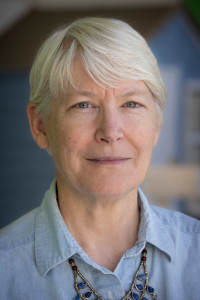 Jane DeRose Evans
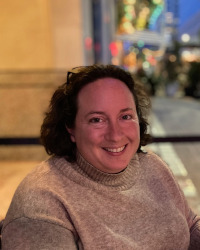 Kathryn Grossman

 This meant making historical figures (such as Ramses III) speak, as well as imagining characters for whom we have no record offering commentary and opinions. To guide the narrative, I introduced two new young characters, Pel (of the Sea Peoples) and Shesha, (an Egyptian scribe) who ask the central question of the book: Why after three prosperous centuries did the civilizations of the Eastern Mediterranean Bronze Age suddenly come to an end? Pel and Sesha are young teenagers, perhaps the same age as a young audience for the book, and although the book is for all ages, I have not simplified the arguments and information Eric presents in the original 1177 BC. When these characters joined the book, (Eric and I came up with them about 50 pages in) their quest gained a personal dimension, and allowed for play with their interactions with the material. Pel, too young to remember the Sea Peoples battles himself, wants to know why his grandfather keeps talking about the glory days before collapse. So why did it happen?
 Glynnis Fawkes was the recipient of a Fulbright Fellowship to Cyprus where she published Archaeology Lives in Cyprus and Cartoons of Cyprus and has worked as an illustrator on archaeological projects in Greece, Cyprus, Israel, Lebanon, Syria, and Turkey. Her comics have appeared on The New Yorker.com, The Comics Journal, Popula.com, and MuthaMagazine.com (for which she was nominated for an Ignatz Award). She is author/illustrator Charlotte Bronte Before Jane Eyre, Persephone’s Garden, and the minicomics Allé Egó and Greek Diary, both of which won medals at the Society of Illustrators’ MoCCA fest in NYC. She lives in Vermont and teaches at the Center for Cartoon Studies.
 Eric H. Cline is Professor of Classics and Anthropology, the former Chair of the Department of Classical and Near Eastern Languages and Civilizations, and the current Director of the Capitol Archaeological Institute at George Washington University, in Washington DC. A National Geographic Explorer, NEH Public Scholar, Getty Scholar, and Fulbright Scholar with degrees from Dartmouth, Yale, and the University of Pennsylvania, he is an active field archaeologist with more than 30 seasons of excavation and survey experience in Israel, Egypt, Jordan, Cyprus, Greece, Crete, and the United States, including ten seasons at Megiddo (1994-2014), where he served as co-director before retiring from the project in 2014, and another ten seasons at Tel Kabri, where he currently serves as Co-Director. He is the author or editor of twenty books and nearly one hundred articles; translations of his books have appeared in nineteen different languages.

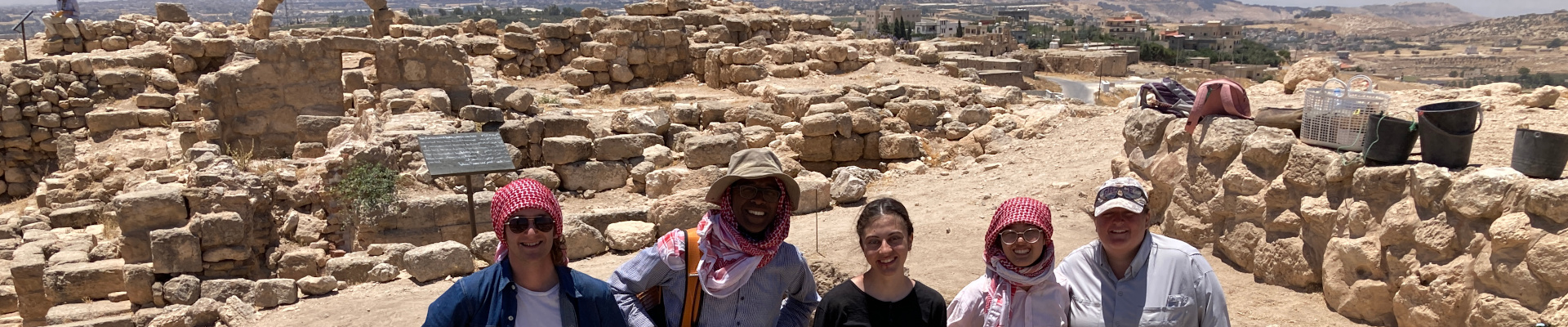







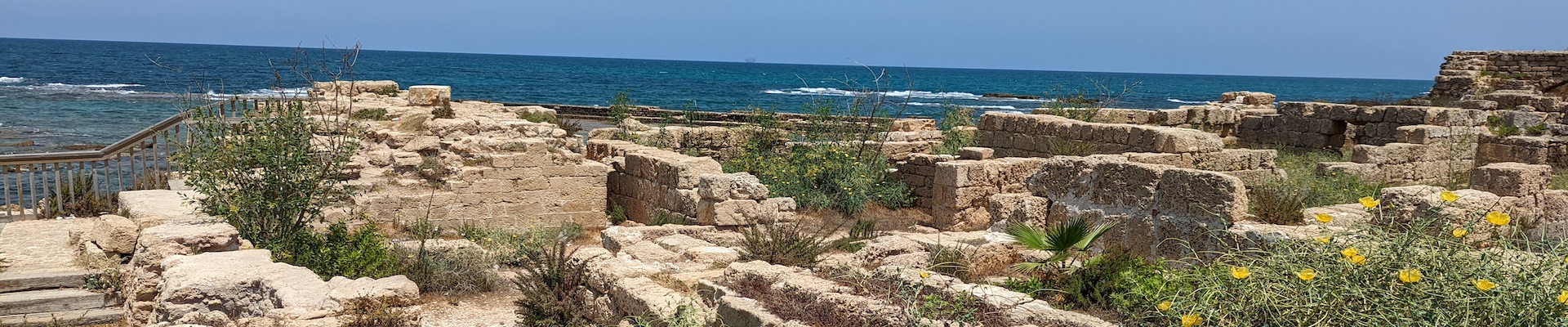
 Friends of ASOR present the next webinar in the 2023-2024 season on December 14 2023, at 6:00 pm EST, presented by Dr. Jennifer Ramsay. In the summer of 1994 I embarked on my first archaeological excavation to King Herod’s Palace at the site of Caesarea Maritima in Israel, where I was thrilled to be bestowed with the title of assistant bone person! After excavating many bones that summer, the director took me aside and said, ‘everyone is doing bones, you should study plant remains’. And just like that, an archaeobotanist was born. Little did I know those many years ago that plant remains recovered from archaeological sites could tell us so much about the past.
 I spent several summers as an archaeobotanist at Caesarea collecting plant remains. It was there that I discovered the importance of the neglected, but informative, ‘weed’. Many economic crops were recovered that illuminated aspects of the agricultural economy in the ancient city, but it was what the weeds could tell us about the environment, seasonality, and agricultural techniques that I found intriguing. I have since been fortunate to work on projects at sites like Petra, Jordan, where the data from the Petra Garden and Pool Complex addressed the questions of how plants functioned in the economy, and how the role of the garden changed through time.
 Additionally, plant remains I analyzed from Nabatean-period tomb deposits in Petra highlighted the role plants played in funerary contexts and contributed to a broader understanding of how they functioned in these ritual events in the ancient world. I have also recovered archaeobotanical data that allowed for a better understanding of the scale and timing of local agricultural production at the ancient site of Bir Madhkur, which lies in the hyper-arid hinterland of Petra. At other sites, for example the Islamic period site of Kinet Höyük in Turkey, the plant remains I analyzed indicated cereal agriculture, but also documented the emergence of a cotton boom, which is attested to in ethnohistorical sources but had rarely been confirmed through archaeobotanical evidence. From examining Neolithic plant remains from the Black Desert in Jordan that indicate a much more verdant environment in the past, to discovering what plants can tell us about provisioning the Roman Army in the East, and even to understanding the role pigeons played in ancient agriculture, plant remains offer vital evidence to our understanding of the past.
 Dr. Jennifer Ramsay (Ph.D. in 2008) is Professor and Chair of the Anthropology Department at SUNY Brockport (State University of New York). She is active on the Board of Trustees for the American Center of Research (ACOR) in Amman and chairs their Fellowship Committee. Jennifer received the Archaeological Institute of America’s Excellence in Undergraduate Teaching Award in 2019 and two State University of New York (SUNY) Chancellor’s Awards for Excellence in Teaching (2014) and Excellence in Faculty Service (2020). Her area of expertise centers on the use of archaeobotany for subsistence reconstruction, understanding trade patterns, recognizing environmental change, and interpreting land-use patterns to gain insight into lifeways of past societies. Although she specializes in the Roman and Late Antique world, Jennifer has also analyzed and published archaeobotanical data from the Neolithic, Bronze and Iron Ages, and Islamic periods. Over her career, she has participated in many archaeological projects in a variety of roles from project archaeobotanist and field school director, to assistant or associate director in Jordan, Israel and Italy at such sites such as Petra, Pompeii and Caesarea Marittima.
