ASOR WELCOMES RACHEL BERNSTEIN AS COMMUNICATIONS MANAGER
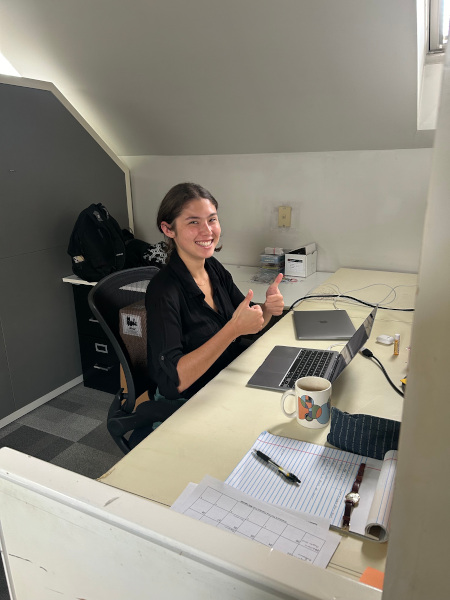
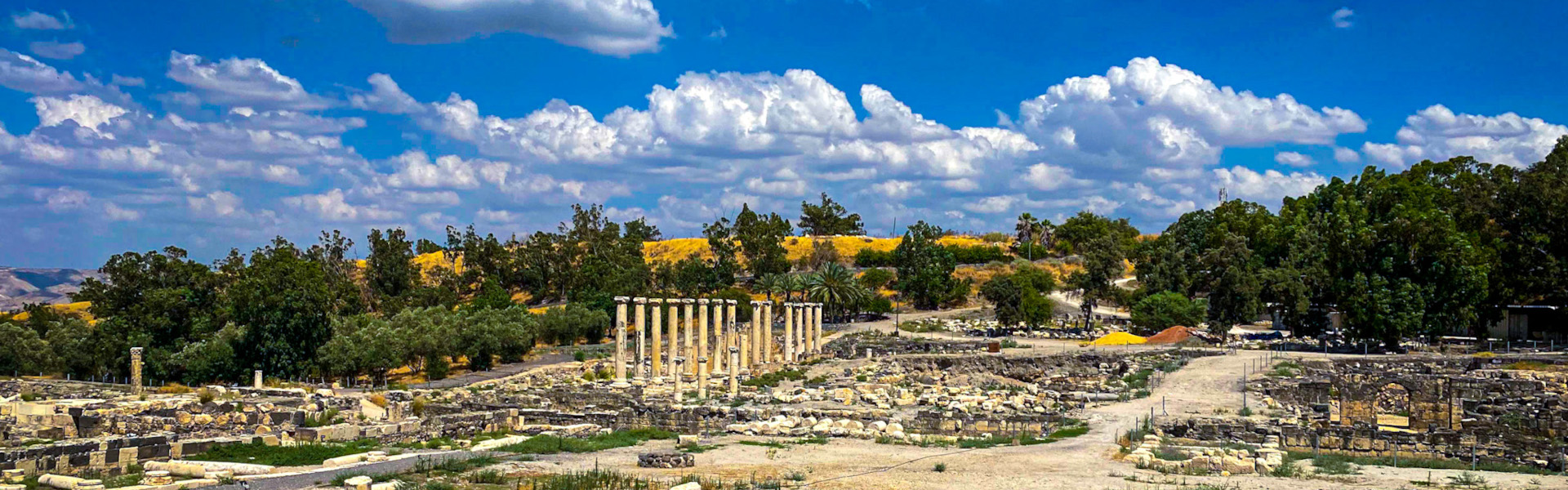
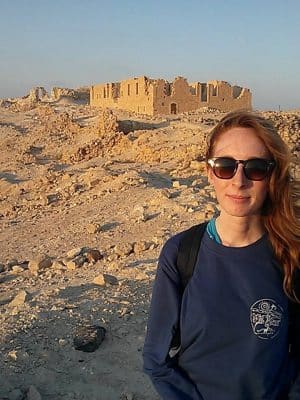
Rachel Bernstein joined ASOR on October 1 as Communications Manager. She has a Ph.D. in Desert Studies and Archaeology from Ben-Gurion University of the Negev, as well as an M.A. in Desert Studies from Ben-Gurion University of the Negev and a B.A. in English from Goucher College.
Rachel has been acquainted with ASOR for a number of years. She previously was an Educational and Cultural Affairs Junior Research Fellow at the W.F. Albright Institute of Archaeological Research in 2022.
Rachel participated in her first survey of a Middle to Late Epipalaeolithic period site exposed during a salvage project conducted by the Israel Antiquities Authority at the site of Ashalim in the Negev highlands in 2014. Since then, she participated in seasons at Horvat Tsalit and Nessana in the Negev Desert with Ben-Gurion University of the Negev and Haifa University. She received the Society for Classical Studies Ludwig Koenen Fellowship for papyrology training at Leiden University in 2017. Her doctoral research developed the socioeconomic profile of early Christian monasteries in the Negev Desert.
Rachel also has several years of experience in journalism and communications. She started her career as a reporter for news outlets in Baltimore and Washington, D.C., and coordinated communications and social media efforts for an international master’s in public health program at the Hebrew University in Jerusalem. She also served as an editor and contributing writer for The Jerusalem Post while concluding her Ph.D.
She most recently was the Editorial Assistant for Studies in Late Antiquity: A Journal, published by University of California Press.
Rachel is delighted to join ASOR as Communications Manager, where she’ll oversee outreach efforts in social media and communications with ASOR members and the public. She looks forward to supporting the ASOR community!
Beyond the Museum Walls: Engaging with Archaeology and New Media
Friends of ASOR present a panel webinar on November 6, 2024, at 7:00 pm EST, with panelists Michael Zimmerman, Sarah Beckmann, Deidre Brin, and Adam Aja. This webinar will be free and open to the public. Registration through Zoom (with a valid email address) is required. This webinar will be recorded and all registrants will be sent a recording link in the days following the webinar.
In the past three decades, curators, educators, and scholars have been actively moving archaeological materials and data beyond the physical limitations of sites and museums into the virtual space. These transitions to new media have allowed archaeologists, researchers, and students unprecedented access to the archaeological record, particularly with regard to far away, at-risk, or vanished heritage. Each of the presenters in this webinar has been successful in implementing VR and other digital media in innovative ways in order to bridge the gap between physical and virtual and to educate the public. The first presentation (Dr. Michael Zimmerman, Associate Professor of Anthropology, Bridgewater State University) focuses on the creation of two virtual environments—the Virtual Museum of Archaeology of South Caucasus (VMASC) and a virtual reconstruction of a Late Bronze Age archaeological site from the Shiraki Plain in the country of Georgia. The second presentation (Dr. Sarah Beckmann, Assistant Professor of Classics, UCLA and Deidre Brin, Director of the Digital Archaeology Lab, Cotsen Institute of Archaeology) presents a digital escape room based on Homer’s Odyssey that was created by university students for a K-12 audience. The third presentation (Dr. Adam Aja, Chief Curator, Harvard Museum of the Ancient Near East) will introduce guests to some of HMANE’s freely accessed digital assets, including its virtual gallery tours, 3D artifact scans, and the most recent addition, a Snapchat app-experience that allows the visitor to “step back in time” in a journey to the Assyrian palace of Ashurbanipal. To unite these three presentations, speakers will demonstrate how they creatively used their archaeological knowledge to develop digital tools and educate the public, including how these tools are making real-world impacts in museums, classrooms, and other settings. This webinar will be moderated by Dr. Tine Rassalle (Independent Scholar) and Dr. Debra Trusty (Associate Professor of Instruction, University of Iowa), both of whom strive to facilitate the implementation of new technologies in the study of the ancient world.
Presentation 1: “Virtual Reality Environments for Archaeological Pedagogy, Research, and Outreach from the Shiraki Plain of Georgia in the South Caucasus” with Michael Zimmerman
In 2019, an NSF IRES grant (#1854153) was awarded to Bridgewater State University, Ilia State University, and the Cyberarchaeology Lab at UC San Diego to engage students in interdisciplinary research of human-environmental interactions in the Shiraki Plateau in the country of Georgia. One of the key elements in this project was the creation of two virtual environments by Misha Elashvili and Giorgi Datenashvili—the Virtual Museum of Archaeology of South Caucasus (VMASC), an interactive virtual collection of artifacts from archaeological sites in Shiraki; and a virtual reconstruction of Late Bronze Age Didnauri. We hope to demonstrate future applications of this and other VR environments for archaeology.
Michael Zimmerman is an archaeologist with a PhD from the Joukowsky Institute for Archaeology and the Ancient World at Brown University, and a member of the Archaeogaming Collective, Archaeological Institute of America, American Society of Overseas Research, Northeastern Anthropological Association, Council for Northeast Historical Archaeology, the Save Ancient Studies Alliance, and the Society of Historical Archaeology. He holds an MA in Classical Languages from the University of Florida. He has worked extensively on archaeological surveys and excavations in public archaeology in Massachusetts, as well as in Israel, Jordan, and Georgia, where he is a co-principal investigator for the NSF-funded Shiraki International Multidisciplinary Research project and the U.S. Embassy Democracy Commission grant funded Crossroads Virtual Museum Project. He also serves on the Executive Board of the Northeastern Anthropological Association and the Curation and Collections Committee of the Society for Historical Archaeology. His research interests include archaeogaming and virtual technology in pedagogical contexts, antiquities trafficking, cultural heritage law and public policy, and collections-based research, and he has published extensively in these areas.
Presentation 2: “Tell the Old Story for our Modern Times: Building a Digital Escape Room for Homer’s Odyssey” with Deidre Brin and Sarah Beckmann
In winter 2024, UCLA students, faculty, and the Digital Archaeology Lab worked to create a digital escape room based on Homer’s Odyssey. The obstacles faced by Odysseus and his crew, we decided, were excellent fodder for an immersive web-based application: an escape room brings the vividness of the text to life and introduces contemporary students to ancient Greek culture using modern technologies. Despite facing many obstacles in the course of this work (the Cyclops room in particular!), our project offers a model for how other archaeologists and educators might leverage digital applications in the classroom. Thus our talk will survey development of this project and our future goals: 1) outreach beyond the University classroom using this escape room; and 2) the development of a reusable platform so that those without programming experience can design their own escape room.
Deidre Brin is the director of the Digital Archaeology Lab at the Cotsen Institute of Archaeology and leads the development of DIG, an archaeological data publishing initiative at the Cotsen Institute of Archaeology Press. Her experience managing data while working on archaeological projects coupled with the foundation in information science and technology, support her current research on the preservation, dissemination, and reuse of cultural heritage datasets.
Sarah Beckmann is a Roman archaeologist and Assistant Professor of Classics at UCLA. Her research interests include domestic art and archaeology broadly in the early Roman empire and the late antique period. She is currently at work on her first monograph, which examines the Roman villa in late antiquity (mid-3rd – 5th c. CE). Other interests represented by recent publications include statuary collecting in late antiquity, Roman portraiture in provincial contexts, and representations of subaltern groups (e.g. women, enslaved children) in luxury domestic arts.
Presentation 3: “Digital Augmentation of an Archaeological Museum” with Adam Aja
While physical exhibition space remains limited within the walls of the Harvard Museum of the Ancient Near East (HMANE), the digital realm provides virtually unlimited opportunities to display and explore its rich archaeological collections. Chief Curator Adam J. Aja will introduce guests to some of the museum’s freely accessed digital assets, including its virtual gallery tours, 3D artifact scans, and the most recent addition, a Snapchat app-experience that allows the visitor to “step back in time” in a journey to the Assyrian palace of Ashurbanipal.
Adam J. Aja is an archaeologist and museum curator with a background in the creative arts. Since 2009, he has managed the collection of the Harvard Museum of the Ancient Near East (formerly the Harvard Semitic Museum), where he redesigned the storage facilities, implemented new exhibits, and created replicas for display. Dr. Aja started working on archaeological field projects in 1992 and has enjoyed numerous discoveries in the years since, including the Iron Age cemetery of the Philistines at Ashkelon. He is currently the Chief Stratigrapher at the Tel Shimron Excavations. Dr. Aja’s creative projects, combining his love of archaeology and art, have included a full-scale reproduction of the monument discovered between the paws of the Great Sphinx and the creation of an augmented reality app that animates Neo-Assyrian palace reliefs.
SPONSOR A WEBINAR!
Several levels of support from $50-$1,000 are available. Proceeds go towards membership scholarships and towards increasing ASOR’s virtual resources. Each sponsorship is tax-deductible and includes benefits! Sponsor a webinar here.
ASOR Annual Meeting attendees in Boston and online will be treated to a full academic program with more than 125 sessions and 600 presentations. The academic program and business schedule can be found on the Annual Meeting Schedules page. Registered meeting attendees also have access to the Online Schedule in the ASOR Online Portal. This is where you will find paper abstracts and virtual participants will find Zoom links (posted during conference days) to attend the sessions and workshops online.
ASOR is pleased to announce the 2024 Annual Meeting Mobile App (powered by Guidebook). All registered attendees should download the mobile app to follow along with the program, create personal schedules, connect with other attendees, and stay informed of the latest Annual Meeting updates. Instructions for downloading the mobile app are posted in the ASOR Online Portal under the 2024 ASOR Annual Meeting / Schedule.
Boston Highlights
Free admission to the Museum of Fine Arts The Museum of Fine Arts is offering free general admission to ASOR Annual Meeting attendees from November 20–25, 2024. Show your ASOR name badge at the admissions desk for free entrance. For information on opening hours, planning your trip, and special exhibits (additional fee may apply), please visit the MFA website.
There are a number of special events taking place during the Annual Meeting for those who are coming to Boston. Some of these events require registered attendees to sign-up in advance.
Wednesday, November 20
3:00pm EST The Museum is your Classroom (Harvard Art Museums) This is a free workshop for registered ASOR Annual Meeting attendees. Space is limited and interested participants need to complete an interest form in advance. Learn more and sign-up here.
7:00pm EST ASOR Annual Meeting Plenary Address (Hilton Boston Park Plaza, Grand Ballroom A) Dr. Fikri Kulakoğlu (Professor of Archaeology at Ankara University, director of the Kültepe excavations) will present, “Transition from Early Bronze Age to Middle Bronze Age at Kültepe: Architecture, Figurines and Seals” Also available online for virtual attendees. Learn more here.
8:30pm EST Welcome Reception (Hilton Boston Park Plaza, Grand Ballroom B) Following the Plenary Address, ASOR Annual Meeting attendees are invited to network, socialize, and enjoy light refreshments as we get ready for three full days of sessions, workshops, posters, and fun.
Thursday, November 21
12:55pm EST ASOR Roundtable Discussions (The Square, Lobby Level) There are a number of discussion topics being offered during this brown-bag lunchtime event. Read about the Roundtables being offered in Boston and sign-up in advance here.
8:00pm EST W. F. Albright Institute for Archaeological Research Reception (Ballroom A, Mezzanine Level)
Friday, November 22
12:55pm EST ASOR Members’ Meeting, Sharon Herbert, Presiding (Georgian Room, Mezzanine Level) Bring your lunch and come for an update on the business of ASOR and the 2024 Honors & Awards.
6:30pm EST Cyprus American Archaeological Research Institute (CAARI) Reception (Boylston Room, Mezzanine Level)
8:00pm EST Early Career Scholars’ Reception (Off the Common, Lobby Level) This event is for registered ASOR attendees who are Early Career Scholars. There is no cost to attend, but space is limited and ECS members must sign-up in advance here.
Saturday, November 23
10:20-10:40am EST ASOR Raffle Drawing (Mezzanine Level) A fun event to highlight ASOR Exhibitors during the morning coffee break on the last day of the meeting. Join us in the Exhibit Hall (Mezzanine Level) near the registration tables to see if your raffle ticket is a winner.
12:45-2:00pm EST ASOR Poster Session (Statler Room, Mezzanine Level) Visit the ASOR Poster Hall throughout the Annual Meeting to see all of the research projects being presented, and come to the Poster Session on Saturday to talk with the presenters and ask questions.
7:15-8:15pm or 8:30-9:30pm EST Private Reception for ASOR Attendees at the Harvard Museum of the Ancient Near East After the Annual Meeting ends, head over to the HMANE museum to enjoy a beverage and explore the galleries. Advanced sign-up is required as space is limited. Learn more and sign-up here.
“And the shaft of his spear was like a weaver’s beam” (I Sam 17:6-7): Weaponry, Weaving, and Broken Similes in the Duel between David and Goliath
Friends of ASOR present the next webinar of the 2024-2025 season on October 23, 2024, at 7:00 pm EDT, presented by Prof. Laura Mazow. This webinar will be free and open to the public. Registration through Zoom (with a valid email address) is required. This webinar will be recorded and all registrants will be sent a recording link in the days following the webinar.
“You come to me with sword and spear and javelin; but I come to you in the name of the LORD of hosts, the God of the armies of Israel…” declares David. Having previously rebuffed the loan of King Saul’s armor, David advances against Goliath armed only with a sling shot and five smooth stones. Goliath, on the other hand, is in full battle gear. His armament is described in meticulous detail: bronze helmet, coat of mail and greaves, a javelin between his shoulders, and a spear, whose “shaft… was like a weaver’s beam” and whose head “weighed six hundred shekels of iron…” (I Sam 17:7).
There are two questions that arise, however, when examining Goliath’s weaponry, especially within the context of the rest of the story. The first is, where is the sword in this description—the one that David will use to behead Goliath and which is later given to David by the priest Ahimelech that is “like no other” (I Sam 21: 9)? The second asks, what is a weaver’s beam and what is the meaning of the simile comparing it to a spear? Yadin’s suggestion that the simile referenced a thonged javelin is awkward and doesn’t provide an answer to the missing sword.
Alternatively, Prof. Mazow proposes that Goliath’s sword was an Aegean or Anatolian long sword, a “cut-and-thrust” tool that could be used to both pierce Goliath’s armor and cut off his head. The narrator, describing an instrument unknown in the Israelite weapons inventory, compared Goliath’s sword to a weaver’s sword: a blade-shaped tool used to beat in the weft. Eventually neither the weaver’s tool nor the Philistine’s weapon could be conceived, and the description comes down to us as a spear-like weapon with a shaft that resembled a type of weaving tool, a broken simile that no longer described the shape and size of the foreign object.
Reconstructing Goliath’s martial outfitting has raised issues about the historicity of the textual narrative and the veracity of its details that have been engaged in debates on Goliath’s ethnicity and the dating of this text. Rather than reading Goliath’s weaponry as either historically inaccurate or so eclectic that it is unrepresentative of time and place, this proposal contextualizes the narrative details within an historical framework and reveals the dynamism of the textual transmission process.
Laura Mazow is an Associate Professor and Undergraduate Program Director in the Department of Anthropology at East Carolina University. She received her BA in History from Georgetown University, and her MA and PhD in Near Eastern Studies from the University of Arizona with a dissertation based on data from the Iron Age Philistine site of Tel Miqne-Ekron.
Laura has excavated at sites in Israel and Jordan, including Beth-Shean, Ashkelon, Gilat, Khirbet Iskander, Megiddo and Tel Miqne-Ekron. Her professional research interests include the Bronze and Iron Ages in the Middle East, Eastern Mediterranean, and North Africa, with a particular focus on the study of ancient weaving and wool processing tools and technologies. Laura’s recent publications include: “Why all Tubs are not Bathtubs,” Biblical Archaeological Review, Spring 2023: 16–18 and (forthcoming), “Ill-weav’d ambition, how much art thou shrunk! Re-examining ‘At the Fullers’ UET 6/2, 414 (Old Babylonian) as a Dialogue Between Weaver and Fuller.” She leads an ongoing collaborative project to investigate the function of ancient “bathtubs.” Were they used for bathing, burial, or textile production?
SPONSOR A WEBINAR!
Several levels of support from $50-$1,000 are available. Proceeds go towards membership scholarships and towards increasing ASOR’s virtual resources. Each sponsorship is tax-deductible and includes benefits! Sponsor a webinar here.
Membership and Outreach Committee Seeks New Members
The Membership and Outreach Committee seeks nominations (including self-nominations) from ASOR members who are interested in serving on the committee. Committee members will serve a three-year term (January 1, 2025 – December 31, 2027) with the option to renew for a second term. Committee members are expected to attend monthly meetings via Zoom and an in-person meeting at the ASOR Annual Meeting each year. Nominees must fill out the online form by November 1, 2024.
The Committee on Membership and Outreach takes responsibility for discussing matters regarding ASOR institutional and individual memberships, including (but not limited to) strategies for membership growth, appropriate membership benefits, the most fitting way to categorize individual memberships (student, recent graduate, etc.), greater enfranchisement of ASOR’s international members, and resources that members might like ASOR to provide. The committee also oversees ASOR’s outreach efforts. These include, preeminently, the Friends of ASOR program (a program for individuals who share ASOR members’ interest in the archaeology and history of the Near East and wider Mediterranean but who are not themselves members). In addition, it advises the ASOR staff about the presentation and content of several of ASOR’s digital platforms, including ASOR social media, the ASOR LinkedIn page, ASORTv, and ASOR’s e-magazine News@ASOR.
In order to receive full consideration by the committee, the online form must be submitted by noon EST on November 1, 2024. For questions and concerns, please contact Regan Baker (membership@asor.org).
The Diversity, Equity, and Inclusion (DEI) Committee serves as a resource and advocate for social justice and equity issues within ASOR and its membership, in order to expand access to the history and cultures of the ancient Near East and Mediterranean world. For more information about the committee and its current members, click here.
DEI Committee members volunteer to serve one term (3 years) with the possibility to renew for a second term. We have space for 3 new members in the Class of 2027 (January 1, 2025—December 31, 2027). If the time is not right for you now, this open call will be held every year.
Please fill out the committee application form,by Sunday, November 3, 2024 to be considered for the DEI Committee Class of 2027. Your responses and materials will be reviewed and considered by the current members of the DEI Committee, the Chairs Coordinating Council, and select ASOR Staff.
Man-Hunting in the Desert: The Ill-Fated Palmer Sinai Expedition of 1882
Friends of ASOR present the next webinar of the 2024-2025 season on October 9, 2024, at 2:00 pm EDT, presented by Dr. James Fraser. This webinar will be free and open to the public. Registration through Zoom (with a valid email address) is required.
In August 1882, Prof. Edward Palmer of Cambridge University disguised himself as a Bedouin and set out into the Sinai desert carrying £3000 of gold. Prof. Palmer, his colleagues, their servants and the gold were never seen again. While the fate of this expedition—and that of Charles Warren’s celebrated rescue mission—has long captured scholarly imagination, they have recently come into sharper focus with the publication of two books: These Chivalrous Brothers: The Mysterious Disappearance of the 1882 Palmer Sinai Expedition (David Sunderland, 2016) and Captain Gill’s Walking Stick: The True Story of the Sinai Murders (Saul Kelly, 2019). This presentation considers the nature, motivations and failures of this early intelligence operation in light of this new research, including unpublished documents in the archives of the Palestine Exploration Fund in London.
Jamie Fraser is Director of the W. F. Albright Institute of Archaeological Research in East Jerusalem. He received his PhD from the University of Sydney in 2016, which was published as the monograph Dolmens in the Levant in 2018 and awarded ASOR’s G. Ernest Wright Award for Best Archaeological Publication. Jamie previously served as Curator for the Ancient Levant and Anatolia at the British Museum, where he curated the 2023 exhibition Luxury and Power: Persia to Greece. He directs an excavation project in Jordan investigating a Bronze Age olive oil factory at Khirbet Um al-Ghozlan, and has archaeological experience in Jordan, Syria, Israel, Iraq, Afghanistan, Uzbekistan, Kashmir, Greece, Cambodia, Australia and the Solomon Islands.
SPONSOR A WEBINAR!
Several levels of support from $50-$1,000 are available. Proceeds go towards membership scholarships and towards increasing ASOR’s virtual resources. Each sponsorship is tax-deductible and includes benefits! Sponsor a webinar here.
*10/23/2024 – The Cultural Heritage Committee is no longer accepting applications. Thank you for your interest.
ASOR’s Cultural Heritage Committee is placing a call for consideration for membership on the Committee for the class of 2027 with a number of open slots beginning January 2025. You can read about the Committee’s charge and purpose here.
The Committee has actively worked to energize ASOR’s membership to respond to renewal requests of Memoranda of Understanding (MoU) under the US Cultural Property Implementation Act for areas central to ASOR’s mission; hosted an FOA webinar “A World at War: Protecting Cultural Heritage in Times of Conflict“; organized a workshop, “Giving it Back: Repatriation and the Ownership of Antiquity”, at the 2023 Annual Meeting; and will be hosting another workshop, “Repatriation in the Global Context”, at the upcoming 2024 Annual Meeting.
Committee members serve a three-year renewable term and are expected to attend monthly committee meetings, conducted via Zoom. All committee members should be members of ASOR.
Please email a brief CV and explain why you are interested in being a part of this committee and what insights you would bring to the committee on cultural heritage issues to the Chair of the committee, Jane DeRose Evans: jevans@temple.edu. We are especially interested in applications from ASOR members who are based outside of North America, as well as from Early Career Scholars.
Please e-mail the Membership office if you have any questions.
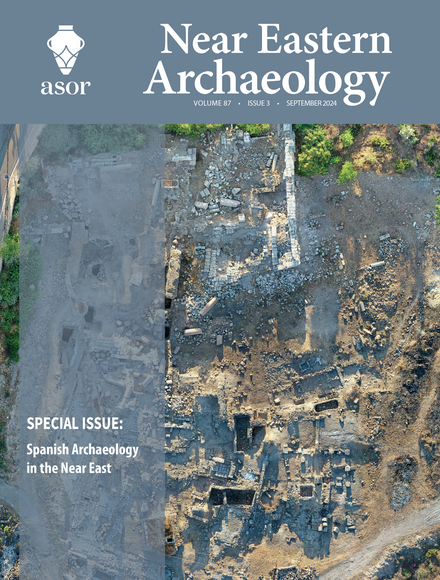
Pp. 144–149: “Spanish Archaeology in the Near East in the Twentieth Century,” by Jordi Vidal
The Spanish archaeological presence in the Near East was very scarce during most of the twentieth century. The excavations carried out at Shechem, Mogaret Dalal, El-Khiam, or Khirbet Arair were made possible by isolated efforts from outside the academic sphere. It was not until the 1980s that universities began to organize excavations and consolidate the Spanish presence in the region. The arrival of democracy, the reorganization of university research, and the availability of greater economic resources were the main elements that allowed this consolidation.
ASOR Members with online access: log into ASOR’s Online Portal here. Once logged in, click the JOURNALS tab in the top navigation bar. Tutorials for how to log in to the Online Portal as well as how to navigate to the Portal Journals page can be found here.
Pp. 150-157: “The Current Study of the Ancient Near East in Spain: Trends and Context,” by Agnès Garcia-Ventura and Josué J. Justel
In the nineteenth century in Spain there was a growing interest in the civilizations of the East—those located to the east of the Mediterranean. However, in Spain this interest did not translate into a consolidation of cuneiform studies in academia as it had done in other countries. In this article we offer some clues to help understand these two circumstances by providing an overview of the study of the ancient Near East in the Iberian Peninsula. In our analysis we shall pay special attention to Spain, and also highlight the connections with its neighbor Portugal and with the Spanish- and Portuguese-speaking countries of Latin America, where this field of studies has expanded notably in recent decades.
ASOR Members with online access: log into ASOR’s Online Portal here. Once logged in, click the JOURNALS tab in the top navigation bar. Tutorials for how to log in to the Online Portal as well as how to navigate to the Portal Journals page can be found here.
Pp. 158-167: “Tell el-Farʿah: New Archaeological Research on the Iron Age IIA in the Central Mountains of Palestine,” by Juan Luis Montero Fenollós
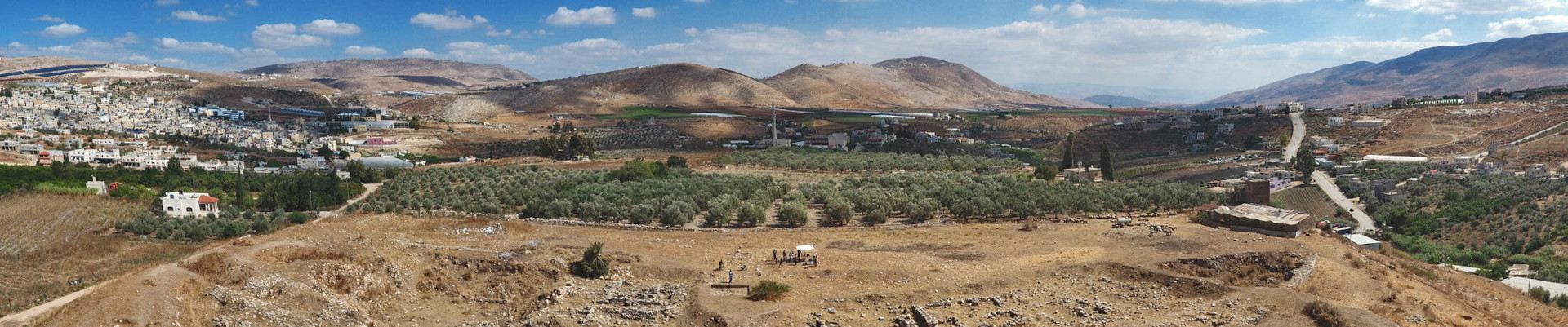
Building upon research conducted by Father Roland de Vaux, former director of the Ecole biblique in Jerusalem, between 1946 and 1960 at Tell el-Farʿah northeast of Nablus (Palestine), a new international and collaborative archaeological project began in 2017. This project is led by the University of A Coruña, the Nova University of Lisbon, and the Ministry of Tourism and Antiquities of Palestine. Tell el-Farʿah, perhaps the ancient biblical city of Tirzah, is a crucial site for the history of the Northern Kingdom. Currently, three excavation seasons (2017–2019) have revealed new, preliminary data concerning Iron Age IIA. These data, particularly the absolute dating related to a house of period VIIb, is of notable significance. A survey was conducted in the Wadi el-Farʿah to gain a better understanding of Tell el-Farʿah in its regional context. Additionally, a pilot project focusing on restoration and enhancement completed the overall work.
ASOR Members with online access: log into ASOR’s Online Portal here. Once logged in, click the JOURNALS tab in the top navigation bar. Tutorials for how to log in to the Online Portal as well as how to navigate to the Portal Journals page can be found here.
Pp. 168-177: “The Archaeology of Tyre: The Joint Lebanese, Spanish, and Polish Excavations in the Phoenician Homeland,” by María Eugenia Aubet, Francisco J. Núñez, and Ali Badawi
Archaeological activities in Tyre have been carried out for more than twenty-five years thanks to the collaboration between Lebanon, Spain, and, for the last three years, Poland. This has made this project the longest running of all those active in the country. Two sites have been the focus of attention: the Iron Age cemetery of al-Bass and the acropolis of the ancient island, each with its particular characteristics and difficulties. The project not only analyzes two different sites, but also covers the city’s history from its foundation in the third millennium BCE to today. Although still under development, the results have enabled Tyre to regain its position in the Levant and the Mediterranean. This project is also a haven for side projects that have opened new avenues of research.
ASOR Members with online access: log into ASOR’s Online Portal here. Once logged in, click the JOURNALS tab in the top navigation bar. Tutorials for how to log in to the Online Portal as well as how to navigate to the Portal Journals page can be found here.
Pp. 178-187: “The Spanish Archaeological and Archaeobiological Mission at Sharjah (SAAMS): Al Madam–al Khudairah Project; Life in the Oasis–Death on the Hills,” by Carmen del Cerro-Linares
The Universidad Autónoma de Madrid has been working since the mid-1990s at the Iron Age village of al Madam located in the interior of the Oman peninsula, in the Emirate of Sharjah (UAE). In 2019 we received permission to excavate a necropolis in the municipality of al Khudairah (Sharjah), opening a new potential for the study of the funerary world of ancient Magan, as this area was called in the Mesopotamian texts. With the permission of the local authorities, and so as to balance study of the village with that of the necropolis, our team expanded and added a permanent contingent of archaeobiologists to our roster. Thus in February 2020 began the Spanish Archaeological and Archaeobiological Mission at Sharjah (SAAMS) and a new project: the “Al Madam–al Khudairah Project: Life in the Oasis–Death on the Hills.”
ASOR Members with online access: log into ASOR’s Online Portal here. Once logged in, click the JOURNALS tab in the top navigation bar. Tutorials for how to log in to the Online Portal as well as how to navigate to the Portal Journals page can be found here.
Pp. 188-193: “Archaeological Excavations in Iraqi Kurdistan: Unveiling New Evidence on the Development of Complex Societies in Northern Mesopotamia at Gird Lashkir (Erbil),” by Miquel Molist, Aziz Zebari, and Anna Bach
This article presents the development and main results of a project underway in present-day Iraqi Kurdistan. The excavations and studies carried out at the Gird Lashkir site, on the plain near the course of the Tigris River, make it possible to contribute significantly to our understanding of the historical evolution of the period from the fourth to the second millennium in northern Mesopotamia. At the chronological level, it focuses on the stratigraphic data and the characterization of the habitat in the complex societies of the third millennium cal BCE. As required by the current development of the discipline, the studies are interdisciplinary and with broad cooperation among researchers from institutions of different nationalities, particularly from Iraqi Kurdistan itself.
ASOR Members with online access: log into ASOR’s Online Portal here. Once logged in, click the JOURNALS tab in the top navigation bar. Tutorials for how to log in to the Online Portal as well as how to navigate to the Portal Journals page can be found here.
Pp. 194-208: “Wild and Domesticated Fauna in Desert Regions of the Near East: The Case of Saruq al-Hadid (UAE),” by Eloísa Bernáldez-Sánchez, Esteban García-Viñas, Myriam Seco-Álvarez, José Luis Ramos-Soldado, Mansour Boraik, Ya’aqub Youssef, Javier Dantas-Cayuela, and Eduardo Ferrer-Albelda
The authors present the results of the archaeozoological studies of the 2019–2020 archaeological field seasons conducted in Saruq al-Hadid (Dubai, UAE) by the University of Seville and the Andalusian Institute of Historic Heritage (Instituto Andaluz del Patrimonio Histórico, IAPH). We analyzed two large assemblages of animal bone remains and, through the archaeozoological analysis, observed differences between two cultural and taphonomical contexts at the site. In the oldest levels—dated between the Bronze Age and Iron Age I—hunted animals predominate, while data from the Iron II period show a higher frequency of domesticated species. These differences suggest a change in the use of the environment, related to changes in the culture and/or the climate, as well as the human activity that originated each deposit.
ASOR Members with online access: log into ASOR’s Online Portal here. Once logged in, click the JOURNALS tab in the top navigation bar. Tutorials for how to log in to the Online Portal as well as how to navigate to the Portal Journals page can be found here.
Pp. 209-210: “Mundo Antigo em Resenha (MAR): Bringing Spanish-Portuguese Scholarship in Egyptology and Ancient Near Eastern Studies to the Greater Academic Community,” by Thais Rocha da Silva
This article discusses the trajectory of studies about the ancient Near East and Egyptology within the Spanish and Portuguese-speaking world. It argues that linguistic barriers also contributed to their remaining peripheral. Scholars in these regions have produced significant work in their fields, yet their contributions often remain isolated and underrecognized. The journal Mundo Antigo em Resenha (MAR) addresses this gap by publishing reviews of recent works in Spanish and Portuguese on topics related to antiquity. MAR aims to promote visibility and inclusivity and help researchers to develop connections. By fostering dialogue and collaboration, MAR seeks to enrich the scholarship about ancient Egypt and the Near East from Luso-Hispanic and Latin American communities, making it more accessible and impactful.
ASOR Members with online access: log into ASOR’s Online Portal here. Once logged in, click the JOURNALS tab in the top navigation bar. Tutorials for how to log in to the Online Portal as well as how to navigate to the Portal Journals page can be found here.
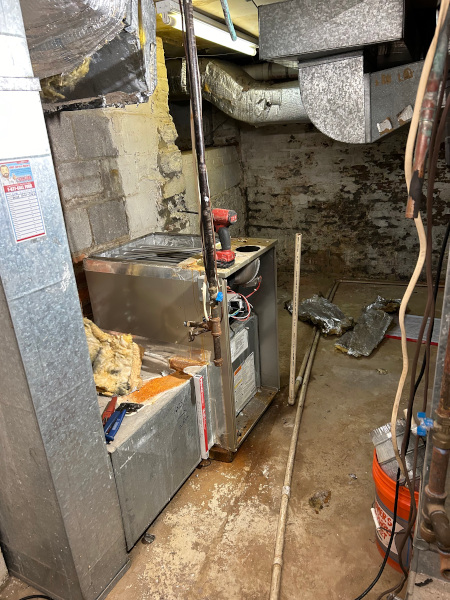
Since 2019, ASOR has called the James F. Strange Center in Alexandria, VA home. The building has provided space for the ASOR team to grow and thrive, but the passing years have meant that our home was in need of some improvements. A leaking drain from our 3rd-floor HVAC unit pointed to the need for some facilities upgrades.
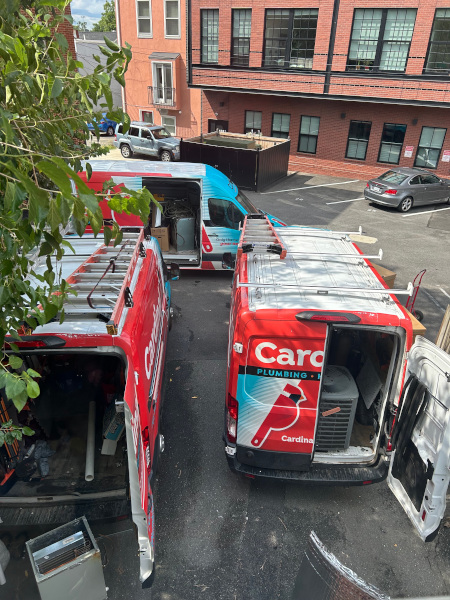
After reviewing a number of proposals and quotes for the work, ASOR contracted with Cardinal Plumbing and HVAC for:
New hot water heater to replace our 30+ year-old model.
New HVAC systems (furnace and air conditioning) for all three floors of the building.
New drain for the 3rd-floor system.
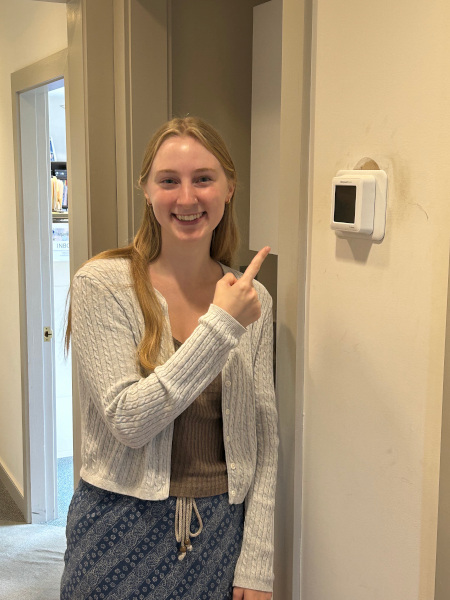
New thermostats on all floors that can be controlled remotely.
New flue piping in the basement.
The 1st and 2nd floor now have 92% high efficiency systems. The 3rd floor space was unfortunately too small to accommodate the higher efficiency system.
This is was a large project which involved multiple days of work from our industrious HVAC team. The outcome of this project is that the ASOR office is in great shape for the fall and for many years to come!
Removal of old HVAC units from the basement of the Strange Center.
Fleet of Cardinal vans ready to tackle the project.
New high-efficiency unit in the Strange Center basement.
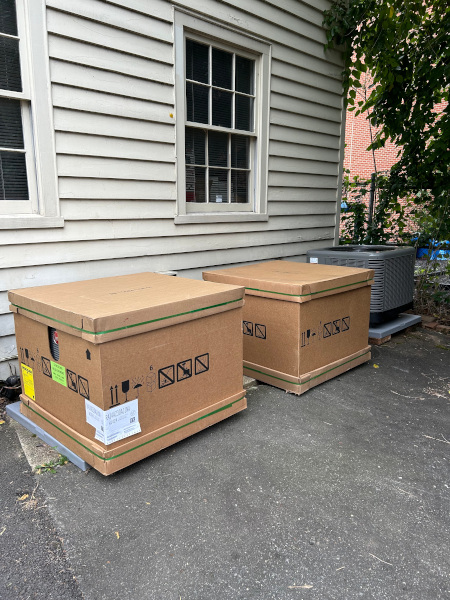
New outdoor units ready for install.
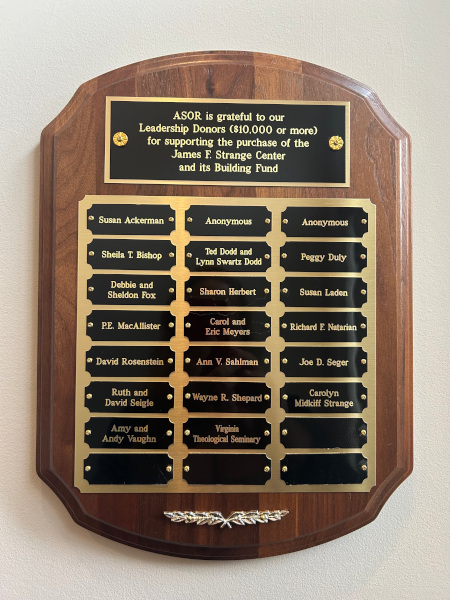
The good news is that not only does the Strange Center have great, new, up-to-date equipment, ASOR was able to pay for these upgrades by using distributions from the endowed Building Fund. Thank you to everyone who has made gifts to this fund over the years. Your gifts ensure that ASOR’s home in Alexandria can continue to thrive and grow. There is still room to add your name to the plaque. Make a gift to the Building Fund today.
Regan demonstrating how to use the new thermostats.

 Rachel Bernstein joined ASOR on October 1 as Communications Manager. She has a Ph.D. in Desert Studies and Archaeology from Ben-Gurion University of the Negev, as well as an M.A. in Desert Studies from Ben-Gurion University of the Negev and a B.A. in English from Goucher College.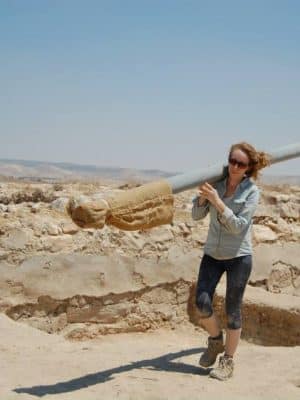

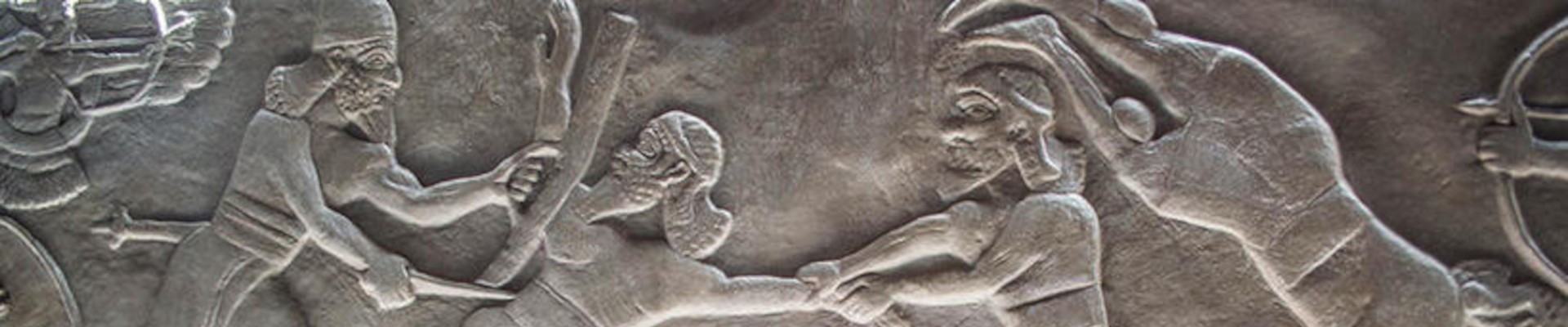

 In the past three decades, curators, educators, and scholars have been actively moving archaeological materials and data beyond the physical limitations of sites and museums into the virtual space. These transitions to new media have allowed archaeologists, researchers, and students unprecedented access to the archaeological record, particularly with regard to far away, at-risk, or vanished heritage. Each of the presenters in this webinar has been successful in implementing VR and other digital media in innovative ways in order to bridge the gap between physical and virtual and to educate the public. The first presentation (Dr. Michael Zimmerman, Associate Professor of Anthropology, Bridgewater State University) focuses on the creation of two virtual environments—the Virtual Museum of Archaeology of South Caucasus (VMASC) and a virtual reconstruction of a Late Bronze Age archaeological site from the Shiraki Plain in the country of Georgia. The second presentation (Dr. Sarah Beckmann, Assistant Professor of Classics, UCLA and Deidre Brin, Director of the Digital Archaeology Lab, Cotsen Institute of Archaeology) presents a digital escape room based on Homer’s Odyssey that was created by university students for a K-12 audience. The third presentation (Dr. Adam Aja, Chief Curator, Harvard Museum of the Ancient Near East) will introduce guests to some of HMANE’s freely accessed digital assets, including its virtual gallery tours, 3D artifact scans, and the most recent addition, a Snapchat app-experience that allows the visitor to “step back in time” in a journey to the Assyrian palace of Ashurbanipal. To unite these three presentations, speakers will demonstrate how they creatively used their archaeological knowledge to develop digital tools and educate the public, including how these tools are making real-world impacts in museums, classrooms, and other settings. This webinar will be moderated by Dr. Tine Rassalle (Independent Scholar) and Dr. Debra Trusty (Associate Professor of Instruction, University of Iowa), both of whom strive to facilitate the implementation of new technologies in the study of the ancient world.
 In 2019, an NSF IRES grant (#1854153) was awarded to Bridgewater State University, Ilia State University, and the Cyberarchaeology Lab at UC San Diego to engage students in interdisciplinary research of human-environmental interactions in the Shiraki Plateau in the country of Georgia. One of the key elements in this project was the creation of two virtual environments by Misha Elashvili and Giorgi Datenashvili—the Virtual Museum of Archaeology of South Caucasus (VMASC), an interactive virtual collection of artifacts from archaeological sites in Shiraki; and a virtual reconstruction of Late Bronze Age Didnauri. We hope to demonstrate future applications of this and other VR environments for archaeology.
 Michael Zimmerman is an archaeologist with a PhD from the Joukowsky Institute for Archaeology and the Ancient World at Brown University, and a member of the Archaeogaming Collective, Archaeological Institute of America, American Society of Overseas Research, Northeastern Anthropological Association, Council for Northeast Historical Archaeology, the Save Ancient Studies Alliance, and the Society of Historical Archaeology. He holds an MA in Classical Languages from the University of Florida. He has worked extensively on archaeological surveys and excavations in public archaeology in Massachusetts, as well as in Israel, Jordan, and Georgia, where he is a co-principal investigator for the NSF-funded Shiraki International Multidisciplinary Research project and the U.S. Embassy Democracy Commission grant funded Crossroads Virtual Museum Project. He also serves on the Executive Board of the Northeastern Anthropological Association and the Curation and Collections Committee of the Society for Historical Archaeology. His research interests include archaeogaming and virtual technology in pedagogical contexts, antiquities trafficking, cultural heritage law and public policy, and collections-based research, and he
  In winter 2024, UCLA students, faculty, and the Digital Archaeology Lab worked to create a digital escape room based on Homer’s Odyssey. The obstacles faced by Odysseus and his crew, we decided, were excellent fodder for an immersive web-based application: an escape room brings the vividness of the text to life and introduces contemporary students to ancient Greek culture using modern technologies. Despite facing many obstacles in the course of this work (the Cyclops room in particular!), our project offers a model for how other archaeologists and educators might leverage digital applications in the classroom. Thus our talk will survey development of this project and our future goals: 1) outreach beyond the University classroom using this escape room; and 2) the development of a reusable platform so that those without programming experience can design their own escape room.
 Deidre Brin is the director of the Digital Archaeology Lab at the Cotsen Institute of Archaeology and leads the development of DIG, an archaeological data publishing initiative at the Cotsen Institute of Archaeology Press. Her experience managing data while working on archaeological projects coupled with the foundation in information science and technology, support her current research on the preservation, dissemination, and reuse of cultural heritage datasets.
 Sarah Beckmann is a Roman archaeologist and Assistant Professor of Classics at UCLA. Her research interests include domestic art and archaeology broadly in the early Roman empire and the late antique period. She is currently at work on her first monograph, which examines the Roman villa in late antiquity (mid-3rd – 5th c. CE). Other interests represented by recent publications include statuary collecting in late antiquity, Roman portraiture in provincial contexts, and representations of subaltern groups (e.g. women, enslaved children) in luxury domestic arts.
 While physical exhibition space remains limited within the walls of the Harvard Museum of the Ancient Near East (HMANE), the digital realm provides virtually unlimited opportunities to display and explore its rich archaeological collections. Chief Curator Adam J. Aja will introduce guests to some of the museum’s freely accessed digital assets, including its virtual gallery tours, 3D artifact scans, and the most recent addition, a Snapchat app-experience that allows the visitor to “step back in time” in a journey to the Assyrian palace of Ashurbanipal.
 Adam J. Aja is an archaeologist and museum curator with a background in the creative arts. Since 2009, he has managed the collection of the Harvard Museum of the Ancient Near East (formerly the Harvard Semitic Museum), where he redesigned the storage facilities, implemented new exhibits, and created replicas for display. Dr. Aja started working on archaeological field projects in 1992 and has enjoyed numerous discoveries in the years since, including the Iron Age cemetery of the Philistines at Ashkelon. He is currently the Chief Stratigrapher at the Tel Shimron Excavations. Dr. Aja’s creative projects, combining his love of archaeology and art, have included a full-scale reproduction of the monument discovered between the paws of the Great Sphinx and the creation of an augmented reality app that animates Neo-Assyrian palace reliefs.


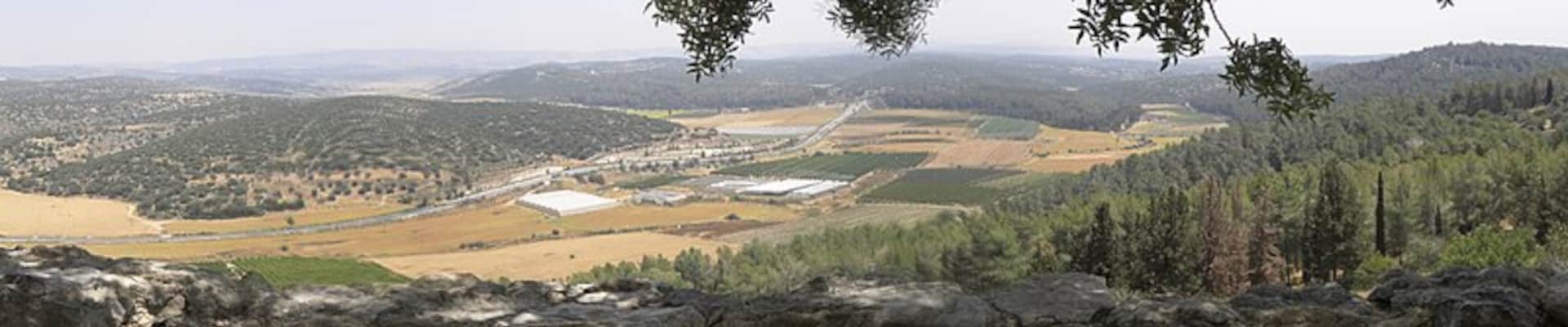

 “You come to me with sword and spear and javelin; but I come to you in the name of the LORD of hosts, the God of the armies of Israel…” declares David. Having previously rebuffed the loan of King Saul’s armor, David advances against Goliath armed only with a sling shot and five smooth stones. Goliath, on the other hand, is in full battle gear. His armament is described in meticulous detail: bronze helmet, coat of mail and greaves, a javelin between his shoulders, and a spear, whose “shaft… was like a weaver’s beam” and whose head “weighed six hundred shekels of iron…” (I Sam 17:7).
 Alternatively, Prof. Mazow proposes that Goliath’s sword was an Aegean or Anatolian long sword, a “cut-and-thrust” tool that could be used to both pierce Goliath’s armor and cut off his head. The narrator, describing an instrument unknown in the Israelite weapons inventory, compared Goliath’s sword to a weaver’s sword: a blade-shaped tool used to beat in the weft. Eventually neither the weaver’s tool nor the Philistine’s weapon could be conceived, and the description comes down to us as a spear-like weapon with a shaft that resembled a type of weaving tool, a broken simile that no longer described the shape and size of the foreign object.