Friends of ASOR present the next webinar of the 2024-2025 season on September 18, 2024, at 7:00 pm EDT, presented by Prof. Petra Creamer. This webinar will be free and open to the public. Registration through Zoom (with a valid email address) is required.
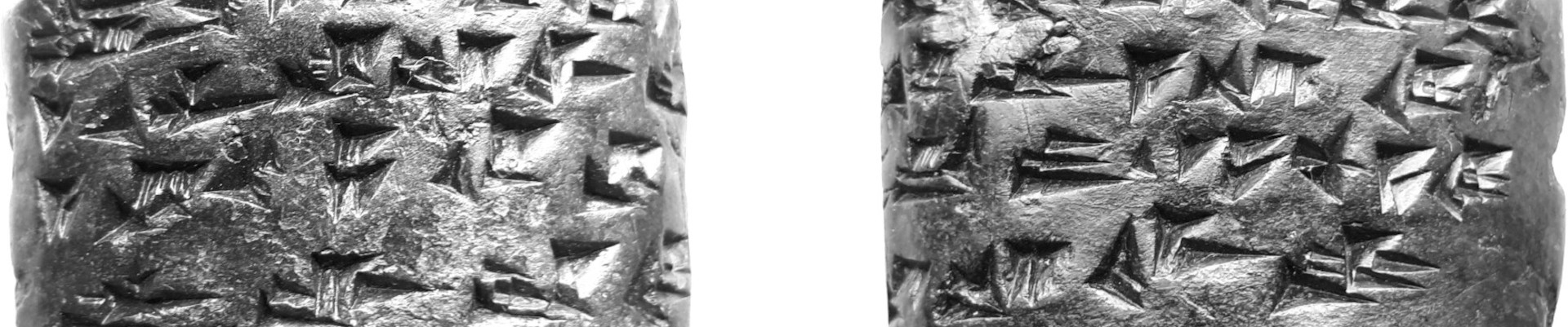
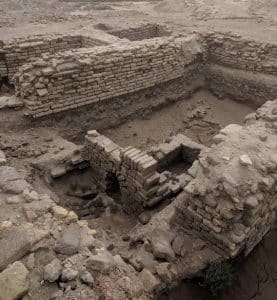
Have you ever wondered what the afterlife was like in ancient Mesopotamia? The complicated world of death has a long and nuanced history throughout various civilizations in the Land Between Rivers. Community identity, family, status, gender, and many more variables played into how one would be buried and what they could expect to encounter in the afterlife awaiting them. During the Assyrian Empire (c. 1350-612 BCE) some funerary traditions were kept from previous periods, while others were newly introduced. New imperial pressures, migration patterns, and forced resettlement during the Assyrian Empire beget a new set of mortuary norms. At the same time, some groups struggled to maintain their traditions in the face of a changing social and political landscape. This talk explores the variety of funerary traditions present in the Assyrian Empire and how they changed over time – telling us just as much about those alive as those deceased.
Petra Creamer is an Assistant Professor of Ancient Near Eastern Studies at Emory University, studying the genesis and growth of empires and the impact of empires on the non-elite populations under their hegemony. She is director of the excavation project Rural Landscapes of Iron Age Imperial Mesopotamia, where her ongoing fieldwork addresses long-term settlement patterns and lifeways in the ancient Assyrian imperial core (c. 1350-600 BCE). She has conducted fieldwork in Iraqi Kurdistan, Iraq, Turkey, Oman, Italy, Azerbaijan, Greece, and the U.S.A. Her current book project ties together multiple levels of looking at Assyrian imperial power – from broad landscape management down to individual burials – to understand the degree of control Assyrian elites held over those under imperial hegemony.
SPONSOR A WEBINAR!
Several levels of support from $50-$1,000 are available. Proceeds go towards membership scholarships and towards increasing ASOR’s virtual resources. Each sponsorship is tax-deductible and includes benefits! Sponsor a webinar here.
The Trustee Nominations Committee announces an open call for (self) nominations for the ASOR Board of Trustees (Class of 2027). Trustees will serve a three-year term, starting January 1, 2025. There are three primary responsibilities of the members of the Board of Trustees:
Governance: Being aware of issues brought forward to the Board, attending two meetings per year (at your own expense), and bringing issues of concern to the Board.
Fundraising and financial management: Leading in development by thinking of new opportunities, leading in giving, and providing oversight on the audited financial statements. We ask that individual trustees aspire to contribute $500 or more annually.
Strategic planning and policy development: Leading especially in measures that accord with ASOR’s mission.
We anticipate two openings for Membership-Elected Trustees. Any full ASOR member may be considered for nomination as an Membership-Elected Trustee. If there is someone that you would like the committee to consider—including yourself—please send the person’s name and email address to Marta Ostovich in the ASOR office. Please check with the nominee as to whether they are interested in serving on the ASOR Board of Trustees before sending in their name. If you have any questions about the responsibilities and satisfactions of being a board member, please email Kathryn Grossman, Chair of the Trustee Nominations Committee.
The ASOR office, or a representative from the Nominations Committee, will contact all nominees to describe the responsibilities in greater detail, and to make sure that the nominee is willing to have his or her name discussed by the Trustee Nominations Committee. Please note that nominees will need to submit a brief biography and a mission (or vision) statement for what they would like to accomplish as a trustee to be considered by the Nominations Committee. A sample of these statements can be found in last year’s “Meet Your Board Nominees” webpage. Brief biographies and mission statements should be ca. 200 words each and submitted via e-mail to Marta Ostovich by noon EDT on September 23, 2024.
After the Committee selects individuals for nomination, the election will take place by electronic ballot during October. ASOR is once again conducting online voting to ensure that more of our members are able to participate in this important process. The ASOR office will work with any person who is not able to complete an electronic ballot to ensure that everyone is included.
In order to receive full consideration by the committee, nominations (including supporting documents) should be submitted to programs@asor.org by noon EDT on September 23, 2024.
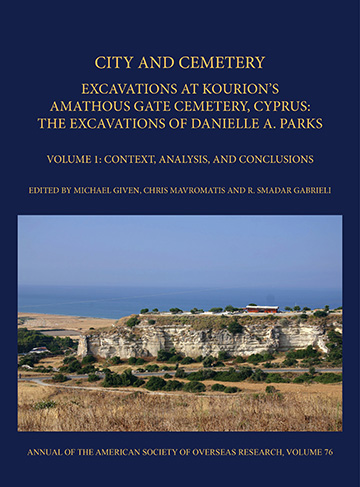
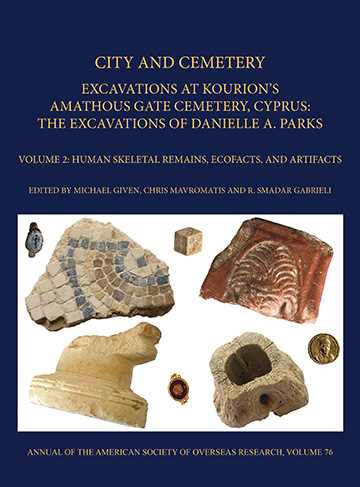
City and Cemetery: Excavations at Kourion’s Amathous Gate Cemetery, Cyprus: The Excavations of Danielle A. Parks.
Volume 1: Context, Analysis, and Conclusions Volume 2: Human Bone, Ecofacts, and Artifacts
ed. by Michael Given, Chris Mavromatis, and R. Smadar Gabrieli
The Amathous Gate Cemetery played a key role in the spatial and social organization of the well-preserved city of Kourion on the south coast of Cyprus, and in its transformations between the Hellenistic and Byzantine periods, from massively destructive earthquakes and the rise of Christianity to new social and administrative structures. The excavations were directed by the late Danielle A. Parks from 1995 to 2000, and found striking evidence for burial and commemoration, a wide range of material culture, and a large assemblage of well-preserved human remains. The project uses an innovative methodology for analyzing mixed stratigraphy and legacy data, which we offer to those researching sites with similar challenges.
Volume 1 presents the chamber tombs and cist tombs, quarrying evidence, and deposition activity from the cleanup after the 370s CE earthquake. It integrates the stratigraphy with the analysis of the material culture and the recording of rock-cut features, and gives a broad interpretation of the results of the whole project.
Volume 2 presents detailed descriptions and interpretations of the ecofacts and artifacts. These include human and animal bone, pottery, lamps, figurines, stone objects, painted plaster, glass, jewelry, coins, and loom weights. Scientific methods include isotopic analysis of the bones, Neutron Activation Analysis of the pottery, and spectroscopic analysis of the glass.
Annual of ASOR, Volume 76, Series Editor William Caraher, June 2024, 296 pages, 147 illustrations & 28 tables. ISBN 9780897571203, $89.95.
Annual of ASOR, Volume 77, Series Editor William Caraher, June 2024, 432 pages, 143 illustrations & 58 tables. ISBN 9780897571210, $99.95.
Special Offer for ASOR Members
ASOR members (with a mailing address in the USA) can purchase a copy of AASOR 76 at the discounted price of $35.00 (65% discount + $5.00 US shipping) while supplies last. Members can also purchase a copy of AASOR 77 at the discounted price of $40.00 (65% discount + $5.00 US shipping) while supplies last. Purchases are restricted to one volume per member. We are unable to offer this discount to members without a US mailing address due to international shipping costs, but you can purchase and ship a copy through the ISD link below. Please contact programs@asor.org with any questions. Click here to purchase your discounted copy in ASOR’s online store.
Friends of ASOR present the first webinar of the 2024-2025 season on September 4, 2024, at 7:00 pm EDT, presented by Prof. Jodi Magness and moderated by Prof. Eric Cline. This webinar will be free and open to the public thanks to partial sponsorship by Oxford University Press. Registration through Zoom (with a valid email address) is required.
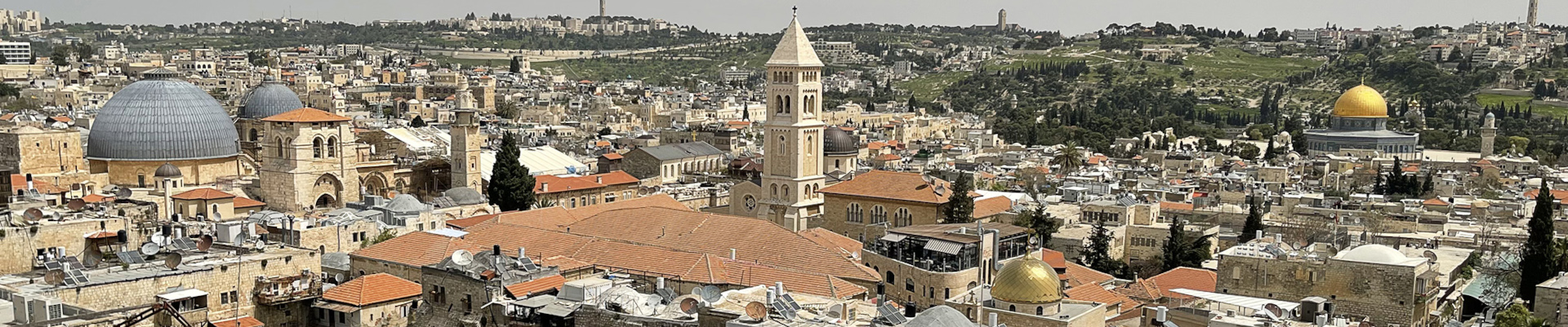
“Holy City of God, Jerusalem, how I long to stand even now at your gates, and go in, rejoicing!” Around 600 CE, Sophronius, a monk from a monastery near Jerusalem who had been posted to Egypt, Sinai, and North Africa, composed a poem expressing his longing to return to the holy city – a wish that was fulfilled thirty years later when he was appointed patriarch. For Sophronius, not even Alexandria, the cosmopolitan cultural capital of the Mediterranean, could compete with Jerusalem. Sophronius’ words echo Psalm 122:1-3, which was written hundreds of years earlier and attributed to King David: “I was glad when they said to me, ‘Let us go to the house of the Lord!’ Our feet are standing within your gates, O Jerusalem. Jerusalem – built as a city that is bound firmly together.”
Throughout the ages, pilgrims have shared Sophronius’ desire to stand in the gates of Jerusalem. Why has this poor and isolated mountain town exerted such a powerful hold on billions of people worldwide over the course of millennia? The simple answer is that for followers of the three Abrahamic faiths, Jerusalem is the place where the presence of the God of Israel dwells, and the Last Judgement will take place. It is the meeting point of heaven and earth – the locus of divine and human interaction. In this talk, Prof. Magness explores how these beliefs came to be associated with Jerusalem.
This webinar will be recorded and all registrants will be sent a link to view the recording.
Jodi Magness (www.JodiMagness.org) is a member of the American Academy of Arts and Sciences. Since 2002, she has been the Kenan Distinguished Professor for Teaching Excellence in Early Judaism in the Department of Religious Studies at the University of North Carolina at Chapel Hill. She received her B.A. in Archaeology and History from the Hebrew University of Jerusalem, and her Ph.D. in Classical Archaeology from the University of Pennsylvania. Magness’ research interests focus on Palestine in the Roman, Byzantine, and early Islamic periods, and Diaspora Judaism in the Roman world. Her most recent books are Jerusalem Through the Ages: From Its Beginnings to the Crusades (New York: Oxford University, March 2024); and Ancient Synagogues in Palestine: A Reevaluation Nearly a Century After Sukenik’s Schweich Lectures. The Schweich Lectures of the British Academy 2022 (London: The British Academy/Oxford University Press, anticipated publication July 2024). Three of Magness’ books have won awards: Masada: From Jewish Revolt to Modern Myth (Princeton: Princeton University, 2019); The Archaeology of Qumran and the Dead Sea Scrolls (Grand Rapids, MI: Eerdmans, 2002; revised edition 2021); and The Archaeology of the Early Islamic Settlement in Palestine (Winona Lake, IN: Eisenbrauns, 2003). Magness has participated on 20 different excavations in Israel and Greece, including co-directing the 1995 excavations in the Roman siege works at Masada. Since 2011, she has directed excavations at Huqoq in Galilee (www.huqoq.org). Magness is an Honorary President of the Archaeological Institute of America (AIA), having served as President from 2017-2020), a member of the Managing Committee of the American School of Classical Studies at Athens, and a member of the Board of Trustees of the W.F. Albright Institute of Archaeological Research in Jerusalem.
SPONSOR A WEBINAR!
Several levels of support from $50-$1,000 are available. Proceeds go towards membership scholarships and towards increasing ASOR’s virtual resources. Each sponsorship is tax-deductible and includes benefits! Sponsor a webinar here.
Please e-mail the Membership office if you have any questions.
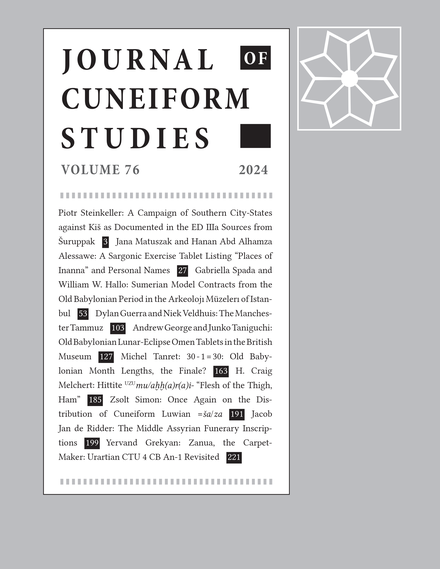
Pp. 3–26: “A Campaign of Southern City-States against Kiš as Documented in the ED IIIa Sources from Šuruppak (Fara),” by Piotr Steinkeller
A group of ED IIIa texts from Šuruppak (Fara) describes a mobilization of troops from Uruk, Adab, Nippur, Lagaš, Umma, and Šuruppak, clearly in anticipation of a major military operation. It is argued that the target of that campaign, which was led by Uruk, was the city-state of Kiš. The analysis of various other sources further suggests that, during the ED IIIa period, Uruk was able to bring significant portions of southern Babylonia under its control. This development was a reversal of the situation existing in ED I and II, when much of that region remained under the hegemony of Kiš.
ASOR Members with online access: log into ASOR’s Online Portal here. Once logged in, click the JOURNALS tab in the top navigation bar. From here you may select which journal you would like to read. If you have online access, you will see your selected journal’s current issue Table of Contents. Click on the “Current Issue” button and you will then be redirected to the University of Chicago Press’s (UCP) platform to immediately start reading any issue of your choice. Tutorials for how to log in to the Online Portal as well as how to navigate to the Portal Journals page can be found here.
Pp. 27-52: “A Sargonic Exercise Tablet Listing ‘Places of Inanna’ and Personal Names,” by Jana Matuszak and Hanan Abd Alhamza Alessawe
This article publishes a remarkable school tablet, probably from Sargonic Umma, which contains two lexical exercises. While the reverse appears to be an ad hoc list of personal names, many of which start with or contain the sign a, the obverse compiles “places” (ki) where certain mythological events involving the goddess Inanna had occurred. Unusually for lexical lists, each of these places is described in a complete sentence following a loosely alternating structure, which gives the list almost literary qualities. After discussing the list-like vs. literary features and comparing the compilation of places to a similar lexical fragment of Ur III date and the Early Dynastic Word List F, we analyze the mythological allusions and potential ritual associations.
ASOR Members with online access: log into ASOR’s Online Portal here. Once logged in, click the JOURNALS tab in the top navigation bar. From here you may select which journal you would like to read. If you have online access, you will see your selected journal’s current issue Table of Contents. Click on the “Current Issue” button and you will then be redirected to the University of Chicago Press’s (UCP) platform to immediately start reading any issue of your choice. Tutorials for how to log in to the Online Portal as well as how to navigate to the Portal Journals page can be found here.
Pp. 53-101: “Sumerian Model Contracts from the Old Babylonian Period in the Arkeoloji Müzeleri of Istanbul,” by Gabriella Spada and William W. Hallo
This article presents twenty fragmentary multicolumn tablets containing Sumerian model contracts from Old Babylonian Nippur, which are currently kept at the Arkeoloji Müzeleri in Istanbul, Turkey. Initial work on these was initiated by the late William W. Hallo in 1971 but he was unable to complete the project so it was taken over and completed by Gabriella Spada. Their content is limited to loan contracts of silver or barley, sometimes with the presence of antichretic pledges (slaves, fields, gardens, and lumps of silver).
ASOR Members with online access: log into ASOR’s Online Portal here. Once logged in, click the JOURNALS tab in the top navigation bar. From here you may select which journal you would like to read. If you have online access, you will see your selected journal’s current issue Table of Contents. Click on the “Current Issue” button and you will then be redirected to the University of Chicago Press’s (UCP) platform to immediately start reading any issue of your choice. Tutorials for how to log in to the Online Portal as well as how to navigate to the Portal Journals page can be found here.
Pp. 103-126: “The Manchester Tammuz,” by Dylan Guerra and Niek Veldhuis
This contribution provides a new edition of the Manchester Tammuz, a sequence of Emesal love songs concerning Inana and Dumuzi. The text offers many irregular spellings, some of which may be resolved by means of a fragmentary duplicate from Nippur. The relationship between the Manchester text and several other Old Babylonian Emesal liturgies that share characteristics of orthography, paleography, and layout is discussed briefly. A line-drawing of the object by Theophilus G. Pinches, published in 1904, is added to the end of the article.
ASOR Members with online access: log into ASOR’s Online Portal here. Once logged in, click the JOURNALS tab in the top navigation bar. From here you may select which journal you would like to read. If you have online access, you will see your selected journal’s current issue Table of Contents. Click on the “Current Issue” button and you will then be redirected to the University of Chicago Press’s (UCP) platform to immediately start reading any issue of your choice. Tutorials for how to log in to the Online Portal as well as how to navigate to the Portal Journals page can be found here.
Pp. 127-161: “Old Babylonian Lunar-Eclipse Omen Tablets in the British Museum,” by Andrew George and Junko Taniguchi
This article presents a first edition of four clay tablets inscribed with omens arising from eclipses of the moon. As products of the middle and late Old Babylonian periods they represent the oldest examples of compendia of lunar-eclipse omens yet discovered and thus provide important new information about celestial divination among the peoples of southern Mesopotamia in the early second millennium BCE. The tablets are edited with appended philological apparatus. They are all found to bear witness to a single text, which organizes the omens of lunar eclipse by time of night, movement of shadow, duration, and date. A composite translation also takes account of two other early versions of the text published eleven years ago. The article is concluded by discussions of variants and scribal annotations in the text. The cuneiform texts are illustrated by scale drawings of the tablets.
ASOR Members with online access: log into ASOR’s Online Portal here. Once logged in, click the JOURNALS tab in the top navigation bar. From here you may select which journal you would like to read. If you have online access, you will see your selected journal’s current issue Table of Contents. Click on the “Current Issue” button and you will then be redirected to the University of Chicago Press’s (UCP) platform to immediately start reading any issue of your choice. Tutorials for how to log in to the Online Portal as well as how to navigate to the Portal Journals page can be found here.
Pp. 163-183: “30 − 1 = 30: Old Babylonian Month Lengths, the Finale?,” by Michel Tanret
The Old Babylonian administrative calendar always consisted of thirty days, regardless of early moon sightings. The ud.da.gíd.da days, viewed by some as days to be excluded due to an early moon sighting, were not used to shorten the month; rather, they denoted the number of days when no rations were distributed. This is demonstrated on the basis of Old Babylonian documentary texts.
ASOR Members with online access: log into ASOR’s Online Portal here. Once logged in, click the JOURNALS tab in the top navigation bar. From here you may select which journal you would like to read. If you have online access, you will see your selected journal’s current issue Table of Contents. Click on the “Current Issue” button and you will then be redirected to the University of Chicago Press’s (UCP) platform to immediately start reading any issue of your choice. Tutorials for how to log in to the Online Portal as well as how to navigate to the Portal Journals page can be found here.
Pp. 185-190: “Hittite UZUmu/aḫḫ(a)r(a)i– ‘Flesh of the Thigh, Ham,’” by H. Craig Melchert
Hittite UZUmu/aḫḫ(a)r(a)i– is a body part belonging to various mammals, including humans, but almost exclusively attested as a component of cooked meat offerings to deities. New evidence supports its identification as the fleshy part of the thigh, thus English “ham” in the anatomical sense, but when served as food in Hittite removed from the thigh bone. A recent text join furnishes not only a further instance of juxtaposition with the expression for “thigh bone,” but also the crucial detail that the m. is skewered before being cooked.
ASOR Members with online access: log into ASOR’s Online Portal here. Once logged in, click the JOURNALS tab in the top navigation bar. From here you may select which journal you would like to read. If you have online access, you will see your selected journal’s current issue Table of Contents. Click on the “Current Issue” button and you will then be redirected to the University of Chicago Press’s (UCP) platform to immediately start reading any issue of your choice. Tutorials for how to log in to the Online Portal as well as how to navigate to the Portal Journals page can be found here.
Pp. 191-197: “Once Again on the Distribution of Cuneiform Luwian =ša/za,” by Zsolt Simon
This article argues that the Cuneiform Luwian nominal particle =ša/za was not assigned on a word-by-word basis in the -r-, -r/n-, -l-stem classes but followed a regular pattern, thus Jasanoff’s rule of the distribution of this particle can be extended and confirmed.
ASOR Members with online access: log into ASOR’s Online Portal here. Once logged in, click the JOURNALS tab in the top navigation bar. From here you may select which journal you would like to read. If you have online access, you will see your selected journal’s current issue Table of Contents. Click on the “Current Issue” button and you will then be redirected to the University of Chicago Press’s (UCP) platform to immediately start reading any issue of your choice. Tutorials for how to log in to the Online Portal as well as how to navigate to the Portal Journals page can be found here.
Pp. 199-220: “The Middle Assyrian Funerary Inscriptions,” by Jacob Jan de Ridder
This article presents revised editions of a group of four similar funerary inscription from Assyria, dating to about the thirteenth century BCE. The paleography of these texts is unusual, characterized by similarities with the writing from Tell Taban and the kingdom of Ḫana. However, the invocation of the Hurrian deity Šuriḫa, the patron of the town of Šūru, suggests this ancient settlement as its provenance. These funerary inscriptions would be among the earliest texts from the Middle Assyrian settlement that existed at this location.
ASOR Members with online access: log into ASOR’s Online Portal here. Once logged in, click the JOURNALS tab in the top navigation bar. From here you may select which journal you would like to read. If you have online access, you will see your selected journal’s current issue Table of Contents. Click on the “Current Issue” button and you will then be redirected to the University of Chicago Press’s (UCP) platform to immediately start reading any issue of your choice. Tutorials for how to log in to the Online Portal as well as how to navigate to the Portal Journals page can be found here.
Pp. 221-227: “Zanua, the Carpet-Maker: Urartian CTU 4 CB An-1 Revisited,” by Yervand Grekyan
Evidence of Urartian textiles is mostly limited to pictorial representations, along with a few textual references and finds of fragments of textiles in archaeological contexts. The study of an Urartian royal letter gives some new idea on craftsmen who wove textiles in Urartu.
ASOR Members with online access: log into ASOR’s Online Portal here. Once logged in, click the JOURNALS tab in the top navigation bar. From here you may select which journal you would like to read. If you have online access, you will see your selected journal’s current issue Table of Contents. Click on the “Current Issue” button and you will then be redirected to the University of Chicago Press’s (UCP) platform to immediately start reading any issue of your choice. Tutorials for how to log in to the Online Portal as well as how to navigate to the Portal Journals page can be found here.
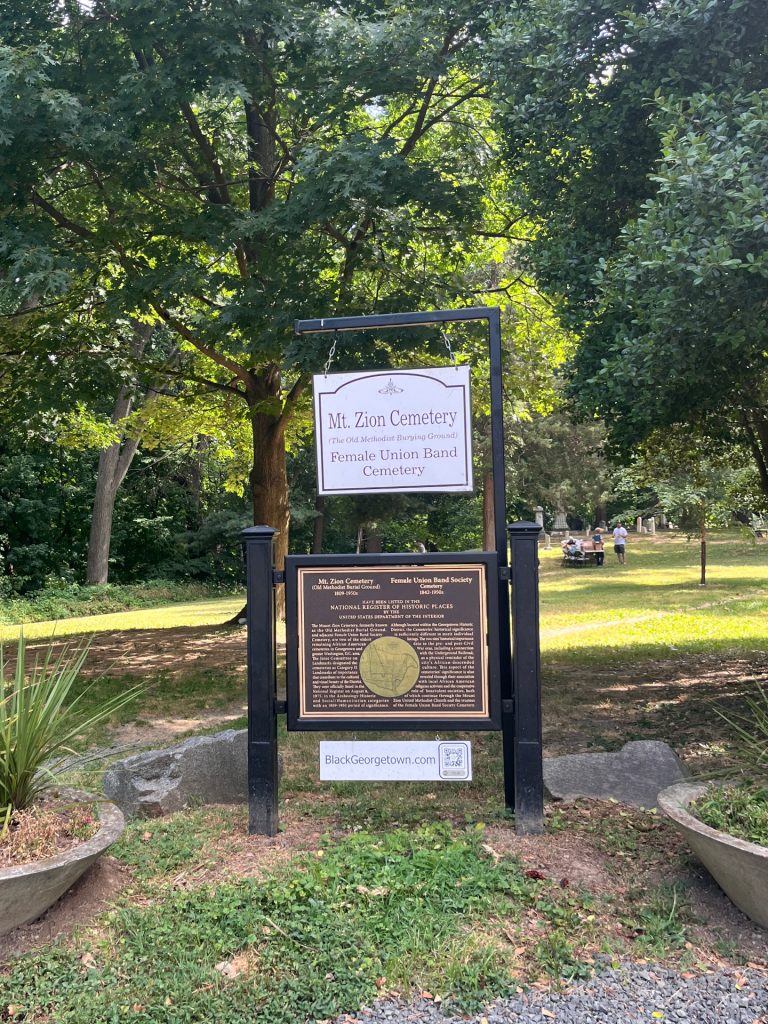
The entrance to Mount Zion - Female Union Band Society Cemetery.
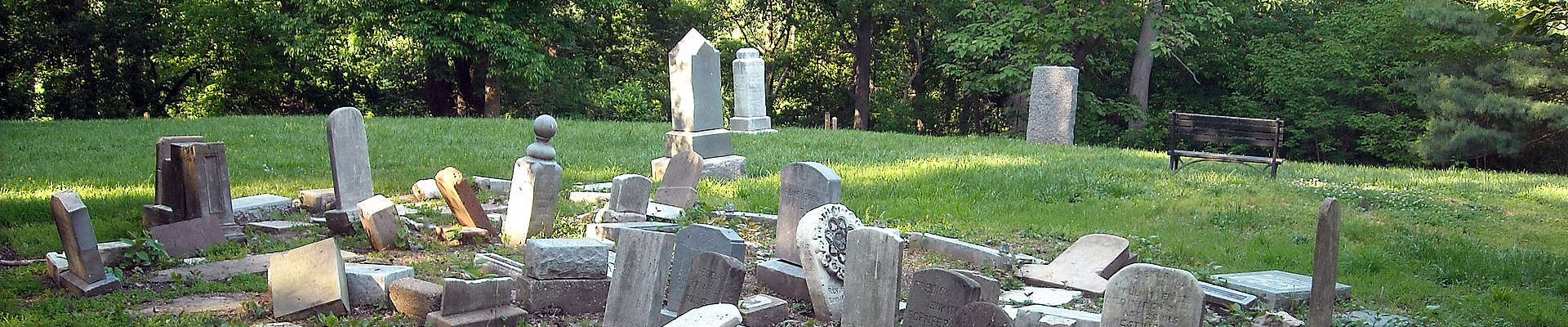
The workshop commenced with a Zoom session on June 27 covering a brief history of the cemetery, the fundamentals of cemetery documentation, and an introduction to the two heritage documentation techniques participants would use at the in-person session – KoboToolbox and photogrammetry. The session was recorded and can be viewed here.
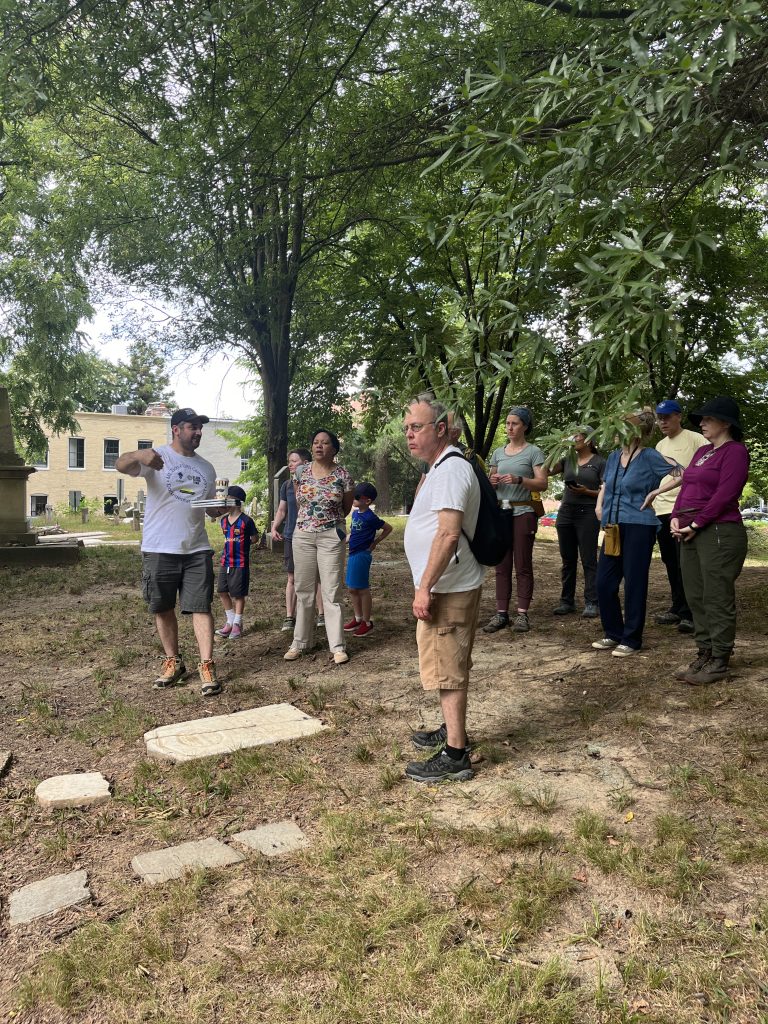
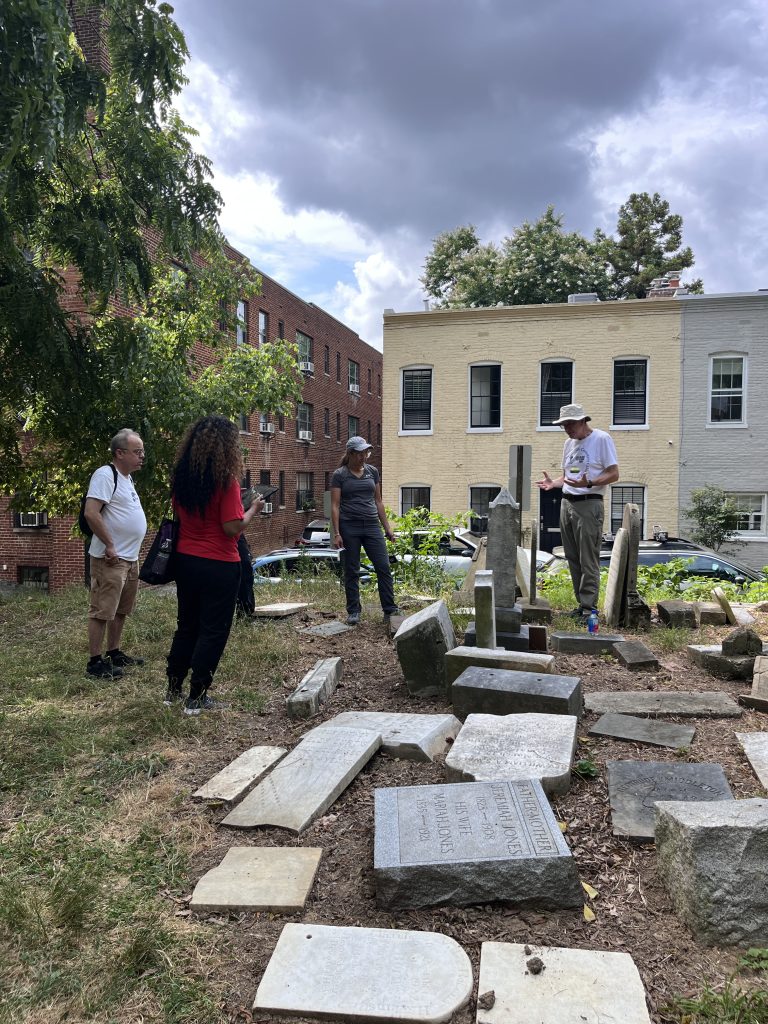
On June 29, participants joined staff from ASOR, AITC, and Black Georgetown Foundation, as well as members from the William Leo Hansberry Society, at the cemetery to engage in the on-site training session and gain valuable, practical experience in cemetery documentation techniques. This included cataloging tombstones and historical markers using KoboToolbox, a free and open source software for location and descriptive data collection. Participants were sorted into groups to practice recording different sections of the cemetery. Using tools like handheld GPS devices, tape measures, whiteboards, and photo scales, participants compiled data from the tombstones and uploaded them into a custom form on KoboToolbox.
Participants attending the on-site training on June 29 at the cemetery.
ASOR staff instruct participants on how to use Kobotoolbox to collect data.
ASOR staff and participants discuss how to document a tombstone.
After collecting data via KoboToolbox, staff proceeded to instruct participants on the basics of photogrammetry. Photogrammetry is a process using two-dimensional (2D) images to provide measurement data which can then be input into photogrammetric software, such as Agisoft Metashape, to create 3D models. These 3D models can be highly useful and aid archaeologists in uncovering hidden details of objects and buildings. This method also preserves heritage sites digitally and facilitates accurate reconstructions.
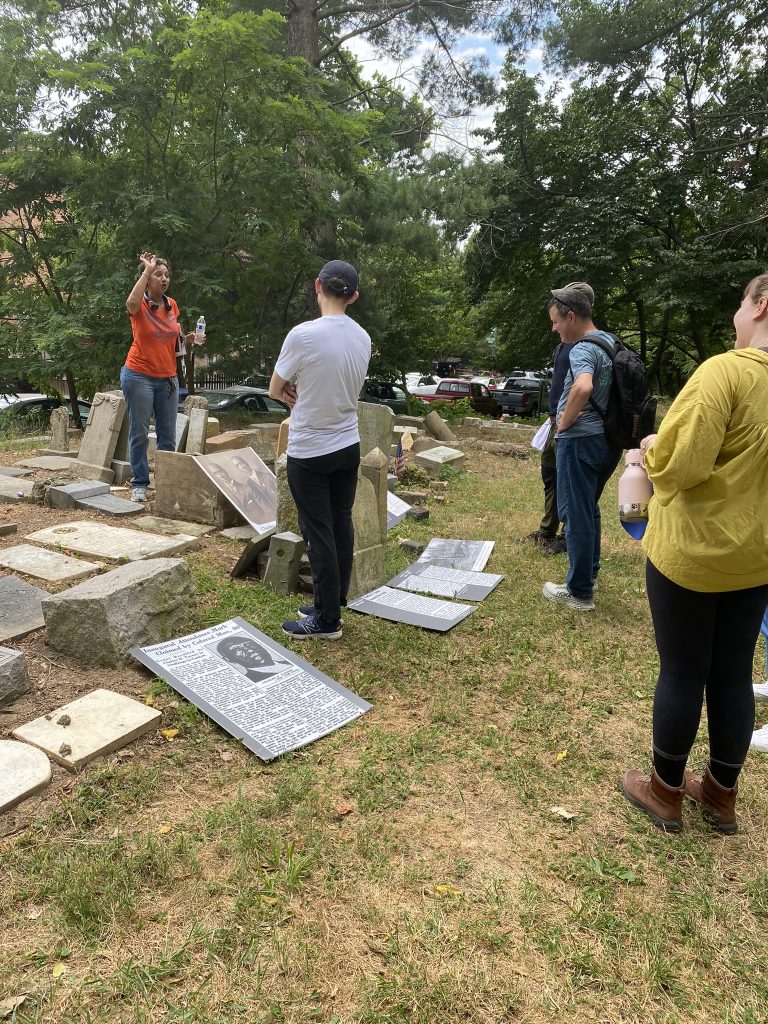
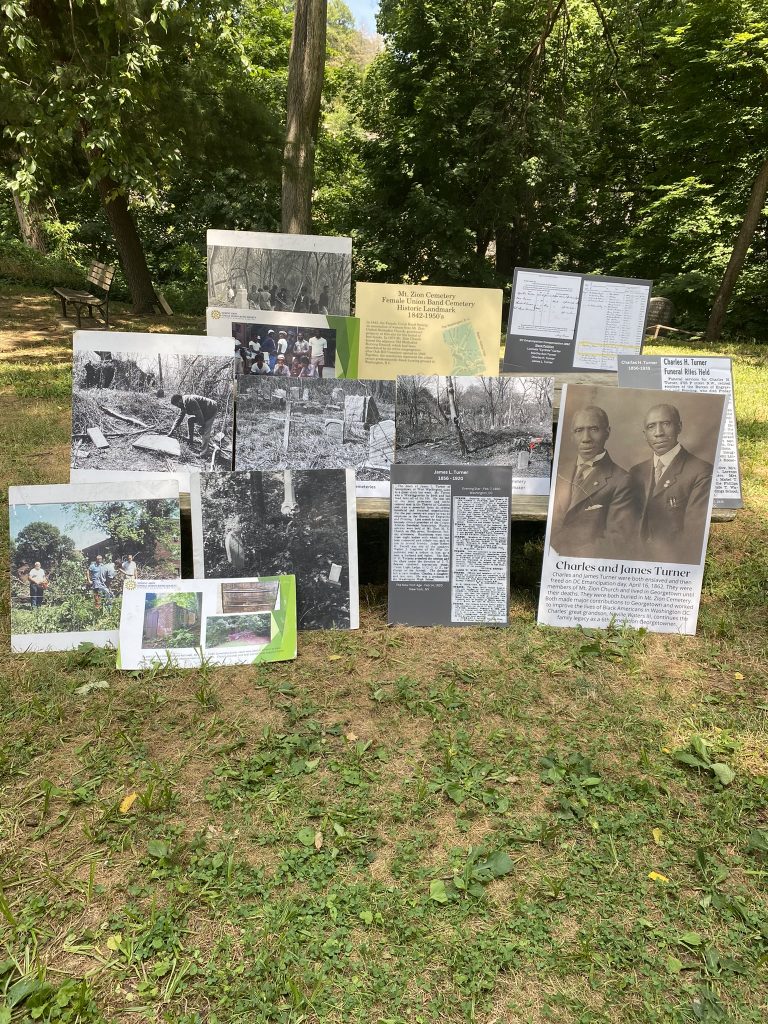
Lisa Fager, the Executive Director of Black Georgetown Foundation, was able to join the on-site training and offer an extensive and fascinating tour of the cemetery grounds. Bringing along several posters and visual aids for participants to view, Lisa described the history of African-American cemeteries in Washington, D.C., the cemetery’s association with the Underground Railroad, and the notable individuals buried on the grounds including Charles Turner, also known as “the Black Mayor of Georgetown.” Read more about the history of the cemetery here.
ASOR staff instruct participants on how to take photographs for photogrammetry.
Lisa Fager, the Executive Director of Black Georgetown Foundation, gives a tour of the cemetery.
Posters about the history of the cemetery.
The final session of the workshop on June 30 via Zoom focused on how to process & analyze data collected through KoboToolbox and how to create 3D models through photogrammetry. The session was recorded and can be viewed here. ASOR staff collected photos from participants and processed them to create 3D models; one of the models is shown below.
ASOR is proud to have hosted this successful introduction to heritage documentation workshop. Part of our core mission is to develop engaging programs of outreach for the general public, and we are grateful for all those who participated in this event. Thank you to everyone who attended, and we hope to see you at future events!
Please e-mail the Membership office if you have any questions.
Pp. 1-23: “Conspicuous Construction: New Light on Funerary Monuments in Rural Early Roman Judea from Horvat Midras,” by Gregg E. Gardner and Orit Peleg-Barkat
This paper discusses the growing trend in Late Hellenistic- and Early Roman-era Judea (ca. 200 b.c.e.–70 c.e.) for constructing “display tombs”—funerary architecture designed to achieve maximum visibility and project the status of the individual or family who financed the construction, not just in the cities, but also in the countryside. It uses the case study of the recently excavated pyramidal tomb marker at Horvat Midras (Israel), an affluent village, located on the border of Idumea and Judea about 30 km southwest of Jerusalem in the Judean Foothills. After a detailed discussion of the new finds, it is placed within the material and broader socioeconomic contexts of rural Judea in these periods. As will be shown, this monument’s architectural style, location, and other attributes enhance our understanding of monumental funerary architecture in rural settings, adds new archaeological data to often-overlooked rural areas, and contributes to a better understanding of socioeconomic elites in rural Judea at this time.
ASOR Members with online access: log into ASOR’s Online Portal here. Once logged in, click the JOURNALS tab in the top navigation bar. Tutorials for how to log in to the Online Portal as well as how to navigate to the Portal Journals page can be found here.
Pp. 25-45: “A Study of a Unique Roman Funerary Monument and Its Population at Dara in Upper Mesopotamia: A Collective Rock Burial ‘Tower,’” by Charlotte Labedan-Kodas, Ayse Acar, and Nihat Erdoğan
This article provides an in-depth study of a singular funerary monument located in the ancient city of Dara (southeastern Turkey). Its features relate to various influences, some of them outside the Roman world, and present a unique insight into the ritual practices of the inhabitants of Dara. This paper brings together archaeological and taphonomic evidence provided by recent excavations to offer perspectives for the dating of the building and the identification of the people buried there.
ASOR Members with online access: log into ASOR’s Online Portal here. Once logged in, click the JOURNALS tab in the top navigation bar. Tutorials for how to log in to the Online Portal as well as how to navigate to the Portal Journals page can be found here.
Pp. 47-75: “Domestic Waste as a Window into Crusader-Period Le Lyon (Kibbutz Megiddo/Lajjun, Israel): Insights from a Household Midden and Its Ceramic Assemblage,” by Edna J. Stern, Anastasia Shapiro, Matthew J. Adams, Nimrod Marom, Inbar Ktalav, and Yotam Tepper
The 2017 salvage excavation conducted at the site of Lajjun within Kibbutz Megiddo, Israel, revealed layers of refuse, primarily ceramics, constituting a household midden with finds indicating a 12th-century date and a Frankish cultural affinity. The midden can be associated with the occupation of the ancient settlement of Lajjun by Frankish settlers intermittently in the 12th and 13th centuries c.e., representing a first archaeological window into the Frankish activity at the site and complementing the historical data on the village known from Crusader sources as Le Lyon (Lajjun).
ASOR Members with online access: log into ASOR’s Online Portal here. Once logged in, click the JOURNALS tab in the top navigation bar. Tutorials for how to log in to the Online Portal as well as how to navigate to the Portal Journals page can be found here.
Pp. 77-92: “The Proximity Principle and the Egyptian Levant in the Late 18th Dynasty,” by Francesco Ignazio De Magistris
It has been known for decades that the Egyptians of the 18th Dynasty took direct control of a number of centers across the Levant, that each center was governed by an Egyptian commissioner, and that every commissioner interacted with the rulers of the local city-states. However, the precise number of Egyptian centers and their respective areas of control remains debated to this day. This article revisits these issues by analyzing the relationships between centers, commissioners, and rulers as they appear within the Amarna corpus, with a focus on the proposed proximity principle. This principle posits that Levantine rulers would have primarily engaged with the closest Egyptian center and the closest Egyptian commissioner, rather than a farther one. Through this analysis, the article aims to shed new light on the number of the Egyptian centers in the Levant and the extent of land that they controlled.
ASOR Members with online access: log into ASOR’s Online Portal here. Once logged in, click the JOURNALS tab in the top navigation bar. Tutorials for how to log in to the Online Portal as well as how to navigate to the Portal Journals page can be found here.
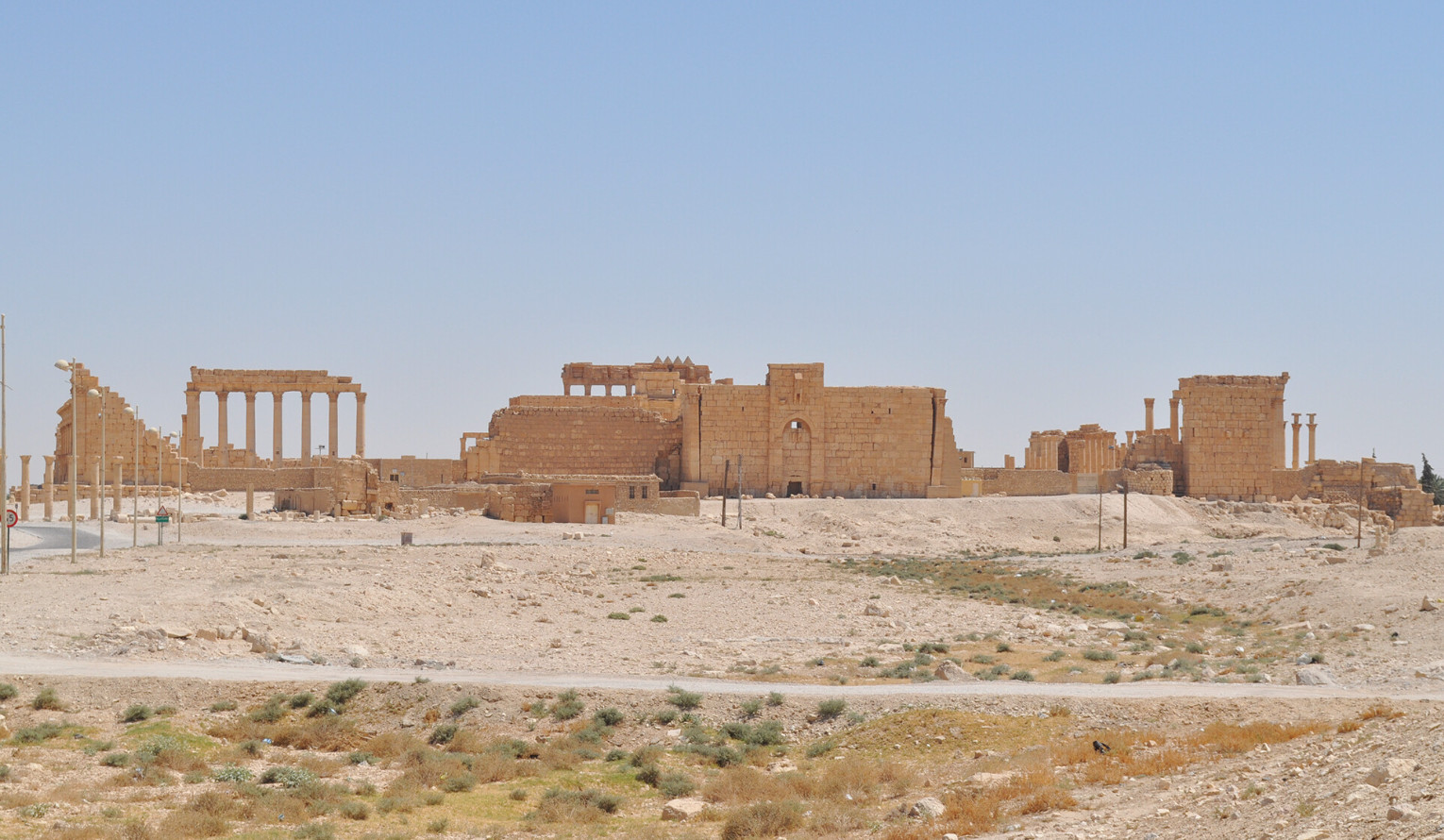
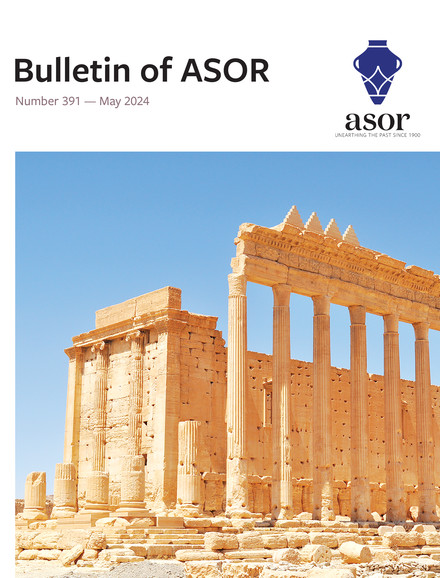
Pp. 93-106: “The Future of the Temple of Bel in Palmyra after Its Destruction,” by Maamoun Abdulkarim and Jacques Seigne
This article explores the significance of the Temple of Bel in the history of Palmyra, highlighting key aspects of its design and development. It reviews the measures taken by the archaeological authorities during the French Mandate (1920–1946) to manage and conserve the monument, such as relocating the local community outside the archaeological site far from the sanctuary and the implementation of repairs to the cella. Finally, it discusses the damage wrought by ISIS in 2015 to Palmyra, which included the partial destruction of the temple using explosives, and revisits the work of the specialists who examined this structure after it was destroyed. In order to preserve Palmyra’s cultural legacy, the relevance of the cella’s future conservation needs as a priority are underscored, not simply for the World Heritage Site, but within the wider context of Syria and the region.
ASOR Members with online access: log into ASOR’s Online Portal here. Once logged in, click the JOURNALS tab in the top navigation bar. Tutorials for how to log in to the Online Portal as well as how to navigate to the Portal Journals page can be found here.
Pp. 107-133: “Solving the Starry Symbols of Sargon II,” by Martin Worthington
The city of Khorsabad (ancient Dūr-Šarrukīn), the newly built capital of Sargon II of Assyria, contained multiple instances of a sequence of five images or symbols (lion, bird, bull, tree, plow) which also appeared shortened to three (lion, tree, plow). What did they mean? There is currently no consensus. This paper proposes a new solution, suggesting that the images a) symbolize specific constellations and b) represent Babylonian/Assyrian words whose sounds “spell out” Sargon’s name (this works for both the long and the short version). Combining these two traits, the effect of the symbols was to assert that Sargon’s name was written in the heavens, for all eternity, and also to associate him with the gods Anu and Enlil, to whom the constellations in question were linked. It is further suggested that Sargon’s name was elsewhere symbolized by a lion passant (pacing lion), through a bilingual pun.
ASOR Members with online access: log into ASOR’s Online Portal here. Once logged in, click the JOURNALS tab in the top navigation bar. Tutorials for how to log in to the Online Portal as well as how to navigate to the Portal Journals page can be found here.
Pp. 135-161: “Tel Dor in the Middle Bronze Age and Maritime Adaptation along the Carmel Coast,” by Assaf Yasur-Landau, Chandler Houghtalin, Marko Runjajić, Zachary Dunseth, and Ruth Shahack-Gross
A newly excavated, well-built, Middle Bronze (MB) II–III coastal structure at Tel Dor provides a fresh glimpse into the turbulent settlement history of the Carmel Coast in the first half of the 2nd millennium b.c.e. The structure, incorporating a massive ashlar orthostat, was built in the MB I–II transition or MB II and existed for more than a century before its collapse during the MB III. A tight cluster of radiocarbon data indicates its destruction ca. 1600–1550 b.c.e. As the first Middle Bronze Age structure extensively excavated at Dor, it fills a lacuna in the site’s history. Other Middle Bronze Age finds enable a reconstruction of Dor’s anchorages and create a narrative of settlement patterns on the Carmel Coast, tightly connected with contemporary maritime activities, and reflecting a resilient settlement system devoid of urban centers.
ASOR Members with online access: log into ASOR’s Online Portal here. Once logged in, click the JOURNALS tab in the top navigation bar. Tutorials for how to log in to the Online Portal as well as how to navigate to the Portal Journals page can be found here.
Pp. 163-189: “Reconstructing the Urban Fabric of Nea Paphos by Comparison with Regularly Planned Mediterranean Cities, Using 3D Procedural Modeling and Spatial Analysis,” by Anna Kubicka-Sowińska, Łukasz Miszk, Paulina Zachar, Anna Fijałkowska, Wojciech Ostrowski, Jakub Modrzewski, and Ewdoksia Papuci-Władyka
Nea Paphos, the Hellenistic-Roman capital of Cyprus, was established according to a regular Hippodamian street grid in the Hellenistic period. The city has been subjected to continuous archaeological research since the 1960s. Despite this, the possibilities for reconstructing its fabric were severely limited. This paper aims to gain a more in-depth understanding of the ways in which computational methods can be used in the analysis of ancient urban planning and the reconstruction of its elements, using the similarity of urban processes and social behavior in ancient Greek cities as its main premise. Therefore, a study based on Network and Space Syntax analysis was conducted for cities with a well-recognized urban layout of the Late Classical and Hellenistic periods, namely Olynthus and Priene, and other, less archaeologically explored harbor towns of the Hellenistic period, such as Piraeus and Ptolemais. The results of these studies were then extrapolated to hypothetical reconstructions of Nea Paphos in the Hellenistic period, mainly to propose the location of the main public buildings and to model the urban traffic. This methodology is experimental in its nature. The aim of this paper is to try to assess to what extent the adopted workflow can be useful in reconstructing the landscape of ancient cities.
ASOR Members with online access: log into ASOR’s Online Portal here. Once logged in, click the JOURNALS tab in the top navigation bar. Tutorials for how to log in to the Online Portal as well as how to navigate to the Portal Journals page can be found here.
Pp. 191–225: “The Early Dynastic ‘Maison des Fruits’ at Tell K in Tello (Ĝirsu),” by Christina Tsouparopoulou
Taking as a point of departure a foundation figurine of the 3rd-millennium Early Dynastic Lagashite ruler Ur-Nanše, housed in the National Archaeological Museum of Athens, Greece, this article presents a revised understanding of the “Maison des Fruits” and Tell K at Tello/Ĝirsu. It is centered on the objects and their inscriptions unearthed in and associated with the Maison, includes relevant parallel structures and objects, and concludes with a discussion of the function of the Maison. It is suggested that this was a sacred building closely related to water and fish and leaves open the discussion regarding to whom this structure was dedicated.
ASOR Members with online access: log into ASOR’s Online Portal here. Once logged in, click the JOURNALS tab in the top navigation bar. Tutorials for how to log in to the Online Portal as well as how to navigate to the Portal Journals page can be found here.
The Officers Nominations Committee of the American Society of Overseas Research announces a General Call for Candidates for service as Officers of the Corporation. All officers serve on the ASOR Executive Committee. Nominating an officer is an important way for members to participate in the governance of their organization, and we encourage you to nominate or self-nominate!
Two positions are currently open for nominations:
President of ASOR: this person leads the organization, supervises the Executive Director, and is the public face of ASOR. The term of office for this position is three years beginning January 1, 2026; however, the actual total minimum commitment will be five years with the first year (calendar year 2025) as President Elect, followed by a three-year term of office (calendar year 2026-28), and a final year as Past President (calendar year 2029). The position is renewable for a second three-year term. A general description of the Office of President and its responsibilities is in the ASOR Bylaws (see Article IV, Section 4.4). The President is expected to attend all appropriate meetings of the corporation and be available for other travel as necessary.
NOTE: After much discussion, the Board of Trustees approved the role of President Elect and reduced the term of Past President in May 2024. Both changes will require revision to the Bylaws, which we expect to be approved at the November meeting before voting on the President Elect. The changes were intended to shorten the total commitment required by an individual to serve as ASOR President and thus potentially attract more nominations for this important office. A strong majority on the Board also felt there should be no expectation or preference for the ASOR President to serve a second three-year term since we want to encourage nominations of individuals who plan to seek one term as well as those who might be interested in two terms.
Secretary of ASOR: this person is responsible for the minutes of all meetings of the corporation and acts as custodian of the official records of ASOR. The term of office for this position is three years beginning January 1, 2025. The position is renewable for a second three-year term. A general description of the Office of Secretary and its responsibilities is in the ASOR Bylaws (see Article IV, Section 4.9). The Secretary is expected to attend all appropriate meetings of the corporation.
Inquiries should be addressed to Bob Mullins (ramullins@apu.edu), Chair of the Officers Nominations Committee. The other members of the committee are Carol Meyers, Lisa Ackerman, Rick St.-Hilaire, and Sarah Costello, Sharon Herbert (ex-officio, voting), Sheldon Fox (ex-officio, voting), and Andy Vaughn (ex-officio, non-voting).
Nominations should include the candidate’s name, the position for which the candidate is nominated, a one-paragraph academic biography – including membership and activities in ASOR, a brief statement as to why the candidate would be appropriate for the position, and the candidate’s contact information. Self-nominations are encouraged. The Officers Nominations Committee will ask semi-finalists to submit further information, including, but not limited to, a CV and a vision statement.
Nominations should be submitted via e-mail to Bob Mullins (ramullins@apu.edu), Chair of the Officers Nominations Committee. Review of applications and nominations will begin on August 15, 2024, and continue until the position is filled.
The Officers Nominations Committee expects to present nominees for President Elect and Secretary to the ASOR Board of Trustees for a vote at the November 24, 2024 Board meeting in Boston, MA.
Click here for a list of Fiscal Year 2024 Honorific and Memorial Gifts[/vc_column_text][vc_column_text]
Benefactor ($20,000 and up)
[/vc_column_text][vc_row_inner][vc_column_inner width=”1/2″][vc_column_text]Arnold and Porter, LLC (in kind) ∞
Stevan B. Dana ‡
Sharon Herbert ‡[/vc_column_text][/vc_column_inner][vc_column_inner width=”1/2″][vc_column_text]Eric and Carol Meyers ∞
Wayne R. Shepard ◊
Carolyn Midkiff Strange ∞*[/vc_column_text][/vc_column_inner][/vc_row_inner][vc_column_text]
Patron ($10,000 – $19,999)
[/vc_column_text][vc_row_inner][vc_column_inner width=”1/2″][vc_column_text]Anonymous
Denise and Stephen Adams
Alex and Gretta Brooks
Lanier Theological Library ‡[/vc_column_text][/vc_column_inner][vc_column_inner width=”1/2″][vc_column_text]Kiersten Neumann
Elmar and Darilee Sakala
Joe D. Seger ∞[/vc_column_text][/vc_column_inner][/vc_row_inner][vc_column_text]
Friend ($5,000 – $9,999)
[/vc_column_text][vc_row_inner][vc_column_inner width=”1/2″][vc_column_text]Susan Ackerman ∞
Anonymous ‡
Vera R. Campbell
Jane DeRose Evans ‡
Sheldon and Debbie Fox ∞
Lawrence T. Geraty ∞
G. Walter Hansen[/vc_column_text][/vc_column_inner][vc_column_inner width=”1/2″][vc_column_text]Ann-Marie Knoblauch ∞
M. Barbara Reeves ‡
B. W. Ruffner ∞
Charles W. Steinmetz
University of Glasgow
Alexander Weintraub[/vc_column_text][/vc_column_inner][/vc_row_inner][vc_column_text]
Sponsor ($1,000 – $4,999)
[/vc_column_text][vc_row_inner][vc_column_inner width=”1/2″][vc_column_text]Lisa Marilyn Ackerman ◊
William S. Andreas ∞
Larry B. Bell
Leila Ben Gacem
Kate Birney
Jeffrey A. Blakely and Brauna Hartzell ∞
Emily Miller Bonney ◊
James Bucko ◊
Frances Cahill
Margaret E. Cohen ‡
Sarah Kielt Costello ◊
Ted Dodd and Lynn Swartz Dodd ‡
Paul Gaylo ∞
Alison Acker Gruseke ◊
Timothy P. Harrison ∞
Michael G. Hasel ‡[/vc_column_text][/vc_column_inner][vc_column_inner width=”1/2″][vc_column_text]Peyton R. Helm ◊
James F. Joyner
Carol Landes ∞
Vincent Mauer ◊
Jenna Morton ◊
Robert A. Mullins ∞
Linda Parks
William Raynolds ◊
Suzanne Richard ∞
Karen S. Rubinson
Ann V. Sahlman ◊
H. Katharine Sheeler ∞
Ricardo A. St. Hilaire
Stifel
Joseph J. Weinstein ∞
Jeanine Young-Mason ◊[/vc_column_text][/vc_column_inner][/vc_row_inner][vc_column_text]
Sustainer ($500 – $999)
[/vc_column_text][vc_row_inner][vc_column_inner width=”1/2″][vc_column_text]Anonymous
Mitchell Allen and Ariadne Prater
Gary Arbino ∞
Amy Brian
Theodore Burgh ◊
Douglas Clark ‡
Sonya and Richard Coffman ‡
Foundation at CR
Robert and Erin Darby ◊
P. M. Michèle Daviau ◊
Steven E. Falconer and Patricia Fall ◊
Paul V. M. Flesher ‡
Patty Gerstenblith
Kathryn Grossman and Tate Paulette ◊[/vc_column_text][/vc_column_inner][vc_column_inner width=”1/2″][vc_column_text]Mara Horowitz
Oystein and Asta LaBianca ∞
Barbara Meyer ◊
Andrew Moelis ◊
Michael D. Ryan
Jack M. Sasson
Nancy Serwint
Stuart Swiny ◊
Dwight Tawney ‡
Jeanne Marie Teutonico ◊
Robert S. Troth
Orly Vaughn
Jane C. Waldbaum ∞
Keeley and J. Edward Wright[/vc_column_text][/vc_column_inner][/vc_row_inner][vc_column_text]
Supporter ($250 – $499)
[/vc_column_text][vc_row_inner][vc_column_inner width=”1/2″][vc_column_text]Brenda Baker ◊
Lamar Barden ‡
Wilfred F. Bunge ‡
Pearce Paul Creasman ◊
Carol Dean
Paul Fitzpatrick ∞
Linda Grable-Curtis
Constance Groh
David Hendin ◊
Aaron and Jaime Hoard
Gregory Hoenes
Andi Kapplin
Carroll Kobs ‡
Dale W. Manor ∞
Donald Martin[/vc_column_text][/vc_column_inner][vc_column_inner width=”1/2″][vc_column_text]Judy Massengill
Beth Alpert Nakhai ∞
Donald Polaski ◊
Barbara A. Porter ∞
Jonathan Rosenbaum ‡
Jeremy B. Rutter
Daniel E. Smith
Gary Smith ‡
John R. Spencer ‡
James Riley Strange ◊
Aldo Tamburrino and Violeta Tavantzis
Carolyn Waldron ‡
James L. Walker ‡
Joseph Yellin[/vc_column_text][/vc_column_inner][/vc_row_inner][vc_column_text]
Contributor ($100 – $249)
[/vc_column_text][vc_row_inner][vc_column_inner width=”1/2″][vc_column_text]Anne Aarnes
Hisham A. Al Majali
Hanadi Al Taher
Anonymous ◊
Eran Arie
Randall C. Bailey ◊
Hendrik Barkeling
Katherine M. Barnash
Robert D. Bates
Josef Ben Levi
Lee Raffaele Biondi
Nic Birt
Thomas R. Blanton IV
Oded Borowski ∞
Michael Boyce
Margaret Brandt ◊
Aaron J. Brody
Joseph A. Bruder
Tanya Bulthuis
Cynthia Ruth Burdge ◊
Jane Cahill West ∞
William Caraher
Christopher Carr
Elizabeth F. Carter
Rosetta Cash
Hanan Charaf ∞
Scott Chesworth ◊
Ken Claiborne
W. Malcolm Clark
Kay G. Clements
Eric Cline ‡
Andrew Cohen
Timothy Cole
Kevin Cooney ◊
Lisa Cooper
Randy Corbet ◊
Carol Corgan
Petra M. Creamer
John D. Darst ‡
Elif Denel ◊
Paul F. Donnelly
Kevin Duffy
Jennie Ebeling ◊
Carl S. Ehrlich
Raymond Ewing ∞
Clare Feinson
Paul J. Fischer
Marjorie Fisher ‡
Seth Fleishman
Henry Fliman
Debra Foran ◊
LaMarrison Forte
David Fosse ◊
Michael Freikman
Steven Garfinkle ∞
Kristine S. Garroway ◊
Rex Geissler
Dejan Gjorgjievski
Richard Cartier Godfrey ‡
Jack D. Green
Joseph A. Greene
Elizabeth Greenstein
Michael A. Grisanti
Carl Guzzo ‡
Robert D. Haak
Fawwaz Habbal
Amanda Hope Haley
James R. Hawthorne
Nicholas P. Herrmann
Ellen Herscher ◊
Richard S. Hess ◊
Janet Horowitz
Susan Tower Hollis ◊
Fred L. Horton
Deborah Hurn ◊
Peter Ihrig
David Ilan ∞
Brian L. Janeway
Charles Ellwood Jones ‡
Elizabeth Keat
Keli Network Inc.
Jonathan M. Kenoyer
Morag M. Kersel and Yorke M. Rowan
Stephen Kimpel ◊
Brian Kinzel
Sidney Kitchel
Charles Knapp
Edward Koskie ‡
Petros Koutoupis
Steve Kover[/vc_column_text][/vc_column_inner][vc_column_inner width=”1/2″][vc_column_text]Stephen Kraft
Bruce Krueger
Katherine Larson
Albert Leonard
Mahri S. Leonard-Fleckman
Jillian Lessing
Aaron Levin
Richard Lobban
Larry D. Loftis
Elizabeth Macaulay ◊
Peter Machinist ◊
Frank Maddox ◊
Christina Mahle
Evan D. Maier
John Manchester
Charles Marlin ‡
Michael Matsko
Roger Matthews
Steve McClaren
Kaitlynn Mickus
William R. Millar
Abbas Mokhtarzadeh
Robert Morse
Stefan B. Münger
Orlyn Nelson ◊
David Norris ∞
Marek Olszewski
Randall O’Neill
James F. Osborne
Steven and Karen Ostovich
Christine E. Palmer
James O. Parker
Kevin Perrotta
Steven C. Phelps ◊
Duke Pigott
Holly Pittman
Mary Placke
Beate Pongratz-Leisten
Arlene and Michael Press
Jennifer Ramsay ‡
Barbara Rentenbach
Carolyn D. Rivers
John F. Robertson
Thomas Roby ◊
Bruce Romanic ◊
Irene B. Romano
Rosalie Roth
Katharine D. Sakenfeld
Richard Sarason ◊
Katalin Schafer
Sandra Scham
Jennifer Schneider ◊
Thomas Schneider ‡
Mark Schuler
David and Ruth Seigle ◊
Harriet Seiler ◊
Itzhaq Shai
Rev. Carl D. Shankweiler ◊
John P. Shearman
Stephen J. Shoemaker
Angela Silverman
Alan Simmons ‡
Kathryn Simonsen ‡
Bruce W. Spangler
Scott R. Starbuck
Sharon Steadman
Ann K. Stehney
Herbert Arthur Stetzenmeyer
Janet Sullivan
Matilde Sutter
James Theselius
Allison Karmel Thomason ◊
Jeffrey Thompson
Bruno Van der Maat
Maria Vecchiotti
Matthew L. Vincent ◊
Stephen Von Wyrick ∞
Bryan Vyhmeister
Roxie Walker
Zeev Weiss
John Whitehouse
Robert R. Wilson ◊
Frederick Winter ◊
John Work
Paul Yarowsky
Assaf Yasur-Landau
Kenneth A. Yaw
Zaydoon Zaid
Michael S. Zimmerman ◊[/vc_column_text][/vc_column_inner][/vc_row_inner][vc_column_text]
Donor ($25 – $99)
[/vc_column_text][vc_row_inner][vc_column_inner width=”1/2″][vc_column_text]Betty Adams
Randy Akers ∞
Mustafa Alhussiny
Muwafaq Alkattan
Ahmed Al-Luhaibi
Eva Anagnostou-Laoutides
Anonymous
Anonymous
Michal Artzy
Pedro Azara
Carolina A. Aznar
Adrienne J. Baker
Regan Baker
Alison E. Barclay
Leigh-Ann Bedal ◊
Selena Billington
Boston University
Christine Brandon
Daniel C. Browning
Larry D. Bruce
Donald C. Brunell
Phillip Caddell
Raymond Calvert
Birol Can
Deborah Cantrell
Annemarie Carr
Mervyn Carson ‡
Tony W. Cartledge
Serena Maria Cecchini
Charles Cisneros
R. Dennis Cole
Stephen L. Cook ◊
Lindy Crewe
Richard Damashek
Jason de León
Susan C. Dessel
Robert Deutsch
Helen Dixon ◊
Lillian Doherty
Susanne Ebbinghaus
Ramzi Edward Nari
Patricia Ehret
Aida Ejroushi
Casey D. Elledge
Amy K. Erickson
Brian Facemire
Alia S. Fares
Ingrid Faro
Francesco Fedele
Kevin D. Fisher
Harold L. Flemings
Norma J. Franklin
Stephen Garfinkel
Barbara H. Geller
Karen George
Susan Gidley
Sarah Gilboa-Karni
Barry M. Gittlen
Kathryn Gleason
Petra M. Goedegebuure
James W. Grant
Samuel Greengus
Jonathan Greer
Darcie Harr
Craig A. Harvey
Christopher Hays
Elliot Heifetz
Ellen Porter Honnet
Abigail Hoskins
Moni Islam[/vc_column_text][/vc_column_inner][vc_column_inner width=”1/2″][vc_column_text]Christopher John Jackson
Sarah A. James
Cecilie Jones
Jaafar Jotheri
Lisa Kahn ◊
Trudy S. Kawami
Ruth E. Kent ◊
Gwyneth E. Kingham
Marjan Kretz Sr.
William H. Krieger
Linda Landau
Joseph I. Lauer
Abby Limmer
Carolina Lopez-Ruiz
Babette S. Margolies
Robert V. Matteo
Stanley Maxwell ◊
Glenn McDavid
Helen McDonald
Ted L. Meyerson
Dottie Middleton
Kathryn A. Miller
Barbara Moore
R. Scott Moore
Ellen Morris
Glenn C. Murray
Maureen O’Connor
Margaret J. O’Hea
Gregory L. Olson
Carol Ormsbee
John H. Ott
Rocco Palermo
Stephen B. Parkoff
Monroe Pastermack Jr.
Stetson Pevear ◊
Taube Ponce
Ilona Rashkow
Alexandra Ratzlaff
Monica Rollins
Christopher A. Rollston
Jennifer C. Ross
Suzan Schmekel
Rose Scott
Audrey Shaffer
Steven Smith
Jennifer A. Stabler
Ondrej Stehlik
John Stevens
Susan Sullivan
Theodore N. Swanson
Sarantis Symeonoglu
Ellard Taylor
Erna L. Toback
Gordon C. Tucker
Herbert Unger
Andy Vaughn ∞
Avital Vaughn
Mary-Ellen Vian
Bethany J. Walker
Susan Walker
Efraim Wallach
Cynthia J. Weber
Eric Welch ‡
Wilma Wetterstrom
Eric B. Whitacre
Rebecca S. Williams
James C. Wright
Gokce Bike Yazicioglu
Randall W. Younker
Tehmina Zarrin[/vc_column_text][/vc_column_inner][/vc_row_inner][vc_column_text]
Ally ($5 – $24)
[/vc_column_text][vc_row_inner][vc_column_inner width=”1/2″][vc_column_text]Khaled Abu Jayyab
Anna Accettola
Dawn Acevedo
Kiernan Acquisto
Matthew J. Adams ∞
Sarah E. Adcock
Atara Aharonovitz
Murat Akar
Silvia Alaura
Susan E. Alcock
Yaroub Al Obaidi
Silvia N. Alonso
Zaid Alrwai
Björn Anderson
Deborah W. Anderson
Traci L. Andrews
Vernon Appleby
Rami Arav
Elizabeth R. Arnold
David A. Arnovitz
Joanne Artz
Anne Austin
Faires L. Austin
Sophia Avants
Reli Avisar
Anna Bach Gomez
Diana Backus
Debra Band
Patricia Barnthouse
Amy E. Barron
Yuval Baruch
Sena Baskin
Cynthia Bates
Ivy Batori
Laura Battini
Dennis C. Baugh
Judith Baxter
Eleanor Beach
Shlomit Bechar
Doron Ben-Ami
Jaime I. Bennett
Katherine Bergson
Anna Berlekamp
Daniel M. Berman
Neal Bierling
Manfred Bietak
Daniel E. Bierman Jr.
Robert C. Bigelow
Gary Bingham
Dawn Bishop
Katherine E. Blanchard
Sam Blankenship
Jeannette Boertien
Ralph Bohstedt
Annarita Bonfanti
Hal Bonnette
Oded Borowski ∞
Joshua A. Bowen
David D. Boyer
Fredric R. Brandfon
Joan R. Branham
Scott Branting
Eliot Braun
Thomas Brayshaw ◊
Trisha Broy
Jeannine E. Bulot
Katherine Burge
Andrew R. Burlingame
Lucilla Butler
Bridget Buxton
Lisa Cakmak
Mary Callaway
Abayhan Canan
Danielle Candelora
Deborah Cantrell
Oana Capatina
Nancy Caraher
Susan Caraher
Anthony Carmona
Clay Carpenter
Marica Cassis
Shlomo Cesana
Gaelle Chantrain
Michael A. Chapin
Paul E. Chapman Jr.
Sneha C. Chavali
Miriam Chernoff
Zuzana Chovanec
Nathan Chute
Megan Cifarelli
Elizabeth H. Clancy
Emmert Clevenstine
Susan Cohen
Sara E. Cole
Scott Coleman
Brian E. Colless
Jim A. Collins
Steven Collins
Kathlyn M. Cooney
Alan M. Cooper
Nancy J. Corbin
Melissa S. Cradic
Colleen S. Cramer
Heather Crowley
John Culver
Paul A. Dambowic
Jacob C. Damm
Andrew J. Danielson
Michael Danti
Tashia Dare
Brent Davis
Harriet Davis
Suzanne L. Davis
Thomas W. Davis
Ruben Davtyan
Rients de Boer
Patrick Degryse
Prentiss de Jesus
Dolores Delgado
Anthony Dellicarpini
J. P. Dessel ◊
Salvatore A. DiLiberto
Marta Doglio
Courtney Doner
Daniel Doornbos
Claudia D’Orazio
Muge Durusu-Tanriover
Tiffany Earley-Spadoni
Carl S. Ebert
Shaun Eccles
Chris Ehret
Torleif Elgvin
Benjamin Eliason
William W. Ellinger III
Madie Elsner
Geoff Emberling ‡
Katherine Eremin
Angela R. Erisman
Jeanne Evans
Valerie Fargo
Danielle S. Fatkin
Peter Feinman
Marian Feldman
Gary L. Fellman
Heidi Fessler
Cynthia S. Finlayson
Peter M. Fischer
Roan Fleischer
Gwyneth Fletcher
Michele L. Ford
Kathleen M. Forste
James Fraser
Elise A. Friedland
Deirdre Fulton
Pamela Gaber
Amy R. Gansell
Gregg E. Gardner
Yosef Garfinkel
Julia Gearhart
Elizabeth Gebhard
Yvonne Gerber
Maria Gerolemou
Christopher Gilbert
James Gilbert
Heather Gill-Frerking
Grant Ginson
Seymour Gitin ∞
Jacob Glenister
Anna Glenn
Gregory L. Glover
Elaine Goodfriend
William R. Goodman Jr.
Hilary Gopnik
Mark K. Gradoni
Sarah B. Graff
Phyllis Graham
Madelynn Green
Gary Greenberg
Christopher J. Greenough
Peggy Greenwood
Thomas H. Greiner
Jehon Grist
Rebecca Z. Grunzke
Lorenzo Guardiano
Ann C. Gunter
Carol Guthrie
Anna Hadgis
Erin E. Hall
Julia Hallisy
David Hamidovic
Mark Hamilton
Lowell K. Handy
Roger Handyside
Rosemary Hanson
Haleli Harel
Sheldon J. Harmacy
Walt Harper
Ryan Hart
Noah Hastings
Benjamin Hatfield
Rozella Hayes
Jacqueline Haynes
Holly Hearon
Geoffrey M. Hedges-Knyrim
Yagmur Heffron
Louis Henke III
Savanna F. Henning
Herschel Hepler
Cristina Hernandez
Hannah M. Herrick
Jake Hill
Forbes Hirsch
Tawny L. Holm
John Holt
Marjorie Hoskinson
Frank D. Houghton Jr.
Matthew D. Howland
Evertt W. Huffard
Mel Hunt
Wesley Husted
Kenneth D. Hutchens
Noor Hymans
Eli D. Itkin
Sari Jammo
Mark Janzen
Ashley Jemmott
Robin Jenkins
Stephen Jervey
Lissette M. Jimenez
Wendy A. Johnsen
Steven R. Johnson
Christine L. Johnston
Craig Jones
Karol Juchniewicz
Robert Kabakow
Kyra Kaercher
John Kampen
Steve Kover[/vc_column_text][/vc_column_inner][vc_column_inner width=”1/2″][vc_column_text]Debra Karbashewski
Jill C. Katz
George Kemp
Derek Kennet
Cynthia J. Kenyon
Faizan A. Khan
Marwan Kilani
Jennifer Kingsley
Stanley G. Klassen
Assaf Kleiman
Deirdre Klokow
Elizabeth Knott
Ido Koch
Andrew J. Koh
Michael Koko
Charles C. Kolb
Charlie Kong
Gina Konstantopoulos
Rachel E. Kulick
Sanjeev Kumar
Peter Lacovara
Thomas Landvatter
Dafna Langgut
Douglas LaRocca
Micah Larson
Asuman Lätzer-Lasar
Hannah Lau
Jacob Lauinger
Sarah Laursen
Robyn Le Blanc
Uzi A. Leibner
Dominik Lengyel
Timothy Leonard
Jeffrey D. Lerner
Mark Leson
Lawrence Lessner
Brooke Lester
Justin Elan Lev-Tov
Megan H. Lewis
Rachel Lindemann
Gloria London
Brita Lorentzen
Phillip G. Macumber
Mariko Makino
Sturt Manning
Arkadiusz Marciniak
Herb Marsh
James H. Marshall
Louise Martin
Susan Rebecca Martin
Timothy Matney
Danielle Matthews
Christopher Mavromatis
Rachel Maxon
Rudi H. Mayr
Daniel McClellan
Lauren McCormick
Richard J. McCutcheon II
Robert C. McDiarmid
Liam McDonald
Russell K. McDougall
Kevin McGeough
Augusta McMahon
Kathryn M. Medill
Mark W. Meehl
David Meiggs
Rotem Avneri Meir
David Melanson
Sandy Mermelstein ‡
Henry D. Mills
Elizabeth J. Minor
Barta Miroslav
Ali H. Mohsin
Elizabeth Molacek
Rosemary Moore
Susan J. Moore
Terry Moore
Hannah Moots
Daniele Moscone
Melissa Muendel
James Muhly
Brian Muhs
Otto Mulder
Eleonore Mulder-Hymans
Douglas G. Murray
Gary Myers
Yasunori Nakaoka
Thomas M. Nelsen
Shannon Ness
Josie Newbold
Corinna Nichols
Kathleen Nicoll
Sharon Nielsen
Erika M. Niemann
M. Elaine Nissen
Brooke E. Norton
Alexandria Orozco
Marta Ostovich
Erynn Overfield
Abby Palmer
Nassos Papalexandrou
Kyriaki Papastergiou
Dee F. Pendley III ◊
Kenneth Pierce
Krystal V. Pierce
Gustav P. Piir
Amanda Podany
Eric Powell
Lucas S. Proctor
Maryan Ragheb
Kenneth Ragland
Yelena Rakic
Tine Rassalle
Nicholas Rauh
Meda Rebecca
Herve Reculeau
Marina Redina-Thomas
Johanna M. Regev
Lior Regev
Fred Resnick
Madadh Richey
Richard Rismiller
Allison Ritterhaus
Meryl Defours Rivoira
Adrian Rodarte
Monique D. Roddy
Connie Rodriguez
Charlotte Rose
Mitchell S. Rothman
Bruce Routledge
Zachary Rubin
Mark Rufo
Nerissa Russell
Roi Sabar
Sanaz Safari
David L. Saffan
Bilal Sarr
Robert H. Saunders
Aaron Schade
Catherine Scheibner
Margaret Schmid
Glenn M. Schwartz
Sarah J. Scott
Andrew Seager
Kristen Seaman
Golan Shalvi
Hadass R. Shambadal
Samar Shammas
Yelena Elgart Sharon
Carol Shaw
Nathanael Shelley
Michael Sherer
Kersi Shroff
Alan Simmons ‡
Jane C. Skinner
Kathleen Warner Slane
Alexander Smith
Duane E. Smith
Stephen Smith
Stuart T. Smith
Bruno Soltic
Yu Song
Gaynor Sorrell
Karin Sowada
Helen Spalding
Matthew Spigelman
Amitai Spitzer
Cindy Srnka
Phillip V. Stanley
Margreet L. Steiner
Diane Strathy
Katharina Streit
Mark Strong
Matthew J. Suriano
Sheila Tanenbaum
Avary R. Taylor
Barry Taylor
Elizabeth Taylor
Leslie Taylor
Arturo Terrazas
Roger M. Terry
Jen Thum
Leina Thurn
Oya Topcuoglu
Catherine Toulouse
Rhys F. Townsend
Debra A. Trusty
Craig W. Tyson ◊
Christoph Uehlinger
Maryke van der Walt
Michael G. VanZant
Christine Visminas
Veli Voipio
Sharyn Volk
Eva M. von Dassow
Constance von Rüden
Kali Wade
Eric J. Wagner
Bethany J. Walker
Christine Walker
Doug Walker
Carl R. Walsh
Ziting Wang
Daniel A. Warner
Patti Watson
Jonathan W. Waybright
Christopher Webbe
Itamar Weissbein
Mya Welch
Fredrica Wellborn
Martin Wells
Lynn Welton
Sarah Wenner
Frank Wheeler
Martin White
Katie Whitmore
Bruce B. Williams
Kenton Williams
Anna Wilson
Charles Wilson
Victoria A. Wilson
Jonathan Winnerman
Matt A. Winter
Virginia M. Withers
Helina Woldekiros
Teagan A. Wolter
Richard A. Wood
Vanessa A. Workman
Judith Wouk
Ruthanne Wrobel
Naama Yahalom-Mack
Serdar Yalcin
John Zaleski
Yehiel Zelinger
Andrew Zulker[/vc_column_text][/vc_column_inner][/vc_row_inner][vc_column_text]ASOR is grateful to our generous donors and has made every effort to ensure accuracy in recognizing them. Please contact us at info@asor.org if we have made an error in acknowledging you as a donor.
* = Deceased
◊ = 5–9 years of consecutive giving
‡ = 10–14 years of consecutive giving
∞ = 15+ years of consecutive giving[/vc_column_text][vc_column_text]


 migration patterns, and forced resettlement during the Assyrian Empire beget a new set of mortuary norms. At the same time, some groups struggled to maintain their traditions in the face of a changing social and political landscape. This talk explores the variety of funerary traditions present in the Assyrian Empire and how they changed over time – telling us just as much about those alive as those deceased.
 The Trustee Nominations Committee announces an open call for (self) nominations for the ASOR Board of Trustees (Class of 2027). Trustees will serve a three-year term, starting January 1, 2025. There are three primary responsibilities of the members of the Board of Trustees: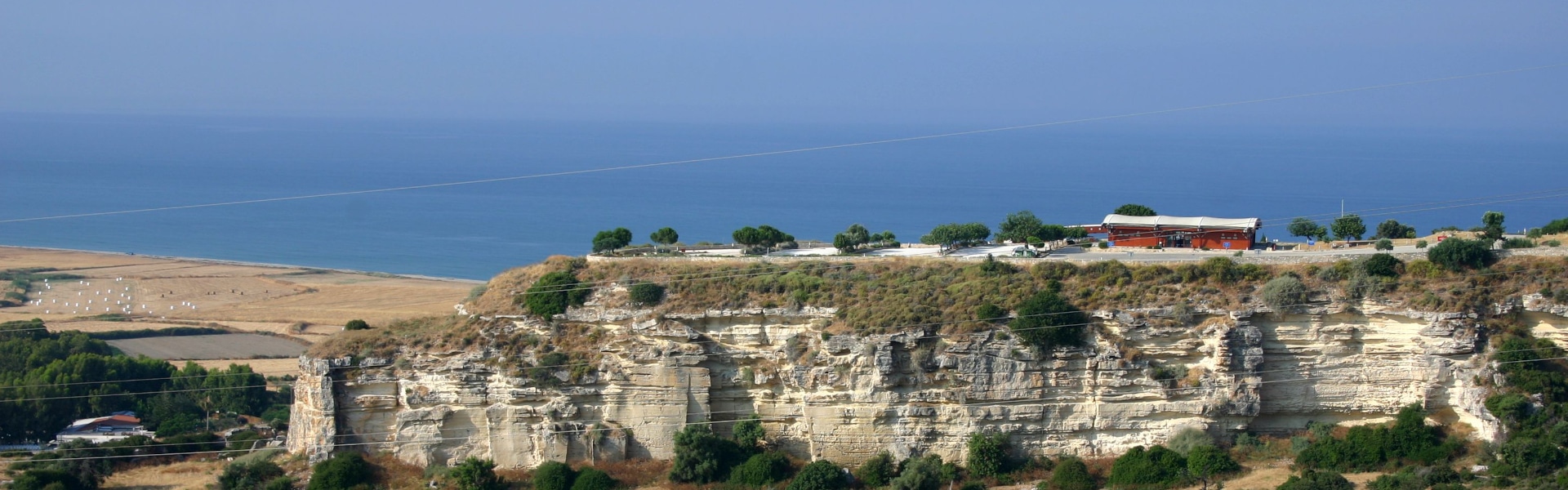

 “Holy City of God, Jerusalem, how I long to stand even now at your gates, and go in, rejoicing!” Around 600 CE, Sophronius, a monk from a monastery near Jerusalem who had been posted to Egypt, Sinai, and North Africa, composed a poem expressing his longing to return to the holy city – a wish that was fulfilled thirty years later when he was appointed patriarch. For Sophronius, not even Alexandria, the cosmopolitan cultural capital of the Mediterranean, could compete with Jerusalem. Sophronius’ words echo Psalm 122:1-3, which was written hundreds of years earlier and attributed to King David: “I was glad when they said to me, ‘Let us go to the house of the Lord!’ Our feet are standing within your gates, O Jerusalem. Jerusalem – built as a city that is bound firmly together.”
 Throughout the ages, pilgrims have shared Sophronius’ desire to stand in the gates of Jerusalem. Why has this poor and isolated mountain town exerted such a powerful hold on billions of people worldwide over the course of millennia? The simple answer is that for followers of the three Abrahamic faiths, Jerusalem is the place where the presence of the God of Israel dwells, and the Last Judgement will take place. It is the meeting point of heaven and earth – the locus of divine and human interaction. In this talk, Prof. Magness explores how these beliefs came to be associated with Jerusalem.
 Her most recent books are Jerusalem Through the Ages: From Its Beginnings to the Crusades (New York: Oxford University, March 2024); and Ancient Synagogues in Palestine: A Reevaluation Nearly a Century After Sukenik’s Schweich Lectures. The Schweich Lectures of the British Academy 2022 (London: The British Academy/Oxford University Press, anticipated publication July 2024). Three of Magness’ books have won awards: Masada: From Jewish Revolt to Modern Myth (Princeton: Princeton University, 2019); The Archaeology of Qumran and the Dead Sea Scrolls (Grand Rapids, MI: Eerdmans, 2002; revised edition 2021); and The Archaeology of the Early Islamic Settlement in Palestine (Winona Lake, IN: Eisenbrauns, 2003). Magness has participated on 20 different excavations in Israel and Greece, including co-directing the 1995 excavations in the Roman siege works at Masada. Since 2011, she has directed excavations at Huqoq in Galilee (