This was the first year of the Tigris Travel Grant program which supports Annual Meeting participation for scholars from Iraq and its Kurdistan Region. These grants, made possible through the generosity of Kiersten Neumann, covered the cost of flights to the Annual Meeting as well as accommodation in the ASOR hotel. The three scholars who received grants share their experiences at the meeting in Boston.
I was the last passenger!
Mustfaa Al-Hussainy presenting on the Ottoman houses of Basra.
Mustfaa Al-Hussainy, Head of Basra’s State Board of Antiquities and Heritage (SBAH)
I received a call from my friend Jaafar Jotheri at 13:30 on November 15th, the same day I travelled to the US through Najaf Airport; he told me that the American Embassy in Baghdad had finally given us the visa. As I live in Basra, 600 km south of Baghdad, I asked him to pick up my passport to save time and make it to Najaf Airport rather than going to Baghdad and then to Najaf. I arrived at Najaf airport at the last minute, and the boarding person welcomed me and said, “You are the last passenger” as I did the check-in just 5 minutes before closing the desk. However, I felt relieved once I arrived at Boston and said, “This is the city of dreams and research achievement.” After enjoying the opening ceremony in the evening, meeting and greeting old friends, and making new ones, I gave my talk on the morning of the first day of the academic programme. My talk was about reviving the old Basra, where I presented the hard work of UNESCO and the Iraqi State Board of Antiquities and Heritage (SBAH) in reconstructing and preserving the Ottoman houses in Basra and supporting the local Museum of Basra. I was impressed with the many attendees and the questions I received. I thanked ASOR, TARII, and the Tigris Travel Grant Program for helping me make it to the US for the first time and giving me the platform to speak about my project. As everyone knows, Iraqi archaeologists have no funding to travel and participate in international conferences.
Mustfaa Al-Hussainy meeting with Barbara Porter.
After finishing my talk, I did my best to attend talks related to Iraq, as there were so many. I was impressed by the high quality of the work, the multidisciplinary nature of the projects, and the sophisticated methodology of research that the international teams were implementing in Iraq. At the same time, while I was listening to these talks, I was trying to ask myself and anyone sitting close to me in the meeting several questions. Why were the presentations about Iraqi archaeology in English, not in Arabic? Why were they presenting their significant findings in the US, instead of Iraq? Why were there no Iraqi scholars co-authoring their papers? Why aren’t these excavations and survey technologies shared with the Iraqis? Why were there no plans or ideas for these local knowledge or public engagement projects? I have been constantly thinking about establishing an Iraqi archaeology school, following in the footsteps of the first Iraqi archaeologists, Taha Baqir and Fouad Safar. This school would be an umbrella under which all Iraqi archaeologists would meet to study and analyze our civilization with an Iraqi eye and opinion based on Iraqi ethnography because, quite simply, similar societies produce similar cultures.
Hasan Ahmed Qasim Berwary, Executive Chairman of Kurdistan Archaeology Organization (KAO)
I wanted to take a moment to convey our sincere gratitude for the recent conference. We truly feel privileged to participate actively in ASOR and believe the event was an outstanding success, spanning various aspects of archaeology and heritage. The work ASOR does in safeguarding antiquities and preserving cultural heritage is of immense value to humanity, and we want you to know how much we appreciate your dedication to this vital mission. We’re already looking forward to future opportunities to contribute, bringing even more discoveries and activities to the fields of heritage and antiquities. Once again, thank you for your unwavering support and guidance. We wholeheartedly support the remarkable work you continue to accomplish in this domain.
My first trip to the US
Jaafar Jotheri, Professor in Landscape Archaeology, University of Al-Qadisiyah, Iraq
Jaafar Jotheri presenting his research on Iraq’s western desert.
Although I have been a member of ASOR for 11 years, this was my first trip to the US and my first time participating in the ASOR annual meeting in person. Two things are challenging for any Iraqi scholar when it comes to attending a conference in the US; one is the complicated process of getting a US visa, and the second is covering the expenses. As for the visa, the American Embassy in Baghdad is not prioritizing visa applications for attending scientific conferences, and that is why it took me three months to process my visa, which was given to me a few hours before my flight to the US. Thanks to the exceptional efforts of TARII in helping me get my visa application considered. As for travel expenses, our Iraqi educational and research institutions are mainly designed for teaching, not research. I always describe them as large schools where there is no funding for conducting research or for traveling to present research at international conferences. Thanks to the Tigris Travel Grant Program for covering my expenses, without which I would not have been able to travel to the US even if I had a visa.
As for my experience at the ASOR meeting, I was impressed with the remarkable organization and coordination of hundreds of talks within only three days. I was also impressed with the multidisciplinary subjects, and the number of publishing houses and journals. I met so many people that I knew or who knew me via social media. I felt that I was made welcome wherever I was talking with someone I knew or someone I just met. The staff and ASOR leadership found time for me despite their busy schedule. They expressed their warm welcome, promised to attend my talk, and kept their promise. I presented the preliminary findings of my research project in the Iraqi western desert that ASOR funded with a Mesopotamian Fellowship. I started by thanking them for the support, as at the beginning, it was hard to convince anyone that there should be something new in the desert worth researching and funding. I must say that after my work in the desert, several research and funding bodies, such as the British Institute for the Study of Iraq (BISI), Endangered Archaeology in the Middle East and North Africa (EAMENA), and The International Association for the Study of Arabia (IASA) started focusing on the area and funding projects in it. I should mention that I made the most of my visit to the US as I visited Baltimore to give a talk at Johns Hopkins University on my recent findings about the ancient irrigation system in southern Mesopotamia. Thanks to Michael Harrower of the Department of Near Eastern Studies for organizing and covering the expenses.
Please e-mail the Membership office if you have any questions.
Pp. 1-56: “The First Tablet of the Ugaritic KrtText, Column II, Lines 4–5: Reading and Reconstruction” by Tommaso Bacci, Tyler J. Harris, Jaeseok Heo, Dennis Pardee, and Alexis Wolf
This article introduces a new reconstruction and critical reading of two partially-damaged lines (4–5), from Tablet I, Column II of the Ugaritic Krt Text (RS 2.[003]+). The first section of this article outlines the lengthy history of previously-offered readings and restorations of these lines. The second section provides a detailed epigraphic analysis and reconstruction, based on new photos of the tablet. Following the proposed reconstruction, the third section offers a philological analysis, including vocalization and translation of relevant portions. The fourth and final section of the article explores pertinent literary considerations around the proposed reconstruction, demonstrating how these lines fit lexically and thematically within the immediate passage and the broader story. This article’s new proposal underscores the significance of Krt’s first refusal of an offer of wealth and precious items after the loss of his household (I 52–II 3)—a key motif that recurs twice more within the KrtEpic (III 33–37; VI 22–27). The holistic approach to reconstruction utilized herein centers around the distribution of terms related to the concepts of “house(hold)” and “progeny/family,” illuminating the poetic techniques used in Krt’s request for a bride, as instructed by the god ʾIlu, and its pivotal role in the unfolding narrative.
ASOR Members with online access: log into ASOR’s Online Portal here. Once logged in, click the JOURNALS tab in the top navigation bar. From here you may select which journal you would like to read. If you have online access, you will see your selected journal’s current issue Table of Contents. Click on the “Current Issue” button and you will then be redirected to the University of Chicago Press’s (UCP) platform to immediately start reading any issue of your choice. Tutorials for how to log in to the Online Portal as well as how to navigate to the Portal Journals page can be found here.
Pp. 57-88: “‘And I Deported ʾAriʾēl, Its Leader, from There’: Line 12 of the Mesha Inscription in Light of Shared Scribal Practices in Moab and Ancient South Arabia,” by Mario Tafferner
Translating the phrase wʾšb . mšm . ʾt . ʾrʾl . dwdh in line 12 of the Mesha Inscription remains problematic. This essay goes beyond previous approaches to interpreting this clause by comparing it to related instances of formulaic language usage in the Old Sabaic royal summary inscription RES 3945/3946. The resulting anaylsis illuminates several aspects of the Moabite phrase: the verbal root underlying the form wʾšb, the type of object represented by ʾrʾl . dwdh, and the identity with which it is associated within the framework of the inscription’s rhetoric. The essay concludes that wʾšb . mšm . ʾt . ʾrʾl . dwdh likely communicates the deportation of a human being that the writers of the account presented as either Israelite or closely associated therewith.
ASOR Members with online access: log into ASOR’s Online Portal here. Once logged in, click the JOURNALS tab in the top navigation bar. From here you may select which journal you would like to read. If you have online access, you will see your selected journal’s current issue Table of Contents. Click on the “Current Issue” button and you will then be redirected to the University of Chicago Press’s (UCP) platform to immediately start reading any issue of your choice. Tutorials for how to log in to the Online Portal as well as how to navigate to the Portal Journals page can be found here.
Pp. 89-95: “Beth-Shemesh East and the lmlkStamped Jar handles: A Rejoinder,” by Lily Singer-Avitz and Yehuda Govrin
The present rejoinder discusses the article published recently in this journal by Gross, Wrathall, Koch, and Lipschits and its conclusions. Their article reviews the lmlk stamped handles found in a limited area of the large-scale salvage excavations conducted during the years 2018–2020 to the east of Tel Beth-Shemesh. According to these partial data they reconstruct the chronology and history of the site. In this rejoinder we present a different set of chronological data as obtained from all the excavation areas which requires another historical reconstruction.
ASOR Members with online access: log into ASOR’s Online Portal here. Once logged in, click the JOURNALS tab in the top navigation bar. From here you may select which journal you would like to read. If you have online access, you will see your selected journal’s current issue Table of Contents. Click on the “Current Issue” button and you will then be redirected to the University of Chicago Press’s (UCP) platform to immediately start reading any issue of your choice. Tutorials for how to log in to the Online Portal as well as how to navigate to the Portal Journals page can be found here.
Pp. 97-142: “A Reedition of Three Palmyrene Funerary Busts at the Barracco Museum in Rome (PAT 1064, 1065, 1759),” by Ali Kesserwani, Jeremy M. Hutton, and Konstantin M. Klein
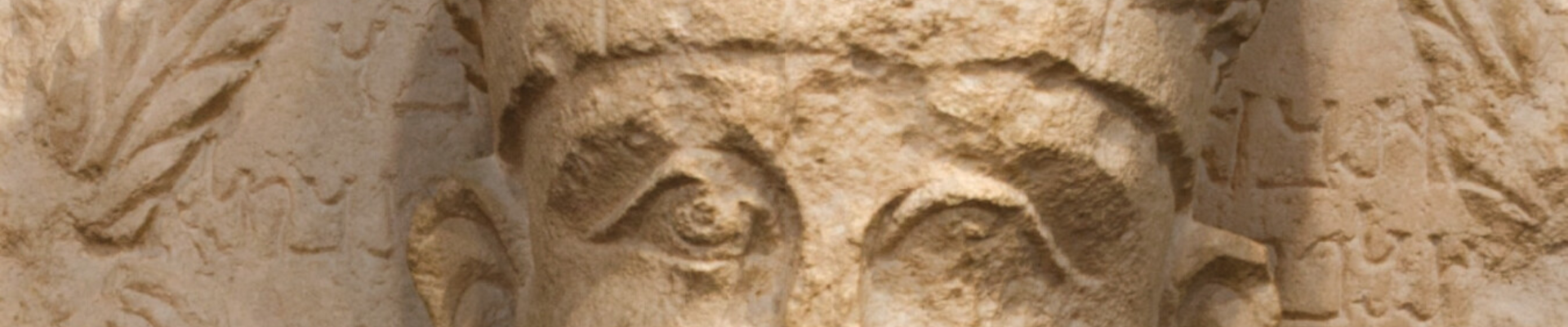
The Museo Barracco di scultura antica (Barracco Museum of Ancient Sculpture, Rome, Italy) houses three Palmyrene funerary busts (PAT 1064, 1065, 1759). In this study, we analyze all three reliefs, providing discussions of their iconographic features, onomastics and prosopography, and script-styles, with particularly detailed descriptions attending the latter. We confirm prior readings and make additional observations regarding the subjects’ professional and social identities.
ASOR Members with online access: log into ASOR’s Online Portal here. Once logged in, click the JOURNALS tab in the top navigation bar. From here you may select which journal you would like to read. If you have online access, you will see your selected journal’s current issue Table of Contents. Click on the “Current Issue” button and you will then be redirected to the University of Chicago Press’s (UCP) platform to immediately start reading any issue of your choice. Tutorials for how to log in to the Online Portal as well as how to navigate to the Portal Journals page can be found here.
Pp. 143-172: “A Scroll of One’s Own? Scribal, Philological, and Literary Aspects of 4QIsak (4Q64),” by Noam Mizrahi
The paper offers a new investigation of a fragmentary Isaiahscroll from Qumran Cave 4, 4QIsak (4Q64), which contains Isa 28:26–29:9. A new material reconstruction of the surviving fragments leads to a detailed evaluation of the scribal properties of the manuscript. The philological analysis of its text vis-à-vis the MT and the other textual witnesses takes into consideration the literary structure and rhetorical design of the prophetic units, leading to some conclusions concerning the nature of this specific scribal artifact and its place within the textual history of Isaiah.
ASOR Members with online access: log into ASOR’s Online Portal here. Once logged in, click the JOURNALS tab in the top navigation bar. From here you may select which journal you would like to read. If you have online access, you will see your selected journal’s current issue Table of Contents. Click on the “Current Issue” button and you will then be redirected to the University of Chicago Press’s (UCP) platform to immediately start reading any issue of your choice. Tutorials for how to log in to the Online Portal as well as how to navigate to the Portal Journals page can be found here.
Pp. 173-218: “A Tale Twice Told—Between Variants and Versions in the Transmission of Mandaic Spells,” by Matthew Morgenstern
In contrast to Mandaic magic spells that have survived in epigraphic sources dating from the fifth to seventh centuries which show considerable literary variation, those attested in manuscript sources—the earliest surviving example of which was copied in the seventeenth century—mostly preserve only a single recension of each spell. One rare exception is a spell that has been incorporated in a longer and shorter recension into two different collections of formulae, Šap̄ta ḏ-Pašar Haršia “The Scroll of the Exorcism of Sorceries” and Šap̄ta ḏ-Mihla ḏ-Sidma ḏ-Sahria u-Kibša ḏ-Daiuia (Pašar Mihla) “The Scroll of Salt, the Restraint of Sahirs and the Subduing of Devs(The Exorcism of Salt).” This article presents an editio princeps of both recensions of this spell with a translation and brief philological notes and emphasizes the importance of examining all available textual witnesses and establishing the relationship between them when such an edition is produced. It is shown that where the two traditions of transmission of this spell are parallel, some of the textual variants appear to reflect slightly different versions of the text that were incorporated into the two collections, while others have probably arisen at a later stage in the transmission of each collection.
ASOR Members with online access: log into ASOR’s Online Portal here. Once logged in, click the JOURNALS tab in the top navigation bar. From here you may select which journal you would like to read. If you have online access, you will see your selected journal’s current issue Table of Contents. Click on the “Current Issue” button and you will then be redirected to the University of Chicago Press’s (UCP) platform to immediately start reading any issue of your choice. Tutorials for how to log in to the Online Portal as well as how to navigate to the Portal Journals page can be found here.
Susan Ackerman ∞ Anonymous ∞ Sheila Bishop ∞ Boston University (in-kind) John Camp Sheldon and Debbie Fox ∞ Charles Harris* Sharon Herbert ∞ Martha and Artemis Joukowsky*
Leon Levy* National Endowment for the Humanities James B. Nies* Katherine Barton Platt* David J. Rosenstein ∞ Richard J. and Joan G. Scheuer* Joe D. Seger ∞ Whiting Foundation World Monuments Fund
Patron ($50,000 – $99,999)
Anonymous ‡ Anonymous Jeffrey A. Blakely and Brauna Hartzell ∞ Catholic Biblical Association Sonya and Richard Coffman ∞ Dorot Foundation Jane DeRose Evans ∞ Lawrence T. Geraty ∞ F. Myron Johnson* J. M. Kaplan Fund
Ann-Marie Knoblauch ∞ La Sierra University Richard Natarian ‡ Orlyn and Deana Nelson B. W. Ruffner ∞ Ann V. Sahlman ◊ Elmar and Darilee Sakala Andy Vaughn ∞ Wendell W. Weir*
Sponsor ($25,000 – $49,999)
Mildred F. Alberg* Altamira Foundation Anonymous ∞ Anonymous ∞ David Berg Foundation Emily Miller Bonney ‡ Douglas Clark ‡ Ted Dodd and Lynn Swartz Dodd ‡ Fox Family Fund Timothy P. Harrison ∞ J. Crayton Pruitt Foundation Oystein and Asta LaBianca ∞ George* and Carol Landes ∞
Christopher MacAllister Sandy MacAllister George E. Mendenhall* Kiersten Neumann ◊ Notre Dame University Alice S.* and Thomas R. Pickering ∞ James Ross* R. Thomas and Marilyn Schaub* H. Katherine Sheeler ∞ Abraham Sofaer and Marian Scheuer Sofaer ∞ Silas and Catherine Vaughn* Virginia Theol. Seminary (includes in-kind) Jeanine Young-Mason ◊
Sustainer ($10,000 – $24,999)
Lisa Marilyn Ackerman ◊ Denise and Stephen Adams Mitchell Allen and Ariadne Prater Americans for Oxford Inc. William Andreas ∞ Anonymous ‡ Andrews University Gary Arbino ∞ Alex and Gretta Brooks James S. Bucko ‡ Robert* and Vivian* Bull Vera R. Campbell Laura and Charles Davis Cleveland H. Dodge Foundation Foundation for Jewish Heritage (London) Jürgen Friede ‡ Paul Gaylo ∞ Ronald D. Geraty Gerda Henkel Foundation Wilfred A. Geschke Ed Gilbert* Eugene Grant* G. Walter Hansen Daniel Hantman Michael Hasel ‡ Peyton R. Helm ◊ Donald Kramer* Samuel H. Kress Foundation Linda Noe Laine Albert Leonard, Jr. ◊ Gary Lindstrom* Lycoming College Alex and Bridget MacAllister ‡ Elizabeth Macaulay ◊ Vincent Mauer ‡ Anne Melvin Andrew Moelis ◊ Hanan Charaf and Robert Mullins ∞ Beth Alpert Nakhai ∞ Teresa and Robert A. Oden, Jr. Pittsburgh Theological Seminary Timothy Potts Suzanne Richard ∞ David and Ruth Seigle ‡ Audrey Shaffer ∞ Harva L. Sheeler* Lydie Shufro ∞ Charles W. Steinmetz Ricardo A. St. Hilaire ◊ Stuart Swiny ◊ University of British Columbia Joseph Weinstein ∞ Alexander Weintraub Donald Whitcomb* and Janet Johnson ◊ Malcolm Hewitt Wiener Keeley and J. Edward Wright ∞
Supporter ($5,000 – $9,999)
Matthew J. Adams ∞ Archaeological Institute of America Lamar Barden ∞ Andrea Berlin Oded and Marcia Borowski ∞ Frances Cahill ‡ Wallace S. Cameron ◊ Duane Clark Margaret E. Cohen ‡ Davidson College P. M. Michèle Daviau ◊ Paul Fitzpatrick ∞ Nan Frederick* George Washington University Patty Gerstenblith and Samuel Gordon Seymour Gitin ∞ Denise Gold ◊ Crawford Greenewalt, Jr.* Alison Acker Gruseke ‡ James W. Hardin ‡ Harvard University John Hoffman Allan B. Hubbard Ice Miller LLP James F. Joyner ∞ Marjorie Kiewit* Phillip J. King* Laurel MacAllister Burton MacDonald Dale Manor ‡ Lee Maxwell Byron McCane ◊ Mark W. Meehl Mary and Charles Midkiff Barbara Miley Christopher Morris Jenna Morton ◊ Nash Family Foundation Barbara Porter ∞ Nader Rastegar William Raynolds ◊ Barbara M. Reeves ‡ Research Foundation of the City University of New York Austin and Norma Ritterspach Marsha Rozenbilt Karen S. Rubinson Virginia M. Snoddy Southwest Baptist Theological Seminary Olin J. Storvick* University of Glasgow University of Michigan University of Victoria Jane C. Waldbaum ∞ Carolyn F. Waldron ∞ Frederick Winter ◊ K. Lawson Younger Jr. Randall Younker ∞
ASOR is grateful to our generous donors and has made every effort to ensure accuracy in recognizing them. Please contact us at info@asor.org if we have made an error in acknowledging you as a donor.
* = Deceased ◊ = 5–9 years of consecutive giving ‡ = 10–14 years of consecutive giving ∞ = 15+ years of consecutive giving
The Damascus Committee represents the interests of ASOR members whose research is centered in Syria. It also represented ASOR’s interest, in the 1960s and 1970s, in establishing a research institute in Damascus.
Please e-mail the Membership office if you have any questions.
Pp. 220–230: “Dealing with and Analyzing Legacy Data: An Interdisciplinary, GIS-based Approach to Study the French Excavations at Enkomi (Cyprus),” by Enrico De Benedictis and Francesca Meneghetti
This article focuses on using GIS to analyze legacy data from the French excavations at the Late Bronze Age site of Enkomi (Cyprus). Despite being a major site for the protohistory of the island, its excavations were never fully published, while the only available publications are partial and nonorganic. Given their unreliable nature, scholarship can only partially use the results of the French mission. However, our multidisciplinary approach that uses GIS, archival data, and museum archaeology may contribute to bringing back these data again by removing the reasons that caused their dismissal. We tackle the issues of legacy data related to the site, its archaeological documentation and study, followed by the interdisciplinary methodology adopted and a case study from Quarter 3 East of Enkomi that confirms the validity of the method proposed.
ASOR Members with online access: log into ASOR’s Online Portal here. Once logged in, click the JOURNALS tab in the top navigation bar. Tutorials for how to log in to the Online Portal as well as how to navigate to the Portal Journals page can be found here.
Pp. 232-242: “A Reconstruction of the Niche in Building 7050 at Hazor,” by Jennie Ebeling and Laura Mazow
In this article we offer new evidence in support of the function of Building 7050 at Tel Hazor as a temple. One criterion the excavators use to argue its function as a palace is a clay installation they describe as a “bathtub” or “bathtub-like structure” built into the rear niche of the building. Our analysis, however, suggests a storage function is more likely. We then offer a new reconstruction of Building 7050 and the features in the rear niche, including the storage bin, a previously ignored stone base, and a bench, proposing their ritual significance. We further demonstrate the architectural parallels between Building 7050 and Hazor’s Orthostat Temple in Stratum 1B, with which Building 7050 is contemporary. This new analysis of Building 7050 contributes to our understanding of the religious landscape of the Late Bronze Age Levant.
ASOR Members with online access: log into ASOR’s Online Portal here. Once logged in, click the JOURNALS tab in the top navigation bar. Tutorials for how to log in to the Online Portal as well as how to navigate to the Portal Journals page can be found here.
Pp. 244-250: “Two Unpublished Pot Marks of Dynasty 3 from the Necropolis of Beit Khallaf (Abydos, Egypt),” by Ilaria Incordino
This article introduces two previously unknown pot marks on ceramics from the Third Dynasty (ca. 2686–2613 BCE) necropolis of Beit Khallaf (Abydos, Egypt). The analysis and publication of the funerary equipment of the five burials from this site is the main objective of a wider project that dealt more generally with the chronological problems of this period. The documentation of the funerary equipment of the tombs from Beit Khallaf, (mostly unpublished) focuses on a better understanding of the characteristics of grave goods of mastabas from the Early Dynastic period, and on the possibility that the main burial of the site, tomb K1, may be considered a royal tomb.
ASOR Members with online access: log into ASOR’s Online Portal here. Once logged in, click the JOURNALS tab in the top navigation bar. Tutorials for how to log in to the Online Portal as well as how to navigate to the Portal Journals page can be found here.
Pp. 252-263: “The Petroglyphs of Qeydu Valley in Teymare, Central Iran: New Findings, Stylistic Analysis, and Relative Dating,” by Ebrahim Karimi and Hassan Gharagouzloo
Situated within the Teymare region, Qeydu Valley comprises one of the largest concentrations of petroglyphs in central Iran. The fieldwork conducted by the authors resulted in the identification of a large number of petroglyphs that had not been previously identified. The previously reported sites were also reidentified and systematically recorded. Some abstract markings in Qeydu resemble those known as Tamgas in Central Asian and Mongolian rock art. Stylistic features of the petroglyphs are analyzed, and relative dating approaches suggest that some engravings were made during the Islamic and historical periods.
ASOR Members with online access: log into ASOR’s Online Portal here. Once logged in, click the JOURNALS tab in the top navigation bar. Tutorials for how to log in to the Online Portal as well as how to navigate to the Portal Journals page can be found here.
Pp. 264-275: “Ancient Cave Habitation of Kuy-e Keyvan, Azna, East Central Zagros, Iran,” by Behzad Hoseyni Sarbisheh, Samer Nazari, and Fatemeh Zeynali Khaledabadi
In 2018, parts of an underground building were unearthed during excavations at Kuy-e Keyvan, located in the city of Azna, Lorestan province, Iran. The site was destroyed and leveled in considerable portions as part of the city’s urban development plan. Work commenced on an archaeological rescue project to identify the architectural spaces, prepare a plan, and investigate the site function in June 2019. It covered an area larger than one and a half hectares and yielded twenty-five spaces—containing rooms and communication pathways—with pottery sherds, bones, and metal artifacts dating to the Parthian, Sassanid, and early–mid Islamic periods. The use of these underground structures is unknown, but the location of underground structures beneath the Kuy-e Keyvan site, along with the existence of rooms and corridors where pottery has been discovered, suggest that they served as a residential and shelter area. However, it is possible that some underground structures served a (temporary?) religious purpose.
ASOR Members with online access: log into ASOR’s Online Portal here. Once logged in, click the JOURNALS tab in the top navigation bar. Tutorials for how to log in to the Online Portal as well as how to navigate to the Portal Journals page can be found here.
Pp. 276-285: “An Incised Decorated Bone Inlay from the Hittite Empire Period Found at Boğazköy/Hattusa,” by Andreas Schachner
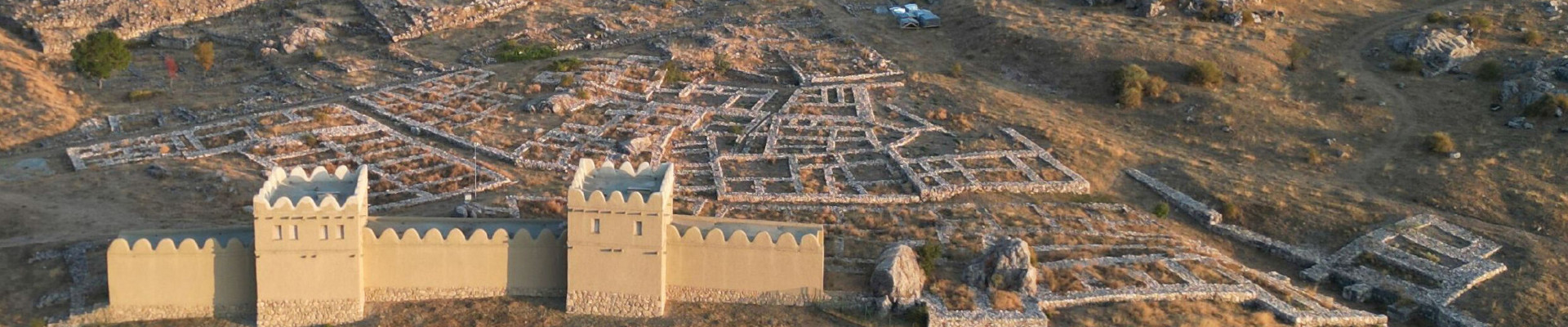
During new excavations carried out since 2022 on the B¨y¨kkale Northwest Slope, which connects the two poles of the Hittite capital Hattusa—the palace area on B¨y¨kkale and the Lower Town—a unique ivory inlay was found in 2023. The antithetical depiction shows a sphinx and a lion in front of a tree of life. Per numerous iconographic details, this find provides unprecedented first-hand insights into the cultural relations between the states in the eastern Mediterranean, Anatolia, the Aegean, and Mycenae in the Late Bronze Age. As this piece can be well dated to the late phase of the Hittite Empire, both iconographically and through radiocarbon dating, it provides unexpected evidence for the integration of the Hittite heartland into this network of relationships as well as to the end of the Late Bronze Age international network of states.
ASOR Members with online access: log into ASOR’s Online Portal here. Once logged in, click the JOURNALS tab in the top navigation bar. Tutorials for how to log in to the Online Portal as well as how to navigate to the Portal Journals page can be found here.
Pp. 286-292: “Shared Motifs among Neighbors: Small-Scale Objects, Hegemony, and Cultural Influence in the Late Bronze and Iron Age Levant,” by Shane M. Thompson
This article examines the presence of small-scale objects (i.e., pottery, scarabs, seals, etc.) in the Late Bronze and Iron Age Levant as a means by which to measure the impact of foreign rule on the nonelites. It concludes that these objects are not useful to discussions of Assyrian, Egyptian, or Hittite hegemony, but rather that they are additional support for the interconnectivity of the Late Bronze and Iron Ages. In fact, these objects are expected to appear in the archaeological record of neighbors. This article, then, cautions against using material culture, especially small-scale material culture, as a means by which to draw large conclusions.
ASOR Members with online access: log into ASOR’s Online Portal here. Once logged in, click the JOURNALS tab in the top navigation bar. Tutorials for how to log in to the Online Portal as well as how to navigate to the Portal Journals page can be found here.
Pp. 294-299: “A Late Period Model Block Headrest from the Northeastern Nile Delta,” by Nicky Nielsen
Headrests made from various materials and in a variety of shapes were used throughout the pharaonic civilisation and across social classes. Aside from their functionality in life, headrests formed a core component of funerary assemblages. During the Late period, the full-size functional headrests were replaced (or augmented) in private tombs assemblages by smaller amuletic and model headrests. This article presents a newly discovered rare type of model block headrest carved from limestone and found at the site of Tell Nabasha in the northeastern Nile Delta. The argument is made that the model headrest was carved during the fourth century BCE from limestone gathered from a disused temple structure at the site, and that the artifact was intended for deposition within the large Late period necropolis also associated with Tell Nabasha.
ASOR Members with online access: log into ASOR’s Online Portal here. Once logged in, click the JOURNALS tab in the top navigation bar. Tutorials for how to log in to the Online Portal as well as how to navigate to the Portal Journals page can be found here.
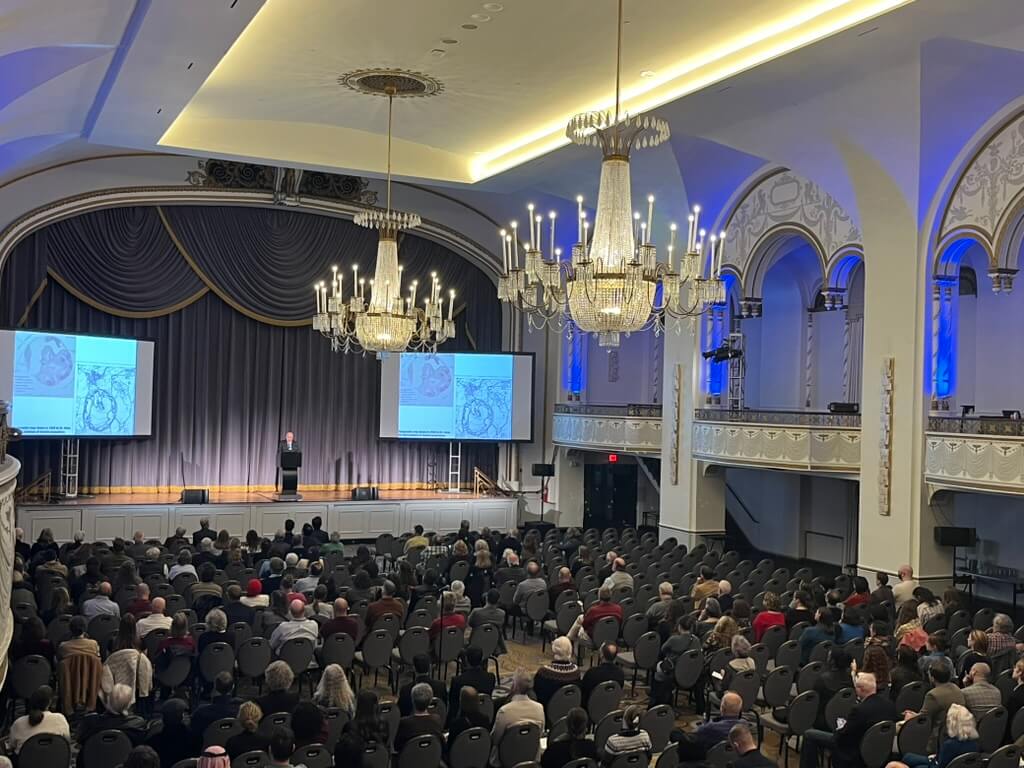
ASOR held its second hybrid meeting last month, November 20-23, at the Hilton Boston Park Plaza and online. More than 1,000 people were registered for the meeting with approximately 850 attending in Boston.
The hybrid format of the meeting offered a way for attendees in Boston and online to share their research on an international platform. There were more than 600 paper, poster, and workshop presentations given on the academic program. ASOR’s Annual Meeting Mobile App (powered by Guidebook) provided means for in-person and virtual attendees to connect and to build personalized schedules.
If you attended the 2024 Annual Meeting in Boston or online, please complete the 2024 Annual Meeting Evaluation to provide valuable feedback that will be considered as we plan for 2025 and beyond.
Read on for a summary of the 2024 Annual Meeting, including features from the academic program, the business schedule, special events, and the 2024 ASOR Honors & Awards.
The 2024 Hybrid ASOR Annual Meeting opened on Wednesday, November 20, with the Plenary Address by Dr. Fikri Kulakoğlu (Professor of Archaeology at Ankara University and director of the Kültepe excavations since 2006) titled, Transition from Early Bronze Age to Middle Bronze Age at Kültepe: Architecture, Figurines and Seals. The presentation generated a lot of discussion and enthusiasm which continued throughout the evening at the Welcome Reception. View the Opening Remarks from ASOR’s Executive Director and President, as well as the Plenary Address by Dr. Fikri Kulakoğlu here.
ASOR provided laptops for each meeting room so that presentations could be pre-loaded and tested and Zoom connections were set-up in advance.
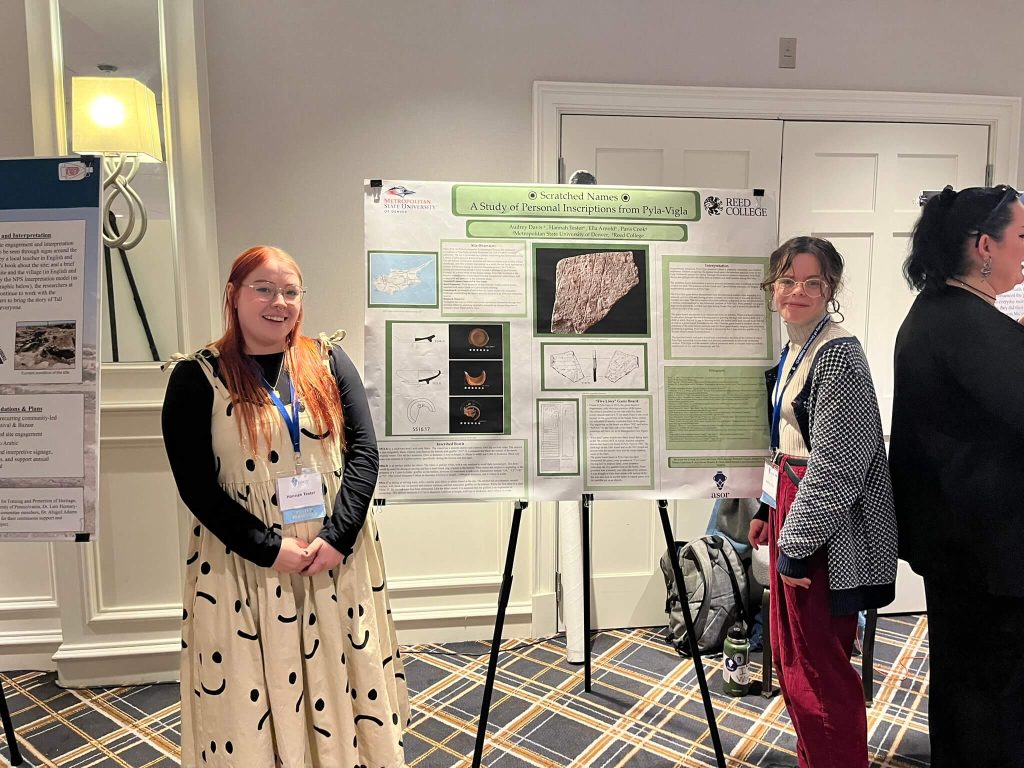
The sessions, workshops, and posters on the academic program took place Thursday-Saturday, November 21-23, over 127 time-slots with presenters representing 32 countries. The Poster Session featured 30 projects shared in Boston, as well a virtual poster gallery. Online attendees could join sessions and workshops via Zoom from the 2024 ASOR Online Schedule. Session and workshop organizers were supported by assistants who were trained to facilitate the hybrid logistics of the meeting.
The recorded content of the Annual Meeting is being edited and will be available to registered attendees via the ASOR Online Portal / 2024 Online Schedule through July of 2025. Registration include access to past Annual Meeting content in the ASOR Online Library. Register for the 2025 ASOR Annual Meeting or purchase access to the ASOR Online Library in the ASOR Online Portal.
The Exhibit Hall at the Hilton Boston Park Plaza included publishers, book sellers, an antiquarian, and booths by 2024 Annual Meeting sponsors, Chicago University Press (Platinum Sponsor), ISD (Platinum Sponsor), and Kiosk (Silver Sponsor). Attendees browsed the exhibits on the centrally located Mezzanine foyer between sessions and during sponsored coffee breaks.
Attendees in Boston enjoyed several special events at the Hilton Boston Park Plaza, as well as complimentary access to the Museum of Fine Arts and the Harvard Museum of the Ancient Near East. Events at the Hilton Boston Park Plaza included the Early Career Scholars brown-bag lunch panel, Roundtable Discussions, and the Exhibit Raffle. Receptions were hosted during the event by ASOR, the W. F. Albright Institute for Archaeological Research (AIAR), and the Cyprus American Archaeological Research Institute (CAARI). The Harvard Museum of the Ancient Near East (HMANE) hosted a private reception for ASOR attendees on Saturday evening after the meeting ended.
ASOR would like to thank everyone who participated and contributed to the success of the 2024 Annual Meeting. Please enjoy some of the memorable moments captured in the photo album below, and we hope you will continue to enjoy the recorded content from the meeting through June 2025.
Please mark your calendars for ASOR’s 2025 Annual Meeting at the Hilton Boston Park Plaza and online, November 19–22. The Call for Member-Organized Session & Workshop proposals will be open from December 15, 2024 – January 15, 2025.
Transparency is very important to ASOR. This webpage contains ASOR’s audited financial statements since Fiscal Year 2001 and the IRS Forms 990 since Fiscal Year 2000. If you have any questions, please contact ASOR’s Executive Director, Andy Vaughn.
Who Were the Thracians? Exploring an Enigmatic Ancient Culture at the Getty Villa Museum
Friends of ASOR present the next webinar of the 2024-2025 season on December 4, 2024, at 7:00 pm EST, presented by Dr. Sara E. Cole. This webinar will be free and open to the public. Registration through Zoom (with a valid email address) is required. Please note that this webinar will not be recorded.
The land of ancient Thrace comprised present-day Bulgaria, much of Romania, and parts of Greece and Turkey, and the tribal peoples who inhabited these territories of the North Aegean region were the Thracians. They were renowned for their skill as warriors and horsemen, as well as for their wealth in precious metals, but they left few written records, and knowledge of their history and customs has long been dependent on brief accounts from ancient Greek authors, particularly Herodotus and Thucydides. Thracians appeared in Greek myth as formidable adversaries in the Trojan War, cruel kings, and followers of the god of spiritual ecstasy, Dionysos. Spectacular archaeological discoveries made in Thracian lands during modern times, however, have provided firsthand evidence of this remarkable culture, illuminating Thrace’s interactions with Greece, Persia, and Rome.
This rich history is the subject of the current special exhibition at the Getty Villa Museum in Los Angeles, Ancient Thrace and the Classical World: Treasures from Bulgaria, Romania, and Greece (on view November 4, 2024 – March 3, 2025). The exhibition, which is organized by the J. Paul Getty Museum in collaboration with the Ministry of Culture, Republic of Bulgaria, and the National Archaeological Institute with Museum at the Bulgarian Academy of Sciences (NAIM-BAS), is part of the Getty’s ongoing series The Classical World in Context, which includes major international loan exhibitions, related publications, and programming that feature the diverse cultures and civilizations that interacted with and influenced Greece and Rome. In this lecture, Sara E. Cole, associate curator of antiquities at the J. Paul Getty Museum and one of the exhibition’s co-curators, will discuss the Getty’s presentation of Thracian history, culture, and art.
Dr. Sara E. Cole holds a PhD in Ancient History from Yale University and is an associate curator of antiquities at the Getty Villa Museum in Los Angeles, CA. Before joining the Getty in 2016, she served as the graduate curatorial intern in the antiquities department of the Yale University Art Gallery, where she worked with the YUAG’s collection of ancient glass and curated the 2017 exhibition “Drink That You May Live”: Ancient Glass from the Yale University Art Gallery.
Sara is managing curator of the Getty’s ongoing initiative The Classical World in Context and she has curated or co-curated multiple Getty exhibitions exploring the ancient cultures of Egypt, Mesopotamia, Nubia, Persia, and Thrace. She co-edited the 2022 Getty exhibition catalogue Persia: Ancient Iran and the Classical World, which won the Association of American Publishers PROSE Award in the category “Art Exhibitions.” The 2018 Getty exhibition catalogue Beyond the Nile: Egypt and the Classical World, which she also co-edited, was a finalist for the College Art Association Alfred H. Barr Jr. Award and the Association of American Publishers PROSE award in the category “Art Exhibitions.”
SPONSOR A WEBINAR!
Several levels of support from $50-$1,000 are available. Proceeds go towards membership scholarships and towards increasing ASOR’s virtual resources. Each sponsorship is tax-deductible and includes benefits! Sponsor a webinar here.
Please e-mail the Membership office if you have any questions.
Pp. 1-20: “Terra-cotta Roof Tiles in the Ancient Synagogues of Judaea/Palaestina,” by Mechael Osband
Terra-cotta roof tiles are some of the most common and volume-intensive finds in the excavation of ancient synagogues, but their significance has received only minor consideration. This article reviews the evidence for terra-cotta roof tiles, which were the preferred roofing used in ancient synagogues in the Late Roman and Byzantine periods. A change took place from non-tiled roofs in Early Roman synagogues to the common use of terra-cotta roof tiles in the later synagogues. It will be suggested that this shift in roofing style was not merely a functional one, but part of the broader developments in synagogue-building, from a place of gathering in the Early Roman period, with an unassuming flat roof, to a more ornate and monumental structure (both internally and externally) with a prominent high tiled roof in plain view.
ASOR Members with online access: log into ASOR’s Online Portal here. Once logged in, click the JOURNALS tab in the top navigation bar. Tutorials for how to log in to the Online Portal as well as how to navigate to the Portal Journals page can be found here.
Pp. 21-54: “Reconstructing Late Prehistoric Occupation in the Southern Levant: Irbid as a Case Study for Settlements and Funerary Patterns,” by Antoine Caminada, Tara Steimer-Herbet, Lamia Al-Khoury, and Marie Besse
The region of Irbid (Jordan) in the southern Levant has been known for its megalithic structures since the end of the 19th century. But despite hundreds of dolmens inventoried, it has never been the subject of an in-depth study. This article contributes to a better understanding of human occupation in the area during the 4th and 3rd millennium B.C.E., based on unpublished data collected in September 2005 by a co-directed Jordanian and French mission (University of Yarmouk and the French Institute of the Middle East–Institut français du Proche-Orient Damascus). Data acquisition analysis was realized thanks to a Geographic Information System (GIS) allowing the authors to map and study the spatial relationships between the various elements, with an emphasis on the relationship between the funerary and domestic spheres. By placing the dolmen necropoleis and settlement sites (both double-apsed and rectangular houses) of the north Jordanian Plateau within the general context of the southern Levant, the authors question the “classic” model linking nomadism and megalithism, and bring forward a more sedentary perspective.
ASOR Members with online access: log into ASOR’s Online Portal here. Once logged in, click the JOURNALS tab in the top navigation bar. Tutorials for how to log in to the Online Portal as well as how to navigate to the Portal Journals page can be found here.
Pp. 55-82: “The Tepe Gawra Lower Town Survey 2022,” by Khaled Abu Jayyab, Ira Schwartz, Abbas Al-Hussainy, Stephen Batiuk, Arno Glasser, and Hossam Hadi
Tepe Gawra has long been seen as an essential site for late prehistoric and early historic periods, not only in Iraq but for the entirety of northern Mesopotamia. This importance stems from its long sequence, and its implications for understanding the development of societal complexity. Despite its small size, Tepe Gawra has produced evidence of highly specialized practices that overshadowed farming. This has led to the suggestion that the site was a “center” at the top of an administered network. Some scholars have challenged this assertion and suggested that the site had a lower town, which acted as the source of agriculture goods for the site. Since the area had been closed off to archaeological work this debate has not been resolved. Through recent survey work around Tepe Gawra, the authors show that there was an extensive lower town dating to the Late Chalcolithic and Early Bronze Age stages of occupation. These findings show that Tepe Gawra was a large self-sustaining settlement exploiting its own agricultural hinterland.
ASOR Members with online access: log into ASOR’s Online Portal here. Once logged in, click the JOURNALS tab in the top navigation bar. Tutorials for how to log in to the Online Portal as well as how to navigate to the Portal Journals page can be found here.
Pp. 83-110: “Biography of a Neo-Assyrian Relief Fragment from Nineveh,” by Irene Bald Romano, Kelly Ann Moss, and Gina Watkinson
This article presents the biography of a Neo-Assyrian gypsum relief fragment from Ashurbanipal’s 7th century b.c.e. North Palace at Nineveh, now in the Arizona State Museum, University of Arizona. Its discovery by British explorers in late 1853 or early 1854, its journey to the United States, probably in the mid-19th century through missionaries in Ottoman Mesopotamia, its connection with the circus impresario P. T. Barnum and Tufts College, and its acquisition in 1959 by the Arizona State Museum are discussed, along with the changing uses and meaning of the object in its various contexts. The fragment depicts fat-tailed sheep being led in procession by a royal eunuch. It is related to a larger relief fragment in the British Museum that was positioned to the right of this fragment, allowing some conclusions about its probable location within the North Palace and interpretations concerning its iconography.
ASOR Members with online access: log into ASOR’s Online Portal here. Once logged in, click the JOURNALS tab in the top navigation bar. Tutorials for how to log in to the Online Portal as well as how to navigate to the Portal Journals page can be found here.
Pp. 111-137: “The Parthian Manor House of Sarab-e Murt in the Context of the Iranian Architectural Tradition,” by Yousef Moradi
This article presents the results of archaeological field excavations at the site of Sarab-e Murt, located on the outskirts of the town of Gilan-e Gharb in the Kermanshah province of Iran. The investigations, conducted in 2007 and 2008, brought to light an extraordinary royal residence dating back to the Late Parthian period. The aim of this article is to contextualize the architectural design and layout of the Sarab-e Murt building within the broader landscape of palatial architecture in the Iranian world, with historical roots extending as far back as the Achaemenid period. By examining the development of the plans of palatial houses, we gain valuable insights into the dynamics of change across both time and space. Furthermore, this article seeks to advance hypotheses concerning the origins of Parthian ayvan-style houses plans within the larger context of the Iranian cultural sphere.
ASOR Members with online access: log into ASOR’s Online Portal here. Once logged in, click the JOURNALS tab in the top navigation bar. Tutorials for how to log in to the Online Portal as well as how to navigate to the Portal Journals page can be found here.
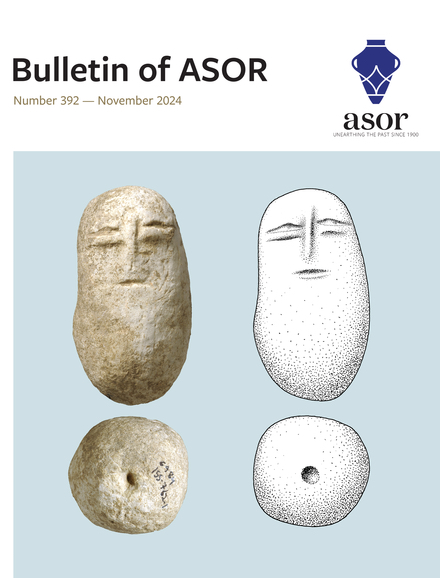
Pp. 139-149: “The Lost Look: A Human Neolithic Figurine from Horbat Sasay (Israel),” by Ianir Milevski and Alla Nagorsky
A human figurine carved on a large limestone cobble was found in the excavations of Horbat Sasay, conducted on behalf of the Israel Antiquities Authority. It schematically portrays eyes and a mouth and, like other types of human head representations found in the region, it is suggested that it belongs to the southern Levantine Neolithic period. Together with the description of the figurine, comparisons are presented to other known figurines depicting the human face from the Levant and other nearby regions, as well as an interpretation of these human faces and their expressions in relation to the drastic changes that occurred in these regions during the so-called Neolithic revolution and the social organization of the late prehistoric communities of the Levant.
ASOR Members with online access: log into ASOR’s Online Portal here. Once logged in, click the JOURNALS tab in the top navigation bar. Tutorials for how to log in to the Online Portal as well as how to navigate to the Portal Journals page can be found here.
Pp. 151-177: “Defending the Vedi River Valley of Armenia: The Fortification and Refortification of a Flatland-Mountain Interface,” by Peter J. Cobb, Elvan Cobb, Hayk Azizbekyan, Artur Petrosyan, and Boris Gasparyan
The mountainous topography of the Armenian Highlands and the South Caucasus accentuates the importance of valleys as areas of habitation and as conduits among these interspersed settlement areas. The Vedi River Valley of Armenia, located along the southeastern edge of the Ararat Plateau (Plain), serves as one such important transportation route in and through these highland areas. At the center of the mouth of this valley sits the prominent Vedi Fortress, ideally situated for defense of this route and landscape. The site was first fortified during the Late Bronze Age, perhaps during the centralization of power by a local polity contained within the valley. Burned down and abandoned at the end of the Iron Age I, the fortress would then see varied reuse through several later periods given its prominent location and proximity to other local power centers. Of particular importance is its refortification during the Early Medieval (Late Antique) period, when Armenia was under Sasanian Persian suzerainty. This article presents the results of archaeological fieldwork in this valley and at the fortress, followed by a discussion of the landscape’s fortification and refortification during these two periods. The Vedi River Valley provides a case study for examining control, mobility, and the negotiation of local and remote power within the specific contained landscape of a river valley in mountainous terrain.
ASOR Members with online access: log into ASOR’s Online Portal here. Once logged in, click the JOURNALS tab in the top navigation bar. Tutorials for how to log in to the Online Portal as well as how to navigate to the Portal Journals page can be found here.
Pp. 179-205: “Revisiting Late Iron Age En-Gedi: A Stratigraphic Reassessment of Stratum V at Tel Goren,” by Avraham Mashiach and Uri Davidovich
The oasis of En-Gedi, on the western shore of the Dead Sea, served during the late Iron Age as a regional hub for the Judahite activity in the Judean Desert. The main Iron Age site in En-Gedi is Tel Goren, a small mound in the oasis plain, excavated in the 1960s by Benjamin Mazar and Immanuel Dunayevsky. The exposed Iron Age remains, attributed to the lowermost occupation (Stratum V), yielded substantial material assemblages associated with a thick destruction layer dated to the early 6th century b.c.e. The excavators interpreted the site as an unfortified, short-lived agricultural estate dedicated to the production of high-valued commodities. Drawing on a critical reassessment of past excavations, coupled with new evidence gathered in small-scale excavations conducted in 2020, it is suggested that the development of late Iron Age Tel Goren was a gradual process that involved at least two major phases, as well as the construction of a fortified compound on the summit of the hill. The implications of this suggestion are further examined within the broader regional and historical context, shedding new light on the multiphase trajectory of Judah’s expansion into its eastern fringe during the late monarchic period.
ASOR Members with online access: log into ASOR’s Online Portal here. Once logged in, click the JOURNALS tab in the top navigation bar. Tutorials for how to log in to the Online Portal as well as how to navigate to the Portal Journals page can be found here.
Pp. 207-237: “Dine and Worship: The Roman Complex in Front of the Pan Grotto in Paneas/Caesarea Philippi,” by Adi Erlich and Ron Lavi
Paneas, situated at the foot of mount Hermon, is where the Hermon River emerges from a spring at the foot of a cliff with a natural cave. In the Hellenistic and Roman periods, the cave and nearby terrace served mainly for the cult of Pan. Herod the Great built in Paneas a temple to Augustus, and his son erected there his capital, Caesarea Philippi. A salvage excavation was recently conducted in front of the cave in the area that formerly was identified as Herod’s Augusteum. The new excavations have proven that during the Roman period, the place was unroofed and open to the cave, which was full of water. The water flowed out through a large aqueduct, water installations were constructed in the courtyard, and niches flanked on the west and east. The complex is dated to the last third of the 1st century c.e. and is attributed to Agrippa II, who built there a nymphaeum-triclinium facing a grotto in Italian style. Afterward, the courtyard was used as a cult place to Pan, and hydromantic rituals were performed in the cave. The sources for this complex will be discussed, as well as the changes that took place there through time.
ASOR Members with online access: log into ASOR’s Online Portal here. Once logged in, click the JOURNALS tab in the top navigation bar. Tutorials for how to log in to the Online Portal as well as how to navigate to the Portal Journals page can be found here.
Morganne Ottobre, winner of the 2023 Student Paper Award.
ASOR is accepting applications for the 2024 Student Paper Award. This award is conferred upon the author(s) of a paper presented (in-person or online) during the 2024 hybrid ASOR Annual Meeting that conveys the results of a study about ancient Near Eastern and wider Mediterranean societies in a clear, understandable and convincing fashion. The first author and presenter of the paper must be a registered student at the time of presentation in order to be eligible for consideration for this award. This year the award is accompanied by a $500 prize.
Students will need to complete the following steps by November 6 to be considered for the award:
1. Please complete this Google Form in order to apply for the Student Paper Award.
2. Submit your pre-recorded paper presentation (mp4 video, 20 minutes maximum) by November 6 to Jared Koller (jaredkoller@asor.org) using a DropBox link or other file sharing method.
Applications and recorded paper presentations are both due by November 6.
Please note that this award is independent of the Sean Dever Memorial Prize, which is conferred by the W.F. Albright Institute of Archaeological Research. To learn more about Awards presented at the Annual Meeting, please visit the Honors and Awards page. For questions and inquiries please email info@asor.org.










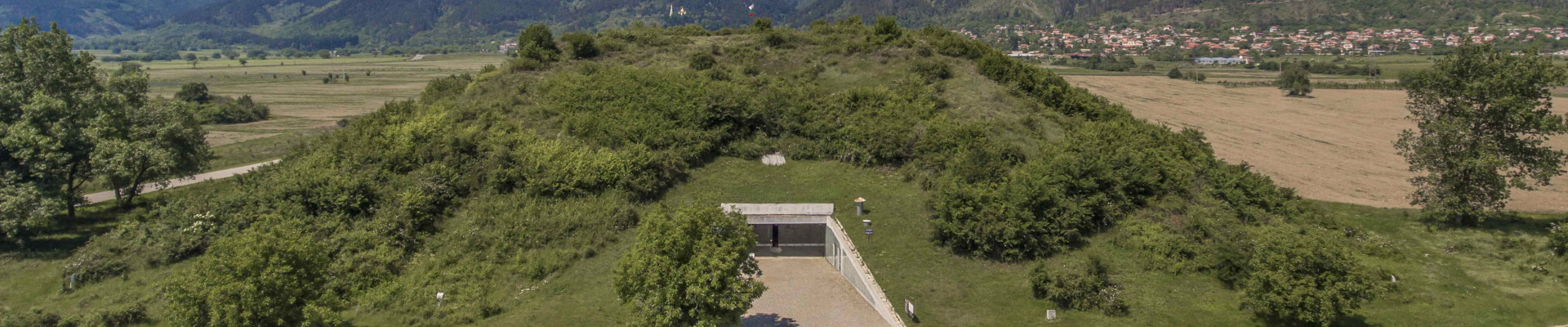

 The land of ancient Thrace comprised present-day Bulgaria, much of Romania, and parts of Greece and Turkey, and the tribal peoples who inhabited these territories of the North Aegean region were the Thracians. They were renowned for their skill as warriors and horsemen, as well as for their wealth in precious metals, but they left few written records, and knowledge of their history and customs has long been dependent on brief accounts from ancient Greek authors, particularly Herodotus and Thucydides. Thracians appeared in Greek myth as formidable adversaries in the Trojan War, cruel kings, and followers of the god of spiritual ecstasy, Dionysos. Spectacular archaeological discoveries made in Thracian lands during modern times, however, have provided firsthand evidence of this remarkable culture, illuminating Thrace’s interactions with Greece, Persia, and Rome.
 Dr. Sara E. Cole holds a PhD in Ancient History from Yale University and is an associate curator of antiquities at the Getty Villa Museum in Los Angeles, CA. Before joining the Getty in 2016, she served as the graduate curatorial intern in the antiquities department of the Yale University Art Gallery, where she worked with the YUAG’s collection of ancient glass and curated the 2017 exhibition “Drink That You May Live”: Ancient Glass from the Yale University Art Gallery.