NEWS@ASOR

News@ASOR is a bi-monthly e-newsletter tailored to the interests of ASOR members. The e-newsletter delivers updates on events in the field, organizational news, and highlights from the world of ASOR. Click here for past single article news items organized month by month. This e-newsletter replaced the previous ASOR Blog. News@ASOR is supported by the generosity of the Kershaw Family Trust.

The goals of the e-newsletter are to:

2026

The ASOR Newsletter print newsletter was replaced by e-newsletters. When it was being published, the ASOR Newsletter presented brief summaries of research work done under the auspices of ASOR and reports on the various activities of ASOR’s overseas centers in Amman, Jerusalem, and Nicosia. Issues also contained announcements of various scholarly seminars, the ASOR Annual Meeting, and fellowship opportunities. The Newsletter was published regularly, with approximately 16 pages per issue.

Past Issues

ASOR NEWSLETTERS

ASOR NEWSLETTERS

News@ASOR is a bi-monthly e-newsletter tailored to the interests of ASOR members. The e-newsletter delivers updates on events in the field, organizational news, and more. News@ASOR is supported by the generosity of the Kershaw Family Trust.

The goals of the e-newsletter are to:


Past Issues

The Ancient Near East Today. This e-newsletter is a platform that disseminates ideas, insights, and discoveries to Friends of ASOR. You can become a Friend for free, you only need to register. The Ancient Near East Today is delivered to your inbox on every Thursday of the month and features links to exclusive contributions from scholars, a forum featuring debates about interpretations of findings from the field, and links to news and resources. The ANE Today covers the entire Near East, and each issue presents discussions ranging from the state of biblical archaeology to archaeology after the Arab Spring. Sign up today!

Past Issues

The ASOR Newsletter. This print newsletter has been replaced by e-newsletters. When it was being published, the ASOR Newsletter presented brief summaries of research work done under the auspices of ASOR and reports on the various activities of ASOR’s overseas centers in Amman, Jerusalem, and Nicosia. Issues also contained announcements of various scholarly seminars, the ASOR Annual Meeting, and fellowship opportunities. The Newsletter was published regularly, with approximately 16 pages per issue.

Past Issues

ASOR PUBLICATIONS ORDERING INFORMATION

[vc_row fullwidth=”true” css=”.vc_custom_1490224714943{padding-top: 0px !important;padding-right: 0px !important;padding-bottom: 0px !important;padding-left: 0px !important;}”][vc_column][vc_single_image image=”24985″ img_size=”full” alignment=”center”][/vc_column][/vc_row][vc_row][vc_column][vc_column_text][/vc_column_text][/vc_column][/vc_row][vc_row fullwidth=”true” css=”.vc_custom_1490225468623{padding-top: 0px !important;padding-right: 0px !important;padding-bottom: 0px !important;padding-left: 0px !important;}”][vc_column width=”1/12″ css=”.vc_custom_1490225195470{margin-right: 10px !important;}” offset=”vc_hidden-sm vc_hidden-xs”][vc_column_text]

  SHARE

[/vc_column_text][mk_image src=”http://www.asortest.org/wp-content/uploads/2017/01/social-fb-icon4.jpg” image_width=”42″ image_height=”42″ hover=”false” custom_url=”https://www.facebook.com/ASOResearch/” margin_bottom=”0″][mk_image src=”http://www.asortest.org/wp-content/uploads/2017/01/social-tw-icon4.jpg” image_width=”42″ image_height=”42″ hover=”false” custom_url=”https://twitter.com/ASOResearch?ref_src=twsrc%5Egoogle%7Ctwcamp%5Eserp%7Ctwgr%5Eauthor” margin_bottom=”0″][mk_image src=”http://www.asortest.org/wp-content/uploads/2017/01/social-in-icon4.jpg” image_width=”42″ image_height=”42″ hover=”false” custom_url=”https://www.linkedin.com/company/american-schools-of-oriental-research” margin_bottom=”0″][mk_image src=”http://www.asortest.org/wp-content/uploads/2017/01/social-ml-icon_7.jpg” image_width=”42″ image_height=”42″ hover=”false” custom_url=”mailto:asor@bu.edu” margin_bottom=”0″][mk_image src=”http://www.asortest.org/wp-content/uploads/2017/01/blog-icon3.jpg” image_width=”42″ image_height=”42″ hover=”false” custom_url=”http://asorblog.org/” margin_bottom=”0″][/vc_column][vc_column border_color=”rgba(255,255,255,0.01)” width=”1/6″ css=”.vc_custom_1490365673198{margin-right: 20px !important;border-left-width: 2px !important;padding-right: 20px !important;padding-left: 20px !important;border-left-color: #99422f !important;}” el_class=”sticky-sidenav”][mk_divider divider_color=”rgba(255,255,255,0.01)” thickness=”1″ margin_top=”3″ margin_bottom=”3″][vc_column_text]

Bulletin of the American Schools of Oriental Research (BASOR)

Journal of Cuneiform Studies (JCS)

Near Eastern Archaeology (NEA)

ASOR Newsletters

Book Series & Monographs

Contact Us

[/vc_column_text][mk_header menu_location=”second-menu” show_logo=”false” show_search=”false” show_cart=”false”][/vc_column][vc_column border_color=”rgba(170,170,170,0.01)” width=”1/2″ css=”.vc_custom_1490225606852{margin-right: 10px !important;margin-bottom: 30px !important;border-right-width: 2px !important;border-bottom-width: 2px !important;padding-top: 30px !important;padding-right: 30px !important;padding-left: 20px !important;background-color: #ffffff !important;border-right-color: rgba(227,228,228,0.75) !important;border-bottom-color: rgba(227,228,228,0.75) !important;}”][vc_column_text responsive_align=”left”]

ASOR PUBLICATIONS ORDERING INFORMATION

[/vc_column_text][vc_row_inner][vc_column_inner width=”1/2″][vc_column_text]

Near Eastern Archaeology

[/vc_column_text][/vc_column_inner][vc_column_inner width=”1/2″][vc_column_text]

Bulletin of ASOR

[/vc_column_text][/vc_column_inner][/vc_row_inner][vc_row_inner][vc_column_inner width=”1/2″][vc_column_text]

Journal of Cuneiform Studies

[/vc_column_text][/vc_column_inner][vc_column_inner width=”1/2″][vc_column_text]

Newsletter (back issues only)

[/vc_column_text][/vc_column_inner][/vc_row_inner][vc_column_text]

Or, to order a journal back issue or to subscribe to
NEA, BASOR, JCS, or the ASOR Newsletter, contact:

ASOR Member/Subscriber Services
P.O. Box 15729
Boston, MA 02215  USA
Phone: 857-277-0417
E-mail: asorsubs@bu.edu

For 2017 institutional journal prices, click here.
For 2018 institutional journal prices, click here.

For individuals interested in purchasing a journal subscription, you can do so via the Online Store or print and mail a Subscription Form.

Near Eastern Archaeology

Read more about NEA.

Individual Subscription Price (print or online): $40.00
For non-US individual print subscriptions, add $32.00
Institutional Subscription Price (print, see below for online subscriptions): $191.00
For non-US print institutional subscriptions, add $32.00

Individuals may subscribe to NEA via the Online Store or print and mail a Subscription Form.

Institutions can email ASOR to purchase a print subscription. Click here to subscribe to NEA (online or both) through JSTOR.

Bulletin of the American Schools of Oriental Research

Learn more about BASOR.

Institutional Subscription Price (print, see below for online subscriptions): $290.00
For non-US subscriptions, add $32.00

Individuals may subscribe to the Institutional Subscription Price by printing and mailing a Subscription Form.
(Note: For individuals interested in receiving BASOR, please consider purchasing a membership that contains a subscription to BASOR rather than a BASOR Institutional Subscription. For more information on our memberships, click here.)

Institutions can email ASOR to purchase a print subscription. Click here to subscribe to BASOR (online or both) through JSTOR.

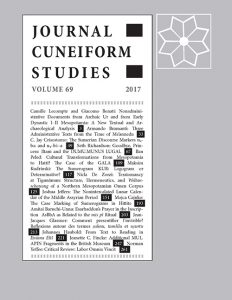
Journal of Cuneiform Studies

Learn more about JCS.

Individual Subscription Price (print or online): $75.00
For non-US individual subscriptions add $21.00
Institutional Subscription Price (print, see below for online subscriptions): $117.00
For non-US subscriptions add $21.00

Individuals may subscribe to JCS via the Online Store or print and mail a Subscription Form.

Institutions can email ASOR to purchase a print subscription. Click here to subscribe to JCS (online or both) through JSTOR.

ASOR Newsletter

Intended as a means of communicating news to members of the American Schools of Oriental Research (ASOR) and others interested in ASOR’s activities in the Middle East, the Newsletter presents brief summaries of research work done under ASOR auspices and reports on the various activities of ASOR’s overseas centers in Amman, Jerusalem, and Nicosia. The Newsletter also contains announcements of various scholarly seminars and fellowship opportunities. The print Newsletter has been upgraded to a free, online e-newsletter renamed News@ASOR. Click here to find out more about ASOR’s Newsletters.[/vc_column_text][/vc_column][vc_column border_color=”rgba(170,170,170,0.01)” width=”1/6″ css=”.vc_custom_1490571214409{margin-right: 10px !important;margin-bottom: 30px !important;border-right-width: 2px !important;border-bottom-width: 2px !important;padding-top: 30px !important;padding-right: 20px !important;padding-left: 20px !important;background-color: #ffffff !important;border-right-color: rgba(227,228,228,0.75) !important;border-bottom-color: rgba(227,228,228,0.75) !important;}”][vc_wp_posts title=”BROWSE THE NEWS ARCHIVE” number=”4″][/vc_column][vc_column border_color=”rgba(170,170,170,0.01)” width=”1/6″ css=”.vc_custom_1490225688999{margin-right: 10px !important;margin-bottom: 30px !important;border-right-width: 2px !important;border-bottom-width: 2px !important;padding-top: 30px !important;padding-right: 30px !important;padding-left: 20px !important;background-color: #ffffff !important;border-right-color: rgba(227,228,228,0.75) !important;border-bottom-color: rgba(227,228,228,0.75) !important;}”][vc_column_text] [/vc_column_text][/vc_column][/vc_row][vc_row][vc_column][vc_column_text]

[/vc_column_text][/vc_column][/vc_row]

ASOR BOOKS

[vc_row fullwidth=”true” css=”.vc_custom_1490224714943{padding-top: 0px !important;padding-right: 0px !important;padding-bottom: 0px !important;padding-left: 0px !important;}”][vc_column][vc_single_image image=”28633″ img_size=”full” alignment=”center”][/vc_column][/vc_row][vc_row][vc_column][vc_column_text][/vc_column_text][/vc_column][/vc_row][vc_row fullwidth=”true” css=”.vc_custom_1490225468623{padding-top: 0px !important;padding-right: 0px !important;padding-bottom: 0px !important;padding-left: 0px !important;}”][vc_column width=”1/12″ css=”.vc_custom_1490225195470{margin-right: 10px !important;}” offset=”vc_hidden-sm vc_hidden-xs”][vc_column_text]

  SHARE

[/vc_column_text][mk_image src=”http://www.asortest.org/wp-content/uploads/2017/01/social-fb-icon4.jpg” image_width=”42″ image_height=”42″ hover=”false” custom_url=”https://www.facebook.com/ASOResearch/” margin_bottom=”0″][mk_image src=”http://www.asortest.org/wp-content/uploads/2017/01/social-tw-icon4.jpg” image_width=”42″ image_height=”42″ hover=”false” custom_url=”https://twitter.com/ASOResearch?ref_src=twsrc%5Egoogle%7Ctwcamp%5Eserp%7Ctwgr%5Eauthor” margin_bottom=”0″][mk_image src=”http://www.asortest.org/wp-content/uploads/2017/01/social-in-icon4.jpg” image_width=”42″ image_height=”42″ hover=”false” custom_url=”https://www.linkedin.com/company/american-schools-of-oriental-research” margin_bottom=”0″][mk_image src=”http://www.asortest.org/wp-content/uploads/2017/01/social-ml-icon_7.jpg” image_width=”42″ image_height=”42″ hover=”false” custom_url=”mailto:asor@bu.edu” margin_bottom=”0″][mk_image src=”http://www.asortest.org/wp-content/uploads/2017/01/blog-icon3.jpg” image_width=”42″ image_height=”42″ hover=”false” custom_url=”http://asorblog.org/” margin_bottom=”0″][/vc_column][vc_column border_color=”rgba(255,255,255,0.01)” width=”1/6″ css=”.vc_custom_1490365673198{margin-right: 20px !important;border-left-width: 2px !important;padding-right: 20px !important;padding-left: 20px !important;border-left-color: #99422f !important;}” el_class=”sticky-sidenav”][mk_divider divider_color=”rgba(255,255,255,0.01)” thickness=”1″ margin_top=”3″ margin_bottom=”3″][vc_widget_sidebar sidebar_id=”ca-sidebar-38785″ el_class=”.widget { overflow: hidden; margin-bottom: 0; }”][/vc_column][vc_column border_color=”rgba(170,170,170,0.01)” width=”1/2″ css=”.vc_custom_1490225606852{margin-right: 10px !important;margin-bottom: 30px !important;border-right-width: 2px !important;border-bottom-width: 2px !important;padding-top: 30px !important;padding-right: 30px !important;padding-left: 20px !important;background-color: #ffffff !important;border-right-color: rgba(227,228,228,0.75) !important;border-bottom-color: rgba(227,228,228,0.75) !important;}”][vc_column_text responsive_align=”left”]

ASOR BOOKS

ASOR’s youngest book series was created to provide a forum for research that is not directly related to the reporting of archaeological fieldwork. Works of general interest to ASOR members as well as symposia and Festschrifts are included in this series. The publication of new titles in this series is currently suspended (as of March 2006).[/vc_column_text][mk_divider divider_color=”#d8d8d8″ thickness=”1″ margin_top=”10″ margin_bottom=”10″][vc_row_inner][vc_column_inner width=”1/4″][vc_column_text][/vc_column_text][/vc_column_inner][vc_column_inner width=”3/4″ css=”.vc_custom_1496782697717{padding-left: 20px !important;}”][vc_column_text]Walls, Neal H., ed. Cult Image and Divine Representation in the Ancient Near East ISBN 0-89757-0685. Paperback; Boston, MA: ASOR, 2005.
Available from ISD.[/vc_column_text][/vc_column_inner][/vc_row_inner][mk_divider divider_color=”#d8d8d8″ thickness=”1″ margin_top=”10″ margin_bottom=”10″][vc_row_inner][vc_column_inner width=”1/4″][vc_column_text][/vc_column_text][/vc_column_inner][vc_column_inner width=”3/4″ css=”.vc_custom_1496782704019{padding-left: 20px !important;}”][vc_column_text]Slanski, Kathryn. The Babylonian Entitlement Narûs: A Study in Form and Function. ISBN 0-89757-060-X. Paperback; Boston, MA: ASOR, 2003.
Available from ISD.[/vc_column_text][/vc_column_inner][/vc_row_inner][mk_divider divider_color=”#d8d8d8″ thickness=”1″ margin_top=”10″ margin_bottom=”10″][vc_row_inner][vc_column_inner width=”1/4″][vc_column_text][/vc_column_text][/vc_column_inner][vc_column_inner width=”3/4″ css=”.vc_custom_1496782710312{padding-left: 20px !important;}”][vc_column_text]Walls, Neal. Desire, Discord and Death: Approaches to Ancient Near Eastern Myth. ISBN O-89757-055-3-X; 056-1 p. x + 262 Boston, MA: ASOR, 2001. The three essays presented in this volume reveal the symbolic complexity and poetic vision of ancient Near Eastern mythology. Through the application of contemporary methods of literary analysis, the author explores the interrelated themes of erotic desire, divine conflict, and death’s realm in selected ancient Mesopotamian and Egyptian mythological narratives. Topics include the construction of desire in the Gilgamesh epic, a psychoanalytic approach to “The Contendings of Horus and Seth,” and gender and the exercise of power in the stormy romance of Nergal and Ereshkigal. Walls’ fresh treatment of these three important myths brings them to life for the specialist and mythology buff alike.
Available from ISD.[/vc_column_text][/vc_column_inner][/vc_row_inner][mk_divider divider_color=”#d8d8d8″ thickness=”1″ margin_top=”10″ margin_bottom=”10″][vc_row_inner][vc_column_inner width=”1/4″][vc_column_text][/vc_column_text][/vc_column_inner][vc_column_inner width=”3/4″ css=”.vc_custom_1496782718809{padding-left: 20px !important;}”][vc_column_text]Nakhai, Beth Alpert. Archaeology and the Religions of Canaan and Israel. ISBN O-89757-057-X p. x + 262 Boston, MA: ASOR, 2001.
Available from ISD.[/vc_column_text][/vc_column_inner][/vc_row_inner][mk_divider divider_color=”#d8d8d8″ thickness=”1″ margin_top=”10″ margin_bottom=”10″][vc_row_inner][vc_column_inner width=”1/4″][vc_column_text][/vc_column_text][/vc_column_inner][vc_column_inner width=”3/4″ css=”.vc_custom_1496782724768{padding-left: 20px !important;}”][vc_column_text]MacDonald, Burton. East of the Jordan: Territories and Sites of the Hebrew Scriptures. ISBN 0-89757-031-6 p. viii + 287 Boston, MA: ASOR, 2000.
Available from ISD.[/vc_column_text][/vc_column_inner][/vc_row_inner][mk_divider divider_color=”#d8d8d8″ thickness=”1″ margin_top=”10″ margin_bottom=”10″][vc_row_inner][vc_column_inner width=”1/4″][vc_column_text][/vc_column_text][/vc_column_inner][vc_column_inner width=”3/4″ css=”.vc_custom_1496782735063{padding-left: 20px !important;}”][vc_column_text]Wolff, Samuel R. ed.. Studies in the Archaeology of Israel and Neighboring Lands in Memory of Douglas L. Esse ISBN 1-885923-15-5 p. xviii + 704 Chicago: The Oriental Institute of the University of Chicago, 2001.

Available from ISD.[/vc_column_text][/vc_column_inner][/vc_row_inner][mk_divider divider_color=”#d8d8d8″ thickness=”1″ margin_top=”10″ margin_bottom=”10″][vc_column_text]

Cook, Steven L. and Winter , S. C., eds. On the Way to Nineveh: Studies in Honor of George M. Landes. Atlanta, GA: Scholars Press, 1999.
Available from ISD.

Kapitan, Tomis, ed. History and Archaeology in Palestine and the Near East: Memorial Volume for Albert Glock. Atlanta, GA: Scholars Press, 1999.
Available from ISD.

[/vc_column_text][mk_divider divider_color=”#d8d8d8″ thickness=”1″ margin_top=”10″ margin_bottom=”10″][vc_column_text]

How To Order Titles From This Series

The ASOR Books series is available for purchase by individual volume or by subscription via a standing order. To set up a standing order or an individual order, please contact ISD.

Customers in North America: ISD
70 Enterprise Drive, Suite 2
Bristol, CT 06010
1-800-584-6546

Customers in Europe and the Middle East:
University of Exeter Press
Reed Hall, Streatham Drive
Exeter, EX4 4QR
United Kingdom
Tel: +44 (0) 1392 263066 Fax: +44 (0) 1392 263064[/vc_column_text][/vc_column][vc_column border_color=”rgba(170,170,170,0.01)” width=”1/6″ css=”.vc_custom_1490571214409{margin-right: 10px !important;margin-bottom: 30px !important;border-right-width: 2px !important;border-bottom-width: 2px !important;padding-top: 30px !important;padding-right: 20px !important;padding-left: 20px !important;background-color: #ffffff !important;border-right-color: rgba(227,228,228,0.75) !important;border-bottom-color: rgba(227,228,228,0.75) !important;}”][vc_wp_posts title=”BROWSE THE NEWS ARCHIVE” number=”4″][/vc_column][vc_column border_color=”rgba(170,170,170,0.01)” width=”1/6″ css=”.vc_custom_1490225688999{margin-right: 10px !important;margin-bottom: 30px !important;border-right-width: 2px !important;border-bottom-width: 2px !important;padding-top: 30px !important;padding-right: 30px !important;padding-left: 20px !important;background-color: #ffffff !important;border-right-color: rgba(227,228,228,0.75) !important;border-bottom-color: rgba(227,228,228,0.75) !important;}”][vc_column_text] [/vc_column_text][/vc_column][/vc_row][vc_row][vc_column][vc_column_text]

[/vc_column_text][/vc_column][/vc_row]

JCS SUPPLEMENTAL SERIES

JCS SUPPLEMENTAL SERIES

The Journal of Cuneiform Studies Supplemental Series (JCSSS) is a monograph series dedicated to publishing interpretive studies on the ancient Near East. Each volume is refereed and thoroughly edited. Six volumes have appeared to date, covering a broad array of issues: the social, economic and historical aspects of the Ur III dynasty, late Old Babylonian periods in Mesopotamia, the study of textual variation in Sumerian literature, research at Kültepe-Kanesh, Sumerian texts from Iraq, and the Gilgamesh tradition at Hattusa.

Titles in This Series
Book Reviews
Order Information

Piotr Michalowski, Series Editor

Most Recent Publication

The Hittite Gilgamesh

by Gary M. Beckman

From the late third millennium BCE on, the adventures of the hero Gilgamesh were well known throughout Babylonia and Assyria, and the discovery of Akkadian-language fragments of versions of his tale at Boğazköy, Ugarit, Emar, and Megiddo demonstrates that tales of the hero’s exploits had reached the periphery of the cuneiform world already in the Late Bronze Age. A century of excavation at the Hittite capital of Hattusa (mod. Boğazköy) has yielded more textual sources for Gilgamesh than are known from all other Late Bronze Age sites combined. The Gilgamesh tradition was imported to Hattusa for use in scribal instruction, and has been of particular importance to modern scholars in reconstructing the epic and analyzing its development, since it documents a period in the history of the narrative for which very few textual witnesses have yet been recovered from Mesopotamia itself. And it is this very Middle Babylonian period to which scholarly consensus assigns the composition of the final, “canonical” version of the epic. The Hittite Gilgamesh offers a full edition of the manuscripts from Hattusa in the Hittite, Akkadian, and Hurrian languages recounting Gilgamesh’s adventures. Read More…

Titles

6. Beckman, Gary M. The Hittite Gilgamesh. Atlanta, GA: 2019. Available from ISD.

5. Studevent-Hickman, Benjamin. Sumerian Texts from Ancient Iraq: From Ur III to 9/11. Atlanta, GA: 2018. Available from ISD.

4. Atici, Levent, Fikri Kulakoglu, Gojko Barjamovic, and Andrew Fairbairn, ed. Current Research at Kültepe-Kanesh. Boston, MA: 2014. Available from ISD.

3. DeInero, Paul. The Textual Criticism of Sumerian Literature. Boston, MA: 2012. Available from ISD.

2. Richardson, Seth F. C. Texts from the Late Old Babylonian Period. Boston, MA: 2010. Available from ISD.

1. Piotr Michalowski, ed. On the Third Dynasty of Ur: Studies in Honor of Marcel Sigrist. Boston, MA: 2009. Available from ISD.

Book Reviews

Review of The Hittite Gilgamesh (JCSSS 6), by Gary M. Beckman (Review by Felipe Rojas, Review of Biblical Literature)

Review of The Hittite Gilgamesh (JCSSS 6), by Gary M. Beckman (Review by Richard H. Beal, Journal of Near Eastern Studies)

Review of The Textual Criticism of Sumerian Literature (JCSSS 3), by Paul Delnero (Review by John MacGinnis, Journal of JRAS)

Review of The Textual Criticism of Sumerian Literature (JCSSS 3), by Paul Delnero (Review by Nicole Brisch, Marginalia)

How to Order

The JCS Supplementary Series is available for purchase by individual volume or by subscription via a standing order. To set up a standing order or an individual order, please contact ISD.

Customers in North America:
ISD
70 Enterprise Drive, Suite 2
Bristol, CT 06010
1-800-584-6546

Customers in Europe and the Middle East:
ISD International
PO Box 270
South Brent, TQ9 9FX
United Kingdom
Tel: +44 1364 255364

Supplemental Digital Material

[vc_row fullwidth=”true” css=”.vc_custom_1490224714943{padding-top: 0px !important;padding-right: 0px !important;padding-bottom: 0px !important;padding-left: 0px !important;}”][vc_column][vc_single_image image=”24985″ img_size=”full” alignment=”center”][/vc_column][/vc_row][vc_row][vc_column][vc_column_text][/vc_column_text][/vc_column][/vc_row][vc_row fullwidth=”true” css=”.vc_custom_1490225468623{padding-top: 0px !important;padding-right: 0px !important;padding-bottom: 0px !important;padding-left: 0px !important;}”][vc_column width=”1/12″ css=”.vc_custom_1490225195470{margin-right: 10px !important;}” offset=”vc_hidden-sm vc_hidden-xs”][vc_column_text]

  SHARE

[/vc_column_text][mk_image src=”http://www.asortest.org/wp-content/uploads/2017/01/social-fb-icon4.jpg” image_width=”42″ image_height=”42″ hover=”false” custom_url=”https://www.facebook.com/ASOResearch/” margin_bottom=”0″][mk_image src=”http://www.asortest.org/wp-content/uploads/2017/01/social-tw-icon4.jpg” image_width=”42″ image_height=”42″ hover=”false” custom_url=”https://twitter.com/ASOResearch?ref_src=twsrc%5Egoogle%7Ctwcamp%5Eserp%7Ctwgr%5Eauthor” margin_bottom=”0″][mk_image src=”http://www.asortest.org/wp-content/uploads/2017/01/social-in-icon4.jpg” image_width=”42″ image_height=”42″ hover=”false” custom_url=”https://www.linkedin.com/company/american-schools-of-oriental-research” margin_bottom=”0″][mk_image src=”http://www.asortest.org/wp-content/uploads/2017/01/social-ml-icon_7.jpg” image_width=”42″ image_height=”42″ hover=”false” custom_url=”mailto:asor@bu.edu” margin_bottom=”0″][mk_image src=”http://www.asortest.org/wp-content/uploads/2017/01/blog-icon3.jpg” image_width=”42″ image_height=”42″ hover=”false” custom_url=”http://asorblog.org/” margin_bottom=”0″][/vc_column][vc_column border_color=”rgba(255,255,255,0.01)” width=”1/6″ css=”.vc_custom_1490365673198{margin-right: 20px !important;border-left-width: 2px !important;padding-right: 20px !important;padding-left: 20px !important;border-left-color: #99422f !important;}” el_class=”sticky-sidenav”][mk_divider divider_color=”rgba(255,255,255,0.01)” thickness=”1″ margin_top=”3″ margin_bottom=”3″][vc_column_text]

Bulletin of the American Schools of Oriental Research (BASOR)

Journal of Cuneiform Studies (JCS)

Near Eastern Archaeology (NEA)

ASOR Newsletters

Book Series & Monographs

Contact Us

[/vc_column_text][mk_header menu_location=”second-menu” show_logo=”false” show_search=”false” show_cart=”false”][/vc_column][vc_column border_color=”rgba(170,170,170,0.01)” width=”1/2″ css=”.vc_custom_1490225606852{margin-right: 10px !important;margin-bottom: 30px !important;border-right-width: 2px !important;border-bottom-width: 2px !important;padding-top: 30px !important;padding-right: 30px !important;padding-left: 20px !important;background-color: #ffffff !important;border-right-color: rgba(227,228,228,0.75) !important;border-bottom-color: rgba(227,228,228,0.75) !important;}”][vc_column_text responsive_align=”left”]

Tell er-Rumeith The Excavations of Paul W. Lapp, 1962 and 1967

Supplemental Digital Material

Ceramics

Figure 3.50 Cross Sections

Figure 3.50 Cross Sections Key

Figure 6.2a Molded Bowls

Hellenistic Molded Bowls Key

Tell Er-Rumeith Site and Excavation Images

Site and Excavation Image Index


Tell Er-Rumeith Plans

[/vc_column_text][/vc_column][vc_column border_color=”rgba(170,170,170,0.01)” width=”1/6″ css=”.vc_custom_1490571214409{margin-right: 10px !important;margin-bottom: 30px !important;border-right-width: 2px !important;border-bottom-width: 2px !important;padding-top: 30px !important;padding-right: 20px !important;padding-left: 20px !important;background-color: #ffffff !important;border-right-color: rgba(227,228,228,0.75) !important;border-bottom-color: rgba(227,228,228,0.75) !important;}”][vc_wp_posts title=”BROWSE THE NEWS ARCHIVE” number=”4″][/vc_column][vc_column border_color=”rgba(170,170,170,0.01)” width=”1/6″ css=”.vc_custom_1490225688999{margin-right: 10px !important;margin-bottom: 30px !important;border-right-width: 2px !important;border-bottom-width: 2px !important;padding-top: 30px !important;padding-right: 30px !important;padding-left: 20px !important;background-color: #ffffff !important;border-right-color: rgba(227,228,228,0.75) !important;border-bottom-color: rgba(227,228,228,0.75) !important;}”][vc_column_text] [/vc_column_text][/vc_column][/vc_row][vc_row][vc_column][vc_column_text]

[/vc_column_text][/vc_column][/vc_row]

ARCHAEOLOGICAL REPORTS

ARCHAEOLOGICAL REPORTS

This series is devoted to the publication of final excavation reports, surveys and ethnoarchaeological fieldwork. Excavation projects need not be ASOR-affiliated to be considered. The CAARI Monographs are a subset of the Archaeological Reports series. The CAARI Monographs subseries may include conference proceedings.

This page includes:
-Titles in Print
-Book Reviews
-Order Information

ISD Guidelines & Instructions for Manuscript Preparation

Jennie Ebeling, Series Editor. Contact at ars.editor@asor.org.

Most Recent Publication

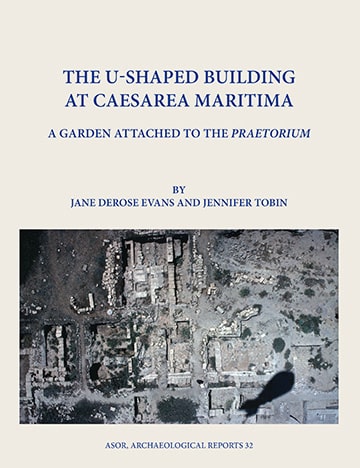
The U-Shaped Building at Caesarea Maritima: A Garden Attached to the Praetorium

by Jane DeRose Evans and Jennifer Tobin

The U-Shaped Building at Caesarea is an exploration of a portion of the praetorium of the governor of Caesarea and its subsequent phases, through its excavation in the 1970s by a team led by Robert J. Bull. By examining field notes, photographs and plans, a team of specialists reconstructs the original fourth-century CE construction of a garden space and fountain; its subsequent remodeling in the mid-fifth to mid-sixth century; and its second phase as a luxuriously decorated garden and entertainment space. Partially refurbished during the short Persian occupation, the reassertion of Byzantine control led to a transformation of the area, linking it more strongly to interior spaces of the praetorium. Subsequent phases elucidate the areas use as a cemetery in the Crusader and Ottoman periods by providing information about the inhabitants and their burial practices. The volume investigates the form of a praetorium in the eastern Mediterranean, the formation of ancient garden architecture, and the composition of the inhabitants of Crusader and Ottoman Caesarea. 

Read more…

Titles

32. Evans, Jane D. and Jennifer Tobin. The U-Shaped Building at Caesarea Maritima: A Garden Attached to the Praetorium. Alexandria, VA: 2026. Available from ISD.

31. Oleson, John P., ed. Humayma Excavation Project, 3: The Roman Fort. Alexandria, VA: 2024. Available from ISD.

30. Herbert, Sharon C. Tel Kedesh I: The Hellenistic Archive and its Sealings. Alexandria, VA: 2023. Available from ISD.

29. Meehl, Mark W. Taanach II. Alexandria, VA: 2023. Available from ISD.

28.Chovanec, Zuzana and Walter Crist. All Things Cypriot: Studies on Ancient Environment, Technology, and Society in Honor of Stuart Swiny. Alexandria, VA: 2021. Available from ISD.

27. Holum, Kenneth G. Caesarea Maritima: Excavations in the Old City 1989-2003. Alexandria, VA: 2020. Available from ISD.

26. Gates-Foster, Jennifer E. and Steven E. Sidebotham. The Archaeological Survey of the Desert Roads between Berenike and the Nile Valley. Alexandria, VA: 2019. Available from ISD.

25. Bull, Robert Jehu, Andrew H. Bobeck, Jane DeRose Evans, Robert S. Fritzius and Alexandra L. Ratzlaff. The Mithraeum at Caesarea Maritima. Boston, MA: 2017. Available from ISD.

24. MacDonald, Burton, Geoffrey A. Clark, Larry G. Herr, D. Scott Quaintance, Hani Hayajneh and Jürg Eggler. The Shammakh to Ayl Archaeological Survey, Southern Jordan (2010-2012). Boston, MA: 2016. Available from ISD.

23. Duff, Catherine A. Shechem V: The Late Bronze Age Pottery from Field XIII at Shechem / Tell Balâtah. Boston, MA: 2015. Available from ISD.

22. Barako, Tristan J., and Nancy L. Lapp. Tell er-Rumeith: The Excavations of Paul W. Lapp, 1962 and 1967. Boston, MA: 2015. Available from ISD. Supplemental Material.

21. Caraher, William, R. Scott Moore and David K. Pettegrew. Pyla-Koutsopetria I: Archaeological Survey of an Ancient Coastal Town. Boston, MA: 2014. Available from ISD.

20. Stewart, Charles Anthony, Thomas W. Davis, and Annemarie Weyl Carr. Cyprus and the Balance of Empires: Art and Archaeology from Justinian I to the Coeur de Lion. Boston, MA: 2014. Available from ISD.

19. Parker, S. Thomas and Andrew M. Smith II. The Roman Aqaba Project Final Report, Volume 1: The Regional Environment and the Regional Survey. Boston, MA: 2014. Available from ISD.

18. Oleson, John Peter and Robert Schick. Humayma Excavation Project, 2: Nabatean Campground and Necropolis, Byzantine Churches, and Early Islamic Domestic Structures. Boston, MA: 2014. Available from ISD. 

17. Friedland, Elise. The Roman Marble Sculptures from the Sanctuary of Pan at Caesarea Philippi/Panias (Israel). Boston, MA: 2012. Available from ISD.

16. MacDonald, Burton, Larry G. Herr, D. Scott Quaintance, Geoffrey A. Clark, and Michael C. A. Macdonald. The Ayl to Ras an-Naqab Archaeological Survey, Southern Jordan 2005-2007. Boston, MA: 2012. Available from ISD.

15. Oleson, John Peter. Technical Reports by G.
Brown, M. Finnegan, J.D. Mitchell, C.T. Shay. Humayma Excavation Project, I: Resources, History and the Water-Supply System. Boston, MA: 2010. Available from ISD.

14. Richard, Suzanne, Jesse C. Long, Jr., Paul S. Holdorf, and Glen Peterman. Archaeological Expedition to Khirbat Iskandar and its Environs, Jordan. Volume One—Khirbat Iskandar: Final Report on the Early Bronze IV. Area C³ Gateway² and Cemeteries. Boston, MA: ASOR, 2010. Available from ISD.

13. Govaars, Marylinda; Spiro, Marie; and White, L. Michael. Field O: “Synagogue” Site. The Joint Expedition to Caesarea Maritima Excavation Reports (JECM) IX. Boston, MA: ASOR, 2009. Available from ISD.

12. Evans, Jane DeRose. The Coins and the Hellenistic, Roman, and Byzantine Economy of Palestine. The Joint Expedition to Caesarea Maritima Excavation Reports (JECM) VI. Boston, MA: ASOR, 2006. Available from ISD.

11. Lapp, Nancy, ed. Shechem IV: The Persian-Hellenistic Pottery of Shechem/Tell Balât’ah. Boston, MA: ASOR, 2009. Available from ISD.

10. Stieglitz, Robert R. Tel Tanninim: Excavations at Krokodeilon Polis, 1996-1999. Boston, MA: ASOR, 2006. Available from ISD.

9. MacDonald, Burton. The Tafila-Busayra Archaeological Survey 1999-2001, west-central Jordan. Boston, MA: ASOR, 2004. Available from ISD.

8. Swiny, Stuart, Rapp, George “Rip”, and Herscher, Ellen, eds. Sotira Kaminoudhia. CAARI Monographs 4. Boston, MA: ASOR, 2003. Available from ISD.

7. Serwint, Nancy, and Diane Bolger, eds. Engendering Aphrodite. CAARI Monographs 3. Boston, MA: ASOR, 2002. Available from ISD.

6. Campbell, Edward. Shechem III. Boston, MA: ASOR, 2002. Available from ISD.
Errata

5. Swiny, Stuart, ed. The Earliest Prehistory of Cyprus. CAARI Monographs 2. Boston, MA: ASOR, 2001. 

4.Swiny, Stuart, Hohlfelder, Robert L. and Swiny, Helena eds. Res Maritimae. Cyprus and the Eastern Mediterranean From Prehistory to Late Antiquity. CAARI Monographs 1. Atlanta, GA: Scholars Press, 1997. 

3. Pratico, Gary D. Nelson Glueck’s 1938-1940 Excavations at Tell el-Kheleifeh: A Reappraisal. Atlanta, GA: Scholars Press, 1993. Available from ISD.

2. Campbell, Edward F. Shechem II. Atlanta, GA: Scholars Press, 1992. 

Book Reviews

All Things Cypriot: Studies on Ancient Environment, Technology, and Society in Honor of Stuart Swiny (ARS 28), by Chovanec, Zuzana and Walter Crist.
Review by Rafael Laoutari in Levant.
Review by Jennifer M. Webb in Journal of Eastern Mediterranean Archaeology and Heritage Studies. 

Caesarea Maritima: Excavations in the Old City 1989-2003 (ARS27), by Holum, Kenneth G.
Review by Andrea U. De Giorgi in Journal of Roman Archaeology.
Review by Jacopo Dolci in Palestine Exploration Quarterly.

The Archaeological Survey of the Desert Roads between Berenike and the Nile Valley (ARS 26), by Gates-Foster, Jennifer E. and Steven E. Sidebotham.
Review by Louise Blanke in Bryn Mawr Classical Review.
Review by John Darnell in Journal of the American Oriental Society.

The Mithraeum at Caesarea Maritima (ARS 25), by Bull, Robert Jehu, Andrew H. Bobeck, Jane DeRose Evans, Robert S. Fritzius and Alexandra L. Ratzlaff.
Review by Caroline Downing in American Journal of Archaeology.
Review by Kevin Stoba in Bryn Mawr Classical Review.

The Shammakh to Ayl Archaeological Survey, Southern Jordan (2010-2012) (ARS 24), by MacDonald, Burton, Geoffrey A. Clark, Larry G. Herr, D. Scott Quaintance, Hani Hayajneh and Jürg Eggler.
Review by Fawzi Abudanah in Antiquity.
Review by David F. Graf in American Journal of Archaeology.
Review by Alexander Wasse in Journal of Eastern Mediterranean Archaeology and Heritage Studies.

Pyla-Koutsopetria I: Archaeological Survey of an Ancient Coastal Town (ARS 21), by Caraher, William, R. Scott Moore and David K. Pettegrew.
Review by Thomas W. Davis in American Journal of Archaeology.
Review by Catherine Kearns in Bryn Mawr Classical Review.

Cyprus and the Balance of Empires: Art and Archaeology from Justinian I to the Coeur de Lion (ARS 20), by Stewart, Charles Anthony, Thomas W. Davis, and Annemarie Weyl Carr.
Review by Robin Cormack in Speculum
Review by Rebecca Sweetman in Medieval Archaeology
Review by James G. Schryver in American Journal of Archaeology.

The Roman Aqaba Project Final Report, Volume 1: The Regional Environment and the Regional Survey (ARS19) by Parker, S. Thomas and Andrew M. Smith II.
Review by Paula Kouki in the American Journal of Archaeology.

Humayma Excavation Project, I: Resources, History and the Water-Supply System (ARS 15), by Oleson, John Peter.
Review by Kate da Costa in Bryn Mawr Classical Review.
Review by Anne Lykke in Review of Biblical Literature

Archaeological Expedition to Khirbat Iskandar and its Environs, Jordan. Volume One—Khirbat Iskandar: Final Report on the Early Bronze IV. Area C³ Gateway² and Cemeteries (ARS14), by Richard, Suzanne, Jesse C. Long, Jr., Paul S. Holdorf, and Glen Peterman.
Review by Kay Prag in American Journal of Archaeology.

The Coins and the Hellenistic, Roman, and Byzantine Economy of Palestine. (ARS 12), by Evans, Jane DeRose.
Review by Liane Houghtalin in American Journal of Archaeology.

How to Order

The ARS is available for purchase by individual volume or by subscription via a standing order. To set up a standing order or an individual order, please contact ISD.

Customers in North America:
ISD
70 Enterprise Drive, Suite 2
Bristol, CT 06010
1-800-584-6546

Customers in Europe and the Middle East:
ISD International
PO Box 270
South Brent, TQ9 9FX
United Kingdom
Tel: +44 1364 255364

ANNUAL OF ASOR

ANNUAL OF ASOR

The first volume of the ASOR Annual (AASOR) appeared in 1920, making it ASOR’s signature publication. The Annual is a medium for the publication of lengthy preliminary or interim archaeological reports or monograph-length studies relating to archaeology in the Near East.

This page includes:
-Titles in Print
-Book Reviews
-Order Information

ISD Guidelines & Instructions for Manuscript Preparation

William Caraher, Series Editor. Contact at aasor.editor@asor.org.

Most Recent Publication

Ethics in Archaeological Practice, ed. by Sarah Kielt Costello and Sarah Lepinski

with articles from  Sarah Kielt Costello, Sarah Lepinski, Beth Alpert Nakhai, Laura E. Heath-Stout, Grace Erny, Dimitri Nakassis, Debby Sneed, Mason Shrader, Nadhira Hill, Maggie Beeler, Tuğba Tanyeri-Erdemir, Christopher Thornton, Annelies Van de Ven, Louise A. Hitchcock, and Benjamin W. Porter.

Ethics in Archaeological Practice explores urgent topics and issues in archaeology as currently practiced in the classroom, the field, the museum, and the public sphere. While addressed primarily to archaeologists working in western Asia, the eastern Mediterranean, and North Africa, the volume raises contemporary ethical questions around race, gender, disability, climate change, and cultural heritage that are pressing and relevant to archaeology students and professionals worldwide. The fifteen contributors offer fundamental case studies and practical guidance for best practices and models of high standards of ethical practice in professional conduct. Together, they offer new approaches to advocacy and the responsible stewardship of heritage sites, collections, and the environment. These compelling and generative discussions make the case for a 21st century archaeology that is proactive and engaged with discourses addressing equity, social justice, anti-colonialism, and climate change.

Read More…

Titles

78. ed. Sarah Kielt Costello and Sarah Lepinski. Ethics in Archaeological Practice. AASOR 78. Alexandria, VA: The American Society of Overseas Research, 2024. Available from ISD.

76 & 77. ed. Michael Given, Chris Mavromatis, and R. Smadar Gabrieli. City and Cemetery: Excavations at Kourion’s Amathous Gate Cemetery, Cyprus: The Excavations of Danielle A. Parks. Volume 1 and Volume 2. AASOR 76 and 77. Alexandria, VA: The American Society of Overseas Research, 2024.  Available from ISD. Volume 1 and Volume 2. 

75. Joel S. Burnett. The Amman Theater Statue in its Iron Age Contexts. AASOR 75. Alexandria, VA: The American Society of Overseas Research, 2023. Available from ISD. 
Winner of Biblical Archaeology Society 2025 BEST SCHOLARLY BOOK ON ARCHAEOLOGY

74. Nancy L. Lapp. The Excavations of ‘Iraq al-Amir, Volume II. AASOR 74. Alexandria, VA: The American Schools of Oriental Research, 2019. Available from ISD. 

73. Charlotte Whiting and Gloria London. An Examination of the Stratigraphy and Neolithic-Iron Age Pottery from Tel Jezreel, Area A. AASOR 73. Alexandria, VA: The American Society of Overseas Research, 2021. Available from ISD.

72. Macaulay-Lewis, Elizabeth. Bayt Farhi and the Sephardic Palaces of Ottoman Damascus in the Late 18th and 19th Centuries. AASOR 72. Boston, MA: The American Schools of Oriental Research, 2018. Available from ISD. 

71. Leonard, Al, Jr.. Kataret es-Samra, Jordan. AASOR 71. Boston, MA: The American Schools of Oriental Research, 2017. Available from ISD. Available from ISD. 

70. Tappy, Ron E. The Archaeology of the Ostraca House at Israelite Samaria: Epigraphic Discoveries in Complicated Contexts. AASOR 70. Boston, MA: The American Schools of Oriental Research, 2016. Available from ISD. 

69. McGeough, Kevin M. The Archaeology of Agro-Pastoralist Economies in Jordan. AASOR 69. Boston, MA: The American Schools of Oriental Research, 2016. Available from ISD. 

67 & 68. McKenzie, Judith S., Greene, Joseph A., Reyes, Andres T. et al. The Nabataean Temple at Khirbet et- Tannur, Jordan, Volume 1 and Volume 2. AASOR 67 and 68. Boston, MA: The American Schools of Oriental Research, 2013. Available from ISD. Volume 1 and Volume 2. 

66. Hallote, Rachel, Felicity Cobbing, Jeffrey B. Spurr. The Photographs of the American Palestine Exploration Society. AASOR 66. Boston, MA: The American Schools of Oriental Research, 2012. Available from ISD.

65. Toumazou, Michael K., P. Nick Kardulias, and Derek B. Counts, eds. Crossroads and Boundaries: The Archaeology of Past and Present in the Malloura Valley, Cyprus. AASOR 65. Boston, MA: The American Schools of Oriental Research, 2012. Available from ISD. 

64. Walker, Bethany, ed. Reflections of Empire: Archaeological and Ethnographic Perspectives on the Pottery of the Ottoman Levant and Beyond. AASOR 64. Boston, MA: The American Schools of Oriental Research, 2009. Available from ISD.

63. Smith, Joanna S. Settlement and Sanctuary: Views from the Columbia University Excavations at Phlamoudhi, Cyprus. AASOR 63. Boston, MA: The American Schools of Oriental Research, 2008. Available from ISD.

62. Cohen, Susan and Garfinkel, Yossi. Middle Bronze Age II Cemetery at Gesher. AASOR 62. Boston, MA: The American Schools of Oriental Research, 2007. Available from ISD.

60-61. Edwards, Douglas and McCollough, Thomas. The Archaeology of Difference: Gender, Ethnicity, Class and the “Other” in Antiquity, Studies in Honor of Eric. M. Meyers. AASOR 60/61. Boston, MA: The American Schools of Oriental Research, 2007. Available from ISD. 

59. Chesson, Meredith S., Darnell, John Coleman et al. Part I: Results of the 2001 Kerak Plateau Early Bronze Age Survey; Part II: Two Early Alphabetic Inscriptions from the Wadi el-Hol. AASOR 59. Boston, MA: The American Schools of Oriental Research, 2005. Available from ISD.

58. Nakhai, Beth Alpert, ed. The Near East in the Southwest. Essays in honor of William G. Dever. AASOR 58. Boston MA: The American Schools of Oriental Research, 2003. Available from ISD.

57. Hopkins, David, ed. Across the Anatolian Plateau. Readings in the Archaeology of Ancient Turkey. AASOR 57. Boston MA: The American Schools of Oriental Research, 2000. Available from ISD.

56. Lapp, Nancy, ed. Preliminary Excavation Reports and Other Archaeological Excavations. Tell Qarqur, Iron I Sites in the North-Central Highlands of Palestine. AASOR 56. Boston MA: The American Schools of Oriental Research, 1999. Available from ISD.

55. Leonard, Albert. Ancient Naukratis: Excavations at a Greek Emporium in Egypt. Part 2: Kom Hadid. AASOR 55. Boston, MA: The American Schools of Oriental Research, 1998. Available from ISD.

54. Leonard, Albert. Ancient Naukratis: Excavations at a Greek Emporium in Egypt. Part 1: Kom Ge’if. AASOR 54. Atlanta, GA: Scholars Press, 1997. 

53. Dever, William, ed. Preliminary Excavation Reports: Sardis, Idalion, and Tell el-Handaquq North. AASOR 53. Atlanta, GA: Scholars Press, 1996. Available from ISD.

52. Dever, William G., ed. Preliminary Excavation Reports. AASOR 52. Atlanta, GA: Scholars Press, 1994. Available from ISD.

51. Dever, William G., ed. Preliminary Excavation Reports: Sardis, Paphos, Caesarea Maritime, Shiqmim, Ain Ghazal. AASOR 51. Atlanta, GA: Scholars Press, 1993. Available from ISD.

50. Leonard, Albert Jr. The Jordan Valley Survey, 1953: Some Unpublished Soundings Conducted by James Mellaart. AASOR 50. Winona Lake, IN: Eisenbrauns, 1992. 

49. Gitin, Seymour, and Dever, William G., eds. Recent Excavations in Israel: Studies in Iron Age Archaeology. AASOR 49. Winona Lake, IN: Eisenbrauns, 1989. 

47-48. Callaway, Joseph, ed. Volume 1: The Excavations at Araq el-Emir (edited by Nancy Lapp). Volume 2: The Amman Airport Excavations, 1976 (edited by Larry Herr). AASOR 47-48. Winona Lake, IN: Eisenbrauns, 1983. 

43. Freedman, David Noel, ed. ASOR Preliminary Excavation Reports: Bab edh-Dhra`, Sardis, Meiron, Tell el-Hesi, Carthage. AASOR 43. Cambridge: ASOR, 1978. 

41. Lapp, Paul W., and Lapp, Nancy L. Discoveries in the Wadi ed-Daliyeh. AASOR 41. Cambridge: ASOR, 1974. 

39. Kelso, James L. The Excavations at Bethel (1934-1960). Joint Expedition of the Pittsburgh Theological Seminary and ASOR. AASOR 39. Cambridge: ASOR, 1968. 

38. Lapp, Paul, Sellers, Ovid R., et al. The 1957 Excavations at Beth Zur (conducted by McCormick Theological Seminary and ASOR). Annual of the American Schools of Oriental Research (AASOR), Volume 38. Cambridge: ASOR, 1968. 

Book Reviews

Kataret es-Samra, Jordan (AASOR 71), Leonard, Al, Jr.
Review by Alexander Ahrens in American Journal of Archaeology

The Archaeology of Agro-Pastoralist Economies in Jordan (AASOR 69), McGeough, Kevin M.
Review by Steven A. Rosen, published in JEMAHS

The Archaeology of the Ostraca House at Israelite Samaria: Epigraphic Discoveries in Complicated Contexts (AASOR 70), by Tappy, Ron E.
Review by Norma Franklin, published in JEMAHS
Response to Review by Ron E. Tappy, published in JEMAHS

The Nabataean Temple at Khirbet et- Tannur, Jordan, Volume 1 and Volume 2 (AASOR 67 & 68), by McKenzie, Judith S., Greene, Joseph A., Reyes, Andres T. et al.
Review by Laïla Nehmé in Bryn Mawr Classical Review
Review by Duane W. Roller in American Journal of Archaeology

The Photographs of the American Palestine Exploration Society (AASOR 66), by Rachel Hallote, Felicity Cobbing, and Jeffrey B. Spurr.
Review by Antiquity
Review by Simon Goldhill in Bryn Mawr Classical Review 

Crossroads and Boundaries: The Archaeology of Past and Present in the Malloura Valley, Cyprus (AASOR 65), edited by Michael K. Toumazou, P. Nick Kardulias and Derek B. Counts.
Review by William J. Weir in Journal of Eastern Mediterranean Archaeology and Heritage Studies

How to Order

The ASOR Annual is available for purchase by individual volume or by subscription via a standing order. Standing order customers receive a 20% discount. To set up a standing order or an individual order, please contact ISD.

Customers in North America:
ISD
70 Enterprise Drive, Suite 2
Bristol, CT 06010
1-800-584-6546

Customers in Europe and the Middle East:
ISD International
PO Box 270
South Brent, TQ9 9FX
United Kingdom
Tel: +44 1364 255364

BOOK SERIES & MONOGRAPHS

BOOK SERIES & MONOGRAPHS

ASOR publishes four book series

The first volume of the ASOR Annual (AASOR) appeared in 1920, making it ASOR’s signature publication. The Annual is a medium for the publication of lengthy preliminary or interim archaeological reports or monograph-length studies relating to archaeology in the Near East.

The Archaeological Reports Series (ARS) is devoted to the publication of final excavation reports, surveys, and ethnoarchaeological fieldwork. Excavation projects need not be ASOR-affiliated to be considered. The CAARI Monographs are a subseries of the ASOR-ARS and may include conference proceedings.

The JCS Supplemental Series (JCSSS), dedicated to publishing interpretive studies on the ancient Near East, was instituted under the editorship of Piotr Michalowski in 2008.

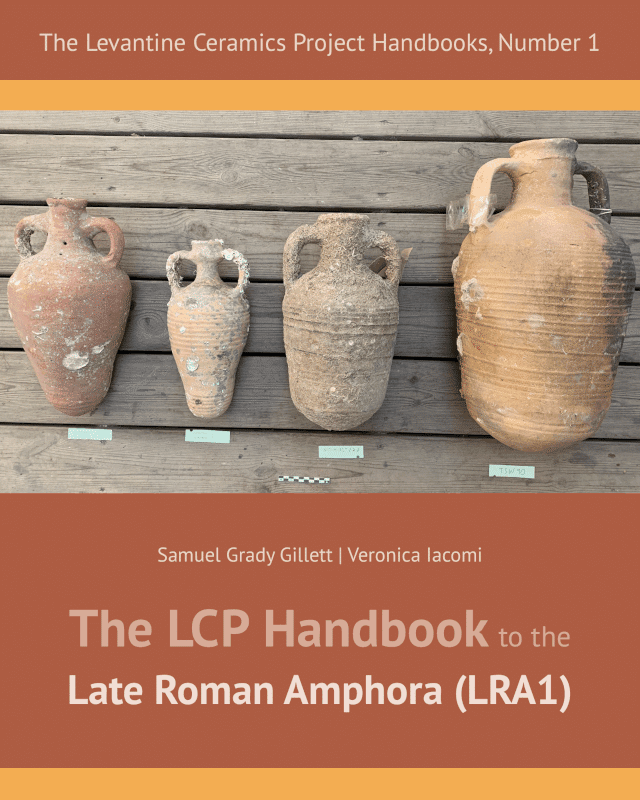
ASOR’s youngest series, the LCP Handbooks Series (LCPH), was formed in 2024 in association with The Center for the Mediterranean World.


Policy and Procedure Information

Click here to view Guidelines for Book Proposals
Click here to view Author/Editor Questionnaire


Inactive Series

The currently suspended ASOR Books series was created to provide a forum for research that is not directly related to the reporting of archaeological fieldwork. Works of general interest to ASOR members as well as symposia and Festschriften are appropriate for consideration in this series. Another inactive series is the BASOR Supplement Series.


Orders

For a full list of ASOR book publications available for purchase, please visit ISD website.

Books can be ordered by contacting ISD at orders@isdistribution.com.

NEAR EASTERN ARCHAEOLOGY (NEA)

NEAR EASTERN ARCHAEOLOGY (NEA)

Archaeological discoveries continually enrich our understanding of the people, culture, history, and literature of the Middle East. The heritage of its peoples – from urban civilization to the Bible – both inspires and fascinates. Near Eastern Archaeology brings to life the ancient world from Mesopotamia to the wider Mediterranean with vibrant images and authoritative analyses. NEA (ISSN 1094-2076) is published four times each year (quarterly): March, June, September, and December.

All manuscripts submitted to Near Eastern Archaeology are subject to a peer review by independent scholars. All articles are sent to two external specialists in the field who are asked to evaluate the manuscripts for their academic quality; these assessment include comments on the contribution and a recommendation to the editor (accept / minor revision required / major revision required / reject). The time assigned for the review is normally 30 days; the peer-review process and (if required) the resubmission of revised manuscripts is handled through NEA’s Editorial Management system. NEA’s Editorial Board assists the editor in the peer-review process, e.g., through the recommendation of external reviewers, acceptance decisions, and the revision of manuscripts. Please note that Near Eastern Archaeology no longer does book reviews. If you wish to have a book considered for review, please contact the editors of BASOR at basor@asor.org.

Current Issue

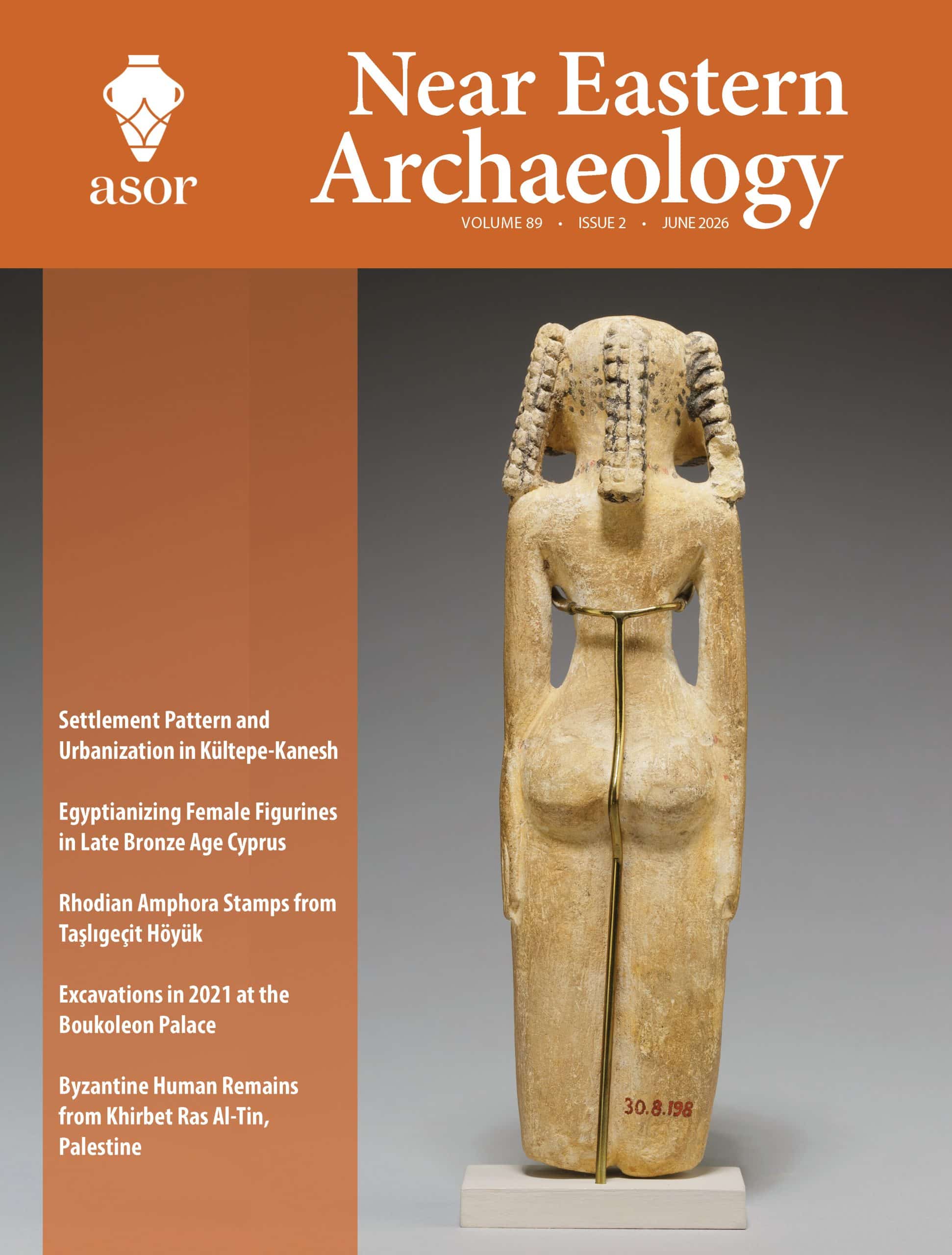
Near Eastern Archaeology, 89.2 (June 2026):

This issue of NEA features articles such as: Settlement Pattern and Urbanization in Kültepe-Kanesh Lower Town Level II; Egyptianizing Female Figurines in Late Bronze Age Cyprus; Rhodian Amphora Stamps from Taşlıgeçit Höyük; Evaluation of the Results of the Archaeological Excavations in 2021 at the Boukoleon Palace; Stable Isotope Analysis and Forensic Reconstruction on Byzantine Human Remains from Khirbet Ras Al-Tin, Palestine. Table of Contents

Past Issues

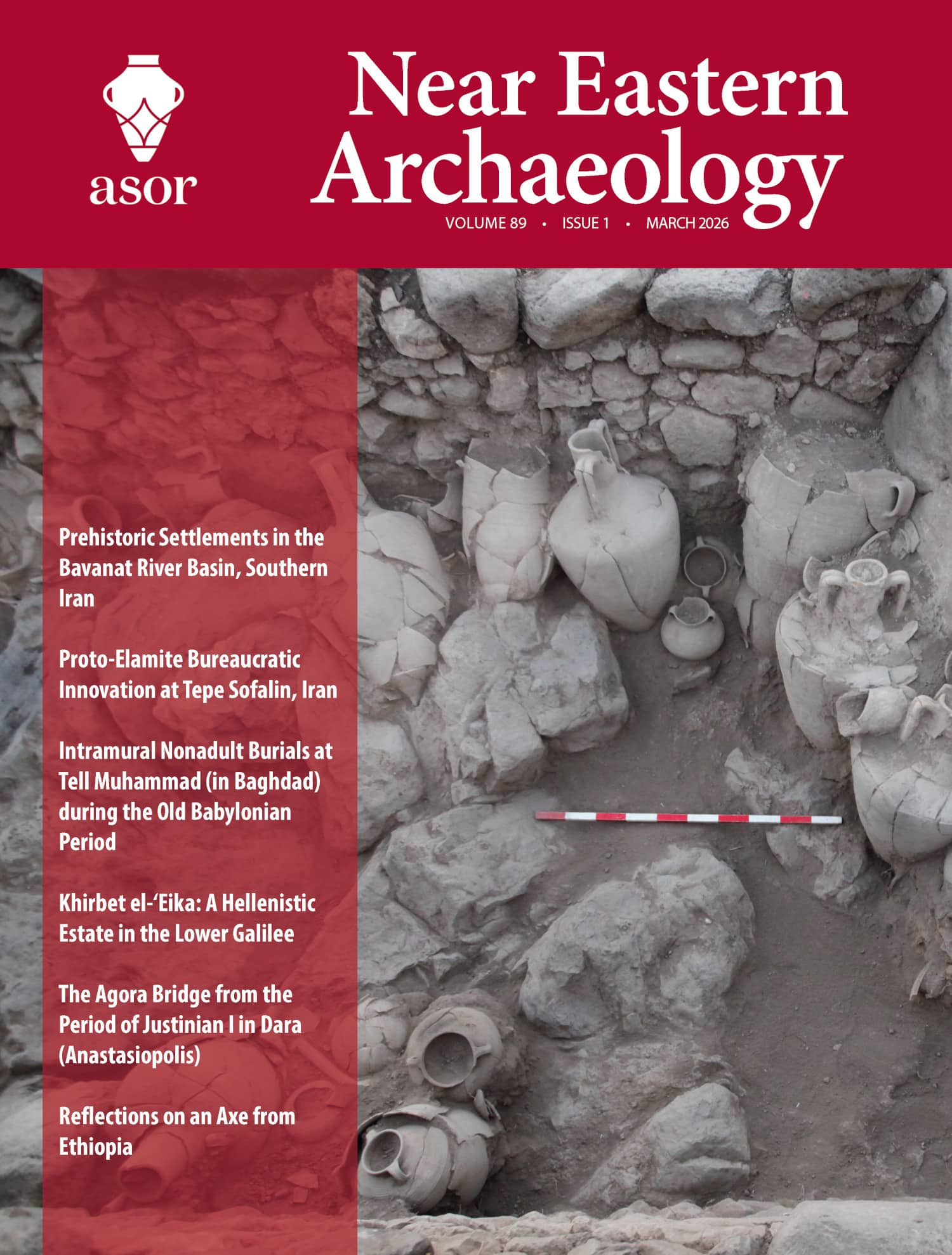
Near Eastern Archaeology, 89.1 (March 2026):
This issue of NEA includes articles such as: Evolution, Resilience, and Collapse of Prehistoric Settlements in the Bavanat River Basin, Southern Iran; Script over Sealings: Proto-Elamite Bureaucratic Innovation at Tepe Sofalin, Iran; Intramural Nonadult Burials at Tell Muhammad (in Baghdad) during the Old Babylonian Period (1894–1595 BCE): A Preliminary Assessment of Legacy Data; Khirbet el-‘Eika: A Hellenistic Estate in the Lower Galilee; An Example of the Architectural Integrity of Historical Bridges: The Agora Bridge from the Period of Justinian I in Dara (Anastasiopolis); and more. Table of Contents

A Guide to the Online Features of ASOR Journals

NEA is the most popular and widely read journal of ASOR. Did you know that online access with an ASOR Academic Membership includes access to all three ASOR journals? Did you know that Associate and Contributing members get access to NEA online as well as print delivery? Did you know that all the back issues of ASOR journals are available to view online? Or that you can view any issue using special features on the University of Chicago Press Journals platform? Read more . . .

View NEA 78.3 (September 2015) Special Issue on The Cultural Heritage Crisis in the Middle East for free on UCP.

Read Jason Ur’s article, “The Archaeological Renaissance in the Kurdistan Region of Iraq,” (NEA 80.3) for free on UCP.


Style Guidelines for Contributors
Information on Journal Permissions for NEA
Advertise in NEA
For Back Issues: contact membership@asor.org or click here.

Editors

Editor:
Christina Tsouparopoulou
Editor Term through December 31, 2027
 
Editorial Board:

Term 2026–2028
Trudy Kawami, Arthur M. Sackler Foundation, New York
Yorke Rowan, University of Chicago
Louise Steel, Lampeter, UK

Term 2025–2027
Christoph Bachhuber, University of Oxford
Lindsay Der, University of British Columbia
Takayoshi Oshima, Leipzig University

Term 2024–2026
Eric Harvey, Stanford University
Sepideh Maziar, Goethe University Frankfurt
Shayla Monroe, Harvard University
Madadh Richey, Brandeis University

Prepress Provider:
Lockwood Press

Subscribe

Institutions

Institutions can subscribe to NEA and any other ASOR journal through University of Chicago Press (UCP). Click here for more information on how to subscribe to NEA or contact UCP directly:

Email
subscriptions@press.uchicago.edu

Phone
U.S. and Canada: (877) 705-1878
International: +1 (773) 609-3922

Fax
U.S. and Canada: (877) 705-1879
International: +1 (773) 753-0811

Postal mail
University of Chicago Press
Subscription Fulfillment
1427 E. 60th Street
Chicago, IL 60637-2902
USA

…

Individuals

Individuals can receive NEA through one of our membership options. Click here for more information.

Contact

Please send submissions and editorial correspondence to:

Christina Tsouparopoulou

Please send advertising inquiries to: j-advertising@press.uchicago.edu
(Ads for the sale of antiquities will not be accepted.)

Printed by The Sheridan Press, Hanover, PA.