ASOR VIRTUAL POSTER PROPOSALS

[vc_row fullwidth=”true” css=”.vc_custom_1595367124555{padding-top: 0px !important;padding-right: 0px !important;padding-bottom: 0px !important;padding-left: 0px !important;}”][vc_column][vc_single_image image=”64474″ img_size=”full” alignment=”center”][/vc_column][/vc_row][vc_row fullwidth=”true” css=”.vc_custom_1490224714943{padding-top: 0px !important;padding-right: 0px !important;padding-bottom: 0px !important;padding-left: 0px !important;}”][vc_column][vc_column_text][/vc_column_text][/vc_column][/vc_row][vc_row fullwidth=”true” css=”.vc_custom_1490225468623{padding-top: 0px !important;padding-right: 0px !important;padding-bottom: 0px !important;padding-left: 0px !important;}”][vc_column width=”1/12″ css=”.vc_custom_1490225195470{margin-right: 10px !important;}” offset=”vc_hidden-sm vc_hidden-xs”][vc_column_text]

  SHARE

[/vc_column_text][mk_image src=”http://www.asortest.org/wp-content/uploads/2017/01/social-fb-icon4.jpg” image_width=”42″ image_height=”42″ hover=”false” custom_url=”https://www.facebook.com/ASOResearch/” margin_bottom=”0″][mk_image src=”http://www.asortest.org/wp-content/uploads/2017/01/social-tw-icon4.jpg” image_width=”42″ image_height=”42″ hover=”false” custom_url=”https://twitter.com/ASOResearch?ref_src=twsrc%5Egoogle%7Ctwcamp%5Eserp%7Ctwgr%5Eauthor” margin_bottom=”0″][mk_image src=”http://www.asortest.org/wp-content/uploads/2017/01/social-in-icon4.jpg” image_width=”42″ image_height=”42″ hover=”false” custom_url=”https://www.linkedin.com/company/american-schools-of-oriental-research” margin_bottom=”0″][mk_image src=”http://www.asortest.org/wp-content/uploads/2017/01/social-ml-icon_7.jpg” image_width=”42″ image_height=”42″ hover=”false” custom_url=”mailto:info@asor.org” margin_bottom=”0″][mk_image src=”http://www.asortest.org/wp-content/uploads/2017/01/blog-icon3.jpg” image_width=”42″ image_height=”42″ hover=”false” custom_url=”http://asor.org/blog” margin_bottom=”0″][/vc_column][vc_column border_color=”rgba(255,255,255,0.01)” width=”1/6″ css=”.vc_custom_1490365673198{margin-right: 20px !important;border-left-width: 2px !important;padding-right: 20px !important;padding-left: 20px !important;border-left-color: #99422f !important;}” el_class=”sticky-sidenav”][mk_divider divider_color=”rgba(255,255,255,0.01)” thickness=”1″ margin_top=”3″ margin_bottom=”3″][vc_widget_sidebar sidebar_id=”ca-sidebar-38526″ el_class=”.widget { overflow: hidden; margin-bottom: 0; }”][/vc_column][vc_column border_color=”rgba(170,170,170,0.01)” width=”1/2″ css=”.vc_custom_1490225606852{margin-right: 10px !important;margin-bottom: 30px !important;border-right-width: 2px !important;border-bottom-width: 2px !important;padding-top: 30px !important;padding-right: 30px !important;padding-left: 20px !important;background-color: #ffffff !important;border-right-color: rgba(227,228,228,0.75) !important;border-bottom-color: rgba(227,228,228,0.75) !important;}”][vc_column_text]

ASOR VIRTUAL POSTER SESSION

[/vc_column_text][vc_column_text responsive_align=”left”]The poster session is an opportunity for students and junior members to be involved in the academic program of ASOR’s Annual Meeting, as well as to get the word out about your research.  Posters are an ideal format for presenting archaeological projects in general; a technical aspect of your project; a spectacular find from the field season; or complex graphic and/or quantitative data.

The 2020 ASOR Virtual Poster Session will be held as part of the meeting’s virtual format and we are excited that this will provide even more opportunities for Poster Session participation! This year you can prepare an interactive PDF of your poster with hyperlinks, QR codes, and other ways to go into greater detail about your research. The Virtual Poster Session is an important part of the academic program and it will consist of an online poster gallery, as well as opportunities for synchronous discussion and Q&A.

Accepted posters are categorized by theme/topic and each group will be assigned a session time to discuss research and answer questions from attendees.

Thinking about presenting a poster?  Please read the guidelines and helpful tips:

Deadline for submission of virtual poster proposals is September 1, 2020.

Ready to submit your poster abstract?  Poster abstracts must be submitted via ASOR’s Online Abstract Management System.

IMPORTANT: If you would like your poster to be considered for the Joy Ungerleider Poster Award, please submit a PDF of your poster to the ASOR Office by 12:00pm (ET) on November 2 with permission to archive your poster on a public website.

If you have questions, please contact the session chair of the Poster Session, Sarah Wenner.

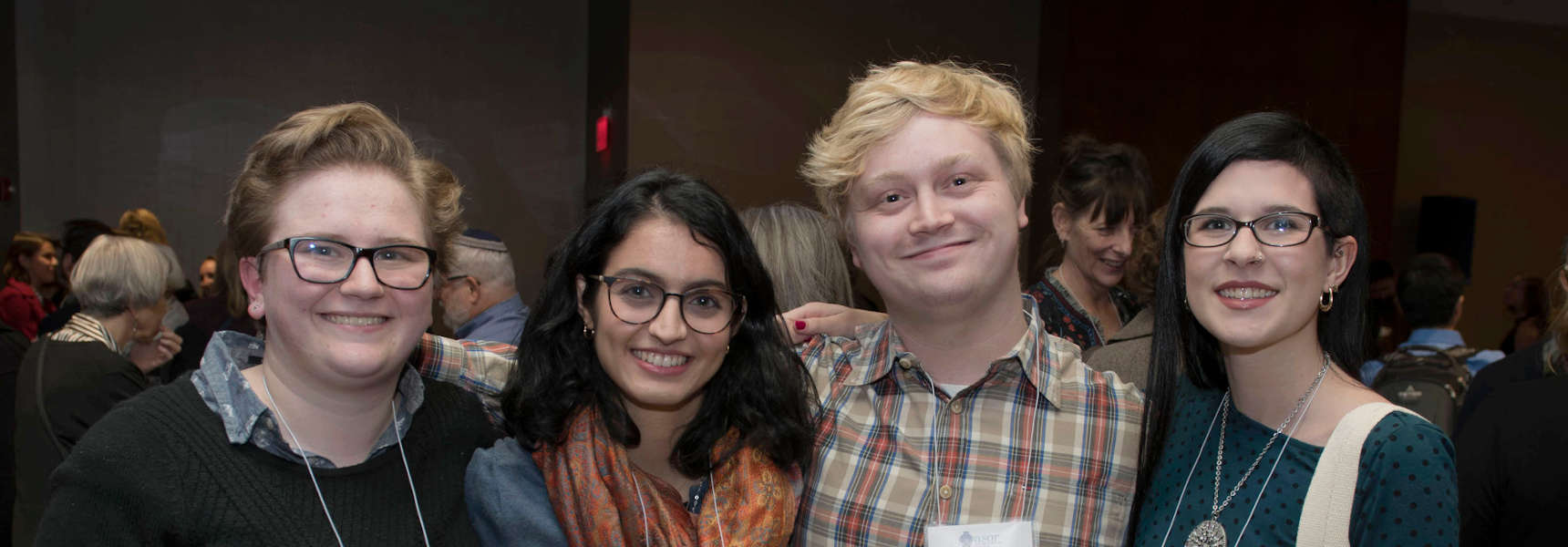
2019 Poster Session.

[/vc_column_text][mk_divider divider_color=”rgba(255,255,255,0.01)” thickness=”10″ margin_top=”5″ margin_bottom=”5″][/vc_column][vc_column border_color=”rgba(170,170,170,0.01)” width=”1/6″ css=”.vc_custom_1490571214409{margin-right: 10px !important;margin-bottom: 30px !important;border-right-width: 2px !important;border-bottom-width: 2px !important;padding-top: 30px !important;padding-right: 20px !important;padding-left: 20px !important;background-color: #ffffff !important;border-right-color: rgba(227,228,228,0.75) !important;border-bottom-color: rgba(227,228,228,0.75) !important;}”][vc_wp_posts title=”BROWSE THE NEWS ARCHIVE” number=”4″][/vc_column][vc_column border_color=”rgba(170,170,170,0.01)” width=”1/6″ css=”.vc_custom_1490225688999{margin-right: 10px !important;margin-bottom: 30px !important;border-right-width: 2px !important;border-bottom-width: 2px !important;padding-top: 30px !important;padding-right: 30px !important;padding-left: 20px !important;background-color: #ffffff !important;border-right-color: rgba(227,228,228,0.75) !important;border-bottom-color: rgba(227,228,228,0.75) !important;}”][vc_column_text] [/vc_column_text][/vc_column][/vc_row][vc_row][vc_column][vc_column_text] [/vc_column_text][/vc_column][/vc_row][vc_row][vc_column][vc_column_text] [/vc_column_text][/vc_column][/vc_row]
2017 CALL FOR PAPERS

[vc_row fullwidth=”true” css=”.vc_custom_1490224714943{padding-top: 0px !important;padding-right: 0px !important;padding-bottom: 0px !important;padding-left: 0px !important;}”][vc_column][vc_single_image image=”30040″ img_size=”full” alignment=”center”][/vc_column][/vc_row][vc_row][vc_column][vc_column_text][/vc_column_text][/vc_column][/vc_row][vc_row fullwidth=”true” css=”.vc_custom_1490225468623{padding-top: 0px !important;padding-right: 0px !important;padding-bottom: 0px !important;padding-left: 0px !important;}”][vc_column width=”1/12″ css=”.vc_custom_1490225195470{margin-right: 10px !important;}” offset=”vc_hidden-sm vc_hidden-xs”][vc_column_text]

  SHARE

[/vc_column_text][mk_image src=”http://www.asortest.org/wp-content/uploads/2017/01/social-fb-icon4.jpg” image_width=”42″ image_height=”42″ hover=”false” custom_url=”https://www.facebook.com/ASOResearch/” margin_bottom=”0″][mk_image src=”http://www.asortest.org/wp-content/uploads/2017/01/social-tw-icon4.jpg” image_width=”42″ image_height=”42″ hover=”false” custom_url=”https://twitter.com/ASOResearch?ref_src=twsrc%5Egoogle%7Ctwcamp%5Eserp%7Ctwgr%5Eauthor” margin_bottom=”0″][mk_image src=”http://www.asortest.org/wp-content/uploads/2017/01/social-in-icon4.jpg” image_width=”42″ image_height=”42″ hover=”false” custom_url=”https://www.linkedin.com/company/american-schools-of-oriental-research” margin_bottom=”0″][mk_image src=”http://www.asortest.org/wp-content/uploads/2017/01/social-ml-icon_7.jpg” image_width=”42″ image_height=”42″ hover=”false” custom_url=”mailto:asor@bu.edu” margin_bottom=”0″][mk_image src=”http://www.asortest.org/wp-content/uploads/2017/01/blog-icon3.jpg” image_width=”42″ image_height=”42″ hover=”false” custom_url=”http://asorblog.org/” margin_bottom=”0″][/vc_column][vc_column border_color=”rgba(255,255,255,0.01)” width=”1/6″ css=”.vc_custom_1490365673198{margin-right: 20px !important;border-left-width: 2px !important;padding-right: 20px !important;padding-left: 20px !important;border-left-color: #99422f !important;}” el_class=”sticky-sidenav”][mk_divider divider_color=”rgba(255,255,255,0.01)” thickness=”1″ margin_top=”3″ margin_bottom=”3″][vc_column_text]

ABOUT THE ANNUAL MEETING

CALL FOR SESSIONS

CALL FOR PAPERS

RULES FOR PARTICIPATION

REGISTER

SCHEDULE

EXHIBITORS & SPONSORS

HOTEL & CITY

AWARD NOMINATIONS

PAST & FUTURE MEETINGS

[/vc_column_text][mk_header menu_location=”second-menu” show_logo=”false” show_search=”false” show_cart=”false”][/vc_column][vc_column border_color=”rgba(170,170,170,0.01)” width=”1/2″ css=”.vc_custom_1490225606852{margin-right: 10px !important;margin-bottom: 30px !important;border-right-width: 2px !important;border-bottom-width: 2px !important;padding-top: 30px !important;padding-right: 30px !important;padding-left: 20px !important;background-color: #ffffff !important;border-right-color: rgba(227,228,228,0.75) !important;border-bottom-color: rgba(227,228,228,0.75) !important;}”][vc_column_text responsive_align=”left”]

2017 CALL FOR PAPERS

Update: The submission system is closed for paper abstracts.
March 1 – August 1: POSTER abstracts and Digital Arch. Demo Showcase PROJECT submissions only

A $25 administrative fee applies to abstracts submitted after February 15.
This fee does not apply to submissions that are solicited by a session chair.

Individual paper abstracts can be submitted beginning January 15, 2017. All abstracts must be submitted via ASOR’s Online Abstract Management System powered by Oxford Abstracts. The deadline to submit paper abstracts for the 2017 ASOR Annual Meeting is February 15, 2017.

Your research may also be best presented in poster format. Poster abstract submission will open January 15, 2017, and will close on August 1, 2017. Poster abstracts must be submitted through the ASOR’s Online Abstract Management System as well. More details can be found on the Projects on Parade Poster Session page. The deadline for submission of abstracts for posters is August 1, 2017.

General Instructions for Individual Submissions

Session chairs will accept papers for approved sessions and workshops strictly on the basis of the quality of the abstract and its conformity to the following guidelines regarding content and format. To be considered by session chairs, abstracts also must be submitted by the deadline and proposers must be current members of ASOR and preregistered for the meeting. Standards for acceptance will be the same for all abstracts submitted.

Abstracts should be submitted via ASOR’s Online Abstract Management System. The abstract will be forwarded to the correct Session Chair based on the session(s) noted on the form. For further information or questions specifically related to session, we strongly suggest that you email the session chair in advance of the submission deadline.

Questions regarding the status of submitted abstracts should be emailed to Arlene Press, ASOR’s Programs and Events Manager.

Content of Abstracts

The content of the abstract should focus on the significance of the material or on proposed solutions to specific problems rather than on a descriptive narrative.

  1. The SIGNIFICANCE of the author’s work should be stated explicitly.
  2. CONCLUSIONS, as well as the evidence for them, should be presented clearly.
  3. The TITLE should be precise and give sufficient information to allow for bibliographic indexing.
  4. Bibliographic references should be kept to a minimum and count towards the 250 word limit. PREVIOUS SCHOLARSHIP on the subject may be cited, if particularly relevant as a point of departure for clarifying the advances made in the author’s own work. See below for bibliographic format.
  5. It is understood that excavators and others engaged in research in the field during the summer cannot provide conclusions by the February 15 deadline. Preliminary submission for reports on excavations and surveys, however, is required; submissions should be detailed and specific and should include information on the precise objective of the project and its research design.

Format of Abstracts

  1. Abstracts should not exceed 250 words.
  2. In the case of multiple authors, please make sure to indicate the author who will be presenting the paper when submitting the abstract. Each member may submit only ONE paper for which he/she is the reader.
  3. Abstract submissions MUST list ALL co-authors in the fields provided by the online abstract management system at the time of submission and by the February 15 deadline.
  4. All abstracts should follow the directives of The Chicago Manual of Style (16th edition; Chicago: University of Chicago, 2010).
  5. If bibliographic references are included, these must follow the BASOR style, updated 30 January 2015, reference 33.

Publication of Abstracts in Program Book

  1. All abstracts for papers accepted for presentation at the meetings will be published in the Annual Meeting Program and Abstract Book, which will not only be given to conference registrants but will also receive an ISBN number and be available for purchase following the meeting.
  2. By submitting an abstract, presenters authorize ASOR to publish that abstract in the Program and Abstract Book.
  3. Presenters should make certain that abstracts are formatted and worded properly upon submission; opportunities for editing abstracts after April 30 may not be feasible.
  4. Abstracts may be reviewed and lightly copy edited for grammar and consistency of style.

Before submitting your abstract, please read the Rules for Participation.

All submissions must be made electronically using ASOR’s Online Abstract Management System.[/vc_column_text][mk_divider divider_color=”rgba(255,255,255,0.01)” thickness=”10″ margin_top=”5″ margin_bottom=”5″][/vc_column][vc_column border_color=”rgba(170,170,170,0.01)” width=”1/6″ css=”.vc_custom_1490571214409{margin-right: 10px !important;margin-bottom: 30px !important;border-right-width: 2px !important;border-bottom-width: 2px !important;padding-top: 30px !important;padding-right: 20px !important;padding-left: 20px !important;background-color: #ffffff !important;border-right-color: rgba(227,228,228,0.75) !important;border-bottom-color: rgba(227,228,228,0.75) !important;}”][vc_wp_posts title=”BROWSE THE NEWS ARCHIVE” number=”4″][/vc_column][vc_column border_color=”rgba(170,170,170,0.01)” width=”1/6″ css=”.vc_custom_1490225688999{margin-right: 10px !important;margin-bottom: 30px !important;border-right-width: 2px !important;border-bottom-width: 2px !important;padding-top: 30px !important;padding-right: 30px !important;padding-left: 20px !important;background-color: #ffffff !important;border-right-color: rgba(227,228,228,0.75) !important;border-bottom-color: rgba(227,228,228,0.75) !important;}”][vc_column_text] [/vc_column_text][/vc_column][/vc_row][vc_row][vc_column][vc_column_text] [/vc_column_text][/vc_column][/vc_row]

RULES FOR PARTICIPATION

RULES FOR PARTICIPATION

Membership

An Academic or Sustaining Membership in ASOR is a prerequisite for participation in the Annual Meeting as a Paper Presenter, Session Chair, or Poster Presenter (Associate Memberships and Contributing Memberships do not qualify). Students who are not currently enrolled at ASOR Member Institutions need to have an active student membership. If you do not know your membership number, log in the online store and click “My Information” in the sidebar. Your membership number will be displayed directly underneath your name. If you are not certain about whether your membership is current, please make a notation to this effect in the online registration form. If you have questions, please e-mail or call the ASOR office (703-789-9229).

Registration

In addition to ASOR membership, registration for the Annual Meeting is a requirement for participants in the Annual Meeting Program. Due to COVID-19, ASOR has committed to provide scholarships to 100% of requests from those will a need. To apply, simply e-mail asor2020@asor.org with brief explanation (no lengthy application required). All program participants must register for the Annual Meeting when submitting an abstract or registering as a session chair or discussant. Please note that the Annual Meeting Registration site and ASOR’s abstract submission site are two separate platforms that each require a log-in and password.

Undergraduate Members

Undergraduate members are encouraged to submit their work in the ASOR Virtual Poster session (Virtual Projects on Parade). Only in exceptional circumstances (for example, in the case of papers co-authored by senior scholars and undergraduate members) may an undergraduate present a paper at the ASOR Virtual Annual Meeting; please submit your requests for exceptions along these lines to Arlene Press (meetings@asor.org). Undergraduate members are not eligible to serve on ASOR governing committees.

Waivers

Due to COVID-19, and thanks to ASOR’s generous members, we are committed to funding 100% of requests for scholarships for the ASOR Virtual Annual Meeting 2020. If you have been negatively impacted (directly or indirectly) by the pandemic and need a registration scholarship, please e-mail asor2020@asor.org with a brief explanation. No lengthy application is required. ASOR will attempt to fund all requests for membership scholarships for those that need funding for both membership and registration, but membership scholarships may be limited by the availability of funds. If you need both a memberships and registration scholarship, please ask by e-mailing asor2020@asor.org—we will do our best to meet all requests.

Academic Program Participation Form

Every participant in the academic program of the Annual Meeting (paper presenters, workshop participants, session chairs, and discussants) must sign up using ASOR’s online abstract management site. All are asked to pay special attention to the request for information about schedule conflicts.

Participation Policy

Individuals may have up to three participant roles at the Annual Meeting (business meetings, non-presenting co-authorship, poster authorship, and receptions are not participant roles).

Participant roles include the following:

  • Session or Workshop Chair (or Co-Chair)
  • Presenter of Paper
  • Workshop Participant/Panelist
  • Discussant/Respondent

A single individual may not:

  • Present two papers
  • Chair more than two sessions

Criteria for Evaluating Papers/Presentations Submitted to ASOR Sessions, Member-Organized Sessions, Workshops, and Poster Session

In order to generate a program that is of interest to ASOR’s wide-ranging constituency, the Programs Committee is inclusive and seeks to incorporate all viable submissions. While session chairs are responsible for evaluating papers and posters submitted to ASOR Sessions, Member-Organized Sessions, Workshops, and the Poster Session, the Programs Committee in consultation with the Chairs Coordinating Council reserves the right to reject a paper, deny participation of a discussant or presenter in a workshop, or reject a poster.

ASOR Policy on Professional Conduct

ASOR is committed to the preservation and protection of archaeological resources as outlined in the ASOR Policy on Professional Conduct, and all presentations made at the Annual Meeting should be in conformity with this policy, as adopted by the ASOR Board of Trustees on April 18, 2015.

Code of Conduct for the ASOR Annual Meeting and other ASOR Sponsored Events

ASOR is committed to a safe and respectful environment at our Annual Meetings and has implemented a Code of Conduct for the ASOR Annual Meeting and Other ASOR Sponsored Events.

Length of Presentations

The Programs Committee recommends that presentations fit into 15-25 minute time slots depending on the number of presenters per session, allowing at least 5 minutes for discussion between each presentation. For the ASOR Virtual Annual Meeting 2020, we anticipate a combination of prerecorded presentations and synchronous discussion of that research.

Attendance of the Annual Meeting by Presenters, Participants, and Session Chairs

All presenters, workshop participants, discussants, and session chairs are expected to attend the meetings. The submission of a proposal and its acceptance represent a commitment from the contributor to present the paper or participate in the workshop in person at the conference. If a presenter is no longer able to keep this commitment they must notify ASOR’s Director of Meetings and Events as soon as they are aware that they will not be able to attend the meeting. The Program Committee is committed to promoting face-to-face interaction at the Annual Meeting, and generally does not permit substitute readers or remote presentations (via Skype). In rare circumstances the Program Committee will consider petitions to have a paper read by someone other than the presenter or co-author in order to maintain the coherence of the printed program, and when a session chair considers the paper to be critical to the session. Those who do not follow this procedure may be disqualified from submitting papers to the Academic Program for the upcoming Annual Meeting (that is for one year following their failure to appear as scheduled).

Currently, provisions are not available to accommodate real-time, internet appearances by participants who are unable to attend the meetings in person (e.g. via Skype). Pretaped, video appearances of presenters may be employed with written approval of the Program Committee and  only if the presentations are 5 min. or fewer in length and if presenters are members of ASOR and registered for the Annual Meeting by the deadline stated in the Call for Papers. The rules in this paragraph will be modified for the 2020 Virtual Annual Meeting.

Video-recording of sessions, workshops, or individual presentations is strictly prohibited without prior approval from the Program Committee. This restriction includes recording virtual presentations that may be posted online by ASOR or a 3rd party provider.

Cancellation Policy

In the case that a presenter needs to withdraw his/her paper after it has been accepted, the presenter must email ASOR’s Director of Meetings and Events with the reason for the cancellation by September 1, 2020. If there should be a refund of the registration fee, a $75 administrative fee will be assessed. Refunds may be processed after the meeting and will be issued by February 13, 2021. For 2020 only: Administrative fees are being waived for all registrations made prior to July 21, 2020. Please see the registration webpage for details on refunds and credits that apply to the 2020 Virtual Annual.

DEADLINES FOR 2017 ANNUAL MEETING

[vc_row fullwidth=”true” css=”.vc_custom_1490224714943{padding-top: 0px !important;padding-right: 0px !important;padding-bottom: 0px !important;padding-left: 0px !important;}”][vc_column][vc_single_image image=”34910″ img_size=”full” alignment=”center”][/vc_column][/vc_row][vc_row][vc_column][vc_column_text][/vc_column_text][/vc_column][/vc_row][vc_row fullwidth=”true” css=”.vc_custom_1490225468623{padding-top: 0px !important;padding-right: 0px !important;padding-bottom: 0px !important;padding-left: 0px !important;}”][vc_column width=”1/12″ css=”.vc_custom_1490225195470{margin-right: 10px !important;}” offset=”vc_hidden-sm vc_hidden-xs”][vc_column_text]

  SHARE

[/vc_column_text][mk_image src=”http://www.asortest.org/wp-content/uploads/2017/01/social-fb-icon4.jpg” image_width=”42″ image_height=”42″ hover=”false” custom_url=”https://www.facebook.com/ASOResearch/” margin_bottom=”0″][mk_image src=”http://www.asortest.org/wp-content/uploads/2017/01/social-tw-icon4.jpg” image_width=”42″ image_height=”42″ hover=”false” custom_url=”https://twitter.com/ASOResearch?ref_src=twsrc%5Egoogle%7Ctwcamp%5Eserp%7Ctwgr%5Eauthor” margin_bottom=”0″][mk_image src=”http://www.asortest.org/wp-content/uploads/2017/01/social-in-icon4.jpg” image_width=”42″ image_height=”42″ hover=”false” custom_url=”https://www.linkedin.com/company/american-schools-of-oriental-research” margin_bottom=”0″][mk_image src=”http://www.asortest.org/wp-content/uploads/2017/01/social-ml-icon_7.jpg” image_width=”42″ image_height=”42″ hover=”false” custom_url=”mailto:asor@bu.edu” margin_bottom=”0″][mk_image src=”http://www.asortest.org/wp-content/uploads/2017/01/blog-icon3.jpg” image_width=”42″ image_height=”42″ hover=”false” custom_url=”http://asorblog.org/” margin_bottom=”0″][/vc_column][vc_column border_color=”rgba(255,255,255,0.01)” width=”1/6″ css=”.vc_custom_1490365673198{margin-right: 20px !important;border-left-width: 2px !important;padding-right: 20px !important;padding-left: 20px !important;border-left-color: #99422f !important;}” el_class=”sticky-sidenav”][mk_divider divider_color=”rgba(255,255,255,0.01)” thickness=”1″ margin_top=”3″ margin_bottom=”3″][vc_column_text]

ABOUT THE 2017 ANNUAL MEETING

CALL FOR SESSIONS

CALL FOR PAPERS

RULES FOR PARTICIPATION

REGISTER

EXHIBITORS & SPONSORS

HOTEL & CITY

AWARD NOMINATIONS

PAST & FUTURE MEETINGS

[/vc_column_text][mk_header menu_location=”second-menu” show_logo=”false” show_search=”false” show_cart=”false”][/vc_column][vc_column border_color=”rgba(170,170,170,0.01)” width=”1/2″ css=”.vc_custom_1490225606852{margin-right: 10px !important;margin-bottom: 30px !important;border-right-width: 2px !important;border-bottom-width: 2px !important;padding-top: 30px !important;padding-right: 30px !important;padding-left: 20px !important;background-color: #ffffff !important;border-right-color: rgba(227,228,228,0.75) !important;border-bottom-color: rgba(227,228,228,0.75) !important;}”][vc_column_text responsive_align=”left”]

DEADLINES FOR 2017 ANNUAL MEETING

Materials must be RECEIVED by 5:00pm on the following dates.  All materials must be submitted online via the appropriate web form on the ASOR website unless otherwise noted.

December 15, 2016 New Member-Organized Session or Workshop Proposal Forms due to the Program Committee.
January 7, 2017 Notification by ASOR office of accepted or rejected new Member-Organized Sessions and new Workshop Sessions.
February 15, 2017 Abstract submissions by individuals and preregistration form and payment due to the ASOR office.
February 15 – March 1, 2017 We have implemented a two-week grace period. Submissions will still be accepted for two weeks following the Feb. 15 deadline but with an administrative fee of $25. This fee does NOT apply to those submissions that were solicited by session chairs after Feb. 15, 2017.
March 15, 2017 Deadline for session chairs to recruit papers if their sessions are in danger of not having enough papers.  Newly recruited papers (submitted via ASOR’s online system) and preregistration form due.
March 15, 2017 No late abstracts accepted after this date.
April 1, 2017 Member-Organized Session Chairs submit online Acceptance/Rejection of Papers to main ASOR office. (April 7th deadline for ASOR-sponsored Session Chairs)
May 8, 2017 Session chairs must submit Program Summaries, Abstract Copy, and Session Media Request Forms to the ASOR office by 5 pm ET.
May 15, 2017 Notification by ASOR office to individual submitters of acceptance or rejection of papers.
August 1, 2017 Deadline for abstract submissions for the Projects on Parade Poster Session. Those interested in participating in the “Projects on Parade Poster Session” must send a message of intent to Jennifer Ramsay prior to submitting an abstract.
September 15, 2017 All refunds must be requested in writing by September 15, 2017. A $50 administrative fee will be assessed per registration.

[/vc_column_text][mk_divider divider_color=”rgba(255,255,255,0.01)” thickness=”10″ margin_top=”5″ margin_bottom=”5″][/vc_column][vc_column border_color=”rgba(170,170,170,0.01)” width=”1/6″ css=”.vc_custom_1490571214409{margin-right: 10px !important;margin-bottom: 30px !important;border-right-width: 2px !important;border-bottom-width: 2px !important;padding-top: 30px !important;padding-right: 20px !important;padding-left: 20px !important;background-color: #ffffff !important;border-right-color: rgba(227,228,228,0.75) !important;border-bottom-color: rgba(227,228,228,0.75) !important;}”][vc_wp_posts title=”BROWSE THE NEWS ARCHIVE” number=”4″][/vc_column][vc_column border_color=”rgba(170,170,170,0.01)” width=”1/6″ css=”.vc_custom_1490225688999{margin-right: 10px !important;margin-bottom: 30px !important;border-right-width: 2px !important;border-bottom-width: 2px !important;padding-top: 30px !important;padding-right: 30px !important;padding-left: 20px !important;background-color: #ffffff !important;border-right-color: rgba(227,228,228,0.75) !important;border-bottom-color: rgba(227,228,228,0.75) !important;}”][vc_column_text] [/vc_column_text][/vc_column][/vc_row][vc_row][vc_column][vc_column_text]

[/vc_column_text][/vc_column][/vc_row]

INSTRUCTIONS FOR SESSION CHAIRS

[vc_row][vc_column][vc_single_image image=”54928″ img_size=”full”][/vc_column][/vc_row][vc_row][vc_column][vc_column_text][/vc_column_text][/vc_column][/vc_row][vc_row fullwidth=”true” css=”.vc_custom_1490225468623{padding-top: 0px !important;padding-right: 0px !important;padding-bottom: 0px !important;padding-left: 0px !important;}”][vc_column width=”1/12″ css=”.vc_custom_1490225195470{margin-right: 10px !important;}” offset=”vc_hidden-sm vc_hidden-xs”][vc_column_text]

  SHARE

[/vc_column_text][mk_image src=”http://www.asortest.org/wp-content/uploads/2017/01/social-fb-icon4.jpg” image_width=”42″ image_height=”42″ hover=”false” custom_url=”https://www.facebook.com/ASOResearch/” margin_bottom=”0″][mk_image src=”http://www.asortest.org/wp-content/uploads/2017/01/social-tw-icon4.jpg” image_width=”42″ image_height=”42″ hover=”false” custom_url=”https://twitter.com/ASOResearch?ref_src=twsrc%5Egoogle%7Ctwcamp%5Eserp%7Ctwgr%5Eauthor” margin_bottom=”0″][mk_image src=”http://www.asortest.org/wp-content/uploads/2017/01/social-in-icon4.jpg” image_width=”42″ image_height=”42″ hover=”false” custom_url=”https://www.linkedin.com/company/american-schools-of-oriental-research” margin_bottom=”0″][mk_image src=”http://www.asortest.org/wp-content/uploads/2017/01/social-ml-icon_7.jpg” image_width=”42″ image_height=”42″ hover=”false” custom_url=”mailto:asor@bu.edu” margin_bottom=”0″][mk_image src=”http://www.asortest.org/wp-content/uploads/2017/01/blog-icon3.jpg” image_width=”42″ image_height=”42″ hover=”false” custom_url=”http://asorblog.org/” margin_bottom=”0″][/vc_column][vc_column border_color=”rgba(255,255,255,0.01)” width=”1/6″ css=”.vc_custom_1490365673198{margin-right: 20px !important;border-left-width: 2px !important;padding-right: 20px !important;padding-left: 20px !important;border-left-color: #99422f !important;}” el_class=”sticky-sidenav”][mk_divider divider_color=”rgba(255,255,255,0.01)” thickness=”1″ margin_top=”3″ margin_bottom=”3″][vc_widget_sidebar sidebar_id=”ca-sidebar-38526″ el_class=”.widget { overflow: hidden; margin-bottom: 0; }”][/vc_column][vc_column border_color=”rgba(170,170,170,0.01)” width=”1/2″ css=”.vc_custom_1490225606852{margin-right: 10px !important;margin-bottom: 30px !important;border-right-width: 2px !important;border-bottom-width: 2px !important;padding-top: 30px !important;padding-right: 30px !important;padding-left: 20px !important;background-color: #ffffff !important;border-right-color: rgba(227,228,228,0.75) !important;border-bottom-color: rgba(227,228,228,0.75) !important;}”][vc_column_text responsive_align=”left”]

INSTRUCTIONS FOR SESSION CHAIRS

Planning Sessions

  1. Rules for Participation: Session chairs should review the Rules for Participation carefully. Please note especially the participation policy; session chairs who solicit papers for their sessions should inquire whether the invitee has already submitted a paper to another session, and if so, should withdraw their invitation to avoid having the person give more than one presentation as first author.
  2. Session Length: Sessions are scheduled in time slots of two hours and five minutes in length. Please plan for no more than two hours and five minutes per session. Please allow at least 5 min. for discussion and transition after each paper. Please note that any session with papers that exceed this time limit or that does not allow time for discussion will be sent back to the session chair for reduction and revision. If you receive more than six high-quality submissions for a single session, your session will be automatically considered for an additional section, or you will be asked to limit your selection to six papers. Please remember also that four high-quality presentations are better than five medium-quality presentations. If you do not think you will have enough papers to fill a two hour and five minute session, please contact the chair(s) of the program committee by March 1, 2020.
  3. Peer Review: Session chairs are responsible for assessing the quality of submissions. Chairs may want to consult with others in the field while reviewing some submissions. Please read ASOR’s Policy on Professional Conduct and keep this in mind when reviewing paper submissions. If a paper raises concerns in terms of compliance with ASOR’s Policy on Professional Conduct, please alert the Co-Chairs of ASOR’s Program Committee and do not accept the paper in the online system.
  4. Acceptance/Rejection of Papers: Please submit your assessment of each abstract via ASOR’s online abstract submission system. You will be given access to the abstract submissions during the first week of March. The official deadline for completion of your review of submissions is March 26, but earlier notice is appreciated. You may be asked to review additional paper proposals that were not accepted/placed during the first round of reviews. The ASOR office will notify proposers of whether their papers have been accepted or rejected by May 15. Please do NOT notify proposers yourself of the acceptance or rejection of their proposals, as it is important that all acceptances and rejections be issued at the same time, in an official format, and from the ASOR office.
  5. Timeline and Deadlines: Session chairs should read the Deadlines for the 2020 ASOR Annual Meeting carefully.

Final Submission

The final submission of materials for all sessions must include the following items and must be submitted to ASOR’s Director of Meetings and Events via email attachment no later than April 25, 2020.

1. Program Copy for Session: Program copy should follow this format (see the sample program copy below):

– Complete title of the session, indicating the session number in parentheses. E.x., Archaeology of Jordan (Session #2 of 3).
– Optional theme or brief description of the session (5-50 words)
– Total time for the session and times for each paper. The total session time may not exceed two hours and five minutes, including breaks and discussion.
– Speakers in the order of appearance, including affiliation and paper title. If necessary, refer to the online Abstract Submission system to verify each participant’s name, institutional affiliation, and paper title. Your summary will be used to create the Program Book for the Meeting, so it is essential that it be as accurate as possible.

2. Abstract Copy: The Abstract Copy will be used to create the Program Book for the meeting, so it is essential that it be as accurate as possible. Please compile a new Word document for each session that lists the presenters, their affiliations, paper titles, and abstracts in the order they will appear in your session (just as you did for the Program Copy). Include the presenter’s abstract, and provide edits as necessary. If your presenters submit abstracts longer than the 250 word limit, please edit them to conform to the limit and send the new revised abstracts to the ASOR office with your other materials.

3. Special Media Requests: All rooms will be equipped with an LCD projector, screen, and podium with microphone. ASOR does NOT provide computers for sessions. Session chairs are responsible for arranging to have a laptop that can be used for the duration of the session with pre-loaded presentation materials from each speaker.

If you need any other audiovisual equipment beyond that listed above, it is the session chair’s responsibility to email Arlene Press with your request by May 1, 2020. Audio connections are not available in every room and it is important to notify ASOR in advance if you learn that a presenter has included sound in their slides. Requests cannot always be met and may add an expense to the session. Live streaming is not permitted.

The Program Committee reserves the right to reject any session whose final form as submitted on April 25 is substantially different from the proposal originally approved.

Note: If a session chair needs to cancel a session due to a dearth of submissions or other reasons, he/she must notify the Program Committee Chair(s) by March 15, 2020.

Etiquette for Session Chairs

All session chairs should be aware of the following rules of etiquette:

1. Discussants: It is essential for the success of a session involving a discussant that the discussant receives a draft of the papers at least one week before the Annual Meeting. It is the responsibility of session chairs to facilitate this exchange.

2. Session Schedule: The printed schedule will be followed strictly. Let presenters, respondents, and panelists know of this practice. If a participant of the session does not attend and does not submit a paper to be read or finishes early, do not begin the next presentation until the printed time. Fill “gaps” with discussion or a break; the session should not be rearranged or otherwise modified. It is essential for the success of the papers and the ensuing discussion that papers not be allowed to run beyond the time allotted for them.

3. Changes to Schedule: Announce any changes to the schedule at the beginning of the session and at the time of the change.

4. Troubleshooting: Ask is there is a TFBA Fellow in the room to assist, or contact the ASOR registration desk while at the meeting if you have problems, such as:

– The room is not set up according to special requests that the chair may have arranged in advance of the meeting.
– You cannot find the light switches
– There are not enough chairs
– Another group is in your room at the time you are scheduled

Program Copy Sample

(Possible format for session with five papers)

*Sessions must total 125 minutes and there must be 5 minutes  for discussion/transition between each presentation.

Archaeology of Jordan II (session 2 of 3)

Theme: Optional theme or short description (no more than 50-75 words)

SESSION CHAIR: S. Thomas Parker (North Carolina State University)

Leigh-Ann Bedal (Penn State Behrend) “A Woman’s Personal Assemblage from the Cave of the Petra Garden and Pool Complex” (20 min.)

Discussion (5 min.)

Cynthia Finlayson (Brigham Young University), “New Excavations on the Ad-Deir Plateau: Seasons 2014-2015 of the Ad-Deir Monument and Plateau Project in Petra, Jordan” (20 min.)

Discussion (5 min.)

Pamela Koulianos (North Carolina State University), “The Chronology of the Petra Garden and Pool Complex through Course-Wares” (20 min.)

Discussion (5 min.)

S. Thomas Parker (North Carolina State University), “A Nabataean and Late Roman Domestic Complex at Petra” (20 min.)

Discussion (5 min.)

Sarah Wenner (North Carolina State University), “The Nabataen Ceramic Tradition in Petra after the Roman Annexation” (20 min.)

Discussion (5 min.)

ASOR Programs Committee

Click here for a list of Programs Committee members.

[/vc_column_text][/vc_column][vc_column border_color=”rgba(170,170,170,0.01)” width=”1/6″ css=”.vc_custom_1490571214409{margin-right: 10px !important;margin-bottom: 30px !important;border-right-width: 2px !important;border-bottom-width: 2px !important;padding-top: 30px !important;padding-right: 20px !important;padding-left: 20px !important;background-color: #ffffff !important;border-right-color: rgba(227,228,228,0.75) !important;border-bottom-color: rgba(227,228,228,0.75) !important;}”][vc_wp_posts title=”BROWSE THE NEWS ARCHIVE” number=”4″][/vc_column][vc_column border_color=”rgba(170,170,170,0.01)” width=”1/6″ css=”.vc_custom_1490225688999{margin-right: 10px !important;margin-bottom: 30px !important;border-right-width: 2px !important;border-bottom-width: 2px !important;padding-top: 30px !important;padding-right: 30px !important;padding-left: 20px !important;background-color: #ffffff !important;border-right-color: rgba(227,228,228,0.75) !important;border-bottom-color: rgba(227,228,228,0.75) !important;}”][vc_column_text] [/vc_column_text][/vc_column][/vc_row][vc_row][vc_column][vc_column_text]

[/vc_column_text][/vc_column][/vc_row][vc_row][vc_column][/vc_column][/vc_row][vc_row][vc_column][/vc_column][/vc_row][vc_row][vc_column][/vc_column][/vc_row][vc_row][vc_column][/vc_column][/vc_row][vc_row][vc_column][/vc_column][/vc_row][vc_row][vc_column][/vc_column][/vc_row][vc_row][vc_column][/vc_column][/vc_row][vc_row][vc_column][/vc_column][/vc_row][vc_row][vc_column][/vc_column][/vc_row][vc_row][vc_column][/vc_column][/vc_row][vc_row][vc_column][/vc_column][/vc_row]

LIST OF APPROVED SESSIONS (2017)

[vc_row fullwidth=”true” css=”.vc_custom_1490224714943{padding-top: 0px !important;padding-right: 0px !important;padding-bottom: 0px !important;padding-left: 0px !important;}”][vc_column][vc_single_image image=”34910″ img_size=”full” alignment=”center”][/vc_column][/vc_row][vc_row][vc_column][vc_column_text][/vc_column_text][/vc_column][/vc_row][vc_row fullwidth=”true” css=”.vc_custom_1490225468623{padding-top: 0px !important;padding-right: 0px !important;padding-bottom: 0px !important;padding-left: 0px !important;}”][vc_column width=”1/12″ css=”.vc_custom_1490225195470{margin-right: 10px !important;}” offset=”vc_hidden-sm vc_hidden-xs”][vc_column_text]

  SHARE

[/vc_column_text][mk_image src=”http://www.asortest.org/wp-content/uploads/2017/01/social-fb-icon4.jpg” image_width=”42″ image_height=”42″ hover=”false” custom_url=”https://www.facebook.com/ASOResearch/” margin_bottom=”0″][mk_image src=”http://www.asortest.org/wp-content/uploads/2017/01/social-tw-icon4.jpg” image_width=”42″ image_height=”42″ hover=”false” custom_url=”https://twitter.com/ASOResearch?ref_src=twsrc%5Egoogle%7Ctwcamp%5Eserp%7Ctwgr%5Eauthor” margin_bottom=”0″][mk_image src=”http://www.asortest.org/wp-content/uploads/2017/01/social-in-icon4.jpg” image_width=”42″ image_height=”42″ hover=”false” custom_url=”https://www.linkedin.com/company/american-schools-of-oriental-research” margin_bottom=”0″][mk_image src=”http://www.asortest.org/wp-content/uploads/2017/01/social-ml-icon_7.jpg” image_width=”42″ image_height=”42″ hover=”false” custom_url=”mailto:asor@bu.edu” margin_bottom=”0″][mk_image src=”http://www.asortest.org/wp-content/uploads/2017/01/blog-icon3.jpg” image_width=”42″ image_height=”42″ hover=”false” custom_url=”http://asorblog.org/” margin_bottom=”0″][/vc_column][vc_column border_color=”rgba(255,255,255,0.01)” width=”1/6″ css=”.vc_custom_1490365673198{margin-right: 20px !important;border-left-width: 2px !important;padding-right: 20px !important;padding-left: 20px !important;border-left-color: #99422f !important;}” el_class=”sticky-sidenav”][mk_divider divider_color=”rgba(255,255,255,0.01)” thickness=”1″ margin_top=”3″ margin_bottom=”3″][vc_widget_sidebar sidebar_id=”ca-sidebar-38526″ el_class=”.widget { overflow: hidden; margin-bottom: 0; }”][/vc_column][vc_column border_color=”rgba(170,170,170,0.01)” width=”1/2″ css=”.vc_custom_1490225606852{margin-right: 10px !important;margin-bottom: 30px !important;border-right-width: 2px !important;border-bottom-width: 2px !important;padding-top: 30px !important;padding-right: 30px !important;padding-left: 20px !important;background-color: #ffffff !important;border-right-color: rgba(227,228,228,0.75) !important;border-bottom-color: rgba(227,228,228,0.75) !important;}”][vc_column_text responsive_align=”left”]

LIST OF APPROVED SESSIONS (2017)

* The period for the submission of paper abstracts is from January 12th – February 15th, 2017.

ASOR-Sponsored Sessions

Member-Organized Sessions for the 2017 Annual Meeting

Member-Organized Workshops for the 2017 Annual Meeting

Descriptions of Sessions & Workshops

ASOR-Sponsored Sessions

Ancient Inscriptions: Recent Discoveries, New Editions, New Readings

Session Chairs: Heather Parker, Johns Hopkins University; Michael Langlois, Strasbourg/University of France

Description: The focus of this session is epigraphic material from the Near East and Wider Mediterranean. Paper proposals that consist of new readings (of previously published inscriptions) or constitute preliminary presentations of new epigraphic discoveries are of special interest.


Approaches to Dress and the Body

Session Chair
: Megan Cifarelli, Manhattanville College

Description: Traces of practices relating to dress and the body are present in
many ways in the archaeological, textual and visual records of the
ancient world, from the physical remains of dressed bodies, to images
depicting them, to texts describing such aspects as textile production
and sumptuary customs. Previous scholarship has provided useful
typological frameworks but has often viewed these objects as static
trappings of status and gender. The goal of this session is to
illuminate the dynamic role of dress and the body in the performance
and construction of aspects of individual and social identity, and to
encourage collaborative dialogue within the study of dress and the
body in antiquity.


Archaeology and Biblical Studies

Session Chair: Jonathan Rosenbaum, Gratz College

Description: This session is meant to explore the intersections between History, Archaeology, and the Judeo-Christian Bible and related texts.


Archaeology and History of Feasting and Foodways

Session Chairs:
Margaret Cohen, Albright Institute of Archaeological Research, Deirdre Fulton, Baylor University, and Elizabeth Arnold, Grand Valley State University

Description:
The Archaeology and History of Food and Feasting session addresses the production, distribution, and consumption of food and drink. Insofar as foodways touch upon almost every aspect of the human experience—from agricultural technology, to economy and trade, to nutrition and cuisine, to the function of the household and its members, to religious acts of eating and worship—we welcome submissions from diverse perspectives and from the full spectrum of our field’s geography and chronology.


Archaeology of Anatolia

Session Chair: Levent Atici, University of Nevada – Las Vegas

Description: This session is concerned with current fieldwork in Anatolia, as well as the issue of connectivity in Anatolia. What, for example, were the interconnections between Anatolia and surrounding regions such as Cyprus, Transcaucasia, Mesopotamia, and Europe?


Archaeology of Arabia

Session Chairs
: Mark Kenoyer, University of Wisconsin-Madison; Steven Karacic, Florida State University

Description:
This session seeks contributions covering a wide spatio-temporal swath from the Paleolithic to the present centered on the Arabian Peninsula but including neighboring areas such as The Horn of Africa, East Africa, and South Asia. Contributions might be tied to the region thematically (e.g pastoral nomadism, domesticates, or agricultural strategies), methodologically (e.g. Landscape archaeology, or satellite imagery technologies) or through ancient contacts such as trade along The Red Sea, Persian/Arabian Gulf or Indian Ocean.


Archaeology of the Black Sea and the Caucasus

Session Chairs: Ryan Hughes, University of Michigan; Elizabeth Fagan, University of Chicago

Description: This session is open to papers that concern the archaeology of the Black Sea and Eurasia.


Archaeology of the Byzantine Near East

Session Chair: Melissa Bailey Kutner, Northwestern University

Description: This session is open to papers that concern the Near East in the Byzantine period.


Archaeology of Cyprus

Session Chair: Nancy Serwint, Arizona State University

Description: This session focuses on current archaeological research in Cyprus from prehistory to the modern period. Topics may include reports on archaeological fieldwork and survey, artifactual studies, as well as more focused methodological or theoretical discussions. Papers that address current debates and issues are especially welcome.


Archaeology of Egypt

Session Chairs: Krystal Pierce, Brigham Young University; Greg Mumford, University of Alabama

Description: The focus of this session is on current archaeological fieldwork in Egypt.


Archaeology of Iran

Session Chair: Holly Pittman, University of Pennsylvania

Description: This session explores the archaeology of Iran.


Archaeology of Islamic Society

Session Chair: Beatrice St. Laurent, Bridgewater State University

Description: This session explores the archaeology of Islamic society.


Archaeology of Israel

Session Chair: J.P. Dessel, University of Michigan

Description: The focus of this session is on current archaeological fieldwork in Israel.


Archaeology of Jordan

Session Chairs: Marta D’ Andrea, Sapienza Università di Roma; and Barbara Reeves, Queen’s University

Description: This session is open to any research from any period relating to the Archaeology of Jordan. The session is open to papers on recent fieldwork, synthetic analyses of multiple field seasons, as well as any area of current archaeological research focused on Jordan.


Archaeology of Lebanon

Session Chair: Hanan Mullins, ASOR

Description: The focus of this session is on current archaeological fieldwork in Lebanon.


Archaeology of Mesopotamia

Session Chair: Lauren Ristvet, University of Pennsylvania

Description: This session seeks submissions in all areas illuminated by archaeology that relate to the material, social, and religious culture, history and international relations, and texts of ancient Mesopotamia.


Archaeology of the Natural Environment: Archaeobotany and Zooarchaeology in the Near East

Session Chairs: Mellisa Rosenzweig, Miami University; Madelynn von Baeyer, University of Connecticut

Description: This session accepts papers that examine past human resources (flora and fauna) uses and human/environment interactions in the Ancient Near East.


Archaeology of the Near East: Bronze and Iron Ages

Session Chair: Eric Welch, University of Kansas

Description: This session is open to papers that concern the Near East in the Bronze and Iron Ages.


Archaeology of the Near East: The Classical Periods

Session Chair: Michael Zimmerman, Bridgewater State University

Description: This session is open to papers that concern the Near East in the Classical periods.


Archaeology of Arabia

Session Chair: Michael Harrower, Johns Hopkins University; Peter Magee, Brynn Mawr

Description: This session seeks contributions covering a wide spatio-temporal swath from the Paleolithic to the present centered on the Arabian Peninsula but including neighboring areas such as The Horn of Africa, East Africa, and South Asia. Contributions might be tied to the region thematically (e.g pastoral nomadism, domesticates, or agricultural strategies), methodologically (e.g. Landscape archaeology, or satellite imagery technologies) or through ancient contacts such as trade along The Red Sea, Persian/Arabian Gulf or Indian Ocean.


Archaeology of the Southern Levant

Session Chair: Owen Chesnut, North Central Michigan College

Description: The focus of this session is on current archaeological fieldwork in the southern Levant.


Art Historical Approaches to the Near East

Session Chairs: Allison Thomason, Southern Illinois University Edwardsville; Kiersten Neumann, Oriental Institute, University of Chicago

Description: This session welcomes submissions that present innovative analyses of any facet of Near Eastern artistic production or visual culture.


Bioarchaeology in the Near East

Session Chair: Lesley Gregoricka, University of South Alabama

Description: This session welcomes papers that present bioarchaeological research conducted in the Near East. Papers that pose new questions and/or explore new methods are encouraged.


Cultural Heritage Management: Methods, Practices, and Case Studies

Session Chairs: Glenn Corbett, American Center of Oriental Research (ACOR); Suzanne Davis, Kelsey Museum of Archaeology, University of Michigan; LeeAnn Gordon, Peabody Museum of Archaeology, Harvard University

Description: This session welcomes papers that concern cultural heritage management in terms of methods, practices, and case studies in areas throughout the Near East.


Gender in the Ancient Near East

Session Chairs: Stephanie Langin-Hooper, Southern Methodist University

Description: Session explores the interface between gender and archaeology, and the ways in which archaeology and related disciplines can reconstruct the world of women and other gender groups in antiquity. Papers should explore subjects such as the household and domestic life, industry and commerce, religion, etc. Other topics may also be included.


GIS and Remote Sensing in Archaeology

Session Chair: Kevin Fisher, University of British Columbia

Description: This session will present papers that describe significant advances or interesting applicationsof geographic information systems and remote sensing methods thatpertain to the archaeology of the Near East.


History of Archaeology

Session Chair: Kevin McGeough, University of Lethbridge

Description: Papers in this session examine the history of the disciplines of Biblical Archaeology and Near Eastern Archaeology.


Landscapes of Settlement in the Ancient Near East

Session Chairs
: Jesse Casana, Dartmouth College; Emily Hammer, University of Chicago

Description: This session brings together scholars investigating regional-scale problems of settlement history and archaeological landscapes across the ancient Near East.  Research presented in the session is linked methodologically through the use of regional survey, remote sensing, and environmental studies to document ancient settlements, communication routes, field systems and other evidence of human activity that is inscribed in the landscape.  Session participants are especially encouraged to offer analyses of these regional archaeological data that explore political, economic, and cultural aspects of ancient settlement systems as well as their dynamic interaction with the natural environment.


Maritime Archaeology

Session Chair: Caroline Sauvage, Loyola Marymount University

Description: This session welcomes papers that concern marine archaeology in terms of methods, practices, and case studies in areas throughout the Near East.


Prehistoric Archaeology

Session Chair: Yorke Rowan, University of Chicago

Description: This session is open to papers that concern the Prehistoric Near East, particularly in the Paleolithic, Neolithic, and Chalcolithic


Reports on Current Excavations – ASOR Affiliated

Session Chair: Jack Green, Corning Museum of Glass

Description: This session is for projects with ASOR/CAP affiliation.


Reports on Current Excavations – Non-ASOR Affiliated

Session Chair: Robert Homsher, Harvard University

Description: This session is for projects without ASOR/CAP affiliation.


Technology in Archaeology: Recent work in the Archaeological Sciences

Session Chairs: Andrew Koh, Brandeis University

Description: This session welcomes papers that examine the issue of technology in archaeology.


Theoretical and Anthropological Approaches to the Near East

Session Chairs: Leann Pace, Wake Forest University; Emily Miller Bonney, California State University Fullerton

Description: This session welcomes papers that deal explicitly with theoretical and anthropological approaches to ancient Near Eastern and east Mediterranean art and archaeology.


Member-Organized Sessions

Altered States: Alternative Trajectories to Complexity in the Ancient Middle East

Session Chair: Geoff Emberling, Kelsey Museum, University of Michigan

Description: Our understandings of the forms and development of ancient polities in the Middle East are still fundamentally predicated on Egypt and Mesopotamia, the states that VG Childe emphasized in his early work in the 1930s that were given new primacy as “primary states” in the New Archaeology.

Yet there were a wide variety of political formations in the ancient Middle East that were complex and even state-like, even if they do not conform to Mesopotamian or Egyptian forms of state organization.

This session aims to explore and compare these “altered” states and the historical trajectories of their development. Typically located on the margins of—or in between—Egypt and Mesopotamia, they differed in aspects of subsistence, in settlement and mobility, in economy (particularly in the role of trade), and in the constitution of political authority.

Among the cases to be considered are Elam, polities of the Caucasus, areas of the southern Levant, and Nubia.


Ambiguity in the Ancient Near East: Mental Constructs, Material Records, and their Interpretations

Session Chairs: Elizabeth Knott, New York University, The Metropolitan Museum of Art; Lauren McCormick, Syracuse University

Description: Many ancient Near Eastern texts, images and spaces include aspects that evade classification and confound interpretation. Such ambiguities are often attributed to missing information, and are not considered in light of their cultural contexts. More recent trends have shown, however, that ambiguity was a fruitful strategy of signification in the ancient Near East.

This session seeks to explore the possible intentional motives behind such ambiguities, using archaeological, textual, and visual evidence to explore the role of ambiguity in the construction of meaning and the functions of ambiguous representations. Papers could, for example, discuss the roles of deliberately undecipherable writings and images in their ancient contexts, conflicts between objects and their inscriptions, the (im)possibility of transferring personal items (e.g., cylinder seals) and spaces (e.g., palaces, burials), the reinterpretation of objects and sites in ancient and modern times, the relationship between ancient and modern systems of classification and categorization, ambiguity in the expression of socially- (e.g., gender, ethnic) or politically-based identities, or ambiguity as a source of, or response to, cross-cultural interaction. We welcome papers that explore ambiguity as it pertains to archaeology, writing, visual culture, systems of thought, and/or historiography.


Ancient Texts and Modern Photographic and Digital Technologies

Session Chairs: Christopher Rollston, George Washington University and Annalisa Azzoni, Vanderbilt University

Description: The purpose of this session is to showcase some of the most recent and innovative technologies for the study of ancient inscriptions from the ancient Near Eastern and Mediterranean worlds.  Some of the technologies will be photographic in nature (e.g., RTI, multi-spectral imaging), some will focus on manipulation and enhancement via software (e.g., Photoshop, Autocad), and some of the technologies will focus on digital drawing and the application of such technologies in classroom contexts.


Antioch – A Legacy Excavation and its Aftermath

Session Chairs: Andrea De Giorgi, Florida State University; Alan Stahl, Princeton University

Description: In the 1930s the Antioch excavations conducted by Princeton University and other institutions produced a remarkable wealth of finds that opened up new vistas onto a city that played a fundamental role in the shaping of politics and cultures in the eastern Mediterranean for more than a millennium. Although most of the monuments that this enterprise had targeted were missed, its cumulative -and complicated- archaeological record still entices throngs of scholars. Pavements, sculpture, coins -these are but some of the ephemera that have long attracted attention and, despite their often fortuitous character, still enable the writing of new, fascinating narratives about Antioch.

Today, most of the finds and records are housed at the Princeton University Art Museum and are only partially documented by the three volumes of post-war publications. In re-examining these collections and their cultural context the “New Committee for the Excavation of Antioch and its Vicinity” makes it now possible to further our understanding of the city’s evolution and transformative qualities. The 2017 speakers will illustrate these momentums in research by bringing to the fore various aspects of Antiochene material culture and topography.


Antiochia Hippos of the Decapolis and Its Territorium

Session Chair:  Michael Eisenberg, The Zinman Institute of Archaeology, University of  Haifa

Description:  Antiochia Hippos (Sussita) of the Decapolis is the last polis to be unearthed in the Land of Israel and one of the largest archaeological enterprises of the Classical period in the region. The city, founded upon Sussita Mountain crest in the first half of the second century BC, is the center of an on-going archaeological research started at 2000 and published in a series of monographs and articles. In recent years the research expanded to Sussita’s saddle-ridge area and the Khôra/Territorium of Hippos. Hippos administrative region covered the central and southern Golan during the Roman period and is the core of a new regional and inter-regional study using archaeological, geo-spatial and lab-based analytical methods. The research aims to gain a better understanding of the urban – rural relationships in the region.

The session welcomes new studies dealing with Hippos or its region during Hellenistic-Umayyad period. The study may encompass a wide array of disciplines, i.e. urban planning, rural settlements, architecture, military and administration, pottery, trade, small finds, numismatics, analytical analyses and geo-spatial based research.


Archaeologists Engaging Global Challenges

Session Chairs: Catherine Foster, Ancient Middle East Education and Research Institute; Erin Darby, University of Tennessee

Description: This session will facilitate research among scholars of the ancient Near East to provide long-term viewpoints on global challenges facing humanity in the 21st century. The United Nation’s Millennium Project (www.millennium-project.org) has identified 15 Global Challenges including peace and conflict, energy, sustainable development, and democratization. Participants will tackle these issues through their original research and explore ways archaeologists can contribute uniquely informed, deep-time perspectives to international efforts by governments, international organizations and futurists addressing these challenges. This session will raise awareness about the role archaeology can play in overcoming the Global Challenges, provide case studies for direct engagement with one or more of the issues at hand, and create an interface between archaeologists and policy makers.


Baths and Bathing in the East

Session Chair: Craig Harvey, University of Michigan

Description: Baths and bathing practices have long been important aspects of archaeological investigation, and they still remain crucial for the examination of the ancient world. New discoveries, technologies, and lines of questioning have greatly advanced our understanding of these cultural institutions and have shed more light on their development and evolution throughout antiquity. This session aims to bring together international and North American scholars to present and discuss resent research on baths and bathing in the Near East from the Hellenistic to the Early Islamic periods. By inviting papers on recent fieldwork, comparative analyses, architectural studies, the social use of baths, and other topics, this session will facilitate and inspire a holistic examination of baths and bathing. The wide geographic and temporal spread of this session will also encourage discussions to focus on comparative issues.


Border Dynamics in the 10th century B.C.E. Levant: A Junior Scholars’ Panel

Session Chairs: Geoffrey Ludvik, University of Wisconsin-Madison; Lydia Buckner, Mississippi State University

Description: Questions of where political borders between polities were located and how they functioned are significant in Levantine archaeology. Equally significant is the identification of socio-cultural borders between groups of people possibly separated by ethnic differences. This panel provides a venue for the presentation of current research at sites along ancient borders. Such sites are important archaeological case studies for understanding identity formation and the mechanics of early state-level societies in the Levant in terms of interregional interaction as well as internal affairs. Since the management, fortification, and control over territorial borders implies a high level of administrative bureaucracy, sites identified along border zones provide an opportunity to assess socio-political complexity. These discussions are highly relevant to the scholarly debate surrounding the late 11th/early 10th centuries B.C.E. This panel is unique in that presenters will all be junior scholars. Our goal is to allow such junior scholars (Masters and PhD students and recent PhDs) the opportunity to publically present their research as it pertains to the theme of 10th century B.C.E. border dynamics, both political and social. This panel hopes to foster an environment of increased collaboration and professional connection among a new generation of scholars at sites throughout the Levant.


Caesarea Maritima:  Renewed Excavations, Recent Discoveries

Session Chairs: Kenneth Holum, University of Maryland; Peter Gendelman, Israel Antiquities Authority

Description: During the 1990’s fur teams from various countries excavated simultaneously at the harbor city Caesarea Maritima, Israel, with spectacular results that are now in the final publication stage.  In the meantime, new excavations commenced in 2014, in several cases taking up where the earlier excavations left off.  This session will feature recent advances in knowledge of Caesarea antiquities and will invite discussion of them.  On the Temple Platform (area TP) excavators have clarified the setting of King Herod’s temple to Augustus and Dea Roma, recently uncovering the temple’s high altar.  North of the ancient harbor, new work in area LL has contributed rich ceramic evidence for the much-discussed Byzantine-Islamic transition.  Ongoing research on tsunamis that struck the coast in antiquity have turned recently to newly-discovered tsunami deposits on land.  The new excavations have also brought new material and new insights on the sculptural environment of Roman and Byzantine Caesarea.  Chance discoveries in the harbor have yielded a shipwreck of the fourth century carrying fragments of ancient bronze statuary intended for recycling, and another of the eleventh century conveying a huge treasure of gold coins.  Apart from their intrinsic interest, these finds illuminate disparate periods in the history of Caesarea’s harbor.


Career Options for ASOR Members: The Academy and Beyond

Session Chairs: Susan Ackerman, Dartmouth and Emily Bonney, California State University Fullerton

Description: Applicants for tenure-track positions at universities and colleges confront diminished demand for faculty.  Increasingly junior scholars are forced to look for adjunct or temporary appointments and face the possibility of no appointment at all.  This three-year session aims to provide insights into alternative careers for both the next generation of ASOR scholars and those interested in a career change.  Each year one or two panels of four to six scholars who developed careers outside the academy will discuss their careers, answering fundamental questions in 15- to 20-minute presentations.  How did they discover the job opportunities that became a meaningful career?  Did they begin in the academy and leverage that experience to gain access to a different career or were they able to move from graduate school into this work?  How important, if at all, was a post-doc in the choices they had?  How long did it take to get into the position where they have spent most of their professional lives?  What additional training did they need? Have they been able to continue their research and/or excavation projects: that is, what was the overall impact of the career choice on their scholarship?  Sessions will include time for questions and discussion.


Connectivities in the Near East: Social Impact of Shifting Networks

Session Chair: Barbara Horejs, Institute for Oriental and European Archaeology

Description: Social-cultural dynamics of former Near Eastern societies form the main focus of this session by analyzing scales and modes of connectivities in a diachronic perspective. Motivations/mechanisms of interaction in spatial contexts allow modeling of agencies on local, regional or supra-regional levels. The actors of interaction in their cultural-spatial contexts (individuals, groups, states etc.) and the impact of their networks let us assume scales, modes and shifts in their connectivities. Case studies from different periods form the framework to present/discuss different archaeological approaches dealing with the concept of connectivity. The Institute for Oriental and European Archaeology (OREA) presents results of current studies achieved with international cooperation partners. Research covers a wide range of prehistoric regions in the Near East, e.g. Egypt, the Levant, Turkey and Greece. Extending research perspectives to adjacent regions, focusing especially on connections/interactions with other identities allows to gain insight into a new spectrum of cultural exchange, trade and connections of ancient peoples in the regions under investigation. This section intends to illustrate the activities of OREA: research from lithics to pottery, from radiocarbon investigations to socio-cultural analyses and modeling for the time span from 7,000 B.C.E. to 1,200 B.C.E. and the ancient networks thus detected and described.


Death and Dying in the Ancient Near East

Session Chairs: Stephanie Selover, University of Washington; Pinar Durgun, Brown University

Description: Mortuary archaeology has often been hindered by culture-historical approaches that see a direct correlation between burial objects and the identity or social status of the deceased. This session aims to challenge such perceptions. Past ASOR papers presented on bioarchaeology and the archaeology of death and burial have proven the necessity for a session to start a new conversation on understanding diverse reactions to death beyond equating burial objects with social complexity.

We would like to invite papers that make use of mortuary data to answer questions about practices of death and dying in the ancient Near East, including change and continuity in mortuary objects and rituals, the use of burial spaces, and expressions of social memory, especially in periods that are under-represented in the study of ancient Near East.


Developing Isotopic Investigations in the Ancient Near East and Caucasus

Session Chairs: G. Bike Yazicioglu, Independent Researcher and Maureen Marshall, University of Illinois Urbana Champaign

Description: In recent years, biogeochemical isotopic analysis has gained pace in the archaeology of the Near East and Caucasus, now embracing a holistic understanding of human ecology. Having focused on Environment and Mobility in 2016, our sessions will continue to provide a collegial, interactive platform for ongoing biogeochemical investigations in the region in 2017 and 2018. The key objective is to keep up with the pace of methodological advances when addressing region-specific challenges in research design.


Encoding Data for Digital Discovery

Session Chairs: Vanessa Juloux, Ecole Pratique des Hautes Etudes (EPHE), Paris Sciences et Lettres (PSL) Research University; Amy Gansell, St. John’s University

Description: Data encoding entails an analog-to-digital conversion in which the characteristics of an object, text, image, or archaeological site can be represented in a specialized format for computer handling. Once encoded, data can be stored, sorted, and analyzed through a variety of computer-based techniques ranging from specialized data-mining algorithms to user-friendly mobile apps. Especially when using linked open data, researchers around the world can collaborate on the collection, encoding, and analysis of data. A single encoded corpus could be analyzed concurrently by multiple projects, and encoded data can be linked across corpuses to facilitate broader, potentially interdisciplinary, studies.

This three-year session offers a venue for the presentation of methodologies, projects, and discoveries based on encoding or encoded data. We describe and demonstrate a wide spectrum of research that will include studies of stratigraphy, object typologies, provenance, cultural heritage, epigraphy, e-philology, and prosopography. Ultimately we will show the value of cyber-research as a powerful resource for revealing otherwise imperceptible information about ancient Near Eastern time. We welcome art historians, historians, epigraphers, philologists, anthropologists, and archaeologists, including prehistorians, Bible scholars, Hittitologists, Egyptologists, Aegeanists, and Byzantinists. This session will inspire new networks and designs for digital collaboration.


Glass in the Ancient Near East

Session Chairs: Katherine Larson, Corning Museum of Glass; Carolyn Swan, University College London, Qatar

Description: The Near East is the heartland of ancient glassmaking, from the Bronze Age through the Islamic period. Following upon a successful session at the 2016 meeting in San Antonio, we again seek papers which investigate complex historical and archaeological questions using archaeological, art historical, philological, or scientific sources on glass and glass making. We also encourage papers from non-glass specialists who engage with the material in other ways. Possible topics include but are not limited to the role of glass in daily life, trade and exchange, workshop organization and artistic production, identity and taste, materiality, or site-based reports which speak to issues beyond typology and chronology.


Horvat Kur Synagogue

Workshop Chairs: Byron McCane, Wilkes Honors College at FAU; Raimo Hakola, University of Helsinki; Stefan Münger, University of Bern; Juergen Zangenberg, Leiden University

Description: After six seasons of excavation in the synagogue at Horvat Kur, the leadership team is ready to present a  session on the results to this point.  Important topics for discussion include the synagogue and associated structures, stratigraphy, ceramics, and other finds such as, a mosaic floor, a “seat of Moses” and the so-called “Horvat Kur stone.” The Team looks forward to a substantial discussion of these issues with interested participants at the 2017 Annual Meeting of ASOR.


Houses and Households in the Near East: Archaeology & History

Session Chairs:  Laura Battini, CNRS, Collège de France, Paris; Aaron Brody, Pacific School of Religion; Sharon Steadman, SUNY Cortland

Description: Recent studies have foregrounded the importance of the house and household in multiple periods and over varied regions of the Near East and North Africa.  Various methods have been employed including household archaeology and textual studies, viewed through frameworks of anthropological and social theories.  This session aims to continue the conversation between varied sub-disciplines and regions by highlighting the structural, social, and ritual data and interpretations from domestic settings. Themes are not limited, but may include culture, economy, gender, ethnicity, and religion taking a bottom-up approach to understanding the ancient world.  Varied methodologies, including household archaeology, domestic micro-archaeology, 3-D reconstructions, etc. welcome.


Israel’s Exodus in Transdisciplinary Perspective

Session Chairs:  Thomas Schneider (University of British Columbia); Larry Geraty (La Sierra University); Thomas Levy (University of California, San Diego); Brad Sparks

Description: Following the well-received Exodus session at ASOR San Antonio Nov 2016, the Editors of “Israel’s Exodus in Transdisciplinary Perspective” (Springer Nature, 2015) cordially invite the ASOR community to continue the discussion and interaction with the scholarly community in reviewing the findings, outcome and future implications of the groundbreaking work of the 60 international scholars participating in the Exodus Conference at University of California, San Diego, in 2013.

Proceedings were published in April 2015, in the monograph, “Israel’s Exodus in Transdisciplinary Perspective,” eds. Thomas E. Levy, Thomas Schneider, W.H.C. Propp, Brad C. Sparks.

We invite assessments of the state of Exodus scholarship in light of the “Israel’s Exodus” volume and investigation of new avenues for future research, from the angle of archaeological, historical, textual, cultural and geoscientific disciplines. The session contributions will outline what a more integrated debate on the topic of Israel’s Exodus may look like. We plan on reserving the final 30-minute time slot for open panel discussion with the audience, if time permits.


Madaba Plains Project at 50: Contextualizing MPP at Tall Hisban, Tall al- ‘Umayri and Tall Jalul

Session Chairs: Douglas Clark, La Sierra University; Larry Herr, Burman University; Oystein LaBianca, Andrews University; Lawrence Geraty, La Sierra University; Randall Younker, Andrews University

Description: These sessions mark 50 years of research in Jordan by the Madaba Plains Project or MPP. Our aim with each session is to share certain back-stories about the people and the thinking that helped sustain and shape five decades of research by our team in the Madaba Plains region of Jordan. The goal is thus to recall, evaluate and reflect on the intentions, hopes, rewards and disappointments of various stakeholders in the work of MPP, including our lay and academic constituencies, financial sponsors, organizers, invited specialists, local and foreign participants.


Material Culture and Identities in Eastern Mediterranean

Session Chairs: Helen Malko, Columbia University and Serdar Yalcin, Parsons School of Design, The New School

Description: The concept of identity is complicated, paradoxical, and culturally situated in time and place. Identity is both imposed by others and self-imposed, and is continuously asserted and reasserted in ways that are fluid and fixed. It can lie at the individual level and at a broader scale as it defines a person both a part of a group and as individual. By recognizing the notion of material culture as integral to human action and the recurring nature of the relationship between objects and people, the proposed session aims at understanding different identities through examination of personal artifacts, inscriptions, built environment, etc. It explores various facets of identity through examination of material and visual culture throughout the Eastern Mediterranean from as early as the 3rd millennium B.C. to the Islamic Period over two sessions at ASOR 2016-17. The 2016 session will focus on the 3rd- 1st millennium B.C., bringing together scholars working in regions such as Anatolia, the Levant, Cyprus, and Mesopotamia, while the 2017 session will examine case studies dating to Late Antiquity and the Islamic periods. The goal is to gain a diachronic and cross-cultural understanding of individual and community lives along lines of profession, gender, ethnicity, class, age, etc.


Material Interconnections in the Levant During the Second Millennium B.C.E.

Session Chair: David Schloen, University of Chicago

Description: The second millennium B.C.E. in the Levant was a time when economic, political, and cultural interconnections between different regions, and among different polities, reached a peak. Interregional influences and exchanges are evident both from textual archives and from the material culture dated to this period. In this session, we will discuss the archaeological aspects of these interconnections, focusing on similarities and differences in material culture and in consumption patterns within sites throughout the Levant. Papers submitted for this session should explore the occurrence of specific types of material remains at various sites and discuss the patterns revealed and their significance. This session will focus on a different sub-period in each year. In 2017, we will examine the transition from the Middle Bronze Age to the Late Bronze Age.


Meeting the Expenses: ANE Economies

Session Chairs: Raz Kletter, University of Helsinki (CSTT); Lorenz Rahmstorf, Copenhagen University

Description: The topic of the session is the economies of the Ancient Near East, moving beyond the  dichotomy between “ancient” and “modern” economy. Planned for two-three years, the sessions will include papers based on written as well as archaeological evidence relating to different ANE cultures/societies, mainly of the Bronze and Iron Ages. The session is open to lectures on economic modes of exchanges (barter, bullion, the transition to coinage); systems of measures and of defining value; wealth deposits (hoards); dynamics of prices and salaries; markets; and trade and traders.
Each year we will focus on a certain subject, though additional lectures (as long as they relate to ANE economies) are welcomed.
2017: Measuring value: hoards and systems of weight.
2018: Trade and traders.
2019: Prices, salaries, and the transition to coinage


Mesopotamian Civilizations: The Economic Scope of Institutional Households

Session Chairs: Claudia Glatz, The University of Glasgow; Jacob Lauinger, The Johns Hopkins University; Piotr Michalowski, University of Michigan

Description: Dominant paradigms of Mesopotamian economies conventionally see institutional households as the primary agents of production, distribution, and consumption in society.  However, several publications have challenged these paradigms in recent years.  At present, it remains unclear whether newly emergent conclusions on the relatively circumscribed economic scope of institutional households document moments of limited and punctuated duration only or whether the dominant paradigms need to be changed entirely.  The aim of the session is to bring together scholars working in different chronological periods and geographical areas and with diverse data sets in order to offer a sustained and integrated reevaluation of the economic scope of institutional households, and, more broadly, the fundamental socio-economic relationships that underlay the development of early complex societies in the region.


New Discoveries at Beth She’arim

Session Chair: Adi Erlich, University of Haifa

Description: Beth She’arim was an important Jewish town in the Galilee during the Roman period, the home of Rabbi Yehuda HaNasi, who compiled the Mishnah. After his death, Beth She’arim became a popular cemetery for Jews from Roman Palestine and the Diaspora. Previous excavations at the site focused mainly on the rich necropolis, with only limited excavations in the ancient settlement.
Beginning in 2014, new excavations have been carried out at Beth She’arim on behalf of the Zinman Institute of Archaeology at Haifa University, directed by Adi Erlich, focusing on the ancient town on the hill rather than the necropolis below. The excavations have yielded buildings, installations and subterranean facilities. On the top of the hill a large Early Roman building was revealed, as well as buildings and rooms dating to the Late Roman and Byzantine periods along with Mamluk and Ottoman strata. Remains of fortification, probably the town’s gate, were discovered on the northern edge of the town. In 2014, below the settlement, a large reservoir was excavated by the Nature and Parks Authority excavations. We aim to present an overview of the finds from the first four seasons, with an emphasis on new observations concerning the chronology of the site.


New Light on Persian Period Judah – The Archaeological Perspective

Session Chair: Oded Lipschits, Tel Aviv University

Description: The 205 years between 539/538 and 333 BCE, the so called ‘Persian period’, are a well-defined period from the historical point of view. This period has a clear starting point, when Cyrus the Great conquered Babylon, and it ends with the time when the Persian Empire fell into the hands of Alexander the Great’s army. For Judah, these dates mark the period of the “Return to Zion”, and the beginning of the Persian/Achaemenid period is also the time when, according to the Biblical descriptions, (some of) the Judeans deported to Babylon fifty years before, were allowed to return and to build the second temple in Jerusalem. This is the beginning of the Second Temple Period in the history of Judah. Scholars dealing with this period emphasized the place of it as the single most important period for the development of Jewish thought and practice from antiquity to the present.

Bearing in mind the importance of this period, its uniqueness and the many different processes that took place during these 200 years, and the many Biblical texts that were written and edited in Judah, this session will explore some basic archaeological questions regarding the understanding of the material culture of this period: Are there indications in the material culture for changes that took place in the transition from Babylonian to Persian-Achaemenid rule and from the Persian to the Early Hellenistic period? Are there any reasons to define the 200 years of the Persian-Achaemenid rule over Judah as a clearly defined and separate period from the archaeological point of view? Can the archaeological research define sub-periods within the Persian Period?
Since during the last years many new archaeological finds from the Persian period were excavated and published, especially from Jerusalem and the area around it, as well as from the Judean Lowland (Biblical Shephelah), the goal of this three-year session is to present the new archaeological material and to deal with the different historical interpretations of it:
2015: Judah in Transition from the Babylonian to the Persian Period
2016: Judah in Transition from the Persian to the Hellenistic Period
2017: Judah in the Persian Period


New Research in Pre-Islamic Central Asia

Session Chair: Jeffrey Lerner, Wake Forest University

Description: This panel looks broadly at the changing human landscape of Central Asia, where urbanism and nomadism coincided for millennia.  We focus on the modern countries of Afghanistan, eastern Iran, Kyrgyzstan, Pakistan, Tajikistan, Turkmenistan, and Uzbekistan, encompassing the Achaemenid, Hellenistic, nomadic, Kushan, Sasanid, Hephthalite, and Turkic periods. The increasing volume of new archaeological and textual information (ostraka, inscriptions &.) unearthed each year has provided the opportunity to further our understanding of this complex region. It allows new questions to be asked and long running assumptions to be challenged about the nature of Central Asia in Antiquity. How did the frequent political upheavals and the movement of goods, peoples, and ideas affect cultural continuity? Has the lack of political continuity created common characteristics among the seemingly different cultures? This panel seeks to explore these issues and invites contributions from a range of disciplines, including but not limited to Archaeology, Art History, History, Indology, Central Asian, Middle Eastern, and Near Eastern studies, Numismatics, and Sinology. Papers exploring aspects of Central Asia within the period running from the mid-1st millennium BCE to the mid-1st millennium CE are particularly welcome, but papers relating to earlier periods will certainly be considered.


New Studies on Tel Azekah

Session Chairs: Yuval Gadot, Tel Aviv University; Manfred Oeming, Universität Heidelberg

Description: The aim of this session is to present some new studies based on the five seasons of excavations at the site by The Lautenschlaeger Azekah Expedition. All the new studies are part of a PhD and MA studies by members of the expeditions, in collaboration with different institutions around the globe.


New Work on Roman Sardis from the Harvard-Cornell Excavations to Sardis

Session Chairs: Nicholas Cahill, University of Wisconsin-Madison; Jane Evans, Temple University

Description: The goal of this session is to update the field on the new interpretations of the excavations of the  ancient city, to be published in final reports of the excavations. The topics will include a consideration of the Lydian domestic architecture, Lydian domestic assemblages, a Roman imperial temple, Roman wall paintings, Roman figurines, and the excavation coins from the Roman period.


Object, Text, and Image: Interdisciplinary Approaches to Seals, Sealing Practices, and Administration

Session Chairs: Sarah Scott, Wagner College; Oya Topçuoğlu, University of Chicago

Description: Papers in the Object, Text, and Image: Interdisciplinary Approaches to Seals, Sealing Practices, and Administration session at the 2016 meeting contributed deeply to the field of glyptic studies in a variety of ways.  Some contributions engaged with seals and sealings as artifactual objects of practice, use and exchange.  Other authors addressed issues of identity of user, audience and/or object by placing agentive action at the forefront of their methodologies.  Finally, a third group of papers tackled questions of Iconography and materiality.  At the heart of this diversity, however, was how glyptic materials relied on both text and image to communicate a visual message.  In the 2017 session we look to build upon the interconnections between text and image in glyptic as we focus more discretely on the interplay between these two modes as a key factor in the agentive power of seals or sealings.  We seek papers that examine seals and sealings as objects capable of possessing the ability to act precisely because they draw upon the communicative interplay of text and image.  We welcome papers that address agency from multiple methodologies such as materiality or identity.


Papers in Honor of S. Thomas Parker in Celebration of the Publication of a Festschrift in His Honor

Session Chair: Walter Ward, University of Alabama at Birmingham

Description: The aim of the session is to present papers written for a Feschrift in honor of the career of S. Thomas Parker. The session will also serve as a celebration of the publication of the Festschrift, “The Socio-economic history and material culture of the Roman and Byzantine Near East: Essays in Honor of S. Thomas Parker,” published by Gorgias Press in 2017.


Peoples of the Mountain: Settlement Dynamics in the Galilean Highlands

Session Chairs: Uri Davidovich, The Hebrew University of Jerusalem; Ido Wachtel, The Hebrew University of Jerusalem

Description: The proposed session wishes to bring together new archaeological studies conducted within the wide mountainous region stretching between the Jezreel Valley and the Litany River, covering the late prehistory to late antiquity time-span. While sometimes regarded as peripheral to the surrounding fertile valleys, and as such drew relatively little scholarly attention, the Galilee nevertheless witnessed significant settlement waves and related socio-economic developments throughout its history. We are interested in discussing a wide range of settlement studies and human-landscape interactions in this region, including the ways in which changing settlement systems influenced the ancient environment, as well as how environmental and geo-cultural conditions shaped regional subsistence patterns, road systems, and the emergence of social/ethnic units and polities. We are especially interested in new fieldwork projects, both site-specific and landscape-based, as well as syntheses focusing on settlement dynamics in the Galilean Highlands in their wider socio-political context. We also welcome presentations of projects which involve innovative ways of data collection and analysis at the landscape level, as well as those which use novel theoretical and methodological approaches to analyze settlement and subsistence patterns of highland regions.


Religion in “Edom”

Session Chairs: Erin Darby, University of Tennessee; Stephanie Brown, University of California, Berkeley; Andrea Creel, University of California, Berkeley

Description: Religion in southern Israel and Jordan has figured prominently in a number of scholarly debates including the religious characteristics of Iron II Judah and Edom, the boundaries between these two polities, and their relationship to the Assyrian and Babylonian Empires. Despite the prominence with which “Edomite” religion has been featured in these discussions, the actual data upon which various theories are based remains problematic, as are many of the interpretive paradigms, particularly those that continue to rely heavily on the biblical text.

In order to complicate the scholarly discussions of “Edomite” religion, this session brings together scholars currently working to review, revise, and publish data from the region and improve the theoretical paradigms through which the data are currently interpreted. The session includes researchers working in both Israel and Jordan so that cultic sites and artifacts on both sides of the modern political border can be compared and used to evaluate the dominant scholarly theories related to “Edomite” and “Judean” political, ethnic, and religious boundaries. The session will also address the role of built and natural landscape in the religion of the region, socio-economic status, nomadism, “Edomite” iconography, and continuity and discontinuity between Bronze and Iron Age shrine sites in Syro-Arabian desert.


Senses and Sensibility in the Near East

Session Chair: Kiersten Neumann, Oriental Institute, University of Chicago

Description: Contributions to the Senses and Sensibility in the Near East session in 2016 took a multiplicity of theoretical and methodological approaches in their exploration of senses and sense-making related to objects, spaces, and practices in the Near East, in order to bring to light culturally meaningful sensory experience and modes of representation, reception, perception, and interaction, as well as social and political dynamics of past worlds and human encounters.

The goal for the 2017 session is to narrow the aim of the session by gathering papers that emphasize aspects of intentionality in sensory experience; to explore what forms of sensory experience are intentionally constructed in activities and encounters of past worlds; how we might access such intentionality, whether through text or material culture, for example; and how we might understand such intentions with respect to particular social and cultural contexts. Papers will also be included that explore unintentional sensory phenomena, the involuntary and at times overlooked sensory aspects that are equally formidable and impactful in a variety of encounters between agents and spaces.


Strategies for Cultural Resource Protection in Libya

Session Chairs: Susan Kane, Oberlin College; Mohamed Hesein, Omar al Mukhtar University

Description: Members of the ASOR CHI team for Libya and the EAMENA Centre in Oxford will present a summary of their strategies for cultural resource protection in Libya, including an overview of their remote sensing monitoring work and the capacity building workshops being provided to assist Libyan colleagues in their ongoing work of damage and risk assessment.


Study of Violence from the Region of the Ancient Near East and Its Neighbors

Session Chairs: Vanessa Juloux, Ecole Pratique des Hautes Etudes (EPHE), Paris Sciences et Lettres (PSL) Research University; Leann Pace, Wake Forest University

Description: Violence is a common motif that appears throughout the well-studied narrative and historical texts and images from the region of the ancient Near East and its neighbors, from Prehistory to Late Antiquity. Although depicted in both divine and human realms (e.g. Enuma Elish, Stele of Vultures, Chronicles, Battle of Qadesh, Baʿlu Cycle, Torah, Josephus), violence, whether physical or psychological (e.g. interpersonal, corporate, or structural), has been insufficiently studied from the perspectives of intention, motivation and legacy. During this three-year session, we will investigate the topic of violence through different methodological frameworks: (1) in 2017, the anthropology and hermeneutics of text and image analysis, (2) in 2018, the intentions (voluntary or not) and motivations of the authors in their use of violence as part of the narrative arc, and (3) in 2019, the philosophy of a contextualized violence (its social, moral and political questions) based on the understanding of text as well as image. We welcome abstracts from art historians, philologists, historians, anthropologists, and scholars interested in extending their analysis of violence beyond the bounds of traditional text-oriented approaches and determinism. We envision an interdisciplinary session attracting papers from Prehistorians, Assyriologists, Bible scholars, Hittitologists, Egyptologists, Aegeanists, and Byzantinists alike.


The Archaeology of the Kurdistan Region of Iraq

Session Chair: Jason Ur, Harvard University

Description: This session highlights research on all aspects of history and archaeology focused on the Kurdistan Region of Iraq and adjacent areas.


The CRANE Project: Large-Scale Data Integration and Analysis in Near Eastern Archaeology

Session Chair: Timothy Harrison, University of Toronto

Description: The rapid proliferation of digital data in Near Eastern Archaeology, precipitated by an ever expanding array of data capture technology, has created an urgent need to establish a collaborative research environment with the capacity to address long-standing issues of access, data compatibility, integration and analytical capability. The CRANE (Computational Research on the Ancient Near East) Project is a multidisciplinary consortium of archaeologists, historians, paleo-environmentalists and computer scientists that seeks to facilitate the creation of such a collaborative framework. CRANE has focused on the Orontes Watershed, a cohesive geographical unit and region uniquely positioned as a cultural microcosm of the broader Near East, as an initial operational test case. CRANE also seeks to create computation tools that will facilitate the modeling and visualization of the interrelationships of social, economic and environmental dynamics at multiple spatial and temporal scales of analysis in order to gain more meaningful insight into the rise and development of complex societies in the ancient Near East. This proposal seeks to present a series of papers organized into two sessions, drawing on the results of the CRANE Project achieved to date, with the aim of exploring the analytical capability and research utility of the CRANE collaborative approach.


The Cultural Mosaic of Maresha: Reconstructing Domestic and Ritual Life from Subterranean Contexts

Session Chair: Ian Stern, Hebrew Union College

Description: The focus of this session will be on the recently completed excavation of Subterranean Complex 169 of Maresha, located in southern foothills of Israel. This complex, located ca. 100 meters southwest of the tel, contains approximately 500 Aramaic and Greek ostraca as well as 100s of terracotta figurines, stamped amphorah handles, and numerous cultic items. The material finds provide us with a large, detailed catalogue of material, primarily from the 4-2nd centuries B.C.E., that allows for insights into the economy, daily life and culture of this diverse, eclectic population. The many divination texts as well as their relationship to the other finds will be explored.


The History of the Early Alphabet

Session Chairs: Orly Goldwasser, The Hebrew University of Jerusalem; Thomas Schneider, University of British Columbia

Description: In the past decade, the study of the early history of the alphabet has gained new momentum.
On the one hand, the discovery of alphabetic inscriptions in Wadi el-Hol and certain hieratic inscriptions from Egypt may testify to a surprising knowledge of early alphabet orders as early as 18th Dynasty Egypt. This opens a new vista for the understanding of the possible role of Egypt in the early phases of alphabet development and formulation.

At the same time, new research has appeared aimed at reconstructing the process of invention itself—with the Egyptian scripts serving as the inventors’ palette. Naturally, this research and its results bear directly on the question of the roles of Egypt, Sinai, and Canaan in the invention of the alphabet, as well as its later development and dissemination.

The next step forward in the study of the alphabet’s history is an analysis of the astounding success of the early linear alphabet on the cultural marketplaces of the Ancient Near East and Europe during the 2nd and 1st millennia BCE.


The Iron Age I in the Levant: A View from the North

Session Chair: Lynn Welton, Oriental Institute, University of Chicago

Description: The transition from the Late Bronze Age to the Iron Age I in the northern Levant has received increasing attention in the last decade or so, and has been the focus of multiple workshops.  However, conferences and volumes dedicated to examining this transitional period have often focused on either the coastal region or on southeastern Anatolia and inland Syria, and the inter-relationships between these two zones have not been comprehensively examined.  This session aims to bring together researchers from these regions to discuss their relationship during the Iron Age I in order to form a better understanding of this period in the northern Levant.  We aim to focus on the evidence of material culture, including ceramics and evidence of textile production, as well as archaeozoological and palaeobotanical data, in order to address themes such as continuity, change, and cultural regionalism during this transition.


The Soft Power of Place – Cultural Diplomacy, Archaeology, and the ORCs (Overseas Research Centers)

Session Chair: Morag Kersel, DePaul University

Description: In the groundbreaking The Power of Place Dolores Hayden argued convincingly for the inevitable connection between the environment of a location and the culture, which occupies it. The Overseas Research Centers (ORCs) are the very embodiment of Hayden’s power of place – people, foreigners and locals, connecting in a location. For over a century the ORCs have been the primary place where American scholars in the humanities and social sciences carry out research critical to a greater understanding of, and intersection with other cultures. Not for academic purposes alone, these centers constitute one of the USA’s best foreign policy investments providing neutral spaces for active, dynamic, and positive exchanges and enabling rigorous, on-the-ground research and educational opportunities. The Council of American Overseas Research Centers (CAORC) provides much needed funding for the ORCs, but US government support for the program is insecure in the annual budgeting process. A potential decrease of financial support impedes local interaction and may reinforce perceptions that the US doesn’t care about culture. This session will showcase the important role that the ORCs have played and continue to play in supporting research, providing educational opportunities, fostering local engagement, and creating collaborative projects and programs in various countries.


The Tells of Two Cities: Did Tell es-Sultan and Tall el-Hammam Interact During the Middle Bronze Age?

Session Chairs: Steven Collins, Trinity Southwest University; Lorenzo Nigro, Universita di Roma-La Sapienza

Description: This session is concerned with current archaeological research at both Tell es-Sultan/Jericho and Tall al-Hammam in the Southern Jordan Valley with specific focus on their possible interconnection in the Middle Bronze Age.


Yerushalayim, Al Quds, Jerusalem: Recent Development and Problems in the Archaeological and Historical Studies from the Bronze Age to Medieval Periods

Session Chairs: Yuval Gadot, Tel Aviv University; Avni Gideon, Israel Antiquity Authority

Description: This session will be devoted to the presentation of new archaeological and historical
research related to the political, social and economic history of Jerusalem from the Bronze Age to the Medieval periods. The importance of Jerusalem for the history and archaeology of the Southern Levant cannot be overestimated. For over three millennia the city has stood as a center of political, economic and religious affairs. As such it has attracted the attention and imagination of scholars across the globe and finds from the city and its region echo in the public realm. The session will present an assortment of studies relating to the most recent finds from the many excavations conducted within the city and its hinterland, focusing on several major topics in which significant contribution to the knowledge of Jerusalem’s history has been made. The 2017 planned session will be devoted for discussing Temple mount/Haram al Sharif in archaeology and history.

Member-Organized Workshops

Digital Archaeology Demo Showcase

Workshop Chairs: Neil Smith, King Abdullah University of Science and Technology; Thomas Levy, University of California, San Diego

Description: ASOR is known for its high caliber field excavations, methodology and publication. A common theme that is regularly witnessed within many of the annual sessions is the increasing integration and development of cutting edge digital recording and analysis tools that are a product of these principles. In this session ASOR members will have an opportunity to interact with these new digital tools through various demos showcased concurrently. They all share a common theme in being the state-of-the-art in software, hardware and methodology that significantly improve field excavations, analysis, curration or digital dissemination. The digital archaeology demo showcase is an opportunity to highlight these novel digital tools and to promote their dissemination and adoption by the ASOR community and ASOR affiliated archaeological projects. This session provides a unique opportunity for the ASOR community to come see, learn, touch, and try the state of the art in digital archaeology.


Integrating Organic Residue Analysis into Archaeology

Workshop Chairs: Andrew Koh, Brandeis University; Kate Birney, Wesleyan University

Description: Organic residue analysis (ORA) remains one of the most dynamic subfields of material culture studies in archaeology, and offers unique opportunities to illuminate past socio-cultural practices otherwise hidden from the naked eye. Resources for such work can be challenging, however, with few opportunities for collaboration between ORA specialists, and restrictive avenues to publication which often results in siloed datasets. OpenARCHEM (http://openarchem.org) is imagined as an open source, collaborative, and reiterable database to facilitate the rapid sharing of scientific datasets. It is designed to be both a repository and a search engine – useful both to specialists and non-specialists alike – which will connect to archaeological projects, museums, and other educational institutions in the eastern Mediterranean. It will also offer an alternative route to publication, which can complement, rather than compete, with traditional publication outlets. This workshop seeks to gather both specialists in ORA together with non-specialist archaeologists who use ORA to discuss obstacles and best practices for collaboration, and to offer feedback on the beta version of the OpenARCHEM database. We recommend that interested parties download discussion questions at the above link prior to the workshop.


Putting your PhD to Work: a Panel Discussion on Creating Effective Job Application Materials for Employment in Academia and the Private/Public Sector

Workshop Chair: Tiffany Earley-Spadoni, University of Central Florida

Description: Given the conventional wisdom on the topic, you may be surprised to learn that humanities PhD holders have a much lower unemployment rate than the general population, though the majority of available positions are outside of the tenure-track.  Moreover, according to the National Science Foundation’s Survey of Doctorate Recipients, PhD holders who do not hold a tenure track position can expect higher earnings than those who work in the academy.  Job candidates will benefit, therefore, from exploring all of the options available to them and being prepared to take advantage of them.  The panelists include Frederick Winter of F.A. Winter Associates, who first worked in the academy and subsequently for the National Endowment for the Humanities, the Department of Education, and now runs his own consulting firm addressing non-traditional academic employment, and Tiffany Earley-Spadoni, who previously worked both in the private and public sectors and is now an Assistant Professor in History at the University of Central Florida.  They will discuss and answer your questions regarding the often overlooked practical aspects of seeking employment (CVs vs. resumes, dossiers, references, when to apply etc.), both inside and outside of the academy.  This panel is meant to complement the “Careers Beyond the Academy” ASOR session.


Southern Phoenicia Initiative

Workshop Chair: Becky (S. Rebecca) Martin, Boston University

Description: The Southern Phoenicia Initiative is a newly formed working group that seeks to establish research ties across key sites in the region of Southern Phoenicia. At present these sites include Tell Keisan, Tel Dor, and Tel Shiqmona, which together offer an exceptionally large comparative data base. We intend to share data and resources to investigate the ecology, geology, geomorphology, material culture, and social anthropology of this loosely defined and liminal area. The chronological parameters stretch from the Middle Bronze Age to the Roman Period with the explicit aim of transgressing typical divisions in Near Eastern archaeology (Biblical, Classical) and investigating long-term processes. The workshop is a call to action in which participants will address topics both broad and narrow concerning the archaeology of the longue durée as well as events. We aim to use the workshop to outline common agendas of the group, develop research questions, and propose common protocols for projects. Part I will consider the scientific and socio-cultural advantages of studying Southern Phoenicia, focusing on defining the region and its major research potential. Part II will consider specific topics and methodologies for interdisciplinary research.


Talking about How to Handle Gender-Related “Situations” in Our Workplaces (Workshop) 

Workshop Chair: Beth Alpert Nakhai, University of Arizona

Description: The ASOR Initiative on the Status of Women workshop is designed to open the conversation about how to handle “situations.”  We are thinking broadly about gender-related issues that occur in a wide range of settings: in the field, in grad school, in the academy and other workplaces, and more.  Such situations might impede professional development and advancement, hinder or obstruct scholarly engagement, impact family decisions, and/or cause personal trauma or distress.  The workshop will include several short presentations – and will leave ample time for discussion.  The focus will be on opening conversations, sharing ideas, and considering solutions to problems shared by many of us.  Toward that goal, the workshop will steer clear of detailed personal narratives, public accusations, and the like.


The Enigma of the Hyksos

Workshop Chairs: Manfred Bietak, Austrian Academy of Sciences; Hanan Mullins, ASOR

Description: The exact geographical origin of the Hyksos, ruling the north of Egypt in the SIP, the process of their coming into power and their role in history still remains an enigma, as the period is poorly represented in texts. Nevertheless the Hyksos phenomenon has thus far mainly been studied by text-based Egyptology, ignoring other possible sources, like archaeological remains, burial customs, settlement patterns or biological data. In the last decades new excavations in Egypt‘s eastern Delta have produced new information and one can now, together with finds stored in museums all over the world, resort on huge quantities of objects reflecting the material culture attributed to the carriers of the Hyksos rule as well as related physical remains. These materials were so far largely left aside in the scientific discussion, but can be utilised as first class historical sources.

The workshop’s aim is to shed new light on recent research like archaeological analyses, cultural interference studies, new onomastic studies as well as DNA analyses and other natural scientific methods. Interexchange with other specialized scholars might lead to a closer approach of the origin of this western Asiatic population, their dialogue with the host country, the impact on the culture of Egypt and finally their heritage.[/vc_column_text][/vc_column][vc_column border_color=”rgba(170,170,170,0.01)” width=”1/6″ css=”.vc_custom_1490571214409{margin-right: 10px !important;margin-bottom: 30px !important;border-right-width: 2px !important;border-bottom-width: 2px !important;padding-top: 30px !important;padding-right: 20px !important;padding-left: 20px !important;background-color: #ffffff !important;border-right-color: rgba(227,228,228,0.75) !important;border-bottom-color: rgba(227,228,228,0.75) !important;}”][vc_wp_posts title=”BROWSE THE NEWS ARCHIVE” number=”4″][/vc_column][vc_column border_color=”rgba(170,170,170,0.01)” width=”1/6″ css=”.vc_custom_1490225688999{margin-right: 10px !important;margin-bottom: 30px !important;border-right-width: 2px !important;border-bottom-width: 2px !important;padding-top: 30px !important;padding-right: 30px !important;padding-left: 20px !important;background-color: #ffffff !important;border-right-color: rgba(227,228,228,0.75) !important;border-bottom-color: rgba(227,228,228,0.75) !important;}”][vc_column_text] [/vc_column_text][/vc_column][/vc_row][vc_row][vc_column][vc_column_text]

[/vc_column_text][/vc_column][/vc_row]

2017 CALL FOR SESSIONS

[vc_row fullwidth=”true” css=”.vc_custom_1490224714943{padding-top: 0px !important;padding-right: 0px !important;padding-bottom: 0px !important;padding-left: 0px !important;}”][vc_column][vc_single_image image=”30029″ img_size=”full” alignment=”center”][/vc_column][/vc_row][vc_row][vc_column][vc_column_text][/vc_column_text][/vc_column][/vc_row][vc_row fullwidth=”true” css=”.vc_custom_1490225468623{padding-top: 0px !important;padding-right: 0px !important;padding-bottom: 0px !important;padding-left: 0px !important;}”][vc_column width=”1/12″ css=”.vc_custom_1490225195470{margin-right: 10px !important;}” offset=”vc_hidden-sm vc_hidden-xs”][vc_column_text]

  SHARE

[/vc_column_text][mk_image src=”http://www.asortest.org/wp-content/uploads/2017/01/social-fb-icon4.jpg” image_width=”42″ image_height=”42″ hover=”false” custom_url=”https://www.facebook.com/ASOResearch/” margin_bottom=”0″][mk_image src=”http://www.asortest.org/wp-content/uploads/2017/01/social-tw-icon4.jpg” image_width=”42″ image_height=”42″ hover=”false” custom_url=”https://twitter.com/ASOResearch?ref_src=twsrc%5Egoogle%7Ctwcamp%5Eserp%7Ctwgr%5Eauthor” margin_bottom=”0″][mk_image src=”http://www.asortest.org/wp-content/uploads/2017/01/social-in-icon4.jpg” image_width=”42″ image_height=”42″ hover=”false” custom_url=”https://www.linkedin.com/company/american-schools-of-oriental-research” margin_bottom=”0″][mk_image src=”http://www.asortest.org/wp-content/uploads/2017/01/social-ml-icon_7.jpg” image_width=”42″ image_height=”42″ hover=”false” custom_url=”mailto:asor@bu.edu” margin_bottom=”0″][mk_image src=”http://www.asortest.org/wp-content/uploads/2017/01/blog-icon3.jpg” image_width=”42″ image_height=”42″ hover=”false” custom_url=”http://asorblog.org/” margin_bottom=”0″][/vc_column][vc_column border_color=”rgba(255,255,255,0.01)” width=”1/6″ css=”.vc_custom_1490365673198{margin-right: 20px !important;border-left-width: 2px !important;padding-right: 20px !important;padding-left: 20px !important;border-left-color: #99422f !important;}” el_class=”sticky-sidenav”][mk_divider divider_color=”rgba(255,255,255,0.01)” thickness=”1″ margin_top=”3″ margin_bottom=”3″][vc_column_text]

ABOUT THE 2017 ANNUAL MEETING

CALL FOR SESSIONS

CALL FOR PAPERS

RULES FOR PARTICIPATION

REGISTER

SCHEDULE

EXHIBITORS & SPONSORS

HOTEL & CITY

AWARD NOMINATIONS

PAST & FUTURE MEETINGS

[/vc_column_text][mk_header menu_location=”second-menu” show_logo=”false” show_search=”false” show_cart=”false”][/vc_column][vc_column border_color=”rgba(170,170,170,0.01)” width=”1/2″ css=”.vc_custom_1490225606852{margin-right: 10px !important;margin-bottom: 30px !important;border-right-width: 2px !important;border-bottom-width: 2px !important;padding-top: 30px !important;padding-right: 30px !important;padding-left: 20px !important;background-color: #ffffff !important;border-right-color: rgba(227,228,228,0.75) !important;border-bottom-color: rgba(227,228,228,0.75) !important;}”][vc_column_text responsive_align=”left”]

2017 CALL FOR PROPOSALS FOR MEMBER-ORGANIZED SESSIONS & WORKSHOPS

2017 List of Approved Sessions and Workshops

ASOR members are invited to propose new sessions and workshops for the 2017 Annual Meeting to be held in Boston, MA, November 15-18, 2017.

Deadline for session and workshop proposals is December 15, 2016

ASOR members may propose Member-Organized Sessions around a specific theme or Member-Organized Workshops that minimize formal presentations in favor of open discussion. Sessions and workshops may be approved for up to 3 years and can accommodate presenters invited by the session chair as well as papers submitted by ASOR members (with the approval of the session chair).

The application form is simple. Ideally, proposals will include a session/workshop title and a list of at least four speakers, indicating the subject of their presentation. Multi-year proposals should also indicate the planned focus for each subsequent year. Proposals will be evaluated by the Programs Committee based on the interest of the proposal itself, but also based on potential overlap with standing ASOR-Sponsored Sessions and with existing Member-Organized Sessions. A list of sessions and workshops already approved for 2017 can be found here, while the Instructions for Session Chairs can be found here.

After all session and workshop proposals have been evaluated, the chair will be notified if his or her proposal has been accepted for one or more years and accepted sessions will be listed online with the description provided in the proposal, as well as in ASOR’s Online Abstract Management System. Paper submission will open January 9, 2017, and the final deadline for papers is February 15, 2017. Watch for the Call for Papers in January.

Your research may also be best presented in poster format. Poster submission will open January 9, 2017, and will close on August 1, 2017. Poster abstracts must be submitted through ASOR’s Online Abstract Management System as well.

If you are interested in submitting a new session or workshop proposal, we encourage you to contact the Programs Committee co-chairs, Geoff Emberling and Helen Dixon . For questions about the application process, you may also contact Arlene Press in the ASOR office.[/vc_column_text][/vc_column][vc_column border_color=”rgba(170,170,170,0.01)” width=”1/6″ css=”.vc_custom_1490571214409{margin-right: 10px !important;margin-bottom: 30px !important;border-right-width: 2px !important;border-bottom-width: 2px !important;padding-top: 30px !important;padding-right: 20px !important;padding-left: 20px !important;background-color: #ffffff !important;border-right-color: rgba(227,228,228,0.75) !important;border-bottom-color: rgba(227,228,228,0.75) !important;}”][vc_wp_posts title=”BROWSE THE NEWS ARCHIVE” number=”4″][/vc_column][vc_column border_color=”rgba(170,170,170,0.01)” width=”1/6″ css=”.vc_custom_1490225688999{margin-right: 10px !important;margin-bottom: 30px !important;border-right-width: 2px !important;border-bottom-width: 2px !important;padding-top: 30px !important;padding-right: 30px !important;padding-left: 20px !important;background-color: #ffffff !important;border-right-color: rgba(227,228,228,0.75) !important;border-bottom-color: rgba(227,228,228,0.75) !important;}”][vc_column_text] [/vc_column_text][/vc_column][/vc_row][vc_row][vc_column][vc_column_text]

[/vc_column_text][/vc_column][/vc_row]

SNAPSHOT PROJECT SUMMARIES

[vc_row fullwidth=”true” css=”.vc_custom_1490224714943{padding-top: 0px !important;padding-right: 0px !important;padding-bottom: 0px !important;padding-left: 0px !important;}”][vc_column][vc_single_image image=”30761″ img_size=”full” alignment=”center”][/vc_column][/vc_row][vc_row][vc_column][vc_column_text][/vc_column_text][/vc_column][/vc_row][vc_row fullwidth=”true” css=”.vc_custom_1490225468623{padding-top: 0px !important;padding-right: 0px !important;padding-bottom: 0px !important;padding-left: 0px !important;}”][vc_column width=”1/12″ css=”.vc_custom_1490225195470{margin-right: 10px !important;}” offset=”vc_hidden-sm vc_hidden-xs”][vc_column_text]

  SHARE

[/vc_column_text][mk_image src=”http://www.asortest.org/wp-content/uploads/2017/01/social-fb-icon4.jpg” image_width=”42″ image_height=”42″ hover=”false” custom_url=”https://www.facebook.com/ASOResearch/” margin_bottom=”0″][mk_image src=”http://www.asortest.org/wp-content/uploads/2017/01/social-tw-icon4.jpg” image_width=”42″ image_height=”42″ hover=”false” custom_url=”https://twitter.com/ASOResearch?ref_src=twsrc%5Egoogle%7Ctwcamp%5Eserp%7Ctwgr%5Eauthor” margin_bottom=”0″][mk_image src=”http://www.asortest.org/wp-content/uploads/2017/01/social-in-icon4.jpg” image_width=”42″ image_height=”42″ hover=”false” custom_url=”https://www.linkedin.com/company/american-schools-of-oriental-research” margin_bottom=”0″][mk_image src=”http://www.asortest.org/wp-content/uploads/2017/01/social-ml-icon_7.jpg” image_width=”42″ image_height=”42″ hover=”false” custom_url=”mailto:asor@bu.edu” margin_bottom=”0″][mk_image src=”http://www.asortest.org/wp-content/uploads/2017/01/blog-icon3.jpg” image_width=”42″ image_height=”42″ hover=”false” custom_url=”http://asorblog.org/” margin_bottom=”0″][/vc_column][vc_column border_color=”rgba(255,255,255,0.01)” width=”1/6″ css=”.vc_custom_1490365673198{margin-right: 20px !important;border-left-width: 2px !important;padding-right: 20px !important;padding-left: 20px !important;border-left-color: #99422f !important;}” el_class=”sticky-sidenav”][mk_divider divider_color=”rgba(255,255,255,0.01)” thickness=”1″ margin_top=”3″ margin_bottom=”3″][vc_widget_sidebar sidebar_id=”ca-sidebar-38436″ el_class=”.widget { overflow: hidden; margin-bottom: 0; }”][/vc_column][vc_column border_color=”rgba(170,170,170,0.01)” width=”1/2″ css=”.vc_custom_1490225606852{margin-right: 10px !important;margin-bottom: 30px !important;border-right-width: 2px !important;border-bottom-width: 2px !important;padding-top: 30px !important;padding-right: 30px !important;padding-left: 20px !important;background-color: #ffffff !important;border-right-color: rgba(227,228,228,0.75) !important;border-bottom-color: rgba(227,228,228,0.75) !important;}”][vc_column_text responsive_align=”left”]

SNAPSHOT PROJECT SUMMARIES

[/vc_column_text][vc_column_text]

Kourion’s Amathus Gate Cemetery

Country: Cyprus
Project Director(s): Michael Given
Project Web Site: http://www.gla.ac.uk/schools/humanities/research/archaeologyresearch/projects/kourion/

This project is investigating the funerary landscapes of the Roman city of Kourion on Cyprus’s southern coast. This involves reconstructing the main phases of the cemetery and its associated features, and investigating the development of mortuary customs, the biological relationships of the population buried in the tombs, and wider trade networks.


Site Picture


P.I. Picture[/vc_column_text][mk_divider divider_color=”#d8d8d8″ thickness=”1″ margin_top=”10″ margin_bottom=”10″][vc_column_text]

Arediou Vouppes: A Bronze Age Farming Community on Cyprus

Country: Cyprus
Project Director(s): Louise Steel
Project Web Site: http://www.trinitysaintdavid.ac.uk/en/archaeologyhistoryandanthropology/research/excavationsatarediou-vouppescyprus/

Arediou-Vouppes is an inland farming site. Its main occupation dates to the 13th century BCE. Two substantial structures have been uncovered: a well-constructed barn and an “industrial” building. The layout of the settlement and organization of diverse activities suggest centralized control and that the inhabitants had access to imported commodities.

Site picture


P.I. picture[/vc_column_text][mk_divider divider_color=”#d8d8d8″ thickness=”1″ margin_top=”10″ margin_bottom=”10″][vc_column_text]

The Early Neolithic of Cyprus — the Ais Giorkis Project

Country: Cyprus
Project Director(s): Alan Simmons

The Cypriot Neolithic has been expanded with a new early phase, the Cypro-PPNB ( ca. 8,400-7,000 cal. B.C.), represented by only a few sites, of which Ais Giorkis is one. It is unusual in that it is upland, contains cattle, unique structures, and a rich material culture, suggestive of feasting.

Recent research demonstrates that Cyprus has an earlier Neolithic than originally believed. Ais Giorkis is one of these early sites, and is a rare upland entity. Continued research will clarify its role as a critical component to understanding the island’s initial colonization and broader regional issues related to Neolithic expansion.


Site Picture


P.I. Picture


Site map[/vc_column_text][mk_divider divider_color=”#d8d8d8″ thickness=”1″ margin_top=”10″ margin_bottom=”10″][vc_column_text]

Akrotiri-Dreamer

Country: Cyprus
Project Director(s): Bradley A. Ault

The Hellenistic-Roman site of Dreamer’s Bay is located along the southern reaches of the Akrotiri peninsula in southwestern Cyprus, its role as a port governed by the strategic military and economic advantages of its natural setting. Remains documented thus far include both those on land and in the sea.


Site Picture


P.I. Picture[/vc_column_text][mk_divider divider_color=”#d8d8d8″ thickness=”1″ margin_top=”10″ margin_bottom=”10″][vc_column_text]

Early Bronze Excavations at Sotira – Kaminoudhia

Country: Cyprus
Project Director(s): Stuart Swiny

The Early Bronze Age site of Sotira Kaminoudhia consists of a settlement and a cemetery with rock-cut chambers where the dead were buried with pottery, metal and personal ornaments. The settlement of tightly clustered structures yielded lithics, ceramics, a few copper objects and gaming boards with victims of the earthquake which destroyed the settlement around 2250 B.C.


Site Picture


P.I. Picture[/vc_column_text][mk_divider divider_color=”#d8d8d8″ thickness=”1″ margin_top=”10″ margin_bottom=”10″][vc_column_text]

The Pyla – Koutsopetria Archaeological Project

Country: Cyprus
Project Director(s): R. Scott Moore, David Pettegrew
Project Web Site: http://www.pkap.org

The Pyla-Koutsopetria Archaeological Project (PKAP) is an archaeological survey of the region around the modern village of Pyla, Cyprus. Our research goal is to determine the relationship between this stretch of coastline and other coastal sites on the island, and the Eastern Mediterranean more generally.


Site Picture


P.I. Picture[/vc_column_text][mk_divider divider_color=”#d8d8d8″ thickness=”1″ margin_top=”10″ margin_bottom=”10″][vc_column_text]

Troodos Archaeological and Environmental Survey Project

Country: Cyprus
Project Director(s): Michael Given, Vasiliki Kassianidou
Project Web Site: http://www.gla.ac.uk/schools/humanities/research/archaeologyresearch/projects/taesp/

TAESP is an interdisciplinary survey project working in the Northern Troodos Mountains of Cyprus. Fieldwork took place between 2000 and 2004. The project’s overall aims are to investigate the relationship between people and their environment from the Neolithic period to the present.


Site Picture


P.I. Picture[/vc_column_text][mk_divider divider_color=”#d8d8d8″ thickness=”1″ margin_top=”10″ margin_bottom=”10″][vc_column_text]

Kalavasos and Maroni Built Environments Project

Country: Cyprus
Project Director(s): Kevin D. Fisher, Sturt W. Manning, Michael Rogers
Project Web Site: http://kambe.cast.uark.edu/

This project is an interdisciplinary investigation of the relationship between architecture, social interaction and social change in Late Bronze Age Cyprus. Current work combines geophysical survey with architectural mapping and modeling in order to reconstruct the urban landscapes of the important sites of Kalavasos-Ayios Dhimitrios and Maroni.


Site Picture


P.I. Picture[/vc_column_text][mk_divider divider_color=”#d8d8d8″ thickness=”1″ margin_top=”10″ margin_bottom=”10″][vc_column_text]

Lycoming College Expedition to Idalion

Country: Cyprus
Project Director(s): Pamela Gaber
Project Web Site: http://www.lycoming.edu/archaeology/digs/

The current expedition under the directorship of Pamela Gaber has been in the field off and on since 1987. We are currently digging in 3 fields: The Sanctuary of the Paired Deities, the Adonis Temenos (the earliest and latest levels), and the Hellenistic and Roman industrial installations.


Site Picture


P.I. Picture


Site map[/vc_column_text][mk_divider divider_color=”#d8d8d8″ thickness=”1″ margin_top=”10″ margin_bottom=”10″][vc_column_text]

The Rowanduz Archaeological Program

Country: Iraq
Project Director(s): Michael D. Danti

The Rowanduz Archaeological Program (RAP) seeks to advance understanding of the rich and virtually unexplored archaeological resources of the Rowanduz-Soran region of northeastern Iraqi Kurdistan (Erbil Province) through intensive surveys and excavations. RAP’s research focus is the early Iron Age (1200-600 BC), although all periods will be thoroughly documented.


Site Picture


P.I. Picture


Site map[/vc_column_text][mk_divider divider_color=”#d8d8d8″ thickness=”1″ margin_top=”10″ margin_bottom=”10″][vc_column_text]

The Promotory Palace Excavations

Country: Israel
Project Director(s): Kathryn Gleason
Project Web Site: www.caesarea.landscape.cornell.edu

The Promontory Palace field seasons at Caesarea took place between 1976 and 2001. Sponsored by Hebrew University of Jerusalem and the University of Pennsylvania, the project has explored the remains of an ambitious architectural project on the natural promontory south of the harbor. The team interprets the building as the maritime palace of Herod the Great and the praetorium of the later Roman officials through the Byzantine era. A late Hellenistic cemetery and quarry predate the building, and use of the site for agriculture and a Bedouin cemetery post date it.


Site Picture


P.I. Picture[/vc_column_text][mk_divider divider_color=”#d8d8d8″ thickness=”1″ margin_top=”10″ margin_bottom=”10″][vc_column_text]

Joint Archaeological Expedition to Tell el-Hesi

Country: Israel
Project Director(s): Jeffrey A. Blakely

The Joint Archaeological Expedition to Tell el-Hesi conducted excavation from 1970-1983. The project concentrated on the Bedouin, Persian, and Iron Age remains (Fields I and III) and the EB III wall system of the lower city (Fields V, VI, and IX). The project has been in publication mode since 1983.


Site Picture


P.I. Picture[/vc_column_text][mk_divider divider_color=”#d8d8d8″ thickness=”1″ margin_top=”10″ margin_bottom=”10″][vc_column_text]

Jaffa Cultural Heritage Project Excavations

Country: Israel
Project Director(s): Aaron A. Burke
Project Web Site: www.nelc.ucla.edu/jaffa

The Jaffa Cultural Heritage Project (JCHP) is a joint interdisciplinary archaeological research project of the University of California at Los Angeles (UCLA), Israel Antiquities Authority (IAA), and the Johannes Gutenberg Universität, Mainz (Germany). Its focus is the renewal archaeological exploration of Jaffa in coordination with publication and conservation efforts.


Site Picture


P.I. Picture


Site map[/vc_column_text][mk_divider divider_color=”#d8d8d8″ thickness=”1″ margin_top=”10″ margin_bottom=”10″][vc_column_text]

Tel Kedesh Excavation

Country: Israel
Project Director(s): Sharon Herbert, Andrea M. Berlin
Project Web Site: http://sitemaker.umich.edu/kelseymuseum.digdiary/excavations_at_tel_kedesh_israel

Kedesh is a large tel, occupied from the EB to 1948. Our excavations centered on an administration building constructed under the Persians and reused by Hellenistic monarchs until c. 144 BCE. In 2010 we began final analysis of all classical-period finds for full publication.


Site Picture


P.I. Picture[/vc_column_text][mk_divider divider_color=”#d8d8d8″ thickness=”1″ margin_top=”10″ margin_bottom=”10″][vc_column_text]

Southern Plain of Akko Project (SPAP)

Country: Israel
Project Director(s): Carolina A. Aznar, Shalom Yankelevitz
Project Web Site: http://spain.slu.edu/academics/docs/SPAP2010_ProjectDescription.pdf

The Southern Plain of Akko Project aims at improving our understanding of the Cananites (LB Age) and the Phoenicians and Israelites (Iron Age) in the area around the last section of the Kishon River (Israel). It includes surveying the southern plain of Akko, excavating Tel Me’amer, and conducting petrographic analyses.


Site Picture


P.I. Picture


Site map[/vc_column_text][mk_divider divider_color=”#d8d8d8″ thickness=”1″ margin_top=”10″ margin_bottom=”10″][vc_column_text]

Tell el-Wawiyat Excavation Project

Country: Israel
Project Director(s): Beth Alpert Nakhai, J.P. Dessel
Project Web Site: http://wawiyat.web.arizona.edu/history.htm

Tell el-Wawiyat is a small mound, located in the Bet Netofah Valley in Israel’s Lower Galilee. The objectives of the project are: (1) to investigate the Late Bronze Age — Iron Age I transitional horizon generally, and especially the question of cultural continuity and discontinuity; (2) to examine urban — village relations in the Bet Netofah Valley by comparing Tell el-Wawiyat to the larger Tel Hannaton, and to smaller sites in the valley; and (3) to test the hypothesis that Tell el-Wawiyat was an early Israelite agricultural village, established in the Lower Galilee hinterland in the 12th century B.C.E., on a formerly Canaanite site.


Site Picture


P.I. Picture


Site map[/vc_column_text][mk_divider divider_color=”#d8d8d8″ thickness=”1″ margin_top=”10″ margin_bottom=”10″][vc_column_text]

The Zeitah Excavations

Country: Israel
Project Director(s): Ron E. Tappy
Project Web Site: www.zeitah.net

In June-July, 2010, The Zeitah Excavations will enter its 13th year of field exploration. Thus far, the team has completed seven seasons of full-scale excavation and two on-site study seasons. This spring and summer we will complete another study season and will likely add another year of excavation (plans are still evolving).


Site Picture


P.I. Picture


Site map[/vc_column_text][mk_divider divider_color=”#d8d8d8″ thickness=”1″ margin_top=”10″ margin_bottom=”10″][vc_column_text]

Aegean Interactions with the Levant at Tel Kabri

Country: Israel
Project Director(s): Eric H. Cline
Project Web Site: http://digkabri2019.wordpress.com/

Tel Kabri, located in the western Galilee region of Israel, was the center of a Canaanite polity during the Middle Bronze Age. Within its palace have been found the remains of painted plaster floors and wall frescoes, which may be the earliest-known Western art yet found in the Eastern Mediterranean.


Site Picture


P.I. Picture


Site map[/vc_column_text][mk_divider divider_color=”#d8d8d8″ thickness=”1″ margin_top=”10″ margin_bottom=”10″][vc_column_text]

Tel Gezer Excavation and Publication Project

Country: Israel
Project Director(s): Steven Ortiz, Samuel Wolff

The Tel Gezer project is investigating social and political boundaries, state formation, and regionalism in the Iron Age. Gezer is an ideal site as it has a rich history throughout the 1st and 2nd millennia BCE. The excavations have revealed a well planned Iron Age city with administrative buildings, fortifications, and a domestic quarter.


Site Picture


P.I. Picture[/vc_column_text][mk_divider divider_color=”#d8d8d8″ thickness=”1″ margin_top=”10″ margin_bottom=”10″][vc_column_text]

Joint Sepphoris Project (JSP)/ Sepphoris Regional Project (SRP)

Country: Israel
Project Director(s): Eric M. Meyers, Carol L. Meyers

The project’s excavations focused on the residential area of the western acropolis of Sepphoris. The study of domestic units–including many miqva’ot, shops, roadways, paths, home industry, etc.–contributes to an understanding of a leading city of Galilee from the last century BCE until well into the Byzantine period.


Site Picture


P.I. Picture[/vc_column_text][mk_divider divider_color=”#d8d8d8″ thickness=”1″ margin_top=”10″ margin_bottom=”10″][vc_column_text]

Yotvata Roman Fort Project

Country: Israel
Project Director(s): Jodi Magness, Gwyn Davies
Project Web Site: www.missouri.edu/~rndbp3/Yotvata/YotvataRomanFort.html

The project has completed its excavation phase and the Directors are currently engaged in the collation of the specialist reports and in preparing the data for publication.


Site Picture


P.I. Picture


Site map[/vc_column_text][mk_divider divider_color=”#d8d8d8″ thickness=”1″ margin_top=”10″ margin_bottom=”10″][vc_column_text]

Tell el-Hesi Regional Survey

Country: Israel
Project Director(s): Jeffrey A. Blakely, James W. Hardin, Jr.
Project Web Site: http://dighesi.wordpress.com/

The Joint Archaeological Expedition to Tell el-Hesi conducted regional survey from 1970 through 1983. In 2004 and 2008 the Tell el-Hesi Regional Survey constructed a GIS database for the region and resurveyed the region. These materials will be published as part of the Archaeological Survey of Israel: Ruhama Map (97).


Site Picture


P.I. Picture[/vc_column_text][mk_divider divider_color=”#d8d8d8″ thickness=”1″ margin_top=”10″ margin_bottom=”10″][vc_column_text]

The Galilee Prehistory Project

Country: Israel
Project Director(s): Yorke Rowan, Morag Kersel
Project Web Site: http://www.facebook.com/home.php?#!/group.php?gid=348152546698

The new field research initiative launched by the Oriental Institute at the University of Chicago is designed to examine the dramatic changes in the relationship of villages, ritual sites and mortuary practices during the poorly understood Chalcolithic period (4500-3600 BC).


P.I. Picture[/vc_column_text][mk_divider divider_color=”#d8d8d8″ thickness=”1″ margin_top=”10″ margin_bottom=”10″][vc_column_text]

Excavations at Tel Zahara

Country: Israel
Project Director(s): Susan L. Cohen

Tel Zahara is a small settlement site in the central Jordan Valley, approximately 5 km west of Beth Shean. Occupation at the site dates to the Roman, Hellenistic, Persian, and Early and Middle Bronze Ages. Excavations focus on examining patterns of rural settlement and subsistence in the southern Levant.


Site Picture

Susan Cohen

P.I. Picture[/vc_column_text][mk_divider divider_color=”#d8d8d8″ thickness=”1″ margin_top=”10″ margin_bottom=”10″][vc_column_text]

Archaeological Excavations at Khirbet Qana

Country: Israel
Project Director(s): Tom McCollough
Project Web Site: http://archaeology.pugetsound.edu/generalQana/index.html

This project is the continuation of the excavations of a small village (probable Cana of the Galilee) located in lower Galilee. The excavations, which began in June 1998 under the direction of Douglas R. Edwards, have exposed significant architecture and artifacts dating from the Early Roman through the Mamluk periods.


Site Picture


P.I. Picture


Site map[/vc_column_text][mk_divider divider_color=”#d8d8d8″ thickness=”1″ margin_top=”10″ margin_bottom=”10″][vc_column_text]

Lahav Research Project, Phases I-II

Country: Israel
Project Director(s): Joe D. Seger
Project Web Site: www.cobb.msstate.edu

The Lahav Research Project is a program of investigations at Tell Halif in Israel. Efforts include mound excavations along with environmental and ethnographic research. Field work for Phases I (between 1976 and 1980) and II (between 1983 and 1989) is completed. Nineteen strata of occupation were identified. The publication of results is ongoing.


Site Picture


P.I. Picture


Site map[/vc_column_text][mk_divider divider_color=”#d8d8d8″ thickness=”1″ margin_top=”10″ margin_bottom=”10″][vc_column_text]

Lahav Research Project, Phase III

Country: Israel
Project Director(s): Paul Jacobs
Project Web Site: www.cobb.msstate.edu

The Lahav Research Project is a program of investigations at Tell Halif in Israel. In Phase III excavations investigated Iron II 8th c. BCE use of living spaces in houses along the fortification. Work was also directed to the large corpus of ceramic figurines as representing religious activity at Halif.


Site Picture


P.I. Picture


Site map[/vc_column_text][mk_divider divider_color=”#d8d8d8″ thickness=”1″ margin_top=”10″ margin_bottom=”10″][vc_column_text]

Lahav Research Project, Phase IV

Country: Israel
Project Director(s): Oded Borowski

Phase IV of the Lahav Research Project is now taking a break from excavations and is going to concentrate on the analysis of the materials from the last three season (2007-2009) and their preparation for final publication.


Site Picture


P.I. Picture


Site map[/vc_column_text][mk_divider divider_color=”#d8d8d8″ thickness=”1″ margin_top=”10″ margin_bottom=”10″][vc_column_text]

Tel Miqne-Ekron Publication

Country: Israel
Project Director(s): S. Gitin, T. Dothan
Project Web Site: http://www.aiar.org/miqneekron.html

Ekron (Tel Miqne) Philistine capital, fortified city–Iron I-II, Strata VII-I, 1175-604 BCE. Iron I, monumental buildings with cultic connotations and material culture with Aegean affinities. Iron IIC, largest olive oil production center currently known from antiquity with largest assemblage of Israelite 4-horned incense altars. Focus on process of acculturation.


Site Picture


P.I. Picture[/vc_column_text][mk_divider divider_color=”#d8d8d8″ thickness=”1″ margin_top=”10″ margin_bottom=”10″][vc_column_text]

Borders and Crossroads: Arameans, Phoenicians, and Israelites

Country: Israel
Project Director(s): Robert A. Mullins
Project Web Site: www.abel-beth-maacah.org

Abel Beth Maacah is a prominent site near the Lebanese border, at the frontier of the ancient polities of Israel, Aram, and Phoenicia. The site provides a rare opportunity to study the nature of cultural exchange and identity formation in a “borderlands” region.


Site Picture


Site map[/vc_column_text][mk_divider divider_color=”#d8d8d8″ thickness=”1″ margin_top=”10″ margin_bottom=”10″][vc_column_text]

Excavations at Shikhin

Country: Israel
Project Director(s): James R. Strange
Project Web Site: www.samford.edu/shikhin

Shikhin was a pottery manufacturing center for Roman Galilee located just north of Sepphoris. The Roman road that connected Sepphoris to the Acco-Ptolemais/Tiberias highway passed just to the east of the village. Hence, Shikhin was ideally situated to distribute its products on well-developed Galilean system of roads and paths.


P.I. Picture


Site map[/vc_column_text][mk_divider divider_color=”#d8d8d8″ thickness=”1″ margin_top=”10″ margin_bottom=”10″][vc_column_text]

Jezreel Expedition

Country: Israel
Project Director(s): Jennie Ebeling
Project Web Site: www.jezreel-expedition.com

The Jezreel Expedition team is intent on exploring the archaeology and history of ‘greater’ Jezreel – including Tel Jezreel and ‘Ein Jezreel (the spring) – during some 7000 years of near-continuous occupation from the Late Neolithic period through the 20th century CE.[/vc_column_text][mk_divider divider_color=”#d8d8d8″ thickness=”1″ margin_top=”10″ margin_bottom=”10″][vc_column_text]

Tell ‘Ein Zippori (Part of the Sepphoris Regional Project – SRP)

Country: Israel
Project Director(s): J.P. Dessel

Tell ‘Ein Zippori provides a rare opportunity to examine the transition from the Late Bronze Age to the Iron Age from a village rather than urban perspective. The evidence from Tell ‘Ein Zippori suggests cultural continuity for this transition, as well as a robust and more complex level of socio-political activity than traditionally assumed.


P.I. Picture[/vc_column_text][mk_divider divider_color=”#d8d8d8″ thickness=”1″ margin_top=”10″ margin_bottom=”10″][vc_column_text]

The Fourth Expedition to Lachish

Country: Israel
Project Director(s): Yosef Garfinkel

The principle investigators have been involved in numerous projects during the last thirty years. Yosef Garfinkel has directed excavations at Yiftahel, Shaar Hagolan, Tel Tzaf, Gesher, and Khirbet Qeiyafa. Michael Hasel has co-directed a project at Khirbet Qeiyafa and been involved in eight other projects in Cyprus, Jordan, and Israel for nearly 25 years. Martin Klingbeil has been involved in projects in Jordan and Israel. All three principle investigators have collaborated most recently on the excavations at Khirbet Qeiyafa.


Site Picture


P.I. Picture[/vc_column_text][mk_divider divider_color=”#d8d8d8″ thickness=”1″ margin_top=”10″ margin_bottom=”10″][vc_column_text]

Omrit Settlement Excavation Project

Country: Israel
Project Director(s): Jennifer Gates-Foster
Project Web Site: http://www.carthage.edu/omrit/

The Omrit Settlement Excavation Project focuses on Late Roman/Byzantine settlements in the Upper Galilee by examining the archaeological remains from Omrit and its immediate hinterlands through the lens of settlement archaeology and through an examination of the communities living at the site over the broad span of its history.


Site Picture


P.I. Picture


Site map[/vc_column_text][mk_divider divider_color=”#d8d8d8″ thickness=”1″ margin_top=”10″ margin_bottom=”10″][vc_column_text]

The USF Excavations at Sepphoris

Country: Israel
Project Director(s): James F. Strange
Project Web Site: http://www.centuryone.org/sepphoris-site.html

The USF Excavations at Sepphoris seeks to expand its understanding of the large (60 x 40 m.) basilical style building it has been excavating since 1988. In its ER phase the building stood at the NW corner of the intersection of the Cardo and the Decumanus and featured white mosaics. We know a great deal about the history and use of the building at its western half, but now seek equal information about its western extent, which we have hypothesized was a rectangular and partially roof courtyard. Our goals are archaeological and architectural, seeking solutions to the use of the building room by room, the use of the building in its municipal seeting, and possible mentions of the building in ancient literature and epigraphy to achieve a social archaeological and social historical view of the building, its technology, spatial organization, human behavior clusters within, and destruction/looting.


Site Picture


P.I. Picture[/vc_column_text][mk_divider divider_color=”#d8d8d8″ thickness=”1″ margin_top=”10″ margin_bottom=”10″][vc_column_text]

Tel Akko Total Archaeology Project

Country: Israel
Project Director(s): Ann E. Killebrew

For millennia, Akko has served as a major urban maritime center and nexus connecting the Levant and Mediterranean regions. The Tel Akko Total Archaeology Project combines excavation, conservation, public archaeology, site presentation/development, and an innovative field school to explore Akko’s rich tangible and non-tangible history and heritage–past, present, and future.


Site Picture[/vc_column_text][mk_divider divider_color=”#d8d8d8″ thickness=”1″ margin_top=”10″ margin_bottom=”10″][vc_column_text]

The Leon Levy Expedition to Ashkelon

Country: Israel
Project Director(s): Daniel M. Master
Project Web Site: digashkelon.com

Since 1985, the mission of the Leon Levy Expedition to Ashkelon has to understand the ancient world through the archaeological investigation of the site of Ashkelon, Israel. We undertake multidisciplinary excavations which seek to understand the complexities of human life at Ashkelon from the Bronze Age through the Crusades.


P.I. Picture[/vc_column_text][mk_divider divider_color=”#d8d8d8″ thickness=”1″ margin_top=”10″ margin_bottom=”10″][vc_column_text]

Ayn Gharandal Archaeological Project (AGAP)

Country: Jordan

The ‘Ayn Gharandal Archaeological Project (AGAP) seeks to contribute to our understanding of Jordan’s rich and diverse cultural heritage through documentation and publication of the archaeological materials and site of ‘Ayn Gharandal in the Wadi Arabah.


Site Picture


P.I. Picture


Site map[/vc_column_text][mk_divider divider_color=”#d8d8d8″ thickness=”1″ margin_top=”10″ margin_bottom=”10″][vc_column_text]

The Archaeological Expedition to Khirbat Iskandar, Jordan and its Environs

Country: Jordan
Project Director(s): Suzanne Richard
Project Web Site: http://www.gannon.edu/departmental/archaeology/expedition.asp

Khirbat Iskandar, Jordan is an EBA site situated 35 miles south of Amman, known best for its substantial EB IV remains, including a storeroom, reused fortifications, and cemeteries. Recent work has uncovered a substantial urban EB II-III settlement within the fortifications, as well as an earlier stratum with distinctive structures.


Site Picture


P.I. Picture


Site map[/vc_column_text][mk_divider divider_color=”#d8d8d8″ thickness=”1″ margin_top=”10″ margin_bottom=”10″][vc_column_text]

Dhiban Excavation and Development Project

Country: Jordan
Project Director(s): Benjamin W. Porter
Project Web Site: www.dhiban.org

The Dhiban Excavation and Development Project investigates how agricultural communities over the past five millennia subsisted in a resource-scarce marginal environment, often under imperial domination. The project’s team consists of archaeologists, geologists, historians, ethnographers, and materials specialists. One important goal is developing the site for tourism in collaboration with the local community and national government agencies.


Site Picture


P.I. Picture[/vc_column_text][mk_divider divider_color=”#d8d8d8″ thickness=”1″ margin_top=”10″ margin_bottom=”10″][vc_column_text]

Bir Madhkur Project

Country: Jordan
Project Director(s): Andrew M. Smith II
Project Web Site: http://home.gwu.edu/~amsii/wadiarabaproject/bmp/birmadhkur.html

The Bir Madhkur Project centers on the site of Bir Madhkur, an administrative hub in the Classical periods, where soldiers monitored the activities of farmers, pastoralists, and merchants. The project’s primary goal is to understand of how these groups defined themselves in relation to their environment and to one another.


Site Picture


P.I. Picture[/vc_column_text][mk_divider divider_color=”#d8d8d8″ thickness=”1″ margin_top=”10″ margin_bottom=”10″][vc_column_text]

Madaba Plains Project-`Umayri

Country: Jordan
Project Director(s): Douglas R. Clark
Project Web Site: http://madabaplains.org/umayri/

This is an ASOR affiliated project. Tall al-`Umayri, part of the Madaba Plains Project, has revealed remains from the Early Bronze Age through the Late Iron 2/Persian periods, with later architecture from a Hellenistic farmstead, Roman villa and Byzantine farm. Best represented to this point is the LB/early Iron 1 period containing remains covered by a site-wide destruction in the early Iron 1 period. Five seasonal reports (1984-1994) have already been published and a sixth (1996 and 1998) is in press.


Site Picture


P.I. Picture


Site map[/vc_column_text][mk_divider divider_color=”#d8d8d8″ thickness=”1″ margin_top=”10″ margin_bottom=”10″][vc_column_text]

The Shammakh to Ayl Archaeological Survey

Country: Jordan
Project Director(s): Burton MacDonald

The main objective of The Shammakh to Ayl Archaeological Survey, Southern Jordan (SAAS) project is to discover, record, and interpret archaeological sites in an area of approximately 600 km2. The territory, ca. 30 km (N-S) by ca. 20 km (E-W), investigated is in the southern segment of the Transjordanian Plateau.


P.I. Picture


Site map[/vc_column_text][mk_divider divider_color=”#d8d8d8″ thickness=”1″ margin_top=”10″ margin_bottom=”10″][vc_column_text]

Karak Resources Project (KRP)

Country: Jordan
Project Director(s): Gerald (Jerry) L. Mattingly
Project Web Site: http://www.vkrp.org/

During five seasons, Karak Resources Project has conducted regional scientific studies, archaeological survey (157 new sites), and excavation at Khirbat al-Mudaybi’ (21 squares in four excavation fields). This fortress was built in Iron Age II and occupied sporadically in the Late Byzantine-Early Islamic, Middle Islamic, and Late Islamic periods.


Site Picture


P.I. Picture[/vc_column_text][mk_divider divider_color=”#d8d8d8″ thickness=”1″ margin_top=”10″ margin_bottom=”10″][vc_column_text]

Madaba Plains Project – Tall Hisban Phase II

Country: Jordan
Project Director(s): Bethany J. Walker, Oystein LaBianca
Project Web Site: www.madabaplains.org/hisban

Phase II investigations at Tall Hisban builds on research during the seventies by the Heshbon Expedition (Phase I). Nine field seasons, of which six have involved excavation work, have been mounted since the first pilot season in 1996. Phase II has emphasized anthropological and global history concerns and has focused on Hisban’s Islamic cultural heritage.


Site Picture


P.I. Picture


Site map[/vc_column_text][mk_divider divider_color=”#d8d8d8″ thickness=”1″ margin_top=”10″ margin_bottom=”10″][vc_column_text]

Madaba Plains Project – Tall Jalul Excavations

Country: Jordan
Project Director(s): Randall W. Younker, Constance Gane, Paul Gregor
Project Web Site: http://www.andrews.edu/archaeology/

The 2010 excavations continued to expose the Iron Age water system in Field G that was initially uncovered in the 2008 season. Excavation will also continue in the Islamic Village to the south, where a Mamluk chamber, discovered in the 2009 season will continue to be cleared. Pottery found during the 2009 season will be reconstructed and drawn in preparation for publication.


Site Picture


P.I. Picture


Site map[/vc_column_text][mk_divider divider_color=”#d8d8d8″ thickness=”1″ margin_top=”10″ margin_bottom=”10″][vc_column_text]

Humayma Excavation Project. (fieldwork)

Country: Jordan
Project Director(s): M. Barbara Reeves, John Peter Oleson
Project Web Site: http://www.queensu.ca/classics/humayma.html

Since 1986 the Humayma Excavation Project’s surveys and excavations at ancient Hawara (modern Humyama, Jordan) have yielded valuable information concerning this Nabataean-early Islamic site’s hydraulic system, its Roman fort and adjacent vicus (civilian community), five Byzantine churches, and the Abbasid family’s qasr and mosque. Directors: J. Oleson; M. B. Reeves.


Site Picture


P.I. Picture[/vc_column_text][mk_divider divider_color=”#d8d8d8″ thickness=”1″ margin_top=”10″ margin_bottom=”10″][vc_column_text]

Petra Garden and Pool Complex Excavation Project

Country: Jordan
Project Director(s): Leigh-Ann Bedal
Project Web Site: http://petragarden.homestead.com/poolcomplex.html

This is an ASOR affiliated project. The Petra Garden and Pool Complex is one component of an elite (royal) complex at the heart of the ancient city of Petra, Jordan. The ongoing archaeological investigation of the garden site provides important information regarding Nabataean concepts of landscape design utilizing water, vegetation and monumental architecture to as a presentation of power and status in the Hellenistic-Roman East.


Site Picture


P.I. Picture


Site map[/vc_column_text][mk_divider divider_color=”#d8d8d8″ thickness=”1″ margin_top=”10″ margin_bottom=”10″][vc_column_text]

Excavations at Tell er-Rumeith

Country: Jordan
Project Director(s): Nancy Lapp

Tell er-Rumeith was one of the last excavations Paul Lapp directed before his death. His only preliminary reports were those in the ASOR Newsletters. As noted there, Rumeith was a neatly stratified site, that offered possibilities for learning about Israel’s relations with Syria during the Iron age. Being one of his latest excavations, Paul brought to fruition much he had learned in his earlier work. Field notebooks, as well as pottery and photography notes, are in good condition and very helpful for the site’s interpretation. James Sauer spent over a year as a student working with the pottery. As a result much pottery is drawn and typed. Tristan Barako, with a White-Levy grant, has continued this work and will bring it to fruition with a study of the stratification and pottery typology for publication. Together with reports on the other finds, now being studied, collected, and edited, this will make up the final publication of the Lapp excavations at Tell er-Rumeith.


Site Picture


P.I. Picture[/vc_column_text][mk_divider divider_color=”#d8d8d8″ thickness=”1″ margin_top=”10″ margin_bottom=”10″][vc_column_text]

Paul W. Lapp’s Excavations at Araq el-Emir

Country: Jordan
Project Director(s): Nancy Lapp
Project Web Site: http://www.virtualworldproject.org/new/IraqAlAmir/site.html

This is a continuation of the publication of Paul W. Lapp’s excavations at Araq el-Emir. One volume of the final report of the 1961 and 1962 excavations has appeared (AASOR 47). What remains for a second volume is mainly the publication of the pottery and stratification of the Byzantine period from the Qasr (to be published by Robin Brown who directed a sounding in the Byzantine remains of the Qasr in 1976), the Iron age from the Village (being studied for publication by a graduate student at Pittsburgh Theological Seminary), and the Hellenistic and Roman from the Village (studied by Michael Zimmerman in a dissertation at Brown University under Martha Jowkowsky and being prepared for publication). In addition there are some smaller reports on the objects which will go into the second volume. The volume will be edited and seen through to publication by Nancy Lapp.


Site Picture


P.I. Picture


Site map[/vc_column_text][mk_divider divider_color=”#d8d8d8″ thickness=”1″ margin_top=”10″ margin_bottom=”10″][vc_column_text]

Roman Aqaba Project

Country: Jordan
Project Director(s): S. Thomas Parker

This is an ASOR affiliated project. The project is examining the economy of the Roman port of Aila on the Red Sea, now within modern Aqaba in Jordan. The research includes regional archaeological survey, excavation, and analysis of artifacts. The evidence suggests that Aila participated in long distance trade of bulk commodities and also produced goods shipped beyond the borders of the Empire.


P.I. Picture


Site map[/vc_column_text][mk_divider divider_color=”#d8d8d8″ thickness=”1″ margin_top=”10″ margin_bottom=”10″][vc_column_text]

Eastern Badia Archaeological Research Project

Country: Jordan
Project Director(s): Gary O. Rollefson, Yorke Rowan

This is an ASOR affiliated project.


Site Picture


P.I. Picture


Site map[/vc_column_text][mk_divider divider_color=”#d8d8d8″ thickness=”1″ margin_top=”10″ margin_bottom=”10″][vc_column_text]

Edom Lowlands Regional Archaeological Project

Country: Jordan
Project Director(s): Thomas E. Levy, Mohammad Najjar
Project Web Site: http://www.anthro.ucsd.edu/~tlevy/Archaeology_in_the_Levant/Home.html

This study of Iron Age state formation in southern Jordan is deeply rooted in three conceptual frameworks: a) general anthropological theory concerning processes of secondary state formation and the evolution of social power, b) historical models concerning the Iron Age based on Anthropology, Biblical and extra-Biblical sources, and c) Middle Range theory that aims at linking raw archaeological data with more complex generalizations and conclusions about the past based on the hard archaeological evidence retrieved from the 2006 excavations at Khirbat en-Nahas (KEN) one of the largest ancient copper production sites in the eastern Mediterranean. To test these models, the control of time (to measure social change) and space (the context in which artifacts are discovered) are critical. This project achieves this though the application of high precision radiocarbon dating and statistical modeling and the use of a Geographic Information Systems (GIS)-based Digital Archaeology system. The GIS system also promotes rapid publication and the dissemination of project results.


P.I. Picture


Site map[/vc_column_text][mk_divider divider_color=”#d8d8d8″ thickness=”1″ margin_top=”10″ margin_bottom=”10″][vc_column_text]

Reassessment of the Excavations at Tell Safut

Country: Jordan
Project Director(s): Owen Chesnut
Project Web Site: www.ochesnut.wordpress.com

This is an ASOR affiliated project. Tell Safut was excavated over 10 seasons from 1982-2001. No finals reports were ever published. The goal of this project is to publish a complete summary of the history of the site, based on analysis of the stratigraphy, pottery, architecture, and small finds.


Site Picture


P.I. Picture


Site map[/vc_column_text][mk_divider divider_color=”#d8d8d8″ thickness=”1″ margin_top=”10″ margin_bottom=”10″][vc_column_text]

Umm al-Jimal Project

Country: Jordan
Project Director(s): Bert de Vries
Project Web Site: www.ummeljimal.org

The Umm el-Jimal Project is a study of the rural settlement of Umm el-Jimal in its environmental /historical contexts, including the Paleolithic, Nabataean, Roman, Byzantine, Early Islamic, Modern eras. The project is currently in publication, which includes real and virtual site development involving the living community.


Site Picture


P.I. Picture


Site map[/vc_column_text][mk_divider divider_color=”#d8d8d8″ thickness=”1″ margin_top=”10″ margin_bottom=”10″][vc_column_text]

The Druze Marsh Archaeological and Paleo-ecological Project (DMAAP)

Country: Jordan
Project Director(s): April Nowell
Project Web Site: http://web.uvic.ca/~anowell/dmapp/

This is an ASOR affiliated project. The wetlands of North Azraq (Jordan) disappeared three decades ago but for millennia they were a true oasis in the desert. The Druze Marsh Archaeology and Paleoecology project documents the complex relationships that existed in the Pleistocene between plants, animals, ancient humans and water in this fragile desert ecosystem.


Site Picture


P.I. Picture


Site map[/vc_column_text][mk_divider divider_color=”#d8d8d8″ thickness=”1″ margin_top=”10″ margin_bottom=”10″][vc_column_text]

Wadi Arabah Earthquake Project

Country: Jordan
Project Director(s): Tina M. Niemi
Project Web Site: http://www.wadiarabahproject.man.ac.uk/

The Wadi ‘Arabah Earthquake Project seeks to collect stratigraphic, geomorphic, and geophysical data preserved in the geologic and archaeological record that will help us better understand the history of past earthquakes and their societal impact and to help characterize the future earthquake potential in Southern Jordan.


Site Picture


P.I. Picture


Site map[/vc_column_text][mk_divider divider_color=”#d8d8d8″ thickness=”1″ margin_top=”10″ margin_bottom=”10″][vc_column_text]

Humayma Excavation Project, Publication Phase

Country: Jordan
Project Director(s): John Peter Oleson
Project Web Site: http://web.uvic.ca/~jpoleson/

After survey and excavation at Humayma since 1986, Oleson has handed the continued fieldwork over to M. Barbara Reeves. Oleson is concentrating on preparing the final report volumes about the excavations. The page proofs of Volume 1 (550 pp.) were read in September 2010 and the printed volume should appear in November 2010 in the ASOR Excavation Reports. The writing of Volume 2 is well advanced, and technical reports for Volume 2 and 3 are either in hand or in the final process of preparation. Oleson hopes to submit Volume 2 for publication in the ASOR Excavation Reports by the end of 2011.


Site Picture


P.I. Picture


Site map[/vc_column_text][mk_divider divider_color=”#d8d8d8″ thickness=”1″ margin_top=”10″ margin_bottom=”10″][vc_column_text]

Wadi ath-Thamad Project

Country: Jordan
Project Director(s): P.M. Michele Daviau, Christopher J. Gohm
Project Web Site: https://www.facebook.com/pages/Wadi-ath-Thamad-Project/129887007028073

Excavation at Khirbat al-Mudayna is designed to explore the Iron Age town and the Nabataean-Early Roman period settlement at its foot. On the mound, Fields A and C are located on the northern end, where a six-chambered gate complex was exposed. In Field B, we exposed a portion of the casemate wall that was linked to the gate and three pillared buildings. dedicated to the textile industry. Additional structures appear to be domestic and are filled with pottery, artefacts, figurines and the tools of daily life.
A regional survey is also conducted during each field season in an attempt to locate new sites, document the remains of sites previously known, and study the evidence for land use and water management in antiquity. three seasons of excavation were carried out at the Roman castellum, az-Zuna, and two at a pottery Neolithic village.


Site Picture


P.I. Picture


Site map[/vc_column_text][mk_divider divider_color=”#d8d8d8″ thickness=”1″ margin_top=”10″ margin_bottom=”10″][vc_column_text]

Hellenistic Petra Project

Country: Jordan
Project Director(s): David Graf

During 2004-2007, the Hellenistic Petra Project directed by David F. Graf discovered the first stratified levels of the Persian and Hellenistic period at Petra adjacent to the Colonnaded Street in the Civic Center. Petra–Attic black-glazed ware, Persian types, and numismatic finds of the 5th/4th century BCE. A fourth season will be conducted in the summer of 2013.


Site Picture


P.I. Picture


Site map[/vc_column_text][mk_divider divider_color=”#d8d8d8″ thickness=”1″ margin_top=”10″ margin_bottom=”10″][vc_column_text]

From Farms to Factories (phase 2)

Country: Jordan
Project Director(s): Russell Adams

The Barqa Landscape Project is the most recent research in a long line of projects, beginning with the Wadi Fidan Project (CBRL affiliated project, 1989-1994); Jabal Hamrat Fidan Project (CAP approved, Levy and Adams, 1999-2003); and the Faynan project (CBRL affiliated project, 1997-2004); in which the PI has been involved either as a PI or co-PI, conducting research on the technical and social aspects of the development of copper metallurgy from the 4th millennium to the Roman period. The Barqa project extends this research to examine the long-term effects of copper production both in terms of the ancient and modern environment and the impact on human populations in the region during antiquity.


Site Picture


P.I. Picture[/vc_column_text][mk_divider divider_color=”#d8d8d8″ thickness=”1″ margin_top=”10″ margin_bottom=”10″][vc_column_text]

Petra North Ridge Project

Country: Jordan
Project Director(s): Megan A. Perry

The Petra North Ridge Project plans to excavate rock-cut tombs and domestic structures of the 1st to 6th centuries A.D., providing insights into the population of Petra in this period. Three field seasons, including conservation and presentation of this area as a cultural resource, are envisioned in 2012, 2014, and 2016.


Site Picture


P.I. Picture


Site map[/vc_column_text][mk_divider divider_color=”#d8d8d8″ thickness=”1″ margin_top=”10″ margin_bottom=”10″][vc_column_text]

Landscapes of the Dead: Aerial and Pedestrian Site Monitoring at Fifa, Jordan

Country: Jordan
Project Director(s): Morag Kersel
Project Web Site: http://followthepotsproject.org/

The primary objective of the Landscapes of the Dead Research Project is to assess (through aerial photography and an intensive pedestrian survey) the Early Bronze Age (EBA, c.3500-2000 BCE) archaeological landscape at Fifa in order to better understand both the ancient and modern uses of a mortuary site.


Site Picture


P.I. Picture


Site map[/vc_column_text][mk_divider divider_color=”#d8d8d8″ thickness=”1″ margin_top=”10″ margin_bottom=”10″][vc_column_text]

Madaba Plains Project–Umayri Publication Project

Country: Jordan
Project Director(s): Larry G. Herr, Douglas R. Clark
Project Web Site: http://www.madabaplains.org/umayri/

Located about 13 km south of the 7th Circle of Amman on the airport highway, the site was occupied from the Early Bronze Age until the Middle Ages, but primarily in the Bronze and Iron Ages. This is an ASOR affiliated project conducted by the Madaba Plains Project in Jordan. Our goal is to publish the seasonal and final reports for the first twelve seasons of archaeological excavations at Tall al-`Umayri from 1984 to 2008. Although five seasonal publications of the Tall al-`Umayri Publication Project have appeared and a sixth is in press, we anticipate five more that the PI must complete. Four final publications are also in the works: Early Bronze Age: Tim Harrison; MB-LB: Kent Bramlett; Iron 1: Doug Clark and Monique Vincent; Iron 2: Larry Herr.


Site Picture


P.I. Picture


Site map[/vc_column_text][mk_divider divider_color=”#d8d8d8″ thickness=”1″ margin_top=”10″ margin_bottom=”10″][vc_column_text]

Hesban Final Publication Series

Country: Jordan
Project Director(s): Lawrence T. Geraty, Oystein LaBianca
Project Web Site: http://www.andrews.edu/universitypress/catalog.cgi?category=2

The Hesban Final Publication Series deploys stratigraphic analysis, food systems, political ecology and global history as frameworks for interpreting the archaeological and other finds from Tell Hesban (also known as Tall Hisban and Heshbon). To date nine volumes have been completed out of a total of fourteen final report volumes.


Site Picture


P.I. Picture


Site map[/vc_column_text][mk_divider divider_color=”#d8d8d8″ thickness=”1″ margin_top=”10″ margin_bottom=”10″][vc_column_text]

The Moab Archaeological Resource Survey

Country: Jordan
Project Director(s): Stephen H. Savage
Project Web Site: http://gaialab.asu.edu/Jordan

The Moab Archaeological Resource Survey (MARS) was established in 1999 to gather information about archaeological sites in the Madaba Plain. The project is committed to locating and documenting sites of all periods in the research area. We will be conducting archaeological surveys of the region to discover unknown sites, and conducting detailed studies of the known sites in the region that have not been thoroughly documented in the past.


Site Picture


P.I. Picture


Site map[/vc_column_text][mk_divider divider_color=”#d8d8d8″ thickness=”1″ margin_top=”10″ margin_bottom=”10″][vc_column_text]

Khirbat al-Mukhayyat Archaeological Project

Country: Jordan
Project Director(s): Debra Foran

The Khirbat al-Mukhayyat Archaeological Project will incorporate the concept of sacred landscape to archaeological work and will reinforce the importance of landscape for the study of ancient societies. It will explore the connection between the site’s religious importance and its economic significance and demonstrate the link between pilgrimage and trade.


Site Picture[/vc_column_text][mk_divider divider_color=”#d8d8d8″ thickness=”1″ margin_top=”10″ margin_bottom=”10″][vc_column_text]

The Ad-Deir Monument and Plateau Project

Country: Jordan
Project Director(s): Cynthia Finlayson

The Ad-Deir Monument and Plateau Project seeks to accurately map the archaeological elements on the Ad-Deir Plateau; study, excavate, and restore those elements critical to controlling the current seasonal water erosion impacting the Ad-Deir Monument; and study and restore selected Nabataean water systems on the Ad-Deir Plateau as renewal, sustainable resources for the Petra Archaeological Park. The functions of the Ad-Deir Plateau have never before been fully explored or explained despite its significance as one of the major cult regions of Nabataean Petra as well as its long-lived importance into the Christian Byzantine Era.

Ad Deir Monument

Site Picture[/vc_column_text][mk_divider divider_color=”#d8d8d8″ thickness=”1″ margin_top=”10″ margin_bottom=”10″][vc_column_text]

Busayra Cultural Heritage Project (BCHP)

Country: Jordan

Project Director(s): Benjamin W. Porter

The BCHP investigates the role that Busayra played in the political and economic development of the Iron Age polity of Edom. The project is also implementing a plan for the site’s long-term management and protection.


P.I. Picture


Site map[/vc_column_text][mk_divider divider_color=”#d8d8d8″ thickness=”1″ margin_top=”10″ margin_bottom=”10″][vc_column_text]

Syro-American Expedition to Apamea, Syria (The Great Roman Theatre at Apaema)

Country: Syria
Project Director(s): Cynthia Finlayson

The Great Roman Theatre at Apamea, Syria is the largest extant edifice of its kind in the Roman Empire (Pompey’s Theatre in Rome is the only known theatre of a larger size, but this edifice is currently buried under the modern buildings of the city). The Syro-American Expedition to Apamea is currently excavating and researching the Great Theatre, in addition to a 100m concession on all sides, in preparation for the theatre’s restoration. Initial results of the past three seasons indicate that the Great Theatre at Apamea was a water catchment facility with the capability to host naumachi as well as pagan water/fertility festivals like the Maiumas. Soundings below the present Roman-era orchestra floor indicate previous Hellenistic occupation of the site.


Site Picture


P.I. Picture[/vc_column_text][mk_divider divider_color=”#d8d8d8″ thickness=”1″ margin_top=”10″ margin_bottom=”10″][vc_column_text]

The Tell Qarqur Expedition

Country: Syria
Project Director(s): Jesse Casana, Rudolph Dornemann
Project Web Site: http://studyabroad.uark.edu/Find_Your_Program/University_of_Arkansas_Faculty-led_Programs/Archeological_Field_School/index.html

This is an ASOR affiliated project. Excavations at Tell Qarqur, located in the Orontes River Valley of western Syria, are jointly sponsored by ASOR and the University of Arkansas. The project seeks to build a better understanding of regional settlement history and to refine archaeological sequences from the Neolithic to the Mamluk period.


Site Picture


P.I. Picture[/vc_column_text][mk_divider divider_color=”#d8d8d8″ thickness=”1″ margin_top=”10″ margin_bottom=”10″][vc_column_text]

The Syro-American Expedition to Palmyra, Syria

Country: Syria
Project Director(s): Cynthia Finlayson, Walid al-As

Search for the missing temple and shrines at Atargatis, Malakbel, and Aglibol. The Syro-American Expedition to Palmyra is currently excavating a large tell just northeast of the Efqa Spring on the south side of the Damascus Road as part of an exploration of this area of the ancient city associated in literary sources with the missing Temple of Atargatis, a Sacred Garden, and the missing shrines of Malakbel and Aglibol, the ancient baals of the Efqa Spring. A large building complex has been exposed during the past three seasons yielding symposium tesserae associated with Malakbel and Aglibol and Atargatis. This is a ten-year ongoing archaeological project dedicated to research, scholarship, and field school training of both western and Syrian archaeology students.


Site Picture


P.I. Picture[/vc_column_text][mk_divider divider_color=”#d8d8d8″ thickness=”1″ margin_top=”10″ margin_bottom=”10″][vc_column_text]

Tayinat Archaeological Project

Country: Turkey
Project Director(s): Timothy P. Harrison
Project Web Site: www.utoronto.ca/tap

The Tayinat Archaeological Project (TAP) is investigating the archaeological history of the Bronze and Iron Age site of Tell Tayinat, which served as the capital of a succession of small territorial states centered in the Amuq Plain in the North Orontes Valley, Turkey. During the Iron Age, Tayinat was called Kunulua, royal city of the Neo-Hittite Kingdom of Palistin/Patina/Unqi, and Kinalia during the Neo-Assyrian imperial phase.


Site Picture


P.I. Picture


Site map[/vc_column_text][mk_divider divider_color=”#d8d8d8″ thickness=”1″ margin_top=”10″ margin_bottom=”10″][vc_column_text]

Mopsos Landscape Archaeology Project, Cilicia, Turkey

Country: Turkey
Project Director(s): Ann E. Killebrew

The Mopsos Landscape Archaeology Project represents the first systematic archaeological investigation of the Bay of Iskenderun (Turkey). With a combined approach that utilizes historical texts, material culture analyses, environmental studies and survey data, our goal includes reconstructing a comprehensive picture of the archaeological identities of cultural groups in southeastern Cilicia.[/vc_column_text][mk_divider divider_color=”#d8d8d8″ thickness=”1″ margin_top=”10″ margin_bottom=”10″][vc_column_text]

The Kınık Höyük Excavation and Wall Stabilization Project

Country: Turkey
Project Director(s): Lorenzo D’Alfonso
Project Web Site: http://isaw.nyu.edu/people/faculty/lorenzo-dalfonso

The objective of the Kınık Höyük Excavation and Wall Stabilization Project is to highlight significant changes in political power, communication routes, and cultural contact between the area’s inhabitants and neighboring regions during the Bronze and Iron Ages. Our project aims to integrate Kınık Höyük into a diachronic study of the greater socio-political and environmental landscape of Anatolia.


Site Picture


P.I. Picture


Site map[/vc_column_text][mk_divider divider_color=”#d8d8d8″ thickness=”1″ margin_top=”10″ margin_bottom=”10″][vc_column_text]

The Excavations of Paul W. Lapp at Taanach

Country: West Bank
Project Director(s): Nancy Lapp

The purpose of the project is the complete publication of Paul W. Lapp’s excavations at Taanach during the 1960’s. This includes the stratification of the site, the pottery and its typology, and finds. One volume on the Iron age pottery has appeared and two small monographs on the loom weights and cultic artifacts are published. There are two dissertations concerning the Early Bronze age and the Iron age pottery in the preparation stage for publication as a part of the final Taanach publications. One of the authors has a Fellowship to work on the material for publication in the next year. Another dissertation of the Middle Bronze age material is under way. A volume of special reports is being edited.


Site Picture


P.I. Picture


Site map[/vc_column_text][mk_divider divider_color=”#d8d8d8″ thickness=”1″ margin_top=”10″ margin_bottom=”10″][vc_column_text]

Joint Expedition to Tell Balatah/Shechem

Country: West Bank
Project Director(s): Edward F. Campbell, Jr

This is an ASOR affiliated project. Expedition in the field 1956-1973. Field phase under G. Ernest Wright (McCormick, then Harvard). Final volumes I-IV have appeared: III on stratigraphy and architecture, I, II and IV monographic ceramic and regional studies. Shechem V on Late Bronze in final stages of preparation; Shechem VI on Iron Age is proceeding. No Kleinefunde volume is in preparation.


Site Picture


P.I. Picture


Site map[/vc_column_text][mk_divider divider_color=”#d8d8d8″ thickness=”1″ margin_top=”10″ margin_bottom=”10″][/vc_column][vc_column border_color=”rgba(170,170,170,0.01)” width=”1/6″ css=”.vc_custom_1490571214409{margin-right: 10px !important;margin-bottom: 30px !important;border-right-width: 2px !important;border-bottom-width: 2px !important;padding-top: 30px !important;padding-right: 20px !important;padding-left: 20px !important;background-color: #ffffff !important;border-right-color: rgba(227,228,228,0.75) !important;border-bottom-color: rgba(227,228,228,0.75) !important;}”][vc_wp_posts title=”BROWSE THE NEWS ARCHIVE” number=”4″][/vc_column][vc_column border_color=”rgba(170,170,170,0.01)” width=”1/6″ css=”.vc_custom_1490225688999{margin-right: 10px !important;margin-bottom: 30px !important;border-right-width: 2px !important;border-bottom-width: 2px !important;padding-top: 30px !important;padding-right: 30px !important;padding-left: 20px !important;background-color: #ffffff !important;border-right-color: rgba(227,228,228,0.75) !important;border-bottom-color: rgba(227,228,228,0.75) !important;}”][vc_column_text] [/vc_column_text][/vc_column][/vc_row][vc_row][vc_column][vc_column_text]

[/vc_column_text][/vc_column][/vc_row]

ASOR NEWSLETTER BACK ISSUES

ASOR NEWSLETTER

This print newsletter has been replaced by e-newsletters. When it was being published, the ASOR Newsletter presented brief summaries of research work done under the auspices of ASOR and reports on the various activities of ASOR’s overseas centers in Amman, Jerusalem, and Nicosia. Issues also contained announcements of various scholarly seminars, the ASOR Annual Meeting, and fellowship opportunities. The Newsletter was published regularly, with approximately 16 pages per issue.

PDF files unless otherwise marked.


2012


2011


2010


2009


2008


2007


2006


2005


2004


2003


2002


2001


2000


1999


1998


1997


1996

FRIENDS OF ASOR

Friends of ASOR are people who are interested in archaeological and historical research in the eastern Mediterranean. Founded in 1900, ASOR supports and encourages the study of the cultures and history of the Near East, from the earliest times to the present. We invite you to register today so that you can join our team and receive exclusive benefits (The Ancient Near East Today and the Resource Page).


Tour the world’s most fascinating archaeological sites and museums alongside their curators and scholars. Whether you’re a lifelong learner, heritage enthusiast, or simply curious, our tours offer more than just travel – they connect you directly to the archaeological understanding and efforts to preserve the cultural heritage of each site. Each experience is designed to engage, educate, and motivate, while directly supporting research in the field.

Ready to uncover history? Browse our upcoming tours to start your journey.

This weekly e-magazine disseminates ideas, insights and discoveries to Friends of ASOR. You can become a Friend for FREE, you only need to register. Appearing every Thursday, ANE Today features contributions from both emerging and established academics from around the world together with a round-up of links to news and resources. The ANE Today covers the entire Near East, and each issue presents discussions ranging from the state of biblical archaeology to archaeology after the Arab Spring. Sign up today for free, and be a part of this community of discovery!

UPCOMING WEBINARS

From Tunis to Tataouine: ASOR’s Cultural Heritage Partnerships in Tunisia

Wednesday, October 28, 2026 at 1pm ET

Learn more and register here!

 
Click here for more information on the FOA Webinar Series

The Friends of ASOR Resource Page is an online resource for all things ancient Near Eastern. The FOA Resource Page brings together far-flung links to libraries, publications, museums, exhibitions, projects, and much more. This page will be a prime destination for scholars, students, and lay people who want a master portal into the world of the ancient Near East. The page is still under development, so take the opportunity to tell us what kind of online resources would be useful to you. In the meanwhile, please explore the videos compiled on the Multimedia Resources.

Help Us Find Friends

Teachers! Professors! Are your students Friends of ASOR? It’s FREE.

Print our Friends of ASOR Sign-Up Sheet to circulate to your classes. Post or email the e-registration link for your students — Friends of ASOR Registration. To return the completed sign-up sheets, you can either scan or photograph the sheets using your phone and email them to membership@asor.org. You can also mail the hard copies to: ASOR, 209 Commerce Street, Alexandria, VA 22314 (pre-addressed and stamped envelopes available upon request).