
LIST OF APPROVED SESSIONS (2018)

[vc_row fullwidth=”true” css=”.vc_custom_1490224714943{padding-top: 0px !important;padding-right: 0px !important;padding-bottom: 0px !important;padding-left: 0px !important;}”][vc_column][vc_single_image image=”34910″ img_size=”full” alignment=”center”][/vc_column][/vc_row][vc_row][vc_column][vc_column_text][/vc_column_text][/vc_column][/vc_row][vc_row fullwidth=”true” css=”.vc_custom_1490225468623{padding-top: 0px !important;padding-right: 0px !important;padding-bottom: 0px !important;padding-left: 0px !important;}”][vc_column width=”1/12″ css=”.vc_custom_1490225195470{margin-right: 10px !important;}” offset=”vc_hidden-sm vc_hidden-xs”][vc_column_text]

  SHARE

[/vc_column_text][mk_image src=”http://www.asortest.org/wp-content/uploads/2017/01/social-fb-icon4.jpg” image_width=”42″ image_height=”42″ hover=”false” custom_url=”https://www.facebook.com/ASOResearch/” margin_bottom=”0″][mk_image src=”http://www.asortest.org/wp-content/uploads/2017/01/social-tw-icon4.jpg” image_width=”42″ image_height=”42″ hover=”false” custom_url=”https://twitter.com/ASOResearch?ref_src=twsrc%5Egoogle%7Ctwcamp%5Eserp%7Ctwgr%5Eauthor” margin_bottom=”0″][mk_image src=”http://www.asortest.org/wp-content/uploads/2017/01/social-in-icon4.jpg” image_width=”42″ image_height=”42″ hover=”false” custom_url=”https://www.linkedin.com/company/american-schools-of-oriental-research” margin_bottom=”0″][mk_image src=”http://www.asortest.org/wp-content/uploads/2017/01/social-ml-icon_7.jpg” image_width=”42″ image_height=”42″ hover=”false” custom_url=”mailto:asor@bu.edu” margin_bottom=”0″][mk_image src=”http://www.asortest.org/wp-content/uploads/2017/01/blog-icon3.jpg” image_width=”42″ image_height=”42″ hover=”false” custom_url=”http://asorblog.org/” margin_bottom=”0″][/vc_column][vc_column border_color=”rgba(255,255,255,0.01)” width=”1/6″ css=”.vc_custom_1490365673198{margin-right: 20px !important;border-left-width: 2px !important;padding-right: 20px !important;padding-left: 20px !important;border-left-color: #99422f !important;}” el_class=”sticky-sidenav”][mk_divider divider_color=”rgba(255,255,255,0.01)” thickness=”1″ margin_top=”3″ margin_bottom=”3″][vc_widget_sidebar sidebar_id=”ca-sidebar-38526″ el_class=”.widget { overflow: hidden; margin-bottom: 0; }”][/vc_column][vc_column border_color=”rgba(170,170,170,0.01)” width=”1/2″ css=”.vc_custom_1490225606852{margin-right: 10px !important;margin-bottom: 30px !important;border-right-width: 2px !important;border-bottom-width: 2px !important;padding-top: 30px !important;padding-right: 30px !important;padding-left: 20px !important;background-color: #ffffff !important;border-right-color: rgba(227,228,228,0.75) !important;border-bottom-color: rgba(227,228,228,0.75) !important;}”][vc_column_text responsive_align=”left”]

2018 LIST OF APPROVED SESSIONS

* The period for the submission of paper abstracts is from January 15th – February 15th, 2018.

ASOR-Sponsored Sessions

Member-Organized Sessions and Workshops for the 2018 Annual Meeting

Descriptions of Sessions & Workshops

ASOR-Sponsored Sessions

Ancient Inscriptions: Recent Discoveries, New Editions, New Readings

Session Chairs: Michael Langlois, Strasbourg/University of France; Anat Mendel-Geberovich, Tel Aviv University

Description: The focus of this session is epigraphic material from the Near East and Wider Mediterranean. Paper proposals that consist of new readings (of previously published inscriptions) or constitute preliminary presentations of new epigraphic discoveries are of special interest.

Approaches to Dress and the Body

Session Chair
: Megan Cifarelli, Manhattanville College

Description: Traces of practices relating to dress and the body are present in many ways in the archaeological, textual and visual records of the ancient world, from the physical remains of dressed bodies, to images depicting them, to texts describing such aspects as textile production and sumptuary customs. Previous scholarship has provided useful typological frameworks but has often viewed these objects as static rappings of status and gender. The goal of this session is to lluminate the dynamic role of dress and the body in the performance and construction of aspects of individual and social identity, and to encourage collaborative dialogue within the study of dress and the body in antiquity.

Archaeology and Biblical Studies

Session Chair: Jonathan Rosenbaum, Gratz College

Description: This session is meant to explore the intersections between History, Archaeology, and the Judeo-Christian Bible and related texts.


Archaeology and History of Feasting and Foodways

Session Chairs:
Margaret Cohen, Albright Institute of Archaeological Research, Deirdre Fulton, Baylor University, and Elizabeth Arnold, Grand Valley State University

Description:
The Archaeology and History of Food and Feasting session addresses the production, distribution, and consumption of food and drink. Insofar as foodways touch upon almost every aspect of the human experience—from agricultural technology, to economy and trade, to nutrition and cuisine, to the function of the household and its members, to religious acts of eating and worship—we welcome submissions from diverse perspectives and from the full spectrum of our field’s geography and chronology.

Archaeology of Anatolia

Session Chair: Levent Atici, University of Nevada – Las Vegas

Description: This session is concerned with current fieldwork in Anatolia, as well as the issue of connectivity in Anatolia. What, for example, were the interconnections between Anatolia and surrounding regions such as Cyprus, Transcaucasia, Mesopotamia, and Europe?

Archaeology of Arabia

Session Chairs
: Mark Kenoyer, University of Wisconsin-Madison; Steven Karacic, Florida State University

Description:
This session seeks contributions covering a wide spatio-temporal swath from the Paleolithic to the present centered on the Arabian Peninsula but including neighboring areas such as The Horn of Africa, East Africa, and South Asia. Contributions might be tied to the region thematically (e.g pastoral nomadism, domesticates, or agricultural strategies), methodologically (e.g. Landscape archaeology, or satellite imagery technologies) or through ancient contacts such as trade along The Red Sea, Persian/Arabian Gulf or Indian Ocean.

Archaeology of the Black Sea and the Caucasus

Session Chairs: Ryan Hughes, University of Michigan; Elizabeth Fagan, University of Chicago

Description: This session is open to papers that concern the archaeology of the Black Sea and Eurasia.

Archaeology of the Byzantine Near East – Cancelled for 2018

Session Chair: Melissa Bailey Kutner, Northwestern University

Description: This session is open to papers that concern the Near East in the Byzantine period.

Archaeology of Cyprus

Session Chair: Nancy Serwint, Arizona State University

Description: This session focuses on current archaeological research in Cyprus from prehistory to the modern period. Topics may include reports on archaeological fieldwork and survey, artifactual studies, as well as more focused methodological or theoretical discussions. Papers that address current debates and issues are especially welcome.

Archaeology of Egypt – Cancelled for 2018

Session Chairs: Krystal Pierce, Brigham Young University

Description: This session is open to research on all areas related to the archaeology of Egypt, including current and past fieldwork, material culture, textual sources, religious or social aspects, international relations, art, and history.

Archaeology of Iran

Session Chairs: Holly Pittman, University of Pennsylvania; Mehrnoush Soroush, Harvard University

Description: This session explores the archaeology of Iran.

Archaeology of Islamic Society

Session Chair: Beatrice St. Laurent, Bridgewater State University

Description: This session explores the archaeology of Islamic society.

Archaeology of Israel

Session Chair: J.P. Dessel, University of Michigan

Description: The focus of this session is on current archaeological fieldwork in Israel.

Archaeology of Jordan

Session Chairs: Marta D’ Andrea, Sapienza Università di Roma; and Barbara Reeves, Queen’s University

Description: This session is open to any research from any period relating to the Archaeology of Jordan. The session is open to papers on recent fieldwork, synthetic analyses of multiple field seasons, as well as any area of current archaeological research focused on Jordan.

Archaeology of Lebanon

Session Chair: Hanan Mullins, ASOR

Description: The focus of this session is on current archaeological fieldwork in Lebanon.

Archaeology of Mesopotamia

Session Chair: Lauren Ristvet, University of Pennsylvania

Description: This session seeks submissions in all areas illuminated by archaeology that relate to the material, social, and religious culture, history and international relations, and texts of ancient Mesopotamia.

Archaeology of the Near East: Bronze and Iron Ages

Session Chair: Eric Welch, University of Kansas

Description: This session is open to papers that concern the Near East in the Bronze and Iron Ages.

Archaeology of the Near East: The Classical Periods

Session Chair: Michael Zimmerman, Bridgewater State University

Description: This session is open to papers that concern the Near East in the Classical periods.

Archaeology of Arabia

Session Chair: Michael Harrower, Johns Hopkins University; Peter Magee, Brynn Mawr

Description: This session seeks contributions covering a wide spatio-temporal swath from the Paleolithic to the present centered on the Arabian Peninsula but including neighboring areas such as The Horn of Africa, East Africa, and South Asia. Contributions might be tied to the region thematically (e.g pastoral nomadism, domesticates, or agricultural strategies), methodologically (e.g. Landscape archaeology, or satellite imagery technologies) or through ancient contacts such as trade along The Red Sea, Persian/Arabian Gulf or Indian Ocean.

Archaeology of the Southern Levant

Session Chair: Owen Chesnut, North Central Michigan College; Josh Walton, Capital University

Description: The focus of this session is on current archaeological fieldwork in the southern Levant.

Archaeology of Syria

Session Chair: Clemens Reichel, University of Toronto

Description: This session is concerned with all areas of Syria that are illuminated by archaeology.
These include a discussion of recent archaeological excavations, history, religion, society, and texts.

Art Historical Approaches to the Near East

Session Chairs: Allison Thomason, Southern Illinois University Edwardsville; Kiersten Neumann, Oriental Institute, University of Chicago

Description: This session welcomes submissions that present innovative analyses of any facet of Near Eastern artistic production or visual culture.

Bioarchaeology in the Near East

Session Chair: Lesley Gregoricka, University of South Alabama

Description: This session welcomes papers that present bioarchaeological research conducted in the Near East. Papers that pose new questions and/or explore new methods are encouraged.

Cultural Heritage Management: Methods, Practices, and Case Studies

Session Chairs: Glenn Corbett, American Center of Oriental Research (ACOR); Suzanne Davis, Kelsey Museum of Archaeology, University of Michigan

Description: This session welcomes papers that concern cultural heritage management in terms of methods, practices, and case studies in areas throughout the Near East.

Environmental Archaeology of the Ancient Near East
Note: When submitting an abstract online for this session, select the session titled “Archaeology of the Natural Environment: Archaeobotany and Zooarchaeology in the Near East”

Session Chairs: Melissa Rosenzweig, Miami University; Madelynn von Baeyer, University of Connecticut

Description: This session accepts papers that examine past human resources (flora and fauna) uses and human/environment interactions in the Ancient Near East.

Gender in the Ancient Near East

Session Chairs: Stephanie Langin-Hooper, Southern Methodist University

Description: Session explores the interface between gender and archaeology, and the ways in which archaeology and related disciplines can reconstruct the world of women and other gender groups in antiquity. Papers should explore subjects such as the household and domestic life, industry and commerce, religion, etc. Other topics may also be included.

GIS and Remote Sensing in Archaeology

Session Chair: Tiffany Earley-Spadoni, University of Central Florida

Description: This session will present papers that describe significant advances or interesting applicationsof geographic information systems and remote sensing methods thatpertain to the archaeology of the Near East.

History of Archaeology

Session Chair: Kevin McGeough, University of Lethbridge

Description: Papers in this session examine the history of the disciplines of Biblical Archaeology and Near Eastern Archaeology.

Landscapes of Settlement in the Ancient Near East

Session Chairs
: Jesse Casana, Dartmouth College; Emily Hammer, University of Pennsylvania

Description: This session brings together scholars investigating regional-scale problems of settlement history and archaeological landscapes across the ancient Near East.  Research presented in the session is linked methodologically through the use of regional survey, remote sensing, and environmental studies to document ancient settlements, communication routes, field systems and other evidence of human activity that is inscribed in the landscape.  Session participants are especially encouraged to offer analyses of these regional archaeological data that explore political, economic, and cultural aspects of ancient settlement systems as well as their dynamic interaction with the natural environment.

Maritime Archaeology

Session Chair: Caroline Sauvage, Loyola Marymount University

Description: This session welcomes papers that concern marine archaeology in terms of methods, practices, and case studies in areas throughout the Near East.

Prehistoric Archaeology  – Cancelled for 2018

Session Chair: Yorke Rowan, University of Chicago

Description: This session is open to papers that concern the Prehistoric Near East, particularly in the Paleolithic, Neolithic, and Chalcolithic

Reports on Current Excavations – ASOR Affiliated

Session Chair: Jack Green, ACOR

Description: This session is for projects with ASOR/CAP affiliation.

Reports on Current Excavations – Non-ASOR Affiliated

Session Chair: Daniel Schindler, Elon University

Description: This session is for projects without ASOR/CAP affiliation.

Technology in Archaeology: Recent work in the Archaeological Sciences

Session Chairs: Andrew Koh, Brandeis University

Description: This session welcomes papers that examine the issue of technology in archaeology.

Theoretical and Anthropological Approaches to the Near East

Session Chairs: Leann Pace, Wake Forest University; Emily Miller Bonney, California State University Fullerton

Description: This session welcomes papers that deal explicitly with theoretical and anthropological approaches to ancient Near Eastern and east Mediterranean art and archaeology.

Member-Organized Sessions

ACOR at 50: A Retrospective and Prospective for the American Center of Oriental Research

Session Chair: S. Thomas Parker, North Carolina State University

Description: ACOR turns 50 years old in 2018. Thus is seems appropriate to present session that both reviews in a critical fashion the institute’s history and looks ahead to the future as it faces a myriad of challenges in a rapidly changing region.

Ambiguity in the Ancient Near East: In-Between Spaces and Otherworldly Encounters

Session Chairs: Lauren K. McCormick, Syracuse University; Elizabeth A. Knott, New York University
Description: This section is a continuation from the 2017 Ambiguity in the Ancient Near session, which explored ambiguity as a fruitful strategy of signification across Ancient Near Eastern cultures. This year, we invite papers that focus on conceptualizations of and communications across boundary spaces. Often, our own senses of classification and reasoning confound our interpretation of the ancient evidence because ancient categories themselves can be fluid. We invite presenters to identify ambiguity in the historical record and then go on to discuss its affect on ANE art, religion, epistemology, politics, or culture in general.

Papers on in-between spaces could examine, for example, notions of boundaries or the treatment of peripheral zones in ancient verses modern scholarship; personifications or representations of space that are both familiar and strange; or the possible logic behind inexact or fantastical maps. Papers on otherworldly encounters could examine, for example, the practices of astronomy, divination, and necromancy; modes through which contact with the dead or the divine could be sought and/or maintained; or the certainty of messages from above and below. We welcome papers that are based upon archaeological, written, or visual evidence.

Antioch – A Legacy Excavation and its Aftermath

Session Chairs: Andrea De Giorgi, Florida State University; Alan Stahl, Princeton University

Description: In the 1930s the Antioch excavations conducted by Princeton University and other institutions produced a remarkable wealth of finds that opened up new vistas onto a city that played a fundamental role in the shaping of politics and cultures in the eastern Mediterranean for more than a millennium. Although most of the monuments that this enterprise had targeted were missed, its cumulative -and complicated- archaeological record still entices throngs of scholars. Pavements, sculpture, coins -these are but some of the ephemera that have long attracted attention and, despite their often fortuitous character, still enable the writing of new, fascinating narratives about Antioch.

Today, most of the finds and records are housed at the Princeton University Art Museum and are only partially documented by the three volumes of post-war publications. In re-examining these collections and their cultural context the “New Committee for the Excavation of Antioch and its Vicinity” makes it now possible to further our understanding of the city’s evolution and transformative qualities. The 2017 speakers will illustrate these momentums in research by bringing to the fore various aspects of Antiochene material culture and topography.

Application of Geoarchaeological Research Methods to Near Eastern Archaeology (Workshop)

Session Chairs: Howard Cyr, University of Tennessee and Shawn Bubel, University of Lethbridge

Description: Geoarchaeology has long been a component of Near Eastern archaeological research programs. Recent innovations in geoscientific techniques and sample collection strategies have greatly increased the variety of information available through geoarchaeological studies. Geoarchaeology complements other multi-disciplinary archaeological specialties such as paleobotany, isotope analysis, faunal analysis, and archaeo-geophysics. However, of these specialties, geoarchaeology seems the least accessible to the general archaeological community. With continued interest in environmental reconstruction, landscape analysis, environmental archaeology, and political ecology, the methods and techniques of geoarchaeology have much to offer Near Eastern archaeological research programs. The primary objective of this workshop is to increase the accessibility and applicability of geoarchaeological studies to Near Eastern archaeologists. The session will be conducted as a round table discussion open to all interested in the application of geoscientiAc techniques to the archaeological record. Since inter-disciplinary research strategies will play a role in much of the discussion, archaeological specialists are encouraged to attend.


The Archaeology of the Kurdistan Region of Iraq

Session Chair: Jason Ur, Harvard University

Description: This session highlights research on all aspects of history and archaeology focused on the Kurdistan Region of Iraq and adjacent areas.

Archaeology of the Near East and Video Games

Session Chair: Tine Rassalle, University of North Carolina at Chapel Hill

Description: For centuries, the written word was the preferred medium for transferring archaeological academic knowledge to the broader public. With the advent of modern communication technology like radio, TV, and the internet the possibilities to interact with the audience were broadened. Video-games have since the 1980’s been a part of this new wave of telecommunication, but they remain underrepresented as a Aeld of study in academic scholarship. In this session, we aim to correct this by offering a multidisciplinary discussion of theoretical and methodological approaches to the study of archaeology and video gaming. Archaeogaming, as it is often called, is a systematizing framework that includes the use of archaeological methods within game worlds, the creation of video-games for, or about, archaeological practices, or the critical study of how archaeology is represented in video-games. Themes can include using archaeological tools and methods to conduct archaeological investigations into synthetic worlds, exploring heritage through play, and the use and ethics of virtual reality in digital spaces. In this session, we aim to present a diverse array of topics that sit on the intersection of the archaeology of the Near East and video games, opening up debate on the multifunctionality of this medium for research, education and heritage management.

Beyond Language: The Multimodality of Ancient Texts

Session Chairs: Alice Mandell, University of Wisconsin-Madison; Lisa Cleath, George Fox University

Description: This session explores new readings of texts from the ancient Near East and Mediterranean, up through Late Antiquity. We welcome studies that examine how written artifacts not only functioned as communication and record, but also reflected, developed, and actively shaped social contexts through their material instantiations. Papers that investigate interdisciplinary methodologies for their approach to the multimodality of text will be prioritized, so that the session engages with theory ranging from sociolinguistics, literacy studies, art history, visual design, spatial theory, and more. This session purposes to critically vet fresh approaches to the study of ancient literacies and visual communication. A more immediate and field-specific goal is to widen scholarly perceptions of the audiences of texts in the ancient world who were beyond the realm of scribes and political elites.

Career Options for ASOR Members: The Academy and Beyond

Session Chairs: Susan Ackerman, Dartmouth and Emily Bonney, California State University Fullerton

Description: Applicants for tenure-track positions at universities and colleges confront diminished demand for faculty.  Increasingly junior scholars are forced to look for adjunct or temporary appointments and face the possibility of no appointment at all.  This three-year session aims to provide insights into alternative careers for both the next generation of ASOR scholars and those interested in a career change.  Each year one or two panels of four to six scholars who developed careers outside the academy will discuss their careers, answering fundamental questions in 15- to 20-minute presentations.  How did they discover the job opportunities that became a meaningful career?  Did they begin in the academy and leverage that experience to gain access to a different career or were they able to move from graduate school into this work?  How important, if at all, was a post-doc in the choices they had?  How long did it take to get into the position where they have spent most of their professional lives?  What additional training did they need? Have they been able to continue their research and/or excavation projects: that is, what was the overall impact of the career choice on their scholarship?  Sessions will include time for questions and discussion.

Change and Continuity in the Seventh Century Near East

Session Chairs: Stephen Humphreys, Durham University; Ian Randall, Brown University

Description: The nature and extent of the changes caused by the emergence and expansion of Islam in the mid-7th century C.E. continue to generate considerable debate. Due to the nature of the evidence this transitional period has most often been examined in light of broad political, administrative or economic shifts, with increasing emphasis being placed on regional variation and environmental stressors. Yet there are the beginnings of significant cultural transformations occurring during this period as well, and signs of transition at this scale have recently been the focus of much work despite practical and
methodological barriers. The proposed 3-year session attempts to place a renewed emphasis on change and continuity in daily life through this turbulent period asdemonstrated by architecture, art, and material culture. Over three years, the session will examine material practice (2018), changes in the urban and rural environment (2019) and mortuary and zooarchaeological approaches (2020). These sessions provide an opportunity for contributors to explore topics related to daily activity, belief, and interaction among elites and non-elites alike in or around the 7th century.

Creative Pedagogies for Teaching the Ancient Near East and Egypt

Session Chairs: Marta Ameri, Colby College; Helen Dixon, Wofford College

Description: As enrollments in the humanities continue to drop and students demand ever more immersive class experiences, faculty teaching the Ancient Near East in departments from Art History to Religious Studies to Anthropology are finding themselves looking to more creative pedagogical tools and methods to improve student experience and encourage continued engagement with the study of the ancient world. These pedagogies can range from increasing use of digital tools to semester-long collaborations with faculty in other disciplines and often result in highly successful hybrid class structures. This session invites papers that detail the frameworks and considerations involved in undertaking non- traditional pedagogical approaches to the study of the Ancient Near East. Papers may address the opportunities and challenges of these approaches, the difficulties of learning and introducing new technologies or of working with colleagues outside the field, or the outcomes of experimental work done in the classroom.

Death and Dying in the Ancient Near East

Session Chairs: Stephanie Selover, University of Washington; Pinar Durgun, Brown University

Description: Mortuary archaeology has often been hindered by culture-historical approaches that see a direct correlation between burial objects and the identity or social status of the deceased. This session aims to challenge such perceptions. Past ASOR papers presented on the archaeology of death and burial have proven the necessity for a session to continue conversations on understanding diverse reactions to death beyond equating burial objects with social complexity. We would like to invite papers that make use of mortuary data to answer questions about practices of death and dying in the ancient Near East, including change and continuity in mortuary objects and rituals, the use and reuse of burial spaces, and expressions of social memory, especially in periods that are under-represented in the study of ancient Near East.

Developing Isotopic Investigations in the Ancient Near East and Caucasus

Session Chairs: G. Bike Yazicioglu, Independent Researcher and Maureen Marshall, University of Illinois Urbana Champaign

Description: In recent years, biogeochemical isotopic analysis has gained pace in the archaeology of the Near East and Caucasus, now embracing a holistic understanding of human ecology. Having focused on Environment and Mobility in 2016, our sessions will continue to provide a collegial, interactive platform for ongoing biogeochemical investigations in the region in 2017 and 2018. The key objective is to keep up with the pace of methodological advances when addressing region-specific challenges in research design.

Digital Archaeology and History

Session Chair: Tiffany Earley-Spadoni, University of Central Florida

Description: This session is envisioned as a home for studies that focus on how digital technologies contribute to the project of studying the human past in the ancient Near East. Research presented in this session might engage with applications such as 3-D modelling, social network analysis, GIS (also: narrative and participatory models), virtual reality reconstructions, computer simulations, games and gaming, digital storytelling, open-source platforms, publicly-engaged digital projects etc. The ultimate goal of the session is to engage in an interdisciplinary dialog about how digitally-engaged practice improves scholarship.

Encoding Data for Digital Discovery

Session Chairs: Vanessa Juloux, Ecole Pratique des Hautes Etudes (EPHE), Paris Sciences et Lettres (PSL) Research University; Amy Gansell, St. John’s University

Description: Data encoding entails an analog-to-digital conversion in which the characteristics of an object, text, image, or archaeological site can be represented in a specialized format for computer handling. Once encoded, data can be stored, sorted, and analyzed through a variety of computer-based techniques ranging from specialized data-mining algorithms to user-friendly mobile apps. Especially when using linked open data, researchers around the world can collaborate on the collection, encoding, and analysis of data. A single encoded corpus could be analyzed concurrently by multiple projects, and encoded data can be linked across corpuses to facilitate broader, potentially interdisciplinary, studies.

This three-year session offers a venue for the presentation of methodologies, projects, and discoveries based on encoding or encoded data. We describe and demonstrate a wide spectrum of research that will include studies of stratigraphy, object typologies, provenance, cultural heritage, epigraphy, e-philology, and prosopography. Ultimately we will show the value of cyber-research as a powerful resource for revealing otherwise imperceptible information about ancient Near Eastern time. We welcome art historians, historians, epigraphers, philologists, anthropologists, and archaeologists, including prehistorians, Bible scholars, Hittitologists, Egyptologists, Aegeanists, and Byzantinists. This session will inspire new networks and designs for digital collaboration.

The History of the Early Alphabet – Cancelled for 2018

Session Chairs: Orly Goldwasser, The Hebrew University of Jerusalem; Thomas Schneider, University of British Columbia

Description: In the past decade, the study of the early history of the alphabet has gained new momentum.
On the one hand, the discovery of alphabetic inscriptions in Wadi el-Hol and certain hieratic inscriptions from Egypt may testify to a surprising knowledge of early alphabet orders as early as 18th Dynasty Egypt. This opens a new vista for the understanding of the possible role of Egypt in the early phases of alphabet development and formulation.

At the same time, new research has appeared aimed at reconstructing the process of invention itself—with the Egyptian scripts serving as the inventors’ palette. Naturally, this research and its results bear directly on the question of the roles of Egypt, Sinai, and Canaan in the invention of the alphabet, as well as its later development and dissemination.

The next step forward in the study of the alphabet’s history is an analysis of the astounding success of the early linear alphabet on the cultural marketplaces of the Ancient Near East and Europe during the 2nd and 1st millennia B.C.E.

Houses and Households in the Near East: Archaeology & History

Session Chairs: Laura Battini, CNRS, Collège de France, Paris; Aaron Brody, Pacific School of Religion; Sharon Steadman, SUNY Cortland

Description: Recent studies have foregrounded the importance of the house and household in multiple periods and over varied regions of the Near East and North Africa.  Various methods have been employed including household archaeology and textual studies, viewed through frameworks of anthropological and social theories.  This session aims to continue the conversation between varied sub-disciplines and regions by highlighting the structural, social, and ritual data and interpretations from domestic settings. Themes are not limited, but may include culture, economy, gender, ethnicity, and religion taking a bottom-up approach to understanding the ancient world.  Varied methodologies, including household archaeology, domestic micro-archaeology, 3-D reconstructions, etc. welcome.

The Huqoq Excavation Project

Session Chair: Jodi Magness, University of North Carolina at Chapel Hill

Description: We aim to bring to ASOR members the latest information about our discoveries in the ongoing Huqoq excavations. This will be an update from a session we held at the 2016 Annual Meeting.

Interrogating Cultural Change – Punctuated Equilibria Models in Near Eastern Archaeology and Egyptology

Session Chairs: Miroslav Barta, Charles University, Czech Institute of Egyptology; Thomas E. Levy, University of California, San Diego

Description: The principal aim of these two sections is to reconsider the anatomy and tempo of culture change as reflected through transdisciplinary research that focuses on archaeological, historical and environmental data. The most recent research on complex societies in the Near East and Ancient Egypt indicates that critically important changes repeatedly swept the cultural historical stage in a leap-like manner across time and space. To understand and explain their nature and individual processes that led to their origin and evolution, the punctuated equilibria concept originally developed by Harvard natural scientists Steven J. Gould and Niels Eldridge is examined.

Israel’s Exodus in Archaeology, Egyptology, History, and Geoscience – Cancelled for 2018

Session Chairs: Lawrence Geraty, La Sierra University; Thomas Schneider, University of British Columbia; Brad C. Sparks, Archaeological Research Group

Description: This is the 3rd annual Exodus Session at ASOR and is a follow-up panel to the groundbreaking Exodus conference held at the University of California, San Diego, in 2013, which brought together 60 international scholars in a dozen disciplines and set new standards in transdisciplinary investigations. The proceedings of the UCSD conference were published in 2015 (Israel’s Exodus in Transdisciplinary Perspective, Springer Nature).

Past Exodus Sessions have attracted considerable interest in the ASOR Annual Meetings. The papers have explored new scientific and linguistic approaches to the topic, presented new archaeological evidence, challenged dating methods applied to the Exodus, and discussed the later reception of the Exodus theme. Presenters have engaged directly with many of the debates raised in the 2015 volume.

The session evaluates the historicity and cultural motifs of the Biblical Exodus narrative and their socio-cultural relevance in the first and second millennia B.C.E. The emphasis is on advancing research and potentials for future research.

The Life Cycle of Archaeological and Philological Research Data in OCHRE

Session Chair: Miller C. Prosser, University of Chicago

Description: Archaeology and philology projects create massive amounts of data, sometimes without a clear plan for how to manage it. As we continue to adopt a range of digital tools for data capture, analysis, and publication, we only create new challenges for data management in these fields. Too often data remains inaccessible, incompatible, and incorrigible on many levels, thwarting even the best efforts of collaborative projects to share and manage ever-growing datasets.

There are of course many valid approaches to solving this problem. Through the presentation of case studies by project teams which use the integrative database platform, the Online Cultural and Historical Research Environment (OCHRE), this session will illustrate the value of a common platform for all stages of the research data life cycle: acquisition, integration, analysis, and publication/archiving. Each of these active research projects will target just one of these stages, and while providing updates on their own research, together they will demonstrate the wide applicability of a sufficiently generic, yet comprehensive, database system for research data management.

Materializing Emotion in Mesopotamia

Session Chairs: Karen Sonik, Auburn University; Jay Crisostomo, University of Michigan

Description: This interdisciplinary session (for the Committee on Mesopotamian Civilizations) explores the emerging and significant topic of emotion in Mesopotamia. It recognizes (1) that the nascent study of emotion in Mesopotamia specifically, and the ancient Near East more generally, is a fruitful pursuit, with very rich and compelling source material on which to draw; (2) that study of materialization of emotions is necessarily a multipronged pursuit, not only examining pictorial and verbal imagery but also drawing on extensive and thorough analyses of philological and archaeological data; (3) that the nuances of emotional states and the complexity of emotional responses, with different emotions frequently entangled or overlapping, often emerge or are even produced by bodily or physical states and action; and (4) that the emotions expressed or recognized by the ancient inhabitants of Mesopotamia, though not identical in boundary, perception, or manifestation to our own, are yet accessible and, more importantly, comprehensible to us. It convenes a panel of scholars drawing on art historical, archaeological, and philological approaches to advance our understanding of the materialization and evocation of emotion in Mesopotamia.

Meeting the Expenses: Ancient Near Eastern Economies – Cancelled for 2018

Session Chairs: Raz Kletter, University of Helsinki (CSTT); Lorenz Rahmstorf, Copenhagen University

Description: The topic of the session is the economies of the Ancient Near East, moving beyond the  dichotomy between “ancient” and “modern” economy. Planned for two-three years, the sessions will include papers based on written as well as archaeological evidence relating to different ANE cultures/societies, mainly of the Bronze and Iron Ages. The session is open to lectures on economic modes of exchanges (barter, bullion, the transition to coinage); systems of measures and of defining value; wealth deposits (hoards); dynamics of prices and salaries; markets; and trade and traders.
Each year we will focus on a certain subject, though additional lectures (as long as they relate to ANE economies) are welcomed.
2017: Measuring value: hoards and systems of weight
2018: Markets and traders
2019: Prices, salaries, and the transition to coinage

The Megiddo Excavations: New Studies Reflecting on the Archaeology and History of Ancient Israel and Beyond

Session Chair: Matthew J. Adams, W. F. Albright Institute of Archaeological Research

Description: This session will feature papers concerning the ongoing excavations at Tel Megiddo andrelated research. Specifically, papers will focus on results of research impacting Bronze and Iron Age history and archaeology using new data from the current excavations.

Object, Text, and Image: Interdisciplinary Approaches to Seals, Sealing Practices, and Administration

Session Chairs: Sarah Scott, Wagner College; Oya Topçuoğlu, Northwestern University

Description: Papers in the Object, Text, and Image: Interdisciplinary Approaches to Seals, Sealing Practices, and Administration session at the 2016 and 2017 meetings considered glyptic materials through methodologies of practice, function, regional variation, audience, gender, iconography, and materiality. In all of the contributions, authors relied on analysis of both text and image. In the 2018 session we look to build upon two aspects of engagement that have been particularly fruitful in these past sessions. Building on and pushing past the tradition of text and image studies, we want to examine the specificity of the relationship between image and text. In other words, do these objects use text and image, text in image, or text on image; to what extent is the text/image
binary ambiguous; to what extent is the text or image present? Second, we aim to explore how the glyptic material world addresses the concept of identity. Papers may approach the question of identity from any perspective, including but not limited to gender, office, region, ethnicity, body, personhood, and/or profession; papers may also question if identity relates to glyptic material. We seek papers that explore these questions of text/image and identity through the status of seals and sealings as objects; to what extent does the artifact’s object hood speak to these modes of inquiry?

Papers in Honor of Professor Oded Borowski: A Celebration of the Publication of a Festschrift in His Honor

Session Chairs: Zev Farber, Project TABS – TheTorah.com; Cynthia Shafer-Elliott, William Jessup University; Jacob L. Wright, Emory University

Description: We are pleased to present a festschrift to our esteemed teacher and colleague Oded Borowski, who is retiring from Emory University this year. Professor Borowski has contributed significantly to the field in a variety of ways; however, his books Agriculture in Iron Age Israel and Every Living Thing: Daily Use of Animals in Ancient Israel are considered by many to be essential works in the study of daily life in ancient Israel. The goal of the volume and session is to offer an overview of 8th century Judah – one of the main areas of concentration during Oded’s career. Select authors will reflect on some of their key findings from new material that covers a wide spectrum of topics, from material culture to political life, to biblical literature. In this session we wish to celebrate and honor Oded and his significant contributions to our understanding of ancient Israel.

Performance and the Body in the Ancient Near East and Mediterranean

Session Chairs: Carl Walsh, Brown University; Pinar Durgun, Brown University

Description: The concept of the body has recently begun to gain popularity in Near Eastern and Mediterranean archaeology, particularly in regards to the embodied relationships and interactions between human bodies and objects. However, the performative power of the body, as an embodied actor in social and material contexts, has yet to be more fully explored. This session aims to address how the performative body, both living and dead, can be examined through the archaeological record.

We would like to invite papers that make use of material, art historical, and textual approaches to examine the interrelationships between the body and performative practices, incorporating the role of gesture, ritualized and ceremonial behavior, and materiality of performance. Papers that use holistic, theoretical, and interdisciplinary approaches are especially encouraged, so as to flesh out the relevance of this topic for the wider discourses on the agency of people and objects.

Power and Memory: The Transformation of Communities in the Roman Near East from Classical to Late Antiquity (Papers Honoring Kenneth G. Holum)

Session Chairs: Jennifer Ramsay, The College at Brockport, SUNY; Andrew Smith II, The George Washington University

Description: This session is in honor of the late Professor Kenneth Holum (University of Maryland) who was a historian, archaeologist and longtime member of ASOR. In this session we aim to combine his interests by examining the complex nature of community transformation in the Near East from the Classical through Late Antique periods. The provincial history of Roman Judaea (later Syria Palaestina) and Arabia is a complex one marked by the continuation of the process of Romanization that former client kings under Augustus (e.g. Herod and Aretas IV) once sponsored. But rather than any coordinated plan, local elites stepped forward and projected onto their cities their own visions of what being a dutiful and loyal subject was under Roman dominion. The transformations that characterized late antiquity triggered from a number of interrelated factors, which included economic impoverishment, political instability, the militarization of society, Christianization, and ruralization, which was accompanied by urban decline. Every community in the Roman Near East was affected. While causes are more complicated than mapping the effects on late antique society, what we know for certain is that the cultural landscape in late antiquity was remarkably different from that of classical antiquity.

Recent Fieldwork Related to Iron Age II on Jordan’s Karak Plateau

Session Chair: Gerald L. Mattingly, Johnson University

Description: Karak Resources Project (KRP) completed its seventh season of fieldwork in 2014, and the team is moving data and interpretation toward final publication. In its long-term study of central Jordan, KRP conducted field research on three fronts: (1) excavation at the Iron Age II fort of Khirbat al-Mudaybic (KAM); (2) regional archaeological survey; and (3) multidisciplinary regional studies. Because of its gate plan and proto-aeolic/volute capitals and the importance of its Iron Age IIB pottery assemblage, KAM is pivotal for understanding a region where few specifics regarding Iron Age history have emerged. The proposed session would provide opportunity to report on significant conclusions about this Iron IIB fort and its historical-environmental contexts. KRP included 125 participants from 35 different institutions in six countries. The chair will invite additional KRP staff members to present evidence from this excavation and survey that bears upon the site’s occupational history and function. Members of this CAP-affiliated project have made a number of presentations in various sessions during regional and national ASOR meetings, but we can now offer a more focused perspective from multiple seasons of fieldwork.  This session relates to Jordan, Iron Age, and regional studies.

Religious Interactions in the Medieval Near East

Session Chairs: Debra Foran, Wilfrid Laurier University; Elizabeth Macaulay-Lewis, The City University of New York

Description: Too often medieval history and archaeology are approached as if different cultural and religious groups functioned in a vacuum. However, as recent important publications have shown (Amirav and Celia (ed.), New Themes, New Styles in the Eastern Mediterranean: Christian, Jewish, and Islamic encounters, 5th-8th centuries, 2017; Eger, The Islamic-Byzantine Frontier: Interaction and Exchange Among Muslim and Christian Communities, 2015; Griffith, The Church in the Shadow of the Mosque: Christians and Muslims in the World of Islam, 2010; Snelders, Identity and Christian-Muslim Interaction. Medieval Art of the Syrian Orthodox from the Mosul Area, 2009), there is much to be learned about the interaction between groups. Jews, Christians, and Muslims shared and contested sacred spaces; negotiated domestic arrangements in urban settings; and influenced art and culture. This session will present topics that illustrate the interaction between these groups, highlighting the fact that these negotiations of space and culture had a significant impact on the developing medieval world. In 2018 we will focus on discussions of pilgrimage. The ultimate goal of this panel is to provide a nuanced understanding of how Jews, Christians, and Muslims interacted with one another, a particularly important topic given the current political climate.

Rural Pasts: Complexity and Variation Beyond the City

Session Chairs: Catherine Kearns, University of Chicago; Georgia Andreou, Cornell University

Description: This session seeks contributions from scholars with interdisciplinary backgrounds with the aim to discuss current theories, methodologies, and limitations that pertain to the rural archaeology of the ancient Near East and eastern Mediterranean, as well as to explore the shifting definitions and complexities of “rural” and “ruralism” in various areas of specialization. We invite speakers to provide syntheses or detailed case studies on topics such as rural economies and agropastoral practices through written, material, ethnographic, and environmental (floral/faunal) sources, recent methods in the identification of rural landscapes (survey, remote sensing), and new theoretical directions that generate innovative approaches to agency, power, and complexity in rural populations.

This session aims to deviate from traditional urban vs. rural narratives and participants are especially encouraged to link their evidence with social and economic theory, to analyze the possibilities of interdisciplinary approaches, as well as to discuss the broader implications of their contribution to the discipline.

Senses and Sensibility in the Near East

Session Chair: Kiersten Neumann, Oriental Institute, University of Chicago

Description: Contributions to the Senses and Sensibility in the Near East sessions in 2016 and 2017 took a multiplicity of theoretical and methodological approaches in their exploration of senses and sense-making related to objects, spaces, and practices in the Near East, in order to bring to light culturally meaningful sensory experience and modes of representation, reception, perception, and interaction, as well as social and political dynamics of past worlds and human encounters.

Specifically in 2017, papers emphasized aspects of intentionality in sensory experience. The goal of the 2018 session is to focus on the impact and affect of particular spheres of activity and the unique and meaningful affordances they offer. Papers will consider how built environments and surrounding space act as fundamental contributors to sensory landscapes and experience in the ancient world.

Study of Violence from the Region of the Ancient Near East and Its Neighbors

Session Chairs: Vanessa Juloux, Ecole Pratique des Hautes Etudes (EPHE), Paris Sciences et Lettres (PSL) Research University; Leann Pace, Wake Forest University

Description: Violence is a common motif that appears throughout the well-studied narrative and historical texts and images from the region of the ancient Near East and its neighbors, from Prehistory to Late Antiquity. Although depicted in both divine and human realms (e.g. Enuma Elish, Stele of Vultures, Chronicles, Battle of Qadesh, Baʿlu Cycle, Torah, Josephus), violence, whether physical or psychological (e.g. interpersonal, corporate, or structural), has been insufficiently studied from the perspectives of intention, motivation and legacy. During this three-year session, we will investigate the topic of violence through different methodological frameworks: (1) in 2017, the anthropology and hermeneutics of text and image analysis, (2) in 2018, the intentions (voluntary or not) and motivations of the authors in their use of violence as part of the narrative arc, and (3) in 2019, the philosophy of a contextualized violence (its social, moral and political questions) based on the understanding of text as well as image. We welcome abstracts from art historians, philologists, historians, anthropologists, and scholars interested in extending their analysis of violence beyond the bounds of traditional text-oriented approaches and determinism. We envision an interdisciplinary session attracting papers from Prehistorians, Assyriologists, Bible scholars, Hittitologists, Egyptologists, Aegeanists, and Byzantinists alike.

Talking About: How to Make Fieldwork Safe from Gender-based Violence, Harassment, and Discrimination (Workshop)

Session Chair: Beth Alpert Nakhai, University of Arizona

Description: The ASOR Initiative on the Status of Women workshop is designed to continue the conversation about how to how to make fieldwork safe from gender-based violence, harassment and discrimination. The workshop will include several short presentations by excavation directors and senior staff members, who will discuss their experiences, and the ways in which they endeavor to improve gender-based safety at their digs. Topics will include establishing best practices, meeting U.S. Title IX requirements (whenapplicable), ensuring safety in foreign countries, and, what works and what doesn’t.

Their presentations will be followed by an open-mic session, during which attendees are invited to contribute their thoughts and concerns regarding this critically important matter. The focus will be on opening conversations, sharing ideas, and considering solutions to problems shared by many of us. Toward that goal, the workshop will steer clear of detailed personal narratives, public accusations, and the like.

Technological Interconnectivity in the Ancient Near East

Session Chair: Thaddeus Nelson, Stony Brook University and Suffolk County Community College

Description: Technological innovation has the potential to initiate revolutionary social and economic transformation (e.g. the Neolithic, Secondary Product, and Urban Revolutions). In a recent book, Adams (1997) argues that the technologies at the heart of these revolutions are connected in complex webs. Therefore, social revolutions do not result from a single innovation, but from the unforeseen ripples of development across other technologies. Yet, the ever increasing specialization of archaeologists’ research has lead scholars to approach social upheavals through isolated technologies (e.g. the developments of domestication, ceramics, or metallurgy).

This session seeks to start a conversation about the interconnections of technological developments in the Near Eastern, primarily during the Bronze and Iron Ages. Authors may use material culture or texts in order to address the social and economic impacts of the unforeseen ripples of technological innovation.

Tell it in Gath! Presentations on the Archaeology and History of Israel in Honor of Aren M. Maeir

Session Chairs: Jeffrey R. Chadwick, Brigham Young University; Itzick Shai, Ariel University

Description: This session will feature speakers who are authors in the 2018 festschrift honoring the career and contributions of Professor Aren M. Maeir of Bar-Ilan University. Professor Maeir will also offer a response. The festschrift in his honor was presented in Jerusalem at the Bible Lands Museum in March, 2018, and is titled, Tell it in Gath – Studies in the History and Archaeology of Israel: Essays in Honor of A. M. Maeir on the Occasion of his Sixtieth Birthday (eds. I. Shai, J. Chadwick, L. Hitchcock, A. Dagan, and J. Uziel).

The Tenth Century B.C.E. Borderlands of the Greater Hesi Region: Implications

Session Chair: Jeffrey A. Blakely, University of Wisconsin-Madison

Description: Recent scholarship has shown that the greater Hesi region functioned as a pasture or grasslands in the 10th century B.C.E. on which at least two governmental structures were erected, one at Tell el-Hesi and the other at Khirbet Summeily. It is also clear that Philistia was located to the west and the heartland of Judah was to the east. The aim of this proposed session is to investigate more precisely how this region functioned, to determine who controlled it, and to draw implications as to whether control could have been vested in a secondary state.

Thinking, Speaking, and Representing Animals in the Ancient Near East: New Perspectives from Text and Images

Session Chair: Laura Battini, French National Centre for Scientific Research, CNRS, Collège de France

Description: Animals are everywhere in the Ancient Near East: in texts, representations, everyday life (transport, food, work, in the streets, in the houses, in the temple sacrifices), even in furniture, dress, drinking glass… From the birth (amulets) to the death (clay figurines in tombs), man is always accompanied by animals, wild, domesticated and also pets. This session aims to analyse the complex relationships between men and animals.

The Treasure of the Egyptian Queen Ahhotep and International Relations at the Turn of the Middle Bronze Age (1550 B.C.)

Session Chairs: Peter Lacovara, Independent Researcher; Gianluca Miniaci, University of Pisa

Description: The burial of Queen Ahhotep represents one of the most significant finds in Near Eastern Archaeology. A gilded coffin and a trove of magnificent jewels and objects belonging to a queen named Ahhotep was discovered at Dra Abu el-Naga, in Western Thebes by Auguste Mariette in 1859. Many of the objects associated with the burial bore the names of Kings Ahmose and Kamose of the end of the Second Intermediate Period and the beginning of the New Kingdom (1580-1530 B.C.) and reflected the influence of the Aegean and of Nubia. The proposed presentations will detail the circumstances of the treasure’s discovery, its history of display and publication, both the technical and artistic aspects of the individual elements of the material, a review of the history and burial practices of the period and how Ahhotep and the treasure fits into them and to recent scholarship on trade and cross cultural contact in the Bronze Age.

Twenty Years of Excavation at Omrit in Northern Israel

Session Chairs: Jennifer Gates-Foster, University of North Carolina, Chapel Hill; Daniel N. Schowalter, Carthage College

Description: This session marks the 20th anniversary of the start of excavation at Omrit in northern Israel. It features reports on both the Omrit Temple Excavation Project (1999-2011) and the Omrit Settlement Excavation Project (2012-2017). Papers will include analysis of the architecture, painted plaster decoration, and ceramic chronology of the site in addition to several important artifact groups. Concluding responses will consider the overall significance of Omrit in the context of the upper Galilee in the Roman, Byzantine, and early Islamic periods.

What’s in a Name? Re-assessing the “Oriental” in the American Schools of Oriental Research (Workshop)

Workshop Chairs: Kathleen Bennallack, University of California at San Diego; Danielle Steen Fatkin, Knox College

Description: Almost forty years after the publication of /Orientalism/, Edward Said’s analysis of the racism in scholarship about the Middle East and North Africa (MENA region) seems more pertinent than ever. Despite growing numbers of American and European citizens of Middle Eastern and North African descent, greater familiarity has failed to produce a better understanding amongst the general public of the racism and xenophobia directed against people from the MENA region. As an organization dedicated to the study of the Middle East and North Africa, ASOR is in a unique position to bridge the gap in understanding that allows racism and xenophobia to flourish. This workshop addresses these issues through papers about: the history of scholarship that perpetuated racist stereotypes and the power structures that undermine the modern communities in which ASOR members work; the power dynamics that ASOR members encounter when working in the Field; and whether or not ASOR members are ready to give up the “Oriental” in our organization’s name and what might replace it. Through pre-circulated papers, workshop participants investigate what is at stake in keeping or changing ASOR’s name. Panelists will give brief remarks during the workshop and facilitate a discussion amongst
interested ASOR members.

Yerushalayim, Al Quds, Jerusalem

Session Chairs: Yuval Gadot, Tel Aviv University; Joe Uziel, Israel Antiquities Authority

Description: The proposed session/s will be devoted to the presentation of new archaeological and historical research related to the political, social and economic history of Jerusalem from the Bronze Age to the Medieval periods. The importance of Jerusalem for the history and archaeology of the Southern Levant cannot be overestimated. For over three millennia, the city has stood as a center of political, economic and religious affairs. As such it has attracted the attention and imagination of scholars across the globe and finds from the city and its region echo in the public realm. The session will present an assortment of studies relating to the most recent find from the many excavations conducted within the city and its hinterland, focusing on several topics in which significant contribution to our knowledge of Jerusalem’s history has been achieved. The session planned for 2018 will be devoted to discussing scribalism and epigraphy in Iron Age and Persian Jerusalem, as well as hosting lectures presenting new finds from the
city.[/vc_column_text][/vc_column][vc_column border_color=”rgba(170,170,170,0.01)” width=”1/6″ css=”.vc_custom_1490571214409{margin-right: 10px !important;margin-bottom: 30px !important;border-right-width: 2px !important;border-bottom-width: 2px !important;padding-top: 30px !important;padding-right: 20px !important;padding-left: 20px !important;background-color: #ffffff !important;border-right-color: rgba(227,228,228,0.75) !important;border-bottom-color: rgba(227,228,228,0.75) !important;}”][vc_wp_posts title=”BROWSE THE NEWS ARCHIVE” number=”4″][/vc_column][vc_column border_color=”rgba(170,170,170,0.01)” width=”1/6″ css=”.vc_custom_1490225688999{margin-right: 10px !important;margin-bottom: 30px !important;border-right-width: 2px !important;border-bottom-width: 2px !important;padding-top: 30px !important;padding-right: 30px !important;padding-left: 20px !important;background-color: #ffffff !important;border-right-color: rgba(227,228,228,0.75) !important;border-bottom-color: rgba(227,228,228,0.75) !important;}”][vc_column_text] [/vc_column_text][/vc_column][/vc_row][vc_row][vc_column][vc_column_text] [/vc_column_text][/vc_column][/vc_row]

Hidden Page: trustees

[vc_row fullwidth=”true” css=”.vc_custom_1486761987223{padding-top: 0px !important;padding-right: 0px !important;padding-bottom: 0px !important;padding-left: 0px !important;}”][vc_column][vc_single_image image=”30230″ img_size=”full” alignment=”center”][/vc_column][/vc_row][vc_row][vc_column][mk_divider divider_color=”rgba(242,243,243,0.01)” thickness=”10″ margin_top=”10″ margin_bottom=”10″][/vc_column][/vc_row][vc_row fullwidth=”true” css=”.vc_custom_1487275830783{padding-top: 10px !important;padding-right: 0px !important;padding-bottom: 0px !important;padding-left: 0px !important;}”][vc_column width=”1/12″ css=”.vc_custom_1493004544340{margin-right: 10px !important;}” offset=”vc_hidden-md vc_hidden-sm vc_hidden-xs”][vc_column_text]

 SHARE

[/vc_column_text][mk_image src=”http://www.asortest.org/wp-content/uploads/2017/01/social-fb-icon4.jpg” image_width=”42″ image_height=”42″ hover=”false” custom_url=”https://www.facebook.com/ASOResearch/” margin_bottom=”0″][mk_image src=”http://www.asortest.org/wp-content/uploads/2017/01/social-tw-icon4.jpg” image_width=”42″ image_height=”42″ hover=”false” custom_url=”https://twitter.com/ASOResearch?ref_src=twsrc%5Egoogle%7Ctwcamp%5Eserp%7Ctwgr%5Eauthor” margin_bottom=”0″][mk_image src=”http://www.asortest.org/wp-content/uploads/2017/01/social-in-icon4.jpg” image_width=”42″ image_height=”42″ hover=”false” custom_url=”https://www.linkedin.com/company/american-schools-of-oriental-research” margin_bottom=”0″][mk_image src=”http://www.asortest.org/wp-content/uploads/2017/01/social-ml-icon_7.jpg” image_width=”42″ image_height=”42″ hover=”false” custom_url=”mailto:info@asor.org” margin_bottom=”0″][mk_image src=”http://www.asortest.org/wp-content/uploads/2017/01/blog-icon3.jpg” image_width=”42″ image_height=”42″ hover=”false” custom_url=”http://asor.org/blog” margin_bottom=”0″][/vc_column][vc_column border_color=”rgba(255,255,255,0.01)” width=”1/6″ css=”.vc_custom_1493004651056{margin-right: 20px !important;border-left-width: 2px !important;padding-right: 20px !important;padding-left: 20px !important;border-left-color: #99422f !important;}”][mk_divider divider_color=”rgba(255,255,255,0.01)” thickness=”1″ margin_top=”3″ margin_bottom=”3″][vc_column_text]

WHO WE ARE

WELCOME FROM ASOR’S OFFICERS

FACTS & FIGURES

MISSION, BYLAWS, & STRATEGIC PLAN

HISTORY

COMMITTEES

POLICIES

FINANCIAL DOCUMENTS

ASOR’S HONORS & AWARDS

ASOR-AFFILIATED OVERSEAS RESEARCH CENTERS

CONTACT US

DONATE NOW

[/vc_column_text][/vc_column][vc_column border_color=”rgba(170,170,170,0.01)” width=”1/2″ css=”.vc_custom_1487276122024{margin-right: 10px !important;margin-bottom: 30px !important;border-right-width: 2px !important;border-bottom-width: 2px !important;padding-top: 30px !important;padding-right: 30px !important;padding-left: 20px !important;background-color: #ffffff !important;border-right-color: rgba(227,228,228,0.75) !important;border-bottom-color: rgba(227,228,228,0.75) !important;}”][vc_column_text]

HIDDEN PAGE: Trustees

[/vc_column_text][mk_table]This is a temporary page for board. We will revise it for the next meeting when we will have a password and login information…

Agendas and reports for EC and Board

  • Agenda for Board Meeting (pdf)
    • Minutes from the April 29, 2017, Board Meeting (pdf)
  • Agenda for EC Meeting (pdf)
    • Minutes from the April 28, 2017, EC Meeting (pdf)
  • Board and Committee Reports
    • President’s Report (pdf)
    • Executive Director’s Report (pdf)
    • Finance Committee Reports
      • Fiscal Year 2017 Audit (pdf)
      • Finance Committee Report with Appendices (pdf)
    • Publications Committee report (pdf)
    • Initiative on the Status of Women report (pdf)
  • Materials for action and discussion items
    • Gift Acceptance Policy with track-changes (file)
    • Statement on Gifts of Antiquities (file)
    • ASOR Trustee Commitment Form with track-changes (file)
    • ASOR Trustee Commitment Form—clean (file)
  • CVs of people nominated for positions
    • Nominated for board positions and/or officer positions
      • Heather McKee—nominee for Treasurer (pdf)
    • Nominated for committees and editorial boards
      • Gojko Johansen Barjamovic (pdf)
      • Kent V. Bramlett (pdf)
      • Steven E. Falconer (pdf)
      • Patricia L. Fall (pdf)
      • Jennifer E. Gates-Foster (pdf)
      • Jimmy Hardin (pdf)
      • Sturt Manning (pdf)
      • Christopher Rollston
      • Thomas Schneider (pdf)
      • Assaf Yasur-Landau (pdf)
[/mk_table][vc_column_text][/vc_column_text][vc_column_text responsive_align=”left”][/vc_column_text][/vc_column][vc_column border_color=”rgba(170,170,170,0.01)” width=”1/6″ css=”.vc_custom_1493004582602{margin-right: 10px !important;margin-bottom: 30px !important;border-right-width: 2px !important;border-bottom-width: 2px !important;padding-top: 30px !important;padding-right: 20px !important;padding-left: 20px !important;background-color: #ffffff !important;border-right-color: rgba(227,228,228,0.75) !important;border-bottom-color: rgba(227,228,228,0.75) !important;}”][vc_wp_posts title=”BROWSE THE NEWS ARCHIVE” number=”4″][/vc_column][vc_column border_color=”rgba(170,170,170,0.01)” width=”1/6″ css=”.vc_custom_1493004529944{padding: 30px !important;background-color: #ffffff !important;}”][vc_column_text] [/vc_column_text][/vc_column][/vc_row]

BOARD INFORMATION

[vc_row fullwidth=”true” css=”.vc_custom_1490224714943{padding-top: 0px !important;padding-right: 0px !important;padding-bottom: 0px !important;padding-left: 0px !important;}”][vc_column][mk_edge_slider slides=”28253″ full_height=”false” height=”400″ parallax=”true”][/vc_column][/vc_row][vc_row][vc_column][vc_column_text][/vc_column_text][/vc_column][/vc_row][vc_row fullwidth=”true” css=”.vc_custom_1490225468623{padding-top: 0px !important;padding-right: 0px !important;padding-bottom: 0px !important;padding-left: 0px !important;}”][vc_column width=”1/12″ css=”.vc_custom_1490225195470{margin-right: 10px !important;}” offset=”vc_hidden-sm vc_hidden-xs”][vc_column_text]

  SHARE

[/vc_column_text][mk_image src=”http://www.asortest.org/wp-content/uploads/2017/01/social-fb-icon4.jpg” image_width=”42″ image_height=”42″ hover=”false” custom_url=”https://www.facebook.com/ASOResearch/” margin_bottom=”0″][mk_image src=”http://www.asortest.org/wp-content/uploads/2017/01/social-tw-icon4.jpg” image_width=”42″ image_height=”42″ hover=”false” custom_url=”https://twitter.com/ASOResearch?ref_src=twsrc%5Egoogle%7Ctwcamp%5Eserp%7Ctwgr%5Eauthor” margin_bottom=”0″][mk_image src=”http://www.asortest.org/wp-content/uploads/2017/01/social-in-icon4.jpg” image_width=”42″ image_height=”42″ hover=”false” custom_url=”https://www.linkedin.com/company/american-schools-of-oriental-research” margin_bottom=”0″][mk_image src=”http://www.asortest.org/wp-content/uploads/2017/01/social-ml-icon_7.jpg” image_width=”42″ image_height=”42″ hover=”false” custom_url=”mailto:asor@bu.edu” margin_bottom=”0″][mk_image src=”http://www.asortest.org/wp-content/uploads/2017/01/blog-icon3.jpg” image_width=”42″ image_height=”42″ hover=”false” custom_url=”http://asorblog.org/” margin_bottom=”0″][/vc_column][vc_column border_color=”rgba(255,255,255,0.01)” width=”1/6″ css=”.vc_custom_1490365673198{margin-right: 20px !important;border-left-width: 2px !important;padding-right: 20px !important;padding-left: 20px !important;border-left-color: #99422f !important;}” el_class=”sticky-sidenav”][mk_divider divider_color=”rgba(255,255,255,0.01)” thickness=”1″ margin_top=”3″ margin_bottom=”3″][vc_column_text]

Documents

[/vc_column_text][/vc_column][vc_column border_color=”rgba(170,170,170,0.01)” width=”1/2″ css=”.vc_custom_1490225606852{margin-right: 10px !important;margin-bottom: 30px !important;border-right-width: 2px !important;border-bottom-width: 2px !important;padding-top: 30px !important;padding-right: 30px !important;padding-left: 20px !important;background-color: #ffffff !important;border-right-color: rgba(227,228,228,0.75) !important;border-bottom-color: rgba(227,228,228,0.75) !important;}”][vc_column_text responsive_align=”left”]

ASOR BOARD OF TRUSTEES INFORMATION

Sample text.

[/vc_column_text][mk_divider divider_color=”#ffffff” thickness=”400″][/vc_column][vc_column border_color=”rgba(170,170,170,0.01)” width=”1/6″ css=”.vc_custom_1490571214409{margin-right: 10px !important;margin-bottom: 30px !important;border-right-width: 2px !important;border-bottom-width: 2px !important;padding-top: 30px !important;padding-right: 20px !important;padding-left: 20px !important;background-color: #ffffff !important;border-right-color: rgba(227,228,228,0.75) !important;border-bottom-color: rgba(227,228,228,0.75) !important;}”][vc_wp_posts title=”BROWSE THE NEWS ARCHIVE” number=”4″][/vc_column][vc_column border_color=”rgba(170,170,170,0.01)” width=”1/6″ css=”.vc_custom_1490225688999{margin-right: 10px !important;margin-bottom: 30px !important;border-right-width: 2px !important;border-bottom-width: 2px !important;padding-top: 30px !important;padding-right: 30px !important;padding-left: 20px !important;background-color: #ffffff !important;border-right-color: rgba(227,228,228,0.75) !important;border-bottom-color: rgba(227,228,228,0.75) !important;}”][vc_column_text] [/vc_column_text][/vc_column][/vc_row][vc_row][vc_column][vc_column_text] [/vc_column_text][/vc_column][/vc_row]
2018 ANNUAL MEETING REGISTRATION

[vc_row fullwidth=”true” css=”.vc_custom_1490224714943{padding-top: 0px !important;padding-right: 0px !important;padding-bottom: 0px !important;padding-left: 0px !important;}”][vc_column][vc_single_image image=”30753″ img_size=”full”][/vc_column][/vc_row][vc_row][vc_column][vc_column_text][/vc_column_text][/vc_column][/vc_row][vc_row fullwidth=”true” css=”.vc_custom_1490225468623{padding-top: 0px !important;padding-right: 0px !important;padding-bottom: 0px !important;padding-left: 0px !important;}”][vc_column width=”1/12″ css=”.vc_custom_1490225195470{margin-right: 10px !important;}” offset=”vc_hidden-sm vc_hidden-xs”][vc_column_text]

  SHARE

[/vc_column_text][mk_image src=”http://www.asortest.org/wp-content/uploads/2017/01/social-fb-icon4.jpg” image_width=”42″ image_height=”42″ hover=”false” custom_url=”https://www.facebook.com/ASOResearch/” margin_bottom=”0″][mk_image src=”http://www.asortest.org/wp-content/uploads/2017/01/social-tw-icon4.jpg” image_width=”42″ image_height=”42″ hover=”false” custom_url=”https://twitter.com/ASOResearch?ref_src=twsrc%5Egoogle%7Ctwcamp%5Eserp%7Ctwgr%5Eauthor” margin_bottom=”0″][mk_image src=”http://www.asortest.org/wp-content/uploads/2017/01/social-in-icon4.jpg” image_width=”42″ image_height=”42″ hover=”false” custom_url=”https://www.linkedin.com/company/american-schools-of-oriental-research” margin_bottom=”0″][mk_image src=”http://www.asortest.org/wp-content/uploads/2017/01/social-ml-icon_7.jpg” image_width=”42″ image_height=”42″ hover=”false” custom_url=”mailto:asor@bu.edu” margin_bottom=”0″][mk_image src=”http://www.asortest.org/wp-content/uploads/2017/01/blog-icon3.jpg” image_width=”42″ image_height=”42″ hover=”false” custom_url=”http://asorblog.org/” margin_bottom=”0″][/vc_column][vc_column border_color=”rgba(255,255,255,0.01)” width=”1/6″ css=”.vc_custom_1490365673198{margin-right: 20px !important;border-left-width: 2px !important;padding-right: 20px !important;padding-left: 20px !important;border-left-color: #99422f !important;}” el_class=”sticky-sidenav”][mk_divider divider_color=”rgba(255,255,255,0.01)” thickness=”1″ margin_top=”3″ margin_bottom=”3″][vc_widget_sidebar sidebar_id=”ca-sidebar-38526″ el_class=”.widget { overflow: hidden; margin-bottom: 0; }”][/vc_column][vc_column border_color=”rgba(170,170,170,0.01)” width=”1/2″ css=”.vc_custom_1490225606852{margin-right: 10px !important;margin-bottom: 30px !important;border-right-width: 2px !important;border-bottom-width: 2px !important;padding-top: 30px !important;padding-right: 30px !important;padding-left: 20px !important;background-color: #ffffff !important;border-right-color: rgba(227,228,228,0.75) !important;border-bottom-color: rgba(227,228,228,0.75) !important;}”][vc_column_text responsive_align=”left”]

2018 ANNUAL MEETING REGISTRATION INFORMATION


Early Bird
Nov. 20 – Apr. 13
Super Saver
Apr. 14 – Sept. 14
Advance
Sept. 15 – Nov. 12
On Site
Nov. 14 – Nov. 17
Member $190 $230 $280 $330
Non-Member $240 $280 $330 $380
Student Member $105 $145 $195 $245
Student Enrolled at ASOR-Member School $100 $140 $190 $240
Spouse / Partner
(Reg. at Same Time as Member)
$165 $205 $255 $305


Register Online or by Mail

For Students Enrolled at an ASOR Member Institution

If you have any problems receiving the discounted rate, please call ASOR member services at 617-236-0408 or e-mail membership@asor.org. Alternatively, you may submit the printable registration (see above) to the ASOR office.


Special Notice Regarding U. S. Travel Restrictions

ASOR understands that U. S. travel restrictions on immigrant and non-immigrant citizens of Iran, Libya, Somalia, Sudan, Syria and Yemen may be in place in November, making it difficult for colleagues from these countries to attend the Annual Meeting. If you are concerned about registering in advance for the Annual Meeting because of potential travel restrictions, ASOR will work with you to permit registrations at the reduced Early-Bird rate closer to the meeting. For more information and/or to make a request, please write to Arlene Press (meetings@asor.org).

Refund Policy

All refunds must be requested in writing by September 15, 2018. A $75 administrative fee will be assessed per registration. Refunds may be processed after the meeting and will be issued by February 14, 2019.

Registration Desk Onsite

The ASOR registration desk will be centrally located at the meeting. All those pre-registered should come to the ASOR registration desk to pick up their name badge and the final meeting program, which will include the abstract book.

*Undergraduate students who are not presenting a paper or posted and who are enrolled at ASOR Member Institutions may register at the discounted price of $50 by calling 781-461-1713 or e-mailing ASOR at info@asor.org.[/vc_column_text][mk_divider divider_color=”rgba(255,255,255,0.01)” thickness=”10″ margin_top=”5″ margin_bottom=”5″][/vc_column][vc_column border_color=”rgba(170,170,170,0.01)” width=”1/6″ css=”.vc_custom_1490571214409{margin-right: 10px !important;margin-bottom: 30px !important;border-right-width: 2px !important;border-bottom-width: 2px !important;padding-top: 30px !important;padding-right: 20px !important;padding-left: 20px !important;background-color: #ffffff !important;border-right-color: rgba(227,228,228,0.75) !important;border-bottom-color: rgba(227,228,228,0.75) !important;}”][vc_wp_posts title=”BROWSE THE NEWS ARCHIVE” number=”4″][/vc_column][vc_column border_color=”rgba(170,170,170,0.01)” width=”1/6″ css=”.vc_custom_1490225688999{margin-right: 10px !important;margin-bottom: 30px !important;border-right-width: 2px !important;border-bottom-width: 2px !important;padding-top: 30px !important;padding-right: 30px !important;padding-left: 20px !important;background-color: #ffffff !important;border-right-color: rgba(227,228,228,0.75) !important;border-bottom-color: rgba(227,228,228,0.75) !important;}”][vc_column_text] [/vc_column_text][/vc_column][/vc_row][vc_row][vc_column][vc_column_text] [/vc_column_text][/vc_column][/vc_row]
ASOR-AFFILIATED ARCHAEOLOGICAL PROJECTS – Update in progress

[vc_row fullwidth=”true” css=”.vc_custom_1490224714943{padding-top: 0px !important;padding-right: 0px !important;padding-bottom: 0px !important;padding-left: 0px !important;}”][vc_column][vc_single_image image=”28254″ img_size=”full” alignment=”center”][/vc_column][/vc_row][vc_row][vc_column][vc_column_text][/vc_column_text][/vc_column][/vc_row][vc_row fullwidth=”true” css=”.vc_custom_1490225468623{padding-top: 0px !important;padding-right: 0px !important;padding-bottom: 0px !important;padding-left: 0px !important;}”][vc_column width=”1/12″ css=”.vc_custom_1490225195470{margin-right: 10px !important;}” offset=”vc_hidden-sm vc_hidden-xs”][vc_column_text]

  SHARE

[/vc_column_text][mk_image src=”http://www.asortest.org/wp-content/uploads/2017/01/social-fb-icon4.jpg” image_width=”42″ image_height=”42″ hover=”false” custom_url=”https://www.facebook.com/ASOResearch/” margin_bottom=”0″][mk_image src=”http://www.asortest.org/wp-content/uploads/2017/01/social-tw-icon4.jpg” image_width=”42″ image_height=”42″ hover=”false” custom_url=”https://twitter.com/ASOResearch?ref_src=twsrc%5Egoogle%7Ctwcamp%5Eserp%7Ctwgr%5Eauthor” margin_bottom=”0″][mk_image src=”http://www.asortest.org/wp-content/uploads/2017/01/social-in-icon4.jpg” image_width=”42″ image_height=”42″ hover=”false” custom_url=”https://www.linkedin.com/company/american-schools-of-oriental-research” margin_bottom=”0″][mk_image src=”http://www.asortest.org/wp-content/uploads/2017/01/social-ml-icon_7.jpg” image_width=”42″ image_height=”42″ hover=”false” custom_url=”mailto:asor@bu.edu” margin_bottom=”0″][mk_image src=”http://www.asortest.org/wp-content/uploads/2017/01/blog-icon3.jpg” image_width=”42″ image_height=”42″ hover=”false” custom_url=”http://asorblog.org/” margin_bottom=”0″][/vc_column][vc_column border_color=”rgba(255,255,255,0.01)” width=”1/6″ css=”.vc_custom_1490365673198{margin-right: 20px !important;border-left-width: 2px !important;padding-right: 20px !important;padding-left: 20px !important;border-left-color: #99422f !important;}” el_class=”sticky-sidenav”][mk_divider divider_color=”rgba(255,255,255,0.01)” thickness=”1″ margin_top=”3″ margin_bottom=”3″][vc_column_text]

ASOR-Affiliated Archaeological Projects

Apply for ASOR Affiliation

About ASOR’s CAP Committee

Map of Affiliated Projects

Snapshot Project Summaries

Standards and Policies

Policy on Professional Conduct

Policy on Cuneiform Texts

Policy on Preservation and Protection of Archaeological Resources

[/vc_column_text][mk_header menu_location=”second-menu” show_logo=”false” show_search=”false” show_cart=”false”][/vc_column][vc_column border_color=”rgba(170,170,170,0.01)” width=”1/2″ css=”.vc_custom_1490225606852{margin-right: 10px !important;margin-bottom: 30px !important;border-right-width: 2px !important;border-bottom-width: 2px !important;padding-top: 30px !important;padding-right: 30px !important;padding-left: 20px !important;background-color: #ffffff !important;border-right-color: rgba(227,228,228,0.75) !important;border-bottom-color: rgba(227,228,228,0.75) !important;}”][vc_column_text responsive_align=”left”]

ASOR-AFFILIATED ARCHAEOLOGICAL PROJECTS

Currently, 54 projects are affiliated with ASOR. This includes 33 field projects and 21 publication projects.

Cyprus (3 field projects, 2 publications)
Ethiopia (1 field project)
Georgia (1 field project)
Iraq (2 field projects)
Israel (8 field projects, 6 publications)
Jordan (12 field projects, 8 publications)
Oman (1 field project)
Sudan (1 field project)
Turkey (4 field projects, 2 publications)
West Bank (3 publications)

Location P.I. / Director(s)
CYPRUS (3 Field Projects, 2 Publications)
Agrarian Life and Landscape at Politiko-Troullia – field Steven Falconer, Patricia Fall, UNC Charlotte
Kalavasos and Maroni Built Environments Project – field Kevin D. Fisher, Sturt W. Manning, University of British Columbia, Cornell University
Prastio Mesorotsos Archaeological Expedition – field Andrew McCarthy, University of Edinburgh
The Pyla-Koutsopetria Archaeological Project – publication R. Scott Moore, William Caraher, David Pettegrew, Indiana University of Pennsylvania, University of North Dakota, Messiah College
Up from the sea: Mariner Networks in the Late Bronze Age Eastern Mediterranean – publication Linda Hulin, Oxford Centre for Maritime Archaeology Palestine Exploration Fund
ETHIOPIA (1 Field Project)
 Southern Red Sea Archaeological Histories (SRSAH) Project – field  Michael Harrower, Cinzia Perlingieri, Johns Hopkins University, Center for Digital Archaeology
GEORGIA (1 Field Project)
 Gadachrili Gora Regional Archaeological Project Expedition (GRAPE) – field  Stephen Batiuk, University of Toronto
IRAQ (2 Field Projects)
Early Stages of Sumerian Civilization at Tell Zurghul/Nigin – field Andrea Polcaro, Davide Nadali, University of Perugia, Sapienza University
 MAIKI – Missione Archeologica Italiana nel Kurdistan Iracheno – field  Luca Colliva, Sapienza University
ISRAEL (8 Field Projects, 6 Publications)
 Aegean Interactions with the Levant at Tel Kabri – field  Eric Cline, Assaf Yasur-Landau,George Washington University, University of Haifa
 Borders and Crossroads: Arameans, Phoenicians, and Israelites – field  Robert Mullins, Nava Panitz-Cohen, Azusa Pacific University, Hebrew University
 Desert Chiefdom – The Shiqmim Chalcolithic Project, Negev Desert, Israel – publication Thomas E. Levy, University of California, San Diego
 Jezreel Expedition – field  Jennie Ebeling, Norma Franklin, University of Evansville, University of Haifa
 Lahav Research Project, Phases I-III – publication  Joe D. Seger, Mississippi State University
 Lahav Research Project: Phase IV – publication  Oded Borowski, Emory University
 Omrit Settlement Excavation Project – field Jennifer Gates-Foster, Michael Nelson, Benjamin Rubin, Daniel Schowalter, and Jason Schlude, University of North Carolina at Chapel Hill, Queens College, Williams College, Carthage College, and St. John’s University
 Sepphoris Regional Project – publication Carol Meyers, Eric Meyers, Benjamin Gordon, Duke University, University of Pittsburgh
 Tel Beth-Shemesh Excavations – field Shawn Bubel, Shlomo Bunimovitz, Zvi Lederman, University of Lethbridge, Tel Aviv University
 Tel Dan – Phase II – field David Ilan, Hebrew Union College
 Tel Miqne-Ekron Publications Project – publication  Seymour Gitin, Albright Institute, Hebrew of Archaeological Research
 The Huqoq Excavation Project – field  Jodi Magness, University of North Carolina at Chapel Hill
 The Role and Significance of Egyptian Impact on Socio-political Development of the Southern Levant in the Period of Early Bronze I – field  Eliot Braun, Independent Researcher
 The Zeitah Excavations – publication  Ron E. Tappy, Pittsburgh Theological Seminary
JORDAN (12 Field Projects, 8 Publications)
Abu en-Ni`aj: Early Bronze IV Village Life – publication Patricia Fall, University of North Carolina
Archaeological Expedition to Khirbat Iskandar and its Environs, Jordan – field Suzanne. Richard, Richard and Jesse C. Long, Gannon University, Lubbock Christian University
‘Ayn Gharandal Archaeological Project – field Erin Darby, Robert Darby, University of Tennessee
Ba’aja Survey and Excavations – field David Graf, University of Miami
Balu’a Regional Archaeological Project – field Monique Vincent, La Sierra University
Bir Madhkur Project – field Andrew M. Smith II, George Washington University
The Final Publication of the Paul W. Lapp Excavations at Araq el-Emir – publication Nancy Lapp, Pittsburgh Theological Seminary
Hellenistic Petra Project III 2007 – publication David Graf, University of Miami
Hellenistic Petra Project IV – field David Graf, University of Miami
Humayma Excavation Project, Final Publication, Vol. 3: The Roman Auxiliary Fort – publication John Oleson, University of Victoria
Karak Resources Project (KRP) – publication Gerald Mattingly, James H. Pace, Johnson University, Elon University
Khirbat al-Mukhayyat Archaeological Project – field Debra Foran, Wilfrid Laurier University
Khirbet Ghozlan Excavation Project – field James Fraser, University of Sydney
Landscapes of the Dead: Aerial and Pedestrian Site Monitoring at Fifa, Jordan – field Morag Kersel, DePaul University
Madaba Plains Project-`Umayri – field Douglas R. Clark, La Sierra University
Madaba Regional Archaeological Museum Project (MRAMP) – field Douglas R. Clark, Dr. Marta D’Andrea, Andrea Polcaro, and Suzanne Richard, La Sierra University, Sapienza University, University of Perugia, Gannon University
Petra North Ridge Project – publication S. Thomas Parker, Megan A. Perry, North Carolina State University, East Carolina University
Tell Madaba Archaeological Project – publication Debra Foran, Timothy P. Harrison, Wilfrid Laurier University, University of Toronto
Umm el-Jimal Project – field Bert de Vries, Calvin College
UC San Diego Edom Lowlands Regional Archaeology Project (ELRAP) – publication Thomas E. Levy, Mohammad Najjar, University of California, San Diego
OMAN (1 Field Project)
 Archaeological Water Histories of Oman (ArWHO) Project – field  Michael Harrower, Johns Hopkins University
SUDAN (1 Field Project)
 International El Kurru Archaeological Project – field  Rachael J Dann, Geoff Emberling, Abbas Sidahmed Mohammed Ali, University of Copenhagen, University of Michigan, University of Dongola, Kareima
TURKEY (4 Field Projects, 2 Publications)
A Zooarchaeological Approach to Bronze Age Urban Food Provisioning in Central Anatolia – publication Levent Atici, University of Nevada
Chicago-Tübingen Expedition to Zincirli Höyük – field Virginia Hermann, J. David Schloen, Tubingen University, University of Chicago
 Kinik Hoyuk Excavation Project – field  Lorenzo d’Alfonso, New York University
 Küçükyalı ArkeoPark Project – field  Alessandra Ricci, Koç University
 Tell al-Judaidah 2000 BCE and Later Publication Project – publication  Lynn Dodd, University of Southern California
 Yalburt Yaylasi Archaeological Landscape Research Project (Konya Province) – field  Ömür Harmanşah, Brown University
WEST BANK (3 Publications )
The Excavation of Tell er Ras – publication Vivian Bull
Joint Expedition to Tell Balatah/Shechem – publication E. Campbell, Archaeological Expedition
Ta’anach Excavations – publication N. Lapp, ASOR/Concordia Seminary, St. Louis and Hamed Salem, Birzeit University

For questions, contact:
Committee on Archaeological Research and Policy (CAP)
Thomas E. Levy (Chair)
Stephen Savage (Consultant on Geographic Information Systems and Archaeological Data Sharing)

[/vc_column_text][/vc_column][vc_column border_color=”rgba(170,170,170,0.01)” width=”1/6″ css=”.vc_custom_1490571214409{margin-right: 10px !important;margin-bottom: 30px !important;border-right-width: 2px !important;border-bottom-width: 2px !important;padding-top: 30px !important;padding-right: 20px !important;padding-left: 20px !important;background-color: #ffffff !important;border-right-color: rgba(227,228,228,0.75) !important;border-bottom-color: rgba(227,228,228,0.75) !important;}”][vc_wp_posts title=”BROWSE THE NEWS ARCHIVE” number=”4″][/vc_column][vc_column border_color=”rgba(170,170,170,0.01)” width=”1/6″ css=”.vc_custom_1490225688999{margin-right: 10px !important;margin-bottom: 30px !important;border-right-width: 2px !important;border-bottom-width: 2px !important;padding-top: 30px !important;padding-right: 30px !important;padding-left: 20px !important;background-color: #ffffff !important;border-right-color: rgba(227,228,228,0.75) !important;border-bottom-color: rgba(227,228,228,0.75) !important;}”][vc_column_text] [/vc_column_text][/vc_column][/vc_row][vc_row][vc_column][vc_column_text] [/vc_column_text][/vc_column][/vc_row]
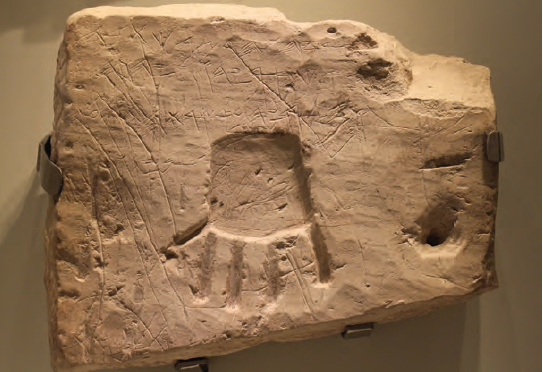
Table of Contents for NEA 80.3 (September 2017)

[vc_row fullwidth=”true” attached=”true” css=”.vc_custom_1496247803139{padding-top: 0px !important;padding-right: 0px !important;padding-bottom: 0px !important;padding-left: 0px !important;}”][vc_column][mk_image src=”http://www.asor.org/wp-content/uploads/2017/07/nea-banner-80-2.jpg” image_width=”1920″ image_height=”400″ hover=”false” margin_bottom=”0″][/vc_column][/vc_row][vc_row fullwidth=”true” css=”.vc_custom_1496682730308{padding-top: 10px !important;padding-right: 0px !important;padding-bottom: 0px !important;padding-left: 0px !important;}”][vc_column width=”1/12″ css=”.vc_custom_1496683820796{margin-right: 10px !important;}” offset=”vc_hidden-md vc_hidden-sm vc_hidden-xs”][vc_column_text]

 SHARE

[/vc_column_text][mk_image src=”http://www.asortest.org/wp-content/uploads/2017/01/social-fb-icon4.jpg” image_width=”42″ image_height=”42″ hover=”false” custom_url=”https://www.facebook.com/ASOResearch/” margin_bottom=”0″][mk_image src=”http://www.asortest.org/wp-content/uploads/2017/01/social-tw-icon4.jpg” image_width=”42″ image_height=”42″ hover=”false” custom_url=”https://twitter.com/ASOResearch?ref_src=twsrc%5Egoogle%7Ctwcamp%5Eserp%7Ctwgr%5Eauthor” margin_bottom=”0″][mk_image src=”http://www.asortest.org/wp-content/uploads/2017/01/social-in-icon4.jpg” image_width=”42″ image_height=”42″ hover=”false” custom_url=”https://www.linkedin.com/company/american-schools-of-oriental-research” margin_bottom=”0″][mk_image src=”http://www.asortest.org/wp-content/uploads/2017/01/social-ml-icon_7.jpg” image_width=”42″ image_height=”42″ hover=”false” custom_url=”mailto:asor@bu.edu” margin_bottom=”0″][mk_image src=”http://www.asortest.org/wp-content/uploads/2017/01/blog-icon3.jpg” image_width=”42″ image_height=”42″ hover=”false” custom_url=”http://asorblog.org/” margin_bottom=”0″][/vc_column][vc_column border_color=”rgba(255,255,255,0.01)” width=”1/6″ css=”.vc_custom_1496683923840{margin-right: 20px !important;border-left-width: 2px !important;padding-right: 20px !important;padding-left: 20px !important;border-left-color: #99422f !important;}”][mk_divider divider_color=”rgba(255,255,255,0.01)” thickness=”1″ margin_top=”3″ margin_bottom=”3″][vc_column_text]

ASOR BLOG

NEWS@ASOR

ANCIENT NEAR EAST TODAY

PAST ASOR NEWS, MONTH BY MONTH

FY16 HONOR ROLL OF DONORS

ASOR ANNUAL MEETING

[/vc_column_text][/vc_column][vc_column border_color=”rgba(170,170,170,0.01)” width=”1/2″ css=”.vc_custom_1487276122024{margin-right: 10px !important;margin-bottom: 30px !important;border-right-width: 2px !important;border-bottom-width: 2px !important;padding-top: 30px !important;padding-right: 30px !important;padding-left: 20px !important;background-color: #ffffff !important;border-right-color: rgba(227,228,228,0.75) !important;border-bottom-color: rgba(227,228,228,0.75) !important;}”][vc_column_text responsive_align=”left”]

Table of Contents for Near Eastern Archaeology 80.3 (September 2017)

Subscription Options
You can receive NEA (and other ASOR publications) through an ASOR Membership or through an Individual Subscription. Single issues (subject to availability) are available for purchase, with ASOR members receiving a discount. Please email us if you have any questions.

Pp. 148-153: “From the Bible to the Levant and Beyond,” by William G. Dever

Professor Dever reflects on eighty years of Near Eastern Archaeology within the changing disciplinary landscape of biblical and Near Eastern archaeology.

Click here to access the above article on JSTOR (ASOR membership with online access and/or subscription to JSTOR Current Content required).

Pp. 154-165: “Forgotten Fortress: Returning to Uronarti,” by Laurel Bestock

The kings of the ancient Egyptian Middle Kingdom (ca. 2055–1650 B.C.E.) conquered and subsequently administered a large territory in Lower Nubia, south of the First Cataract. Monumental fortresses that were built along the banks of the Nile were excavated in the early twentieth century, but largely destroyed by the floodwaters from the damming of the Nile in the 1960s. Recent discovery that two of these fortresses have survived has led to new archaeological work, including survey and excavation at the site of Uronarti. Preliminary work there shows the complexity of lifestyle and cultural interaction at this ancient colonial outpost.

Click here to access the above article on JSTOR (ASOR membership with online access and/or subscription to JSTOR Current Content required).

Pp. 166-175: “Dendara at Its Origins: New Evidence for a Pre- and Early Dynastic Settlement Site in Upper Egypt,” by Gregory Marouard

The archaeology of Pre- and Early Dynastic Egypt has been one of the most active area in Egyptology in the past few decades, but despite the intensification of the fieldwork research in the Nile Delta or Middle Egypt, our knowledge of early Egyptian settlements in Upper Egypt is still limited to several prominent sites, some under excavation since the late nineteenth century. The work undertaken by a team from The Oriental Institute—on the concession of the French Archaeological Institute (IFAO)—in the intramural area of the Hathor and Isis sanctuaries at Dendara has uncovered the earliest archaeological levels discovered to date, with several strata from the Naqada IIC–D and Early Dynastic periods. These discoveries push back the date of a first permanent community at this site by more than five hundred years and add an important point on the map of the predynastic occupation of Upper Egypt, all the more significant since the site became one of the main provincial centers, the capital of the 6th Nome of Upper Egypt, in the following centuries.

Click here to access the above article on JSTOR (ASOR membership with online access and/or subscription to JSTOR Current Content required).

Pp. 176-187: “The Archaeological Renaissance in the Kurdistan Region of Iraq,” by Jason Ur

After an absence of over two decades, foreign archaeology has returned in earnest to one of the “cradles of civilization” in the Kurdistan Region of Iraq. Two wars, international sanctions, and internal unrest had together brought archaeological research nearly to a standstill; only a few under-funded Iraqi teams and a handful of intrepid Europeans attempted fieldwork following the first Gulf War of 1991. Following a decline in political violence that began in 2008, archaeologists have returned to the Republic of Iraq. The resumption of fieldwork in the southern “heartland of cities” has been significant but slow, and hampered by internal politics. In the autonomous Kurdistan Region, however, foreign research has expanded rapidly and continuously, in partnership with local archaeologists and institutes. This essay reviews these new developments, discusses how the new discoveries are challenging long-held ideas and filling blank spaces on the archaeological map, and suggests some new directions for the future of Mesopotamian studies.

Click here to access the above article on JSTOR (ASOR membership with online access and/or subscription to JSTOR Current Content required).

Pp. 188-195: “Reading and Writing in the Dark at Khirbet el-Qom: The Literacies of Ancient Subterranean Judah,” by Alice Mandell and Jeremy Smoak

How did ancient Israelites and Judeans interact with inscriptions located in subterranean contexts such as tombs, tunnels, and caves? What roles did writing hold in the darkness of such places? The present article argues that a multimodal approach to literacy needs to be applied to the study of such inscriptions in order to understand how they communicated to audiences underground in the dark. We challenge traditional approaches to the study of tomb inscriptions in ancient Judah, most of which have studied them for what they reveal about historical grammar and the development of orthography. We argue that a better understanding of how audiences interacted with such inscriptions proceeds from a consideration of the visual grammars of tomb aesthetics, architecture, and the funerary objects in these spaces. This context is what enabled ancient audiences to decode the meaning of inscriptions in tomb complexes.

Click here to access the above article on JSTOR (ASOR membership with online access and/or subscription to JSTOR Current Content required).

Pp. 196-201: “Cimmerian and Scythian Funerary Rituals in the South Caucasus,” by Garegin S. Tumanyan

The author presents the results of his investigation of sepulchers in the southern Caucasus that carry Cimmerian-Scythian features in the hopes of shedding light on the question of whether there was a Cimmerian-Scythian presence in the southern Caucasus in the late eighth to sixth centuries B.C.E. To identify eligible burial complexes, the author developed criteria based on a number of specific features: these included the presence of intrusive burials within the sepulchers, the presence of an anthropomorphic stone sculpture over the tomb or in the burial chamber, the skeleton’s position lying stretched on its back, the presence of human sacrifices, the practice of burying horsemen with their horse, and more. Specific burial goods, such as horse bits with stirrup-shaped ends, bronze mirrors, whetstones with holes for rings, javelins, acinac-type blades, and Scythian arrowheads, were also identified as indicating the presence of Cimmerian-Scythian burials. Based on a thorough exploration of available sources on sepulchers and burial complexes in the South Caucasus, the author identified 145 sepulchers and 63 burial grounds meeting his criteria and concluded that Cimmerian and Scythian cultures were present in the southern Caucasus of the seventh and sixth centuries B.C.E.

Click here to access the above article on JSTOR (ASOR membership with online access and/or subscription to JSTOR Current Content required).

Pp. 202-203: “‘There Is Nothing so Whole as a Broken Heart’: Reflections on ‘The Practice of Repairing Vessels in Ancient Egypt’ (NEA 79.4 [2016]) by Julia Hsieh,” by Aren M. Maeir

The author offers an additional perspective on the mending of ancient pottery, suggesting that breakage and repair are part of the normal life cycle of an object and that mending can in some cases lead to an enhancement of the original object and to a valuing of the repaired vessel.

Click here to access the above article on JSTOR (ASOR membership with online access and/or subscription to JSTOR Current Content required).

[/vc_column_text][/vc_column][vc_column border_color=”rgba(170,170,170,0.01)” width=”1/6″ css=”.vc_custom_1496684098866{margin-right: 5px !important;margin-bottom: 20px !important;border-right-width: 2px !important;border-bottom-width: 2px !important;padding-top: 30px !important;padding-right: 10px !important;padding-left: 10px !important;background-color: #ffffff !important;border-right-color: rgba(227,228,228,0.75) !important;border-bottom-color: rgba(227,228,228,0.75) !important;}”][vc_wp_posts title=”BROWSE THE NEWS ARCHIVE” number=”4″][/vc_column][vc_column border_color=”rgba(170,170,170,0.01)” width=”1/6″ css=”.vc_custom_1496684008271{margin-right: 10px !important;margin-bottom: 30px !important;border-right-width: 2px !important;border-bottom-width: 2px !important;padding-top: 30px !important;padding-right: 20px !important;padding-left: 20px !important;background-color: #ffffff !important;border-right-color: rgba(227,228,228,0.75) !important;border-bottom-color: rgba(227,228,228,0.75) !important;}”][vc_column_text] [/vc_column_text][/vc_column][/vc_row]

Coll. 003. Ancient Manuscripts Committee Records

[vc_row fullwidth=”true” css=”.vc_custom_1490224714943{padding-top: 0px !important;padding-right: 0px !important;padding-bottom: 0px !important;padding-left: 0px !important;}”][vc_column][vc_single_image image=”28152″ img_size=”full” alignment=”center”][/vc_column][/vc_row][vc_row][vc_column][vc_column_text][/vc_column_text][/vc_column][/vc_row][vc_row fullwidth=”true” css=”.vc_custom_1490225468623{padding-top: 0px !important;padding-right: 0px !important;padding-bottom: 0px !important;padding-left: 0px !important;}”][vc_column width=”1/12″ css=”.vc_custom_1490225195470{margin-right: 10px !important;}” offset=”vc_hidden-sm vc_hidden-xs”][vc_column_text]

  SHARE

[/vc_column_text][mk_image src=”http://www.asortest.org/wp-content/uploads/2017/01/social-fb-icon4.jpg” image_width=”42″ image_height=”42″ hover=”false” custom_url=”https://www.facebook.com/ASOResearch/” margin_bottom=”0″][mk_image src=”http://www.asortest.org/wp-content/uploads/2017/01/social-tw-icon4.jpg” image_width=”42″ image_height=”42″ hover=”false” custom_url=”https://twitter.com/ASOResearch?ref_src=twsrc%5Egoogle%7Ctwcamp%5Eserp%7Ctwgr%5Eauthor” margin_bottom=”0″][mk_image src=”http://www.asortest.org/wp-content/uploads/2017/01/social-in-icon4.jpg” image_width=”42″ image_height=”42″ hover=”false” custom_url=”https://www.linkedin.com/company/american-schools-of-oriental-research” margin_bottom=”0″][mk_image src=”http://www.asortest.org/wp-content/uploads/2017/01/social-ml-icon_7.jpg” image_width=”42″ image_height=”42″ hover=”false” custom_url=”mailto:asor@bu.edu” margin_bottom=”0″][mk_image src=”http://www.asortest.org/wp-content/uploads/2017/01/blog-icon3.jpg” image_width=”42″ image_height=”42″ hover=”false” custom_url=”http://asorblog.org/” margin_bottom=”0″][/vc_column][vc_column border_color=”rgba(255,255,255,0.01)” width=”1/6″ css=”.vc_custom_1490365673198{margin-right: 20px !important;border-left-width: 2px !important;padding-right: 20px !important;padding-left: 20px !important;border-left-color: #99422f !important;}” el_class=”sticky-sidenav”][mk_divider divider_color=”rgba(255,255,255,0.01)” thickness=”1″ margin_top=”3″ margin_bottom=”3″][vc_column_text]

About the ASOR Archives

Browse the collections

Learn about using the archive

Featured materials

Development News

Ask the archivist a question

[/vc_column_text][mk_header menu_location=”second-menu” show_logo=”false” show_search=”false” show_cart=”false”][/vc_column][vc_column border_color=”rgba(170,170,170,0.01)” width=”1/2″ css=”.vc_custom_1490225606852{margin-right: 10px !important;margin-bottom: 30px !important;border-right-width: 2px !important;border-bottom-width: 2px !important;padding-top: 30px !important;padding-right: 30px !important;padding-left: 20px !important;background-color: #ffffff !important;border-right-color: rgba(227,228,228,0.75) !important;border-bottom-color: rgba(227,228,228,0.75) !important;}”][vc_column_text responsive_align=”left”]

COLL. 003. ANCIENT MANUSCRIPTS COMMITTEE RECORDS, 1963-1981

By Cynthia Rufo[/vc_column_text][vc_column_text]Collection Overview

Title: Ancient Manuscripts Committee Records, 1963-1981
ID: 003
Creator: American Schools of Oriental Research Ancient Manuscripts Committee
Extent: 1 Box
Arrangement: The collection is arranged in one alphabetical series by subject.
Languages: English[/vc_column_text][vc_column_text]Scope and Contents of the Materials
The majority of the collection is correspondence regarding the study, publication rights, and preservation of the Dead Sea Scrolls, and the funding of the Committee. The correspondence also documents the discovery and purchase of manuscripts by other organizations. A significant portion of the letters were written by, or contain information about Elizabeth Hay Bechtel and John Trever. The Ancient Biblical Manuscript Center file contains administrative materials for that organization, which, though separate from ASOR, aided ASOR in the acquisition of manuscripts. As with the correspondence, many of the materials were created by, or pertain to Elizabeth Hay Bechtel, who served as president of the organization.[/vc_column_text][vc_column_text]Administrative Information
Use Restrictions: Copyright restrictions may apply.[/vc_column_text][vc_column_text]Box and Folder Listing
Box 1
Folder 1: General, n.d., 1969-1980
Folder 2: Ancient Biblical Manuscripts Center, 1978-1981
Folder 3: Correspondence, 1961-1964
Folder 4: Correspondence, 1964-1968
Folder 5: Correspondence, 1968-1974
Folder 6: Correspondence, 1974-1979
Folder 7: Correspondence, 1979-1981
Folder 8: Correspondence, 1981-1986
Folder 9: Correspondence: Elizabeth Bechtel Hay, 1961-1981
Folder 10: Financial, n.d., 1967
Folder 11: Legal, 1963-1966
Folder 12: Legal, 1961-1963
Folder 13: Press, 1967-1980[/vc_column_text][vc_icon][/vc_column][vc_column border_color=”rgba(170,170,170,0.01)” width=”1/6″ css=”.vc_custom_1490571214409{margin-right: 10px !important;margin-bottom: 30px !important;border-right-width: 2px !important;border-bottom-width: 2px !important;padding-top: 30px !important;padding-right: 20px !important;padding-left: 20px !important;background-color: #ffffff !important;border-right-color: rgba(227,228,228,0.75) !important;border-bottom-color: rgba(227,228,228,0.75) !important;}”][vc_wp_posts title=”BROWSE THE NEWS ARCHIVE” number=”4″][/vc_column][vc_column border_color=”rgba(170,170,170,0.01)” width=”1/6″ css=”.vc_custom_1490225688999{margin-right: 10px !important;margin-bottom: 30px !important;border-right-width: 2px !important;border-bottom-width: 2px !important;padding-top: 30px !important;padding-right: 30px !important;padding-left: 20px !important;background-color: #ffffff !important;border-right-color: rgba(227,228,228,0.75) !important;border-bottom-color: rgba(227,228,228,0.75) !important;}”][vc_column_text] [/vc_column_text][/vc_column][/vc_row][vc_row][vc_column][vc_column_text] [/vc_column_text][/vc_column][/vc_row]
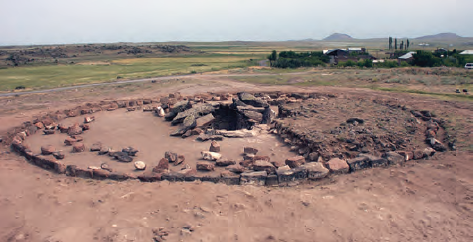
Hidden Page: BASOR

[vc_row fullwidth=”true” css=”.vc_custom_1486761987223{padding-top: 0px !important;padding-right: 0px !important;padding-bottom: 0px !important;padding-left: 0px !important;}”][vc_column][vc_single_image image=”30230″ img_size=”full” alignment=”center”][/vc_column][/vc_row][vc_row][vc_column][mk_divider divider_color=”rgba(242,243,243,0.01)” thickness=”10″ margin_top=”10″ margin_bottom=”10″][/vc_column][/vc_row][vc_row fullwidth=”true” css=”.vc_custom_1487275830783{padding-top: 10px !important;padding-right: 0px !important;padding-bottom: 0px !important;padding-left: 0px !important;}”][vc_column width=”1/12″ css=”.vc_custom_1493004544340{margin-right: 10px !important;}” offset=”vc_hidden-md vc_hidden-sm vc_hidden-xs”][vc_column_text]

 SHARE

[/vc_column_text][mk_image src=”http://www.asortest.org/wp-content/uploads/2017/01/social-fb-icon4.jpg” image_width=”42″ image_height=”42″ hover=”false” custom_url=”https://www.facebook.com/ASOResearch/” margin_bottom=”0″][mk_image src=”http://www.asortest.org/wp-content/uploads/2017/01/social-tw-icon4.jpg” image_width=”42″ image_height=”42″ hover=”false” custom_url=”https://twitter.com/ASOResearch?ref_src=twsrc%5Egoogle%7Ctwcamp%5Eserp%7Ctwgr%5Eauthor” margin_bottom=”0″][mk_image src=”http://www.asortest.org/wp-content/uploads/2017/01/social-in-icon4.jpg” image_width=”42″ image_height=”42″ hover=”false” custom_url=”https://www.linkedin.com/company/american-schools-of-oriental-research” margin_bottom=”0″][mk_image src=”http://www.asortest.org/wp-content/uploads/2017/01/social-ml-icon_7.jpg” image_width=”42″ image_height=”42″ hover=”false” custom_url=”mailto:asor@bu.edu” margin_bottom=”0″][mk_image src=”http://www.asortest.org/wp-content/uploads/2017/01/blog-icon3.jpg” image_width=”42″ image_height=”42″ hover=”false” custom_url=”http://asorblog.org/” margin_bottom=”0″][/vc_column][vc_column border_color=”rgba(255,255,255,0.01)” width=”1/6″ css=”.vc_custom_1493004651056{margin-right: 20px !important;border-left-width: 2px !important;padding-right: 20px !important;padding-left: 20px !important;border-left-color: #99422f !important;}”][mk_divider divider_color=”rgba(255,255,255,0.01)” thickness=”1″ margin_top=”3″ margin_bottom=”3″][vc_column_text]

WHO WE ARE

WELCOME FROM ASOR’S OFFICERS

FACTS & FIGURES

MISSION, BYLAWS, & STRATEGIC PLAN

HISTORY

COMMITTEES

POLICIES

FINANCIAL DOCUMENTS

ASOR’S HONORS & AWARDS

ASOR-AFFILIATED OVERSEAS RESEARCH CENTERS

CONTACT US

DONATE NOW

[/vc_column_text][/vc_column][vc_column border_color=”rgba(170,170,170,0.01)” width=”1/2″ css=”.vc_custom_1487276122024{margin-right: 10px !important;margin-bottom: 30px !important;border-right-width: 2px !important;border-bottom-width: 2px !important;padding-top: 30px !important;padding-right: 30px !important;padding-left: 20px !important;background-color: #ffffff !important;border-right-color: rgba(227,228,228,0.75) !important;border-bottom-color: rgba(227,228,228,0.75) !important;}”][vc_column_text]

HIDDEN PAGE: BASOR

[/vc_column_text][mk_table]
Vol. Author / Reviewer Email Address Contract
Received?
PDF Sent
to Author?
111 Description bob@bobmail.bob Yes/No Yes/No
[/mk_table][vc_column_text]
Volume number
Author or
reviewer name
Author email address Checked in Avectra

Contract
received
(Yes/No)

PDF mailed to author Journal mailed to non-member authors
358 Jonathan S. Greer, “An Israelite Mizraq at Tel Dan?”
jsg247@psu.edu
Yes
Yes
Yes
358 Jodi Magness, “The Ancient Synagogue at Nabratein”
magness@email.unc.edu
Yes
Yes
Yes
358 Bradley J. Parker, “A Quantitative Attribute Analysis of the Ubaid-Period Cermamic Corpus from Kenan Tepe”
Bradley.J.Parker@utah.edu
Yes
Yes
Yes
358 Jason R. Kennedy, “A Quantitative Attribute Analysis of the Ubaid-Period Ceramic Corpus from Kenan Tepe”
jkenned1@binghamton.edu
Yes
Yes
Yes
358 Marcus Rautman, “Daniel at Sardis”
RautmanM@missouri.edu
Yes
Yes
Yes
358 ??? Peter Richardson, Review of Nikos Kokkinos, “Herods”
prchrdsn@chass.utoronto.ca
Yes
Yes
Yes
358 ??? Sidnie White Crawford, Review of Hanan Eshel’s “The Dead Sea Scrolls and the Hasmonean State”
scrawford1@unl.edu
Yes
Yes
Yes
359 Penelope A. Mountjoy, “A Note on the Mixed Origins of Some Philistine Pottery”
Send PDF to Jim Weinstein
Yes, Added
Yes
Yes
359 Gunnar Lehmann, “Palace 6000 at Megiddo in Context: Iron Age Central Hall Tetra-Partite Residencies and the Bit-Hilani Building Tradition in the Levant”
gunnar.lehmann@gmail.com
Yes
Yes Yes
359 Ann E. Killebrew, “Palace 6000 at Megiddo in Context”
aek11@psu.edu
Yes
Yes Yes
359 Yifat Thareahi, “The Spirit of Clay: Edomite Pottery and Social Awareness in the Late Iron Age”
tyifat@yahoo.com
Yes
Yes
Yes
359 Amihai Sneh, “The Why-How-When of the Siloam Tunnel”
sneh@gsi.gov.il
Yes, Added
Yes
Yes
359 Ram Weinberger, “The Why-How-When of the Siloam Tunnel”
rami.weinberger@gsi.gov.il
Yes, Added
Yes
Yes
359 Eyal Shalev, “The Why-How-When of the Siloam Tunnel”
eyal@gsi.gov.il
Yes, Added
Yes
Yes
359 Eric Meyers, “Response to Jodi Magness’ Review of Final Publication of Nabratein”
emc@duke.edu
Yes
Yes
Yes
359 Carol Meyers, “Response to Jodi Magness’s Review of Final Publication of Nabratein”
carol@duke.edu
Yes
Yes
Yes
359 Jason Ur, Review of Pelternberg, ed. Euphrates River Valley Settlement: The Carchemish Sector in the Third Millenium BC
jasonur@fas.harvard.edu
Yes
Yes
359 Claudia Glatz, Review of Sagona and Zimansky, Ancient Turkey
claudia.glatz@ucl.ac.uk
Yes
Yes
359 Bradley Parker, Review of Yoffee and Crowell, eds., Excavating Asian History
Bradley.J.Parker@utah.edu
Yes
Yes
359 Joe D. Seger, Review of Mazar and Mullins, eds., Excavations at Tel Beth-Shean 1989-1996, Volume II: The Middle and Late Bronze Age Strata in Area R
jds1@ra.msstate.edu
Yes
Yes
359 Itzhaq Shai, Review of Harrison, ed., Cyprus, The Sea Peoples and the Eastern Mediterranean: Regional Perspectives of Continuity and Change
shai.itzick@gmail.com, i_shai@yahoo.com
Yes
Yes
359 Assaf Yasur-Landau, Review of Ben-Shlomo, Decorated Philistine Pottery: An Archaeological and Archaeometric Study
assafyasur@hotmail.com
Yes
Yes
359 Gary A. Rendsburg, Review of Tappy and McCarter eds., Literate Culture and Tenth-Century Canaan: The Tel Zayit Abecedary in Context
grends@rci.rutgers.edu
Yes, Added
Yes
359 Andrea Berlin, Review of Lapp, Shechem IV: The Persian-Hellenistic Pottery of Shechem/Tell Balatah
aberlin@bu.edu
Yes
Yes
359 Nancy Serwint, Review of Erlich and Kloner, Maresha Excavations Final Report II: Hellenistic Terracotta Figurines from the 1989-1996 Seasons
nancy.serwint@asu.edu
Yes
Yes
359 Rachel Hallote, Review of Nakhai, ed., The World of Women in the Ancient and Classical Near East
rachel.hallote@purchase.edu
Yes
Yes
360 Jeffrey R. Zorn, “Reconsidering Goliath: An Iron Age I Philistine Chariot Warrior”
jrz3@cornell.edu
Yes
Yes Yes
360 Avraham Faust, “The Archaeology of the Israelite Cult: Questioning the Consensus”
fausta@mail.biu.ac.il
Yes
Yes
Yes
360 Barry Beitzel, “Was There a Joint Nautical Venture on the Mediterranean Sea by Tyrian Phoenicians and Early Israelites?”
bbeitzel@trin.edu
Yes, added school address
Yes
Yes
360 Fawzi Abudanh, “Innovation or Technology Immigration: The Qanat Systems in the Regions of Udhruh and Ma’an in Southern Jordan
Yes, Added
Yes
Yes (???)
360 Saad Twaissi, “Innovation or Technology” co-author
saad.twaissi@ahu.edu.jo
No
Yes
Yes
360 Marian Feldman, Review of Fischer, Aegyptische und aegyptisierende Elfenbeine aus Megiddo und Lachisch: Inschriftenfunden, Flaschen, Loeffel
feldman@berkeley.edu
Yes
Yes (?)
Yes
360 John W. Betlyon, Review of Elayi, Byblos, cite sacree
jwb14@psu.edu
Yes, Added school address
Yes (?)
Yes
360 Walter D. Ward, Review of Siplia, The Reorganisation of Provincial Territories in Light of the Imperial Decision-Making Process: Late Roman Arabia and Tres Palaestinae as Case Studies
walterward2@gmail.com
Yes, Added school address
Yes (?)
Yes
361 Lauren Ristvet “Travel and the Making of North Mesopotamian Polities”
lristvet@sas.upenn.edu
Yes, member
Yes Yes
361 Claudia Glatz, “Landscape Monuments and Political Competition in Late Bronze Age Anatolia”
claudia.glatz@ucl.ac.uk
Yes, member
Yes Yes
361 Aimee Plourde, “Landscape Monuments and Political Competition in Late Bronze Age Anatolia”
aimee.plourde@gmail.com
Added, non-member
Yes
361 Justin Lev-Tov, “Measuring Local Diversity in Early Iron Age Animal Economies”
jlevtov@yahoo.com
Yes, member
Yes
Yes
361 Benjamin Porter, “Measuring Local Diversity in Early Iron Age Animal Economies”
bwporter@berkeley.edu
Yes, member
Yes
Yes
361 Bruce Routledge, “Measuring Local Diversity in Early Iron Age Animal Economies”
bruce.routledge@liv.ac.uk
Yes, member
Yes Yes
361 Catherine Commenge, review of “La ‘Necropole Eneolithique’ de Byblos”
commenge@club-internet.fr, need mailing address
Yes, non-member
Yes
361 Lisa Cooper, review of “The Levant in Transition”
licooper@interchange.ubc.ca
Yes, member
Yes
Yes
361 Aren Maeir, review of “Critical Issues in Early Israelite History”
maeira@mail.biu.ac.il
Yes, member
Yes
Yes
361 Katherine Strange Burke, review of “Ramla (South)”
ksburke@ucla.edu
Yes, member
Yes
Yes
361 Marcus Rautman, review of “Byzantine Trade, 4th-12th Centuries”
RautmanM@missouri.edu
Yes, non-member
Yes
Yes
362 Elif Uenlue, “A Tale of Two Potting Traditions”
elif.unlu@boun.edu.tr
Yes, non-member
Yes
Yes
362 Jacob Lauinger, “An Excavated Dossier of Cuneiform Tablets from Level VII Alalah?”
jakelauinger@gmail.com; jlauing1@jhu.edu
Yes, member
Yes Yes
362 Gwyn Davies, “Under Siege: The Roman Field Works at Masada”
daviesg@fiu.edu
Yes, member
Yes Yes
362 Jeffrey Zorn, review of “The City Besieged”
jrz3@cornell.edu
Yes, member
Yes
Yes
362 Mark S. Smith, Review of E. Lipinski:
mss11@nyu.edu
Yes, non-member
Yes
Yes
362 Joe D. Seger, Review of “Excavations at Tel Beth Shean, Vol. III”
jds1@ra.msstate.edu
Yes, member
Yes Yes
362 Assaf Yasur-Landau, review of “Yavneh I”
assafyasur@hotmail.com
Yes, member
Yes Yes
362 John W. Betylon, review of “The Coinage of the Phoenician City of Tyre in the Persian Period”
jwb14@psu.edu
Yes, member
Yes
Yes
362 Peter Richardson, review of “The World of the Herods”
prchrdsn@chass.utoronto.ca
Yes, member
Yes
362 Sidnie White Crawford, review of “The Dead Sea Scrolls and the Hasmonean State”
scrawford1@unl.edu
Yes, member
Yes
Yes
362 Marica Cassis, review of “Petra – The Mountain of Aaron”
mcassis@mun.ca
Yes, member
Yes Yes
362 Susan Cohen, Review of “Eretz Israel 29: Studies in Honor of Ephraim Stern”
scohen@montana.edu
Yes, member
Yes
Yes
362 Larry G. Herr, review of “Studies on Iron Age Moab and Neighbouring Areas”
lherr@cauc.ca
Yes, member
Yes Yes
363 Sharon Steadman, “Take Me to Your Leader: The Power of Place in Prehistoric Anatolian Settlements”
steadmans@cortland.edu
Yes, member
Yes Yes
363 Itzhaq Shai, “The Iron Age Remains at Tel Nagila”
shai.itzick@gmail.com
Yes
Yes Yes
363 David Ilan, “Iron Age at Tel Nagila”
dilan@huc.edu
Yes
Yes
Yes
363 Aren Maeir, “Iron Age at Tel Nagila”
maeira@mail.biu.ac.il
Yes
Yes Yes
363 Joe Uziel, “The Iron Age Remains at Tel Nagila”
joeuziel@gmail.com
Yes
Yes
Yes
363 Eyal Regev, “Royal Ideology in the Hasmonean Palaces in Jericho”
regeve1@mail.biu.ac.il
Yes, member
Yes
Yes
363 Benjamin A. Saidel, “The Camera and the Pipe: Adjusting the Terminus Ante Quem of the Red-Slipped and Burnished Disc-Base Tobacco Pipes from Suba, Israel”
benjaminasaidel@gmail.com
Yes, member
Yes Yes
363 E. B. Banning, review of “Sha’ar Hagolan 2: The Rise of Urban Concepts”
ted.banning@utoronto.ca
Added, non-member
Yes Yes
363 Catherine Commenge, review of D. Golden “The Dawn of Metallurgy in Southern Levant”
commenge@netvision.net.il
Yes
Yes Yes
363 Louise Steel, review of “The Bronze Age Cemeteries of Kacmi”
l.steel@tsd.ac.uk
Yes, member
Yes
Yes
363 Bill T. Arnold, Review of “From an Antique Land,” edited by C. Ehrlich
bill.arnold@asburyseminary.edu
Yes
Yes
Yes
363 Pauline Albenda, “Assyrian Reliefs from the Palace of Ashur Nasirpal II”
palbenda@msn.com
Yes
Yes Yes
364 Susan L. Braunstein, “The Meaning of Egyptian-Style Objects”
sbraunstein@thejm.org
Yes, member
Yes Yes
364 Shlomo Bunimovitz, “Canaanite Resistance: The Philistines and Beth-Shemesh”
bunimov@post.tau.ac.il
Yes, non-member
Yes Yes
364 Zvi Lederman, “Canaanite Resistance”
reuvenal@bezeqint.net
Yes, non-member
Yes Yes
364 Aryeh E. Shimron, “The Why, How, and When of the Siloam Tunnel Reevaluated
aeshimron@gmail.com
Added, non-member
Yes Yes
364 Amos Frumkin, “The Why, How, and When of the Siloam Tunnel Reevaluated”
msamos@mscc.huji.ac.il
Added, non-member
Yes Yes
364 Doron Ben-Ami, “The Lower City of Jerusalem on the Eve of Its Destruction”
dbenami@pluto.huji.ac.il
Yes, member
Yes
Yes
364 Yana Tchekhanovets, “The Lower City of Jerusalem”
yanatchk@gmail.com
Added, non-member
Yes Yes
364 Gary O. Rollefson, review of “Sha’ar Hagolan3”
rollefgo@whitman.edu
Yes, member
Yes
Yes
364 Adam E. Miglio, review of “Reading and Writing in Babylon”
adam.miglio@gmail.com
Yes, member
Yes
Yes
364 Bradley J. Parker, review of “The Pots and Potters of Assyria”
Bradley.J.Parker@utah.edu
Yes, non-member
Yes
Yes
364 Rami Arav, review of “Khirbet Qeiyafa, Vol. 1”
rarav@unomaha.edu
Yes
Yes
Yes
364 Eric C. Lapp, review of “The Necropolis of Bet Guvrin-Eleutheropolis”
eric.lapp@verizon.net
Yes, member
Yes Yes
364 Cristina Tonghini, review of An Introduction to Islamic Archaeology”
tonghini@unive.it
Added, non-member
Yes
Yes
365 Michael Press, “(Pytho)Gaia in Myth and Legend”
mdpress52@gmail.com
Yes, member
Yes
Yes
365 Christie J. Goulart, “Three Epigraphic Finds from Tall Jalul, Jordan”
cchadwic@andrews.edu
Yes, non-member
Yes Yes
365 Roy Gane, “Three Epigraphic Finds from Tall Jalul”
gane@andrews.edu
Yes, non-member
Yes
Yes
365 Philip Boyes, “‘The King of the Sidonians’: Phoenician Ideologies and the Myth of the Kingdom of Tyre-Sidon
pjb70@cam.ac.uk
Added, non-member
Yes Yes
365 Nathan Pilkington, “A Note on Nora and the Nora Stone”
nlp2109@columbia.edu
Added, non-member
Yes Yes
365 Omur Harmansah, “Beyond Assur”
Omur_Harmansah@brown.edu
Yes, member
Yes Yes
365 Mitchell S. Rothman, review of “Development of Pre-State Communities in ANE”
rothman@pop1.science.widener.edu
Yes, member
Yes
Yes
365 Yorke Rowan, review of Hermon’s “Socio-Economic Aspects of Chalcolithic Societies”
ymrowan@uchicago.edu
Yes
Yes
Yes
365 Mark W. Chavalas, review of “Brotherhood of Kings”
chavalas.mark@uwlax.edu
Yes, member
Yes Yes
365 Jeffrey R. Zorn review of J. Vidal “Studies on War in the Ancient Near East”
jrz3@cornell.edu
Yes
Yes Yes
365 Daniel Fisher, review of “Marriage, Gifts, and Social Change in Ancient Palestine”
Added, non-member
Yes Yes
365 Gerald Mattingly, review of “Small Finds: Studies of the Bone, Iron, Glass, Figurines, and Stone Objects from Tell Hesban and Vicinity”
gmattingly@johnsonu.edu
Yes, member
Yes Yes
365 Sarah Whitcher Kansa review of “Animal Husbandry in Ancient Israel”
skansa@alexandriaarchive.org
Yes
Yes Yes
365 Ayeht Gilboa, review of “Atlas of the Assyrian Pottery of the Iron Age
agilboa@research.haifa.ac.il
Yes, member
Yes Yes
365 Claudia Sagona, review of “Motya and the Phoenician Ceramic Repertoire”
c.sagona@unimelb.edu.au
Added, non-member
Yes Yes
365 Asa Eger, “Excavations at Tell Jawa”
asa.eger@gmail.com
Yes, member
Yes Yes
365 Jason Kennedy, review “Proceeding at the 6th ICAANE”
jkenned1@binghamton.edu
Yes, member
Yes Yes
366 Tallay Ornan, “The Long Life of a Dead King”
tallay@mscc.huji.ac.il
Added, non-member
Yes Yes Yes
366 Andrea Berlin, “The Sanctuary at Mizpe Yammin”
aberlin@bu.edu
Yes, member
Yes Yes n/a
366 Rafael Frankel, “The Sanctuary at Mizpe Yammin”
learafi@b-emek.org.il
Added, non-member
Yes Yes Yes
366 Donald O. Henry, review of “Evolution of Lithic Economies in the Levantine Neolithic”
donald-henry@utulsa.edu
Yes, non-member
Yes
Yes
Yes
366 Eva von Dassow, review of “Nuzi Texts and Their Uses as Historical Evidence”
vonda001@umn.edu
Yes, member
Yes Yes n/a
366 Alison Betts, review of “Nomads, Tribes, and the State in the Ancient Near East”
alison.betts@antiquity.su
Yes, non-member
Yes
Yes
Yes
366 Kevin Fisher, review of “Art and Society in Cyprus”
kevin.fisher@alumni.utoronto.ca
Yes, member
Yes Yes n/a
366 Derek Counts, review of “Ancient Cyprus in the British Museum”
dbc@uwm.edu
Yes, member
Yes Yes n/a
366 Burton MacDonald, review of “Wadi Araba in Classical and Late Antiquity”
bmacdona@stfx.ca
Yes, member
Yes Yes n/a
367 Assaf Yasur-Landau “An MB II Orthostat Building at Tel Kabri, Israel”
assafyasur@hotmail.com
Yes, member
Yes Yes n/a
367 Eric H. Cline, “An MB II Orthostat Building at Tel Kabri, Israel”
ehcline@gwu.edu
Yes, member
Yes Yes n/a
367 Nurith Goshen, “An MB II Orthostat Building at Tel Kabri, Israel”
nurithgoshen@hotmail.com
Yes, non-member
Yes Yes Yes
367 Nimrod Marom, “An MB II Orthostat Building at Tel Kabri, Israel”
marom@uchicago.edu
Added, non-member
Yes Yes
367 Inbal Samet, “An MB II Orthostat Building at Tel Kabri, Israel”
inbalsamet@gmail.com
Yes, member
Yes Yes n/a
367 Erez Ben-Yosef, “A New Chronological Framework for Iron Age Copper Production at Timna (Israel)”
ebenyose@post.tau.ac.il
Yes, non-member
Yes Yes Yes
367 Ron Shaar, “A New Chronological Framework for Iron Age Copper Production at Timna (Israel)”
rshaar@uscd.edu
Added, non-member
Yes Yes
367 Lisa Tauxe, “A New Chronological Framework for Iron Age Copper Production at Timna (Israel)”
ltauxe@ucsd.edu
Added, non-member
Yes Yes
367 Hagai Ron, “A New Chronological Framework for Iron Age Copper Production at Timna (Israel)”
hagairon@vms.huji.ac.il
Added, non-member
Yes Yes
367 Yigal Levin, “The Identification of Khirbet Qeiyafa”
Yigal.Levin@biu.ac.il
Added, non-member
Yes Yes Yes
367 Mihriban Ozbasaran, review of “The Prehistory of Asia Minor”
ozbasaranmihriban@gmail.com
Yes, non-member
Yes Yes
367 Susan Ackerman, review of “Images of Woman and Child from the Bronze Age”
susan.ackerman@dartmouth.edu
Yes, member
Yes Yes n/a
367 Piotr Bienkowski, review of “The Madaba Plains Project”
piotr.a.bienkowski@manchester.ac.uk
Yes, member
Yes Yes n/a
367 Stephanie M. Langin-Hooper, review of “The Master of Animals in Old World Archaeology”
slangin@bgsu.edu
Yes, member
Yes Yes n/a
367 Jeffrey R. Zorn, review of “The Horsemen of Israel”
jrz3@cornell.edu
Yes, member
Yes Yes n/a
Aviva/Jen/Inda: if you need addresses for anyone in 368, let me know, I have them. -Britta ********* ******** *******
368 Robert S. Homsher, “Mud-Bricks and the Process of Construction in Middle Bronze Age Southern Levant”
r.homsher@ucl.ac.uk
Yes
Yes
368 James Osborne, “Communicating Power in the Bit-Hilani Palace”
josbor24@jhu.edu
Yes
Yes
368 Ian Jones, “Khirbat Nuqayb al-Asaymir and Middle Islamic Metallurgy in Faynan”
iwjones@ucsd.edu
Yes
Yes
368 Alan Simmons, review of “Maritime Interactions in the Arabian Neolithic”
simmonsa@unlv.nevada.edu
Yes
Yes
368 Joanna S. Smith, review of “The Formation of Cyprus in the 2nd Millennium B.C.”
joannas@princeton.edu
Yes
Yes
368 Ayelet Gilboa, review of “Ceramics of the Phoenician-Punic World”
agilboa@research.haifa.ac.il
Yes
Yes
368 Aren Maeir, review of “Ashkelon III”
arenmaeir@gmail.com
Yes
Yes
368 Samuel R. Wolff, review of “Bethsaida 4”
sam@israntique.org.il
Yes
Yes
368 Laurel Taylor, review of “Hasmonean and Herdion Palaces at Jericho”
ltaylor@unca.edu
Yes
Yes
368 Bethany J. Walker, review of “The Road Inns (Khans) in Bilad el-Sham”
bethanywalker@missouristate.edu
Yes
Yes
368 Benjamin A. Saidel, review of “Historical Biblical Archaeology and the Future”
saidelb@ecu.edu
Yes
Yes
369 Peter Machinist “Frank Moore Cross”
machinis@fas.harvard.edu
Yes
369 Gerald L. Mattingly “Gus W. Van Beek”
gmattingly@johnsonu.edu
Yes
369 Donald B. Redford “Akhenaten”
dbr3@psu.edu
Yes
369 Seth L. Sanders “The Appetites of the Dead”
sethlsanders@gmail.com
Yes
369 Andre Lemaire “The Mortuary Stele”
andrelemaire@hotmail.com
Yes
369 Benjamin Sass “The Mortuary Stele”
sass@post.tau.ac.il
Yes
369 Jane DeRose Evans “Five Small Bronze Hoards”
jevans@temple.edu
Yes
369 Itamar Taxel “Rural Settlement Processes”
taxelita@post.tau.ac.il
Yes
369 Katia Cytryn-Silverman “The Khan at al-Sukkariyya”
cytryn@mscc.huji.ac.il
Yes
369 Jeffrey A. Blakely “The Khan at al-Sukkariyya”
jblakely@wisc.edu
Yes
369 Deborah I. Olszewski, review of Omry Barzilai
deboraho@sas.upenn.edu
Yes
369 Gary O. Rollefson, review of Steven A. Rosen
rollefgo@whitman.edu
Yes
369 Hermann Genz, review of C. Brian Rose and Gareth Darbyshire
hg09@aub.edu.lb
Yes
369 Ziony Zevit, review of Beate Pongratz-Leisten
zzevit@ajula.edu
Yes
369 Ann E. Killebrew, review of Martin Peilstoecker and Aaron A. Burke
aek11@psu.edu
Yes
369 Rachel Hallote, review of Megan Bishop Moore and Brad E. Kelle
rachel.hallote@purchase.edu
Yes
369 Peter J. Stone, review of Heather Jackson and John Tidmarsh
stonepr@mail.uc.edu
Yes
369 Andrea Berlin, review of J. Andrew Overman and Daniel N. Schowalter
aberlin@bu.edu
Yes
369 Matthew M. McCarty, review of Hadrien Bru
mmmccarty@gmail.com
Yes
369 Nicholas F. Hudson, review of Jody Magness
hudsonn@uncw.edu
Yes
369 Mark W. Chavalas, review of Bleda S. During, Arne Wissink, and Peter M. M. G. Akkermans
mchavalas@uwlax.edu
Yes
369 James K. Hoffmeier, review of Alan B. Lloyd
4hoffs@ameritech.net
Yes
370 Derek B. Counts “New Approaches to the Elusive Iron Age Polities”
dbc@uwm.edu
Yes
Yes
370 Maria Iacovou “New Approaches to the Elusive Iron Age Polities of Ancient Cyprus”
mariai@ucy.ac.cy
Yes
Yes
370 Maria Iacovou “Historically Elusive and Internally Fragile Island Polities”
mariai@ucy.ac.cy
Yes
Yes
370 Vasiliki Kassianidou “The Exploitation of the Landscape”
v.kassianidou@ucy.ac.cy
Yes
Yes
370 Antoine Hermary “Building Power”
ahermary@mmsh.univ-aix.fr
Yes
Yes
370 Sabine Fourrier “Constructing the Peripheries”
sabine.fourrier@mom.fr
Yes
Yes
370 Anna Satraki “The Iconograpy of Basileis”
asatraki@yahoo.gr
Yes
Yes
370 Sarah Janes “Death and Burial in the Age of the Cypriot City-Kingdoms”
sarahmjanes@gmail.com
Yes
Yes
370 Giorgos Papantoniou “Cypriot Autonomous Polities at the Crossroads”
papantog@tcd.ie
Yes
Yes
370 Bruce Routledge, review “Household Archaeology in the Levant”
bruce.routledge@liv.ac.uk
Yes
Yes
370 Alan Simmons, review of Garfinkel
simmonsa@unlv.nevada.edu
Yes
Yes
370 Benjamin S. Arbuckle, review of “Social Zooarchaeology”
benjamin_arbuckle@baylor.edu
Yes
Yes
370 James Osborne, review of “The Oxford Handbook of Ancient Anatolia”
josbor24@jhu.edu
Yes
Yes
370 Graham Philip, review of Ur
graham.philip@durham.ac.uk
Yes
Yes
370 Rupert L. Chapman, review of Richard “Khirbat Iskander”
rchapman@thebritishmuseum.ac.uk
Yes
No
370 Alexander H. Joffe, review ” Daily Life, Materiality, and Complexity”
alexjoffe@optonline.net
Yes
Yes
370 Aaron Burke, review “In the Midst of the Jordan”
burke@humnet.ucla.edu
Yes
Yes
370 Mark W. Chavalas, review of Fink
mchavalas@uwlax.edu
Yes
Yes
370 Robert Mullins, review “Dan III”
ramullins@apu.edu
Yes
Yes
370 Larry Herr, review “Tell es-Safi/Gath I”
lherr@cauc.ca
Yes
Yes
370 Peter Richardson, review of Meyers and Chancey
prchrdsn@chass.utoronto.ca
Yes
Yes
370 Sidnie White Crawford, review Lange et al., eds
scrawford1@unl.edu
Yes
Yes
370 Tina M. Niemi, “The City of Cisterns” review “Humayma”
niemit@umkc.edu
Yes
Yes
370 James Hardin, review Ussishkin, Finkelstein, and Na’aman
jwh1@ra.msstate.edu
Yes
Yes
371 James F. Strange “Robert Jehu Bull”
No
No
371 Steven E. Falconer “A Stone Plank Figure”
s.falconer@latrobe.edu.au
Yes
Yes
371 Eilis Marie Monahan “A Stone Plank Figure”
emm66@cornell.edu
Yes
Yes
371 Patricia L. Fall “A Stone Plank Figure”
p.fall@latrobe.edu.au
Yes
Yes
371 William G. Dever “Middle Bronze Age High Place”
none
Yes
Yes
371 Nimrod Marom “Shepherd Kings?”
nmaromo@campus.haifa.ac.il
Yes
Yes
371 Assaf Yasur-Landau “Shepherd Kings?”
assafyasur@hotmail.com
Yes
Yes
371 Sharon Zuckerman “Shepherd Kings?”
mssharon@mscc.huji.ac.il
Yes
Yes
371 Eric H. Cline “Shepherd Kings?”
ehcline@gwu.edu
Yes
Yes
371 Amnon Ben-Tor, “Shepherd Kings?”
bentor@mail.huji.ac.il
Yes
Yes
371 Guy Bar-Oz “Shepherd Kings?”
guybar@research.haifa.ac.il
Yes
Yes
371 Lidar Sapir-Hen “Food, Economy, and Culture at Tel Dor”
lidarsap@post.tau.ac.il
Yes
Yes
371 Guy Bar-Oz “Food, Economy, and Culture at Tel Dor”
guybar@research.huji.ac.il
Yes
Yes
371 Ilan Sharon “Food, Economy, and Culture at Tel Dor”
sharon@haifa.ac.il
Yes
Yes
371 Ayelet Gilboa “Food, Economy, and Culture at Tel Dor”
gilboaaa@zahav.net.il
Yes
Yes
371 Tamar Dayan “Food, Economy, and Culture at Tel Dor”
dayanT@tauex.tau.ac.il
Yes
Yes
371 Hayah Katz “The Chronology of the Iron Age 11A in Judah”
hayahka@openu.ac.il
Yes
Yes
371 Avraham Faust “The Chronology of the Iron Age 11A in Judah”
avraham.faust@biu.ac.il
Yes
Yes
371 Adam E. Miglio “Iron Age Epigraphic Artifacts”

adam.miglio@wheaton.edu

Yes
Yes
371 Orit Peleg-Barkat “Fit for a King”
orit.peleg@mail.huji.ac.il
Yes
Yes
371 Olin J. Storvick “Excavations at Caesarea Maritima”
storvick@cord.edu
Yes
Yes
371 Marylinda Govaars “Excavations at Caesarea Maritima”
mlggeorgia@outlook.com
Yes
Yes
371 Uzi Leibner “Imported Fine Ware”
uzi.leibner@mail.huji.ac.il
Yes
Yes
371 Chaim Ben David “Imported Fine Ware”
bendavidhm@gmail.com
Yes
Yes
371 David Frankel, review of A.B. Knapp
d.frankel@latrobe.edu.au
Yes
Yes
371 Peter M. Fischer, review of “Khirbet al-Batrawy III”
peter@fischerarchaeology.se
Yes
Yes
371 Stuart Swiny, review of Georgiou
swiny@albany.edu
Yes
Yes
371 Herbert Huffmon, review of Stokl
hhuffmon@drew.edu
Yes
Yes
371 Eric H. Cline, review of Steel
ehcline@gwu.edu
Yes
Yes
371 Alexis T. Boutin, review “Bioarchaeology and Behavior”
alexis.boutin@sonoma.edu
Yes
Yes
371 Edward L. Greenstein, review Pardee
greenstein.ed@gmail.com
Yes
Yes
371 Larry Herr, review of “The Iron Age I Structure on Mt. Ebel”
lherr@cauc.ca
Yes
Yes
371 Alexander Joffe, review of Adam Zertal
alexjoffe@optonline.net
Yes
Yes
371 Jennie Ebeling, review “Family and Household Religion”
je55@evansville.edu
Yes
Yes
371 Gerald J. Mattingly, review of Lucas Petit
gmattingly@johnsonu.edu
Yes
Yes
371 Daniel M. Master, review “The Archaeology of Israelite Society in Iron Age II”
Daniel.Master@wheaton.edu
Yes
Yes
371 Duane W. Roller, review Talbert
roller.2@osu.edu
Yes
Yes
371 Jane Cahill West, review of “Galor and Avni 2011”
jcahill@hal-pc.org
Yes
Yes
371 David Klotz, review of Stephen Ruzicka
david.klotz@yale.edu
Yes
Yes
371 Nancy Lapp, review Faust
nlapp@pts.edu
Yes
Yes
371 Eric C. Lapp, review “The Excavations of Khirbet er-Rasm”
eric.lapp@verizon.net
Yes
Yes
371 David W. Rupp, review “Crossroads”
drupp@brocku.ca
Yes
Yes
371 S. Thomas Parker, review of James A. Sauer and Larry G. Herr
thomas_parker@ncsu.edu
Yes
Yes
371 Susan I. Rotroff, review Meyers
srotroff@wustl.edu
Yes
Yes
371 Andrew Gross, review of “Corpus Inscriptionum Iudaeae/Palaestinae”
grossa@cua.edu
Yes
Yes
371 Jane DeRose Evans, review of “The Coins of Herod”
jevans@temple.edu
Yes
Yes
371 Stephen Goranson, review of David Stacey “Qumran Revisited”
goranson@duke.edu
Yes
Yes
***
372 Andrea Polcaro “Dolmen 317 and its hidden burial”
andrea.polcaro@unipg.it
Yes
Yes
372 Juan Ramon Muniz Alvarez “Dolmen 317 and its hidden burial”
juanramunhiz@gmail.com
Yes
Yes
372 Valentin Alvarez Martinez “Dolmen 317 and its hidden burial”
v.alvarezmartinez33@gmail.com
Yes
Yes
372 Silvia Mogliazza “Dolmen 317 and its hidden burial”
s.mogliazza@libero.it
Yes
Yes
372 Laura A. Gagne “Learning to Make Pottery”
Yes
Yes
372 Jeffrey R. Zorn “Short Note”
jrz3@cornell.edu
Yes
Yes
372 Ayelet Gilboa “An Iron Age I Canaanite/Phoenician Courtyard House at Tel Dor”
gilboaaa@zahav.net.il
Yes
Yes
372 Ilan Sharon “An Iron Age I Canaanite/Phoenician Courtyard House at Tel Dor”
sharon@huji.ac.il
Yes
Yes
372 Jeffrey R. Zorn “An Iron Age I Canaanite/Phoenician Courtyard House at Tel Dor”
jrz3@cornell.edu
Yes
Yes
372 Daniel M. Master “Economy and Exchange in the Iron Age Kingdoms of the Southern Levant”
Daniel.Master@wheaton.edu
Yes
Yes
372 P.M. Michele Daviau “Conspicuous Consumption and Tribute”
micheledaviaudion@yahoo.ca / mdaviau@wlu.ca
Yes
Yes
372 Stanley Klassen “Conspicuous Consumption and Tribute”
stanley.klassen@utoronto.ca
Yes
Yes
372 Lily Singer-Avitz “The Pottery of Megiddo Strata III-II”
avitz@post.tau.ac.il
Yes
Yes
372 Yuval Goren “The Authenticity of Bullae of Berekhyahu Son of Neriyahu”
ygoren@post.tau.ac.il
Yes
Yes
372 Eran Arie “The Authenticity of Bullae of Berekhyahu Son of Neriyahu”
eranar@imj.org.il
Yes
Yes
372 Walter E. Aufrecht “A Symposium on the Legacy of Frank Moore Cross”
aufrecht@telus.net
Yes
Yes
372 Sidnie White Crawford “Introduction”
scrawford1@unl.edu
Yes
Yes
372 P. Kyle McCarter “The Contribution of Frank Moore Cross”
pkm@jhu.edu
Yes
Yes
372 John Huehnergard “The Contributions of Frank Moore Cross to Semitic and Hebrew Philology”
huehnergard@austin.utexas.edu
Yes
Yes
372 Larry G. Herr “Frank Moore Cross and Archaeology”
lherr@cauc.ca
Yes
Yes
372 Ronald Hendel “The Contribution of Frank Moore Cross to Textual Criticism”
hendel@berkeley.edu
Yes
Yes
372 Sidnie White Crawford “Frank Moore Cross’s Contributions”
scrawford1@unl.edu
Yes
Yes
372 Mark S. Smith “The Contribution of Frank Moore Cross to Ugaritic Studies”
mssll@nyu.edu
Yes
Yes
372 Jo Ann Hackett “The Contribution of Frank Moore Cross to the Study of the Religion of Israel”
hackett@austin.utexas.edu
Yes
Yes
372 Michael D. Coogan “Frank Moore Cross and the History of Ancient Israel”
mdcoogan@aol.com
Yes
Yes
372 Donald O. Henry review of “Wadi Hammeh 27”
donald-henry@utulsa.edu
Yes
Yes
372 Mark Altaweel review of “Cities and the Shaping of Memory in the ANE”
m.altaweel@ucl.ac.uk
Yes
Yes
372 Mitchell S. Rothman review Porter
msrothman@widener.edu
Yes
Yes
372 Lynn Welton review of Megiddo V
lynn.welton@ubc.ca
Yes
Yes
372 Alexander H. Joffe review of Excavations at Tel Beth-Shean
Yes
Yes
372 Gary Beckman review of Treaty, Law and Covenant
sidd@umich.edu
Yes
Yes
372 Walter Fasnacht “Ambelikou Aletri Metallurgy and Pottery Production in Middle Bronze Age Cyprus”
wfasnacht@icsz.ch
Yes
Yes
372 Aren Maeir, review “Gezer VII”
arenmaeir@gmail.com
Yes
Yes
372 Susan Ackerman, review “Textile Production and Consumption in the ANE”
susan.ackerman@dartmouth.edu
Yes
Yes
372 Peter Ian Kuniholm review of “Cities and Cities in Turkey”
pik@ltrr.arizona.edu
Yes
Yes
372 Eric H. Cline, review Killebrew and Lehmann
ehcline@gwu.edu
Yes
Yes
372 Assaf Yasur-Landau, review of Killebrew and Lehmann
assafyasur@hotmail.com
Yes
Yes
372 Gloria London “Food of Ancient Judah”
glondon@earthlink.net
Yes
Yes
372 Gloria London “Dinner at Dan”
glondon@earthlink.net
Yes
Yes
372 Caroline Sauvage, review of Aubet
caroline.sauvage@mom.fr
Yes
Yes
372 David Rupp, review of Papantoniou “Religion and Social Transformations in Cyprus”
drupp@brocku.ca
Yes
Yes
372 Peter Stone review of Figueras
pjstone@vcu.edu
Yes
Yes
372 Michael C. Nelson review of Excavations at Tel Zahara
michael.nelson@qc.cuny.edu
Yes
Yes
372 Cynthia Finlayson review of Smith
calderfin@aol.com
Yes
Yes
372 Tasha Vorderstrasse review of Tonghini
tkvorder@uchicago.edu
Yes
Yes
372 Cristina Tonghini review of Stern
tonghini@unive.it
Yes
Yes
***
373 Andreas Hauptmann “On Early Bronze Age Copper Bar Ingots from the Southern Levant”
andreas.haptmann@bergbaumuseum.de (?)
Yes
Yes
373 Sigrid Schmitt-Strecker “On Bronze Age Copper Bar Ingots from Palestine”
s.schmitt-strecker@mpic.de
Yes
Yes
373 Thomas Levy (9/2014)
tlevy@ucsd.edu
Yes
Yes
373 Friedrich Begemann “On Bronze Age Copper Bar Ingots from Palestine”
f.begemann@mpic.de
Yes
Yes
373 Alexander Fantalkin “Late Helladic to Middle Geometric Aegean”
fantalk@post.tau.ac.il
Yes
Yes
373 Israel Finkelstein (12/2014)
fink2@post.tau.ac.il
Yes
Yes
373 Piasetzky Eliazer (12/2014)
eip@tauphy.tau.ac.il
Yes
Yes
373 George Beran “The Late Antique Church at Tall al-Umayri East”
beran@queensu.ca
Yes
Yes
373 Greg Fisher “The Late Antique Church at Tall al-Umayri East”
greg.fisher@carleton.ca
Yes
Yes
373 Denis Genequand “The Late Antique Church at Tall al-Umayri East”
denis.genequand@unige.ch
Yes
Yes
373 David Ussishikin “The Sacred Area of Early Bronze Megiddo”
ussishki@post.tau.ac.il
Yes
Yes
373 Heather Dana Davis Parker “A Moabite-Inscribed Statue Fragment”
heatherddparker@gmail.com
Yes
Yes
373 Ashley Fiutko Arico “A Moabite-Inscribed Statue Fragment”
a.fiutko@jhu.edu
Yes
Yes
373 James T. Pokines “Test Excavations at Wadi Zarqa Ma’in 1”
jamespokines@gmail.com
Yes
Yes
373 Chris J. H. Ames “Test Excavations at Wadi Zarqa Ma’in 1”
cjhames@gmail.com
Yes
Yes
373 Assaf Yasur-Landau “From Byblos to Vapheio”
assafyasur@hotmail.com
Yes
Yes
373 Danny Rosenberg “Looking at the overlooked”
drosenberg@research.haifa.ac.il
Yes
Yes
373 Uri Davidovich “Looking at the overlooked”
ud21@cam.ac.uk
Yes
Yes
373 Avraham Faust “Pottery and Society in Iron Age Philistia”
avraham.faust@biu.ac.il
Yes
Yes
373 Melissa A. Kennedy “Assessing the Early Bronze-Middle Bronze Age Transition”
melissa.kennedy@sydney.edu.au
Yes
Yes
373 Yosef Garfinkle (4/2015)
garfinkel@mail.huji.aclil
Yes
Yes
373 Mitka R. Golub (4/2015)
mitka.golub@gmail.com
Yes
Yes
373 Haggai Misgav (4/2015)
misgav@macam.ac.il
Yes
Yes
373 Saar Ganot
saarg@israntique.org.il
Yes
Yes
373 Daniel M. Master “Imported Cypriot Pottery”
daniel.master@wheaton.edu
Yes

Yes

373 Penelope Mountjoy “Imported Cypriot Pottery”
NONE
Yes

paper copy mailed

373 Hans Mommsen “Imported Cypriot Pottery”
hans@mommsen.de
Yes
Yes
373 Rachel Hallote (12/1/14)
rachel.hallote@purchase.edu
Yes
Yes
373 Kevin D. Fisher, review of Maliszewski
kevin.fisher@ubc.ca
Yes
Yes
373 Michel Fortin “Cities Invisibles”
michel.fortin@hst.ulaval.ca
Yes
Yes
373 Hoo-Goo Kang review of Lahav III
hoogoo7008@gmail.com
Yes
Yes
373 Andrew M. Smith II “Horvat Mesad” book review
amsii@gwu.edu
Yes
Yes
373 Gregory Duncan Mumford “Ceramique et occupation egyptienne en Canaan”
gmumford@uab.edu
Yes
Yes
***
374 Naama Yahalom-Mack “Egyptian Bronzeworking Practices in Late Bronze Age Canaan”
naama.yahalom@mail.ac.il
Yes
Yes
374 Katharina Streit “A Specialized Ceramic Assemblage for Water Pulling”
katharin.streit@mail.huji.ac.il
Yes
Yes
374 Yosef Garfinkel “A Specialized Ceramic Assemblage for Water Pulling”
garfinkel@mail.huji.ac.il
Yes
Yes
374 Ayelet Gilboa “On the Origin of Iron Age Phoenician Ceramics”
gilboaaa@zahav.net.il
Yes
Yes
374 Paula Waiman-Barak “On the Origin of Iron Age Phoenician Ceramics at Kommos”
paula76w@yahoo.com
Yes
Yes
374 Richard Jones “On the Origin of Iron Age Phoenician Ceramics at Kommos”
richard.jones@glasgow.ac.uk
Yes
Yes
374 Yoshihiro Nishiaki “Investigating Cultural and Socioeconomic Change at the Beginning of the Pottery Neolithic”
nishiaki@um.u-tokyo.ac.jp
Yes
Yes
374 Farhad Guliyev “Investigating Cultural and Socioeconomic Change at the Beginning of the Pottery Neolithic”
fred_amea@mail.ru
Yes
Yes
374 Seiji Kadowaki “Investigating Cultural and Socioeconomic Change at the Beginning of the Pottery Neolithic”
kadowaki@num.nagoya-u.ac.jp
Yes
Yes
374 Valeh Alakbarov “Investigating Cultural and Socioeconomic Change at the Beginning of the Pottery Neolithic”
valeh_elekberli@mail.ru
Yes
Yes
374 Takehiro Miki “Investigating Cultural and Socioeconomic Change at the Beginning of the Pottery Neolithic”
lambtake@yahoo.co.jp
Yes
Yes
374 Shahin Salimbayov “Investigating Cultural and Socioeconomic Change at the Beginning of the Pottery Neolithic”
salimbeyov@mail.ru
Yes
Yes
374 Chie Akashi “Investigating Cultural and Socioeconomic Change at the Beginning of the Pottery Neolithic”
cats@moegi.waseda.jp
Yes
Yes
374 Saiji Arai “Investigating Cultural and Socioeconomic Change at the Beginning of the Pottery Neolithic”
araisj@outlook.com
Yes
Yes
374 Deirdre Fulton “Feasting in Paradise”
deirdre_fulton@baylor.edu
Yes
Yes
374 Yuval Gadot “Feasting in Paradise”
ygadot@gmail.com
Yes
Yes
374 Assaf Kleiman “Feasting in Paradise”
iassafk@gmail.com
Yes
Yes
374 Liora Freud “Feasting in Paradise”
freudliora@gmail.com
Yes
Yes
374 Omri Lernau “Feasting in Paradise”
0502200087@netvision.net.il
Yes
Yes
374 Oded Lipschits “Feasting in Paradise”
lipschit@post.tau.ac.il
Yes
Yes
374 Khaled Al-Bashaireh “Geochemical Analyses and Provenance Determination”
khaledsm@email.arizona.edu
Yes
Yes
374 David L. Dettman “Geochemical Analyses and Provenance Determination”
dettman@email.arizona.edu
Yes
Yes
374 Itzhaq Shai “Late Bronze Age Cultic Activity in Ancient Canaan”
shai.itzick@gmail.com
Yes
Yes
374 Chris McKinny “Late Bronze Age Cultic Activity in Ancient Canaan”
chrismckinny@gmail.com
Yes
Yes
374 Joe Uziel “Late Bronze Age Cultic Activity in Ancient Canaan”
joeuziel@gmail.com
Yes
Yes
374 Lior Regev “Geoarchaeological Investigation in a Domestic Iron Age Quarter”
lior.regev@weizmann.ac.il
Yes
Yes
374 Dan Cabanes “Geoarchaeological Investigation in a Domestic Iron Age Quarter”
dancabanes@gmail.com
Yes
Yes
374 Robert Homsher “Geoarchaeological Investigation in a Domestic Iron Age Quarter”
rhomsher@gmail.com
Yes
Yes
374 Assaf Kleiman “Geoarchaeological Investigation in a Domestic Iron Age Quarter”
iassafk@gmail.com
Yes
Yes
374 Steve Weiner “Geoarchaeological Investigation in a Domestic Iron Age Quarter”
steve.weiner@weizmann.ac.il
Yes
Yes
374 Israel Finkelstein “Geoarchaeological Investigation in a Domestic Iron Age Quarter”
fink2@post.tau.ac.il
Yes
Yes
374 Ruth Shahack-Gross “Geoarchaeological Investigation in a Domestic Iron Age Quarter”
ruth.shahack@weizmann.ac.il
Yes
Yes
374 Ran Zadok (9/2015)
zadokr@post.tau.ac.il
Yes
Yes
374 Jodi Magness “Pottery and Jewish Settlement in Late Roman Galilee”
magness@email.unc.edu
Yes
Yes
374 Daniel Schindler “Pottery and Jewish Settlement in Late Roman Galilee”
dschindl@email.unc.edu
Yes
Yes
374 Peter Fischer “The Ivory Tomb at Tell Irbid”
peter@fischerarchaeology.se
Yes
Yes
374 Teresa Buerge “The Ivory Tomb at Tell Irbid”
teresa.buerge@gmx.de
Yes
Yes
374 Muhammad Al-Shalabi “The Ivory Tomb at Tell Irbid”
shalabimuhammad@yahoo.com
Yes
Yes
374 Benjamin Sass “The Lachish Jar Sherd”
sass@post.tau.ac.il
Yes
Yes
374 Yosef Garfinkel “The Lachish Jar Sherd”
garfinkel@mail.huji.ac.il
Yes
Yes
374 Michael G. Hasel “The Lachish Jar Sherd”
mhasel@southern.edu
Yes
Yes
374 Martin G. Klingbeil “The Lachish Jar Sherd”
mklingbeil@southern.edu
Yes
Yes
374 A. Asa Eger, review of “Les etablissements des elites omeyyades en Palmyrene et au Proche-Orient”
aaeger@uncg.edu
Yes
Yes
374 Louise Steel, review of “Associated Regional Chronologies for the ANE”
l.steel@uwtsd.ac.uk
Yes
Yes
***
375 Bezalel Porten “Akkadian Names in Aramaic Documents from Ancient Egypt”
bezalel.porten@mail.huji.ac.il
Yes
Yes
375 Guillaume Charloux “Banqueting in a Northern Arabian Oasis”
guillaume.charloux@cnrs.fr
Yes
Yes
375 Charlene Bouchaud “Banqueting in a Northern Arabian Oasis”
charlene.bouchaud@gmail.com
Yes
Yes
375 Caroline Durand “Banqueting in a Northern Arabian Oasis”
c.durand@ifporient.org
Yes
Yes
375 Herve Monchot “Banqueting in a Northern Arabian Oasis”
herve.monchot@wanadoo.fr
Yes
Yes
375 Ariane Thomas “Banqueting in a Northern Arabian Oasis”
ariane.thomas@louvre.fr
Yes
Yes
375 Sarah Parcak “Hiding in Plain Sight”
sparcak@uab.edu
Yes
Yes
375 Christopher Tuttle “Hiding in Plain Sight”
christopher.a.tuttle@gmail.com
Yes Yes
375 Felix Hoeflmayer “New Evidence for Middle Bronze Age Chronology and Synchronisms”
felix.hoeflmayer@oeaw.ac.at
Yes Yes
375 Jens Kamlah “New Evidence for Middle Bronze Age Chronology and Synchronisms”
jens.kamlah@uni-tuebingen.de
Yes Yes
375 Helene Sader “New Evidence for Middle Bronze Age Chronology and Synchronisms”
hsader@aub.edu.lb
Yes Yes
375 Michael Dee “New Evidence for Middle Bronze Age Chronology and Synchronisms”
michael.dee@rlaha.ox.ac.uk
Yes Yes
375 Walter Kutschera “New Evidence for Middle Bronze Age Chronology and Synchronisms”
walter.kutschera@univie.ac.at
Yes Yes
375 Eva M. Wild “New Evidence for Middle Bronze Age Chronology and Synchronisms”
eva.maria.wild@univie.ac.at
Yes Yes
375 Simone Riehl “New Evidence for Middle Bronze Age Chronology and Synchronisms”
simone.riehl@uni-tuebingen.de
Yes Yes
375 Yifat Thareani “The Empire and the ‘Upper Sea'”
tyifat1@gmail.com
Yes
Yes
375 Lidar Sapir-Hen “Animal Economy”
lidarsap@post.tau.ac.il
Yes Yes
375 Yuval Gadot “Animal Economy”
ygadot@gmail.com
Yes Yes
375 Israel Finkelstein “Animal Economy”
fink2@post.tau.ac.il
Yes Yes
375 Katia Gavagnin “The Land of Nineveh Archaeological Project”
katia_gavagnin@hotmail.com
Yes
Yes
375 Marco Iamoni “The Land of Nineveh Archaeological Project”
marco.iamoni@uniud.it
Yes
Yes
375 Rocco Palermo “The Land of Nineveh Archaeological Project”
rocco.palermo@unina.it
Yes
Yes
375 Yuval Yekutieli “Timna Chariots’ Engraving Revisited”
yekutieli@gmail.com
Yes
Yes
375 Doron Boness “Petrographic Study of the Pottery Assemblage from H. Qarqar South”
doronbon@post.bgu.ac.il
Yes
Yes
375 Naama Scheftelowitz “Petrographic Study of the Pottery Assemblage”
naamas@tauex.tau.ac.il
Yes
Yes
375 Peter Fabian “Petrographic Study of the Pottery Assemblage”
Yes
Yes
375 Isaac Gilead “Petrographic Study of the Pottery Assemblage”
Yes
Yes
375 Yuval Goren “Petrographic Study of the Pottery Assemblage”
ygoren@bgu.ac.il
Yes
Yes
375 Irving Finkel “Thinking outside the Box”
ifinkel@britishmuseum.org
Yes
Yes
375 Alexandra Fletcher “Thinking outside the Box”
afletcher@britishmuseum.org
Yes
Yes
375 Michael Hoff, review of “Excavations at Zeugma”
mhoff1@unl.edu
Yes Yes
375 Leslie Ann Quintero
leslieanneq@gmail.com
Yes Yes
***
376 Nadav Na’aman “Dor and Iron Age IIA Chronology”
nnaaman@post.tau.ac.il
Yes
Yes
376 Max Price “Gazelles, Liminality, and Chalcolithic Ritual: A Case Study from Marj Rabba”
maxprice@fas.harvard.edu
Yes
Yes
376 Austin Hill “Gazelles, Liminality, and Chalcolithic Ritual”
Austin.Hill@uconn.edu
Yes
Yes
376 Yorke M. Rowan “Gazelles, Liminality, and Chalcolithic Ritual”
ymrowan@uchicago.edu
Yes
Yes
376 Morag M. Kersel “Gazelles, Liminality, and Chalcolithic Ritual”
mkersel@depaul.edu
Yes
Yes
376 Ruth E. Jackson-Tal “Glass Vessel Use in Time of Conflict”
rutheve.jackson-tal@mail.huji.ac.il
Yes
Yes
376 Andrew R. Burlingame “Line Five of the Amman Citadel Inscription”
dburlingame@uchicago.edu
Yes
Yes
376 Chad Spigel “Debating Ancient Synagogue Dating”
cspigel@trinity.edu
Yes
Yes
376 Jennifer Ramsay “A Diachronic Look at the Agricultural Economy at the Red Sea Port of Aila”
jramsay@brockport.edu
Yes
Yes
376 S. Thomas Parker “A Diachronic Look at the Agricultural Economy at the Red Sea Port of Aila”
thomas_parker@ncsu.edu
Yes
Yes
376 Serdar Yalcin “Men, Women, Eunuchs, etc”
sy2226@columbia.edu
Yes
Yes
376 Anat Cohen-Weinberger “Late Roman Workshops of Beit Natiff Figurines”
anatcowein@gmail.com
Yes
Yes
376 Achim Lichtenberger “Late Roman Workshops of Beit Natiff Figurines”
lichtacw@rub.de
Yes
Yes
376 Erez Ben-Yosef “Back to Solomon’s Era”
ebenyose@post.tau.ac.il
Yes
Yes
376 Nicholas Hudson “A Hellenistic Household Ceramic Assemblage”
hudsonn@uncw.edu
Yes
Yes
376 Donald Whitcomb, review of Avni
d-whitcomb@uchicago.edu
Yes
Yes
376 Zbigniew Fiema review of Mulholland
zbigniew.fiema@helsinki.fi
Yes
Yes
376 Michael Rosenberg, review of Nieuwenhuyse, Bernbeck, Akkermans, and Rogasch
michaelr@udel.edu
Yes
Yes
***
377 Anat Cohen-Weinberger “Ethnofabrics”
anatcowein@gmail.com
Yes
Yes
377 Nahshon Szanton “Ethnofabrics”
nahshon.sz@gmail.com
Yes
Yes
377 Joe Uziel “Ethnofabrics”
joeuziel@gmail.com
Yes
Yes
377 Rick Bonnie “From Stadium to Harbor”
rick.bonnie@helsinki.fi
Yes
Yes
377 Nathaniel Greene “The Qubur al-Walaydah Bowl”
Ngreene@wisc.edu
Yes
Yes
Adam Aja “The Philistine Cemetery of Ashkelon” aja@fas.harvard.edu
Yes
Seung Ho Bang “Local Production of a Small Rectangular Limestone Incense Altar at Tell Halif” seunghobang@gmail.com
Yes
Yes
Kate Birney (5/2017) kbirney@wesleyan.edu
Yes
Oded Borowski “Local Production of a Small Rectangular Limestone Incense Altar at Tell Halif” oborows@emory.edu
Yes
Yes
Mark W. Chavalas (7/2011) mchavalas@uwlax.edu Yes
Derek B. Counts, review of Herman and Mertens dbc@uwm.edu Yes
Melissa S. Cradic “Embodiments of Death” melissa.cradic@berkeley.edu Yes
Gregory A. Crawford review of “Making Ancient Cities” gac2@psu.edu Yes
Sidnie White Crawford, review (9/2012) scrawford1@unl.edu Yes
Jessie DeGrado “An Aramaic Inscribed Lamastu Amulet from Zincirli” jdegrado@gmail.com Yes
Elspeth R. M. Dusinberre “Administration, Interaction, and Identity in Lydia” ermd@colorado.edu Yes
Edhem Eldem “Early Ottoman Archaeology” eldem@boun.edu.tr Yes
Jane DeRose Evans, review of “Small Change in Hellenistic-Roman Galilee” jevans@temple.edu Yes
Garrett Fagan, review of Weiss ggf2@psu.edu Email in lieu of contract
Silvia Ferrara (Feb 2017) silvia.ferrara@uniroma1.it Yes
David Fiensy (2/2017) dfiensy@kcu.edu Yes
Eric R. Force “Seismic Environments” ejforce@aol.com Yes
Semih Goenen “Archaeology and Conservation of the Middle Phrygian Gate Complex” semihgonen@gmail.com, Richard Liebhart r.liebhart@gmail.com, Naomi Miller nmiller0@upenn.edu, Elspeth R. M. Dusinberre ermd@colorado.edu Yes
Raphael Greenberg “The Circles Building” grafi@post.tau.ac.il, Hai Ashkenazi haiashke@gmail.com, Mark Iserlis mark.iserlis@dainst.de, Sarit Paz sarit.paz@mail.huji.ac.il, Ron Shimelmitz rshimelmi@staff.haifa.ac.il, Yael Rotem rotemy@upenn.edu, Yitzhak Paz itsac.Paz@beitbberd.ac.il Yes
Rachel Hallote (2/2017) rachel.hallote@purchase.edu Yes
Larry G. Herr (n.d.) lherr@cauc.ca Yes
Felix Hoeflmayer, review of “Beth Yerah Vol II” felix.hoeflmayer@oaew.ac.at Yes
Jeremy M. Hutton “Six Palmyrene Portraits Destroyed in Manbij, Syria” jmhutton@wisc.edu Yes Yes
Kyle H. Keimer, review of “The Smithsonian Institution Excavation at Tell Jemmeh” kyle.keimer@mq.edu.au Yes
Hayim Lapin “Population Contraction in Late Roman Galilee” hlapin@umd.edu Yes
Jaimie Lovell (Feb 2017) jaimie@jaimielovell.com.au Yes
Christina Luke “Cup-Marks and Citadels’ christinaluke@gmail.com Yes
Daniel M. Master “The Philistine Cemetery of Ashkelon” daniel.master@wheaton.edu Yes
Gerald Mattingly, review of Gitin “The Ancient Pottery of Isreal” gmattingly@johnsonu.edu Yes
Gerald Mattingly, review of Yassime and van der Steen “Tell el-Mazar II” gmattingly@johnsonu.edu Yes
Anat Mendel-Geberovich “A Brand New Old Inscription” anat.mendel@mail.huji.ac.il, Arie Shaus ashaus@post.tau.ac.il, Barak Sober baraksov@post.tau.ac.il, Israel Finkelstein fink2@post.tau.ac.il, Shira Faigenbaum-Golom shirafaigen@gmail.com, Eli Piasetzky elp@tauphy.tau.ac.il, Michael Cordonsky mcordi@tauphy.tau.ac.il Yes
Adam E. Miglio (3/2013) adam.miglio@wheaton.edu Yes
Graham Philip (4/2013) graham.philip@durham.ac.uk Yes
Peter Richardson (2011) prchrdsn@chass.utoronto.ca Yes
Matthew Richey “An Aramaic Inscribed Lamastu Amulet from Zincirli” richeym@uchicago.edu Yes
Christopher H. Roosevelt “Local Production of a Small Rectangular Limestone Incense Altar at Tell Halif” chroosevelt@gmail.com Yes
Aaron Schade “RYT” or “HYT” aaron_schade@byu.edu Yes
Omer Sergi “The Kingdom of Geshur” omertelaviv@gmail.com Yes
Charles A. Stewart, review of Hachlili’s Ancient Synagogues” stewarca@stthom.edu Yes
Juan Manuel Tebes, review of MacDonald, 2015 jmtebes@hotmail.com Yes
Miguel F. Grandao Valerio (Feb 2017) mfgvalerio@outlook.com Yes
Alexander Wasse, review of Betts “The Later Prehistory of the Badia” amrwasse@gmail.com Yes
Martin Weber “Two Lion Reliefs from Iron Age Moab” m.weber@berkeley.edu Yes Yes
[/vc_column_text][vc_column_text responsive_align=”left”][/vc_column_text][/vc_column][vc_column border_color=”rgba(170,170,170,0.01)” width=”1/6″ css=”.vc_custom_1493004582602{margin-right: 10px !important;margin-bottom: 30px !important;border-right-width: 2px !important;border-bottom-width: 2px !important;padding-top: 30px !important;padding-right: 20px !important;padding-left: 20px !important;background-color: #ffffff !important;border-right-color: rgba(227,228,228,0.75) !important;border-bottom-color: rgba(227,228,228,0.75) !important;}”][vc_wp_posts title=”BROWSE THE NEWS ARCHIVE” number=”4″][/vc_column][vc_column border_color=”rgba(170,170,170,0.01)” width=”1/6″ css=”.vc_custom_1493004529944{padding: 30px !important;background-color: #ffffff !important;}”][vc_column_text] [/vc_column_text][/vc_column][/vc_row]

Hidden Page: NEA

[vc_row fullwidth=”true” css=”.vc_custom_1486761987223{padding-top: 0px !important;padding-right: 0px !important;padding-bottom: 0px !important;padding-left: 0px !important;}”][vc_column][vc_single_image image=”30230″ img_size=”full” alignment=”center”][/vc_column][/vc_row][vc_row][vc_column][mk_divider divider_color=”rgba(242,243,243,0.01)” thickness=”10″ margin_top=”10″ margin_bottom=”10″][/vc_column][/vc_row][vc_row fullwidth=”true” css=”.vc_custom_1487275830783{padding-top: 10px !important;padding-right: 0px !important;padding-bottom: 0px !important;padding-left: 0px !important;}”][vc_column width=”1/12″ css=”.vc_custom_1493004544340{margin-right: 10px !important;}” offset=”vc_hidden-md vc_hidden-sm vc_hidden-xs”][vc_column_text]

 SHARE

[/vc_column_text][mk_image src=”http://www.asortest.org/wp-content/uploads/2017/01/social-fb-icon4.jpg” image_width=”42″ image_height=”42″ hover=”false” custom_url=”https://www.facebook.com/ASOResearch/” margin_bottom=”0″][mk_image src=”http://www.asortest.org/wp-content/uploads/2017/01/social-tw-icon4.jpg” image_width=”42″ image_height=”42″ hover=”false” custom_url=”https://twitter.com/ASOResearch?ref_src=twsrc%5Egoogle%7Ctwcamp%5Eserp%7Ctwgr%5Eauthor” margin_bottom=”0″][mk_image src=”http://www.asortest.org/wp-content/uploads/2017/01/social-in-icon4.jpg” image_width=”42″ image_height=”42″ hover=”false” custom_url=”https://www.linkedin.com/company/american-schools-of-oriental-research” margin_bottom=”0″][mk_image src=”http://www.asortest.org/wp-content/uploads/2017/01/social-ml-icon_7.jpg” image_width=”42″ image_height=”42″ hover=”false” custom_url=”mailto:asor@bu.edu” margin_bottom=”0″][mk_image src=”http://www.asortest.org/wp-content/uploads/2017/01/blog-icon3.jpg” image_width=”42″ image_height=”42″ hover=”false” custom_url=”http://asorblog.org/” margin_bottom=”0″][/vc_column][vc_column border_color=”rgba(255,255,255,0.01)” width=”1/6″ css=”.vc_custom_1493004651056{margin-right: 20px !important;border-left-width: 2px !important;padding-right: 20px !important;padding-left: 20px !important;border-left-color: #99422f !important;}”][mk_divider divider_color=”rgba(255,255,255,0.01)” thickness=”1″ margin_top=”3″ margin_bottom=”3″][vc_column_text]

WHO WE ARE

WELCOME FROM ASOR’S OFFICERS

FACTS & FIGURES

MISSION, BYLAWS, & STRATEGIC PLAN

HISTORY

COMMITTEES

POLICIES

FINANCIAL DOCUMENTS

ASOR’S HONORS & AWARDS

ASOR-AFFILIATED OVERSEAS RESEARCH CENTERS

CONTACT US

DONATE NOW

[/vc_column_text][/vc_column][vc_column border_color=”rgba(170,170,170,0.01)” width=”1/2″ css=”.vc_custom_1487276122024{margin-right: 10px !important;margin-bottom: 30px !important;border-right-width: 2px !important;border-bottom-width: 2px !important;padding-top: 30px !important;padding-right: 30px !important;padding-left: 20px !important;background-color: #ffffff !important;border-right-color: rgba(227,228,228,0.75) !important;border-bottom-color: rgba(227,228,228,0.75) !important;}”][vc_column_text]

HIDDEN PAGE: NEA

[/vc_column_text][mk_table]
Vol. Author / Reviewer Email Address Contract
Received?
PDF Sent
to Author?
111 Description bob@bobmail.bob Yes/No Yes/No
[/mk_table][vc_column_text responsive_align=”left”]

HIDDEN PAGE: NEA

Issue number
Author or
reviewer name
Author email address Checked in Avectra

Contract
received
(Yes/No)

Pdf mailed to author Hard copy mailed
72.1 Katharina Galor, “Apollonia-Arsuf: Between Past and Future”
Yes
72.1 Israel Roll, “Apollonia-Arsuf: Between Past and Future”
Yes
72.1 Oren Tal,”Apollonia-Arsuf: Between Past and Future”
Yes
72.1 Donald Sanders, “Apollonia-Arsuf: Between Past and Future”
Yes
72.1 Andrew Willis, “Apollonia-Arsuf: Between Past and Future”
Yes
72.1 David Cooper, “Apollonia-Arsuf: Between Past and Future”
No
72.1 Robert R. Cargill, “The Qumran Digital Model: An Argument for Archaeological Reconstruction in Virtual Reality”
Yes
72.1 Jodi Magness, “Response”
Yes
72.1 Aslihan Yener, “Alalakh Krater”
Yes
72.1 Allison Karmel Thomason, “Beyond Babylon: Art. Trade , and Diplomacy in the Second Millennium B.C. An Exhibit at the Metropolitan Museum of Art, New York”
Yes
72.1 Elise Friedland, “Pompeii and the Roman Villa: Art and Culture around the Bay of Naples. An Exhibit at the National Gallery of Art, Washington D.C.”
Yes
72.1 Ian Stern, “Maresha Inscriptions Provide Context for a Royal Stele in the Israel Museum”
Yes
72.1 Jaakko Frosen and Zbig Fiema, “Jabal Harun”
Yes
72.2 Gabriel H. Pizzorno, Review of “A Companion to the Ancient Near East”
Yes
72.2 Michael Brian Schiffer, Review of “Can There be a Philosophy of Archaeology?”
Yes
72.2 Nicolas Manlius, “Whose Tail Did Nefermaat’s Hunting Dog Bite”
Yes
72.2 Douglas R. Clark, “From Stone Age to the Middle Ages in Jordan: Digging up Tall al-‘Ulmayri”
Yes
72.2 Larry G. Harr, “From Stone Age to the Middle Ages in Jordan: Digging up Tall al-‘Ulmayri”
Yes
72.2 Thomas Levy, “New Iron Age Copper Mine Discovered in Southern Jordan”
Yes
72.2 Mohammad Najjar, “New Iron Age Copper Mine Discovered in Southern Jordan”
Yes
72.2 Erez Ben-Yosef, “New Iron Age Copper Mine Discovered in Southern Jordan”
Yes
72.2 Avraham Faust
No
72.2 Hannah Friedman, “Crossing the Rift”
Yes
72.3 Adrian Boras, “A Response to Joe Zias’ The Suba ‘Cave of John the Baptist’ west of Jerusalem”
Yes
72.3 Shimon Gibson, “Response to: John the Baptist or Lazarus, the Patron Saint of Leprosy?”
No
72.3 Joe Zias, “Response to: John the Baptist or Lazarus, the Patron Saint of Leprosy?”
Yes
72.3 Zvi Lederman and Shlomo Bunimovitz, “The Archaeology of Border Communities: Renewed Excavations at Tel Beth-Shemesh, Part 1: The Iron Age”
Yes
72.3 Uzma Z. Rizvi and Murtaza Vali, “The Fertile Goddess at the Brooklyn Museum of Art: Excavating the Western Feminist Art Movement and Recontextualizing New Heritages”
Yes
72.3 Jean Li, “The Life of Meresamun: A Temple Singer in Ancient Egypt”
Yes
72.3 Tristan Barako, Review of “The Bible Unearthed: The Making of a Religion”
Yes
72.3 Jane Evans, Review of “Mosaics as History”
Yes
72.3 John P. Oleson, Review of “The Petra Siq: Nabatrean Hydrology Uncovered”
Yes
72.3 Jeff Blakely, Review of “Bible, Map and Spade”
Yes
72.3 Yaacov Kahanov, Review of “Homeric Seafaring”
Yes
72.3 Gabriele Fasbeck, “A Monumental Task Dedicated to Ancient Monuments”
Yes
72.4 Timothy Harrison, “Neo Hittites in the Land of Palistin’ : Renewed Investigations at Tell Tayinat in the Plain of Anticoh”
Yes
72.4 Kay Kohlmeyer,”The Temple of the Storm God in Aleppo during the Late Bronze and Early Iron Ages”
Yes
72.4 J. David Schleon and Amir Fink, “Searching for Ancient Sam’al: New Excavations at Zincirli in Turkey”
Yes
72.4 J. D. Hawkins, “Cilicia, The Amuq and Aleppo”
Yes
72.4 Benjamin Adam Saidel, Review of “Human Ecology in Wadi al Hasa”
Yes
72.4 Trevor R. Bryce, Review of “The Hittites and Their World” by Billie Collins
Yes
72.4 Joy McCorriston, “Civilizing Climate: Social Responses to Climate Change in the Ancient Near East”
Yes
73.1 Aaron A. Burke, Krystal V. Lords, Martin Peilstöcker, Kyle H. Keimer, and George A. Pierce, “Egyptians at Jaffa: A Portrait of Egyptian Presence in Jaffa during the Late Bronze Age”
Yes
73.1 Stephen Savage, ” Jordan’s Stonehenge: The Endangered Chalcolithic/Early Bronze Age Site at al-Murayghât–Hajr al-Mansûb”
Yes
73.1 Abdulla Al-Shorman, “Testing the Function of Early Bronze Age 1 Dolmens: A GIS Investigation”
Yes
73.1 Camilla Luckey, “The Great Revolt in the Galilee”
Yes
73.1 Katie Rask, “The New Acropolis Museum: Where the Visual Feast Trumps Education”
Yes
73.1 Benjamin W. Porter, Review of “Ancient Jordan From the Air”
Yes
73.1 S. Rebecca Martin, Review of Lindsay Allen’s, “The Persian Empire”
Yes
73.1 Diana V. Edelman, Review of Vic Matthews’ “Studying the Ancient Israelites: A Guide to Sources and Methods”
Yes
73.2-3 Jeanine Abdel-Massih, “Introduction: History of Archaeology in Lebanon”
janoune@yahoo.com
Yes, Added
Yes
Yes
73.2-3 Gassia Artin, “The Necropolis and Dwellings of Byblos during the Chalcolithic Period: New Interpretations”
gassiart@hotmail.com
Yes, Added
Yes
Yes
73.2-3 Jean-Paul Thalmann, “Tell Arqa: A Prosperous City during the Bronze Age”
jeanpaulthalmann@orange.fr
Yes, Added
Yes
Yes
73.2-3 Hermann Genz, “Recent Excavations at Tell Fadous-Kfarabida”
hg09@aub.edu.lb
Yes, Added
Yes
Yes
73.2-3 Claude Doumet-Serhal, “Sidon during the Bronze Age: Burials, Rituals and Feasting Grounds at ‘College Site’”
claude.lbfnm@btinternet.com
Yes
Yes
Yes
73.2-3 Helen Sader, “Tell el-Burak: A New Middle-Bronze Age Site from Lebanon”
hsader@aub.edu.lb
Yes
Yes
Yes
73.2-3 Marlies Heinz, “Kamid el-Loz, MB/LB Palace, Temple and Domestic Quarters”
marlies.heinz@orient.uni-freiburg.de
Yes – Andy said not to process
73.2-3 Maria-Eugenia Aubet, “Phoenician Cemetery of Tyre”
eugenia.aubet@upf.edu
Yes
Yes
Yes
73.2-3 Josette Elayi and Hussein Sayegh, “An Unexpected Archaeological Treasure: The Phoenician Quarters in Beirut City Center”
elayi-j@mediatechnix.com
Yes, Added
Yes
Yes
73.2-3 Zeina Haddad, “The State of Underwater Archaeology in Lebanon”
zanzoungeo@yahoo.com
Yes, Added
Yes
Yes
73.2-3 Ibrahim Noureddine, “New Light on the Phoenician Harbor at Tyre”
bobdeen@hotmail.com
Yes, Added
Yes
Yes
73.2-3 Suzy Hakimian, “The Beirut National Museum and Collective Memory: Sanctuary, Repository, or Interactive Space?”
hakimian.suzy@gmail.com
Yes, Added
Yes
Yes
73.2-3 Leila Badre, “The Private Archaeological Museums in Lebanon”
badre@aub.edu.lb
Yes
Yes
73.2-3 Lina Tahan, “Challenging Colonialism and Nationalism in Lebanese Archaeological Museums”
l.g.tahan@leedsmet.ac.uk
Yes, Added
Yes
Yes
73.2-3 Neil Silberman, “Response” to the Forum
neil.silberman@gmail.com
Yes
Yes
Yes
73.2-3 Louise Steel, Review of Claude Doumet-Serhal (ed.), “Networking Patterns of the Bronze Age and Iron Age Levant”
l.steel@lamp.ac.uk
Yes
Yes
Yes
73.2-3 Sharon Zuckerman, Review of Manfred Bietak and Ernst Czerny (eds.). “The Bronze Age in the Lebanon: Studies on the Archaeology and Chronology of Lebanon, Syria and Egypt”
mssharon@mscc.huji.ac.il
Yes
Yes
Yes
73.2-3 Kevin Butcher, “Roman Berytus”
k.e.t.butcher@warwick.ac.uk
Yes, Added
Yes

Yes

73.2-3 Benjamin W. Porter, Review of “Protecting Chatalhoyuk”
bwporter@berkeley.edu
Yes
Yes
Yes
73.4 Jeffrey A. Blakely, “Aijan: Locating the Estate of Amr B, al-As”
jblakely@wisc.edu
Yes
Yes
Yes
73.4 Kathlyn M. Cooney, “Gender Transformation in Death: A Case Study of Coffins from Ramesside Period Egypt”
Added
Yes
Yes
73.4 Bethany Walker, “Book Review of Islamic Art and Archaeology of Palestine”
bethanywalker@missouristate.edu
Yes
Yes
Yes
73.4 Guy Bar-Oz, “Out on the Tiles”
Added
Yes
Yes
73.4 Robert Mullins, “Book Review of The Quest for the Historical Israel: Debating Archaeology and the History of Early Israel”
ramullins@apu.edu
Yes
Yes
Yes
73.4 Yorke Rowan, “Review of The Archaeology of Ritual”
ymrowan@uchicago.edu
Yes
Yes
Yes
73.4 John K. Papapdopoulos, “Book Review of The Tourists Gaze, the Cretan Glance”
Added
Yes
Yes
73.4 Christine Thompson, “The Golden Graves of Ancient Vani”
cmarie4434@yahoo.com
Yes
Yes
Yes
74.1 Oded Lipschits, “Palace and Village: Unraveling the Riddles of Ramat Rahel”
lipschit@post.tau.ac.il
Yes, member
Yes
Yes
74.1 Yuval Gadot, “Palace and Village”
ygadot@gmail.com
Yes, member
1st page only
Yes
74.1 Benjamin Arubas, “Palace and Village”
benjamina@savion.huji.ac.il
Yes, member
Yes
Yes
74.1 Manfred Oeming, “Palace and Village”
manfred.oeming@wts.uni-heidelberg.de
Yes, member
Yes
Yes
74.1 Ido Koch, “Palace and Village”
idokoch@post.tau.ac.il
Yes, member
Yes
Yes
74.1 Liora Freud, “Palace and Village”
freudliora@gmail.com
Yes, member
Yes
Yes
74.1 Yoav Farhi, “Palace and Village”
vavy15@gmail.com
Yes, member
Yes
Yes
74.1 Boaz Gross, “Palace and Village”
grossboaz@gmail.com
Yes, member
Yes
Yes
74.1 Omer Sergi, “Palace and Village”
omertelaviv@gmail.com
Yes, member
Yes
Yes
74.1 Keren Ras, “Palace and Village”
kerenras@012.net.il
Yes, member
Yes
Yes
74.1 Efrat Bocher, “Palace and Village”
efratbocher@hotmail.com
Added, non-member
Yes
Yes
74.1 Shatil Emmanuilov, “Palace and Village”
shatilem@post.tau.ac.il
Added, non-member
Yes
Yes
74.1 Itamar Taxel, “Palace and Village”
taxelita@post.tau.ac.il
Yes, non-member
Yes
Yes
74.1 Israel Finkelstein, “The Iron Age Chronology Debate: Is the Gap Narrowing?”
fink2@post.tau.ac.il
Yes, member
Yes
Yes
74.1 Eli Piasetzky, “The Iron Age Chronology Debate”
eip@tauphy.tau.ac.il
Added, non-member
Yes
Yes
74.1 Theresa M. Barket, “Tabular Scrapers: Function Revisited”
tbark001@ucr.edu
Yes, member
Yes
Yes
74.1 Colleen A. Bell, “Tabular Scrapers”
colleen-bell@utulsa.edu
Added, non-member
Yes
Yes
74.1 Songul Alpaslan-Rodenberg, “Homicide at Aktopraklik, A Prehistoric Village in Turkey”
msglalpaslan@gmail.com, need mailing address
Added, non-member
Yes
Yes
74.1 Joe D. Seger, review of “Nelson Glueck: Biblical Archaeologist and President of Hebrew Union College-Jewish Institute of Religion”
jds1@ra.msstate.edu
Yes, member
Yes
Yes
74.1 Carrie Hritz, “Ancient Mesopotamia at the Dawn of Civilization: The Evolution of the Urban Landscape”
carriehritz@gmail.com
Yes, member
Yes
Yes
74.2 Stefan Muenger, “Kinneret-An Urban Center at the Crossroads: Excavations on Iron IB Tel Kinrot at the Lake of Galilee”
stefan.muenger@theol.unibe.ch
Yes, member
Yes
Yes
74.2 Juergen Zangenberg, “Kinneret-An Urban Center at the Crossroads”
J.K.Zangenberg@religion.leidenuniv.nl
Yes, member
Yes
Yes
74.2 Juha Pakkala, “Kinneret”
pakkalajuha@yahoo.de
Yes, non-member
Yes
Yes
74.2 Iris Thomsen, “Kinneret”
IrisThomsen@gmx.de
Added, non-member
Yes
Yes
74.2 Katri Saarelainen, “Kinneret”
katri.saarelainen@gmail.com
Added, non-member
Yes
Yes
74.2 Guy Bar-Oz, “Kinneret”
guybar@research.haifa.ac.il
Yes, non-member
Yes
Yes
74.2 Marlies Klee, “Kinneret”
marlies.klee@unibas.ch
Added, non-member
Yes
Yes
74.2 Wolfgang Zwickel, “Kinneret”
Yes, member
Yes
Yes
74.2 Lorenzo Dalfonso, “A New Anatolian Hieroglyphic Seal Impression from Dagilbaz Hoyuk, Bay of Iskenderun, Turkey”
lorenzo.dalfonso@unipv.it
Added, non-member
Yes
Yes
74.2 Steven Notley, “R. Steven Notley, Reply to Arav”
notleys@verizon.net
Added, non-member
Yes
Yes
74.2 John F. Shroder Jr., “John F. Shroder Jr., Response to Notley’s Comments”
jshroder@mail.unomaha.edu
Added, non-member
Yes
Yes
74.2 Rami Arav, “Rami Arav, Bethsaida, A Response to Steven Notley” and “A Response to Notley’s Reply”
rarav@mail.unomaha.edu
Yes, member
Yes
Yes
74.2 Hans Barnard, “In Search of Biblical Lands: From Jerusalem to Jordan in Nineteenth-Century Photography”
wendrich@barnard.nl
Added, non-member
Yes
Yes
74.2 Garth Gilmour, “The Ancient Near East Gallery at the Ashmolean Museum, Oxford”
garth.gilmour@arch.ox.ac.uk, also send PDF to Amy Taylor at the Ashmolean Museum, amy.taylor@ashmus.ox.ac.uk
Yes, member
Yes
Yes
74.2 Amihai Mazar, “The Iron Age Chronology Debate: Is the Gap Narrowing? Another Viewpoint”
amimazar@gmail.com
Yes, member
Yes
Yes
74.2 Ann Killebrew, “Talk from the Balk”
aek11@psu.edu
Yes, member
Yes
Yes
74.2 Brandon Olson, “Talk from the Balk”
brando2121@gmail.com
Yes, member
Yes
Yes
74.3 S. Rebecca Martin, “Dor, Part II”
srmartin@bu.edu
Yes, member
Yes
Yes
74.3 Rachel Hallote
rachel.hallote@purchase.edu
Yes, member
Yes
Yes
74.3 Jane DeRose Evans
jevans@temple.edu
Yes, member
Yes
Yes
74.3 Jessica L. Nitschke
jln999@gmail.com
Yes, member
Yes
Yes
74.3 Lidar Sapir-Hen
lidarsap@post.tav.ac.il
Added, non-member
Yes
Yes
74.3 Yiftah Shalev, “Between Carmel and the Sea, Tel Dor: The Late Periods
yiftah.shalev@gmail.com
Yes, member
Yes
Yes
74.3 Abigail S. Limmer
alimmer@email.arizona.edu
Yes, member
Yes
Yes
74.3 Michael Tilly, review of “Byrne and McNary-Zak, Resurrecting the Brother of Jesus”
tilly@uni-landau.de
Added, non-member
Yes
74.4 Guy Bar-Oz, “Mass Hunting Game Traps in the Southern Levant”
guybar@research.haifa.ac.il
Yes, non-member
Yes
Yes
74.4 Dani Nadel, “Mass Hunting Game Traps”
dnadel@research.haifa.ac.il
Added, non-member
Yes
Yes
74.4 Uzi Avner, “Mass Hunting Game Traps”
uzia@012.net.il
Yes, member
Yes
Yes
74.4 Dan Malkinson, “Mass Hunting Game Traps”
dmalk@geo.haifa.ac.il
Added, non-member
Yes
Yes
74.4 Billur Tekkok
tekkok@baskent.edu.tr
Added, non-member
Yes
Yes
74.4 Liora Kolska Horwitz, “Partners in Purity: Second Temple Olive Presses and Scapulae Scoops”
lix1000@gmail.com
Yes, member
Yes
Yes
74.4 Steven Fine
steven.fine@yahoo.com
Yes, non-member
Yes
Yes
74.4 Michal Artzy
michal.artzy@gmail.com
Yes, member
Yes
Yes
74.4 Zvi Gal, “The Peqi’in Cave A Chalcolithic Cemetery in Upper Galilee, Israel”
gal_zvi@netvision.net.il
Yes, non-member
Yes
Yes
74.4 Howard Smithline, “The Peqi’in Cave”
hsmithline@yahoo.com
Added, non-member
Yes
Yes
74.4 Gloria London, “A Ceremonial Center for the Living and the Dead”
glondon@earthlink.net
Yes, member
Yes
No, email bounced back
74.4 Louise Hitchcock, review of Manfred Biektak Nanno Maritatos and Clairy Palivon
lahi@unimelb.edu.au
Yes, member
Yes
Yes
75.1 Steven M. Ortiz, “Guarding the Border to Jerusalem”
sortiz@swbts.edu
Yes, member
Yes
Yes
n/a
75.1 Samuel Wolff, “Guarding the Border to Jerusalem”
baalh@yahoo.com
Yes, member
Yes
Yes
n/a
75.1 Jimmy Hardin, “Biblical Geography in Southwestern Judah”
jwh1@ra.msstate.edu
Yes, member
Yes
Yes
n/a
75.1 Christopher Rollston, “Biblical Geography in Southwestern Judah”
crollston@ecs.edu
Yes, member
Yes
Yes
n/a
75.1 Jeffrey Blakely, “Biblical Geography in Southwestern Judah”
jblakely@wisc.edu
Yes, member
Yes
Yes
n/a
75.1 Ron Tappy, “The Tabula Peutingeriana”
tappy@fyi.net
Yes, member
Yes
Yes
n/a
75.1 Thomas Schneider, “Egytology Past, Present and Future”
thomas.schneider@ubc.ca
Yes, member
Yes
Yes
n/a
75.1 Joshua Trampier, review of “A Companion to Ancient Egypt”
joshtrampier@gmail.com
Yes, member
Yes
Yes
n/a
75.1 Josette Elayi, review of ‘The Social History of Achamenid Phoenicia”
elayi-j@mediatechnix.com
Yes, non-member
Yes
Yes
Yes
75.2 Alexis Boutin, “Face to Face with the Past”
alexis.boutin@sonoma.edu
Yes, member
Yes

Yes

n/a
75.2 Gloria Nusse, “Face to Face with the Past”
glorilou@pacbell.net
Yes, member
Yes
Yes

n/a

75.2 Sabrina Sholts, “Face to Face with the Past”
sbsholts@berkeley.edu
Added, non-member
Yes
Yes
75.2 Benjamin Porter, “Face to Face with the Past”
bwporter@berkeley.edu
Yes, member
Yes
Yes
n/a
75.2 Jodi Magness, “What’s the Poop on Ancient Toilets and Toilet Habits?”
magness@email.unc.edu
Yes, member
Yes
Yes
n/a
75.2 Raphael Greenberg, “Tel Bet Yerah”
grafi@post.tau.ac.il
Yes, member
Yes
Yes
n/a
75.2 Sarit Paz, “Tel Bet Yerah”
saritpaz@mscc.huji.ac.il
Added, non-member
Yes
Greenberg will send
Send to Greenberg
75.2 David Wengrow, “Tel Bet Yerah”
d.wengrow@ucl.ac.uk
Added, non-member
Yes
75.2 Mark Iserlis, “Tel Bet Yerah”
Greenberg will send PDF
Added, non-member
Yes
Greenberg will send
Send to Greenberg
75.2 Piotr Taracha, “The Sculpture of Alacahoyuk”
piotr.taracha@uw.edu.pl
Added, non-member
Yes
Yes
75.2 Nadine Moeller, “Unsealing Tell Edfu, Egypt”
nmoeller@uchicago.edu
Added, non-member
Yes
Yes
75.2 Aaron Burke, review of “Glorious Mud!”
burke@humnet.ucla.edu
Yes, member
Yes
Yes
n/a
75.3 N. Marchetti, “Karkemish on the Euphrates”
nicolo.marchetti@unibo.it
Added
Yes
Yes
Yes
75.3 D. Hawkins
75.3 H. Peker
75.3 P. Matthiae
75.3 A. Dincol
75.3 B. Dincol
75.3 A. Adamo
75.3 S. Bassetto
75.3 G. Bitelli
75.3 F. Girardi
75.3 V.A. Girelli
75.3 A. Bonomo
75.3 L. Guerri
75.3 F. Zaina
75.3 S. Bernardoni
75.3 G. Luglio
75.3 E. Mandanici
75.3 R. Trojanis
75.3 M. Zanfini
75.3 Peter Feinman, “Canaanites, Catholics, and Chosen Peoples”
feinmanp@ihare.org
Yes
Yes
Yes
n/a
75.3 Rudy Dornemann, “The Qarqur Challenge: Middle Islamic through Iron Age”
dornasor@gmail.com
Yes
Yes
Yes
n/a
75.3 Mary-Ann Pouls-Wegner, “New Fieldwork at Abydos”
ma.poulswegner@utoronto.ca
Added
Yes
Yes
Yes
75.3 Leann Pace, “How Will Declining Religious Literacy in America Affect Ancient Near Eastern Archaeology?”
pacelc@wfu.edu
Yes
Yes
Yes
n/a
75.3 Daniel D. Pioske
dpioske@gmail.com
Yes
Yes
Yes
n/a
75.3 Jason Kalman, review of “The Dead Sea Scrolls and Contemporary Culture”
jkalman@huc.edu
Added
Yes
Yes
Yes
75.4 Glenn Joseph Corbett, “Desert Traces”
joeycorbett@yahoo.com
Yes
Yes
75.4 Jennie Ebeling, “Jezreel Revealed in Laser Scans”
je55@evansville.edu
Yes
Yes
75.4 Norma Franklin, “Jezreel Revealed”
norma_f@netvision.net.il
Yes
Yes
75.4 Ian Cipin “Jezreel Revealed”
iancipin@yahoo.co.uk
Yes
Yes
75.4 Matt Bradley, “Jezreel Revealed”
matt.bradley@oxfordarch.co.uk
Added
Yes
75.4 Rudolph H. Dornemann, “The Qarqur Challenge”
dornasor@gmail.com
Yes
Yes
75.4 Parsa Ghasemi, “Tal-e Khandagh (Moated Mounds)”
parsa.ghassemi@yahoo.com
Added
Yes
75.4 Oded Lipschits, “Tel Azekah 113 Years After”
lipschit@post.tau.ac.il
Yes
Yes
75.4 Yuval Gadot, “Tel Azekah 113 Years After”
ygadot@gmail.com
Yes
Yes
75.4 Manfred Oeming, “Tel Azekah 113 Years After”
manfred.oeming@wts-uni-heidelberg.de
Yes
Yes
75.4 Joel Kaminsky
jkaminsk@smith.edu
Added
Yes
75.4 Benjamin Wright, review of “The Oxford Handbook of the Reception History of the Bible”
bgw1@lehigh.edu
Yes
Yes
75.4 Jason M. Zurawski, review of “Freeing the Dead Sea Scrolls and Other Adventures of an Archaeology Outsider”
jasonzur@umich.edu
Added
Yes
76.1 Daniel Pioske “David’s Jerusalem”
dpioske@uts.columbia.edu
Yes
76.1 David M. Jacobson “The Lily and the Rose”
jacobson.d.m@gmail.com
Yes
76.1 Jason Ur “Spying on the Past”
jasonur@fas.harvard.edu
Yes
76.1 Unsal Yalcin and H. Gonul Yalcin “Reassessing Anthropomorphic Metal Figurines”
uensal.yalcin@bergbaumuseum.de and goenuel.yalcin@gmx.de
Yes
76.1 Samuel B. Fee, David K. Pettegrew, William R. Caraher “Taking Mobile to the Field”
sam@washjeff.edu, dpettegrew@messiah.edu, and william.caraher@und.edu
Yes
76.1 Leonard Greenspoon “Textual Criticism of the Hebrew Bible”
LJGRN@creighton.edu
Yes
76.1 Justin Glessner “Holy Misogyny”
justin.glessner@ubc.ca
Yes
76.1 Roger S. Nam “The Yehud Stamp Impressions”
rnam@georgefox.edu
Yes
76.1 David M. Carr “The Book of Genesis”
dcarr@uts.columbia.edu
Yes
76.2 Amnon Ben-Tor
bentor@mail.huji.ac.il
Yes
76.2 Sharon Zuckerman
mssharon@mscc.huji.ac.il
Yes
76.2 Shlomit Bechar
shlomitbechar@yahoo.com
Yes
76.2 Dalit Weinblatt-Krauz
No
76.2 Manuel Cimadevilla
mcimad@gmail.com
Yes
76.2 Wayne Horowitz
whorowitz@mscc.huji.ac.il
Yes
76.2 Doron Ben-Ami
doron.ben-ami@mail.huji.ac.il
Yes
76.2 Debora Sandhaus
debby.reen@gmail.com
Yes
76.2 Orna Cohen
No
76.3 Bert De Vries “Archaeology and Community in Jordan and Greater Syria”
dvrb@calvin.edu
Yes
Yes
76.3 Alison Damick and Ahmad Lash “The Past Performative”
atd2128@columbia.edu and ahmadlash@yahoo.com
Yes
Yes
Yes, yes
76.3 Melissa Rosenzeig and Laurent Dissard “Common Ground”
mrosenzw@uchicago.edu and laurentdissard@gmail.com
Yes
Yes
Yes, yes
76.3 Morag M. Kersel and Meredith S. Chesson “Tomato Season in the Ghor es-Safi”
mkersel@depaul.edu and mchesson@nd.edu
Yes
Yes
Yes, yes
76.3 Derek B. Counts, Elisabetta Cova, P. Nick Kardulias, and Michael K. Toumazou “Fitting In”
dbc@uwm.edu, covae@uwm.edu, pkardulias@wooster.edu, and mitoumazou@davidson.edu
Yes
Yes
Kardulias yes
76.3 Alan H. Simmons and Mohammad Najjar “Joint Custody”
simmonsa@unlv.nevada.edu and m. najjar@joscapes.com
Yes
Yes
Najjar yes
76.3 Shatha Abu-Khafajah and Rama Al Rabady “The ‘Jordanian’ Roman Complex”
shatha116@yahoo.co.uk and ramarabady@gmail.com
Yes
Yes
Yes, yes
76.4 Maysoon al-Nahar “Problems and Prospects in the Practice of Paleoarchaeology in Jordan”
maysnahar@gmail.com
Yes
Yes
76.4 Geoffrey A. Clark “Problems and Prospects”
gaclark@asu.edu
Yes
Yes
76.4 Stefania Mazzoni “Tell Afis”
stefania.mazzoni@omfi.it
Yes
Email bounced back
76.4 Alfonso Archi “Tell Afis in the Thirteenth Century BCE”
alfonso.archi@libero.it
Yes
Yes
76.4 Fabrizio Venturi “Tell Afis in the Thirteenth Century BCE”
fabrizio.venturi@email.it?
Yes
Yes
76.4 Marie-Henriette Gates “The Hittite Seaport Izziya”
mgates@bilkent.edu.tr
Yes
Email bounced back
76.4 Thomas Landvatter “Burial Practices and Ritual Landscapes at Ptolemaic Abydos”
thomas.landvatter@gmail.com
Yes
Yes
76.4 Jacqueline S. du Toit, review “From Archaeology to Spectacle”
dutoitjs@ufs.ac.za
Yes
Yes
76.4 Leann C. Pace, review of “American Egyptologist”
pacelc@wfu.edu
Yes
Yes
76.4 Joseph Angel, review “The Dead Sea Scrolls in Scholarly Perspective”
JAngel@yu.edu
Yes
Yes
76.4 Jeremy M. Hutton, review “Aramaic and Hebrew Inscriptions”
jmhutton@wisc.edu
Yes
Yes
76.4 Mark K. George, review “The Land of Canaan”
mgeorge@iliff.edu
Yes
Yes
***
77.1 Pierre Tallet “The Harbor of Khufu”
pierre.tallet@wanadoo.fr
Yes
Yes
77.1 Gregory Marouard “The Harbor of Khufu
marouardg@uchicago.edu
Yes
Yes
77.1 David Ussishkin “The Chalcolithic Temple”
ussishki@post.tau.ac.il
Yes
Yes
77.1 Rami Arav “The Chalcolithic Temple … Appendix”
rarav@unomaha.edu
Yes
Yes
77.1 Matthew J. Adams “The Rise of a Complex Society”
mja198@gmail.com
Yes
Yes
77.1 Jonathan David “The Rise of a Complex Society”
jdavid@gettysburg.edu
Yes
Yes
77.1 Robert S. Homsher “The Rise of a Complex Society”
rhomsher@gmail.com
Yes
Yes
77.1 Margaret E. Cohen “The Rise of a Complex Society”
mec11909@gmail.com
Yes
Yes
77.1 Stefania Mazzoni “Tell Afis in the Iron Age … Temple”
stefania.mazzoni@unifi.it
Yes
Yes
77.1 Maria Giulia Amadasi Guzzo “Tell Afis in the Iron Age … Inscriptions”
mariagiulia.amadasi@libero.it
Yes
Yes
77.1 Serena Maria Cecchini “Tell Afis in the Iron Age … Buildings”
smcecchini@gmail.com
Yes
Yes
***
77.2 Barbara Burrell “The Legacies of Herod the Great”
barbara.burrell@uc.edu
Yes
Yes
77.2 Kathryn L. Gleason “The Landscape of Palaces of Herod the Great”
klg16@cornell.edu
Yes
Yes
77.2 Zeev Weiss “Buildings for Mass Entertainment”
zeev.weiss@mail.huji.ac.il
Yes
Yes
77.2 Andrea M. Berlin “Herod the Tastemaker”
aberlin@bu.edu
Yes
Yes
77.2 Silvia Rozenberg “Wall Painters in Herodian Judea”
sylviaro@imj.org.il
Yes
Yes
77.2 Lisa C. Kahn “Herodian Innovation”
LCKahn@msn.com
Yes
Yes
77.2 Pekka Pitkanen, review “The Ancient Near East in the 12-10 Centuries BCE”
ppitkanen@glos.ac.uk
Yes
Yes
77.2 Benjamin Porter, review Potts
bporter615@mac.com
Yes
Yes
77.2 Yorke M Rowan, review Insoll
ymrowan@uchicago.edu
Yes
Yes
77.2 Bruce Routledge, review Dever
bruce.routledge@liv.ac.uk
Yes
Yes
77.2 Elaine James, review Meyers
etjames@stkate.edu
Yes
Yes
77.2 Theodore J. Lewis, review of Albertz and Schmitt
tjl@jhu.edu
Yes
Yes
77.2 Allison Thomason, review Budin
althoma@siue.edu
Yes
Yes
***
77.3 Neil G. Smith “ArchField in Jordan”
neil.smith@kaust.edu.sa
Yes
Yes
77.3 Thomas E. Levy “ArchField in Jordan
tlevy@ucsd.edu
Yes
Yes
77.3 Jesse Casana “New Approaches to Spatial Archaeometry”
jcasana@uark.edu
Yes
Yes
77.3 Neil G. Smith “Drones in Archaeology
No
77.3 Luca Passone “Drones in Archaeology”
No
77.3 Said al-Said “Drones in Archaeology”
No
77.3 Mohamed al-Farhan “Drones in Archaeology”
No
77.3 Thomas E. Levy “Drones in Archaeology”
tlevy@ucsd.edu
Yes
Yes
77.3 Austin (Chad) Hill “Mapping with Aerial Photographs”
Austin.Hill@uconn.edu
Yes
Yes
77.3 Yorke Rowan “Mapping with Aerial Photographs”
ymrowan@uchicago.edu
Yes
Yes
77.3 Morag M. Kersel “Mapping with Aerial Photographs”
mkersel@depaul.edu
Yes
Yes
77.3 Matthew D. Howland “Structure from Motion”
mdh5169@gmail.com
Yes
Yes
77.3 Falko Kuester “Structure from Motion”
fkuester@ucsd.edu
Yes
Yes
77.3 Thomas E. Levy “Structure from Motion”
tlevy@ucsd.edu
Yes
Yes
77.3 Adam B. Prins “Digital Archaeological Fieldwork”
adam.prins@durham.ac.uk
Yes
Yes
77.3 Matthew J. Adams “Digital Archaeological Fieldwork”
mja198@gmail.com
Yes
Yes
77.3 Robert S. Homsher “Digital Archaeological Fieldwork”
rhomsher@fas.harvard.edu
Yes
Yes
77.3 Michael Ashley “Digital Archaeological Fieldwork
michael@codifi.org
Yes
Yes
77.3 Aaron Gidding “ArchaeoSTOR”
agidding@ucsd.edu
Yes
Yes
77.3 Thomas E. Levy “ArchaeoSTOR”
tlevy@ucsd.edu
Yes
Yes
77.3 Thomas A. DeFanti “ArchaeoSTOR”
tdefanti@ucsd.edu
Yes
Yes
77.3 Matthew L. Vincent “OpenDig”
ml.vincent@um.es
Yes
Yes
77.3 Falko Kuester “OpenDig”
fkuester@ucsd.edu
Yes
Yes
77.3 Thomas E. Levy “OpenDig”
tlevy@ucsd.edu
Yes
Yes
77.3 Avshalom Karasik “Documentation and Analyses on the National Scale”
No
77.3 Zvi Greenhut “Documentation and Analyses”
No
773 Joe Uziel “Documentation and Analyses”
No
77.3 Nahshon Szanton “Documentation and Analyses”
No
77.3 Leore Grosman “Documentation and Analyses”
No
77.3 Itay Zandbank “Documentation and Analyses”
No
77.3 Uzy Smilansky “Documentation and Analyses”
No
77.3 Vera Miller “3D Characterization of Bedrock Features”
veram@technion.ac.il
Yes
Yes
77.3 Sagi Filin “3D Characterization”
filin@technion.ac.il
Yes
Yes
77.3 Danny Rosenberg “3D Characterization”
drosenberg@research.haifa.ac.il
Yes
Yes
77.3 Dani Nadel “3D Characterization”
dnadel@research.haifa.ac.il
Yes
Yes
77.3 Reuma Arav “Use of Terrestrial Laser Scans for High-Resolution Documentation”
reumaa@technion.ac.il
Yes
Yes
77.3 Sagi Filin “Use of Terrestrial Laser Scans”
filin@technion.ac.il
Yes
Yes
77.3 Uzi Avner “Use of Terrestrial Laser Scans”
uzi@adssc.org
Yes
Yes
77.3 Guy Bar-Oz “Use of Terrestrial Laser Scans”
guybar@research.haifa.ac.il
Yes
Yes
77.3 Amnon Nachmias “Use of Terrestrial Laser Scans”
amnon22@gmail.com
Yes
Yes
77.3 Dani Nadel “Use of Terrestrial Laser Scans”
dnadel@research.haifa.ac.il
Yes
Yes
77.3 Sarah Whitcher Kansa “Data Publishing and Archaeology’s Information Ecosystem”
sarahkansa@gmail.com
Yes
Yes
77.3 Eric Kansa “Data Publishing”
kansaeric@gmail.com
Yes
Yes
77.3 Kyle A. Knabb “Scientific Visualization”
kknabb@ucsd.edu
Yes
Yes
77.3 Jurgen P. Schulze “Scientific Visualization”
jschulze@ucsd.edu
Yes
Yes
77.3 Falko Kuester “Scientific Visualization”
fkuester@ucsd.edu
Yes
Yes
77.3 Thomas A. DeFanti “Scientific Visualization”
tdefanti@ucsd.edu
Yes
Yes
77.3 Thomas E. Levy “Scientific Visualization”
tlevy@ucsd.edu
Yes
Yes
77.3 Willeke Wendrich “Karanis in 3D”
wendrich@humnet.ucla.edu
Yes
Yes
77.3 Bethany Simpson “Karanis in 3D”
simpsonb@ucla.edu
Yes
Yes
77.3 Eiman Elgewely “Karanis in 3D”
eiman_elgewely@yahoo.com
Yes
No
77.3 Bruce Zuckerman “InscriptiFact”
bzuckerm@usc.edu
Yes
Yes
77.3 Marilyn Lundberg “InscriptiFact”
mlundber@usc.edu
Yes
Yes
77.3 Leta Hunt “InscriptiFact”
lihunt@usc.edu
Yes
Yes
77.3 Stephen H. Savage “DAAHL”
shsavage@asu.edu
Yes
Yes
77.3 Thomas E. Levy “DAAHL”
tlevy@ucsd.edu
Yes
Yes
***
77.4 Yuval Goren “Gods, Caves, and Scholars
ygoren@post.tau.ac.il
Yes
Yes
77.4 Daniella E. Bar-Yosef Mayer “Personal Ornaments”
baryosef@post.tau.ac.il
Yes
Yes
77.4 Naomi Porat “Personal Ornaments”
naomi.porat@gsi.gov.il
Yes
Yes
77..4 Uri Davidovich “Personal Ornaments”
ud213@cam.ac.uk
Yes
Yes
77.4 Pearce Paul Creasman “Foundation or Completion?”
pcreasman@ltt.arizona.edu
Yes
Yes
77.4 W. Raymond Johnson “Foundation or Completion?”
wjohnson@uchicago.edu
Yes
Yes
77.4 Brett McClain “Foundation or Completion?”
jbmcclai@uchicago.edu
Yes
Yes
77.4 Richard H. Wilkinson “Foundation or Completion?”
rhw@egypt.arizona.edu
Yes
Yes
77.4 Gregg E. Gardner “City of Lights”
gregg.gardner@ubc.ca
Yes
Yes
77.4 Tasha Vorderstrasse “The Archaeology of the Ottoman Empire and Its Aftermath”
tashakv@yahoo.com
Yes
Yes
77.4 James W. Hardin “Iron Age Bullae”
jwh1@ra.msstate.edu
Yes
Yes
77.4 Christopher A. Rollston “Iron Age Bullae”
rollston@gwu.edu
Yes
Yes
77.4 Jeffrey A. Blakely “Iron Age Bullae”
jblakely@wisc.edu
Yes
Yes
77.4 Peter Altmann review of “Food in Ancient Judah”
peterf.altmann@uzh.ch
Yes
Yes
77.4 Lauren Monroe review of “Festive Meals in Ancient Israel”
No
77.4 Brendon C. Benz review of “Mobile Pastoralism”
No
77.4 Shalom E. Holtz review of “The Foreigner and the Law”
No
77..4 Pekka Pitkaenen review of “Paleography and Scribal Practices”
pmapitkanen@hotmail.com
Yes
Yes
77.4 Hussein Bassir review of “Ancient Egyptian Literature”
husseinbassir2001@yahoo.com
Yes
Yes
77.4 Seth L. Sanders review of “The Old Testament: A Literary History”
sethlsanders@gmail.com
Yes
Yes
***
78.1 Kathryn A. Bard “Mersa/Wadi Gawasis and Ancient Egyptian Maritime Trade”
kbard@bu.edu
Yes
78.1 Rodolfo Fattovich “Mersa”
rfattovich@libero.it
Yes
78.1 Louise A. Hitchcock “One Philistine’s Trash is an Archaeologist’s Treasure”
No
78.1 Liora Kolska Horwitz “One Philistine’s Trash”
lix1000@gmail.com
Yes
78.1 Elisabetta Boaretto “One Philistine’s Trash”
No
78.1 Aren M. Maeir “One Philistine’s Trash”
arenmaeir@gmail.com
Yes
78.1 Aren M. Maeir “A Feast in Papua New Guinea”
arenmaeir@gmail.com
Yes
78.1 Ameera Elrasheedy “Illuminating the Past”
ameerare@gmail.com
Yes
78.1 Daniel Schindler “Illuminating the Past”
dschindl@email.unc.edu
Yes
78.1 Thomas Schneider “The Gebel Barkal Stelae”
thomas.schneider@ubc.ca
Yes
78.1 Spencer L. Allen review of “The God Resheph”
allen2@sas.upenn.edu
Yes
78.1 John M. Vonder Bruegge review of “Jesus and His World”
jvonder@nwciowa.edu
Yes
78.1 Marian H. Feldman review of “Materiality and Consumption”
mfeldm20@jhu.edu
Yes
78.1 Jeremy M. Hutton review of “Exploring the Narrative
jmhutton@wisc.edu
Yes
78.1 Matthew Suriano review of “From Conquest to Coexistence”
No
***
78.2 Josef Wegner “A Royal Necropolis at South Abydos”
jwegner@sas.upenn.edu
Yes
Yes
78.2 Nabil Ali “The Human Aspect of Technology”
nabil.ali@ju.edu.jo
Yes
Yes
78.2 Avraham Faust “A Canaanite Town, a Judahite Center, and a Persian Period Fort”
avraham.faust@biu.ac.il
Yes
Yes
78.2 Hayah Katz “A Canaanite Town, a Judahite Center, and a Persian Period Fort”
hayahka@openu.ac.il
Yes
Yes
78.2 Samuel R. Wolff “R. A. S. Macalister”
samwolff024@gmail.com
Yes
Yes
78.2 Allison Thomason Museum Exhibit Review
althoma@siue.edu
Yes
Yes
78.2 Megan Cifarelli review of “Assyria to Iberia at the Dawn of the Classical Age”
megan.cifarelli@gmail.com
Yes
Yes
78.2 Annette M. Hansen review of “The Byzantine-Islamic Transition in Palestine”
a.m. hansen@rug.nl
Yes
Yes
78.2 Robert D. Miller II review of Richard Jude Thompson
millerb@cua.edu
Yes
Yes
78.2 Roger S. Nam review of “Jacob’s Wealth”
rnam@georgefox.edu
Yes
Yes
78.2 Pekka Pitkanen review of “Treaty, Law and Covenant”
pmapitkanen@hotmail.com
Yes
Yes
78.2 Jeremy D. Smoak review of “Complex Communities”
smoak@humnet.ucla.edu
Yes
Yes
78.2 David M. Ratzan review of “Oxford Handbook of Roman Egypt”
david.ratzan@nyu.edu
Yes
Yes
***
78.3 Michael D. Danti “Ground-Based Observations of Cultural Heritage Incidents in Syria and Iraq”
michaeldanti@gmail.com
Yes
Yes
78.3 Jesse Casana “Satellite Imagery-Based Analysis of Archaeological Looting in Syria”
Jesse.J.Casana@dartmouth.edu
Yes
78.3 Salam Al Quntar “Responding to a Cultural Heritage Crisis”
salamal@sas.upenn.edu
Yes
Yes
78.3 Katharyn Hanson “Responding to a Cultural Heritage Crisis”
No
78.3 Brian I. Daniels “Responding to a Cultural Heritage Crisis”
No
78.3 Corine Wegener “Responding to a Cultural Heritage Crisis”
No
78.3 Suzanne E. Bott “Mapping the Heart of Mesopotamia”
suzannebott@email.arizona.edu
Yes
Yes
78.3 Omur Harmansah “ISIS, Heritage, and the Spectacles of Destruction”
omur@uic.edu
Yes
Yes
78.3 Elizabeth C. Stone “An Update on the Looting of Archaeological Sites in Iraq”
No
78.3 Gil J. Stein “The War-Ravaged Cultural Heritage of Afghanistan”
gstein@uchicago.edu
Yes
Yes
78.3 Sarah Parcak “Archaeological Looting in Egypt”
No
78.3 Susan Kane “Archaeology and Cultural Heritage in Post-Revolution Libya”
susan.kane@oberlin.edu
Yes
Yes
78.3 Neil Brodie “Why Is No One Talking about Libya’s Cultural Destruction”
neil.brodie@glasgow.ac.uk
Yes
Yes
78.3 Herrie F. van Rooy, review “Two Books of Ezekiel”
herrie.vanrooy@nwu.ac.za
Yes
Yes
78.3 Stephen M. Wilson, review “Women in the ANE”
stephen.m.wilson@duke.edu
Yes
Yes
***
78.4 Renate Mueller-Wollermann “Crime and Punishment in Pharaonic Egypt”
renate.mueller-wollermann@uni-tuebingen.de
Yes
Yes
78.4 Mehmet-Ali Atac “Punishment as Crime”
matac@brynmawr.edu mercinek@aim.com
Yes
Yes
78.4 Kerry Muhlstein “Sacred Violence”
kerry_muhlestein@byu.edu
Yes
Yes
78.4 Anne Porter “Victims of Violence”
aporter283@gmail.com
Yes
Yes
78.4 Robert S. Kawashima “Violence and the City”
rsk@ufl.edu
Yes
Yes
78.4 Megan Perry “An Early Islamic Homicide at Qasr Hallabat”
perrym@ecu.edu
Yes
78.4 Kathryn Parker “An Early Islamic Homicie at Qasr Hallabat” No
78.4 R. Taylor Montgomery “An Early Islamic Homicide at Qasr Hallabat”
r.taylor.montgomery@gmail.com
Yes
78.4 Ilan Peled “Crime and Sexual Offense in Hatti”
i.peled@hum.leidenuniv.nl
Yes
Yes
78.4 Bruce Wells “Sex Crimes in the Laws of the Hebrew Bible”
bwells@sju.edu
Yes
Yes
78.4 Hussein Bassir, review of “Inschriften der Spaetzeit”
husseinbassir2001@yahoo.com
Yes
Yes
78.4 Safwat Marzouk, review of “Dictionary of Daily Life in Biblical and Post-Biblical Antiquity”
smarzouk@ambs.edu
Yes
Yes
78.4 Kate Liszka, review of “Historical and Archaeological Aspects of Egyptian Funerary Culture”
kate.liszka@csusb.edu
Yes
Yes
78.4 Dawn McCormack, review of “Egyptian Stelae in the British Museum”
dawn.mccormack@mtsu.edu
Yes
Yes
78.4 Daniel Fleming “Prophecy in the Ancient Near East”
df2@nyu.edu
Yes
78.4 Daniel Fisher “Redefining the Sacred”
dfisher@berkeley.edu
Yes
Yes
78.4 M. S. (Marijn) Visscher, review of “The Land of the Elephant Kings”
m.s.visscher@durham.ac.uk
Yes
78.4 Daniel Pioske, review of “Archaeology and State Theory”
dpioske@georgiasouthern.edu
Yes
Yes
*****
79.1 Lorenzo Nigro “Tell es-Sultan 2015”
lorenzo.nigro@uniroma1.it
Yes
Yes
79.1 Lucas Petit “Beyond the River Jordan”
l.petit@rmo.nl
Yes
Yes
79.1 Zeidan Kafafi “Beyond the River Jordan”
zeidan.kafafi@gmail.com
Yes
Yes
79.1 Marcel Serr “Understanding the Land of the Bible”
marcel-serr@web.de
Yes
Yes
79.1 Elizabeth Knott “Imagining Mari”
eak324@nyu.edu
Yes
Yes
79.1 Heather Dana Davis Parker “The Epigraphic Digital Lab”
heatherddparker@gmail.com
Yes
79.1 Christopher A. Rollston “The Epigraphic Digital Lab” No
79.1 Jeremy M. Hutton, review of “Israel’s Exodus in Transdisciplinary Perspective”
jmhutton@wisc.edu
Yes
Yes
79.1 Leslie Anne Warden, review of “Cultural Expression in the Old Kingdom Elite Tomb” No
***
79.2 Jen Thum “When Pharaoh Turned the Landscape into a Stela”
jenthum@gmail.com
Yes
Yes
79.2 Donald Whitcomb “Khirbet al-Mafjar”
d-whitcomb@uchicago.edu
Yes
Yes
79.2 Michael Jennings “Khirbet al-Mafjar”
mdjennings5@gmail.com
Yes
Yes
79.2 Andrew Creekmore “Khirbet al-Mafjar”
andrew.creekmore@unco.edu
Yes
Yes
79.2 Ignacio Arce “Khirbet al-Mafjar”
dr.ignacio.arce@gmail.com
No
Yes
79.2 Michele D. Stillinger “Archaeomagnetism as a Complementary Dating Technique”
stil0005@umn.edu
Yes
Yes
79.2 James W. Hardin “Archaeomagnetism as a Complementary Dating Technique”
jwh1@ra.msstate.edu
Yes
Yes
79.2 Joshua M. Feinberg “Archaeomagnetism as a Complementary Dating Technique”
feinberg@umn.edu
Yes
Yes
79.2 Jeffrey A. Blakely “Archaeomagnetism as a Complementary Dating Technique”
jblakely@wisc.edu
Yes
Yes
79.2 Christine Johnson “Diamonds in the Dust”
cljohnston@ucla.edu
Yes
Yes
79.2 Craig W. Tyson, review of van der Veen’s “The Final Phase of Iron Age II in Judah”
tysonc@dyc.edu
Yes
Yes
79.2 Michael Kozuh, review of “Susa and Elam”
mgkozuh@auburn.edu
Yes
Yes
79.2 Shalom E. Holtz, review of “Forestalling Doom”
shalomholtz@gmail.com
Yes
Yes
79.2 Anna Lanaro, review of “Communities of Style”
anna.lanaro@nyu.edu
Yes
Yes
79.2 Spencer L. Allen, review of “The Divine Image”
allens@uark.edu
Yes
Yes
*****
79.3 Jane Peterson “Woman’s Share in Neolithic Society”
jane.peterson@marquette.edu
Yes
Yes
79.3 Maria Mina “Was It a Man’s World?”
m.mina@ucy.ac.cy
Yes
Yes
79.3 Aubrey Baadsgaard “All the Queen’s Clothes”
No
No
79.3 Ilan Peled “Visualizing Masculinities”
ilanpeled@yahoo.com
Yes
Yes
79.3 Stephanie L. Budin “Reduced to Her Bare Essentials”
slbudin@gmail.com
Yes
Yes
79.3 Uros Matic “Gender in Ancient Egypt”
urosmatic@uni-muenster.de
Yes
Yes
79.3 Jennie Ebeling “Engendering the Israelite Harvests” No No
79.3 Megan Cifarelli “Masculinities and Militarization at Hasanlu, Iran”
megan.cifarelli@mville.edu
Yes
Yes
79.3 Mireia Lopez-Bertran “The Use of Facial Characteristics”
mireia-lopez@hotmail.com
Yes
Yes
79.3 Agnes Garcia-Ventura “The Use of Facial Characteristics”
agnes.ventura@gmail.com
Yes
Yes
79.3 Omar N’Shea “Royal Eunuchs and Elite Masculinity”
omarnshea@gmail.com
Yes
Yes
79.3 Agnes Garcia-Ventura “Studying Gender in the Ancient Near East”
agnes.ventura@gmail.com
Yes
Yes
79.3 Saana Svard “Studying Gender in the Ancient Near East”
saana.svard@helsinki.fi
Yes
Yes
***
79.4 Susan E. Alcock “Stepping It Up” No No
79.4 Katharina Streit “Archaeomagnetism, Radiocarbo Dating, and the Circular Reasoning in Chronological Debates”
katharin.streit@mail.huji.ac.il
Yes
Yes
79.4 Felix Hoeflmayer “Archaeomagnetism, Radiocarbo Dating, and the Circular Reasoning in Chronological Debates”
Felix.Hoeflmayer@oeaw.ac.at
Yes
Yes
79.4 Katharina Streit “The Near East before Borders”
katharin.streit@mail.huji.ac.il
Yes
Yes
79.4 Elizabeth C. Stone “Archaeology Returns to Ur” No No
79.4 Paul Zimansky “Archaeology Returns to Ur” No No
79.4 Jeremy I. Williams “You Have Entered Joppa”
jeremyiw@ucla.edu
Yes
Yes
79.4 Aaron A. Burke “You Have Entered Joppa”
aaburke@ucla.edu
Yes
Yes
79.4 Salah Hussein Al-Houdalieh “A Clay Bread Stamp from Khirbet et-Tireh”
shoudalieh@staff.alquds.edu
Yes
Yes
79.4 Michael Jasmin “A Rare Discovery at Tel Achziv”
michael.jasmin@mae.u-paris10.fr
Yes
Yes
79.4 Yifat Thareani “A Rare Discovery at Tel Achziv”
tyifat1@gmail.com
Yes
Yes
79.4 Philippe Abrahami “A Rare Discovery at Tel Achziv”
Philippe.Abrahami@univ-lyon2.fr
Yes
Yes
79.4 Julia Hsieh “The Practice of Repairing Vessels in Ancient Egypt”
julia.hsieh@yale.edu
Yes
Yes
***
80.1 Shannon Martino “Graphite-Treated Pottery in the NE Med”
sacorbit@gmail.com
Yes
Yes
80.1 Julia Budka “Crossing Borders”
julia.budka@lmu.de
Yes
Yes
80.1 Abdulla Al-Shorman “Travel and Hospitality in Late Antiquity”
alshorman@yu.edu.jo
Yes
Yes
80.1 Abdelqader Ababneh “Travel and Hospitality in Late Antiquity”
abanneh.a@yu.edu.jo
Yes
Yes
80.1 Akram Rawashdih “Travel and Hospitality in Late Antiquity”
rawashdih.a@yu.edu.jo
Yes
Yes
80.1 Ahmad Makhadmih “Travel and Hospitality in Late Antiquity”
makhadmieh.a@yu.edu.jo
Yes
Yes
80.1 Saad Alsaad “Travel and Hospitality in Late Antiquity”
saad.a@yu.edu.jo
Yes
Yes
80.1 Monther Jamhawi “Travel and Hospitality in Late Antiquity”
m.jamhawi@just.edu.jo
Yes
Yes
80.1 Shirly Ben-Dor Evian “Egypt and Israel”
bdevian@gmail.com
Yes
Yes
80.1 Salah Hussein A. Al-Houdalieh “The Destruction of Archaeological Resources in the Palestinian Territories”
shoudalieh@staff.alquds.edu
Yes
Yes
80.1 Saleh Ali Tawafsha “The Destruction of Archaeological Resources”
salehtaw@yahoo.com
Yes
Yes
80.1 Guender Varinlioglu “The 2016 Dana Island Survey”
gvarinlioglu@gmail.com
Yes
Yes
80.1 Noah Kaye “The 2016 Dana Island Survey”
noahkaye@gmail.com
Yes
Yes
80.1 Michael R. Jones “The 2016 Dana Island Survey”
jones44440@gmail.com
Yes
Yes
80.1 Rebecca Ingram “The 2016 Dana Island Survey”
ingramrebecca@gmail.com
Yes
Yes
80.1 Nicholas K. Rauh “The 2016 Dana Island Survey”
rauhn@purdue.edu
Yes
Yes
Maysoon al-Nahar
maysnahar@gmail.com

Yes

Ignacio Arce “Khirbet al-Mafjar” dr.ignacio.arce@gmail.com Yes
Stephanie L. Budin “Introduction” slbudin@gmail.com Yes
Eric H. Cline, review of “Quest for King Solomon’s Mines”
ehcline@gwu.edu
Yes
Catherine P. Foster, “Glass and Light: Making the Past Visible at the Johns Hopkins Archaeological Museum”
cpfoster@ameeri.org
Yes
Elie Haddad, “Graffiti of Ships in Burial Cave 557 in Maresha”
elieh2008@gmail.com
Yes
Rachel Hallote
rachel.hallote@purchase.edu
Yes
Jason Rech
rechja@muohio.edu
Yes
Melissa Rosenzweig
mrosenzw@uchicago.edu
Yes
Dina Shalem
shalemdina@gmail.com
Yes
Jennifer M. Webb “From the Guest Editors, NEA Vol. 79 Issue 3” jenny.webb@latrobe.edu.au Yes
Juergen K. Zangenberg
j.k.zangenberg@religion.leidenuniv.nl
Yes
Dig-it-al Contracts
Olaf Rolve, “God Feminine – A Hidden Side of the Biblical God”
Added
Yes
xx
Eric Cline, “Introduction to the ‘Education Forum'”
ehcline@gwu.edu
Yes
Yes
xx
Ellen D. Bedell, “Introduction to the Education Forum”
bedelle@theellisschool.org
Yes
Yes
xx
Elaine Sullivan, “The Old (World) and New (Technologies): Teaching Archaeology in the Era of Google”
elainesullivan@ucla.edu
Yes
Yes
xx
Sergio Lieverse, “Enchanted by an Exposition: Magical Antiquities from Egypt in Leiden”
s.v.lieverse@umail.leidenuniv.nl
Added
Yes
xx
Sophie Tews, “Enchanted by an Exposition”
sophie_tews@hotmail.com
Added
Yes
xx
Stefanie P. Elkins, “Creative Teaching: Using Digital Media in the Classroom”
selkins@andrews.edu
Yes
Yes
xx
Stephanie Langin-Hooper
stephanie_langinhooper@berkeley.edu
Yes
Yes
xx
Terri Tanaka
ttanaka@berkeley.edu
Yes
Yes
xx
Lisa Kahn, “Finding One’s Own Voice, Even in an Online Classroom”
lckahn@msn.com
Yes
Yes
xx
Catherine P. Foster, “Glass and Light”
cpfoster@ameeri.org
Yes
Yes
xx

[/vc_column_text][/vc_column][vc_column border_color=”rgba(170,170,170,0.01)” width=”1/6″ css=”.vc_custom_1493004582602{margin-right: 10px !important;margin-bottom: 30px !important;border-right-width: 2px !important;border-bottom-width: 2px !important;padding-top: 30px !important;padding-right: 20px !important;padding-left: 20px !important;background-color: #ffffff !important;border-right-color: rgba(227,228,228,0.75) !important;border-bottom-color: rgba(227,228,228,0.75) !important;}”][vc_wp_posts title=”BROWSE THE NEWS ARCHIVE” number=”4″][/vc_column][vc_column border_color=”rgba(170,170,170,0.01)” width=”1/6″ css=”.vc_custom_1493004529944{padding: 30px !important;background-color: #ffffff !important;}”][vc_column_text] [/vc_column_text][/vc_column][/vc_row]

Hidden Page: JCS

[vc_row fullwidth=”true” css=”.vc_custom_1486761987223{padding-top: 0px !important;padding-right: 0px !important;padding-bottom: 0px !important;padding-left: 0px !important;}”][vc_column][vc_single_image image=”30230″ img_size=”full” alignment=”center”][/vc_column][/vc_row][vc_row][vc_column][mk_divider divider_color=”rgba(242,243,243,0.01)” thickness=”10″ margin_top=”10″ margin_bottom=”10″][/vc_column][/vc_row][vc_row fullwidth=”true” css=”.vc_custom_1487275830783{padding-top: 10px !important;padding-right: 0px !important;padding-bottom: 0px !important;padding-left: 0px !important;}”][vc_column width=”1/12″ css=”.vc_custom_1493004544340{margin-right: 10px !important;}” offset=”vc_hidden-md vc_hidden-sm vc_hidden-xs”][vc_column_text]

 SHARE

[/vc_column_text][mk_image src=”http://www.asortest.org/wp-content/uploads/2017/01/social-fb-icon4.jpg” image_width=”42″ image_height=”42″ hover=”false” custom_url=”https://www.facebook.com/ASOResearch/” margin_bottom=”0″][mk_image src=”http://www.asortest.org/wp-content/uploads/2017/01/social-tw-icon4.jpg” image_width=”42″ image_height=”42″ hover=”false” custom_url=”https://twitter.com/ASOResearch?ref_src=twsrc%5Egoogle%7Ctwcamp%5Eserp%7Ctwgr%5Eauthor” margin_bottom=”0″][mk_image src=”http://www.asortest.org/wp-content/uploads/2017/01/social-in-icon4.jpg” image_width=”42″ image_height=”42″ hover=”false” custom_url=”https://www.linkedin.com/company/american-schools-of-oriental-research” margin_bottom=”0″][mk_image src=”http://www.asortest.org/wp-content/uploads/2017/01/social-ml-icon_7.jpg” image_width=”42″ image_height=”42″ hover=”false” custom_url=”mailto:asor@bu.edu” margin_bottom=”0″][mk_image src=”http://www.asortest.org/wp-content/uploads/2017/01/blog-icon3.jpg” image_width=”42″ image_height=”42″ hover=”false” custom_url=”http://asorblog.org/” margin_bottom=”0″][/vc_column][vc_column border_color=”rgba(255,255,255,0.01)” width=”1/6″ css=”.vc_custom_1493004651056{margin-right: 20px !important;border-left-width: 2px !important;padding-right: 20px !important;padding-left: 20px !important;border-left-color: #99422f !important;}”][mk_divider divider_color=”rgba(255,255,255,0.01)” thickness=”1″ margin_top=”3″ margin_bottom=”3″][vc_column_text]

WHO WE ARE

WELCOME FROM ASOR’S OFFICERS

FACTS & FIGURES

MISSION, BYLAWS, & STRATEGIC PLAN

HISTORY

COMMITTEES

POLICIES

FINANCIAL DOCUMENTS

ASOR’S HONORS & AWARDS

ASOR-AFFILIATED OVERSEAS RESEARCH CENTERS

CONTACT US

DONATE NOW

[/vc_column_text][/vc_column][vc_column border_color=”rgba(170,170,170,0.01)” width=”1/2″ css=”.vc_custom_1487276122024{margin-right: 10px !important;margin-bottom: 30px !important;border-right-width: 2px !important;border-bottom-width: 2px !important;padding-top: 30px !important;padding-right: 30px !important;padding-left: 20px !important;background-color: #ffffff !important;border-right-color: rgba(227,228,228,0.75) !important;border-bottom-color: rgba(227,228,228,0.75) !important;}”][vc_column_text]

HIDDEN PAGE: JCS

[/vc_column_text][mk_table]
Vol. Author / Reviewer Email Address Contract
Received?
PDF Sent
to Author?
111 Description bob@bobmail.bob Yes/No Yes/No
[/mk_table][vc_column_text responsive_align=”left”]

HIDDEN PAGE: JCS

Volume number
Author or
reviewer name
Author email address Checked in Avectra

Contract
received
(Yes/No)

PDF
emailed to
author
Mailed hard copy (if non-member)
62 Massimo Maiocchi, “Decorative Parts and Precious Artifacts at Ebla”
Yes
Yes
62 Sarood T. Mohammed Taher, “Texts in the Sulaimaniah Museum Related to the Turam-ili Archive”
Yes
Yes
62 Gonzalo Rubio, “Reading Sumerian Names, I: Ensuhkešdanna and Baba”
Yes
Yes
62 Thomas E. Balke, “The Sumerian Ternary Numeral System”
Yes
Yes
62 Paul Delnero, “Sumerian Extract Tablets and Scribal Education”
Yes
Yes
62 Cécile Michel, “Deux textes atypiques découverts à Kültepe”
Yes
Yes
62 Jan Tavernier, “Akkadian Personal Names with paæāru or saæāru as Initial Element”
Yes
62 Alice Mouton, “Sorcellerie Hittite”
Yes
Yes
62 John P. Nielsen, “Three Early Neo-Babylonian Tablets Belonging to BËl-Ëøir of the Miœiraya Kin Group”
Yes
62 Jeannete Fincke, “Zu Den Akkadischen Hemerologien Aus Ḫattuša (CTH 546), Teil II: Die „Opferbrot-Hemerologie“
Yes
63 Ilya Khait, “A Newly Discovered Distant Join”
Added, non-member
Yes
63 Caroline Waerzeggers, “Prebend Prices in First-Millennium B.C. Babylonia”
rj.vander.spek@let.vu.nl
Added, non-member
Yes
Yes
63 Daniel Schwemer, “The Ritual Tablet of Maqlu”
ds11@soas.ac.uk
Added, non-member
Yes
Yes
63 Reinhard Pirngruber, “Prebend Prices in First-Millenium B.C. Babylonia”
r.pirngruber@let.vu.nl
Added, non-member
Yes
Yes
63 Anne Loehnert, “Ipiq-Aja und die Klage ueber Ur”
a.loehnert@lmu.de
Added, non-member
Yes
Yes
63 Uri Gabbay, “Lamentful Proverbs or Proverbial Laments”
gabbay.uri@mail.huji.ac.il
Added, non-member
Yes
Yes
63 Gary Beckman, “Blood in Hittite Ritual”
sidd@umich.edu
Yes, member
Yes
Yes
63 Abraham Winitzer, “Writing and Mesopotamia Divination”
winitzer.1@nd.edu
Yes, member
Yes
Yes
63 Benjamin Studevent-Hickman, “New Grounds for the U”
studeven@fas.harvard.edu
Yes, non-member
Yes
Yes
63 Alfonso Archi, “In Search of Armi”
alfonso.archi@libero.it
Yes, non-member
Yes
Yes
63 Jaan Puhvel, “Barm and Balm, Hittite Style”
Added, non-member
Yes
63 Krystyna Szarzynska, “Observations on the Temple ES in Archaic Uruk”
piotrm@umich.edu
Added, non-member
Yes
64 Gonzalo Rubio, “Reading Sumerian Names”
gxr18@psu.edu
Added, non-member
Yes
No
No
64 Marek Stepien, “The Economic Status of Governors in Ur III Times”
m.stepien@uw.edu.pl
Added, non-member
Yes
No
No
64 Nili Samet, “Three New Nippur Manuscripts of Ur Lament”
non-member
No
No
No
64 Selim F. Adali, “Three New Nippur Manuscripts of the Ur Lament”
sadali@bilkent.edu.tr
Added, non-member
Yes
No
No
64 Jean-Jacques Glassner, “Droit et divination”
jglassner@wanadoo.fr
Yes, non-member
Yes
No
No
64 Leon Crickmore, “A Musicological Interpretation of the Akkadian Term”
leon.crickmore176@tiscali.co.uk
Added, non-member
Yes
No
No
64 Richard Firth, “Esarhaddon’s Succession Treaty at Tell Tayinat”
firth827@brinternet.com
Added, non-member
Yes
No
No
64 Marie-Louise Nosch, “Esarhaddon’s Succession Treaty at Tell Tayinat”
nosch@hum.ku.dk
Added, non-member
Yes
No
No
64 Jaan Puhvel
Yes, non-member
No
No
Yes
64 Jacob Lauinger, “Esarhaddon’s Succession Treaty at Tell Tayinat”
jakelauinger@gmail.com
Yes, member
Yes
No

Yes

64 Timothy P. Harrison, “Building XVI and the Neo-Assyrian Sacred Precinct at Tell Tayinat”
tim.harrison@utoronto.ca
Yes, member
Yes
No

Yes

64 James F. Osborne, “Building XVI and the Neo-Assyrian Sacred Precinct at Tell Tayinat”
jamesosb@buffalo.edu
Yes, member
Yes
No
Yes
64 Ingo Schrakamp, review of “Zu den vor-Ur III-Zeitlichen Keilschrifttexten des World Museum, Liverpool”
non-member
No
No
Yes
65 Benjamin Foster “JCS: The Early Years”
Yes
65 Miguel Civil “Remarks on AD-GI”
mcivil@uchicago.edu
Yes
65 Rients de Boer “Marad in the Early Old Babylonian Period”
r.de.boer@hum.leidenuniv.nl
Yes
65 Josue J. Justel “Jen 957”
jjjustel@gmail.com
Yes
65 Brian Brown “The Structure and Decline of the Middle Assyrian State”
babrown@berkeley.edu
Yes
65 Eva Von Dassow “Piecing Together the Song of Release”
vona001@umn.edu
Yes
65 Juergen Lorenz “Kontrastierung und Variation”
lorenzjuergen@yahoo.de
Yes
65 Niek Veldhuis “Purity and Access”
No
65 Daniel Schwemer “Prescriptions and Rituals”
daniel.schwemer@uni-wuerzburg.de
Yes
65 Ingo Schrakamp, review
schrakamp@gux.de
Yes
65 Margaret Jaques, review
margaret.jaques@usch.ch
Yes
65 Malgorzata Sandowicz, review
msandowicz@uw.edu.pl
Yes
*****
66 Sergio Alivemini “The Ur III Field Surveying Texts”
sergio.alivemini@gmail.com
Yes
Yes
66 Edward Stratford “Make Them Pay”
edward_stratford@byu.edu
Yes
Yes
66 Michael P. Streck “Mankind’s Bitter Fate”
mstreck@rz.uni-leipzig.de
Yes
Yes
66 Nathan Wasserman “Mankind’s Bitter Fate”
wasserman.nathan@gmail.com
Yes
Yes
66 Sylvain Patri “Les pronoms clitiques sujets en hittite”
sylvain.patri@univ-lyon2.fr
Yes
Yes
66 Farouk Al-Rawi “Back to the Cedar Forest”
faroukalrawi@yahoo.co.uk
Yes
Yes
66 Andrew George “Back to the Cedar Forest”
ag5@soas.ac.uk
Yes
Yes
66 Jamie Novotny “I Did Not Alter the Site Where That Temple Stood”
jamienovotny@hotmail.com
Yes
Yes
66 Alexa Bartelmus “Collecting and Connecting History”
alexa.bartelmus@staff.uni-marburg.de
Yes
Yes
66 Jonathan Taylor “Collecting and Connecting History” jjtaylor@thebritishmuseum.ac.uk
Yes
Yes
66 Jeanette C. Findke “The Seventh Tablet of the rikis gerri series of enuma anu enlib”
jeanette.findke@ori.uni-heidelberg.de
Yes
Yes
66 Mathieu Ossendrijver “The Powers of 9”
mathieu.ossendrijver@hu-berlin.de
Yes
Yes
***
67 Frances Pinnock “The King’s Standard from Ebla Palace G”
frances.pinnock@gmail.com
Yes
Yes
67 Laurent Colonna d’Istria “Erra-kibri” No
67 Dominique Beyer “Erra-kibri”
dominique.beyer@misha.fr
Yes
Yes
67 Ilana Peled “A New Manuscript of the Lament for Eridu”
ilanpeled@uchicago.edu
Yes
Yes
67 Jeremiah Peterson “An Adab Composition”
jeremie.peterson@gmail.com
Yes
Yes
67 Jaan Puhvel “Discharge of Duty”
jpuhvel@ucla.edu
Yes
Yes
67 Benjamin W. Fortson IV “An Illicit Hittite-Latin Affair”
fortsonb@umich.edu
Yes
Yes
67 Yigal Bloch “The Standard Recension”
yigal.bloch@mail.huji.ac.il
Yes
Yes
67 Wayne Horowitz “The Standard Recension”
wayne.horowitz@mail.huji.ac.il
Yes
Yes
67 John Marriott “Sustaining the Assyrian Army”
john.marriott@uclmail.net
Yes
Yes
67 Karen Radner “Sustaining the Assyrian Army”
k.radner@ucl.ac.uk
Yes
Yes
67 Jamie Novotny “New Proposed Chronological Sequence”
jamienovotny@hotmail.com
Yes
Yes
67 Sam Mirelman “Birds, Balags, and Snakes”
sm4464@nyu.edu
Yes
Yes
67 J. M. Steele “A Late Babylonian Compendium”
john_steele@brown.edu
Yes
Yes
67 John Z. Wee “Discovery of the Zodiac Man”
johnwee@uchicago.edu
Yes
Yes
***
68 Saad S. Fahad “Two Unpublished Texts from Zabalam Dated to the Reign of King Warad-Sin”
saadfahad1974@gmail.com
Yes
Yes
68 Ali Y. Aljuboori “A New Source of a Stone Cylinder Describing the Rebuilding of the Temple of Istar Temple at Nineveh”
ali_aljuboori@yahoo.com
Yes
Yes
68 Matthew Rutz “The Flooding of Esnunna, The Fall of Mari”
matthew_rutz@brown.edu
Yes
Yes
68 Piotr Michalowski “The Flooding of Esnunna”
piotrm@umich.edu
Yes
Yes
68 Odette Boivin “Agricultural Economy and Taxation In the Sealand I Kingdom”
odette.boivin@mail.utoronto.ca
Yes
Yes
68 Jaume Llop “The Royal Journey in the Middle Assyrian Period”
jaume.llop@fu-berlin.de
Yes
Yes
68 Daisuke Shibata “The Royal Journey”
shibata.daisuke.fu@u.tsukuba.ac.jp
Yes
Yes
68 Nils P. Heessel “Buer-Sin or Amar-Su’ena”
nils.heessel@uni-wuerzburg.de
Yes
Yes
68 Lorenzo d’Alfonso “The Paleography of Anatolian Hieroglyphic Stone Inscriptions”
lda5@nyu.edu
Yes
Yes
68 Annick Payne “The Paleography of Anatolian Hieroglyphic Stone Inscriptions”
annick.payne@arcor.de
Yes
Yes
68 Nicla De Zorzi “The Death of Utu-Hegal and other Historical Omens”
nicla.de.zorzi@univie.ac.at
Yes
Yes
68 Johnathan S. Tenney “The Elevation of Marduk Revisited”
jst229@cornell.edu
Yes
Yes
68 Andrew Knapp “The Sitz Im Leben of Esarhaddon’s Apology”
andrew.n.knapp@gmail.com
Yes
Yes
68 Enrique Jimenez “Loose Threads of Tradition”
enrique.jimenez@yale.edu
Yes
Yes
68 Jacob Lauinger “Iqqur Ipus at Tell Tayinat”
jlauing1@jhu.edu
Yes
Yes
***
69 Camille Lecompte “Nonadministrative Documents from Archaic Ur”
camille.lecompte@mae.cnrs.fr
Yes
69 Giacomo Benati “Nonadministrative Documents from Archaic Ur” giacomo.benati2@unibo.it
Yes
69 Armando Bramanti “Three administrative texts from the time of Me’annedu”
armando.bramanti@gmail.com
Yes
69 C. Jay Crisostomo “The Sumerian Discourse Markers”
cjcrisos@umich.edu
Yes
69 Seth Richardson “Goodbye, Princess”
seth1@uchicago.edu
Yes
69 Ilan Peled “Cultural Transformations from Mesopotamia to Hatti”
ilanpeled@yahoo.com
Yes
69 Maksim Kudrinski “The Sumerogram Kur”
kudrinski@gmail.com
Yes
69 Nicla De Zorzi “Teratomancy at Tigunanum”
nicla.de.zorzi@univie.ac.at

Yes

69 Joshua Jeffers “The Nonintercalated Lunar Calendar”
jeffers@sas.upenn.edu
Yes
69 Mojca Cajnko “The Case Marking of Sumerograms in Hittite”
mojca.cajnko@gmail.com
Yes
69 Amitai Baruchi-Unna “Esarhaddon’s Prayer in the Inscription AsBbA as related to the Mis Pi Ritu”
abaruchi@huji.ac.il
Yes
69 Jean-Jacques Glassner “Comment presentifier l’invisible?”
jglassner@wanadoo.fr
Yes
69 Johannes Haubold “From Text to Reading”
j.h.haubold@dur.ac.uk
Yes
69 Jeanette C. Fincke “Additional MUL.APIN Fragments”
jeanette.fincke@ori.uni-heidelberg.de
Yes
69 Norman Yoffee (Feb 2017)
nyoffee@gmail.com
Yes

[/vc_column_text][/vc_column][vc_column border_color=”rgba(170,170,170,0.01)” width=”1/6″ css=”.vc_custom_1493004582602{margin-right: 10px !important;margin-bottom: 30px !important;border-right-width: 2px !important;border-bottom-width: 2px !important;padding-top: 30px !important;padding-right: 20px !important;padding-left: 20px !important;background-color: #ffffff !important;border-right-color: rgba(227,228,228,0.75) !important;border-bottom-color: rgba(227,228,228,0.75) !important;}”][vc_wp_posts title=”BROWSE THE NEWS ARCHIVE” number=”4″][/vc_column][vc_column border_color=”rgba(170,170,170,0.01)” width=”1/6″ css=”.vc_custom_1493004529944{padding: 30px !important;background-color: #ffffff !important;}”][vc_column_text] [/vc_column_text][/vc_column][/vc_row]