Honorific gifts to named endowment funds made in FY17*
P. E. MacAllister Endowed Scholarship Fund
Alex MacAllister
P. E. MacAllister
Eric and Carol Meyers Endowed Scholarship Fund
The Altamira Foundation
Gary Arbino
Oded Borowski
Sonya and Richard Coffman
Foundation for Biblical Archaeology (Sheila Bishop)
Sheldon and Debbie Fox
Fox Family Trust
Giovanna Grassi
David (Oli) Jenkins
Ann-Marie Knoblauch
Jim Lovelace
P. E. MacAllister
Eric and Carol Meyers
Selma Omerefendic
Daniel Schowalter
James F. and Carolyn Midkiff Strange
Olin Storvick
Andy and Amy Vaughn
Daniel Wolk
J. Edward and Keeley Wright
Strange / Midkiff Families Endowed Scholarship Fund
Gary Arbino
Dr. and Mrs. Thomas R.W. Longstaff
James F. and Carolyn Midkiff Strange
Joe D. Seger Excavation Fund
Anonymous
Gary Arbino
James W. Hardin
Ann-Marie Knoblauch
Andy and Amy Vaughn
* Please note that this list only contains gifts to these named funds made during Fiscal Year 2017[/vc_column_text][/vc_column][vc_column border_color=”rgba(170,170,170,0.01)” width=”1/6″ css=”.vc_custom_1496377293352{margin-right: 10px !important;margin-bottom: 30px !important;border-right-width: 2px !important;border-bottom-width: 2px !important;padding-top: 30px !important;padding-right: 20px !important;padding-left: 20px !important;background-color: #ffffff !important;border-right-color: rgba(227,228,228,0.75) !important;border-bottom-color: rgba(227,228,228,0.75) !important;}”][vc_wp_posts title=”BROWSE THE NEWS ARCHIVE” number=”4″ show_date=”1″][/vc_column][vc_column border_color=”rgba(170,170,170,0.01)” width=”1/6″ css=”.vc_custom_1496377163115{margin-right: 10px !important;margin-bottom: 30px !important;border-right-width: 2px !important;border-bottom-width: 2px !important;padding-top: 30px !important;padding-right: 20px !important;padding-left: 20px !important;background-color: #ffffff !important;border-right-color: rgba(227,228,228,0.75) !important;border-bottom-color: rgba(227,228,228,0.75) !important;}”][vc_column_text]Tweets by ASOResearch [/vc_column_text][/vc_column][/vc_row]
Click here to view the list of 2017 Honorific and Memorial Gifts[/vc_column_text][vc_column_text]
Benefactor ($20,000 and up)
[/vc_column_text][vc_row_inner][vc_column_inner width=”1/2″][vc_column_text]Arnold and Porter, LLC (in kind)
Boston University (in kind)
J. Paul Getty Trust
P. E. MacAllister[/vc_column_text][/vc_column_inner][vc_column_inner width=”1/2″][vc_column_text]Carol and Eric Meyers
James F. and Carolyn Midkiff Strange
The Whiting Foundation[/vc_column_text][/vc_column_inner][/vc_row_inner][vc_column_text]
Patron ($10,000 – $19,999)
[/vc_column_text][vc_row_inner][vc_column_inner width=”1/2″][vc_column_text]Anonymous
The Altamira Foundation
The Fox Family Charitable Trust[/vc_column_text][/vc_column_inner][vc_column_inner width=”1/2″][vc_column_text]Kershaw Family Trust (Norma Kershaw)
W. Mark Lanier Theological Library[/vc_column_text][/vc_column_inner][/vc_row_inner][vc_column_text]
Friend ($5,000 – $9,999)
[/vc_column_text][vc_row_inner][vc_column_inner width=”1/2″][vc_column_text]Susan Ackerman
Vivian Bull
Sonya and Richard Coffman
Foundation for Biblical Archaeology (Sheila Bishop)[/vc_column_text][/vc_column_inner][vc_column_inner width=”1/2″][vc_column_text]Sheldon and Debbie Fox
Susan Laden
Elizabeth Macaulay-Lewis
Thomas R. Pickering
Andy and Amy Vaughn[/vc_column_text][/vc_column_inner][/vc_row_inner][vc_column_text]
Sponsor ($1,000 – $4,999)
[/vc_column_text][vc_row_inner][vc_column_inner width=”1/2″][vc_column_text]Anonymous
Anonymous
Gary Arbino
Stevan B. Dana
Lynn Swartz Dodd
Jane DeRose Evans
Jürgen Friede
Giovanna Grassi
Timothy Harrison
Michael G. Hasel
Peyton Randolph Helm
Sharon Herbert
Jayne L. Hollander[/vc_column_text][/vc_column_inner][vc_column_inner width=”1/2″][vc_column_text]Ann-Marie Knoblauch
Louis J. Lamm, Jr.
Carol Landes
Jim Lovelace
Alex MacAllister
Richard F. Natarian
David J. Rosenstein
Joe D. Seger
H. Katharine Sheeler
Wayne Russell Shepard
Olin J. Storvick
J. Edward and Keeley Wright[/vc_column_text][/vc_column_inner][/vc_row_inner][vc_column_text]
Sustainer ($500 – $999)
[/vc_column_text][vc_row_inner][vc_column_inner width=”1/2″][vc_column_text]Jeffrey Blakely and Brauna Hartzell
Oded and Marcia Borowski
Theodore Burgh
Hanan Charaf
Debra Foran
Paul J. Gaylo
Joseph Greene
David (Oli) Jenkins
Oystein LaBianca
Thomas and Alina Levy
Dale W. Manor
Vincent Mauer
Byron R. McCane[/vc_column_text][/vc_column_inner][vc_column_inner width=”1/2″][vc_column_text]Beth Alpert Nakhai
Steven Ortiz
Heather Dana Davis Parker
Suzanne Richard
Thomas Schneider
Daniel Schowalter
Marian Scheuer Sofaer and Abraham Sofaer
Jeanne Marie Teutonico
Jane Cahill West
Susan Lintz Williams
K. Lawson Younger[/vc_column_text][/vc_column_inner][/vc_row_inner][vc_column_text]
Supporter ($250 – $499)
[/vc_column_text][vc_row_inner][vc_column_inner width=”1/2″][vc_column_text]Vernon F. Appleby
Rami Arav
Andrea Berlin
Karen Borstad
P.M. Michèle Daviau
Paul Fitzpatrick
Lawrence T. Geraty
Richard Cartier Godfrey
Kenneth G. Holum
Carroll C. Kobs
Thomas R. W. Longstaff[/vc_column_text][/vc_column_inner][vc_column_inner width=”1/2″][vc_column_text]Piotr Michalowski
Marek Olszewski
Nassos Papalexandrou
Barbara A. Porter
John Rinks
John R. Spencer
Dwight Tawney
Jane C. Waldbaum
Richard E. Whitaker
Daniel S. Wolk
Richard L. Zettler[/vc_column_text][/vc_column_inner][/vc_row_inner][vc_column_text]
Contributor ($100 – $249)
[/vc_column_text][vc_row_inner][vc_column_inner width=”1/2″][vc_column_text]Elie M. Abemayor
Matthew J. Adams
Henry M. Addkison
Susan Alcock
Cristobal Alvarez
Christian N. Anderson
William S. Andreas
Brenda Baker
Lamar Barden
Scott Berger
Mildred Bilt
Elizabeth Bloch-Smith
Thomas Brayshaw
Aaron Brody
James Bucko
Wilfred F. Bunge
Cynthia Ruth Burdge
Frances Cahill
Wallace S. Cameron
Edward F. Campbell
Charles E. Carter
Mark Alan Chancey
Miriam Chernoff
Douglas Clark
W. Malcolm Clark
Kay Granberry Clements
Eric Cline
Margaret Cohen
Joseph Coleson
Billie Jean Collins
Elisabeth Cooper
Christopher Craig
Michael and Mandy Danti
Thomas Davis
Kenneth M. Diable
Manfried L. G. Dietrich
Sally S. Dunham
Anne M. Dunn
Carl Ehrlich
David J. Eidson
Stefanie P. Elkins
J. Harold Ellens
Geoff Emberling
Ozlem Nilufer Eser
Raymond Ewing
Marjorie M. Fisher
Catherine Foster
Jonathan S. Gardner
Steven J. Garfinkle
Robert Gauld
Seymour Gitin
Maxine Goldberg
Angela Goodwin
Morris Golik
Claire Gottlieb
Marylinda Govaars
Alison Acker Gruseke
Carl Guzzo
Robert Haak
Fawwaz Habbal
James W. Hardin
W. Benson Harer
Joseph P. Healey
Gary Michael Hedrick
David Hendin
Merilyn Phillips Hodgson
Thomas Hoyt
Herbert B. Huffmon
David Ilan
Charles Ellwood Jones
James F. Joyner III
John I. Kampen[/vc_column_text][/vc_column_inner][vc_column_inner width=”1/2″][vc_column_text]Steven Karacic
Dylan Karges
KDI Capital Partners
Jonathan Kenoyer
Edward Koskie
Stephen Kraft
Duane E. Kratzer
Nancy L. Lapp
Jacob Lassner
Thomas R. Lee
Al Leonard
Jesse and JoAnn Long
Mary Dell Lucas
Charles Marlin
Timothy Matney
Sheila E. McGinn
Sandra Mermelstein
Eugene and Janet Merrill
William R. Millar
Donald W. Morrison
Robert Christian Motts
Melissa Muendel
Robert Mullins
Bart Nadeau
David G. Norris
Renee O’Brien
Robert and Teresa Oden
Kazumi Oguchi
Randall O’Neill
Sarah Parcak
John T. Poss
Jennifer Ramsay
Thomas J. Ray
M. Barbara Reeves
Jonathan Rosenbaum
Jennifer Ross
B. W. Ruffner
Margaret Schaar
Kennett D. Schath
Wolfhart K. Schubach
Carol and Ryland Scott
Lee R. Seeman
David and Ruth Seigle
Audrey Shaffer
Hershel Shanks
Jacob Sharvit
Lydie Shufro
Maria-Louise Sidoroff
Alan Simmons
Donald R. Simon
Kathryn Simonsen
Gary N. Smith
Scott R. A. Starbuck
RHerbert Stetzenmeyer
Richard A. Stogner
James R. Strange
Ron Tappy
Edward Thomas
Christopher A. Tuttle
Stephen Von Wyrick
Carolyn Waldron
James L. Walker
Joseph J. Weinstein
Eric Welch
Christopher White
F. Bryan Wilkins
Donald Williford
Robert R. Wilson
Randall Younker
T. Alan Younker
Frank R. Zindler[/vc_column_text][/vc_column_inner][/vc_row_inner][vc_column_text]
Donor (up to $100)
[/vc_column_text][vc_row_inner][vc_column_inner width=”1/2″][vc_column_text]Randy Lee Akers
Qahtan Al-Abeed
Badir Albadran
Pauline Albenda
Jassim Hussein Al-Maliky
Nadia Al-Mudhaffar Fawzi
Dwight C. Alpern
Nagham Darweesh Al-Rawi
Khaleel Jabbar Mola Al-Sudani
Bjorn Anderson
Jakob Andersson
Nathanael Andrade
Darren Ashby
Annalisa Azzoni
Robert Baba
Laura Battini
Robert Bewley
Susan Black
Alan E. Bower
Scott Branting
Tegan Bunsu Ashby
Andrew Burlingame
William Caraher
Christopher Carr
Samuel Carrier
Mervyn Carson
Megan Cifarelli
Peter Cobb
Mary Coffman
Sarah Costello
Sarah Craft
Jacob Damm
Erin Darby
Robert Darby
John D. Darst
Peter Davids
Izaak de Hulster
Gregorio del Olmo Lete
Elizabeth DeLozier
Aaron Demsky
Bert and Sally de Vries
Helen M. Dixon
Rudolph H. Dornemann
Erik Dorr
Louis Drew
Catherine Duff
Tiffany Earley
Jennie Ebeling
Asa Eger
Casey Elledge
Kevin Fisher
Paul Flesher
Richard Fox
Elise Friedland
Deirdre Fulton
Pamela Gaber
Susan Gidley
Mitka R. Golub
Henri L. Goulet
Samuel Greengus
Jonathan Greer
Kathryn Grossman
Arnold J. Gutierrez
William Hafford
Rachel Hallote
Edward J. Hanlon
Rick Hauser
Jennifer Helbley
Richard S. Hess
Susan Tower Hollis
Ellen Porter Honnet
Howard Hopkins
Janet Houser Evans
Stephen Jervey
Michael Jones
Lillian B. Joyce
Vanessa Juloux
Debra C. Kalodner
Susan Kane[/vc_column_text][/vc_column_inner][vc_column_inner width=”1/2″][vc_column_text]Robert A. Kraft
Manfred Krebernik
Ehud Lenz
Geoff Logan
Geoffrey Ludvik
Peter Machinist
Jodi Magness
David Maltsberger
Suzanne Malush
Shaun Marcus
Rosanne Martorella
Stanley Maxwell
Laura Mazow
Albert L McClure
Kevin McGeough
Martin McNamara
Dottie Middleton
Emily Miller Bonney
Lauren A. S. Monroe
Eleonore Mulder-Hymans
Lawrence Mykytiuk
Lucy Neighbors
David Nelson
Michael C. Nelson
Kiersten Neumann
Ross Nightingale
John Oleson
Selma Omerefendic
Kathryn Parker-Hutzel
David Payne
Timothy Peace
Annabel S. Perlik
Sergio Angelo Picchioni
Bezalel Porten
Jennifer Pournelle
Robert E. Puscheck
Lorenz Rahmstorf
Barbara Rentenbach
Christopher A. Rollston
Karen Rubinson
Harold R. Rutherford
Jeremy B. Rutter
Nancy Saenz
Richard Sarason
William Schniedewind
Marshall Schurtz
Sara Scott
Harriet Seiler
Nancy Serwint
Siobhan Shinn
Stephanie Shoemaker
Felicia Silcox
Michael R. Simone
Andrew Smith
H. D. Uriel Smith
Betty and Steve Snow
Helen Spalding
Robert James Stark
Charles Anthony Stewart
Michele Stillinger
Theodore Swanson
Joseph E. Swearengin
Allison Thomason
Michael Toth
Eugene Ulrich
Herbert Unger
Jason Ur
Monique Vincent
Eva von Dassow
Walter Ward
Mark Webster
Morris Weiss
Lynn Welton
Wilma Wetterstrom
Charissa Wilson
Charles Wilson
Irene J. Winter
Santamaria Bike Yazicioglu
Joseph Yellin[/vc_column_text][/vc_column_inner][/vc_row_inner][vc_column_text]*Deceased[/vc_column_text][/vc_column][vc_column border_color=”rgba(170,170,170,0.01)” width=”1/6″ css=”.vc_custom_1496377378685{margin-right: 10px !important;margin-bottom: 30px !important;border-right-width: 2px !important;border-bottom-width: 2px !important;padding-top: 30px !important;padding-right: 20px !important;padding-left: 20px !important;background-color: #ffffff !important;border-right-color: rgba(227,228,228,0.75) !important;border-bottom-color: rgba(227,228,228,0.75) !important;}”][vc_wp_posts title=”BROWSE THE NEWS ARCHIVE” number=”4″][/vc_column][vc_column border_color=”rgba(170,170,170,0.01)” width=”1/6″ css=”.vc_custom_1496375380556{margin-right: 10px !important;margin-bottom: 30px !important;border-right-width: 2px !important;border-bottom-width: 2px !important;padding-top: 30px !important;padding-right: 20px !important;padding-left: 20px !important;background-color: #ffffff !important;border-right-color: rgba(227,228,228,0.75) !important;border-bottom-color: rgba(227,228,228,0.75) !important;}”][vc_column_text]Tweets by ASOResearch [/vc_column_text][/vc_column][/vc_row]
125 NEW DONORS HELP ASOR EXCEED GOAL FOR A $33,000 CHALLENGE GIFT
Update (July 5, 2017)
Thanks to the generosity of 125 new donors, ASOR exceeded our goal of gaining support from 100 new donors and qualified for a $33,000 challenge gift! Thank you to everyone who made a financial contribution to ASOR during our last fiscal year, which ended on June 30.
In early May, ASOR Development Chair Ed Wright announced in a letter to ASOR members that the ASOR Board had made a $33,000 challenge gift. Board members collectively pledged to contribute $33,000 to the ASOR Annual Fund if we could recruit 100 new donors who had not yet made a gift this fiscal year (July 1, 2016 – June 30, 2017). Not only did we meet that challenge, but we surpassed it by 25 people.
All of these donors showed that not only do modest gifts add up to create significant support, they helped ASOR qualify for $33,000 that was crucial to (once again) having a balance budget.
If you are one of the 395 people who made a gift to ASOR in Fiscal Year 2017, thank you so much for your support. You not only helped us meet this challenge, but you helped ASOR have one of the highest donor participation rates (if not the highest rate) of any learned society.
We will be publishing our Honor Roll of Donors in the next News@ASOR (July 21st), and we look forward to thanking each of you by name.
If you would like to get a head start on joining the list of donors to ASOR for Fiscal Year 2018 (ends June 30, 2018), please click on the “Donate Now” button below.
Other ways you can donate:
Donate by Phone
Call ASOR at 857-277-1174
Donate by Mail
Send a check to:
ASOR
P. O. Box 15729
Boston, MA 02215
Make a Pledge (Donate Later)
Send an e-mail to ASOR[/vc_column_text][/vc_column][vc_column border_color=”rgba(170,170,170,0.01)” width=”1/6″ css=”.vc_custom_1496684098866{margin-right: 5px !important;margin-bottom: 20px !important;border-right-width: 2px !important;border-bottom-width: 2px !important;padding-top: 30px !important;padding-right: 10px !important;padding-left: 10px !important;background-color: #ffffff !important;border-right-color: rgba(227,228,228,0.75) !important;border-bottom-color: rgba(227,228,228,0.75) !important;}”][vc_wp_posts title=”BROWSE THE NEWS ARCHIVE” number=”4″][/vc_column][vc_column border_color=”rgba(170,170,170,0.01)” width=”1/6″ css=”.vc_custom_1496684008271{margin-right: 10px !important;margin-bottom: 30px !important;border-right-width: 2px !important;border-bottom-width: 2px !important;padding-top: 30px !important;padding-right: 20px !important;padding-left: 20px !important;background-color: #ffffff !important;border-right-color: rgba(227,228,228,0.75) !important;border-bottom-color: rgba(227,228,228,0.75) !important;}”][vc_column_text]Tweets by ASOResearch [/vc_column_text][/vc_column][/vc_row]
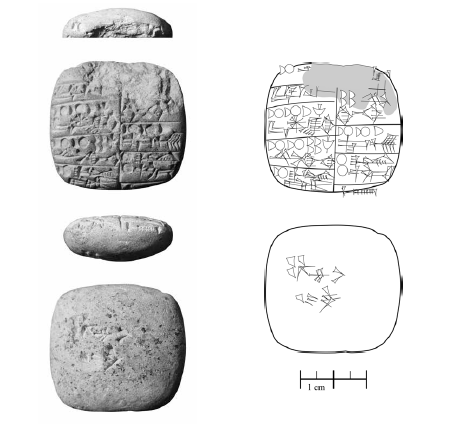
Pp. 3-31: “Nonadministrative Documents from Archaic Ur and from Early Dynastic I–II Mesopotamia: A New Textual and Archaeological Analysis,” by Camille Lecompte and Giacomo Benati
The present paper addresses a subgroup of cuneiform documents from the so-called Archaic Texts from Ur in Mesopotamia. The documents in this subgroup can be isolated within the bulk of the Archaic Texts due to their nonadministrative content. A fresh textual analysis of this dataset is combined with a discussion of the archaeological context of their provenance to highlight patterns in early Ur scribal training methods. The results of this integrated analysis are used to frame more precisely the significance of “Archaic Ur” scribal traditions, dating to the first part of the Early Dynastic period, within the cultural transition from the Late Uruk to the Early Dynastic III (“Fāra”) period in Mesopotamia.
Click here to access the above article on JSTOR (ASOR membership with online access and/or subscription to JSTOR Current Content required).
Pp. 33-47: “Three Administrative Texts from the Time of Me’annedu,” by Armando Bramanti
This article presents two land texts (allotments of field) and one grain text (barley loan) originating from Early Dynastic Zabala. The high year numbers allow for the attribution of these texts to the ensiship of Me’annedu. The edition is followed by a prosopographical study which, supported by paleographical considerations, provides some guidelines for the identification of more documents belonging to the same archive.
Click here to access the above article on JSTOR (ASOR membership with online access and/or subscription to JSTOR Current Content required).
Pp. 49-66: “The Sumerian Discourse Markers u4-ba and u4-bi-a,” by C. Jay Crisostomo
In Old Babylonian Sumerian literature, the temporal phrases u4-ba and u4-bi-a typically occur in complementary distribution. Previous analyses have focused on morphological disparity to differentiate the two. The present paper considers pragmatic functions within a larger discourse structure, analyzing them as discourse markers, specifically temporal connectives. In this study based on a corpus analysis of Old Babylonian literary compositions, I argue that in Sumerian discourse, u4-ba primarily marks perspectival shifts and refocusing, and u4-bi-a indexes sequential and consequential action.
Click here to access the above article on JSTOR (ASOR membership with online access and/or subscription to JSTOR Current Content required).
Pp. 67-108: “Goodbye, Princess: Iltani and the DUMU.MUNUS LUGAL,” by Seth Richardson
The Babylonian princess Iltani has been known to us since the 1899 copies of T. G. Pinches. Within fifty years, following a proliferation of published texts featuring the princess, it became probable there were at least two such persons by this name and title; by now, it can be shown there were at least three. But the problem hardly ends there: a close inspection of the disparate epistolary, administrative, and commercial evidence for these Iltani’s does little to clarify their activities or status, nor even their relation to the king. An analysis of that evidence leads me to propose a redefinition of the title DUMU.MUNUS LUGAL and a reinterpretation of the position and purpose of women bearing the name Iltani.
Click here to access the above article on JSTOR (ASOR membership with online access and/or subscription to JSTOR Current Content required).
Pp. 109-116: “Cultural Transformations from Mesopotamia to Hatti? The Case of the GALA,” by Ilan Peled
This article surveys the textual attestations of the cultic performer designated by the logogram GALA in Hittite texts. This logogram, which originated in Mesopotamia, was apparently used for the Hittite word šaḥtarili, but the nature of the activities performed by the Mesopotamian and Hittite cultic practitioners designated in this manner was not identical. This should be assessed against the background of the nature of Mesopotamian-Hittite connections and cultural transmissions and the multifaceted cultural influences that shaped Hittite cult.
Click here to access the above article on JSTOR (ASOR membership with online access and/or subscription to JSTOR Current Content required).
Pp. 117-124: “The Sumerogram KUR: Logogram or Determinative?,” by Maksim Kudrinski
The article deals with the problem of finding spoken correlates for combinations of the Sumerogram KUR and toponyms in Hittite texts. The discussion adds to our understanding of the relation between written and spoken language in the case of using foreign written templates by the Hittites.
Click here to access the above article on JSTOR (ASOR membership with online access and/or subscription to JSTOR Current Content required).
Pp. 125-150: “Teratomancy at Tigunānum: Structure, Hermeneutics, and Weltanschauung of a Northern Mesopotamian Omen Corpus,” by Nicla De Zorzi
This article examines the inner structure, building principles, and hermeneutic code of a group of late Middle Bronze age teratomantic tablets from Tigunānum in northern Mesopotamia. While in the final evaluation, the Tigunānum teratomantic corpus is of southern Babylonian inspiration, it represents a very specific local reworking of this tradition. This article posits as its distinctive feature the use of a strongly gendered imagery and language that reflect the worldview of an extremely androcentric and militarized society. It also demonstrates a connection between the cultural conceptions underlying the Tigunānum omen corpus and the Old Hittite sphere, the mid-second-millennium world of northern Mesopotamia, and later Assyria.
Click here to access the above article on JSTOR (ASOR membership with online access and/or subscription to JSTOR Current Content required).
Pp. 151-191: “The Nonintercalated Lunar Calendar of the Middle Assyrian Period,” by Joshua Jeffers
Scholars generally assume that Assyria employed a luni-solar calendrical system during the Middle Assyrian period—akin to the one used in Babylonia—that kept the months of its year synchronized with the seasons of the solar year through periodic intercalation. With this understanding, the regnal dates assigned to the Middle Assyrian kings have traditionally been expressed in terms of solar years. The present article, however, argues that the Assyrians did not use this type of system. The author draws upon a variety of administrative tablets—primarily from the reigns of Shalmaneser I, Tukultī-Ninurta I, and Tiglath-pileser I—to demonstrate that the months of the Assyrian year were in fact not permanently affixed to particular seasons of the solar year, revealing that its year was not intercalated and was thus perpetually rotating slowly through the solar year. This article also explores how such a calendrical system impacts the Middle Assyrian kings’ regnal dates, which would need to be lowered given that the unadjusted Assyrian lunar year was slightly shorter than its solar counterpart.
Click here to access the above article on JSTOR (ASOR membership with online access and/or subscription to JSTOR Current Content required).
Pp. 193-202: “The Case Marking of Sumerograms in Hittite,” Mojca Cajnko
The paper begins with a brief introduction to case and case marking and a description of the Hittite corpus and the corpus of the research. The main part is devoted to the case marking of Sumerograms, an as yet unresearched and undescribed topic in Hittitology. The paper examines different possibilities for the case marking of Sumerograms on the level of the sentence and the functional value of phonetic complements. It also attempts to discern whether competition between formally case-marked and case-unmarked Sumerograms in the grammatical roles of subject and direct object was driven by grammatical factors, economy of writing or by other reasons.
Click here to access the above article on JSTOR (ASOR membership with online access and/or subscription to JSTOR Current Content required).
Pp. 203-212: “Esarhaddon’s Prayer in the Inscription AsBbA as Related to the mīs pî Ritual,” by Amitai Baruchi-Unna
The prayer of Esarhaddon, incorporated in the inscription AsBbA, is the first prayer in an Assyrian royal inscription that is presented as a verbatim citation. The aim of this paper is to delineate the historiographical background for this innovation in a genre usually described as routine and formalistic. By examining descriptions of prayers said to have been recited by the king in Assyrian royal inscriptions, I analyze Esarhaddon’s prayer from the aspects of its content, context, and possible linkage to prayers external to the royal inscriptions. Specifically, I examine the possible relation between the prayer in this inscription and the mīs pî ritual performed during the last phases of the process of making a divine image. This comprehensive analysis suggests that the king’s prayer had been part of an early stage of such a ritual and was available to the authors of the Esarhaddon inscription.
Click here to access the above article on JSTOR (ASOR membership with online access and/or subscription to JSTOR Current Content required).
Pp. 213-220: “Comment Presentifier l’Invisible? Reflexions autour des termes ṣalmu, tamšīlu et uṣurtu,” by Jean-Jacques Glassner
Les Mésopotamiens créèrent des objets, des images et des signes qui avaient une fonction précise. À la suite d’une cristallisation de concepts produite par l’archéologie, on a pris l’habitude de parler à leur propos de « représentations ». Il est préférable d’y voir davantage des « présentification ». Tel fut le sens de šlm dans la Genèse, à propos du premier homme qui fut « à l’image de Dieu », entendons qu’il fut la manifestation de la puissance divine.
Click here to access the above article on JSTOR (ASOR membership with online access and/or subscription to JSTOR Current Content required).
Pp. 221-246: “From Text to Reading in Enūma Eliš,” by Johannes Haubold
This article makes two main points. First, the transmitted text of Enūma eliš can be more reliably construed than has hitherto been assumed, provided we take seriously the spelling of the manuscripts and the rules of Akkadian grammar. If we do this, and that is my second point, we can also make progress at the level of interpretation. To illustrate these claims, I look at two passages that have caused difficulties to modern readers. In Enūma eliš I.1–10 we encounter some forms that seem prima facie to defy the normal rules of Akkadian grammar. Through careful analysis of spelling, syntax, and poetic context I show that the text as it stands can in fact be securely construed. I then turn to a passage that the poet himself introduces as a masterpiece of verbal craft. In Enūma eliš II.61–70 the god Ea soothes the excited Anšar by reassuring him that he has the situation under control. I argue that existing translations misconstrue the personal pronoun šâši and consequently misinterpret the climactic final couplet of the speech. Clarifying the grammar of the passage enables us to establish not only what the text says, but also to appreciate it better.
Click here to access the above article on JSTOR (ASOR membership with online access and/or subscription to JSTOR Current Content required).
Pp. 247-260: “Additional MUL.APIN Fragments in the British Museum,” by Jeanette C. Fincke
The edition of the series MUL.APIN by Hermann Hunger and David Pingree (1989) granted modern scholars access to the rather objective descriptions of the stars, the intercalation scheme and the lengths of days and nights compiled by Mesopotamian astronomers in the first millennium BCE. This article provides the publication of three more Neo-Assyrian exemplars from Nineveh, and joins made by Enrique Jiménez, Irving Finkel, and me to two Late Babylonian fragments that have already been used in the edition.
Click here to access the above article on JSTOR (ASOR membership with online access and/or subscription to JSTOR Current Content required).
[/vc_column_text][mk_divider][vc_column_text]To view the entire article on JSTOR, click here.[/vc_column_text][/vc_column][vc_column border_color=”rgba(170,170,170,0.01)” width=”1/6″ css=”.vc_custom_1496684098866{margin-right: 5px !important;margin-bottom: 20px !important;border-right-width: 2px !important;border-bottom-width: 2px !important;padding-top: 30px !important;padding-right: 10px !important;padding-left: 10px !important;background-color: #ffffff !important;border-right-color: rgba(227,228,228,0.75) !important;border-bottom-color: rgba(227,228,228,0.75) !important;}”][vc_wp_posts title=”BROWSE THE NEWS ARCHIVE” number=”4″][/vc_column][vc_column border_color=”rgba(170,170,170,0.01)” width=”1/6″ css=”.vc_custom_1496684008271{margin-right: 10px !important;margin-bottom: 30px !important;border-right-width: 2px !important;border-bottom-width: 2px !important;padding-top: 30px !important;padding-right: 20px !important;padding-left: 20px !important;background-color: #ffffff !important;border-right-color: rgba(227,228,228,0.75) !important;border-bottom-color: rgba(227,228,228,0.75) !important;}”][vc_column_text]Tweets by ASOResearch [/vc_column_text][/vc_column][/vc_row]
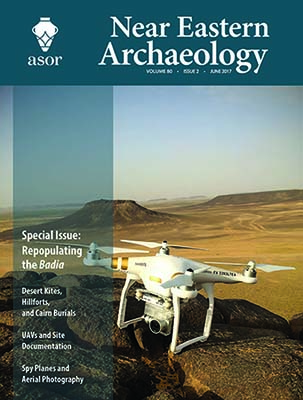
Table of Contents for Near Eastern Archaeology 80:2 (June 2017)
Subscription Options You can receive NEA (and other ASOR publications) through an ASOR Membership or through an Individual Subscription. Single issues (subject to availability) are available for purchase, with ASOR members receiving a discount. Please email us if you have any questions.
Pp. 48–72: “Exploring the Badia,” by Alison Betts
The east Jordan badia is a fascinating but difficult landscape, an attribute that has protected the record of its historic and prehistoric past to an extraordinary degree. It is rich in rock art, graves, hunting traps, seasonal settlements and fortified sites that have remained almost undisturbed for thousands of years. Archaeological exploration of this region has also been slow, primarily due to the challenges of work in this rocky, semiarid region. However, the past few decades have seen a surge in new research that continues to uncover unexpected and remarkable aspects of the history of the badia. This article outlines the history of exploration and research in the badia and its historical significance.
Click here to access the above article on JSTOR (ASOR membership with online access and/or subscription to JSTOR Current Content required).
Pp. 74–83: “Historical Imagery of Desert Kites in Eastern Jordan,” by Emily Hammer and Anthony Lauricella
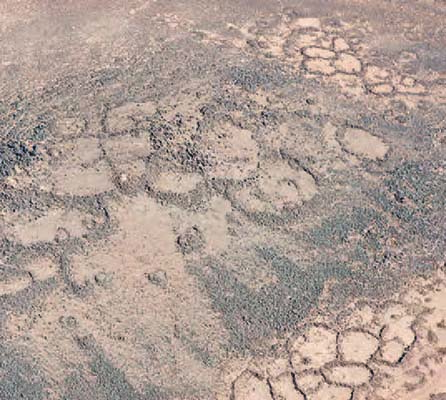
Large mass-kill hunting traps known as desert kites are the badia’s most visually striking and long-studied archaeological features. Kites are best understood from a vertical perspective with help from aerial and satellite imagery, most commonly modern Google Earth imagery. The declassification of historical U2 spy-plane imagery from 1958–1960 provides a new dataset with which to reexamine kites and their spatial distribution. The distribution of desert kites as it appeared over fifty years ago has been mapped, allowing us to draw conclusions about the long-term preservation of kites and the relationship of kites to each other and to their environment.
Click here to access the above article on JSTOR (ASOR membership with online access and/or subscription to JSTOR Current Content required).
Pp. 84–93: “The Badia from Above: Successes, Limitations, and Potential,” by Robert Bewley and Rebecca Repper
Aerial photography and reconnaissance for archaeology was pioneered in the Middle East a century ago. This article highlights the work of the Aerial Archaeology Project in the northern and eastern badia of Jordan since 1997—the only aerial archaeology project outside Europe. The achievements of aerial reconnaissance in understanding the complex and concentrated archaeology of the badia as well as the importance of collaboration with other archaeologists are emphasized.
Click here to access the above article on JSTOR (ASOR membership with online access and/or subscription to JSTOR Current Content required).
Pp. 94–101: “The Late Epipalaeolithic and Early Neolithic in the Jordanian Badia: Recent Fieldwork around the Qa’ Shubayqa,” by Tobias Richter
Until recently the late Epipalaeolithic and early Neolithic occupation of Jordan’s eastern badia was poorly understood and developments in this region were considered as secondary to those in the Jordan Valley or elsewhere. Recent fieldwork in the Qa’ Shubayqa are has led to the discovery of a dense cluster of late Epipalaeolithic and Pre-Pottery Neolithic A (PPNA) sites, which shed a different light on this phase of human settlement in eastern Jordan. This evidence demonstrates that the eastern badia was not a peripheral region during the late Pleistocene and early Holocene, but an intensively settled region.
Click here to access the above article on JSTOR (ASOR membership with online access and/or subscription to JSTOR Current Content required).
Pp. 102–113: “The Late Neolithic Presence in the Black Desert,” by Yorke M. Rowan, Gary Rollefson, Alexander Wasse, Austin “Chad” Hill, and Morag M. Kersel
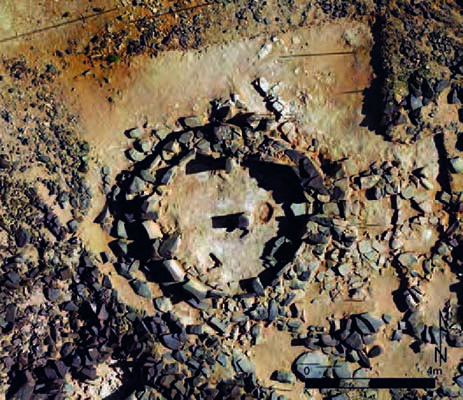
Major cultural transformations took place in the southern Levant during the late prehistoric periods (ca. mid-seventh through fourth millenna b.c.e.). General syntheses rarely include more than cursory mention of the more arid regions of the southern Levant (Negev, eastern and southern Jordan). The Eastern Badia Archaeological Project [EBAP] study area comprises a west–east transect across the southern part of the eastern badia, selected to include a variety of ecological zones. To date, this field research project has focused on two primary study areas in the Black Desert in Jordan’s panhandle: Wisad Pools and Wadi al-Qattafi. In both areas, excavation combined with pedestrian and aerial survey record an apparent florescence of building and intensive exploitation of the landscape that contradicts previous assumptions that the region was used only intermittently by late prehistoric people. The many substantial well-constructed Late Neolithic buildings, evidence for trees and marshy plants, and extensive systems of kites seem to suggest that, rather than a virtually empty region, the Black Desert was once rich in animals, plants and people.
Click here to access the above article on JSTOR (ASOR membership with online access and/or subscription to JSTOR Current Content required).
Pp. 114–123: “Droning on in the Badia: UAVs and Site Documentation at Wadi al-Qattafi,” by Austin “Chad” Hill and Yorke Rowan
Drones, or Unpiloted Aerial Vehicles (UAVs), are quickly changing approaches to archaeological mapping. They are effective tools for documenting smaller ancient features that might be missed by the resolution limitations of satellite imagery. As part of the Eastern Badia Archaeological Project, this article presents the preliminary results of a large-scale aerial survey of Wadi al-Qattafi, Jordan undertaken to map the kites and smaller features concentrated around and on top of the basalt mesas in the area. A combination of fixed and rotary wing aircraft was used to record approximately 20,000 images across 32 square kilometers of the survey area. The resulting orthophotographs and digital elevation models (DEMs) provide a high-resolution recording of the landscape. Ultimately this allows for mapping and identification of even the smallest anthropogenic features, as well as an analysis of how larger features were constructed to utilize local topography.
Click here to access this article on JSTOR (ASOR membership or subscription to JSTOR Current Content required).
Click here to access the above article on JSTOR (ASOR membership with online access and/or subscription to JSTOR Current Content required).
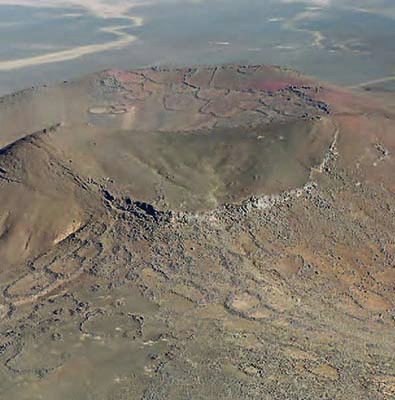
Pp. 124–131: “The Chalcolithic/Early Bronze Age Hillfort Phenomenon in the Northern Badia,” by Bernd Müller-Neuhof
The basalt and limestone desert of the Jawa hinterland in NE Jordan has been the focus of intensive archaeological research for the past six years. Surveys revealed abundant evidence for Chalcolithic or Early Bronze Age activities in this region. The preliminary results of these investigations have already led to a change in the earlier perception of this region and especially the basalt desert. Among the major discoveries are the identification of several hillfort sites in the basalt desert, which suggest a permanent occupation in this arid region. In addition, evidence for artificial irrigation with rainwater harvesting in the vicinity of these settlements underscores the potential for agriculture in this region. Soundings and excavations recovered several 14C dates from these sites, which prove a Late Chalcolithic/Early Bronze Age I occupation.
Click here to access the above article on JSTOR (ASOR membership with online access and/or subscription to JSTOR Current Content required).
Pp. 132–139: “Nothing but Cold Ashes? The Cairn Burials of Jebel Qurma, Northeastern Jordan,” by Peter M.M.G. Akkermans and Merel L. Brüning
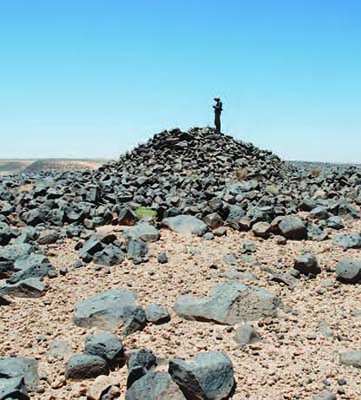
Throughout the basaltic uplands of northeastern Jordan, there are countless large and small mounds of stone (cairns), which are the burial places of people who roamed the desert many hundreds or thousands of years ago. These numerous graves have never been systematically investigated, and little is known about their construction, date, and variability, let alone about their deceased occupants. This picture is now changing owing to an ongoing program of survey and excavation in the Jebel Qurma region, close to the border of Jordan and Saudi Arabia. These investigations point towards complex and entangled arrangements of cairn use and mortuary practices over time, when Early Bronze Age cemeteries are replaced by singular, impressive tower tombs and conical ring cairns in the Hellenistic to Byzantine period. The reuse of these tombs is a recurrent feature, emphasizing the focal and enduring role of these monuments to both the dead and the living.
Click here to access the above article on JSTOR (ASOR membership with online access and/or subscription to JSTOR Current Content required).
FRIENDS OF ASOR FELLOWSHIP RECIPIENT: CECELIA CHISDOCK
Cecelia Chisdock is the very first recipient of the new Friends of ASOR Fellowship, a fellowship funded exclusively by gifts from our Friends of ASOR. Throughout the summer, Cecelia will update us on how her first dig is going.
“This summer with the help of the Friends of ASOR Fellowship, I will be going on my first dig. I’ll be headed to the site of Tel Kabri in Israel, a Canaanite palace which has not only Aegean-style floor paintings but is also home to the oldest palatial wine cellar in the Near East. This season is focused on continuing the excavation of the wine cellar and uncovering more storage rooms in the palace. I’m mostly looking forward to being able to apply and see firsthand everything I’ve learned in my studies. Aside from gaining this invaluable experience, I am excited to be able to explore not only the site but other historical areas of Israel in my free time. I’ll be using the funds I received from the generous Friends of ASOR Fellowship to help finance both my attendance to the field school and my plane fare. For this amazing opportunity to learn and experience archaeology I would like to thank all the Friends of ASOR for helping me to participate in this fantastic chance to further my education and, hopefully, my career!”[/vc_column_text][/vc_column][vc_column border_color=”rgba(170,170,170,0.01)” width=”1/6″ css=”.vc_custom_1496684098866{margin-right: 5px !important;margin-bottom: 20px !important;border-right-width: 2px !important;border-bottom-width: 2px !important;padding-top: 30px !important;padding-right: 10px !important;padding-left: 10px !important;background-color: #ffffff !important;border-right-color: rgba(227,228,228,0.75) !important;border-bottom-color: rgba(227,228,228,0.75) !important;}”][vc_wp_posts title=”BROWSE THE NEWS ARCHIVE” number=”4″][/vc_column][vc_column border_color=”rgba(170,170,170,0.01)” width=”1/6″ css=”.vc_custom_1496684008271{margin-right: 10px !important;margin-bottom: 30px !important;border-right-width: 2px !important;border-bottom-width: 2px !important;padding-top: 30px !important;padding-right: 20px !important;padding-left: 20px !important;background-color: #ffffff !important;border-right-color: rgba(227,228,228,0.75) !important;border-bottom-color: rgba(227,228,228,0.75) !important;}”][vc_column_text]Tweets by ASOResearch [/vc_column_text][/vc_column][/vc_row]
5 MORE DONORS NEEDED TO QUALIFY FOR A $33,000 CHALLENGE GIFT
Update (June 22)
Thanks to 95 new donors, ASOR is almost 90% of the way to qualifying for $33,000!
In early May, ASOR Development Chair Ed Wright announced in a letter to ASOR members that the ASOR Board had made a $33,000 Challenge Gift. Board members collectively pledged to contribute $33,000 to the ASOR Annual Fund if we could recruit 100 new donors who had not yet made a gift this fiscal year (July 1, 2016 – June 30, 2017). We are getting close, but we still need 5 more people to make a gift of $10 or more by June 30th.
Not only do modest gifts add up to create significant support, now they can help ASOR qualify for $33,000 and help us have a balanced budget for the fiscal year. Do you prefer to contribute to something other than the Annual Fund? No problem! Contributions for this challenge campaign need not be limited to the Annual Fund—they may be designated for student support, fellowships, cultural heritage, endowment, publications, or any other area of ASOR’s work.
If you are one of the 365 people who has already made a gift to ASOR this fiscal year, thank you so much for your support. If you have not year made a gift between July 1st and June 30, please consider joining the ranks for ASOR donors. We have almost one more month to reach our goal, so please make a gift today!
Other ways you can donate:
Donate by Phone
Call ASOR (number temporarily unavailable until June 29th)
Donate by Mail
Send a check to:
ASOR
P. O. Box 15729
Boston, MA 02215
Make a Pledge (Donate Later)
Send an e-mail to ASOR[/vc_column_text][/vc_column][vc_column border_color=”rgba(170,170,170,0.01)” width=”1/6″ css=”.vc_custom_1496684098866{margin-right: 5px !important;margin-bottom: 20px !important;border-right-width: 2px !important;border-bottom-width: 2px !important;padding-top: 30px !important;padding-right: 10px !important;padding-left: 10px !important;background-color: #ffffff !important;border-right-color: rgba(227,228,228,0.75) !important;border-bottom-color: rgba(227,228,228,0.75) !important;}”][vc_wp_posts title=”BROWSE THE NEWS ARCHIVE” number=”4″][/vc_column][vc_column border_color=”rgba(170,170,170,0.01)” width=”1/6″ css=”.vc_custom_1496684008271{margin-right: 10px !important;margin-bottom: 30px !important;border-right-width: 2px !important;border-bottom-width: 2px !important;padding-top: 30px !important;padding-right: 20px !important;padding-left: 20px !important;background-color: #ffffff !important;border-right-color: rgba(227,228,228,0.75) !important;border-bottom-color: rgba(227,228,228,0.75) !important;}”][vc_column_text]Tweets by ASOResearch [/vc_column_text][/vc_column][/vc_row]
REPORT FROM THE APRIL EXECUTIVE COMMITTEE & BOARD OF TRUSTEES MEETINGS
Susan Ackerman, ASOR President
Every spring, the ASOR Board of Trustees and the Board’s Executive Committee meet to engage in discussions and undertake items of business that have come forward since the Executive Committee’s and Board’s gatherings at the November Annual Meeting. This year, the Executive Committee and the Board met during the weekend of April 28-29, in Boston, MA.
The ASOR Budget
The major item on the agenda for the ASOR Board’s spring meetings is always the budget, both a review of the budget for the current fiscal year (FY 17), which will come to an end on June 30, and approving the budget for the upcoming fiscal year (FY 18), which starts on July 1. The FY 17 budget is balanced – indeed, almost perfectly so, as we imagine ending the year with just a small surplus of $239.34! For FY 18, the Board approved a balanced budget of just over $2,220,000.
As I remarked in my report after the April 2015 and April 2016 Board meetings, this is a rather astonishing figure for ASOR, given that as recently as FY 12, ASOR’s annual budget was $965,000. The reason for this dramatic increase is the funding we have received for ASOR’s Cultural Heritage Initiatives (CHI). This funding includes monies that comes via our cooperative agreement with the United States Department of State and also from the J. M. Kaplan Fund and the Whiting Foundation, with in-kind support from the Getty Conservation Institute, The World Monuments Fund, and Arnold and Porter, LLC.
More specifically, we were very pleased to receive a letter, about three weeks before the Board meeting, indicating that the Department of State intended to award us $900,000 to continue for a third year our collaborative “Safeguarding the Heritage of the Near East Initiative.” This new Department of State funding runs from March 31, 2017, through March 31, 2018.
As we noted in the press release that we sent to all of our members regarding this funding—we are particularly pleased that this new agreement allows us not only to continue our efforts preserve and protect the cultural heritage of Syria and Iraq, but also to extend the scope of work to include the preservation and protection of the cultural heritage of Libya. We are also very pleased that this new cooperative agreement includes increased support for in-country projects that connect local communities to historic places and heritage. For more, see as always, the ASOR CHI website.
In addition, I was pleased and proud to be able to announce to the Board at its April meeting that ASOR had been awarded a one-year, $244,000 grant from the Whiting Foundation, to fund an emergency assessment and digital preservation initiative for textual collections and repositories in Mosul. The texts to be assessed include Islamic manuscripts (folia, quires, codices, scrolls) from the rich holdings of the Mosul Central Library System, the Mosul University Library System, the Library of the Mosul Museum, and other, smaller textual repositories within Mosul, as well as cuneiform tablets, architectural and monumental inscriptions, and inscribed objects.
The grant, moreover, will pay to train local heritage professionals to conduct the assessment and preservation program. These Whiting monies thus provides not only for the preserving and protecting of Mosul’s intellectual and cultural legacy, but also for the empowerment and for the enhanced financial well-being of ASOR’s Iraqi members, colleagues, and friends.
The ASOR Office
ASOR learned in January 2016 that Boston University proposed to sell a block of nine buildings that it then owned in Kenmore Square, including 656 Beacon Street, where ASOR (and also the Archaeological Institute of America) had office space. These buildings subsequently were sold in August 2016, to a major real estate developer.
In neither case, was this information communicated to us by Boston University; rather, we learned it by reading BU’s daily e-newsletter. This means we received no concrete information from BU about what this sale would mean for us, although we heard through the grapevine that things would probably move slowly and that we would have until March 2018 to find new space.
But this is not what happened. As I wrote to the Board on March 16, 2017, we heard that afternoon from Ann Cudd, Dean of the College of Arts and Sciences at Boston University, that ASOR would have to vacate its offices at 656 Beacon Street by May 31, 2017. We did quickly decide that it was to our benefit to remain in the Boston area (and, ideally, within the BU geographical orbit) for the immediate future for several reasons, the most important being that this location serves our staff well, and the idea of moving somewhere inaccessible to our staff – and so facing the prospect of losing both our office space and our employees at the end of May – was unimaginable.
At the Board meeting on April 29th, I was able to report to the Board that we had identified two separate spaces very near our current offices in Kenmore Square to lease, one at 650 Beacon Street to house core ASOR staff and be the base for core ASOR functions; the other, .2 miles away, at 665 Beacon Street, to house the staff member who services the American Center for Oriental Research (ACOR) and the Cyprus American Archaeological Research Institute (CAARI) and to store documents and related materials that belong to ACOR and CAARI. This space could also house the Journal Exchange Program that ASOR runs on behalf of ACOR, CAARI, and AIAR. It could in addition be used by ASOR for storage and for some of its cultural heritage work.
Over the next month, we did secure leases for these two spaces – although it went down to the wire (we finally received a lease for 650 Beacon Street on May 26th, the Friday afternoon of Memorial Day weekend, for a move scheduled for Tuesday, May 30)! That lease also came with an unexpected and very unwelcome surprise: a lease period extending only to December 31, 2017, instead of December 31, 2018, as we had anticipated. It is in addition important to note that we have to pay rent for these two spaces, as opposed to the complimentary office space that Boston University has provided us for the last twenty years.
These are big changes for ASOR, of course—and, obviously, since we have a lease for 650 Beacon Street that runs only through December 31, 2017, there are more changes that are soon to come. We do have a “New Office Committee” in place, made up of six members of our Board and chaired by our Board Chair, Richard Coffman. This committee has been working diligently since last November, and continues to work, on the issue of ASOR’s next home.
But we all can help. Right now, we need suggestions, ideas, proposals, from all our members. Do you know of office space (we need about 2500-3000 square feet) available near or on a college, university, or seminary campus that ASOR might be able to rent at a reasonable cost (or, even better, space that is free)? Do you know philanthropists in your community who might like to support ASOR’s work by providing free or reduced-rent office space? Or maybe you want to give us a building. (Hey, it never hurts to ask!)
Some Happier News
The Board’s discussion of the ASOR office situation was, obviously, a difficult one, but we were able to follow it up with a preview of the new ASOR website, which is due to launch any day now. Everyone of the Board spoke enthusiastically of the design, and we hope all our members will enjoy it as well.
The Board also was pleased to hear very good news about the 2017 ASOR Annual Meeting, from the Programs Committee, which reported that it had received nearly 700 abstract submissions for the 2017 Annual Meeting program. This is as opposed to 540 abstract submissions for 2016. Because one must be a member to present at the Annual Meeting, the significant increase in abstracts submitted for 2017 has helped drive an increase in the number of ASOR members, currently about 1800 individuals (at about this time last year, the number was 1700).
In addition, the Board welcomed three new colleagues: Debra Foran, Heather Dana Davis Parker, and Elizabeth Macaulay-Lewis. We’re very happy to have these new colleagues on our Board!
Overall, the Board and Executive Committee had a busy set of meetings—but also a productive one. Even though I am worried about ASOR’s home going forward, I left the Boston meetings thankful, as I always am, for all that ASOR’s Board members do to ensure that ASOR continues to thrive.


 In early May, ASOR Development Chair Ed Wright announced in a





 style floor paintings but is also home to the oldest palatial wine cellar in the Near East. This season is focused on continuing the excavation of the wine cellar and uncovering more storage rooms in the palace. I’m mostly looking forward to being able to apply and see firsthand everything I’ve learned in my studies. Aside from gaining this invaluable experience, I am excited to be able to explore not only the site but other historical areas of Israel in my free time. I’ll be using the funds I received from the generous Friends of ASOR Fellowship to help finance both my attendance to the field school and my plane fare. For this amazing opportunity to learn and experience archaeology I would like to thank all the Friends of ASOR for helping me to participate in this fantastic chance to further my education and, hopefully, my career!”[/vc_column_text][/vc_column][vc_column border_color=”rgba(170,170,170,0.01)” width=”1/6″ css=”.vc_custom_1496684098866{margin-right: 5px !important;margin-bottom: 20px !important;border-right-width: 2px !important;border-bottom-width: 2px !important;padding-top: 30px !important;padding-right: 10px !important;padding-left: 10px !important;background-color: #ffffff !important;border-right-color: rgba(227,228,228,0.75) !important;border-bottom-color: rgba(227,228,228,0.75) !important;}”][vc_wp_posts title=”BROWSE THE NEWS ARCHIVE” number=”4″][/vc_column][vc_column border_color=”rgba(170,170,170,0.01)” width=”1/6″ css=”.vc_custom_1496684008271{margin-right: 10px !important;margin-bottom: 30px !important;border-right-width: 2px !important;border-bottom-width: 2px !important;padding-top: 30px !important;padding-right: 20px !important;padding-left: 20px !important;background-color: #ffffff !important;border-right-color: rgba(227,228,228,0.75) !important;border-bottom-color: rgba(227,228,228,0.75) !important;}”][vc_column_text]