Table of Contents for NEA 83.1 (2020)

[vc_row fullwidth=”true” attached=”true” css=”.vc_custom_1496247803139{padding-top: 0px !important;padding-right: 0px !important;padding-bottom: 0px !important;padding-left: 0px !important;}”][vc_column][vc_single_image image=”58871″ img_size=”full” alignment=”center”][/vc_column][/vc_row][vc_row fullwidth=”true” css=”.vc_custom_1496682730308{padding-top: 10px !important;padding-right: 0px !important;padding-bottom: 0px !important;padding-left: 0px !important;}”][vc_column width=”1/12″ css=”.vc_custom_1496683820796{margin-right: 10px !important;}” offset=”vc_hidden-md vc_hidden-sm vc_hidden-xs”][vc_column_text]

 SHARE

[/vc_column_text][mk_image src=”http://www.asortest.org/wp-content/uploads/2017/01/social-fb-icon4.jpg” image_width=”42″ image_height=”42″ hover=”false” custom_url=”https://www.facebook.com/ASOResearch/” margin_bottom=”0″][mk_image src=”http://www.asortest.org/wp-content/uploads/2017/01/social-tw-icon4.jpg” image_width=”42″ image_height=”42″ hover=”false” custom_url=”https://twitter.com/ASOResearch?ref_src=twsrc%5Egoogle%7Ctwcamp%5Eserp%7Ctwgr%5Eauthor” margin_bottom=”0″][mk_image src=”http://www.asortest.org/wp-content/uploads/2017/01/social-in-icon4.jpg” image_width=”42″ image_height=”42″ hover=”false” custom_url=”https://www.linkedin.com/company/american-schools-of-oriental-research” margin_bottom=”0″][mk_image src=”http://www.asortest.org/wp-content/uploads/2017/01/social-ml-icon_7.jpg” image_width=”42″ image_height=”42″ hover=”false” custom_url=”mailto:asor@bu.edu” margin_bottom=”0″][mk_image src=”http://www.asortest.org/wp-content/uploads/2017/01/blog-icon3.jpg” image_width=”42″ image_height=”42″ hover=”false” custom_url=”http://asorblog.org/” margin_bottom=”0″][/vc_column][vc_column border_color=”rgba(255,255,255,0.01)” width=”1/6″ css=”.vc_custom_1496683923840{margin-right: 20px !important;border-left-width: 2px !important;padding-right: 20px !important;padding-left: 20px !important;border-left-color: #99422f !important;}”][mk_divider divider_color=”rgba(255,255,255,0.01)” thickness=”1″ margin_top=”3″ margin_bottom=”3″][vc_column_text]

NEWS@ASOR

ANCIENT NEAR EAST TODAY

PAST ASOR NEWS, MONTH BY MONTH

FY19 HONOR ROLL OF DONORS

ASOR ANNUAL MEETING

[/vc_column_text][/vc_column][vc_column border_color=”rgba(170,170,170,0.01)” width=”1/2″ css=”.vc_custom_1487276122024{margin-right: 10px !important;margin-bottom: 30px !important;border-right-width: 2px !important;border-bottom-width: 2px !important;padding-top: 30px !important;padding-right: 30px !important;padding-left: 20px !important;background-color: #ffffff !important;border-right-color: rgba(227,228,228,0.75) !important;border-bottom-color: rgba(227,228,228,0.75) !important;}”][vc_row_inner][vc_column_inner width=”1/4″ css=”.vc_custom_1570040186774{padding-right: 10px !important;}”][mk_image src=”http://www.asor.org/wp-content/uploads/2020/03/NEA83.1-Cover-1.jpg” image_width=”151″ image_height=”200″ hover=”false”][/vc_column_inner][vc_column_inner width=”3/4″][vc_column_text]

Table of Contents for Near Eastern Archaeology 83.1 (March 2020)

[/vc_column_text][/vc_column_inner][/vc_row_inner][vc_row_inner][vc_column_inner css=”.vc_custom_1570040186774{padding-right: 10px !important;}”][vc_column_text]

You can receive NEA (and other ASOR publications) through an ASOR Membership. Please e-mail the Membership office if you have any questions.

[/vc_column_text][/vc_column_inner][/vc_row_inner][mk_divider][vc_row_inner][vc_column_inner width=”1/4″ css=”.vc_custom_1570041002103{padding-right: 10px !important;}”][mk_image src=”http://www.asor.org/wp-content/uploads/2020/04/Tell-Burna-Worker-NEA-83.1-TOC.jpeg” image_width=”200″ image_height=”500″ crop=”false” hover=”false”][/vc_column_inner][vc_column_inner width=”3/4″][vc_column_text]

Pp. 4-15: “Tel Burna after a Decade of Work: The Late Bronze and Iron Ages,” by Chris McKinny, Aharon Tavger, Deborah Cassuto, Casey Sharp, Matthew J. Suriano, Steven M. Ortiz, and Itzhaq Shai

As our project at Tel Burna enters the tenth season of excavations, we have compiled a summary of the archaeological finds from 2009–2018. Tel Burna is located in the southern Shephelah in modern-day southern Israel. The Judean Shephelah is comprised of foothills above several east–west valleys that drain the Judean incline in the east to the coastal plain in the west. These valleys were strategic agricultural zones and trade routes throughout history, and in particular during the Late Bronze and Iron Ages. Tel Burna is situated on a natural hill in the middle of Nahal Guvrin, one of the main roads through the Judean Shephelah.[/vc_column_text][/vc_column_inner][/vc_row_inner][vc_column_text responsive_align=”left”]ASOR Members with online access: navigate to the token link email sent to you before attempting to read this article. Once you have activated your member token, click here to access the above article on The University of Chicago Press Journals’ website.[/vc_column_text][mk_divider][vc_row_inner][vc_column_inner width=”1/4″ css=”.vc_custom_1570041002103{padding-right: 10px !important;}”][mk_image src=”http://www.asor.org/wp-content/uploads/2020/04/Tarhunzas-and-grapes-Nigde-Kinik-Hoyuk-NEA-83.1-TOC.jpeg” image_width=”200″ image_height=”500″ crop=”false” hover=”false”][/vc_column_inner][vc_column_inner width=”3/4″][vc_column_text]

Pp. 16-29: “Niğde Kınık Höyük: New Evidence on Central Anatolia during the First Millennium BCE,” by Lorenzo d’Alfonso, Burak Yolaçan, Lorenzo Castellano, Nancy Highcock, Roberta Casagrande-Kim, Maria Elena Gorrini, and Andrea Trameri

The sudden fall of the Hittite Empire at the turn of the thirteenth century BCE is a major case study for political disruptions in the history of the Mediterranean, and it resulted in the profound transformation of central Anatolia, the former Hittite core territory.1 This disruption affected the whole eastern Mediterranean, but nowhere was hit as severely as Hittite Anatolia. Hittite political legacy survived only at the eastern borderlands of the empire—the Upper Euphrates, Malatya, and Karkemiš—and only to the tenth century in northern Syria and south of the Taurus Mountains (fig. 1; Weeden 2013). As for central Anatolia, scholars generally concur that a degree of political complexity was reintroduced only in the eighth century BCE. Famine, mass migrations, and conflicts have been considered the main driving factors behind the sudden decrease in settlement occupation after the fall of the empire.[/vc_column_text][/vc_column_inner][/vc_row_inner][vc_column_text responsive_align=”left”]ASOR Members with online access: navigate to the token link email sent to you before attempting to read this article. Once you have activated your member token, click here to access the above article on The University of Chicago Press Journals’ website.[/vc_column_text][mk_divider][vc_row_inner][vc_column_inner width=”1/4″ css=”.vc_custom_1570041002103{padding-right: 10px !important;}”][mk_image src=”http://www.asor.org/wp-content/uploads/2020/04/Diver-on-Maagan-Mikhael-Shipwreck-NEA-83.1-TOC.jpg” image_width=”200″ image_height=”500″ crop=”false” hover=”false”][/vc_column_inner][vc_column_inner width=”3/4″][vc_column_text]

Pp. 30-37: “The Late-Antique Ma‘agan Mikhael B Shipwreck, Israel,” by Deborah Cvikel

The Ma‘agan Mikhael B shipwreck, dated to the seventh–eighth centuries CE, is located about 70 meters off the Mediterranean coast of Israel, at a maximum water depth of 3 meters, buried under 1.5 meters of sand. The excavation of the shipwreck is in progress, and the hull has not yet been excavated completely. The exposed hull remains, comprising the keel, endposts, aprons, framing timbers, hull planks, stringers, bulkheads, and maststep assembly, are in a good state of preservation. The most significant finds are the ceramic sherds and complete amphorae. Other finds include rigging elements, wooden artifacts, organic finds, animal bones, glassware, coins, bricks, and rocks. The dating of this shipwreck makes it an exceptional source of information regarding various aspects of ship construction, seamanship and seafaring, regional economic activity, and daily life in the Levant in late antiquity.[/vc_column_text][/vc_column_inner][/vc_row_inner][vc_column_text responsive_align=”left”]ASOR Members with online access: navigate to the token link email sent to you before attempting to read this article. Once you have activated your member token, click here to access the above article on The University of Chicago Press Journals’ website.[/vc_column_text][mk_divider][vc_row_inner][vc_column_inner width=”1/4″ css=”.vc_custom_1570041002103{padding-right: 10px !important;}”][mk_image src=”http://www.asor.org/wp-content/uploads/2020/04/Digging-up-Cats-NEA-83.1-TOC.jpeg” image_width=”200″ image_height=”500″ crop=”false” hover=”false”][/vc_column_inner][vc_column_inner width=”3/4″][vc_column_text]Pp. 38-45: “The Dispersal of the Domestic Cat: Paleogenetic and Zooarcheological Evidence,” by Claudio Ottoni and Wim Van Neer

Domestication is one of the most interesting and challenging processes in human and animal evolution. The fundamental change in subsistence strategies from hunting and gathering to farming that took place for the first time in the Levant more than ten thousand years ago profoundly changed human culture and biology, and set the groundwork for population growth, migrations, the rise of civilizations, and wealth disparities (Bocquet-Appel 2011; Gignoux, Henn, and Mountain 2011; Kohler et al. 2017).[/vc_column_text][/vc_column_inner][/vc_row_inner][vc_column_text responsive_align=”left”]ASOR Members with online access: navigate to the token link email sent to you before attempting to read this article. Once you have activated your member token, click here to access the above article on The University of Chicago Press Journals’ website.[/vc_column_text][mk_divider][vc_row_inner][vc_column_inner width=”1/4″ css=”.vc_custom_1570041002103{padding-right: 10px !important;}”][mk_image src=”http://www.asor.org/wp-content/uploads/2020/04/Children-in-Lachish-Relief.jpeg” image_width=”200″ image_height=”500″ crop=”false” hover=”false”][/vc_column_inner][vc_column_inner width=”3/4″][vc_column_text]

Pp. 46-55: “(Un)Dressing Children in the Lachish Reliefs: Questions of Gender, Status, and Ethnicity,” by Kristine Garroway

The Lachish reliefs were once part of Room XXXVI in Sennacherib’s Southwest Palace at Nineveh. R. D. Barnett made the claim that the Lachish reliefs represented an actual event, the siege and destruction of Lachish by Sennacherib in 701 BCE, and was not some stock depiction of the defeat of an enemy city, an assertion that David Ussishkin (2014) has verified. Monumental palace reliefs functioned in a variety of ways, and these reliefs in particular were meant as royal propaganda. Those entering Sennacherib’s palace would see that to resist the power of the Assyrian army was futile (Uehlinger 2003). Since few people could read, it was important that the actions shown on the wall monuments were self-explanatory, and “the participants and location easily recognizable” (Franklin 2001: 261).1 It follows then that the depictions of the people on the reliefs also portray a general picture of the parties involved (Uehlinger 2003: 263).[/vc_column_text][/vc_column_inner][/vc_row_inner][vc_column_text responsive_align=”left”]ASOR Members with online access: navigate to the token link email sent to you before attempting to read this article. Once you have activated your member token, click here to access the above article on The University of Chicago Press Journals’ website.[/vc_column_text][mk_divider][vc_row_inner][vc_column_inner width=”1/4″ css=”.vc_custom_1570041002103{padding-right: 10px !important;}”][mk_image src=”http://www.asor.org/wp-content/uploads/2020/04/Wine-Crushers-in-the-Desert-NEA-83.1-TOC.jpeg” image_width=”200″ image_height=”500″ crop=”false” hover=”false”][/vc_column_inner][vc_column_inner width=”3/4″][vc_column_text]

Pp. 56-64: “Wine from the Desert : Late-Antique Negev Viniculture and the Famous Gaza Wine,” by Sára Lantos, Guy Bar-Oz, and Gil Gambash

One of the most prestigious wines of late antiquity was Gaza wine, which, like Ashkelon wine, became popular in the late fourth century and reached peak demand in the second half of the fifth–early seventh centuries CE. The appetite for this and other southern Levantine wines arose as a result of several influential processes, leading among them the growth of the new capital at Constantinople and its positive economic effect on the eastern Mediterranean (Ostrogorsky 2003: 59; van Dam 2010: 77). More specifically, the growing popularity of Christianity, and the rise of both the pilgrimage movement and the ascetic communities, served as efficient platforms for familiarizing the Mediterranean world with wines originating in the Holy Land. With the spread of the ritual of the Eucharist, wine from the Holy Land gained particular sanctity. While the western part of the Mediterranean may have been lost to the empire, the new kingdoms that now controlled the region adopted essential elements of Mediterranean routine and Roman culture, including Christianity, and the wine trade between the eastern and western parts of the Mediterranean continued to prosper regardless of political changes (Chrysos 1997: 18; Pohl 1997; Lebecq 1997; Halsall 2007: 19–22; Brown 1971: 144).[/vc_column_text][/vc_column_inner][/vc_row_inner][vc_column_text responsive_align=”left”]ASOR Members with online access: navigate to the token link email sent to you before attempting to read this article. Once you have activated your member token, click here to access the above article on The University of Chicago Press Journals’ website.[/vc_column_text][/vc_column][vc_column border_color=”rgba(170,170,170,0.01)” width=”1/6″ css=”.vc_custom_1496684098866{margin-right: 5px !important;margin-bottom: 20px !important;border-right-width: 2px !important;border-bottom-width: 2px !important;padding-top: 30px !important;padding-right: 10px !important;padding-left: 10px !important;background-color: #ffffff !important;border-right-color: rgba(227,228,228,0.75) !important;border-bottom-color: rgba(227,228,228,0.75) !important;}”][vc_wp_posts title=”BROWSE THE NEWS ARCHIVE” number=”4″][/vc_column][vc_column border_color=”rgba(170,170,170,0.01)” width=”1/6″ css=”.vc_custom_1496684008271{margin-right: 10px !important;margin-bottom: 30px !important;border-right-width: 2px !important;border-bottom-width: 2px !important;padding-top: 30px !important;padding-right: 20px !important;padding-left: 20px !important;background-color: #ffffff !important;border-right-color: rgba(227,228,228,0.75) !important;border-bottom-color: rgba(227,228,228,0.75) !important;}”][vc_column_text] [/vc_column_text][/vc_column][/vc_row]

CHI – Syria Updates

SYRIA UPDATES

Members of the General Authority for Antiquities and Museums at Al-Qahira Castle in Taiz, Yemen. The list of formal partners on the project is shown at the bottom. Photo Credit: Heritage for Peace.

ASOR Trains Syrian and Yemeni Students and Heritage Professionals in Tools for Cultural Heritage Documentation

October 7, 2025

Over the past few months, ASOR has offered free training in its cultural heritage documentation curriculum to Syrian and Yemeni students and heritage professionals in collaboration with Syrians for Heritage (SIMAT) and Heritage for Peace. ASOR’s freely accessible curriculum aims to help cultural heritage specialists perform surveys and condition assessments through mostly open-source tools and software, including KoboToolbox, QGIS, LibreCAD, and Agisoft Metashape.

Click here to read more

UPDATE: The Jewish Cultural Heritage Initiative Completes Initial Assessment of Jewish Heritage in Iraq and Syria

The Jewish Cultural Heritage Initiative (JCHI)—a joint project of the London-based Foundation for Jewish Heritage and the American Schools of Oriental Research (ASOR)—has completed its initial assessment of present and past Jewish heritage sites in Iraq and Syria. Thanks to the generous sponsorship provided by the Thomas S. Kaplan and Daphne Recanati Family to the Foundation for Jewish Heritage, this work has identified the location and condition of 368 settlements and heritage sites from antiquity to the present day in this once vibrant center of Jewish life.

Click here to read the report

UPDATE: Ain Dara

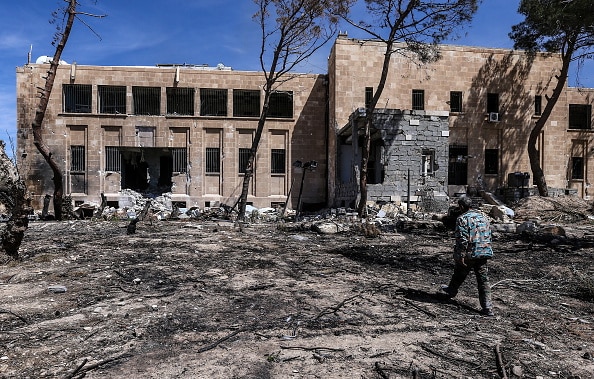
Between January 20 and January 22, 2018 the Turkish Air Force conducted an airstrike on the Early Iron Age temple at Tell Ain Dara, an archaeological site located ca. 5.8 km south of Afrin in Aleppo Governorate. The temple is an important example of Syro-Hittite religious architecture and the most extensively excavated structure of its kind in Syria.

Read the Report

UPDATE: Damage to al-Rafiqah Wall in Raqqa’s Old City by US-led Coalition Forces

On July 3, 2017 the US-led Coalition conducted airstrikes on two 25 m-long sections of the city wall of Raqqa, also known as the al-Rafiqah Wall. DigitalGlobe satellite imagery confirms that the strikes hit the eastern portion of the wall. The first breach is located 80 m south of Qasr al-Banat, the remains of an Abbasid-period palace. The second breach lies roughly 500 m further north.

Read the Report

UPDATE Palmyra: New photographs detail damage to the UNESCO World Heritage site of Palmyra

On March 2, 2017 SARG and pro-regime allies, backed by Russian airstrikes, recaptured the UNESCO World Heritage site of Palmyra from ISIL. ISIL had previously recaptured the area in December 2016. Photographs and video footage released confirm the damage to the Roman Theater and Tetrapylon first reported by ASOR CHI in January 2017. It is reasonable to expect that the renewed fighting has also impacted the Citadel. According to some reports, ISIL militants may have mined much of the ancient site as they retreated from the city.

Read the Report

UPDATE: New Damage in Palmyra Uncovered

On January 19, 2017, ASOR CHI obtained DigitalGlobe satellite imagery that revealed new damage to the ISIL-occupied UNESCO World Heritage site of Palmyra. ASOR CHI can confirm that that damage occurred between December 26, 2016 and January 10, 2017. The imagery showed significant damage to the Tetrapylon and the Roman Theater, likely the result of of destruction by ISIL; however, ASOR CHI has thus far not been able to verify the exact cause. Both sites were previously left unharmed by the group, who controlled Palmyra from May 2015 to March 2016. The Tetrapylon appears to have been intentionally destroyed using explosives, possibly in a similar manner to how ISIL militants destroyed the Temple of Bel, the Baalshamin Temple, the Triumphal Arch, and several tower tombs located within the Valley of the Tombs.

Read the Report

ASOR CHI – Libya Updates

LIBYA UPDATES

ASOR CHI at Cyrene:
To Everything There Is A Season

September 1, 2026

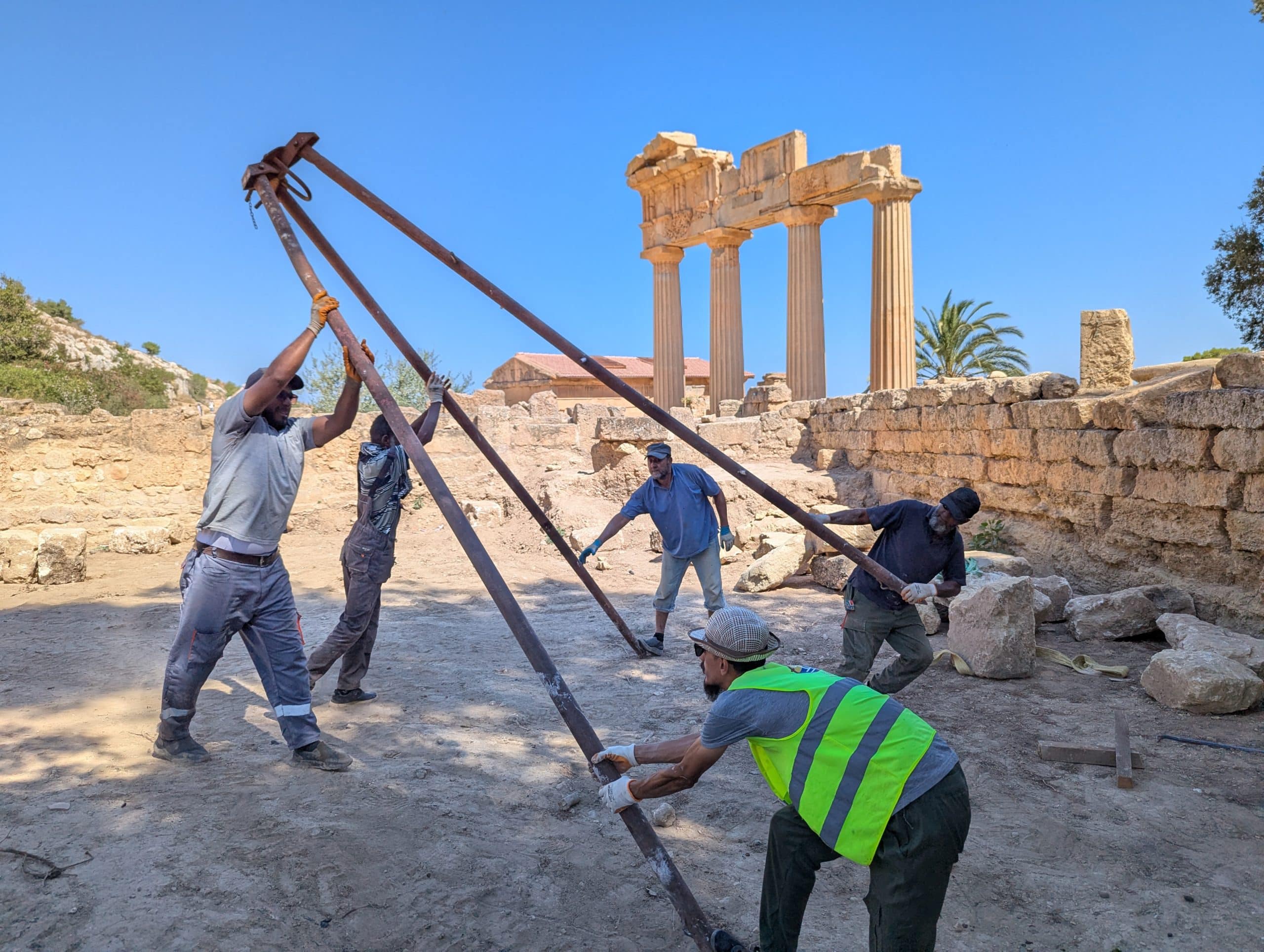
The summers are hot in Libya, but the work doesn’t stop. With funding from Ancient Rome Live, ASOR and its colleagues at the Libyan Department of Antiquities have spent the past few months working closely on site protection at the World Heritage Site of Cyrene in Libya’s Green Mountains.

Click here to read more

Supporting Libyan Responses to Storm Daniel through ASOR Mini-Grants

May 5, 2026

Through support from the U.S. Department of State, ASOR partnered with Libya’s Department of Antiquities to document and repair flood damage at the archaeological sites of Cyrene, Ptolemais, and Tocra in eastern Libya. These locally led projects reflect ASOR’s commitment to supporting Libyan efforts to protect their heritage from natural disasters.

Click here to read more

Damage to the Stepped Portico. (DOA/ASOR)

ASOR Begins New Conservation Project at the World Heritage Site of Cyrene

September 25, 2025

ASOR is pleased to announce, with support from the American Institute for Roman Culture, the Cyrene Conservation Initiative—a 12-month conservation and heritage education project at the UNESCO World Heritage Site of Cyrene in eastern Libya. Developed in close collaboration with the Libyan Department of Antiquities, the Cyrene Conservation Initiative is a response to the impacts of Storm Daniel, which caused catastrophic flooding in September 2023. The project will focus on key areas of the ancient city that were particularly affected by the flood, including Valley Street and the Sanctuary of Apollo terrace, one of the most iconic districts in the city.

Click here to read more

CHI Update: Collaborating to Protect, Preserve, and Promote Libyan Heritage

ASOR was honored to welcome our Libyan colleagues, Dr. Mohammed Faraj Mohammed Al-Fallos (Chairman, Board of Directors, Department of Antiquities), Ambassador Ashraf Mohammed Eletaeb (Director, Department of International Cooperation, Ministry of Foreign Affairs), Mr. Rabi’i Yousef Milad (Advisor, Department of International Law and Treaties, Ministry of Foreign Affairs), and Dr. Ahmad Emrage (University of Benghazi and Member, Board of Directors, Department of Antiquities) to our office in Alexandria on April 14 for a presentation on ASOR’s Cultural Heritage Initiatives and a productive discussion on past and future collaborations to protect, preserve, and promote Libyan cultural heritage.

Click here to read more

ASOR CHI Symposium | Cultural Heritage Initiatives in Africa Today

On April 11-13, ASOR CHI hosted a three-day symposium, Cultural Heritages Initiatives in Africa Today, which highlighted the work of local heritage professionals, academics, and civil society organizations to protect, preserve, and promote cultural heritage in North Africa and the Sahel. ASOR welcomes you to view the symposium recordings.

Click here to read more

Voir cette page en français

مشاهدة الصفحة باللغة العربية

Women's belt made of beads and leather

UPDATE: Cultural Property Agreement Implementation Grant (CPAIG) Mini-Grants Program in Libya: Ghat Women’s Union

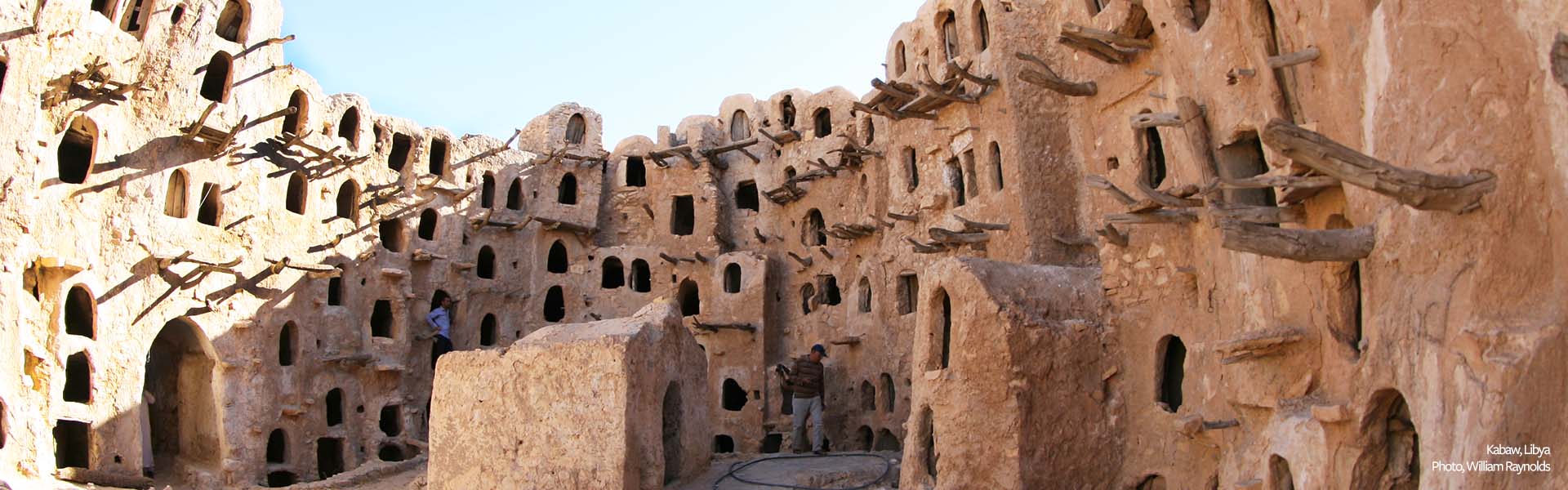
With support from a grant from the Public Affairs Section of the U.S. Embassy to Libya, the Ghat Women’s Union, a civil society association active in southwestern Libya, was able to restore a mudbrick building in the ancient public market and reanimate it as a public museum.

Click here to read more about this event

UPDATE: ASOR CHI AM22 Presentations about Cultural Heritage in Libya

With support from a grant from the Public Affairs Section of the U.S. Embassy to Libya, eight Libyan colleagues participated in the in-person ASOR Annual Meeting in Boston (November 16-19, 2022). They also presented their research in the virtual meeting in October. The meeting provided a global forum for people to learn about the work of our colleagues and exchange ideas on best practices in cultural heritage stewardship.

Click here to read more about this event

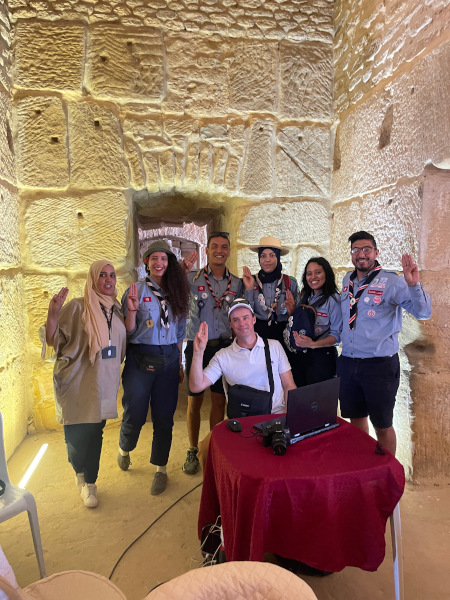
UPDATE: Oudna, Tunisia Workshop

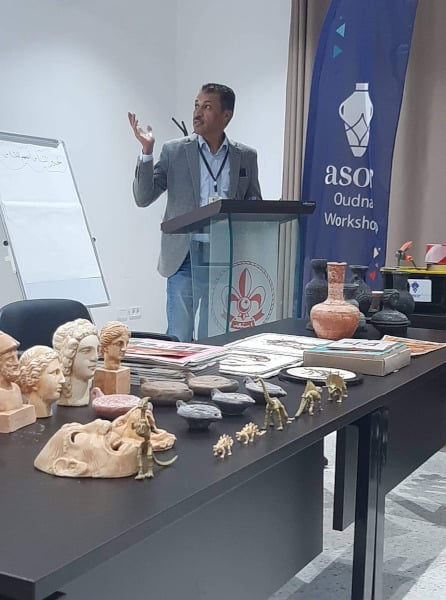
On May 20-22, ASOR partnered with Libyan Department of Antiquities, the Libyan Museum Suitcase team, the Tunisian Institute national du patrimoine, and the Tunisian Scouts to hold a three-day workshop at the archaeological site of Oudna in Tunisia. This outreach event focused on the protection of cultural heritage in Libya and the Maghreb. The workshop was sponsored by the U.S. Embassy to Libya, External Office (LEO), and it was organized by ASOR and the Tunisian Scouts within the framework of a Cultural Property Agreement Implementation Grant (CPAIG). Additional support was provided by the U.S. Embassy to Tunisia.

Click here to read the report

UPDATE: Week 4—Protecting the Cultural Heritage of Cyrene, Libya

During the last week, the condition of 3 main sites located at the area of al-Qubba and Lamluda were evaluated. This week was distinguished by two things: First, Dr. Ahmed Hussein, head of the Department of Antiquities in the East, accompanied us to the site of Ain al-Qubba and met there with some officials from the city and talked with them about the readiness of the DoA to help protect and preserve the site of Ain al-Qubba.

Click here to read the report

UPDATE: Week 3—Protecting the Cultural Heritage of Cyrene, Libya

During Week 3 of the survey to document and assess threats to the cultural heritage of Cyrene, the team recorded 17 major sites from fortified agricultural settlements to rock-cut chamber tombs, as well as instances of destruction and threats to these sites. The local communities have been extremely helpful in assisting the survey team in documenting these sites.

Click here to read the report

UPDATE: Week 2—Protecting the Cultural Heritage of Cyrene, Libya

The second week of the Cyrene-al-Qubba risk assessment project was conducted between Saturday, July 3 and Thursday, July 8.

During this period, some 23 main sites and a number of subsites were visited, documented, and assessed, some of which have never been documented previously. We primarily documented agricultural and industrial settlements associated with cemeteries of various kinds. Some sites also contained defensive buildings such as towers as well as fortified farm buildings. The oldest of these sites date back to the Hellenistic period, the later Turkish, and more recent Italian periods.

Click here to read the report

UPDATE: Protecting cultural heritage around the UNESCO World Heritage site of Cyrene

This project, funded by the US State Department’s Ambassadors Fund for Cultural Preservation has two aims:

  • to conduct damage and risk assessment work in an area surrounding the UNESCO World Heritage site of Cyrene with teams composed of Department of Antiquities archaeologists and Tourist Police and Antiquities Protection Authority personnel;
  • to conduct heritage awareness workshops and events for the residents of the Cyrenaica with an emphasis on outreach to local youth

Click here to read the report

UPDATE: Libyan Update from the VAM: Cultural Heritage Partnership in Libya

ASOR Cultural Heritage Initiatives has been active in Libya since 2017, partnering with the Libyan Department of Antiquities, the Historic Cities Authority, the Boy Scouts and Girl Guides, and the Ghadames Manuscripts Association to document and preserve heritage sites as well as engage Libyan volunteers to protect cultural heritage around the country…READ MORE

Click here to watch the presentation

UPDATE: Commonly Looted Items from Libya Booklet

With support from the U.S. Embassy Libya External Office (LEO), this booklet provides a listing of the ancient Libyan artifacts including the commonly looted items from Libya. It is a tool that can assist law enforcement authorities, such as tourist police and customs, to fight against illicit trafficking of cultural property. This booklet was overseen by Dr. Khlaled El Haddar and represents his work. It includes contributions from Ramadan al-Shaibani and editing from Dr. Ahmad Emrage and Talal

Click here to read the booklet

Click here for the Arabic version (الانطباع الأول عن عمل ميداني لطلاب اَثار في قورينا)

UPDATE from the VAM: Digitizing Manuscripts from the Trans Saharan Trade in Ghadames, Libya

Ghadames is one of the five UNESCO World Heritage sites in Libya. Its mud brick architecture is outstanding, but just as remarkable are the collections that have long been sheltered there. The Ghadames Manuscripts Association has been working to digitize and preserve a repository of manuscripts documenting hundreds of years of the trans Saharan trade stretching from the Libyan coast towards the Niger River valley. These efforts have recently expanded as new techniques of digitization and data management have been adopted in partnership with ASOR and Hill Museum and Manuscript Library.

Click here to watch the presentation

UPDATE from the VAM: Archaeological Sites in Cyrenaica at Risk

Dr. Ahmad Emrage of the University of Benghazi, discusses threats facing rural sites in the region of Cyrenaica, ranging from agricultural activity to urban encroachment to looting and vandalism. Thanks to the U.S. Embassy Libya External Office (LEO), ten of ASOR’s colleagues from Libya were able to take part in ASOR’s Virtual Annual Meeting.

Click here to watch the presentation

UPDATE from the VAM: Role of Departments of Archaeology

Mrs. Mofeda Mohammed Kreidigh of Sabratha University, discusses the role of university archaeology departments in protecting cultural heritage. The paper showcases teaching strategies both within and outside of the classroom, and details the current activities of university archaeology departments. Thanks to the U.S. Embassy Libya External Office (LEO), ten of ASOR’s colleagues from Libya were able to take part in ASOR’s Virtual Annual Meeting.

Click here to watch the presentation

UPDATE from the VAM: Encouraging Volunteer Participation

Thanks to the U.S. Embassy Libya External Office (LEO), ten of ASOR’s colleagues from Libya were able to take part in ASOR’s Virtual Annual Meeting. Mr. Talal Bariun of ASOR presented the paper “Encouraging Volunteer Participation in Cultural Heritage Protection,” which discusses efforts to encourage volunteerism during weekend cultural heritage “pop-up” events.

Click here to watch the presentation

UPDATE from the VAM: Authentic Orchestrations & Orchestrated Authenticity

Thanks to the U.S. Embassy Libya External Office (LEO), ten of ASOR’s colleagues from Libya were able to take part in ASOR’s Virtual Annual Meeting. Reem Furjani of SCENE presented the paper “Authentic Orchestrations and Orchestrating Authenticity.” Furjani’s paper looks at the changing use of space and the creation of heritage during the restoration of the Arch of Marcus Aurelius in Tripoli.

Click here to watch the presentation

UPDATE: VAM20 Presentations About Libyan Archaeology & Cultural Heritage

With support from the U.S. Embassy Libya External Office (LEO), ten of ASOR’s Libyan colleagues took part in the 2020 Virtual Annual Meeting in November. The meeting provided a forum for people from 39 countries spanning six continents to hear about the work of our Libyan colleagues and exchange ideas on best practices in cultural heritage stewardship.

Click here to view the paper and poster presentations

UPDATE: First Impressions from a Field School in Cyrene

With support from the Aliph Foundation and the U.S. Embassy to Libya, External Office (LEO), ASOR is partnering with Libyan colleagues to produce videos in Arabic showing the value of archaeology and highlighting Libya’s rich cultural heritage. This video presents aerial views of the World Heritage Site of Cyrene and the excavations sponsored by the University of Mohammed bin Ali al-Sanusi of El-Baida. In addition, the video foregrounds the training of women as archaeologists through recording their impressions of their first experiences with real archaeological fieldwork.

Click here to watch the video (in Arabic; English version coming in February 2021)

Click here for the Arabic version. (الانطباع الأول عن عمل ميداني لطلاب اَثار في قورينا)

UPDATE from the Virtual Annual Meeting: Museums in a Suitcase

Ten of ASOR’s Libyan colleagues took part in the 2020 Virtual Annual Meeting, thanks to support from the U.S. Embassy Libya External Office (LEO).  This update features a paper by Ms. Intisar Elarebi of the Libyan Department of Antiquities on “Museums in a Suitcase: Recent Successes and Future Prospects.”

Click here to watch the presentation

Click here for the Arabic version. (تحديث المشاركة الليبية فى الاجتماع السنوي الافتراضي : الحقائب المتحفية)

UPDATE: The Lost Art of Libyan Shadow Theater Revived

This article reports on the final days of a Volunteer Weekend held in Ghadames and the Libyan tradition of shadow puppet shows. In partnership with our Libyan colleagues, and with support from the U.S. Department of State’s Ambassadors Fund for Cultural Preservation (AFCP), the Cultural Antiquities Task Force (CATF), and the U.S. Embassy Libya External Office (LEO), ASOR is bringing a message of hope through Cultural Heritage Volunteer Weekends, such as the one held in Ghadames.

Click here to read the report

Click here for the Arabic version (إحياء فنون مسرح الظل الليبي المفقود)

UPDATE: Ghadames – Jewel in a Desert Necklace

In partnership with our Libyan colleagues, and with support from the U.S. Department of State’s Ambassadors Fund for Cultural Preservation (AFCP), the Cultural Antiquities Task Force (CATF), and the U.S. Embassy Libya External Office (LEO), ASOR is bringing a message of hope through Cultural Heritage Volunteer Weekends. This article reports on the first few days of a Volunteer Weekend held in Ghadames, Libya in March 2020. The first part of the workshop focused on both the incredible built heritage of Ghadames and also on the region’s intangible heritage.

Click here to read the report

Click here for the Arabic version (غدامس: جوهرة في قلادة صحراوية)

UPDATE: Digitizing Manuscripts of the Trans-Saharan Trade

In partnership with the Ghadames Society for Heritage and Manuscripts, and with the support of the Whiting Foundation and the Hill Museum and Manuscript Library, ASOR continues to facilitate the digitization of an important collection of manuscripts within the UNESCO World Heritage site of Ghadames, Libya. These manuscripts serve as records of the the caravan trade which facilitated the flow of religion and scientific concepts, shaping the culture of the entire region.

Click here to read the report

Click here for the Arabic version (رقمنة مخطوطات التجارة عبر الصحراء)

UPDATE: Nalut Cultural Heritage Workshop Part 2

With funding from the U.S. Department of State’s Ambassadors Fund for Cultural Preservation (AFCP), the Cultural Antiquities Task Force (CATF), and the U.S. Embassy Libya External Office (LEO), ASOR’s team in Libya hosted a weekend workshop in Nalut, a city in the Nafusa region of western Libya. This article reports on the second part of the workshop, which focused on the intersection of cultural and natural heritage. Participants visited local geological formations and the Nalut Museum of Natural History. See below for a report on the first two days of the workshop.

Click here to read the report

Click here for the Arabic version (ورشة نالوت حول حماية التراث الثقافي: الجزء الثاني)

UPDATE: Nalut Hosts Workshop for Cultural Heritage Protection

In mid-March, ASOR’s team in Libya hosted a weekend workshop on cultural heritage protection in Nalut, a city in the Nafusa region of western Libya. This article reports on the first two days of the workshop, made possible by the the U.S. Department of State’s Ambassadors Fund for Cultural Preservation (AFCP), the Cultural Antiquities Task Force (CATF), and the U.S. Embassy Libya External Office (LEO). Members of the Museum Suitcase team and the Nalut community visited the Qasr Nalut, a fortified granary which served as a central bank for the city and is an important part of the cultural heritage of Nalut.

Click here to read the report

Click here for the Arabic version (نالوت تستضيف ورشة عمل للتوعية بأهمية المحافظة على الموروث الثقافى)

UPDATE: Museum Suitcase Caravan Welcomed in Derj

The Museum in a Suitcase Project in Libya, funded by the U.S. Embassy to Libya, the U.S. Department of State’s Ambassadors Fund for Cultural Preservation (AFCP), and the Cultural Antiquities Task Force (CATF), continues to see great success. At the conclusion of the Cultural Heritage Volunteer Weekend in Nalut in mid-March, ASOR’s Libyan team traveled to Derj Oasis. The people of Derj were eager to take part in the Museum Suitcase Project and this essay reports on the meeting in Derj with ASOR’s Museum Suitcase team.

Click here to read the report

Click here for the Arabic version (تحديث أخبار نشاطات فريق الحقيبة المتحفية الليبى – درج .)

UPDATE: Libyan Museum Suitcase: Tripoli One-day Workshop

Prior to the onset of a national lockdown in response to the global pandemic, our colleagues in Libya forged new ground in ASOR’s ongoing “Museum in a Suitcase” project. Funded by the U.S. Embassy to Libya,  the U.S. Department of State’s Ambassadors Fund for Cultural Preservation (AFCP), and the Cultural Antiquities Task Force, the program’s popularity has driven the team to devise additional outreach activities familiarizing students of diverse ages with the richness of Libyan cultural heritage. Despite the continued tumultuous state of western Libya, ASOR and our Libyan colleagues continue to foster a sense of shared heritage and the idea that it is the responsibility of the whole community to care for this heritage. This essay reports on a one-day Museum in a Suitcase workshop for students from the Granada School in Tripoli.

Click here to read the report

Click here for Arabic version (الحقيبة المتحفية الليبية : ورشة عمل ليوم واحد في طرابلس)

UPDATE: 5-Day Cultural Heritage Event in Sabratha

In partnership with our Libyan colleagues, and with support from the U.S. Department of State’s Ambassadors Fund for Cultural Preservation (AFCP) and the Cultural Antiquities Task Force, ASOR is bringing a message of hope through Cultural Heritage Volunteer Weekends (“pop-up” events). The most recent gathering took place over February 11–15 in Sabratha in western Libya. Despite the continued tumultuous state of western Libya, ASOR and our Libyan colleagues continue to foster a sense of shared heritage and the idea that it is the responsibility of the whole community to care for this heritage. This essay reports on the weekend event in Sabratha which included workshops, lectures, site visits, and site maintenance and cleaning.

Click here to read the report

Click here for the Arabic version. (الفاعليات الخاصه بحدث التراث الثقافي لمده خمس ايام في مدينه صبراته ليبيا)

UPDATE: Libyan Museum Suitcase: Ghadames One-day Workshop

The Museum Suitcase “toolkits” have achieved enormous success in spreading cultural heritage awareness in Benghazi, Sabratha, and Tripoli. The project has now expanded to one of the oldest pre-Saharan cities, Ghadames—located in western Libya, at the intersection of the borders of Tunisia, Libya, and Algeria.

Click here to read the report

Click here for the Arabic version (الحقيبة المتحفيه الليبيه: ورشة غدامس ليوم واحد)

UPDATE: Museums in a Suitcase Foster Understanding in Libya

The Need for “Museums in a suitcase.” Museums play a dynamic role in the community as places of learning and inspiration, and in spreading cultural heritage awareness. In Libya, the rich collections of more than twenty museums around the country have been largely off-limits to the public since the revolution of 2011.

Click here to read the report

Click here for Arabic version (الحقيبه المتحفيه للترابط و الفهم في ليبيا)

UPDATE: Ghadames

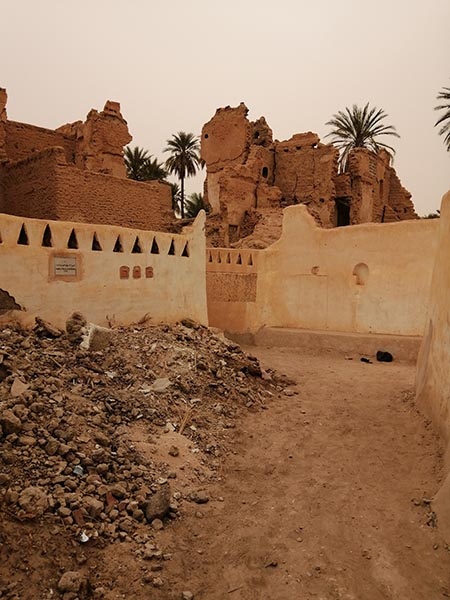
Following a complaint from the Department of Antiquities (DoA) in Ghadames regarding collapses, the DoA in Tripoli dispatched a delegation to the site to document the aftermath of the storms. Members of the archives team in Tripoli documented damage for their internal report, and provided ASOR CHI with photographs of the damage to the Old Town of Ghadames, including collapsed mud-brick structures weakened by rains and lack of maintenance.

Read the Report

UPDATE: The Old City of Tripoli

ASOR CHI received a comprehensive description of instances of illegal construction in the Old City by a member of the Libyan Department of Antiquities who identified thirteen instances in which historic buildings have been illegally dismantled and, in many cases, replaced by new construction.

Read the Report

UPDATE: The Old City of Benghazi

After the Libyan National Army (LNA), under the command Field Marshal Khalifa Haftar, liberated the Old City of Benghazi from the Shura Council of Benghazi Revolutionaries on July 5, 2017, civilians have gained increasing access to areas damaged during three years of urban warfare in this part of the city.

Read the Report

UPDATE: The Status of UNESCO World Heritage Site Leptis Magna

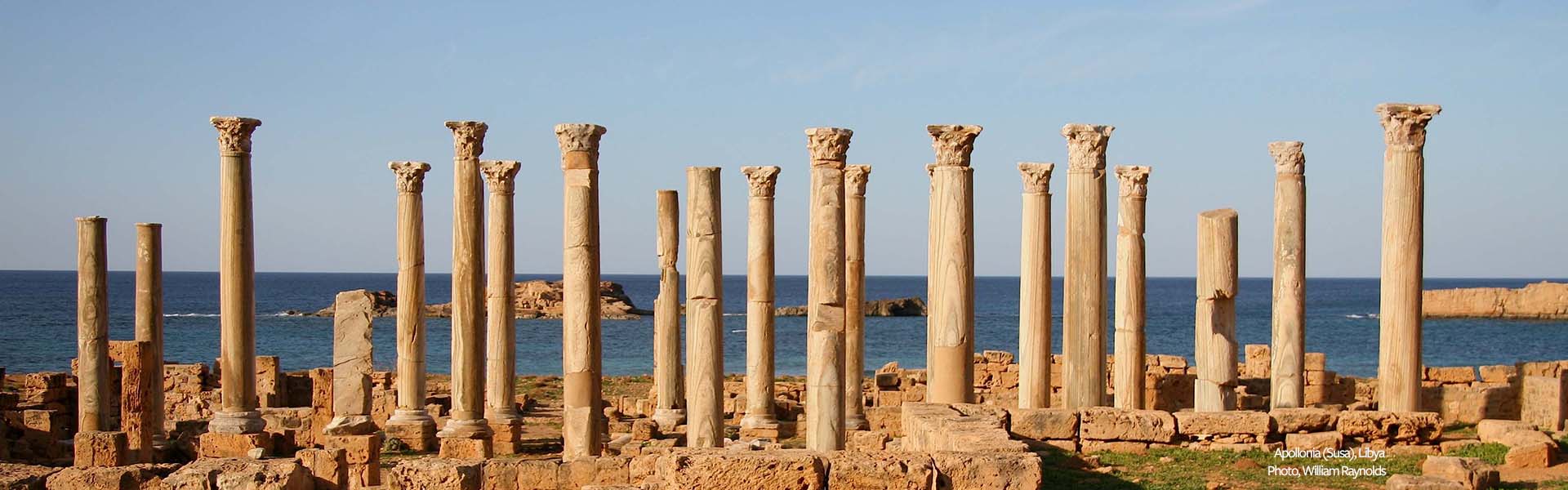
In April 2017, ASOR CHI began covering the ongoing conflict in Libya as part of a new cooperative agreement with the U.S. Department of State. Libya is home to five UNESCO World Heritage Sites as well as a dense concentration of other archaeological sites and historic cities that enrich our understanding of the ways in which humans have lived and thrived in North Africa from the Paleolithic to the present day.

Read the Report

CHI – Iraq Updates

IRAQ UPDATES

UPDATE: The Jewish Cultural Heritage Initiative Completes Initial Assessment of Jewish Heritage in Iraq and Syria

The Jewish Cultural Heritage Initiative (JCHI)—a joint project of the London-based Foundation for Jewish Heritage and the American Schools of Oriental Research (ASOR)—has completed its initial assessment of present and past Jewish heritage sites in Iraq and Syria. Thanks to the generous sponsorship provided by the Thomas S. Kaplan and Daphne Recanati Family to the Foundation for Jewish Heritage, this work has identified the location and condition of 368 settlements and heritage sites from antiquity to the present day in this once vibrant center of Jewish life.

Click here to read the report

UPDATE: Ninawa Governorate

On August 31, 2017, Haider al-Abadi announced that Iraqi forces liberated Tal Afar, the last stronghold of ISIS in Ninawa Governorate. Tal Afar has been inhabited since approximately 7000 BCE, and was an integral part of the Assyrian Empire from 2500–600 BCE.

Read the Report

UPDATE: Mosul Post-ISIL – Heritage Destruction and the Future of the City

On June 10, 2017, Iraqi Prime Minister Haider al-Abadi announced Iraq’s victory over ISIL in the militant group’s former northern Iraqi stronghold of Mosul. His announcement followed months of fighting, extensive aerial bombardment, massive infrastructure damage, human displacement, and thousands of civilian casualties. The struggle for Mosul spanned nine months, with the most intense fighting occurring in the labyrinthine confines of the Old City.

Read the Report

UPDATE: Satellite Imagery Confirms the Destruction of al-Nuri al-Kabir Mosque and al-Hadba Minaret

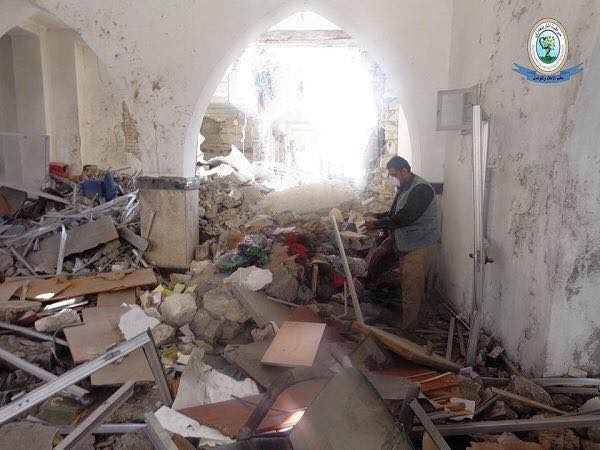
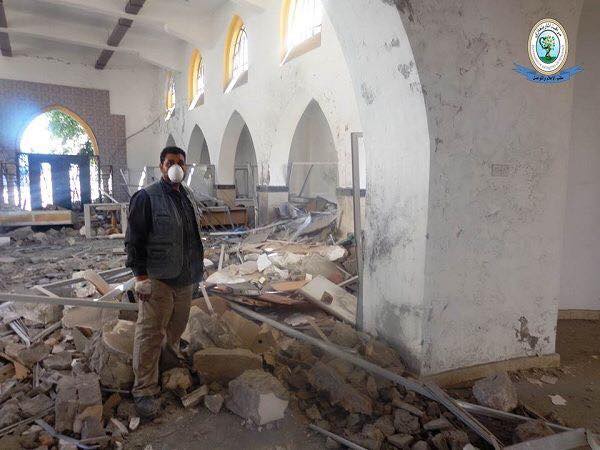
On June 21, 2017 ISIL militants exploded al-Nuri al-Kabir Mosque and the iconic al-Hadba Minaret in Mosul’s Old City. Iraqi forces were nearing the mosque, a highly symbolic objective, reportedly advancing to within 50 meters before the detonation. The Iraqi Military released a statement blaming ISIL for the destruction of the mosque, while ISIL propaganda attempted to blame the US-led Coalition. The US-led Coalition released a statement confirming that no aircraft were in the area at the time of the explosion. Video footage released several hours after the first reports of the destruction shows a simultaneous, mass detonation taking place from inside the mosque and minaret, mirroring similar videos of ISIL demolition using fixed charges.

Read the Report

CHI – 2017 Updates

2017 UPDATES

UPDATE: Ninawa Governorate

On August 31, 2017, Haider al-Abadi announced that Iraqi forces liberated Tal Afar, the last stronghold of ISIS in Ninawa Governorate. Tal Afar has been inhabited since approximately 7000 BCE, and was an integral part of the Assyrian Empire from 2500–600 BCE.

Read the Report

UPDATE: The Old City of Tripoli

ASOR CHI received a comprehensive description of instances of illegal construction in the Old City by a member of the Libyan Department of Antiquities who identified thirteen instances in which historic buildings have been illegally dismantled and, in many cases, replaced by new construction.

Read the Report

UPDATE: The Old City of Benghazi

After the Libyan National Army (LNA), under the command Field Marshal Khalifa Haftar, liberated the Old City of Benghazi from the Shura Council of Benghazi Revolutionaries on July 5, 2017, civilians have gained increasing access to areas damaged during three years of urban warfare in this part of the city.

Read the Report

UPDATE: Mosul Post-ISIL – Heritage Destruction and the Future of the City

On June 10, 2017, Iraqi Prime Minister Haider al-Abadi announced Iraq’s victory over ISIL in the militant group’s former northern Iraqi stronghold of Mosul. His announcement followed months of fighting, extensive aerial bombardment, massive infrastructure damage, human displacement, and thousands of civilian casualties. The struggle for Mosul spanned nine months, with the most intense fighting occurring in the labyrinthine confines of the Old City.

Read the Report

UPDATE: The Status of UNESCO World Heritage Site Leptis Magna

In April 2017, ASOR CHI began covering the ongoing conflict in Libya as part of a new cooperative agreement with the U.S. Department of State. Libya is home to five UNESCO World Heritage Sites as well as a dense concentration of other archaeological sites and historic cities that enrich our understanding of the ways in which humans have lived and thrived in North Africa from the Paleolithic to the present day.

Read the Report

UPDATE: Damage to al-Rafiqah Wall in Raqqa’s Old City by US-led Coalition Forces

On July 3, 2017 the US-led Coalition conducted airstrikes on two 25 m-long sections of the city wall of Raqqa, also known as the al-Rafiqah Wall. DigitalGlobe satellite imagery confirms that the strikes hit the eastern portion of the wall. The first breach is located 80 m south of Qasr al-Banat, the remains of an Abbasid-period palace. The second breach lies roughly 500 m further north.

Read the Report

UPDATE: Satellite Imagery Confirms the Destruction of al-Nuri al-Kabir Mosque and al-Hadba Minaret

On June 21, 2017 ISIL militants exploded al-Nuri al-Kabir Mosque and the iconic al-Hadba Minaret in Mosul’s Old City. Iraqi forces were nearing the mosque, a highly symbolic objective, reportedly advancing to within 50 meters before the detonation. The Iraqi Military released a statement blaming ISIL for the destruction of the mosque, while ISIL propaganda attempted to blame the US-led Coalition. The US-led Coalition released a statement confirming that no aircraft were in the area at the time of the explosion. Video footage released several hours after the first reports of the destruction shows a simultaneous, mass detonation taking place from inside the mosque and minaret, mirroring similar videos of ISIL demolition using fixed charges.

Read the Report

UPDATE Palmyra: New photographs detail damage to the UNESCO World Heritage site of Palmyra

On March 2, 2017 SARG and pro-regime allies, backed by Russian airstrikes, recaptured the UNESCO World Heritage site of Palmyra from ISIL. ISIL had previously recaptured the area in December 2016. Photographs and video footage released confirm the damage to the Roman Theater and Tetrapylon first reported by ASOR CHI in January 2017. It is reasonable to expect that the renewed fighting has also impacted the Citadel. According to some reports, ISIL militants may have mined much of the ancient site as they retreated from the city.

Read the Report

UPDATE: New Damage in Palmyra Uncovered

On January 19, 2017, ASOR CHI obtained DigitalGlobe satellite imagery that revealed new damage to the ISIL-occupied UNESCO World Heritage site of Palmyra. ASOR CHI can confirm that that damage occurred between December 26, 2016 and January 10, 2017. The imagery showed significant damage to the Tetrapylon and the Roman Theater, likely the result of of destruction by ISIL; however, ASOR CHI has thus far not been able to verify the exact cause. Both sites were previously left unharmed by the group, who controlled Palmyra from May 2015 to March 2016. The Tetrapylon appears to have been intentionally destroyed using explosives, possibly in a similar manner to how ISIL militants destroyed the Temple of Bel, the Baalshamin Temple, the Triumphal Arch, and several tower tombs located within the Valley of the Tombs.

Read the Report

CHI – 2018 Updates

2018 UPDATES

UPDATE: Ghadames

Following a complaint from the Department of Antiquities (DoA) in Ghadames regarding collapses, the DoA in Tripoli dispatched a delegation to the site to document the aftermath of the storms. Members of the archives team in Tripoli documented damage for their internal report, and provided ASOR CHI with photographs of the damage to the Old Town of Ghadames, including collapsed mud-brick structures weakened by rains and lack of maintenance.

Read the Report

UPDATE: Ain Dara

Between January 20 and January 22, 2018 the Turkish Air Force conducted an airstrike on the Early Iron Age temple at Tell Ain Dara, an archaeological site located ca. 5.8 km south of Afrin in Aleppo Governorate. The temple is an important example of Syro-Hittite religious architecture and the most extensively excavated structure of its kind in Syria.

Read the Report

CHI – 2020 Updates

2020 UPDATES

UPDATE from the Virtual Annual Meeting: Museums in a Suitcase

Ten of ASOR’s Libyan colleagues took part in the 2020 Virtual Annual Meeting, thanks to support from the U.S. Embassy Libya External Office (LEO).  This update features a paper by Ms. Intisar Elarebi of the Libyan Department of Antiquities on “Museums in a Suitcase: Recent Successes and Future Prospects.”

Click here to watch the presentation

Click here for the Arabic version. (تحديث المشاركة الليبية فى الاجتماع السنوي الافتراضي : الحقائب المتحفية)

UPDATE: The Lost Art of Libyan Shadow Theater Revived

This article reports on the final days of a Volunteer Weekend held in Ghadames and the Libyan tradition of shadow puppet shows. In partnership with our Libyan colleagues, and with support from the U.S. Department of State’s Ambassadors Fund for Cultural Preservation (AFCP), the Cultural Antiquities Task Force (CATF), and the U.S. Embassy Libya External Office (LEO), ASOR is bringing a message of hope through Cultural Heritage Volunteer Weekends, such as the one held in Ghadames.

Click here to read the report

Click here for the Arabic version (إحياء فنون مسرح الظل الليبي المفقود)

UPDATE: Ghadames – Jewel in a Desert Necklace

In partnership with our Libyan colleagues, and with support from the U.S. Department of State’s Ambassadors Fund for Cultural Preservation (AFCP), the Cultural Antiquities Task Force (CATF), and the U.S. Embassy Libya External Office (LEO), ASOR is bringing a message of hope through Cultural Heritage Volunteer Weekends. This article reports on the first few days of a Volunteer Weekend held in Ghadames, Libya in March 2020. The first part of the workshop focused on both the incredible built heritage of Ghadames and also on the region’s intangible heritage.

Click here to read the report

Click here for the Arabic version (غدامس: جوهرة في قلادة صحراوية)

UPDATE: The Jewish Cultural Heritage Initiative Completes Initial Assessment of Jewish Heritage in Iraq and Syria

The Jewish Cultural Heritage Initiative (JCHI)—a joint project of the London-based Foundation for Jewish Heritage and the American Schools of Oriental Research (ASOR)—has completed its initial assessment of present and past Jewish heritage sites in Iraq and Syria. Thanks to the generous sponsorship provided by the Thomas S. Kaplan and Daphne Recanati Family to the Foundation for Jewish Heritage, this work has identified the location and condition of 368 settlements and heritage sites from antiquity to the present day in this once vibrant center of Jewish life.

Click here to read the report

UPDATE: Digitizing Manuscripts of the Trans-Saharan Trade

In partnership with the Ghadames Society for Heritage and Manuscripts, and with the support of the Whiting Foundation and the Hill Museum and Manuscript Library, ASOR continues to facilitate the digitization of an important collection of manuscripts within the UNESCO World Heritage site of Ghadames, Libya. These manuscripts serve as records of the the caravan trade which facilitated the flow of religion and scientific concepts, shaping the culture of the entire region.

Click here to read the report

Click here for the Arabic version (رقمنة مخطوطات التجارة عبر الصحراء)

UPDATE: Nalut Cultural Heritage Workshop Part 2

With funding from the U.S. Department of State’s Ambassadors Fund for Cultural Preservation (AFCP), the Cultural Antiquities Task Force (CATF), and the U.S. Embassy Libya External Office (LEO), ASOR’s team in Libya hosted a weekend workshop in Nalut, a city in the Nafusa region of western Libya. This article reports on the second part of the workshop, which focused on the intersection of cultural and natural heritage. Participants visited local geological formations and the Nalut Museum of Natural History. See below for a report on the first two days of the workshop.

Click here to read the report

Click here for the Arabic version (ورشة نالوت حول حماية التراث الثقافي: الجزء الثاني)

UPDATE: Nalut Hosts Workshop for Cultural Heritage Protection

In mid-March, ASOR’s team in Libya hosted a weekend workshop on cultural heritage protection in Nalut, a city in the Nafusa region of western Libya. This article reports on the first two days of the workshop, made possible by the the U.S. Department of State’s Ambassadors Fund for Cultural Preservation (AFCP), the Cultural Antiquities Task Force (CATF), and the U.S. Embassy Libya External Office (LEO). Members of the Museum Suitcase team and the Nalut community visited the Qasr Nalut, a fortified granary which served as a central bank for the city and is an important part of the cultural heritage of Nalut.

Click here to read the report

Click here for the Arabic version (نالوت تستضيف ورشة عمل للتوعية بأهمية المحافظة على الموروث الثقافى)

UPDATE: Museum Suitcase Caravan Welcomed in Derj

The Museum in a Suitcase Project in Libya, funded by the U.S. Embassy to Libya, the U.S. Department of State’s Ambassadors Fund for Cultural Preservation (AFCP), and the Cultural Antiquities Task Force (CATF), continues to see great success. At the conclusion of the Cultural Heritage Volunteer Weekend in Nalut in mid-March, ASOR’s Libyan team traveled to Derj Oasis. The people of Derj were eager to take part in the Museum Suitcase Project and this essay reports on the meeting in Derj with ASOR’s Museum Suitcase team.

Click here to read the report

Click here for the Arabic version (تحديث أخبار نشاطات فريق الحقيبة المتحفية الليبى – درج .)

UPDATE: Libyan Museum Suitcase: Tripoli One-day Workshop

Prior to the onset of a national lockdown in response to the global pandemic, our colleagues in Libya forged new ground in ASOR’s ongoing “Museum in a Suitcase” project. Funded by the U.S. Embassy to Libya, the U.S. Department of State’s Ambassadors Fund for Cultural Preservation (AFCP), and the Cultural Antiquities Task Force, the program’s popularity has driven the team to devise additional outreach activities familiarizing students of diverse ages with the richness of Libyan cultural heritage. Despite the continued tumultuous state of western Libya, ASOR and our Libyan colleagues continue to foster a sense of shared heritage and the idea that it is the responsibility of the whole community to care for this heritage. This essay reports on a one-day Museum in a Suitcase workshop for students from the Granada School in Tripoli.

Click here to read the report

Click here for Arabic version (الحقيبة المتحفية الليبية : ورشة عمل ليوم واحد في طرابلس)

UPDATE: 5-Day Cultural Heritage Event in Sabratha

In partnership with our Libyan colleagues, and with support from the U.S. Department of State’s Ambassadors Fund for Cultural Preservation (AFCP) and the Cultural Antiquities Task Force, ASOR is bringing a message of hope through Cultural Heritage Volunteer Weekends (“pop-up” events). The most recent gathering took place over February 11–15 in Sabratha in western Libya. Despite the continued tumultuous state of western Libya, ASOR and our Libyan colleagues continue to foster a sense of shared heritage and the idea that it is the responsibility of the whole community to care for this heritage. This essay reports on the weekend event in Sabratha which included workshops, lectures, site visits, and site maintenance and cleaning.

Click here to read the report

Click here for the Arabic version. (الفاعليات الخاصه بحدث التراث الثقافي لمده خمس ايام في مدينه صبراته ليبيا)

UPDATE: Libyan Museum Suitcase: Ghadames One-day Workshop

The Museum Suitcase “toolkits” have achieved enormous success in spreading cultural heritage awareness in Benghazi, Sabratha, and Tripoli. The project has now expanded to one of the oldest pre-Saharan cities, Ghadames—located in western Libya, at the intersection of the borders of Tunisia, Libya, and Algeria.

Click here to read the report

Click here for the Arabic version (الحقيبة المتحفيه الليبيه: ورشة غدامس ليوم واحد)

UPDATE: Museums in a Suitcase Foster Understanding in Libya

The Need for “Museums in a suitcase.” Museums play a dynamic role in the community as places of learning and inspiration, and in spreading cultural heritage awareness. In Libya, the rich collections of more than twenty museums around the country have been largely off-limits to the public since the revolution of 2011.

Click here to read the report

Click here for Arabic version (الحقيبه المتحفيه للترابط و الفهم في ليبيا)

Libya Museum Suitcase Update: Ghadames

Libyan Museum Suitcase: Ghadames One-day Workshop

In partnership with our Libyan colleagues, and with support from the U.S. Department of State’s Ambassadors Fund for Cultural Preservation (AFCP), the Cultural Antiquities Task Force (CATF), and the U.S. Embassy Libya External Office (LEO), ASOR is bringing a message of hope through Cultural Heritage Volunteer Weekends (“pop-up” events) and through one-day heritage workshops. This essay is an update on a Cultural Heritage Outreach and Awareness Event held in Ghadames, Libya. These one-day workshops utilize museum suitcase “tool kits” that were described in the Libya Museum Suitcase Overview.

Click here for the Arabic version of this article.

The Museum Suitcase “toolkits” have achieved enormous success in spreading cultural heritage awareness in Benghazi, Sabratha, and Tripoli. The project has now expanded to one of the oldest pre-Saharan cities, Ghadames—located in western Libya, at the intersection of the borders of Tunisia, Libya, and Algeria.

Map source: http://www.dcstamps.com/ghadames-french-occupation/

Ghadames, one of the five UNESCO World Heritage sites in the country, has a rich history, a distinctive mud-brick architecture, and an intangible cultural heritage filled with links to the trans-Saharan caravan trade. It is a perfect site for the museum suitcase project, and several outreach events are planned over the coming months to share this history with a broader public.

Aerial view of the traditional settlements of Ghadames

Students at one of the Cultural Heritage Outreach and Awareness Events in Ghadames using the museum suitcase.

Ahmed Malek is taking the lead on the Museum Suitcase project in Ghadames. Malek has put a great deal of effort into modifying the contents of the museum suitcase and tailoring them to the specific interests of the Ghadames community, including additional materials and objects that present the city’s history and folklore.

Ahmed Malek introducing students to objects in the museum suitcase.

Drawing activities as part of the museum suitcase events.

Malek has developed outreach and education programs for elementary school students to teach them about their cultural heritage, daily life of their ancestors, and historical sites in Ghadames, including a tour of the local museum. Malek has also collaborated with the library of Ghadames to develop an outreach program for students during their winter break.

Students visit the Ghadames museum, one of many local museums in Libya which remain largely closed to the public due to ongoing conflict.

More updates on Outreach and Awareness One-Day Events will be featured in forthcoming News@ASOR and ANE Today. In addition, a Cultural Heritage Volunteer Weekend Event is being planned for mid-February in Sabratha, Libya, and we will provide an update on this weekend event in March, 2020.

Libya Museum Suitcase Overview 2020

Museums in a Suitcase Foster Understanding in Libya

Click here for the Arabic version of this article.


Translation:
Workshop Leader: What is the purpose of a museum?
Student: The museum is used for learning.
Workshop Leader: … What is the most important thing about museums?
Student: It teaches us about the daily lives of our ancestors. 

The Need for “Museums in a suitcase.” Museums play a dynamic role in the community as places of learning and inspiration, and in spreading cultural heritage awareness. In Libya, the rich collections of more than twenty museums around the country have been largely off-limits to the public since the revolution of 2011. This decision was made by the local Department of Antiquities (DoA) to protect these resources during a time of ongoing strife where many cultural heritage sites and assets have been looted or damaged. Some cities in Libya have no museum, and have never had a public program connecting citizens to the country’s rich past.

In light of this situation, ASOR, in partnership with archaeologists from the DoA and members of the Boy Scouts and Girl Guides of Libya, has developed resources and programming to help fill the void created by the temporary closing of museums. There is a great need to provide education and stewardship activities that promote cultural understanding and counteract violent extremism and the destruction of shared heritage.

Background of “museums in a suitcase” (2018). With financial support from the U.S. Embassy to Libya and the U.S. Department of State, a group of Libyan archaeologists and scouts, under the supervision of ASOR, are conducting an education and public awareness program to protect cultural heritage. Talal Bariun, ASOR’s representative in Libya, has spent nearly three years working tirelessly to help this project grow. Bariun reports, “The energy with which participants around the country have engaged with this project goes beyond words. Now that we see such clear signs of success, it feels like we are realizing an old dream. And this dream began with a simple question: how can we continue to connect the Libyan youth to their culture and change the point of view of an entire generation at a time when all of our museums are closed?”

Scouts visit Sabratha in conjunction with the Museum in a Suitcase project

Inspired by a public outreach workshop hosted by Oberlin College and conducted by Paul Orselli in April 2018, participants sought ways to implement new outreach activities in Libya. As part of a previous collaborative agreement (in 2018) with the U.S. State Department, ASOR supported this team in the creation of “Museums in a Suitcase.” The cultural heritage “toolkits” were distributed widely throughout the country.  Each bag contains materials providing an overview of Libyan cultural heritage and a quantity of locally sourced supplies that help facilitate a series of hands-on activities including a mock dig, the documentation of artifacts (replicas of vases and oil lamps), and the conservation of a broken (modern) clay jar.

Once these cultural heritage “toolkits” or “mobile musuems” are placed in the hands of trained teachers and professionals, they can be used multiple times. They thus provide the resources to hold Cultural Heritage Outreach and Awareness Events throughout Libya.

Newest phase (2019 and 2020). With new support in 2019 and 2020 from the U.S. Department of State’s Ambassadors Fund for Cultural Preservation (AFCP) and the Cultural Antiquities Task Force (CATF), ASOR has created an additional twelve suitcases—thus doubling the number of “mobile museums” available in Libya. Further, we have expanded the geographic outreach during this newest phase to include participants in Ghadames, Sabratha, Leptis Magna, Bani Walid, Sirte, al Beidah, Cyrene, Sebha, Yefren, Nalut, Ghat, Germa, Zuwara, Janzour, Tripoli and Benghazi (see the map below).  In each location, key individuals affiliated with the Department of Antiquities, the Boy Scouts and Girl Guides of Libya, or local universities have been identified as the keeper of the bag and the one responsible for ongoing Cultural Heritage Outreach and Awareness Events in local schools and in other venues.

Cities served by the Museum in a Suitcase Project

Cultural Heritage Outreach and Awareness Events in Sabratha: One of these key partners is Dr. Mofida Mohammed, the Chair of the Department of Archaeology at the University of Sabratha. According to Dr. Mohammed, “The Museum in a Suitcase project is an important way for us to provide our students with an interactive experience of cultural heritage. Unfortunately, general knowledge about history and archaeology is relatively weak, and the suitcase provides us a way to teach these subjects in a more engaging way, rather than simply relying on a textbook.” In Sabratha, one of the five UNESCO World Heritage sites in Libya, Dr. Mohammed believes that this program helps expand the concept of local history. She added, “Most people believe that Sabratha is only a Roman city, but the materials in the suitcase help me describe our history as both Phoenician and Byzantine as well.”

Though her primary responsibility is to teach university students, Dr. Mohammed has also used the Museum in a Suitcase to raise awareness about cultural heritage protection among grade-schoolers as well as members of the local tourist police, the branch of law enforcement charged with the physical protection of the archaeological site of Sabratha and its surroundings. Dr. Mohammed added, “Given the difficult circumstances that we currently face in Libya, and the lack of resources at our university, these suitcase activities help both our students and the instructors forget some of the depressing aspects of our lives and focus on something we all care about: protecting our culture.”

Dr. Mofida Mohammed Presenting to Tourist Police in Sabratha

Cultural Heritage Outreach and Awareness Events in Benghazi. In the second largest city in the country, Benghazi, the community has long aspired to found its own museum. They aspire to showcase a rich history that dates back to the founding of the city by Greek colonists in the 6th century BCE. Abedelhafed Elmsalaty has led the Museum in a Suitcase work in Benghazi, and is one of the most active participants in the country. While Benghazi is still endeavoring to recover and to rebuild following the siege of ISIS, Elmsalaty and his partners have managed to conduct 32 workshops (sometimes four to five workshops per month) using the Museum in a Suitcase to engage students of different age groups, ranging from preschool to university students.

Benghazi Students Unpack the Museum in a Suitcase

In Elmsalaty’s estimation, the Cultural Heritage and Outreach Program made possible by the “museums in a suitcase” brings out the best in every student. These events help these children and youth discover new strengths, talents, and interests. The program leaders also provide training for teachers, pointing them towards new methods to enrich existing history and cultural heritage curricula. Increasingly, teachers and students in Benghazi (and indeed, around the country of Libya) are relying on the Museum in a Suitcase project as a key source for learning about history and cultural heritage. In Benghazi, this education has inspired participants to join Elmsalaty as volunteers to protect local archaeological sites.

The Future. Word has gotten out. Elmsalaty, Mohammed, and Bariun, and other workshop leaders (see future posts on the ASOR website for the work of other team leaders) now face a continuous stream of requests from local schools to bring the Museum in a Suitcase to students. The ASOR supported teams are plan numerous Cultural Heritage and Outreach Events throughout 2020, and hopefully beyond.

According to Talal Bariun, “Every week, I hear from at least one new person from around the country asking me to send them a bag. Most recently, a member of the Touareg tribe down in al Awaynat [an oasis town located in the southern desert] requested a bag, explaining that the local schools had failed to teach his children about their culture. This is the enthusiasm which has made us so proud to participate in this program.”

With each passing month, the group of young cultural heritage advocates grows. The ASOR and Scout leaders keep the group informed about volunteer opportunities to visit heritage sites and assist in their clean up. Despite periods of ongoing instability and outright conflict in Libya, participants have a gained a new appreciation for Libya’s rich past and are willing to play an active role in its protection.

Benghazi students spell out “Museum in Benghazi” to advocate for the establishment of a new museum

Read about ASOR’s previous work in Libya using pop-up museums here.

CHI – Updates

[vc_row fullwidth=”true” css=”.vc_custom_1486761987223{padding-top: 0px !important;padding-right: 0px !important;padding-bottom: 0px !important;padding-left: 0px !important;}”][vc_column][vc_single_image image=”53175″ img_size=”full”][/vc_column][/vc_row][vc_row fullwidth=”true” css=”.vc_custom_1567018214583{margin-top: 20px !important;padding-top: 0px !important;padding-right: 0px !important;padding-bottom: 0px !important;padding-left: 0px !important;}”][vc_column width=”1/12″ css=”.vc_custom_1493002455400{margin-right: 10px !important;}” offset=”vc_hidden-md vc_hidden-sm vc_hidden-xs”][vc_column_text]

 SHARE

[/vc_column_text][mk_image src=”http://www.asortest.org/wp-content/uploads/2017/01/social-fb-icon4.jpg” image_width=”42″ image_height=”42″ hover=”false” custom_url=”https://www.facebook.com/ASOResearch/” margin_bottom=”0″][mk_image src=”http://www.asortest.org/wp-content/uploads/2017/01/social-tw-icon4.jpg” image_width=”42″ image_height=”42″ hover=”false” custom_url=”https://twitter.com/ASOResearch?ref_src=twsrc%5Egoogle%7Ctwcamp%5Eserp%7Ctwgr%5Eauthor” margin_bottom=”0″][mk_image src=”http://www.asortest.org/wp-content/uploads/2017/01/social-in-icon4.jpg” image_width=”42″ image_height=”42″ hover=”false” custom_url=”https://www.linkedin.com/company/american-schools-of-oriental-research” margin_bottom=”0″][mk_image src=”http://www.asortest.org/wp-content/uploads/2017/01/social-ml-icon_7.jpg” image_width=”42″ image_height=”42″ hover=”false” custom_url=”mailto:asor@bu.edu” margin_bottom=”0″][mk_image src=”http://www.asortest.org/wp-content/uploads/2017/01/blog-icon3.jpg” image_width=”42″ image_height=”42″ hover=”false” custom_url=”http://asorblog.org/” margin_bottom=”0″][/vc_column][vc_column border_color=”rgba(255,255,255,0.01)” width=”1/6″ css=”.vc_custom_1493004112151{margin-right: 20px !important;border-left-width: 2px !important;padding-right: 20px !important;padding-left: 20px !important;border-left-color: #99422f !important;}”][mk_divider divider_color=”rgba(255,255,255,0.01)” thickness=”1″ margin_top=”3″ margin_bottom=”3″][vc_widget_sidebar sidebar_id=”ca-sidebar-50561″][/vc_column][vc_column border_color=”rgba(170,170,170,0.01)” width=”8/12″ css=”.vc_custom_1487276122024{margin-right: 10px !important;margin-bottom: 30px !important;border-right-width: 2px !important;border-bottom-width: 2px !important;padding-top: 30px !important;padding-right: 30px !important;padding-left: 20px !important;background-color: #ffffff !important;border-right-color: rgba(227,228,228,0.75) !important;border-bottom-color: rgba(227,228,228,0.75) !important;}”][vc_row_inner][vc_column_inner width=”1/4″ css=”.vc_custom_1567043207298{padding-right: 10px !important;}”][mk_image src=”http://www.asor.org/wp-content/uploads/2019/08/asor-chi-logo_100.jpg” image_width=”186″ image_height=”100″ crop=”false” hover=”false”][/vc_column_inner][vc_column_inner width=”3/4″][vc_column_text responsive_align=”left”]

UPDATES

[/vc_column_text][/vc_column_inner][/vc_row_inner][mk_divider thickness=”1″ margin_top=”0″][vc_row_inner][vc_column_inner][vc_widget_sidebar sidebar_id=”ca-sidebar-58201″][mk_padding_divider size=”20″][/vc_column_inner][/vc_row_inner][mk_divider thickness=”1″ margin_top=”0″][vc_row_inner][vc_column_inner][vc_widget_sidebar sidebar_id=”ca-sidebar-58203″][mk_padding_divider size=”20″][/vc_column_inner][/vc_row_inner][mk_divider thickness=”1″ margin_top=”0″][vc_row_inner][vc_column_inner width=”1/4″ css=”.vc_custom_1566332422149{padding-right: 10px !important;}”][mk_image src=”http://www.asor.org/wp-content/uploads/2020/03/GhadamesAerialView_200x500px.jpg” image_width=”200″ image_height=”500″ crop=”false” hover=”false”][/vc_column_inner][vc_column_inner width=”3/4″][vc_column_text]

UPDATE: Libyan Museum Suitcase: Ghadames One-day Workshop

The Museum Suitcase “toolkits” have achieved enormous success in spreading cultural heritage awareness in Benghazi, Sabratha, and Tripoli. The project has now expanded to one of the oldest pre-Saharan cities, Ghadames—located in western Libya, at the intersection of the borders of Tunisia, Libya, and Algeria.

Read the Report[/vc_column_text][/vc_column_inner][/vc_row_inner][mk_divider thickness=”1″ margin_top=”0″][vc_row_inner][vc_column_inner width=”1/4″ css=”.vc_custom_1566332422149{padding-right: 10px !important;}”][mk_image src=”http://www.asor.org/wp-content/uploads/2020/03/82281991_2548977748761236_4120291886604746752_o_200x500px.jpg” image_width=”200″ image_height=”500″ crop=”false” hover=”false”][/vc_column_inner][vc_column_inner width=”3/4″][vc_column_text]

UPDATE: Museums in a Suitcase Foster Understanding in Libya

The Need for “Museums in a suitcase.” Museums play a dynamic role in the community as places of learning and inspiration, and in spreading cultural heritage awareness. In Libya, the rich collections of more than twenty museums around the country have been largely off-limits to the public since the revolution of 2011.

Read the Report[/vc_column_text][/vc_column_inner][/vc_row_inner][mk_divider thickness=”1″ margin_top=”0″][vc_row_inner][vc_column_inner width=”1/4″ css=”.vc_custom_1566332422149{padding-right: 10px !important;}”][mk_image src=”http://www.asor.org/wp-content/uploads/2019/09/30-200×500.jpg” image_width=”200″ image_height=”500″ crop=”false” hover=”false”][/vc_column_inner][vc_column_inner width=”3/4″][vc_column_text]

UPDATE: Ghadames

Following a complaint from the Department of Antiquities (DoA) in Ghadames regarding collapses, the DoA in Tripoli dispatched a delegation to the site to document the aftermath of the storms. Members of the archives team in Tripoli documented damage for their internal report, and provided ASOR CHI with photographs of the damage to the Old Town of Ghadames, including collapsed mud-brick structures weakened by rains and lack of maintenance.

Read the Report[/vc_column_text][/vc_column_inner][/vc_row_inner][mk_divider thickness=”1″ margin_top=”0″][vc_row_inner][vc_column_inner width=”1/4″ css=”.vc_custom_1566332422149{padding-right: 10px !important;}”][mk_image src=”http://www.asor.org/wp-content/uploads/2019/09/ANHA-AD-2-200×500.jpg” image_width=”200″ image_height=”500″ crop=”false” hover=”false”][/vc_column_inner][vc_column_inner width=”3/4″][vc_column_text]

UPDATE: Ain Dara

Between January 20 and January 22, 2018 the Turkish Air Force conducted an airstrike on the Early Iron Age temple at Tell Ain Dara, an archaeological site located ca. 5.8 km south of Afrin in Aleppo Governorate. The temple is an important example of Syro-Hittite religious architecture and the most extensively excavated structure of its kind in Syria.

Read the Report[/vc_column_text][/vc_column_inner][/vc_row_inner][mk_divider thickness=”1″ margin_top=”0″][vc_row_inner][vc_column_inner width=”1/4″ css=”.vc_custom_1566332422149{padding-right: 10px !important;}”][mk_image src=”http://www.asor.org/wp-content/uploads/2019/09/90ae3ffbc942c39e2041af21b150cb16fdfd7246_200x500.jpg” image_width=”200″ image_height=”500″ crop=”false” hover=”false”][/vc_column_inner][vc_column_inner width=”3/4″][vc_column_text]

UPDATE: Ninawa Governorate

On August 31, 2017, Haider al-Abadi announced that Iraqi forces liberated Tal Afar, the last stronghold of ISIS in Ninawa Governorate. Tal Afar has been inhabited since approximately 7000 BCE, and was an integral part of the Assyrian Empire from 2500–600 BCE.

Read the Report[/vc_column_text][/vc_column_inner][/vc_row_inner][mk_divider thickness=”1″ margin_top=”0″][vc_row_inner][vc_column_inner width=”1/4″ css=”.vc_custom_1566332422149{padding-right: 10px !important;}”][mk_image src=”http://www.asor.org/wp-content/uploads/2019/09/IMG_1333_200x500.jpg” image_width=”200″ image_height=”500″ crop=”false” hover=”false”][/vc_column_inner][vc_column_inner width=”3/4″][vc_column_text]

UPDATE: The Old City of Tripoli

ASOR CHI received a comprehensive description of instances of illegal construction in the Old City by a member of the Libyan Department of Antiquities who identified thirteen instances in which historic buildings have been illegally dismantled and, in many cases, replaced by new construction.

Read the Report[/vc_column_text][/vc_column_inner][/vc_row_inner][mk_divider thickness=”1″ margin_top=”0″][vc_row_inner][vc_column_inner width=”1/4″ css=”.vc_custom_1566332422149{padding-right: 10px !important;}”][mk_image src=”http://www.asor.org/wp-content/uploads/2019/09/20106813_1431379250249294_3612787871342125466_n_200x500.jpg” image_width=”200″ image_height=”500″ crop=”false” hover=”false”][/vc_column_inner][vc_column_inner width=”3/4″][vc_column_text]

UPDATE: The Old City of Benghazi

After the Libyan National Army (LNA), under the command Field Marshal Khalifa Haftar, liberated the Old City of Benghazi from the Shura Council of Benghazi Revolutionaries on July 5, 2017, civilians have gained increasing access to areas damaged during three years of urban warfare in this part of the city.

Read the Report[/vc_column_text][/vc_column_inner][/vc_row_inner][mk_divider thickness=”1″ margin_top=”0″][vc_row_inner][vc_column_inner width=”1/4″ css=”.vc_custom_1566332422149{padding-right: 10px !important;}”][mk_image src=”http://www.asor.org/wp-content/uploads/2019/09/CHI_M_011386_200x500.jpg” image_width=”200″ image_height=”500″ crop=”false” hover=”false”][/vc_column_inner][vc_column_inner width=”3/4″][vc_column_text]

UPDATE: Mosul Post-ISIL – Heritage Destruction and the Future of the City

On June 10, 2017, Iraqi Prime Minister Haider al-Abadi announced Iraq’s victory over ISIL in the militant group’s former northern Iraqi stronghold of Mosul. His announcement followed months of fighting, extensive aerial bombardment, massive infrastructure damage, human displacement, and thousands of civilian casualties. The struggle for Mosul spanned nine months, with the most intense fighting occurring in the labyrinthine confines of the Old City.

Read the Report[/vc_column_text][/vc_column_inner][/vc_row_inner][mk_divider thickness=”1″ margin_top=”0″][vc_row_inner][vc_column_inner width=”1/4″ css=”.vc_custom_1566332422149{padding-right: 10px !important;}”][mk_image src=”http://www.asor.org/wp-content/uploads/2019/09/IMG_3398-1-e1500431644532_200x500.jpg” image_width=”200″ image_height=”500″ crop=”false” hover=”false”][/vc_column_inner][vc_column_inner width=”3/4″][vc_column_text]

UPDATE: The Status of UNESCO World Heritage Site Leptis Magna

In April 2017, ASOR CHI began covering the ongoing conflict in Libya as part of a new cooperative agreement with the U.S. Department of State. Libya is home to five UNESCO World Heritage Sites as well as a dense concentration of other archaeological sites and historic cities that enrich our understanding of the ways in which humans have lived and thrived in North Africa from the Paleolithic to the present day.

Read the Report[/vc_column_text][/vc_column_inner][/vc_row_inner][mk_divider thickness=”1″ margin_top=”0″][vc_row_inner][vc_column_inner width=”1/4″ css=”.vc_custom_1566332422149{padding-right: 10px !important;}”][mk_image src=”http://www.asor.org/wp-content/uploads/2019/09/Siria-Isis-SDF-Raqqa-Rawdah-battaglione-Forze-Elite-200×500.jpg” image_width=”200″ image_height=”500″ crop=”false” hover=”false”][/vc_column_inner][vc_column_inner width=”3/4″][vc_column_text]

UPDATE: Damage to al-Rafiqah Wall in Raqqa’s Old City by US-led Coalition Forces

On July 3, 2017 the US-led Coalition conducted airstrikes on two 25 m-long sections of the city wall of Raqqa, also known as the al-Rafiqah Wall. DigitalGlobe satellite imagery confirms that the strikes hit the eastern portion of the wall. The first breach is located 80 m south of Qasr al-Banat, the remains of an Abbasid-period palace. The second breach lies roughly 500 m further north.

Read the Report[/vc_column_text][/vc_column_inner][/vc_row_inner][mk_divider thickness=”1″ margin_top=”10″][vc_row_inner][vc_column_inner width=”1/4″ css=”.vc_custom_1566332422149{padding-right: 10px !important;}”][mk_image src=”http://www.asor.org/wp-content/uploads/2019/09/85529606-e1498232156513_200x500.jpg” image_width=”200″ image_height=”500″ crop=”false” hover=”false”][/vc_column_inner][vc_column_inner width=”3/4″][vc_column_text]

UPDATE: Satellite Imagery Confirms the Destruction of al-Nuri al-Kabir Mosque and al-Hadba Minaret

On June 21, 2017 ISIL militants exploded al-Nuri al-Kabir Mosque and the iconic al-Hadba Minaret in Mosul’s Old City. Iraqi forces were nearing the mosque, a highly symbolic objective, reportedly advancing to within 50 meters before the detonation. The Iraqi Military released a statement blaming ISIL for the destruction of the mosque, while ISIL propaganda attempted to blame the US-led Coalition. The US-led Coalition released a statement confirming that no aircraft were in the area at the time of the explosion. Video footage released several hours after the first reports of the destruction shows a simultaneous, mass detonation taking place from inside the mosque and minaret, mirroring similar videos of ISIL demolition using fixed charges.

Read the Report[/vc_column_text][/vc_column_inner][/vc_row_inner][mk_divider thickness=”1″ margin_top=”10″][vc_row_inner][vc_column_inner width=”1/4″ css=”.vc_custom_1566332422149{padding-right: 10px !important;}”][mk_image src=”http://www.asor.org/wp-content/uploads/2019/09/04_200x500.jpg” image_width=”200″ image_height=”500″ crop=”false” hover=”false”][/vc_column_inner][vc_column_inner width=”3/4″][vc_column_text]

UPDATE Palmyra: New photographs detail damage to the UNESCO World Heritage site of Palmyra

On March 2, 2017 SARG and pro-regime allies, backed by Russian airstrikes, recaptured the UNESCO World Heritage site of Palmyra from ISIL. ISIL had previously recaptured the area in December 2016. Photographs and video footage released confirm the damage to the Roman Theater and Tetrapylon first reported by ASOR CHI in January 2017. It is reasonable to expect that the renewed fighting has also impacted the Citadel. According to some reports, ISIL militants may have mined much of the ancient site as they retreated from the city.

Read the Report[/vc_column_text][/vc_column_inner][/vc_row_inner][vc_row_inner][vc_column_inner width=”1/4″ css=”.vc_custom_1566332422149{padding-right: 10px !important;}”][mk_image src=”http://www.asor.org/wp-content/uploads/2019/09/After_CHI_0885_0884_2017_01_10_200x500.jpg” image_width=”200″ image_height=”500″ crop=”false” hover=”false”][/vc_column_inner][vc_column_inner width=”3/4″][vc_column_text]

UPDATE: New Damage in Palmyra Uncovered

On January 19, 2017, ASOR CHI obtained DigitalGlobe satellite imagery that revealed new damage to the ISIL-occupied UNESCO World Heritage site of Palmyra. ASOR CHI can confirm that that damage occurred between December 26, 2016 and January 10, 2017. The imagery showed significant damage to the Tetrapylon and the Roman Theater, likely the result of of destruction by ISIL; however, ASOR CHI has thus far not been able to verify the exact cause. Both sites were previously left unharmed by the group, who controlled Palmyra from May 2015 to March 2016. The Tetrapylon appears to have been intentionally destroyed using explosives, possibly in a similar manner to how ISIL militants destroyed the Temple of Bel, the Baalshamin Temple, the Triumphal Arch, and several tower tombs located within the Valley of the Tombs.

Read the Report[/vc_column_text][/vc_column_inner][/vc_row_inner][/vc_column][/vc_row]