CHI – Reports – 2018 – Weekly/Monthly Reports – alternative navigation

[vc_row fullwidth=”true” css=”.vc_custom_1486761987223{padding-top: 0px !important;padding-right: 0px !important;padding-bottom: 0px !important;padding-left: 0px !important;}”][vc_column][vc_single_image image=”50700″ img_size=”full” alignment=”center”][/vc_column][/vc_row][vc_row fullwidth=”true” css=”.vc_custom_1567018214583{margin-top: 20px !important;padding-top: 0px !important;padding-right: 0px !important;padding-bottom: 0px !important;padding-left: 0px !important;}”][vc_column width=”1/12″ css=”.vc_custom_1493002455400{margin-right: 10px !important;}” offset=”vc_hidden-md vc_hidden-sm vc_hidden-xs”][vc_column_text]

 SHARE

[/vc_column_text][mk_image src=”http://www.asortest.org/wp-content/uploads/2017/01/social-fb-icon4.jpg” image_width=”42″ image_height=”42″ hover=”false” custom_url=”https://www.facebook.com/ASOResearch/” margin_bottom=”0″][mk_image src=”http://www.asortest.org/wp-content/uploads/2017/01/social-tw-icon4.jpg” image_width=”42″ image_height=”42″ hover=”false” custom_url=”https://twitter.com/ASOResearch?ref_src=twsrc%5Egoogle%7Ctwcamp%5Eserp%7Ctwgr%5Eauthor” margin_bottom=”0″][mk_image src=”http://www.asortest.org/wp-content/uploads/2017/01/social-in-icon4.jpg” image_width=”42″ image_height=”42″ hover=”false” custom_url=”https://www.linkedin.com/company/american-schools-of-oriental-research” margin_bottom=”0″][mk_image src=”http://www.asortest.org/wp-content/uploads/2017/01/social-ml-icon_7.jpg” image_width=”42″ image_height=”42″ hover=”false” custom_url=”mailto:asor@bu.edu” margin_bottom=”0″][mk_image src=”http://www.asortest.org/wp-content/uploads/2017/01/blog-icon3.jpg” image_width=”42″ image_height=”42″ hover=”false” custom_url=”http://asorblog.org/” margin_bottom=”0″][/vc_column][vc_column border_color=”rgba(255,255,255,0.01)” width=”1/6″ css=”.vc_custom_1493004112151{margin-right: 20px !important;border-left-width: 2px !important;padding-right: 20px !important;padding-left: 20px !important;border-left-color: #99422f !important;}”][mk_divider divider_color=”rgba(255,255,255,0.01)” thickness=”1″ margin_top=”3″ margin_bottom=”3″][vc_widget_sidebar sidebar_id=”ca-sidebar-50561″][/vc_column][vc_column border_color=”rgba(170,170,170,0.01)” width=”8/12″ css=”.vc_custom_1487276122024{margin-right: 10px !important;margin-bottom: 30px !important;border-right-width: 2px !important;border-bottom-width: 2px !important;padding-top: 30px !important;padding-right: 30px !important;padding-left: 20px !important;background-color: #ffffff !important;border-right-color: rgba(227,228,228,0.75) !important;border-bottom-color: rgba(227,228,228,0.75) !important;}”][vc_row_inner][vc_column_inner width=”1/4″ css=”.vc_custom_1567043207298{padding-right: 10px !important;}”][mk_image src=”http://www.asor.org/wp-content/uploads/2019/08/asor-chi-logo_100.jpg” image_width=”186″ image_height=”100″ crop=”false” hover=”false”][/vc_column_inner][vc_column_inner width=”3/4″][vc_column_text responsive_align=”left”]

WEEKLY & MONTHLY REPORTS (2018)

[/vc_column_text][/vc_column_inner][/vc_row_inner][mk_divider thickness=”1″ margin_top=”10″][vc_row_inner][vc_column_inner][vc_widget_sidebar sidebar_id=”ca-sidebar-53918″][/vc_column_inner][/vc_row_inner][mk_divider thickness=”1″][vc_row_inner][vc_column_inner][vc_widget_sidebar sidebar_id=”ca-sidebar-53921″][/vc_column_inner][/vc_row_inner][mk_divider thickness=”1″][vc_row_inner][vc_column_inner width=”1/4″ css=”.vc_custom_1566332378205{padding-right: 10px !important;}”][mk_image src=”http://www.asor.org/wp-content/uploads/2019/08/may18_200x500.png” image_width=”200″ image_height=”500″ crop=”false” hover=”false”][/vc_column_inner][vc_column_inner width=”3/4″][vc_column_text]

May 2018 Monthly Report

Read the Report
[/vc_column_text][mk_padding_divider size=”15″][vc_column_text]• Alleged Turkish army or Turkish-backed FSA fighters destroyed the grave of the Kurdish writer Nuri Dersimi and damaged Henan Mosque in Mesh’ale, Aleppo Governorate. ASOR CHI Incident Report SHI 18-0116

• Reported SARG forces recaptured the Jerusalem Mosque from opposition forces in Yarmouk neighborhood, Damascus, Damascus Governorate. ASOR CHI Incident Report SHI 18-0104

• Satellite imagery revealed ongoing illegal excavations at Apamea, in Qalaat al-Mudiq, Hama Governorate. ASOR CHI Incident Report SHI 18-0100

• Video footage shows graffiti at the Roman Theater in Palmyra, Homs Governorate. ASOR CHI Incident Report SHI 18-0117

• Satellite imagery and photographs show new damage to Tell Danit in Idlib Governorate. ASOR CHI Incident Report SHI 18-0102

• Satellite imagery revealed damage to Ibrahim Khalil Mosque in Hajar al-Aswad, Rif Dimashq Governorate. ASOR CHI Incident Report SHI 18-0112

• An unnamed group rebuilt the al-Juwayjati Mosque in Mosul, Ninawa Governorate. ASOR CHI Incident Report IHI 18-0011

• Satellite imagery reveals damage to Sabha Castle in Sabha, Fezzan. ASOR CHI Incident Report LHI 18-0021[/vc_column_text][/vc_column_inner][/vc_row_inner][mk_divider thickness=”1″ margin_top=”10″][vc_row_inner][vc_column_inner width=”1/4″ css=”.vc_custom_1566332387925{padding-right: 10px !important;}”][mk_image src=”http://www.asor.org/wp-content/uploads/2019/08/apr18_200x500.jpg” image_width=”200″ image_height=”500″ crop=”false” hover=”false”][/vc_column_inner][vc_column_inner width=”3/4″][vc_column_text]

April 2018 Monthly Report

Read the Report
[/vc_column_text][mk_padding_divider size=”15″][vc_column_text]• The Directorate-General of Antiquities and Museums in Syria published a new report about Mari in Deir ez-Zor Governorate. ASOR CHI Incident Report SHI 17-0224 UPDATE

• Satellite imagery reveals ongoing damage due to illegal excavations and military occupation at Ebla, Idlib Governorate. ASOR CHI Incident Report SHI 18-0083

• Heavy shelling damaged Palestinian Mosque in Damascus, Damascus Governorate. ASOR CHI Incident Report SHI 18-0087

• Natural impacts and lack of maintenance caused the collapse of historic buildings in Ghadames, Tripolitania. ASOR CHI Incident Report LHI 18-0002 UPDATE

• Ongoing fighting in Sabha damaged the Sabha Castle in Sabha, Fezzan. ASOR CHI Incident Report LHI 18-0016 UPDATE

• Thieves allegedly stole bells from the Anglican Church of Christ the King in Tripoli, Tripolitania. ASOR CHI Incident Report LHI 18-0019[/vc_column_text][/vc_column_inner][/vc_row_inner][mk_divider thickness=”1″ margin_top=”10″][vc_row_inner][vc_column_inner width=”1/4″ css=”.vc_custom_1566332401349{padding-right: 10px !important;}”][mk_image src=”http://www.asor.org/wp-content/uploads/2019/08/ASOR_CHI_Mar18_200x500.png” image_width=”200″ image_height=”500″ crop=”false” hover=”false”][/vc_column_inner][vc_column_inner width=”3/4″][vc_column_text]

March 2018 Monthly Report

Read the Report
[/vc_column_text][mk_padding_divider size=”15″][vc_column_text]• Suspected Free Syrian Army fighters reportedly vandalized a Yezidi shrine dedicated to Kara Jorna in Aleppo Governorate. ASOR CHI Incident Report SHI 18-0071

• Turkish and Turkish-backed forces allegedly damaged the site of Barad in Aleppo Governorate. ASOR CHI Incident Report SHI 18-0076

• Volunteers renovated al-Kabir Mosque in Jisr al-Shughur, Idlib Governorate. ASOR CHI Incident Report SHI 18-0078

• New photographs show damage to the Maltai Rock Reliefs (Halamata Cave) near Kifriki Village, Dohuk Governorate. ASOR CHI Incident Report IHI 18-0005

• ISIS militants reportedly destroyed a Sufi Shrine in Tell Hama, Kirkuk Governorate. ASOR CHI Incident Report IHI 18-0010

• Recent fighting damaged Sabha Castle in Sabha, Fezzan. ASOR CHI Incident Report LHI 18-0016

• Stabilization and restoration work has begun in the Souq al-Baladi in Benghazi, Cyrenaica. ASOR CHI Incident Report LHI 18-0018[/vc_column_text][/vc_column_inner][/vc_row_inner][mk_divider thickness=”1″ margin_top=”10″][vc_row_inner][vc_column_inner width=”1/4″ css=”.vc_custom_1566332412174{padding-right: 10px !important;}”][mk_image src=”http://www.asor.org/wp-content/uploads/2019/08/feb17-mr_200x500.jpg” image_width=”200″ image_height=”500″ crop=”false” hover=”false”][/vc_column_inner][vc_column_inner width=”3/4″][vc_column_text]

February 2018 Monthly Report

Read the Report
[/vc_column_text][mk_padding_divider size=”15″][vc_column_text]• Reported SARG barrel bombs severely damaged al-Nur Mosque in Eastern Ghouta, Rif Dimashq Governorate. ASOR CHI Incident Report SHI 18-0057

• Reported Turkish military construction encroached on the archaeological site of Tekla in Jebel Semaan, Aleppo Governorate. ASOR CHI Incident Report SHI 17-0212 UPDATE

• Heavy machinery destroyed the Khan Hamu al-Qadu in Mosul, Ninawa Governorate. ASOR CHI Incident Report IHI 18-0003

• New photographs show illegal excavation at Tell Huwaish near Jirnaf, Salah ad Din Governorate. ASOR CHI Incident Report IHI 18-0004

• An IED damaged Saad bin Obadah Mosque in Benghazi, Cyrenaica. ASOR CHI Incident Report LHI 18-0007

• Reported armed extremists destroyed the Mosque of Sheikh Ahmed Barakat al-Ansari in Ajaylat, Tripolitania. ASOR CHI Incident Report LHI 18-0006[/vc_column_text][/vc_column_inner][/vc_row_inner][mk_divider thickness=”1″ margin_top=”10″][vc_row_inner][vc_column_inner width=”1/4″ css=”.vc_custom_1566332422149{padding-right: 10px !important;}”][mk_image src=”http://www.asor.org/wp-content/uploads/2019/08/CHI_2018_JAN_200x500.jpg” image_width=”200″ image_height=”500″ crop=”false” hover=”false”][/vc_column_inner][vc_column_inner width=”3/4″][vc_column_text]

January 2018 Monthly Report

Read the Report
[/vc_column_text][mk_padding_divider size=”15″][vc_column_text]• A reported Russian airstrike damaged al-Ma’arra Museum in Ma’arat al-Numan, Idlib Governorate. ASOR CHI Incident Report SHI 18-0002

• A Byzantine tomb in al-Hasakah Governorate was restored in al-Farahia, al-Hasakah Governorate. ASOR CHI Incident Report SHI 18-0007

• Alleged Turkish shelling damaged Tell Ain Dara Temple in Ain Dara, Aleppo Governorate. ASOR CHI Incident Report SHI 18-0028

• Citizens decried the condition of Birs Nimrud (ancient Borsippa) in Babil Governorate. ASOR CHI Incident Report IHI 18-0002

• A Christian cemetery in the Wadi ‘Ikab area was damaged in Mosul, Ninawa Governorate. ASOR CHI Incident Report IHI 18-0001

• Heavy rains contributed to the collapse of a number of mud-brick buildings at the UNESCO World Heritage Site of Ghadames, Tripolitania. ASOR CHI Incident Report LHI 18-0002

• The grave of Sheikh Mahdi al-Sanusi near Kufra, Cyrenaica was ransacked. ASOR CHI Incident Report LHI 18-0004[/vc_column_text][/vc_column_inner][/vc_row_inner][mk_divider thickness=”1″ margin_top=”10″][vc_row_inner][vc_column_inner][vc_column_text responsive_align=”left”]

Search by Month (2018)

[/vc_column_text][/vc_column_inner][/vc_row_inner][vc_row_inner][vc_column_inner width=”1/6″][vc_column_text responsive_align=”left”]
January
[/vc_column_text][/vc_column_inner][vc_column_inner width=”1/6″][vc_column_text responsive_align=”left”]
February
[/vc_column_text][/vc_column_inner][vc_column_inner width=”1/6″][vc_column_text]
March
[/vc_column_text][/vc_column_inner][vc_column_inner width=”1/6″][vc_column_text]
April
[/vc_column_text][/vc_column_inner][vc_column_inner width=”1/6″][vc_column_text]
May
[/vc_column_text][/vc_column_inner][vc_column_inner width=”1/6″][/vc_column_inner][/vc_row_inner][mk_divider thickness=”1″][vc_row_inner][vc_column_inner][vc_column_text]

Search by Year

[/vc_column_text][/vc_column_inner][/vc_row_inner][vc_row_inner][vc_column_inner width=”1/6″][vc_column_text]
2014
[/vc_column_text][/vc_column_inner][vc_column_inner width=”1/6″][vc_column_text]
2015
[/vc_column_text][/vc_column_inner][vc_column_inner width=”1/6″][vc_column_text]
2016
[/vc_column_text][/vc_column_inner][vc_column_inner width=”1/6″][vc_column_text]
2017
[/vc_column_text][/vc_column_inner][vc_column_inner width=”1/6″][vc_column_text]
2018
[/vc_column_text][/vc_column_inner][vc_column_inner width=”1/6″][/vc_column_inner][/vc_row_inner][/vc_column][/vc_row]

ASOR FELLOWSHIPS: YOUR DONOR DOLLARS AT WORK

[vc_row fullwidth=”true” css=”.vc_custom_1490224714943{padding-top: 0px !important;padding-right: 0px !important;padding-bottom: 0px !important;padding-left: 0px !important;}”][vc_column][mk_edge_slider slides=”28288″ full_height=”false” height=”400″ parallax=”true”][/vc_column][/vc_row][vc_row][vc_column][vc_column_text][/vc_column_text][/vc_column][/vc_row][vc_row fullwidth=”true” css=”.vc_custom_1490225468623{padding-top: 0px !important;padding-right: 0px !important;padding-bottom: 0px !important;padding-left: 0px !important;}”][vc_column width=”1/12″ css=”.vc_custom_1490225195470{margin-right: 10px !important;}” offset=”vc_hidden-sm vc_hidden-xs”][vc_column_text]

  SHARE

[/vc_column_text][mk_image src=”http://www.asortest.org/wp-content/uploads/2017/01/social-fb-icon4.jpg” image_width=”42″ image_height=”42″ hover=”false” custom_url=”https://www.facebook.com/ASOResearch/” margin_bottom=”0″][mk_image src=”http://www.asortest.org/wp-content/uploads/2017/01/social-tw-icon4.jpg” image_width=”42″ image_height=”42″ hover=”false” custom_url=”https://twitter.com/ASOResearch?ref_src=twsrc%5Egoogle%7Ctwcamp%5Eserp%7Ctwgr%5Eauthor” margin_bottom=”0″][mk_image src=”http://www.asortest.org/wp-content/uploads/2017/01/social-in-icon4.jpg” image_width=”42″ image_height=”42″ hover=”false” custom_url=”https://www.linkedin.com/company/american-schools-of-oriental-research” margin_bottom=”0″][mk_image src=”http://www.asortest.org/wp-content/uploads/2017/01/social-ml-icon_7.jpg” image_width=”42″ image_height=”42″ hover=”false” custom_url=”mailto:asor@bu.edu” margin_bottom=”0″][mk_image src=”http://www.asortest.org/wp-content/uploads/2017/01/blog-icon3.jpg” image_width=”42″ image_height=”42″ hover=”false” custom_url=”http://asorblog.org/” margin_bottom=”0″][/vc_column][vc_column border_color=”rgba(255,255,255,0.01)” width=”1/6″ css=”.vc_custom_1490365673198{margin-right: 20px !important;border-left-width: 2px !important;padding-right: 20px !important;padding-left: 20px !important;border-left-color: #99422f !important;}” el_class=”sticky-sidenav”][mk_divider divider_color=”rgba(255,255,255,0.01)” thickness=”1″ margin_top=”3″ margin_bottom=”3″][vc_column_text]

Fellowships for Excavation Participants

William Dever Fellowship

Heritage Fellowships

P. E. MacAllister Fellowships

Eric and Carol Meyers Fellowships

Meyers/Wright Fellowships

Platt Fellowships

Sheeler Fellowships

Strange/Midkiff Fellowships

Member-Supported Fellowships

Grants for Excavation Projects

Denise L. Gold Excavation Grants

Charles Harris Excavation Grants

Joe D. Seger Excavation Grants

Study of Collections Fellowships

Mesopotamian Fellowship

Annual Meeting Scholarships

ASOR-Affiliated Research Centers Fellowships

Other Fellowship Programs

[/vc_column_text][mk_header menu_location=”second-menu” show_logo=”false” show_search=”false” show_cart=”false”][/vc_column][vc_column border_color=”rgba(170,170,170,0.01)” width=”1/2″ css=”.vc_custom_1490225606852{margin-right: 10px !important;margin-bottom: 30px !important;border-right-width: 2px !important;border-bottom-width: 2px !important;padding-top: 30px !important;padding-right: 30px !important;padding-left: 20px !important;background-color: #ffffff !important;border-right-color: rgba(227,228,228,0.75) !important;border-bottom-color: rgba(227,228,228,0.75) !important;}”][vc_column_text responsive_align=”left”]

FELLOWSHIPS FOR EXCAVATION PARTICIPANTS

404 ASOR Dig Fellowships and Excavation Grants Awarded Since 2007
[/vc_column_text][/vc_column][vc_column border_color=”rgba(170,170,170,0.01)” width=”1/6″ css=”.vc_custom_1490571214409{margin-right: 10px !important;margin-bottom: 30px !important;border-right-width: 2px !important;border-bottom-width: 2px !important;padding-top: 30px !important;padding-right: 20px !important;padding-left: 20px !important;background-color: #ffffff !important;border-right-color: rgba(227,228,228,0.75) !important;border-bottom-color: rgba(227,228,228,0.75) !important;}”][vc_wp_posts title=”BROWSE THE NEWS ARCHIVE” number=”4″][/vc_column][vc_column border_color=”rgba(170,170,170,0.01)” width=”1/6″ css=”.vc_custom_1490225688999{margin-right: 10px !important;margin-bottom: 30px !important;border-right-width: 2px !important;border-bottom-width: 2px !important;padding-top: 30px !important;padding-right: 30px !important;padding-left: 20px !important;background-color: #ffffff !important;border-right-color: rgba(227,228,228,0.75) !important;border-bottom-color: rgba(227,228,228,0.75) !important;}”][vc_column_text] [/vc_column_text][/vc_column][/vc_row][vc_row][vc_column][vc_column_text] [/vc_column_text][/vc_column][/vc_row]

ASOR Awards Spotlight: Scribes and Scrolls at Qumran

[vc_row fullwidth=”true” attached=”true” css=”.vc_custom_1496247803139{padding-top: 0px !important;padding-right: 0px !important;padding-bottom: 0px !important;padding-left: 0px !important;}”][vc_column][vc_single_image image=”61268″ img_size=”full” alignment=”center”][/vc_column][/vc_row][vc_row fullwidth=”true” css=”.vc_custom_1496682730308{padding-top: 10px !important;padding-right: 0px !important;padding-bottom: 0px !important;padding-left: 0px !important;}”][vc_column width=”1/12″ css=”.vc_custom_1496683820796{margin-right: 10px !important;}” offset=”vc_hidden-md vc_hidden-sm vc_hidden-xs”][vc_column_text]

 SHARE

[/vc_column_text][mk_image src=”http://www.asortest.org/wp-content/uploads/2017/01/social-fb-icon4.jpg” image_width=”42″ image_height=”42″ hover=”false” custom_url=”https://www.facebook.com/ASOResearch/” margin_bottom=”0″][mk_image src=”http://www.asortest.org/wp-content/uploads/2017/01/social-tw-icon4.jpg” image_width=”42″ image_height=”42″ hover=”false” custom_url=”https://twitter.com/ASOResearch?ref_src=twsrc%5Egoogle%7Ctwcamp%5Eserp%7Ctwgr%5Eauthor” margin_bottom=”0″][mk_image src=”http://www.asortest.org/wp-content/uploads/2017/01/social-in-icon4.jpg” image_width=”42″ image_height=”42″ hover=”false” custom_url=”https://www.linkedin.com/company/american-schools-of-oriental-research” margin_bottom=”0″][mk_image src=”http://www.asortest.org/wp-content/uploads/2017/01/social-ml-icon_7.jpg” image_width=”42″ image_height=”42″ hover=”false” custom_url=”mailto:info@asor.org” margin_bottom=”0″][mk_image src=”http://www.asortest.org/wp-content/uploads/2017/01/blog-icon3.jpg” image_width=”42″ image_height=”42″ hover=”false” custom_url=”http://asor.org/blog” margin_bottom=”0″][/vc_column][vc_column border_color=”rgba(255,255,255,0.01)” width=”1/6″ css=”.vc_custom_1496683923840{margin-right: 20px !important;border-left-width: 2px !important;padding-right: 20px !important;padding-left: 20px !important;border-left-color: #99422f !important;}”][mk_divider divider_color=”rgba(255,255,255,0.01)” thickness=”1″ margin_top=”3″ margin_bottom=”3″][vc_column_text]

NEWS@ASOR E-NEWSLETTER

ANCIENT NEAR EAST TODAY E-NEWSLETTER

PAST ASOR NEWS, MONTH BY MONTH

FY19 HONOR ROLL OF DONORS

ASOR ANNUAL MEETING

[/vc_column_text][/vc_column][vc_column border_color=”rgba(170,170,170,0.01)” width=”1/2″ css=”.vc_custom_1487276122024{margin-right: 10px !important;margin-bottom: 30px !important;border-right-width: 2px !important;border-bottom-width: 2px !important;padding-top: 30px !important;padding-right: 30px !important;padding-left: 20px !important;background-color: #ffffff !important;border-right-color: rgba(227,228,228,0.75) !important;border-bottom-color: rgba(227,228,228,0.75) !important;}”][vc_column_text responsive_align=”left”]

ASOR BOOK AWARD SPOTLIGHT: SCRIBES AND SCROLLS AT QUMRAN

[/vc_column_text][mk_divider][vc_wp_text]At the 2019 ASOR Annual Meeting in San Diego, Sidnie White Crawford was awarded the Frank Moore Cross Award for her book, Scribes and Scrolls at Qumran (Eerdmans). This award is presented to the author/editor of the most substantial volume(s) related to the history and/or religion of the ancient Near East and Eastern Mediterranean. Primary consideration will be given to historical, epigraphic, textual, and comparative literary studies; or to works that advance and/or evaluate new methodological approaches to the literary record(s). This work must be the result of original research published during the past two years.

Sidnie White Crawford receives the Cross Award in San Diego.

In Scribes and Scrolls at Qumran, Sidnie White Crawford, the Willa Cather Professor of Biblical Studies Emerita at the University of Nebraska-Lincoln, offers an innovative and compelling theory that Qumran functioned as a scribal center and a central Essene library. Drawing from decades of research, Crawford builds her case thoroughly and meticulously, examining first scribes and libraries across the Mediterranean and the ancient Near East, including ancient Israel, and then reassessing the archaeological evidence from Qumran. The result is a synthesis of archaeology and text of remarkable breadth and depth, one that places the Qumran collection within the broader context of scribes and libraries in the ancient world. Scribes and Scrolls at Qumran is an invaluable contribution to the fields of Biblical, Ancient Near Eastern, and Qumran Studies from a leading international expert on the Dead Sea Scrolls, one that will become a standard reference for the next generation of scholars.


“I was particularly pleased and proud to receive this award, as Frank Moore Cross was my teacher and dissertation director. To him I owe my research career, and the book is dedicated to his memory.”

-Sidnie White Crawford

[/vc_wp_text][mk_divider][vc_wp_text]

Learn more about ASOR Awards

Nominate a book for the Frank Moore Cross award. The deadline for book award nominations September 18, 2020. The deadline for service award nominations is September 11, 2020.[/vc_wp_text][/vc_column][vc_column border_color=”rgba(170,170,170,0.01)” width=”1/6″ css=”.vc_custom_1496684098866{margin-right: 5px !important;margin-bottom: 20px !important;border-right-width: 2px !important;border-bottom-width: 2px !important;padding-top: 30px !important;padding-right: 10px !important;padding-left: 10px !important;background-color: #ffffff !important;border-right-color: rgba(227,228,228,0.75) !important;border-bottom-color: rgba(227,228,228,0.75) !important;}”][vc_wp_posts title=”BROWSE THE NEWS ARCHIVE” number=”4″][/vc_column][vc_column border_color=”rgba(170,170,170,0.01)” width=”1/6″ css=”.vc_custom_1496684008271{margin-right: 10px !important;margin-bottom: 30px !important;border-right-width: 2px !important;border-bottom-width: 2px !important;padding-top: 30px !important;padding-right: 20px !important;padding-left: 20px !important;background-color: #ffffff !important;border-right-color: rgba(227,228,228,0.75) !important;border-bottom-color: rgba(227,228,228,0.75) !important;}”][vc_column_text] [/vc_column_text][/vc_column][/vc_row]

PODCASTS & AUDIO RESOURCES

EDUCATIONAL MATERIALS

Podcasts & Audio Resources

Podcasts

To see a full list and download or stream all our podcasts, please visit our SoundCloud here. 

LIBRARIES

A History of ASOR: The Jerusalem School

[vc_row fullwidth=”true” attached=”true” css=”.vc_custom_1496247803139{padding-top: 0px !important;padding-right: 0px !important;padding-bottom: 0px !important;padding-left: 0px !important;}”][vc_column][vc_single_image image=”55426″ img_size=”full” alignment=”center”][/vc_column][/vc_row][vc_row fullwidth=”true” css=”.vc_custom_1496682730308{padding-top: 10px !important;padding-right: 0px !important;padding-bottom: 0px !important;padding-left: 0px !important;}”][vc_column width=”1/12″ css=”.vc_custom_1496683820796{margin-right: 10px !important;}” offset=”vc_hidden-md vc_hidden-sm vc_hidden-xs”][vc_column_text]

 SHARE

[/vc_column_text][mk_image src=”http://www.asortest.org/wp-content/uploads/2017/01/social-fb-icon4.jpg” image_width=”42″ image_height=”42″ hover=”false” custom_url=”https://www.facebook.com/ASOResearch/” margin_bottom=”0″][mk_image src=”http://www.asortest.org/wp-content/uploads/2017/01/social-tw-icon4.jpg” image_width=”42″ image_height=”42″ hover=”false” custom_url=”https://twitter.com/ASOResearch?ref_src=twsrc%5Egoogle%7Ctwcamp%5Eserp%7Ctwgr%5Eauthor” margin_bottom=”0″][mk_image src=”http://www.asortest.org/wp-content/uploads/2017/01/social-in-icon4.jpg” image_width=”42″ image_height=”42″ hover=”false” custom_url=”https://www.linkedin.com/company/american-schools-of-oriental-research” margin_bottom=”0″][mk_image src=”http://www.asortest.org/wp-content/uploads/2017/01/social-ml-icon_7.jpg” image_width=”42″ image_height=”42″ hover=”false” custom_url=”mailto:info@asor.org” margin_bottom=”0″][mk_image src=”http://www.asortest.org/wp-content/uploads/2017/01/blog-icon3.jpg” image_width=”42″ image_height=”42″ hover=”false” custom_url=”http://asor.org/blog” margin_bottom=”0″][/vc_column][vc_column border_color=”rgba(255,255,255,0.01)” width=”1/6″ css=”.vc_custom_1496683923840{margin-right: 20px !important;border-left-width: 2px !important;padding-right: 20px !important;padding-left: 20px !important;border-left-color: #99422f !important;}”][mk_divider divider_color=”rgba(255,255,255,0.01)” thickness=”1″ margin_top=”3″ margin_bottom=”3″][vc_column_text]

NEWS@ASOR E-NEWSLETTER

ANCIENT NEAR EAST TODAY E-NEWSLETTER

PAST ASOR NEWS, MONTH BY MONTH

FY19 HONOR ROLL OF DONORS

ASOR ANNUAL MEETING

[/vc_column_text][/vc_column][vc_column border_color=”rgba(170,170,170,0.01)” width=”1/2″ css=”.vc_custom_1487276122024{margin-right: 10px !important;margin-bottom: 30px !important;border-right-width: 2px !important;border-bottom-width: 2px !important;padding-top: 30px !important;padding-right: 30px !important;padding-left: 20px !important;background-color: #ffffff !important;border-right-color: rgba(227,228,228,0.75) !important;border-bottom-color: rgba(227,228,228,0.75) !important;}”][vc_column_text responsive_align=”left”]

A History of ASOR: The Jerusalem School

[/vc_column_text][mk_divider][vc_wp_text]In the previous post on ASOR’s history, we concluded with the incorporation of ASOR as an organization in the United States. It was in 1921 that ASOR received its name as the American Schools of Oriental Research. This name change signified that the scope of research, both geographically and historically, was greatly expanded from the original goals of the organization in the Levant. To mark this change, ASOR adopted a new seal that was in use until 2017.This seal consisted of the “Egyptian ankh hieroglyph, the symbol of life, containing within it the Babylonian dinger, the eight-pointed star formed by four cuneiform wedges, signifying deity.” (Meyers 2001; 11).

ASOR’s original seal, circa 1921.

ASOR’s incorporation was soon followed by the construction of a permanent facility in Jerusalem. In 1917, Mrs. James B. Nies gave a gift of $50,000 to construct a building on land that had been acquired in 1909. Construction finally begin in 1924 under the direction of William F. Albright, ASOR’s Director until 1929. The design of the school was selected from submissions to a contest held at Yale School of Architecture. Under supervision of Elias T. Gelat, the first of three buildings was completed in 1924. The Annual Professors building, the Main Building, and the Director’s House were all completed by 1931. These new structures provided housing for members of ASOR’s staff and an additional 10 rooms to host scholars (Meyers 2001; 11).

The new Jerusalem School was only able to operate for a few years before the outbreak of World War II. The conflict ceased all travel and research based out of the Jerusalem School. ASOR faced further difficulties to scholarship with “the establishment of the State of Israel and the Hashemite Kingdom of Jordan” in 1948 (Meyers 2001; 22). With the Jerusalem School now within the area under Jordanian jurisdiction, ASOR resumed its research activities with multiple archaeological projects throughout the Levant. The multitude of projects undertaken by ASOR from 1950 to 1967 include, “Dhiban, Tell-es Sultan, Khirbet Qumran, Bethel, the Buqe’ah, Petra, el-Jib Shechem, Beth-Zur, Pella, Ghassul, Araq el-Emir” and many others (Meyers 2001; 23). Perhaps the most famous of ASOR’s research activities was the identification of the Dead Sea Scrolls in 1948.

Despite ASOR’s prolific research based out of the Jerusalem School, plans were made to sell the property due to its increased value.  This plan was an attempt to solve financial difficulties that ASOR faced in the Spring of 1967. However, this never came to pass as the Six-Day War broke out and the Jerusalem School was now under the jurisdiction of the Israeli State. The aftermath of the Six-Day War saw an “Arab boycott of all scholars working in Israel” (Meyers 2001; 30). This meant that researchers who chose to work in Israel could not also work in Jordan or Syria.

The Jerusalem School, circa 1930

This led to a very serious dilemma facing ASOR scholars who had previously worked throughout the entire region. In 1970 it was decided the best course of action was to create two separate institutions, one in Jordan and the other in Israel. From this resolution, the American Center for Oriental Research (ACOR) was established in Amman. Subsequently, in 1970 the Jerusalem School was reincorporated as the W.F. Albright Institute of Archaeological Research (AIAR). This saw the end of the Jerusalem School as administered by ASOR and the buildings were fully turned over to AIAR in the 1990’s. Today you can visit ASOR’s former home in Jerusalem by visiting the Albright. AIAR and ACOR continue to thrive as institutions with whom ASOR has continued close ties and working relationship.

Stay tuned for the next installment on the history of ASOR! Thank you to Joe Seger for his continued input to this series on ASOR’s history.

Sources:

Meyers, Eric M. and Joe D. Seger. 2001. ASOR: A History of the American Schools of Oriental Research. In An ASOR Mosaic, edited by Joe D. Seger, pp. 2-103. American Schools of Oriental Research, Boston.[/vc_wp_text][/vc_column][vc_column border_color=”rgba(170,170,170,0.01)” width=”1/6″ css=”.vc_custom_1496684098866{margin-right: 5px !important;margin-bottom: 20px !important;border-right-width: 2px !important;border-bottom-width: 2px !important;padding-top: 30px !important;padding-right: 10px !important;padding-left: 10px !important;background-color: #ffffff !important;border-right-color: rgba(227,228,228,0.75) !important;border-bottom-color: rgba(227,228,228,0.75) !important;}”][vc_wp_posts title=”BROWSE THE NEWS ARCHIVE” number=”4″][/vc_column][vc_column border_color=”rgba(170,170,170,0.01)” width=”1/6″ css=”.vc_custom_1496684008271{margin-right: 10px !important;margin-bottom: 30px !important;border-right-width: 2px !important;border-bottom-width: 2px !important;padding-top: 30px !important;padding-right: 20px !important;padding-left: 20px !important;background-color: #ffffff !important;border-right-color: rgba(227,228,228,0.75) !important;border-bottom-color: rgba(227,228,228,0.75) !important;}”][vc_column_text] [/vc_column_text][/vc_column][/vc_row]

FOA Podcast: “State of Biblical Archaeology Around the World,” Featuring Dr. Susan Ackerman

[vc_row fullwidth=”true” css=”.vc_custom_1486761987223{padding-top: 0px !important;padding-right: 0px !important;padding-bottom: 0px !important;padding-left: 0px !important;}”][vc_column][vc_single_image image=”39757″ img_size=”full”][/vc_column][/vc_row][vc_row fullwidth=”true” css=”.vc_custom_1487275830783{padding-top: 10px !important;padding-right: 0px !important;padding-bottom: 0px !important;padding-left: 0px !important;}”][vc_column width=”1/12″ css=”.vc_custom_1493002455400{margin-right: 10px !important;}” offset=”vc_hidden-md vc_hidden-sm vc_hidden-xs”][vc_column_text]

 SHARE

[/vc_column_text][mk_image src=”http://www.asortest.org/wp-content/uploads/2017/01/social-fb-icon4.jpg” image_width=”42″ image_height=”42″ hover=”false” custom_url=”https://www.facebook.com/ASOResearch/” margin_bottom=”0″][mk_image src=”http://www.asortest.org/wp-content/uploads/2017/01/social-tw-icon4.jpg” image_width=”42″ image_height=”42″ hover=”false” custom_url=”https://twitter.com/ASOResearch?ref_src=twsrc%5Egoogle%7Ctwcamp%5Eserp%7Ctwgr%5Eauthor” margin_bottom=”0″][mk_image src=”http://www.asortest.org/wp-content/uploads/2017/01/social-in-icon4.jpg” image_width=”42″ image_height=”42″ hover=”false” custom_url=”https://www.linkedin.com/company/american-schools-of-oriental-research” margin_bottom=”0″][mk_image src=”http://www.asortest.org/wp-content/uploads/2017/01/social-ml-icon_7.jpg” image_width=”42″ image_height=”42″ hover=”false” custom_url=”mailto:asor@bu.edu” margin_bottom=”0″][mk_image src=”http://www.asortest.org/wp-content/uploads/2017/01/blog-icon3.jpg” image_width=”42″ image_height=”42″ hover=”false” custom_url=”http://asorblog.org/” margin_bottom=”0″][/vc_column][vc_column border_color=”rgba(255,255,255,0.01)” width=”1/6″ css=”.vc_custom_1493004112151{margin-right: 20px !important;border-left-width: 2px !important;padding-right: 20px !important;padding-left: 20px !important;border-left-color: #99422f !important;}”][mk_divider divider_color=”rgba(255,255,255,0.01)” thickness=”1″ margin_top=”3″ margin_bottom=”3″][vc_widget_sidebar sidebar_id=”ca-sidebar-38125″ el_class=”.widget { overflow: hidden; margin-bottom: 0; }”][/vc_column][vc_column border_color=”rgba(170,170,170,0.01)” width=”8/12″ css=”.vc_custom_1487276122024{margin-right: 10px !important;margin-bottom: 30px !important;border-right-width: 2px !important;border-bottom-width: 2px !important;padding-top: 30px !important;padding-right: 30px !important;padding-left: 20px !important;background-color: #ffffff !important;border-right-color: rgba(227,228,228,0.75) !important;border-bottom-color: rgba(227,228,228,0.75) !important;}”][vc_column_text]

WELCOME TO THE ASOR BLOG

The American Schools of Oriental Research (ASOR) is the preeminent society for individuals interested in the archaeology of the eastern Mediterranean and the Biblical Lands. This blog is intended to facilitate ASOR’s mission “to initiate, encourage and support research into, and public understanding of, the cultures and history of the Near East from the earliest times.”[/vc_column_text][mk_divider thickness=”1″ margin_top=”10″][vc_row_inner][vc_column_inner][vc_column_text]

FOA Podcast: “State of Biblical Archaeology Around the World,” Featuring Dr. Susan Ackerman

In this episode ASOR’s own Ancient Near East Today editor, Alex Joffe discusses the present ups and downs of studying biblical archaeology and the humanities, with Dartmouth College professor, Susan Ackerman.

Susan Ackerman is the Preston H. Kelsey Professor of Religion and Professor of Women’s and Gender Studies at Dartmouth College. Her publications include several articles and three books, Under Every Green Tree: Popular Religion in Sixth-Century Judah (Scholars Press, 1992); Warrior, Dancer, Seductress, Queen: Women in Judges and Biblical Israel (Doubleday, 1998); and When Heroes Love: The Ambiguity of Eros in the Stories of Gilgamesh and David (Columbia University Press, 2005).  She has recently completed a draft of a new book, on women and the religion of ancient Israel. She has been a member of the ASOR Board of Trustees since 2007, served on the Board’s Finance and Audit Committee and its Strategic Planning Task Force, served on the Board as a member of the Capital Campaign Cabinet and the Board Chair Search Committee. Other current service to ASOR includes serving as a member of the Committee on Publications and on the editorial board of Near Eastern Archaeology. Susan currently serves as the ASOR President, and is dedicated to finding a means for anyone interested in the cultures and history of the Near East to discover and do more.

[/vc_column_text][/vc_column_inner][/vc_row_inner][vc_row_inner][vc_column_inner][vc_single_image image=”46760″ img_size=”full” alignment=”center” css=”.vc_custom_1554835208397{padding-right: 10px !important;}”][/vc_column_inner][/vc_row_inner][vc_row_inner][vc_column_inner][vc_column_text]Cavalry was one of the dominant military forces in ancient times. Since its creation, it has played an important role in warfare, and has also had a profound influence on the formation and evolution of civilizations in Europe and Asia. In this context, a comparative study of the origins of cavalry in the Near East and China will help us to understand the interactions between the agricultural and nomadic civilizations of the Eurasian continents.

Archaeological evidence has revealed that people in northern China learned about horse-riding at the beginning of the First Millennium BCE. According to historical documents, in 307 BCE, King Wuling of the Zhao state ordered his army to dress in nomadic fashion and learn how to fight on horseback. This event has been regarded as the origin of cavalry troops in China.

The earliest archaeological evidence of cavalry in China is represented by two clay figurines unearthed in a tomb (M28057) from the late Warring States Period (ca. 350-300 BCE). Another significant discovery was that of the 116 life-sized terra-cotta cavalry figures of Terracotta Warriors and Horses unearthed in Burial Pit 2 in the mausoleum of Emperor Qin Shihuangdi. These archaeological findings indicate that cavalry had become an indispensable military unit by the end of the Warring State Period in China, and played an important role in the wars resulting in a united China (236-221 BCE). During the Western Han Period (202 BCE-8 CE), frequent confrontations with the nomadic Xiongnus in the northern and northwestern frontiers forced the Emperors of the Han Dynasty to establish massive cavalry units. Furthermore, in the 3rd to 4th Centuries CE, the stirrup was invented and subsequently used in ancient China.

It seems that horse-riding started in the ancient Near East quite early, although some scholars have asserted that cavalry was not in existence before the 9th Century BCE. Studies of Assyrian reliefs and texts by scholars suggest that cavalry emerged in Assyria during the early 9thCentury BCE, probably as the result of the need to counterattack nomadic invasions. By the end of the 8th Century BCE, the Assyrians themselves had more cavalry than chariots. The Assyrians introduced the “martingale” collar, an important innovation which helped riders keep control of their horses while shooting.

A few preliminary observations can be drawn here from a comparative study of the origins of cavalry in the ancient Near East and China:

  1. Cavalry in ancient China probably originated as a result of influences from the Mongolian steppes; another direction of influences came from the Altai Mountains in the northwestern part of China. Among the reasons for the creation of cavalry were also probably the large-scale climate changes during this period.
  2. Although, as stated above, cavalry appeared in the Near East as early as the 9th century BCE, much earlier than in ancient China, there is actually no connection between the two and cavalry from the Near East did not influence the cavalry of ancient China.
  3. Based on my comparative study, I conclude that nomadic tribes on their northern frontiers influenced the creation of cavalry in both the ancient Near East and China. The riding tactics of the Scythians and the Cimmerians probably forced the Assyrians to adopt cavalry, and the same thing happened in ancient China. Repeated invasions by nomadic Mongolian tribes forced the kings in China to change their warfare tactics and they adopted the cavalry. Having to defend against nomadic invasions was one of the most important motivations contributing to the origins of cavalry in the ancient Near East and China.
  4. After the creation of a special cavalry unit, the peoples of the ancient Near East and China made some innovations to the equine equipment in order to control their horses during fighting. The “martingale” collar was probably an innovation of the Near East, and stirrups were invented in ancient China.

[/vc_column_text][/vc_column_inner][/vc_row_inner][mk_divider thickness=”1″ margin_top=”10″][vc_row_inner][vc_column_inner][vc_column_text]All content provided on this blog is for informational purposes only. The American Schools of Oriental Research (ASOR) makes no representations as to the accuracy or completeness of any information on this blog or found by following any link on this blog. ASOR will not be liable for any errors or omissions in this information. ASOR will not be liable for any losses, injuries, or damages from the display or use of this information. The opinions expressed by Bloggers and those providing comments are theirs alone, and do not reflect the opinions of ASOR or any employee thereof.[/vc_column_text][/vc_column_inner][/vc_row_inner][/vc_column][/vc_row]

منحه شيبرد الاجراء العاجل

[vc_row fullwidth=”true” css=”.vc_custom_1490224714943{padding-top: 0px !important;padding-right: 0px !important;padding-bottom: 0px !important;padding-left: 0px !important;}”][vc_column][vc_single_image image=”104820″ img_size=”full” alignment=”center”][/vc_column][/vc_row][vc_row][vc_column][vc_column_text][/vc_column_text][/vc_column][/vc_row][vc_row fullwidth=”true” css=”.vc_custom_1490225468623{padding-top: 0px !important;padding-right: 0px !important;padding-bottom: 0px !important;padding-left: 0px !important;}”][vc_column width=”1/12″ css=”.vc_custom_1490225195470{margin-right: 10px !important;}” offset=”vc_hidden-sm vc_hidden-xs”][vc_column_text]

  SHARE

[/vc_column_text][mk_image src=”http://www.asortest.org/wp-content/uploads/2017/01/social-fb-icon4.jpg” image_width=”42″ image_height=”42″ hover=”false” custom_url=”https://www.facebook.com/ASOResearch/” margin_bottom=”0″][mk_image src=”http://www.asortest.org/wp-content/uploads/2017/01/social-tw-icon4.jpg” image_width=”42″ image_height=”42″ hover=”false” custom_url=”https://twitter.com/ASOResearch?ref_src=twsrc%5Egoogle%7Ctwcamp%5Eserp%7Ctwgr%5Eauthor” margin_bottom=”0″][mk_image src=”http://www.asortest.org/wp-content/uploads/2017/01/social-in-icon4.jpg” image_width=”42″ image_height=”42″ hover=”false” custom_url=”https://www.linkedin.com/company/american-schools-of-oriental-research” margin_bottom=”0″][mk_image src=”http://www.asortest.org/wp-content/uploads/2017/01/social-ml-icon_7.jpg” image_width=”42″ image_height=”42″ hover=”false” custom_url=”mailto:info@asor.org” margin_bottom=”0″][mk_image src=”http://www.asortest.org/wp-content/uploads/2017/01/blog-icon3.jpg” image_width=”42″ image_height=”42″ hover=”false” custom_url=”http://asor.org/blog” margin_bottom=”0″][/vc_column][vc_column border_color=”rgba(255,255,255,0.01)” width=”1/6″ css=”.vc_custom_1490365673198{margin-right: 20px !important;border-left-width: 2px !important;padding-right: 20px !important;padding-left: 20px !important;border-left-color: #99422f !important;}” el_class=”sticky-sidenav”][mk_divider divider_color=”rgba(255,255,255,0.01)” thickness=”1″ margin_top=”3″ margin_bottom=”3″][vc_widget_sidebar sidebar_id=”ca-sidebar-38739″ el_class=”.widget { overflow: hidden; margin-bottom: 0; }”][/vc_column][vc_column border_color=”rgba(170,170,170,0.01)” width=”1/2″ css=”.vc_custom_1490225606852{margin-right: 10px !important;margin-bottom: 30px !important;border-right-width: 2px !important;border-bottom-width: 2px !important;padding-top: 30px !important;padding-right: 30px !important;padding-left: 20px !important;background-color: #ffffff !important;border-right-color: rgba(227,228,228,0.75) !important;border-bottom-color: rgba(227,228,228,0.75) !important;}”][vc_column_text responsive_align=”left”]

منحة شيبرد الاجراء العاجل

ابتداءً من أبريل 2020، وحتى نهاية العام 2020، ستقدم مؤسسهASOR عدد  منحتين إلى أربع منح تتراوح بين 2500 و10000 دولار لمشاريع الحفر لتنفيذ أنشطة  الحفاظ علي التراث في حالات الطوارئ في المواقع الأثرية في منطقتي البحر الأبيض المتوسط والشرق الأوسط.

الموعد النهائي لتقديم الطلبات هو المتداول، وسوف تبدأ مراجعة الطلبات في 1 أبريل 2020. ونظرًا لأن هذه المنحهمخصصة لأنشطة الطوارئ العاجله ، فإن مؤسسه ASOR سوف تسعي بالرد في غضون أربعة إلى ستة أسابيع من تقديم الطلب.  في الغالب سوف تتوفر  الدعم المادي في غضون 5 الي10 أيام عمل بعد الانتهاء من جميع الأوراق من قبل المتقدمين المقبولين.

ويبلغ المبلغ الإجمالي المتاح لعام 2020  خمسه عشر الف دولار ، ولذلك لن تقبل الطلبات بمجرد توزيع تلك الأموال المتاحة. ستقوم مؤسسه ASOR  بنشر إشعار على  موقعها  الالكتروني (تم تسليم جميع الأموال لعام 2020).

تم أنشاء برنامج “منحه شيبرد  الاجراء العاجل ” في عام 2020 بمساهمات سنوية لدعم أنشطة الطوارئ والاستجابة السريعة في المواقع الأثرية في  الشرق الاوسط و منطقة البحر الأبيض المتوسط. في حين سيتم إعطاء الأفضلية لمشاريع الحفر والفرق  المنتسبه الي مؤسسه ASOR ، سيتم النظر في الطلبات من جميع المشاريع.  في حاله عدم الانتساب يجوز  لي  المتقدم بطلب للحصول على الانتساب في نفس الوقت الذي يقدم فيه طلب منحة شيبرد للاجراء العاجل، . برجاء  التواصل مع   الاستاذه مارتا استوفيتش ( Ostovich Marta )، مدير للبرامج بي   ASOR   علي البريد الالكتروني programs@asor.org.إذا كان لديك أسئلة أو تتطلب المزيد من المعلومات.

المبادئ التوجيهيه

  • يجب تقديم الطلبات من قبل مدير المشروع. يرجى ادراج اسماء المشرفين على المشروع أو غيرهم من المتخصصين في الترميم في أستماره طلب للمنحه.
  • وسيُطلب من مقدمي الطلبات تقديم بيان منفصل يشرح كيف يمكن تنفيذ المشروع المقترح ويمكن تنفيذه بأمان في ضوء الظروف القائمة حاليا في بلد المشروع، ولا سيما في ظل الظروف الحاليه (لوباء فيروس كورونا).
  • المبلغ الإجمالي للمكافآت لعام 2020 خمسه عشر الاف دولار . وقد تتراوح مبالغ الجوائز بين 500 2 دولار و 000 10 دولار، وتتراوح معظم الجوائز بين 500 2 دولار و 000 5 دولار. وسيتم النظر في طلبات الحصول على مبالغ تزيد ع 000 5 دولار، ولكن ينبغي لمقدمي الطلبات أن يشددوا على ضرورة واهميه وجود مبلغ كبير.
    ولن يُنظر في طلبات الحصول على مبالغ تتجاوز 000 5 دولار للحصول على تعويض أصغر. وبوجه عام، ستعطى الأفضلية للمقترحات المتعلقة بالمبالغ الأصغر التي تدل على أثر كبير على المقترحات المتعلقة بمبالغ أكبر. يتم تشجيع المتقدمين على تقديم دعم مادي مطابق.
  • سيتم قبول الطلبات من أي مشروع تنقيب في منطقتي الشرق الأوسط والبحر الأبيض المتوسط (انظر بيان المهمة ASOR)..
  • والغرض من منحه “الاستجابة السريعة” هذه هو الأنشطة الطارئة أو العاجلة وليس لأنشطة الحفر المنتظمة. وفيما يلي أمثلة (ليست قائمة شاملة) للأنشطة التي يمكن النظر فيها:
    1. توثيق الطوارئ أو تثبيت أو التنقيب عن موقع أثري (أو سمة أثرية) تضررت بسبب النهب أو التخريب أو النزاع أو الأسباب الطبيعية.
    2. توثيق الطوارئ أو تثبيت أو التنقيب عن موقع أو منطقه أثرية معرضة للخطر بسبب التغير البيئي المفاجئ (على سبيل المثال، إذا كان من المتوقع أن تغطي البحيرة موقعًا بسبب سد تم بناؤه حديثًا).
    3. الحماية الطارئة لموقع أو منطقه أثرية معرضة لخطر وشيك من النهب أو التخريب أو النزاع أو الأسباب الطبيعية.
    4. التوطيد الطارئ لي اي اثر او موقع اثري في حاله حرجة و على وشك الفشل الهيكلي أو أي تدهور حاد ، نتيجة للحفر الغير مشروع.
    5. ترميم عاجل و الطارئ نتيجه للاكتشافات غير المتوقعة أو غير العادية من موقع الحفر (على سبيل المثال، اكتشاف أدلة هامة بشكل غير متوقع وفي حاجة ماسة إلى الترميم قبل إجراء التوثيق السليم و الترميم على المدى الطويل).

  • وينبغي أن تتضمن الطلبات أدلة على أن ظروف الموقع الاثري تتطلب اتخاذ إجراءات عاجلة وأن أنشطة التوثيق والتثبيت و/أو الترميم العاجلة المقترحة ستنجز بنجاح باستخدام المنحه المقدمة. وستعطى الأفضلية للأنشطة التي تعالج بفعالية حالة أو أزمة عاجلة، بدلا من الأنشطة التي تشكل جزءا من برنامج بحثي.
  • يجب أن تتضمن الطلبات وثائق (أو بيان) تثبت أن مقدمي الطلبات لديهم تصاريح والإذن والاوراق الرسميه من الجهات الازمه لتنفيذ العمل أو الأنشطة المقترحة.
  • سيتم تمويل طلب واحد فقط من مشروع أو موقع حفر في أي سنة معينة. وبالإضافة إلى ذلك، ستعطي لجنة الاختيار الأفضلية لمشاريع الحفر التي لم تتلق منحة الاجراء عاجل من ASOR في السنوات الثلاث الماضية.
  • لم يتم تصميم منح الاجراء العاجل من شيبرد لتمويل السفر للطلاب المتطوعين أو الموظفين ، كما أنها لا تهدف إلى دعم رسوم المشاركة في الحفر. ولا تهدف المنحه إلى دعم أنشطة البحث أو التنقيب التي يمكن تأجيلها أو تأجيلها لمدة ستة أشهر أو أكثر. بل إن هذه المنح تهدف إلى دعم أنشطة الترميم و التثبيت والحفر و/أو التوثيق العاجل حقا.
  • وستتاح الدعم المادي من مكتب ASOR، ويجوز للمستفيدين الأفراد الحصول على نموذج 1099 للأموال المتلقاة. يعتمد توزيع الأموال على المواطنين غير الأمريكيين على التدقيق الذي قد يتطلبه القانون أو القانون من أجل امتثال ASOR للأنظمة المصرفية أو اللوائح الأخرى. لكي تقوم ASOR بتوزيع الأموال على مؤسسة ما، قد يتم تطبيق بعض القيود. يُسمح فقط بالمصروفات المباشرة، ولا يجوز تحميل أي تكاليف غير مباشرة أو نفقات عامة من قبل مؤسسة تتلقى منحة إجراء عاجل من شيبرد.
  • ومن المتوقع أن يقدم المتقدمون الناجحون تقريراً في غضون 90 يوماً من الانتهاء من المشروع يلخص الأساليب المستخدمة والنتائج المحققة بدعم من منحة اتخاذ إجراءات عاجلة من شيبرد. وينبغي أن يوثق التقرير أيضا كيفية استخدام الأموال، وينبغي أن يتضمن صورا عالية الدقة. عند قبول هذه المنحة، يوافق المتقدمون الناجحون على أنه يمكن استخدام التقرير والصور من قبل ASOR على موقعها الإلكتروني ولأغراض ترويجية. وإذا لم يكتمل العمل في غضون ستة أشهر من توزيع الأموال، تطلب ASOR تحديثاً من مدير المشروع.

انقر هنا للتقدم بطلب للحصول على منحة شيبرد للاجراء العاجل.

[/vc_column_text][/vc_column][vc_column border_color=”rgba(170,170,170,0.01)” width=”1/6″ css=”.vc_custom_1490571214409{margin-right: 10px !important;margin-bottom: 30px !important;border-right-width: 2px !important;border-bottom-width: 2px !important;padding-top: 30px !important;padding-right: 20px !important;padding-left: 20px !important;background-color: #ffffff !important;border-right-color: rgba(227,228,228,0.75) !important;border-bottom-color: rgba(227,228,228,0.75) !important;}”][vc_wp_posts title=”BROWSE THE NEWS ARCHIVE” number=”4″][/vc_column][vc_column border_color=”rgba(170,170,170,0.01)” width=”1/6″ css=”.vc_custom_1490225688999{margin-right: 10px !important;margin-bottom: 30px !important;border-right-width: 2px !important;border-bottom-width: 2px !important;padding-top: 30px !important;padding-right: 30px !important;padding-left: 20px !important;background-color: #ffffff !important;border-right-color: rgba(227,228,228,0.75) !important;border-bottom-color: rgba(227,228,228,0.75) !important;}”][vc_column_text] [/vc_column_text][/vc_column][/vc_row][vc_row][vc_column][vc_column_text]

[/vc_column_text][/vc_column][/vc_row]

Fellowship Report: Marcella Barbosa

THE EDGE OF THE LATE BRONZE AGE CULT?

Marcella Barbosa, 2019 Eric and Carol Meyers Fellowship Recipient

Archaeologists have always been fascinated by the cult and made it the subject of study throughout their examination of human history. This examination is usually manifested through the study of things like temples, shrines, icons, and other enigmatic objects. The same is true for the Late Bronze Age in Canaan, especially when it comes to temples. Much work has been done on the subject; one only need to look at the information on individual sites, where excavators are always sure to highlight the temple, if there is one, or at other comprehensive works like Amihai Mazar’s chapter in The Architecture of Ancient Israel.


Me excavating by a Late Bronze wall in Area B3.

So far, when it comes to cultic architecture of the Late Bronze Age, most of the emphasis has been put on temples and shrines, which are, no doubt, fascinating. But the excavations in Area B1 at Tel Burna brought something different to the table.

Tel Burna is a site in the southern Shephelah that was occupied in the Bronze and Iron Ages. The site is dominated by the remains of an Iron Age Judahite fortress at the very top of the tel, but a shelf-like lower protrusion on the west side of the tel is what interests us when speaking about the Late Bronze Age. Here, on this lower shelf, is where the project opened Area B1 and discovered what the excavators interpret as a large open-air cultic enclosure, which was built on bedrock in many places. Its cultic nature is demonstrated by its assemblage of finds that include ceramic masks, seals, figurines, zoomorphic vessels, votive vessels, imports that included two large Cypriot pithoi, and several standing stones. Also, the analysis and distribution of bones and organic matter within the enclosure, along with the ceramic finds, seem to indicate that this was possibly a place for ritual feasting.


Area B3 at the end of the 2019 season.

The enclosure measured at least 25 meters by 25 meters, and obviously held a prominent place in Late Bronze Burna. The years of excavation uncovered much of this enclosure and its inner units, including the northern, western, and likely eastern outer walls. But much of the shelf that it sits on still remained unexcavated and the southern extent of the enclosure had yet to be found. For this reason, in the 2019 season, the project decided to open the new area B3 on this lower shelf just to the south of Area B1 with the goal of furthering our understanding of Late Bronze Age Burna and with the hopes of discovering the southern extent of the cultic enclosure. Due to my interest in Late Bronze Age Canaan and previous work at another Shephelah site, I was fortunate to supervise our new small area.

Due to the bedrock being so close to the surface, we can often see bits of possible architecture sticking out above the surface, and it was one of these areas that we chose to place the first square of Area B3, as it also intersected with where we thought the southern end of the LB cultic enclosure might be. We quickly came down on architecture, revealing two two-row walls, built with large stones, that were built into an integrated corner. The north-south wall also looks like it might have an extension built off the north end of the corner, though we cannot be certain of this without excavating the square to the north. Whatever the case might be, it was obvious that we had architecture with rooms the continued at least north, west, and south of this first square, and probably east as well. From this first square alone, we uncovered a large portion of a room/unit that produced an earthen floor and a good amount of restorable pottery. On the opposite side of this room/unit, to the south, was a small corner of another room/unit that also provided a relatively large amount of restorable pottery underneath tumbled stone.

As this room continued south into the baulk, and our shade cloth was already set up accordingly, we decided to open our second square to the south. We hoped that this would give us the rest of the room whose small corner we had excavated in the first square, as well as provide a clearer understanding overall for the complex, whether it be through continuation/alignment of walls and/or the finds uncovered within the units. We discovered that the south end of the north-south wall from the first square tapered off as it sat directly on a high point of bedrock. We also discovered two more walls, both single-row and built perpendicular to each other. This gave us the rest of the room whose corner we first discovered in the first square, though its boundaries to the south and southeast are somewhat ambiguous due to a high peak of bedrock. This room, though smaller than the other units uncovered in Area B3 so far even while being the only unit with its layout fully uncovered, provided a relatively large amount of restorable pottery, a few complete vessels, and a fragment of a plaque figurine. Its entrance lay to the west, and it appears there was quick access to the room to the north and another room to the south, though this intersection needs clarifying through excavation to the west.


Area B3 Foundation Deposit.

The room to the south, of which more than two by two meters was uncovered, was interesting in that no surface was found preserved and there was no obvious large amounts of restorable pottery, as there was in neighboring rooms. Yet, it did yield two lamp-and-bowl foundation deposits, which were collected carefully for possible organic material and possible residue analysis. The area to the south of the east-west wall revealed a layer of mudbrick collapse, where the shape of a few of the mudbricks were mostly preserved. Underneath this mudbrick layer, we uncovered the remains of at least two smashed storage jars in situ, with perhaps a third mixed in. Samples were taken from the storage jars for residue analysis and to search for remaining organic matter. These storage jars and mudbrick collapse lay on top of a hard-packed earthen surface, much like the one found in the first square. The nature of this particular unit is uncertain as we only have its northern wall, while the rest of it continued into the west, south, and east baulks. It might be part of a large room or an unroofed area or the outside of the complex; only further excavation will enlighten us.

What did strike the team is that while architecture was plentiful for the excavation of two squares, none of the walls seemed to absolutely line up with the cultic enclosure of Area B1 as we had expected, though we were only a few meters away from it. Also, the finds of Area B3 were not of the same ilk as those of Area B1, which helped identify that enclosure as cultic in nature. Thus, our preliminary interpretation is that the complex uncovered in Area B3 is not part of the cultic enclosure of Area B1, as we originally had thought it might be; rather, it appears that we reached and moved beyond the edge of the cultic enclosure to find a new, contemporary complex. Whether this new complex of Area B3 is residential or something else remains to be seen as we continue to excavate Area B3 and analyze the finds.

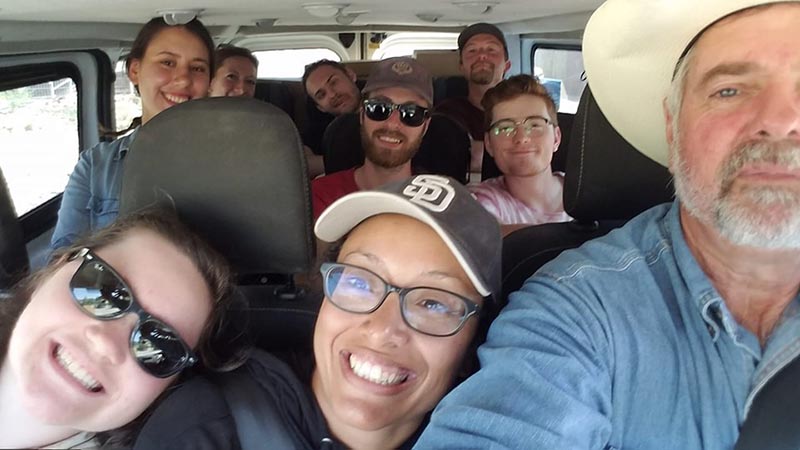
We got close in our rides to and from the tel!

Read more about the Tel Burna Excavation Project.

Marcella Barbosa is a Ph.D. student of the Tandy Institute for Archaeology at Southwestern Baptist Theological Seminary in Fort Worth, Texas. She has been pursuing archaeology all of her life and has excavated in Menorca, Cyprus, and Israel, with the majority of her time so far spent in nine seasons with the Tel Gezer Project. She spent five years as the Collections Manager for the Tandy Archaeological Museum and is currently working on her dissertation/Gezer publication research in Israel thanks to  a scholarship from Ariel University.

Libyan Update: Nalut Part 2

Nalut Workshop on Cultural Heritage Protection: Part 2

Talal Bariun and Will Raynolds

In partnership with our Libyan colleagues, and with support from the U.S. Department of State’s Ambassadors Fund for Cultural Preservation (AFCP), the Cultural Antiquities Task Force (CATF), and the U.S. Embassy Libya External Office (LEO), ASOR is bringing a message of hope through Cultural Heritage Volunteer Weekends (“pop-up” events) and through one-day heritage workshops. This article follows a previous one on the first couple of days of the Nalut Cultural Heritage Workshop.

Click here for the Arabic version of this article.

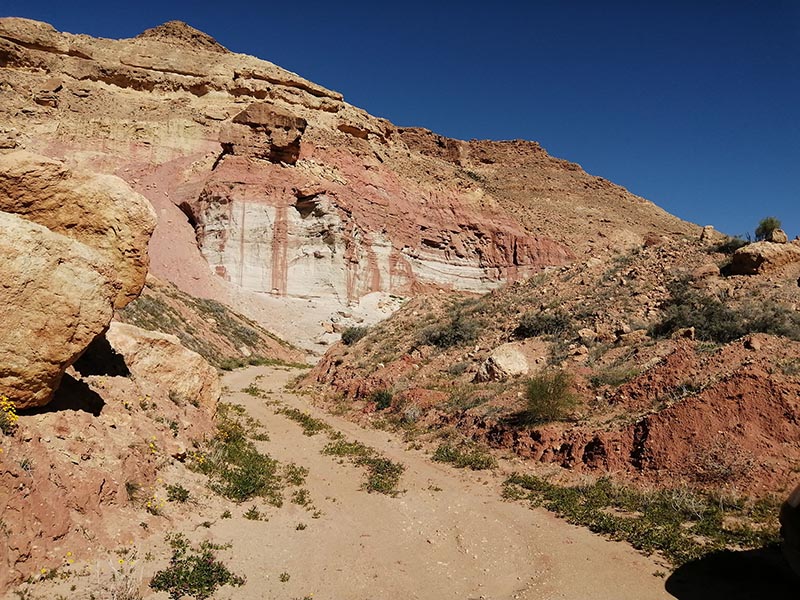
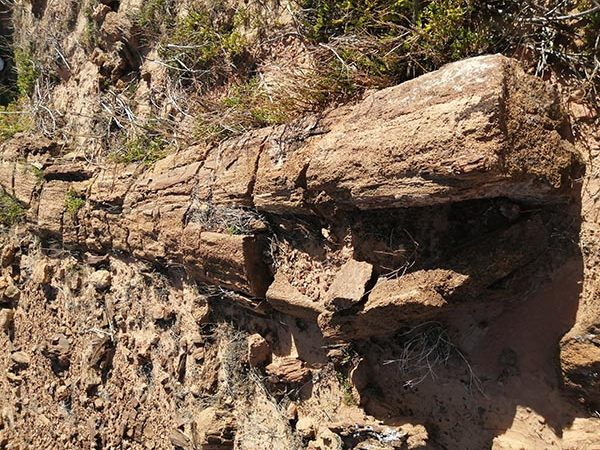
From where we stood, layers of red and yellow sandstone rose thirty meters above our heads. This was the exposed bedrock of the Cabaw Formation, deposited during the Cretaceous period approximately 120-125 million years ago. Guided by Professor Mustafa Salem from the geology department of the University of Tripoli, we were able to discern alternating layers of marine sediments and terrestrial deposits of the Jebel Nafusa escarpment. This part of Libya, now 150 km distant from the coast, had once been at the bottom of the ocean.

An outcrop of the Cabaw Formation near Nalut

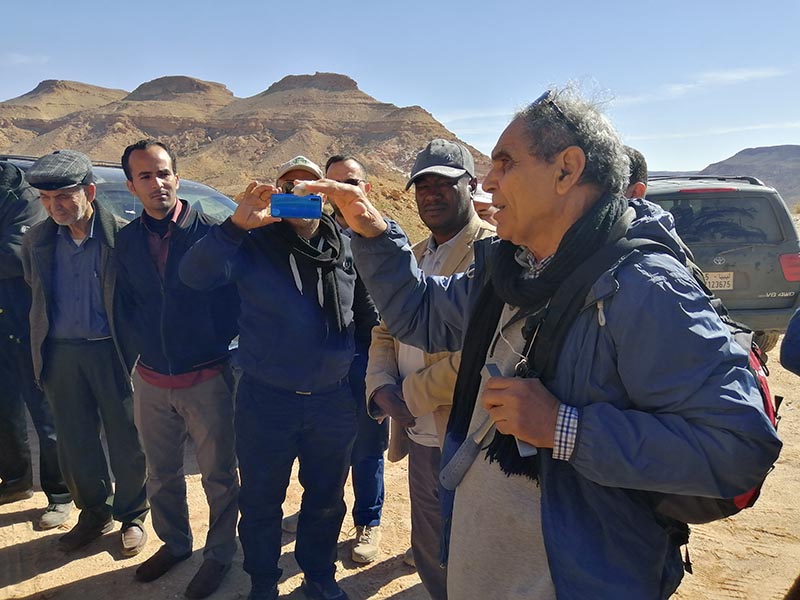
Professor Salem describes the deposition of the Cabaw Formation.

Our group had assembled from cities across western Libya to learn about the protection of cultural and natural resources, though few of us had ever heard such a vivid description of our land’s longer past. We struggled to grasp the vast timescale and radical changes that could be read in the surrounding cliff. According to Professor Salem, during periods when the land was above water, therapod dinosaurs thrived within a coastal forest.  In 1994, in the area where we now stood, a quarry of dinosaur bones was discovered. As we scanned the base of the cliff seeking any freshly exposed fragment of bone, we found pieces of petrified wood weathering out of the bedrock. Based on their size, they apparently belonged to a giant tree with a trunk much larger than anything growing in this arid region today. It was the strongest physical evidence our group had discovered yet of the massive climatic changes that Professor Salem described.

A fragment of petrified wood discovered during the workshop

This fossilized tree trunk is one of many in Nalut’s fossilized forest.

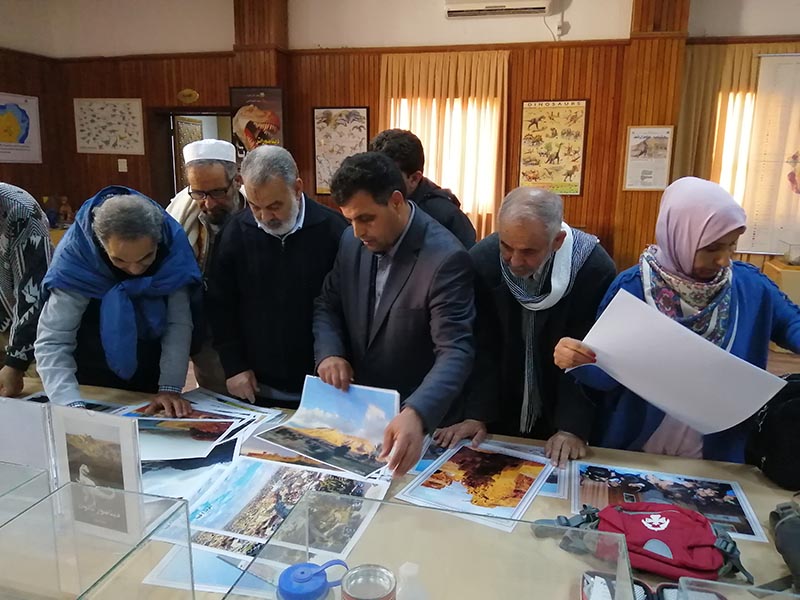
The nearby Nalut Museum of Dinosaurs and Natural History hosts Libya’s most wide-ranging natural history collection. Ahmed al Asker, who serves as both director of the Museum as well as director of the Libyan Department of Antiquities for the Nafusa region, proudly showed us the finest fossils recovered from the quarry. With the support of a team from the University of Chicago and the Italian company Eni Gas, the museum was able to create its displays. Still, according to Mr. al Asker, many of the thousands of items in its collection would benefit from further documentation, registration and study.

Ahmed al Asker and Professor Salem guide the group through the Dinosaur Museum.

Ahmed al Asker shares the Museum photo archive.

In neighboring Egypt, the management of natural history is divided between several branches of government, with the Egyptian Geological Museum in Maadi under the management of the Egyptian Geological Society and Mining Authority and the UNESCO World Heritage site of Wadi al Hitan, the premier natural historical site in the country, managed by the Ministry of the Environment.

For Libya, the responsibility to identify, protect and manage the natural history of the country falls squarely on the shoulders of the Department of Antiquities. In fact, according to Libyan law, anything older than 100 years is subject to protection by the state, so the responsibilities of the Department grow larger and larger with every passing year. Given the expanding nature of this charge and the ongoing conflict, it is hardly surprising that there are few staff or resources available to protect the natural history of the country.

Professor Salem examines a specimen in the field.
Participants in the Nalut workshop return from the dinosaur quarry.

Professor Salem insisted that these collections have an importance beyond the realm of specialized scientists. Studying the longer history of Libya helps provide context for the period of human settlement. Over the past ten thousand years, regional climate change transformed the vast area south of Nalut from an environment of scattered lakes and savannah to the Saharan Desert of today. Libya’s rich cultural and natural heritage, including the UNESCO World Heritage site of the Tadrart Acacus and the cave site of Hawa Fteh, provides some of the world’s best living laboratories for investigating and learning from human response to previous periods of climate change.

Thousands of people continue to arrive in Libya as refugees from across the Sahara, driven in part by more arid conditions in their home countries. Many Libyans currently rely on fossil water aquifers that are being depleted. In this context, protecting Libya’s cultural and natural resources, conducting further research, and increasing the broader public understanding of long term climatic change has never been more relevant.