2023 ASOR Ad Hoc Governance Committee

[vc_row fullwidth=”true” css=”.vc_custom_1490224714943{padding-top: 0px !important;padding-right: 0px !important;padding-bottom: 0px !important;padding-left: 0px !important;}”][vc_column][vc_single_image image=”91091″ img_size=”full”][/vc_column][/vc_row][vc_row][vc_column][vc_column_text][/vc_column_text][/vc_column][/vc_row][vc_row fullwidth=”true” css=”.vc_custom_1490225468623{padding-top: 0px !important;padding-right: 0px !important;padding-bottom: 0px !important;padding-left: 0px !important;}”][vc_column width=”1/12″ css=”.vc_custom_1490225195470{margin-right: 10px !important;}” offset=”vc_hidden-sm vc_hidden-xs”][vc_column_text]

  SHARE

[/vc_column_text][mk_image src=”http://www.asortest.org/wp-content/uploads/2017/01/social-fb-icon4.jpg” image_width=”42″ image_height=”42″ hover=”false” custom_url=”https://www.facebook.com/ASOResearch/” margin_bottom=”0″][mk_image src=”http://www.asortest.org/wp-content/uploads/2017/01/social-tw-icon4.jpg” image_width=”42″ image_height=”42″ hover=”false” custom_url=”https://twitter.com/ASOResearch?ref_src=twsrc%5Egoogle%7Ctwcamp%5Eserp%7Ctwgr%5Eauthor” margin_bottom=”0″][mk_image src=”http://www.asortest.org/wp-content/uploads/2017/01/social-in-icon4.jpg” image_width=”42″ image_height=”42″ hover=”false” custom_url=”https://www.linkedin.com/company/american-schools-of-oriental-research” margin_bottom=”0″][mk_image src=”http://www.asortest.org/wp-content/uploads/2017/01/social-ml-icon_7.jpg” image_width=”42″ image_height=”42″ hover=”false” custom_url=”mailto:asor@bu.edu” margin_bottom=”0″][mk_image src=”http://www.asortest.org/wp-content/uploads/2017/01/blog-icon3.jpg” image_width=”42″ image_height=”42″ hover=”false” custom_url=”http://asorblog.org/” margin_bottom=”0″][/vc_column][vc_column border_color=”rgba(255,255,255,0.01)” width=”1/6″ css=”.vc_custom_1490365673198{margin-right: 20px !important;border-left-width: 2px !important;padding-right: 20px !important;padding-left: 20px !important;border-left-color: #99422f !important;}” el_class=”sticky-sidenav”][mk_divider divider_color=”rgba(255,255,255,0.01)” thickness=”1″ margin_top=”3″ margin_bottom=”3″][vc_widget_sidebar sidebar_id=”ca-sidebar-37292″ el_class=”.widget { overflow: hidden; margin-bottom: 0; }”][/vc_column][vc_column border_color=”rgba(170,170,170,0.01)” width=”1/2″ css=”.vc_custom_1490225606852{margin-right: 10px !important;margin-bottom: 30px !important;border-right-width: 2px !important;border-bottom-width: 2px !important;padding-top: 30px !important;padding-right: 30px !important;padding-left: 20px !important;background-color: #ffffff !important;border-right-color: rgba(227,228,228,0.75) !important;border-bottom-color: rgba(227,228,228,0.75) !important;}”][vc_column_text responsive_align=”left”]

2023 ASOR AD HOC GOVERNANCE COMMITTEE

Charge to the Ad Hoc Governance Committee

The affairs of ASOR are managed by a governing Board of Trustees elected and appointed from the membership. ASOR’s by-laws set out a multi-tiered range of governance procedures through which a group of Executive officers led by the President and the Chair of the Board of Trustees, and advised by an Executive Committee, develop and supervise the programs of ASOR in conjunction with the Executive Director and their staff. All the individual programs are guided by one of two sets of standing committees: the Standing Board Committees; and the Standing ASOR Committees. The members and chairs of the Standing Board Committees are appointed by the Chair of the Board in consultation with the President. The members of the Standing ASOR Committees are selected by their respective committees from nominations by the general membership, subject to approval by the Chairs Coordinating Council, a group consisting of the chairs of all the ASOR Standing Committees and chaired by the Vice-President. The chairs of the Standing ASOR Committees are nominated by a Chairs Nominations Committee subject to approval by the Chairs Coordinating Council and the Board of Trustees. All officers and committee members are appointed to three-year renewable terms, limited to a total of six years.

This system works well in general and encourages broad participation in ASOR’s governance by a wide range of members. Concerns have been raised, however, on some points. These are: 1. The length of the President’s term; 2. The structure of ASOR Committees; 3: Institutional memberships and their representation on the Board of Trustees. I take these concerns up individually below in the charge to the committee.
 

1. As it stands now, the President normally serves for two terms. These are followed by two terms on the EC as Past President. This results in a twelve-year commitment to the governance of ASOR. Might a shorter term result in more and better candidates for the presidency and the shorter rotations result in more effective leadership? The Ad Hoc committee is encouraged to examine the practices of similar societies (AIA, AAA, SAA, SBL) and recommend alternative models if they choose.

2. The methods of choosing the standing committees’ members have by and large resulted in vigorous, engaged, and hardworking cadres. We are fortunate our members are willing to serve at the levels they do. There is some sense, however, that the appointment methods of the two groups—the one exclusively in the hands of the executive officers, and the other largely self-generating—can lead to different types of narrowness. What procedures might we put in place to avoid this?

3. The Board of Trustees as it now stands has six members appointed by Institutional Member Organizations. These organizations include any university, college, seminary, museum, or other institution that pays dues as established by the Board of Trustees. The numbers of dues paying Institutional Member Organizations have been shrinking in recent years—down from over 100 to 60. This seems to be an on-going trend. Should we consider adjusting the numbers of institutional trustees?

All the procedures outlined above are laid out in ASOR’s by-laws. Any recommended changes to them will need to be discussed and approved by the Board of Trustees. I encourage you to submit a report to them by early October of this year.

Members

  • Emily Miller Bonney, Chair
  • Matt Adams
  • Sarah Costello
  • Randy Helm
  • Ann-Marie Knoblauch
[/vc_column_text][vc_empty_space height=”100px”][/vc_column][vc_column border_color=”rgba(170,170,170,0.01)” width=”1/6″ css=”.vc_custom_1490571214409{margin-right: 10px !important;margin-bottom: 30px !important;border-right-width: 2px !important;border-bottom-width: 2px !important;padding-top: 30px !important;padding-right: 20px !important;padding-left: 20px !important;background-color: #ffffff !important;border-right-color: rgba(227,228,228,0.75) !important;border-bottom-color: rgba(227,228,228,0.75) !important;}”][vc_wp_posts title=”BROWSE THE NEWS ARCHIVE” number=”4″][/vc_column][vc_column border_color=”rgba(170,170,170,0.01)” width=”1/6″ css=”.vc_custom_1490225688999{margin-right: 10px !important;margin-bottom: 30px !important;border-right-width: 2px !important;border-bottom-width: 2px !important;padding-top: 30px !important;padding-right: 30px !important;padding-left: 20px !important;background-color: #ffffff !important;border-right-color: rgba(227,228,228,0.75) !important;border-bottom-color: rgba(227,228,228,0.75) !important;}”][vc_column_text] [/vc_column_text][/vc_column][/vc_row][vc_row][vc_column][vc_column_text] [/vc_column_text][/vc_column][/vc_row]

New ASOR-Affiliated Projects

New ASOR-Affiliated Projects: February 2023

Currently, 115 projects are affiliated with ASOR. This includes 86 field projects and 29 publication projects. Fourteen projects (13 new projects and 1 project renewal) have received ASOR affiliation since last summer. Read more about these new ASOR-affiliated projects below!

ASOR-affiliated projects adhere to ASOR policies, most notably the Non-Discrimination Policy, Policy on Professional Conduct, and Code of Conduct for the ASOR Annual Meeting and Other ASOR Sponsored Events. These policies affirm ASOR’s commitment to high standards for research integrity, academic mentoring and ethical professional behavior. Project Principal Investigators may apply for ASOR affiliation for their projects through the Committee for Archaeological Research and Policy (CAP).  Principal Investigators of ASOR-affiliated projects are eligible to apply for ASOR Project Grants and Shepard Urgent Action Grants. Students working on ASOR-affiliated projects are eligible to apply for Scholarships for Fieldwork Participation.

New ASOR-Affiliated Projects

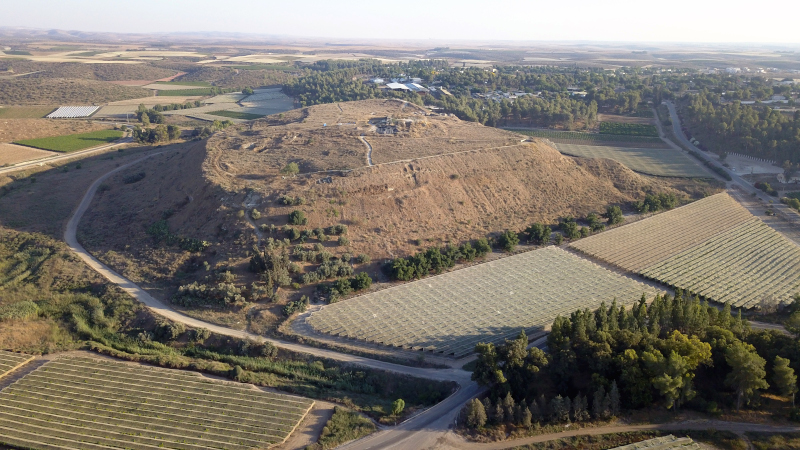
Austrian Expedition to Tel Lachish, Israel (Felix Höflmayer and Katharina Streit)

Aerial view of Tel Lachish looking southwest. (c) Jared Dye ÖAI-ÖAW.

The Austrian Expedition to Lachish focuses on the Middle and Late Bronze Age remains at the site. Since 2017, excavations have been conducted in Area S on the western edge of the site, uncovering several settlement phases of the early Late Bronze Age (15th and 14th century BC), and in Area P north of the Judean palace-fort, where additional parts of the Middle Bronze Age (17th and 16th century BC) palace were excavated.

Caesarea Coastal Archaeological Project (C-CAP), Caesarea Maritima, Israel (Asa Eger, Beverly Goodman, and Andrea de Giorgi)

The transition in the eastern Mediterranean from the Christian Late Roman Byzantine to Islamic rule beginning in the 7th century CE is a time full of uncertainty, migrations, conflict, and reconfiguring of people, economies, communities and cultures. While these changes are known in broad strokes due to historical records, archaeological information allows us to better understand the more direct meaning of these changes for those who lived at the time, as recognizable within the material record. In May-June 2022, the CCAP field school project invites students and volunteers to unravel the mysteries of Caesarea Maritima’s medieval and Islamic years, including both on land and underwater archaeological and geoarchaeological hands-on experience. Participants will immerse themselves in the world of the post-Roman Empire Islamic eastern Mediterranean, experience and reveal first-hand physical evidence of ancient natural disasters, and learn how to hear the stories from the objects that were left behind.

Kalavasos-Laroumena and Arkhangelos Archaeological Research Project, Cyprus (Mara T. Horowitz)

The Kalavasos-Laroumena and Arkhangelos Archaeological Research Project (K-LAARP) investigates social change in the Middle Cypriot Bronze Age on the south coast of Cyprus.

The Kurd Qaburstan Archaeological Project, Iraq (Tiffany Earley-Spadoni and Glenn Schwartz)

Kurd Qaburstan is an urban-sized Bronze Age site in northern Mesopotamia, southwest of Erbil in the Kurdistan Region of Iraq. Perhaps to be identified with ancient Qabra, the 118-hectare site consists of an 11-hectare central mound 17 meters high surrounded by a 107-hectare walled lower town. The project was initiated in 2013 by Dr. Glenn Schwartz, and is currently directed by Dr. Tiffany Earley-Spadoni.

Lagash Archaeological Project, Al Hiba, Iraq (Holly Pittman)

Excavations at ancient Lagash focus on understanding the urban organization during the Early Dynastic period. Remote sensing together with targeted excavation seeks to reveal craft production areas, domestic housing, and institutional installations.

Oblique view of Lagash.
Drone photo of the trenches opened in Fall 2022.

Mudawwara Ottoman Fort, Jordan (Andrew Petersen)

Mudawwara fort is a ruinous Ottoman fort located on the Hajj route in southern Jordan. Although the fort was only built in the eighteenth century the site is mentioned in pilgrimage itineraries from at least the ninth century CE. The fort is currently in a very vulnerable state and the aim is to record the architectural remains and carry out excavations at the site in advance of conservation and restoration work.


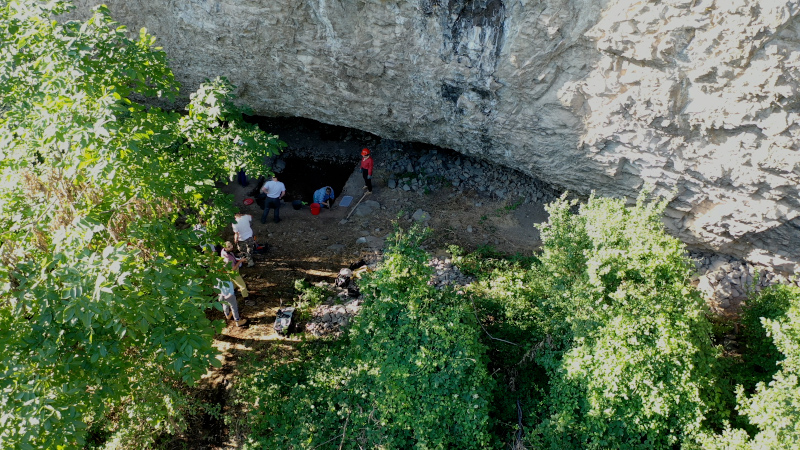
Neanderthal Crossroads Project, Uzun Mera and Peshka, North Macedonia (Darko Stojanovski, Sarah Lacy, and Tracje Nacev)

Uzun Mera.
Peshka Cave.

The Neanderthal Crossroads Project is the first Middle Paleolithic field school in the Balkan region. Students will get the opportunity to learn surface survey and trench excavation techniques at a Middle Paleolithic archaeological site, Uzun Mera, as well as exploratory investigations at additional caves including Peshka Cave. The Middle Paleolithic history of the central Balkans is still not well-known, despite it being the clear crossroads for hominins into and out of Europe. North Macedonia is a gorgeous, NATO-member country in the central Balkans that is safe and relatively inexpensive. Please reach out with questions about our schedule, travel logistics, or CoVID protocols; we would love to have you join us this summer! We have a short video of last summer’s excavation here.

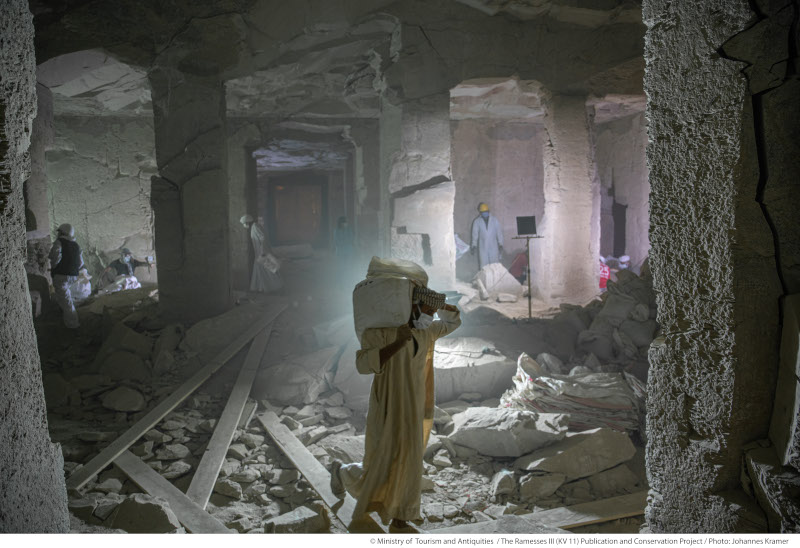
The Project is dedicated to the excavation, conservation, and publication of the tomb of pharaoh Ramesses III (ca. 1221 – 1156 BC) in the UNESCO World Heritage Site of the Valley of the Kings. Between 1885 and 1914, the tomb was flooded several times, causing severe damage in its rear compartments, and making it inaccessible to visitors. Since 2017, The Ramesses III (KV 11) Publication and Conservation Project has worked continuously on the preservation and publishing of the site. The mud and rubble which had accumulated in the rear parts are gradually being cleared, in the course of which valuable information on the tomb’s decoration and even fragments of its former furnishings have come to light. Its unique architecture and decoration program make KV 11 an important source for Ramesside beliefs concerning the afterlife. The final aim is to prepare the tomb for reopening and making it fully accessible to the public at large. To document and protect the tomb from further decay, specialists from different countries work together in the fields of archaeology, conservation, geoarchaeology, microbiology, osteology, philology, photography, and Egyptological research. The project is hosted by Humboldt-Universität zu Berlin and led by Dr. Anke Weber.

(c)The Ministry of Tourism and Antiquities, The Ramesses III (KV 11) Publication and Conservation Project, photos: Johannes Kramer

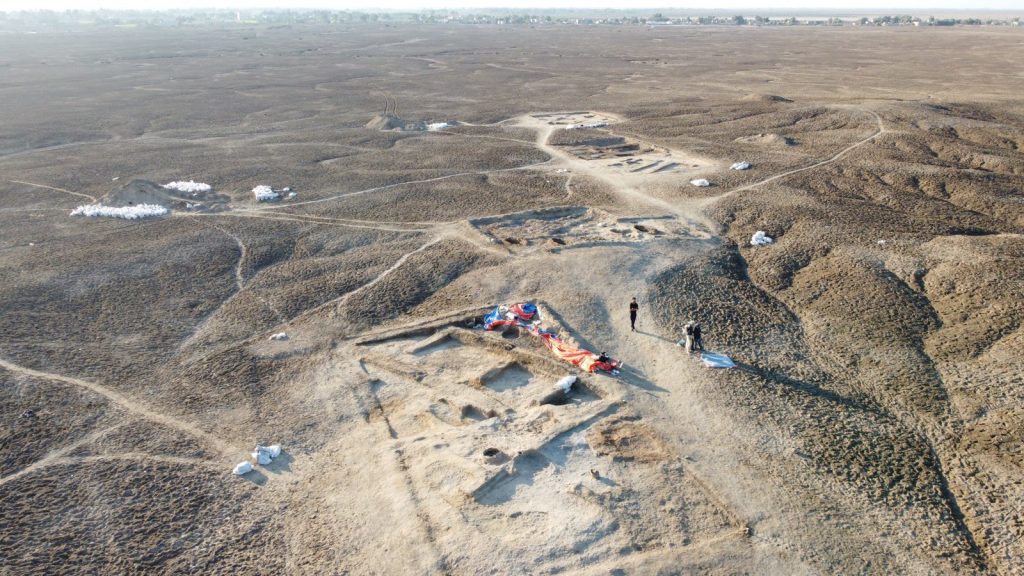
Rural Landscapes of Iron Age Imperial Mesopotamia, Qach Rresh, Iraq (Petra Creamer)

Aerial view of the project research area.

Rural Landscapes of Iron Age Imperial Mesopotamia (RLIIM) is a combination excavation-remote sensing project conducted on the Erbil Plain of Iraqi Kurdistan, just 15km south of Erbil near the modern village of Tirpa Spiyan. Excavations focus on a small, rural agricultural settlement of the Assyrian Empire, Qach Rresh. The project uses drone imagery and magnetometry to map the subsurface and landscape features of the village and its surrounding landscape to understand how the occupants of these small villages interacted within the broader imperial framework. Additionally, post-Assyrian material at the site allows us to investigate questions related to the collapse of the Assyrian empire as seen from the countryside, as opposed to a large urban center. We conducted our first season in Fall 2022, and our permit issued by the KRG Department of Antiquities allows for another four years of investigation before renewal. The project’s team is a combination of Kurdish and foreign members, directed by Prof. Petra Creamer (Emory University). We prioritize the training of our team members in various archaeological techniques, emphasizing technology and remote sensing along with more traditional methods.

Ulqin Archaeological Project: Landscape Survey and Geography, Southern Montenegro (Daniel Plekhov, Elic Weitzel, and Erina Baci)

The Ulqin Archaeological Project is a large-scale, diachronic regional survey of the Ulqin Municipality in southern Montenegro. Human occupation of this region dates to the earliest periods of human presence in Europe, with many subsequent cultures, states, and empires leaving their marks on the landscape through time. Our survey aims to document and study these traces. Through doing so, we will investigate how dynamics of human settlement and land-use in this region have changed through time and consider what effect they continue to have on the social and environmental characteristics of the region’s people and landscapes today. To that end, our project is focused as much on the archaeological remains of past periods as it is on the ongoing practices of local communities in the present. By combining archaeological methods with those from the fields of geography, ecology, and cultural anthropology, we will provide historical context for the development of modern-day settlement and agropastoral practices, and explore how communities today continue to inherit, adapt to, and transform the legacies of the past. Beyond studying the archaeological record of this region to understand its history and development, our project is also oriented towards the documentation and preservation of its rapidly disappearing heritage landscapes.

Tell Timai Project, Egypt (Jay Silverstein and Robert Littman)

Tell Timai is the Nile Delta city of Thmouis, a site famous for perfume production, its role in the Great Rebellion discussed on the Rosetta Stone, and its prominence in the rise of Christianity in Egypt. Excavations in the coming years will focus on a series of religious structures from the Late Period to the Coptic Periods. Information on 2023-2023 fieldwork can be found here.

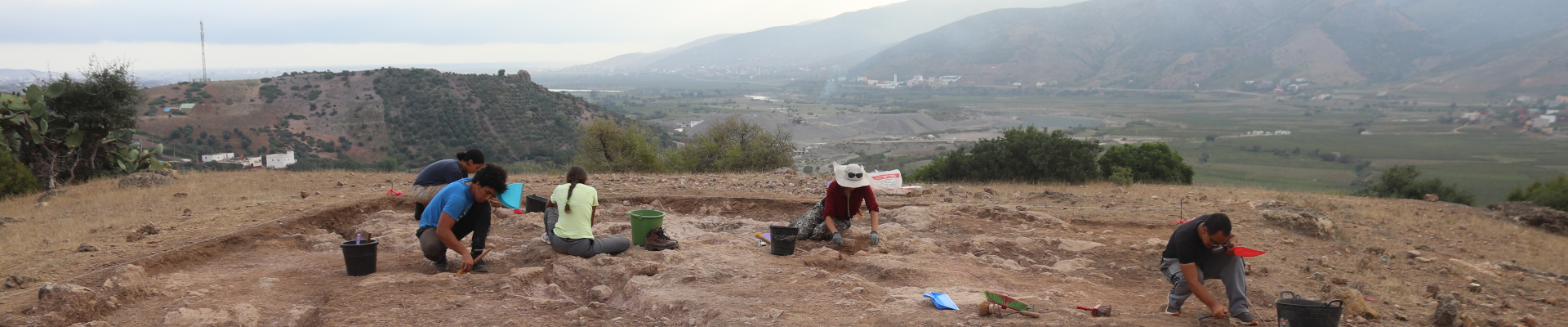
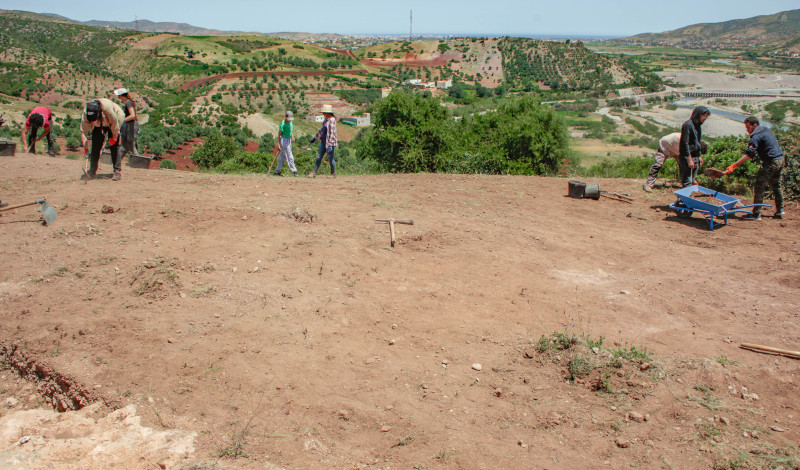
The Western Mediterranean has been characterized by complex social and economic dynamics, with the movements of Late Bronze Age communities settling the African shores yet to be fully deciphered. The site of Kach Kouch (Oued Laou, Morocco), a settlement with no parallels in north-west Africa, offers a unique chance to understand these dynamics and their place within debates about the hyperconnectivity of the Mediterranean in the late 2nd and early 1st millennium BC. The strategic location of Kach Kouch, controlling the access from the estuary of the Oued Laou river to the inland valleys of the Western Rif mountains, makes it ideally placed within a wider exchange network connecting local communities with the rest of the Mediterranean. To date, the archaeology of this region has been written overwhelmingly from a colonial perspective, even though evidence points to early connectivity of this area since the 6th millennium BC. This project focuses on the study of Kach Kouch and its territory, including the bassins of Oued Laou and Stehat, from a long durée perspective and with an emphasis on the role of local communities in the historical process. This project serves as a field school for young graduates and undergraduates in archaeology of the National Institute of Archaeology and Heritage of Morocco (INSAP).

Hilltop settlement of Kach Kouch, the Oued Laou Valley and the Mediterranean.
Fieldwork at Kach Kouch.

Vasagard, Denmark (Finn Ole Nielsen, M. Nicolas Caretta, Michael Thorsen, Ditte Kofod, and Roxana Youkhana)

The site of Vasagård is located on the southern side of the island of Bornholm, Denmark. Vasagård is separated by the 100m Læså valley from two nearly identical Neolithic sites and consists of a tomb system where a dolmen and a passage grave can be found close to the settlement. The grave system and causewayed enclosures are dated from c. 3500 BC, and constitute the most north-eastern occurrence of this complex type in Europe. During the excavations of 2013-2017, almost three hundred broken and completely flat, engraved stones were uncovered, marked with patterns of radiating straight lines. Named “sunstones” or “solar stones”, archaeologists from the Bornholm Museum have postulated that these artifacts were likely part of the rituals carried out by Neolithic sun-worshipping practitioners about 5,000 years ago. New excavations will help to increase and improve the information about the site and the Neolithic Period in the Baltic region.

ASOR-Affiliated Project Renewals

Carthage, The Precinct of Tanit (tophet) and Ba’al: The ASOR Punic Project: The Stager Excavations (1975-1979), Tunisia (J. A. Greene, B. K. Garnand, and L. E. Stager†)

This publication will present the results of the archaeological excavations at the so-called tophet or “Precinct of Tanit” in Carthage, Tunisia. These excavations were undertaken as part of the ASOR Punic Project (1975–1979) with funding from the Smithsonian Institution, the University of Chicago and Harvard University under auspices the UNESCO Campagne de Sauvegarde Carthage. The first volume will present a complete descriptive catalogue of artifacts, the second volume a detailed interpretation of stratigraphy, osteology and typology (urns, amulets, cippi/stelae), alongside interpretations of classical and biblical literary sources and epigraphic evidence, in order to present for the first time a holistic interpretation of Phoenician/Punic votive dedication of infants. This singular site has provided the vast majority of the Phoenician/Punic iconographic and epigraphic repertoire known from ca. 800–146 BCE.

†=deceased

2023 Annual Meeting Hybrid Announcement

ASOR’s 2023 Annual Meeting will be Hybrid

ASOR is excited to announce that the 2023 ASOR Annual Meeting is going hybrid!

Instead of holding a separate virtual component in October, ASOR will hold a hybrid meeting with both virtual and in-person participation, November 15–18, at the Hilton Chicago. Feedback from members on the survey circulated by the ad hoc Committee on Climate Impact (Ad Hoc Climate Impact Committee Report) and discussion with many members at the Boston meeting led us to make this change for 2023.

What this means is that all sessions (and workshops, when feasible) will be able to include both in-person presentations in Chicago and virtual presentations online via Zoom. Virtual attendees will have the ability to view and listen to in-person and virtual speakers in real time. Virtual presenters will speak in real time when presenting; if they have a PowerPoint presentation, that will be projected by the session room’s ASOR facilitator to appear on the screen in the meeting room and online via Zoom (virtual presenters will be able to advance their own slides). All presenters (in-person and virtual) will be asked to send in their PowerPoint file (only slides, not a pre-recorded presentation) by Sunday, November 12. Sessions will be recorded and available online for a limited time after the meeting.

The meeting rooms in Chicago will not be set for a fully two-way hybrid experience, meaning that there will not be a view of the room/audience or synchronous discussion between virtual and in-person attendees. Virtual attendees will need to submit their post-presentation questions via the Zoom chat feature and the ASOR facilitator will read them to the presenter. 

Program participants and meeting attendees have told us that scheduling time for ASOR two months in a row is difficult, but also that it is important to continue offering an option for virtual participation for those who can’t attend the meeting in person. We hope that offering a hybrid format will be an inclusive and welcomed option for all. If you have questions or concerns about the format, Arlene Press (meetings@asor.org) and Jared Koller (jaredkoller@asor.org) are here to help. You can also reach out to the Program Committee Co-Chairs, Allison Thomason and Kiersten Neumann (pc.chairs@asor.org), if you have questions pertaining to the academic program

With great excitement, all of us at ASOR look forward to seeing you in November online and/or in Chicago.

Dever Fellowship Report: Krysta Fauria

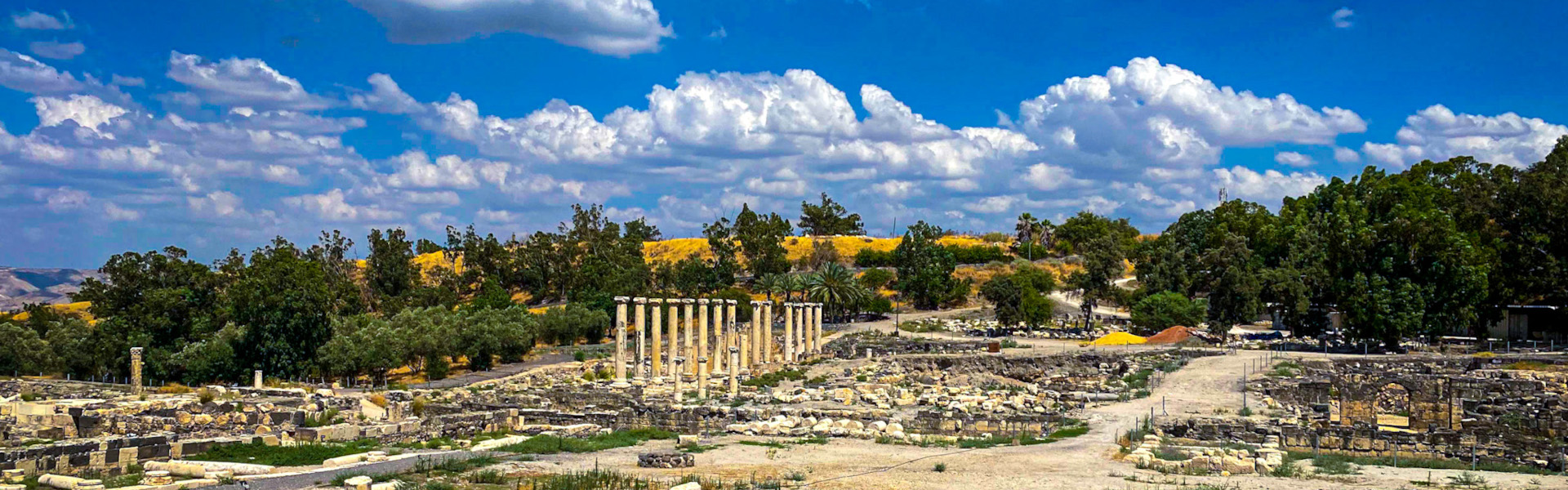
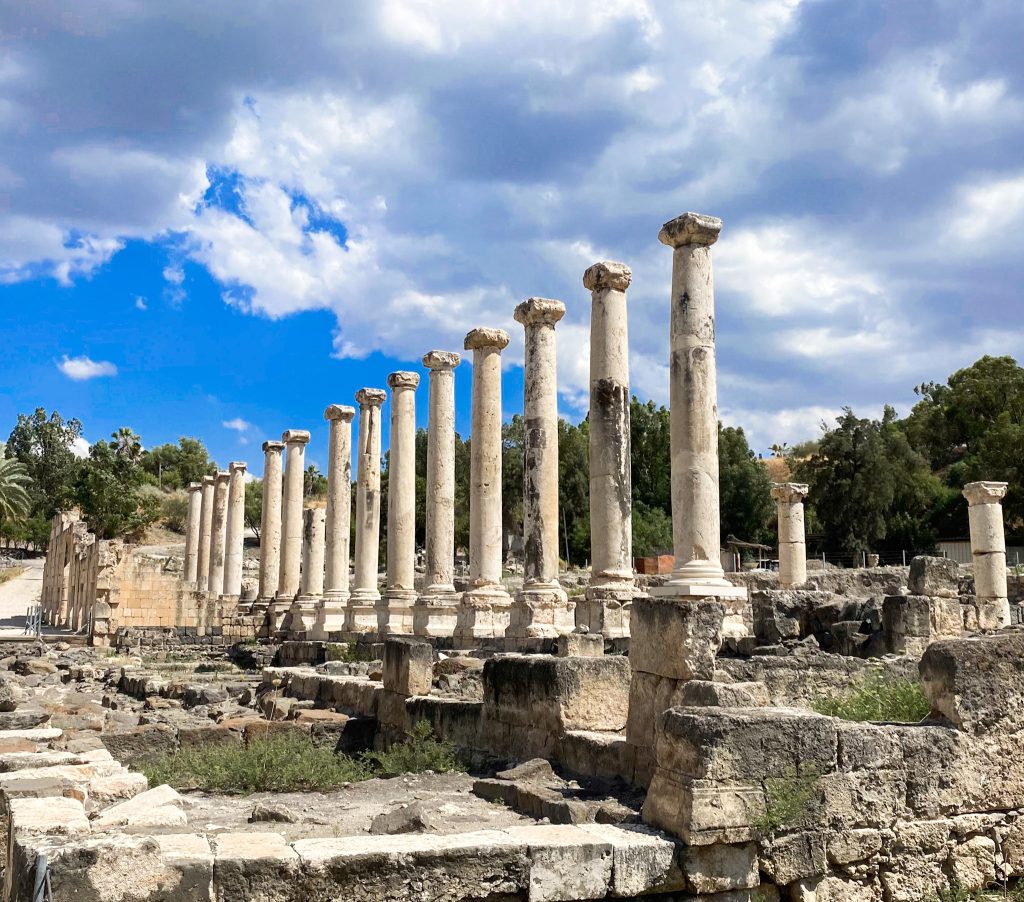
A view of columns at the site of Beit She'an in Israel.

2022 William G. Dever Fellowship Report: Krysta Fauria

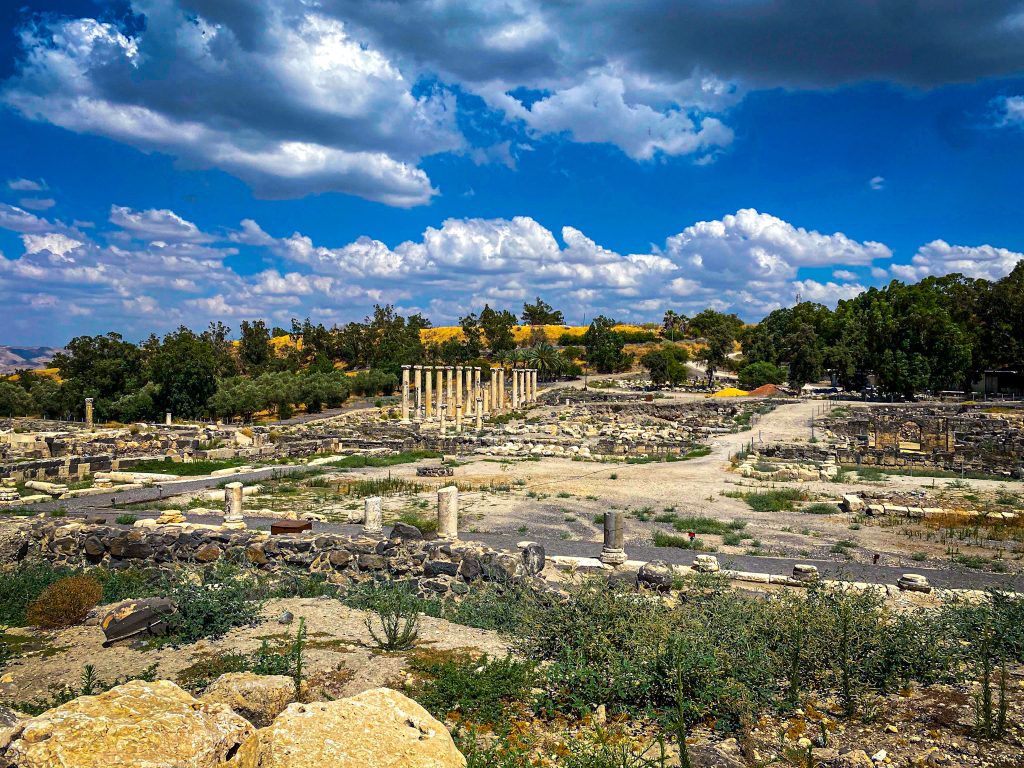
My first summer as a PhD student proved to be one of the most enriching summers I have had. I traveled to Israel for my first archaeological dig in May, and then spent a month at the W.F. Albright Institute of Archaeological Research in Jerusalem. These experiences were made possible through my funding from ASOR’s Dever Fellowship, which is designed for biblical scholars seeking to gain experience in archaeology. I did fully not comprehend the importance of studying material culture until I began my doctoral program in religion at the University of Southern California last year. As I began to recognize the need for scholars of Early Christianity to understand and, when possible, participate in archaeology, I sought ways to find funding to gain this experience. I discovered that Mark Letteney, a postdoctoral fellow at USC at the time, was on staff at the Jezreel Valley Regional Project. JVRP was leading an excavation in May through their Legio Project, which sought to uncover an amphitheater at the military base once occupied by the Roman VIth Ferrata Legion.

Beit She'an

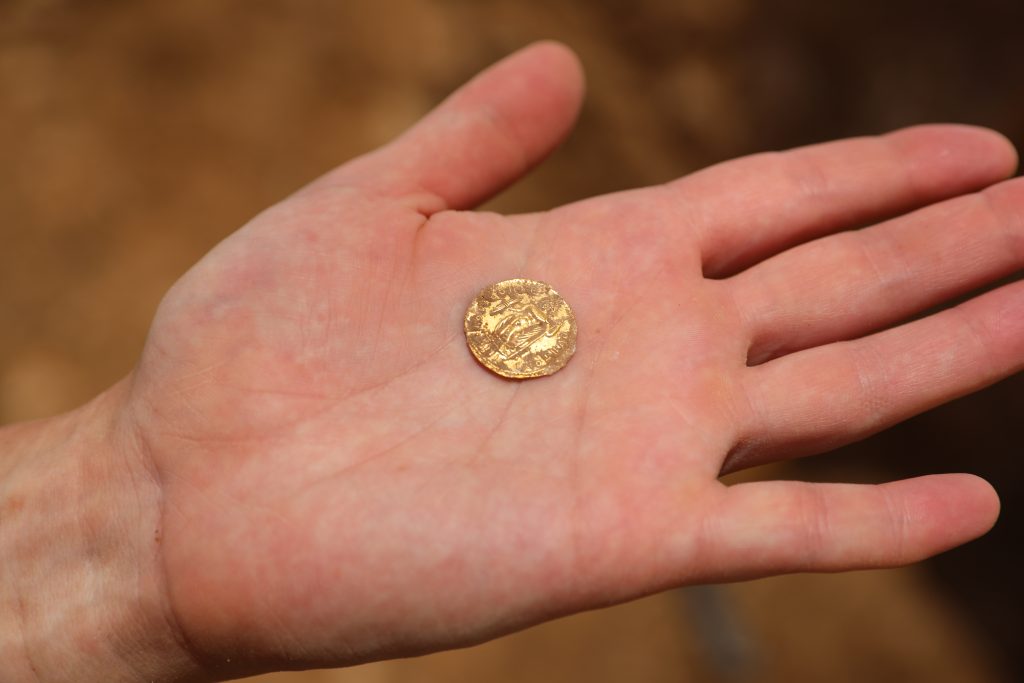
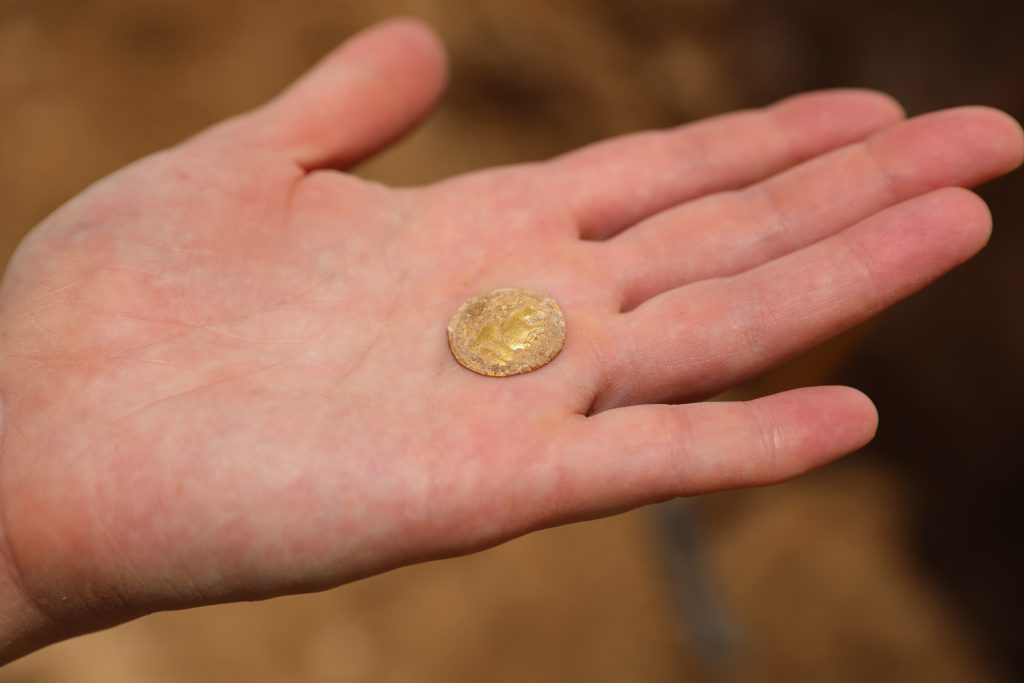
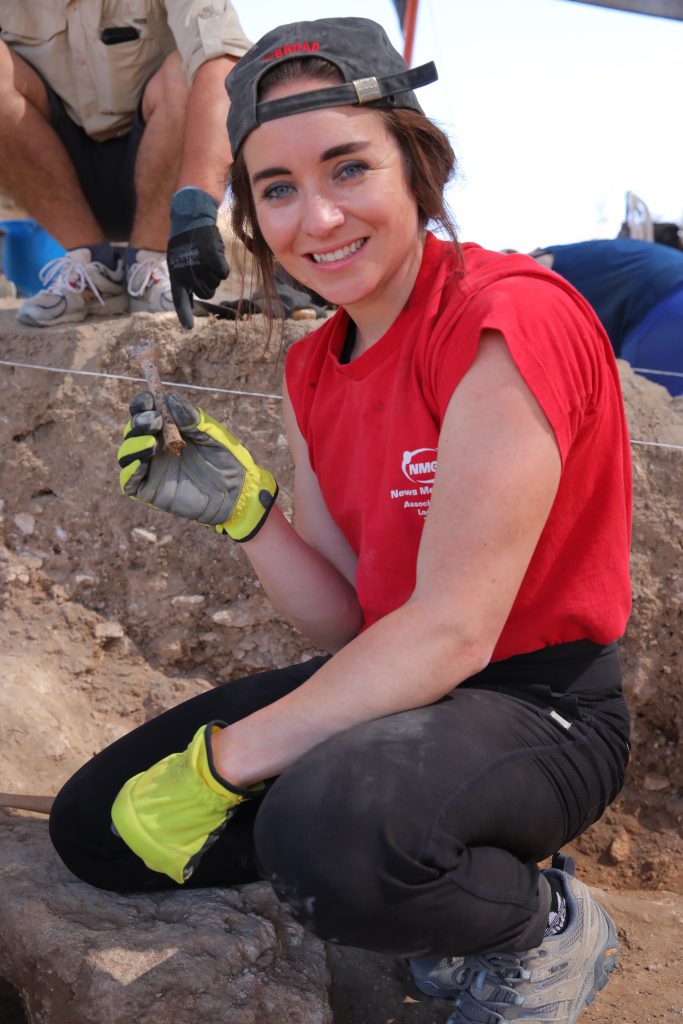
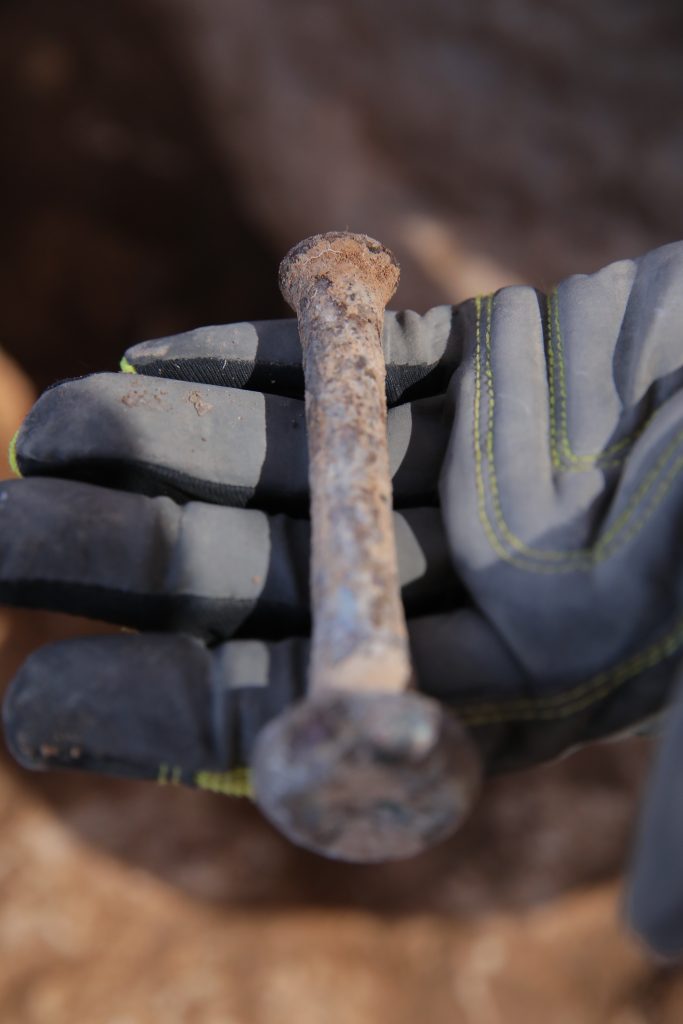
The dig was even more enriching than I anticipated. I gained a robust understanding of the methodology and tools used, as well as the post-excavation processing of artefacts. Moreover, I assisted the area directors with some of the more technical aspects of the excavation, including conducting photogrammetry and operating the total station. These experiences helped me gain a more thorough understanding of archaeological modeling and analysis. I personally uncovered a handful of significant finds, including an intact perfume vessel made from Roman glass, as well as a gold coin in near-perfect condition. The coin was minted under Diocletian in 295 CE and was the first dated item we found on the dig.

Coin found from 295 mentioned in the report (side 1)
Coin found from 295 mentioned in the report (side 2)
Krysta Fauria holding a Roman perfume vessel
Close up of the Roman perfume vessel

I also spent a significant amount of time visiting additional archaeological sites across the country and Palestine. Some of the sites that stood out as being particularly informative for my research were Megiddo, Beit She’an, Qumran, Herodion, and Caesarea, as well as the remains of the Second Temple and the City of David in Jerusalem.

It is difficult to overstate the ways in which my scholarship will benefit from this trip. For example, one way that studying the material remains informed my current understanding of the Second Temple and Roman Period is that it illustrated the ways in which the Judeans of this time were deeply entrenched in so-called Greco-Roman culture. While recent scholarship has had no shortage of critiques on conceptions of Hellenistic Judaism, I was able to comprehend this critique in new ways after seeing how Jewish people in antiquity co-existed with other Mediterranean inhabitants.

Herodion

This experience gave me an appreciation for the diverse areas of expertise needed to make an excavation possible. In a time when scholarship is seeking to become more collaborative and interdisciplinary, it seems prudent to look to the field of archaeology, which has long relied on scholars from a variety of disciplines and specializations. I hope to return to Israel and to hopefully go on another dig soon.

Beit She'an

Krysta Fauria is a second-year PhD student at the University of Southern California studying early Christianity and the Synoptic Gospels. Prior to beginning her program at USC, Krysta was a journalist covering politics and breaking news for The Associated Press in Washington, DC and Los Angeles.

Apply for a 2023 William G. Dever Fellowship here!

FOA Webinar: Greg Mumford on February 23

FRIENDS OF ASOR WEBINARS

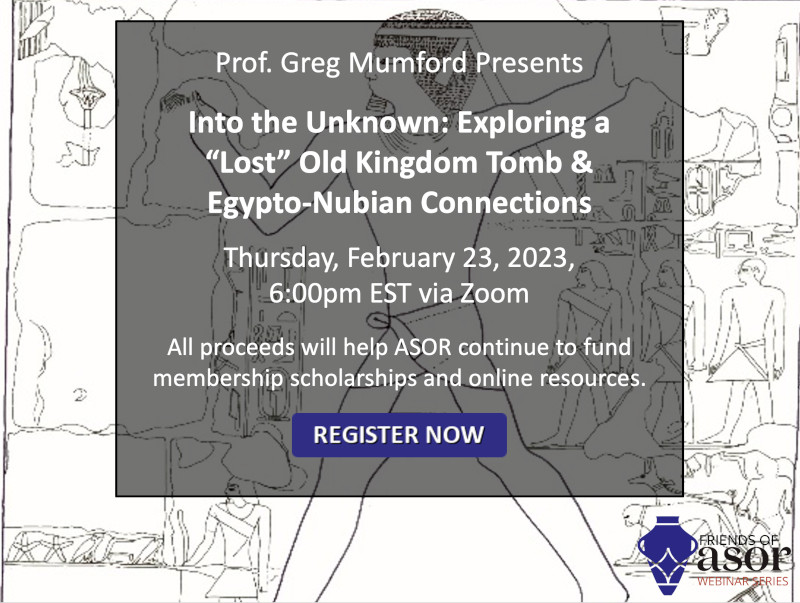
Into the Unknown: Exploring a “Lost” Old Kingdom Tomb & Egypto-Nubian Connections

Friends of ASOR present the next webinar in our monthly series on February 23, 2023, at 6:00 pm EST, featuring Prof. Greg Mumford and moderated by Prof. Stuart Tyson Smith. This presentation briefly introduces the complicated circumstances and setting of a decorative program from a late Old Kingdom tomb belonging to Niankhnisut, who spanned late Dynasty 5 through early Dynasty 6 (temp. Kings Unas to Teti). Like many Ancient Egyptian elite tombs, this tomb chapel apparently displayed extensive damage by the time of its rediscovery and looting in 1917 (during World War I), with looters removing numerous blocks and extensive scenes, which were in turn obtained and dispersed by a dealer, Jacob Hirsch, to at least 18 museums and collections across the globe.  Although the precise location of Niankhnisut’s tomb remained unknown for many decades, in 2000 the Supreme Council of Antiquities (now MoA) located and excavated this tomb, finding further scenes and numerous ex-situ fragments.

This webinar continues with an examination of an aspect of the decoration from Niankhnisut’s tomb, namely Egypto-Nubian relations in the Old Kingdom: Several scenes from this tomb, like many other Old Kingdom elite tombs, illustrate the presence of exotic fauna, frequently in conjunction with little people (i.e., “dwarfs” and/or pygmies), which reflect Egyptian interrelations with Nubia and Punt, which is widely attested via archaeological and textual-pictorial sources. The Old Kingdom court and elite often feature the employment of little people as animal handlers alongside imported Nubian primates, felines, and dogs, with an added emphasis upon the desirability of utilizing dwarfs and sometimes sub-Saharan pygmies, for diverse employment within the royal court and broader settings, including jewelry production, animal handlers, bearers, entertainers, and other roles.  The presentation cannot encompass the much broader aspects of Egypto-Nubian relations during the second millennium BCE, but will touch upon further aspects in relation to Niankhnisut’s tomb scenes and the importation of exotic animals from Nubia. The webinar will conclude with a live Q&A session moderated by Prof. Stuart Tyson Smith (University of California, Santa Barbara).

Professor Greg Mumford grew up in Kenya (1965-1976) and South Africa (1977-1980), during which he accompanied his parents on frequent trips to archaeological sites, museums, and public lectures in these and adjacent countries. Mumford later pursued studies in archaeology and Egyptology at the University of Toronto, expanding his interests to Egypt’s relations with its neighbours.  He direct projects at Tell Tebilla (NE Delta) and Markha Plain (SW Sinai) in Egypt, and work frequently with his spouse, Dr. S. Parcak, on several joint projects, including assisting at el-Lisht, Egypt. Mumford has also participated variously in prehistoric through Roman-Coptic period projects at East Karnak (Luxor), Tomb of Merenptah (Valley of the Kings), Amarna and its vicinity (Middle Egypt), Dakhleh Oasis (Western Desert), Mendes (NE Delta), Tell Kedwa (NW Sinai), and Tell Borg (NW Sinai), and has taught at Wilfrid Laurier University (1995), UCLA (1999-2000), the University of Toronto (1999-2005), and the University of Wales Swansea (2005-2006), and is now based –as an associate professor– at the University of Alabama at Birmingham (2006/7-present).

This webinar will be recorded and all paid registrants will be sent a link to view the recording.

ASOR Sustaining Members: $0 | ASOR Members: $6 | Public: $12
Season Pass: ASOR Sustaining Members: $0 | ASOR Members: $75 | Public: $150
Buy one here!

To receive your ASOR member discount, log into the online store. If you are new to ASOR, please click on the “New Visitor Registration” link to register your e-mail address and choose a password for our online store. Once logged in, navigate to “Meeting and Event Registration” to register for the webinar and pay the fee. Each paid registrant will receive a confirmation e-mail when you pay for the webinar. If you do not receive this e-mail, then you are not registered. Please e-mail membership@asor.org with any questions or issues with registering.

You will be e-mailed the Zoom Webinar link in the week prior to the lecture on February 23, 2023. If you do not receive the link by the close of business on the Tuesday before the webinar, please e-mail membership@asor.org immediately. This webinar will be recorded and all paid registrants will be sent a link to view the recording.

All proceeds from this webinar are used to fund scholarships for members as well as increasing ASOR’s online resources, which are free to the public.

READY FOR A WEBINAR SEASON PASS?

Buy a season pass for all the webinars* of the 2022-2023 FOA Webinar Season! 1) You will automatically receive the Zoom link for each webinar so no need to register each time. 2) You will also receive the recording of each webinar automatically after the event.

If you have missed webinars earlier in the season and still want to buy the pass, you will receive the links to the recordings of the webinars you missed in your automatic confirmation email after you buy the pass.

*Special symposiums may be excluded from the season pass price.

No more registering for a year if you buy your pass today!

Pricing:

Members: $75.00
Non-Members: $150.00
ASOR Sustaining Members: $0 (automatic registration for each webinar)
Not a member yet? Click here to join as a member and receive the 50% off a season pass!

Log into our online store to purchase the season pass for 2022-2023. If you are new to ASOR and do not have a record in our store yet, click here to register. After you login, navigate to the left to “Meeting and Event Registration.” Please e-mail membership@asor.org if you have any questions or issues.

WHY SPONSOR A WEBINAR?

Several levels of support from $50-$1,000 are available. Proceeds go towards membership scholarships and towards increasing ASOR’s virtual resources. Each sponsorship is tax-deductible and you can give your friends free registrations to a webinar!

Bronze Level ($50): up to 2 guest registrations
Silver Level ($100): up to 5 guest registrations
Gold Level ($500): up to 20 guest registrations
Platinum Level ($1,000): up to 50 guest registrations

After you sign up for a sponsorship online or over the phone, email the names and email addresses of your guests to Felice Herman at membership@asor.org, who will send your guests a confirmation and the Zoom link before the webinar.

WANT TO SAVE $6.00 ON THE NEXT WEBINAR?

Join ASOR as a member! Click here for more details about discounts for events and other benefits of membership. Memberships start at $40 for the year as an Associate Member.

Not ready to join yet? Become a Friend of ASOR for FREE!

Click here for more details about our online resources.


PAST WEBINARS

You can now purchase the link to the recording of any webinar. You can also purchase the bundle packages of all webinars from the 2020-2022 seasons. Please e-mail membership@asor.org for purchase details.

To see a printable pdf of the webinar titles from the 2020-2021 season, please click here. To see a printable pdf of the webinar titles from the 2021-2022 season, please click here.

Pricing:

Members: $6.00 per recording
Non-Members: $12.00 per recording
Bundle of 2020-2021 Webinars: $75.00
Bundle of 2021-2022 Webinars: $75.00
Bundle of 2020-2022 Webinars: $125.00

2021-2022 Season

A World at War: Protecting Cultural Heritage in Times of Conflict
Patty Gerstenblith (DePaul University), Lisa Ackerman (Columbus Citizens Foundation), Andrew Cohen (Government Professional and Cultural Heritage Expert) | May 12, 2022

Preserving Cultural Heritage in Hisban and Umm al-Jimal, Jordan
Øystein LaBianca (Andrews University), Elizabeth Osinga (Umm al-Jimal Archaeological Project), Darrell Rohl (Calvin University) | April 24, 2022

Back to the Field: Recent Discoveries & Summer Plans 2022
Lorenzo d’Alfonso (ISAW), Kathryn Grossman (NC State University), James R. Strange (Samford University) | April 3, 2022

Uncovering What is Nubian Beneath the Veneer of Egyptianness: Excavating the Archives
Debora Heard (University of Chicago) | March 20, 2022

Where Are They Now?: A Preview of 2022 ASOR-Affiliated Fieldwork Projects
Michael Given (University of Glasgow), Xenia-Paula Kyriakou (Florida Gulf Coast University), Stephen Batiuk (University of Toronto), Monique Roddy (Walla Walla University), Kent Bramlett (La Sierra University), Friedbert Ninow (La Sierra University), and Michael Hoff (University of Nebraska-Lincoln) | March 8, 2022

Excavations at Tel Gezer: A Personal Story
Sam Wolff (Tel Gezer Laboratory) | February 20, 2022

Tel Rehov: A Major Bronze and Iron Age City in the Jordan Valley
Amihai Mazar (Hebrew University of Jerusalem), Nava Panitz-Cohen ( Hebrew University of Jerusalem), Nota Kourou (Athens University), Naama Yahalom-Mack (Hebrew University of Jerusalem), Robert Mullins (Azusa Pacific University) | February 10, 2022

The Not-So-Innocents Abroad: The Beginnings of American Biblical Archaeology
Rachel Hallote (Samford University) | January 20, 2022

Synagogues as Jesus Knew Them
James R. Strange (Samford University) | December 2, 2021

Under Jerusalem: The Buried History of the World’s Most Contested City
Andrew Lawler | November 4, 2021

Jesus and Jerusalem on TV: How Do Bible Documentaries Get Made?
Robert Cargill (University of Iowa) | October 17, 2021

Digging the Divine?: Judahite Pillar Figurines and the Archaeology of Israelite Religion
Erin Darby (University of Tennessee) | October 7, 2021

David, Solomon, and Rehoboam’s Kingdom—The Archaeological Evidence
Yosef Garfinkel (Hebrew University of Jerusalem) | September 19, 2021

From Standing Stones to Sacred Emptiness: Textual and Visual Portrayals of Israel’s God
Theodore Lewis (Johns Hopkins University) | August 29, 2021

2020-2021 Season

Making May Matter: Webinarathon to Endow Diversity
Multiple Speakers | May 21-23, 2021

Archaeogaming: Why Video Games Deserve Their Own Archaeology
Tine Rassalle (University of North Carolina at Chapel Hill), Shannon Martino (Morton College), Matthew Winter (University of Arizona), Michael Zimmerman (Rhode Island) | April 18, 2021

How the Bible Became a Book
William Schniedewind (UCLA) | March 21, 2021

The Mysteries of Mithras in Caesarea: Exploring the Cult’s Rites and Remains
Jane DeRose Evans (Temple University), Alexandra Ratzlaff (Brandeis University) | March 11, 2021

Archaeology and the Hidden Religious Culture of Israelite Women
Carol Meyers (Duke University) | February 21, 2021

Meet the Directors—Fundraiser to Support ASOR’s Affiliated Overseas Research Centers
Matthew J. Adams (AIAR), Pearce Paul Creasman (ACOR), Lindy Crewe (CAARI) | February 11, 2021

Early Synagogues, Jesus, and Galilee—A Jewish Perspective
Eric Meyers (Duke University) | December 13, 2020

Home Sweet Home: Ancient Israelite Households in Context
Cynthia Shafer-Elliott (William Jessup University) | October 18, 2020

Priestesses in the Days of Solomon and Ahab
Susan Ackerman (Dartmouth College) | September 13, 2020

Digging Deeper: How Archaeology Works
Eric H. Cline (The George Washington University) | August 9, 2020

Digital Documentation of Cultural Heritage in Morocco Using ASOR CHI Programs

Digital Documentation of Cultural Heritage in Morocco Using ASOR CHI Programs

Dr. Abdelkarim Ouguinaz | GIS Specialist, High Atlas Foundation (HAF)

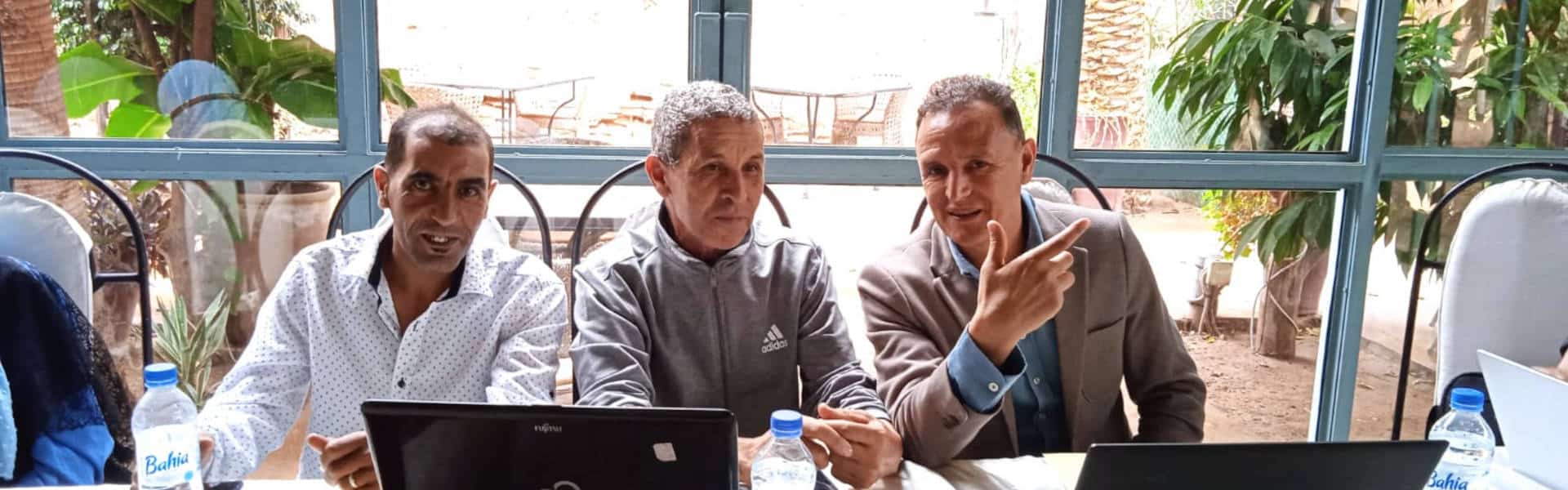
I was invited to participate in the cultural heritage tour organized by the Dakira project funded by USAID and implemented by the High Atlas Foundation with a group of local partners. This tour in southern Morocco lasted 6 days, from September 28th to October 3rd, and covered seven rural communities from four provinces: Ouarzazate, Taroudant, Tiznit, and Guelmim. Its main objective was to celebrate the cultural pluralism that characterizes these regions, which is reflected in their local traditions.

During this tour, which I enjoyed a lot, I trained groups of local youth from the seven communities on open-source technologies and programs offered by ASOR, and used for documenting the diverse cultural heritage of Morocco. These trainings are part of a partnership between the High Atlas Foundation and the American Society of Overseas Research (ASOR) which received funding from an anonymous donor to document cultural patrimony belonging to religious and ethnic minorities in the Maghreb. The field aspect of the ASOR project consists practically of two parts: the first is concerned with inventorying and documenting cultural heritage sites, and the second is related to training sessions in digital documentation tools offered to the local communities. To date, three field training programs were completed in the cities of Casablanca, Essaouira, and Taroudant. Future trainings are also planned for communities from northern Morocco.

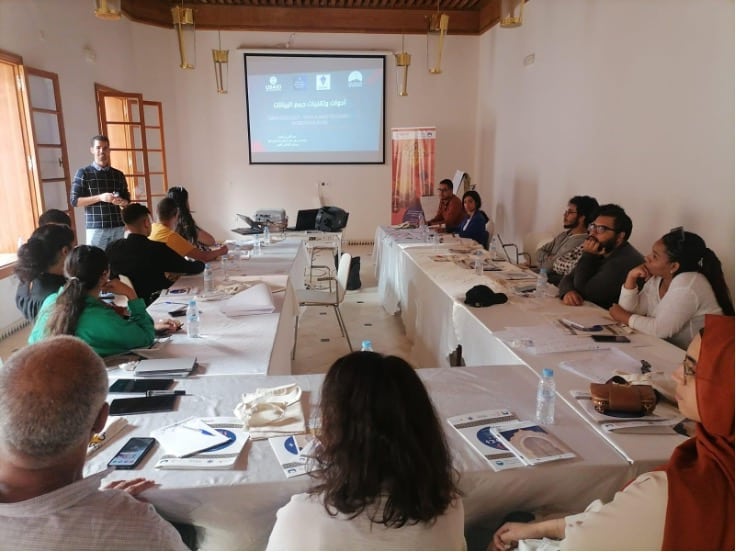
Fig. 1. Theoretical training organized at the Dakira office in the city of Essaouira.

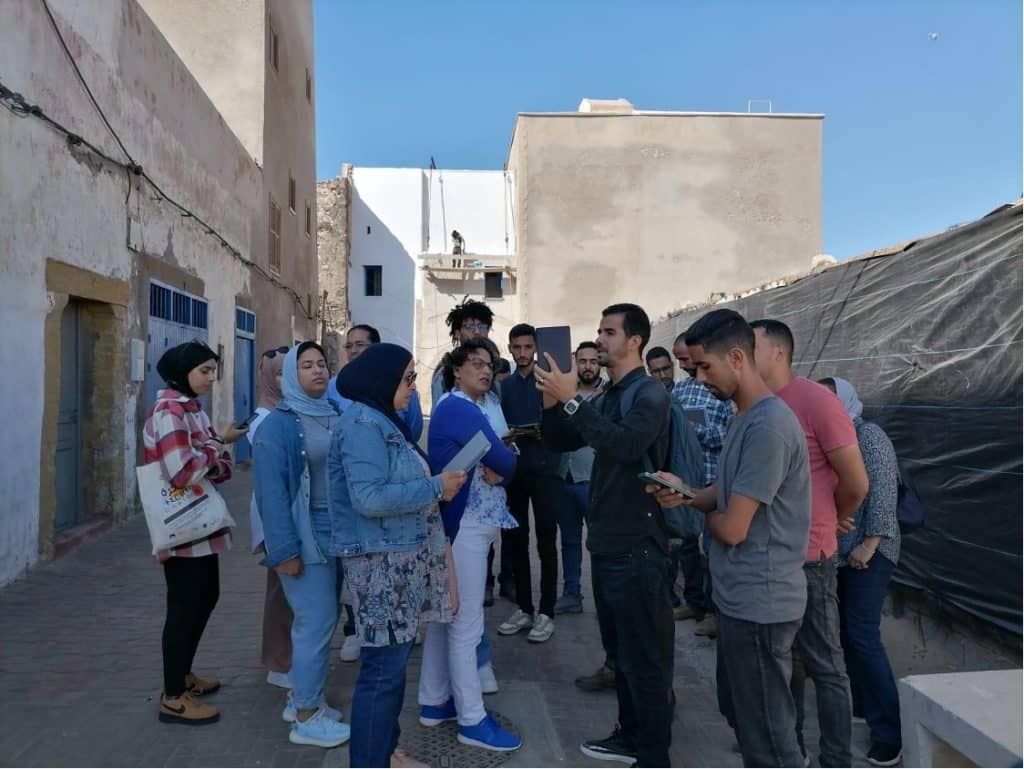
Each training includes theoretical and practical training sessions held in the field, at a rate of two hours per session. The aim is to teach participants how to collect and document data on heritage sites based on questionnaires and evaluations created with the open-source program KoboToolbox. Attendees learn how to create a project enabling them to collect information on heritage sites using tablets and mobile phones or the web browser interface of the program.

Fig. 2. Practical training session on KoboToolbox documentation tool in the city of Essaouira.

After collecting data in the field, training moves to identify ways to synchronize this geographic and descriptive data with various geographic information systems programs such as the open-source QGIS program, and to display the recorded data in the form of static and interactive maps.

Photogrammetry technology is the third component of the training course, and it is based on the use of two-dimensional images of ancient buildings, rock engravings, or writings carved on slabs, houses, tombs, or other features to obtain a three-dimensional model with the help of cameras and computer programs such as Metashape.

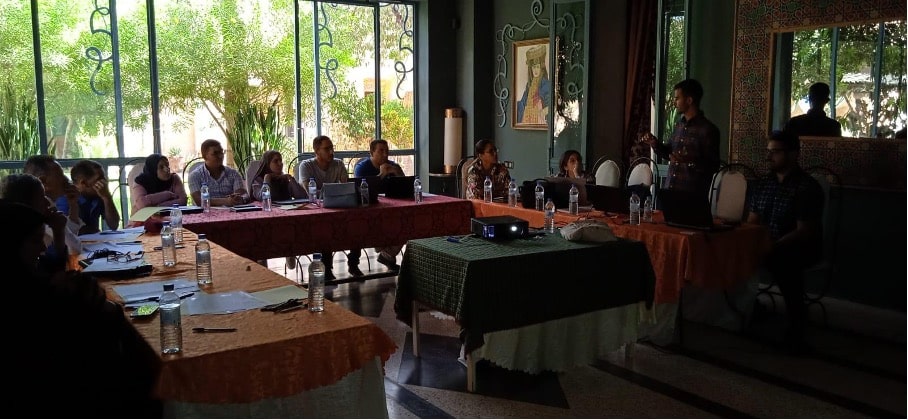
Fig. 3. Training course in Taroudant in its theoretical aspect.

Documenting heritage and archaeological sites across the country has become an absolute necessity in view of the risks and challenges that endangering them, whether due to natural disasters such as floods or to actions resulting from reckless man-made activities such as arson fires, theft, or vandalism. Unfortunately, the damage inflicted by human actions is usually done by individuals ignorant of the value and importance of their heritage. Since damage, part or total loss of this heritage means the disappearance of historical memory in the absence of timely and appropriate documentation, the ASOR project in the Maghreb is of absolute importance to mitigate this situation.

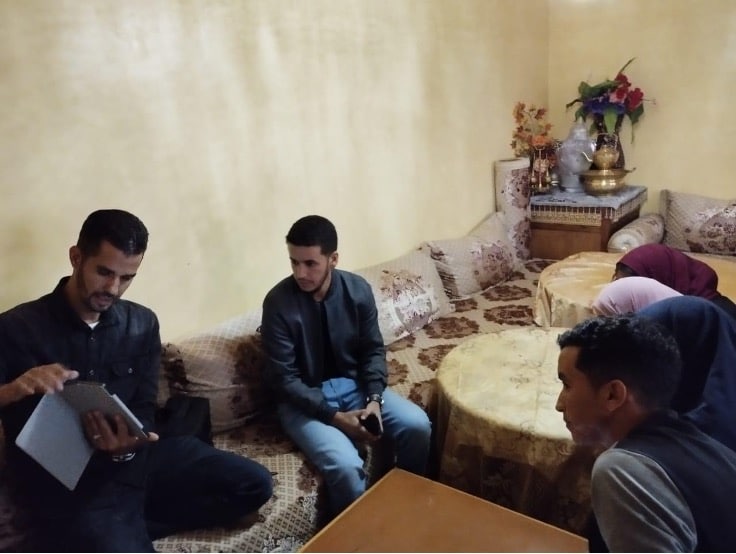
Fig. 4. Demonstration of KoboToolbox program to a group of youth from the village of Tamazirt, affiliated to the Egram Noukdal commune in the Ouarzazate province.

During the multiple instruction sessions I conducted, I sensed a great excitement in the young participants for this training which strengthened their capabilities in handling modern technologies that facilitate data collection, documentation, and archiving, not only in the framework of the ASOR heritage sites documentation project but also or in their own academic or professional ventures.

The High Atlas Foundation and its partners in these training aim to develop the competencies of the largest possible number of young people in the above-mentioned techniques. First to raise awareness among them of the importance of preserving the cultural heritage as one of the authentic components of the united and rich Moroccan identity; then, to pass this training to their peers from their respective communities; and finally, to create an interactive map that will include all collected data and that will be freely available on the Internet with the hope that the published information will not only help protect and revive the rich and diverse Moroccan cultural heritage for the benefit of future generations but also open new avenues for cultural tourism.

2023 Personnel Committee

[vc_row fullwidth=”true” css=”.vc_custom_1490224714943{padding-top: 0px !important;padding-right: 0px !important;padding-bottom: 0px !important;padding-left: 0px !important;}”][vc_column][vc_single_image image=”71488″ img_size=”full” alignment=”center”][/vc_column][/vc_row][vc_row][vc_column][vc_column_text][/vc_column_text][/vc_column][/vc_row][vc_row fullwidth=”true” css=”.vc_custom_1490225468623{padding-top: 0px !important;padding-right: 0px !important;padding-bottom: 0px !important;padding-left: 0px !important;}”][vc_column width=”1/12″ css=”.vc_custom_1490225195470{margin-right: 10px !important;}” offset=”vc_hidden-sm vc_hidden-xs”][vc_column_text]

  SHARE

[/vc_column_text][mk_image src=”http://www.asortest.org/wp-content/uploads/2017/01/social-fb-icon4.jpg” image_width=”42″ image_height=”42″ hover=”false” custom_url=”https://www.facebook.com/ASOResearch/” margin_bottom=”0″][mk_image src=”http://www.asortest.org/wp-content/uploads/2017/01/social-tw-icon4.jpg” image_width=”42″ image_height=”42″ hover=”false” custom_url=”https://twitter.com/ASOResearch?ref_src=twsrc%5Egoogle%7Ctwcamp%5Eserp%7Ctwgr%5Eauthor” margin_bottom=”0″][mk_image src=”http://www.asortest.org/wp-content/uploads/2017/01/social-in-icon4.jpg” image_width=”42″ image_height=”42″ hover=”false” custom_url=”https://www.linkedin.com/company/american-schools-of-oriental-research” margin_bottom=”0″][mk_image src=”http://www.asortest.org/wp-content/uploads/2017/01/social-ml-icon_7.jpg” image_width=”42″ image_height=”42″ hover=”false” custom_url=”mailto:asor@bu.edu” margin_bottom=”0″][mk_image src=”http://www.asortest.org/wp-content/uploads/2017/01/blog-icon3.jpg” image_width=”42″ image_height=”42″ hover=”false” custom_url=”http://asorblog.org/” margin_bottom=”0″][/vc_column][vc_column border_color=”rgba(255,255,255,0.01)” width=”1/6″ css=”.vc_custom_1490365673198{margin-right: 20px !important;border-left-width: 2px !important;padding-right: 20px !important;padding-left: 20px !important;border-left-color: #99422f !important;}” el_class=”sticky-sidenav”][mk_divider divider_color=”rgba(255,255,255,0.01)” thickness=”1″ margin_top=”3″ margin_bottom=”3″][vc_widget_sidebar sidebar_id=”ca-sidebar-37292″ el_class=”.widget { overflow: hidden; margin-bottom: 0; }”][/vc_column][vc_column border_color=”rgba(170,170,170,0.01)” width=”1/2″ css=”.vc_custom_1490225606852{margin-right: 10px !important;margin-bottom: 30px !important;border-right-width: 2px !important;border-bottom-width: 2px !important;padding-top: 30px !important;padding-right: 30px !important;padding-left: 20px !important;background-color: #ffffff !important;border-right-color: rgba(227,228,228,0.75) !important;border-bottom-color: rgba(227,228,228,0.75) !important;}”][vc_column_text responsive_align=”left”]

2023 PERSONNEL COMMITTEE

Archived webpage for the 2023 Personnel Committee Members; This page has been replaced.
The Personnel Committee is responsible for (a)  conducting an annual review of the Executive Director and making recommendations to the Executive Committee pertaining to the employment of the Executive Director; (b) providing direct oversight of the hiring of staff, annual performance assessments, and terminations of employment; (c) serving in an advisory capacity to the Executive Director on personnel matters; and (d) serving as an independent, confidential arbiter of staff grievances.

  • Sharon Herbert, Chair
  • Sheldon Fox
  • Charles Jones
  • Emily Miller Bonney

[/vc_column_text][mk_divider][vc_column_text]

Past Personnel Committee Members

[/vc_column_text][vc_empty_space height=”500px”][/vc_column][vc_column border_color=”rgba(170,170,170,0.01)” width=”1/6″ css=”.vc_custom_1490571214409{margin-right: 10px !important;margin-bottom: 30px !important;border-right-width: 2px !important;border-bottom-width: 2px !important;padding-top: 30px !important;padding-right: 20px !important;padding-left: 20px !important;background-color: #ffffff !important;border-right-color: rgba(227,228,228,0.75) !important;border-bottom-color: rgba(227,228,228,0.75) !important;}”][vc_wp_posts title=”BROWSE THE NEWS ARCHIVE” number=”4″][/vc_column][vc_column border_color=”rgba(170,170,170,0.01)” width=”1/6″ css=”.vc_custom_1490225688999{margin-right: 10px !important;margin-bottom: 30px !important;border-right-width: 2px !important;border-bottom-width: 2px !important;padding-top: 30px !important;padding-right: 30px !important;padding-left: 20px !important;background-color: #ffffff !important;border-right-color: rgba(227,228,228,0.75) !important;border-bottom-color: rgba(227,228,228,0.75) !important;}”][vc_column_text] [/vc_column_text][/vc_column][/vc_row][vc_row][vc_column][vc_column_text]

[/vc_column_text][/vc_column][/vc_row]

2023 Facilities Committee

[vc_row fullwidth=”true” css=”.vc_custom_1490224714943{padding-top: 0px !important;padding-right: 0px !important;padding-bottom: 0px !important;padding-left: 0px !important;}”][vc_column][vc_single_image image=”53240″ img_size=”full” alignment=”center”][/vc_column][/vc_row][vc_row][vc_column][vc_column_text][/vc_column_text][/vc_column][/vc_row][vc_row fullwidth=”true” css=”.vc_custom_1490225468623{padding-top: 0px !important;padding-right: 0px !important;padding-bottom: 0px !important;padding-left: 0px !important;}”][vc_column width=”1/12″ css=”.vc_custom_1490225195470{margin-right: 10px !important;}” offset=”vc_hidden-sm vc_hidden-xs”][vc_column_text]

  SHARE

[/vc_column_text][mk_image src=”http://www.asortest.org/wp-content/uploads/2017/01/social-fb-icon4.jpg” image_width=”42″ image_height=”42″ hover=”false” custom_url=”https://www.facebook.com/ASOResearch/” margin_bottom=”0″][mk_image src=”http://www.asortest.org/wp-content/uploads/2017/01/social-tw-icon4.jpg” image_width=”42″ image_height=”42″ hover=”false” custom_url=”https://twitter.com/ASOResearch?ref_src=twsrc%5Egoogle%7Ctwcamp%5Eserp%7Ctwgr%5Eauthor” margin_bottom=”0″][mk_image src=”http://www.asortest.org/wp-content/uploads/2017/01/social-in-icon4.jpg” image_width=”42″ image_height=”42″ hover=”false” custom_url=”https://www.linkedin.com/company/american-schools-of-oriental-research” margin_bottom=”0″][mk_image src=”http://www.asortest.org/wp-content/uploads/2017/01/social-ml-icon_7.jpg” image_width=”42″ image_height=”42″ hover=”false” custom_url=”mailto:asor@bu.edu” margin_bottom=”0″][mk_image src=”http://www.asortest.org/wp-content/uploads/2017/01/blog-icon3.jpg” image_width=”42″ image_height=”42″ hover=”false” custom_url=”http://asorblog.org/” margin_bottom=”0″][/vc_column][vc_column border_color=”rgba(255,255,255,0.01)” width=”1/6″ css=”.vc_custom_1490365673198{margin-right: 20px !important;border-left-width: 2px !important;padding-right: 20px !important;padding-left: 20px !important;border-left-color: #99422f !important;}” el_class=”sticky-sidenav”][mk_divider divider_color=”rgba(255,255,255,0.01)” thickness=”1″ margin_top=”3″ margin_bottom=”3″][vc_widget_sidebar sidebar_id=”ca-sidebar-37292″ el_class=”.widget { overflow: hidden; margin-bottom: 0; }”][/vc_column][vc_column border_color=”rgba(170,170,170,0.01)” width=”1/2″ css=”.vc_custom_1490225606852{margin-right: 10px !important;margin-bottom: 30px !important;border-right-width: 2px !important;border-bottom-width: 2px !important;padding-top: 30px !important;padding-right: 30px !important;padding-left: 20px !important;background-color: #ffffff !important;border-right-color: rgba(227,228,228,0.75) !important;border-bottom-color: rgba(227,228,228,0.75) !important;}”][vc_column_text responsive_align=”left”]

2023 FACILITIES COMMITTEE

Archived webpage for the 2023 Facilities Committee Members; This page has been replaced.

The Facilities Committee formulates and makes recommendations to the Executive Committee and the Board regarding the repair and maintenance of ASOR facilities and improvements and renovations to ASOR facilities, including proposed improvement and renovation expenditures.

  • Sheldon Fox, Chair
  • Alex Brooks
  • Michael Hasel
  • Alex MacAllister
  • Sharon Herbert (ex officio)
  • Andrew G. Vaughn (ex officio, non-voting)

[/vc_column_text][mk_divider][vc_column_text]

Past Facilities Committee Members

[/vc_column_text][vc_empty_space height=”300px”][vc_column_text][/vc_column_text][/vc_column][vc_column border_color=”rgba(170,170,170,0.01)” width=”1/6″ css=”.vc_custom_1490571214409{margin-right: 10px !important;margin-bottom: 30px !important;border-right-width: 2px !important;border-bottom-width: 2px !important;padding-top: 30px !important;padding-right: 20px !important;padding-left: 20px !important;background-color: #ffffff !important;border-right-color: rgba(227,228,228,0.75) !important;border-bottom-color: rgba(227,228,228,0.75) !important;}”][vc_wp_posts title=”BROWSE THE NEWS ARCHIVE” number=”4″][/vc_column][vc_column border_color=”rgba(170,170,170,0.01)” width=”1/6″ css=”.vc_custom_1490225688999{margin-right: 10px !important;margin-bottom: 30px !important;border-right-width: 2px !important;border-bottom-width: 2px !important;padding-top: 30px !important;padding-right: 30px !important;padding-left: 20px !important;background-color: #ffffff !important;border-right-color: rgba(227,228,228,0.75) !important;border-bottom-color: rgba(227,228,228,0.75) !important;}”][vc_column_text] [/vc_column_text][/vc_column][/vc_row][vc_row][vc_column][vc_column_text]

[/vc_column_text][/vc_column][/vc_row]

2023 Development Committee

[vc_row fullwidth=”true” css=”.vc_custom_1490224714943{padding-top: 0px !important;padding-right: 0px !important;padding-bottom: 0px !important;padding-left: 0px !important;}”][vc_column][vc_single_image image=”28694″ img_size=”full” alignment=”center”][/vc_column][/vc_row][vc_row][vc_column][vc_column_text][/vc_column_text][/vc_column][/vc_row][vc_row fullwidth=”true” css=”.vc_custom_1490225468623{padding-top: 0px !important;padding-right: 0px !important;padding-bottom: 0px !important;padding-left: 0px !important;}”][vc_column width=”1/12″ css=”.vc_custom_1490225195470{margin-right: 10px !important;}” offset=”vc_hidden-sm vc_hidden-xs”][vc_column_text]

  SHARE

[/vc_column_text][mk_image src=”http://www.asortest.org/wp-content/uploads/2017/01/social-fb-icon4.jpg” image_width=”42″ image_height=”42″ hover=”false” custom_url=”https://www.facebook.com/ASOResearch/” margin_bottom=”0″][mk_image src=”http://www.asortest.org/wp-content/uploads/2017/01/social-tw-icon4.jpg” image_width=”42″ image_height=”42″ hover=”false” custom_url=”https://twitter.com/ASOResearch?ref_src=twsrc%5Egoogle%7Ctwcamp%5Eserp%7Ctwgr%5Eauthor” margin_bottom=”0″][mk_image src=”http://www.asortest.org/wp-content/uploads/2017/01/social-in-icon4.jpg” image_width=”42″ image_height=”42″ hover=”false” custom_url=”https://www.linkedin.com/company/american-schools-of-oriental-research” margin_bottom=”0″][mk_image src=”http://www.asortest.org/wp-content/uploads/2017/01/social-ml-icon_7.jpg” image_width=”42″ image_height=”42″ hover=”false” custom_url=”mailto:asor@bu.edu” margin_bottom=”0″][mk_image src=”http://www.asortest.org/wp-content/uploads/2017/01/blog-icon3.jpg” image_width=”42″ image_height=”42″ hover=”false” custom_url=”http://asorblog.org/” margin_bottom=”0″][/vc_column][vc_column border_color=”rgba(255,255,255,0.01)” width=”1/6″ css=”.vc_custom_1490365673198{margin-right: 20px !important;border-left-width: 2px !important;padding-right: 20px !important;padding-left: 20px !important;border-left-color: #99422f !important;}” el_class=”sticky-sidenav”][mk_divider divider_color=”rgba(255,255,255,0.01)” thickness=”1″ margin_top=”3″ margin_bottom=”3″][vc_widget_sidebar sidebar_id=”ca-sidebar-37292″ el_class=”.widget { overflow: hidden; margin-bottom: 0; }”][/vc_column][vc_column border_color=”rgba(170,170,170,0.01)” width=”1/2″ css=”.vc_custom_1490225606852{margin-right: 10px !important;margin-bottom: 30px !important;border-right-width: 2px !important;border-bottom-width: 2px !important;padding-top: 30px !important;padding-right: 30px !important;padding-left: 20px !important;background-color: #ffffff !important;border-right-color: rgba(227,228,228,0.75) !important;border-bottom-color: rgba(227,228,228,0.75) !important;}”][vc_column_text responsive_align=”left”]

2023 DEVELOPMENT COMMITTEE

Archived webpage for the 2023 Development Committee Members; This page has been replaced.
The Development Committee is responsible for making recommendations to the Executive Committee and to the Board regarding Development matters. 

  • Lynn Swartz Dodd, Chair
  • Peggy Duly
  • Eric Meyers
  • Ann V. Sahlman
  • Joe D. Seger
  • Carolyn Midkiff Strange
  • Sheldon Fox (ex officio)
  • Sharon Herbert (ex officio)
  • Andrew G. Vaughn (ex officio, non-voting)
  • Felice Herman (ex. officio, non-voting)

[/vc_column_text][mk_divider][vc_column_text]

Past Development Committee Members

[/vc_column_text][vc_empty_space height=”300px”][/vc_column][vc_column border_color=”rgba(170,170,170,0.01)” width=”1/6″ css=”.vc_custom_1490571214409{margin-right: 10px !important;margin-bottom: 30px !important;border-right-width: 2px !important;border-bottom-width: 2px !important;padding-top: 30px !important;padding-right: 20px !important;padding-left: 20px !important;background-color: #ffffff !important;border-right-color: rgba(227,228,228,0.75) !important;border-bottom-color: rgba(227,228,228,0.75) !important;}”][vc_wp_posts title=”BROWSE THE NEWS ARCHIVE” number=”4″][/vc_column][vc_column border_color=”rgba(170,170,170,0.01)” width=”1/6″ css=”.vc_custom_1490225688999{margin-right: 10px !important;margin-bottom: 30px !important;border-right-width: 2px !important;border-bottom-width: 2px !important;padding-top: 30px !important;padding-right: 30px !important;padding-left: 20px !important;background-color: #ffffff !important;border-right-color: rgba(227,228,228,0.75) !important;border-bottom-color: rgba(227,228,228,0.75) !important;}”][vc_column_text] [/vc_column_text][/vc_column][/vc_row][vc_row][vc_column][vc_column_text]

[/vc_column_text][/vc_column][/vc_row]

2023 Officers Nominations Committee

[vc_row fullwidth=”true” css=”.vc_custom_1490224714943{padding-top: 0px !important;padding-right: 0px !important;padding-bottom: 0px !important;padding-left: 0px !important;}”][vc_column][vc_single_image image=”65521″ img_size=”full”][/vc_column][/vc_row][vc_row][vc_column][vc_column_text][/vc_column_text][/vc_column][/vc_row][vc_row fullwidth=”true” css=”.vc_custom_1490225468623{padding-top: 0px !important;padding-right: 0px !important;padding-bottom: 0px !important;padding-left: 0px !important;}”][vc_column width=”1/12″ css=”.vc_custom_1490225195470{margin-right: 10px !important;}” offset=”vc_hidden-sm vc_hidden-xs”][vc_column_text]

  SHARE

[/vc_column_text][mk_image src=”http://www.asortest.org/wp-content/uploads/2017/01/social-fb-icon4.jpg” image_width=”42″ image_height=”42″ hover=”false” custom_url=”https://www.facebook.com/ASOResearch/” margin_bottom=”0″][mk_image src=”http://www.asortest.org/wp-content/uploads/2017/01/social-tw-icon4.jpg” image_width=”42″ image_height=”42″ hover=”false” custom_url=”https://twitter.com/ASOResearch?ref_src=twsrc%5Egoogle%7Ctwcamp%5Eserp%7Ctwgr%5Eauthor” margin_bottom=”0″][mk_image src=”http://www.asortest.org/wp-content/uploads/2017/01/social-in-icon4.jpg” image_width=”42″ image_height=”42″ hover=”false” custom_url=”https://www.linkedin.com/company/american-schools-of-oriental-research” margin_bottom=”0″][mk_image src=”http://www.asortest.org/wp-content/uploads/2017/01/social-ml-icon_7.jpg” image_width=”42″ image_height=”42″ hover=”false” custom_url=”mailto:asor@bu.edu” margin_bottom=”0″][mk_image src=”http://www.asortest.org/wp-content/uploads/2017/01/blog-icon3.jpg” image_width=”42″ image_height=”42″ hover=”false” custom_url=”http://asorblog.org/” margin_bottom=”0″][/vc_column][vc_column border_color=”rgba(255,255,255,0.01)” width=”1/6″ css=”.vc_custom_1490365673198{margin-right: 20px !important;border-left-width: 2px !important;padding-right: 20px !important;padding-left: 20px !important;border-left-color: #99422f !important;}” el_class=”sticky-sidenav”][mk_divider divider_color=”rgba(255,255,255,0.01)” thickness=”1″ margin_top=”3″ margin_bottom=”3″][vc_widget_sidebar sidebar_id=”ca-sidebar-37292″ el_class=”.widget { overflow: hidden; margin-bottom: 0; }”][/vc_column][vc_column border_color=”rgba(170,170,170,0.01)” width=”1/2″ css=”.vc_custom_1490225606852{margin-right: 10px !important;margin-bottom: 30px !important;border-right-width: 2px !important;border-bottom-width: 2px !important;padding-top: 30px !important;padding-right: 30px !important;padding-left: 20px !important;background-color: #ffffff !important;border-right-color: rgba(227,228,228,0.75) !important;border-bottom-color: rgba(227,228,228,0.75) !important;}”][vc_column_text responsive_align=”left”]

OFFICERS NOMINATIONS COMMITTEE

Archived webpage for the 2023 Officers Nominations Committee Members; This page has been replaced.
The Officers Nominations Committee is responsible for nominating new officers for ASOR as the terms of incumbent officers expire. These officers include the Chair of the Board, the President, the Vice-President, the Secretary, and the Treasurer. 

  • Robert Mullins, Chair
  • Lisa Ackerman
  • Mellisa Bailey Kutner
  • Carol Meyers
  • Joe D. Seger
  • Sharon Herbert (ex officio)
  • Sheldon Fox  (ex officio)
  • Andrew G. Vaughn (ex officio, non-voting)

[/vc_column_text][mk_divider][vc_column_text]

Past Officers Nominations Committee Members

[/vc_column_text][vc_empty_space height=”500px”][/vc_column][vc_column border_color=”rgba(170,170,170,0.01)” width=”1/6″ css=”.vc_custom_1490571214409{margin-right: 10px !important;margin-bottom: 30px !important;border-right-width: 2px !important;border-bottom-width: 2px !important;padding-top: 30px !important;padding-right: 20px !important;padding-left: 20px !important;background-color: #ffffff !important;border-right-color: rgba(227,228,228,0.75) !important;border-bottom-color: rgba(227,228,228,0.75) !important;}”][vc_wp_posts title=”BROWSE THE NEWS ARCHIVE” number=”4″][/vc_column][vc_column border_color=”rgba(170,170,170,0.01)” width=”1/6″ css=”.vc_custom_1490225688999{margin-right: 10px !important;margin-bottom: 30px !important;border-right-width: 2px !important;border-bottom-width: 2px !important;padding-top: 30px !important;padding-right: 30px !important;padding-left: 20px !important;background-color: #ffffff !important;border-right-color: rgba(227,228,228,0.75) !important;border-bottom-color: rgba(227,228,228,0.75) !important;}”][vc_column_text] [/vc_column_text][/vc_column][/vc_row][vc_row][vc_column][vc_column_text]

[/vc_column_text][/vc_column][/vc_row]