FOA Webinar: Yuval Gadot on April 13

FRIENDS OF ASOR WEBINARS

New Perspectives on Jerusalem’s 7th Century BCE Elite

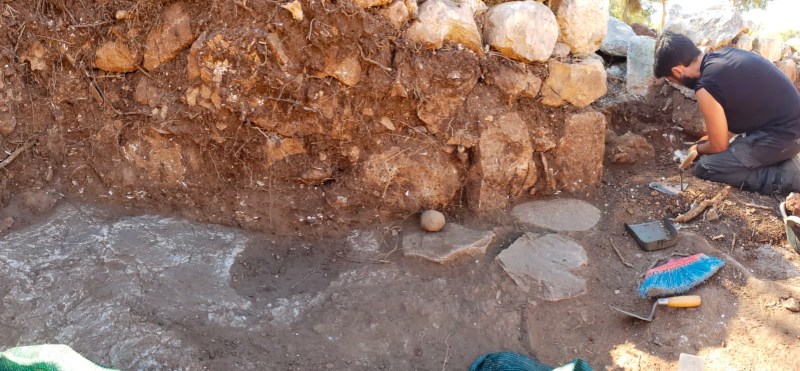
Photo credit: Assaf Perets

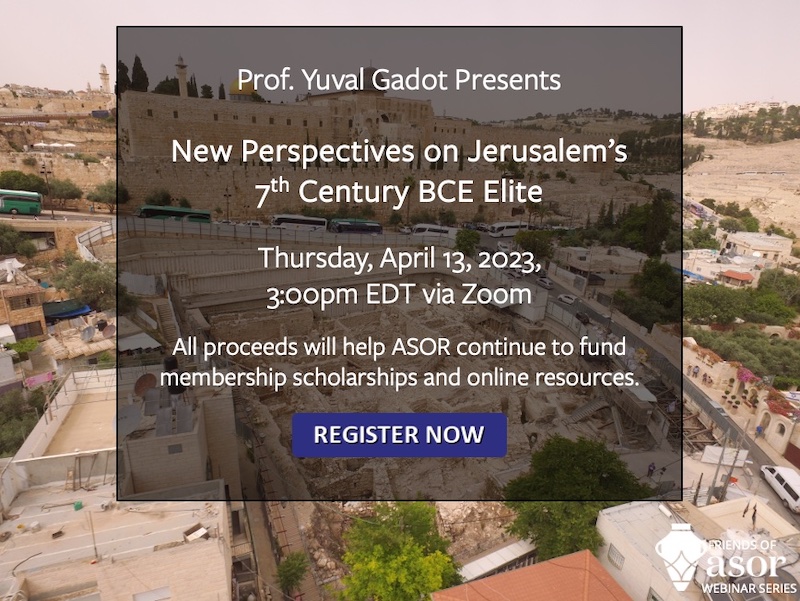
Friends of ASOR present the next webinar in our monthly series on April 13, 2023, at 3:00 pm EDT, featuring Prof. Yuval Gadot and moderated by Prof. Thomas Levy. Jerusalem is one of the most excavated places in the world and yet, some very basic questions regarding the city’s size and location are still being debated. Recent finds from the western slope of the southeastern ridge (known also as “the City of David”) shed new and tantalizing light on the city’s development during the 11th-9th centuries BCE, on the wealth of Jerusalem’s elite during the 7th century BCE, and on the city’s destruction and revival during the 6th and 5th centuries BCE.

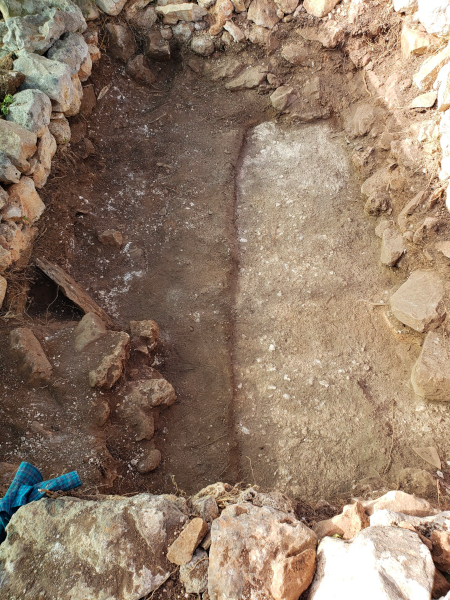
Photo Credit: Sasha Flit

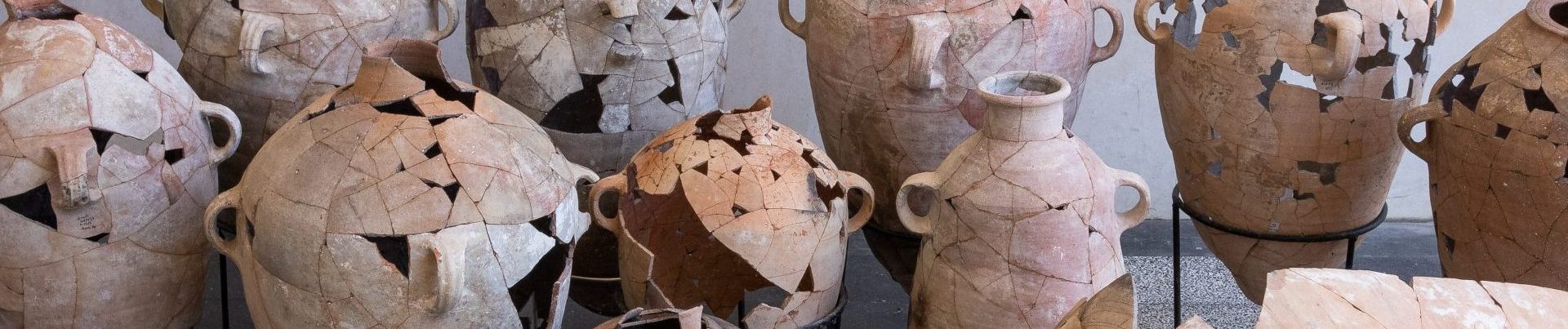
The lecture will focus on 7th century BCE as it will present the results of recent excavations of an elite associated building (Building 100) that was destroyed by the Babylonians in 586 BCE. The analysis of the plethora of artifacts found inside the building, such as ivory panels, wooden artifacts, and storage jars used for holding flavored wine, exposes the intimate details of the lives of Jerusalem’s elite—their habits and their worldview as they operated within an empyreal network.

Join Prof. Gadot as he discusses his new research in telling the story of one of the world’s most fascinating cities. The webinar will conclude with a Q&A session moderated by Prof. Thomas Levy (University of California, San Diego).


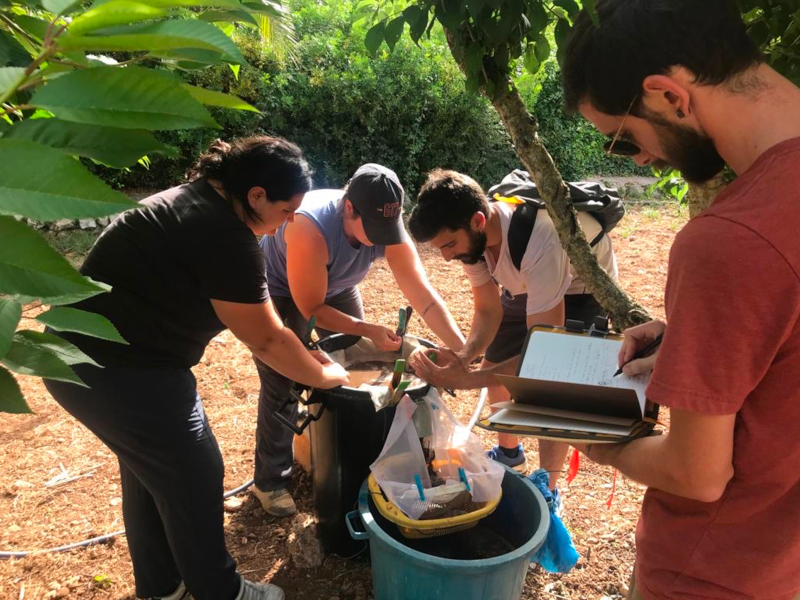
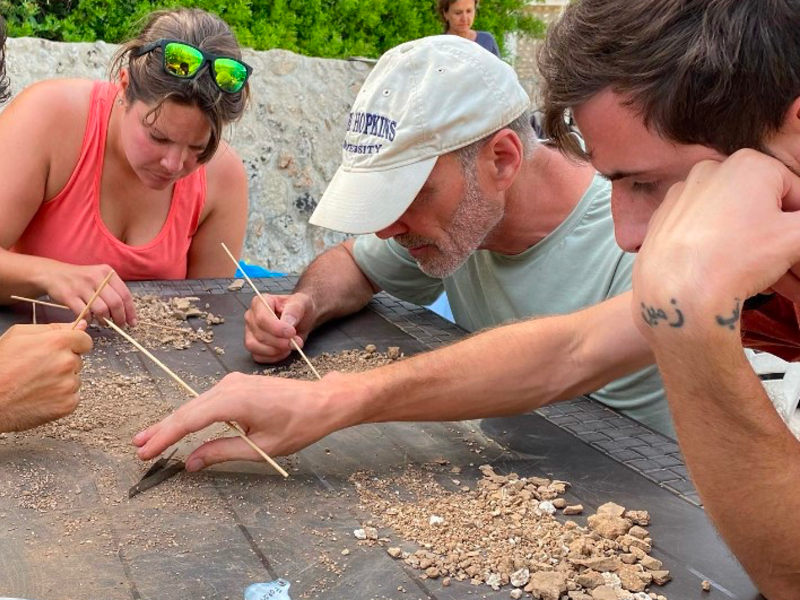
Photo Credit: Sasha Flit

Prof. Yuval Gadot heads the Sonia & Marco Nadler Institute of Archaeology at Tel-Aviv University. He is also lead archaeologist at the “City of David” excavations project in Jerusalem where he co-directs the “Givati Parking Lot” excavations and leads an environmental study of the rural landscape surrounding the city. He obtained his PhD in 2004 from Tel-Aviv University. Between 2004 and 2008, Gadot was a research fellow at the Nelson Glick School of Bible and Archeology at Hebrew Union College (Jerusalem). Between 2005 and 2010, Yuval served as a Field Director for the Institute’s excavations at the Ramat Rachel site (led by Prof. Oded Lipschits and Prof. Manfred Oming). These excavations were published in a large number of publications and final reports. At the same time, he partnered with Prof. Israel Finkelstein and Prof. Steve Weiner in the project “Ancient Israel through the lens of natural and exact sciences,” where he was exposed to the many possibilities that exist in combining science and archaeology.

Since 2018, Gadot has served as the Head of the Department of Archaeology and Ancient Near Eastern Cultures at Tel-Aviv University. He has authored seven archaeological books and over one hundred scientific articles.

This webinar will be recorded and all paid registrants will be sent a link to view the recording.


ASOR Sustaining Members: $0 | ASOR Members: $6 | Public: $12
Season Pass: ASOR Sustaining Members: $0 | ASOR Members: $75 | Public: $150
Buy one here!

To receive your ASOR member discount, log into the online store. If you are new to ASOR, please click on the “New Visitor Registration” link to register your e-mail address and choose a password for our online store. Once logged in, navigate to “Meeting and Event Registration” to register for the webinar and pay the fee. Each paid registrant will receive a confirmation e-mail when you pay for the webinar. If you do not receive this e-mail, then you are not registered. Please e-mail membership@asor.org with any questions or issues with registering.

You will be e-mailed the Zoom Webinar link in the week prior to the lecture on April 13, 2023. If you do not receive the link by the close of business two days before the webinar, please e-mail membership@asor.org immediately. This webinar will be recorded and all paid registrants will be sent a link to view the recording.

All proceeds from this webinar are used to fund scholarships for members as well as increasing ASOR’s online resources, which are free to the public.

READY FOR A WEBINAR SEASON PASS?

Buy a season pass for all the webinars* of the 2022-2023 FOA Webinar Season! 1) You will automatically receive the Zoom link for each webinar so no need to register each time. 2) You will also receive the recording of each webinar automatically after the event.

If you have missed webinars earlier in the season and still want to buy the pass, you will receive the links to the recordings of the webinars you missed in your automatic confirmation email after you buy the pass.

*Special symposiums may be excluded from the season pass price.

No more registering for a year if you buy your pass today!

Pricing:

Members: $75.00
Non-Members: $150.00
ASOR Sustaining Members: $0 (automatic registration for each webinar)
Not a member yet? Click here to join as a member and receive the 50% off a season pass!


Log into our online store to purchase the season pass for 2022-2023. If you are new to ASOR and do not have a record in our store yet, click here to register. After you login, navigate to the left to “Meeting and Event Registration.” Please e-mail membership@asor.org if you have any questions or issues.
WHY SPONSOR A WEBINAR?

Several levels of support from $50-$1,000 are available. Proceeds go towards membership scholarships and towards increasing ASOR’s virtual resources. Each sponsorship is tax-deductible and you can give your friends free registrations to a webinar!

Bronze Level ($50): up to 2 guest registrations
Silver Level ($100): up to 5 guest registrations
Gold Level ($500): up to 20 guest registrations
Platinum Level ($1,000): up to 50 guest registrations

After you sign up for a sponsorship online or over the phone, email the names and email addresses of your guests to Felice Herman at membership@asor.org, who will send your guests a confirmation and the Zoom link before the webinar.

WANT TO SAVE $6.00 ON THE NEXT WEBINAR?

Join ASOR as a member! Click here for more details about discounts for events and other benefits of membership. Memberships start at $40 for the year as an Associate Member.

Not ready to join yet? Become a Friend of ASOR for FREE!

Click here for more details about our online resources.

PAST WEBINARS

You can now purchase the link to the recording of any webinar. You can also purchase the bundle packages of all webinars from the 2020-2022 seasons. Please e-mail membership@asor.org for purchase details.

To see a printable pdf of the webinar titles from the 2020-2021 season, please click here. To see a printable pdf of the webinar titles from the 2021-2022 season, please click here.

Pricing:

Members: $6.00 per recording
Non-Members: $12.00 per recording
Bundle of 2020-2021 Webinars: $75.00
Bundle of 2021-2022 Webinars: $75.00
Bundle of 2020-2022 Webinars: $125.00

2021-2022 Season

A World at War: Protecting Cultural Heritage in Times of Conflict
Patty Gerstenblith (DePaul University), Lisa Ackerman (Columbus Citizens Foundation), Andrew Cohen (Government Professional and Cultural Heritage Expert) | May 12, 2022

Preserving Cultural Heritage in Hisban and Umm al-Jimal, Jordan
Øystein LaBianca (Andrews University), Elizabeth Osinga (Umm al-Jimal Archaeological Project), Darrell Rohl (Calvin University) | April 24, 2022

Back to the Field: Recent Discoveries & Summer Plans 2022
Lorenzo d’Alfonso (ISAW), Kathryn Grossman (NC State University), James R. Strange (Samford University) | April 3, 2022

Uncovering What is Nubian Beneath the Veneer of Egyptianness: Excavating the Archives
Debora Heard (University of Chicago) | March 20, 2022

Where Are They Now?: A Preview of 2022 ASOR-Affiliated Fieldwork Projects
Michael Given (University of Glasgow), Xenia-Paula Kyriakou (Florida Gulf Coast University), Stephen Batiuk (University of Toronto), Monique Roddy (Walla Walla University), Kent Bramlett (La Sierra University), Friedbert Ninow (La Sierra University), and Michael Hoff (University of Nebraska-Lincoln) | March 8, 2022

Excavations at Tel Gezer: A Personal Story
Sam Wolff (Tel Gezer Laboratory) | February 20, 2022

Tel Rehov: A Major Bronze and Iron Age City in the Jordan Valley
Amihai Mazar (Hebrew University of Jerusalem), Nava Panitz-Cohen ( Hebrew University of Jerusalem), Nota Kourou (Athens University), Naama Yahalom-Mack (Hebrew University of Jerusalem), Robert Mullins (Azusa Pacific University) | February 10, 2022

The Not-So-Innocents Abroad: The Beginnings of American Biblical Archaeology
Rachel Hallote (Samford University) | January 20, 2022

Synagogues as Jesus Knew Them
James R. Strange (Samford University) | December 2, 2021

Under Jerusalem: The Buried History of the World’s Most Contested City
Andrew Lawler | November 4, 2021

Jesus and Jerusalem on TV: How Do Bible Documentaries Get Made?
Robert Cargill (University of Iowa) | October 17, 2021

Digging the Divine?: Judahite Pillar Figurines and the Archaeology of Israelite Religion
Erin Darby (University of Tennessee) | October 7, 2021

David, Solomon, and Rehoboam’s Kingdom—The Archaeological Evidence
Yosef Garfinkel (Hebrew University of Jerusalem) | September 19, 2021

From Standing Stones to Sacred Emptiness: Textual and Visual Portrayals of Israel’s God
Theodore Lewis (Johns Hopkins University) | August 29, 2021

2020-2021 Season

Making May Matter: Webinarathon to Endow Diversity
Multiple Speakers | May 21-23, 2021

Archaeogaming: Why Video Games Deserve Their Own Archaeology
Tine Rassalle (University of North Carolina at Chapel Hill), Shannon Martino (Morton College), Matthew Winter (University of Arizona), Michael Zimmerman (Rhode Island) | April 18, 2021

How the Bible Became a Book
William Schniedewind (UCLA) | March 21, 2021

The Mysteries of Mithras in Caesarea: Exploring the Cult’s Rites and Remains
Jane DeRose Evans (Temple University), Alexandra Ratzlaff (Brandeis University) | March 11, 2021

Archaeology and the Hidden Religious Culture of Israelite Women
Carol Meyers (Duke University) | February 21, 2021

Meet the Directors—Fundraiser to Support ASOR’s Affiliated Overseas Research Centers
Matthew J. Adams (AIAR), Pearce Paul Creasman (ACOR), Lindy Crewe (CAARI) | February 11, 2021

Early Synagogues, Jesus, and Galilee—A Jewish Perspective
Eric Meyers (Duke University) | December 13, 2020

Home Sweet Home: Ancient Israelite Households in Context
Cynthia Shafer-Elliott (William Jessup University) | October 18, 2020

Priestesses in the Days of Solomon and Ahab
Susan Ackerman (Dartmouth College) | September 13, 2020

Digging Deeper: How Archaeology Works
Eric H. Cline (The George Washington University) | August 9, 2020

Table of Contents for NEA 86.1 (2023)

Table of Contents for Near Eastern Archaeology 86.1 (March 2023)

You can receive NEA (and other ASOR publications) through an ASOR Membership.
Please e-mail the Membership office if you have any questions.

Pp. 4-15: “Indus-Style Stone Beads in the Late Third-Millennium BCE Southern Levant: The Role of Trade and Curation in the Distribution of High-Value Ornaments,” by Geoffrey E. Ludvik

This article discusses how identification of stylistic, morphometric, mineralogical, and technological characteristics of carnelian stone beads can provide major insights into EB IV/MB I interregional networks and social differentiation. Based on unique drilling techniques, stylistic shapes, morphometric proportions, and mineralogical characteristics, fifty-four carnelian beads found in Israel/Palestine have been identified as crafted in a manner ultimately diagnostic of the Indus tradition of modern Pakistan and western India. Fifty Indus-style beads in the EB IV/MB I probably reflect increased socio-cultural links to the northern Levant and Mesopotamia during this period, while four beads from later contexts represent long-term curation of valuable ornaments.

ASOR Members with online access: log into ASOR’s Online Portal here. Once logged in, click the JOURNALS tab in the top navigation bar. From here you may select which journal you would like to read. If you have online access, you will see your selected journal’s current issue Table of Contents. Click on the “Current Issue” button and you will then be redirected to the University of Chicago Press’s (UCP) platform to immediately start reading any issue of your choice. Tutorials for how to log in to the Online Portal as well as how to navigate to the Portal Journals page can be found here.

Pp. 16-27: “Tell It Like It Is: Discoveries from a New Survey of the Northern Jordanian Plateau,” by Marta Lorenzon, Antti Lahelma, Maher Tarboush, Elisabeth Holmqvist, Dries Daems, Saimi Kautonen, Joanna Töyräänvuori, Stefan L. Smith, Benjamín Cutillas-Victoria, Maija Holappa, Hussein Al-Sababha, and Ahmed Al-Shorman

This article presents the results of a joint Finnish-Jordanian survey project that focuses on investigating the interrelations of the imperial heartlands and the Levantine region in the Late Bronze and Iron Ages. We used historical satellite images to identify potential sites on the northern Jordanian plateau, after which they were systematically investigated by archaeological survey. Of the sites discovered, the fortified site of Tell al-Assara stands out owing to its prominent location, as indicated by a visibility analysis, and its massive enceinte wall made of ashlars. One of the pottery sherds found at the site bears an inscription in Aramaic. Although Tell al-Assara is remarkably well preserved, many of the sites discovered were already badly damaged by looting and urban development. These alarming developments can only be countered by closely involving local communities in fieldwork projects working in the region.

ASOR Members with online access: log into ASOR’s Online Portal here. Once logged in, click the JOURNALS tab in the top navigation bar. From here you may select which journal you would like to read. If you have online access, you will see your selected journal’s current issue Table of Contents. Click on the “Current Issue” button and you will then be redirected to the University of Chicago Press’s (UCP) platform to immediately start reading any issue of your choice. Tutorials for how to log in to the Online Portal as well as how to navigate to the Portal Journals page can be found here.

Pp. 28-45: “The West Semitic Alphabet in the Early Iron Age: A New Hypothesis,” by Benjamin Sass and Israel Finkelstein

In the hypothesis presented by the authors, stratified, nonmonumental inscriptions and their radiometric datings take center stage for the first time. It is in the living script of these texts rather than in the artificial alphabet of monuments that the evolution of the alphabet in Iron IIA can be studied properly. A key take-home lesson of the work is the significant ninth-century transformations of the alphabet from precursive Proto-Canaanite to supraregional cursive, thence to the well-known regional variants. Under the Omrides, the alphabet in Israel is attested minimally. No Omride texts were recognized at Samaria, nor Baashide texts at Tirzah. The newly founded West Semitic kingdoms since ca. 900 BCE will have constituted the cradle of the cursive, while papyrus or parchment and ink were the cursive’s likeliest vehicle. Alphabetic inscriptions on monuments, including Byblos, all cursive-inspired, will only have emerged in the last third of the ninth century.

ASOR Members with online access: log into ASOR’s Online Portal here. Once logged in, click the JOURNALS tab in the top navigation bar. From here you may select which journal you would like to read. If you have online access, you will see your selected journal’s current issue Table of Contents. Click on the “Current Issue” button and you will then be redirected to the University of Chicago Press’s (UCP) platform to immediately start reading any issue of your choice. Tutorials for how to log in to the Online Portal as well as how to navigate to the Portal Journals page can be found here.

Pp. 46-57: “In the Footsteps of Albright: The Renewed Excavations at Tell Beit Mirsim,” by Igor Kreimerman, Itamar Weissbein, Pnina Torn Broers, and Ofer Naveh

Tell Beit Mirsim in the Judean Shephelah was excavated by William F. Albright and Melvin G. Kyle in the 1920s and 1930s. These excavations established the relative chronology for the entire southern Levant because of good preservation conditions, facilitated by the multiple destruction layers at the site, and thanks to Albright’s familiarity with pottery. Ninety years later, the excavations have been renewed with the aim of investigating the economy and social structure of the kingdom of Judah. The first season of renewed excavations by the Institute of Archaeology at the Hebrew University of Jerusalem has unearthed the remains of Iron Age IIB domestic structures, one of which belongs to the four-room-house type, and an olive oil press. The excellent preservation of the remains enables the reconstruction of activity areas and suggests that Tell Beit Mirsim could be the perfect lab for exploring the economy of the kingdom of Judah.

ASOR Members with online access: log into ASOR’s Online Portal here. Once logged in, click the JOURNALS tab in the top navigation bar. From here you may select which journal you would like to read. If you have online access, you will see your selected journal’s current issue Table of Contents. Click on the “Current Issue” button and you will then be redirected to the University of Chicago Press’s (UCP) platform to immediately start reading any issue of your choice. Tutorials for how to log in to the Online Portal as well as how to navigate to the Portal Journals page can be found here.

Pp. 58-63: “In Situ Implementation of Imaging Techniques Reveals Key Motifs in the Early Byzantine Wall Painting of Christ’s Baptism at Shivta, Israel,” by Ravit Linn, Emma Maayan-Fanar, and Yotam Tepper

Following the rediscovery of the Early Byzantine wall painting of Christ’s baptism in the northern church of Shivta in southern Israel, the painting was investigated with different imaging techniques in order to clarify the scene and to find additional painted motifs and hidden colors and patterns. Besides high-quality photography from close distance on a scaffolding at 3.5 m height, thus at the level of the painting, Near IR photography (NIR), UV wavelengths microscopy, and Visible Induced Luminescence (VIL) imaging were all conducted in order to collect new information on the painting. The combination of several imaging techniques provided new and surprising details on elements of the painting, especially revealing blue color around the head and shoulders of Christ, most probably reminiscent of the River Jordan where the baptism took place.

ASOR Members with online access: log into ASOR’s Online Portal here. Once logged in, click the JOURNALS tab in the top navigation bar. From here you may select which journal you would like to read. If you have online access, you will see your selected journal’s current issue Table of Contents. Click on the “Current Issue” button and you will then be redirected to the University of Chicago Press’s (UCP) platform to immediately start reading any issue of your choice. Tutorials for how to log in to the Online Portal as well as how to navigate to the Portal Journals page can be found here.

Pp. 64-73: “The Finder, Not the Find: Presenting Educational Archaeology,” by Achia Kohn-Tavor

Educational excavation projects focus primarily on the pedagogic values embedded in the archaeological work, while archaeology per se is their secondary goal; therefore, they differ from community archaeology, which mostly incorporates education and community into archaeological projects and objectives. This article articulates this difference and then presents educational archaeology in detail, explaining how it is implemented. To illuminate educational archaeology further, two projects headed by the author are presented, encompassing school students, and domestic and international tourism. Educational archaeology encompasses a variety of benefits that are rather efficiently delivered: social and personal development of the individual, building community and a sense of belonging, and widening one’s scope of knowledge. The call to make archaeology accessible to the broad public is greatly facilitated here, and therefore educational archaeology projects should occupy a larger space among place-based, value-oriented projects.

ASOR Members with online access: log into ASOR’s Online Portal here. Once logged in, click the JOURNALS tab in the top navigation bar. From here you may select which journal you would like to read. If you have online access, you will see your selected journal’s current issue Table of Contents. Click on the “Current Issue” button and you will then be redirected to the University of Chicago Press’s (UCP) platform to immediately start reading any issue of your choice. Tutorials for how to log in to the Online Portal as well as how to navigate to the Portal Journals page can be found here.

ECS Brown Bag: Data Management

[vc_row fullwidth=”true” attached=”true” css=”.vc_custom_1496247803139{padding-top: 0px !important;padding-right: 0px !important;padding-bottom: 0px !important;padding-left: 0px !important;}”][vc_column][vc_single_image image=”87954″ img_size=”1920×400″ alignment=”center”][/vc_column][/vc_row][vc_row fullwidth=”true” css=”.vc_custom_1496682730308{padding-top: 10px !important;padding-right: 0px !important;padding-bottom: 0px !important;padding-left: 0px !important;}”][vc_column width=”1/12″ css=”.vc_custom_1496683820796{margin-right: 10px !important;}” offset=”vc_hidden-md vc_hidden-sm vc_hidden-xs”][vc_column_text]

 SHARE

[/vc_column_text][mk_image src=”http://www.asortest.org/wp-content/uploads/2017/01/social-fb-icon4.jpg” image_width=”42″ image_height=”42″ hover=”false” custom_url=”https://www.facebook.com/ASOResearch/” margin_bottom=”0″][mk_image src=”http://www.asortest.org/wp-content/uploads/2017/01/social-tw-icon4.jpg” image_width=”42″ image_height=”42″ hover=”false” custom_url=”https://twitter.com/ASOResearch?ref_src=twsrc%5Egoogle%7Ctwcamp%5Eserp%7Ctwgr%5Eauthor” margin_bottom=”0″][mk_image src=”http://www.asortest.org/wp-content/uploads/2017/01/social-in-icon4.jpg” image_width=”42″ image_height=”42″ hover=”false” custom_url=”https://www.linkedin.com/company/american-schools-of-oriental-research” margin_bottom=”0″][mk_image src=”http://www.asortest.org/wp-content/uploads/2017/01/social-ml-icon_7.jpg” image_width=”42″ image_height=”42″ hover=”false” custom_url=”mailto:info@asor.org” margin_bottom=”0″][mk_image src=”http://www.asortest.org/wp-content/uploads/2017/01/blog-icon3.jpg” image_width=”42″ image_height=”42″ hover=”false” custom_url=”http://asor.org/blog” margin_bottom=”0″][/vc_column][vc_column border_color=”rgba(255,255,255,0.01)” width=”1/6″ css=”.vc_custom_1496683923840{margin-right: 20px !important;border-left-width: 2px !important;padding-right: 20px !important;padding-left: 20px !important;border-left-color: #99422f !important;}”][mk_divider divider_color=”rgba(255,255,255,0.01)” thickness=”1″ margin_top=”3″ margin_bottom=”3″][vc_widget_sidebar sidebar_id=”ca-sidebar-39801″][/vc_column][vc_column border_color=”rgba(170,170,170,0.01)” width=”1/2″ css=”.vc_custom_1487276122024{margin-right: 10px !important;margin-bottom: 30px !important;border-right-width: 2px !important;border-bottom-width: 2px !important;padding-top: 30px !important;padding-right: 30px !important;padding-left: 20px !important;background-color: #ffffff !important;border-right-color: rgba(227,228,228,0.75) !important;border-bottom-color: rgba(227,228,228,0.75) !important;}”][vc_column_text responsive_align=”left”]

Early Career Scholars Brown Bag on Data Management: Beyond Checkbox Compliance

[/vc_column_text][mk_divider][vc_column_text]

Join ASOR’s Early Career Scholars on March 31, 2023 at 1:00-2:00pm EDT via Zoom for a virtual Brown Bag talk and Q&A on Research Data Management for archaeological research projects, job applications, and beyond!

Archaeological field and research projects accumulate A LOT of data. Artifact data, spatial data, analytical data, the list goes on. Whether you’re working on a thesis or dissertation project, managing an excavation, or applying for a job, it is becoming increasingly crucial to plan and implement data management strategies. Academic job calls now frequently require applicants to submit a statement of data collection & management philosophy, and non-academic job opportunities can be expanded by familiarizing oneself with data management strategies. To address this need for data planning and management, ASOR ECS has invited Dr. Eric Kansa, Program Director of Open Context!

Abstract: “Research Data Management” can often seem like a dry and technocratic hassle. Few feel excited by data management plans made in compliance with the demands of grant making bureaucracies. However, if you choose, data management can mean limitless opportunities for intellectual engagement. Creating, organizing, contextualizing, and communicating information- to your current and your future colleagues and publics – are all integral to virtually every aspect of scholarship. We’ll talk about some of the opportunities for research, teaching, and public engagement afforded by data management. We’ll also discuss how demonstrated experience with data management can help open career opportunities inside and outside of the academy.

Presenter: Eric Kansa, Ph.D., is the Program Director for Open Context, a web-based open access publishing service dedicated to the preservation and accessibility of archaeology research data. Eric’s personal research interests explore research data informatics, research data policy, ethics, and professional context of the digital humanities.

The event, a part of our brown bag lunch series, is a *FREE* benefit for the ASOR community. Registrants will receive an email with Zoom access information prior to the event.

[/vc_column_text][/vc_column][vc_column border_color=”rgba(170,170,170,0.01)” width=”1/6″ css=”.vc_custom_1496684098866{margin-right: 5px !important;margin-bottom: 20px !important;border-right-width: 2px !important;border-bottom-width: 2px !important;padding-top: 30px !important;padding-right: 10px !important;padding-left: 10px !important;background-color: #ffffff !important;border-right-color: rgba(227,228,228,0.75) !important;border-bottom-color: rgba(227,228,228,0.75) !important;}”][vc_wp_posts title=”BROWSE THE NEWS ARCHIVE” number=”4″][/vc_column][vc_column border_color=”rgba(170,170,170,0.01)” width=”1/6″ css=”.vc_custom_1496684008271{margin-right: 10px !important;margin-bottom: 30px !important;border-right-width: 2px !important;border-bottom-width: 2px !important;padding-top: 30px !important;padding-right: 20px !important;padding-left: 20px !important;background-color: #ffffff !important;border-right-color: rgba(227,228,228,0.75) !important;border-bottom-color: rgba(227,228,228,0.75) !important;}”][vc_column_text] [/vc_column_text][/vc_column][/vc_row]

Celebrating February’s Black History Month: Documentation and Outreach Event Commemorating the End of Slavery in Tunisia

Celebrating February’s Black History Month—Documentation and Outreach Event Commemorating the End of Slavery in Tunisia

Faten Bouchrara and Saoussen Nighaoui, Heritage Laboratory of the University of Manouba-Tunisia


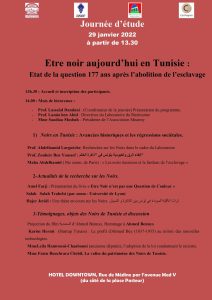
Fig. 1: Program of the Commemorative Day celebrating the end of slavery in Tunisia.

Fig. 1: Program of the Commemorative Day celebrating the end of slavery in Tunisia.

On January 23, 1846, Tunisia became the first Arab and Muslim country to ban slavery. On the 177th anniversary of this event, a commemorative day was jointly organized by several ASOR partners in Tunisia: The Heritage Laboratory of The University of Manouba, The Manouba Association for Monuments and Culture, and The Association Carthagina. This article recounts the event and closes off fittingly the celebrations of Black History Month. A rich and robust program was presented to a large audience of students, teachers, and members from the Black and Amazigh communities. These groups shared how they had worked with ASOR on the documentation, preservation, and outreach of the cultural heritage of religious and ethnic minorities in the Maghreb. This collaborative project, supported by an anonymous donor, has provided the opportunity to train members from different minority groups in the Maghreb with a wide number of documentation tools.

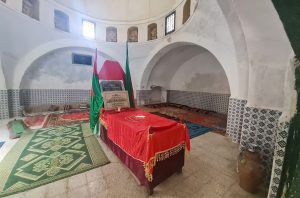
During this ongoing project, members of the Black Tunisian community have been trained by Faten Bouchrara and Saoussen Nighaoui from the Manouba Laboratory in the manipulation of these technological programs. These open-access tools not only help Black Tunisians with documenting their patrimony but also raise awareness of their rich culture. Five members of the Black Tunisian community were trained on strategies of photo taking to produce photogrammetric models. A field documentation session was carried out in two mausoleums of Black saints: the mausoleum of Sidi Saâd Bouakrouche in Mornag near Tunis and the mausoleum of Sidi Gnaou in Zraoua, Gabès, in southern Tunisia.

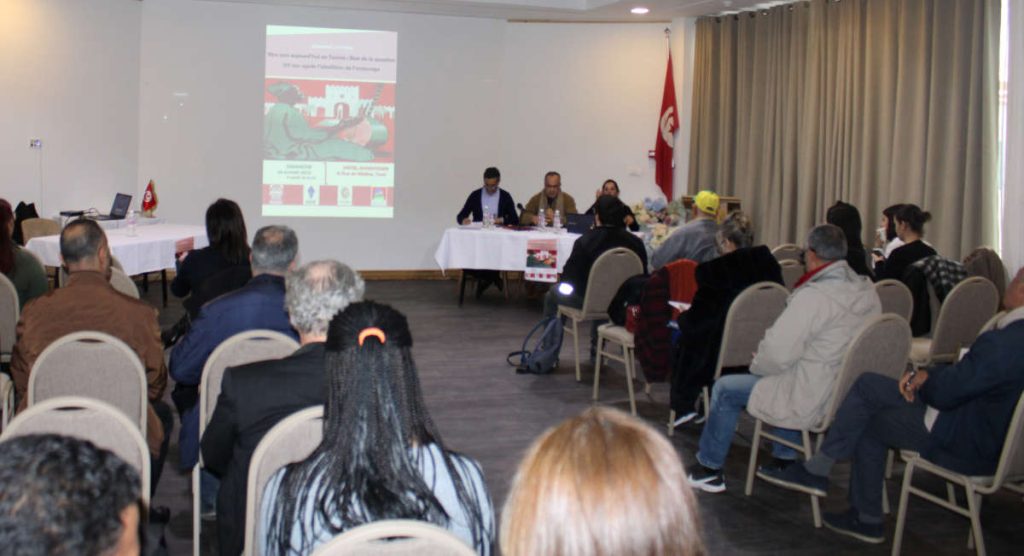
Fig. 2. Opening ceremony held on January 29, 2023, in Tunis (Photo Saoussen Nighaoui).

Fig. 2. Opening ceremony of event in Tunis (Photo Saoussen Nighaoui).

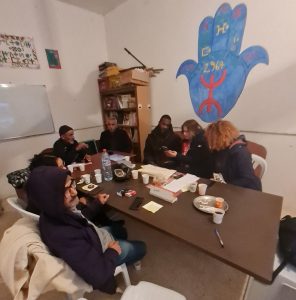
Fig. 3. Faten Bouchrara and Saoussen Nighaoui train members of the Black Tunisian community on using KoboToolBox and KoboCollect to document their tangible heritage (Photo Ahmed Metoui).

Fig. 3. Faten Bouchrara and Saoussen Nighaoui train members of the Black Tunisian community on using KoboToolBox and KoboCollect to document their tangible heritage (Photo Ahmed Metoui).

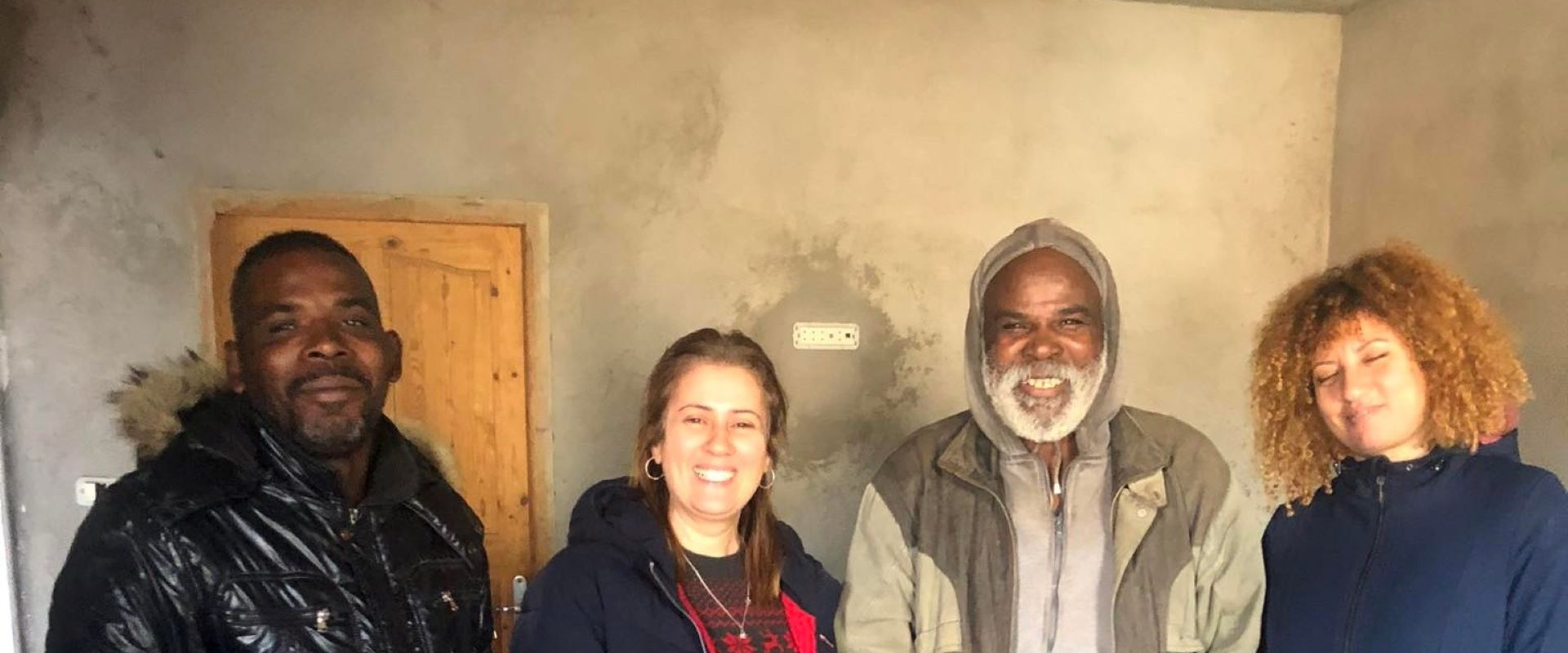
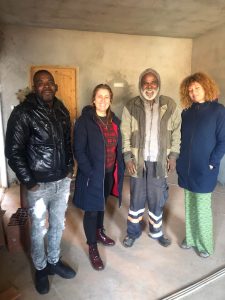
Fig. 4. During the documentation training session. Left to right: Saâd Elbey, Faten Bouchrara, Kamel Kirane and Saoussen Nighaoui (Photo Sami Chebil).

Fig. 4. During the documentation training session. Left to right: Saâd Elbey, Faten Bouchrara, Kamel Kirane and Saoussen Nighaoui (Photo Sami Chebil).

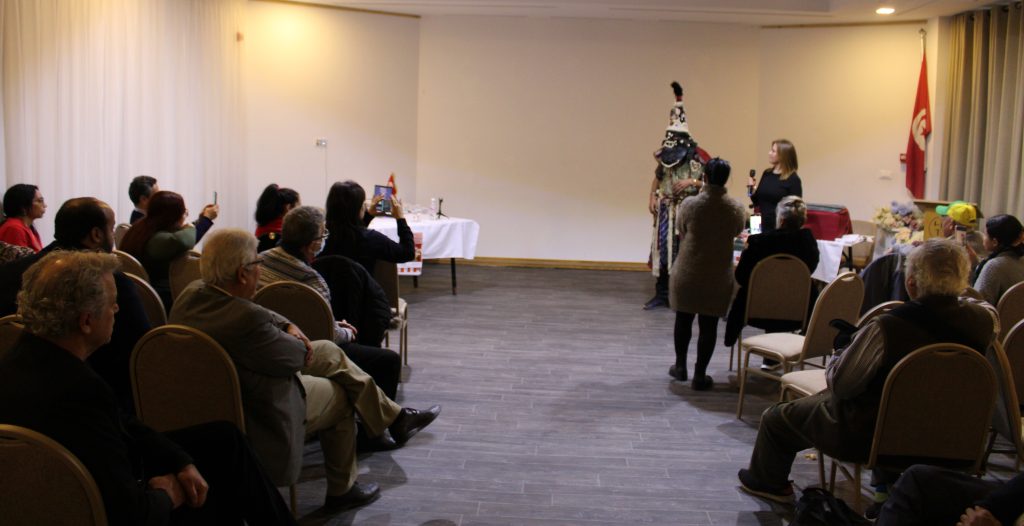
In addition to training in these computer-aided methods, Bouchrara presented the concept of a Museum in a Suitcase, another ASOR project that was launched in 2018 in Libya to foster and advance education and stewardship activities that preserve and promote cultural shared heritage. Musician Belhassen Mihoub presented a proposal for a Black Tunisian music suitcase. He demonstrated the use of traditional musical instruments that he made himself, such as the Gombri, the Gambra, and the Chkâchek. He also included in the suitcase the costume of Bousâadia, the traditional character who accompanies and dances to the music known as Stambeli. This hands-on presentation followed Hajer Jeridi, a doctoral student, who spoke about her current research on Black music in Tunisia.

Fig. 5. Musician Belhassen Mihoub dressed in the costume of the traditional character who accompanies and dances to the music known as Stambeli (Photo Saoussen Nighaoui).

Fig. 5. Musician Belhassen Mihoub dressed in the costume of the traditional character who accompanies and dances to the music known as Stambeli (Photo Saoussen Nighaoui).

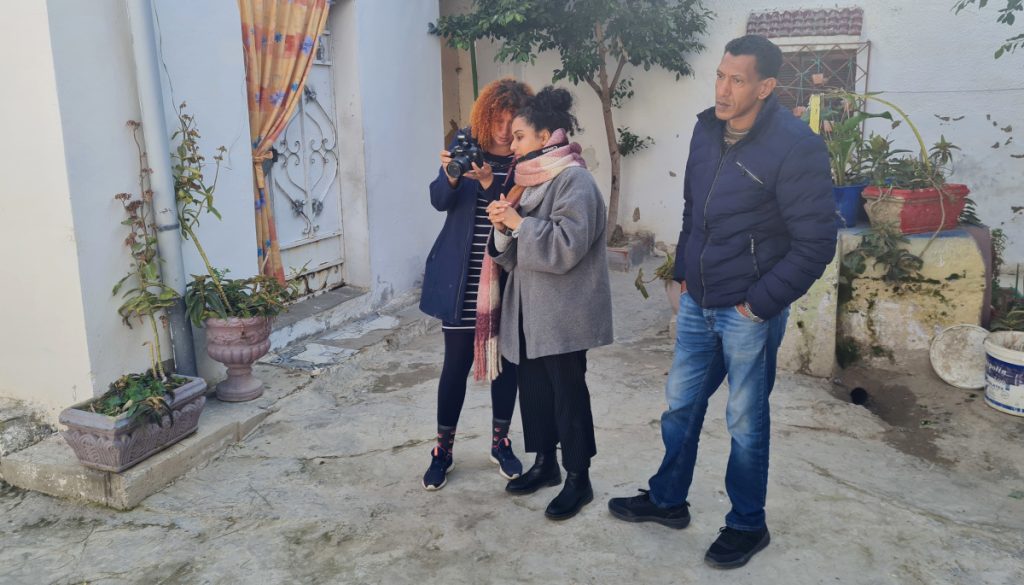
Fig. 6. Saoussen Nighaoui during the field training in successful photogrammetry photo-taking strategies (Photo Faten Bouchrara).

Fig. 6. Saoussen Nighaoui during the field training in successful photogrammetry photo-taking strategies (Photo Faten Bouchrara).

The celebratory event included also academic presentations delivered by Prof. Abdelhamid Largèche and Amel Farji on the history and heritage of the Blacks in Tunisia. Two female representatives of the Black Tunisian community, Saadiya Mosbah and Maha Abdelhamid, addressed the audience via Zoom on the topic of Tunisian slavery. Largèche stressed that Black Tunisians continue to bear a burden of their enslavement past.

Presenters stressed the abolition of slavery in 1846 by Ahmed Bey (who became the ruler of the beylik of Tunis in 1837) was not sudden. It was already preceded on September 6, 1841, by a ban on the sale of slaves and by an official decree on December, 1842 ruling that any child born of slave parents in Tunis, is declared free. Ahmed Bey’s contribution to the advancement of human rights in Tunisia was highlighted in the screening of the movie Mhamdia by Ahmed Bennys evoking Ahmed Bey’s trip to France in 1846, just after he promulgated the act of abolition of slavery, and by Karim Hermi who presented a project profiling Ahmed Bey (1837-1955) with the use of new technologies.

These commemorative activities will certainly have a positive impact on the heritage of the Black Tunisian community, and ASOR was pleased to participate from afar through ongoing activities with our collaborators in Tunisia. Combined with ASOR’s documentation and outreach activities in Tunisia, such activities reinforce the need to protect, safeguard, enhance, and share the diverse cultural heritage of a pluralistic Tunisia.

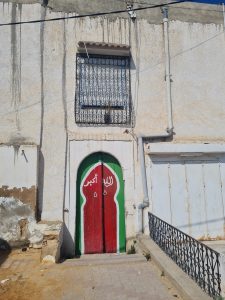
Fig. 7. Photogrammetric documentation of the façade of the Sidi Saâd Bouakrouche Mausoleum in Mornag near Tunis (Photo Saoussen Nighaoui).

Fig. 7. Photogrammetric documentation of the façade of the Sidi Saâd Bouakrouche Mausoleum in Mornag near Tunis (Photo Saoussen Nighaoui).

Fig. 8. The tomb of Sidi Saâd Bouakrouche, one of the Black Saints revered in Tunisia (Photo Saoussen Nighaoui).

Fig. 8. The tomb of Sidi Saâd Bouakrouche, one of the Black Saints revered in Tunisia (Photo Saoussen Nighaoui).

2023 Trustee Nominations Committee

[vc_row fullwidth=”true” css=”.vc_custom_1490224714943{padding-top: 0px !important;padding-right: 0px !important;padding-bottom: 0px !important;padding-left: 0px !important;}”][vc_column][vc_single_image image=”29771″ img_size=”full”][/vc_column][/vc_row][vc_row][vc_column][vc_column_text][/vc_column_text][/vc_column][/vc_row][vc_row fullwidth=”true” css=”.vc_custom_1490225468623{padding-top: 0px !important;padding-right: 0px !important;padding-bottom: 0px !important;padding-left: 0px !important;}”][vc_column width=”1/12″ css=”.vc_custom_1490225195470{margin-right: 10px !important;}” offset=”vc_hidden-sm vc_hidden-xs”][vc_column_text]

  SHARE

[/vc_column_text][mk_image src=”http://www.asortest.org/wp-content/uploads/2017/01/social-fb-icon4.jpg” image_width=”42″ image_height=”42″ hover=”false” custom_url=”https://www.facebook.com/ASOResearch/” margin_bottom=”0″][mk_image src=”http://www.asortest.org/wp-content/uploads/2017/01/social-tw-icon4.jpg” image_width=”42″ image_height=”42″ hover=”false” custom_url=”https://twitter.com/ASOResearch?ref_src=twsrc%5Egoogle%7Ctwcamp%5Eserp%7Ctwgr%5Eauthor” margin_bottom=”0″][mk_image src=”http://www.asortest.org/wp-content/uploads/2017/01/social-in-icon4.jpg” image_width=”42″ image_height=”42″ hover=”false” custom_url=”https://www.linkedin.com/company/american-schools-of-oriental-research” margin_bottom=”0″][mk_image src=”http://www.asortest.org/wp-content/uploads/2017/01/social-ml-icon_7.jpg” image_width=”42″ image_height=”42″ hover=”false” custom_url=”mailto:info@asor.org” margin_bottom=”0″][mk_image src=”http://www.asortest.org/wp-content/uploads/2017/01/blog-icon3.jpg” image_width=”42″ image_height=”42″ hover=”false” custom_url=”http://asor.org/blog” margin_bottom=”0″][/vc_column][vc_column border_color=”rgba(255,255,255,0.01)” width=”1/6″ css=”.vc_custom_1490365673198{margin-right: 20px !important;border-left-width: 2px !important;padding-right: 20px !important;padding-left: 20px !important;border-left-color: #99422f !important;}” el_class=”sticky-sidenav”][mk_divider divider_color=”rgba(255,255,255,0.01)” thickness=”1″ margin_top=”3″ margin_bottom=”3″][vc_widget_sidebar sidebar_id=”ca-sidebar-37292″ el_class=”.widget { overflow: hidden; margin-bottom: 0; }”][/vc_column][vc_column border_color=”rgba(170,170,170,0.01)” width=”1/2″ css=”.vc_custom_1490225606852{margin-right: 10px !important;margin-bottom: 30px !important;border-right-width: 2px !important;border-bottom-width: 2px !important;padding-top: 30px !important;padding-right: 30px !important;padding-left: 20px !important;background-color: #ffffff !important;border-right-color: rgba(227,228,228,0.75) !important;border-bottom-color: rgba(227,228,228,0.75) !important;}”][vc_column_text responsive_align=”left”]

2023 TRUSTEE NOMINATIONS COMMITTEE

The Trustee Nominations Committee is responsible for developing a slate of candidates for the annual trustee election and for presenting these candidates to the electorate. Typically, this slate consists of candidates for four positions: two individual trustees (candidates who are either academic or contributing members of ASOR) and two institutional trustees (candidates who represent organizations that are ASOR institutional members).

  • Kathryn Grossman, chair
  • Theodore Burgh
  • Erin Darby
  • Jason Ur
  • Sharon Herbert (ex officio)
  • Sheldon Fox (ex officio)
  • Andrew G. Vaughn (ex officio, non-voting)

[/vc_column_text][mk_divider][vc_column_text]

Past Trustee Nominations Committee Members

[/vc_column_text][/vc_column][vc_column border_color=”rgba(170,170,170,0.01)” width=”1/6″ css=”.vc_custom_1490571214409{margin-right: 10px !important;margin-bottom: 30px !important;border-right-width: 2px !important;border-bottom-width: 2px !important;padding-top: 30px !important;padding-right: 20px !important;padding-left: 20px !important;background-color: #ffffff !important;border-right-color: rgba(227,228,228,0.75) !important;border-bottom-color: rgba(227,228,228,0.75) !important;}”][vc_wp_posts title=”BROWSE THE NEWS ARCHIVE” number=”4″][/vc_column][vc_column border_color=”rgba(170,170,170,0.01)” width=”1/6″ css=”.vc_custom_1490225688999{margin-right: 10px !important;margin-bottom: 30px !important;border-right-width: 2px !important;border-bottom-width: 2px !important;padding-top: 30px !important;padding-right: 30px !important;padding-left: 20px !important;background-color: #ffffff !important;border-right-color: rgba(227,228,228,0.75) !important;border-bottom-color: rgba(227,228,228,0.75) !important;}”][vc_column_text] [/vc_column_text][/vc_column][/vc_row][vc_row][vc_column][vc_column_text]

[/vc_column_text][/vc_column][/vc_row]

Fieldwork Report: Kathleen Forste

Andalusian Agriculture: A View from Medieval Menorca

Kathleen Forste, 2022 P.E. MacAllister Scholarship for Fieldwork Participation

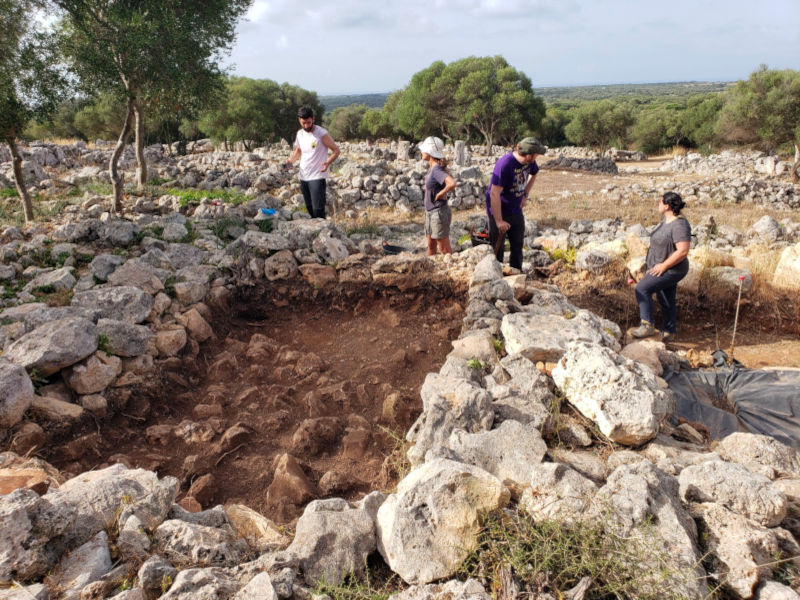
Thanks to the ASOR Scholarship for Fieldwork Participation, I was able to join the Menorca Archaeology Project (MAP) in Spain to excavate a portion of the medieval settlement at the site of Torre d’en Galmés. This rural 13th century Islamic village, or alqueria, is built atop and abutting (and certainly borrowing from) the ruins of a large post-Talayotic (Iron Age) settlement, and by studying it we can better understanding what life was like during this period and how medieval lifeways have influenced later periods of life on Menorca.

I am the archaeobotanist on the team, meaning I study plant remains like wood charcoal, seeds, and plant parts. The analysis of these remains can help us answer questions about diet and foodways, the crops that people grew and the wild plants they collected, and the types of plant materials they used to build their houses and fuel their fires.

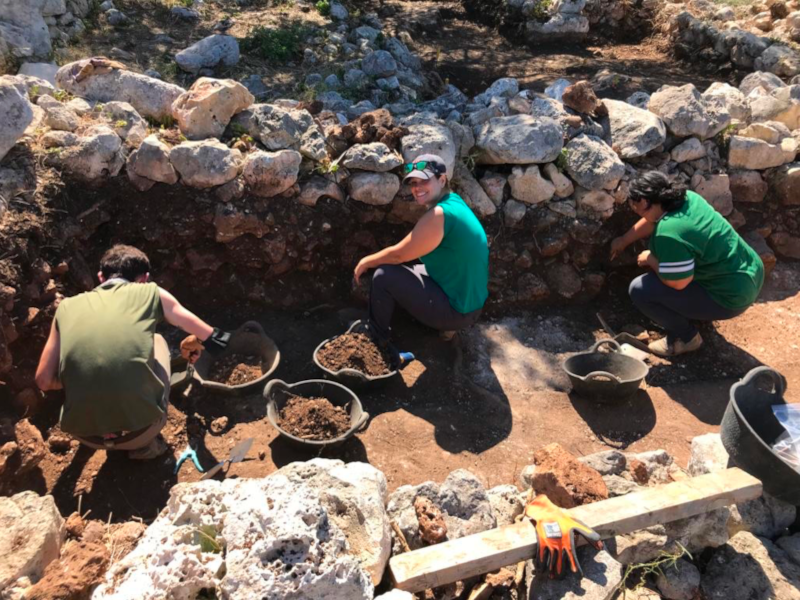
This season, our excavation focused on two houses, one of which was so well-preserved that the plaster on the interior walls and floor were still intact. These houses were built in the typical form of Muslim houses – multiple rooms formed an L that bordered 2 sides of a patio, which was enclosed by 2 other walls to create a private area for the family to relax and perform everyday tasks such as cooking and carding wool to make yarn. The room that was excavated we are interpreting to be a kitchen, based on the presence of hearths, grinding stones, cooking vessels, as well as parallels in construction to other excavated houses of this era. We also found bronze nails just inside the threshold, hinting at the wooden door that would have graced this entryway.

Beginning our excavation of a medieval Islamic house, surrounded by ruins of other medieval houses and post-Talayotic buildings.
Excavating the east wall of the kitchen. Note the white plaster to the right of the author (middle), and the partially-excavated patio in the background.
The kitchen looking east. Moving left to right you can see the plaster floor, inlaid grinding stone and hand-held grinder in situ, and the doorway (undergoing excavation) that led out to patio.

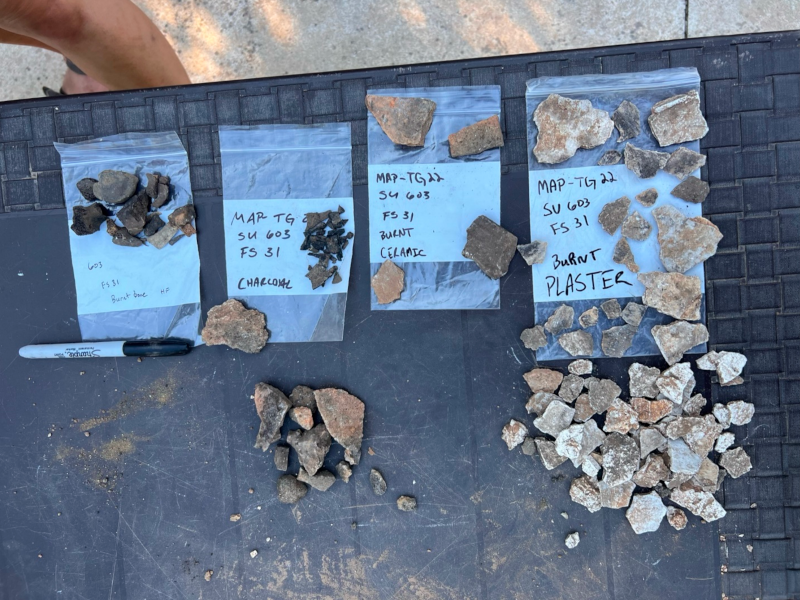
We recovered carbonized plant remains through flotation, a method of using water to separate carbonized plant remains and microartifacts from their surrounding soil matrix. I built a new flotation tank for the project, and trained team members in this method. I will begin analyzing the plant remains from this season during the academic year, and based on findings from the previous season, I expect to find barley (which is a hardy crop that grows well in hot rocky areas and requires a moderate amount of water) and pulses like lentils and chickpeas (which grow best in cooler temperatures and require moderate amounts of water). Based on the growing requirements of these crops, we can begin to hypothesize which types of habitats Menorcan farmers selected for their fields.

The kitchen looking north. The plaster floor is exposed in the eastern portion (R-hand side) beneath the compacted occupation debris and collapse (intact in the western portion, L-hand side).
Teaching MAP team members how to recover plant remains and microartifacts through flotation.
MAP team members sorting the heavy fraction to recover microartifacts like fish bones and small plaster fragments.
Artifacts recovered from flotation, including lots of wood charcoal (second bag from the left).

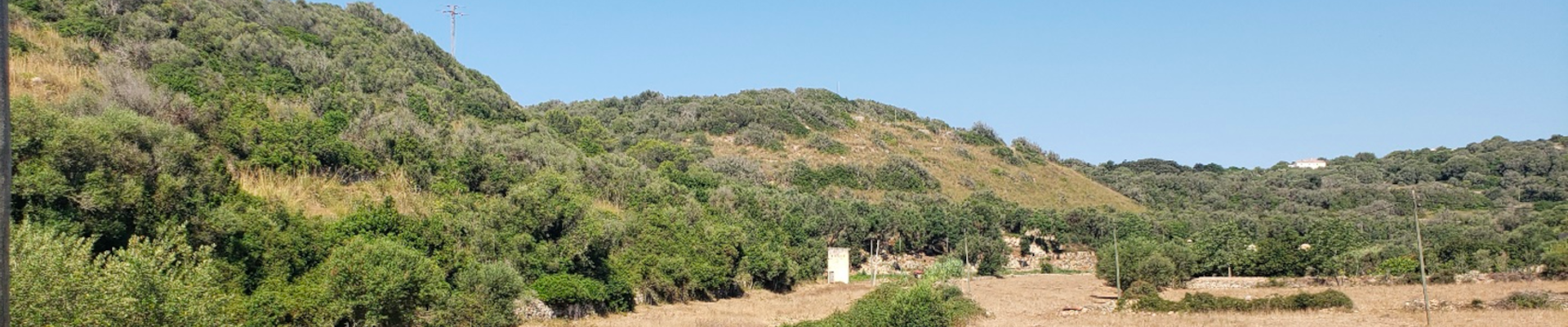
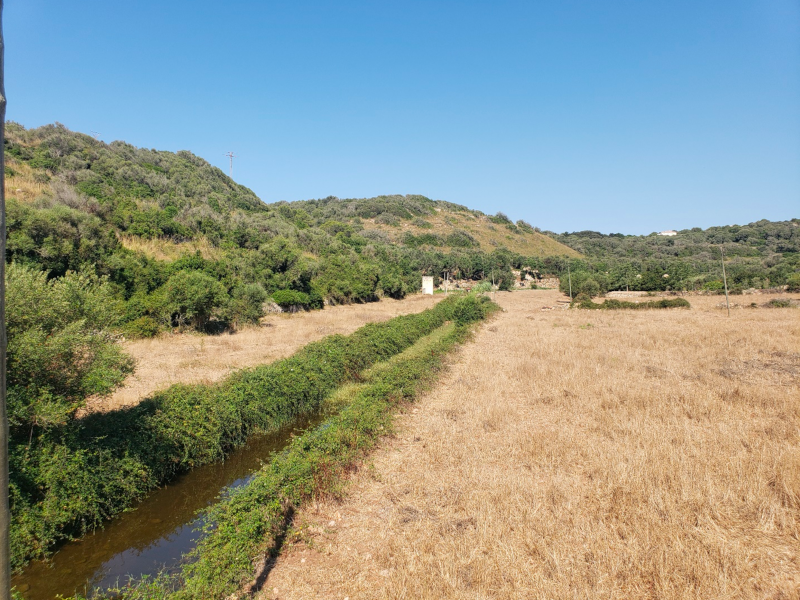
Some of the agricultural engineering of the medieval era is still functional today, like this irrigation canal in a barranco (valley) that waters orchards and fields, creating a direct line between ancient and modern land-use practices.

Flotation was one of the methods employed to understand the way in which the medieval inhabitants managed their surroundings, along with mapping and 3D modeling structures and open spaces linking them. Through this multidisciplinary research we will be able to reconstruct the rhythm of life of medieval Menorca, and the ways in which people cultivated and built their landscapes.

Check out more about our project on Instagram: @MAProject360

Kathleen Forste is an anthropological archaeologist who studies agricultural systems through the analysis of archaeological plant remains, historical sources, and environmental data. Her research focuses on how societies adapt their agricultural systems to various environmental and socioeconomic conditions during the Islamic period (7th through 13th centuries) in the Levant and Iberia. She earned her PhD in 2021 from Boston University, where she is currently a Lecturer of Archaeology.  

Want to help more students and early career archaeologists get into the field? Donate to the cause today by selecting “Student Support” as your gift purpose!

FOA Webinar: Tiffany Earley-Spadoni on March 23

FRIENDS OF ASOR WEBINARS

Urartu: Reframing Assyria’s Enigmatic Neighbor

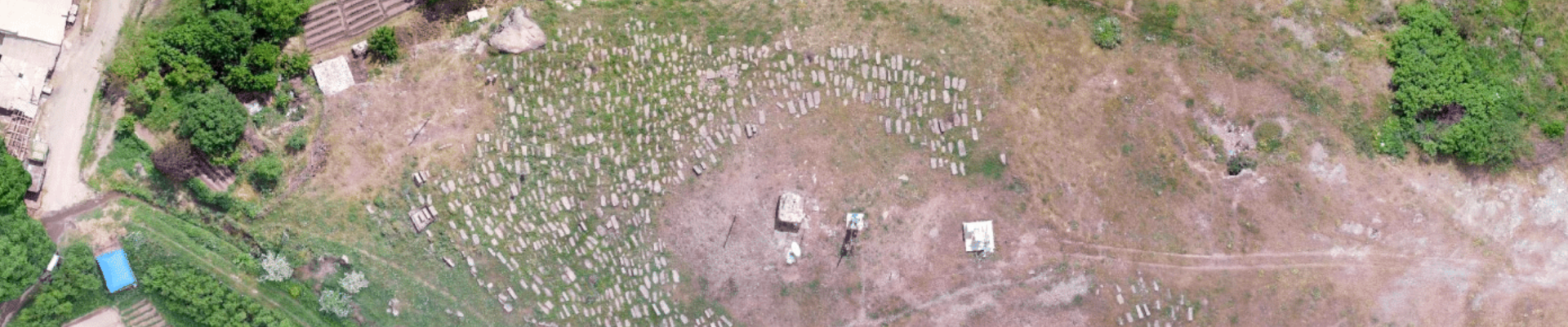
Friends of ASOR present the next webinar in our monthly series on March 23, 2023, at 3:00 pm EDT, featuring Prof. Tiffany Earley-Spadoni and moderated by Prof. Petra Creamer (Emory University). Urartu was a powerful empire located in the imposing highlands of modern-day eastern Turkey, Armenia, and western Iran in the 9th to the 7th centuries BCE. In this lecture, Prof. Earley-Spadoni will provide historical context for Urartu, a thriving, but often overlooked expansionary state. The Urartians left behind an impressive array of archaeological remains ranging from vibrant material culture to evocative texts carved in living stone. Despite its undeniable significance and unique features, the state is frequently framed as being a minor development resulting from the growth of the Assyrian empire to its south.

Rather than being organized around large cities like other empires which had come before, Urartu relied on a rural, regional network of forts, fortresses, and fire beacon stations to defend against threats and impose sovereignty upon the mountainous landscape. The fortified networks allowed for the spread of information and the coordination of military and administrative activities, which helped the kingdom consolidate its power over neighboring regions.

The talk will conclude with a call to reframe the way we think about Urartu. Prof. Earley-Spadoni will suggest that this goal can be achieved by studying Urartian materials and texts as developments that combined local practices and reinterpreted broader regional traditions. Ultimately, she will argue that Urartu must be understood as a historically specific case, and a topic worthy of much more dedicated study.

Tiffany Earley-Spadoni is an Associate Professor of History at the University of Central Florida. Her research consists of spatially-oriented investigations of expansionary state development in the ancient Near East. She received her PhD in Near Eastern Studies from the Johns Hopkins University.

Her current archaeological field projects are the Kurd Qaburstan Project in Iraq and the Vayots Dzor Fortress Landscapes Project in Armenia. Kurd Qaburstan, likely to be identified with the ancient city of Qabra, was a more than 100 ha. walled city with major occupations dating to the Middle and Late Bronze Age periods. The project examines the spatial distribution and character of large-scale public architecture, domestic remains, craft production loci, and fortifications. The organization and experience of urban space is further explored through evidence for distinct neighborhoods and central planning.

In addition to her work on northern Mesopotamian urbanism, the creation of fortified regional networks in response to systematic warfare is the focus of her field work in Armenia. These investigations have revealed evidence for elaborate systems of fire beacon communication and numerous forts and fortresses.

This webinar will be recorded and all paid registrants will be sent a link to view the recording.

ASOR Sustaining Members: $0 | ASOR Members: $6 | Public: $12
Season Pass: ASOR Sustaining Members: $0 | ASOR Members: $75 | Public: $150
Buy one here!

To receive your ASOR member discount, log into the online store. If you are new to ASOR, please click on the “New Visitor Registration” link to register your e-mail address and choose a password for our online store. Once logged in, navigate to “Meeting and Event Registration” to register for the webinar and pay the fee. Each paid registrant will receive a confirmation e-mail when you pay for the webinar. If you do not receive this e-mail, then you are not registered. Please e-mail membership@asor.org with any questions or issues with registering.

You will be e-mailed the Zoom Webinar link in the week prior to the lecture on March 23, 2023. If you do not receive the link by the close of business two days before the webinar, please e-mail membership@asor.org immediately. This webinar will be recorded and all paid registrants will be sent a link to view the recording.

All proceeds from this webinar are used to fund scholarships for members as well as increasing ASOR’s online resources, which are free to the public.

READY FOR A WEBINAR SEASON PASS?

Buy a season pass for all the webinars* of the 2022-2023 FOA Webinar Season! 1) You will automatically receive the Zoom link for each webinar so no need to register each time. 2) You will also receive the recording of each webinar automatically after the event.

If you have missed webinars earlier in the season and still want to buy the pass, you will receive the links to the recordings of the webinars you missed in your automatic confirmation email after you buy the pass.

*Special symposiums may be excluded from the season pass price.

No more registering for a year if you buy your pass today!

Pricing:

Members: $75.00
Non-Members: $150.00
ASOR Sustaining Members: $0 (automatic registration for each webinar)
Not a member yet? Click here to join as a member and receive the 50% off a season pass!


Log into our online store to purchase the season pass for 2022-2023. If you are new to ASOR and do not have a record in our store yet, click here to register. After you login, navigate to the left to “Meeting and Event Registration.” Please e-mail membership@asor.org if you have any questions or issues.
WHY SPONSOR A WEBINAR?

Several levels of support from $50-$1,000 are available. Proceeds go towards membership scholarships and towards increasing ASOR’s virtual resources. Each sponsorship is tax-deductible and you can give your friends free registrations to a webinar!

Bronze Level ($50): up to 2 guest registrations
Silver Level ($100): up to 5 guest registrations
Gold Level ($500): up to 20 guest registrations
Platinum Level ($1,000): up to 50 guest registrations

After you sign up for a sponsorship online or over the phone, email the names and email addresses of your guests to Felice Herman at membership@asor.org, who will send your guests a confirmation and the Zoom link before the webinar.

WANT TO SAVE $6.00 ON THE NEXT WEBINAR?

Join ASOR as a member! Click here for more details about discounts for events and other benefits of membership. Memberships start at $40 for the year as an Associate Member.

Not ready to join yet? Become a Friend of ASOR for FREE!

Click here for more details about our online resources.

PAST WEBINARS

You can now purchase the link to the recording of any webinar. You can also purchase the bundle packages of all webinars from the 2020-2022 seasons. Please e-mail membership@asor.org for purchase details.

To see a printable pdf of the webinar titles from the 2020-2021 season, please click here. To see a printable pdf of the webinar titles from the 2021-2022 season, please click here.

Pricing:

Members: $6.00 per recording
Non-Members: $12.00 per recording
Bundle of 2020-2021 Webinars: $75.00
Bundle of 2021-2022 Webinars: $75.00
Bundle of 2020-2022 Webinars: $125.00

2021-2022 Season

A World at War: Protecting Cultural Heritage in Times of Conflict
Patty Gerstenblith (DePaul University), Lisa Ackerman (Columbus Citizens Foundation), Andrew Cohen (Government Professional and Cultural Heritage Expert) | May 12, 2022

Preserving Cultural Heritage in Hisban and Umm al-Jimal, Jordan
Øystein LaBianca (Andrews University), Elizabeth Osinga (Umm al-Jimal Archaeological Project), Darrell Rohl (Calvin University) | April 24, 2022

Back to the Field: Recent Discoveries & Summer Plans 2022
Lorenzo d’Alfonso (ISAW), Kathryn Grossman (NC State University), James R. Strange (Samford University) | April 3, 2022

Uncovering What is Nubian Beneath the Veneer of Egyptianness: Excavating the Archives
Debora Heard (University of Chicago) | March 20, 2022

Where Are They Now?: A Preview of 2022 ASOR-Affiliated Fieldwork Projects
Michael Given (University of Glasgow), Xenia-Paula Kyriakou (Florida Gulf Coast University), Stephen Batiuk (University of Toronto), Monique Roddy (Walla Walla University), Kent Bramlett (La Sierra University), Friedbert Ninow (La Sierra University), and Michael Hoff (University of Nebraska-Lincoln) | March 8, 2022

Excavations at Tel Gezer: A Personal Story
Sam Wolff (Tel Gezer Laboratory) | February 20, 2022

Tel Rehov: A Major Bronze and Iron Age City in the Jordan Valley
Amihai Mazar (Hebrew University of Jerusalem), Nava Panitz-Cohen ( Hebrew University of Jerusalem), Nota Kourou (Athens University), Naama Yahalom-Mack (Hebrew University of Jerusalem), Robert Mullins (Azusa Pacific University) | February 10, 2022

The Not-So-Innocents Abroad: The Beginnings of American Biblical Archaeology
Rachel Hallote (Samford University) | January 20, 2022

Synagogues as Jesus Knew Them
James R. Strange (Samford University) | December 2, 2021

Under Jerusalem: The Buried History of the World’s Most Contested City
Andrew Lawler | November 4, 2021

Jesus and Jerusalem on TV: How Do Bible Documentaries Get Made?
Robert Cargill (University of Iowa) | October 17, 2021

Digging the Divine?: Judahite Pillar Figurines and the Archaeology of Israelite Religion
Erin Darby (University of Tennessee) | October 7, 2021

David, Solomon, and Rehoboam’s Kingdom—The Archaeological Evidence
Yosef Garfinkel (Hebrew University of Jerusalem) | September 19, 2021

From Standing Stones to Sacred Emptiness: Textual and Visual Portrayals of Israel’s God
Theodore Lewis (Johns Hopkins University) | August 29, 2021

2020-2021 Season

Making May Matter: Webinarathon to Endow Diversity
Multiple Speakers | May 21-23, 2021

Archaeogaming: Why Video Games Deserve Their Own Archaeology
Tine Rassalle (University of North Carolina at Chapel Hill), Shannon Martino (Morton College), Matthew Winter (University of Arizona), Michael Zimmerman (Rhode Island) | April 18, 2021

How the Bible Became a Book
William Schniedewind (UCLA) | March 21, 2021

The Mysteries of Mithras in Caesarea: Exploring the Cult’s Rites and Remains
Jane DeRose Evans (Temple University), Alexandra Ratzlaff (Brandeis University) | March 11, 2021

Archaeology and the Hidden Religious Culture of Israelite Women
Carol Meyers (Duke University) | February 21, 2021

Meet the Directors—Fundraiser to Support ASOR’s Affiliated Overseas Research Centers
Matthew J. Adams (AIAR), Pearce Paul Creasman (ACOR), Lindy Crewe (CAARI) | February 11, 2021

Early Synagogues, Jesus, and Galilee—A Jewish Perspective
Eric Meyers (Duke University) | December 13, 2020

Home Sweet Home: Ancient Israelite Households in Context
Cynthia Shafer-Elliott (William Jessup University) | October 18, 2020

Priestesses in the Days of Solomon and Ahab
Susan Ackerman (Dartmouth College) | September 13, 2020

Digging Deeper: How Archaeology Works
Eric H. Cline (The George Washington University) | August 9, 2020

2023 Facilities Committee

[vc_row fullwidth=”true” css=”.vc_custom_1490224714943{padding-top: 0px !important;padding-right: 0px !important;padding-bottom: 0px !important;padding-left: 0px !important;}”][vc_column][vc_single_image image=”53240″ img_size=”full” alignment=”center”][/vc_column][/vc_row][vc_row][vc_column][vc_column_text][/vc_column_text][/vc_column][/vc_row][vc_row fullwidth=”true” css=”.vc_custom_1490225468623{padding-top: 0px !important;padding-right: 0px !important;padding-bottom: 0px !important;padding-left: 0px !important;}”][vc_column width=”1/12″ css=”.vc_custom_1490225195470{margin-right: 10px !important;}” offset=”vc_hidden-sm vc_hidden-xs”][vc_column_text]

  SHARE

[/vc_column_text][mk_image src=”http://www.asortest.org/wp-content/uploads/2017/01/social-fb-icon4.jpg” image_width=”42″ image_height=”42″ hover=”false” custom_url=”https://www.facebook.com/ASOResearch/” margin_bottom=”0″][mk_image src=”http://www.asortest.org/wp-content/uploads/2017/01/social-tw-icon4.jpg” image_width=”42″ image_height=”42″ hover=”false” custom_url=”https://twitter.com/ASOResearch?ref_src=twsrc%5Egoogle%7Ctwcamp%5Eserp%7Ctwgr%5Eauthor” margin_bottom=”0″][mk_image src=”http://www.asortest.org/wp-content/uploads/2017/01/social-in-icon4.jpg” image_width=”42″ image_height=”42″ hover=”false” custom_url=”https://www.linkedin.com/company/american-schools-of-oriental-research” margin_bottom=”0″][mk_image src=”http://www.asortest.org/wp-content/uploads/2017/01/social-ml-icon_7.jpg” image_width=”42″ image_height=”42″ hover=”false” custom_url=”mailto:asor@bu.edu” margin_bottom=”0″][mk_image src=”http://www.asortest.org/wp-content/uploads/2017/01/blog-icon3.jpg” image_width=”42″ image_height=”42″ hover=”false” custom_url=”http://asorblog.org/” margin_bottom=”0″][/vc_column][vc_column border_color=”rgba(255,255,255,0.01)” width=”1/6″ css=”.vc_custom_1490365673198{margin-right: 20px !important;border-left-width: 2px !important;padding-right: 20px !important;padding-left: 20px !important;border-left-color: #99422f !important;}” el_class=”sticky-sidenav”][mk_divider divider_color=”rgba(255,255,255,0.01)” thickness=”1″ margin_top=”3″ margin_bottom=”3″][vc_widget_sidebar sidebar_id=”ca-sidebar-37292″ el_class=”.widget { overflow: hidden; margin-bottom: 0; }”][/vc_column][vc_column border_color=”rgba(170,170,170,0.01)” width=”1/2″ css=”.vc_custom_1490225606852{margin-right: 10px !important;margin-bottom: 30px !important;border-right-width: 2px !important;border-bottom-width: 2px !important;padding-top: 30px !important;padding-right: 30px !important;padding-left: 20px !important;background-color: #ffffff !important;border-right-color: rgba(227,228,228,0.75) !important;border-bottom-color: rgba(227,228,228,0.75) !important;}”][vc_column_text responsive_align=”left”]

2023 FACILITIES COMMITTEE

The Facilities Committee formulates and makes recommendations to the Executive Committee and the Board regarding the repair and maintenance of ASOR facilities and improvements and renovations to ASOR facilities, including proposed improvement and renovation expenditures.

  • Sheldon Fox, Chair
  • Alex Brooks
  • Michael Hasel
  • Alex MacAllister
  • Sharon Herbert (ex officio)
  • Andrew G. Vaughn (ex officio, non-voting)

[/vc_column_text][mk_divider][vc_column_text]

Past Facilities Committee Members

[/vc_column_text][vc_empty_space height=”300px”][/vc_column][vc_column border_color=”rgba(170,170,170,0.01)” width=”1/6″ css=”.vc_custom_1490571214409{margin-right: 10px !important;margin-bottom: 30px !important;border-right-width: 2px !important;border-bottom-width: 2px !important;padding-top: 30px !important;padding-right: 20px !important;padding-left: 20px !important;background-color: #ffffff !important;border-right-color: rgba(227,228,228,0.75) !important;border-bottom-color: rgba(227,228,228,0.75) !important;}”][vc_wp_posts title=”BROWSE THE NEWS ARCHIVE” number=”4″][/vc_column][vc_column border_color=”rgba(170,170,170,0.01)” width=”1/6″ css=”.vc_custom_1490225688999{margin-right: 10px !important;margin-bottom: 30px !important;border-right-width: 2px !important;border-bottom-width: 2px !important;padding-top: 30px !important;padding-right: 30px !important;padding-left: 20px !important;background-color: #ffffff !important;border-right-color: rgba(227,228,228,0.75) !important;border-bottom-color: rgba(227,228,228,0.75) !important;}”][vc_column_text] [/vc_column_text][/vc_column][/vc_row][vc_row][vc_column][vc_column_text]

[/vc_column_text][/vc_column][/vc_row]

FOA Webinar: Pinar Durgun on March 9

FRIENDS OF ASOR WEBINARS

How the Ancient World is Saturating Museums with Color

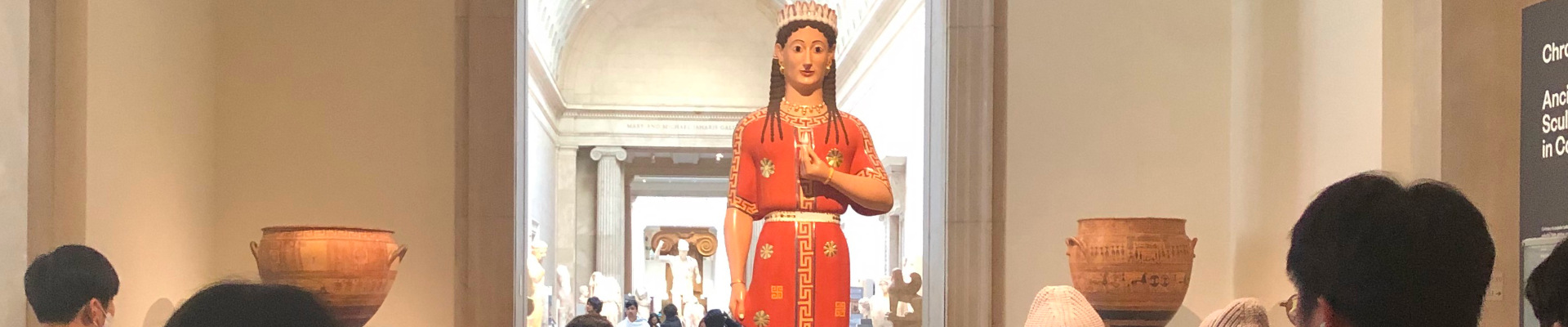
Friends of ASOR present the next webinar in our monthly series on March 9, 2023, at 3:00 pm EST, featuring Dr. Pinar Durgun and moderated by Dr. Kiersten Neumann. It may be difficult to imagine the ancient world in color when museums display ancient objects in white galleries. Ancient objects themselves are now often in varying degrees of white, beige, and brown as the pigments on them often do not survive to our day or may not be visible to our naked eyes. But through archaeology and science, we know that the ancient world was vibrantly colorful. So why do colorful reconstructions look “off” to us? Where does the idea of a white sculpture come from? How can color change the perception of the ancient world for the modern museum visitor? This talk will explore some of the past and present ways of showcasing color in the ancient world and question what can be done for the future.

Join Dr. Durgun as she reveals a world of color and mystery through the lens and experience of both a museum curator and the museum visitor. The webinar will conclude with a Q&A session moderated by Dr. Kiersten Neumann (Oriental Institute).


Dr. Pınar Durgun is an art historically-trained archaeologist with a strong background in anthropology and museums, while also being passionate about outreach and education. She is interested in how museums can help us understand, protect, and engage with the past and how they can better serve our communities today. Her research focuses on ancient Anatolia and western Asia, the history of death and burial, image and identity making, digital museums, and museum ethics. She aims to make academic information about the ancient world accessible, fun, and inclusive. Dr. Durgun creates and curates educational content about art and the ancient world for museums, academic/educational organizations, and for social media. She currently works as a curator for the Vorderasiatisches Museum (Museum of Ancient Near East) in Berlin.

This webinar will be recorded and all paid registrants will be sent a link to view the recording.

ASOR Sustaining Members: $0 | ASOR Members: $6 | Public: $12
Season Pass: ASOR Sustaining Members: $0 | ASOR Members: $75 | Public: $150
Buy one here!

To receive your ASOR member discount, log into the online store. If you are new to ASOR, please click on the “New Visitor Registration” link to register your e-mail address and choose a password for our online store. Once logged in, navigate to “Meeting and Event Registration” to register for the webinar and pay the fee. Each paid registrant will receive a confirmation e-mail when you pay for the webinar. If you do not receive this e-mail, then you are not registered. Please e-mail membership@asor.org with any questions or issues with registering.

You will be e-mailed the Zoom Webinar link in the week prior to the lecture on March 9, 2023. If you do not receive the link by the close of business two days before the webinar, please e-mail membership@asor.org immediately. This webinar will be recorded and all paid registrants will be sent a link to view the recording.

All proceeds from this webinar are used to fund scholarships for members as well as increasing ASOR’s online resources, which are free to the public.

READY FOR A WEBINAR SEASON PASS?

Buy a season pass for all the webinars* of the 2022-2023 FOA Webinar Season! 1) You will automatically receive the Zoom link for each webinar so no need to register each time. 2) You will also receive the recording of each webinar automatically after the event.

If you have missed webinars earlier in the season and still want to buy the pass, you will receive the links to the recordings of the webinars you missed in your automatic confirmation email after you buy the pass.

*Special symposiums may be excluded from the season pass price.

No more registering for a year if you buy your pass today!

Pricing:

Members: $75.00
Non-Members: $150.00
ASOR Sustaining Members: $0 (automatic registration for each webinar)
Not a member yet? Click here to join as a member and receive the 50% off a season pass!


Log into our online store to purchase the season pass for 2022-2023. If you are new to ASOR and do not have a record in our store yet, click here to register. After you login, navigate to the left to “Meeting and Event Registration.” Please e-mail membership@asor.org if you have any questions or issues.


WHY SPONSOR A WEBINAR?

Several levels of support from $50-$1,000 are available. Proceeds go towards membership scholarships and towards increasing ASOR’s virtual resources. Each sponsorship is tax-deductible and you can give your friends free registrations to a webinar!

Bronze Level ($50): up to 2 guest registrations
Silver Level ($100): up to 5 guest registrations
Gold Level ($500): up to 20 guest registrations
Platinum Level ($1,000): up to 50 guest registrations

After you sign up for a sponsorship online or over the phone, email the names and email addresses of your guests to Felice Herman at membership@asor.org, who will send your guests a confirmation and the Zoom link before the webinar.

WANT TO SAVE $6.00 ON THE NEXT WEBINAR?

Join ASOR as a member! Click here for more details about discounts for events and other benefits of membership. Memberships start at $40 for the year as an Associate Member.

Not ready to join yet? Become a Friend of ASOR for FREE!

Click here for more details about our online resources.

PAST WEBINARS

You can now purchase the link to the recording of any webinar. You can also purchase the bundle packages of all webinars from the 2020-2022 seasons. Please e-mail membership@asor.org for purchase details.

To see a printable pdf of the webinar titles from the 2020-2021 season, please click here. To see a printable pdf of the webinar titles from the 2021-2022 season, please click here.

Pricing:

Members: $6.00 per recording
Non-Members: $12.00 per recording
Bundle of 2020-2021 Webinars: $75.00
Bundle of 2021-2022 Webinars: $75.00
Bundle of 2020-2022 Webinars: $125.00

2021-2022 Season

A World at War: Protecting Cultural Heritage in Times of Conflict
Patty Gerstenblith (DePaul University), Lisa Ackerman (Columbus Citizens Foundation), Andrew Cohen (Government Professional and Cultural Heritage Expert) | May 12, 2022

Preserving Cultural Heritage in Hisban and Umm al-Jimal, Jordan
Øystein LaBianca (Andrews University), Elizabeth Osinga (Umm al-Jimal Archaeological Project), Darrell Rohl (Calvin University) | April 24, 2022

Back to the Field: Recent Discoveries & Summer Plans 2022
Lorenzo d’Alfonso (ISAW), Kathryn Grossman (NC State University), James R. Strange (Samford University) | April 3, 2022

Uncovering What is Nubian Beneath the Veneer of Egyptianness: Excavating the Archives
Debora Heard (University of Chicago) | March 20, 2022

Where Are They Now?: A Preview of 2022 ASOR-Affiliated Fieldwork Projects
Michael Given (University of Glasgow), Xenia-Paula Kyriakou (Florida Gulf Coast University), Stephen Batiuk (University of Toronto), Monique Roddy (Walla Walla University), Kent Bramlett (La Sierra University), Friedbert Ninow (La Sierra University), and Michael Hoff (University of Nebraska-Lincoln) | March 8, 2022

Excavations at Tel Gezer: A Personal Story
Sam Wolff (Tel Gezer Laboratory) | February 20, 2022

Tel Rehov: A Major Bronze and Iron Age City in the Jordan Valley
Amihai Mazar (Hebrew University of Jerusalem), Nava Panitz-Cohen ( Hebrew University of Jerusalem), Nota Kourou (Athens University), Naama Yahalom-Mack (Hebrew University of Jerusalem), Robert Mullins (Azusa Pacific University) | February 10, 2022

The Not-So-Innocents Abroad: The Beginnings of American Biblical Archaeology
Rachel Hallote (Samford University) | January 20, 2022

Synagogues as Jesus Knew Them
James R. Strange (Samford University) | December 2, 2021

Under Jerusalem: The Buried History of the World’s Most Contested City
Andrew Lawler | November 4, 2021

Jesus and Jerusalem on TV: How Do Bible Documentaries Get Made?
Robert Cargill (University of Iowa) | October 17, 2021

Digging the Divine?: Judahite Pillar Figurines and the Archaeology of Israelite Religion
Erin Darby (University of Tennessee) | October 7, 2021

David, Solomon, and Rehoboam’s Kingdom—The Archaeological Evidence
Yosef Garfinkel (Hebrew University of Jerusalem) | September 19, 2021

From Standing Stones to Sacred Emptiness: Textual and Visual Portrayals of Israel’s God
Theodore Lewis (Johns Hopkins University) | August 29, 2021

2020-2021 Season

Making May Matter: Webinarathon to Endow Diversity
Multiple Speakers | May 21-23, 2021

Archaeogaming: Why Video Games Deserve Their Own Archaeology
Tine Rassalle (University of North Carolina at Chapel Hill), Shannon Martino (Morton College), Matthew Winter (University of Arizona), Michael Zimmerman (Rhode Island) | April 18, 2021

How the Bible Became a Book
William Schniedewind (UCLA) | March 21, 2021

The Mysteries of Mithras in Caesarea: Exploring the Cult’s Rites and Remains
Jane DeRose Evans (Temple University), Alexandra Ratzlaff (Brandeis University) | March 11, 2021

Archaeology and the Hidden Religious Culture of Israelite Women
Carol Meyers (Duke University) | February 21, 2021

Meet the Directors—Fundraiser to Support ASOR’s Affiliated Overseas Research Centers
Matthew J. Adams (AIAR), Pearce Paul Creasman (ACOR), Lindy Crewe (CAARI) | February 11, 2021

Early Synagogues, Jesus, and Galilee—A Jewish Perspective
Eric Meyers (Duke University) | December 13, 2020

Home Sweet Home: Ancient Israelite Households in Context
Cynthia Shafer-Elliott (William Jessup University) | October 18, 2020

Priestesses in the Days of Solomon and Ahab
Susan Ackerman (Dartmouth College) | September 13, 2020

Digging Deeper: How Archaeology Works
Eric H. Cline (The George Washington University) | August 9, 2020

Harris Grant Report: Girdi Matrab, Iraq

2022 Harris Grant Report: Girdi Matrab, Iraq

The first season of the Girdi Matrab Archaeological Project was generously funded by the ASOR Charles Harris Project Grant. Girdi Matrab (“the earthen mound” in Kurdish) is a multi-mound site located in the plain of Erbil, in the autonomous region of the Iraqi Kurdistan and was first surveyed by the Erbil Plain Archaeological Survey (EPAS), directed by Jason Ur in 2012.

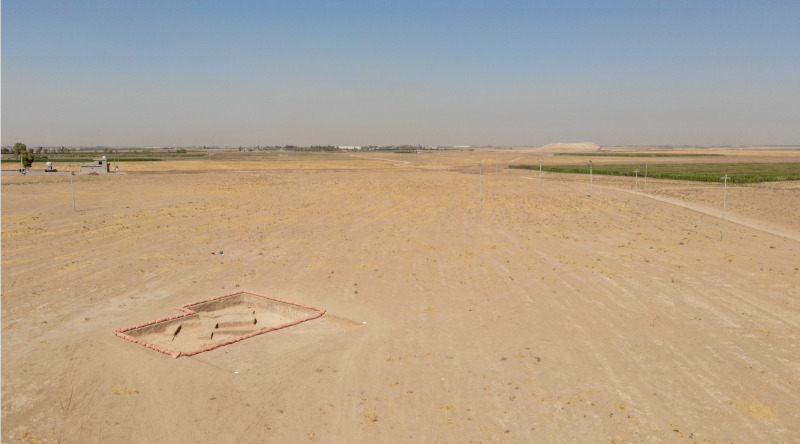
View of the excavation area at the end of the 2022 field season.

Surface reconnaissance yielded an impressive amount of pottery sherds, that confirmed the habitation phase and the history of the settlement. Girdi Matrab was settled from the Late Chalcolithic period (5th millennium BCE) until the Uruk phase (4th millennium BCE). No indication of Bronze and Iron Age occupation has been detected at the site. On the contrary, the settlement expanded rapidly at the end of the 1st millennium BCE, reaching a quasi-urban size in the Hellenistic and Parthian-Roman period before being abandoned and never re-occupied again.

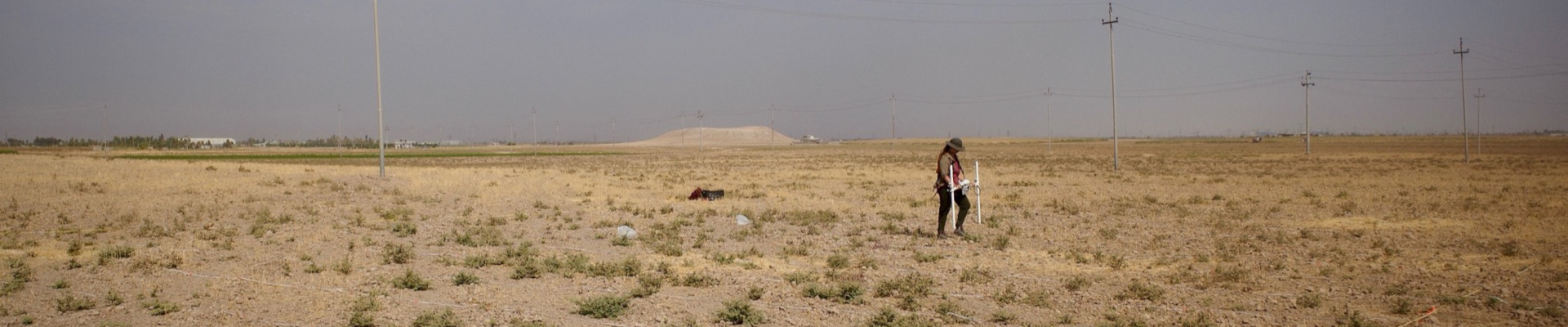
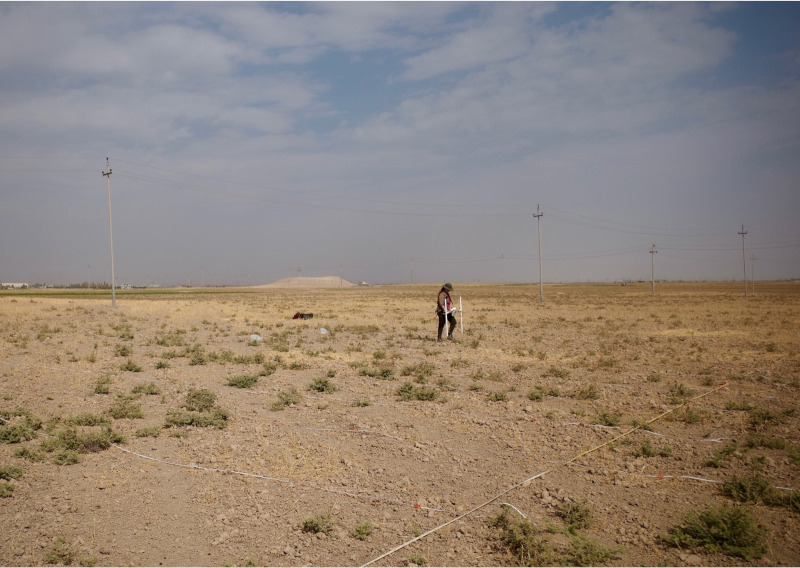
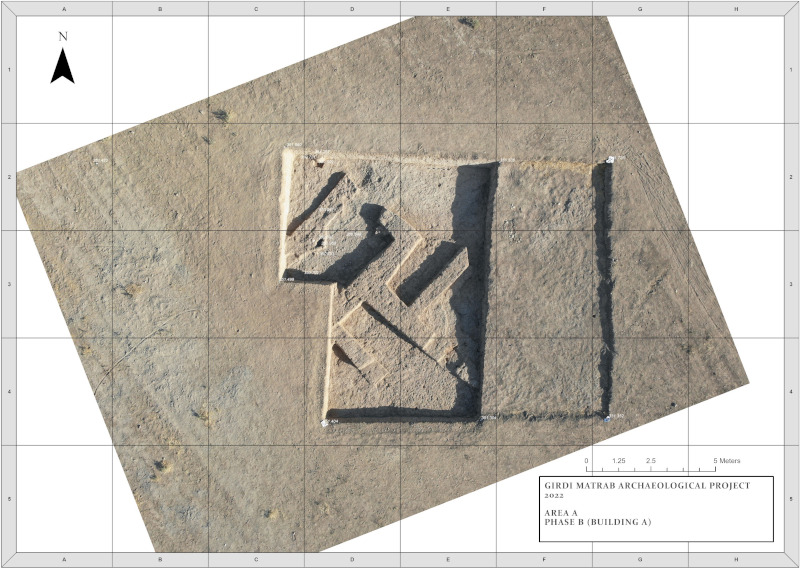
In view of the first proper excavation season, the site was also intensively surveyed in 2020 – thanks to the active participation of the EPAS Kurdish team members. In 2021, in collaboration with Petra Creamer (Emory University, USA) geophysical investigations were carried out at the site using a Bartington 601-2 Gradiometer, owned by the SPARC Lab at Dartmouth College, USA, highlighting, just below Mound 2, the remains of a large (40 x 40 m) building, with multiple rooms, internal courtyards, and hallways (Building A).

Petra Creamer (Emory) performing geophysics at Girdi Matrab (2021).
Plan of Phase B of Building A at the end of the 2022 field season.

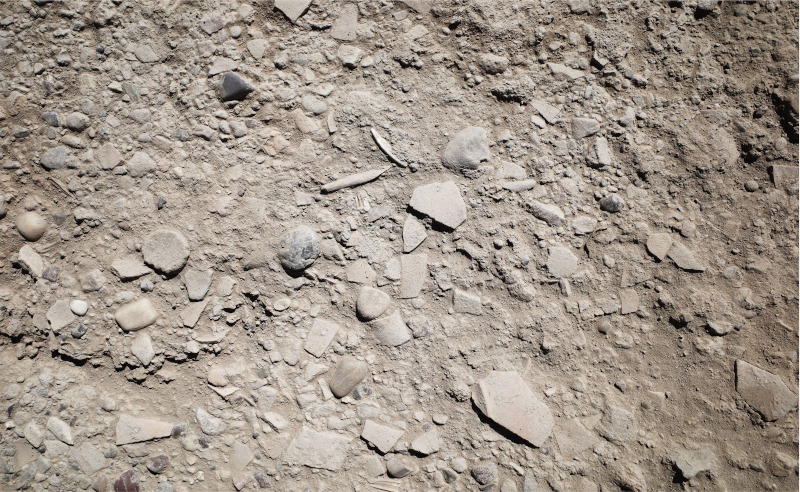
With the objective of investigating part of this sub-surface evidence, a 20 x 25 m trench was placed above the south-eastern corner of the building, on Mound 2. After 5 weeks of excavation, we unearthed four rooms, all built with mudbrick walls over stones and pebbles foundations. Two of these rooms opened towards an internal courtyard, where a complete tannur (open-air oven) was also recovered. One of these two rooms yielded a completely intact floor composed by pebbles, pottery sherds and animal bones. The close proximity to the open-air oven, and the presence of a mudbrick platform, and a small internal fireplace in the room, made us think that the space was used for cooking activities.

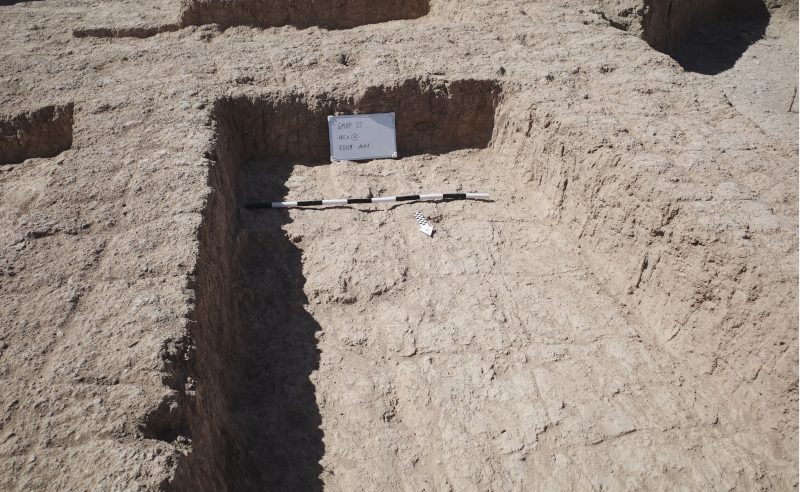
The adjacent room, smaller and with an unusual mudbrick floor, has been interpreted as a storage space, certainly connected to the cooking activities that were taking place in the bigger room to the West. The remaining two other room open towards the Southern part of the building, possibly connected to the unexcavated part of the complex through an elongated open-air hallway, whose extent has been partly identified during the 2022 season.

The analysis carried out on the ceramic repertoire excavated this year at Girdi Matrab has confirmed several hypotheses that were originally formulated prior to the campaign. The assemblage is mostly composed by commonware, with little or no inclusion of western-inspired, commonly known types such as the ubiquitous echinus bowls and/or Hellenistic period fish plates. Interestingly however we have identified a discrete number of specimens whose morphological tradition lies in the Iron Age and late Iron Age pottery horizon of the region.

On the base of the analysis of the ceramic material, we can securely date this phase of Building A to the period that covers a span of time between the late 4th and very early 3rd c. BCE.

Close-up of the composite floor of the kitchen area of Building A (detail).
View of the storeroom excavated right next to the kitchen. Note the well-preserved mudbrick floor.

The GMAP team focuses on the investigation of the domestic economy of a rural site in between the imperial transformation from the Iron Age to the early centuries of the 1st millennium CE. To better understand the socio-economic change of the Hellenistic and Parthian period Mesopotamia we rely on the analysis of the faunal remains excavated at the site. Nathalie Brusgaard (University of Groningen, the Netherlands), associate director of the GMAP, oversees the study of the zoo-archaeological evidence.

The presence of a large amount of commonware, the identification of young animals such as pigs and sheep, which could have been raised on site, as well as adult bovines – which might as well be oxen trained and used draft animals – seem preliminarily to indicate that Building A at Girdi Matrab could be a farm or farm-like estate.

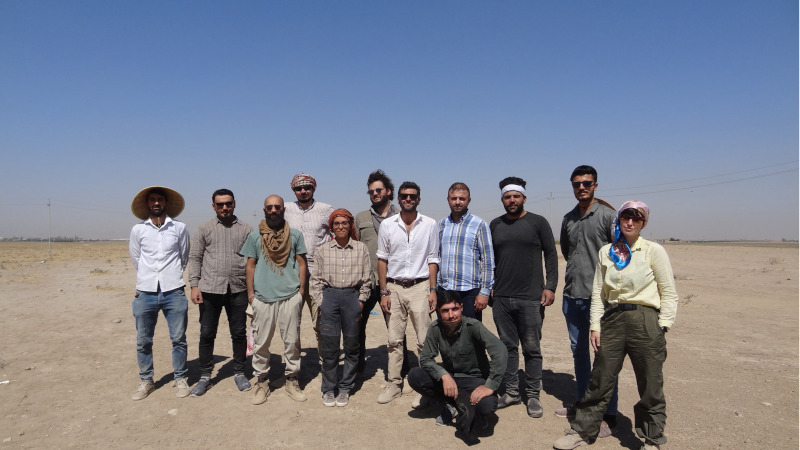
The KMAP team at the end of the season

We plan to continue investigating the  rural economic landscape of the plain of Erbil in the future seasons, and we thank ASOR for supporting our research into this part of South-West Asia under the Seleucids, the Parthians, and the Romans, a critical but often overlooked period and  one of central relevance for the understanding of the history of North Mesopotamia, and the Kurdistan Region of Iraq, in particular.

-Rocco Palermo, University of Pisa (Italy) and Bryn Mawr College (USA)

With the collaboration of

Nathalie Brusgaard (University of Groningen, Netherlands), Aila Santi (SOAS, London, UK), Valentina Grasso (Catholic University of America, USA), Jordan Brown (University of California at Berkeley, USA), Gabriele Viola (University of Pisa, Italy), Lara Pucci Daniele (University of Pisa, Italy), Michele Salvatore La Porta (University of Pisa, Italy), Parsa Kheirandish (University of Pisa, Italy), Ali Banishary (Directorate of the Antiquities, Erbil)


Learn more about the Girdi Matrab Archaeological Project at their website or their Instagram!

Interested in applying for a 2023 Charles Harris Project Grant? Learn more about applying here.