
MEET THE NEW EDITOR OF NEA
ASOR is excited to announce the appointment of the new editor of Near Eastern Archaeology (NEA)—Christina Tsouparopoulou. Christina started her term in January 2025. The new editor succeeded the previous editor, Stephanie Budin, who held the position of NEA editor from 2018-2024. ASOR appreciates the tremendous amount of work that Stephanie has put in over the past six years and acknowledges her unwavering dedication to the journal.
The editor was nominated by the NEA Editorial Search Committee after an extensive public search process. The nomination was unanimously endorsed by ASOR’s Publications Committee, and the editor was unanimously approved by the ASOR Board of Trustees. NEA editors are appointed for a three-year term, with the possibility of being re-appointed for a second term. Her initial term will run from 2025–2027.
Christina Tsouparopoulou (Institute of Archaeology, UKSW) is an Assistant Professor at Cardinal Stefan Wyszyński University in Warsaw and an Honorary Fellow at Durham University working on Near Eastern popular religious practices, identities, cylinder seals, human-animal/environment relations, and digital humanities. She received her PhD from the University of Cambridge with a thesis on Ancient Near Eastern cylinder seals and sealing practice, and has held teaching and research positions at (among others) Heidelberg, Durham, and Cambridge.

Christina is thrilled to join Near Eastern Archaeology as its new editor. She is passionate about advancing research on the ancient Near East and Eastern Mediterranean. As the new editor of Near Eastern Archaeology, she looks forward to working closely with early-career researchers and drawing on her experience in public engagement, including documentary projects like Discovery’s Ancient Armageddon and Lands of the Bible, to make the journal more accessible and engaging, opening up the fascinating world of the ancient Near East to both specialists and a wider audience, while upholding its scholarly excellence.
Archaeological discoveries continually enrich our understanding of the people, culture, history, and literature of the Middle East. The heritage of its peoples – from urban civilization to the Bible – both inspires and fascinates. Near Eastern Archaeology brings to life the ancient world from Mesopotamia to the wider Mediterranean with vibrant images and authoritative analyses. NEA (ISSN 1094-2076) is published four times each year (quarterly): March, June, September, and December.
All manuscripts submitted to Near Eastern Archaeology are subject to a peer review by independent scholars. All articles are sent to two external specialists in the field who are asked to evaluate the manuscripts for their academic quality. The time assigned for the review is normally 30 days; the peer-review process and (if required) the resubmission of revised manuscripts is handled through NEA’s Editorial Management system. NEA’s Editorial Board assists the editor in the peer-review process, e.g., through the recommendation of external reviewers, acceptance decisions, and the revision of manuscripts. All articles must be submitted via NEA‘s electronic manuscript submission portal. Questions, comments, or suggestions for the new editor? You can now contact them at nea-editor@asor.org.
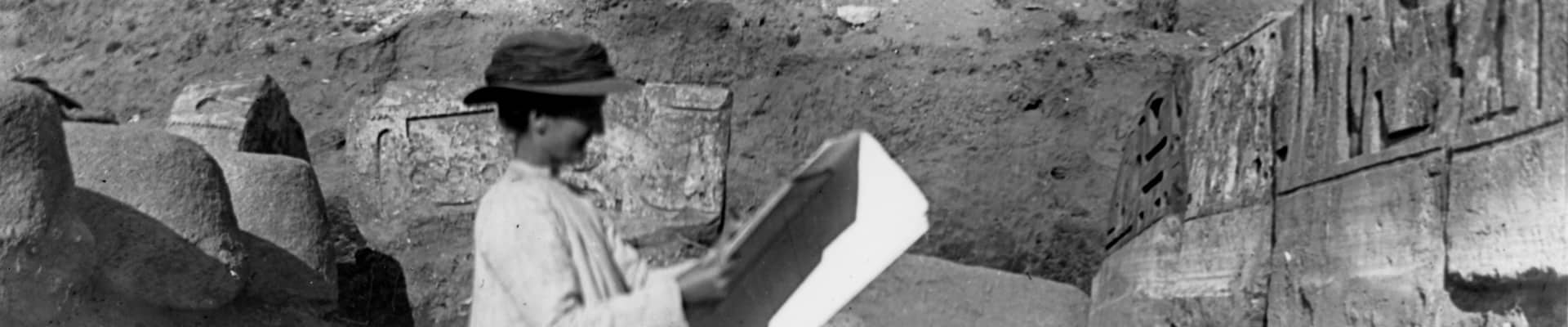
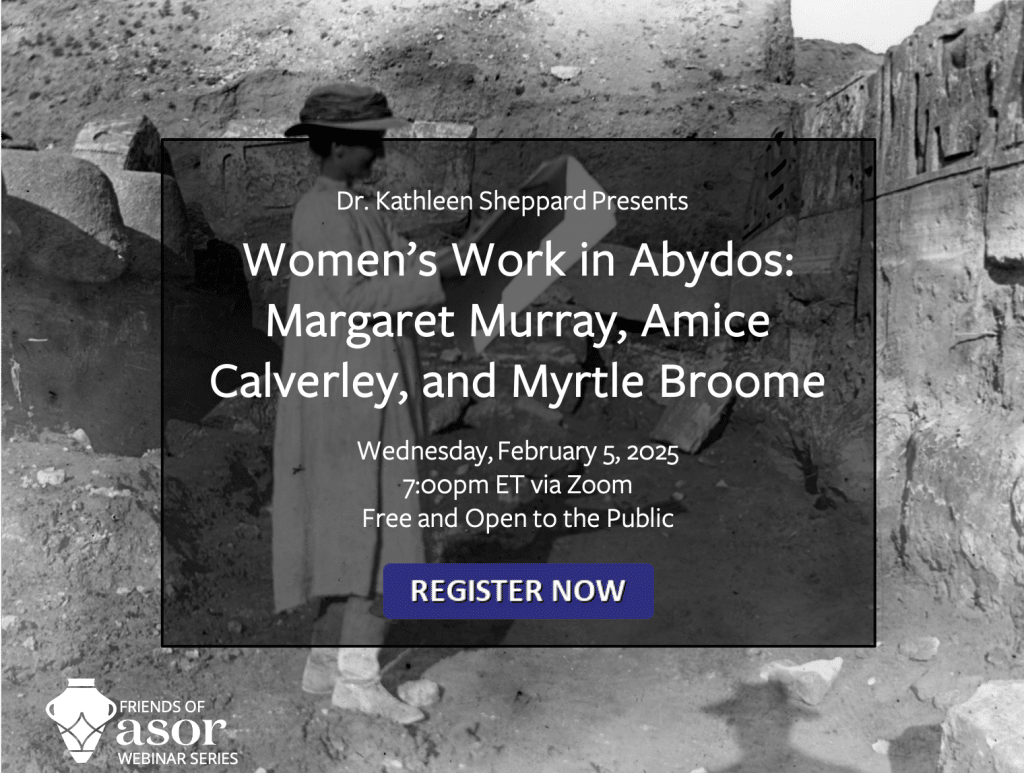
 In 1902, Margaret Alice Murray got invited to work in the field—finally. Training with Flinders Petrie for the last eight years, she had taught plenty of students in London, but had never been to Egypt to work herself. She spent only one season at Abydos, working in the Osireion, a special temple that no one had yet fully understood. Two years later, Murray’s publication, The Osireion at Abydos, upended all previous theories about the site. By 1938, Amice Calverley and Myrtle Broome were leaving Abydos, having spent almost a decade copying the art in the Temple of Seti I. Their own publications, The Temple of Sethos I at Abydos, were four volumes of brilliantly painted art from the temple walls in exacting detail. This talk will detail the ways in which the work women did on site at Abydos in the early 20th century impacted our understanding and reception of one of the most important sites in all of ancient Egypt.
 Dr. Kathleen Sheppard is Professor in the History and Political Science department at Missouri S&T. Her focus of study is the history of Egyptology. Her most recent book, Women in the Valley of the Kings, tells a history of Egyptology through the perspective of women’s work in the field. Her 2022 book, Tea on the Terrace: Hotels and Egyptologists’ Social Networks, investigates the role of hotels as hubs in the professional and friendship networks of Egyptologists in the late 19th and early 20th century. She received her MA in Egyptian Archaeology from UCL in 2002 and her PhD in History of Science from University of Oklahoma in 2010.
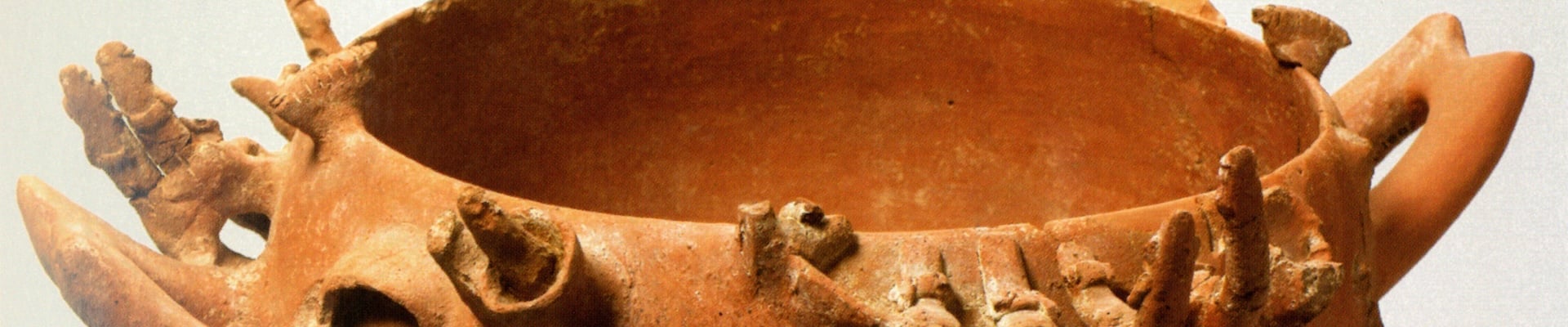

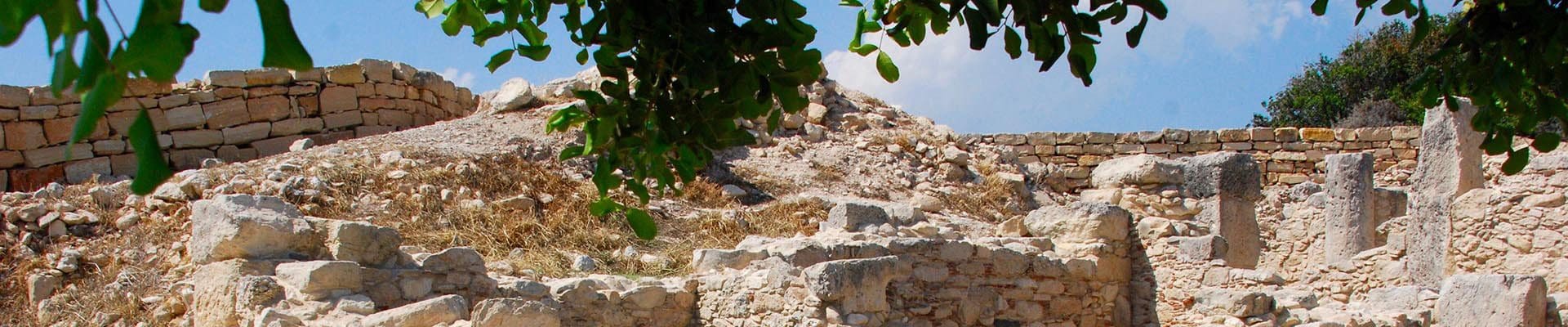
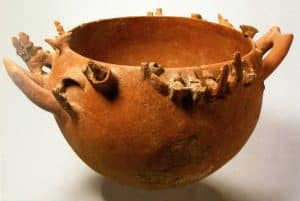
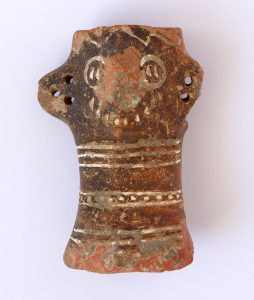 The last phase of the Middle Bronze Age on Cyprus (c. 1750–1650 BC) saw a number of dramatic changes, both in settlement patterns and structure, with many sites abandoned and new sites founded near the coast. At the exceptional long-lived coastal Bronze Age site of Kissonerga-Skalia near Paphos, a settlement established at the transition to the Early Bronze Age (c. 2400 BC), the site was completely restructured during this time and earlier domestic buildings were built over with an industrial architectural array installed in their place. This was only occupied for one or two generations before Kissonerga-Skalia was abandoned for good. Ongoing excavations are revealing a number of large pyrotechnical features and associated finds within this ‘monumental’ complex dating to the transition from the Middle–Late Bronze Age, a period during which we see the first moves towards urbanism
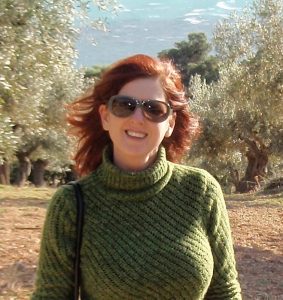 Dr Lindy Crewe has been the Director of CAARI since 2017. Prior to this, she was Lecturer in Archaeology at the University of Manchester, UK. Her research focuses on Cypriot prehistory and international interconnections, with a particular interest in the Chalcolithic and the Bronze Age. She is currently directing excavations at the Early–Middle Bronze Age settlement of Kissonerga-Skalia near Paphos. She is the author of two monographs, three edited volumes and over 30 articles, on topics including settlement at Late Bronze Age Enkomi and the Chalcolithic cemeteries at Souskiou. Her most recent work is a volume resulting from a conference organised by CAARI and the British Museum (with co-editors T. Kiely and A. Reeve) entitled ‘Empire and Excavation: Critical Perspectives on Archaeology in British-period Cyprus, 1878–1960’, which will be published in early 2025. She first came to Cyprus and CAARI 30 years ago as an undergraduate student from Australia to excavate at Marki-Alonia and became passionate about the archaeology of the island, spending considerable time staying at CAARI for her doctoral research and beyond.