[/vc_column_text][/vc_column_inner][/vc_row_inner][mk_divider thickness=”1″ margin_top=”0″][vc_row_inner][vc_column_inner][vc_column_text]Welcome to the first issue of The Ancient Near East Today. This monthly e-newsletter (edited by Dr. Alex Joffe and Kevin Cooney) is a new platform to disseminate ideas, insights and discoveries from the eastern Mediterranean, the Middle East and the Biblical World. We invite you to travel with us to explore the ancient world of the Near East.
Please forward articles from The Ancient Near East Today to family and friends, post links to Facebook, and be in touch with the editor. Remember, being a Friend of ASOR is free![/vc_column_text][mk_divider thickness=”1″ margin_top=”10″][vc_column_text]
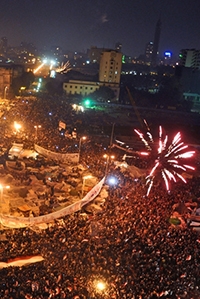
Egypt’s January 25th revolution was originally seen as part of the larger “Arab Spring” across the Middle East where old political regimes were overthrown by popular protests and replaced by representative democracies. But on January 28th 2011, as chaos reigned in Cairo’s Tahrir Square, reports began circulating around the globe claiming that antiquities on display in the Egyptian Museum had been stolen…[READ MORE][/vc_column_text][mk_divider thickness=”1″ margin_top=”10″][vc_column_text]The Ancient Near East Today features contributions from diverse academics, a forum featuring debates of current developments from the field, and links to news and resources. The ANE Today covers the entire Near East, and each issue presents discussions ranging from the state of biblical archaeology to archaeology after the Arab Spring.
[/vc_column_text][/vc_column_inner][/vc_row_inner][mk_divider thickness=”1″ margin_top=”0″][vc_row_inner][vc_column_inner][vc_column_text]Welcome to the second issue! This issue features articles on the current state of archaeology in the Middle East and the place of Biblical Archaeology and Near Eastern Studies around the world, from Serbia to Argentina. Jesse Casana’s ‘Archaeology after the Arab Spring’ discusses how politics have affected archaeology in the Near East over past century. In ‘Biblical Archaeology in Germany – Does it Have a Future?’ Martin Peilstöcker discusses the decline of Biblical Archaeology over the past twenty years. You can find these and other articles below. We hope you enjoy this issue. Please let us know what you think in the comments section on each article or by replying to this email. After the first three months, The Ancient Near East Today will only be sent to people who have registered, so please sign up.
As always, please forward articles from The Ancient Near East Today to family and friends, post links to Facebook, and be in touch with the editor. Remember, being a Friend of ASOR is free![/vc_column_text][mk_divider thickness=”1″ margin_top=”0″][vc_column_text]
Archaeology after the Arab Spring
By: Jesse Casana
The transformative political events in the Middle East over the past two years have had, among many other unexpected outcomes, profound effects on the direction of research in Near Eastern archaeology.War and civil unrest act as both a carrot and a stick, forcing the cessation of fieldwork in some areas, while promoting new investigations in places that might otherwise have gone unexplored. The geopolitics of the post-Arab Spring world are changing where we are able work, and by consequence they will shape the research questions we investigate, as well as the regions where future generations of scholars will likely specialize…[READ MORE][/vc_column_text][mk_divider thickness=”1″ margin_top=”0″][vc_column_text]
Ten Years after Iraq: Archaeology, Archaeologists, and U.S. Foreign Relations
By: Morag M. Kersel and Christina Luke
Ten years ago, in April of 2003, a coalition led by the United States invaded Iraq. This quickly toppled the Ba’athist regime of Saddam Hussein but also resulted in the loss of life, local unrest, displacement, and the ransacking of cultural institutions, archives, libraries, and the national museum in Baghdad. During that eventful month we both worked for the U.S. Department of State in the Cultural Heritage Center– Christina as a cultural property analyst and Morag as a contractor, administering the U.S. Ambassadors Fund for Cultural Preservation…[READ MORE][/vc_column_text][mk_divider thickness=”1″ margin_top=”0″][vc_column_text]The Ancient Near East Today features contributions from diverse academics, a forum featuring debates of current developments from the field, and links to news and resources. The ANE Today covers the entire Near East, and each issue presents discussions ranging from the state of biblical archaeology to archaeology after the Arab Spring.
[/vc_column_text][/vc_column_inner][/vc_row_inner][mk_divider thickness=”1″ margin_top=”0″][vc_row_inner][vc_column_inner][vc_column_text]Welcome to the third issue of The Ancient Near East Today! For ASOR members this is the last issue you will receive unless you have registered as a Friend of ASOR, so sign up now to keep receiving The Ancient Near East Today. In this issue Jeff Blakely writes about the archaeology of World War I in the Levant. This month also begins a series of abridged articles from the latest issue of Near Eastern Archaeology on the excavations at Tel Hazor. Finally, this month’s forum features posts from ASOR’s blog theme in June, ‘Digital Archaeology.’ Editor Jenn Fitzgerald has collected posts on sustainability and open access, using iPads in the field, and recreating the past with virtual reality! We hope you enjoy this issue. Please let us know what you think in the comments section for each piece.
As always, please forward articles from The Ancient Near East Today to family and friends, post links to Facebook, and be in touch with the editor. Remember, being a Friend of ASOR is free![/vc_column_text][mk_divider thickness=”1″ margin_top=”10″][vc_column_text]
The Renewed Hazor Excavations
By: Amnon Ben-Tor, The Hebrew University of Jerusalem
Tel Hazor, “the head of all those kingdoms” (Joshua 11:10), is the largest tell in Israel and encompasses a total of approximately 800 dunams (200 acres). With the exception of two gaps in the settlement, one at the beginning of the Middle Bronze Age and the other following the destruction of the Canaanite city during the transition between the Late Bronze Age and the beginning of the Iron Age, Hazor was continuously occupied for approximately two millennia, from the first half of the third millennium BCE to the late eighth century BCE…[READ MORE][/vc_column_text][mk_divider thickness=”1″ margin_top=”10″][vc_column_text]
The Archaeology of World War I in Palestine and the Beginning of the Modern Middle East
By: Jeffrey A. Blakely
Most Americans understand World War I in the Middle East through the epic 1962 film Lawrence of Arabia. Who can forget Peter O’Toole’s vibrant blue eyes as he blew up trains on the Hejaz railroad in modern Saudi Arabia and Jordan? Since American forces were not involved in the Egyptian/Palestine front, it probably would have escaped American interest were it not for the film…[READ MORE][/vc_column_text][mk_divider thickness=”1″ margin_top=”10″][vc_column_text]The Ancient Near East Today features contributions from diverse academics, a forum featuring debates of current developments from the field, and links to news and resources. The ANE Today covers the entire Near East, and each issue presents discussions ranging from the state of biblical archaeology to archaeology after the Arab Spring.
[/vc_column_text][/vc_column_inner][/vc_row_inner][mk_divider thickness=”1″ margin_top=”0″][vc_row_inner][vc_column_inner][vc_column_text]Welcome again to the Ancient Near East Today. In this issue we join Kevin Cullen as he recreates brewing techniques from the ancient world. We also travel to Hazor, to join the debate about the Upper City during the Bronze Age. Was it a temple or a palace, and does it have anything to do with Joshua? Let us know what you think. From there we visit a number of sites in our Big Dig Video Roundup! Be sure to check out all the informative videos on our blog and on Friends of ASOR Resource Page. Finally, in this months forum we explore the contemporary problems and possibilities of archaeology in the Mediterranean. We are glad you joining us on this tour through the Middle East, and we hope that you will tell everyone you know to join the discussion and become a Friend of ASOR. Share the articles below by clicking on the Facebook and Twitter icon at the end of each article.
As always, please forward articles from The Ancient Near East Today to family and friends, post links to Facebook, and be in touch with the editor. Remember, being a Friend of ASOR is free![/vc_column_text][mk_divider thickness=”1″ margin_top=”10″][vc_column_text]
A Toast to Our Fermented Past: Case Studies in the Experimental Archaeology of Alcoholic Beverages
By: Kevin M. Cullen
Archaeologists and historians are constantly in pursuit of the tangible human past, whether it is in the form of material culture or primary written sources. This direct evidence of the past can still leave us disconnected from the full context in which the technology or writings were employed. Therefore, one exciting field of research is experimental archaeology, in which the past literally comes alive though the step-by-step recreation process of an ancient technology, method, or even recipe…[READ MORE][/vc_column_text][mk_divider thickness=”1″ margin_top=”10″][vc_column_text]
The Ceremonial Precinct in the Upper City of Hazor: What Does the Identification As a Temple or Palace Have to Do With Joshua’s Conquest?
By: Amnon Ben-Tor, Hebrew University of Jerusalem
Hazor, “the head of all those kingdoms,” has a unique place in Biblical Archaeology. It is the largest tell in the Southern Levant, and a city-state whose importance resonated throughout the Middle and Late Bronze Ages. Hazor is also specifically named in the Book of Joshua as one of the enemies of the Israelites. Since the pioneering excavations at Hazor during the 1950s and 1960s, the question of ‘who destroyed Hazor’ has tantalized scholars and lay people. The renewed excavations directed by Ben-Tor have added greatly to our understanding of the site and have brought to light an enormous Late Bronze Age “Ceremonial Palace” in the Upper City…[READ MORE][/vc_column_text][mk_divider thickness=”1″ margin_top=”10″][vc_column_text]The Ancient Near East Today features contributions from diverse academics, a forum featuring debates of current developments from the field, and links to news and resources. The ANE Today covers the entire Near East, and each issue presents discussions ranging from the state of biblical archaeology to archaeology after the Arab Spring.
[/vc_column_text][/vc_column_inner][/vc_row_inner][mk_divider thickness=”1″ margin_top=”0″][vc_row_inner][vc_column_inner][vc_column_text]The Ancient Near East Today features contributions from diverse academics, a forum featuring debates of current developments from the field, and links to news and resources. The ANE Today covers the entire Near East, and each issue presents discussions ranging from the state of biblical archaeology to archaeology after the Arab Spring.
[/vc_column_text][/vc_column_inner][/vc_row_inner][mk_divider thickness=”1″ margin_top=”0″][vc_row_inner][vc_column_inner][vc_column_text]Welcome to The Ancient Near East Today, No. 6! This issue shines a spotlight on the Biblical world: Debora Sandhaus takes us to Iron Age Hazor in the centuries before the Assyrian destruction, Robert Mullins and Nava Panitz-Cohen introduce their new project at Abel Beth Maacah on Israel’s border with Lebanon (the ancient Aramean border), and Richard Hess discusses the on-going mysteries of Israelite religion—or is it religions?
As always, the issue also moves beyond the Biblical world and addresses contemporary issues in Middle East. Uzi Baram also examines the last two centuries of tourism in the Middle East, and Scott Branting and his colleagues show how the past can be accessed using the Oriental Institute’s new database system. All this, plus links to news, books, videos and more!
As always, please forward articles from The Ancient Near East Today to family and friends, post links to Facebook, and be in touch with the editor. Remember, being a Friend of ASOR is free![/vc_column_text][mk_divider thickness=”1″ margin_top=”10″][vc_column_text]
Hazor in the Ninth and Eighth Centuries BCE: From Omri to the Assyrian Destruction
By: Débora Sandhaus
David and Solomon are controversial historical figures, but their successors, especially the Israelite dynasty of Omri, are not. Hazor was a thriving center of the northern kingdom of Israel. Its extensive remains illustrate the life of Iron Age cities as they fell under the shadow of the Assyrian onslaught…[READ MORE][/vc_column_text][mk_divider thickness=”1″ margin_top=”10″][vc_column_text]
Breaking Ground at Tel Abel Beth Maacah—Why Dig at the Gateway to the Arameans
By: Robert Mullins and Nava Panitz-Cohen
Abel Beth Maacah is an imposing 35-acre mound controlling one of the most strategic passes in northern Israel and has the honor of being the northernmost site in Israel (running neck-and-neck with nearby Tel Dan, but winning by a nostril). It was also ancient Israel’s northern gateway to the Aramean world…[READ MORE][/vc_column_text][mk_divider thickness=”1″ margin_top=”10″][vc_column_text]
Current Issues in Israelite Religion
By: Richard S. Hess
The archaeology of Israelite religions continues to evoke new evidence and approaches. Recent reassessments raise the question of monotheism in pre-exilic Israel. Put another way, did anyone believe in a single deity before the fall of Jerusalem in 587/6 BCE? The traditional critical view has been that Josiah instituted a (Deuteronomistic) revolution that created the worship of a single deity. For some this has given way to the understanding that belief in a single deity cannot be affirmed with certainty before the deportation of Judah to Babylon, and possibly much later…[READ MORE][/vc_column_text][mk_divider thickness=”1″ margin_top=”10″][vc_column_text]
200 Years of Tourism in the Holy Lands – From Mark Twain to the Digital Age
By: Uzi Baram
Heritage contends with nature as the fastest growing parts of the world’s largest industry, tourism. Heritage tourism involves visits, usually leisurely and purposefully enjoyable, to a historically or culturally significant locale. Archaeological sites are particularly attractive for heritage tourism. Ruins and histories buried by time provide opportunities to see and maybe even touch something hidden for centuries or millennia. The phenomenon is well known to visitors to the Near East, which remain an attractive tourist destination…[READ MORE][/vc_column_text][mk_divider thickness=”1″ margin_top=”10″][vc_column_text]
Digging through Data at the Oriental Institute
By: Scott Branting, Jack Green, and Foy Scalf
Think back to the time when you last visited a library and flicked through a card catalog to find a book. Card catalogs were made obsolete by computer databases in the 1980s, and were followed by online access to libraries’ collections during the 1990s and 2000s. In this digital world of Wi-Fi, data mining, and the insatiable hunger for immediate online access to research materials, the library card catalog is now almost consigned to the graveyard…[READ MORE][/vc_column_text][mk_divider thickness=”1″ margin_top=”10″][vc_column_text]The Ancient Near East Today features contributions from diverse academics, a forum featuring debates of current developments from the field, and links to news and resources. The ANE Today covers the entire Near East, and each issue presents discussions ranging from the state of biblical archaeology to archaeology after the Arab Spring.
[/vc_column_text][/vc_column_inner][/vc_row_inner][mk_divider thickness=”1″ margin_top=”0″][vc_row_inner][vc_column_inner][vc_column_text]Welcome to The Ancient Near East Today, No. 7! In this issue, Steven Collins asks whether Biblical Archaeology has gone too far in throwing out the Bible and proposes an important middle way. George Athas looks at some new Biblical inscriptions, and Norma Franklin reexamines the water system at Megiddo and suggests that it is not from the Iron Age.
This issue also highlights the connections between the past and the present. Susan Kane and Sam Carrier look hopefully at the state of archaeology in Libya after the revolution, while Alan Simmons and Mohammad Najjar review the promise and problems of ecotourism at a prehistoric site in Jordan. Finally, we are proud to have a piece by Oscar Muscarella on the fraudulent silver griffin artifact recently returned to Iran by the United States. All this, plus link to news, books, videos and more!
As always, please forward articles from The Ancient Near East Today to family and friends, post links to Facebook, and be in touch with the editor. Remember, being a Friend of ASOR is free![/vc_column_text][/vc_column_inner][/vc_row_inner][mk_divider thickness=”1″ margin_top=”0″][vc_row_inner][vc_column_inner][vc_column_text]
Who Really Built the Water System at Megiddo?
By: Norma Franklin
Visitors to Megiddo thrill to the long descent into the famous water system, first climbing down the many steps that surround the gaping chasm dug deep into the tell and then the rock cut shaft followed by a long tunnel cut into the bedrock. But who actually built the water system?…[READ MORE][/vc_column_text][mk_divider thickness=”1″ margin_top=”0″][vc_column_text]
Archaeology and Cultural Heritage in the New Libya
By: Susan Kane and Sam Carrier
The June 2013 destruction of an ancient necropolis near the UNESCO World Heritage site of Cyrene has drawn international attention to the precarious state of archaeology in Libya. Families living on nearby farms apparently have exerted their claim to ownership by clearing a large area of land containing the necropolis with heavy construction equipment. A section of land proposed for inclusion in the core of the World Heritage site has been entirely bulldozed…[READ MORE][/vc_column_text][mk_divider thickness=”1″ margin_top=”0″][vc_column_text]
Has Archaeology Gone Overboard in Throwing Out the Bible?
By: Steven Collins
The relationship between archaeology and the Bible has been a much-debated topic over the last 25 years. The terms ‘minimalists’ and ‘maximalists’ are now as frequent as ‘exodus’ and ‘epigraphy’. There seems to be little or no middle ground. On the one hand, William Dever is—as he has stated on several occasions—flattered to have the death of biblical archaeology ascribed to him, although he is quick to point out that, in fact, he “only wrote the obituary.”…[READ MORE][/vc_column_text][mk_divider thickness=”1″ margin_top=”0″][vc_column_text]
What’s New in Biblical Inscriptions?
By: George Athas
Summer is an exciting time, and not just because of the weather. It’s the time the archaeological fraternity dusts off its trowels and spades and sets to work digging the tels. Hopefully there are cohorts of grad students to do most of the dirty work. And hopefully, one of them will stumble upon an inscription or two: an ostracon with faint traces of inked letters, a bowl fragment with incised figures, or perhaps even a stone block with hard-chiselled text. Each new inscriptional find brings another fragment of the past into our own time. Piece by piece, our construction of Biblical history becomes more solid…[READ MORE][/vc_column_text][mk_divider thickness=”1″ margin_top=”0″][vc_column_text]
An Unholy Quartet: Museum Trustees, Antiquity Dealers, Scientific Experts, and Government Agents
By: Oscar White Muscarella
In September 2013 the US returned a silver griffin to Iran as part of a diplomatic overture connected to Iranian president Rouhani’s appearance at the United Nations. But as retired Metropolitan Museum of Art curator Oscar White Muscarella showed in papers published in 2008 and 2012, the object is a fake and cannot be dated earlier than 1999. With permission of Dr. Muscarella, we are pleased to present an abridged version of his 2012 essay here…[READ MORE][/vc_column_text][mk_divider thickness=”1″ margin_top=”0″][vc_column_text]
Joint Custody: An Archaeological Park at Neolithic Ghwair I, Jordan
By: Alan H. Simmons and Mohammad Najjar
Ecotourism is quickly becoming a means for the public to appreciate archaeological sites, even in remote regions. We are pleased to present this article by Alan Simmons and Mohammad Najjar abridged from the latest edition of Near Eastern Archaeology on a case study from Jordan…[READ MORE][/vc_column_text][mk_divider thickness=”1″ margin_top=”0″][vc_column_text]The Ancient Near East Today features contributions from diverse academics, a forum featuring debates of current developments from the field, and links to news and resources. The ANE Today covers the entire Near East, and each issue presents discussions ranging from the state of biblical archaeology to archaeology after the Arab Spring.
[/vc_column_text][/vc_column_inner][/vc_row_inner][mk_divider thickness=”1″ margin_top=”0″][vc_row_inner][vc_column_inner][vc_column_text]Welcome to The Ancient Near East Today, No. 8! In this issue, Jason Ur presents an exciting new project exploring previously unknown areas of Iraqi Kurdistan, while Dan Warner returns to the continuing controversies of who built the ancient water system at Gezer.
This issue also highlights the question of community archaeology. Joe Uziel and Itzick Shai discuss how they bring the community, including schoolchildren, into the dig at Tel Burna, while Melissa Rosenzweig and Laurent Dissard review how a funeral on Ziyaret Tepe brought archaeologists closer to the community.
Finally, David Lipovitch reviews the real contributions, still too often unacknowledged, of animal bone archaeology, and Kirsi Valkama brings us up to date on how Biblical Archaeology is thriving in Finland. All this plus links to news, books, videos and more!
As always, please forward articles from The Ancient Near East Today to family and friends, post links to Facebook, and be in touch with the editor. Remember, being a Friend of ASOR is free![/vc_column_text][mk_divider thickness=”1″ margin_top=”0″][vc_column_text]
New Explorations in the Heart of Assyria: Cities and Landscapes on the Erbil Plain, Kurdistan Region of Iraq
By: Jason Ur
After over 150 years of archaeological exploration, one might think that there are no great discoveries left to make in the Ancient Near East. All lost cities found, no more civilizations unaccounted for. This is not the case. The new stability in the Kurdistan Region of Iraq has encouraged archaeology (and business, and even tourists) to come back to Iraq. In the few years since archaeology resumed in earnest, there have already been surprising and important new discoveries…[READ MORE][/vc_column_text][mk_divider thickness=”1″ margin_top=”0″][vc_column_text]
Who Built the Water System at Gezer? A Preliminary Assessment of the Renewed Excavations
By: Dan Warner
In 1907, the Irish archaeologist Robert S. Macalister found an anomaly during his pioneering excavations at Gezer. He thought it was a reservoir but the feature turned out to be one of the largest, if not the largest, water systems in the ancient Near East. But no sooner had he cleared it out, a severe winter storm hurled his debris back in sealing it for over 100 years and leaving it untouched until recently…[READ MORE][/vc_column_text][mk_divider thickness=”1″ margin_top=”0″][vc_column_text]
Why Zooarchaeology Should Not Be the Neglected Step-Child of Archaeology and Zoology
By: David R. Lipovitch
Zooarchaeology, or animal bone archaeology, is a relatively new sub-field of archaeology. While some work was done as early as the 1870s in trying to understand the role animals played in Near Eastern societies, zooarchaeology did not really reach fruition until the 1960s and ‘70s. This stemmed primarily from attempts among anthropologically oriented archaeologists in the New World to create a more scientific discipline…[READ MORE][/vc_column_text][mk_divider thickness=”1″ margin_top=”0″][vc_column_text]
Archaeology for the Masses: Tearing Down the Barriers between Archaeology and the Public
By: Itzick Shai and Joe Uziel
Who does archaeology belong to – the few or the many? Sitting in our archaeology labs we often find ourselves delving into small details uncovered in excavations. These questions of how past societies lived, interacted and functioned often seem of little importance to the wider public, which usually takes interest in the larger, more impressive remains…[READ MORE][/vc_column_text][mk_divider thickness=”1″ margin_top=”0″][vc_column_text]
Common Ground: Archaeological Practice and Local Communities in Southeastern Turkey
By: Melissa Rosenzweig and Laurent Dissard
What is the proper relationship between archaeologist and a local community? Whose needs have priority? In this abridged piece from Near Eastern Archaeology, Melissa Rosenzweig and Laurent Dissard put this in concrete terms – when a family wants to bury a loved one on an archaeological site…[READ MORE][/vc_column_text][mk_divider thickness=”1″ margin_top=”0″][vc_column_text]
The Archaeology of Israel-Palestine in Finland
By: Kirsi Valkama, University of Helsinki
Finland is a country of 5.4 million inhabitants, famous for the cell phone manufacturer Nokia, or at least what is left of it. But Finland had long made contributions to archaeology that outstrip its small size. The first person in Finland to become involved in Near Eastern archaeology was Aapeli Saarisalo (1896–1986), professor of Oriental Languages at the University of Helsinki. In fact, he was the first foreign scholar to resume work in the new state of Israel, when he appeared at the office of the Israel Antiquities Unit in March 1949, asking permission to continue his Galilee survey from the 1920s…[READ MORE][/vc_column_text][mk_divider thickness=”1″ margin_top=”0″][vc_column_text]The Ancient Near East Today features contributions from diverse academics, a forum featuring debates of current developments from the field, and links to news and resources. The ANE Today covers the entire Near East, and each issue presents discussions ranging from the state of biblical archaeology to archaeology after the Arab Spring.
[/vc_column_text][/vc_column_inner][/vc_row_inner][mk_divider thickness=”1″ margin_top=”0″][vc_row_inner][vc_column_inner][vc_column_text]Welcome to The Ancient Near East Today, No. 9! In this issue, Aren Maeir continues our series on the relationship between archaeology and the Bible, while Casey Elledge and Olivia Yeo discuss the deepening problem of who wrote the Dead Sea Scrolls. We are also pleased to feature two very different presentations on Eastern Jordan: Gary Rollefson on exciting fieldwork that is changing our picture of prehistory in the harsh Black Desert, and Alison Damick and Ahmad Lash on community archaeology in the desert town of Azraq. Finally, Hans Curvers takes us to Afghanistan and the site of Mes Aynak, where plans by a Chinese company to mine billions of dollars of copper threaten a unique site on the ancient Silk Route.
Archaeology and the Bible – Yet Another Personal Viewpoint
By: Aren M. Maeir
Biblical Archaeology, that so-popular yet so-vilified profession, deals with the interface between the archaeological remains and the cultures in which the biblical texts were incubated, formed, edited and collected. We archaeologists therefore deal with a large corpus of finds from many periods and cultures, as it is clear that the biblical text mirrors, to various extents, facets of many cultural periods and regions…[READ MORE][/vc_column_text][mk_divider thickness=”1″ margin_top=”0″][vc_column_text]
Rethinking the “Qumran Community”: Recent Approaches
By: C.D. Elledge with Olivia Yeo
Who really wrote the Dead Sea Scrolls? Twenty years ago, the available options for understanding the identity of the Dead Sea Scrolls Community were relatively concise. Consensus associated the origins of the community with the ascetic Essenes. A few dissenting opinions highlighted its commonalities with the priestly Sadducees or associated the Scrolls with Jerusalem refugees who fled into the wilderness during the Great Jewish Revolt (66-70 CE)…[READ MORE][/vc_column_text][mk_divider thickness=”1″ margin_top=”0″][vc_column_text]
Late Prehistoric Pastoral Exploitation of Arid Lands in Jordan: New Light from the Black Desert
By: Gary O. Rollefson
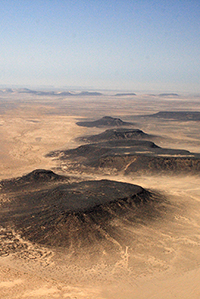
Jordan’s Black Desert is a uniquely harsh and inhospitable place. It is a broad band of basalt that stretches across Jordan’s panhandle, running some 145 kilometers from Azraq to its northeastern edge on the Iraqi border, and 115 kilometers from the Syria in the north to Saudi Arabia in the south. In the summer and autumn, this region is bleak and forbidding – daytime temperatures regularly exceed 100 degrees F…[READ MORE][/vc_column_text][mk_divider thickness=”1″ margin_top=”0″][vc_column_text]
The Past Performative: Thinking through the Azraq Community Archaeology Project
By: Alison Damick and Ahmad Lash
The Azraq Basin in eastern Jordan is a 13,000 km2 limestone basin between the arid steppes to the west and the volcanic “Black” Deserts to the east and south. With one of the largest and most reliable fresh water sources in the area, the oasis has been an important stopping point for animals and humans throughout history. The first recorded human occupation in the Azraq Basin dates to more than 300,000 years ago. The basin area hosts many documented archaeological sites, including prehistoric, Roman, Byzantine, and Islamic era material…[READ MORE][/vc_column_text][mk_divider thickness=”1″ margin_top=”0″][vc_column_text]
Saving Archaeological Heritage in Afghanistan
By: Hans Curvers
During a crisis or conflict, interventions first focus on emergency relief. Once the ‘post-conflict stage’ is reached, the focus shifts to reconstruction. As soon as peace and stability are restored, the exit strategy starts. A straightforward linear process. Where does archaeology fit in? In the Afghan reality, however, there is no such linear process. Afghanistan is neither a ‘post conflict’ nor a ‘conflict’ state: it is both at the same time…[READ MORE][/vc_column_text][mk_divider thickness=”1″ margin_top=”0″][vc_column_text]The Ancient Near East Today features contributions from diverse academics, a forum featuring debates of current developments from the field, and links to news and resources. The ANE Today covers the entire Near East, and each issue presents discussions ranging from the state of biblical archaeology to archaeology after the Arab Spring.
[/vc_column_text][/vc_column_inner][/vc_row_inner][mk_divider thickness=”1″ margin_top=”0″][vc_row_inner][vc_column_inner][vc_column_text]Welcome to The Ancient Near East Today, Vol. III, No. 1 – the first issue of 2015! In this issue, we take you from Iron Age bureaucrats in ancient Judah to selfie-obsessed graffiti writers around the ancient world, with stops in Assyria and Hollywood.
We begin with new evidence from James Hardin and his colleagues for early bureaucracy in Judah. Friedhelm Pedde looks at the travails of the German excavations at Assur. Karen Stern shows how ancient graffiti writers, like modern ones, just wanted to make their mark. Alex Joffe considers Ridley Scott’s new film Exodus: Gods and Kings. In a podcast, the new editors of the Bulletin of the American Schools of Oriental Research discuss where the journal is going. And as always, we’re pleased to bring you an assortment of reports by students supported by ASOR scholarships.
Please feel free to forward articles from The Ancient Near East Today to family and friends, post links to Facebook, and be in touch with the editor. Remember, being a part of Friends of ASOR is free![/vc_column_text][mk_divider thickness=”1″ margin_top=”0″][vc_column_text]
Few phenomena embody the current zeitgeist like the ‘selfie.’ Glances through Facebook or Instagram reveal selfies in abundance. Cameras on today’s smart phones, combined with the platform of social media, transform auto-photography into an art form by allowing people to publically project carefully selected images of themselves—posing in front of famed monuments, clustered with friends at public events, or at home, surrounded by friends and family.
By: James W. Hardin, Christopher A. Rollston, and Jeffrey A. Blakely
Khirbet Summeily is located about 22 kilometers east of Gaza and about 4 kilometers west of Tell el-Hesi, on the ancient road connecting Gaza with Hebron. To the east is the heartland of Judah and to the west is the heartland of Philistia. Summeily lies in the borderland, a small site only slightly larger than one acre.
Exactly one hundred years ago, in 1914, the German excavation in Assur in Northern Iraq ended. Despite this, German research on Assur was only beginning. Assur, the great Assyrian capital, was only one of more than a dozen sites in the Near East in which the Germans had begun archaeological activities.
Director Ridley Scott’s Exodus: Gods and Kings is the latest retelling of the Old Testament’s most popular film franchise. Does he succeed or fail? Should Biblical films be Biblical or “historical”? And is Batman a good Moses?
[/vc_column_text][mk_divider thickness=”1″ margin_top=”0″][vc_column_text]The Ancient Near East Today features contributions from diverse academics, a forum featuring debates of current developments from the field, and links to news and resources. The ANE Today covers the entire Near East, and each issue presents discussions ranging from the state of biblical archaeology to archaeology after the Arab Spring.

 The Ancient Near East Today features contributions from diverse academics, a forum featuring debates of current developments from the field, and links to news and resources. The ANE Today covers the entire Near East, and each issue presents discussions ranging from the state of biblical archaeology to archaeology after the Arab Spring.