SHARE
[/vc_column_text][mk_image src=”http://www.asortest.org/wp-content/uploads/2017/01/social-fb-icon4.jpg” image_width=”42″ image_height=”42″ hover=”false” custom_url=”https://www.facebook.com/ASOResearch/” margin_bottom=”0″][mk_image src=”http://www.asortest.org/wp-content/uploads/2017/01/social-tw-icon4.jpg” image_width=”42″ image_height=”42″ hover=”false” custom_url=”https://twitter.com/ASOResearch?ref_src=twsrc%5Egoogle%7Ctwcamp%5Eserp%7Ctwgr%5Eauthor” margin_bottom=”0″][mk_image src=”http://www.asortest.org/wp-content/uploads/2017/01/social-in-icon4.jpg” image_width=”42″ image_height=”42″ hover=”false” custom_url=”https://www.linkedin.com/company/american-schools-of-oriental-research” margin_bottom=”0″][mk_image src=”http://www.asortest.org/wp-content/uploads/2017/01/social-ml-icon_7.jpg” image_width=”42″ image_height=”42″ hover=”false” custom_url=”mailto:asor@bu.edu” margin_bottom=”0″][mk_image src=”http://www.asortest.org/wp-content/uploads/2017/01/blog-icon3.jpg” image_width=”42″ image_height=”42″ hover=”false” custom_url=”http://asorblog.org/” margin_bottom=”0″][/vc_column][vc_column border_color=”rgba(255,255,255,0.01)” width=”1/6″ css=”.vc_custom_1493004112151{margin-right: 20px !important;border-left-width: 2px !important;padding-right: 20px !important;padding-left: 20px !important;border-left-color: #99422f !important;}”][mk_divider divider_color=”rgba(255,255,255,0.01)” thickness=”1″ margin_top=”3″ margin_bottom=”3″][vc_widget_sidebar sidebar_id=”sidebar-16″ el_class=”.widget { overflow: hidden; margin-bottom: 0; }”][/vc_column][vc_column border_color=”rgba(170,170,170,0.01)” width=”8/12″ css=”.vc_custom_1487276122024{margin-right: 10px !important;margin-bottom: 30px !important;border-right-width: 2px !important;border-bottom-width: 2px !important;padding-top: 30px !important;padding-right: 30px !important;padding-left: 20px !important;background-color: #ffffff !important;border-right-color: rgba(227,228,228,0.75) !important;border-bottom-color: rgba(227,228,228,0.75) !important;}”][vc_row_inner][vc_column_inner width=”1/3″ css=”.vc_custom_1515087305797{padding-right: 20px !important;}”][mk_image src=”https://www.asor.org/wp-content/uploads/2017/12/foa-reduced-100.png” image_width=”190″ image_height=”100″ crop=”false” hover=”false”][/vc_column_inner][vc_column_inner width=”2/3″][vc_column_text responsive_align=”left”]February 2018
Vol. 6, No. 2
[/vc_column_text][/vc_column_inner][/vc_row_inner][mk_divider thickness=”1″ margin_top=”0″][vc_row_inner][vc_column_inner][vc_column_text]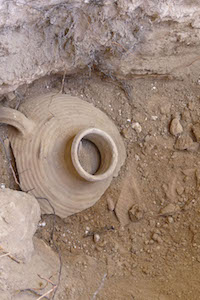
The New Excavations of Beth She’arim
By Adi Erlich
Few Jewish sites in Israel are as renowned as Beit She’arim, which today receives many thousands of visitors a year. But while best known for its catacombs and tombs, Beit She’arim was much more than a cemetery. New excavations are bringing that living dimension into focus for the first time, and refining our understanding of the Jewish Galilee as a whole.
READ MORE
[/vc_column_text][mk_divider thickness=”1″ margin_top=”10″][vc_column_text]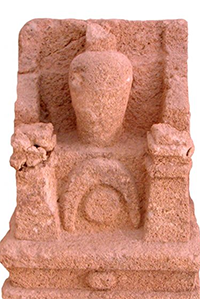
Understanding Tophets: A Short Introduction
By Adriano Orsingher
Few historical issues are as controversial as child sacrifice in the ancient Mediterranean and Biblical worlds. The Biblical term Tophet is conventionally used to refer to a type of open-air cremation sanctuary. The common element characterising Tophets is the presence of an open space where urns containing cremated remains of animals and/or children were deposited.
READ MORE
[/vc_column_text][mk_divider thickness=”1″ margin_top=”10″][vc_column_text]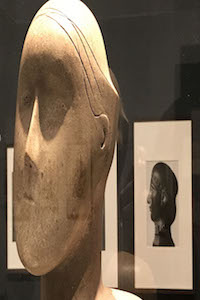
Sumer and the Modern Paradigm
By Pedro Azara
Joan Miró used Son Boter, a 17th century mansion at Palma de Mallorca (Balearic Islands, Spain) as his studio for sculptures. On its walls were images of what most most scholars believed were ethnographic or traditional art. But in reality these were Sumerian masterpieces from the National Museum of Iraq in Baghdad.
READ MORE
[/vc_column_text][mk_divider thickness=”1″ margin_top=”10″][vc_column_text]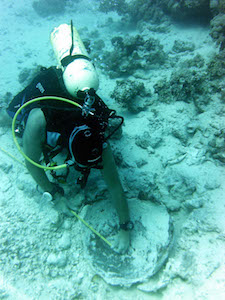
Echoes of Nabataean Seafaring
By Ralph Pedersen
When one thinks of the Nabataeans, the desert comes to mind, with wind-blown sands, the red rock-cut architecture of their capital of Petra, and trade routes carrying incense from Arabia to the Mediterranean. There is, however, another aspect of the Nabataeans, one that is only now coming into focus: Seafaring.
READ MORE
[/vc_column_text][mk_divider thickness=”1″ margin_top=”10″][vc_column_text] The Missing Shade of Blue
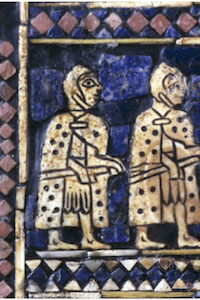
By Shiyanthi Thavaplan
There are no ancient Near Eastern treatises that explain the nature of color. Did people think color was an immutable part of substances like stones and metals? Could it vary when subjected to forces like heat or light? We do not know. And yet, written documents suggest beyond any doubt that color was recognized as an essential aspect of natural and artificial substances.