Monuments, Monumental Architecture, and Monumentality in Ancient Israel
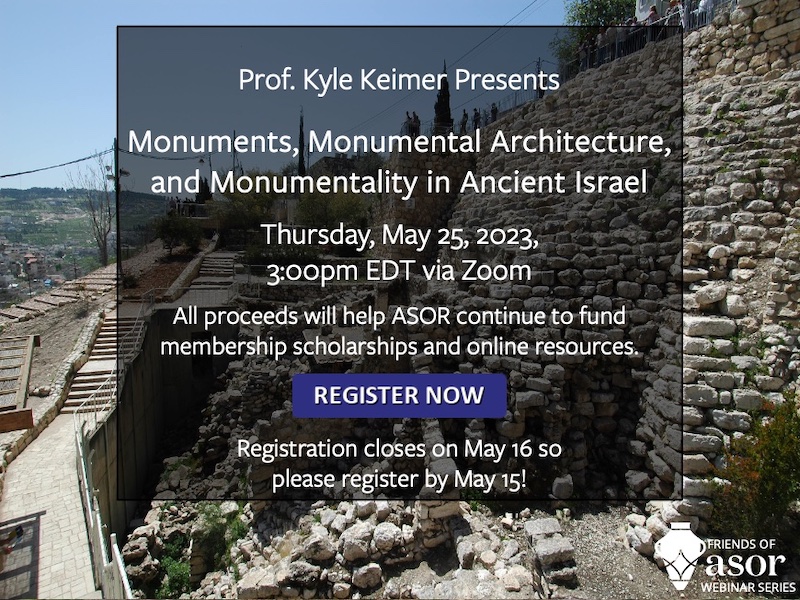
Friends of ASOR present the last webinar this season on May 25, 2023, at 3:00 pm EDT, featuring Dr. Kyle Keimer. “Monumental architecture” is something that is often discussed in the archaeology of ancient Israel, but seldom defined. The same is true for “monuments” in ancient Israel. Following recent directions in anthropological archaeology, this talk defines both terms and incorporates the concept of monumentality to discuss where value and significance lay in ancient Israel. Buildings (political, cultic, and social) and small objects alike had both functional and symbolic aspects, and it is only by considering such aspects equally that it becomes possible to plumb the depths of the biblical text for those architectural features that carried exceptional value.
Join Dr. Kyle Keimer as he surveys the monuments and monumental architecture attested to both in the archaeological record of the Iron Ages I-II and in the Hebrew Bible in order to evaluate their monumentality across differing sociopolitical contexts in pre-monarchic and monarchic Israel (and Judah). A live Q&A session will follow this lecture.
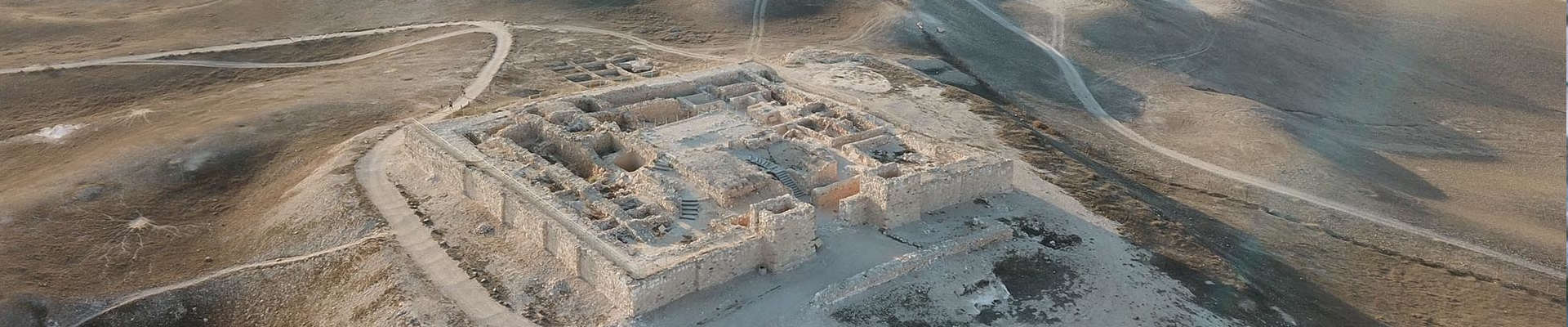
Dr. Kyle Keimer is an Honorary Senior Research Fellow in the Archaeology, History, and Language of Ancient Israel at Macquarie University, Sydney. He co-directed excavations at the site of Khirbet el-Ra’i in southern Israel and is the co-host of The Biblical World podcast. His research bridges both text and archaeology, with an emphasis on the early Iron Age and early Israelite monarchy. His interests also include historical geography and ancient warfare. After finishing his PhD at UCLA, he was a post-doctoral fellow at the W.F. Albright Institute of Archaeology before becoming a Senior Lecturer at Macquarie University. He has over 20 years of archaeological experience in Israel and Cyprus, working on excavations spanning from the Early Bronze Age to the Ottoman Period. His publications include two edited volumes and over 30 articles.
This webinar will be recorded and all paid registrants will be sent a link to view the recording.
Online registration will not be available after May 15 due to an ASOR software transition to a new online system and database. Please register before May 15 to ensure you have a spot in the webinar!
Please e-mail membership@asor.org with any questions or issues with registering.
You will be e-mailed the Zoom Webinar link in the week prior to the lecture on May 25, 2023. If you do not receive the link by the close of business two days before the webinar, please e-mail membership@asor.org immediately. This webinar will be recorded and all paid registrants will be sent a link to view the recording.
All proceeds from this webinar are used to fund scholarships for members as well as increasing ASOR’s online resources, which are free to the public.
READY FOR A WEBINAR SEASON PASS?
Buy a season pass for all the webinars* of the 2022-2023 FOA Webinar Season! 1) You will automatically receive the Zoom link for each webinar so no need to register each time. 2) You will also receive the recording of each webinar automatically after the event.
If you have missed webinars earlier in the season and still want to buy the pass, you will receive the links to the recordings of the webinars you missed in your automatic confirmation email after you buy the pass.
*Special symposiums may be excluded from the season pass price.
No more registering for a year if you buy your pass today!
Pricing:
Members: $75.00 Non-Members: $150.00 ASOR Sustaining Members: $0 (automatic registration for each webinar) Not a member yet? Click here to join as a member and receive the 50% off a season pass!
Log into our online store to purchase the season pass for 2022-2023. If you are new to ASOR and do not have a record in our store yet, click here to register. After you login, navigate to the left to “Meeting and Event Registration.” Please e-mail membership@asor.org if you have any questions or issues.
WHY SPONSOR A WEBINAR?
Several levels of support from $50-$1,000 are available. Proceeds go towards membership scholarships and towards increasing ASOR’s virtual resources. Each sponsorship is tax-deductible and you can give your friends free registrations to a webinar!
Bronze Level ($50): up to 2 guest registrations Silver Level ($100): up to 5 guest registrations Gold Level ($500): up to 20 guest registrations Platinum Level ($1,000): up to 50 guest registrations
After you sign up for a sponsorship online or over the phone, email the names and email addresses of your guests to Felice Herman at membership@asor.org, who will send your guests a confirmation and the Zoom link before the webinar.
WANT TO SAVE $6.00 ON THE NEXT WEBINAR?
Join ASOR as a member! Click here for more details about discounts for events and other benefits of membership. Memberships start at $40 for the year as an Associate Member.
You can now purchase the link to the recording of any webinar. You can also purchase the bundle packages of all webinars from the 2020-2022 seasons. Please e-mail membership@asor.org for purchase details.
To see a printable pdf of the webinar titles from the 2020-2021 season, please click here. To see a printable pdf of the webinar titles from the 2021-2022 season, please click here.
Where Are They Now?: A Preview of 2022 ASOR-Affiliated Fieldwork Projects Michael Given (University of Glasgow), Xenia-Paula Kyriakou (Florida Gulf Coast University), Stephen Batiuk (University of Toronto), Monique Roddy (Walla Walla University), Kent Bramlett (La Sierra University), Friedbert Ninow (La Sierra University), and Michael Hoff (University of Nebraska-Lincoln) | March 8, 2022
Tel Rehov: A Major Bronze and Iron Age City in the Jordan Valley Amihai Mazar (Hebrew University of Jerusalem), Nava Panitz-Cohen ( Hebrew University of Jerusalem), Nota Kourou (Athens University), Naama Yahalom-Mack (Hebrew University of Jerusalem), Robert Mullins (Azusa Pacific University) | February 10, 2022
Archaeogaming: Why Video Games Deserve Their Own Archaeology Tine Rassalle (University of North Carolina at Chapel Hill), Shannon Martino (Morton College), Matthew Winter (University of Arizona), Michael Zimmerman (Rhode Island) | April 18, 2021
ASOR ANNOUNCES THE ADDITION OF THE JOURNAL, MAARAV
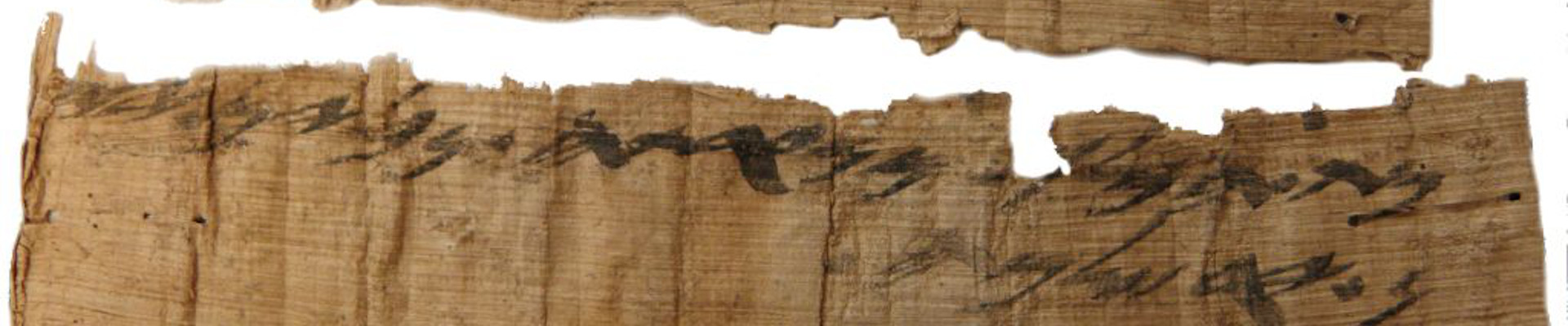
ASOR is pleased to announce that Maarav is now part of the ASOR journal family and is available to ASOR members with online access to all of our journals (NEA, BASOR, and JCS) through the University of Chicago Press platform. Maarav is a journal for the Study of the Northwest Semitic Languages and Literatures with an emphasis on linguistics, philology, and literary studies. This journal is devoted to the texts and verbal objects of the ancient Levant featuring Aramaic, Hebrew, Phoenician, and related languages. In addition to research on their verbal features, Maarav welcomes inquiry into their material, visual, and social aspects, their cultural horizons and relationships, and contemporary interests like the technological developments in decipherment, storage, representation, and analysis and the history and current practices of acquiring and interpreting ancient objects.
Please read the letter from the editor, Simeon Chavel (University of Chicago), below.
Dear Members,
It is an honor to follow Bruce Zuckerman (founder, 1978–2002) and Christopher Rollston (2002–2022) and serve as the third Editor of Maarav. The journal will continue to center on the inscriptions found in the Levant (Syro-Palestine) of the Late Bronze Age, the Iron Age, and the Persian period written in the languages characteristic of the region. At its core will be study of the inscriptions’ material, linguistic, and literary aspects. Around the core will be studies comparing earlier and later inscriptions and literature; comparing literature in Mesopotamia, Anatolia, and the Mediterranean; and reconstructing Levantine societies, culture, and history. Anchored in distinct objects (verbal ones) defined by period and place rather than in tradition (biblical), Maarav sees itself as representing a crucial node and nexus of several overlapping fields of study of the ancient world, and it aims to serve robustly in that capacity.
Select topics illustrating the range are:
the origins and spread of the alphabetic writing system and its comparison with other systems
the varied uses of writing
the genres of writing in general and of literature in particular
the relationship of writing to art and to place, in immediate, broader, static, and dynamic contexts
the wealth of religious, mythical, and other speculative lore
the place of magic in society and in thought
the significant role of writers (“scribes”)
regimes of administration and power
the reach of concepts and practices across many regions and down through time.
Wide-ranging developments make this a promising time for Maarav to thrive—developments in the technologies of deciphering images and of presenting them; in approaches to the material and social worlds of verbal objects; in the analysis of gender and of humanness; in the reconstruction of Levantine societies and ethnicity in their imperial contexts; in the understanding of cultural interaction from Mesopotamia across the Mediterranean; and in the ethics—the politics and the economics—of imperially enabled scholarship today.
Maarav looks to fit in wonderfully at ASOR alongside BASOR, JCS, and NEA, and and is excited to be available to you, their inquisitive and learned readers. It plans to be published semiannually. The board of editors draws on three pools of colleagues: continuing editors, faculty at the University of Chicago, and additional scholars who represent desired areas of expertise and emerging trends. You can see the board, keep up with new issues, and access back-issues here.
Yours,
Simeon Chavel
This journal is only available to active members including Regular with online only access, Regular with both online and print delivery, Retired with online only access, Retired with both online access and print delivery, Sustaining, Early Career, Graduate, and Undergraduate levels. Associate and Contributing members do not have access to Maarav.
ASOR 2025—Strengthening Our Foundation | Expanding Horizons—A Call to Action
In 2025, ASOR will be hitting its 125 year mark. Yes, fellow ASOR members and friends, our quasquicentennial is nearly upon us, and we have cause to celebrate!
A first cause for celebration is that ASOR members continue to be engines of research, education, publication, and engagement about the history and cultures of the Near East and the wider Mediterranean world.
This work has never been more needed. So, amid celebration, we confront challenges. Worldwide threats to cultural heritage are a great concern, because we know that targeting people’s cultural heritage is a first step toward violence and extremism. Also, such losses cannot be undone. The humanities bring this into focus, yet dollars to fund these departments and this research are being siphoned off elsewhere. Some professional organizations focused on past human experience are shrinking. Not so for ASOR!
This is a second cause for celebration. Our membership is expanding. ASOR is in solid financial shape. You have created a foundation for positive change and action.
To continue this momentum, ASOR has embarked on a grand challenge, a $5 million dollar—$5,000,000—fundraising initiative. Our third cause for celebration is that generous ASOR members already have pledged or given $2.7 million dollars, with more coming.
This is a call to action, asking you to help shape the future through the discovery, documenting, and protecting of cultural heritage in innovative ways. I ask you to think how you can join in this effort to equip ASOR to meet the challenges of this moment.
Your gift of support to ASOR makes a real difference. With your participation, ASOR can:
Increase membership support: You can strengthen and widen ASOR’s geographic impact throughout the Middle East and North Africa with scholarships, research fellowships and excavation project grants including citizens from countries that lack resources. 2. Widen and expand ASOR’s publications: You can ensure that ASOR continues to disseminate knowledge and educate the public in an economic climate where support for scholarship is shrinking. 3. Make ASOR more accessible to everyone: You can address financial need for access in North America, North Africa, the Middle East, and around the world. With you, ASOR can set an example with diversity, equity and inclusion initiatives that span language and cultural divides. 4. Grow Cultural Heritage Initiatives: You can support cultural heritage stabilization, documentation, and mitigation efforts. You can guarantee that ASOR continues to be seen as a world leader in protecting heritage and ensure the continuation of education and stewardship programs that combat violent extremism and misuse of heritage by authoritarian rulers. 5. Develop Greater Online Access: You can fund innovations in the rapidly growing field of online and virtual resources to make research accessible to everyone with a computer, tablet, or phone. 6. Expand the Friends of ASOR Programs: You can help underwrite education and outreach programs that will broaden ASOR’s membership and bring non-academic supporters with an interest in the ancient world to our organization. 7. Strengthen the Foundation of ASOR’s Operations: You can safeguard ASOR’s work to 2050 and beyond through the Annual Fund, or with endowment gifts to sustain operational staffing and capital needs at the James F. Strange Center, or through efforts to make ASOR more sustainable.
These are but a few ideas. Studies of the human past have never faced greater obstacles, but ASOR has the financial stability and talent to find innovative solutions. Each of us is a critical part of this effort. If you and I do not respond to this call to action to shape the future of our profession and document and protect cultural heritage in innovative ways, who will? YOU CAN BE PART OF THIS HISTORIC MOMENT, CREATING CHANGE & MAKING A LEGACY. ORGANIZATIONS THRIVE BECAUSE OF PEOPLE LIKE YOU. Please join in celebrating our 125th year with “ASOR 2025— Strengthening Our Foundation | Expanding Horizons—A Call to Action.”
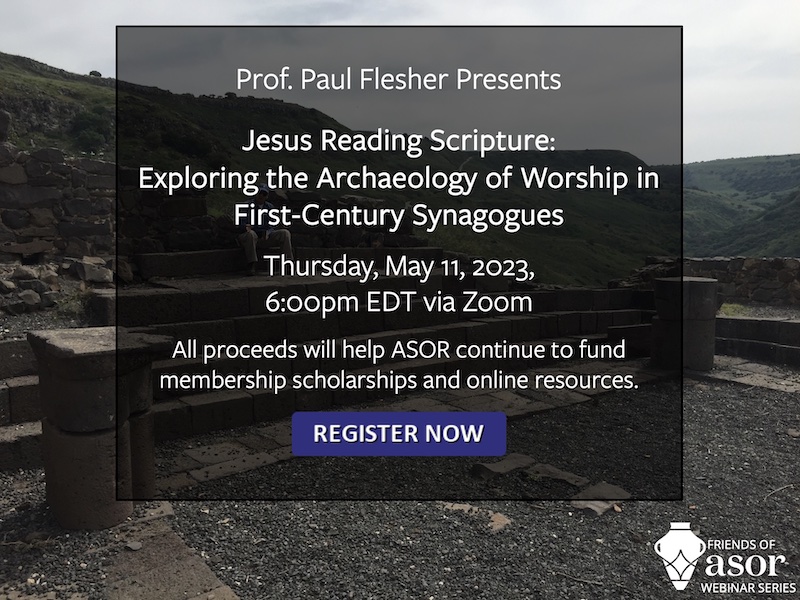
Jesus Reading Scripture: Exploring the Archaeology of Worship in First-Century Synagogues
Friends of ASOR present the next webinar in our monthly series on May 11, 2023, at 6:00 pm EDT, featuring Dr. Paul V. M. Flesher and moderated by Dr. Matthew Grey. The New Testament gospels frequently place Jesus in or near the religious buildings of first-century Galilee, the synagogues. Unfortunately, they never describe these buildings, and apart from Luke 4, they give few details about the rituals that take place inside them. That absence hinders the study of Jesus in the religious context that shaped his life. Even the chapter-long story of Luke 4—where Jesus was given the honor of reading Scripture and then was thrown out of the synagogue—fails to provide sufficient information for us to readily understand it. Why did the congregation as a whole get so angry that they wanted to kill him?
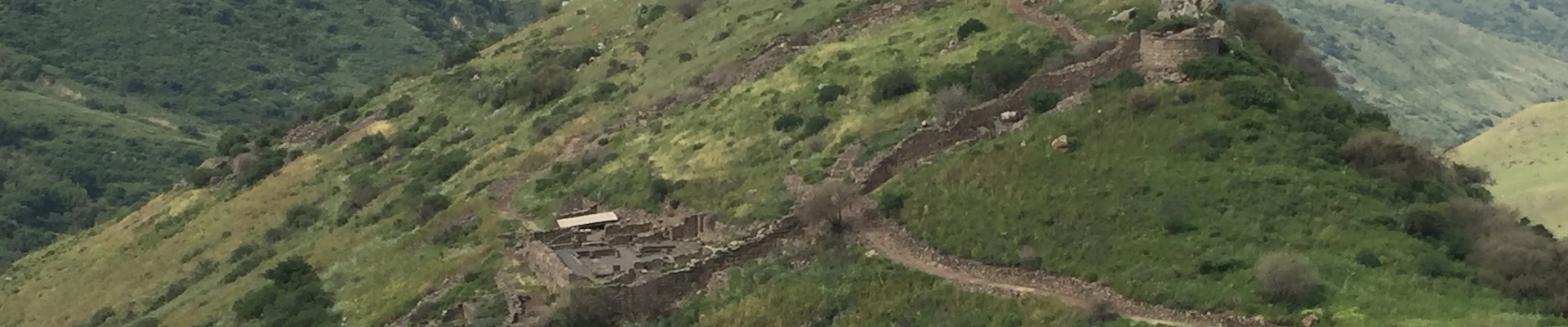
As a historian and an archaeologist, Paul Flesher brings our earliest knowledge of synagogue rituals into conjunction with excavated first-century synagogues to answer that question. By focusing on Luke 4 and the Gamla synagogue—as a representative of first-century synagogues in general—Flesher explores how the synagogues’ architectural layout shaped the spatial and social dynamics of the people inside it to reveal two important points. First, the synagogue reinforced the tight bond between Scripture and the synagogue congregation through the positioning of the congregation and the ritual space of the Scripture reading. Second, the congregation’s mood changed so quickly from honor to rejection because the synagogue’s layout enhanced the communication not just between Jesus and the congregation but also among the members of the congregation themselves. Their ability to act as a coordinated group came from the synagogue’s internal, architectural structure.
Join Dr. Paul Flesher as he discusses Luke 4 and the Gamla synagogue to reveal how the internal architecture of synagogues can influence the spatial and social dynamics of the people inside it. A live Q&A session will be moderated by Dr. Matthew Grey (Brigham Young University).
Dr. Paul V. M. Flesher is a Professor of Religious Studies, at the University of Wyoming, and director of the American Heritage Center. Since the 1980s, Paul Flesher has focused on the dynamics of religious change that Judaism underwent during the Hellenistic and Roman periods, beginning with his masters work under Geza Vermes at Oxford University and his doctoral work under Jacob Neusner at Brown University. A specialist in Rabbinic Judaism and an expert in the history and texts of the Aramaic Targums, Flesher helped found the International Organization of Targumic Study in the early 1990s, serving on its board for two decades and as its president for six years. At the same time, he began researching the early history of synagogues, publishing several articles and an edited volume that brought together new research by American and Israeli scholars. A teacher at heart, Flesher founded the Religious Studies program, and later the department, at the University of Wyoming. Flesher’s excavation career began at Tel Miqne in 1995, but seriously got underway in 2012 when he joined the staff of the Huqoq Excavation Project, then later the Legio excavations conducted by the Jezreel Valley Regional Project. His current research is in archaeo-acoustics, working to reconstruct the sound dynamics of ancient synagogues. In 2019, Flesher took a change of course and became the director of the American Heritage Center at the University of Wyoming, one of the largest, non-governmental archives in the USA.
This webinar will be recorded and all paid registrants will be sent a link to view the recording.
To receive your ASOR member discount, log into the online store. If you are new to ASOR, please click on the “New Visitor Registration” link to register your e-mail address and choose a password for our online store. Once logged in, navigate to “Meeting and Event Registration” to register for the webinar and pay the fee. Each paid registrant will receive a confirmation e-mail when you pay for the webinar. If you do not receive this e-mail, then you are not registered. Please e-mail membership@asor.org with any questions or issues with registering.
You will be e-mailed the Zoom Webinar link in the week prior to the lecture on May 11, 2023. If you do not receive the link by the close of business two days before the webinar, please e-mail membership@asor.org immediately. This webinar will be recorded and all paid registrants will be sent a link to view the recording.
All proceeds from this webinar are used to fund scholarships for members as well as increasing ASOR’s online resources, which are free to the public.
READY FOR A WEBINAR SEASON PASS?
Buy a season pass for all the webinars* of the 2022-2023 FOA Webinar Season! 1) You will automatically receive the Zoom link for each webinar so no need to register each time. 2) You will also receive the recording of each webinar automatically after the event.
If you have missed webinars earlier in the season and still want to buy the pass, you will receive the links to the recordings of the webinars you missed in your automatic confirmation email after you buy the pass.
*Special symposiums may be excluded from the season pass price.
No more registering for a year if you buy your pass today!
Pricing:
Members: $75.00 Non-Members: $150.00 ASOR Sustaining Members: $0 (automatic registration for each webinar) Not a member yet? Click here to join as a member and receive the 50% off a season pass!
Log into our online store to purchase the season pass for 2022-2023. If you are new to ASOR and do not have a record in our store yet, click here to register. After you login, navigate to the left to “Meeting and Event Registration.” Please e-mail membership@asor.org if you have any questions or issues.
WHY SPONSOR A WEBINAR?
Several levels of support from $50-$1,000 are available. Proceeds go towards membership scholarships and towards increasing ASOR’s virtual resources. Each sponsorship is tax-deductible and you can give your friends free registrations to a webinar!
Bronze Level ($50): up to 2 guest registrations Silver Level ($100): up to 5 guest registrations Gold Level ($500): up to 20 guest registrations Platinum Level ($1,000): up to 50 guest registrations
After you sign up for a sponsorship online or over the phone, email the names and email addresses of your guests to Felice Herman at membership@asor.org, who will send your guests a confirmation and the Zoom link before the webinar.
WANT TO SAVE $6.00 ON THE NEXT WEBINAR?
Join ASOR as a member! Click here for more details about discounts for events and other benefits of membership. Memberships start at $40 for the year as an Associate Member.
You can now purchase the link to the recording of any webinar. You can also purchase the bundle packages of all webinars from the 2020-2022 seasons. Please e-mail membership@asor.org for purchase details.
To see a printable pdf of the webinar titles from the 2020-2021 season, please click here. To see a printable pdf of the webinar titles from the 2021-2022 season, please click here.
Where Are They Now?: A Preview of 2022 ASOR-Affiliated Fieldwork Projects Michael Given (University of Glasgow), Xenia-Paula Kyriakou (Florida Gulf Coast University), Stephen Batiuk (University of Toronto), Monique Roddy (Walla Walla University), Kent Bramlett (La Sierra University), Friedbert Ninow (La Sierra University), and Michael Hoff (University of Nebraska-Lincoln) | March 8, 2022
Tel Rehov: A Major Bronze and Iron Age City in the Jordan Valley Amihai Mazar (Hebrew University of Jerusalem), Nava Panitz-Cohen ( Hebrew University of Jerusalem), Nota Kourou (Athens University), Naama Yahalom-Mack (Hebrew University of Jerusalem), Robert Mullins (Azusa Pacific University) | February 10, 2022
Archaeogaming: Why Video Games Deserve Their Own Archaeology Tine Rassalle (University of North Carolina at Chapel Hill), Shannon Martino (Morton College), Matthew Winter (University of Arizona), Michael Zimmerman (Rhode Island) | April 18, 2021
Maarav is a journal for the Study of the Northwest Semitic Languages and Literatures with an emphasis on linguistics, philology, and literary studies. This journal is devoted to the texts and verbal objects of the ancient Levant featuring Aramaic, Hebrew, Phoenician, and related languages. In addition to research on their verbal features, Maarav welcomes inquiry into their material, visual, and social aspects, their cultural horizons and relationships, and contemporary interests like the technological developments in decipherment, storage, representation, and analysis and the history and current practices of acquiring and interpreting ancient objects.
Beginning in 2023, Maarav will join three other ASOR journals published in partnership with the University of Chicago Press: the Bulletin of ASOR, the Journal of Cuneiform Studies, and Near Eastern Archaeology.
Under the leadership of Professor Simeon Chavel (University of Chicago), an internationally renowned editorial board will ensure that the journal remains a leader in the field of Northwest Semitics. Professor Bruce Zuckerman (University of Southern California) has agreed to remain on the team as Editor Emeritus.
After being published exclusively in print, Maarav will be available electronically starting with Volume 27, the first issue published by the University of Chicago Press and ASOR. Back issues are now digitized, providing seamless access to the journal’s full archive for all institutional subscribers and ASOR members. e-Book copies of Maarav will be available to all ASOR members beginning with issues published in 2023.
Current Issue
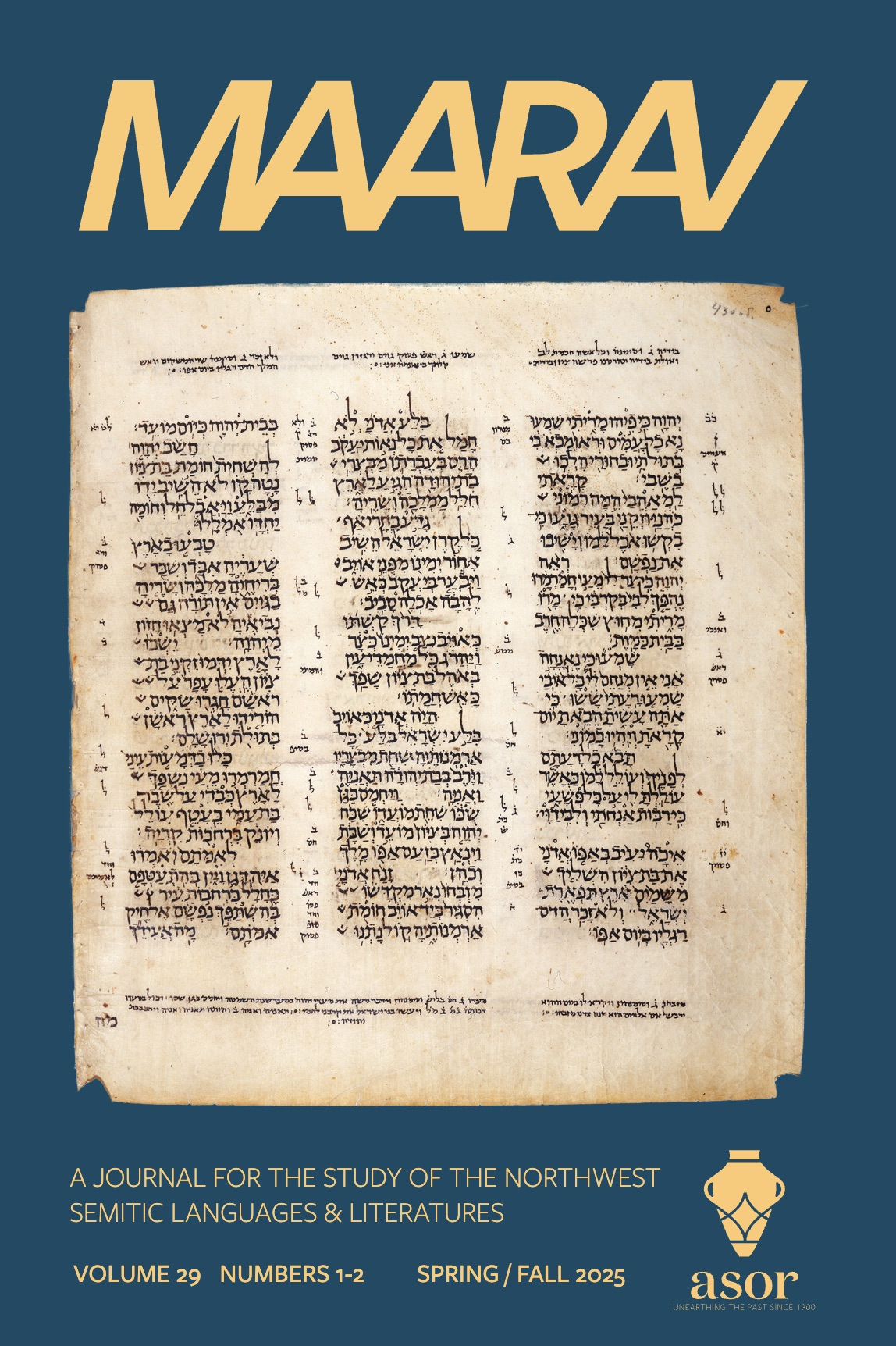
Maarav, Volume 29, No 1-2 (2025): The current issue of Maarav features the following articles: “The Anger of the Queen Has Gone Forth”: Ilimilku’s Warning to Urtenu in a Ugaritic Piggyback Letter; The Rise of “National” Scripts in the Iron Age II: A Proposal; and Conflate Readings and the Lamentations Textual Tradition. Table of Contents
Past Issues
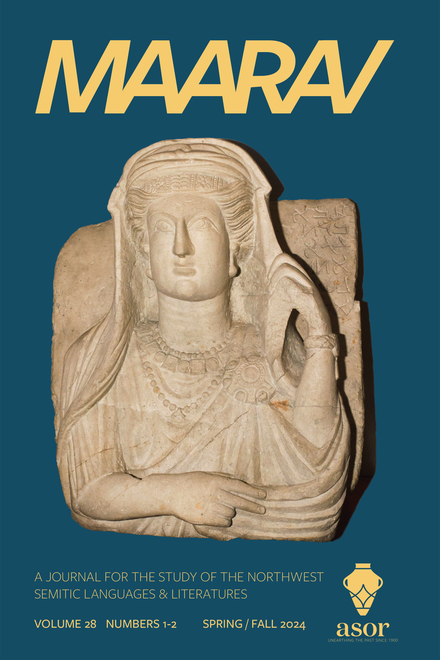
Maarav, Volume 28, No 1-2 (2024): The past issue of Maarav features the following articles: The First Tablet of the Ugaritic Krt Text, Column II, Lines 4–5: Reading and Reconstruction; “And I Deported ʾAriʾēl, Its Leader, from There”: Line 12 of the Mesha Inscription in Light of Shared Scribal Practices in Moab and Ancient South Arabia; Beth-Shemesh East and the lmlk Stamped Jar handles: A Rejoinder; and more. Table of Contents
A Guide to the Online Features of ASOR Journals
Maarav is ASOR’s newest publication. Did you know that online access with an ASOR Academic Membership includes access to all four ASOR journals? Did you know that Associate and Contributing members get access to NEA online as well as print delivery? Did you know that all the back issues of ASOR journals are available to view online? Or that you can view any issue using special features on the University of Chicago Press Journals platform? Read more . . .
Editor Emeritus: Bruce Zuckerman, University of Southern California
Managing Editor Marilyn Lundberg
Editorial Board: Lisa J. Cleath, Princeton Theological Seminary Jessie DeGrado, University of Michigan F.W. Dobbs-Allsopp, Princeton Theological Seminary Carolina López-Ruiz, The University of Chicago Alice Mandell, Johns Hopkins University James Osborne, The University of Chicago Dennis Pardee, The University of Chicago Matthieu Richelle, University of Louvain Madadh Richey, Brandeis University Christopher Rollston, The George Washington University Jeffrey Stackert, The University of Chicago David Vanderhooft, Boston College
Subscribe
Institutions
Institutions can subscribe to Maarav and any other ASOR journal through University of Chicago Press (UCP). Click here for more information on how to subscribe to Maarav or contact UCP directly:
Recordings of ASOR Annual Meeting paper presentations from the 2020-2022 virtual Annual Meetings are part of the ASOR Online Library. The recordings will remain available to all members who register for the current year’s Annual Meeting for as long as ASOR has the capacity to keep the presentations available online. If you do not want your paper presentation to remain online, please fill out the ASOR Presentation Recording Form to request:
To remove the recording immediately (as soon as we are able);
To replace your paper recording with a new, updated video file that you will provide;
To edit the recording to remove a particular slide(s). This option is contingent on ASOR having staff capacity to edit the video and we will make every effort to accommodate your request.
Paul Lapp’s team last excavated at Tell Ta’annek in 1968, over fifty years ago. During that time, much effort has been expended on the final publication of the site’s stratigraphy and material, even though few final manuscripts have reached the publication stage. Walter Rast’s work with the Iron Age pottery was the notable exception and was published in 1978. The present volume uses Rast’s ceramic chronology as the basis for the periodization of the Iron Age strata excavated by Lapp in 1963, 1966, and 1968. After covering the background of the site and Sellin’s excavation of it in the early twentieth century, Meehl presents the Iron Age stratigraphy area by area, period by period, based on the field notes, reports, plans, and photographs of the excavators. Two chapters describe the Iron Age occupations on Tell Ta’annek, setting them in their regional contexts. Appendices addressing the date of the Iron Age fortifications and fire installations and pits follow. Iron Age pottery forms and drainpipes not included in Rast’s book are included in a third appendix.
ASOR members (with a mailing address in the USA) can purchase a copy of ARS 29 at the discounted price of $35.00 (ca. 65% discount off the list price + $6.00 US media mail shipping) through June 30, 2023, while supplies last. Purchases are restricted to one volume per member. We are unable to offer this discount to members without a US mailing address due to international shipping costs, but you can purchase and ship a copy through the ISD link below. Please contact programs@asor.org with any questions. Click here to purchase your discounted copy in the online store in ASOR’s Portal.
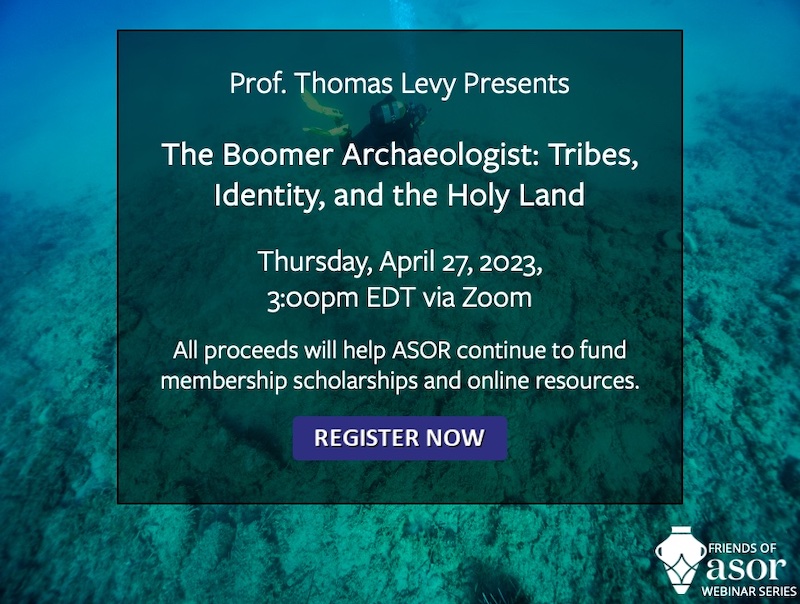
Friends of ASOR present the next webinar in our monthly series on April 27, 2023, at 3:00 pm EDT, featuring Prof. Thomas Levy and moderated by Dr. Ian Jones. For many archaeologists, their lives can best be described as “a life in ruins.” As seen in Tom Levy’s forthcoming book, The Boomer Archaeologist – A Graphic Memoir of Tribes, Identity, and the Holy Land, this is indeed the case. Except for some brief periods working as a cowboy, Levy has worked only as an archaeologist – from early beginnings in the American Southwest in the late 1960s, to professional research in Israel, Greece, and Jordan. Reflecting on more than 50 years as a Levantine field archaeologist, Tom discusses some of the motivations for becoming an archaeologist working in the Holy Land, his role in the application of new methods and theories in the changing field of anthropological archaeology in the eastern Mediterranean, his transition from desert to underwater archaeology, and some of the challenges facing US universities that will affect the future of American research in the field of Levantine archaeology.
Based on his forthcoming graphic memoir, The Boomer Archaeologist, the lecture will include ligne claire drawings by the memoir’s graphic artist Lily Almeida and photographs from several of Prof. Levy’s projects that tell the story of changes in method and theory in Levantine archaeology over the past 50 years. These projects span the metallurgical revolution during the Chalcolithic period, the rise of the Edomite kingdom known from the Hebrew Bible, and ancient environmental and social change observed through underwater archaeology in the eastern Mediterranean.
Join Prof. Levy as he discusses his new graphic memoir in telling the story of a lifetime professional working in and off the coast of the Holy Land. The webinar will conclude with a Q&A session moderated by Dr. Ian Jones (University of California, San Diego).
Prof. Thomas Levy is the Distinguished Professor, and inaugural holder of the Norma Kershaw Chair in the Archaeology of Ancient Israel and Neighboring Lands at the University of California, San Diego. He is the founder and co-director of the Center for Cyber-Archaeology and Sustainability at the Qualcomm Institute at UC San Diego. Elected to the American Academy of Arts and Sciences and holder of an honorary doctorate from Charles University (Czech Republic), Levy is a widely published Levantine field archaeologist with interests in the role of technology, especially early mining and metallurgy, and on the evolution of societies, especially in eastern Mediterranean. Tom has published 15 archaeology books and over 250 scholarly articles. Levy’s recent focuses are on marine archaeology and paleoenvironmental change during the Neolithic to Classical periods off the Carmel coast of Israel with the University of Haifa, where he is a research associate.
This webinar will be recorded and all paid registrants will be sent a link to view the recording.
To receive your ASOR member discount, log into the online store. If you are new to ASOR, please click on the “New Visitor Registration” link to register your e-mail address and choose a password for our online store. Once logged in, navigate to “Meeting and Event Registration” to register for the webinar and pay the fee. Each paid registrant will receive a confirmation e-mail when you pay for the webinar. If you do not receive this e-mail, then you are not registered. Please e-mail membership@asor.org with any questions or issues with registering.
You will be e-mailed the Zoom Webinar link in the week prior to the lecture on April 27, 2023. If you do not receive the link by the close of business two days before the webinar, please e-mail membership@asor.org immediately. This webinar will be recorded and all paid registrants will be sent a link to view the recording.
All proceeds from this webinar are used to fund scholarships for members as well as increasing ASOR’s online resources, which are free to the public.
READY FOR A WEBINAR SEASON PASS?
Buy a season pass for all the webinars* of the 2022-2023 FOA Webinar Season! 1) You will automatically receive the Zoom link for each webinar so no need to register each time. 2) You will also receive the recording of each webinar automatically after the event.
If you have missed webinars earlier in the season and still want to buy the pass, you will receive the links to the recordings of the webinars you missed in your automatic confirmation email after you buy the pass.
*Special symposiums may be excluded from the season pass price.
No more registering for a year if you buy your pass today!
Pricing:
Members: $75.00 Non-Members: $150.00 ASOR Sustaining Members: $0 (automatic registration for each webinar) Not a member yet? Click here to join as a member and receive the 50% off a season pass!
Log into our online store to purchase the season pass for 2022-2023. If you are new to ASOR and do not have a record in our store yet, click here to register. After you login, navigate to the left to “Meeting and Event Registration.” Please e-mail membership@asor.org if you have any questions or issues.
WHY SPONSOR A WEBINAR?
Several levels of support from $50-$1,000 are available. Proceeds go towards membership scholarships and towards increasing ASOR’s virtual resources. Each sponsorship is tax-deductible and you can give your friends free registrations to a webinar!
Bronze Level ($50): up to 2 guest registrations Silver Level ($100): up to 5 guest registrations Gold Level ($500): up to 20 guest registrations Platinum Level ($1,000): up to 50 guest registrations
After you sign up for a sponsorship online or over the phone, email the names and email addresses of your guests to Felice Herman at membership@asor.org, who will send your guests a confirmation and the Zoom link before the webinar.
WANT TO SAVE $6.00 ON THE NEXT WEBINAR?
Join ASOR as a member! Click here for more details about discounts for events and other benefits of membership. Memberships start at $40 for the year as an Associate Member.
You can now purchase the link to the recording of any webinar. You can also purchase the bundle packages of all webinars from the 2020-2022 seasons. Please e-mail membership@asor.org for purchase details.
To see a printable pdf of the webinar titles from the 2020-2021 season, please click here. To see a printable pdf of the webinar titles from the 2021-2022 season, please click here.
Where Are They Now?: A Preview of 2022 ASOR-Affiliated Fieldwork Projects Michael Given (University of Glasgow), Xenia-Paula Kyriakou (Florida Gulf Coast University), Stephen Batiuk (University of Toronto), Monique Roddy (Walla Walla University), Kent Bramlett (La Sierra University), Friedbert Ninow (La Sierra University), and Michael Hoff (University of Nebraska-Lincoln) | March 8, 2022
Tel Rehov: A Major Bronze and Iron Age City in the Jordan Valley Amihai Mazar (Hebrew University of Jerusalem), Nava Panitz-Cohen ( Hebrew University of Jerusalem), Nota Kourou (Athens University), Naama Yahalom-Mack (Hebrew University of Jerusalem), Robert Mullins (Azusa Pacific University) | February 10, 2022
Archaeogaming: Why Video Games Deserve Their Own Archaeology Tine Rassalle (University of North Carolina at Chapel Hill), Shannon Martino (Morton College), Matthew Winter (University of Arizona), Michael Zimmerman (Rhode Island) | April 18, 2021
Hun, Libya Workshop on Climate Change and its Impact on Cultural Heritage
Talal Bariun, ASOR Tripoli
[/vc_wp_text][/vc_column_inner][/vc_row_inner][mk_divider thickness=”1″ margin_top=”0″ margin_bottom=”10″][vc_wp_text]ASOR is pleased to shared this report on the workshop was held in the city of Hun, the municipality of Al-Jufra, from 28 February to 5 March, 2023. The focus of the workshop was climate change and its impact on the cultural heritage of Libya. The workshop was made possible by the Office of Cultural Affairs at the US Embassy in Tripoli Libyan External Office (LEO) and our partners working on the Libyan National Museum Suitcase Project.
Partners:
Al-Jufra Commission for Scouts and Guides. Hun Regiment for Scouts and Girl Guides. Office of the Ministry of Culture and Knowledge Development Al-Jufra. Thakirat Almadena (City Memory) Association. Community company group. Al-Jufra Local Radio. Royya (Vision) Foundation for Weather and Space Sciences. Hon meteorological station. Faculty of Arts, Al-Jufra University. Cloud Pollution Control Association Hon. College of Natural Resources, Al-Jufra University. Tourist Police and Al-Jufra Antiquities Protection. Amal Charity Association Hon. Other archaeology and history researchers and interested parties.
Approximately 105 people attended and participated in the activities and events of the workshop.[/vc_wp_text][vc_row_inner][vc_column_inner][vc_single_image image=”88469″ img_size=”full” alignment=”center” css=”.vc_custom_1680013856259{margin-right: 10px !important;padding-right: 0px !important;}”][/vc_column_inner][/vc_row_inner][mk_padding_divider size=”20″][vc_wp_text]First day 27 February, 2023:
Visiting the original ancient city in Hun, called Al-Huwaila. Because of the continuous climatic changes and the increase in drought and desertification, this ancient city was completely covered by sand, and its inhabitants abandoned it to another ancient city in the heart of present-day Hun.[/vc_wp_text][vc_row_inner][vc_column_inner width=”1/2″][vc_single_image image=”88474″ img_size=”full” alignment=”center” css=”.vc_custom_1680016564385{margin-right: 10px !important;padding-right: 0px !important;}”][/vc_column_inner][vc_column_inner width=”1/2″][vc_single_image image=”88483″ img_size=”full” alignment=”center” css=”.vc_custom_1680016589991{margin-left: 10px !important;}”][/vc_column_inner][/vc_row_inner][mk_padding_divider size=”20″][vc_wp_text]An expanded working session with members of Thakirat Almadena the Memory of the City Association and members of the Community Partnership Group. The session took place at the headquarters of the City Museum, which was the headquarters of the Italian military administration, and it is a beautiful palace built in the twenties of the last century. The session was for preparations for the theoretical side of tomorrow’s workshop, as well as studying the possibility of installing a solar energy unit to manage the building. In addition to building a real partnership with the Memory of the City Association, which has 30 continuous years in the field of serving civil, community and cultural work.
Approximately 31 people attended this expanded session.[/vc_wp_text][vc_row_inner][vc_column_inner width=”1/3″][vc_single_image image=”88477″ img_size=”full” alignment=”center” css=”.vc_custom_1680014460236{margin-right: 10px !important;padding-right: 0px !important;}”][/vc_column_inner][vc_column_inner width=”1/3″][vc_single_image image=”88485″ img_size=”full” alignment=”center” css=”.vc_custom_1680017853901{margin-right: 5px !important;margin-left: 5px !important;}”][/vc_column_inner][vc_column_inner width=”1/3″][vc_single_image image=”88480″ img_size=”full” alignment=”center” css=”.vc_custom_1680017866880{margin-left: 10px !important;}”][/vc_column_inner][/vc_row_inner][mk_padding_divider size=”20″][vc_wp_text]Second day 28 February, 2023:
Visit the Hun Meteorological Station.[/vc_wp_text][vc_row_inner][vc_column_inner width=”1/3″][vc_single_image image=”88486″ img_size=”full” alignment=”center” css=”.vc_custom_1680015054895{margin-right: 10px !important;padding-right: 0px !important;}”][/vc_column_inner][vc_column_inner width=”1/3″][vc_single_image image=”88506″ img_size=”full” alignment=”center” css=”.vc_custom_1680017832534{margin-right: 5px !important;margin-left: 5px !important;}”][/vc_column_inner][vc_column_inner width=”1/3″][vc_single_image image=”88487″ img_size=”full” alignment=”center” css=”.vc_custom_1680016716953{margin-left: 10px !important;}”][/vc_column_inner][/vc_row_inner][mk_padding_divider size=”10″][mk_padding_divider size=”10″][vc_row_inner][vc_column_inner][vc_column_text]
Visit the headquarters of Thakirat Almadena the Memory of the City Association in the old Ottoman castle or fort, which was renovated and used by the Italian military authority. A panel discussion on the establishment of a desert museum in the castle.
Theoretical side, lectures, and interactive panel discussions with all attendees and partners on:
Climate change and its impact on the cultural heritage of Libya
Human tampering with antiquities.
The state of Libyan antiquities in the current situation, samples and models.
53 specialized, semi-professional and interested persons attended this specialized workshop.
Visiting the Association of Retirees and the Elderly and its contribution to protecting the cultural heritage in Hun.[/vc_column_text][/vc_column_inner][/vc_row_inner][vc_row_inner][vc_column_inner width=”1/2″][vc_single_image image=”88491″ img_size=”full” alignment=”center” css=”.vc_custom_1680017004986{margin-right: 10px !important;}”][/vc_column_inner][vc_column_inner width=”1/2″][vc_single_image image=”88492″ img_size=”full” alignment=”center” css=”.vc_custom_1680017019390{margin-left: 10px !important;}”][/vc_column_inner][/vc_row_inner][mk_padding_divider][vc_wp_text]The third, fourth, fifth and sixth days: From 01 to 04 March 2023:
Field studies within the Black Harouge region and Wadi Tagent.[/vc_wp_text][vc_row_inner][vc_column_inner width=”1/2″][vc_single_image image=”88494″ img_size=”full” alignment=”center” css=”.vc_custom_1680017032921{margin-right: 10px !important;}”][/vc_column_inner][vc_column_inner width=”1/2″][vc_single_image image=”88495″ img_size=”full” alignment=”center” css=”.vc_custom_1680017048653{margin-left: 10px !important;}”][/vc_column_inner][/vc_row_inner][mk_padding_divider][vc_wp_text]Awareness sessions for desert experts in the region about activating the prevention of distortion of rock art inscriptions of prehistoric people in the region, and maintaining the cleanliness of the region as much as possible, as well as environmental and animal diversity. Simplified lectures and visual presentations have been implemented with a projector.[/vc_wp_text][vc_row_inner][vc_column_inner width=”1/3″][vc_single_image image=”88497″ img_size=”full” alignment=”center” css=”.vc_custom_1680017064751{margin-right: 10px !important;}”][/vc_column_inner][vc_column_inner width=”1/3″][vc_single_image image=”88498″ img_size=”full” alignment=”center” css=”.vc_custom_1680017082767{margin-right: 5px !important;margin-left: 5px !important;}”][/vc_column_inner][vc_column_inner width=”1/3″][vc_single_image image=”88499″ img_size=”full” alignment=”center” css=”.vc_custom_1680017735105{margin-left: 10px !important;}”][/vc_column_inner][/vc_row_inner][mk_padding_divider][vc_wp_text]
A study of the effect of climatic changes on some rock art paintings of prehistoric man in the Tagant Valley.
21 people attended this mobile workshop.[/vc_wp_text][vc_row_inner][vc_column_inner width=”1/2″][vc_single_image image=”88500″ img_size=”full” alignment=”center” css=”.vc_custom_1680017109397{margin-right: 10px !important;}”][/vc_column_inner][vc_column_inner width=”1/2″][vc_single_image image=”88501″ img_size=”full” alignment=”center” css=”.vc_custom_1680017123822{margin-left: 10px !important;}”][/vc_column_inner][/vc_row_inner][mk_padding_divider][vc_wp_text]Recommendations:
Thakirat Almadena The Memory of the City Association, is a long-standing and powerful civil society institution in Hun, specialized in literature, arts, history and the arts. It actively contributed to the preservation of two very important historical and archaeological buildings. The association has maintained one of these buildings in an optimal manner. The association looks forward to making the best use of these two buildings.During 30 years of continuous work, this association has established a huge library of the association’s publications, in addition to other sources. The community impact is strong and influential for this association.I recommended deepening the partnership with this association and providing it with assistance.
All photos credit: Talal Bariun. [/vc_wp_text][/vc_column][/vc_row][vc_row][vc_column][vc_column_text]
Returning to Armenia: Excavations and Survey in Vayots Dzor
Aurora Camaño, G. E. Wright/Shirlee Meyers Fellowship Recipient
In 2010, while an archaeology undergraduate student, I participated in an archaeological field school in Vayots Dzor, Armenia at the well-known chalcolithic cave, Areni-1. That experience was my first taste of international travel and I fell in love with both Armenia and archaeology. However, it was not the chalcolithic history of the region that caught my attention, but the medieval churches and fortifications that still speckle the mountainous landscapes of Armenia. It was that trip that made me want to specialize in the medieval Near East and South Caucasus and set in motion the career path that I have since carved out for myself.
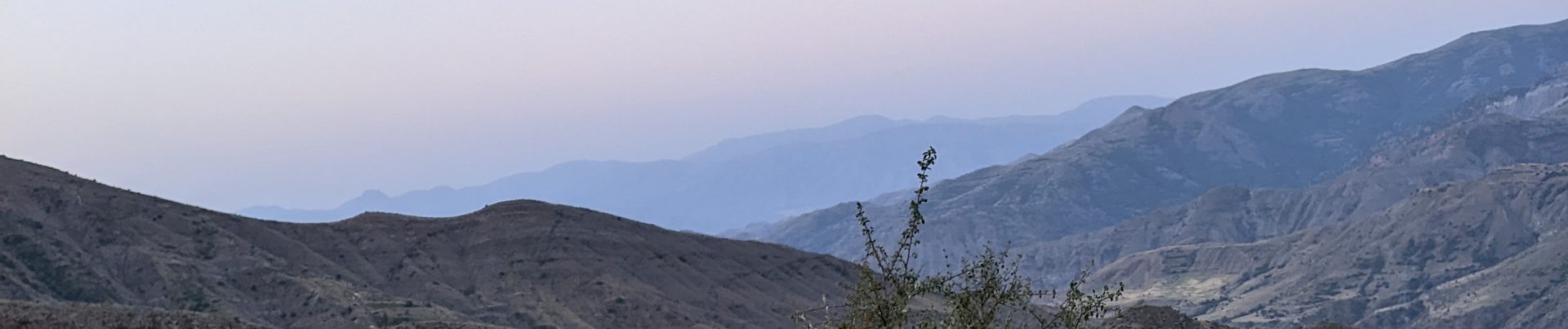
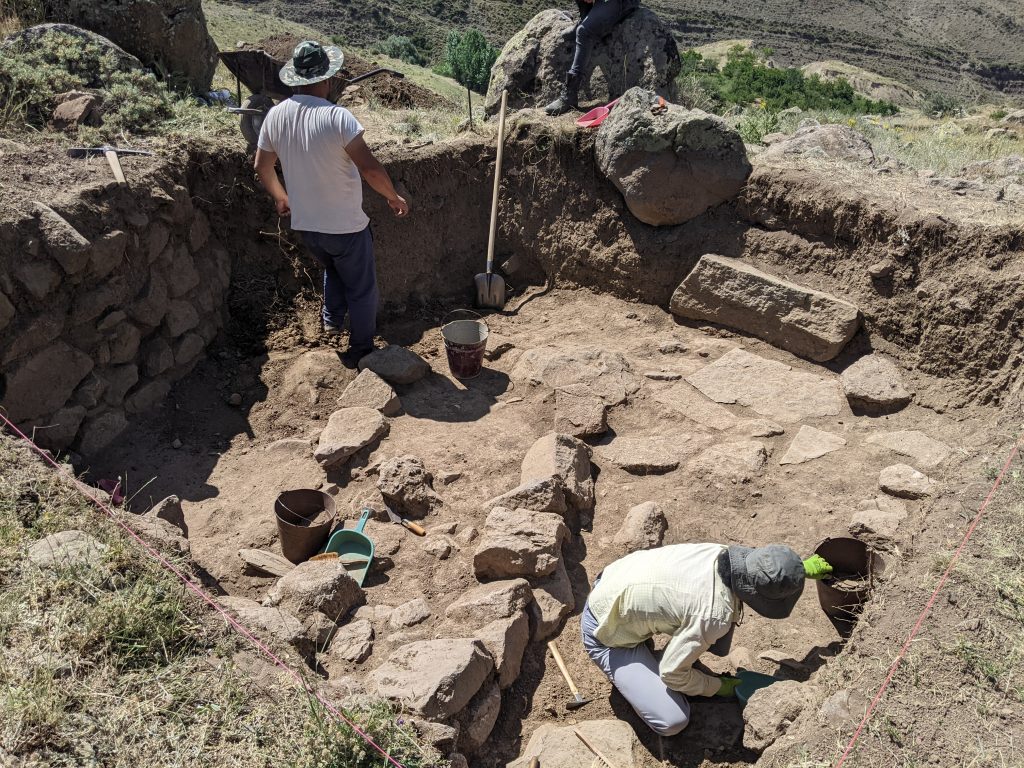
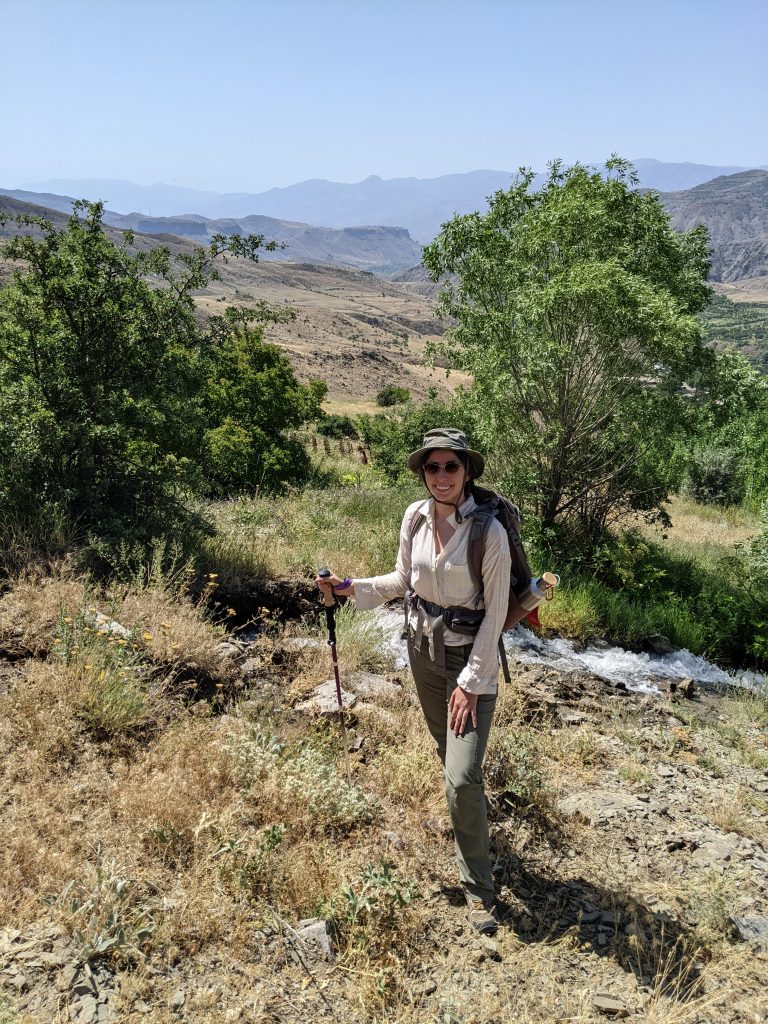
I have been fortunate to have worked in the field on a number of projects in the Near East and Mediterranean since that initial trip to Armenia in 2010, but it has always been a dream of mine to return. In 2020, I got in contact with Dr. Tiffany Earley-Spadoni regarding the Vayotz Dzor Fortress Landscape project, and we made plans for me to join the team. Shortly afterwards, the world shut down from Covid – but two years later, in the summer of 2022 we were able to make it happen. In July I flew from Canada to Armenia and returned for a summer of excavation and survey in the same small village that I worked in twelve years previous.
In the evenings, after coffee and sweets, the team had shared lab hours. I was assigned to help organize and record the pottery backlog from previous seasons, recording the details of all the diagnostic pottery finds from the site. Through this process we were able to better understand regional ceramic production, the different vessel and fabric types that frequented the site, as well as the local geology.
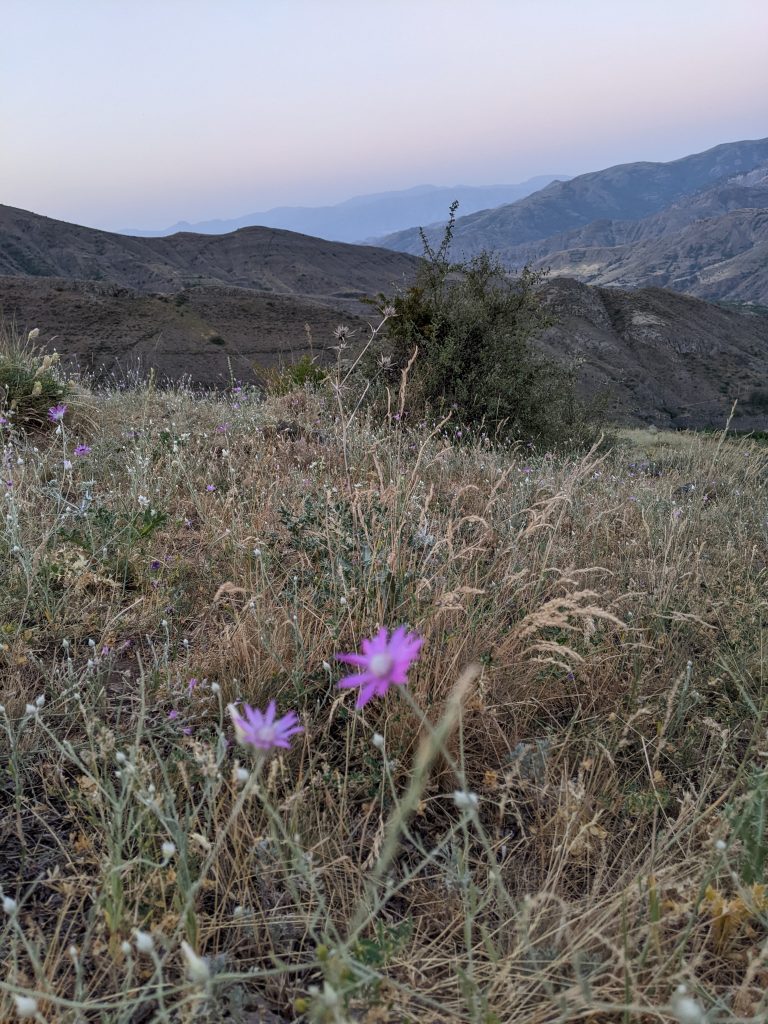
I was overjoyed to be able to return to Armenia, and deeply enjoyed my time in Vayotz Dzor working with the VDFLP team. Beyond the interesting archaeological work we conducted in Karaglukh, I enjoyed the many interesting conversations were had over delicious meals and homemade lavash in the village of Areni, strolls through neighbouring apricot orchards, and visits to the local 13th century church.
Aurora Camaño is a PhD Candidate in Archaeology at Simon Fraser University. She is a landscape archaeologist who specializes in built landscapes in the medieval Near East and South Caucasus. Her current dissertation studies landscapes of relocation in medieval Armenian Cilicia. She can be found on Twitter @AuroraCamano.
Want to help more students and early career archaeologists get into the field? Donate to the cause today by selecting “Student Support” as your gift purpose!

 Friends of ASOR present the last webinar this season on May 25, 2023, at 3:00 pm EDT, featuring Dr. Kyle Keimer. “Monumental architecture” is something that is often discussed in the archaeology of ancient Israel, but seldom defined. The same is true for “monuments” in ancient Israel. Following recent directions in anthropological archaeology, this talk defines both terms and incorporates the concept of monumentality to discuss where value and significance lay in ancient Israel. Buildings (political, cultic, and social) and small objects alike had both functional and symbolic aspects, and it is only by considering such aspects equally that it becomes possible to plumb the depths of the biblical text for those architectural features that carried exceptional value.
 Dr. Kyle Keimer is an Honorary Senior Research Fellow in the Archaeology, History, and Language of Ancient Israel at Macquarie University, Sydney. He co-directed excavations at the site of Khirbet el-Ra’i in southern Israel and is the co-host of The Biblical World podcast. His research bridges both text and archaeology, with an emphasis on the early Iron Age and early Israelite monarchy. His interests also include historical geography and ancient warfare. After finishing his PhD at UCLA, he was a post-doctoral fellow at the W.F. Albright Institute of Archaeology before becoming a Senior Lecturer at Macquarie University. He has over 20 years of archaeological experience in Israel and Cyprus, working on excavations spanning from the Early Bronze Age to the Ottoman Period. His publications include two edited volumes and over 30 articles.


 Friends of ASOR
 As a historian and an archaeologist, Paul Flesher brings our earliest knowledge of synagogue rituals into conjunction with excavated first-century synagogues to answer that question. By focusing on Luke 4 and the Gamla synagogue—as a representative of first-century synagogues in general—Flesher explores how the synagogues’ architectural layout shaped the spatial and social dynamics of the people inside it to reveal two important points. First, the synagogue reinforced the tight bond between Scripture and the synagogue congregation through the positioning of the congregation and the ritual space of the Scripture reading. Second, the congregation’s mood changed so quickly from honor to rejection because the synagogue’s layout enhanced the communication not just between Jesus and the congregation but also among the members of the congregation themselves. Their ability to act as a coordinated group came from the synagogue’s internal, architectural structure.