WELCOME FROM ASOR’s OFFICERS

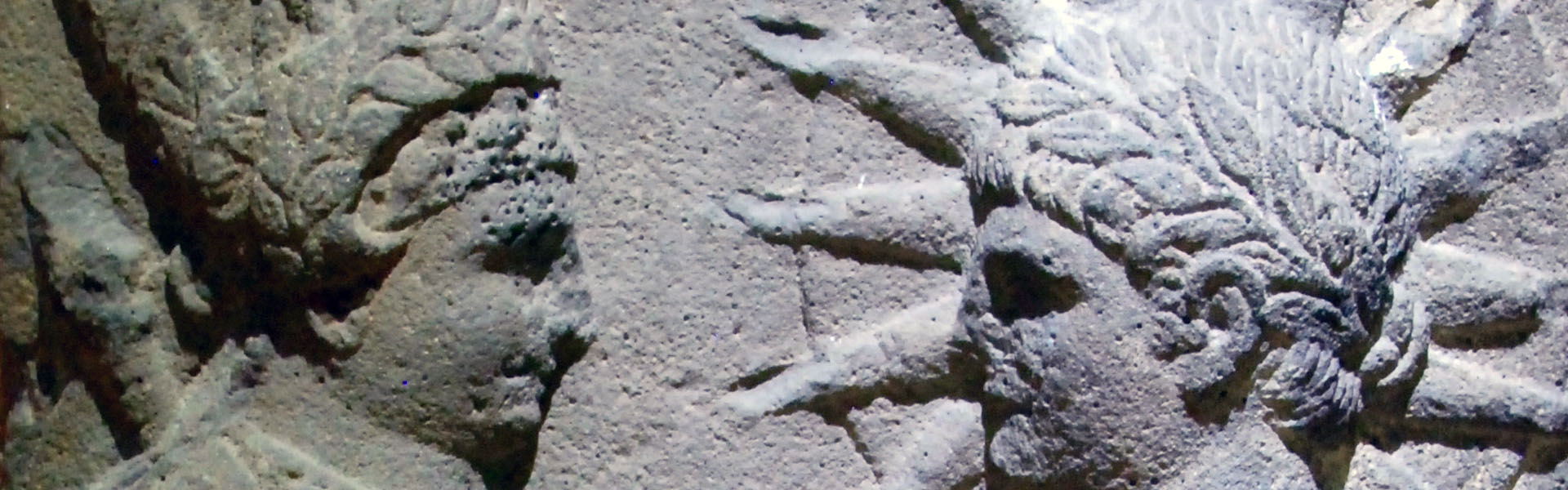
425OrthostatZinjirliHilaniIV8thcPergamonMuseum2009 – 1920x1080

WELCOME FROM THE ASOR PRESIDENT

I’m glad that you clicked on the welcome page for ASOR. I’d like to take a minute to let you know briefly what we are about and why I am committed to ASOR’s mission. Our mission is to “initiate, encourage, and support research into, and public understanding of, the cultures and history” of the Mediterranean Basin from its prehistory to the impact of its history on contemporary people. Among ASOR’s members are archaeologists, people interested in cultural heritage, art historians, linguists, conservators, curators, and, just as importantly, people who are interested in these kinds of research.

Here’s a quick run-down of how our ASOR members fulfill our mission:

• Support research: ASOR is a leader in print and online publications that bring to scholars and the wider public news of discoveries about, and cutting-edge analyses of the cultures and history of the Mediterranean Basin, through journals, monographs, e-newsletters, and open context resources. We sponsor an Annual Meeting, where the new discoveries and cutting-edge analyses are presented. Researchers receive financial support, including support for archaeologists engaged in field research and research in collections, and support for students who want to travel to participate in an archaeological dig affiliated with ASOR.

• Support public understanding: ASOR works with in-country partners, supported by the US Department of State and other philanthropic organizations, to preserve cultural heritage sites in North Africa and the Levant. And we’re on social media: follow us on Facebook, Twitter, and Instagram, as well as on the ASORtv channel on YouTube. You can access sessions from the Annual Meeting or FOA seminars by signing up for the ASOR Online Library.

We are dedicated to fostering the community that values this kind of research and dissemination of analyses. Join us through our Friends of ASOR program, by working as a volunteer at an ASOR-affiliated dig or survey, or by offering us the financial support on which we depend to make all of our programs possible.

In short, we at ASOR are dedicated to finding a means for anyone interested in the cultures and history of the wider Mediterranean to discover and do more. If you are already an ASOR member, we hope this website helps you expand your engagement with ASOR by leading you to organizational resources of which you may not have previously taken advantage. If you’re not a member, we hope this website helps you find ways to join in our efforts.

I look forward to meeting you, hearing your ideas, and hearing about your contributions to ASOR as we move into our 126th year and the future.

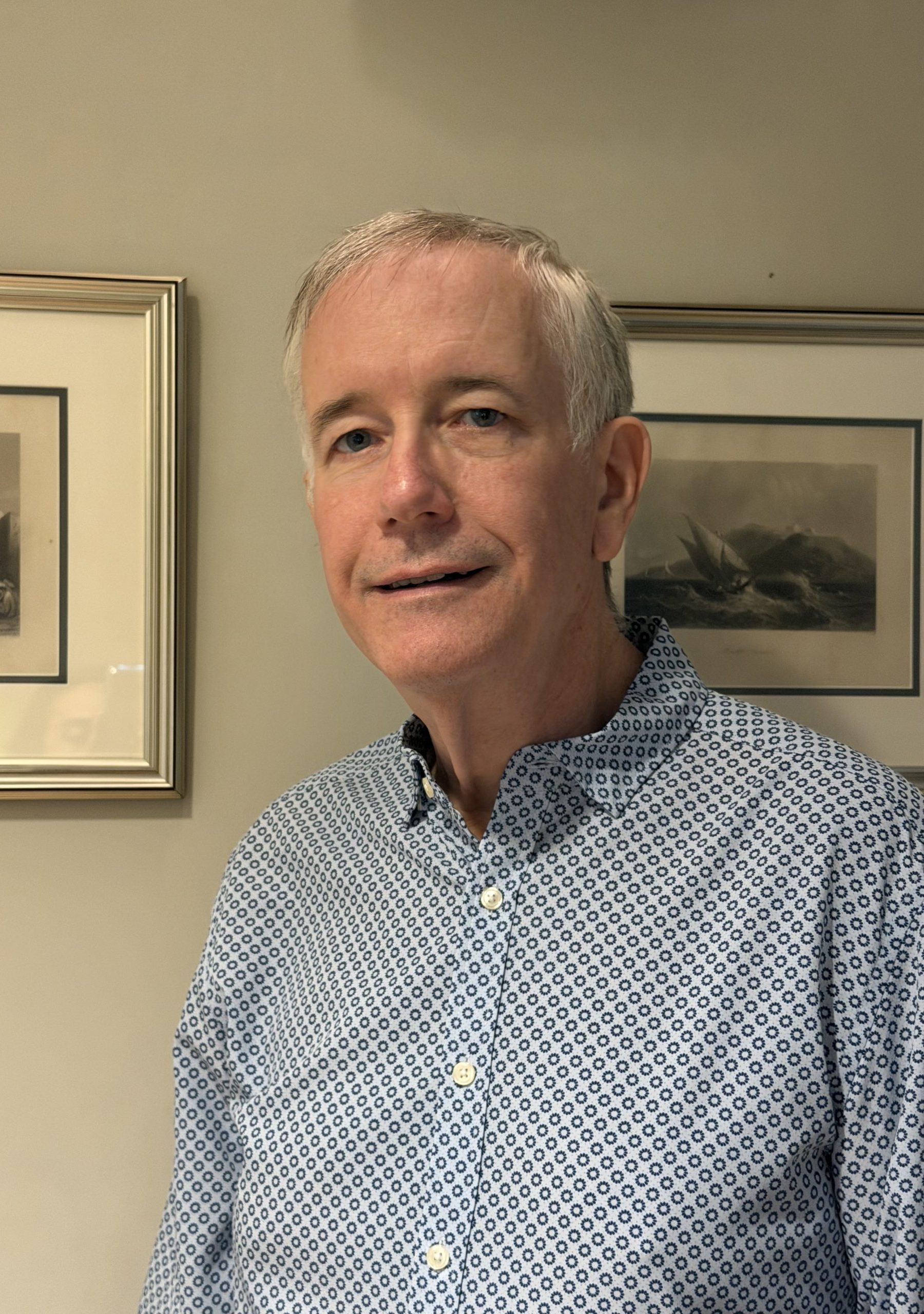
Jane DeRose Evans
President

WELCOME FROM THE ASOR EXECUTIVE DIRECTOR

Just as it has done for the past 125 years, ASOR welcomes you and seeks to facilitate your study of and interest in the Near East and Mediterranean regions. Our charter states that we strive to enable persons to pursue “biblical, linguistic, archaeological, historical, and other kindred studies and researches.” The same is true today, and I invite you to not only explore the ASOR website, but to see how you can be a part of our mission and interdisciplinary work.

For new members, I encourage you to consider a membership and reap benefits that include our four journals (BASOR, NEA, JCS, and Maarav). If you are a scholar, a Regular Membership will give you print delivery of two of our three journals or online access to all three. If you are a student or Early Career Scholar, our discounted memberships will give you online access to all of our journals. If you are a non-specialist or professional in another field who is interested in the history and archaeology of the Middle East, North Africa, and Mediterranean regions, our Public Memberships are designed for you.

No matter which membership category you choose, all members qualify for a special, discounted rate at ASOR’s Annual Meeting. Approximately 1,100 scholars, students, and archaeology and history enthusiasts will come together for the intensive days of academic lectures, poster presentations, business meetings, evening receptions, and general conversation. This is a central event for our members as often as they are able to attend.

Finally, let me invite you to participate in our fellowship programs. If you are a student or early career scholar, ASOR wants to facilitate your study of the eastern Mediterranean regions through our Dana, Dever, MacAllister, Meyers, Meyers/Wright, Platt, Sheeler, Steinmetz, Strange/Midkiff, and Member-Supported Fellowships for summer field work. If you are a dig director, please consider our Gold, Harris, or Seger Excavation Grants. We also offer travel support to the Annual Meeting. I invite everyone to consider providing important financial support for these important fellowships (donate online). Please contact me directly for more information.

Again, welcome, and I look forward to working with you.

Andrew G. Vaughn, Ph.D., has been ASOR’s Executive Director since January, 2007.

WHISTLEBLOWER POLICY

WHISTLEBLOWER POLICY

The whistleblower policy is intended to provide a mechanism for the reporting of illegal activity or the misuse of ASOR assets while protecting the employees who make such reports from retaliation.

1. Questionable Conduct

This policy is designed to address situations in which an employee, board member, or officer suspects another employee, board member, or officer has engaged in illegal acts or questionable conduct involving ASOR’s assets. This conduct might include outright theft (of equipment or cash), fraudulent expense reports, misstatements of any accounts to any manager or to ASOR’s auditors, or even an employee’s conflict of interest that results in financial harm to ASOR. ASOR encourages staff, board members, and officers to report such questionable conduct and has established a system that allows them to do so anonymously.

2. Making a Report

If an employee, board member, or officer suspects illegal conduct or conduct involving misuse of ASOR assets or in violation of the law, he or she may report it, anonymously if the employee wishes, and will be protected against any form of harassment, intimidation, discrimination, or retaliation for making such a report in good faith.

Employees, board members, and officers can make a report to any of the following ASOR executives at any time: president or executive director. ASOR will promptly conduct an investigation into matters reported, keeping the informant’s identity as confidential as possible consistent with our obligation to conduct a full and fair investigation.

Alternatively, employees, board members, and officers can make a report by calling either the board chair or the chair of the finance committee (the treasurer). Their names and phone numbers are posted on ASOR’s intranet.

3. No Retaliation

An employee, board member, or officer who has made a report of suspicious conduct and who subsequently believes he or she has been subjected to retaliation of any kind by any ASOR employee, board member, or officer is directed to immediately report it to the chief executive, the president, or the head of human resources as appropriate.

Reports of retaliation will be investigated promptly in a manner intended to protect confidentiality as much as practicable, consistent with a full and fair investigation. The party conducting the investigation will notify the employee of the results of the investigation.

ASOR strongly disapproves of and will not tolerate any form of retaliation against employees, board members, or officers who report concerns in good faith regarding ASOR’s operations. Any employee who engages in such retaliation will be subject to discipline up to and including termination.

4. ASOR Reporting Procedures

The “whistleblower” procedure is intended to describe the process through which concerns about the possible misuse of ASOR assets are handled pursuant to ASOR’s whistleblower policy.

a. An employee, board member, or officer makes a report of suspected misuse of ASOR assets by reporting in person to an ASOR executive, or reporting anonymously to the board chair or the audit committee chair (the treasurer).

b. The report is promptly reviewed by the chief executive, as well as the president, to determine whether the report constitutes a complaint or a non-complaint, unless one of them is allegedly involved in the misconduct, in which case the report should be reviewed by only one of them. (If both of them are alleged to be involved, the report should go directly to the board chair or the audit committee chair (the treasurer).)

* A complaint means any report involving (i) questionable accounting, auditing, financial reporting, or internal controls; (ii) suspected fraud, theft, or improper use of company assets; (iii) a violation of ASOR’s conflict-ofinterest policy that results in a financial harm to ASOR; or (iv) a claim of retaliation against any employee making a good-faith report regarding any of the preceding matters.

* A non-Complaint means a report of any other matter not involving a misuse of ASOR’s assets

c. If the report is deemed to be a complaint, it will be promptly investigated and forwarded to the audit committee chair (the treasurer). If the report is deemed to be a non-complaint, it will be referred to the appropriate executive or manager for follow-up. Some non-complaints may involve serious matters and may require prompt investigation, but may nevertheless not involve misuse of ASOR’s assets.

d. Each complaint is fully investigated, and as far as possible handled so as to protect the privacy of the employee making the complaint. A written report of the outcome of each investigation is prepared and delivered to the audit committee chair (the treasurer).

e. The audit committee chair (the treasurer) decides whether the report involves a matter that is material. If it is deemed material, it is reviewed by the full committee, which may forward it for disposition to the board or may direct senior management to take actions to resolve the situation. If the report is deemed nonmaterial, it is not reviewed by the committee but is instead addressed by the chief financial officer, as appropriate.

WEBSITE AND ELECTRONIC COMMUNICATIONS POLICY

Website and Electronic Communications Policy

I. Introduction and Purpose.

1.1. The American Society of Overseas Research (ASOR) is committed to providing a confidential and secure website environment for its members, social media users, friends, and visitors to electronically communicate with the organization and carry out online transactions.

1.2. ASOR does not use illegal or misleading methods to mine data, including email addresses, telephone numbers, facsimile numbers, physical addresses, and other personally identifiable information. All such data is obtained only through normal business transactions, including through processing membership applications and event registrations, online sales transactions, purchased data lists, and attending and participating in trade shows.

1.3. To these ends, the ASOR Board of Trustees enacts this Website and Electronic Communications Policy governing the collection and use of such data.

II. Data Collection and Dissemination Practices.

2.1. Names and Mailing Addresses. ASOR collects names, mailing addresses, telephone numbers, and other demographic information through website transactions, and uses such data to communicate with members and prospective members, conduct business, and enhance services. ASOR occasionally shares such data (excluding telephone numbers) with like-minded partner learned societies and other non­profit organizations. ASOR also occasionally rents such data (excluding telephone numbers) to relevant external vendors for one-time use. ASOR maintains systems guarding against unauthorized or multiple uses of such data.

2.2. E­mail Addresses. ASOR also collects email addresses through website transactions, and uses such data to disseminate information about the organization and communicate with members, prospective members, writers, visitors, friends, meeting and event attendees, and e-newsletter and journal subscribers. Persons registered on the ASOR website, blog, and social media sites may opt out of e­mail communications by changing their profiles in Informz, ASOR’s e­mail software system. ASOR does not, as a matter of course, send e­mails to its registered website, blog, and social media site users on behalf of publishers and other advertisers of interest, although it may occasionally do so. All such e­mails are marked as originating from ASOR. Recipients may opt out of such e­mails by clicking the opt-­out link at the bottom of the e­mails or contacting ASOR Membership and Subscriber Services. ASOR also occasionally rents email lists to advertisers for one­-time use. ASOR maintains systems guarding against unauthorized or multiple uses of such email lists.

2.3. Credit Card Information. When purchasing a product or making a donation through the ASOR website, a credit card number must be provided to complete the transaction. Although ASOR does not store credit card information after each completed transaction, ASOR maintains a transaction reference number provided by PayPal, ASOR’s electronic payment processor. ASOR adheres to the Payment Card Industry Data Security Standards (PCI-DSS) for all electronic payment transactions.

2.4. Cookies. When a visitor accesses the ASOR website, blogs, or social media sites, a temporary cookie (or file) is created solely to aid navigation. Cookies are not used to collect information from users. ASOR also does not use tracking cookies or third-party cookies on its website, blogs, or social media sites.

2.5. Accessing and Updating Information. All records in the ASOR database are accessible online by ASOR personnel, but not by outside parties. Registered ASOR website, blog, and social media site users may access their personal information by logging into their ASOR accounts. ASOR members also may access the ASOR online membership directory containing the names and addresses of ASOR members who have not opted out of the online membership directory. Registered ASOR website, blog, and social media site users may modify their personal information, or opt out of ASOR electronic communications, by logging into their accounts or contacting ASOR Membership and Subscriber Services.

2.6. Copyright and Trademark. Unless otherwise noted, ASOR website, blog, and social media site content is owned by ASOR and protected by U.S. and international copyright and trademark laws. All rights in such content are reserved by ASOR. Visitors may not copy, reproduce, download, upload, republish, disseminate, post, distribute, transmit, or use any ASOR website, blog, or social media site content unless prior written permission is secured from ASOR. Copyright and trademark infringement is a violation of federal law; violators are subject to civil and criminal penalties.

III. Disclaimers.

3.1. General information only. ASOR website, blog, and social media site content is provided by ASOR for general information purposes only. None of such content is intended, or should be construed, as legal advice or a legal opinion. While every effort is made to ensure that ASOR website, blog, and social media site content is accurate, errors or omissions may occur. Moreover, because of the nature of website and social media site development, maintenance, and updating, such content may not always reflect the most current developments.

3.2. Disclaimer. Use of the ASOR website, blogs, and social media sites is at the user’s risk. ASOR and its trustees, officers, employees, volunteers, contributing authors, agents, and representatives expressly disclaim any liability to users of the ASOR website, blogs, and social media sites or any third-party for compensatory, direct, indirect, incidental, special, exemplary, punitive, or consequential damages, or attorneys’ fees, arising out of the use of, or reliance upon, in whole or in part, ASOR website, blog, and social media site content, the inability to gain access to or use such content, or out of any breach of warranty.

3.3. External Links. As a service to users, the ASOR website and ASOR social media sites include links to other websites and social media sites of interest. Such third-party sites contain information created, published, maintained, or otherwise posted by institutions or organizations independent of ASOR. ASOR does not endorse, approve, certify, or control these third-party sites, and, therefore, does not guarantee the accuracy, completeness, efficacy, timeliness, or correct sequencing of their content. Content on the ASOR website, ASOR social media sites, and third-party sites is provided “as is” and without warranties of any kind. To the fullest extent permissible by applicable law, ASOR disclaims all warranties, express or implied, including, without limitation, title, non-infringement, and the implied warranties of merchantability and fitness for a particular purpose. Nor is ASOR responsible for the content of such third-party sites, and expressly disclaims any liability for injury or damages arising out of their use. Use of any information obtained from such third-party sites is voluntary, and reliance upon it should only be undertaken after an independent review of its accuracy, completeness, efficacy, and timeliness. Reference therein to any specific product, process, or service by trade name, trademark, service mark, manufacturer, or otherwise does not constitute or imply endorsement, recommendation, or favoring by ASOR.

RECORDS RETENTION POLICY

RECORDS RETENTION POLICY

Purpose

In accordance with the Sarbanes‐Oxley Act, which makes it a crime to alter, cover-up, falsify, or destroy any document with the intent of impeding or obstructing any official proceeding, this policy provides for the systematic review, retention, and destruction of documents received or created by American Society of Overseas Research (hereinafter, ASOR) in connection with the transaction of organization business. This policy covers all records and documents, regardless of physical form, contains guidelines for how long certain documents should be kept, and how records should be destroyed (unless under a legal hold). The policy is designed to ensure compliance with federal and state laws and regulations, to eliminate accidental or innocent destruction of records, and to facilitate ASOR’s operations by promoting efficiency and freeing up valuable storage space.

Document Retention

ASOR follows the document retention procedures outlined below. Documents that are not listed, but are substantially similar to those listed in the schedule, will be retained for the appropriate length of time.

1. Corporate Records
a. Annual Reports to Secretary of State / Attorney General: Permanent
b. Articles of Incorporation: Permanent
c. Board Meeting and Board Committee Minutes: Permanent
d. Board Policies / Resolutions: Permanent
e. Bylaws: Permanent
f. Construction Documents: Permanent
g. Fixed Asset Records: Permanent
h. IRS Application for Tax‐Exempt Status (Form 1023): Permanent
i. IRS Determination Letter: Permanent
j. State Sales Tax Exemption Letter: Permanent
k. Contracts (after expiration): 7 years
l. Correspondence (general): 3 years

2. Accounting and Corporate Tax Records
a. Annual Audits and Financial Statements: Permanent
b. Depreciation Schedules: Permanent
c. IRS Form 990 Tax Returns: Permanent
d. General Ledgers: 7 years
e. Business Expense Records: 7 years
f. IRS Form 1099: 7 years
g. Journal Entries: 7 years
h. Invoices: 7 years

3. Sales Records
a. Petty Cash Vouchers: 3 years
b. Cash Receipts: 3 years
c. Credit Card Receipts: 3 years (after 3 months the credit number will be “blacked” out)
d. Membership and Subscription Records: 5 years
e. Book Sales: 5 years

4. Bank Records
a. Check Registers: 7 years
b. Bank Deposit Slips: 7 years
c. Bank Statements and Reconciliations: 7 years
d. Electronic Fund Transfer Documents: 7 years

5. Payroll and Employment Tax Records
a. Payroll Registers: Permanent
b. State Unemployment Tax Records: Permanent
c. Earnings Records: 7 years
d. Garnishment Records: 7 years
e. Payroll Tax Returns: 7 years
f. W‐2 Statements: 7 years

6. Employee Records
a. Employment and Termination Agreements: Permanent
b. Retirement and Pension Plan Documents: Permanent
c. Records Relating to Promotion, Demotion or Discharge: 7 years after termination
d. Accident Reports and Worker’s Compensation Records: 5 years
e. Salary Schedules: 5 years
f. Employment Applications: 3 years
g. I‐9 Forms: 3 years after termination
h. Time Cards: 2 years

7. Donor and Grant Records
a. Donor Records and Acknowledgment Letters: 7 years
b. Grant Applications and Contracts: 7 years after completion

8. Legal, Insurance, and Safety Records
a. Appraisals: Permanent
b. Copyright Registrations: Permanent
c. Environmental Studies: Permanent
d. Insurance Policies: Permanent
e. Real Estate Documents: Permanent
f. Stock and Bond Records: Permanent
g. Trademark Registrations: Permanent
h. Leases: 6 years after expiration
i. OSHA Documents: 5 years

9. Federal Grant Awards: 3 years from date of submission of final expenditure report

Electronic Documents and Records

Electronic documents will be retained as if they were paper documents. Therefore, any electronic files, including records of donations made online, that fall into one of the document types on the above schedule will be maintained for the appropriate amount of time. If a user has sufficient reason to keep an email message, the message should be printed in hard copy and kept in the appropriate file or moved to an “archive” computer file folder. Backup and recovery methods will be tested on a regular basis.

Emergency Planning

ASOR’s records will be stored in a safe, secure, and accessible manner. Documents and financial files that are essential to keeping ASOR operating in an emergency will be duplicated or backed up at least every week and maintained off‐site.

Document Destruction

ASOR’s accountant (in consultation with its treasurer) is responsible for the ongoing process of identifying its records, which have met the required retention period, and overseeing their destruction. Destruction of financial and personnel‐related documents will be accomplished by shredding.

Document destruction will be suspended immediately, upon any indication of an official investigation or when a lawsuit is filed or appears imminent. Destruction will be reinstated upon conclusion of the 
investigation.

Compliance

Failure on the part of employees to follow this policy can result in possible civil and criminal sanctions against ASOR and its employees and possible disciplinary action against responsible individuals. The Executive Director and Chair of the Finance and Audit Committee (ASOR’s treasurer) will periodically review these procedures with legal counsel or the organization’s certified public accountant to ensure that they are in compliance with new or revised regulations.

Approved by the ASOR Executive Committee on September 12, 2009. Amended by the ASOR Board of Trustees on May 5, 2024. 

POLICY ON PROFESSIONAL CONDUCT

POLICY ON PROFESSIONAL CONDUCT

Approved by the ASOR Board of Trustees on April 18, 2015 and amended by the ASOR Board on November 24, 2019

Definition of Initial Publication or Announcement approved by the ASOR Board of Trustees on April 29, 2017

I. Introduction

In 2010, then-ASOR President Tim Harrison heeded ASOR members’ call for a comprehensive professional conduct policy that would be consistent with ASOR’s Mission and Strategic Plan. To accomplish this goal, President Harrison created an ad hoc Ethics Working Group to support a broad consultation and policy development process. This process has continued with robust support from current (2019) ASOR President Susan Ackerman.

This document details ASOR’s Policy on Professional Conduct. It is intended as a guide for ASOR members and those who serve ASOR in any capacity. This document will be reviewed annually by a subcommittee of ASOR’s Board of Trustees that is empowered to record concerns and to bring forward for discussion to ASOR’s Board of Trustees any action that may contravene the guidelines contained in this policy.

It is assumed that ASOR’s standing committees will create written policies that relate to their sphere of action. Where any conflict exists between this policy and another policy created by an ASOR committee, this document shall serve as the guide, alongside the provisions of ASOR’s policies on Investment and Spending, Joint Ventures, Non-Discrimination, Records Retention, Whistleblowers, and Website and Social Media Privacy; and the Conflict of Interest Statement for the American Society of Overseas Research.

 II. Preamble

As scholars, scientists, archaeologists, historians, epigraphers, museum professionals, and educators who are interpreters of material traces of the human past, ASOR members seek to support ASOR in achieving its Mission.
ASOR’s Mission is to initiate, encourage and support research into, and public understanding of, the cultures and history of the Near East from the earliest times:

  • by fostering original research, archaeological excavations, and explorations.
  • by encouraging scholarship on the basic languages, cultural histories and traditions of the Near Eastern world.
  • by maintaining an active program of timely dissemination of research results and conclusions.
  • by maintaining the highest ethical standards of scholarship and public discourse.
  • by promoting and advocating the highest academic standards in teaching about the Near East and in interdisciplinary research.
  • by offering educational opportunities in Near Eastern history and archaeology to undergraduates and graduates in North American colleges and universities, and through outreach to the general public.

In keeping with ASOR’s mission, the guidelines contained in this policy are focused on our individual and collective responsibilities in four areas:

1. Training to the highest standards of professional expertise, and  education for future generations;

2. Stewardship of archaeological heritage, which is the limited, irreplaceable record of the human past.(1)  Stewards of archaeological heritage act as both caretakers and advocates.

3. Discovery of new knowledge about the human past derived from investigations in field sites, libraries, archives, museums, and other locations that enable research;

4. Dissemination of knowledge through publication and archiving of data, analysis and interpretation.

III. In order to achieve ASOR’s Mission, which includes maintaining the highest ethical standards of scholarship and public discourse;

A. with respect to EDUCATION AND TRAINING, ASOR members endeavor to:

  1. educate diverse publics regarding historical and archaeological interpretations of the past and the methods used in archaeology and history to understand human behavior and culture;
  2. enlist public support for the preservation and scientific study of the archaeological heritage;
  3. provide the public and elected/appointed representatives of the public the necessary data to ensure appropriate decision making with respect to preservation of archaeological heritage;
  4. promote understanding of and adherence to the guidelines contained in this Policy on Professional Conduct.

B. with respect to STEWARDSHIP,  ASOR members endeavor to:

  1. consider appropriate site protection, artifact storage and data management in initial research designs and funding plans; so that all objects of study and research data  are properly curated in perpetuity. In the case of site excavation, such plans include the protection of sites after the conclusion of research, taking into account the natural conditions affecting the site and the demands of multiple uses. In the case of artifact studies, exhibits, and surveys, such plans consider the environment and security of future display and/or storage;
  2. avoid the alteration of archaeological heritage and cultural property which is intended to conceal or destroy cultural, historical or scientific evidence;
  3. protect archaeological heritage from adverse effects resulting from military actions, warfare, and local political instability, including support for the provisions of the Convention for the Protection of Cultural Property in the Event of Armed Conflict and its First Protocol;(2)
  4. explore innovative strategies and support legislation designed to eliminate the illicit trade of antiquities and to enhance the protection of the world’s archaeological and cultural heritage, whether on land or under water, as called for in the 1970 UNESCO Convention on the Means of Prohibiting and Preventing the Illicit Import, Export and Transfer of Ownership of Cultural Property;(3) the 1972 UNESCO World Heritage Convention,(4) the 2001 UNESCO Convention on the Protection of the Underwater Cultural Heritage,(5) and the 2013 Noto Statement on the Future of Underwater Cultural Heritage Protection and Preservation in the Mediterranean;(6) and, where relevant, encourage States to ratify and implement these conventions;
  5. urge all governments to adhere to the terms of the Convention for the Protection of Cultural Property in the Event of Armed Conflict and its First Protocol, and, where not already ratified, encourage States to ratify and implement them at the earliest possible opportunity;
  6. co-operate with competent national authorities of any occupied territory in which research is planned;
  7. encourage all state parties and all international and national funding bodies, including UNESCO, ICOM, ICOMOS, and the World Bank, to play a leadership role in efforts to protect the world’s archaeological and cultural heritage from destruction; and encourage partnerships among governments, developers, and specialists such as archaeologists, historians and conservators for the study and conservation of archaeological heritage;
  8. use archaeological heritage for the benefit of all people and not as a commodity to be exploited for private enjoyment or profit;
  9. support efforts that are in accordance with national law and international conventions to establish, fund and enforce the prohibition and prevention of the looting of archaeological sites and the trade in illicit antiquities; and cooperate with law enforcement by providing authentications and valuations upon request from such entities;
  10. refrain from activities that contribute directly or indirectly to the illicit markets for antiquities and to the value of artifacts in such markets through their publication, authentication, or exhibition.

C. with respect to DISCOVERY,  ASOR members endeavor to:

  1. conduct research according to highest possible professional standards current in the various disciplines;
  2. support and encourage efforts to document the archaeological heritage through surveys, inventories, display and study of artifacts;
  3. ensure that all individuals participating in the excavation, survey, study or other research shall be fully qualified to carry out their responsibilities or, in the case of apprentice team members, that they be appropriately supervised;
  4. refuse to practice discrimination based on categories such as gender, religion, age, race, disability, and sexual orientation in assembling a research team;
  5. take all necessary steps to minimize personal risks and hazards to co-workers, the public, and the environment; including, but not limited to, avoiding harassment based on categories noted in paragraph C.4; and developing action plans in the event of civil or military disturbance, or injury;
  6. develop a research design and include, where relevant, a curation plan for excavated objects and a conservation plan, prior to the start of research, and inform colleagues of their role in the overall project;
  7. show sensitivity toward and respect for groups affected by research, and make every effort to act cooperatively with them.

D. with respect to the DISSEMINATION of KNOWLEDGE, ASOR Members endeavor to:

  1. undertake a prompt and complete final publication, including the use of venues and languages accessible to the general public, including the general public in the host nation of the research project;
  2. acknowledge others’ material contributions and intellectual products with citation of the source or other appropriate courtesy, such as listing of team members or authorial credit;
  3. obtain permission from project, archive, collection or museum directors prior to the first publication or initial presentation of material from a project, archive, collection or museum;
  4. consider Open Access repositories in data management plans, so that, following publication, the resulting collections, records, and associated documentation, whether in traditional or digital formats and with the metadata necessary to allow these data to remain intelligible, can be preserved and made accessible to other scholars and, where appropriate, to the public.

E. with respect to PROGRAMS AND PUBLICATIONS, ASOR Members recognize that

  1. studies of the past are enhanced when an artifact is clearly associated with an intact archaeological context. Artifacts which lack a defined archaeological findspot or provenience have a greater potential to undermine the integrity of archaeological heritage in view of the possibility of admitting suspect artifacts into archaeological heritage. Looting is an illegal act that breaks the association between artifact and context. A looted artifact may be considered stolen property. Therefore, archaeological heritage that is looted is more likely to travel through illicit channels of distribution and/or exportation, which involve processes that may mask or confuse the identification of the artifact or its true findspot.
  2. authors of publications or presentations should be transparent when introducing data of uncertain reliability to the realm of public knowledge, particularly when research and publication involves artifacts that lack an archaeological findspot or that are illegally exported.
  3. authors of publications or presentations should identify clearly any artifact that lacks an archaeological findspot in a prominent manner in the text of the publication and the caption of its illustration and, if intermixed with artifacts having provenience, also in the index or catalog.
  4. the publications and presentation venues of ASOR shall not serve as the initial place of publication or announcement of any object acquired by an individual or institution after April 24, 1972, which is the date of entry into force of the 1970 UNESCO Convention on the Means of Prohibiting and Preventing the Illicit Import, Export and Transfer of Ownership of Cultural Property, with the following exceptions:(7)a. the object was documented as already being in a collection before April 24, 1972; and further, if that object is no longer in its country of origin, it must have been legally exported; b. the object was acquired after April 24, 1972 but it is considered to be a forgery and is published as a forgery; c. the object’s publication or announcement serves primarily to emphasize the degradation of archaeological heritage.
  5. a limited exception to the publication and presentation policy noted immediately above is available for cuneiform texts becausea. in zones of conflict since the early-1990s, most prominently in Iraq and Syria but also elsewhere, looting of cuneiform tablets has occurred on a truly massive scale;b. cuneiform texts may be authenticated more readily than other categories of epigraphic archaeological heritage; c. the content of a cuneiform text can provide information independent of archaeological provenience. Therefore, in accord with the policy that was established by ASOR’s Board of Trustees in November, 2004, the Journal of Cuneiform Studies (“JCS”), its related annual book publications, and the ASOR Annual Meeting may serve as the initial place of publication or announcement of a cuneiform text that lacks archaeological provenience and that was acquired by an individual or institution after April 24, 1972, if all the conditions outlined in paragraph E.6 have been satisfied. This is to be known as “the cuneiform exception” and its limits will be reviewed every three years.
  6. the conditions that shall enable the cuneiform exception to be exercised are as follows: a. the author notes that the text-bearing artifact lacks archaeological provenience in a prominent manner in the text of the publication, in the caption of its illustration, and, if intermixed with objects having archaeological provenience, also in the index or catalog; and b. the author demonstrates that an effort has been made to determine the probable country of origin, which is the location of its final archaeological deposition within a modern nation-state; and prior to publication, the author receives and is willing to transmit to ASOR a written commitment from the owner of the artifact asserting that the artifact will be returned to the Department of Antiquities or equivalent competent authority of the country of origin following any conservation or publication, once permission for its return has been received; or alternatively, that its title has been ceded to the determined country of origin, or to some other publicly-accessible repository, if return to its country of origin is not feasible.
  7. they may consider for inclusion in ASOR publications and presentation venues research that has been undertaken in occupied territory and its contiguous waters as defined by customary international law when that research is required strictly to safeguard, record or preserve the archaeological heritage of the occupied territory, or when permission of the competent national authorities of the occupied territory has been obtained by the researcher.

(1) As set forth in the European Convention on the Protection of the Archaeological Heritage at Valetta in January, 1992, the notion of archaeological heritage also explicitly includes structures, constructions, groups of buildings, developed sites, moveable objects, monuments of other kinds as well as their context, whether situated on land or under water. All artifacts of any type, including those in which are preserved traces of language, creativity, cultural activity, technology or other indications of humankind from past times are considered elements of the archaeological heritage. The text of this document is available at this URL: http://conventions.coe.int/Treaty/en/Treaties/Html/143.htm

(2) http://www.unesco.org/new/en/culture/themes/armed-conflict-and-heritage/the-hague- convention/text-of-the-convention-and-its-1st-protocol/

(3) http://www.unesco.org/new/en/culture/themes/illicit-trafficking-of-cultural-property/1970-convention/

(4) http://whc.unesco.org/en/conventiontext/

(5) http://www.unesco.org/new/en/culture/themes/underwater-cultural-heritage/2001-convention/

(6) http://honorfrostfoundation.org/wp/wp-content/uploads/2014/02/Noto-Statement.pdf

(7) See footnote 3 infra.

Click here for PDF version.

Click here for a PDF of the definition of “Initial Publication or Announcement.”

Click here for the Committee on Archaeological Policy’s Statement of General Standards for Projects Affiliated with ASOR.

NON-DISCRIMINATION POLICY

JOINT VENTURE POLICY

JOINT VENTURE POLICY

Purpose

The American Society of Overseas Research (hereinafter referred to “ASOR”) has adopted this Joint Venture Policy to safeguard ASOR’s tax exempt status if ASOR invests in, contributes assets to, or participates in a joint venture or similar arrangement with a taxable entity.

Definition

Joint Venture: A joint venture or similar arrangement means any joint ownership or contractual arrangement through which there is an agreement to jointly undertake a specific business enterprise, investment, or exempt-purpose activity without regard to (i) whether ASOR controls the venture or arrangement; (ii) the legal structure of the venture or arrangement; or (iii) whether the venture or arrangement is treated as a partnership for federal income tax purposes, or as an association, or corporation for federal income tax purposes. Ventures or arrangements that meet both of the following conditions shall be disregarded: (i) ninety-five percent (95%) or more of the venture’s or arrangement’s income for its tax year ending with or within ASOR’s tax year is excluded from unrelated business income taxation in accordance with 26 U.S.C. Section 512(b)(1)-(5), which, for example, includes, but is not limited to, (a) dividends, interest, and annuities; (b) royalties; (c) rent from real property and incidental related personal property, except to the extent of debt-financing; and (d) gains or losses from the sale of property; and (ii) the primary purpose of the ASOR’s contribution to, or investment or participation in, the venture or arrangement is the production of income or appreciation of property.

Policy

ASOR will evaluate its participation in Joint Ventures with taxable entities under applicable federal and state tax law and take steps to safeguard its exempt status with respect to such Joint Ventures.

Some examples of safeguards include the following: (i) control over the Joint Venture sufficient to ensure that the Joint Venture furthers the exempt purpose of ASOR; (ii) requirements that the Joint Venture give priority to exempt purposes over maximizing profits for the other participants; (iii) the Joint Venture not engage in activities that would jeopardize ASOR’s exemption (such as political intervention or substantial lobbying for a section 501(c)(3) organization); and (iv) all contracts entered into with ASOR be on terms that are at arm’s length or more favorable to ASOR.

Approval of Joint Ventures

All Joint Ventures shall be governed by written agreement and approved in writing by the executive director, president and treasurer, and, where required under applicable governing documents, ASOR’s Board of Trustees. Details of joint ventures, if any, will be reviewed at least annually by ASOR’s Finance and Audit Committee.

Approved by the ASOR executive committee on September 12, 2009

INVESTMENT AND SPENDING POLICY

INVESTMENT AND SPENDING POLICY

Approved by the ASOR Board of Trustees on November 18, 2012 and amended by the ASOR Board on April 17, 2016, April 6, 2019, November 24, 2019, December 15, 2020, May 8, 2022, April 16, 2023, November 19, 2023, and May 5, 2024.

Investment Policy

General


It is the general policy of The American Society of Overseas Research (ASOR) to invest funds to achieve growth in principal value over time sufficient to preserve or increase the purchasing power of the funds, thus protecting the funds against inflation. The funds include permanently restricted funds, temporarily restricted funds, Board-designated funds, and unrestricted funds.

Notwithstanding this general policy, all restrictions placed by donors on the interest and investment earnings on donated funds will be honored.


Fund Categories, Objectives and Authority

Unrestricted Funds

  • Description. These funds are not restricted in their use and are sometimes referred to as short-term funds or operating funds. They include cash, surplus from current operations, unexpended portions of unrestricted grants, and other unrestricted funds received.
  • Investment Objective. Preservation of principal. These funds will be invested in a manner that minimizes the risk of loss of principal while seeking to maximize earnings in a way that allows for immediate liquidity to meet ongoing operational requirements.
  • Authority. The Executive Director and Treasurer have authority to invest the funds, and to spend principal and interest to meet the operational needs of ASOR.

Board-Designated Funds

  • Description. These funds are designated by the Board to be held in reserve to support future years’ operations or specific programs. They may include accumulations from past years’ annual results of operations, investment income, and other funds designated by the Board.
  • Investment Objective. The objective for funds held in reserve to support future years’ operations is the same as the objective for Unrestricted Funds. For funds held in reserve to support specific programs, which may be similar to endowment funds, the objective is the preservation of real purchasing power of principal, while seeking to maximize earnings in a way that allows for sufficient liquidity to meet ongoing program requirements.
  • Authority. The Executive Director and Treasurer have authority to invest the funds, and to spend principal and interest to meet the operational needs of ASOR. With regard to funds that are similar to endowment funds, the Finance Committee will establish the appropriate asset allocation targets or ranges for investment of these funds.[1]

Temporarily Restricted Funds

  • Description. These funds are restricted in time or purpose. They include donated funds that are restricted to program use or, over time, expected to be used for operating expenses. They also include accumulated earnings on endowments that have not yet been distributed in accordance with the purpose of the particular endowment.
  • Investment Objective. The objective for donated funds that are expected to be used for operating expenses within five years or less is the same as the objective for Unrestricted Funds. The objective for accumulated earnings on endowments, except for funds that are expected to be used for the intended purposes within the next twelve months or less, is the same as the objective for Permanently Restricted Funds.
  • Authority. The Executive Director and Treasurer have authority to invest the funds, and to spend principal and interest to meet the operational needs of ASOR in accordance with donor restrictions. With regard to the accumulated earnings on endowments, the authority will follow the authority for investment of the underlying endowment funds.

Permanently Restricted Funds

  • Description. Permanently Restricted Funds are endowments that have been given in perpetuity, through which the principal of the fund remains intact and the income used by the organization.
  • Investment Objective. Preservation of real purchasing power of principal, while seeking to maximize earnings in a way that allows for sufficient liquidity to meet ongoing distribution requirements.
  • Authority. The Finance Committee will establish the appropriate asset allocation targets or ranges for investment of these funds.


Authorized and Unauthorized Investments

Authorized Investment Types

  • Cash or cash equivalents, including money market instruments and certificates of deposit.
  • Fixed income obligations of the U.S. government, its agencies, or corporations.
  • Mutual funds or exchange traded funds that own fixed income or equity securities.
  • A collection of equities and / or fixed income securities managed by investment professionals. Such managed securities will conform to ASOR’s allocation targets and ranges, and trading decisions for individual securities will not be made by ASOR management.

Unauthorized Investment Types

  • Individual equity securities.
  • Hedge funds.
  • Private equity funds.
  • Commodities.
  • Real estate.

Exceptions

The Finance Committee may authorize additional investment types on an exception basis to cover unusual situations, provided such authorization is obtained in advance and the Finance Committee concludes that permitting the additional investment type does not cause undue risk to ASOR.


Spending Policy

ASOR adopts spending policies for its endowments in compliance with the Uniform Prudent Management of Institutional Funds Act (UPMIFA), which has been adopted by both Virginia and the District of Columbia.The spending policies set forth in Appendix II for each of ASOR’s existing endowments can be applied consistently over time regardless of short-term fluctuations in the market value of the funds. Each policy sets spending rates allowing for long-term growth in the corpus of its corresponding endowment, while also providing funds for ASOR to spend fulfilling its mission.

This Spending Policy and amendments (if any) supersede any previous spending policies adopted by ASOR.


Roles and Responsibilities

Finance Committee Responsibilities

  • The Finance Committee is responsible for the oversight of all of ASOR’s funds.
  • The Finance Committee is responsible for reviewing the Investment and Spending Policies on a periodic basis, and recommending any necessary changes to the ASOR Board of Trustees.
  • The Finance Committee will review investment performance and portfolio allocations for Permanently Restricted Funds and the related accumulated earnings, as well as any appropriate Board-Designated Funds, on at least a semi-annual basis, and will direct the Executive Director and Treasurer to make any changes as appropriate.
  • The Finance Committee will also oversee investment performance for Unrestricted Funds, Board-Designated Funds, and Temporarily Restricted Funds, where the investment objective is preservation of principal, to ensure that the Executive Director and Treasurer are using appropriate investment vehicles consistent with the investment objectives.


Executive Director and Treasurer Responsibilities

  • The Executive Director and Treasurer are 1) responsible for monitoring the investment performance and portfolio allocations between periodic reviews by the Finance Committee, and 2) delegated the authority to take action to rebalance funds in between such reviews.
  • The Executive Director and Treasurer are responsible for the appropriate investment of Unrestricted Funds, Board-Designated Funds, and Temporarily Restricted Funds where the investment objective is preservation of principal.
  • At least semi-annually, the Executive Director and Treasurer will provide the Finance Committee information about 1) asset allocation, 2) investment performance, 3) future investment strategies, and 4) any other matters of interest to the Committee.
  • At least annually, the Executive Director and Treasurer will report on overall investment performance to the ASOR Executive Committee and Board of Trustees, including a comparison of investment results to appropriate indices.
  • Subject to Finance Committee approval, the Executive Director and Treasurer may agree that one or the other is primarily responsible for the duties above, and will consult with the other party as necessary.
  • The Executive Director and Treasurer will make reasonable efforts to rebalance new gifts according to the schedule below.
    • Under $3,000: Will normally rebalance during the next periodic rebalancing.
    • $3,001 – $10,000: Will normally rebalance as soon as practical.
    • $10,001 – $24,999: Will normally rebalance over three months.
    • $25,000 – $100,000: Will normally rebalance or invest over three months.
    • $100,000 – $250,000: Will normally rebalance or invest over six to twelve (6-12) months.
    •  > $250,000: Will normally rebalance or invest the account over twelve (12) months.
  • For gifts > $25,000, the President and Board Chair will be consulted.
  • If a donor recommends a schedule different from above, ASOR will strongly consider such a recommendation.
  • With consultation of the President and Board Chair, the Executive Director and Treasurer may, at their sole discretion, rebalance or invest according to an accelerated or extended schedule. They will consult the Finance Committee as appropriate.


Other Policies

Fees for Administrative Oversight of Endowed Scholarships, Fellowships, Grants, and Educational Programming

  • Description. ASOR has existing endowment funds whose earnings are used to support fellowships, grants, or scholarships for archaeological fieldwork or support for educational programming. Additional funds may be created in the future for similar purposes. The principal of endowment funds will be kept intact, and the income distributed to support the purpose of the funds.
  • Fees. The process for reviewing grant applications and selecting recipients of fellowships, grants and scholarships can require significant support from ASOR staff. Similarly, supporting educational programming also can require assistance from ASOR staff. Accordingly, unless prohibited by the endowment fund guidelines, the Executive Director is authorized to charge a fee against fund assets of an appropriate amount, not to exceed one percent (1%) of the average fair market value of the fund at the end of the last twelve (12) quarters, in order to recoup ASOR staff costs. For purposes of computing the average fair market value of a fund, quarters where a new fund has not reached a minimum market value of $50,000 will not be used. No fees will be charged for endowment funds that have not reached a minimum threshold principal amount of $50,000.


Fees for Administrative Oversight of Current Gifts of Scholarships, Fellowships, Grants, and Educational Programming

  • Description. In addition to endowment funds whose earnings are used to support fellowships, grants, or scholarships for archaeological fieldwork or support for educational programming, ASOR also receives current gifts that are designated to support similar programs, such as the Heritage fellowships. These designated funds normally are given with the intent that they be spent within the fiscal year of donation for the designated purposes.
  • Fees. The process for reviewing grant applications and selecting recipients of fellowships and scholarships and providing support for educational programming can require significant assistance from ASOR staff. Accordingly, unless specifically prohibited by the donor, the Executive Director is authorized to charge a fee against current designated gifts of an appropriate amount, not to exceed twenty percent (20%) of the designated gift amount (e.g., $500 for a designated gift of $2,500, consistent with the existing Heritage fellowship program).


APPENDIX I – INVESTMENT TARGETS AND RANGES

Approved by the ASOR Board of Trustees on November 18, 2012.
Amendments approved on November 24, 2013, April 17, 2016, November 24, 2019, December 16, 2020, May 8, 2022, November 19, 2023, and May 5, 2024.

ASOR General Endowment (including accumulated earnings)
• Large Cap Equities         45%
• Small Cap Equities         15%
• International Equities    20%
• Fixed Income                   15%
• Cash                                    5%

Board-Designated Building Fund (including accumulated earnings)
• Large Cap Equities         45%
• Small Cap Equities         15%
• International Equities    20%
• Fixed Income                   15%
• Cash                                    5%

Board-Designated Kershaw Fund (including accumulated earnings)
• Large Cap Equities         45%
• Small Cap Equities         15%
• International Equities    20%
• Fixed Income                   15%
• Cash                                    5%

Board-Designated Publications Opportunity Fund (including accumulated earnings)
• Large Cap Equities        45%
• Small Cap Equities         15%
• International Equities  20%
• Fixed Income                 15%
• Cash                                  5%

Lawrence T. Geraty Community Archaeology Endowment (including accumulated earnings)
• Large Cap Equities        45%
• Small Cap Equities         15%
• International Equities  20%
• Fixed Income                 15%
• Cash                                  5%

Harris Endowment (including accumulated earnings)
• Large Cap Equities         45%
• Small Cap Equities         15%
• International Equities    20%
• Fixed Income                   15%
• Cash                                    5%

MacAllister Fellowship Endowment (including accumulated earnings)
• Large Cap Equities         45%
• Small Cap Equities         15%
• International Equities    20%
• Fixed Income                   15%
• Cash                                    5%

Herbert Warren Mason Fellowship Endowment (including accumulated earnings)
• Large Cap Equities         45%
• Small Cap Equities         15%
• International Equities    20%
• Fixed Income                   15%
• Cash                                    5%

Eric and Carol Meyers Fellowship Endowment (including accumulated earnings)
• Large Cap Equities         45%
• Small Cap Equities         15%
• International Equities    20%
• Fixed Income                   15%
• Cash                                    5%

Shirlee Meyers / G. E. Wright Fellowship Endowment (including accumulated earnings)
• Large Cap Equities         45%
• Small Cap Equities         15%
• International Equities    20%
• Fixed Income                   15%
• Cash                                    5%

Platt Fellowship Endowment (including accumulated earnings)
• Large Cap Equities         45%
• Small Cap Equities         15%
• International Equities    20%
• Fixed Income                   15%
• Cash                                    5%

Joe D. Seger Endowment (including accumulated earnings)
• Large Cap Equities         45%
• Small Cap Equities         15%
• International Equities    20%
• Fixed Income                   15%
• Cash                                    5%

Stevan B. Dana Endowment #1 for Scholarships to Support Fieldwork Participation in Israel (including accumulated earnings)
• Large Cap Equities         45%
• Small Cap Equities         15%
• International Equities    20%
• Fixed Income                   15%
• Cash                                    5%

Stevan B. Dana Endowment #2 for Grants to ASOR-Affiliated Excavation Projects (including accumulated earnings)
• Large Cap Equities         45%
• Small Cap Equities         15%
• International Equities    20%
• Fixed Income                   15%
• Cash                                    5%

Stevan B. Dana Endowment #3 for Grants to ASOR-Affiliated Excavation Projects in the State of Israel (including accumulated earnings)
• Large Cap Equities         45%
• Small Cap Equities         15%
• International Equities    20%
• Fixed Income                   15%
• Cash                                    5%

Strange/Midkiff Fellowship Endowment (including accumulated earnings)
• Large Cap Equities         45%
• Small Cap Equities         15%
• International Equities    20%
• Fixed Income                   15%
• Cash                                    5%

Thomas/Bishop Annual Meeting Endowment (including accumulated earnings)
• Large Cap Equities         45%
• Small Cap Equities         15%
• International Equities    20%
• Fixed Income                   15%
• Cash                                    5%

Wayne Shepard Endowment for Urgent Action Grants (including accumulated earnings)
• Large Cap Equities         45%
• Small Cap Equities         15%
• International Equities    20%
• Fixed Income                   15%
• Cash                                    5%

Mary Elizabeth Strange Endowment for Diaspora Heritage Educational Programming (including accumulated earnings)
• Large Cap Equities         45%
• Small Cap Equities         15%
• International Equities    20%
• Fixed Income                   15%
• Cash                                    5%


APPENDIX II – SPENDING POLICIES

Approved by the ASOR Board of Trustees on November 18, 2012
Amended by ASOR Board on November 24, 2013, April 17, 2016, November 24, 2019, December 16, 2020, May 8, 2022, November 19, 2023, and May 5, 2024.

Endowment and Investment Fund Distributions

Unless otherwise specified, endowment and investment fund distributions will be made quarterly in an amount equal to one fourth (1/4) of a fund’s Annual Spending Percentage multiplied by the Calculated Distribution Value of the fund.

The Calculated Distribution Value of a fund is the average of its closing market values at the end of the preceding twelve (12) calendar quarters (the “Quarterly Closing Market Value”). A fund’s Quarterly Closing Market Value will comprise all assets in the fund including, without limitation, principal and retained income, adjusted for all gains and losses, whether realized or unrealized, and determined as of the last business day of the quarter.

Endowment and investment fund distributions will be made promptly following the close of each quarter.

To prevent erosion of the principal of a fund, if the Quarterly Closing Market Value is less than seventy-five percent (75%) of the fund’s historic dollar value, the distribution calculated above will be reduced by fifty percent (50%).[2]

Annual Spending Percentages


        • ASOR General Endowment:                           5.0%
        • Board-Designated Building Fund:                5.0%
        • Board-Designated Kershaw Fund:               5.0%
        • Board-Designated Publications Fund:         5.0%
        • Geraty Community Archaeology Fund:       5.0%
        • Harris Endowment:                                         5.0%
        • MacAllister Fellowship Endowment:           5.0%
        • Mason Fellowship Endowment:                    5.0%
        • Meyers Fellowship Endowment:                   5.0%
        • Meyers/Wright Fellowship Endowment:    5.0%
        • Platt Fellowship Endowment:                        6.0%
        • Seger Endowment:                                           5.0%
        • Stevan B. Dana Endowment #1:                    5.0%
        • Stevan B. Dana Endowment #2:                   5.0%
        • Stevan B. Dana Endowment #3:                   5.0%
        • Strange/Midkiff Fellowship Endowment:   5.0%
        • Thomas/Bishop Annual Meeting Endowment: 5.0%
        • Wayne Shepard Endowment for Urgent Action Grants: 5.0%
        • Mary Elizabeth Strange Endowment for Diaspora Heritage Educational Programming: 5.0%


(1) See Appendix I for specific asset allocation targets or ranges for existing ASOR funds overseen by the Finance Committee.

(2) Notwithstanding the above, the Harris Endowment governing instrument precludes distributions when the fund’s Quarterly Closing Market Value is at any amount below its historic dollar value.
CONFLICT OF INTEREST POLICIES

CONFLICT OF INTEREST POLICIES

I. Reason for Statement

American Society of Overseas Research (hereafter, ASOR), as a nonprofit, tax-exempt organization, depends on charitable contributions from the public. Maintenance of its tax-exempt status is important both for its continued financial stability and for the receipt of contributions and public support. Therefore, the operations of ASOR first must fulfill all legal requirements. They also depend on the public trust and thus are subject to scrutiny by and accountability to both governmental authorities and members of the public.

Consequently, there exists between ASOR and its board, officers, and management employees a fiduciary duty that carries with it a broad and unbending duty of loyalty and fidelity. The board, officers, and management employees have the responsibility of administering the affairs of ASOR honestly and prudently, and of exercising their best care, skill, and judgment for the sole benefit of ASOR. Those persons shall exercise the utmost good faith in all transactions involved in their duties, and they shall not use their positions with ASOR or knowledge gained there from for their personal benefit. The interests of the organization must have the first priority in all decisions and actions.

II. Persons Concerned

This statement is directed not only to board members and officers, but to all employees who can influence the actions of ASOR. For example, this includes all who make purchasing decisions, all other persons who might be described as “management personnel,” and all who have proprietary information concerning ASOR.

III. Key Areas in Which Conflict May Arise

Conflicts of interest may arise in the relations of directors, officers, and management employees with any of the following third parties:

  • Persons and firms supplying goods and services to ASOR
  • Persons and firms from whom ASOR leases property and equipment
  • Persons and firms with whom ASOR is dealing or planning to deal in connection with the gift, purchase or sale of real estate, securities, or other property
  • Competing or affinity organizations
  • Donors and others supporting ASOR
  • Recipients of grants from ASOR
  • Agencies, organizations, and associations that affect the operations of ASOR
  • Family members, friends, and other employees

IV. Nature of Conflicting Interest

A material conflicting interest may be defined as an interest, direct or indirect, with any persons and firms mentioned in Section 2. Such an interest might arise, for example, through

  • Owning stock or holding debt or other proprietary interests in any third party dealing with ASOR.
  • Holding office, serving on the board, participating in management, or being otherwise employed (or formerly employed) by any third party dealing with ASOR
  • Receiving remuneration for services with respect to individual transactions involving ASOR.
  • Using ASOR’s time, personnel, equipment, supplies, or good will other than for approved ASOR activities, programs, and purposes.
  • Receiving personal gifts or loans from third parties dealing with ASOR. Receipt of any gift is disapproved except gifts of nominal value that could not be refused without discourtesy. No personal gift of money should ever be accepted.

V. Interpretation of This Statement of Policy

The areas of conflicting interest listed in Section 3, and the relations in those areas that may give rise to conflict, as listed in Section 4, are not exhaustive. Conceivably, conflicts might arise in other areas or through other relations. It is assumed that the trustees, officers, and management employees will recognize such areas and relation by analogy.

The fact that one of the interests described in Section 4 exists does not mean necessarily that a conflict exists, or that the conflict, if it exists, is material enough to be of practical importance, or if material that upon full disclosure of all relevant facts and circumstances that it is necessarily adverse to the interests of ASOR.

However, it is the policy of the board that the existence of any of the interests described in Section 4 shall be disclosed on a timely basis and always before any transaction is consummated. It shall be the continuing responsibility of board, officers, and management employees to scrutinize their transactions and outside business interests and relationships for potential conflicts and to immediately make such disclosures.

VI. Disclosure Policy and Procedure

Disclosure should be made according to ASOR standards. Transactions with related parties may be undertaken only if all of the following are observed:

  1. A material transaction is fully disclosed in the audited financial statements of the organization;
  2. The related party is excluded from the discussion and approval of such transaction;
  3. A competitive bid or comparable valuation exists; and
  4. The organization’s board has acted upon and demonstrated that the transaction is in the best interest of the organization.
  5. Staff disclosures should be made to the chief executive (or if he or she is the one with the conflict, then to the designated committee), who shall determine whether a conflict exists and is material, and if the matters are material, bring them to the attention of the designated committee.

VII. Disclosure involving directors should be made to the designated committee

The board shall determine whether a conflict exists and is material, and in the presence of an existing material conflict, whether the contemplated transaction may be authorized as just, fair, and reasonable to ASOR. The decision of the board on these matters will rest in their sole discretion, and their concern must be the welfare of ASOR and the advancement of its purpose.

For the purposes of making such determinations, the ASOR board designates this responsibility to the Finance and Audit Committee. The chair of said committee (the Treasurer) will make reports as necessary to the board chair and the ASOR board.

FACTS & FIGURES—ASOR

[vc_row fullwidth=”true” css=”.vc_custom_1486761987223{padding-top: 0px !important;padding-right: 0px !important;padding-bottom: 0px !important;padding-left: 0px !important;}”][vc_column][vc_single_image image=”28199″ img_size=”full”][/vc_column][/vc_row][vc_row][vc_column][mk_divider divider_color=”rgba(242,243,243,0.01)” thickness=”10″ margin_top=”10″ margin_bottom=”10″][/vc_column][/vc_row][vc_row fullwidth=”true” css=”.vc_custom_1487275830783{padding-top: 10px !important;padding-right: 0px !important;padding-bottom: 0px !important;padding-left: 0px !important;}”][vc_column width=”1/12″ css=”.vc_custom_1493004401922{margin-right: 10px !important;}” offset=”vc_hidden-md vc_hidden-sm vc_hidden-xs”][vc_column_text]

 SHARE

[/vc_column_text][mk_image src=”http://www.asortest.org/wp-content/uploads/2017/01/social-fb-icon4.jpg” image_width=”42″ image_height=”42″ hover=”false” custom_url=”https://www.facebook.com/ASOResearch/” margin_bottom=”0″][mk_image src=”http://www.asortest.org/wp-content/uploads/2017/01/social-tw-icon4.jpg” image_width=”42″ image_height=”42″ hover=”false” custom_url=”https://twitter.com/ASOResearch?ref_src=twsrc%5Egoogle%7Ctwcamp%5Eserp%7Ctwgr%5Eauthor” margin_bottom=”0″][mk_image src=”http://www.asortest.org/wp-content/uploads/2017/01/social-in-icon4.jpg” image_width=”42″ image_height=”42″ hover=”false” custom_url=”https://www.linkedin.com/company/american-schools-of-oriental-research” margin_bottom=”0″][mk_image src=”http://www.asortest.org/wp-content/uploads/2017/01/social-ml-icon_7.jpg” image_width=”42″ image_height=”42″ hover=”false” custom_url=”mailto:info@asor.org” margin_bottom=”0″][mk_image src=”http://www.asortest.org/wp-content/uploads/2017/01/blog-icon3.jpg” image_width=”42″ image_height=”42″ hover=”false” custom_url=”http://www.asor.org/blog” margin_bottom=”0″][/vc_column][vc_column border_color=”rgba(255,255,255,0.01)” width=”1/6″ css=”.vc_custom_1493004194480{margin-right: 20px !important;border-left-width: 2px !important;padding-right: 20px !important;padding-left: 20px !important;border-left-color: #99422f !important;}”][mk_divider divider_color=”rgba(255,255,255,0.01)” thickness=”1″ margin_top=”3″ margin_bottom=”3″][vc_widget_sidebar sidebar_id=”ca-sidebar-36621″ el_class=”.widget { overflow: hidden; margin-bottom: 0; }”][/vc_column][vc_column border_color=”rgba(170,170,170,0.01)” width=”1/2″ css=”.vc_custom_1487276122024{margin-right: 10px !important;margin-bottom: 30px !important;border-right-width: 2px !important;border-bottom-width: 2px !important;padding-top: 30px !important;padding-right: 30px !important;padding-left: 20px !important;background-color: #ffffff !important;border-right-color: rgba(227,228,228,0.75) !important;border-bottom-color: rgba(227,228,228,0.75) !important;}”][vc_column_text responsive_align=”left”]

FACTS & FIGURES

Name: American Society of Overseas Research (ASOR); formerly named “American Schools of Oriental Research”

Mission: ASOR’s mission is to initiate, encourage, and support research into, and public understanding of, the cultures and history of the Near East and the wider Mediterranean, from the earliest times.

Founded: 1900; incorporated in the District of Columbia in 1921

Members: approximately 2,200 individual members, 53 institutional members, 40,000 Friends, and 2 affiliated overseas research institutes

Publications: Four journals (Bulletin of ASOR, Journal of Cuneiform Studies, Near Eastern Archaeology, and Maarav), two e-newsletters (News@ASOR and The Ancient Near East Today), and four book series (ASOR Annual, Archaeological Report Series, Journal of Cuneiform Studies Supplement Series, and LCP Handbooks Series).

Annual Meeting: The conference has in-person and virtual components with approximately 1,200 attendees. The hybrid, in-person and virtual conference begins eight days (on a Wednesday) before American Thanksgiving. The in-person location varies annually.

Professional Personnel: ASOR has 9 full-time team and 3 part-time team members and 8 continuing contractors.

Donors: ASOR is supported by over 1,200 individuals who make annual charitable contributions to ASOR. Click here for our Fiscal Year 2025 Honor Roll of Donors. Click here for our Lifetime Honor Roll of Donors.

Volunteers: ASOR’s work is supported by more than 280 volunteers, some serving in multiple roles.

Scholarships, Fellowships, and Grants: ASOR plans to award $250,000 in scholarships, fellowships, and grants in 2026.

President: Jane DeRose Evans, Temple University

Chief Administrative Officer: Andrew G. Vaughn (Executive Director)[/vc_column_text][/vc_column][vc_column border_color=”rgba(170,170,170,0.01)” width=”1/6″ css=”.vc_custom_1493004298079{margin-right: 10px !important;margin-bottom: 30px !important;border-right-width: 2px !important;border-bottom-width: 2px !important;padding-top: 30px !important;padding-right: 20px !important;padding-left: 20px !important;background-color: #ffffff !important;border-right-color: rgba(227,228,228,0.75) !important;border-bottom-color: rgba(227,228,228,0.75) !important;}”][vc_wp_posts title=”BROWSE THE NEWS ARCHIVE” number=”4″][/vc_column][vc_column border_color=”rgba(170,170,170,0.01)” width=”1/6″ css=”.vc_custom_1493004356224{margin-right: 10px !important;margin-bottom: 30px !important;border-right-width: 2px !important;border-bottom-width: 2px !important;padding-top: 30px !important;padding-right: 20px !important;padding-left: 20px !important;background-color: #ffffff !important;border-right-color: rgba(227,228,228,0.75) !important;border-bottom-color: rgba(227,228,228,0.75) !important;}”][vc_widget_sidebar sidebar_id=”ca-sidebar-99363″][/vc_column][/vc_row]