APPLY FOR ASOR AFFILIATION FOR FIELDWORK AND PUBLICATION PROJECTS

APPLY FOR ASOR AFFILIATION FOR FIELDWORK AND PUBLICATION PROJECTS

Click here to apply for affiliation using Google Forms.

To complete the application you will need the following information:

Please contact Marta Ostovich (programs@asor.org) if you have any questions about the application process.

List of ASOR-affiliated Fieldwork Projects

ASOR-affiliated projects are eligible for Project Grants (Dana, Harris, Gold, and Seger) and students working on ASOR-affiliated projects are eligible to apply for  Scholarships for Fieldwork Participation.

How to Use the Women of ASOR Map

[vc_row fullwidth=”true” css=”.vc_custom_1486761987223{padding-top: 0px !important;padding-right: 0px !important;padding-bottom: 0px !important;padding-left: 0px !important;}”][vc_column][vc_single_image image=”24985″ img_size=”full” alignment=”center”][/vc_column][/vc_row][vc_row][vc_column][mk_divider divider_color=”rgba(242,243,243,0.01)” thickness=”10″ margin_top=”10″ margin_bottom=”10″][/vc_column][/vc_row][vc_row fullwidth=”true” css=”.vc_custom_1487275830783{padding-top: 10px !important;padding-right: 0px !important;padding-bottom: 0px !important;padding-left: 0px !important;}”][vc_column width=”1/12″ css=”.vc_custom_1487373383587{margin-right: 180px !important;}” offset=”vc_hidden-md vc_hidden-sm vc_hidden-xs”][vc_column_text]

 SHARE

[/vc_column_text][mk_image src=”http://www.asortest.org/wp-content/uploads/2017/01/social-fb-icon4.jpg” image_width=”42″ image_height=”42″ hover=”false” custom_url=”https://www.facebook.com/ASOResearch/” margin_bottom=”0″][mk_image src=”http://www.asortest.org/wp-content/uploads/2017/01/social-tw-icon4.jpg” image_width=”42″ image_height=”42″ hover=”false” custom_url=”https://twitter.com/ASOResearch?ref_src=twsrc%5Egoogle%7Ctwcamp%5Eserp%7Ctwgr%5Eauthor” margin_bottom=”0″][mk_image src=”http://www.asortest.org/wp-content/uploads/2017/01/social-in-icon4.jpg” image_width=”42″ image_height=”42″ hover=”false” custom_url=”https://www.linkedin.com/company/american-schools-of-oriental-research” margin_bottom=”0″][mk_image src=”http://www.asortest.org/wp-content/uploads/2017/01/social-ml-icon_7.jpg” image_width=”42″ image_height=”42″ hover=”false” custom_url=”mailto:asor@bu.edu” margin_bottom=”0″][mk_image src=”http://www.asortest.org/wp-content/uploads/2017/01/blog-icon3.jpg” image_width=”42″ image_height=”42″ hover=”false” custom_url=”http://asorblog.org/” margin_bottom=”0″][/vc_column][vc_column border_color=”rgba(170,170,170,0.01)” width=”1/2″ css=”.vc_custom_1487276321807{margin-right: 40px !important;margin-bottom: 30px !important;border-right-width: 2px !important;border-bottom-width: 2px !important;padding-top: 30px !important;padding-right: 40px !important;padding-left: 30px !important;background-color: #ffffff !important;border-right-color: rgba(227,228,228,0.75) !important;border-bottom-color: rgba(227,228,228,0.75) !important;}”][vc_column_text responsive_align=”left”]

HOW TO USE THE WOMEN OF ASOR MAP

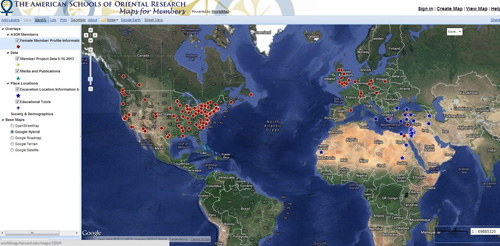
Welcome to the Women of ASOR Map, powered by WorldMap!!! Click here to open the Women of ASOR Map in a new window, and follow the simple instructions below to navigate the map. Or, read the in-depth Help Guide.

About the Basic Layout of the Map

When you first open the map in your browser, an “about box” will be open on the screen. This box briefly explains the objective of the map and describes the data presented within it. This box can be reopened by clicking on the “About” button/link in the toolbar on the upper left of the screen.


Also on the upper left toolbar is the “Identify” button/link, which needs to be clicked on or highlighted in order to explore the points (red dots and blue stars) on the map.

The Women of ASOR map displays the geographic locations (latitude and longitude coordinates) of professional women members around the globe – pinpointing the universities, museums, or other organizations where they work. Each red dot opens a pop-up box that contains the profile of a member at this location and information of any affiliated archaeological projects.

If more than one member is located at a particular location (for example: multiple faculty at the same university), then more than one member will be located under the same red dot.

The profile box lists the member name(s) on the upper left with any associated archaeological projects listed under them on the lower left. Clicking on a name on the left displays the member’s contact email address, her institutional and departmental affiliation, her academic position, and specialty. Clicking on the project name on the lower left displays any affiliated archaeological project, its website, a link that takes the map user to the geographical location of the archaeological project, and the ASOR member associated with the project.

Each blue star is located at the geographic location (latitude and longitude coordinates) of the archaeological projects affiliated with the members represented on the map (red dots). Clicking on the blue star opens a pop-up with information about the archaeological project, including the project website, the ASOR member contact and her email address, and a link that takes the user to the geographical location (red dot) of the member’s institution.

Ways to Zoom

Zooming in on the map allows users to see the more specific locations of the members.
There are several ways you can zoom (change scales) in WorldMap:

  • Map navigation tools include the standard zoom bar and map drag.
  • Roll your mouse wheel.

Searching within a Layer

(What is a Layer? A layer is a dataset that is presented on the map. For example: the member profile data is presented in one layer and the excavation locations are presented in another layer.)

To search for a particular person or keyword (i.e. specialty), use the search box at the bottom left, under the layer list on the left-hand side. The layer that is highest in the list will be searched automatically. If you would like to search a different layer, uncheck the other layers.

Have questions? Email us![/vc_column_text][/vc_column][vc_column border_color=”rgba(170,170,170,0.01)” width=”1/6″ css=”.vc_custom_1487276122024{margin-right: 10px !important;margin-bottom: 30px !important;border-right-width: 2px !important;border-bottom-width: 2px !important;padding-top: 30px !important;padding-right: 30px !important;padding-left: 20px !important;background-color: #ffffff !important;border-right-color: rgba(227,228,228,0.75) !important;border-bottom-color: rgba(227,228,228,0.75) !important;}”][vc_wp_posts title=”BROWSE THE NEWS ARCHIVE” number=”4″][/vc_column][vc_column border_color=”rgba(170,170,170,0.01)” width=”1/6″ css=”.vc_custom_1490211272143{margin-right: 5px !important;margin-bottom: 20px !important;border-right-width: 2px !important;border-bottom-width: 2px !important;padding-top: 0px !important;padding-right: 10px !important;padding-left: 10px !important;background-color: #ffffff !important;border-right-color: rgba(227,228,228,0.75) !important;border-bottom-color: rgba(227,228,228,0.75) !important;}”][vc_column_text] [/vc_column_text][/vc_column][/vc_row]

WOMEN OF ASOR MAP

WOMEN OF ASOR MAP

The Women of ASOR Map is a networking resource for ASOR’s membership. It displays the locations of professional women members from around the globe, pinpointing the universities, museums, or other organizations where they work and sites at which they excavate. The map is also a resource for junior members who may be looking for advisors, excavation opportunities, and inspiration for their budding careers. Click here for simple instructions on how to navigate the map.


ASOR PUBLICATIONS

ASOR Publications provides a number of venues for scholars to share their research. Publication is critical for establishing expertise and building a reputation as a scholar; exchanging information and encouraging dialogue; and increasing visibility within the discipline.

Want to receive print delivery or online access to these publications? Join or renew your ASOR membership here!

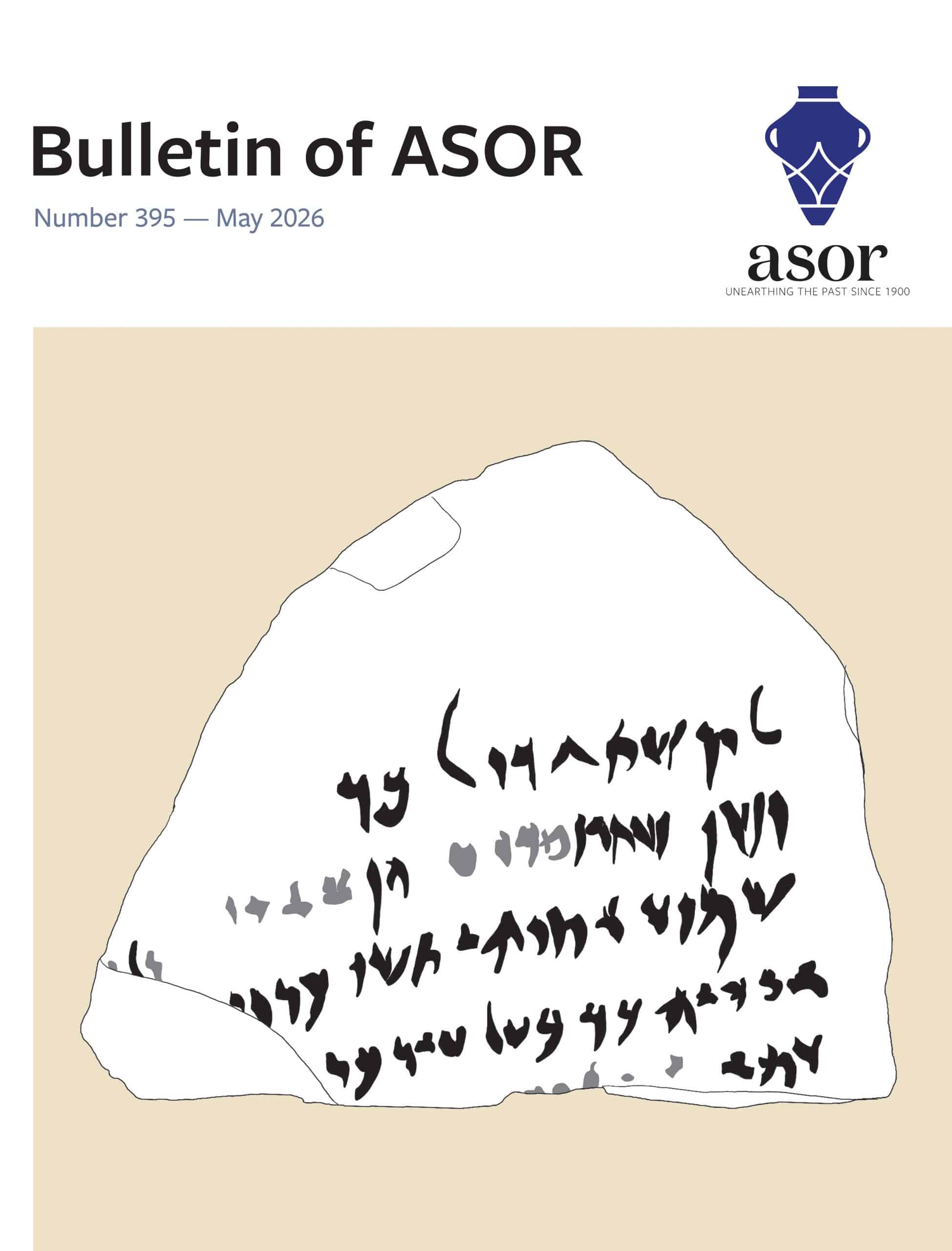
Bulletin of ASOR (BASOR)
Founded in 1919, this biannual publication is ASOR’s flagship scholarly journal and includes articles covering the entire eastern Mediterranean from the Paleolithic period through Islamic times.

Near Eastern Archaeology (NEA)
This vibrant magazine covers the ancient world from Mesopotamia to the Mediterranean.

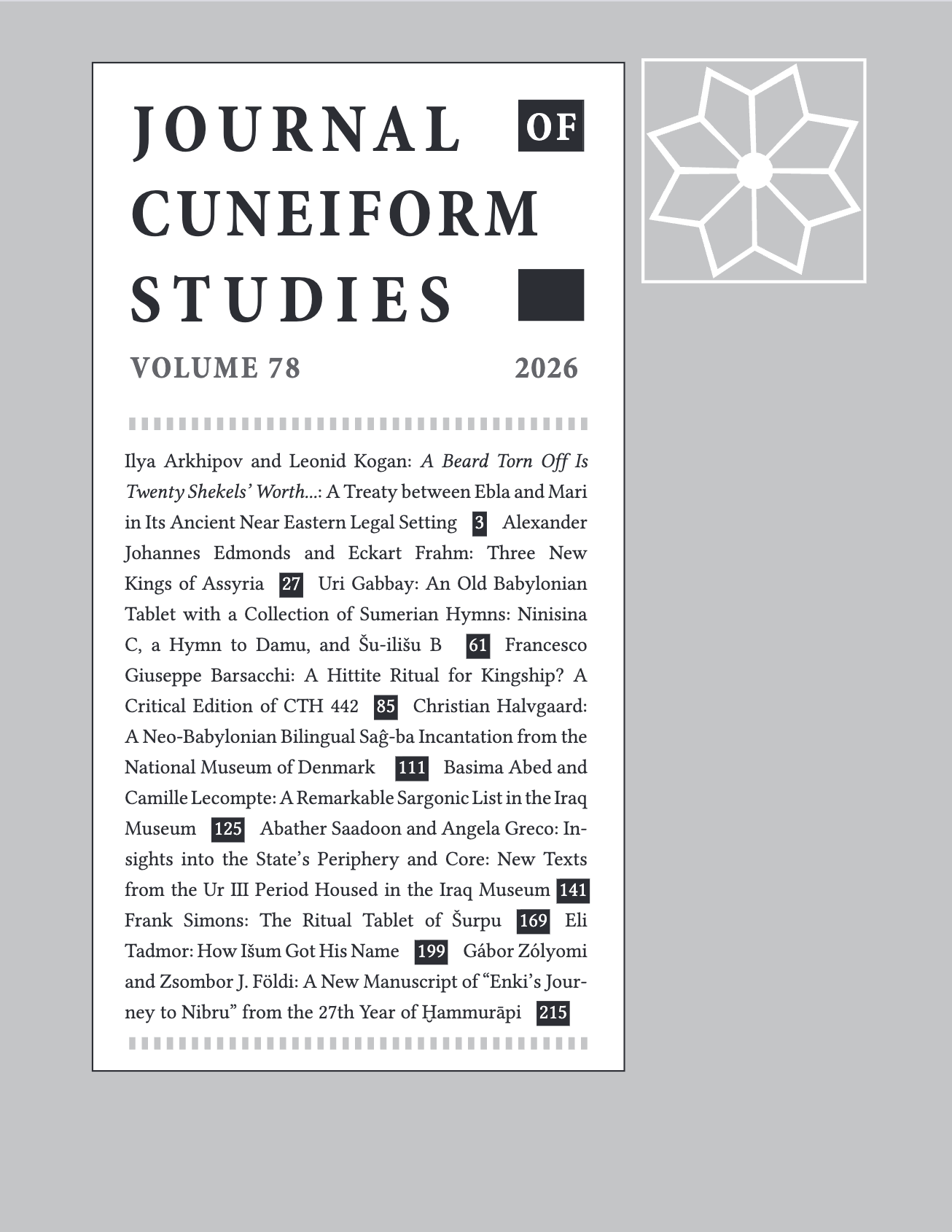
Journal of Cuneiform Studies (JCS)
Founded in 1947, this publication presents scholarly articles on the history and languages of the ancient Mesopotamian and Anatolian literate cultures.

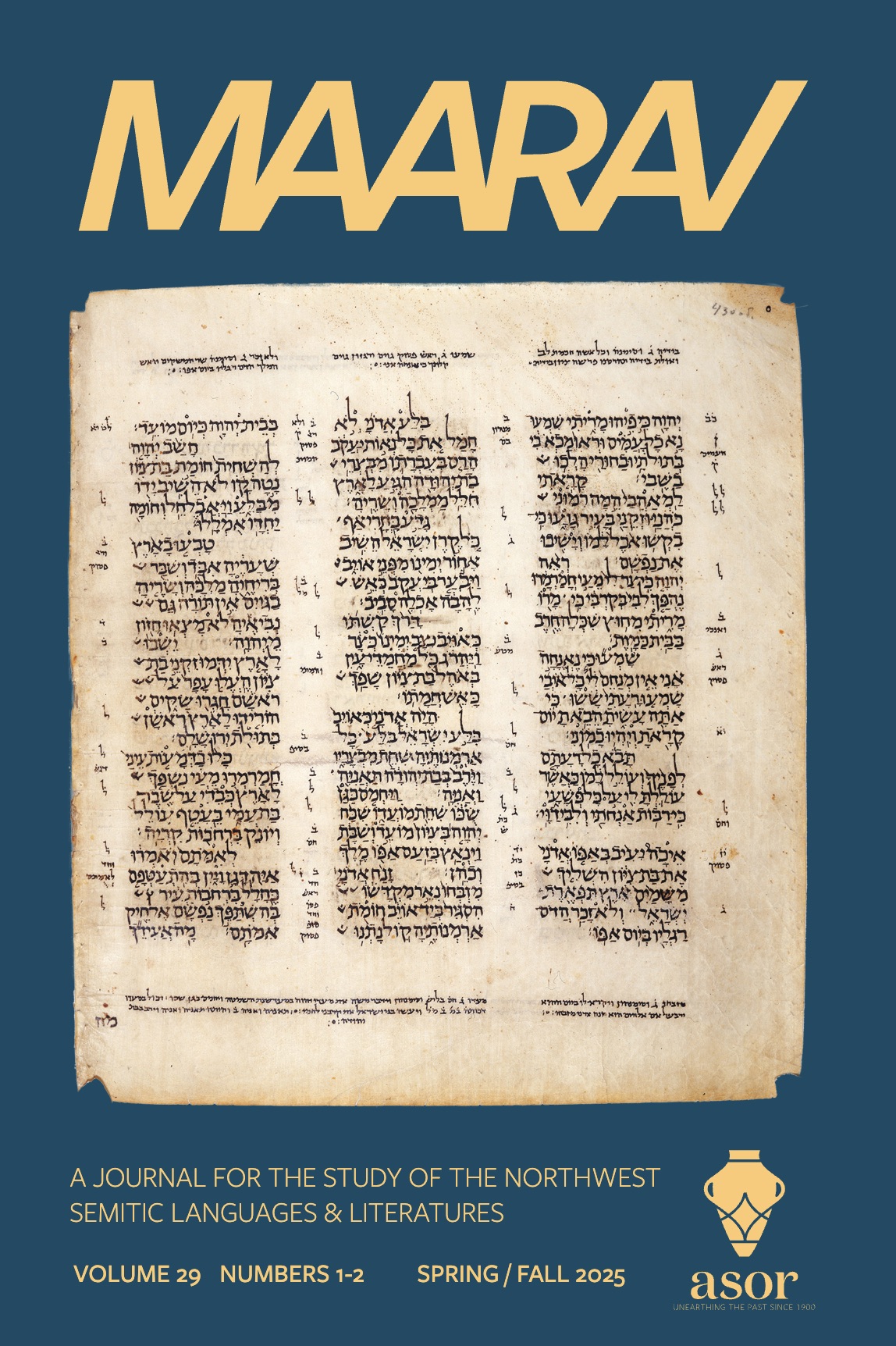
MAARAV
A Journal for the Study of the Northwest Semitic Languages and Literatures.

The Ancient Near East Today (ANE Today)
ASOR’s open-access weekly digital magazine disseminates recent discoveries and research about the Near East, delivered biweekly via email to Friends of ASOR.

ASOR Newsletters
News@ASOR is a twice-monthly e-newsletter that delivers organizational news updates, highlights from the ASOR Blog, deadline reminders, and more to ASOR members.

The ASOR Newsletter (back issues only) presents brief summaries of research, announcements of events and fellowship opportunities, and the latest news from ASOR.

Levantine Ceramics Project
An open-access resource for the study of Levantine pottery – and its societies, cultures, and economies – from the Neolithic era (c. 5500 B.C.E.) until today. Contribute data and help build the future of ceramic research.

Book Series & Monographs
Annual of ASOR (AASOR), Archaeological Reports Series (ARS), JCS Supplemental Series (JCSSS), The Levantine Ceramics Project Handbooks Series (LCPH).

For permission to reuse material from ASOR journals and books that have been published within the past year, please visit www.copyright.com or contact the Copyright Clearance Center, Inc. (CCC), 222 Rosewood Drive, Danvers, MA 01923, 978-750-8400. CCC is a not-for-profit organization that provides licenses and registration for a variety of uses.

For older publications, please submit your request to publications@asor.org.

ASOR-AFFILIATED ARCHAEOLOGICAL PROJECTS

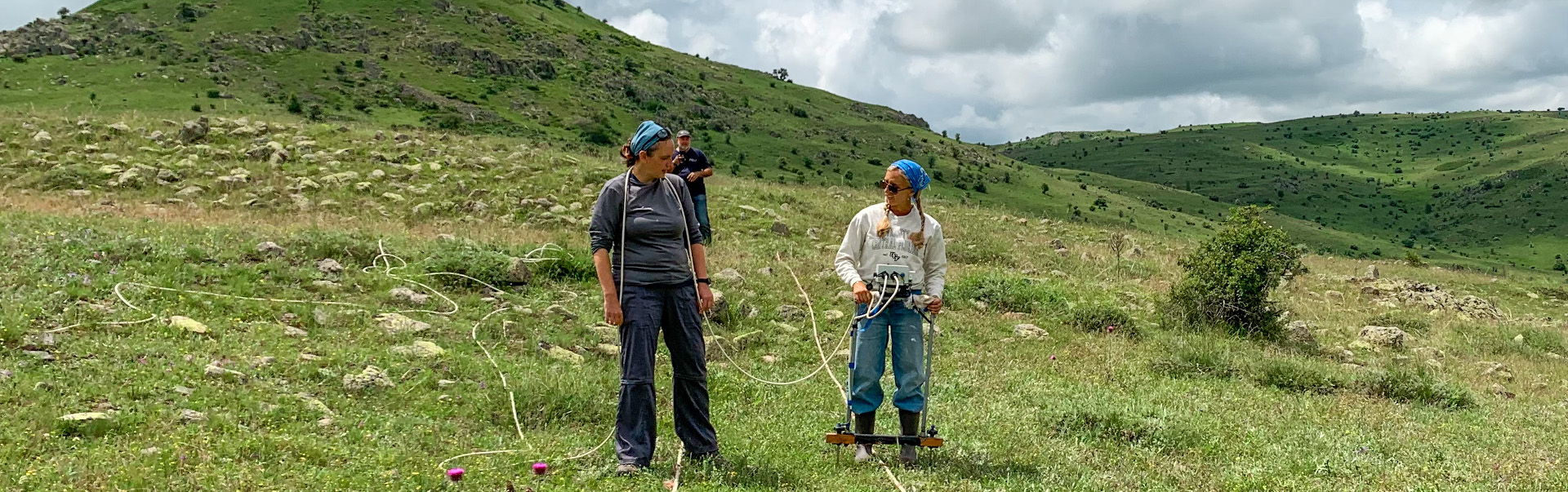
conducting survey at the site of Kerkenes in Turkey

ASOR-AFFILIATED PROJECTS

ASOR offers two types of affiliation: one for civil society organizations and conservation projects, and one for archaeological fieldwork and publication projects.

ASOR-Affiliated Civil Society Organizations and Conservation Projects

Learn more about applying as a civil society organization or conservation project here.

ASOR-Affiliated Archaeological Projects

Currently, 157 archaeological projects are affiliated with ASOR. This includes 118 field projects and 39 publication projects.

ASOR supports research in archaeology and related fields in the Middle East, North Africa, Eastern Mediterranean and Western Asia. ASOR-affiliated projects adhere to ASOR policies, most notably the Non-Discrimination Policy, Policy on Professional Conduct, and Code of Conduct for the ASOR Annual Meeting and Other ASOR Sponsored Events. These policies affirm ASOR’s commitment to high standards for research integrity, academic mentoring, and ethical professional behavior. Project Principal Investigators may apply for ASOR affiliation for their projects through the Committee for Archaeological Research and Policy (CAP). Currently, more than 100 research projects in Armenia, Cyprus, Denmark, Egypt, Ethiopia, Georgia, Greece, Iran, Iraq, Israel, Italy, Jordan, Lebanon, Libya, Montenegro, Morocco, North Macedonia, Oman, Palestine, Spain, Sudan, and Turkey have become ASOR-affiliated. Principal investigators for these affiliated projects include in-country researchers as well as scholars from Europe and North America.

ASOR-affiliated projects receive advice, encouragement, and constructive criticism from peer professionals through CAP. Principal Investigators of ASOR-affiliated projects are eligible to apply for ASOR Project Grants (Dana, Harris, Seger and Gold grants), and Shepard Urgent Action Grants. Dana, Harris, Seger and Gold grants support worthy field projects, particularly to help newer and smaller projects get started, as well as other ASOR-affiliated projects to support research and analysis leading to project publications. Shepard grants support urgently needed documentation, conservation or stabilization of important archaeological sites or features. Students working on ASOR-affiliated projects are eligible to apply for Scholarships for Fieldwork Participation.

Projects listed in italics have information available on 2026 field seasons.

Apply for ASOR Affiliation

Armenia (1 field project, 1 publication)
Croatia (1 publication)
Cyprus (8 field projects, 2 publication)
Denmark (1 field project)
Egypt (14 field projects, 1 publication)
Ethiopia (1 field project)
Georgia (1 field project)
Greece (1 field project)
Iran (2 field projects)
Iraq (18 field projects, 1 publication)
Israel (23 field projects, 15 publications)
Italy (5 field projects)
Jordan (21 field projects, 14 publications)
Lebanon (1 field project)
Libya (1 field project)
Morocco (1 field project)
North Macedonia (1 field project)
Oman (1 field project)
Spain (1 field project)
Sudan (1 field project)
Tunisia (1 publication)
Turkey (15 field projects, 3 publications)

LocationP.I. / Director(s)
ARMENIA (1 Field Project, 1 Publication)

Tsaghkasar Archaeological Project – field

Sona Hovsepyan (History Museum of Armenia), Jamie Fraser (W.F. Albright Institute of Archaeological Research),and Amanda Dusting (University of Sydney)
The Vayots Dzor Fortress Landscapes Project – publicationTiffany Earley-Spadoni (University of Central Florida), Arthur Petrosyan (Institute of Archaeology and Ethnography, National Academy of Sciences, Armenia), and Boris Gasparyan (Institute of Archaeology and Ethnography, National Academy of Sciences, Armenia)
 
CROATIA (1 Publication)
The Brač Island Project – publicationSarah James (University of Colorado – Boulder) and Verdan Barbarić (University of Split)
 
CYPRUS (8 Field Projects, 2 Publications)
Agrarian Life and Landscape at Politiko-Troullia – fieldSteven Falconer and Patricia Fall (University of North Carolina-Charlotte)
American Expedition to Idalion – fieldPamela Gaber (Lycoming College)
Ancient Kition and Ayioi Omoloyites Bioarchaeological Projects – fieldNicholas P. Herrmann (Texas State University), Efthymia Nikita (The Cyprus Institute), Despina Pilides, Polina Christofi, and Yiannis Violaris (Department of Antiquities, Cyprus)
Kalavasos-Laroumena and Arkhangelos Archaeological Research Project – fieldMara T. Horowitz (SUNY Purchase)
Kalavasos and Maroni Built Environments Project – fieldKevin D. Fisher (University of British Columbia) and Sturt W. Manning (Cornell University)
Kissonerga-Skalia Bronze Age Settlement – fieldLindy Crewe (CAARI)
Makounta-Voules Archaeological Project – field (field school)Kathryn Grossman (North Carolina State University)
Prastio Mesorotsos Archaeological Expedition – publicationAndrew McCarthy (University of Edinburgh)
The Pyla-Koutsopetria Archaeological Project – publication/fieldR. Scott Moore (Indiana University of Pennsylvania), William Caraher (University of North Dakota), and David Pettegrew (Messiah College)
Vigla: Tom Landvatter (Reed College), Brandon Olson (Metropolitan State University, Denver), and R. Scott Moore (Indiana University of Pennsylvania)
 
DENMARK (1 Field Project)
Vasagard Project – fieldFinn Ole Nielsen, M. Nicolas Caretta, Michael Thorsen, Ditte Kofod, and Roxana Youkhana (Institute for Field Research/Bornholm Museum)
 
EGYPT (14 Field Projects, 1 Publication)
Archaeological Mission at Tell el-Ghaba – fieldEva Amanda Calomino (University of Grenada) and Agustina Scaro
Bioarchaeology of Deir el-Medina Research Project – fieldAnne Austin (University of Missouri—St. Louis)
The Deir el-Ballas Expedition – fieldNicholas Brown (Yale University)
Early Memphis Project – fieldSergio Alarcón Robledo (Harvard University)
Egyptian Italian Mission at West Aswan EIMAWA – fieldPatrizia Piacentini (Università degli Studi di Milano) and Abd el-Moneim Said (Ministry of Antiquities – Egypt)
Kom Firin Archaeological Project (KFAP) – fieldLuiza Osorio G. Silva (University of California, Irvine) and Oren Siegel (University of Toronto)
The Gebel el-Silsila Project – fieldMaria Nilsson, John Ward, and Patricia Coletto
The Middle Kingdom Theban Project – fieldAntonio J. Morales (Universidad de Alcalá), Raúl Sánchez (University of Grenada), and Sergio Alarcón (Harvard University)
The Ramesses III (KV 11) Publication and Conservation Project – fieldAnke Weber (Humboldt-Universität zu Berlin)
Rescuing Egyptian Labor Archives: Emergency Stabilization of Foreign Excavation Records (1890s–1970) – fieldAmany Abd El Hameed
Safeguarding and Documenting the Akhmim Tomb C4 – publicationWahid Omran (Fayoum University)
Sultan al-Ashraf Inal Complex: Emergency Stabilization and Safeguarding – fieldHossam Abd El Azeem (Shawāhid Miṣr/Witnesses of Egypt Heritage Initiative)
Tell Timai Project – fieldJay Silverstein (Nottingham Trent University) and Robert Littman (University of Hawaii)
The Tomb of Thutmose IV (KV43) Research Project – fieldNicholas Brown (Yale University)
Wadi el-Hudi Expedition – fieldKate Liszka (California State University, San Bernardino), Meredith Brand (American University in Cairo), and Bryan Kraemer (Robert and Frances Fullerton Museum of Art)
 
ETHIOPIA (1 Field Project)
Southern Red Sea Archaeological Histories (SRSAH) Project – fieldMichael Harrower (Johns Hopkins University) and Cinzia Perlingieri (Center for Digital Archaeology)
 
GEORGIA (1 Field Project)
Gadachrili Gora Regional Archaeological Project Expedition GRAPE) – fieldStephen Batiuk (University of Toronto)
 
GREECE (1 Field Project)
Athenian Agora Excavations – fieldJohn Papadopoulos (American School of Classical Studies at Athens) and Debby Sneed (California State University, Long Beach)
 
IRAN (2 Field Project)
Seeking Sultan Abad-e Chamchamal: Archaeological Excavation in the Site of Tepe Hala Bag – fieldMohammad Eghbal Chehri (Islamic Azad University-Tehran)
Tepe Ghabristan Belverdi – fieldMohammad Eghbal Chehri (Islamic Azad University-Tehran)
 
IRAQ (18 Field Projects, 1 publication)
Asingeran Excavation Project – fieldMarco Iamoni, Riccardo Valente (University of Udine) and Maddalena Scattini (Università Ca’ Foscari Venezia)
Crafting Landscape: Resources Exploitation and Production Strategies in Iraqi Kurdistan during Urbanisation and State Formation (CraftLand) – fieldClaire Padovani (Centre National de la Recherche Scientifique)

DrEEMM Project – Drafting Empires on the Eastern Mesopotamian Margins – field

Melania Zingarello (CNRS, CEPAM)

Early Stages of Sumerian Civilization at Tell Zurghul/Nigin – fieldAndrea Polcaro (University of Perugia) and Davide Nadali (Sapienza University)
Erbil Plain Archaeological Survey – fieldJason Ur (Harvard University)
Gird-I Matrab Archaeological Project (gMAP) – fieldRocco Palermo (University of Pisa)
Kani Shaie Archaeological Project (KSAP) – fieldSteve Renette (University of Cambridge)
The Kurd Qaburstan Archaeological Project – fieldTiffany Earley-Spadoni (University of Central Florida) and Glenn Schwartz (Johns Hopkins University)
Lagash Archaeological Project – fieldHolly Pittman (University of Pennsylvania)
MAIKI, the Italian Historical-Archaeological Mission in Kurdistan – fieldCarlo G. Cereti (Sapienza University and University of California, Irvine)
MiSAK – Missione Archeologica Italiana nel Kurdistan Iracheno – fieldLuca Colliva (Sapienza University)
Nineveh East Project – fieldTimothy Harrison (University of Chicago) and Abu Khaled Jayyab (University of Toronto)
Paths to Urban Growth in the Nineveh Plain (PUG) – fieldKhaled Abu Jayyab (University of Toronto)
ReLand: Resurfacing Landscapes. Mosul Dam Archaeological Project – fieldPaola Sconzo (University of Palermo)
Rural Landscapes of Iron Age Imperial Mesopotamia – fieldPetra Creamer (Emory University)
Sealands Archaeology and Environment Program – fieldJennifer Pournelle (University of South Carolina)
Sealands II: Geoarchaeology and Paleoenvironment Laboratory Analyses – fieldJennifer Pournelle (University of South Carolina)
The Sebittu Project – fieldTimothy Matney (University of Akron)
 
ISRAEL (23 Field Projects, 15 Publications)
Aegean Interactions with the Levant at Tel Kabri – fieldEric H. Cline (George Washington University) and Assaf Yasur-Landau (University of Haifa)
Austrian Expedition to Tel Lachish – fieldFelix Höflmayer and Katharina Streit (Austrian Academy of Sciences)
Birsama Exploration Project – fieldAlexandra Ratzlaff (Brandeis University) and Tali Erickson-Gini
The Carmel Coast Marine Archaeology Project – fieldAssaf Yasur-Landau (University of Haifa) and Thomas E. Levy (University of California, San Diego)
Caesarea Coastal Archaeological Project (C-CAP) – fieldA. Asa Eger (University of North Carolina at Greensboro), Beverly Goodman (University of Haifa), and Andrea de Giorgi (Florida State University)
Desert Chiefdom – The Shiqmim Chalcolithic Project, Negev Desert, Israel – publicationThomas E. Levy (University of California, San Diego)
Early Desert Cities: An Investigation into 3rd Millennium BCE Urbanism at Tel Arad at the Macro- and Microscales – fieldZachary Dunseth (Brown University), Ruth Shahack-Gross (University of Haifa), and Israel Finkelstein (Tel Aviv University)
Excavations at Tel Mevorakh – fieldPaula Waiman-Barak (University of Haifa) and Sveta Matskevich (Hebrew University)
Galilee Prehistory Project – fieldYorke Rowan (University of Chicago)
The Hazor Excavations-Selz Foundation – fieldIgor Kreimerman (Hebrew University)
Hazor Lower City Excavation – fieldShlomit Bechar (University of Haifa)
Hippos Excavation Project – fieldMichael Eisenberg and Arleta Kowalewska (University of Haifa)
Horvat Midras (Israel) Excavation Project, Israel – fieldOrit Peleg-Barkat (Hebrew University) and Gregg E. Gardner (University of British Columbia)
Jezreel Expedition – publicationJennie Ebeling (University of Evansville) and Norma Franklin (University of Haifa)
Jezreel Valley Regional Project-Legio – fieldMark Letteney (University of Southern California), Matthew J. Adams (Albright Institute), Yotam Tepper (University of Haifa), and Susan Cohen (Montana State University
Joint Archaeological Expedition to Tell el-Hesi – publicationJeff Blakely (University of Wisconsin)
Tell el-Hesi Archaeological Excavation Project – fieldKara Larson (University of Michigan), Geoffrey Ludvik (University of Wisconsin-Madison), and James W. Hardin (Mississippi State University)
Khirbet Beit Loya Excavations and Terrace Study – fieldBethany J. Walker (University of Bonn) and Oren Gutfeld (Hebrew University)
Lahav Research Project, Phases I-III – publicationJoe D. Seger (Mississippi State University)
Omrit Settlement Excavation Project – publicationJennifer Gates-Foster (University of North Carolina at Chapel Hill), Michael Nelson (Queens College), Benjamin Rubin (Independent Scholar), Daniel Schowalter (Carthage College), and Jason Schlude (St. John’s University)
The Shikhin Excavation Project – fieldJames Riley Strange (Samford University)
Tel Abel Beth Maacah Archaeological Project – fieldRobert Mullins (Azusa Pacific University), Naama Yahalom-Mack, and Nava Panitz-Cohen (Hebrew University)
Tel Beit Mirsim Project – fieldMichael Freikman and Igor Kreimerman (Hebrew University)
Tel Beth-Shemesh Excavations – publicationShawn Bubel (University of Lethbridge), Shlomo Bunimovitz, and Zvi Lederman (Tel Aviv University)
Tel Burna Archaeological Project – publicationSteven Ortiz (Lipscomb University) and Itzhaq Shai
Tel Dan – Phase II – fieldDavid Ilan (Hebrew Union College)
Tel Gezer Publication Project – publicationSteven Ortiz (Lipscomb University) and Sam Wolff (Albright Institute)
Tel Hadid Archaeological Project – fieldIdo Koch (Tel Aviv University) and Jim Parker (New Orleans Baptist Theological Seminary)
Tel Miqne-Ekron Publications Project – publicationSeymour Gitin (Albright Institute of Archaeological Research, Hebrew University)
Tell el-Wawiyat Excavation Project – publicationBeth Alpert Nakhai (University of Arizona) and J.P. Dessel (University of Tennessee, Knoxville)
The Fourth Expedition to Lachish – publicationMichael Hasel (Southern Adventist University)
The Gezer Gateway Project – publication John S. Holladay Jr. (University of Toronto) and Stanley Klassen (University of Toronto)
The Huqoq Excavation Project – publicationJodi Magness (University of North Carolina at Chapel Hill)
The Lautenschläger Azekah Expedition – fieldAzekah Excavations
The Promontory Palace at Caesarea Maritima – publicationBarbara Burrell (University of Cincinnati) and Kathryn Gleason (Cornell University)
The Role and Significance of Egyptian Impact on Socio-political Development of the Southern Levant in the Period of Early Bronze I – fieldEliot Braun (Independent Researcher)
The Tel Shaddud Archaeological Project in the Jezreel Valley – field Omer Sergei (Tel Aviv University), Karen Covello-Paran (Israel Antiquities Authority), William Schniedewind (UCLA), Joachim Krause (Ruhr University Bochum), and Hannes Bezzel (Friedrich-Schiller University Jena)
The Zeitah Excavations – publication Ron E. Tappy (Pittsburgh Theological Seminary)
 
ITALY (5 Field Projects)

A fortress in the sea: environmental and cultural transformations on Ustica island (Sicily) at the dawn of the Bronze Age – field

Dr Giacomo Vinci (Università di Padova), Dr Helen Dawson (Eberhard Karls Universität Tübingen), and Dr Claudia Speciale (Institute of Human Paleoecology and Social Evolution (IPHES))

Landscape Archaeology of Southwest Sardinia Project – fieldElizabeth A. Murphy (Florida State University)
The Casa della Regina Carolina (CRC) Project, Pompeii – fieldCaitie Barrett (Cornell University), Kathryn Gleason (Cornell University), Annalisa Marzano (University of Bologna)
The S’Urachi Project: Cultural Encounters and Everyday Life around a Nuraghe from the Iron Age to the Roman period – fieldPeter van Dommelen (Brown University), Dr. Alfonso Stiglitz
University of Palermo Archaeological Research Project at Motya (Sicily) – fieldPaola Sconzo (University of Palermo)
 
JORDAN (21 Field Projects, 14 Publications)
‘Ayn Gharandal Archaeological Project – fieldErin Darby and Robert Darby (University of Tennessee-Knoxville)
Abu en-Ni`aj: Early Bronze IV Village Life – publicationPatricia Fall (University of North Carolina-Charlotte)
The Ad-Deir Monument and Plateau Project – field/restorationCynthia Finlayson (Brigham Young University)
Archaeological Expedition to Khirbat Iskandar and its Environs, Jordan – fieldSuzanne Richard (Gannon University), Jesse C. Long (Lubbock Christian University), and Marta D’Andrea (Sapienza The University of Rome)
Ba’aja Survey and Excavations – fieldDavid Graf (University of Miami)
Balu’a Regional Archaeological Project – fieldKent Bramlett (La Sierra University), Monique Roddy (Walla Walla University), and Friedbert Ninow (La Sierra University)
Bir Madhkur Project – publicationAndrew M. Smith II (George Washington University)
Dhiban Excavation and Development Project – fieldDanielle Fatkin (Knox College)
Eastern Badia Archaeological Project – fieldYorke Rowan (University of Chicago)
Expedition to the Dead Sea Plain – publicationMeredith S. Chesson (University of Notre Dame) and Morag M. Kersel (DePaul University)
Exploring Continuity and Transition in Southern Jordan – field Jennifer Ramsay (SUNY Brockport), Bjorn Anderson (University of Iowa), and Craig Harvey
(University of Alberta)
Hellenistic Petra Project IV – fieldDavid Graf (University of Miami)
Hisban Cultural Heritage Project – fieldOystein LaBianca (Andrews University), Bethany Walker (University of Bonn), and Maria Elena Ronza (Andrews University and Sela for Vocational Training and Protection of Cultural Heritage)
Humayma Excavation Project – fieldCraig A. Harvey (University of Alberta) and Sarah E. Wenner (University of Cincinnati)
Humayma Excavation Project – Nabataean and Roman Period Settlements – publicationM. Barbara Reeves (Queen’s University)
Karak Resources Project (KRP) – publicationGerald Mattingly (Johnson University) and James H. Pace (Elon University)
Khirbat al-Mukhayyat Archaeological Project – fieldDebra Foran (Wilfrid Laurier University)
Khirbet Ghozlan Excavation Project – publicationJames Fraser (Albright Institute of Archaeological Research)
The Kites in Context Project – fieldChad Hill (University of Pennsylvania) and Yorke Rowan (University of Chicago)
Khirbet Safra Excavations – fieldPaul Gregor (Andrews University)
Landscapes of the Dead: Aerial and Pedestrian Site Monitoring at Fifa, Jordan – fieldMorag Kersel (DePaul University)
Lowlands to Highlands Edom Project – publicationNeil Smith (King Abdullah University of Science and Technology)
Madaba Plains Project-`Umayri Publication Project – publicationLarry Herr (Burman University)
Madaba Regional Archaeological Museum Project (MRAMP) – fieldDouglas R. Clark (La Sierra University), Marta D’Andrea (Sapienza The University of Rome), Andrea Polcaro (University of Perugia), and Suzanne Richard (Gannon University)
Mudawwara Ottoman Fort – fieldAndrew Petersen (University of Wales Trinity Saint David)
Petra Garden and Pool Complex – publicationLeigh-Ann Bedal (Penn State University, Behrend)
Petra North Ridge Project – publicationMegan A. Perry (East Carolina University)
Pottery and Communal Identity: Archaeometric Study of Islamic Ceramics from Northern Jordan – fieldHussein Al-Sababha (Bonn University)

Tell el-Kheleifeh Publication Project – publication

J. A. Greene (Harvard University)

Tell Madaba Archaeological Project – publicationDebra Foran (Wilfrid Laurier University) and Timothy P. Harrison (University of Toronto)
Umm el-Jimal Project – fieldDarrell Rohl (Calvin University), Elizabeth Osinga, and Jenna Morton
Understanding the visibility of archaeological sites in satellite imagery through the analysis of soils and their reflectance – fieldSayantani Neogi
University of California San Diego Edom Lowlands Regional Archaeology Project (ELRAP) – publicationThomas E. Levy and Mohammad Najjar (University of California, San Diego)
Zahrat adh-Dhra’ 1: Middle Bronze Age Settlement on the Dead Sea Plain – publicationSteve Falconer (University of North Carolina-Charlotte)
Zeighan Ancient Landscapes Project – fieldHanna Erftenbeck (Grinnell College) and Natalia M. Handziuk (University of Toronto)
 
LEBANON (1 Field Project)
Tell Douris Excavation Project – fieldHanan Charaf (Lebanese University)
 
LIBYA (1 Field Project)
Local and International Protection of Cyrene’s Archaeological Heritage from Threats – fieldRizq Khalid (Mohammed bin Ali Al Sunoussi Islamic University)
 
MOROCCO (1 Field Project)
Unveiling the Farming-Herding Communities of III-I Millennium B.C. Mediterranean Western Maghreb, Kach Kouch – fieldHamza Benattia
 
NORTH MACEDONIA (1 Field Project)
Neanderthal Crossroads Project – fieldDarko Stojanovski (Balkan Heritage Foundation), Sarah Lacy (California State University Dominguez Hills), and Tracje Nacev (University of Goce Delchev)
 
OMAN (1 Field Project)
 Archaeological Water Histories of Oman (ArWHO) Project – field Michael Harrower (Johns Hopkins University)
 
SPAIN (1 Field Project)
Torre d’en Galmés, Menorca Archaeological Project – field Alexander Smith (SUNY Brockport) and Amalia Pérez-Juez (Boston University)
 
SUDAN (1 Field Project)
 International El Kurru Archaeological Project – field Geoff Emberling (University of Michigan) and Rachael J. Dann (University of Copenhagen)
 
TUNISIA (1 Publication )
Carthage, The Precinct of Tanit (tophet) and Ba’al: The ASOR Punic Project: The Stager Excavations (1975-1979) – publicationJ.A. Greene (Harvard University), B.K. Garnand (Harvard University, NINO-Nederlands Instituut voor het Nabije Oosten), L. E. Stager (Harvard University)
 
TURKEY (15 Field Projects, 3 Publications)
A Clash of Kings – South-central Anatolian Political Geography Between Phrygia and Assyria – fieldMichele Massa (Bilkent University)
Antiochia ad Cragum Archaeological Research Project – fieldMichael Hoff (University of Nebraska-Lincoln)
Bioarchaeology of Syedra: Reconstructing lived experiences through human skeletal remains at Syedra Antik Kenti (Syedra Archaeological Site) – fieldKathryn Marklein (University of Louisville) and Ertug Ergurer (Karamanoğlu Mehmetbey Üniversitesi)
Building Rome Away From Rome: The Emergence and Impact of the Roman City in the Upper Sakarya River Valley (Central Anatolia) – fieldPaolo Maranzana (Boğaziçi Üniversitesi)
Chicago-Tübingen Expedition to Zincirli Höyük – fieldVirginia Herrmann (Tubingen University) and J. David Schloen (University of Chicago)
Cadır Höyük Archaeological Excavations – fieldSharon Steadman, Jennifer Ross, and Burcu Yldr (SUNY Cortland)
Ethnobotany as Cultural Heritage: A Case Study of Kazdağı National Park’s Plant Species’ Ethnobotanical Uses from Past to Present – publicationMelis Taner (Özyeğin University) and Beyza Şat (Özyeğin University)
The Kerkenes Project – field (field school applications open Aug-Nov)Scott Branting (University of Central Florida) and Joseph W. Lehner (University of Sydney)
Kinik Hoyuk Archaeological Project – fieldLorenzo d’Alfonso (New York University)
Küçükyalı ArkeoPark Project – fieldAlessandra Ricci (Koç University)
Phoenix Archaeological Project (PAP) – fieldAsil Yaman (İzmir University of Economics)
Polatlı Landscape Archaeology and Survey Project (PLAS) – publicationMüge Durusu-Tanriover (Temple University)
Tayinat Archaeological Project – fieldTimothy P. Harrison (University of Toronto) and Elif Denel (American Research Institute in Turkey, Ankara)
Tell Atchana, Alalakh Excavations – fieldMurat Akar (Hatay Mustafa Kemal University)
Tell al-Judaidah 2000 BCE and Later Publication Project – publicationLynn Dodd (University of Southern California)

Toprakkale Archaeological Survey Project – field

Çağlayan Bal (University of Chicago)

Türkmen-Karahöyük Archaeological Project (TKAP) – fieldMichele Massa (Bilkent University) and James Osborne (University of Chicago)
Yalburt Yaylasi Archaeological Landscape Research Project (Konya Province) – fieldÖmür Harmanşah (University of Illinois at Chicago)
 

INITIATIVES
& PROJECTS

[vc_row fullwidth=”true” css=”.vc_custom_1490224714943{padding-top: 0px !important;padding-right: 0px !important;padding-bottom: 0px !important;padding-left: 0px !important;}”][vc_column][vc_single_image image=”30067″ img_size=”full” alignment=”center”][/vc_column][/vc_row][vc_row][vc_column][vc_column_text][/vc_column_text][/vc_column][/vc_row][vc_row fullwidth=”true” css=”.vc_custom_1490225468623{padding-top: 0px !important;padding-right: 0px !important;padding-bottom: 0px !important;padding-left: 0px !important;}”][vc_column width=”1/12″ css=”.vc_custom_1490225195470{margin-right: 10px !important;}” offset=”vc_hidden-sm vc_hidden-xs”][vc_column_text]

  SHARE

[/vc_column_text][mk_image src=”http://www.asortest.org/wp-content/uploads/2017/01/social-fb-icon4.jpg” image_width=”42″ image_height=”42″ hover=”false” custom_url=”https://www.facebook.com/ASOResearch/” margin_bottom=”0″][mk_image src=”http://www.asortest.org/wp-content/uploads/2017/01/social-tw-icon4.jpg” image_width=”42″ image_height=”42″ hover=”false” custom_url=”https://twitter.com/ASOResearch?ref_src=twsrc%5Egoogle%7Ctwcamp%5Eserp%7Ctwgr%5Eauthor” margin_bottom=”0″][mk_image src=”http://www.asortest.org/wp-content/uploads/2017/01/social-in-icon4.jpg” image_width=”42″ image_height=”42″ hover=”false” custom_url=”https://www.linkedin.com/company/american-schools-of-oriental-research” margin_bottom=”0″][mk_image src=”http://www.asortest.org/wp-content/uploads/2017/01/social-ml-icon_7.jpg” image_width=”42″ image_height=”42″ hover=”false” custom_url=”mailto:info@asor.org” margin_bottom=”0″][mk_image src=”http://www.asortest.org/wp-content/uploads/2017/01/blog-icon3.jpg” image_width=”42″ image_height=”42″ hover=”false” custom_url=”http://www.asor.org/blog” margin_bottom=”0″][/vc_column][vc_column border_color=”rgba(255,255,255,0.01)” width=”1/6″ css=”.vc_custom_1490365673198{margin-right: 20px !important;border-left-width: 2px !important;padding-right: 20px !important;padding-left: 20px !important;border-left-color: #99422f !important;}” el_class=”sticky-sidenav”][mk_divider divider_color=”rgba(255,255,255,0.01)” thickness=”1″ margin_top=”3″ margin_bottom=”3″][vc_widget_sidebar sidebar_id=”ca-sidebar-38431″ el_class=”.widget { overflow: hidden; margin-bottom: 0; }”][/vc_column][vc_column border_color=”rgba(170,170,170,0.01)” width=”1/2″ css=”.vc_custom_1490225606852{margin-right: 10px !important;margin-bottom: 30px !important;border-right-width: 2px !important;border-bottom-width: 2px !important;padding-top: 30px !important;padding-right: 30px !important;padding-left: 20px !important;background-color: #ffffff !important;border-right-color: rgba(227,228,228,0.75) !important;border-bottom-color: rgba(227,228,228,0.75) !important;}”][vc_column_text responsive_align=”left”]

INITIATIVES & PROJECTS

From its earliest days, ASOR has sponsored projects central to its mission to initiate, encourage, and support research into, and public understanding of, the history and cultures of the Near East and wider Mediterranean. In 1901, a scant year after ASOR was founded, we sponsored our first archaeological excavation, in Sidon, and ASOR continued to sponsor excavations in the Southern Levant, Iraq, Turkey, Cyprus – and even as far west as Carthage – over the next seven decades. Today, over one hundred fieldwork projects in the eastern Mediterranean and North Africa– both ongoing excavations and fieldwork publication projects – are affiliated with ASOR.

ASOR’s publication program also has a long and venerable history, dating back to the publication of the first volume of the Bulletin of the American Society of Overseas Research (BASOR) in 1919. Today, ASOR still publishes BASOR, as well as two other journals (Near Eastern Archaeology and the Journal of Cuneiform Studies), three monograph series (the Annual of the American Society of Overseas Research, or AASOR; the Archaeological Reports Series, or ARS; and the Journal of Cuneiform Studies Supplemental Series), and two e-newsletters (News@ASOR and The Ancient Near East Today).

More recently, ASOR has launched several new initiatives. The ASOR Cultural Heritage Initiatives program is devoted to protecting, preserving, and presenting to the public the historic and cultural heritage of the Near East and the wider Mediterranean and to raise awareness of its degradation. The ASOR Archives project is dedicated to protecting and preserving ASOR’s own heritage, by cataloguing and safely housing papers, photographs, and other materials that document ASOR’s twentieth and twenty-first century contributions to the study of the archaeology and history of the Near East and wider Mediterranean.

The Women of ASOR map is a resource developed by ASOR’s Initiative on the Status of Women that displays the locations of ASOR’s women members from around the globe, including the universities, museums, or other organizations where they might work and the sites at which they might excavate. The Levantine Ceramics Project is an open, interactive website that researchers can use to submit and find information about produced in the Levant from the Neolithic era (c. 5500 B.C.E.) through the Ottoman period (c. 1920 C.E.).[/vc_column_text][/vc_column][vc_column border_color=”rgba(170,170,170,0.01)” width=”1/6″ css=”.vc_custom_1490571214409{margin-right: 10px !important;margin-bottom: 30px !important;border-right-width: 2px !important;border-bottom-width: 2px !important;padding-top: 30px !important;padding-right: 20px !important;padding-left: 20px !important;background-color: #ffffff !important;border-right-color: rgba(227,228,228,0.75) !important;border-bottom-color: rgba(227,228,228,0.75) !important;}”][vc_wp_posts title=”BROWSE THE NEWS ARCHIVE” number=”4″][/vc_column][vc_column border_color=”rgba(170,170,170,0.01)” width=”1/6″ css=”.vc_custom_1490225688999{margin-right: 10px !important;margin-bottom: 30px !important;border-right-width: 2px !important;border-bottom-width: 2px !important;padding-top: 30px !important;padding-right: 30px !important;padding-left: 20px !important;background-color: #ffffff !important;border-right-color: rgba(227,228,228,0.75) !important;border-bottom-color: rgba(227,228,228,0.75) !important;}”][vc_widget_sidebar sidebar_id=”ca-sidebar-99363″][/vc_column][/vc_row][vc_row][vc_column][vc_column_text]

[/vc_column_text][/vc_column][/vc_row]

Previous Award Recipients

PREVIOUS AWARD RECIPIENTS

2025 Recipients


2024 Recipients

  • The Richard J. Scheuer Medal: Carolyn Midkiff Strange and James F. Strange
  • The Charles U. Harris Service Award: Ann-Marie Knoblauch
  • The P. E. MacAllister Field Archaeology Award: Sturt W. Manning
  • Community Engagement and Public Outreach Award: Matthew D. Howland, Brady Liss, Ian W.N. Jones, Anthony Tamberino, Mohammad Najjar, and Thomas E. Levy, ELRAP Jordan Sketchfab Team
  • ASOR Membership Service Award: Kevin McGeough
  • ASOR Membership Service Award: Jane DeRose Evans
  • ASOR Membership Service Award: Tiffany Earley-Spadoni
  • The W. F. Albright Service Award (AIAR): Nadia Bandak and Hisham M’Farreh
  • The W. F. Albright Service Award (CAARI): Photoulla Christodoulou
  • The G. Ernest Wright Award: Glenn M. Schwartz, Animals, Ancestors, and Ritual in Early Bronze Age Syria: An Elite Mortuary Complex from Umm el-Marra (Cotsen Institute of Archaeology Press)
  • The Frank Moore Cross Award: Karen Radner, Nadine Moeller, and D.T. Potts, The Oxford History of the Ancient Near East (Oxford University Press)
  • The Nancy Lapp Popular Book Award: Eckart Frahm, Assyria: The Rise and Fall of the World’s First Empire (Basic Books)
  • The Joy Ungerleider Poster Award: Helen C. Wong and Erin M. Brantmayer, “The Boundaries of Death: Outlining Mortuary Landscapes at Jebel Khalid.”
  • Student Paper Award: Nicole Constantine, “Materializing Ptolemaic Power: Ruler Cult and Festival in the Hellenistic Mediterranean”


2023 Recipients

  • Community Engagement and Public Outreach Award: Marilyn Lundberg Melzian
  • The Charles U. Harris Service Award: Paul Flesher
  • The P. E. MacAllister Field Archaeology Award: Bethany Walker
  • ASOR Membership Service Award: Leigh Anne Lieberman, Tiffany Earley-Spadoni, and Melissa Cradic, Digging Up Data
  • ASOR Membership Service Award: Piotr Michalowski
  • ASOR Membership Service Award: Beth Alpert Nakhai
  • The G. Ernest Wright Award: James Osborne, The Syro-Anatolian City States: An Iron Age Culture (Oxford University Press)
  • The Frank Moore Cross Award: Megan Nutzman, Contested Cures: Identity and Ritual Healing in Roman and Late Antique Palestine (Edinburgh University Press)
  • The Nancy Lapp Popular Book Award: Amanda H. Podany, Weavers, Scribes, and Kings: A New History of the Ancient Near East (Oxford University Press)
  • The Joy Ungerleider Poster Award: Efrat Nakash, “Copper circulation in the southern Levant during the EBIIIA: Tell el-Hesi as a case study”
  • Student Paper Award: Morganne Ottobre, “Between Two Cultures: Translation and Multimodality in the Tell Fekheriyeh Inscription”


2022 Recipients

  • The W. F. Albright Award (ACOR): John P. Oleson
  • The Charles U. Harris Service Award: Richard L. Coffman
  • The P. E. MacAllister Field Archaeology Award: Glenn Schwartz
  • ASOR Membership Service Award: Helen Dixon
  • ASOR Membership Service Award: Ann-Marie Knoblauch
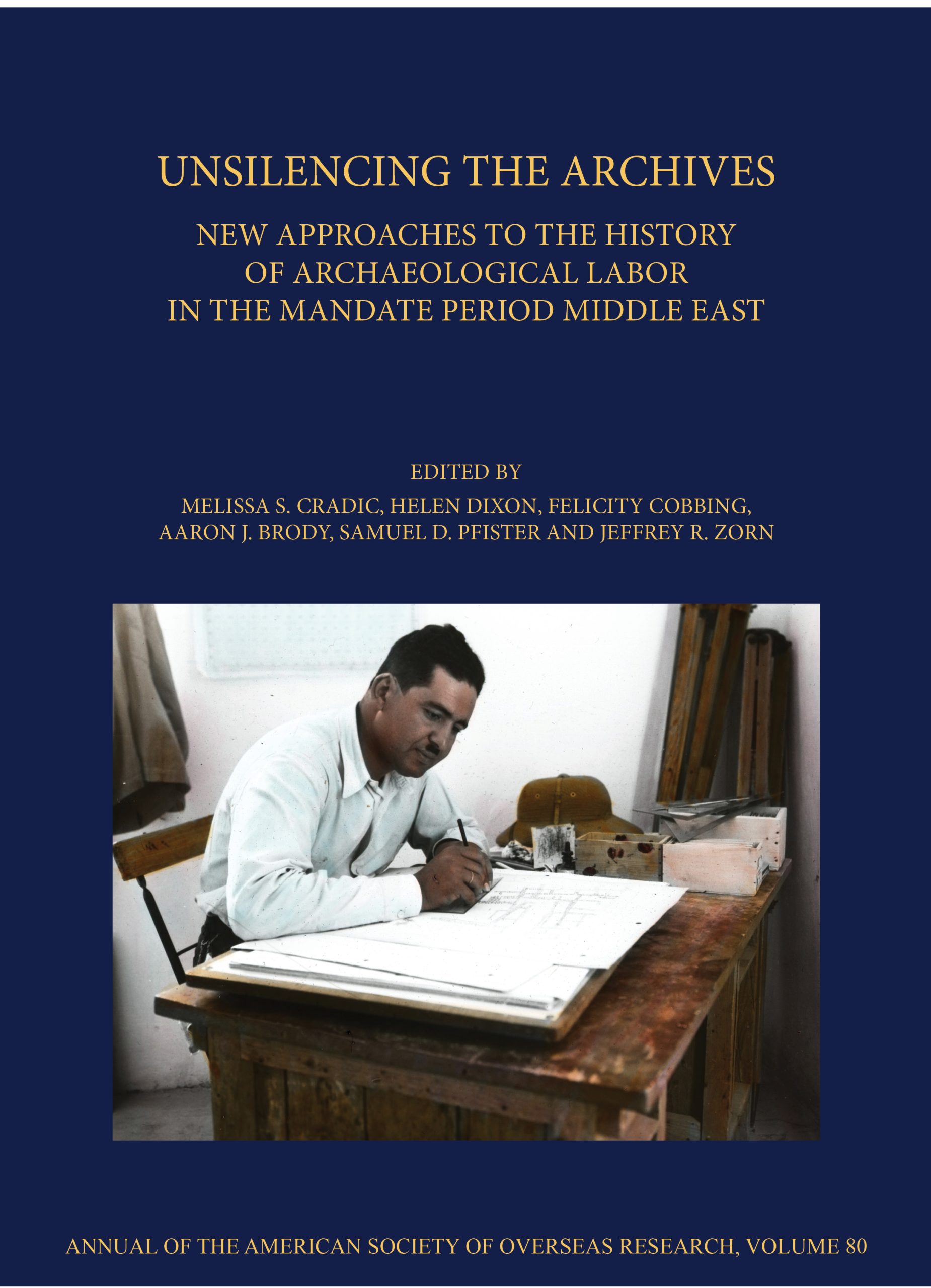
  • ASOR Community Outreach and Public Engagement: Melissa Cradic and Samuel Pfister, Unsilencing the Archives
  • The G. Ernest Wright Award: Andrea De Giorgi and A. Asa Eger, Antioch: A History (Taylor & Francis)
  • The Frank Moore Cross Award: Carolina López Ruíz, Phoenicians and the Making of the Mediterranean (Harvard University Press)
  • The Nancy Lapp Popular Book Award: Paul Collins, The Sumerians (Reaktion Books)
  • The Joy Ungerleider Poster Award: Brady Liss, Matthew Howland, Anthony Tamberino, Mohammad Najjar, and Thomas E. Levy, “Digitally Cleaning the Section: Using Archived Photographs to Reconstruct Stratigraphic Sections in Faynan, Jordan.”
  • Student Paper Award: Alia Fares, “Archaeology at Your Doorstep-Building Heritage Awareness on the Lebanon Mountain Trail and for Beirut’s Traumatized Youth.”


2021 Recipients

  • The Charles U. Harris Service Award: Sheila Bishop
  • ASOR Membership Service Award: Hanan Charaf
  • ASOR Membership Service Award: Kate Grossman
  • ASOR Membership Service Award: Heather McKee
  • The W. F. Albright Service Award (ACOR): Oystein LaBianca
  • The W. F. Albright Service Award (AIAR): Susan Cohen
  • The W. F. Albright Service Award (CAARI): F. Bryan Wilkins
  • The P. E. MacAllister Field Archaeology Award: Andrea Berlin
  • The Frank Moore Cross Award: Geoffrey Khan, The Tiberian Pronunciation Tradition of Biblical Hebrew (Open Book Publishers)
  • The Nancy Lapp Popular Book Award: Max Price, Evolution of a Taboo: Pigs and People in the Ancient Near East (Oxford University Press)
  • The G. Ernest Wright Award: Allison Mickel, Why Those Who Shovel Are Silent: A History of Local Archaeological Knowledge and Labor (University Press of Colorado)
  • The Joy Ungerleider Poster Award: Emily L. Simons, “Griffins in Late Bronze Age East Mediterranean Archaeology.”
  • Student Paper Award: Gretchen Emma Zoeller,  A Paleopathological Investigation of Amputation in Ancient Nubia.


2020 Recipients

  • ASOR Membership Service Award: Laura Mazow
  • ASOR Membership Service Award: Emily Miller Bonney
  • ASOR Membership Service Award: Christopher Rollston and Eric H. Cline
  • The W. F. Albright Service Award (ACOR): Nisreen Abu al-Shaikh
  • The W. F. Albright Service Award (CAARI): Achilleas Demetriades
  • The W. F. Albright Service Award (Damascus Committee): Lisa Cooper
  • The P. E. MacAllister Field Archaeology Award:Mary M. Voigt
  • The Frank Moore Cross Award: Theodore J. Lewis, The Origin and Character of God: Ancient Israelite Religion Through the Lens of Divinity (Oxford University Press)
  • The Nancy Lapp Popular Book Award: D. Fairchild Ruggles, Tree of Pearls: The Extraordinary Architectural Patronage of the 13th-Century Egyptian Slave-Queen Shajar al-Durr (Oxford University Press)
  • The G. Ernest Wright Award: Raphael Greenberg, The Archaeology of the Bronze Age Levant: From Urban Origins to the Demise of City-States, 3700-1000 BCE (Cambridge University Press)
  • ASOR Special Recognition Book Award: Pınar Durgun, An Educator’s Handbook for Teaching About the Ancient World (Archaeopress)
  • The Joy Ungerleider Poster Award: Rachel Banks, Cassandra DeGaglia, Amy Dixon, Kara Larson, and James Hardin, The Spaces Between: Spatial Reconstruction of a Proposed Iron Age IIB Domestic House at Tel Halif, Israel
  • Student Paper Award: Noam Cohen, How to Talk about Domestic Abuse in Old Babylonian


2019 Recipients

  • The Richard J. Scheuer Medal: Susan Ackerman
  • The Charles U. Harris Service Award: Lawrence T. Geraty
  • ASOR Membership Service Award: Gary Arbino
  • ASOR Membership Service Award: Geoff Emberling
  • ASOR Membership Service Award: Randall (Randy) Younker
  • The W. F. Albright Service Award (ACOR): Randolph B. Old
  • The W. F. Albright Service Award (CAARI): Birgitta Lindros Wohl
  • The P. E. MacAllister Field Archaeology Award: Amnon Ben-Tor
  • The Frank Moore Cross Award: Sidnie White Crawford for Scribes and Scrolls at Qumran (Wm. B. Eerdmans)
  • The Nancy Lapp Popular Book Award: Kara Cooney for When Women Ruled the World: Six Queens of Egypt (National Geographic)
  • The G. Ernest Wright Award: Assaf Yasur-Landau, Eric H. Cline, and Yorke M. Rowan for The Social Archaeology of the Levant (Cambridge University Press)
  • The Joy Ungerleider Poster Award: Christopher J. Davey, Luis R. Siddall, Carla A. Raymond, and Joseph J. Bevitt for Hidden Text: Imaging and reading an ancient tablet in an envelope


2018 Recipients

  • The Charles U. Harris Service Award: Lynn Swartz Dodd
  • ASOR Membership Service Award: Charles E. Jones
  • ASOR Membership Service Award: Jonathan Rosenbaum
  • ASOR Membership Service Award: Thomas Schneider
  • The W. F. Albright Service Award (ACOR): Barbara A. Porter
  • The W. F. Albright Service Award (AIAR): Sidnie White Crawford
  • The P. E. MacAllister Field Archaeology Award: Aren M. Maeir
  • The Frank Moore Cross Award: Matthew J. Suriano for A History of Death in the Hebrew Bible
  • The Nancy Lapp Popular Book Award: Eric H. Cline for Three Stones Make a Wall
  • The G. Ernest Wright Award: James A. Fraser for Dolmens in the Levant
  • The Joy Ungerleider Poster Award: Morag Kersel, Marly Prom, and Students in ANT256 (DePaul University) for Where Are They Now? Following Pots into Archives, Educational Institutions, and Museum Vitrines


2017 Recipients

  • The Charles U. Harris Service Award: Carol Meyers
  • ASOR Membership Service Award: Rachel Hallote
  • ASOR Membership Service Award: Lawrence “Larry” Geraty
  • ASOR Membership Service Award: Erin and Robert Darby
  • ASOR Special Service Award: James “Jim” Eisenbraun
  • The W. F. Albright Service Award (ACOR): H.R.H. Prince Raad Zeid Al-Hussein
  • The W. F. Albright Service Award (AIAR): Sharon Herbert
  • The W. F. Albright Service Award (CAARI): Andrew P. McCarthy
  • The P. E. MacAllister Field Archaeology Award: Israel Finkelstein
  • The Frank Moore Cross Award: Sara J. Milstein for Tracking the Master Scribe: Revision through Introduction in Biblical and Mesopotamian Literature
  • The Nancy Lapp Popular Book Award: Patrick E. McGovern for Ancient Brews: Rediscovered and Re-created
  • The G. Ernest Wright Award: Glenn Schwartz for Rural Archaeology in Early Urban Northern Mesopotamia: Excavations at Tell al-Raqa’i
  • The Joy Ungerleider Poster Award: Rebecca Seifried and Chelsea A. M. Gardner for The Value of Travelers’ Itineraries in Archaeological Research: A GIS Analysis of Pathways through the Mani Peninsula, Greece
  • The Richard J. Scheuer Medal: William G. Dever


2016 Recipients

  • The Charles U. Harris Service Award: Vivian Bull
  • ASOR Membership Service Award: Sheila Bishop
  • ASOR Membership Service Award: Doug Clark
  • ASOR Membership Service Award: Eric Cline
  • The W. F. Albright Service Award (ACOR): Humi Ayoubi
  • The W. F. Albright Service Award (AIAR): John Spencer
  • The P. E. MacAllister Field Archaeology Award: Larry Herr
  • The Frank Moore Cross Award: Mark Smith for Where the God Are, Spatial Dimensions of Anthropomorphism in the Biblical World (Yale University Press)
  • The Nancy Lapp Popular Book Award: Reinhard Pummer, for The Samaritans, A Profile(Eerdmans)
  • The G. Ernest Wright Award: Seymour Gitin (ed.), for The Ancient Pottery of Israel and its Neighbors from the Iron Age through the Hellenistic Period (IES)
  • The Joy Ungerleider Poster Award: Robert S. Homsher, Adam B. Prins, Melissa S. Cradic and Matthew J. Adams, for New Dimensions in Digital Documentation: Tomb 50 of Megiddo


2015 Recipients

  • The Charles U. Harris Service Award: Stevan Dana
  • ASOR Membership Service Award: Orlyn Nelson
  • ASOR Membership Service Award: Joseph Greene
  • ASOR Membership Service Award: Lynn Swartz Dodd
  • The W. F. Albright Service Award (ACOR): Mohammed Adawi
  • The W. F. Albright Service Award (AIAR): J. P. Dessel
  • The W. F. Albright Service Award (Baghdad Committee): Marian Feldman
  • The W. F. Albright Service Award (CAARI): Annemarie Weyl-Carr
  • The P. E. MacAllister Field Archaeology Award: Michele Daviau
  • The Frank Moore Cross Award: Eugene Ulrich for The Dead Sea Scrolls and the Developmental Composition of the Bible (Brill)
  • The Nancy Lapp Popular Book Award: Jacob L. Wright for David, King of Israel, and Caleb in Biblical Memory (Cambridge University Press)
  • The G. Ernest Wright Award: A. Asa Eger for The Islamic-Byzantine Frontier: Interaction and Exchange Among Muslim and Christian Communities (I.B. Tauris Publishers)
  • The Joy Ungerleider Poster Award: Petra Creamer (University of Pennsylvania) for The Apotropaic Nature of Old Babylonian Terracotta Plaques


2014 Recipients

  • The Richard J. Scheuer Medal: Timothy P. Harrison
  • The Charles U. Harris Service Award: Norma Kershaw
  • The P. E. MacAllister Field Archaeology Award: Carol L. Meyers
  • The W. F. Albright Service Award (Baghdad Committee): Piotr Michalowski
  • The W. F. Albright Service Award (CAARI): Raymond C. Ewing
  • The W. F. Albright Service Award (ACOR): Christopher A. Tuttle
  • The ASOR Membership Service Award: Gary P. Arbino
  • The ASOR Membership Service Award: Oystein LaBianca
  • The G. Ernest Wright Publications Award:  Benjamin W. Porter for the book Complex Communities: The Archaeology of Early Iron Age West-Central Jordan, University of Arizona Press, 2013
  • The Frank Moore Cross Award: Nicholas Postgate for the book Bronze Age Bureaucracy: Writing and the Practice of Government in Assyria, Cambridge University Press, 2013
  • The ASOR Popular Book Award: Eric H. Cline for the book 1177 B.C.: The Year Civilization Collapsed, Princeton University Press, 2014
  • The ASOR Annual Meeting Poster Award: Blair Heidkamp, Gabrielle Borenstein, and Joyce Fountain for the poster The Final Season: Marj Rabba 2014


2013 Recipients

  • The Richard J. Scheuer Medal: Seymour Gitin
  • The Charles U. Harris Service Award: Jennie Ebeling
  • The P. E. MacAllister Field Archaeology Award: Amihai Mazar
  • The W. F. Albright Service Award: Joan Branham
  • The ASOR Special Service Award: Jim Weinstein
  • The ASOR Membership Service Award: Elise Friedland and Andrew M. Smith II
  • The ASOR Membership Service Award: Beth Alpert Nakhai
  • The G. Ernest Wright Publications Award:  Phillip C. Edwards for the book Wadi Hammeh 27, an Early Natufian Settlement at Pella in Jordan, Brill, 2013.
  • The Frank Moore Cross Award: Frederick J. Murphy for the book Apocalypticism in the Bible and Its World: A Comprehensive Introduction, Baker Academic, 2012.


2012 Recipients

  • W.F. Albright Award: J. Edward Wright.
  • G. Ernest Wright Publication Award: Oded Lipshitz and David Vanderhooft for the book The Yehud Stamp Impressions: A Corpus of Inscribed Impressions from the Persian and Hellenistic Periods in Judah.
  • Frank Moore Cross Award: James C. VanderKam for the book The Dead Sea Scrolls and the Bible.


2011 Recipients

  • Ten Years of Service to ASOR – Selma Omerefendic
  • The Charles U. Harris Service Award – Sheldon Fox
  • G. Ernest Wright Publication Award – Aaron Burke, Martin Peilstöker and Aren Maeir
  • The Richard J. Scheuer Medal – Lydie Shufro
  • The Frank Moore Cross Award – Christopher Rollston


2010 Recipients

  • Membership Service Award – Michael Homan
  • W.F. Albright Award (CAARI) – Nan Frederick
  • The P. E. MacAllister Field Archaeology Award – Edgar Peltenberg
  • G. Ernest Wright Publication Award –Aharon Sasson, Animal Husbandry in Ancient Israel: A Zooarchaeological Perspective on Livestock Exploitation, Herd Management and Economic Strategies (Equinox Publishing 2010)
  • The Frank Moore Cross Award – Seth Sanders


2009 Recipients

  • Membership Service Awards – Tammi Schneider and Ann Killebrew
  • Charles U. Harris Service Award – Orlyn Nelson
  • G. Ernest Wright Publication Award – Alan Simmons
  • W.F. Albright Award (CAARI) – Gus Feissel
  • The P. E. MacAllister Field Archaeology Award – Seymour Gitin
  • The Frank Moore Cross Award – Ron E. Tappy and P. Kyle McCarter, Jr., Editors
    Literate Culture and Tenth-Century Canaan, The Tel Zayit Abecedary in Context, Eisenbrauns (Winona Lake, IN) 2008


2008 Recipients

  • G. Ernest Wright Publication Award – Avraham Faust, Israel’s Ethnogenesis
  • Charles U. Harris Service Award – Robert J. Bull
  • W.F. Albright Award (CAARI) – Stuart Swiny
  • W.F. Albright Award (AIAR) – Lydie Shufro
  • Membership Service Award – Jeffrey Blakely


2007 Recipients

  • Richard J. Scheuer Medal – Eric M. Meyers
  • P.E. MacAllister Field Archaeology Award – Alan H. Simmons
  • G. Ernest Wright Publication Award – Amihai Mazar – Tel Beth Shean Excavation Reports
  • Frank Moore Cross Publication Award – Bruce Lincoln – Religion, Empire and Torture
  • Charles U. Harris Service Award – B. W. Ruffner
  • W.F. Albright Award (ACOR) – Bert DeVries
  • Membership Service Award – Morag Kersel


2006 Recipients

  • Richard J. Scheuer Medal – Joe Seger
  • P.E. MacAllister Field Archaeology Award – Kenneth Holum
  • G. Ernest Wright Publication Award – Ann E. Killebrew
  • Frank Moore Cross Publication Award – Gordon Hamilton
  • W.F. Albright Award (AIAR) – Sidnie White Crawford
  • Charles U. Harris Service Award – James Strange
  • Membership Service Award – Albert Leonard, Jr.
  • Special Service Award – James P. Joseph, Esq.
  • Special Service Award – Arnold & Porter, LLP


2005 Recipients

  • Richard J. Scheuer Medals – Pierre and Patricia Bikai
  • P.E. MacAllister Field Archaeology Award – Roger Boraas
  • G. Ernest Wright Publication Award – Burton MacDonald
  • Frank Moore Cross Publication Award – Mark Smith
  • Charles U. Harris Service Award – David Rosenstein
    W.F. Albright Award (CAARI) – David Detrich
  • W.F. Albright Award (AIAR) – Daniel Wolk
  • Membership Service Award – Piotr Michalowski
  • Membership Service Award – Sharon Steadman
  • Membership Service Award – Gloria London


2004 Recipients

  • P.E. MacAllister Field Archaeology Award – Gary Rollefson
  • G. Ernest Wright Publication Award – Larry Herr
  • Frank Moore Cross Publication Award – Ziony Zevit
  • W.F. Albright Award (CAARI) – Vathoulla Moustoukki
  • W.F. Albright Award (ACOR) – S. Thomas Parker
  • Membership Service Award – Jonathan Tubb
  • Membership Service Award – Albert Leonard, Jr.
  • Special Recognition Award – Elizabeth Stone
  • Special Recognition Award – Dick Ballou


2003 Recipients

  • P.E. MacAllister Field Archaeology Award – Thomas Levy
  • G. Ernest Wright Publication Award – Beth Alpert Nakhai
  • Frank Moore Cross Publication Award – Michael Homan
  • W.F. Albright Award (AIAR) – Norma Dever
  • W.F. Albright Award (CAARI) – Ellen Herscher
  • W.F. Albright Award (ACOR) – David McCreery
  • Membership Service Award – Rudolph Dornemann
  • Membership Service Award – Ann E. Killebrew
  • Membership Service Award – Victor Matthews


2002 Recipients

  • Richard Scheuer Medal – Walter Rast
  • P.E. MacAllister Field Archaeology Award – Elizabeth C. Stone
  • G. Ernest Wright Publication Award – Edward F. Campbell, Jr.
  • Frank Moore Cross Publication Award – Ehud Netzer
  • W.F. Albright Award (AIAR) – Robert Haak
  • W.F. Albright Award (CAARI) – Andrew Oliver
  • Membership Service Award – Harold O. Forshey


2001 Recipients

  • Charles U. Harris Service Award – William G. Dever
  • G. Ernest Wright Publication Award – Michel Fortin
  • Frank Moore Cross Publication Award – Baruch Halpern
  • W.F. Albright Award (ACOR) – Patricia Bikai
  • W.F. Albright Award (AIAR) – John Spencer
  • W.F. Albright Award (CAARI) – Nancy Serwint
  • Membership Service Award – Nancy Frederick
  • Membership Service Award – Jodi Magness


2000 Recipients

  • Charles U. Harris Service Award – Philip J. King
  • P.E. MacAllister Field Archaeology Award – Lawrence Geraty
  • W. F. Albright Award (ACOR) – Pierre Bikai
  • W.F. Albright Award (AIAR) – Sy Gitin
  • Membership Service Award – Billie Jean Collins
  • Membership Service Award – Lydie Shufro
  • Membership Service Award – Robert J. Bull


1999 Recipients

  • Charles U. Harris Service Award – Robert Hohlfelder
  • P.E. MacAllister Field Archaeology Award – Martha Sharp Joukowsky
  • W. F. Albright Award (AIAR) – Patty Gerstenblith
  • Membership Service Award – James Weinstein
  • Membership Service Award – Norma Dever


1998 Recipients

  • Charles U. Harris Award – Walter E. Rast
  • P.E. MacAllister Field Archaeology Award – Lawrence E. Toombs
  • G. Ernest Wright Publication Award – Steven A. Rosen
  • Frank Moore Cross Publication Award – Ronald S. Hendel
  • W. F. Albright Award (ACOR) – Nancy L. Lapp
  • W. F. Albright Award (CAARI) – Giraud V. Foster
  • W. F. Albright Award (AIAR) – James F. Ross
  • Membership Service Award – Anne Ogilvy
  • Membership Service Award – David C. Hopkins
  • Membership Service Award – Jonathan N. Tubb


1997 Recipients

  • Richard J. Scheuer Medal – Norma Kershaw
  • Charles U. Harris Service Award – Ernest S. Frerichs
  • P.E. MacAllister Field Archaeology Award – William G. Dever
  • G. Ernest Wright Publication Award – Eric M. Meyers
  • Frank Moore Cross Publication Award – James H. Charlesworth
  • W. F. Albright Award (ACOR) – Artemis A. W. Joukowsky
  • W. F. Albright Award (CAARI) – Stuart Swiny
  • Membership Service Award – Carolyn Draper Rivers
  • Membership Service Award – R. Thomas Schaub


1996 Recipients

  • Richard J. Scheuer Medal – P.E. MacAllister


Previous Recipients

  • 1994 Richard J. Scheuer Medal – Charles Harris and Joy Ungerleider Mayerson
  • 1989 Richard J. Scheuer Medal – Richard J. Scheuer

Nominate Someone for an Award

[vc_row fullwidth=”true” css=”.vc_custom_1490224714943{padding-top: 0px !important;padding-right: 0px !important;padding-bottom: 0px !important;padding-left: 0px !important;}”][vc_column][vc_single_image image=”30055″ img_size=”full” alignment=”center”][/vc_column][/vc_row][vc_row][vc_column][vc_column_text][/vc_column_text][/vc_column][/vc_row][vc_row fullwidth=”true” css=”.vc_custom_1490225468623{padding-top: 0px !important;padding-right: 0px !important;padding-bottom: 0px !important;padding-left: 0px !important;}”][vc_column width=”1/12″ css=”.vc_custom_1490225195470{margin-right: 10px !important;}” offset=”vc_hidden-sm vc_hidden-xs”][vc_column_text]

  SHARE

[/vc_column_text][mk_image src=”http://www.asortest.org/wp-content/uploads/2017/01/social-fb-icon4.jpg” image_width=”42″ image_height=”42″ hover=”false” custom_url=”https://www.facebook.com/ASOResearch/” margin_bottom=”0″][mk_image src=”http://www.asortest.org/wp-content/uploads/2017/01/social-tw-icon4.jpg” image_width=”42″ image_height=”42″ hover=”false” custom_url=”https://twitter.com/ASOResearch?ref_src=twsrc%5Egoogle%7Ctwcamp%5Eserp%7Ctwgr%5Eauthor” margin_bottom=”0″][mk_image src=”http://www.asortest.org/wp-content/uploads/2017/01/social-in-icon4.jpg” image_width=”42″ image_height=”42″ hover=”false” custom_url=”https://www.linkedin.com/company/american-schools-of-oriental-research” margin_bottom=”0″][mk_image src=”http://www.asortest.org/wp-content/uploads/2017/01/social-ml-icon_7.jpg” image_width=”42″ image_height=”42″ hover=”false” custom_url=”mailto:info@asor.org” margin_bottom=”0″][mk_image src=”http://www.asortest.org/wp-content/uploads/2017/01/blog-icon3.jpg” image_width=”42″ image_height=”42″ hover=”false” custom_url=”http://asor.org/blog” margin_bottom=”0″][/vc_column][vc_column border_color=”rgba(255,255,255,0.01)” width=”1/6″ css=”.vc_custom_1490365673198{margin-right: 20px !important;border-left-width: 2px !important;padding-right: 20px !important;padding-left: 20px !important;border-left-color: #99422f !important;}” el_class=”sticky-sidenav”][mk_divider divider_color=”rgba(255,255,255,0.01)” thickness=”1″ margin_top=”3″ margin_bottom=”3″][vc_widget_sidebar sidebar_id=”ca-sidebar-38526″][mk_header menu_location=”second-menu” show_logo=”false” show_search=”false” show_cart=”false”][/vc_column][vc_column border_color=”rgba(170,170,170,0.01)” width=”1/2″ css=”.vc_custom_1490225606852{margin-right: 10px !important;margin-bottom: 30px !important;border-right-width: 2px !important;border-bottom-width: 2px !important;padding-top: 30px !important;padding-right: 30px !important;padding-left: 20px !important;background-color: #ffffff !important;border-right-color: rgba(227,228,228,0.75) !important;border-bottom-color: rgba(227,228,228,0.75) !important;}”][vc_column_text responsive_align=”left”]

NOMINATE SOMEONE FOR AN AWARD

Please consult the list of Current and Past Award Recipients (http://www.asor.org/about-asor/honors-awards/previous-award-recipients/) to make sure that the person you nominate has not previously received a book or service award for the same publication.

Descriptions of the Service and Book Awards can be found at http://www.asor.org/about-asor/honors-awards/.

If you are unable to access the form or if you have any question, please email info@asor.org or call (703) 789-9229.

Please refer to the table below for the information required for nominating for the Service Awards and the Book Awards.

Required Information for Nomination

Service Award

Book Award

DEADLINE
September 8, 2023
April 28, 2023
NOMINATION FORM
Click here for the Service Award Nomination Form
Click here for the Book Award Nomination Form
Name, email and phone number of Nominator ✔ ✔
Name and email of Nominee ✔ ✔
Nominee’s Title and Institutional Affiliation ✔ ✔
Title of Book ✔
Name of Award to which they are being nominated. ✔ ✔
Brief description of why the Nominee/Book is deserving of the award ✔ ✔
Support material for nomination ✔

(This may include e.g., curriculum vitae, personal website link, biographical information, dates of ASOR committee service, etc.)

✔

(This may include e.g., marketing or promotional material from the publisher, reviews, etc.)

Brief description of why the nominee is deserving of the award ✔
Brief description of the goals of the project and how it is made accessible/beneficial to diverse participants and/or audiences ✔
Brief description of why this project is innovative/outstanding in its goals and execution ✔
Other remarks or supporting materials (links, brochures, documents, etc.) (Optional) ✔

[/vc_column_text][mk_padding_divider][/vc_column][vc_column border_color=”rgba(170,170,170,0.01)” width=”1/6″ css=”.vc_custom_1490571214409{margin-right: 10px !important;margin-bottom: 30px !important;border-right-width: 2px !important;border-bottom-width: 2px !important;padding-top: 30px !important;padding-right: 20px !important;padding-left: 20px !important;background-color: #ffffff !important;border-right-color: rgba(227,228,228,0.75) !important;border-bottom-color: rgba(227,228,228,0.75) !important;}”][vc_wp_posts title=”BROWSE THE NEWS ARCHIVE” number=”4″][/vc_column][vc_column border_color=”rgba(170,170,170,0.01)” width=”1/6″ css=”.vc_custom_1490225688999{margin-right: 10px !important;margin-bottom: 30px !important;border-right-width: 2px !important;border-bottom-width: 2px !important;padding-top: 30px !important;padding-right: 30px !important;padding-left: 20px !important;background-color: #ffffff !important;border-right-color: rgba(227,228,228,0.75) !important;border-bottom-color: rgba(227,228,228,0.75) !important;}”][vc_column_text] [/vc_column_text][/vc_column][/vc_row][vc_row][vc_column][vc_column_text]

[/vc_column_text][/vc_column][/vc_row]

ASOR’S HONORS AND AWARDS

ASOR’S HONORS & AWARDS

Annual Meeting Awards (applications due November 4, 2026)

The Joy Ungerleider Poster Award. This award is conferred upon the author(s) of the poster presenting the results of a study about ancient Near Eastern societies in a clear, legible fashion using original graphic content. Subject matter may be based in archaeological sciences, history, anthropology, epigraphy, ethnography, heritage or other scholarly approaches to understanding ancient people in the areas covered by ASOR. Learn more about the 2026 Joy Ungerleider Poster Award and apply here. Deadline: November 4.

Student Paper Award. This award is conferred upon the author(s) of a paper presented during the Annual Meeting that conveys the results of a study about ancient Near Eastern and wider Mediterranean societies in a clear, understandable and convincing fashion. The first author and presenter of the paper must be a registered student at the time of presentation in order to be eligible for consideration for this award. The award comes with a $500 prize. Learn more about the 2026 Student Paper Award and apply here. Deadline: November 4.

Book Awards (nominations due May 1, 2026)

The Frank Moore Cross Award. This award is presented to the author/editor of the most substantial volume(s) related to the history and/or religion of the ancient Near East and Eastern Mediterranean. Primary consideration will be given to historical, epigraphic, textual, and comparative literary studies; or to works that advance and/or evaluate new methodological approaches to the literary record(s). This work must be the result of original research published during the past two years. (One award is given annually.)

The Nancy Lapp Popular Book Award. This award is presented to the author/editor of a book published in the last two years that offers a new synthesis of archaeological or textual evidence from the Ancient Near East and Eastern Mediterranean intended to reach an audience of scholars as well as students and the broader public. (One award is given annually.)

The G. Ernest Wright Award. This award is given to the author/editor of the most substantial volume(s) dealing with archaeological material, excavation reports and material culture from the ancient Near East and Eastern Mediterranean. This work must be the result of original research published within the past two years. (One award is given annually.)

Nominate someone for a Book Award.

Please email info@asor.org with questions. 

Service Awards (nominations due September 18, 2026)

The W. F. Albright Award. This award honors an individual who has shown special support or made outstanding service contributions to one of the overseas centers, AIAR, CAARI, or to one of the overseas committees – the Baghdad Committee and the Damascus Committee. (This award is given when such an individual is identified.)

The Charles U. Harris Service Award. This award is given in recognition of long term and/or special service as an ASOR officer or Trustee. (One award is given annually.)

The P. E. MacAllister Field Archaeology Award. This award honors an archaeologist who, during their career, has made outstanding contributions to ancient Near Eastern and Eastern Mediterranean archaeology. (One award is given annually.)

ASOR Membership Service Award. This award recognizes individuals who have made special contributions on behalf of the ASOR membership, through committee, editorial, or office services. (Up to three awards are given annually.)

Community Engagement and Public Outreach Award. This award recognizes individuals, teams, and organizations who have initiated outstanding educational, informational, or practical projects (including but not limited to classes, programs, exhibits, resources, events, platforms) with the goal of making subjects and information about the ancient world accessible to wider (particularly non-academic) audiences.

The Richard J. Scheuer Medal: This award honors an individual who has provided truly outstanding, long-term support and service contributions to ASOR. (This medal is awarded when such an individual is identified.)

Nominate someone for a Service Award using Google Forms.

What do I need to nominate someone?

  1. Check the list of Previous Award Recipients to make sure they have not already received the award.
  2. Your name and contact information.
  3. Name, title, and email of the person you wish to nominate.
  4. Name of the award from the list above.
  5. Statement on why the person is deserving of this award.
  6. Optional support material for the nomination. This may in include curriculum vitae, personal website link, biographical information, dates of ASOR committee service, etc.

Please email info@asor.org with questions. 

CONTACT US—ASOR

CONTACT US

General Inquiries: 703-789-9229; info@asor.org

Annual Meeting: 857-272-2506; meetings@asor.org

Communications: info@asor.org

Cultural Heritage Initiatives: dashby@asor.org

Executive Director: 703-789-9232; executive-director@asor.org

Finance: finance@asor.org

Membership: 703-789-9230; membership@asor.org

Programs (Fellowships/Scholarships/Grants): 703-789-9233; programs@asor.org

Donations: 703-789-9230; donate@asor.org

Publications: 703-789-9229; publications@asor.org

Social Media: info@asor.org

Website/IT: 703-789-9234; jaredkoller@asor.org


Mailing address:

American Society of Overseas Research
James F. Strange Center
209 Commerce Street
Alexandria, VA 22314
Tel: 703-789-9229; Email: info@asor.org


ASOR Staff Directory

  • Full-time staff
  • Part-time staff and consultants:
    • Will Raynolds (Co-Director of ASOR Cultural Heritage Initiatives): willraynolds@asor.org
    • Hanan Charaf (Director for North African Cultural Heritage Projects): hanan.charaf@asor.org
    • Ahmad Emrage (Libya Programs Manager): ahmademrage@asor.org
    • Aboutou Konate (Heritage Contractor for Mali)
    • Harshita Loganathan (Full Stack Developer and IT Coordinator)
  • Compensated Editors and Editorial Staff
    • Marilyn Lundberg (Managing Editor, Maarav)
    • Jessica Nitschke (Editor, Ancient Near East Today)
    • Alexandra Whitsell (Manager Editor, BASOR)
    • BASOR editor: Jason Ur
    • JCS editors: Paul Delnero, Petra Goedegebuure, Seth Richardson
    • NEA editor: Christina Tsouparopoulou
  • Interns
    • Sean Simonelli
    • Sheridan Alper