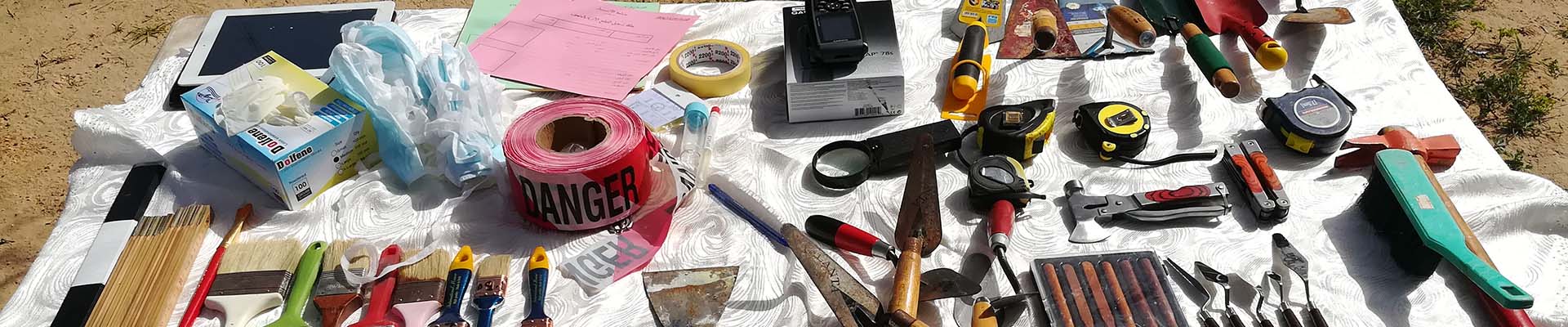
ASOR holds a considerable archive of materials documenting archaeological sites throughout the Near East and broader Mediterranean. Recognizing that this material becomes more useful as it is digitized and made searchable, ASOR will continue to build this resource and make it freely available to members and partners to support current and future projects and document changing conditions through time.
ASOR members have contributed photographs from around the region. This kind of baseline documentation provides a vital record of these sites, helping to document changing conditions through time.
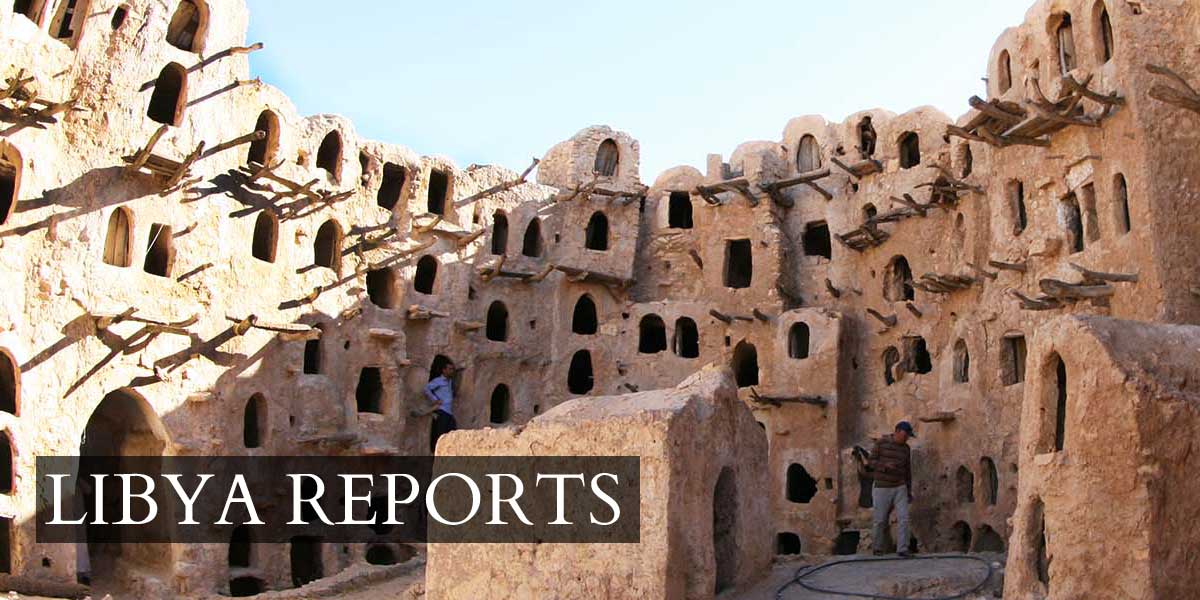
In Syria, Iraq and Libya, our archive of reports documenting damage to cultural heritage sites from 2014-2017 will remain a vital resource as local authorities identify priorities for stabilization and repair and pursue a process of justice seeking restitution for the community resources which were damaged.
Given that the archival collections of many of our local partners hold important documents that have long lacked proper resources, ASOR provides additional assistance when possible. In partnership with the Ghadames Society for Heritage and Manuscripts and the Hill Museum and Manuscript Library, ASOR has embarked on a project to digitize manuscripts documenting the trans-Saharan trade.
Advancing Understanding & Promoting Global Awareness
The ongoing exploration of the human past is one of the most powerful ways to promote mutual understanding. ASOR and its members have been involved with the study and protection of cultural heritage since its inception, and our capacity has increased since the establishment of Cultural Heritage Initiatives (CHI) in 2014.
Prompted by an ethical obligation to respond to the destruction of cultural heritage in Iraq, Syria and Libya, CHI was launched as an international collaboration of scholars, practitioners and institutions working under the auspices of ASOR to protect our common world heritage and cultural diversity.
Through its annual meeting, ASOR provides a forum to discuss the intersection between archaeological research in the region and the growing imperative to protect sites and collections which have previously been excavated.
The long-term stewardship and care for cultural heritage throughout the Near East and broader Mediterranean is a communal responsibility. As a partner in this undertaking, ASOR recognizes that civil society has an important role to play, supplementing the limited resources of the state. We seek to strengthen those already engaged with this work while cultivating a broader community of support.
We begin by casting a wide net. Through its ASORtv channel on YouTube, ASOR provides accessible content tailored to a general audience exploring three main themes: the richness, complexity and diversity of the past; the current threats facing cultural heritage sites and collections; and the efforts of ASOR, its partners and local authorities to protect these resources.
Under its Suitcase Museum program, ASOR provides hands-on enrichment materials to community leaders well-positioned to engage audiences of diverse ages with the history of their area and build relationships with other aligned civil society groups.
Throughout the region where ASOR works, local laws generally consider antiquities to be national property and prohibit excavations that have not been pre-approved by the state. Given that such provisions encourage the scientific exploration of the archaeological record, a non-renewable resource widely considered to be a public good, ASOR supports local and international authorities in their work to strengthen and improve this legal framework.
In times when the rule of law is weakened, archaeological resources often face additional pressure. Whether through intentional acts of looting and theft, or unsanctioned urban encroachment resulting in accidental discoveries, the marketplace for illicit antiquities continues to expand.
Recognizing that strong partnerships between the archaeological community and local law enforcement are too rare, and ASOR collaborates with scholars, government heritage authorities and law enforcement to facilitate the transfer of knowledge and inspire joint action to counter and prevent illicit trafficking.
Recognizing that many of our members and partners work in communities devastated by war, ASOR remains a dedicated partner in the process of recovery. Our archive of reports documenting damage in Syria, Iraq and Libya from 2014-2017 will remain a vital resource as local authorities identify priorities for stabilization and repair and pursue a process of justice seeking restitution for the community resources which were damaged.
In partnership with World Monuments Fund and the Libyan Historic Cities Authority, ASOR compiled a post-conflict damage assessment of the historic city core of Benghazi, Libya. Supplementing a preliminary analysis based on satellite imagery, members of the team collected more detailed conditions information and identified priorities for stabilization.
Given the pressing need for site conservation in conjunction with ongoing excavation, ASOR is proud to offer Shepard Urgent Action Grants, allowing ASOR members to meet urgent and often unanticipated conservation needs on site.
ASOR is also able to offer a limited number of travel fellowships to members from the Near East and broader Mediterranean, enabling them to participate in the ASOR annual meeting.
Many societies express power by building monuments to commemorate people or events. Tearing down monuments are also expressions of power, but of a different sort. Read More[/vc_column_text][mk_divider thickness=”1″ margin_top=”10″][vc_column_text]
The Sefidkuh region of southern Baluchistan is a huge and nearly impassable mountain range. A new project has explored both archaeological sites and modern villages. Read More[/vc_column_text][mk_divider thickness=”1″ margin_top=”10″][vc_column_text]
In the ancient world, people were able to communicate messages at the speed of light. That light was provided by fire signals, part of sophisticated communications networks created by states and empires. Read More[/vc_column_text][mk_divider thickness=”1″ margin_top=”10″][vc_column_text]
The history of ancient Near Eastern Studies in the United States is closely tied to the Oriental Institute at the University of Chicago. A new book tells the story of this unique institution.Read More[/vc_column_text][mk_divider thickness=”1″ margin_top=”10″][/vc_column_inner][/vc_row_inner][/vc_column][/vc_row]
Lisa J. Cleath, 2019 William G. Dever Fellowship Recipient[/vc_column_text][mk_divider][vc_wp_text]Coming into the Dever Fellowship, I knew two things for certain: first, real archaeology is nothing like it appears to be in the Indiana Jones films, and second, I am not an archaeologist. Nevertheless, I knew I could learn a tremendous amount about archaeology in four weeks digging at Tel Azekah and four weeks at the Albright Institute, and my summer did not disappoint.
All in all, I gained a great respect for the archaeologists I encountered, as I learned about the methods that they meticulously employ in the field and in their research. It was a particular privilege to work alongside them in the field at Azekah, where I could gain firsthand instruction from the experienced and generous area supervisors. Under the friendly shade nets, we labored together in the dirt so that I could learn when to use the masterinas,* when we needed to sift the buckets of dirt to look for tiny finds, and when to signal changes in dirt color to the supervisors.
I had entered a new world that has its own language – a place where “sectioning,” “registration,” “locus,” and “feature” have very specific meanings (Curious about these words? Come dig for yourself!). As a text and language scholar, I was especially struck by how collaborative the work in the field needed to be; while I do my research sitting alone at my computer, archaeological field research needs to be conducted in a team with a clear line of command so that decisions to document finds and context are made consistently and carefully. This meant constant communication between team members (like me) in the squares yelling up to the supervisors for clarification, and then working in tandem with other team members to execute their directions.
Since I often teach about biblical history in my courses, I was most excited to excavate a destruction layer from Sennacherib’s 701 campaign in Judah.** Within the first few days, we came upon a plaster floor onto which a bunch of pottery had been crushed during the 701 destruction of Azekah. The discovery of this pottery assemblage offered the opportunity for me to be trained in the techniques archaeologists currently use to document, unearth, and test (relatively) whole vessels. As the area supervisor explained to me, the science that archaeologists use is constantly changing as they gain more advanced techniques to understand their finds. I came to understand that even within this single excavation, different archaeologists would have different takes on how specifically to document and preserve a vessel – so that at any given time, I needed to be in communication with the team members about the expectations of the moment.
In general, I learned to take soil samples outside, inside, and under each vessel, and to set aside the fragment with the vessel’s base. Each of these samples would later go to a lab for residue analysis, to determine what was inside the vessel. Opinions differed regarding whether or not one should touch the samples with gloves, since contact with work gloves would mean possible contamination from anything like sunscreen that had been on the handler’s skin. The soil samples could be placed in paper bags, while the most cautious approach to the vessel sample would place it inside aluminum foil to protect it from contamination. Any plastics might contaminate a sample, so it was preferable to prevent contact with plastic buckets if residue analysis was desired. Only after a top plan was made and soil samples were taken could vessels in the assemblage be removed. And of course, everything was registered so that the documentation could be clear. In they went to the colorful buckets to be sorted and analyzed by the experts in the lab!
Joining a dig felt like being welcomed into a family. I can’t express enough how lucky I feel to have received this fellowship, and can’t wait to use my newfound knowledge in my teaching and research.
*masterina was a daily part of the dig language at Azekah’s N1 area; we were told that it comes from the Arabic word for “trowel.”
**See 2 Kings 18-19 to see how this event interfaces with the biblical narrative.
Lisa J. Cleath is Assistant Professor of Biblical Studies at George Fox University in Newberg, OR. Her research focuses on Second Temple Judaism, including postcolonial readings of Jewish diaspora communities, epigraphic studies of the Aramaic documents from Elephantine Island, and ideologies of authoritative text in biblical narratives.
Register and receive 25% off the purchase of this book!
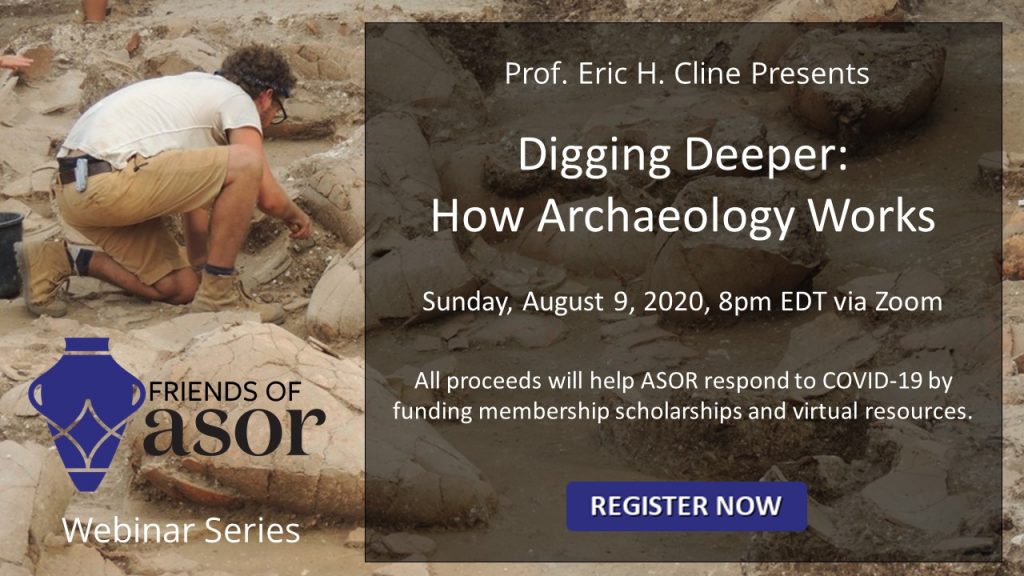
Friends of ASOR is excited to launch our new webinar series on August 9 at 8pm EDT, featuring Dr. Eric H. Cline. An internationally renowned archaeologist with more than thirty seasons of excavation experience, Prof. Cline has conducted fieldwork from Greece and Crete to Egypt, Israel, and Jordan. Drawing on his upcoming book, Digging Deeper, Cline answers questions archaeologists are most frequently asked:
How do you know where to dig? How are excavations actually done? How do you know how old something is? Who gets to keep what is found? How do you know what people from the past ate, wore, and looked like?
This lecture will be filled with insights and practical advice about how archaeology really works. The webinar will conclude with a live Q&A session with Prof. Cline.
Dr. Eric H. Cline is Professor of Classics and Anthropology, Director of the Capitol Archaeological Institute, and former Chair of the Department of Classical and Near Eastern Languages and Civilizations at The George Washington University, in Washington DC. A National Geographic Explorer, Fulbright scholar, and NEH Public Scholar with degrees from Dartmouth, Yale, and the University of Pennsylvania, he is an active field archaeologist with more than 30 seasons of excavation and survey experience, including ten seasons at the site of Megiddo (biblical Armageddon) in Israel and eight seasons at Tel Kabri, also in Israel, where he is currently Co-Director. Winner of the 2014 “Nancy Lapp Award for Best Popular Book” from the ASOR for his book “1177 BC: The Year Civilization Collapsed,” which was also considered for a Pulitzer Prize, and winner of the same award again in 2018 for his book “Three Stones Make a Wall: The Story of Archaeology,” he is also a three-time winner of the Biblical Archaeology Society’s “Best Popular Book on Archaeology” Award (2001, 2009, and 2011). A popular lecturer who has appeared frequently on television documentaries, he has also won national and local awards for both his research and his teaching. He is the author or editor of 20 books, which have been translated into sixteen languages, as well as nearly 100 articles, and several recorded lecture courses. His previous books written specifically for the general public include “The Battles of Armageddon: Megiddo and the Jezreel Valley from the Bronze Age to the Nuclear Age” (2000); “Jerusalem Besieged: From Ancient Canaan to Modern Israel” (2004); “From Eden to Exile: Unraveling Mysteries of the Bible” (2007); “Biblical Archaeology: A Very Short Introduction” (2009); “The Trojan War: A Very Short Introduction” (2013); “1177 BC: The Year Civilization Collapsed” (2014); “Three Stones Make a Wall: The Story of Archaeology (2017); and, most recently, “Digging Up Armageddon: The Search for the Lost City of Solomon” (2020).
Every registration for this webinar includes a coupon code for a 25% discount off and free shipping for Dr. Cline’s new book from Princeton University Press, Digging Deeper (retail price: $12.95)!
Every registrant for this webinar also has exclusive access to a subscription discount from Biblical Archaeology Society: 1 Year of All Access to Biblical Archaeology Review (library, digital, and print) for only 99 cents/month! You will be emailed the link to the offer after you register and pay.
You will be e-mailed the Zoom Webinar link prior to the lecture on August 9, 2020.
All proceeds from this lecture are used to fund scholarships for members impacted by COVID-19 as well as increasing ASOR’s virtual resources, which are free to the public.
Interested in sponsoring these webinars? Several levels of support from $50-$1,000 are available. Please email membership@asor.org with questions or sign up for a sponsorship while registering for this event.
Ready to explore more about ASOR Membership? Click here for more details about discounts for events and other benefits of membership! Memberships start at $40 for the year as an Associate Member.
You can now purchase the link to the recording of any webinar. You can also purchase the bundle packages of all webinars from the 2020-2022 seasons. Please e-mail membership@asor.org for purchase details.
To see a printable pdf of the webinar titles from the 2020-2021 season, please click here. To see a printable pdf of the webinar titles from the 2021-2022 season, please click here.
Where Are They Now?: A Preview of 2022 ASOR-Affiliated Fieldwork Projects Michael Given (University of Glasgow), Xenia-Paula Kyriakou (Florida Gulf Coast University), Stephen Batiuk (University of Toronto), Monique Roddy (Walla Walla University), Kent Bramlett (La Sierra University), Friedbert Ninow (La Sierra University), and Michael Hoff (University of Nebraska-Lincoln) | March 8, 2022
Tel Rehov: A Major Bronze and Iron Age City in the Jordan Valley Amihai Mazar (Hebrew University of Jerusalem), Nava Panitz-Cohen ( Hebrew University of Jerusalem), Nota Kourou (Athens University), Naama Yahalom-Mack (Hebrew University of Jerusalem), Robert Mullins (Azusa Pacific University) | February 10, 2022
Archaeogaming: Why Video Games Deserve Their Own Archaeology Tine Rassalle (University of North Carolina at Chapel Hill), Shannon Martino (Morton College), Matthew Winter (University of Arizona), Michael Zimmerman (Rhode Island) | April 18, 2021





 I had entered a new world that has its own language – a place where “sectioning,” “registration,” “locus,” and “feature” have very specific meanings (Curious about these words? Come dig for yourself!). As a text and language scholar, I was especially struck by how collaborative the work in the field needed to be; while I do my research sitting alone at my computer, archaeological field research needs to be conducted in a team with a clear line of command so that decisions to document finds and context are made consistently and carefully. This meant constant communication between team members (like me) in the squares yelling up to the supervisors for clarification, and then working in tandem with other team members to execute their directions.
 In general, I learned to take soil samples outside, inside, and under each vessel, and to set aside the fragment with the vessel’s base. Each of these samples would later go to a lab for residue analysis, to determine what was inside the vessel. Opinions differed regarding whether or not one should touch the samples with gloves, since contact with work gloves would mean possible contamination from anything like sunscreen that had been on the handler’s skin. The soil samples could be placed in paper bags, while the most cautious approach to the vessel sample would place it inside aluminum foil to protect it from contamination. Any plastics might contaminate a sample, so it was preferable to prevent contact with plastic buckets if residue analysis was desired. Only after a top plan was made and soil samples were taken could vessels in the assemblage be removed. And of course, everything was registered so that the documentation could be clear. In they went to the colorful buckets to be sorted and analyzed by the experts in the lab!