

[vc_row fullwidth=”true” css=”.vc_custom_1490224714943{padding-top: 0px !important;padding-right: 0px !important;padding-bottom: 0px !important;padding-left: 0px !important;}”][vc_column][vc_single_image image=”28454″ img_size=”full” alignment=”center”][/vc_column][/vc_row][vc_row][vc_column][vc_column_text][/vc_column_text][/vc_column][/vc_row][vc_row fullwidth=”true” css=”.vc_custom_1490225468623{padding-top: 0px !important;padding-right: 0px !important;padding-bottom: 0px !important;padding-left: 0px !important;}”][vc_column width=”1/12″ css=”.vc_custom_1490225195470{margin-right: 10px !important;}” offset=”vc_hidden-sm vc_hidden-xs”][vc_column_text]
SHARE
[/vc_column_text][mk_image src=”http://www.asortest.org/wp-content/uploads/2017/01/social-fb-icon4.jpg” image_width=”42″ image_height=”42″ hover=”false” custom_url=”https://www.facebook.com/ASOResearch/” margin_bottom=”0″][mk_image src=”http://www.asortest.org/wp-content/uploads/2017/01/social-tw-icon4.jpg” image_width=”42″ image_height=”42″ hover=”false” custom_url=”https://twitter.com/ASOResearch?ref_src=twsrc%5Egoogle%7Ctwcamp%5Eserp%7Ctwgr%5Eauthor” margin_bottom=”0″][mk_image src=”http://www.asortest.org/wp-content/uploads/2017/01/social-in-icon4.jpg” image_width=”42″ image_height=”42″ hover=”false” custom_url=”https://www.linkedin.com/company/american-schools-of-oriental-research” margin_bottom=”0″][mk_image src=”http://www.asortest.org/wp-content/uploads/2017/01/social-ml-icon_7.jpg” image_width=”42″ image_height=”42″ hover=”false” custom_url=”mailto:info@asor.org” margin_bottom=”0″][mk_image src=”http://www.asortest.org/wp-content/uploads/2017/01/blog-icon3.jpg” image_width=”42″ image_height=”42″ hover=”false” custom_url=”http://asor.org/blog” margin_bottom=”0″][/vc_column][vc_column border_color=”rgba(255,255,255,0.01)” width=”1/6″ css=”.vc_custom_1490365673198{margin-right: 20px !important;border-left-width: 2px !important;padding-right: 20px !important;padding-left: 20px !important;border-left-color: #99422f !important;}” el_class=”sticky-sidenav”][mk_divider divider_color=”rgba(255,255,255,0.01)” thickness=”1″ margin_top=”3″ margin_bottom=”3″][mk_custom_sidebar sidebar=”ca-sidebar-38785″][/vc_column][vc_column border_color=”rgba(170,170,170,0.01)” width=”1/2″ css=”.vc_custom_1490225606852{margin-right: 10px !important;margin-bottom: 30px !important;border-right-width: 2px !important;border-bottom-width: 2px !important;padding-top: 30px !important;padding-right: 30px !important;padding-left: 20px !important;background-color: #ffffff !important;border-right-color: rgba(227,228,228,0.75) !important;border-bottom-color: rgba(227,228,228,0.75) !important;}”][vc_column_text]
ASOR is pleased to offer two types of discounted publication bundles to members who renew their membership before expiration. Sale ends January 1, 2025 and is limited to U.S.-based members only. Both bundle types will be available as add-on products on the renewal form in the member portal.
You can browse the list of available titles below. Click on each title to view its Table of Contents.
Not sure when your membership expires? Email membership@asor.org to find out.[/vc_column_text][mk_divider][vc_column_text]
[/vc_column_text][vc_tta_accordion][vc_tta_section title=”Bulletin of ASOR (BASOR)” tab_id=”1709311029823-b3bb26ee-6ee1″][vc_column_text]2022:
2021:
2020:
2019:
2018:
2017:
2016:
2015:
[/vc_column_text][/vc_tta_section][vc_tta_section title=”Journal of Cuneiform Studies (JCS)” tab_id=”1709311030383-1001aa15-a48c”][vc_column_text]Volume 74 (2022)
[/vc_column_text][/vc_tta_section][vc_tta_section title=”Near Eastern Archaeology (NEA)” tab_id=”1709311752330-d84165e0-a6ca”][vc_column_text]2022:
2021:
2020:
2019:
2018:
2017:
2016:
2015:
2014:
2013:
[/vc_column_text][/vc_tta_section][/vc_tta_accordion][mk_divider][vc_column_text]
[/vc_column_text][vc_tta_accordion][vc_tta_section title=”Annual of ASOR” tab_id=”1709312480389-ba3073a7-449b”][vc_column_text]The Excavations of ‘Iraq Al-Amir (AASOR 74)
Bayt Farhi and the Sephardic Palaces of Ottoman Damascus in the Late 18th and 19th Centuries (AASOR 72)
The Archaeology of Agro-Pastoralist Economies in Jordan (AASOR 69)[/vc_column_text][/vc_tta_section][vc_tta_section title=”Archaeological Reports Series” tab_id=”1709312480608-2027c7f0-3902″][vc_column_text]University of Michigan and University of Minnesota Excavations at Tel Kedesh I (ARS 30)
Taanach II: The Iron Age Stratigraphy (ARS 29)
Cyprus and the Balance of Empires | Art and Archaeology from Justinian I to the Coeur de Lion (ARS 20)[/vc_column_text][/vc_tta_section][/vc_tta_accordion][mk_divider][/vc_column][vc_column border_color=”rgba(170,170,170,0.01)” width=”1/6″ css=”.vc_custom_1490571214409{margin-right: 10px !important;margin-bottom: 30px !important;border-right-width: 2px !important;border-bottom-width: 2px !important;padding-top: 30px !important;padding-right: 20px !important;padding-left: 20px !important;background-color: #ffffff !important;border-right-color: rgba(227,228,228,0.75) !important;border-bottom-color: rgba(227,228,228,0.75) !important;}”][vc_wp_posts title=”BROWSE THE NEWS ARCHIVE” number=”4″][/vc_column][vc_column border_color=”rgba(170,170,170,0.01)” width=”1/6″ css=”.vc_custom_1490225688999{margin-right: 10px !important;margin-bottom: 30px !important;border-right-width: 2px !important;border-bottom-width: 2px !important;padding-top: 30px !important;padding-right: 30px !important;padding-left: 20px !important;background-color: #ffffff !important;border-right-color: rgba(227,228,228,0.75) !important;border-bottom-color: rgba(227,228,228,0.75) !important;}”][vc_column_text]Tweets by ASOResearch [/vc_column_text][/vc_column][/vc_row][vc_row][vc_column][/vc_column][/vc_row][vc_row][vc_column][vc_column_text]
[/vc_column_text][/vc_column][/vc_row][vc_row][vc_column][/vc_column][/vc_row][vc_row][vc_column][/vc_column][/vc_row]
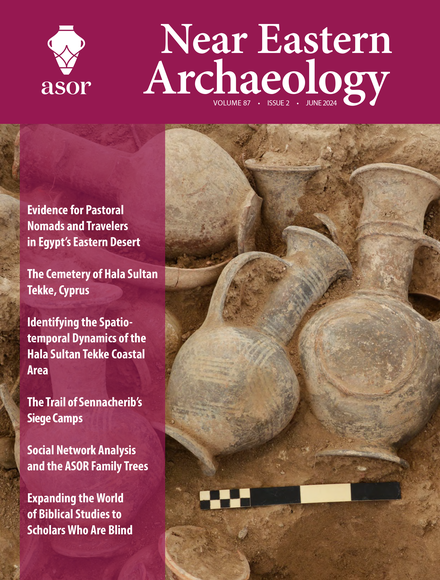

Pp. 64–72: “Evidence for Pastoral Nomads and Travelers in the Eastern Desert: Site 51 and Beyond at Wadi el-Hudi, Egypt,” by Kate Liszka
In the Egyptian Eastern Desert, southeast of Aswan, the Wadi el-Hudi Archaeological Expedition discovered extensive evidence of pastoral nomads living, working, and grazing animals at several archaeological sites. Site 51, newly discovered in January 2023, is a short-term domestic shelter with natural alcoves used by pastoral nomads for millennia. It includes over fifty newly discovered rock inscriptions of cows, ibexes, tally marks, and graffiti. Several grinding stones and nearly a hundred cupules demonstrate the nomads’ collection and processing of local plants while they tended their animals. Additionally, other travelers also sheltered at Site 51 throughout the millennia. This discovery adds to the increasing evidence that, in addition to being an ancient Egyptian site for the mining of amethyst and gold, Wadi el-Hudi was an important zone for pastoral nomads.
ASOR Members with online access: log into ASOR’s Online Portal here. Once logged in, click the JOURNALS tab in the top navigation bar. Tutorials for how to log in to the Online Portal as well as how to navigate to the Portal Journals page can be found here.

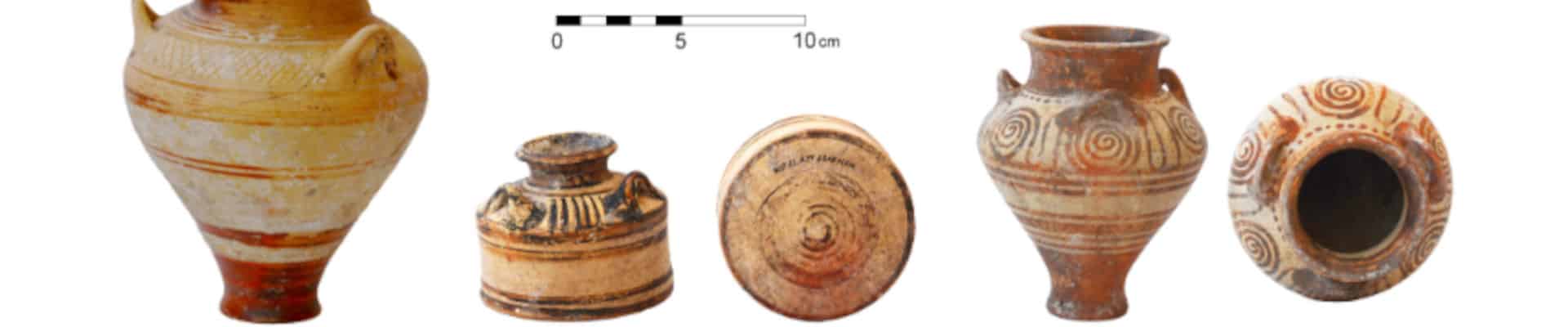
Pp. 74-99: “The Cemetery of Hala Sultan Tekke, Cyprus: Further Evidence of Interculturality and Burial Customs in the Late Bronze Age,” by Peter M. Fischer
This study deals with the results from the 2018–2023 fieldwork at the cemetery of Hala Sultan Tekke. The aim of the project is the safeguarding, excavation, recording, and study of tombs exposed to farming, erosion, and looting. The stratigraphy of the tombs that were used over generations represents an excellent complement to the sequence of occupation in the city. The mortuary gifts and personal belongings date mainly to the fifteenth to thirteenth centuries BCE and confirm far-reaching trade, further underlining the role of the city as a trading center in the Mediterranean economic system. The material evidence corroborates connections with societies of the Mycenaean, Minoan, Hittite, Levantine, and Egyptian spheres of culture as well as networks with regions as far away as Sardinia, the Baltic Sea, Mesopotamia, Afghanistan, and India. In addition, several find contexts provide valuable information about the complex mortuary customs of the Late Cypriot period.
ASOR Members with online access: log into ASOR’s Online Portal here. Once logged in, click the JOURNALS tab in the top navigation bar. Tutorials for how to log in to the Online Portal as well as how to navigate to the Portal Journals page can be found here.

Pp. 100-109: “As Time Goes by: Identifying the Spatiotemporal Dynamics of the Hala Sultan Tekke Coastal Area (Cyprus) by Means of Surface Surveying,” by Polte De Weirdt, Ralf Vandam, Jan Coenaerts, and Karin Nys
Contrary to the idiosyncratic “tell-type�? urban settlements that epitomize Late Bronze Age societies in the eastern Mediterranean and the Near East, a handful of major urban settlements on Cyprus, such as Hala Sultan Tekke and Maroni, embodied a completely different notion of urban engineering. Instead of dense urban city centers where numerous residents resided close to each other, these “atypical�? settlements were apparently organized with broad areas of open space between smaller occupational “clusters.�? By means of archaeological survey combined with a landscape archaeological approach, the Hala Sultan Tekke Hinterland Survey Project (HST-HASP) aims to (re)evaluate this unique type of spatial organization at the Late Bronze Age settlement at Dromolaxia-Vyzakia, as well as to reconstruct the long-term, multiperiod lifecycle of the settlement and its surrounding landscape. The project by the Vrije Universiteit Brussel aims to investigate the site’s hinterland and its relation and position within the broader Tremithos Valley region.
ASOR Members with online access: log into ASOR’s Online Portal here. Once logged in, click the JOURNALS tab in the top navigation bar. Tutorials for how to log in to the Online Portal as well as how to navigate to the Portal Journals page can be found here.

Pp. 110-120: “The Trail of Sennacherib’s Siege Camps,” by Stephen C. Compton
Images of military conquest on Sennacherib’s palace walls often featured his siege camps. By comparing the visual and textual references to these camps with the surroundings of the cities he besieged (on site and via aerial and satellite imagery, archaeological and historical data, and early maps and surveys), likely locations are proposed for Sennacherib’s royal camps. These sites are found to have all had the same name on early maps, Mudawwara, which, in Arabic in the Middle Ages, denoted the enormous tent that housed the sultan on military expeditions. (At times, this name was prefaced with Khirbet al, indicating the ancient stone ruins thereof.) Examining all occurrences of this toponym within Judah and Philistia reveals a distribution consistent with what is known of Sennacherib’s invasion route and of the cities besieged. It also resolves some long-standing questions and contributes to identifying the locations of the cities of Libnah and Nob.
ASOR Members with online access: log into ASOR’s Online Portal here. Once logged in, click the JOURNALS tab in the top navigation bar. Tutorials for how to log in to the Online Portal as well as how to navigate to the Portal Journals page can be found here.

Pp. 122-131: “Dawn and Descent: Social Network Analysis and the ASOR Family Trees,” by Diane Harris Cline, Eric H. Cline, and Rachel Hallote
The development of ancient Near Eastern archaeology, especially that of the southern Levant, is usually presented through several standard narratives. For American scholars it frequently begins with William F. Albright, who is often referred to as “the father of biblical archaeology.�? We undertook to test this narrative by surveying current scholars and using three separate metrics of social network analysis (SNA) on the resulting academic genealogies. Our preliminary results indicate that while a portion of active American archaeologists and biblicists do indeed trace their academic lineage back to Albright, an even larger portion, including Israeli archaeologists and various American Egyptologists and Assyriologists, are scholarly descendants of Albright’s academic cousins, all of whom can trace themselves back to the German Assyriologist Friedrich Delitzsch, who seems to have been the real father of the discipline, genealogically speaking. We also determined that academic lineage does not inhibit intellectual diversification.
ASOR Members with online access: log into ASOR’s Online Portal here. Once logged in, click the JOURNALS tab in the top navigation bar. Tutorials for how to log in to the Online Portal as well as how to navigate to the Portal Journals page can be found here.

Pp. 132-136: “Expanding the World of Biblical Studies to Scholars Who Are Blind: Creation and Implementation of a Coptic Braille System,” by Daniel Charles Smith and Sarah Blake LaRose
Until 2016, braille readers had little or no access to ancient languages beyond Hebrew, Greek, and Latin. Thus access to the study of ancient languages was difficult for blind students who needed braille texts. This article describes the history that led to the development of a braille system to represent the Coptic language. It also discusses the process of implementing the Coptic braille system in the translation of a textbook from print to braille and what was learned from the use of this braille system in the translation process. The information can provide guidance to other universities wishing to ensure access to ancient language texts for students who are blind and possible new directions for the study of this corpus.
ASOR Members with online access: log into ASOR’s Online Portal here. Once logged in, click the JOURNALS tab in the top navigation bar. Tutorials for how to log in to the Online Portal as well as how to navigate to the Portal Journals page can be found here.
by Joel S. Burnett
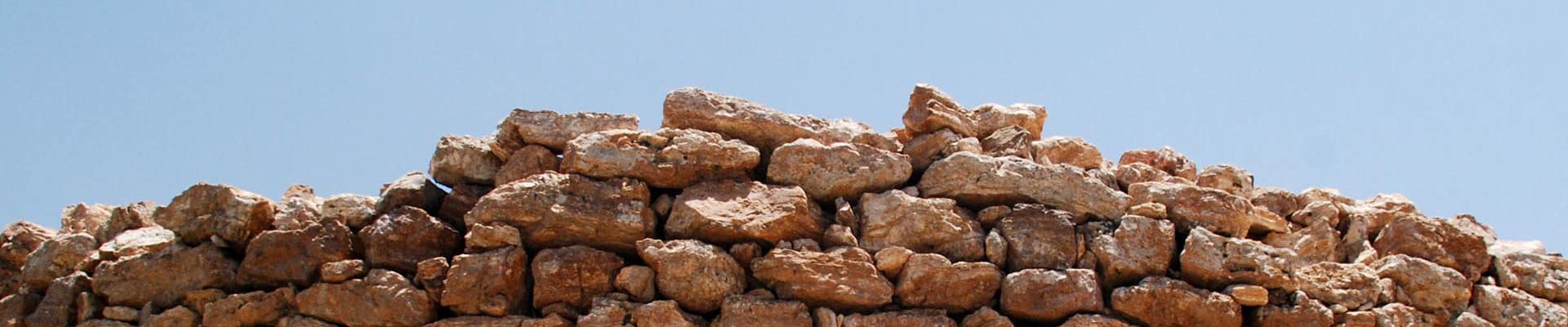
A colossal basalt statue was uncovered through rescue excavation in downtown Amman, Jordan in 2010. Despite the statue’s Roman period find context, its form and motifs show it to be an Iron Age sculpture, and geoscientific testing indicates a regional quarry source. Comparison with an established corpus of Iron Age stone sculpture from Amman shows the Amman Theater Statue shares the distinct iconography of a series of Amman male statues portraying deities and human rulers. Broader art-historical comparisons from Egypt, the Levant, and Mesopotamia indicate that the statue dates ca. 850-825 B.C.E., that it belonged to an Ammonite royal ancestor cult, and that in that setting it portrayed a deified, deceased Ammonite king. Archaeological and epigraphic evidence accompanying those broader Near Eastern comparisons, especially those from Syro-Anatolian political capitals from Iron Age II, and archaeological evidence from Amman indicate that the Amman Theater Statue was incorporated into an architectural structure, either a building façade or monumental gate, on the Amman Citadel (Jabal al-Qal’a), along its southern ascent, or just beyond its southern slope.
With contributions by Romel Gharib and Don F. Parker.
Annual of ASOR, Volume 75, Series Editor William Caraher, December 2023, 220 pages, 15 b/w illustrations, 41 color illustrations, 6 tables. ISBN 9780897571197, $85.95.
 ASOR is pleased to announce Regan Baker as ASOR’s new Membership Coordinator! Regan Baker graduated from The George Washington University with a Bachelor’s of Art in Archaeology in May 2023. In February, Regan accepted the role of Office Coordinator and has excelled in her position working with ASOR members and staff at the James F. Strange Center.
This announcement comes with news of Katherine Schmitt’s departure from ASOR as Membership Coordinator. Katherine will be leaving to travel the United States and will be replaced by Regan Baker as the new contact for all ASOR Membership inquiries on May 24, 2024.
It has been a joy to work for ASOR and Katherine would like to thank the ASOR community. She will greatly miss all of the amazing members and staff she was able to meet and work with during her past 2 years at ASOR.
As Membership Coordinator, Regan will be responsible for the growth of both the membership and Friends of ASOR programs, handling membership processing and fulfillment, supporting the Annual Meeting, and website maintenance. Regan looks forward to continuing to work with ASOR’s members and donors!
 Moni Islam joined ASOR on April 29 as the new Office Coordinator. He has a Master’s of Arts in Archaeology from Durham University in the United Kingdom, as well as a Bachelor’s of Arts in Anthropology and Global Affairs from George Mason University in Fairfax, Virginia. He has been familiar with ASOR for many years, including having won a 2021 ASOR Summer Stipend Award to work remotely on the Jezreel Expedition Publication Project where he helped organize the project’s open database, conduct research on a Palestinian village, and compile relevant photos and resources.

[vc_row fullwidth=”true” attached=”true” css=”.vc_custom_1496247803139{padding-top: 0px !important;padding-right: 0px !important;padding-bottom: 0px !important;padding-left: 0px !important;}”][vc_column][vc_single_image image=”96922″ img_size=”full” alignment=”center”][/vc_column][/vc_row][vc_row fullwidth=”true” css=”.vc_custom_1496682730308{padding-top: 10px !important;padding-right: 0px !important;padding-bottom: 0px !important;padding-left: 0px !important;}”][vc_column width=”1/12″ css=”.vc_custom_1496683820796{margin-right: 10px !important;}” offset=”vc_hidden-md vc_hidden-sm vc_hidden-xs”][vc_column_text]
SHARE
[/vc_column_text][mk_image src=”http://www.asortest.org/wp-content/uploads/2017/01/social-fb-icon4.jpg” image_width=”42″ image_height=”42″ hover=”false” custom_url=”https://www.facebook.com/ASOResearch/” margin_bottom=”0″][mk_image src=”http://www.asortest.org/wp-content/uploads/2017/01/social-tw-icon4.jpg” image_width=”42″ image_height=”42″ hover=”false” custom_url=”https://twitter.com/ASOResearch?ref_src=twsrc%5Egoogle%7Ctwcamp%5Eserp%7Ctwgr%5Eauthor” margin_bottom=”0″][mk_image src=”http://www.asortest.org/wp-content/uploads/2017/01/social-in-icon4.jpg” image_width=”42″ image_height=”42″ hover=”false” custom_url=”https://www.linkedin.com/company/american-schools-of-oriental-research” margin_bottom=”0″][mk_image src=”http://www.asortest.org/wp-content/uploads/2017/01/social-ml-icon_7.jpg” image_width=”42″ image_height=”42″ hover=”false” custom_url=”mailto:info@asor.org” margin_bottom=”0″][mk_image src=”http://www.asortest.org/wp-content/uploads/2017/01/blog-icon3.jpg” image_width=”42″ image_height=”42″ hover=”false” custom_url=”http://asor.org/blog” margin_bottom=”0″][/vc_column][vc_column border_color=”rgba(255,255,255,0.01)” width=”1/6″ css=”.vc_custom_1496683923840{margin-right: 20px !important;border-left-width: 2px !important;padding-right: 20px !important;padding-left: 20px !important;border-left-color: #99422f !important;}”][mk_divider divider_color=”rgba(255,255,255,0.01)” thickness=”1″ margin_top=”3″ margin_bottom=”3″][vc_widget_sidebar sidebar_id=”ca-sidebar-39801″][/vc_column][vc_column border_color=”rgba(170,170,170,0.01)” width=”1/2″ css=”.vc_custom_1487276122024{margin-right: 10px !important;margin-bottom: 30px !important;border-right-width: 2px !important;border-bottom-width: 2px !important;padding-top: 30px !important;padding-right: 30px !important;padding-left: 20px !important;background-color: #ffffff !important;border-right-color: rgba(227,228,228,0.75) !important;border-bottom-color: rgba(227,228,228,0.75) !important;}”][vc_column_text responsive_align=”left”]
[/vc_column_text][mk_divider][vc_wp_text]Currently, 137 projects are affiliated with ASOR. This includes 108 field projects and 29 publication projects. Seven new projects have received ASOR affiliation since last summer. Read more about these new ASOR-affiliated projects below!
ASOR-affiliated projects adhere to ASOR policies, most notably the Non-Discrimination Policy, Policy on Professional Conduct, and Code of Conduct for the ASOR Annual Meeting and Other ASOR Sponsored Events. These policies affirm ASOR’s commitment to high standards for research integrity, academic mentoring and ethical professional behavior. Project Principal Investigators may apply for ASOR affiliation for their projects through the Committee for Archaeological Research and Policy (CAP). Principal Investigators of ASOR-affiliated projects are eligible to apply for ASOR Project Grants and Shepard Urgent Action Grants. Students working on ASOR-affiliated projects are eligible to apply for Scholarships for Fieldwork Participation.[/vc_wp_text][mk_divider][vc_wp_text]
[/vc_wp_text][vc_row_inner][vc_column_inner][vc_wp_text]
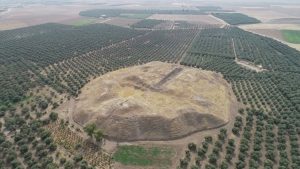
Aerial view of Tepe Gawra.
Paths to Urban Growth in the Nineveh Plain (PUG) explores the origins of early urbanism in Northern Iraq during the 5th and 4th millennia BC through excavations at the sites of Tepe Gawra and Tell ‘Arna/Gogjeli. Tepe Gawra has been the hallmark site for the development of complexity during the Ubaid and Late Chalcolithic periods in the ancient Near East. Past excavations at the site revealed a local development of a sophisticated infrastructure manifest in construction of temples, monumental architecture, and elaborate administrative technologies. Due to these features, Tepe Gawra has been characterized as an administrative centre atop of a regional polity. However, recent survey carried out by our team at Tepe Gawra has identified the presence of a lower town, potentially indicative of the presence of domestic occupation. Further, due to the lack of excavated sites of the same time period in the surrounding region, it is difficult to determine if the features identified at Tepe Gawra are unique, or if the features that characterize it are common at other sites in the Nineveh Plain, such as Tell ‘Arna/Gogjeli. Excavations at Tell ‘Arna/Gogjeli allow us to compare the processes occurring at the two sites, test regional assumptions on the centrality of Tepe Gawra, assess networks of interactions within the region, and build a more complete picture on the process of urban developments in northern Iraq.
[/vc_wp_text][/vc_column_inner][/vc_row_inner][mk_divider][vc_wp_text]
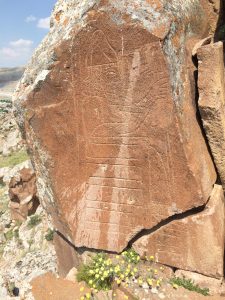
Carved depiction of Great King Hartapu, who ruled in the 8th century BCE in the Konya Plain.
This three-year project aims to reconstruct the political geography of the Tabalian confederation, a group of small kingdoms in south-central Anatolia (Türkiye) that existed during the late 9th-early 7th centuries BCE squeezed in between the two major powers of the time, Phrygia and Assyria. While we have extensive written sources (including Assyrian annals and local Luwian monumental inscriptions) and significant archaeological data (excavated and surveyed settlements and forts, landscape monuments) covering this period, very little interdisciplinary research has been done to synthesize them into a coherent picture.
Our goal is to reassess this varied evidence within an integrative analytical environment where we can combine conceptual frameworks and methods stemming from history, philology, landscape archaeology and digital archaeology. We plan in particular to (a) create high-resolution 3D and RTI models of key Luwian inscriptions; which in turn (b) provide improved translations of these monuments, particularly those shedding light on relations between different Tabalian rulers; and (c) integrate textual-borne evidence with a GIS-led analysis of human and natural landscapes to sketch the diachronically changing Tabalian power networks and map them onto real-world geographies.
[/vc_wp_text][mk_divider][vc_wp_text]
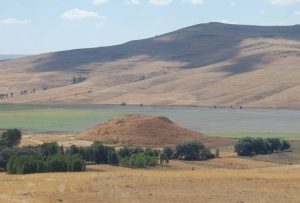
Cadır Höyük.
Çadır Höyük is located on the north central Anatolian plateau. There has been continuous occupation at Çadır for at least 6,000 years (late 6th millennium BCE to the 13th century CE). Excavations commenced in 1994, continuing to the present time. Steadman is the fourth project director, preceded by Gorny (1994-2009), McMahon (with whom she co-directed, 2010-2019), and Şerifoğlu (2020-2021). Excavations include (trenches are 10 x 10 m): ten trenches exposing the Chalcolithic occupation (lower S slope); over ten trenches dedicated to Byzantine occupation (summit); six trenches focused on Hittite/Bronze Age occupation (N and E slope); four trenches dedicated to the Iron Age (various areas); previous excavations and a few current trenches having investigated the Classical/Hellenistic periods.
We have a housing/research compound which comfortably houses 30 people. A four room-lab provides ample research area. A newly-built conservation lab is separate. We have a two-room equipment storage facility, and a three-room storage depot for archaeological materials. A guard lives at this compound year-round.
Our senior research team has been with the project for a decade or more. Each year we train undergrad/grad students, from Türkiye and elsewhere, in field and lab methods. We have a strong and inclusive publication history.
[/vc_wp_text][mk_divider][vc_wp_text]
[/vc_wp_text][vc_row_inner][vc_column_inner width=”1/2″][vc_wp_text]This project aims to enhance our understanding of rural life in the Southern Levant by excavating Horvat Midras, Israel, the site of an ancient village with several phases of occupation over two millennia. We are especially interested in understanding the village’s social and religious character, how it changed, its daily life, and the impact of military conflicts, migration, and resettlement efforts. Located between Jerusalem and the Mediterranean coast, in the Shephelah or Judean Foothills region, Horvat Midras was inhabited by several different groups from the 4th century BCE to 16th century CE, including Idumeans, Jews, Roman polytheists, Byzantine Christians, and Muslims under the Umayyads, Mamluks, and Ottomans. Our initial surveys and excavations suggest that the site was profoundly transformed following the Roman suppression of the Second Jewish Revolt in 132-136 CE, which was followed by Roman resettlement of the village and construction projects that would have an enduring impact. This project began in 2015 with the Hebrew University of Jerusalem’s Institute of Archaeology and since 2018 has been a joint-venture together with the University of British Columbia (Canada).[/vc_wp_text][/vc_column_inner][vc_column_inner width=”1/2″][mk_padding_divider][vc_single_image image=”96589″ img_size=”medium” add_caption=”yes” alignment=”center”][mk_padding_divider size=”20″][vc_single_image image=”96590″ img_size=”medium” add_caption=”yes” alignment=”center”][/vc_column_inner][/vc_row_inner][mk_divider][vc_wp_text]
[/vc_wp_text][vc_row_inner][vc_column_inner width=”1/2″][mk_padding_divider size=”20″][vc_single_image image=”96805″ img_size=”medium” add_caption=”yes” alignment=”center”][mk_padding_divider size=”20″][vc_single_image image=”96806″ img_size=”medium” add_caption=”yes” alignment=”center”][/vc_column_inner][vc_column_inner width=”1/2″][vc_wp_text]
The Exploring Continuity and Transition in Southern Jordan (CTSJ) project is a multi-disciplinary group of American and Canadian collaborators that plan to conduct a survey focusing on sites previously identified as having evidence of multiperiod occupation between Petra and Humayma in southern Jordan. The main aim of this survey is to investigate these archaeological sites for signs of continuity or shifts in cultural practices over time, specifically between the Iron Age and the Nabataean period. While several sites in the region have undergone preliminary surveys noting material culture from various periods, only a few have been extensively excavated. Many of the sites identified have very limited information and no chronological verification from excavations. Therefore, our primary interest lies in enhancing our understanding of Nabataean prehistory, particularly regarding cultural activities (ritual, funerary, agriculture, engineering) during the Iron Age and their continuity or transition into the Nabataean period. There is a significance gap in our understanding of this period (approx. 539-300 BCE) in the prehistory of Jordan, which needs to be addressed. A review of published archaeological findings in the area has revealed this gap in our comprehension of this period, which has prompted new research inquiries that can only be addressed initially through a survey of specific sites in the region.
[/vc_wp_text][/vc_column_inner][/vc_row_inner][mk_divider][vc_wp_text]

Island of Motya.
Since 1977, the University of Palermo has led research at the site of ancient Motya, an island city in western Sicily founded by Phoenician colonists in the 8th century BCE that grew into a strategic Carthaginian center. This project made several noteworthy contributions to the scholarship of the Mediterranean in its early years, including the documentation of a large pottery workshop that features kilns of Levantine tradition and the revelation of the world-renowned “Youth of Motya” statue, a mid-5th century BCE masterpiece crafted of Parian marble. After 2013, the Palermo Archaeological Mission has grown to become a multinational project with active collaborations with the University of Pennsylvania and the University of Tübingen. Current research foci at Motya include the excavation of pre-Phoenician contexts to understand Bronze Age land use and settlement, excavation of Punic monumental buildings and public spaces, excavation of the archaic necropolis coupled with bio-archaeological and genetic research, and extensive geophysical prospection, surface survey, and test excavations to understand the development of Motya’s urban structure and changes in the ethnic identities of its residents over time. These ongoing research efforts are integrated with education including a field school where students from the University of Palermo and elsewhere come together to gain experience in all facets of archaeological fieldwork.
[/vc_wp_text][mk_divider][vc_wp_text]
The Sebittu Project is a long-term study of the agrarian economies and environmental impacts of imperial expansion during the Iron Age of Iraqi Kurdistan. Centered on a cluster of seven villages, hamlets, and farmsteads in the Erbil Plain, the Sebittu Project looks at Neo-Assyrian imperial economy through a “bottom-up” perspective. The Sebittu Project focuses on the collection and intepretation of paleobotanical, zooarchaeological, and environmental data from primary contexts to address broad research questions regarding models of Assyrian imperial expansion, internal organization of agrarian settlements, regional economies, paleoenvironment conditions, and human impacts on the landscape.
[/vc_wp_text][mk_divider][vc_wp_text]
[/vc_wp_text][/vc_column][vc_column border_color=”rgba(170,170,170,0.01)” width=”1/6″ css=”.vc_custom_1496684098866{margin-right: 5px !important;margin-bottom: 20px !important;border-right-width: 2px !important;border-bottom-width: 2px !important;padding-top: 30px !important;padding-right: 10px !important;padding-left: 10px !important;background-color: #ffffff !important;border-right-color: rgba(227,228,228,0.75) !important;border-bottom-color: rgba(227,228,228,0.75) !important;}”][vc_wp_posts title=”BROWSE THE NEWS ARCHIVE” number=”4″][/vc_column][vc_column border_color=”rgba(170,170,170,0.01)” width=”1/6″ css=”.vc_custom_1496684008271{margin-right: 10px !important;margin-bottom: 30px !important;border-right-width: 2px !important;border-bottom-width: 2px !important;padding-top: 30px !important;padding-right: 20px !important;padding-left: 20px !important;background-color: #ffffff !important;border-right-color: rgba(227,228,228,0.75) !important;border-bottom-color: rgba(227,228,228,0.75) !important;}”][vc_column_text]Tweets by ASOResearch [/vc_column_text][/vc_column][/vc_row]
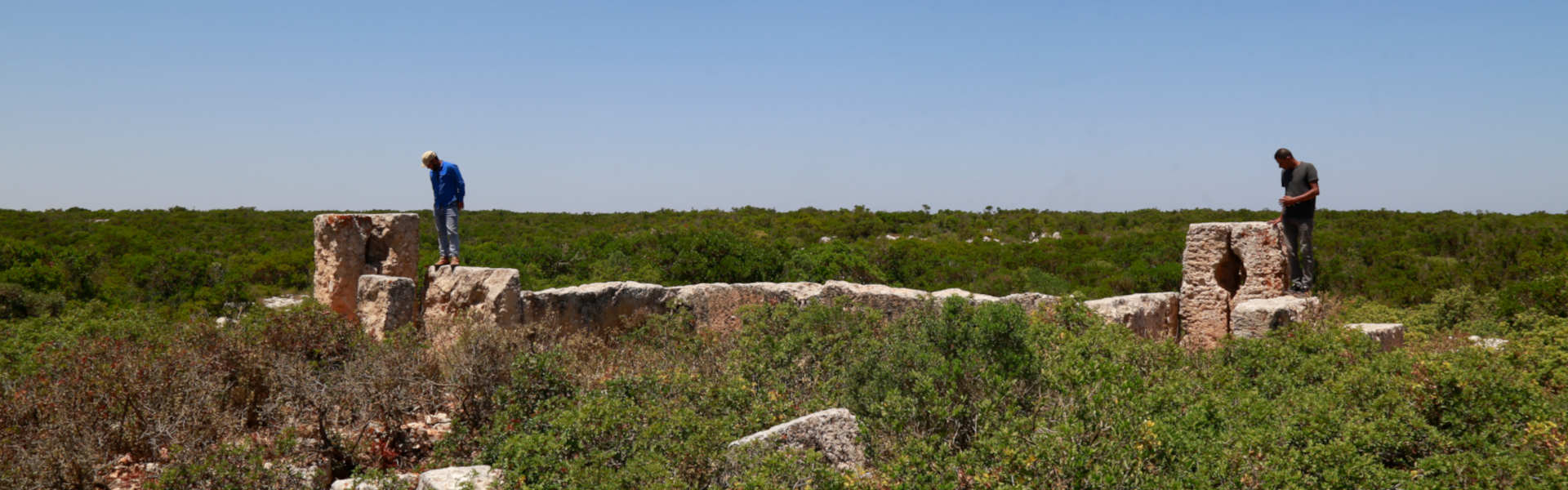

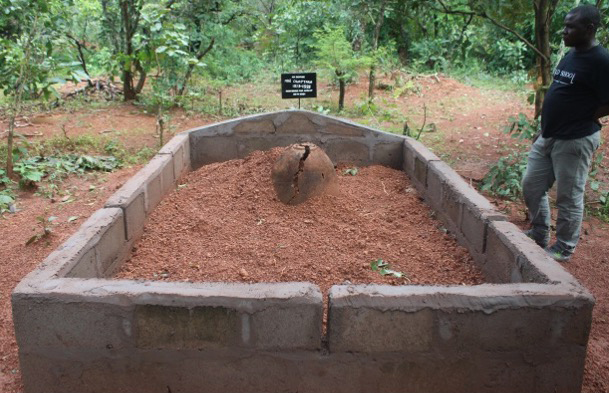
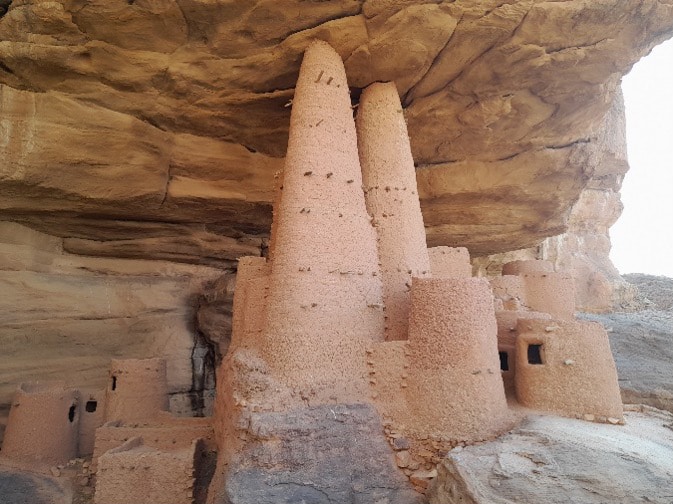

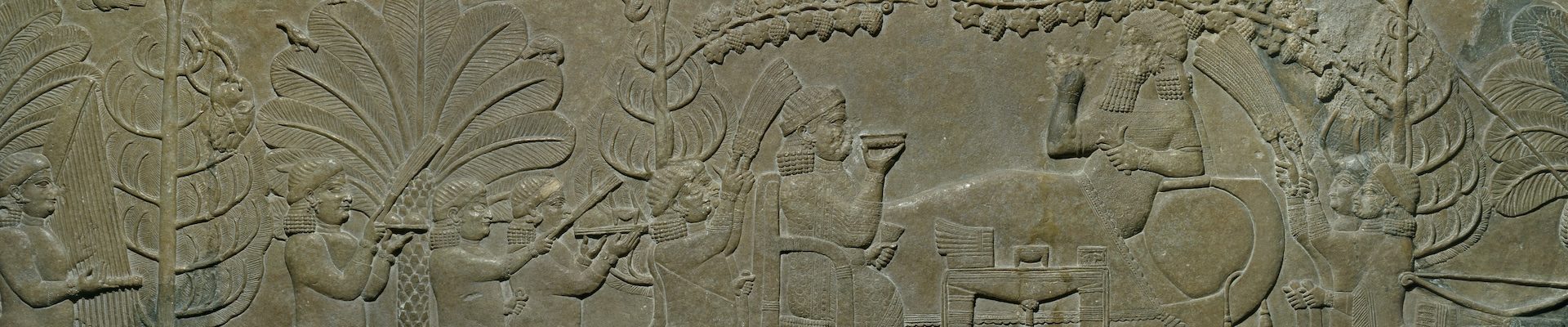

Friends of ASOR present the next webinar in the 2023-2024 season on May 9, 2024, at 3:00 pm EDT, presented by Dr. Allison Thomason.
 We are all sensing people, and the basic physical structure of our sensing organs has not changed for many thousands of years. But how did ancient humans perceive and experience sensory stimuli in their environment differently than we do today? Dr. Thomason sets out to explore this topic for the ancient Mesopotamians in particular. The history of the senses and explorations of sensory experiences in the ancient world have been increasingly the focus of scholarly research. Archaeologists, art historians and textual scholars have tried to recreate past sensory environments and experiences by using evidence from images, artifacts and ancient texts of all kinds.
 In this lecture, Dr. Thomason, a specialist in ancient Mesopotamian material culture, explores how ancient Mesopotamian perceptions of sensory experiences can be compared to our own modern ones, by trying to understand the way that Mesopotamians sensed their environment and material culture and what perceptions they had of certain types of objects, such as metal bowls, wooden gates, and textiles.
This webinar will be recorded and all paid registrants will be sent a link to view the recording.

Dr. Allison Thomason is Professor and Chair of the history department at Southern Illinois University Edwardsville, and serves as their ancient historian. She received her PhD in Art History and Archaeology from Columbia University in 1999 and has taught at SIUE ever since. Her first book, Luxury and Legitimation: Royal Collecting in Ancient Mesopotamia (2005) is still available in print and as an e-book from Routledge Press. She has contributed numerous articles and chapters in books, lectures, and presentations on the material culture of Mesopotamia and the ancient Near East. Recent research interests include dress in the Ancient Near East and she has co-edited (with Kiersten Neumann) an extensive anthology, A Handbook of Senses in the Ancient Near East (Routledge Press 2022). Dr. Thomason is also the co-chair of ASOR’s Program Committee, which plans the Annual Meeting.
This webinar will be recorded and all paid registrants will be sent a link to view the recording.

*Please log in to the Online Portal BEFORE registering for the webinar. Once you have logged in, you will be able to register under our Events page linked above.
ASOR Sustaining Members: $0 | ASOR Members: $6.50 | Public: $13
Season Pass: ASOR Sustaining Members: $0 | ASOR Members: $75 | Public: $155
Buy one here!
Please e-mail membership@asor.org with any questions or issues with registering.
All proceeds from this webinar are used to fund scholarships for members as well as increasing ASOR’s online resources, which are free to the public.